
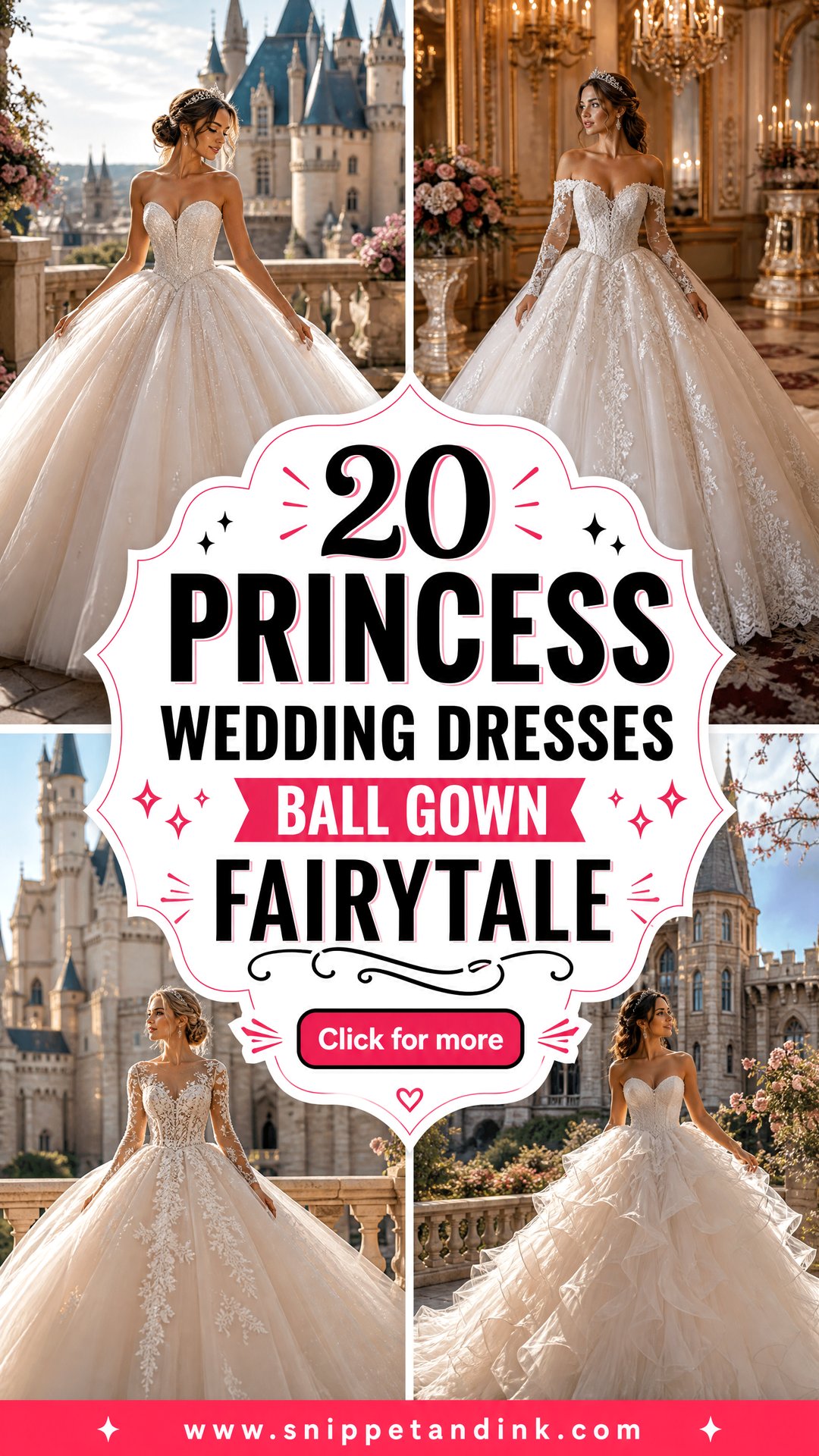
Fitted bodice, enormous skirt: the ball gown has been the fairytale shape for so long that brides often walk into my fitting room already sure they want one. The variety inside that shape is wider than most expect. Satin, Mikado, lace, organza, jacquard and layered tulle each carry volume differently, and details like a Basque waist, floral appliqué, detachable sleeves or a long train change the mood completely. My job is to make sure the dress also lets you move, flatters your proportions and suits how formal the venue is. Styling matters as well; a delicate tiara, the right veil length and the bouquet all shift the final effect. Here are twenty I’d put on the rail.
Judging a Sample Gown Clipped Onto You in the Boutique
Almost every gown you try will be a sample, and samples come in a limited size range. If you’re smaller, it’ll be clamped at the back. If you’re larger, the consultant may only be able to fasten it partway and pin the rest. Neither tells you much about the final fit, so I teach brides what to look at instead.
- Waist position. Does the seam sit at your natural waist, or above or below it? This is hard to change later.
- Skirt volume against your height. Ask the consultant to add or remove the petticoat so you see both.
- The neckline shape on your shoulders and bust, ignoring gaping that the clamps will fix.
- How you feel walking ten steps and turning round. Weight and movement don’t change with size.
Take photos from the back and side, not just the front. Ball gowns often look their best from angles you never see in the boutique mirror, and a side shot shows straight away whether the skirt is overwhelming your frame.
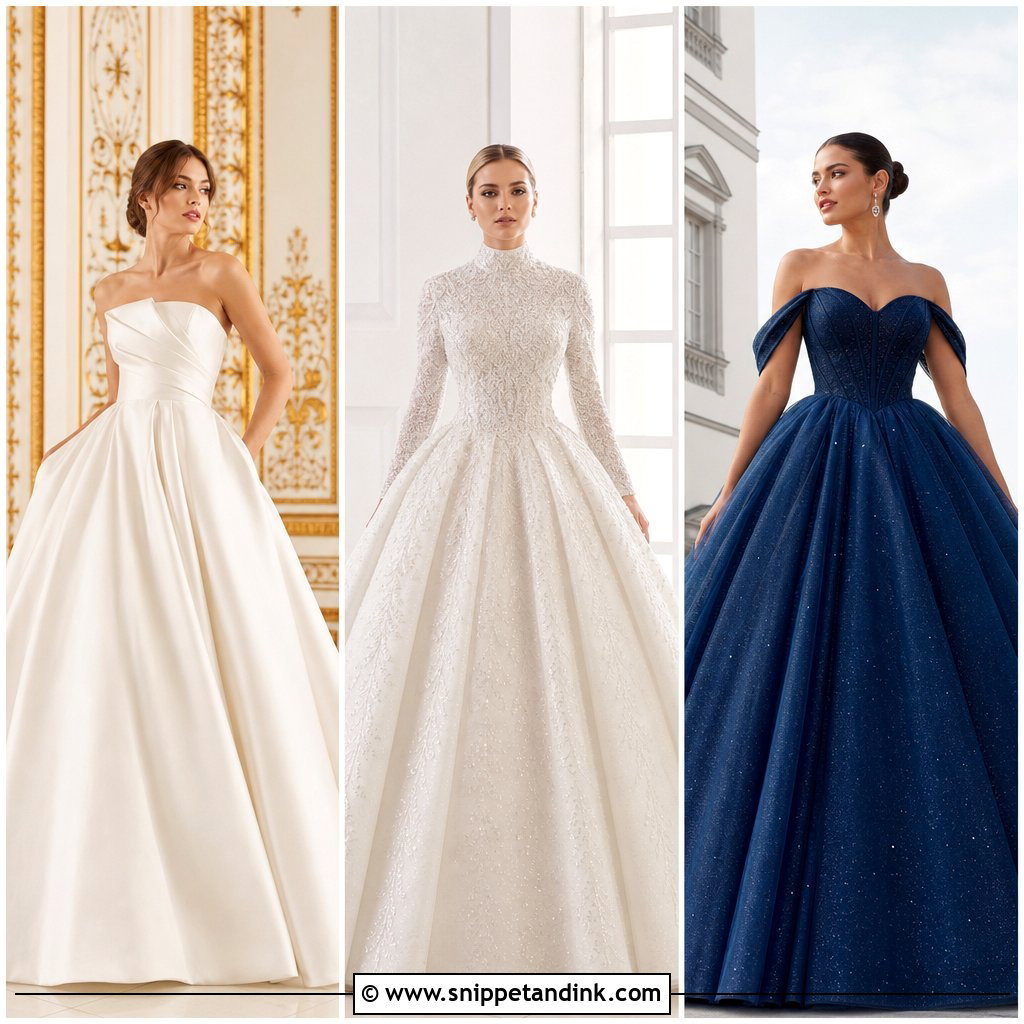
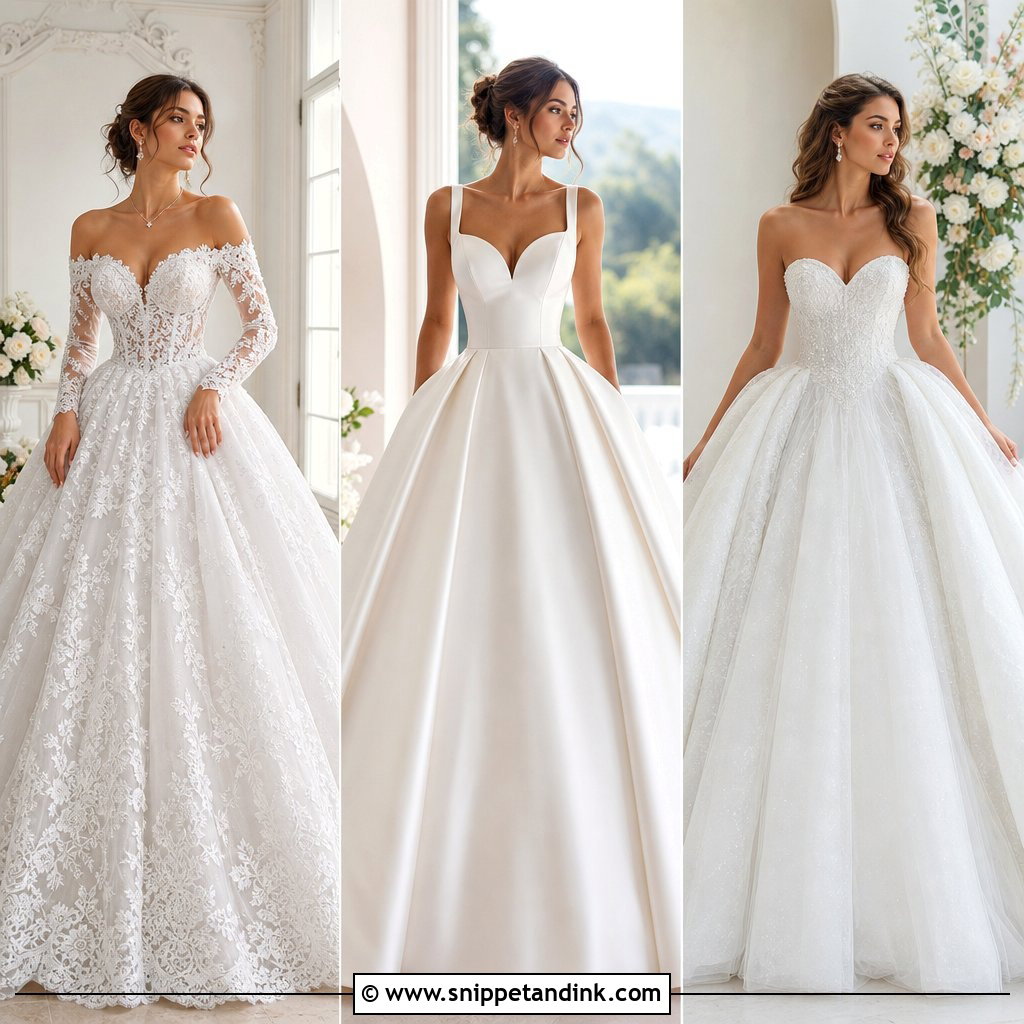
1. Strapless Satin Princess Ball Gown Wedding Dress
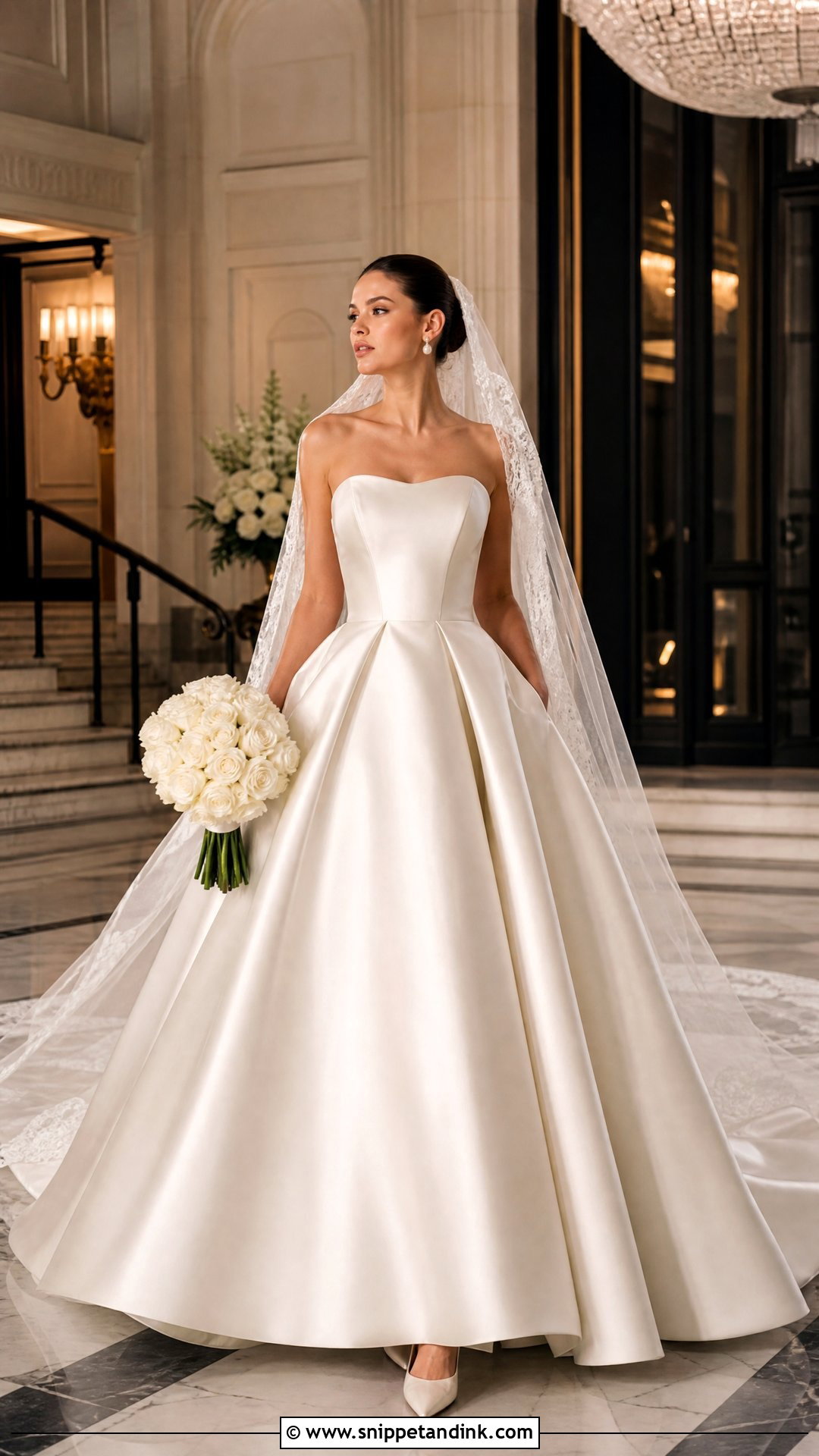
Strapless satin is the cleanest version of the fairytale gown, and there’s nowhere for poor construction to hide. What holds it up is an internal corset, not the bust, so I always check that the bodice stays put when the bride bends forward to pick something up. Box pleats give a fuller, more architectural skirt; soft gathers look gentler. Satin catches light along every fold, which looks rich in a ballroom and unforgiving in harsh midday sun. Pearl drops and a plain cathedral veil edged in satin finish it. Plan the bustle early if there’s a long train.
2. Sweetheart Tulle Princess Ball Gown Wedding Dress
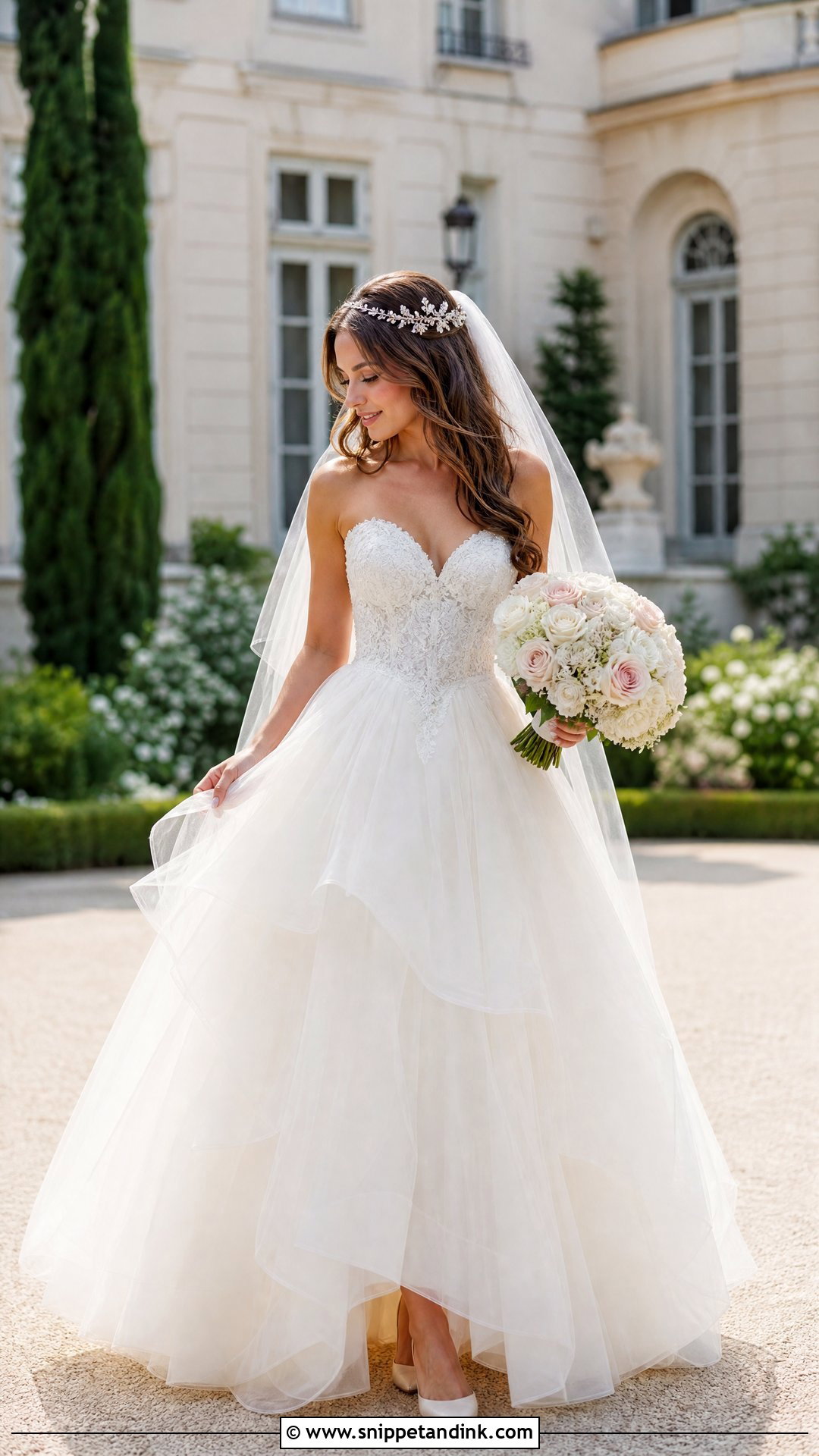
Tulle is the lightest way to get real volume, which makes it my usual recommendation for outdoor and summer weddings. A sweetheart bodice over a natural waist keeps the proportions classic, and subtle boning with a few lace appliqués or scattered pearls adds depth without weight. The downside: tulle snags. Jewelry with prongs, bracelet clasps and even a bouquet’s wired stems can catch it, so keep metal smooth. A loose updo with soft face-framing pieces and a fingertip veil suit the airy shape. Peonies and pale roses keep the bouquet just as light.
3. Off-The-Shoulder Lace Princess Wedding Dress
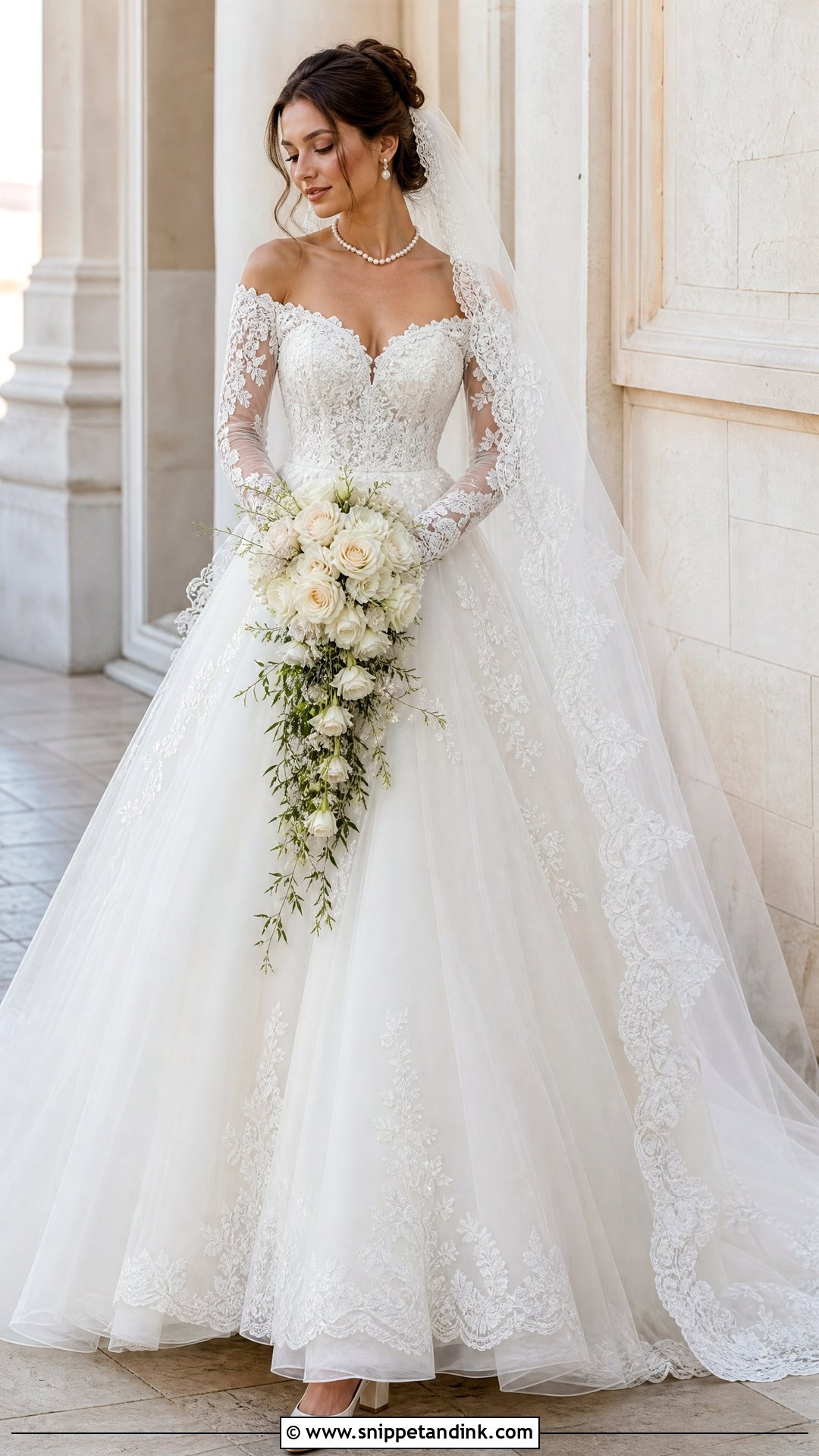
Lace off the shoulders frames the collarbone well, but the sleeves can’t be the thing holding the dress up. I look for draped bands sitting over a supportive bodice so you can lift your arms during the ceremony without the neckline sliding. A fitted lace top on a full tulle or satin skirt gives a refined fairytale shape. A cathedral veil bordered in the same lace ties it together, and a low chignon keeps the shoulders on show. Block heels make the extra skirt weight easier on the legs.
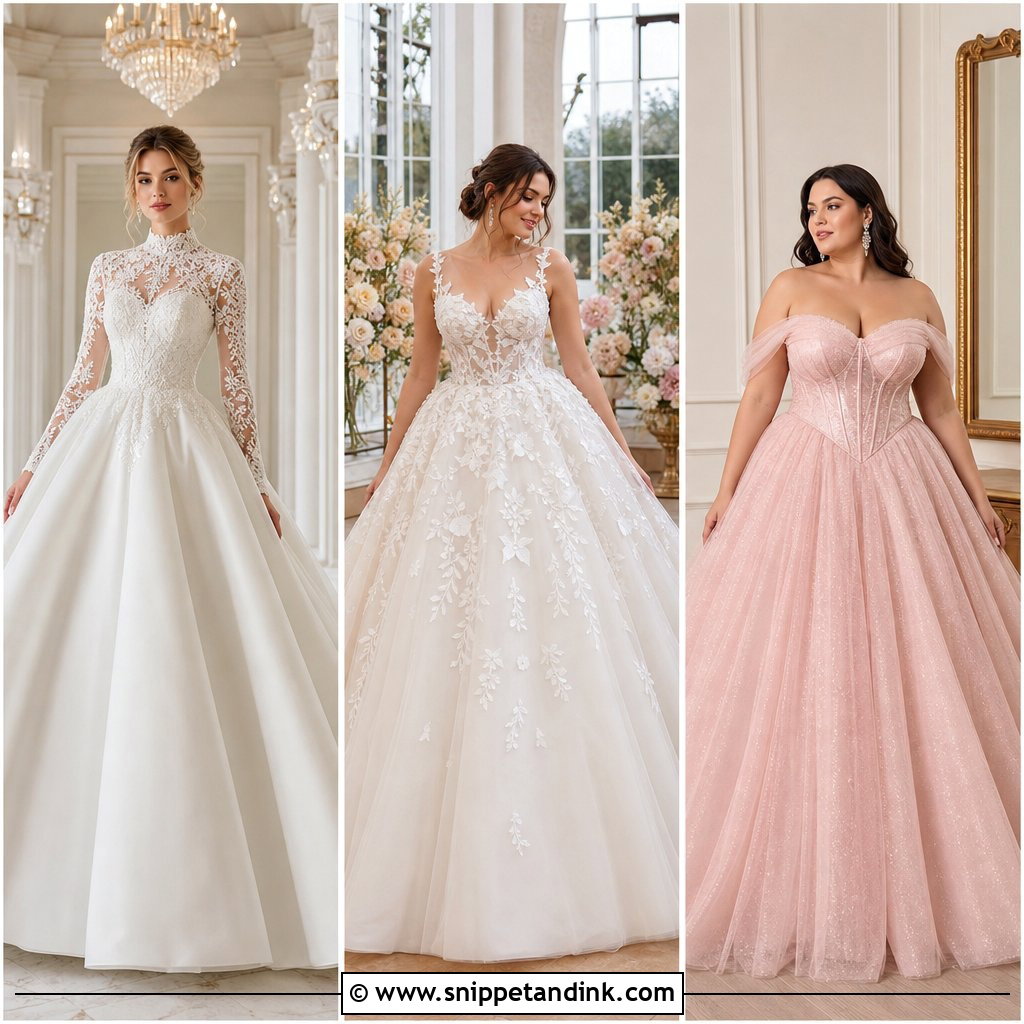
4. Long-Sleeve Lace Princess Ball Gown Wedding Dress
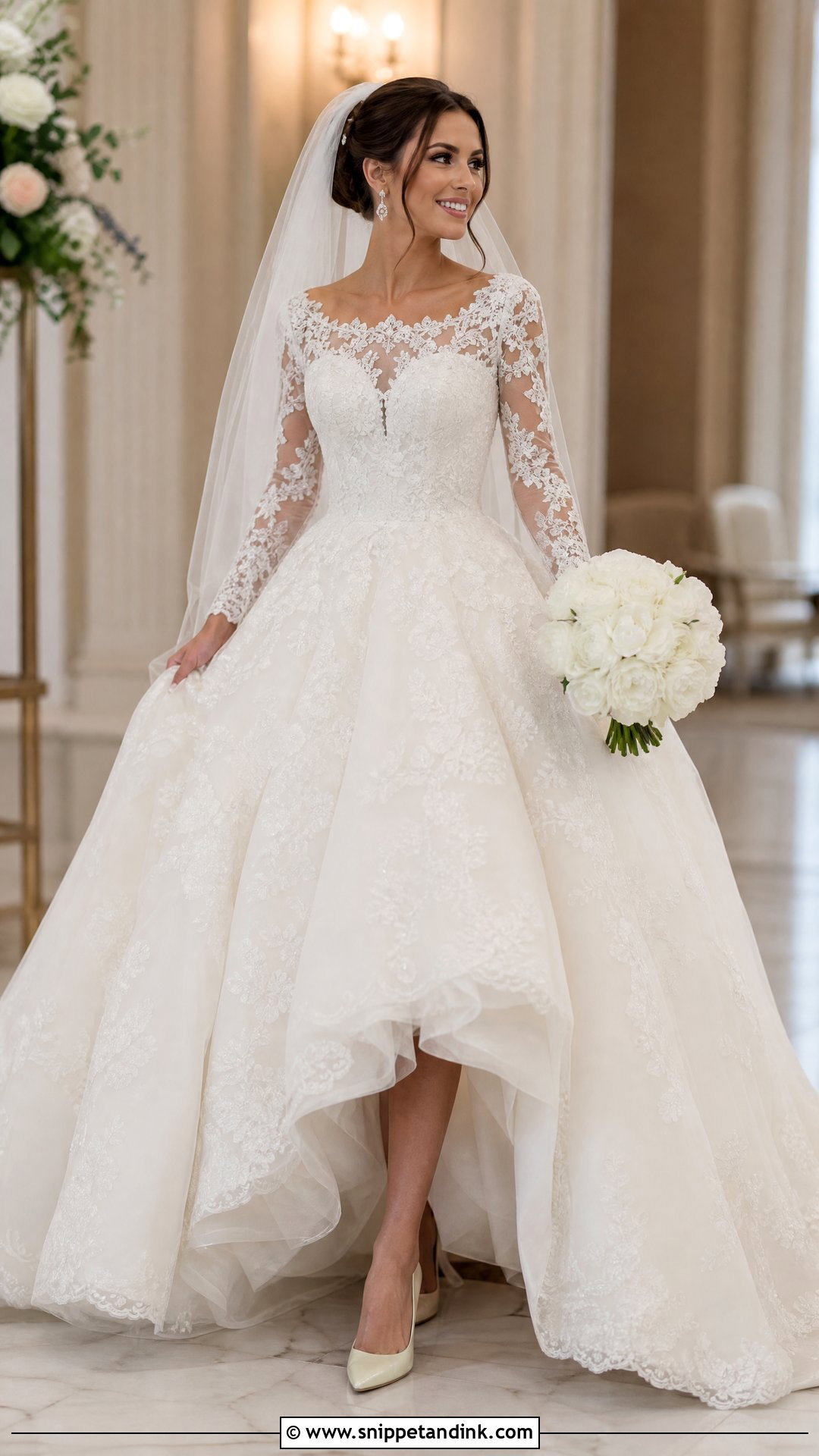
Long sleeves on a ball gown need to look weightless or the whole dress feels heavy. Illusion tulle scattered with lace motifs is the way to do it, rather than solid lace from shoulder to wrist. The bodice underneath still has to do all the structural work. Bend your elbows and reach up during the try-on; a sleeve cut too narrow at the elbow pulls the whole shoulder seam. A plain long veil with no heavy border avoids crowding the sleeves. It’s at its best in cooler months and evening receptions indoors.
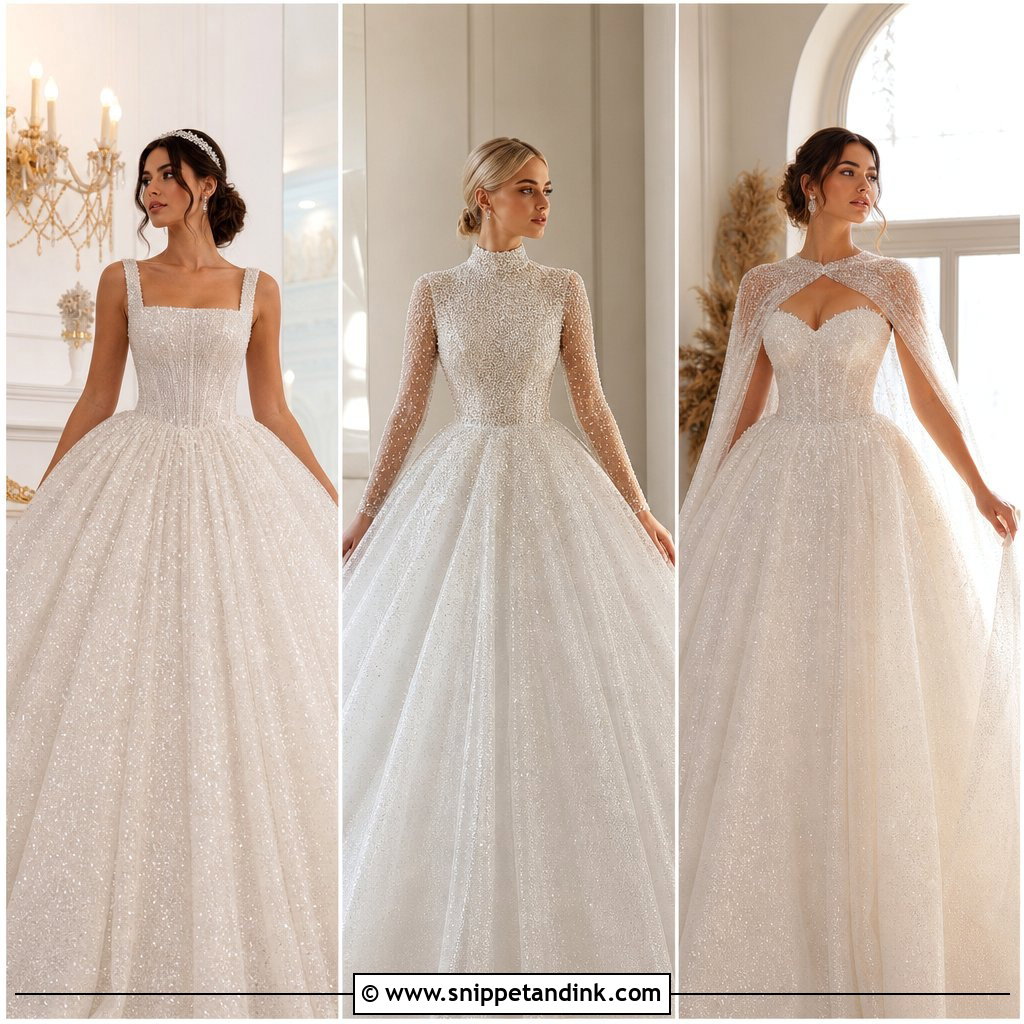
5. Floral Appliqué Princess Ball Gown Wedding Dress
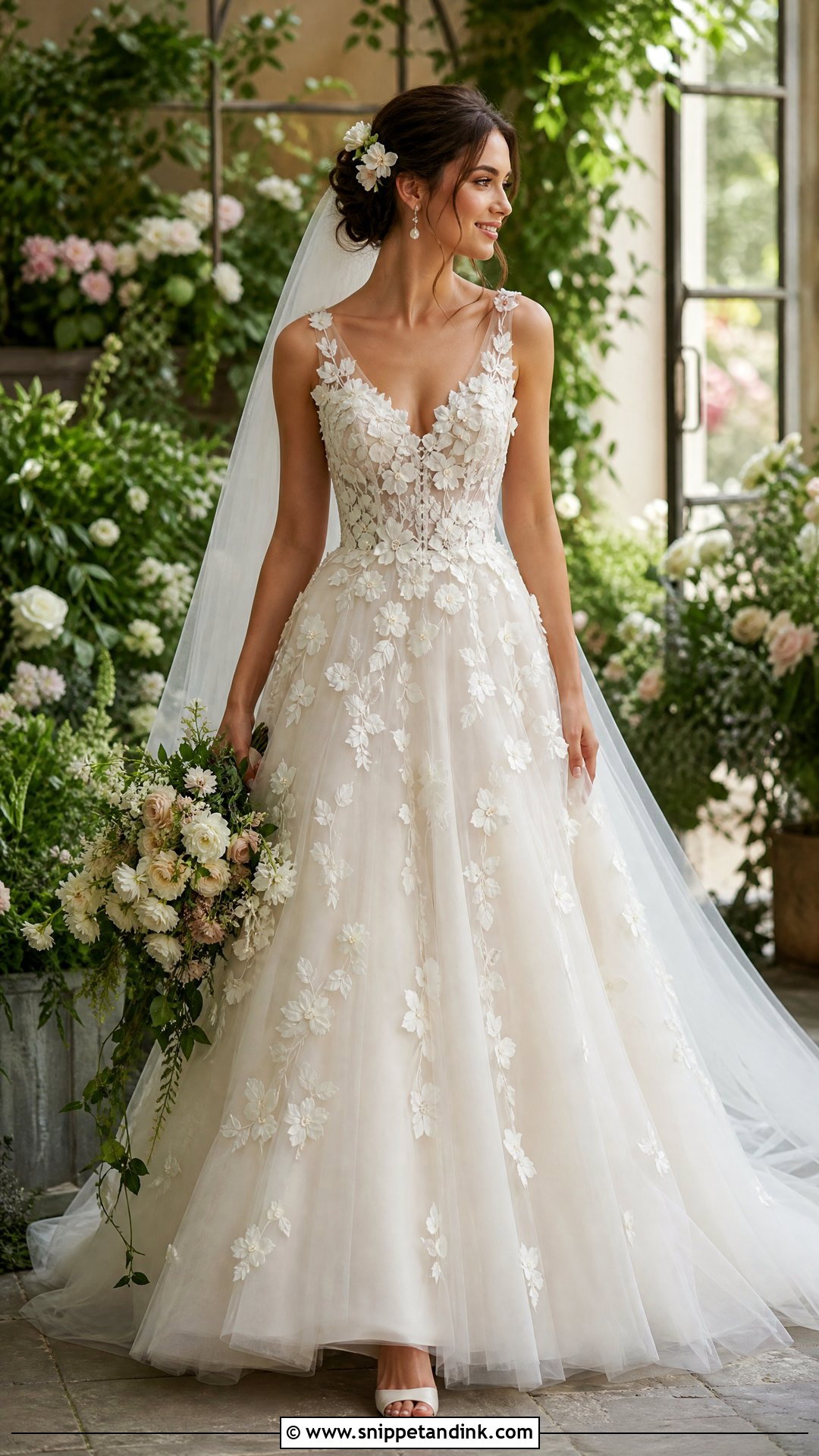
Raised appliqué flowers turn a plain ball gown into a garden, and the trick is restraint in where they go. Dense on the bodice, scattered thinner across the skirt, and the gown keeps a defined waist. Pale tulle layers beneath let the flowers cast small shadows that show up well in photographs. Floral hairpins echo the detail; anything else should stay simple. When picking the bouquet, choose flowers that complement the appliqués rather than copy them exactly, since an identical match tends to blur together in pictures.
6. Beaded Princess Ball Gown Wedding Dress
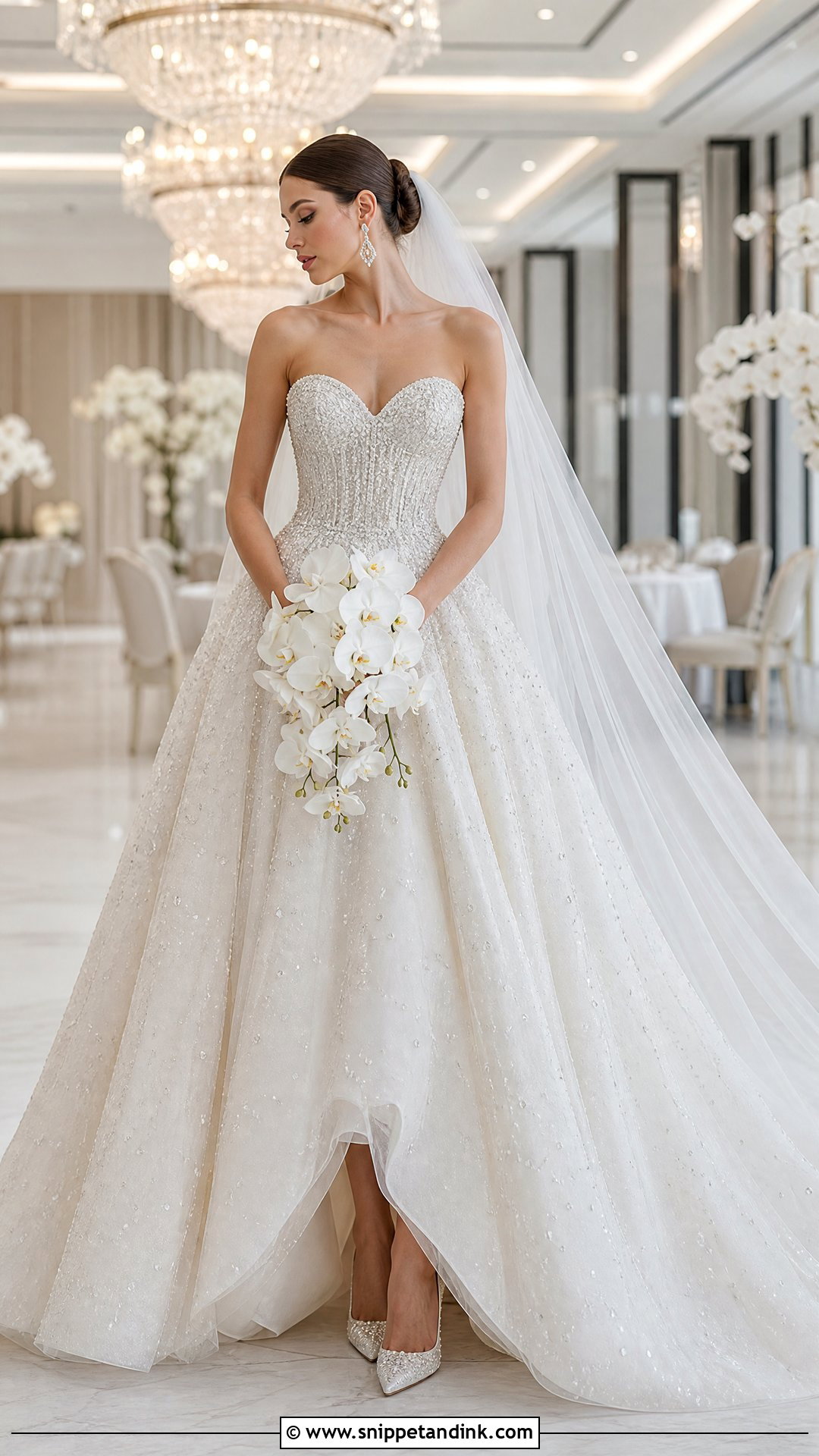
Beading is heavy. A fully beaded ball gown can weigh noticeably more than a plain one, and most of that weight hangs from the shoulders and waist. I prefer crystals or pearls concentrated on the bodice, thinning out onto the skirt, which draws the eye upward and keeps the gown manageable. Metallic ivory heels and crystal drops are enough. Walk, sit and turn in the dress before settling on a size, because beaded seams can’t be let out as easily as plain ones. A plain cathedral veil keeps the beadwork visible through the ceremony.
7. Basque-Waist Princess Ball Gown Wedding Dress
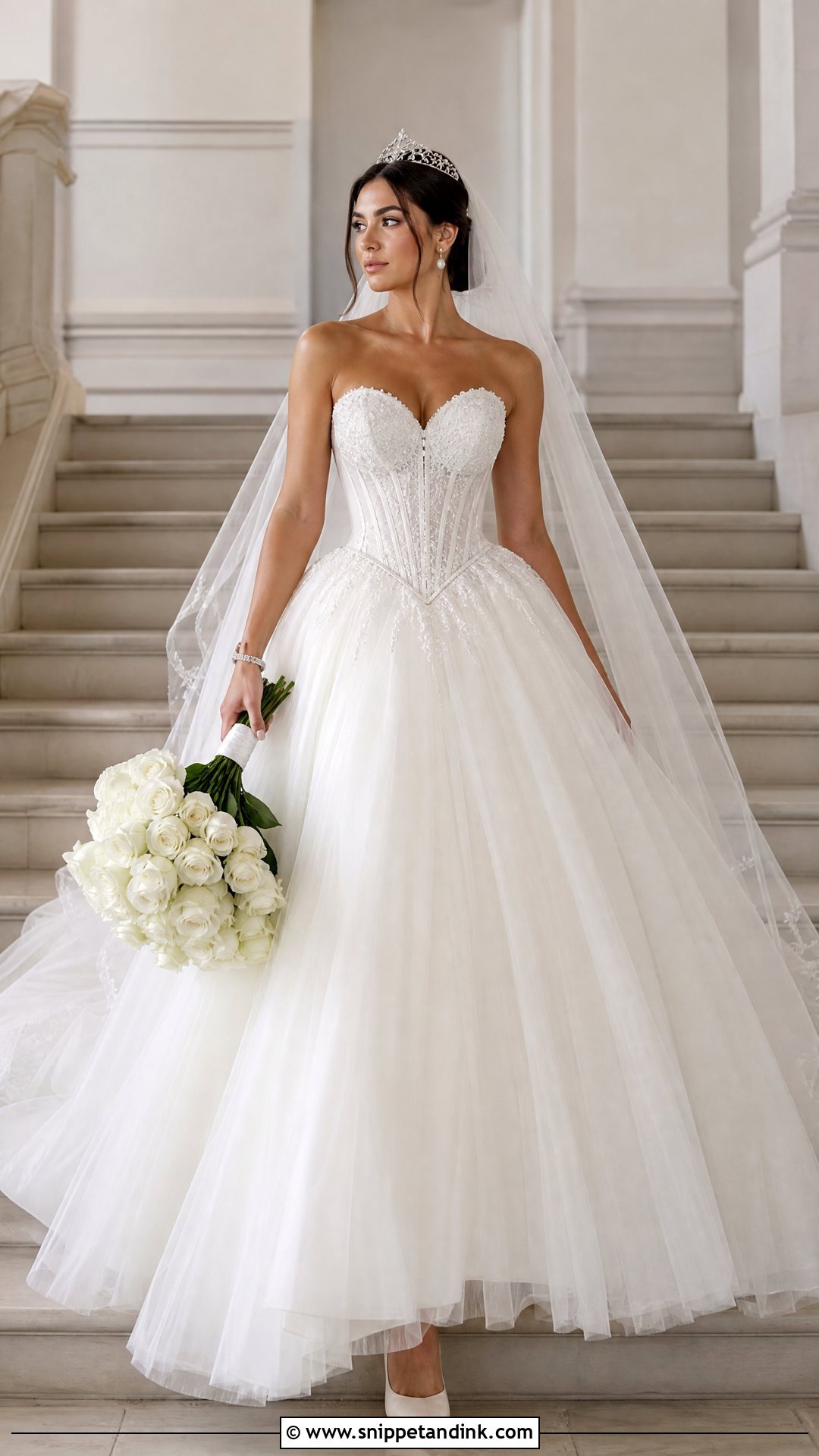
The V of a basque waist carries the eye downward and makes the torso look longer, which helps brides with a short waist more than almost any other detail. Pair it with a structured corset top and layers of tulle or satin. Strapless sweetheart is classic; slim straps add support for a fuller bust. A delicate tiara and a cathedral veil anchored under a smooth updo balance the drama. Tailoring matters here because the point has to lie flat. If it creases when you sit, the bodice is too long for you.
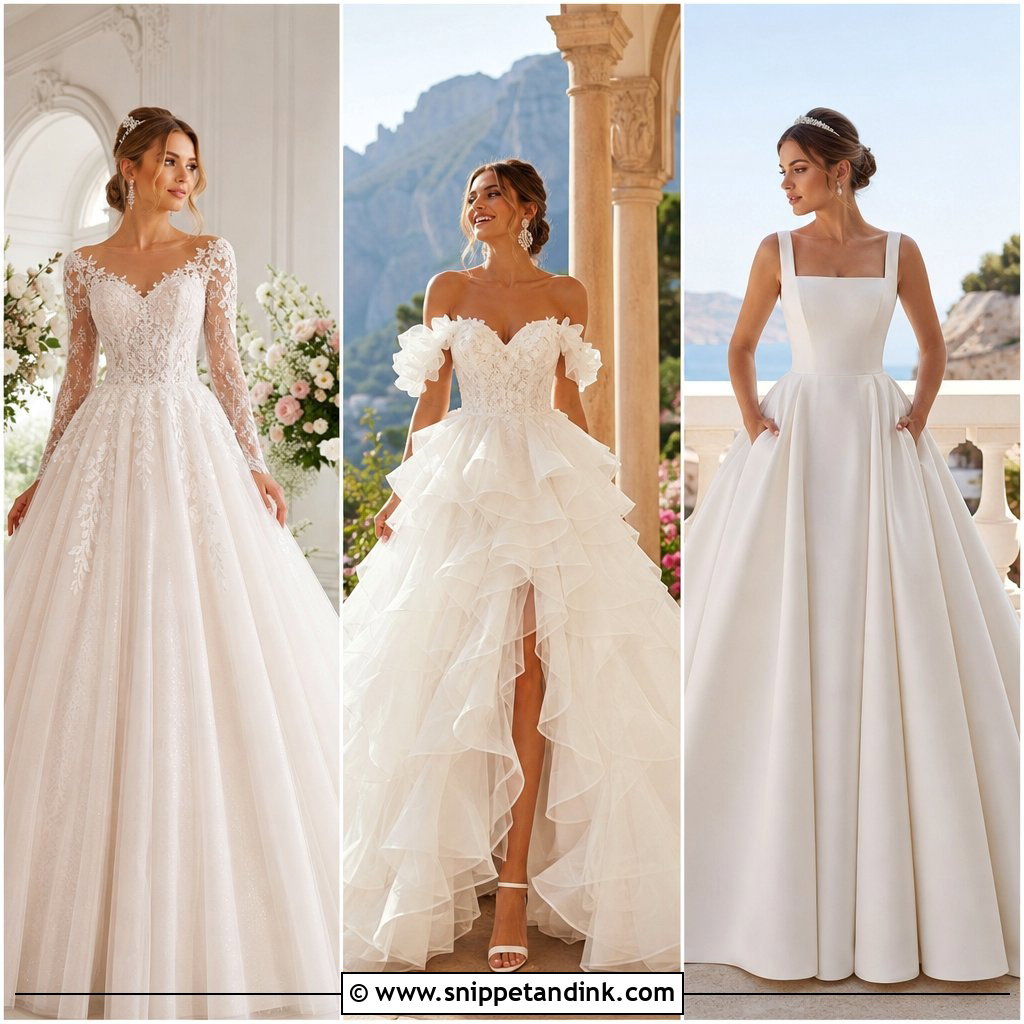
8. Square-Neck Princess Ball Gown Wedding Dress
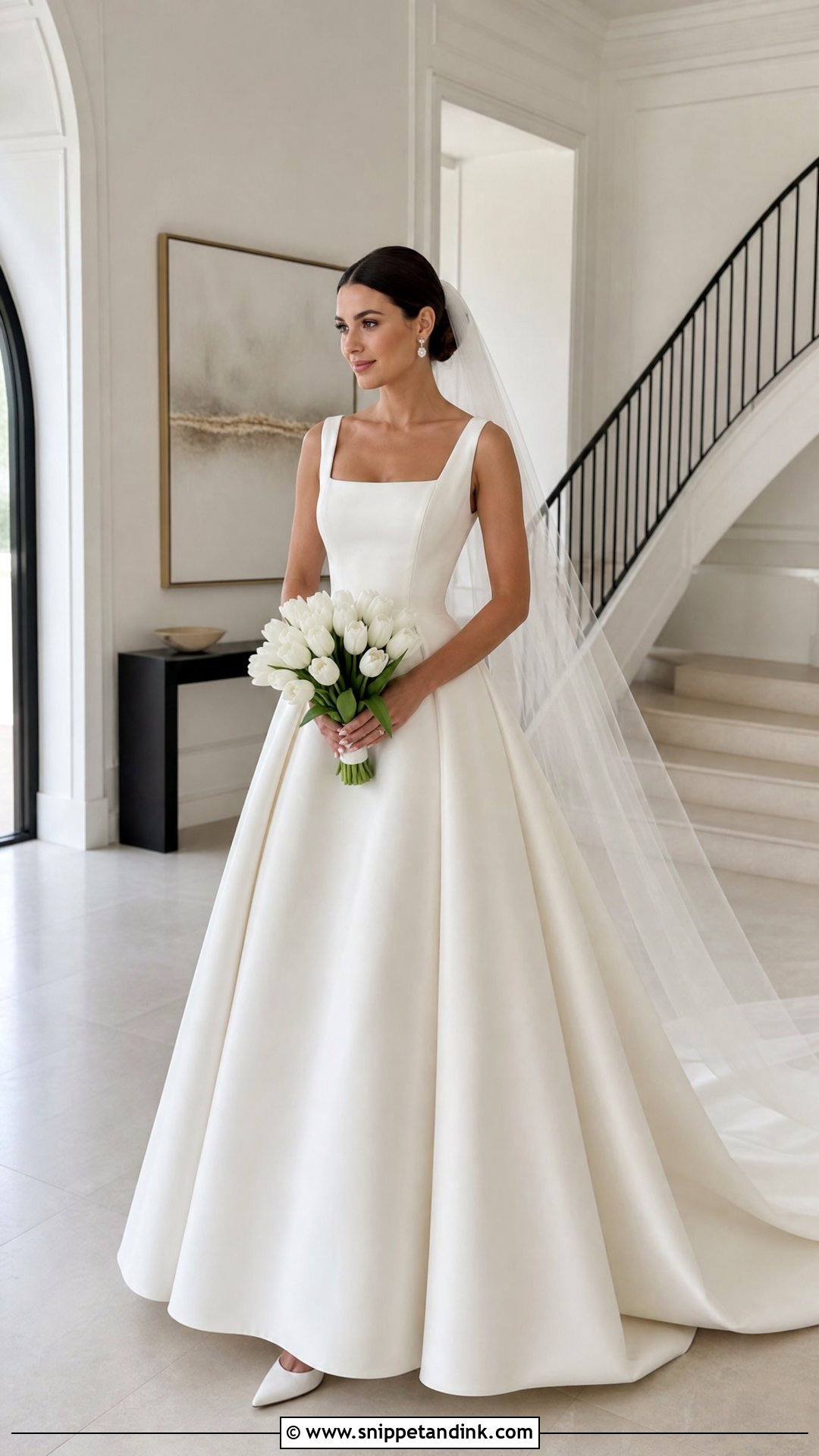
Square necks are the quiet option on this list. Wide straps and a well-fitted bodice make the dress feel secure, and the straight line of the neckline is a clean frame for heirloom jewelry or a family hair piece. Matte satin or Mikado hold the shape best, with light pleating at the waist for controlled volume. Leave a few soft strands out of the low bun so the hair doesn’t look severe against such a geometric neckline. A simple bouquet of tulips or calla lilies keeps the same restraint.
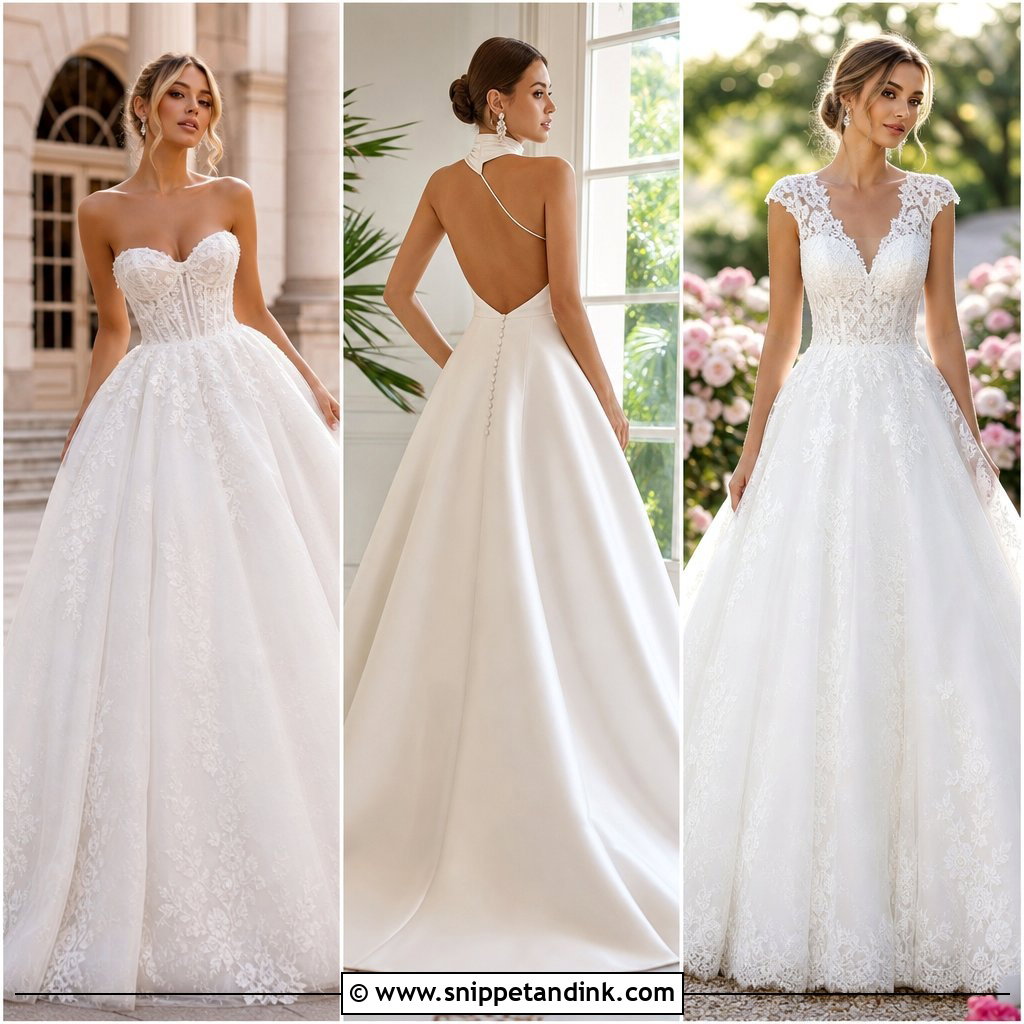
9. Illusion-Bodice Princess Ball Gown Wedding Dress
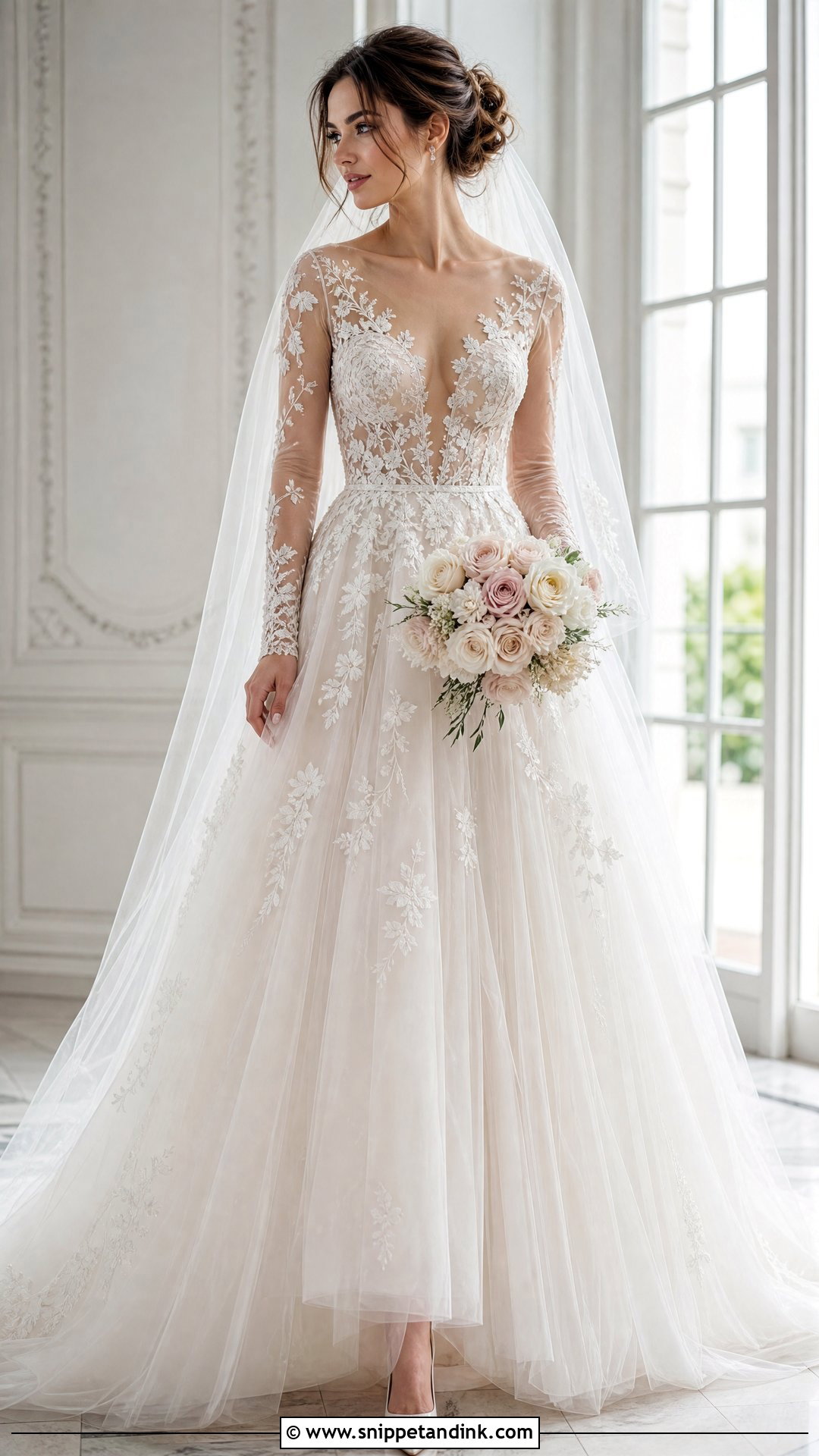
Sheer mesh with lace placed on top looks delicate, but the dress underneath still needs real cups and a lining that does the supporting. I check the shoulder seams on illusion bodices closely, because a poor fit there makes the mesh wrinkle as soon as you move your arms. A soft tulle skirt balances the detailed top. Wear the hair up loosely to show the back. Look at the mesh against your skin in daylight and under indoor bulbs; a shade that disappears in one can look grey or pink in the other.
10. Corset-Bodice Princess Ball Gown Wedding Dress
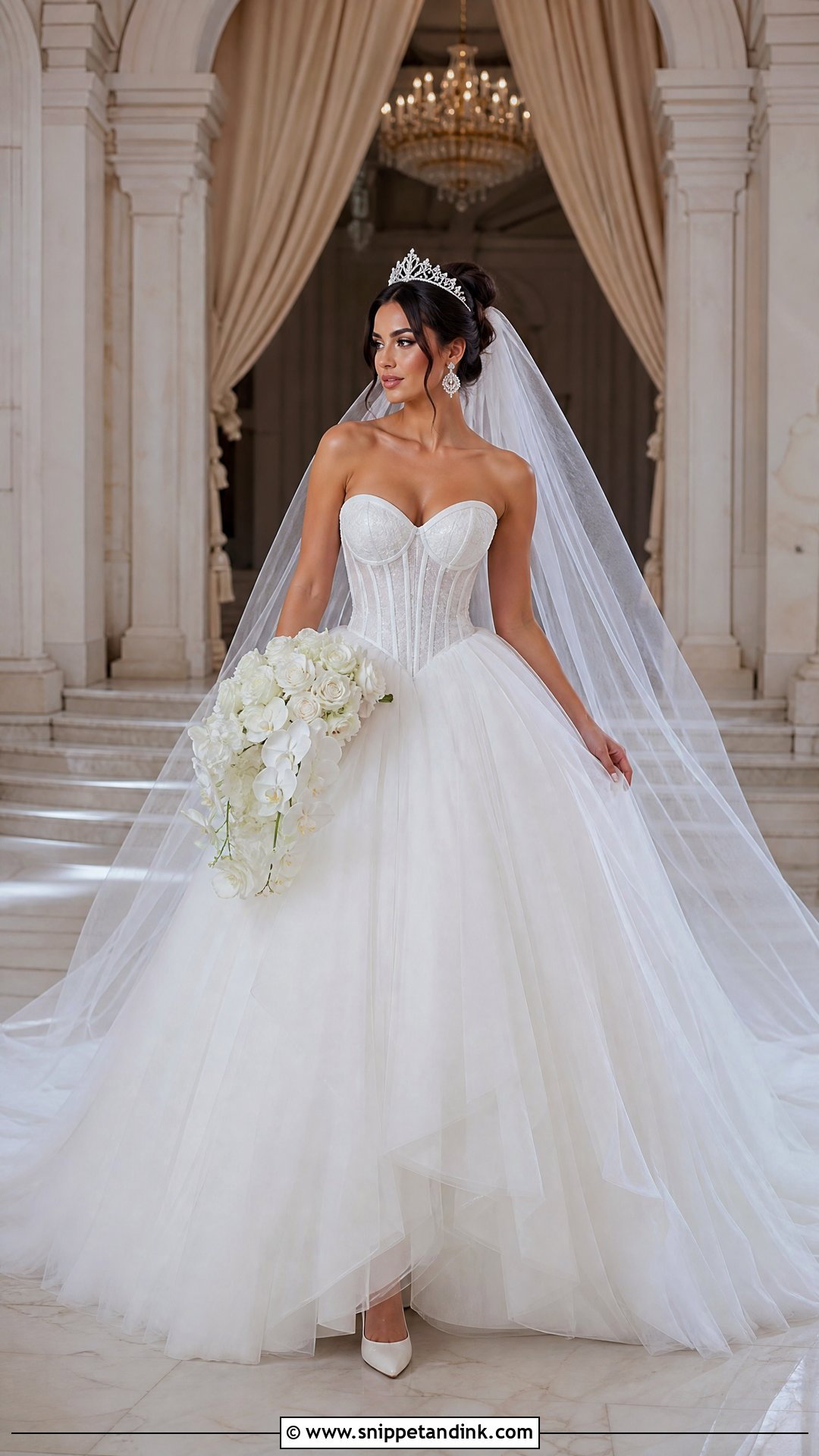
Exposed corset seams have become a fashion signature, and they’re also one of the most supportive structures a bride can wear. Look for proper boning, a curved neckline and a skirt that starts smoothly at the waist with no bulge. Satin or lace panels make the bodice formal; a tulle skirt keeps the bottom light. Statement earrings usually look cleaner than a necklace against corsetry. Ask your seamstress to fit the corset while you’re seated. You should be able to take a full breath and eat dinner without it digging in.
11. Mikado Princess Ball Gown Wedding Dress With Pockets
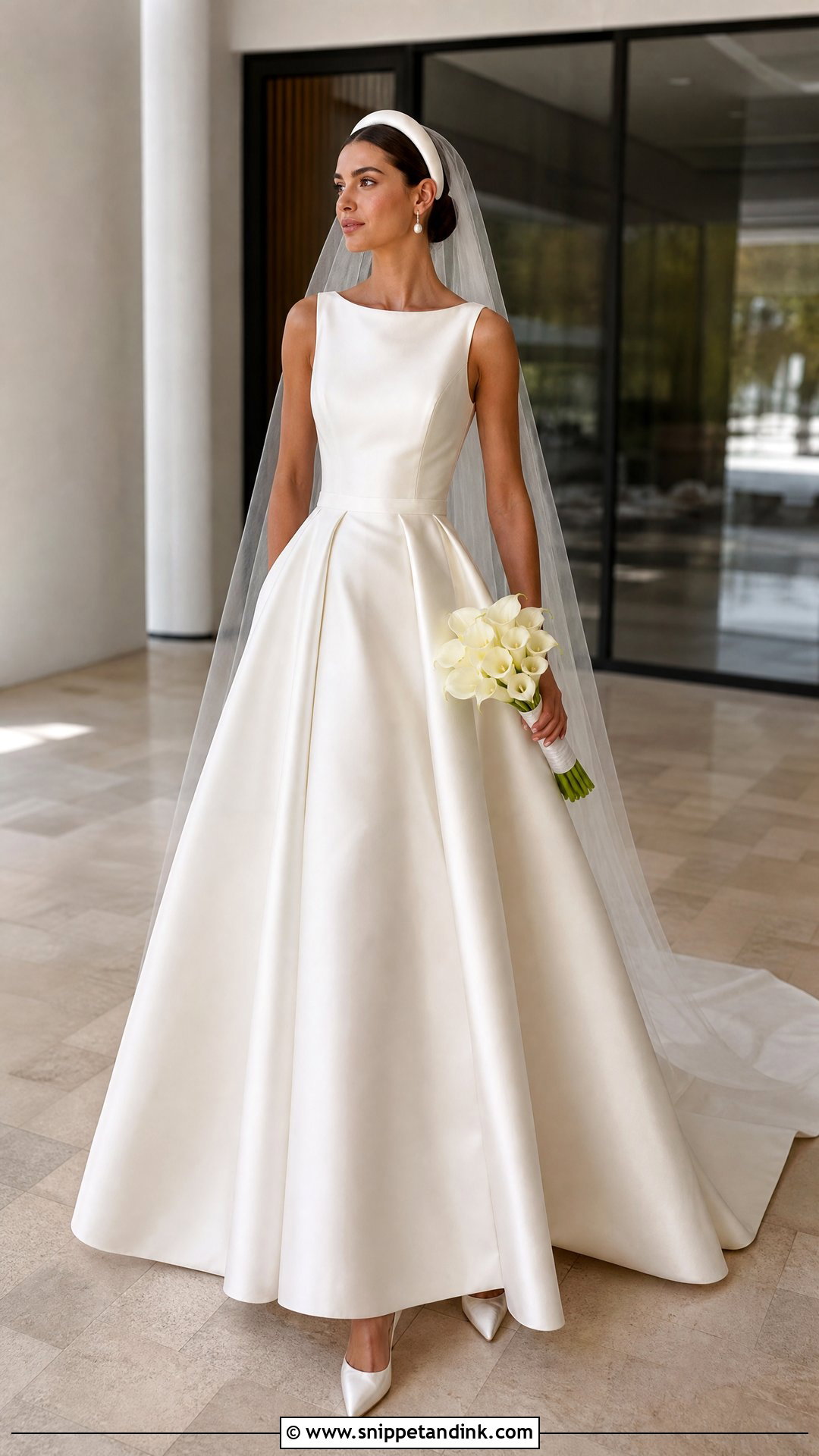
Mikado has a dry, stiff hand that holds broad pleats without help, so the skirt keeps its shape all day. That stiffness also makes it a good home for hidden pockets, which sit inside the pleats without spoiling the line. Pointed pumps and a structured satin headband keep it polished. A long sheer veil adds the movement the fabric itself doesn’t have. It gives you fairytale volume without extensive lace, glitter, or floral decoration, and it looks right in a formal room.
12. Tiered Organza Princess Ball Gown Wedding Dress
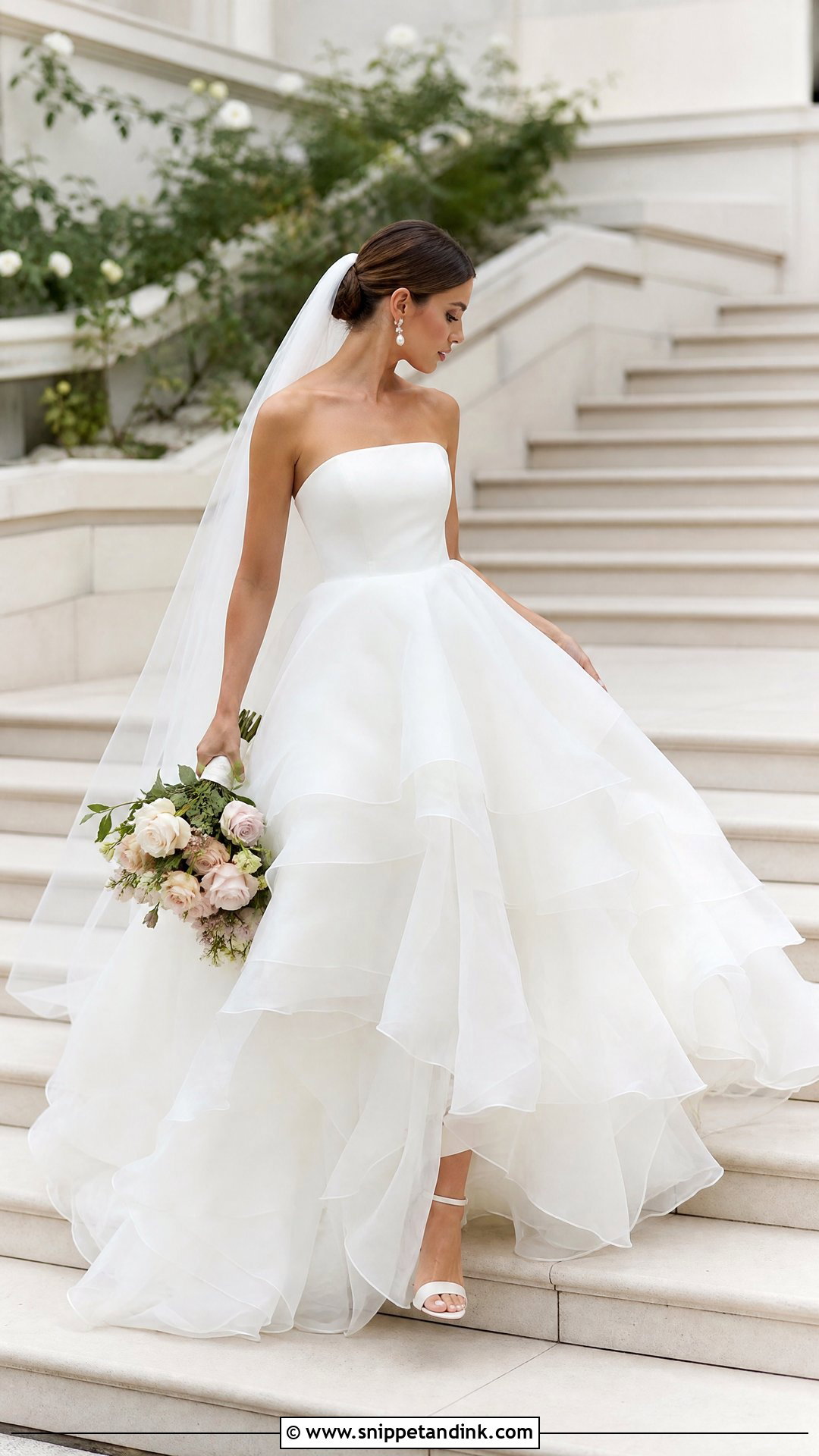
Organza tiers float out from the waist and hold their shape, which makes them more dramatic than tulle and also wider. Tiers that fall gradually look graceful; tiers that jut out at the hips make the lower half look heavy. Keep the bodice simple so the two halves don’t compete. A higher bun adds height to balance the volume. Organza is crisp and doesn’t compress the way tulle does, so practise walking through a standard doorway and turning in a small room before you commit.
13. Ruffled Tulle Princess Ball Gown Wedding Dress
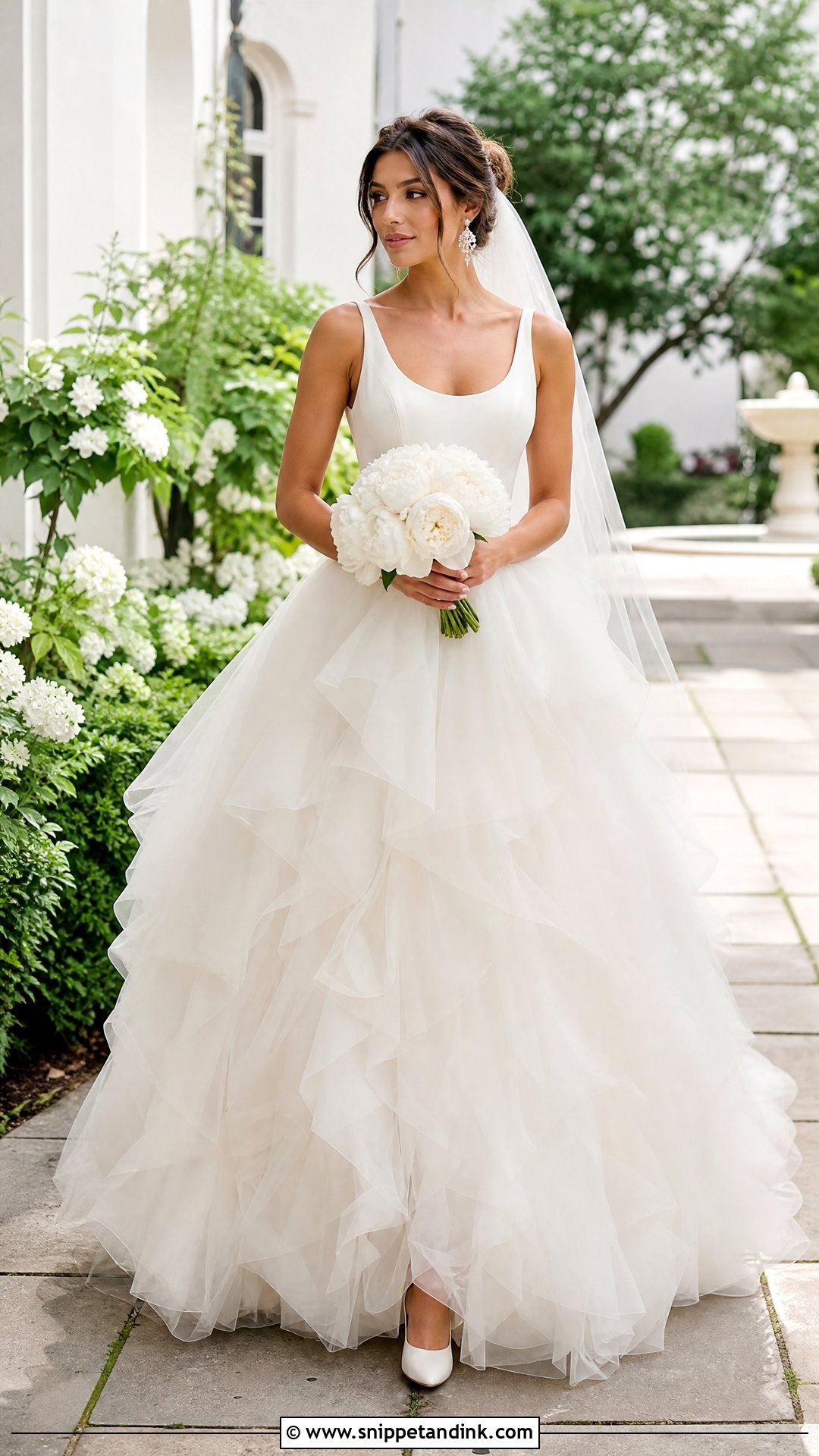
Ruffles add movement and a bit of playfulness, and they suit brides who find a plain ball gown too serious. Narrow, flowing layers cascading diagonally look modern; ruffles stacked straight round the skirt can look dated. Keep the waist visible. Block-heel pumps and a simple comb are enough, with loose waves or a relaxed updo. The detail I always check at alterations is the front hem. Ruffled skirts fold under the shoe if they’re even slightly too long, and that’s how hems get torn on the way down the aisle.
14. Cathedral-Train Princess Ball Gown Wedding Dress
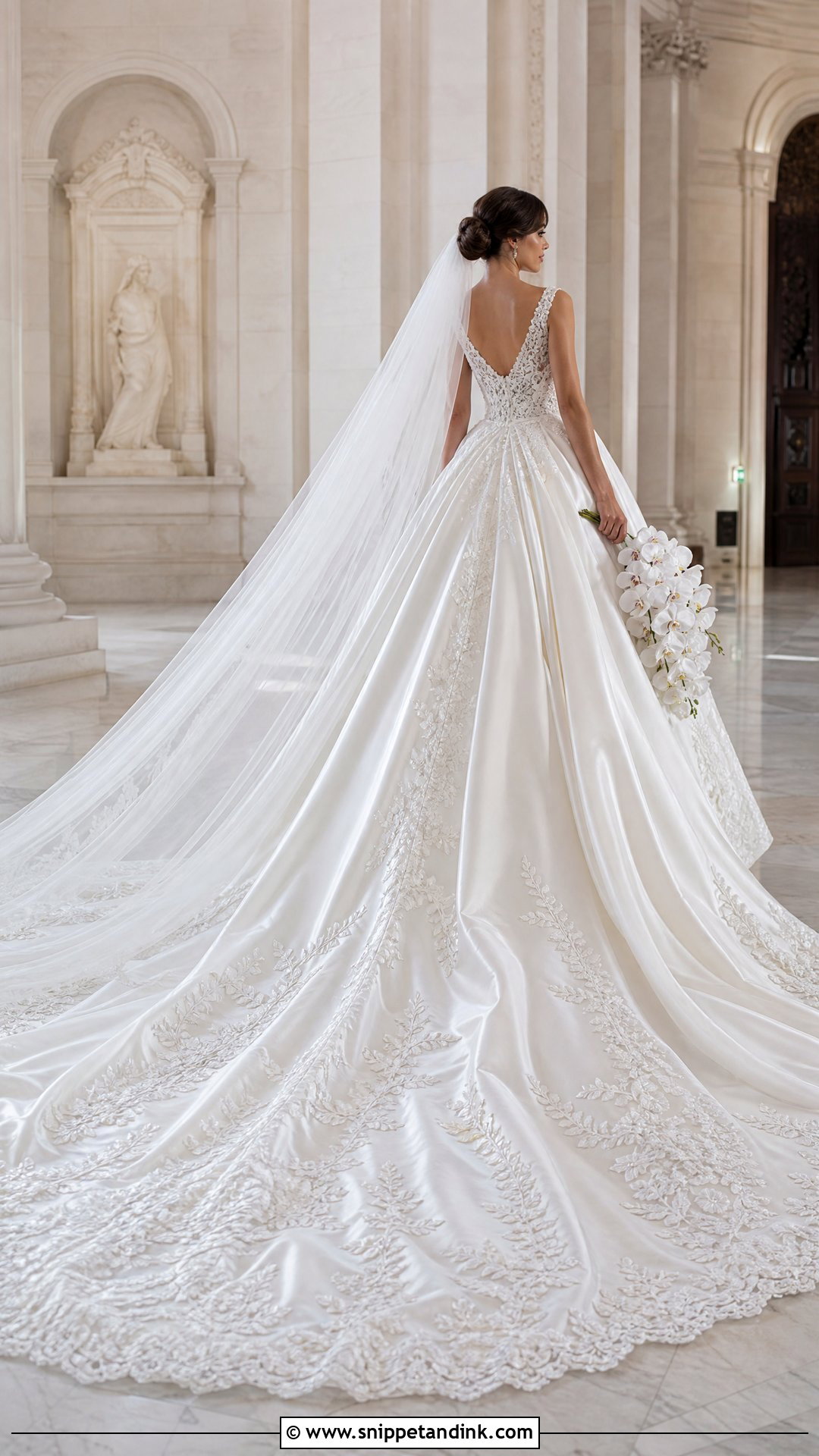
A cathedral train is about the view from behind, since that’s what guests see for most of the ceremony. Choose one with appliqués, buttons or embroidery placed where they’ll show in photos taken from the back of the room. A fitted satin or lace bodice gives enough structure to carry the length. A low bun anchors a cathedral veil that ends just beyond the dress. The bustle is the real work: a train this long needs strong anchor points, and somebody needs a practice run. Wide aisles and open floors only.
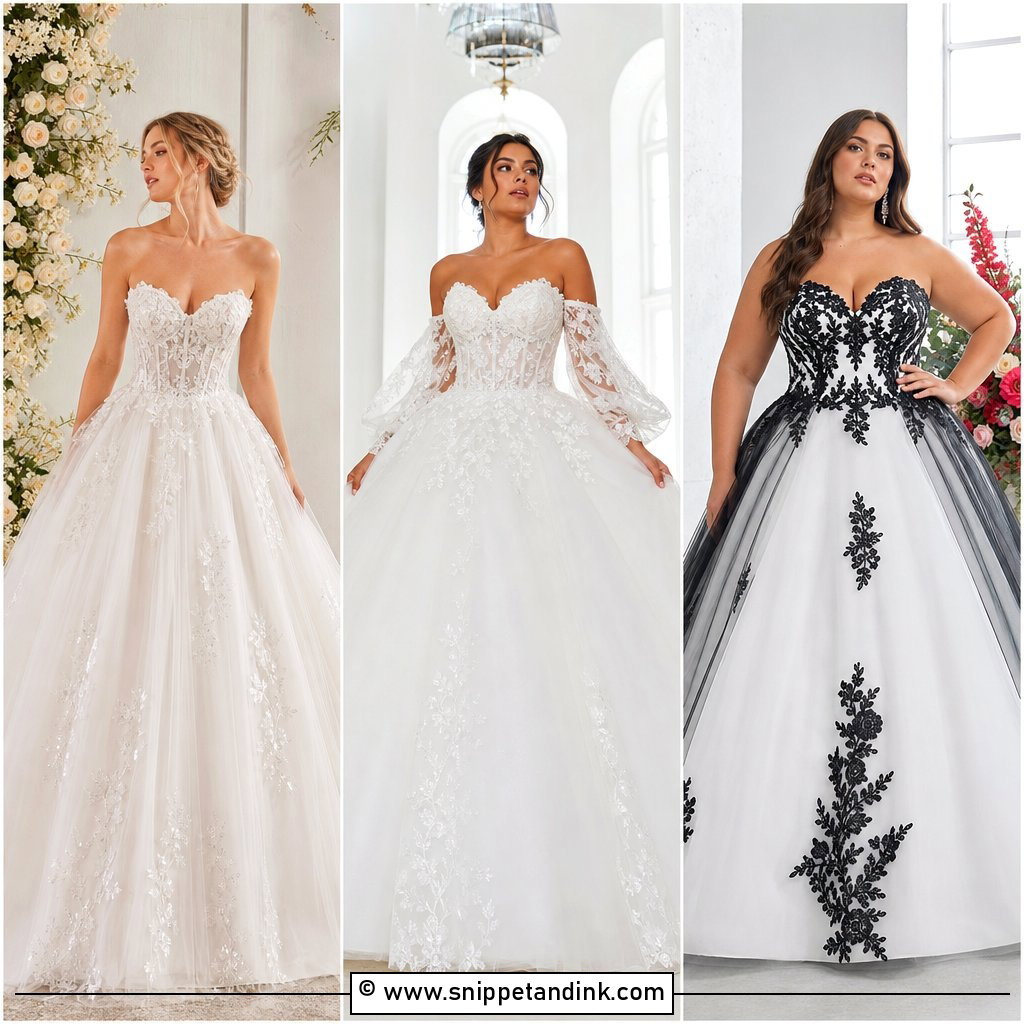
15. Detachable-Sleeve Princess Ball Gown Wedding Dress
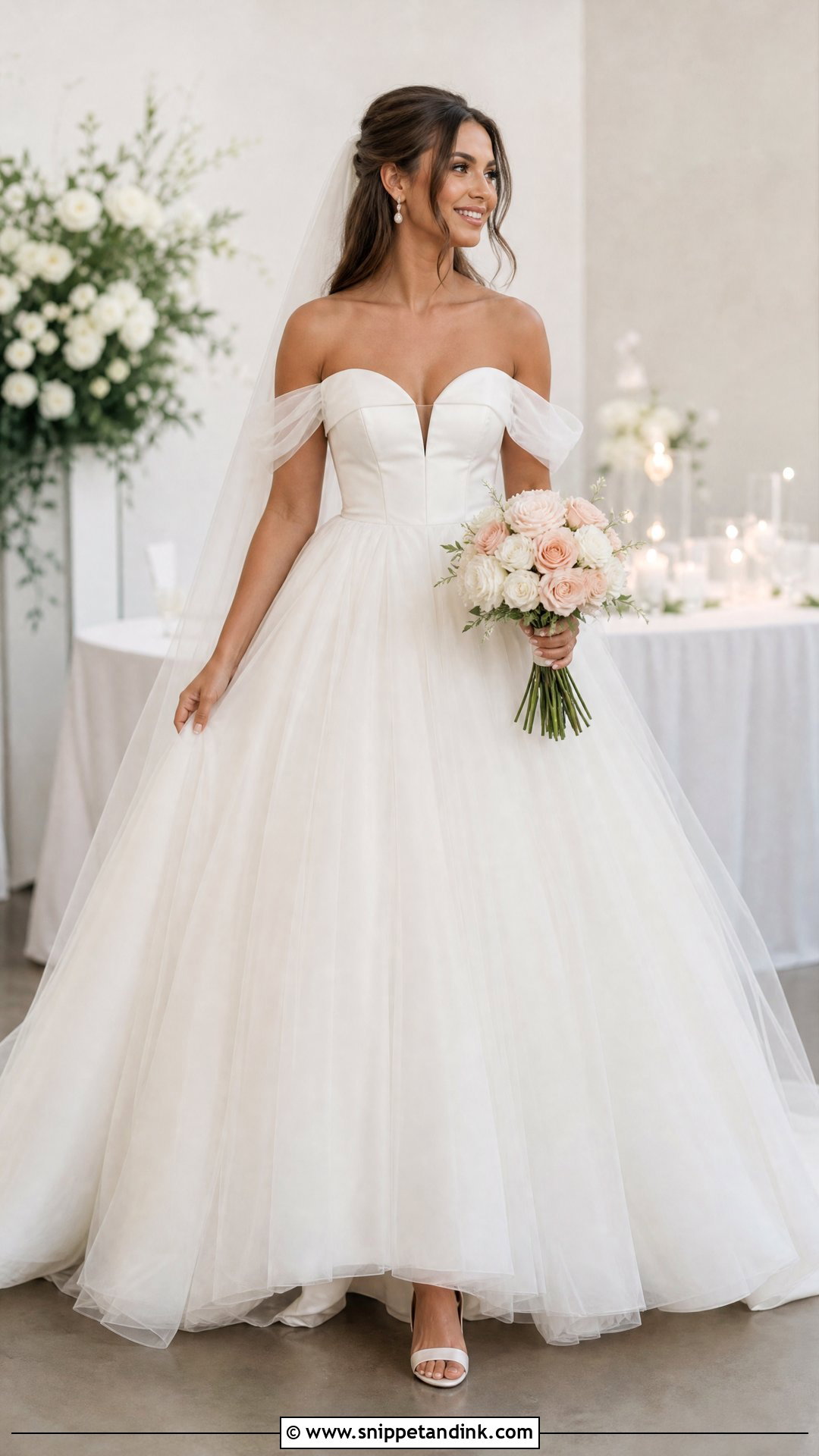
Two looks from one gown, and the reception version is often the one brides end up preferring. Begin the ceremony in off-shoulder sleeves, fitted lace sleeves or romantic puff sleeves, then remove them for a strapless or sleeveless bodice that feels much lighter for dancing. A half-up style holds a veil well and still feels relaxed later. Check that the sleeve attachments lie flat against the bodice. Snaps and loops that pull will leave a visible ridge once the sleeves are off.
16. Princess Ball Gown Wedding Dress With Cape Veil
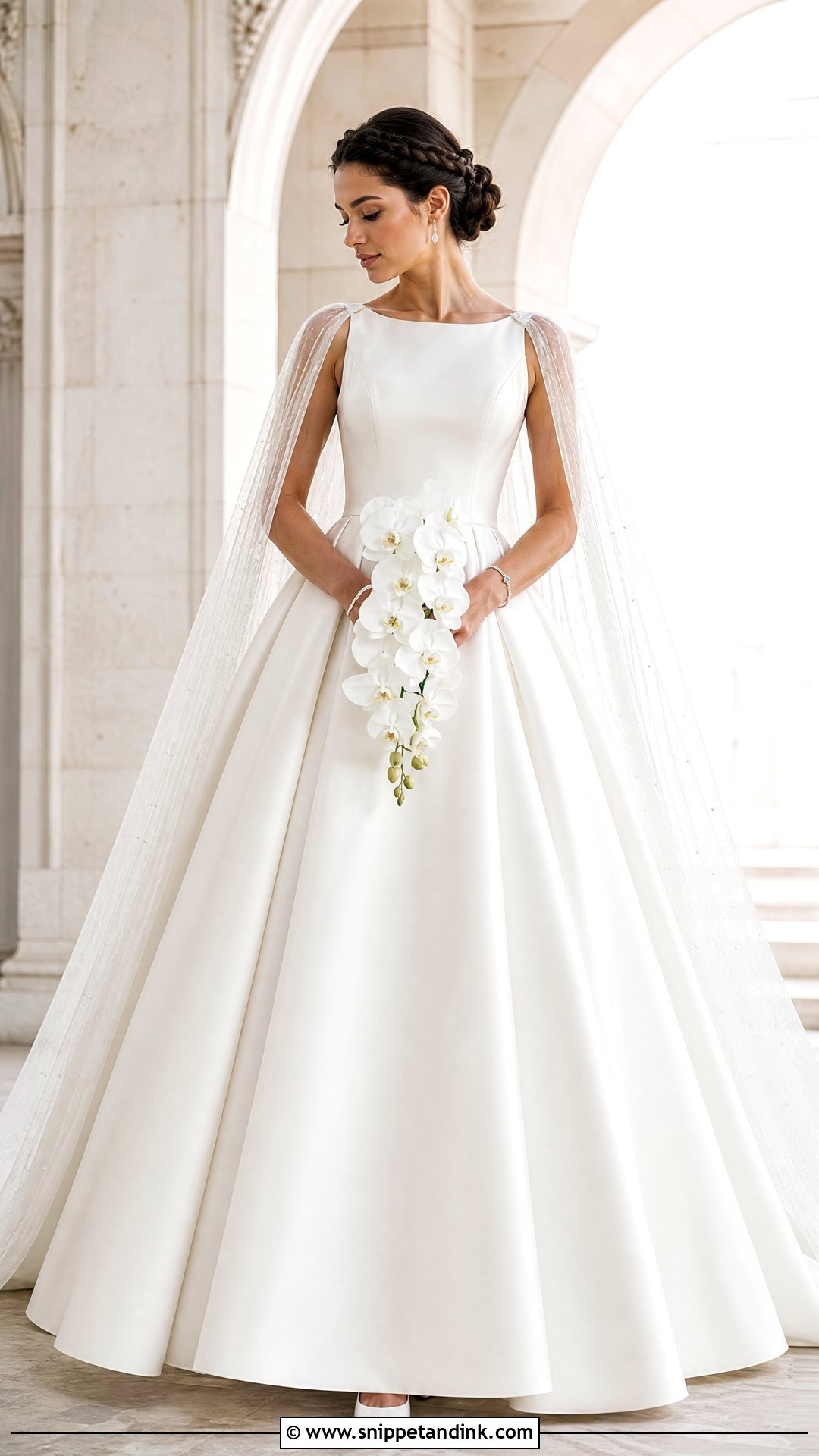
A cape veil hangs from the shoulders instead of the head, so it moves with your body and never tugs on your hairstyle. It sits best on a sleeveless satin or lightly embellished gown where the attachment points are neat. Sheer tulle with fine lace edging, pearls or scattered appliqués all work. Leave out the necklace and wear a slim bracelet instead. A vertical bouquet of orchids follows the cape’s long line. Make sure the fastenings release easily after the ceremony without someone needing to unpin your hair.
17. Blush Pink Princess Ball Gown Wedding Dress
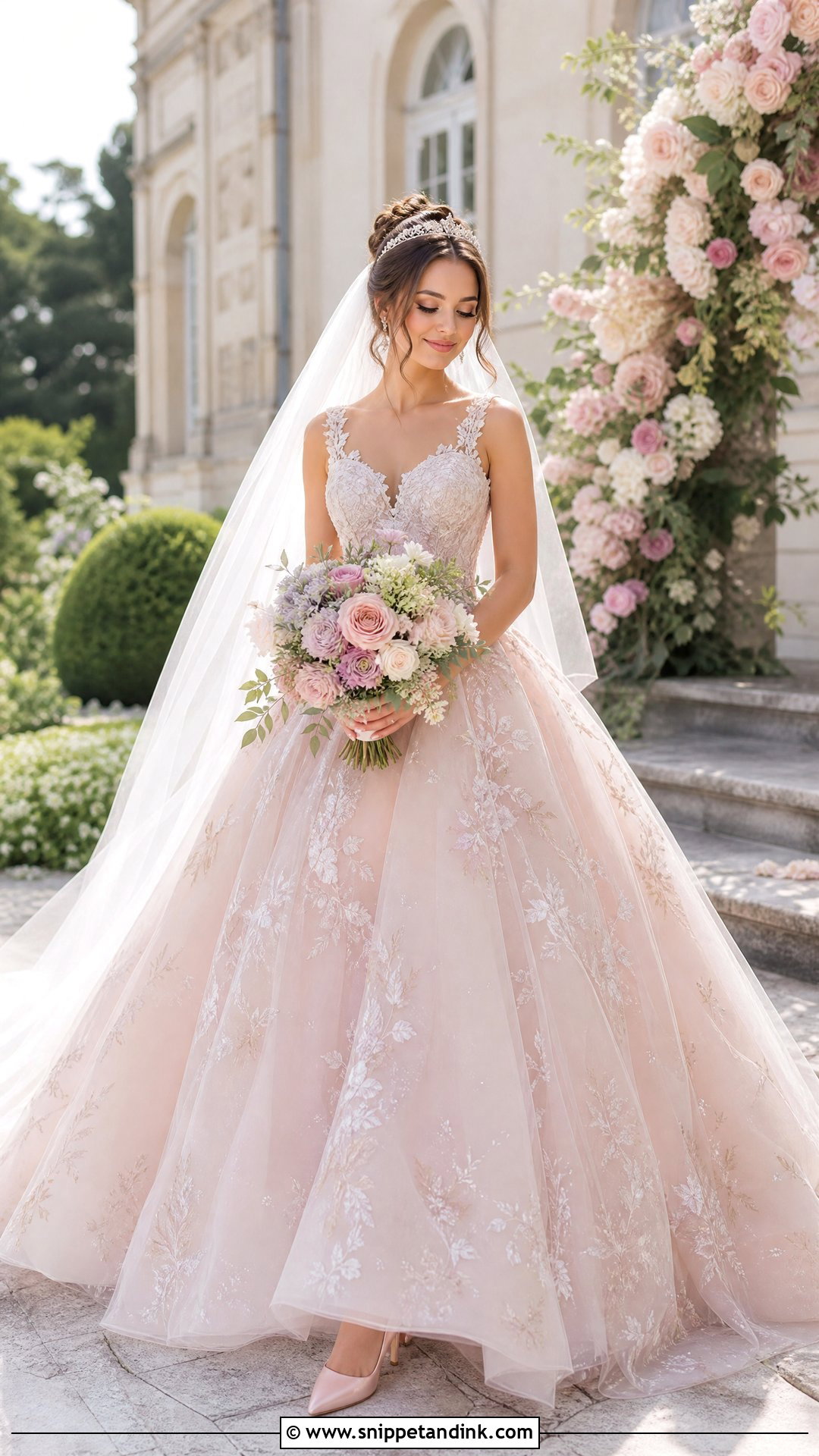
Blush works best as an underlayer. A pale rose lining beneath ivory tulle gives a soft glow that shifts as the layers move, which looks far more expensive than a flat pink fabric. Floral lace or a little shimmer on top adds to it. Blush satin heels and rose-gold earrings stay in the same family. View the gown in daylight before deciding, because warm artificial light pushes blush toward peach. A bouquet in ivory, pale pink and muted mauve connects the palette without matching it exactly.
18. Champagne Princess Ball Gown Wedding Dress
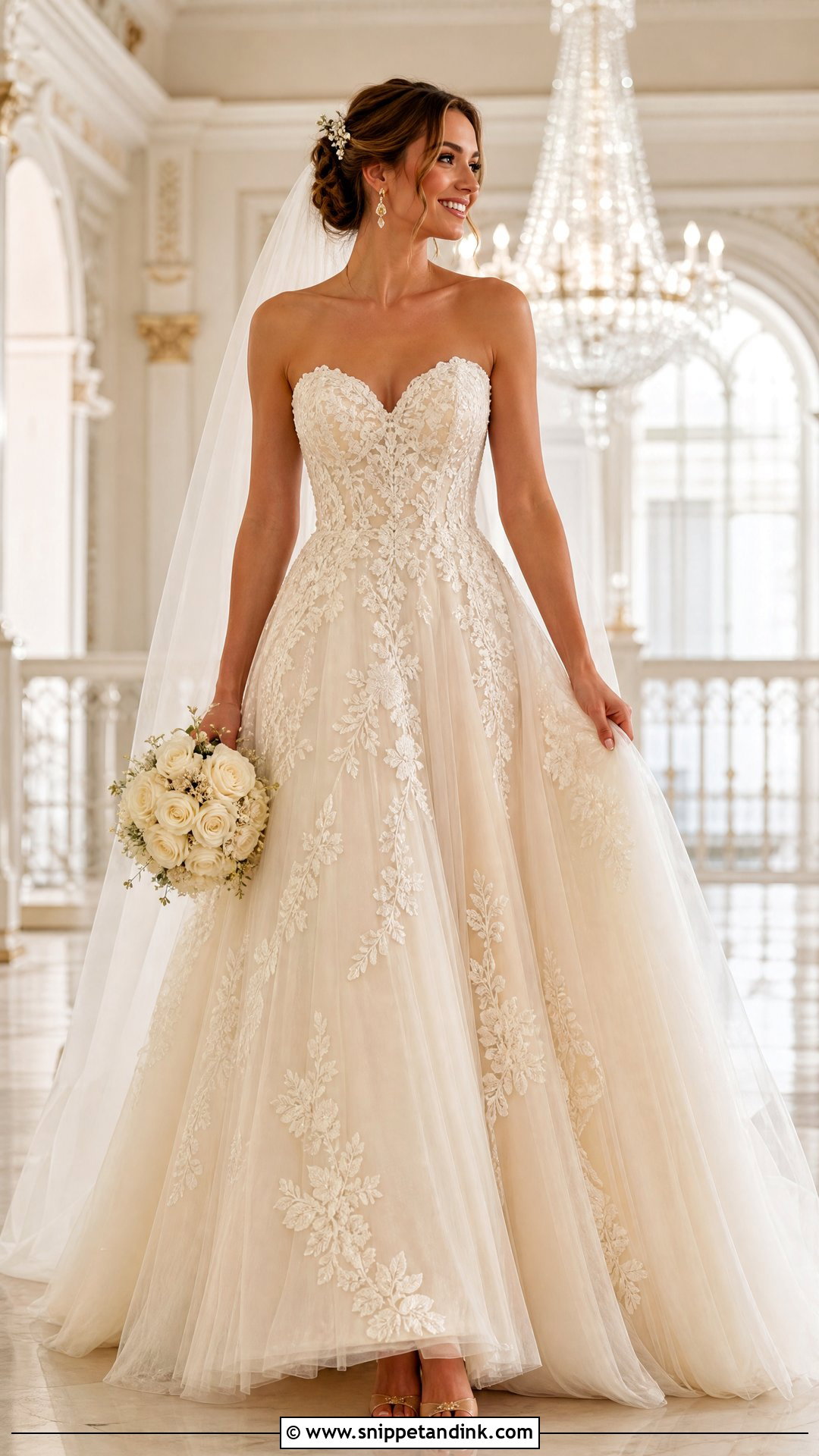
Champagne under ivory lace makes every motif in the lace easier to see, which is why so many lace gowns come with it as standard. A fitted sweetheart or V-neck bodice with a skirt that widens gradually from the waist suits the warmer tone. Gold earrings and champagne-toned heels match better than silver. Ask to compare champagne, nude and ivory linings side by side at a fitting; the difference against your skin is obvious when you see them together. It looks rich in bright interiors and among stone and greenery outdoors.
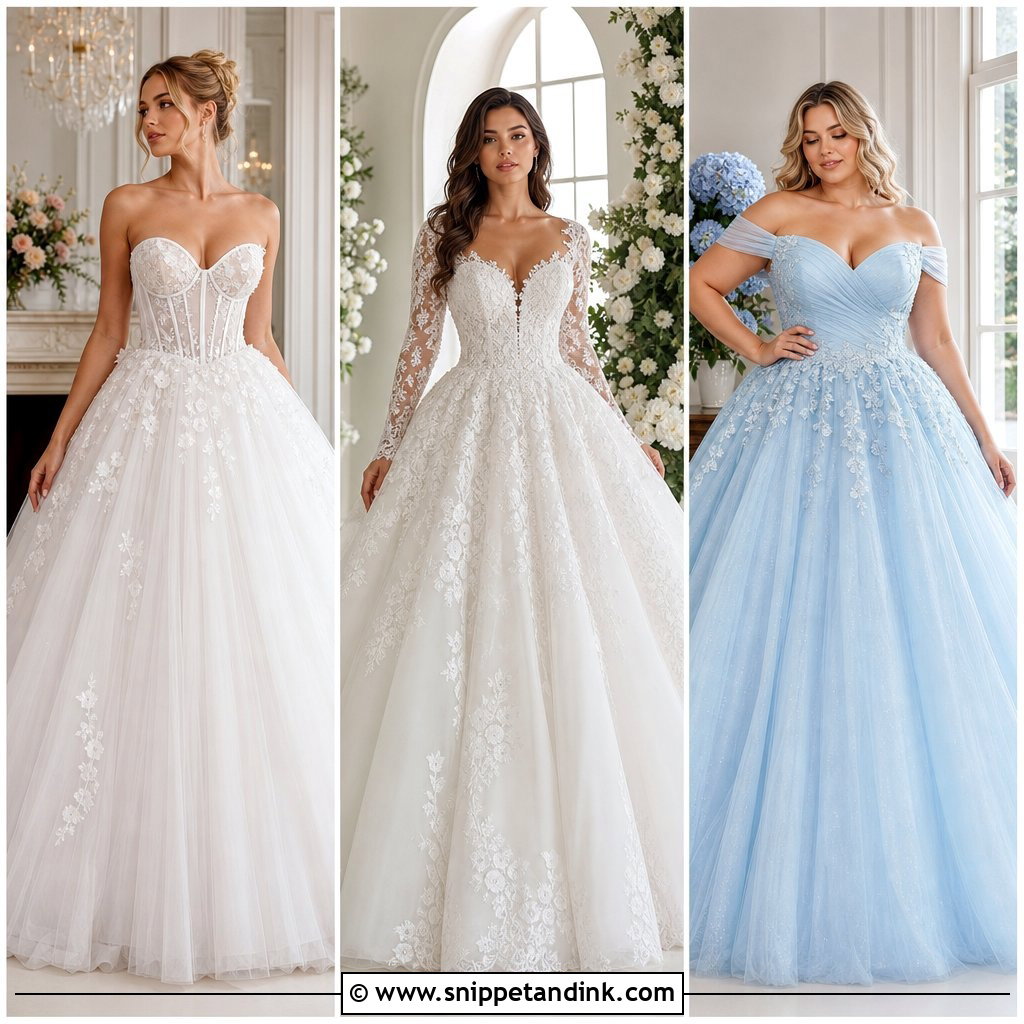
19. Plus-Size Lace Princess Ball Gown Wedding Dress
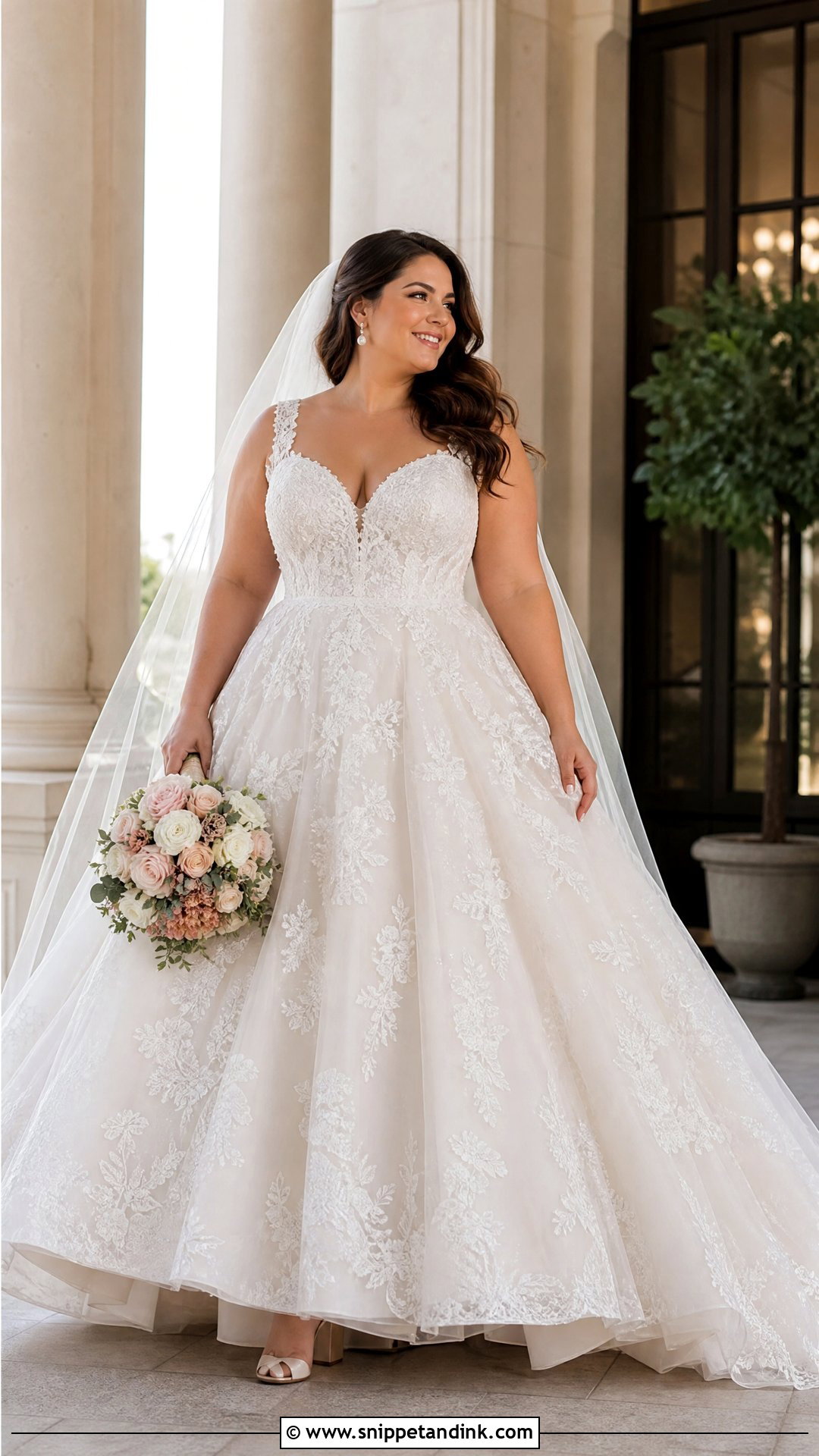
A well-made ball gown looks just as dramatic on a size 24 as a size 4. What changes is the engineering. I look for comfortable boning, straps that genuinely carry weight and a waistline placed where your body naturally narrows. Lace placed vertically or on the diagonal leads the eye through the silhouette. Side-swept waves or a lifted updo balance the volume of the skirt. Bring your exact underwear and shoes to every fitting. The number on the size label means very little; hem length and a reliable bustle mean a great deal.
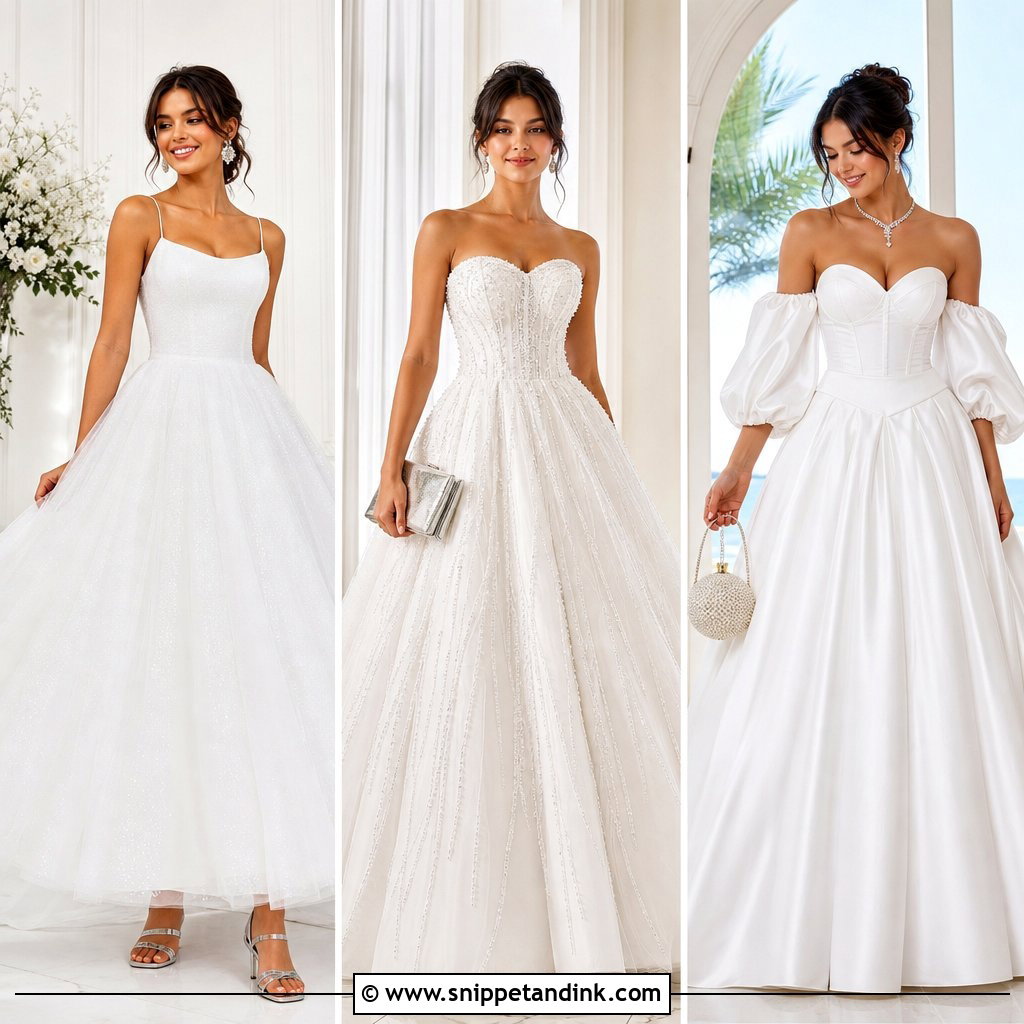

20. High-Neck Princess Ball Gown Wedding Dress
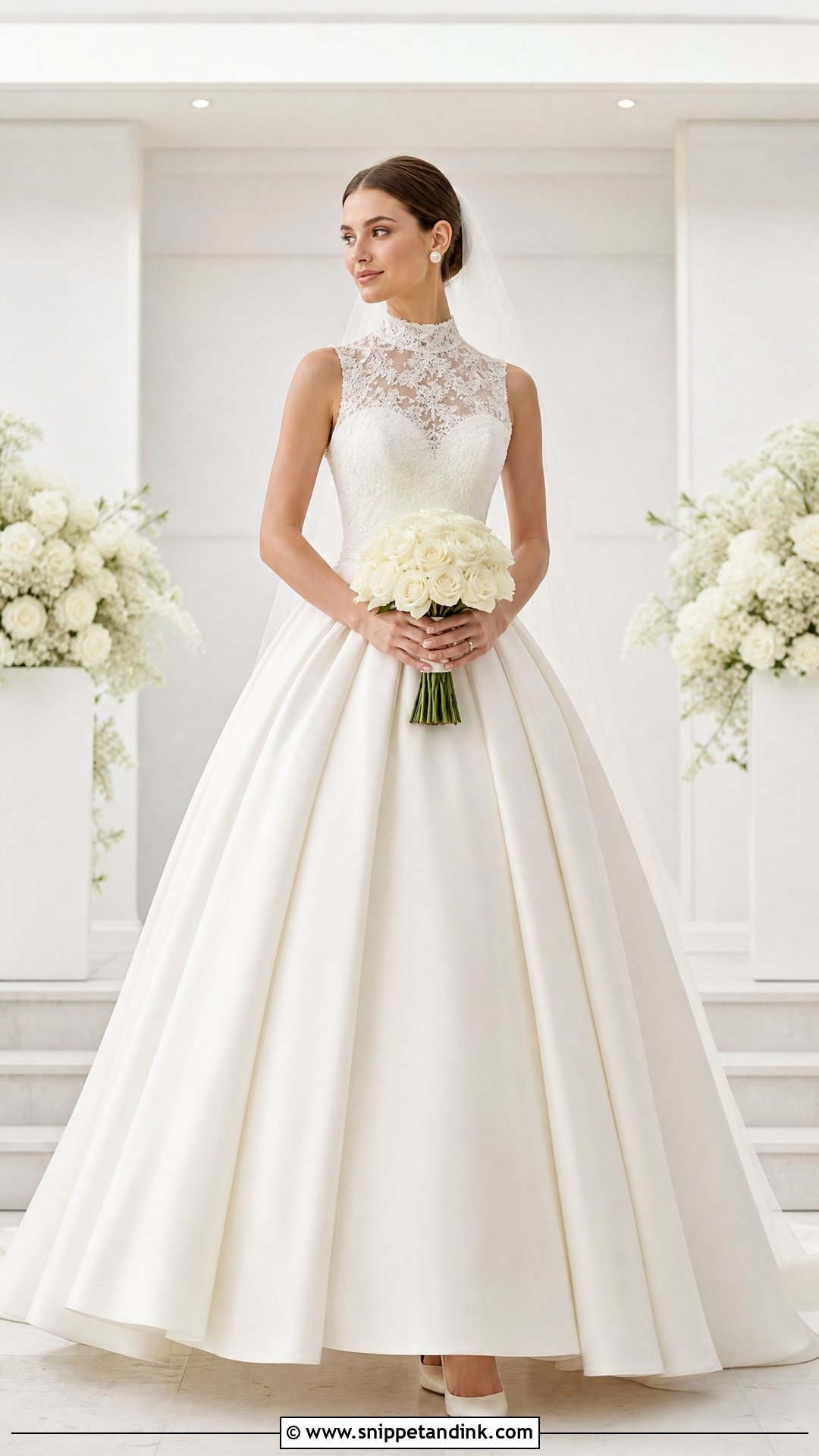
High necklines bring coverage and a certain gravity to a big skirt. Sheer lace, embroidered tulle or a lined bateau-style neck keep it from feeling heavy. With long sleeves it becomes fully covered; sleeveless, it suits warmer weather. Skip the necklace and keep earrings small. During alterations, turn your head fully to each side and look down. A collar can feel fine standing still and then rub all evening, so ask for soft binding at the edge if there’s any friction.
Ball Gown Fabrics on a Hot Summer Day
A full skirt traps warm air around the legs, so the fabric you choose matters more in July than in January. Duchess satin and Mikado are dense and warm. Organza is crisp but lighter. Tulle is the lightest per layer, though a skirt with many layers plus a petticoat can still feel like a tent.
Natural fibres breathe better than polyester, so silk organza or silk tulle wears cooler than the synthetic versions. For an outdoor summer wedding I’d ask the boutique whether a petticoat layer can be removed, choose an open or strapless neckline, and keep the lining light. A small fan and a shaded spot for photos help more than you’d think.
Over or Under: Bustles for Dancing in a Full Skirt
There are two main ways to lift a train for the reception, and each suits different gowns.
- An over-bustle hooks the train up onto buttons or loops on the outside of the skirt. It’s quick and shows off a lace train, but heavy satin can pull the hooks out of shape.
- An under-bustle (sometimes called French) tucks the train beneath the skirt with ribbon ties. It suits plain satin and Mikado because nothing shows on the outside, but it takes longer to fasten.
- A ballroom bustle lifts the train so the hem is even all the way round, useful for a very long cathedral train.
Ask your seamstress to colour-code or number the ties, and have the person bustling you practise at the last fitting. A bustle fastened in the wrong order hangs crooked and can tear the fabric during the first dance.
Does the Gown Still Feel Good at Midnight?
A fairytale gown has to look the part at the altar and still be wearable when the band plays its last song. Compare fabrics, necklines, waist placements, skirt volume and train lengths, then put each finalist through its paces: walk, sit, turn and reach. Shoes, veils, jewelry, hairstyles, and bouquets should finish the silhouette, never fight it. Polished satin, airy tulle, floral lace, ruffles or beading can all be right. Good tailoring is what turns any of them into your dress.
You'll Like These Ideas:





Leave a Reply