
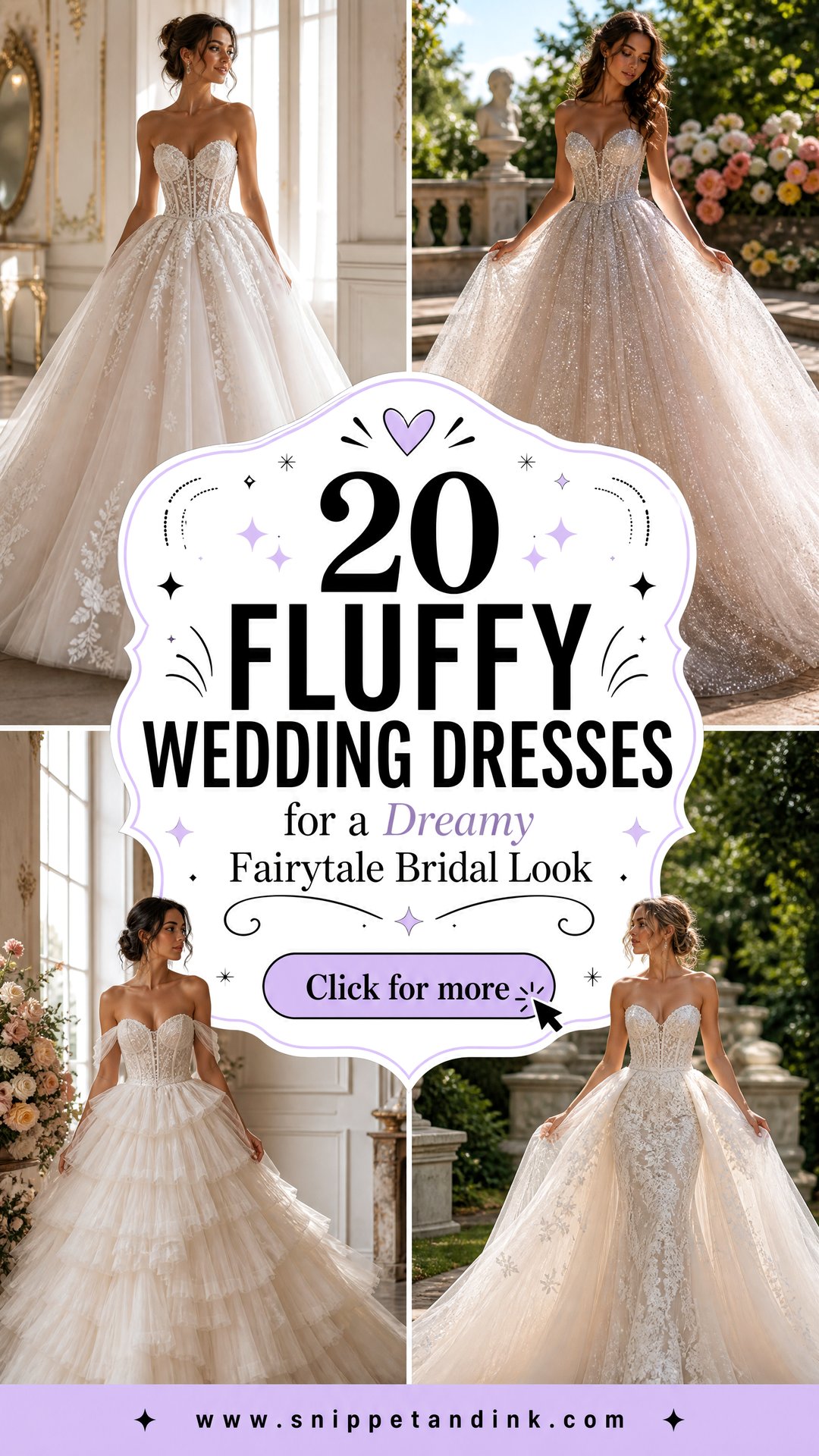
A full skirt changes how you walk into a room, and it changes everything around the dress too: how you sit, how you get through a door, who helps you to the restroom. I love styling volume, but I always talk brides through the practical side before they commit. Full gowns come as classic tulle ball gowns, sculpted organza, floral appliqué, detachable overskirts and pieces with exposed corsetry, feathers or 3D flowers. The right one should feel grand without swallowing you. For each look below I’ve set out the styling, plus the structural detail I’d check before buying, because with big skirts the inside of the dress matters as much as the outside.
Hoop or Petticoat? What Holds a Big Skirt Up
Every full skirt has something underneath doing the work. There are two main kinds, and they feel very different to wear.
A hoop petticoat uses rings of flexible boning to hold the skirt in a smooth bell. It gives the cleanest shape and is cool, since there’s air inside it. The downside is that it can tip up at the front when you sit carelessly and swing a little as you walk, so it takes some practice. A layered tulle or net petticoat builds volume from gathered fabric instead. It moves more softly and sits more naturally in a chair, but it’s warmer and can feel heavy by evening.
Many gowns have the support built in. If yours needs a separate petticoat, buy it before your first fitting, because the hem length is set over it. A petticoat that’s even slightly fuller or flatter than the one used at fittings changes where the hem lands.
1. Tulle Ball Gown Wedding Dress
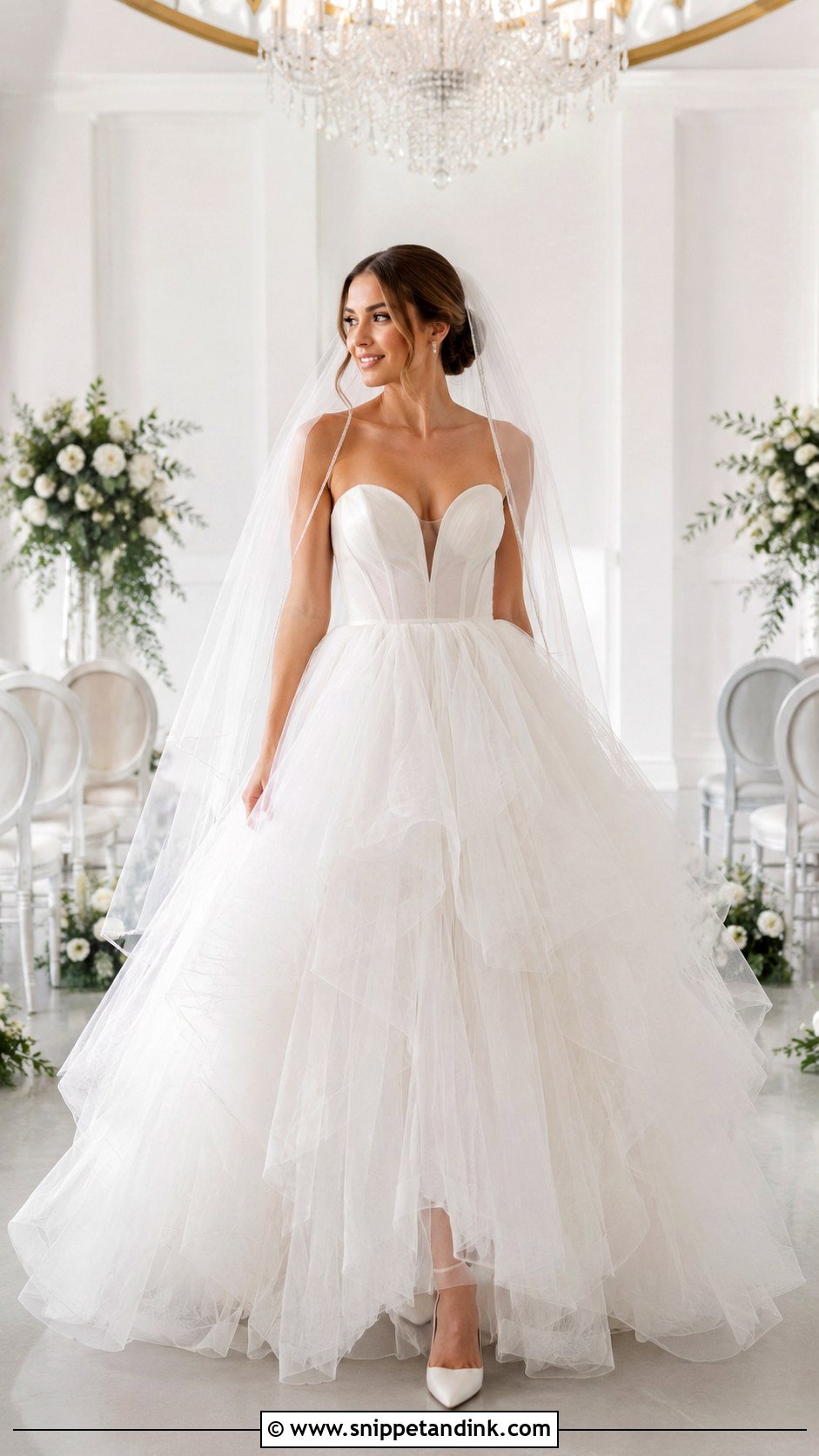
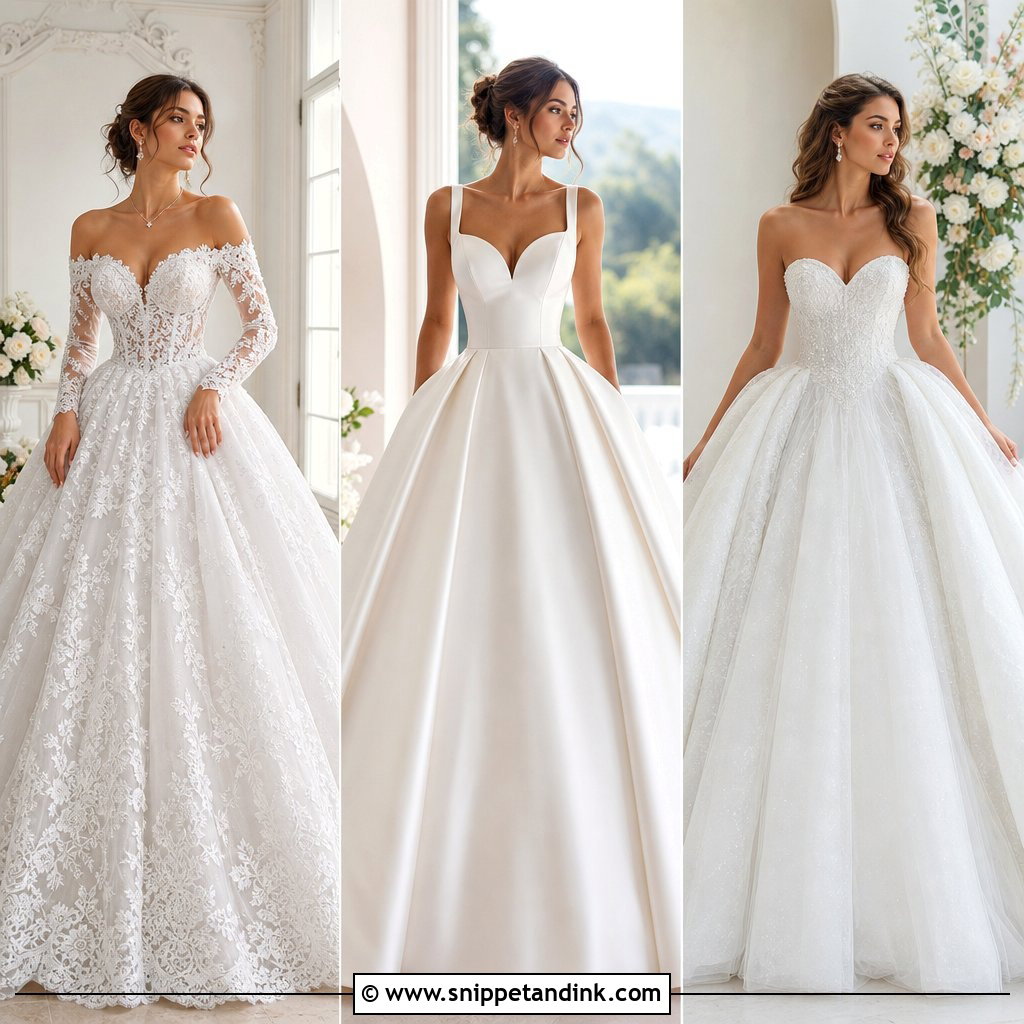
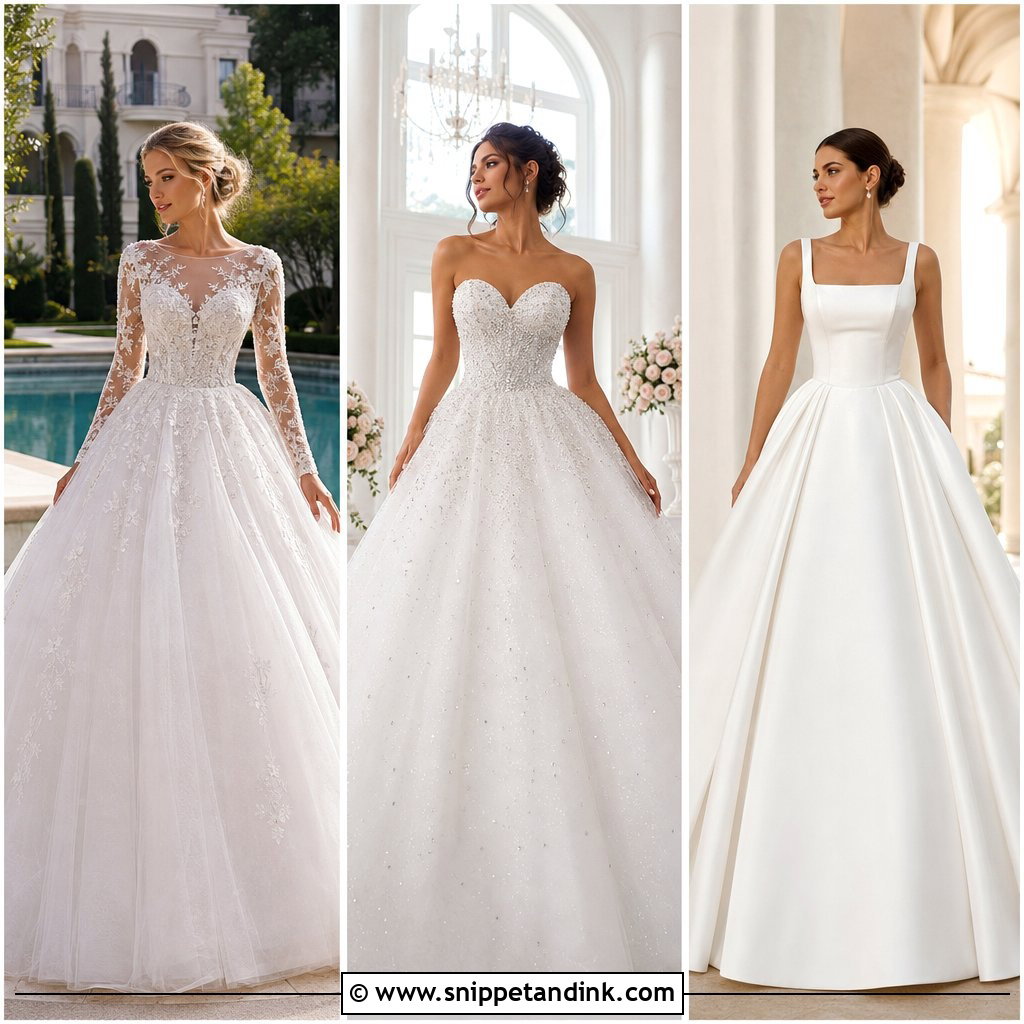
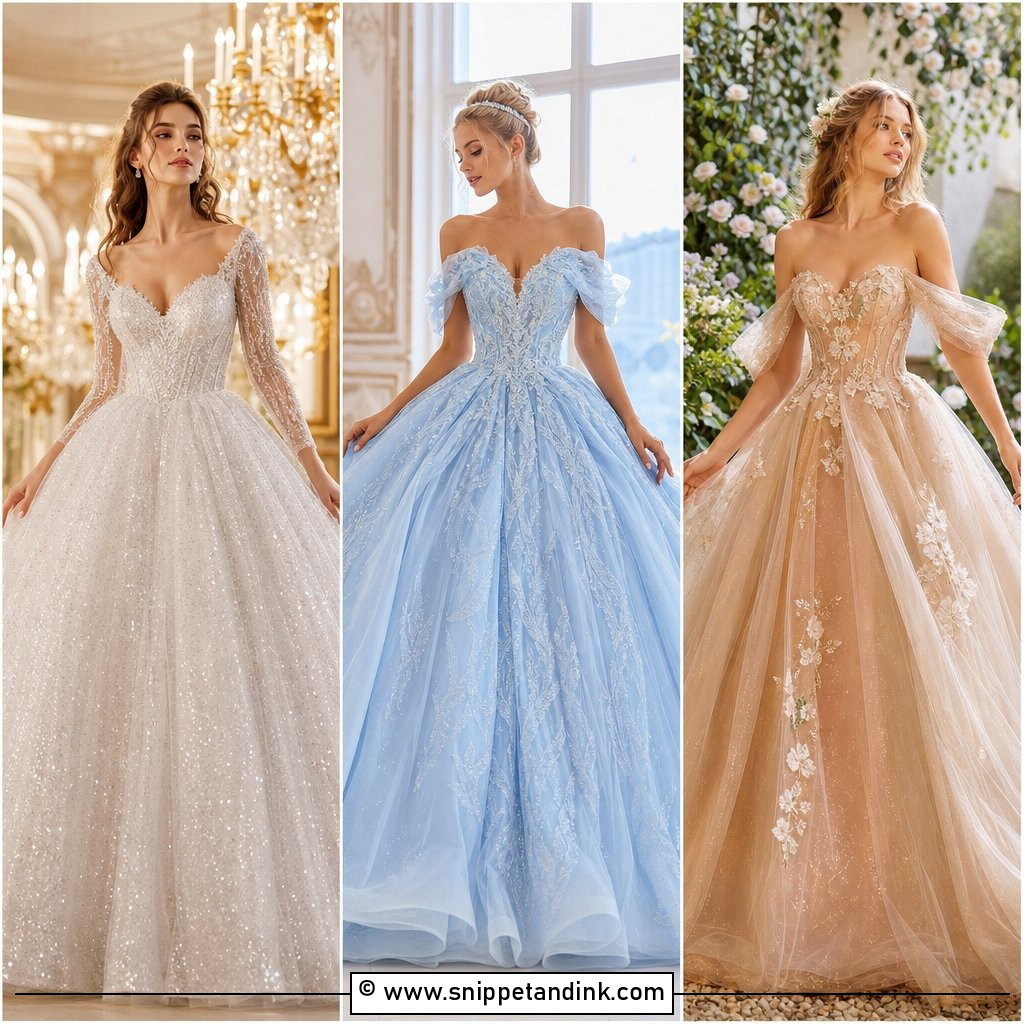
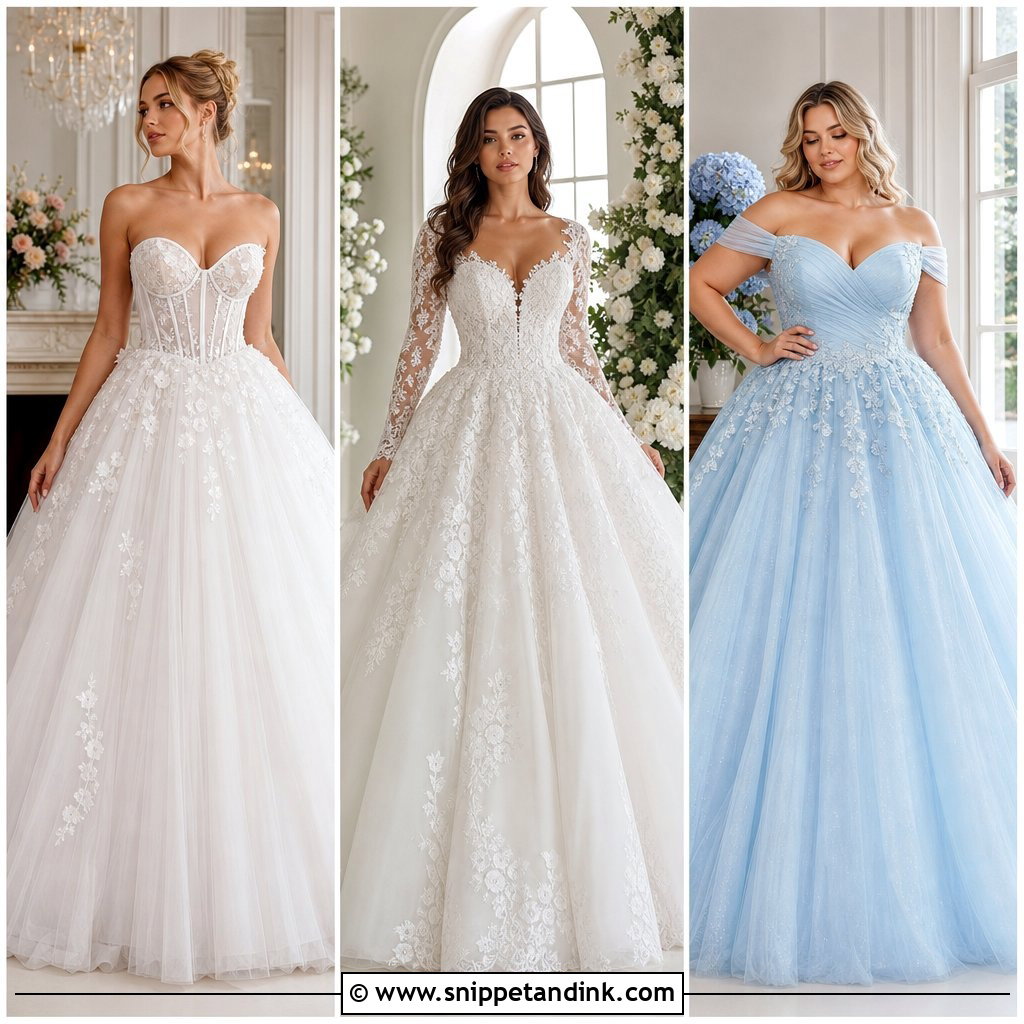
The tulle ball gown is the classic for maximum volume that still floats. What makes it float is many fine layers over a supportive lining, not one stiff heavy skirt, so lift the hem in the shop and count. A fitted bodice gives the fullness a clear waist. I’d keep the rest simple: a fingertip veil, pearl studs, pointed ivory pumps hidden under the hem and a neat low bun. Ask whether the crinoline is built in or a separate petticoat, because it changes how the skirt sits and how you pack it. Then sit, walk and turn. You’ll know within a minute whether you can live in it.
2. Strapless Fluffy Wedding Dress
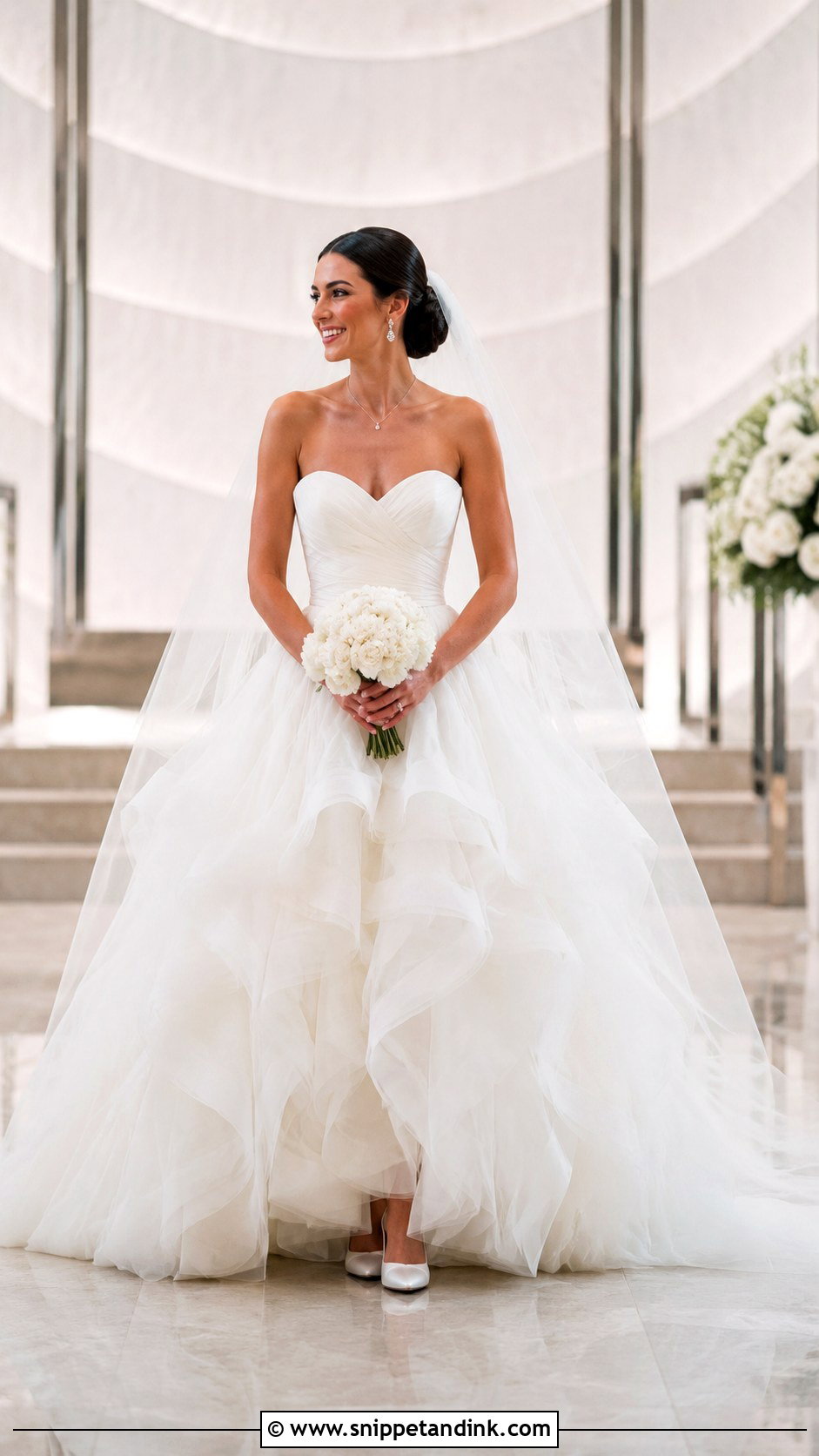
Strapless works with a big skirt because the bare shoulders balance all that volume below. The catch is that a heavy skirt pulls down on the bodice, so the boning, cups and inner waistband have to carry real weight. If you’re tugging it up in the shop, you’ll be tugging it all night. Style it with a simple pendant, drop earrings, a smooth cathedral veil and closed pumps, with a compact bouquet. A detachable tulle wrap or bolero adds coverage if the venue is cool. Leave the final bodice fitting close to the date so the fit reflects your body on the day.
3. Long Sleeve Tulle Wedding Dress
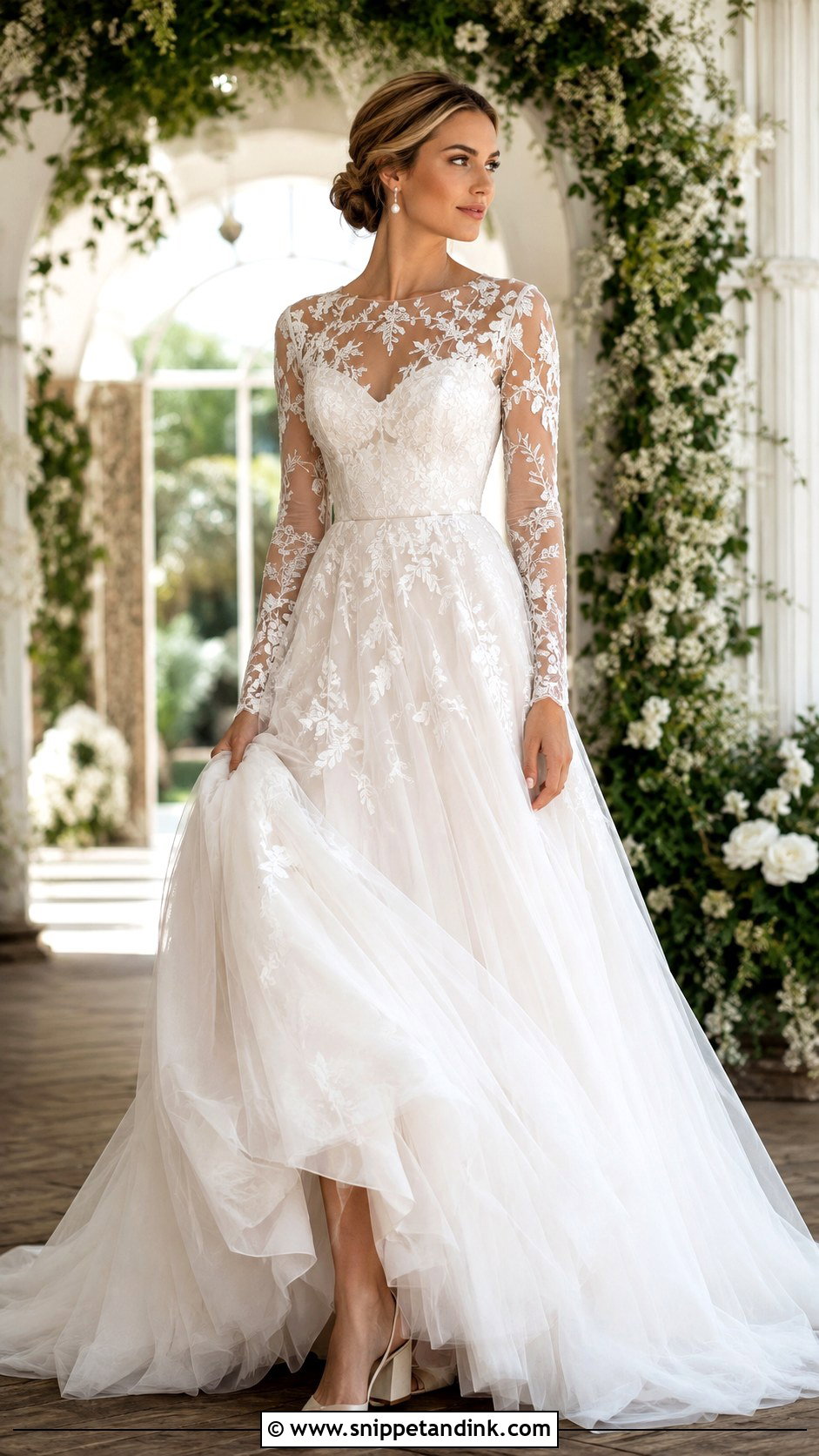
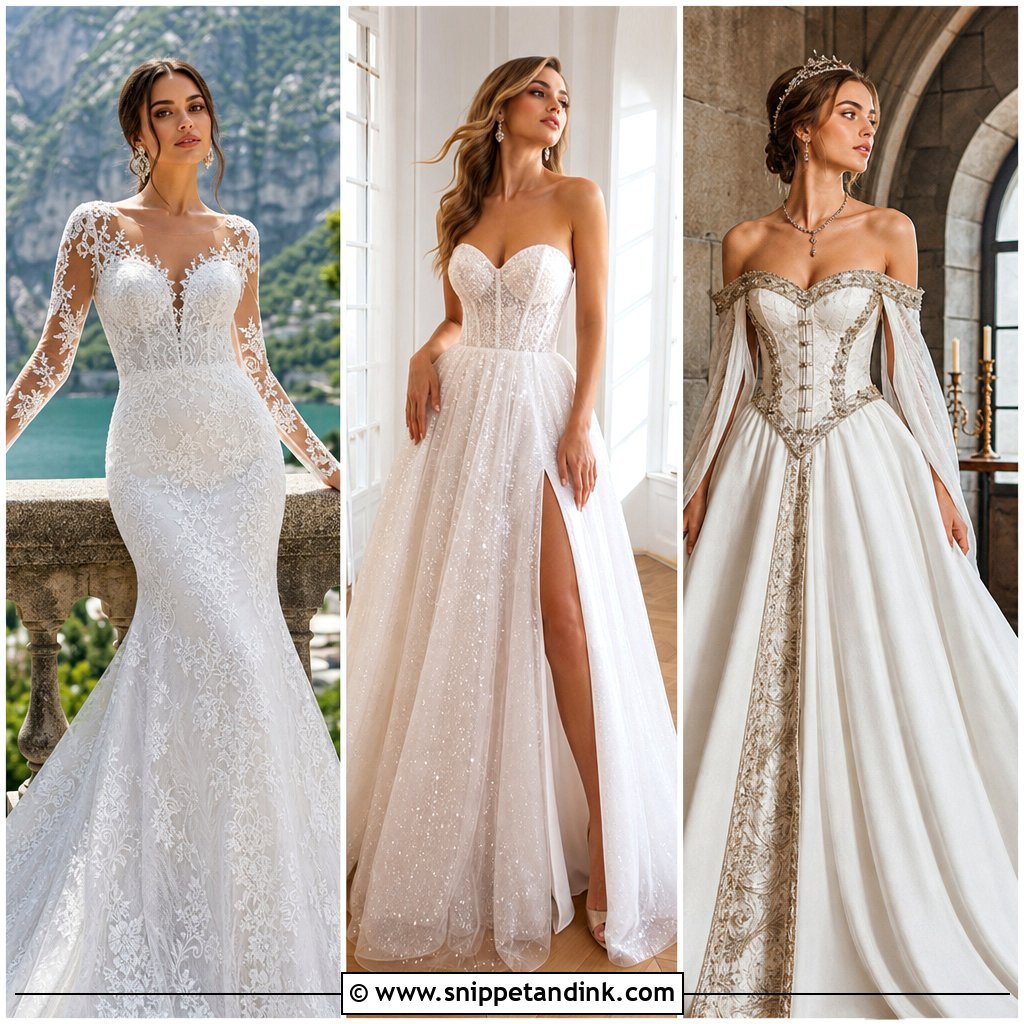
Sheer tulle sleeves with scattered lace appliqués link the bodice to the skirt, so a full gown looks like one piece instead of two halves. Choose a defined waist, a lightly structured torso and a layered skirt that moves. Pearl earrings, an understated comb and closed block heels keep you steady, and a low chignon stops long hair catching on the appliqués. Bend your elbows and lift your arms in it. For an outdoor wedding, I’d pick smooth appliqués over loose beading. Beads snag on chairs, bouquet wire and hedges far more often than brides expect.
4. Off The Shoulder Ball Gown Wedding Dress
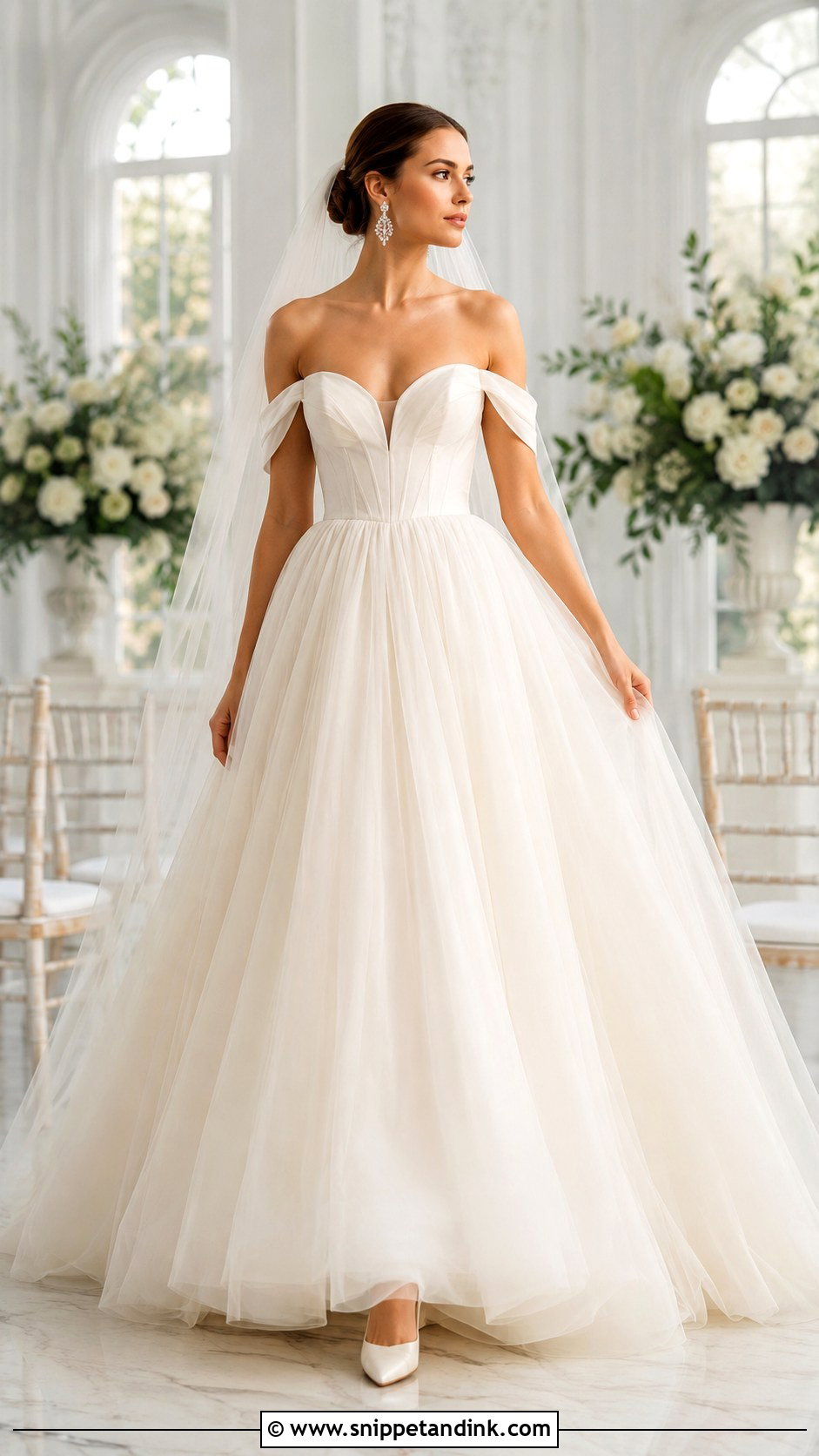
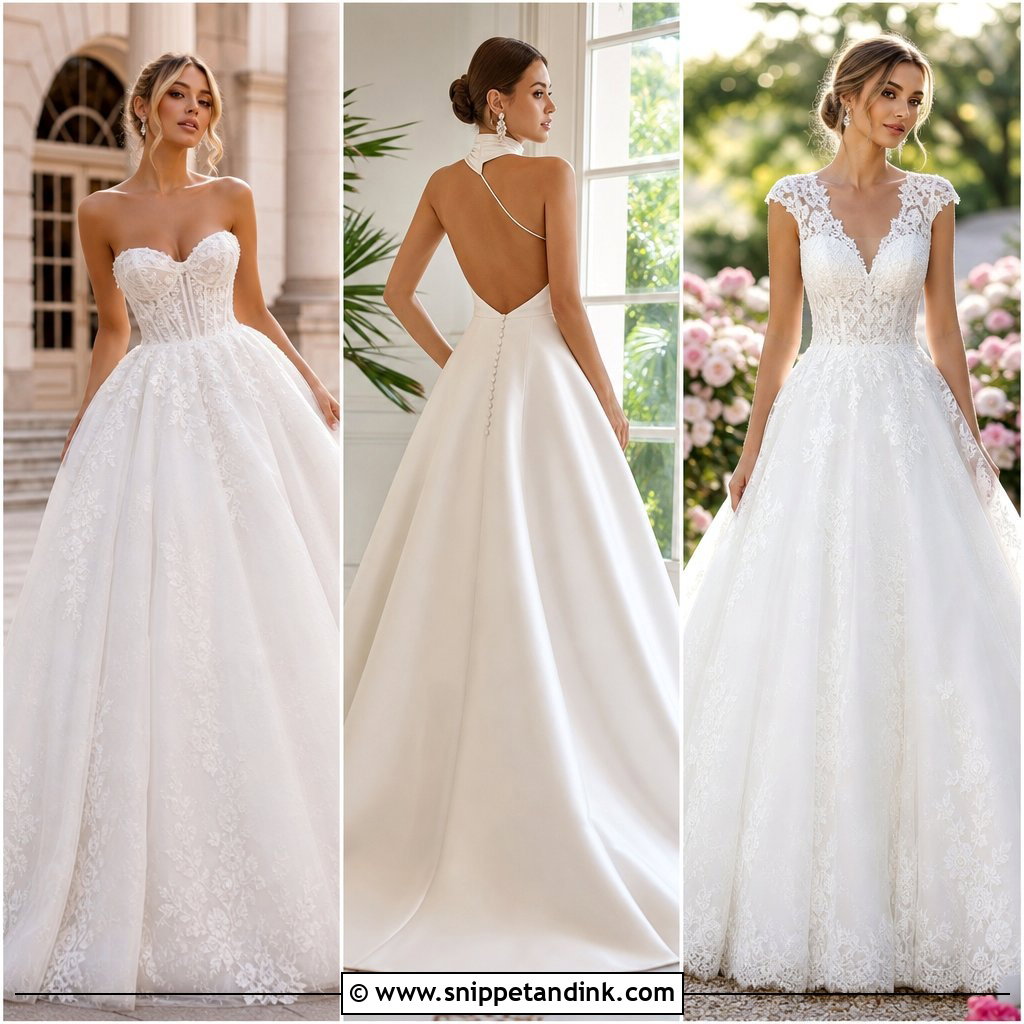
Off-shoulder on a ball gown frames the collarbone and lets the skirt keep its drama. The bands can be draped tulle, structured satin or detachable sleeves, and each moves differently. I’d go with a bare neck, small chandelier earrings, a polished updo, pointed pumps and a medium veil with little edging. Here’s the real question: are the bands decorative or functional? Some are stitched so tight you can’t lift your arms past your chest. Hug someone at the fitting. If it restricts you, ask about removable straps or draped sleeves on hidden fasteners, which you can lose after the ceremony.
5. Sweetheart Corset Wedding Dress
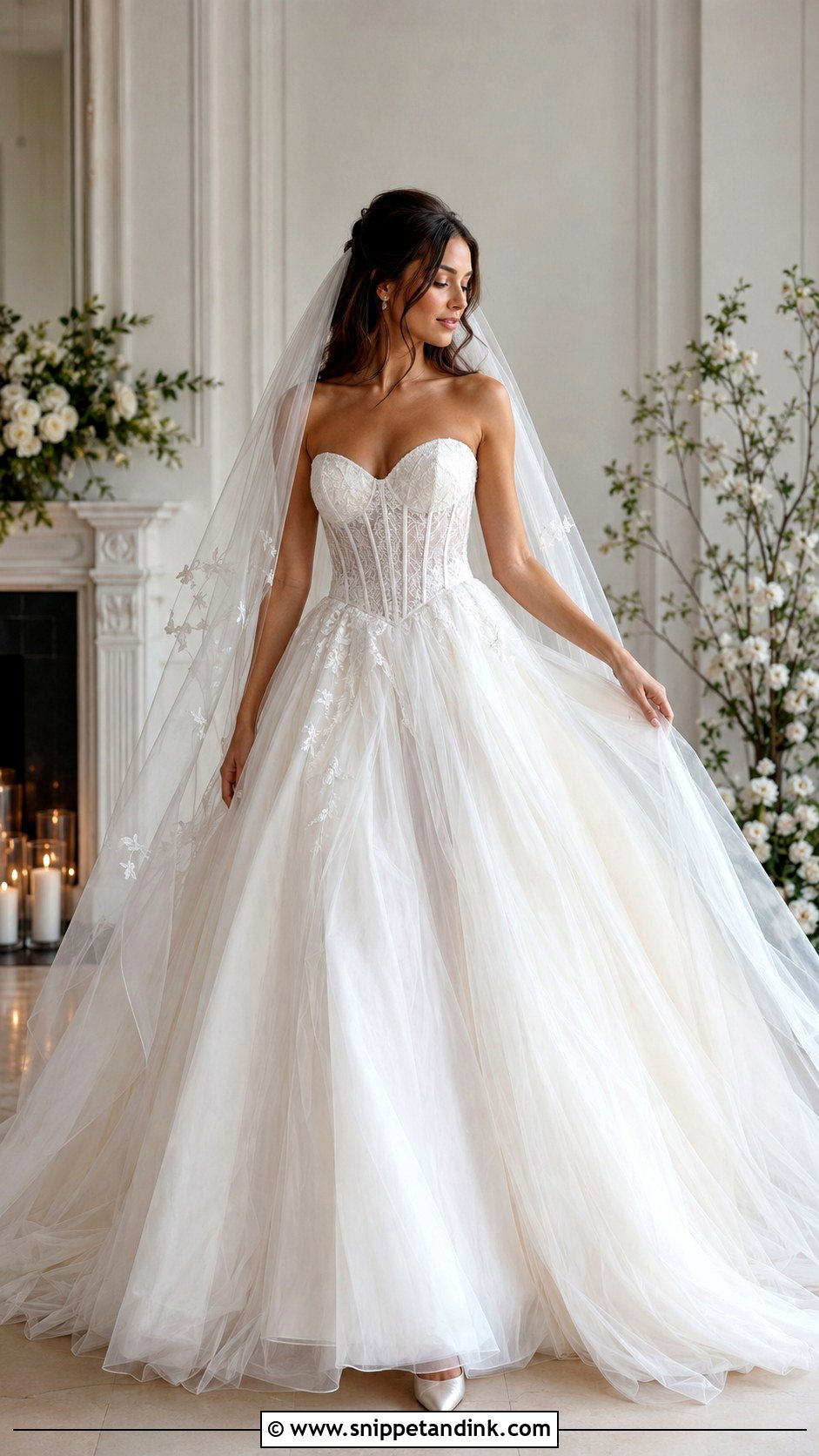
A sweetheart corset sculpts the upper body against a fluffy tulle or organza skirt, and that contrast is the whole appeal. Visible boning looks current; covered boning reads softer and more traditional. Crystal studs, a sheer chapel veil, comfortable satin heels and loose waves or a half-up style complete it. Supportive, not restrictive, is the target. The waist seam should sit on your natural waist, and I always have brides sit and take a deep breath during the fitting. A well-fitted corset spreads the weight of the skirt around your ribs instead of hanging it from your shoulders.
6. Lace Appliqué Ball Gown Wedding Dress
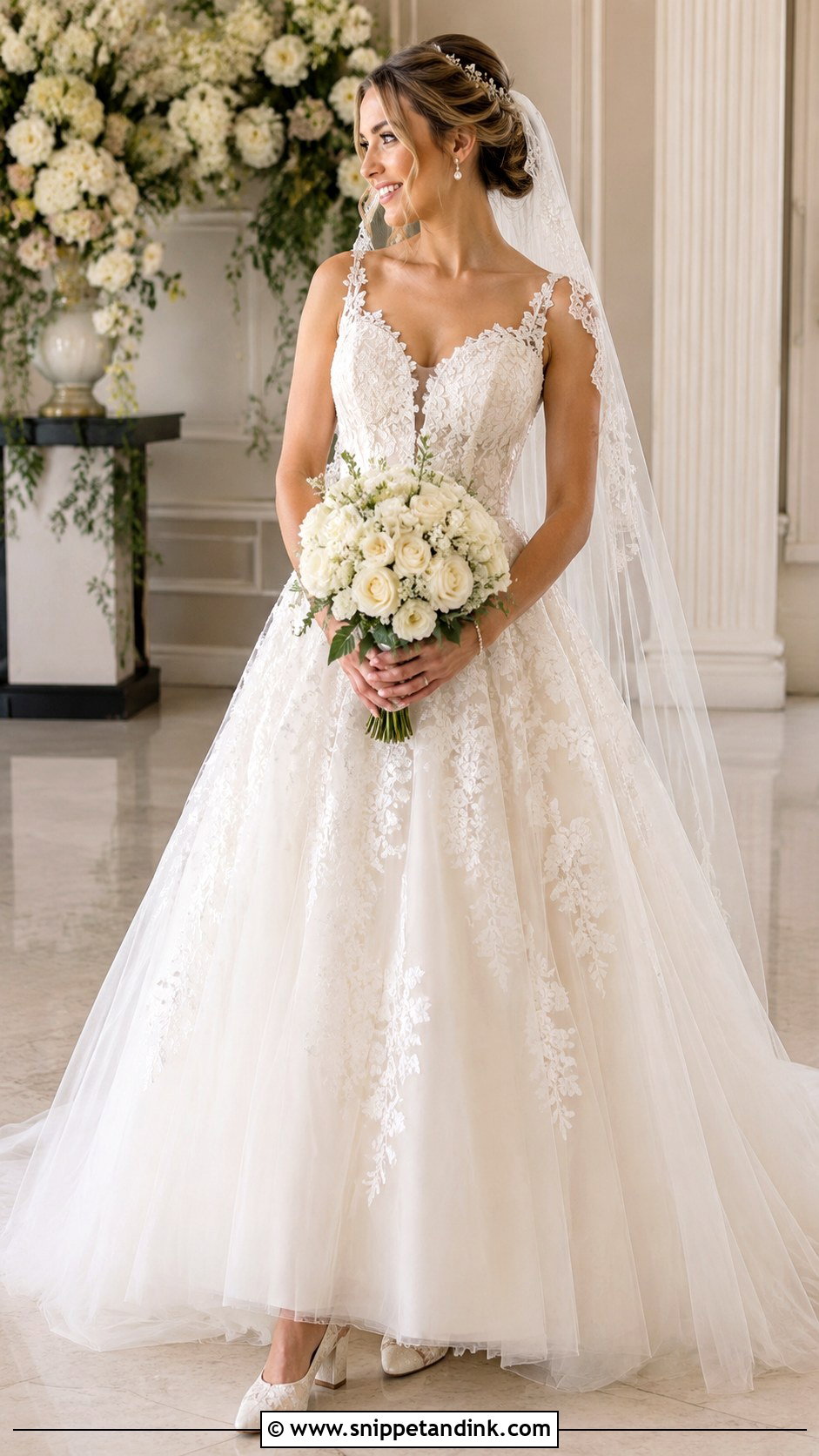
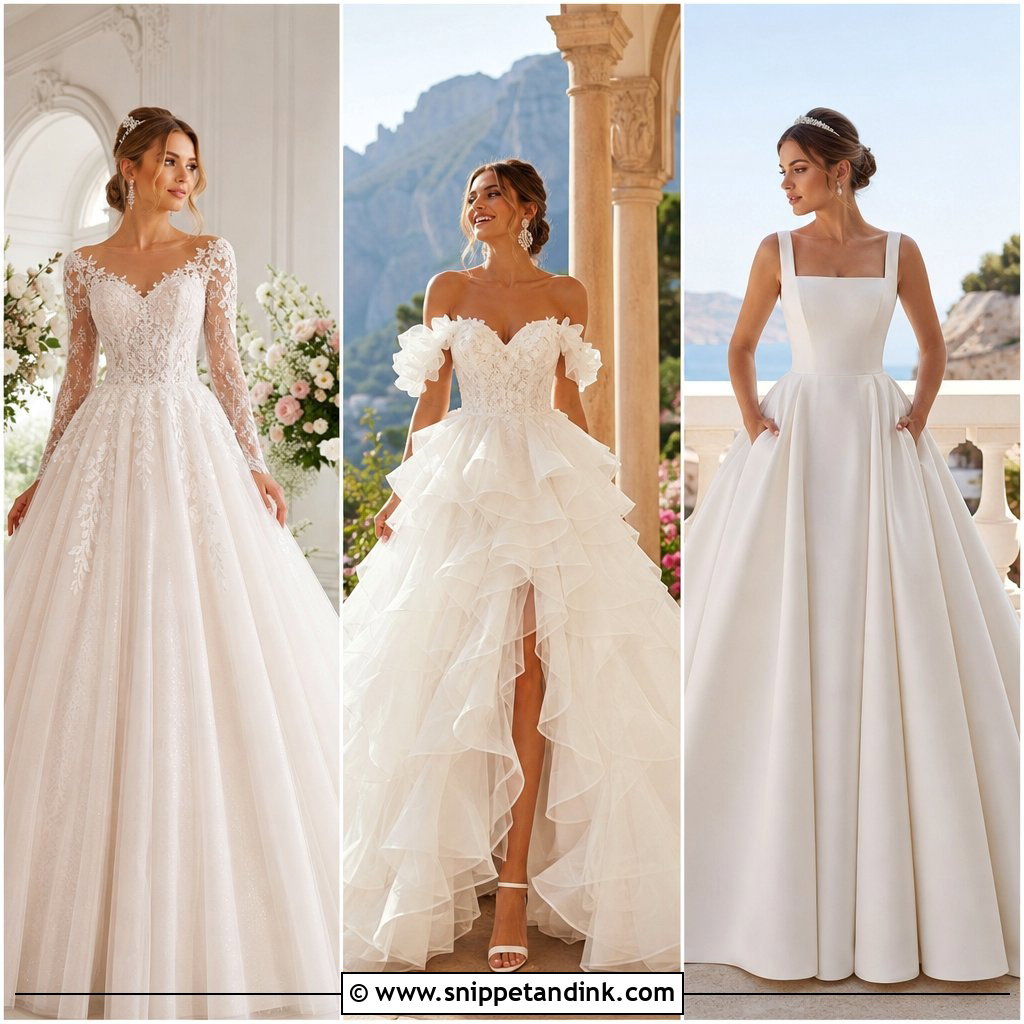
Lace appliqués spreading from the bodice down onto the tulle give a ball gown a handcrafted look and a longer line than lace that stops at the waist. Pair it with a lace-edged veil, pearl drops and ivory shoes with a stable heel, plus a structured white bouquet. If the lace is heavily beaded, hold back on everything else. Look at the gown by a window and under indoor lights, because dense appliqués can read quite differently in photos. And check under the arms. Rough beads or lace edges there rub raw over a long day, and a seamstress can back them with something soft.
7. 3D Floral Wedding Dress
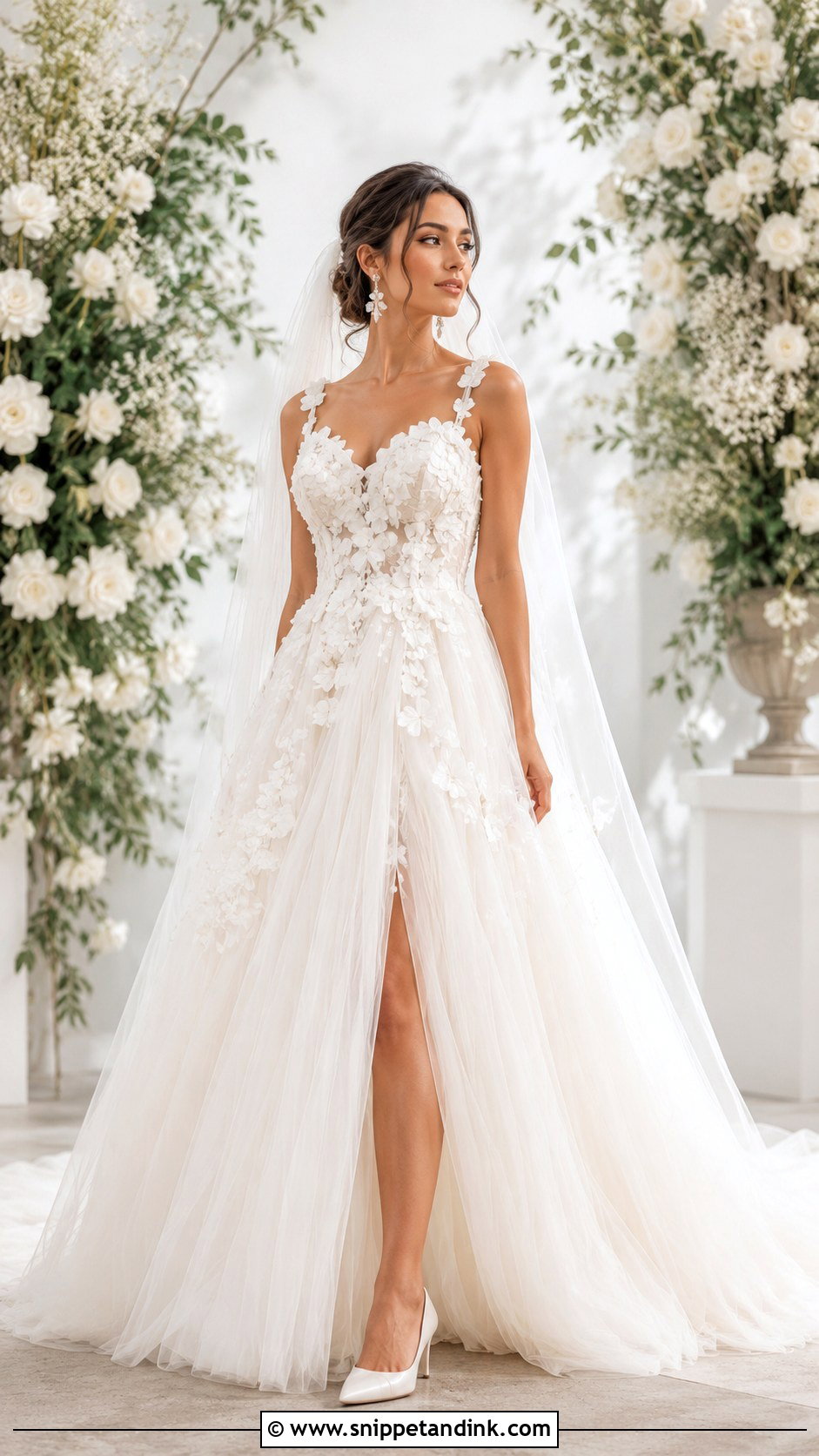
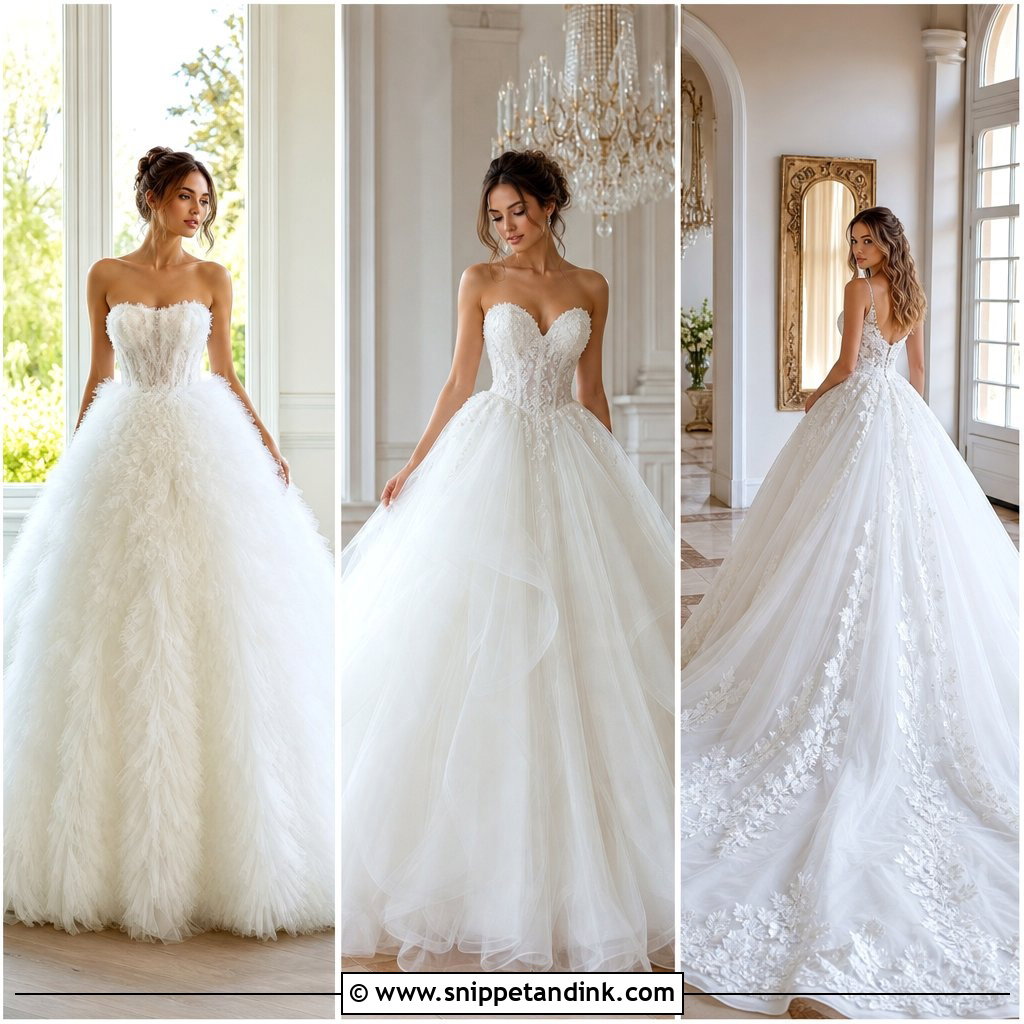
3D flowers turn a full tulle skirt into texture you can see from the back of the room. They look best clustered on the bodice and scattered lightly down the skirt, so the layers still move. Delicate floral earrings, simple pumps and a plain veil let them breathe, with a loose updo. Keep the bouquet small and quiet; a riot of colour against a floral dress just looks crowded. Before buying, tug gently at a few flowers. A seamstress can secure loose petals and move delicate ones away from places that rub, like the inner arm and the bustle points.
8. Ruffled Organza Wedding Dress
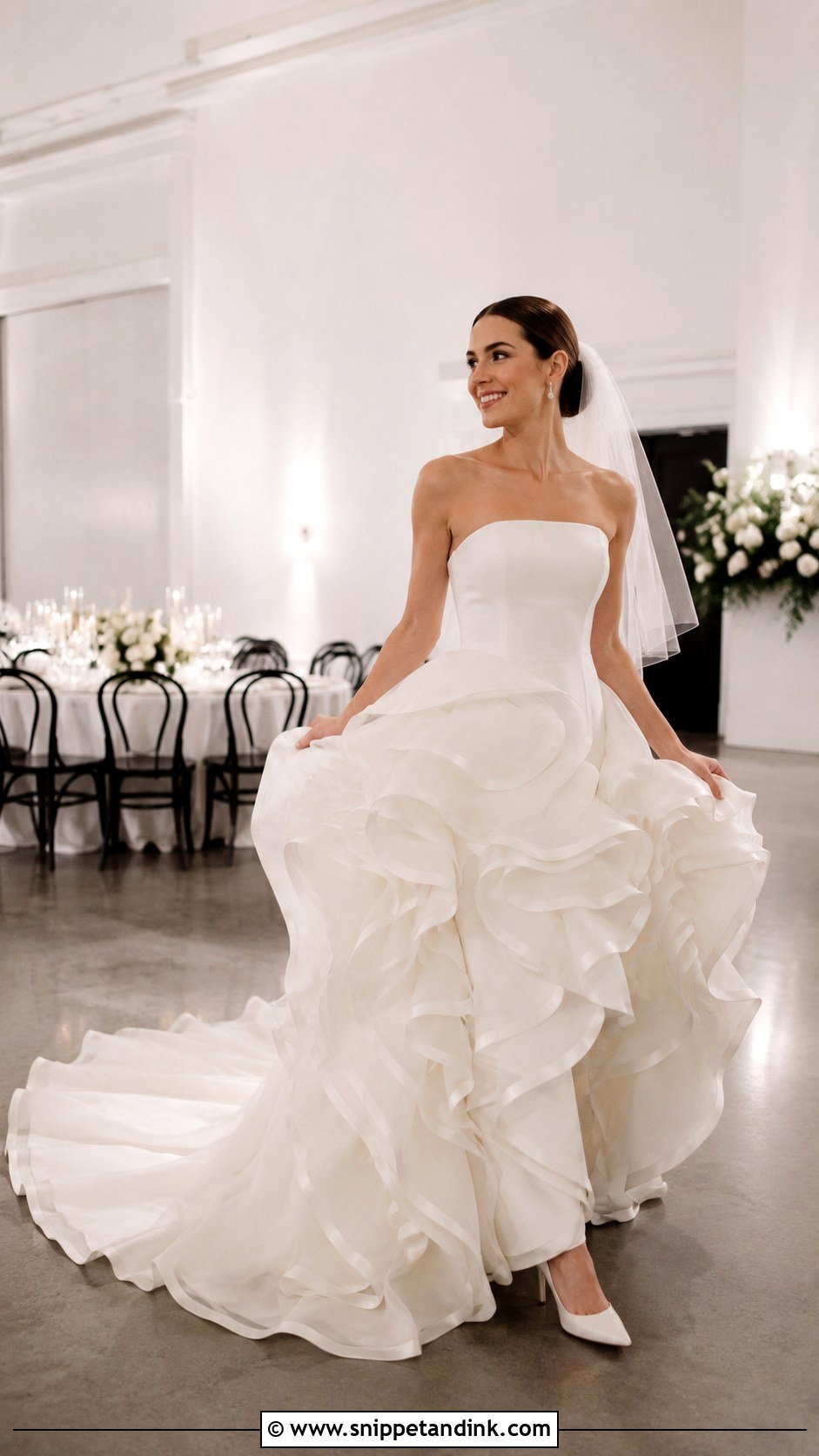
Organza ruffles give volume with more definition than tulle, and they read clearly in photos from every angle. Keep the bodice fitted and fairly plain to balance the sculptural skirt. Small crystal earrings, a sleek bun and smooth satin heels suit it. I’d choose a short or fingertip veil, since lace-trimmed cathedral veils catch between the ruffles. One thing nobody warns you about: organza is crisp, and against bare legs it can scratch. Check the lining, and ask whether a soft extra layer can be added. You’ll need a secure bustle for the train once photos are done.
9. Tiered Tulle Wedding Dress
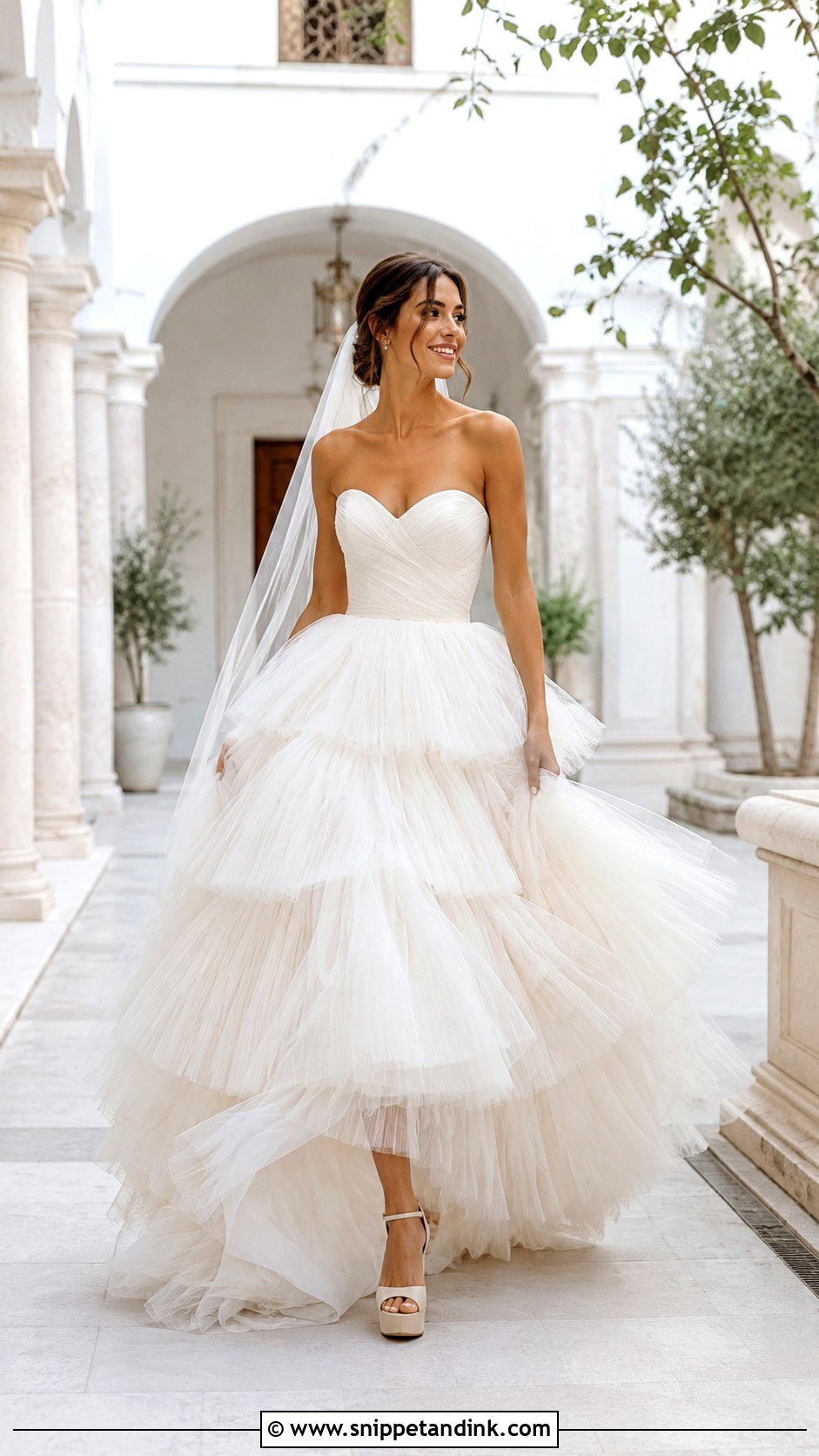
Tiered tulle makes a playful, cloudy skirt. The versions I like best graduate, with tiers getting fuller toward the hem rather than equal bulk from waist to floor. A fitted scoop or sweetheart bodice keeps definition up top. Minimal earrings, platform sandals and a light single-layer veil suit it, with soft waves and a small clutch for the reception. Look at where the first tier starts. Right at the waist gives the most volume; lower down gives a longer body line. Try a staircase if the shop has one, because tier edges love to catch under the toe of a shoe.
10. Glitter Tulle Wedding Dress
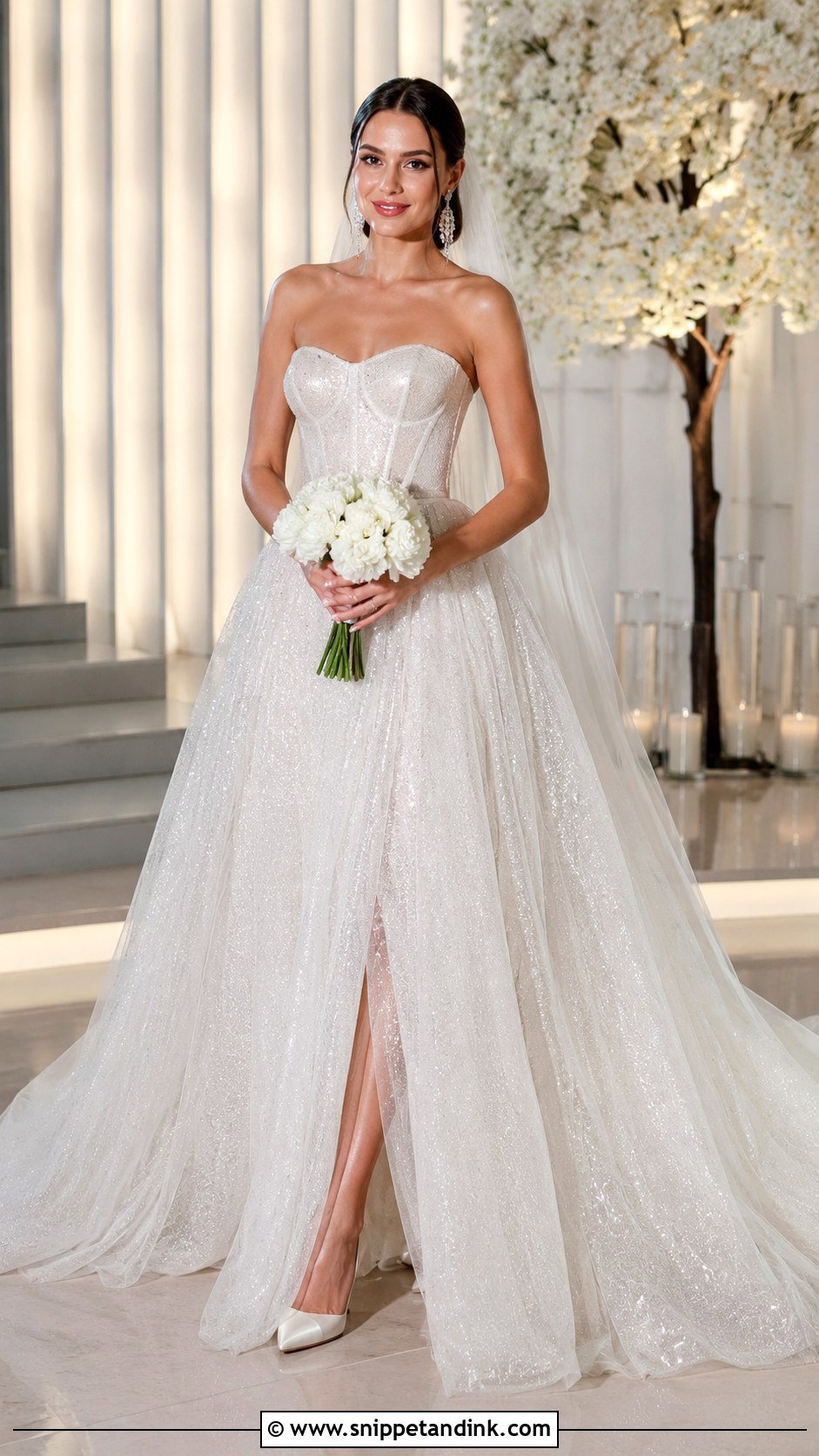
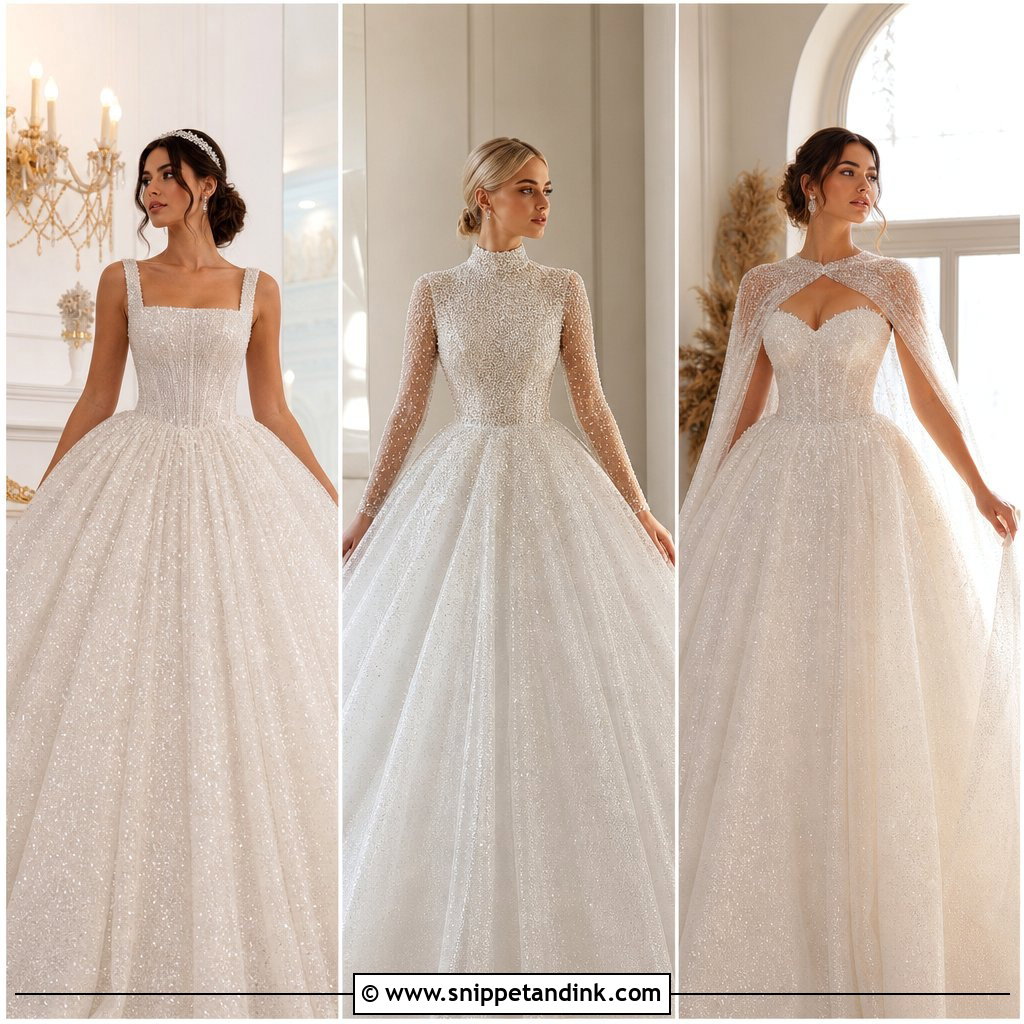
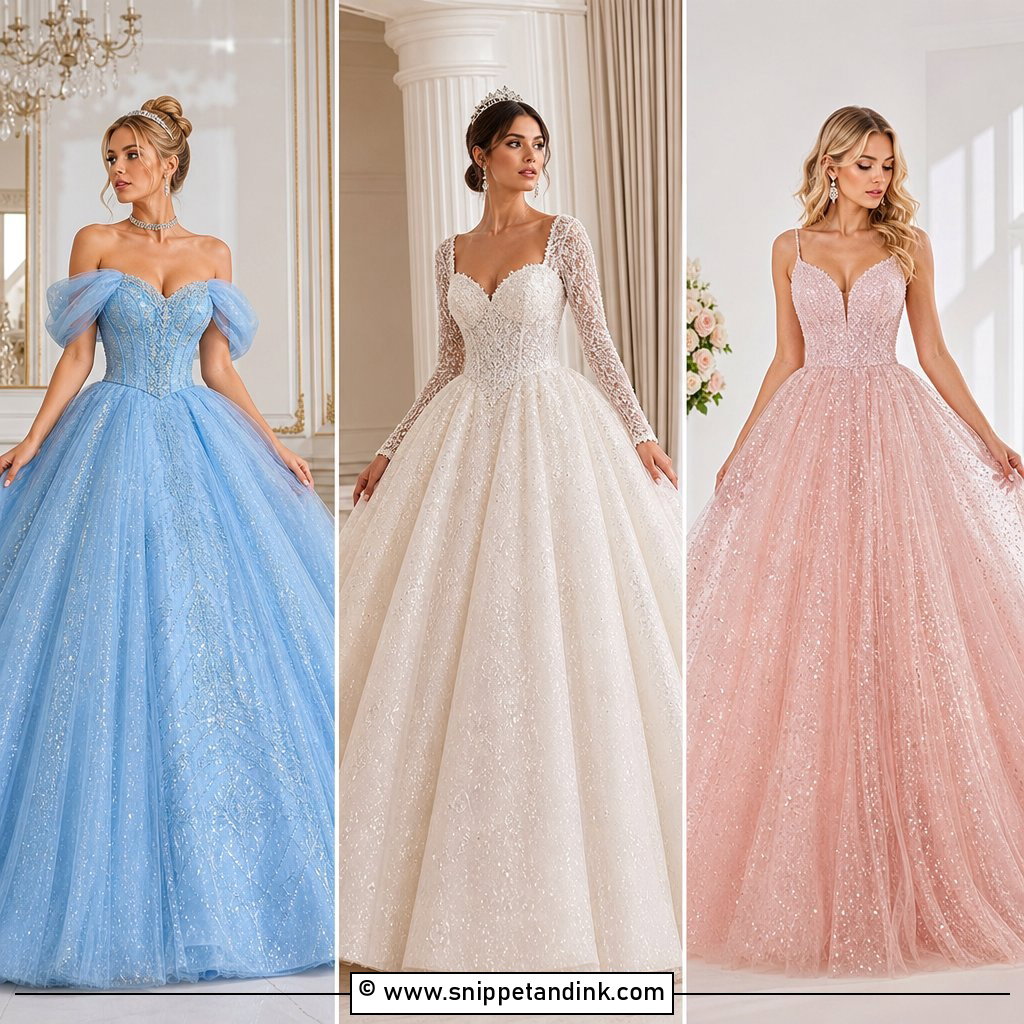
Glitter tulle catches light as you move, and it’s subtler in person than people think. Choose fine shimmer woven into the fabric rather than large particles that shed on everything you touch, your partner’s suit included. A clean corset or simple V-neck bodice keeps the skirt from looking busy. Crystal studs, metallic ivory pumps and a plain tulle veil are all it needs, with a light neutral bouquet. Ask to see it in daylight and with a phone flash. Some glitter tulles turn much brighter on camera. And make sure there’s a lining between the glitter layers and your skin.
11. Pearl Beaded Ball Gown Wedding Dress
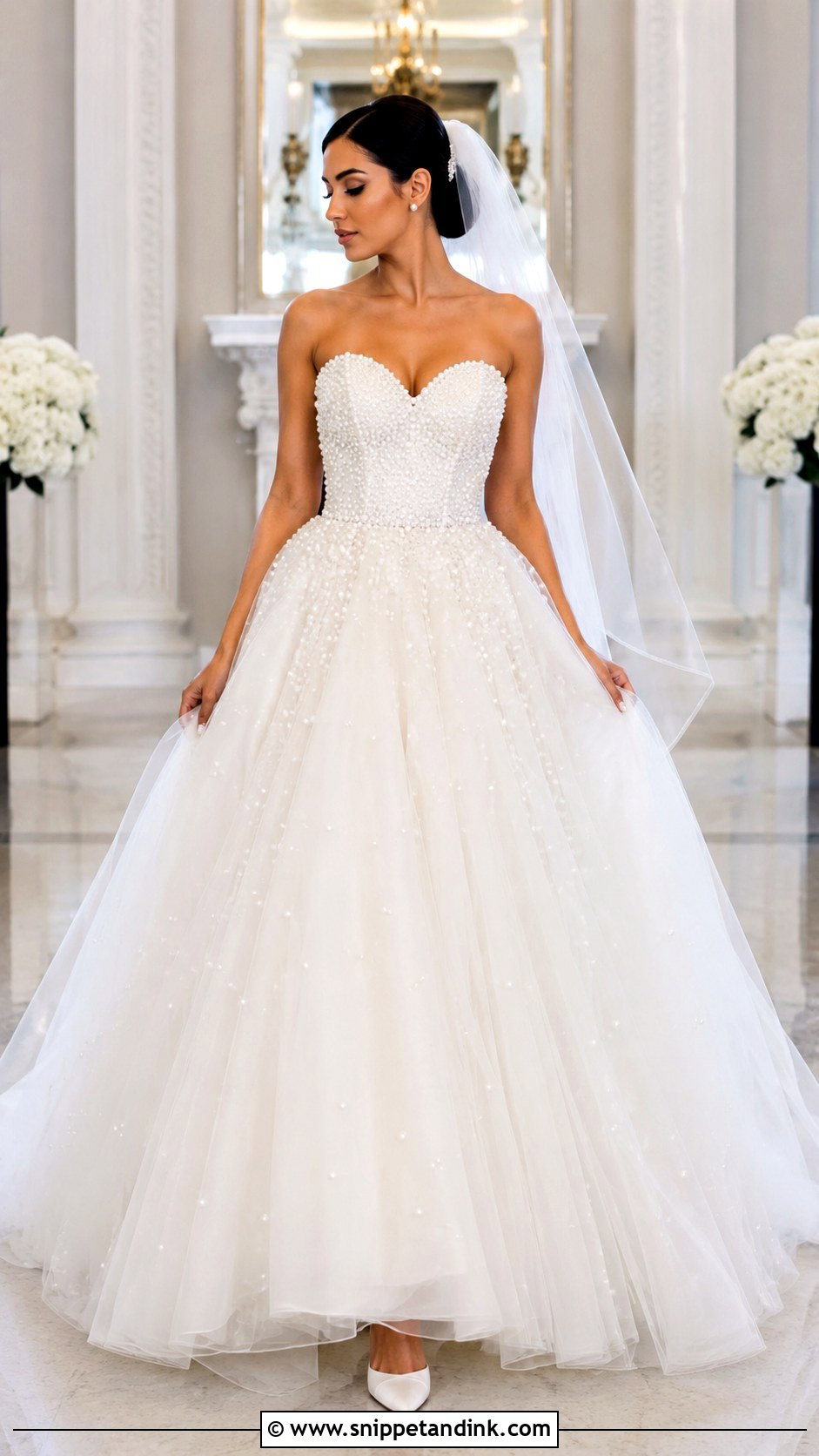
Pearls scattered across the bodice and upper tulle add traditional detail without making the gown feel stiff. Echo them with pearl earrings, a smooth hairpin and satin pumps with a small pearl accent, and keep the veil plain so it doesn’t rub the beading. A polished bun or side-parted waves suit it. Pearlwork adds weight, so check the bodice stays put and the skirt isn’t dragging it down. Ask the salon to save spare pearls after alterations. If one pops off near the waist, an underarm or a bustle point on the day, you’ll want a match on hand.
12. Feather Trim Wedding Dress
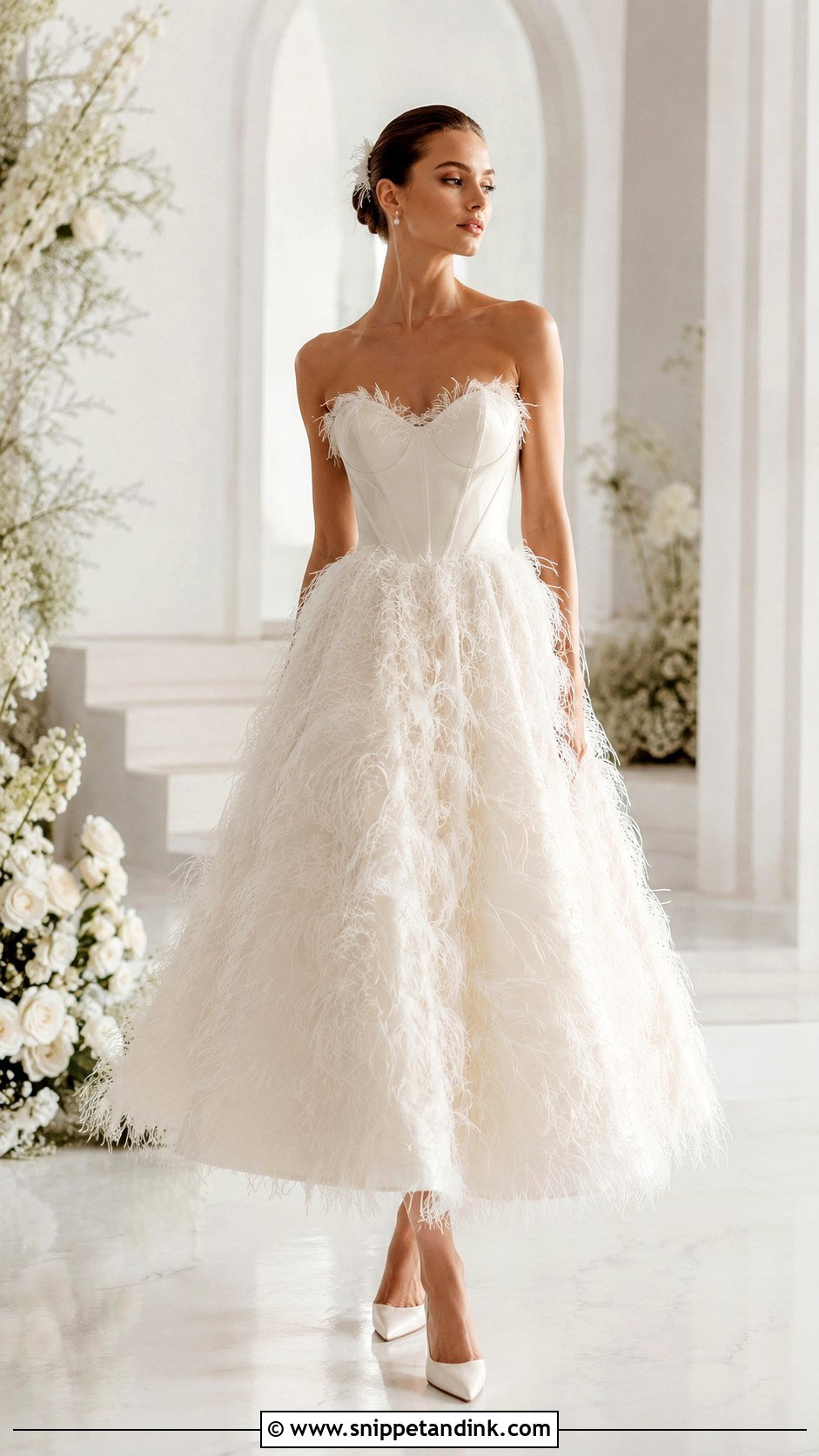
Feather trim adds movement without needing an enormous skirt. It can edge the neckline or hem, or cover an organza ball gown in soft layers. If you’ve admired feathers in bridal runway collections but want something you can wear for twelve hours, trim is the gentler way in. Style it with clean earrings, sleek pumps and a simple veil or small hairpiece, and avoid any other fluffy accessories. A structured bodice gives contrast. Ask how the feathers handle steam, rain and storage. Real feathers can need professional reshaping, while cut-fabric versions shed less and cope better with a damp evening.
13. Basque Waist Ball Gown Wedding Dress
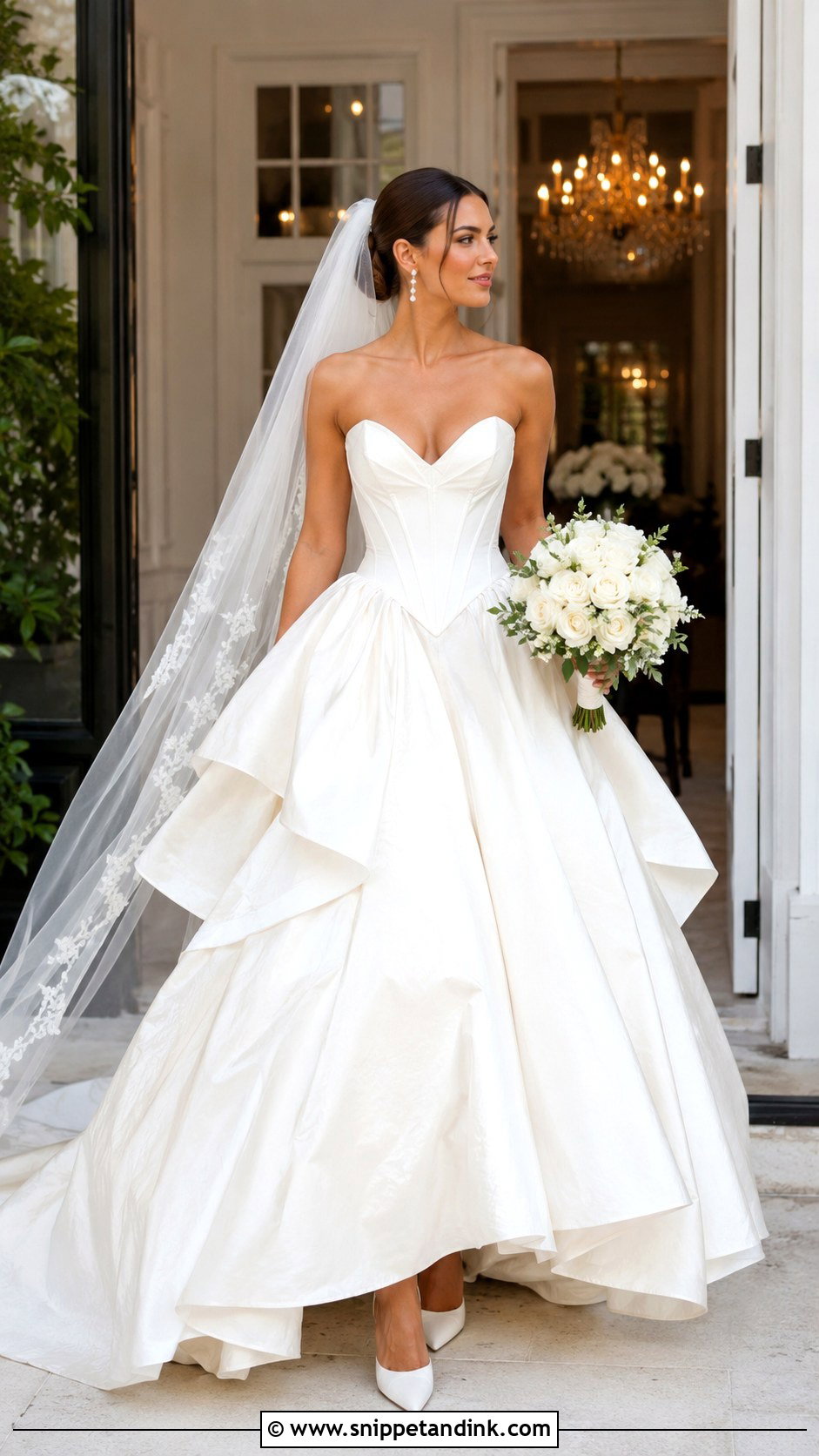
A basque waist dips into a V below the natural waist, lengthening the torso before the skirt opens out. It suits smooth satin, layered tulle or textured organza. A cathedral veil, drop earrings and pointed pumps make it formal; a medium bouquet keeps the point visible. The bodice should lie smooth where the skirt starts, with no pulling. I check that point from the front, side and back at every fitting, because a point that sits too low can make your legs look shorter, while the right placement gives you that long, balanced line.
14. Drop Waist Tulle Wedding Dress
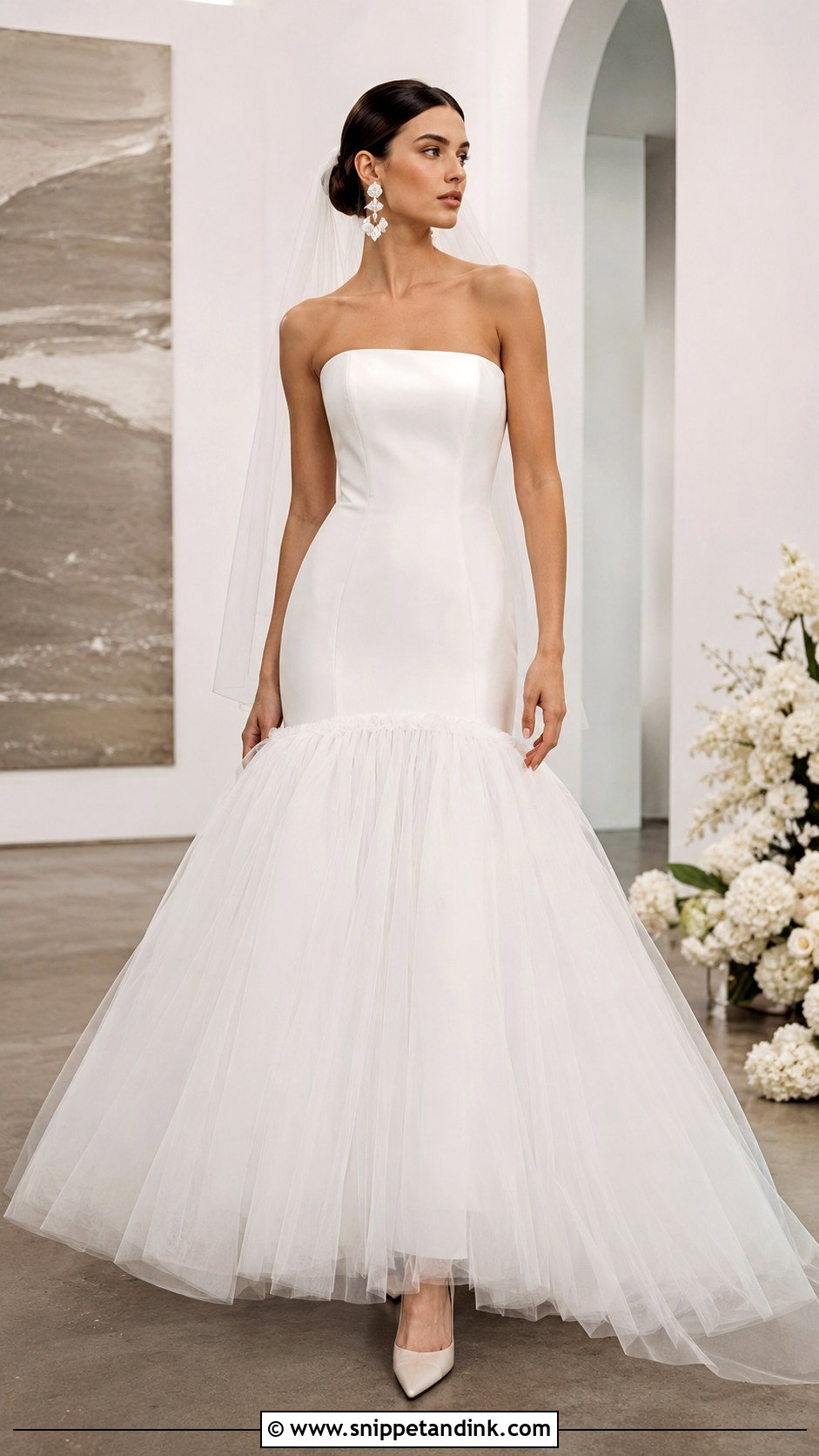
A drop waist keeps the bodice fitted through the upper hips, then releases into a full tulle skirt. It looks longer and more fashion-led than a natural-waist ball gown, with a slightly heritage feel. Sculptural earrings, a low bun, pointed shoes and a sheer veil with clean edges suit it. Skip wide belts; they cut the line. Because the bodice runs lower, you must be able to sit and move your hips freely in it. Watch for wrinkling across the stomach when you sit. Correct boning and careful tailoring keep it smooth without turning it rigid.
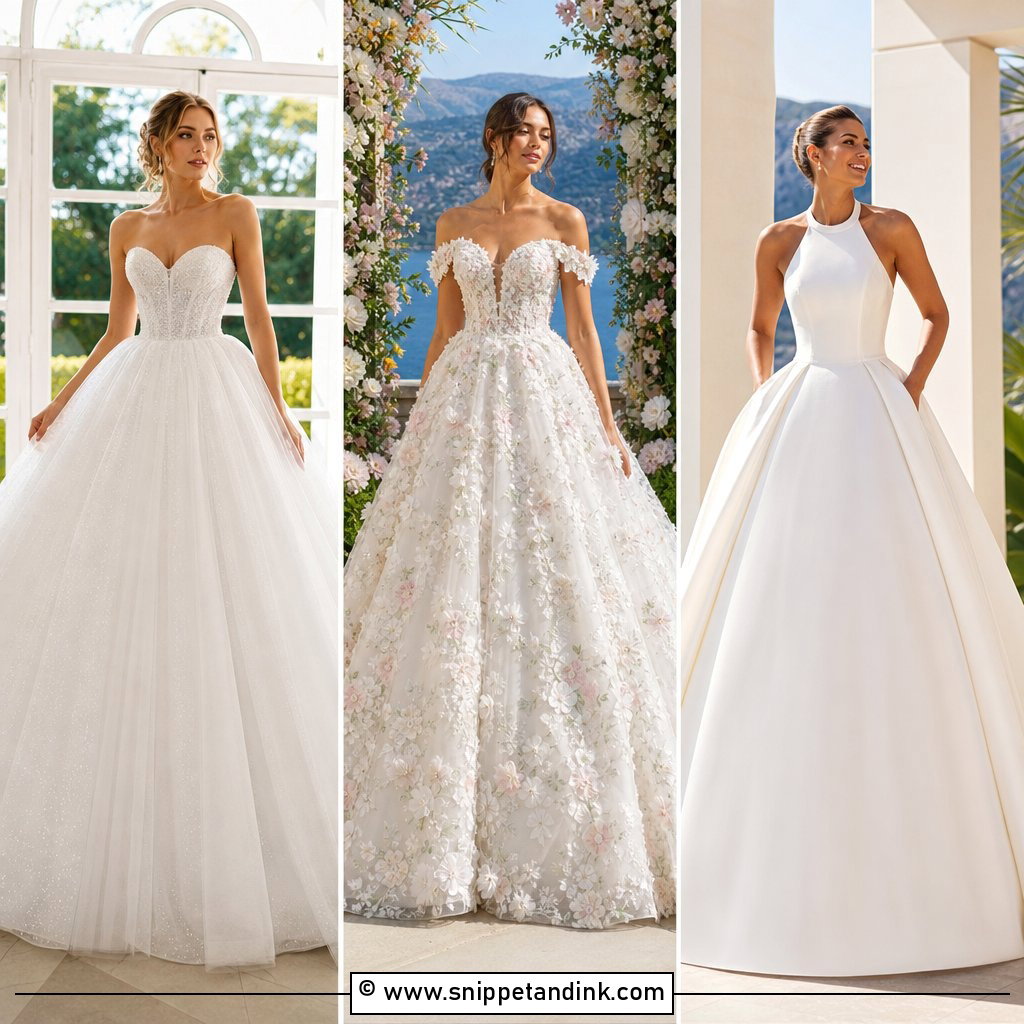

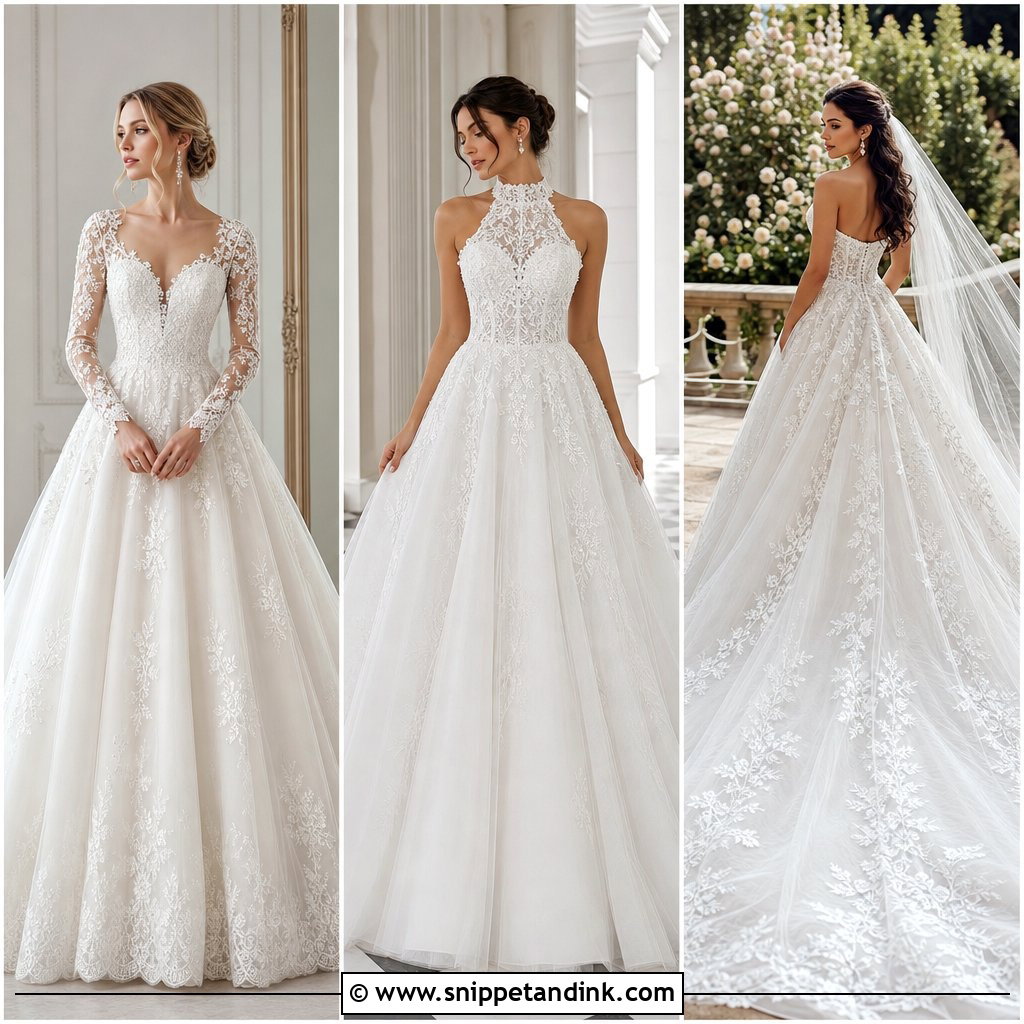
15. High Neck Tulle Wedding Dress
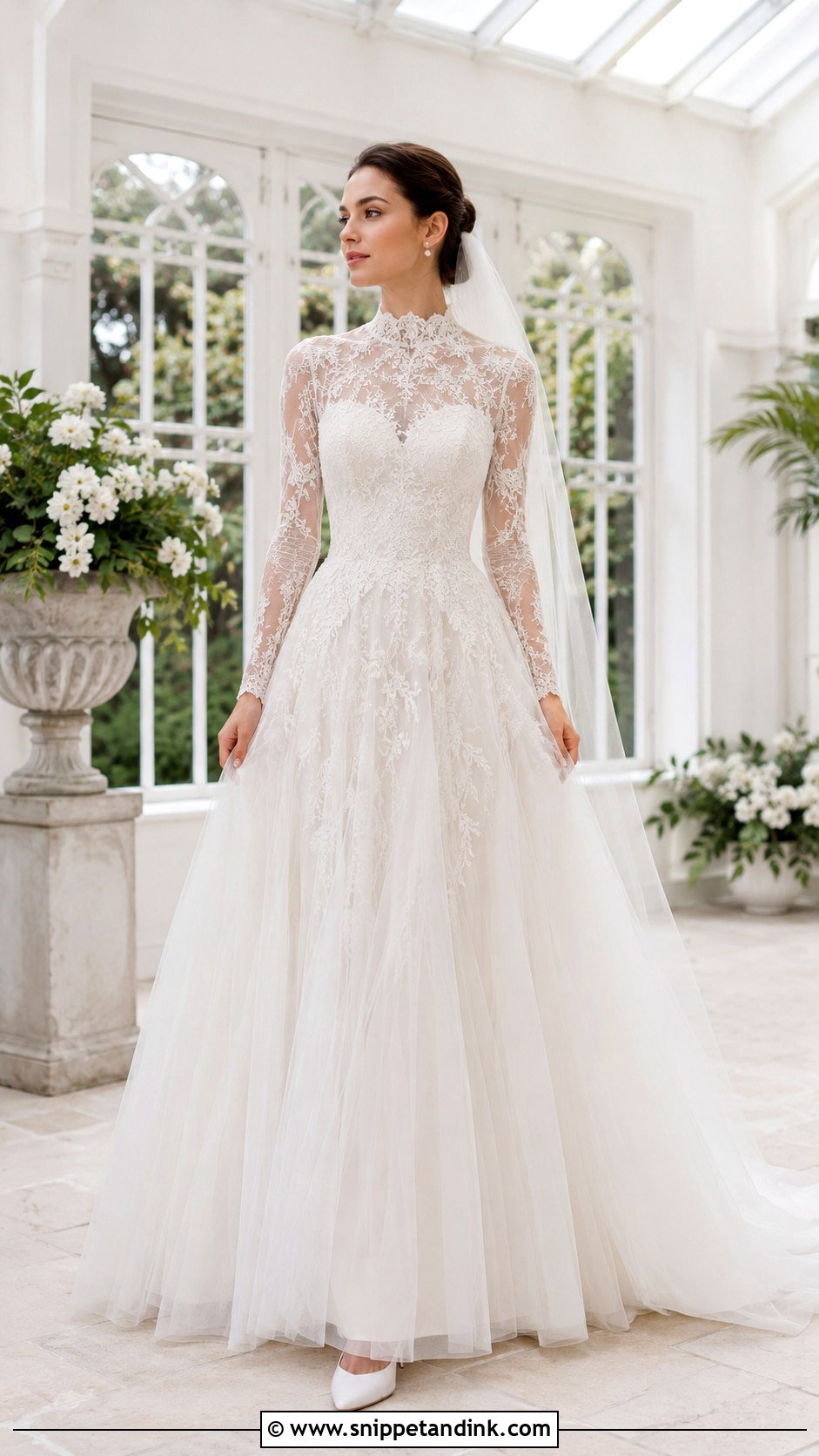
High neck above, full skirt below. That contrast is what makes this one work. Sheer mesh, soft lace or embroidered tulle keep the neckline light so the top doesn’t feel heavy. A fitted bodice and clear waist hold the shape. Small earrings, a neat bun, closed pumps and no necklace; the collar is already a frame. Attach the veil below the bun so it falls behind you. Turn your head at the fitting and feel for rubbing. If the collar folds or scratches, a seamstress can add a soft binding or rework the closure.
16. Square Neck Ball Gown Wedding Dress
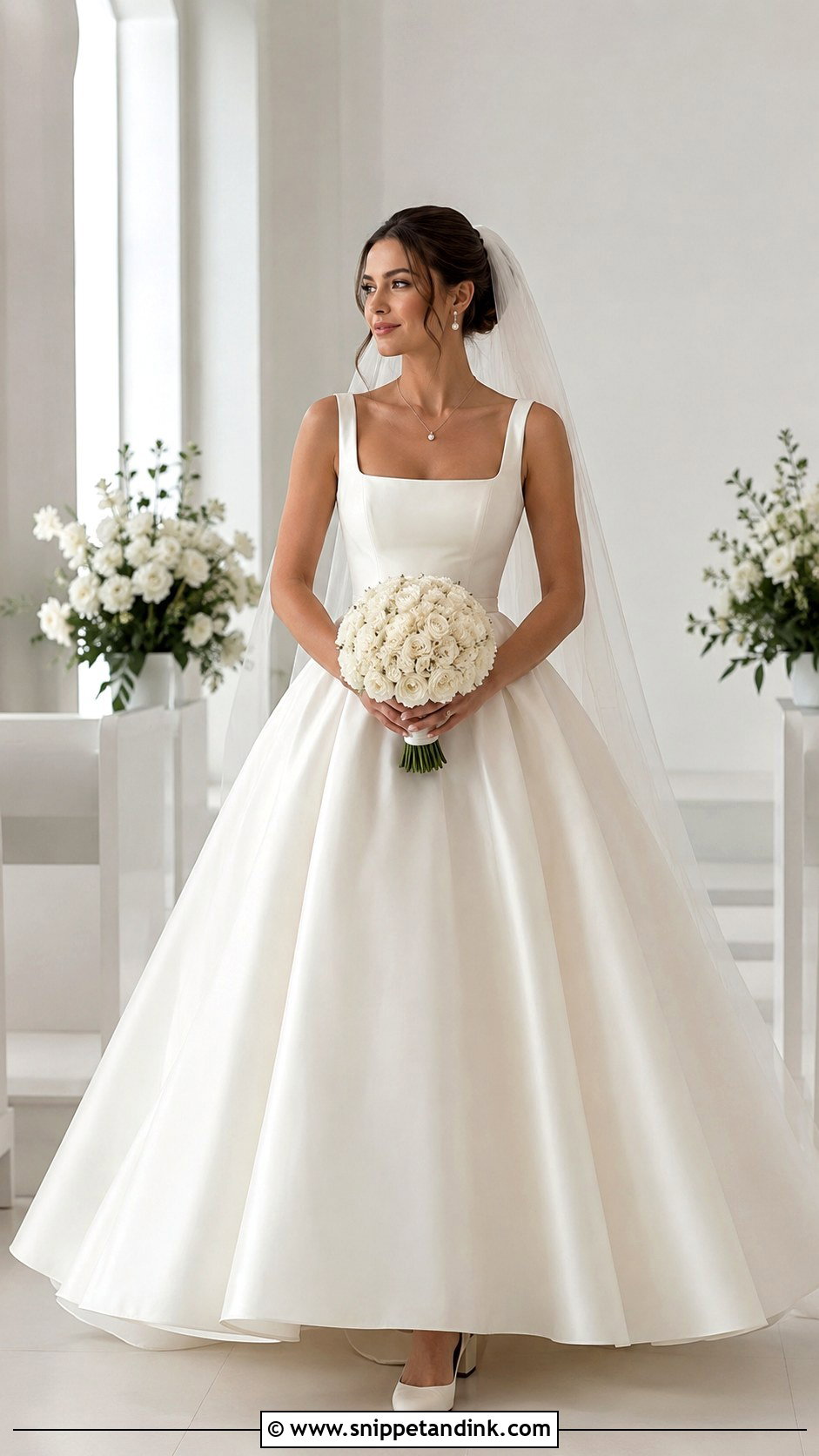
The square neckline gives a full gown a cleaner, slightly modern frame, and its wide straps feel more secure than strapless. Tulle, lace or organza all sit well below it. A fine pendant, pearl earrings, a low chignon and sleek block-heel pumps complete it, with a chapel veil that doesn’t crowd the neckline. Check that the corners of the bodice lie flat when you move, and that the straps don’t dig in. If the skirt is very full, choose a medium bouquet; a tiny one disappears against that much fabric in the aisle photos.
17. One Shoulder Fluffy Wedding Dress
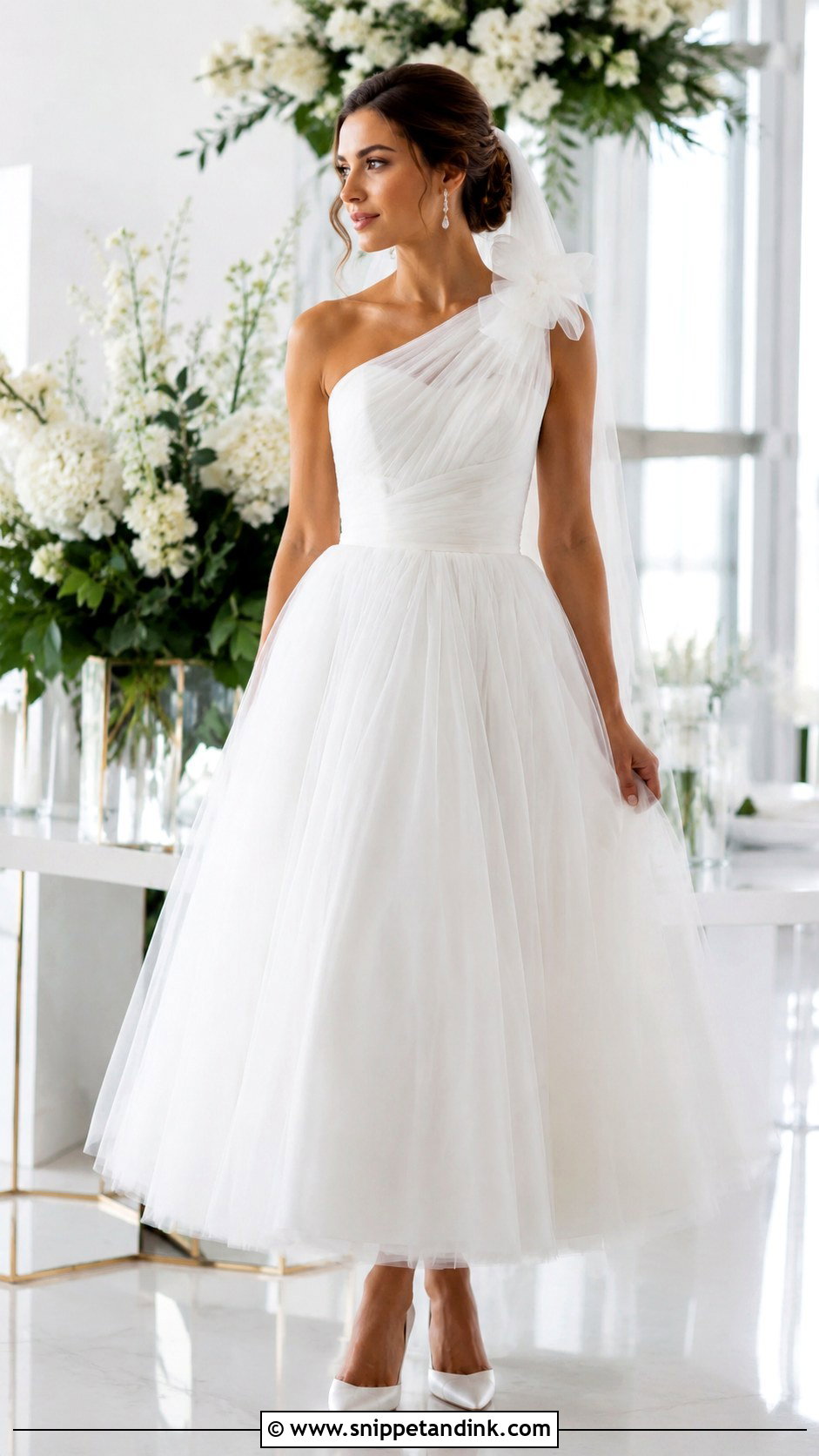
One shoulder adds an asymmetric focal point above a full skirt. Soft draping, a structured bow or a floral shoulder piece gives personality while the rest of the bodice stays clean. Earrings, no necklace, and a low bun or swept style that shows the neckline. Pointed pumps and a plain single-layer veil keep it refined. If the shoulder detail is big, set the veil below it. The diagonal must sit securely without pulling toward one side, which is common when the skirt is heavy. Good internal support keeps the gown centred even though the design isn’t.
18. Blush Tulle Wedding Dress
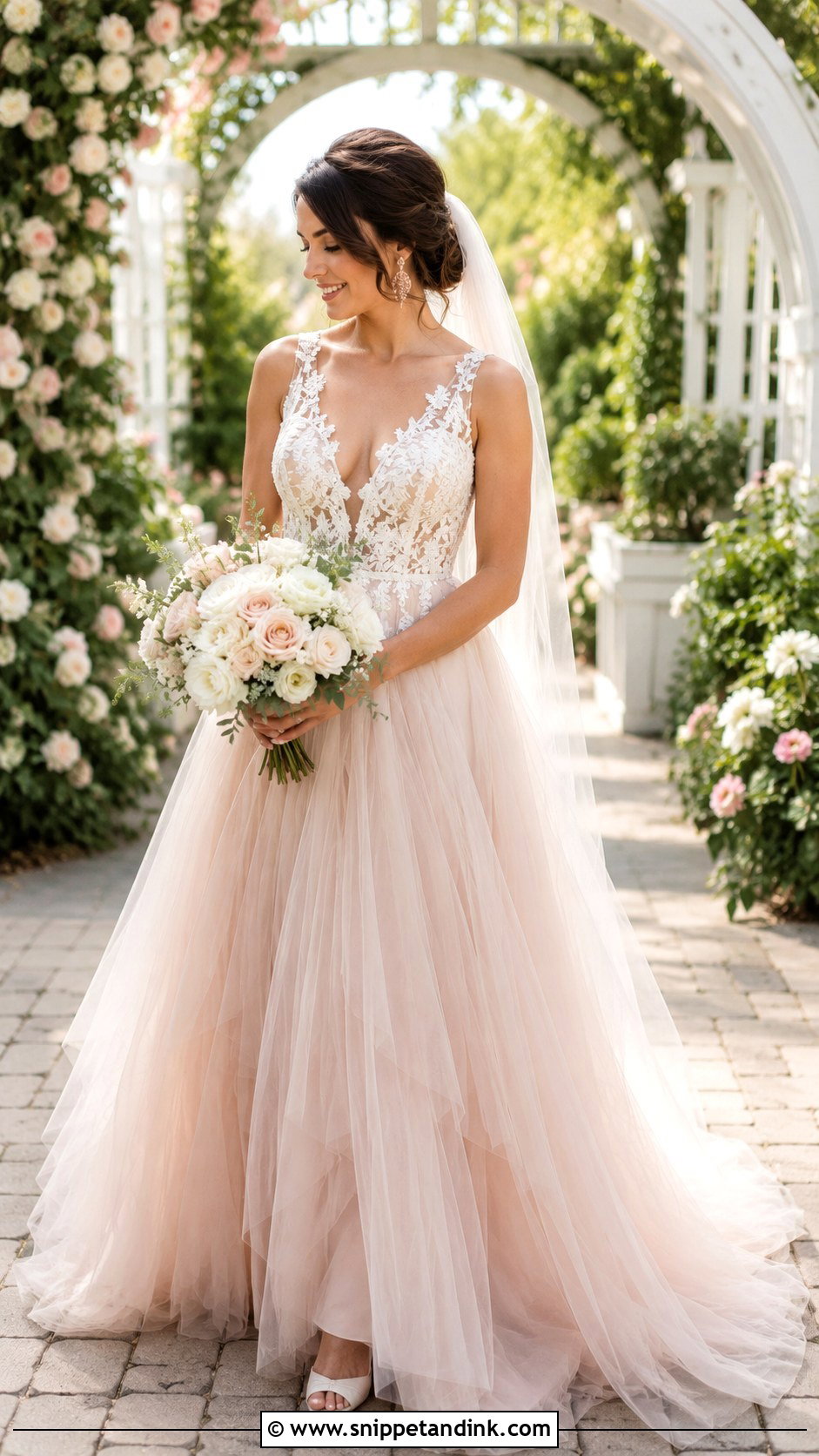
Blush gives a full tulle gown warmth without losing the bridal feel. The shade can be barely pink or clearly rosy, so hold swatches against your skin by a window before deciding. An ivory lace bodice over blush lining gives depth; an all-blush gown feels more distinctive. Rose-gold earrings, ivory shoes and a sheer veil in a coordinating tone suit it. Don’t assume every blush matches, though. Warm pinks, cool pinks and nude layers photograph differently. Bring your veil to the final fitting and compare them side by side, then choose white and pale pink flowers.
19. Plus Size Ball Gown Wedding Dress
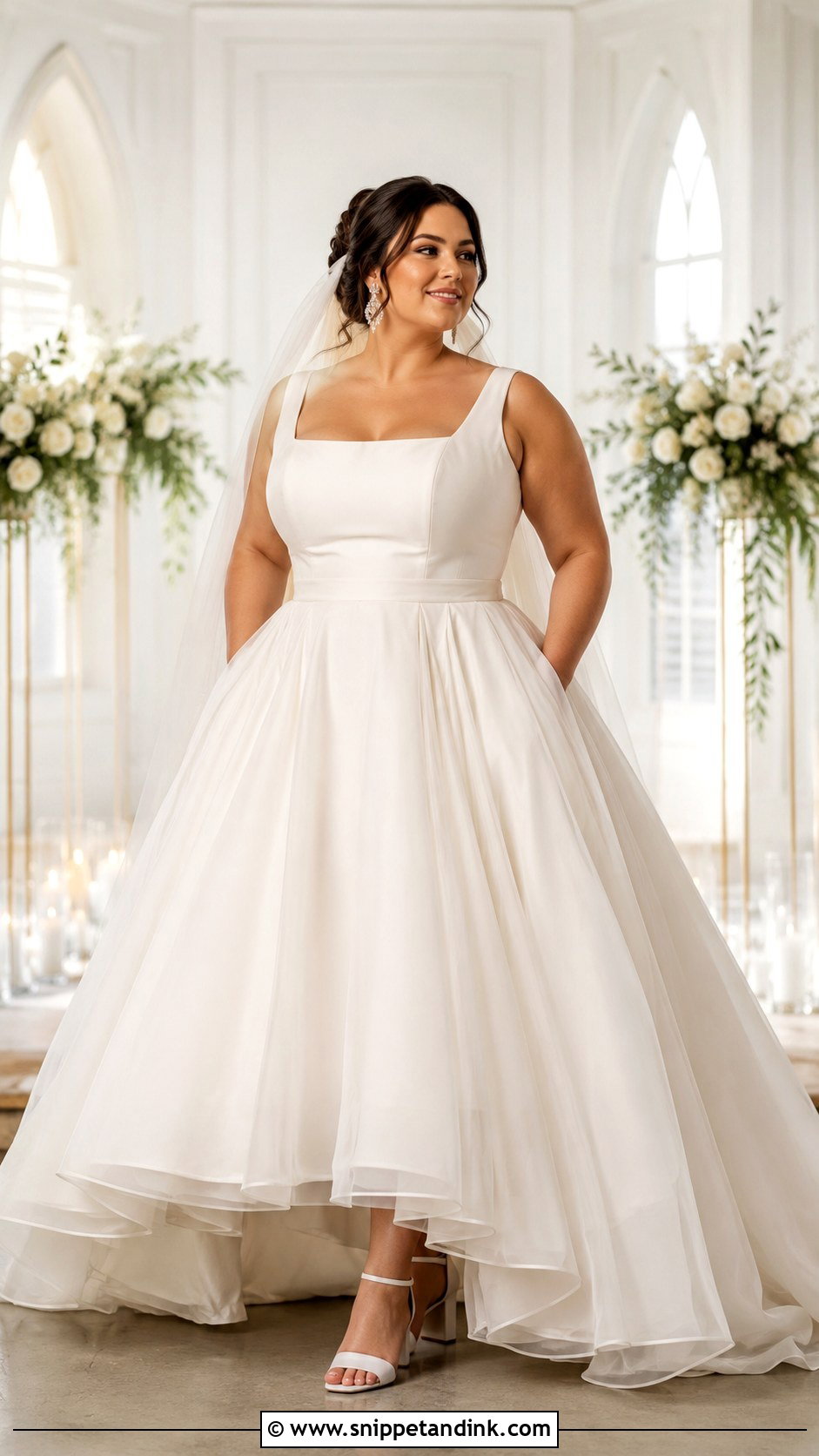
A plus-size ball gown can give excellent support and waist definition when the inside is built right. I look for strong boning, comfortable cups, wider straps or sleeves, and a skirt that expands from the waist without bulk at the hips. A V, square or off-shoulder neckline opens up the top. Statement earrings, supportive block heels and a light veil behind the shoulders finish it. Bridal sizing varies a lot, so work from measurements. Ask whether the sample shows the gown’s real structure, since samples are often stretched, and whether custom lining or bodice changes are possible.
20. Detachable Overskirt Wedding Dress
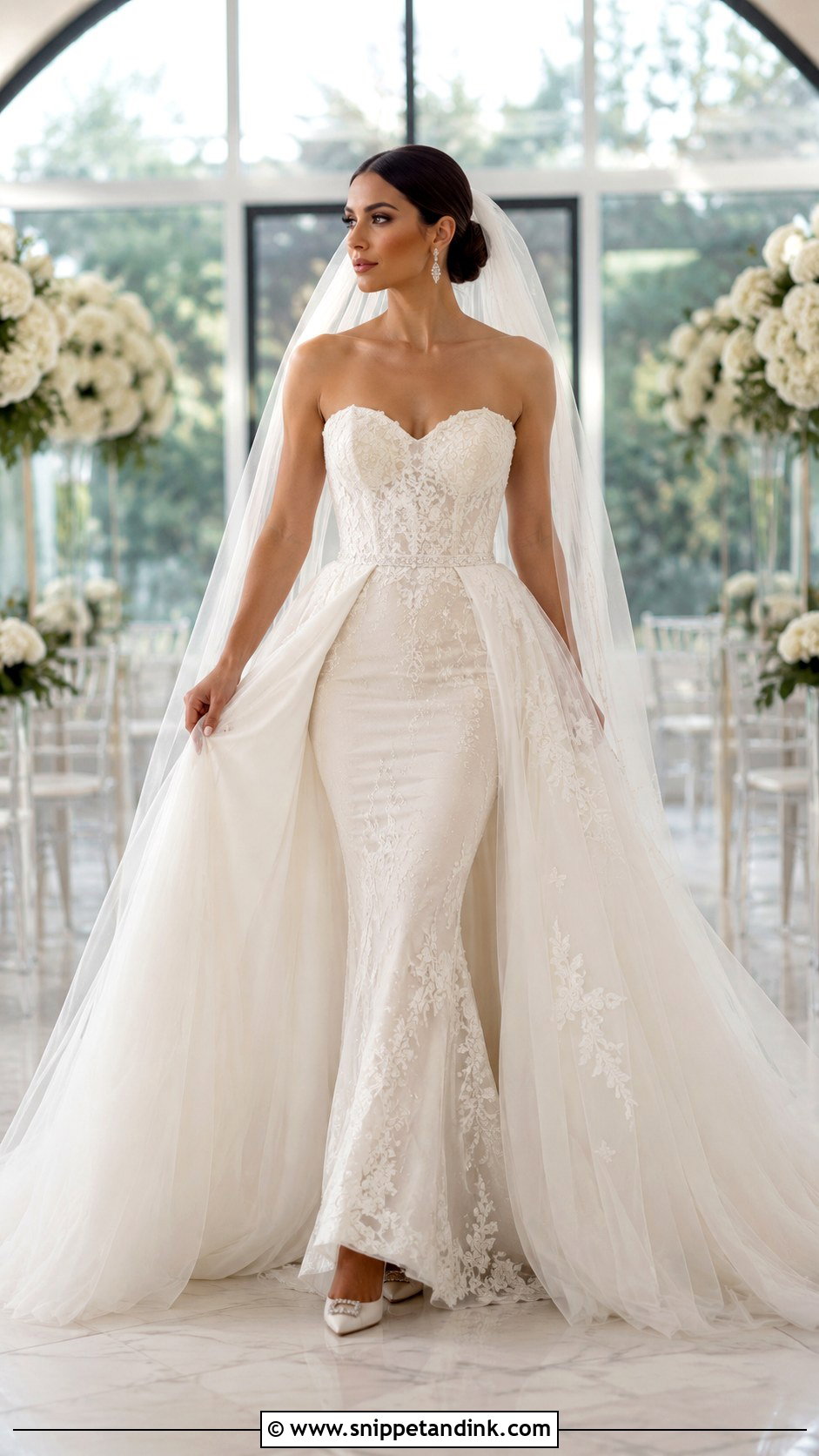
A detachable overskirt gives you the grand entrance and a lighter dress later. Wear the full tulle or organza layer for the ceremony and portraits, then remove it to reveal a column, A-line or short dress underneath, a cleaner second silhouette without a full outfit change. A long veil, drop earrings and elegant pumps suit the ceremony look; swap the veil for a comb afterward. The waistband should lie smooth with fasteners hidden. Practise taking it off and on before the day, and give one trusted person the job, including where the overskirt goes once it’s off.
Cars, Doorways and the Restroom in a Full Skirt
These are the moments that catch brides out, and all of them are easier with a plan.
Getting into the car
Sit first, back in, then swing your legs in while a helper gathers the skirt and feeds it in after you. Ask your transport company whether the back seat is wide enough; a saloon car can be a squeeze for a full ball gown.
Narrow aisles and doors
Sitting down to dinner
Before you sit, sweep the back of the skirt forward with one hand so you aren’t perched on a ridge of tulle. With a hoop, lower yourself slowly and press the front ring down gently. Ask the planner for a chair without arms; a full skirt wedged between armrests creases badly and gets hot.
Walk the venue once with your skirt width in mind. Turn slightly sideways through narrow doorways and let the skirt follow. If the aisle is tight between chairs, ask the planner to widen it.
The restroom
Facing the cistern and sitting backward is the trick many brides swear by, since the skirt can then fall forward. A helper gathering the layers works too, and there are slips made to bundle the skirt into a bag you step into. Choose your method, then practise it at your final fitting.
Volume You Can Actually Live In for a Whole Day
A full skirt is a joy when the dress is built to carry it. Tulle gives soft fullness, organza gives sculpted shape, and detachable layers give you options. Neckline, waist placement, sleeves, embellishment and colour all change how that volume feels on your body. Try every gown with the right shoes and underwear, then walk, sit, turn and lift your arms. Alterations aren’t optional with volume; a slipping bodice or catching hem distracts you all day. Classic or modern, the right fluffy gown makes you forget the logistics once you’re in it.
You'll Like These Ideas:







Leave a Reply