
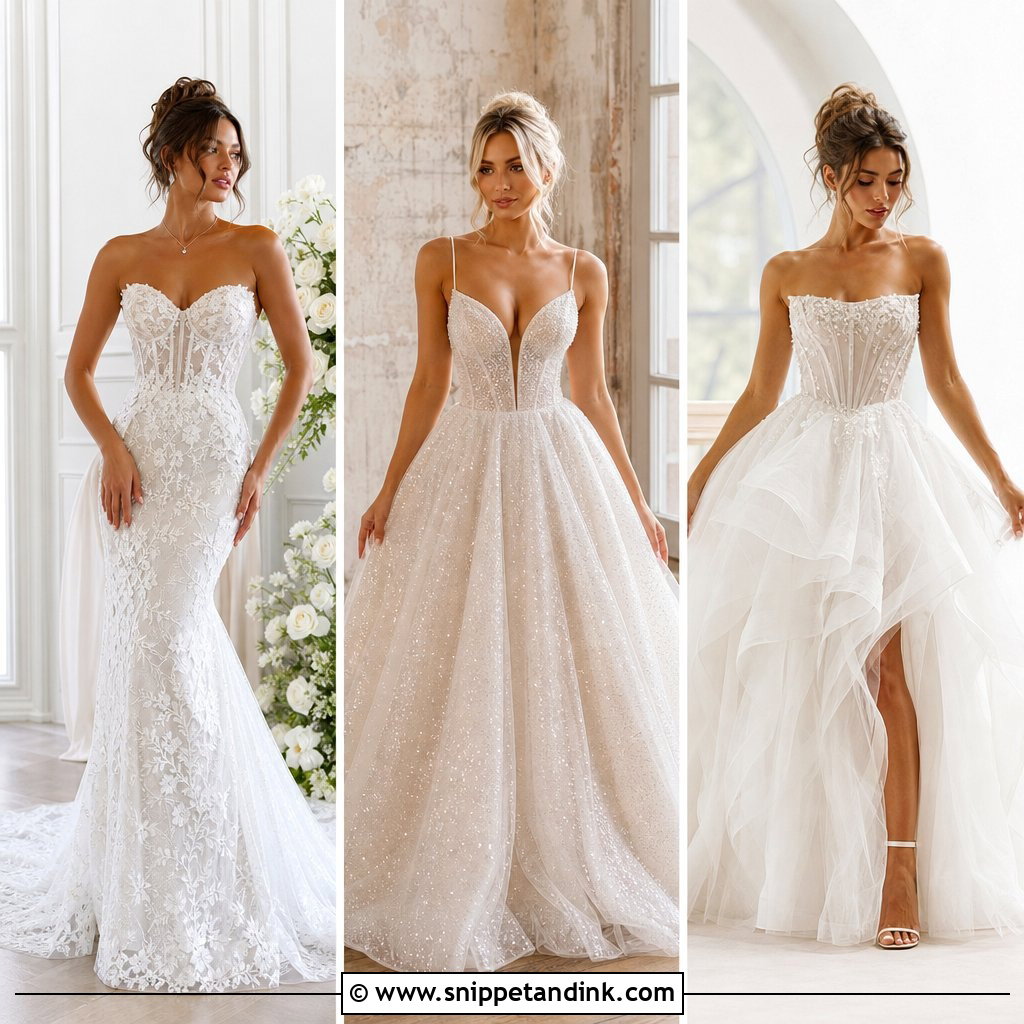
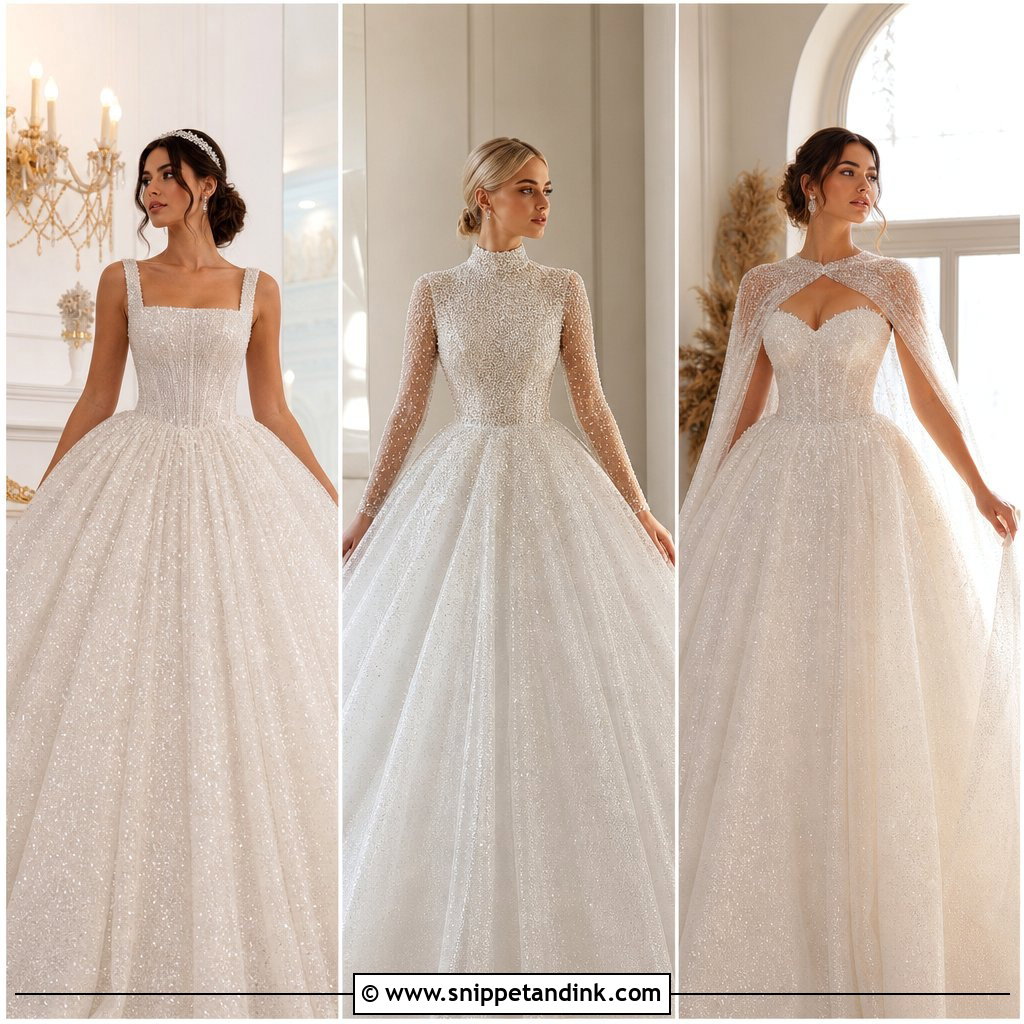
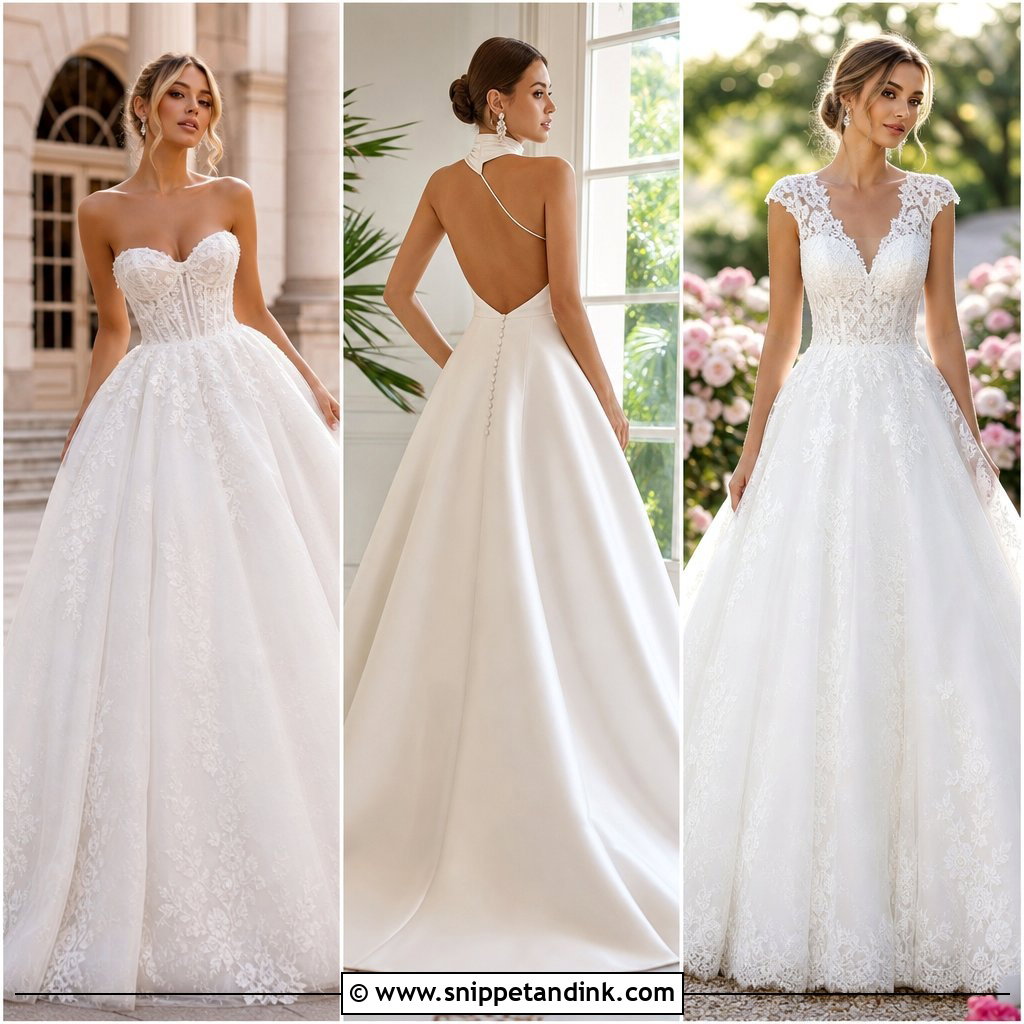
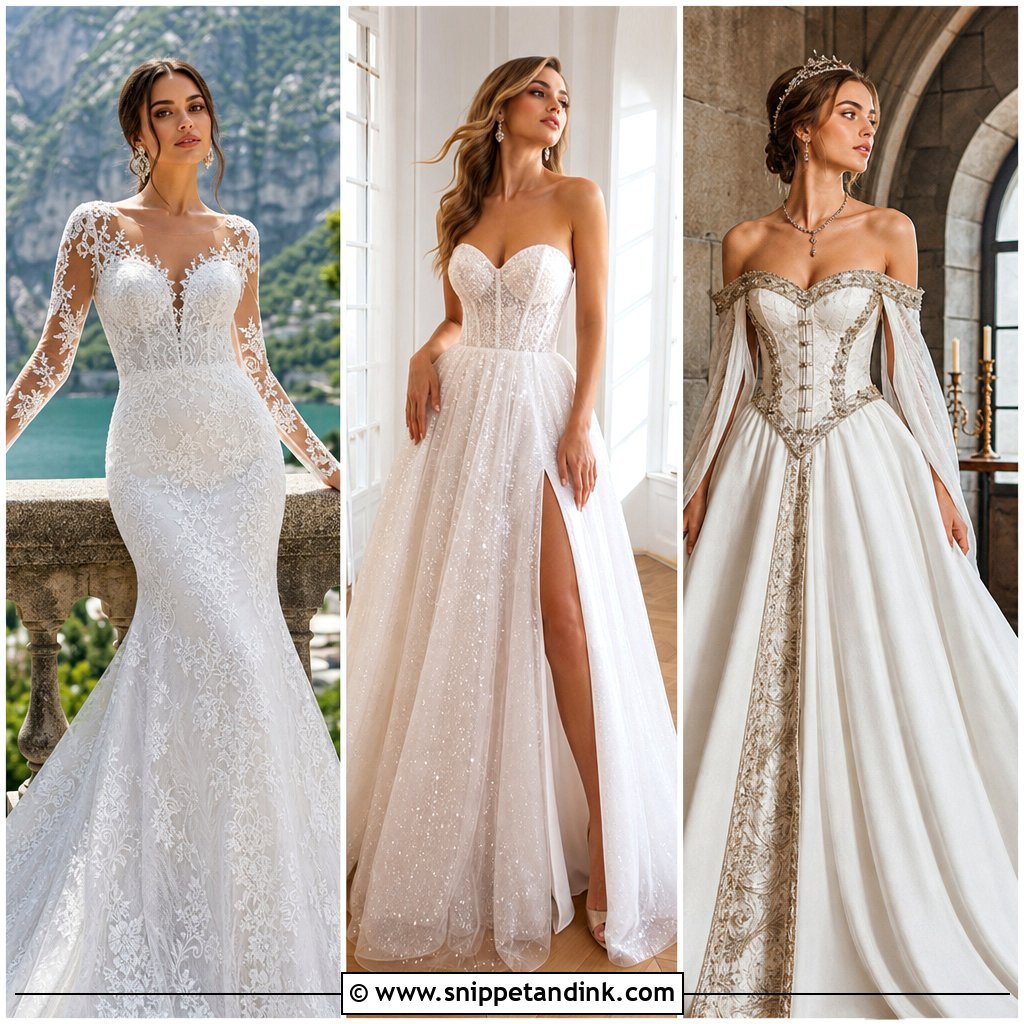
A princess bridal look only works if you can still breathe, sit and dance in it at eleven at night. That’s the part brides forget when they see a ball gown on a hanger. The twenty gowns below are the storybook kind: structured bodices, wide skirts, long trains, appliqué flowers, lace sleeves, glitter tulle, soft colour and modern corsetry. Each comes styled with a veil, jewellery, shoes and flowers, and with the fitting checks I’d make before signing off on it. Read them with your venue, the season and your own build in mind, along with how much drama you actually want to carry for a full day.
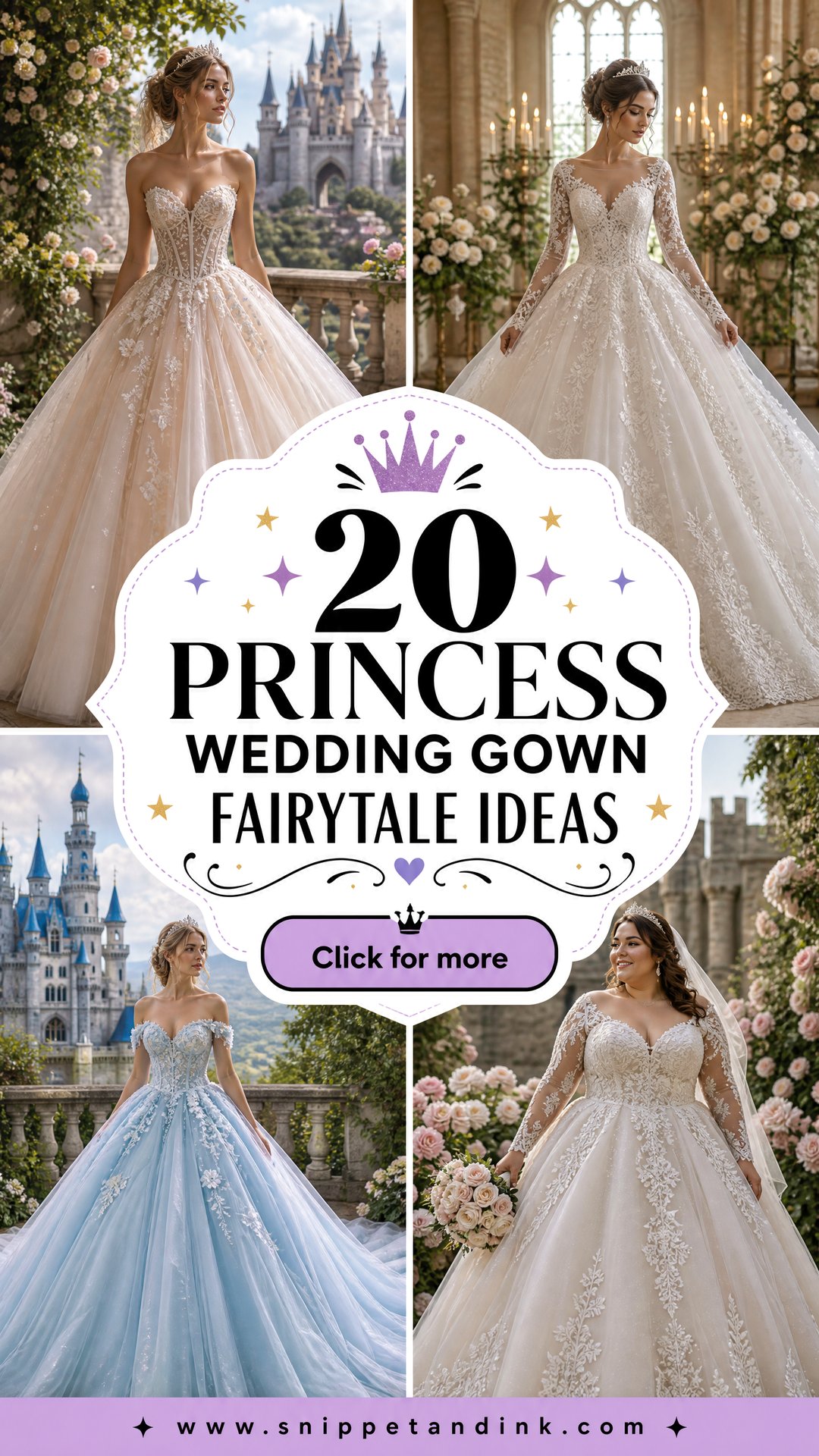
How Wide Can Your Skirt Actually Be?
Before you fall for the fullest skirt in the shop, measure your aisle. A ball gown with a hoop or several petticoats can be far wider than you’d guess from the mirror, and an aisle lined with chairs or pews leaves less room than it looks. Ask the consultant for the hem width of the gown and compare it with the space you’ll walk through.
Think about every narrow point of the day: the car door, a spiral staircase in an old venue, the gap between reception tables and the doorway to the loo. A smaller room or a garden path suits a softer A-line princess skirt; a ballroom or cathedral can take the full width. If you love the big skirt, a removable petticoat or hoop lets you go slimmer for the reception.
1. Classic Satin Princess Wedding Gown
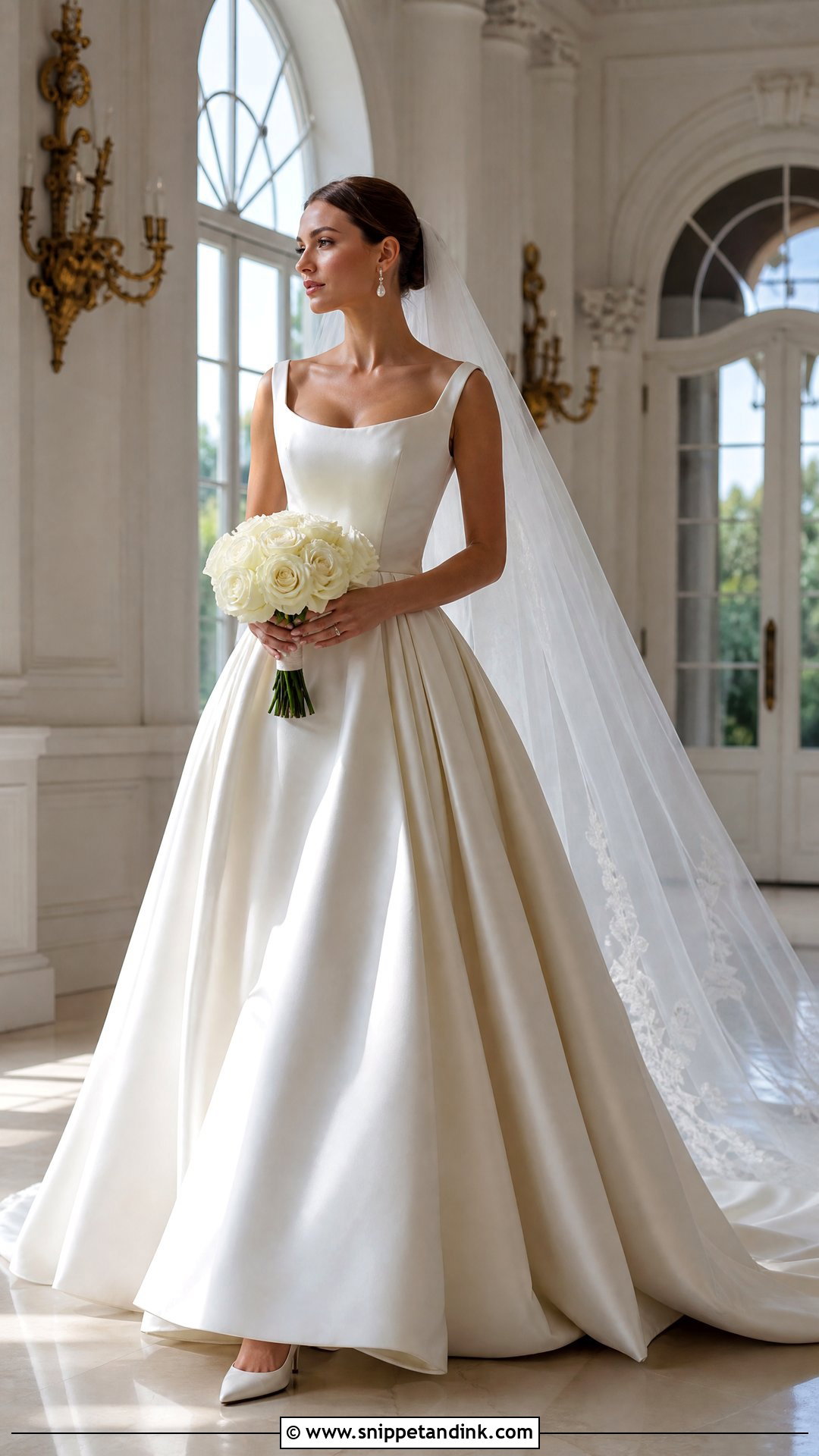
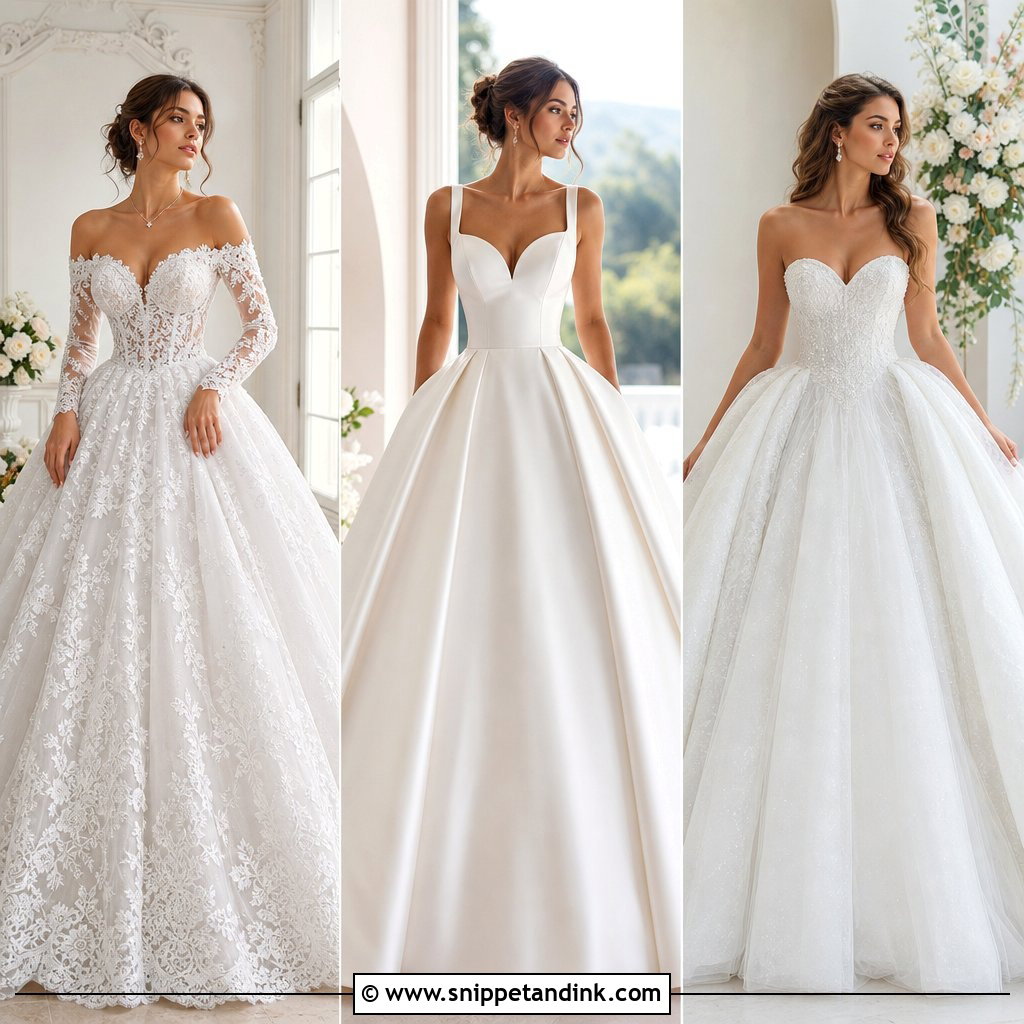
Plain satin is the purest version of the princess shape, and also the most demanding to fit. Without lace to hide anything, the bodice seams and the pleat spacing are on show. I’d ask for neat, evenly pressed pleats at the waist and a softly curved neckline. Hem it in the exact shoes you’ll wear, because satin that pools by even a centimetre catches under your toe on steps. An ivory cathedral veil, pearl drops and a slim tennis bracelet add a little shine, with pointed satin pumps and a sleek low bun. A round bouquet of white roses and ranunculus keeps it classic.
2. Off The Shoulder Princess Wedding Gown
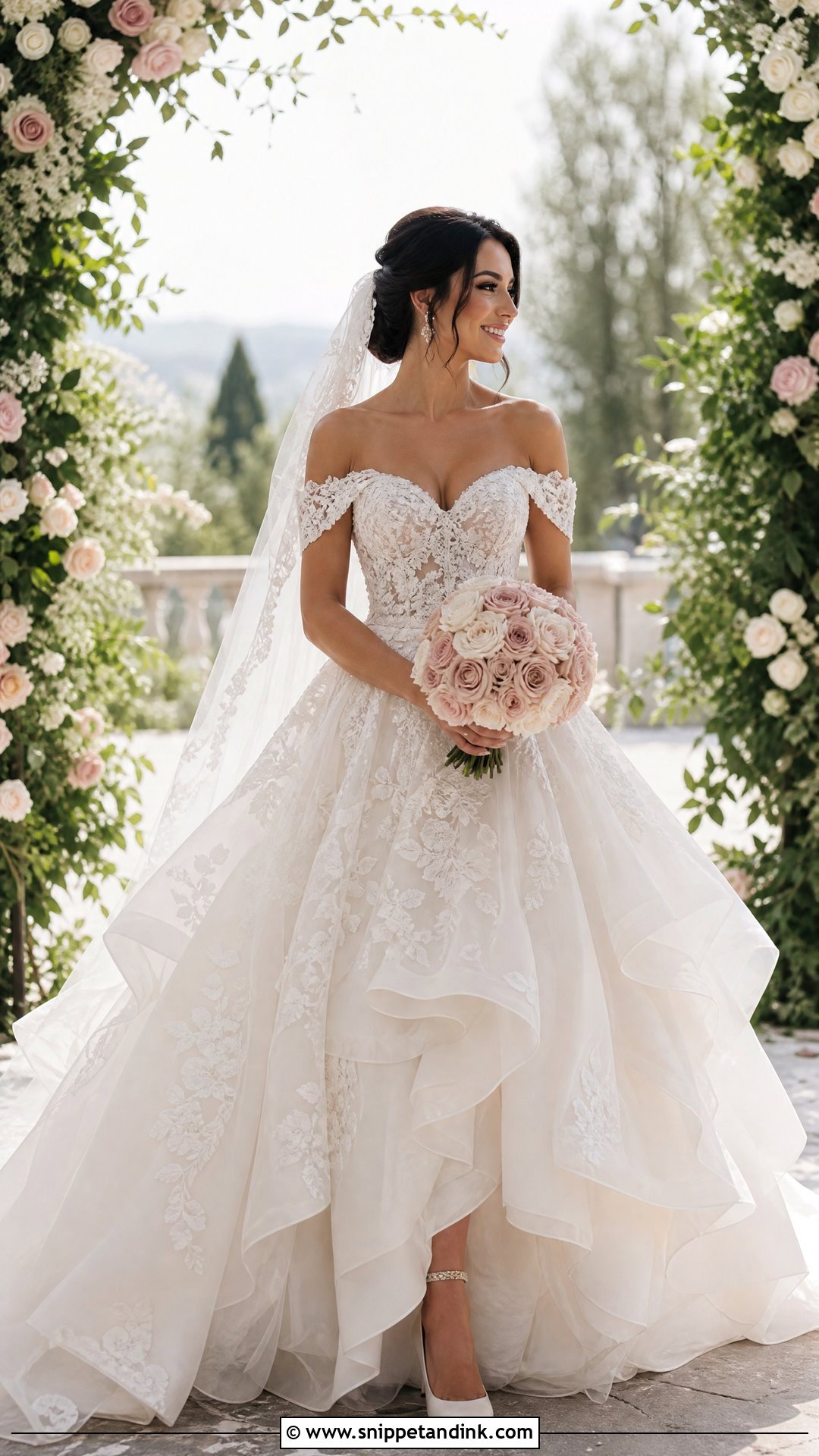
Off-shoulder bodices look relaxed, but they’re held up by careful engineering. Inner boning and a waist stay do the work, and the sleeve band across the arms should rest there, not grip. The test I always run: lift both arms as if hugging someone. If the band digs in or the bodice lifts, it needs adjusting before anything else. A lace bodice and layered skirt from the natural waist frame the collarbone well. A fine pendant, crystal studs, an embroidered fingertip veil and block heels for long standing periods suit it, with loose waves and garden roses with trailing green.
3. Corset Tulle Princess Wedding Gown
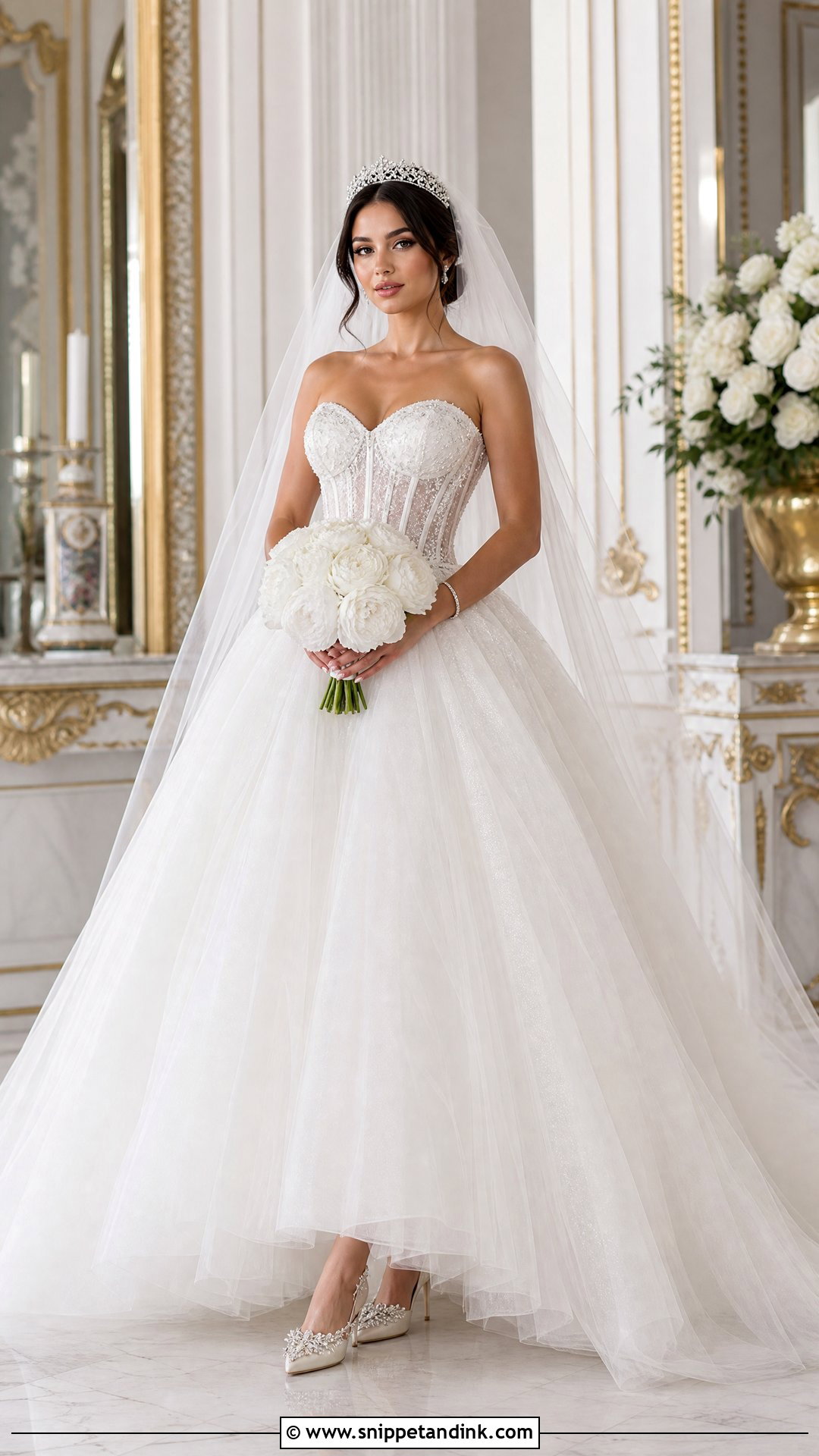
Tulle over a visible corset is the shape most people picture when they hear storybook princess wedding gown. It’s also where I see brides lace themselves too tight at the fitting because it looks better in the mirror. A corset should let you take a full breath and eat a meal. Several light tulle layers give the volume without dragging. A fine crystal tiara, studs, a long sheer veil and embellished ivory heels add sparkle, and a romantic updo leaves the sweetheart neckline clear. White peonies with sweet peas keep the bouquet airy.
4. Basque Waist Princess Wedding Gown
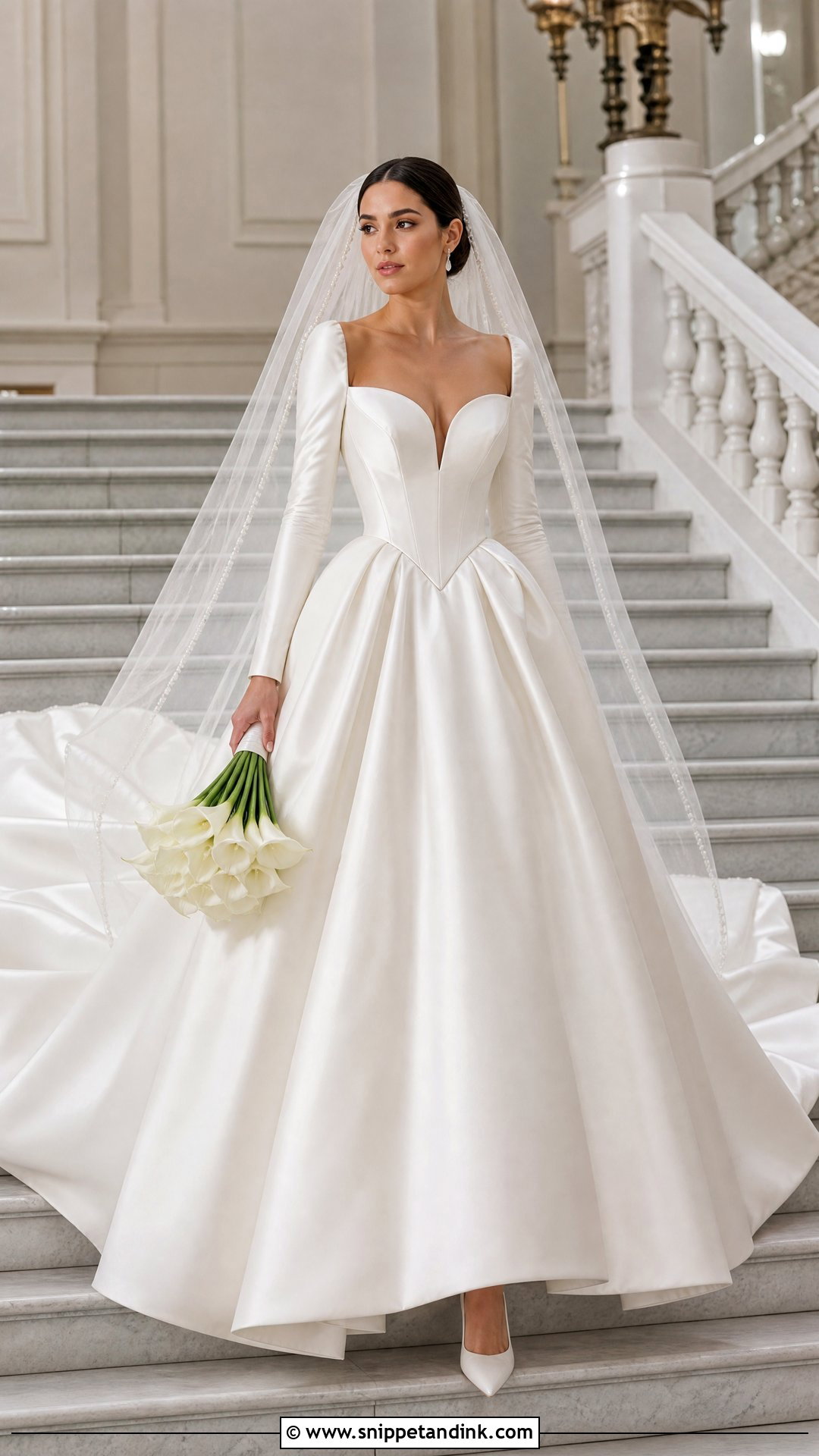
The basque point lengthens the torso and gives the skirt a dramatic starting line. It looks sharpest in satin, mikado or layered organza, which hold the point without folding. If you see the tip crease when you sit, the boning there needs to be shortened or softened, and that’s a common fix. Don’t add a thick belt, which cuts across the very feature you’re paying for. A pearl-edged cathedral veil, small drops and stable pointed pumps suit the formality, with a neat bun or polished half-up style and a controlled bouquet of callas, roses or orchids.
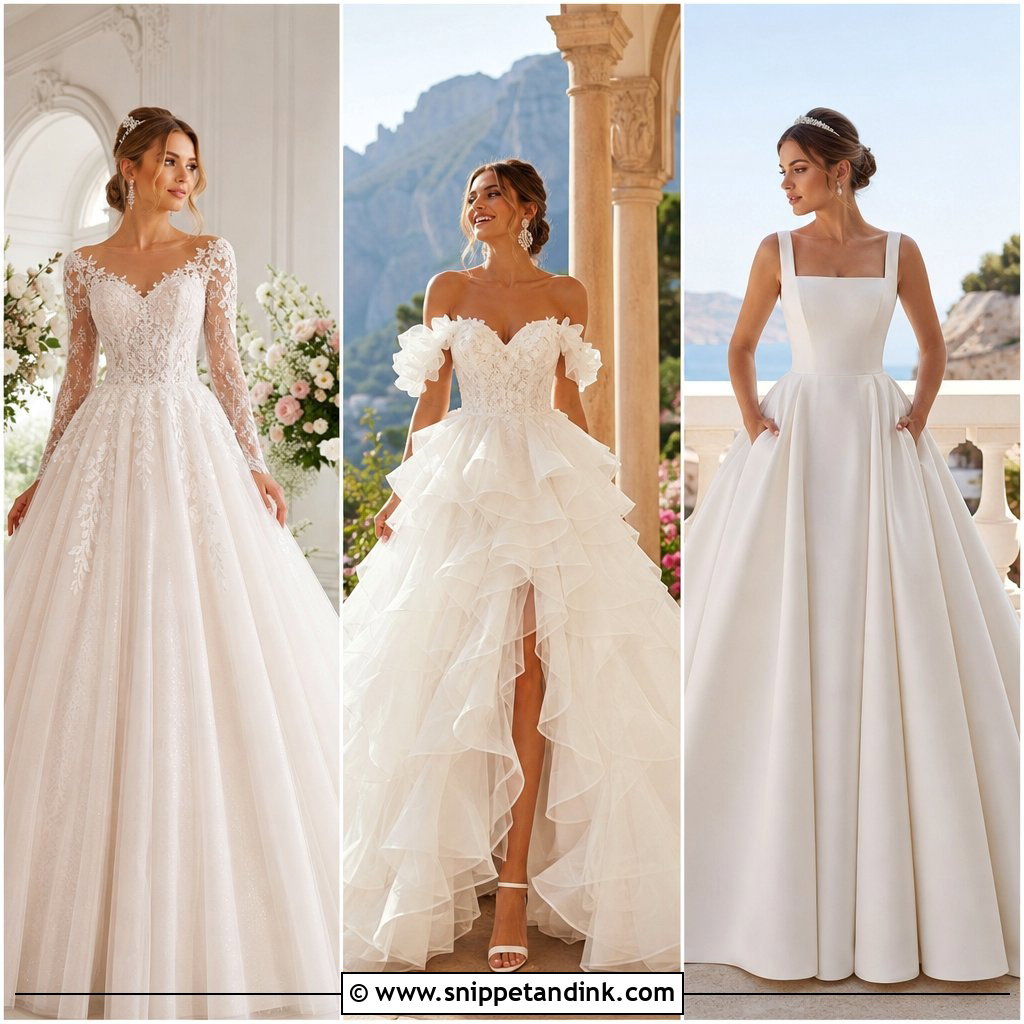
5. Long Sleeve Lace Princess Wedding Gown
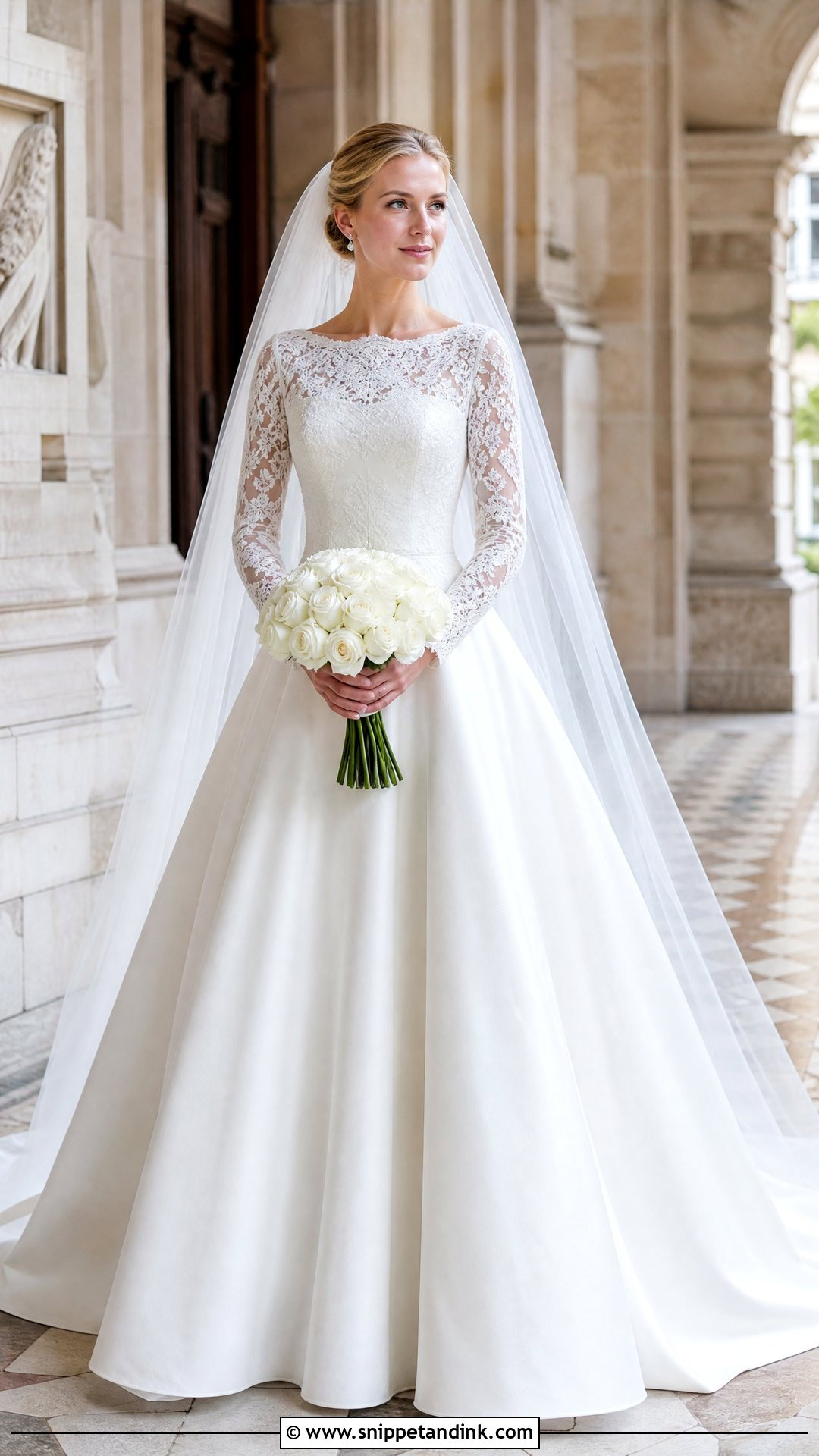
Lace sleeves give a princess gown coverage with real detail. The thing I check first is the armhole. If it’s cut low, the whole bodice lifts when you raise your hand to wave, and no amount of adjusting the sleeve itself will fix that. A bateau, V or soft scoop neckline over a satin or tulle skirt works, with a plain veil so the lace isn’t fighting another pattern. Pearl earrings, an heirloom-style ring, closed ivory pumps and white roses with anemones suit cooler weather. If there are wrist buttons, make sure you can open them yourself for handwashing.
6. Floral Appliqué Princess Wedding Gown
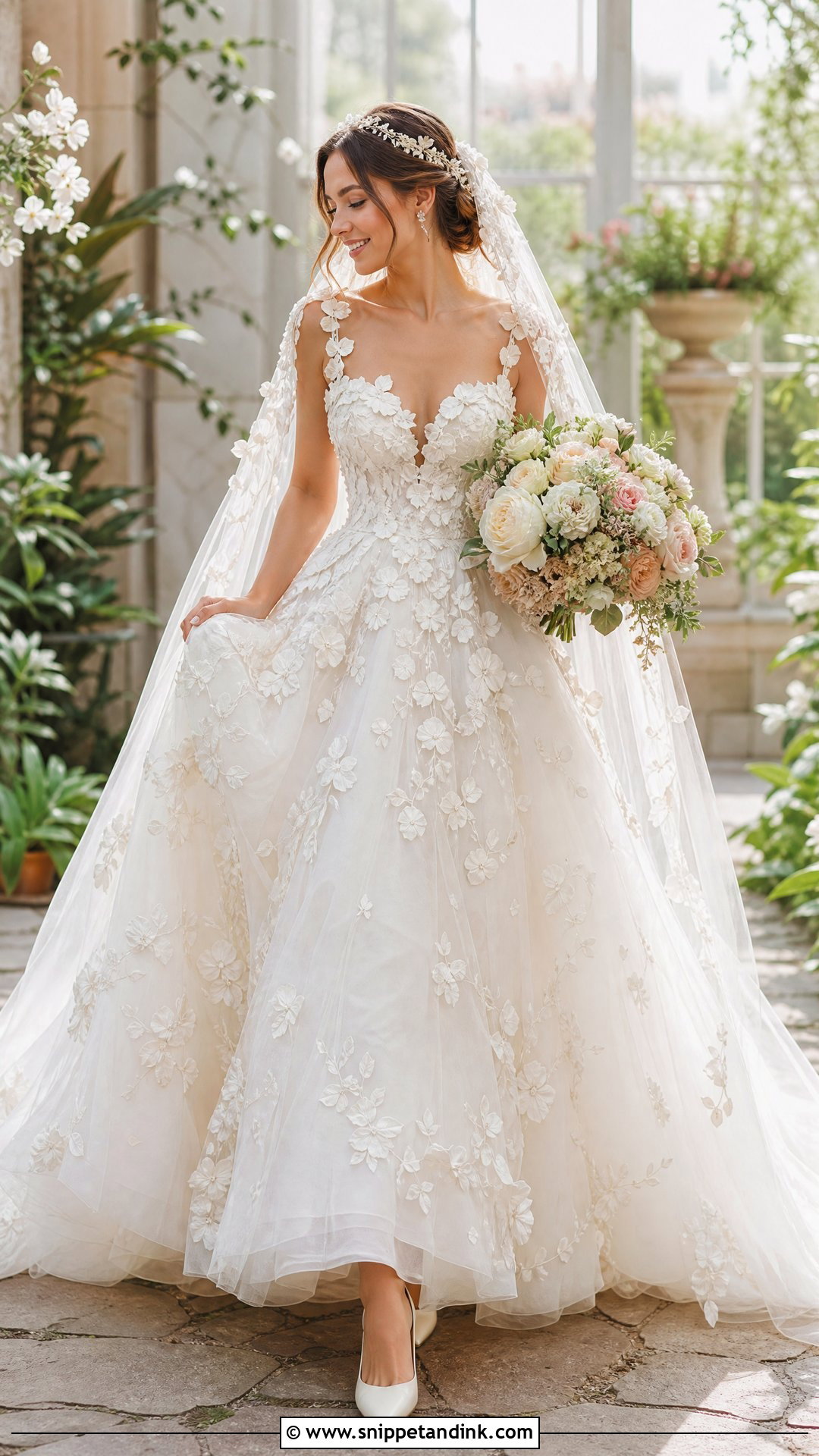
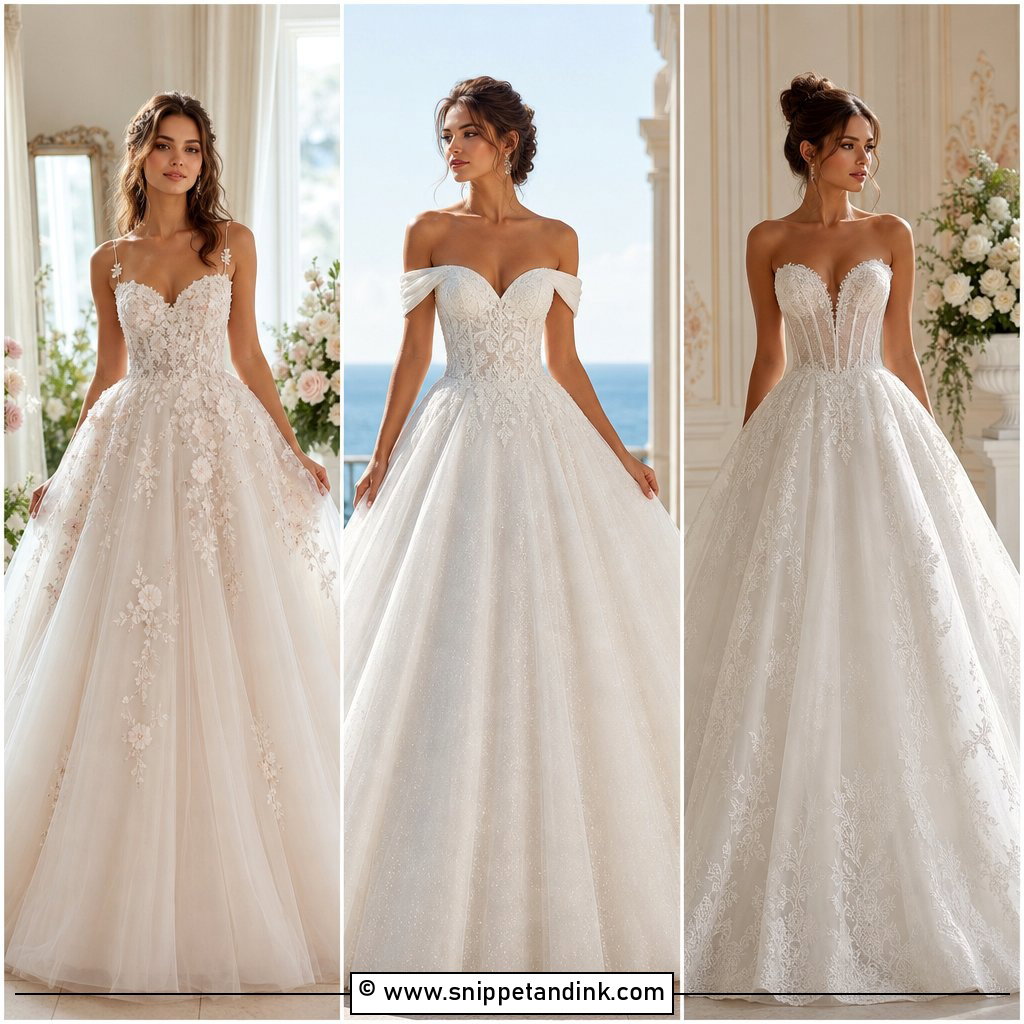
Appliqué flowers that continue from bodice to skirt create an enchanted garden look without a hard line at the waist. Scale changes everything here. Small blossoms read delicate, large ones read dramatic, and a petite bride can get lost under the larger kind. Run your hands down your sides as if walking; raised petals at the hips will rub against your inner arms all day if they’re placed badly. A veil with a few scattered flowers, crystal studs, a fine hair vine, ivory pumps or low sandals and a loose garden rose bouquet keep it soft.
7. Sparkle Tulle Princess Wedding Gown
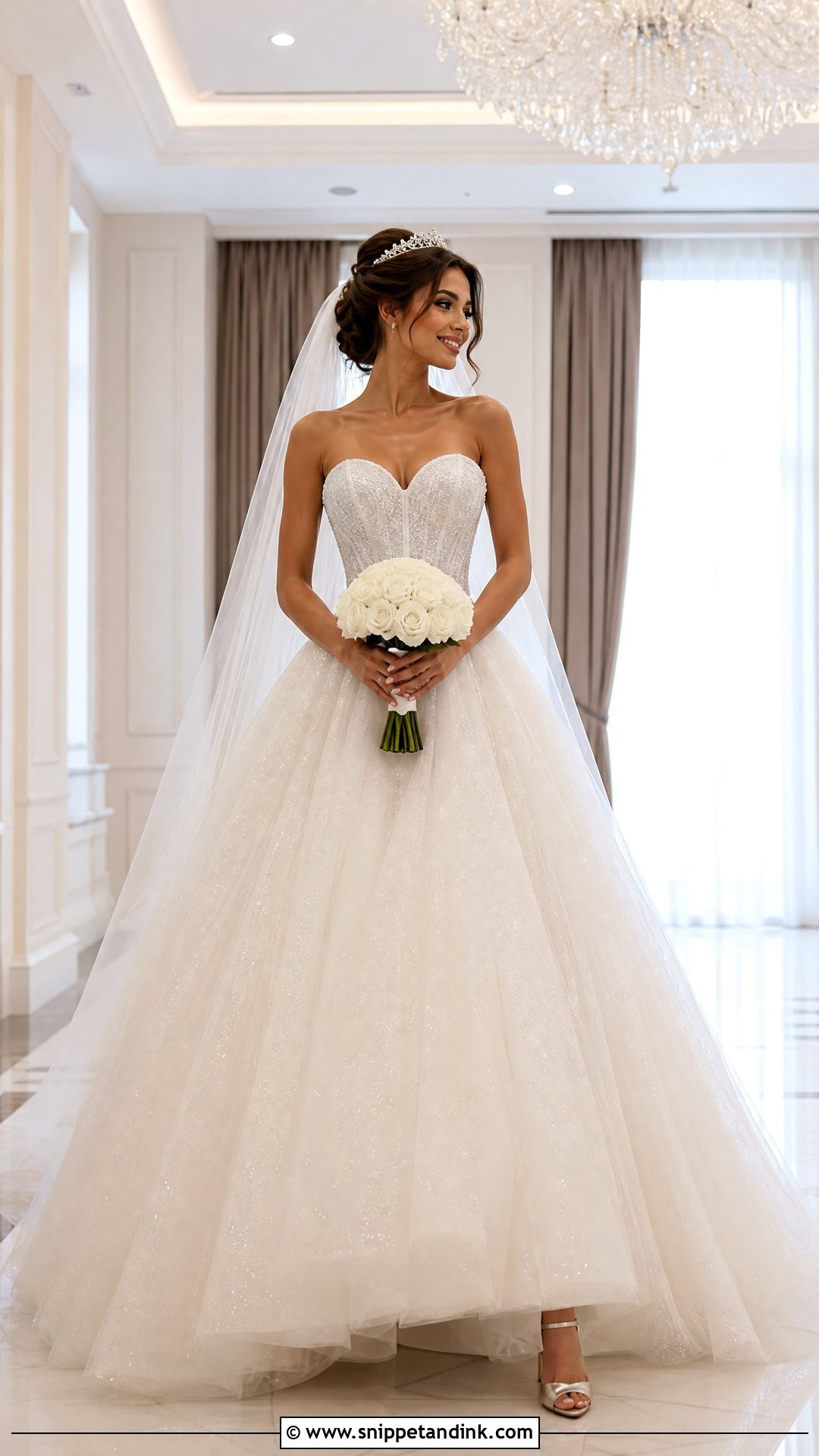
Sparkle tulle only reveals itself when you move, and the effect varies with the light. In daylight it can look almost plain, under candles or spotlights it glows. So look at it in both before you choose. Glitter also sheds on lesser fabrics, and the coarser types scratch, which is why a smooth lining between you and the skirt matters. Keep the bodice clean with a sweetheart or simple straps. Crystal earrings, a narrow tiara, metallic ivory pumps, a plain cathedral veil and a compact white rose bouquet keep the shine controlled.
8. Cathedral Train Princess Wedding Gown
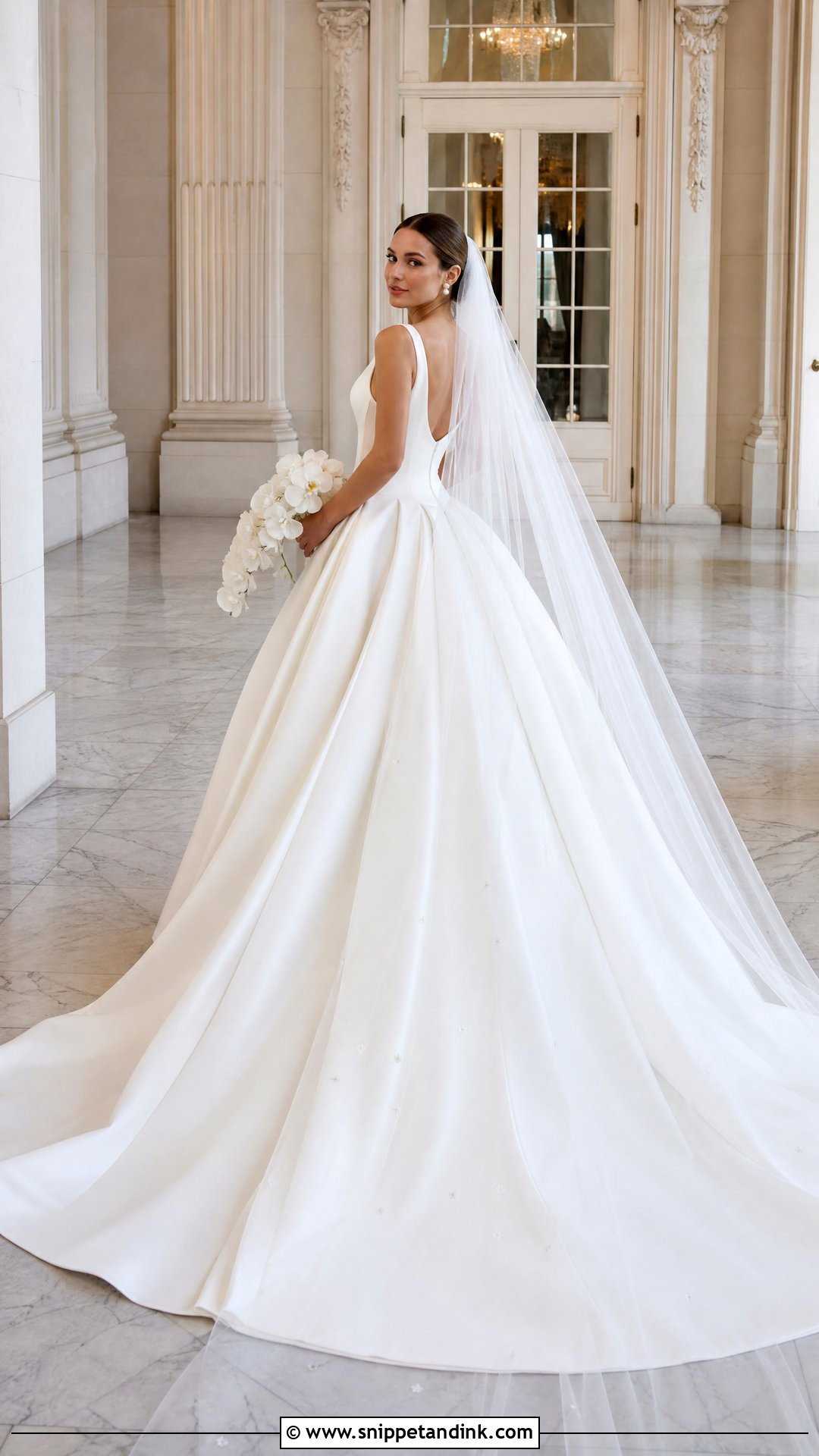
A long train needs as much planning as the gown it’s attached to. On a princess wedding gown with a cathedral train, a fitted satin bodice and pleated skirt give the fabric enough body to spread out behind you on the aisle. After the ceremony it has to go up. Ask for a secure bustle and a wrist loop, and have the person who’ll bustle you practise with the seamstress, not on the day. A long sheer veil, pearl earrings, closed pumps, a formal updo and white orchids or roses keep it balanced.
9. Square Neck Princess Wedding Gown
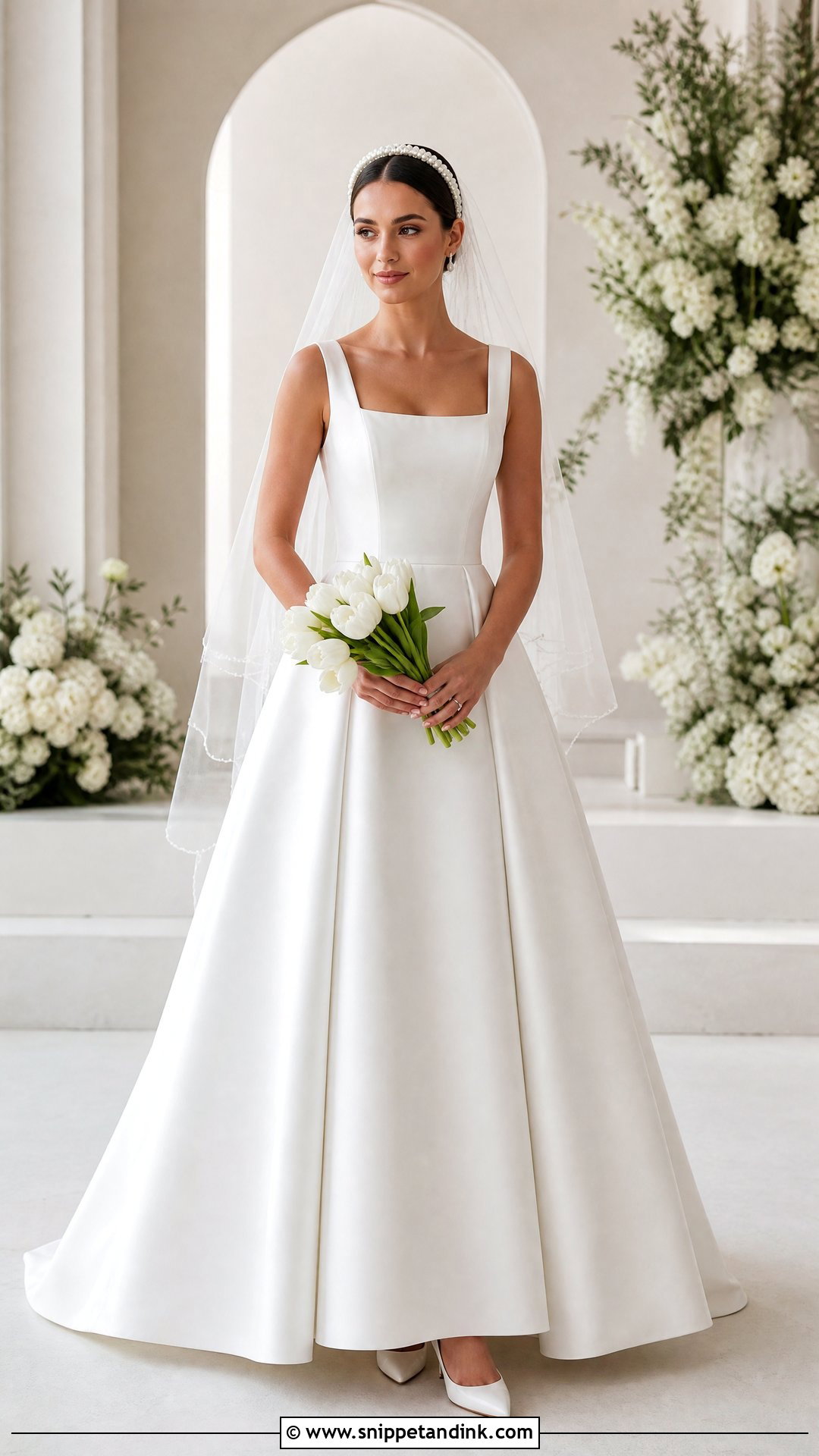
A square neck gives the gown a clean architectural line. The corners are the weak point: they should press flat against you, and if they lift when you breathe out or lean forward the bodice needs tightening at the side seams. Wide straps placed slightly inward on the shoulder stay put better than ones at the edge. A smooth satin bodice falling into a full skirt suits it. A pearl headband, short drops, a fingertip veil, pointed heels and white tulips or roses complete it, and a fine illusion panel can add coverage without softening the square.
10. Sweetheart Princess Wedding Gown
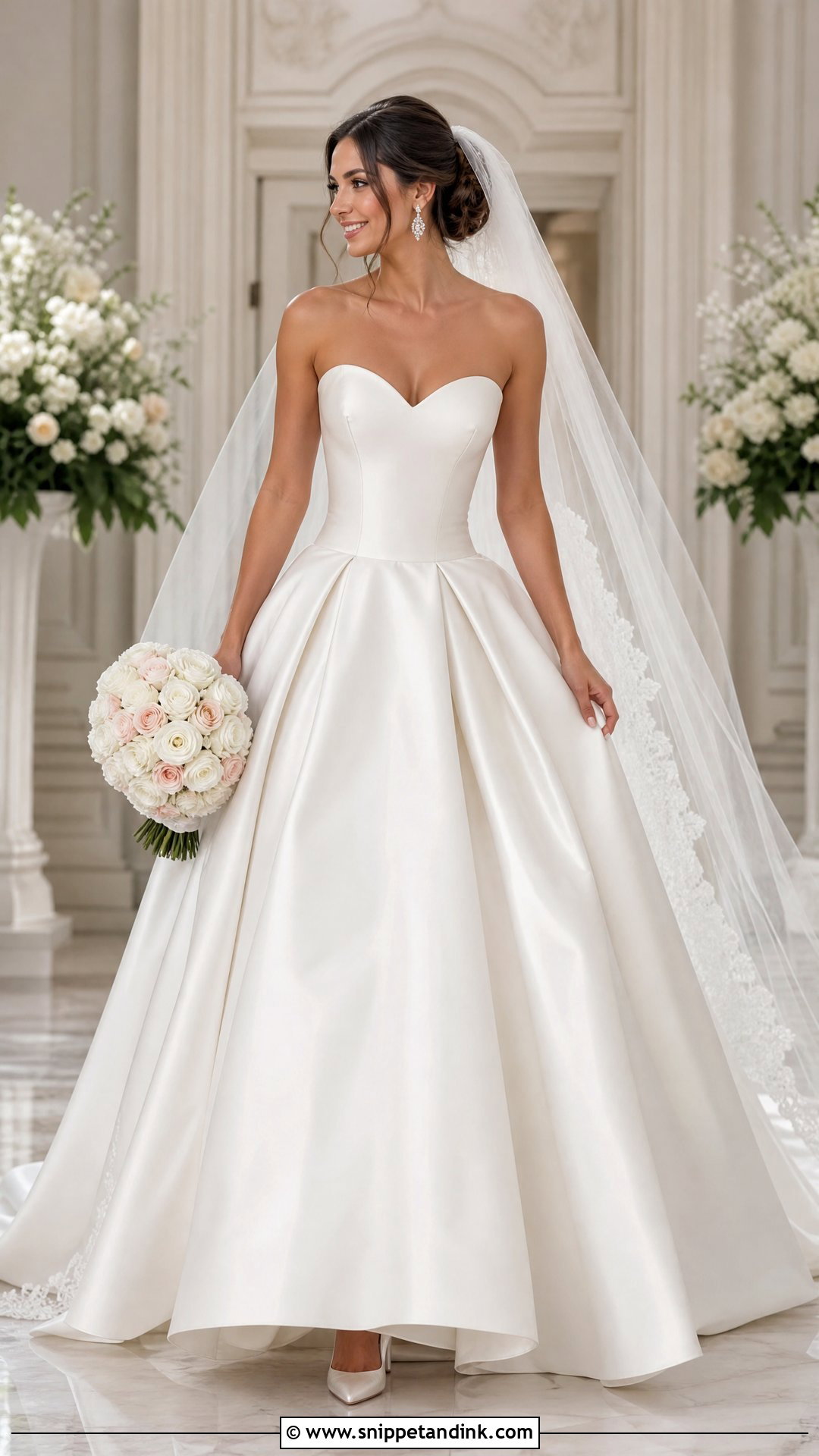
The sweetheart curve sits naturally on a fitted bodice and full skirt, but the support has to come from inside the gown, not from a tight neckline. Proper cups, boning and a waist stay mean you won’t spend the evening hitching it up. Ivory mikado with soft waist pleats and little beading keeps it classic. Usually crystal drops are enough jewellery; add a fine necklace only if the neckline feels bare. A chapel veil, satin pumps, soft waves or a romantic updo and white and blush roses finish it. If you want extra security for dancing, removable straps or off-shoulder drapes help.
11. Puff Sleeve Princess Wedding Gown
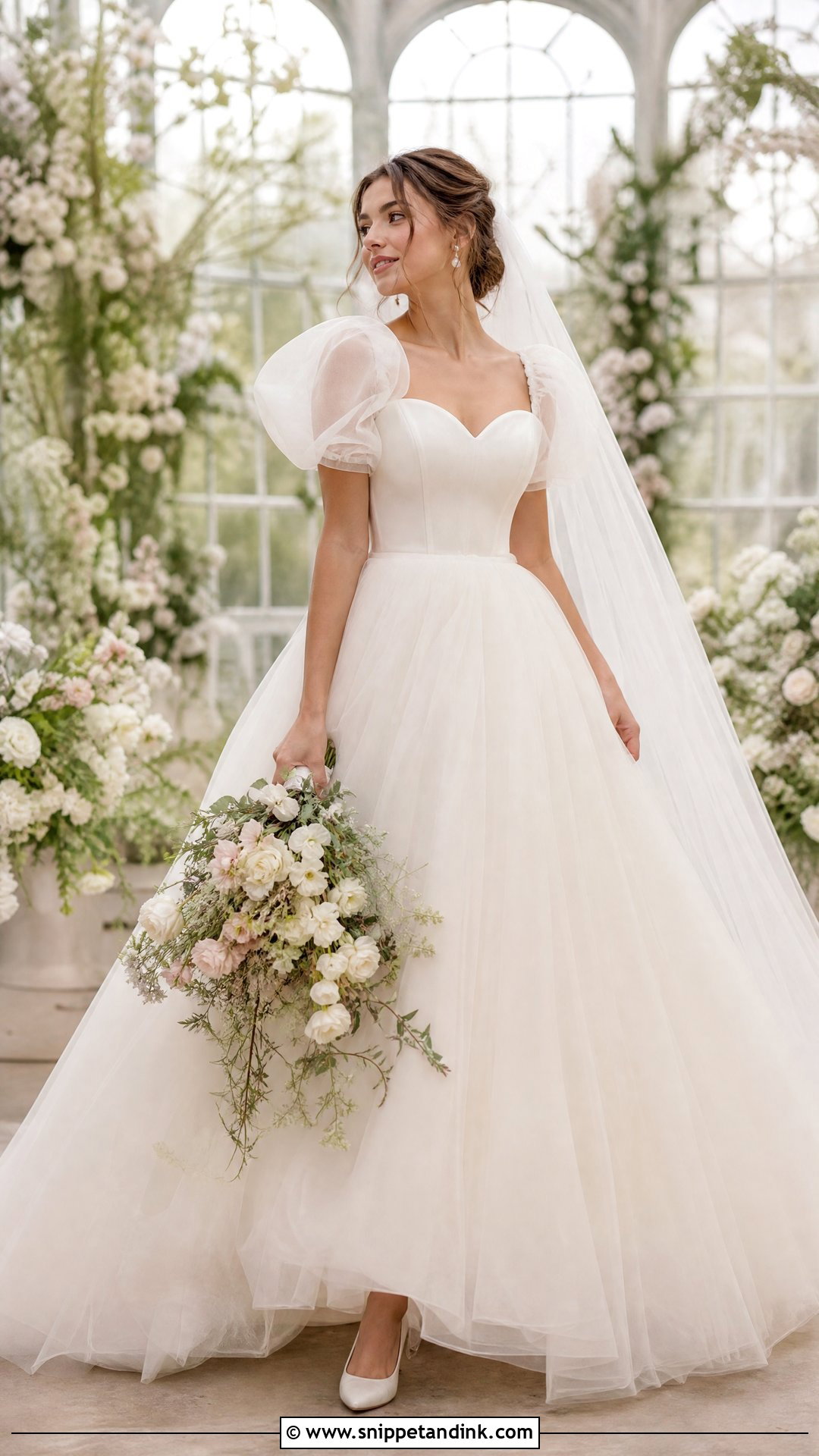
Puff sleeves are pure storybook, and they need a fitted bodice and full skirt underneath or the proportions tip over. Sheer organza or dotted tulle keeps them light. Choose the size by your frame and venue: small puffs read romantic, oversized ones read editorial and can make narrow shoulders look swamped. Check the elastic or cuff at the upper arm, because it tends to pinch after a few hours. A simple veil, small pearls, plain ivory shoes, a soft braided updo and cosmos with garden roses suit the whimsy. Removable puffs give you a second look.
12. Detachable Sleeve Princess Wedding Gown
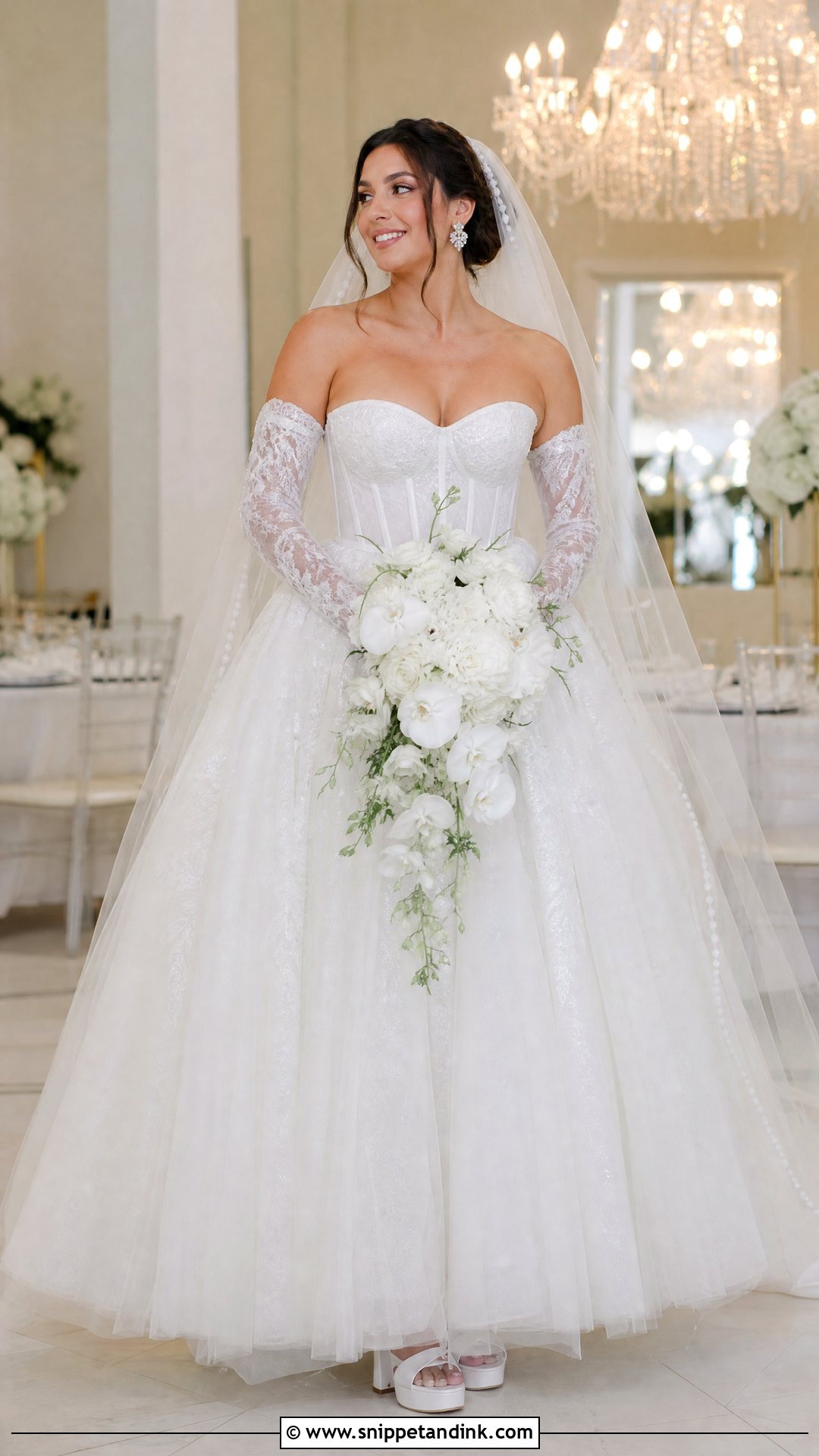
Detachable sleeves turn one gown into a ceremony look and a reception look. Lace sleeves or off-shoulder drapes over a structured corset come off after portraits, and a jewelled comb replaces the veil. The attachment points are what give it away. Ask the seamstress to hide them under appliqués, covered buttons or narrow loops, and rehearse the change, because removing sleeves in a hurry can catch your hair or smear makeup. A pearl-trimmed veil, crystal earrings and block heels work with both versions, and a cascading white bouquet suits the formal half.
13. Bow Back Princess Wedding Gown
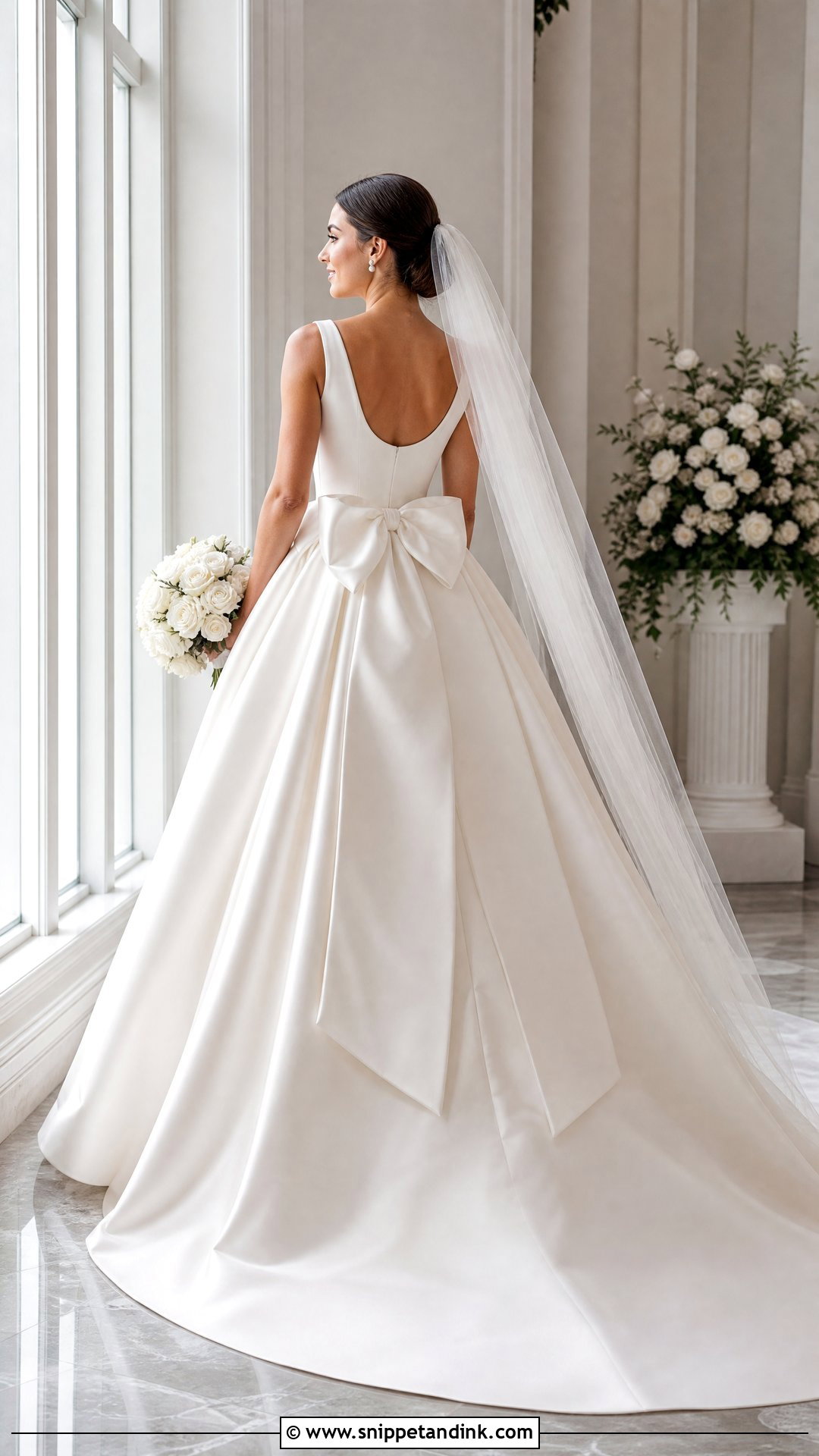
A large bow is the detail guests see while you stand at the altar, which makes the back of the gown your real front for twenty minutes or more. Mikado or satin holds a bow’s loops crisply; softer fabrics droop by evening. Check that it doesn’t cover the buttons or the bustle points, or your helper will be untying it to lift the train. A removable bow is easier after the ceremony. Pearl studs, a smooth veil, classic ivory pumps and a polished bun keep the back clear. A restrained bouquet of white roses suits the clean lines.
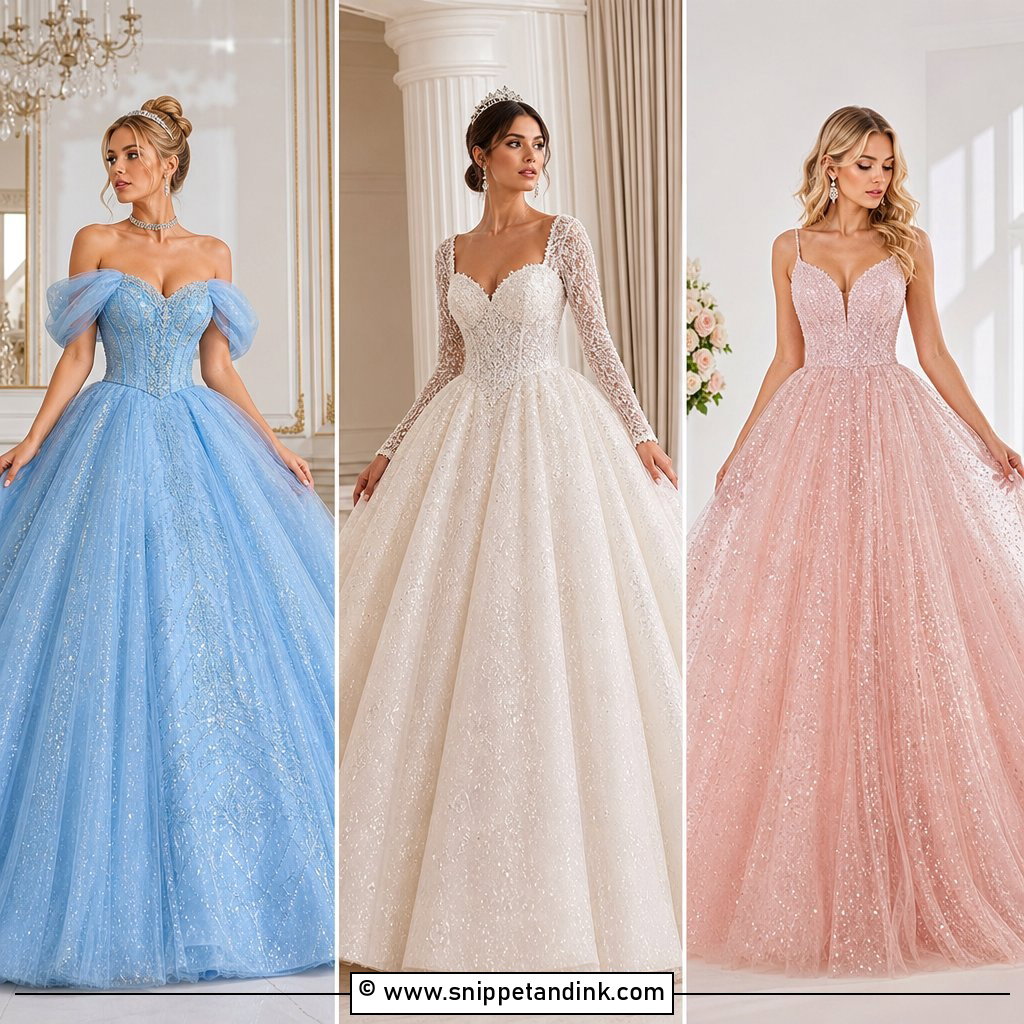
14. Blush Princess Wedding Gown
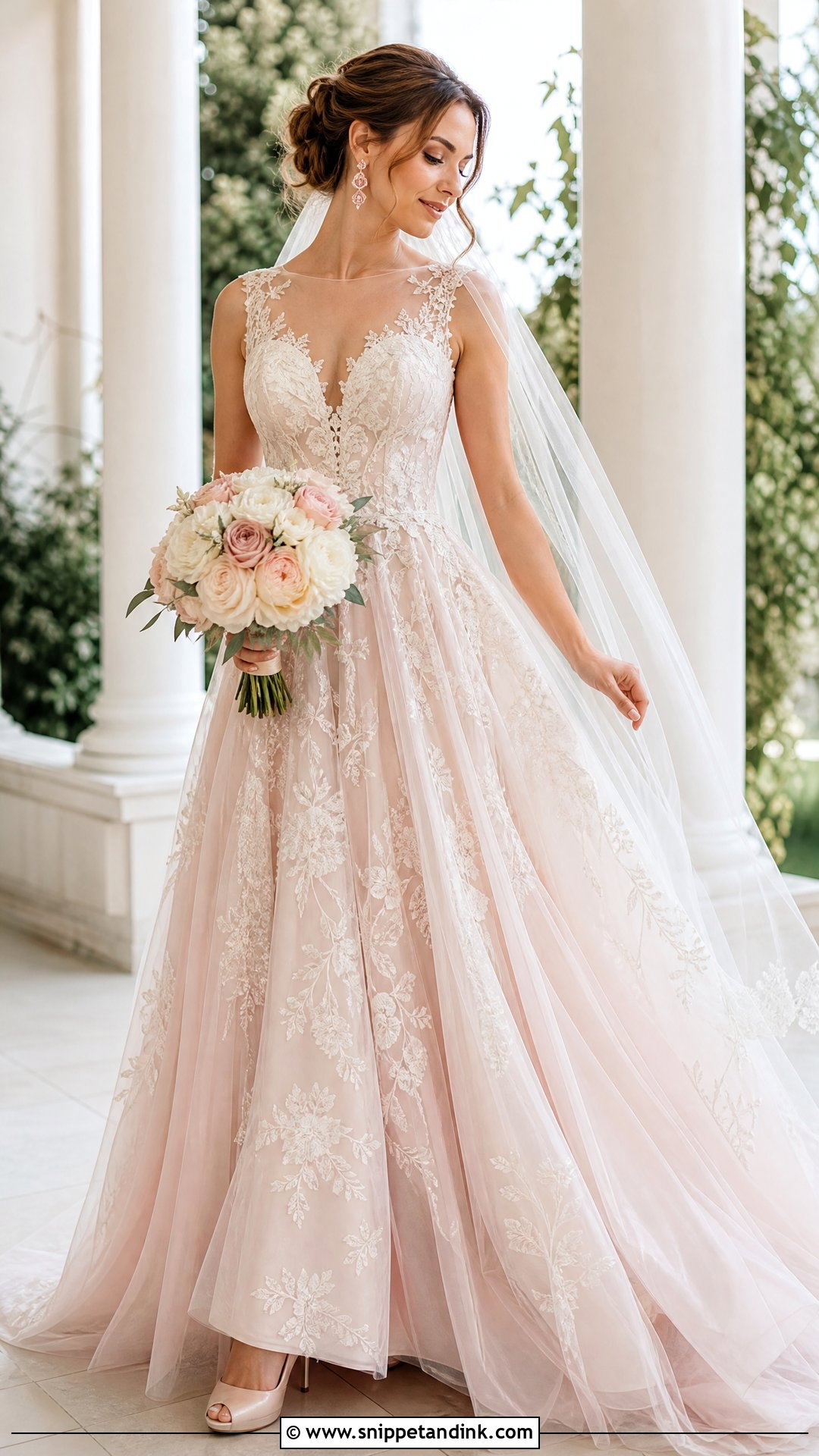
Blush works best as a whisper under ivory, giving warmth without reading strongly pink. A pale rose underlayer beneath ivory tulle or lace does this well. Look at the gown in daylight and under warm bulbs, since blush shifts toward peach or beige depending on the light, and match the lining to how it sits against your skin. Ivory embroidery on the skirt brightens the colour and links it to traditional accessories. Rose-gold earrings, neutral satin heels, a sheer ivory veil, loose curls or a textured low bun and cream and dusty pink flowers complete it.
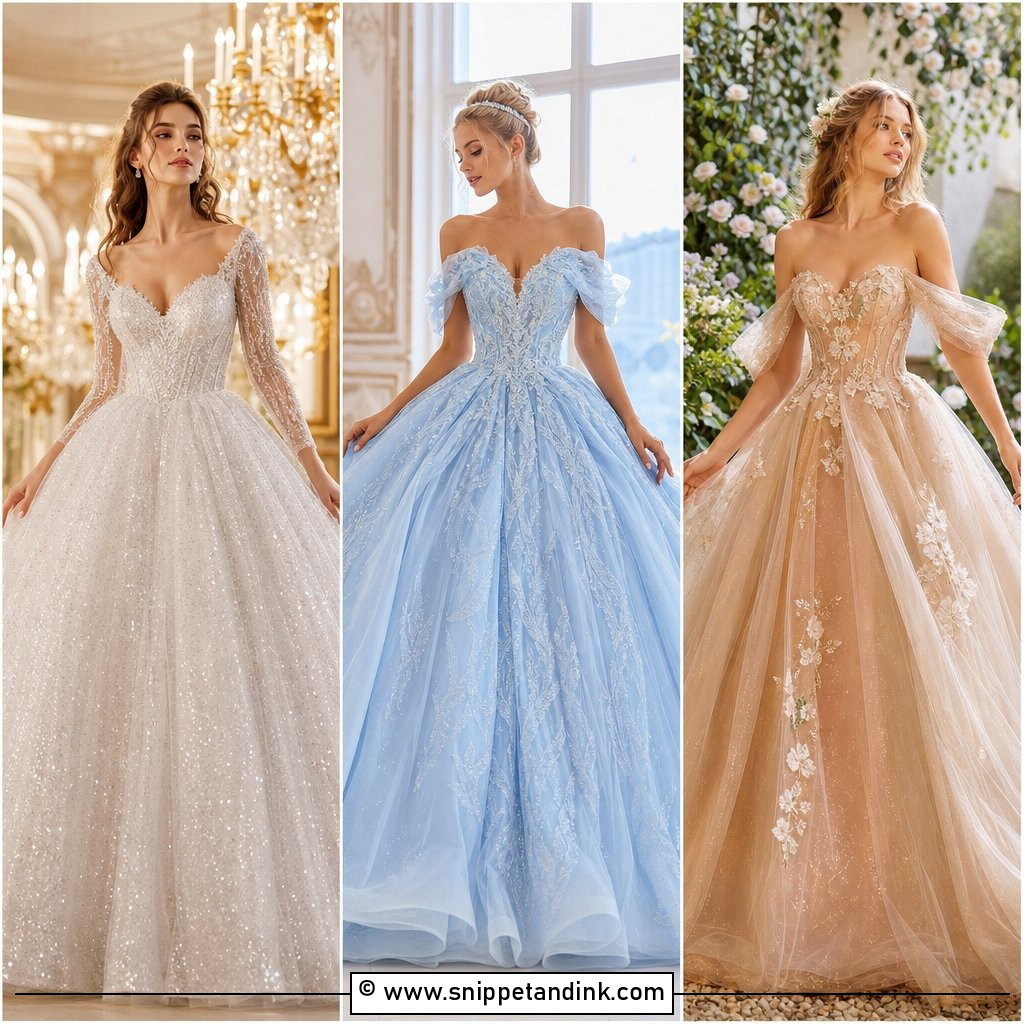

15. Pale Blue Princess Wedding Gown
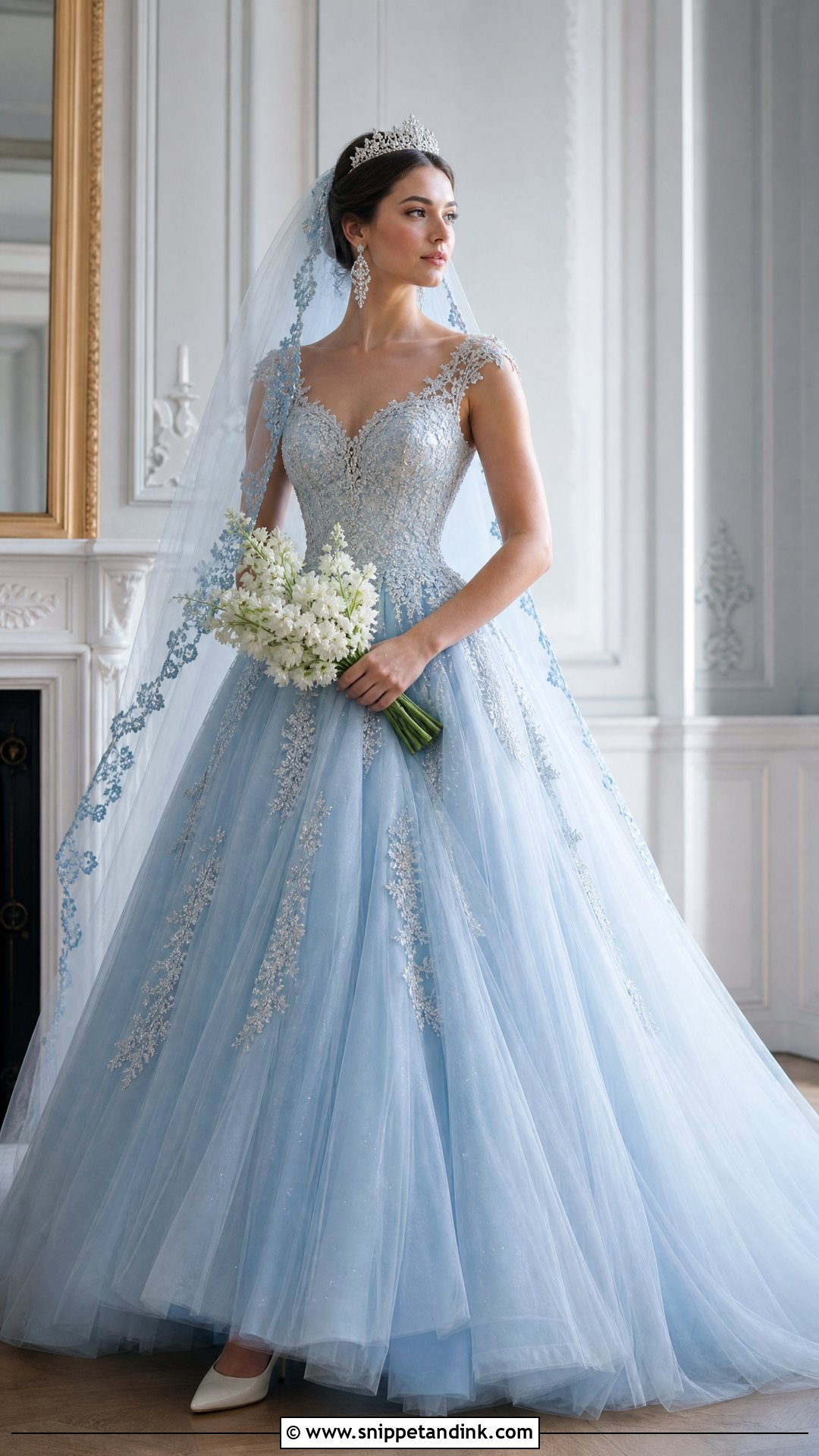
Pale blue gives a fairytale gown a cool, icy quality that few brides expect to like as much as they do. Icy tulle over a neutral lining keeps the shade soft, and silver embroidery on the bodice ties in the accessories. Blue is the colour that changes most under venue lighting, sometimes turning grey or lilac, so take a swatch to the venue at the time of day you’ll marry. Muted blues photograph more naturally than saturated ones. Crystal earrings, a silver tiara, ivory or light blue pumps, a veil with a faint blue edge and white delphiniums with roses finish it.
16. High Neck Princess Wedding Gown
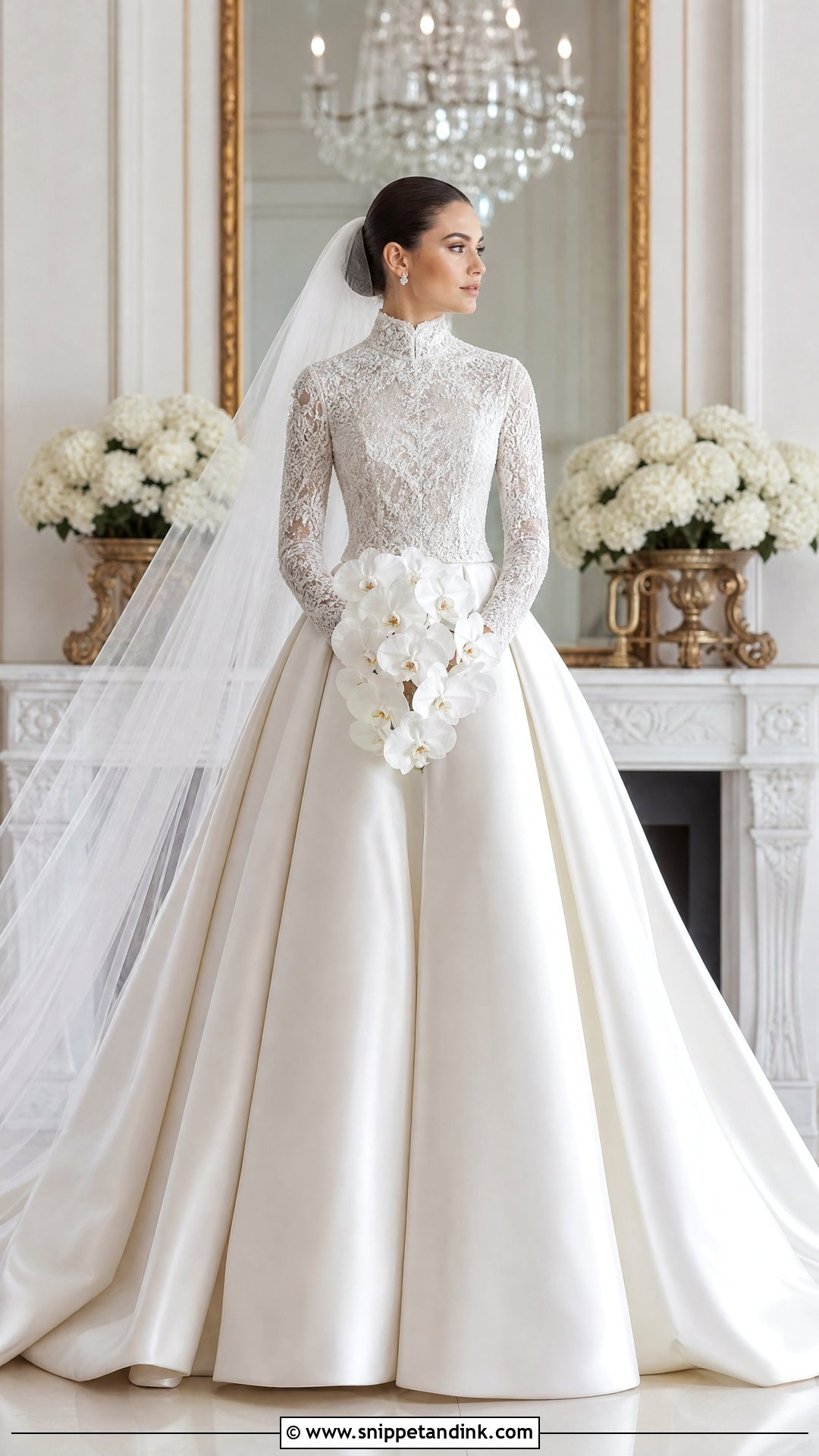
A high neck gives a princess gown a stately, formal outline. A fitted lace or embroidered bodice over a smooth satin skirt keeps the waist clear. The collar is what I test: turn your head fully both ways and look down at your shoes. If it rubs or pulls at the nape, it needs a little more ease or a softer lining. Sheer illusion collars are cooler than fully lined ones. Skip the necklace for pearl or crystal studs. A long plain veil, closed pumps, a sleek bun and a structured bouquet of roses or orchids suit it, with covered buttons down the back.
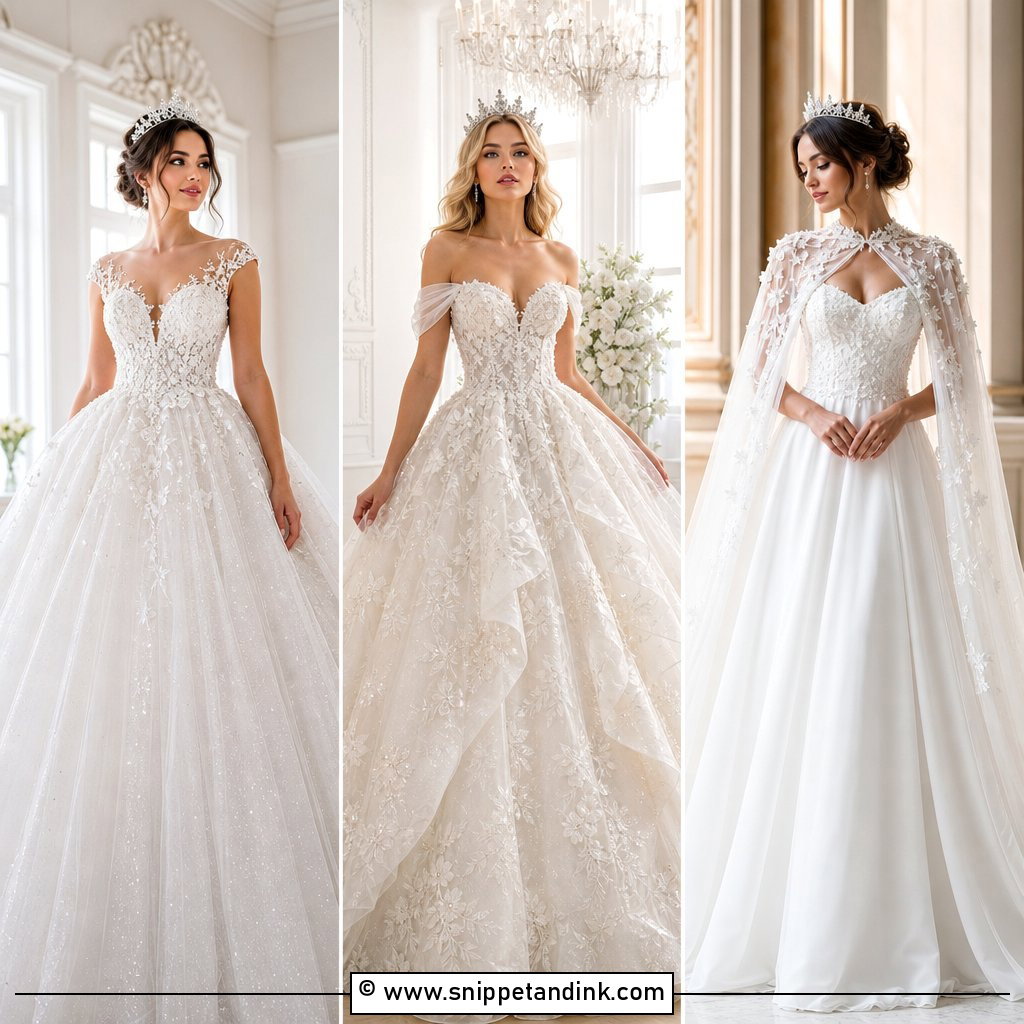
17. Illusion Bodice Princess Wedding Gown
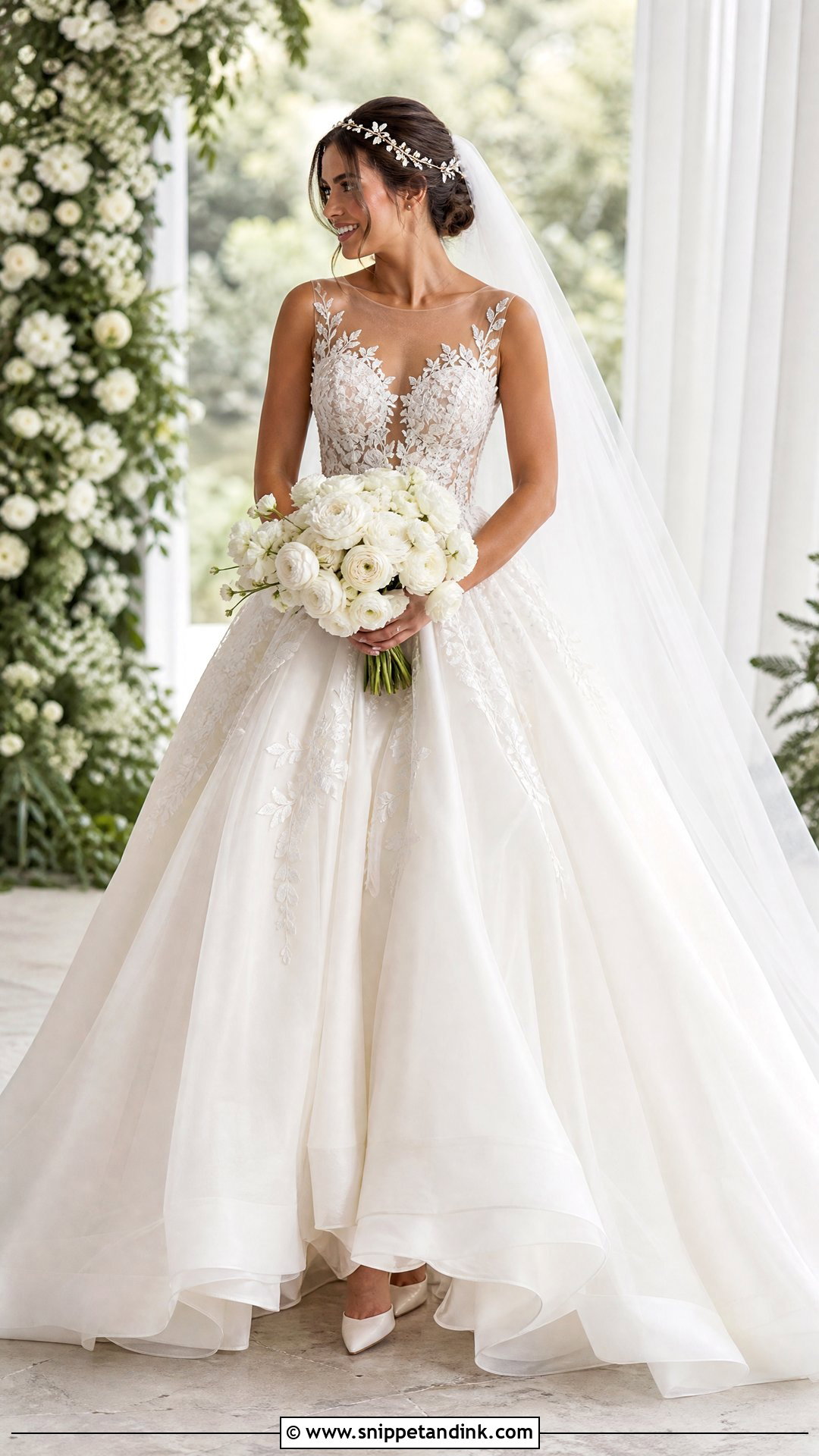
An illusion bodice lets lace look like it’s floating on the skin while giving more support than a bare corset. The mesh must match your skin tone, because a mismatch shows up instantly in flash photos as a pale or dark shadow. Ask whether cups and seams can sit under appliqués so they don’t show through. The embroidery should look balanced from front, side and back. A full tulle or organza skirt, a fine crystal hair vine, small earrings and a plain chapel veil suit it, with closed ivory heels, a soft low bun and white ranunculus and roses.
18. Bridal Cape Princess Wedding Gown
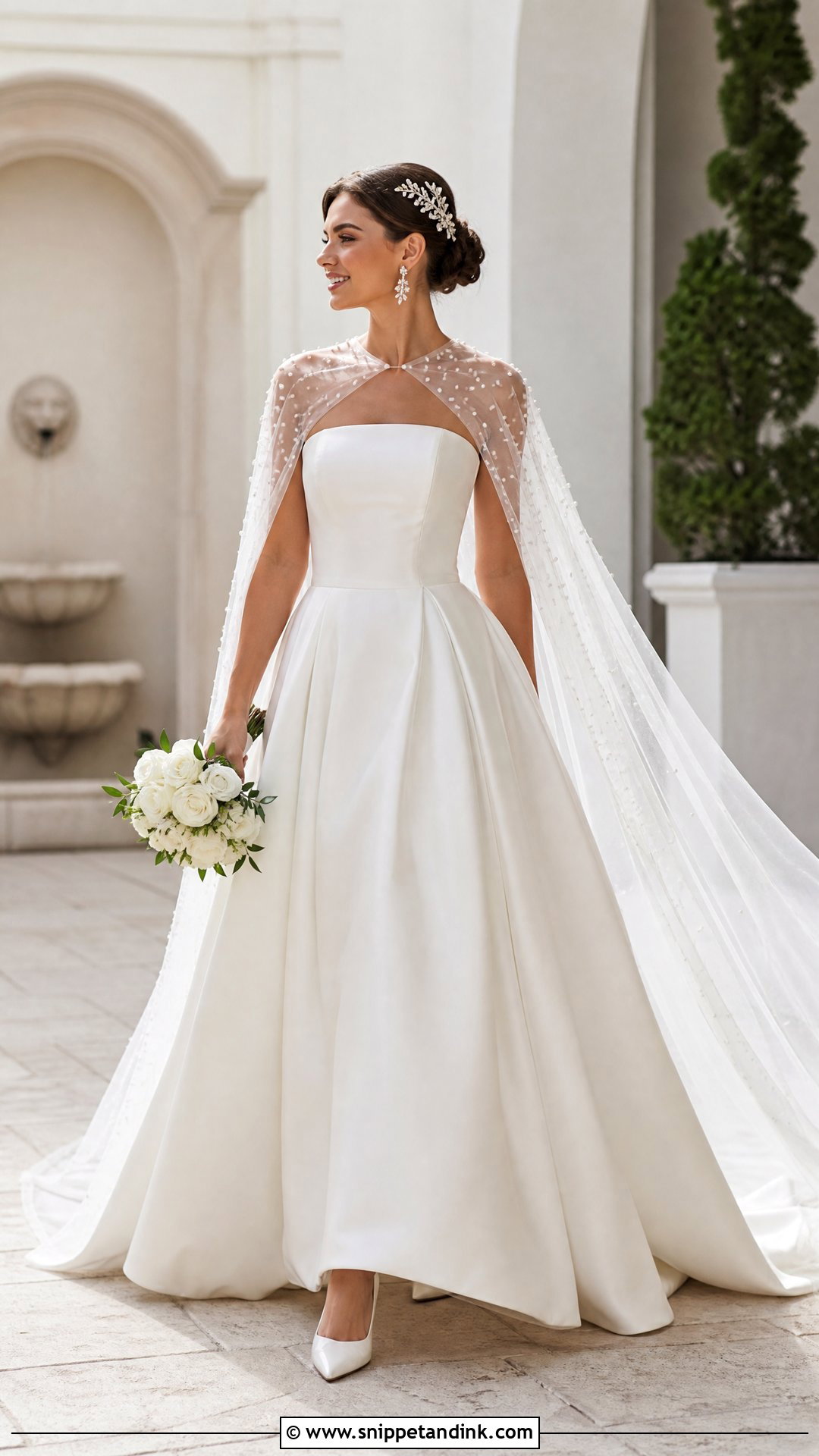
A cape gives you movement and drama with nothing pinned in your hair. Over a clean strapless or sleeveless satin ball gown, a sheer floor-length cape fastened at the shoulders can be scattered with pearls or fine embroidery. Wind is the issue outdoors. A light cape billows well, but a heavy one pulls backward on the shoulders, so practise walking in it where you’ll be married if you can. It should come off easily for dinner. Crystal studs, a jewelled comb, pointed heels, a polished updo and a simple white rose bouquet keep it clean.
19. Plus Size Princess Wedding Gown
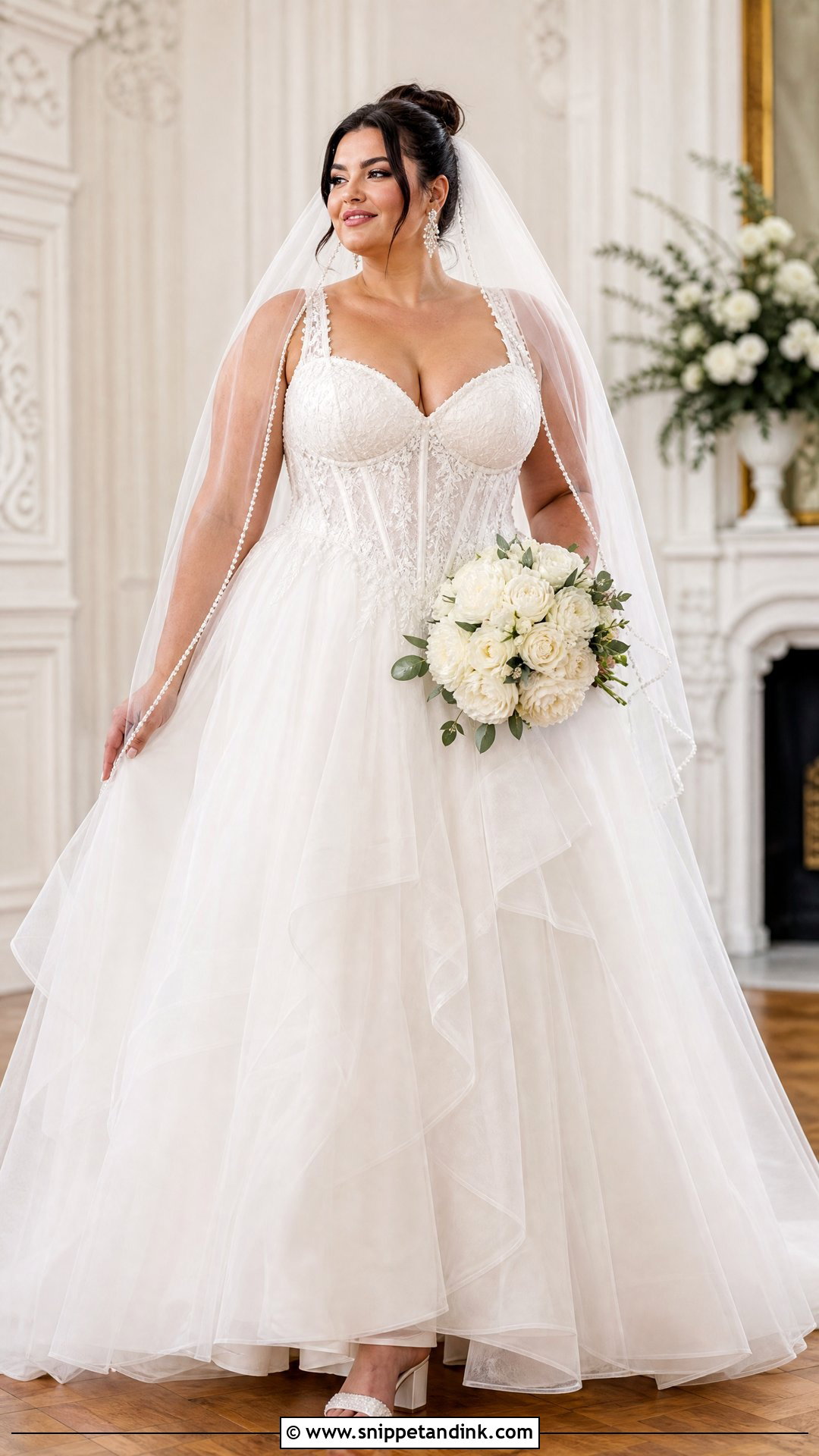
A plus-size princess wedding gown needs internal structure that suits your body, not a sample made for a different one. A corseted bodice with comfortable boning, wide straps and a defined natural or basque waist does most of the work. Order to your largest measurement and have the rest taken in; going the other way rarely works. A full tulle skirt gives drama with less weight than layered satin. A pearl-edged veil, sparkling earrings, supportive block heels, a soft updo or side-swept waves and a bouquet scaled to the gown complete it.
20. Modest Princess Wedding Gown
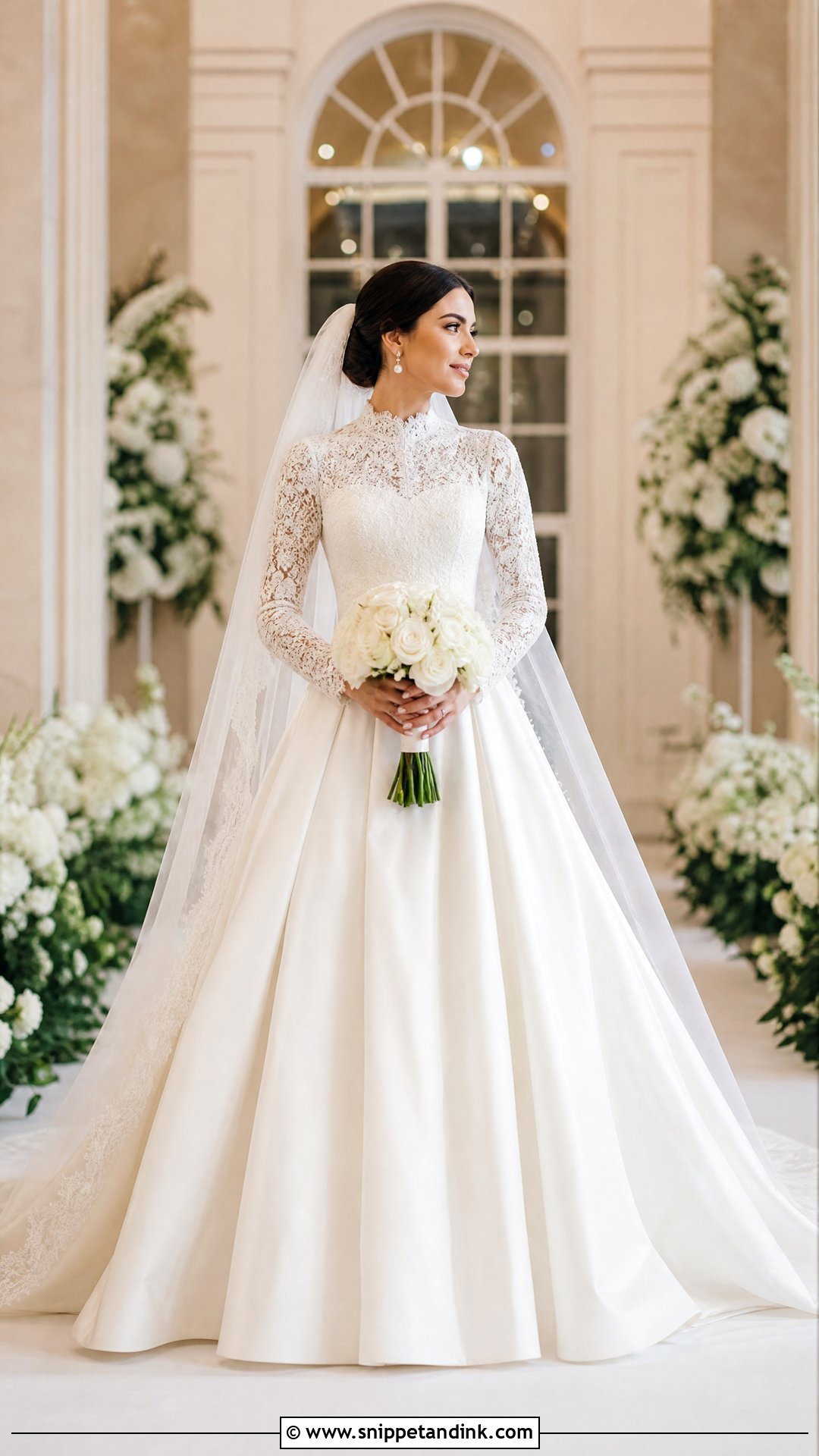
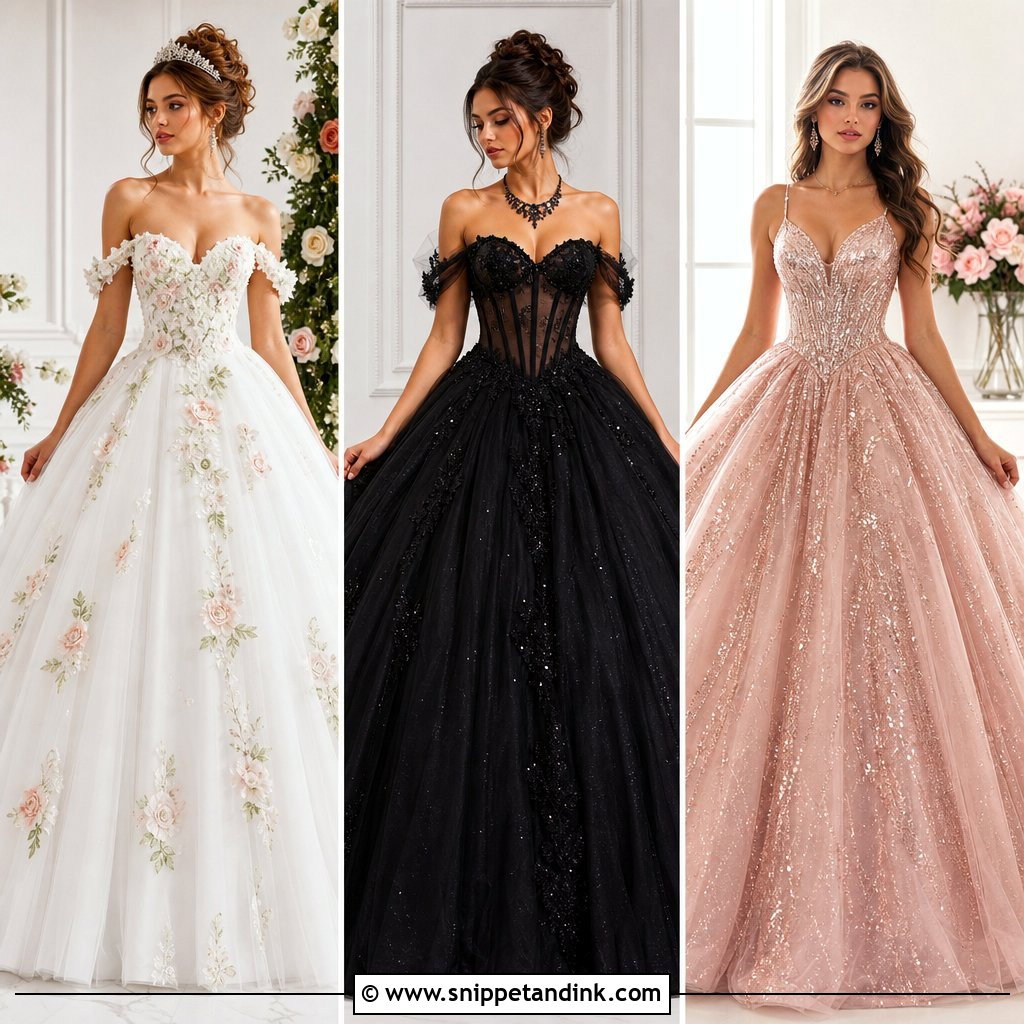
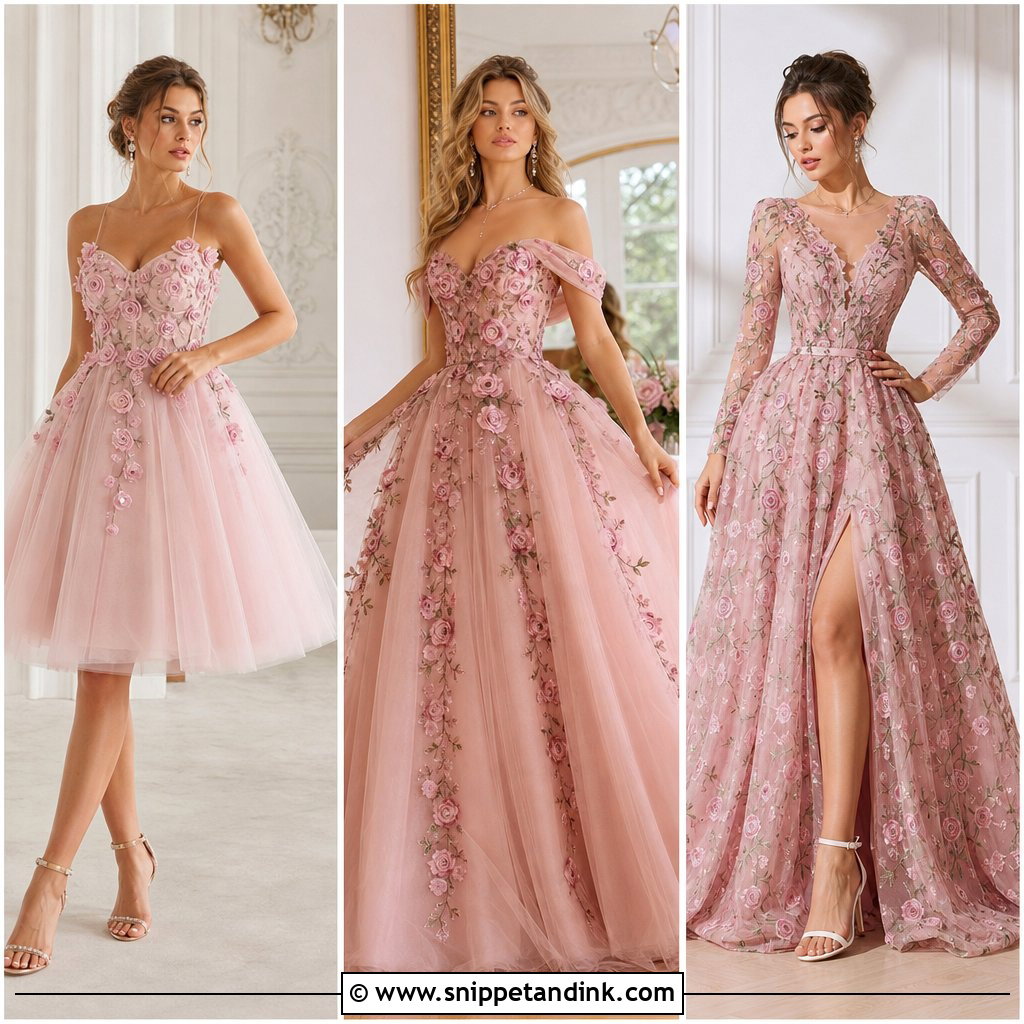
Modest gowns can be just as dramatic as open ones. An opaque lined bodice with long sleeves, a higher neckline and a defined waist flowing into satin or tulle keeps full coverage, while lace cuffs, covered buttons or fine embroidery add interest without sheer panels. A bateau neck is the cleanest coverage, and a lined V is a touch softer. Raise your arms and sit at every fitting, because fully lined sleeves have less give than unlined ones. A cathedral veil, pearl drops, closed pumps, a low bun and a formal bouquet of white roses suit it.
The Car, the Loo and the Dance Floor
Nobody tells you how to move in a full skirt, so here is what I walk brides through at the final fitting.
- Getting into a car: sit down backward onto the seat first, then gather the skirt and swing your legs in. Someone should tuck the hem in before the door closes.
- Stairs: lift the front of the skirt with one hand so you can see your feet, and let the back trail. Going down, take each step slowly.
- The bathroom: a bridesmaid holds the skirt from behind while you face the toilet, or wear a slip that gathers the layers up. Practise once at home.
- Dancing: bustle the train first, and if your skirt has a hoop, ask whether it can be removed for the evening.
After the Last Dance: Getting the Gown Cleaned
Have the gown professionally cleaned within a few weeks, not months. Spills of champagne, cake icing or sweat can look invisible at first and turn yellow or brown as the sugars oxidise. Don’t try to scrub marks yourself on satin or tulle, because rubbing breaks the fibres and leaves a dull patch.
For storage, fold it with acid-free tissue in a breathable box, kept somewhere cool and dark. Plastic garment bags trap moisture. If you’d rather hang it, use the inner hanging loops sewn at the waist, since a heavy skirt hanging from the shoulders stretches the bodice over time.
Start With the Bodice, Then Let the Skirt Follow
A princess gown falls into place when you judge it as a whole rather than by the width of the skirt. Neckline, bodice support, waist point, fabric, train, veil, shoes, jewellery and flowers all have to agree. Try at least one silhouette you’d normally pass over, and move in every gown: walk, sit and lift your arms. The photos matter, yet comfort decides how you carry yourself for hours. Take your shoes and undergarments to each fitting and get the bustle sorted early. Classic satin, romantic lace, sparkling tulle or a soft colour can all work, as long as the gown fits your venue and feels like you.
You'll Like These Ideas:







Leave a Reply