
Some brides try on the white satin gown, look in the mirror and see someone else. Those are the appointments I enjoy most. Bridal design has opened up a long way: colorful gowns, short hemlines, oversized bows, bubble skirts, feathers and separates are all showing up in collections now, so dressing like yourself no longer means hunting through eveningwear. The ideas below play with color, texture and unusual shapes while still reading as bridal. Romantic florals, bold metallics, retro cuts and sculptural construction each come with their own practical quirks, and I’ve noted them as I go. Whatever you lean toward, it has to suit your venue and let you move, and the shoes, accessories and beauty choices should be planned as part of it.
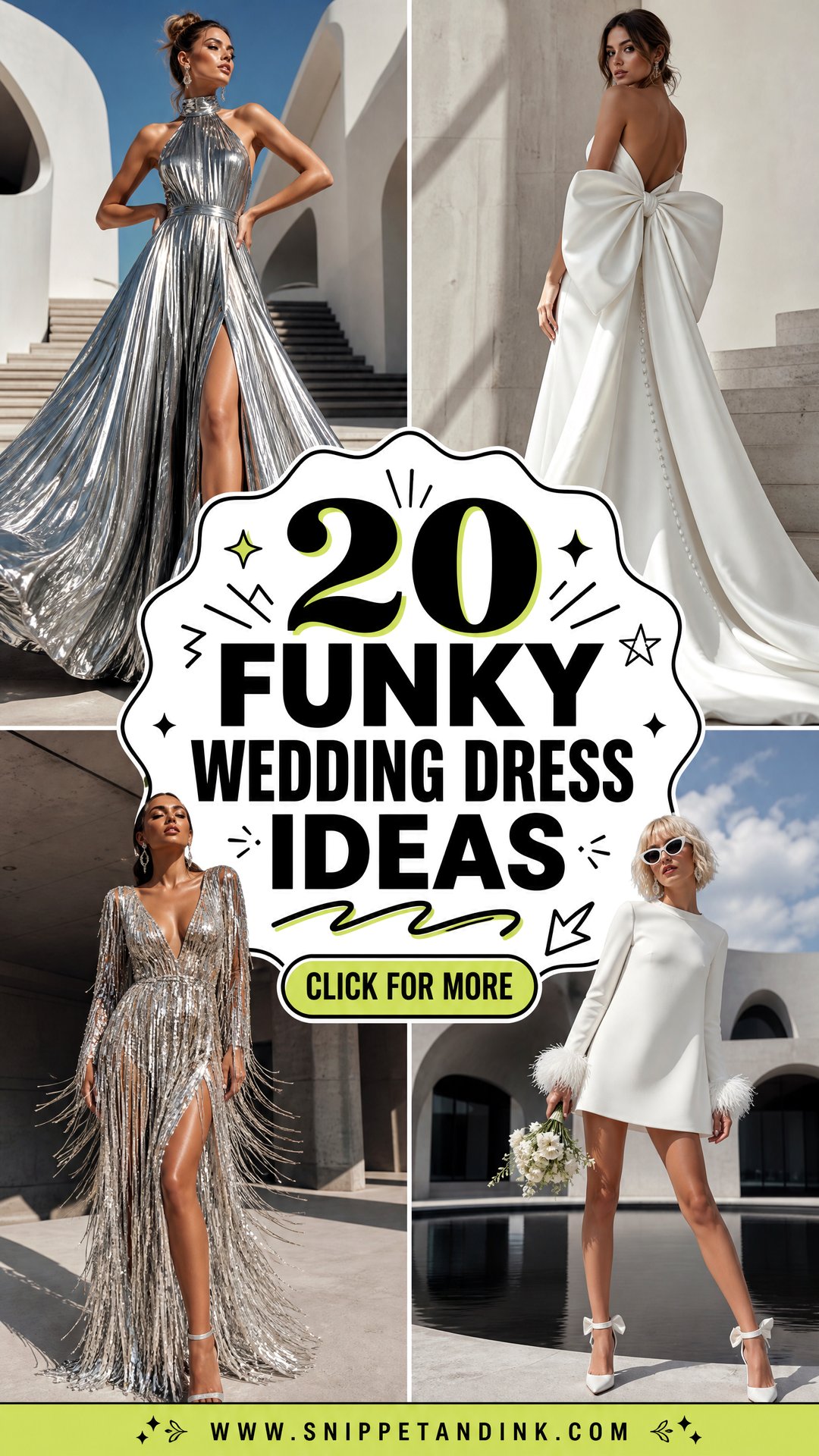
Where to Find a Wedding Dress That Isn’t White
The hardest part of a funky bridal look is often finding it. Many bridal salons still stock mainly ivory samples, so it helps to know where else to look before you start.
- Ask bridal designers about color. A number of them will make a gown from their collection in blush, champagne, pale blue or even black, but you’ll only see it in ivory in the shop. Ask for a fabric swatch in the actual color before you order.
- Look at eveningwear and occasion dressing. Metallics, feathers, sequins and bright tulle often live there, and those pieces can be worn as bridal with the right veil.
- Talk to a dressmaker. Color blocking, patchwork lace and sculptural pleats are often easier to have made than to find, and you choose every fabric.
- Try vintage for mod minis, tea lengths and polka dots. Allow time and budget for alterations, as older fabrics may need repairs.
Give yourself more time than you would for a classic gown. Custom colors and made-to-order pieces can take several months, and dyed or special-order items are often non-returnable, so check the terms before you pay.
1. Colorful Floral Embroidered Wedding Dress
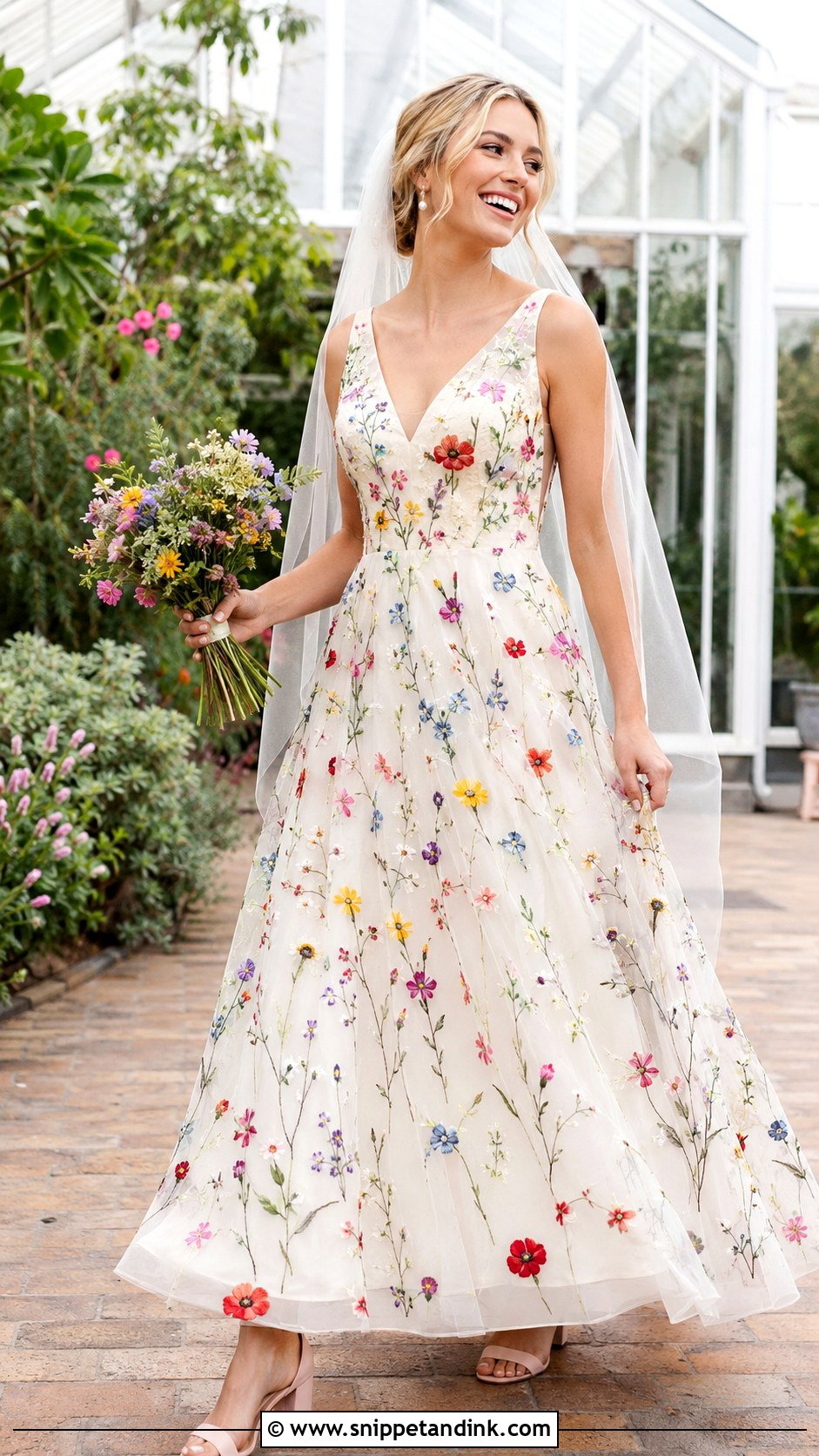
Embroidery in bright wildflowers brings a garden straight into the dress. A colorful floral embroidered wedding dress usually starts on an ivory, blush or pale blue base with flowers running from bodice to skirt, and a fitted waist with an A-line skirt keeps that much pattern in proportion. Pearl drops, a small bouquet and block-heel sandals in pink or green suit it. Leave the veil plain; a sheer fingertip length or a few flower clips in loose waves is plenty. When I look at these gowns, I turn the skirt over. Dense embroidery on a light tulle base can pucker the fabric, and the better versions are stabilized underneath. Gardens, backyards, woodland and country estates are its natural setting.
2. Pink Tulle Wedding Dress
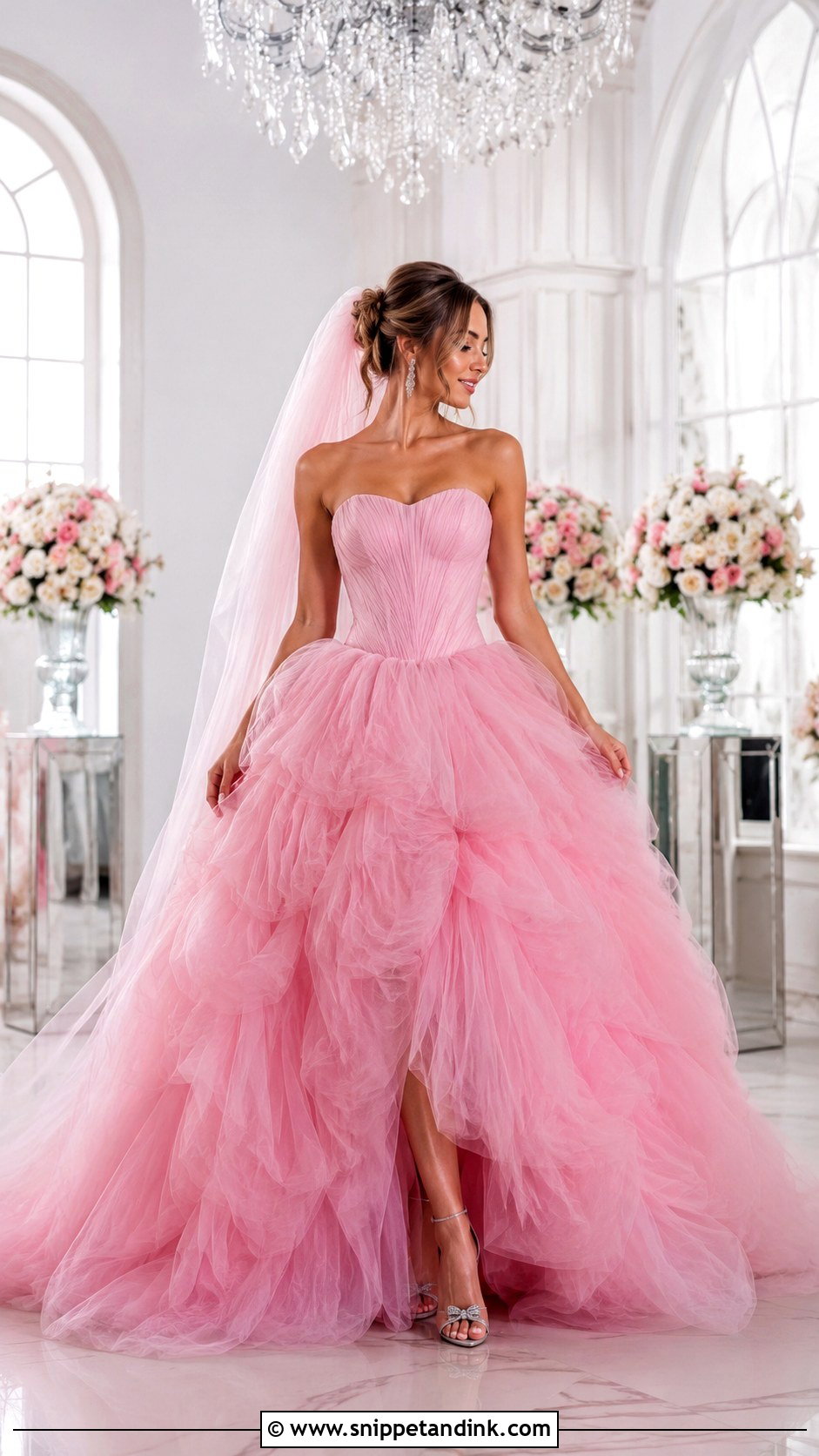
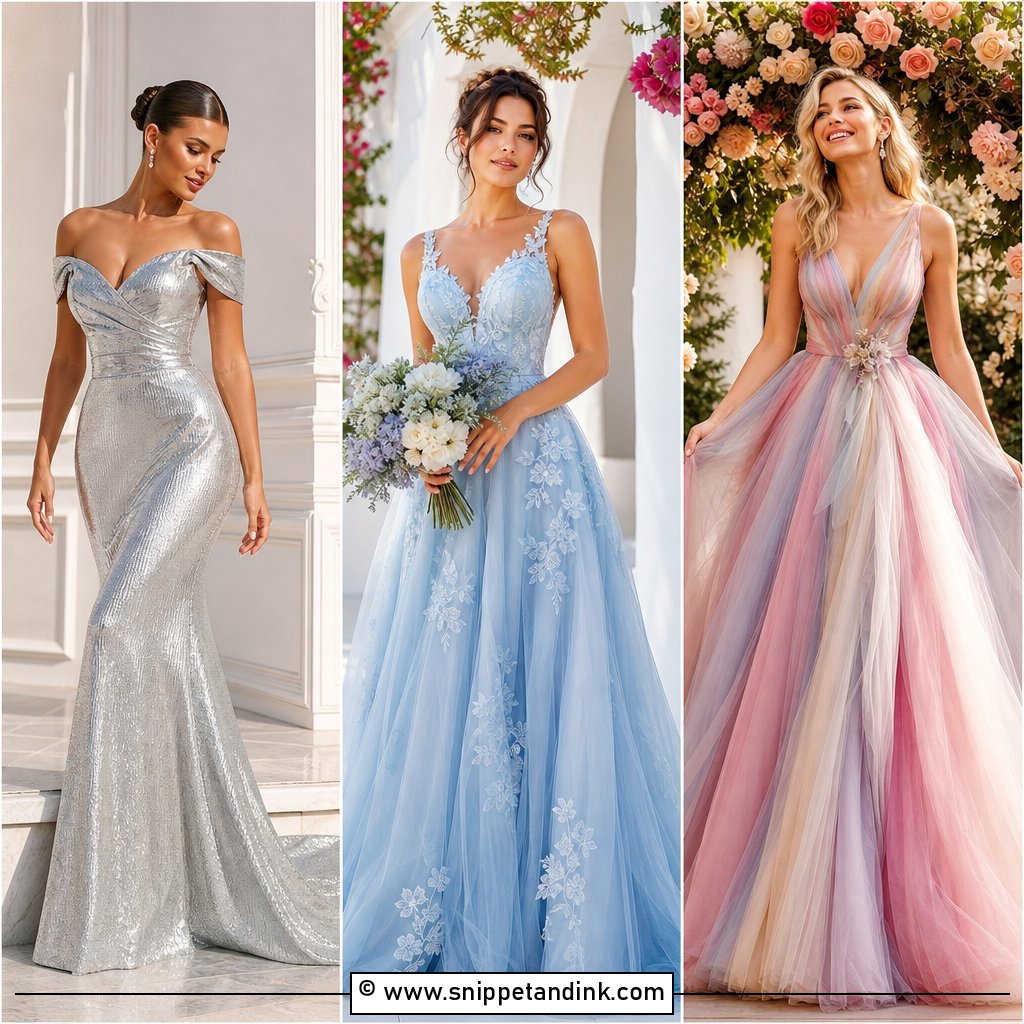
Pink tulle is softer than most brides expect. Blush, rose or bubblegum on a fitted bodice with a layered skirt moves easily, and a strapless neck keeps it modern while a square or sweetheart neck softens it. Metallic silver heels, crystal earrings and a small satin clutch suit it. A white veil gives you a bridal contrast; a matching pink one goes fully monochrome. Fresh makeup with rosy cheeks and a satin lip ties it together. Hold the fabric up to your face in daylight before ordering. Some pinks go sallow on olive skin and others flush fair skin red, and a shade or two either way makes the difference. Ballrooms, galleries and flower-filled gardens all suit it.
3. Black Lace Wedding Dress
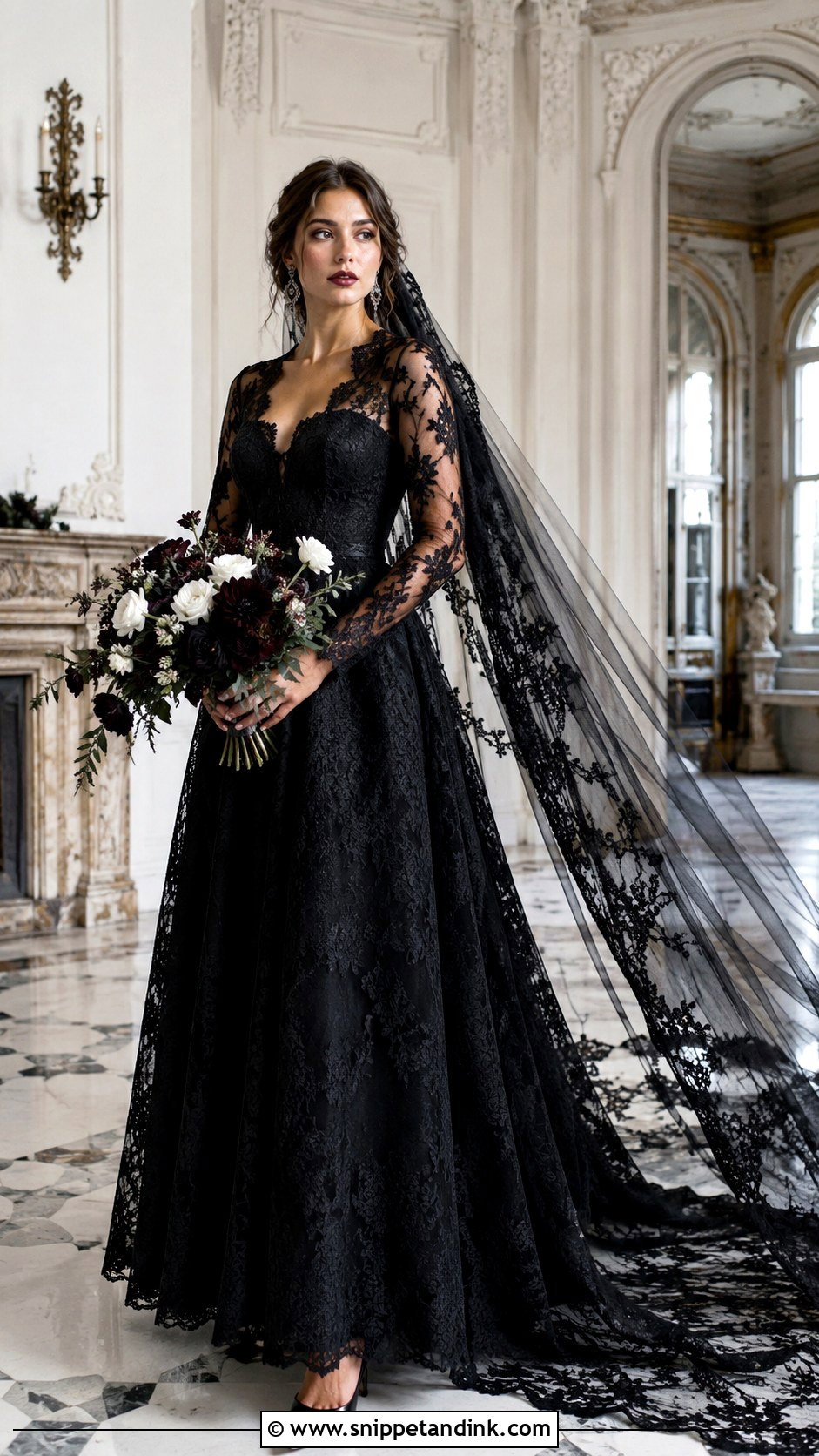
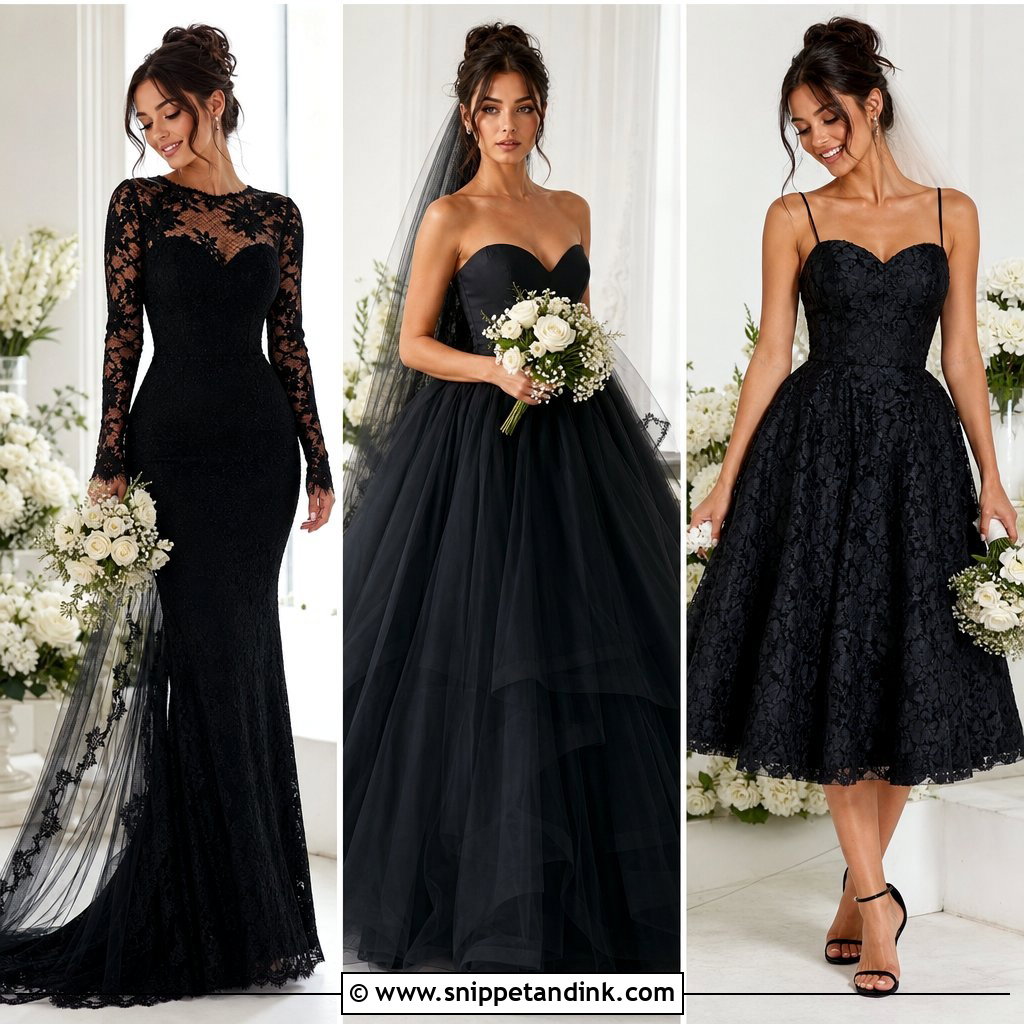
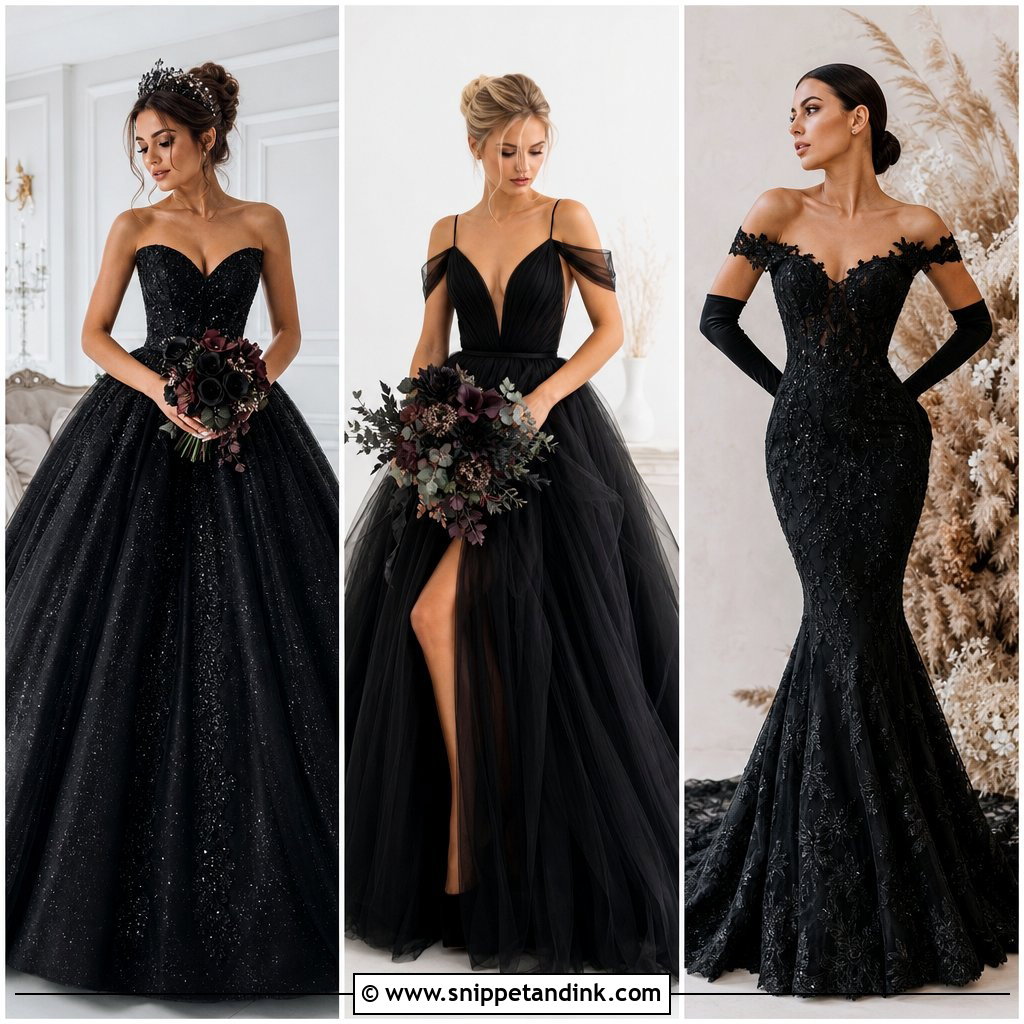
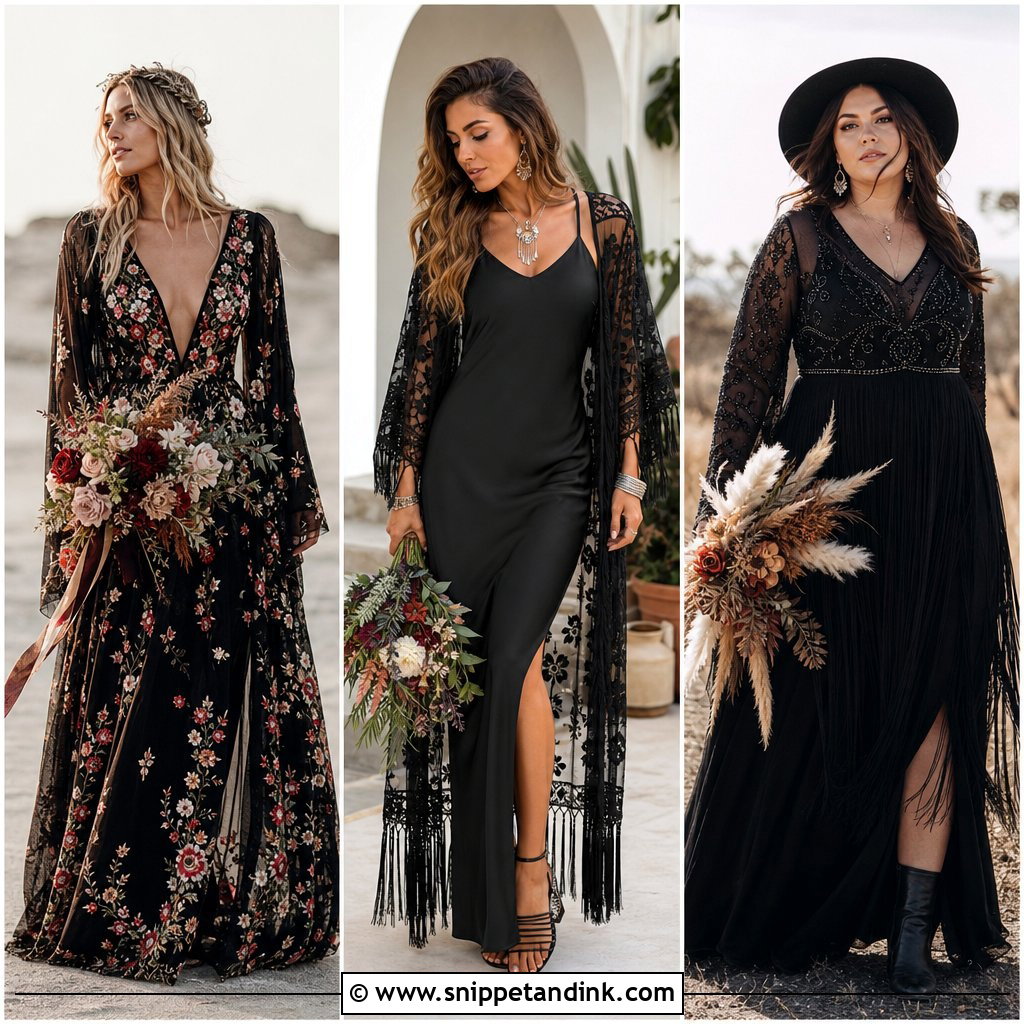
Would you feel more like yourself walking down the aisle in black? Then wear black. Black lace stays ceremonial as long as the lace pattern is clear and the lining comfortable, on a fitted column, a soft A-line or a full ball gown. Sheer sleeves or an illusion neckline add depth without weight. Black pointed heels, vintage-style earrings and a bouquet of white, burgundy or deep pink finish it, with a black cathedral veil for drama or a white one for contrast. Defined eyes and a berry lip suit the palette. In dim rooms black lace loses its detail, so I’d always point out the lighting at your venue. It’s at home at evening weddings, historic houses, theaters and city venues.
4. Silver Metallic Wedding Dress
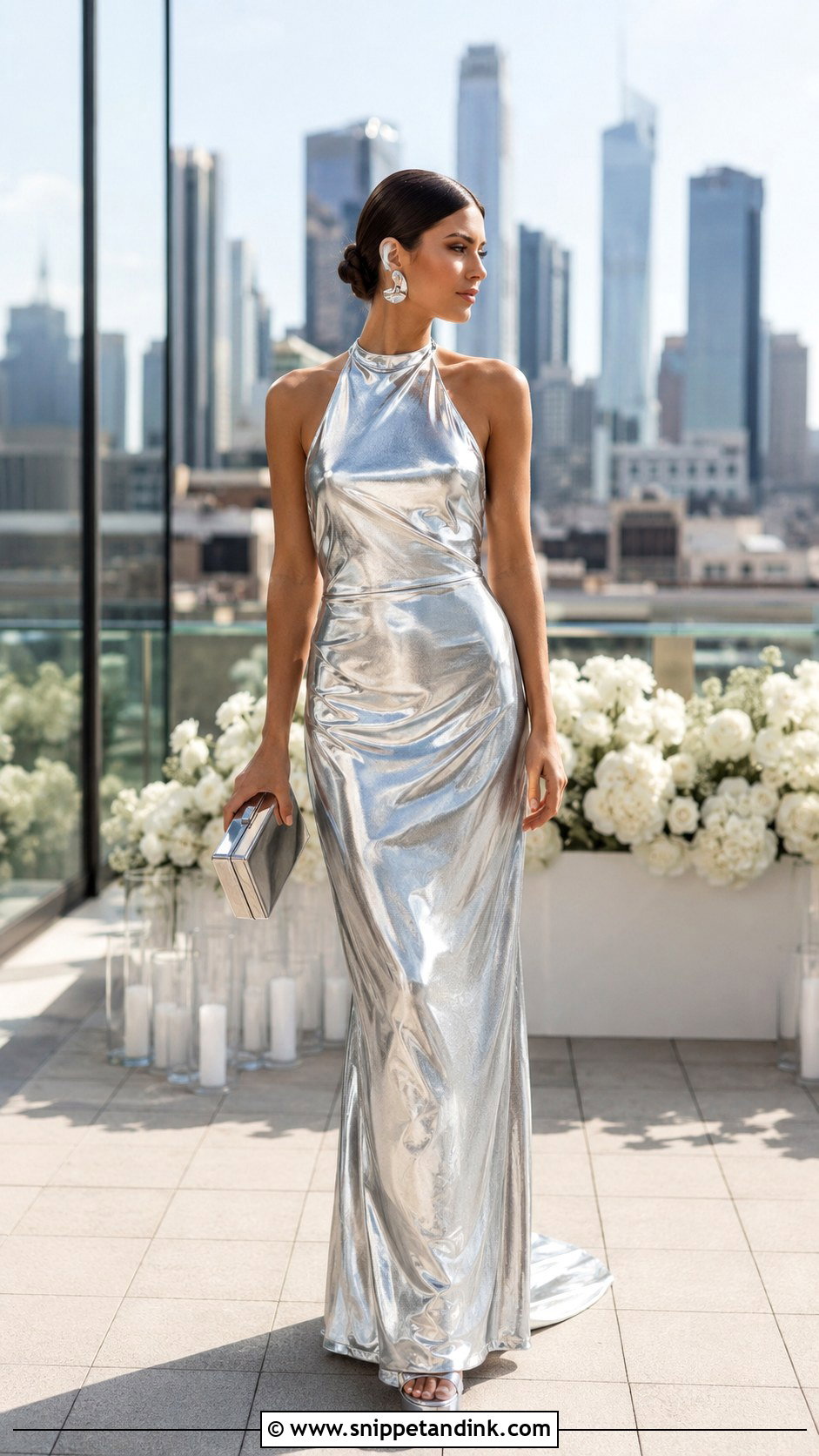
Silver is the most futuristic of these, and it depends entirely on the fabric. Liquid lamé, metallic brocade, sequins or a softly reflective silver textile look expensive; anything stiff and foil-like looks like a costume. A clean column lets the finish speak. Silver platform sandals, sculptural earrings and a mirrored clutch match the mood, with a sleek bun or polished ponytail and fresh skin with a touch of shimmer. If you want a veil, plain white tulle with a cut edge. Lamé shows every ripple of a bra line or crease. Fit it closely and have the seamstress check it under bright light. Rooftops, museums, lofts and contemporary hotels suit it best.
5. Rainbow Ombre Wedding Dress
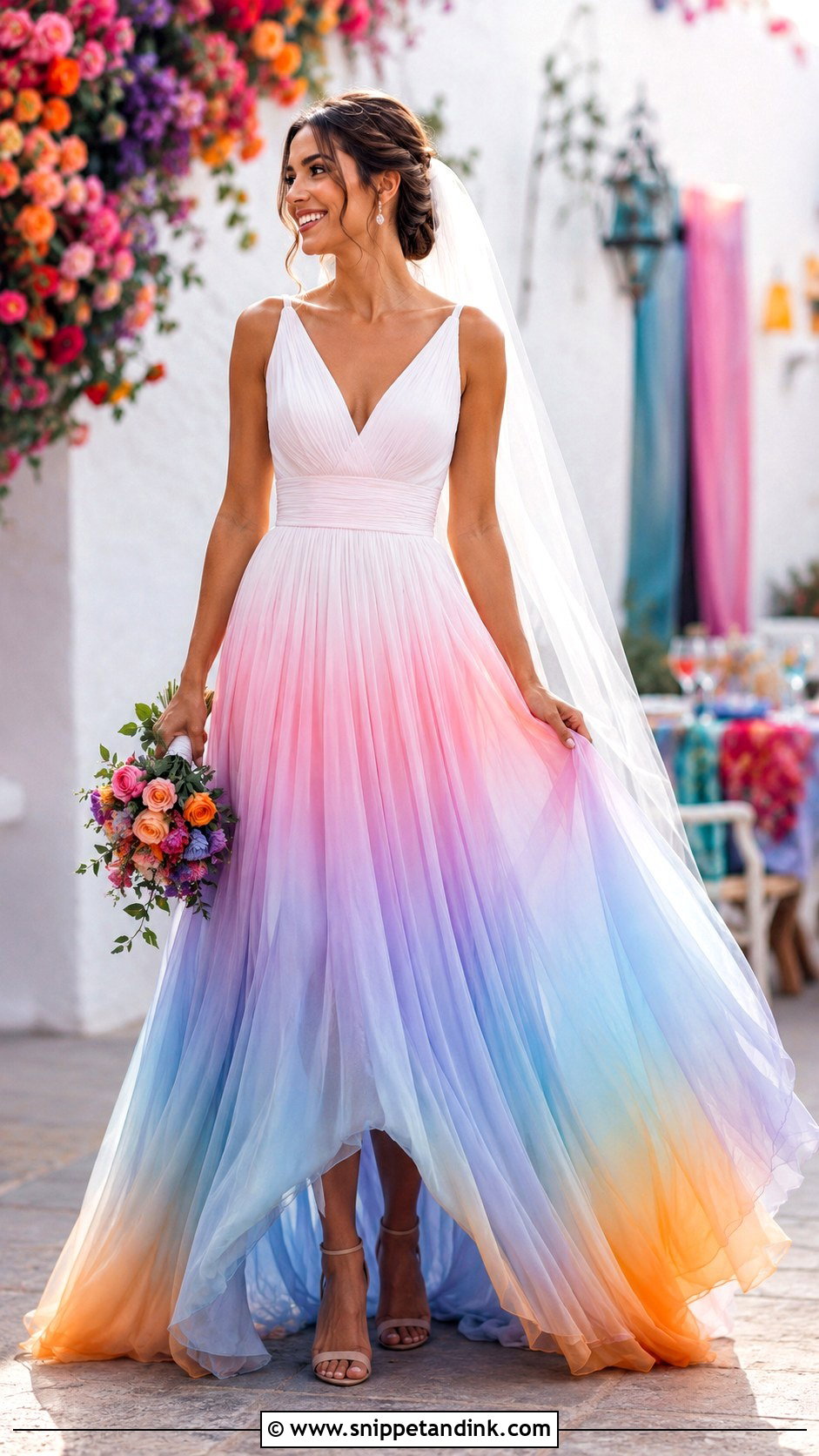
A rainbow ombre wedding dress makes color the whole statement without a busy print. The most wearable ones start white or pale at the bodice and deepen toward the hem in pink, orange, blue, lavender or several blended shades. Chiffon and layered tulle soften the transitions best. Neutral heels, small crystal earrings and a bouquet repeating just two or three skirt colors keep it from going chaotic, and the veil should be plain. Natural makeup and softly styled hair help. Dyed fabrics can bleed if they get wet, so check with the maker how colorfast it is if your ceremony is outdoors. Festivals, gardens and creative venues are where it shines.
6. Feather Mini Wedding Dress
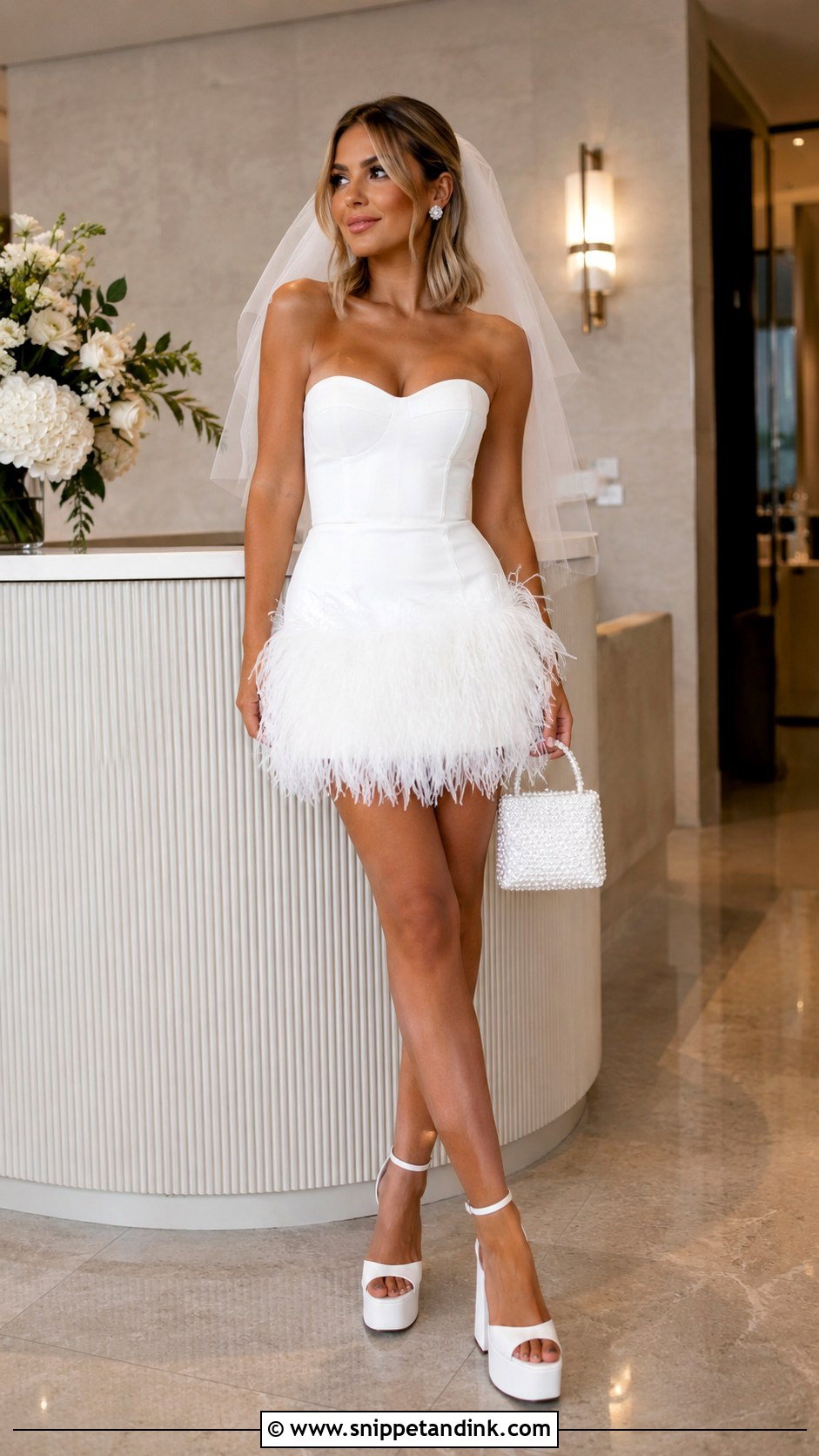
If dancing is the main event, a feather mini is hard to beat. I’d choose a structured mini with feathers at the hem, neckline or sleeves rather than covering every surface, so the shape stays visible and you can actually sit down. Balance the short length with closed-toe platforms, sheer tights if you like, and a dramatic shoulder-length veil. Crystal studs and a small top-handle bag are enough. A polished bob, ponytail or swept-back style lets the texture stand out. It suits a courthouse ceremony, a reception change, an after-party or a small city venue. Feathers shed, especially in the first hour, so give the dress a gentle shake outdoors before you put it on.
7. Bubble Hem Wedding Dress
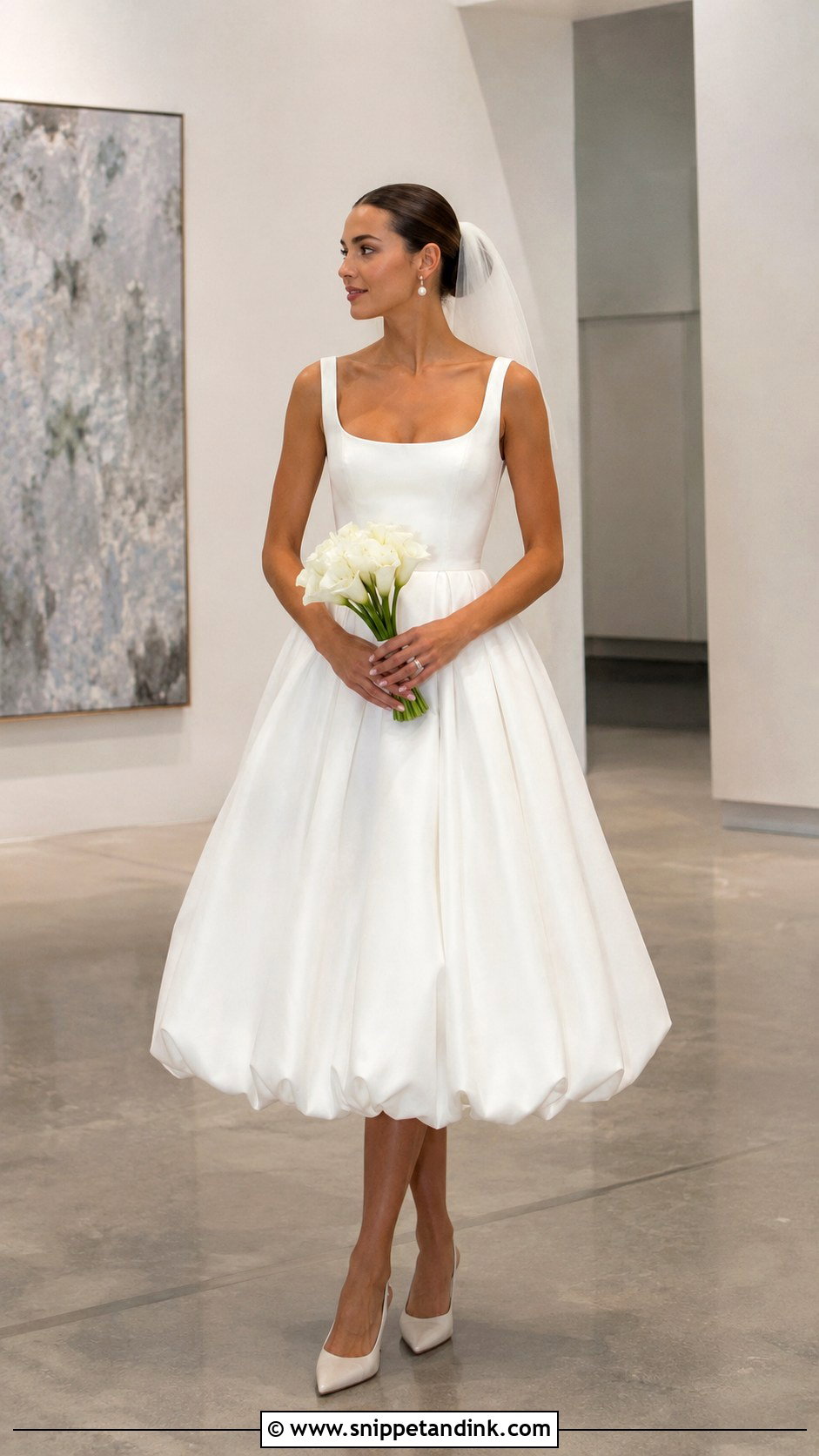
The bubble hem is retro and sculptural at once, a rounded skirt that should hold its volume without looking bulky. Mini or midi with a fitted top, in crisp satin, taffeta or lightweight faille, which support the curve. Slingback pumps, pearl or floral earrings and a short veil on a neat bun suit it. With a very full skirt, keep the neckline plain and the accessories small, and choose a compact bouquet. Sit down in it before you buy; some bubble hems flip up at the front when seated, which is fine at a dinner but awkward on a ceremony bench. It fits a registry office, a restaurant, a rooftop or a gallery wedding.
8. Oversized Bow Wedding Dress
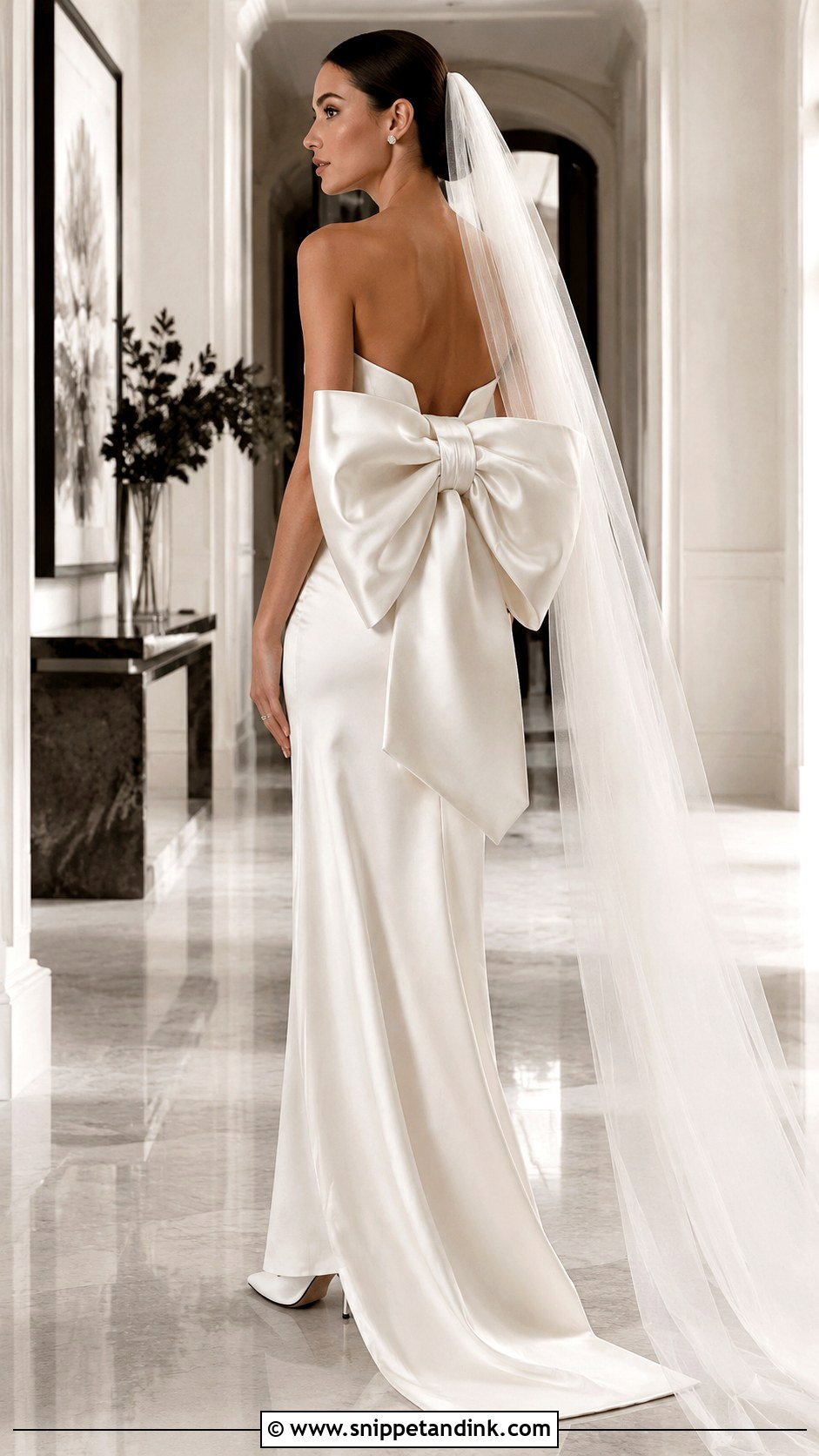
An oversized bow puts one dramatic detail at the center of the outfit, at the back, shoulder, waist or neckline depending on what you want to highlight. A clean satin column or a structured A-line gives it room. Pointed pumps, small diamond or crystal studs and a sleek veil that doesn’t hide the bow complete it, with hair lifted or swept to one side. If the bow is at the back, ask your photographer for full-length rear and side portraits; it’s the shot most brides forget. The question I ask at fittings is how the bow is supported inside. A bow without interfacing or a few stitches of structure collapses by the speeches. Modern ballrooms, museums, estates and city venues all suit it.
9. Ruffled High Low Wedding Dress
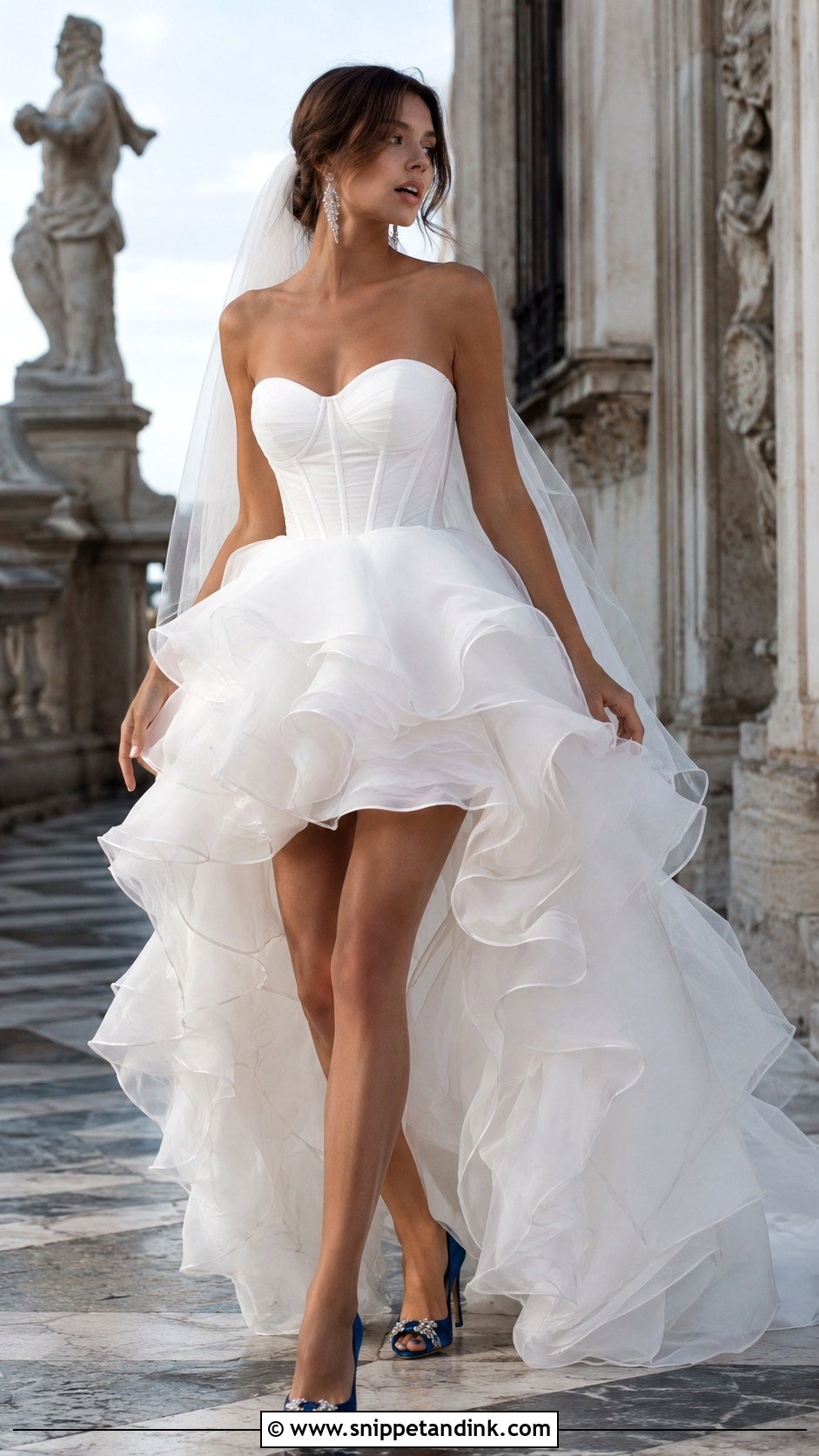
A high-low hem gives you a dramatic entrance and puts your shoes on show. Short at the front and sweeping into a train behind, in layered organza, tulle or chiffon, it has volume without much weight. Colorful heels, crystal ankle straps or embellished boots finally get seen. A fitted bodice keeps the skirt from taking over, with simple earrings, a plain veil and a secure updo or high ponytail. The front hem height matters more than people think. I usually set it just above or around the ankle, because a hem that’s too high can look like a mistake rather than a design. Grand staircases, terraces and destination weddings suit it.
10. Sequin Fringe Wedding Dress
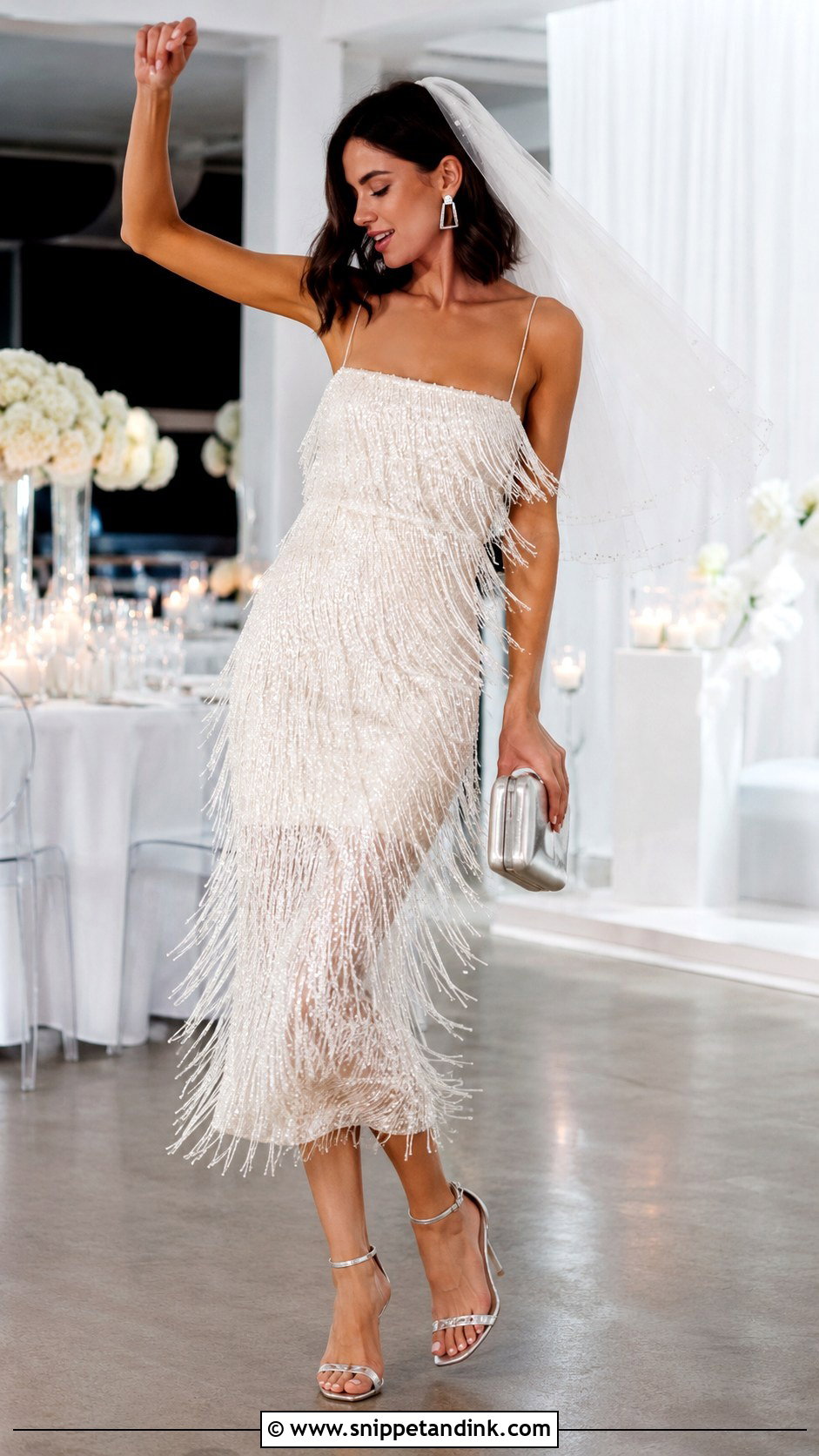
Sequin fringe comes alive the second you move. Choose a fitted mini, midi or slim column with neat rows of fringe rather than loose embellishment that snags. Silver, ivory, champagne and iridescent sequins all look festive. Comfortable metallic heels, geometric earrings and a smooth clutch that won’t catch the fabric suit it, plus a shoulder-length veil for the ceremony. Keep your hair sleek and your makeup luminous; the dress supplies the sparkle. Sequins are heavy on a long day, and fringe tangles if you sit on it, so test both before alterations. It’s my top pick for a music-filled reception, a hotel party or a second look.
11. Polka Dot Tea Length Wedding Dress
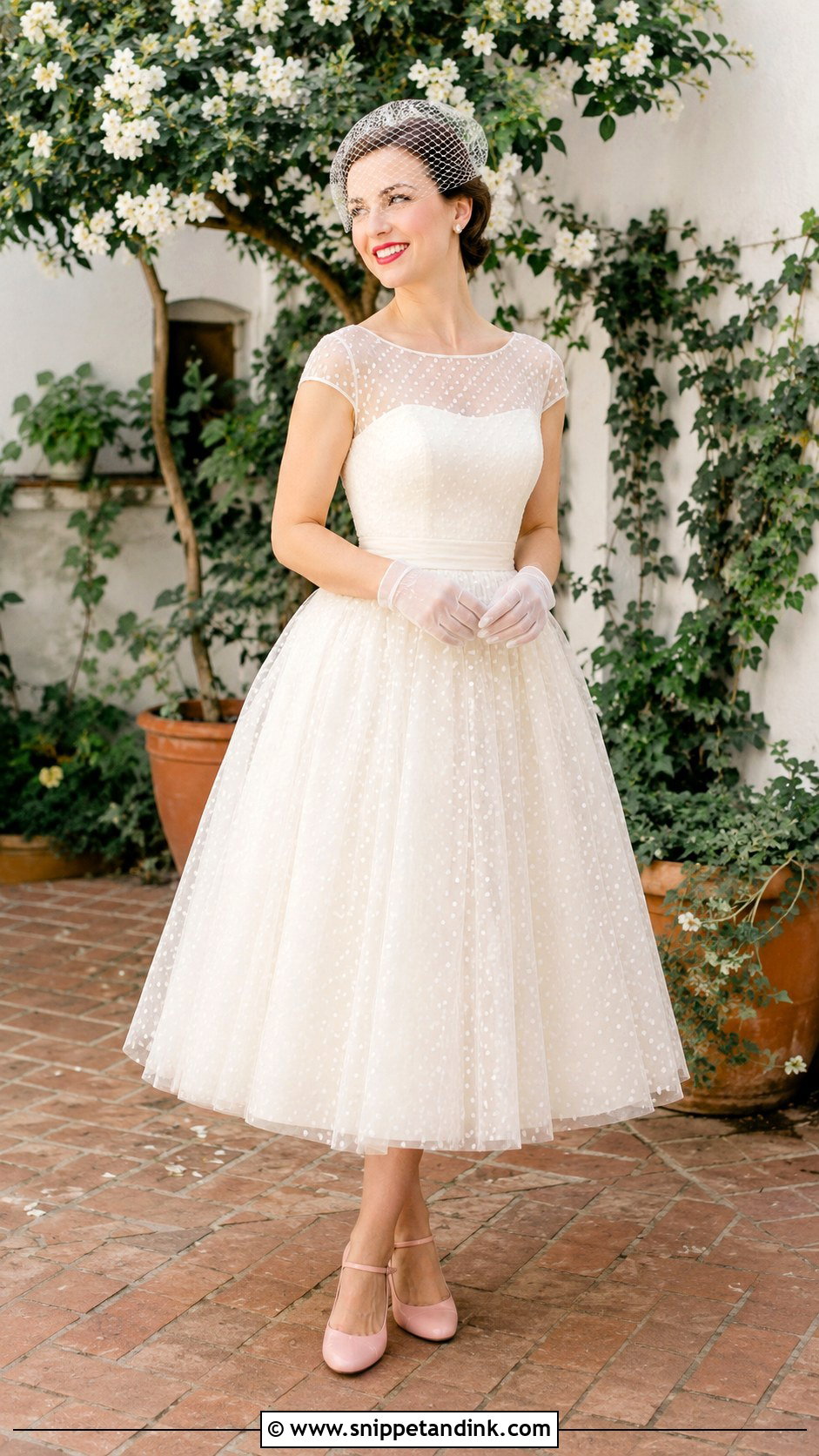
Dots on a short skirt feel instantly vintage. A polka dot tea-length wedding dress works with flocked dots, embroidered spots or Swiss-dot tulle over a simple fitted lining, with a defined waist and a full midi skirt that suits many body types. Kitten heels, bow pumps or colorful Mary Janes keep it playful. Add pearl earrings, short gloves and a birdcage or fingertip veil, but not every retro accessory at once. A red, pink or berry lip is one extra point of color. With a tea-length hem, your shoes and ankles are in every photo, so have the hem set in your exact shoes. Courthouses, gardens, restaurants and daytime weddings all suit it.
12. Two Piece Wedding Dress
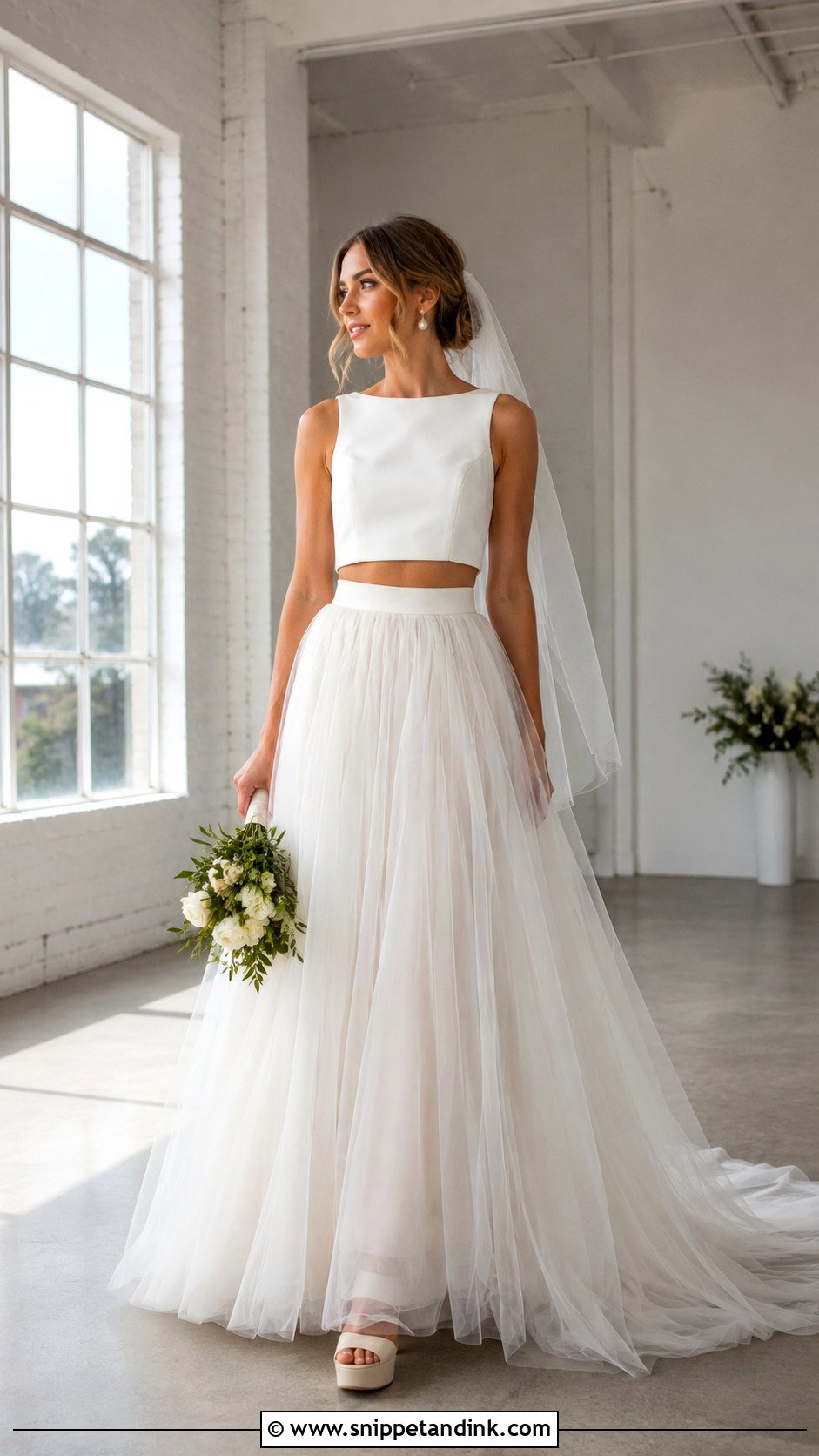
Separates let you mix fabrics, shapes and coverage. Try a structured crop top with a high-waisted tulle skirt, a lace blouse with a satin column skirt or a corset with a full overskirt. A narrow gap of skin keeps it looking intentional at a ceremony. Match the whites carefully. I always lay the two pieces side by side by a window, because one white can look yellow or gray beside another, especially when they come from different makers. Platform sandals, modern pearls and a clean single-layer veil finish it, with a small structured bouquet that doesn’t hide the waist. Beaches, lofts and creative venues suit it, and the pieces rewear well.
13. Cape Sleeve Wedding Dress
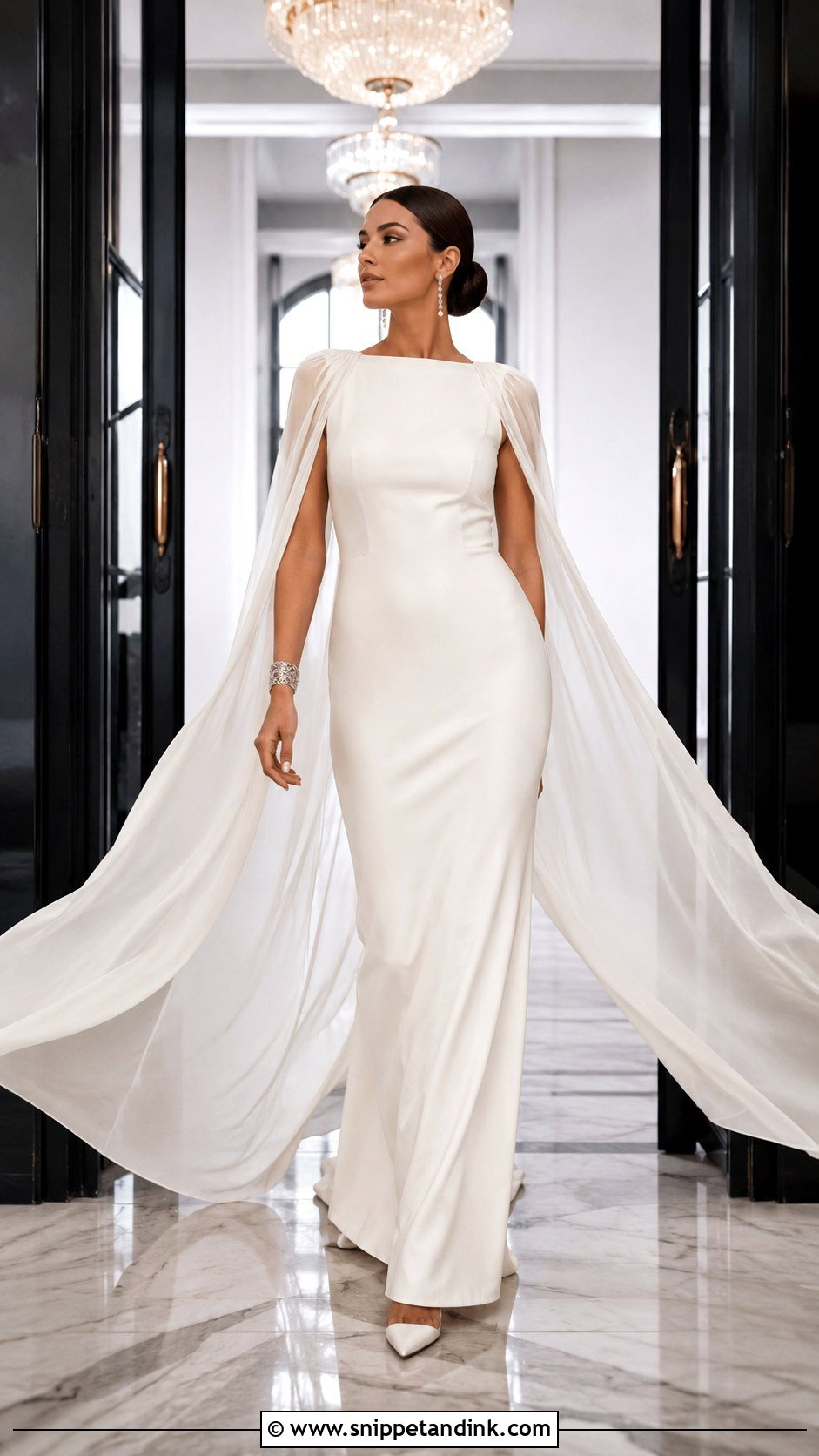
Long cape sleeves give you drama without a veil. A slim gown with chiffon, organza or embellished panels falling from shoulder to floor is especially striking walking in and in outdoor portraits. Keep the dress underneath plain. Pointed heels, drop earrings and a cuff bracelet are enough, with hair up or tucked back to show where the cape joins. If you still want a veil, keep it short so the two don’t tangle. Outdoors, wind is the issue. Cape sleeves fill like sails, so ask for small weights in the hem or wrist loops to hold them. Grand halls, estates and modern venues suit it.
14. Asymmetrical One Shoulder Wedding Dress
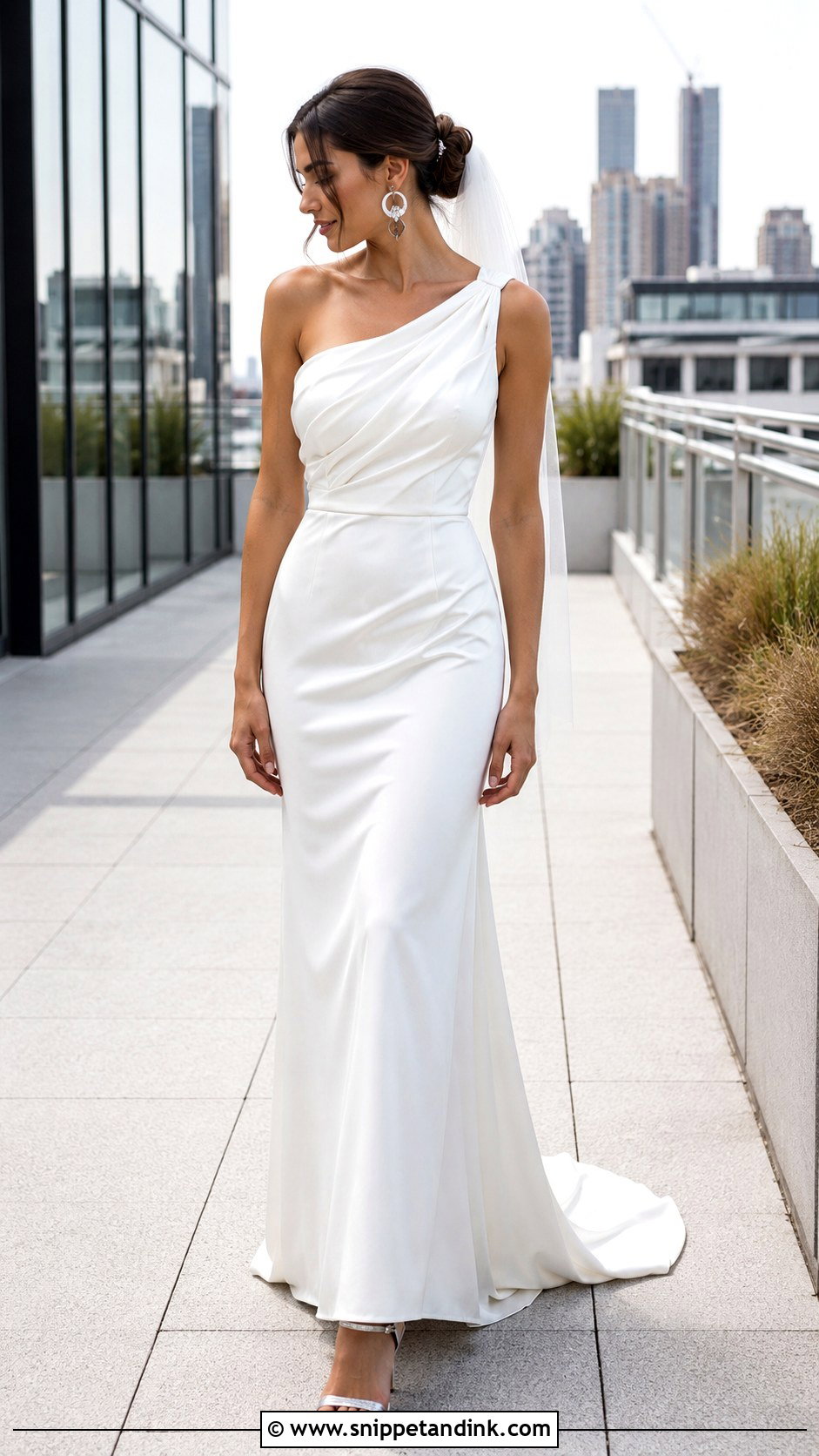
One shoulder makes a dress interesting through shape alone. A sleek fitted gown, a draped satin midi or a gathered A-line with a single sculptural shoulder all work. The neckline frames the collarbone, so one bold earring or an asymmetric pair adds to it. Strappy heels, a metallic clutch and a low side bun placed opposite the shoulder detail balance it; skip the necklace and fasten the veil below the bun. The bare side is the one that slips. Ask for silicone grip tape or a clear strap anchored inside, and test it with your arms raised. Galleries, minimalist hotels and rooftops suit it.
15. Puff Sleeve Wedding Dress
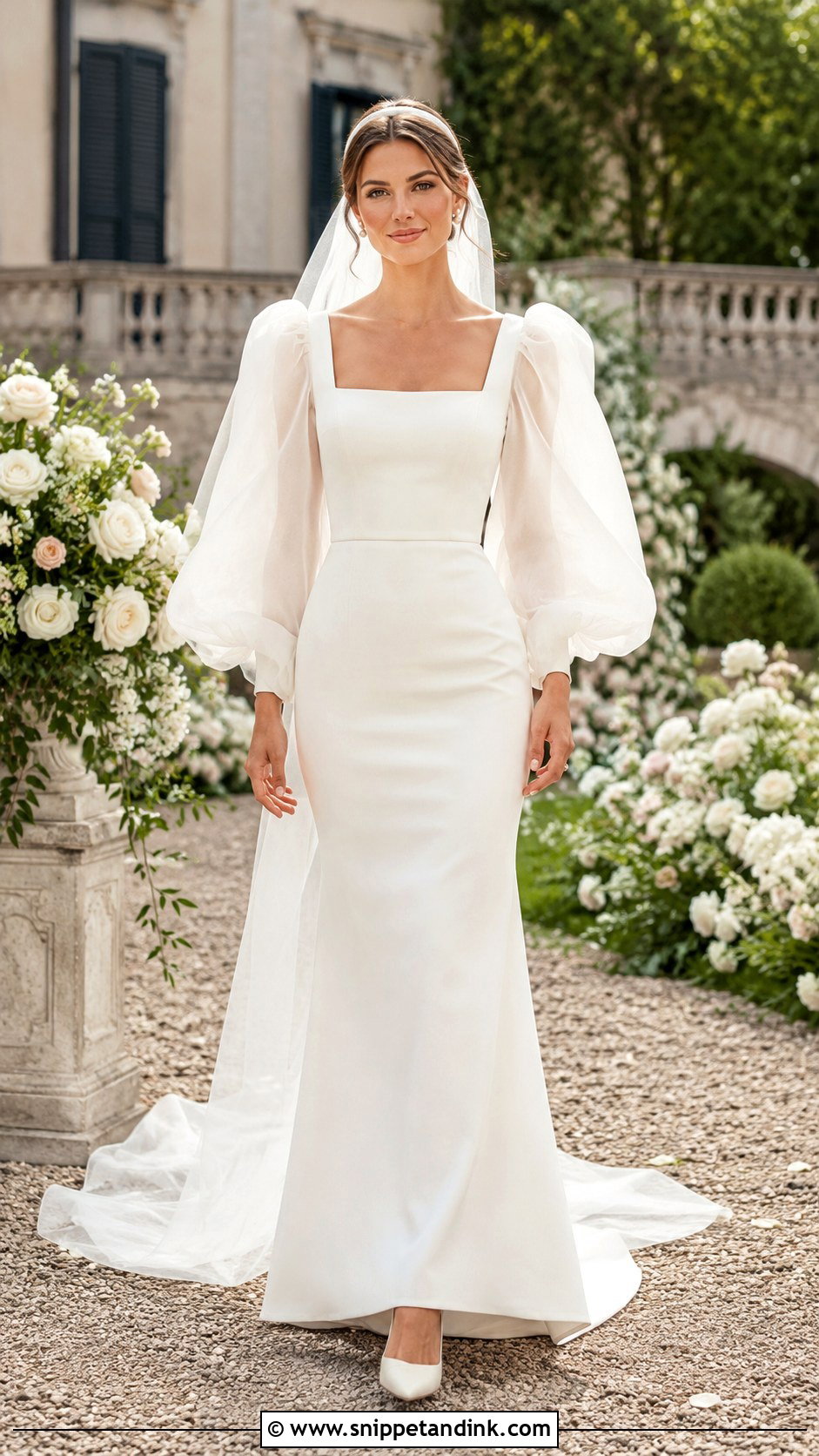
Puff sleeves give theatrical volume while the rest stays romantic. They can be sheer and airy, structured and architectural, or detachable for the reception. A fitted bodice and a controlled skirt balance all that width at the shoulders. Simple pumps, small earrings and a narrow headband or a plain veil suit it, with a low bun or soft waves keeping the sleeve line clear. At a small venue, sit next to someone and walk through a doorway before buying; wide sleeves get crushed fast. Structured puffs also need tissue stuffed into them when the dress is stored, or they flatten in the bag. Gardens, historic homes and art spaces suit it.
16. Color Block Wedding Dress
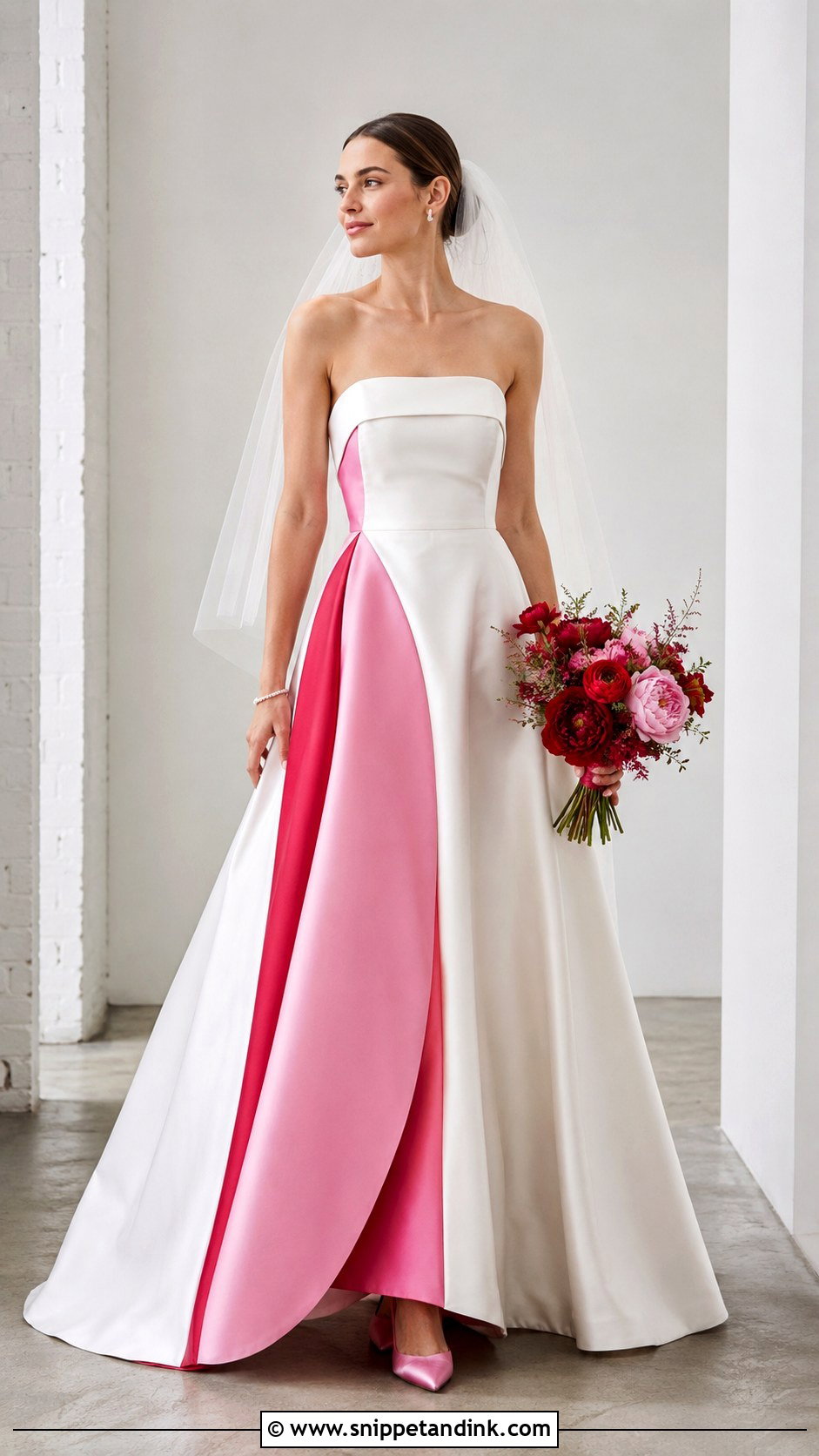
Big, clean panels of color make a dress look like art. Start with a white or ivory base with pink, blue, red, black or green across the bodice, waist, sleeves or hem. Large sections read more clearly in photos than lots of small ones fighting each other. Match your shoes to one accent, keep jewelry minimal and metallic, and choose a white veil to stay bridal or a colored one to go further. Keep the bouquet to a controlled palette, not a rainbow. Seams between colors need to be perfectly straight, so check them closely at fittings; a wobbly line is obvious against white. Modern hotels, studios and galleries suit it.
17. Convertible Mini Wedding Dress
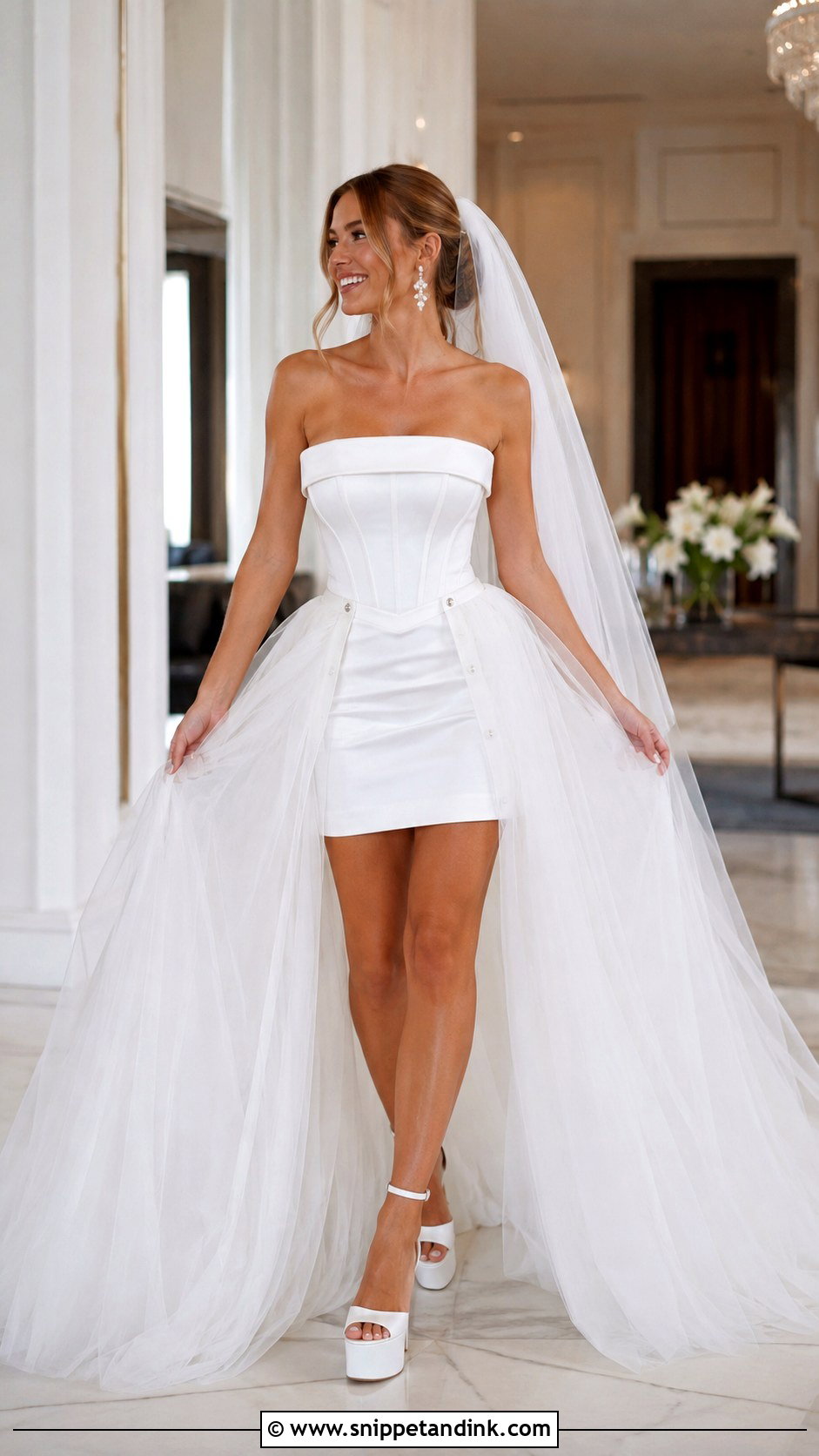
A convertible mini is two looks in one dress. A fitted mini under a detachable tulle, lace or satin overskirt becomes a full-length gown for the ceremony, worn with classic pumps, statement earrings and a long veil. Take the overskirt off and you have a party dress for platforms or embellished sneakers. The attachment points should lie flat and disappear once the skirt comes off, and the mini needs a properly finished hem so it looks complete on its own. Rehearse the change with whoever will help you; the first time always takes longer than you think. It saves buying two dresses and gives you a fun moment in the photos.
18. Patchwork Lace Wedding Dress
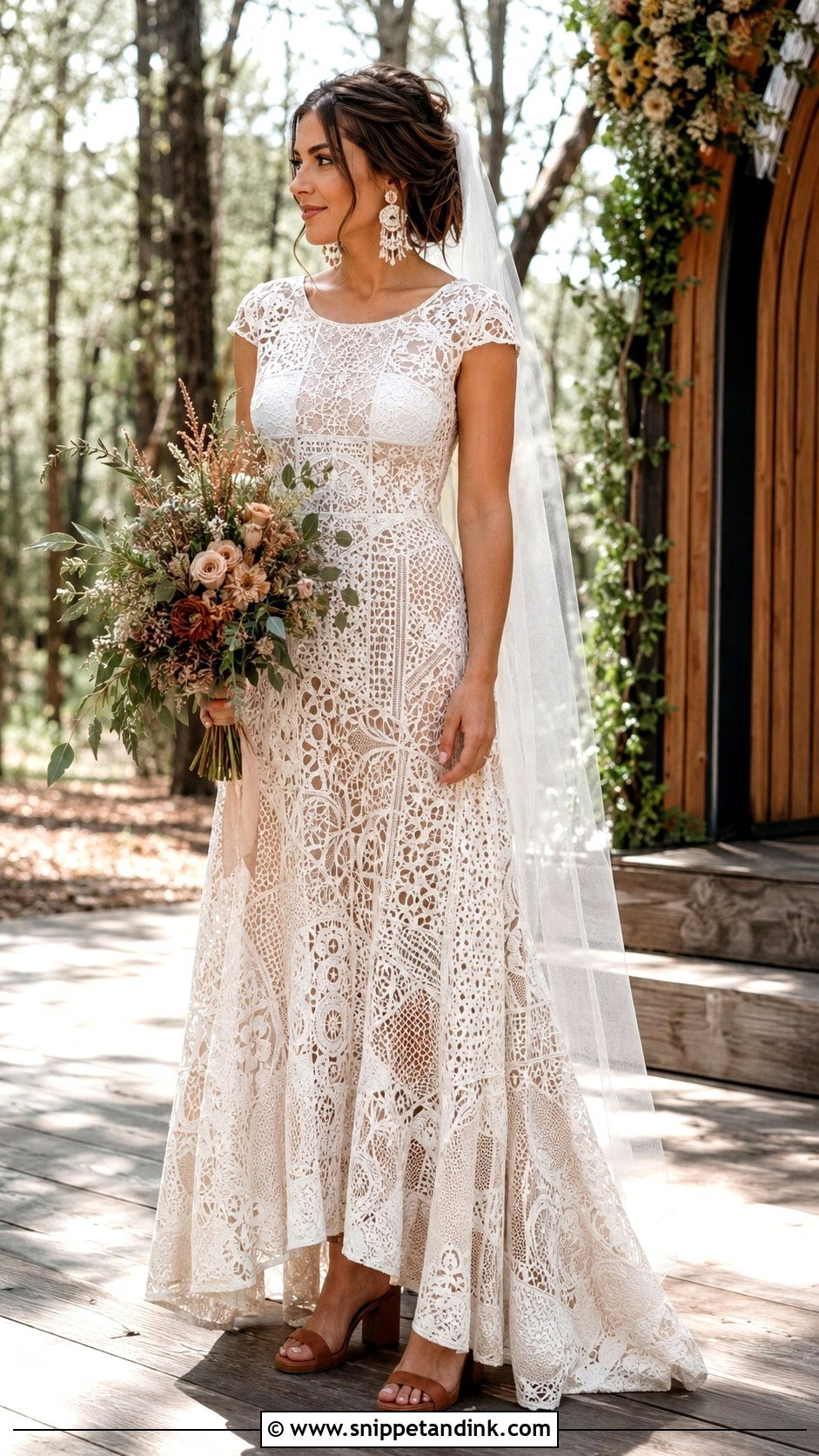
A patchwork lace wedding dress mixes patterns and textures into one handmade-looking gown. Look for floral lace, geometric crochet, embroidered mesh or vintage-style panels in one coordinated color, on a simple silhouette so the surfaces don’t fight. Leather block heels, handcrafted earrings and a loose seasonal bouquet suit it. A plain veil gives contrast; a lace-edged one only works if it matches one panel closely. Soft waves or a relaxed braided updo complete the mood. Crochet and lace panels stretch at different rates, so ask how the seams are reinforced, especially at the waist. Woodland venues, barns, studios and relaxed outdoor weddings suit it.
19. Mod Mini Wedding Dress
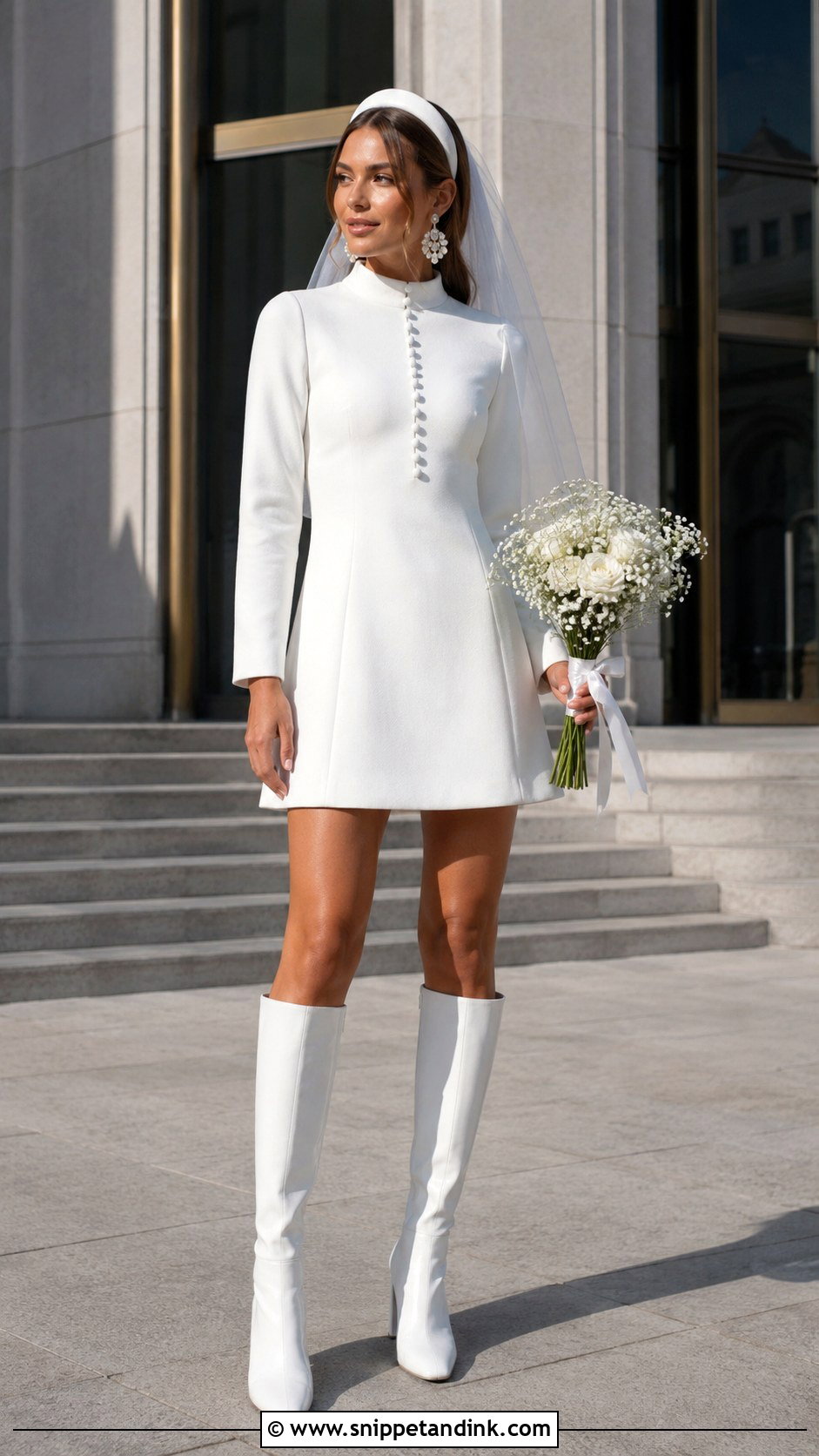
A mod mini wedding dress is retro through clean lines and a short hem. A shift or A-line with a high neck, decorative buttons or a sharp collar is the base. Opaque tights are optional and very welcome at a cold-weather wedding. Block-heel pumps, platform Mary Janes or polished knee boots, statement earrings and a short veil, wide headband or structured bow finish it. Keep the palette mostly white and add one bright accent in shoes or flowers. A shift dress has no waist seam to hide behind, so the fit across the shoulders and bust does all the work. Courthouses, restaurants and city halls suit it.
20. Sculptural Pleated Wedding Dress
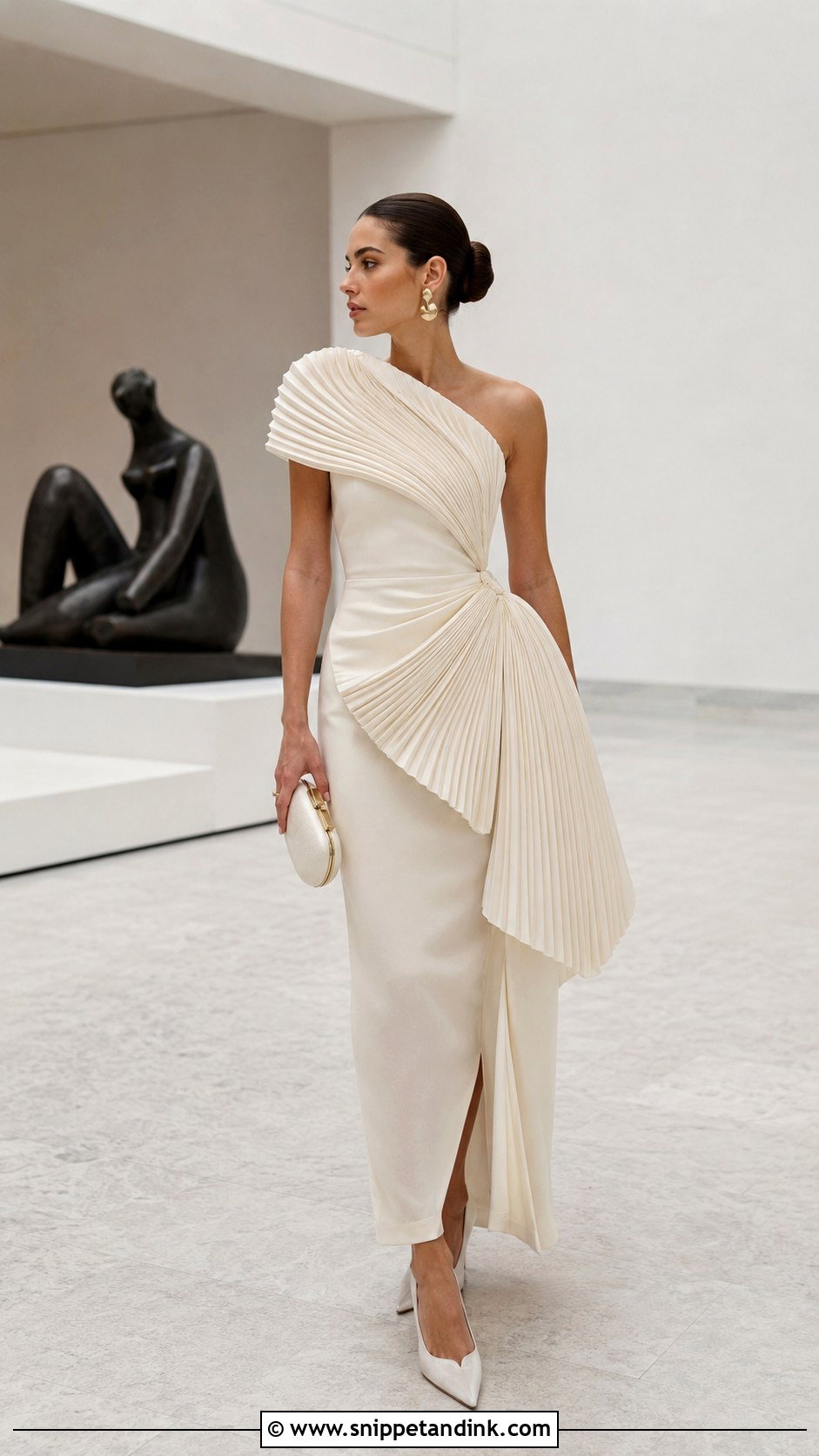
Pleats used as structure turn a dress into wearable art. Look for directional pleats at the neckline, waist, hip or skirt rather than uniform pleating all over. Mikado, taffeta and organza hold sharp shapes; chiffon gives softer movement. Clean pointed heels, sculptural metal earrings, a compact clutch and a slicked-back bun keep it unobstructed, with understated makeup. Only add a veil if it sits behind the main pleated detail. Pressed pleats are fragile. Travel with the dress hanging, never folded, and ask the maker how to steam them without losing the edge. Museums, modern buildings and minimalist ballrooms suit it best.
Briefing Your Photographer on an Unusual Dress
Cameras treat a black, metallic or colored dress very differently from white. A short conversation with your photographer before the day avoids most problems, and it’s worth sending them a picture of the dress.
Black and dark colors
Lace detail disappears in dim rooms. Ask for a few portraits near a window or outside, where the pattern shows.
Metallics, sequins and fringe
These reflect flash and direct sun in bright spots. Soft, even light, like open shade or the hour before sunset, shows the texture better. Movement shots, a twirl or a dance, are where fringe and feathers really come alive.
Pastels and ombre
Pale pink and blue can shift under warm indoor lighting. Tell your photographer the exact shade so they can keep it true when they edit, and keep a fabric swatch handy if they want to check.
If you plan a second look for the evening, mention that too. Photographers like to know when the change happens so they can get full-length shots of both outfits before the light goes.
Does the Dress Still Feel Like You After Ten Minutes?
The bridal outfit people remember is rarely the most traditional one. It’s the one where the bride clearly feels like herself, moves easily and isn’t fighting the venue. Color, feathers, bows, metallic fabrics, unusual hemlines, separates and sculptural details can all get you there. Plan the whole look together: shoes, veil, jewelry, bouquet, hair and any cover-up for the evening. Then sit, walk and dance in everything before you commit. When the colors, proportions and accessories are coordinated, an unconventional dress looks just as polished in twenty years’ time as a classic one.
You'll Like These Ideas:









Leave a Reply