
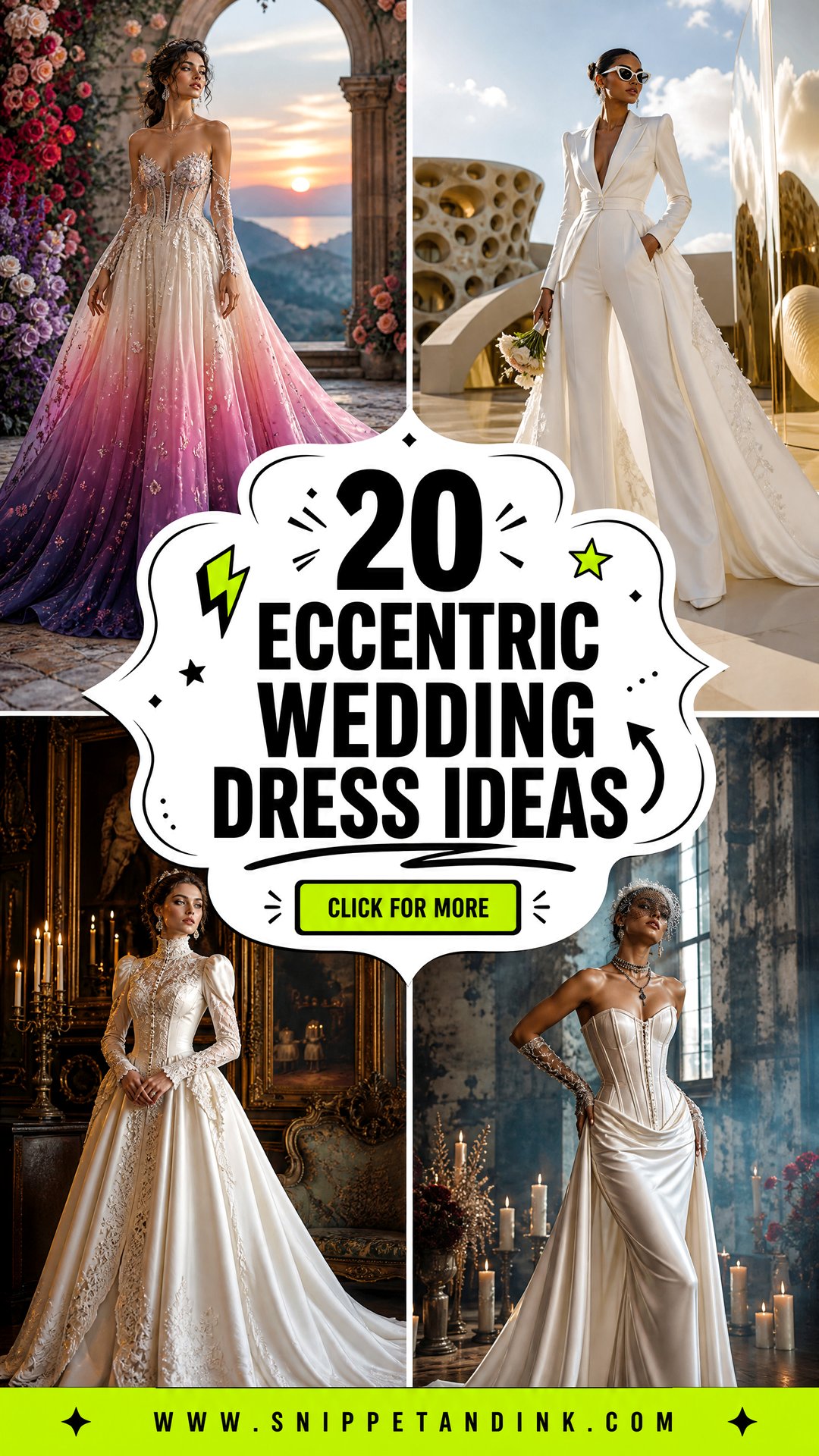
The brides who ask me for something unusual rarely want shock value. They want to recognize themselves in the mirror. Bridal design has opened up a great deal: color, sculptural shapes, odd hemlines, detachable layers, big bows and feathers all turn up in mainstream collections now. The difficulty is making those pieces add up to one outfit rather than a pile of ideas. So for each of the twenty looks below I’ve thought about the dress, shoes, jewelry, headpiece and flowers together, and about the venue it will stand in. Some are theatrical, like a metallic ball gown; others stay wearable, like patterned lace with colorful accessories. All of them can be adjusted to your body and to how much attention you actually want.
Commissioning Something Nobody Else Will Wear
Many of these dresses aren’t sitting on a boutique rail, so you may end up working with an independent designer or dressmaker. That’s a different process from buying a gown, and it goes better when you know what to bring.
- A short brief: the venue, the season, how formal the day is and how you want to move in the dress.
- Pictures of what you like and, just as useful, what you don’t. Designers learn a lot from your no pile.
- Your non-negotiables: coverage, comfort points, fabrics you can’t stand against your skin.
- A clear budget, including alterations, accessories and any second look.
Expect a sketch, then a toile, which is a mock-up in cheap cotton used to refine the fit before the real fabric is cut. I treat the toile fitting as the most important appointment of the whole process; that’s the moment to change a neckline or move a seam, because afterward every change costs fabric. Ask how many fittings are included, what the deposit schedule is and what happens if the delivery date slips.
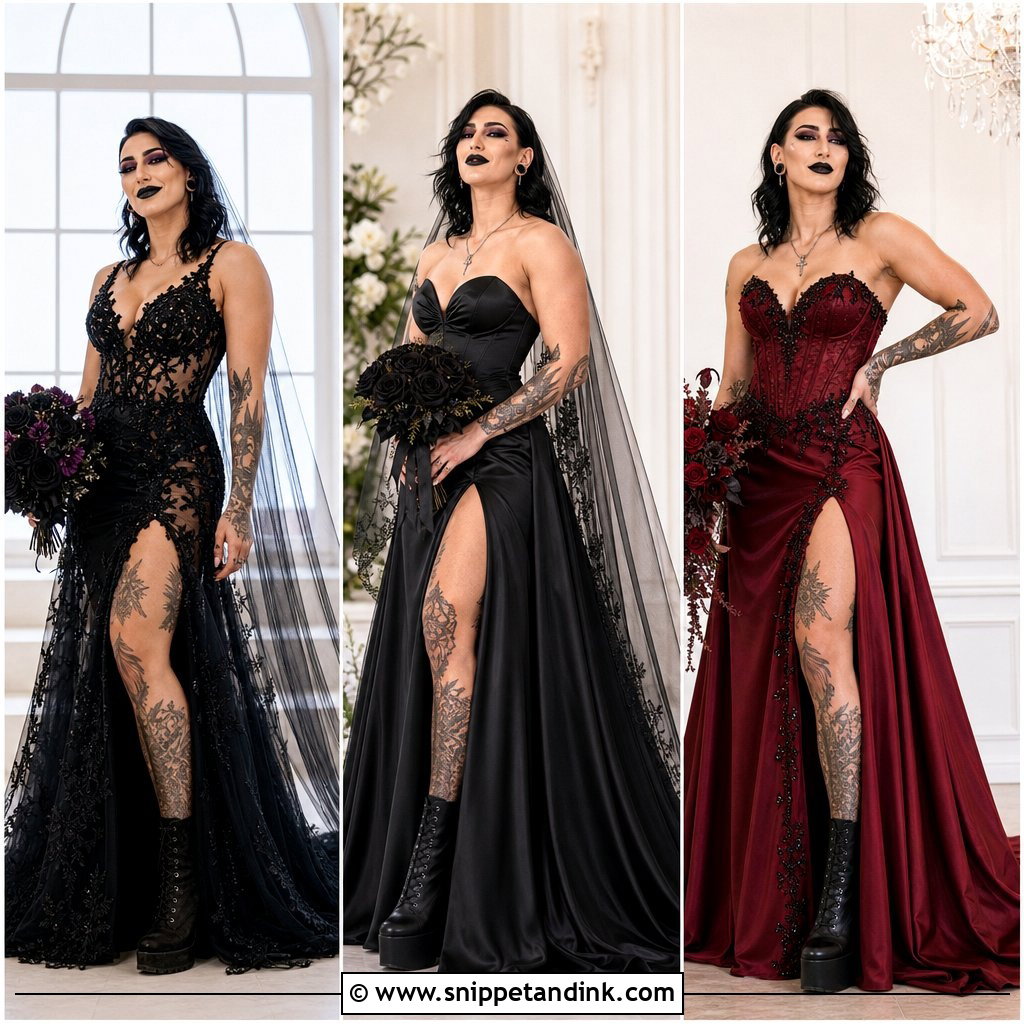
1. Black Lace Wedding Dress
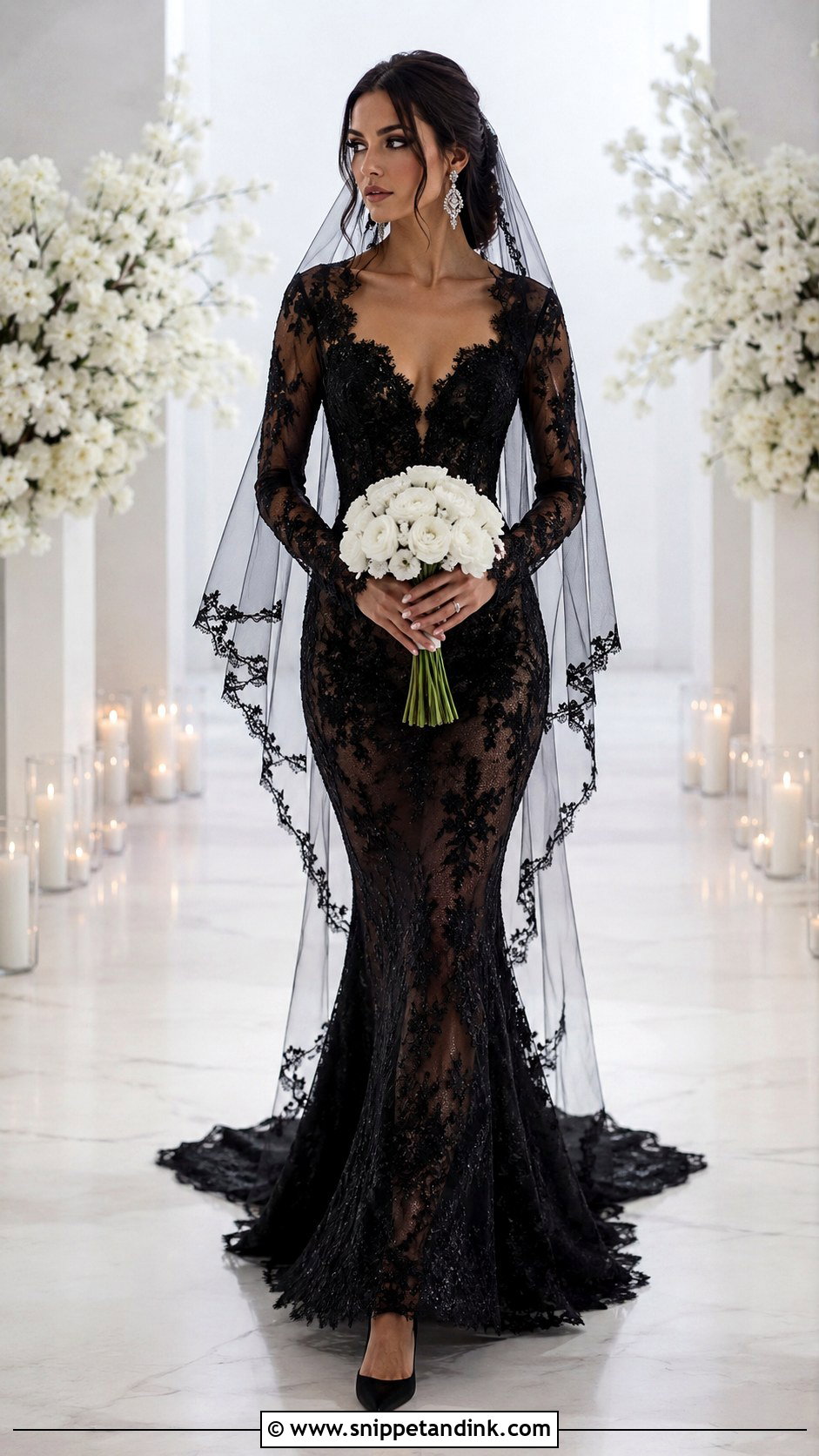
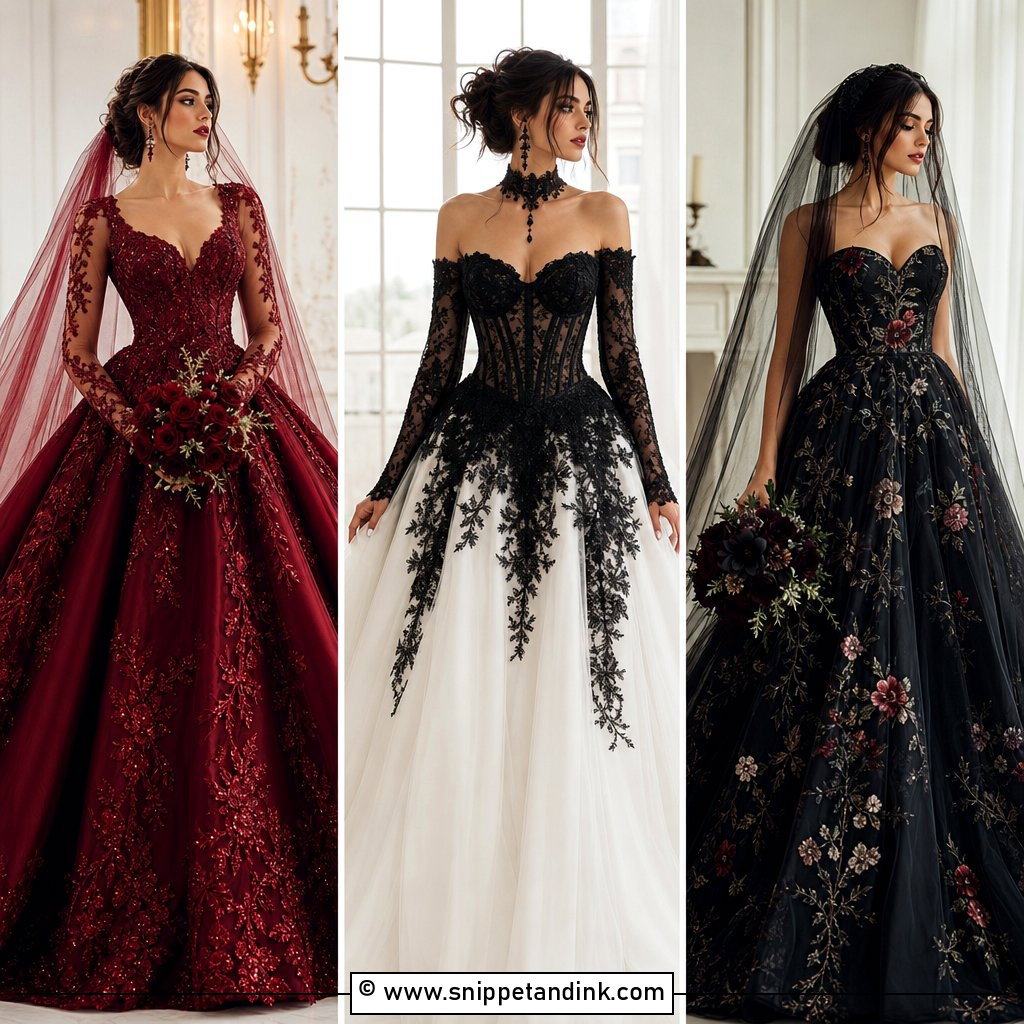
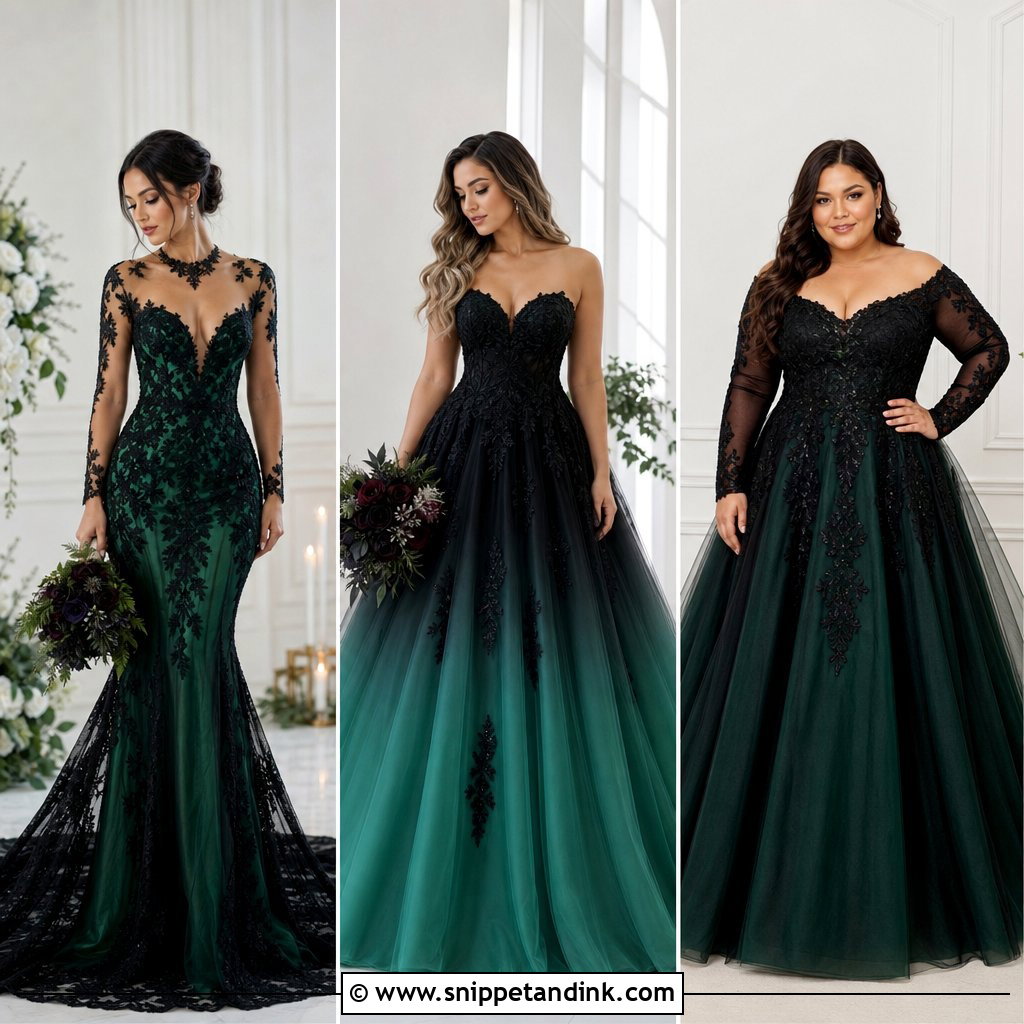
Black lace is the most requested unconventional gown I see, and the lining is what makes or breaks it. Over black, the lace pattern disappears; over nude or silver, it gains depth and reads clearly. A fitted trumpet is sleek, a layered ball gown more romantic. Pointed black heels, crystal drops and a sheer black veil a little longer than the train finish it. White flowers give crisp contrast; deep purple goes moodier. Soft lace on a flexible lining moves better than stiff Chantilly over boning. On makeup, I’d keep the skin luminous and the lip berry so the whole face doesn’t go dark along with the dress.
2. Colorful Floral Wedding Dress
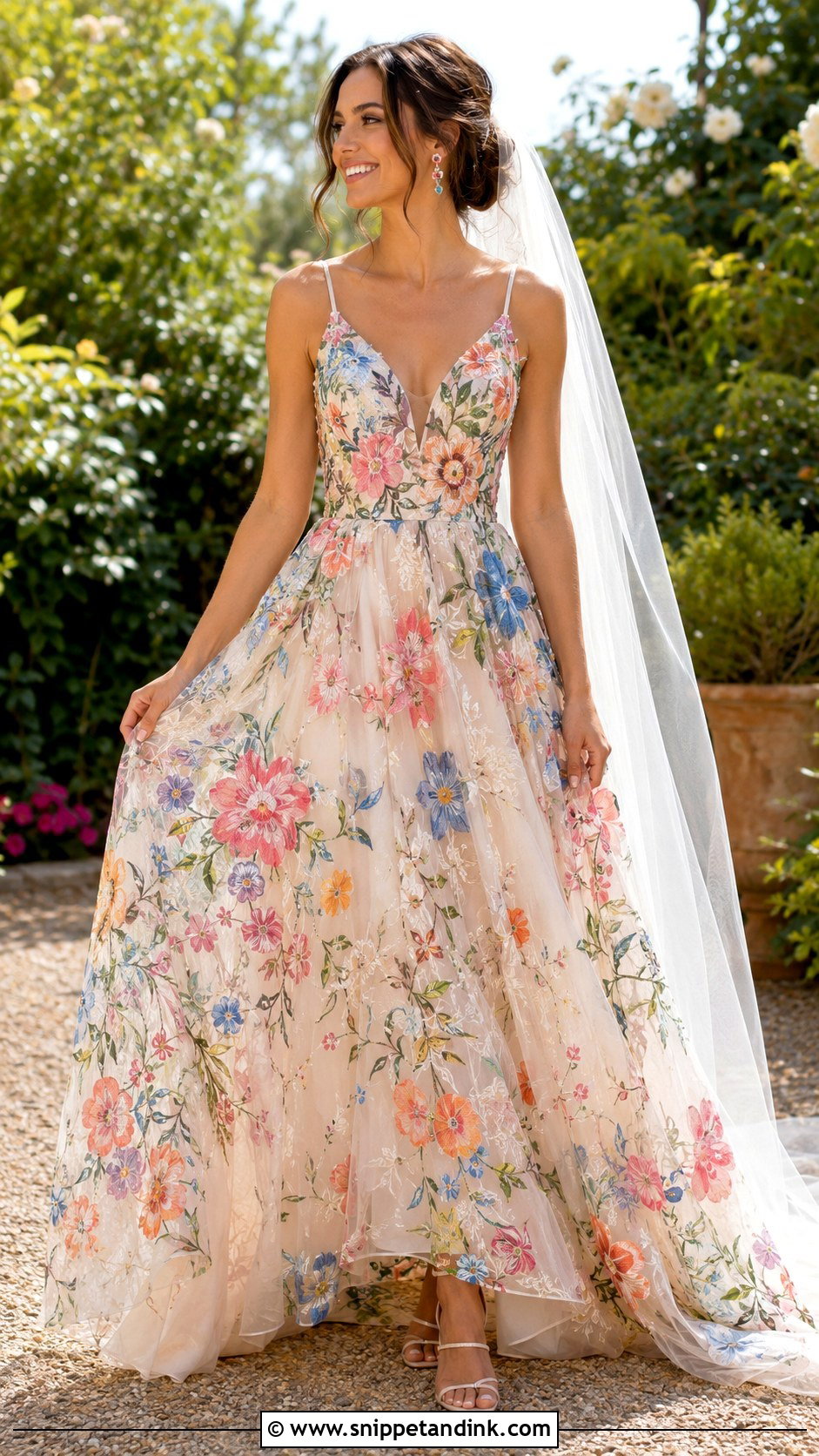
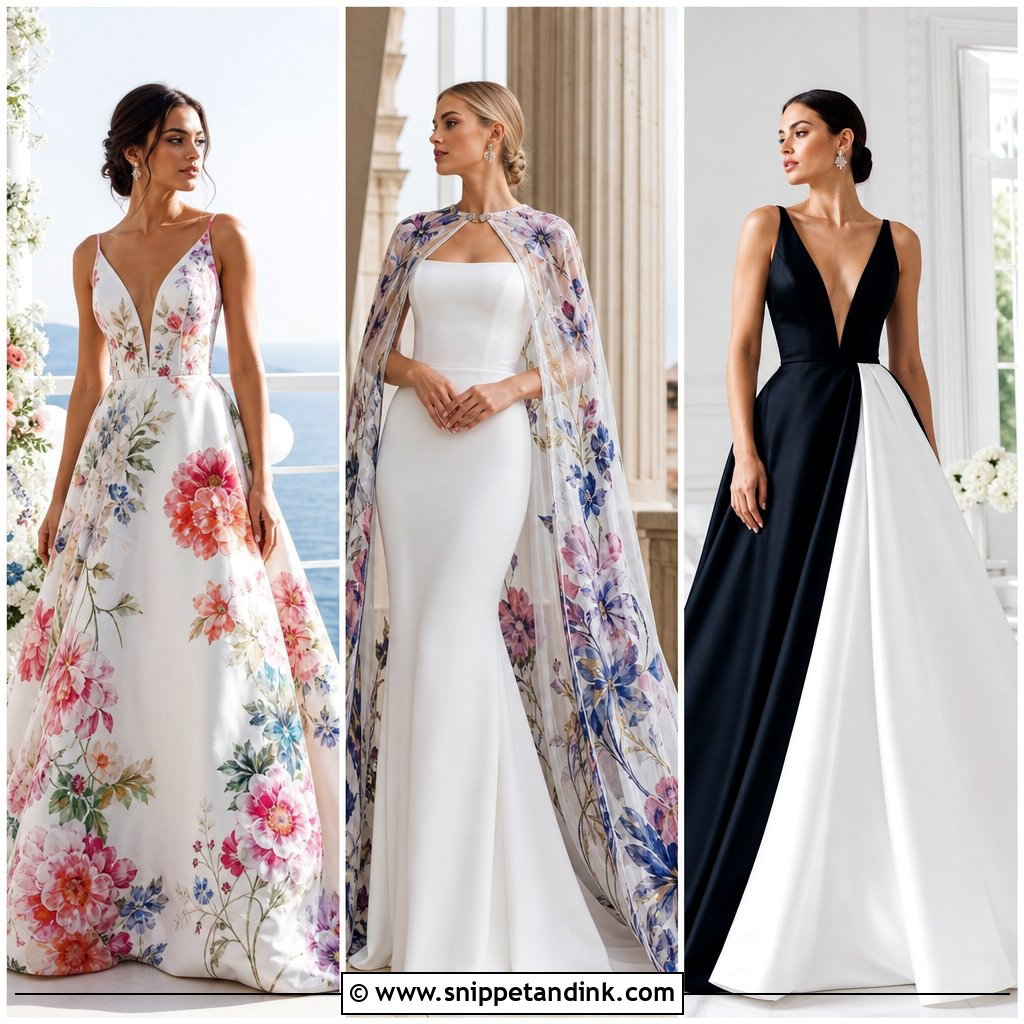
Picture a tulle skirt with embroidered flowers climbing up from the hem toward a fitted bodice, in pink, blue, orange and green. Outdoors, a dress like that seems to belong to the garden around it. Done well, it gives a maximalist effect while the silhouette stays calm. Simple ivory sandals, small gemstone earrings and a one-color bouquet pulled from the embroidery stop it getting busy. A plain fingertip veil lets the pattern show. If you want less volume, ask for a floral column instead. My fitting note: big motifs land awkwardly on seams and darts, so ask the seamstress to work around them rather than cut through a flower.
3. Silver Metallic Wedding Dress
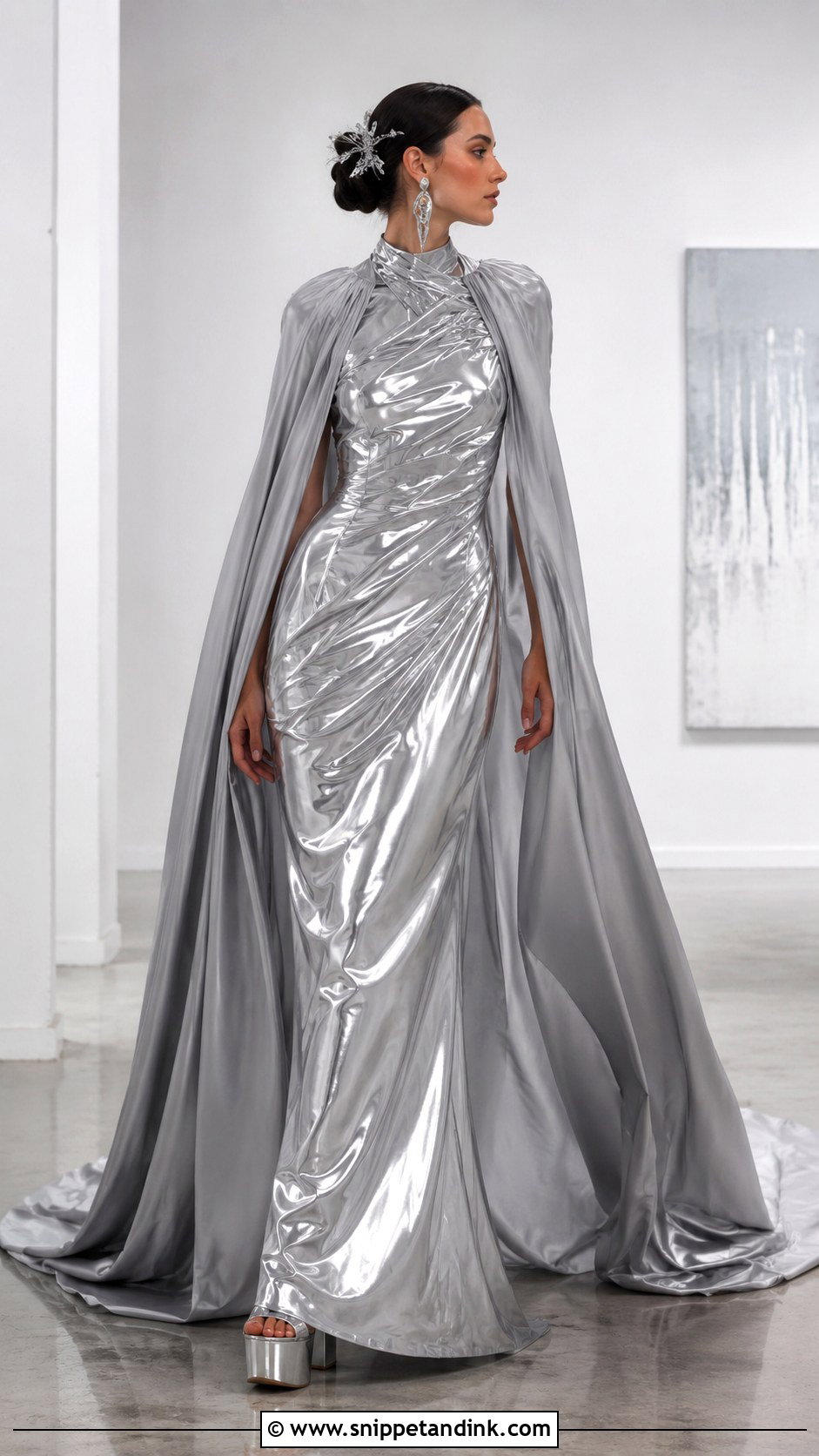
Metallic fabric changes with the light more than anything else here, and a silver metallic wedding dress under reception lighting looks completely different from the shop. A liquid-silver slip is fluid; a structured metallic jacquard gives coverage and support. Silver platforms carry the shine down, and a crystal comb adds sparkle without fighting the fabric. Carry calla lilies or another streamlined bouquet. If the dress is heavily embellished, skip the veil and wear sculptural earrings. Metallic cloth is often stiffer and heavier than satin, so I have brides sit, walk and lift their arms in it before committing. A soft grey wrap or detachable silver cape covers cold evenings.
4. Red Tulle Wedding Dress
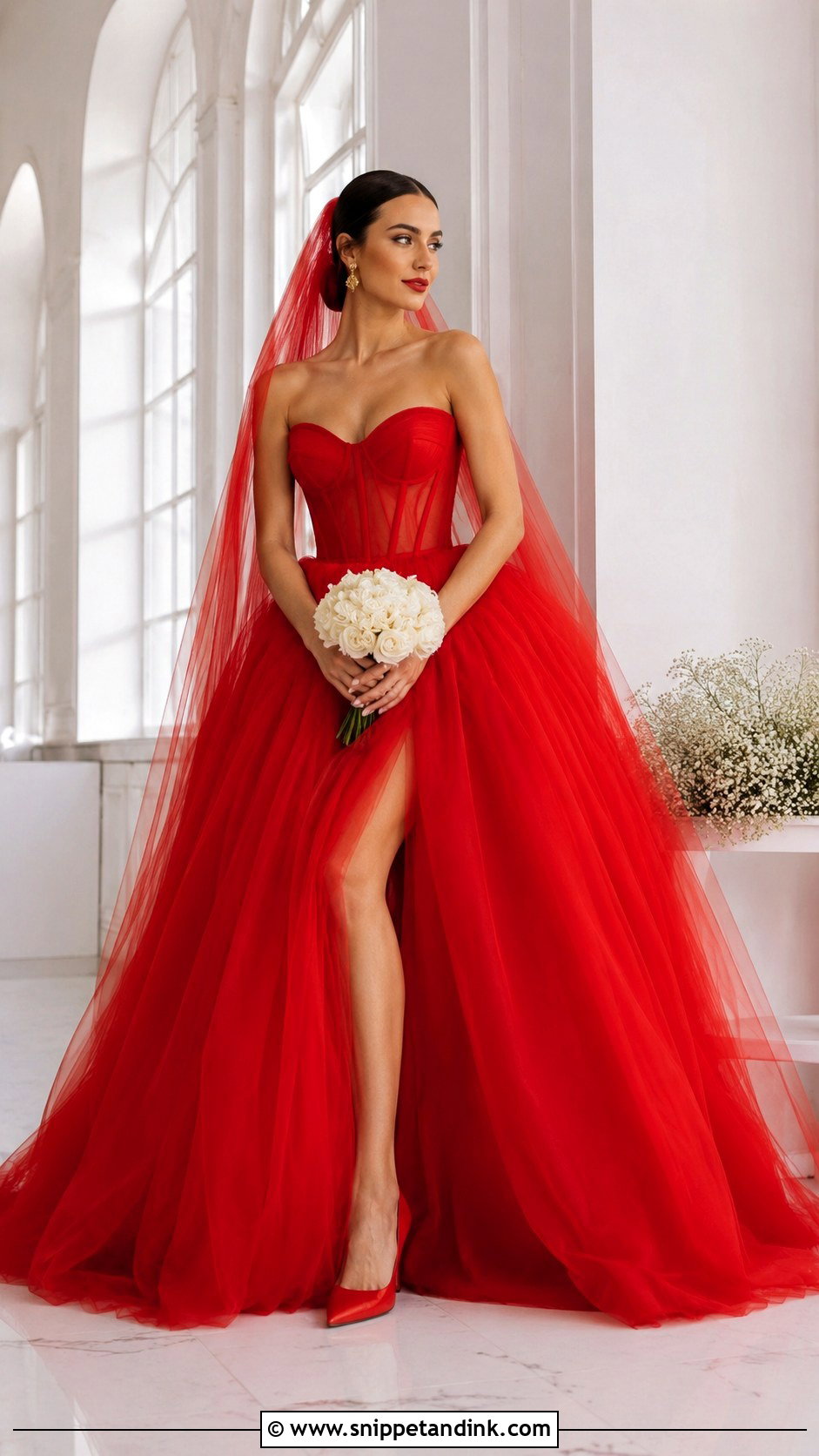
Red makes an entrance, full stop. Scarlet, cherry and crimson each lean differently, and red is the color I’d never order from a screen: some reds go orange in daylight and pinkish under warm lamps, so look at samples in both. A corset bodice gives structure and airy tulle keeps the skirt romantic without beading. Tonal red heels carry the color head to toe, and gold earrings with a fine gold hairpiece warm it. A red veil is the bold monochrome option. If that’s too much, a sheer veil or gloves in a lighter shade soften it. Keep the bouquet compact and neutral.
5. Ombre Wedding Dress
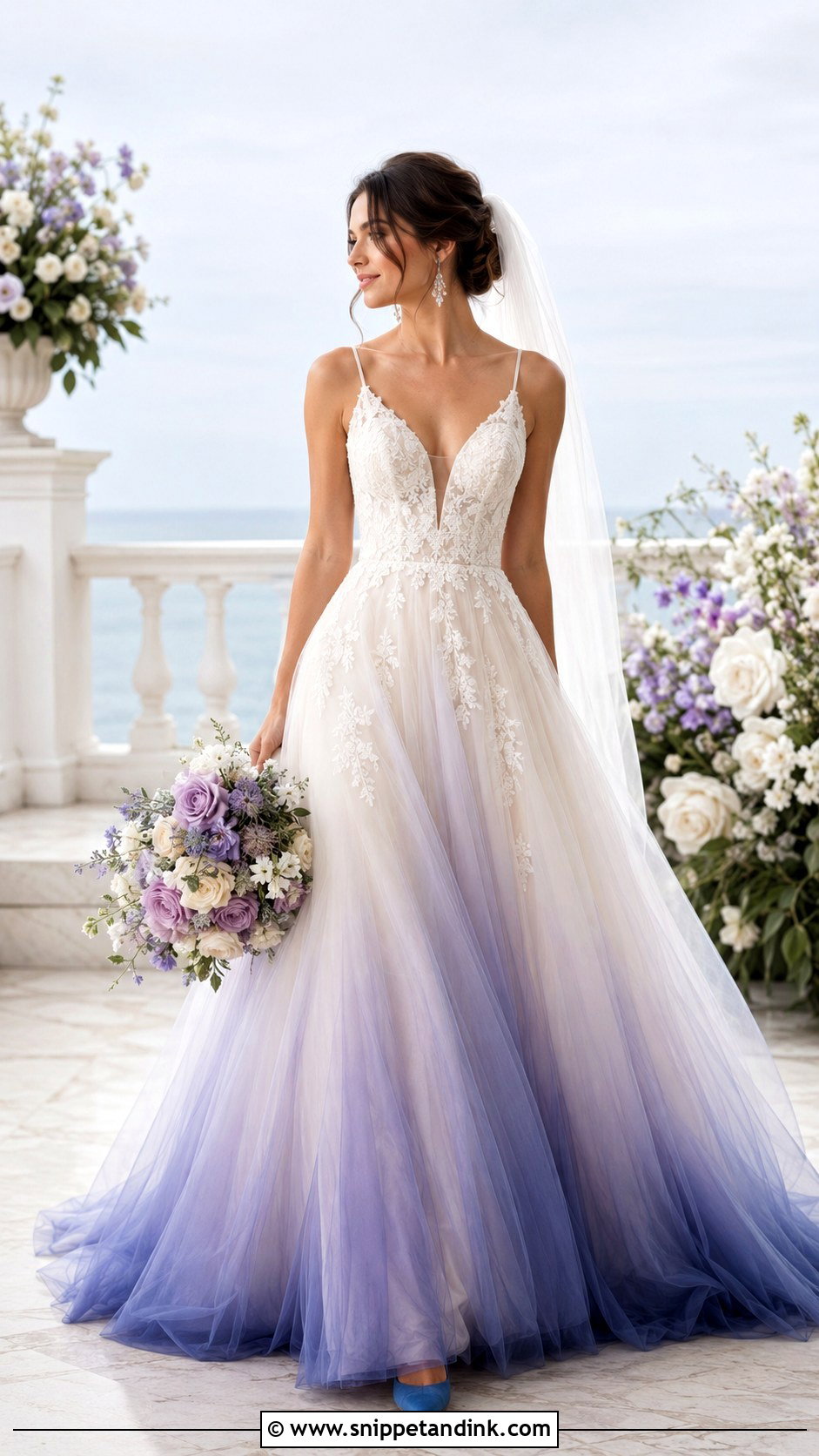
Ombre keeps a bridal base, usually ivory at the bodice, and lets color rise from the hem in blue, lavender, pink or sunset orange. A simple A-line lets the gradient lead, and layered chiffon or tulle blurs the shift between shades. Match the shoes to the deepest color so they disappear when the skirt moves. Clear crystal jewelry and a plain veil under a relaxed updo keep it calm, with two or three gradient colors in the bouquet. Dip-dyeing is hard to correct afterward, so ask to see the dyed fabric before construction and know that hemming can cut away the darkest band. Smooth transitions look expensive; sharp stripes look like an accident.
6. Feathered Mini Wedding Dress
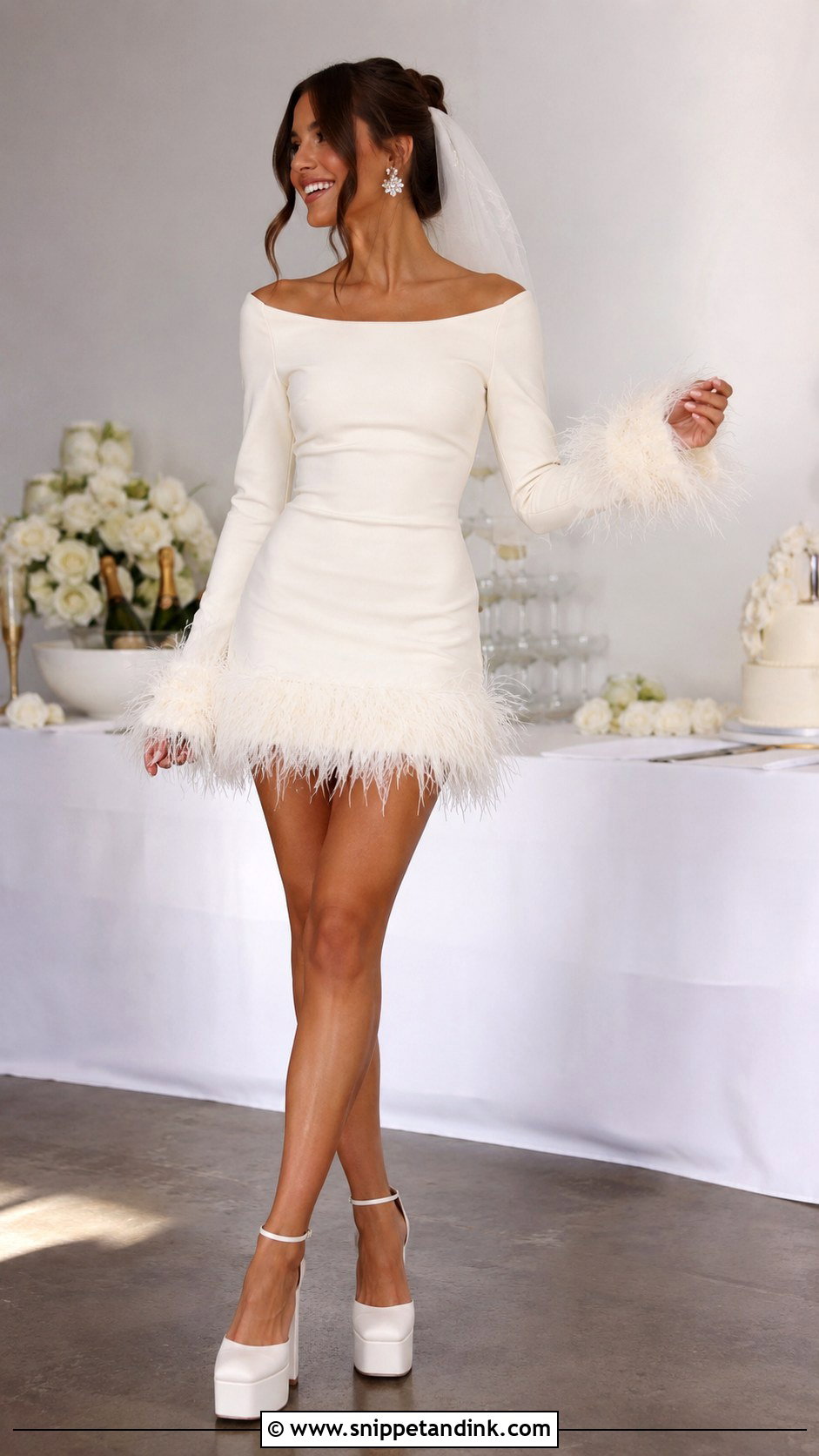
Shorter dresses and detachable layers are where feathers sit most comfortably, and a feathered mini wedding dress gives you complete freedom on the dance floor. A fitted mini with feathered cuffs is easier to live with than a shift covered in trim. Clean platform pumps, sheer tights if you like and small pearl or crystal earrings balance the texture. A short veil, jeweled headband or sleek ponytail keeps it from looking like costume. Feathers shed, catch on bracelets and flatten when you sit on them, so I check the placement while seated and pack a lint roller in the emergency kit. For more coverage, layer it over fitted trousers or a removable overskirt.
7. Wedding Dress With A Dramatic Cape
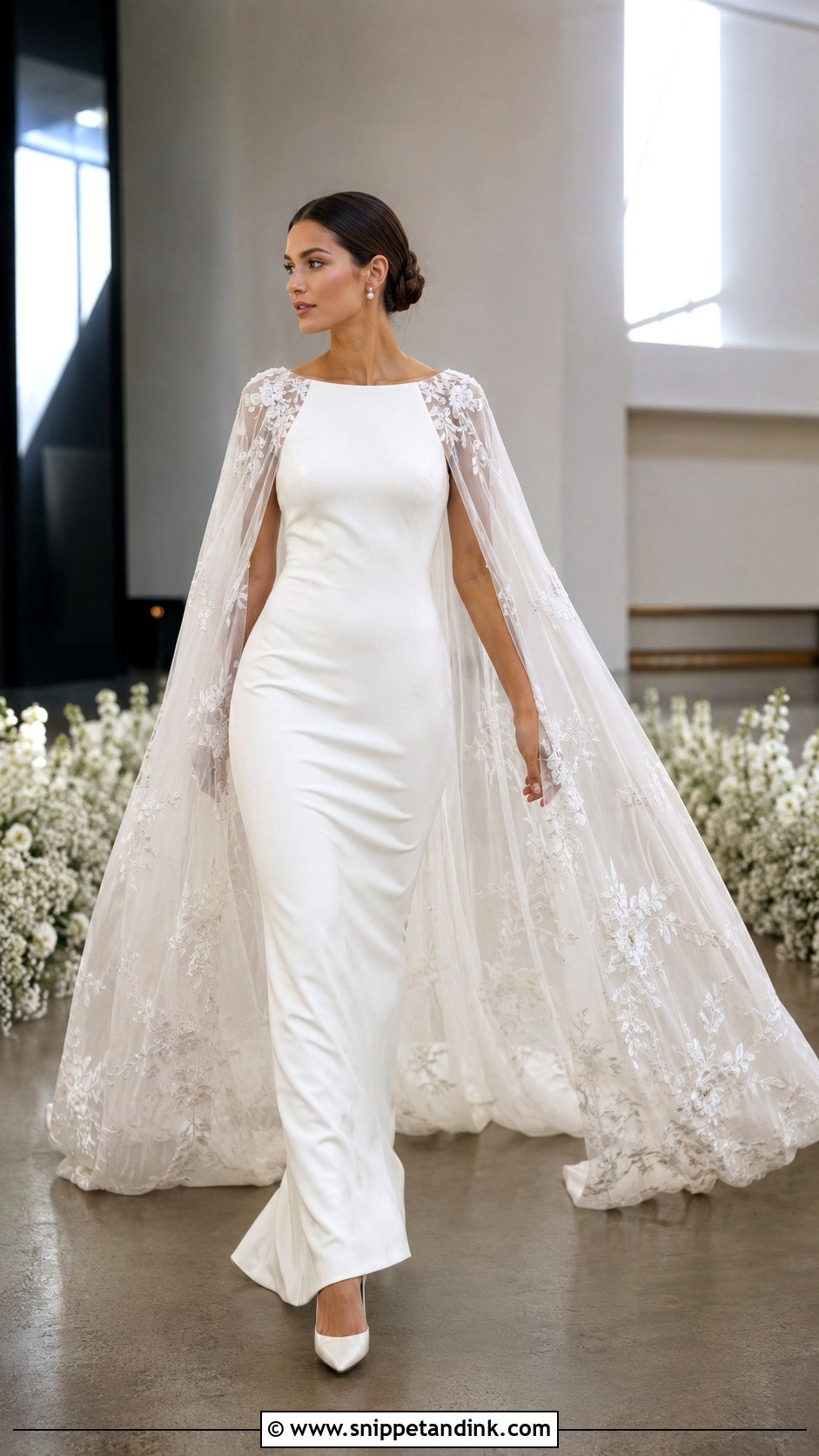
Give the cape the stage: start with a clean column, slip or fitted crepe gown and let it do the talking. Sheer embroidered tulle looks ethereal, structured satin architectural, colorful chiffon full of movement. Pointed heels, understated earrings and a low bun keep the neckline clear. The fastening point, whether shoulders, collar or back of the bodice, is what I test hardest, because a heavy cape pulls backward on the neckline all day. A detachable design can come off after portraits. Match the length to the floor: shorter outdoors on grass, longer down an indoor aisle where it can sweep.
8. Convertible Ball Gown Wedding Dress
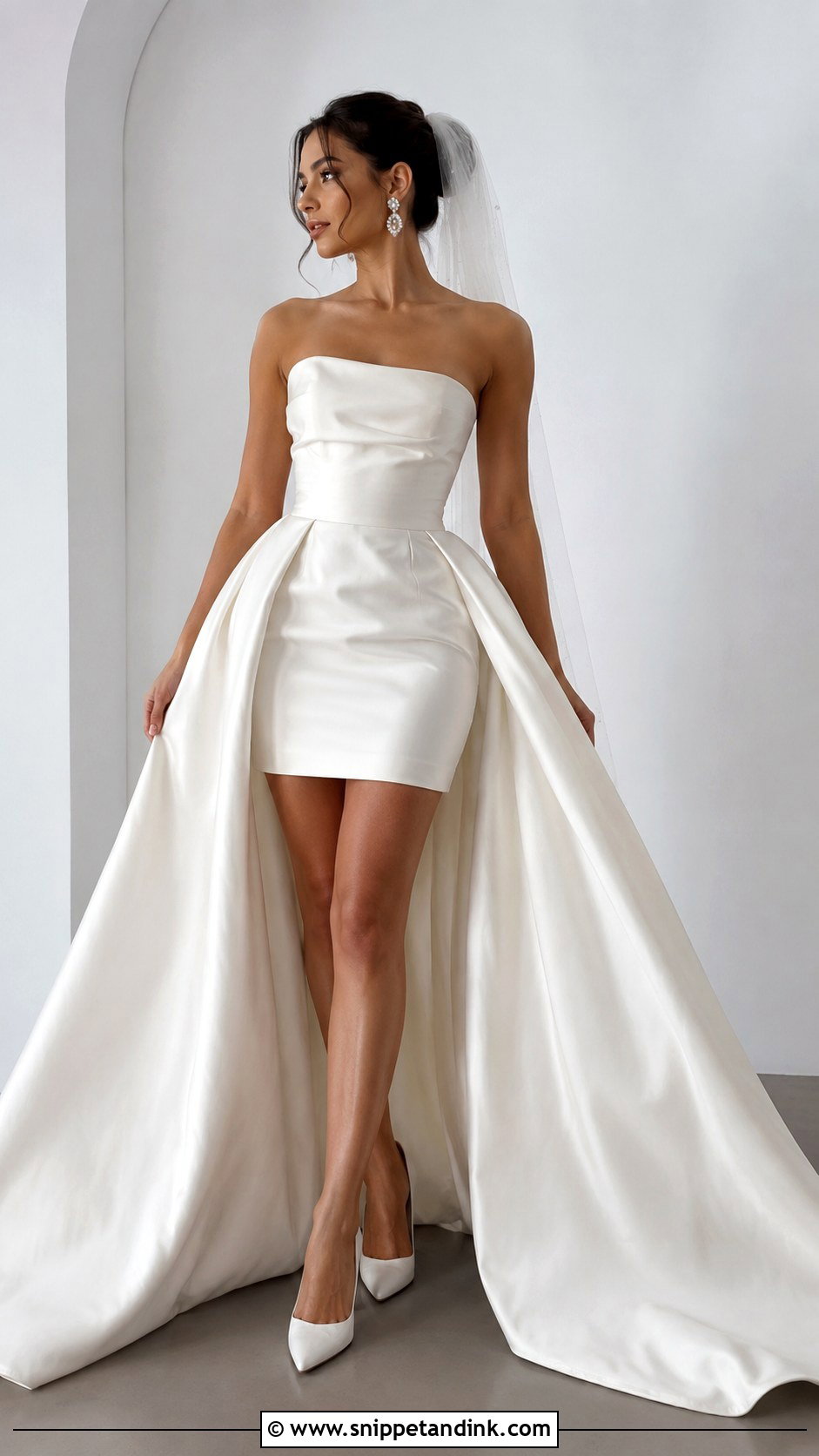
Why stick to one silhouette? A convertible ball gown hides a fitted mini, jumpsuit or column under a big detachable skirt. Full skirt for the ceremony, lighter outfit for the reception. Removable sleeves and interchangeable skirts are common in collections now, so you won’t need a custom maker for this. Keep the same shoes and jewelry for both versions, or bring platforms for the short look. Hidden snaps, hooks and zips get tested again and again at fittings. One person from the wedding party should practice removing the skirt until it takes under a couple of minutes.
9. Wedding Jumpsuit With A Train
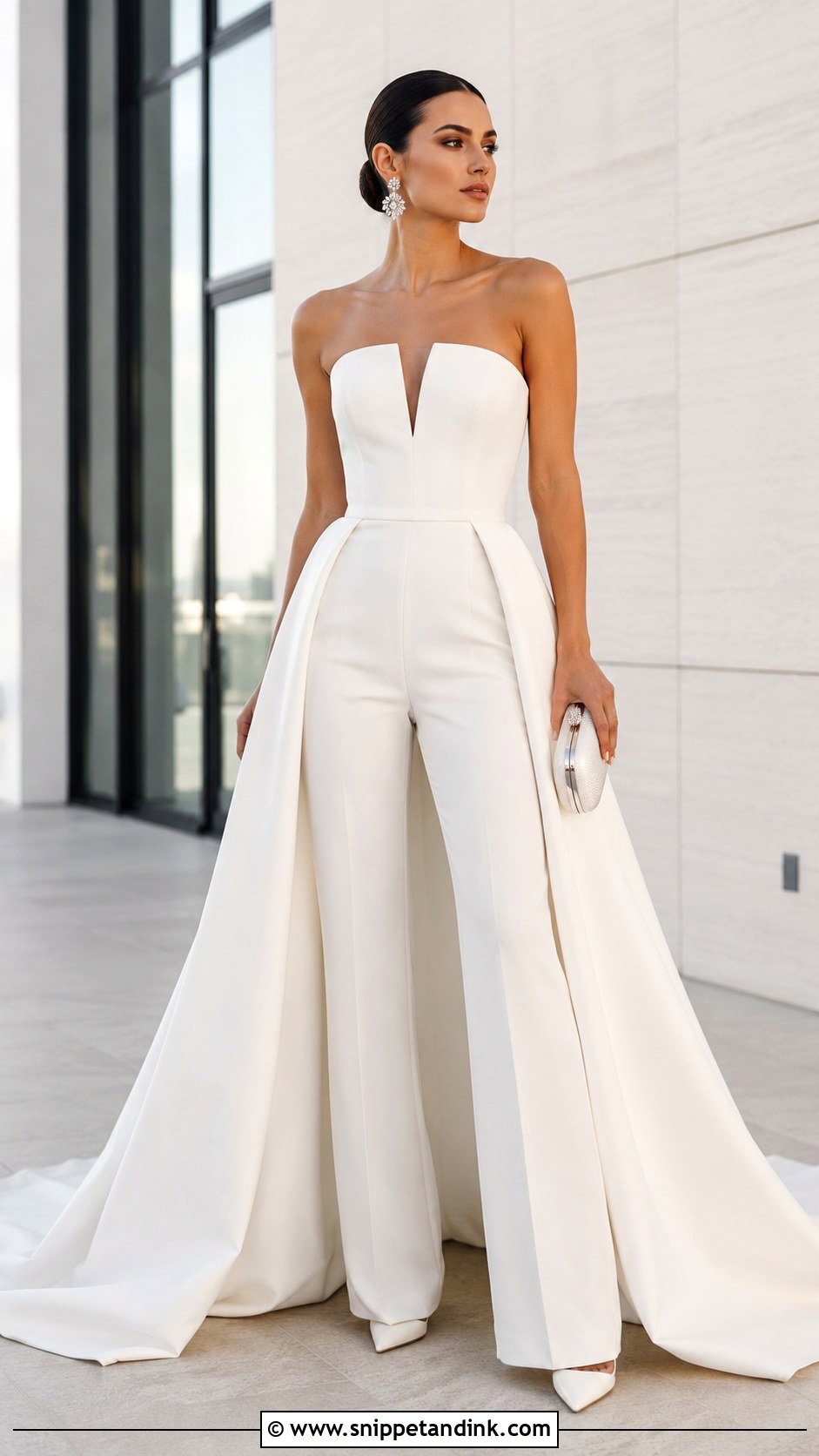
A jumpsuit with a train combines sharp tailoring with gown drama. Wide-leg trousers move well, and a structured bodice gives waist and support. Attach a detachable train at the back or choose a long cape that follows the line. Pointed pumps, bold earrings and a sleek clutch let the construction show. Ivory crepe with lace sleeves is the softer route; sequins, sculptural shoulders or a contrasting black train push it further. Torso length is the alteration that matters: too short and the crotch pulls when you sit, too long and it bags. Hem the trousers to just clear the floor in your actual shoes.
10. Two-Piece Wedding Dress
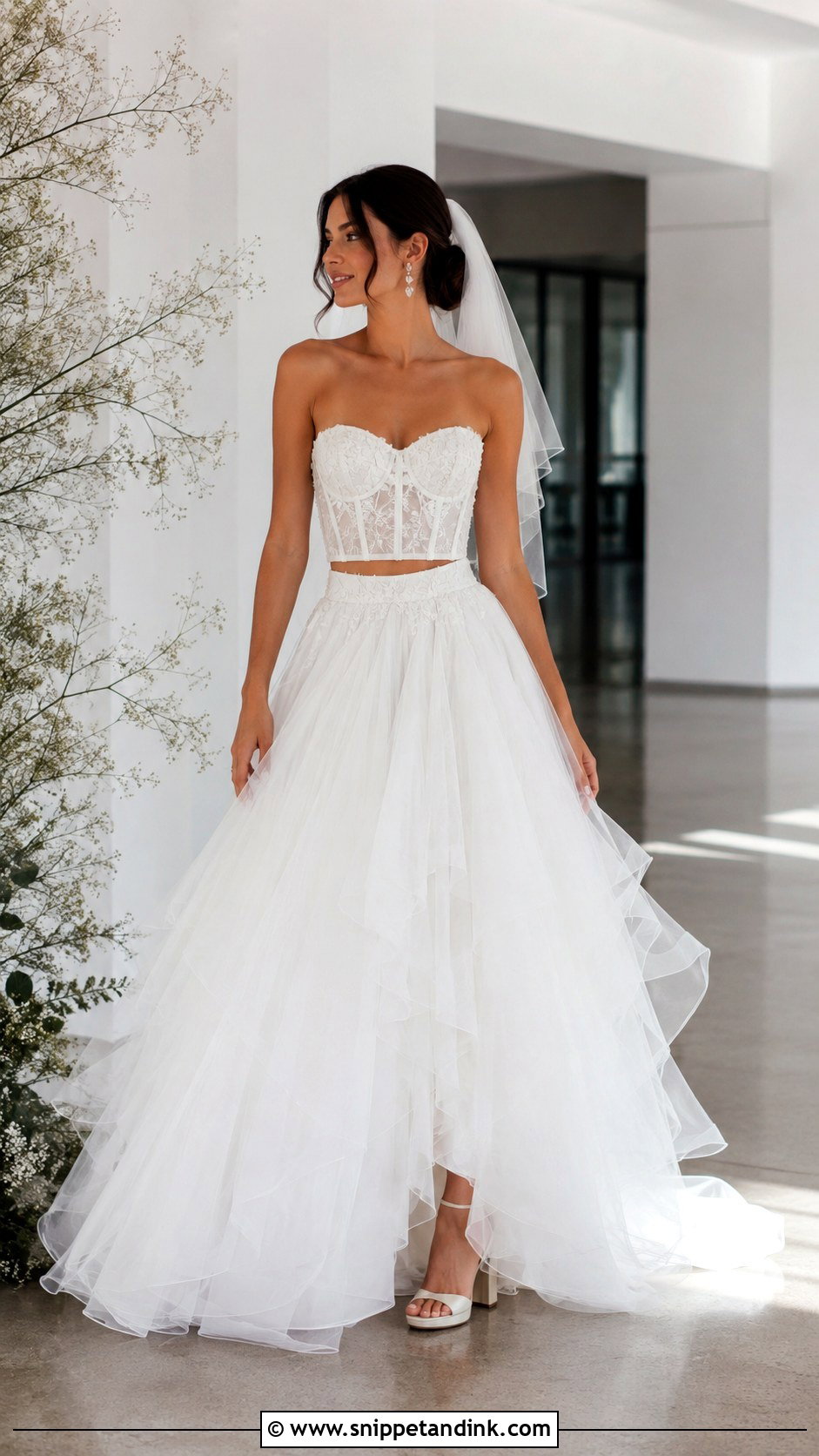
Separates let you mix textures and decide exactly how much skin shows. A structured corset top with a full tulle skirt is dramatic; an embroidered blouse with wide satin trousers is softer. A sliver of waist feels modern, but the pieces can meet fully too. Block heels, a short veil and earrings that echo the top finish it. Ivories from different makers rarely match, so I hold both pieces together in daylight before buying; side by side, a cooler white looks grey in photos. Hidden loops or fasteners keep the top from riding up. A bonus: both pieces can be worn again.
11. High-Low Wedding Dress
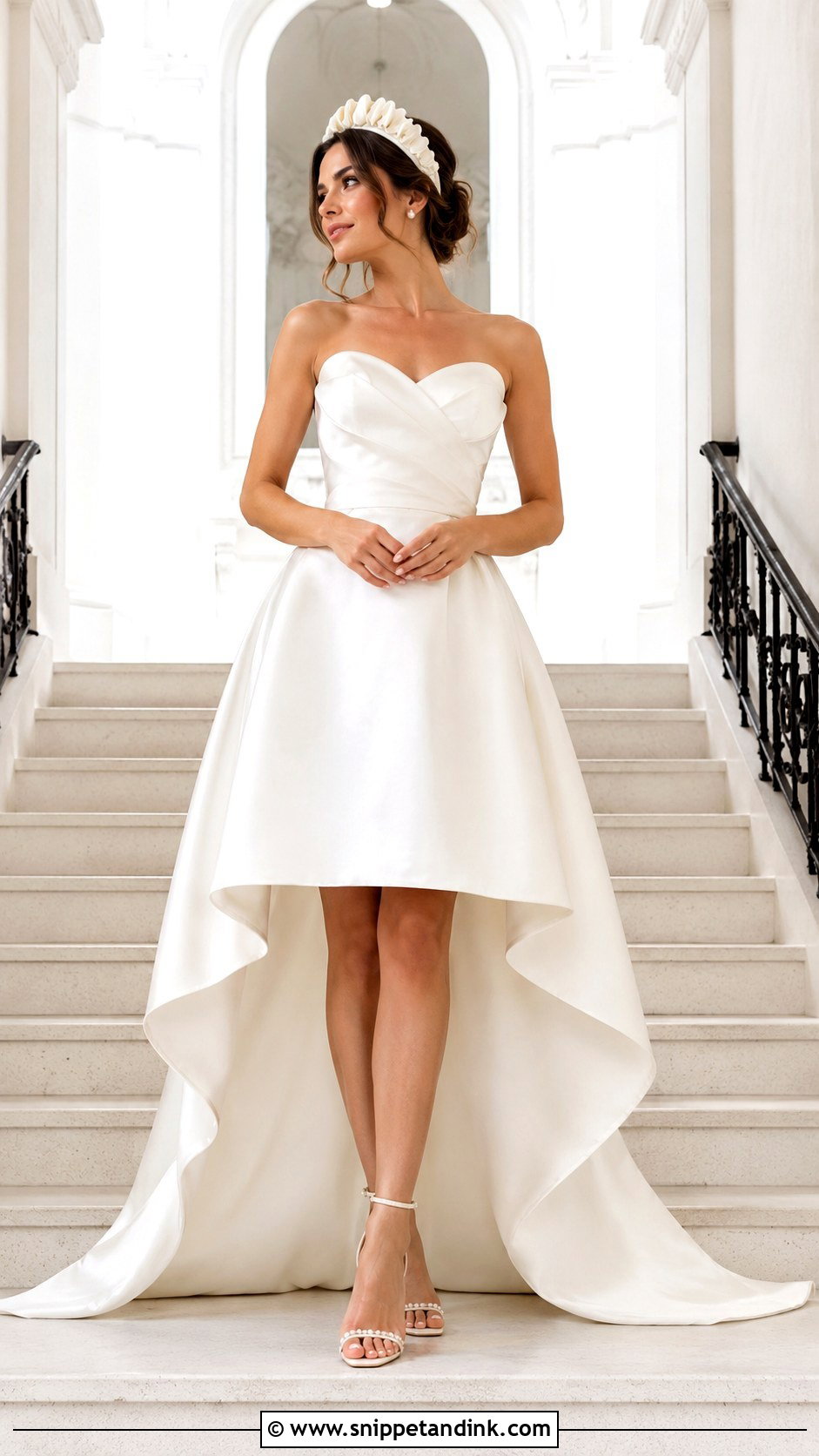
High-low hems exist to show off shoes, so pick the shoes first. The front can stop above the knee, at mid-calf or just above the ankle, with the back sweeping into a train. Structured satin looks sharp, layered tulle moves more. Embellished heels, ankle straps or colorful platforms belong here, with a short veil or sculptural headband to match the playful proportions. Sit down and climb a step in it; the short front rises more than you’d expect. The curve from front to back needs to look intentional from every angle, and the exposed hem must be finished neatly.
12. Bubble Hem Wedding Dress
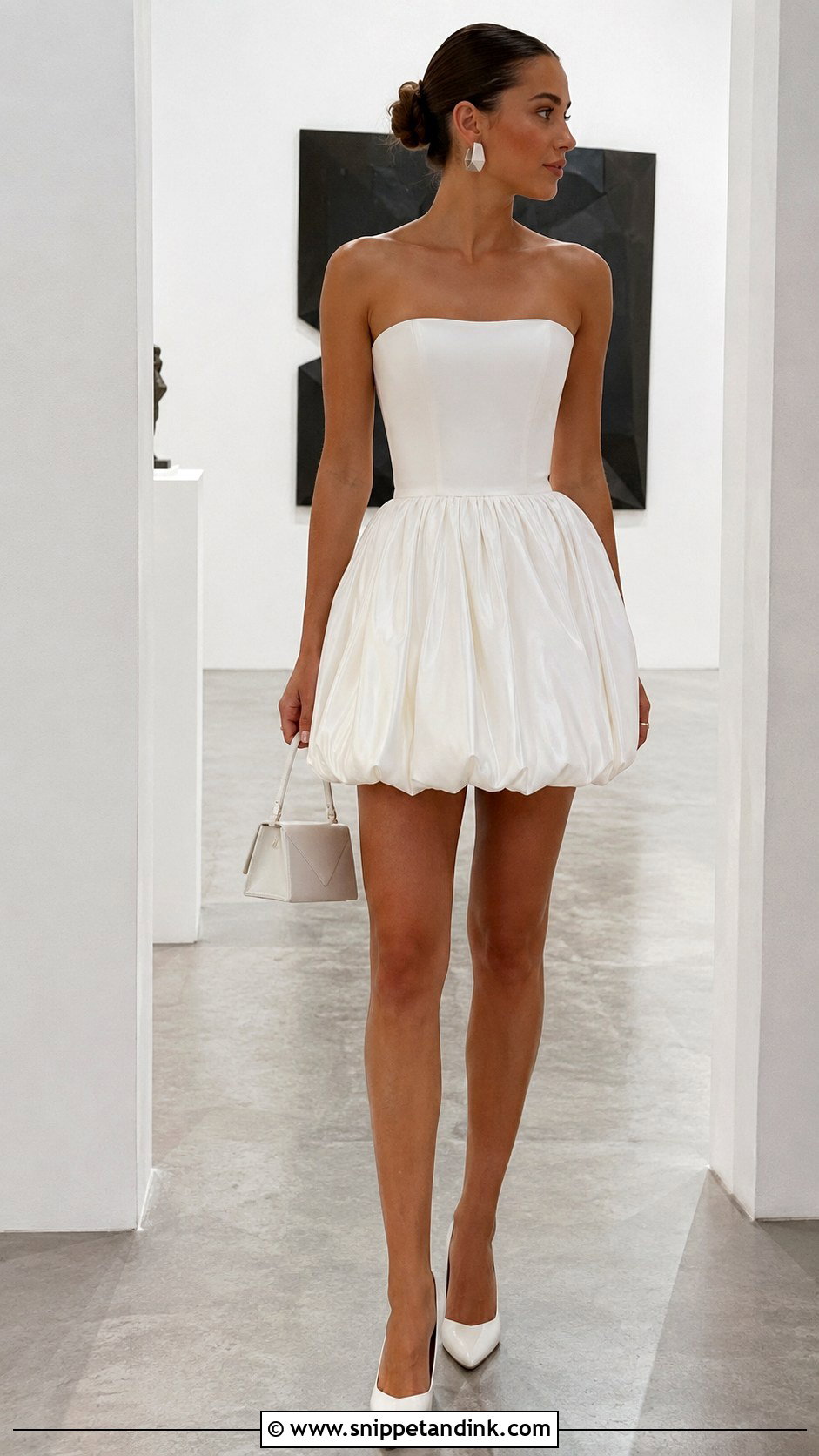
The bubble hem is back, on minis and on fuller gowns, and it reads as both playful and architectural. A short version with a fitted bodice makes a modern reception outfit; a floor-length one with controlled volume can carry a ceremony. Sleek pumps, geometric earrings and a compact bag finish it, and anything oversized competes with the curve. The hem should hold its rounded shape without feeling stiff or shortening your stride. On petite brides I prefer a bubble mini that shows the legs; taller brides can try a midi. A smooth updo keeps the line clean.
13. Victorian High-Neck Wedding Dress
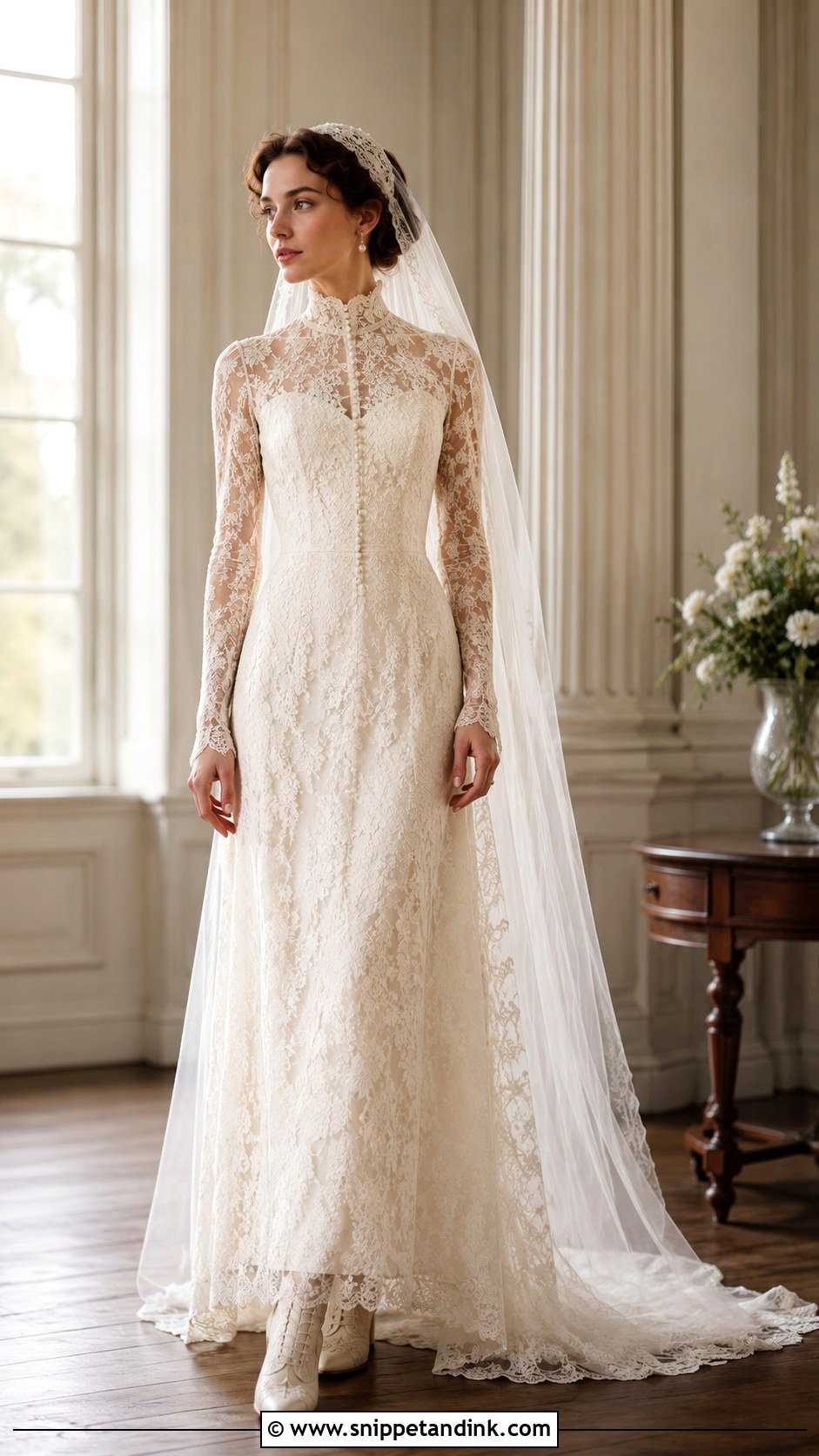
Covered buttons, fine lace and a high collar give a Victorian dress its sense of history, and the risk is looking like a period drama extra. One modern element fixes it: a streamlined skirt, sheer sleeves or an open back. Ivory ankle boots suit it, with pearl drops for softness. Finish with a Juliet cap veil, floral comb or simple low bun, and a small bouquet with trailing greenery. Turn your head both ways at the fitting; a stiff collar rubs. Lightweight lace on a breathable lining is right for summer, while velvet or brocade suits a cold month.
14. Drop-Waist Corset Wedding Dress
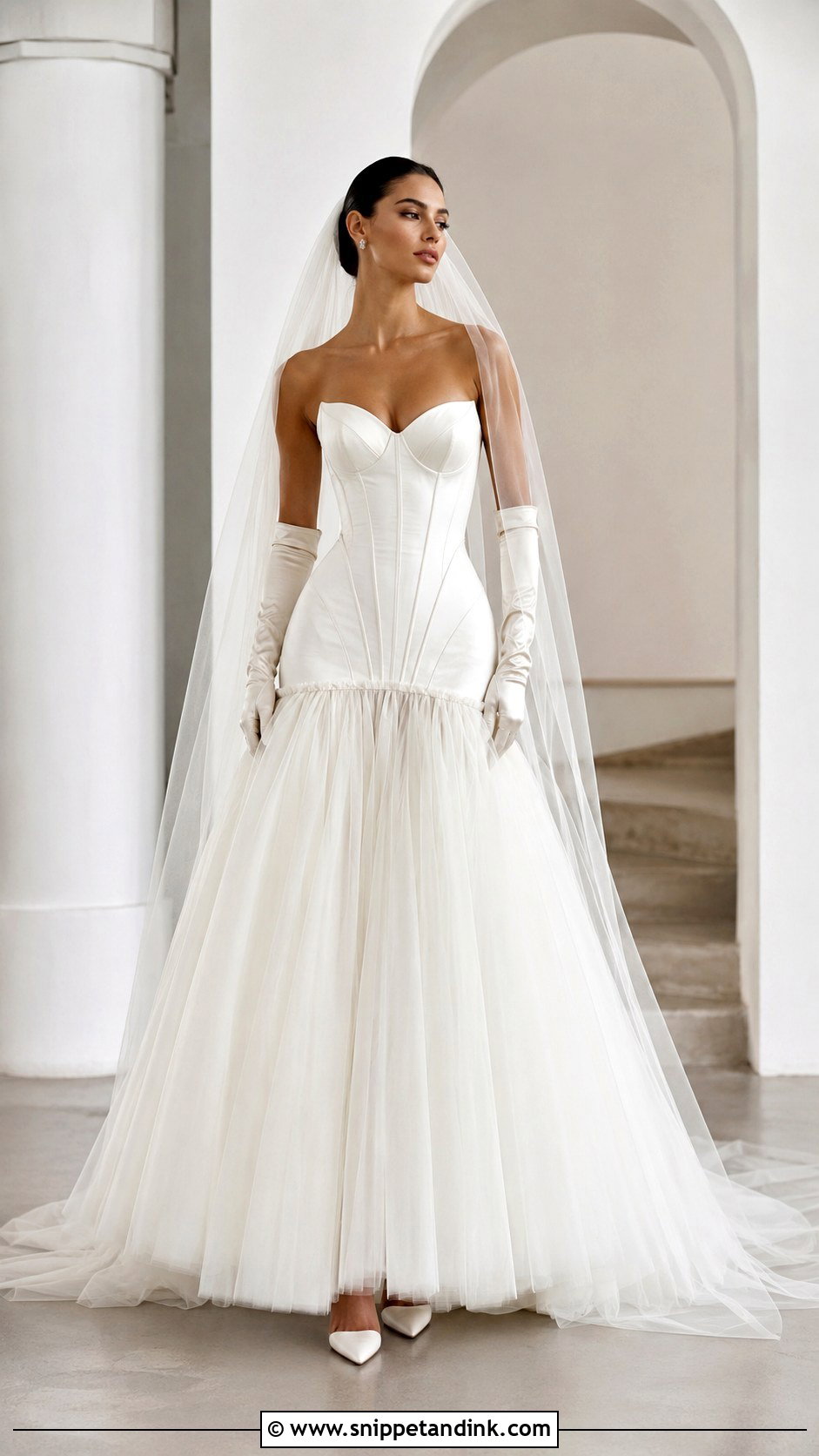
Dropping the waist lengthens the torso, so a drop-waist corset reads taller and more unusual than a standard ball gown. Look for curved seams or a pointed basque, with a skirt in tulle, satin or pleated organza. Pointed heels, long gloves and a simple veil keep the corset visible. A choker balances the long bodice, though statement earrings are more comfortable over a long day. This is the shape where boning placement matters most, because it runs over the ribs and top of the hips. I ask for several movement tests: sitting, bending to pick something up, breathing deeply.

15. Sculptural Ruffle Wedding Dress
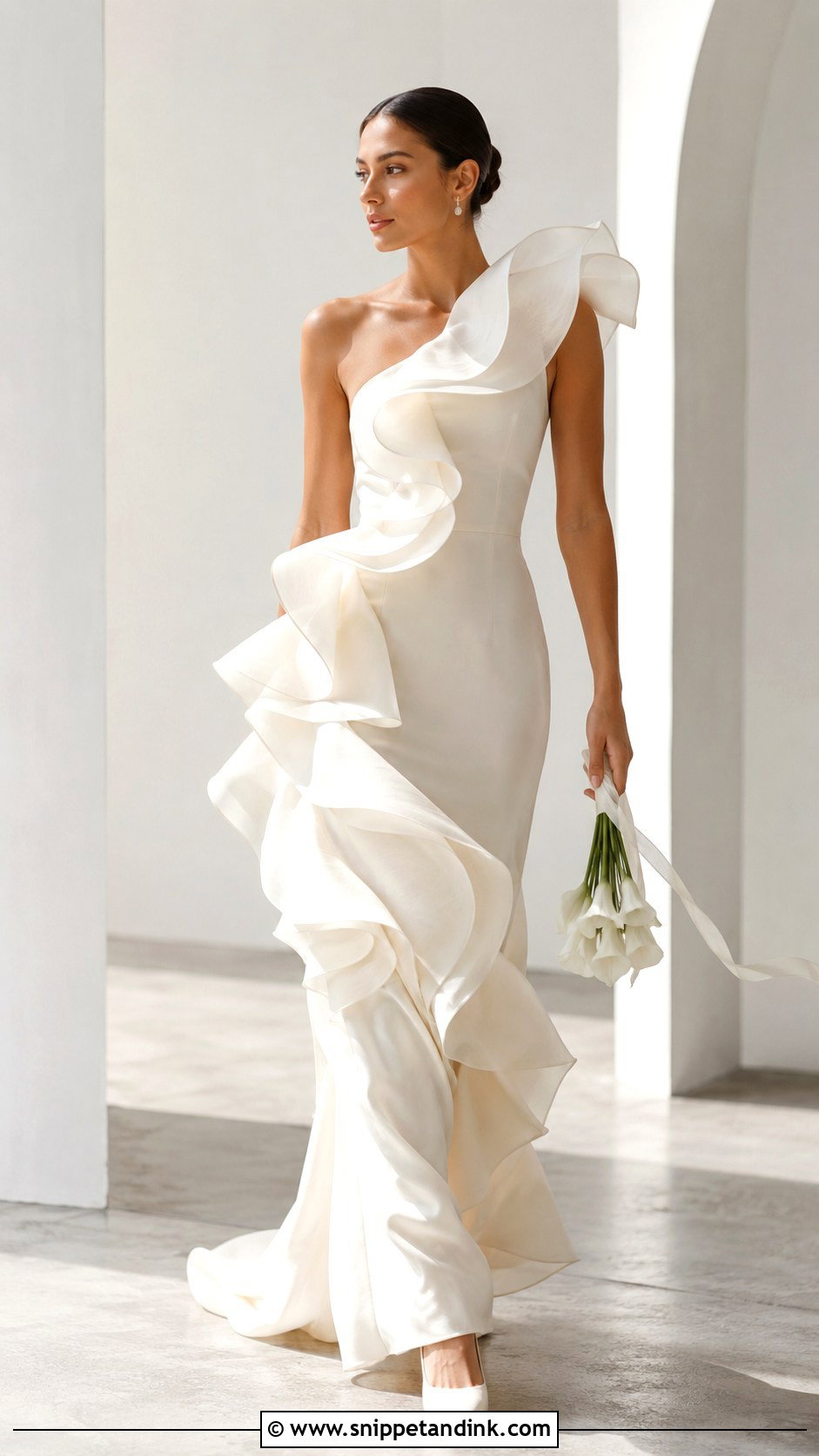
Ruffles at this scale are closer to sculpture, and a sculptural ruffle wedding dress needs nothing else competing with it: simple heels, smooth hair, one piece of jewelry. Folds can frame one shoulder, spiral round the bodice or swell along the skirt. A fitted column base keeps asymmetric ruffles balanced; a full skirt goes theatrical. Organza holds shape while staying light, and satin gives sharper folds. Ask the maker how the ruffles are supported, because crushed organza is very hard to revive after a car journey or cleaning. Keep the bouquet minimal and give yourself room near tables and guests.
16. Asymmetrical Wedding Dress
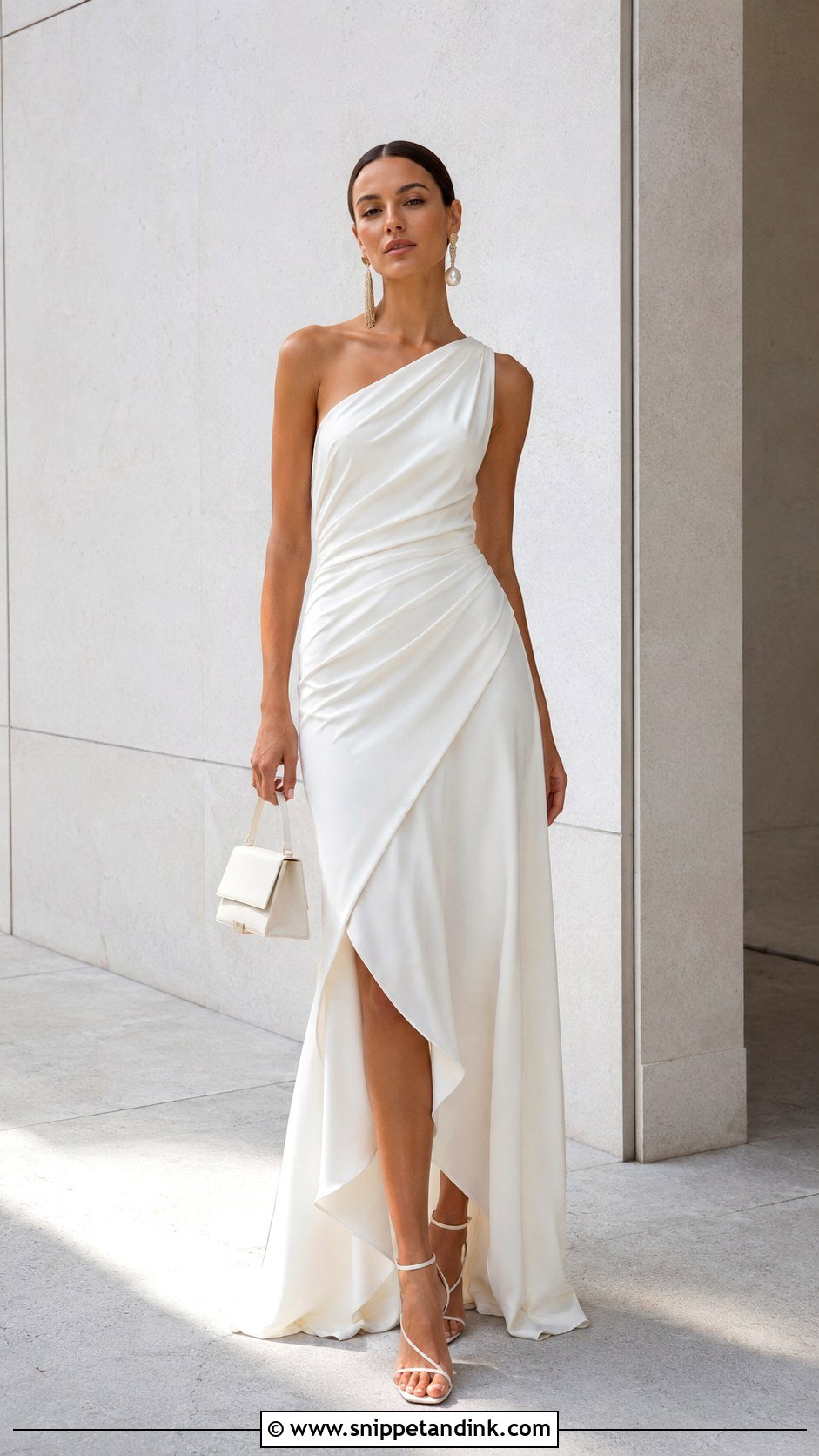
Asymmetry works through line rather than decoration: a one-shoulder neckline, a diagonal seam, off-center drape or a skirt longer on one side. Crepe or satin shows the construction clearly; tulle softens it. Mismatched earrings, sleek sandals and a structured mini bag carry the idea. If the neckline is angular, pull hair off the shoulders. Asymmetric bodices pull unevenly, so internal support is not optional, and I check the back as carefully as the front during fittings. A clean veil or one dramatic hair accessory is enough.
17. Fringe Wedding Dress
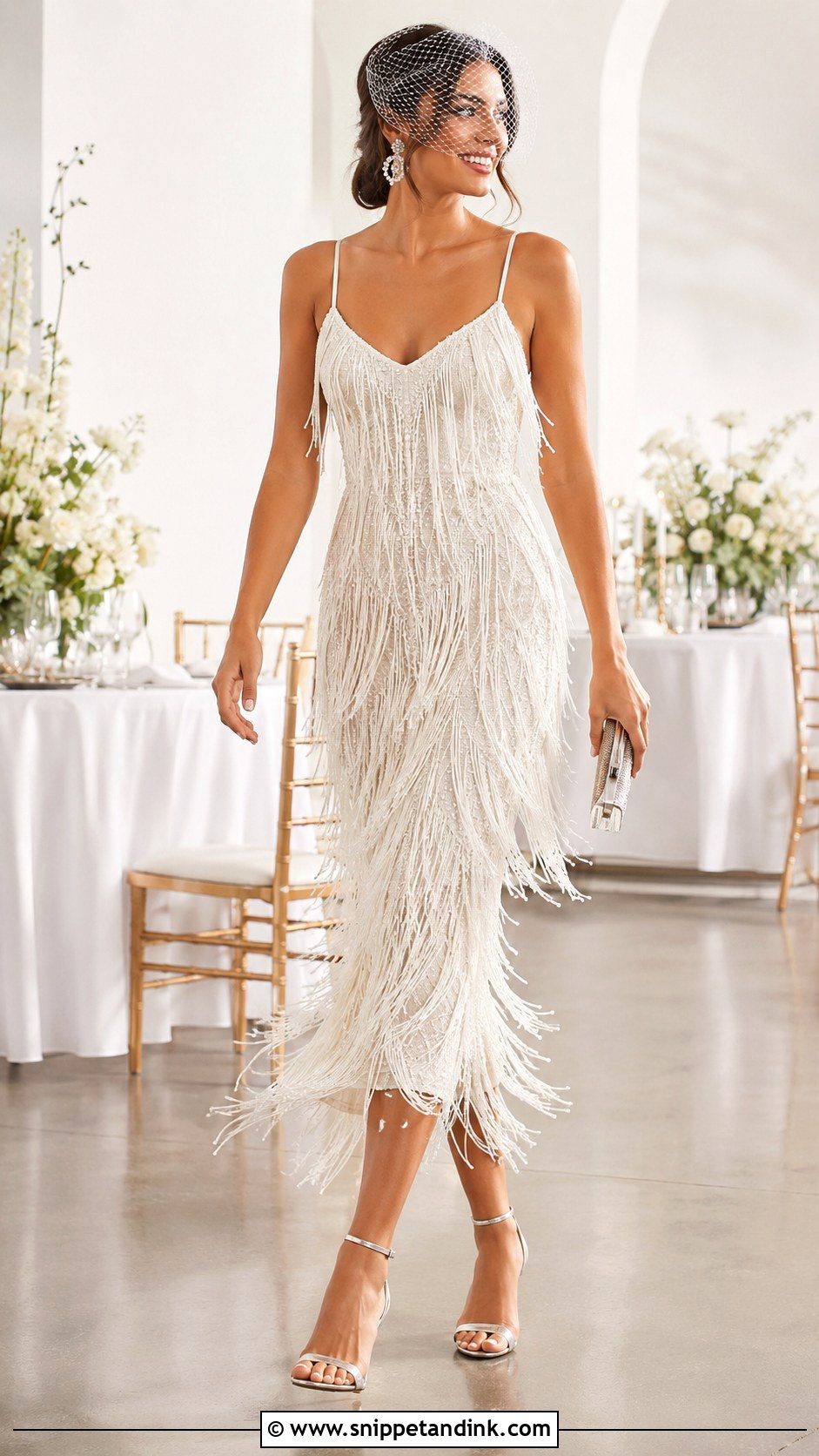
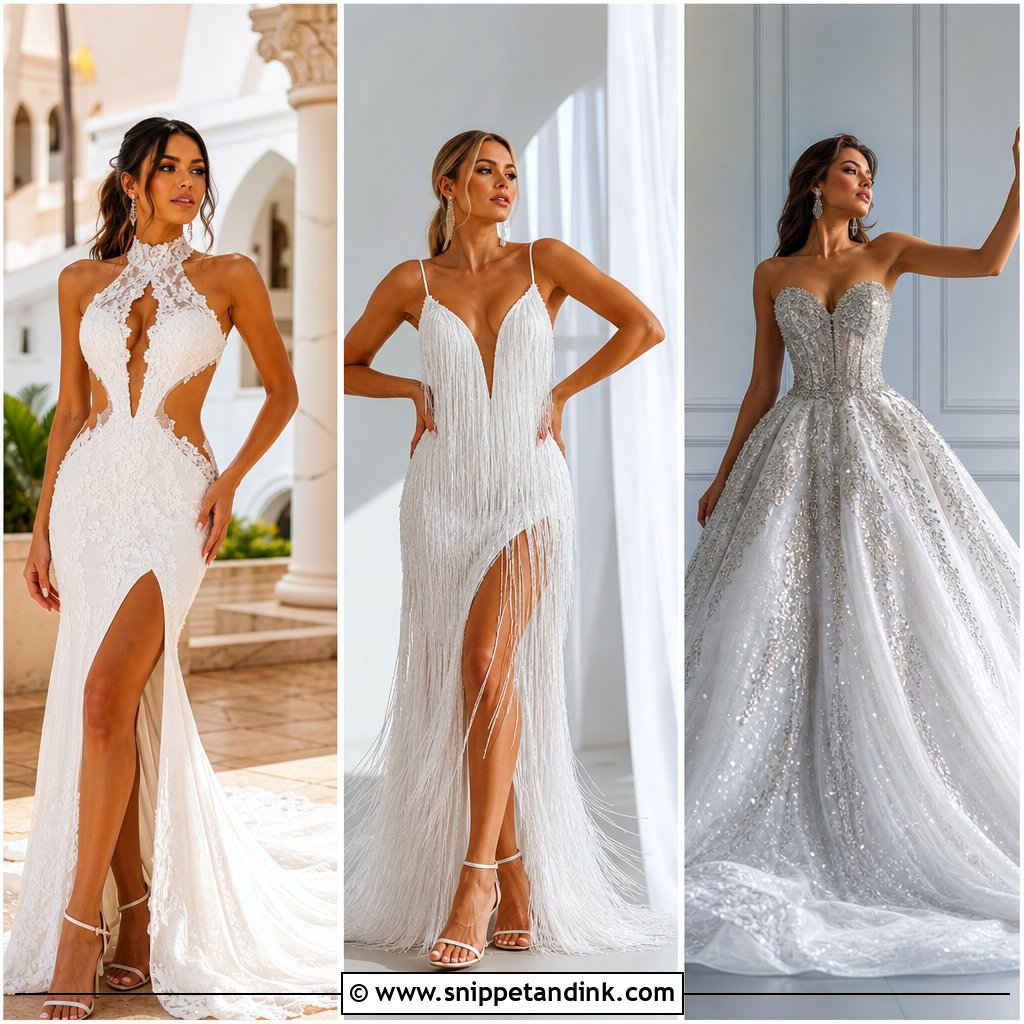
Fringe never stops moving, which is the whole appeal. Fine beaded fringe shimmers, silk fringe flows, thick tiers look retro. A fitted midi or column stops it adding bulk. Metallic heels, a compact clutch and earrings that won’t tangle in the strands finish it, with a birdcage veil or polished waves. Beaded fringe is heavier than it looks and swings hard when you dance, so check where it lands when you sit, dance and hold flowers. Strands catch under shoes and around chair legs. Pack a small comb to separate twisted sections between photos.
18. Polka-Dot Wedding Dress
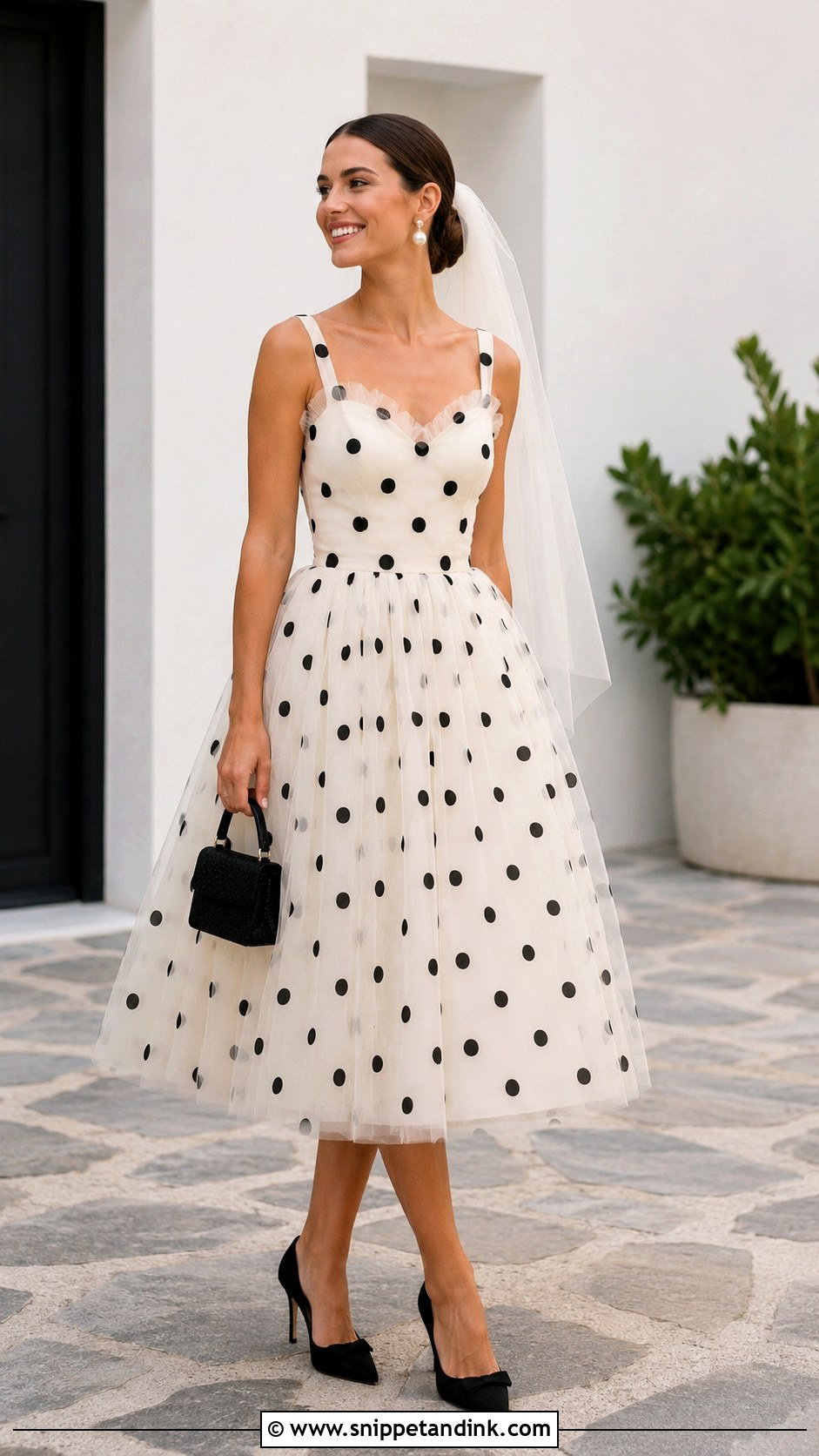
Polka dots are eccentric without being difficult. Flocked dots on sheer tulle are subtle; large black dots over ivory are graphic. Tea length leans vintage, floor length modern. Solid pumps, a small top-handle bag and simple pearls keep it tidy. A plain veil stops the dots multiplying, though a dotted veil works if the scale matches. Keep the bouquet to one or two colors. Alterations can break the pattern rhythm at seams and bust darts, so I’d inspect it closely after every fitting and ask for adjustments where dots get cut in half.
19. Celestial Embroidered Wedding Dress
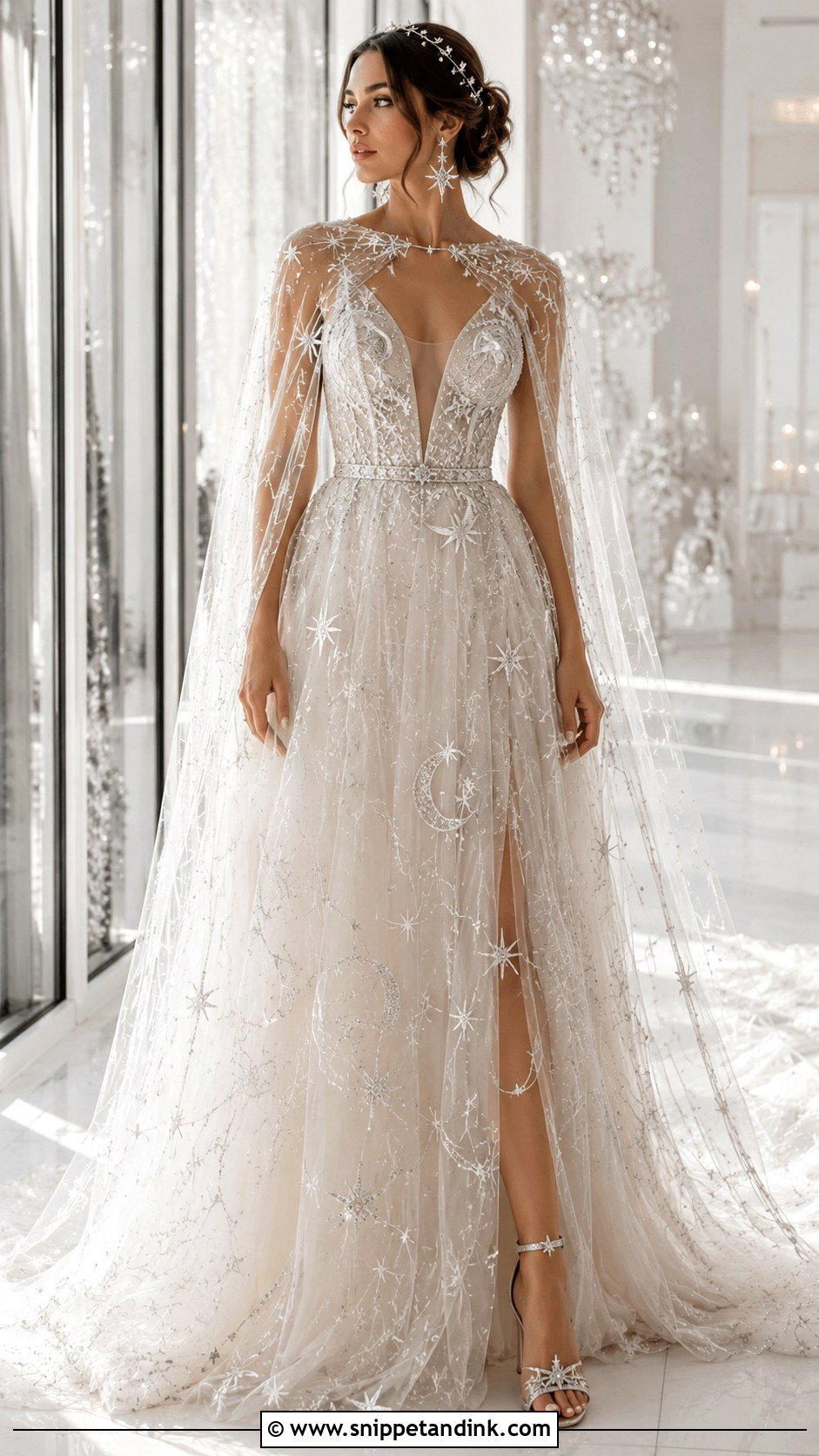
Stars, moons, and tiny constellations stitched in silver or gold over ivory tulle make a celestial gown, and a deep blue lining turns it into a night sky. A fitted bodice and flowing skirt give the motifs space. Crystal heels, star earrings and a fine metallic headpiece complete it; any more celestial accessories than that tips into theme party. A plain veil is safest, though an embroidered cape works if the dress is sparser. Fine silver thread can vanish against ivory under flat light, so look at the gown in different lighting before ordering. Reflective beads should be sewn on firmly and kept away from the underarms.

20. Patchwork Lace Wedding Dress
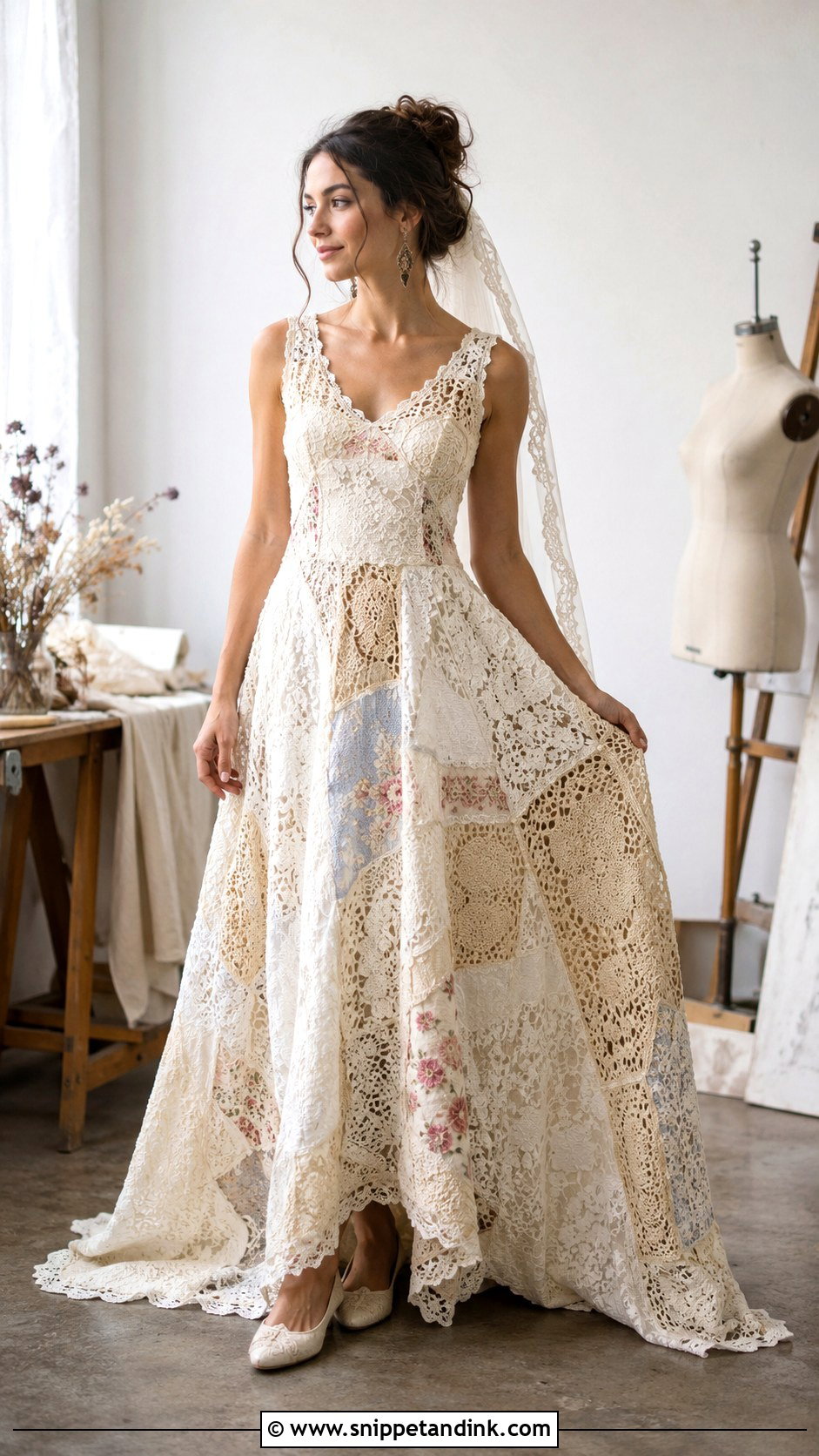
Patchwork lace is the most personal dress here, because it can carry vintage panels, embroidery, crochet and fabric from family garments. Keep the silhouette simple, an A-line or relaxed column, so the pieces can be read. Understated shoes, antique-style earrings and a plain veil edged with one of the laces tie it together. Old lace is often brittle, and I’d only trust a dressmaker experienced with vintage textiles to back it with net or hand-stitch it before construction. Place the sentimental pieces where they’re seen but not rubbed by arms or a bouquet. An all-ivory palette is cohesive; a few colored panels make it deliberately mismatched.
Black, Metallic and Red in Front of a Camera
Bold colors and fabrics behave differently in photographs, and it helps to warn your photographer before the day rather than after the gallery arrives.
- Black lace loses its pattern in dim interiors. Ask for portraits near a window or in open shade so the detail shows.
- Metallics and sequins throw hot spots under direct flash. Bounced or diffused light keeps them shimmering instead of glaring.
- Saturated red can bleed in digital images and look flat. A test photo at the final fitting shows how your exact shade reads.
- Feathers, fringe and capes blur when you move. Ask for a few still poses as well as the movement shots.
Will the Venue, Officiant or Family Mind?
Some houses of worship ask for covered shoulders or modest hemlines, and a mini or a sheer bodice may need a jacket or cape for the ceremony. Check before you order, not after. Color also carries meaning: white is associated with mourning in some cultures and black in others, and red is the traditional bridal color in many families. If your dress breaks with what relatives expect, show them early. A photo shared months ahead lands much more gently than a surprise at the aisle.
Odd on Purpose, Comfortable All Night
An unconventional dress isn’t about being strange for attention. It’s about wearing something that sounds like you and suits the atmosphere you want. From black lace and red tulle to tailored jumpsuits, bubble hems, star embroidery and family patchwork, start with the silhouette that makes you feel confident, then build the shoes, jewelry, headwear and flowers around it. Move in every option: walk, sit, raise your arms. Fittings matter even more when there’s corsetry, a train, fringe or detachable pieces involved. Get the construction right, and the most eccentric dress on this list can feel completely natural to wear.
You'll Like These Ideas:





Leave a Reply