
Color on a wedding gown is harder to get right than white, and that’s exactly why I enjoy dressing a bride who wants it. A full spectrum can show up as pastel tulle, an ombré hem, embroidered flowers, a painted train, a colored veil or a two-piece with a bright skirt. What separates a bridal rainbow from a party dress is the finish around it: good fabric, clean tailoring and accessories that stay quiet. Below are 25 ways to wear it, and for each one I’ve noted what I watch for in the fitting room, from how dyed tulle layers blend to where a color placed near the face starts working against you.
Where the Color Sits Changes How Loud It Looks
The same rainbow can look gentle or overwhelming depending on placement, and that’s the first conversation I have with a bride who wants color. Shades close to the face affect your skin; shades at the hem mostly affect the room. So before choosing a style, I hold fabric swatches under the chin and then at the floor, by a window, to see which colors brighten you and which ones drain you.
How layered tulle mixes color
Sheer layers blend optically. Red under green or orange under blue can turn muddy when stacked, while neighboring shades on the color wheel (pink, coral, peach) build into a warm glow. If you’re ordering a custom layered skirt, ask the maker to stack the actual tulles over each other on the table before cutting anything.
- Keep the strongest colors below the waist if you’re unsure, since a white or ivory bodice keeps the face clean in close-ups.
- Repeat no more than two or three gown colors in flowers, shoes and makeup, or the outfit stops reading as one look.
- Check every swatch in daylight and under warm indoor light; blues and lilacs shift the most between the two.
- Allow extra time for custom dyeing or hand painting. Many makers need several months beyond a standard order, and dye lots can’t always be matched later for alterations.
1. Pastel Rainbow Tulle Wedding Dress
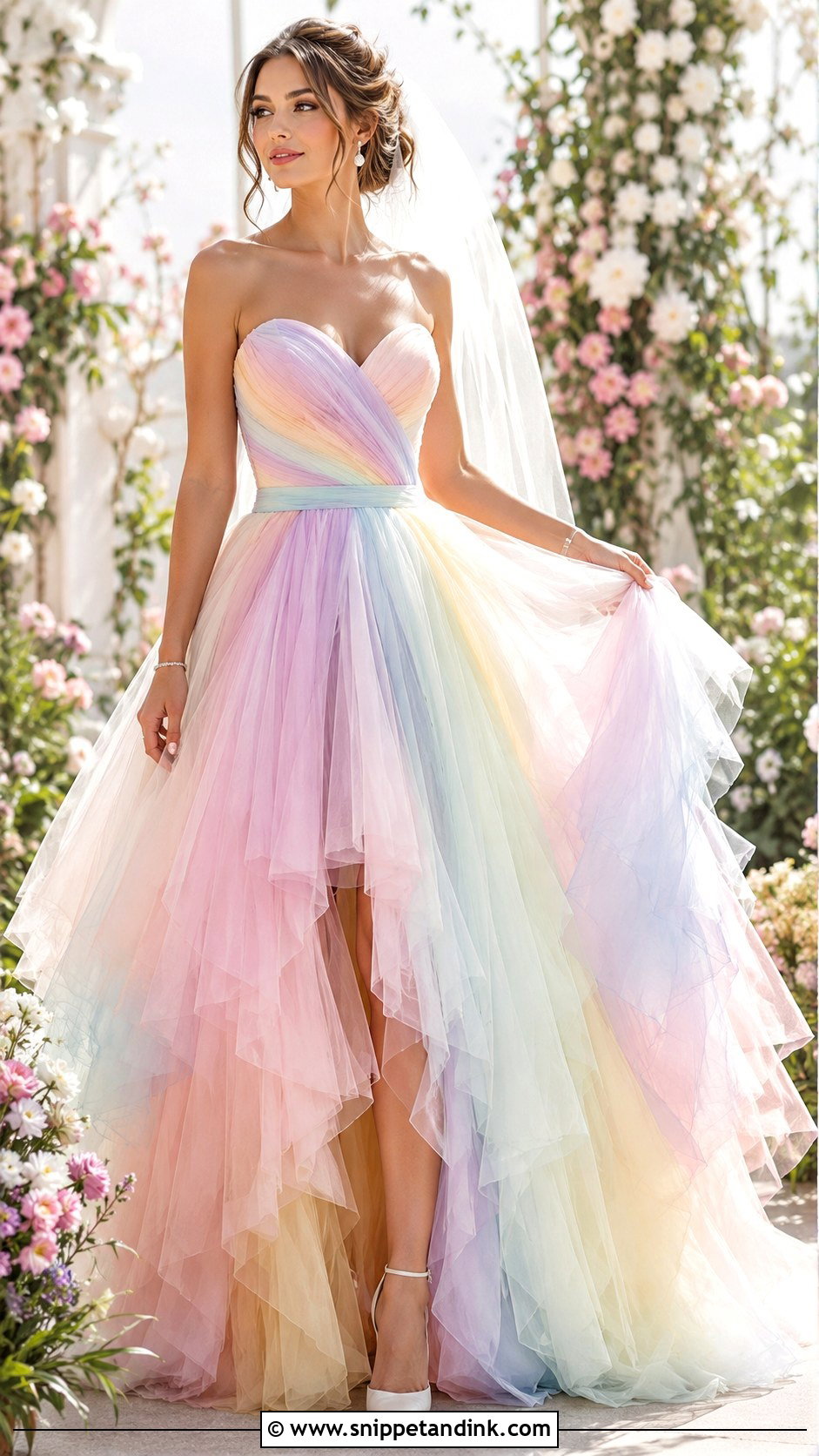
Pastel tulle is the gentlest entry point. Blush, lavender, butter yellow, sky blue and mint sit in separate layers, and because tulle is sheer, the eye mixes them into a soft haze rather than distinct stripes. I keep the bodice plain and bridal, sweetheart or corset-style, so the skirt carries the color. Pearl studs, a whisper-thin veil and pale garden roses or ranunculus are enough. One thing I check in daylight: pale yellow next to pale blue can read faintly green when layered, so the order of the layers matters more than the shades themselves.
2. Rainbow Ombre Wedding Dress
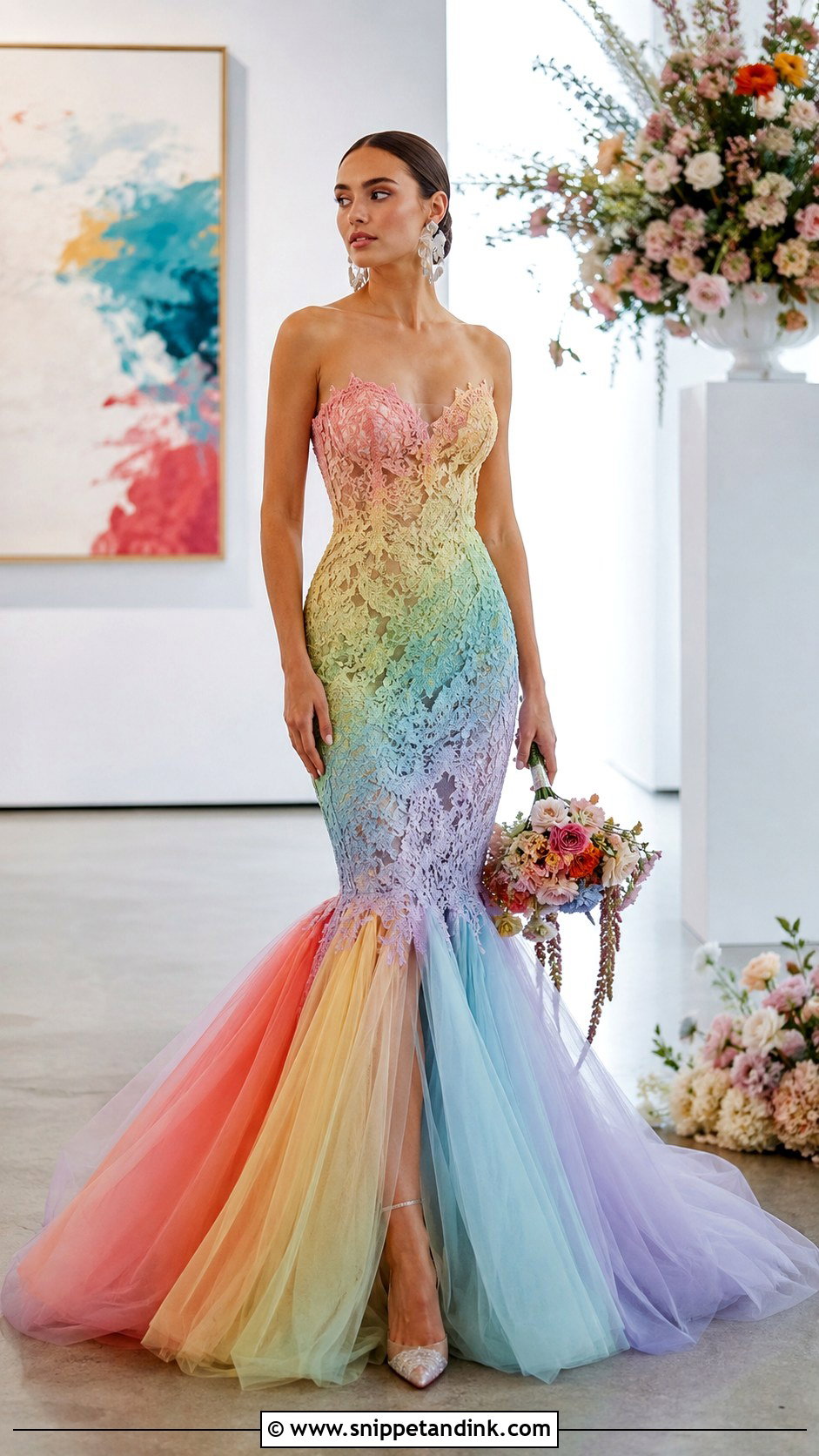
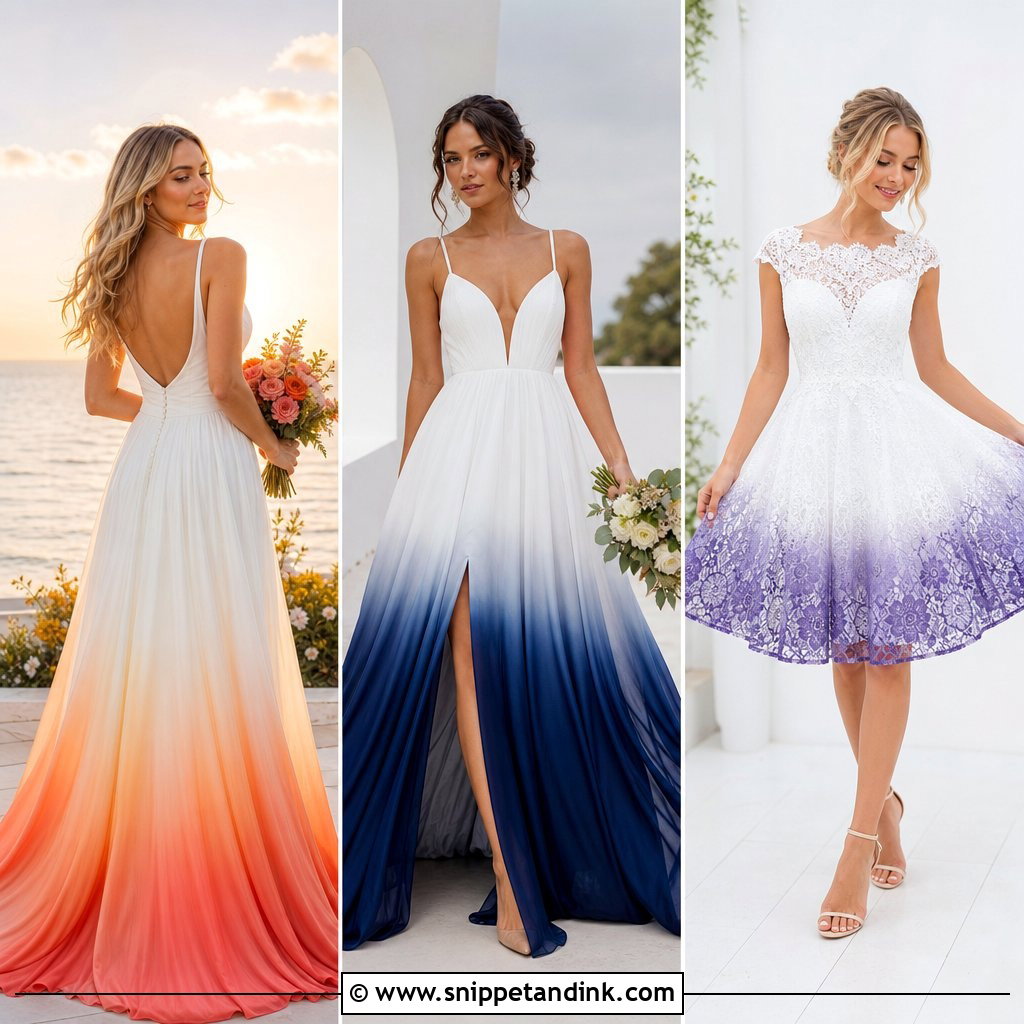
An ombré works because nothing interrupts the fade. Keep the bodice white or ivory and let the color start low, around the hip or the hem, and travel down the skirt or train. Fabrics with movement show the transition best, which is why I steer brides toward tulle, organza, chiffon or soft satin rather than stiff mikado. Skip the necklace. A clean updo and simple drops keep the eye travelling down to the color, not stopping at the collarbone. Ask to see the dye sample in natural light, since hand-dipped fades vary from bolt to bolt.
3. White Wedding Dress With Rainbow Embroidery
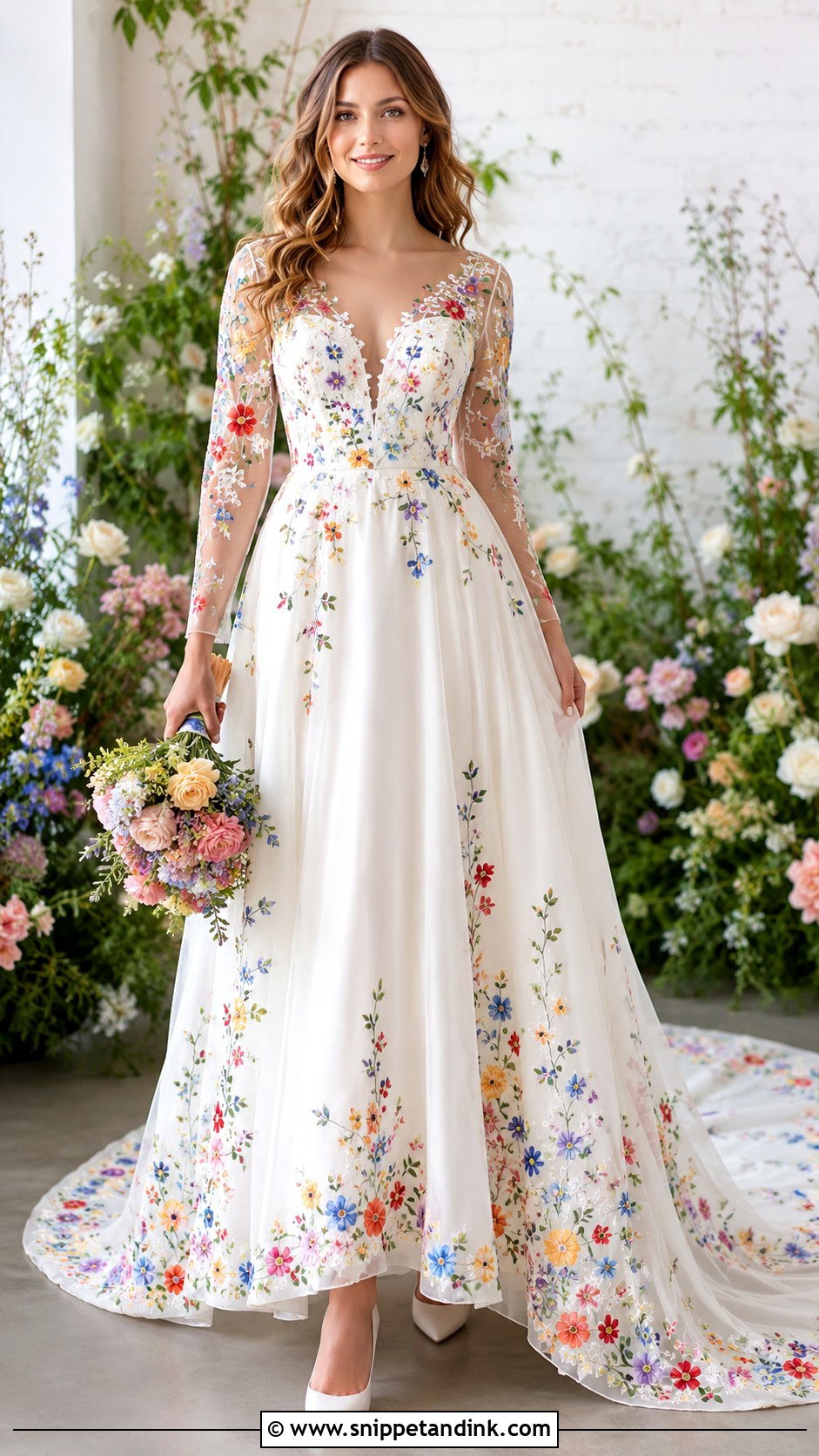
If tradition still matters to you, start with a white gown and let the rainbow live in the stitching. Lace, satin or tulle form the base, and colorful flowers, vines, stars or butterflies are embroidered over it. I prefer the embroidery placed where it follows a line of the dress, along the neckline, down a sleeve or around the hem, because a random scatter looks like a print. Pick your shoes in one thread color from the design. Then repeat two of those shades in the bouquet and stop there.
4. Rainbow Floral Wedding Dress
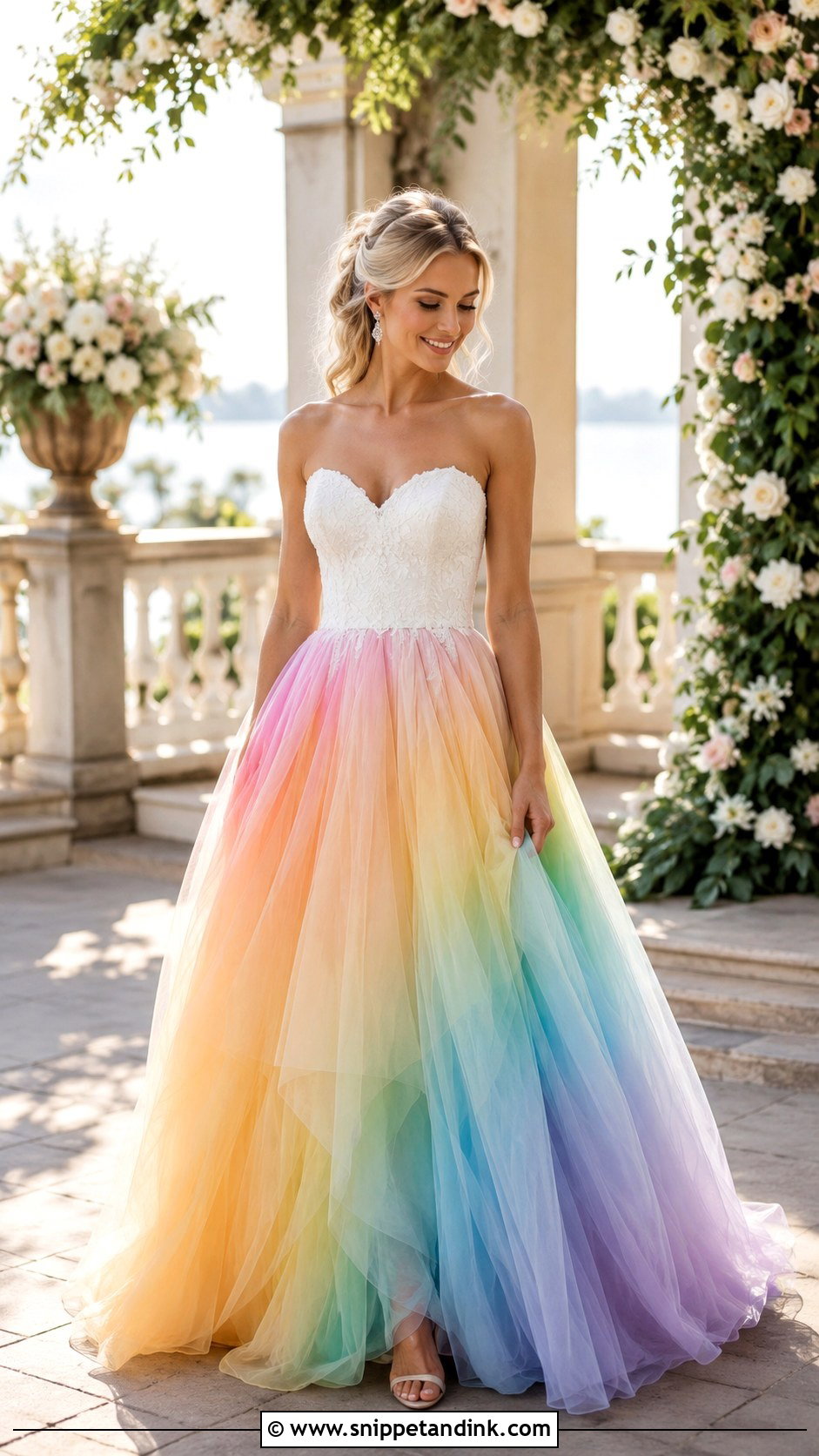
Florals spread the spectrum out so no single color dominates. Printed blooms feel relaxed and suit a garden reception; embroidered or appliquéd flowers read more formal and hold their shape better on a full skirt. I’d avoid a busy print on a very fitted silhouette, because the pattern distorts wherever the fabric stretches. An A-line, ball gown or loose chiffon lets the flowers sit flat. A soft low bun and a bouquet pulling two or three shades from the gown keep it from turning chaotic.
5. Rainbow Sequin Wedding Dress
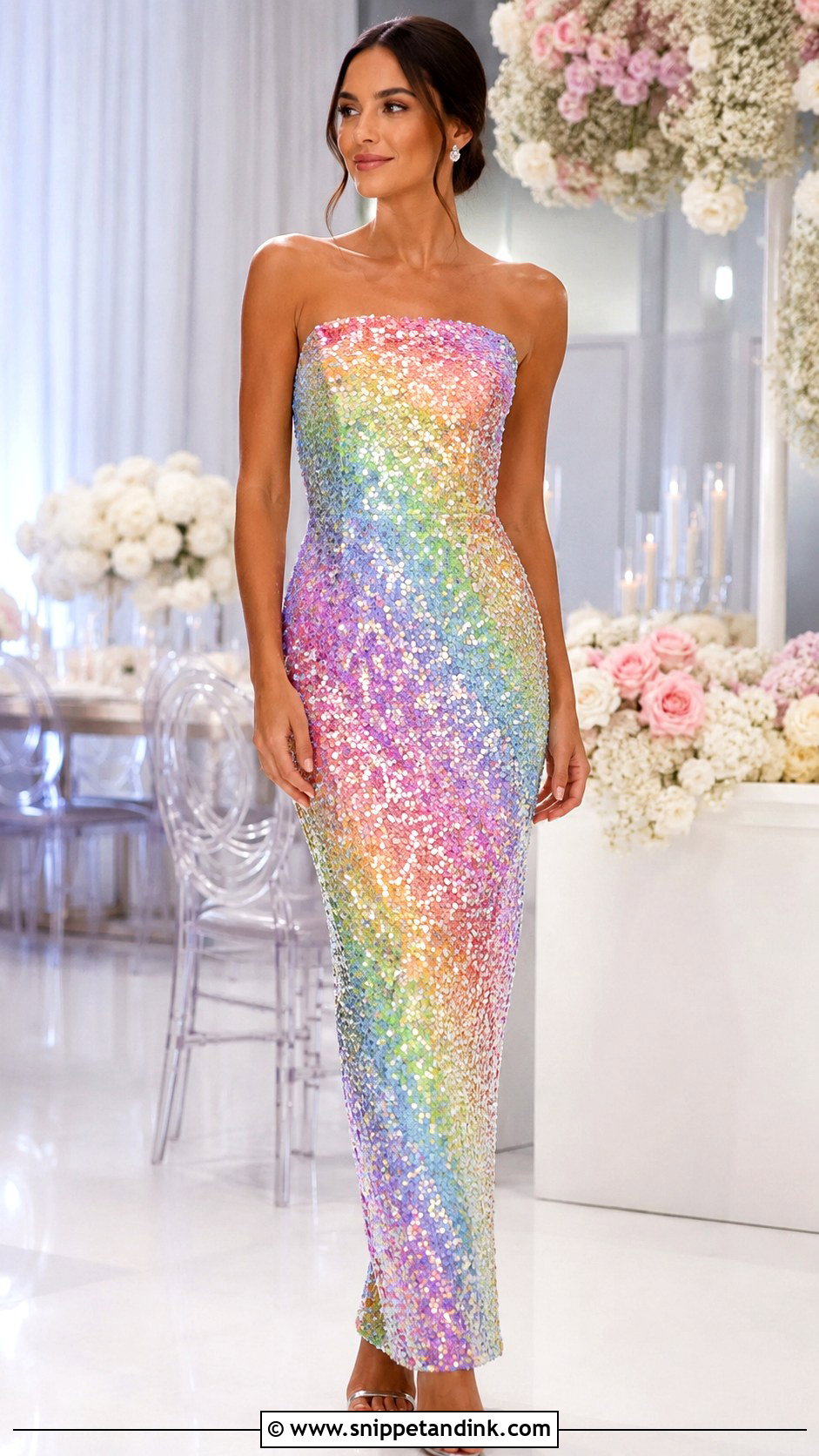
Sequins are the reception bride’s friend, but a rainbow sequin wedding dress tips into costume quickly if the cut is fussy. I look for a clean column, slip, fitted long sleeve or sleek midi. Sequins scratch the inside of the arms when you dance, so I check the underarm seam and ask for a lining or a smooth band there. Silver heels, small crystal earrings and sleek hair are plenty. Keep the bouquet small and pale; anything bright next to that much sparkle looks crowded.
6. Rainbow Ball Gown Wedding Dress
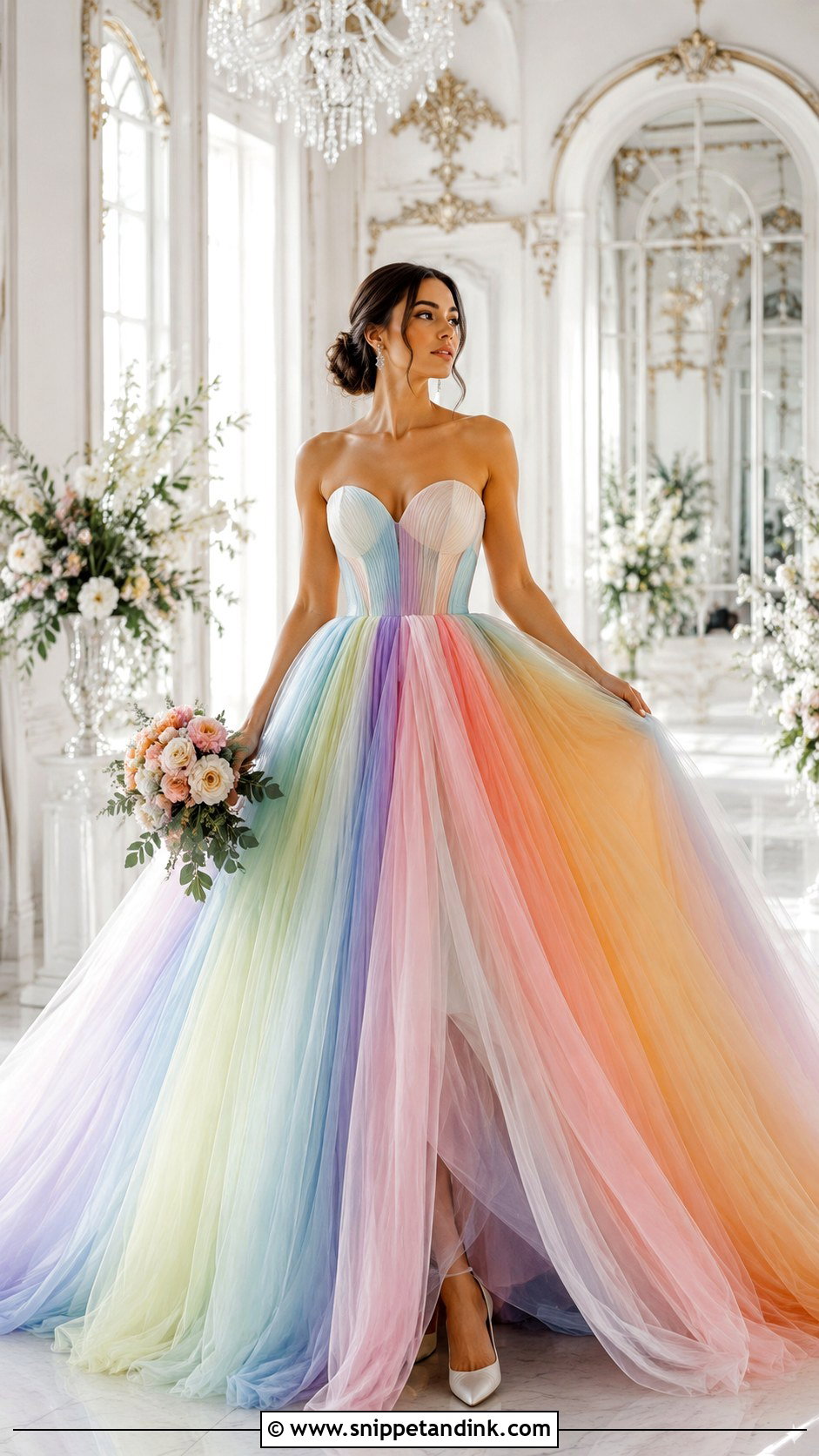
A full skirt is the biggest canvas you’ll get, and it gives every color room to spread through layered tulle, painted panels, dip-dyed fabric or scattered appliqués. The bodice needs real structure to balance all that volume. Weight is my main concern: several dyed tulle layers over a hoop can be heavy by evening, so I have brides walk the length of the salon twice and climb a step before committing. Studs or a slim bracelet, maybe a delicate tiara, and heels with a secure strap. Save it for a large venue where the skirt can move.
7. Rainbow A Line Wedding Dress
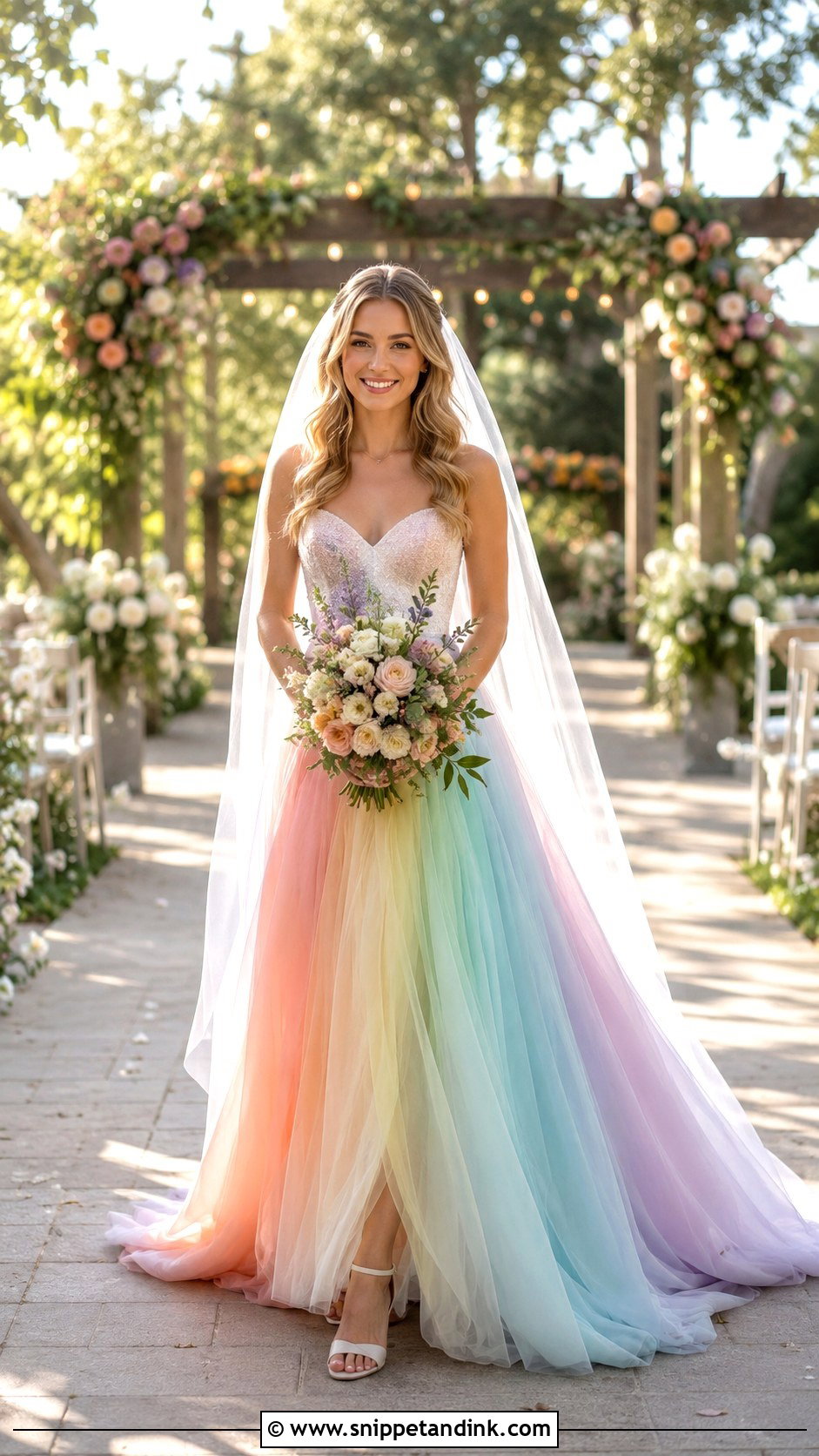
For most bodies, the A-line is the easiest way to wear color without feeling exposed. The bodice defines the waist and the skirt falls away gently, which means rainbow panels, pastel layers or embroidered appliqués over white all hang cleanly. It’s the shape I suggest when a bride wants color but is nervous about a dramatic silhouette. Block heels or flat sandals cope with grass and stone. Soft curls, a simple veil and a medium bouquet keep it grounded.
8. Rainbow Mermaid Wedding Dress
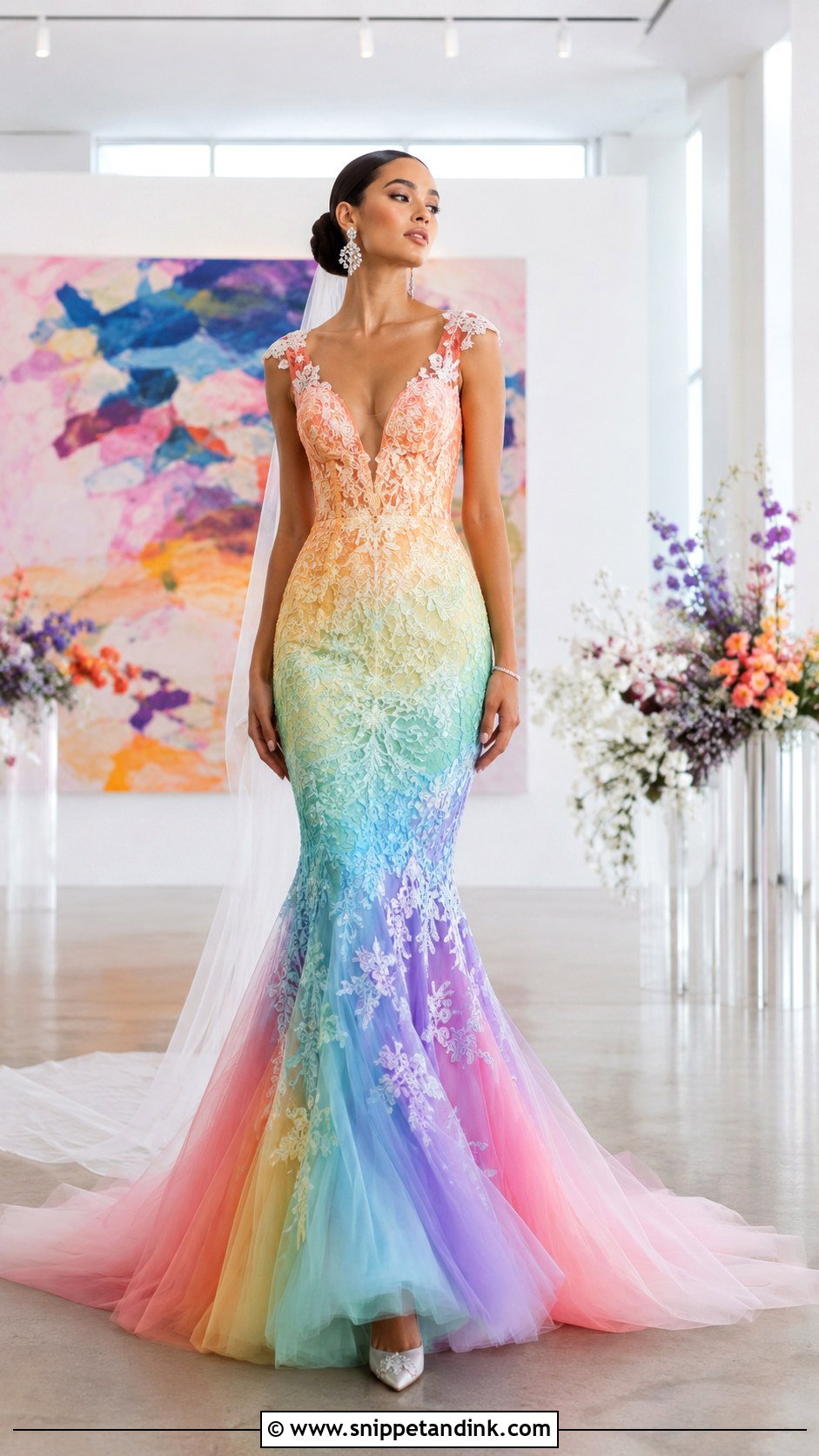
The mermaid is already a strong shape, so I keep the color inside the silhouette rather than adding more to it: colorful lace, ombré beading or a rainbow tulle flare at the knee. Where the flare begins decides whether you can walk, and I always ask brides to take a staircase in the sample. Pointed heels, sculptural earrings and smooth hair suit the sleek line. If it feels too hard, a sheer veil with a faint colored edge softens it without fighting the fit.
9. Rainbow High Low Wedding Dress
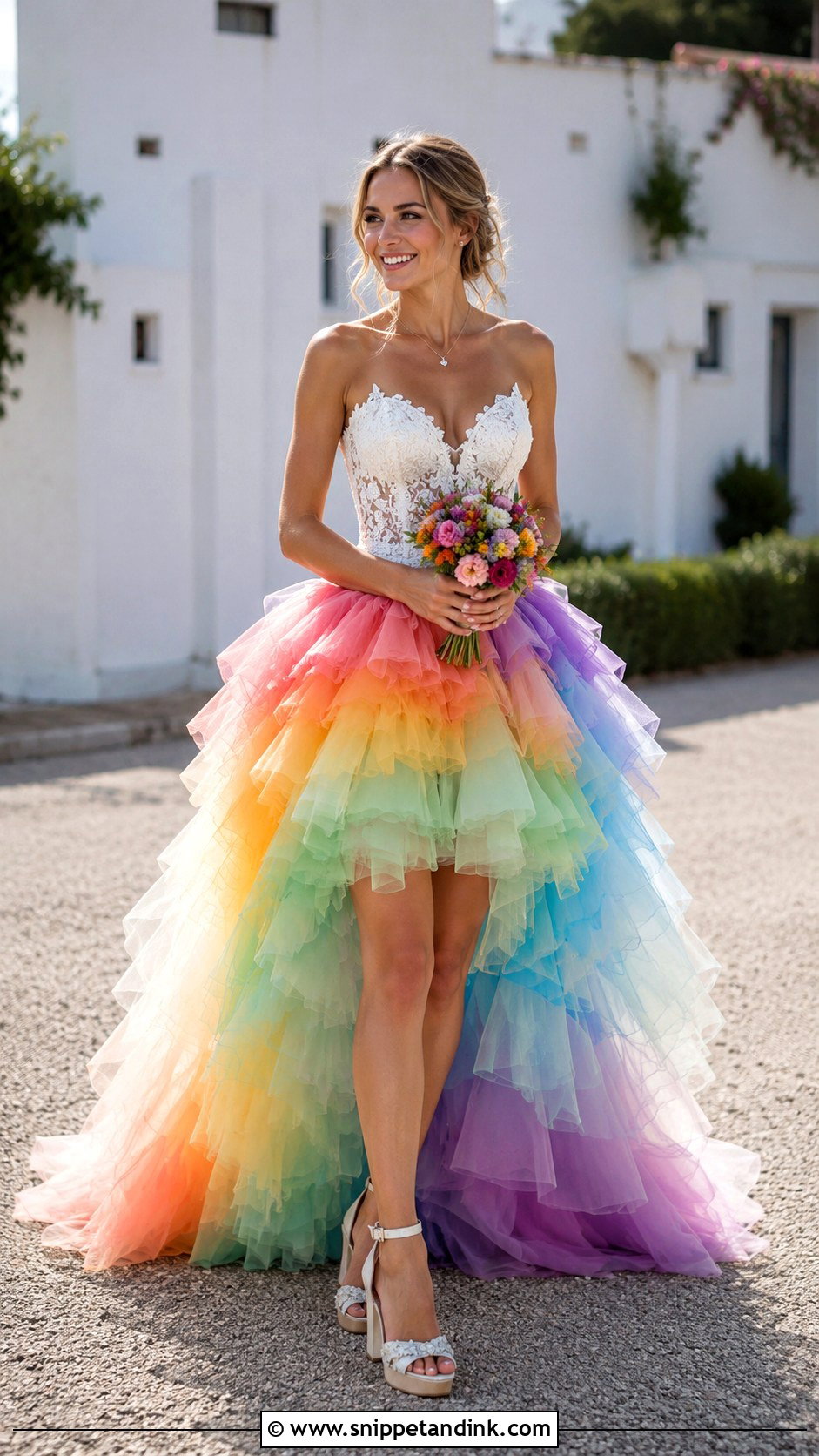
A shorter front means your shoes are part of the outfit, so I’d pick them before the hem is set. Silver, white, pink or blue all work, and a shade pulled straight from the skirt looks deliberate. The uneven hem gives rainbow tulle or a watercolor print extra depth as it moves. Watch the back length on stairs and sand; it drags more than you’d expect. Keep the bouquet light, and this one sits happily at a courthouse, a beach or an outdoor reception.
10. Rainbow Tea Length Wedding Dress
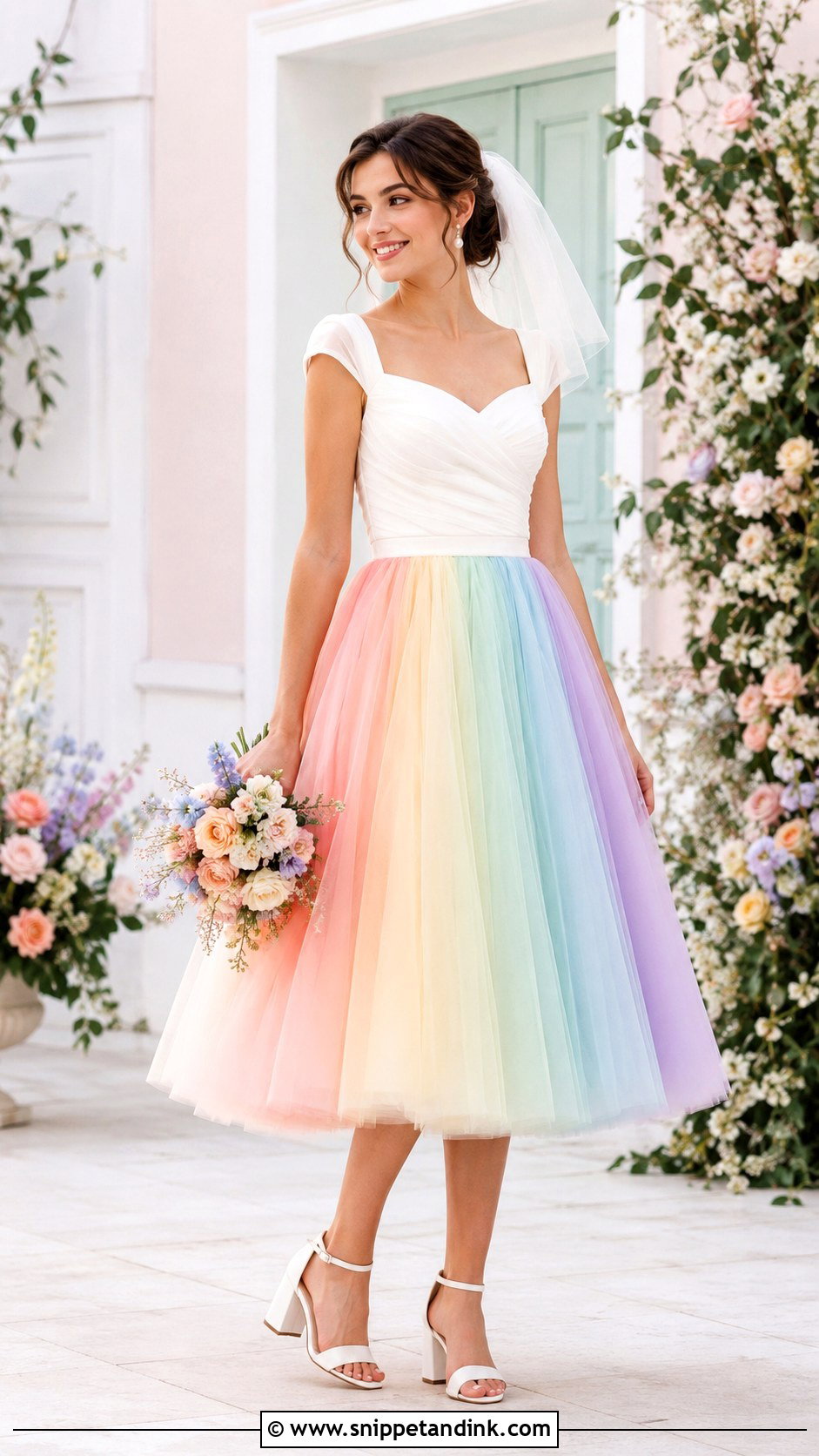
Hemmed somewhere between knee and ankle, a rainbow tea length wedding dress has a 1950s mood and is the easiest of all to dance in. A full tulle skirt in rainbow layers reads playful; printed satin looks sharper. I always add a petticoat fitting, because a tea-length skirt that collapses flat loses the whole silhouette. Block heels, slingbacks or embellished flats, a short veil, pearl earrings and a neat bun. Daytime ceremonies and small weddings suit it best.
11. Rainbow Mini Wedding Dress
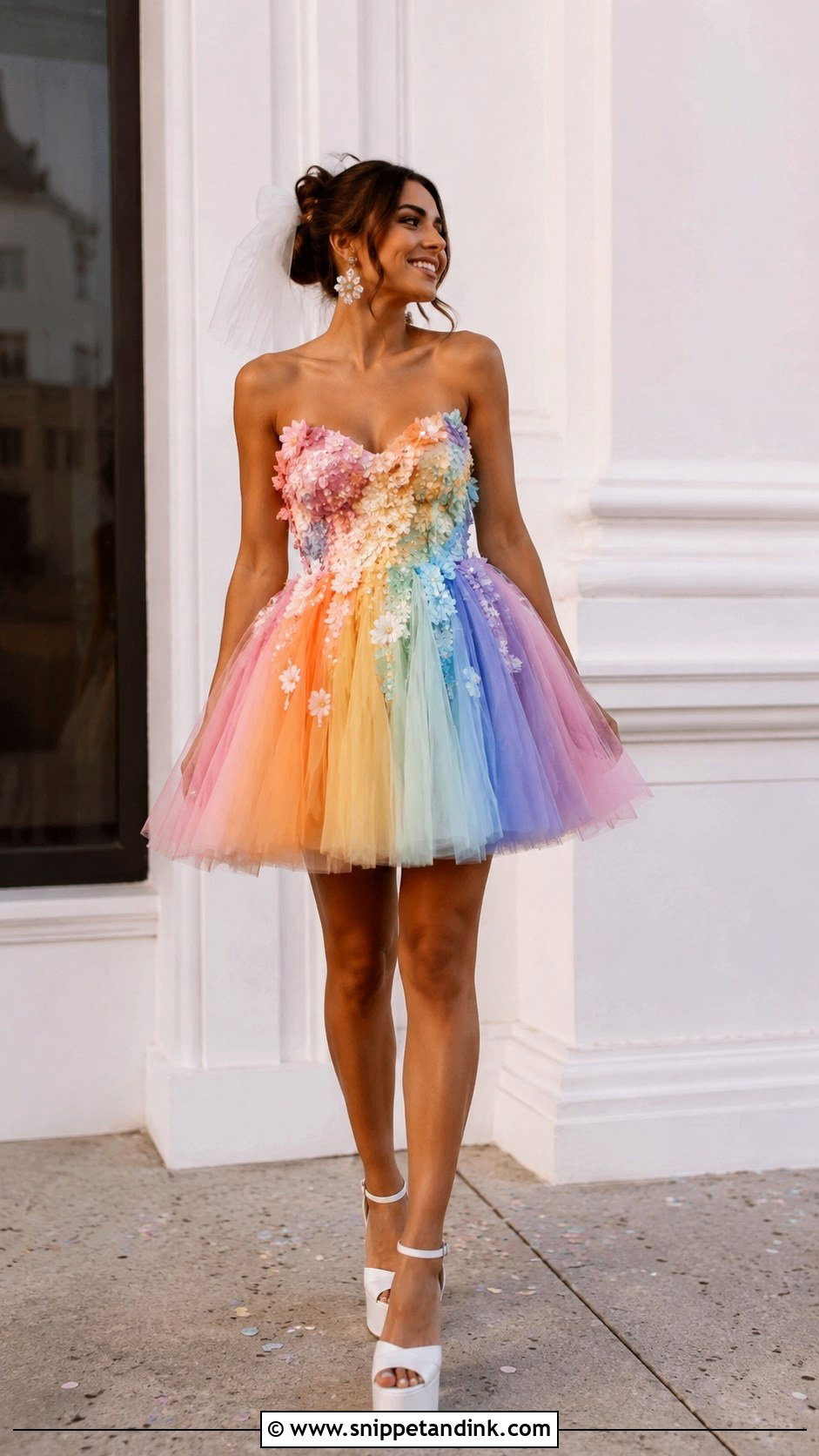
A short dress works as a second look, a courthouse outfit, an elopement or a lively reception. Structure is what keeps it bridal, so I look for a tailored mini with floral appliqués, a stiff tulle skirt or allover sequins, and I choose only one of them. White platforms, metallic sandals or satin pumps finish it. A bow veil or a colored hair clip marks you as the bride. Sit down in it before you buy. Minis ride up, and you’ll be sitting for dinner.
12. Rainbow Wedding Dress With Colorful Veil
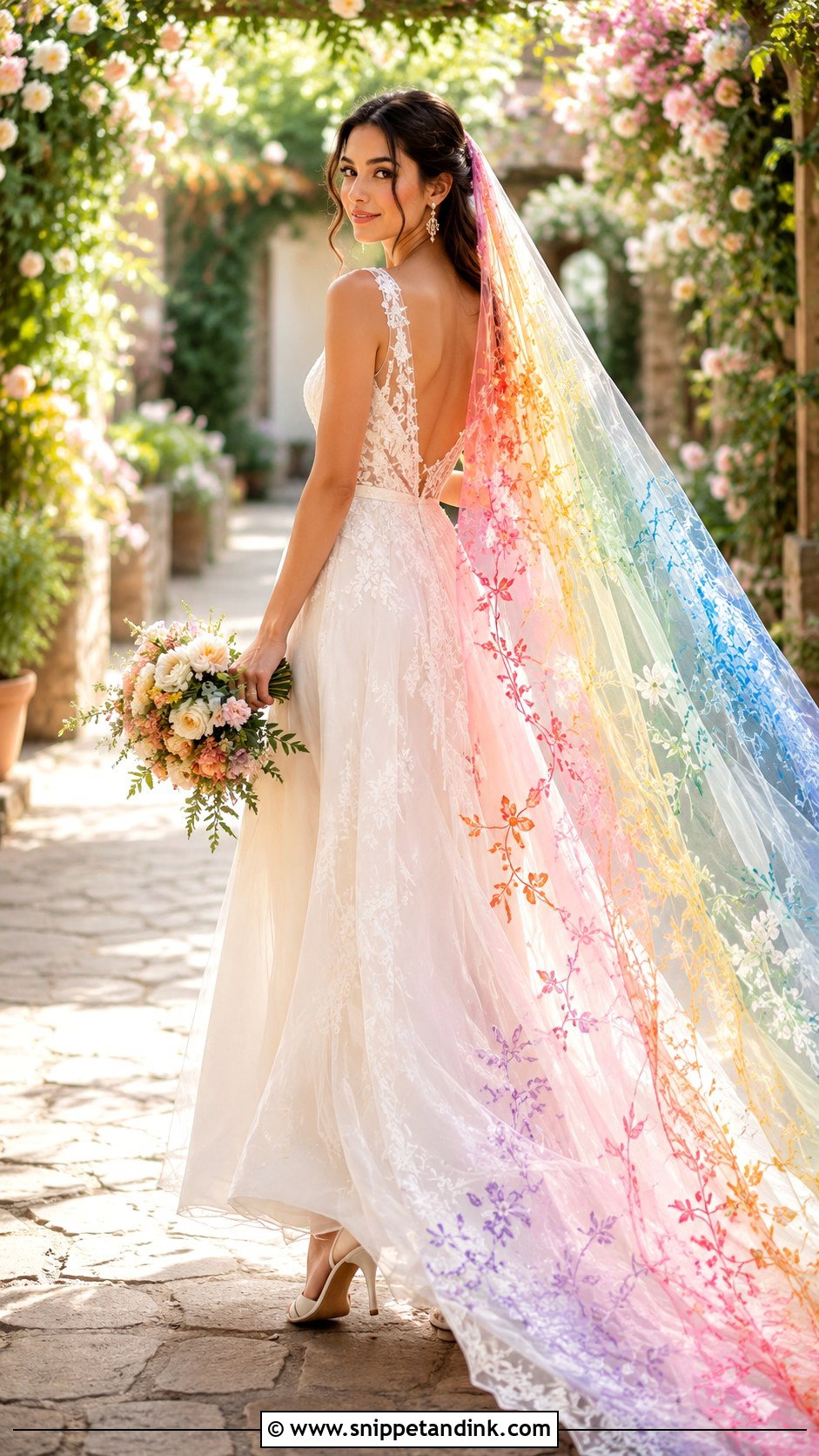
Putting the color in the veil keeps everything flexible. The dress can stay white, ivory or blush while the tulle carries ombré edges, embroidery, appliqués or painted color. For many brides I’d call this the most practical route, because you get a classic ceremony gown and a vivid portrait moment, then remove the veil for dancing. If the veil is heavily embroidered near the shoulders, skip the necklace; the two will tangle. I also anchor colored veils a little lower on the head, since the extra stitching adds weight.
13. Rainbow Wedding Dress With Colorful Train
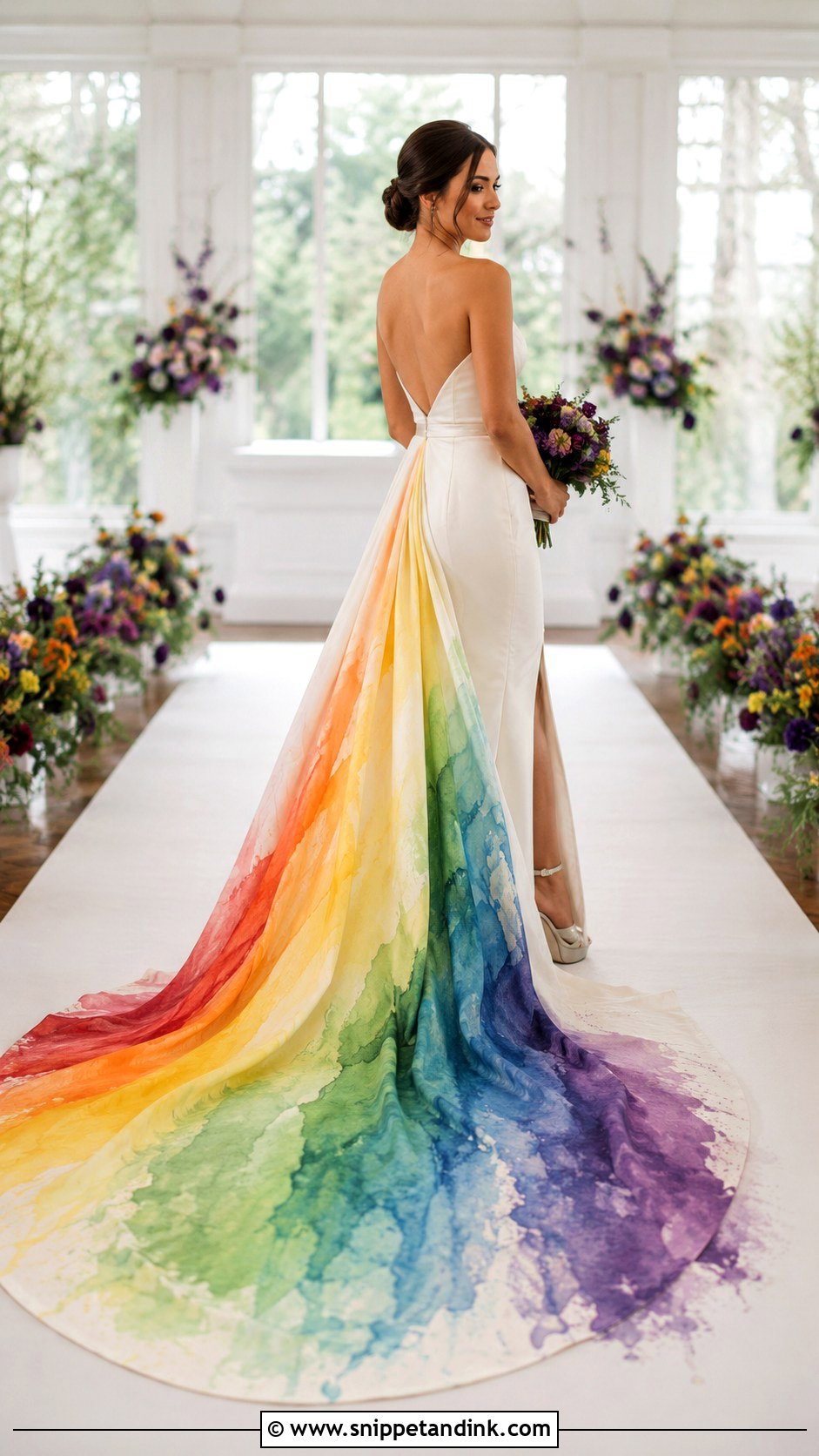
A colored train keeps the front quiet and saves the surprise for when you turn. Painted watercolor, embroidered flowers, layered tulle or bold panels can all fill it. A fitted bodice and plain neckline let the back do the talking. Choose a long veil only if it’s sheer enough to show the color underneath. Plan the bustle at your second fitting: a train full of color looks odd folded wrong, and your seamstress should show whoever helps you how it lifts.
14. Rainbow Corset Wedding Dress
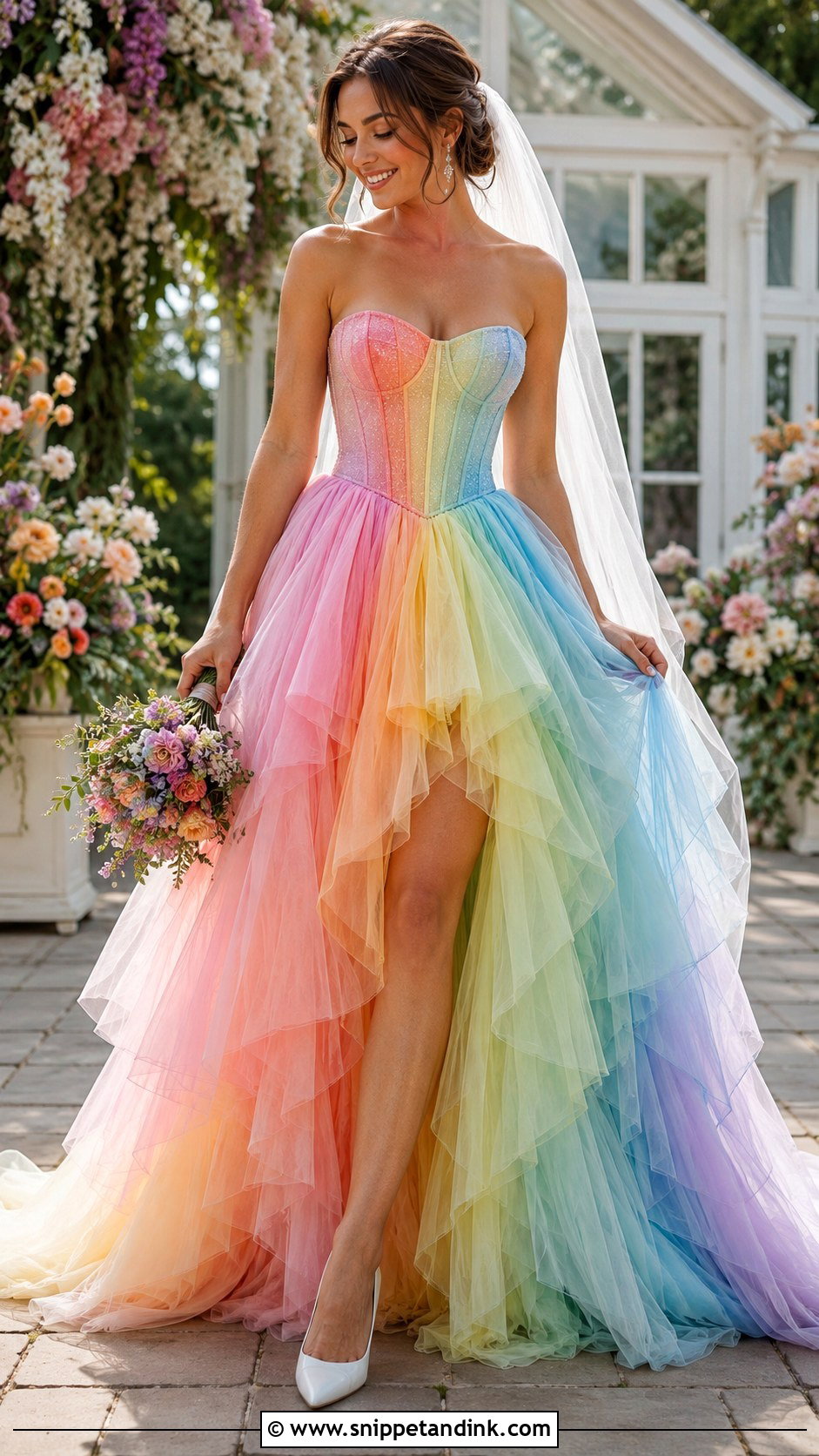
Corsets give support and shape, and they let a soft rainbow skirt in tulle, organza or chiffon do the colorful part. Sheer boned corsets look current; satin reads more classic. I always have the bride sit and breathe deeply at the final fitting, because a corset laced for the mirror is too tight for dinner. Match shoes to the lightest shade in the skirt so they don’t pull the eye down. Delicate earrings and a smooth veil are plenty.
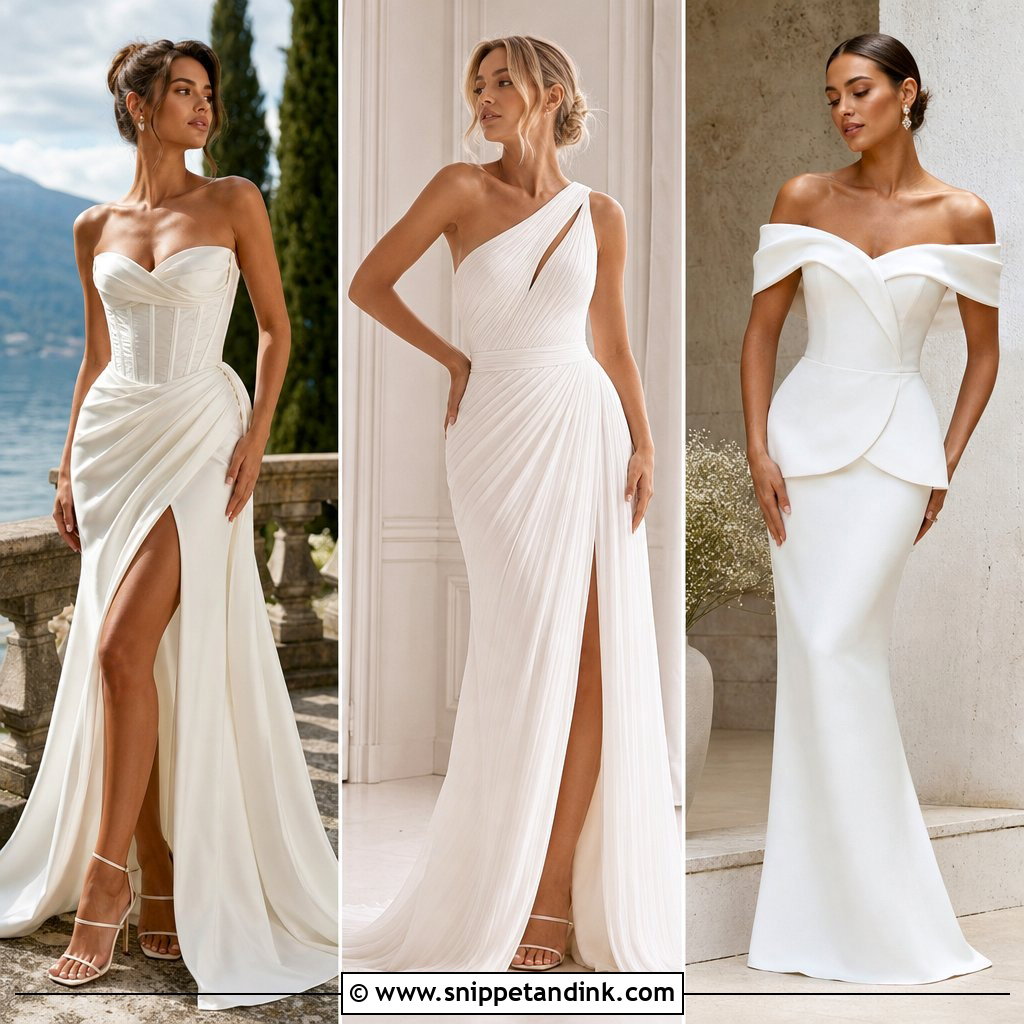

15. Rainbow Off Shoulder Wedding Dress
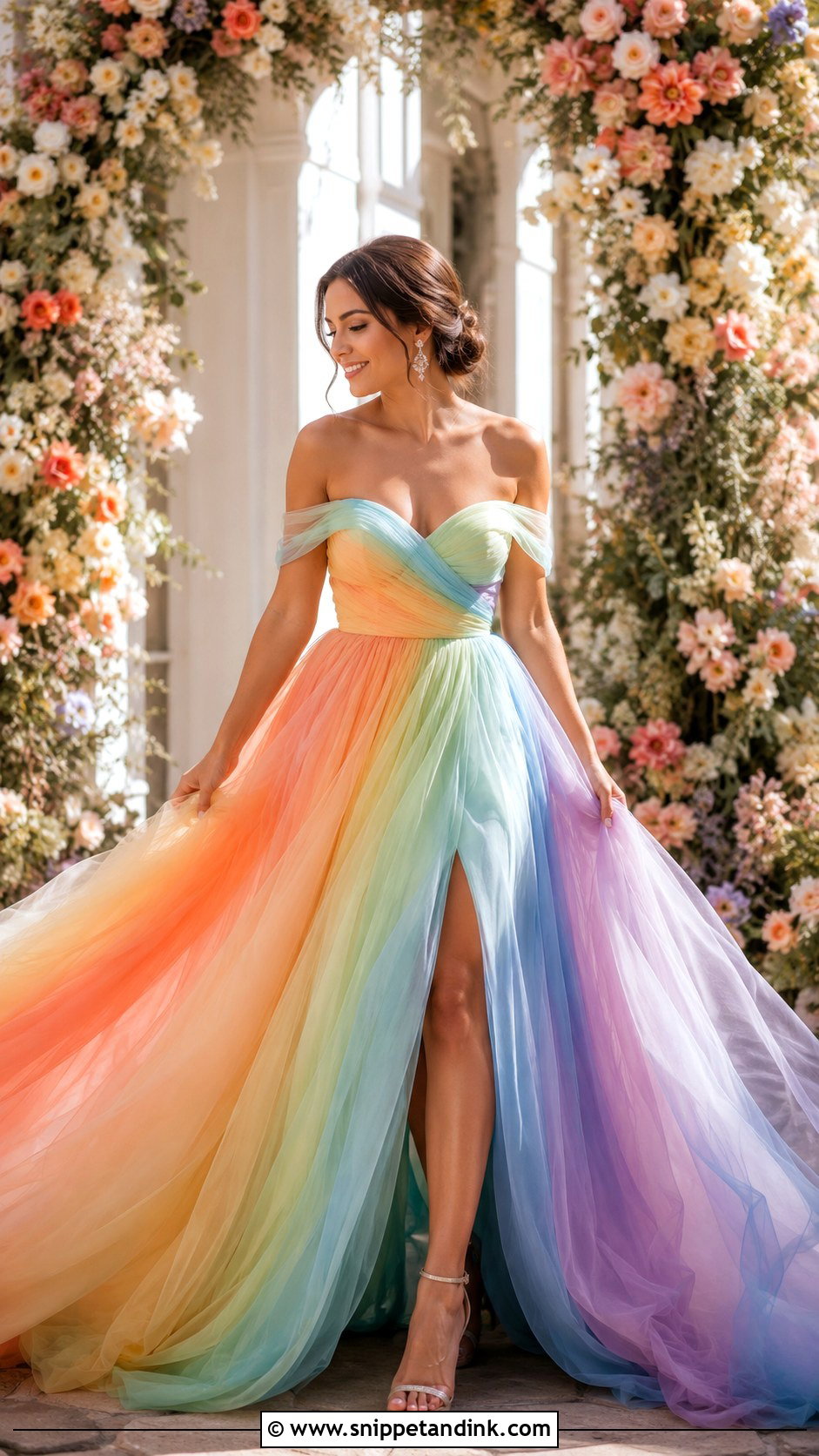
The off-shoulder line frames the collarbone, so the neckline itself is your jewelry. I usually skip the necklace completely. Pair it with a soft rainbow skirt, floral embroidery or a pastel watercolor fabric, and pin the veil at the back of the head so it doesn’t sit on the bare shoulders. My fitting check: lift both arms. If the band slides up, it needs taking in across the back. White heels, silver sandals or blush pumps keep the focus up top.
16. Rainbow Long Sleeve Wedding Dress
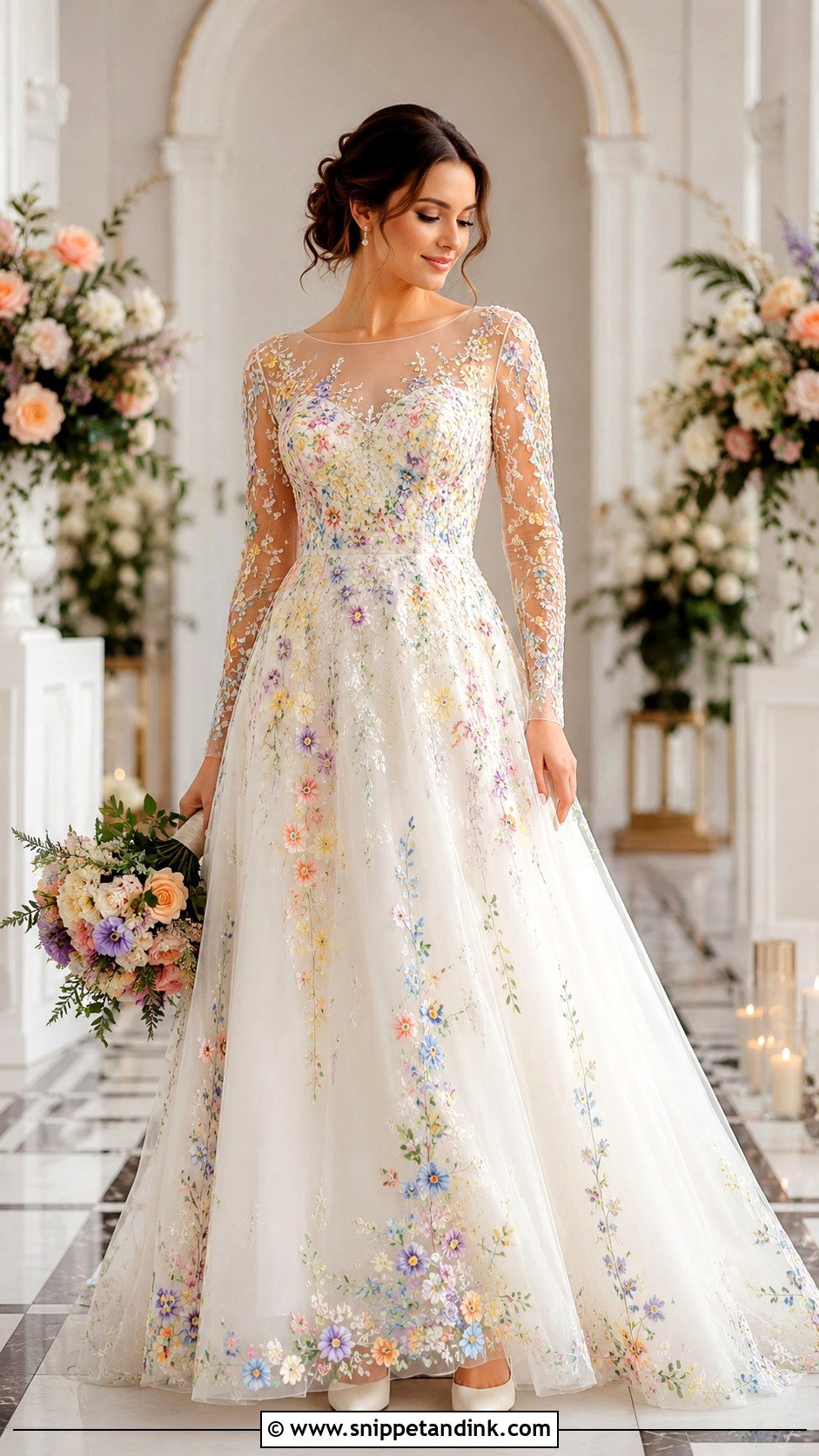
Long sleeves make bold color look dressier, which is why I like them for autumn, winter and indoor venues. They can be sheer with colorful embroidery, lace worked in rainbow thread, or plain tulle above a colored skirt. Raise your arms as if hugging someone taller before you commit; a tight armhole will pull the whole bodice upward. Closed heels, small earrings and a bouquet using deeper shades from the gown suit the season. You get coverage without losing personality.
17. Rainbow Cape Wedding Dress
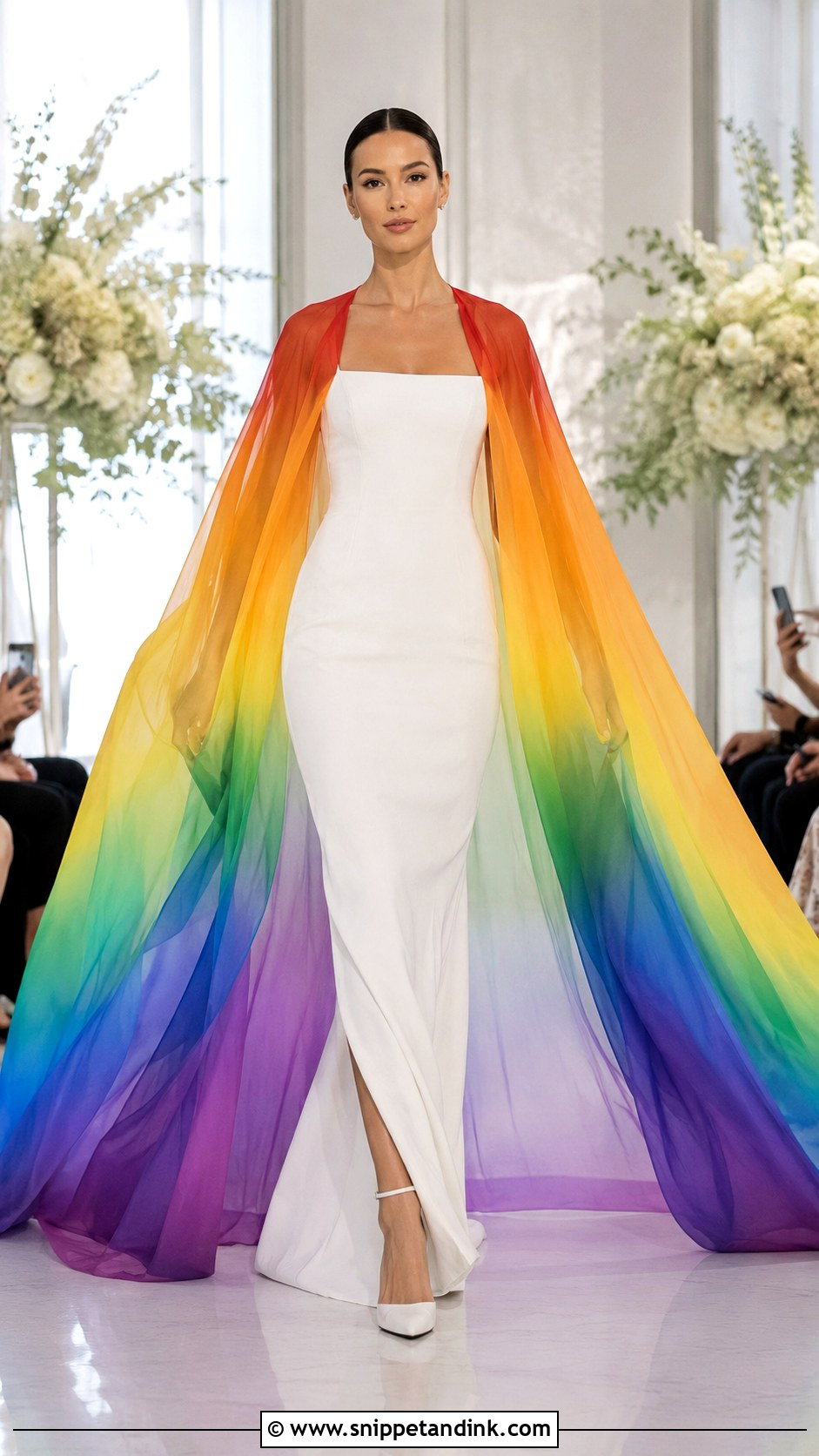
A cape can replace the veil or layer over a plain gown, which means you change the look without touching the dress. Sheer rainbow capes float; embroidered ones read artistic. Wear it over a clean white or pastel gown so it carries the color, and keep your hair smooth or tucked so the neckline stays visible. Outdoors, wind is the issue: a long sheer cape will blow into your face, and I add small hem weights for open-air ceremonies. From behind and from the side, the photos show off the whole length of color.
18. Rainbow Two Piece Wedding Dress
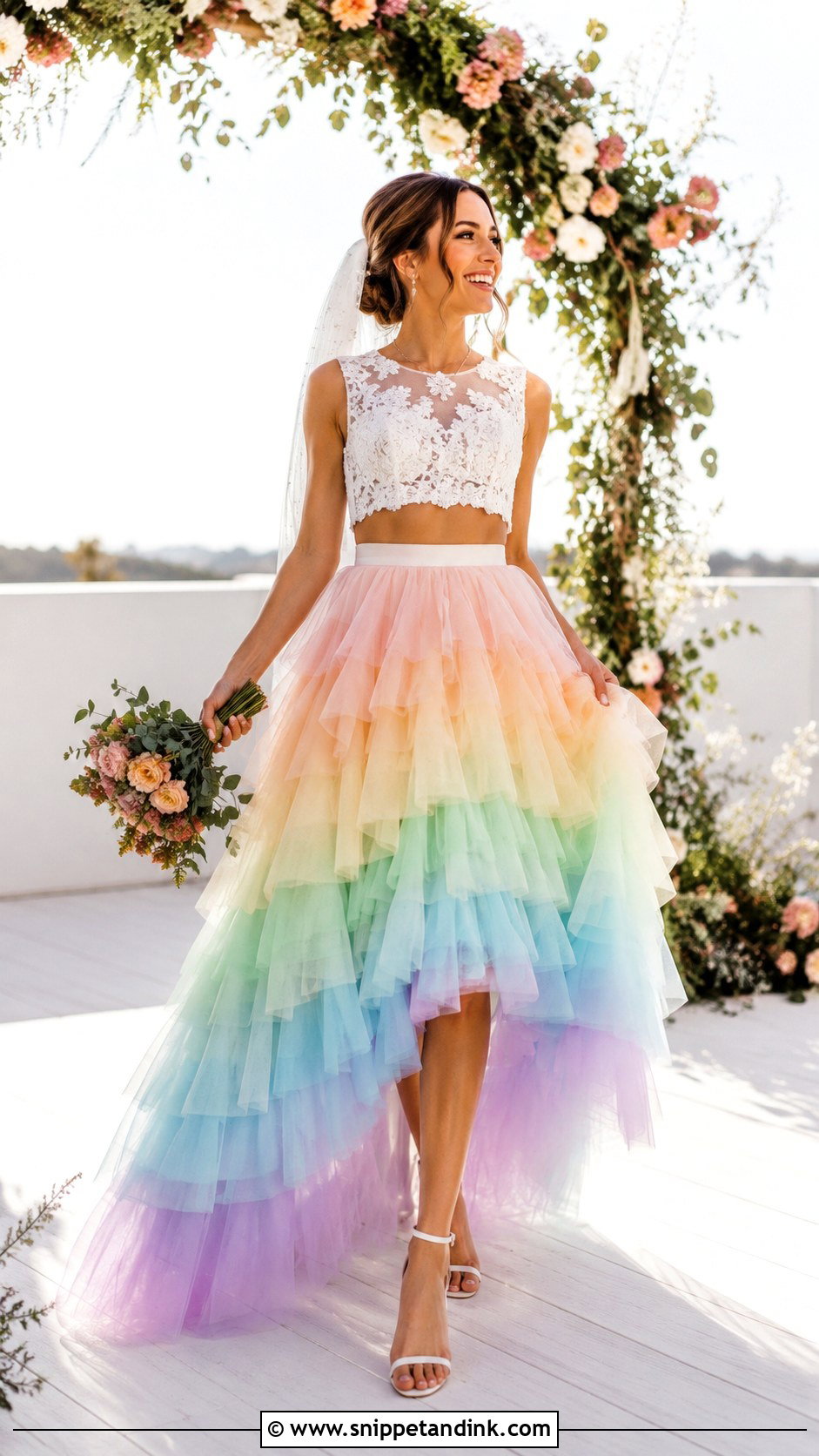
Separates are comfortable and easy to alter, since the top and skirt can be sized independently. A bridal crop top over a rainbow tulle skirt, a lace top with a colorful satin skirt or a fitted bodice over layered pastels all work. I give the top the bridal detail, lace, pearls or beading, so the outfit doesn’t read as a party look. Check the gap at the waist when you raise your arms; some brides want it, others don’t. Simple heels, a sleek veil and a small bouquet are enough for a creative or destination ceremony.
19. Rainbow Wedding Dress With Detachable Skirt
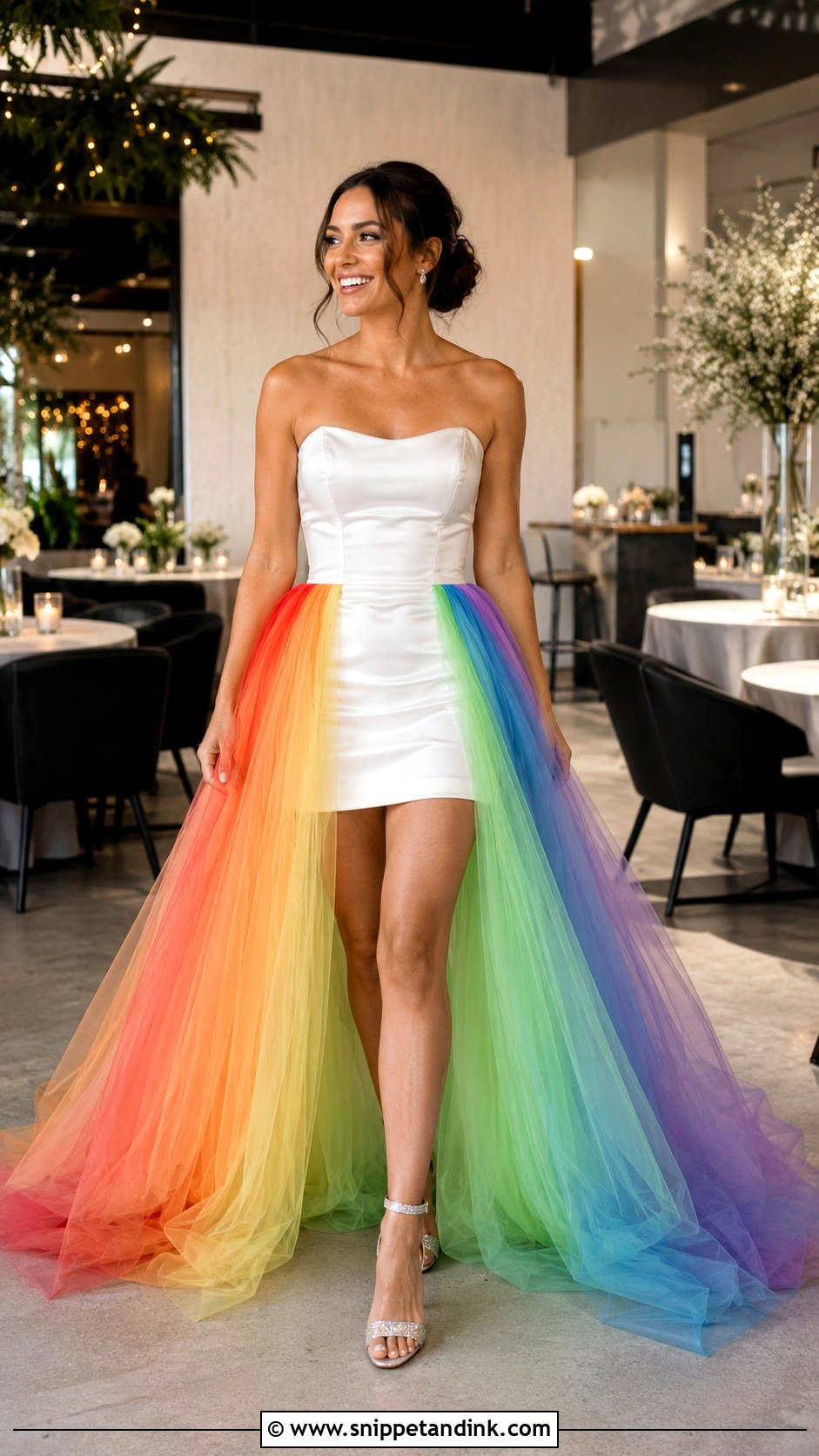
Two looks in one is the appeal of a rainbow wedding dress with a detachable skirt. The full colored overskirt goes on for the ceremony, then comes off for dinner, dancing or portraits. Underneath you might have a white mini, a sheath, a satin slip or a column gown. Practice removing the skirt with whoever will help you, because hidden hooks fiddled with in a dark corridor take far longer than you think. Keep your accessories the same for both looks so the change feels planned.

20. Rainbow Slip Wedding Dress
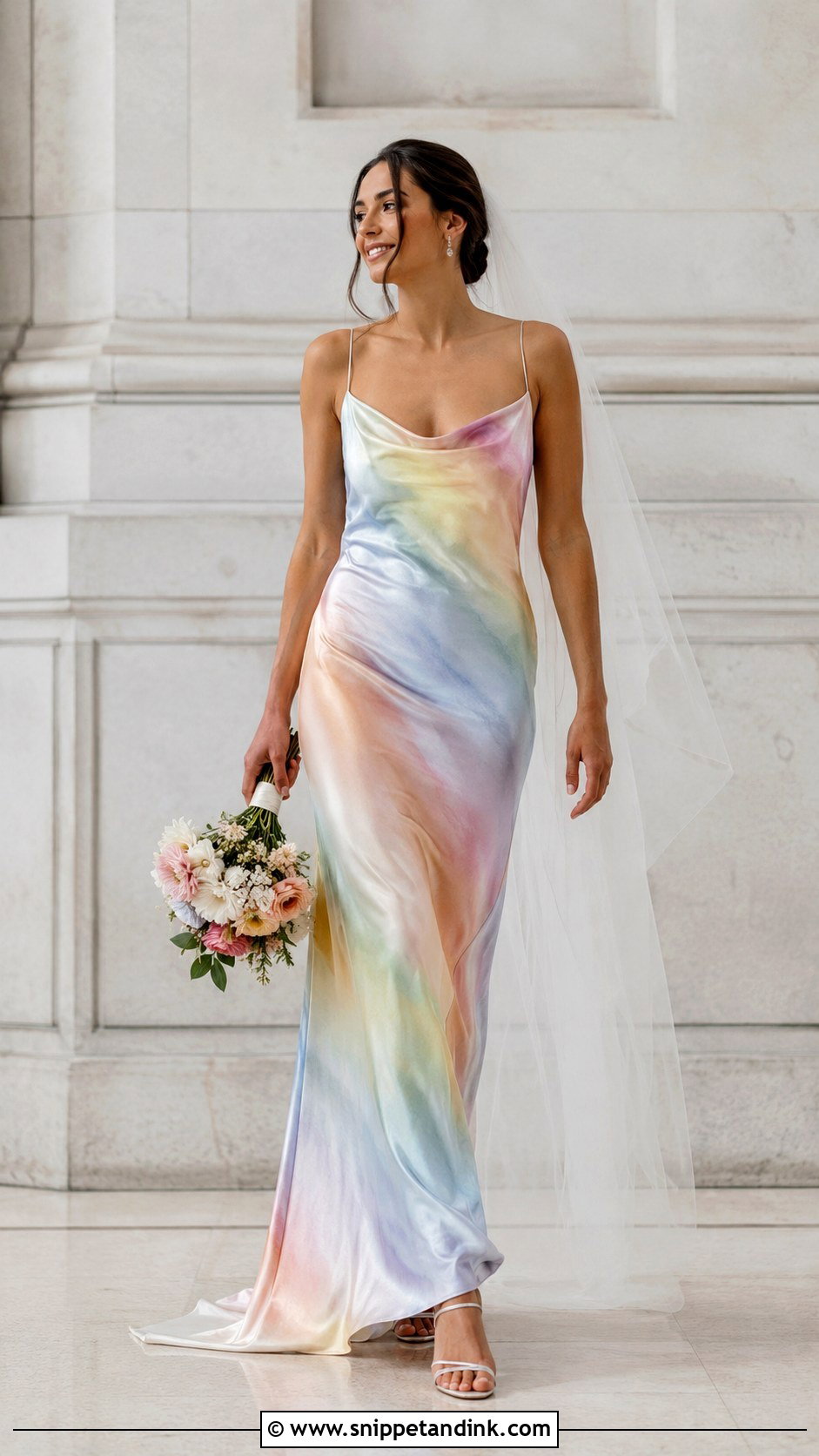
With no volume to hide behind, the slip relies entirely on fabric and fit. Satin, silk or charmeuse with soft watercolor effects, vertical fades or pastel panels look best. Silk slips show every line beneath them, so plan smooth, no-line underwear or none. Strappy heels, delicate earrings and smooth hair keep it polished, and a sheer veil or short cape adds softness without hiding the color. City weddings, beaches and small dinners suit it.
21. Rainbow Chiffon Wedding Dress
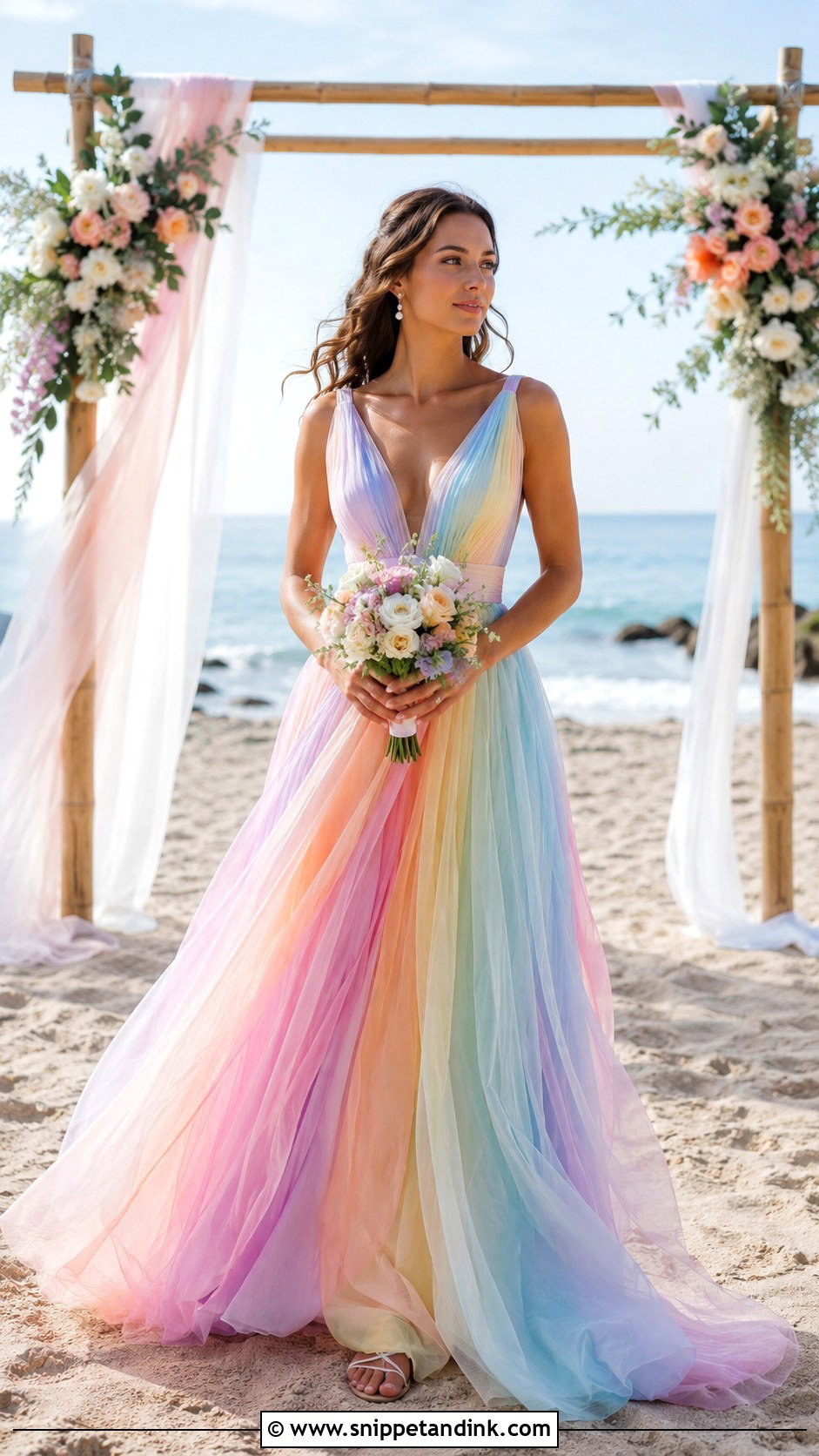
Chiffon floats, which makes it the friendliest fabric for watercolor prints and gentle ombré. It breathes in heat and packs better than tulle, so I often suggest it for travel weddings. The drawback is that it snags on rough stone and frays at a raw hem, so ask for a rolled edge. A loose A-line, empire waist or wrap shape keeps it relaxed. Flat sandals or low wedges, pearl studs, a light veil and loose hair finish it.
22. Rainbow Satin Wedding Dress
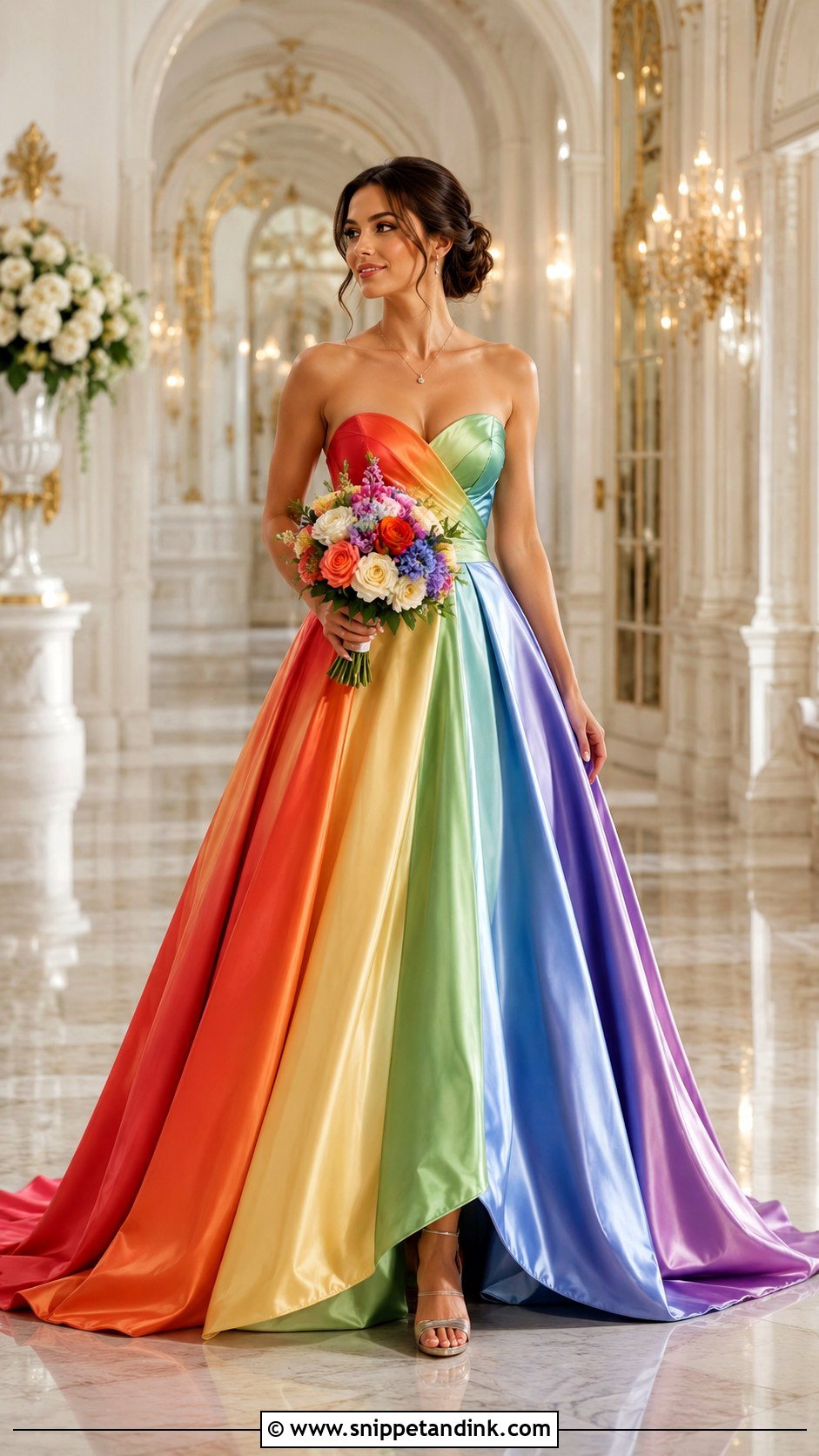
Satin reflects light, so even muted rainbow shades come across rich. It holds structured silhouettes well: ball gown, A-line, column or a sculpted off-shoulder. Satin also shows creases where you sit, so stand for a few minutes before portraits. Keep the styling formal with sleek heels, a tight structured bouquet and minimal jewelry, and avoid adding more texture unless the dress is very plain. Ballrooms, hotels and evening ceremonies are where colored satin looks most grown-up.
23. Rainbow Lace Wedding Dress
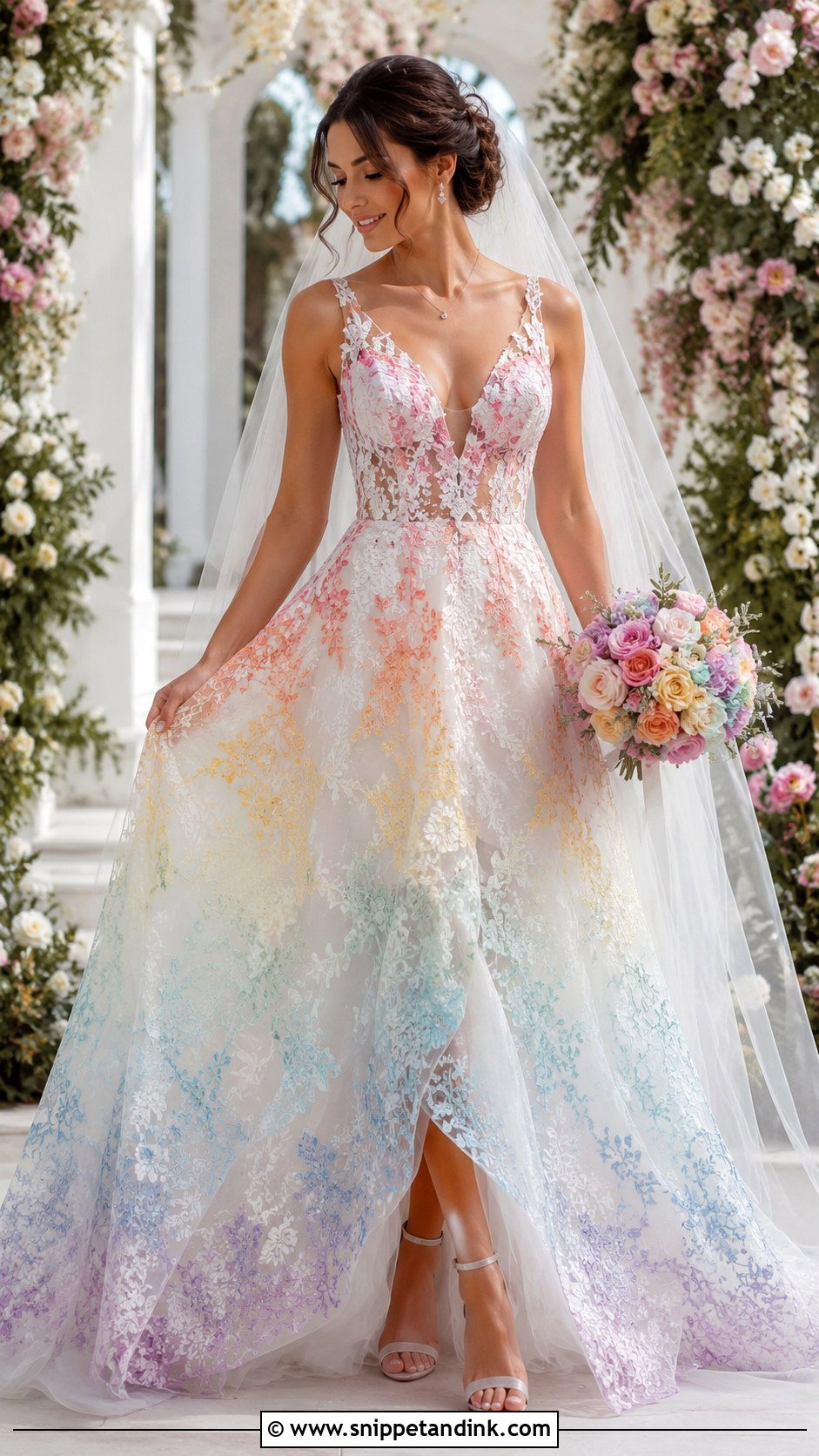
Colored lace gives depth while staying unmistakably bridal. Rainbow threadwork or floral lace appliqués can travel across the bodice and skirt. The lining makes a bigger difference than people expect: nude, ivory or soft blush underneath decides whether the colors look bright or muted. Hold swatches of each lining against the lace before ordering. Simple heels, a veil that doesn’t cover the pattern and a bouquet with a few matching shades complete it.
24. Rainbow Beach Wedding Dress
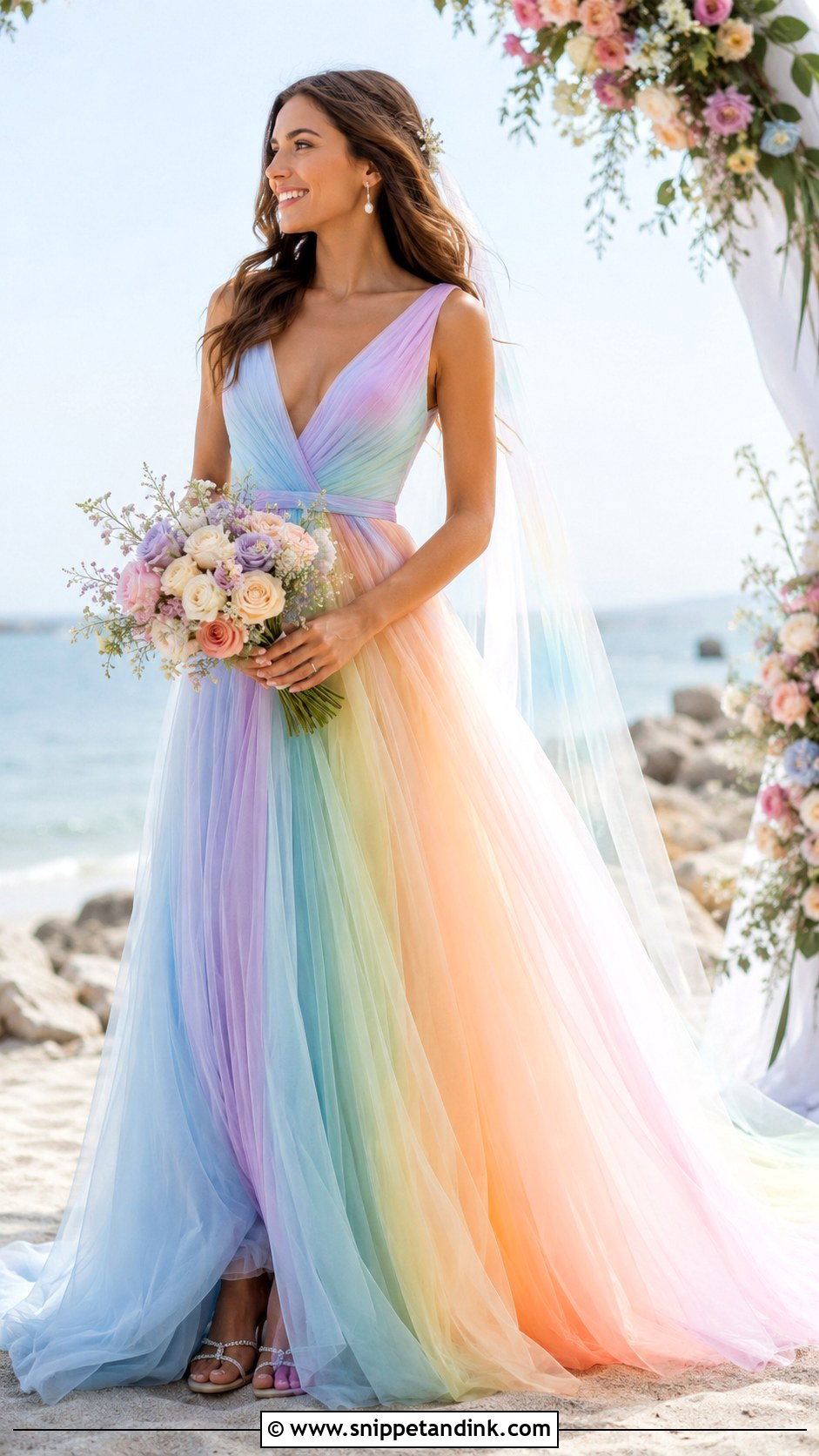
Sand changes the brief. Choose breathable chiffon, soft tulle, organza or light satin, and skip stiff trains or heavy layers that drag and collect sand. A pastel ombré, a flowing halter or a slip with watercolor color all suit the coast. I’d warn against dark dyed hems near the water: wet sand and seawater can make cheaper dyes bleed into the lighter layers above. Flat sandals, anklets, pearl earrings and loose waves, with a small bouquet of tropical or pastel flowers.
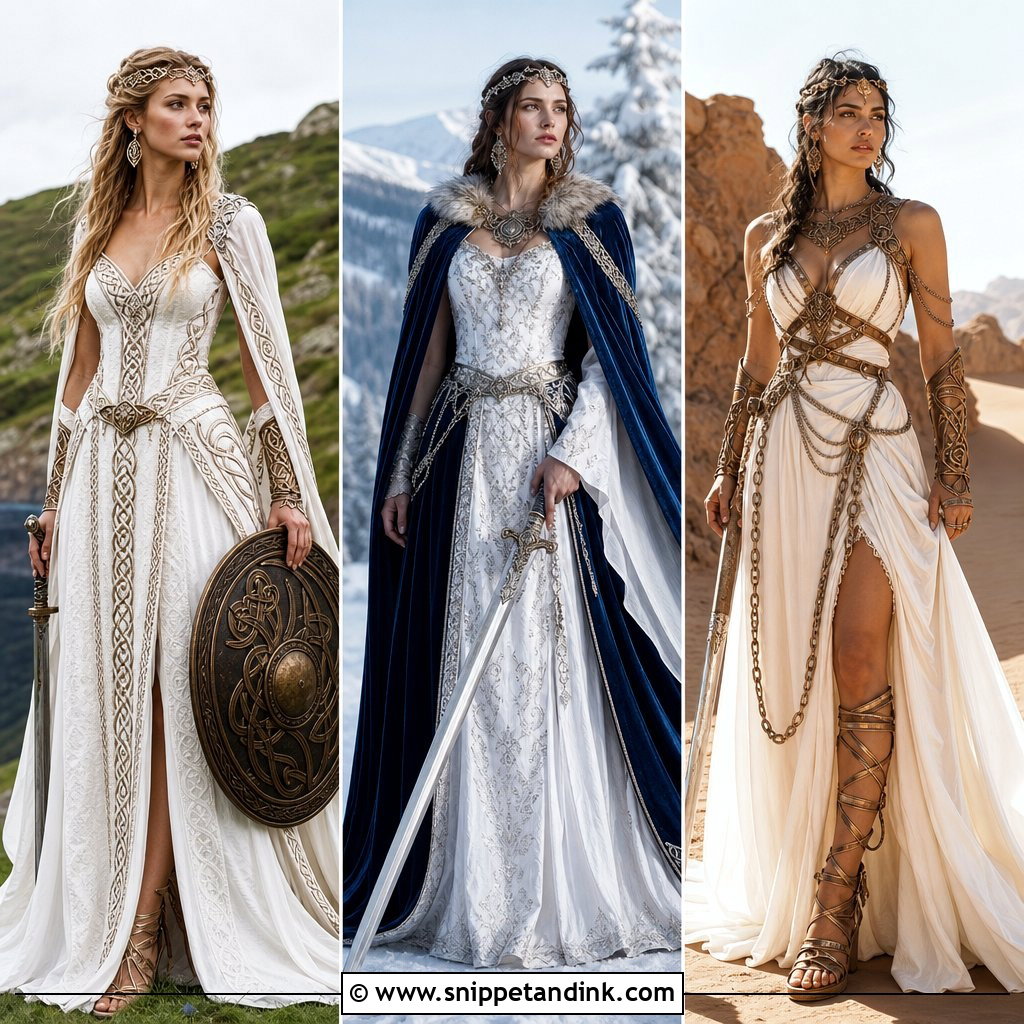
25. Rainbow Reception Wedding Dress
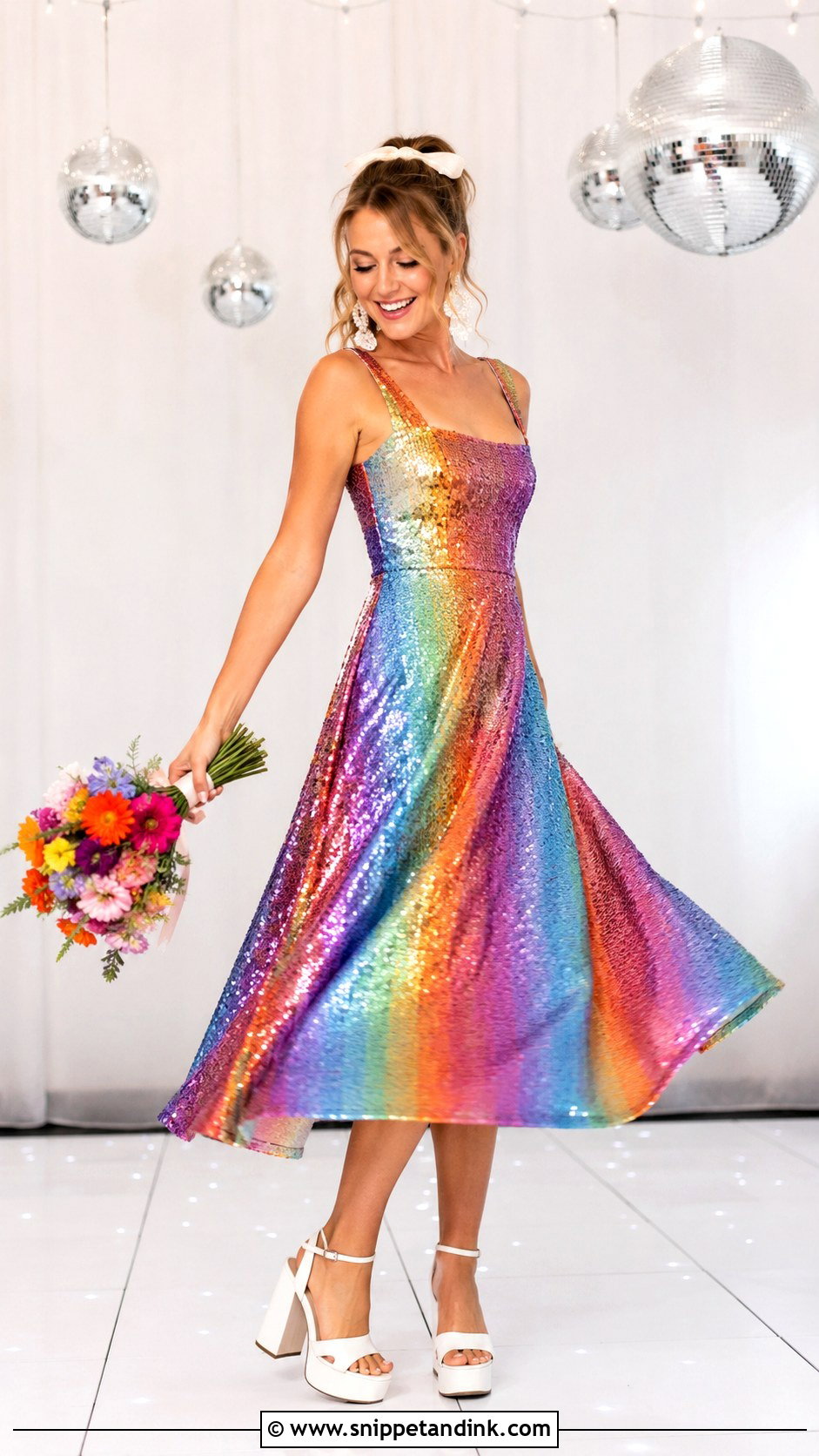
A reception dress should let you dance, mingle and sit on the edge of a table without worrying. It can be shorter, lighter or sparklier than the ceremony gown: a sequin midi, a tulle mini, an ombré slip or a high-low. Plan the change for after dinner and give it fifteen to twenty minutes with a helper. Comfortable heels, platform sandals or embellished flats, plus statement earrings or a colored veil, make your second outfit feel like its own moment rather than an afterthought.
Rain, Sweat and Spilled Wine on Dyed Fabric
Dyed and painted fabrics behave differently from white ones on the day. Moisture is the real risk: a wet hem, sweat under the arms or a spilled drink can loosen poorly set dye and let it travel into a paler layer. I ask the maker whether the colors were fixed for water, and if the answer is vague, I’d treat the dress like silk in a storm and keep it away from damp grass.
Pack a small kit for whoever is helping you: white cotton cloths, plain water, and dress shields if the bodice is dyed. Blot, never rub, because rubbing spreads color sideways. Skip stain pens on painted fabric altogether; they can lift the paint and leave a pale halo that’s harder to hide than the original mark.
Storing a Rainbow Gown So the Colors Last
Light fades colored tulle faster than you’d think, and pastels go first. After the wedding I’d have it professionally cleaned by someone who works with bridal fabrics, and tell them the colors are dyed or hand painted so they test a hidden seam before cleaning the whole dress.
- Store it flat or loosely folded in acid-free tissue inside a breathable cotton bag or archival box, never sealed plastic.
- Keep it somewhere dark, cool and dry; a sunny wardrobe or a damp basement will both damage it.
- Pad folds with tissue so heavily dyed layers don’t press directly against white ones for years.
- Look at it once a year and refold along different lines so creases don’t set.
Color That Still Reads as Bridal
Color works on a wedding gown when everything around it is quieter than the dress. Your venue, your comfort and how bold you want to go decide the rest. Pastel tulle stays soft; sequins, ombré satin or a painted train make more noise. If you want only a hint, put the rainbow in embroidery, the veil or a detachable skirt. Take the swatches outside, sit and move in the sample, and keep the shoes, flowers and jewelry supporting rather than competing. Done that way, a rainbow gown still looks unmistakably bridal.
You'll Like These Ideas:



Leave a Reply