
A lehenga changes what your hair has to do. The skirt is wide, the blouse is often cropped or deep at the back, and somewhere a dupatta is going to sit on your head or shoulder for hours. When I plan hair for a lehenga, I start with that dupatta and the jewellery, then pick the shape. Below are 20 styles I’d actually put on a bride, bridesmaid or guest, with notes on which hair they hold in and which wedding functions they suit.
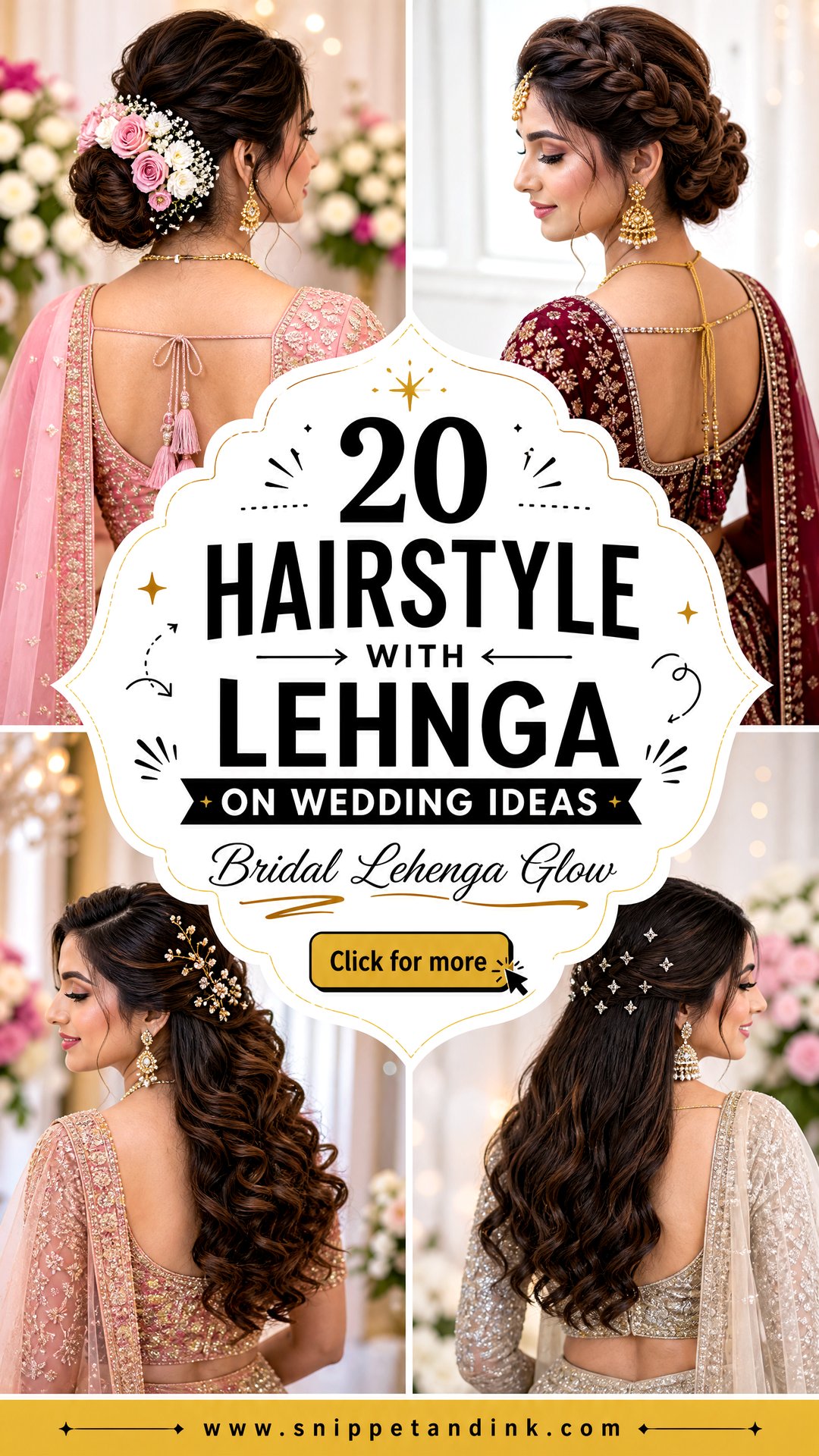
Plan the Dupatta Drape Before the Hairstyle
The most common reason a lehenga hairstyle goes wrong is that nobody thought about the dupatta until it was pinned on top. A heavy bridal dupatta has real weight, and it rests on whatever is at the back of your head. If that’s a soft open curl, the curls are crushed within an hour.
So the first question I ask at a trial is how you plan to wear it. The answer decides the shape.
- Draped over the head for the ceremony: a low bun or braided bun at the nape, so the dupatta sits on a solid base and can be pinned into it.
- On one shoulder: side-swept styles work, but keep the curls on the opposite side so fabric and hair don’t pile together.
- Off the head entirely, as at many receptions: this is the moment for open waves or a half-up style.
- A light net dupatta: it can go over a puff or a crown braid without flattening it, which heavier silk won’t allow.
Bring the real dupatta and the maang tikka to your trial. The tikka chain needs a pin point at the part line, and I place it before the bun goes in, not after, so I’m not digging pins through a finished style.
1. Floral Bun With Lehenga
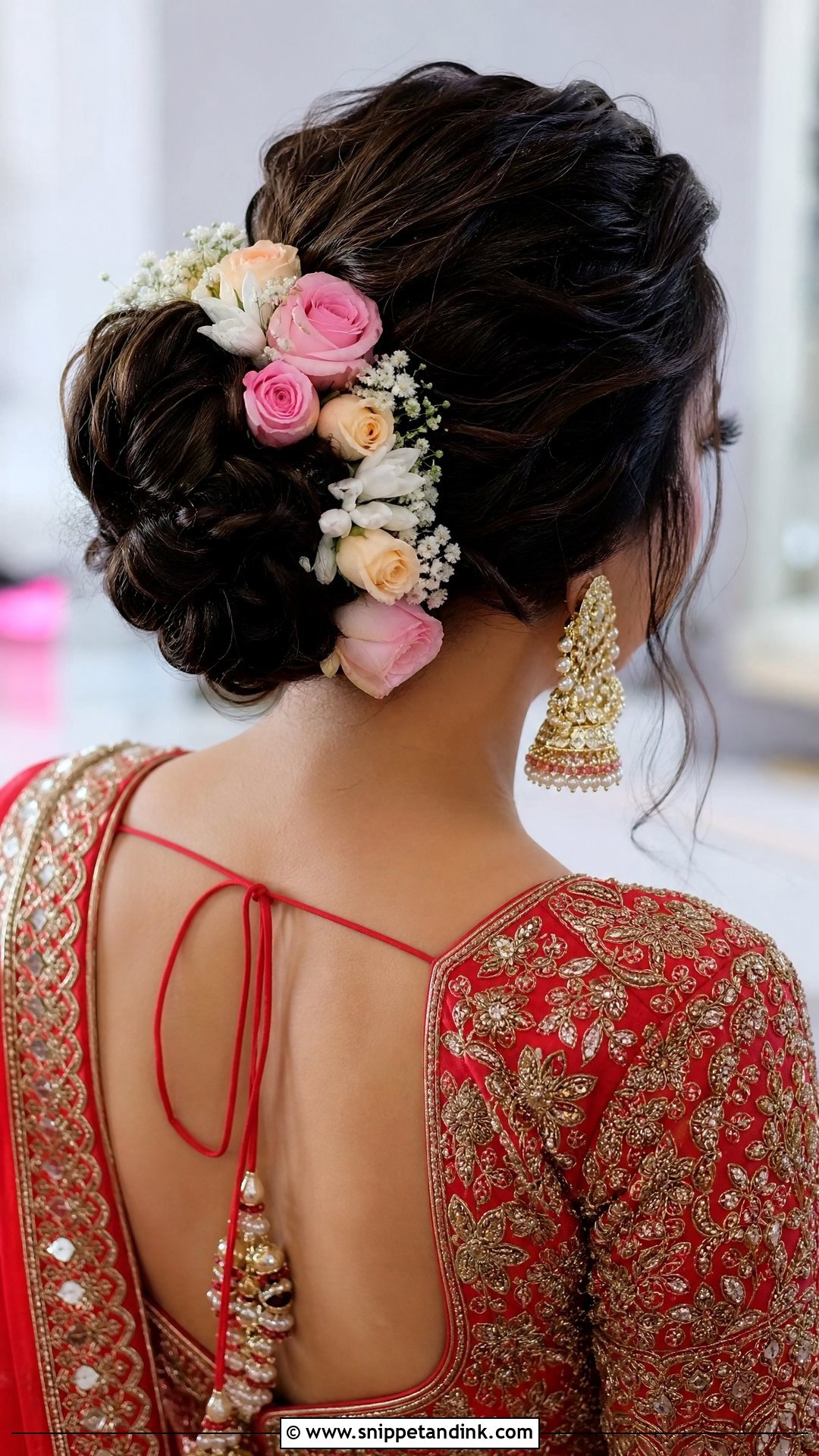
I reach for the floral bun when a bride has a heavy, embroidered lehenga and wants her hair to read as finished from the back. I build the bun first on a firm base so the flowers have something to grip, then pin roses or jasmine in last. Real blooms add weight, so on fine hair I add a small padding under the bun to stop it sagging by the evening. With the neck clear, it’s comfortable at a hot daytime function too.
2. Low Messy Bun With Lehenga
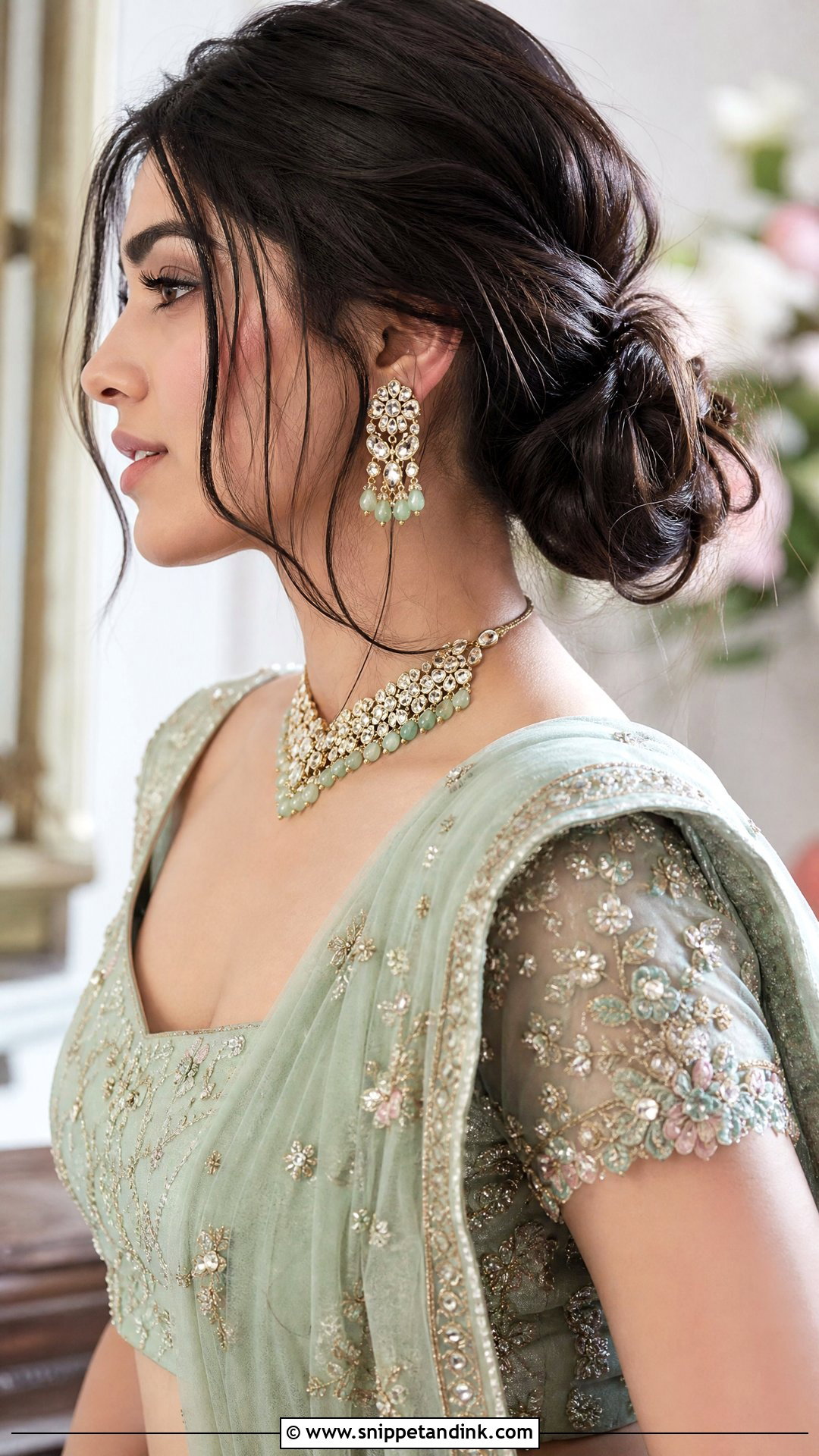
This one looks casual, but it’s among the more careful styles I do. The mess has to be placed, not accidental, or it just looks like hair that fell down. I set the bun at the nape, pull a few tendrils at the temples, and pin it with U-pins so it can be loosened without collapsing. It sits well under a light dupatta and suits pastel or minimal lehengas at a daytime or smaller event.
3. Loose Waves With Lehenga
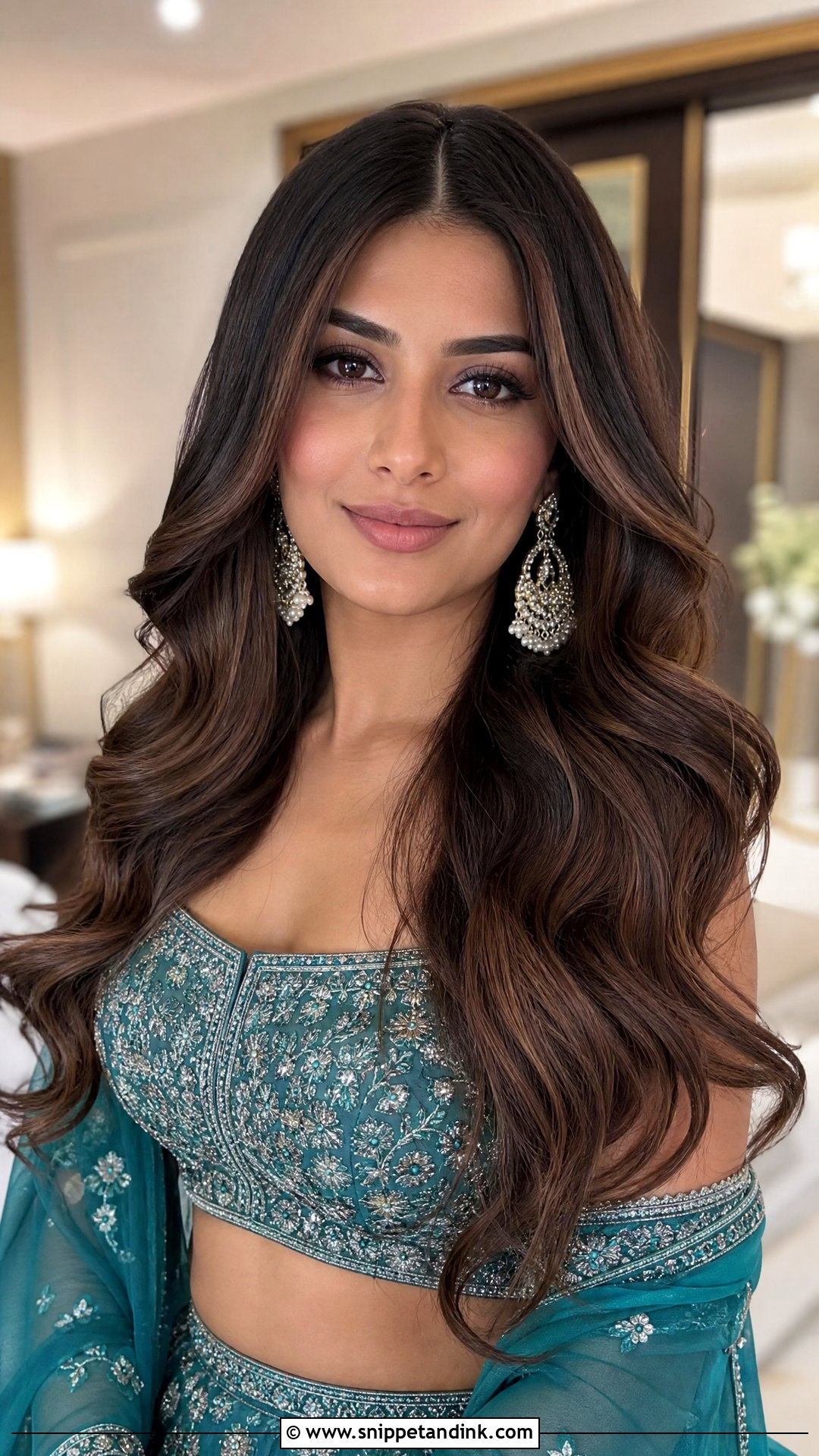
Waves are the open-hair style most guests ask for, and most of them drop within two hours if the prep is skipped. I curl in larger sections, let every curl cool fully before brushing it out, and set it with a flexible spray rather than a stiff one. Centre or side part both work. I like it for sangeet nights and receptions, when you’ll be dancing and want hair that moves. If your hair is very straight and silky, plan on a stronger prep or choose an updo.
4. Sleek Open Hair With Lehenga
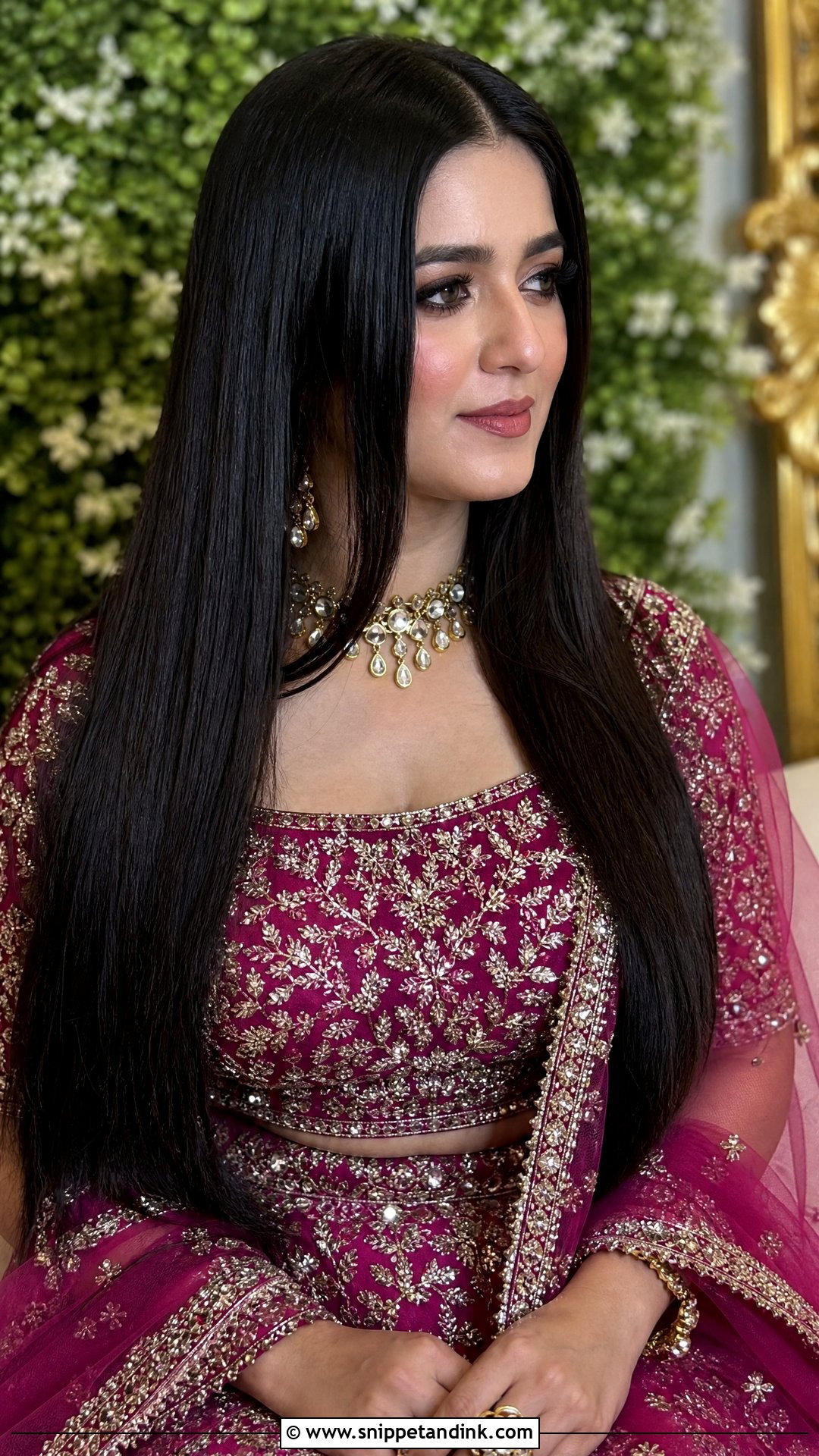
Straight, glossy open hair is quick to describe and slow to do well. Every section gets a flat iron pass and a drop of serum at the ends only, because serum near the roots makes hair look greasy in flash photos. I recommend it with busy prints or heavy zardozi, where the outfit already carries the look. In humidity it frizzes faster than any curled style, so I’d skip it for an outdoor summer mehndi.
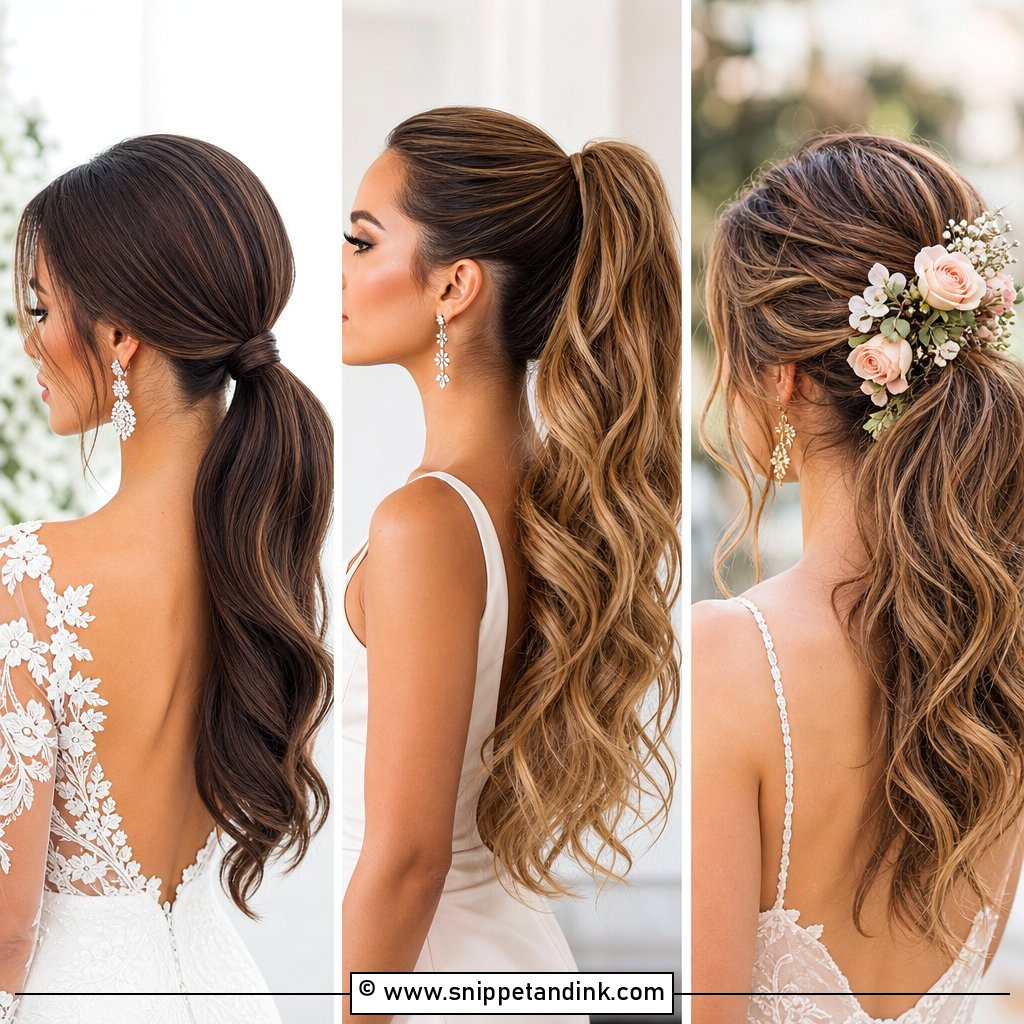
5. Flower Adorned Ponytail With Lehenga
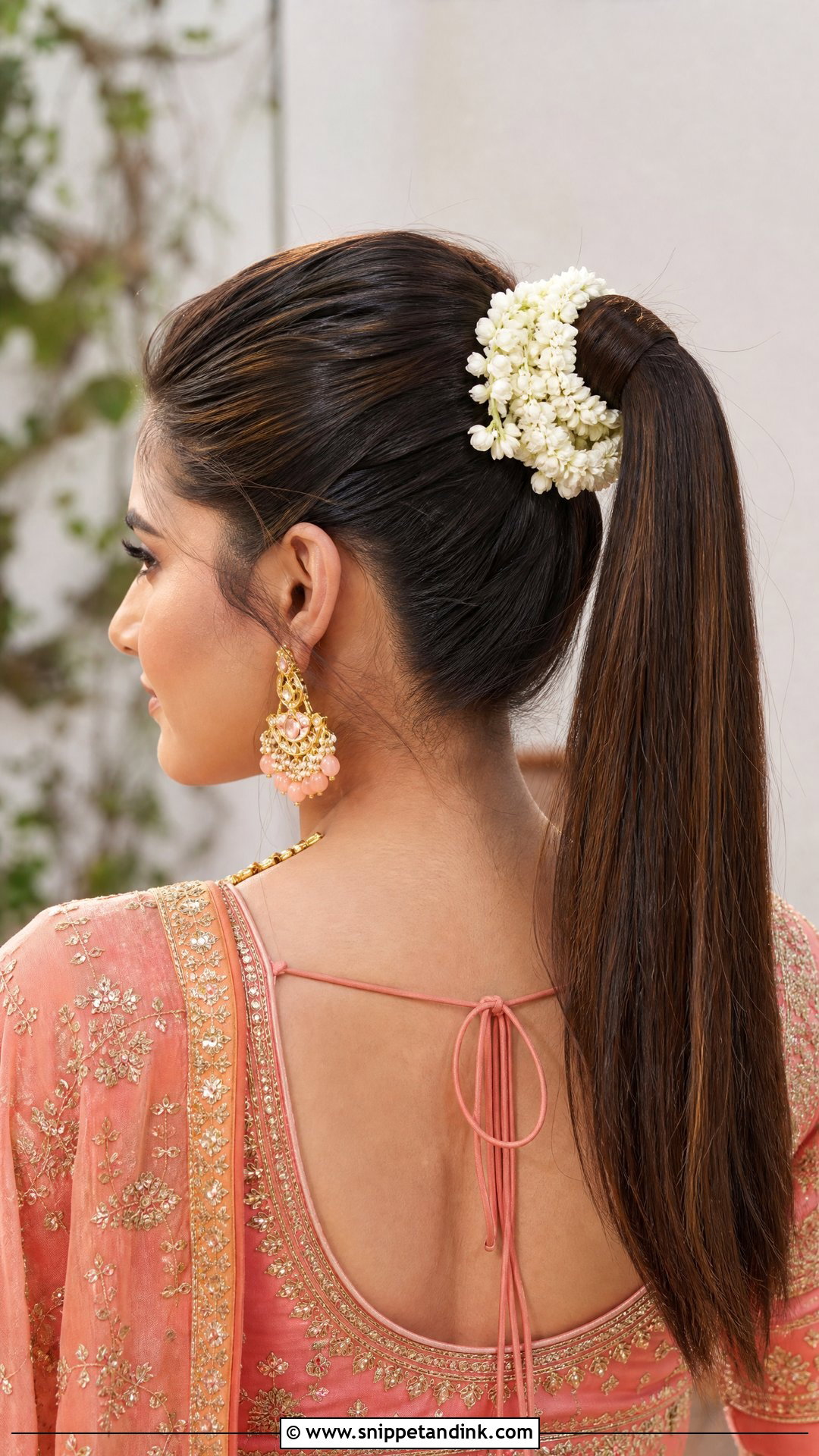
Who says ponytails can’t be glamorous? I wrap the elastic with a strand of hair, then thread small flowers along the length rather than piling them at the base, so the ponytail still swings. A high ponytail lifts the face but pulls on the scalp after a few hours; a mid-height one is the kinder choice for a long day. Pair it with an embellished lehenga at a lively daytime function.
6. Crown Braid With Lehenga
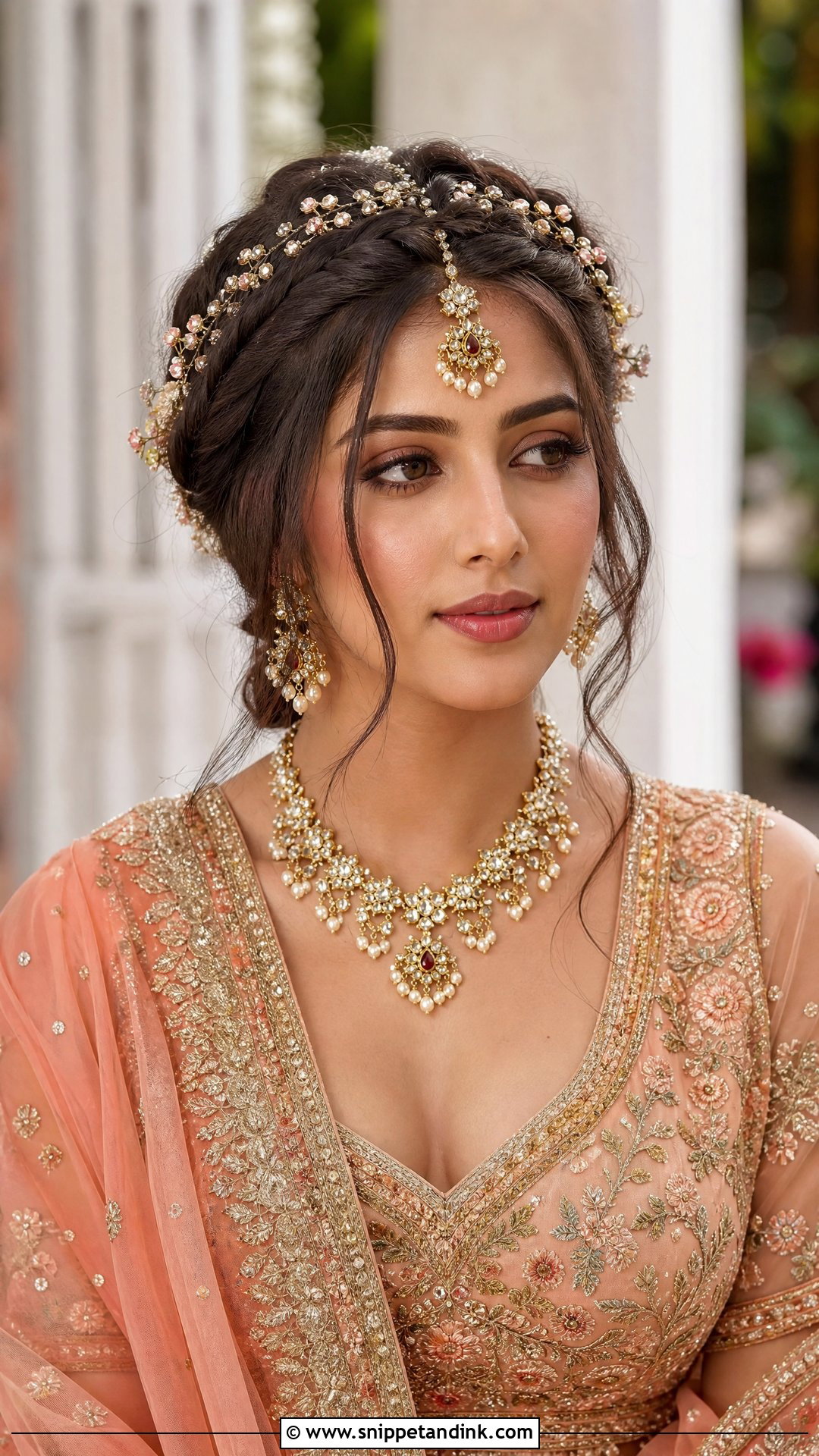
A crown braid needs length. Hair should reach at least the shoulder blades to circle the head without extensions, and I usually add a clip-in for thinner hair so the braid isn’t stringy. I pin it every few centimetres with pins that match the hair colour, then add tiny pearls or blooms. It holds all day and keeps hair off the face, which matters if a dupatta is draped over your head.
7. French Braided Bun With Lehenga
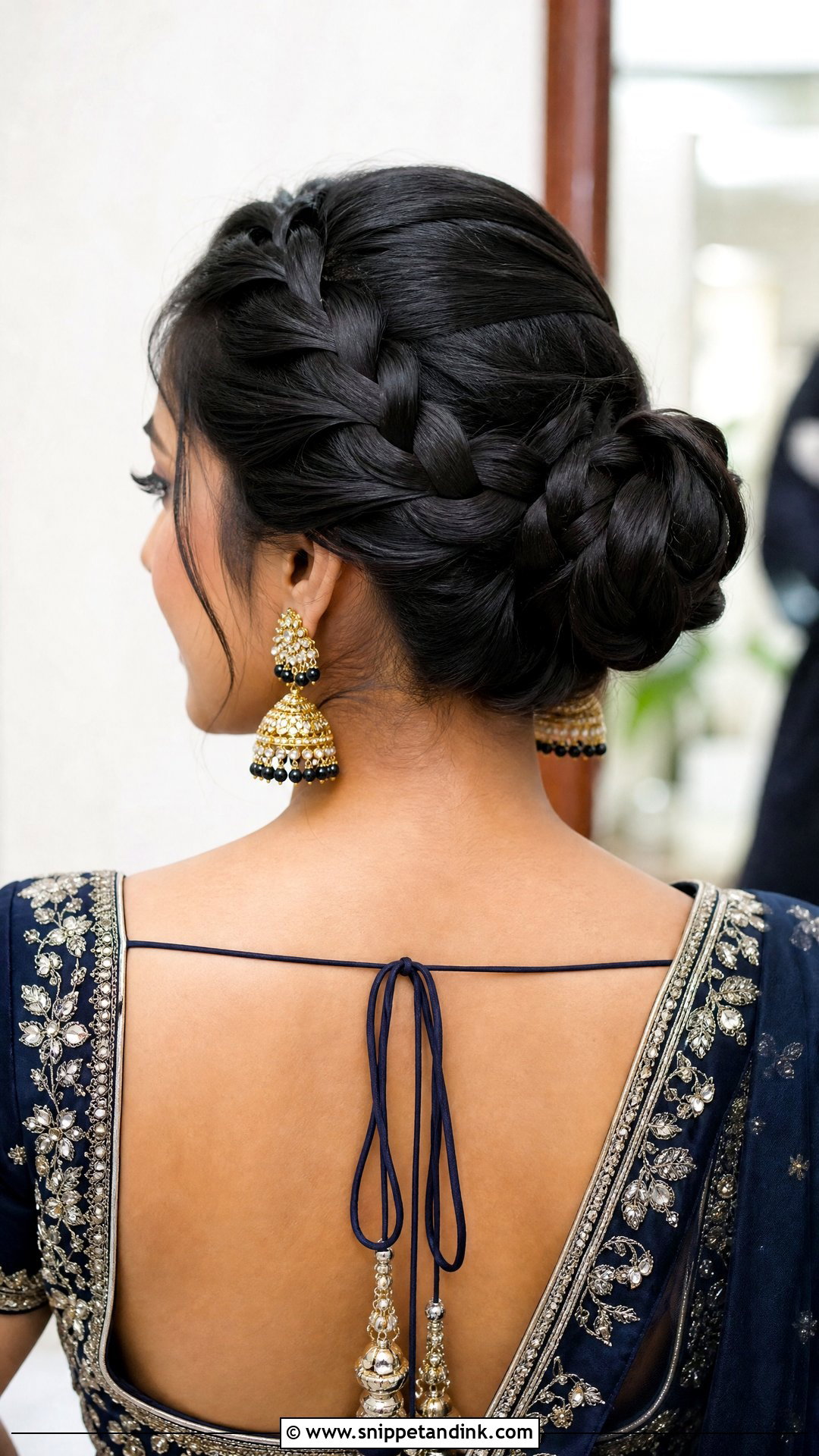
My answer when a bride wants texture but doesn’t trust open hair to last. The braid gathers hair tightly from the start, so even slippery hair stays put, and the bun at the back gives the dupatta a solid anchor point. I’d suggest it from the mehndi right through to the reception. A few pins or flowers are enough; the braid already does the decorative work.
8. Curly Half Up Half Down With Lehenga
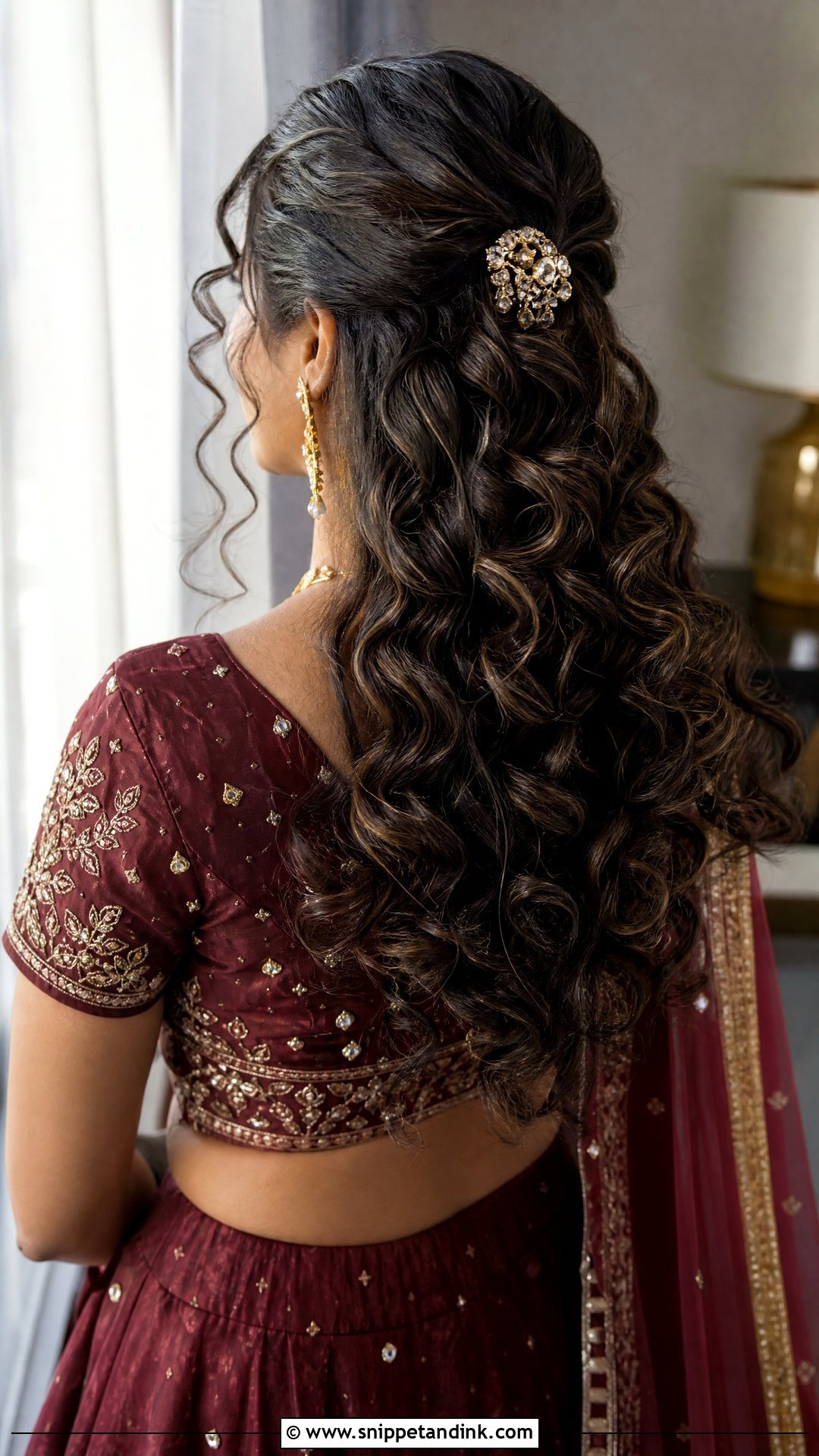
Half up, half down suits someone who can’t decide, and it’s also the style I most often have to fix mid-event. Curls at the back get flattened against a chair or crushed by a dupatta. To slow that, I secure the top section with crossed bobby pins under a clip rather than one elastic. It’s a good match for a sangeet or cocktail night, where you’re on your feet more than you’re seated.
9. Side Swept Curls With Lehenga
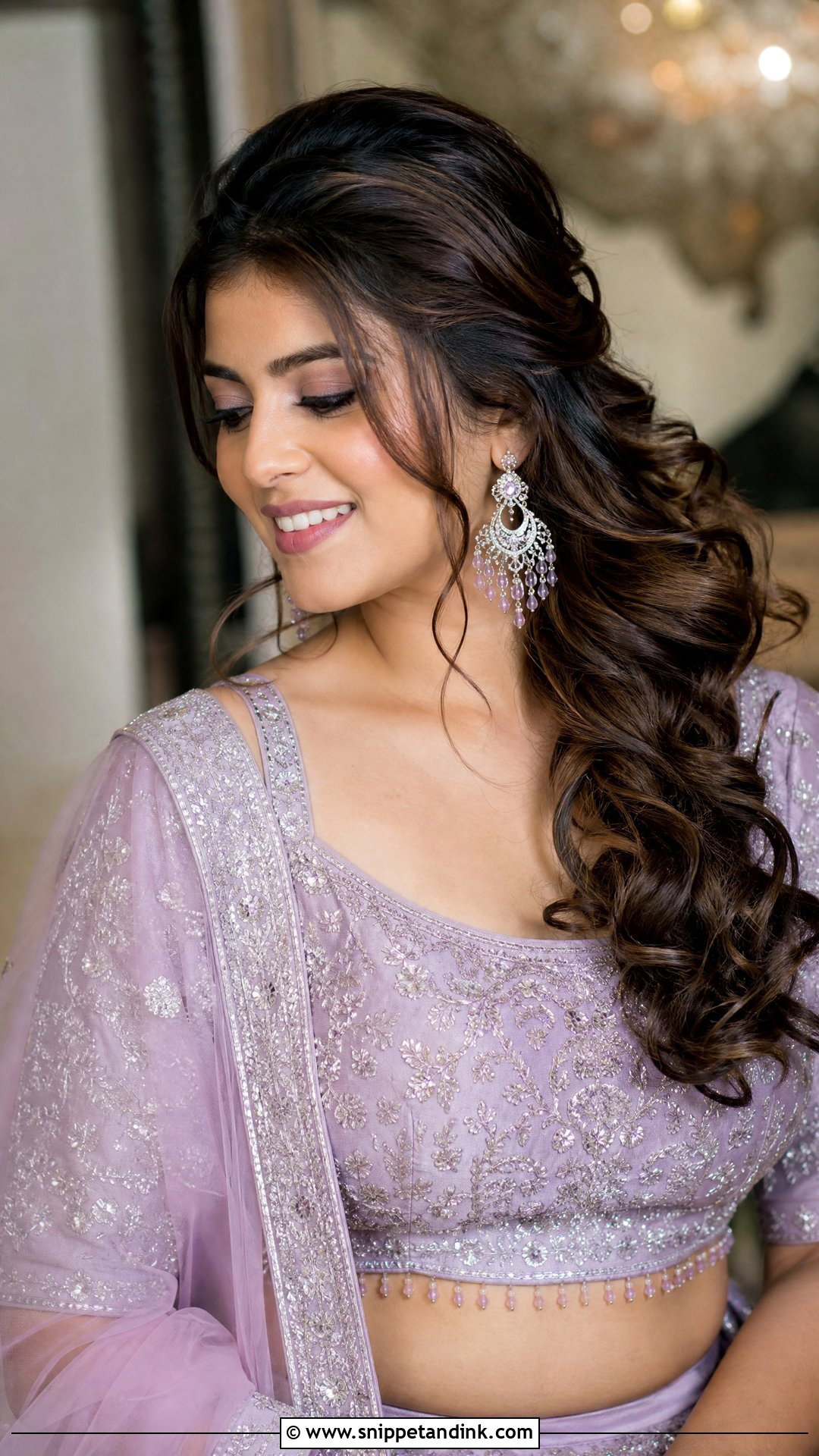
Sweeping everything to one shoulder shows off statement earrings and the neckline on the other side. I decide which side before I curl, because heavy jhumkas and a dupatta pinned on the same shoulder fight each other. The curls are pinned loosely behind the ear so they don’t swing back. I’d use this for an evening reception rather than a ceremony where you’ll sit for long rituals.
10. Front Puff With Loose Curls With Lehenga
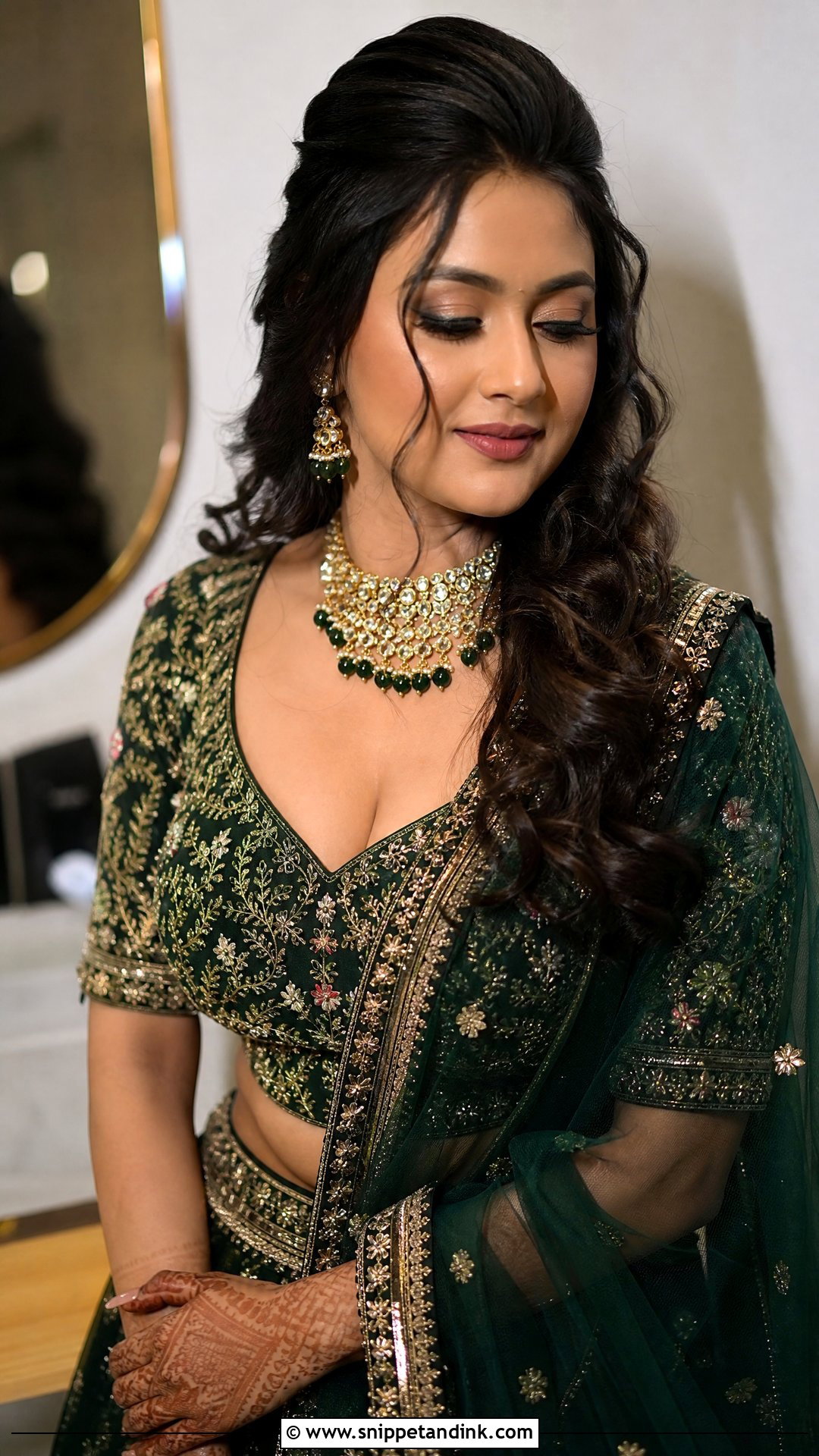
A front puff adds height at the crown and makes a round face look longer. The puff comes from backcombing at the root, then smoothing the top layer over it, and I pin it from underneath so no pins show in photos. Loose curls down the back keep it from looking stiff. It balances a heavy lehenga well, but on a short forehead or with a large maang tikka, I keep the puff smaller so the two don’t compete.
11. Fishtail Braid With Lehenga
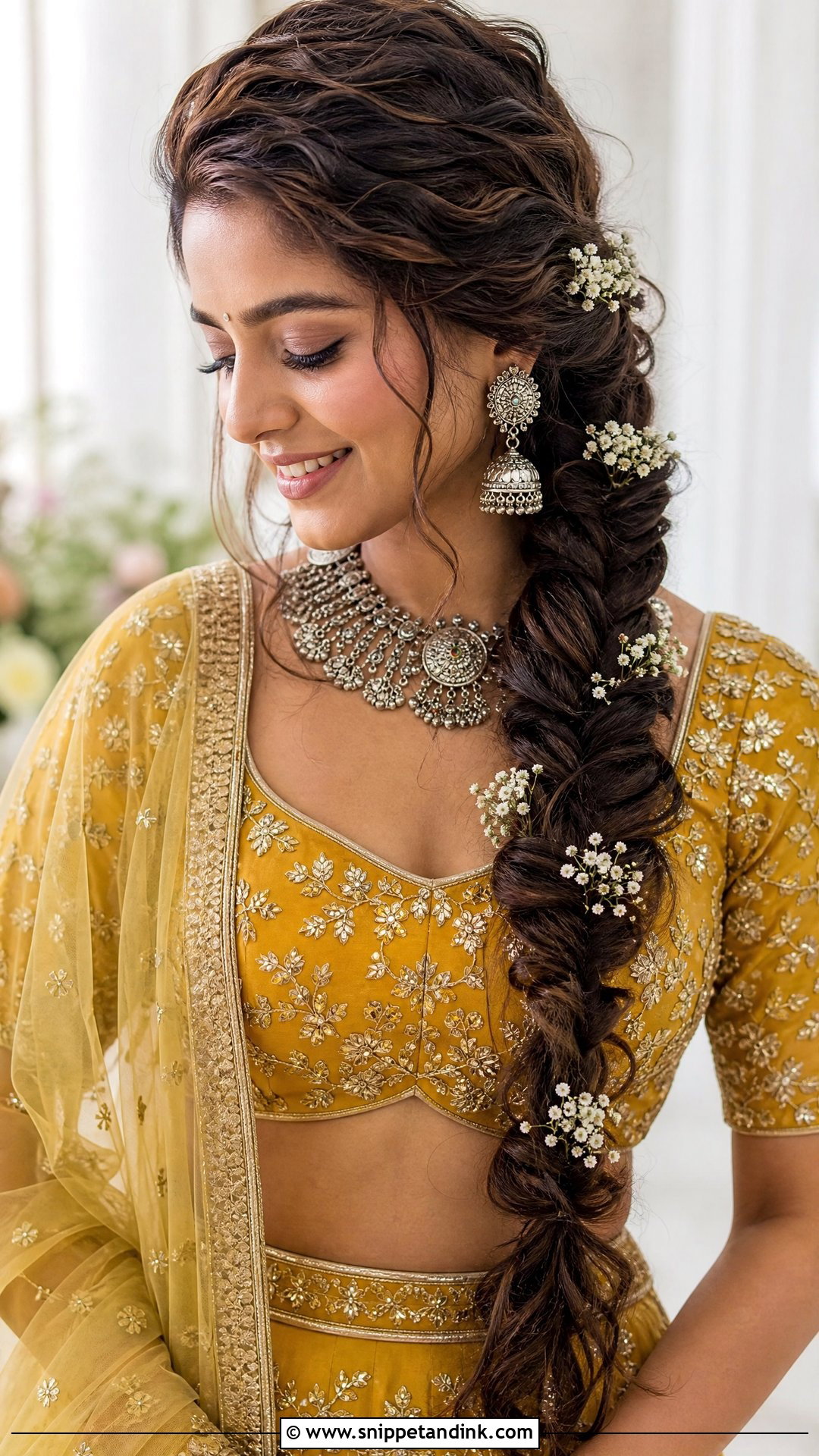
A fishtail looks harder than it is, and that’s exactly why I like it on brides who want detail without a long chair session. I braid it slightly firm, then pull the edges out a little to widen it. Over one shoulder it reads soft and relaxed. It’s the braid I’d pick for outdoor or daytime functions, and it holds tucked flowers or pearls well because the small sections grip them.
12. Hydrangea Floral Bun With Lehenga
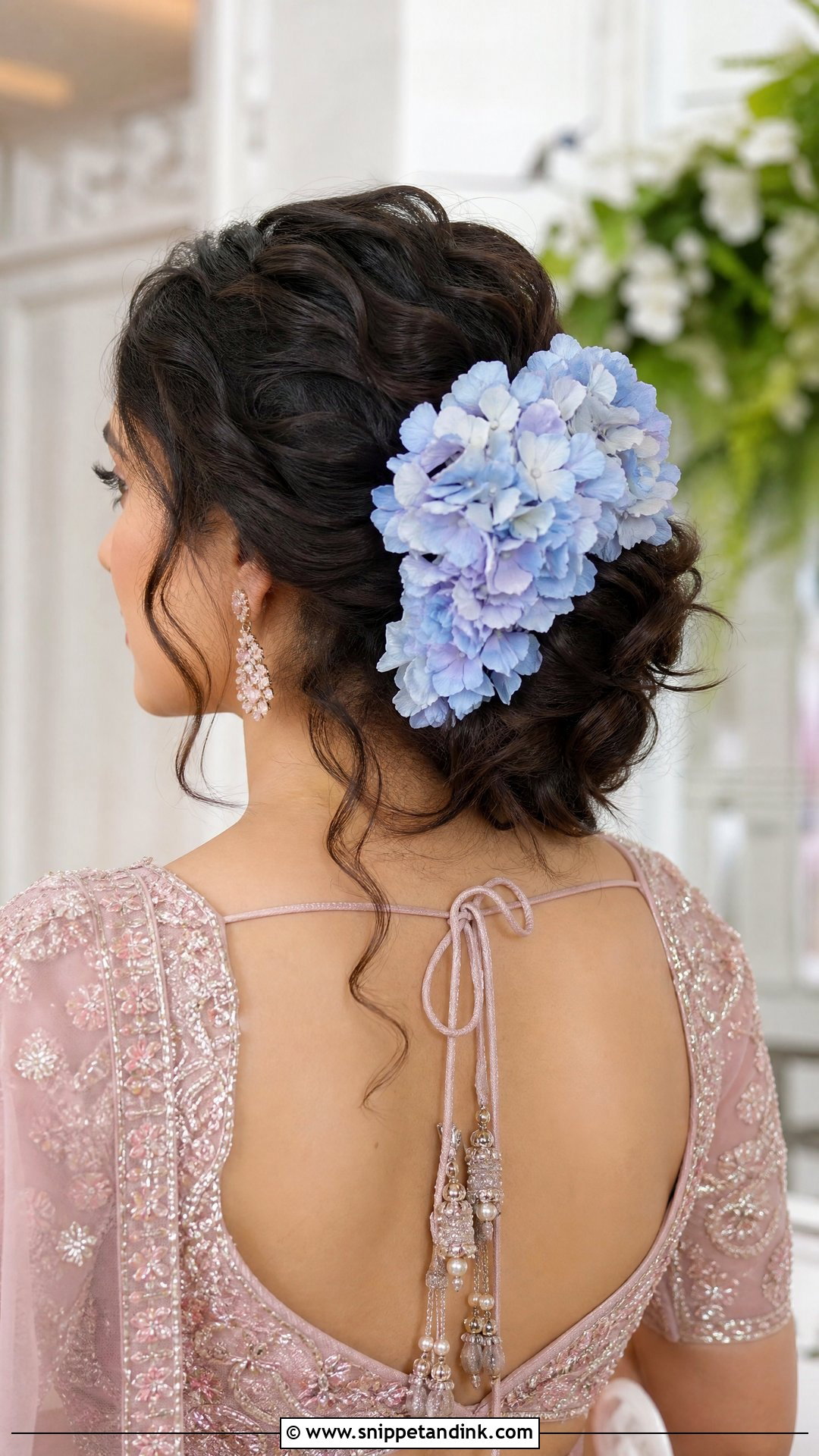
Hydrangea buns are among the most requested updos right now. Hydrangea is full and cloud-like, but fresh heads wilt quickly out of water, so I normally use good silk or preserved blooms for a long event. I curl the hair first, tuck it into a loose bun, then build the flowers around it in a ring. Pastel heads sit best against muted lehenga shades; against a deep red they can look washed out.
13. Pearl Lined Braid With Lehenga
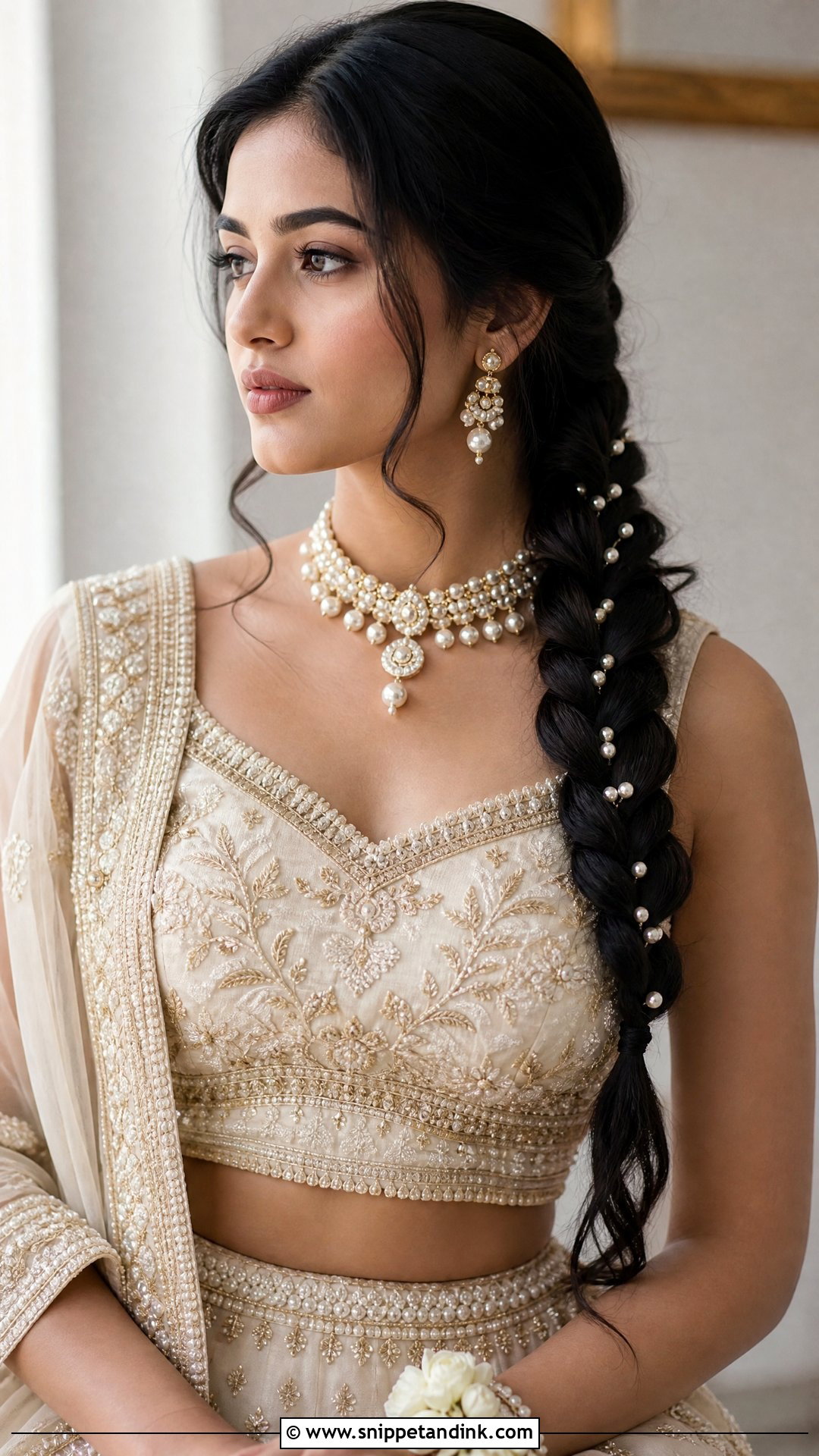
Pearls are lighter than flowers and they won’t wilt. I use pearl pins or threaded pearl strands and set them in the braid after it’s done, not during, so the spacing stays even. A three-strand or a fishtail both work as the base. Pearls carry the look for a bride who wants subtle detail, and they sit well with pastel and richly embroidered outfits at a sangeet, mehndi or reception.
14. Low Curly Ponytail With Lehenga
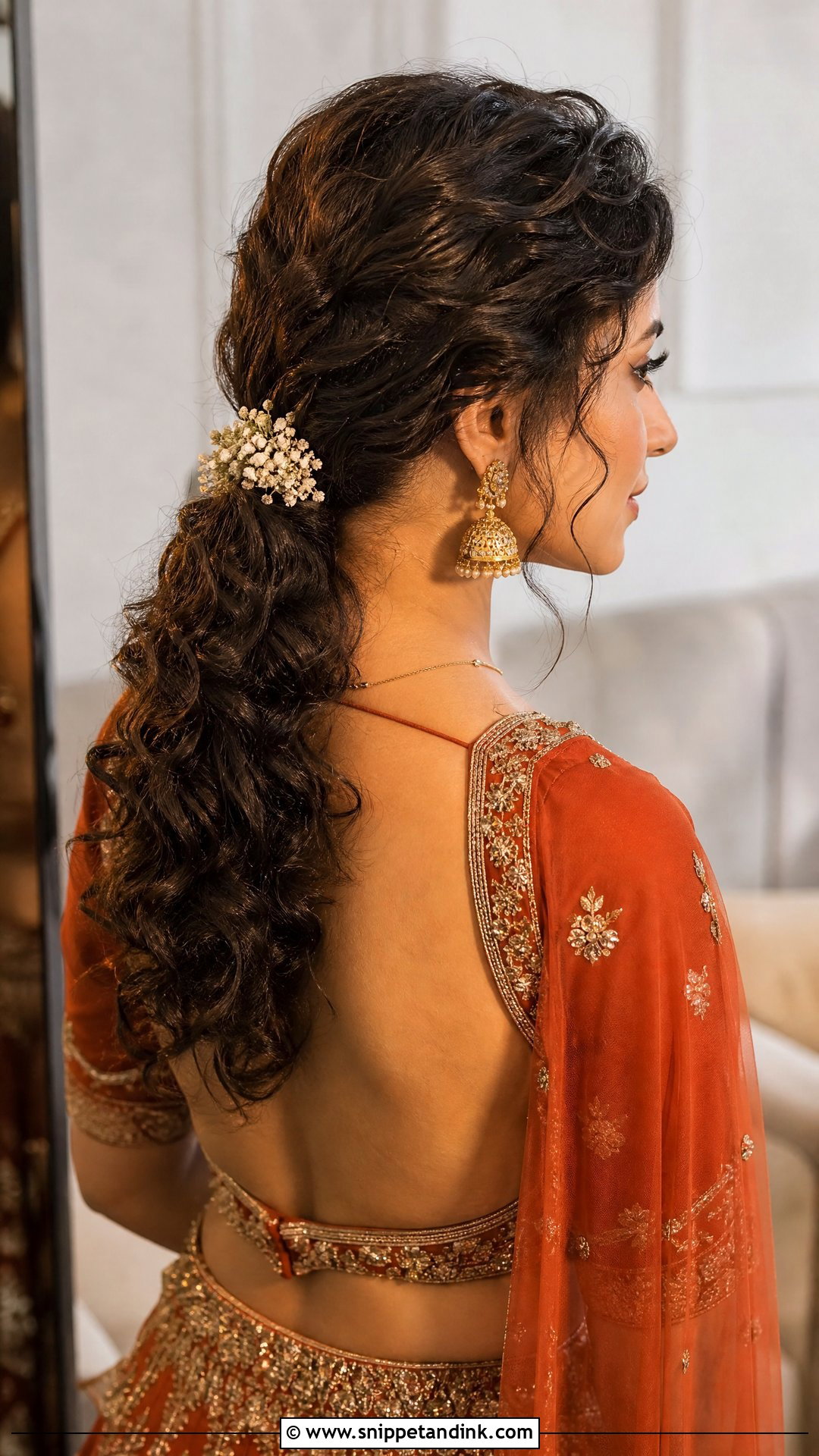
My go-to for anyone who wants polish with almost no pins pressing on the scalp. Curls give the ponytail volume, and I wrap a strand around the base to hide the elastic. A single flower or pearl pin finishes it. For guests sitting through a long ceremony it’s comfortable, and it suits bold or minimal lehengas equally.
15. Bubble Braid With Lehenga
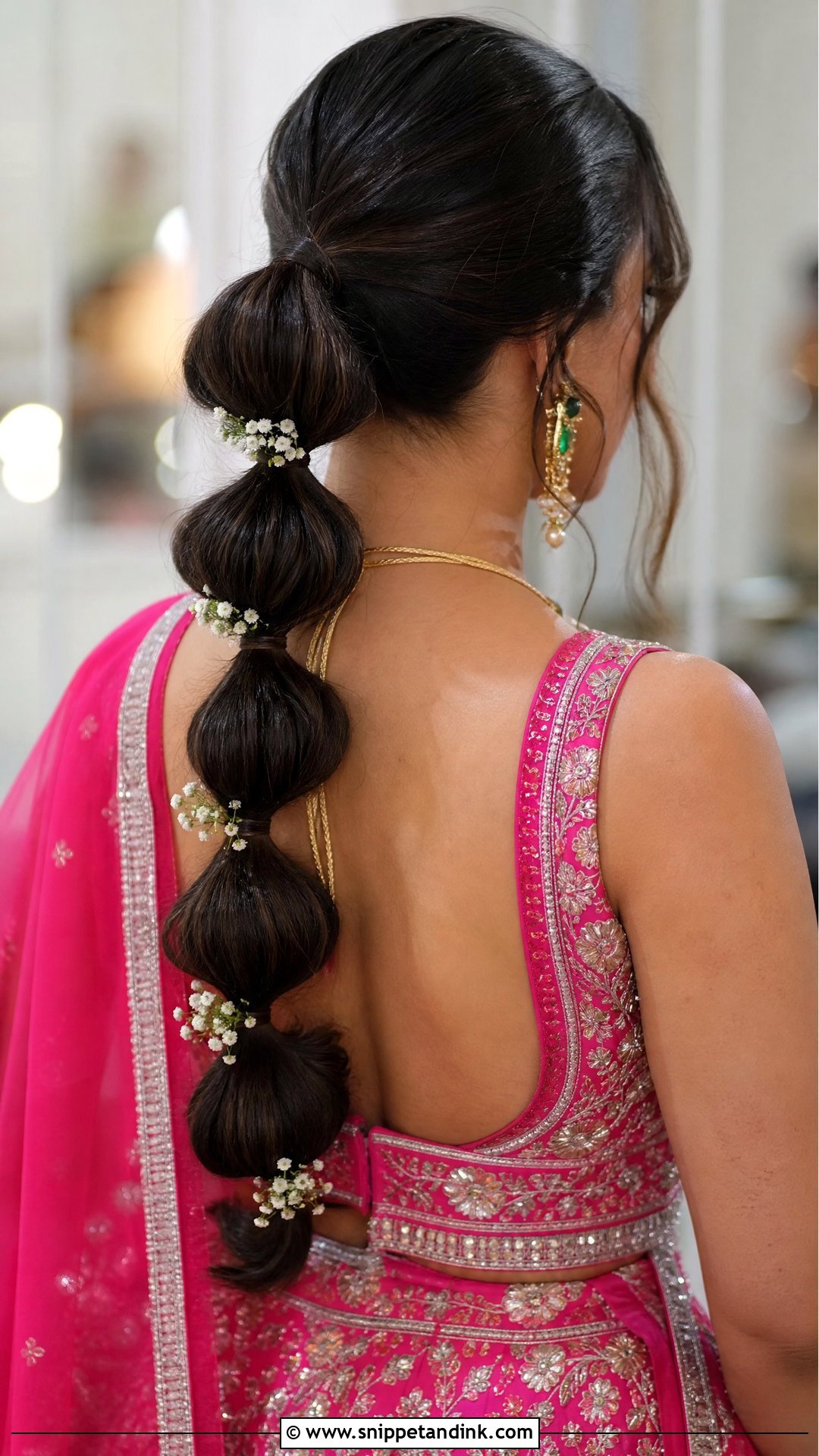
A bubble braid is mostly elastics, so it’s quick and very secure. I tie the ponytail first, then add clear elastics at even gaps and pull each section out into a rounded bubble. Small flowers or pearls can sit in the gaps. It’s playful, so I’d keep it for a sangeet or haldi rather than the main ceremony. The bubble braid adds personality without much risk, because if one bubble flattens, you just pull it out again.
16. Half Tie With Flowers With Lehenga
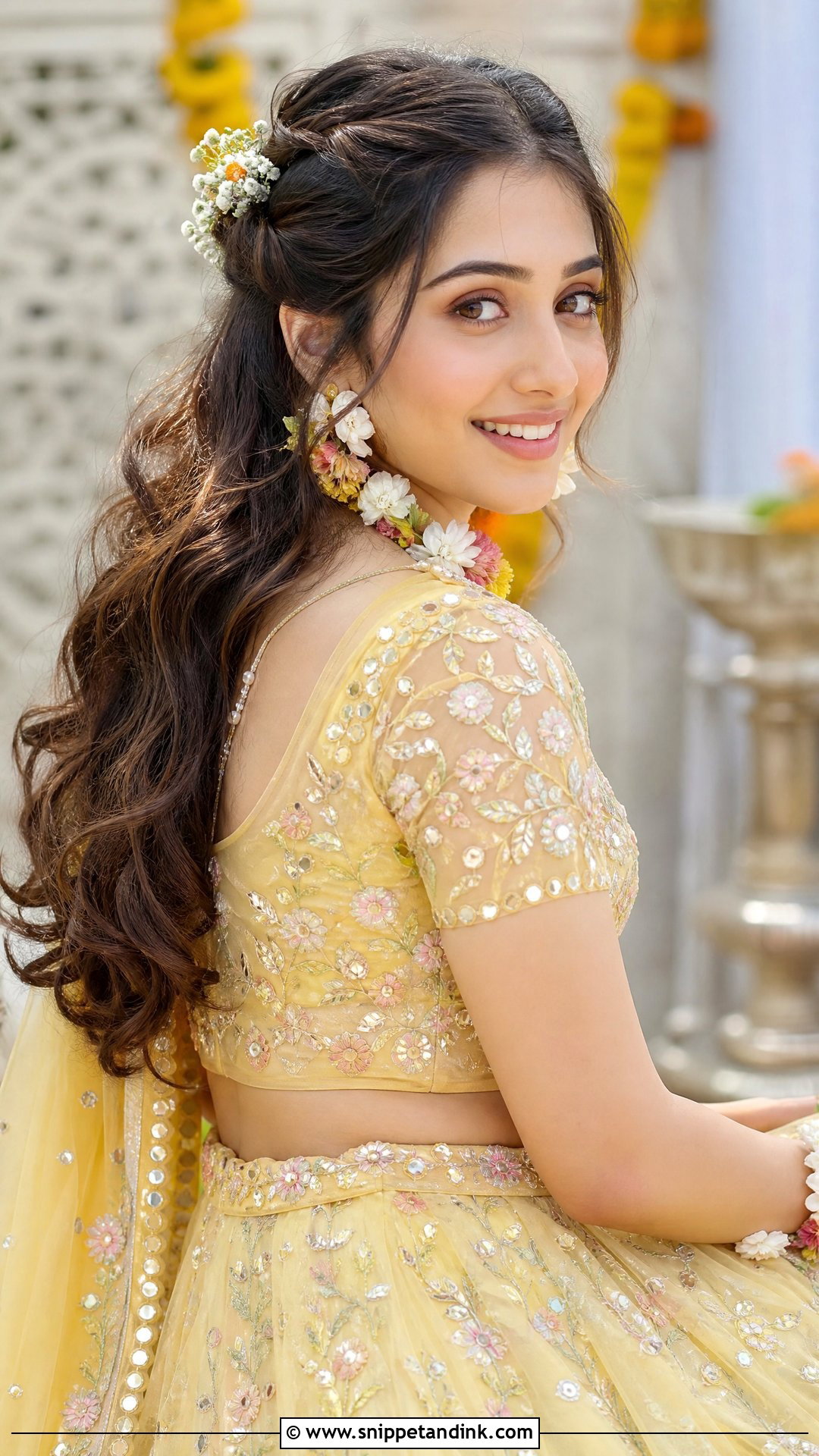
A half tie keeps hair off the eyes without giving up length. I tease the crown slightly before pulling the top section back, so the tie has lift and doesn’t look flat once the dupatta goes on. Small flowers tucked into the tie are enough. Brides and guests can both wear it, and I like it most at daytime functions.
17. Sleek Donut Bun With Lehenga
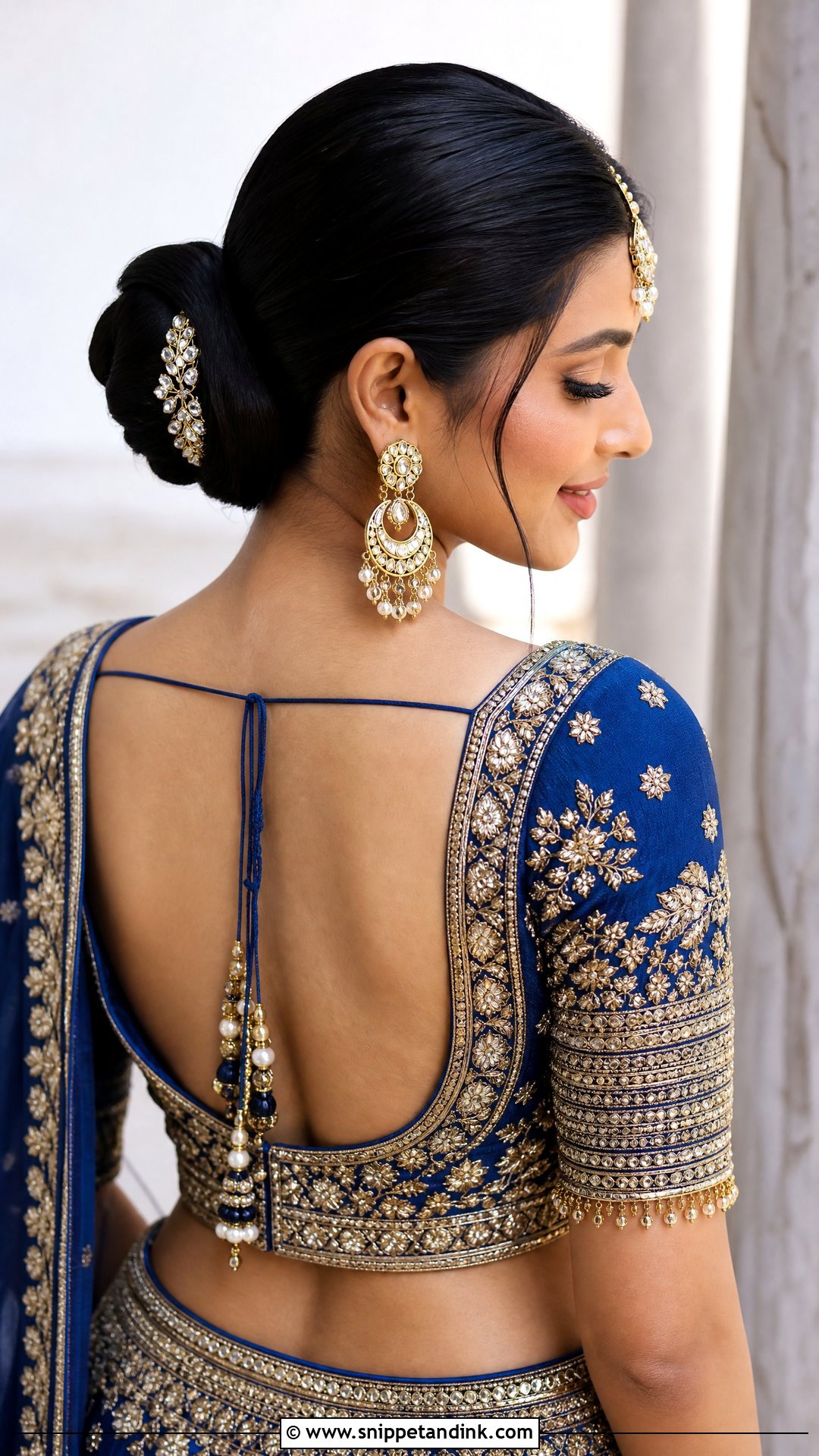
The sleek donut bun is built around a foam ring, which gives it that even, rounded shape. On thin hair, I use a smaller ring so it doesn’t show through. It’s clean and keeps everything secure, which is why I suggest it with a heavy maang tikka and statement earrings. A gajra or a jewelled pin adds tradition. Set it low if the dupatta goes over your head; a high bun pushes the fabric up and off.
18. Side Twisted Curls With Lehenga
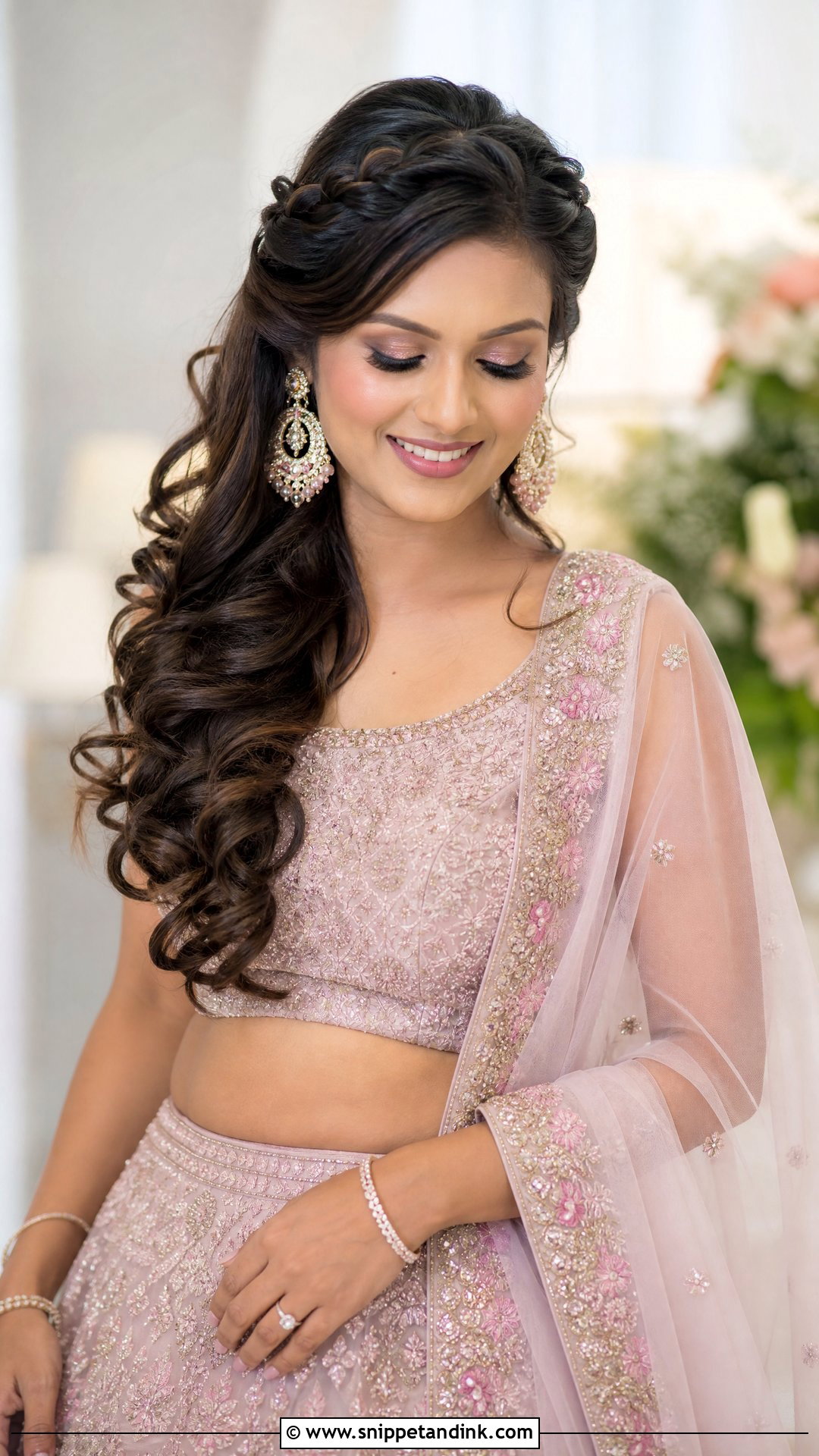
This is side-swept curls with twists near the crown. Those twists stop the curls sliding back across the head, so this version keeps its shape longer. I pin small flowers along the twists if the bride wants decoration. I’d pick it for an evening event, with pastel or bold colours.
19. Open Hair With Diamond Accents With Lehenga
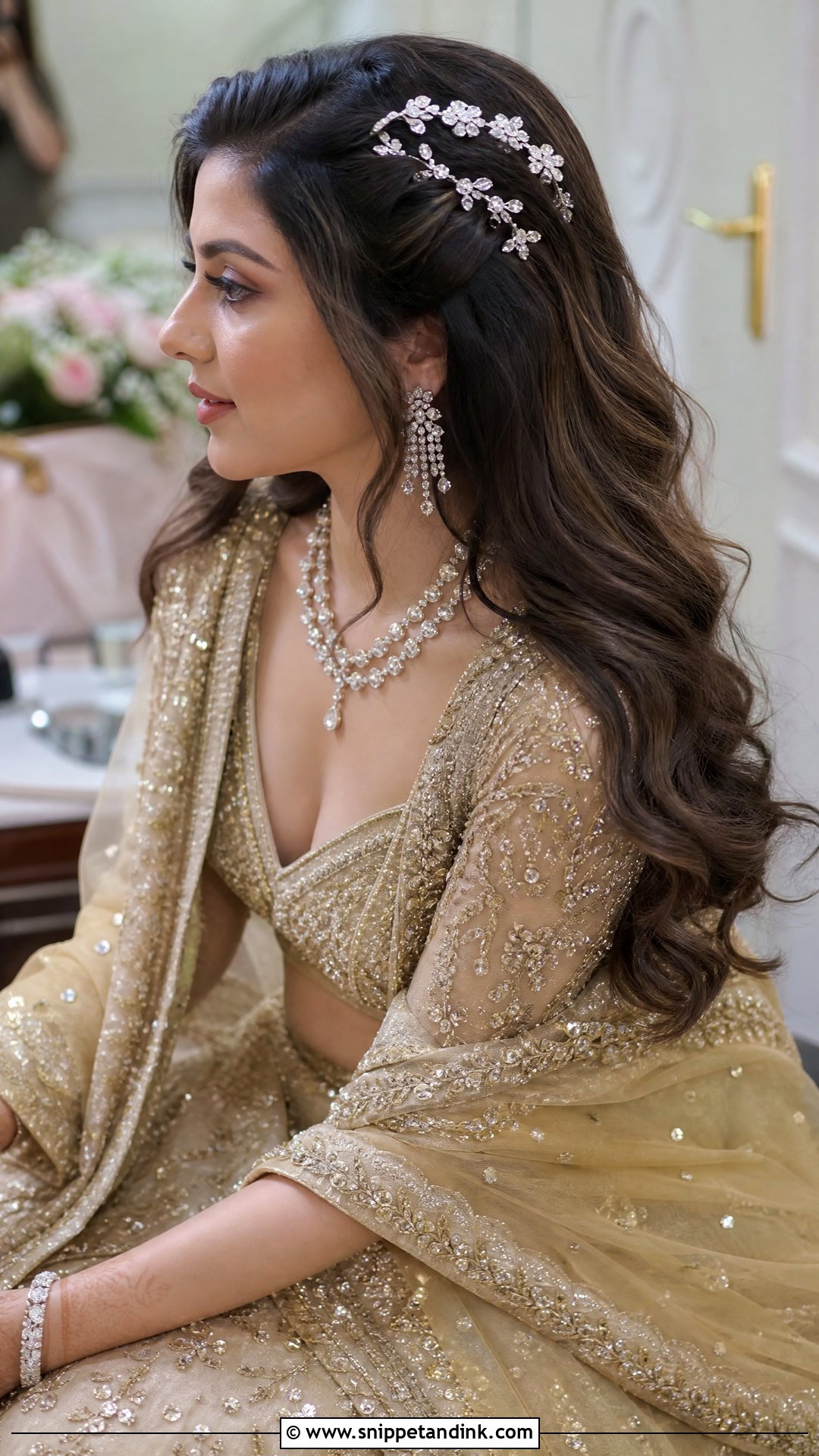
Diamond accents swap flowers for sparkle. I wave the hair first, then slide in diamond-style hairpins or jewelled clips where they’ll catch light, usually behind the ear and at the side of the part. Put them in after the waves are set, otherwise the heat dulls the finish on cheaper pieces. It suits a reception or cocktail night, with a minimal or heavily embellished lehenga.
20. Braided Bun With Gajra With Lehenga
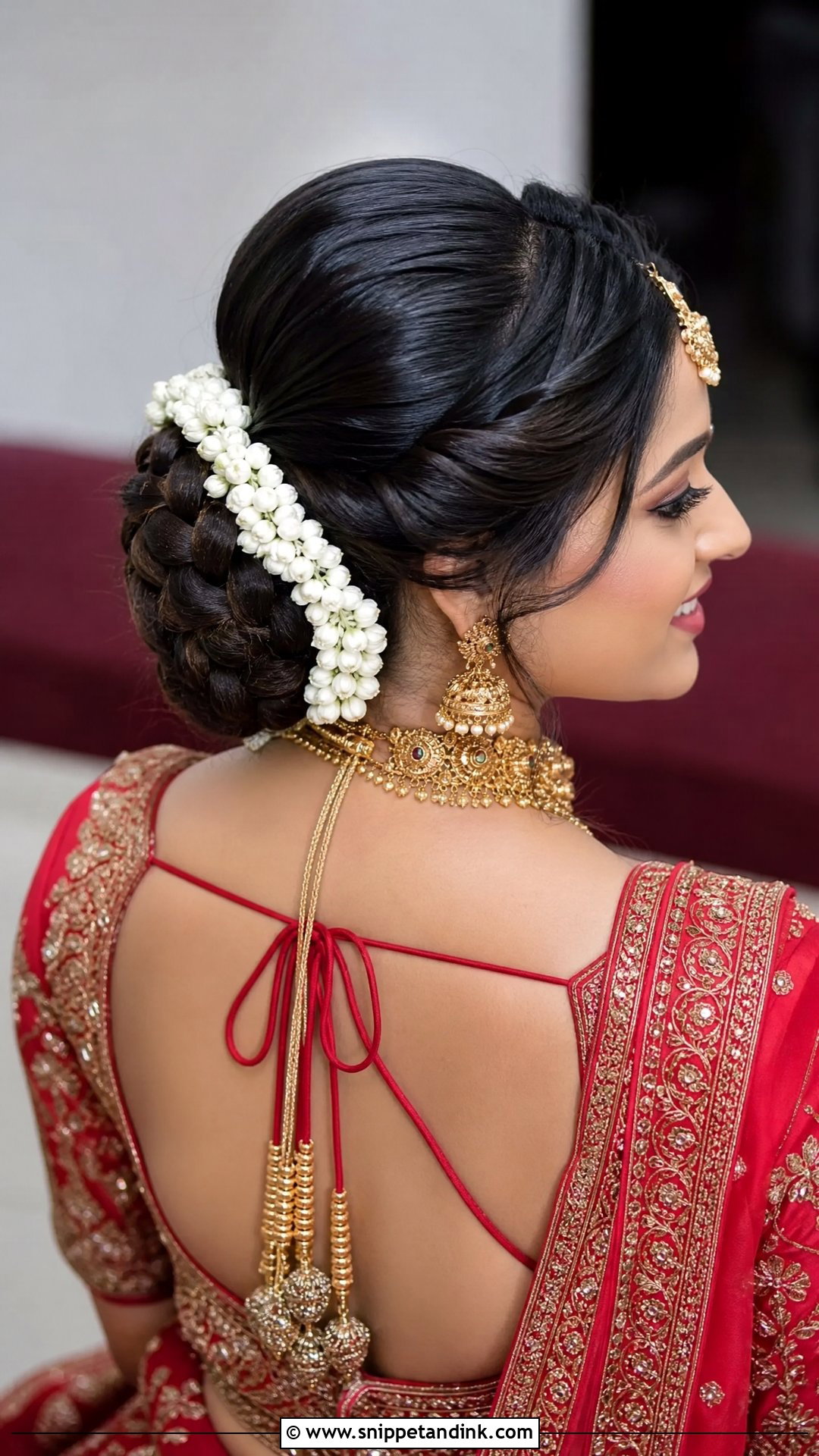
The classic I do most for the main ceremony. The braid gives the bun texture, and the jasmine gajra wraps around it with a fragrance that guests notice. I pin the gajra at several points along its length so it doesn’t slide down when you bend for rituals. White jasmine stands out against dark hair and sits well with rich, heavily embroidered lehengas.
Gajra, Fresh Blooms and Pins Over a Long Wedding Day
Many of these styles use flowers, and fresh flowers are where hair starts to look tired late in the evening. Jasmine browns at the edges after several hours in heat, and roses drop petals onto the shoulders. If the ceremony is long or outdoors, keep the gajra wrapped in a damp cloth in the fridge and attach it just before you leave the room.
What to pack for touch-ups
- A dozen bobby pins and U-pins in your hair colour, because the ones in your hair are the ones that loosen.
- A small travel hairspray and a fine tail comb for flyaways at the crown after the dupatta comes off.
- A spare gajra or a few loose blooms if your function runs past six hours.
- Clear elastics for braids and ponytails; a snapped one is hard to replace on the spot.
Heavy hair jewellery and stacked flowers can also cause a headache by the reception. If you feel pulling at the scalp, it’s usually one pin taking the weight. Ask whoever is helping you to find it and re-pin it a little higher rather than adding more pins on top.
Matching Each Function to a Style
Start with the dupatta and jewellery, then pick the shape that carries them. Buns and braids for the ceremony, where you sit and move under fabric for hours; waves and ponytails for the sangeet and reception, when you’re dancing. Fresh flowers, pearls or jewelled pins can make any of the 20 above your own. Book a trial with the actual dupatta and tikka, and on the day you’ll already know exactly how it all sits.
You'll Like These Ideas:



Leave a Reply