
A jooda is the hairstyle I trust most on an Indian wedding day, because it is the only shape that can carry a gajra, a matha patti, a passa and a pinned dupatta all at once without moving. It suits sarees and lehengas equally, and it changes character easily: sleek and formal for the pheras, softer for the reception, and full of fresh flowers for mehndi and haldi. Below are the joodas I’m asked for most, with what each one needs underneath to stay put and where I’ve seen them go wrong.
Padding, Pins and the Base Under Every Jooda
Every jooda in this list depends on a part you never see. I start with a firm ponytail or a low knot tied with a covered elastic, because pins alone can’t carry a dupatta and a gajra together. If you need fullness, a padding doughnut or a rolled hair piece goes over that base, and your hair is wrapped fully around it so no mesh peeks through.
Pins matter more than spray. U-pins go into the bun to hold flowers and drape; bobby pins go in crossed pairs to lock the base. A bun stuffed with loose pins is weaker than one with a handful placed into a solid anchor.
What to bring to your trial
- The actual dupatta, or one of the same weight and fabric, since it decides how high the bun can sit.
- Your matha patti, passa or maang tikka, so the anchors can be placed where the hooks will land.
- A sample of the flowers if you can get them, or at least the type and color you’ve ordered.
- Photos of the outfit from the back, because that’s the view guests see during the pheras.
Arrive with hair washed the day before. Freshly washed, conditioned hair is slippery and won’t grip pins. Day-old hair holds a bun noticeably better.
1. Classic Gajra Jooda Hairstyle
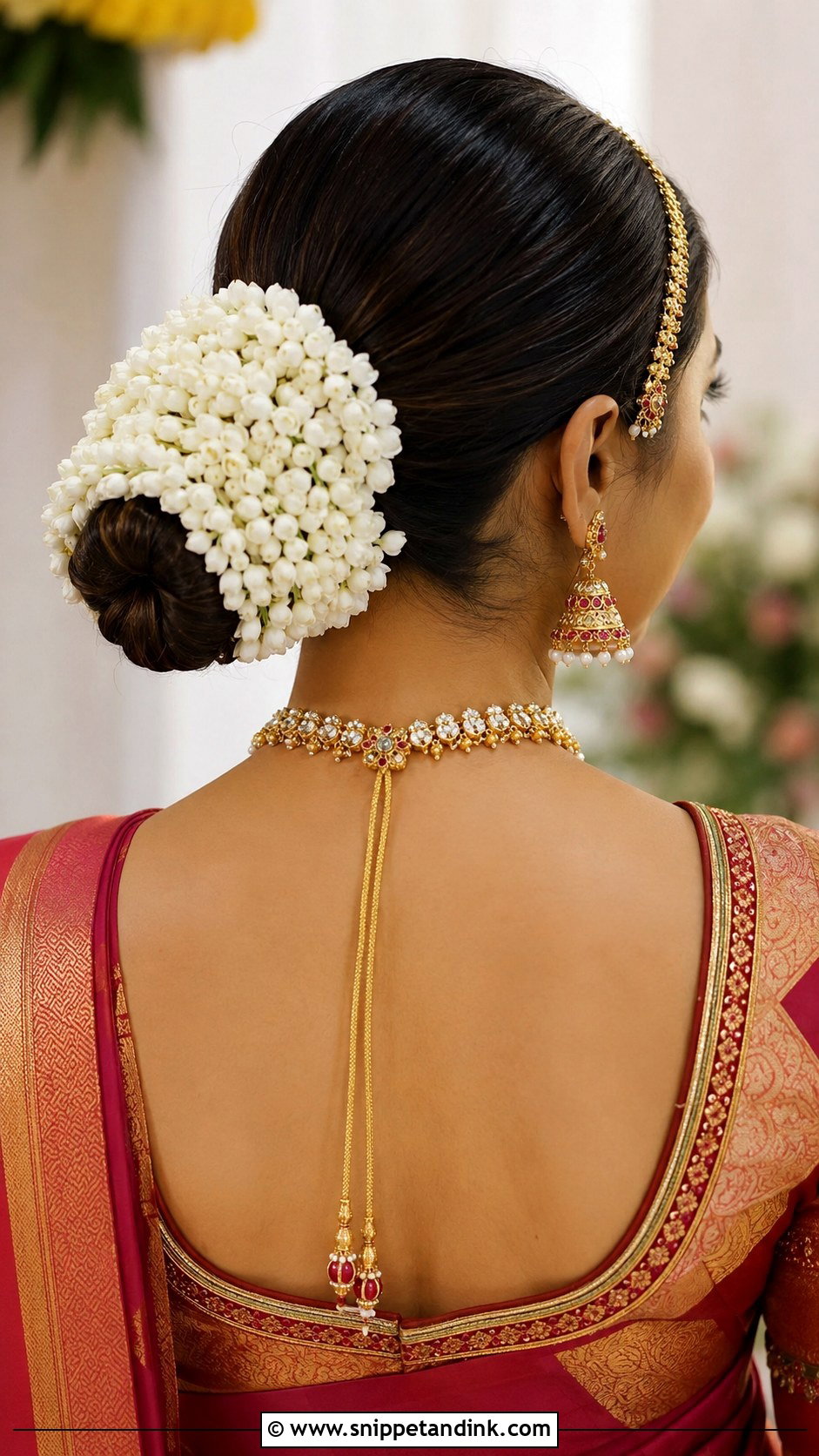
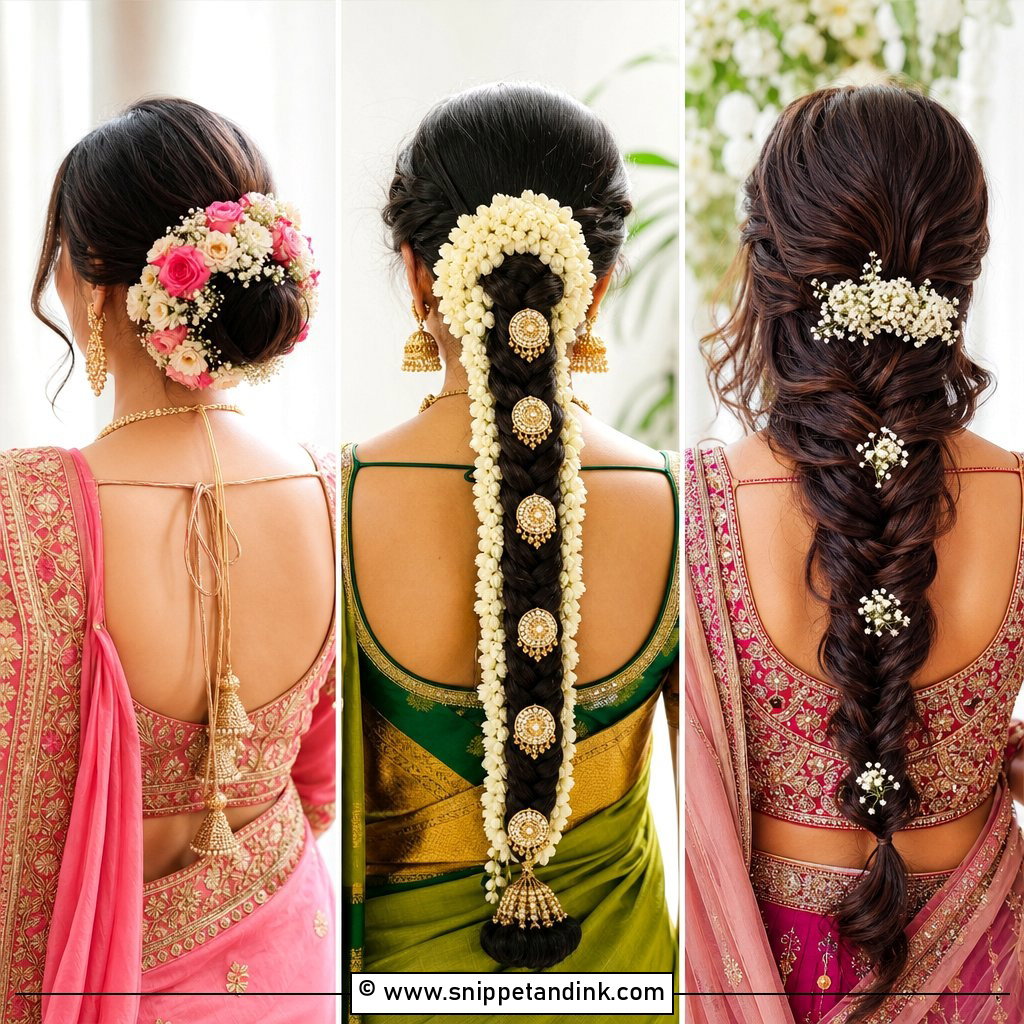
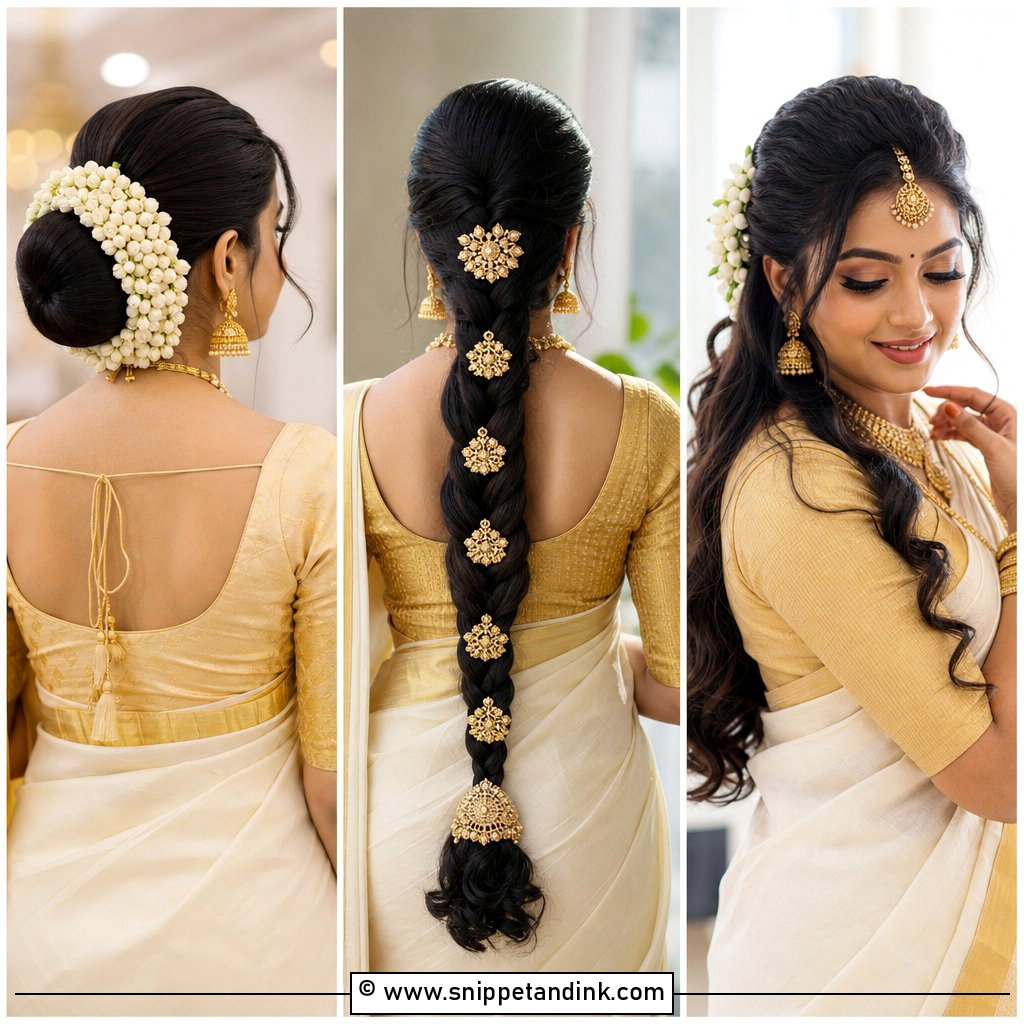
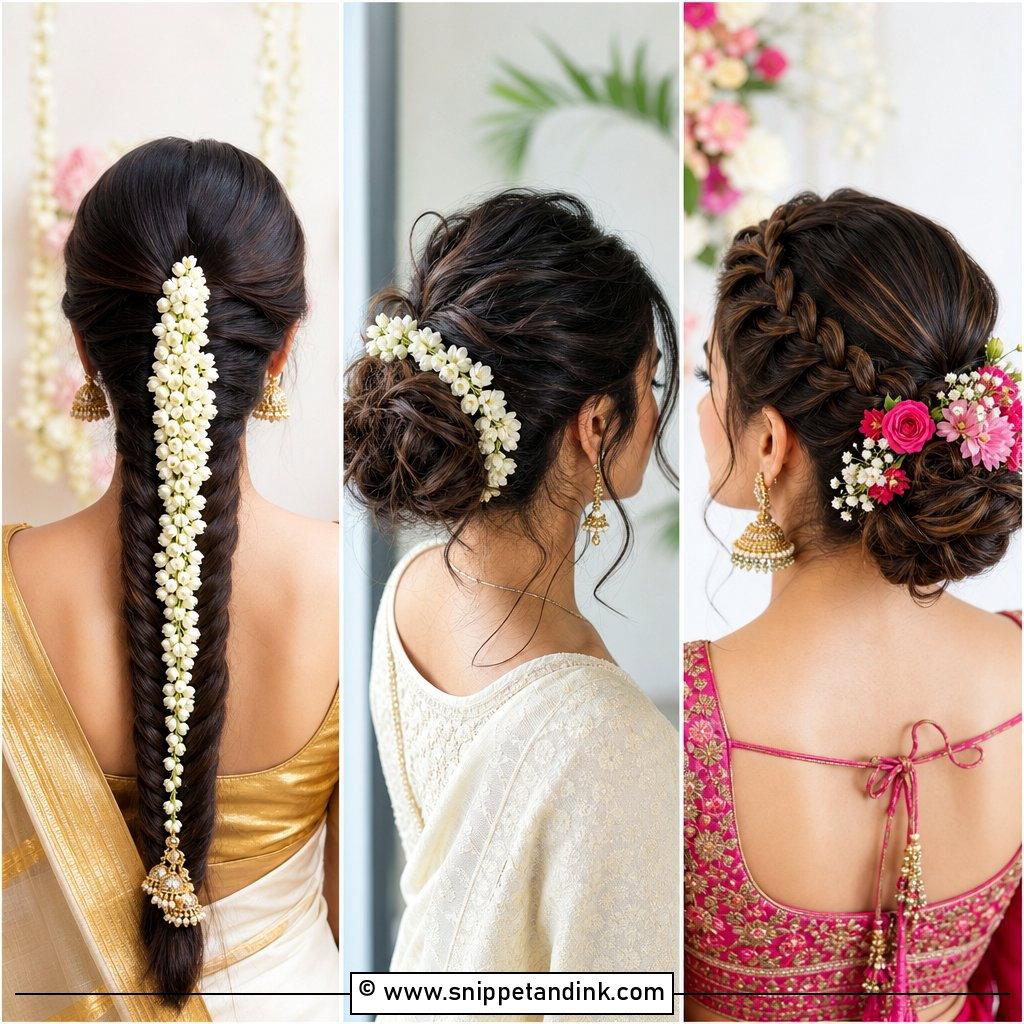
If you are unsure, start here. The hair is parted neatly, smoothed back and wrapped into a round low bun at the nape, and a fresh jasmine gajra is wound around it. Jasmine is heavier than it looks, especially when the strands have been kept damp, so I pin the gajra through to the bun with U-pins every few centimeters rather than tucking the ends and hoping. It sits well with silk, Banarasi and Kanjeevaram sarees and with a red lehenga, and because the bun stays close to the head it takes heavy jewelry. A center-parted maang tikka completes the bridal version; bridesmaids can leave the front softer.
2. Low Bridal Jooda Hairstyle
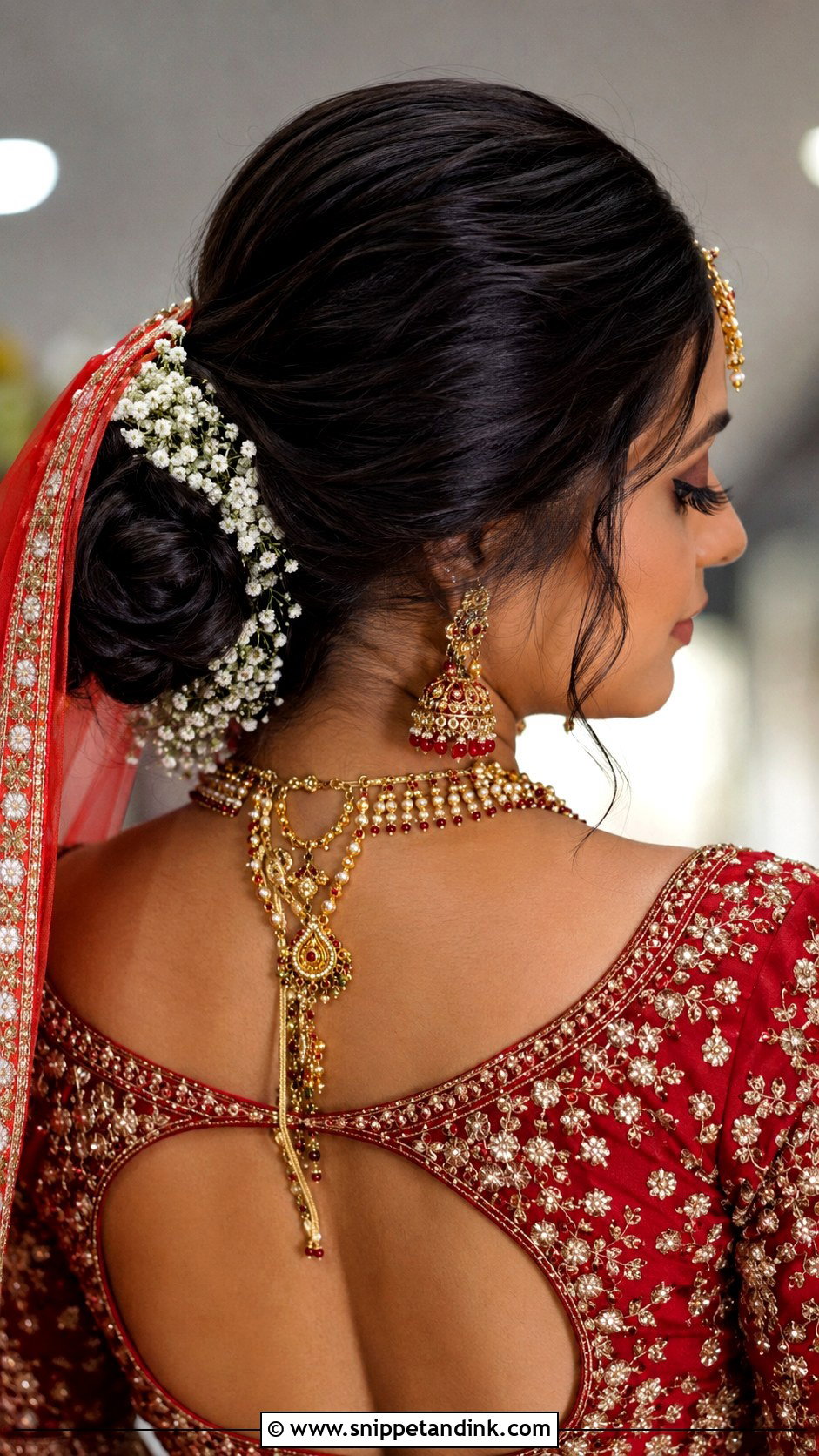
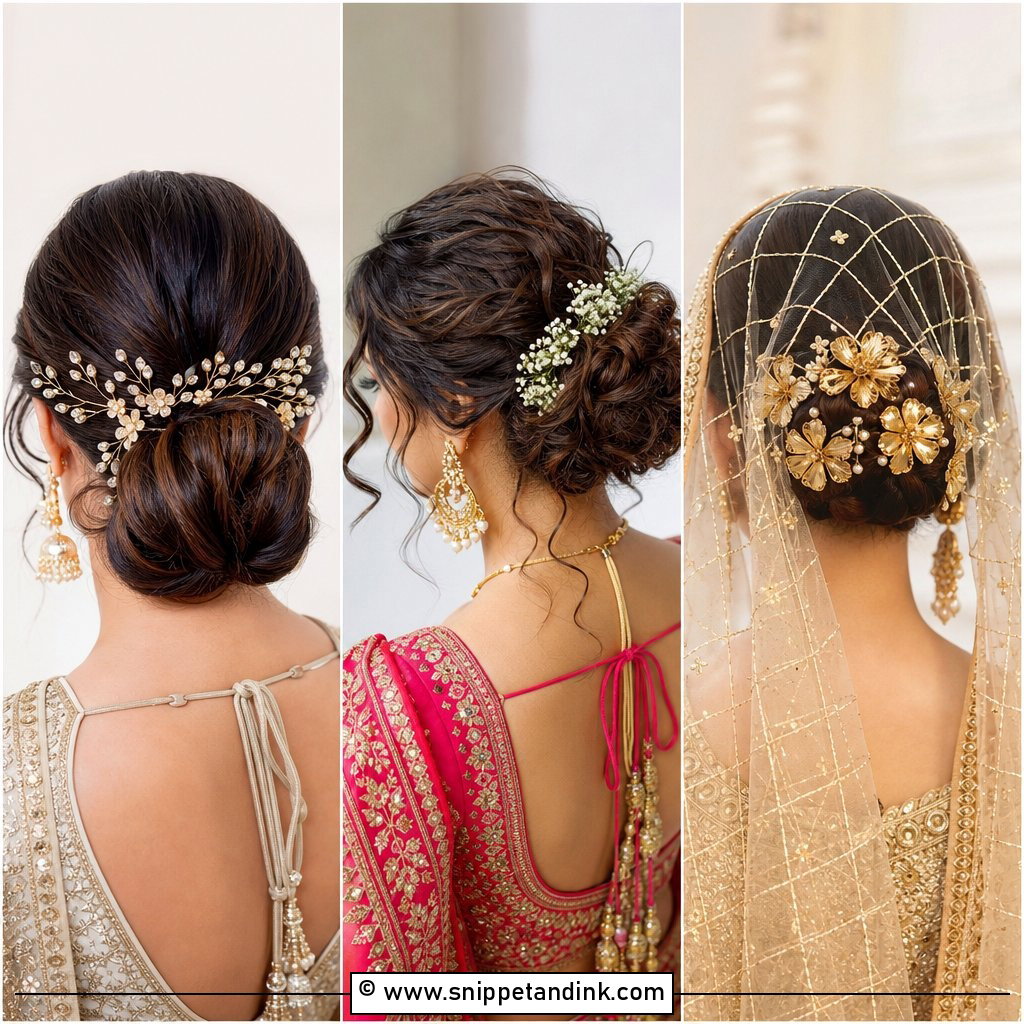
Under a dupatta or veil, height is the enemy, and a low jooda gives the drape a steady shelf at the nape instead of a peak at the crown. It can be sleek or slightly textured. The clean neckline also makes room for a choker or a long haar. Medium hair usually needs padding or a clip-in piece to look full at this height. I’d keep the front smooth with a center part for the ceremony and save loose face-framing pieces for a later function, because they tend to get trapped under the dupatta edge.
3. Messy Jooda Hairstyle For Wedding
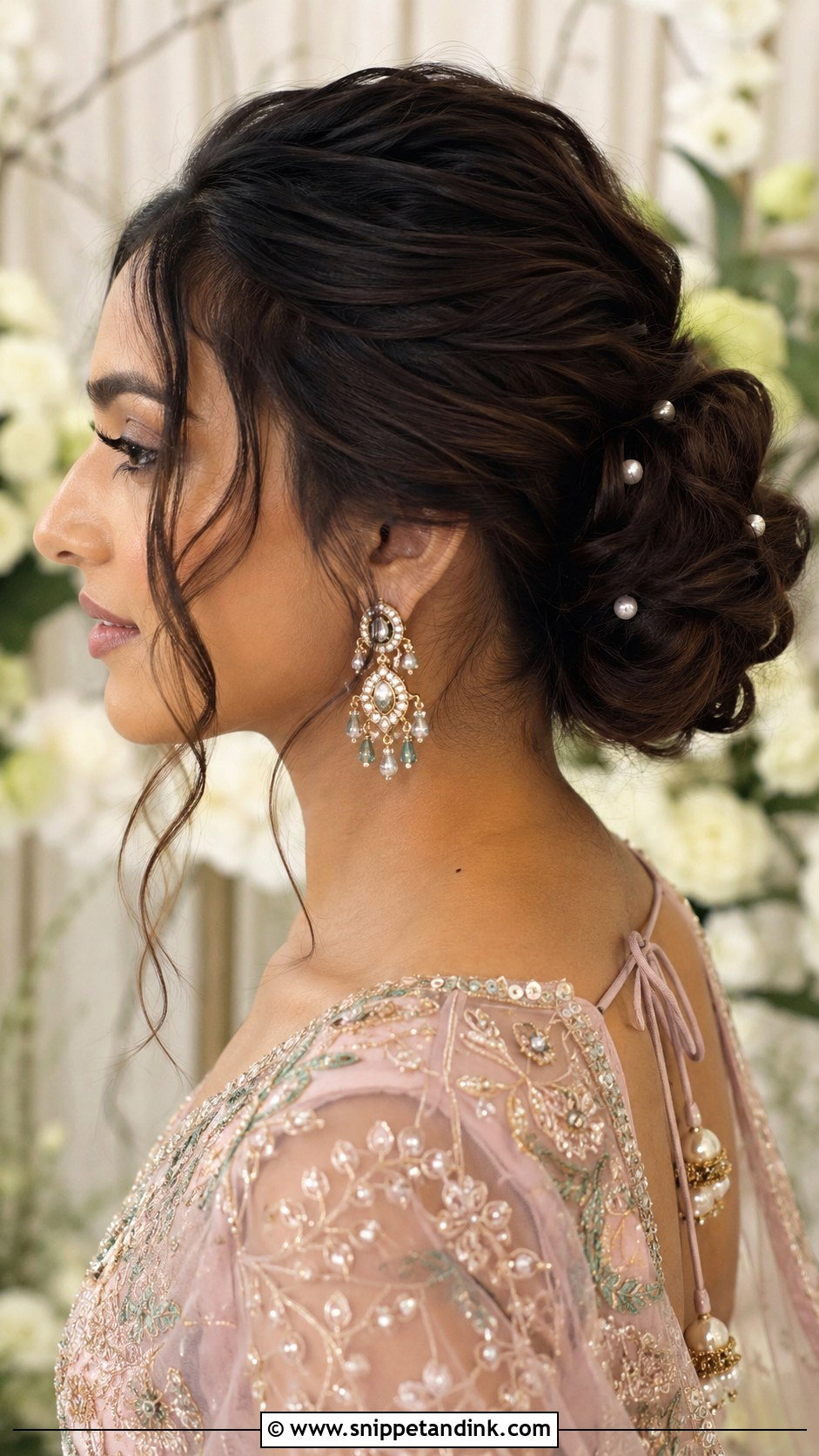
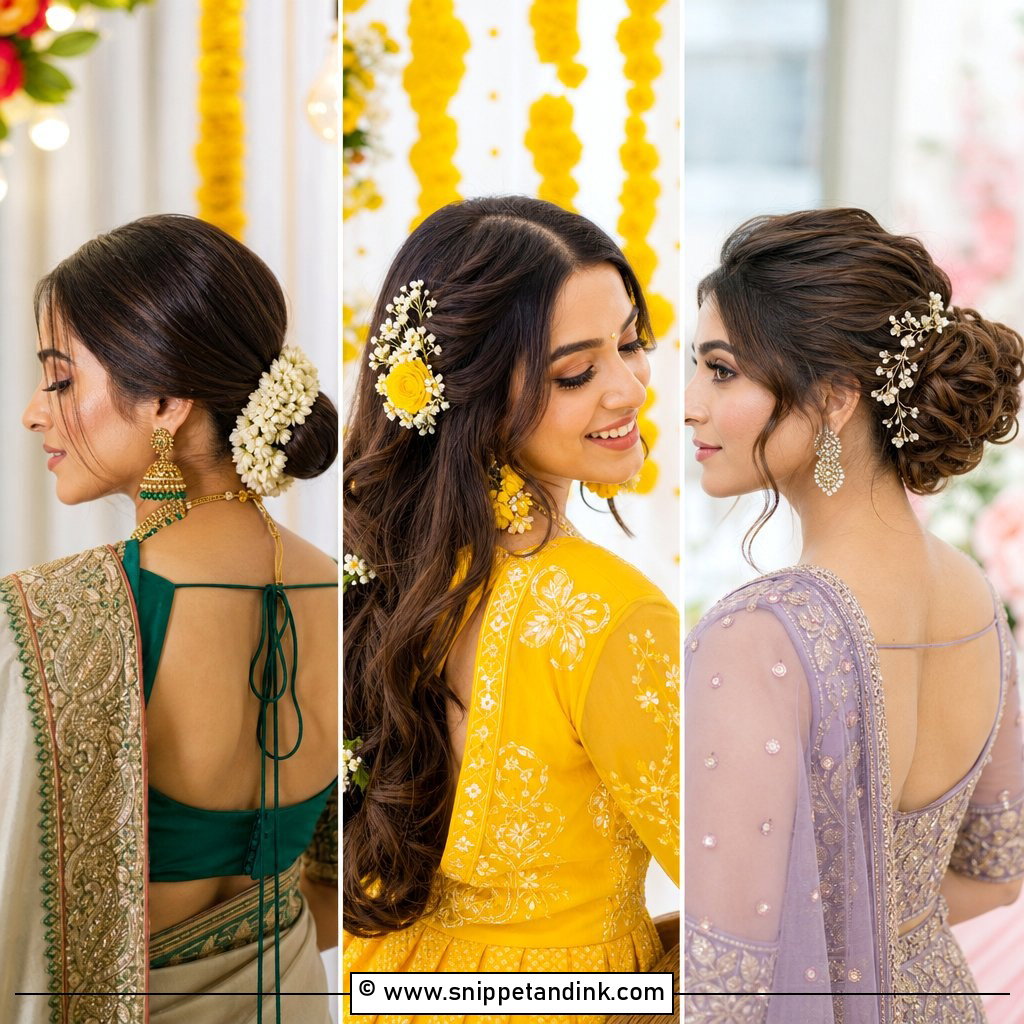
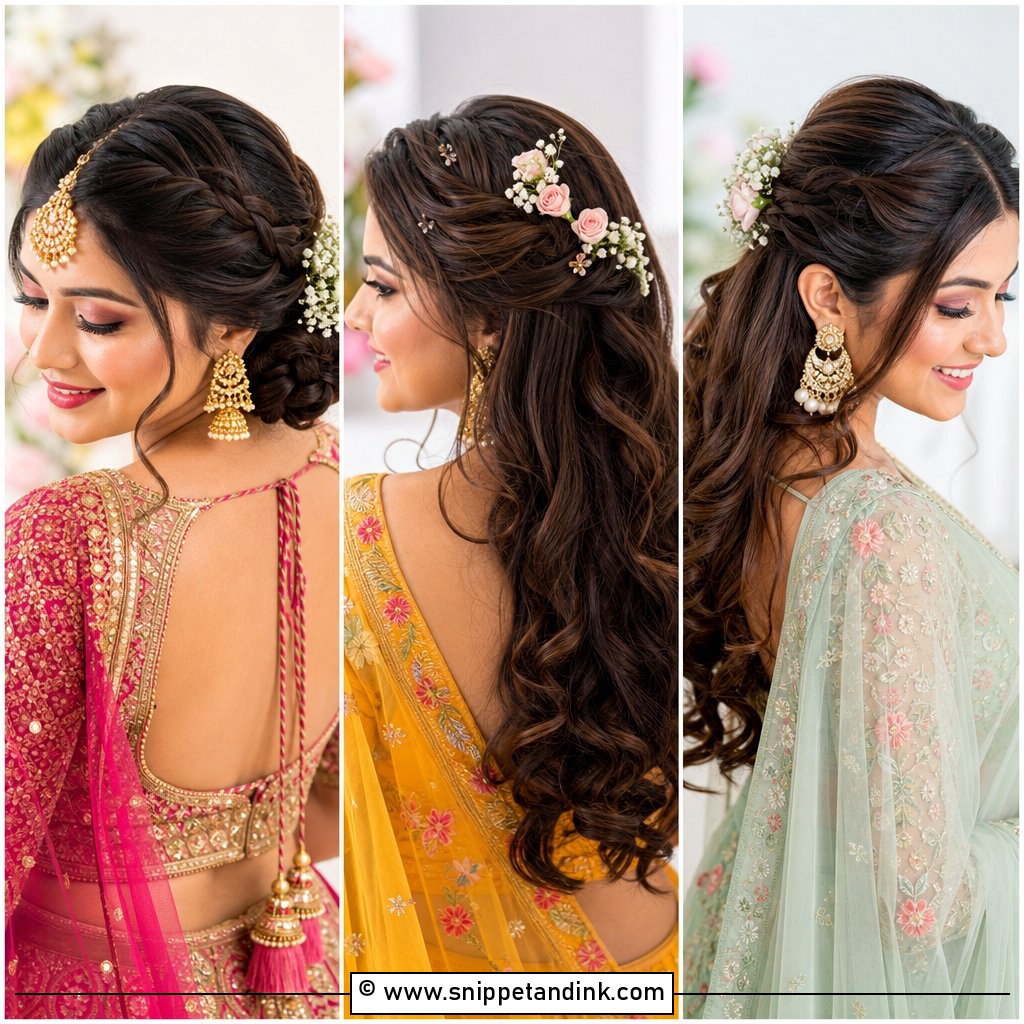
A messy jooda is really a tidy jooda that has been loosened on purpose. I build a firm base first, then pull out the outer twists with my fingers, which is why it stays relaxed rather than collapsing. It suits sangeet, engagement and cocktail looks, lighter dupattas and pastel outfits, and it holds small pins, baby’s breath or tiny pearls well. Where it fails is very silky, straight hair: the texture slides out within an hour unless the hair is prepped with a texturizing spray and curled first. Strong pins underneath and only a light-hold spray on top.
4. Sleek Jooda Hairstyle With Maang Tikka
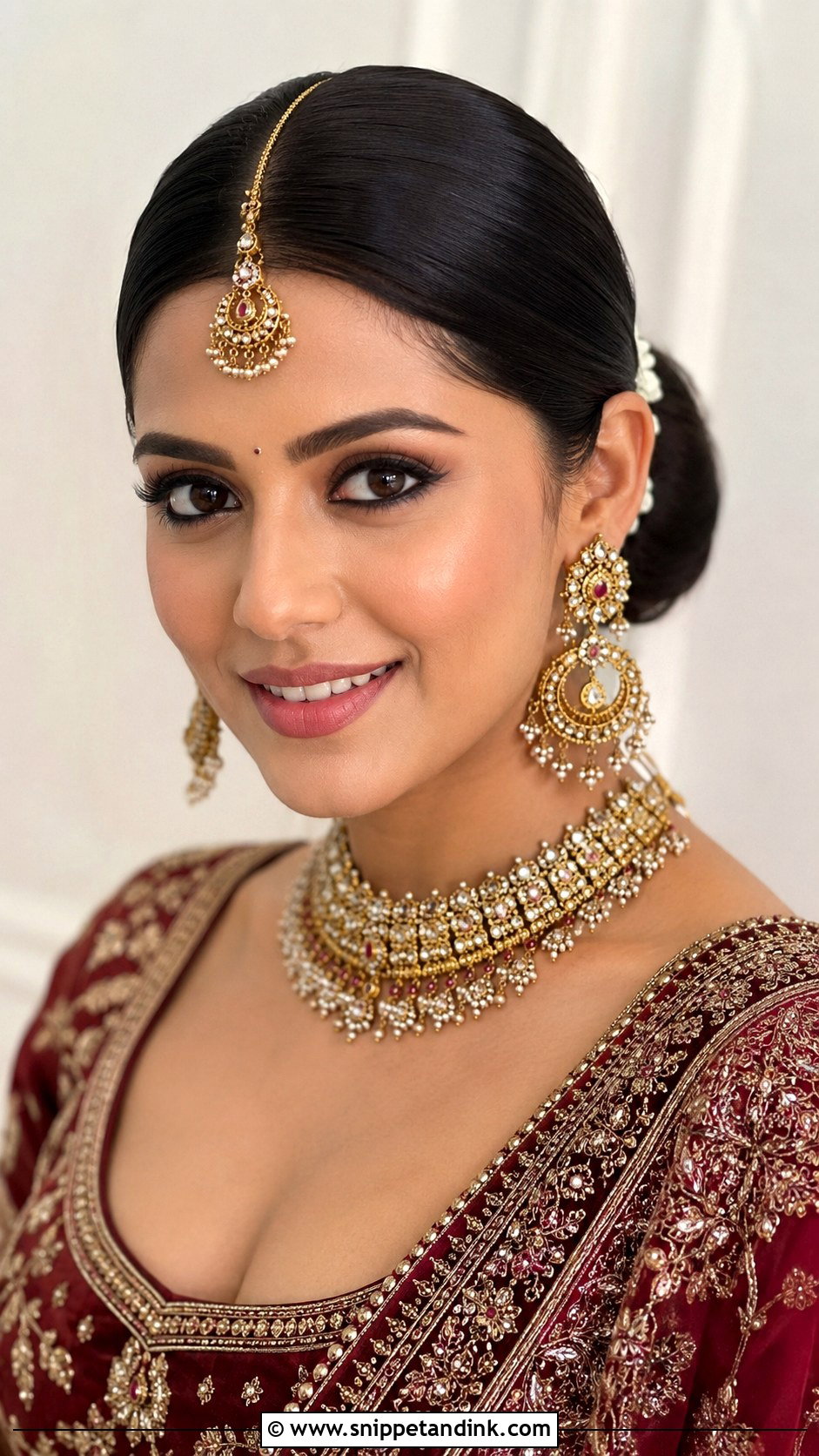
The hair is parted cleanly down the center, smoothed flat and shaped into a neat low or mid bun, which gives the tikka a straight line to sit on. I anchor the tikka chain with a small bobby pin hidden in the part, otherwise it creeps sideways every time you bow your head during rituals. This one shows off heavy bridal lehengas, embroidered sarees and structured dupattas. Use shine serum on your palms, not straight on the hair; too much at the roots reads as oily under flash. A traditional bun, finished cleanly.
5. Floral Jooda Hairstyle For Indian Wedding
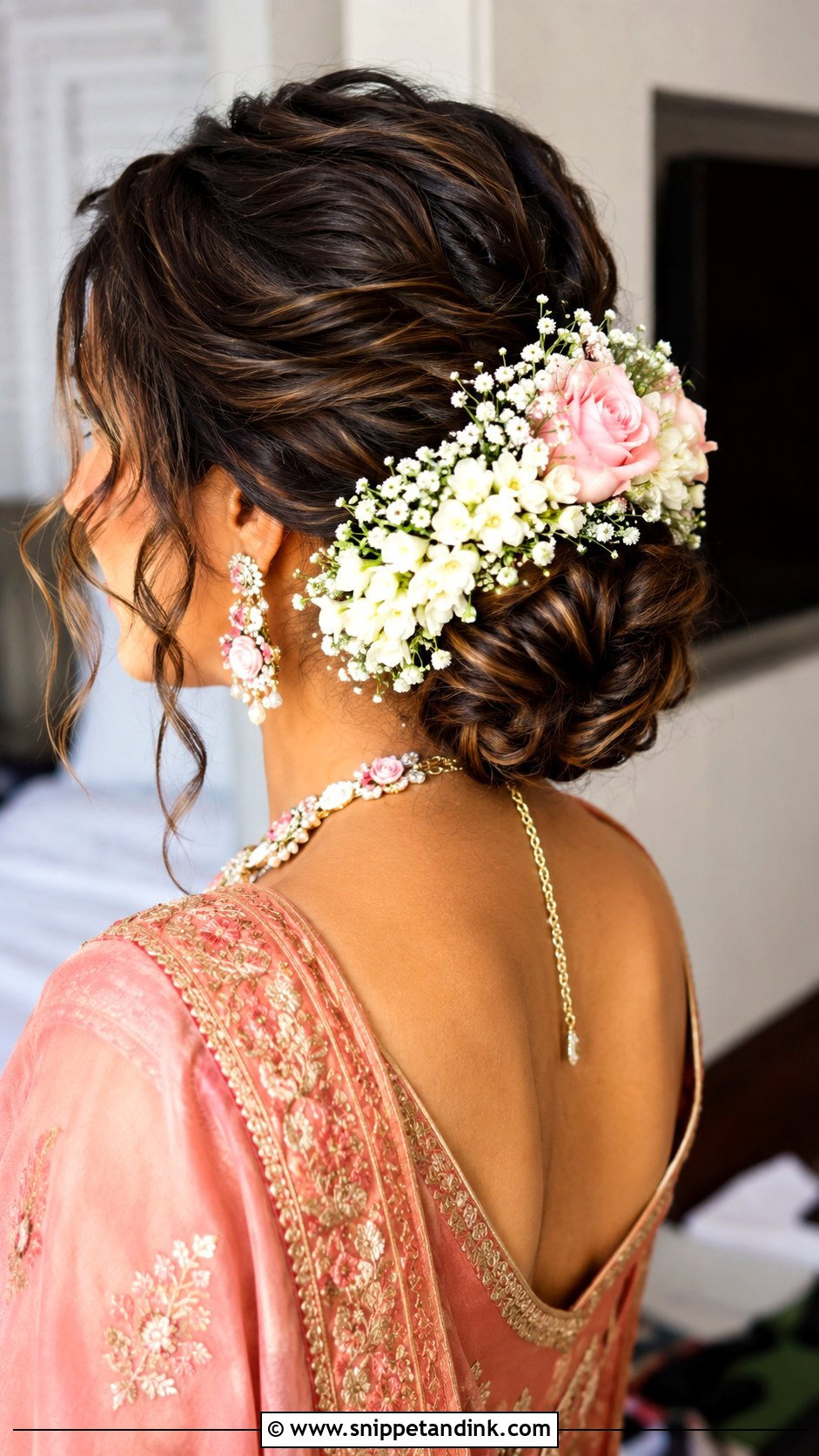
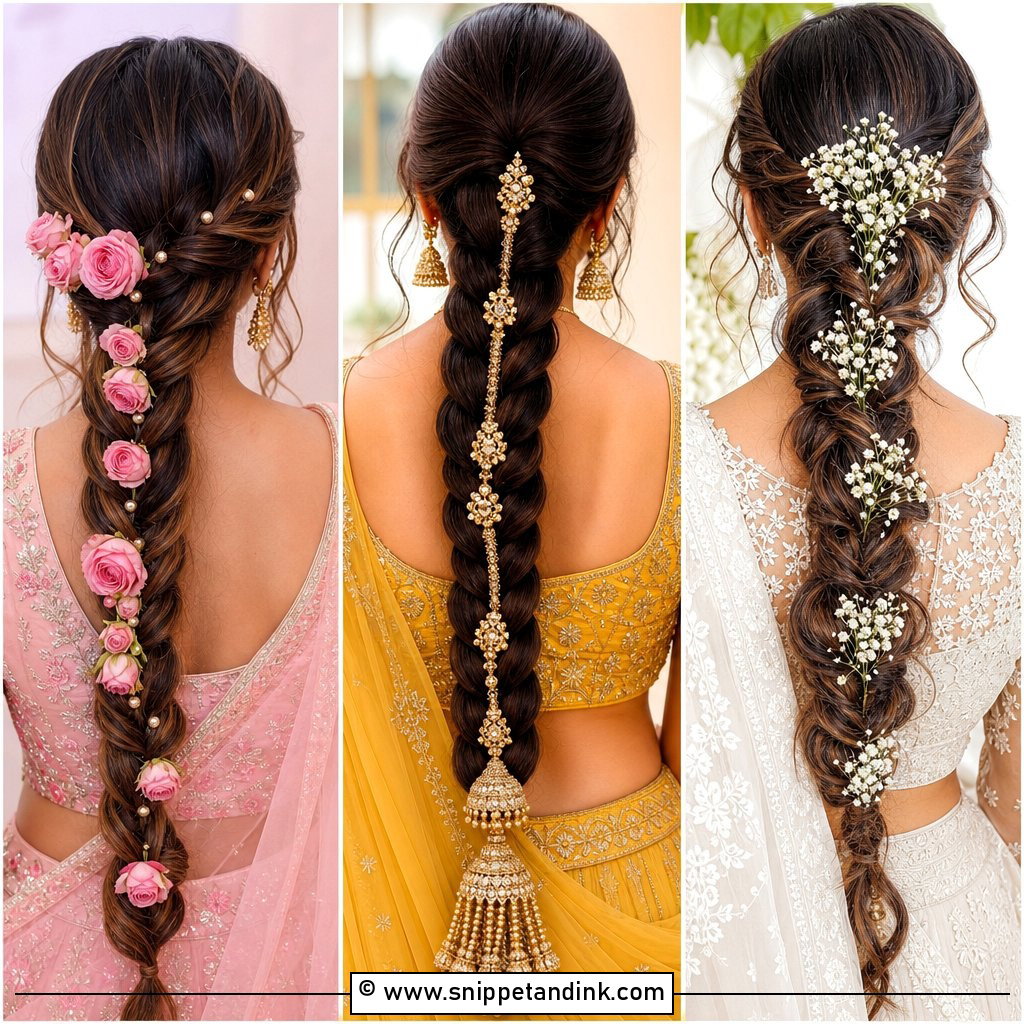
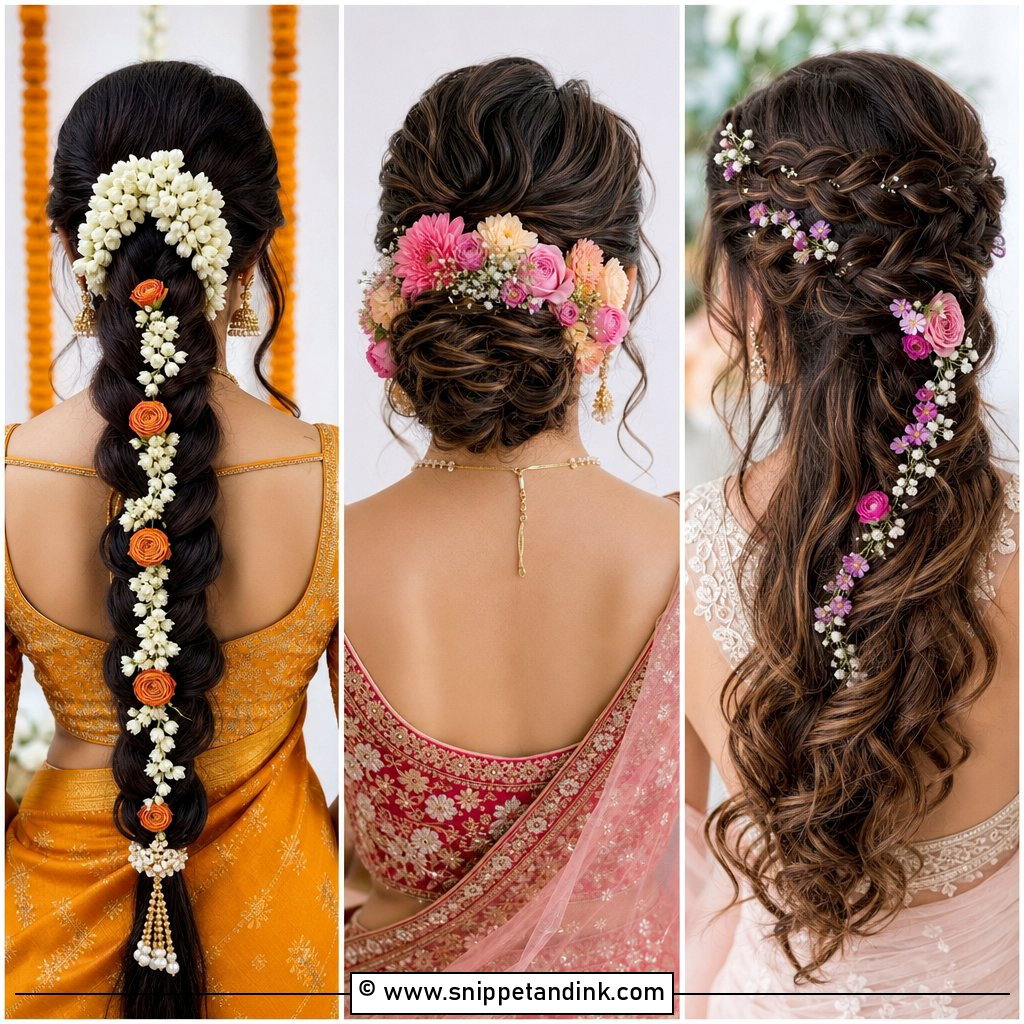
Mixing flowers changes the mood quickly. Roses, baby’s breath, orchids, mogra and small seasonal blooms can all go into a low or slightly textured bun. Fresh flowers suit haldi, mehndi, day weddings and outdoor ceremonies, but heat matters: delicate petals brown at the edges in strong sun, so for a midday outdoor function I lean toward sturdier blooms and keep the delicate ones for evening. White feels classic, pink feels softer, and yellow or orange suits haldi. Because the flowers already carry a lot of decoration, go lighter on the jewelry.
6. South Indian Bridal Jooda Hairstyle
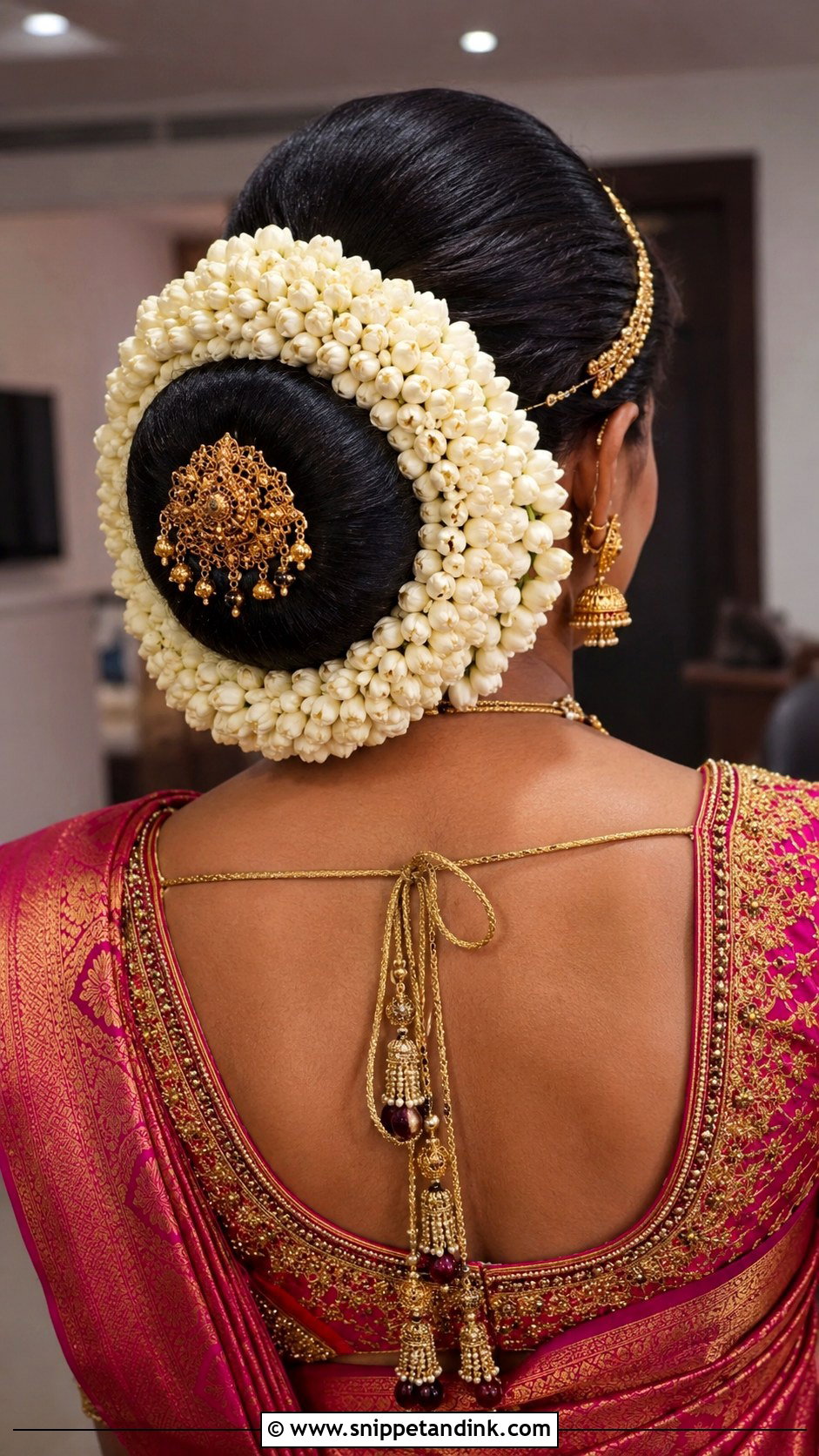
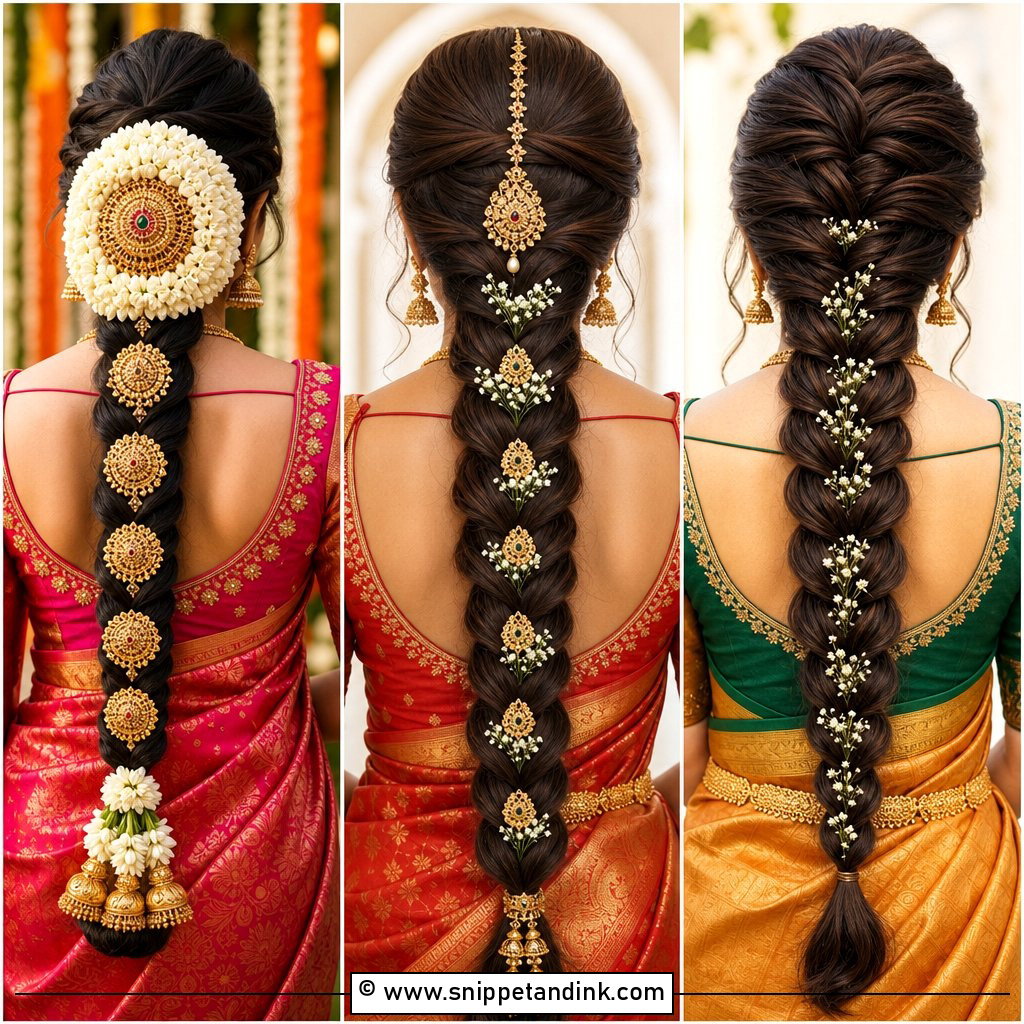
A South Indian bridal jooda hairstyle is usually smooth, rounded and set low or at mid-height, then dressed with jasmine, temple jewelry, gold accessories or a bun cover. With a Kanjeevaram saree and antique gold, the neat center part frames the face for the matha patti. It’s practical for long rituals because it holds flowers and jewelry steadily. The padding is where I’m careful. A doughnut that’s too big makes the bun look stuck on, so I size it to the bride’s own hair and wrap her hair fully around it so no mesh shows between the jasmine strands.
7. North Indian Bridal Jooda Hairstyle
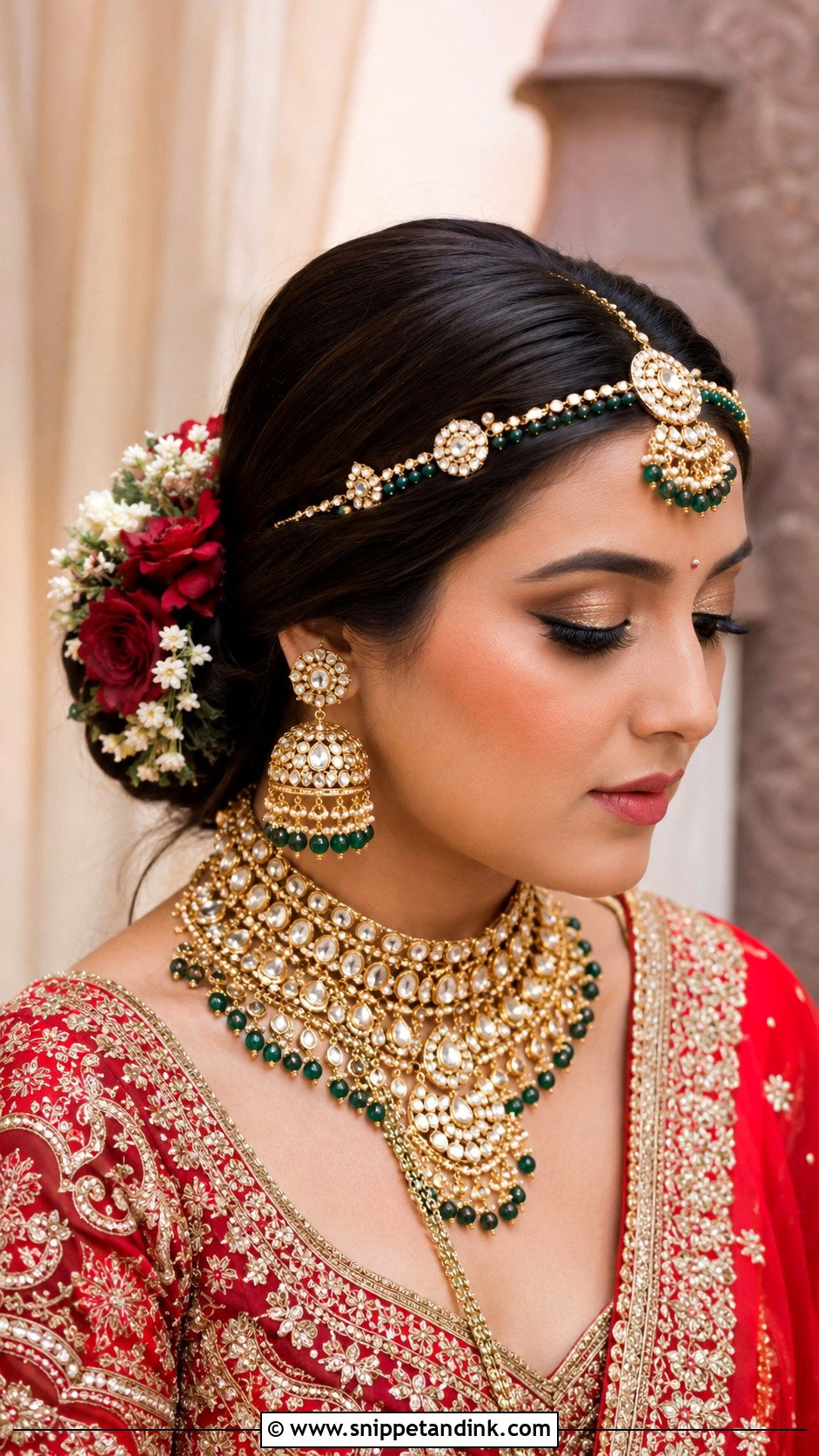
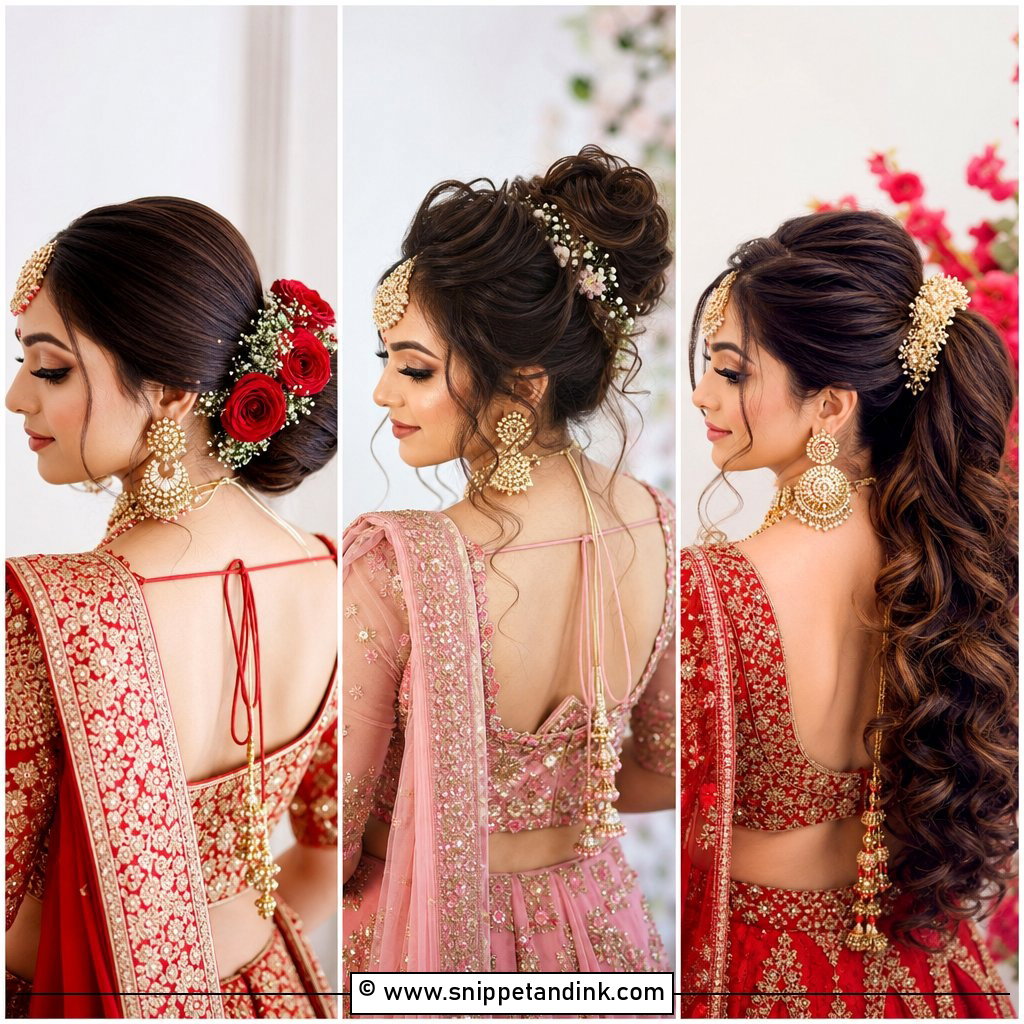
A North Indian bridal jooda hairstyle is usually built for a heavy lehenga and a heavy dupatta: center part, a low bun, then a maang tikka, passa or statement pins. Some brides like it sleek, others want soft volume at the crown. My advice is to decide the crown height only once the dupatta is on, because a lifted crown that looks right in the mirror can push the dupatta up into an odd point. It keeps the neck and shoulders open for layered necklaces and embroidered blouses. Pearls or a few flowers soften a very formal outfit.
8. Juda Hairstyle With Dupatta
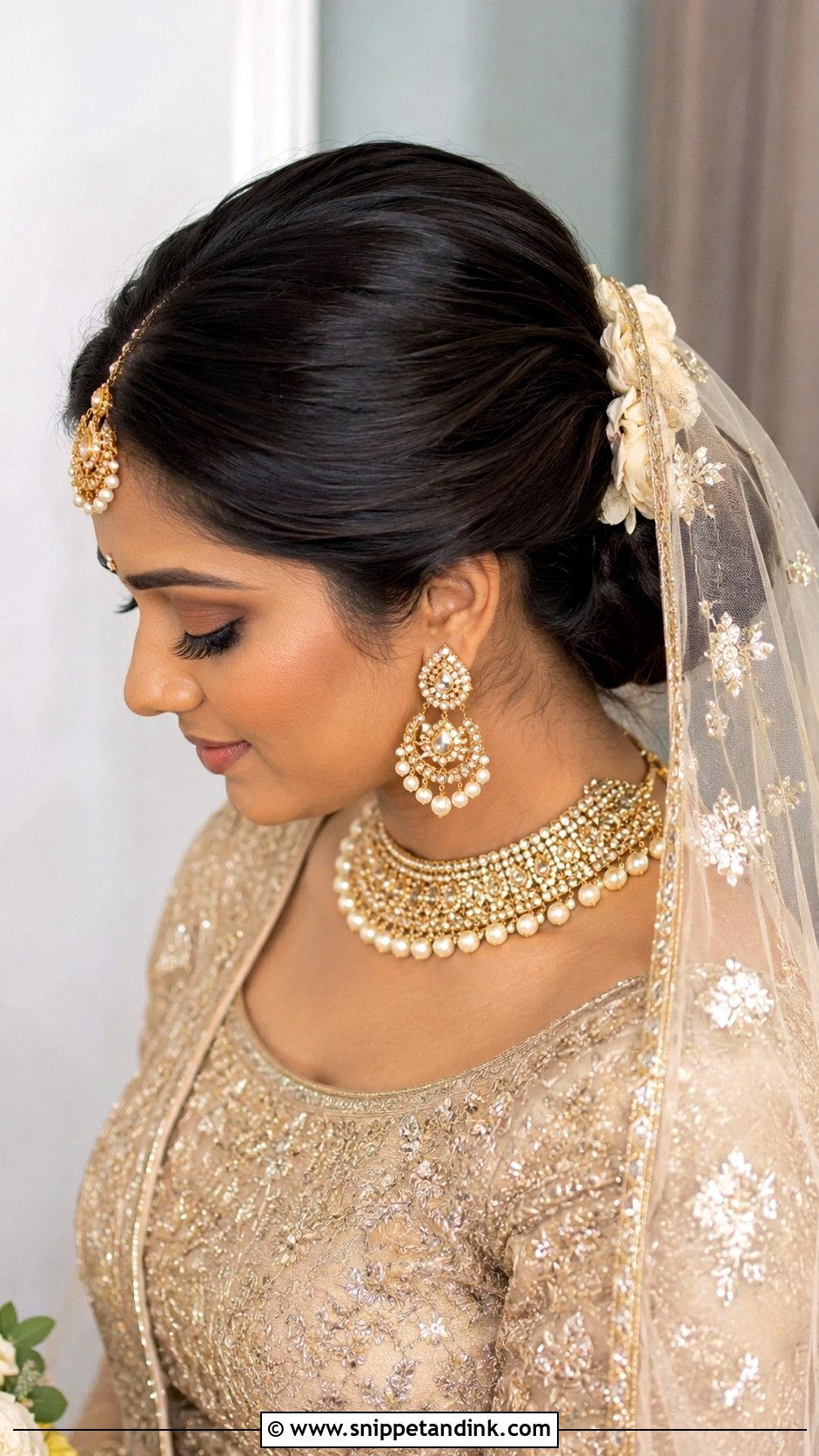
The dupatta can weigh more than any ornament, so the bun is doing structural work here. A low or mid jooda gives it a steady base without making the head feel heavy. I pin the dupatta into the base of the bun with U-pins rather than into loose hair, so the weight pulls on something solid. The front can be sleek or parted cleanly, depending on the jewelry. Please test the dupatta placement at your trial with the real dupatta, not a scarf. Hidden pins and a smooth crown will keep it neat through rituals and photos.
9. Jooda Hairstyle With Matha Patti
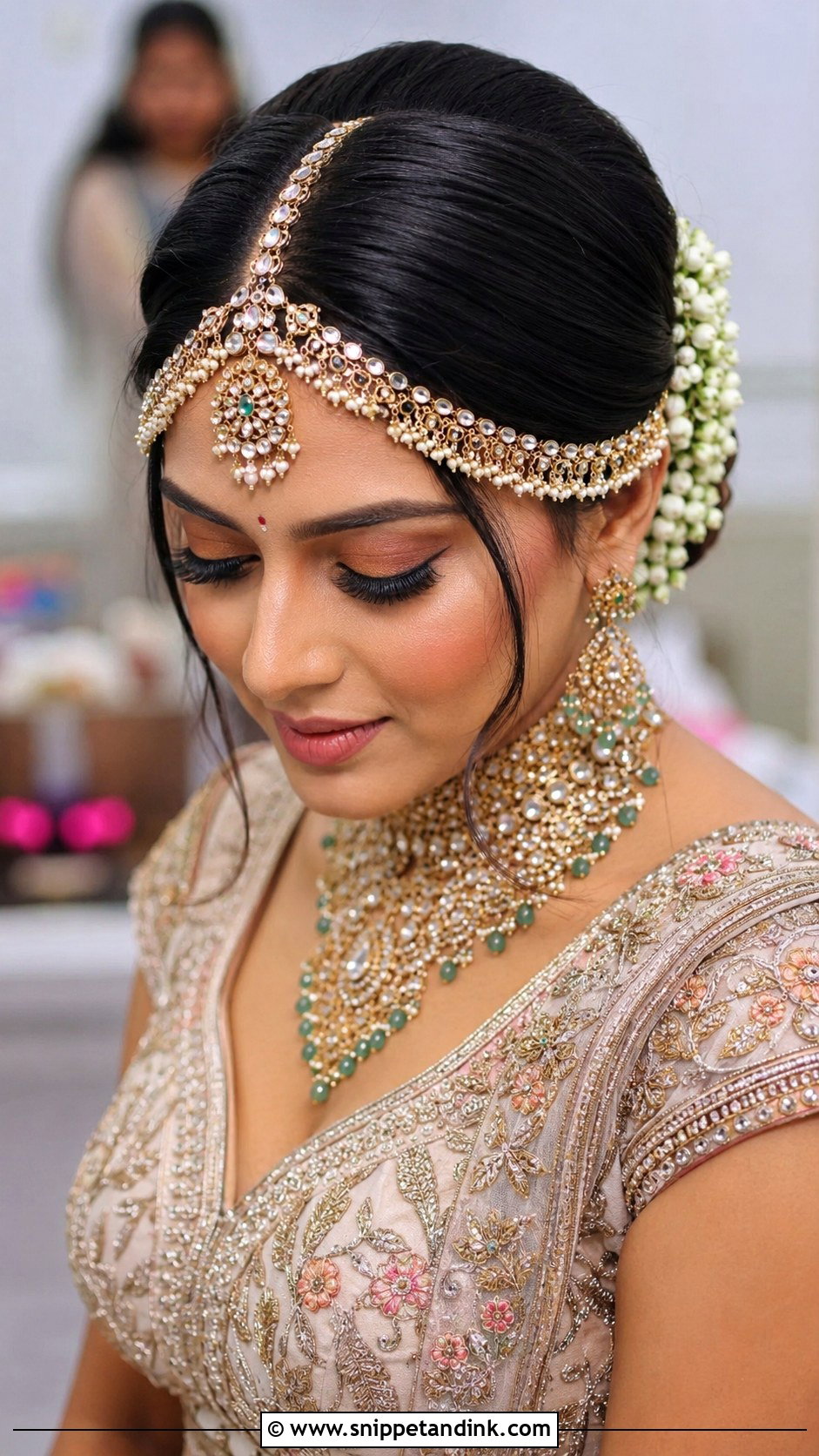
A jooda hairstyle with matha patti gives the fullest bridal frame there is. The bun stays neat and low so the matha patti can lie smoothly across the hairline, and a center part keeps the jewelry symmetrical. The side chains hook into the hair above the ears, so I braid or twist a small anchor there before the bun goes up; hooking into smooth, loose hair is how a matha patti ends up slipping onto the forehead. Jasmine, roses, pearls or gold pins all suit the bun. Avoid loose pieces near the forehead, as they hide the jewelry and tickle all day.
10. Jooda Hairstyle With Passa
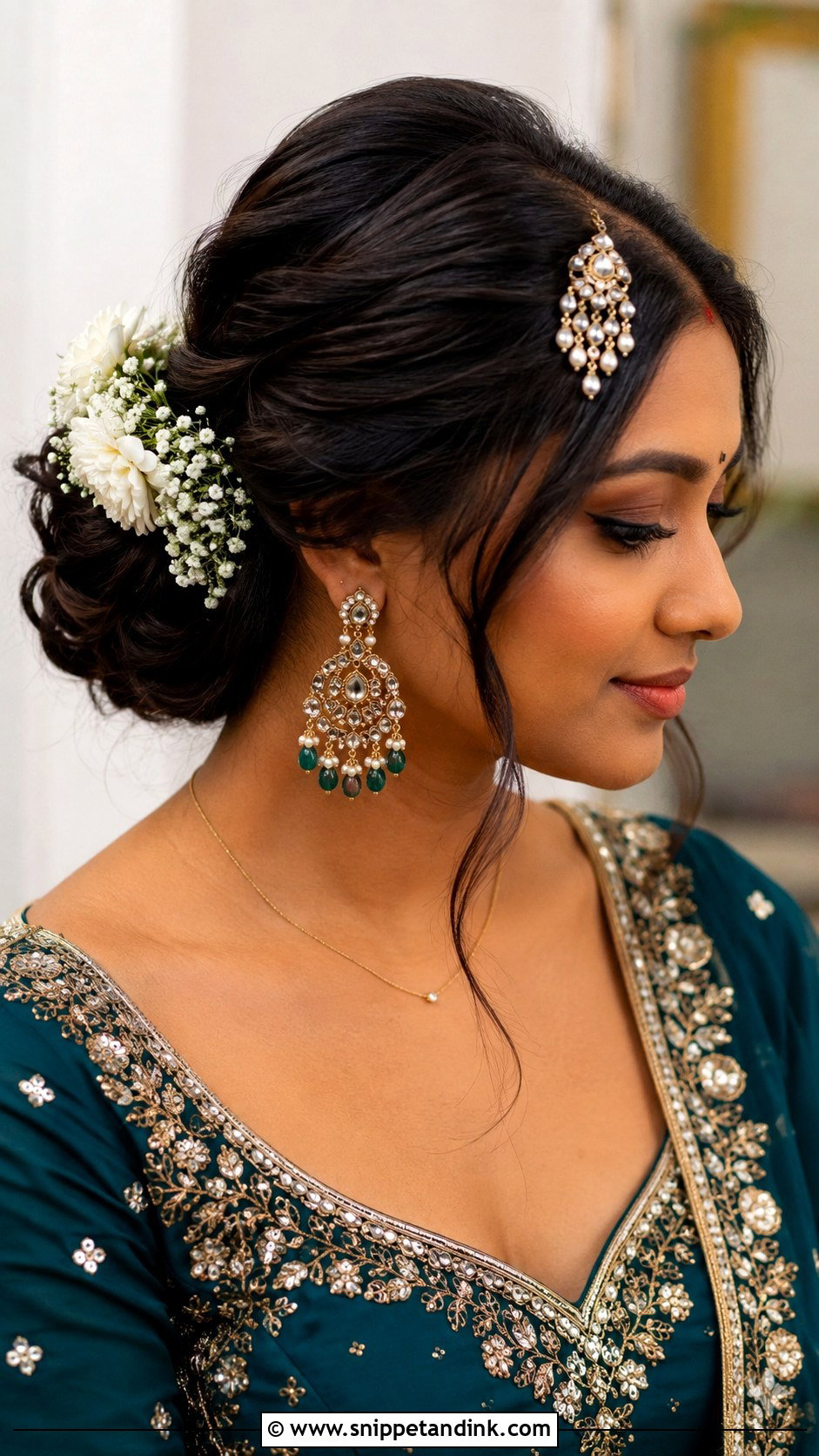
The passa hangs on one side of the head, so it brings a Mughal feel and also a lopsided weight. The bun is usually placed low and the part sits in the center or slightly off, leaving room for the passa to pin securely. It pairs with shararas, ghararas, lehengas and heavily embroidered dupattas. Because one side carries more weight, I add a hidden anchor of crossed pins at that side and give the crown a little volume to balance the outline. Keep the earrings on the passa side lighter if the piece is large.
11. Rose Jooda Hairstyle
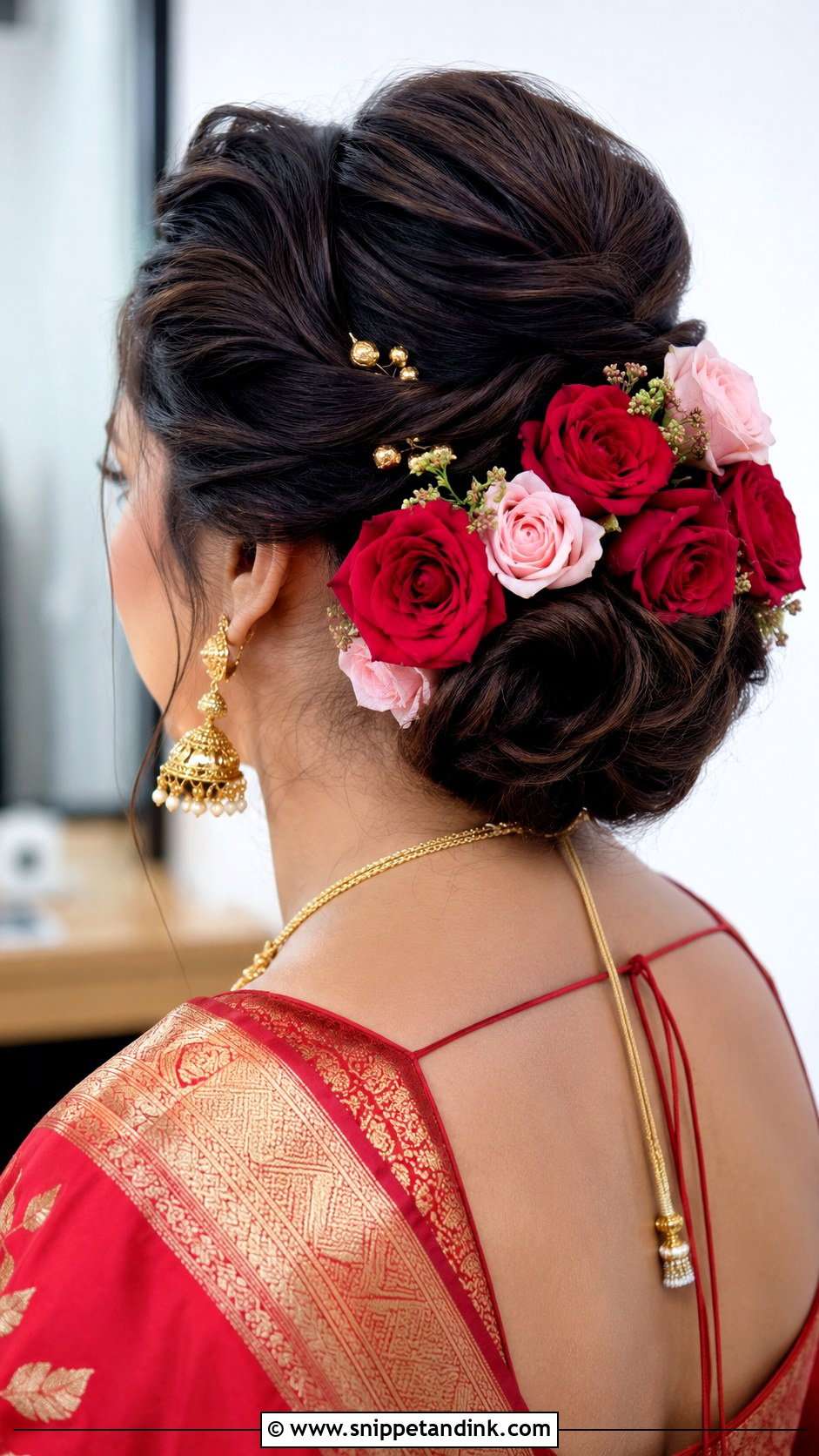
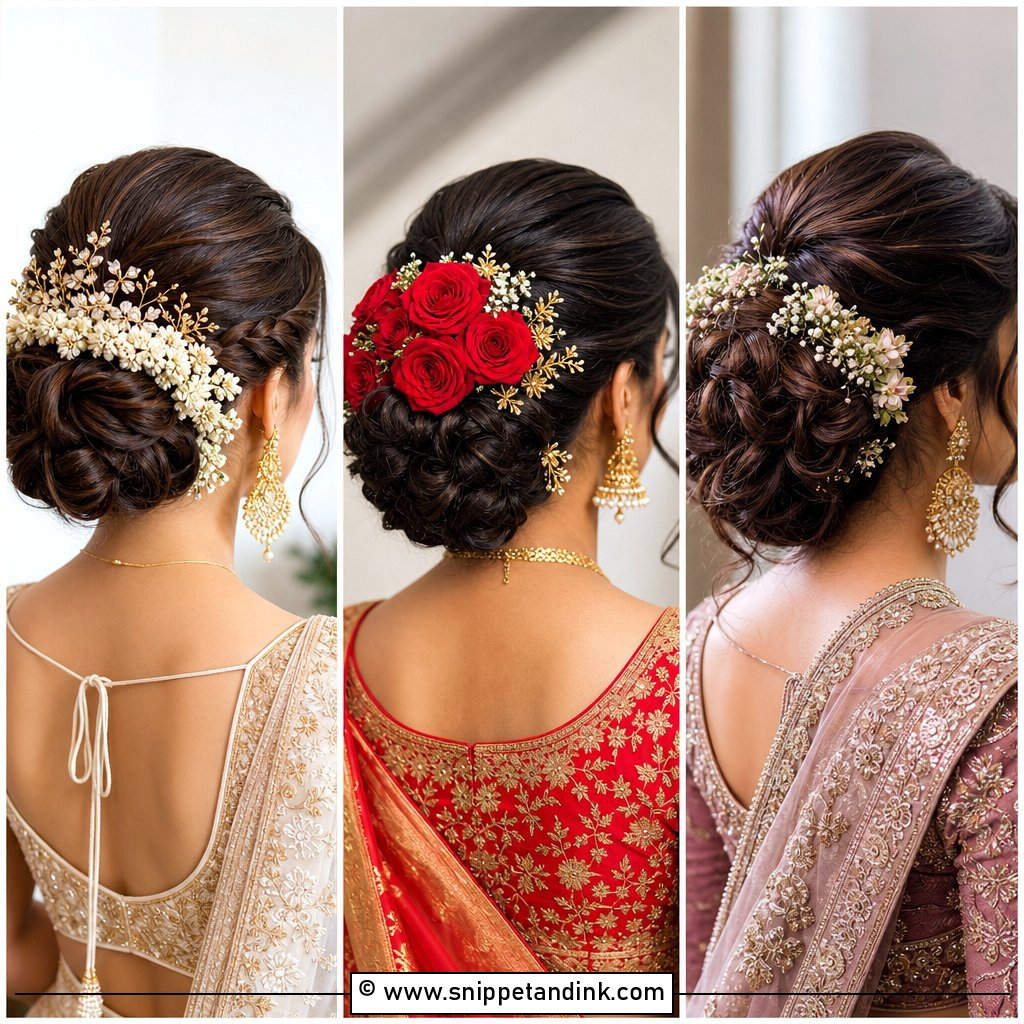
Roses are heavier and thirstier than jasmine, so a rose jooda needs a fuller bun to hold them without looking crowded. They can circle the bun completely or sit as a cluster on one side, in red, pink, peach or white. Deep red roses suit a traditional bridal outfit; pastel ones suit engagement, reception and day looks. I wire or pin each stem short and secure, and keep the roses cool and lightly misted until the last moment, because the outer petals bruise and darken once they’re handled. The front can stay smooth or softly waved.
12. Pearl Jooda Hairstyle
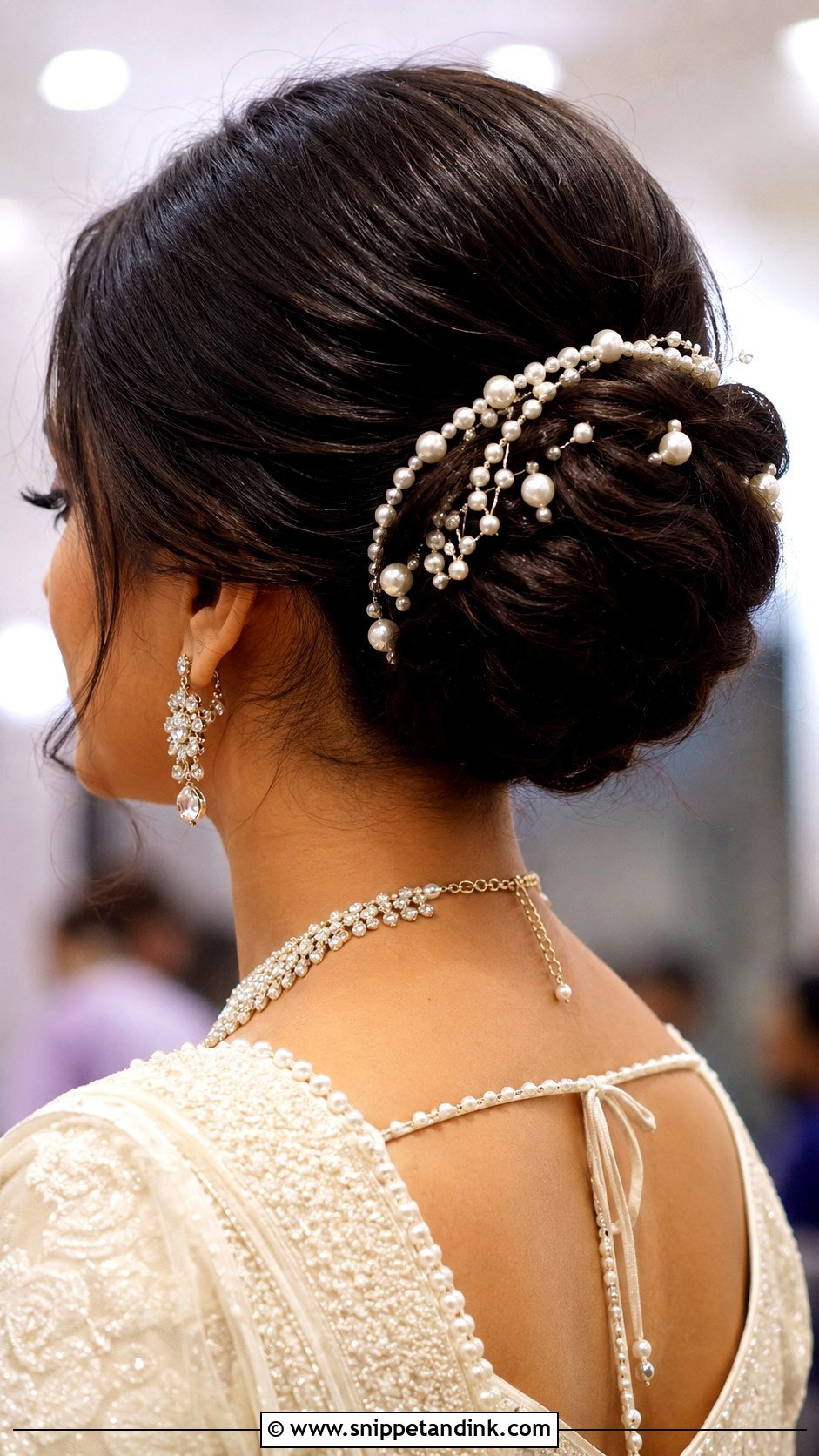
Pearls add detail without the weight of flowers. They can go in as pins, strings, bun chains or scattered accents around a low jooda, and they sit nicely with ivory lehengas, pastel sarees, champagne outfits and reception gowns worn with Indian jewelry. They also catch the light in close-ups without crowding the face. The mistake I see most is mixing pearl pins, a pearl chain and a large brooch all on one bun. Choose one type, place it with a clear pattern, and keep the bun smooth or lightly textured underneath.
13. Braided Jooda Hairstyle
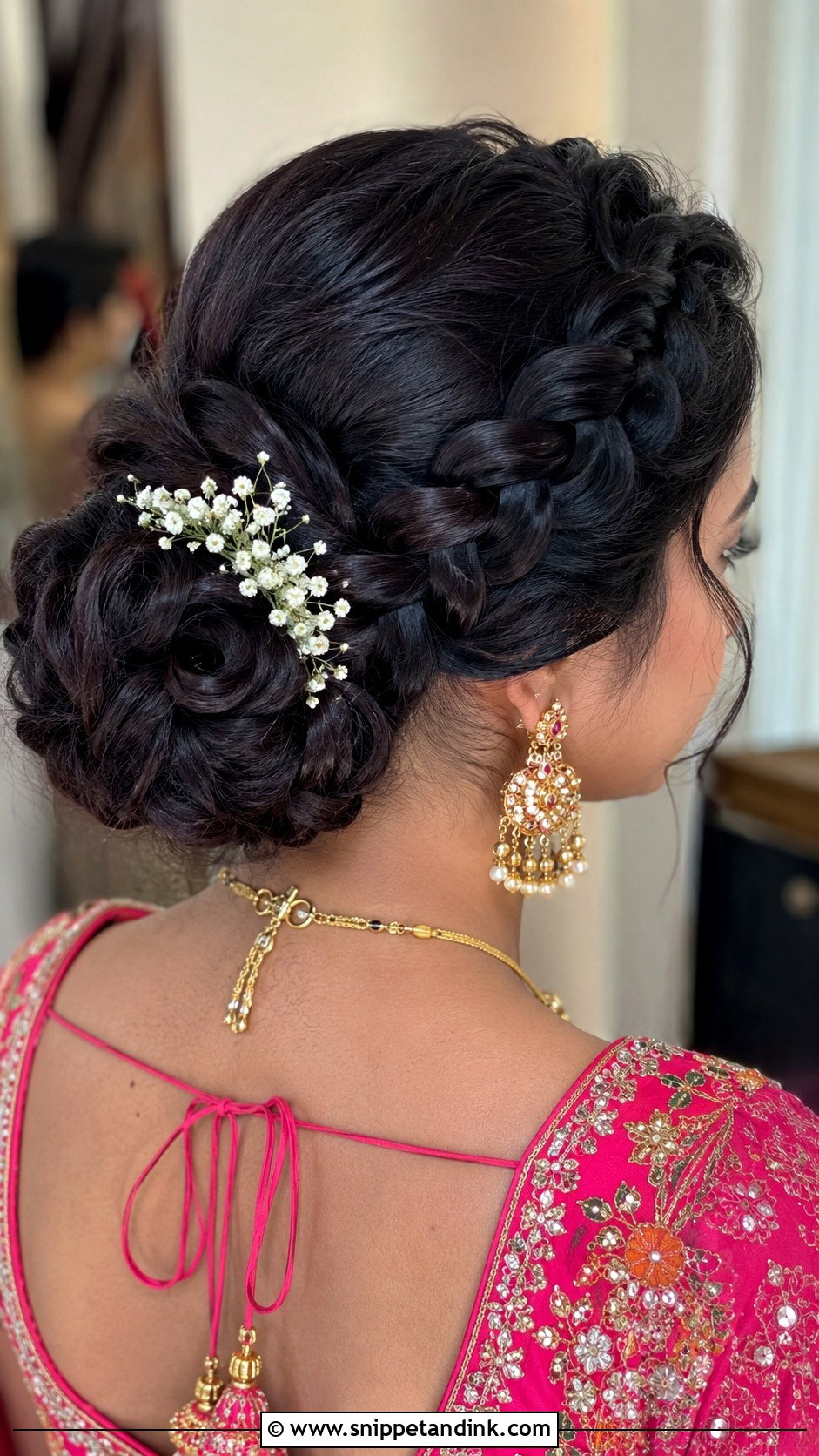
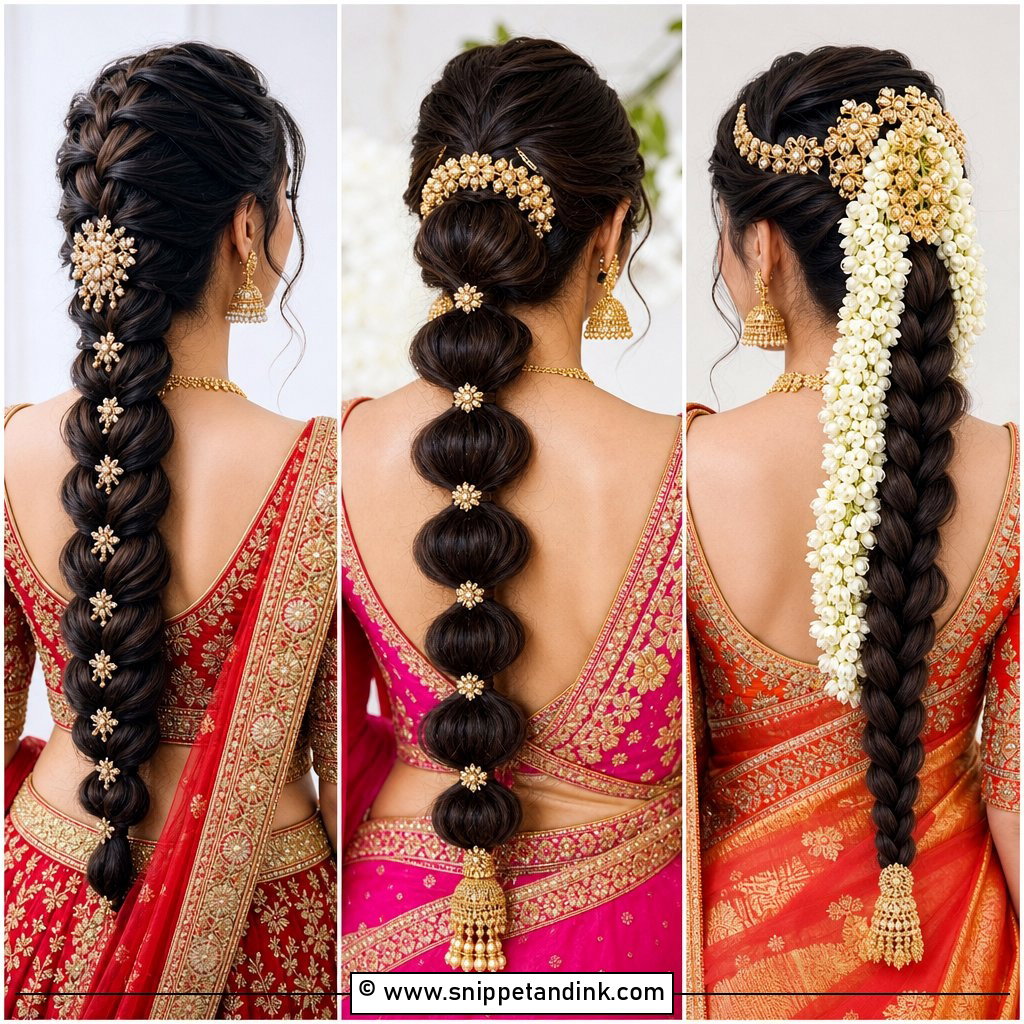
Braiding gives a jooda grip, and grip is what lets it survive a long celebration. The hair can be braided at the crown, along the sides or through the bun itself before it’s wrapped. Pins hold far better in braided sections than in smooth hair, which is why I often braid even when the braid won’t show much. It looks special from behind, suits bridesmaids and sisters of the bride, and helps a bride who wants tradition with a little more detail. Thick hair benefits most, since braiding packs the volume down into a neater shape. A few flowers or pearl pins along the braid are plenty.
14. Open Front Jooda Hairstyle
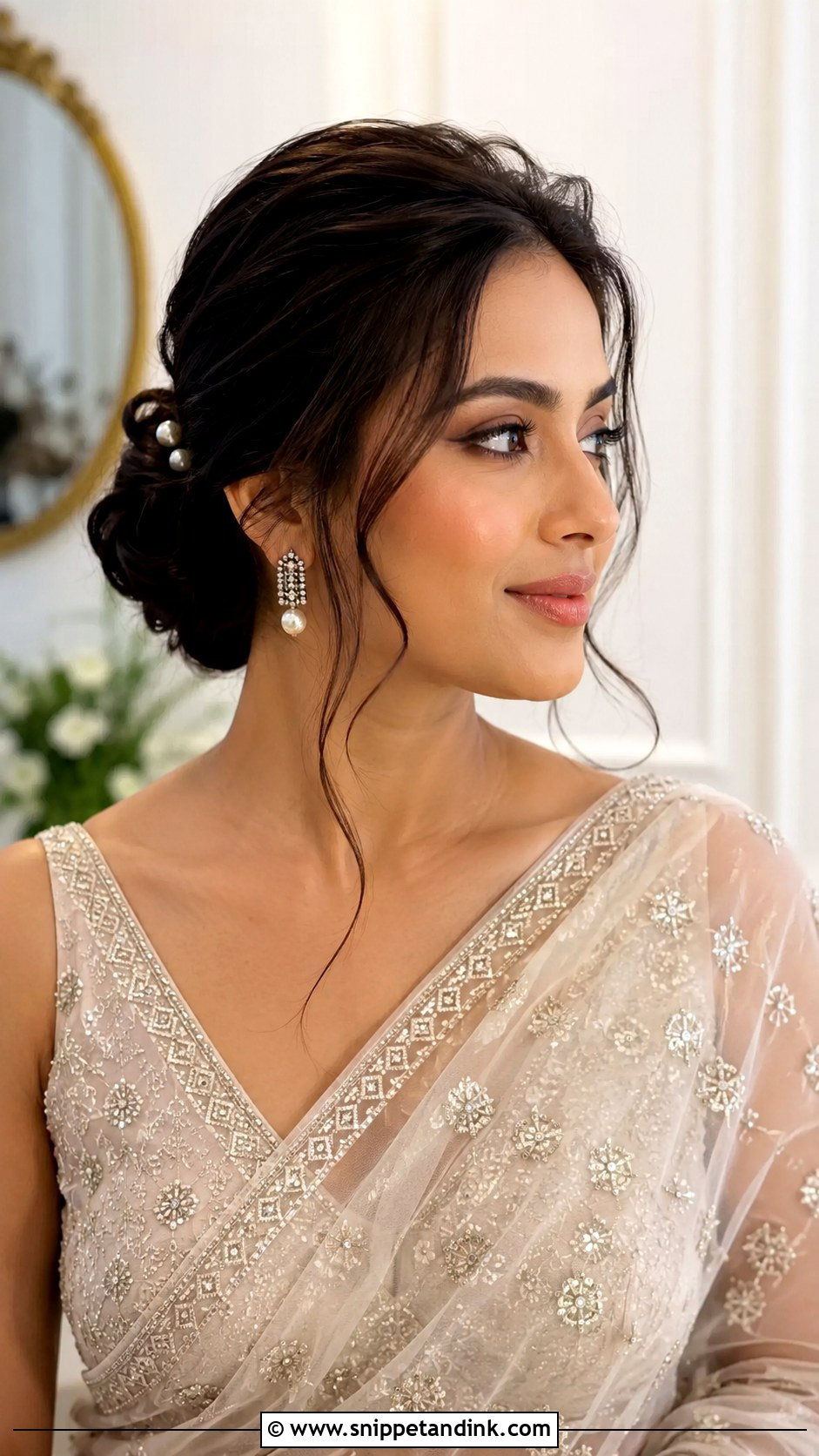
The bun stays secured at the back while soft waves or tendrils fall around the face, so it reads less strict than a fully sleek bridal bun. That’s why I suggest it for the reception, engagement or sangeet, with modern lehengas, organza sarees and lighter jewelry. Those front pieces are the weak point. Fine tendrils frizz and drop fast in humidity, so I curl them with a small barrel, pin them to set while the rest is styled, and release them last. Done this way they soften a strong jawline and add movement around the cheeks.
15. Voluminous Jooda Hairstyle
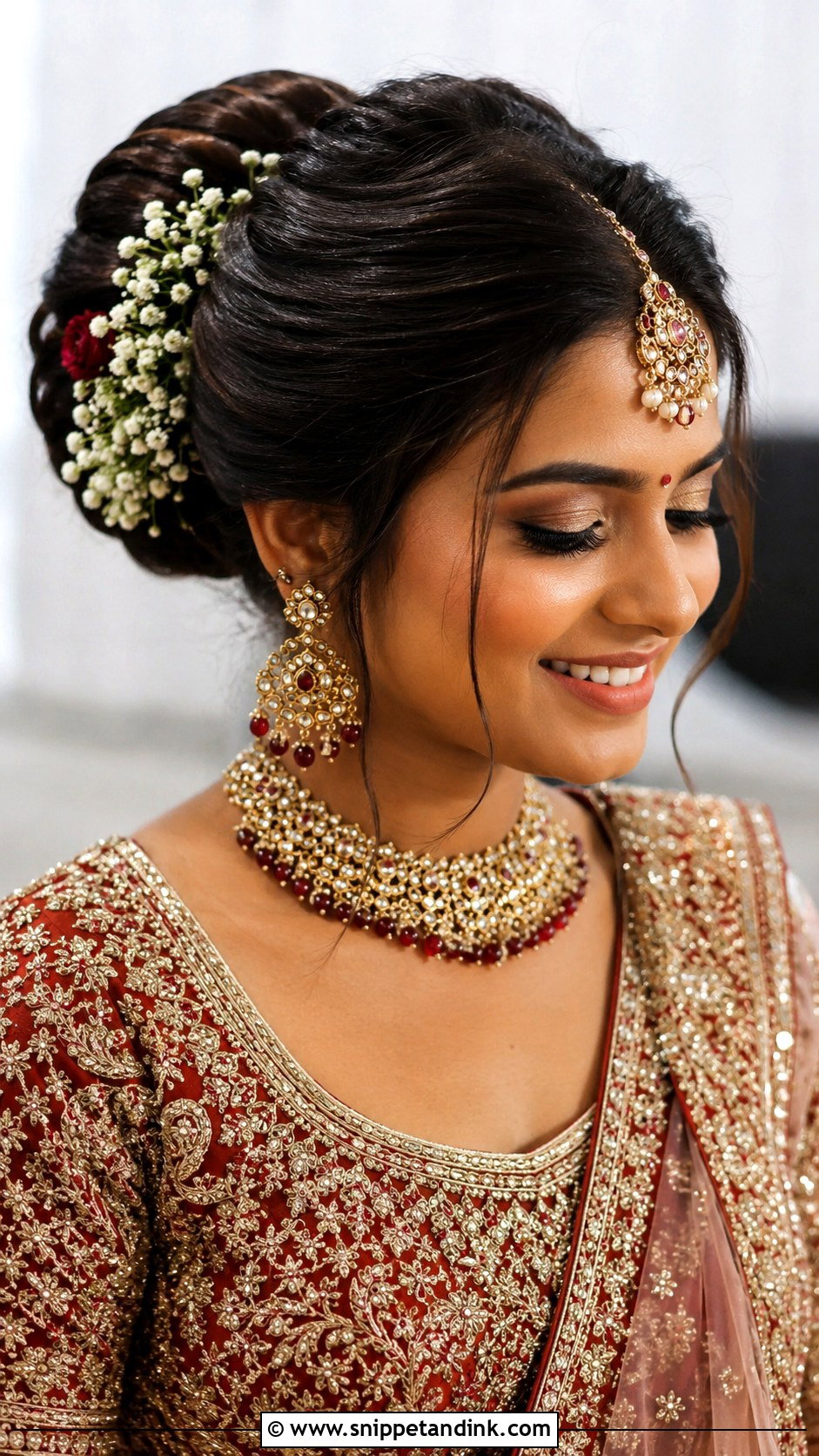
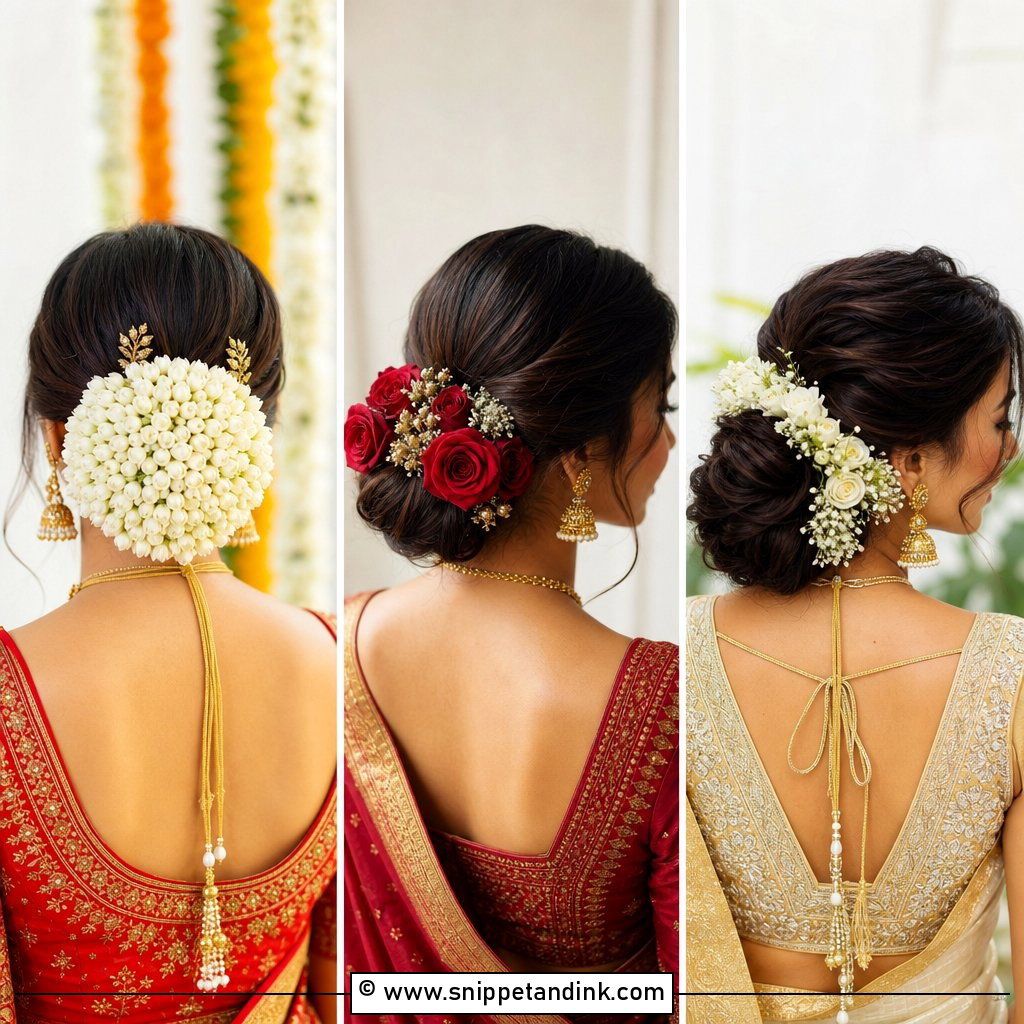
A big jooda is built, not grown: teasing, padding, extensions or careful wrapping create the large rounded shape. It holds its own against full bridal lehengas, silk sarees, oversized dupattas and bold jewelry, and the size keeps the hairstyle visible in wide photos where a small bun disappears. Proportion is the whole job, though. On a petite frame or a small face, an oversized bun can look like a separate object, so at the trial I check it from the side and from a few steps back. Finish it sleek, floral or pearl-detailed, whichever suits the outfit.
Short or Fine Hair Can Still Carry a Full Jooda
You don’t need waist-length hair. With shoulder-length or fine hair, I gather what you have into a high-grip base and build the shape with a clip-in bun piece or a padding roll, then wrap your own hair over the outside so the texture looks like yours. A gajra or a bun cover hides the join completely, which is one reason traditional joodas are so forgiving.
Shade matching is the one thing to sort out early. Clip-in pieces come in limited shades and may need trimming or blending, so order and test them before the trial, not the week of the wedding. If your ends are thin and wispy, a light trim beforehand helps the wrap look smooth.
Getting it out at the end of the night
Take the flowers and jewelry off first, then remove pins in the reverse order they went in, working from the outside of the bun toward the base. Don’t pull the padding out while the hair is still wrapped tightly around it. Loosen the wrap, slide it off, and comb through with a little oil or conditioner from the ends upward. Brushing a teased, sprayed bun dry from the root is how hair breaks.
A Jooda Has to Outlast the Pheras
Indian wedding jooda hairstyles stay popular because they work. A gajra jooda gives you tradition, a pearl jooda feels lighter and more modern, a sleek one carries heavy jewelry, and a messy or open front jooda suits the relaxed functions. Before you settle on one, put everything on together at the trial: the dupatta, the matha patti or passa, the flowers. Sit, bow your head, stand up again. If nothing shifts and nothing pinches, that’s your bun, and you can stop thinking about your hair for the rest of the day.
You'll Like These Ideas:


Leave a Reply