
Ask me which updo survives an Indian wedding best and I’ll say a bun, almost every time. It keeps hair off a sweaty neck, gives flowers and pins a solid anchor and doesn’t care how many times you bend for blessings. This list covers 20 buns for brides, bridesmaids and guests, from gajra classics to braided and accessorised knots. With each one I’ve noted the hair it needs, the outfit it suits and the small technical detail that makes the difference between a bun that lasts and one that sags by lunch.
A Guest’s Bun You Can Pin Yourself in Twenty Minutes
Not every guest or bridesmaid will have a stylist, and most of the buns below can be done at home with a little practice. This is the method I teach for a neat low bun that lasts all evening.
- Start with hair washed the day before. Freshly washed hair is too slippery for pins.
- Brush the hair back and secure a ponytail at the nape with a strong elastic.
- Twist the ponytail and wrap it around the elastic, pinning as you go with bobby pins pushed into the ponytail base.
- Add two or three U-pins crossing through the bun for extra hold.
- Finish with a light hairspray and add flowers or a pin last.
Practise once before the wedding. The second attempt is always faster and neater than the first.
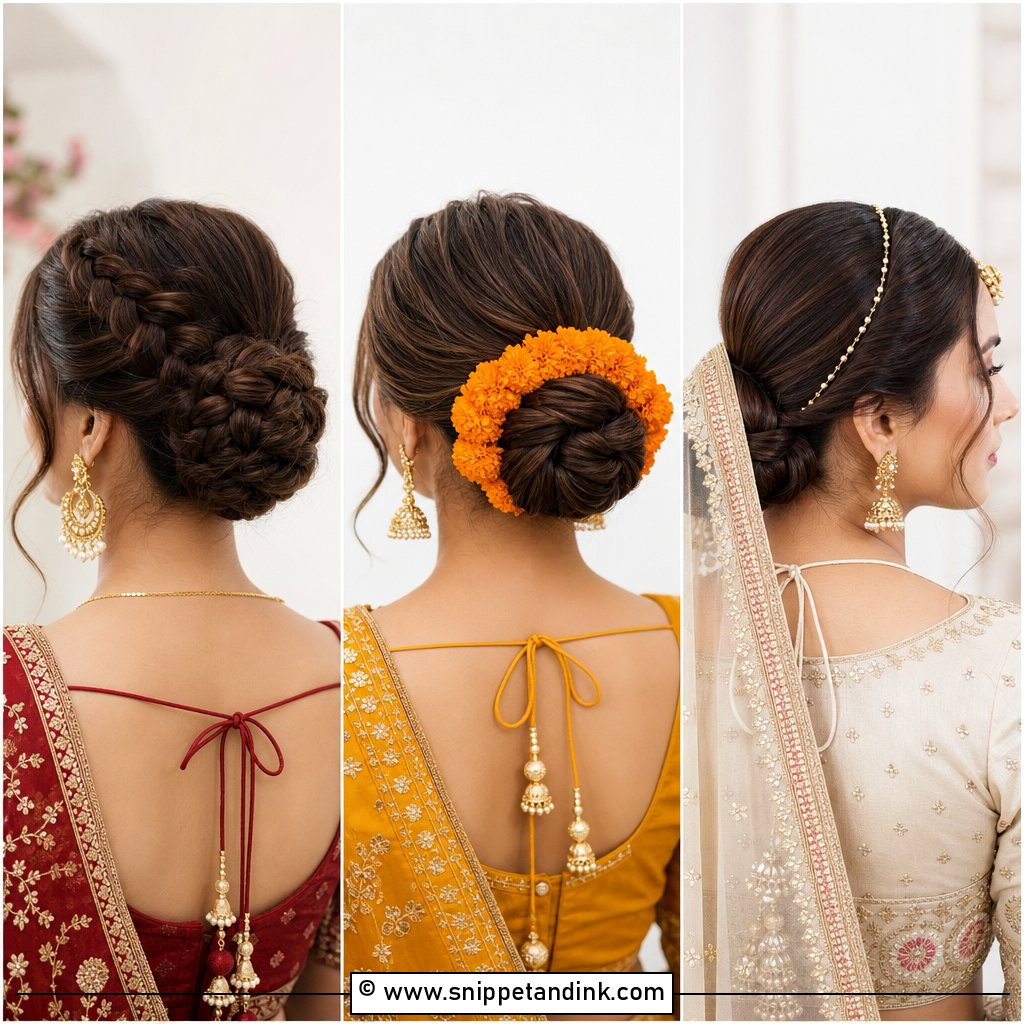
1. Gajra Bun Hairstyle
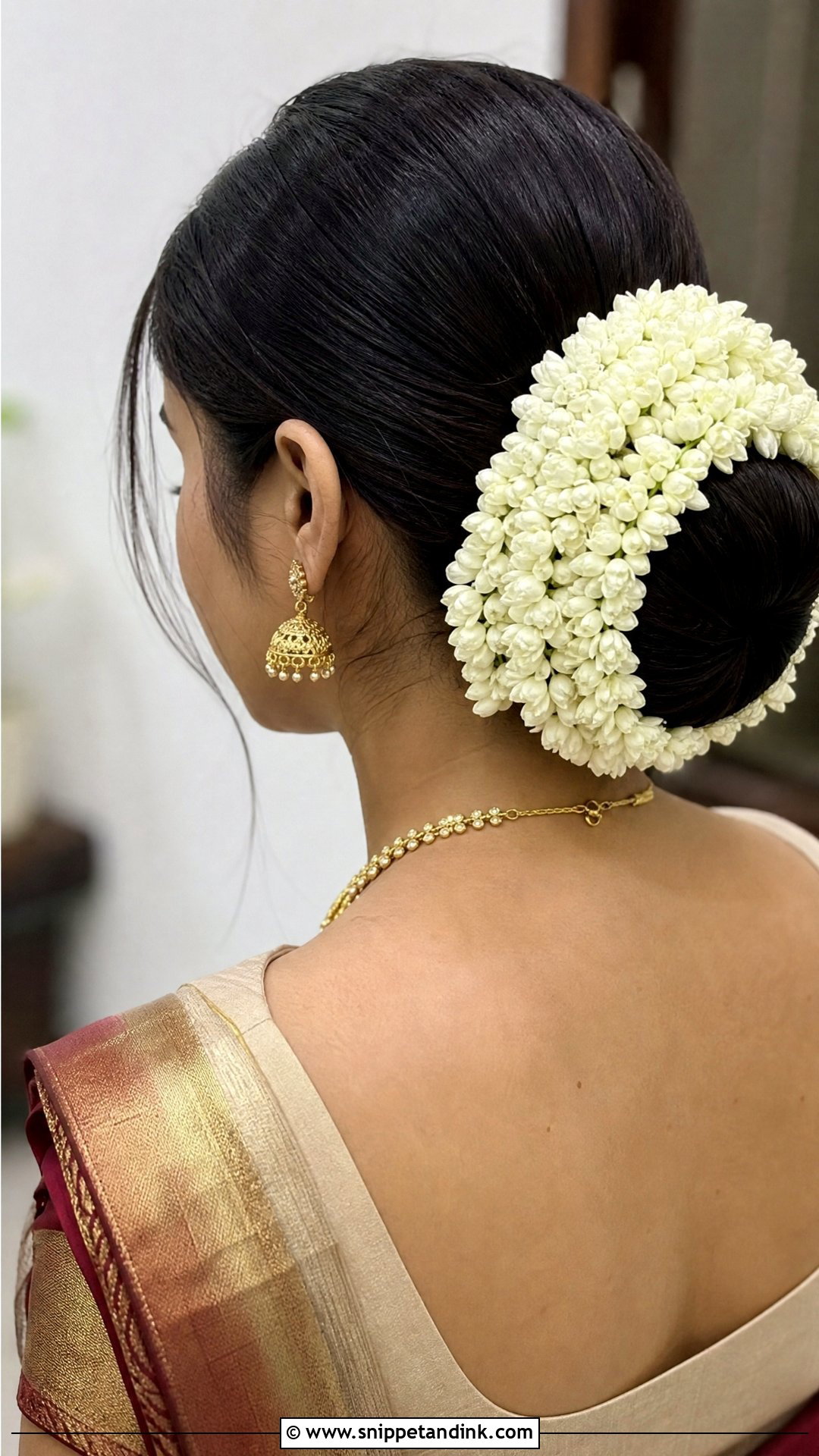
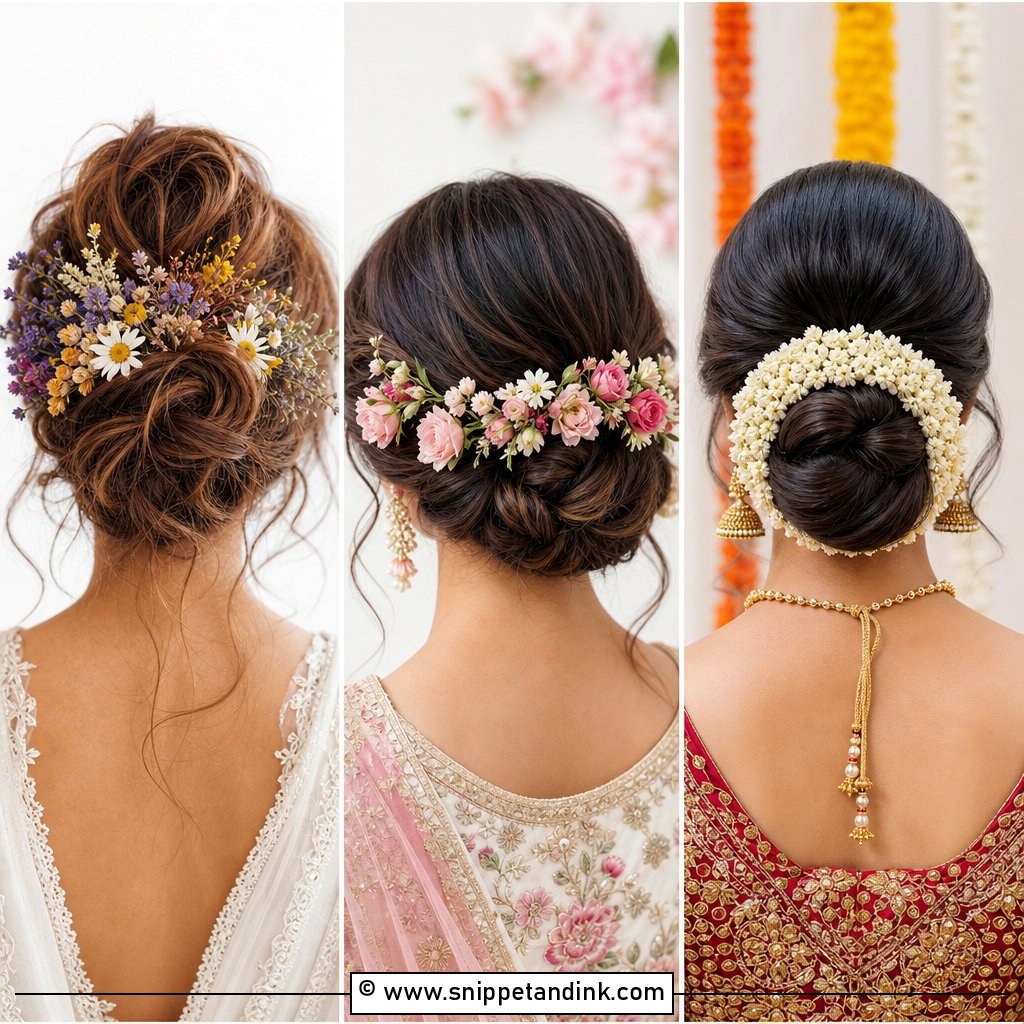
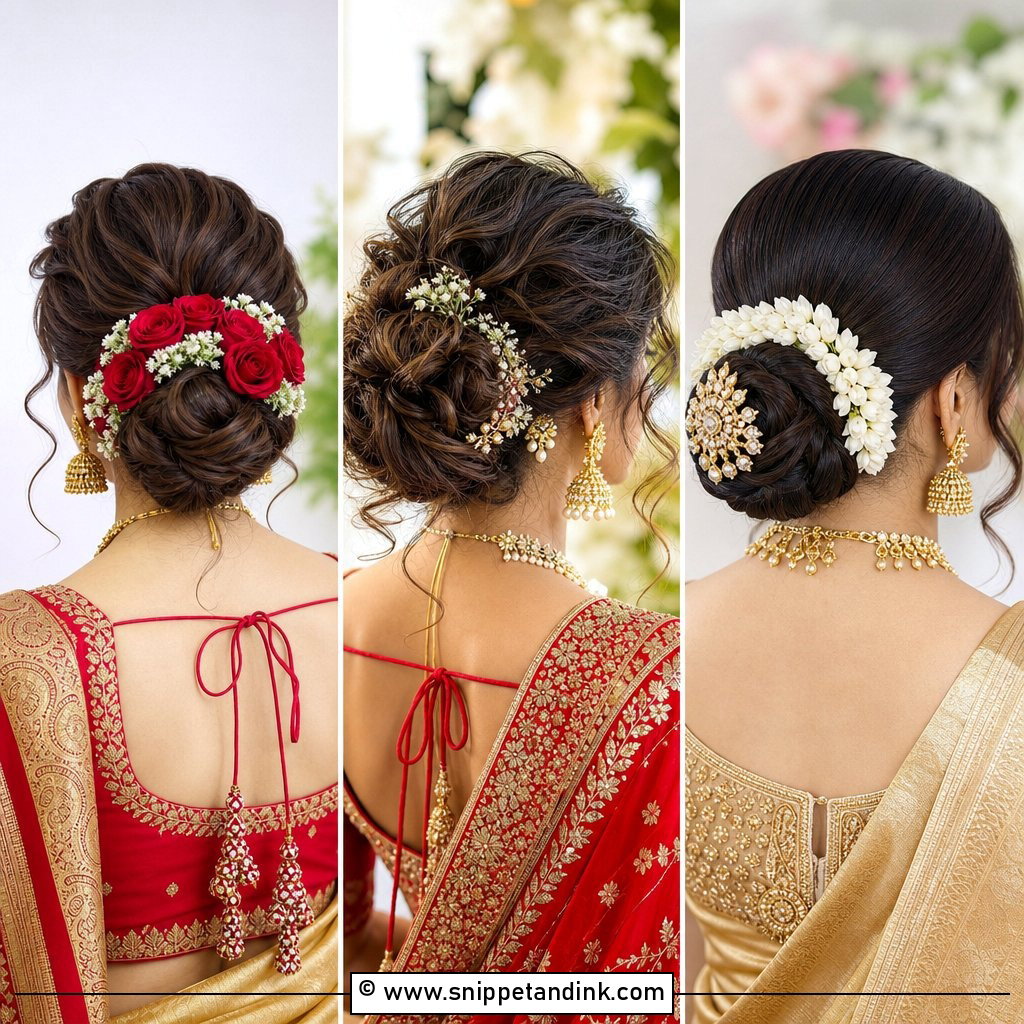
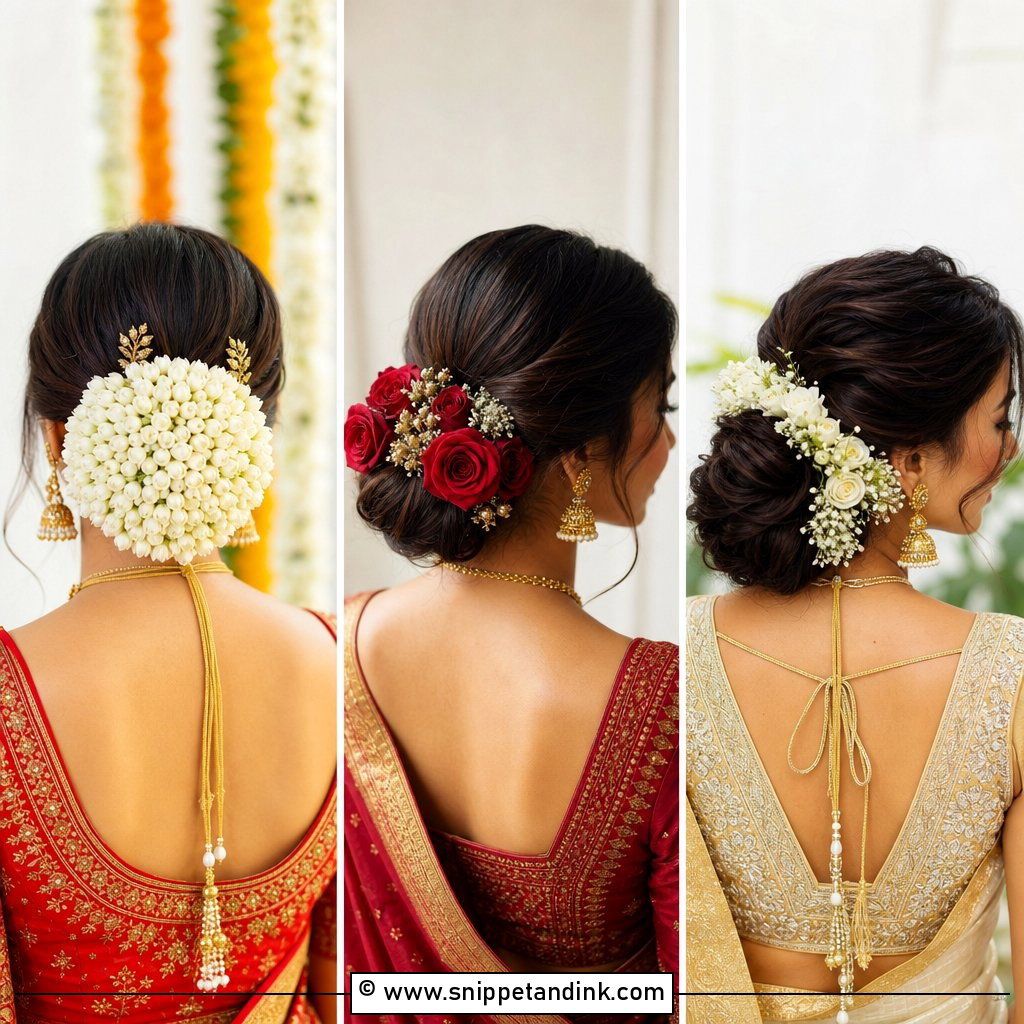
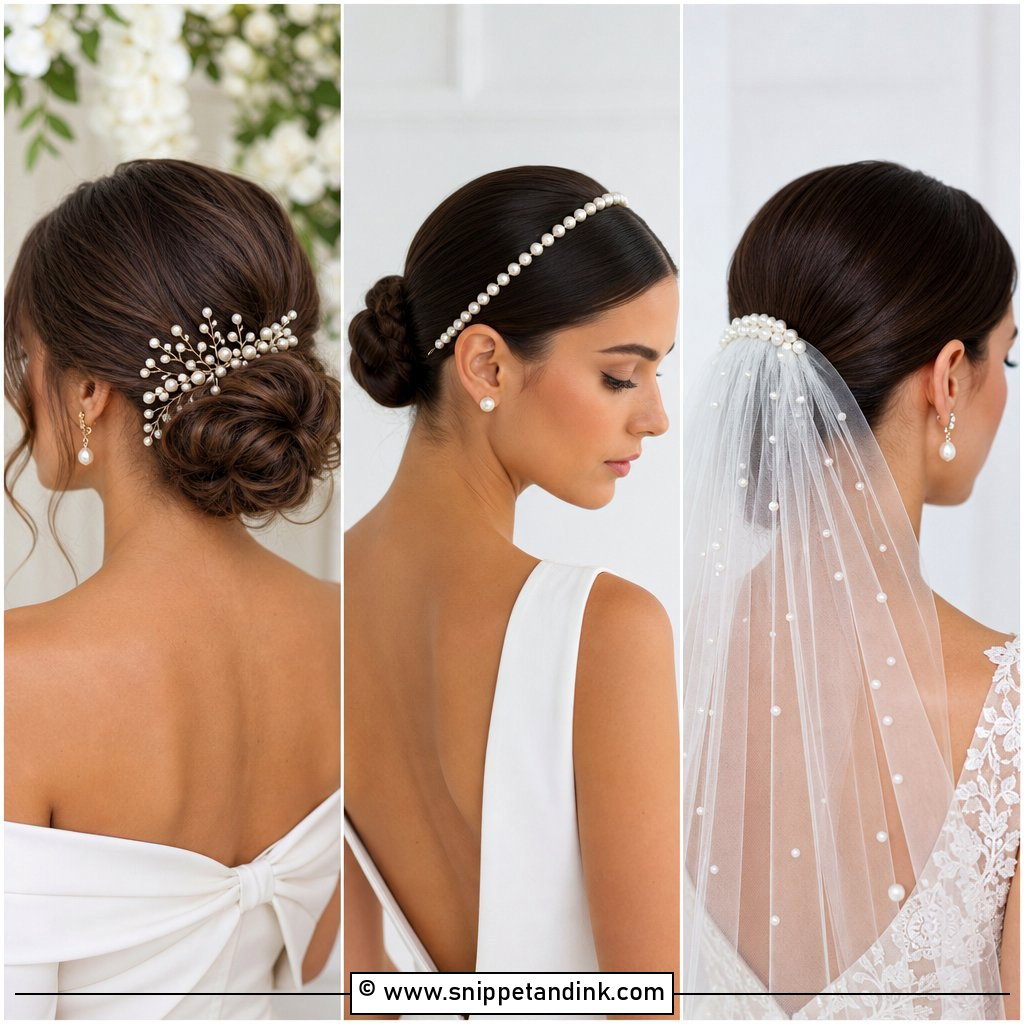
The jasmine bun is the South Indian classic, and the scent alone makes it worth wearing. I keep the base low and only slightly loose, because a jasmine gajra needs something firm to wrap around. Each string is spiralled around the bun and fixed with crossed U-pins every few centimetres. White flowers against dark hair are striking in photos. It suits silk sarees and gold temple jewelry. Round and oval faces carry it most easily; on a long face, I bring a little volume to the sides first.
2. Messy Low Bun Hairstyle
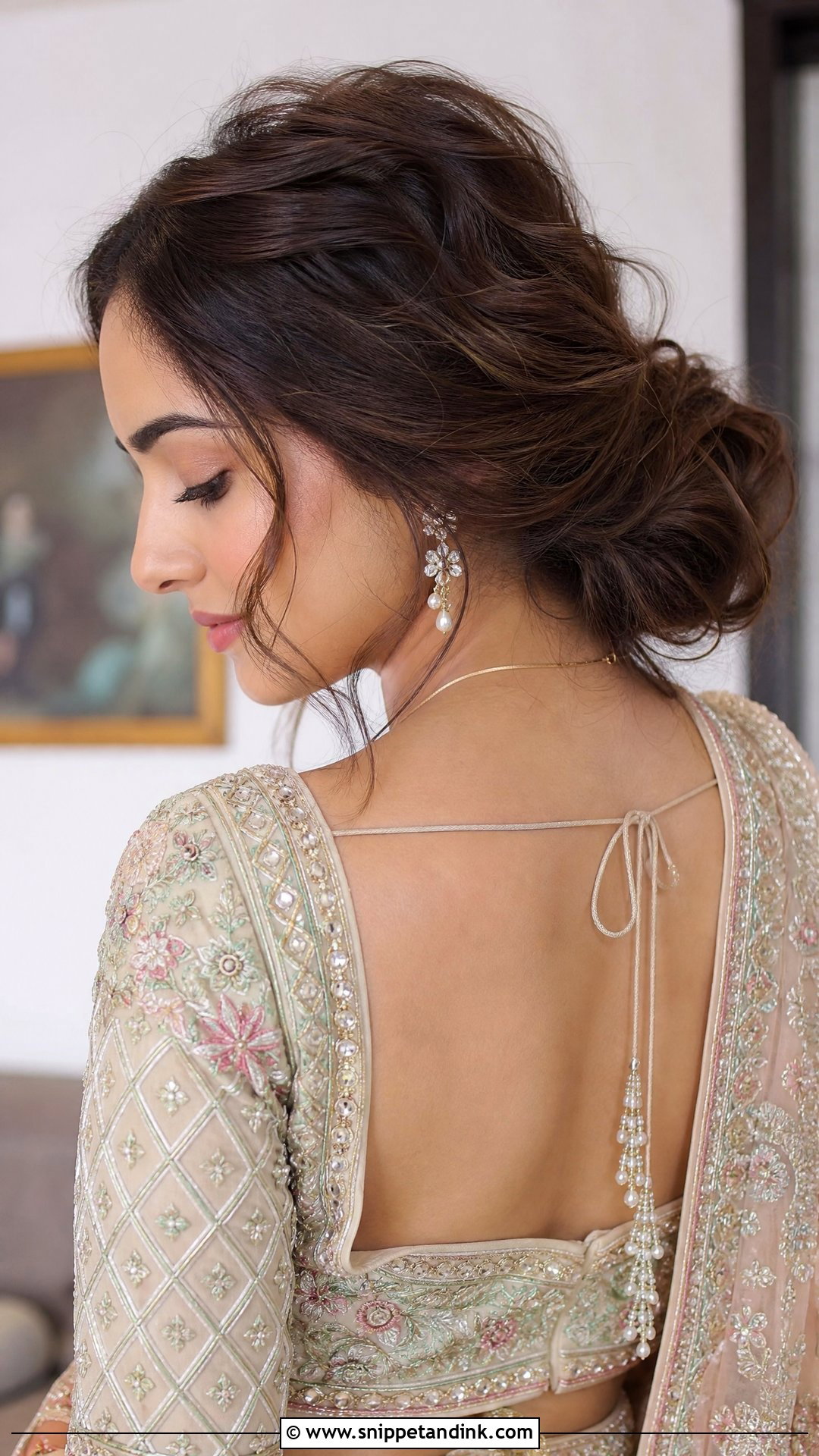
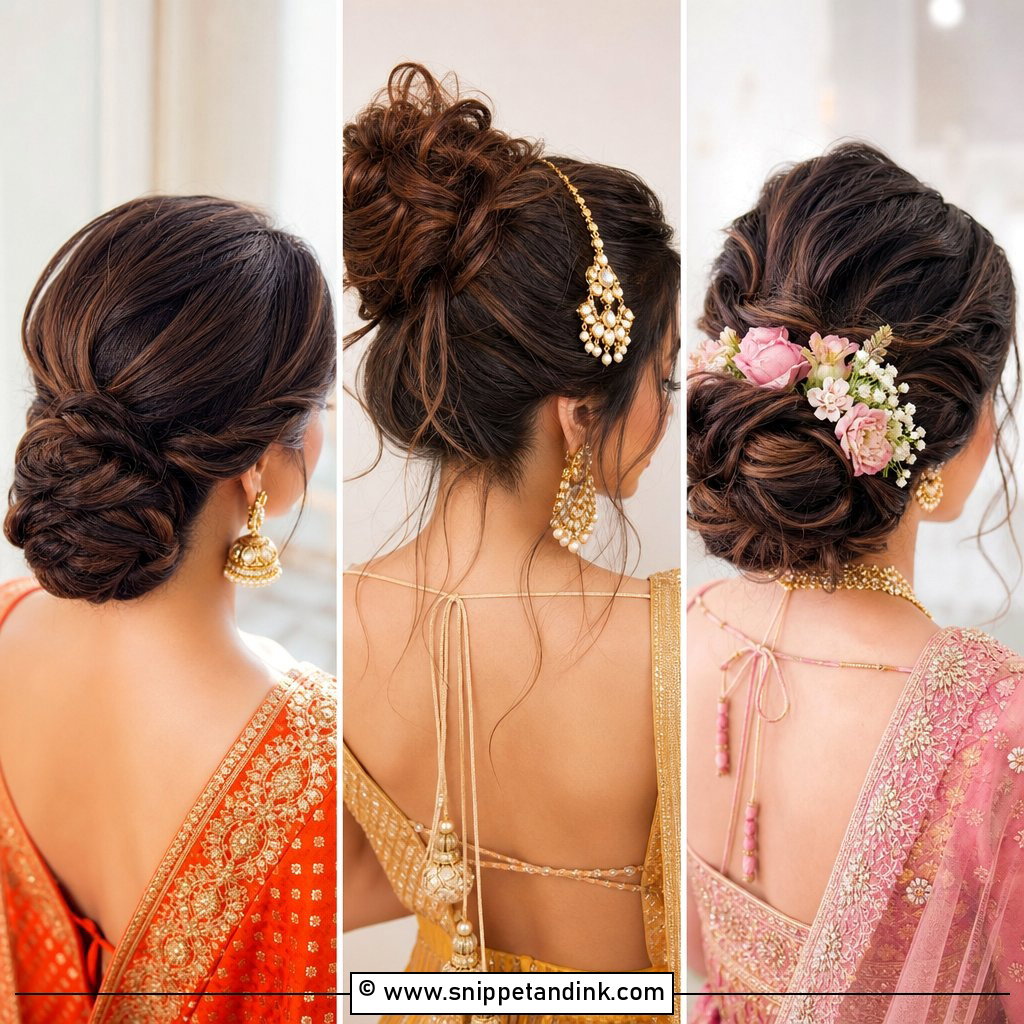
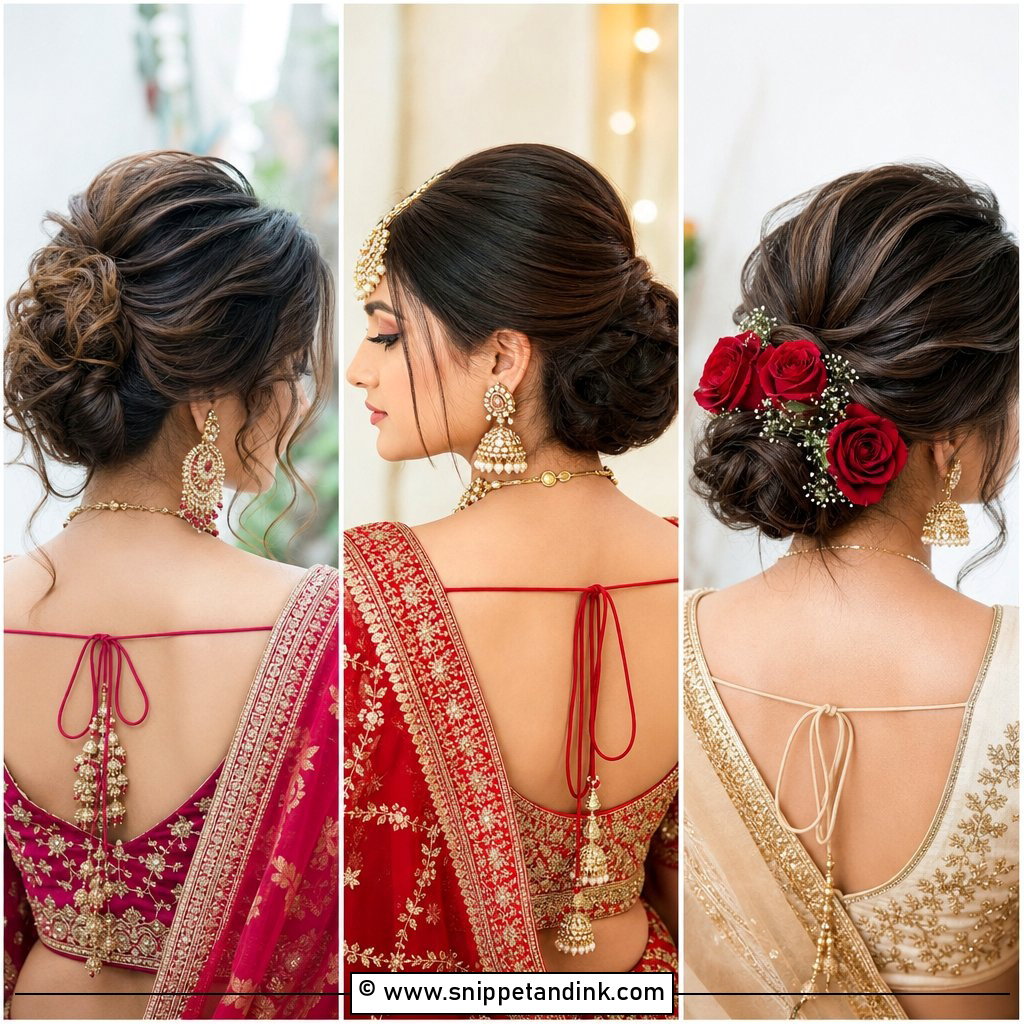
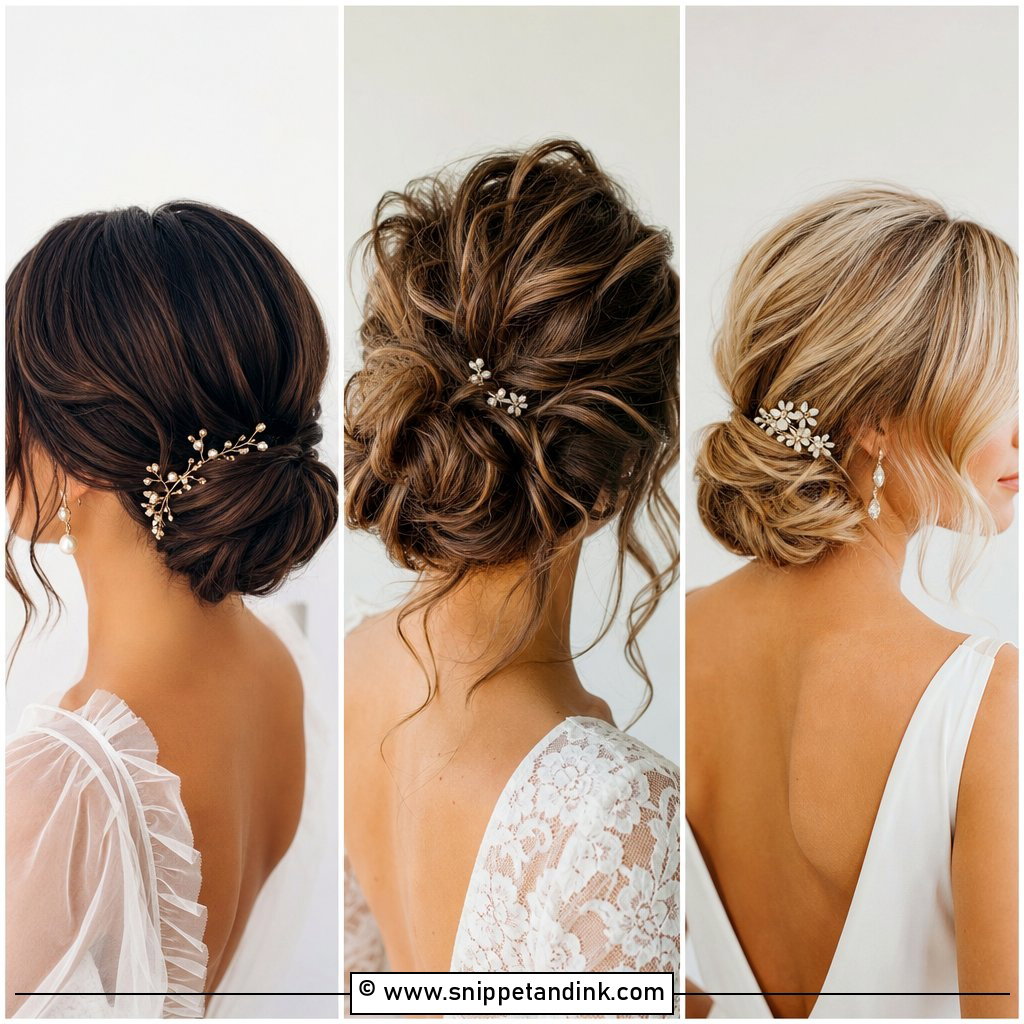
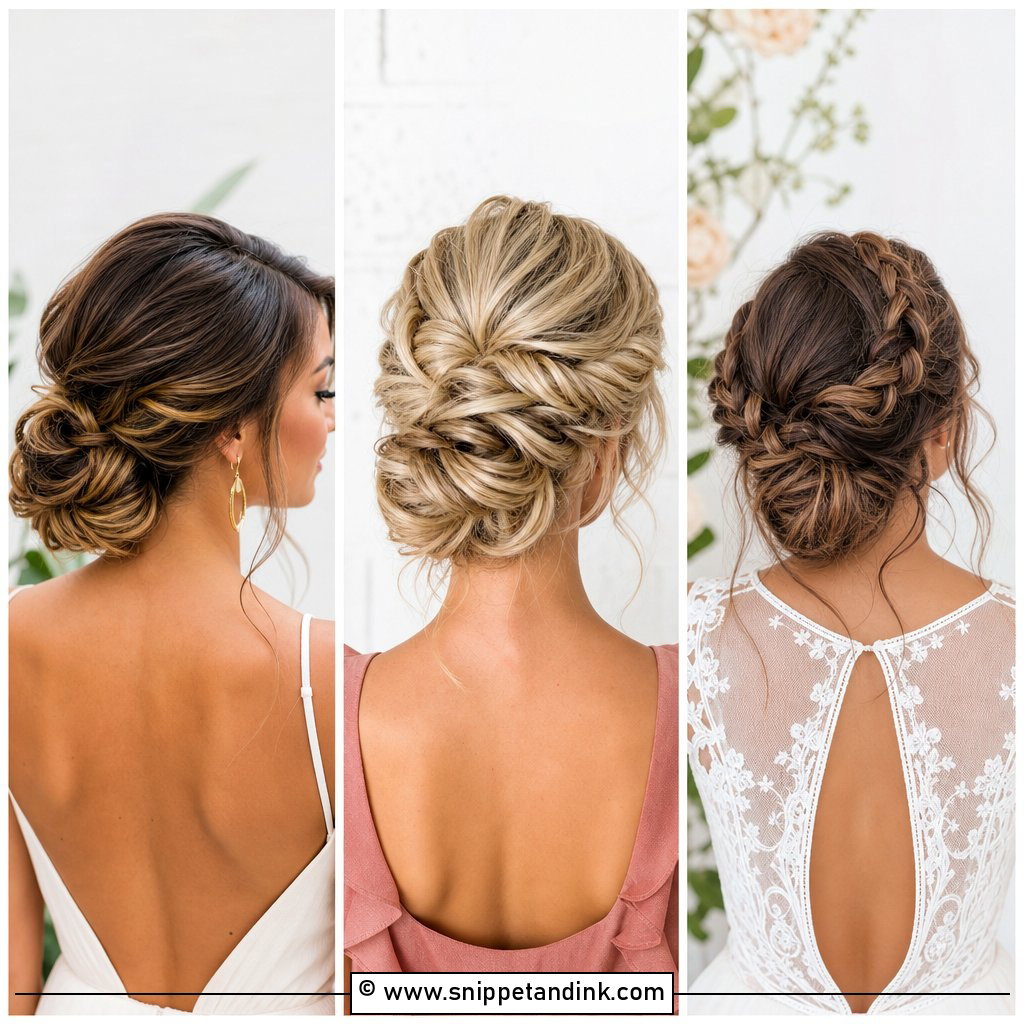
Loose doesn’t mean unplanned. For a messy low bun I curl the hair, set a small hidden ponytail at the nape and pin the bun around it, then pull out only the pieces I want. The texture makes fine hair look thicker, and softer edges flatter square and diamond faces. I’d keep this one for the engagement or mehndi rather than the main ceremony, where a dupatta tends to flatten the texture. One small pin or flower cluster on the side is enough.
3. Floral Braided Bun Hairstyle
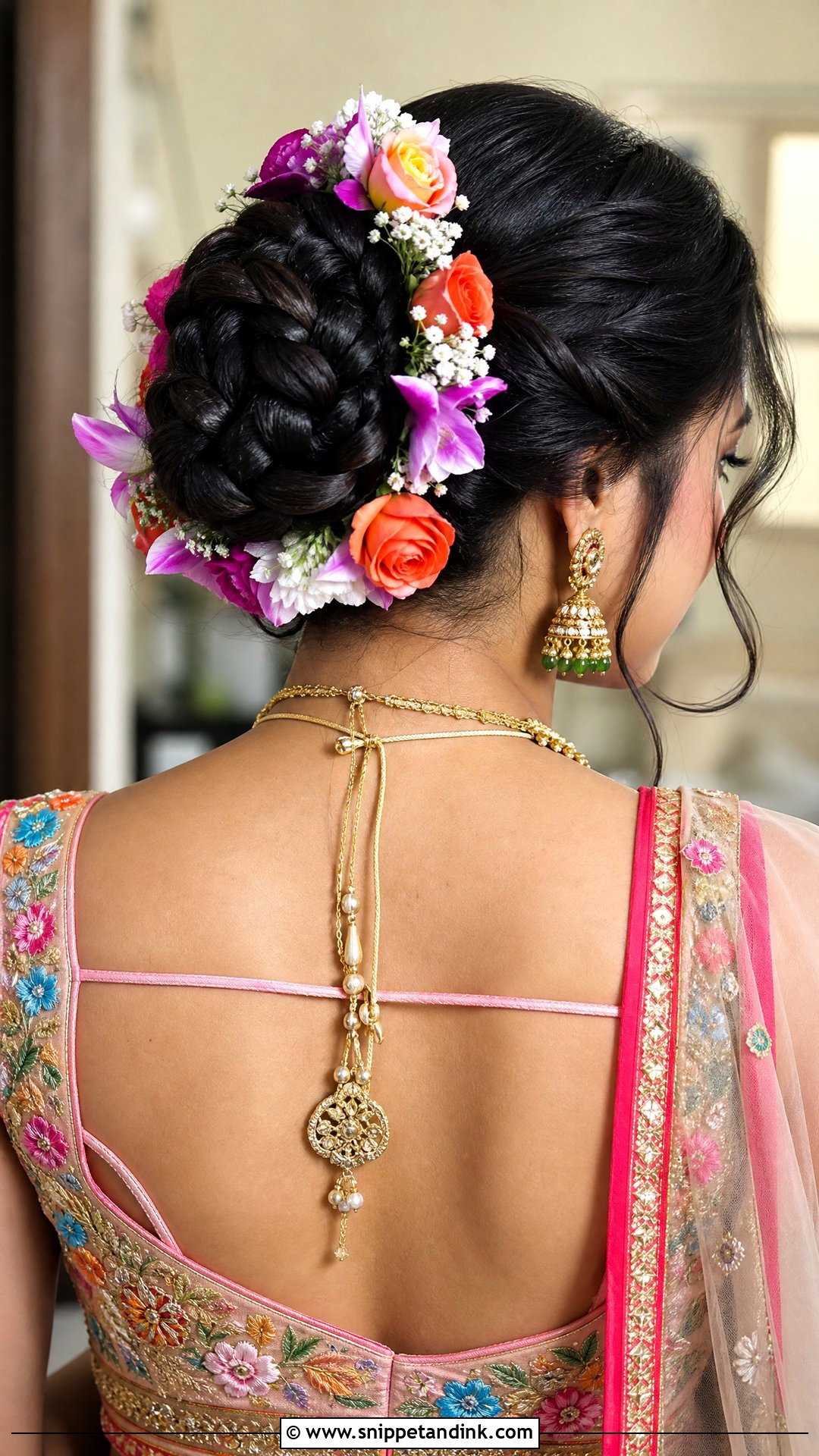
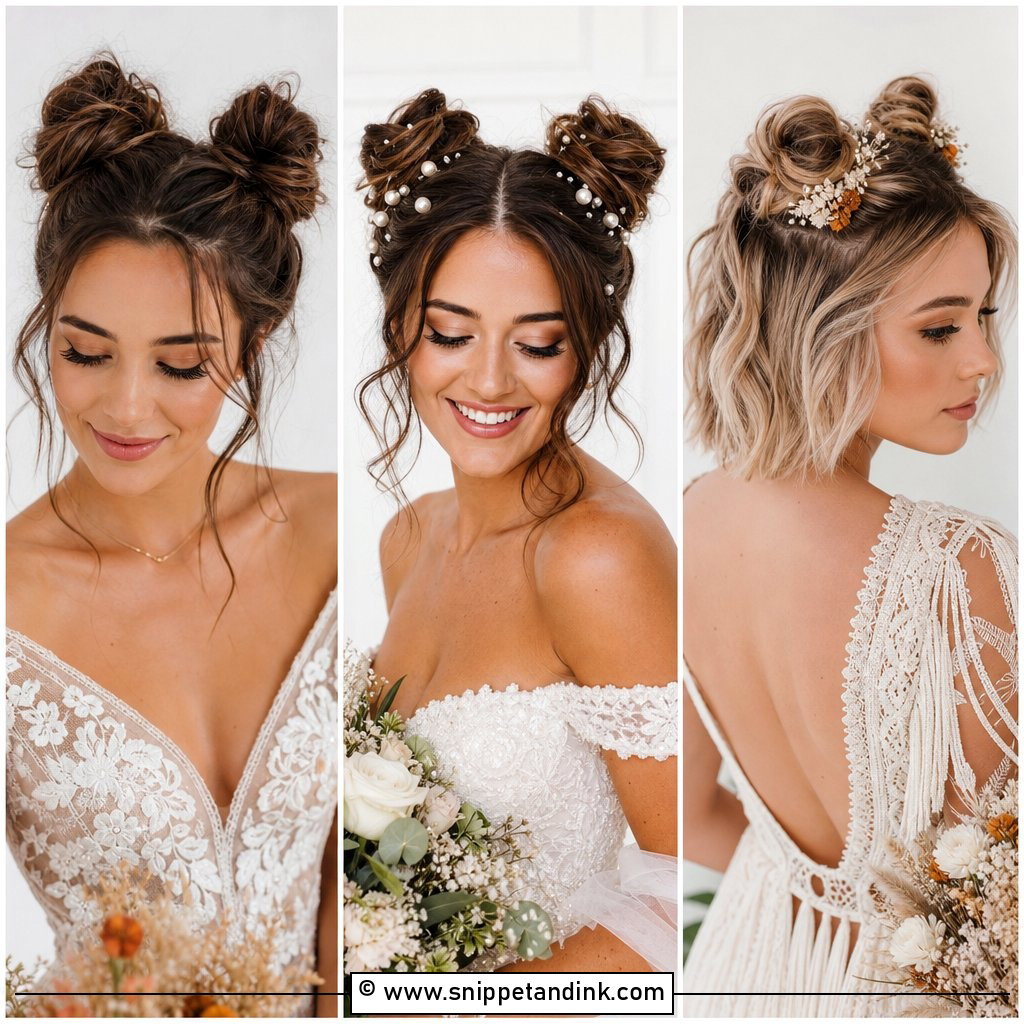
One thick braid coiled into a round knot is the sturdiest flower base I know. The braid grips stems so roses or orchids can be tucked straight in, without extra wire. It suits daytime ceremonies and haldi, where colour feels right. Long, thick hair gives the fullest result; on shoulder-length hair, the bun comes out small, and I’d suggest a clip-in braid piece. Daisies look sweet up close but get lost in photos, so I keep them as fillers between bigger blooms.
4. Side-Swept Bun Hairstyle
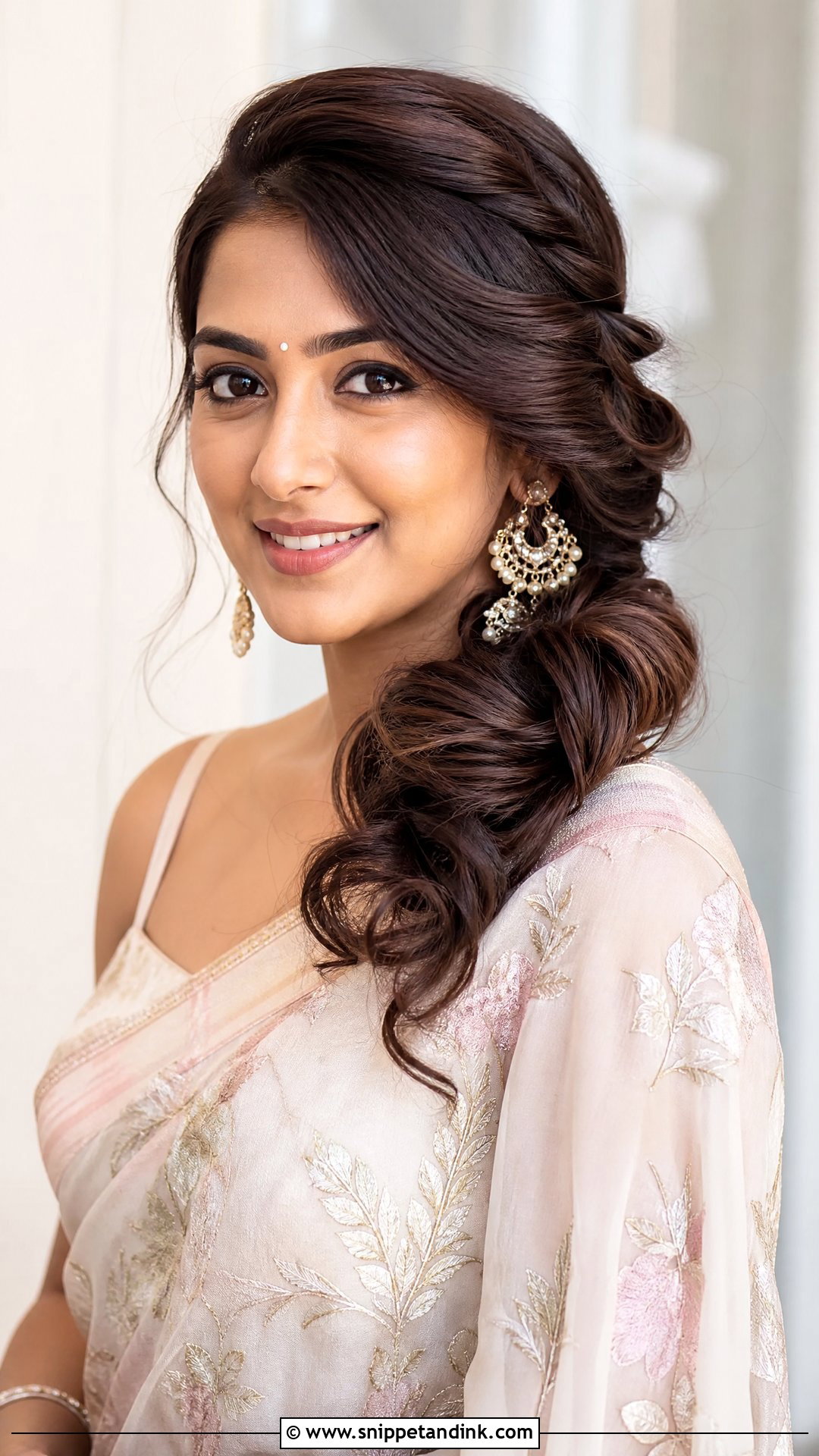
A side bun keeps the hairstyle visible from the front, which is useful when most of your photos are taken face-on. I sweep the hair toward one shoulder, add soft waves to the swept section and twist it into a bun just below the ear. It shows off earrings and the neckline. The trick is anchoring it to a small hidden braid on that side, because a side bun has nothing to rest on and tends to slide down. Receptions and sangeet nights suit it best.
5. Marigold Bun Hairstyle
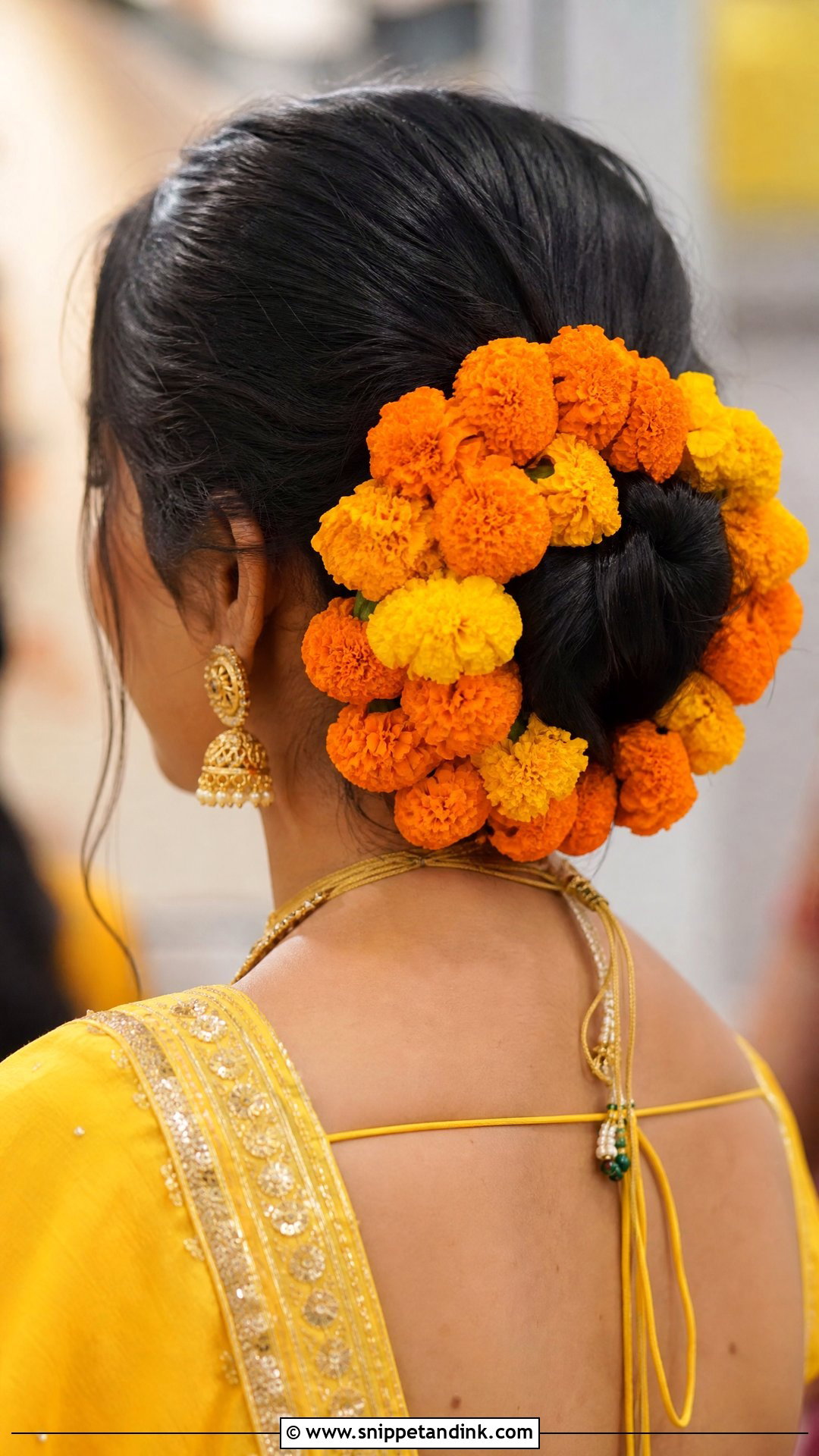
Marigolds are about the most cheerful flower you can wear, and they handle heat far better than roses. I build a smooth or slightly messy low bun, then wrap or pin marigold heads around the base. The orange glows against dark hair and gold jewelry. They’re the obvious match for haldi and mehndi ceremonies, and they’re easy to buy fresh. Marigold heads are fairly dense, so I place them close to the head to stop the bun tipping backward.
6. Donut Bun Hairstyle
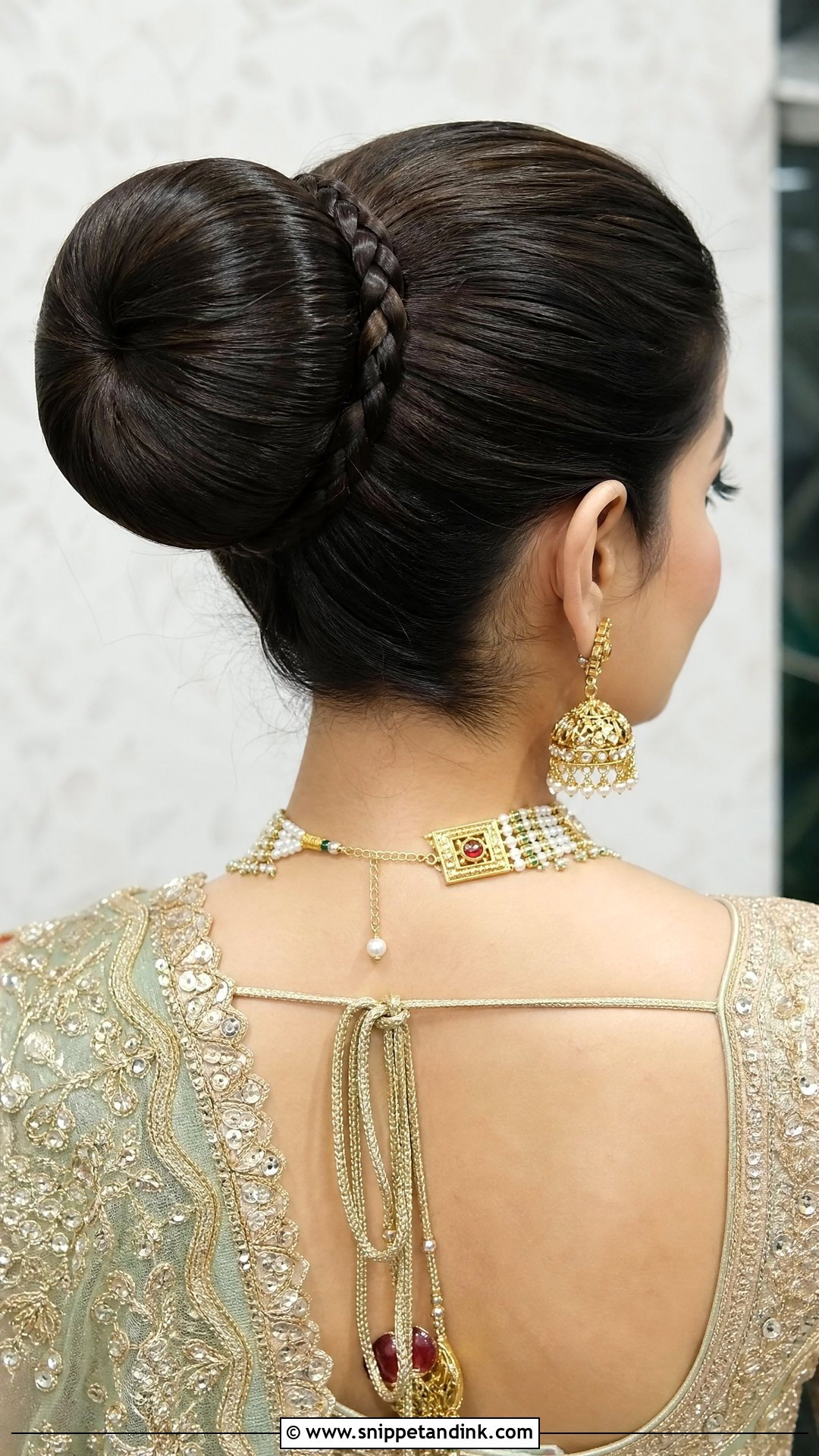
The foam donut gives a perfectly round, full bun even on fine hair, which is why it’s my standard fix for brides worried about thin hair. I pick a ring close to the hair colour, wrap the ponytail around it and pin the ends underneath. A thin braid wrapped around the base hides any gaps. It holds its shape all day and suits sarees and Indo-western outfits. The one requirement is length: the ponytail has to wrap around the ring completely.
7. Curly Textured Bun Hairstyle
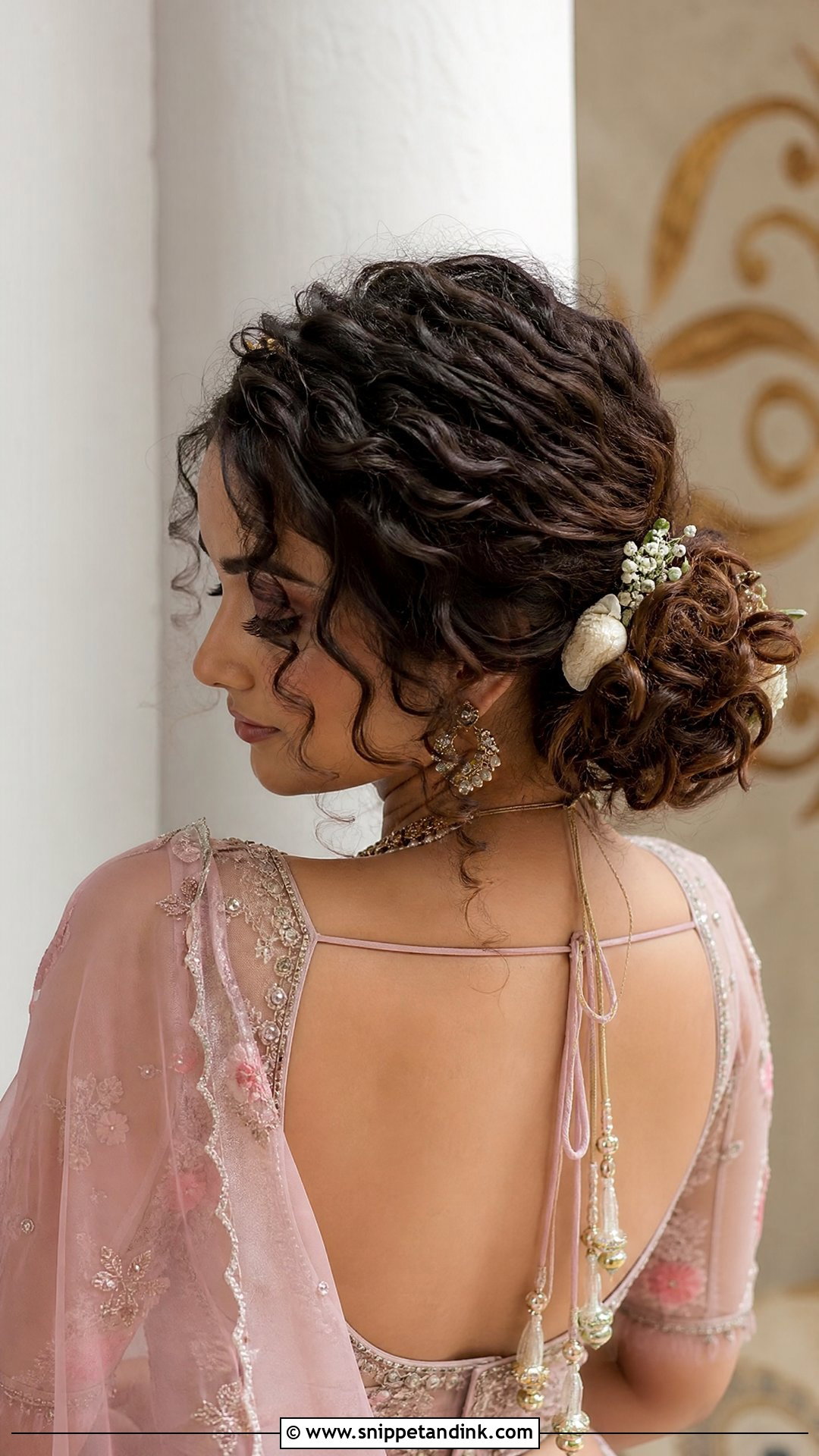
Natural curls make a bun with real volume, so I work with the texture rather than brushing it out. I define the curls with a cream, gather them loosely at the nape and pin in small sections so the curls stay intact. A few spirals left near the face soften it. Brides with curly hair usually find this more comfortable than a straightened style, and it holds better, since the hair isn’t fighting to go back to its shape. Humidity is the risk, so I finish with a light anti-frizz spray.
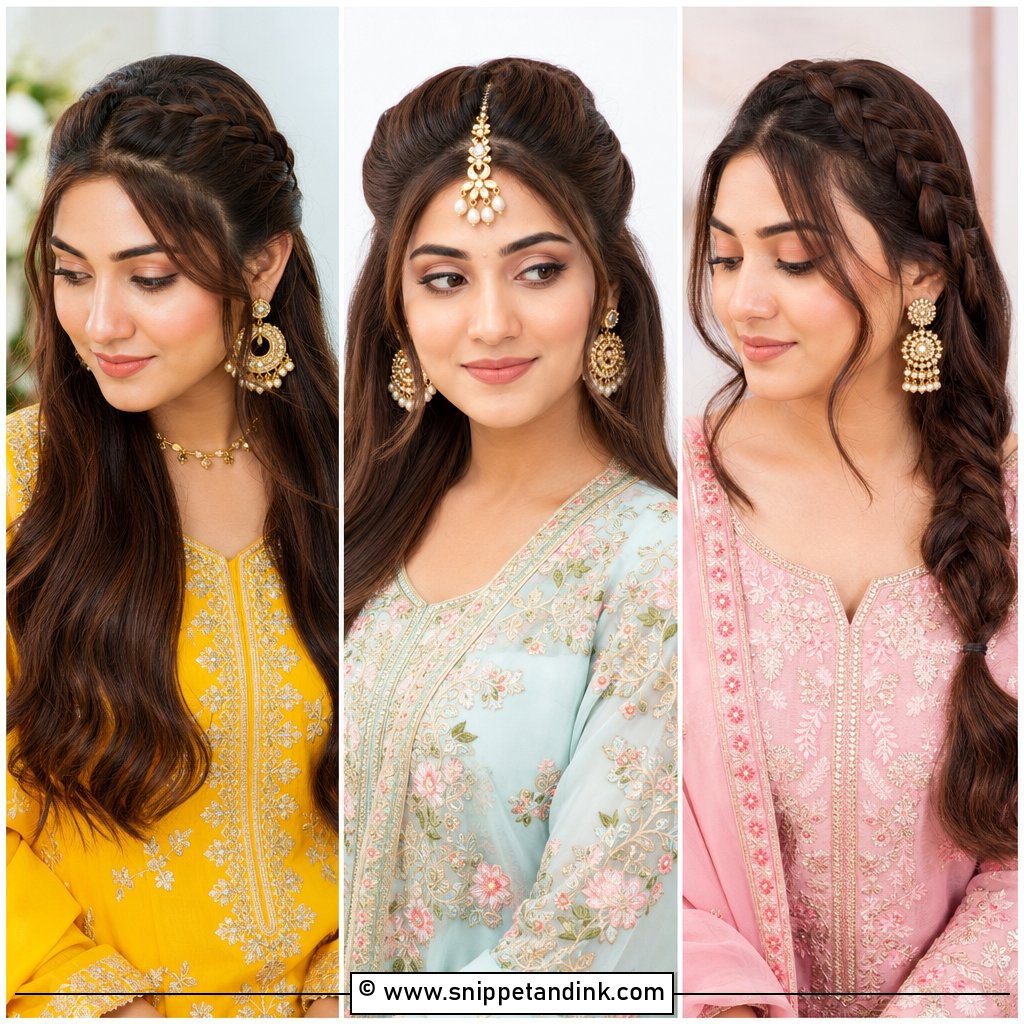
8. Dutch Braid Bun Hairstyle
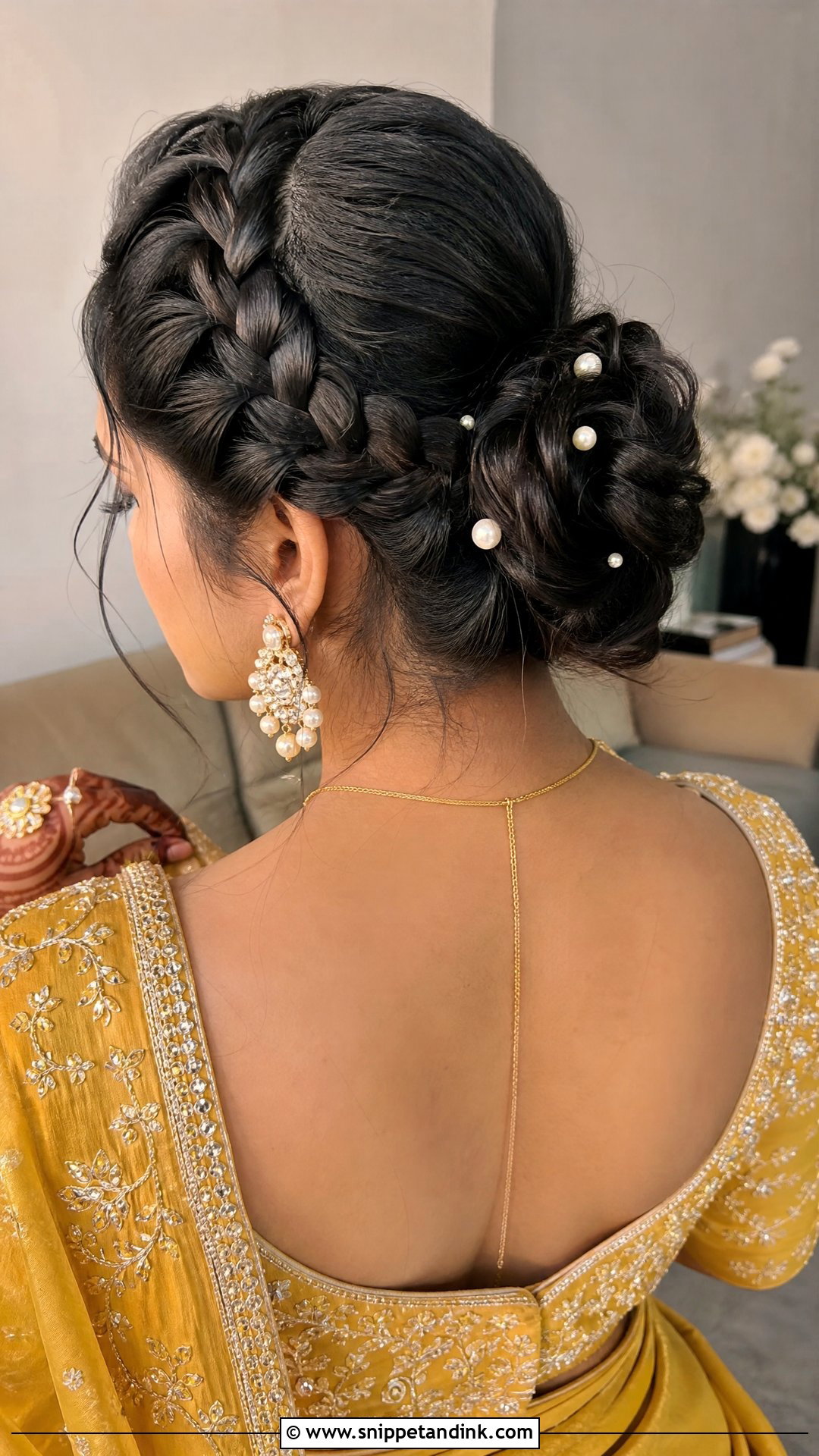
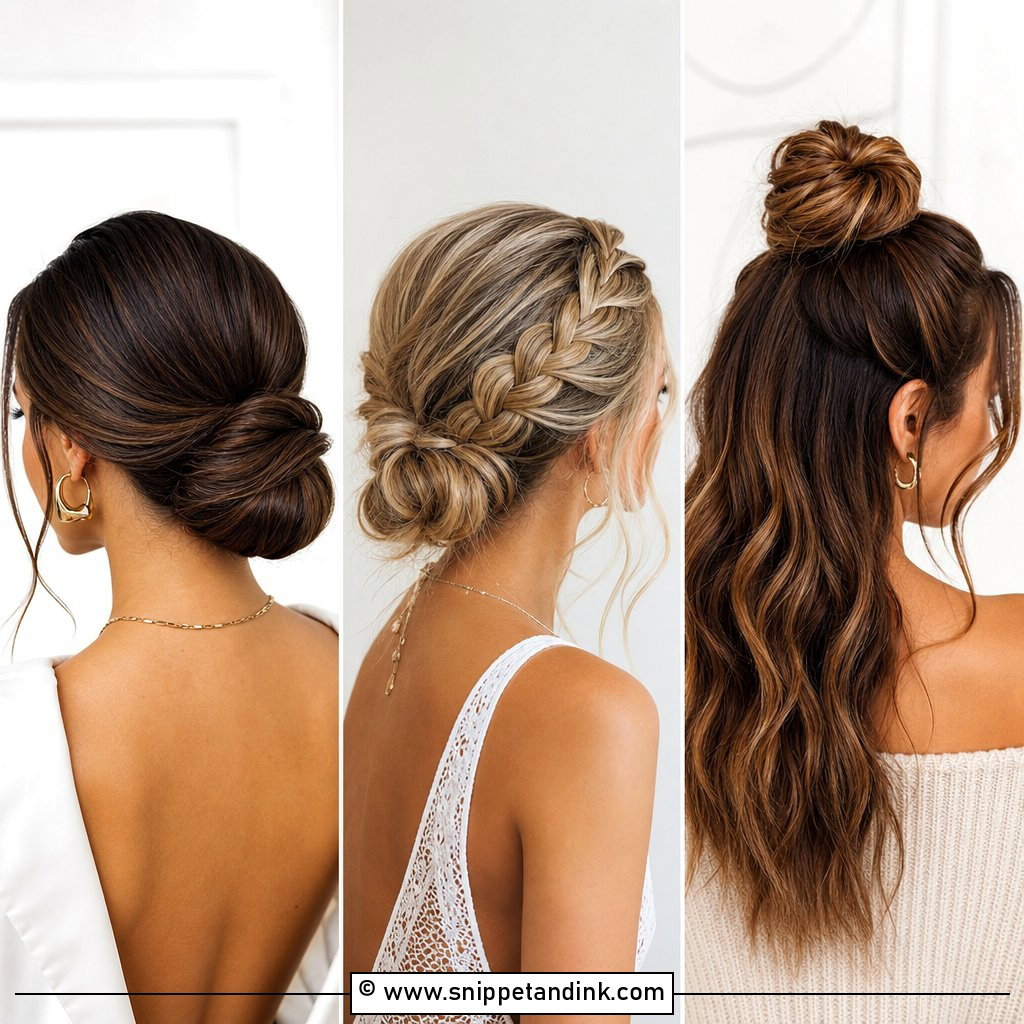
A one-sided Dutch braid sits on top of the hair rather than lying flat, which gives it more dimension than a French braid. I braid along one side of the head and finish it into a messy bun at the back. The braid holds the hair securely, which is useful at mehndi and sangeet. Long, thick hair suits it best. I pull the braid edges gently to widen it, and small flowers or pearl pins can sit along the braid line.
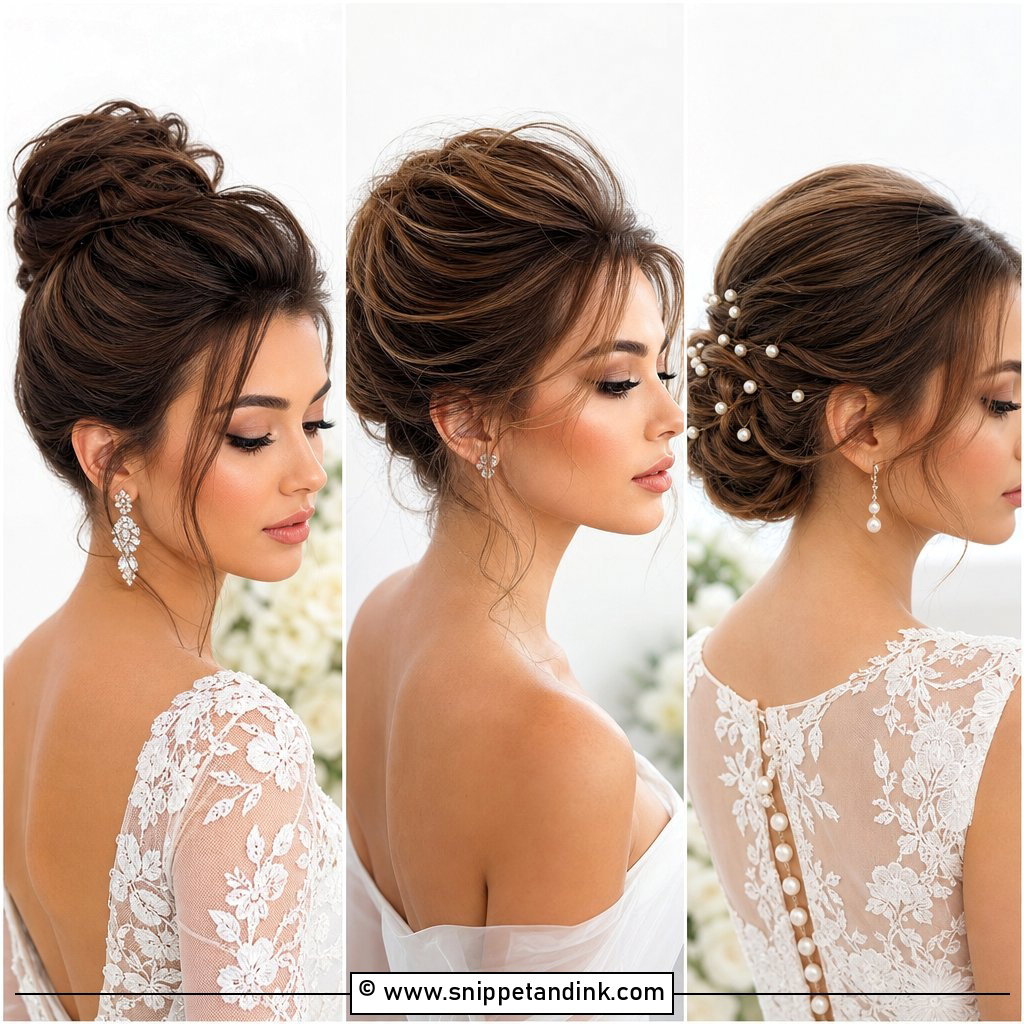
9. High Voluminous Bun Hairstyle
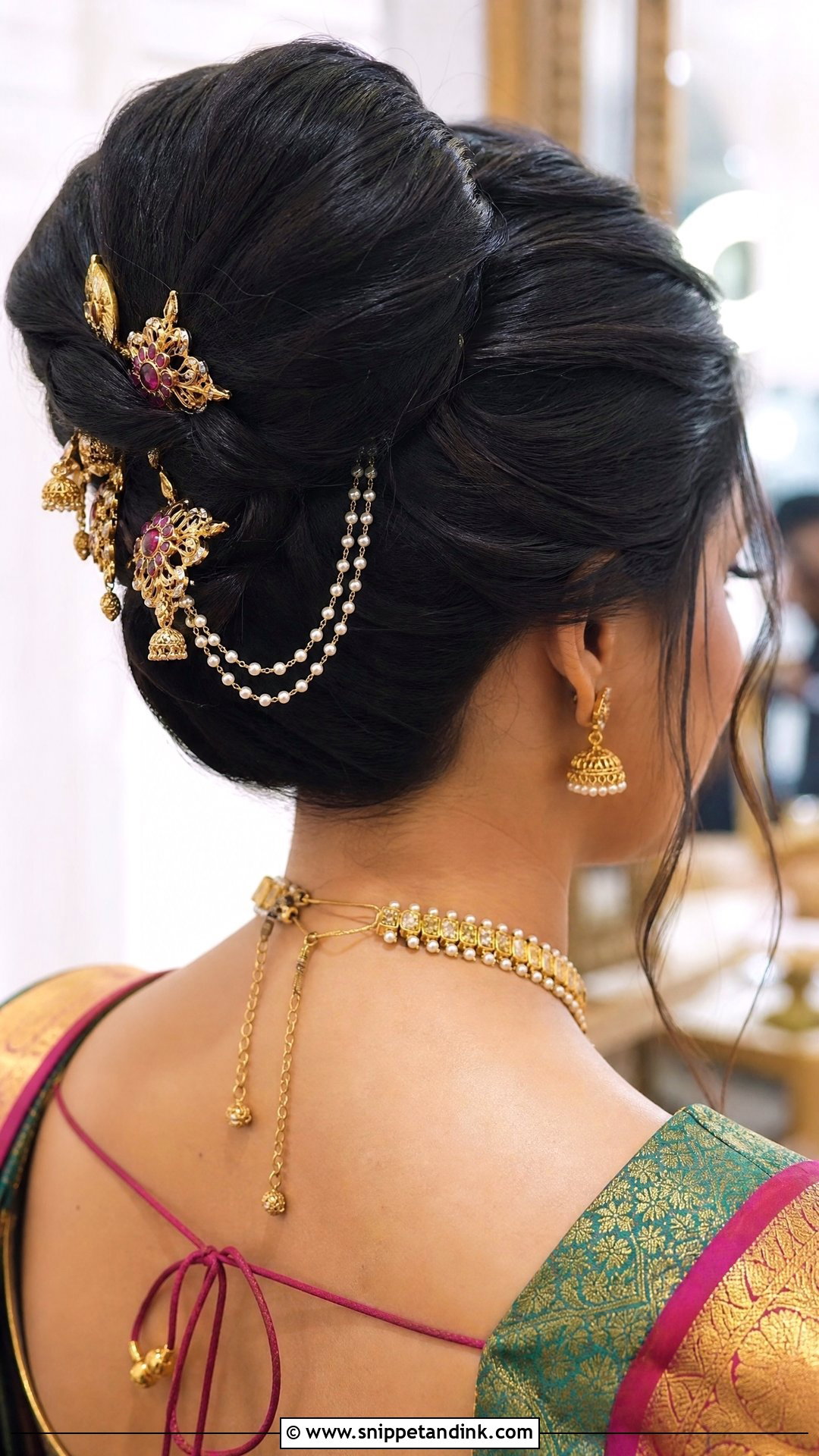
For a round face, a crown-height bun adds length and lifts the silhouette. I backcomb the hair at the roots, smooth the top layer and twist it into a full bun on a firm ponytail base. Pearl strings or decorative pins finish it. Marathi and Maharashtrian brides often wear a high or mid bun of this kind with a mundavalya across the forehead. The height looks majestic in photos, but it won’t sit under a heavy dupatta, so plan it for functions without head covering.
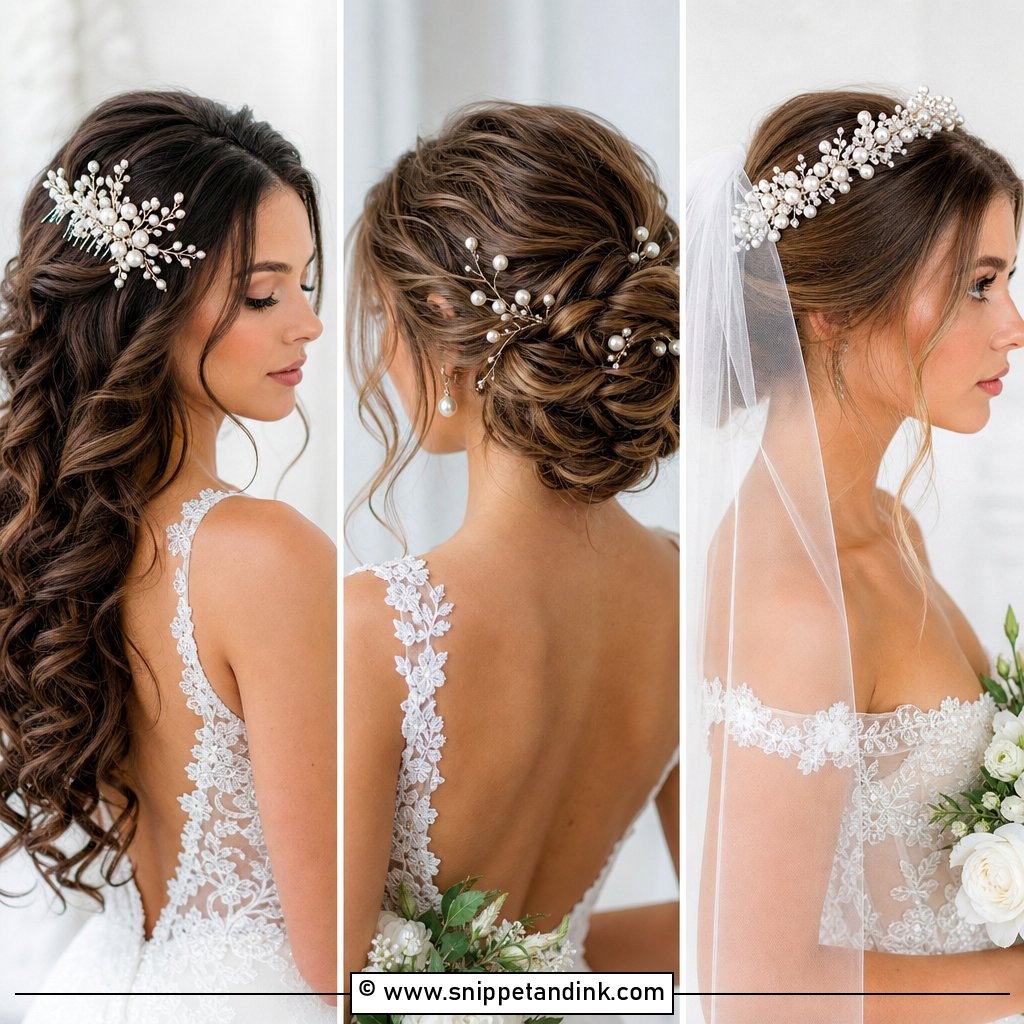
10. Pearl Embellished Bun Hairstyle
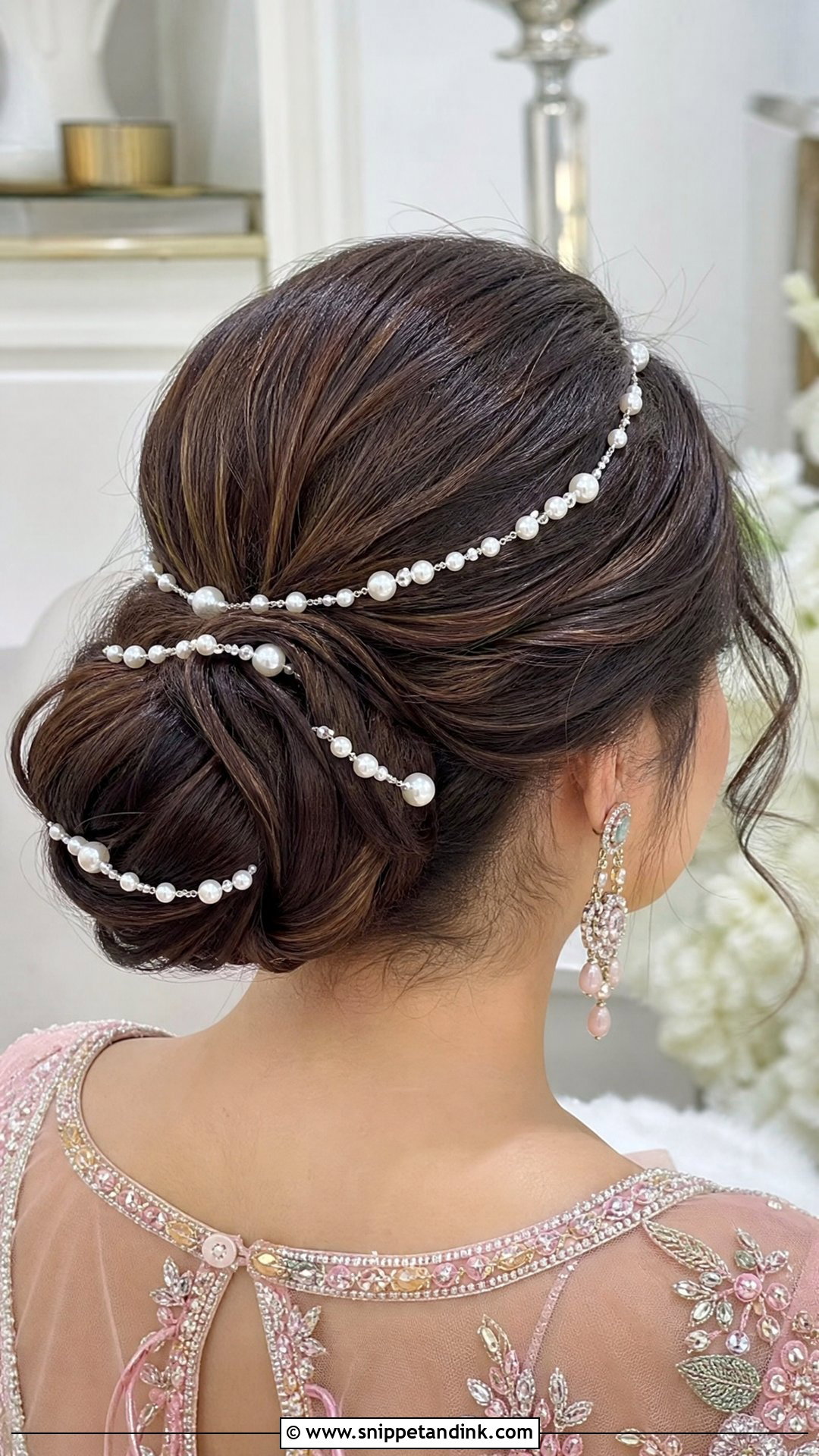
Pearls give a bun soft light without the weight of flowers. I wrap pearl strands around the bun or pin them in loops, then add a few single pearl pins to fill gaps. They suit pastel outfits, engagements and Christian-Indian fusion weddings. Pearls sit well on nearly every skin tone. My one caution is pairing them with very heavy gold or kundan jewelry; the softness of pearls can look disconnected, so I’d mix in a few gold pins.
11. Rose Bun Hairstyle
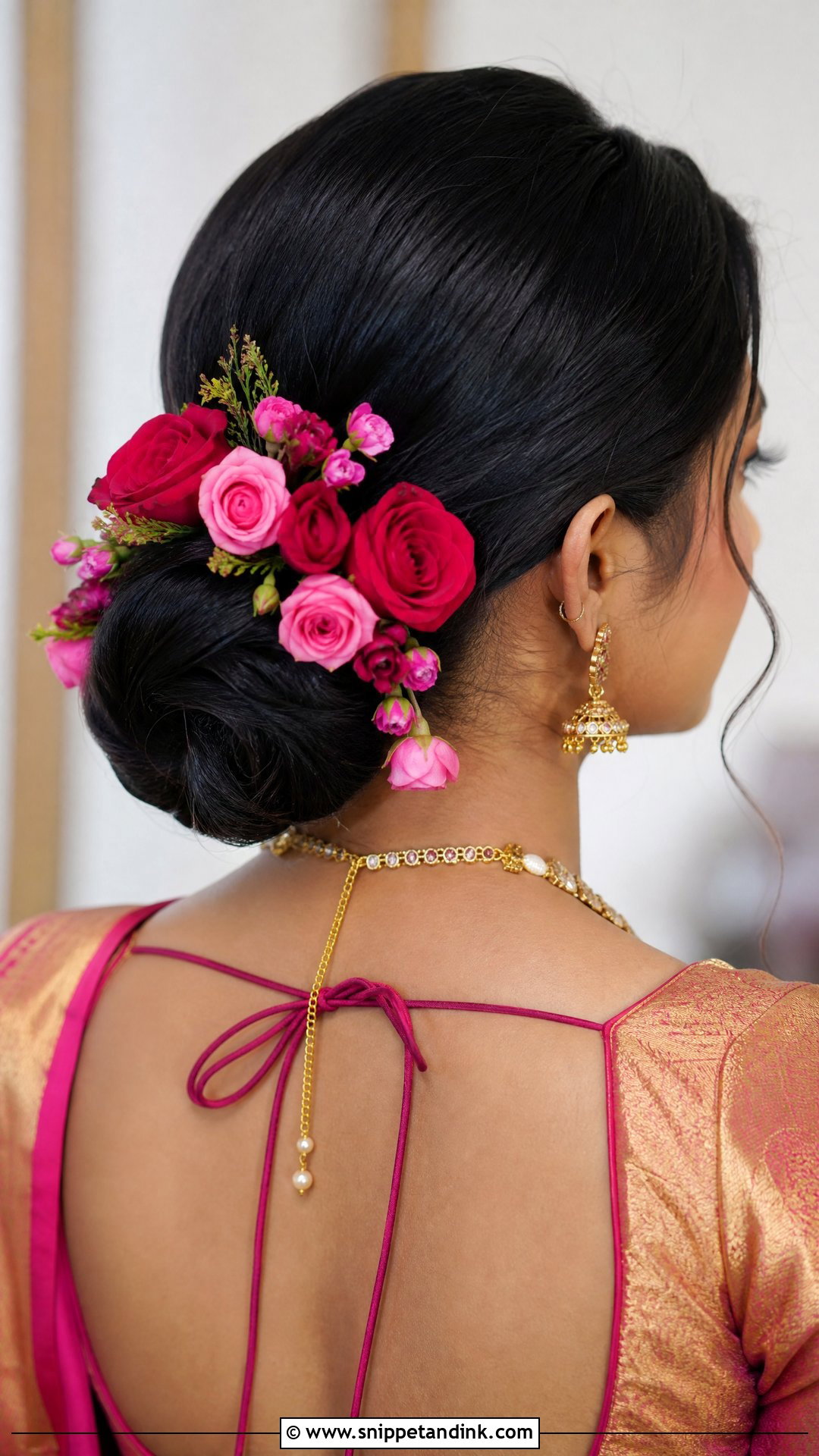
Fresh roses on a low bun bring colour and texture, but they need careful placement. I cut stems short, pin the roses into the solid centre of the bun and cluster them on one side for an asymmetric finish. Soft pinks read gentle; deep reds suit a traditional silk saree and gold jewelry. Roses hold up reasonably well, but outer petals bruise if you lean back against a chair, so I keep a couple of spares in the fridge for touch-ups.
12. Braided Crown Bun Hairstyle
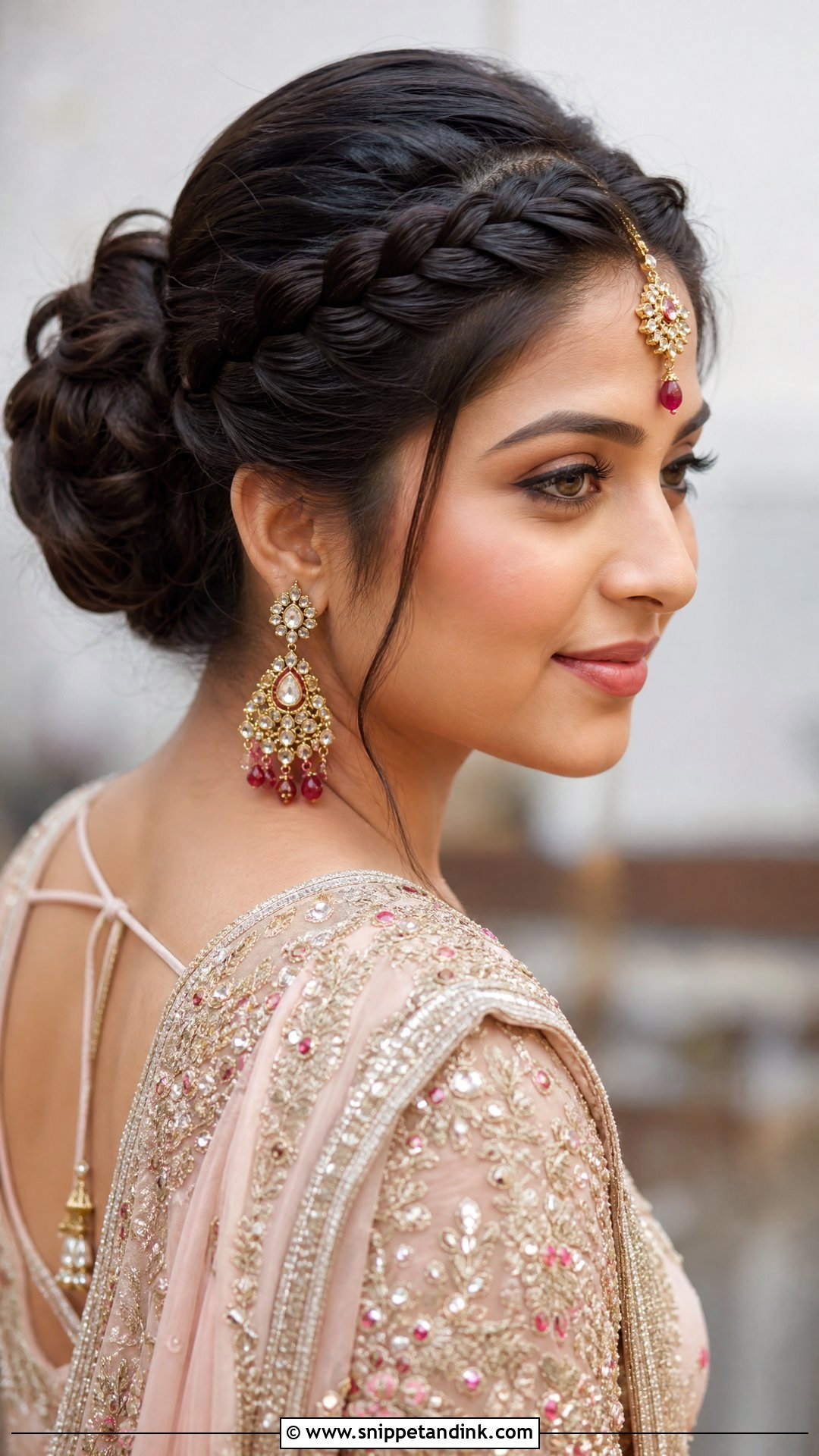
A braided crown circles the head like a halo and finishes in a soft knot at the back. It keeps every strand off the face, which is useful in heat. A maang tikka sits neatly in front of the crown braid, though a heavy matha patti can compete with it. I build the braid from the front hairline backwards and pin it every few centimetres so it doesn’t sag. Small flowers or pearls tucked into the braid add detail. It suits both lehengas and gowns.
13. Bun With Maang Tikka Hairstyle
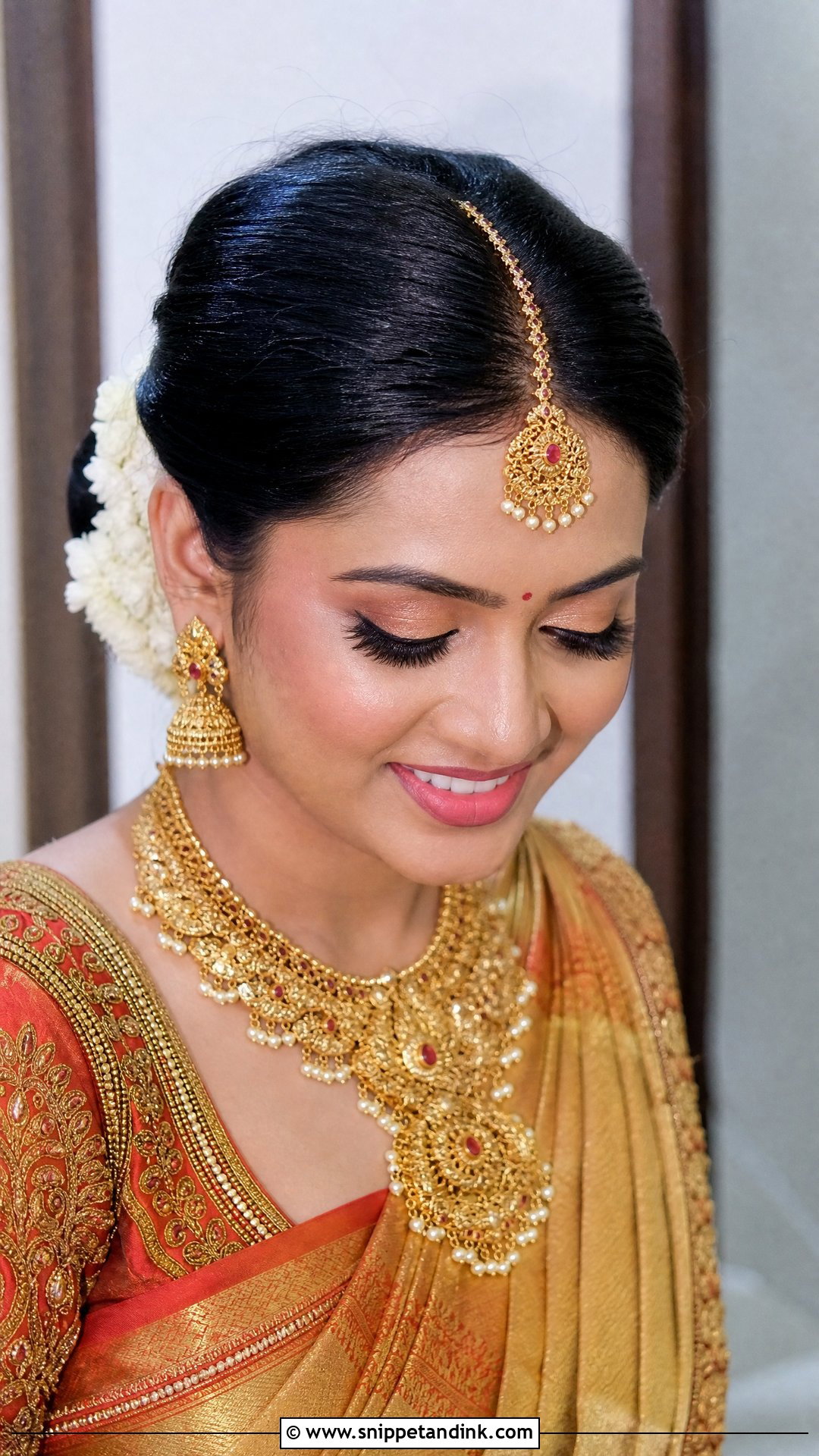
A sleek bun is the simplest base for a maang tikka, and that’s the point: it lets the jewelry do the talking. I keep the bun low and polished with a centre part, which suits traditional maang tikka placement. The chain runs along the part and the hook is secured at the crown with a small pin so the pendant doesn’t swing. It suits brides who want jewelry-forward styling. A few flowers or pins at the bun add detail if wanted.
14. Twisted Rope Bun Hairstyle
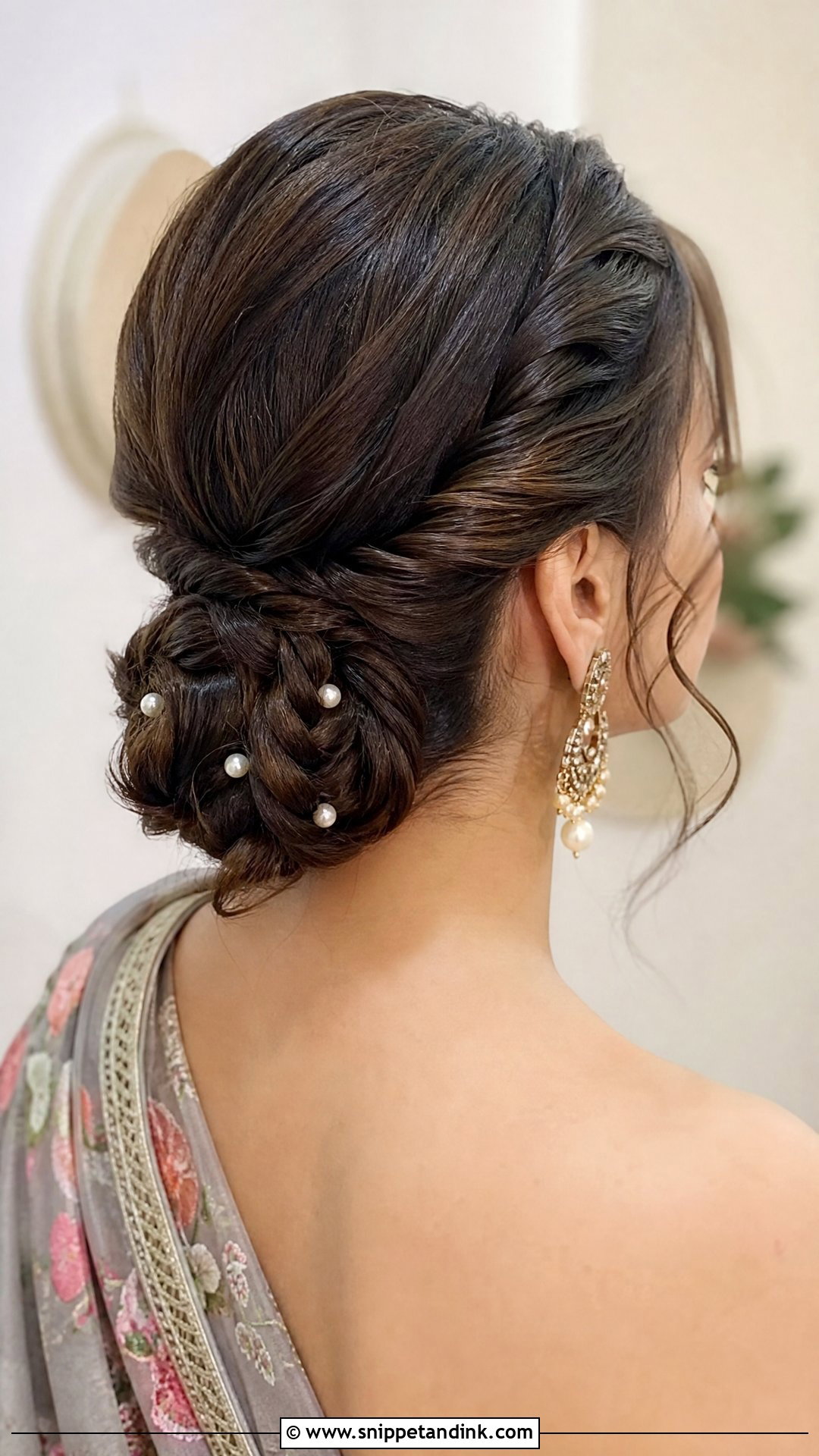
Rope twists give texture without the work of a full braid. I divide the ponytail in two, twist each section the same direction, then wrap them around each other in the opposite direction, which locks the rope. Coiled into a bun, it can sit high or low. Twists can unravel, so I secure the ends with small elastics before pinning. Pearl pins or small flowers along the twists add sparkle. It looks good with statement earrings and a flowing saree.
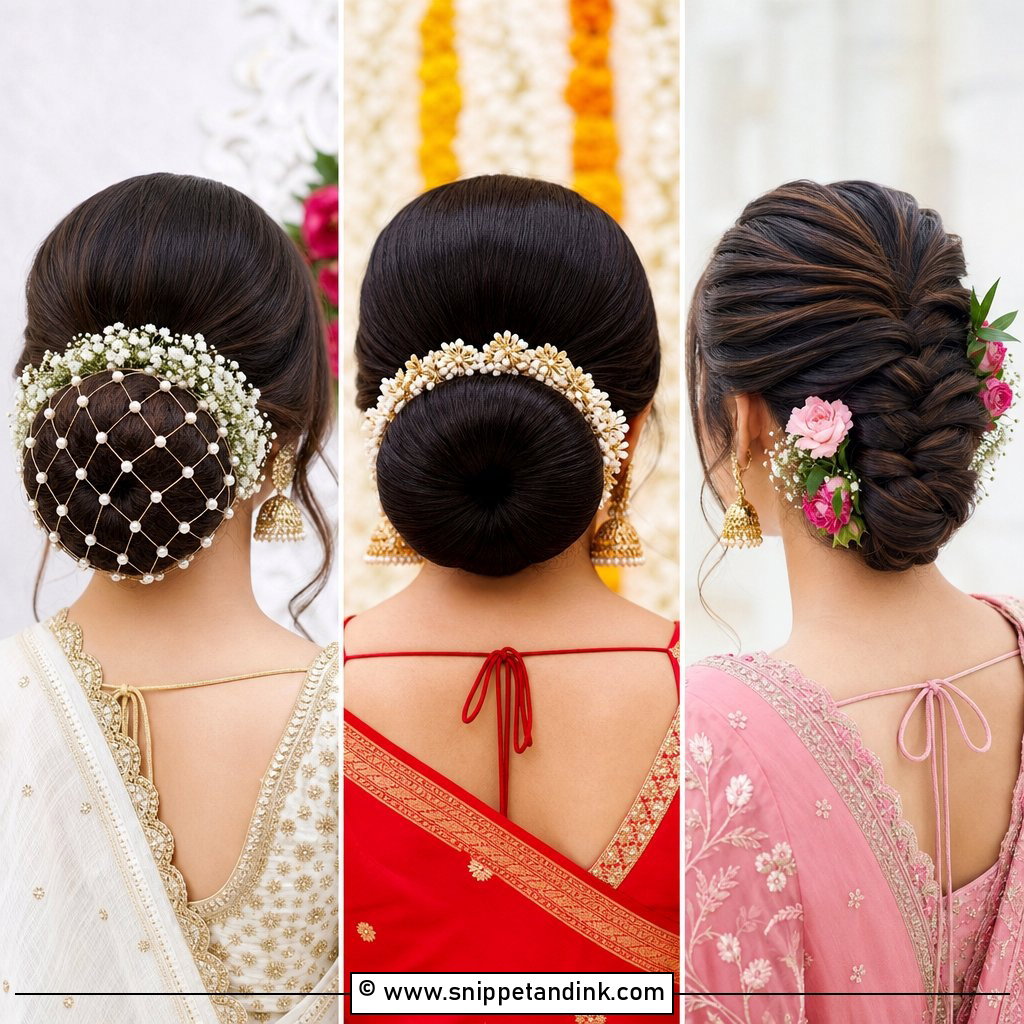
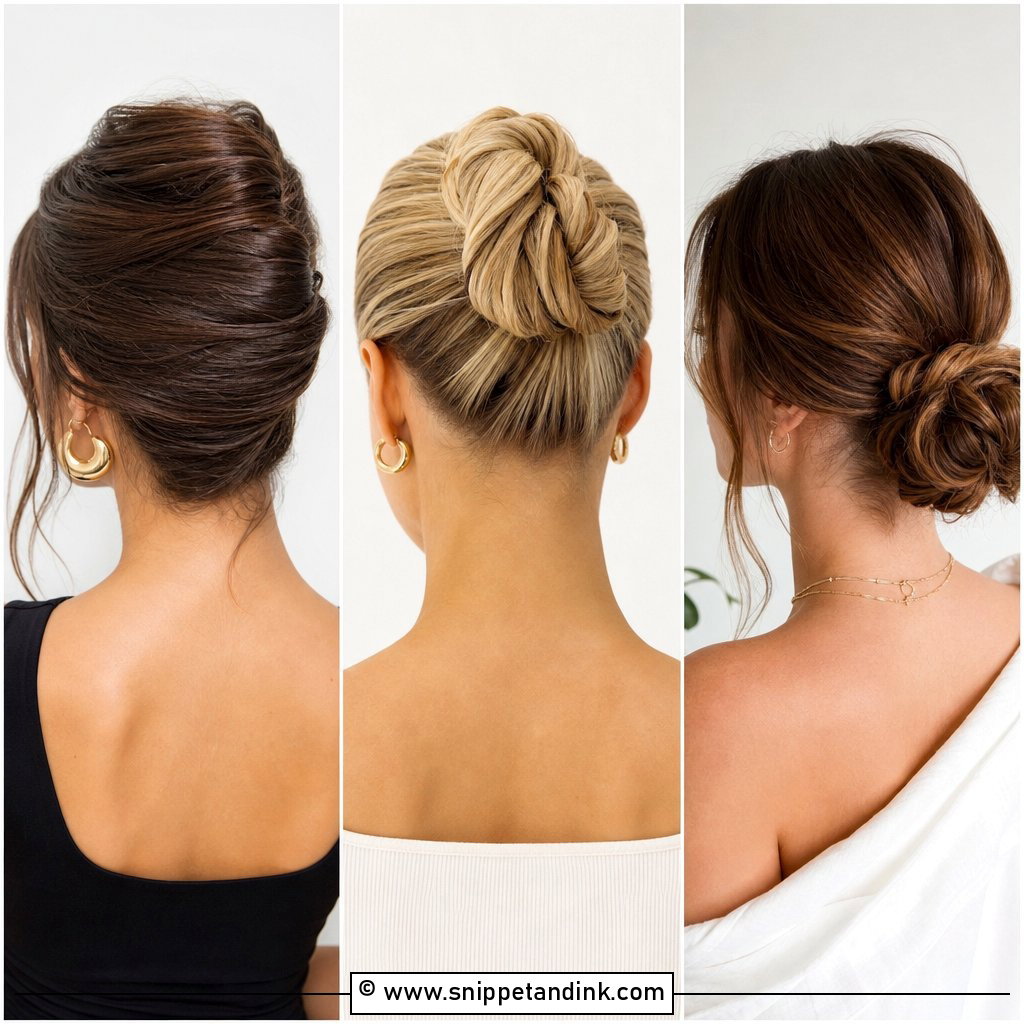
15. Bun With Hair Accessories Hairstyle
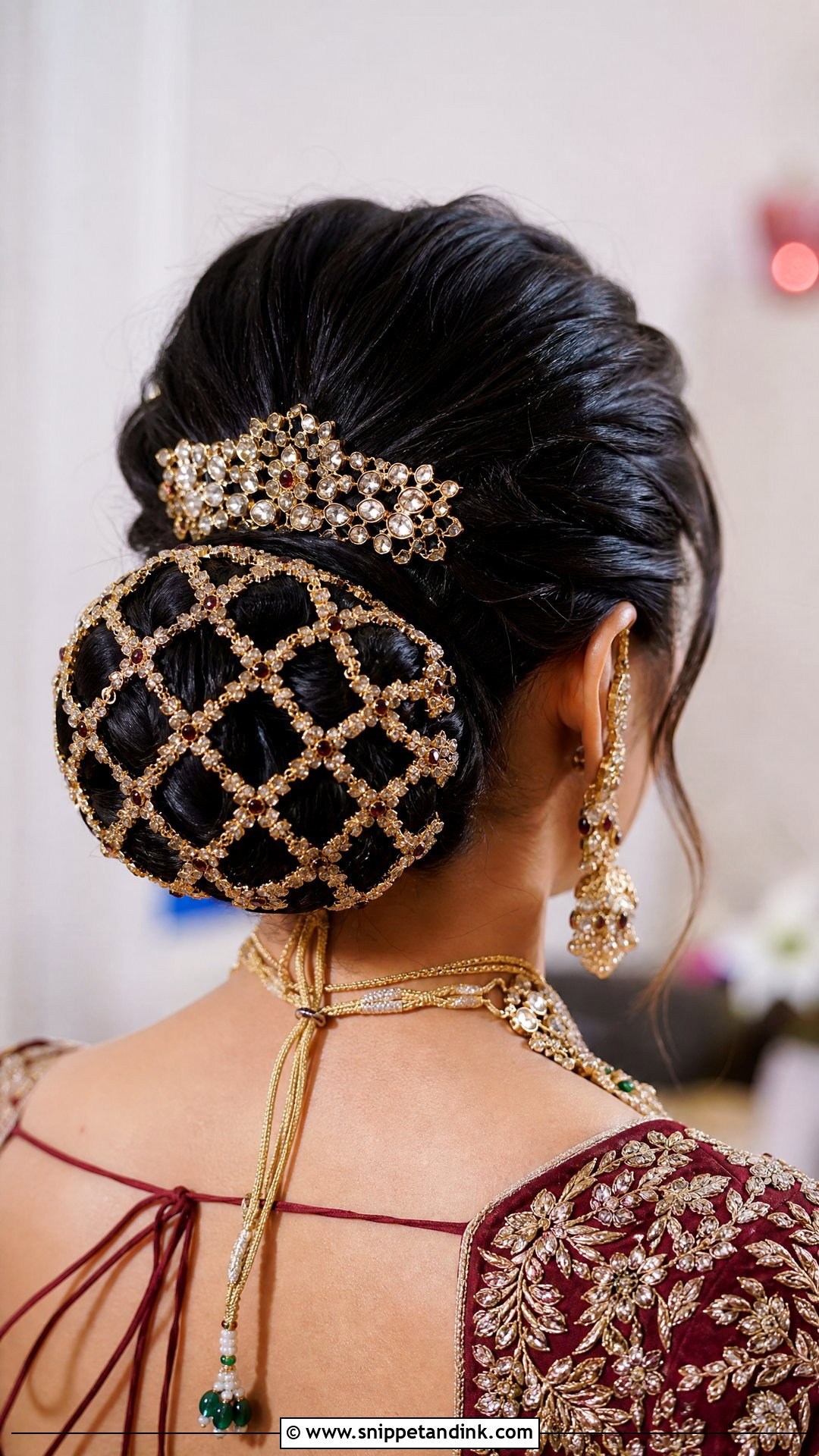
Accessories turn a simple bun into a statement. Ornate juda pins, jeweled clips, gold combs and bun covers all work, and I usually start with a smooth bun so the pieces stand out. Match the metal and stones to your main jewelry. Weight matters: heavy accessories need a firm bun, so I add a hidden braid or ponytail base for them to grip. This approach suits heavily embroidered lehengas and brides who love sparkle. Keep it to two or three pieces; more starts to look cluttered.
16. Bun With Loose Curls Hairstyle
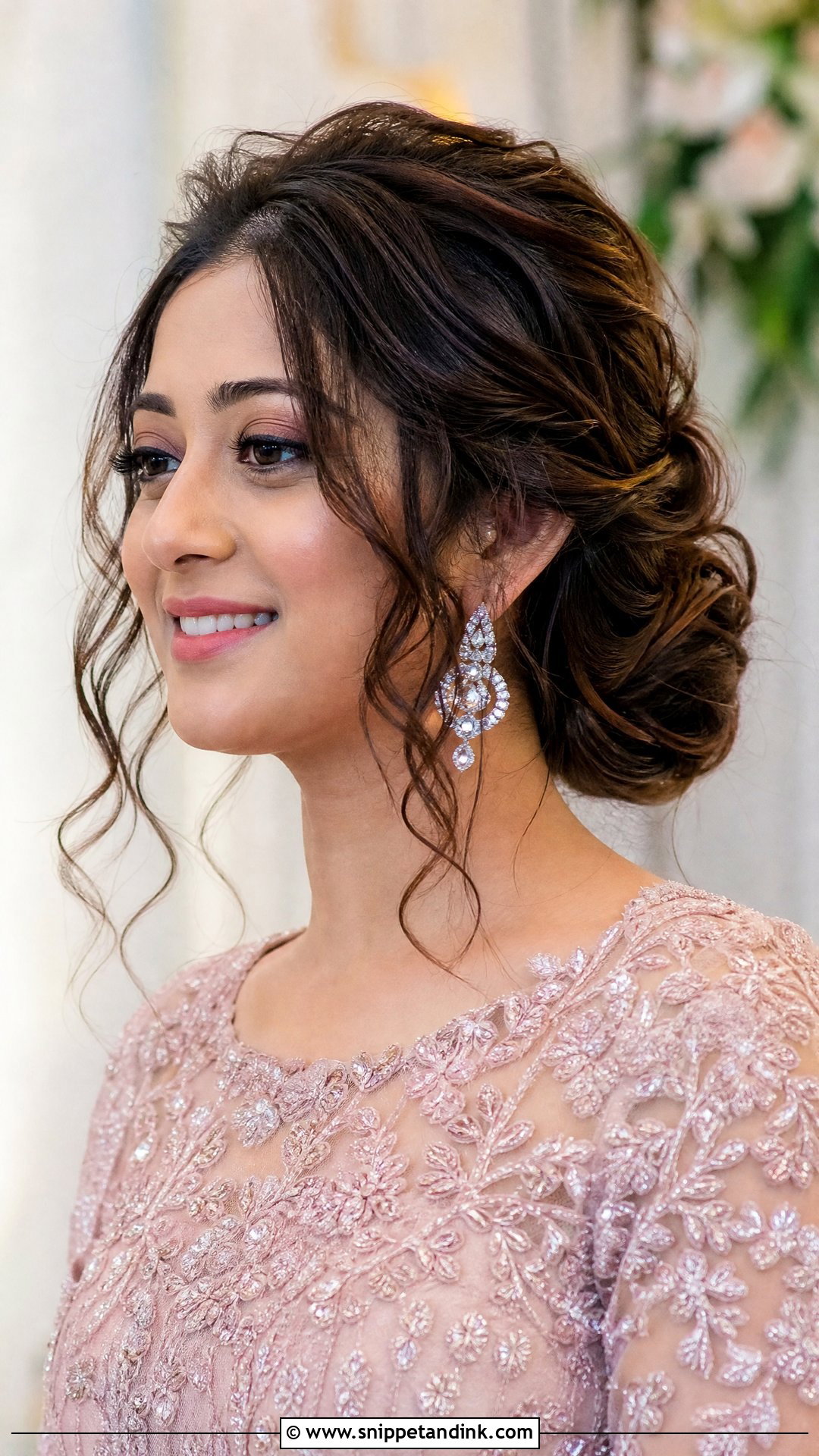
Most of the hair goes into a bun, with curled strands left loose around the face. The contrast between neat and soft suits most face shapes. I curl the front pieces away from the face so they don’t fall into the eyes, and set them lightly. It’s a good look for engagements, sangeet and receptions. The curls are the first part to drop in humidity, so I’d keep a small travel spray handy.
17. Sleek Polished Bun Hairstyle
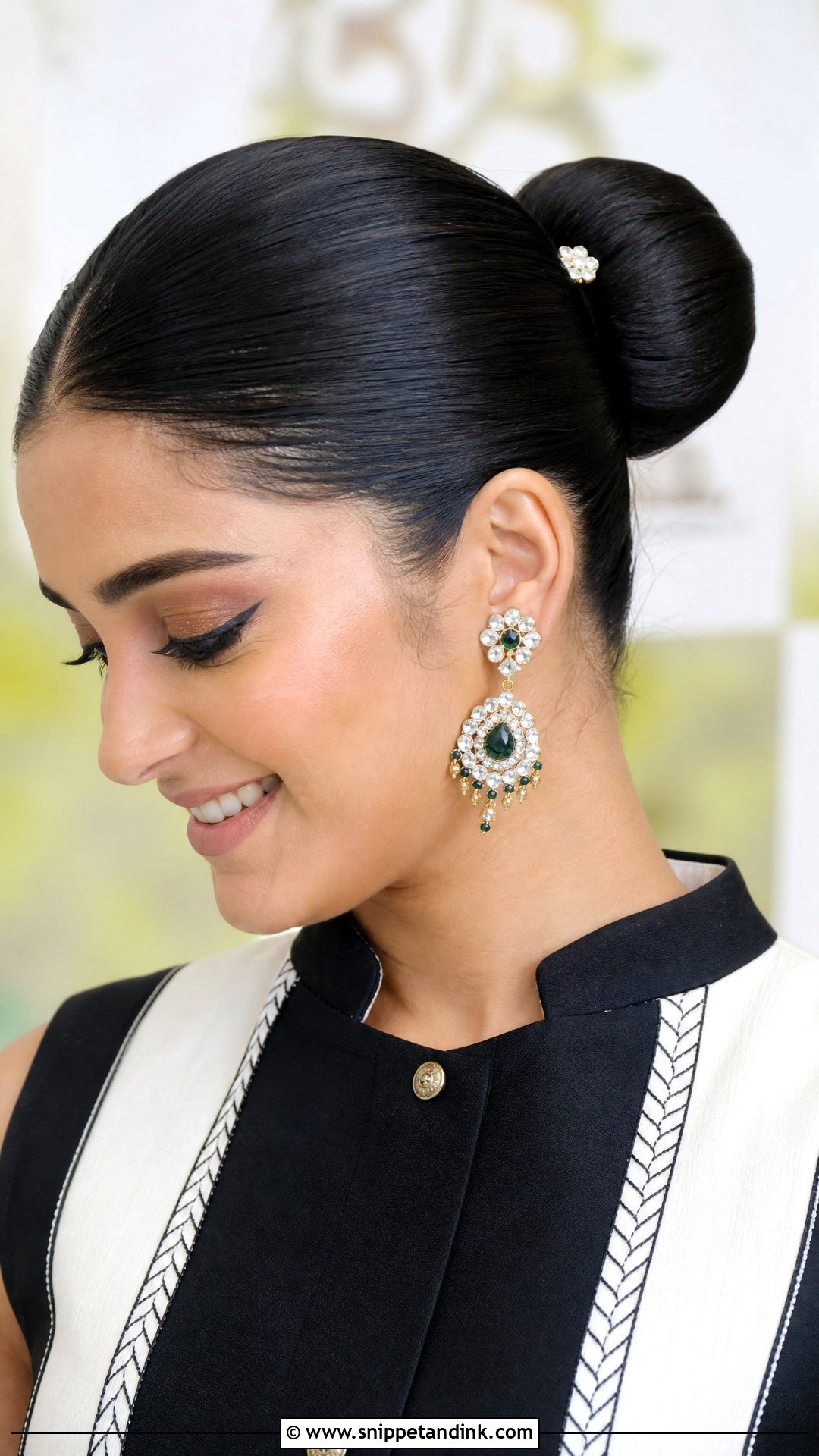
A sleek bun with no flyaways depends entirely on preparation. I blow-dry the hair smooth first, then brush it back with a strong gel or wax stick and secure it tightly. Any frizz shows clearly, so this isn’t the style for very humid outdoor weddings unless the hair is naturally straight. It shows off statement earrings and a bold neckline, and pairs well with Indo-western outfits. A thin braid around the base or a single pin adds detail.
18. Bun With Veil Hairstyle
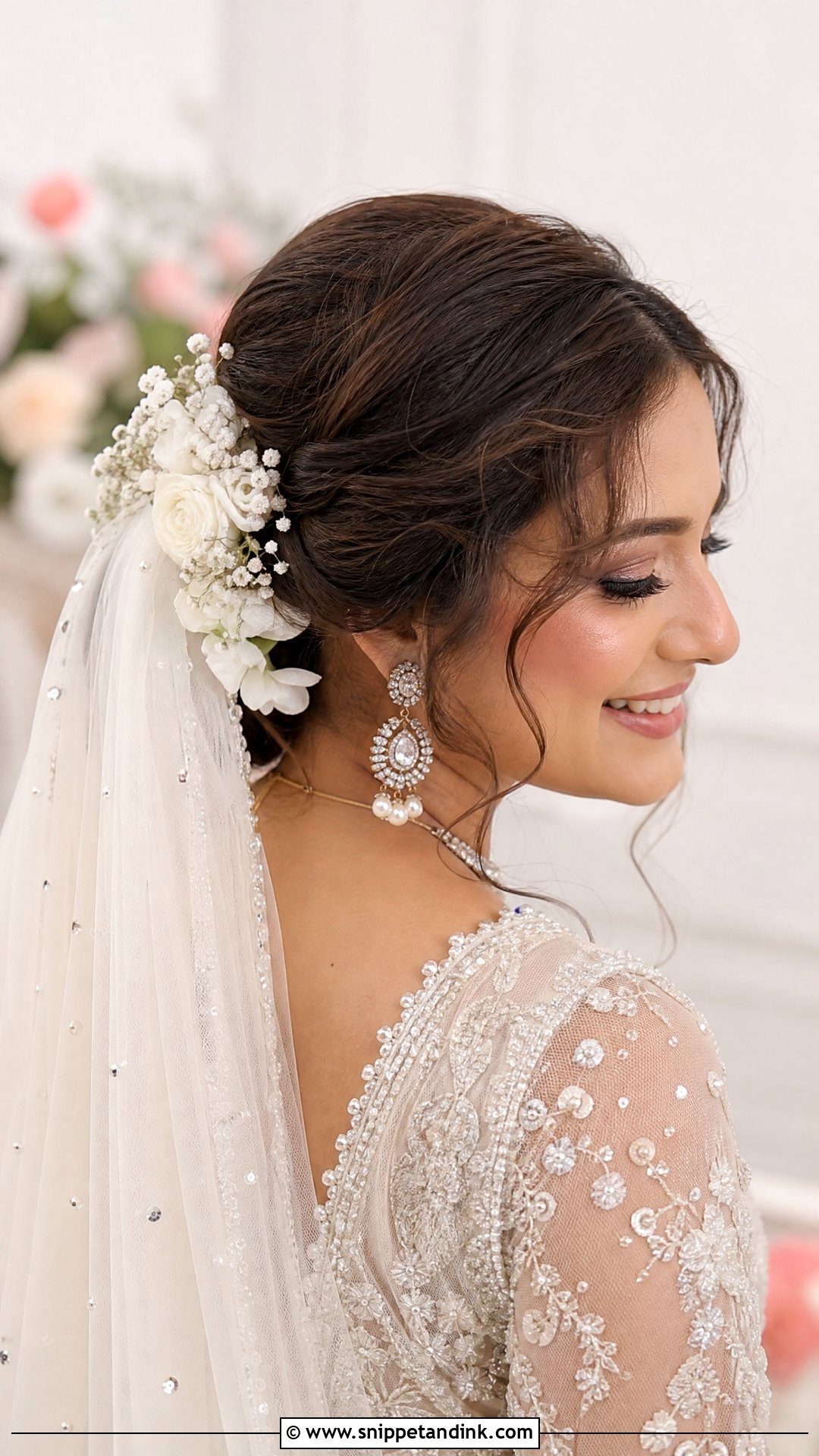
A bun that holds a veil or dupatta has to be firm before it’s pretty. I build a low or mid bun with a filler if needed, then pin the veil or dupatta into it with long U-pins. Placing the veil above the bun gives a more traditional look; below it, the bun stays visible. It suits Christian-Indian fusion weddings and modern ceremonies. Small flowers or pearls at the base can hide the pins.
19. Bun With Front Bangs Hairstyle
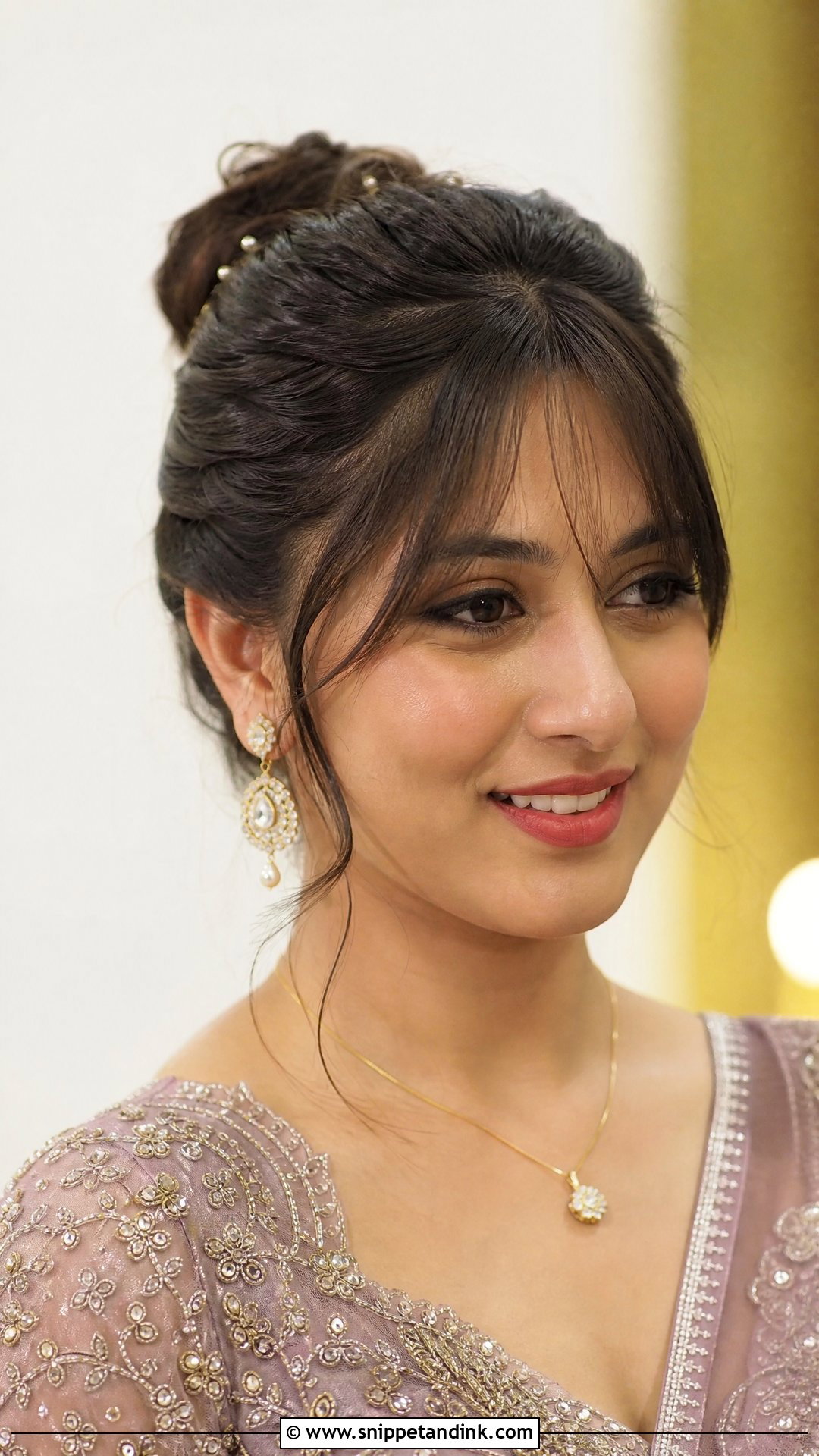
Front bangs with a bun bring a fresher, modern feel to bridal hair. Curtain bangs or a wispy fringe soften the face and flatter longer face shapes especially. The bun behind can be messy or sleek. If you don’t already have bangs, cut them at least a few weeks before the wedding so they settle and you’re used to styling them. Bangs can separate in heat, so I set them with a light spray and a little dry shampoo at the roots. It suits sangeet and receptions.
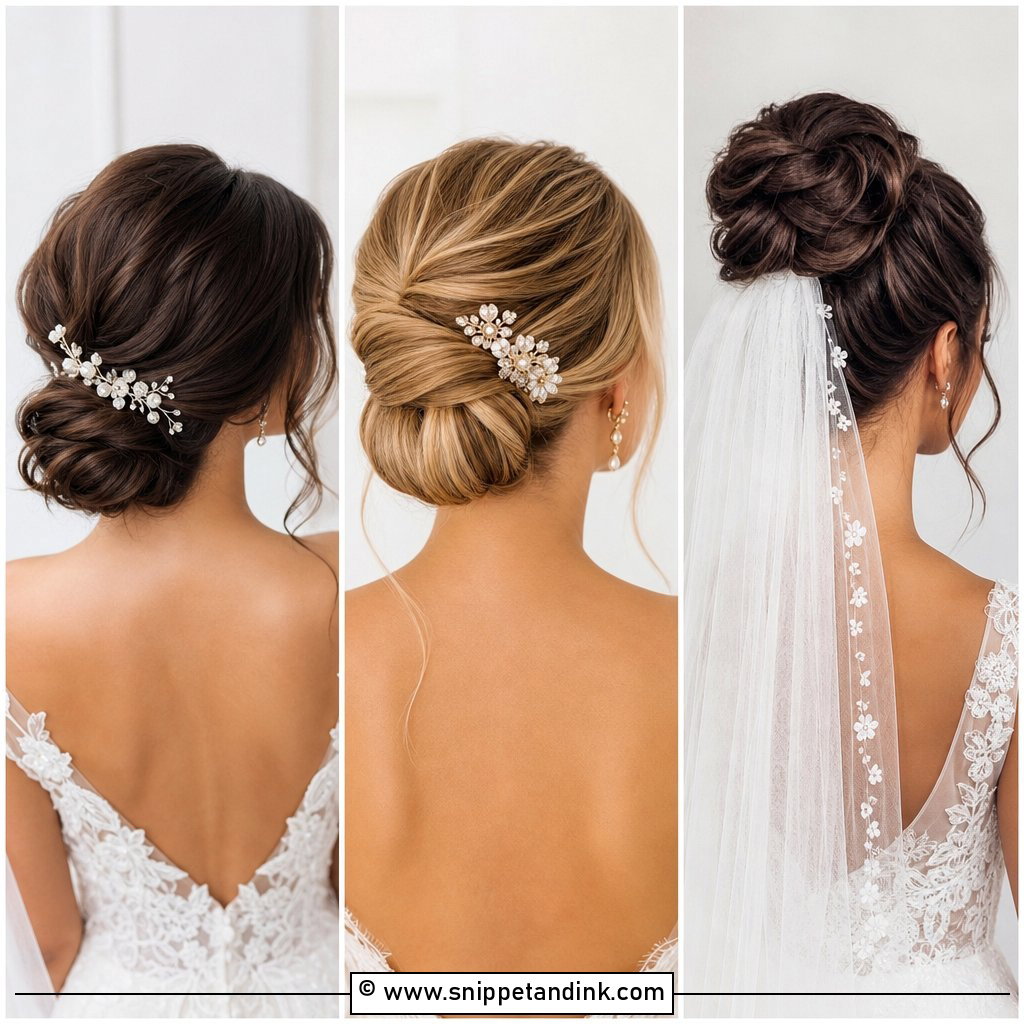
20. Bun With Hair Vine Hairstyle
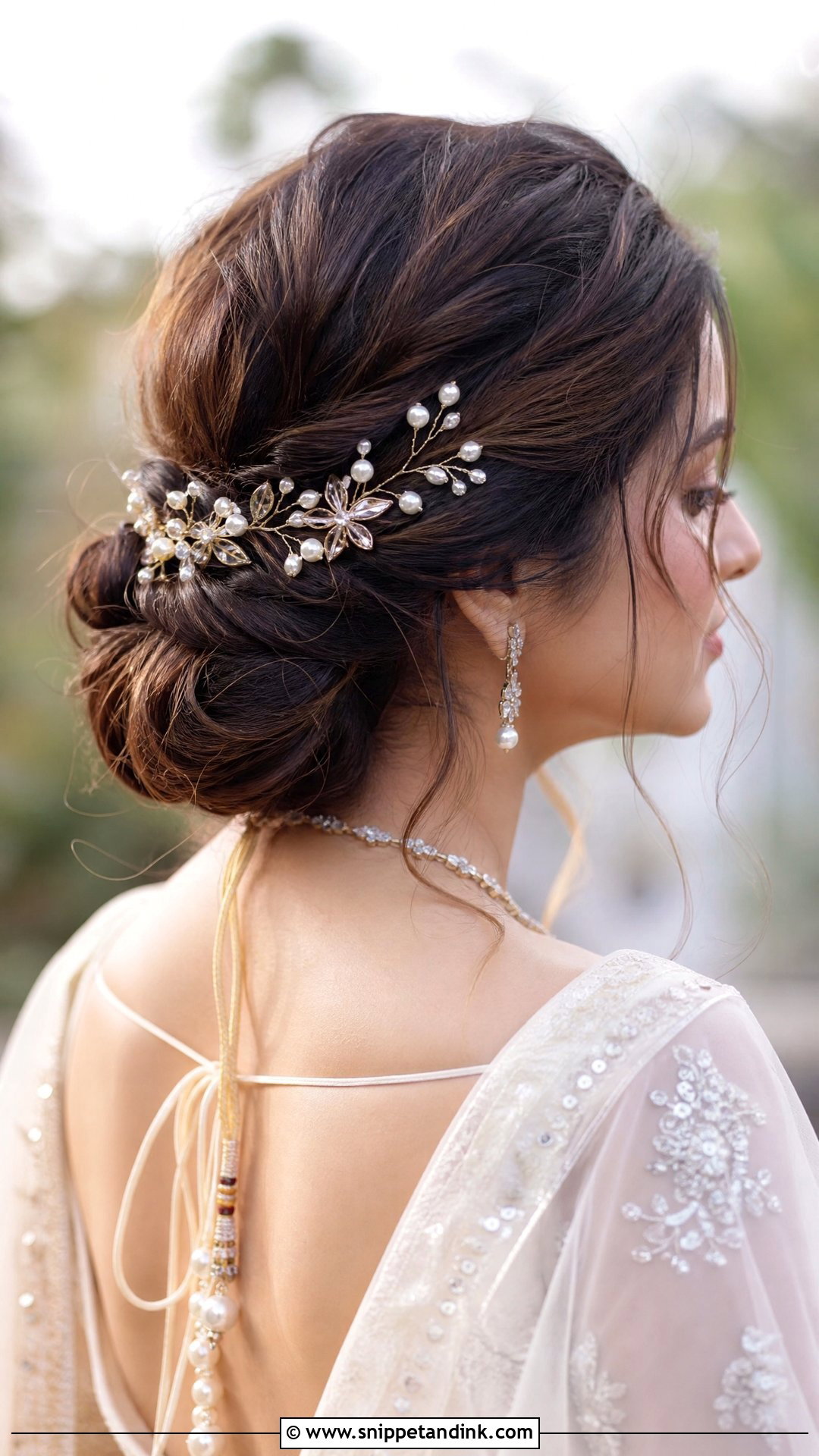
A hair vine is a flexible wire set with small leaves, crystals or pearls. I weave it through or wrap it around the bun and pin it at each end and along the way so it bends with the shape. It catches light well and gives sparkle without the weight of flowers. It suits outdoor and daytime weddings, flowing fabrics and dainty jewelry. On a very messy bun, the vine can get lost, so I keep the bun’s surface relatively smooth where the vine sits.
Monsoon and Summer Weddings Are Hard on a Bun
Heat and humidity are the main reasons a bun loses shape. Moisture in the air swells the hair, frizz appears at the hairline, and curls drop. Sweat at the nape loosens pins at the base. I plan for that from the start.
- Use an anti-humidity spray rather than a heavy hairspray, which can turn sticky in heat.
- Choose braided or twisted buns; they hold their shape when the hair swells.
- Keep fresh flowers cool until the last moment, and choose sturdier blooms like marigolds or orchids.
- Add a few extra pins at the nape where sweat loosens hold first.
- Keep a small comb, pins and a travel spray with a bridesmaid for touch-ups.
If your wedding is outdoors in the monsoon, a sleek bun is the riskiest choice. Textured styles hide frizz far better, so I’d lean that way.
Juda Pins and Bun Covers Need Testing Before the Day
Hair jewelry bought online often arrives heavier or larger than the photos suggest. Order it early enough to bring to your trial, so your stylist can see how it sits and build the bun to the right size. A bun cover needs a bun that fills it snugly; too small and it rattles, too big and it won’t close. Check the backs of clips and combs for sharp edges that can snag hair or scratch the scalp, and wrap any rough metal with a little clear tape. If a piece is very heavy, I sew it to a hidden comb so the weight spreads across more hair.
A Bun That Lasts Starts at the Trial
The right bun comes down to what you’re wearing, the shape of your face and how long the day is. Gajra buns suit tradition, pearl and vine buns suit lighter outfits, and sleek knots suit modern looks. Floral buns bring colour; accessorised ones bring shine. Pick two or three styles you like, take them to your trial with your outfit and jewelry, and adapt them to suit your hair. Wear the chosen style for an hour before you decide.
You'll Like These Ideas:


Leave a Reply