
Almost every bride who asks me for a princess gown means the same two things: a fitted bodice and a skirt with real volume. Beyond that, the category is wide. It covers clean satin ball gowns, corseted bodices with basque waists, pearl-scattered tulle, bows, detachable sleeves and some quite architectural shapes. It also suits more venues than people expect, from ballrooms to gardens to modern hotels. Here are 35 versions, with the fitting-room detail I’d want you to know before you fall for one.
Petticoats, Hoops and the Weight Under a Full Skirt
A princess skirt doesn’t hold itself up. The volume comes from layers of tulle or organza, a built-in crinoline, a separate petticoat or, in the fullest gowns, a hoop. Horsehair braid sewn into the hem helps it flare. Each option changes how the dress feels: a hoop gives a perfect bell shape but swings when you walk and makes sitting awkward, while soft petticoat layers move more naturally.
At your appointment, I’d ask three questions before falling for the shape:
- Is the volume built in, or does it rely on a petticoat the salon is adding underneath? If it’s the second, find out if the petticoat is included in the price.
- How heavy is it? Hold the skirt up for a minute. Satin and brocade gowns can weigh several kilograms, and all of that sits on your waist.
- Can you get through a standard doorway, into a car and onto a toilet with help? Try a mock version of each in the salon.
I’d rather a bride choose slightly less volume and enjoy her day than wear the widest skirt in the shop and fight it for twelve hours.
1. Classic Ball Gown Princess Wedding Dress
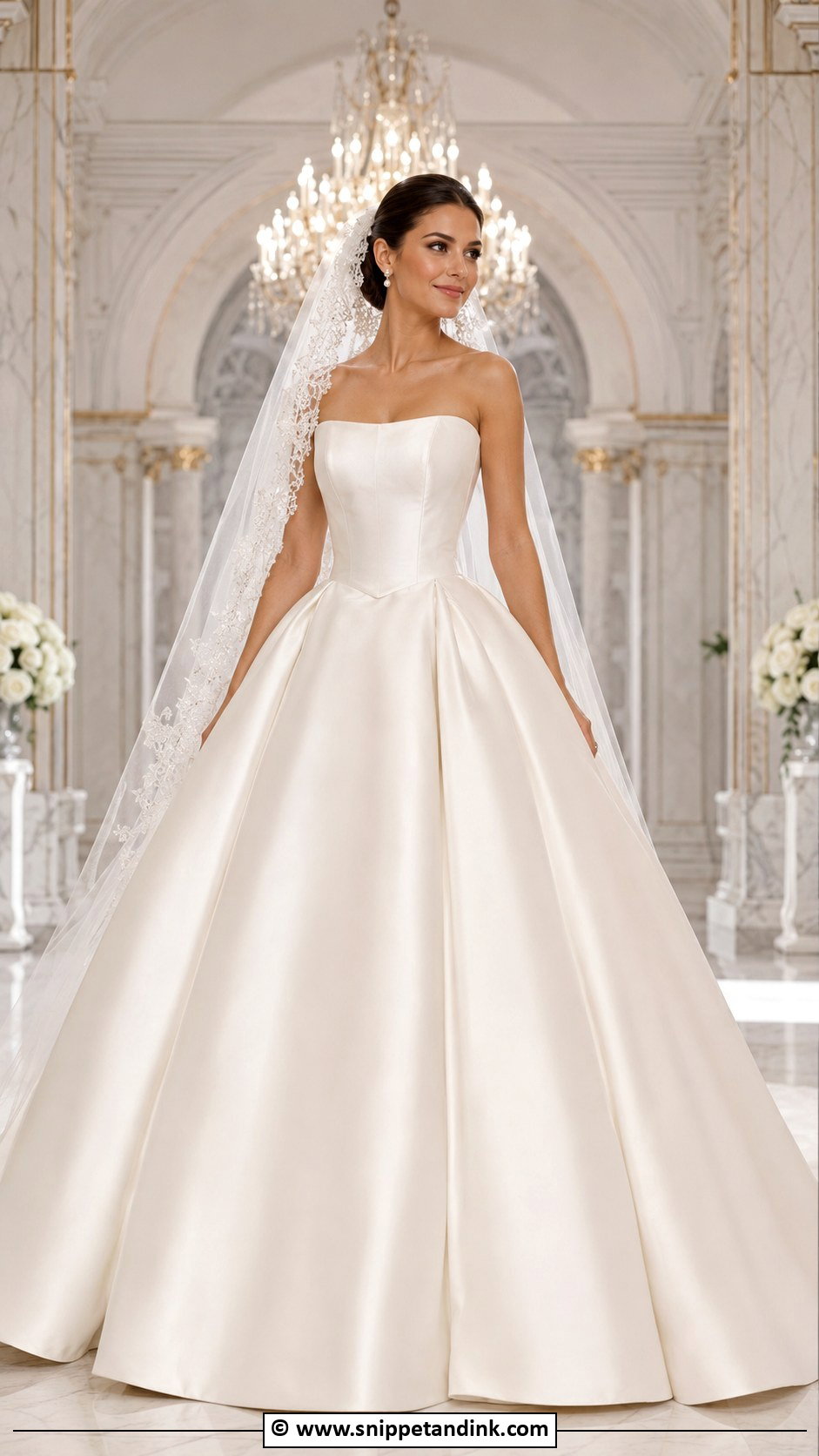
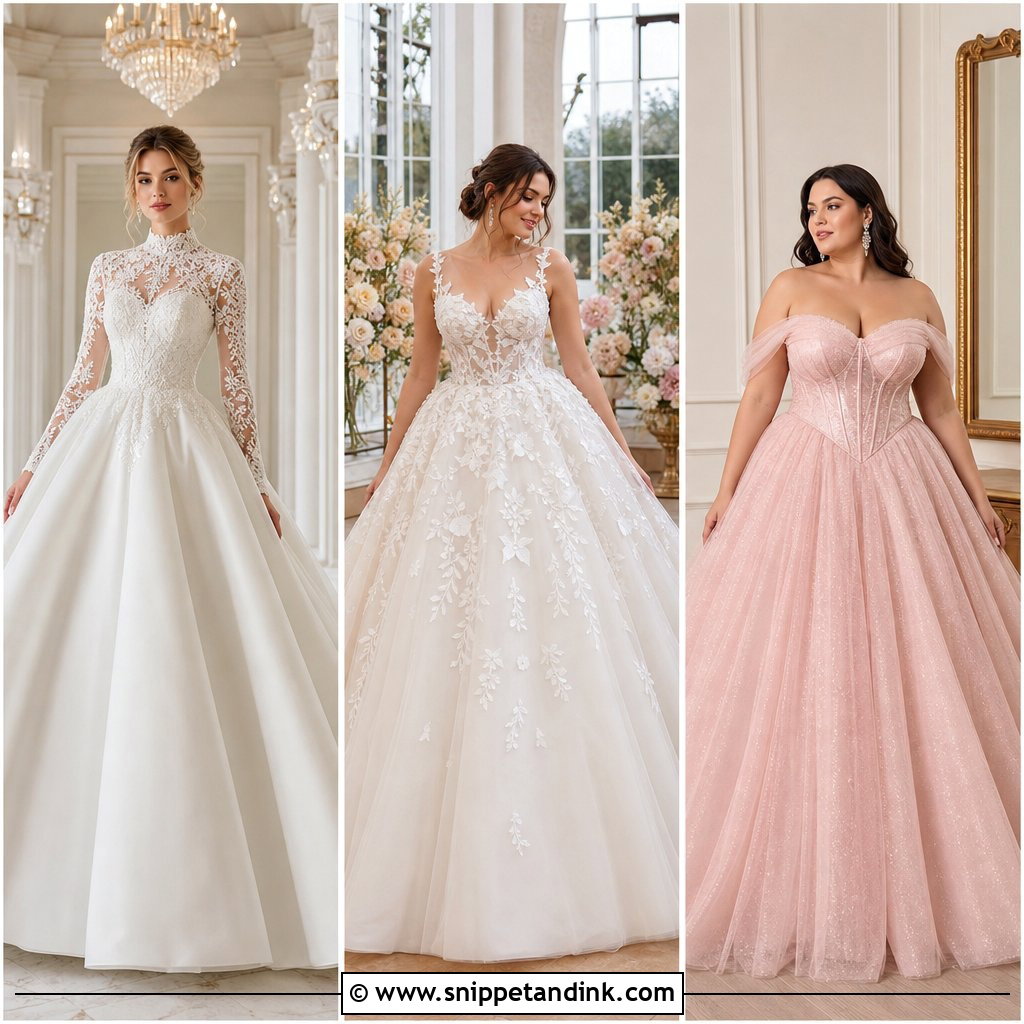
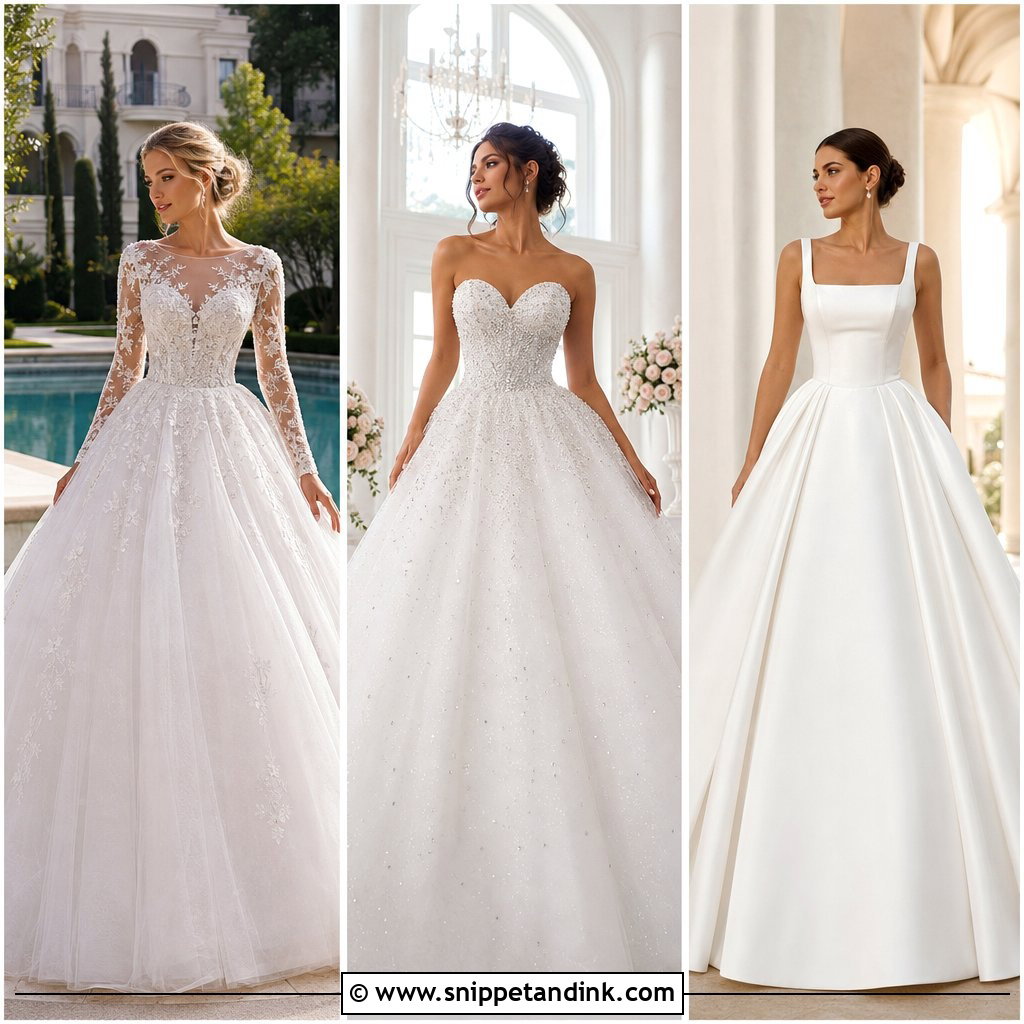
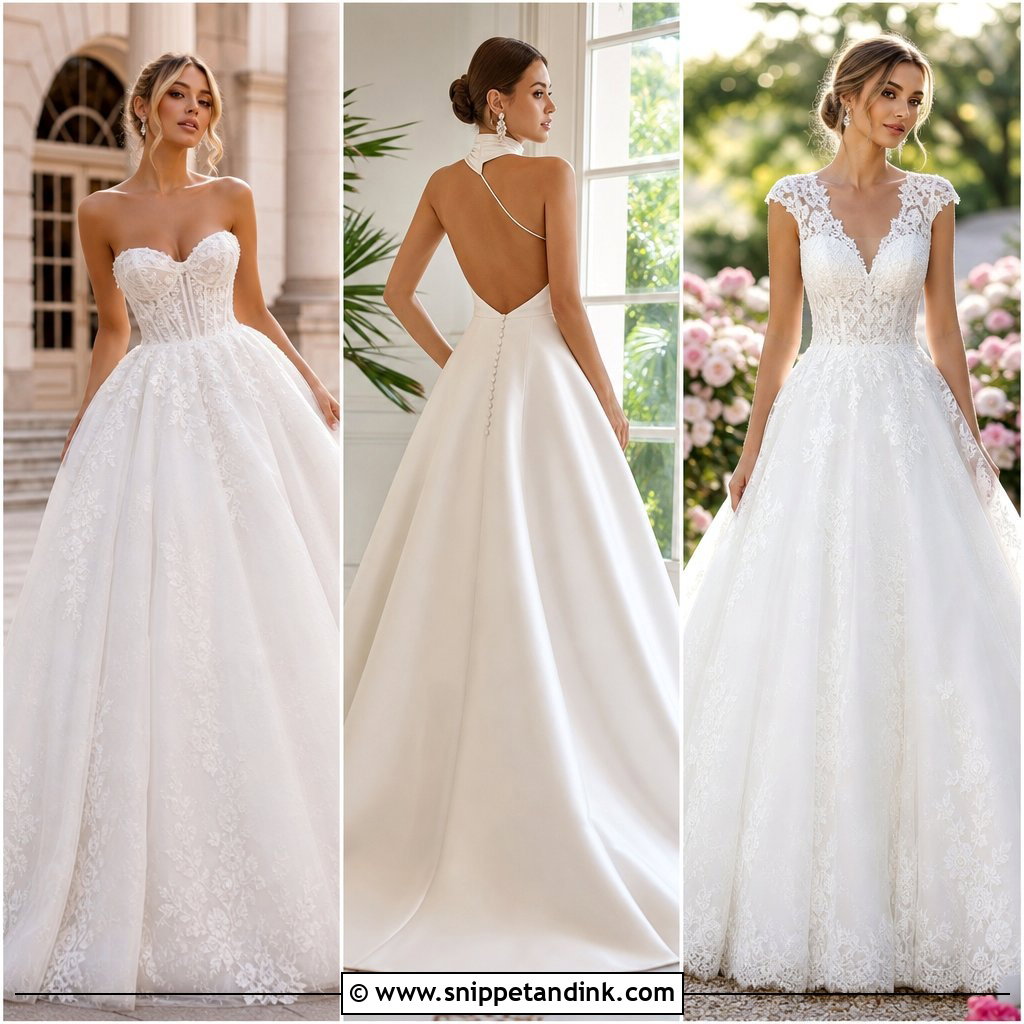
The classic ball gown princess wedding dress is the benchmark every other version gets compared to: fitted bodice, defined waist, a skirt wide enough to fill the aisle. Satin, mikado, organza and layered tulle all hold that shape without collapsing. What I check first is where the waist seam sits. It should land at your natural waist, the narrowest point, or the whole silhouette looks dropped. Pair it with a cathedral veil, pearl earrings and a neat updo; nobody will see your shoes.
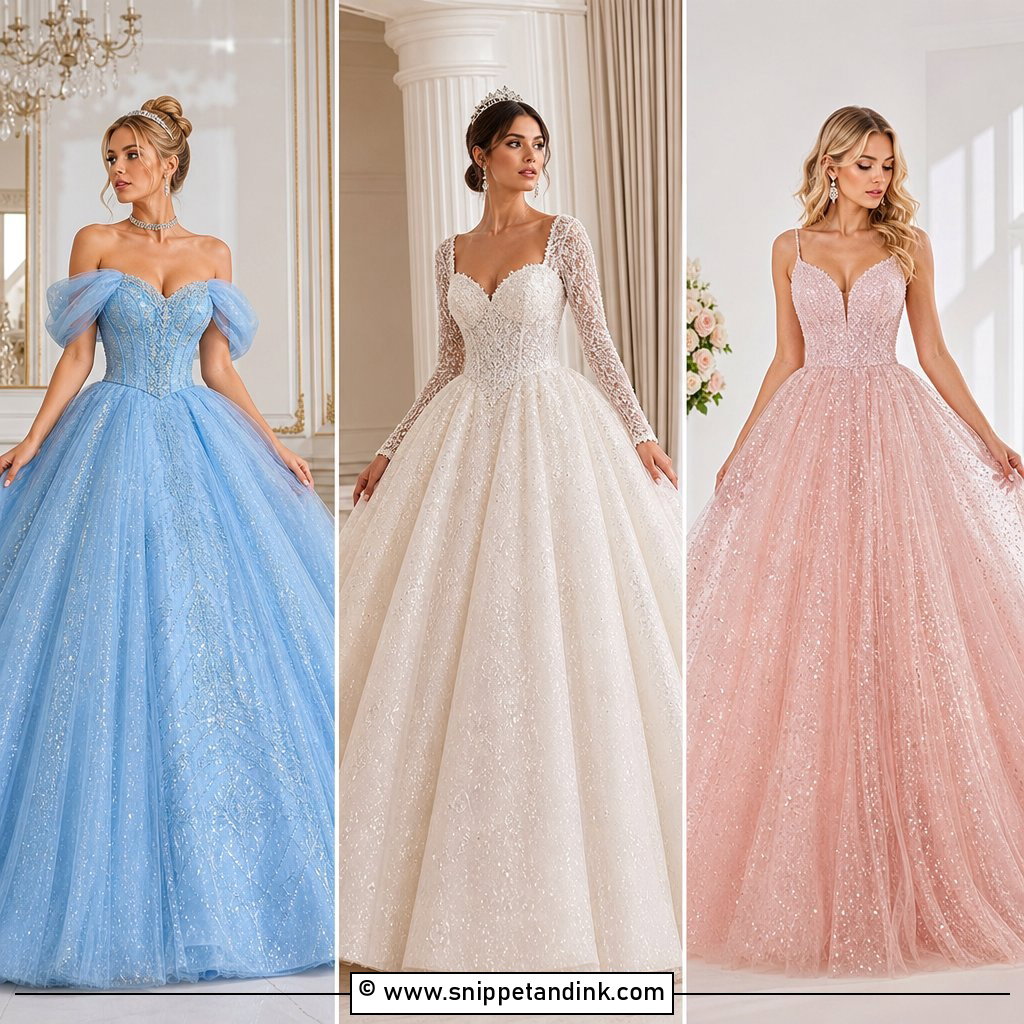
2. Lace Princess Wedding Dress
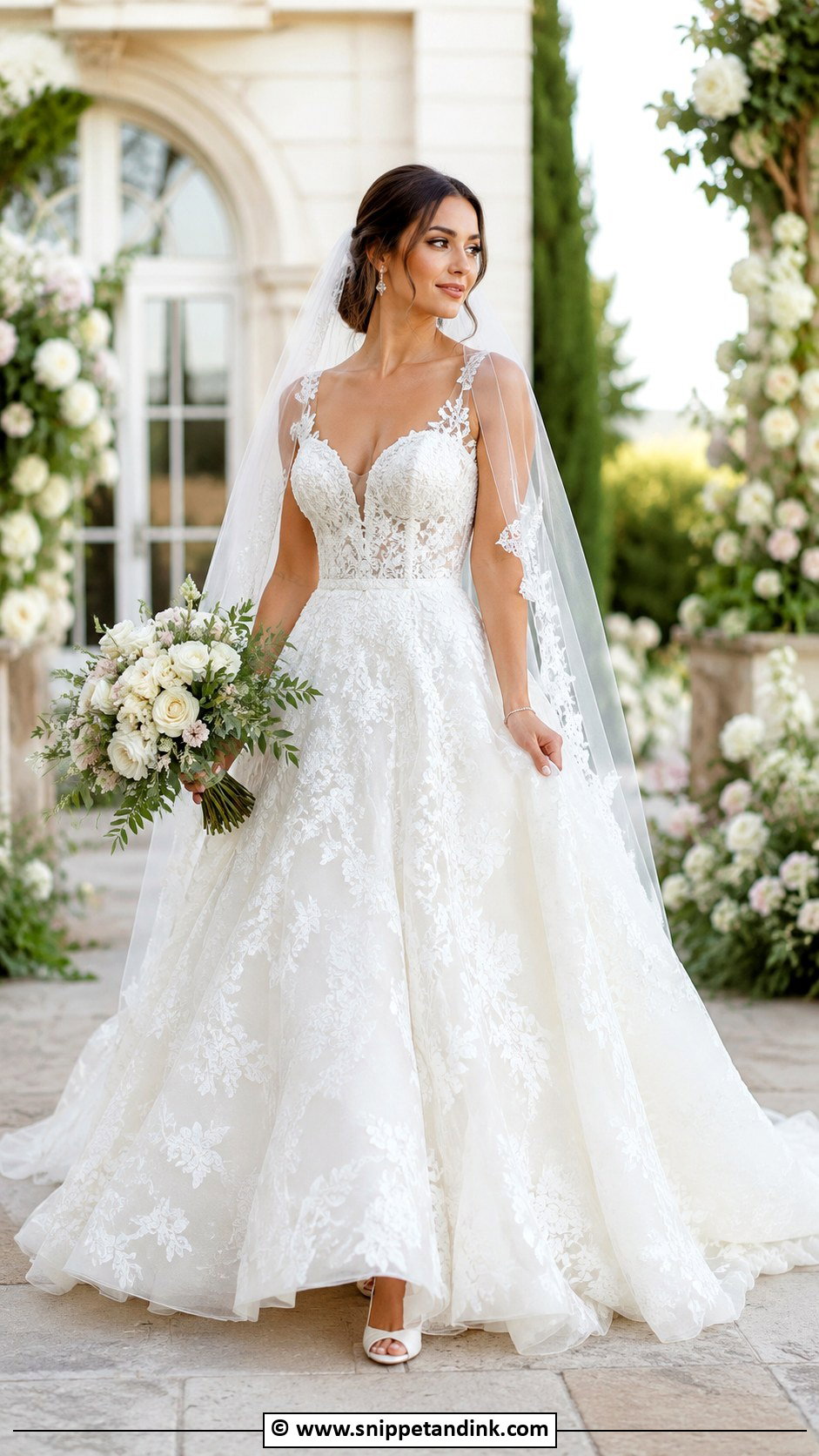
Lace gives a full skirt texture without sparkle. It can run over the whole gown, lie over tulle or appear only as appliqué at the bodice and hem. Floral lace feels like a garden; geometric lace looks sharper. Sleeves are a seasonal call: long lace for cooler months, sleeveless for summer. My one caution is the lining colour. Lace on a nude or champagne lining shows its pattern clearly, while ivory on ivory can read as plain from across a room. Keep the bouquet clean so the two textures don’t fight.
3. Satin Princess Wedding Dress
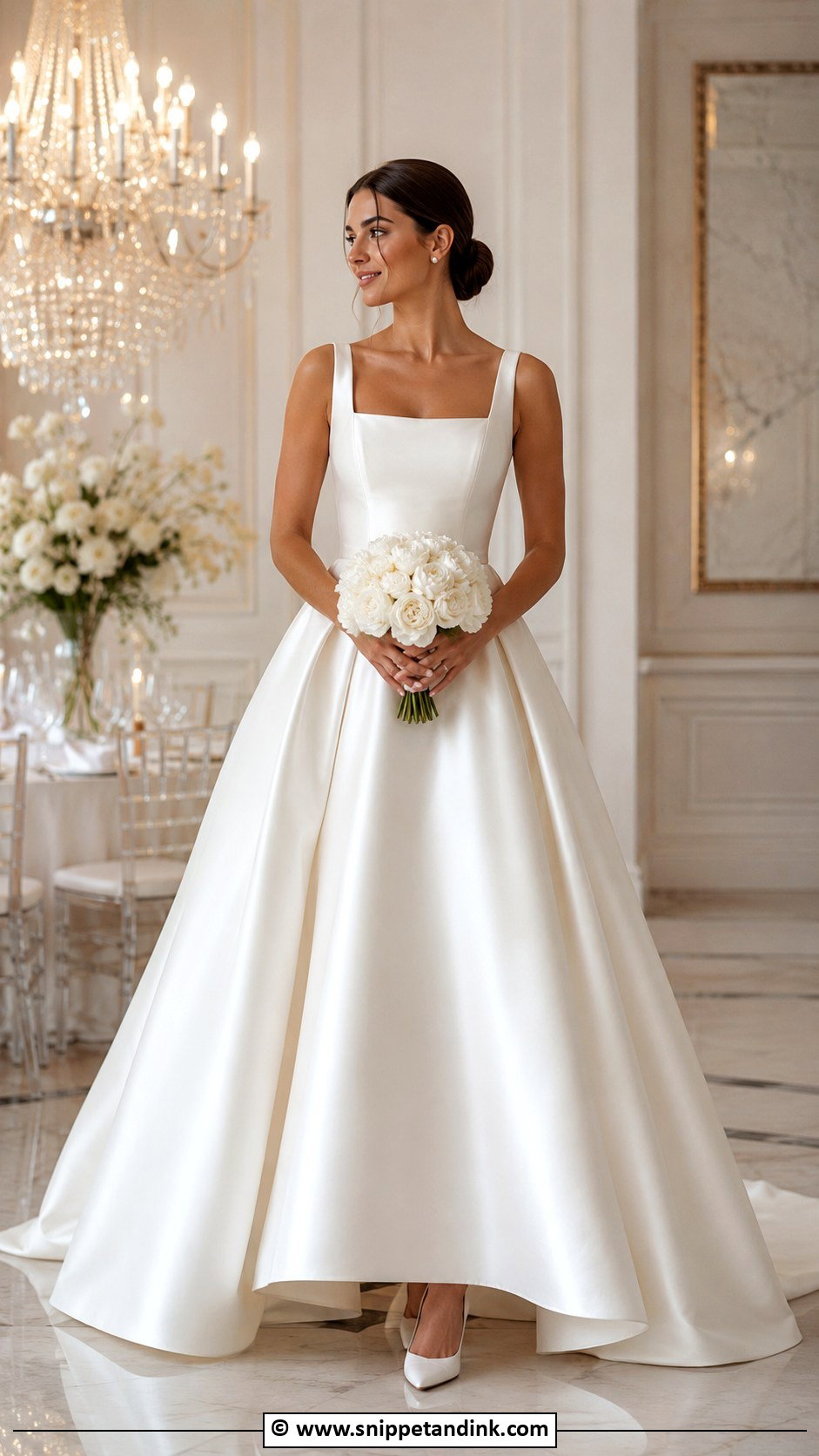
Satin gives polish with no decoration at all. It catches light in one smooth sheet, which is why even a plain shape looks expensive and polished. That smoothness is also unforgiving: any pull at the side seams shows. A square neckline reads modern, a sweetheart softer, a portrait collar formal. Expect it to crease when you sit in the car, and plan for a quick steam before the ceremony. Pearl studs, a sleek bun and satin pumps keep the look clean in a ballroom or historic house.
4. Tulle Princess Wedding Dress
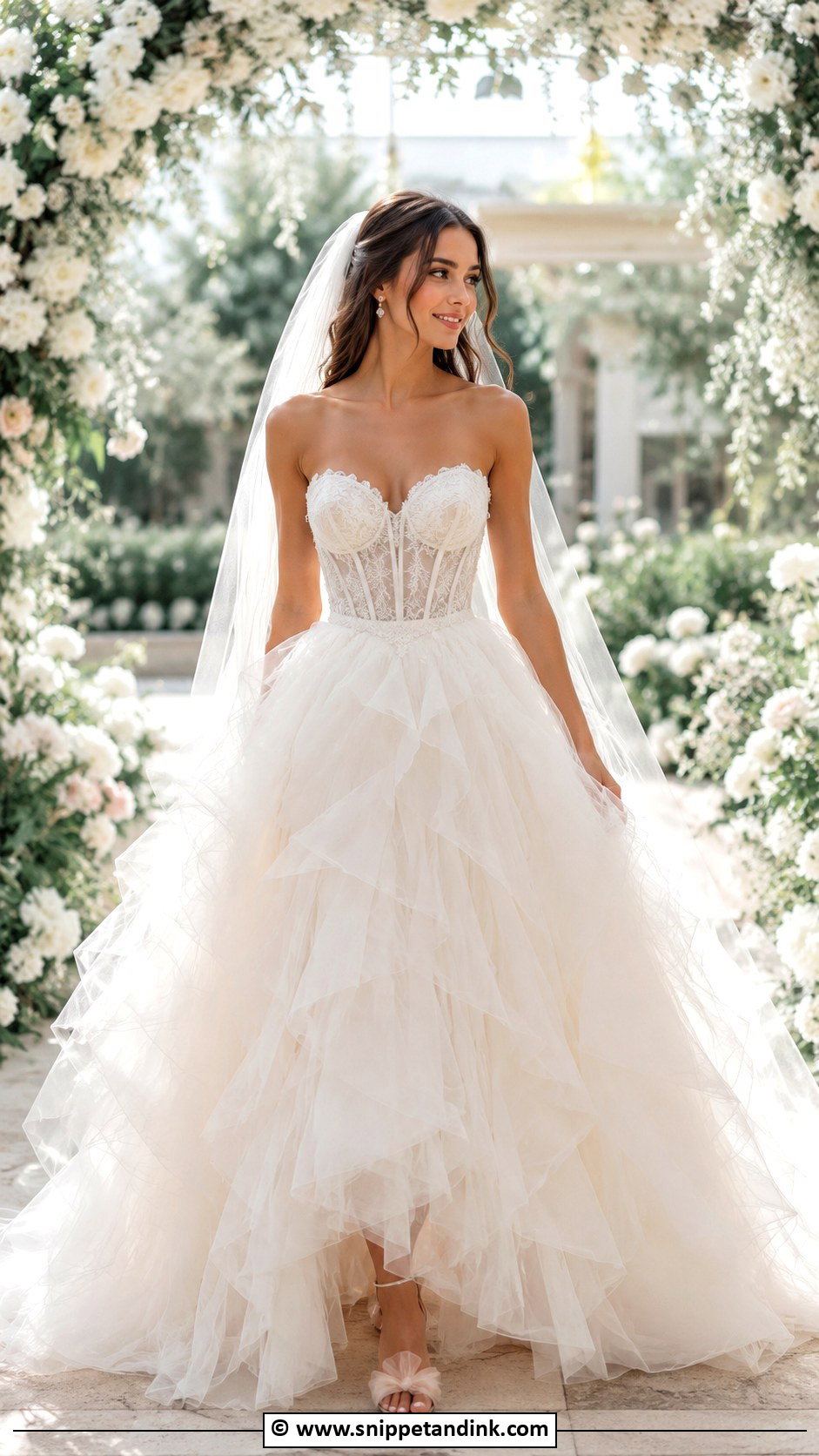
Tulle is the lightest way to get a big skirt. Several layers give that cloud-like volume at a fraction of the weight of satin or brocade, so you’ll still be comfortable after dinner. Over a corset top it looks romantic; a plain bodice lets the volume speak. Tulle does have one weakness: it catches on rough bark, bracelet clasps and heel buckles, so I check every accessory for snag points. Sheer gloves and small earrings suit garden and castle-style settings.
5. Off Shoulder Princess Wedding Dress
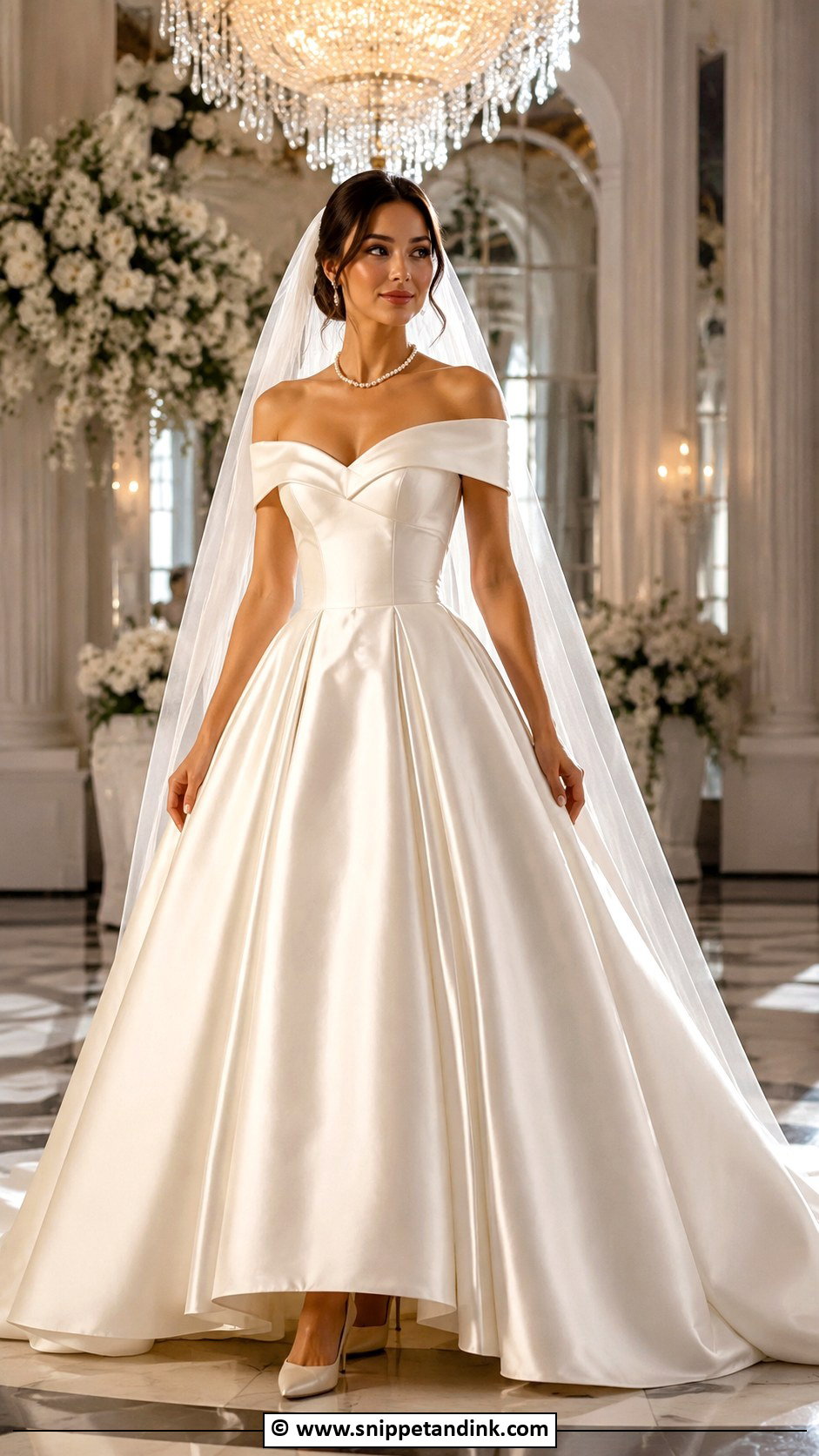
Sitting the neckline below the shoulders shows off the collarbone, and against a full skirt it balances the volume. You can choose lace sleeves, folded satin cuffs or sheer tulle drapes. Here’s the test I always run: lift your arms as if you’re hugging someone. If the sleeves ride up, the bodice isn’t carrying the weight and needs more structure, which matters most for brides with a larger bust. A low bun and a long veil keep the neckline visible.
6. Long Sleeve Princess Wedding Dress
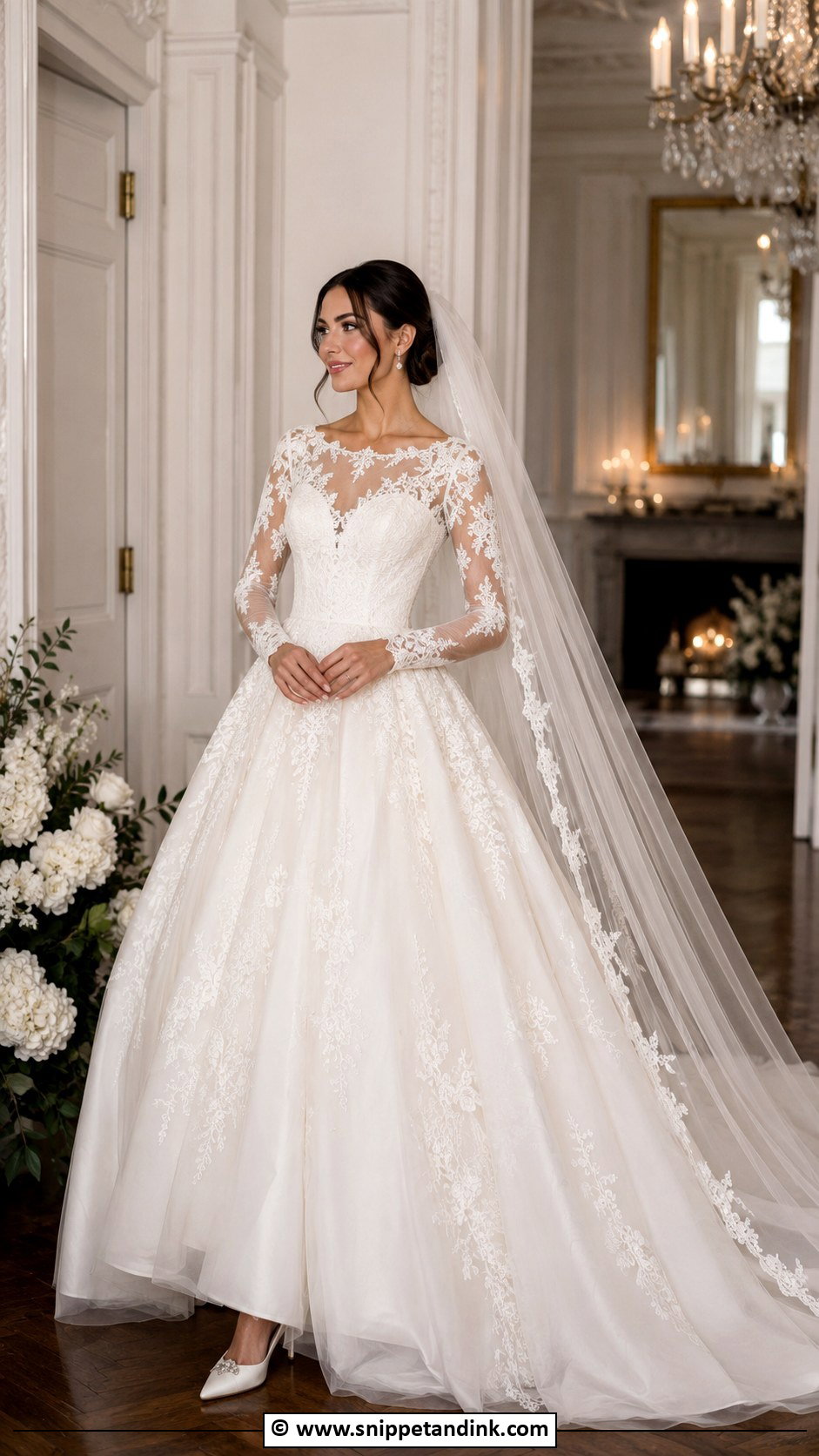
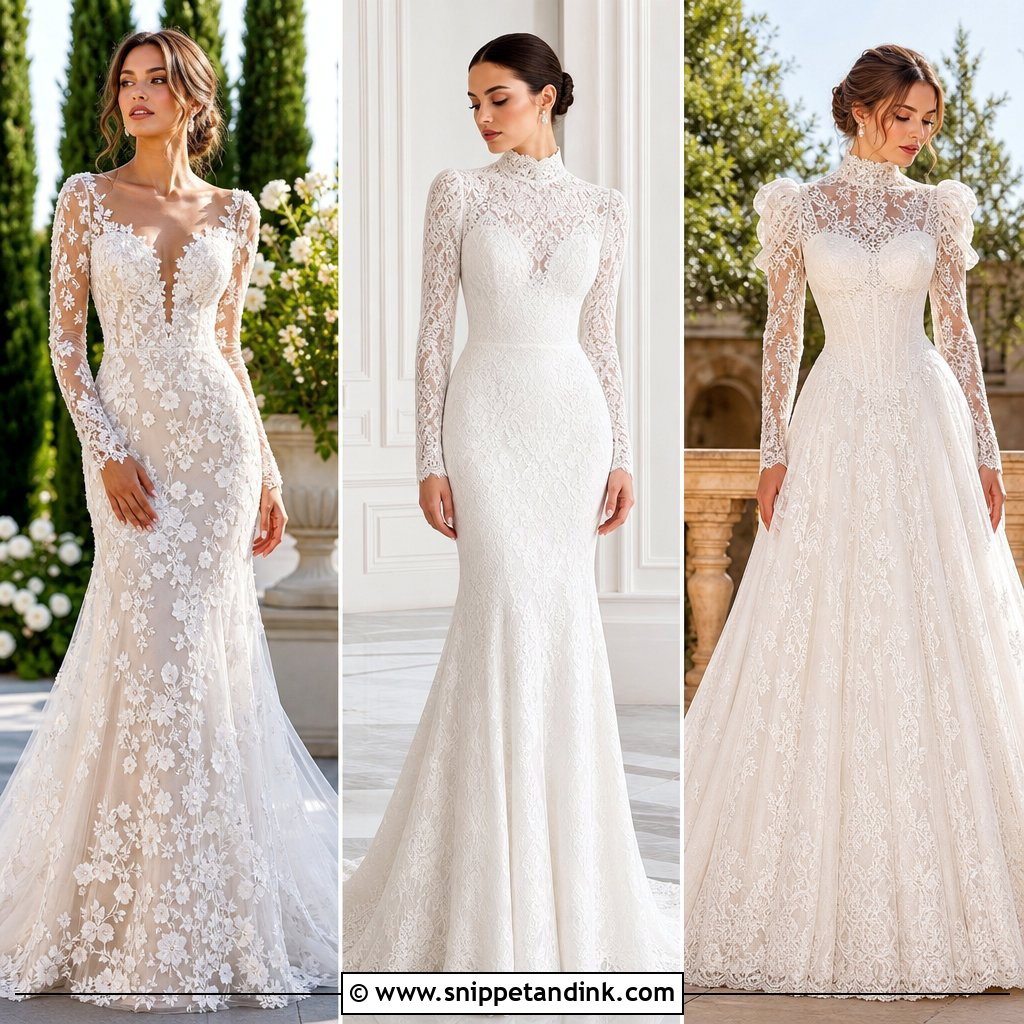
Long sleeves bring formality to a big skirt, which is why they suit fall and winter ceremonies and religious venues. Lace sleeves feel soft, satin looks regal, and sheer sleeves with appliqué are a sensible middle ground. Fit-wise, the armhole is everything. If it’s cut too low, you can’t lift your arm without the whole bodice moving. With sleeves this dramatic, I’d keep jewelry to a pair of earrings and wear the hair in a neat chignon.
7. Corset Princess Wedding Dress
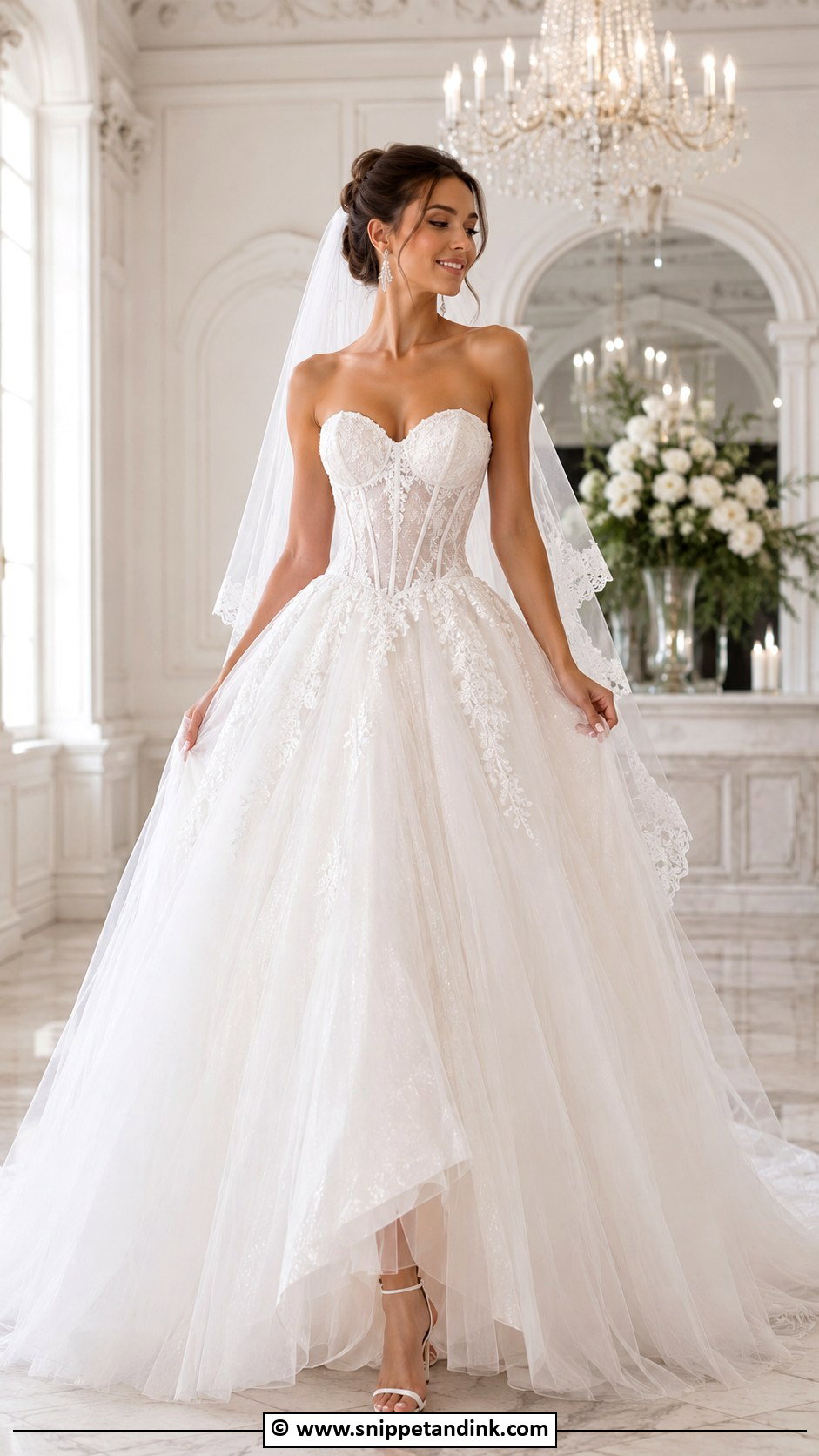
A corset bodice is what makes a full skirt comfortable, because the boning holds the weight and spreads it across your torso. Exposed boning looks fashion-led; hidden boning gives a smooth traditional finish. It suits satin, lace, tulle or organza skirts and nearly any neckline. Sit down in it for several minutes at your fitting; a good corset feels firm, not tight, and you should be able to take a full breath. A cathedral veil and a fine bracelet are enough.
8. Basque Waist Princess Wedding Dress
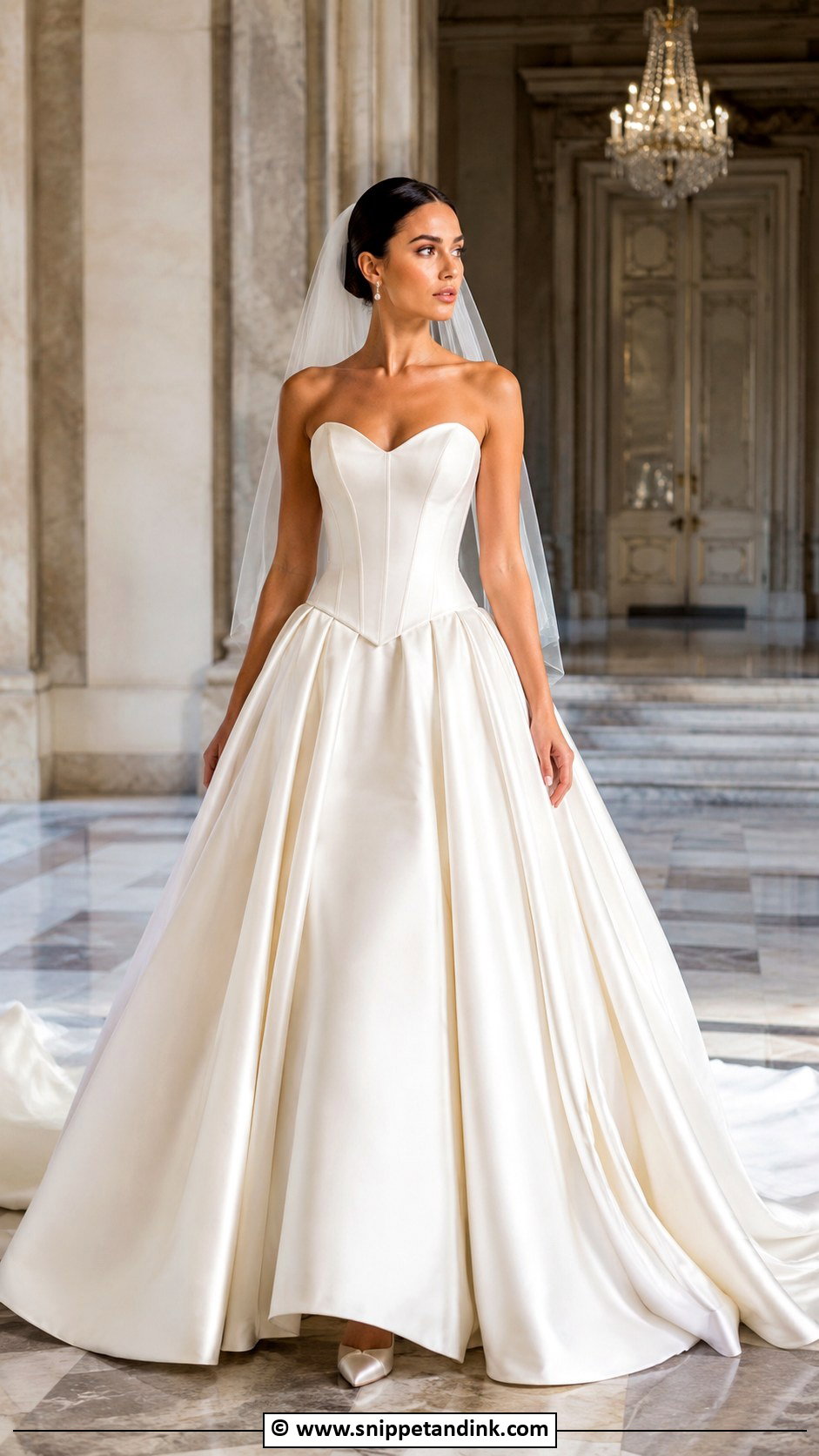
A basque waist dips into a V or U at the centre front, lengthening the torso and making the skirt look even fuller. Historic in origin, it feels fresh in clean satin or soft tulle. The point of the V is the part to check. If it sits too low, it presses into your stomach when you sit, and you’ll feel it through every course. Most seamstresses can shorten it slightly. Keep the veil simple and the hair smooth so the bodice line stays visible.
9. Square Neck Princess Wedding Dress
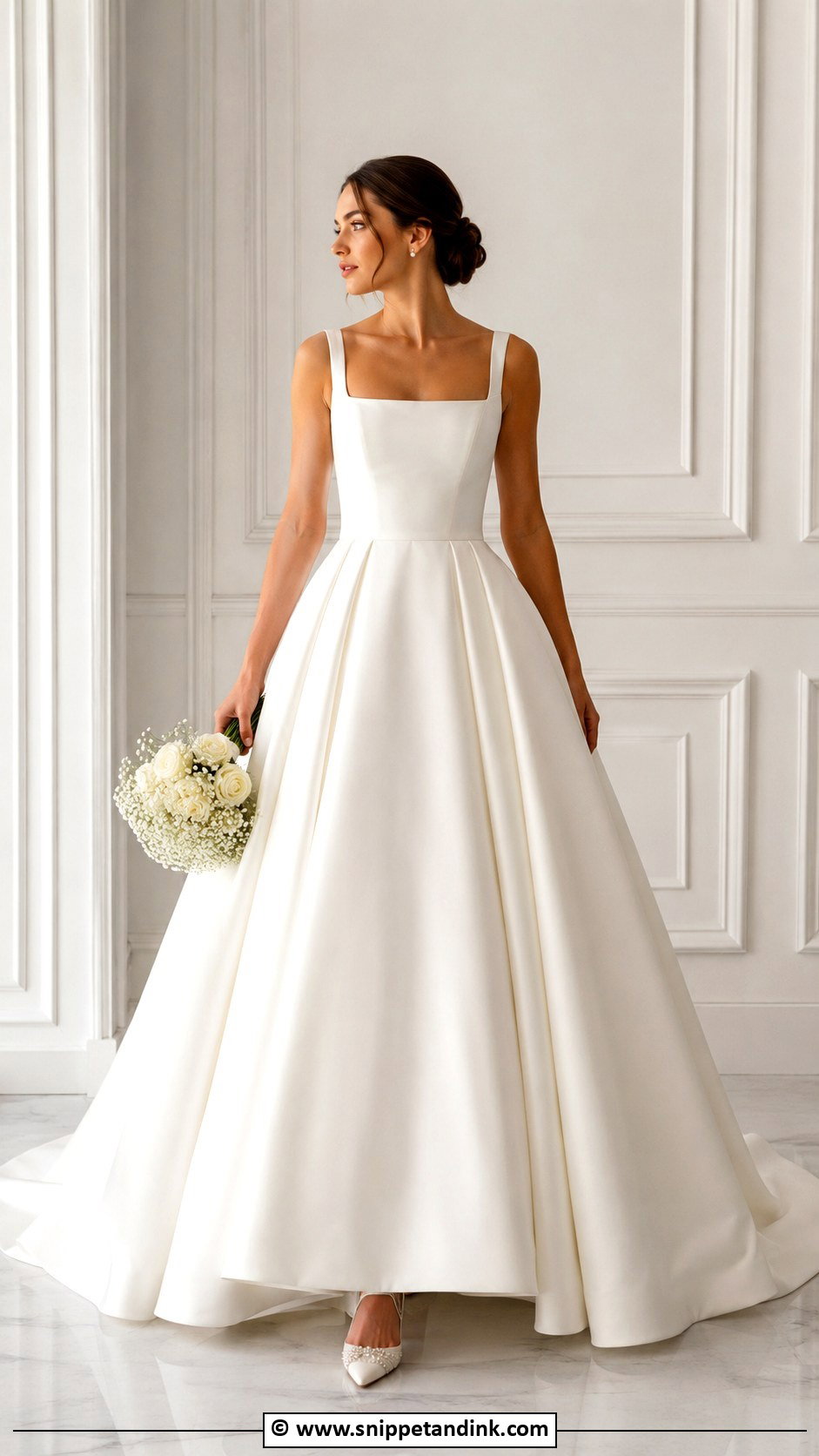
The square neckline gives a full gown a slightly vintage, architectural feel. Its straight edge frames the collarbone, and the structure balances a big skirt. Satin keeps it minimal, lace makes it softer, mikado makes it crisp. Thin straps look delicate; wider ones hold better on a fuller bust. At the fitting, lean forward: if the corners gape, they need to be taken in. A pendant or bare neck, and a low bun.
10. Sweetheart Princess Wedding Dress
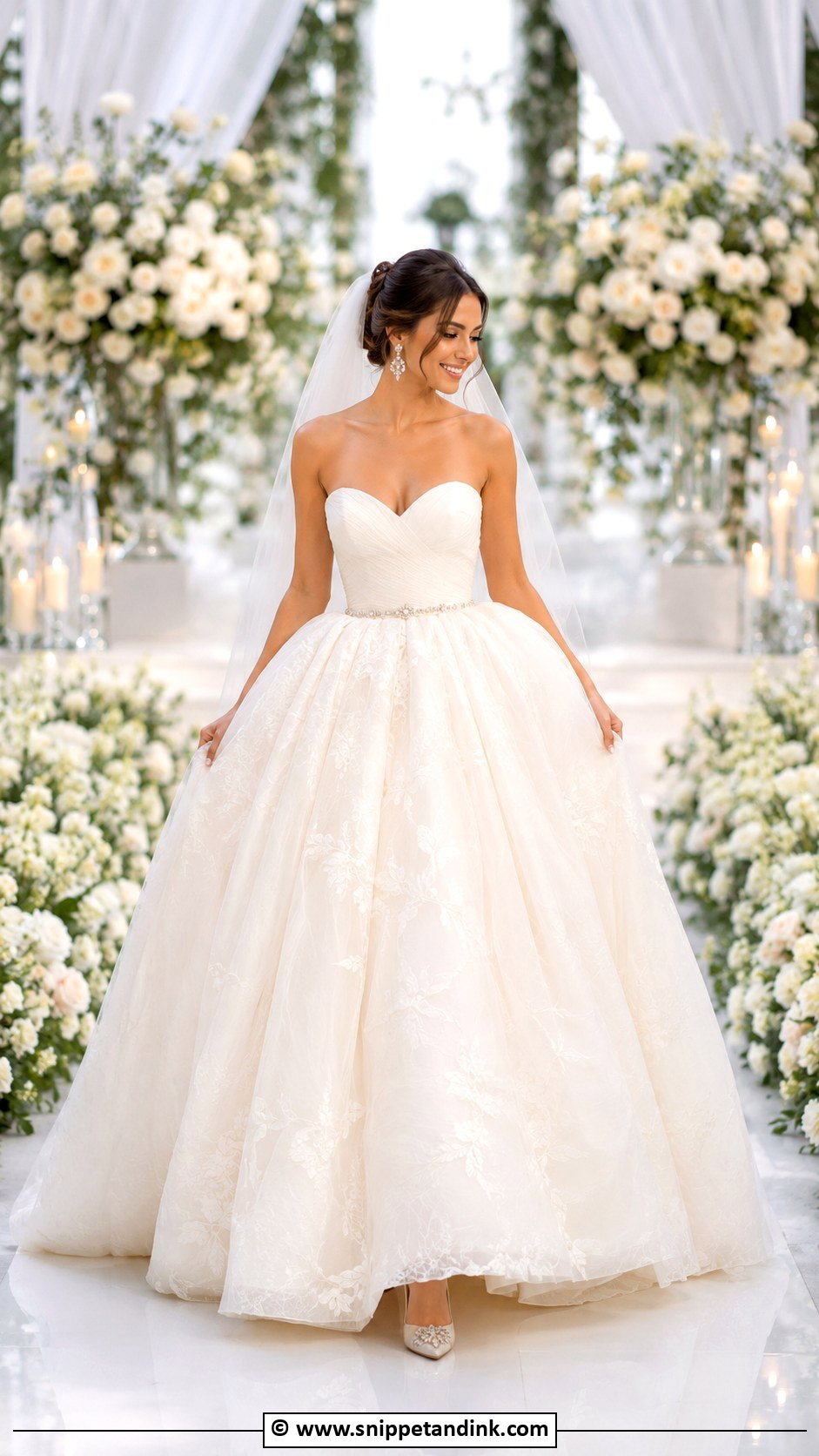
Sweetheart necklines curve with the bust rather than cutting straight across it, and paired with a full skirt they give the clearest hourglass outline of any princess style. Satin makes it classic; beading pushes it toward glamour. If you’re worried about strapless, detachable sleeves or thin straps solve that without changing the shape. I’d match the veil length to the train, then add small crystal earrings. It adapts to almost any venue.
11. Pearl Princess Wedding Dress
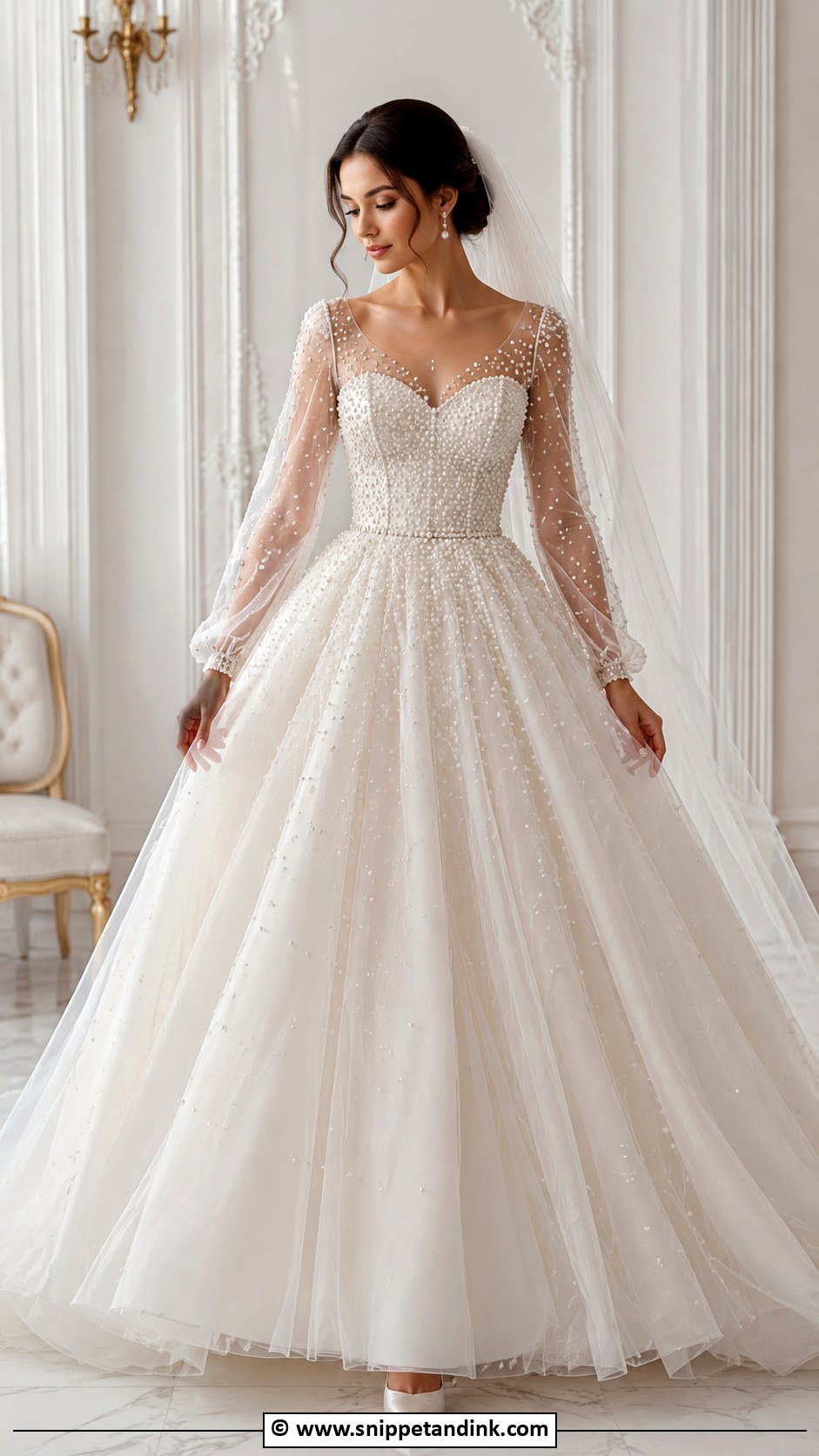
Pearls give a glow rather than a sparkle, which is why they suit brides who find crystals too much. They can be scattered over tulle, lined along the bodice or used as trim on sleeves and straps. One practical point: heavily pearled skirts are heavy, and loose pearls can come off over a long day, so ask your seamstress to check the stitching and keep a few spares. Pearl earrings and a polished bun echo the detail without doubling it.
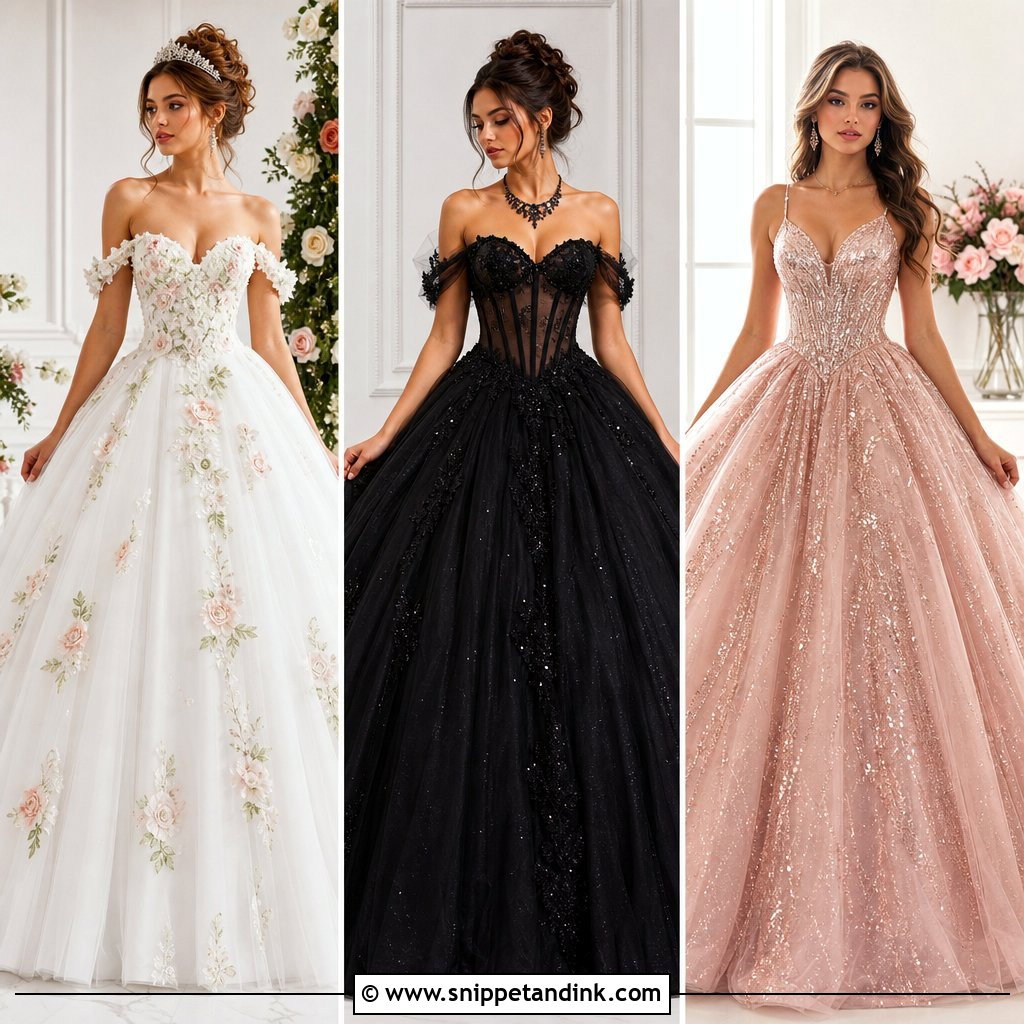
12. Floral Applique Princess Wedding Dress
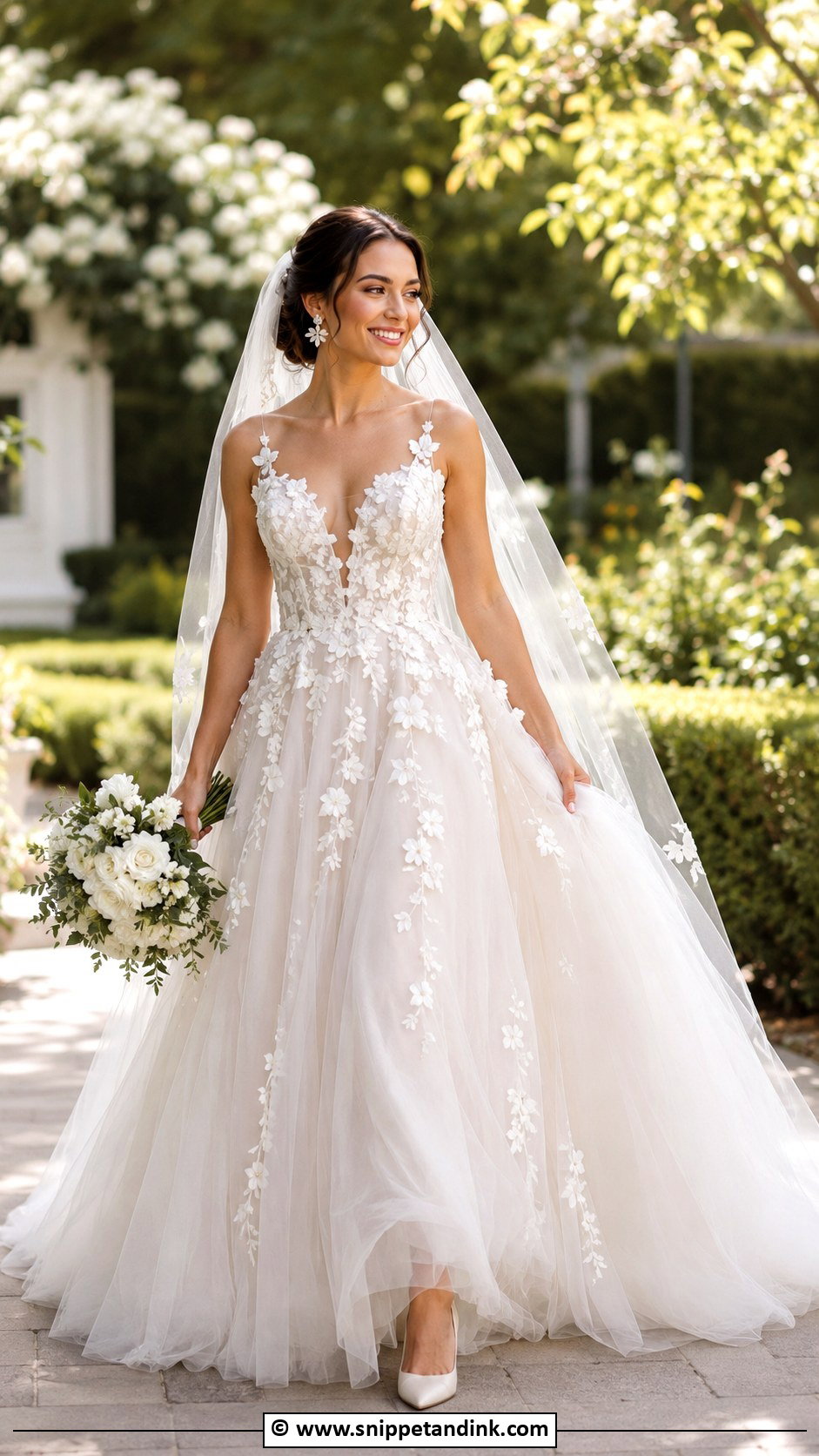
Floral appliqué ranges from flat ivory lace flowers to 3D petals that stand off the skirt. Over a sheer bodice it looks delicate; on a lined bodice it reads more classic. Large 3D flowers do crush a little when you sit, so I’d keep the biggest ones on the lower skirt rather than the hips. Pair with soft waves and a lightweight veil, and choose a bouquet that picks up one colour from the gown instead of copying the flowers.
13. Beaded Princess Wedding Dress
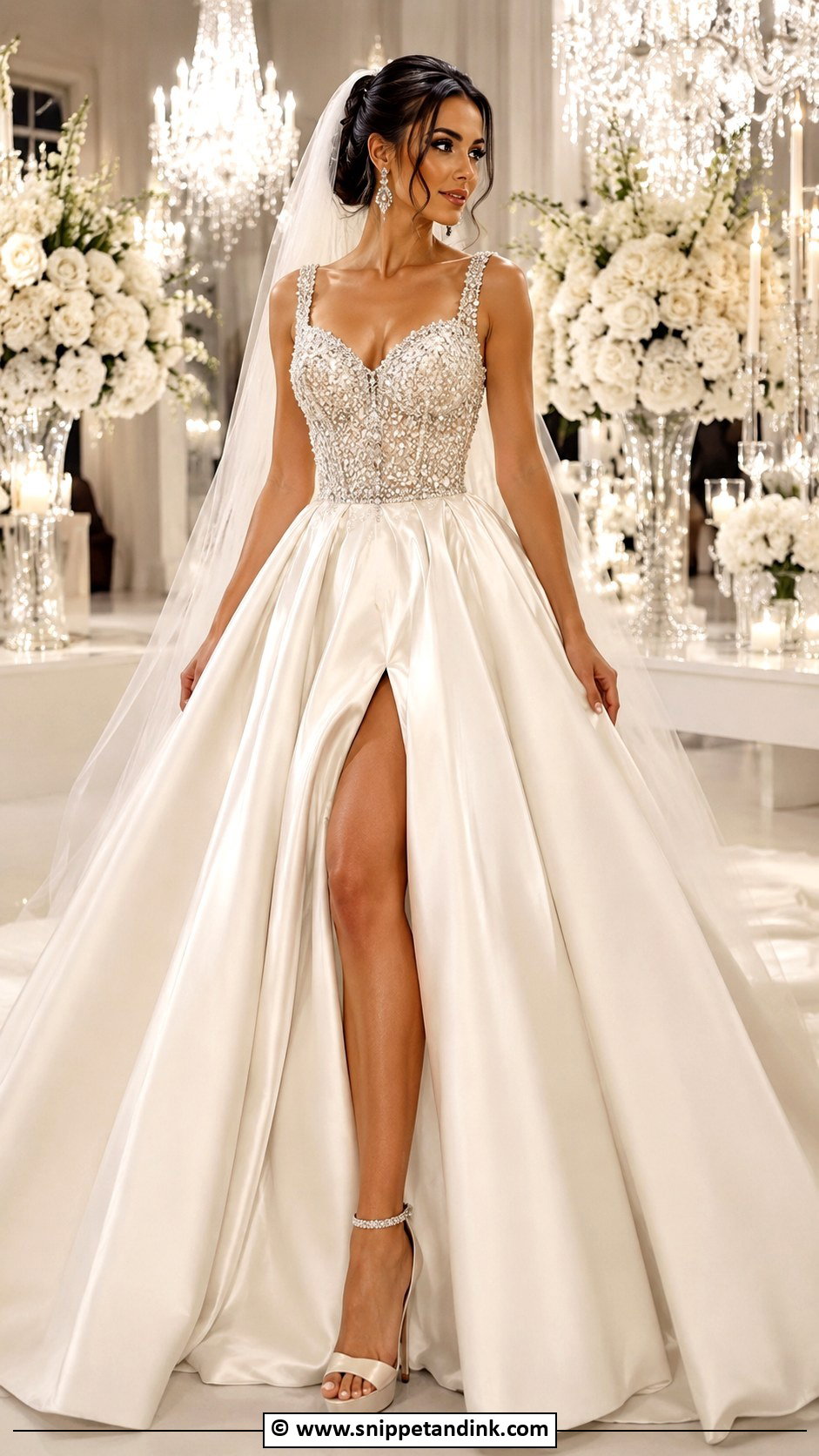
Beading puts sparkle exactly where you want it: across the bodice, tracing the waist or spread over the whole skirt. Clear crystals, silver beads, pearls and sequins each give a different level of shine. Under evening lighting a beaded gown really comes alive, which makes it a natural fit for night receptions. Check the inside of the arms and the waist seam at your fitting, where beads rub skin all day. Crystal earrings and a plain veil; nothing more.
14. Minimalist Princess Wedding Dress
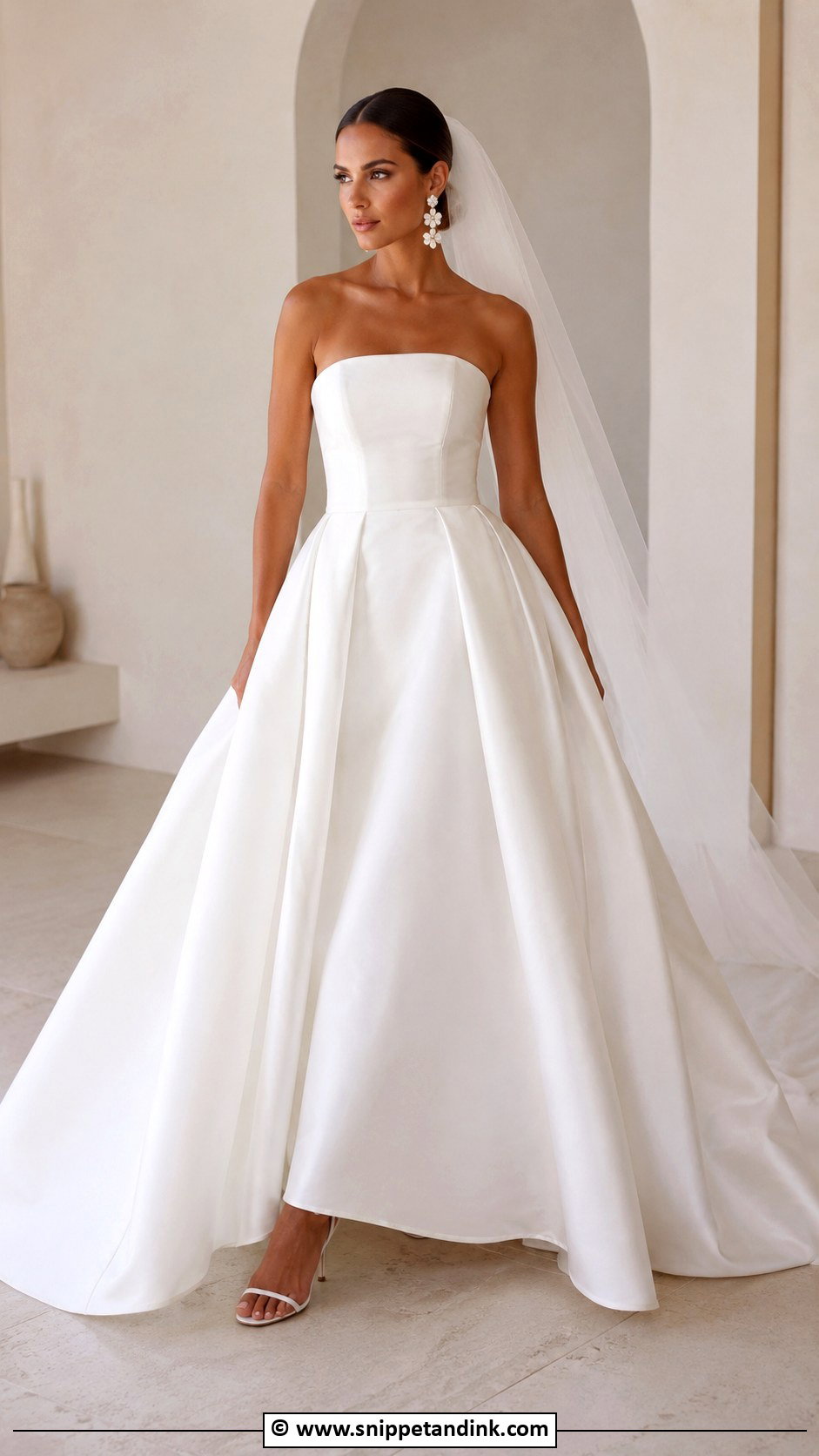
A minimal princess gown relies on two things: fabric and cut. Satin, mikado and structured organza hold a full shape with no decoration at all. Because there’s nothing to distract the eye, I spend extra time on the fit, since every ripple shows. The upside is flexibility. A bow, gloves, a statement hairpiece or a long veil each change the mood completely, so the same gown can look modern or classic depending on how you style it.
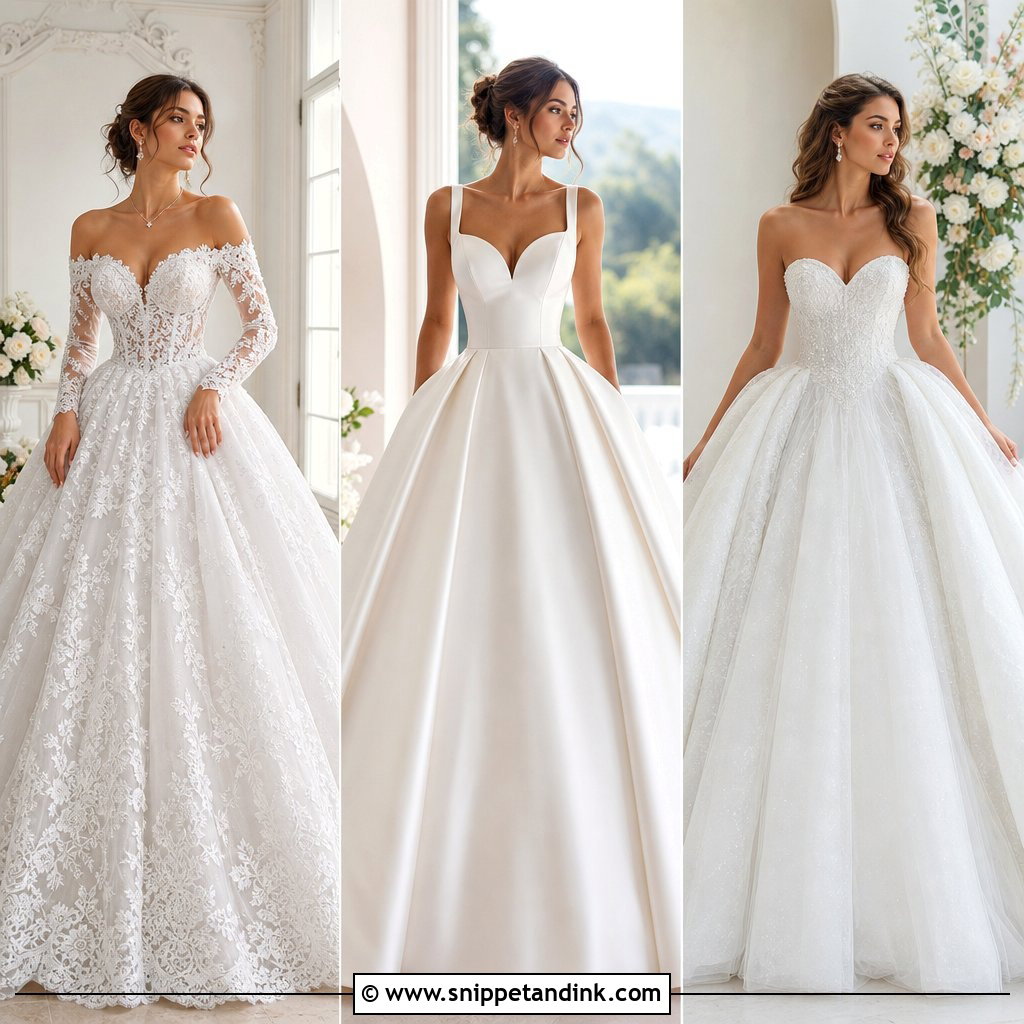

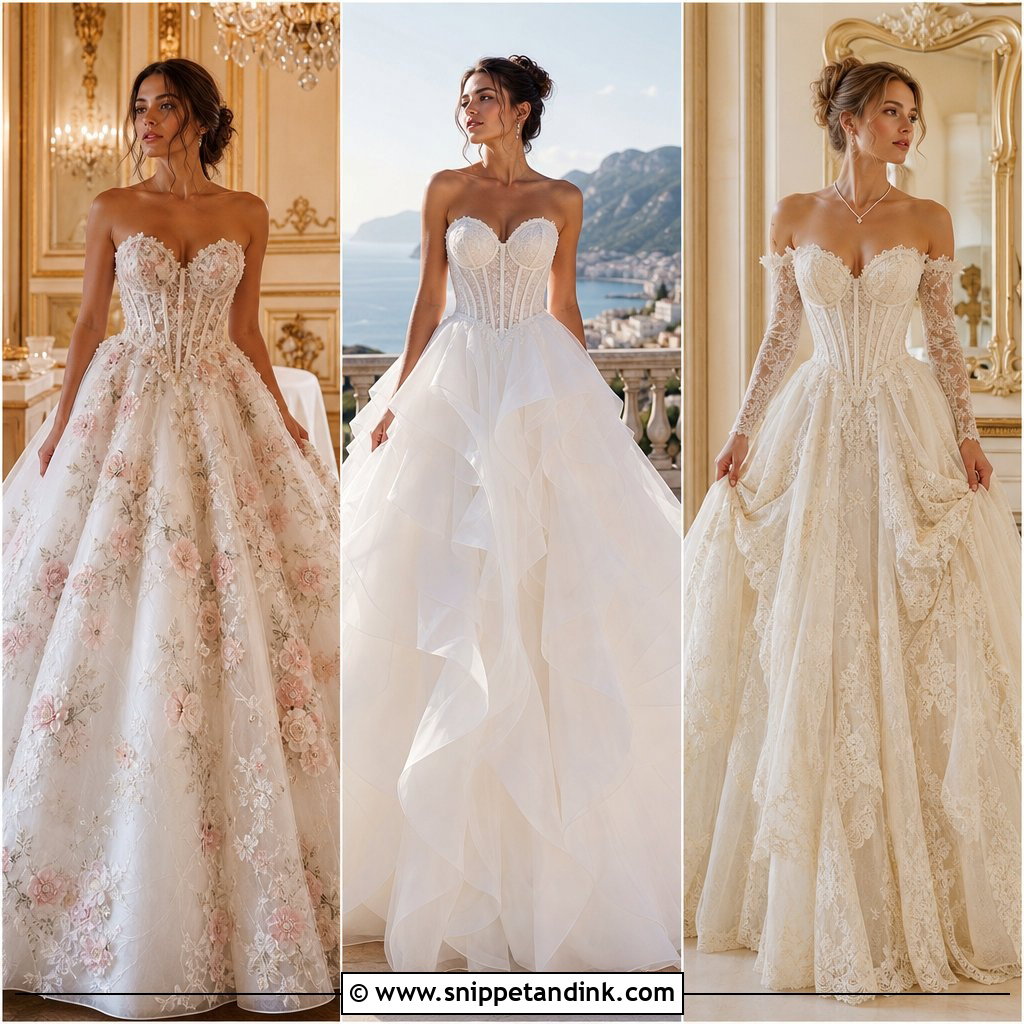
15. Modern Princess Wedding Dress
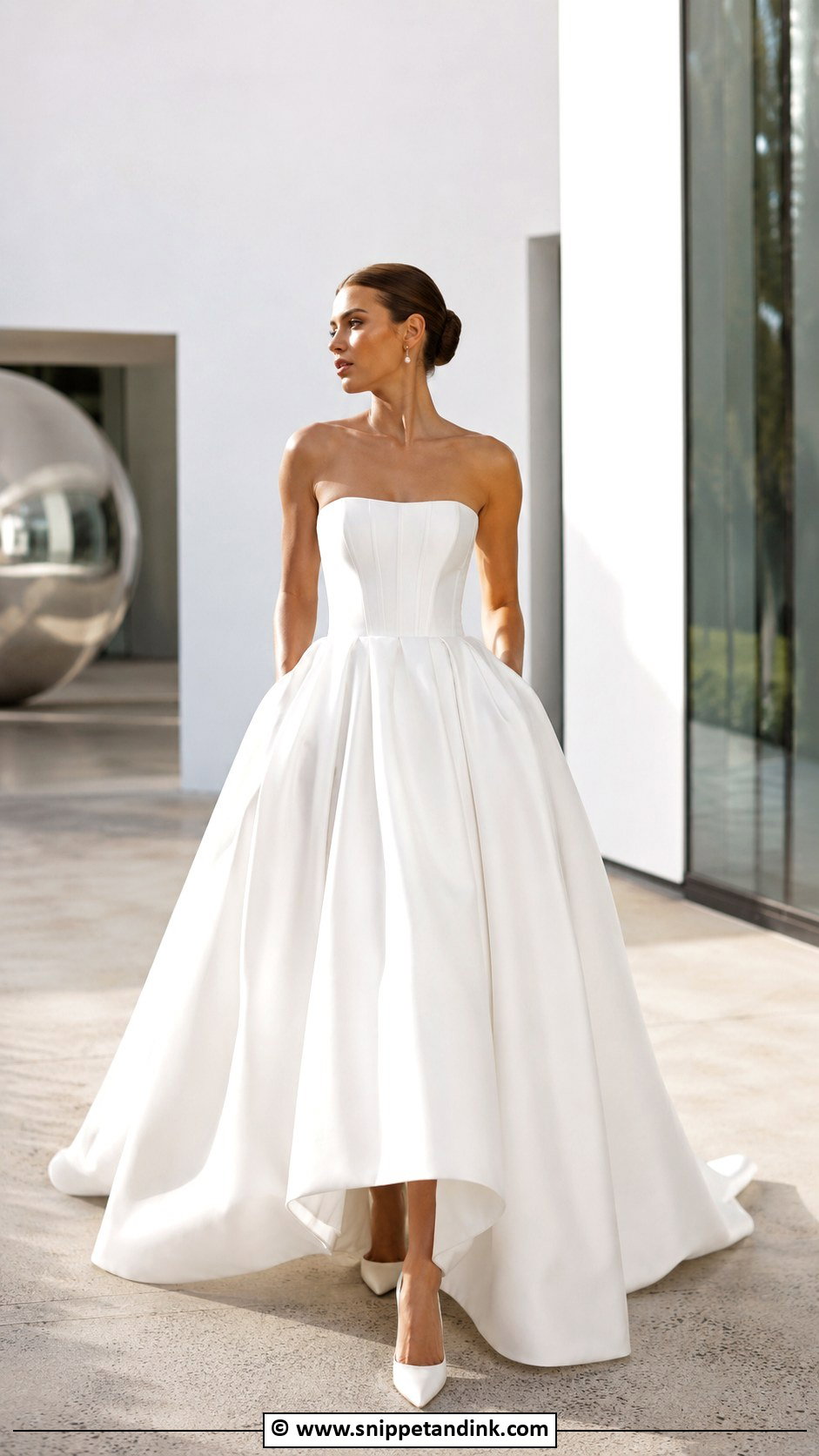
Modern versions keep the full skirt and rework the details: clean corset bodices, square necklines, asymmetric draping, architectural pleats or an unusual fabric texture. The shape carries the look, so I’d go light on accessories. Sleek hair, simple earrings and sharp heels. A short veil and a plain cathedral veil both work; the choice depends on the venue. It suits gallery spaces, city ballrooms and anyone who wants scale without nostalgia.
16. Vintage Princess Wedding Dress
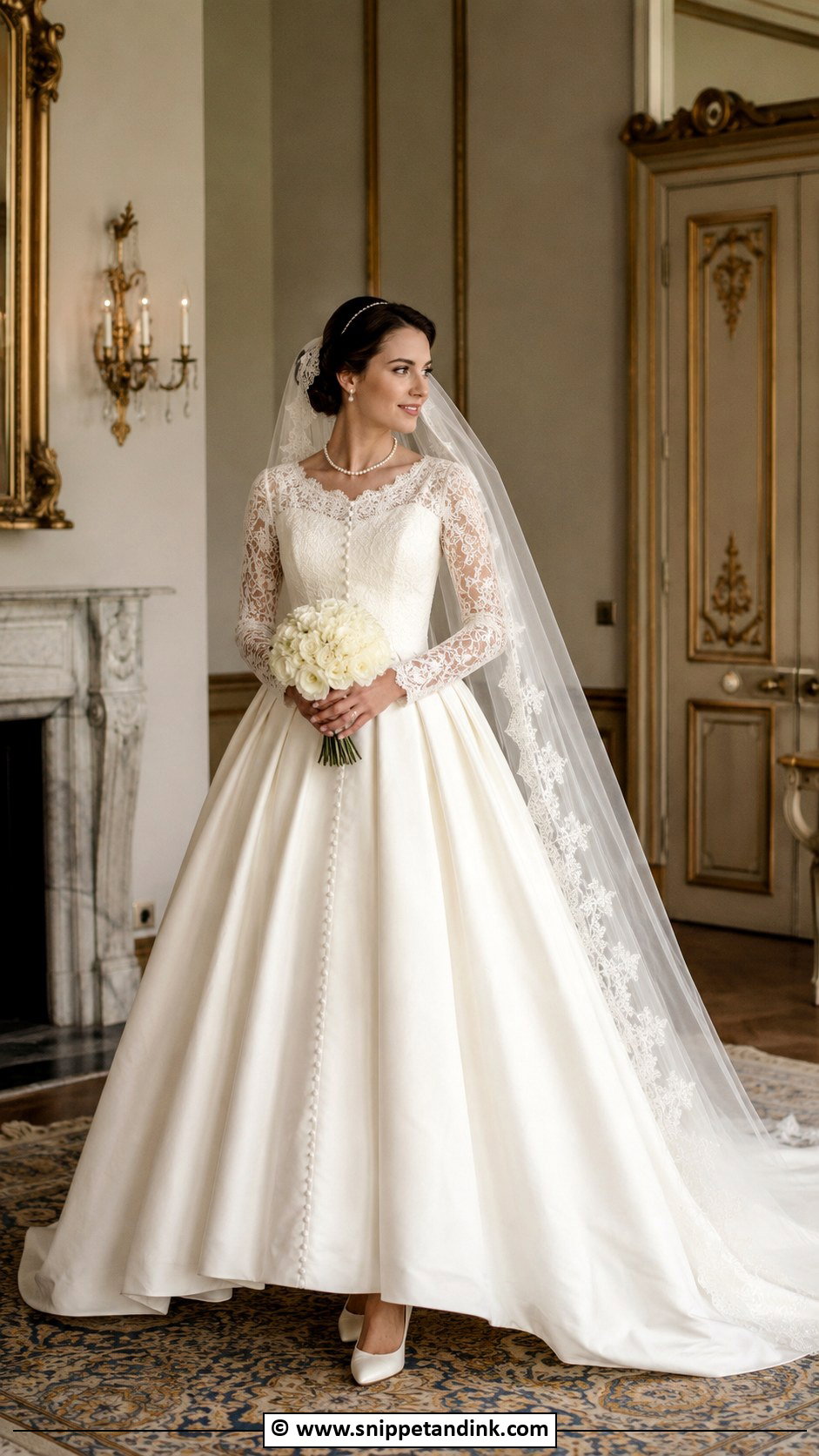
Old-world details are what make a gown read vintage: lace sleeves, covered buttons, a high neck, a basque waist or soft pleats at the skirt. The risk is costume, and I avoid it by picking two vintage details at most and keeping everything else plain. Ivory fabric and antique-style lace help. A fingertip veil or lace-edged cathedral veil finishes it, and soft waves or a low bun suit historic venues and estates.
17. Royal Princess Wedding Dress
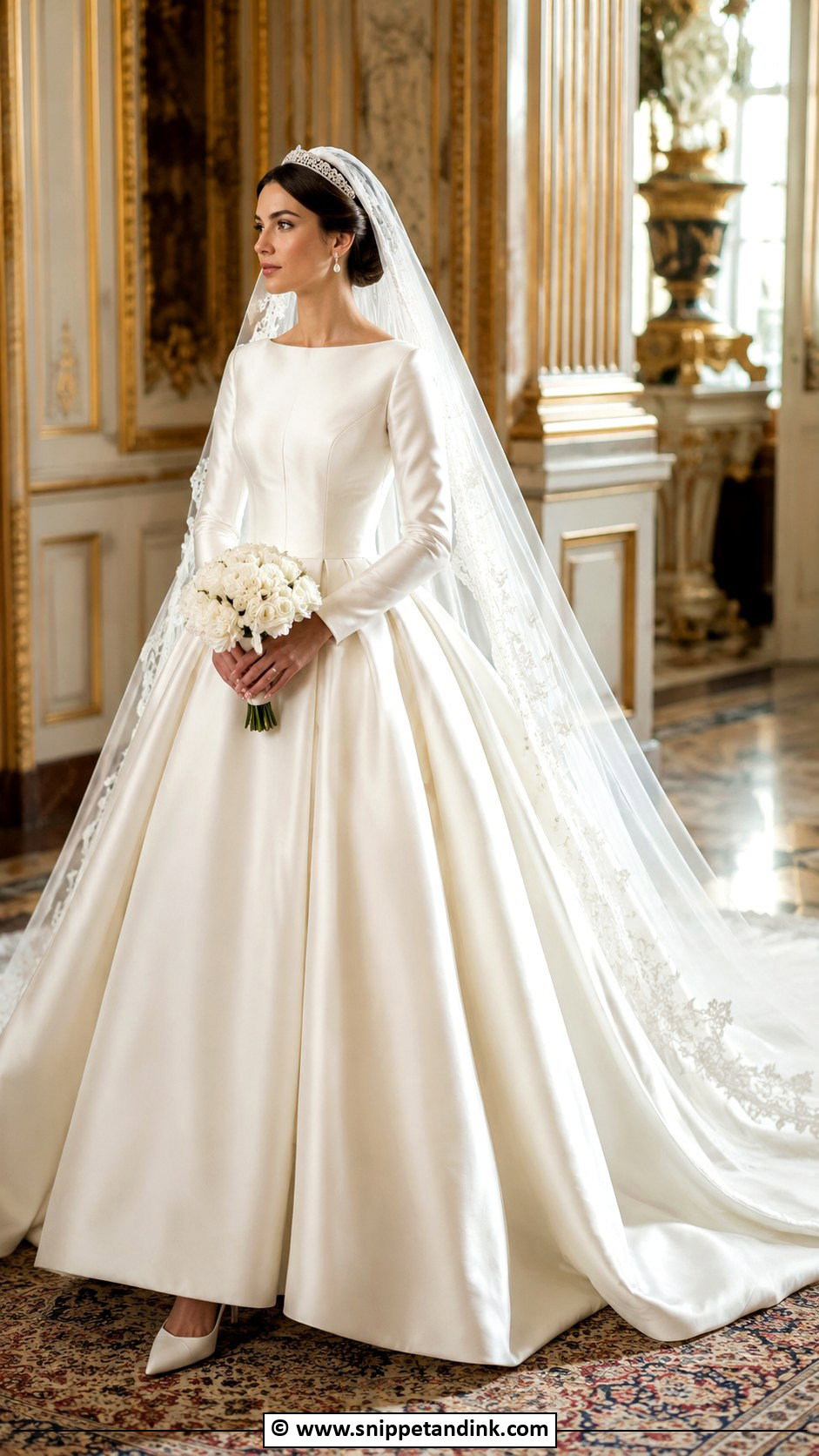
A royal princess wedding dress leans formal: a long train, structured bodice, full skirt and fabrics with weight, like satin, mikado, brocade or heavy lace. Long sleeves, a high neck or an off-shoulder line all feel regal. The weight is real, though. A brocade gown with a long train can be hard work on stairs, so practise with someone holding the train. A tiara is fine if it’s modest. This one belongs in a big room.
18. Fairytale Princess Wedding Dress
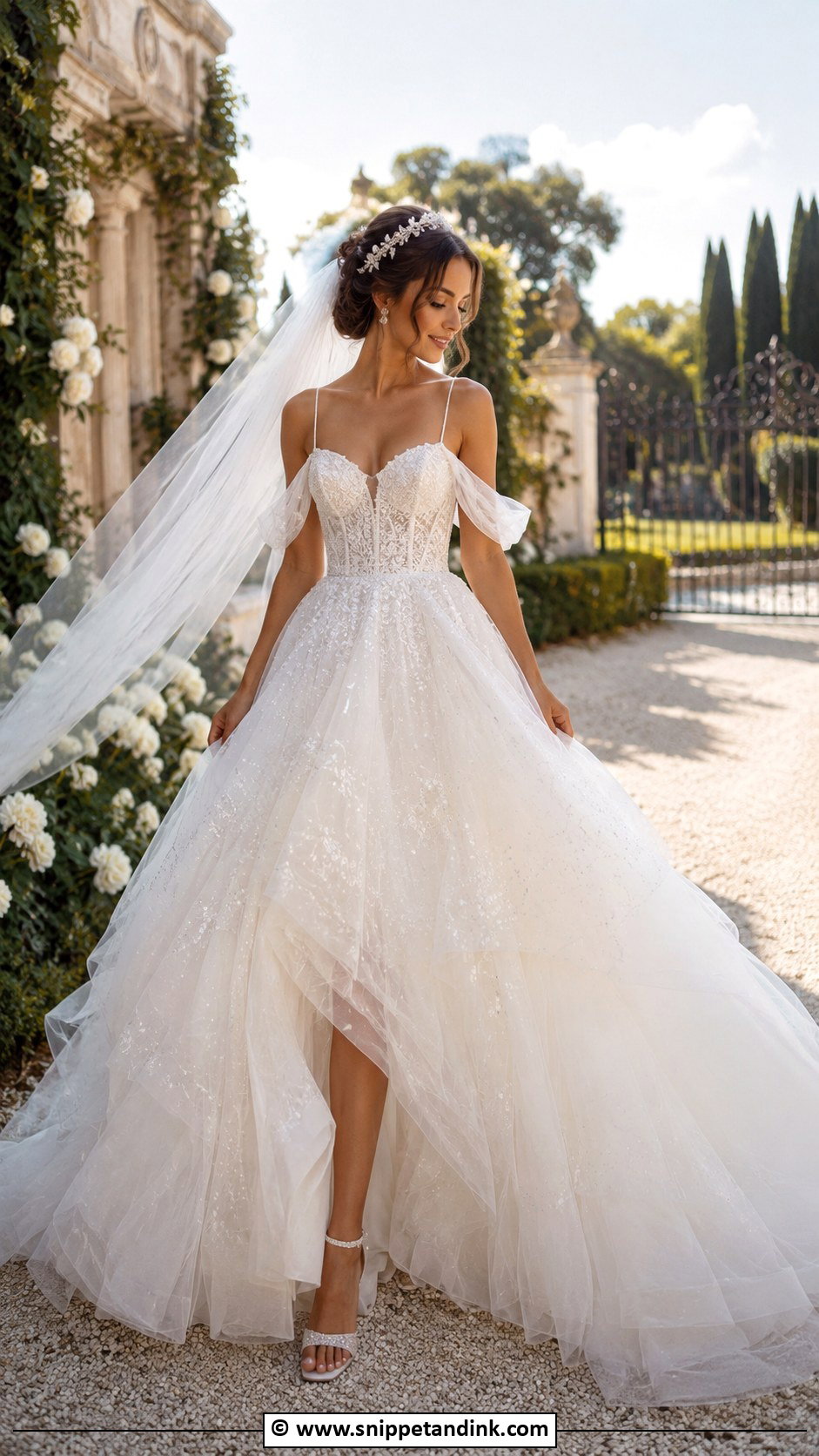
Fairytale gowns are built for movement: layers of tulle, a fitted bodice, light shimmer, floral appliqué and a soft train. Ivory, blush, champagne or pale blue undertones add depth while staying bridal. I always have a bride walk and turn in this kind of dress, because the way the skirt swings is the whole point. Loose waves, a delicate hairpiece and a sheer veil keep it airy. Garden and castle-style venues suit it.
19. Cinderella Princess Wedding Dress
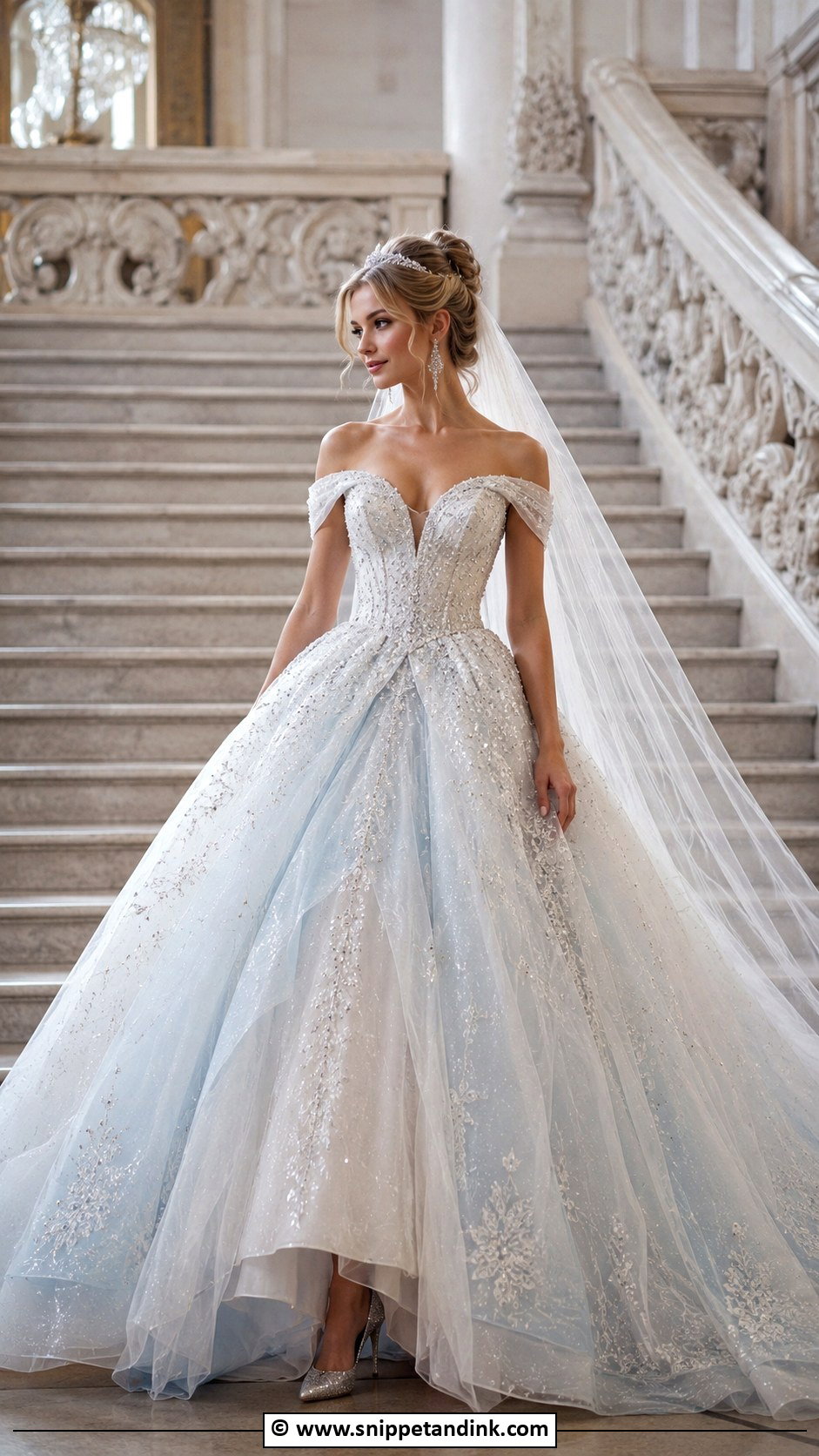
Picture Cinderella and you get a dramatic full skirt, a defined waist and soft sparkle, often with a pale blue undertone, silver beading or crystal tulle. A strapless sweetheart or off-shoulder bodice fits the story. Refined fabric is what stops it looking like fancy dress. A very pale blue tulle layer under ivory is a subtle way to hint at the reference. Crystal earrings, a neat bun and a long veil; a pale blue shoe can be your hidden nod.
20. Belle Princess Wedding Dress
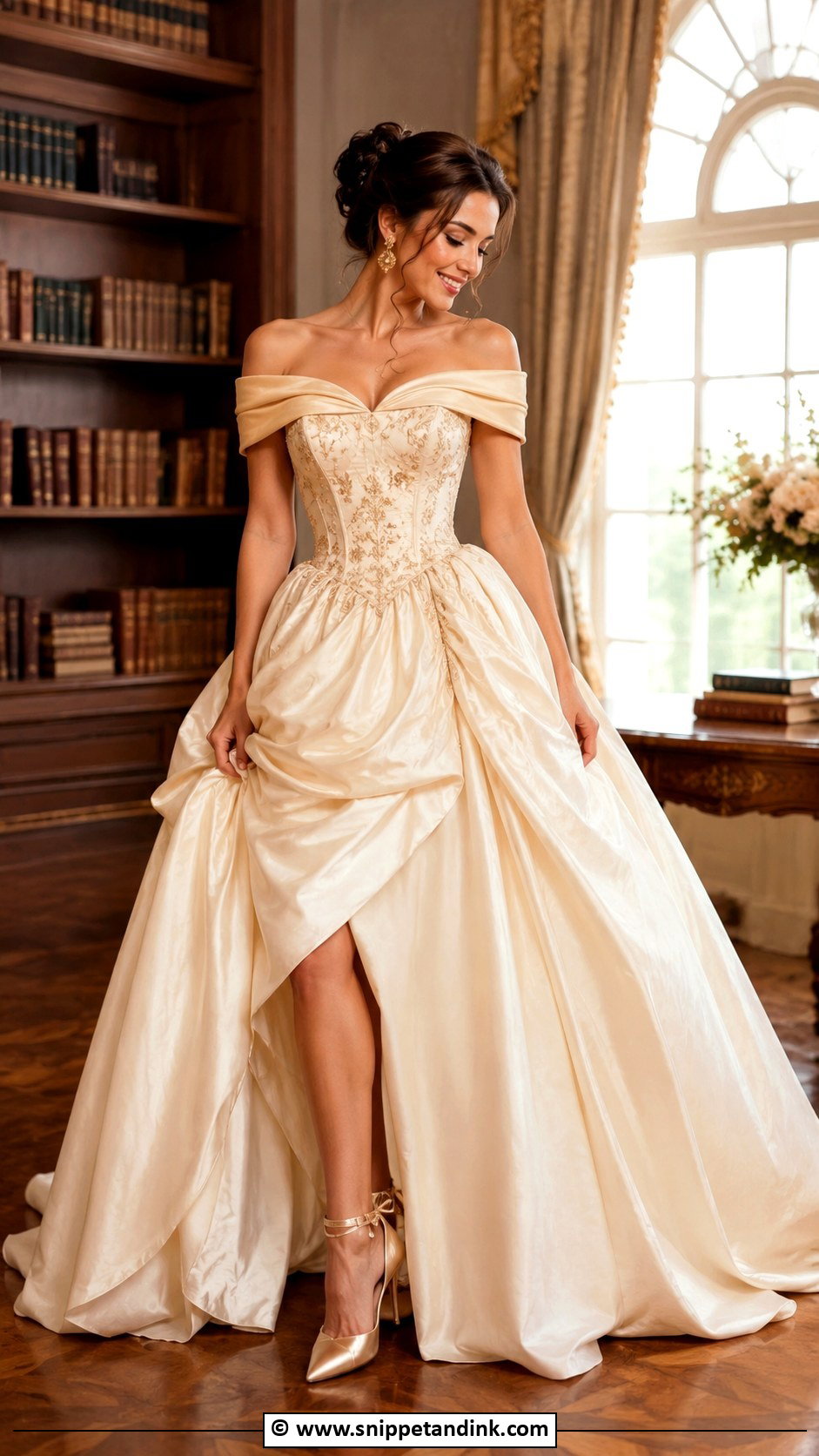
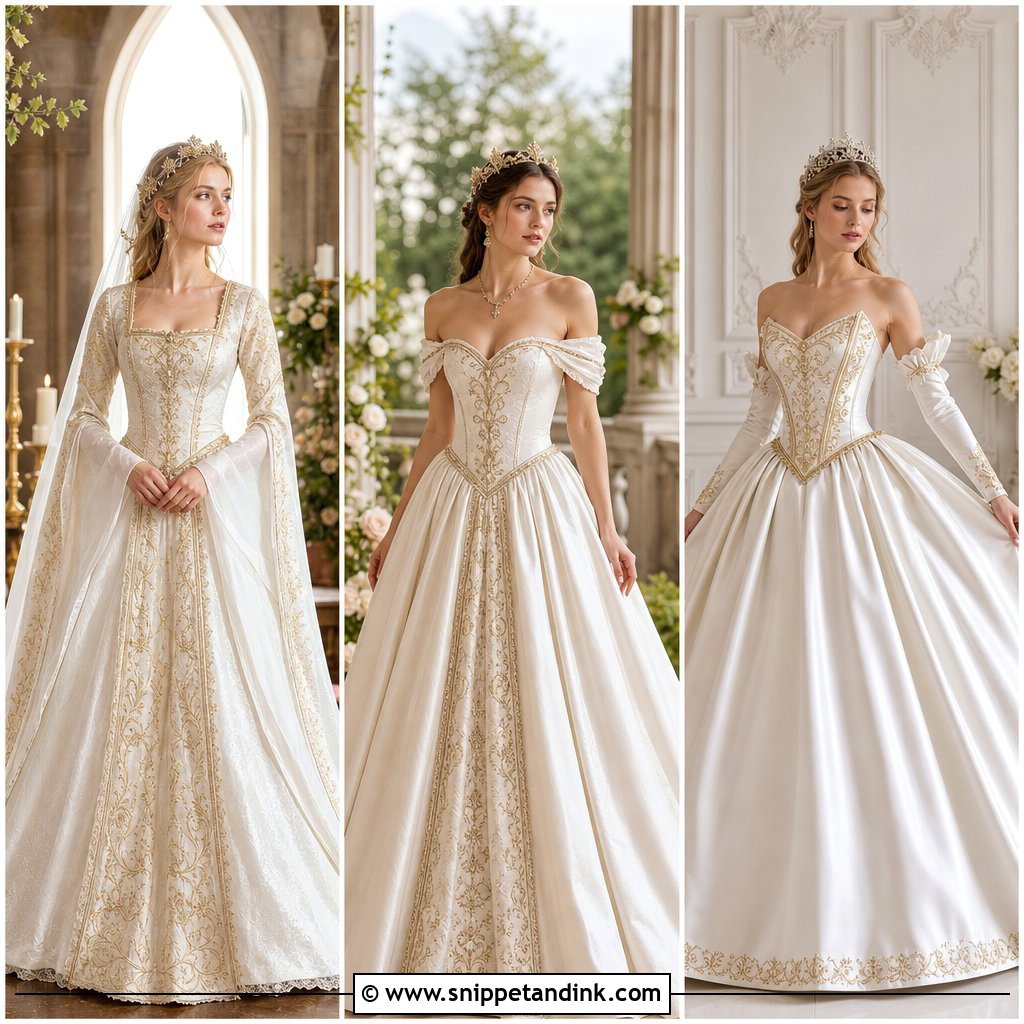
The Belle look is warm: champagne, ivory or soft gold undertones, a full draped skirt, an off-shoulder neckline and a little floral appliqué. I’d steer you away from true yellow, which reads as costume under any lighting and fights most bouquets. A gold tone with warm skin can look wonderful, though, so try the shade in daylight. Gold-toned earrings, a classic updo and cream and blush flowers suit library venues and historic houses.
21. Aurora Princess Wedding Dress
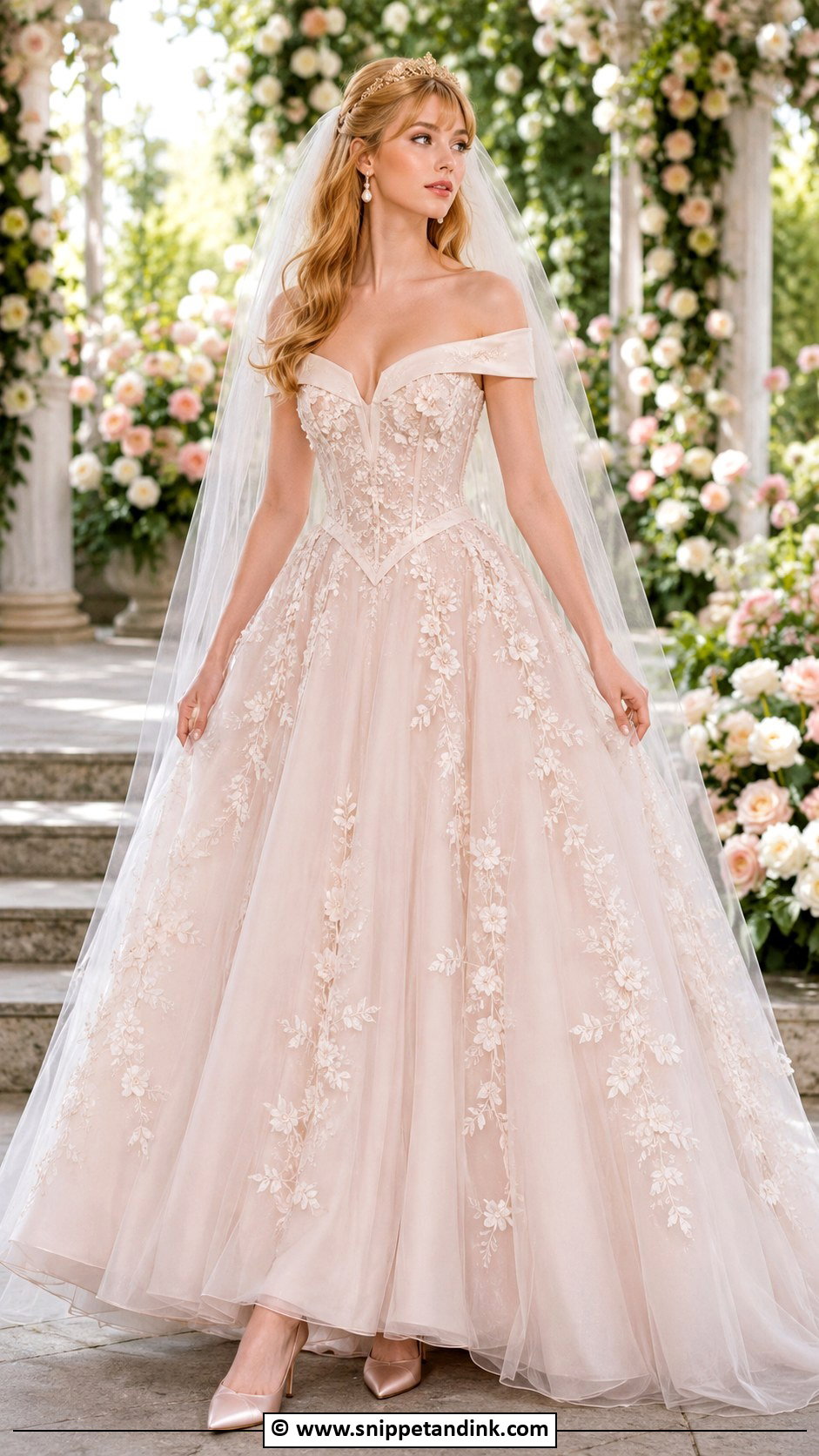
Aurora gowns usually mean a pointed bodice, an off-shoulder neckline, delicate floral appliqué and a full skirt in ivory, blush or champagne. Keep the structure, but make the styling light. If you love colour, a faint blush lining under ivory tulle gives a glow without committing to pink, and it’s much easier to match flowers and veil to. Pearl earrings, soft waves and satin heels. Gardens and estates suit it.
22. Ariel Princess Wedding Dress
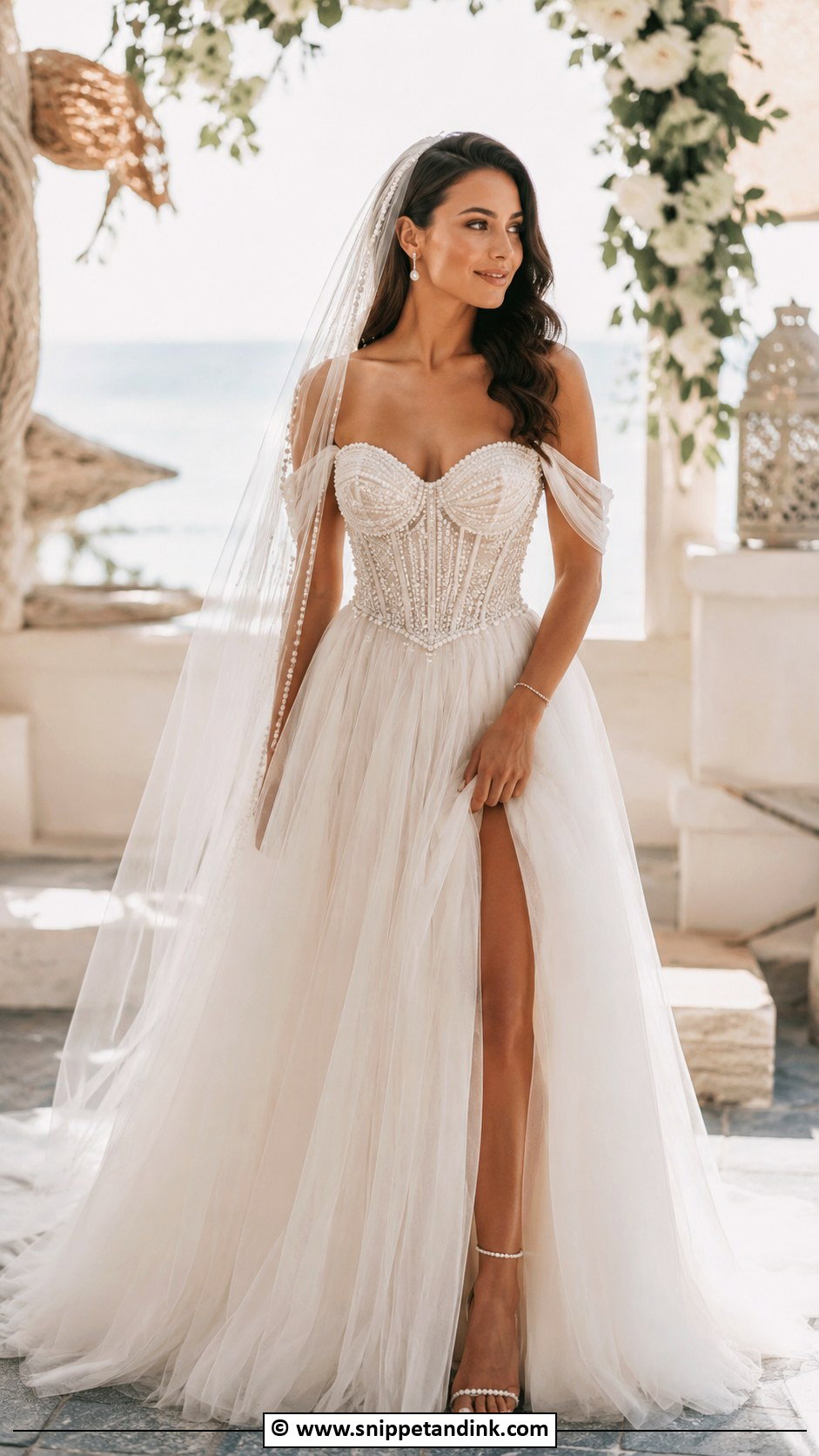
For an Ariel reference, skip anything literal and borrow the ocean through texture: wave-like tiers in the skirt, a sculpted bodice, pearl details or beading that catches light like water. Ivory, pearl and pale seafoam undertones stay bridal. Beading on sheer fabric can catch sea breeze and lift a light skirt, so on a waterfront terrace I’d add a little weight at the hem. Pearl earrings, loose waves and a veil with tiny pearl accents.
23. Rapunzel Princess Wedding Dress
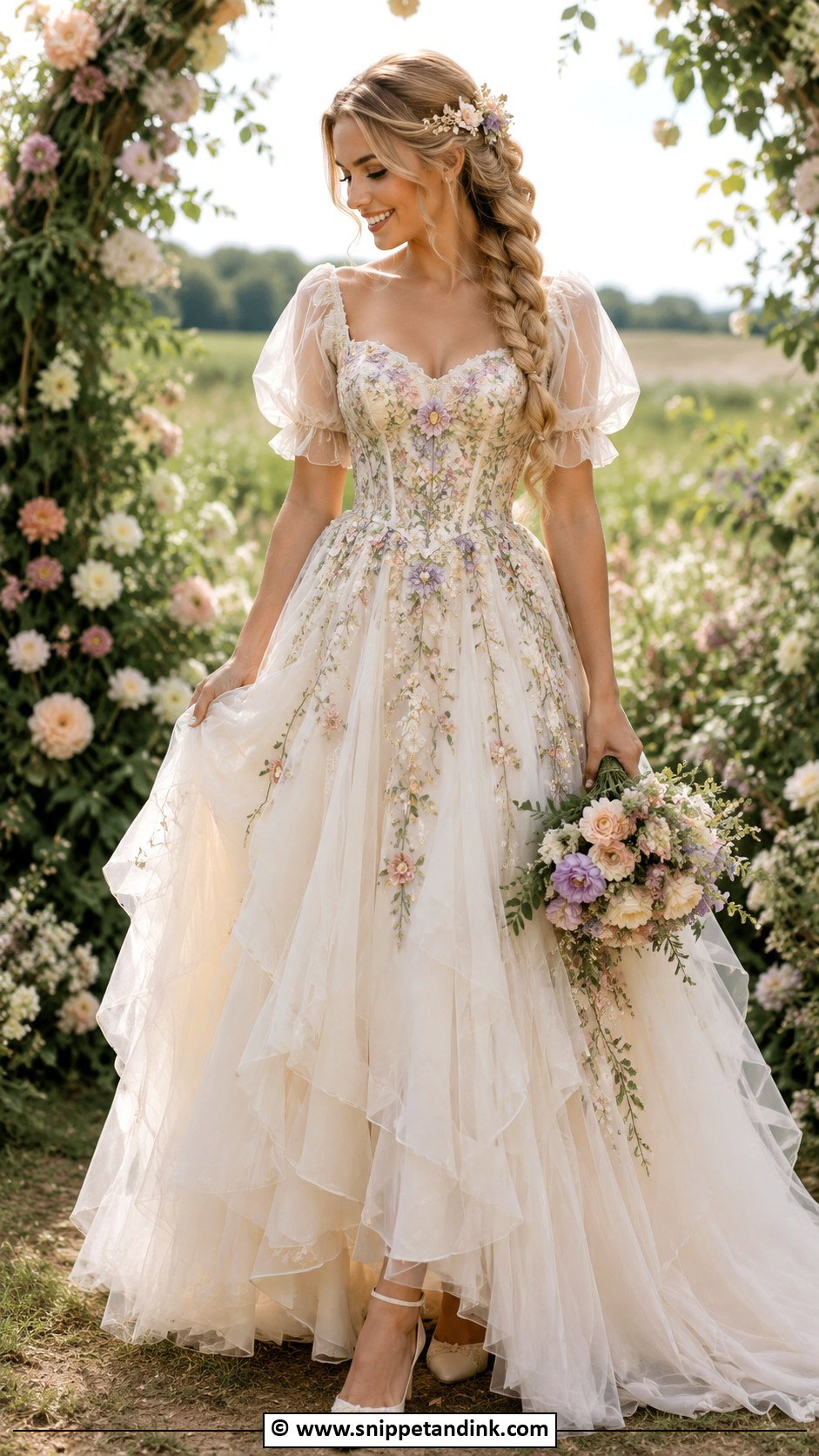
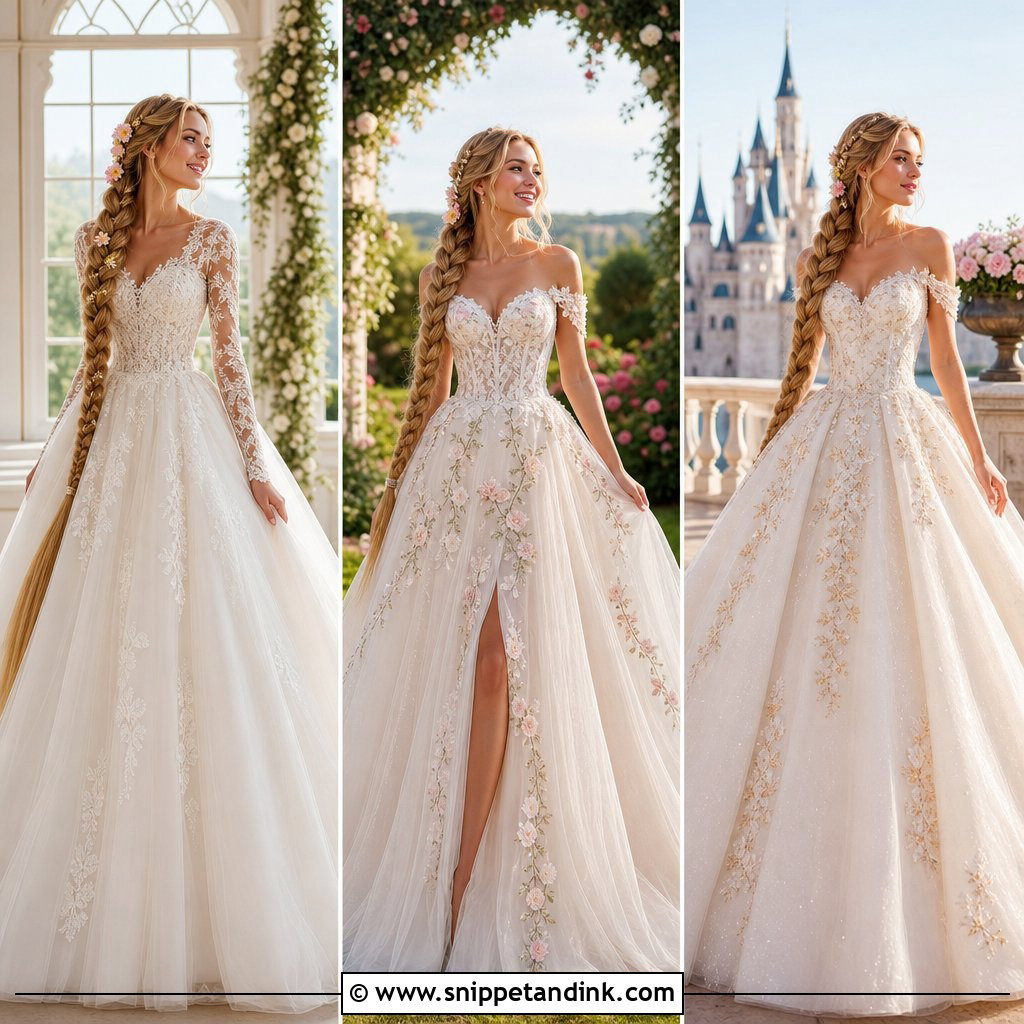
A Rapunzel gown is whimsical: a corset bodice, floral embroidery, puff sleeves, lace-up details or layered tulle. Lavender, blush or champagne undertones add softness. For a meadow or outdoor ceremony, keep the skirt full but not so wide that walking over grass becomes a chore. I’d pair it with loose waves and a floral hair comb, plus delicate earrings and simple heels so the embroidery stays the focus.
24. Snow White Princess Wedding Dress
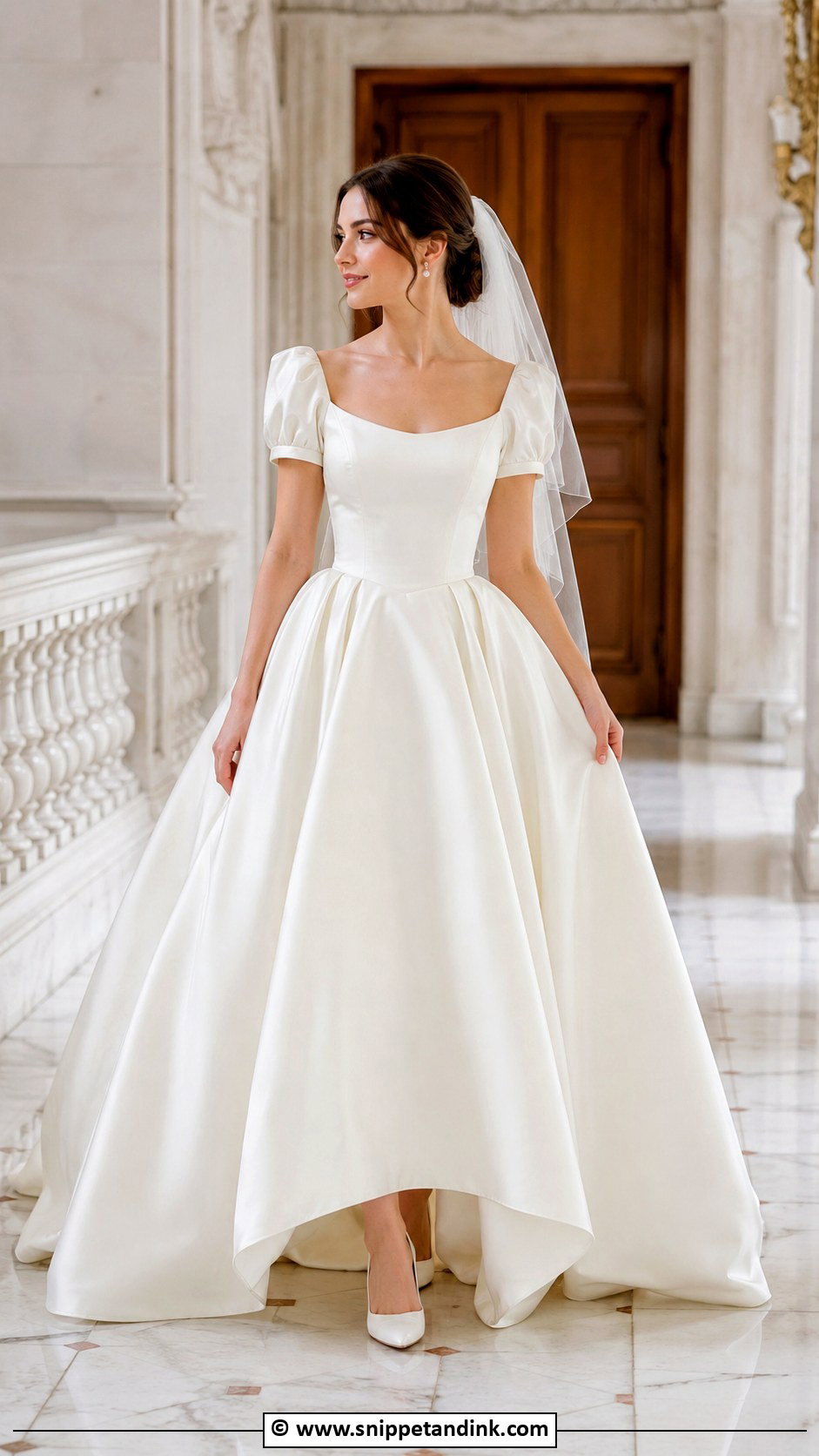
Snow White works when you translate it, not copy it. Think a structured bodice, full skirt, a puff sleeve and red only in the bouquet or lip. Ivory satin or mikado gives a clean base; a high or square neckline adds a vintage edge. A red lip is lovely if you already wear one, but a bold red in the dress itself almost always reads as costume. Pearl earrings and a simple veil suit formal indoor venues.
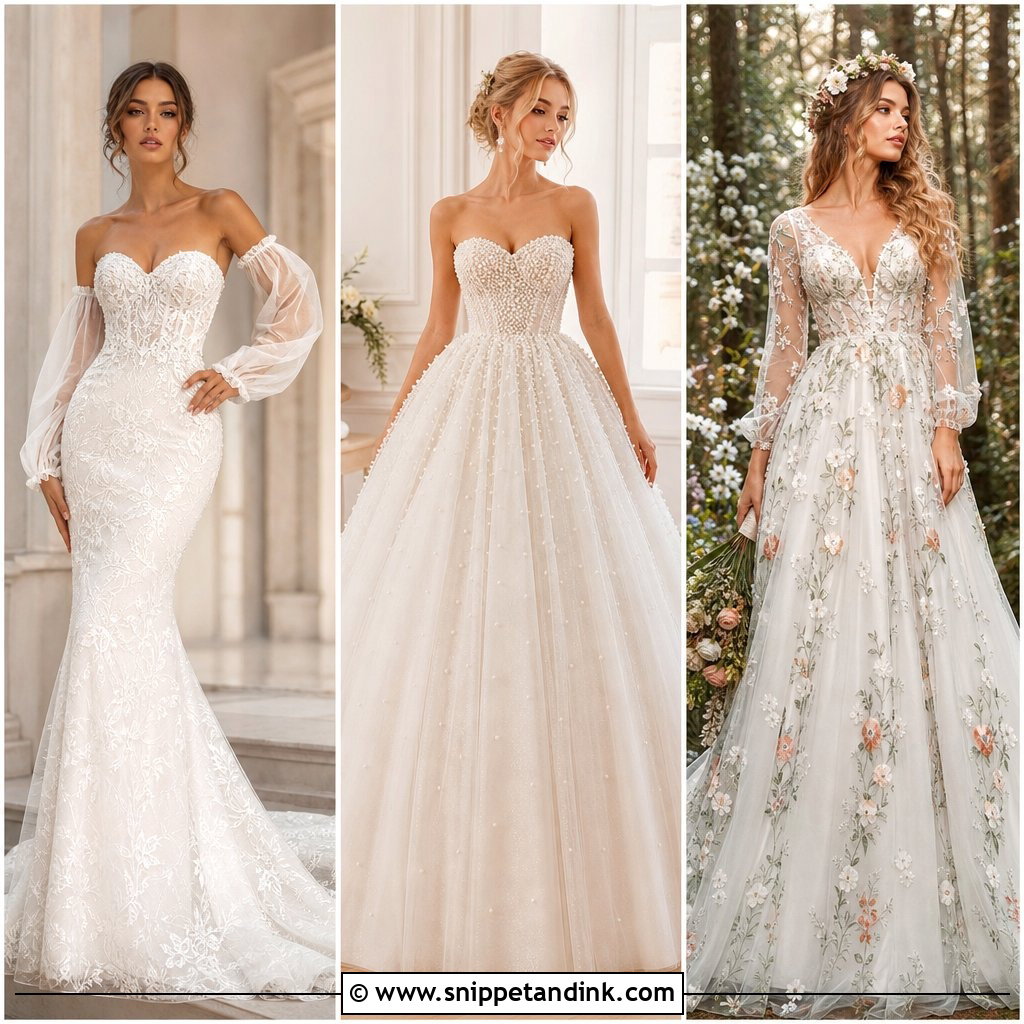
25. Princess Wedding Dress With Bow
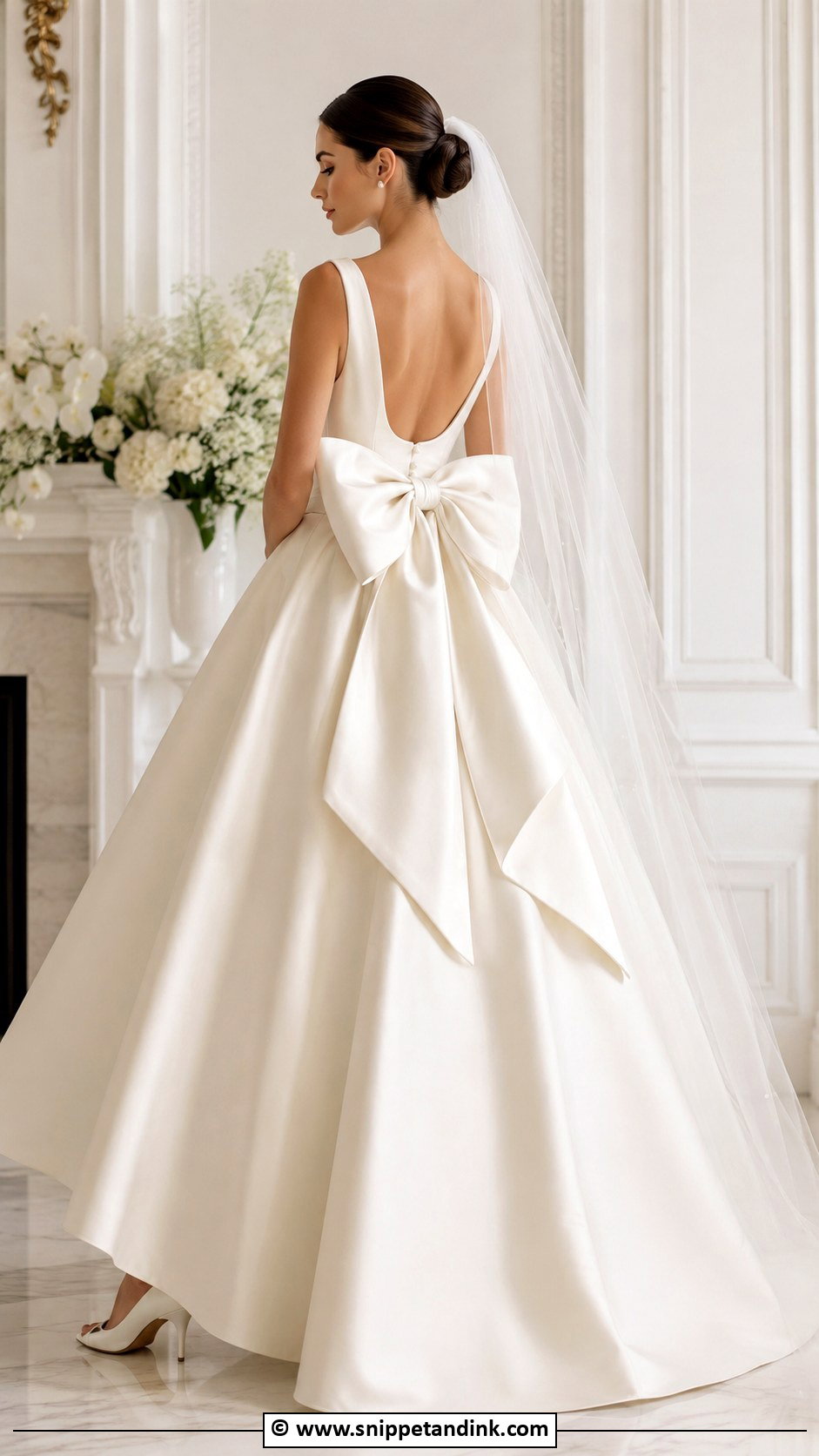
Bows are everywhere in bridal right now. One can sit at the waist, on the back, at the shoulder or at the top of the train. A big satin bow suits a minimal gown; a smaller one fits lace or tulle. Scale is everything here. An oversized bow needs plain hair and jewelry around it. I check that a back bow is stitched rather than just tacked, since it takes a lot of pressure every time you sit against a chair. The back view on the aisle walk is where it shines.
26. Princess Wedding Dress With Detachable Sleeves
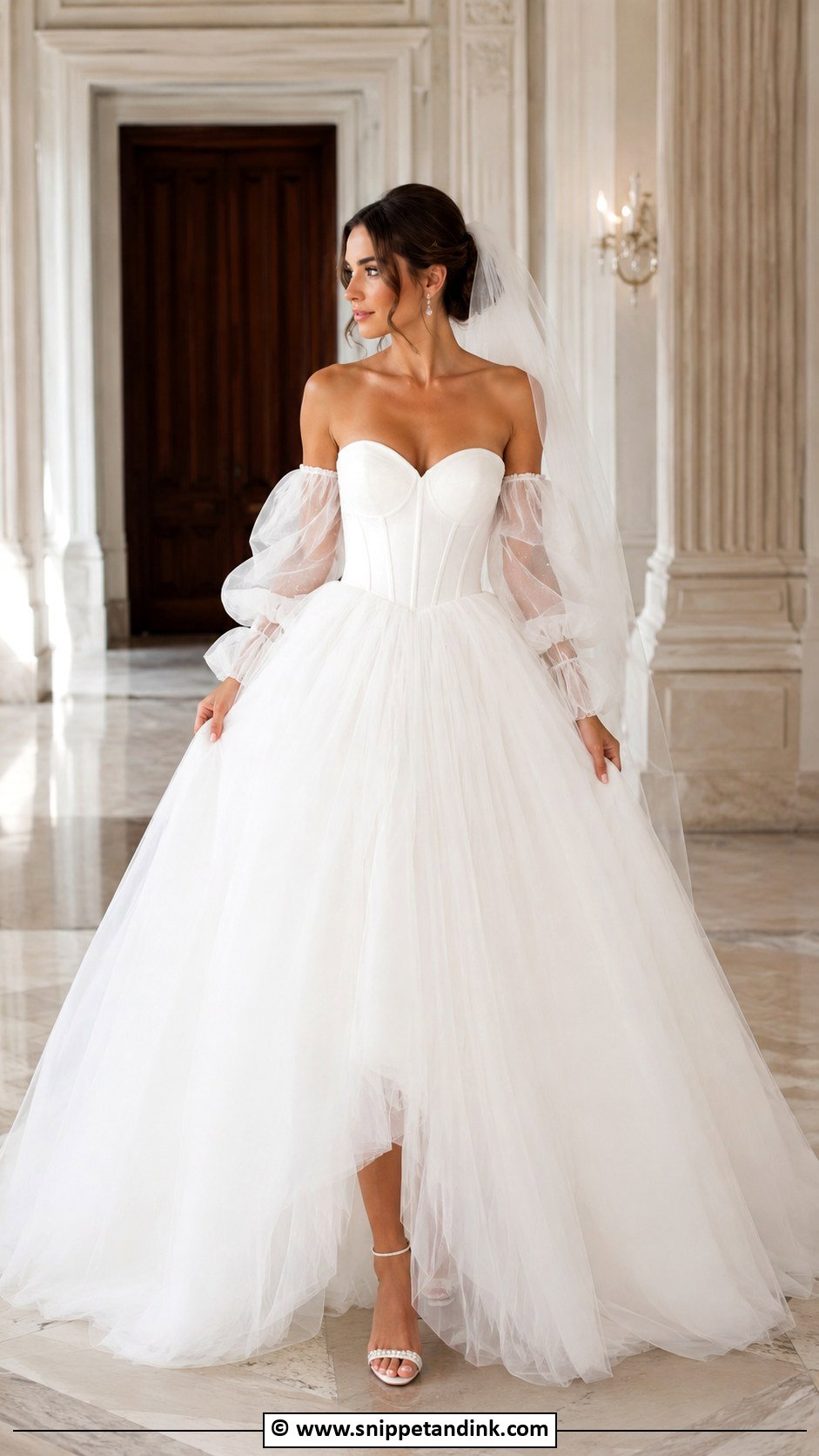
A princess gown with detachable sleeves gives you two looks without a second dress: sleeves for the ceremony, bare shoulders for dancing. It works best with strapless, corset, sweetheart and off-shoulder bodices. Sleeves can be sheer tulle, lace, puffed organza or fitted satin. Practise taking them off and putting them back on before the day; some attach with tiny buttons or snaps that need a second pair of hands. Choose a veil that suits both versions.
27. Princess Wedding Dress With Cape
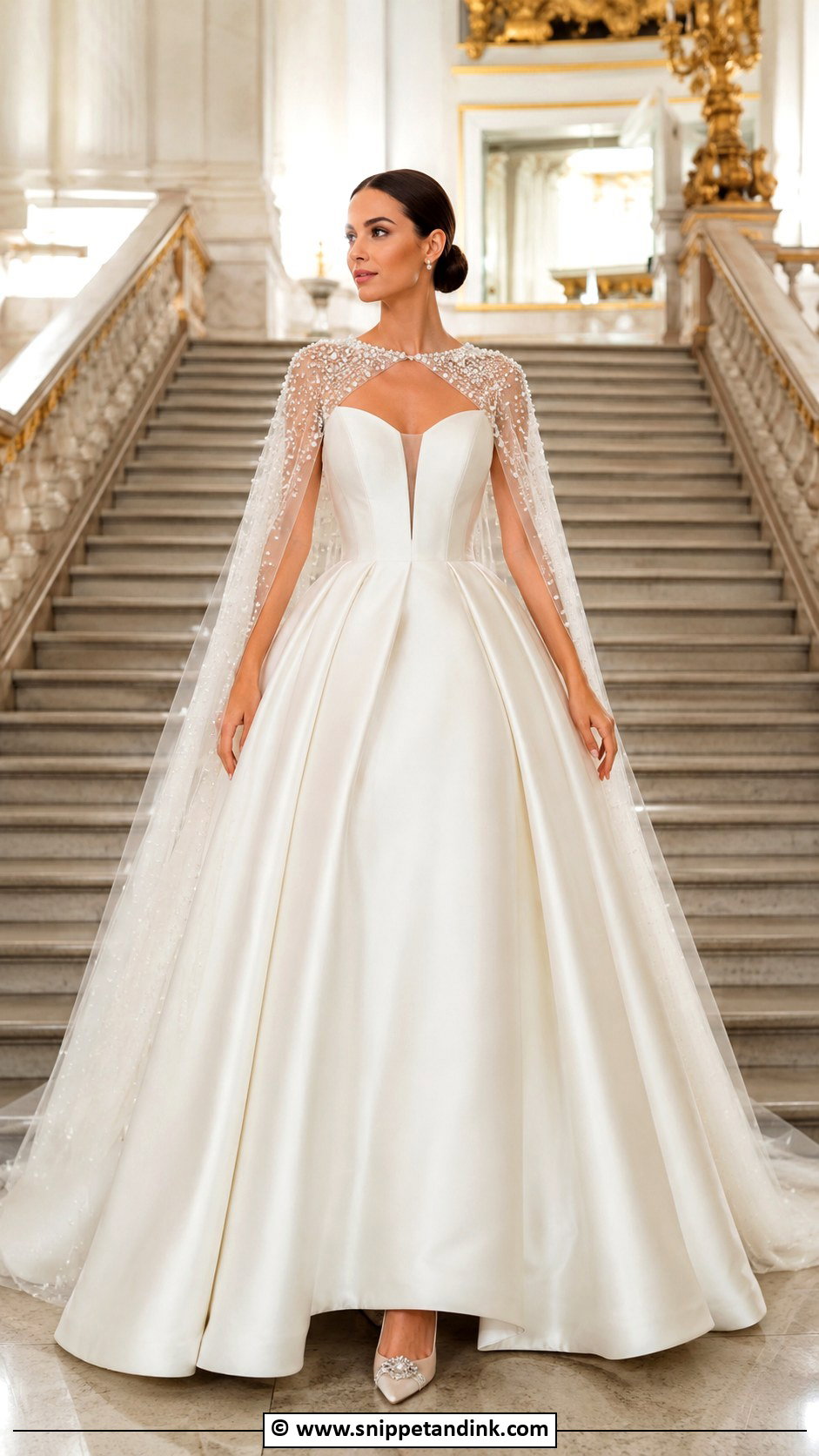
A cape can replace a veil entirely. Sheer tulle feels light; lace or pearl-edged capes add texture. It gives shoulder coverage without sleeves, which some brides prefer for religious ceremonies. Pair it with a clean bodice so the outfit doesn’t get busy. Check where it fastens. A cape attached only at the shoulders can pull the neckline back, so I like ones that clip into the back seam. Most come off easily for the reception.
28. Princess Wedding Dress With Train
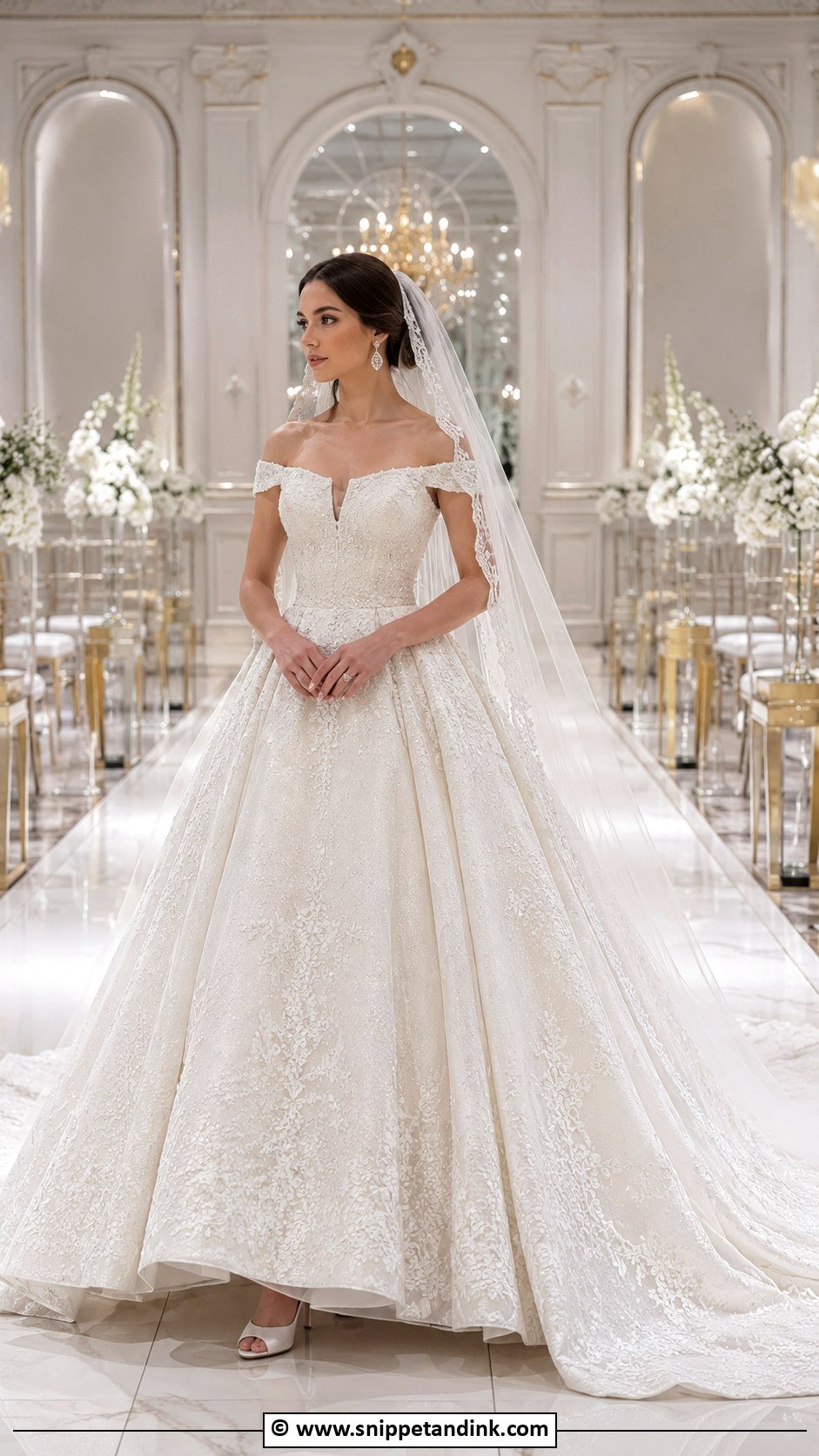
Train length changes the whole back view. Chapel is elegant and manageable; cathedral is dramatic; a detachable train gives you both. On a full skirt, the train should flow out of the skirt rather than look added on. Lace edging, pearl trim or light embroidery make the back worth photographing. I’d match the veil to the train or let it run slightly longer. Measure your aisle too: a cathedral train in a narrow chapel can look cramped.
29. Princess Wedding Dress With Sparkle
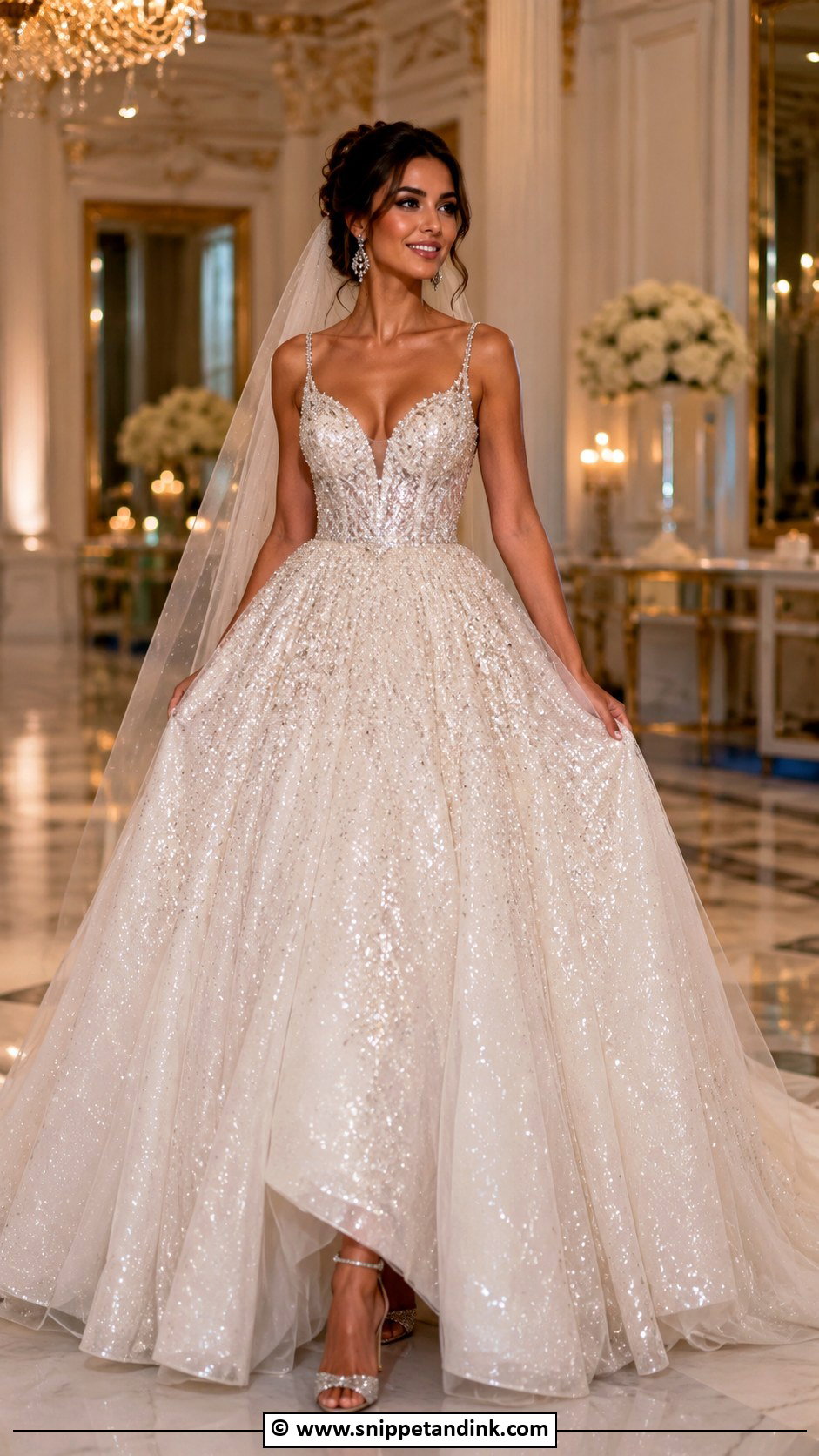
Sparkle comes from sequins, glitter tulle, crystal beading or metallic embroidery, and each level changes the mood. For a soft glow, put shimmer under a top layer of plain tulle. For full glamour, pair a beaded bodice with a sparkling skirt. Glitter tulle sheds a little, and you’ll find specks on your partner’s suit by the end of the night, which most couples find funny. Crystal earrings, a simple veil and sleek hair.
30. Princess Wedding Dress With Ruffles
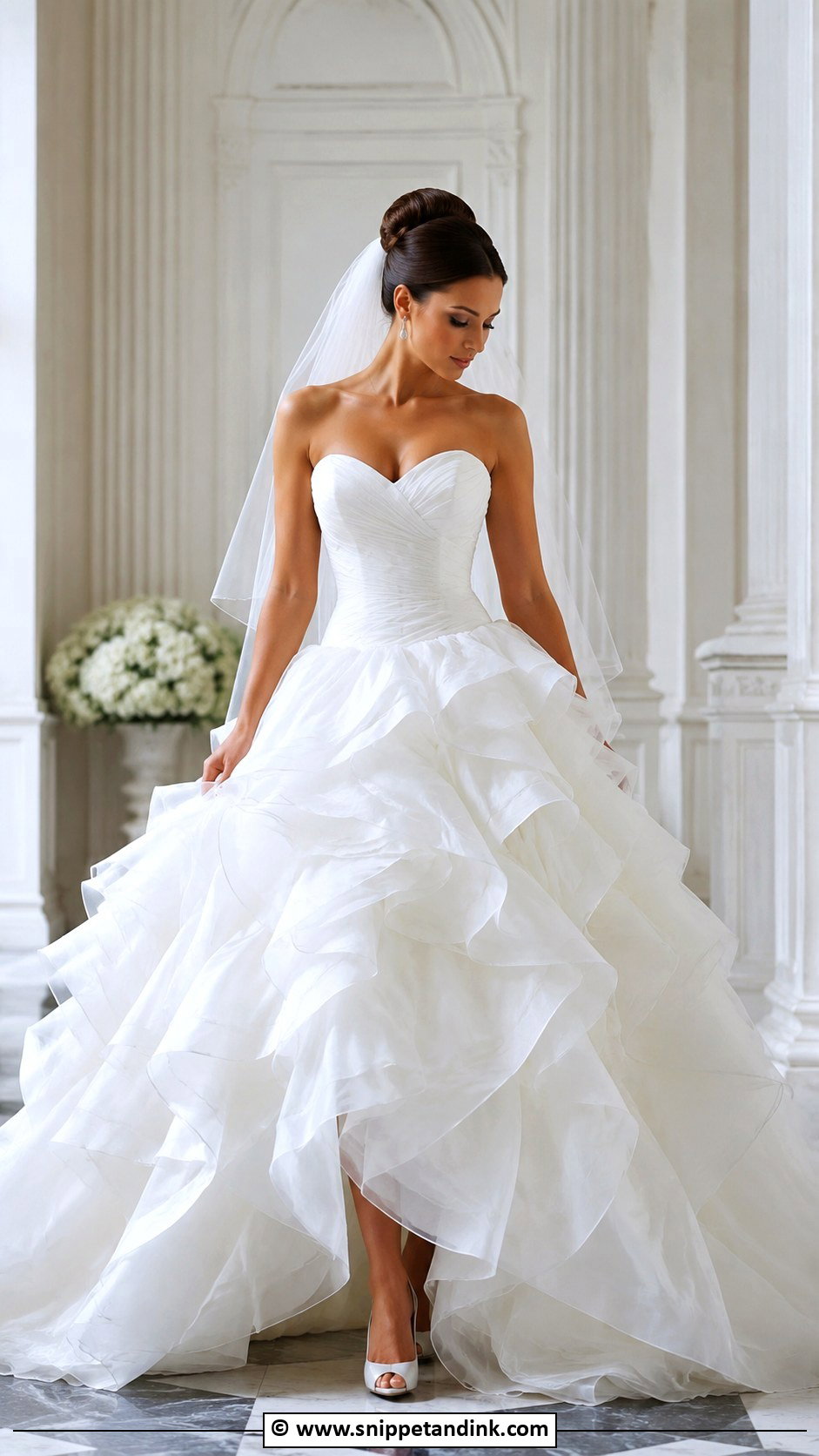
Ruffles add texture and movement to a full skirt. Organza ruffles are airy; taffeta ruffles are bold and sculptural. Soft cascading layers look romantic; large structured ruffles look high fashion. They need a fitted bodice above them for balance. The downside is width: ruffled skirts take up a lot of room in a car and at a dinner table, so think about logistics before you commit. A plain veil and a smooth updo.
31. Princess Wedding Dress With Gloves
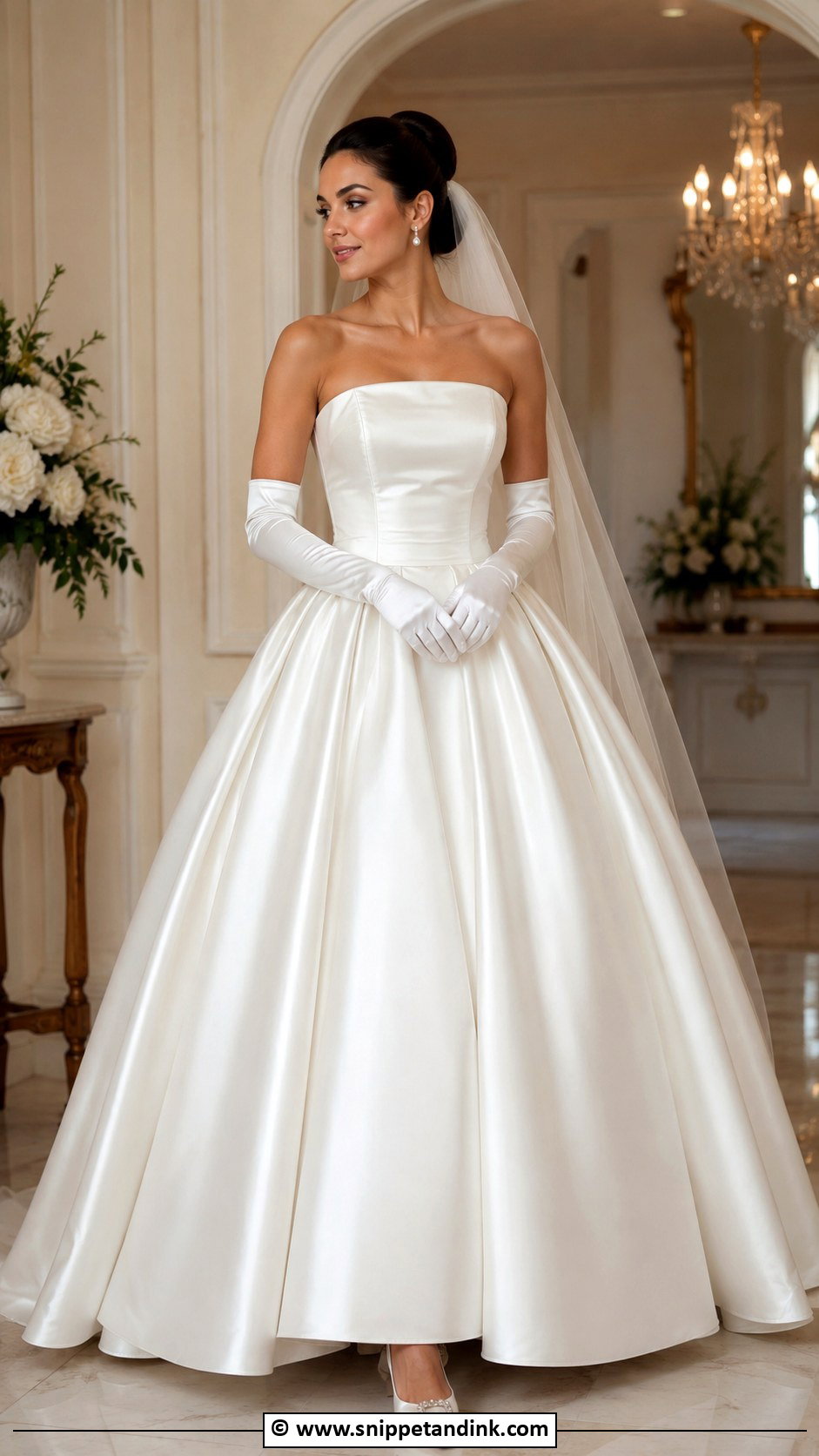
Gloves change the tone of a gown more than any other accessory. Long satin gloves suit strapless and off-shoulder dresses; sheer gloves look softer with lace or tulle. They do act as jewelry, so keep the rest minimal. The one thing I plan in advance is the ring exchange: either choose fingerless gloves, wear them only for the entrance, or have someone ready to hold one. Small earrings, a clean veil and polished hair.
32. Plus Size Princess Wedding Dress
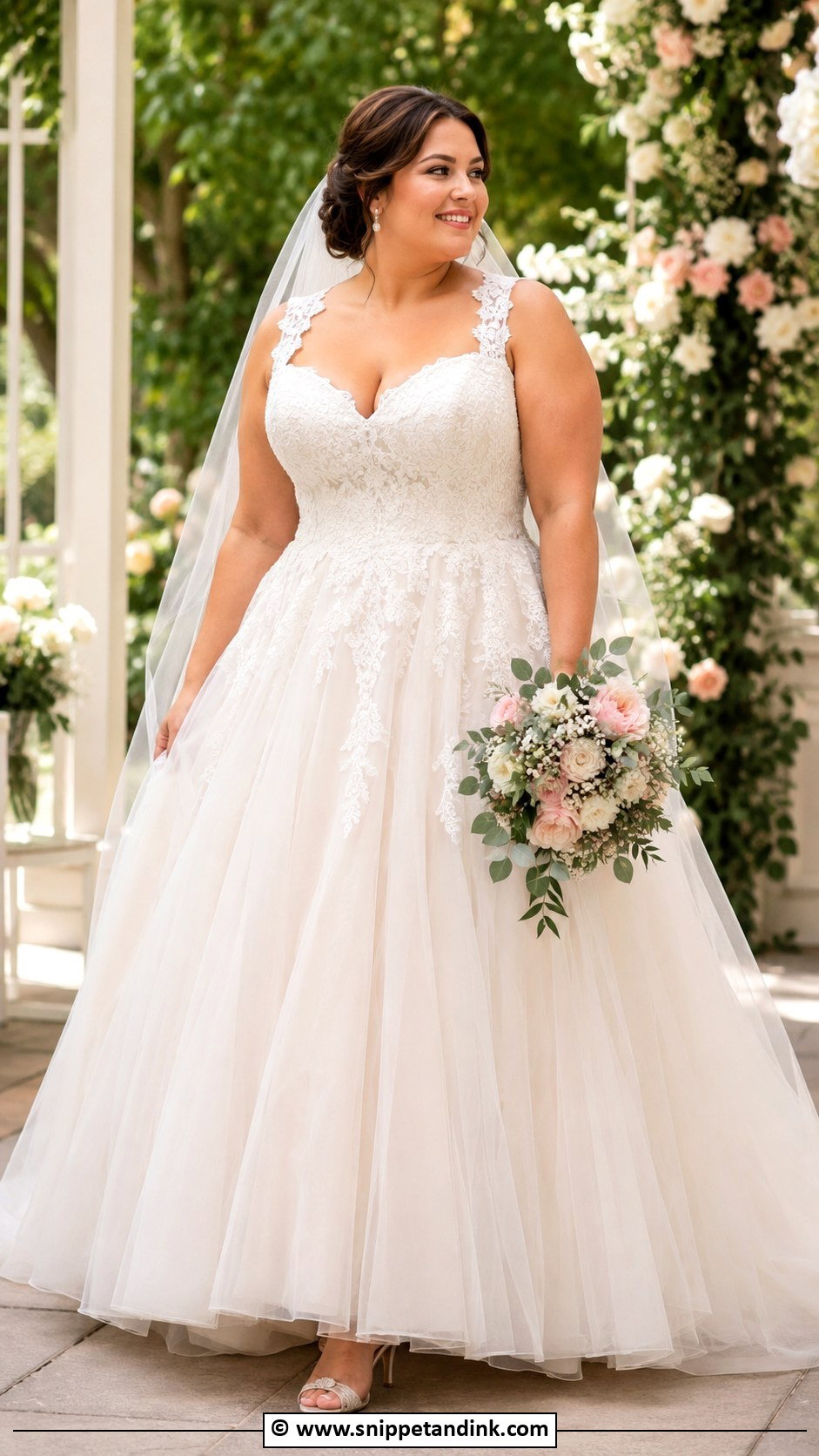
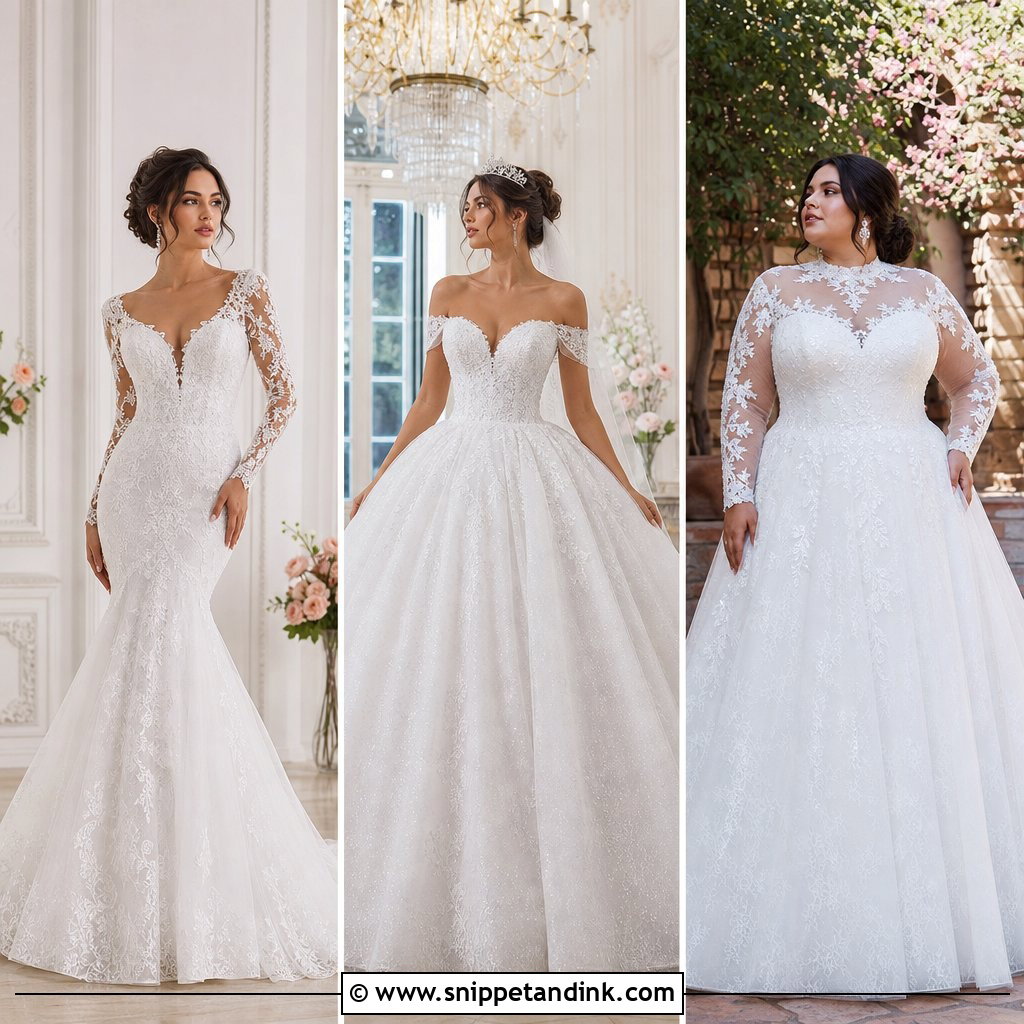
On a plus size bride, a princess gown should feel supported everywhere: structured bodice, secure straps, internal corsetry and a skirt that falls smoothly from the waist. A basque waist, sweetheart, square or off-shoulder neckline can all suit depending on comfort. Tulle, satin, lace and mikado create shape without clinging. You don’t have to settle for a plain dress, either. Pearls, beading, lace and bows can look wonderful. I always do a sitting and dancing test before signing off on the fit.
33. Petite Princess Wedding Dress
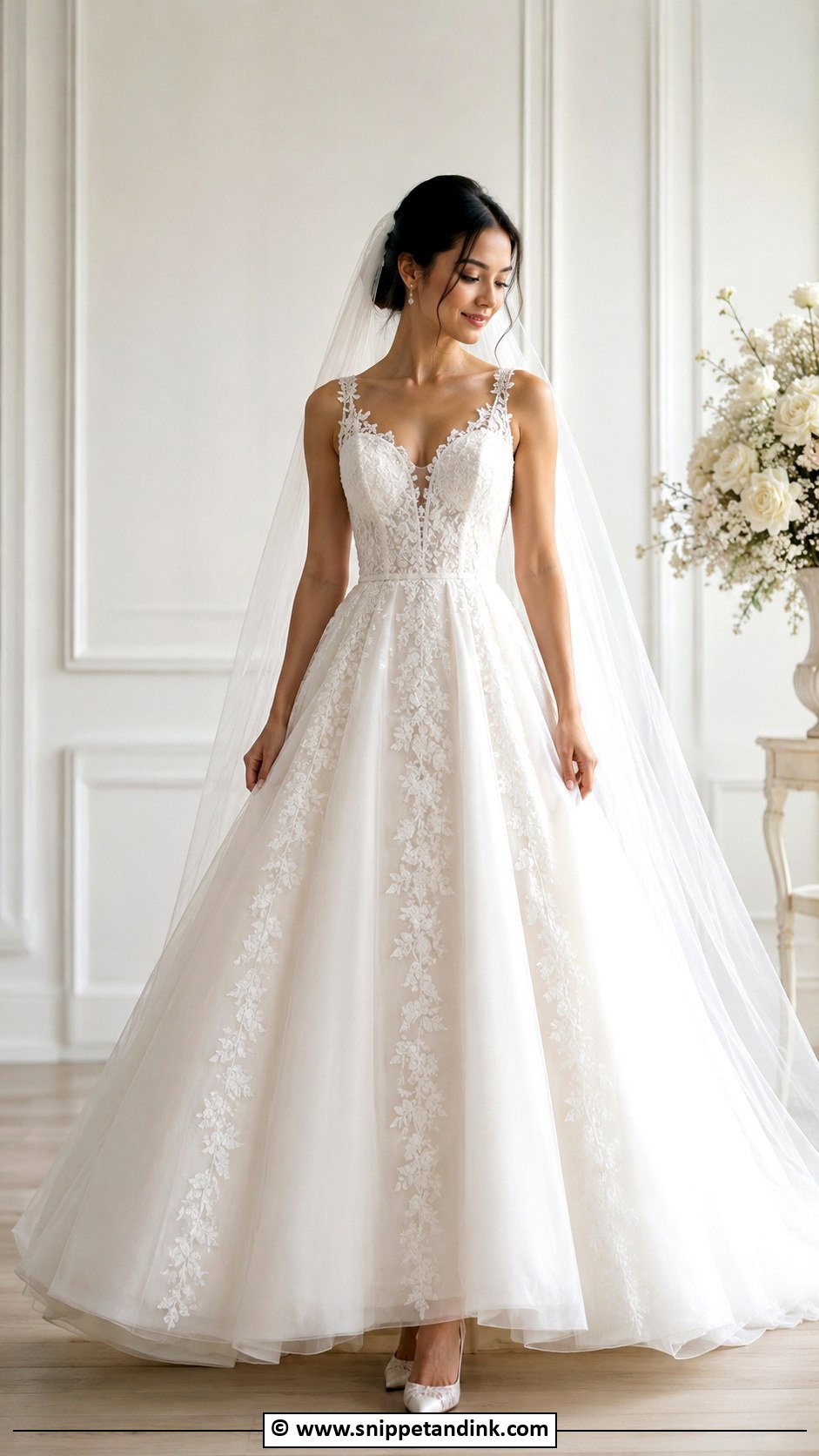
For a petite bride, the trick is volume without swallowing her. A defined waist, vertical lace placement, lighter fabrics and a skirt in proportion to her frame keep the gown in balance. Very wide or heavy skirts make every step harder. A basque waist or slightly raised waist lengthens the body. I’d choose a veil that falls cleanly rather than one that bunches at the shoulders, and pointed heels add a little height.
34. Simple Princess Wedding Dress
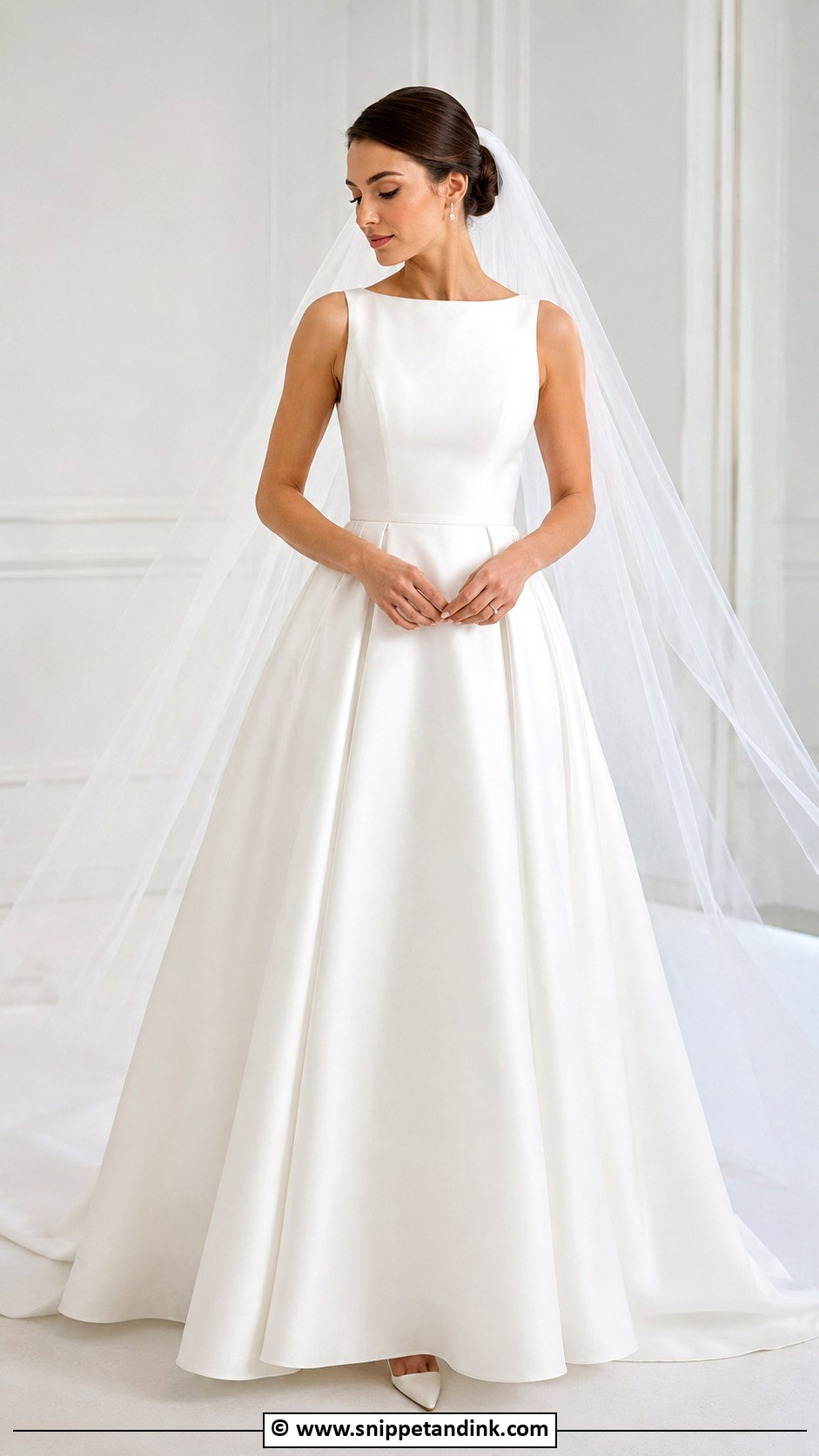
Simple princess dresses keep the volume and drop the decoration: fitted bodice, full skirt, good fabric. Satin and mikado look polished on their own. The bonus is styling freedom. A dramatic veil, pearl earrings or a bow each push the look in a different direction. Since it suits many venues, a simple gown is also my usual suggestion for brides who aren’t sure yet what their wedding will look like. Keep the bouquet clean.
35. Luxury Princess Wedding Dress
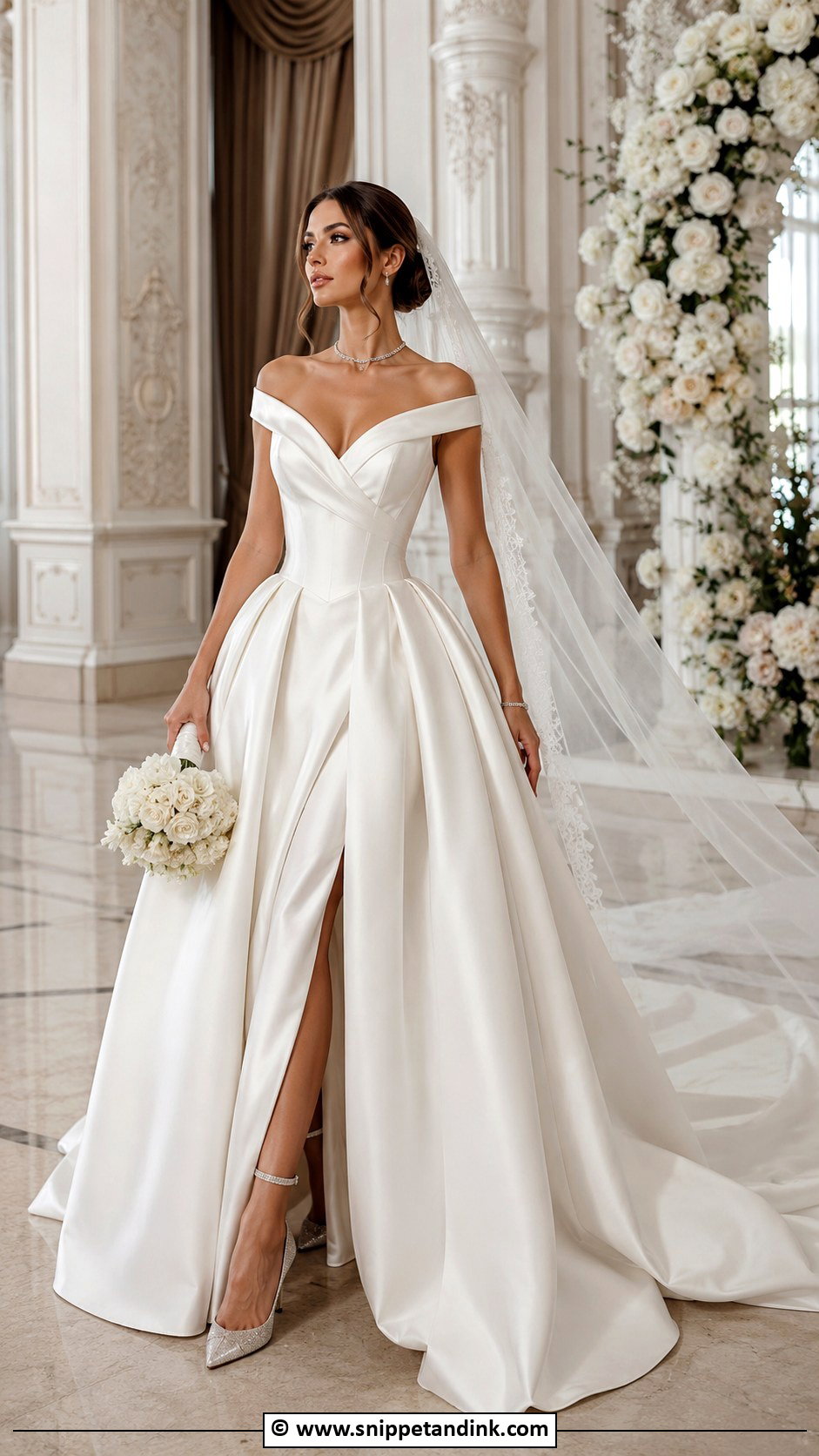
Luxury is mostly about what you can’t see in a picture: silk mikado, hand-placed lace, pearl embroidery, couture-style draping and a bodice built exactly to your measurements. The most expensive-looking gowns are often the cleanest ones, perfectly tailored, rather than the ones with the most sparkle. Ask how the bodice is built and what the lining is made of; that’s where quality shows. Fine jewelry, a cathedral veil and polished hair suit grand venues.
Bustles, Cars and Bathrooms on the Day
A full gown needs a little planning around the moments nobody photographs.
Bustling the train
After the ceremony, the train is lifted and fastened with hooks or ribbons so you can dance. An over bustle pulls it up on top of the skirt; a French bustle tucks it underneath. Ask your seamstress to teach the bustle to a bridesmaid at your final fitting, and label the ties with small coloured threads if there are several.
Getting there and sitting down
Book a car with a wide door and a roomy back seat, and get in bottom first, then gather the skirt in after you. At dinner, ask the venue for a chair without arms, which leaves room for the skirt to settle around you.
The bathroom question
The easiest method with a big skirt is to face the toilet, gather the skirt forward in front of you, and have one person help hold it. It sounds silly, but practising once at your last fitting saves a lot of stress later.
Which Princess Is Yours?
Some brides walk in sure they want a satin ball gown and leave in lace sleeves; others fall for pearls, bows or a modern corset. Think about your venue, the season, your build and how much drama you want in photos, then try a few silhouettes you didn’t plan on. Fabric and fit change a full skirt more than any picture can show. The right one will feel easy to wear as well as look the part.
You'll Like These Ideas:






Leave a Reply