
Henna mehndi designs now borrow from several traditions at once: Indian detailing, Arabic trails, Moroccan geometry and the big shaded florals of the Gulf. When someone sits down in my chair, I don’t start with a picture. I start with three questions: what the occasion is, how long you can keep your hands still, and what you’ll be wearing on your wrists. The thirty layouts below run from a quick finger pattern to a bridal set that takes most of an afternoon, and I’ve added notes on how each one actually behaves once the paste comes off.
Planning Around the Stain, Not the Paste
The paste you see on the day is not the colour you’ll wear. Natural henna comes off bright orange and deepens over the next day or two to reddish brown, nearly maroon on the palms if it took well. So the real deadline is your event minus about 48 hours. I book bridal work one to two days before the main function, and guest or festival henna the evening before.
Roughly how long you’ll be sitting
- Finger or bracelet designs: around fifteen to thirty minutes a hand
- An Arabic back-hand trail or a minimal palm: half an hour to an hour for both hands
- Full hands to the wrist, front and back: a couple of hours
- Heavy bridal to the forearms plus feet: often most of an afternoon, longer with portraits
Those times swing a lot with the artist’s speed and how much fine filler you ask for, so get an estimate when you book. Eat first, use the bathroom, and hand your phone to someone else. Once both hands are wet you’re stuck for a while.
1. Simple Henna Mehndi Design For Front Hand
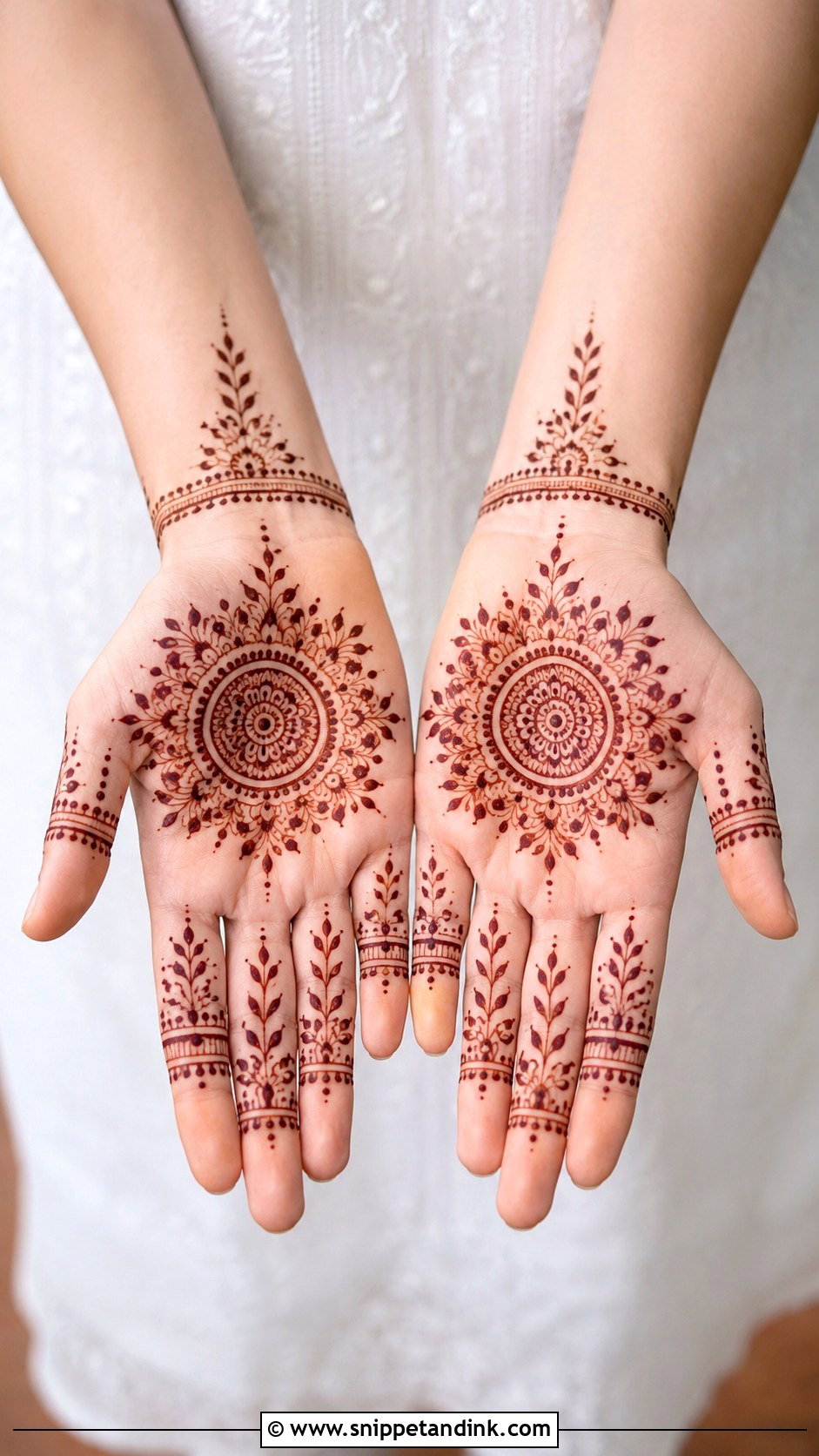
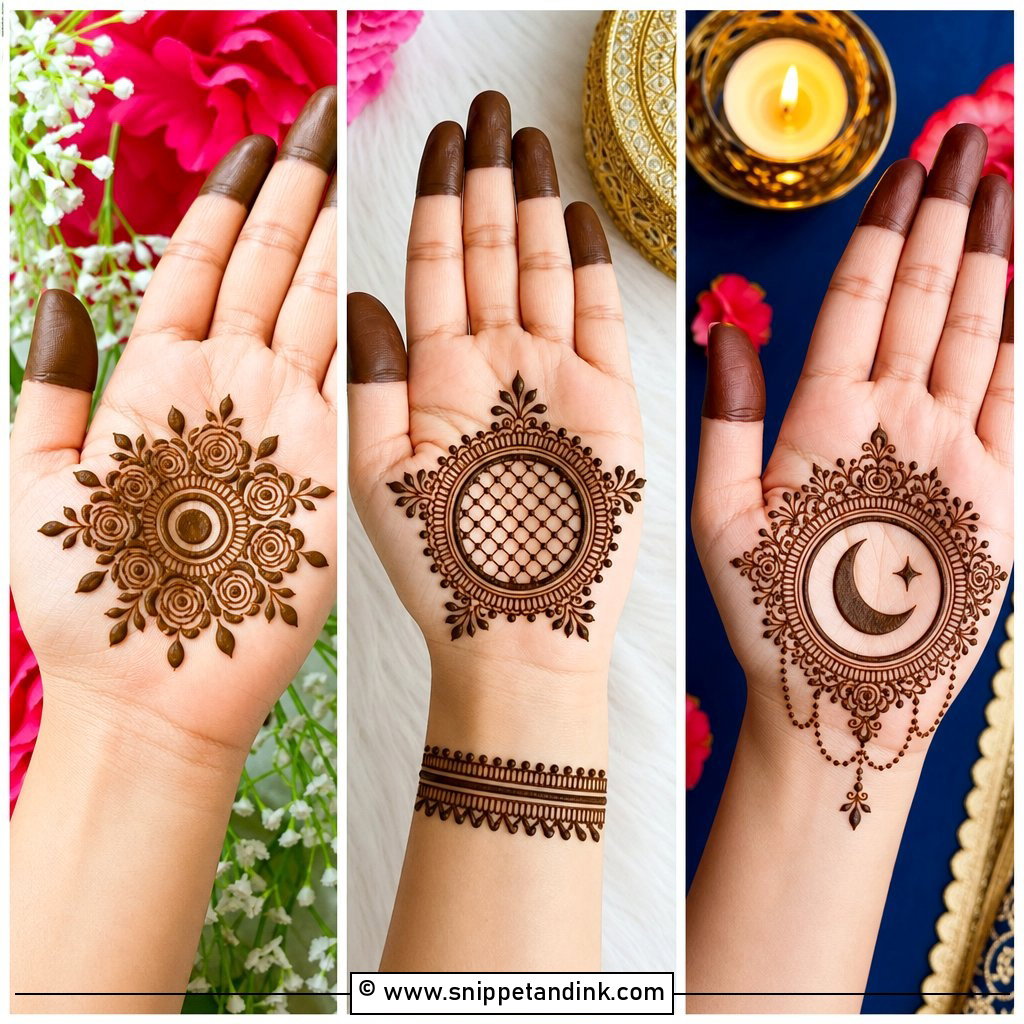
This is the design I draw most often for small family functions, because it reads clearly even when the stain comes out lighter than hoped. A central floral circle on the palm, a few vines and dotted leaves up the fingers, and a slim bracelet band at the wrist. The trick is spacing. If the gaps between petals are narrower than the line itself, the stain bleeds them shut by the second day, so leave clear skin and the pattern stays crisp as it deepens to reddish brown.
2. Arabic Henna Mehndi Design For Back Hand
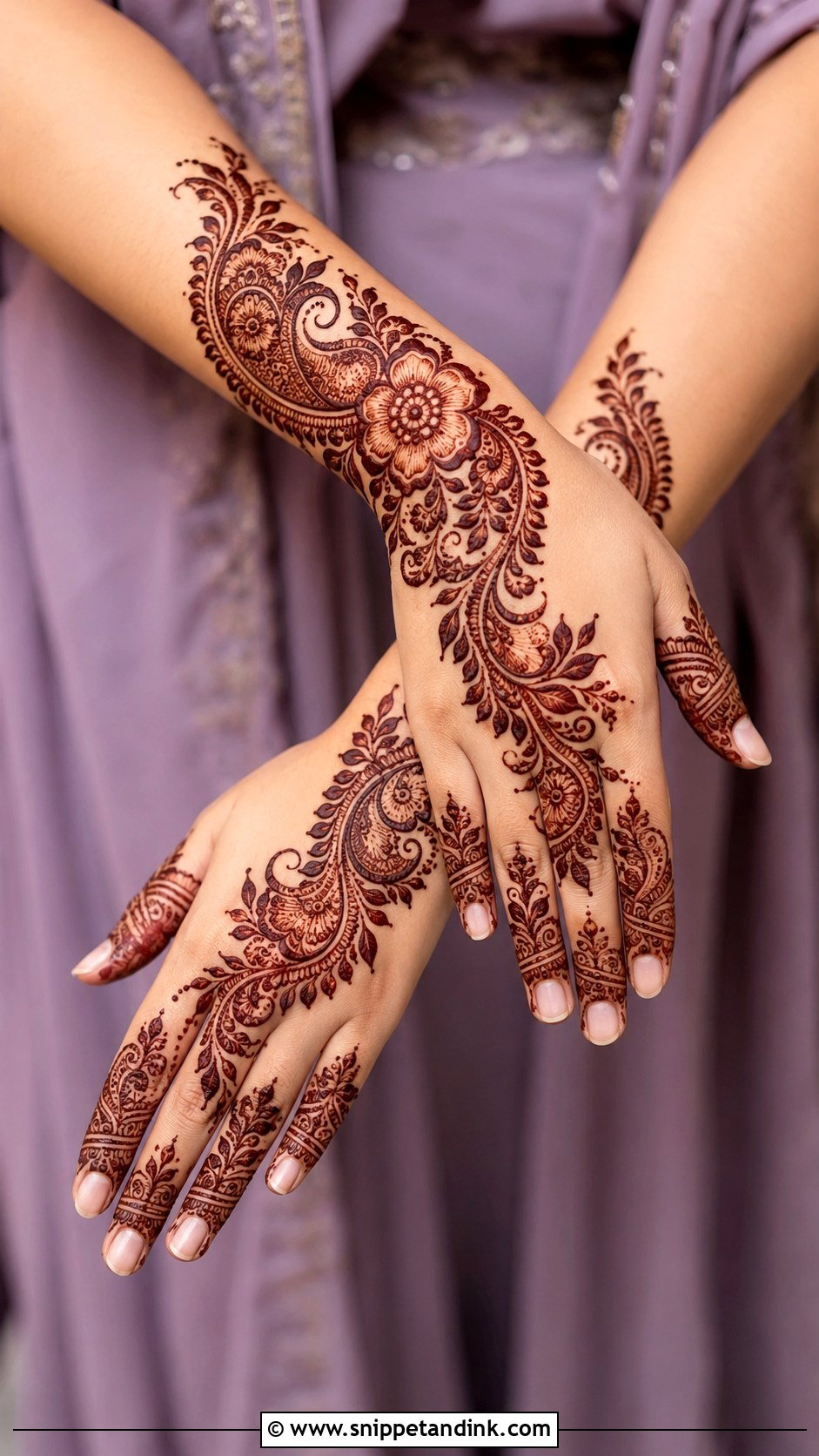
Arabic layouts run diagonally, usually from the outer wrist toward the index or middle finger, and they rely on open skin rather than filler. I build them with bold outlines first, then shade inside the petals with a thinner line so the flowers look full without dense coverage. Because there’s less to draw, a back-hand trail takes a fraction of a bridal session, which is why I suggest it for Eid and engagement parties where you want to be finished by lunch.
3. Indian Bridal Henna Mehndi Design
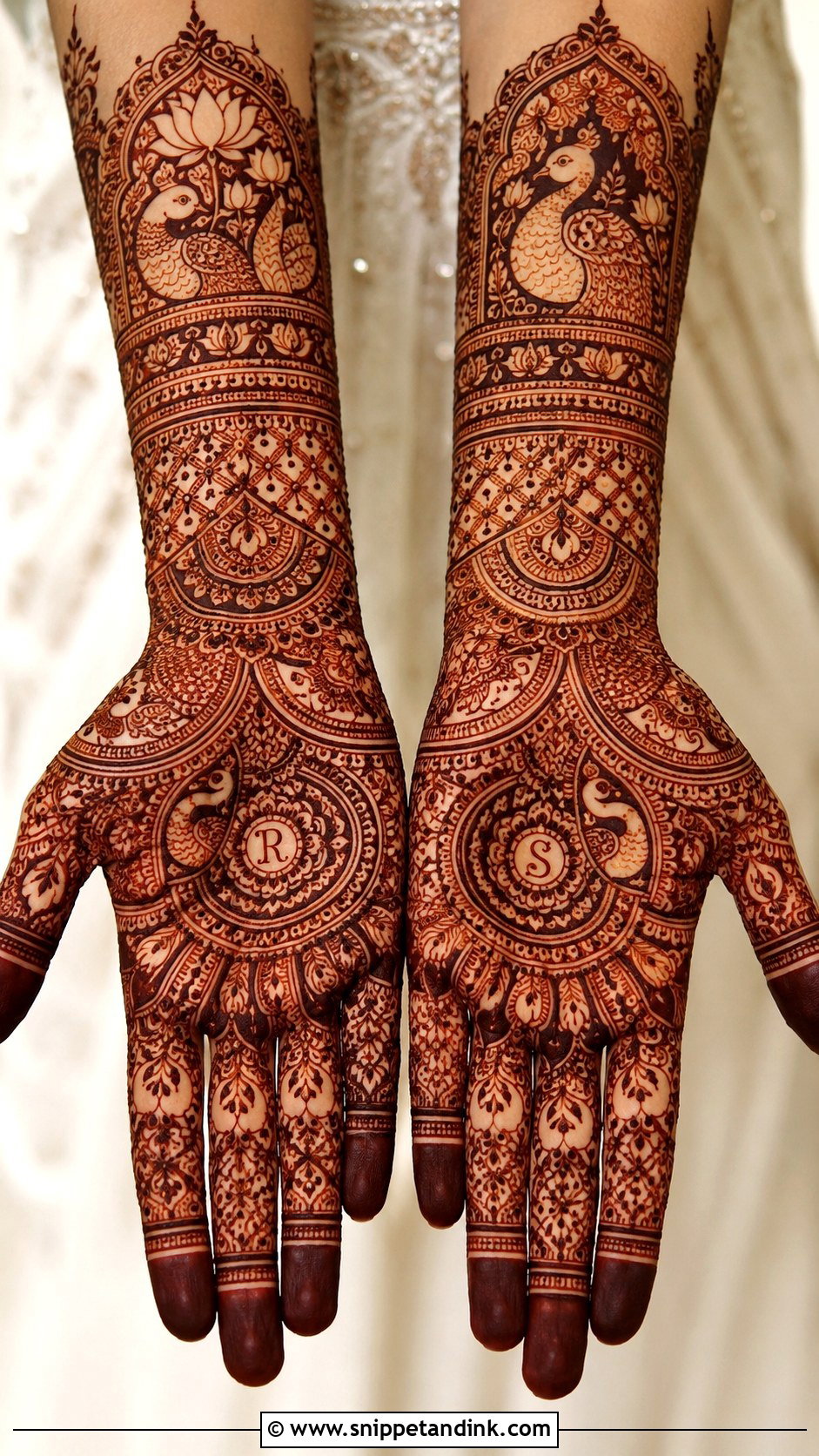
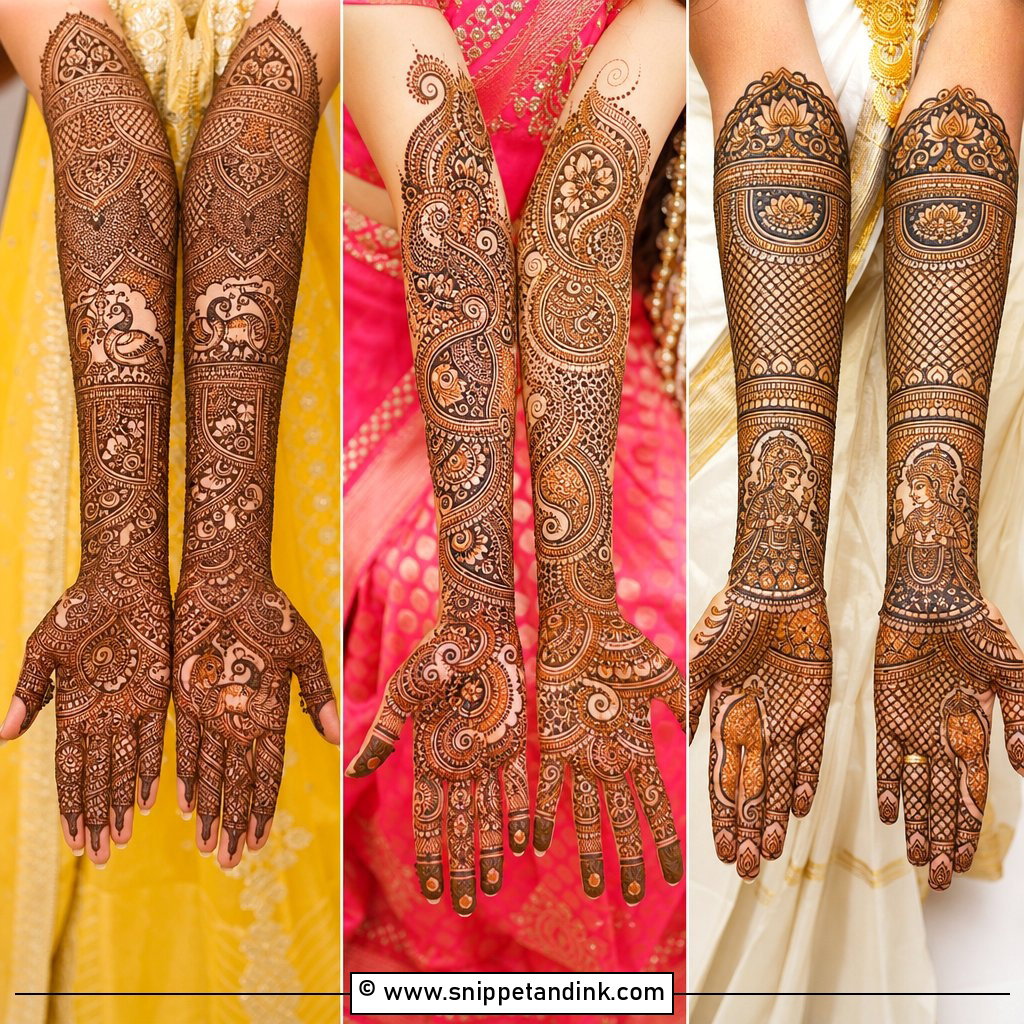
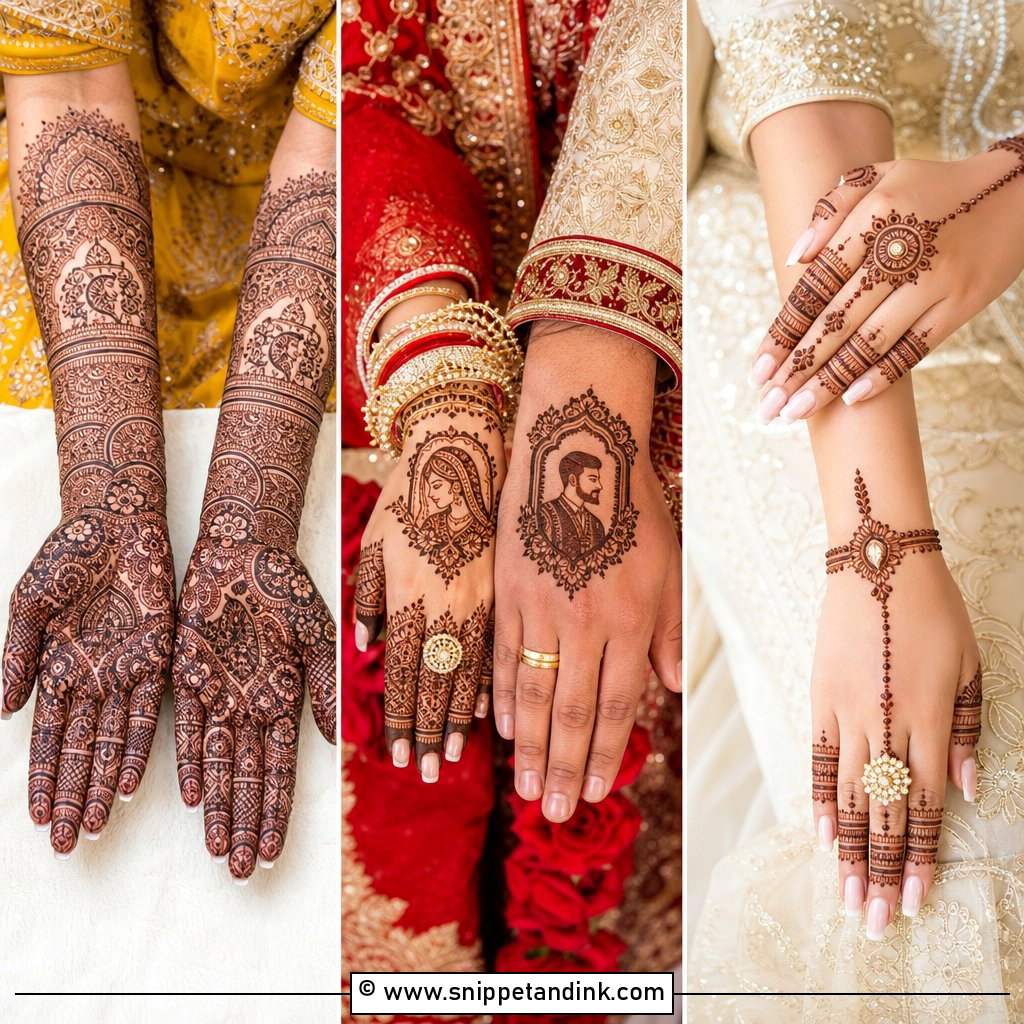
Indian bridal coverage is a long sitting: palms, backs, wrists and forearms filled with paisleys, peacocks, lotus flowers, jaali grids and fine filler. Plenty of brides ask me to hide initials, a wedding date or small bride and groom figures inside the work, and I place those where the hands will be open in photographs, usually the centre of the palm. Be honest with yourself about sitting time. Fine filler needs a still arm, and if you’re fidgeting at hour three, the last section is the one that smudges.
4. Indo-Arabic Henna Mehndi Design
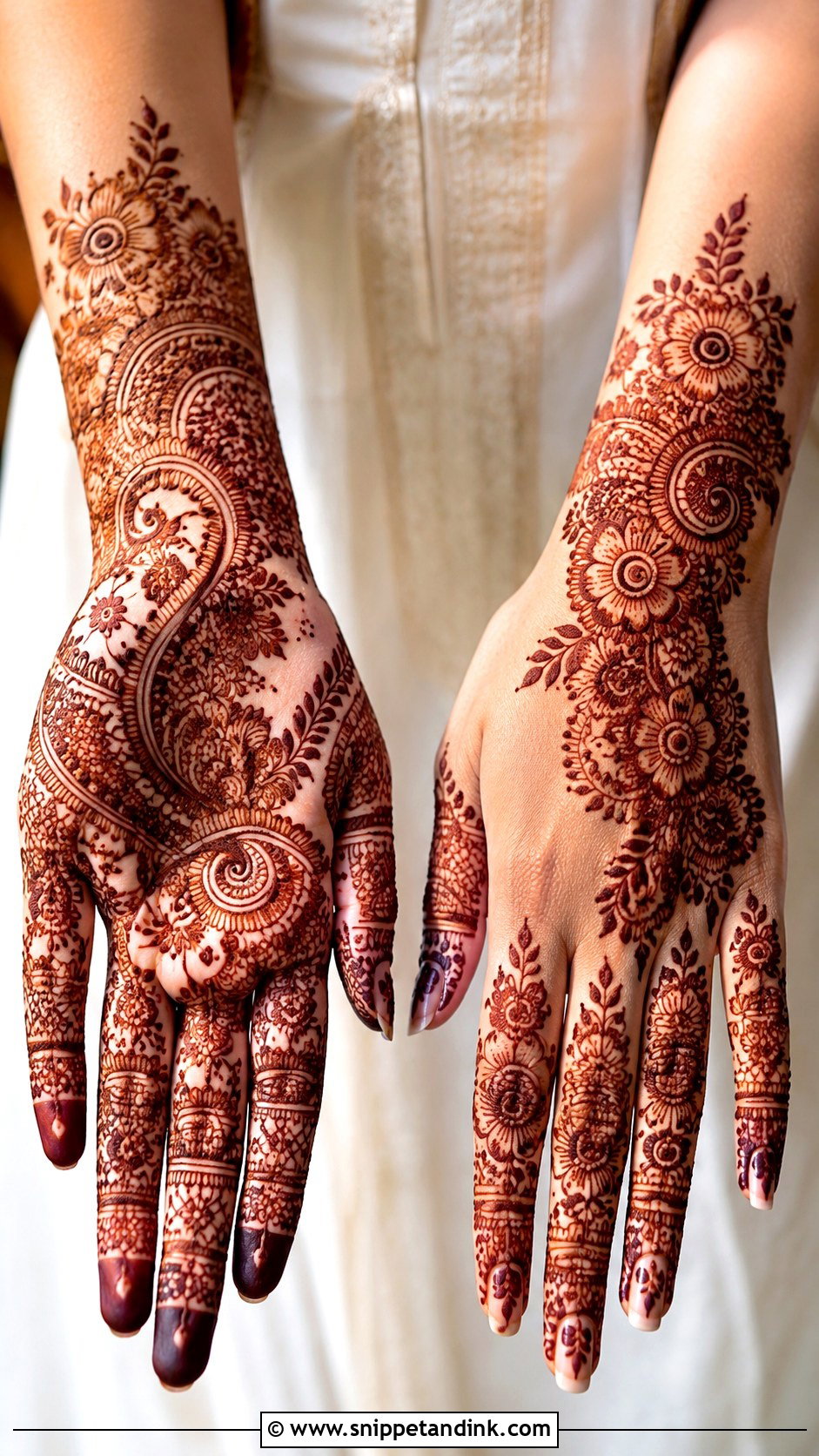
Indo-Arabic takes the bold Arabic flow and fills its larger flowers and paisleys with Indian-style mesh, dots and tiny petals. I like it for bridesmaids and sisters of the bride, since it looks detailed in group photos yet sits on plenty of open skin and dries faster than a packed design. The big shapes stay readable from across a room, which is what a camera needs.
5. Mandala Henna Mehndi Design For Palm
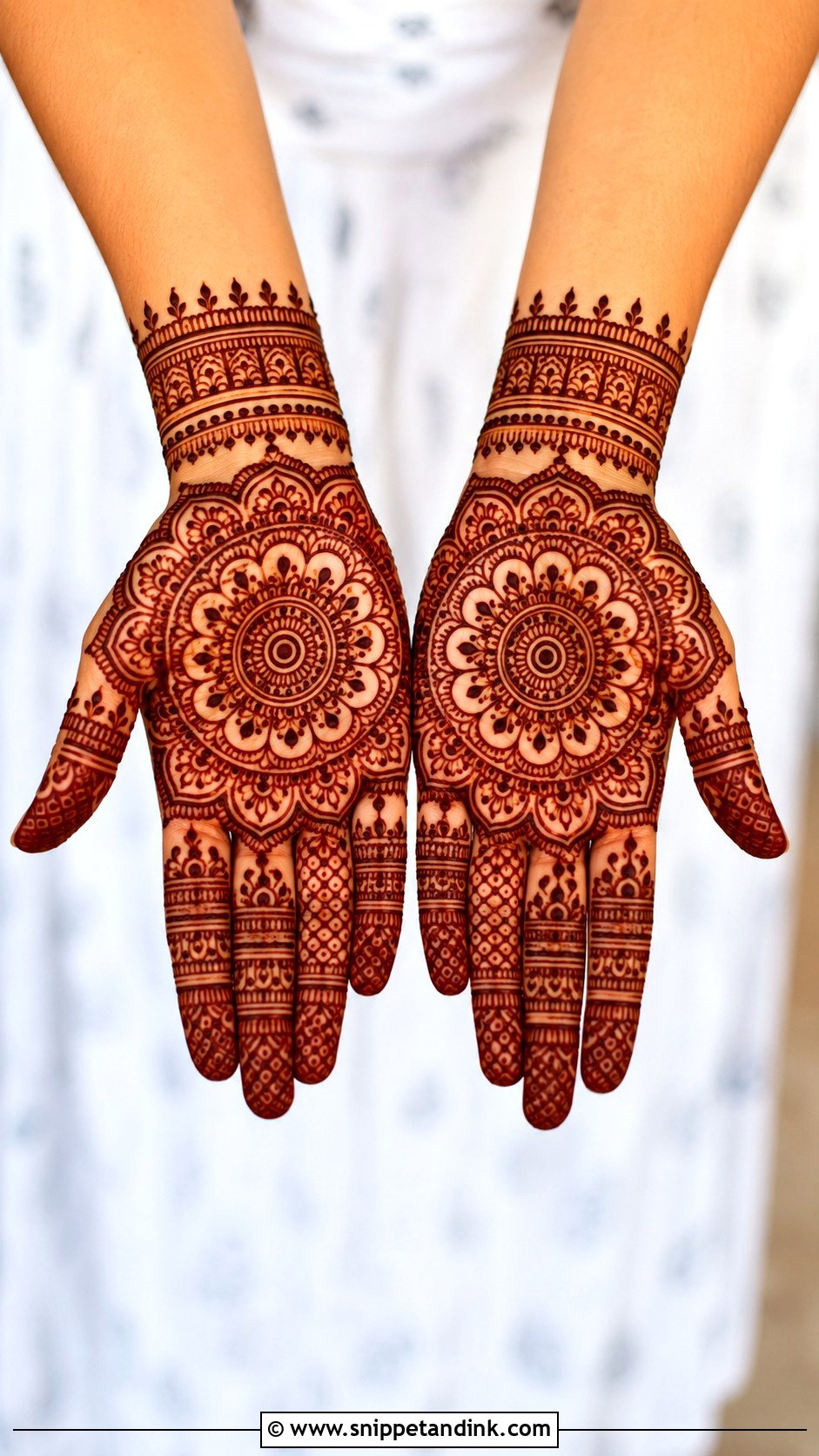
A palm mandala is a centre point that grows outward in rings of petals, dots and scallops. Before I start, I check where the palm creases fall, because a ring that crosses the deep crease at the base of the thumb tends to break up as the hand flexes. Add mini bands on the fingers and a slim wrist cuff, and you have a traditional design for pujas and family functions without the weight of bridal work.
6. Full Hand Henna Mehndi Design
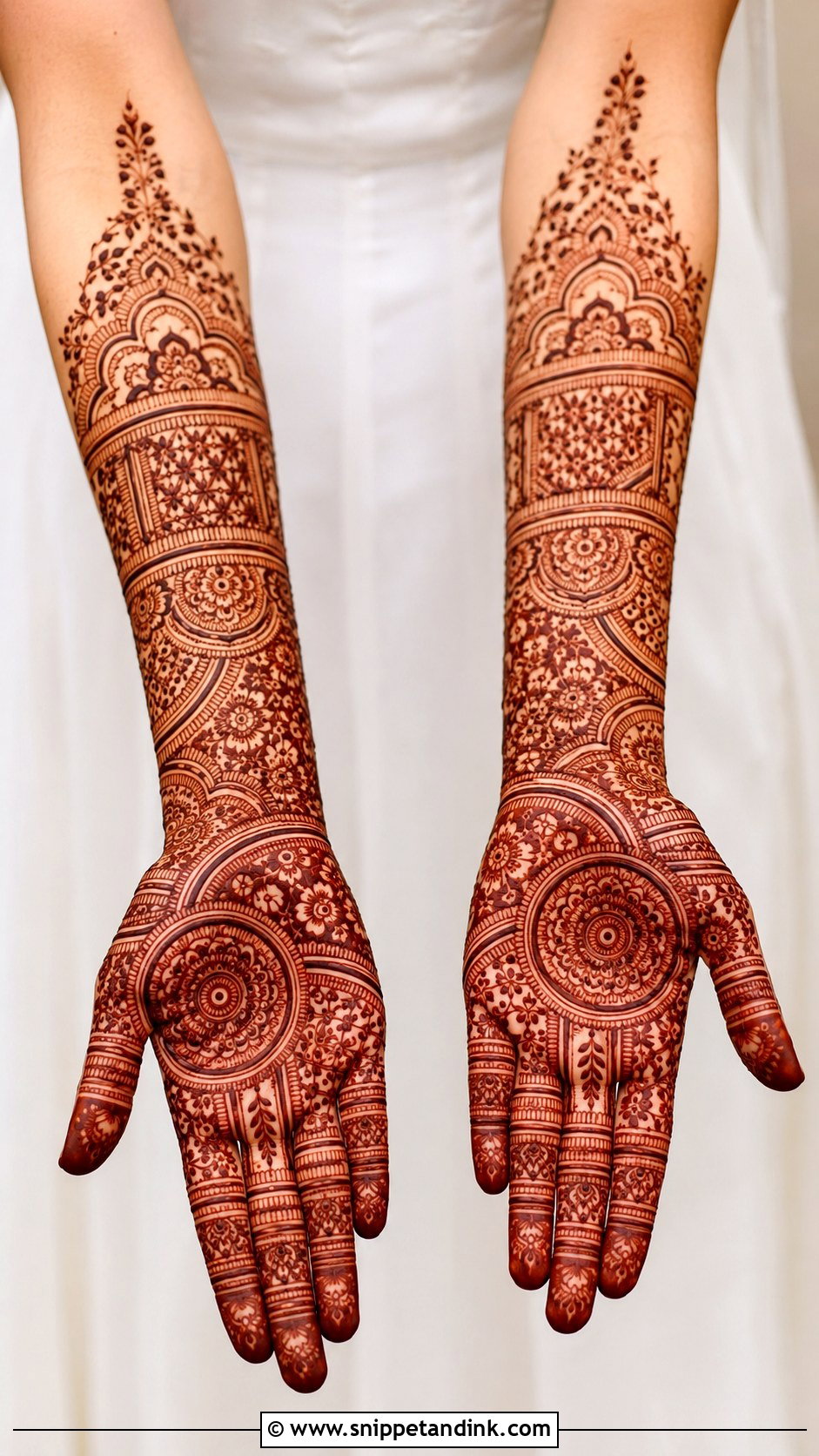
Full coverage runs from the fingertips to the wrist, sometimes onto the forearm, mixing a palm mandala, paisley borders, jaali panels and wrist bands. The mistake I see in reference photos is every motif drawn at the same small scale, which turns the hand into texture with no focal point. I keep two or three main motifs large and save the fine detail for chosen areas, so the eye has somewhere to land.
7. Back Hand Henna Mehndi Design
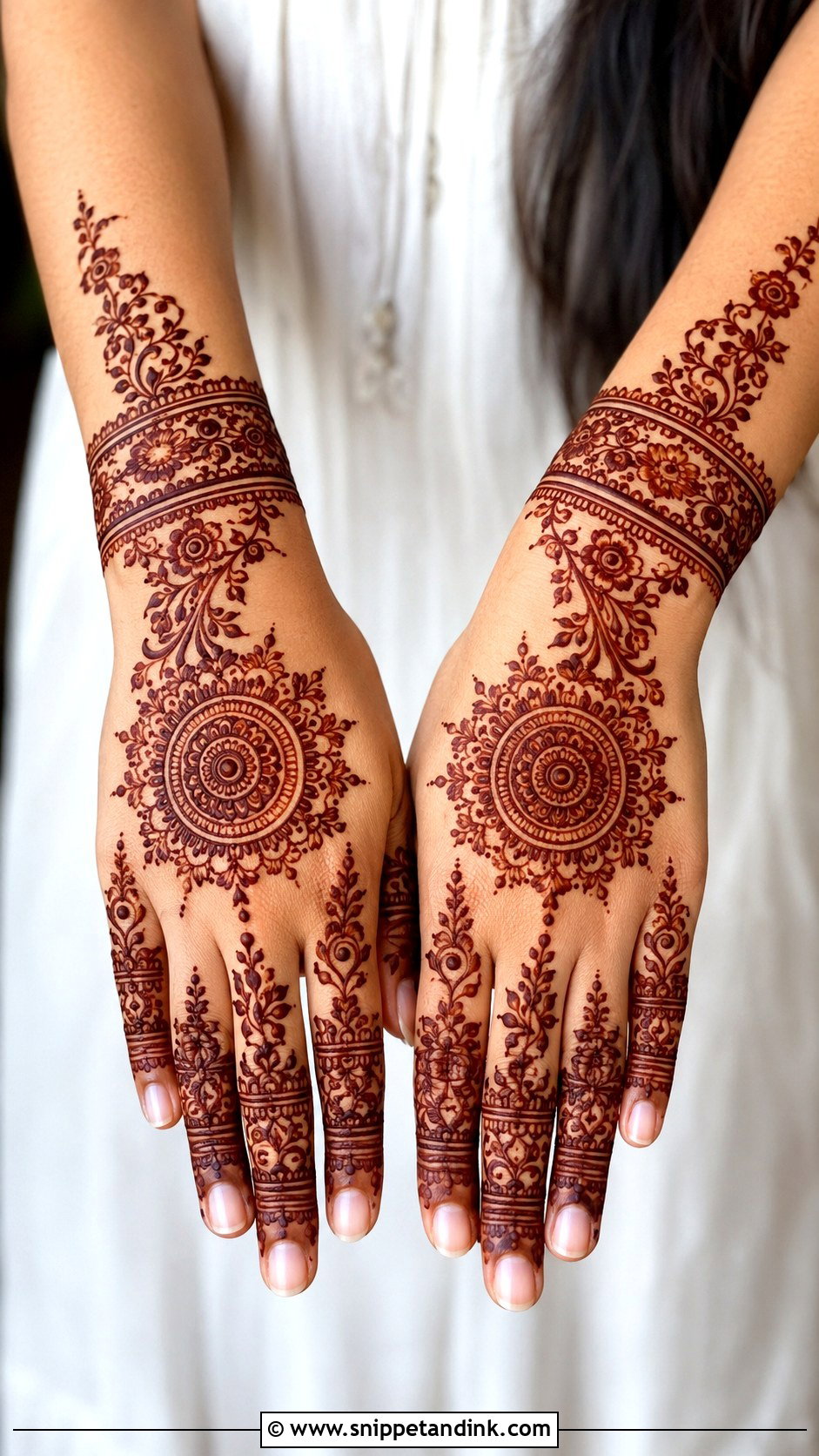
Back-hand work is what people see most: when you hold a glass, greet guests or rest your hands together for a photo. I usually anchor it with a central mandala or a jewelry-style layout, add detailed rings on the fingers and finish the wrist with a cuff. One honest note. The back of the hand stains lighter than the palm, because the skin there has less of the thick outer layer that henna binds to, so I keep the lines a touch bolder on this side.
8. Front Hand Henna Mehndi Design
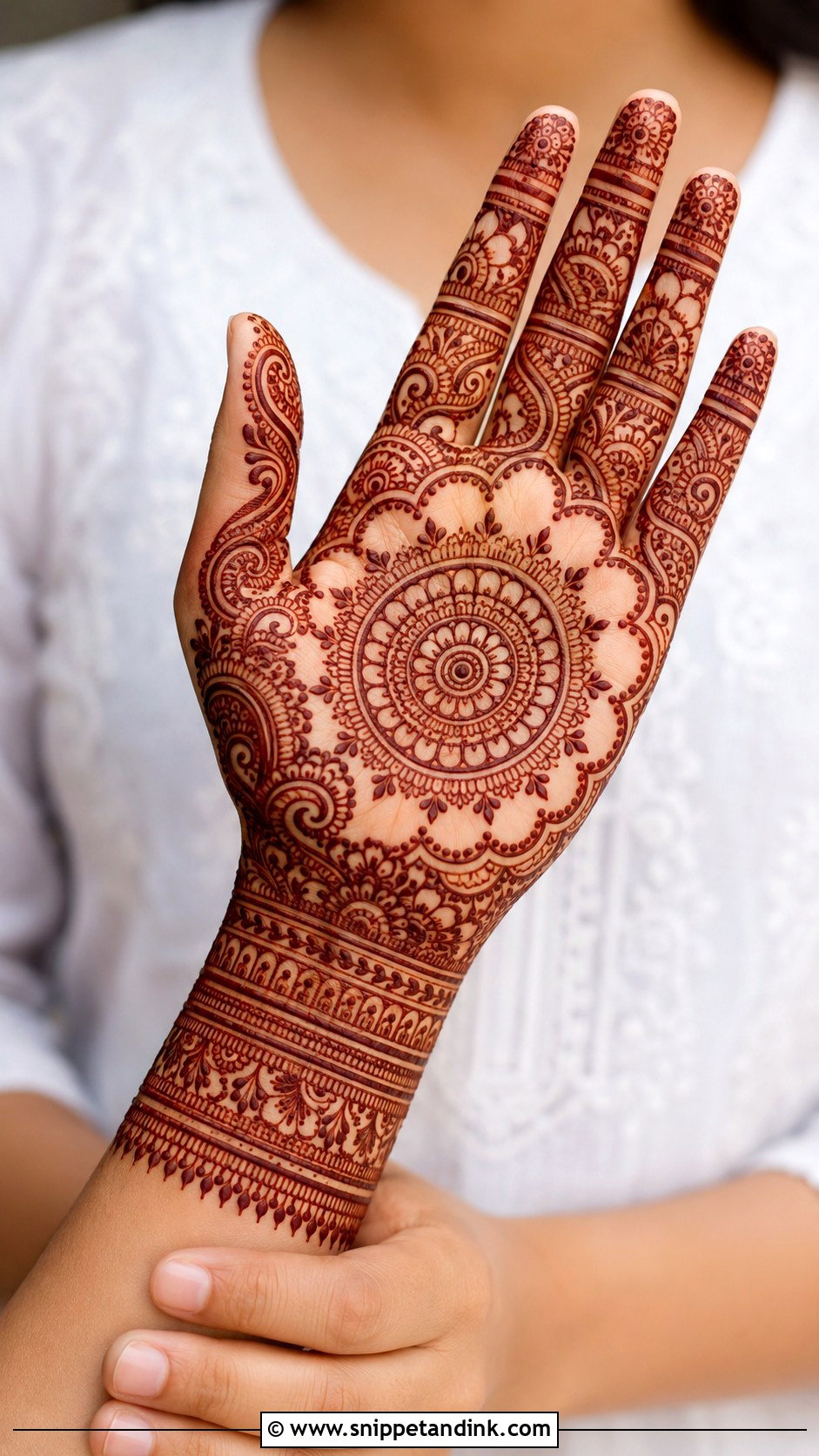
When the palm carries the main artwork, I plan it around how the hand opens: a mandala in the centre, paisley curves near the thumb pad, floral arcs following the natural lines. The same layout can be light for a festival or dense with jaali for a wedding. Folded hands hide the palm entirely, so if most of your photos will be posed, decide early whether this side or the back deserves the detail.
9. Bridal Portrait Henna Mehndi Design
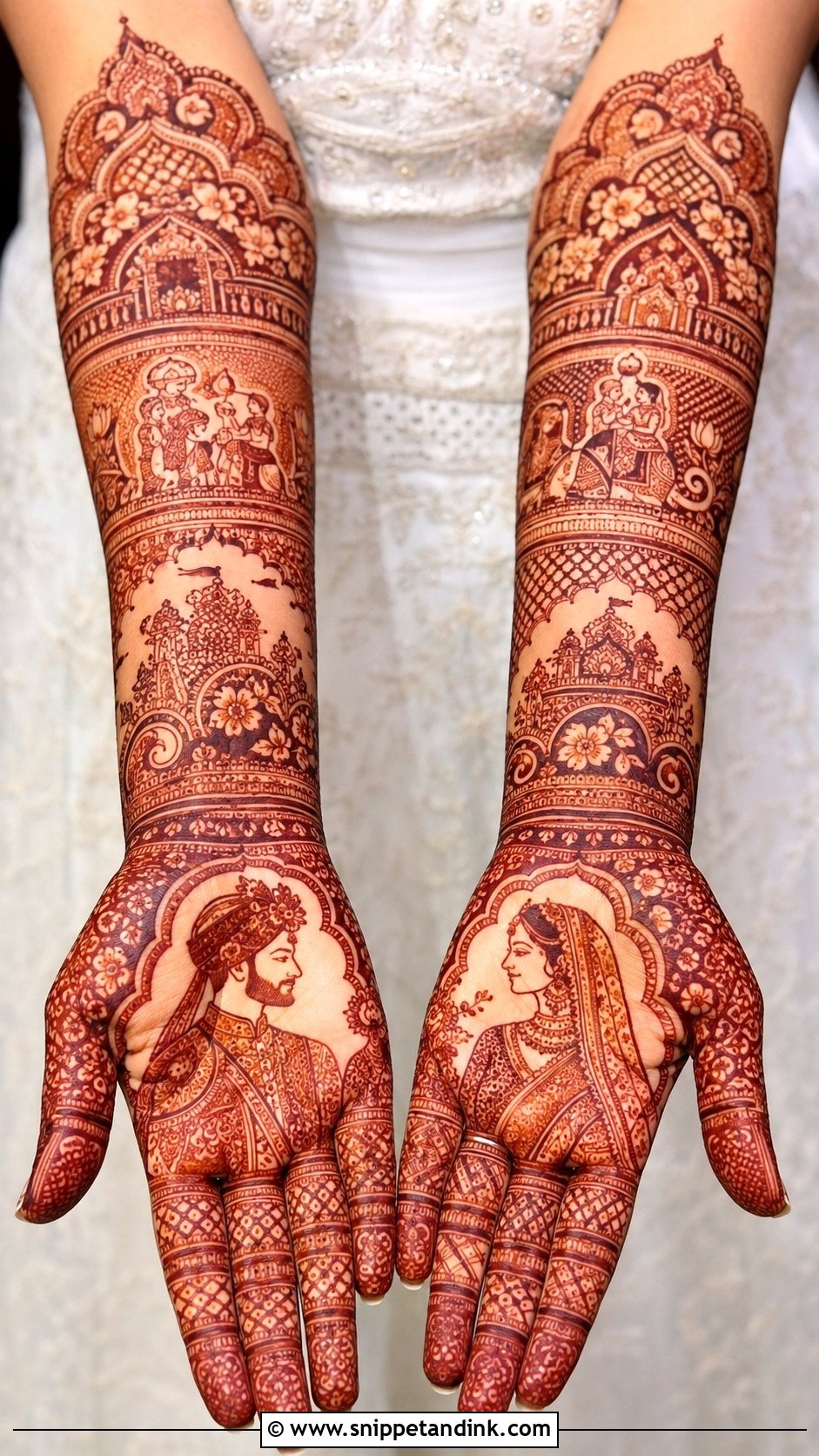
Portrait mehndi puts the bride and groom, a wedding scene or meaningful symbols on the palms, with palaces, elephants, lotus borders or initials running up the forearms. Faces are the hardest thing I draw in henna. An eye only a couple of millimetres wide blurs if the paste is too wet or the line too thick, so I leave generous space around each face and keep the features simple. Ask any artist you’re considering for photos of finished portrait stains, not fresh paste, because that’s where weak portrait work shows.
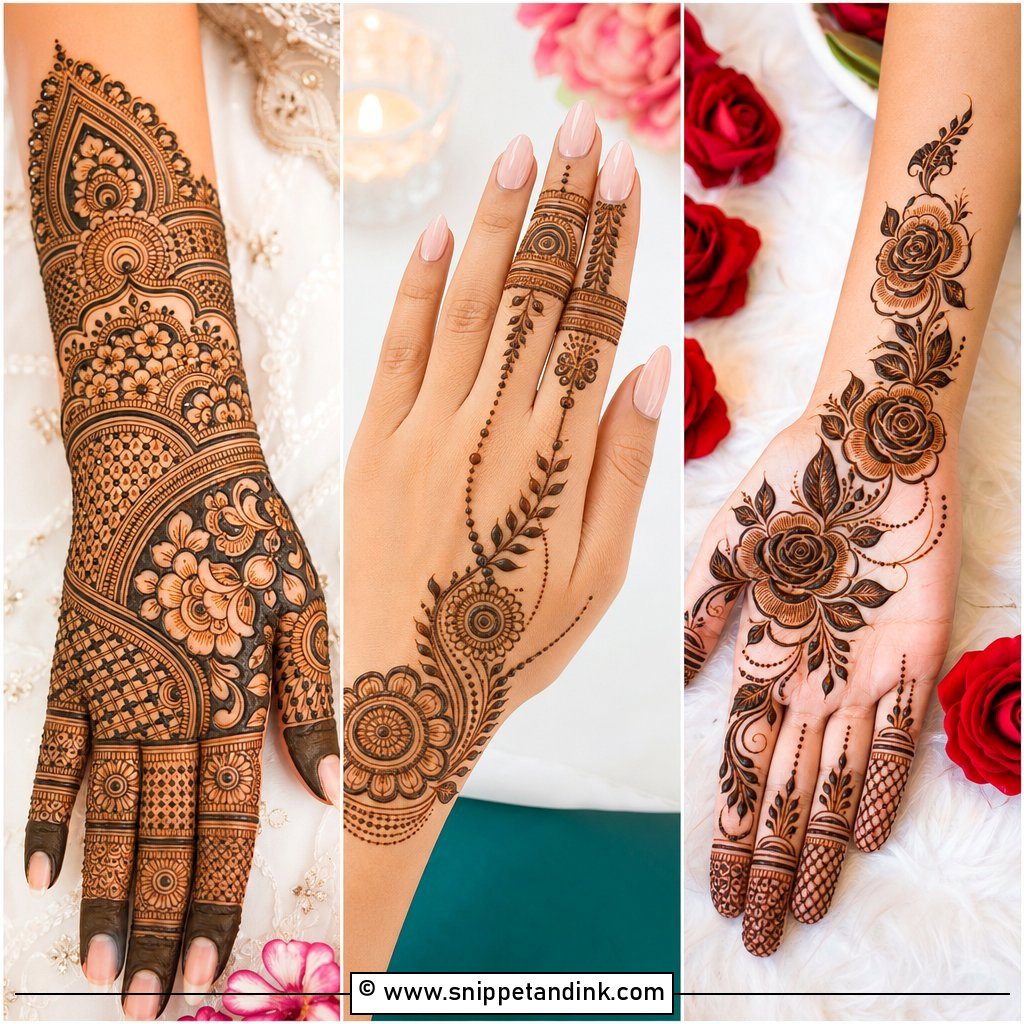
10. Floral Henna Mehndi Design
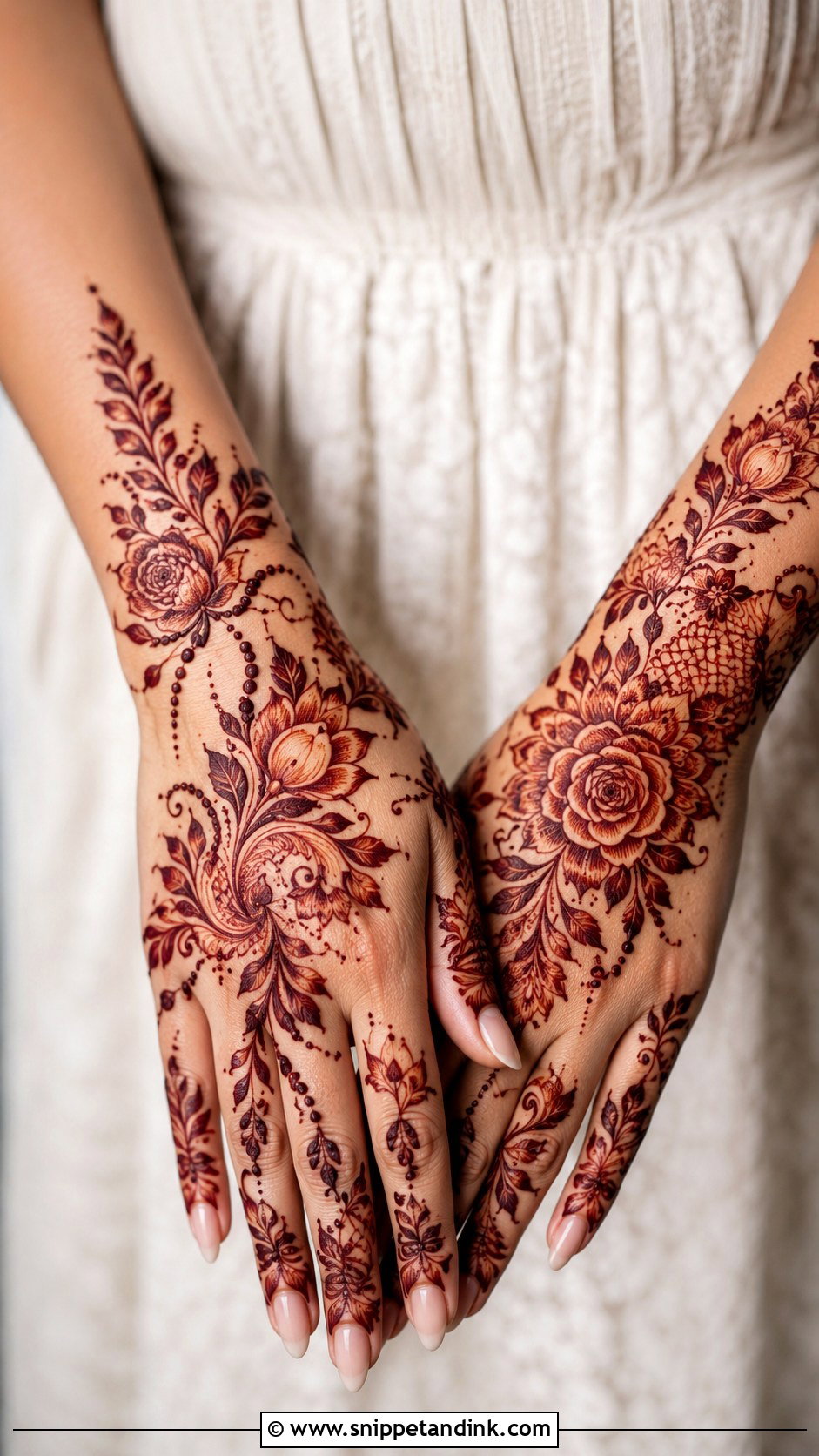
Florals are the most forgiving motif I work with. Roses, lotus petals, small blossoms and leafy stems can flow diagonally in the Arabic way or circle a mandala for an Indian layout, and I repeat the same petal shape on the fingers and wrist so it all hangs together. This is my suggestion when a mother, a grandmother and a teenage cousin all want something from the same session, since it scales up or down without changing character.
11. Paisley Henna Mehndi Design
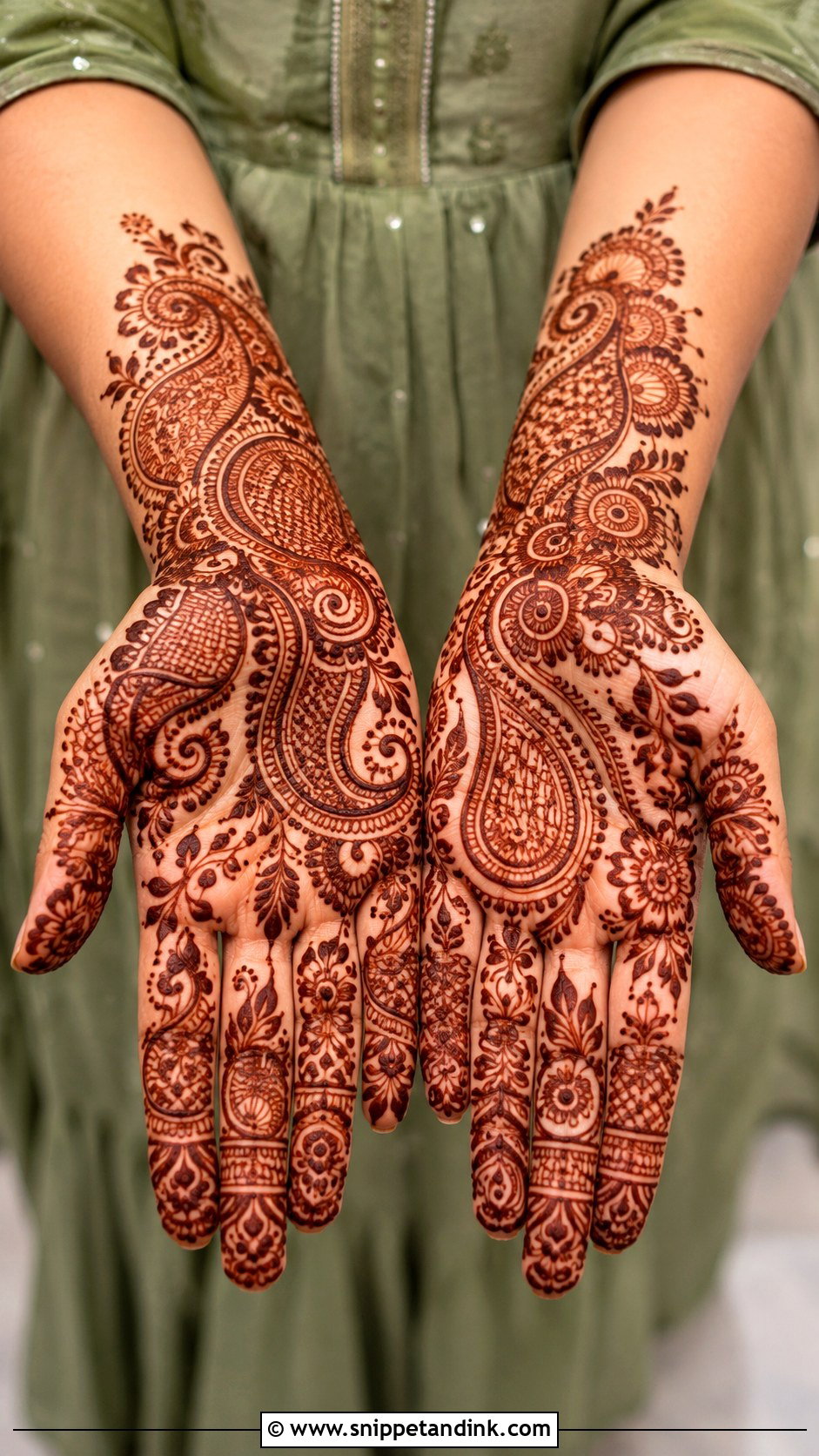
The paisley is the backbone of traditional mehndi, and its curve is what gives a hand movement. Fill each one with fine lines, dots and tiny checks, then soften the edges with vines and small flowers. Hand length matters more here than with most motifs. Long fingers and palms carry big sweeping paisleys well, while on a small hand I keep them medium-sized and stop the fingers getting crowded.
12. Jaali Henna Mehndi Design
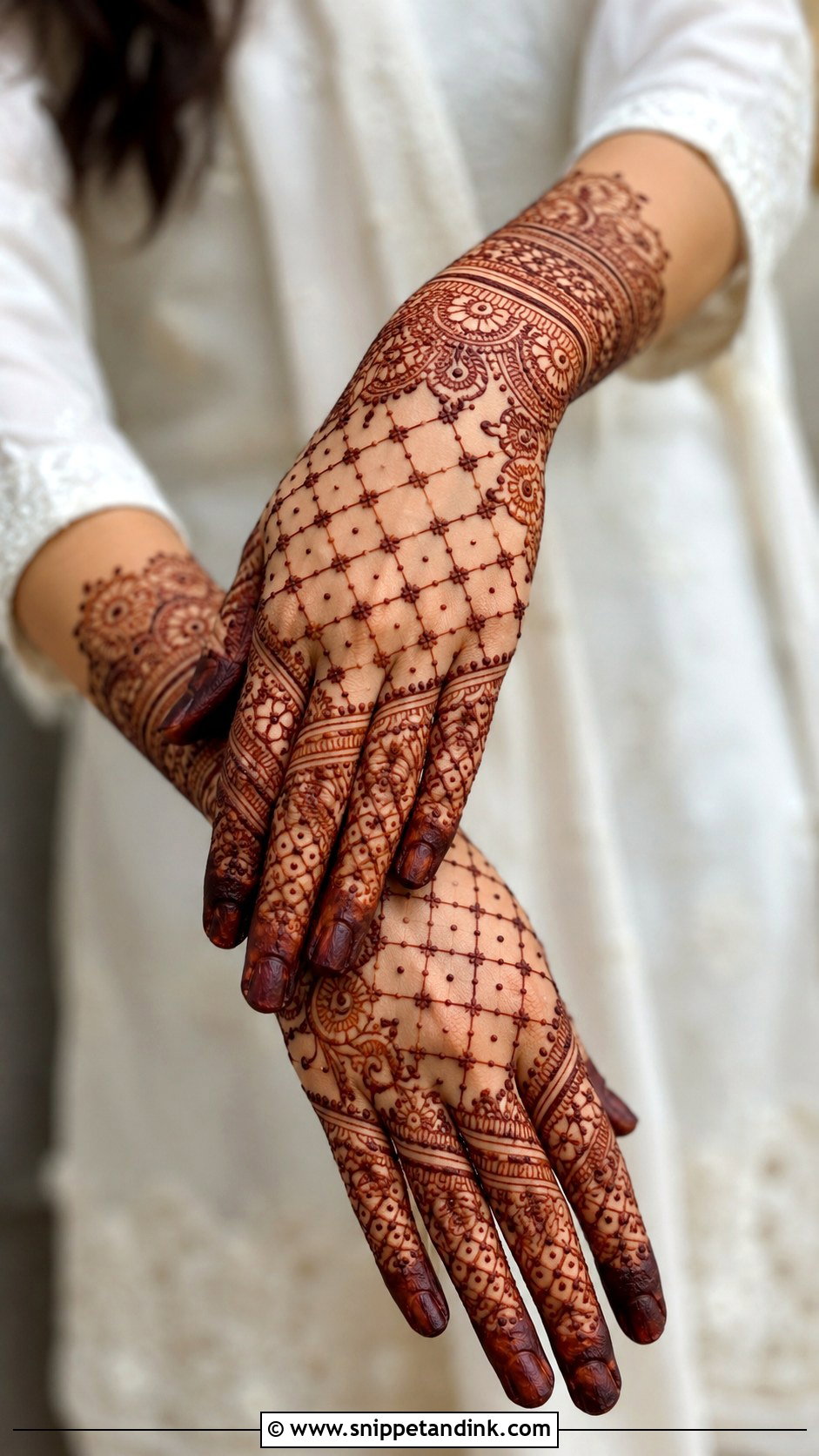
Jaali is a fine grid that reads like lace once it stains, and it’s the least forgiving pattern on this list, because one wobbly line or uneven square is obvious. I draw the grid with a fine-tipped cone and steady pressure, then decide whether to fill the boxes with dots or leave them open. Framed by florals and a bracelet border, it adds richness without big motifs. A deep maroon stain is what makes the mesh read clearly from a distance.
13. Peacock Henna Mehndi Design
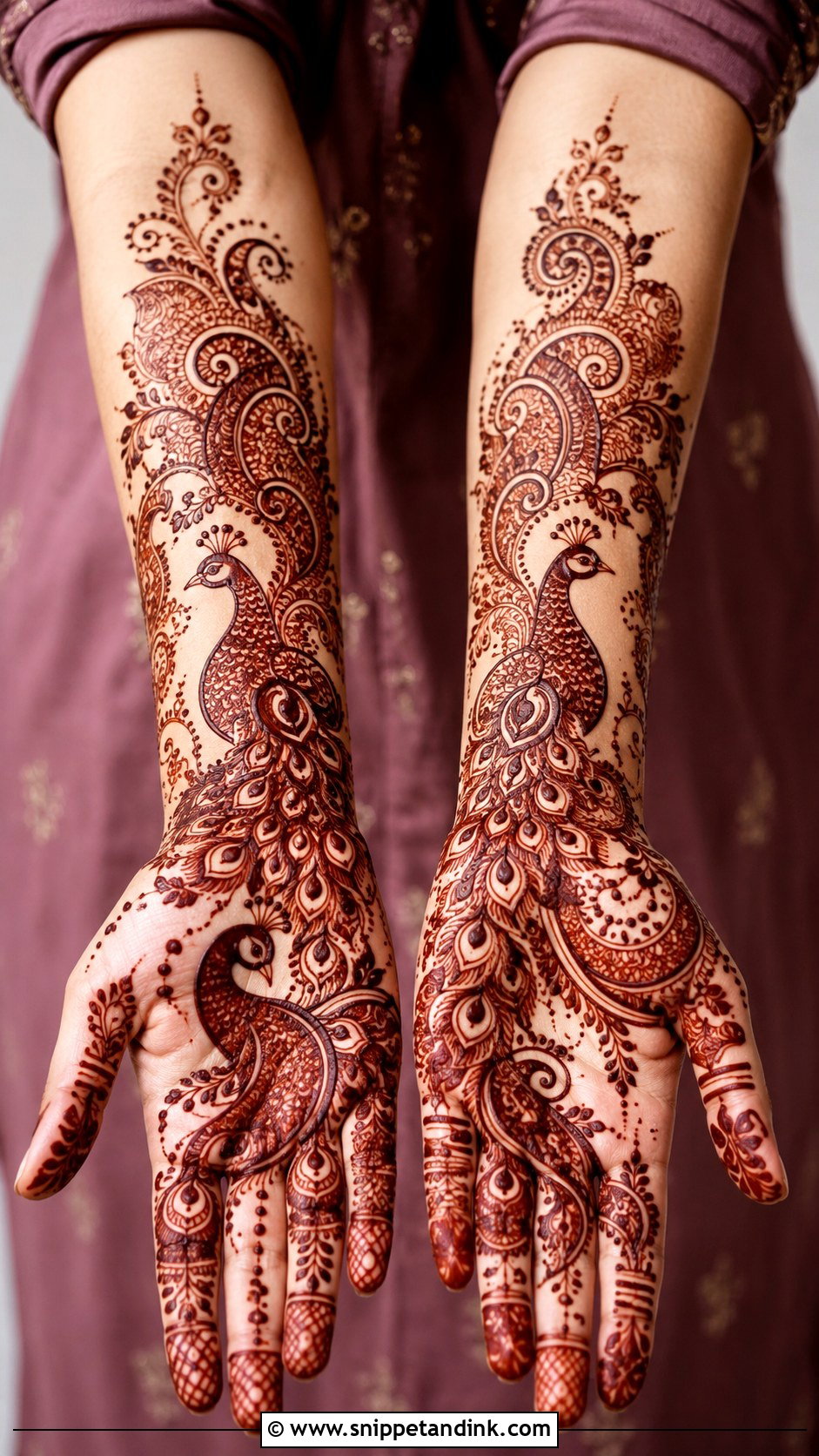
A peacock needs clear ground around it or it disappears into the filler. I draw the body bold and solid, then let the feathers trail out into paisleys, florals and dotted lines, sometimes right up the fingers. On a bridal set it usually sits on the palm or forearm. For festive wear I cut it down to a head, a neck and two or three feathers, which still reads as a peacock at arm’s length.
14. Lotus Henna Mehndi Design
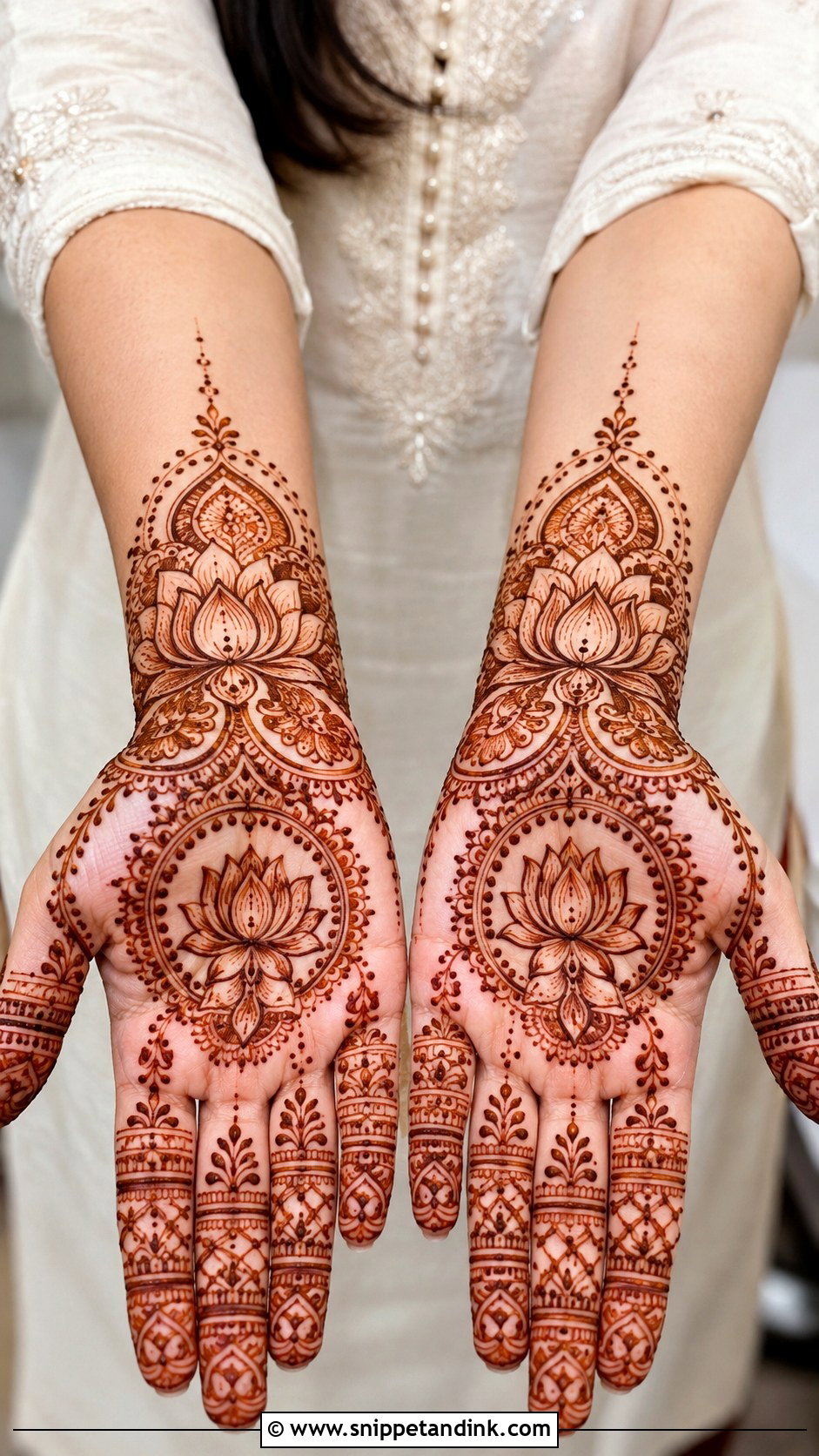
The lotus can sit in the centre of the palm, bloom at the wrist or lead a trail of leaves across the back of the hand. I make the petals a little fatter than seems necessary in paste, because a thin petal outline can fade to a faint orange line where the skin stains weakly. With mandala rings and slim finger work it suits pujas and wedding functions, and it shrinks down neatly into a minimal version.
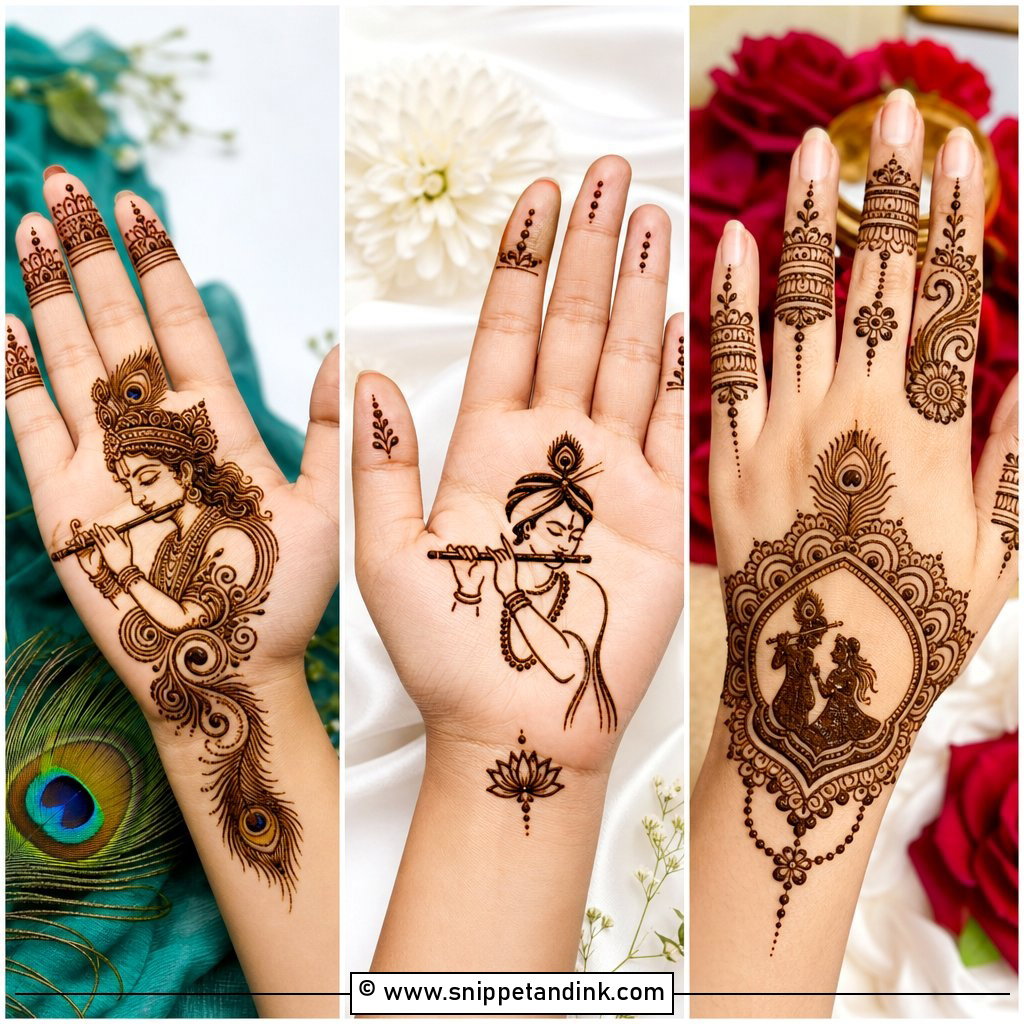
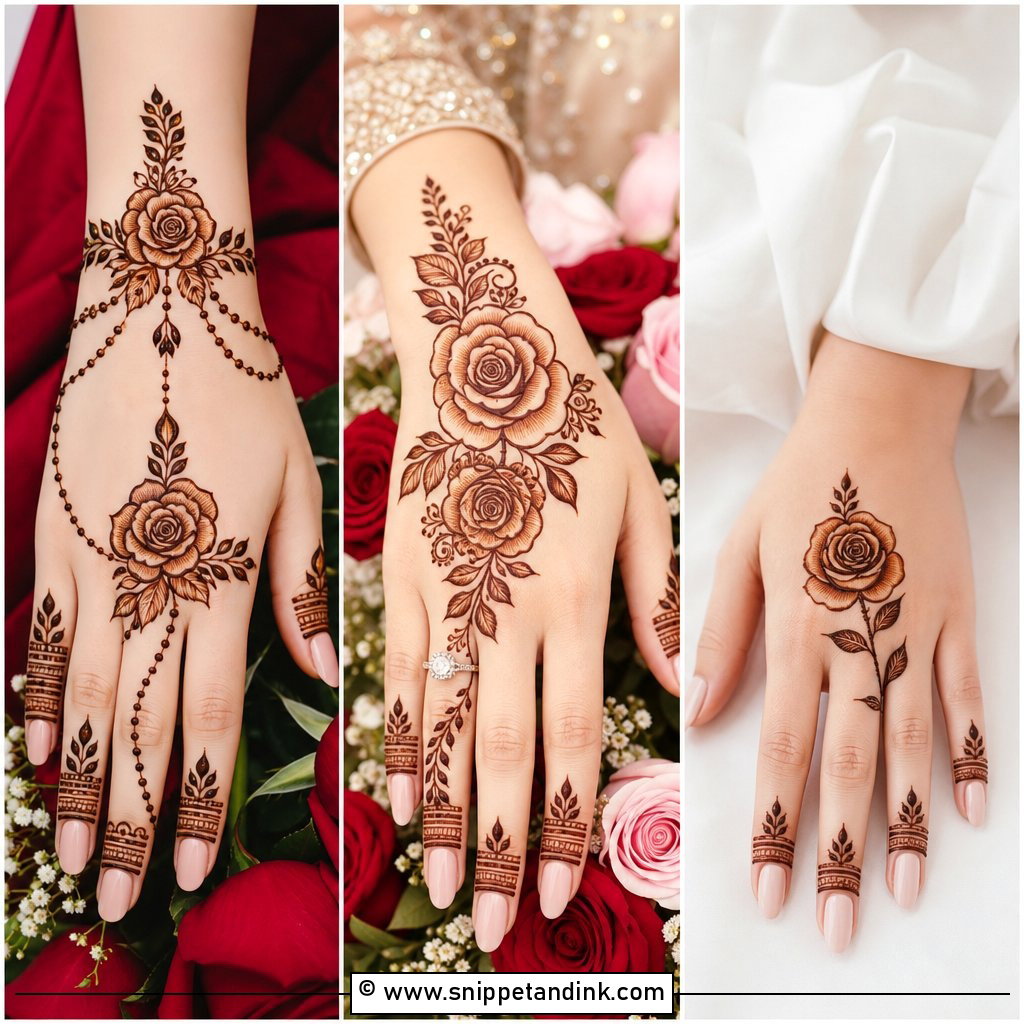
15. Jewelry Henna Mehndi Design
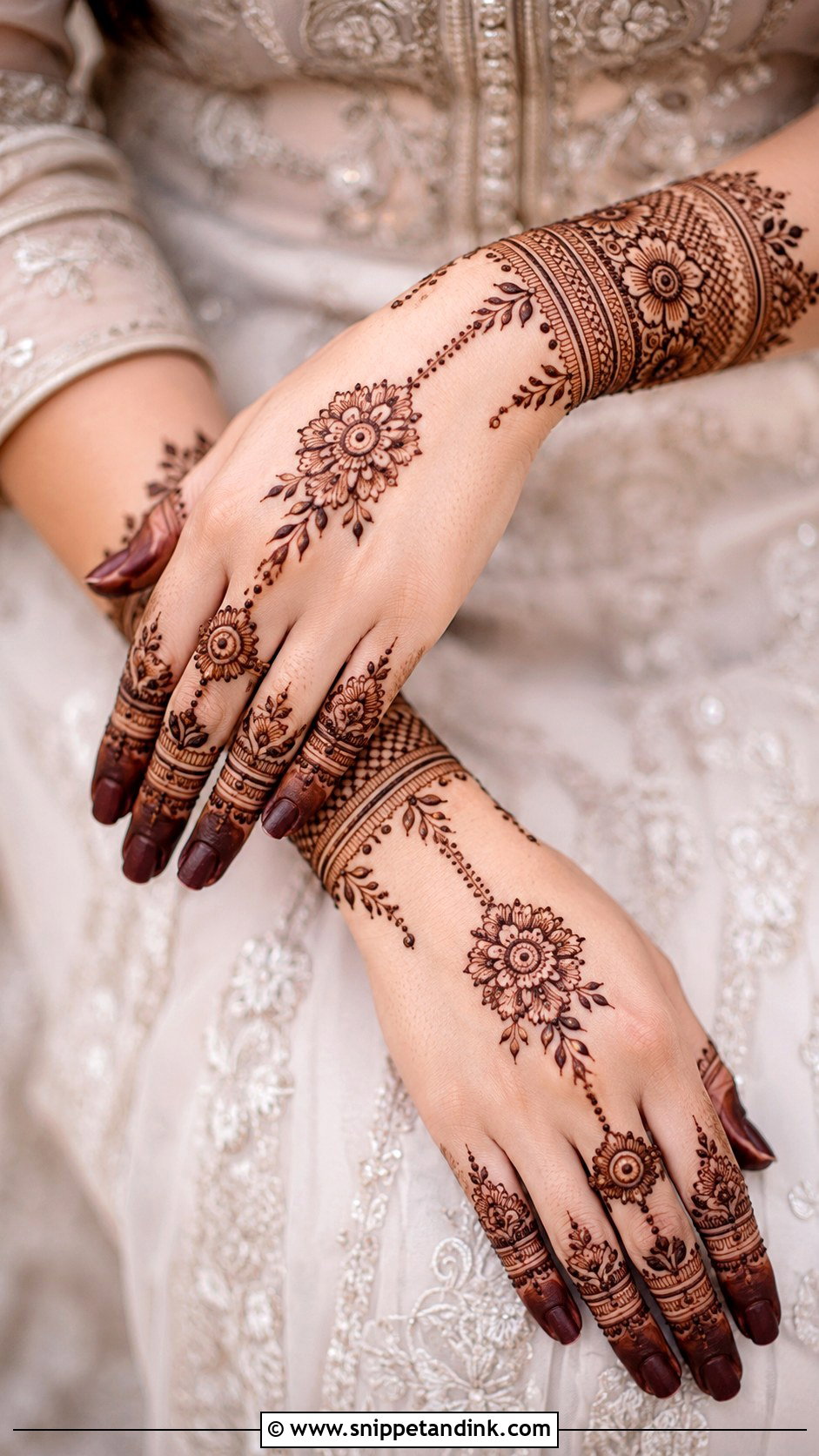
Jewelry mehndi imitates hand ornaments: ring chains, bracelet cuffs, haath phool layouts, finger bands and dotted connectors. I start at the wrist like a bangle and work toward the fingers, lining the connecting chain up with the knuckle where a real ring will sit. If you’ll be wearing actual rings and bangles, show them to me first. A henna cuff hidden under a stack of glass bangles is wasted sitting time.
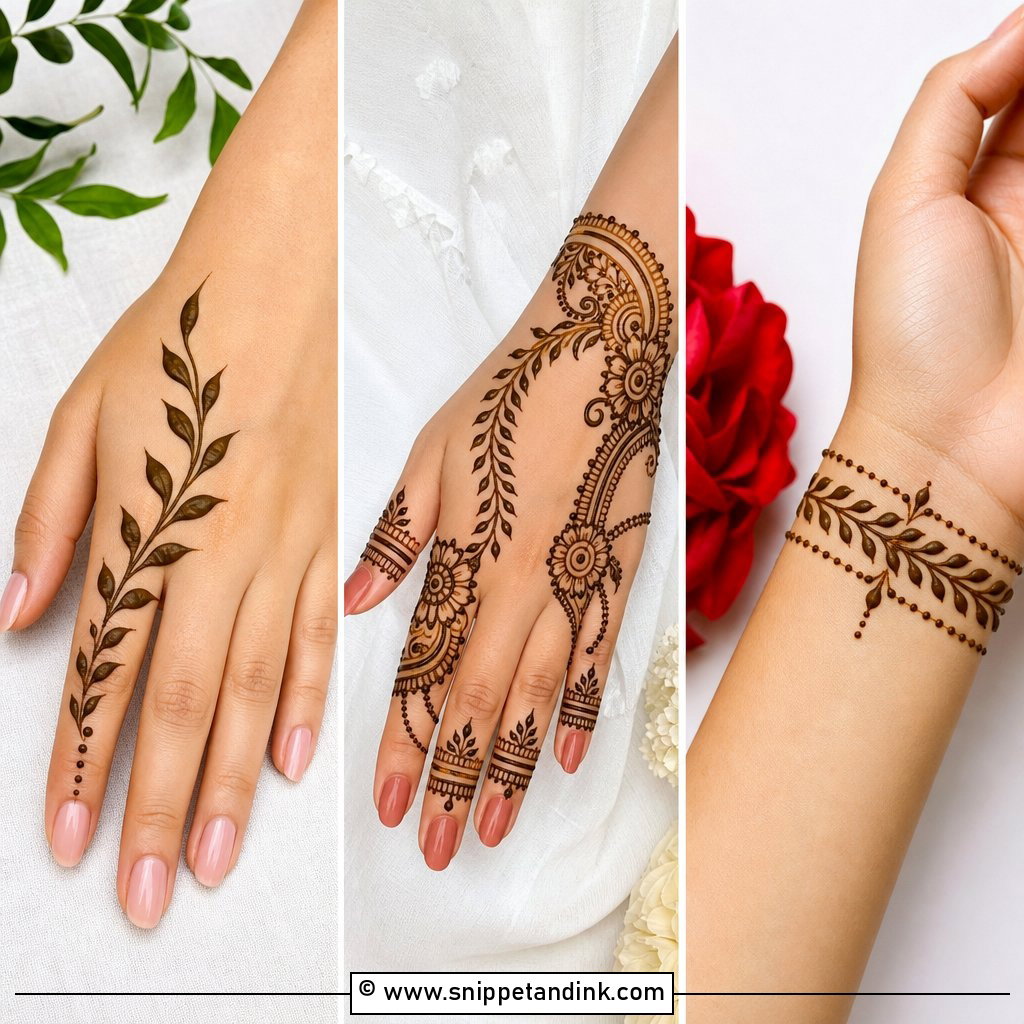
16. Minimal Henna Mehndi Design
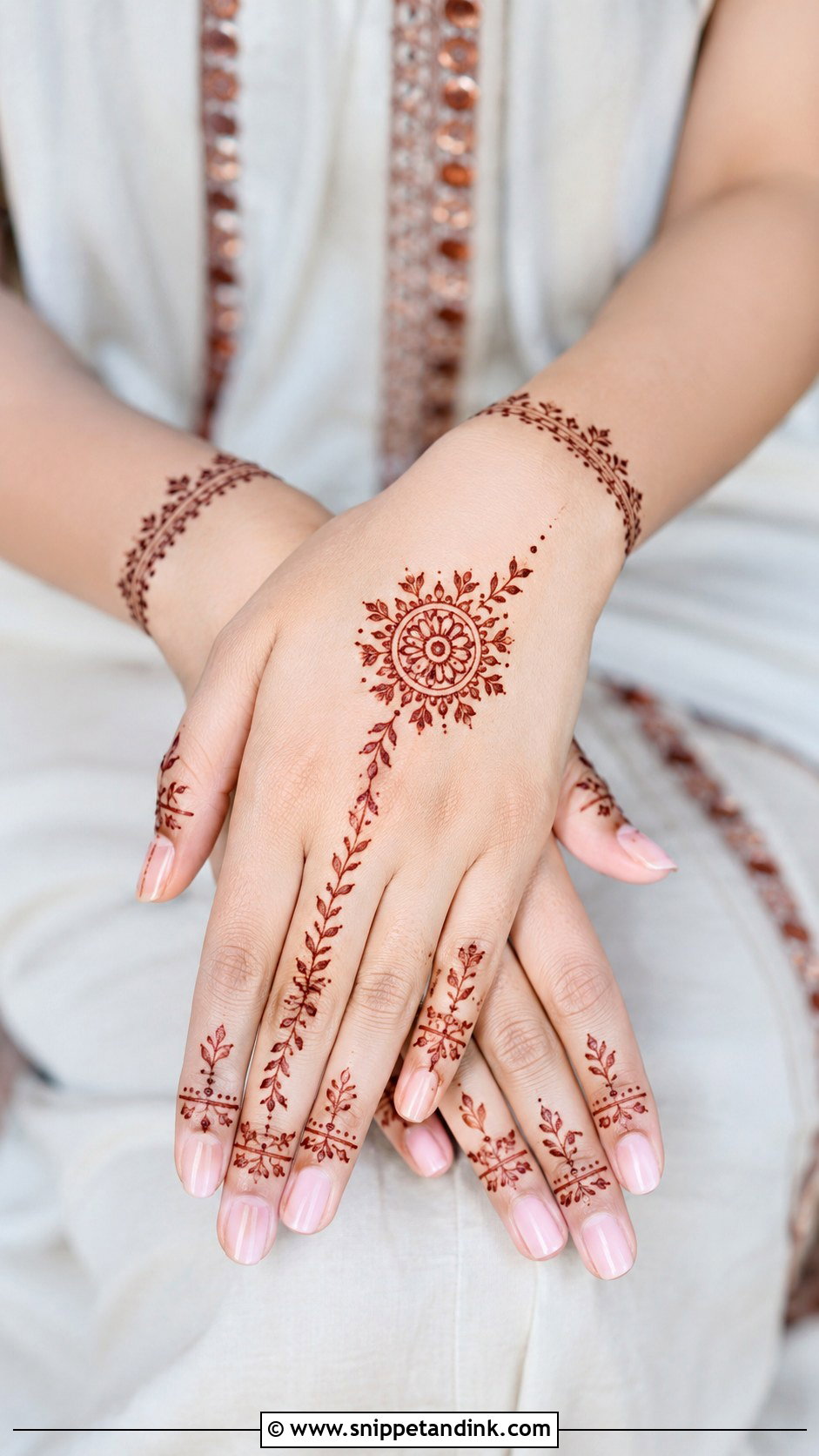
Minimal designs treat bare skin as part of the pattern: a small mandala, a few leafy vines on the fingers, a slim wrist band. They’re quick, which makes them the usual pick for guests and anyone squeezing henna into a lunch break. With so little on the hand, neatness is everything. I repeat two or three motifs rather than adding new ones, so the design looks intentional instead of unfinished.
17. Modern Henna Mehndi Design
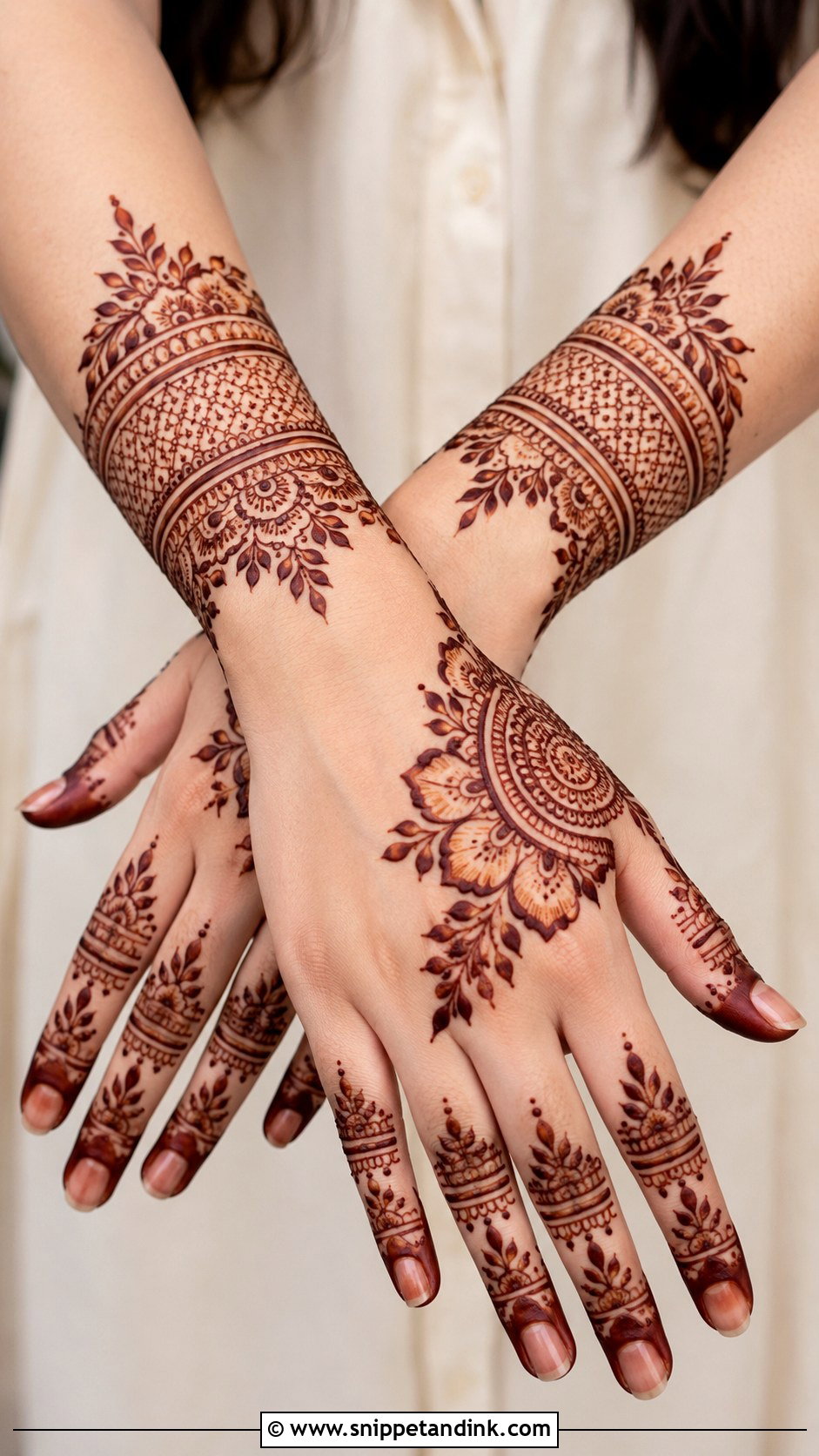
Modern layouts use fewer motifs, placed with more thought: geometric bands, half mandalas, bold florals, leafy cuffs and asymmetric finger detail. The skill is restraint. When I sketch one, I take something out before I add anything, because clutter is the quickest way to make a modern hand look like a half-finished traditional one. It sits well with engagements, Eid, Diwali and bridal outfits that are pared back too.
18. Moroccan Henna Mehndi Design
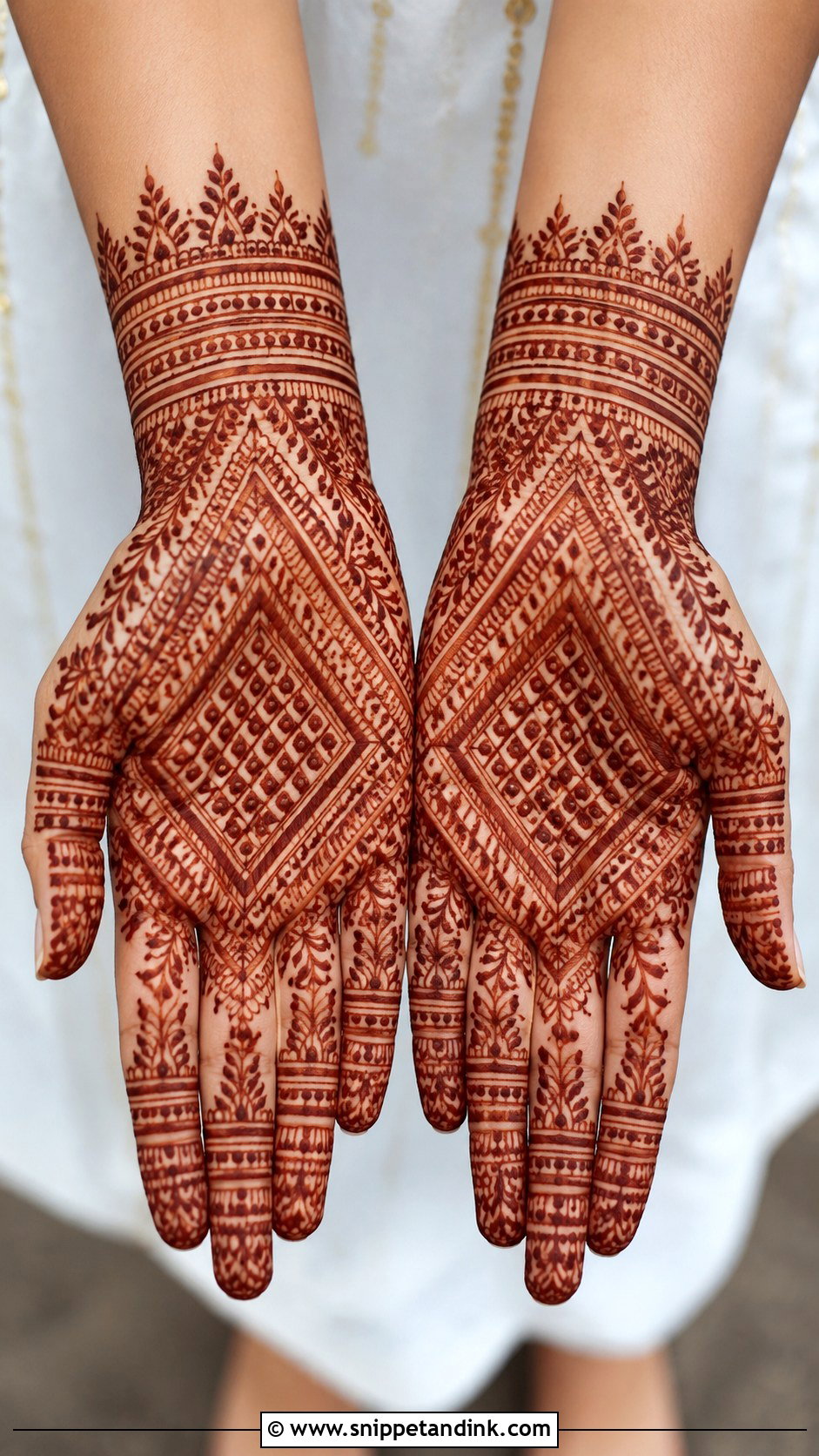
Moroccan henna is built from straight lines, diamonds, triangles and strict symmetry, and it can cover the palm and fingers in repeating grids and angular bands. It’s graphic rather than floral. I sometimes mark a few guide dots before drawing, because a geometric row that drifts slightly off square is far more noticeable than a vine that wanders. Stacked bracelet bands finish the wrist, and the bold shapes stay clear after staining.
19. Gulf Khaleeji Henna Mehndi Design
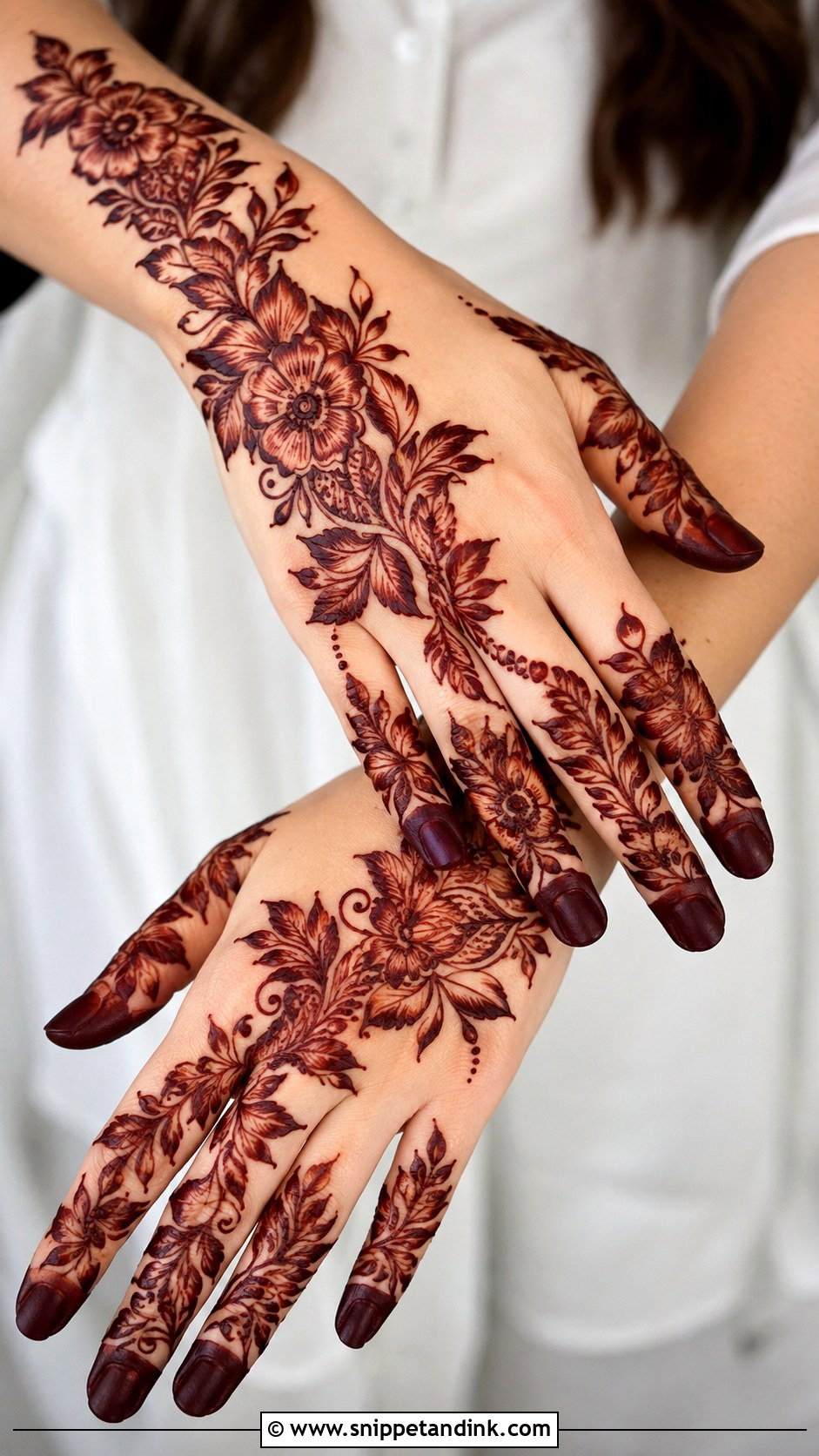
Gulf-Khaleeji henna mehndi design is about large flowers, leafy branches and shaded petals with real breathing space between them. The shading comes from thinning the paste inside each petal rather than filling it solid, so a single flower shows light to dark once it stains. Bold outlines carry the whole look. I’d skip this style if you love fine filler, because the point is open skin and confident shapes.
20. Eid Henna Mehndi Design
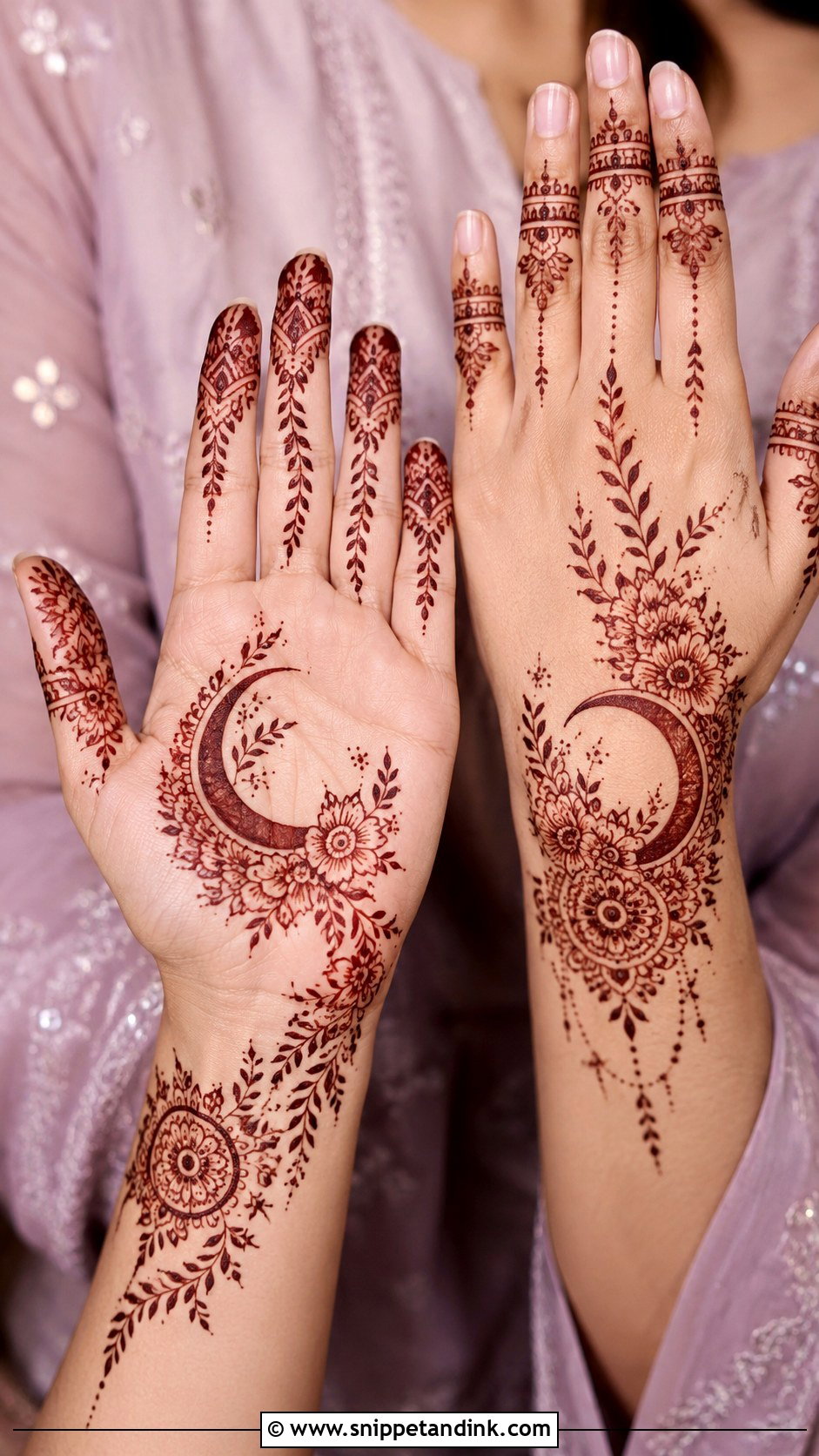
Eid henna gets worn through a long day of visiting, cooking and hugging, so comfort counts as much as looks. Most people I draw for want medium coverage, a palm mandala with decorated fingers or a diagonal floral trail on the back hand, sometimes with crescent curves worked in. Have it done the night before Eid, not the morning of. The stain needs a day to reach its reddish-brown peak, and morning henna is still orange when the guests arrive.
21. Engagement Henna Mehndi Design
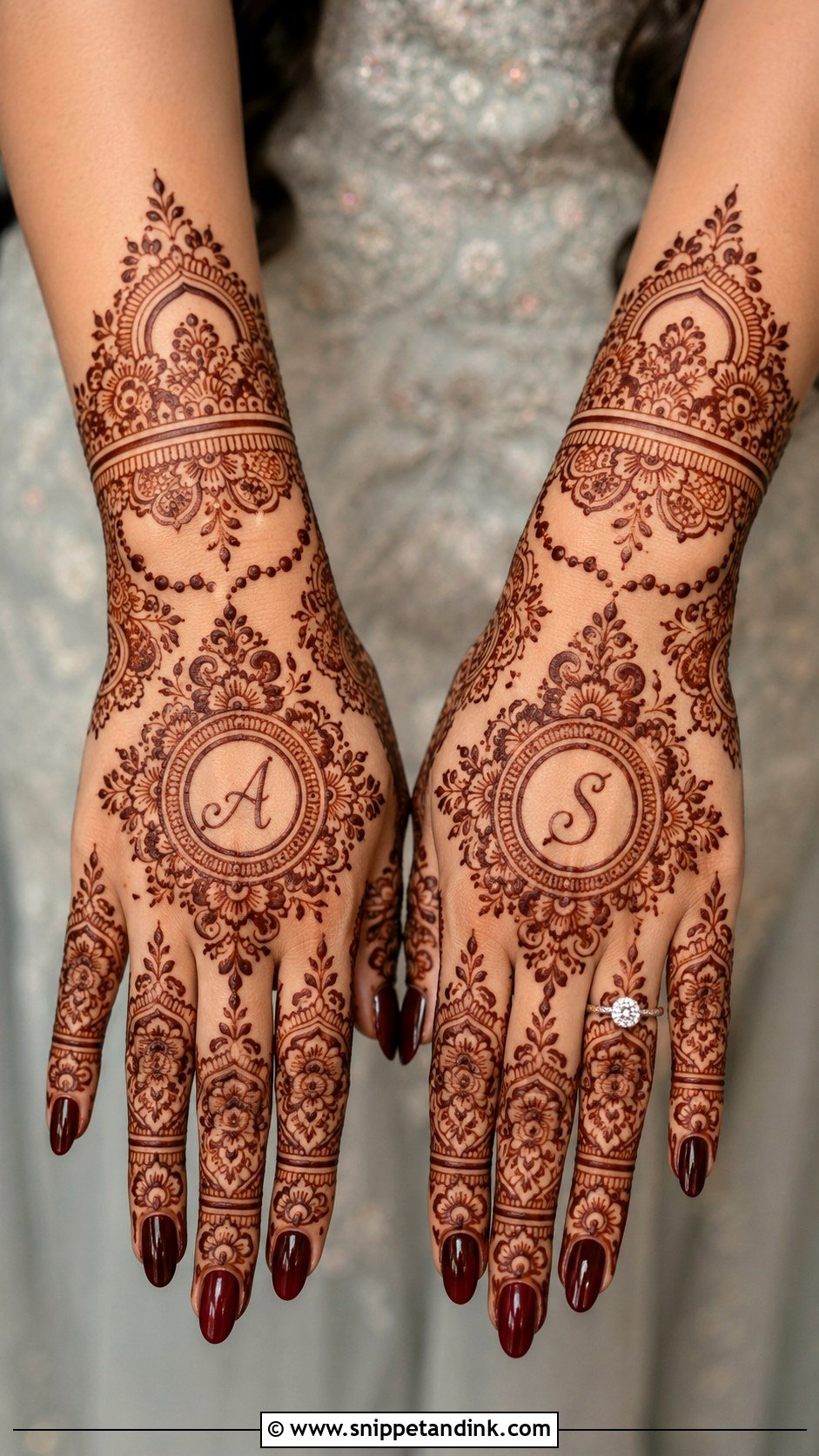
Engagement mehndi sits between casual and bridal: ring motifs, floral mandalas, initials, delicate paisleys and a bracelet wrist. The back of the ring hand is where I take the most care, since it’s in every ring photo. I keep the ring finger fairly open so the band and stone aren’t fighting the pattern, then add a light palm design if you want both sides finished.
22. Festival Henna Mehndi Design
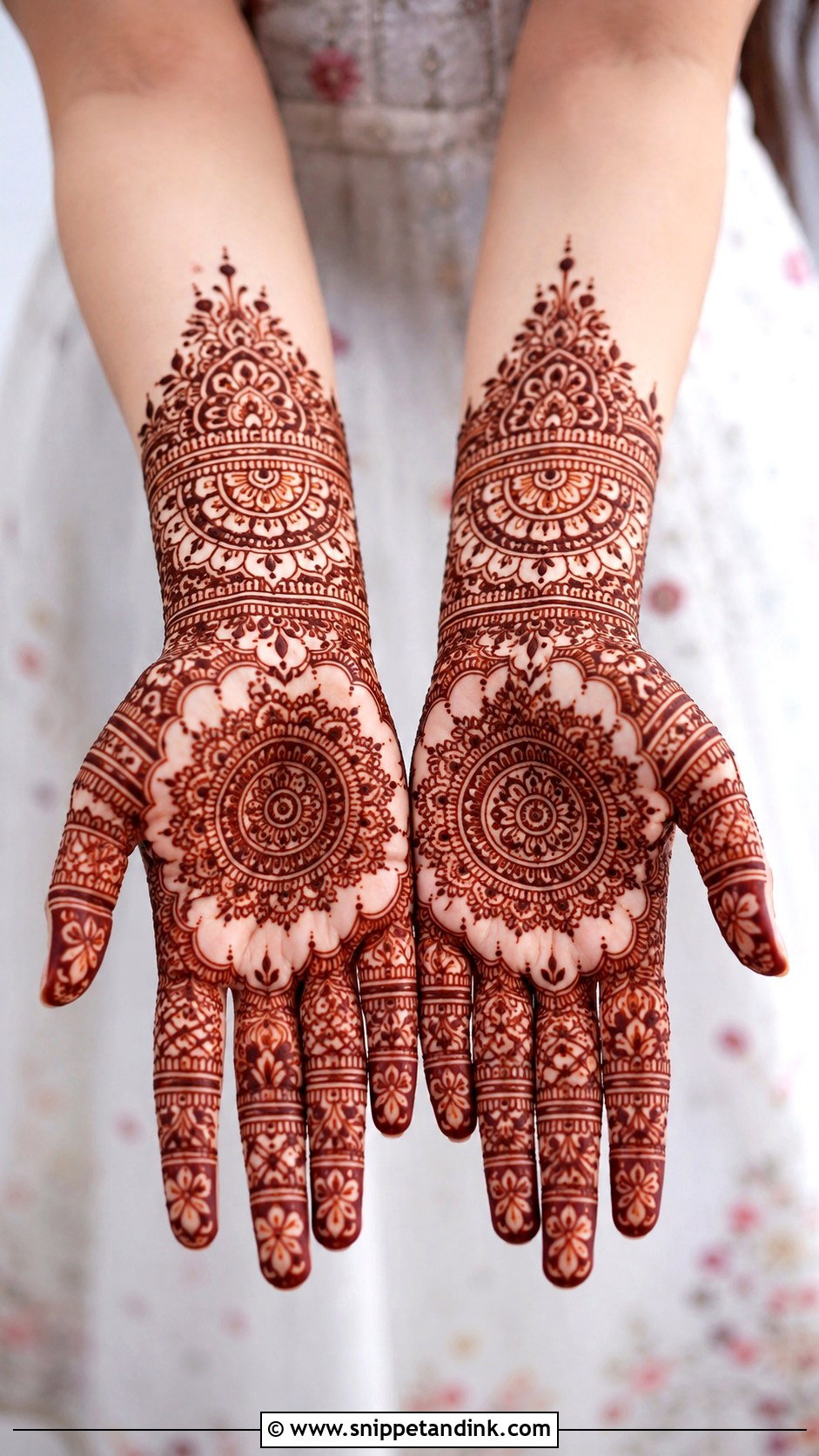
Festival henna has to go with whatever you change into across several days of Diwali, Eid, Karva Chauth, Navratri or Teej. I keep the motifs medium-sized: a palm mandala, a floral wrist cuff, a paisley down one side and coordinated fingers, or a diagonal vine with dotted chains on the back. Leaving some gaps unfilled makes the stain look brighter, because the contrast with bare skin is stronger.
23. Finger Henna Mehndi Design
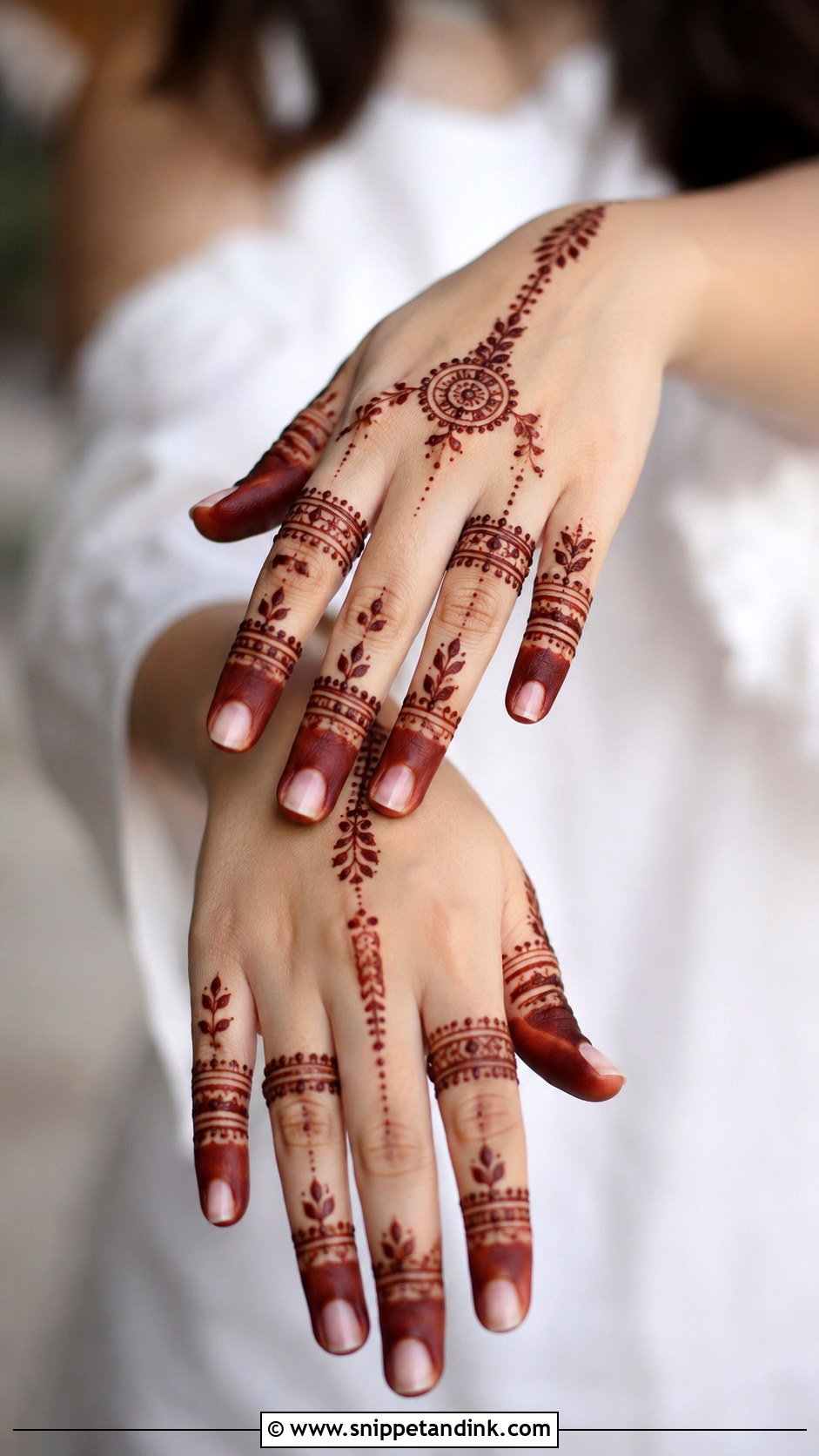
Finger-only henna looks random unless it’s planned as a set. I decorate the fingertips, add ring bands and leafy lines, then tie it together with a small accent near the knuckles or a fine chain to the wrist. Fingertips take colour very well, so even a quick design comes out dark. It’s my usual suggestion for anyone heading straight back to work after the celebration.
24. Bracelet Henna Mehndi Design
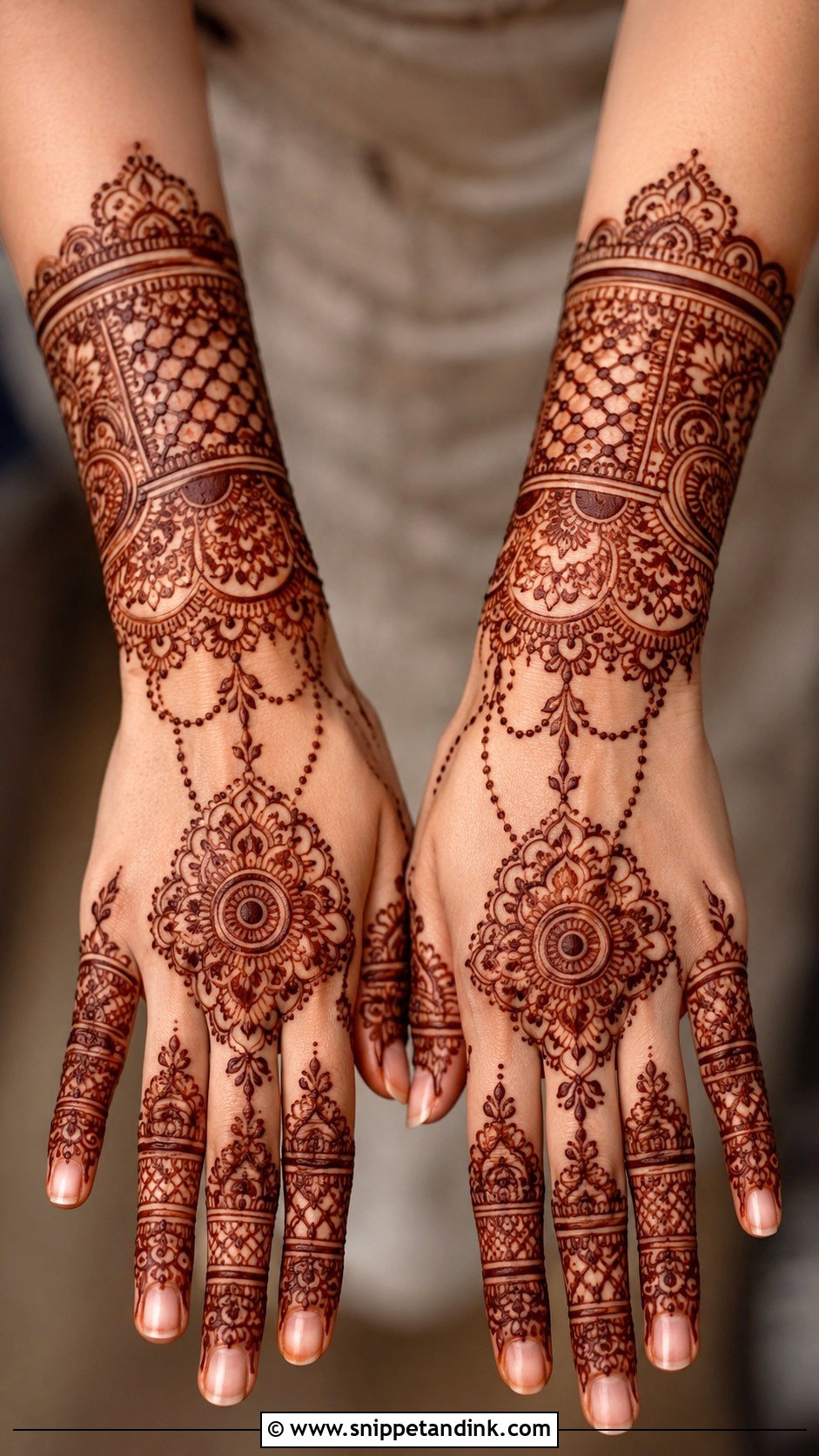
Here the wrist cuff is the star: layered lines, scallops, dots, small flowers or a jaali panel wrapped like a bangle. From there a vine or chain runs toward the fingers, which get slim bands or leafy tips. Symmetry around the wrist is the hard part, since the wrist curves away as you draw. I turn the client’s arm rather than reaching around it, so the cuff closes neatly on the underside.
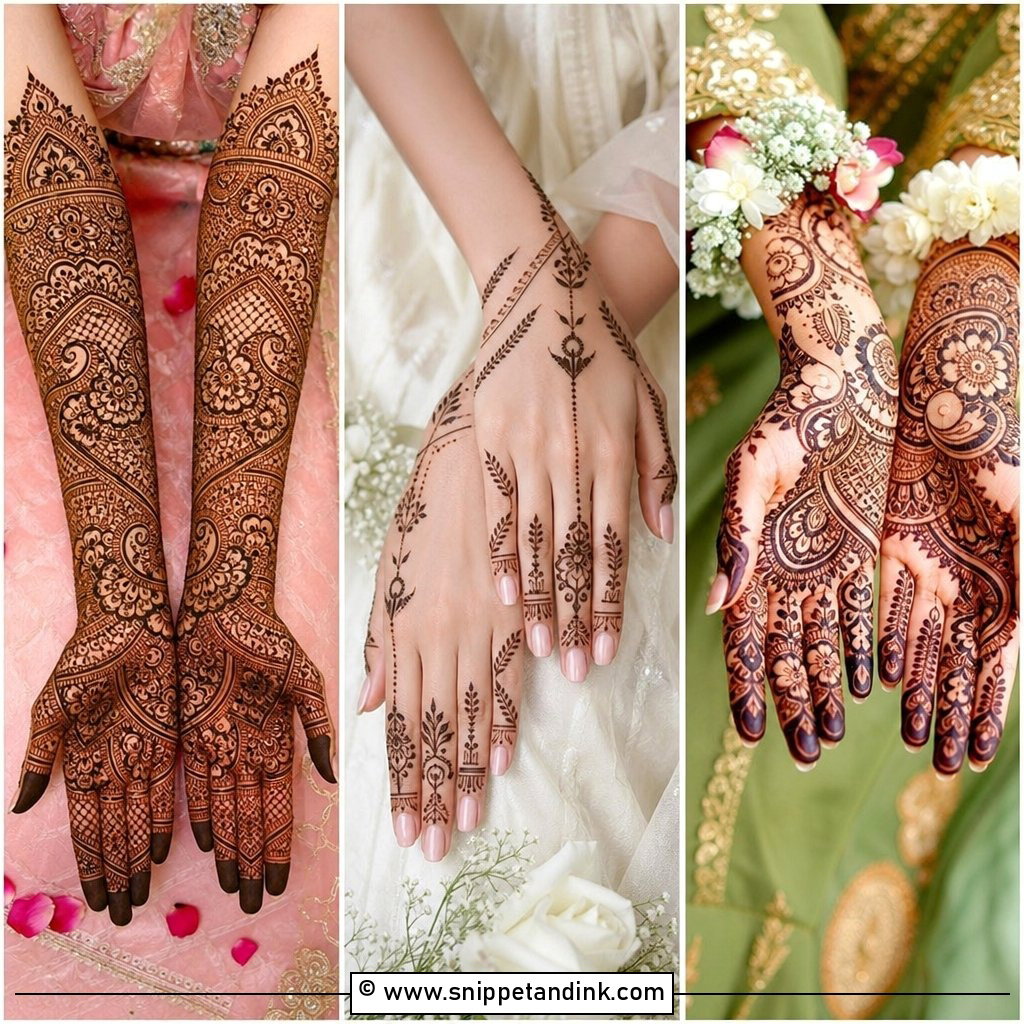

25. Half Hand Henna Mehndi Design
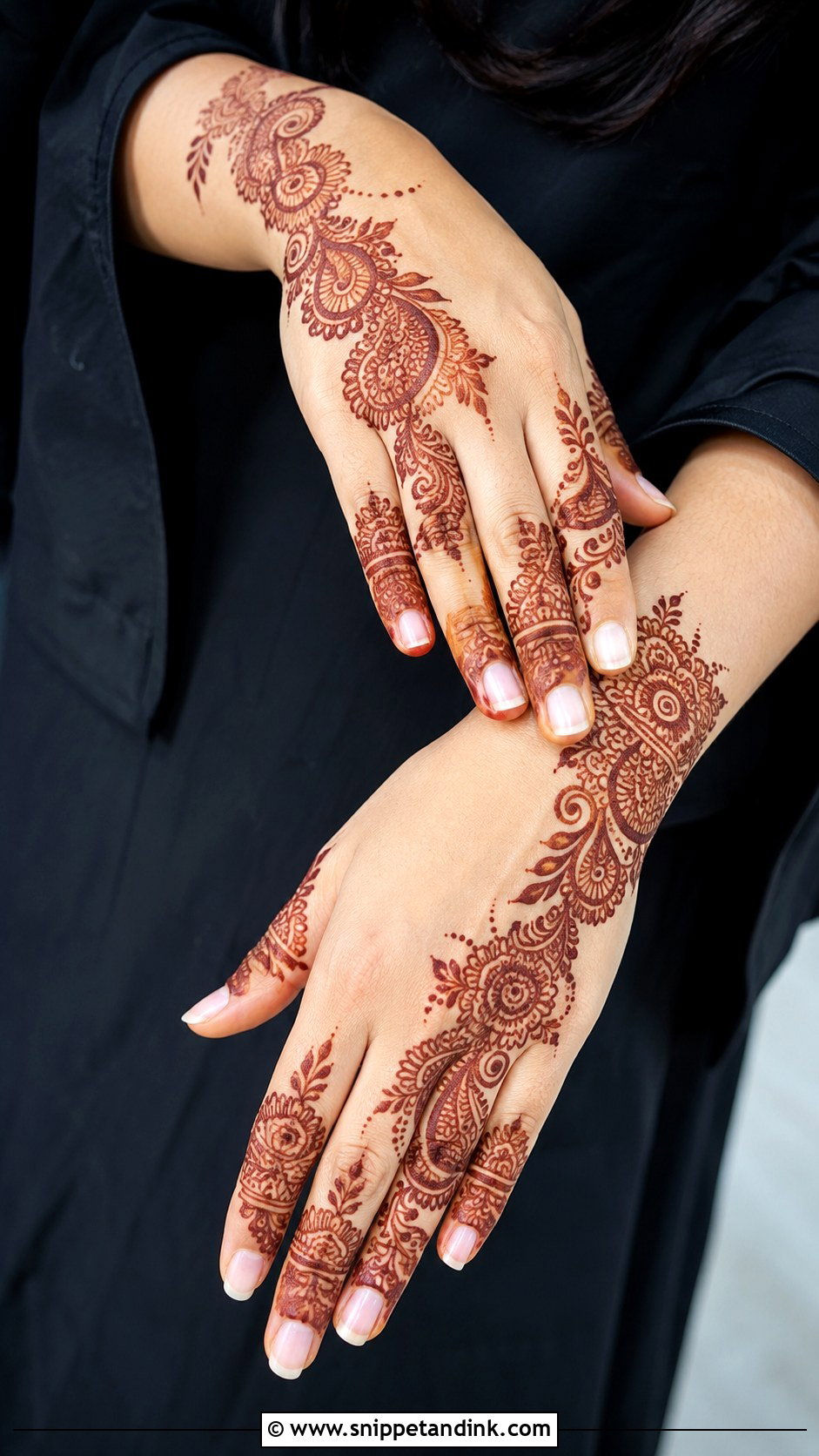
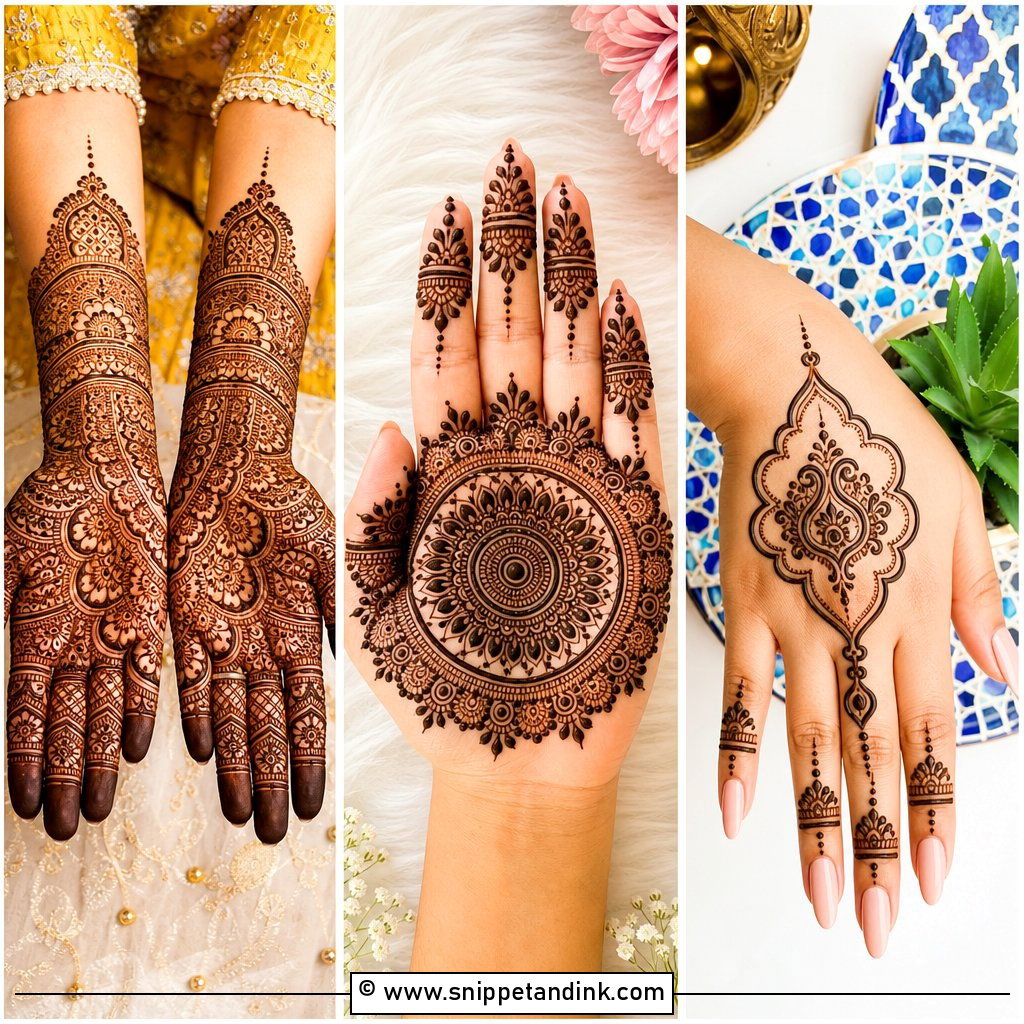
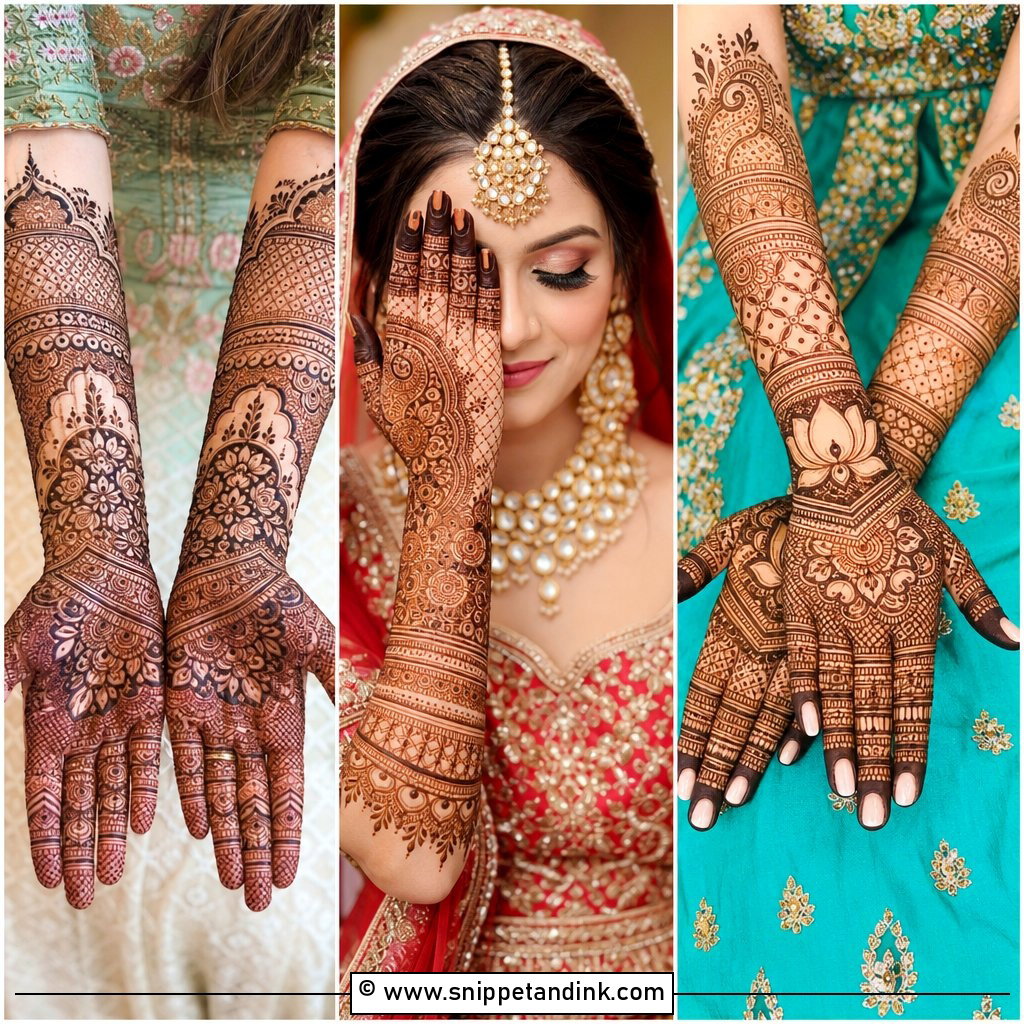
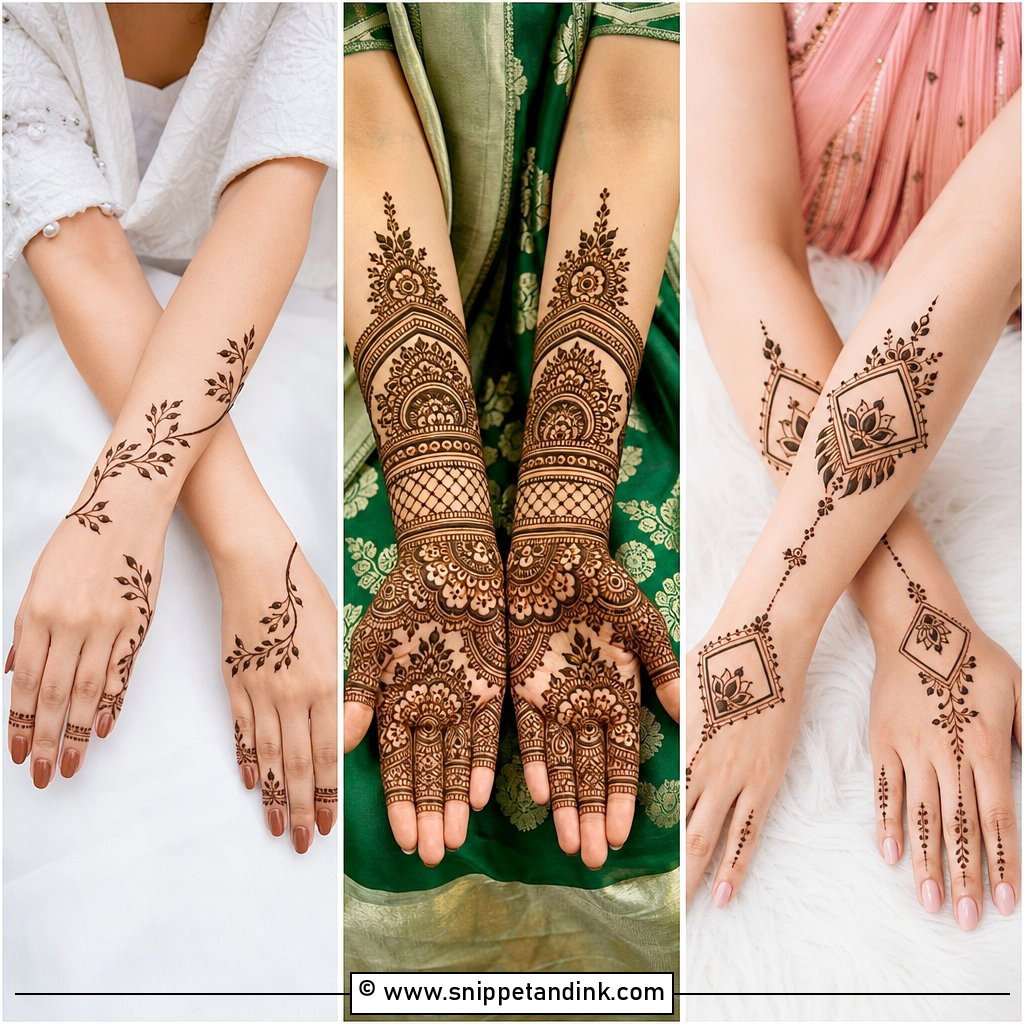
Half-hand designs cover one side of the palm, half the back hand, or the stretch from wrist to middle fingers, leaving the rest open. They’re faster and easier to live with than heavy work. The risk is that it reads as a full hand abandoned halfway, so I make the covered part properly detailed and give the open edge a deliberate border, usually a row of dots or a leafy line, to show where the design meant to stop.
26. Heavy Bridal Henna Mehndi Design
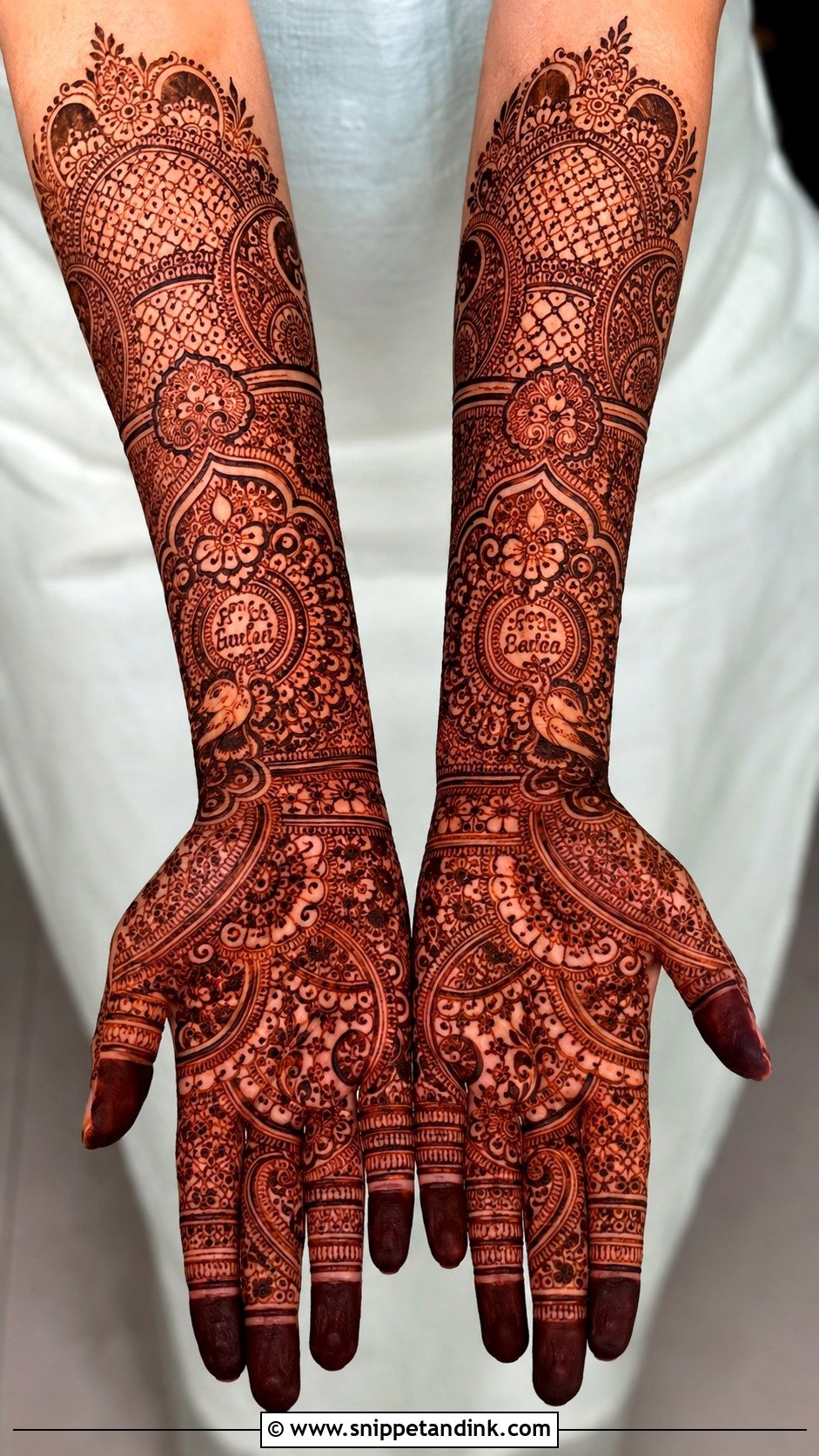
Heavy bridal coverage runs from fingertips to forearms with paisleys, peacocks, mandalas, florals, jaali and personal details like bride and groom figures or hidden names. Sectioning is what keeps it from turning into a dark blur. I divide the arm with borders and motif breaks before filling anything, so each zone has room. Expect a sitting of several hours for both sides, and plan to sleep in the paste for the deepest colour.
27. Easy Henna Mehndi Design For Beginners
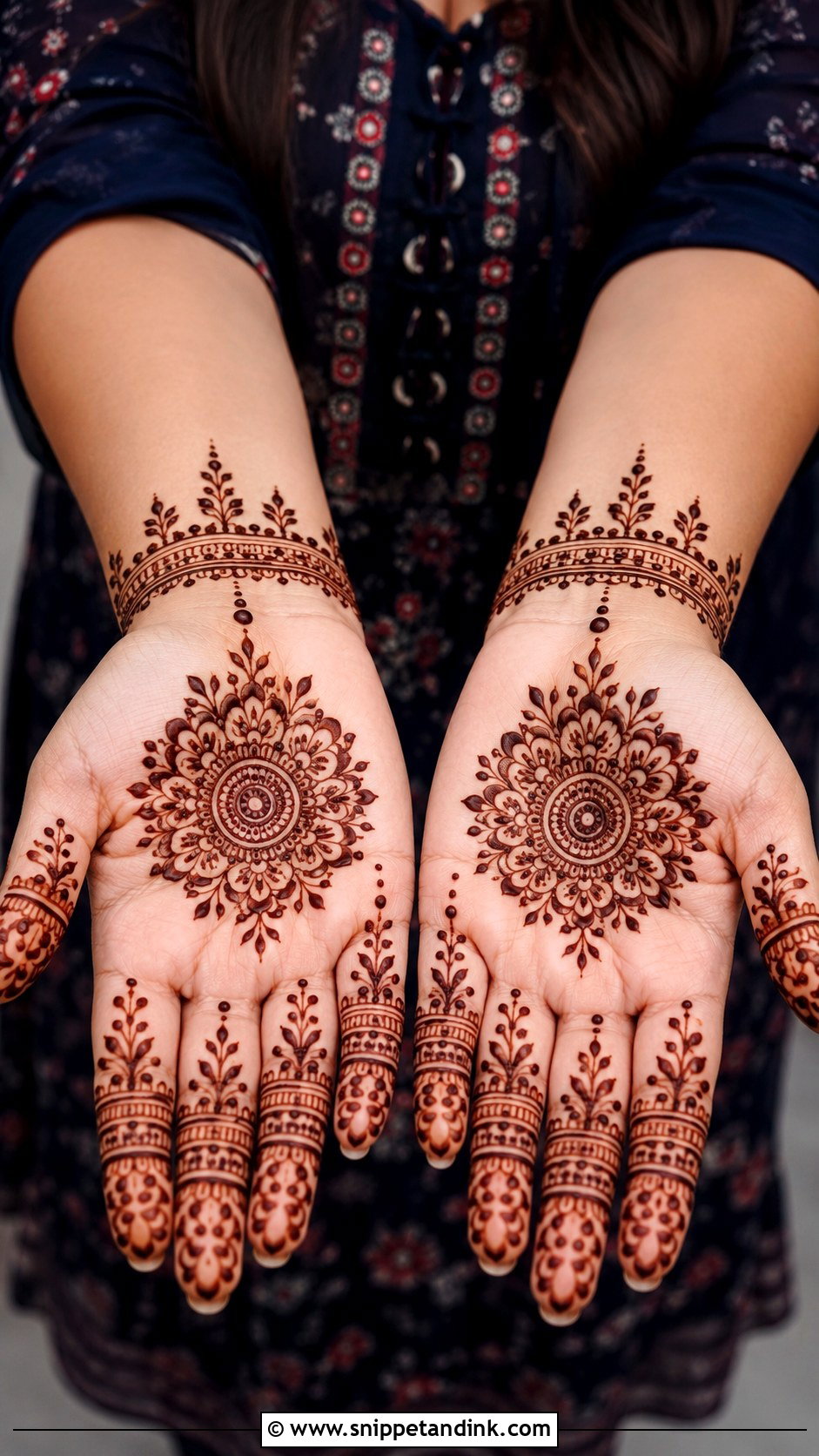
If you’re new to the cone, start with a palm mandala or one back-hand flower, then add dots, leaves, curved lines and small finger bands. Uneven pressure is what ruins beginner work: tiny details blob together when the paste surges. Practise on paper first, bold petals and repeated dots, until your line comes out the same thickness from start to finish. A slim wrist border will make even a simple pattern look complete.
28. Kids Henna Mehndi Design
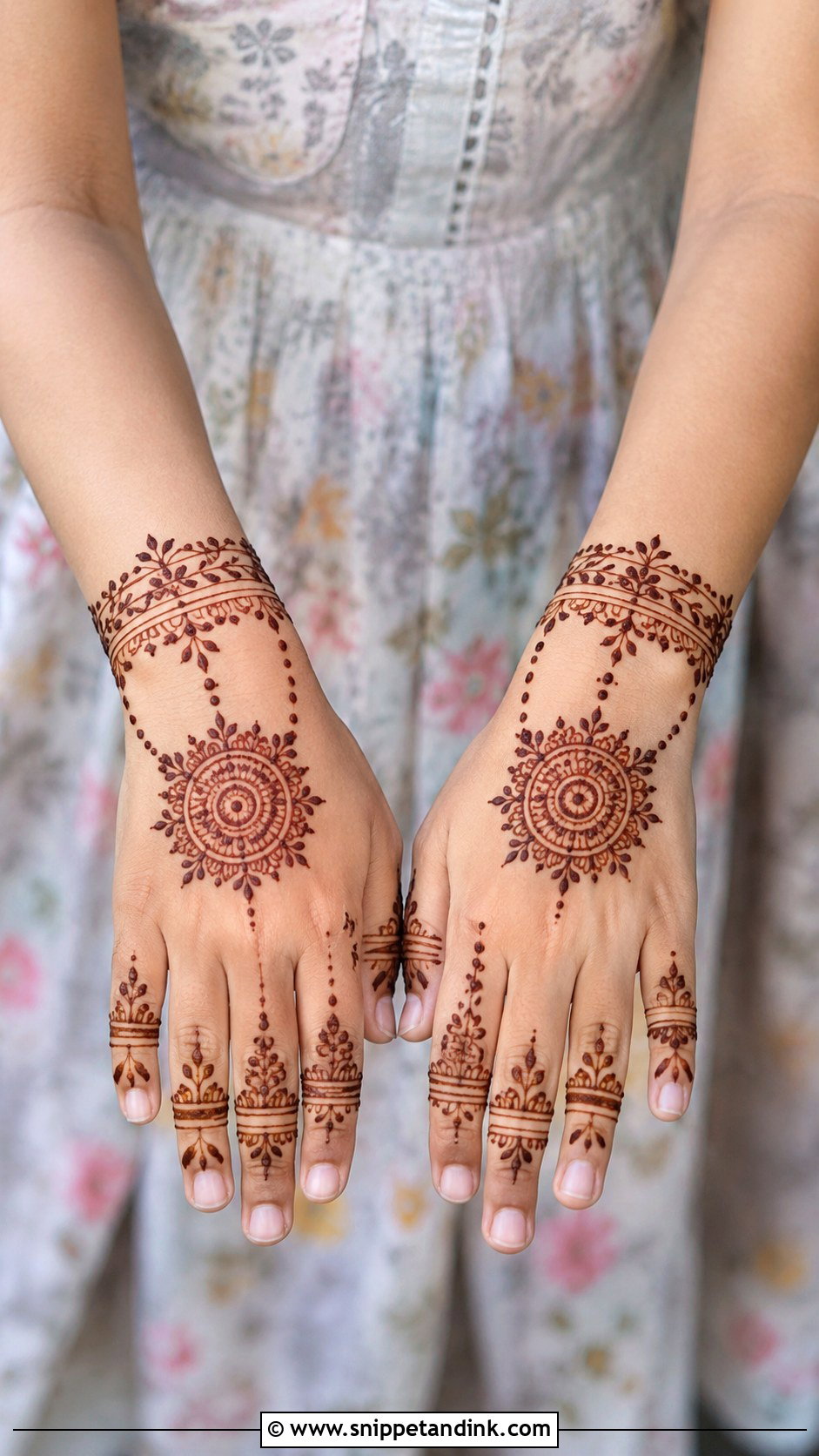
Kids henna mehndi design needs to be quick and light: a small flower, a heart cluster, a mini mandala, a butterfly or a leafy bracelet with finger dots. Children rarely sit still long enough for a dense palm, and they’ll smudge it before it sets, so I draw on the back of the hand where they can rest it flat. I only use pure, natural henna on children, and I do a small patch test first if their skin is sensitive.
29. White Henna Mehndi Design
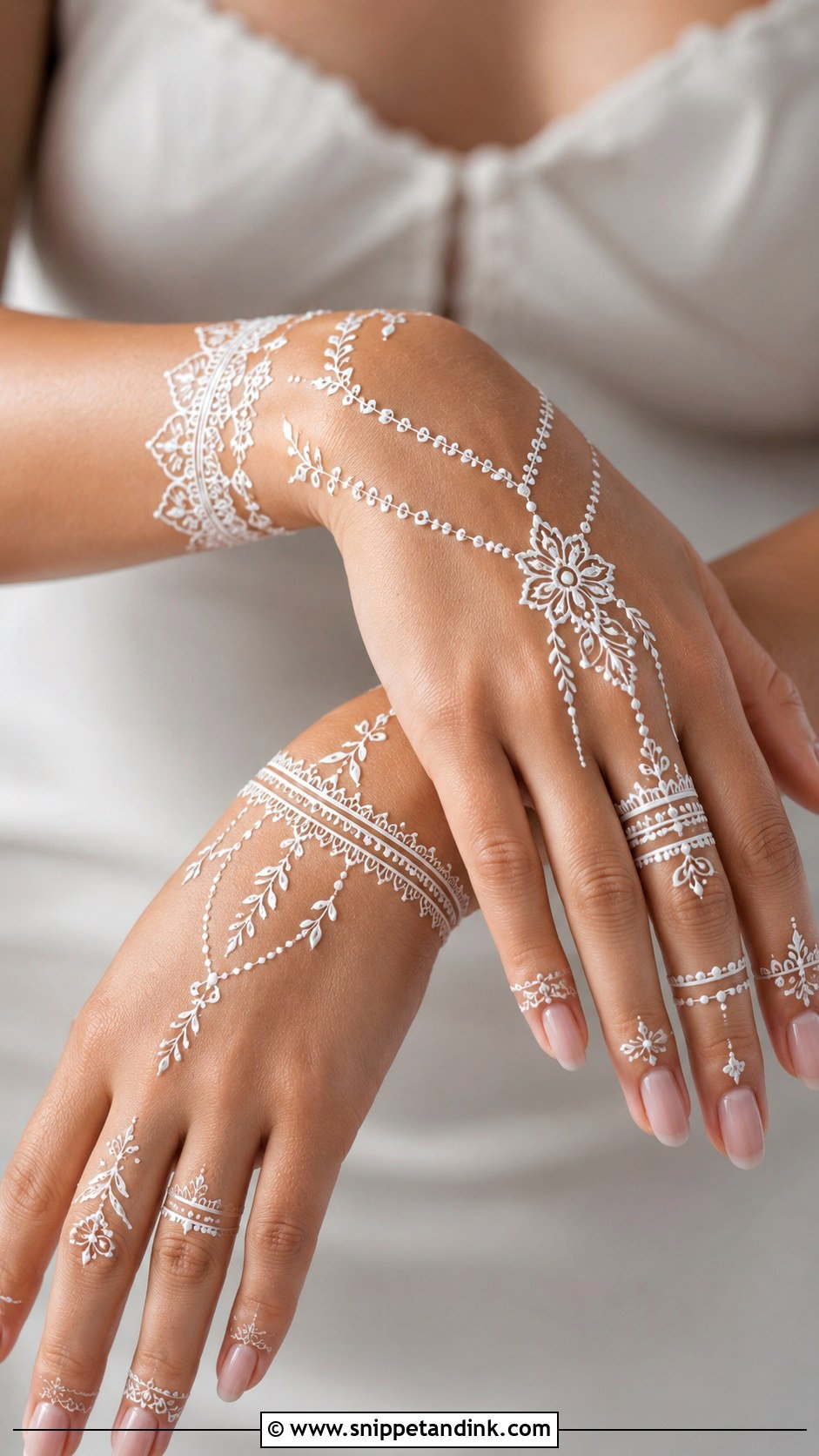
White henna isn’t henna at all. It’s a body-safe white paint or cosmetic adhesive that sits on top of the skin, so there’s no stain and it lasts a few days at most. Lace back-hand patterns, jewelry chains, floral cuffs and finger bands all work, drawn with bold outlines so the pale colour shows. It looks striking on deeper skin tones for a photo shoot or party, but don’t book it expecting the meaning or staying power of traditional mehndi.
30. Henna Mehndi Design For Feet
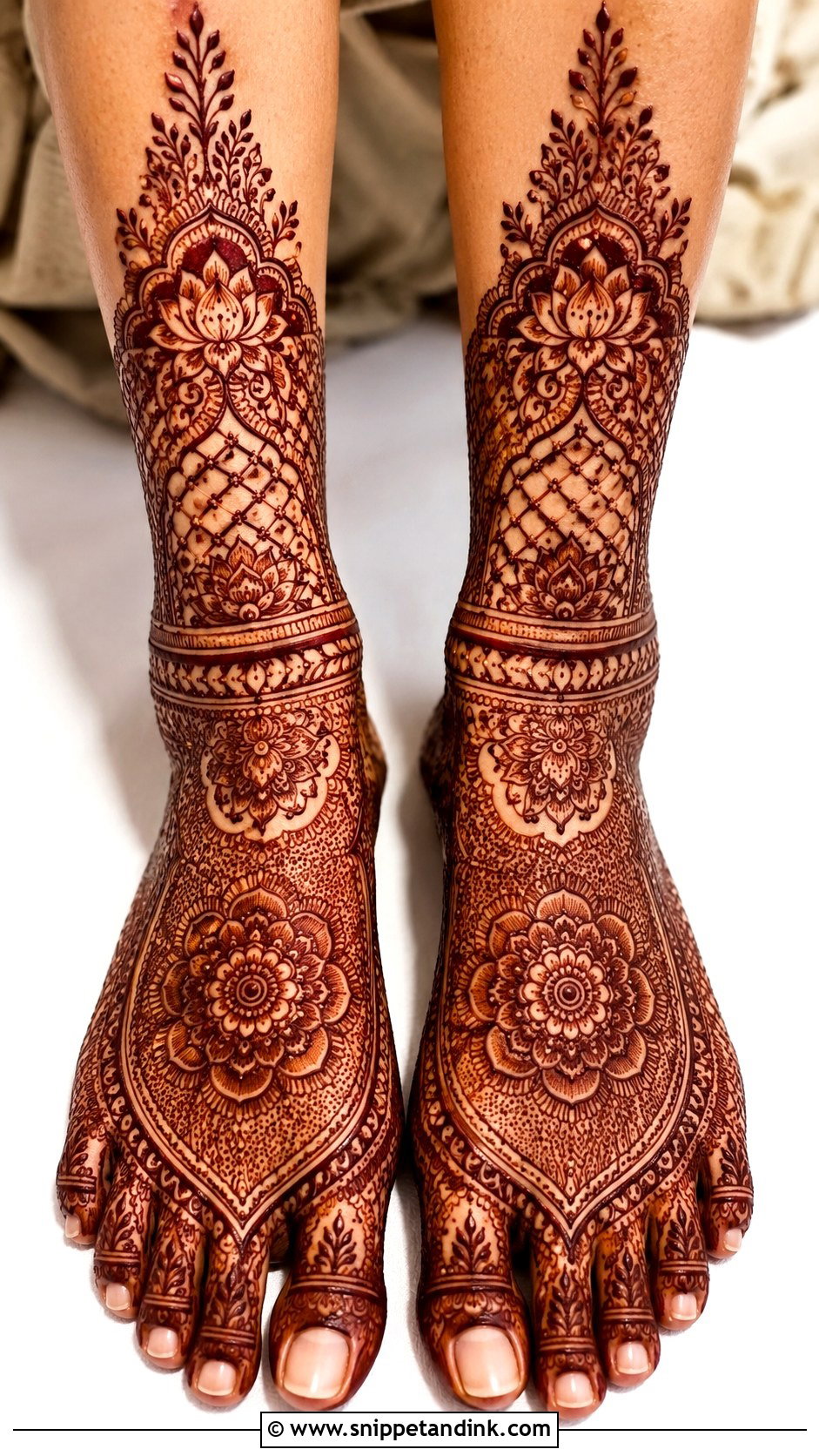
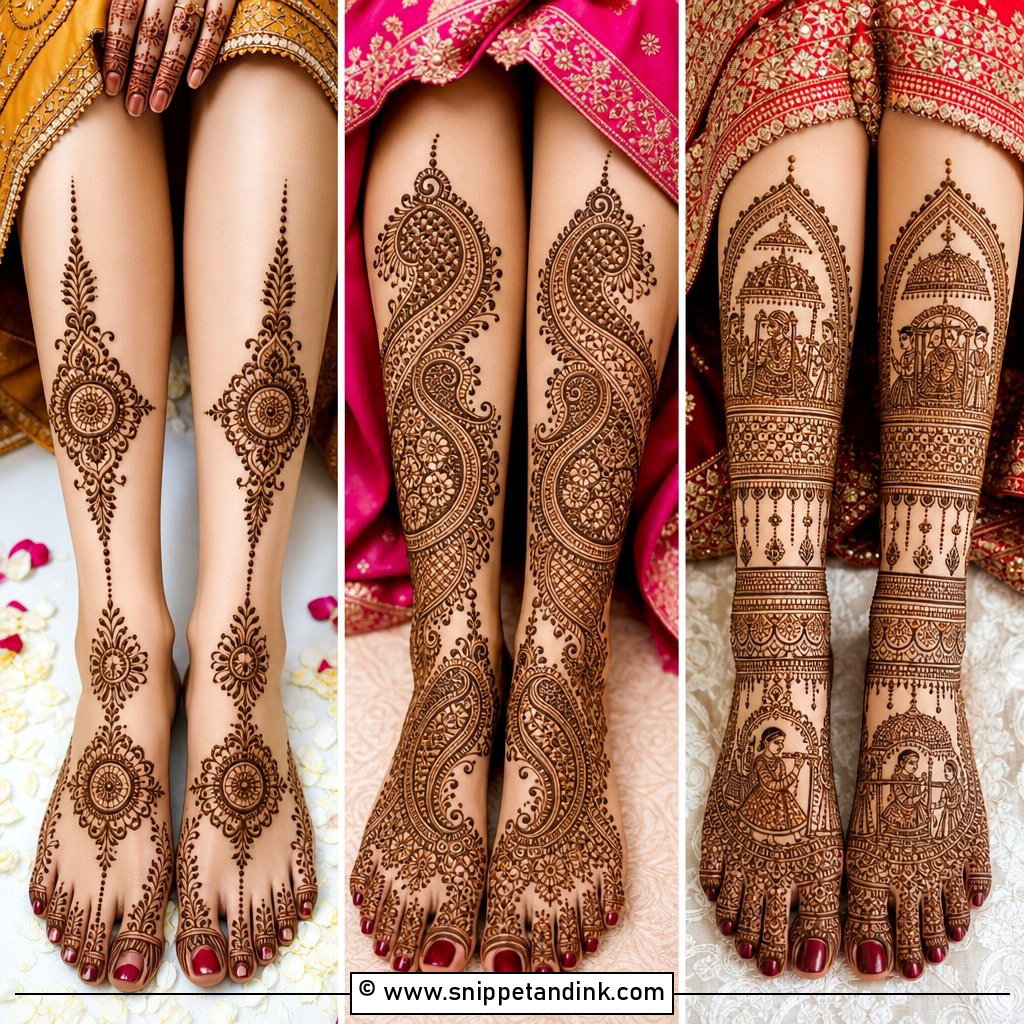
Henna mehndi design for feet can cover the toes, top of the foot, ankle and sometimes the lower leg, using lotus flowers, paisley vines, anklet bands, mandalas and jaali. Soles and toes take some of the darkest stain on the body. The catch is walking. I do feet last in a bridal session and ask brides to keep them raised and dry, because paste on the top of the foot cracks off every time the toes flex. If both feet will be photographed together, I mirror the design.
Aftercare From the Moment the Paste Dries
How you treat the paste for the next day decides most of the colour. I tell every client the same few things, and the brides who follow them get the dark stains in the photos.
- Keep the paste on as long as you can stand it. Six to eight hours is good, overnight is better for bridal.
- Once it’s dry, dab on a little lemon and sugar so the paste stays stuck to the skin instead of flaking early.
- Scrape it off with a blunt edge or rub it away. Don’t wash it off.
- Keep water away for the first twelve to twenty-four hours, and rub in a little natural oil or balm before you shower after that.
- Stay warm. Cold hands develop slower, paler colour.
- Skip scrubs, chlorine pools and harsh cleaning products while you want the design to last.
A stain on the palms usually lasts one to three weeks and fades as the skin renews, faster on hands you wash often.
When Paste Turns Black Too Fast
Natural henna only ever stains in the orange to brown to maroon range. If a stall promises a jet black design in an hour, the paste almost certainly contains PPD, a hair-dye chemical that can blister skin and leave a lasting allergy. I’d walk away from it, especially for children.
Fresh henna paste smells earthy, often with an essential oil like eucalyptus or lavender, and good pre-made cones are kept chilled or frozen because the dye fades at room temperature. Ask your artist what’s in the cone. Anyone mixing their own will tell you happily, and if you’ve reacted to hair dye before, a small patch test a day or two ahead is worth the wait.
Start With the Occasion, Then Pick the Pattern
A good mehndi design is less about how much of the hand you fill and more about whether the layout, coverage and motifs suit the event. For something quick, I’d point you to minimal, finger or bracelet work. For a grand look, Indian bridal, heavy full-hand or portrait mehndi earn the long sitting, and Indo-Arabic or floral designs sit comfortably in the middle. Bring your outfit colour and your jewelry to the appointment. The right pattern usually becomes obvious within the first few minutes of sketching.
You'll Like These Ideas:










Leave a Reply