
A jeweled gown changes the whole fitting process. Beads add weight, catch light differently in daylight and candlelight, and decide how your veil, earrings and hair can sit. From fine pearl accents to crystal-heavy skirts, embellishment can suit almost any silhouette, venue and personal aesthetic, but it has to support the dress rather than bury it. When I dress a bride in a beaded gown, the first thing I do is lift the skirt and feel how heavy it is, then watch how it moves as she walks. The twenty looks below each come with the accessories and hair I would put with them, plus the practical checks I would make before you commit.
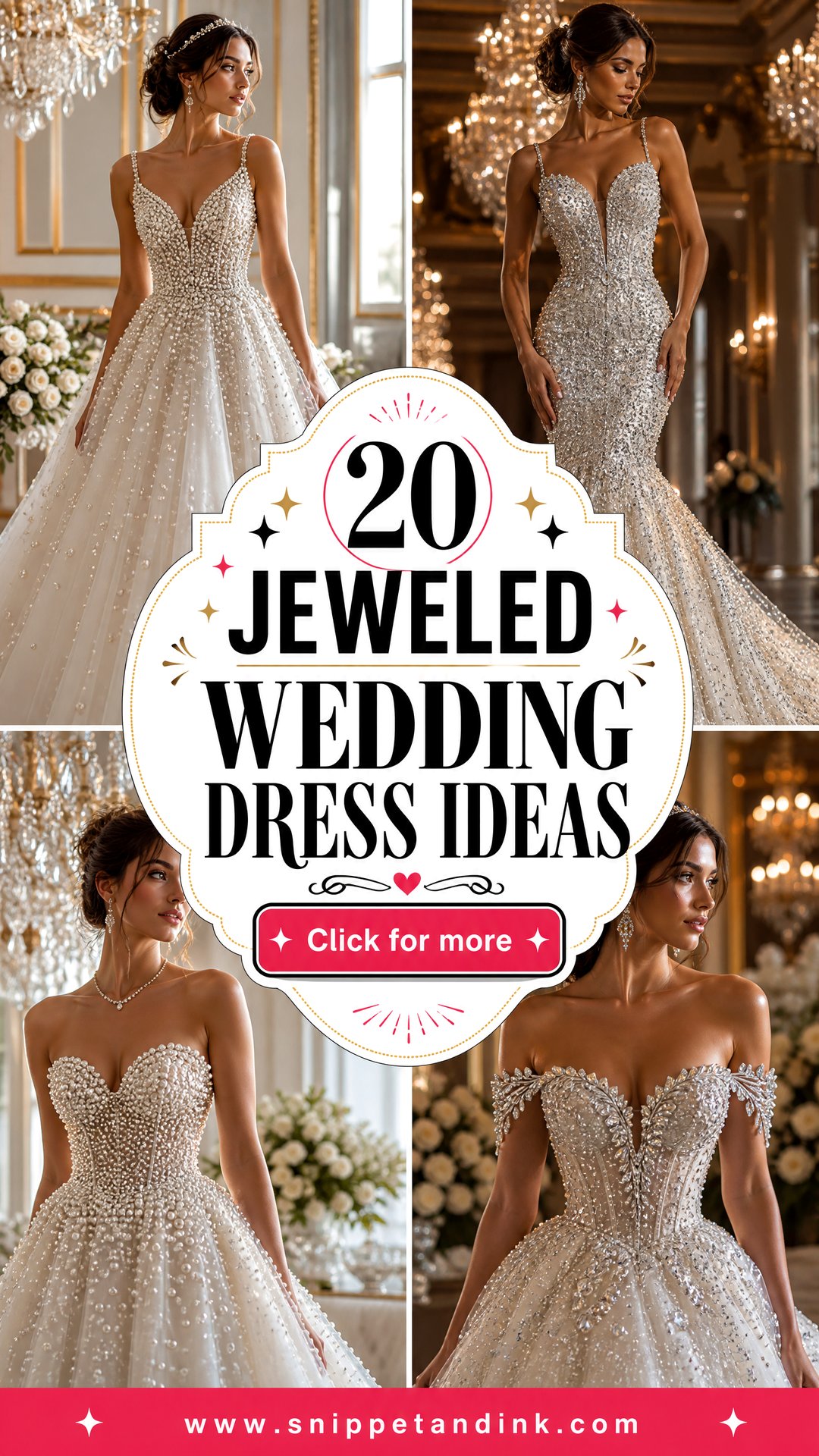
Hand-Sewn Beads Versus Glued Stones at the Fitting
Turn the bodice inside out, or ask the consultant to, before you fall for the sparkle. Hand-sewn beads show tiny knots and threads on the reverse, and each one is held on independently. Heat-set or glued rhinestones leave nothing on the back, and while they look the same on the hanger, they are the ones that pop off on the dance floor and can loosen during professional cleaning.
Neither is automatically wrong. Glued stones keep a gown lighter and cheaper, and on a skirt that never gets rubbed they last well. Where I want stitching is anywhere that moves or touches: underarms, waist seams, cuffs and the back where you lean against a chair.
- Run a palm firmly down the bodice. Anything that catches or scratches will do the same to your arms all day.
- Ask whether the shop keeps spare beads or crystals from the same batch, and take a small bag of them home.
- Lift the skirt with both hands. A gown that feels heavy now will feel heavier at hour eight.
- Check the colour of the beads against the fabric in daylight; some clear crystals read slightly blue or grey outdoors.
Why Altering a Beaded Gown Takes Longer
A seamstress can’t simply stitch through beadwork. Beads along the seam allowance have to be picked off by hand, the seam taken in, and the beads sewn back on so the pattern lines up again. That is why alterations on embellished gowns often cost more and need more lead time than on plain satin. Ask for a quote on the beaded areas specifically at the first fitting, and start alterations earlier than you would for a simple dress.
Bustles need thought too. A beaded train is heavy, so I ask for extra bustle points to spread the load; one or two hooks carrying a crystal train tend to tear loose by the second hour of dancing.
1. Crystal Beaded Ball Gown Wedding Dress
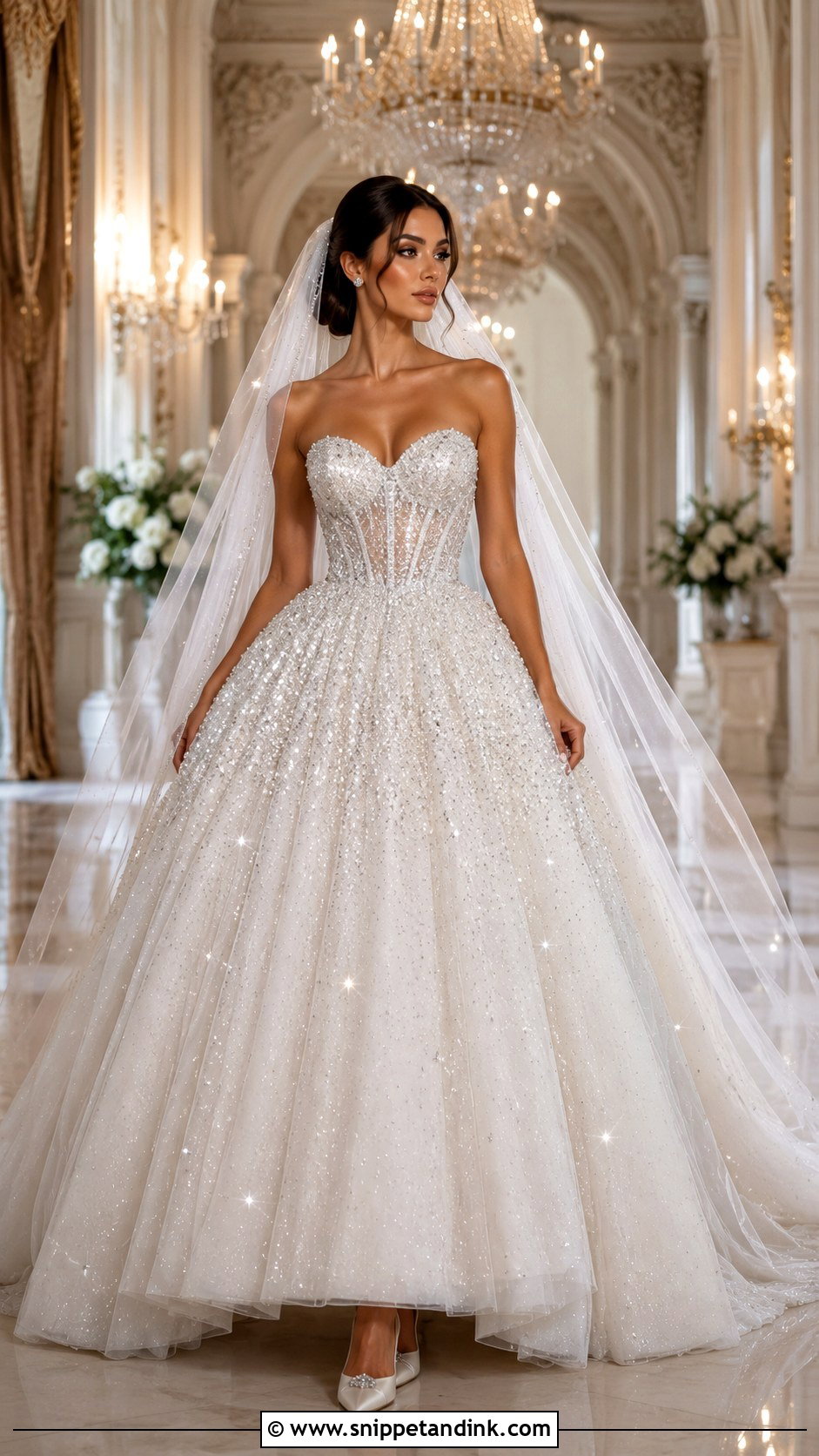
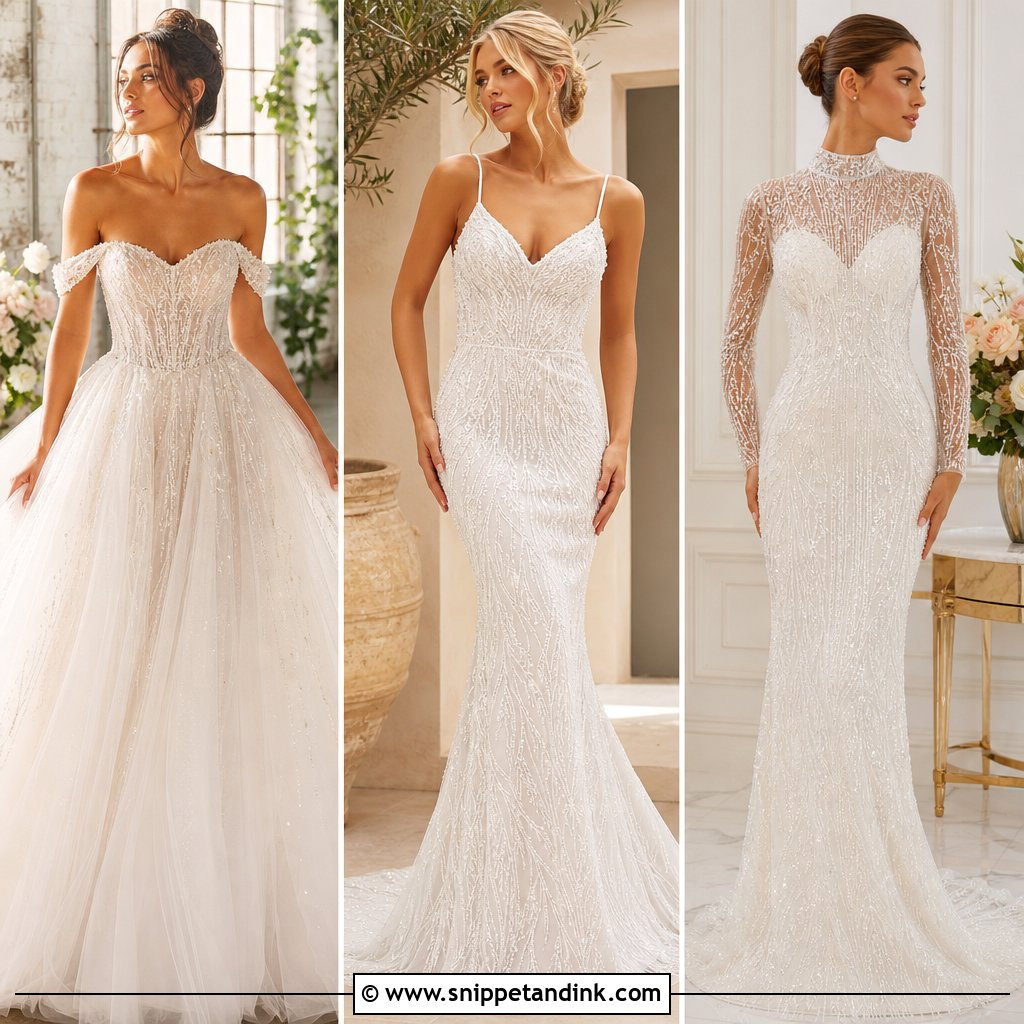
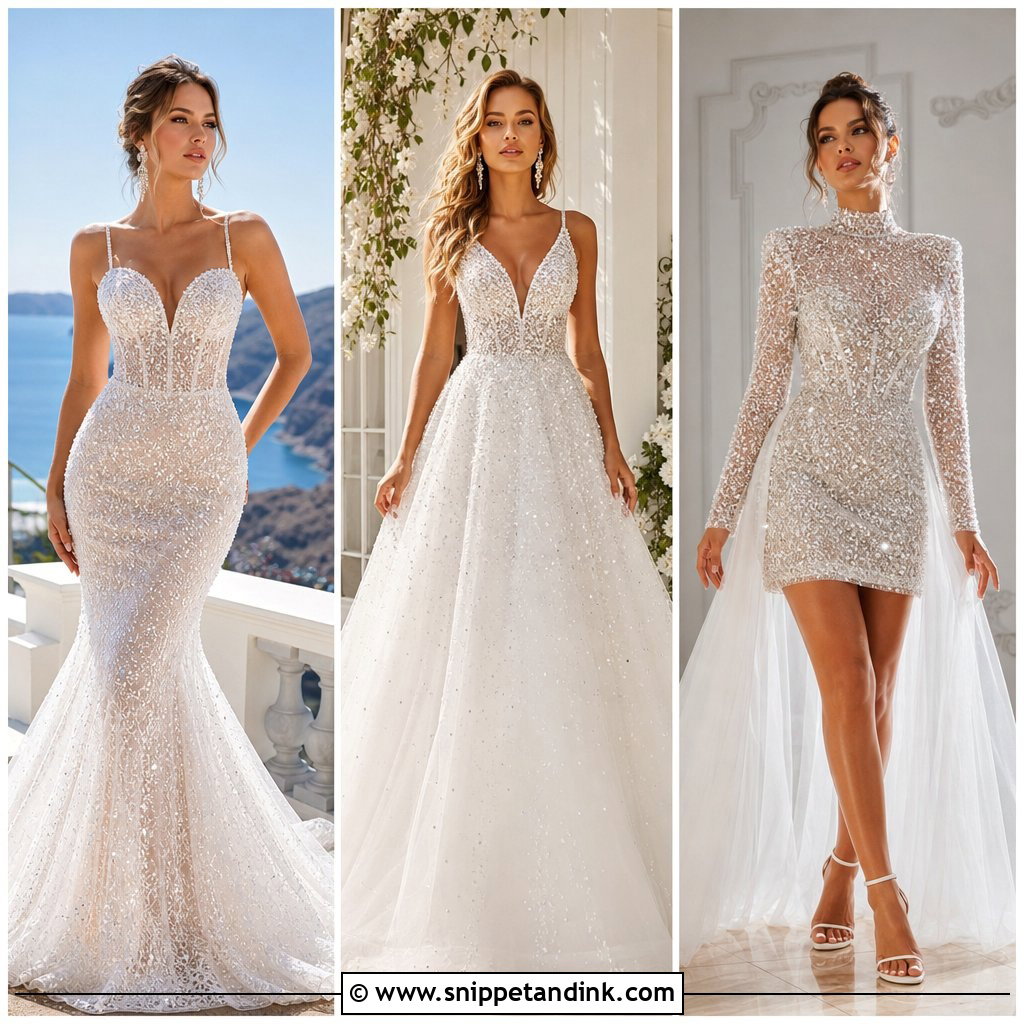
A crystal ball gown works best when the beading is densest at the bodice and thins out across the skirt. That gradient pulls the eye to the waist and keeps the skirt from dragging, because a fully crystal-covered tulle skirt can weigh more than a bride expects by the end of the night. A sweetheart or softly curved neckline keeps the top romantic. I’d style it with crystal studs, a plain cathedral veil and pointed satin pumps, and leave the necklace in the box if the neckline is already heavily beaded. A polished low bun keeps attention on the bodice. Ballrooms and candlelit halls suit it, since crystals need a light source to throw back.
2. Pearl Embellished A-Line Wedding Dress
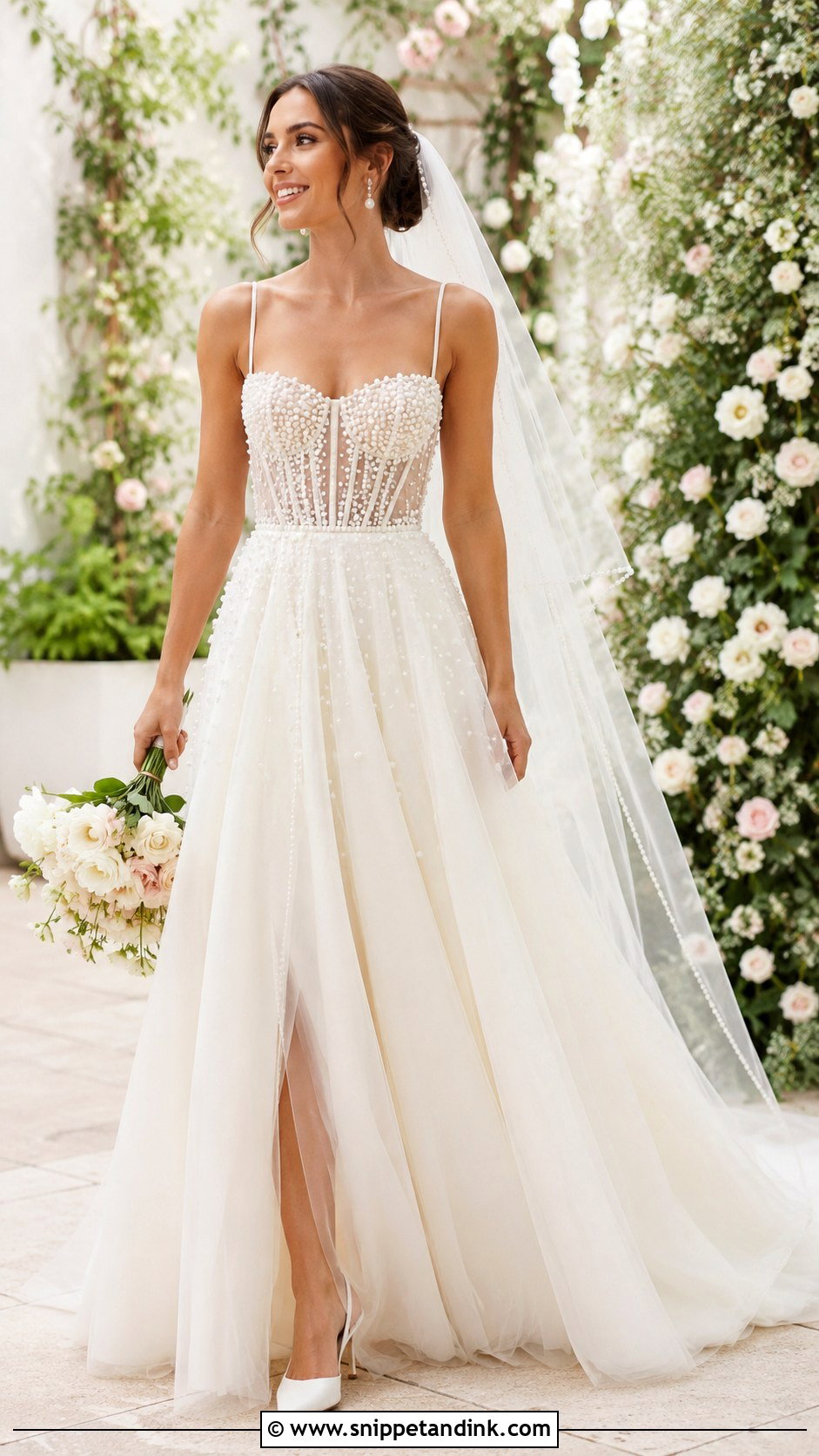
Pearls give an A-line a softer finish than crystal because they glow rather than flash. Look for mixed pearl sizes scattered over lace or sheer tulle, thinning gently onto the skirt. The A-line is forgiving through the hips and easy to sit, walk and dance in. Pearl drops, ivory slingbacks and a fingertip veil edged in tiny pearls finish it, with a loose chignon or soft waves. One caution from the fitting room: pearls on the dress, the veil, the earrings and the shoes at once starts to look like a costume. Pick two places and stop. Garden venues, hotels and bright conservatories all suit it.
3. Rhinestone Mermaid Wedding Dress
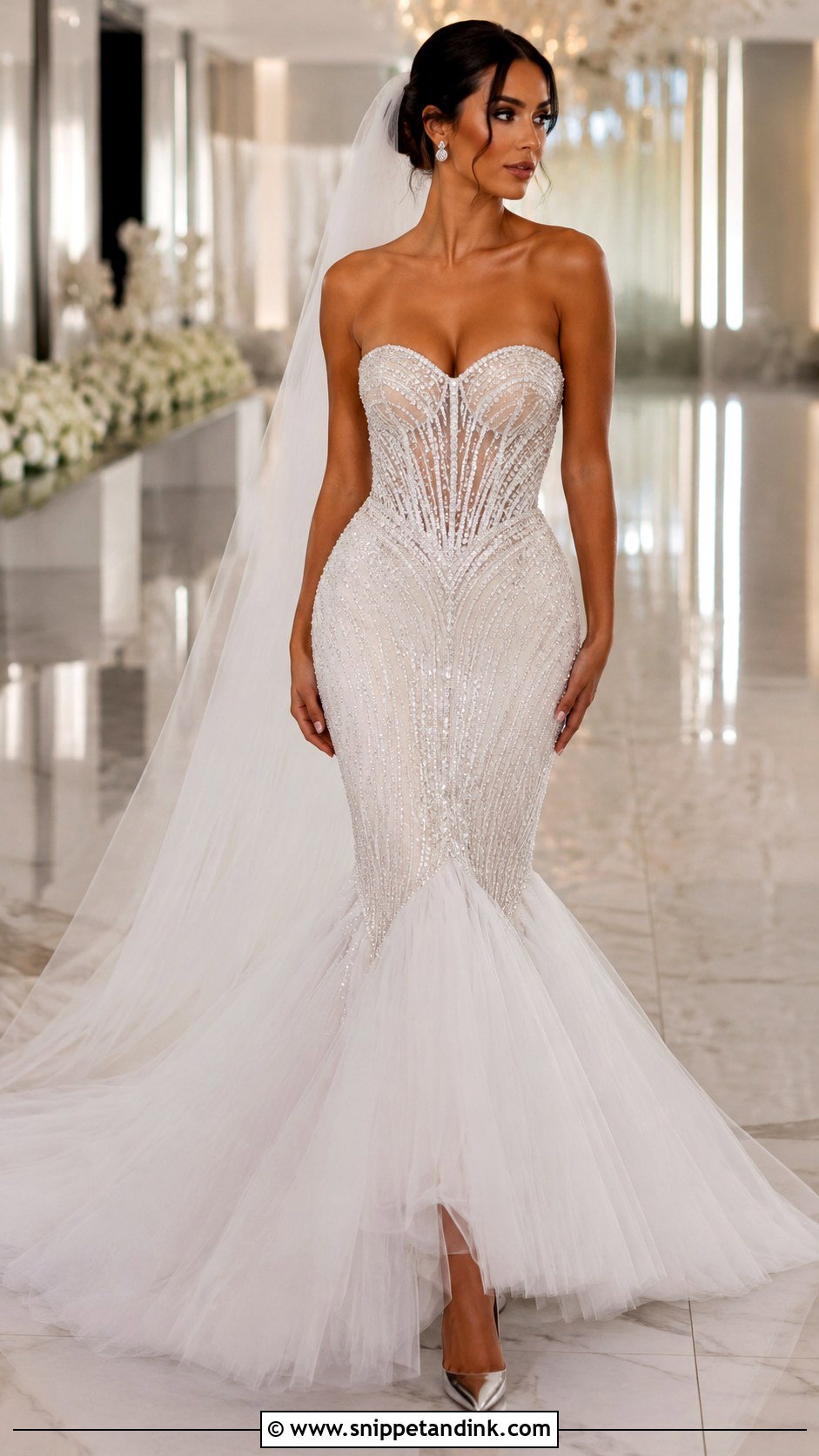
Rhinestones on a mermaid gown should trace the curve of the bodice and hips, then fade before the flare so the tulle can move freely. A straight or strapless neckline gives all that surface a clean edge. Here is the part brides rarely hear in advance: heavy embellishment changes how the base fabric stretches, so a mermaid that fits perfectly at the first fitting can sit lower once the beading settles. I’d book an extra fitting closer to the date. Small silver earrings, metallic pointed heels and a single-layer veil keep it sleek, with a side-parted bun or polished waves. It suits a modern ballroom or an evening venue with strong architecture.
4. Beaded Lace Long Sleeve Wedding Dress
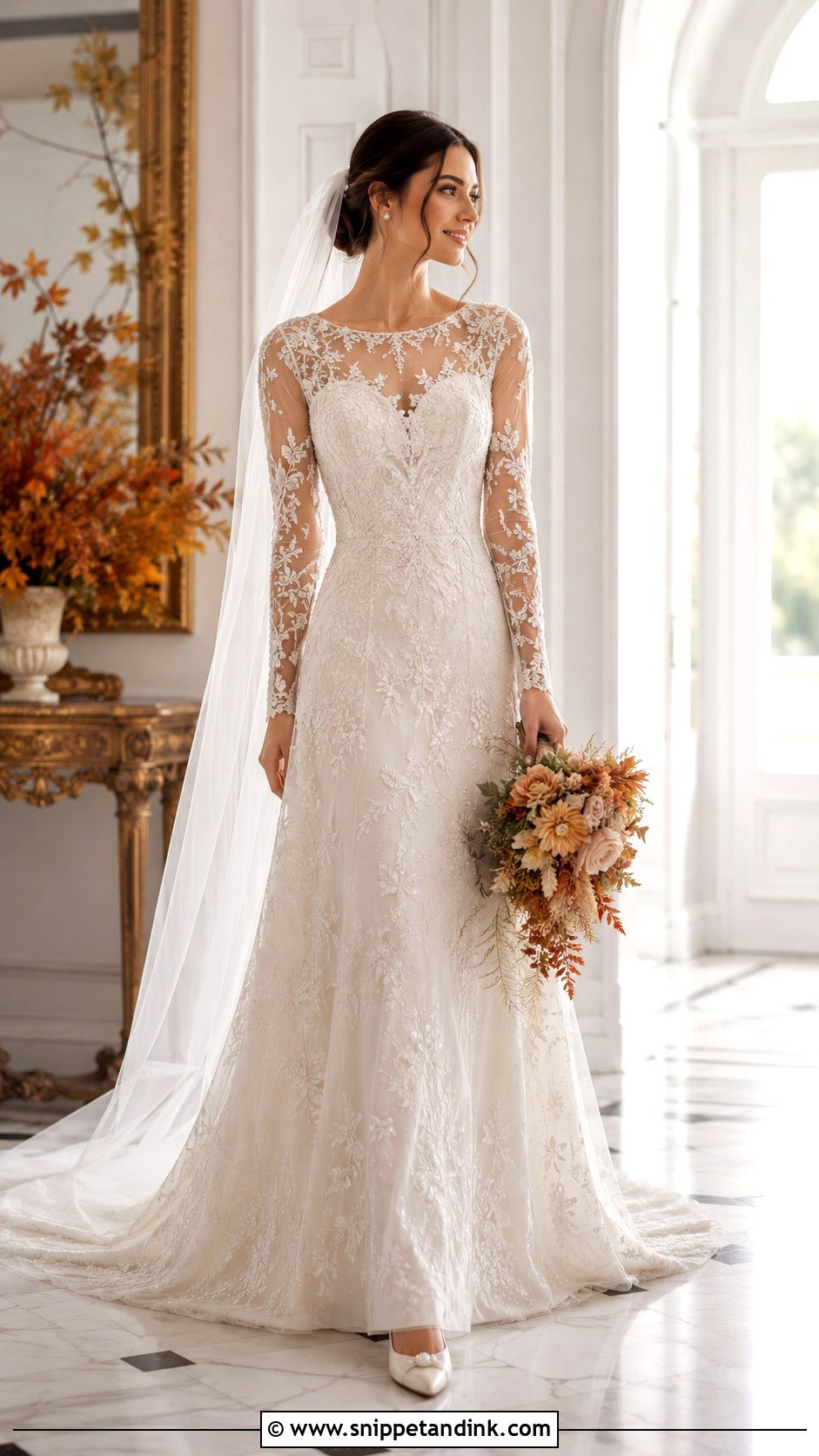
Beadwork that follows the lace motif, rather than covering every inch, keeps a long-sleeve dress from looking heavy. Sheer fitted sleeves, a lined bodice and an A-line skirt give coverage and balance. The spot I always test is the underarm and the cuff. Beads there rub with every hug and every raise of a glass, and rough sew-on stones can leave the inner arm red by dinner. If you feel a scratch in the fitting room, ask the seamstress to remove the beads from that seam allowance. Pearl studs, closed ivory pumps, a light chapel veil and a soft pinned updo complete it. Autumn and winter are its natural seasons, though illusion fabric makes spring workable.
5. Jeweled Neckline Satin Wedding Dress
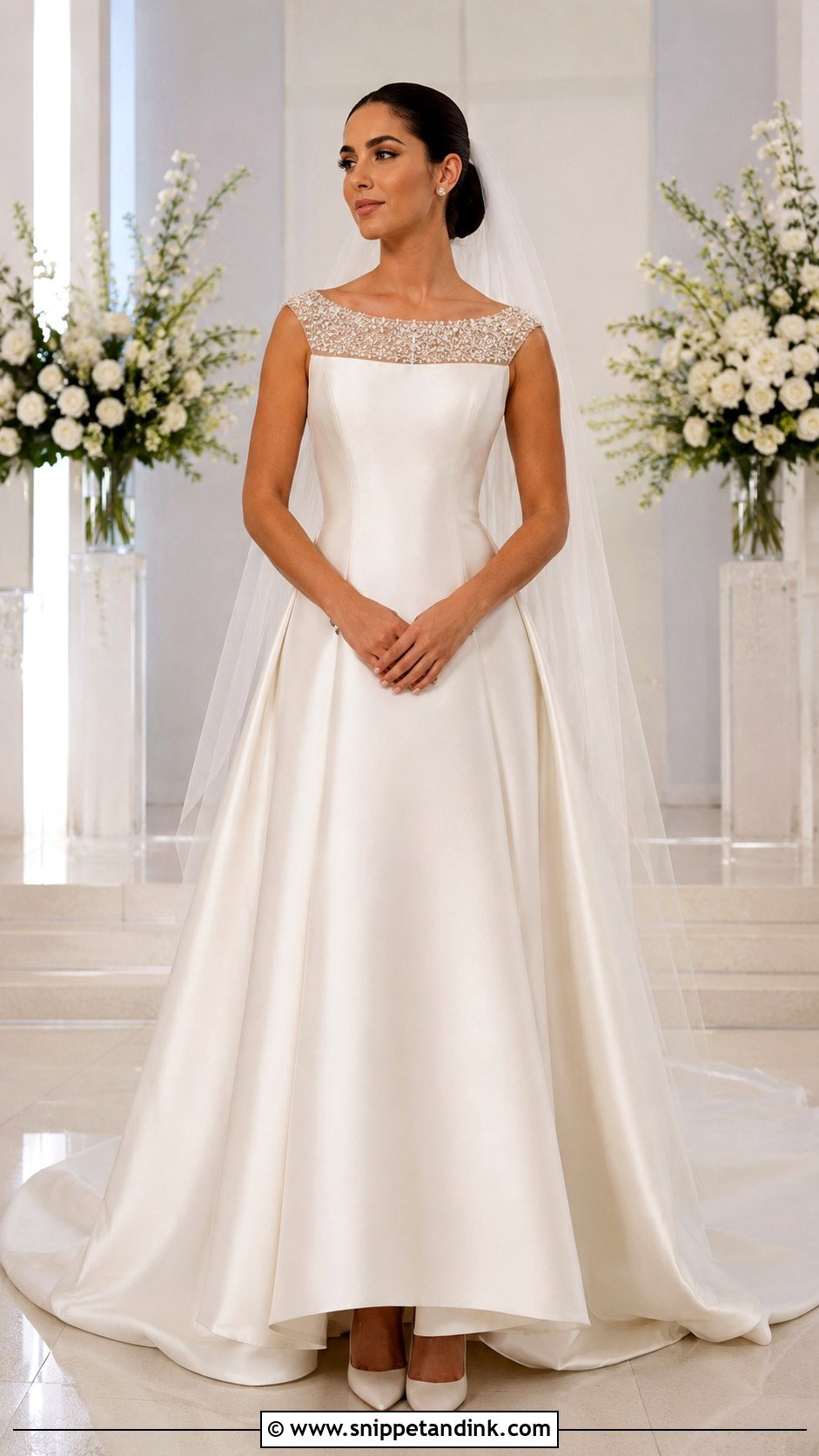
With a jeweled neckline, the dress is wearing its own necklace, so I skip one every time and choose small studs. Start with a clean column or A-line in luminous ivory satin; crystals, pearls or silver beads around a bateau, scoop or high neckline do the rest. Satin shows every crease, so check how it wrinkles across the lap when you sit for ten minutes. Smooth satin pumps, a structured clutch for the reception and a plain veil without trim keep the detail concentrated near the face. A sleek bun or tucked-back hair leaves the neckline fully visible. This is the gown I suggest to minimalists who still want one detail people remember.
6. Crystal Corset Princess Wedding Dress
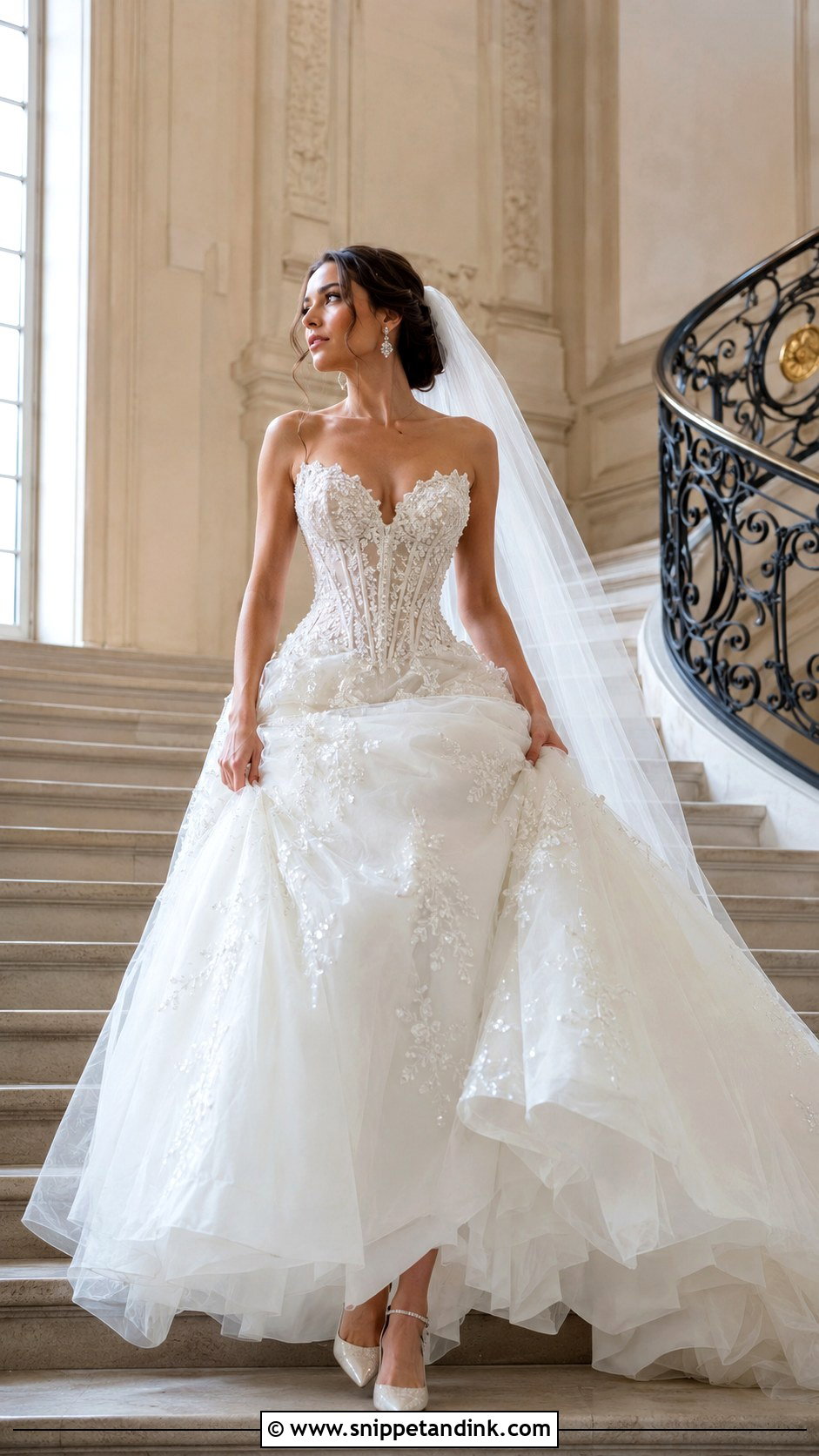
A crystal corset only works if the boning does the structural work, not the bride’s ribs. Choose a corset bodice with real support, a softly dipped neckline and crystals running along the embroidered lines, then a full layered skirt for contrast. Crystals add weight to the bodice, so at the fitting I ask brides to sit, breathe deeply and lean forward as if signing the register. If the top edge digs in, it needs adjusting before anything else. Delicate crystal drops, pointed ivory heels and a long plain tulle veil keep the outfit cohesive, and soft curls or a high bun suit the fairytale-inspired silhouette. Scattered stones on the skirt connect top and bottom. Grand staircases and formal halls give it room.
7. Pearl Strapless Wedding Dress
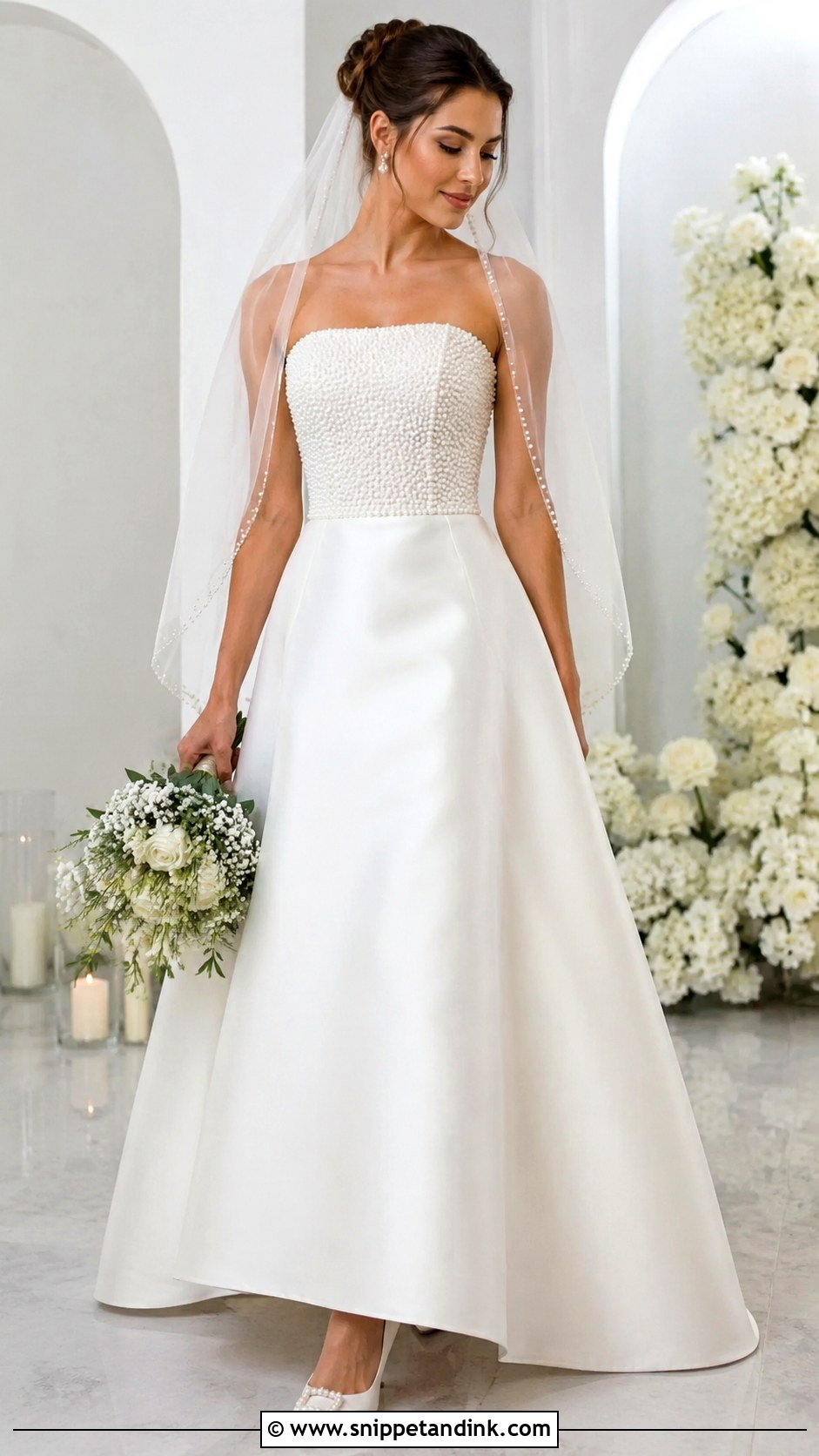
A pearl strapless gown reads clean and feminine, with the texture kept up top. Hand-placed pearls over satin, mikado or crepe, then a plain A-line or fitted skirt, keeps the balance right. Pearl spacing changes the mood: wide scatter looks modern, dense rows look traditional. Strapless plus beading means weight pulling down on the top edge all night, so I always ask whether the gown has an inner corset or detachable straps for the reception. Pearl studs, an elbow-length veil and pumps with a small pearl buckle finish it. A romantic updo shows the shoulders, and a couple of face-framing pieces stop it looking stiff.
8. Art Deco Beaded Sheath Wedding Dress
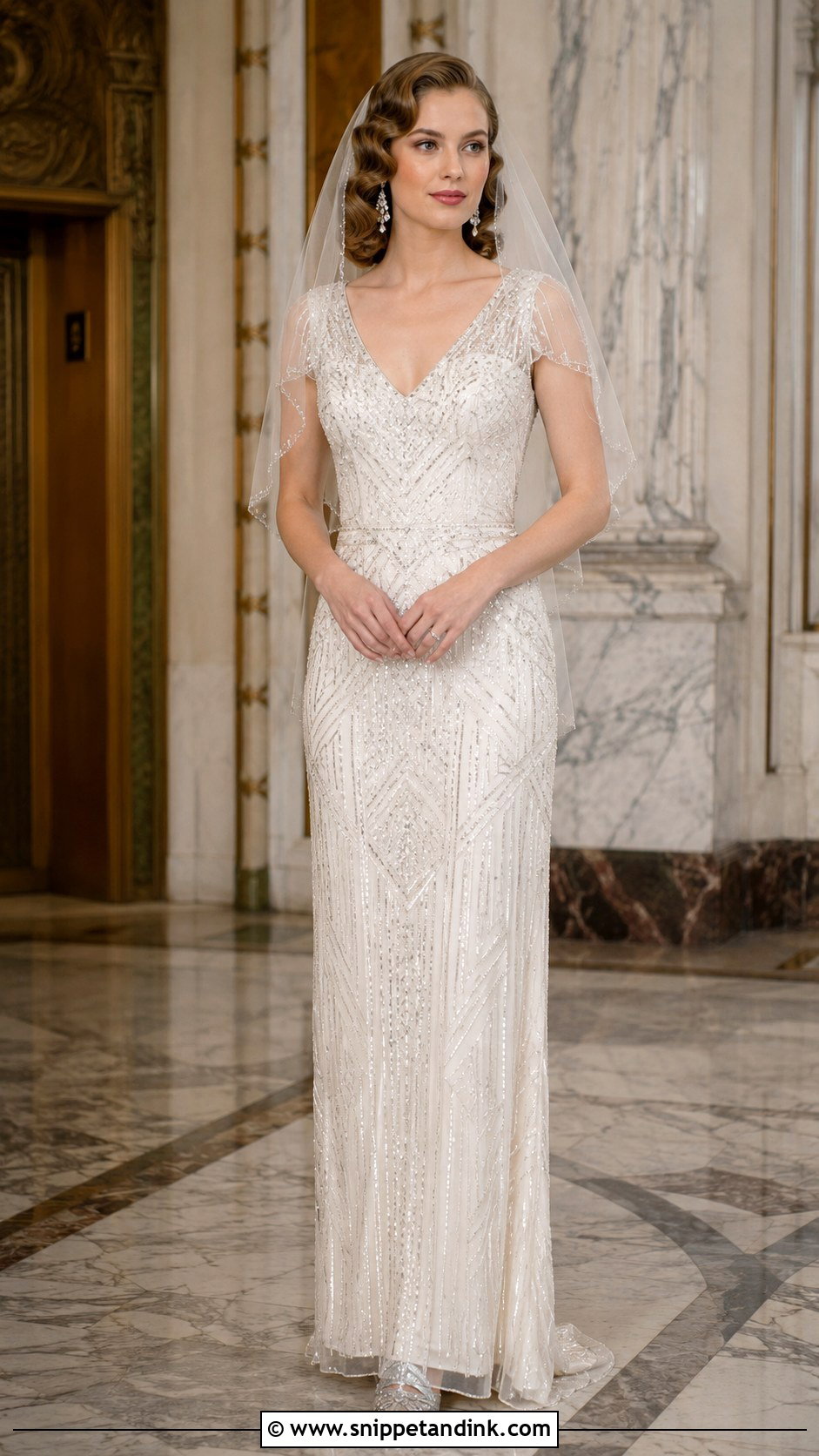
Geometric fan and sunburst beading in silver, ivory and clear glass turns a simple sheath wedding dress into a 1920s-leaning piece. The pattern needs fluid fabric underneath, and a V-neck or soft round neckline lengthens the line. Beaded sheaths are among the heaviest gowns I handle because the beading runs the full length, and all that weight hangs from the shoulders. Check the straps are wide enough and the lining is anchored, or the dress will drag the straps into your skin by the evening. Crystal drops, closed metallic heels and a sheer shoulder-length veil suit it, with finger waves or a low side bun to hint at the era without turning it into fancy dress.
9. Jeweled Floral Appliqué Wedding Dress
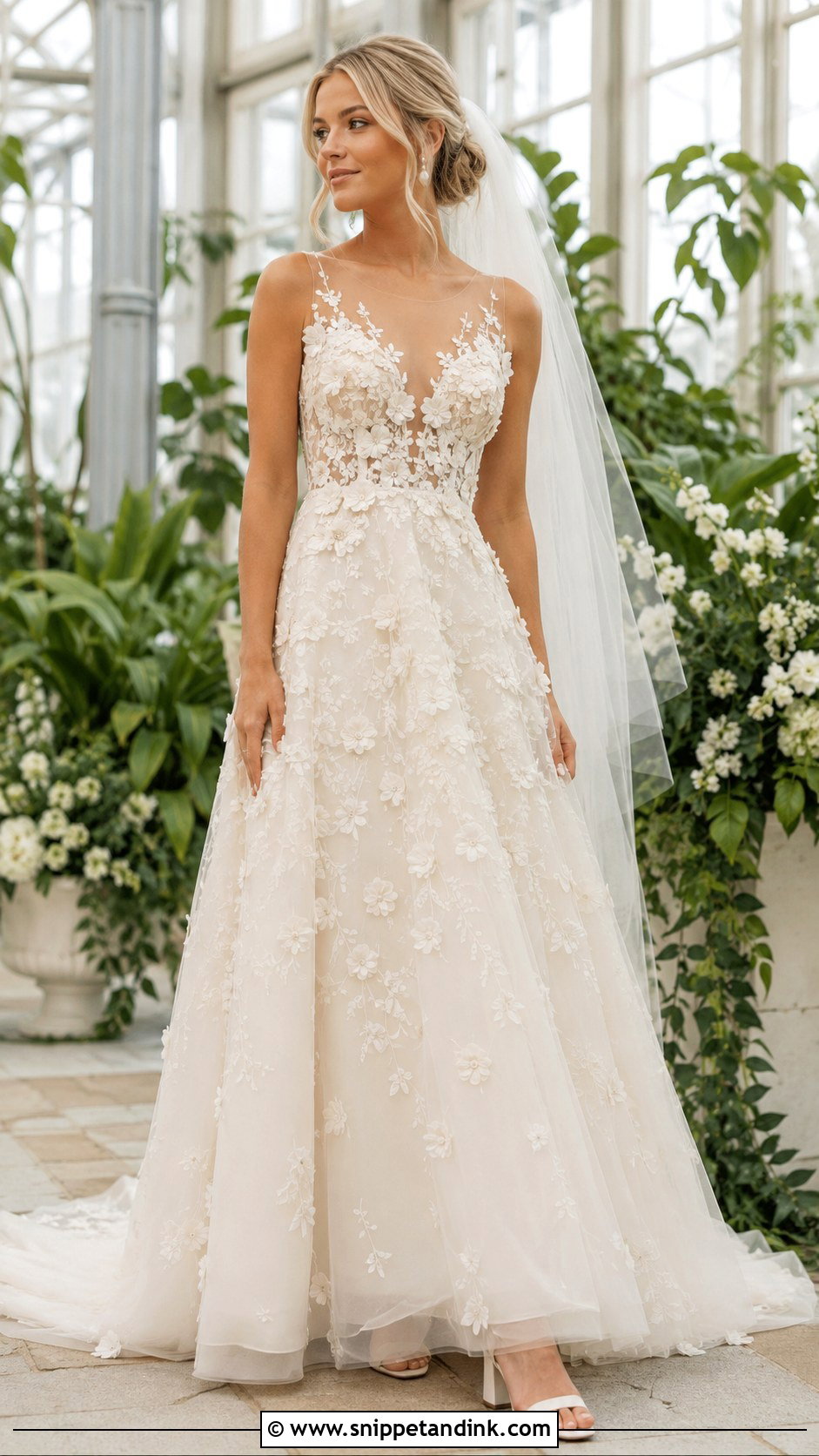
Jeweled appliqués add depth because each flower sits slightly off the base fabric. The best versions grow from the bodice and get sparser toward the hem, which defines the waist and keeps the skirt light. A sheer neckline or fine straps help it breathe. When I check these gowns, I look at the side seams and the back, where appliqués are often trimmed or lifted during alterations and can be left with raw, curling edges. Small pearl earrings, satin block heels and a plain chapel veil let the flowers lead; a low bun with one or two floral pins is plenty. Gardens, estates and conservatories with seasonal flowers suit it.
10. Beaded Illusion Sleeve Wedding Dress
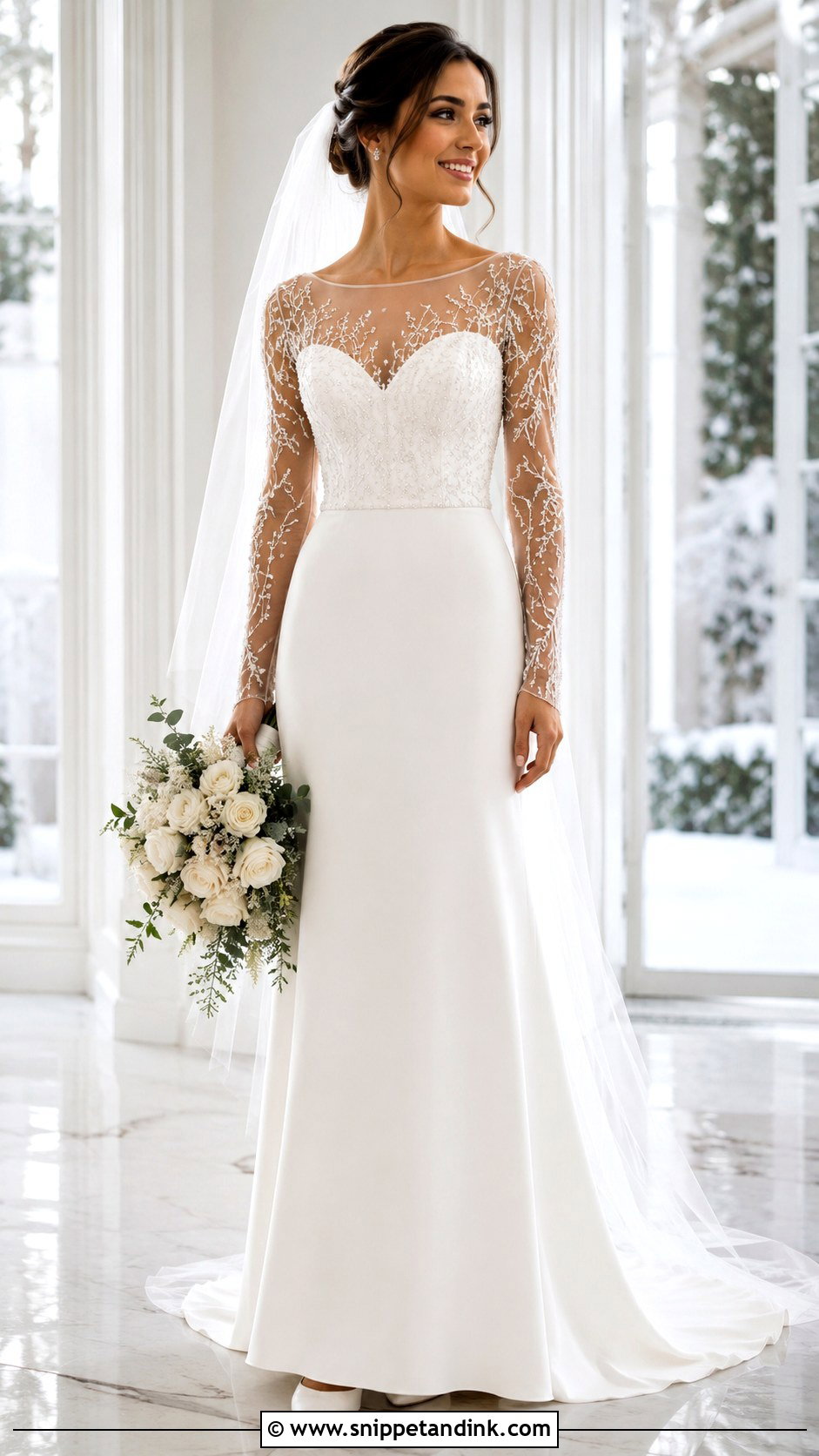
Beaded illusion sleeves make embellishment look as if it floats on the skin. Crystal vines, pearl dots or symmetrical beadwork on sheer sleeves need a quiet skirt in crepe, chiffon or tulle to stay the focus. At fittings, raise your arms, bend them and hug someone. Mesh with too many beads sags at the elbow, and well-placed beads move with the mesh instead of pulling it down. If the sleeve feels tight when you lift your arm, it will feel worse after six hours. Crystal studs, closed ivory heels and a plain veil keep it calm, with a low bun or smooth ponytail to show the shoulders. Cooler months and formal ceremonies are where I’d use it.
11. Crystal Off-the-Shoulder Wedding Dress
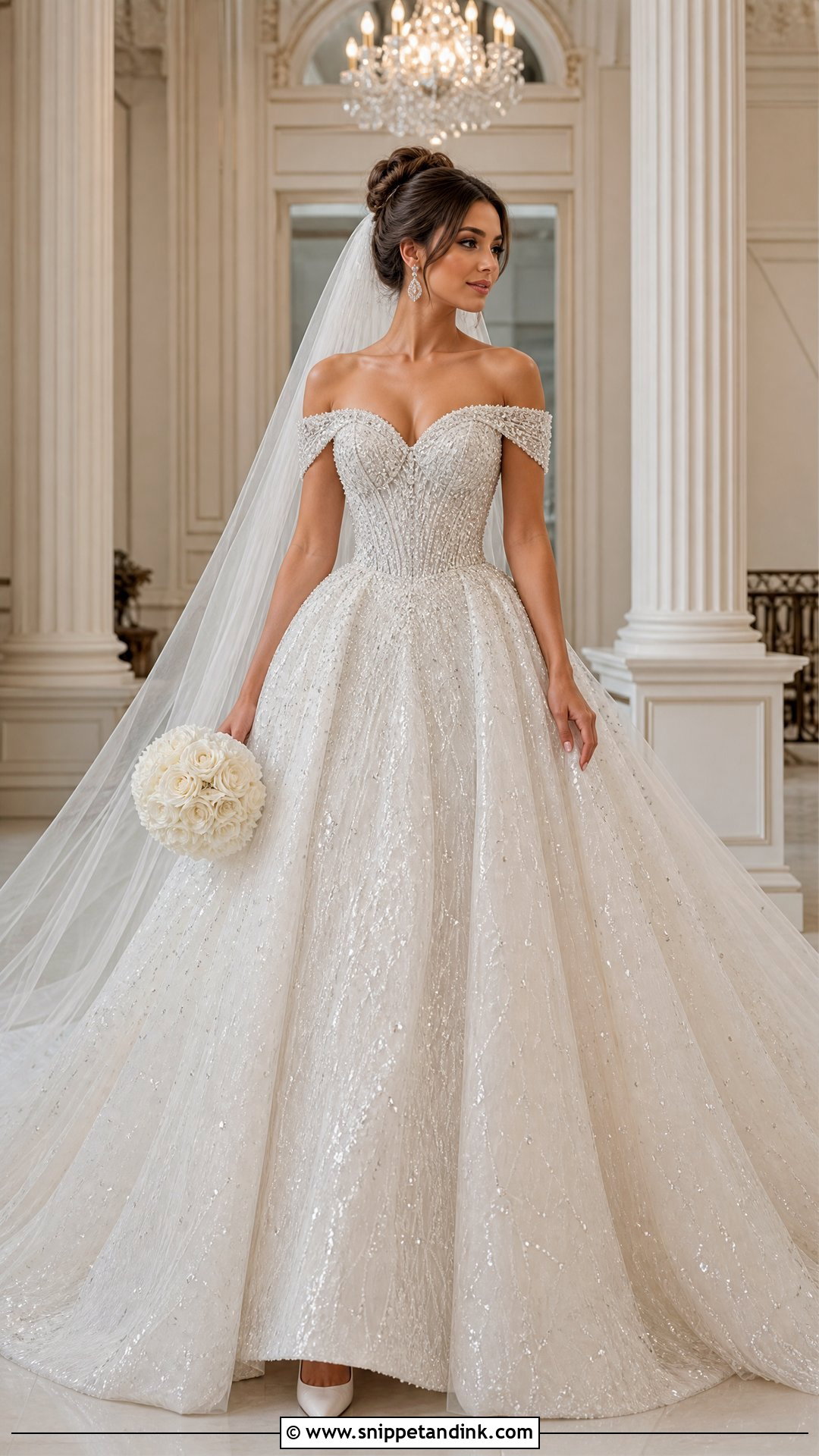
Crystals along an off-the-shoulder neckline frame the collarbones and face. The construction matters more than the sparkle: the decorative straps must rest on the arms, not hold the dress up. That job belongs to the inner bodice. Scattered crystals can continue onto the skirt for a softer shimmer. Off-the-shoulder styles limit how high you can lift your arms, so if you plan to dance hard, test the full range at every fitting. Teardrop earrings, satin pumps and a plain cathedral veil under a polished updo finish it. A statement necklace would only fight the neckline.
12. Pearl Drop Waist Wedding Dress
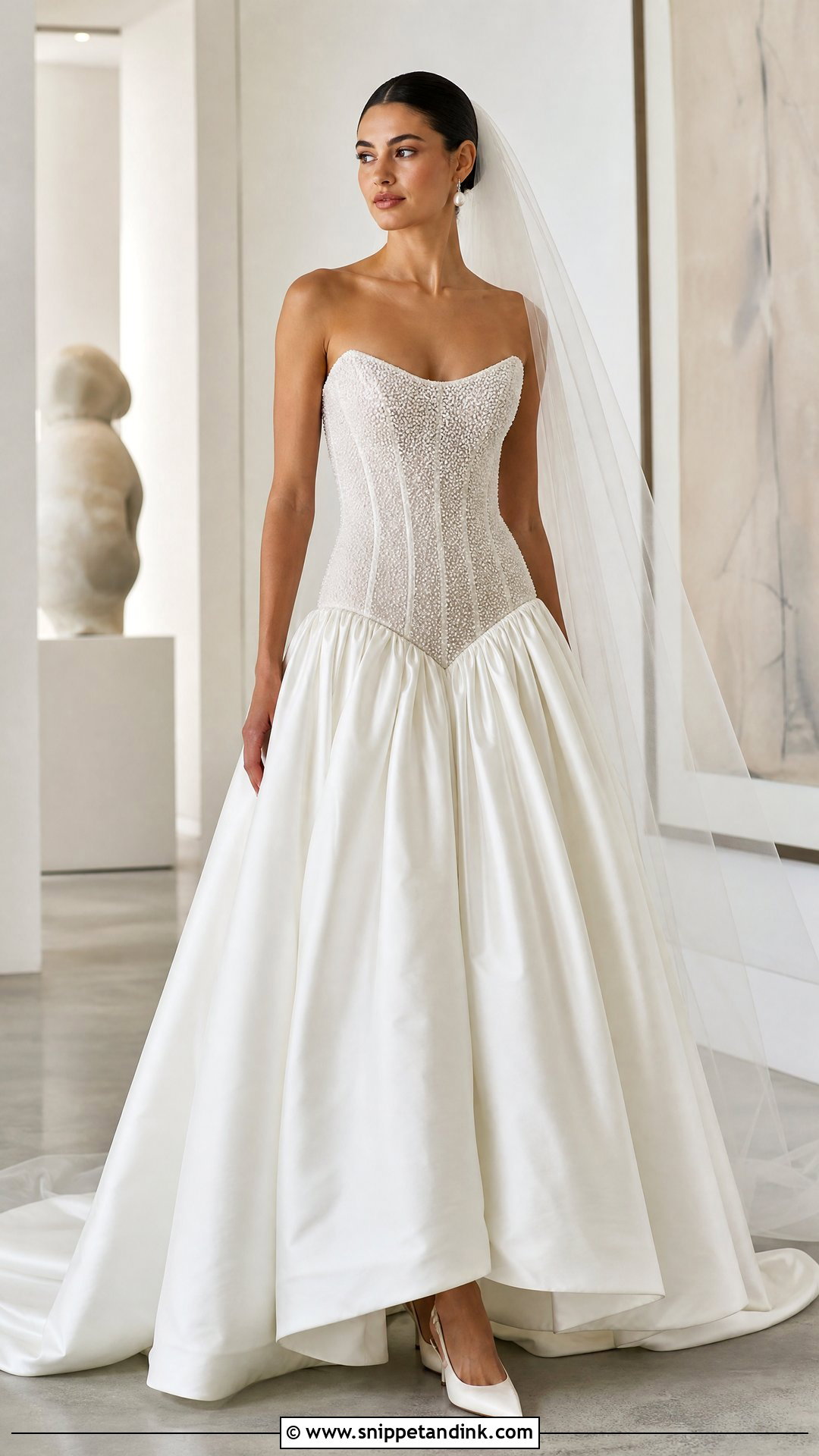
A drop waist stretches the bodice below the natural waist before the skirt opens, and pearls across the corset, neckline and upper hip make those proportions obvious. Keep the skirt plainer so the shape reads clearly. Because a drop waist hugs the torso and hips, it is the silhouette where sitting matters most; practise sitting and climbing a step at each alteration, since a fitted hip can pull up and crease. Pearl earrings, ivory slingbacks and a long veil with a cut edge keep it crisp. A smooth bun or half-up style suits the defined bodice. It reads fashion-forward but still romantic.
13. Beaded Square Neck Wedding Dress
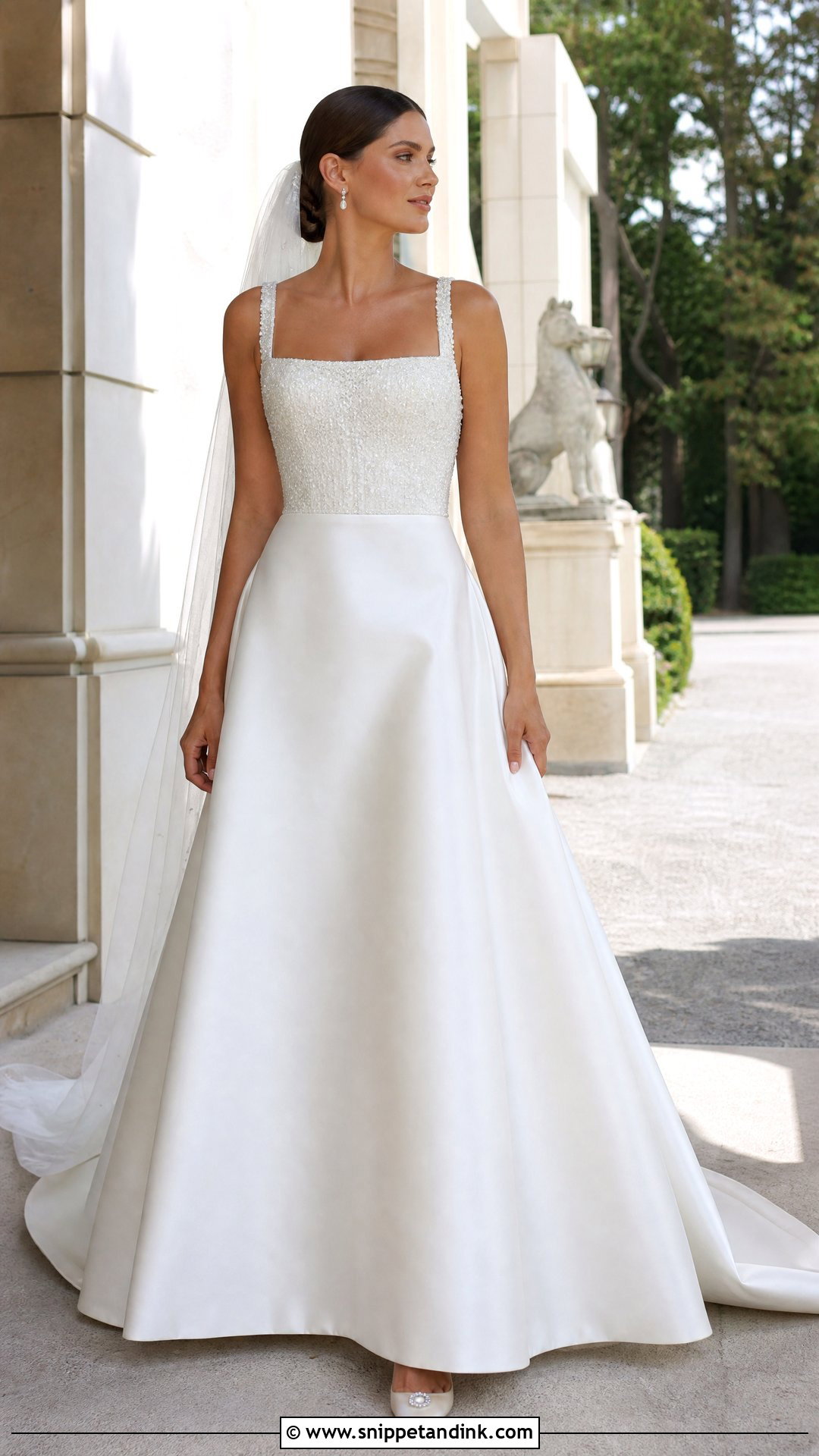
A square neckline gives beadwork a strong frame. Crystals or seed beads tracing the neckline, straps and waist look sharp, and a satin, crepe or tulle A-line softens the structure below. Ask about adjusting the width and depth of the square; a seamstress can usually take it in a little, which is useful if you want more or less coverage. A bare neck tends to look cleaner here, so I’d go with short drop earrings, pointed ivory heels and a chapel veil under a neat bun. It sits comfortably in a formal venue, an estate or a modern ceremony space.
14. Celestial Crystal Wedding Dress
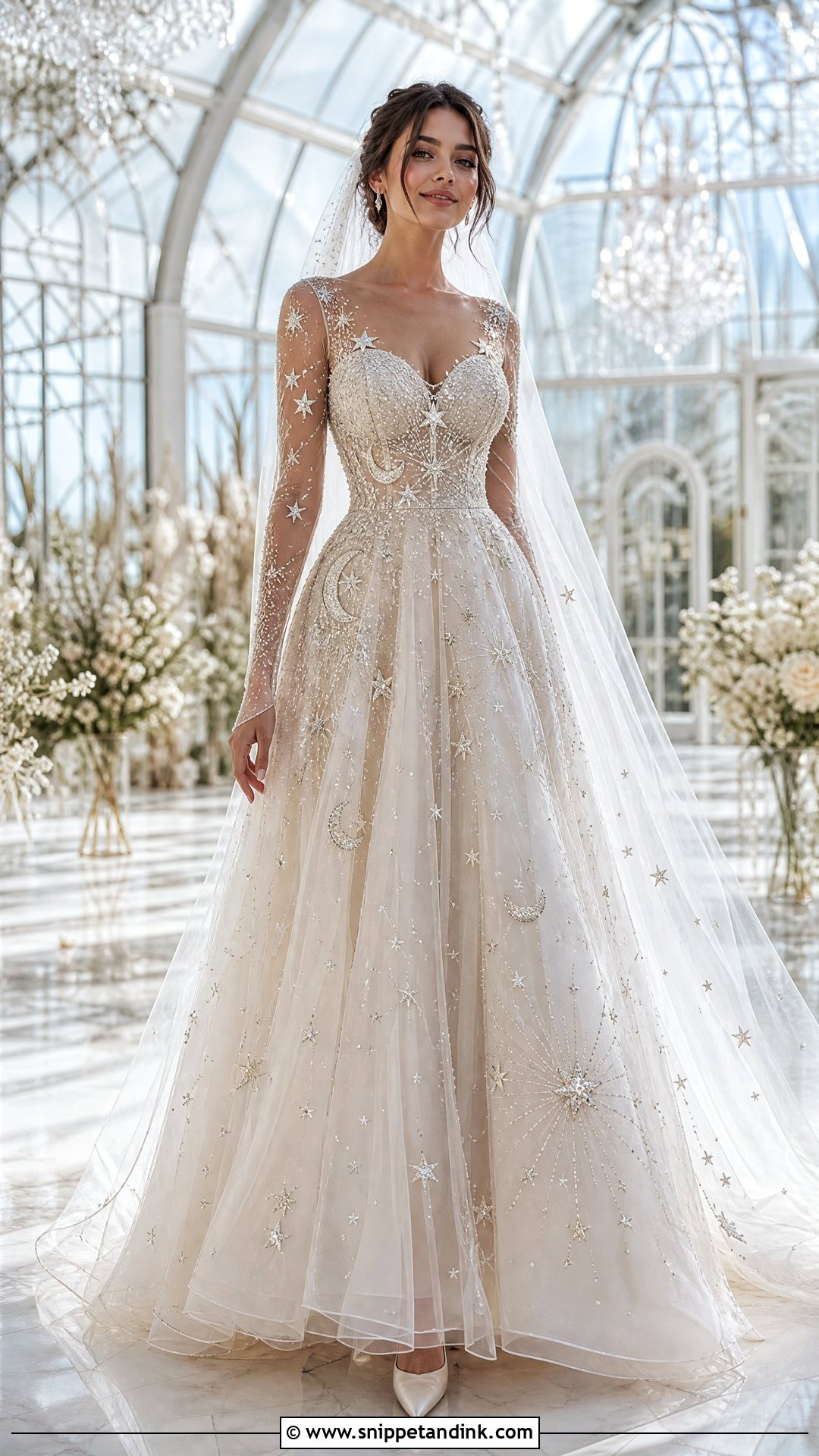
Stars, moons and scattered crystals can make a celestial wedding dress that feels whimsical without being childish. A soft tulle A-line carries the motif best across bodice, sleeves and skirt. The lining decides the effect: nude lining makes the pattern pop and almost floats it, while ivory lining softens it into something traditional. Star studs, silver or ivory pumps and a plain veil with a few matching crystals near the edge are enough. I’d stop there, because star hairpins, star shoes and a star bouquet charm on top tip it into a theme party. Loose waves or a textured low bun suit the movement, and evening or glass-roof venues give the crystals real light to catch.
15. Blush Jeweled Wedding Dress
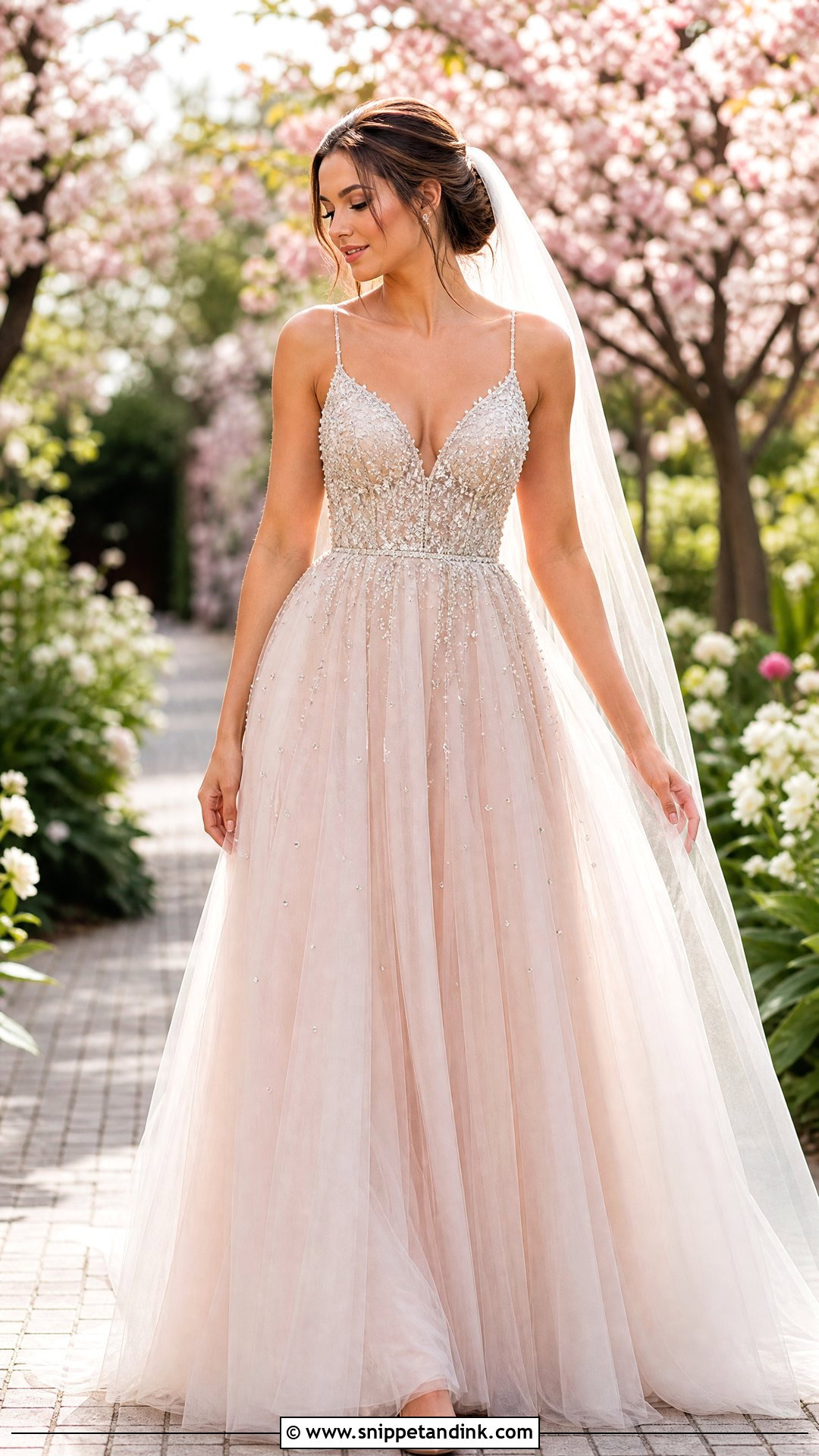
Blush works by sitting a pale rose lining under ivory tulle, so clear crystals, silver beads or pearls stand out against the colour without needing dense coverage. The catch is that blush shifts dramatically with light. Under warm indoor bulbs it can read almost peach, and in shade it can turn nude. I always ask brides to take the gown to a window and then under the shop lights before deciding. Neutral blush pumps, rose-gold studs and an ivory veil tie it back to bridal tones, with a soft twisted updo and fresh makeup. Spring gardens and bright venues with neutral décor flatter it.
16. Champagne Beaded Wedding Dress
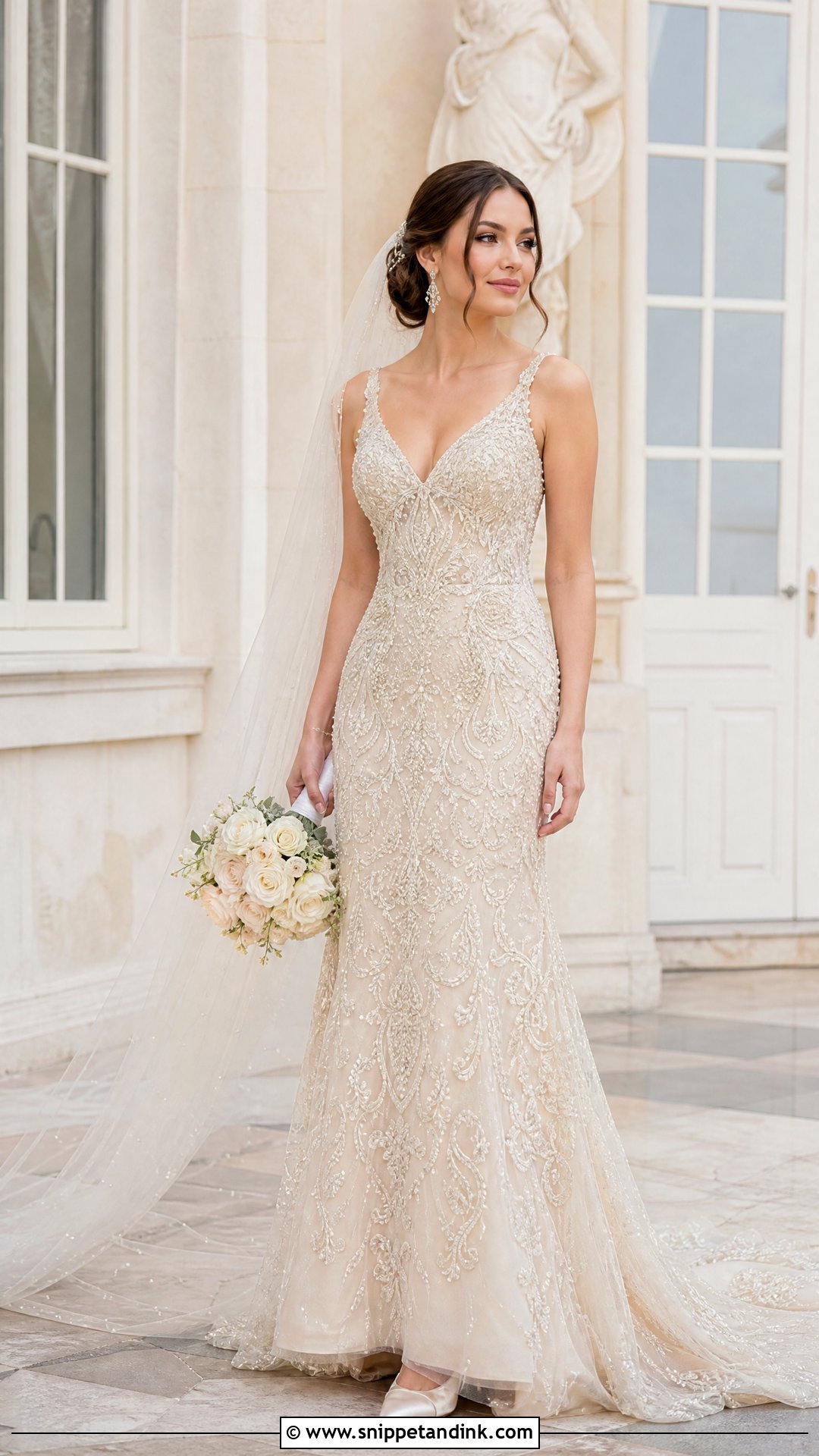
Champagne fabric gives beads a warm backdrop, and pale gold details melt into it rather than shouting. A fitted A-line or flowing sheath with ivory embroidery over light champagne lining is the classic build. Champagne is the shade I see go wrong most often against skin, because some tones turn sallow next to it, so hold the lining against your inner arm and your face in daylight. Keep metals consistent too: gold beading, silver earrings and rose-gold hairpins will look muddled in photos. Champagne satin heels, clear crystal earrings and an ivory or champagne veil with a low chignon keep it refined. Historic venues and ballrooms suit it.
17. Minimalist Crepe Wedding Dress With Crystal Back
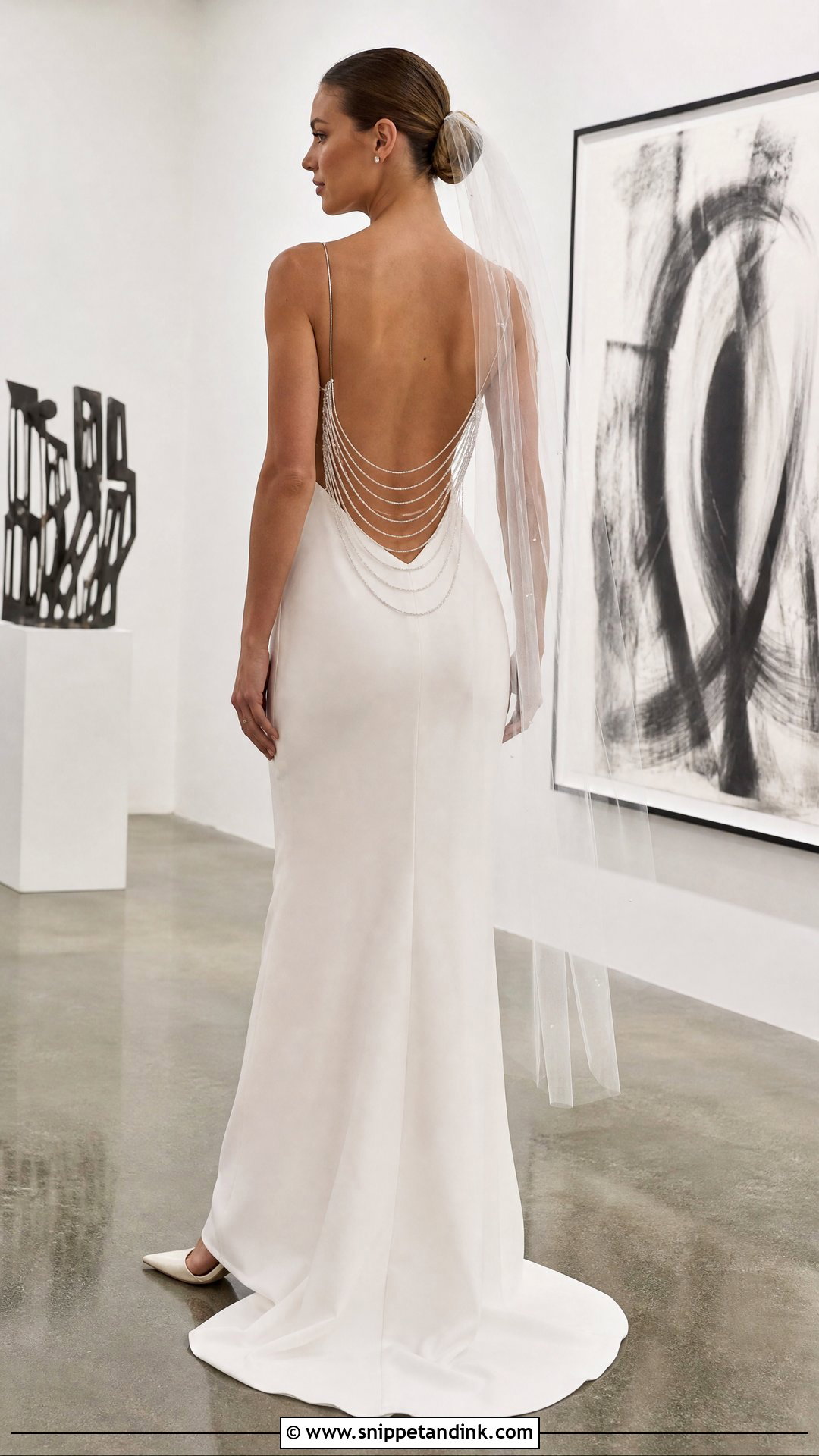
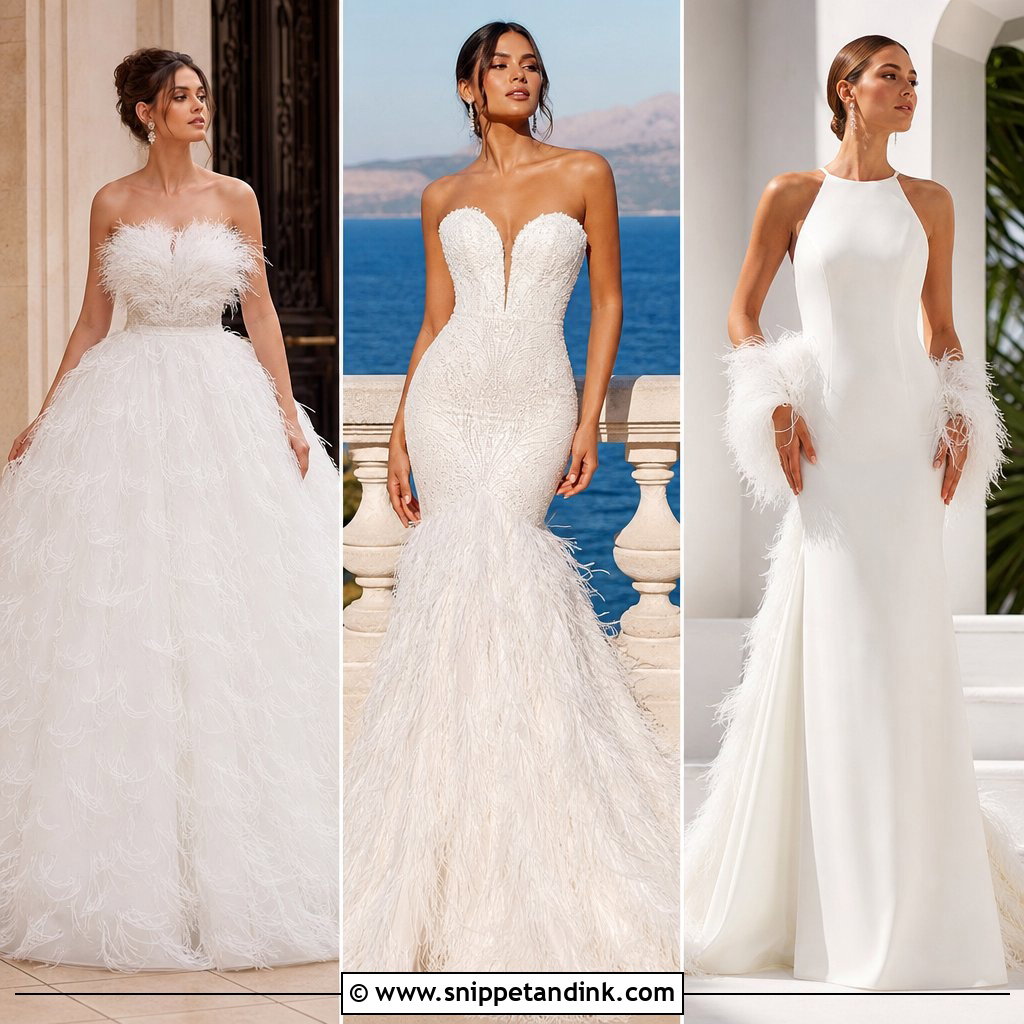
All the sparkle on this gown sits at the back, which is the view guests have for the whole ceremony. A plain crepe front with delicate straps keeps the column or soft mermaid shape clean, then crystal strands or beaded illusion mesh take over behind. Crystal strands love to snag on veil tulle and long hair, so at the trial I run the veil and hair over the back and check nothing catches. A smooth bun with the veil attached below it avoids the problem. Small crystal studs and sleek ivory pumps are all it needs; necklaces and big hairpieces only compete. Modern venues, rooftops and galleries suit its restraint.
18. Jeweled Tea Length Wedding Dress
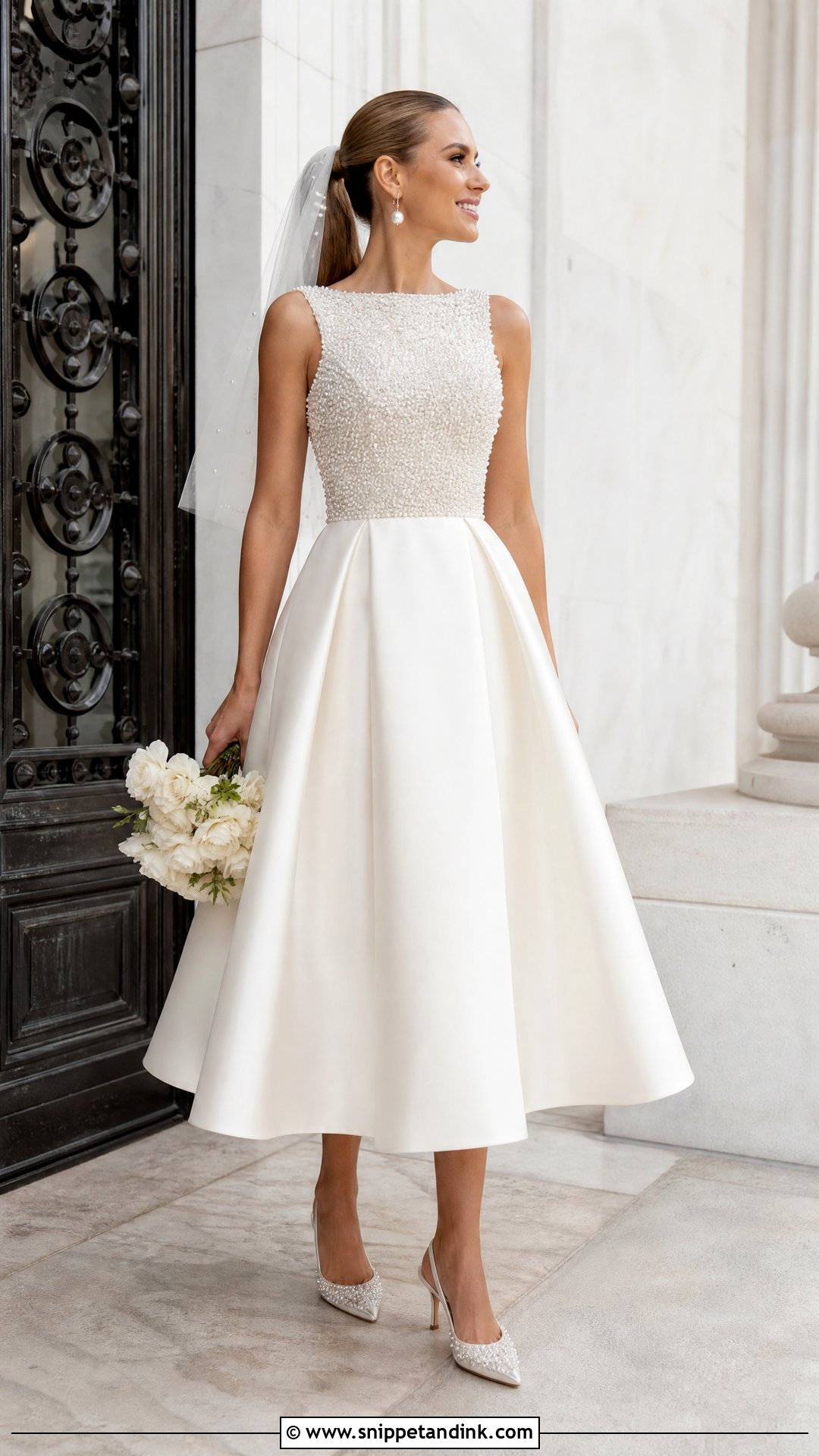
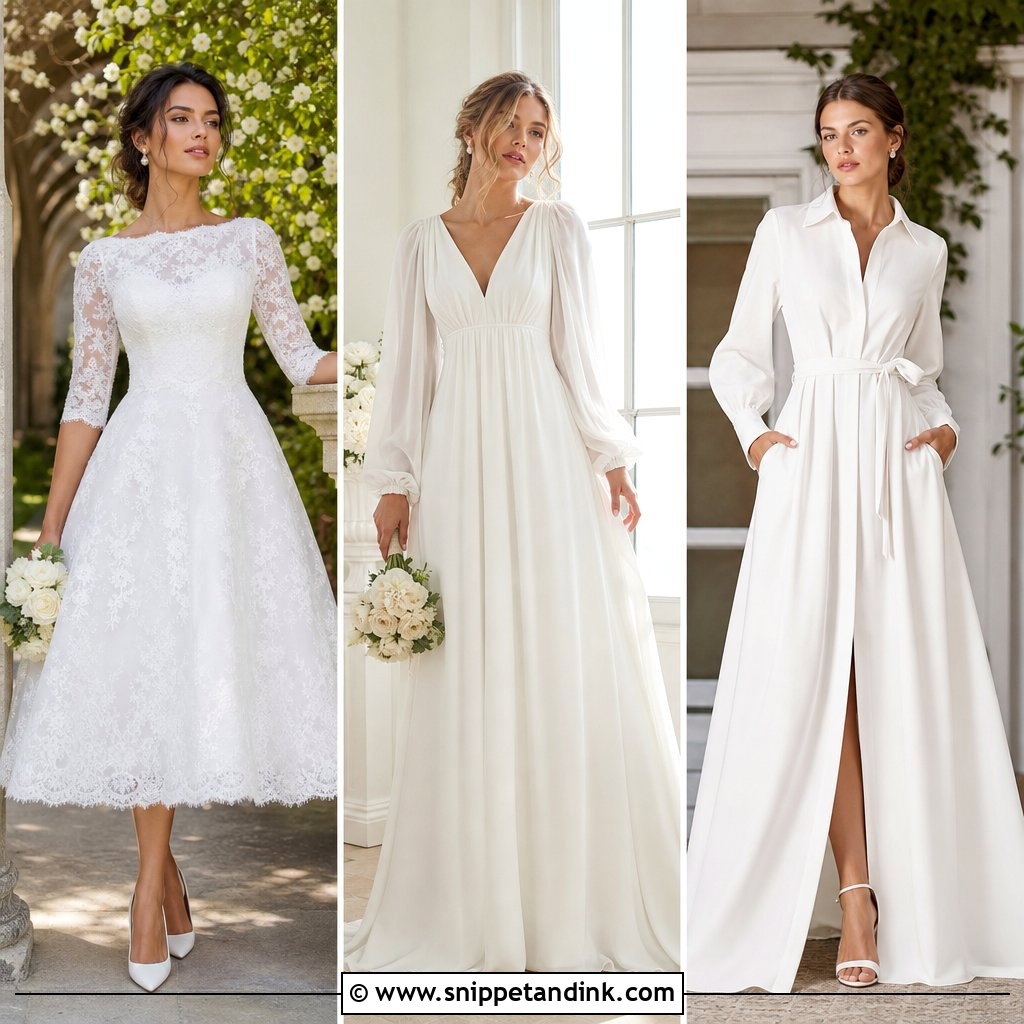
A jeweled tea-length dress puts your shoes on show, so treat them as part of the gown. A fitted bodice in pearls or crystals over a structured skirt between knee and ankle, with a bateau, scoop, or sweetheart neckline, keeps the shorter length clearly bridal. Hem length is unforgiving here: an inch too long and it looks like a mistake. Bring the exact wedding shoes to every fitting. Embellished pointed pumps or slingbacks, pearl earrings and a short veil suit it, with a polished ponytail, bun or curled bob. Courthouse ceremonies, daytime receptions and smaller venues are its home.
19. Beaded Cape Wedding Dress
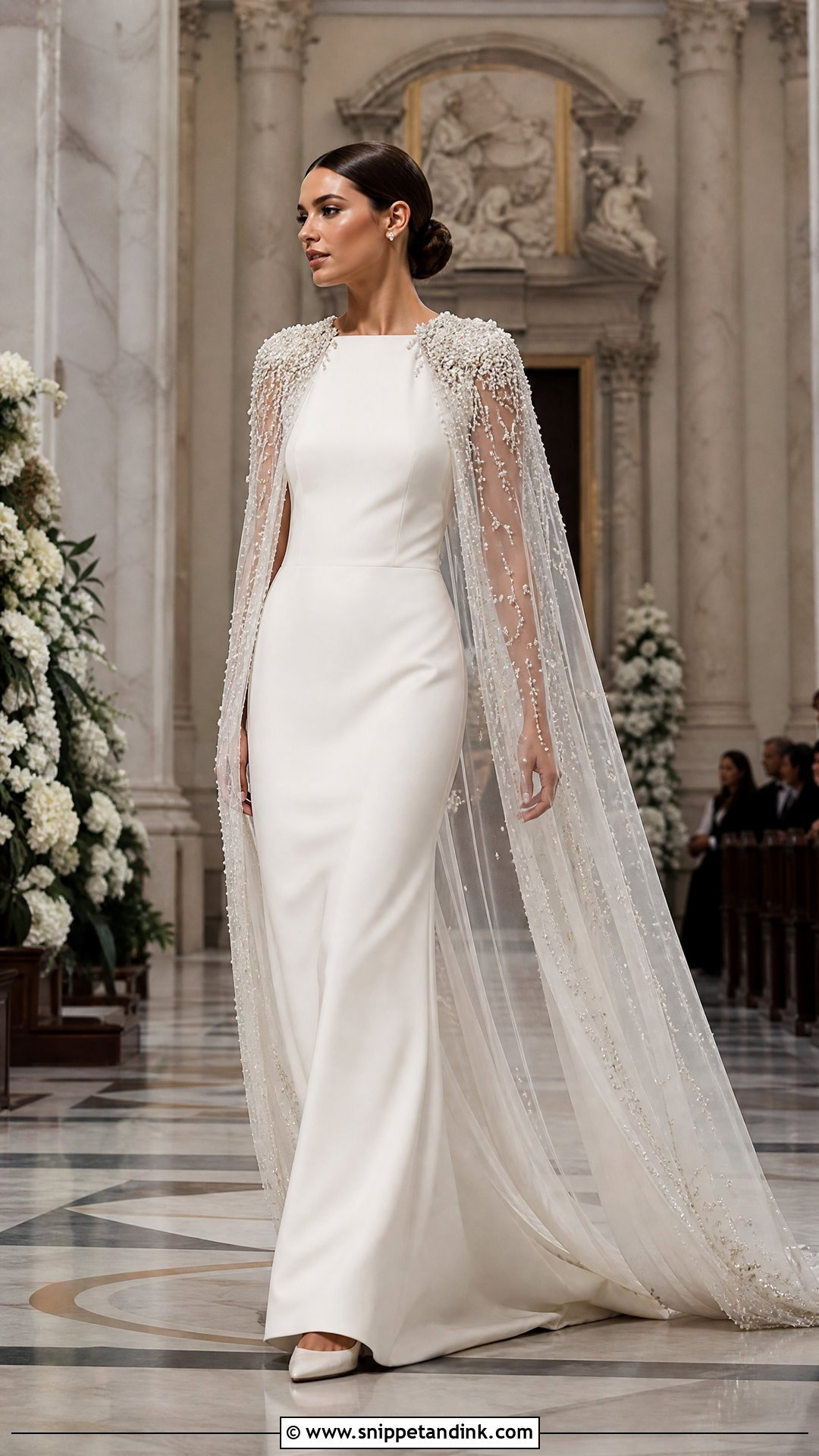
A beaded cape adds drama to a plain gown and can come off for the party. Start with a clean satin, crepe or chiffon column, then a sheer cape in crystals, pearls or beaded embroidery, falling to the floor or into a train. A heavily beaded cape pulls backward on the neck, so I check how it fastens: hidden hooks or snaps at the shoulders spread the weight better than one clasp at the throat. Make sure it can be removed without dragging through your hair. Studs, pointed satin heels and no veil let the cape do the veil’s job, with a smooth low bun underneath. Formal ceremonies and grand entrances suit it.
20. Black Jeweled Wedding Dress
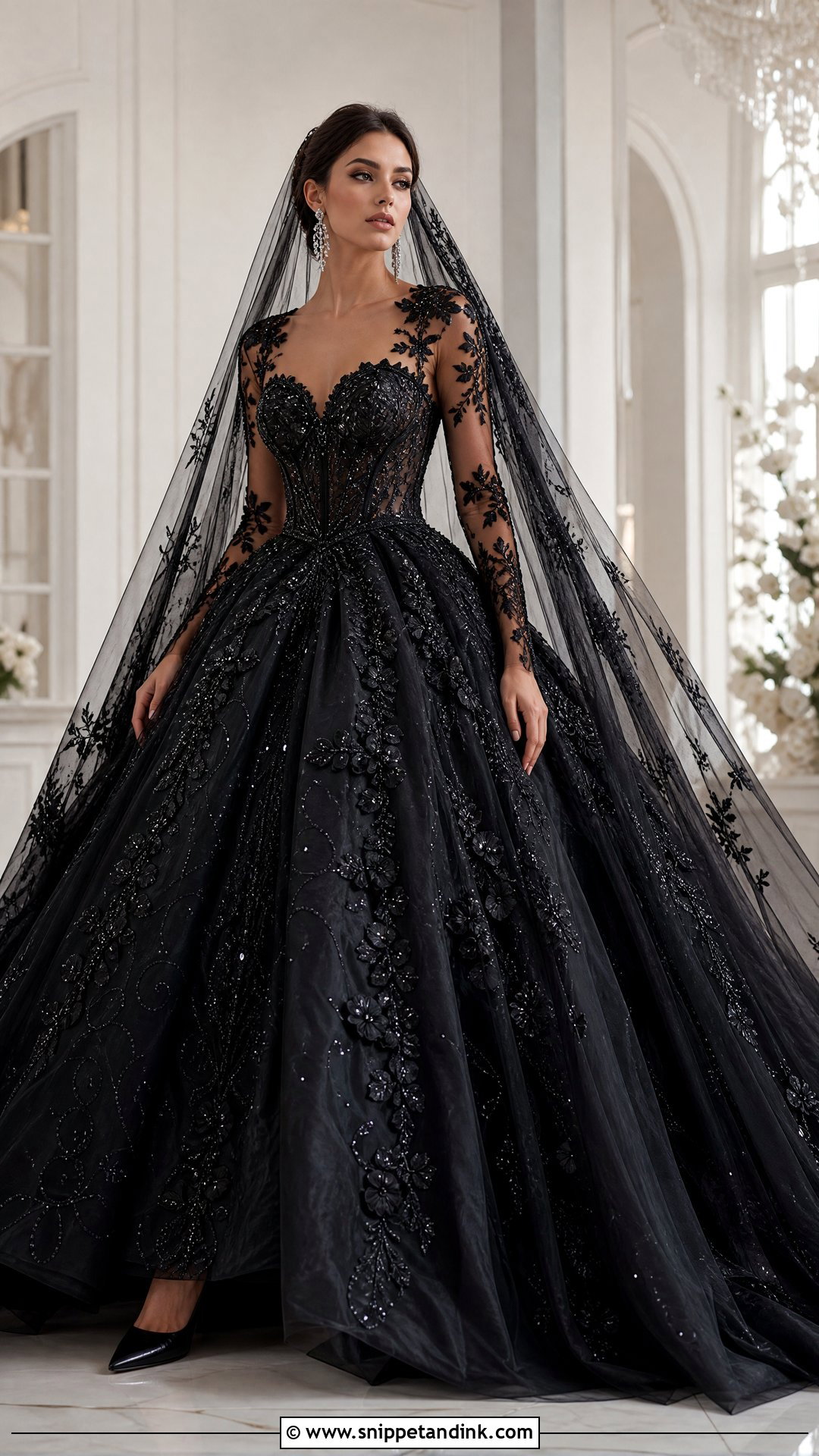
Black on a wedding gown is a bold call, and the embellishment is what keeps it bridal. A structured ball gown or fitted A-line with black crystals, silver beadwork or dark appliqués carries it best. Black eats light, so dark beads can vanish in photographs; a lighter lining under sheer black tulle helps the pattern show, and I’d always look at the dress under bright light before buying. Black pointed pumps, crystal drops and either a sheer black veil or an ivory veil for contrast finish it. A polished updo and few accessories keep it sophisticated. Modern ballrooms, galleries and dramatic historic spaces suit it.
Loose Beads, Cleaning and Storing It Flat
Put a few spare beads, a needle threaded with matching thread and a couple of safety pins in your emergency bag. If a strand starts to unravel on the day, a quick knot stops the rest running off; don’t pull a hanging thread, because that is how a whole row comes away.
After the wedding, take the gown to a cleaner who handles embellished bridal wear and point out every glued area, since some solvents and heat soften adhesive. Ask them to test a hidden stone first.
For storage, I never leave a heavily beaded dress on a hanger. The weight pulls on the shoulders and stretches the fabric over months. Fold it loosely with acid-free tissue between the layers, especially between beaded sections so they don’t rub, and keep the box somewhere cool and dark rather than in a loft that swings between hot and cold.
Daylight, Candlelight and How Much Shine You Want
The jeweled gowns that work best balance sparkle against proportion, construction and the ability to move. Crystals give sharp brilliance, while pearls and seed beads read softer. Silhouette, neckline, lining and accessories should agree with each other, not compete. Before you buy, look at the dress in daylight and under warm light, sit and walk in it for a few minutes, and ask the shop how loose beads are repaired after alterations. In my experience, small earrings, simple shoes and a plain veil are nearly always enough. Use the looks above to work out how much shine actually feels like you.
You'll Like These Ideas:





Leave a Reply