
Moroccan bridal fashion is built on handwork: braided trim, knotted buttons, embroidery done stitch by stitch, and layers that change how a bride moves. A takchita pairs an inner dress with a decorative outer robe and a mdamma belt, while a caftan is the single-piece, lighter alternative, and most weddings use both across the henna night, the main entrance and later changes. When I help a bride choose, I look first at the moment each outfit is for, the venue and season, how many hours she’ll wear it, and the quality of the embroidery. Shoes and jewelry should support that craft, never compete with it. The looks below run from a green henna caftan to a pearl-covered reception gown, each styled head to toe.
Turn the Robe Inside Out Before You Pay
Moroccan bridal wear ranges from fully hand-finished to entirely machine-made, and the price should reflect which one you’re buying. Both can look good from across a room. Up close, and in photographs, the difference shows. When I check a takchita or caftan for a bride, I go through these in order:
- Look at the reverse of the embroidery. Hand stitching shows small knots and slight irregularity; machine embroidery is perfectly even and usually sits on a stiff backing.
- Run a finger along the sfifa. Hand-braided trim has a gentle variation in tension and is attached with tiny hidden stitches. Glued or loosely machine-stitched trim lifts at the corners first.
- Check the aakad buttons. Hand-knotted thread buttons are firm and evenly spaced down the front; loosely wrapped ones flatten after a few wears.
- Inspect the corners at the neckline and front opening, where the trim has to turn. Clean, mitered turns are the mark of a careful maker.
- Feel the lining. Breathable cotton or silk makes hours in a warm hall bearable, while a synthetic lining under velvet traps heat.
None of this makes machine work wrong. It’s sensible for a single evening change or a rental. Just be sure you know which one you’re paying for.
1. White And Gold Moroccan Wedding Takchita
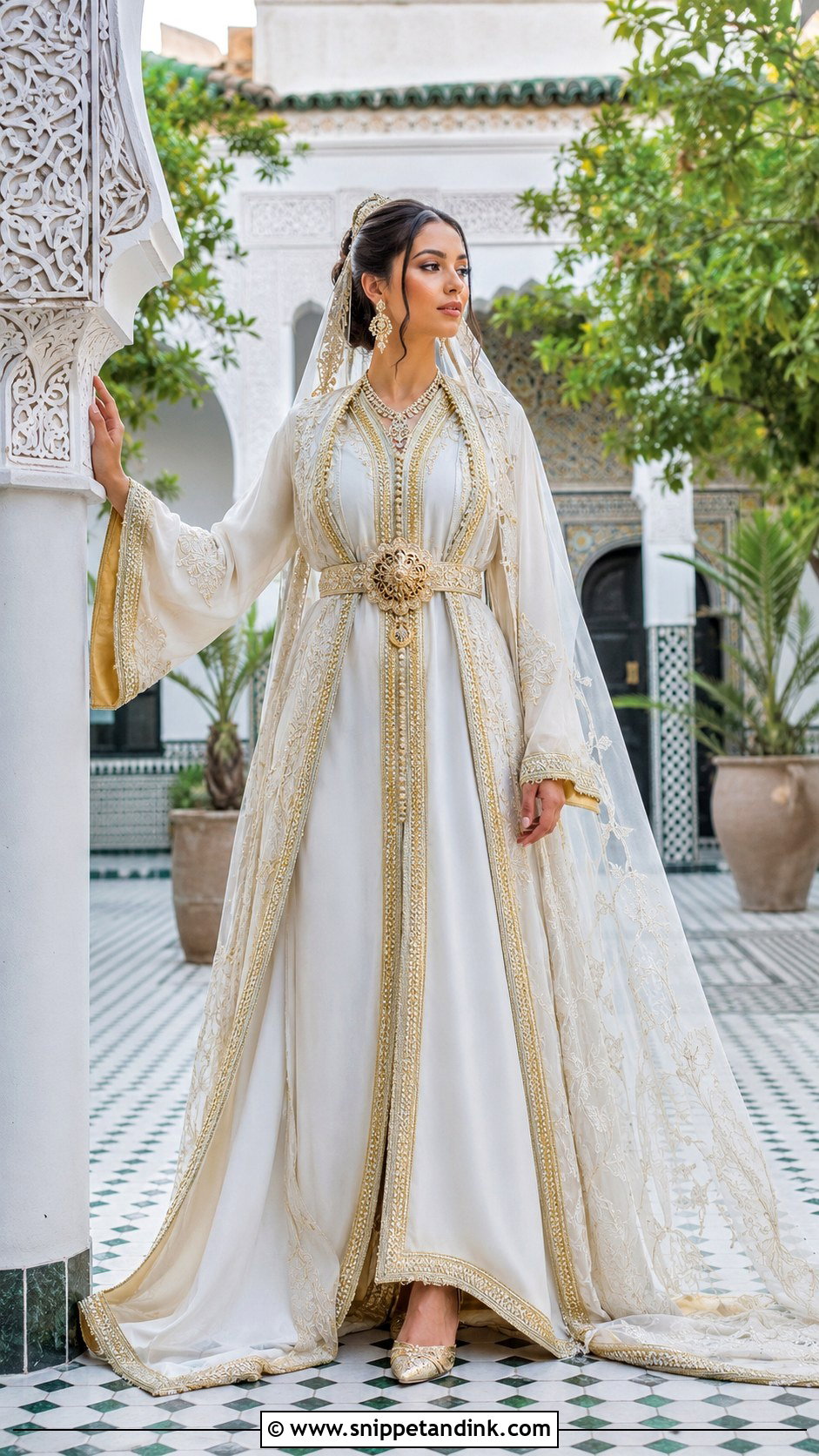
White and gold is the classic pairing for the main entrance, and it depends on restraint. Choose a flowing white inner dress under a lightly structured outer layer with gold sfifa, fine embroidery and covered aakad buttons, then a wide gold mdamma to give it ceremony. I keep the neckline modest and gently curved, because a deep or square neck outlined in heavy gold starts to look like a picture frame rather than part of the dress. Pointed gold babouche or low metallic heels stay comfortable under the floor-length skirt. Gold drops, a polished updo and a sheer white veil set below the crown finish it for the entrance, portraits or an evening reception.
2. Green Moroccan Henna Ceremony Caftan
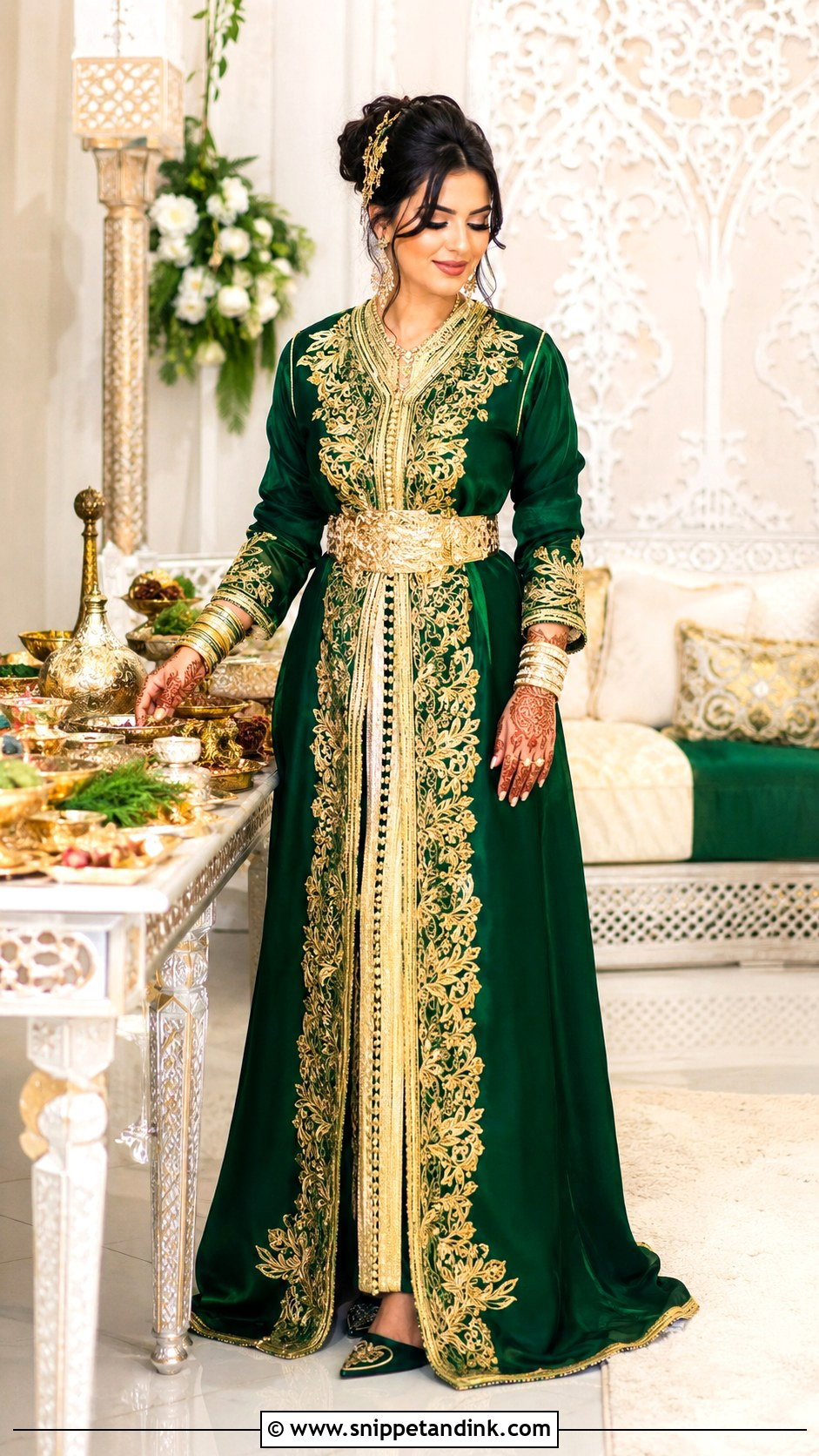
Green is traditionally tied to the Moroccan henna ceremony, which is why so many brides wear it that night. Let the season pick the fabric: emerald velvet for cooler months, silk crepe when the room will be warm and full of relatives. Gold embroidery at the neckline, cuffs and center opening carries the design. I’d keep the jewelry to stacked bangles you can slide up the arm, since the henna artist needs clear access to your hands and wrists for a long sitting. A coordinated gold belt, green pointed slippers and a small embroidered pouch complete it, with a side-parted updo or long waves and a few gold hair ornaments. Defined eye makeup holds its own against the deep color.
3. Pearl White Moroccan Bridal Caftan
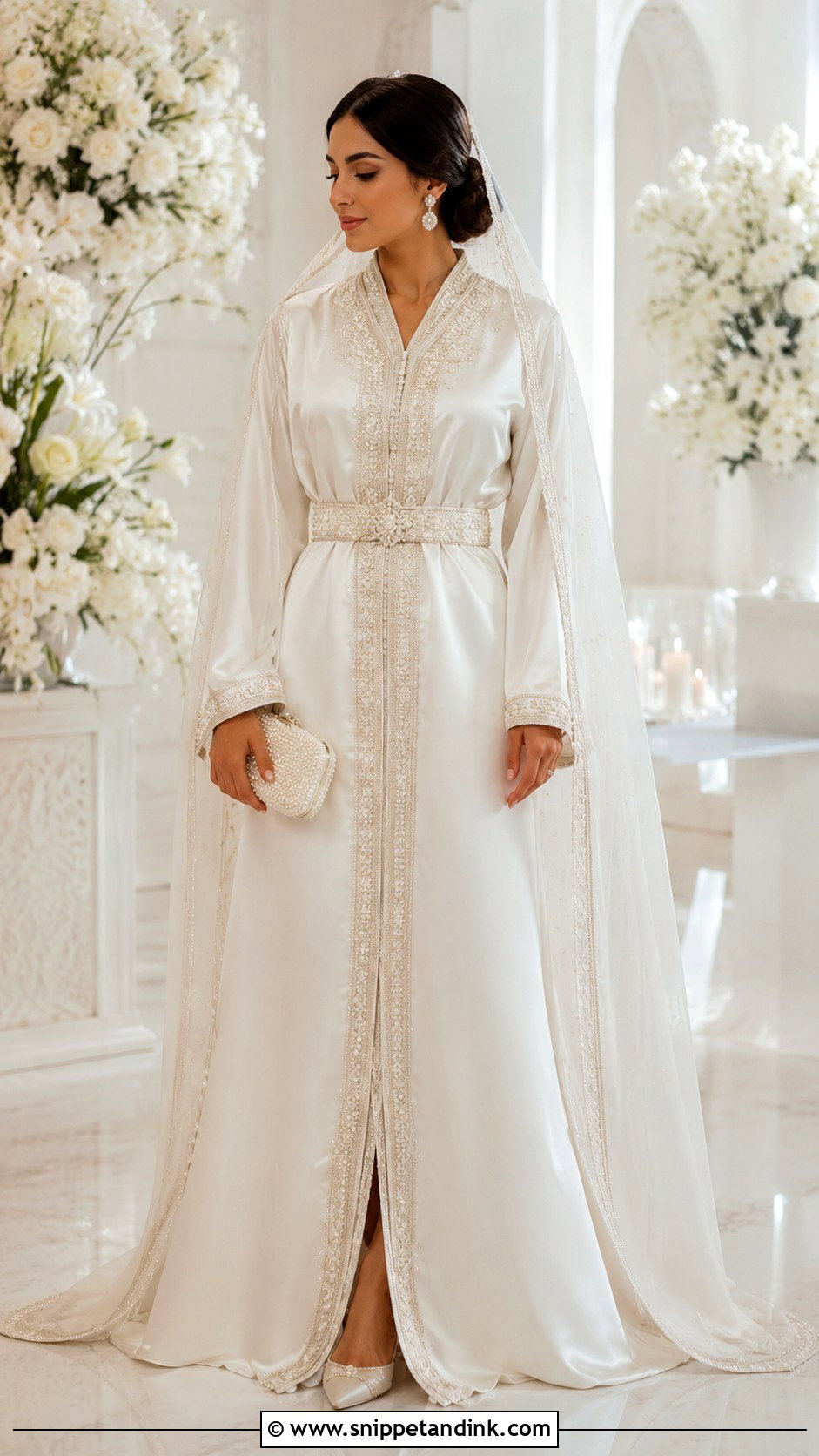
Pearls on white give you light without color. Choose a floor-length silk, satin or smooth crepe caftan with pearls along the neckline, cuffs, shoulders and front trim, and a matching pearl-covered belt for a clean monochrome line. Pearls on the shoulders catch loose hair and veil netting, so I prefer them flat-set there rather than dangling, and I pin long hair up. Ivory pointed-toe heels stay discreet under the hem. Pearl drops and a slim bracelet continue the theme, with a low bun, a pearl comb and a light fingertip veil. It suits an engagement, a civil ceremony, a small wedding or a reception entrance in a modern venue.
4. Red And Gold Moroccan Wedding Caftan
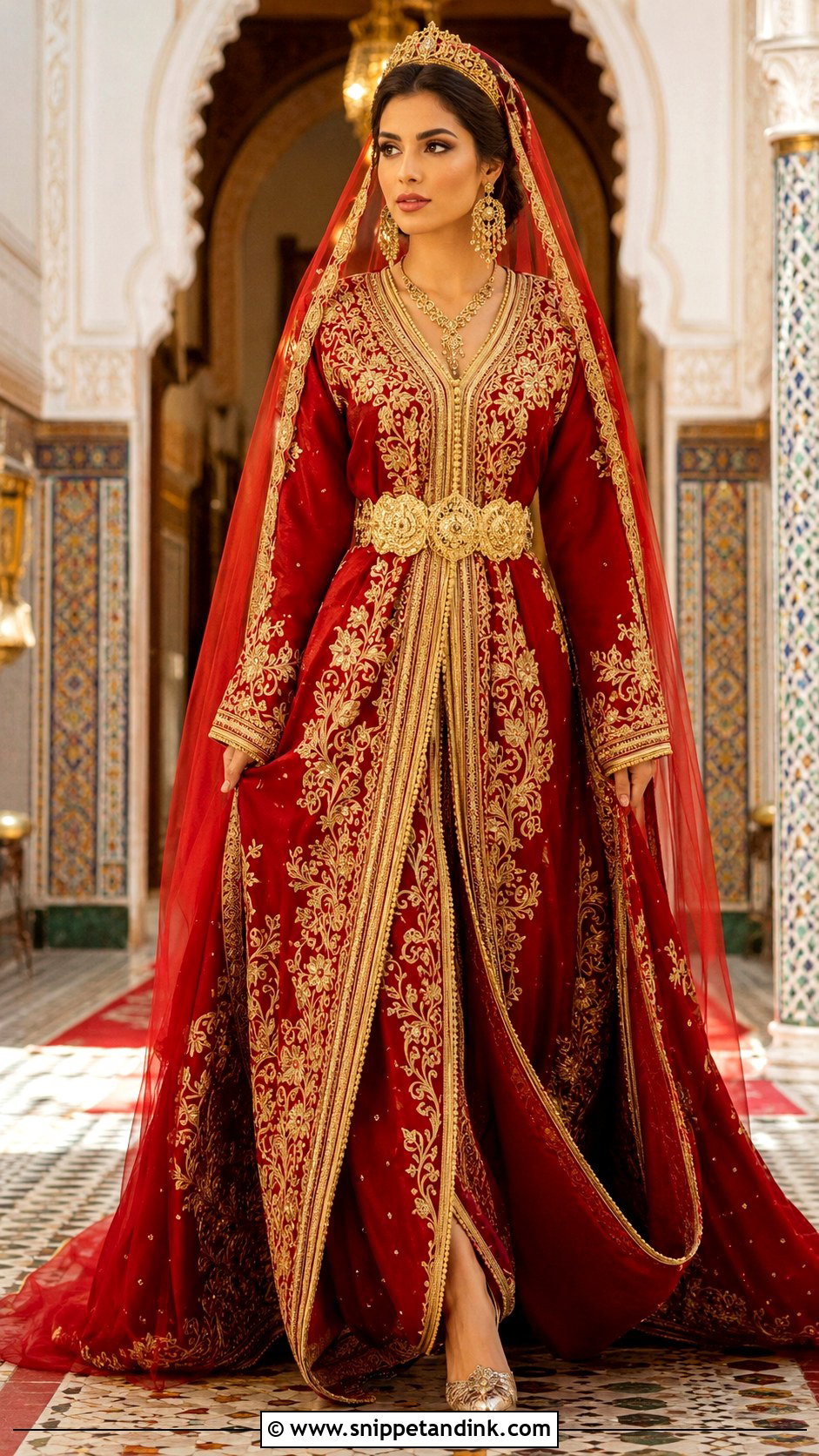
Red is the confident one. A ruby, garnet, or deep crimson caftan with gold threadwork concentrated along the front, neckline and wide sleeves needs almost nothing else. Shade matters under artificial light: bright tomato reds can turn orange under warm bulbs, while a deeper garnet stays rich, so I usually steer brides toward the darker end. A sculpted gold mdamma balances the fluid shape. Gold heels or embroidered babouche, a small structured clutch, chandelier earrings, one statement ring and a smooth low bun are enough. A light red veil with a narrow gold border adds ceremony. Evening halls and candlelit receptions are where it belongs.
5. Blush Pink Moroccan Wedding Takchita
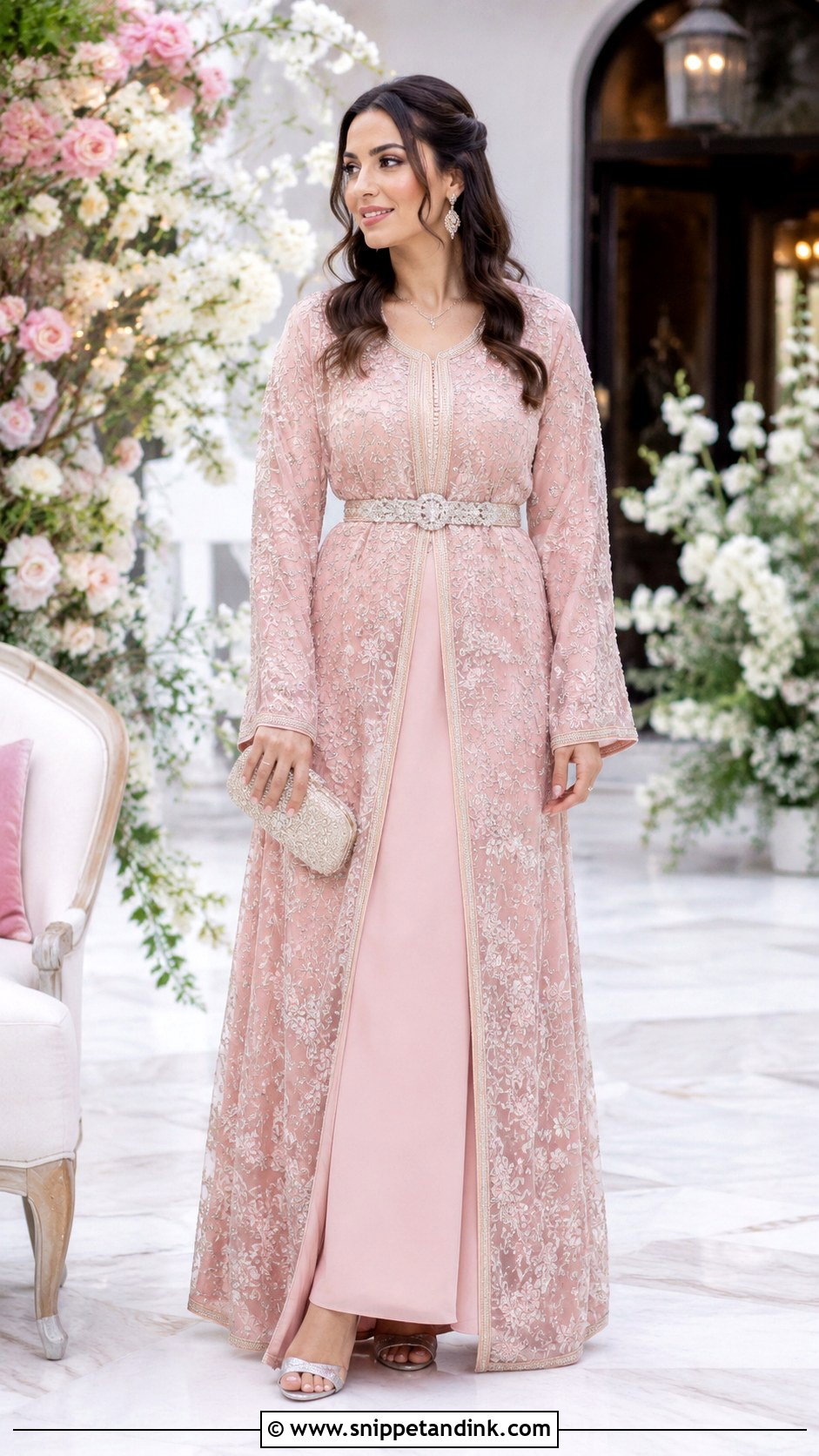
Blush pink suits the softer moments of the wedding, such as a daytime reception or a quieter later change. Start with a pale rose inner gown and a sheer or satin outer layer with silver embroidery, crystal beading or tonal floral motifs, and keep the mdamma slim and silver. Pale pink can wash out fair skin in photos, so I hold a swatch up to the bride’s face in daylight before we commit, and we move toward dusty rose if she looks pale beside it. Silver pointed heels, a small beaded clutch and delicate drop earrings finish it. Soft curls, a low chignon or a half-up style all work, with fresh makeup, rosy cheeks and a muted pink lip.
6. Royal Blue Moroccan Bridal Takchita
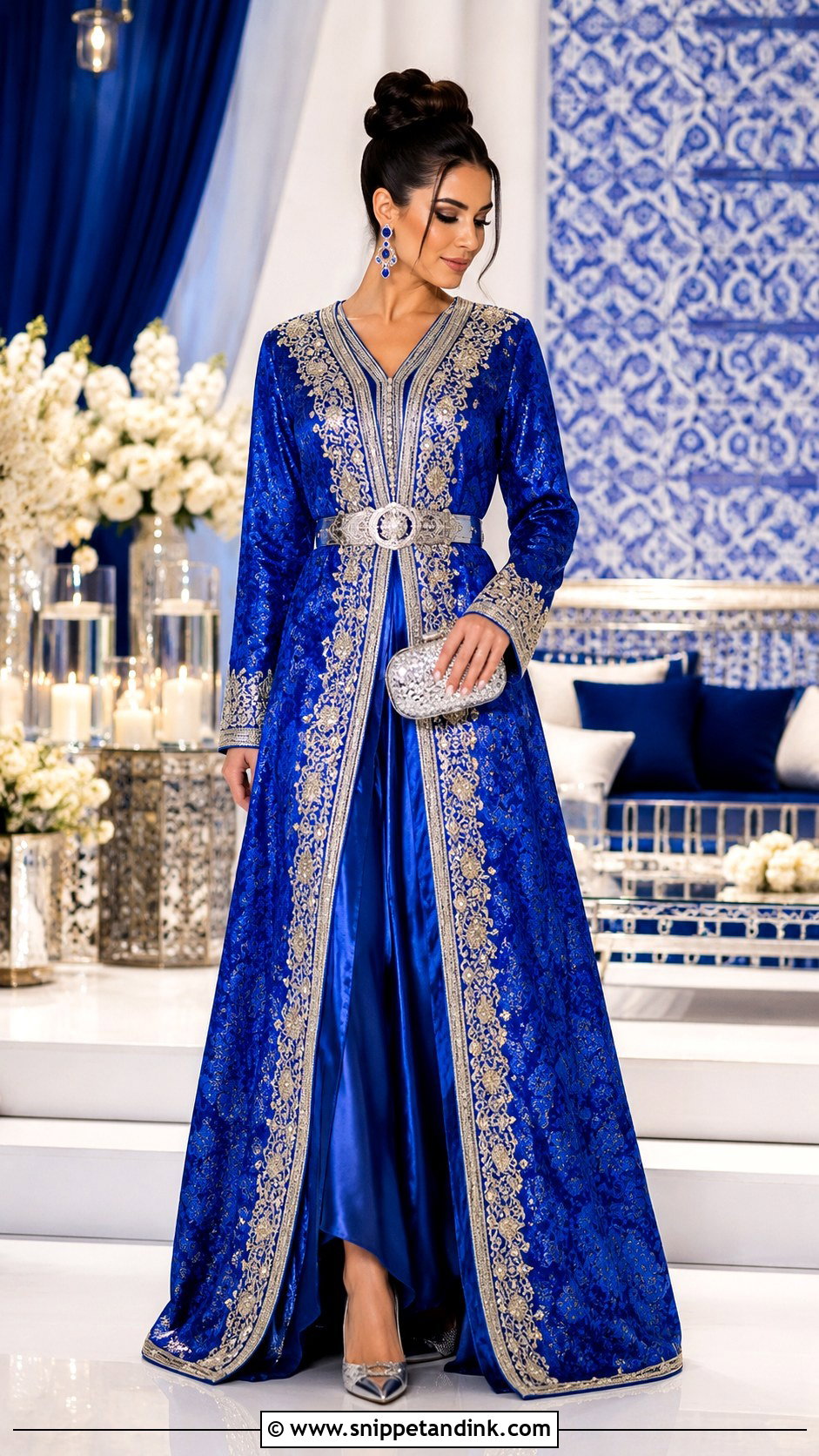
Royal blue keeps the grandeur of a white takchita while giving you real color. A satin or brocade inner dress under a slightly lighter blue outer layer creates depth, and silver embroidery, crystals and hand-finished edges brighten the deep tone. Set an engraved silver belt at the natural waist. With a long, full skirt, I’d choose silver babouche over heels, since they’re steadier on stage steps and stairs. Sapphire-style earrings, a silver bracelet and a compact crystal clutch complete it, and a high bun shows off the neckline embroidery. It’s made for an evening entrance or a blue-and-silver reception.
7. Champagne Moroccan Wedding Caftan
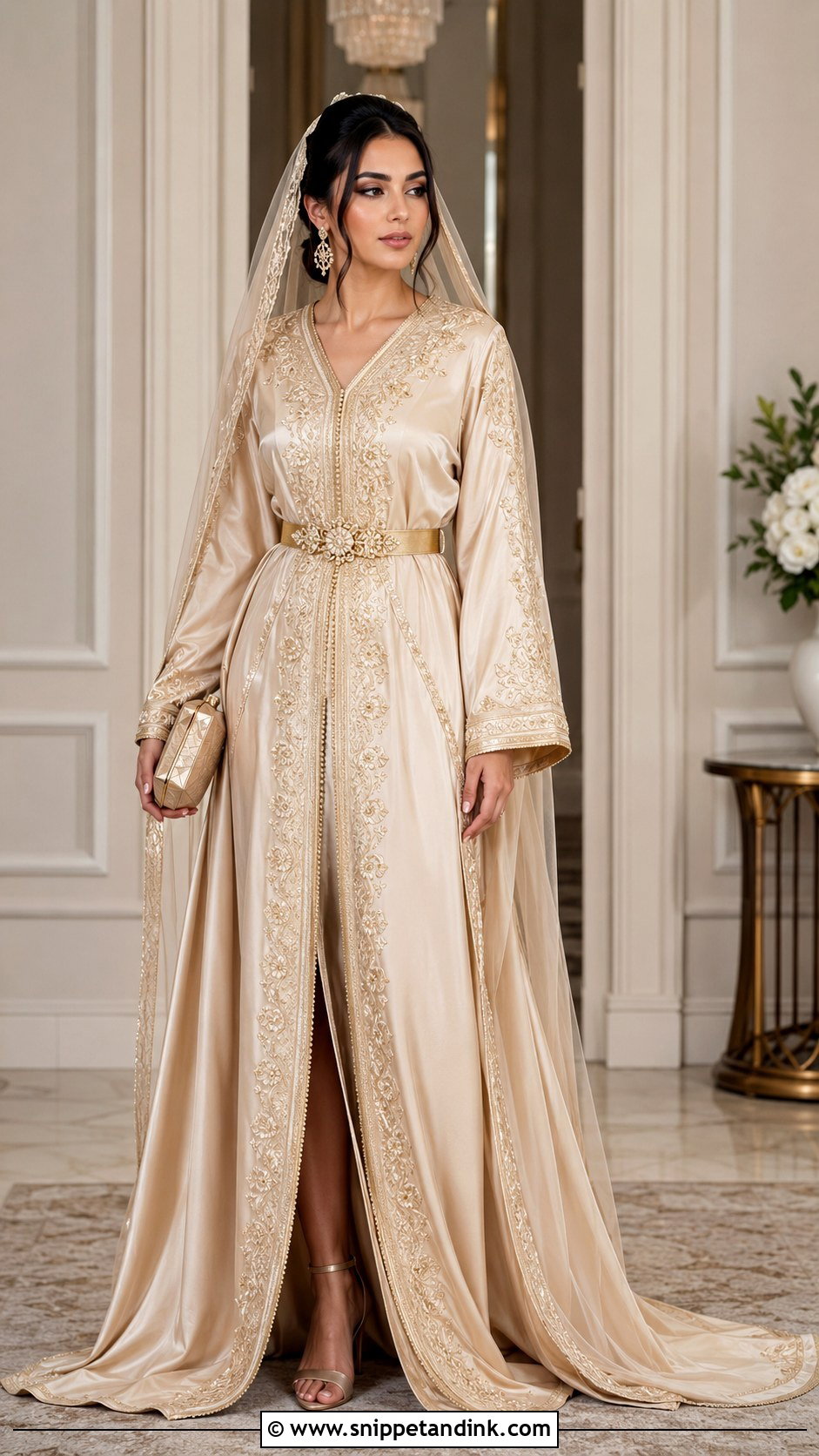
Champagne is the neutral for brides who find white too cold. The embroidery should be tonal, close in color to the fabric, so it only shows as light moves across it. Silk satin, brocade or fluid crepe all take this well, with antique gold edging and small crystals for dimension. Keep the belt simple in champagne or brushed gold. Nude-gold heels lengthen the line, and a compact metallic clutch, warm gold earrings, a smooth bun and a sheer champagne veil complete it. One drawback I always mention: tonal embroidery disappears in flat, low light, so it suits a well-lit hotel reception better than a dim hall.
8. Burgundy Velvet Moroccan Wedding Takchita
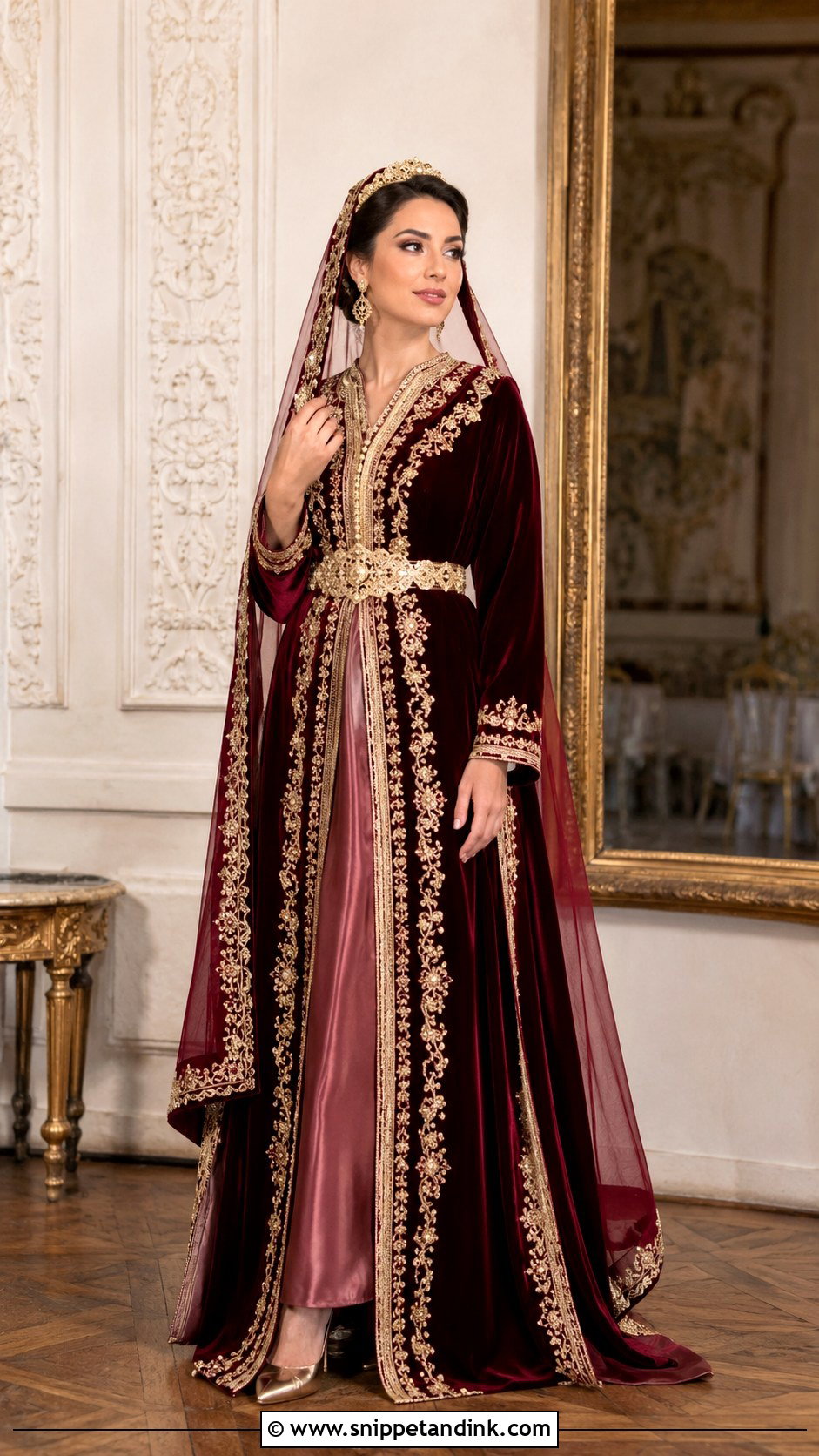
A burgundy velvet takchita is the outfit for a cooler season. The smart construction puts velvet on the outer layer only, with a lighter satin or crepe inner gown, so you get the depth of velvet without wearing two layers of it. Gold embroidery at the sleeves, neckline and center closure and a broad antique-gold belt complete the traditional look. Shoes depend on how much you’ll stand and walk: closed-toe gold heels, burgundy babouche or embellished low mules. Gold earrings, a low sculpted bun and a velvet-edged veil finish it. Velvet marks wherever it’s pressed, so I steam it from the inside and never let anyone iron it. Winter weddings and historic venues suit it.
9. Ivory Moroccan Wedding Dress With Cape
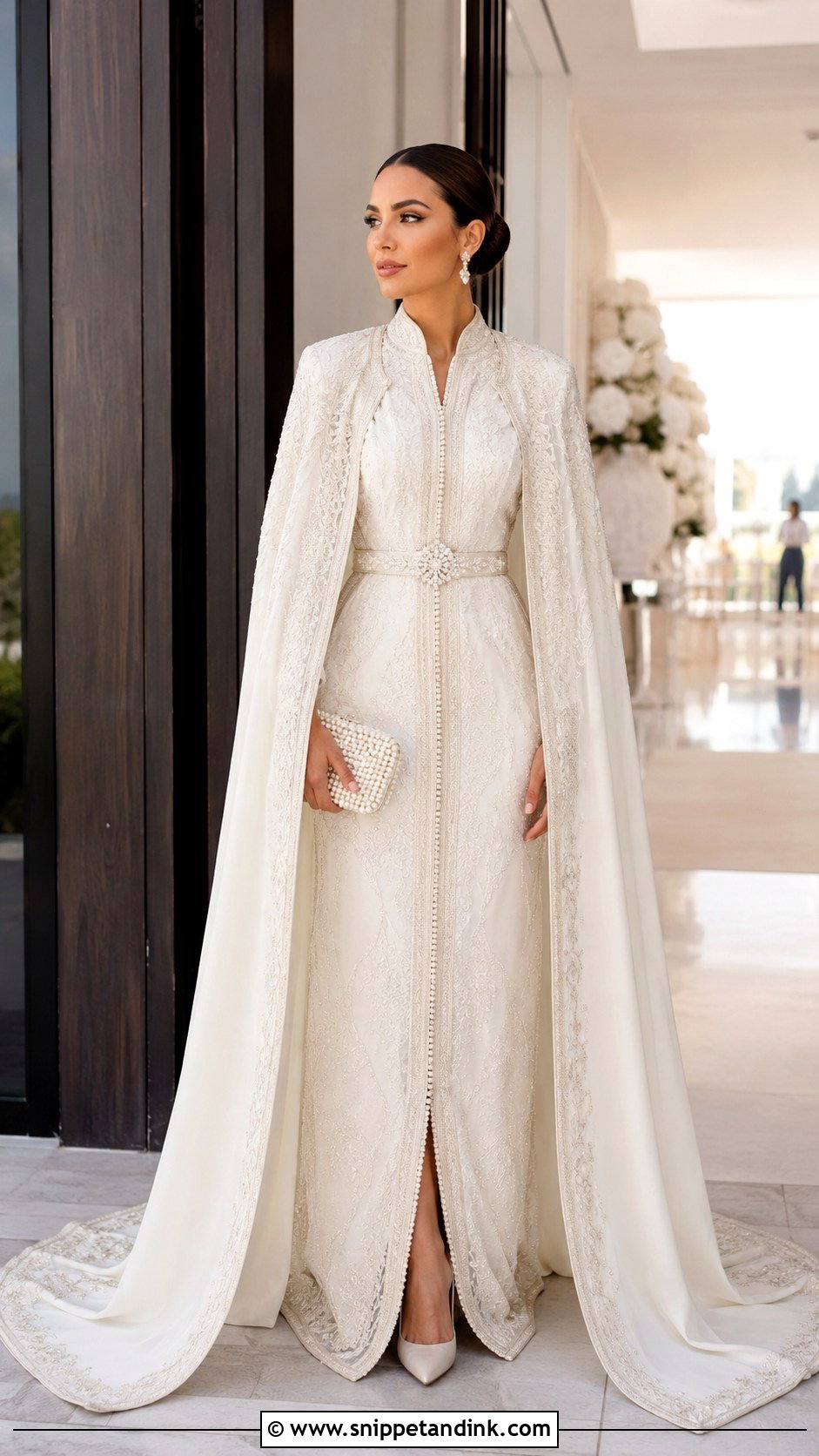
This is the bridge between a Western gown and Moroccan craft. Start with a modest column or softly flared ivory gown with long sleeves and a clean neckline, then add a detachable cape edged in sfifa-style trim, gold embroidery or small pearls, falling from the shoulders to the floor without hiding the gown’s shape. I check cape length on a staircase at the fitting, because a floor-length cape is easy for someone behind you to step on as you walk down. A jeweled belt slimmer than a traditional mdamma defines the waist. Ivory heels, a structured pearl clutch, a sleek bun and small earrings finish it. Skip the veil so the cape stays the feature for the entrance or formal portraits.
10. Silver Moroccan Bridal Caftan
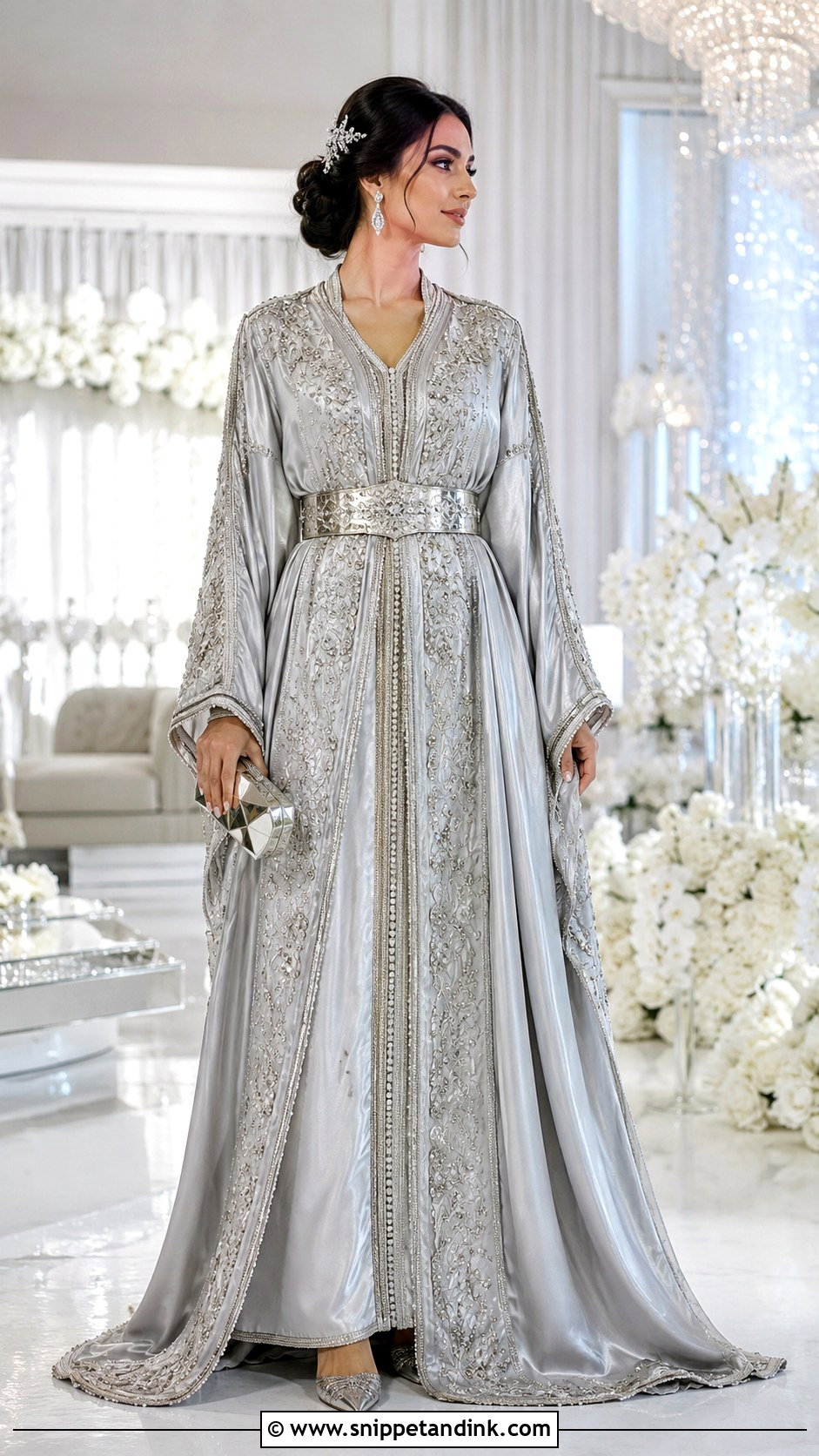
Silver reads bright at night, which is both its appeal and its risk. Choose cool silver silk or satin with tonal embroidery, crystals and narrow metallic trim concentrated at the neckline, cuffs and front opening rather than spread everywhere; a caftan covered edge to edge in silver can glare under a photographer’s flash. A structured silver belt adds ceremony. Crystal heels or silver pointed babouche go under the hem, with diamond-style drops and a small mirrored clutch. A smooth low bun, a crystal comb and an optional light gray or silver-edged veil finish it. It looks sharpest against white flowers, mirrors and cool-toned lighting.
11. Emerald Moroccan Wedding Takchita
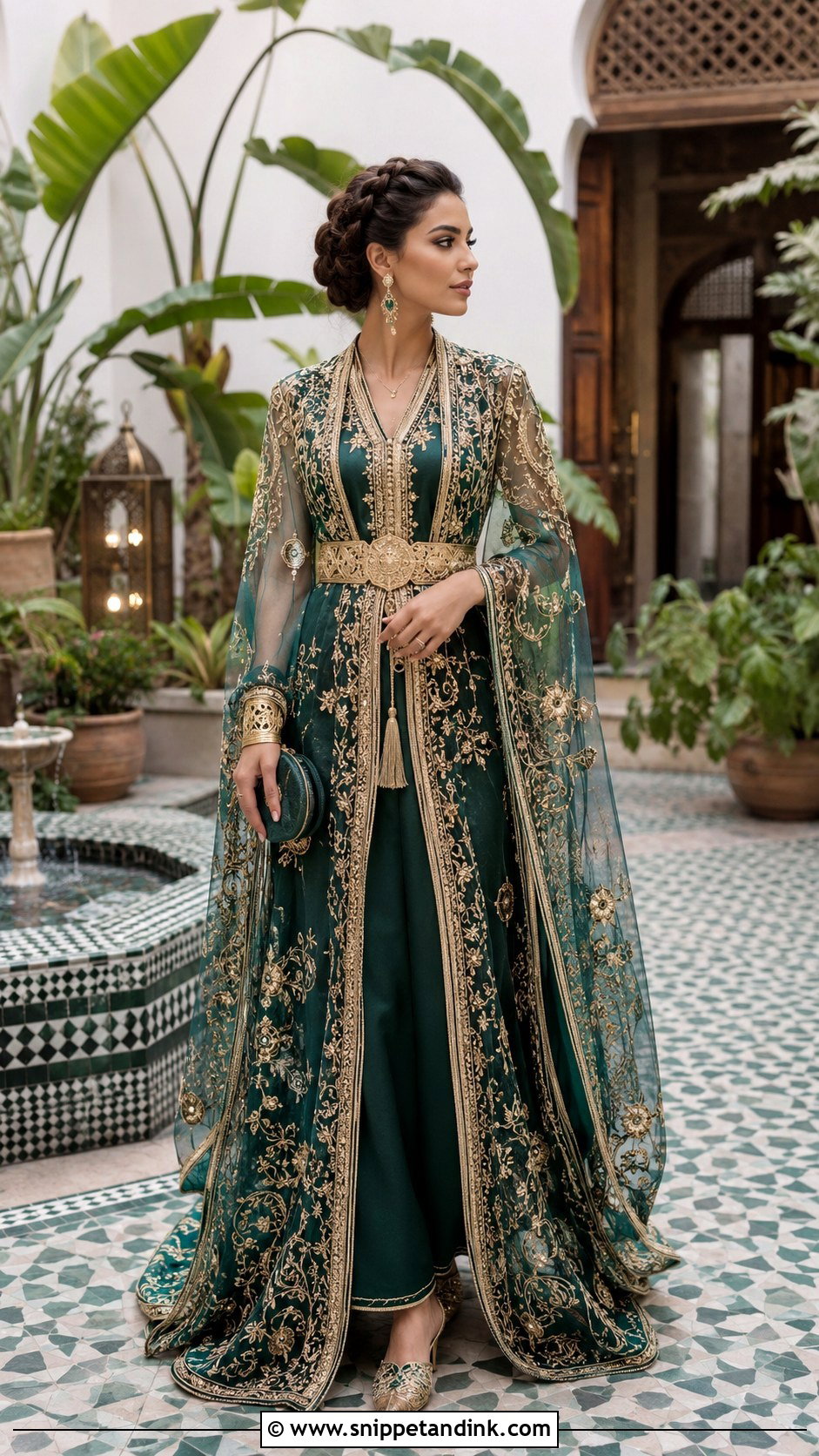
Two shades of emerald give this takchita its depth: a jewel-green inner dress under a slightly darker sheer robe worked with gold vines, flowers or hand-finished borders. A detailed gold mdamma adds contrast and a strong waist. For a long celebration I’d put you in metallic mules or pointed gold babouche rather than heels, since you’ll be standing for photos with relatives between entrances. Gold earrings, a cuff bracelet and a small green clutch are enough. A braided updo or smooth center-parted bun shows the neckline and jewelry. It works for the henna night, a reception change or an entrance in a venue full of greenery and gold.
12. Rose Gold Moroccan Wedding Caftan
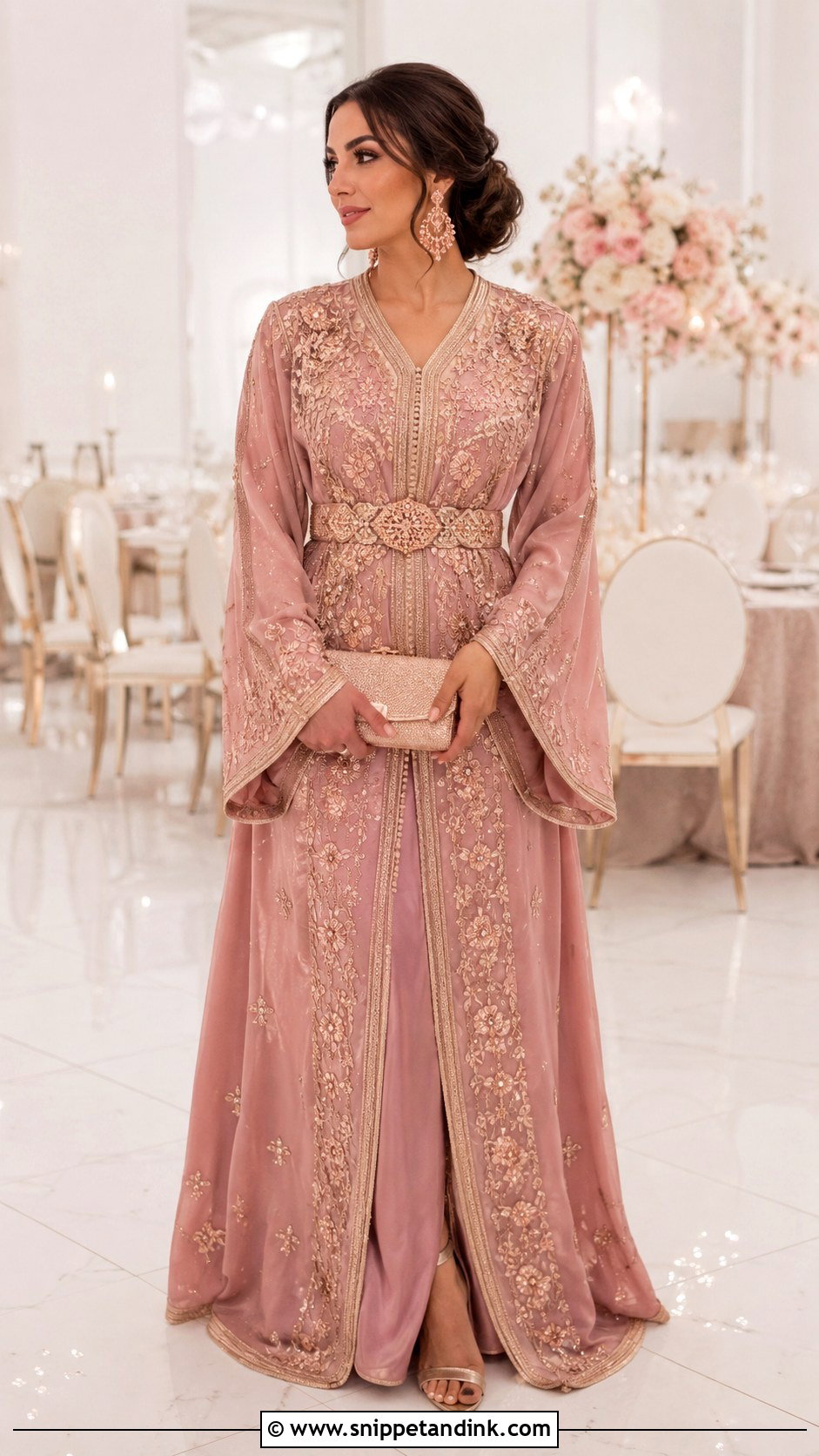
Rose gold sits between soft pink and warm metal, and it’s kind to warm and neutral skin. Choose a dusty rose caftan with rose-gold threadwork, tiny crystals and embroidered borders along the sleeves and front, with a belt that has a simple central clasp. Stay in the same family for every accessory: muted metallic heels, a compact blush clutch, rose-gold drops and a delicate bracelet, plus a low textured bun. Mixing in yellow gold or silver breaks the effect immediately. Makeup can be softly defined eyes, warm highlighter and a neutral rose lip. It’s a romantic choice for a reception change, an engagement or a modern Moroccan look.
13. Navy And Gold Moroccan Bridal Caftan
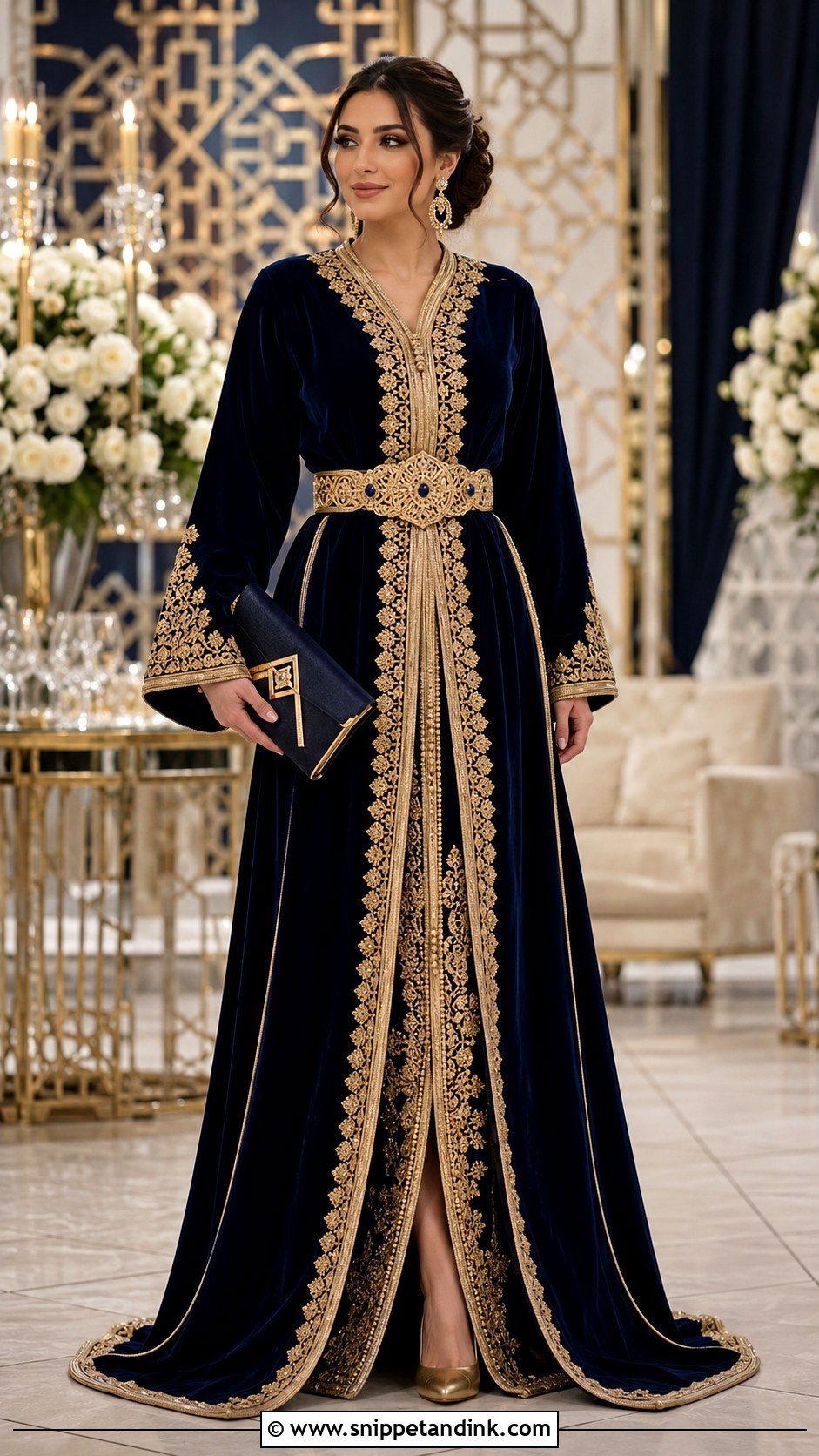
Navy and gold look regal at an evening wedding, with one caution I always raise: in dim light and in some photos, navy reads almost black. If that matters to you or your family, choose a navy with some sheen, like satin or brocade, which keeps the blue visible better than matte velvet. Place the gold decoration around the neckline, sleeves and center seam to lengthen the figure and frame the face, and add a wide gold belt. Closed gold heels or metallic mules depend on the weight of the dress. Medium gold earrings, one bracelet, a plain navy clutch and a neat updo finish it for a winter celebration or a dramatic evening change.
14. Pastel Blue Moroccan Wedding Takchita
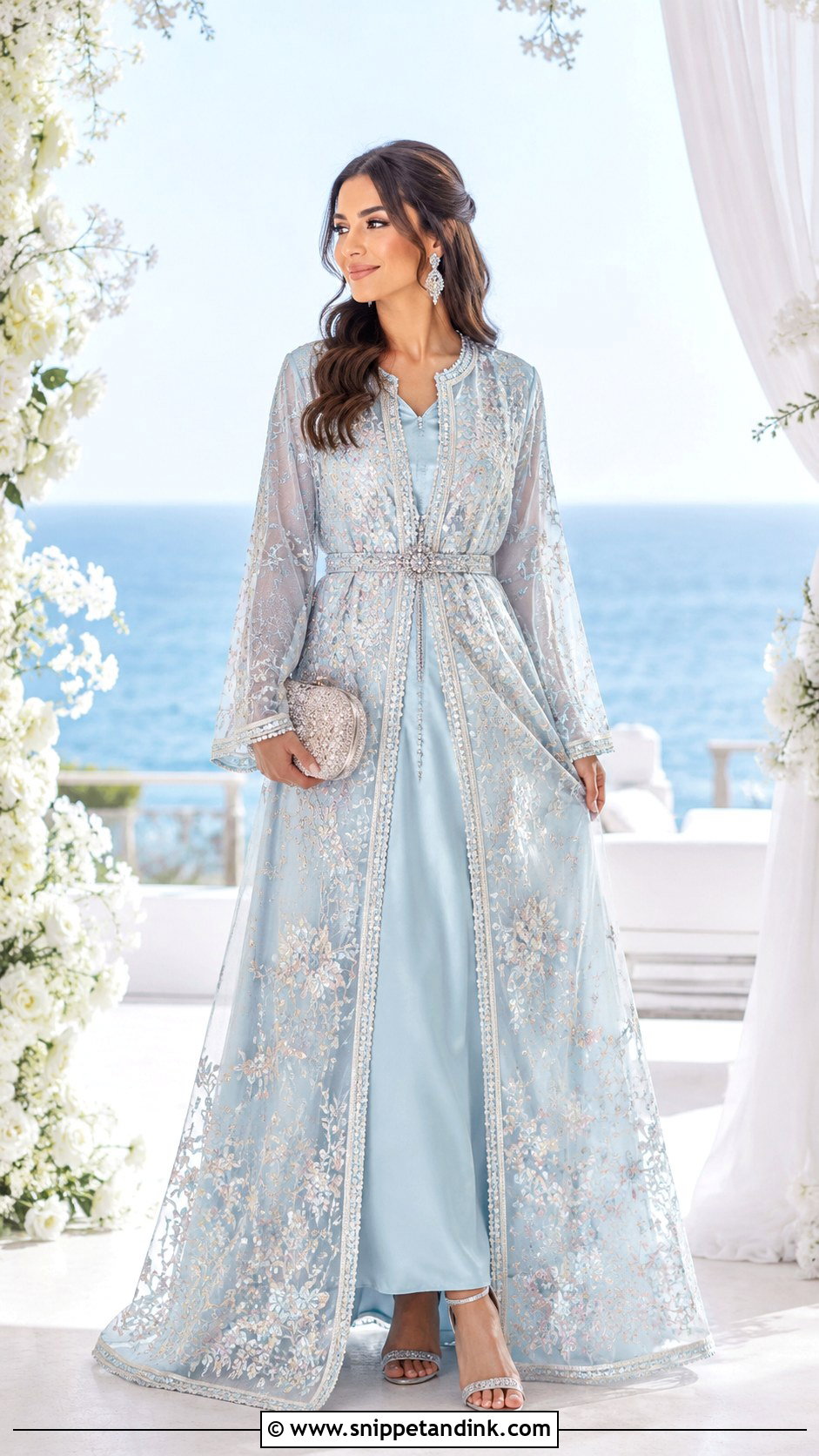
Pastel blue is a spring and summer color, at its best by daylight. Start with a powder-blue satin inner dress and a sheer outer layer embroidered with silver thread, pearls or small flowers, and keep the belt narrow in crystal or silver. Light silver heels, a beaded clutch and simple drop earrings finish it, and loose waves, a soft low bun or a half-up style with a small crystal comb all work. I keep the makeup luminous with a cool pink blush and a natural lip; heavy bronzer fights the coolness of the blue. It suits a daytime reception, a garden or a seaside venue.

15. Gold Brocade Moroccan Wedding Takchita
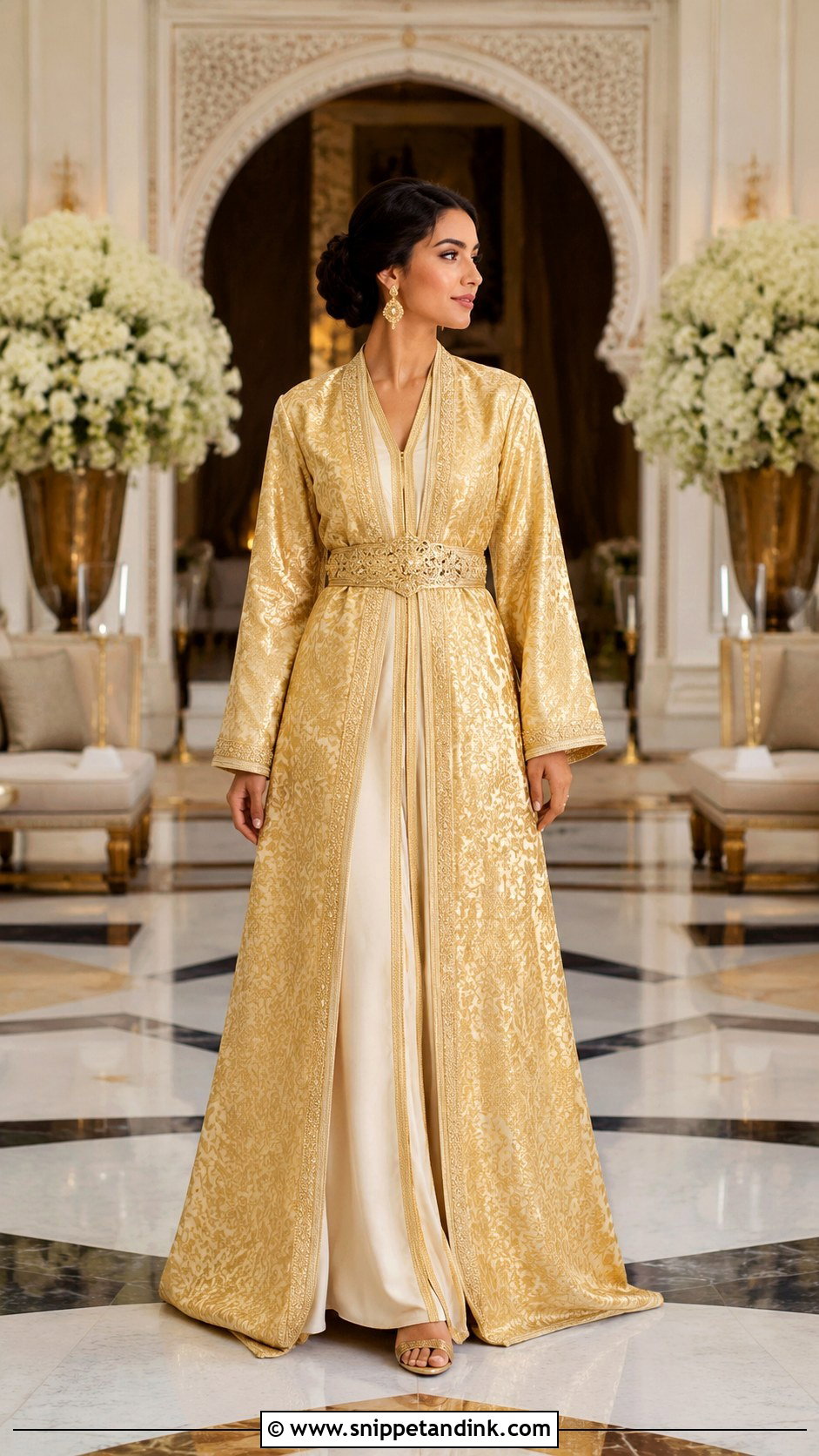
Gold brocade is the loudest outfit on this list, so give it the biggest moment, a key entrance or the main reception appearance. Choose brocade with a clear woven pattern over a plain ivory, beige or soft gold inner gown so the layers don’t fight. At the fitting I check that the pattern lines up at the center front opening; mismatched brocade at that join is the giveaway of a rushed cut. A defined gold belt and plain metallic heels keep the focus on the fabric, and refined drop earrings with one ring are all the jewelry it needs. A structured low bun, softly bronzed makeup and, if you want one, a sheer ivory veil with minimal edging finish it for a ballroom or palace-style venue.
16. Floral Embroidered Moroccan Bridal Caftan
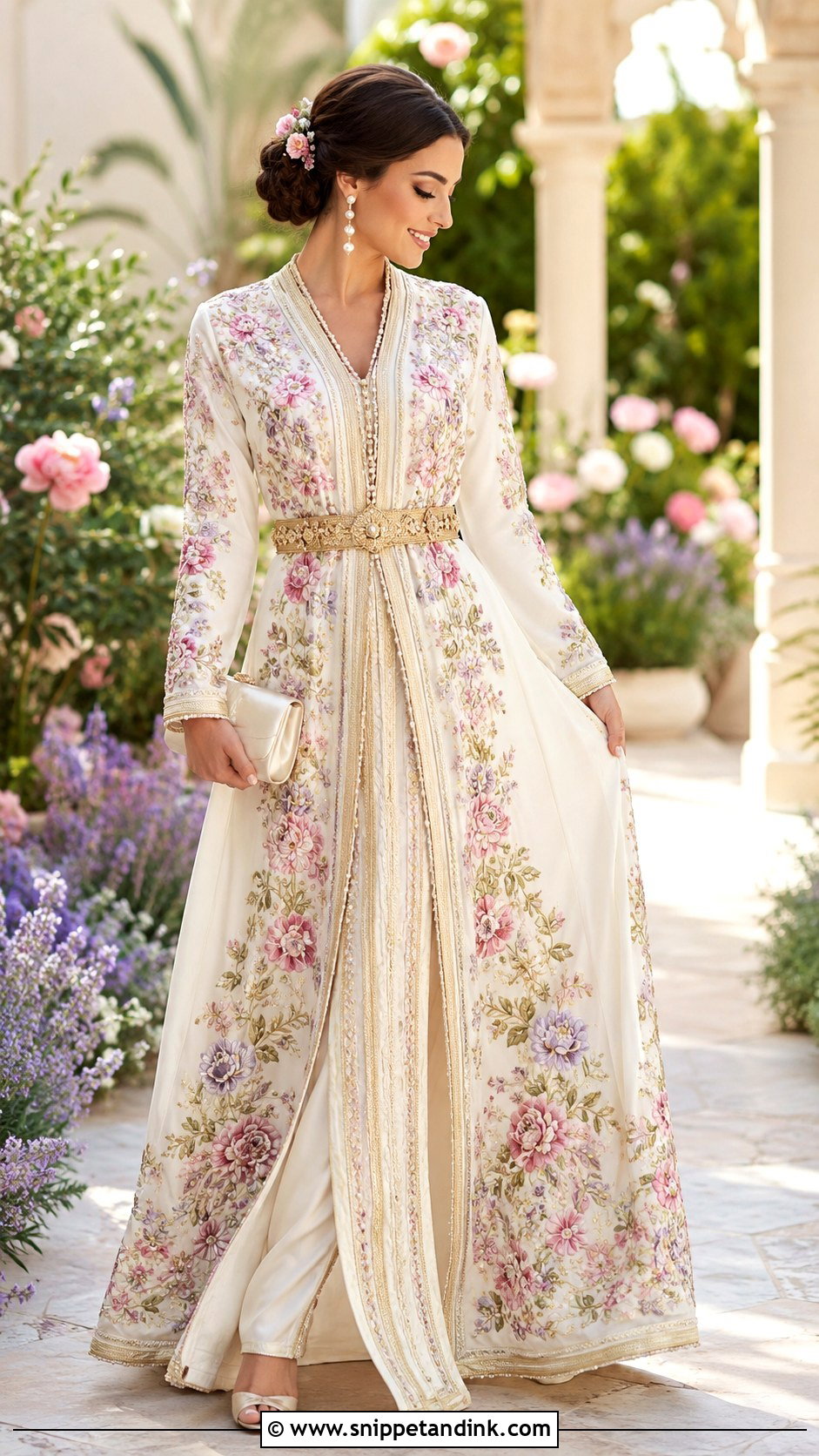
Floral embroidery makes a caftan personal, especially a soft mix of pink, green, lavender and gold on an ivory, blush or pale blue base. Keep the silhouette long and fairly straight so the embroidery leads, with a slim metallic belt that defines the waist without breaking the design. Match your shoes to the base fabric, not to one of the brighter flowers. Picking out one color pulls the eye straight to your feet. Pearl earrings, a simple bracelet, a small satin clutch and a loose low bun with two subtle floral pins finish it for a garden celebration, a daytime reception or an engagement.
17. White Moroccan Wedding Takchita With Train
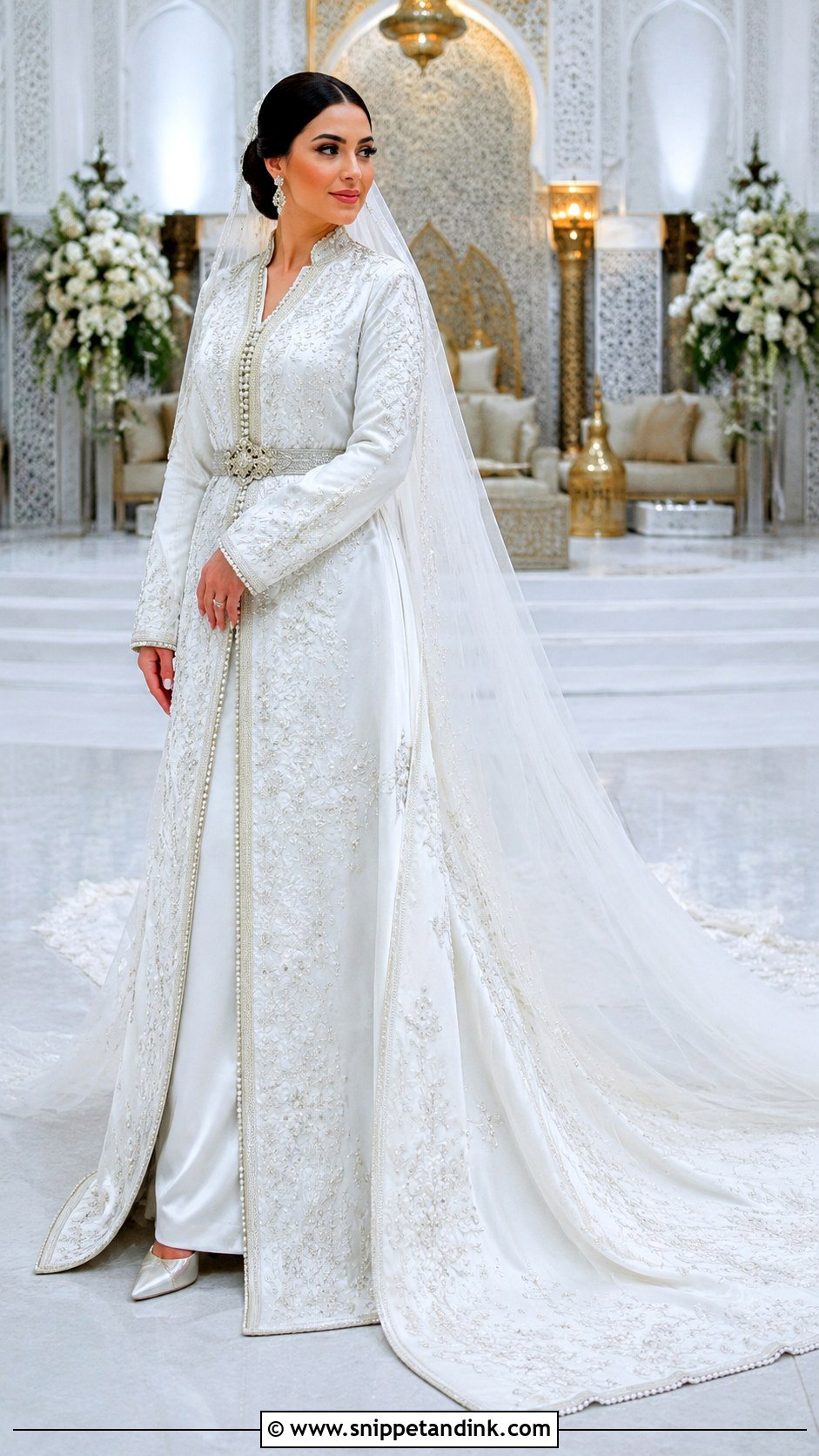
A train brings Western drama to the layered Moroccan structure. Choose a white satin inner dress and an embroidered outer robe extending into a sweep or chapel-length train, with gold, silver or pearl trim outlining the front and sleeves and fading onto the train. The mdamma matters more than usual here, because it holds the waist in place against the pull of all that fabric behind you. I’d also ask for a hidden wrist loop or a bustle point so you can move between tables after the entrance. Closed pointed heels give stability. Drop earrings, a secure updo and a long sheer veil that doesn’t hide the embroidery finish it for the main entrance, ceremonial seating and formal portraits.
18. Lavender Moroccan Wedding Caftan
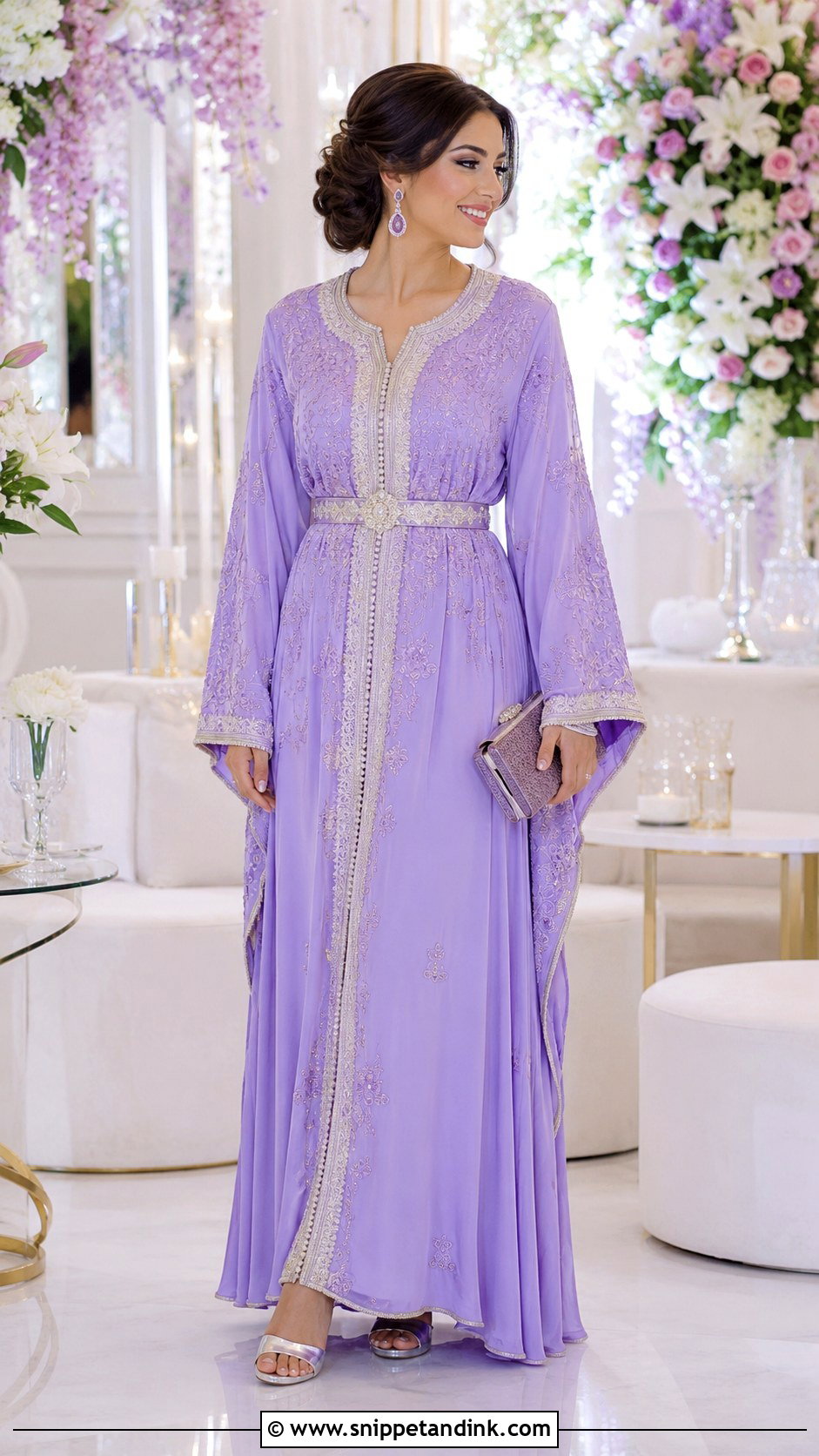
Lavender is distinctive without being loud, but it’s the color that shifts most under lighting, looking gray in cool light and pinker under warm bulbs. Ask to see the fabric under light like your venue’s before you order. Flowing crepe, silk or satin with silver edging, tonal embroidery and a little crystal work suits it, with a silver or lavender belt that lets the fabric move. Light metallic heels, a lavender satin clutch and amethyst-style earrings finish it, with a soft side bun or loose waves. Cool-toned makeup and a mauve lip coordinate without matching too closely. Spring weddings, an evening change or a pastel celebration all suit it.
19. Black And Gold Moroccan Wedding Caftan
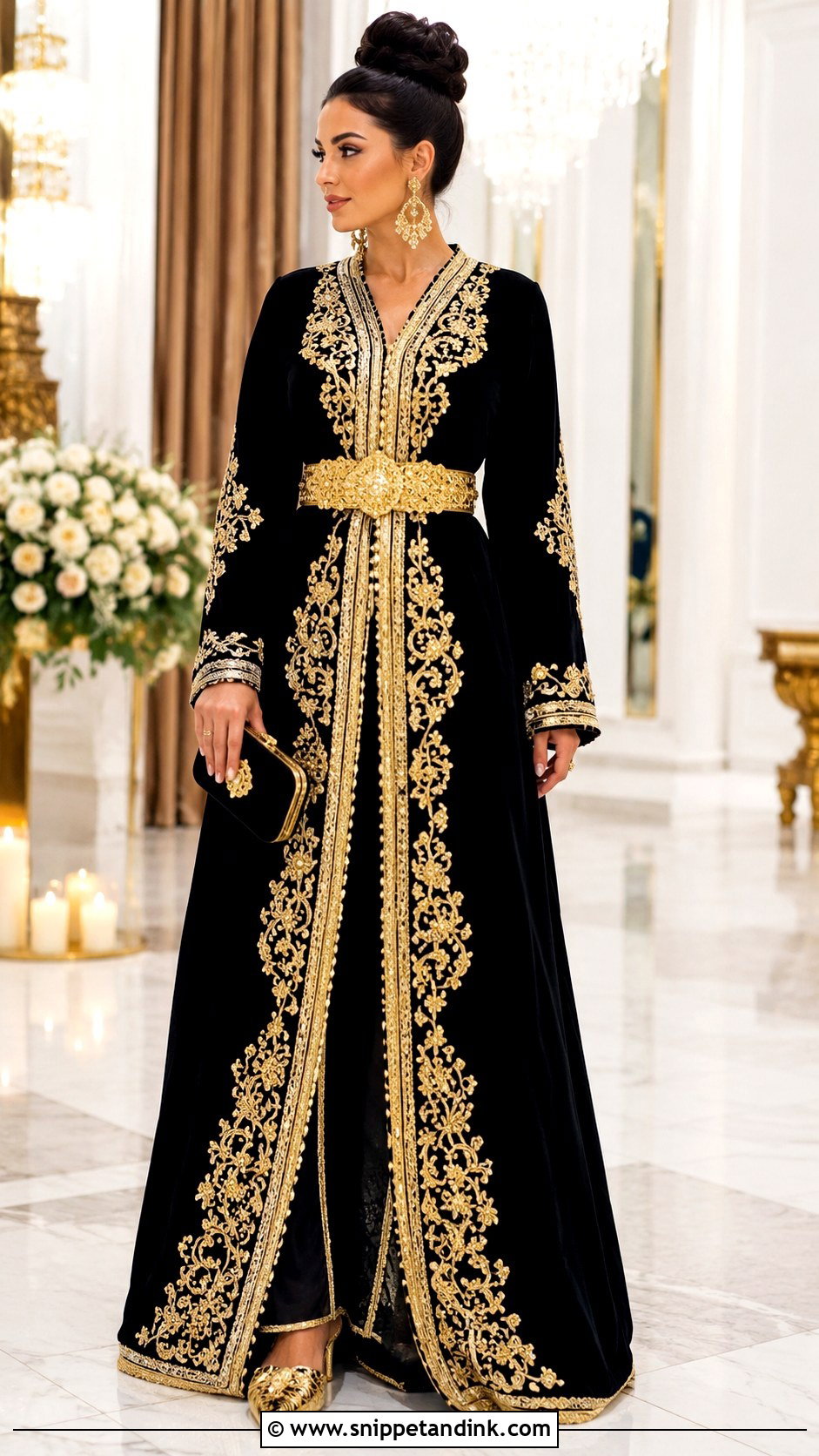
Black and gold works best as an evening change after the main white look. Choose black velvet, satin or crepe with detailed gold embroidery framing the neckline, cuffs and front closure, and a broad gold belt for a ceremonial finish. Gold heels or pointed babouche and a small black clutch with a simple clasp suit it. Strong earrings are fine, but skip the necklace if the neckline is already heavily worked, and keep the hair in a high or low polished bun. Black velvet shows every speck of lint and face powder, so I keep a lint roller in the dressing room whenever a bride wears this one.
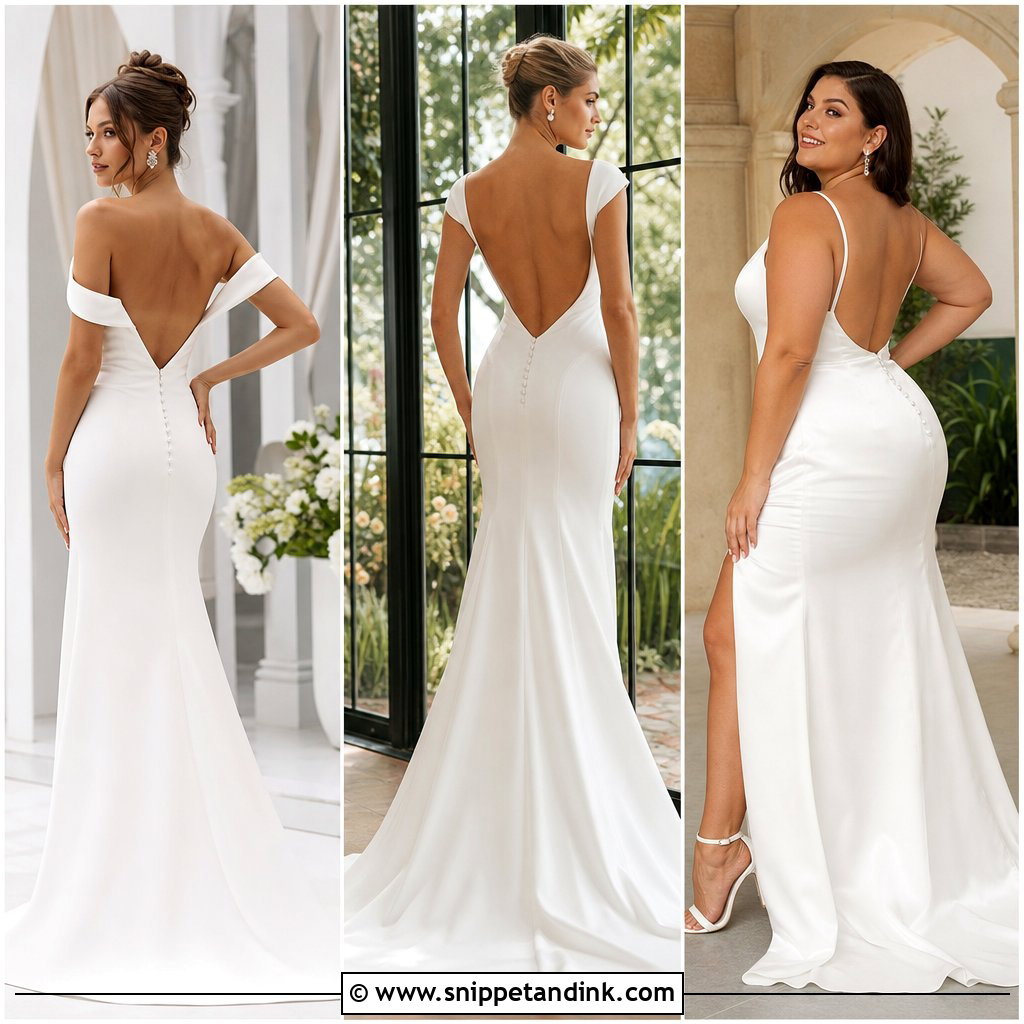
20. Modern White Moroccan Bridal Gown
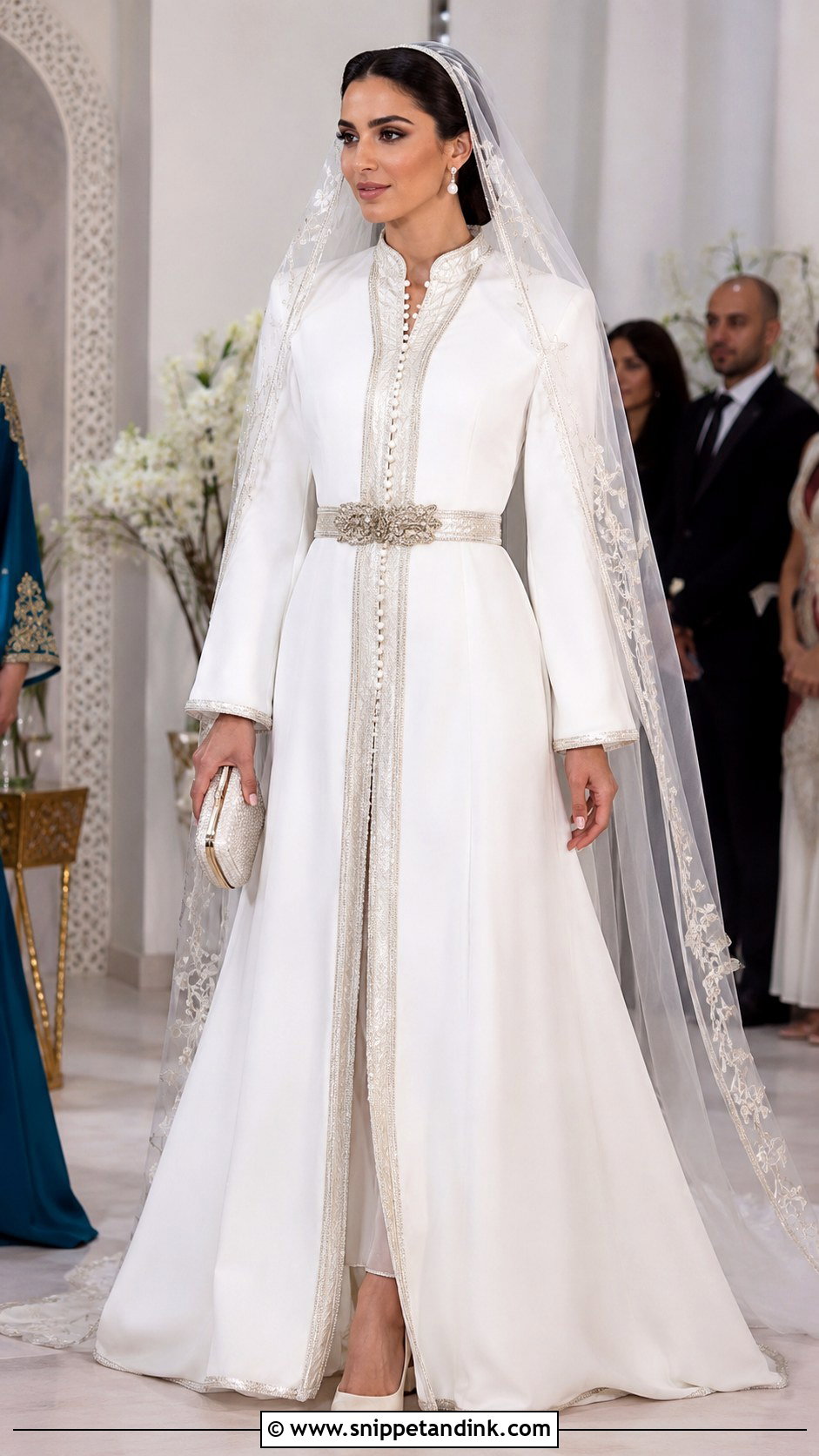
A modern white gown with Moroccan craft is often the answer for a multicultural wedding. Choose an A-line or softly fitted dress with long sleeves, a defined waist and sfifa-style trim, with covered buttons down the front or at the cuffs and a removable metallic belt as a nod to the takchita. Ivory heels, pearl earrings and a structured white clutch suit it, and a cathedral or fingertip veil can carry a narrow embroidered border that echoes the dress. Keep the hair sleek and the makeup fresh. Because the belt comes off, I’d have it fitted with the gown rather than bought separately; a belt that sits slightly high or low changes the whole proportion. It works for the ceremony, a final entrance or a Moroccan-Western wedding.
Why a Heavy Takchita Should Be Folded, Not Hung
Many of these outfits are kept for sisters, daughters or the next family wedding, and what you do in the first week after the wedding decides how they look years later.
Air it out first
Perspiration and perfume can tarnish metallic thread over time, so let the outfit air for a day, then have any marks handled by a cleaner experienced with embellished garments. Never spray perfume directly onto gold or silver embroidery, on the day or after.
Tissue in every fold, stored flat
Heavily embroidered robes and velvet stretch at the shoulders if they hang for months. Fold them loosely with acid-free tissue in each fold and store them flat in a breathable cotton bag or box, never in plastic, which holds moisture. Refold along different lines now and then so creases don’t set.
Give the belt its own box
A metal mdamma scratches fabric and snags embroidery if it’s packed inside the robe. Wipe it, wrap it in soft cloth and keep it separately, alongside any crown or hair jewelry from the day.
Good Handwork Outlasts Any Trend
A Moroccan bridal wardrobe works when each outfit suits the moment it’s worn for. A layered takchita makes a regal entrance, and a streamlined caftan gives you room to move at the henna night or a later change. White, gold, green, red, jewel tones and soft pastels all have their place. What I’d put first is the unglamorous part: tailoring, breathable lining, a belt that stays put, hems you won’t trip on and shoes you can stand in. Let the jewelry and hair frame the embroidery. Traditional or fusion, a wardrobe built that way will feel like yours and be worth keeping.
You'll Like These Ideas:






Leave a Reply