
A plain mermaid gown is one of the hardest dresses to get right and one of the most striking when it works. It follows the body closely, then flares at or below the knee, so there’s no volume to hide a poor fit and no beading to distract from a wobbly seam. In my fittings, the conversation is mostly about fabric weight, where the flare sits and how you’ll sit, walk and dance in it. Below are 25 understated versions in satin, crepe and restrained lace, with the necklines, sleeves, backs and trains that change their character, plus the shoes, veils, hair and flowers I’d put with each.
Where Should the Flare Start on Your Body?
Mermaid and trumpet gowns get mixed up constantly. A trumpet flares from around mid-thigh; a true mermaid stays fitted to the knee or below before it opens. That flare point changes how you walk more than anything else about the dress.
A lower flare looks more dramatic and shortens your stride. A slightly higher one is easier to move in and often more flattering on petite brides, because a very low flare can visually cut the leg short. At try-ons I ask brides to do three things before they fall in love with the mirror:
- Walk across the room at normal speed, not a bridal glide.
- Sit on a standard chair and stand up again without help.
- Step up onto a low platform, as if climbing a stair or stage.
If any of those feel like a struggle, the dress isn’t wrong for you, but the flare may need to sit higher. I’d also be honest that a strict mermaid isn’t ideal for a long, energetic dance night or a beach ceremony, where sand and a narrow knee make every step harder. A trumpet or a fit-and-flare version gives you most of the look with more freedom.
1. Strapless Satin Mermaid Wedding Dress
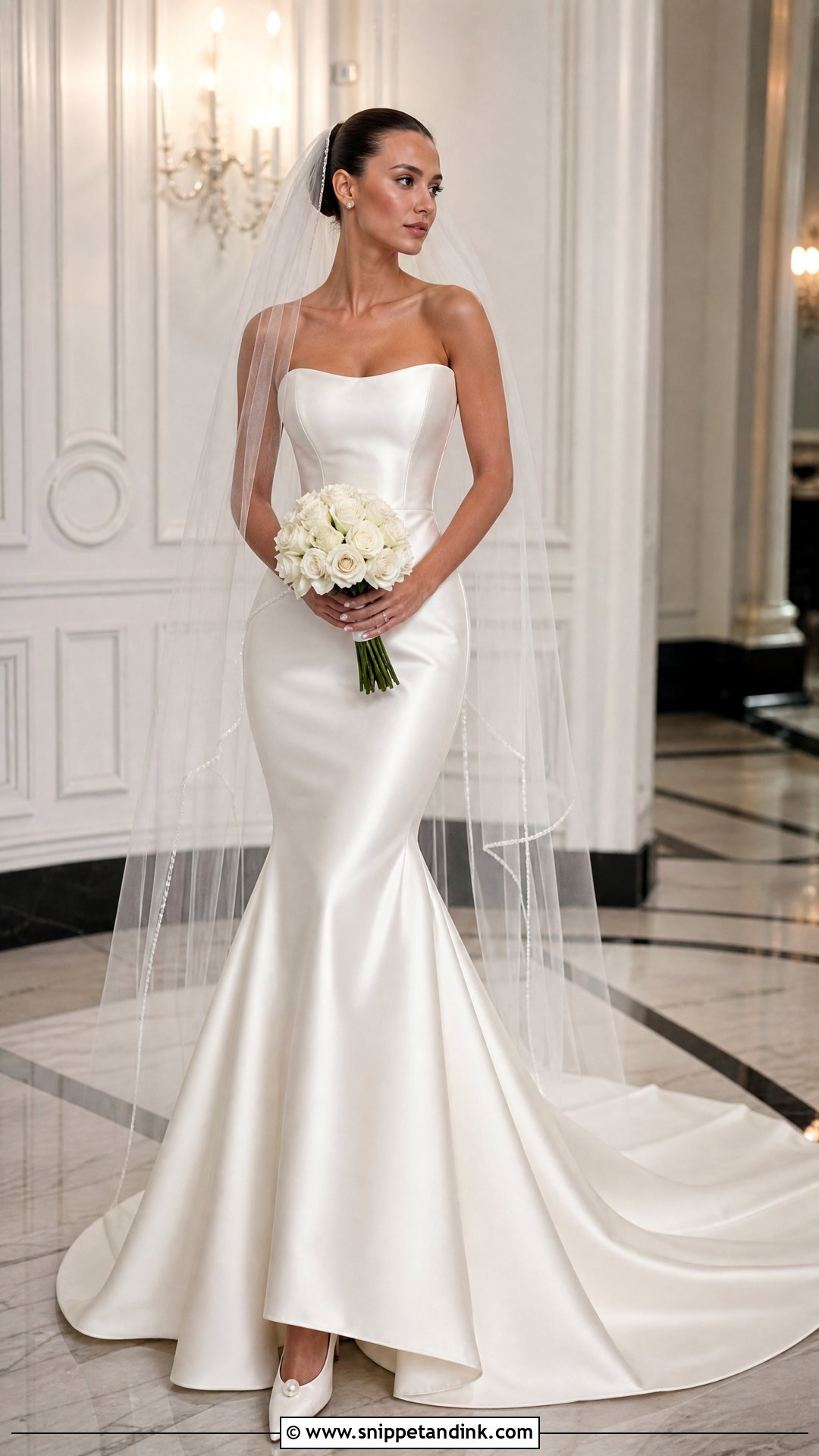
Strapless satin is the cleanest version of the mermaid, and also the one that relies most on what you can’t see. Heavyweight satin over a properly boned bodice keeps the neckline still; light satin over thin boning slips down by the first dance. I check this by asking the bride to lift both arms above her head at the fitting. If the bodice moves, it needs work. Pointed ivory pumps, pearl studs, a low chignon and a sheer fingertip veil keep the focus on the shine, which reads best under ballroom and hotel lighting.
2. Sweetheart Crepe Mermaid Wedding Dress
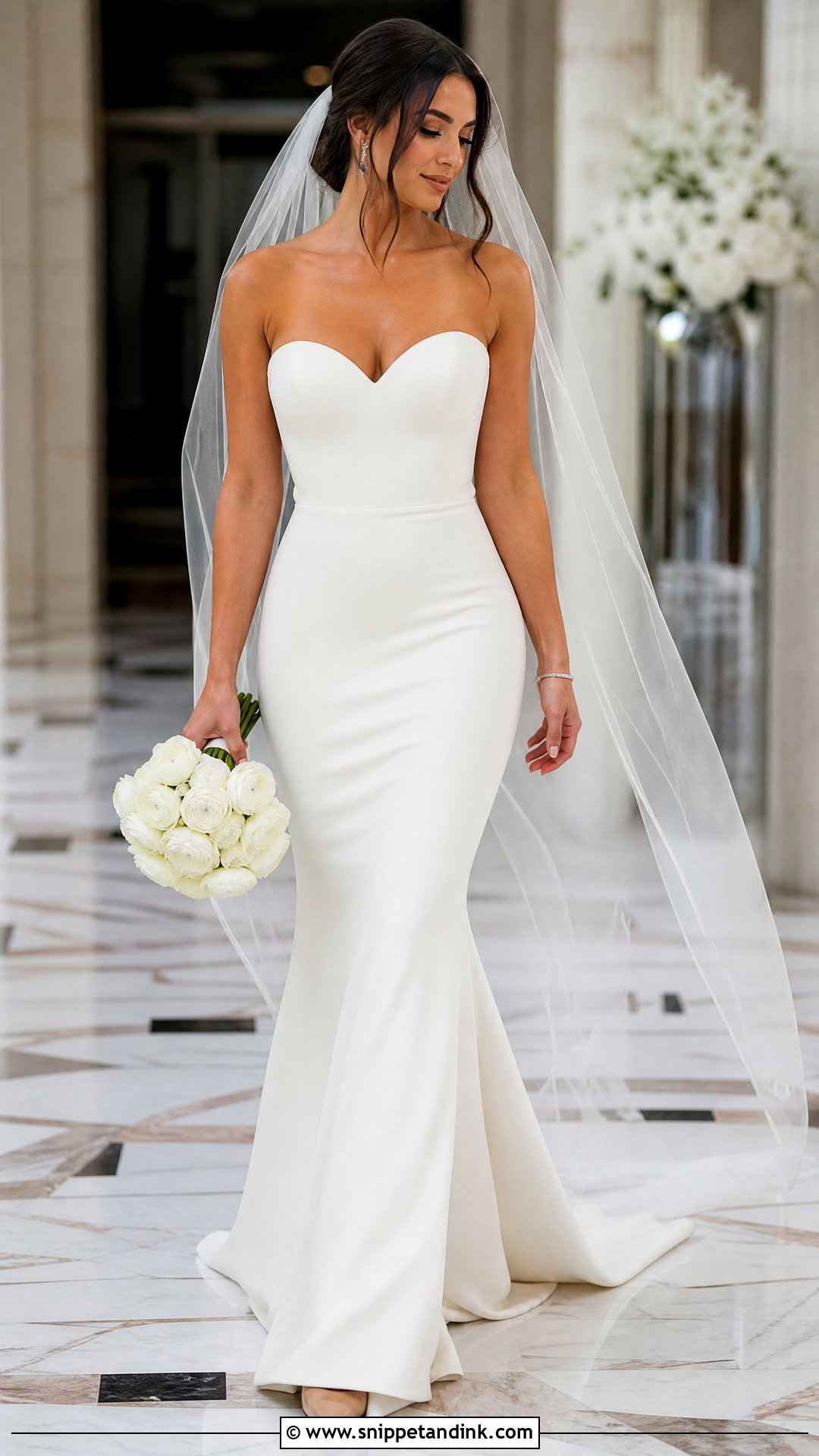
Stretch crepe gives the mermaid shape with more give than satin, so it’s the fabric I suggest to brides who want to feel held without feeling stiff. The flip side: crepe shows every seam and every line underneath it, so a substantial lining and smooth, edge-free underwear aren’t optional. A sweetheart neckline frames the collarbone well here. Nude or ivory pointed heels, small drop earrings, a plain cathedral veil and loose waves or a soft half-up style suit its softness.
3. Square Neck Mermaid Wedding Dress
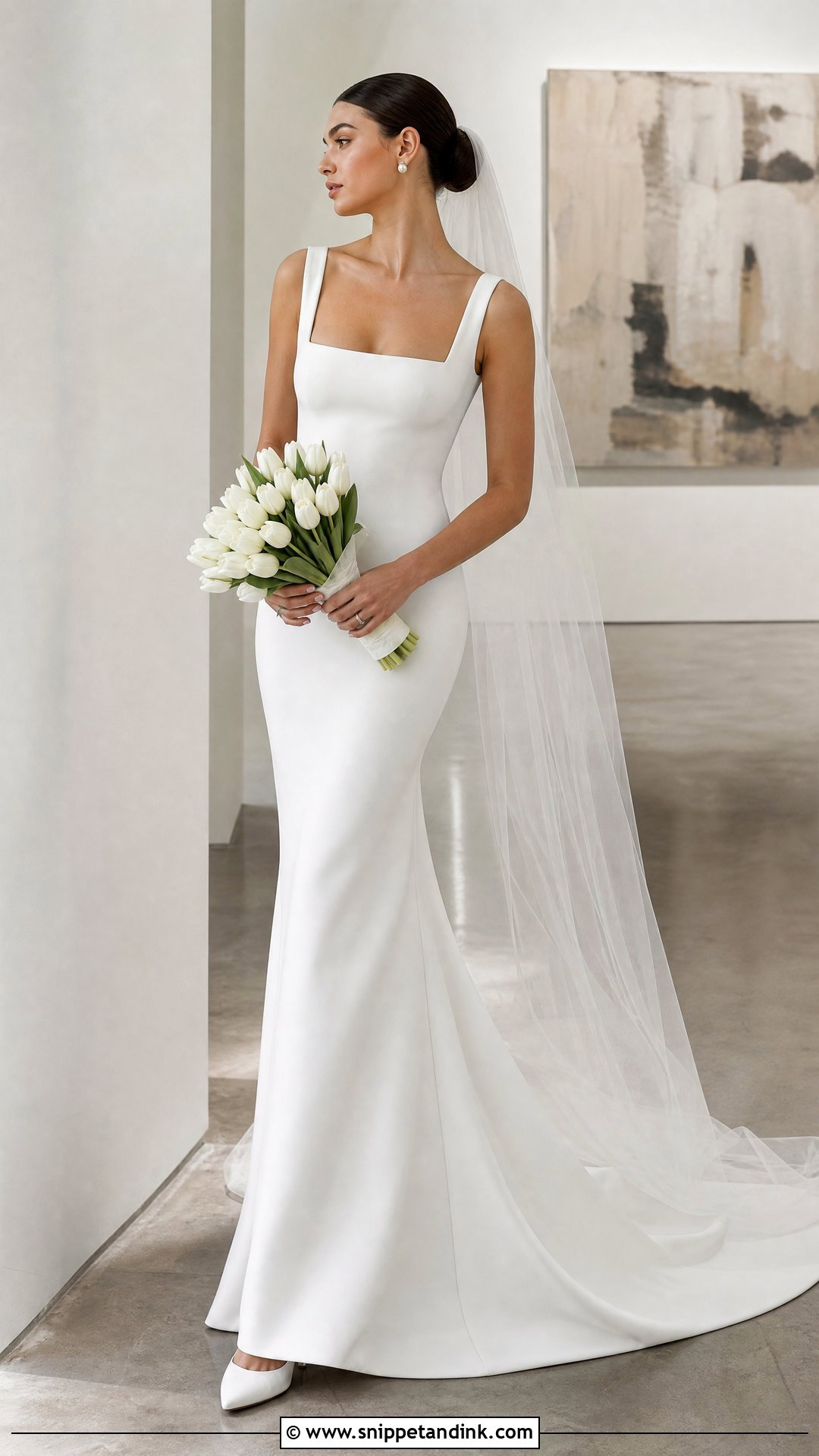
Square necklines give the upper body a frame, which balances the drama happening at the hem. Wide straps make the support far easier, especially for a fuller bust. With a crepe or matte satin skirt, I’d leave the chest bare of necklaces and choose studs and a sleek bun so the straight line stays sharp. A chapel veil and a tight bouquet of white tulips suit galleries, rooftops and city venues.
4. Off Shoulder Mermaid Wedding Dress
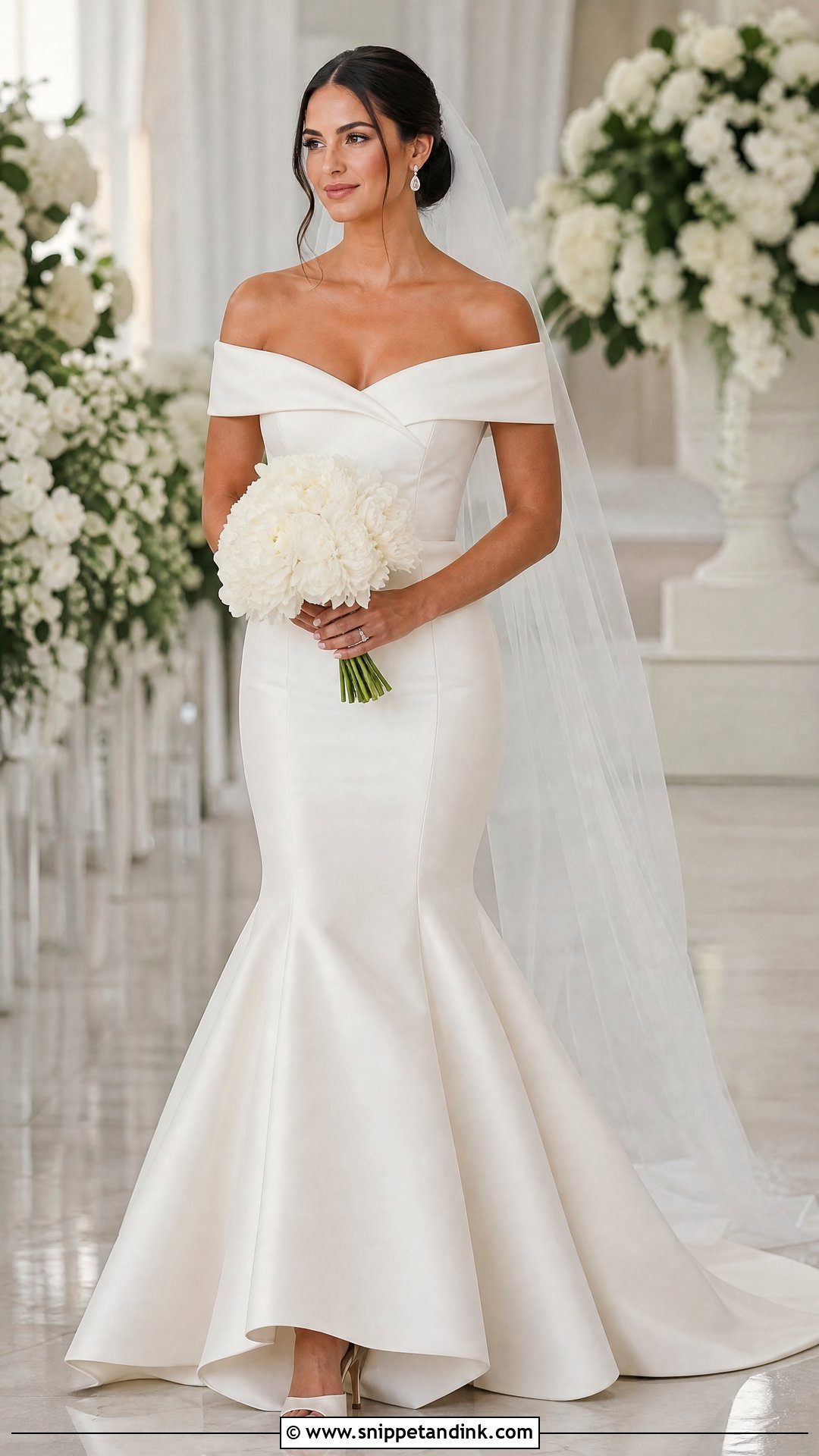
Off-shoulder bands are lovely and also the most restrictive neckline in this list. They sit across the upper arm, so they limit how high you can lift your arms to hug, throw a bouquet or dance. Test that at every fitting. A clean fold-over band in crepe, Mikado or stretch satin attached to a structured bodice holds best. Skip the necklace, wear drop earrings and a low textured bun, and soften the tailoring with loose peonies or garden roses.
5. Long Sleeve Crepe Mermaid Wedding Dress
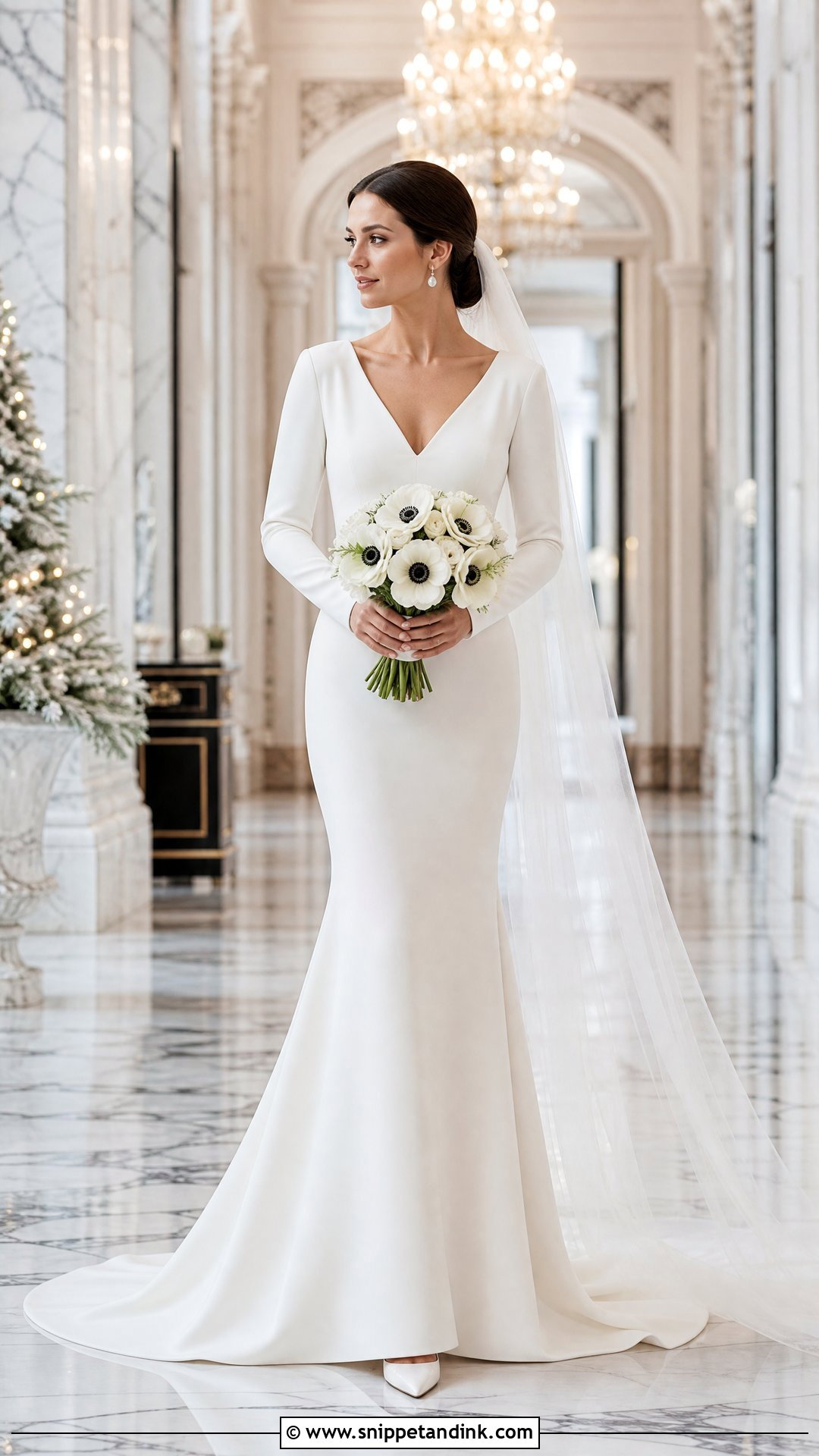
For a winter wedding, long fitted sleeves in the same opaque crepe as the bodice make the gown feel like one continuous piece. To keep it from feeling buttoned-up, open the neckline a little with a bateau, square or modest V. Check the sleeve length with your arms bent, since sleeves that end neatly at the wrist when straight can ride up when you hold flowers. Closed-toe pumps, pearl earrings, a low bun and a long plain veil finish it for hotels and evening receptions.
6. Thin Strap Mermaid Wedding Dress
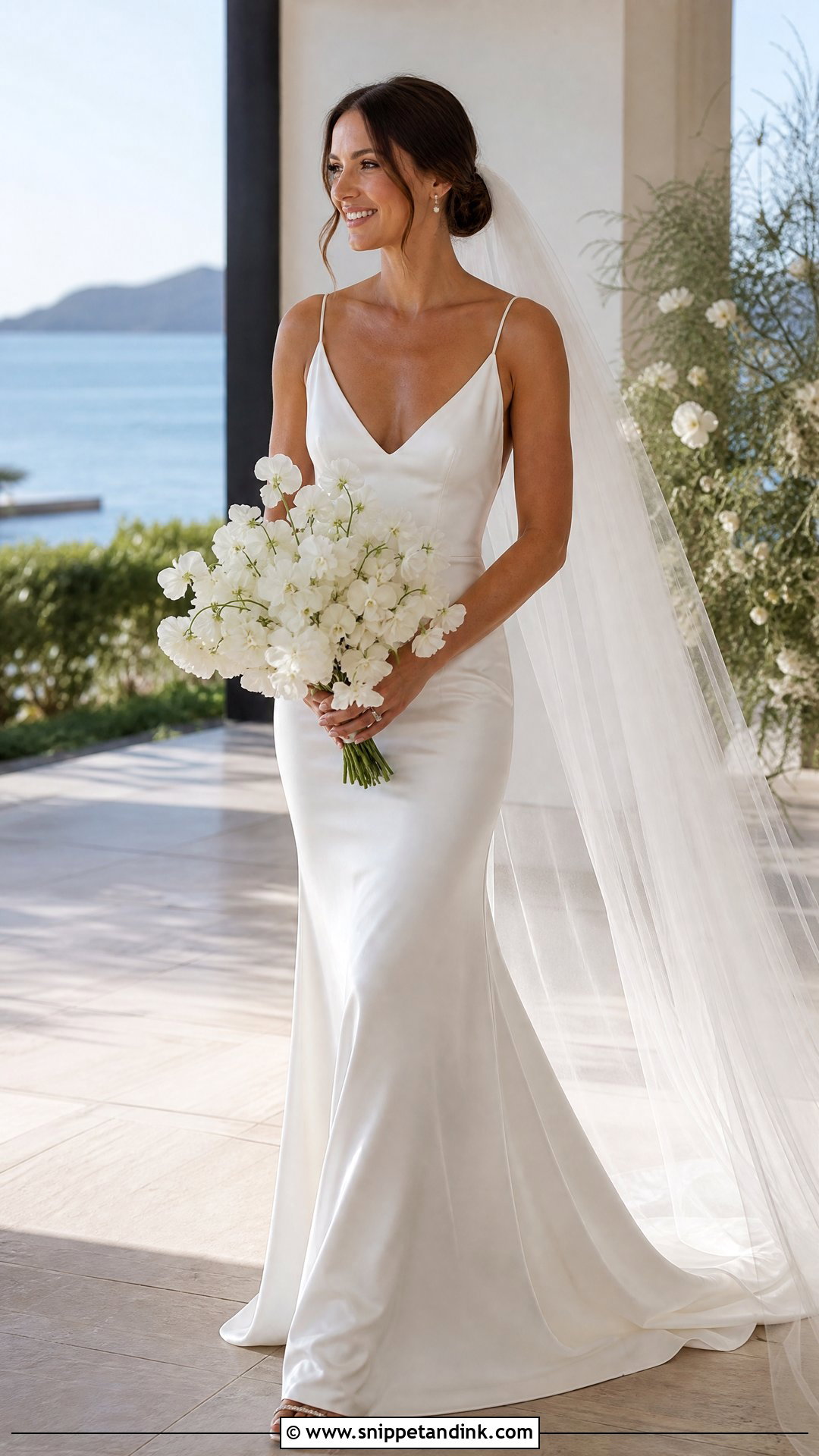
A thin strap mermaid wedding dress is as light as this shape gets. Adjustable straps are worth asking for, because a small change in strap length can lift a bodice that’s sitting too low. Fluid satin or stretch crepe with a cowl, soft V or scoop suits it. The honest limit is support: thin straps do very little holding, so a fuller bust needs built-in cups or a corseted lining. Ankle-strap sandals, pearl drops and a single-layer raw-edge veil keep it relaxed for warm weather.
7. High Neck Mermaid Wedding Dress
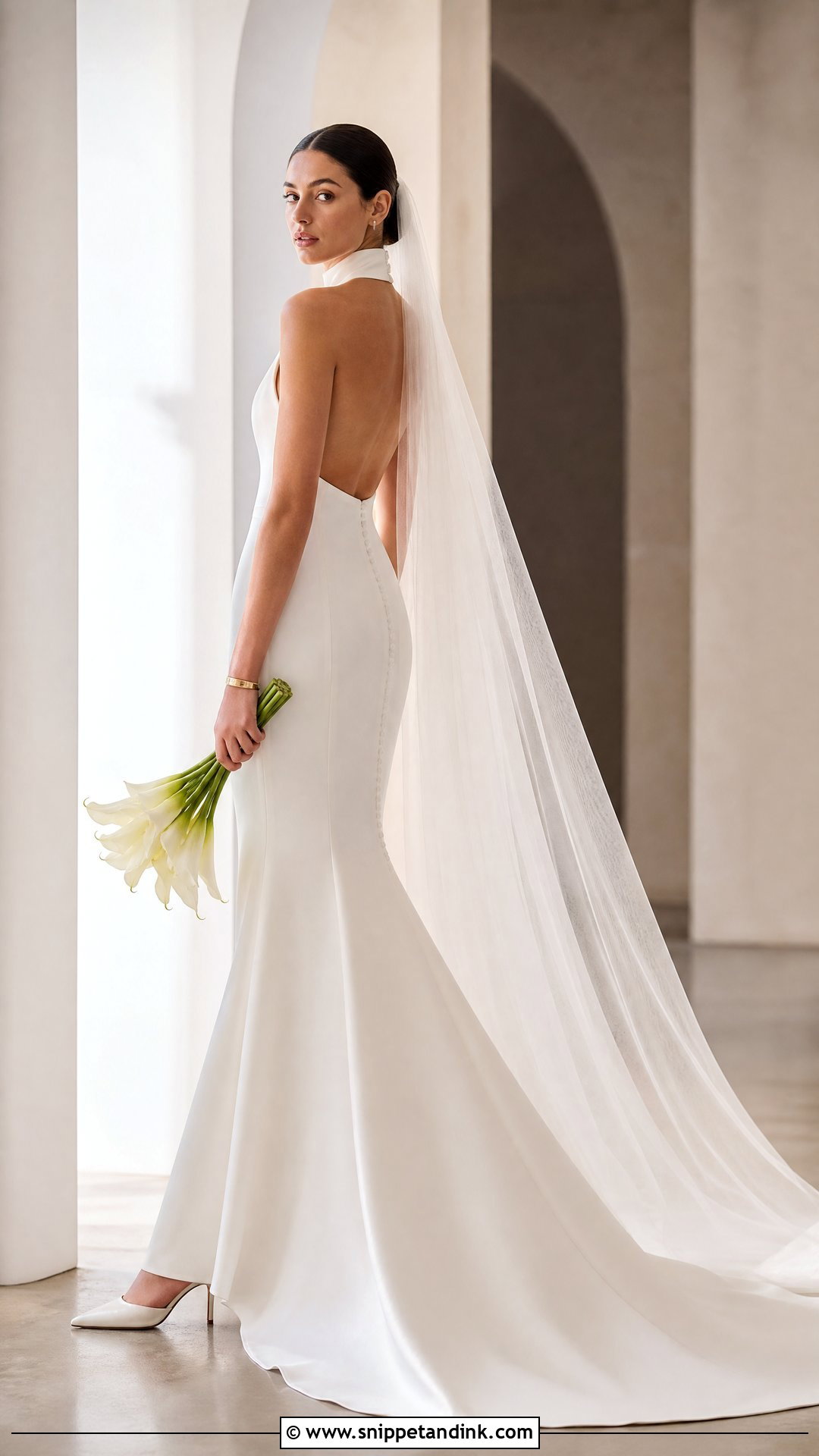
Covering the front lets the silhouette do all the talking. A halter, mock neck or draped high neckline in plain crepe or satin looks sharpest when paired with an open or keyhole back, kept controlled rather than plunging. Hair goes up, in a smooth bun or high ponytail, otherwise the neckline disappears. Small earrings and a slim cuff are enough. Attach the veil below the hairstyle so it falls behind the flare.
8. V Neck Mermaid Wedding Dress
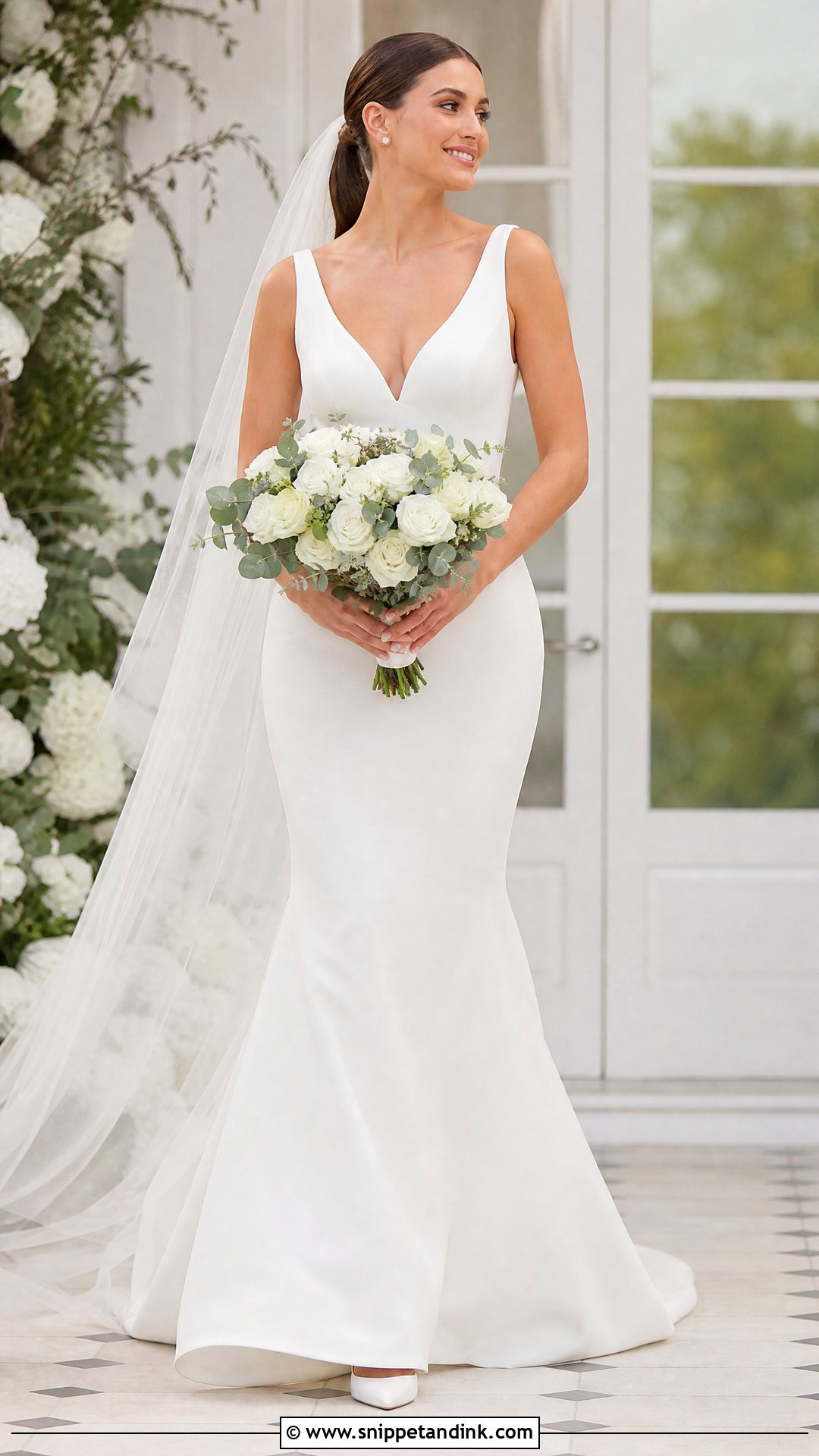
A V neck draws the eye downward and makes the torso look longer, which suits petite brides in a mermaid. Choose a depth you won’t adjust all night. I like wide straps and princess seams here, because they carry the line smoothly from the bodice into the fitted skirt. With a deep V, swap the pendant for longer earrings. A low ponytail keeps it modern; a chapel veil adds a traditional note.
9. Boat Neck Mermaid Wedding Dress
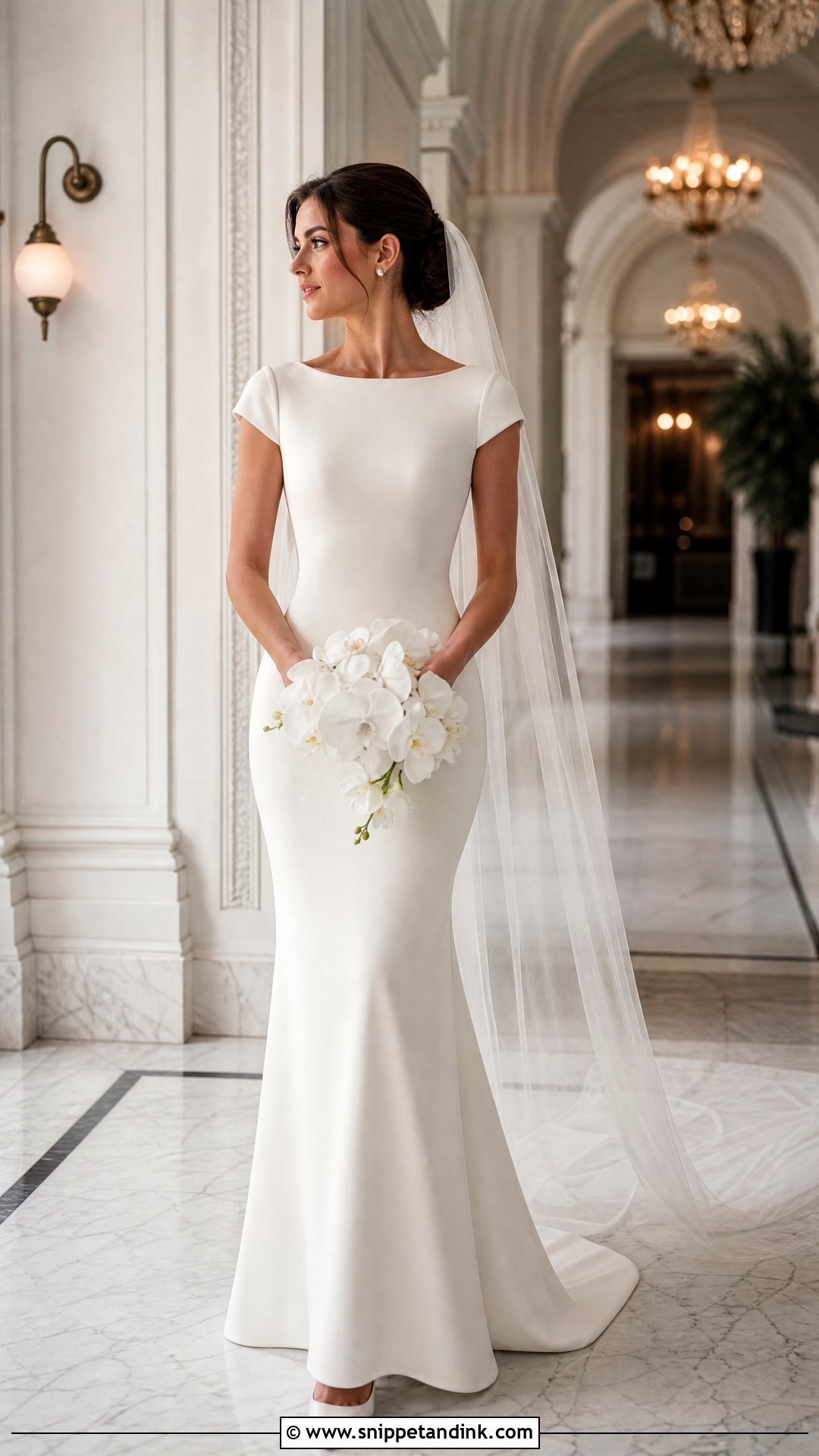
The boat neck runs along the collarbone, which widens the shoulders slightly and balances a flare at the hem. That makes it a good choice for brides with narrower shoulders and fuller hips. Smooth crepe holds the wide neckline without gaping. I’d keep sleeves seasonal (cap for spring, none for summer), pair pearl studs with low pointed heels and set a French twist or low chignon so the neckline stays visible under a cathedral veil.
10. Scoop Neck Mermaid Wedding Dress
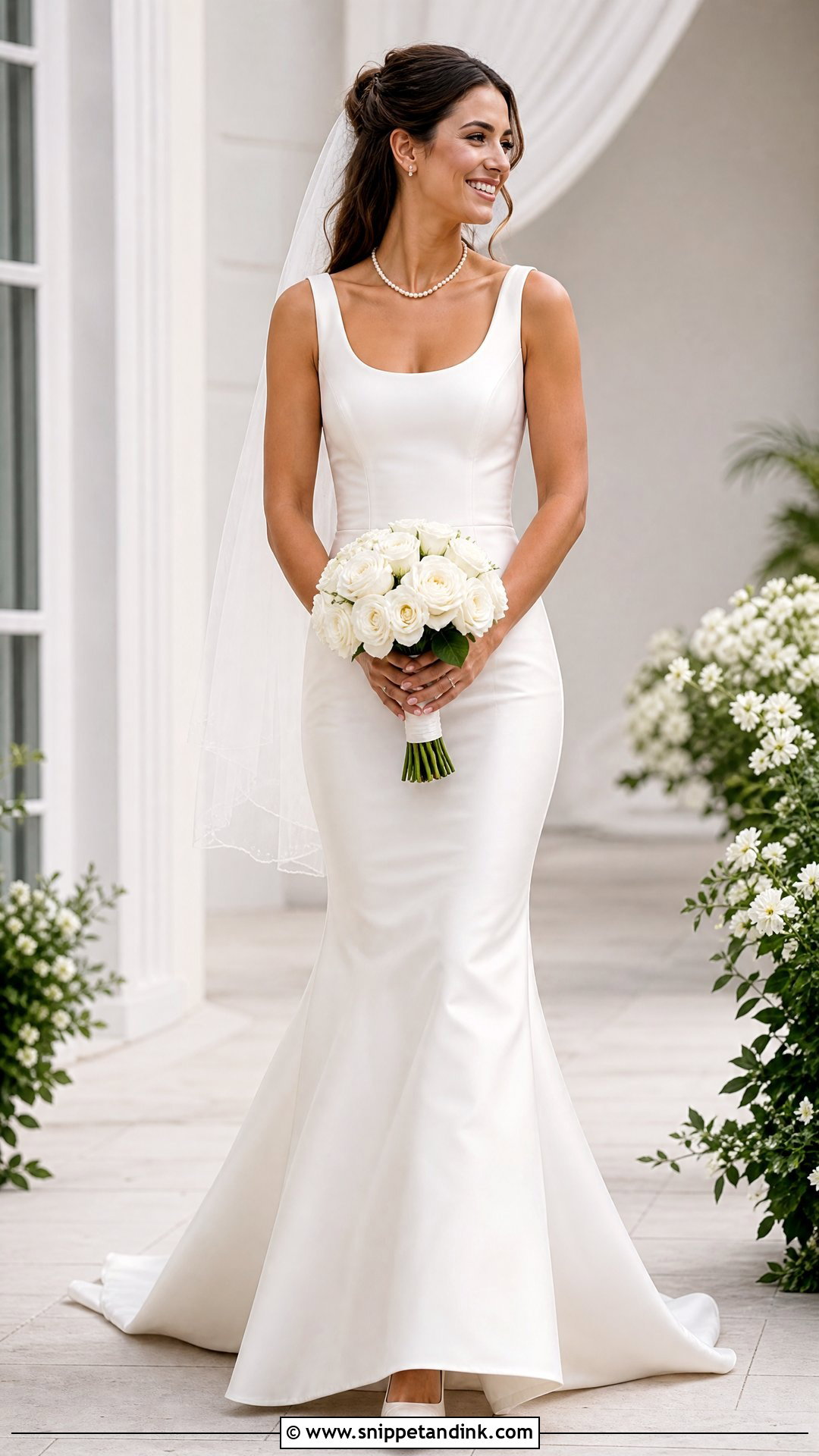
Scoop necklines are the gentlest option for brides who don’t want plunging or sharp geometry. Wider straps or short sleeves give it support. Stretch crepe, matte satin or smooth jersey with substantial lining all work, though jersey needs that lining or it clings. A short pearl necklace actually suits this neckline, which is rare in this list. Half-up hair and a pearl comb or short veil keep it relaxed for daytime and outdoor ceremonies.
11. Corset Mermaid Wedding Dress
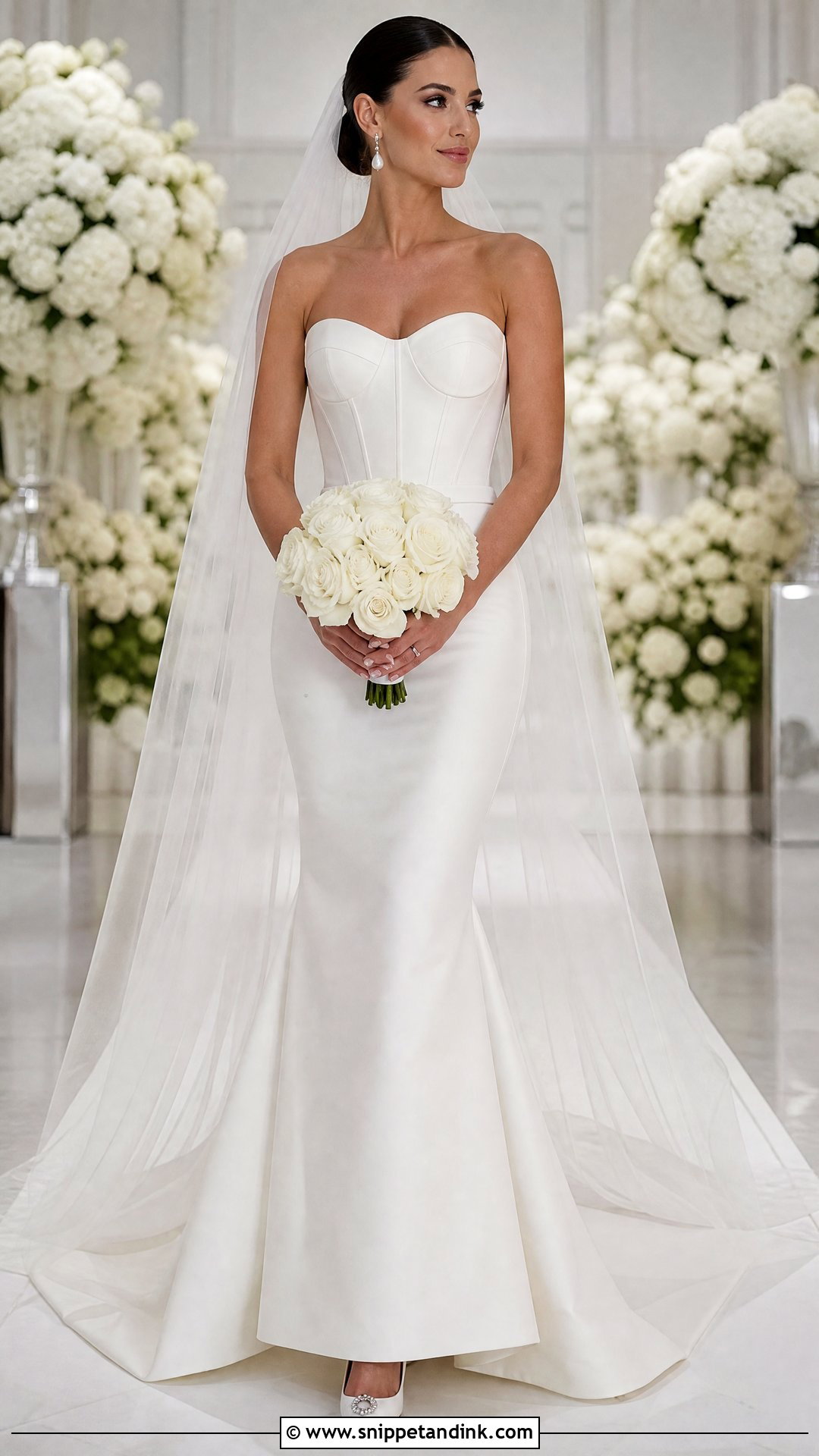
A corset bodice is simple when the structure is hidden. Internal boning under smooth satin or Mikado gives definition without exposed cups, lacing or appliqué. The thing I watch at fittings is the bottom edge of the boning when the bride sits; if it digs into the hip, the dress will be uncomfortable by dinner. Pearl drops, a sleek updo and closed-toe heels with a cushioned insole suit it, and a long plain veil softens the architecture.
12. Backless Mermaid Wedding Dress
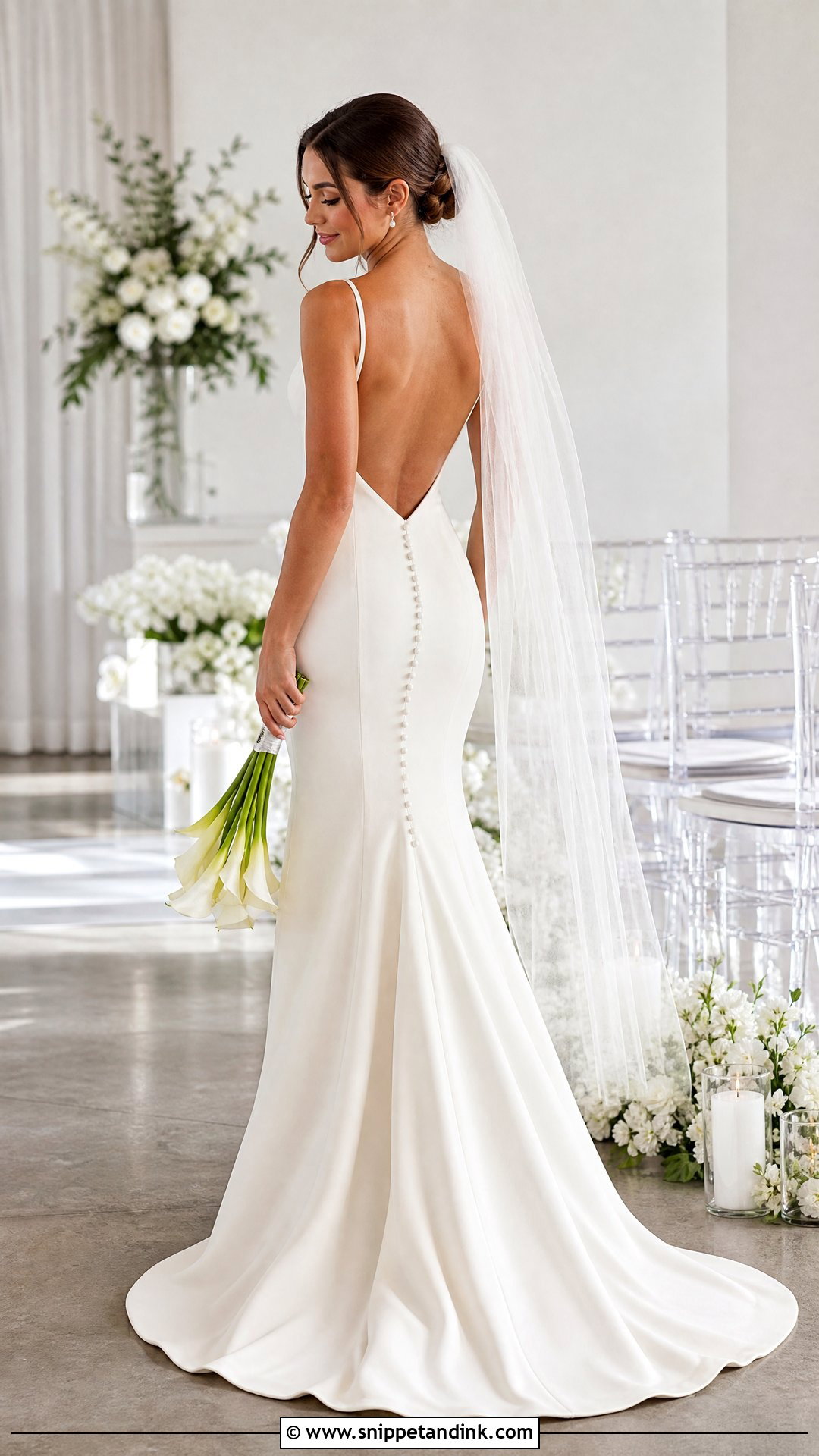
An open back reveals itself when you turn, so the drama is mostly saved for the aisle walk away from guests and for photos. Rounded, square and low V backs all work if the dress has built-in cups or support panels, since a regular bra isn’t an option. Talk to your tailor about that early. Covered buttons down the centre seam add detail. Wear your hair up or to one side, skip the necklace and attach the veil beneath the hairstyle.
13. Button Back Mermaid Wedding Dress
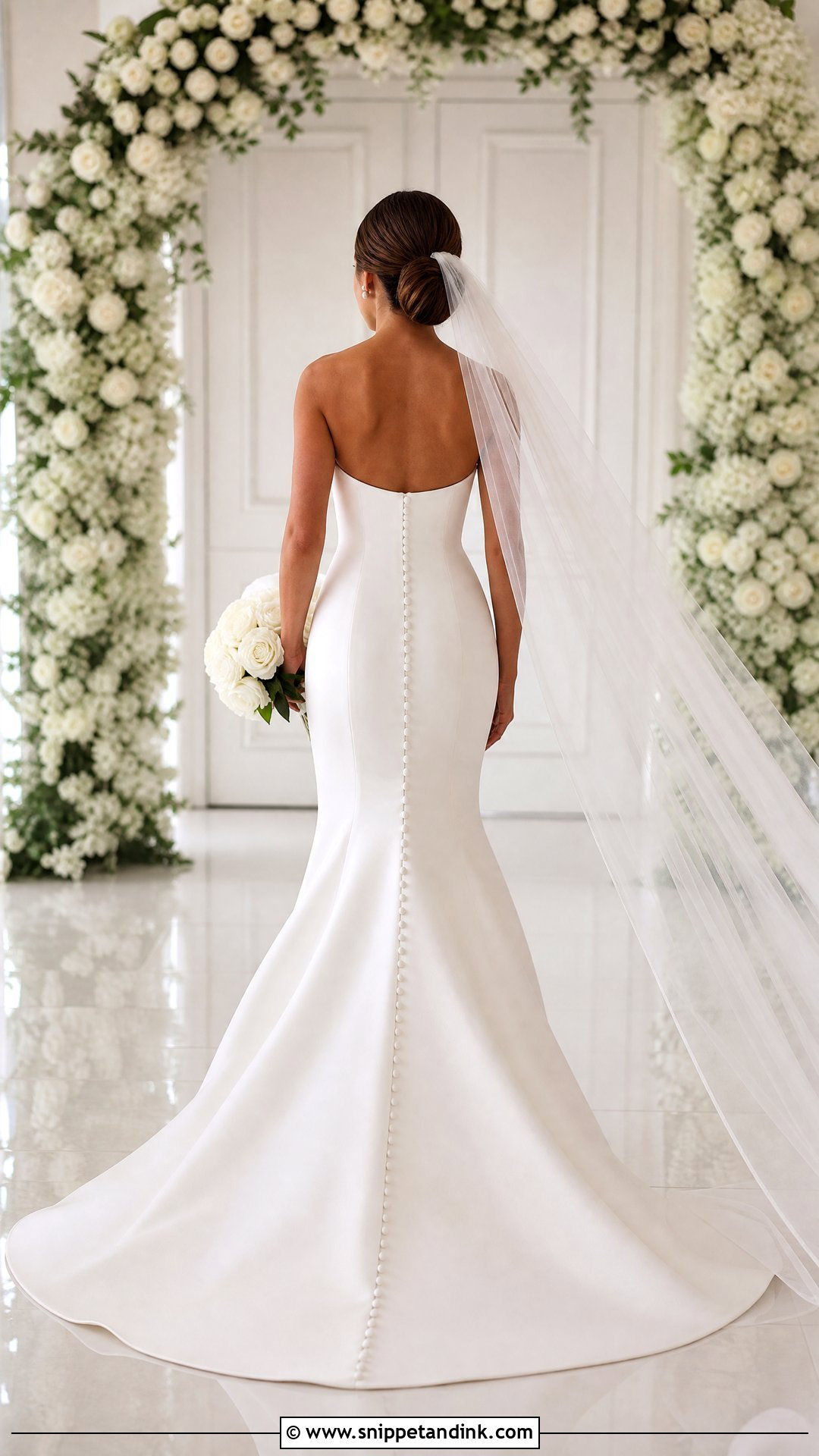
Covered buttons running from the back down toward the train add a vertical line that slims the silhouette in photos from behind. On a dress like this, I always ask whether the buttons are real or decorative over a hidden zip. Real buttons take time to fasten, often longer than people expect, so plan for that on the morning. A low bun keeps the button line visible, and a cathedral veil can come off after the ceremony to show it fully.
14. Low Back Satin Mermaid Wedding Dress
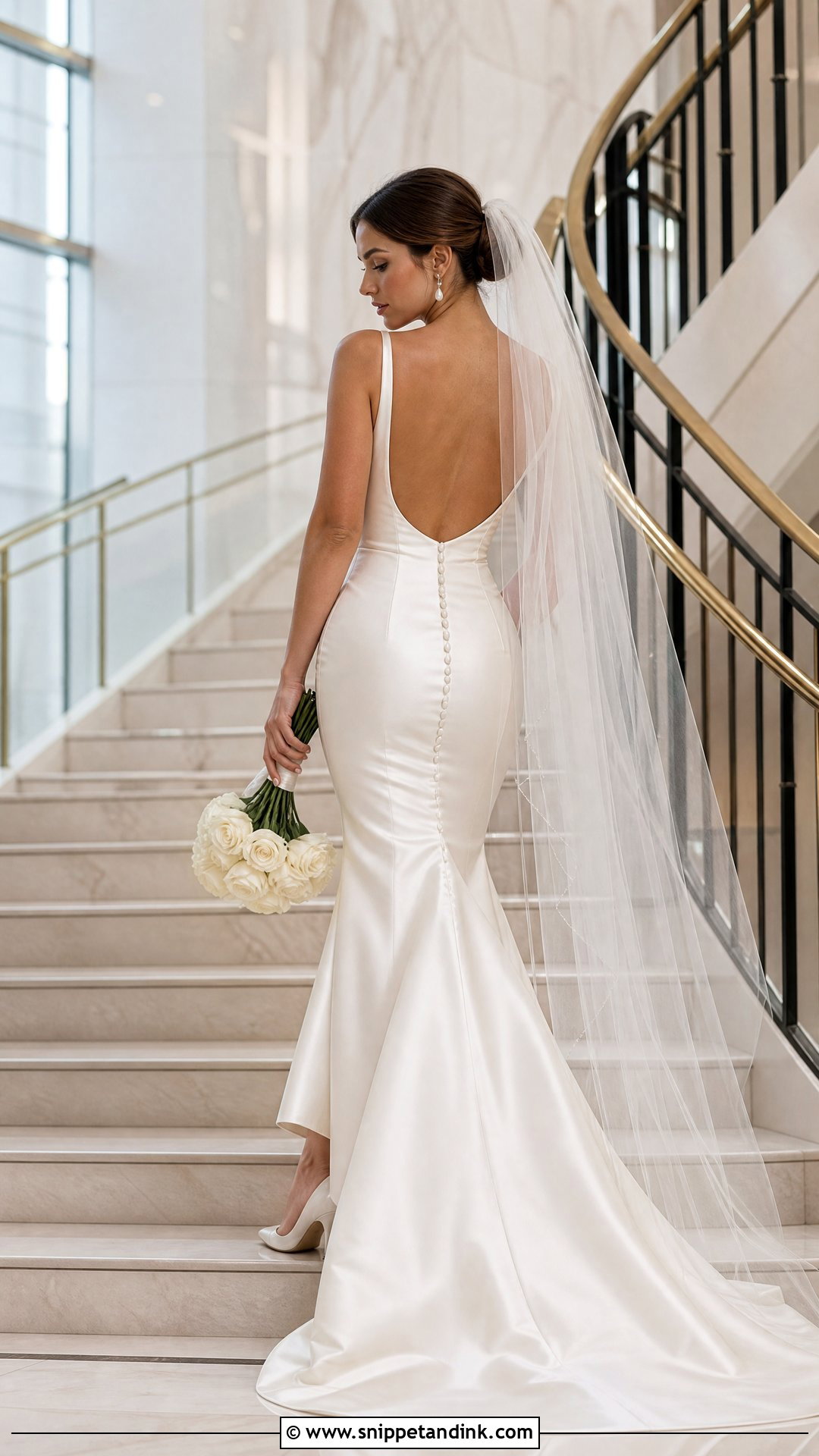
Satin reflects light, so on a low-back gown it highlights every seam and every pull at the waist. Precise tailoring and solid internal support are essential. If you want the look but feel exposed, choose a softly scooped back rather than a very low cut. A row of covered buttons is a classic finish. Crystal or pearl drops, a bun, pointed pumps and a sheer chapel veil let the fabric carry it. Controlled indoor evening light shows satin at its best.
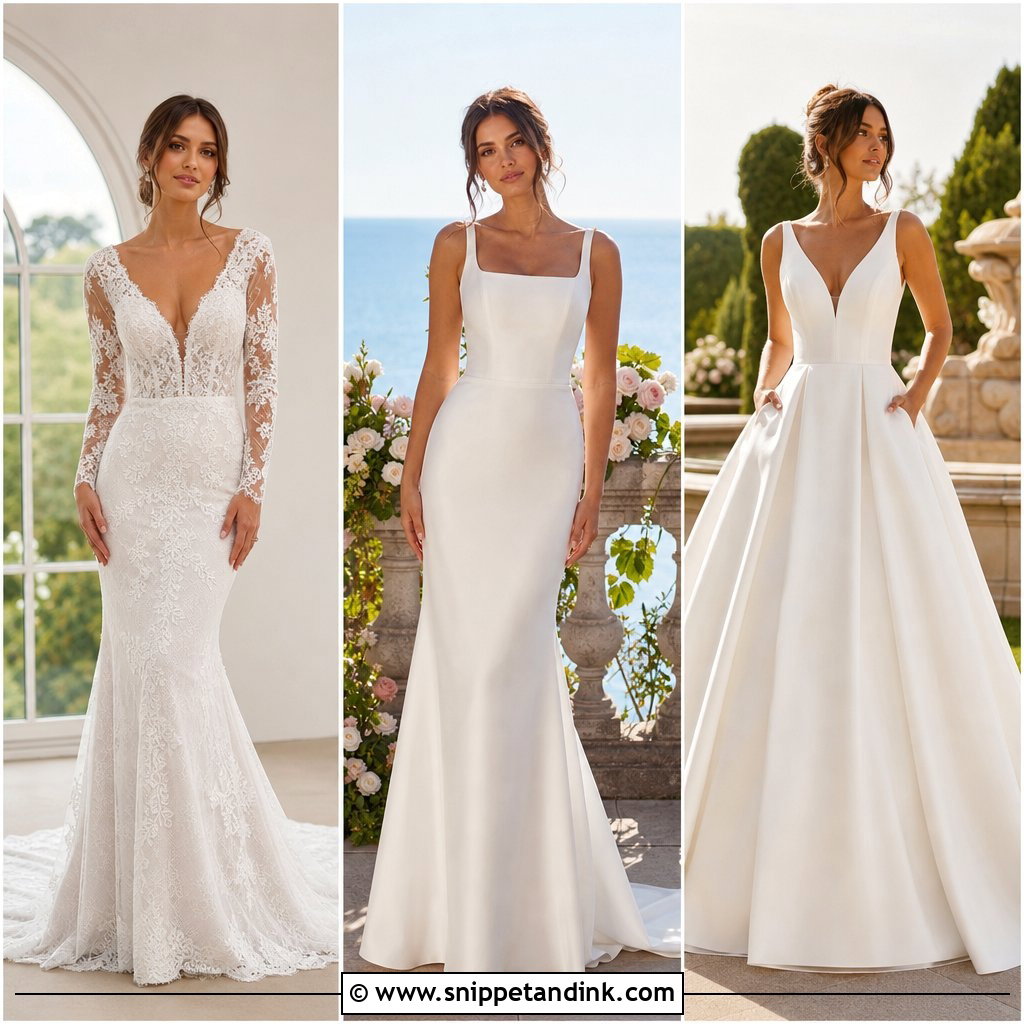
15. Cowl Neck Mermaid Wedding Dress
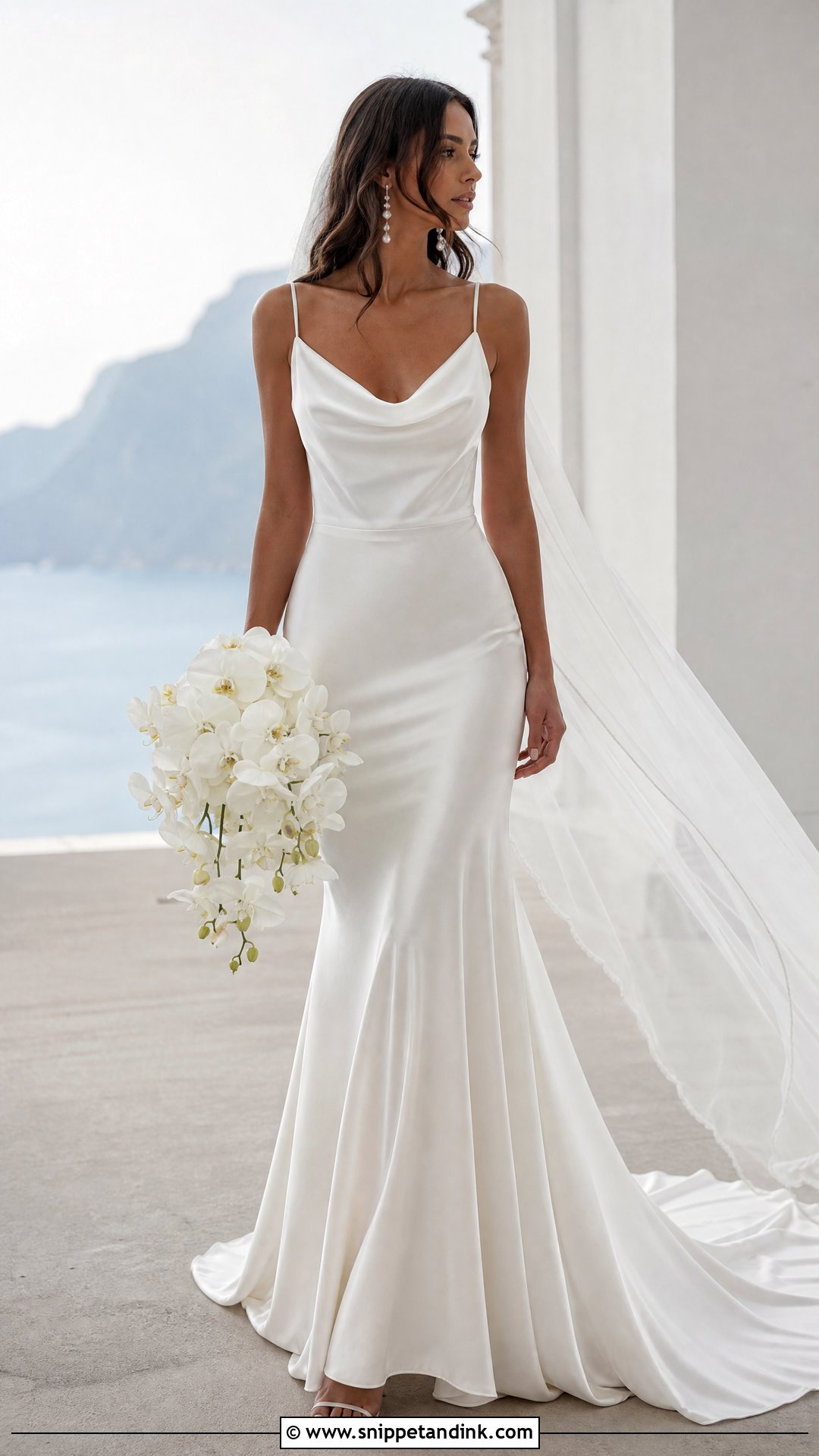
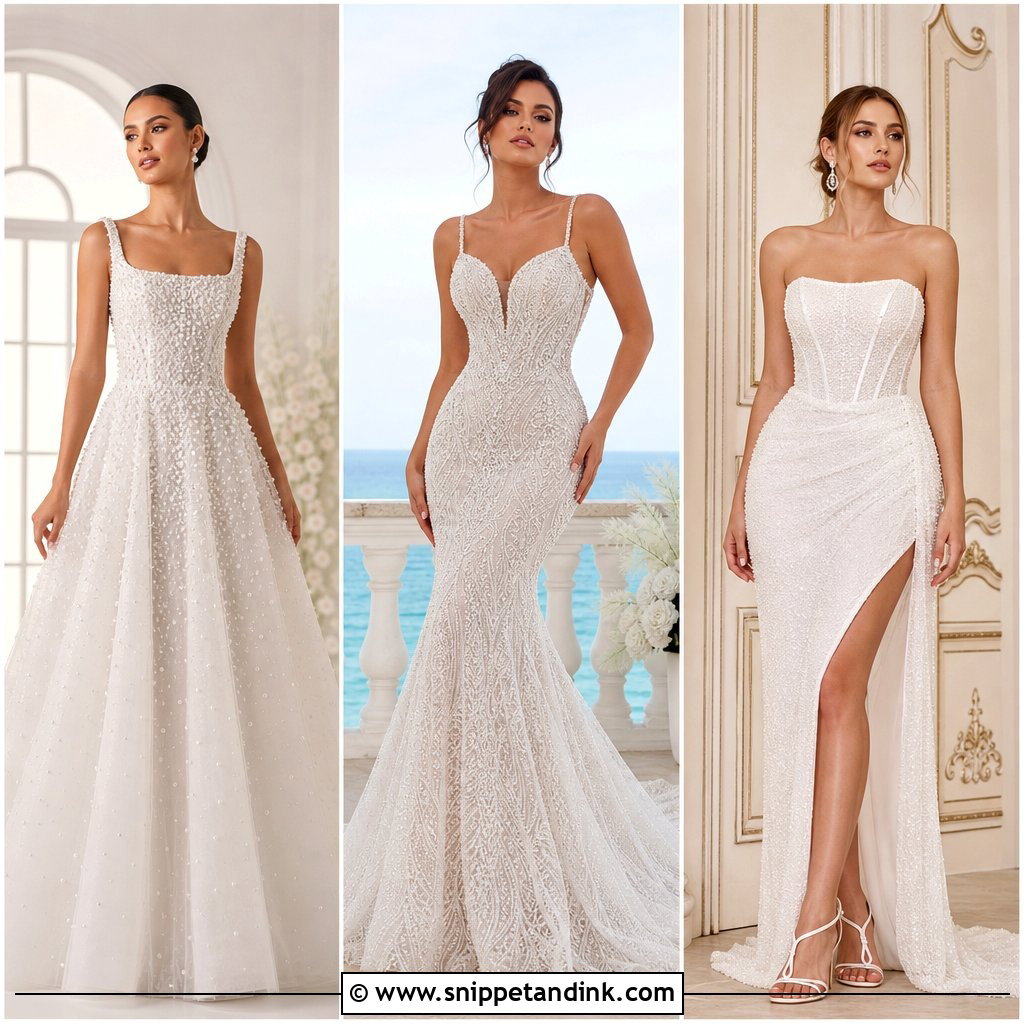
A cowl drape across fluid satin makes the gown feel relaxed even with the fitted skirt. Keep the cowl moderate; a deep one can fall open when you lean forward to sign the register or hug someone. Slim straps, delicate drop earrings and strappy sandals suit its lightness. Loose waves or a low bun, a narrow raw-edge veil and flowing orchids echo the drape. I’d save this one for warm-weather and coastal venues.
16. Cap Sleeve Mermaid Wedding Dress
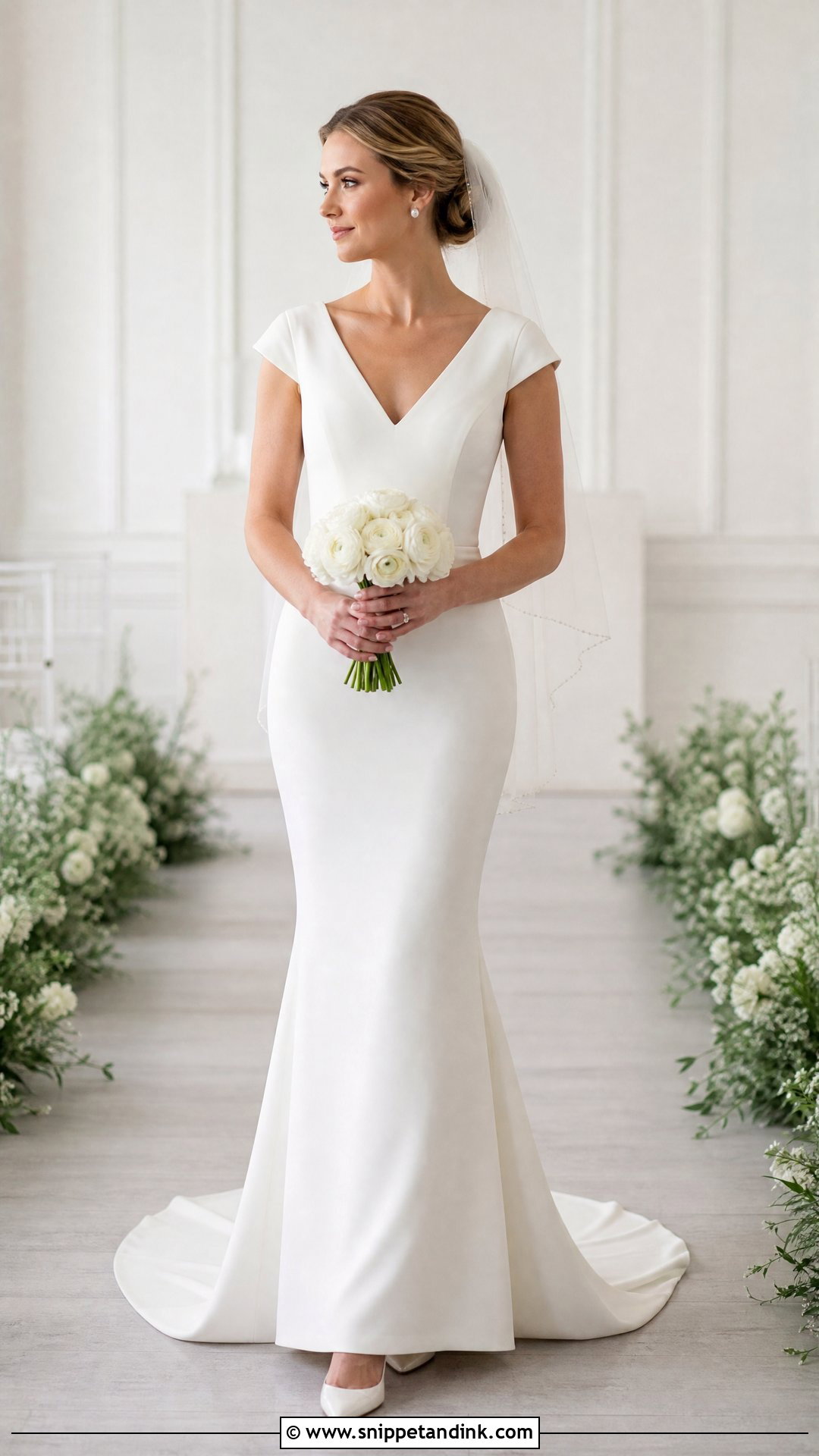
Cap sleeves add a little coverage at the shoulder and suit almost every season. Smooth crepe or satin sleeves read modern; a touch of plain sheer reads softer. At fittings, raise and rotate your arms. Cap sleeves cut too tight pull across the bodice and the whole front shifts. A bateau or gentle V pairs naturally with them. Pearl studs, a neat chignon, a fingertip veil and a petite bouquet keep the proportions balanced.
17. Short Sleeve Mermaid Wedding Dress
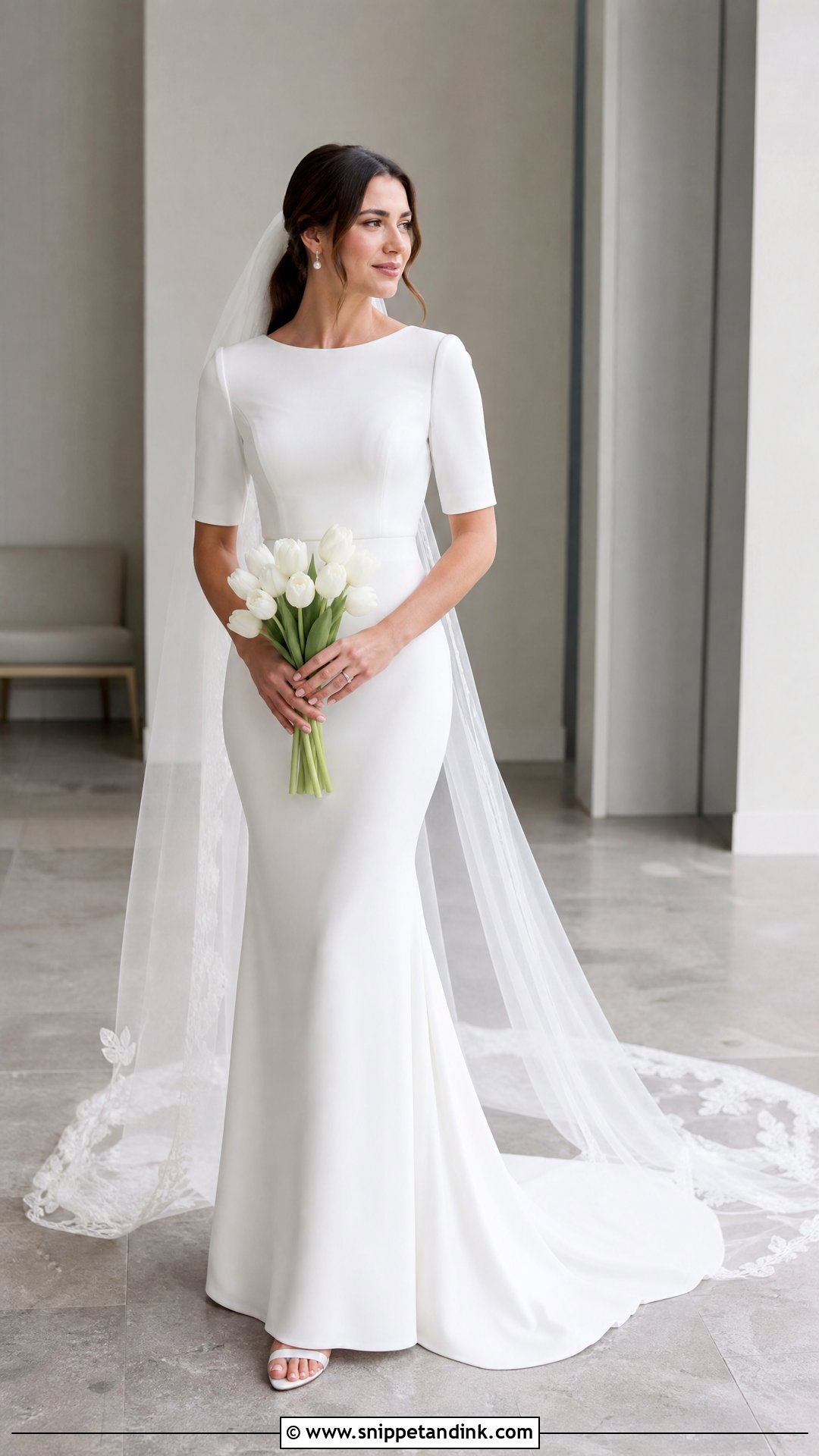
Short sleeves give more coverage than caps and still feel contemporary. Elbow-length or T-shirt-shaped sleeves need to be integrated cleanly into the crepe bodice; bulky seams at the armhole interrupt the line. Pearl earrings, low block heels and a sleek bun or soft low ponytail keep it easy. Wear a chapel veil for the ceremony and take it off for the reception to show the plain lines. It suits spring weddings well.
18. One Shoulder Mermaid Wedding Dress
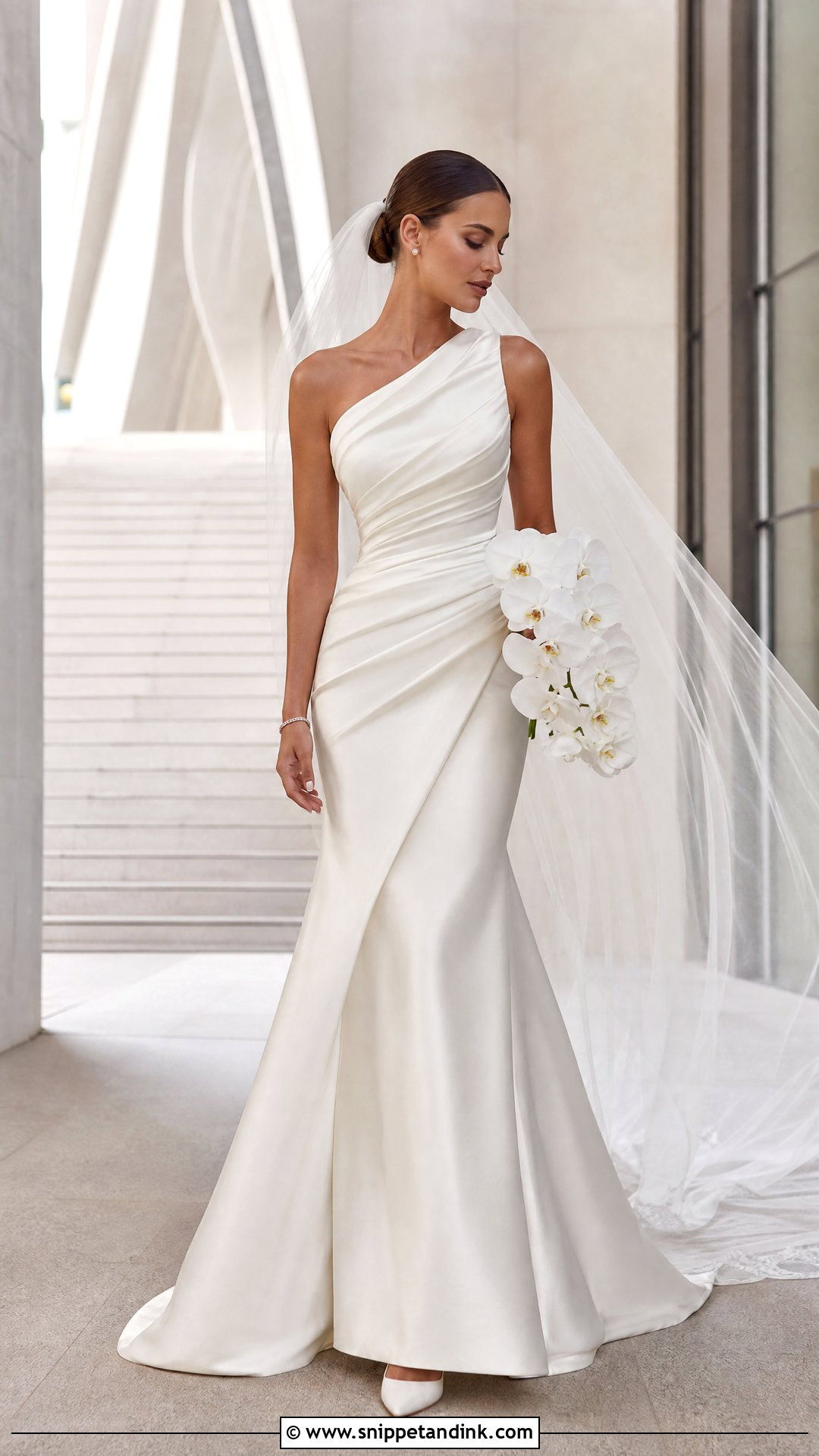
A one-shoulder bodice gives a plain gown its focus through asymmetry rather than sparkle. Structured crepe, satin or Mikado with clean diagonal draping looks best, and the strap must be wide enough to hold the dress up on its own. Sweep your hair to the opposite side or into a sleek bun so it doesn’t cover the shoulder. One slim bracelet and small studs are plenty. Ivory pumps and a simple cathedral veil keep it formal for evening receptions.
19. Draped Waist Mermaid Wedding Dress
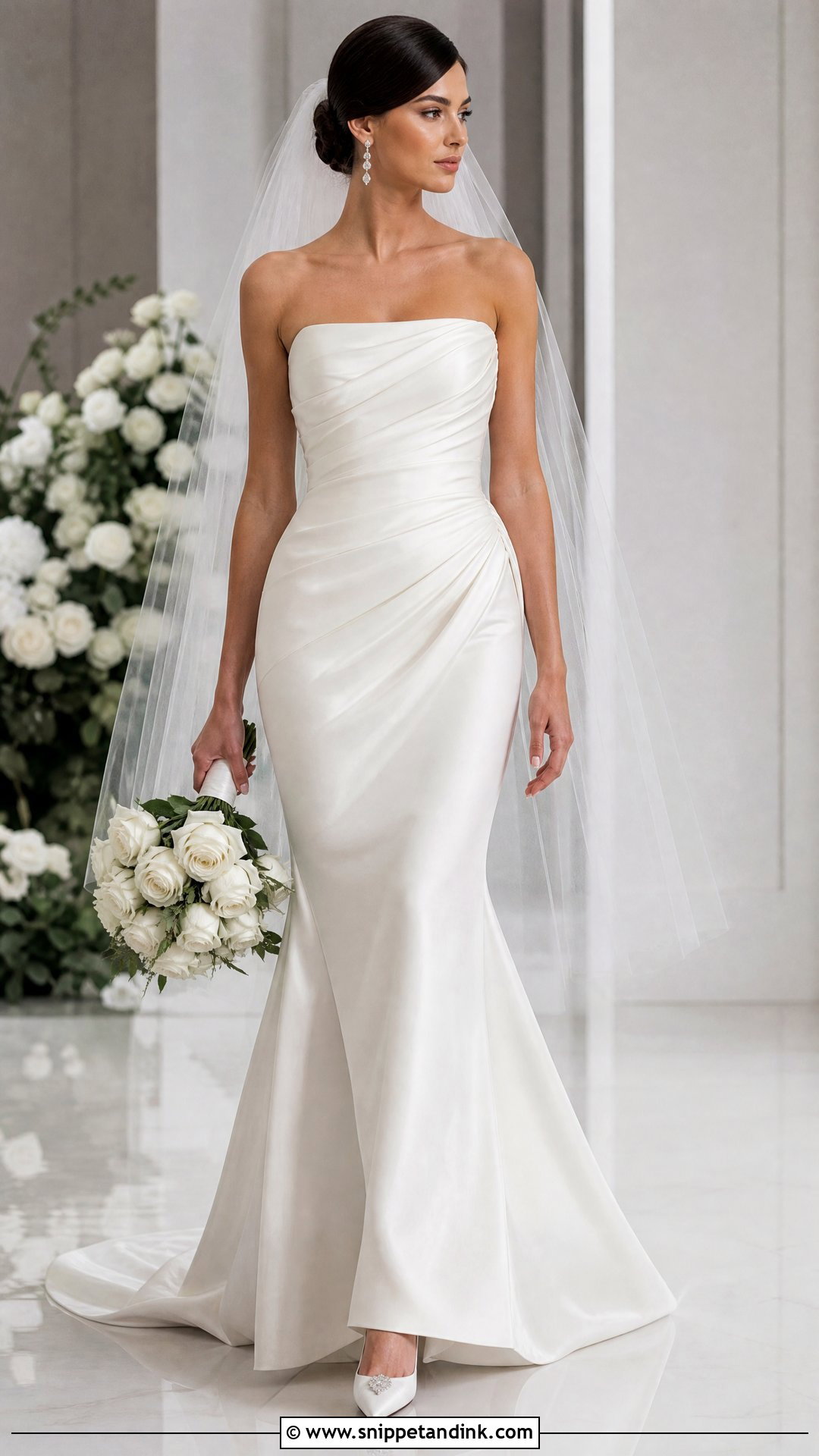
Draping at the waist softens the mermaid’s fitted shape and makes it more forgiving on brides who feel self-conscious about their middle. Diagonal or gathered folds in matte crepe or fluid satin work well when the rest of the gown is plain. The folds need to be stitched in place, not just pinned, or they shift as you move. Drop earrings, pointed pumps and a low side-parted bun reinforce the lines. A fingertip veil ending above the flare keeps the shape clear.

20. Ruched Mermaid Wedding Dress
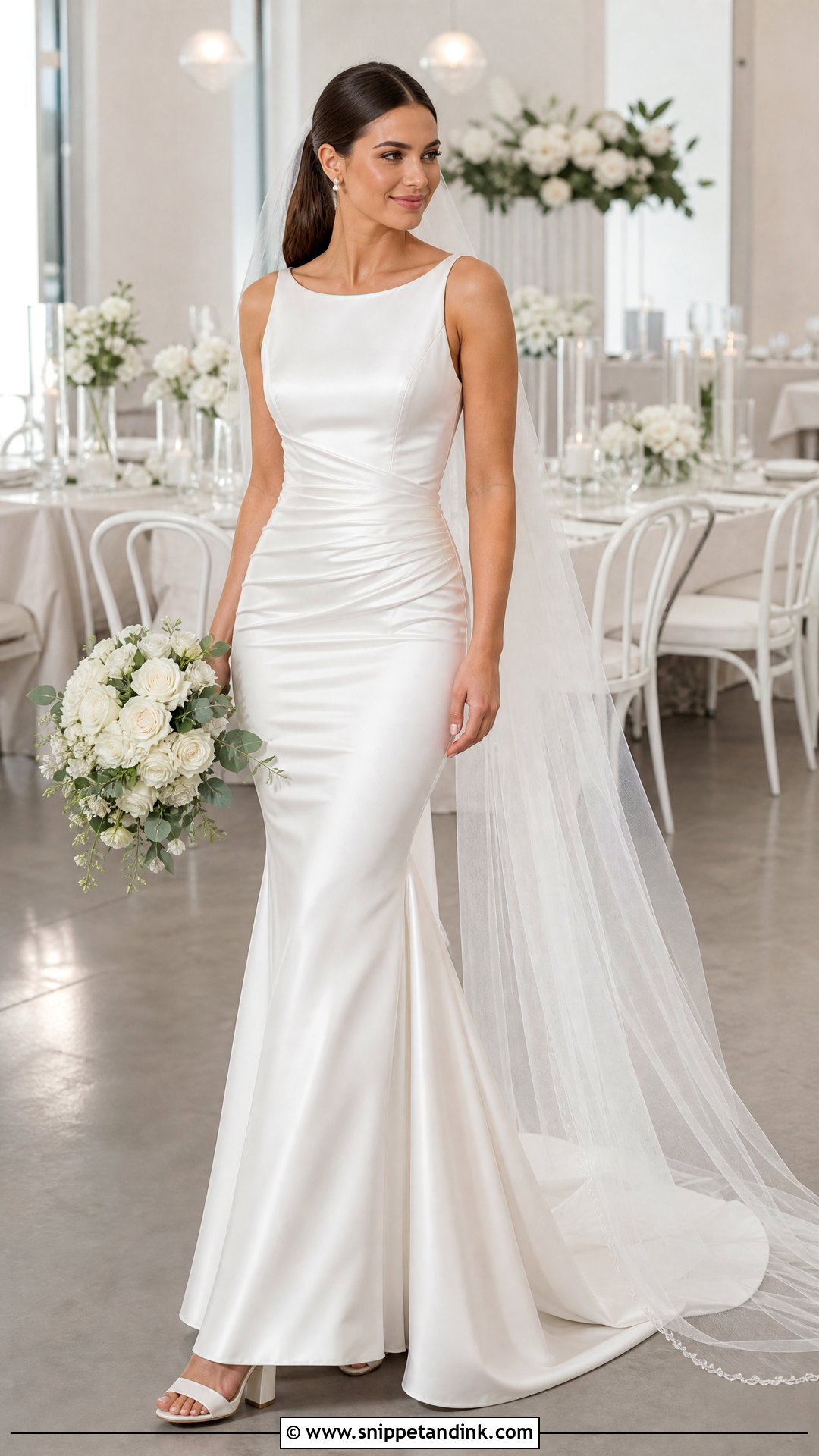
Ruching gives texture without decoration, but only when it’s controlled. Gathers across the waist or hips keep the silhouette deliberate; ruching over the whole gown looks busy and adds bulk. Stretch satin or jersey-crepe gives flexibility for sitting and moving. Ask your seamstress to set the gathers at the final fitting with you in your actual shoes, since they shift with posture. A low ponytail, pearl studs and mid-height block heels keep the outfit practical.
21. Lace Bodice Mermaid Wedding Dress
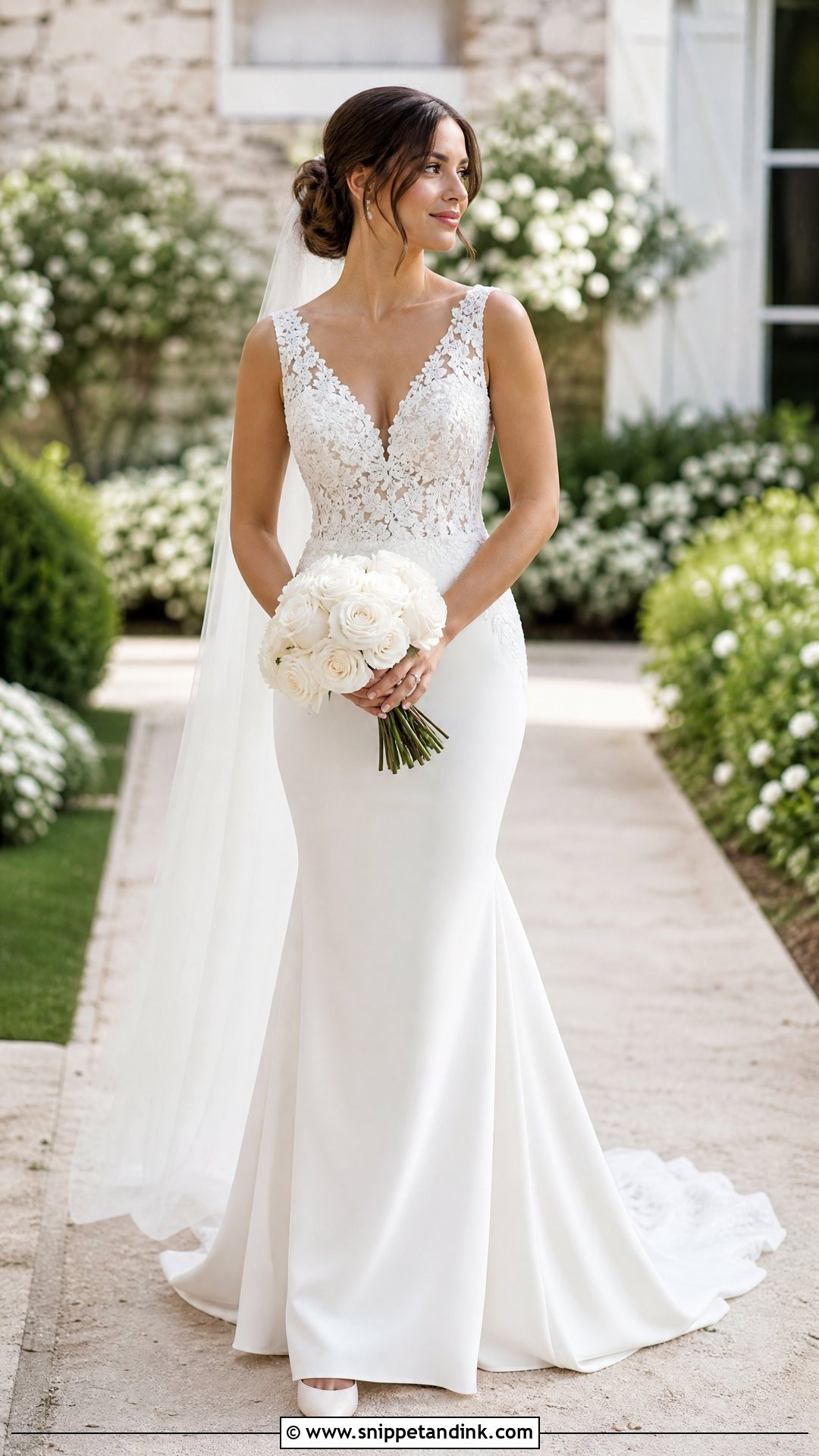
Limiting lace to the bodice keeps the gown simple while adding texture where people look most. Tonal floral lace with minimal beading over a smooth crepe or satin skirt is the version I like best. A sweetheart, scoop, or modest V-neckline frames it. The point I’d check closely is the join between lace and skirt: it should be invisible, without a ridge at the waist. Choose a veil without lace edging so the textures don’t compete.
22. Lace Sleeve Mermaid Wedding Dress
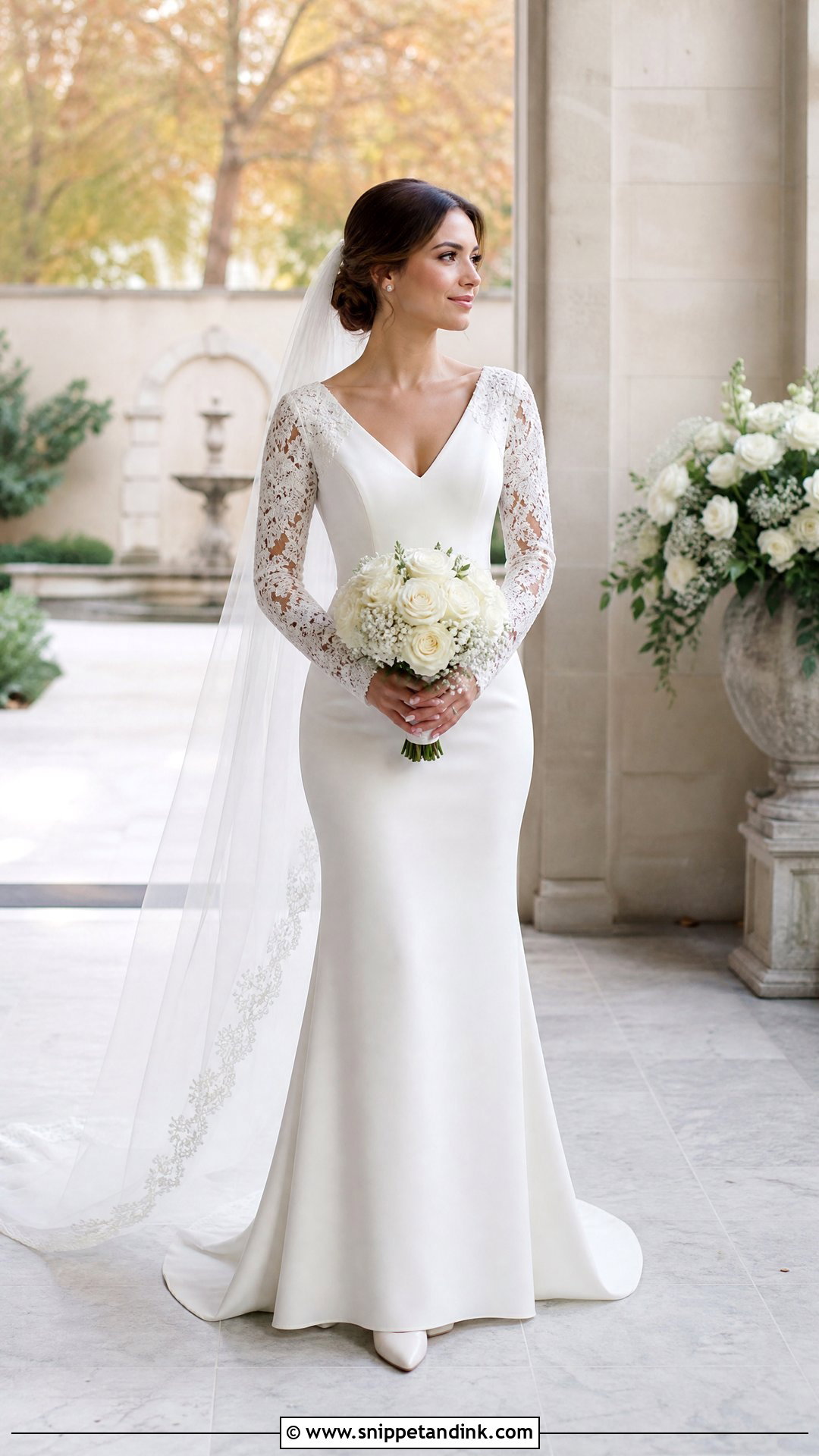
Lace sleeves bring coverage and romance while the crepe body stays plain. A consistent, open lace pattern on fitted sleeves looks more refined than dense lace. Keep the skirt free of embellishment so the flare stays crisp. Bateau or soft V necklines both work. Attach the veil beneath a low chignon so the sleeve lace stays visible. This one suits fall, winter and early spring, especially in historic and indoor venues.
23. Minimal Train Mermaid Wedding Dress
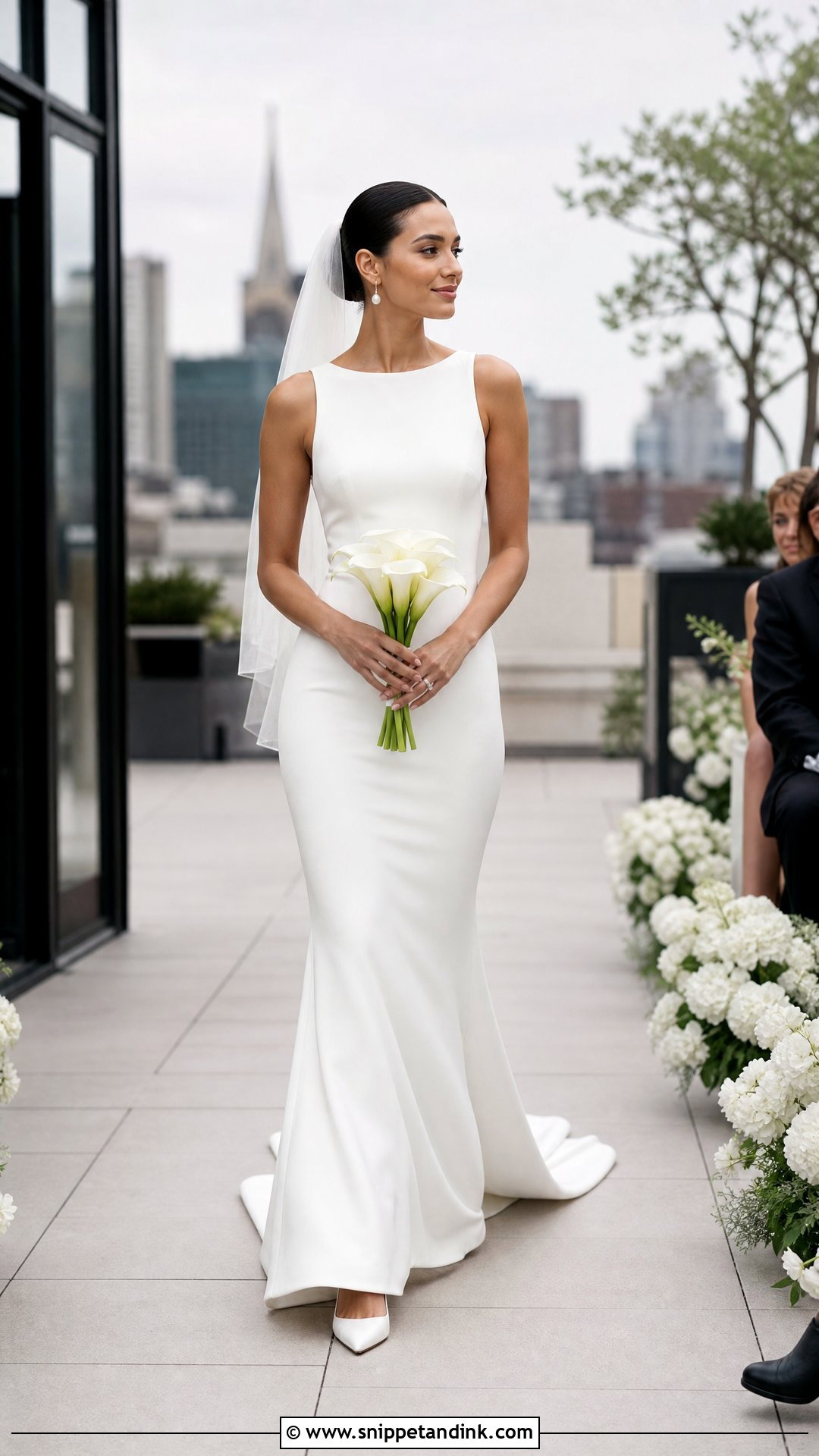
A sweep or short chapel train gives enough movement for photos while keeping the gown manageable. I recommend it for restaurants, rooftops and any venue with tight turns or stairs. Smooth crepe or stretch satin flaring near the knee works well. Ask for a discreet wrist loop or bustle so you can dance without anyone stepping on the hem. Comfortable slingbacks and a fingertip veil keep it neat.
24. Detachable Overskirt Mermaid Wedding Dress
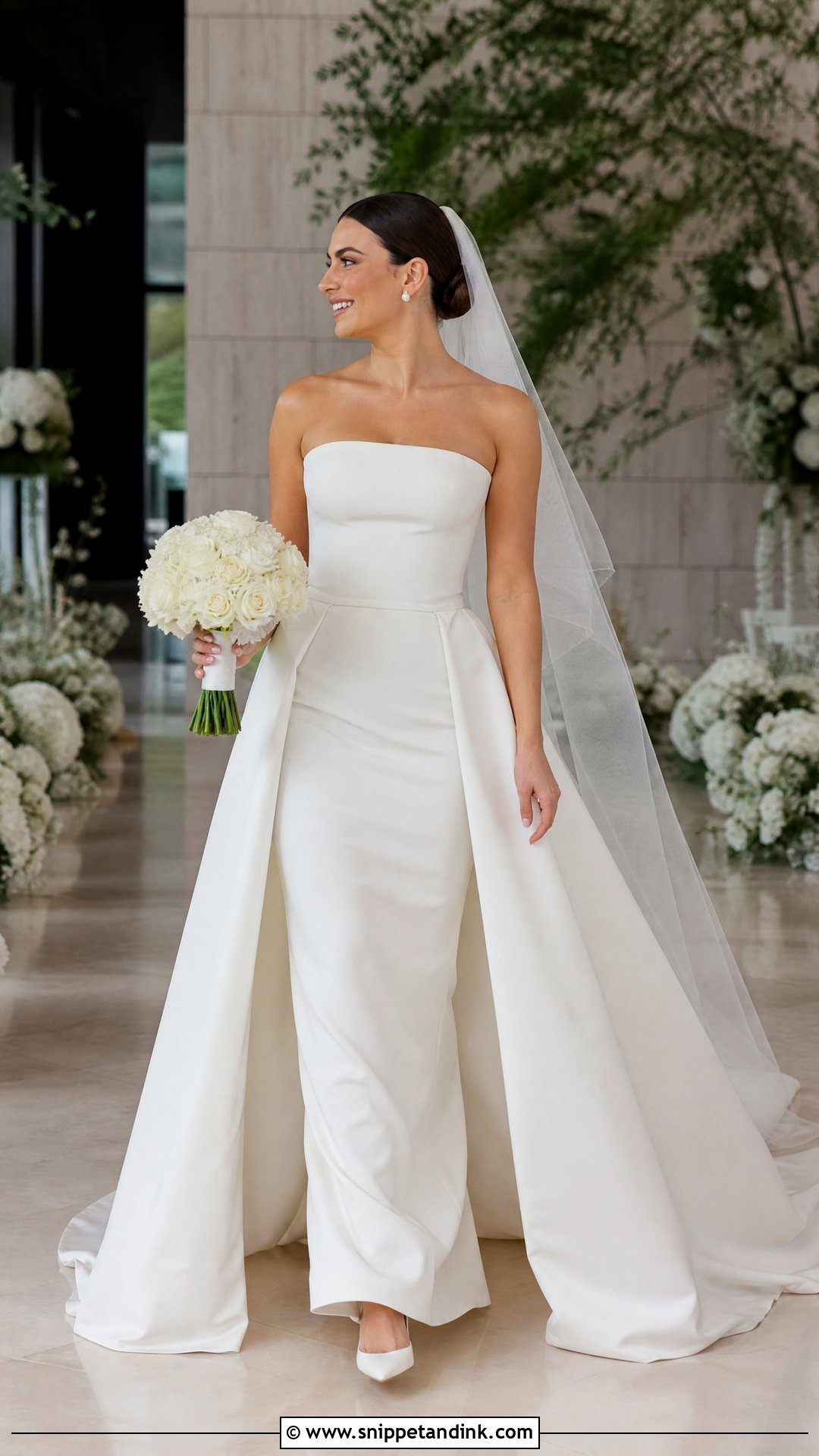
A detachable overskirt gives you two dresses: volume for the ceremony, the full mermaid shape for the reception. Start with a clean strapless or square-neck crepe gown and add a plain satin or organza overskirt. The waistband is the detail that makes or breaks this. It should sit flat with its closure hidden, so the dress looks finished with or without the layer. Practise removing it with whoever will help you, since hooks and snaps under a full skirt are fiddly.
25. Detachable Sleeve Mermaid Wedding Dress
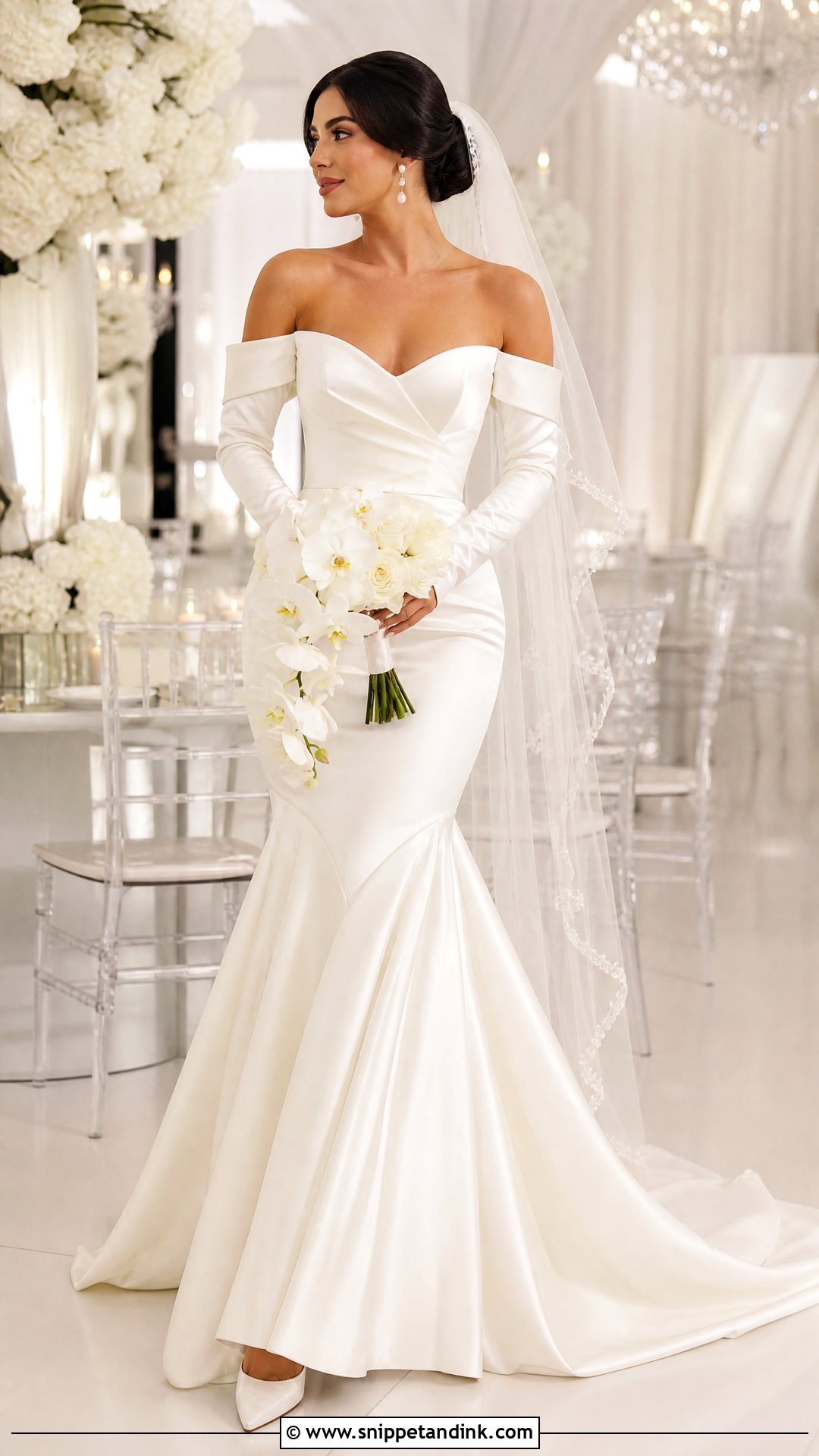
Detachable sleeves let you cover up for a religious ceremony and go strapless for the party. That means the bodice underneath must hold up entirely on its own, so I’d confirm the support first and the sleeves second. Long fitted sleeves, off-shoulder bands or light draped sleeves all work, ideally in the gown’s own fabric. Practise taking them off before the wedding so the change is quick and doesn’t disturb hair or makeup.
The Alterations a Fitted Gown Nearly Always Needs
Sample sizes are cut to a standard shape, and close-fitting styles show the difference more than any other. Expect alterations, and plan time for them. Many made-to-order gowns take several months to arrive, and most brides need two or three fittings after that.
Hip and knee
This is where a mermaid is usually taken in or let out so the flare starts at the right height. Small changes here alter how you walk, so test your stride after each adjustment.
Hem and shoes
The hem is set to one exact heel height. Bring the shoes you’ll actually wear to every fitting from the second one on. Changing shoes afterwards means the front either drags or lifts.
Bustle
Any train longer than a sweep needs a bustle for the reception. Ask the seamstress to show your maid of honour or a family member how it works at the last fitting, and have them practise it once while you’re in the dress. It’s the job most often fumbled in a rush between the ceremony and the first dance.
A Mermaid Gown Is Only as Good as Its Last Fitting
Fabric and fit decide whether a simple mermaid gown looks sculpted or strained. Satin gives polish and needs precise tailoring; crepe is softer and more forgiving to wear, though it shows what’s underneath. Necklines, sleeves, backs, trains and detachable pieces then shape the gown to your venue. At the final fitting, bring your real shoes and undergarments, then sit, walk, climb a step, raise your arms and turn. Check the bustle too. If you can do all of that without thinking about the dress, it’s ready.
You'll Like These Ideas:






Leave a Reply