
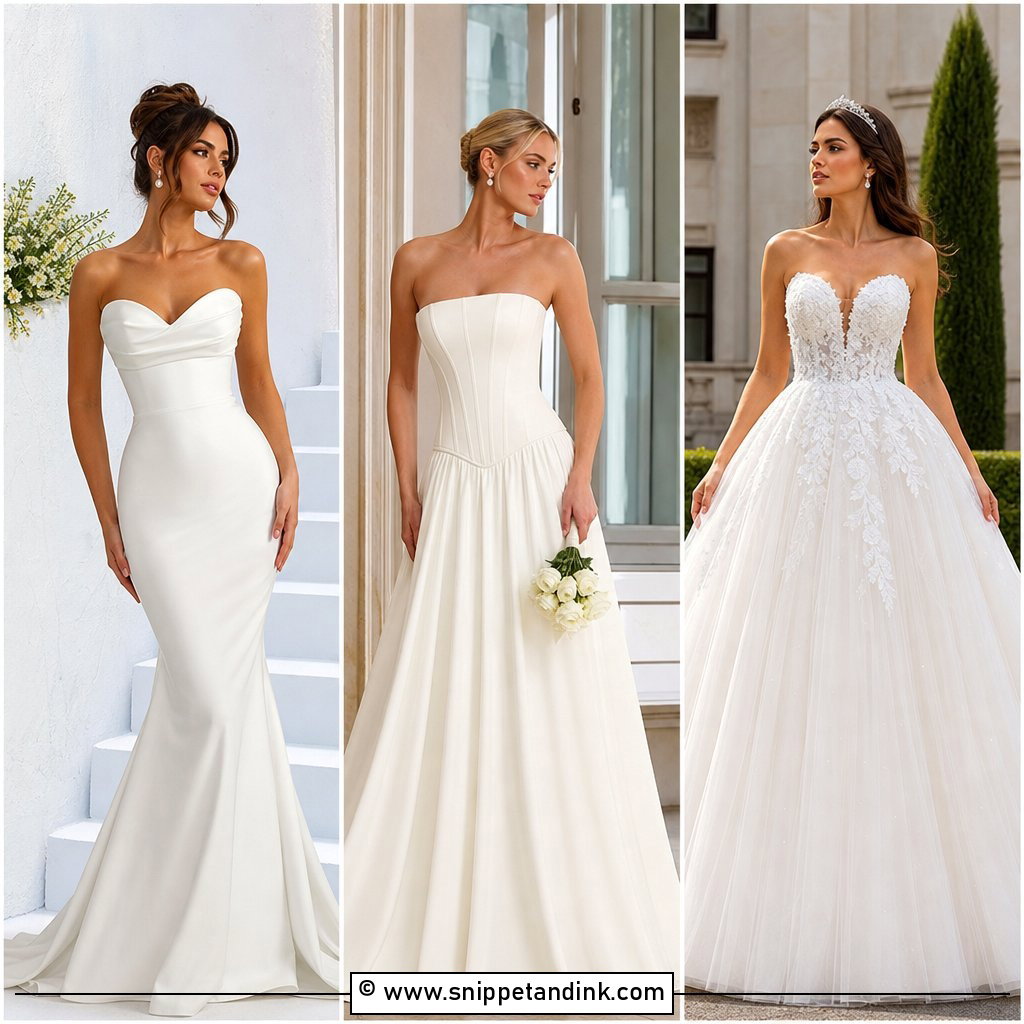
Soft Classic brides tend to look best in moderation: a gently defined waist, a symmetrical neckline, smooth fabric and a skirt that flows instead of taking over the room. A-lines and controlled ball gowns are the obvious starting points, and the fabric decides how soft or formal the result feels, from crisp satin to fluid chiffon. I treat the style type as a guide, not a rulebook. A dress that fits well and lets you move will always beat one that ticks every box on paper. The twenty gowns below each come with the veil, shoes, jewelry and fitting checks I’d pair with them.
Soft Classic in the Fitting Room, Not Just on a Chart
Soft Classic comes from a style system that groups people by bone structure and flesh, and it describes a figure that is balanced and moderate, with a touch of softness or curve. In a fitting room, that translates into a few simple tendencies rather than rules.
- Extremes tend to overwhelm: very sharp angles, very deep plunges, huge sleeves or a skirt wider than a doorway.
- Very stark minimalism can feel flat. A little shaping, a curved neckline or a soft drape usually looks more like you.
- Detail works best at a moderate scale. Medium pearls over chunky jewels, fine lace over bold guipure.
- The waist likes gentle definition, not a hard cinch and not nothing at all.
When a bride tries a dress, I watch whether people would notice her or the gown first. If the dress arrives before the bride, something is too extreme for her proportions. That simple test is more useful than any checklist, and it works whatever system you follow.
1. Soft Classic A-Line Wedding Dress
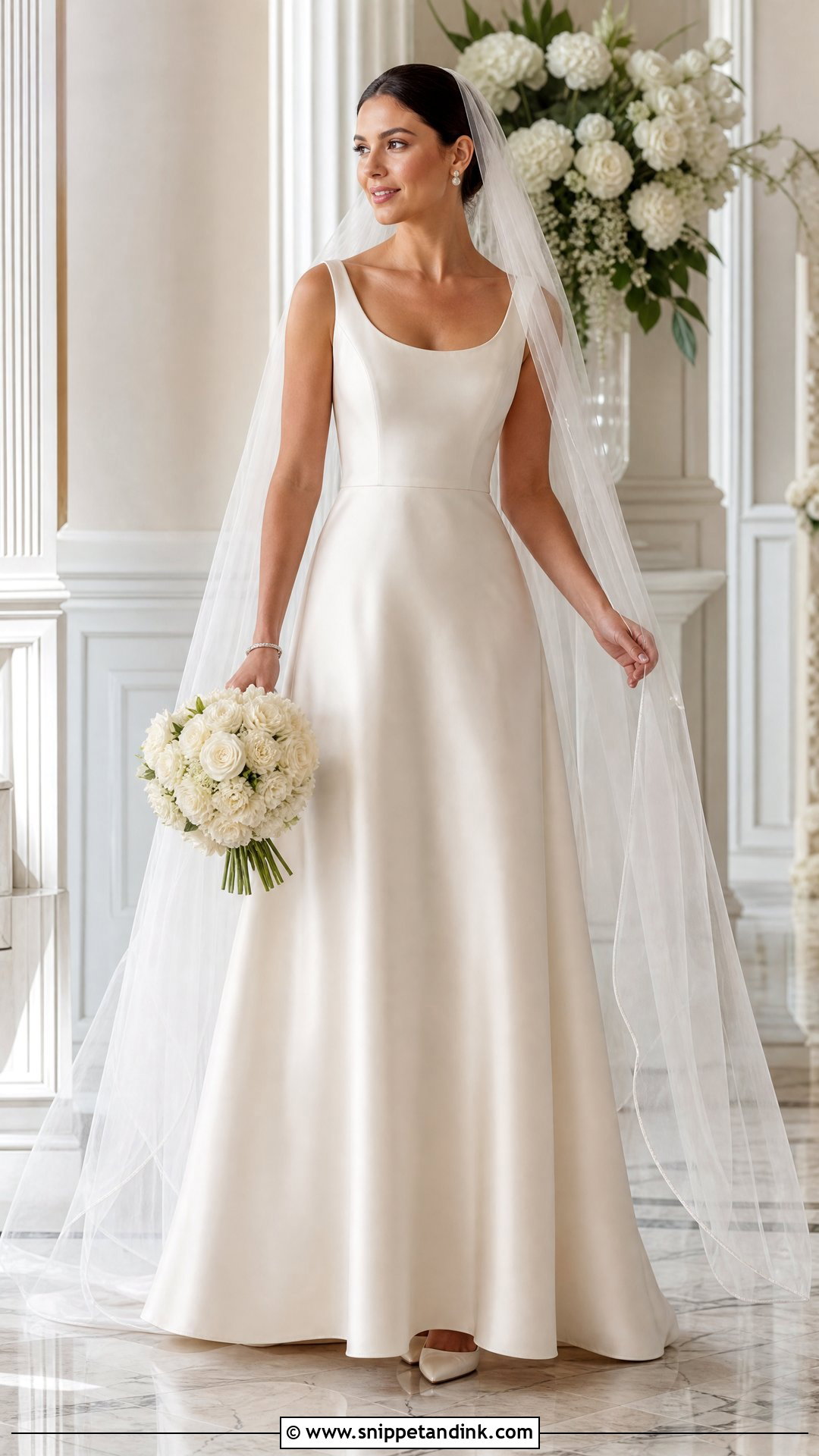
If a bride tells me she’s Soft Classic and doesn’t know where to begin, I hand her a softly structured A-line. The skirt starts at the natural waist and widens gradually, which balances shoulders and hips without adding bulk. A scoop or softly curved V-neck suits it. Lightweight satin, silk or crepe keeps the line smooth. The two alterations that matter most are a gentle waist definition and a hem set precisely to your shoes. Pearl drops, a fingertip veil and ivory pointed pumps are all it needs.
2. Soft Classic Satin Wedding Dress
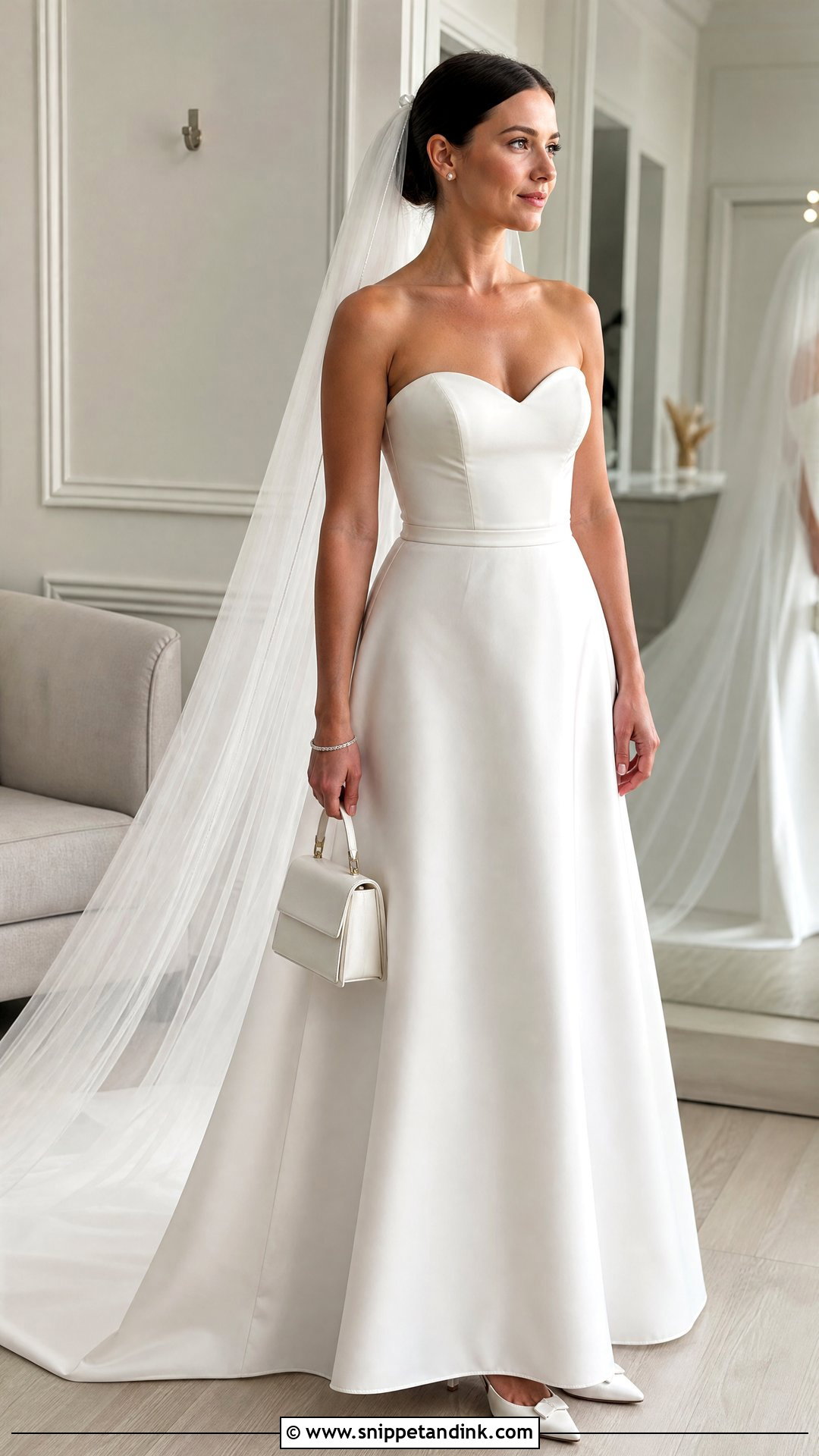
Satin is the fabric where weight and finish change everything. A heavy duchess satin holds a sculpted shape and looks formal; a lighter silk satin drapes and shows more of the body underneath. Look at both in daylight and indoor light, since satin’s sheen can read glossy under spotlights and almost matte outside. A sculpted bodice, natural waist and controlled A-line skirt let the fabric do the work, and covered buttons down the back add a traditional finish. A chapel veil and pearl studs keep it clean. Satin does crease when you sit, so expect some softening by the reception.
3. Soft Classic Lace Wedding Dress
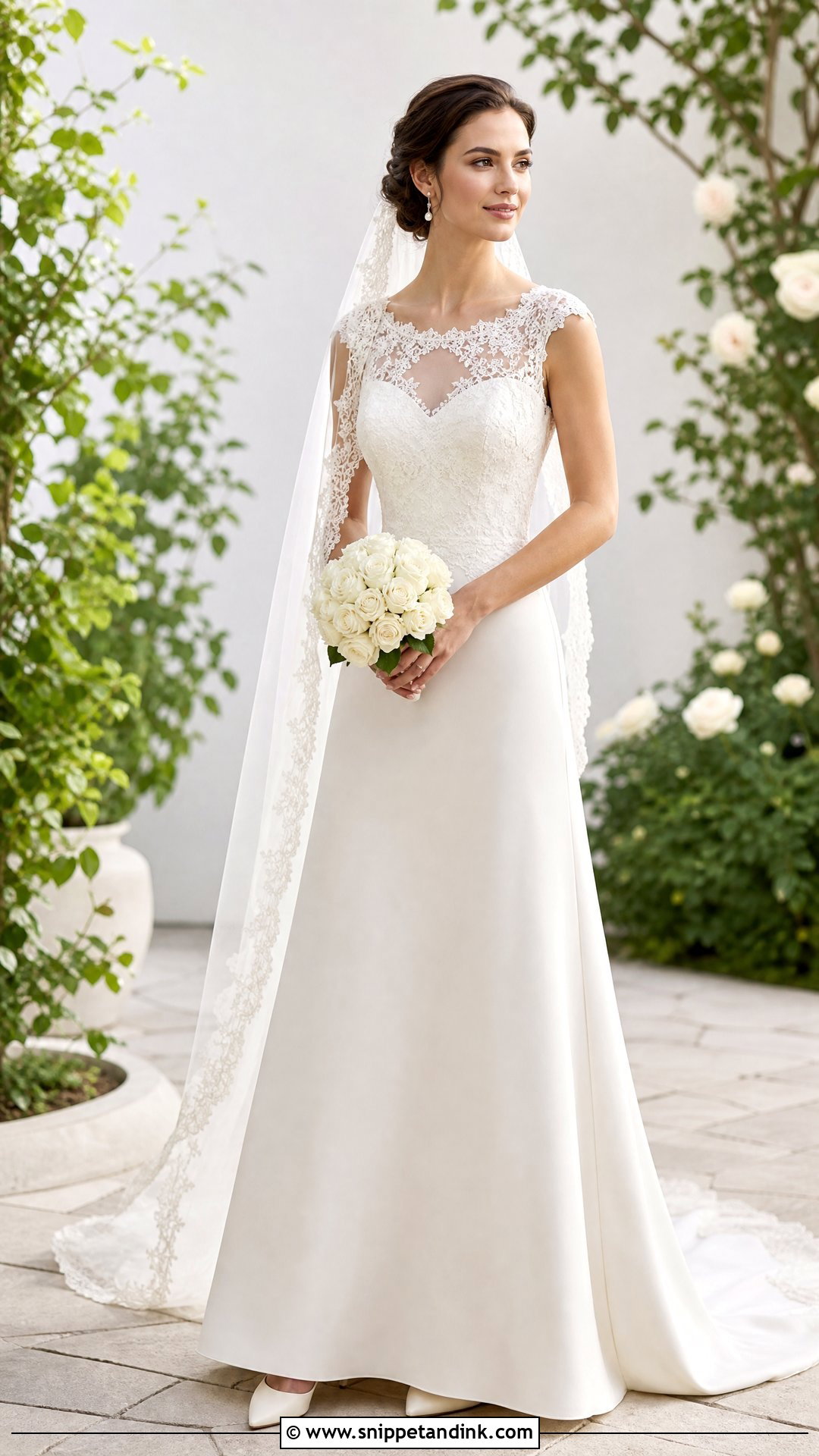
Lace can look romantic or chaotic depending on how many patterns are fighting each other. For a Soft Classic gown, I look for one delicate, evenly spaced lace, either across the whole dress or on the bodice over a smooth skirt. Three different appliqué motifs plus beaded trim is where it tips over. A rounded neckline and gentle waist definition keep the outline calm. A fingertip veil with a narrow lace edge should be checked against the dress lace, because two slightly different patterns look like a mismatch in close-ups.
4. Soft Classic Long Sleeve Wedding Dress
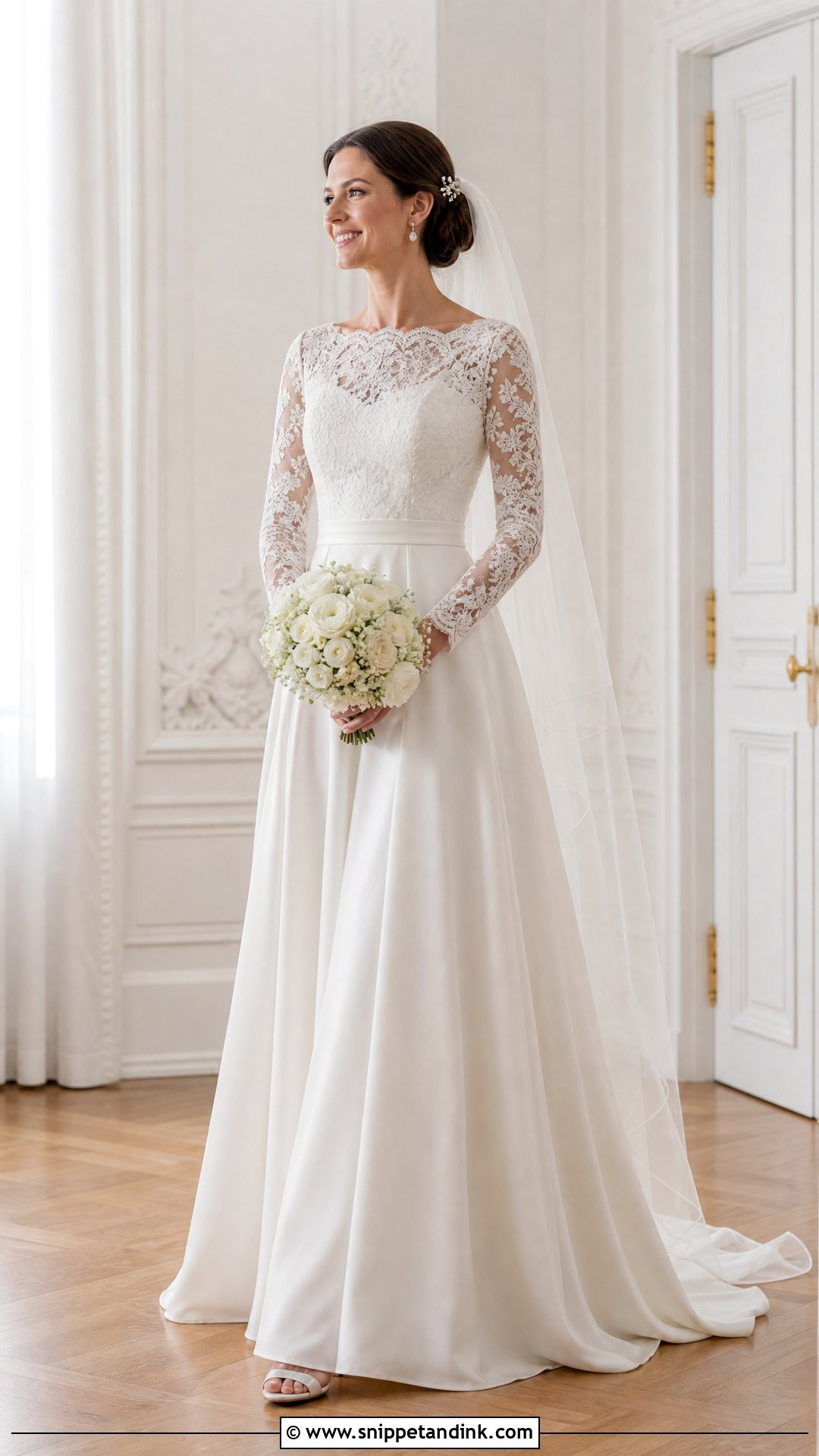
The shoulder seam is what makes or breaks a long-sleeve gown. If it sits too wide, the sleeves look borrowed; too narrow, and you can’t lift your arms. A sleeve that tapers naturally to the wrist suits this style far better than a big bishop or puff. Slim lace, soft crepe or sheer sleeves with light appliqué all work. Pair them with a bateau, scoop or modest V-neck to keep some openness at the top. Skip bracelets so the cuffs show. Good for indoor ceremonies and cooler months.
5. Soft Classic Sweetheart Wedding Dress
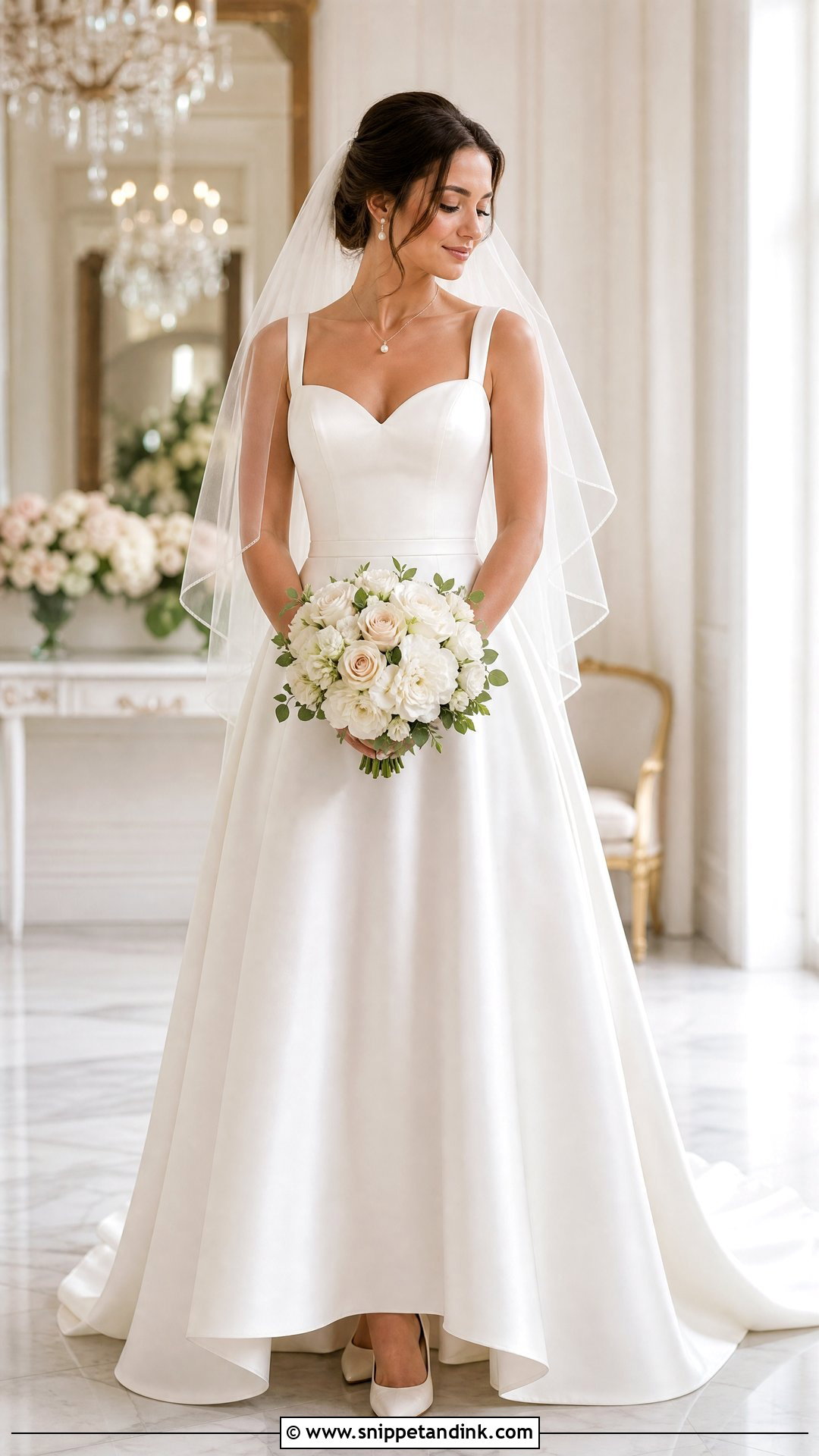
The sweetheart neckline repeats the rounded curves that suit this style, as long as the dip is moderate and the shaping smooth. A sharply pointed or heavily boned sweetheart reads more dramatic than classic. Wide straps, removable off-the-shoulder bands or a sheer overlay add support. At the final fitting, I ask brides to sit, walk and raise both arms; a sweetheart that’s even slightly loose will slip down during the first hug. A shoulder-length veil and a fine pearl pendant suit it.
6. Soft Classic Scoop Neck Wedding Dress
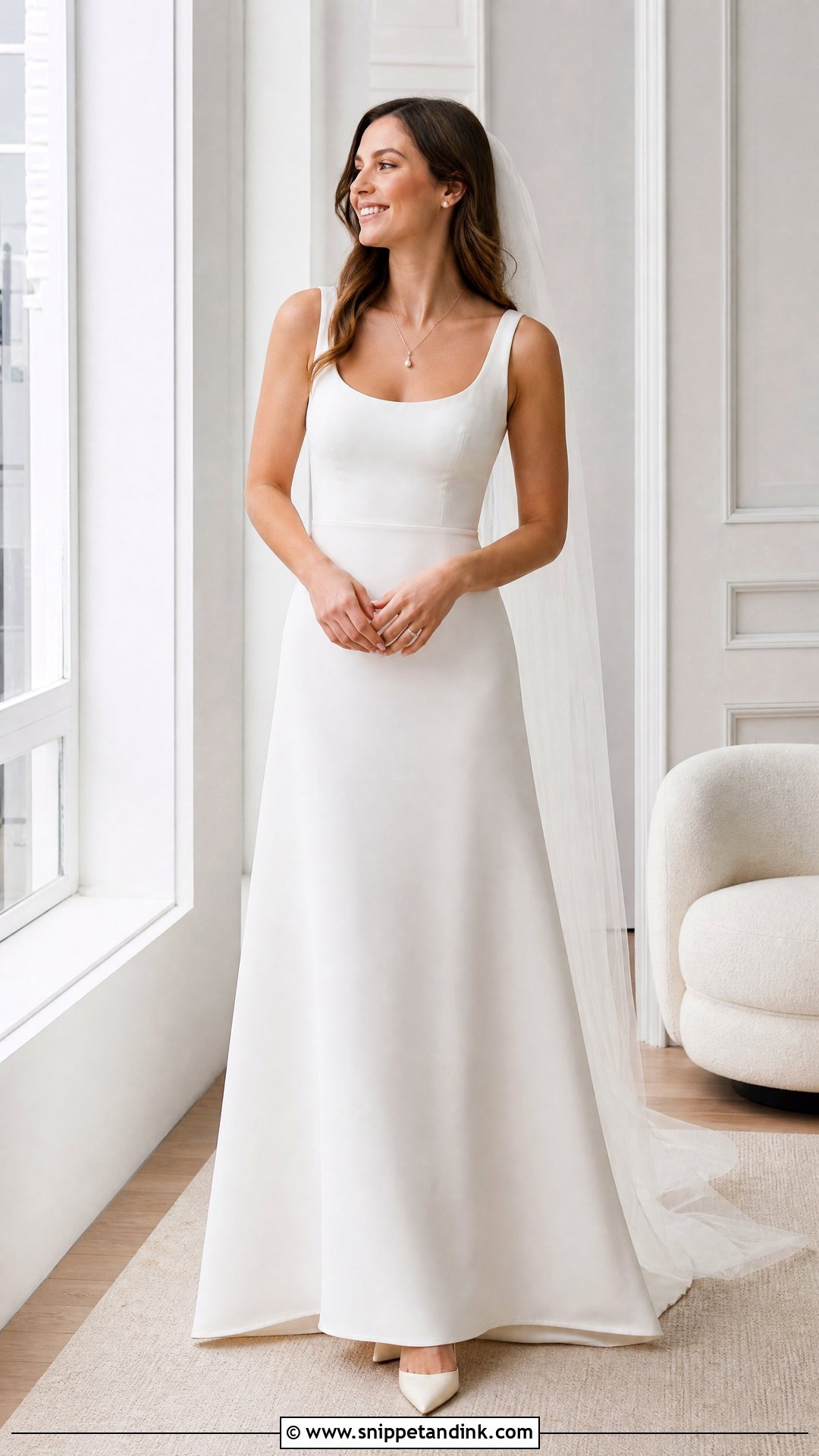
A scoop neckline softens the face and leaves a clean space for a fine pendant. I look for a medium curve that follows the collarbone rather than dipping low. Substantial straps keep it balanced; thin spaghetti straps on a scoop can look underbuilt against a full skirt. Silk crepe or matte satin works well, with a skirt that glides over the hips before widening slightly. A smooth low bun keeps the neckline visible, and a small structured bag is handy for reception portraits.
7. Soft Classic Bateau Neck Wedding Dress
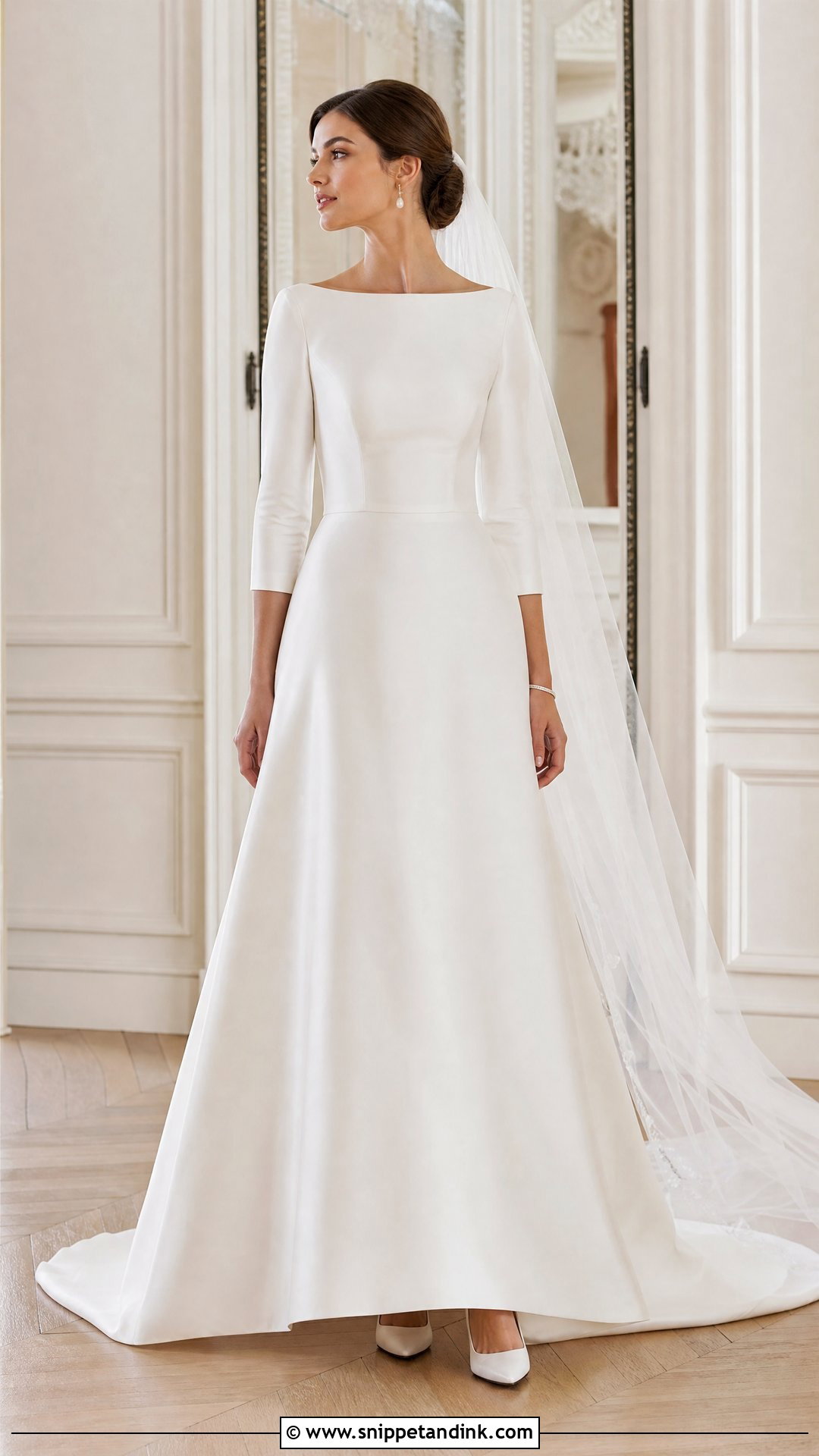
A bateau neckline runs straight across the collarbones, giving the upper body a clean horizontal frame. Because that line is strong, the skirt should stay fluid and moderately full; a stiff, huge skirt under a bateau can make the whole figure look boxy. Silk or crepe with a natural waist is right. Bateau necklines sit high on the shoulders, so they need to be cut precisely or they slide off one side. Skip the necklace and add a hair comb or slim bracelet instead.
8. Soft Classic Off-The-Shoulder Wedding Dress
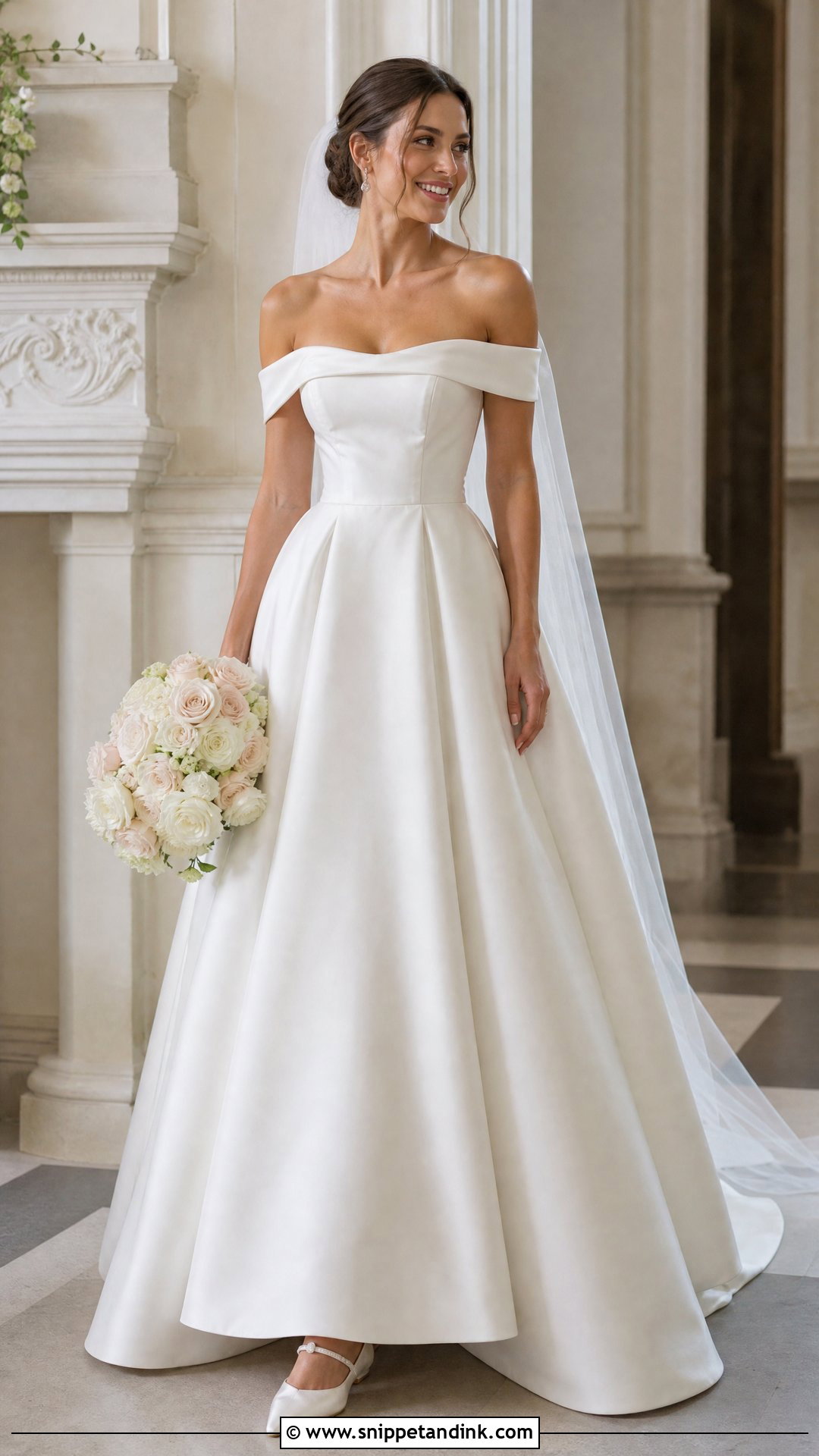
Off-the-shoulder bands should follow a smooth curve and sit snugly, without adding width. Loose bands drift upward toward the shoulder all day, and tight ones dig into the upper arm. Test by hugging someone in the fitting room. A softly structured bodice and gentle waist balance the open shoulders. Mikado gives a crisp, polished finish; chiffon a lighter one. Keep the neck bare or nearly bare, and carry a compact oval bouquet. Slingback heels stay on better than mules for a long evening.
9. Soft Classic Crepe Wedding Dress
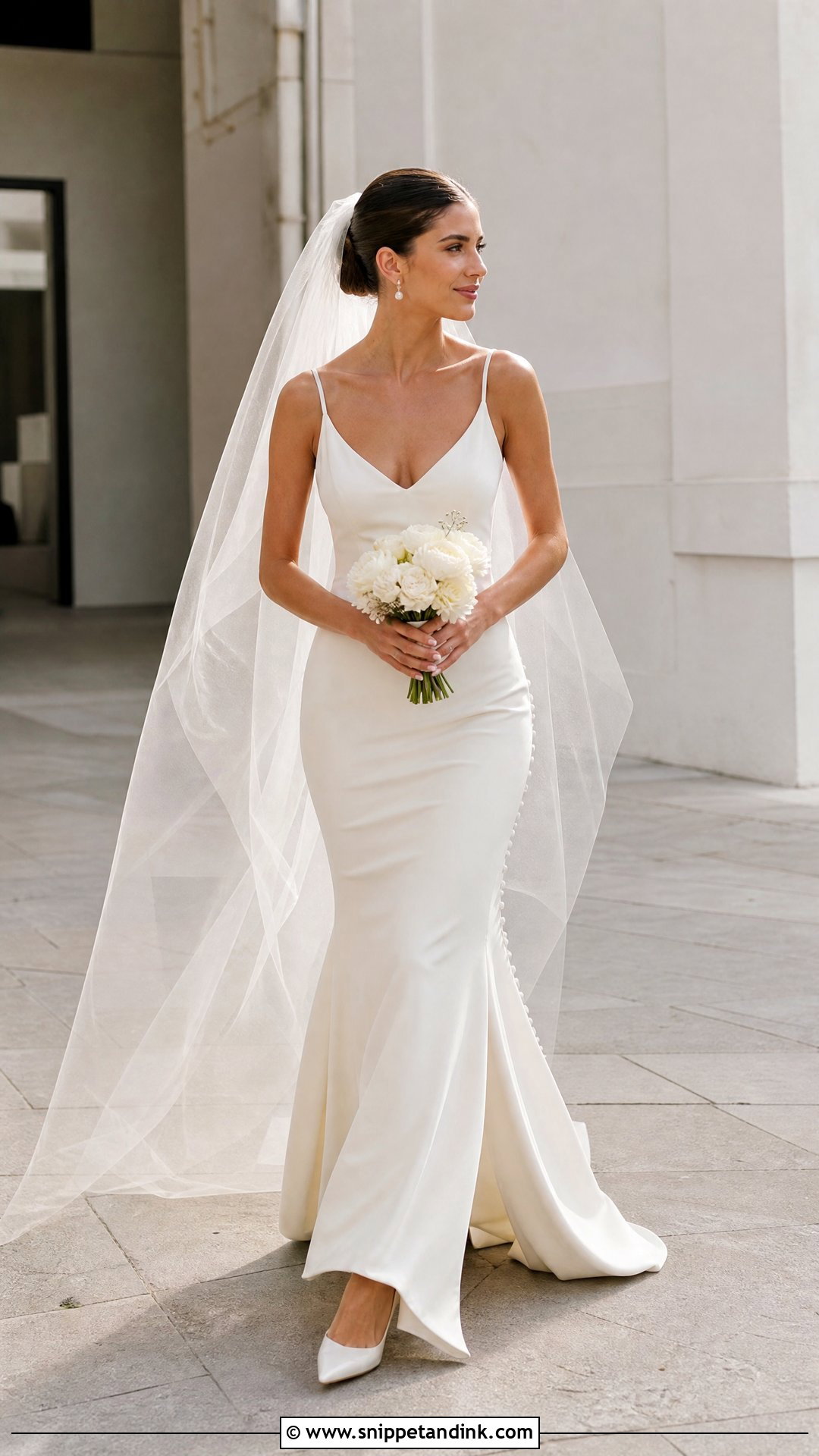
Crepe is honest fabric: it shows exactly how well a dress fits. Clean lines without stiffness are its appeal, and that honesty is its catch. Choose medium-weight crepe that skims rather than clings, with a rounded V-neck, natural waist and gentle fit-and-flare. Let one detail lead, such as covered buttons or a few waist pleats. Proper undergarments are not optional with crepe, so bring them to every fitting. A sheer chapel veil and sleek pumps finish it quietly.
10. Soft Classic Chiffon Wedding Dress
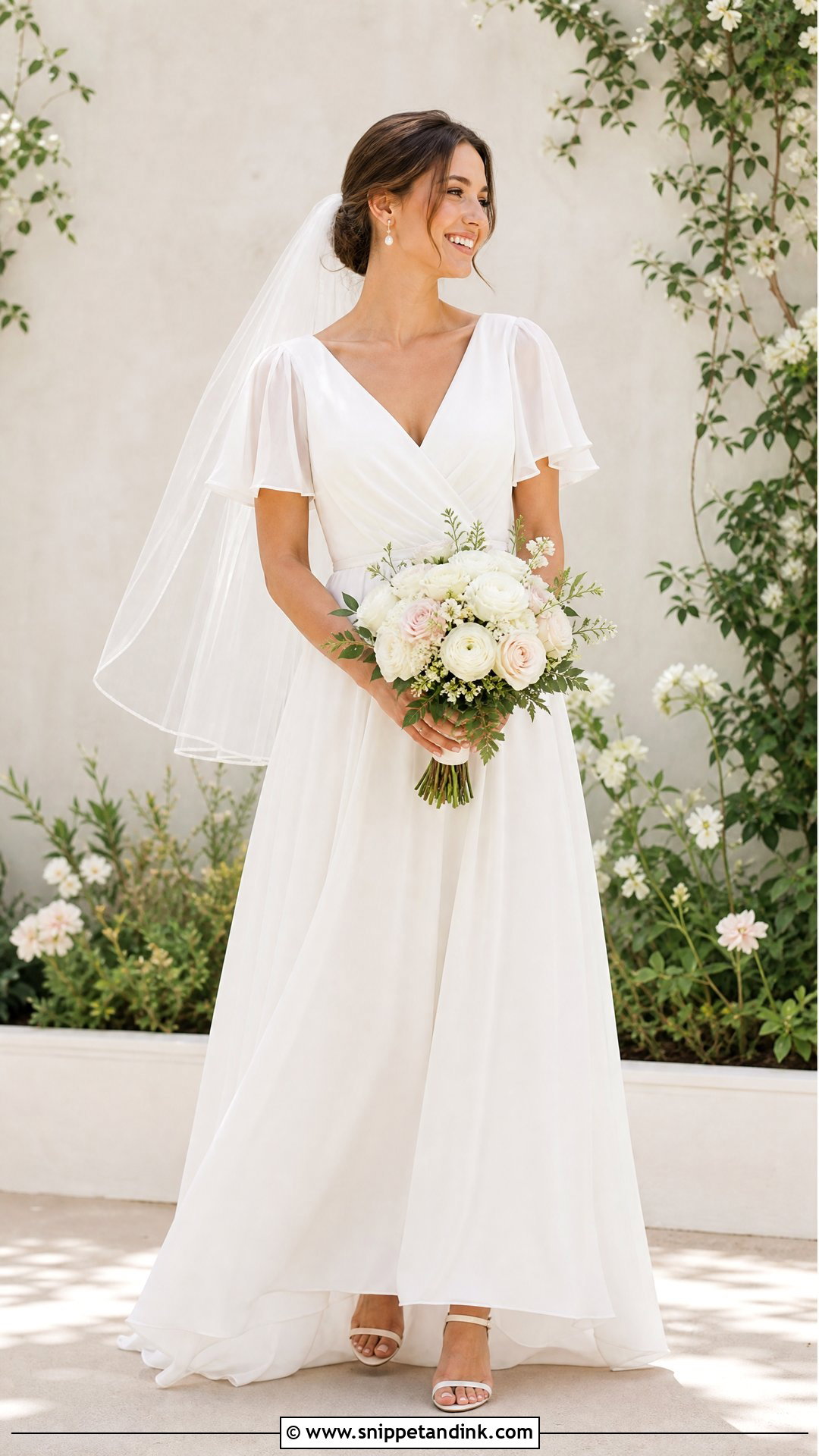
Chiffon floats, so the bodice under it needs to be properly lined and shaped to anchor the dress. Soft gathers falling from the natural waist suit this style better than heavy tiers. A modest V, scoop or draped cowl works with the fabric’s movement, and sheer flutter sleeves add light coverage. Chiffon can turn see-through in strong sunlight, so stand by a bright window at the fitting and check the skirt lining. Ankle-strap heels and a plain fingertip veil suit it.
11. Soft Classic Fit-And-Flare Wedding Dress
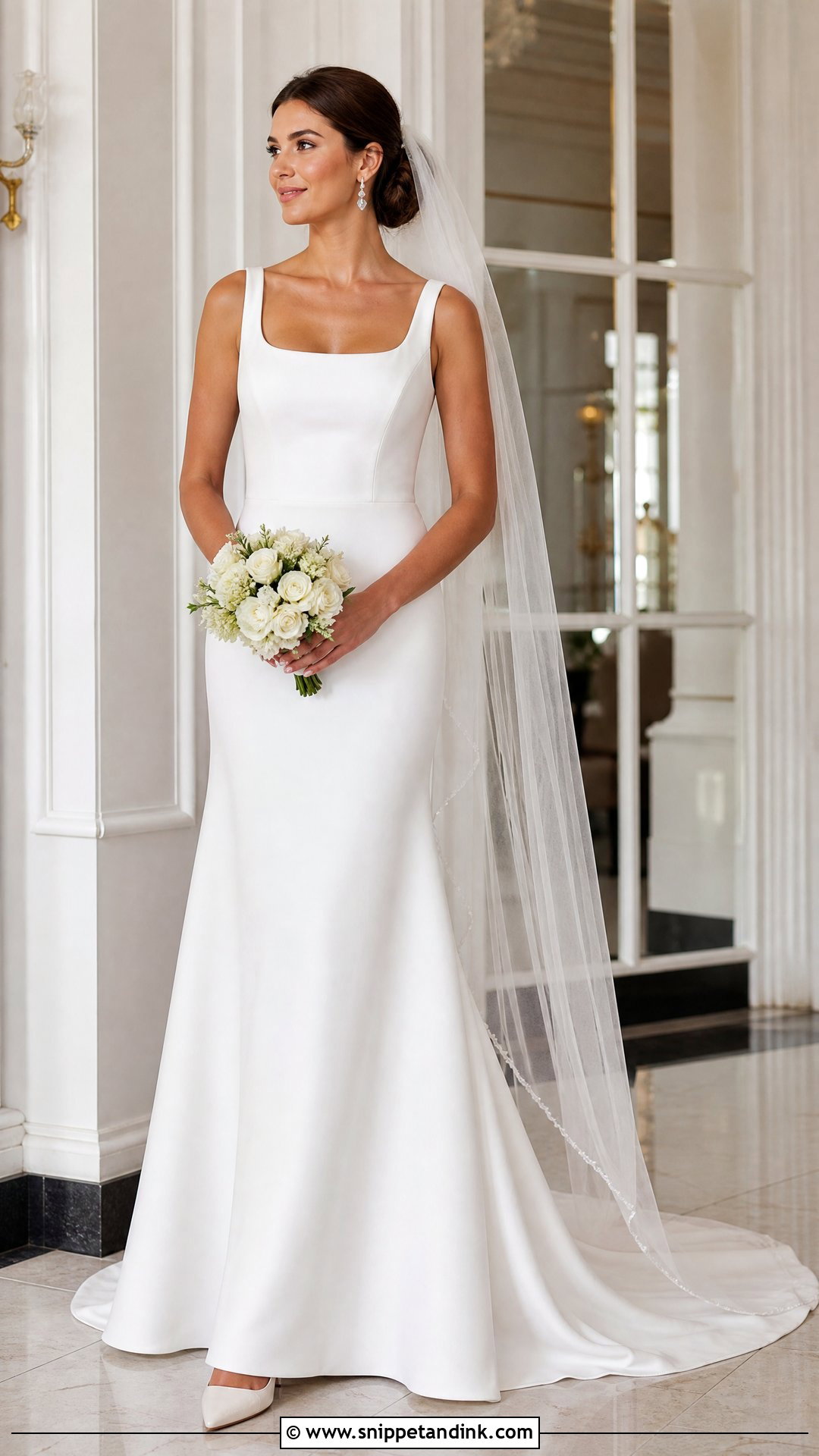
Where the flare starts is the whole difference between fit-and-flare and mermaid. For a Soft Classic figure, I want it around the lower hip or upper thigh so the skirt moves gently; a knee-level flare looks dramatic and makes stairs harder. The dress should follow the body without gripping. A rounded square neck or subtle sweetheart suits it, in crepe, silk or fine lace. During fittings, walk, sit and climb a few steps. A compact bouquet keeps the shape visible in photos.
12. Soft Classic Square Neck Wedding Dress
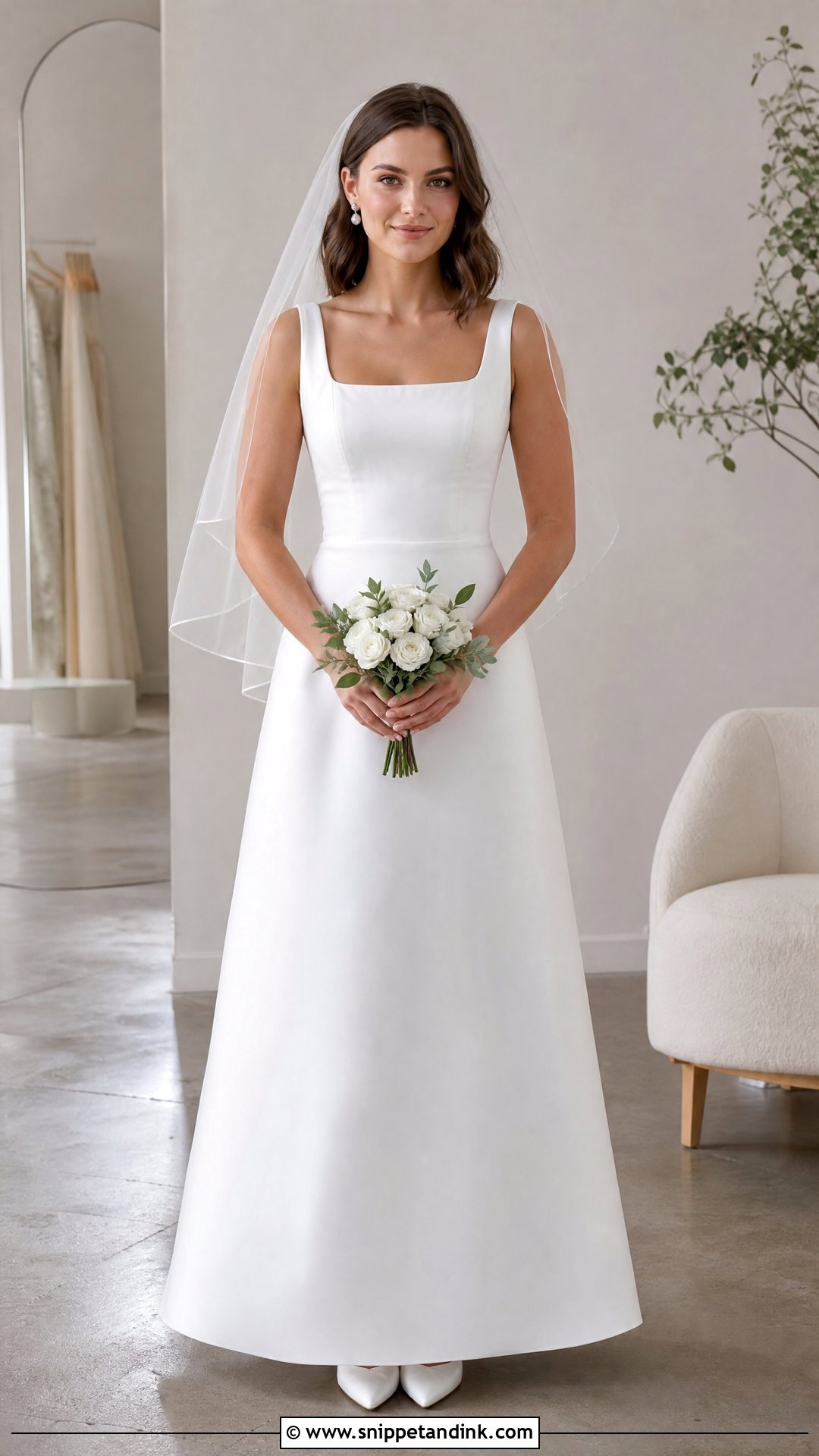
Square necklines can look harsh if the corners are sharp, so I prefer slightly rounded corners and medium-width straps. That gives definition without angles. A fitted waist and smooth A-line in satin, silk or crepe keep the rest simple, with covered buttons and a small train for the bridal detail. If the bodice feels too plain, a narrow waistband or a touch of floral embroidery at the waist is enough. Half-up hair or a sleek bun keeps the neckline in view.
13. Soft Classic V-Neck Wedding Dress
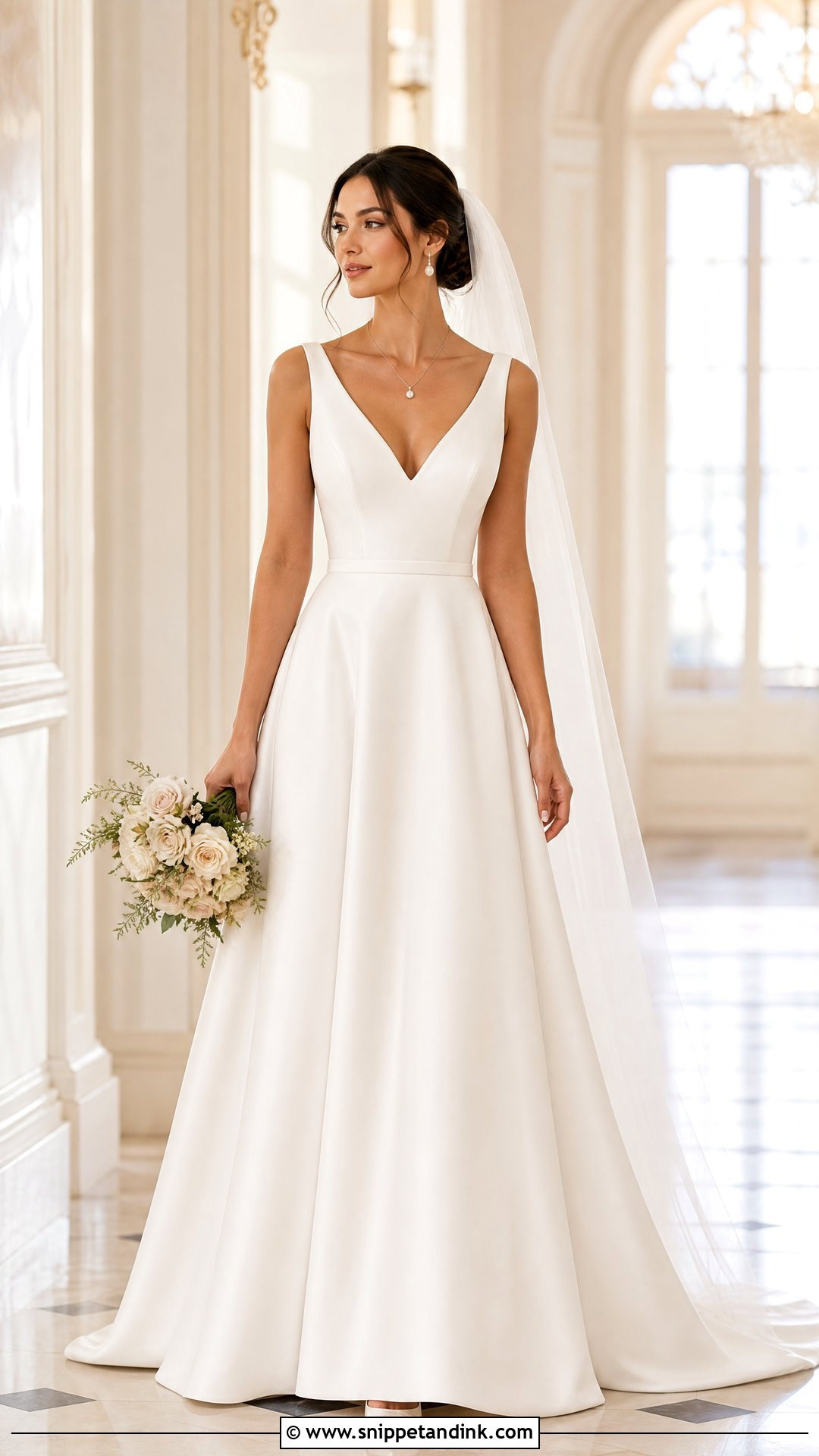
A moderate V lengthens the upper body without plunging. I’d steer a Soft Classic bride away from a deep, sharply edged V, which reads more dramatic than this style wants. Wider straps or short sleeves stop the V from gaping. A tailor can raise the depth slightly or add illusion mesh if you feel exposed when you lean forward. Satin, chiffon or crepe all work. Choose a pendant that ends above the point of the V, never at or below it.
14. Soft Classic Tea-Length Wedding Dress
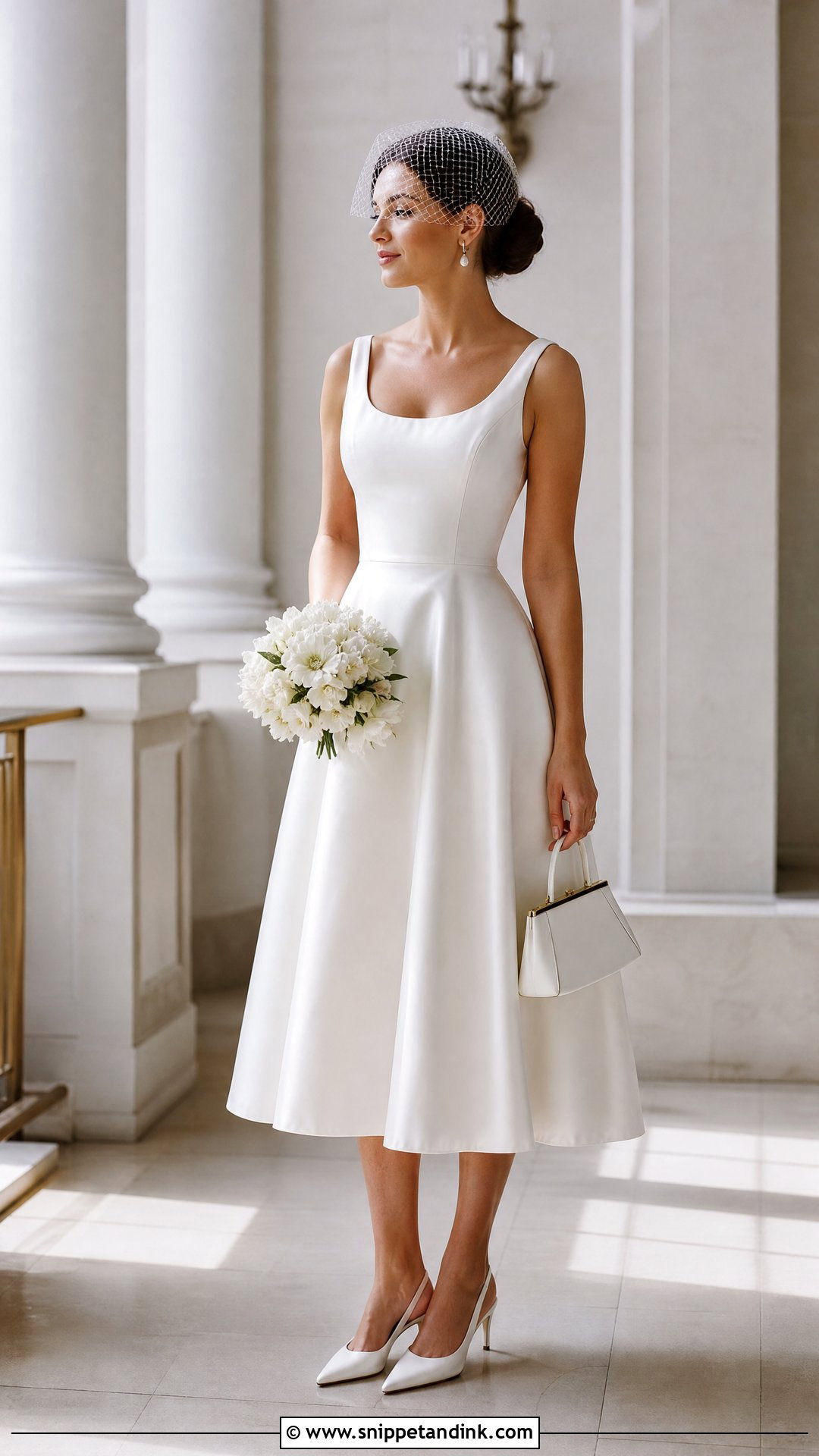
Tea length ends between the lower calf and the ankle, so your shoes are fully seen. Pointed pumps, slingbacks or low block heels work; choose them before the hem is set. The skirt should have smooth, moderate fullness rather than a stiff petticoat bounce. A scoop, bateau or modest sweetheart neckline keeps it refined. Birdcage or shoulder-length veils suit the shorter proportion better than a cathedral. It works for civil ceremonies, intimate weddings or as a change for the reception.



15. Soft Classic Tulle Wedding Dress
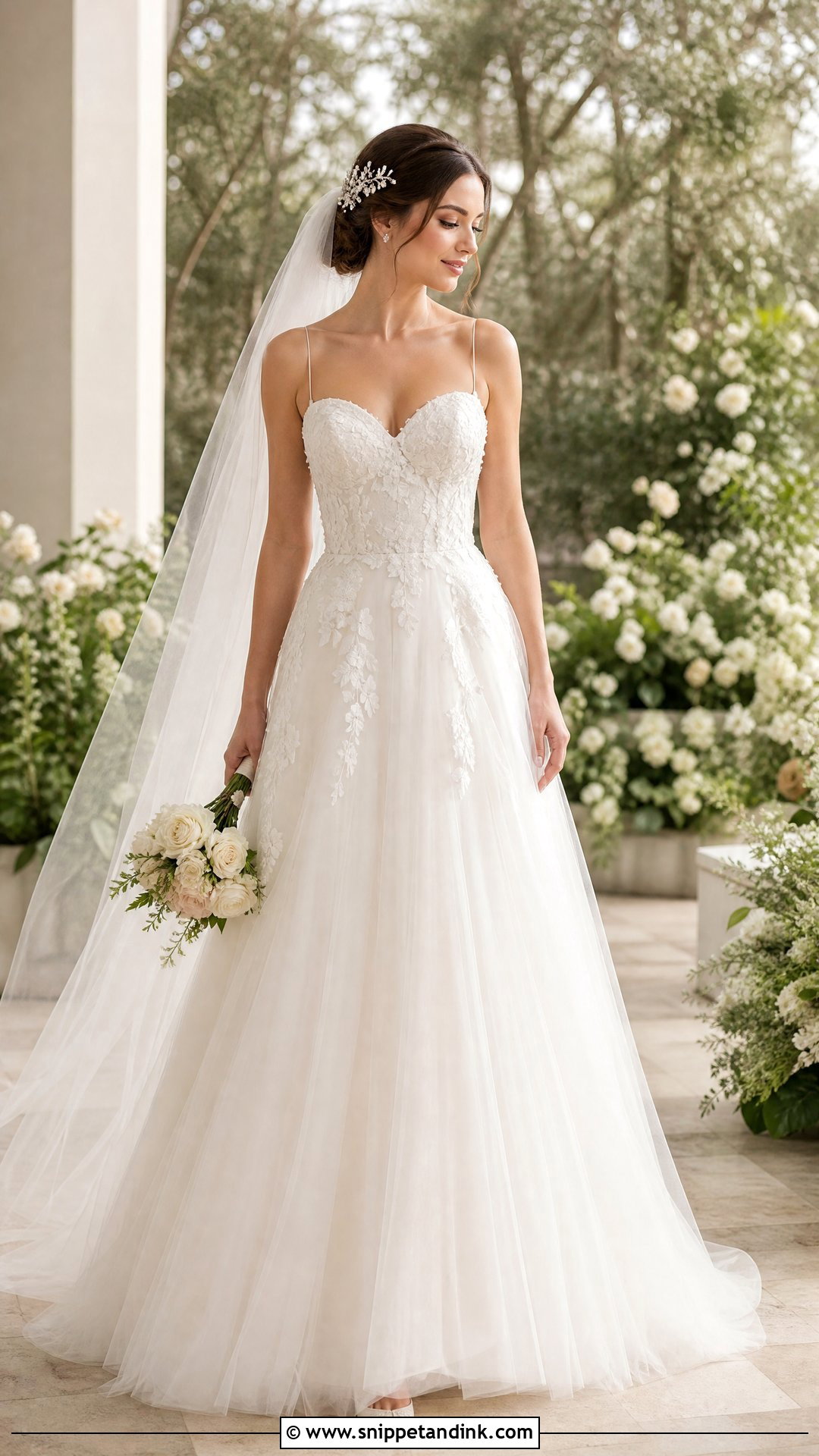
Fine tulle gives volume without weight, as long as the layers fall smoothly instead of being gathered thickly at the waist. A fitted satin or lace bodice anchors the skirt. Concentrate embellishment in one place, along the neckline or at the waist, not both. Uneven tulle layers are a common alteration oversight, so at the last fitting walk across the room and watch whether any layer peeks below the others. A small comb in a low bun adds a little sparkle near the face.
16. Soft Classic Ball Gown Wedding Dress
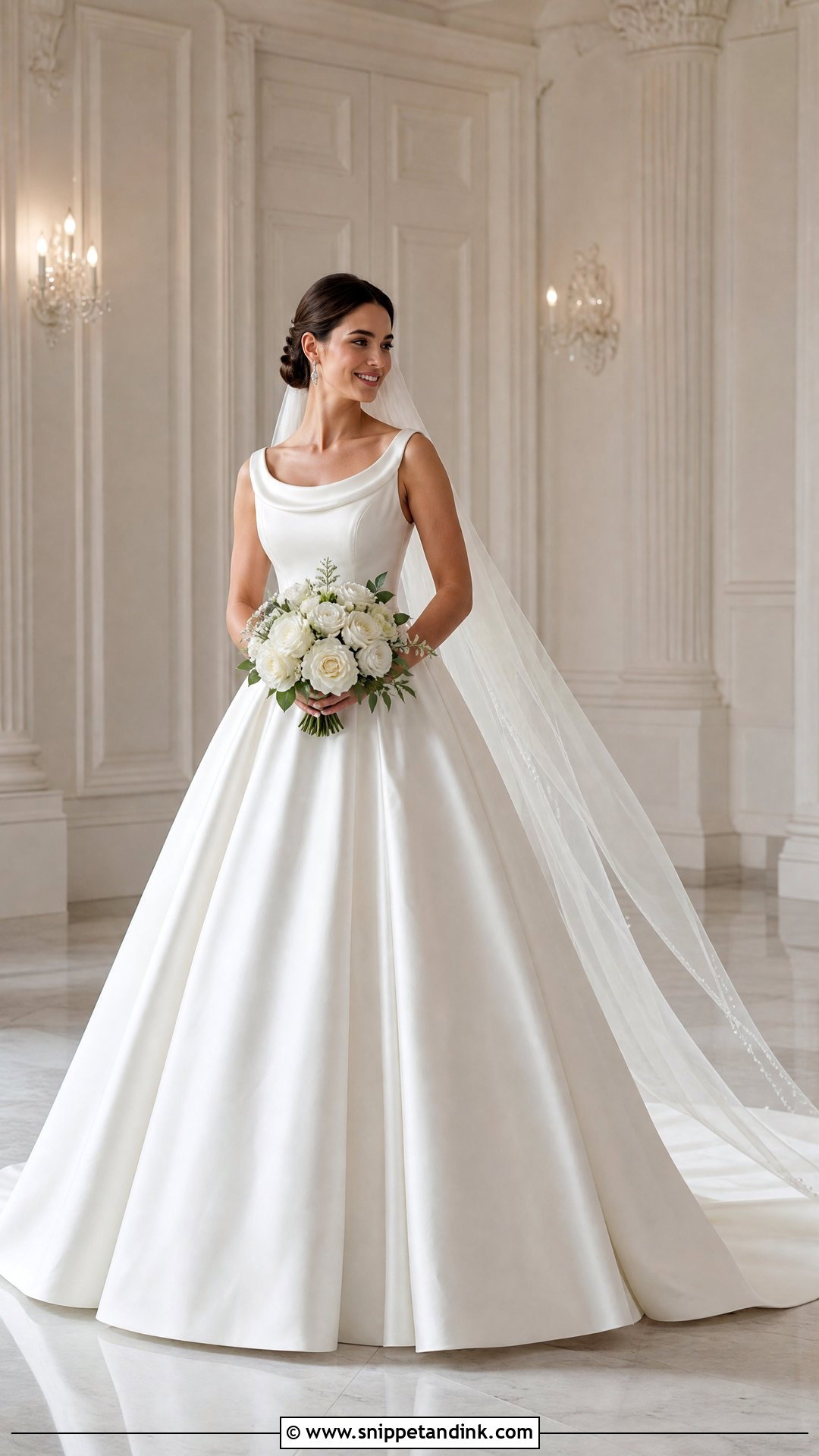
A ball gown suits this style when the volume expands smoothly from a natural waist. Oversized ruffles or very stiff layers push it past classic into costume. Satin, mikado or fine tulle all work. Keep detail symmetrical and limited: pearl buttons, a narrow waistband or a little bodice lace. Your shoes will be hidden, so prioritize comfort there. A train needs a secure bustle; ask your seamstress which type suits the skirt, and practice fastening it with a bridesmaid before the day.
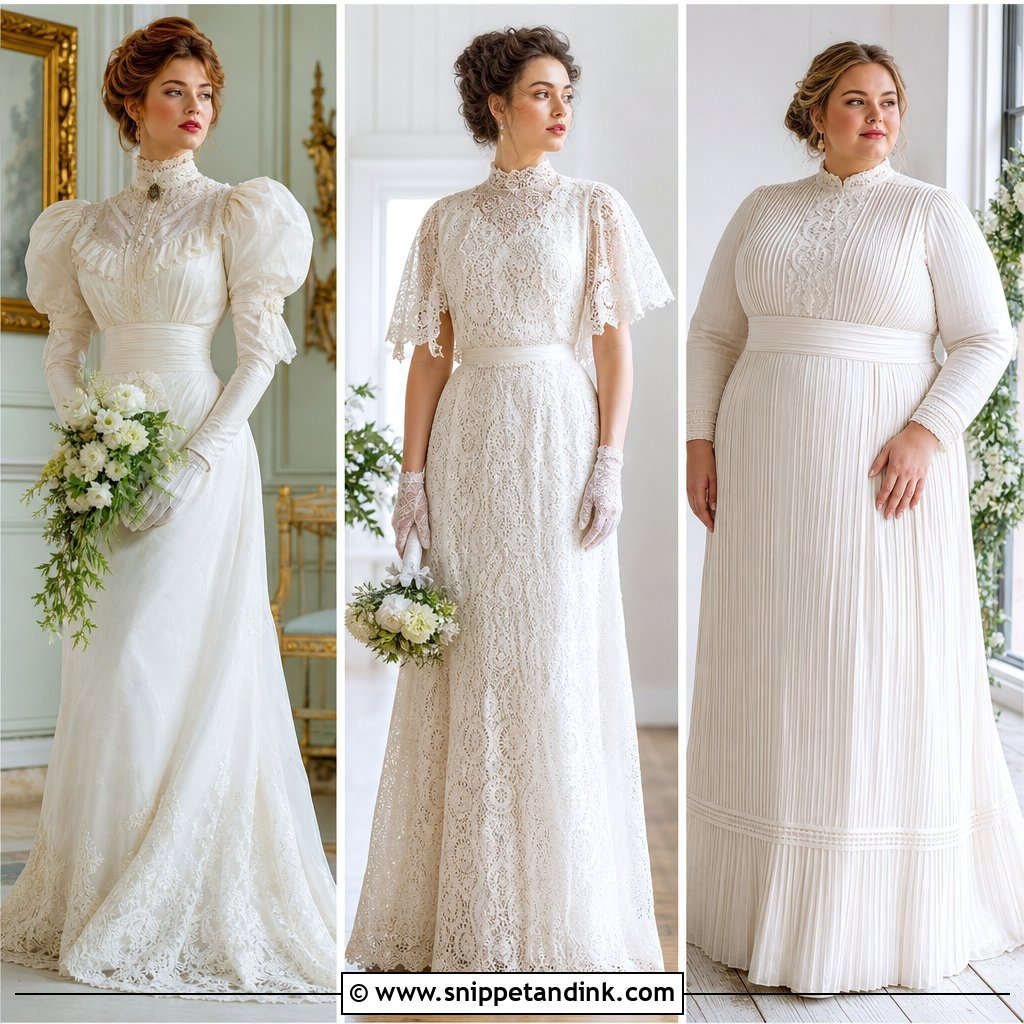
17. Soft Classic High Neck Wedding Dress
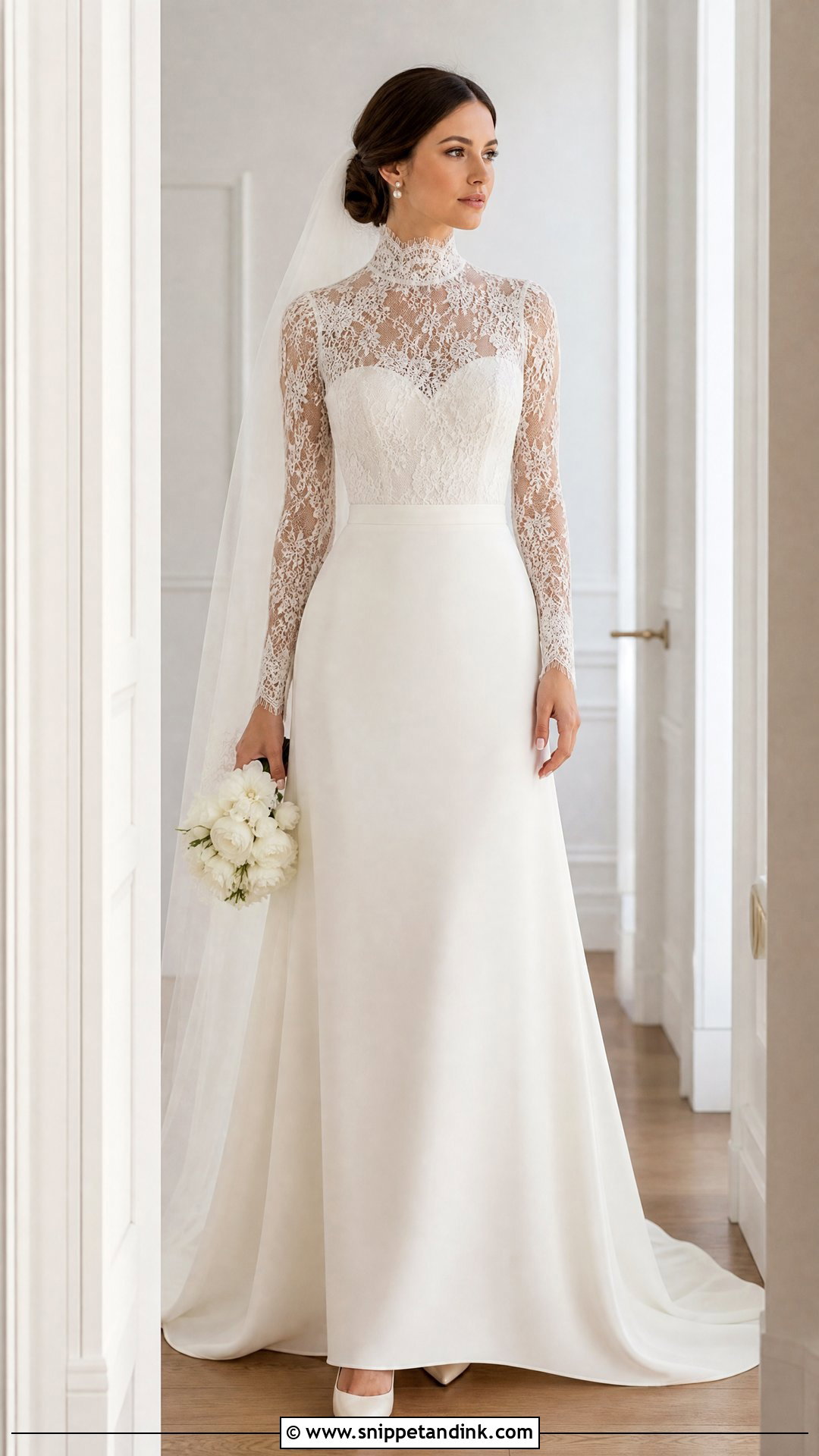
High necklines put the focus firmly on the face, and to keep the bodice from looking heavy, I prefer sheer lace, fine tulle or a softly curved satin edge. The collar must fit comfortably when you turn your head; a high neck that rubs will bother you all day and can leave a red line in photos. Sleeveless and fitted lace sleeves both work if the shoulder line is neat. Pearl studs and a low bun, veil tucked beneath, are all the accessories it needs.
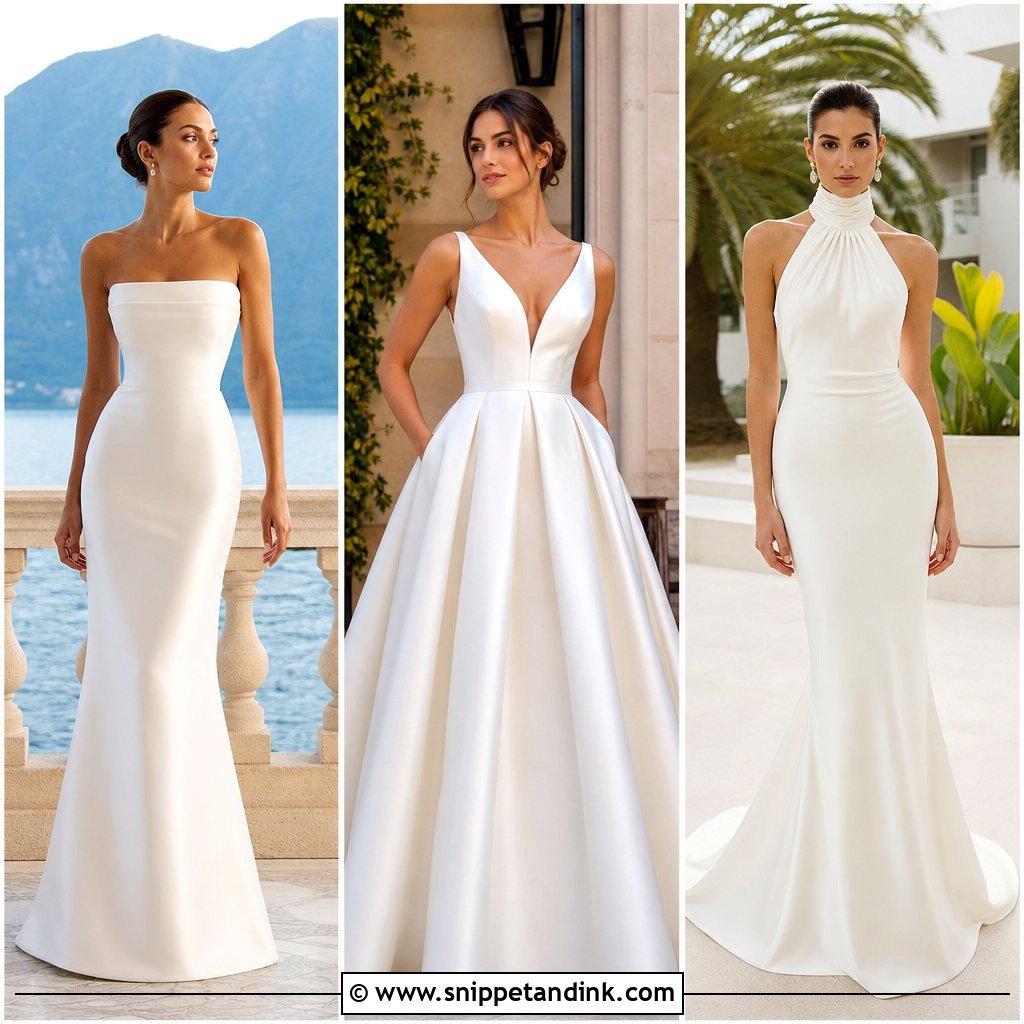
18. Soft Classic Column Wedding Dress
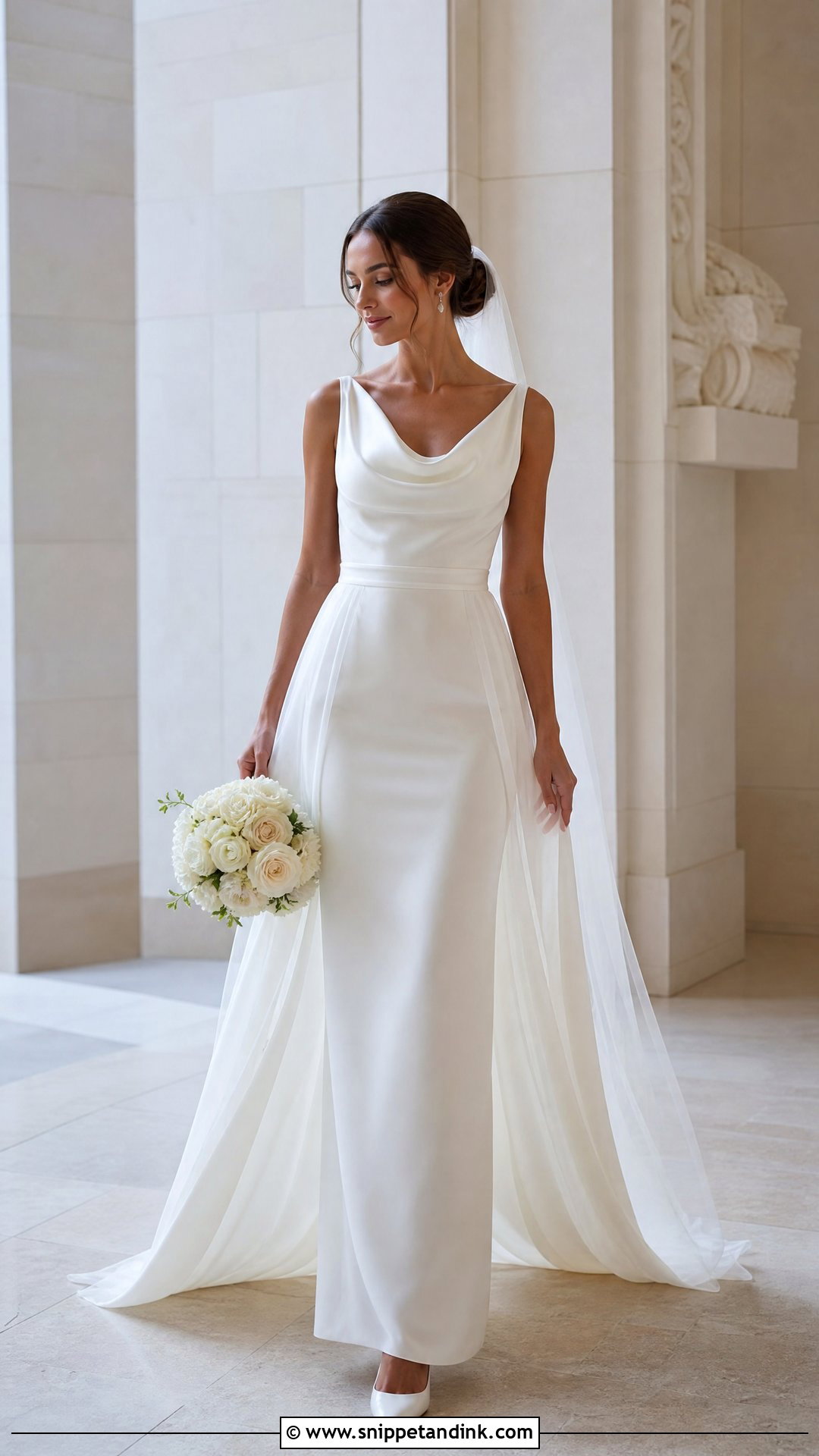
A column gown has no volume to hide behind, so tailoring decides how it looks. Hem, waist, bust and lining all need to sit cleanly. Choose one that skims, with subtle shaping at the waist and hips, in silk crepe, soft satin or lined chiffon. A scoop, cowl or rounded V softens the narrow shape. If you want more drama for the ceremony, a detachable overskirt adds volume, then comes off for dancing.
19. Soft Classic Pearl Wedding Dress
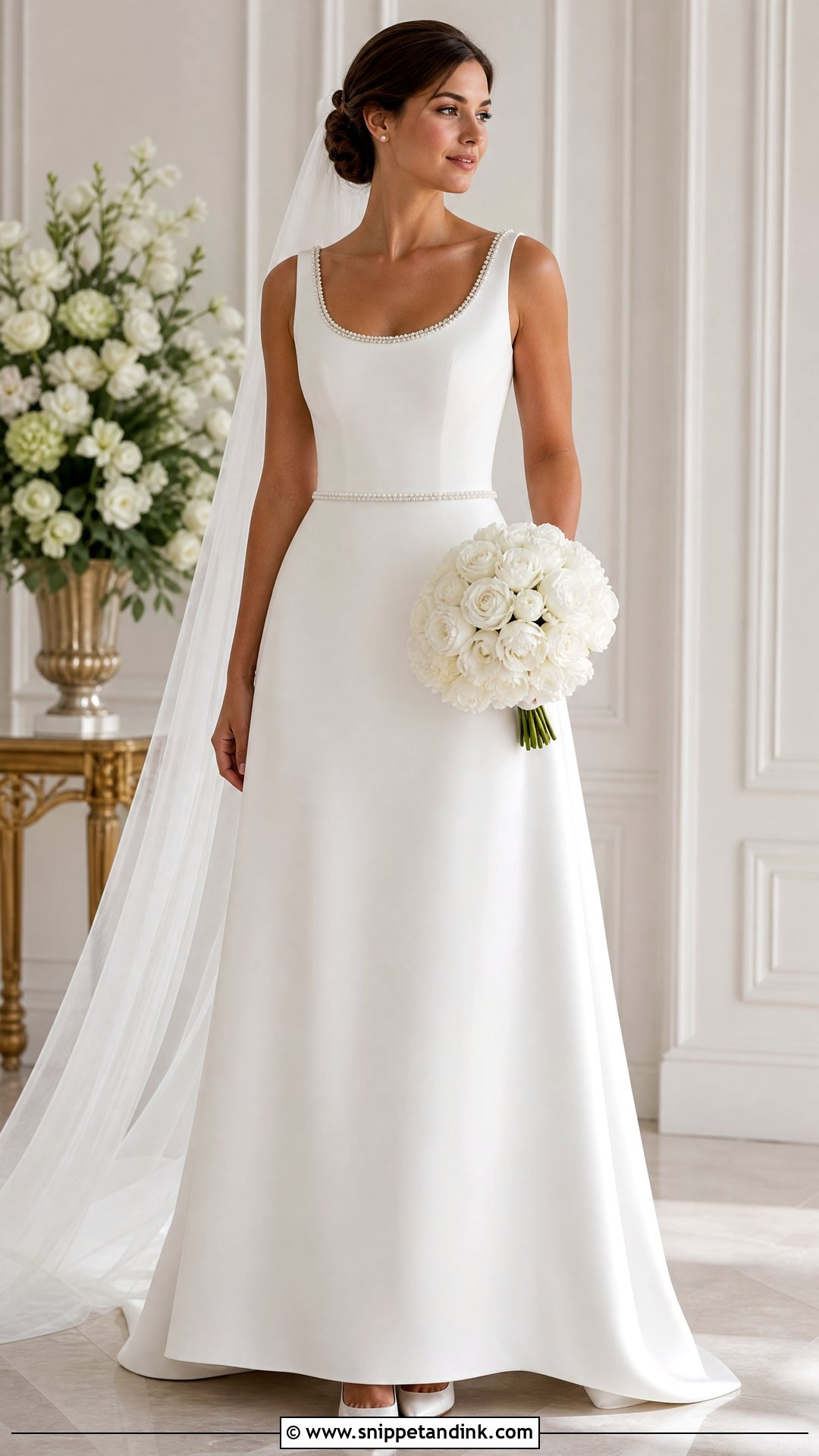
Pearls work best in small doses: fine beading along the neckline, waist, sleeves or back, not across every surface. On a clean A-line or softly fitted crepe gown, they add texture without glitter. Don’t mix pearl beading with heavy crystals and sequins. Run your hands along the bodice sides at the fitting; beads sewn where your arms rest can scratch through a long day and occasionally pop loose. Plain pearl studs and an unembellished veil keep the focus on the dress.



20. Soft Classic Blush Wedding Dress
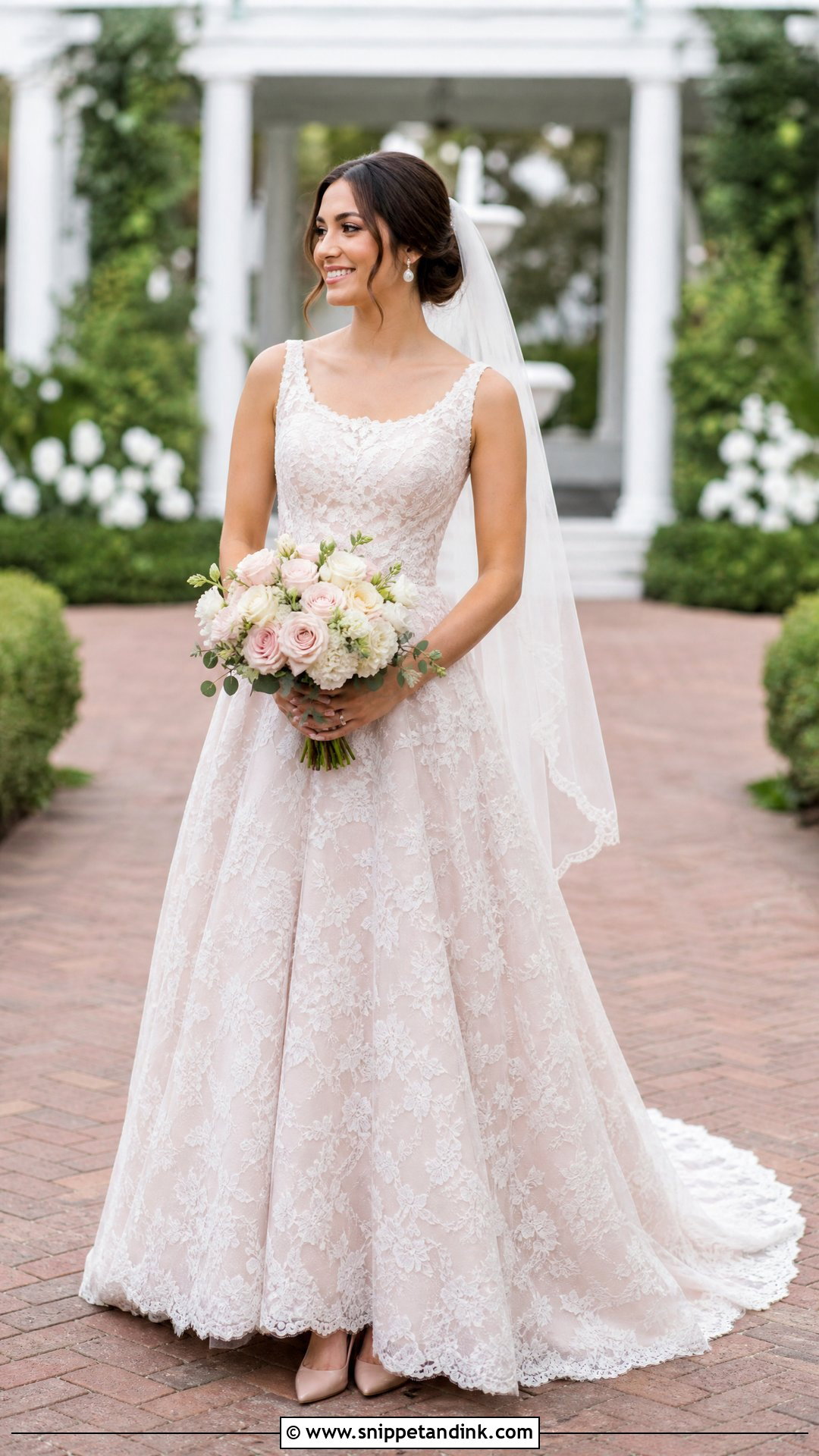
Blush gives a hint of color while staying bridal. Pale blush or soft champagne lining under ivory lace or tulle is the most wearable version. The tone needs to suit your undertone: warmer skin usually prefers a peachy blush, cooler skin a rosier one. Check that the shade looks the same across bodice and skirt, since different fabrics take dye differently. View it near a window and under warm indoor light, then keep makeup fresh so it doesn’t compete.
Alterations a Clean, Simple Gown Usually Needs
Simple dresses rely on fit more than embellished ones, so most Soft Classic gowns need some tailoring. Alterations normally run over two or three fittings, starting around two to three months before the wedding, with the last fitting a couple of weeks out. Timelines vary by seamstress and season, so ask when you book.
The usual list
- Hem: set to the exact shoes you’ll wear, so bring them to every fitting.
- Waist: taking it in slightly gives the gentle definition this style suits.
- Bust and straps: adjusted so the neckline lies flat when you sit and lift your arms.
- Bustle: added for any train longer than a sweep.
- Cups or a built-in bra: sewn in for strapless and low-back designs.
What to bring to the first fitting
Your shoes, the undergarments you plan to wear and, if possible, the veil. Each one changes how the dress sits. A different bra can move a neckline by more than you’d expect, and swapping shoes afterward means redoing the hem.
At the final fitting, do a full rehearsal: put everything on, walk, sit, raise your arms and dance for a minute. Whoever will bustle the train on the day should be there to learn it. Small tweaks are still possible at this stage, but big changes are not, so speak up about anything that pinches.
Moderate Details, Precise Fit
A Soft Classic gown works when the proportions are balanced, the waist is gently defined and the details are edited. A-line, column, ball gown and soft fit-and-flare can all suit you if the fabric and tailoring support your shape. Try several silhouettes in different fabrics, and pay as much attention to how they feel as to how they look in the mirror. Then add a veil, shoes and jewelry in proportion, and a bouquet that doesn’t cover the dress. The gown you can move in and forget about is usually the right one.
You'll Like These Ideas:












Leave a Reply