
When a bride sits down with me, I ask her one question before we look at a single gown: how do you want to feel walking in? Her answer usually points to an aesthetic, whether that’s classic, minimal, romantic, vintage, dramatic or something less traditional. The thirty looks below are organized that way. Bridal fashion right now gives you clean satin, basque waists, sculptural bows, ballet-style tulle, soft color, detachable layers and courthouse minis. For each one I’ve added what I’d check on your body and at your venue, because an aesthetic only works if the dress also lets you move through the day.
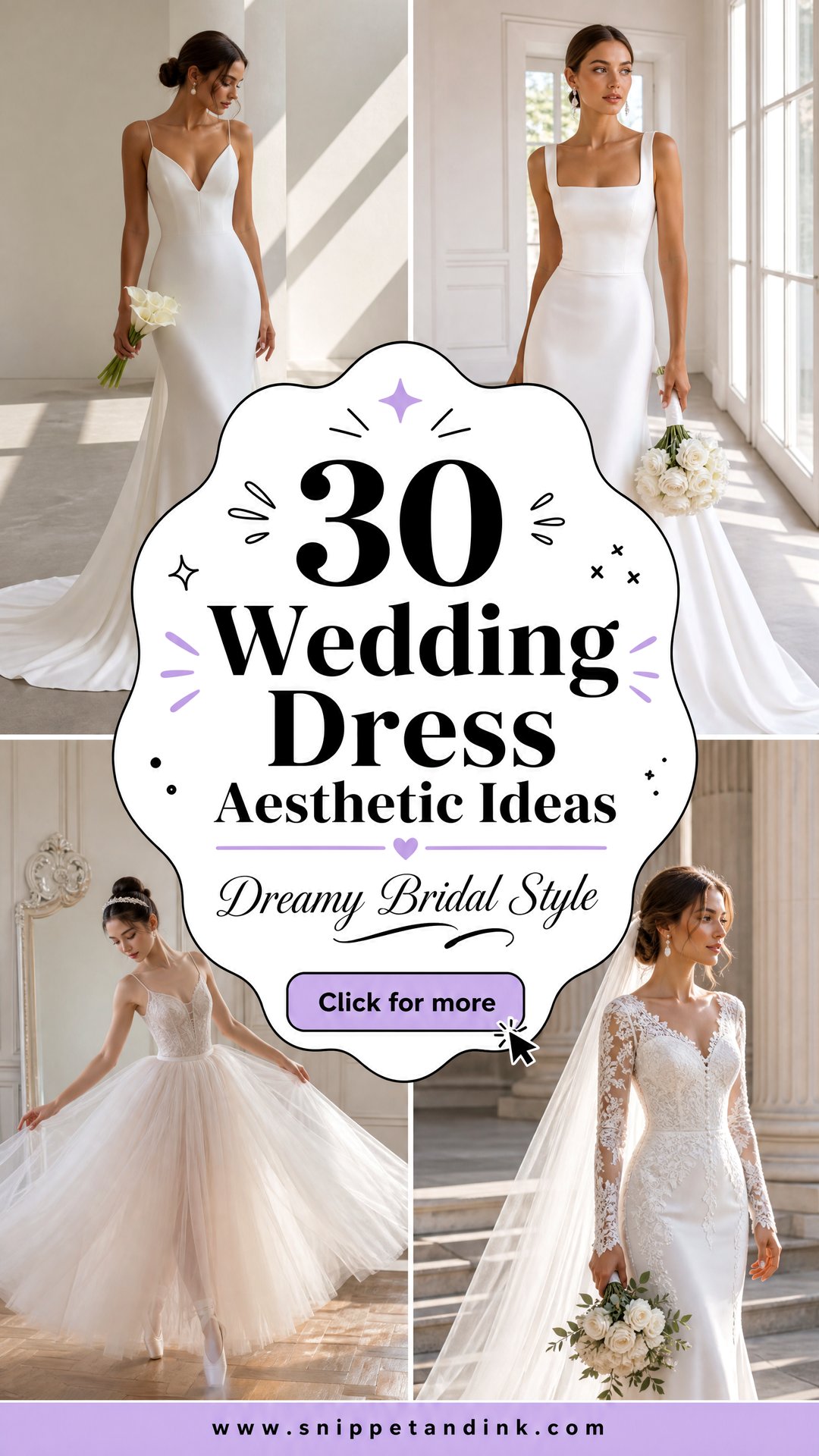
Matching an Aesthetic to the Venue You’ve Already Booked
Brides often fall for an aesthetic before they’ve thought about where they’ll wear it. The venue will either support the dress or fight it, so I start there.
- Ballroom or grand hotel: full skirts, satin, beading and long veils. The room can hold the scale.
- City hall or restaurant: minis, suits, slips and crepe sheaths. Wide skirts are awkward in small rooms and taxis.
- Garden or vineyard: lace, appliqué and tulle, with a hem that clears the grass or bustles easily.
- Beach: chiffon, silk and light lace, with little or no train.
- Historic church or museum: high necks, sleeves or a cape if coverage is required, and a cathedral veil if the aisle is long.
If you’ve fallen for something that doesn’t fit the venue, it’s usually the fabric and length that need to change, not the whole aesthetic. A ball gown feeling can be translated into a lighter tulle A-line for a garden, for example.
1. Classic Satin Wedding Dress
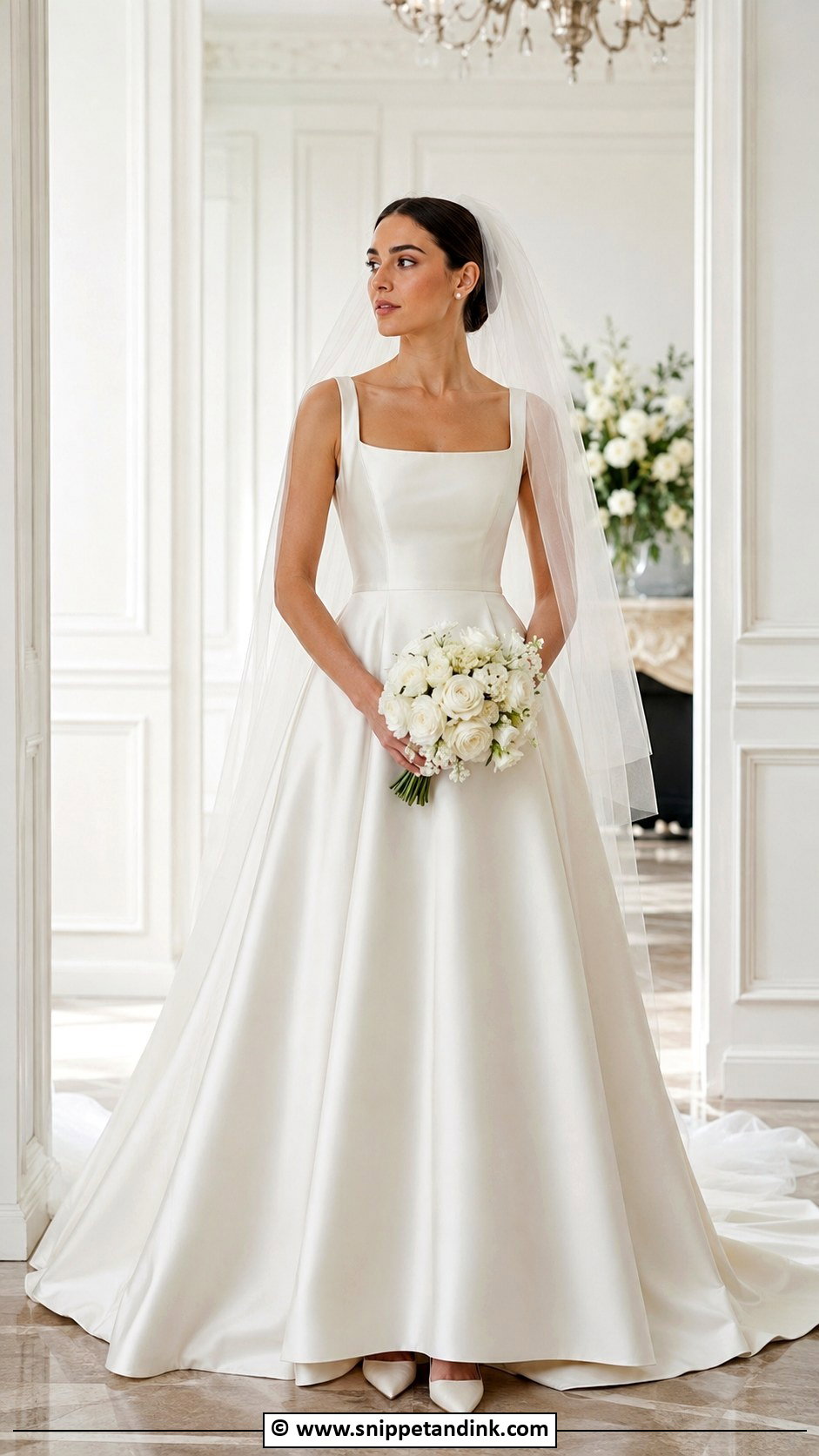
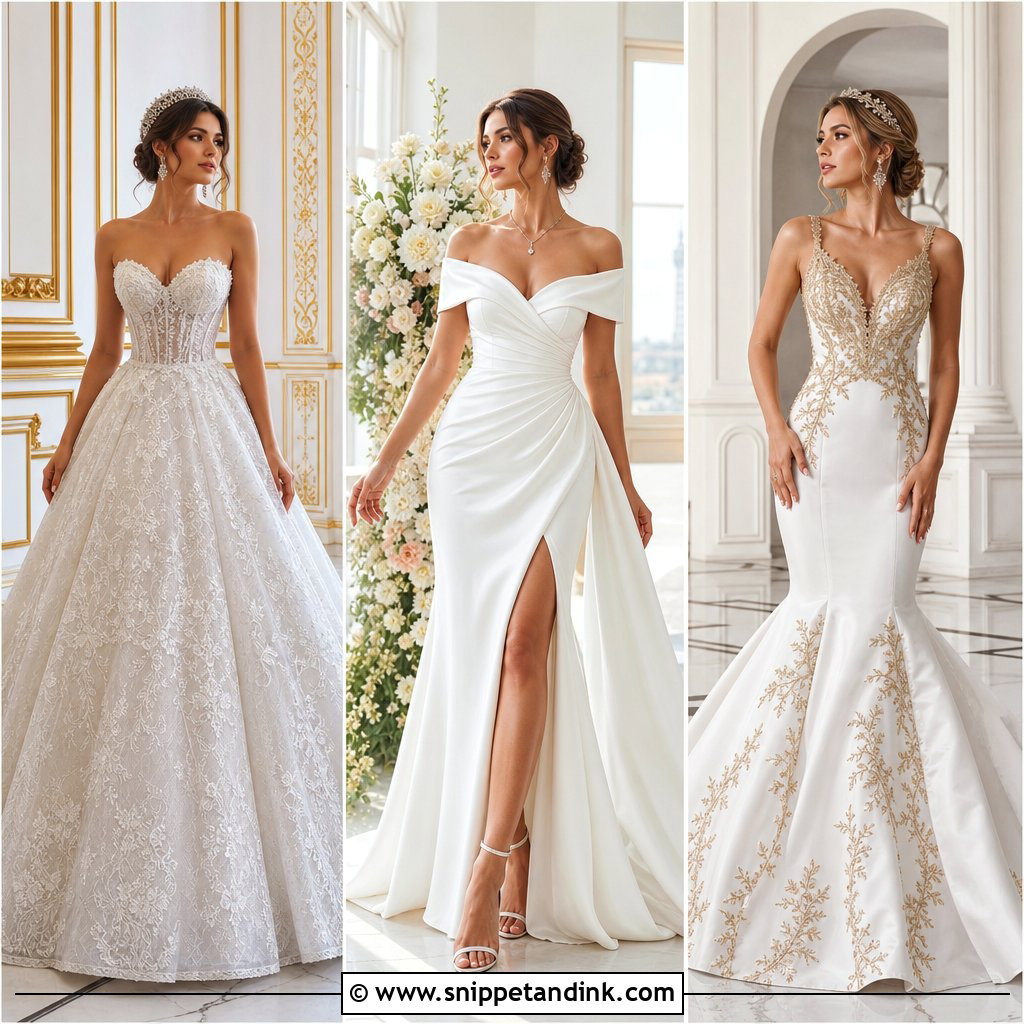
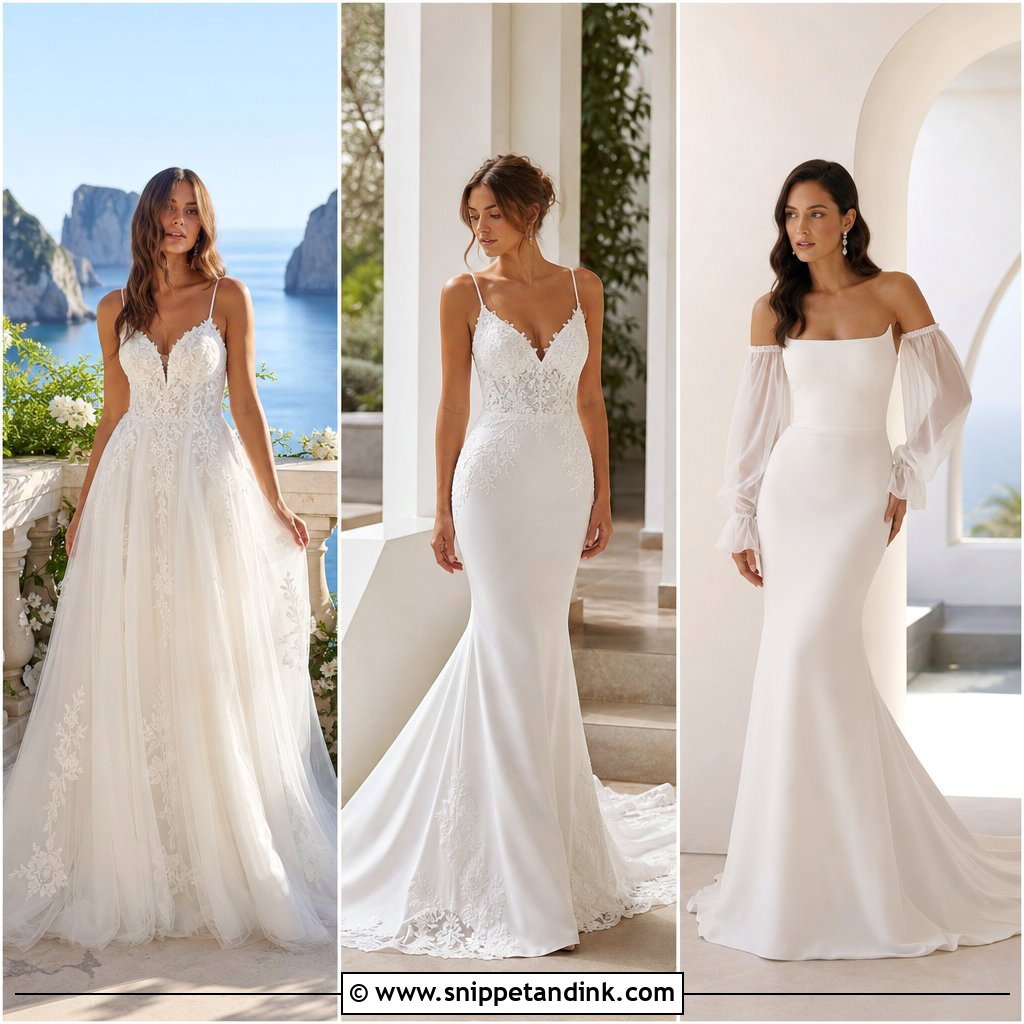
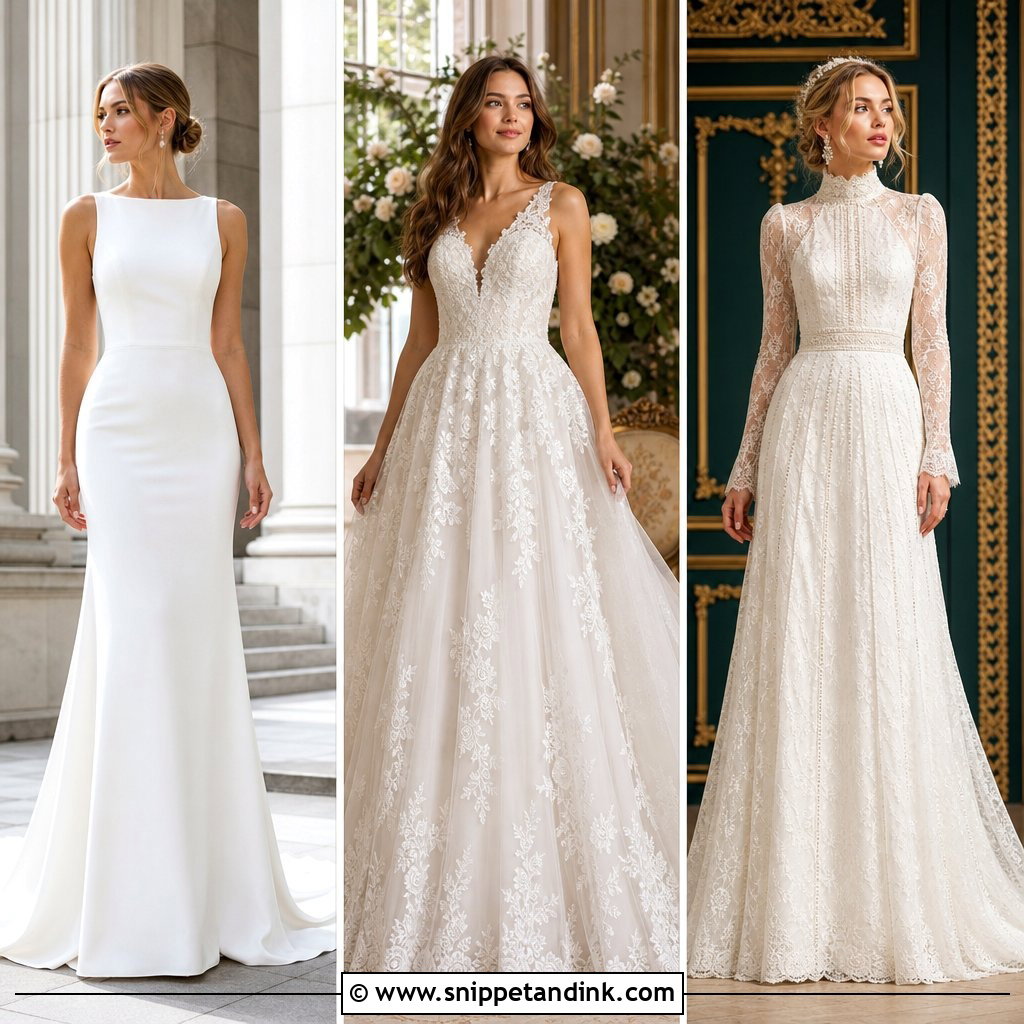
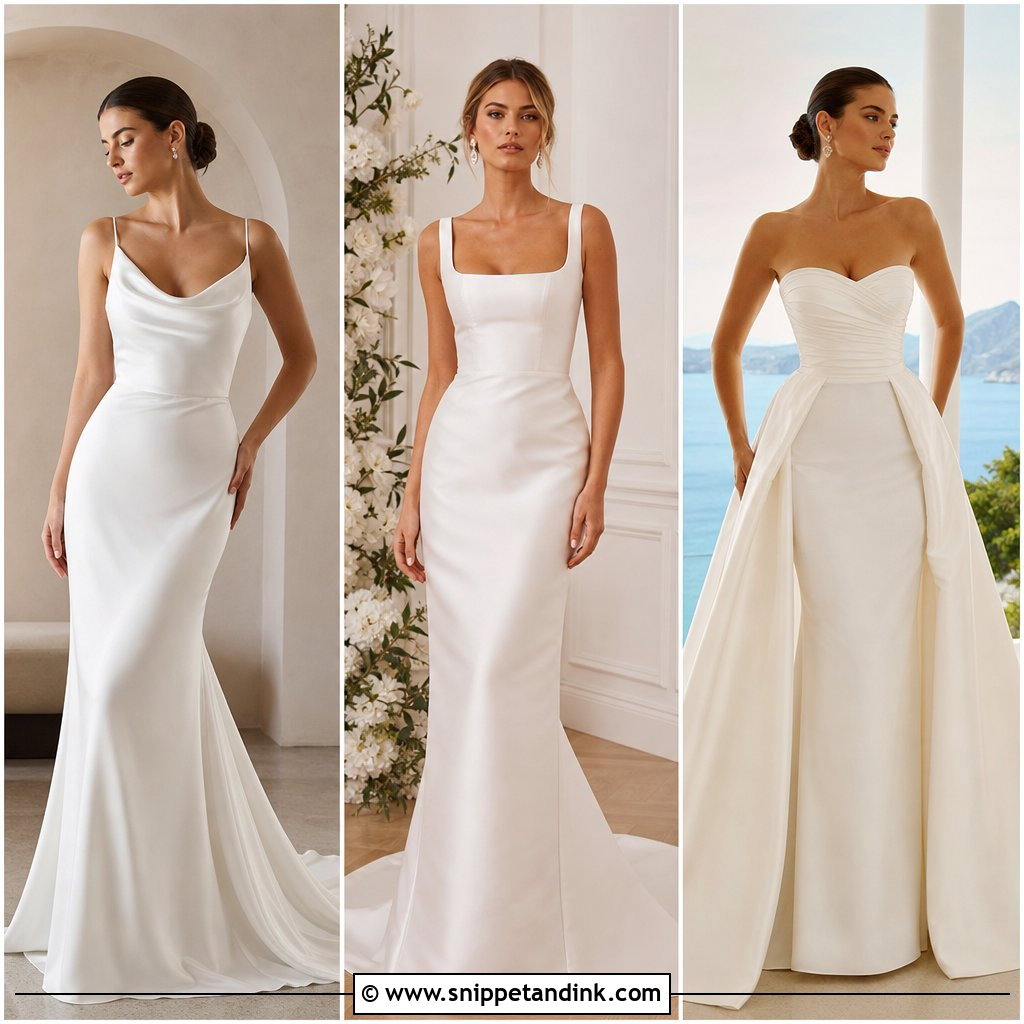
Classic satin is the aesthetic that ages best in photographs, and that’s the honest reason I recommend it so often. A structured A-line or soft ball gown with a square, scoop or strapless neckline lets the fabric’s glow do the work. The one thing I’d look for is internal corsetry or a defined waist seam; satin shows wrinkles wherever it isn’t supported. Pearl studs, a low bun, a long veil and pointed ivory heels finish it for hotels, estates and formal receptions.
2. Minimalist Crepe Wedding Dress
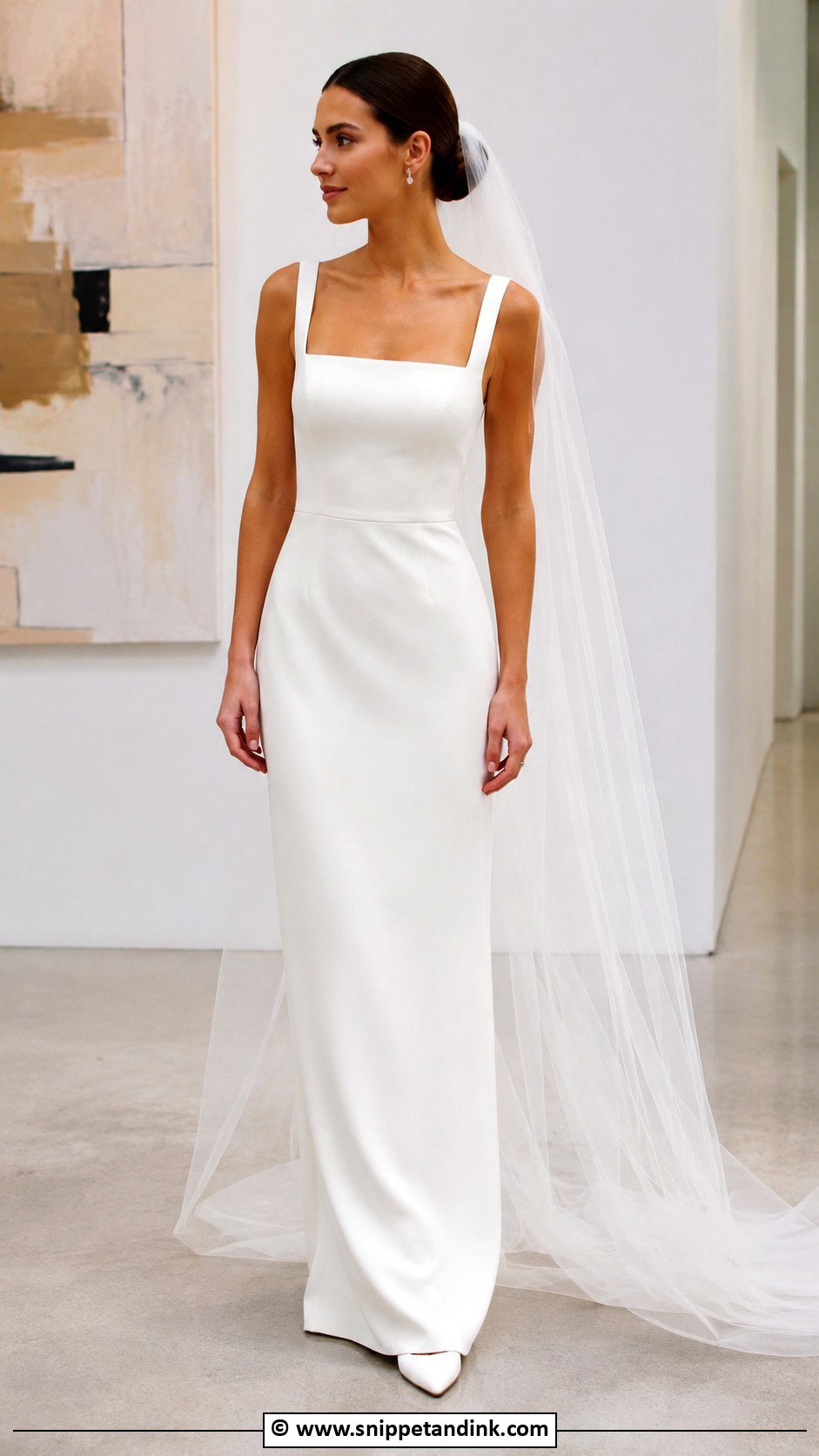
Crepe looks simple and is unforgiving. It skims the body, so the cut is everything, and I’d expect at least two fittings to get a sheath or column lying flat at the hip. A square neckline, long sleeves, a slit or a low back gives one quiet point of interest. Sleek pumps, crystal earrings and a low chignon keep it sharp. Wear a plain cathedral veil or none at all for city, gallery or rooftop weddings.
3. Romantic Lace Wedding Dress
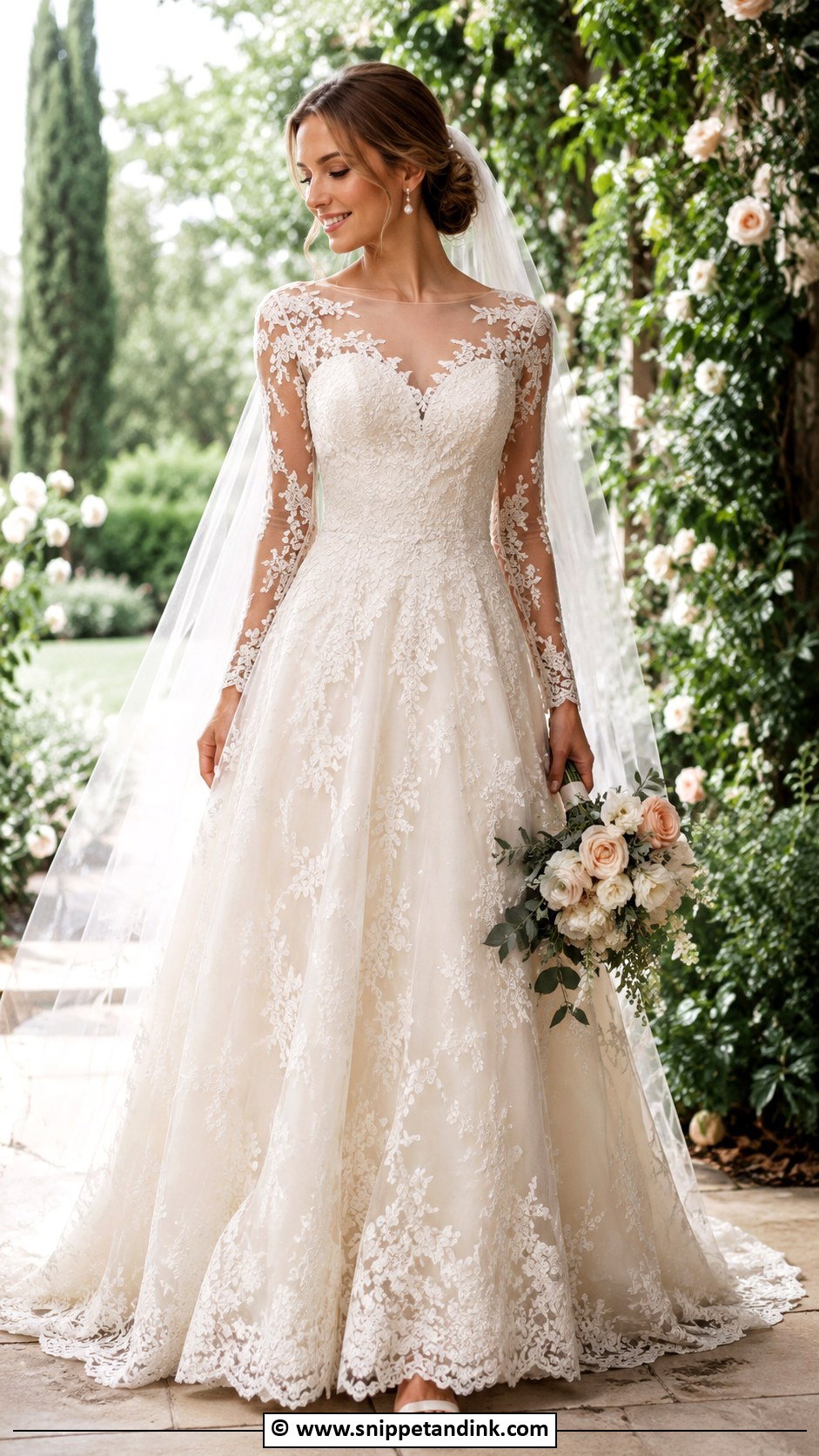
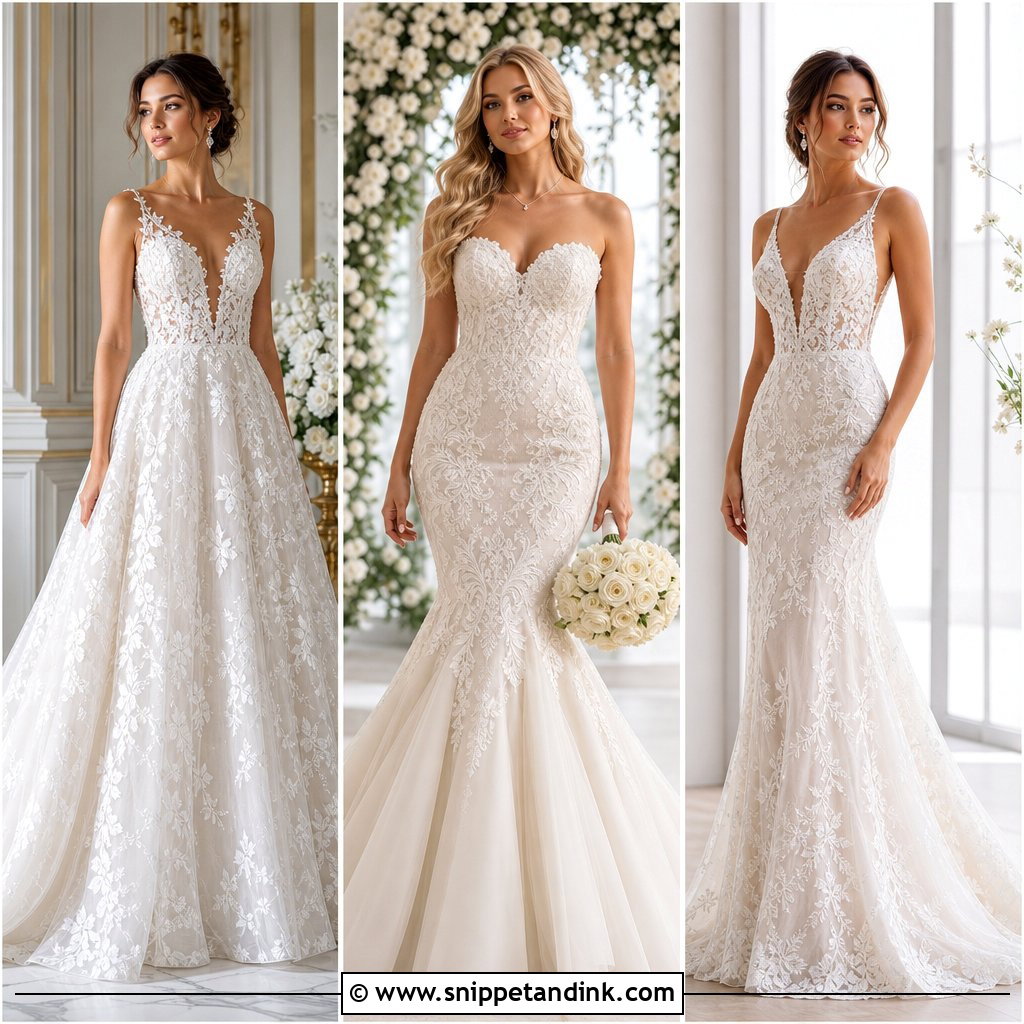
Chantilly lace is very fine and flat; embroidered lace is heavier and more textured. I show brides both side by side, because they read very differently in photos. Over a fitted lining, either gives depth. A sweetheart neckline, illusion sleeves or a gentle A-line keeps the romance light. A soft veil, pearl drop earrings and an airy bouquet in white and green suit garden weddings and historic venues.
4. Old Money Wedding Dress
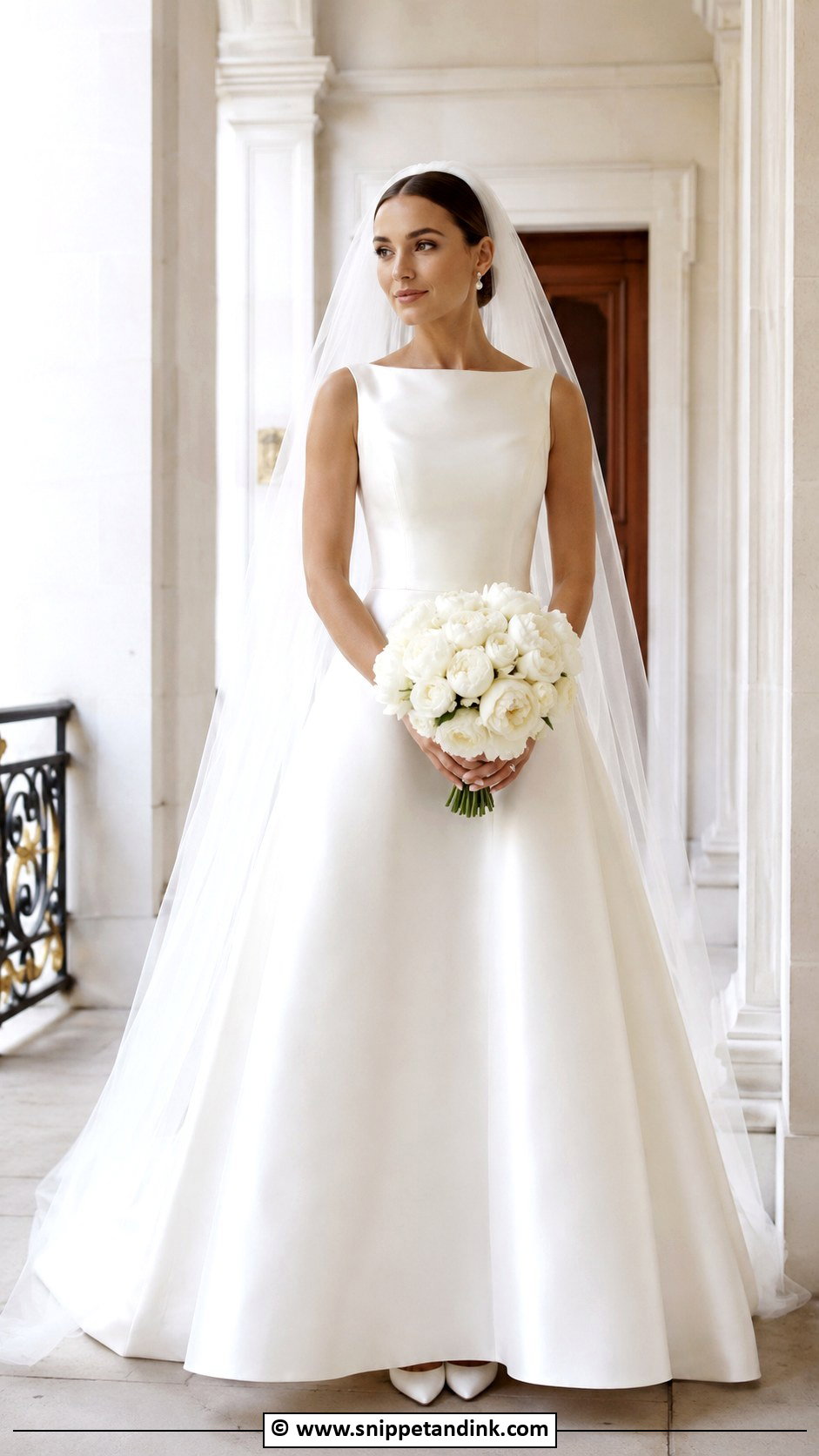
An old money wedding dress is about restraint: good fabric, a structured cut and nothing extra. I look at the inside of these gowns as closely as the outside, since the finishing is what makes silk or mikado look expensive. A bateau neckline, long sleeves or a basque waist gives a refined line. A sleek bun, pearl earrings, closed-toe heels and a clean-edged veil keep it composed for estates, country clubs and museums.
5. Princess Ball Gown Wedding Dress
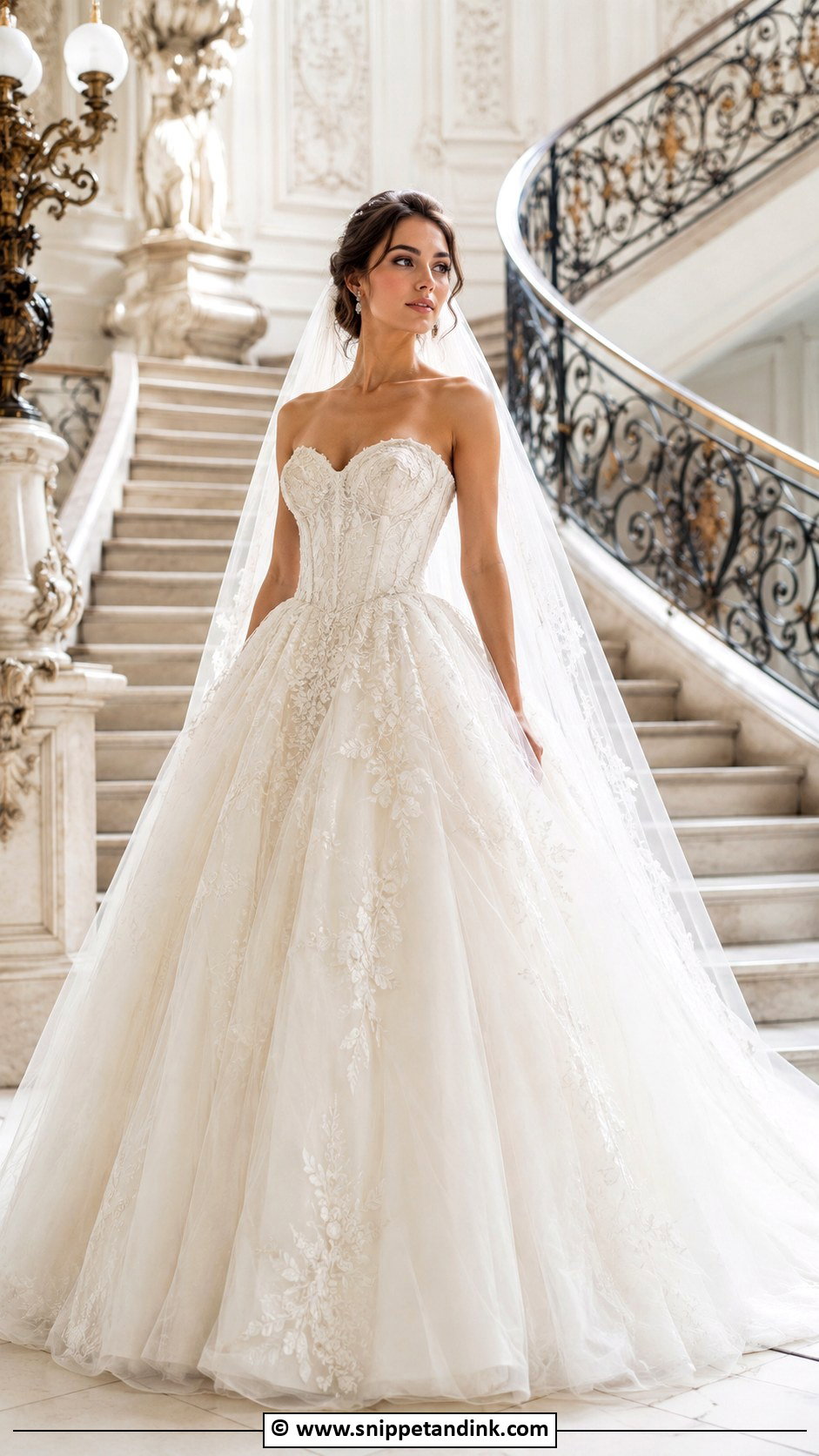
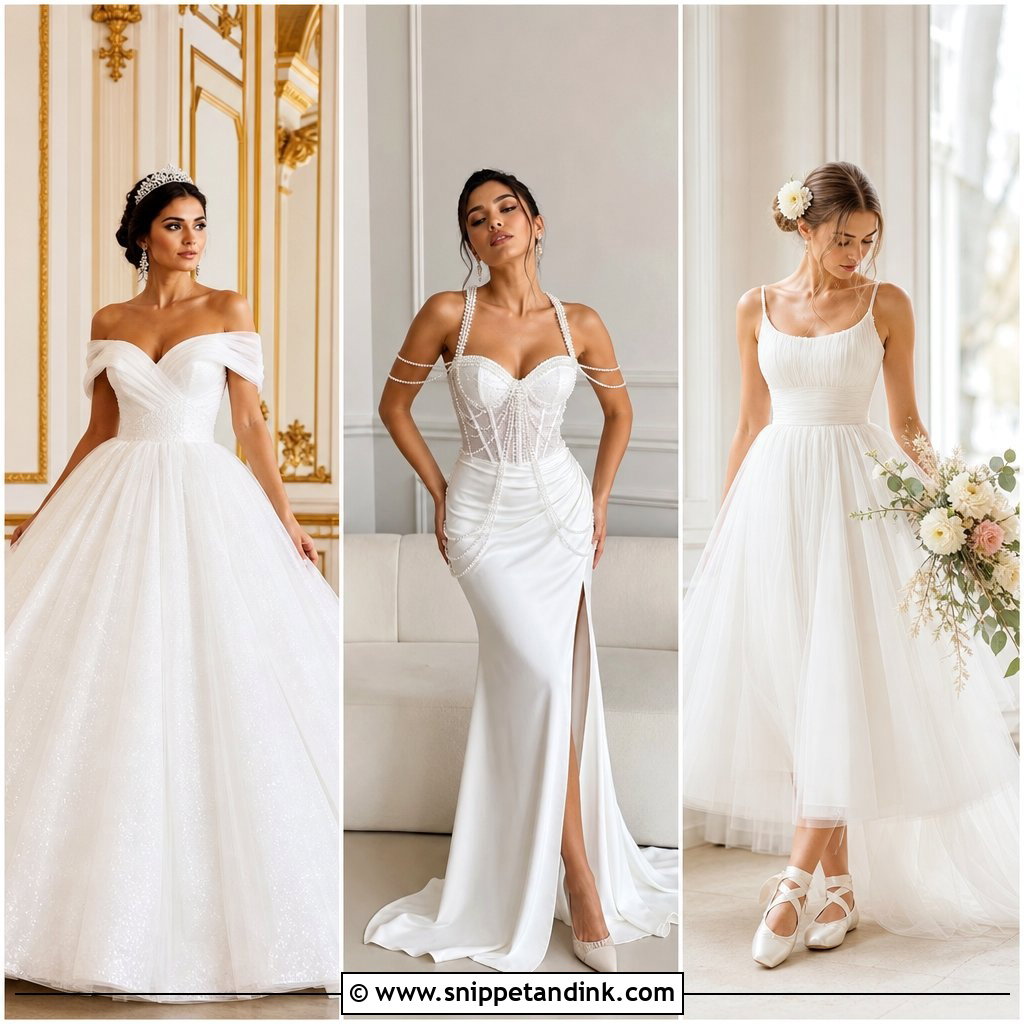
Volume is the point of a princess ball gown wedding dress, and it needs a venue that can hold it, so I always ask about aisle width and car space first. A fitted bodice with a tulle, organza, satin or mikado skirt carries it, and a basque waist adds shape. If the gown is beaded, go minimal on jewelry. A long veil balances the skirt in grand ballrooms and large formal receptions.
6. Modern Square Neck Wedding Dress
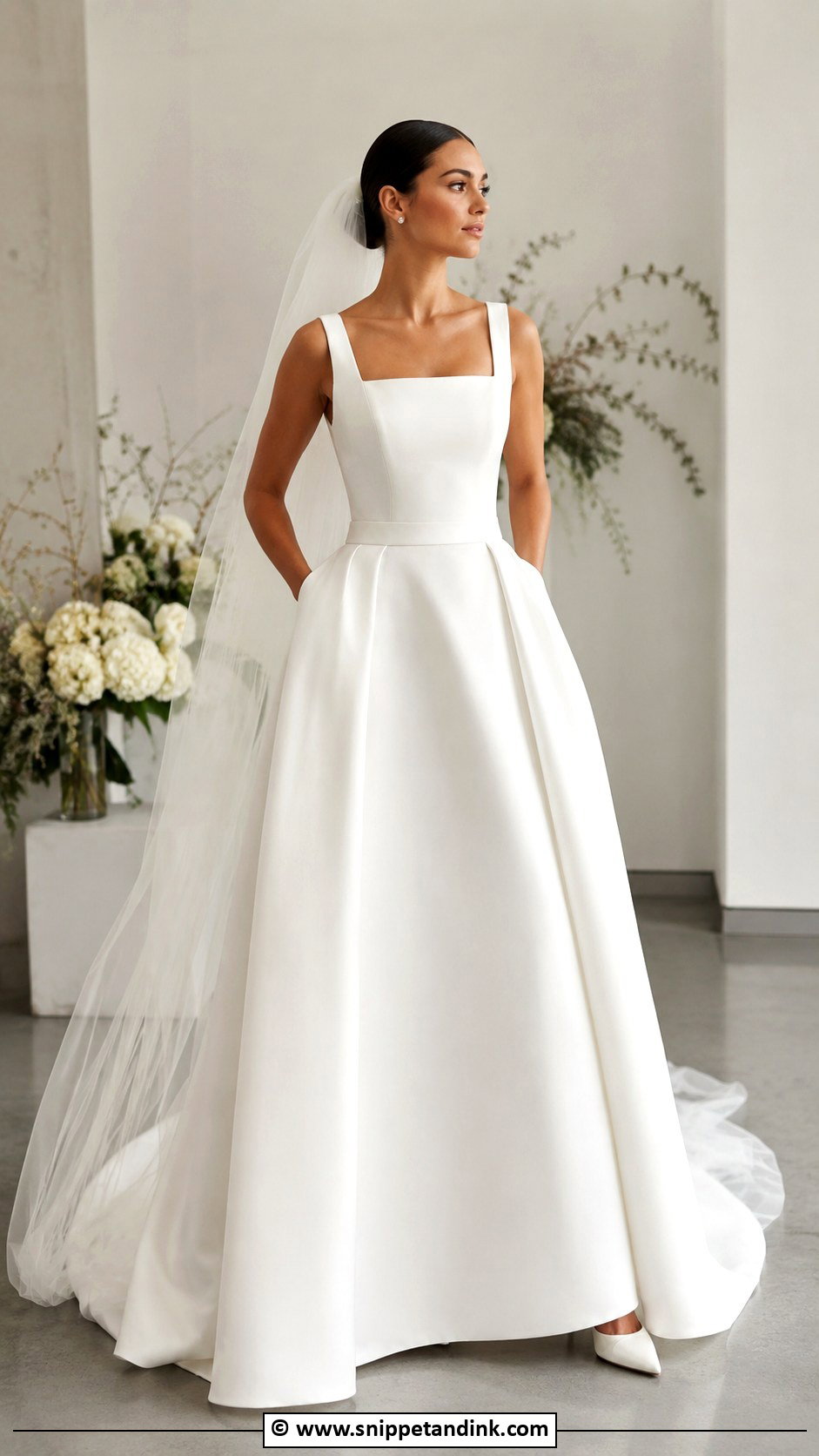
Square necks suit more body types than almost any other neckline, which is why I reach for them when a bride is undecided. Matte satin, crepe or mikado gives a crisp finish; lace or tulle sleeves soften it. A center-part bun and small hoops or studs keep it modern. It travels well to destination weddings because it can be styled up or down, and a tailored cape or overskirt adds impact.
7. Basque Waist Wedding Dress
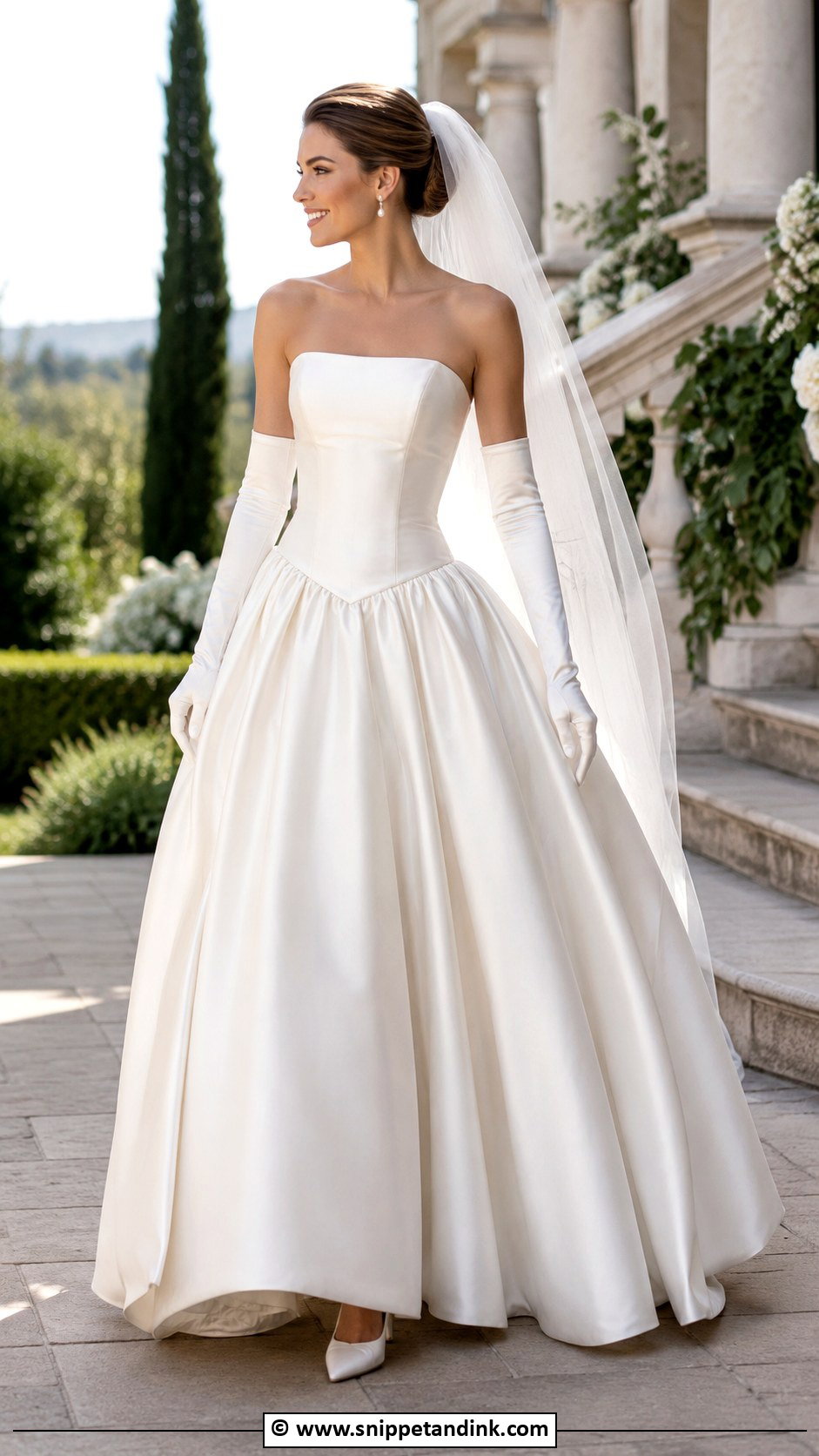
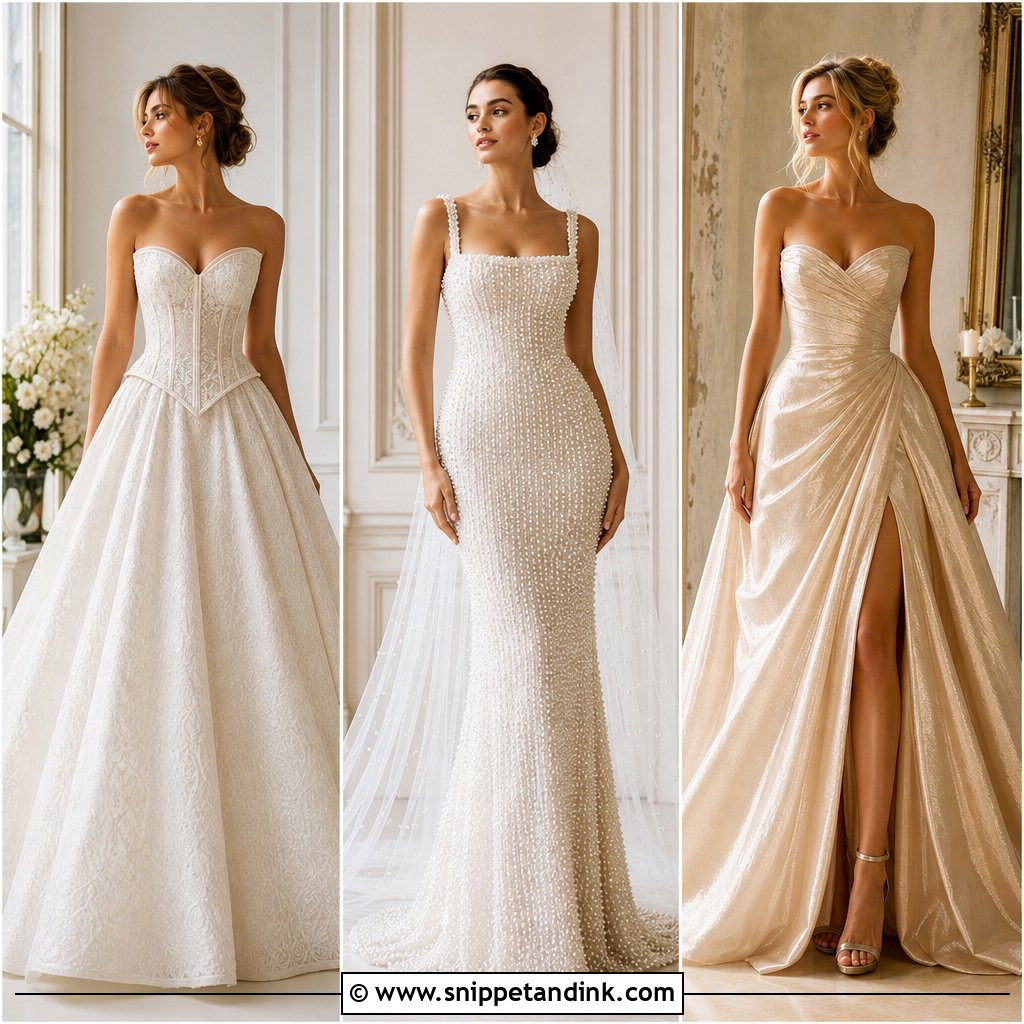
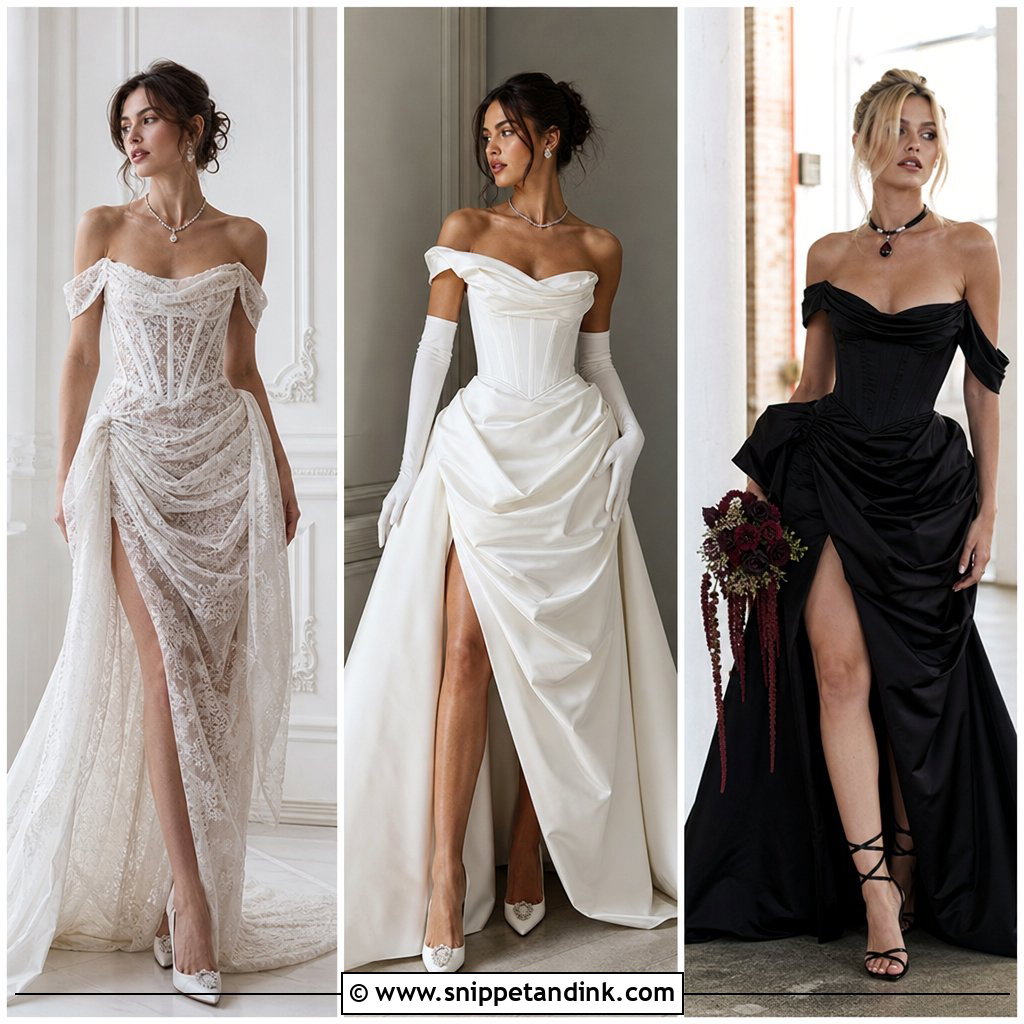
The basque waist dips into a V below the natural waist, which lengthens the torso and sculpts the skirt’s start point. It looks striking in satin, taffeta, organza or lace. Getting the point centered is the fitting challenge; I mark it carefully so it doesn’t drift in photos. A strapless neckline, opera gloves, pearl earrings and a long veil make it fashion-forward for formal venues and garden estates.
8. Drop Waist Wedding Dress
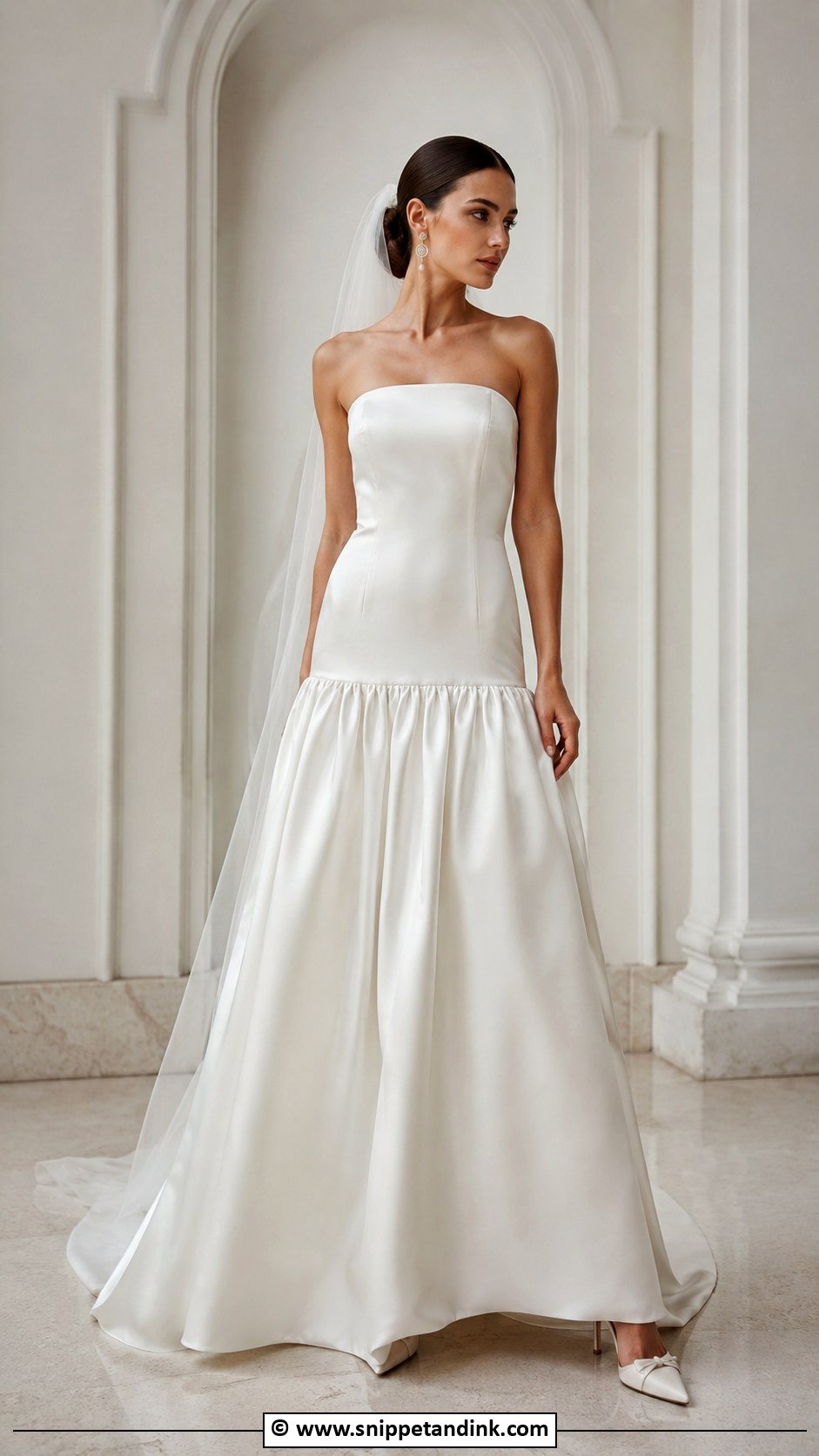
A drop waist sits lower than the natural waist, so the skirt starts at the hip. It can feel 1920s, modern or romantic depending on the fabric: satin for polish, tulle for softness, beading for glamour. My caution is proportion. On shorter brides, I’d choose a softer drop that doesn’t cut the leg line. Soft waves, a fingertip veil and delicate heels keep it refined.
9. Balletcore Tulle Wedding Dress
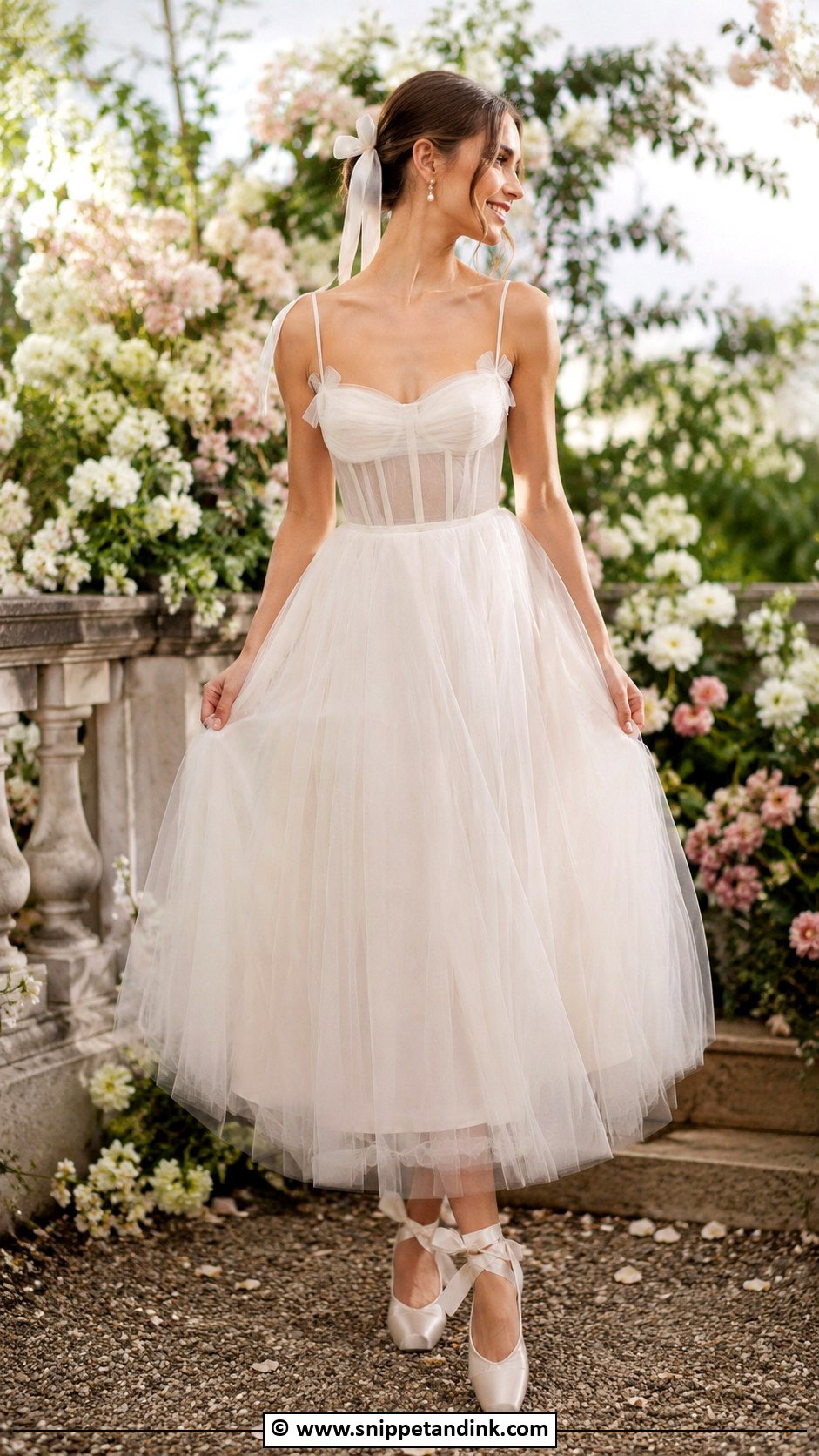
Balletcore tulle is light by design, so I check that the layers have enough body to look full without a stiff petticoat. A fitted bodice, delicate straps or a soft scoop neck suits it, in blush, ivory or pale champagne. Satin ballet-style heels and a ribbon bow in the hair carry the theme. It gives volume without the weight of a full ball gown, which matters at a warm garden or conservatory wedding.
10. Boho Lace Wedding Dress
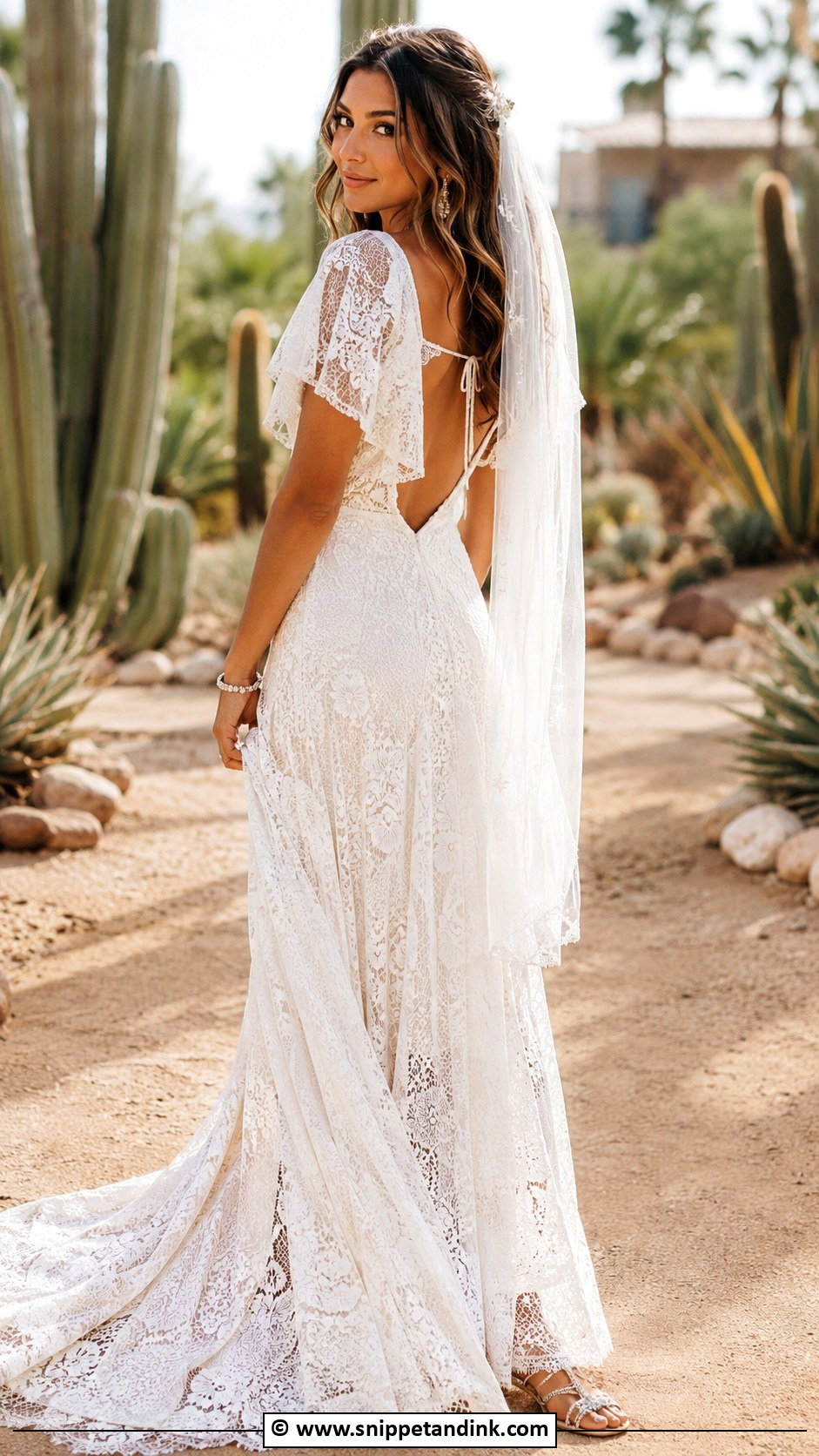
Boho lace should look relaxed but still fit properly. That’s the line I watch. Flutter or bell sleeves, open backs and soft skirts give movement. I’d avoid stiff accessories that fight the mood, and choose block heels or embellished sandals for uneven ground. Loose waves, delicate hair pins and a soft veil suit outdoor, desert and rustic venues, with dried flowers or a loose bouquet tying it together.
11. Beach Wedding Dress
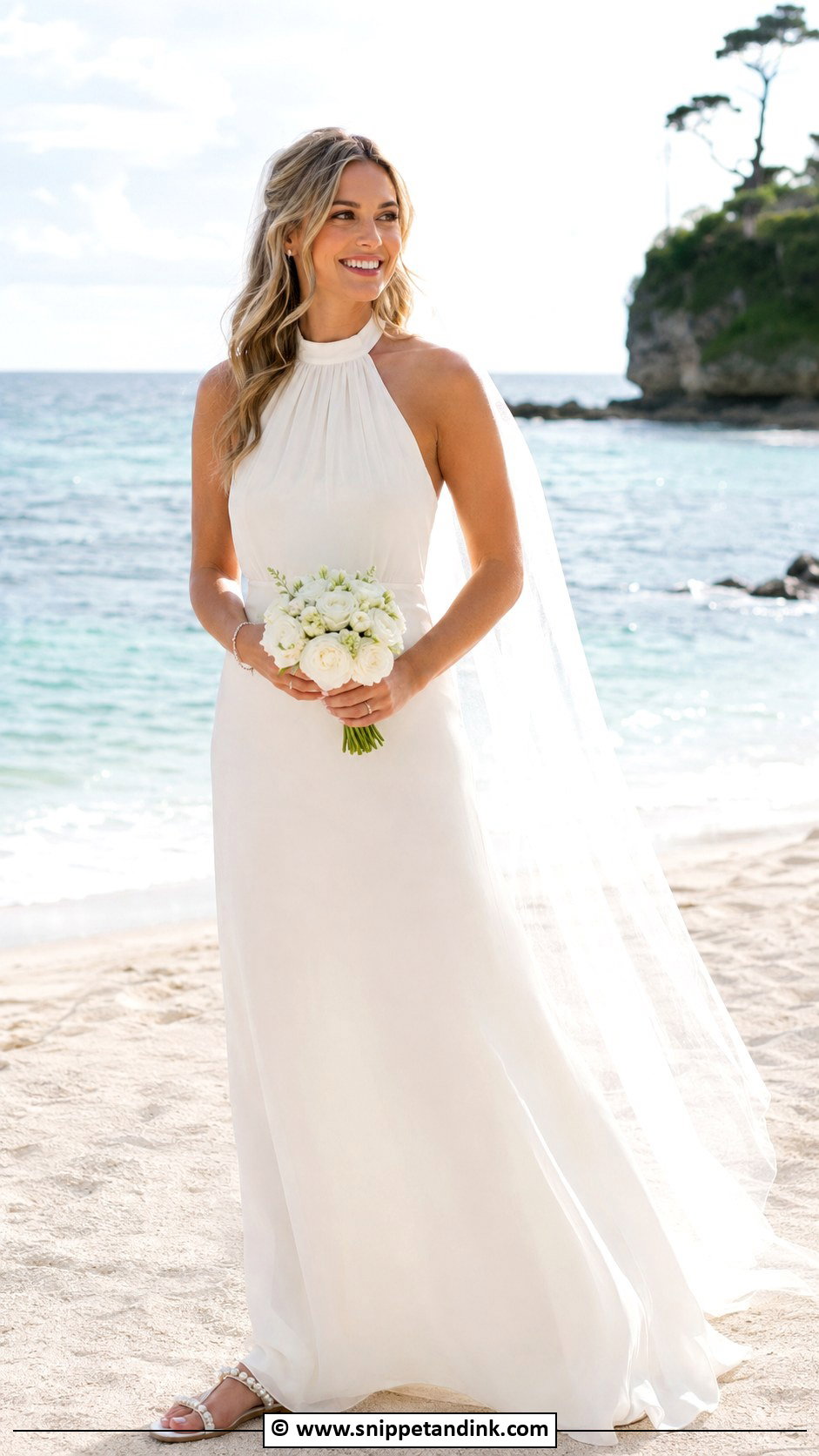
Sand and wind are the deciding factors for a beach dress. Chiffon, silk, crepe and light lace breathe; heavy satin and long trains don’t. A flowy A-line, sheath, slip or simple halter all work. I’d keep the train short or bustle it before the ceremony. Flat sandals and loose waves suit the setting, and a sheer veil moves well in the breeze, though a comb anchored with pins helps hold it.
12. Courthouse Wedding Dress
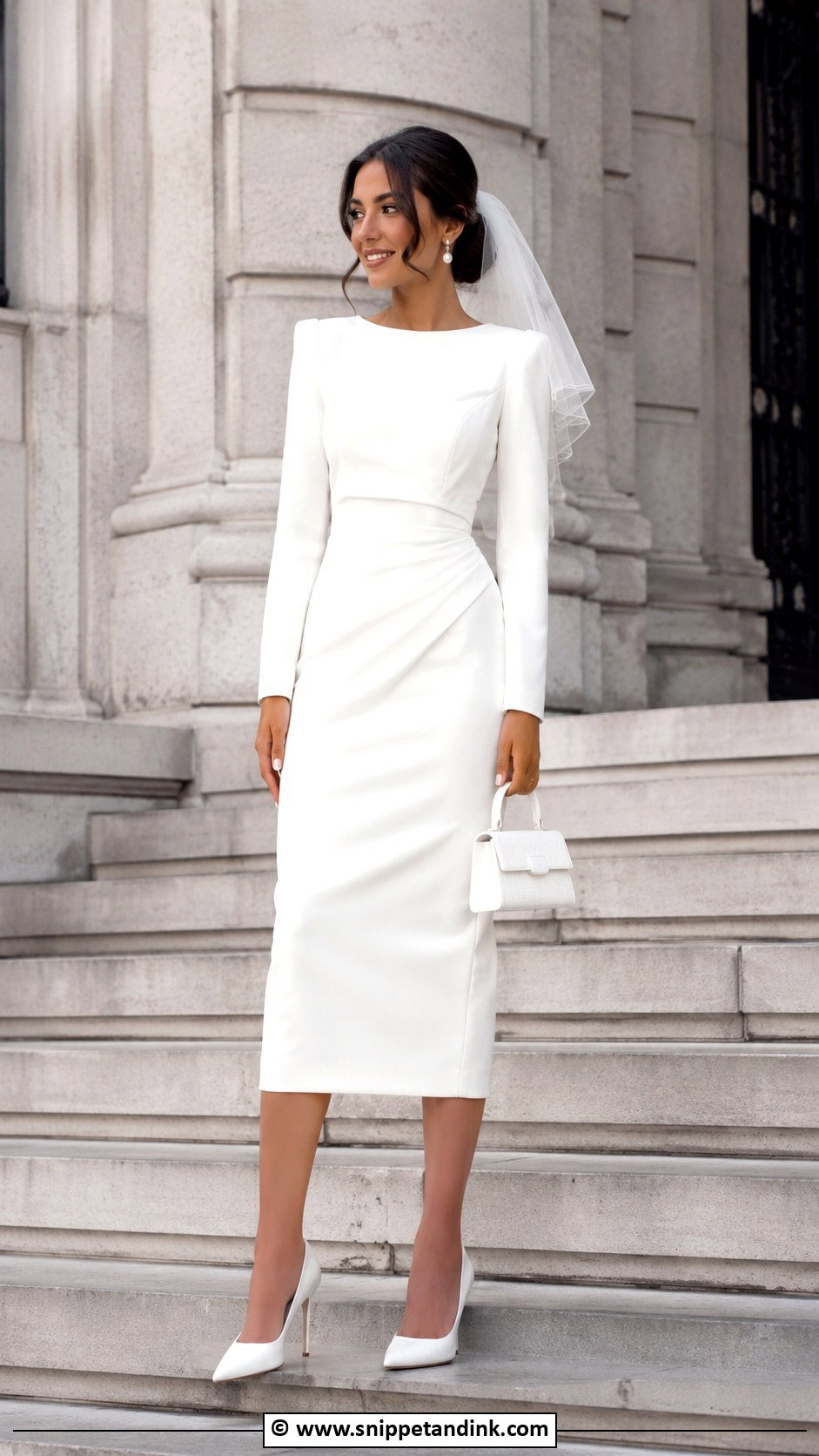
A courthouse wedding dress works best when it’s chosen for the whole day, not just the ceremony, since most civil weddings continue on to lunch or drinks. A white mini, tailored midi, slip or blazer dress all suit it. A short veil, pearl earrings and a structured bag give a polished finish. Wear shoes you can walk city streets in, and if you want drama, add a bow, feathers or a sculptural neckline.
13. Bridal Mini Dress
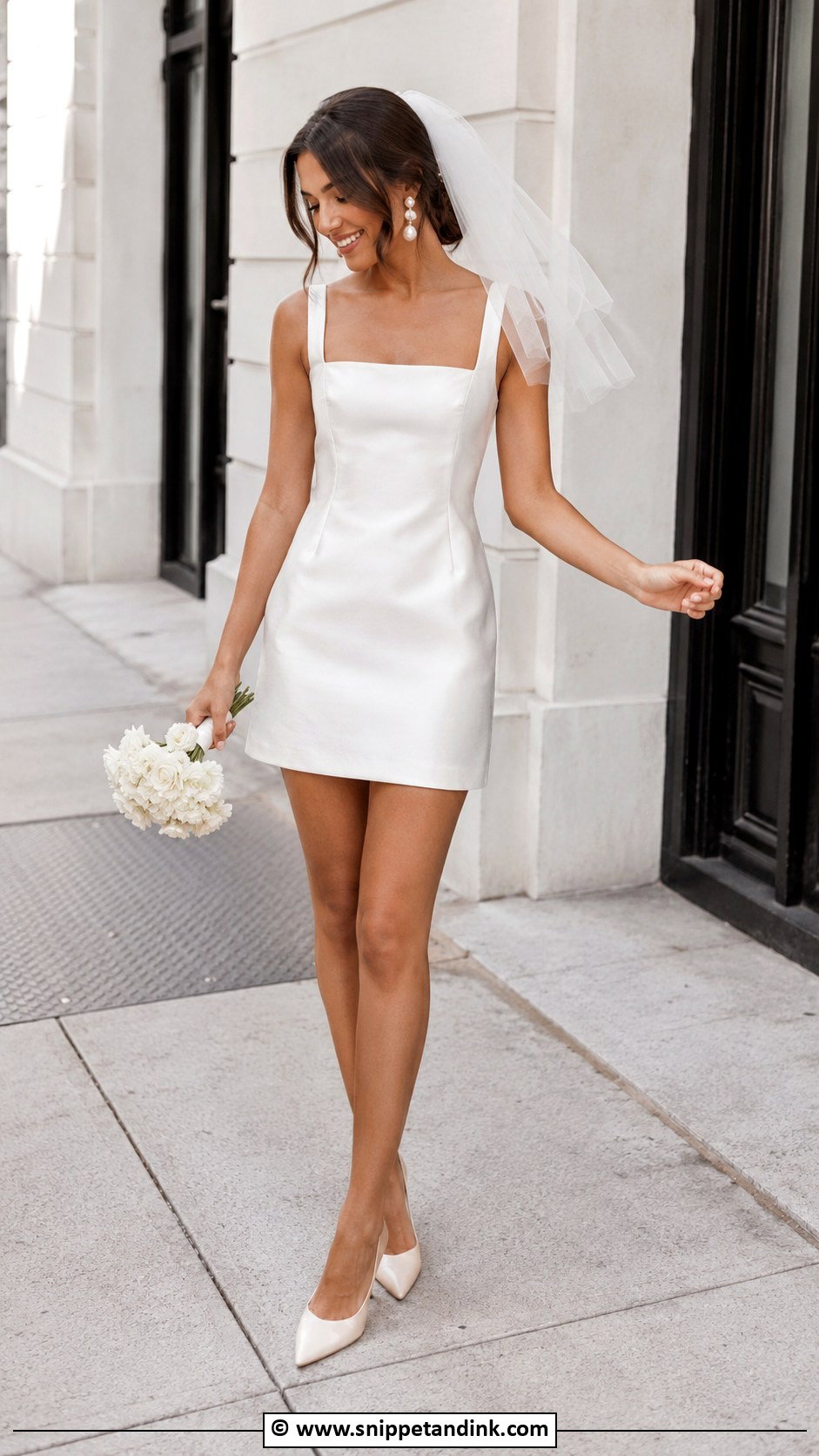
Minis give you freedom, and that’s why they work for courthouse ceremonies, elopements and reception changes. Clean satin, lace, crepe or beading set the mood: a square-neck mini feels modern, a bow mini feels sweet. I always have brides sit in one at the fitting to check the hem length. Pointed pumps, sheer tights if needed and statement earrings round it out.
14. Bridal Suit Wedding Dress
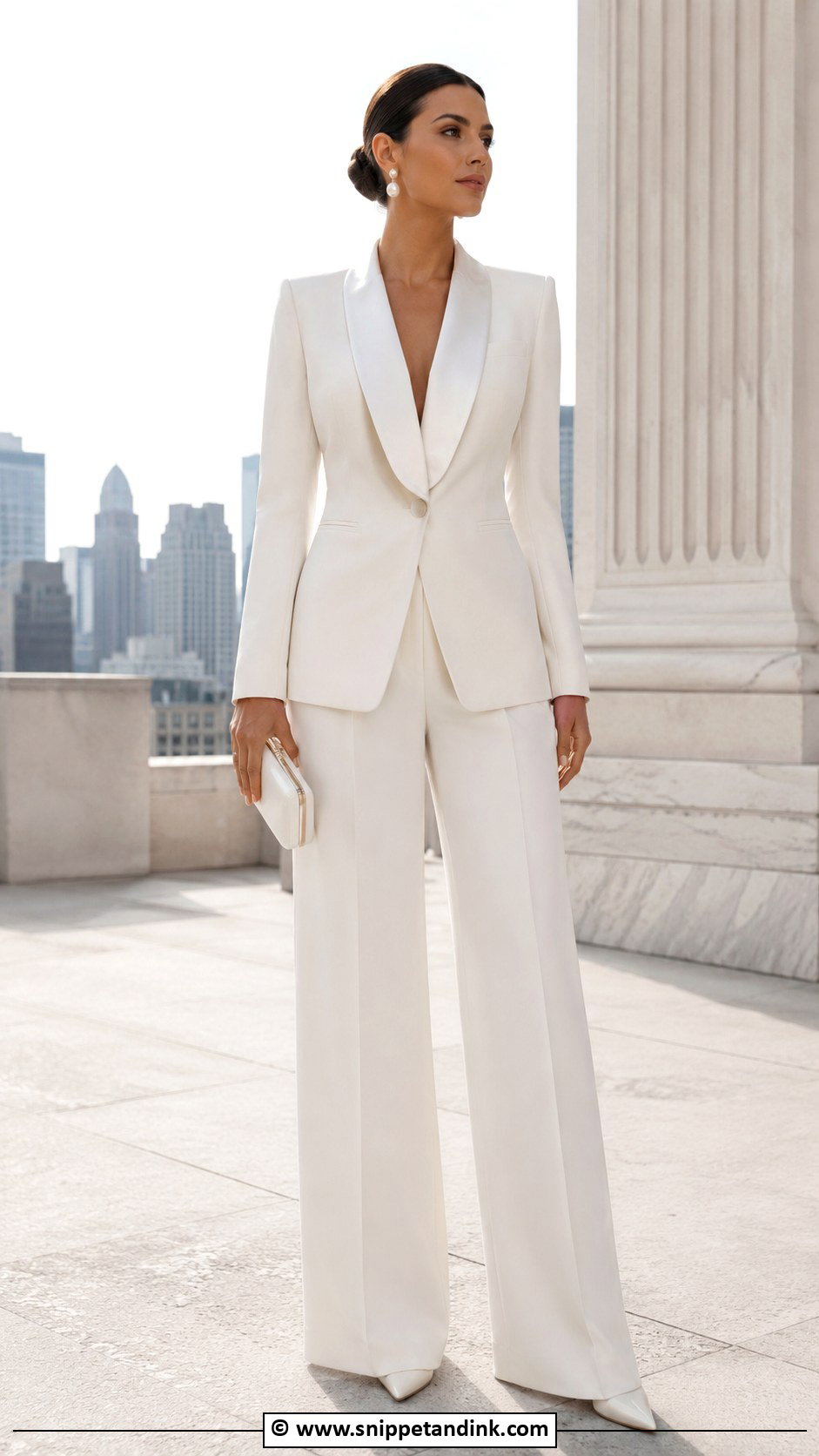
A bridal suit wedding dress look trades a gown for tailoring, and it only works if the fit is precise. An ivory tuxedo, wide-leg trouser suit, skirt suit or blazer with a soft camisole all count. Satin lapels, pearl buttons or a nipped waist make it bridal. I like suits because the pieces get worn again. Pointed heels, a sleek clutch and a clean veil or none suit city and courthouse weddings.

15. Wedding Dress With Bow
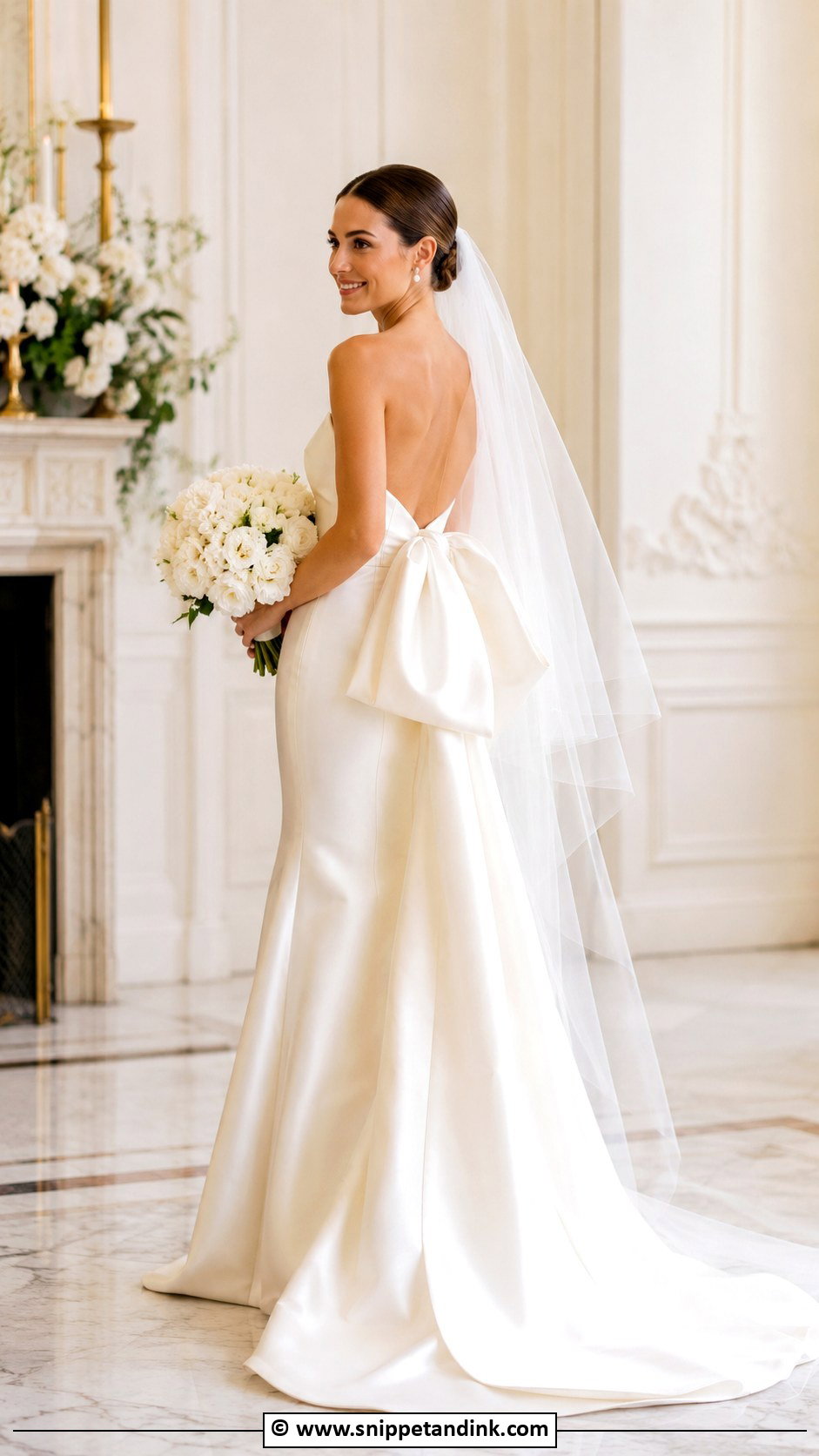
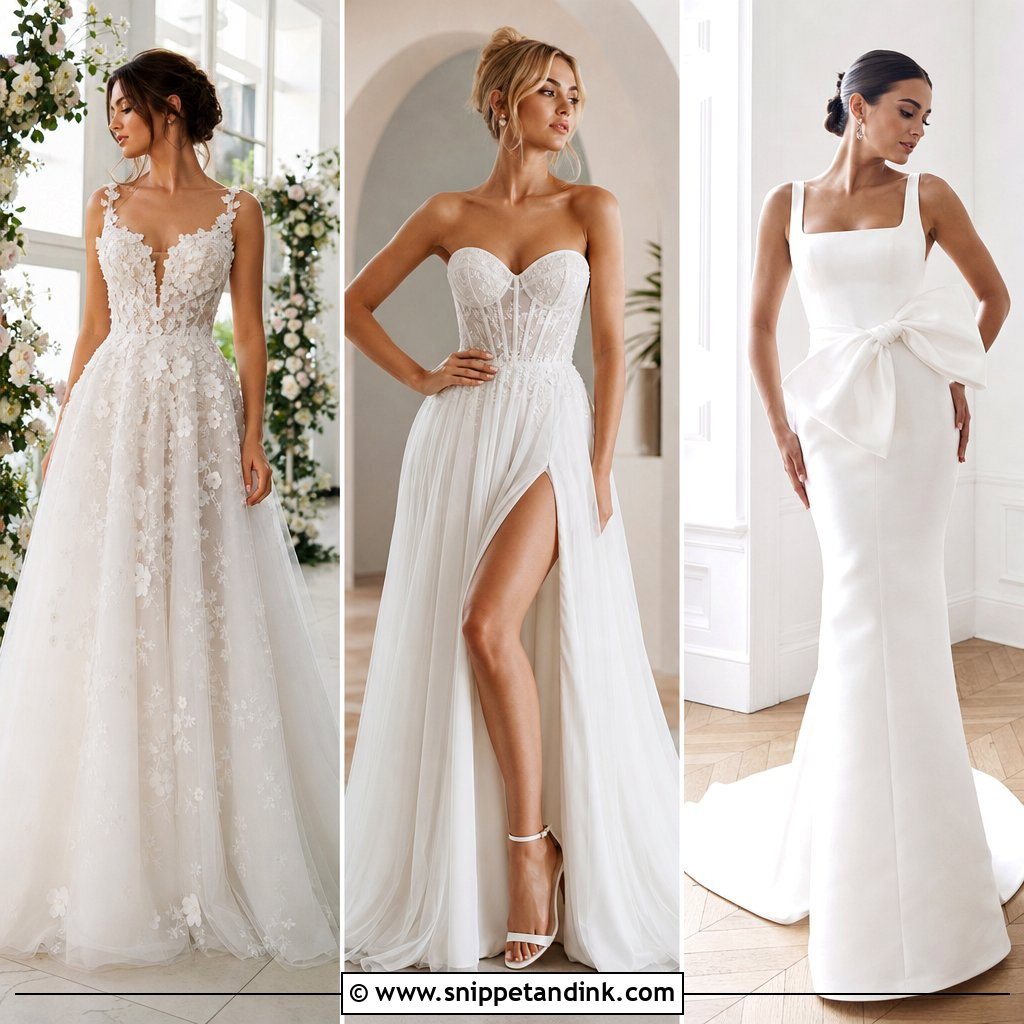
Bows can sit at the back waist, shoulder, neckline, hip or train. A large satin bow feels sculptural; a small one is soft. The fabric inside matters: a bow without interlining droops by the reception. Keep accessories simple, with pearl studs and a smooth hairstyle. Bows work on minis, column gowns, ball gowns and overskirts, and they create the detail guests see as you walk away.
16. Off Shoulder Wedding Dress
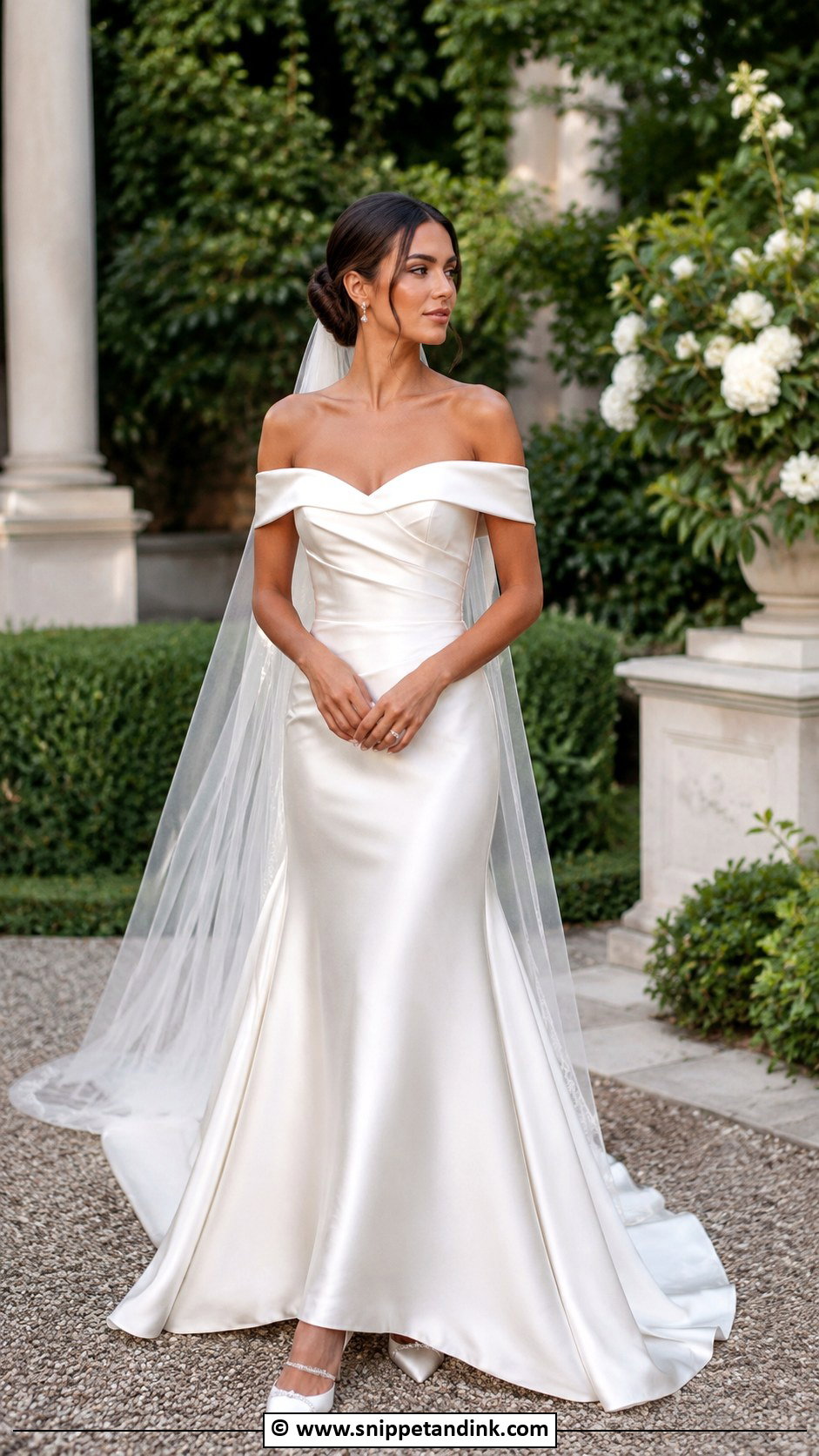
Off the shoulder highlights the collarbones and shoulders without much detail. Satin is classic; lace romantic; crepe modern. I always test arm movement in one, because tight off-shoulder sleeves restrict how high you can lift your arms. Drop earrings, a low bun and a simple veil set behind the shoulders keep the neckline clear for formal venues and evening receptions.
17. Long Sleeve Wedding Dress
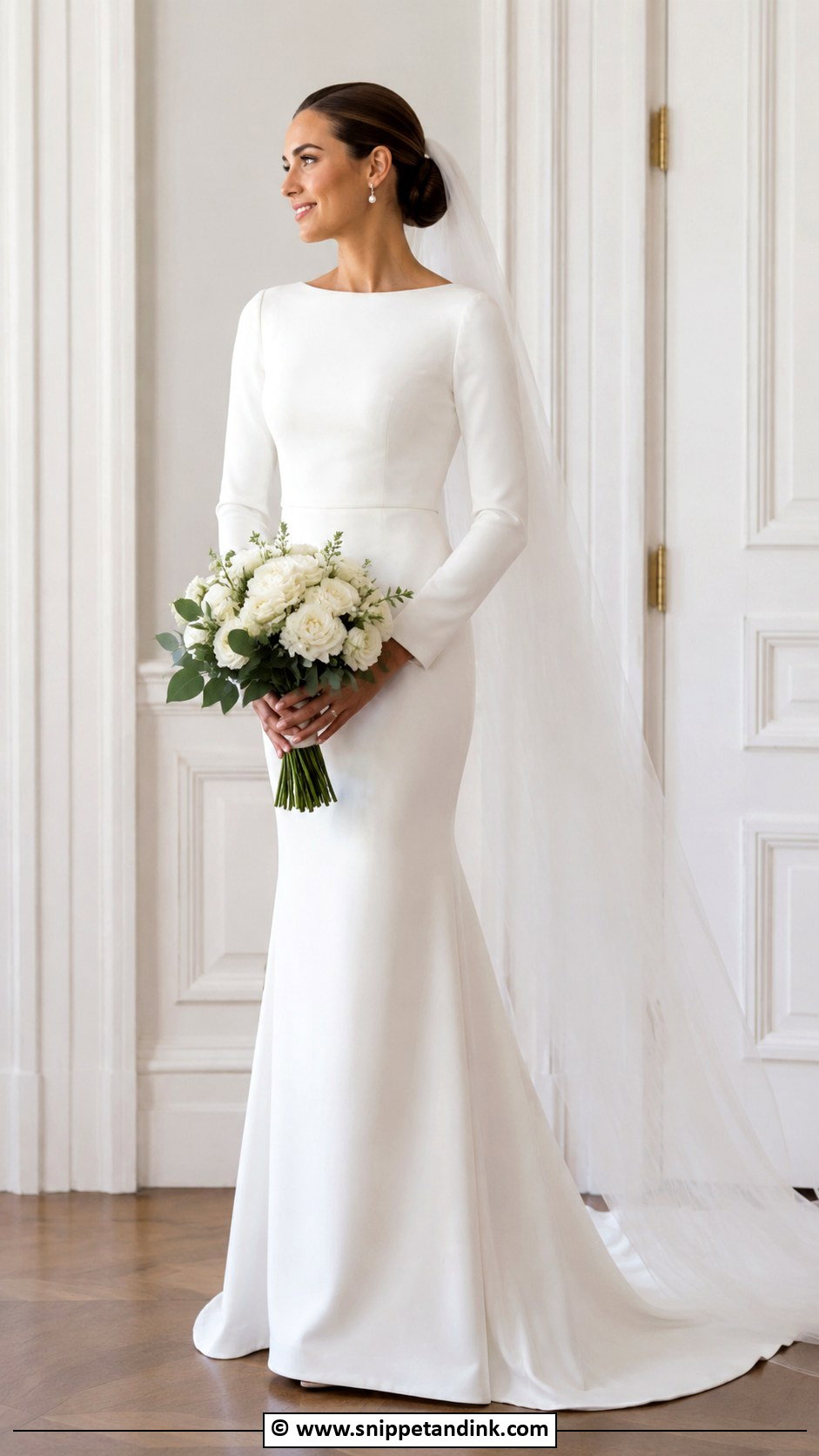
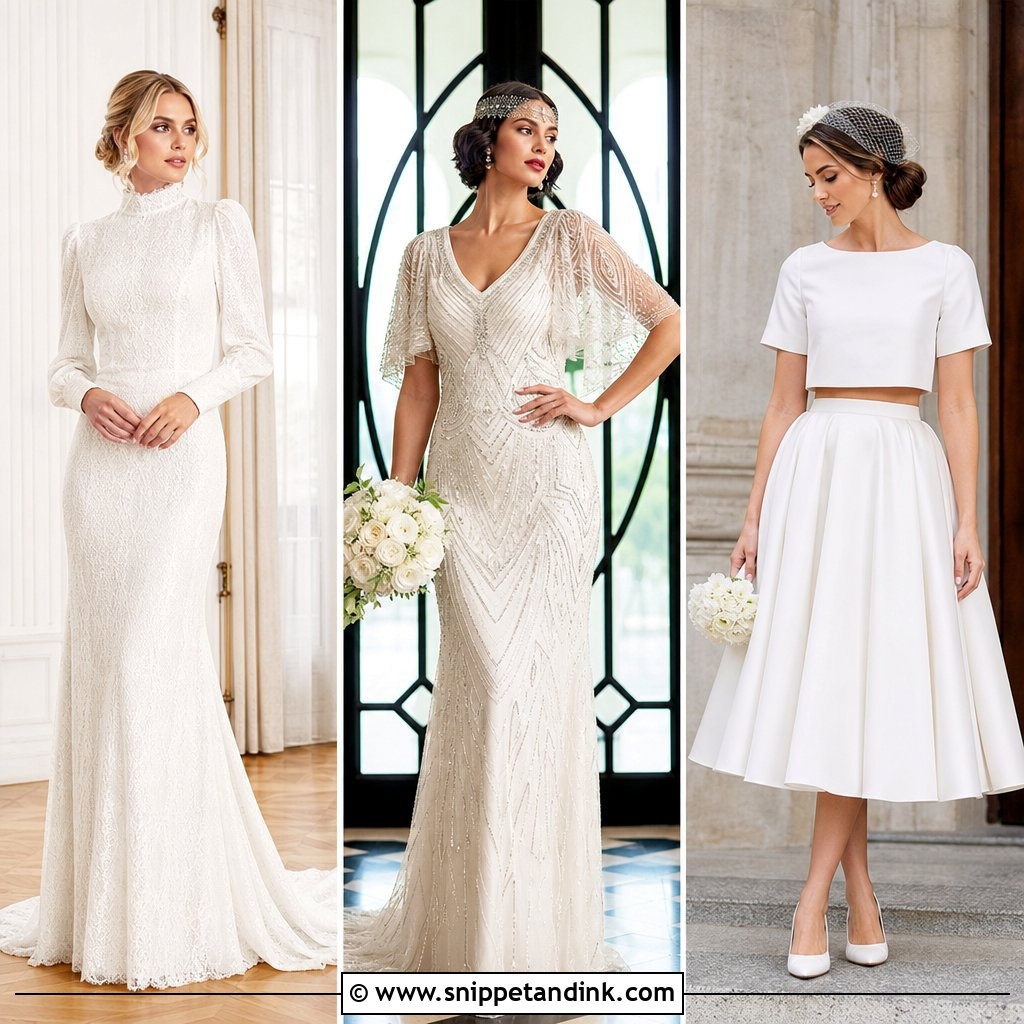
Sleeves set the mood. Sheer lace reads romantic; fitted crepe is modern and minimal; puffed or draped sleeves add volume. Whatever you choose, raise your arms and hug someone at a fitting, since a narrow set-in sleeve lifts the whole bodice. A sleek bun, crystal or pearl earrings and a long veil suit fall, winter and formal indoor weddings, though sheer sleeves work in spring too.
18. Pearl Embellished Wedding Dress
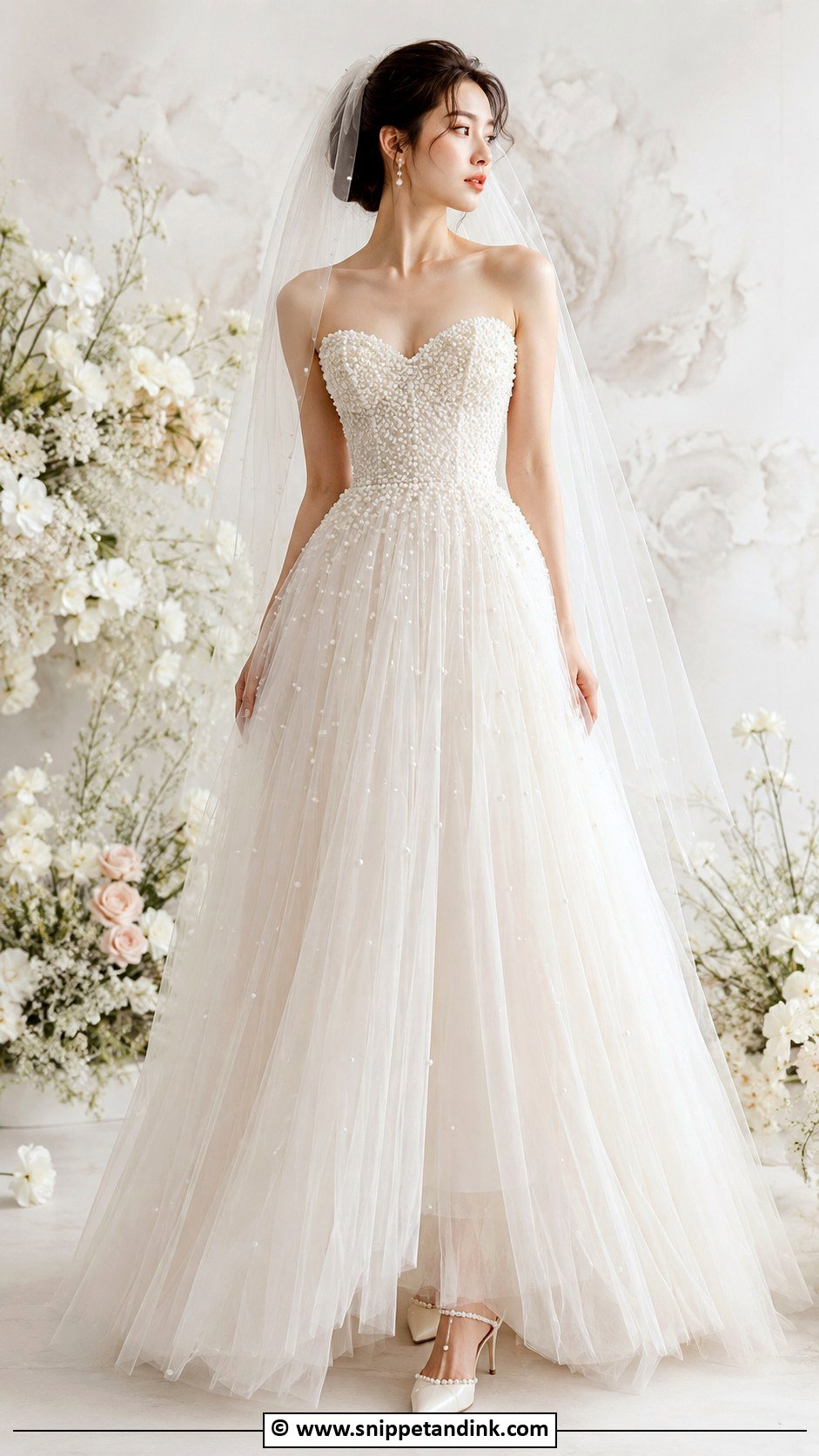
Pearls look good in daylight and flash alike, which is part of why I like them. They can be scattered on tulle, placed along sleeves, clustered on a bodice or sewn onto a veil. Avoid adding more statement pieces; the pearls are enough. Pearl earrings, satin heels and a simple bouquet keep the balance. They suit ball gowns, sheaths, A-lines and even minis.
19. Floral Applique Wedding Dress
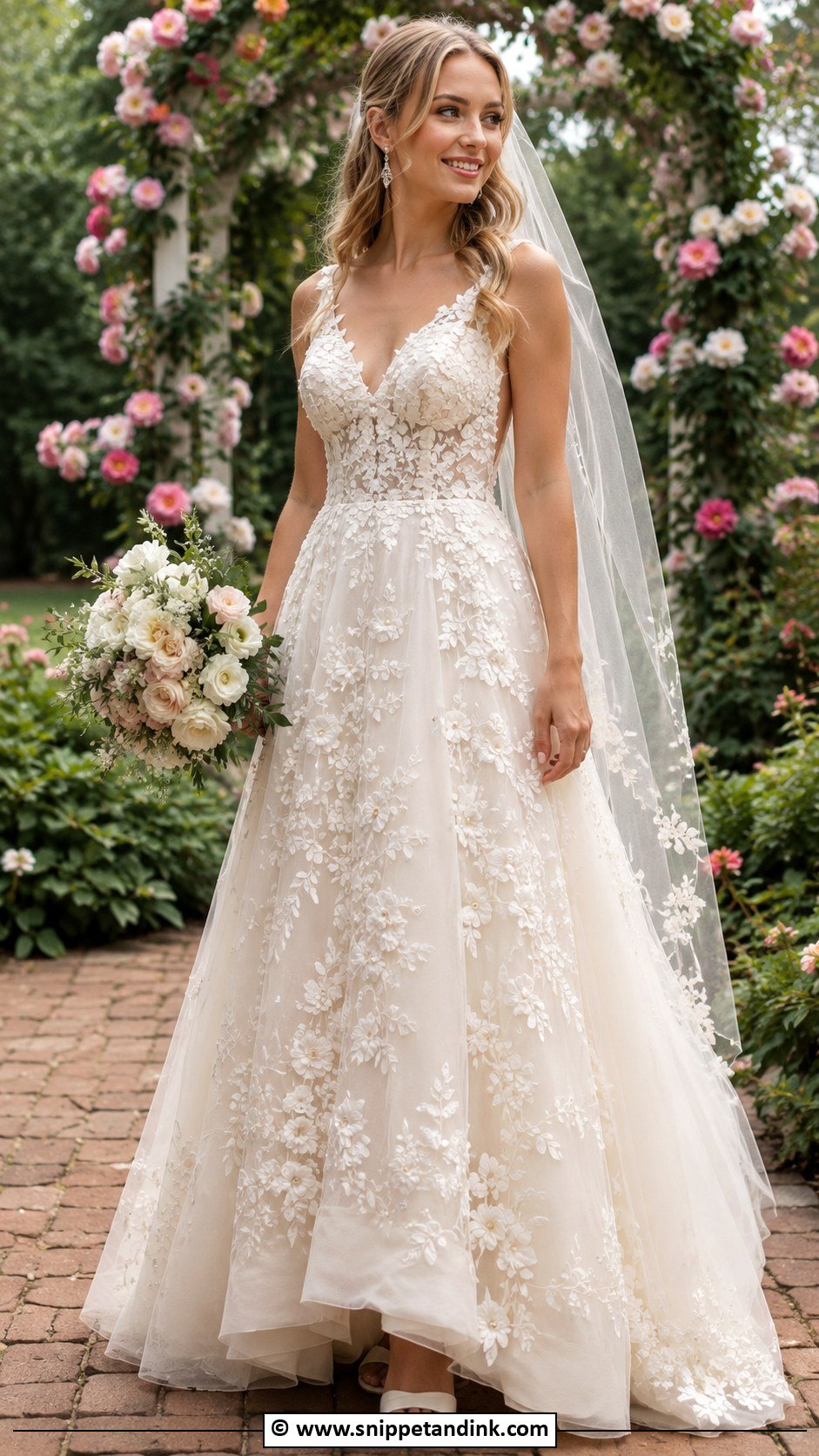
Appliqués give raised texture that flat lace can’t. Small flowers feel delicate; oversized ones make a fashion statement. A veil with matching floral detail can look very pretty, but only if the dress isn’t already busy, and raised appliqués can snag a veil’s edge. Soft waves, simple earrings and barely-there heels suit garden and spring weddings, especially when the florals echo the bouquet.
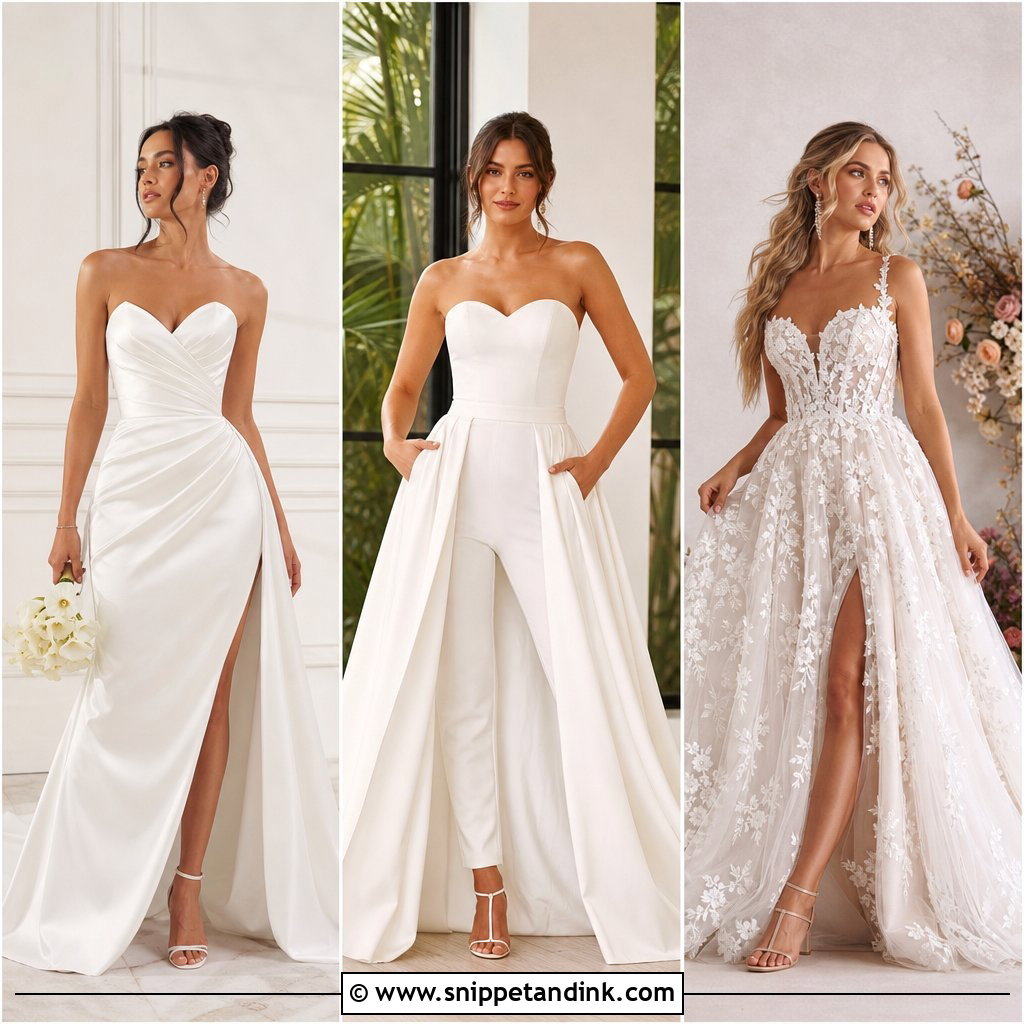
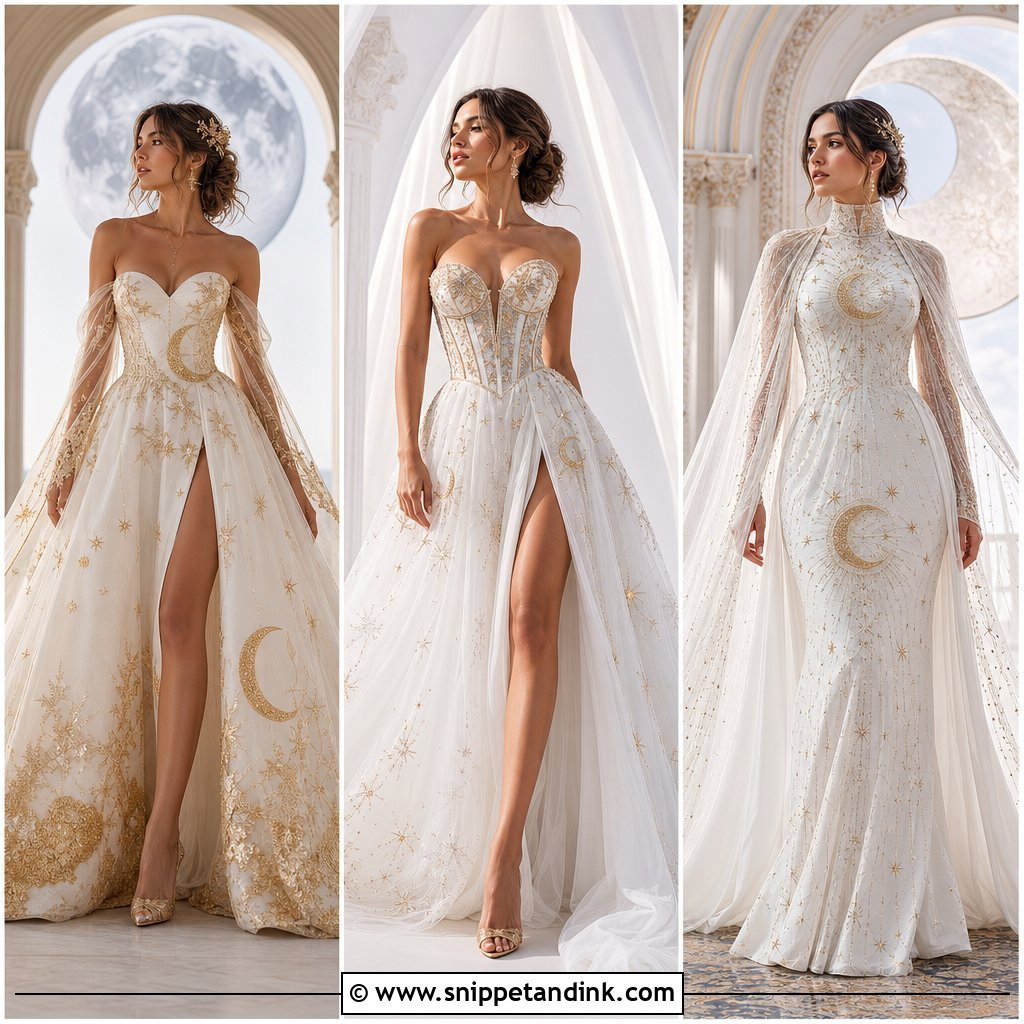
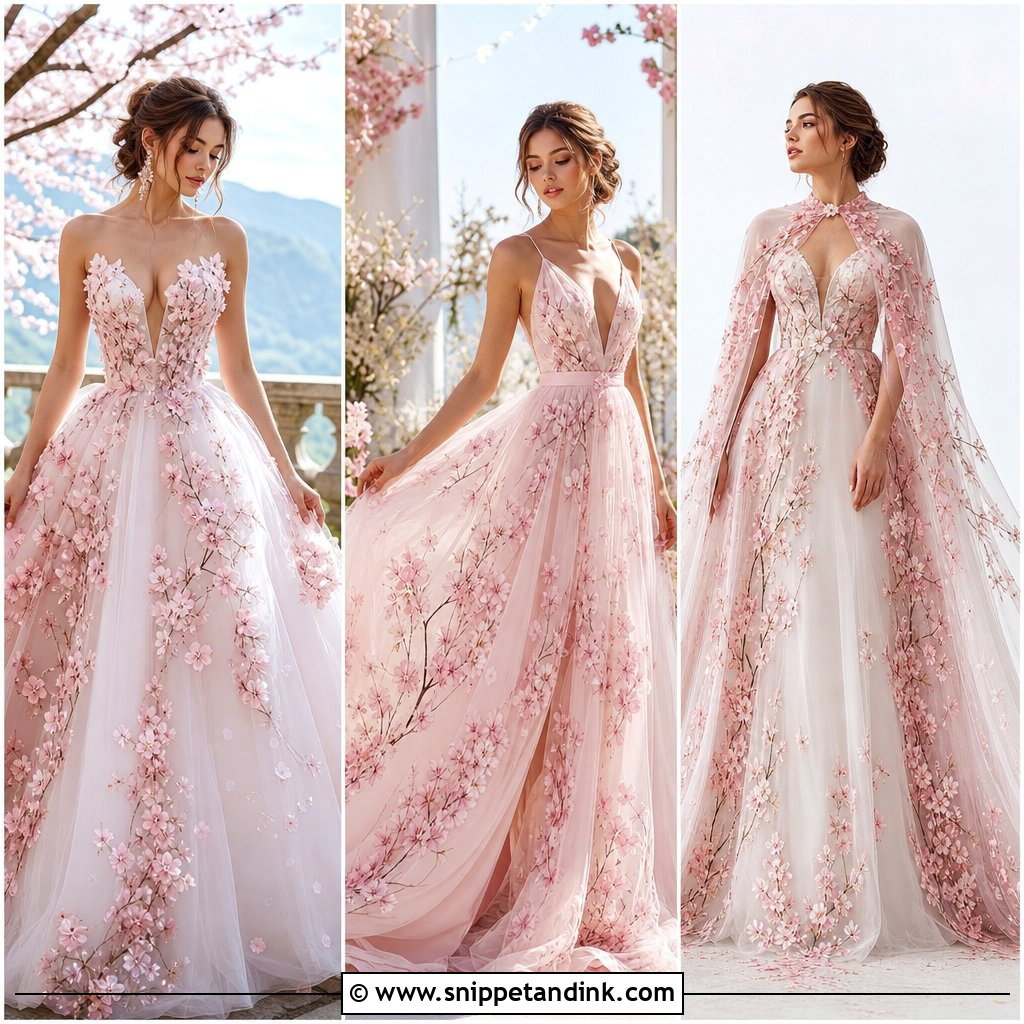

20. Vintage Inspired Wedding Dress
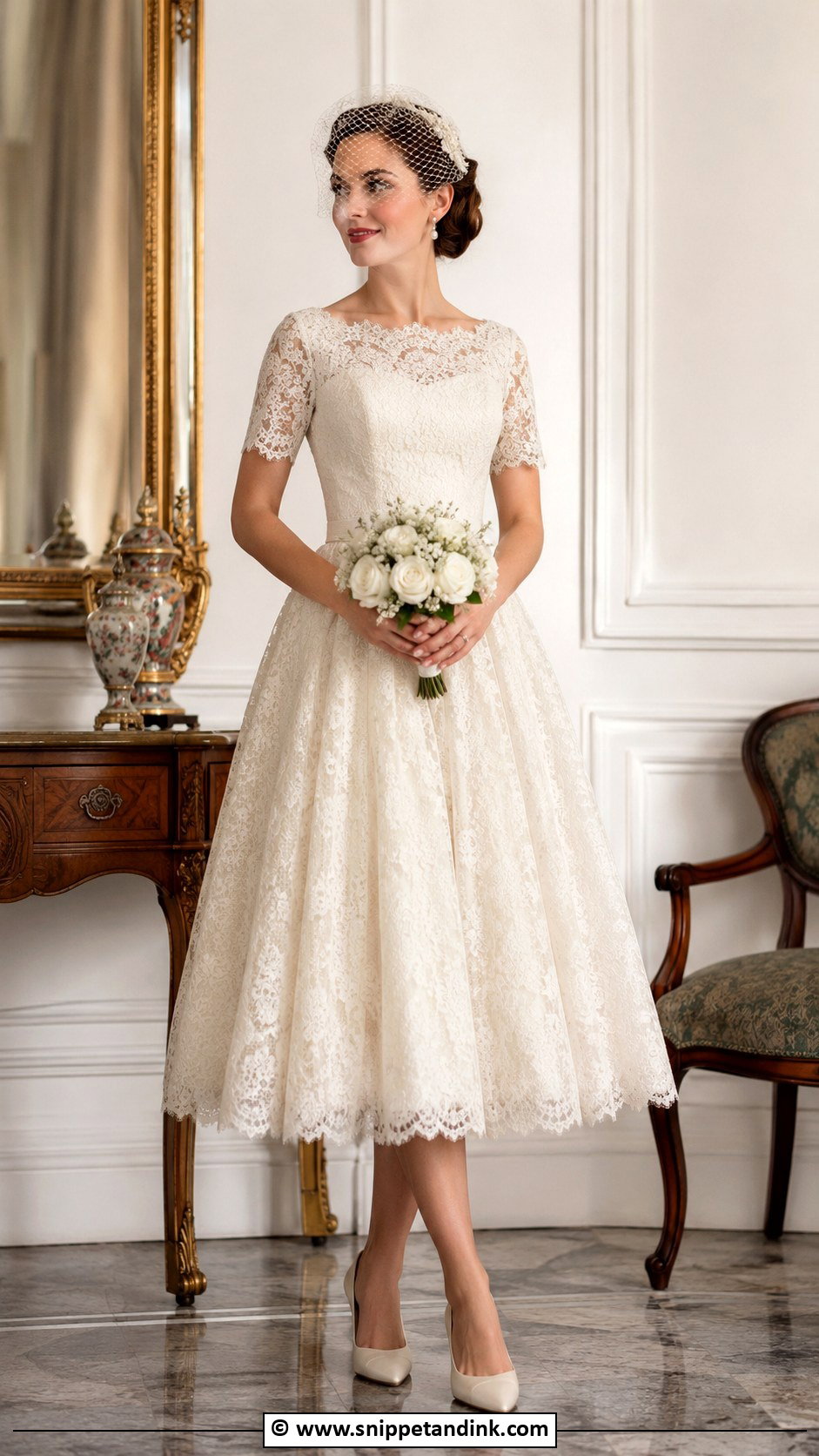
The trick with a vintage inspired wedding dress is avoiding the costume look. I pick one era for the silhouette, whether a 1950s tea length, a 1930s bias cut, a Victorian high neck or a 1990s slip, then keep makeup and jewelry modern. A birdcage veil, lace gloves or pearls work if used sparingly. Secondhand and heirloom gowns often need structural repairs, so budget for a seamstress.
21. Glam Beaded Wedding Dress
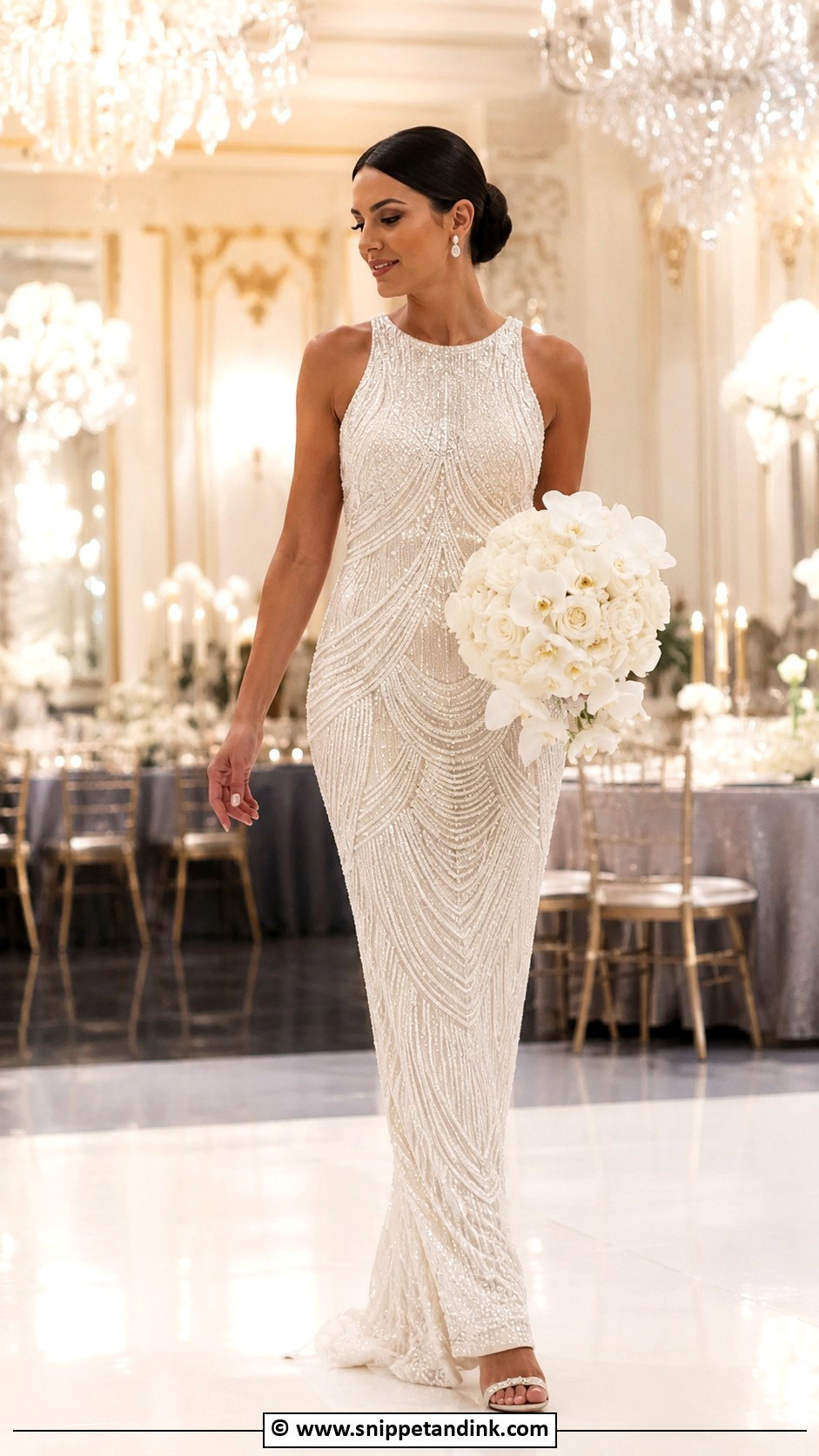
Beading is heavy, and a fully beaded gown can weigh far more than a plain one. I’d try a beaded bodice with a plain skirt if comfort worries you. Beaded lace, crystal embroidery, pearls and art deco patterns all suit evening ceremonies and ballrooms, where lighting catches the detail. Keep accessories sleek: simple heels, polished earrings and smooth hair help the beadwork look refined rather than busy.
22. Black And White Wedding Dress
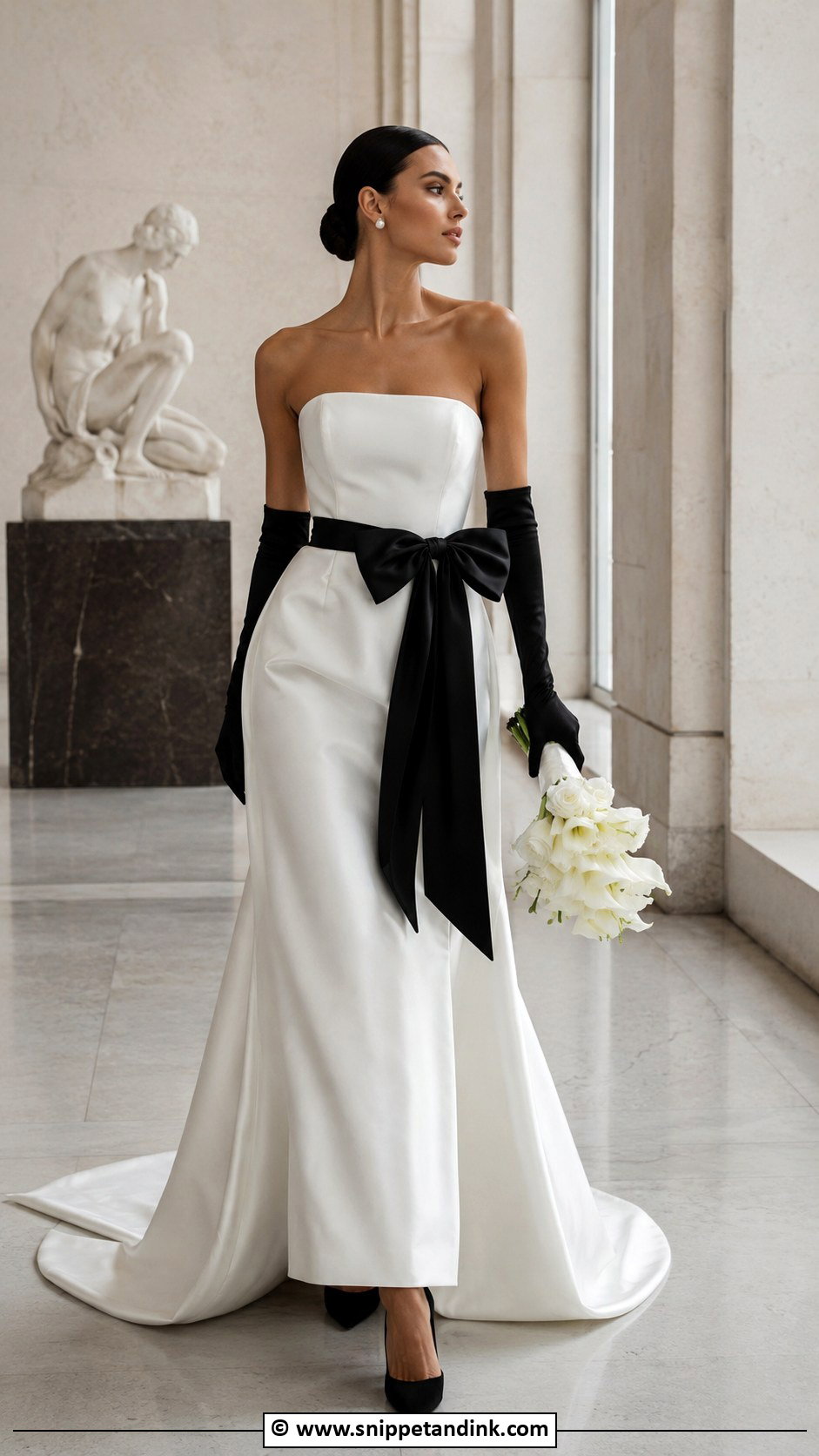
Contrast is the point. A black bow, gloves or trim on a white gown is subtle; a black floral print, overskirt or two-tone bodice is bolder. I usually recommend one black accent for a first try, because it’s harder to overdo. Sleek heels, a structured bouquet and clean hair keep it sharp. It suits museum venues, city weddings and formal receptions.
23. Blush Wedding Dress
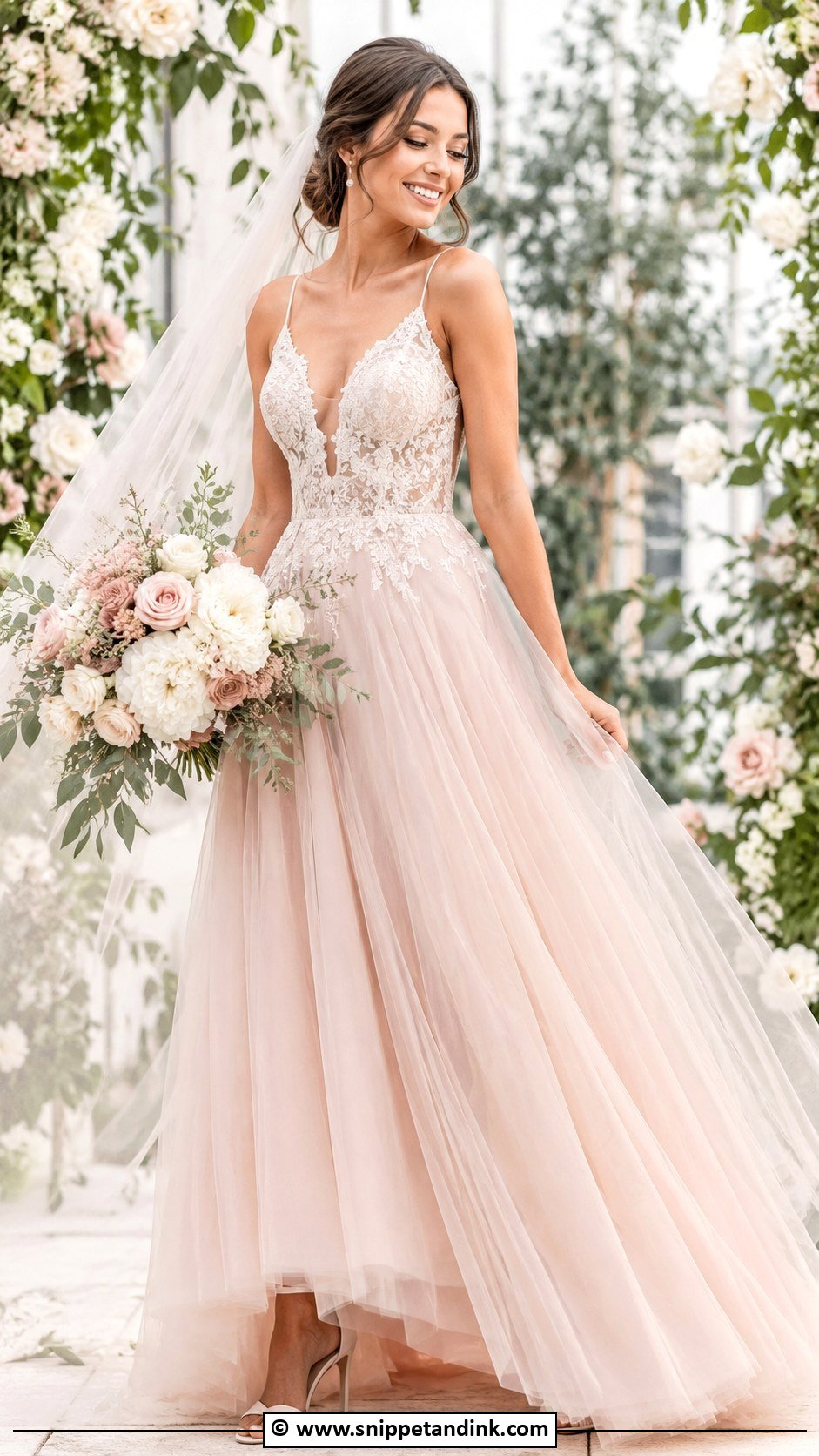
Blush warms the complexion, and I suggest it to brides who find bright white stark on their skin. Pale pink, rose, nude blush and champagne blush all work in tulle, lace, satin or appliqué. Check the shade in daylight, since some blush fabrics look grey under flash. Ivory heels, rose-gold or pearl accessories and a matching soft veil suit garden weddings and spring ceremonies.
24. Champagne Wedding Dress
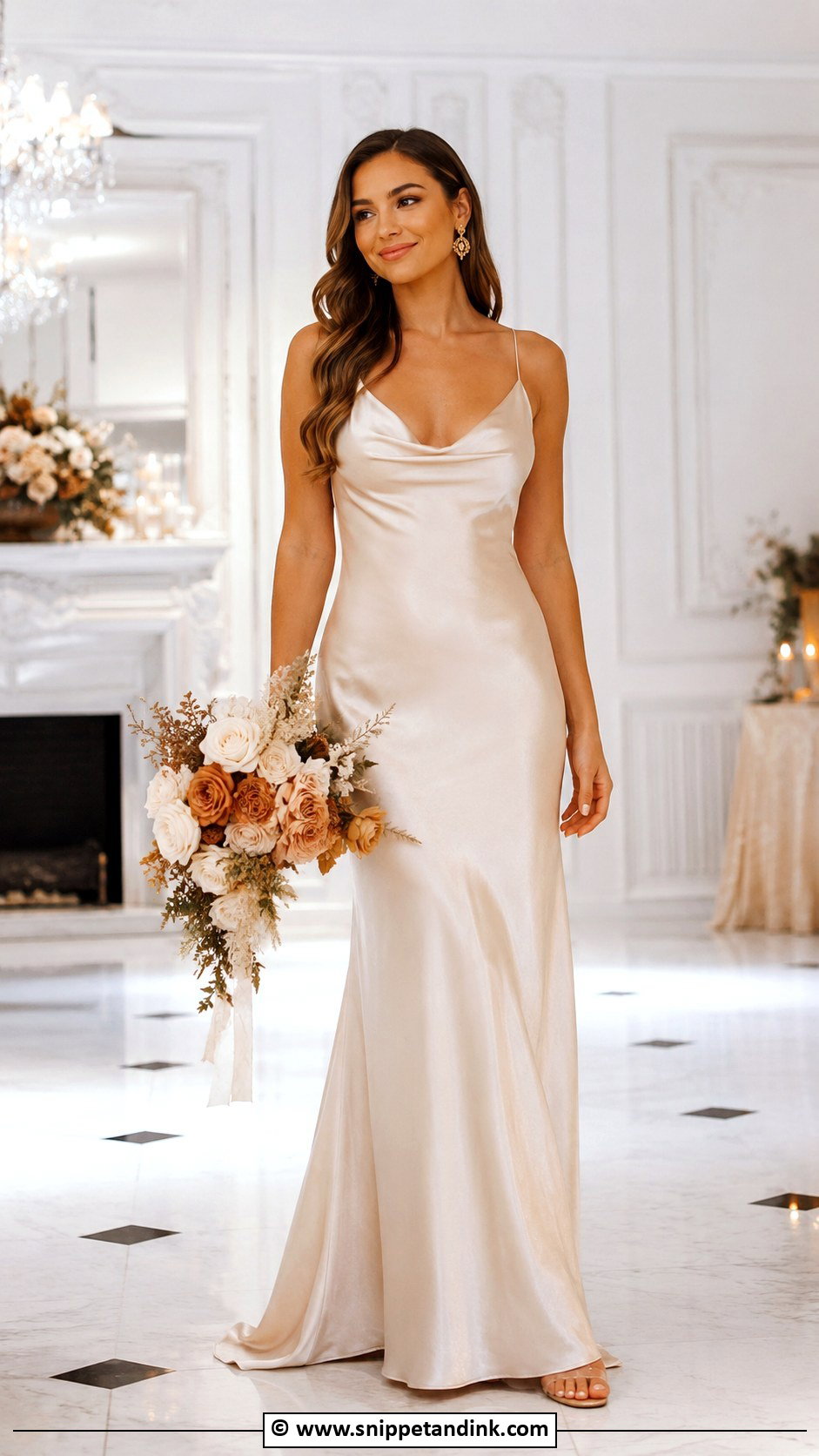
Champagne ranges from pale beige to soft gold, which is why it flatters so many skin tones. Satin, beaded tulle, lace and slips all show it well. Match your veil to the gown’s tone, because a stark white veil makes champagne look yellow. Gold-toned jewelry, nude heels, a warm neutral bouquet and glowing makeup keep it cohesive for evening and fall weddings.

25. Short Sleeve Wedding Dress
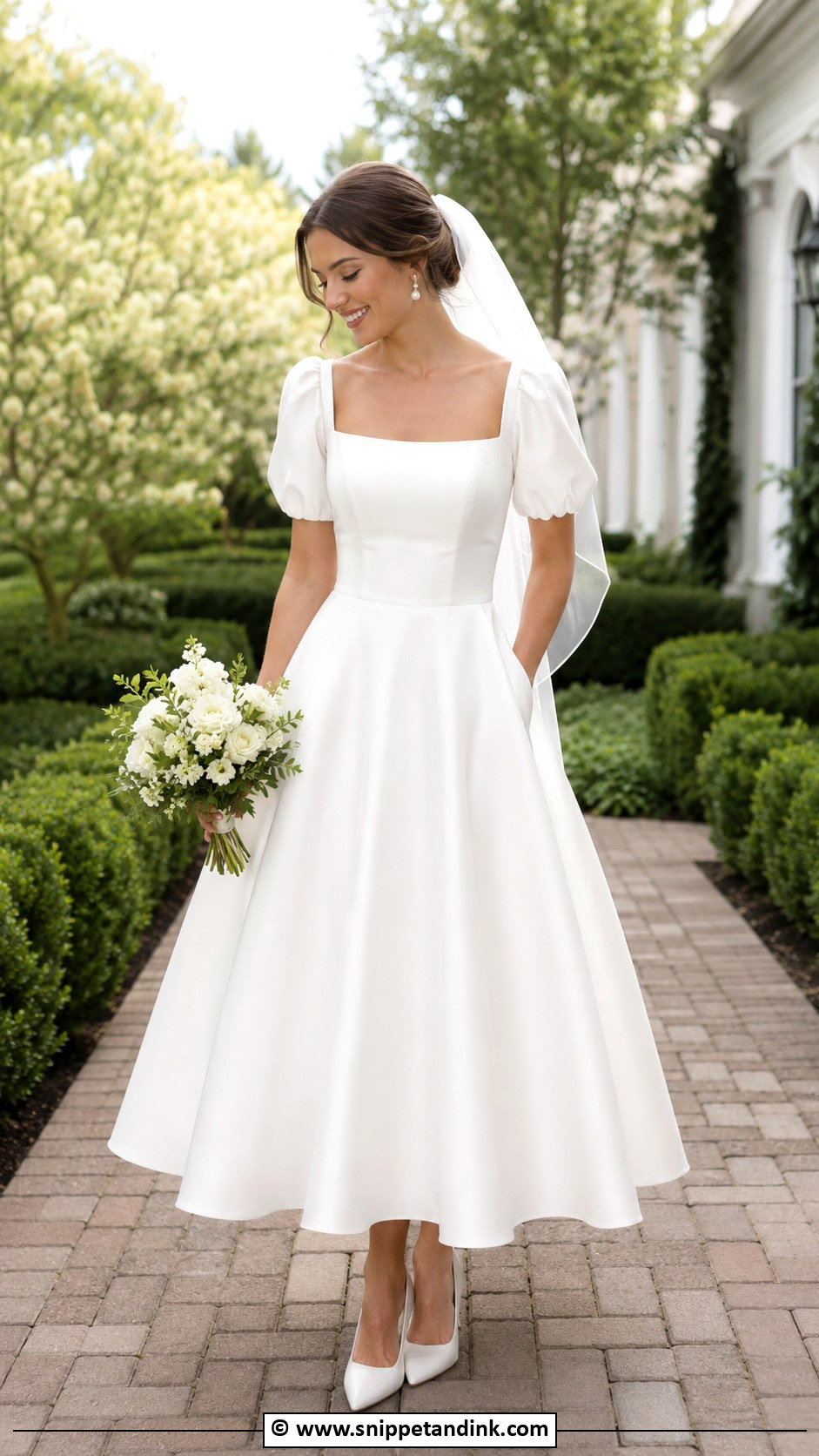
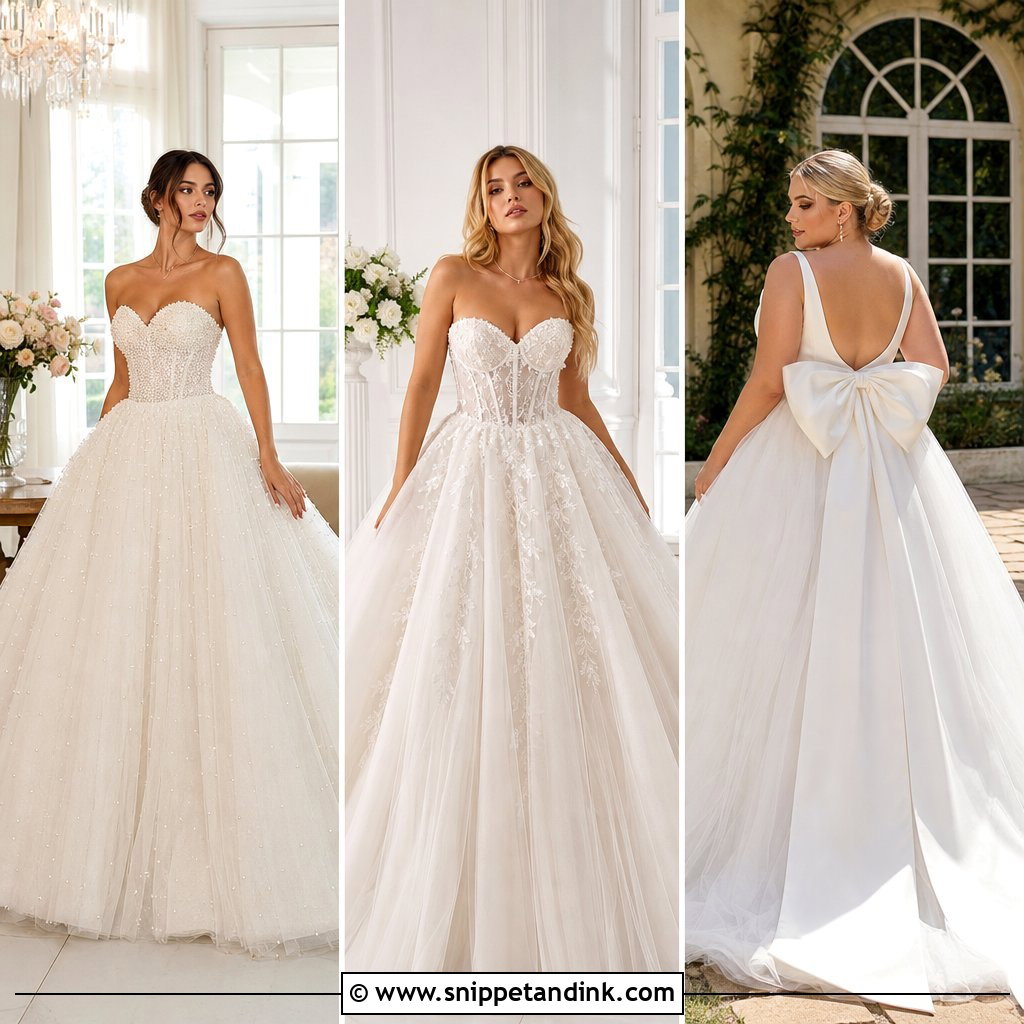
A short sleeve wedding dress gives a little coverage while your arms stay free. Cap sleeves feel classic and modest, puff sleeves romantic, flutter sleeves light. They pair well with tea lengths, A-lines and lace. A defined waist balances the sleeve. Simple heels, pearl earrings and a soft veil suit spring and summer weddings.
26. High Neck Wedding Dress
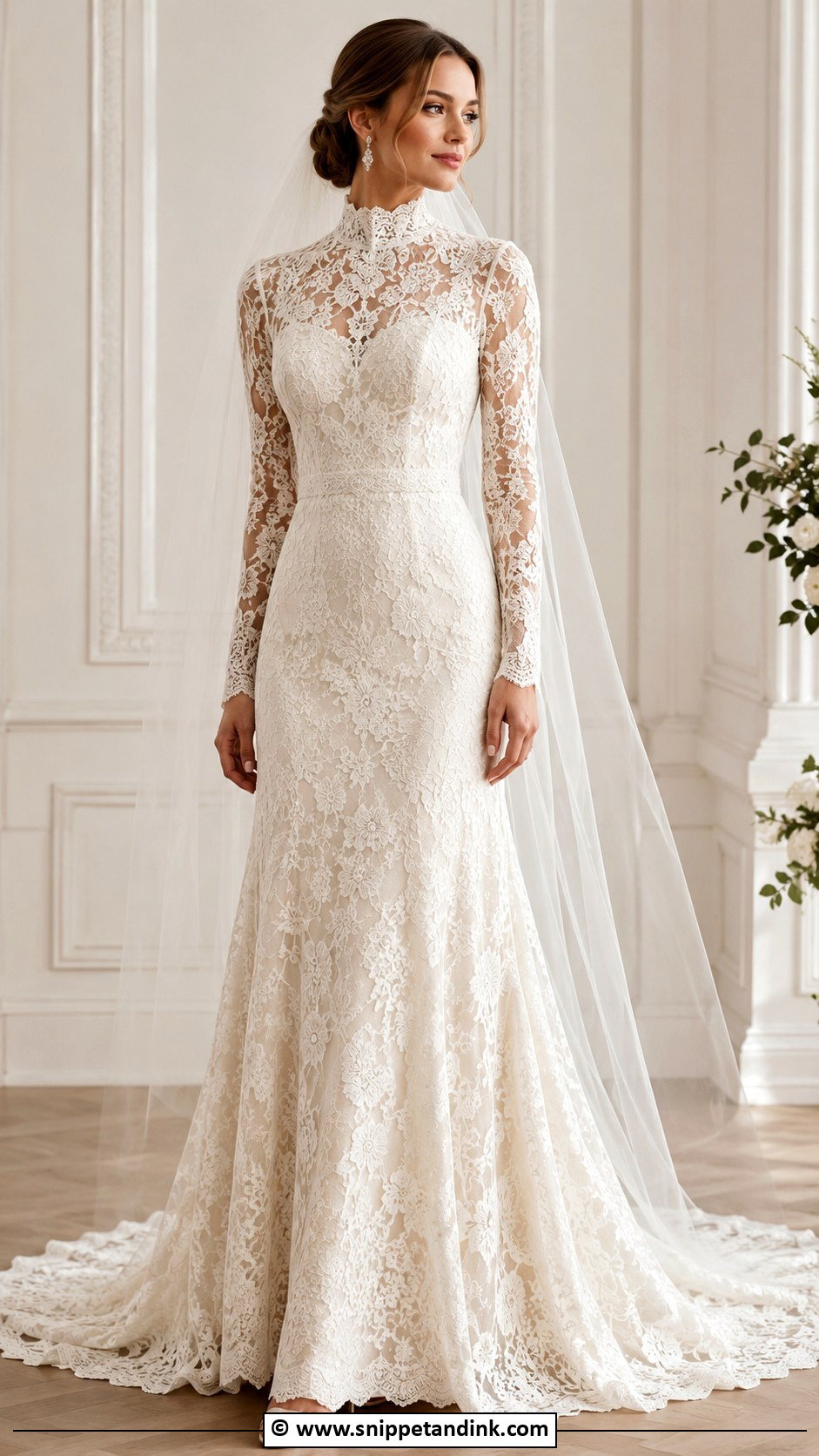
High necks draw attention up to the face. Lace versions feel romantic; crepe and satin read sleek and architectural. Balance the coverage with an open back, fitted waist or flowing skirt. I skip necklaces and use earrings that frame the face, with a low bun or smooth updo. It suits formal ceremonies and cooler seasons, and gives coverage without heaviness.
27. Halter Wedding Dress
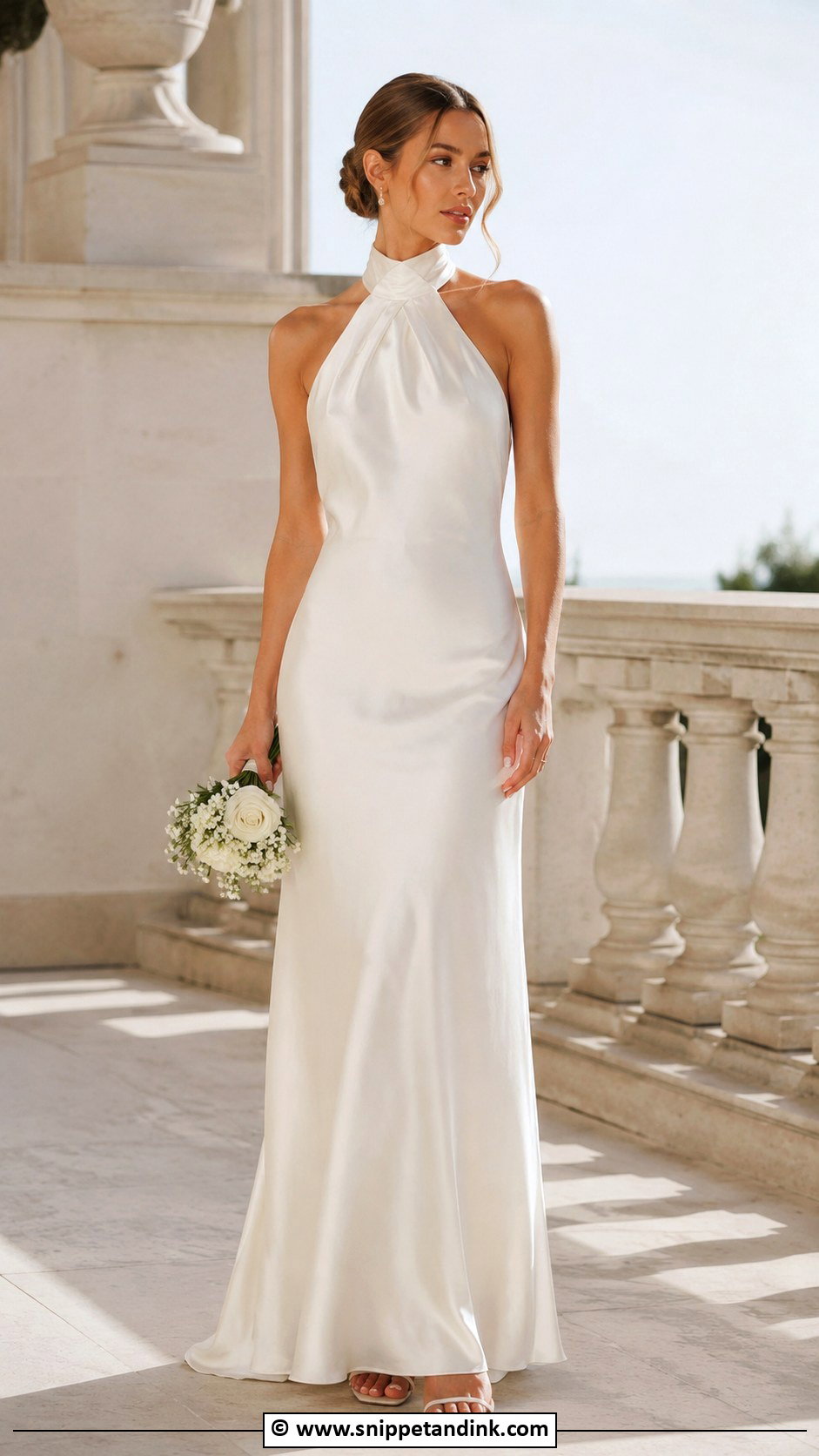
Halters lengthen the upper body. Satin is polished, crepe minimal, lace soft, and the skirt can be slim, A-line or flared. Because the strap sits behind the neck, I’d keep hair up so it doesn’t catch, and choose a lighter fabric for long days. Delicate earrings and strappy heels suit beach weddings, city ceremonies and summer celebrations.
28. Detachable Overskirt Wedding Dress
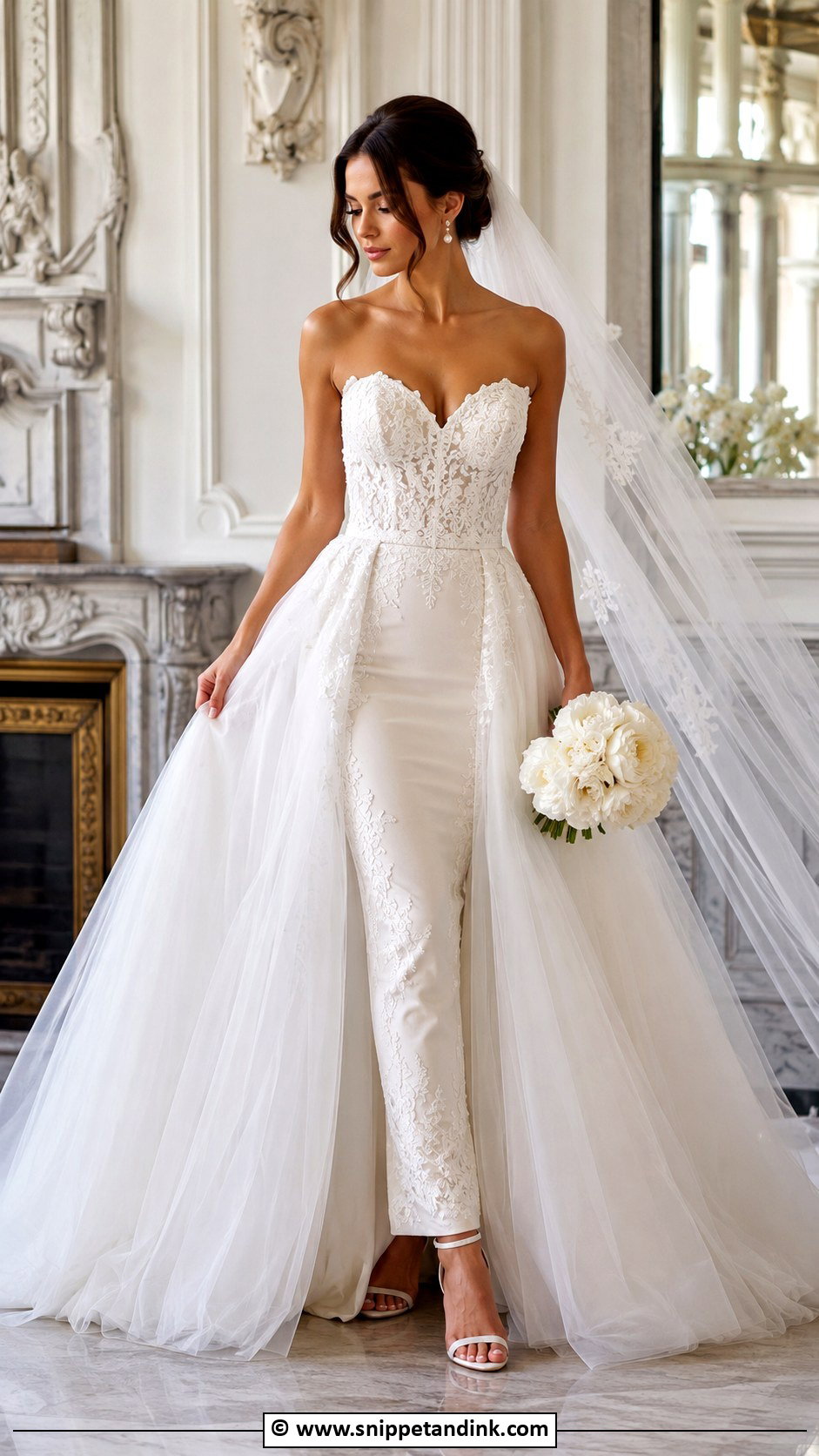
An overskirt answers the bride who can’t decide between fitted and full. Wear it for the ceremony, then remove it for the reception. Satin, tulle, organza and lace overskirts all work, but check how the waistband attaches; a bulky band shows under a fitted gown. Practice taking it off with a bridesmaid. Classic heels and a ceremony veil, then statement earrings for the second look.
29. Cape Wedding Dress
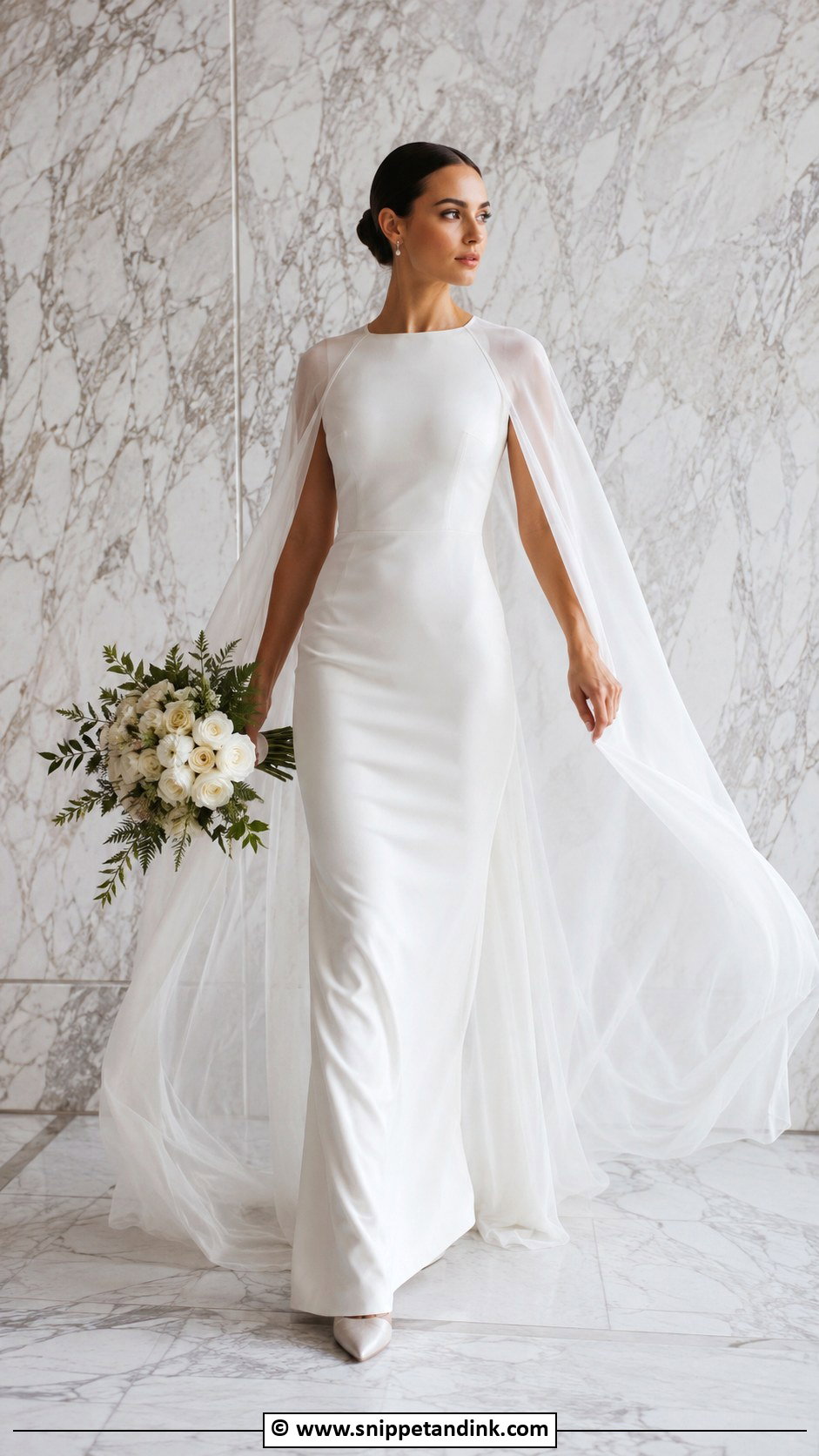
A cape gives arm coverage without sleeves, and that makes it useful for religious ceremonies that ask for covered shoulders. Sheer, lace-trimmed, pearl-dotted, floor-length or shoulder-skimming capes suit crepe, satin and column gowns. I check that a cape attached at the shoulders doesn’t pull the bodice backward. Sleek hair, minimal jewelry and clean heels let it move in city and outdoor weddings.
30. Colorful Floral Wedding Dress
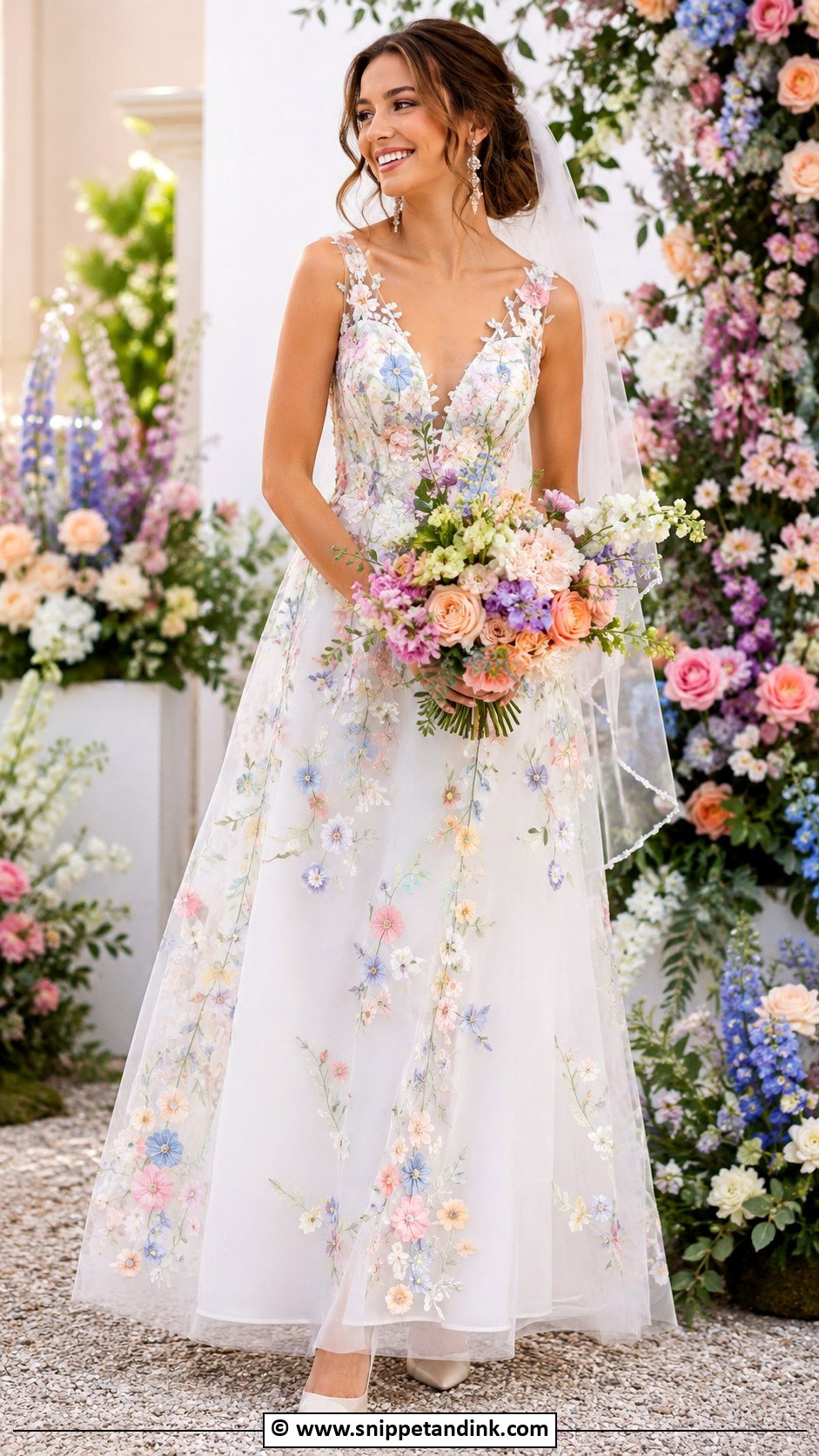
Colorful florals bring personality, from pastel embroidery to bold prints on a white, blush or champagne base. My rule is to pull one color from the gown into the bouquet rather than adding new ones. Ivory heels and delicate earrings keep it simple. A sheer veil softens the look without hiding the pattern. It suits garden weddings, outdoor venues and creative celebrations.
Undergarments That Make or Break These Silhouettes
I’ve watched a well-fitted gown look wrong because of what was underneath. Buy your undergarments before the first fitting, and wear them to every one after, so the seamstress fits the dress to your real shape.
- Slips and bias-cut satin: smooth, laser-cut underwear in a shade close to your skin, not white, which can show through.
- Strapless and off the shoulder: a longline strapless bra, or cups sewn into the bodice if the boning is strong.
- Low or open backs: adhesive cups or a low-back bra, tested for an hour before the wedding.
- Mermaid and fitted crepe: light shaping shorts rather than heavy shapewear that rolls at the waist when you sit.
- Ball gowns: often a petticoat or crinoline is included; check before buying one separately.
If you’re unsure, ask your seamstress at the first fitting. Sewing cups into the bodice is a common alteration and often makes a strapless gown much more comfortable over a long day.
Trends Can Guide You Without Deciding for You
There’s no single way to look like a bride. Clean satin, soft lace, dramatic tulle, a tailored suit, a mini, champagne or colorful florals can all feel fully bridal. What matters is fit, fabric and movement, and whether the details make you feel confident. Use trends as a starting point, then trust what you see in the mirror at your fittings.
You'll Like These Ideas:




Leave a Reply