
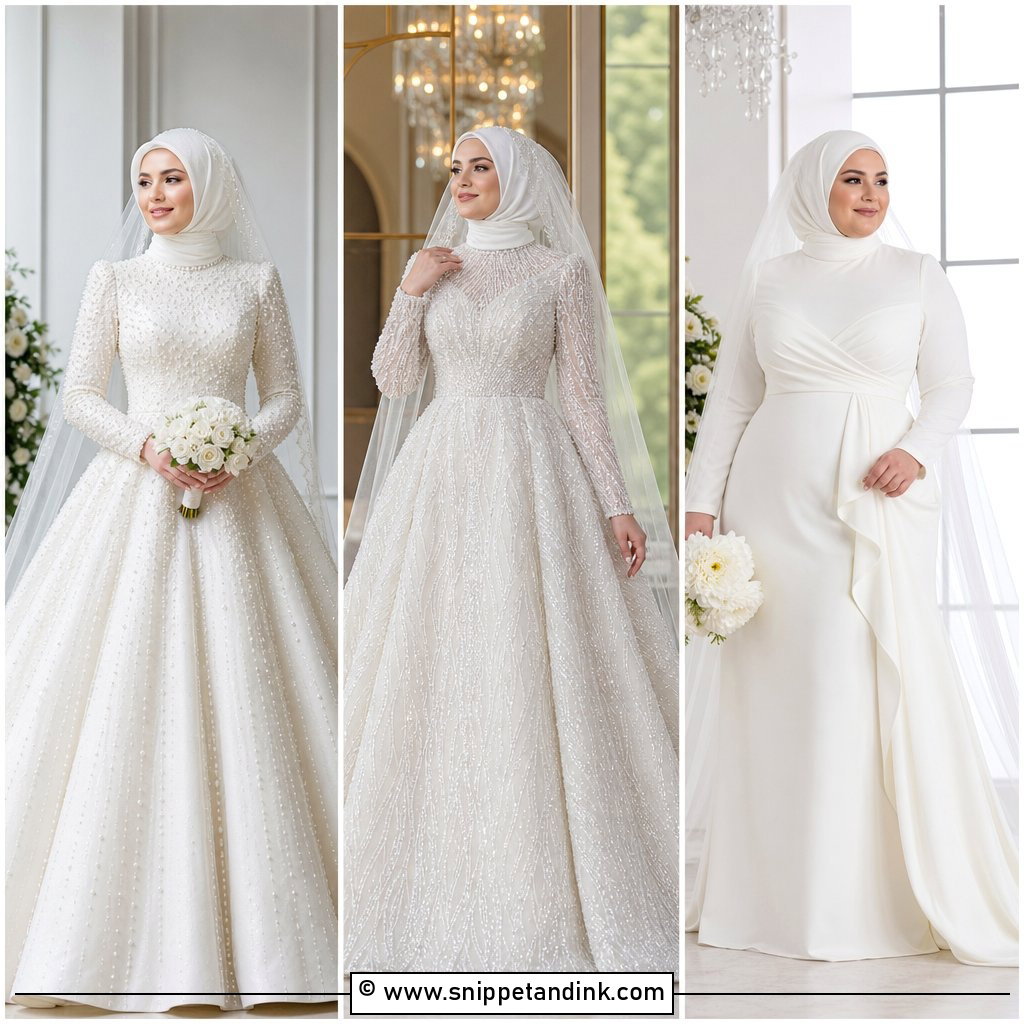
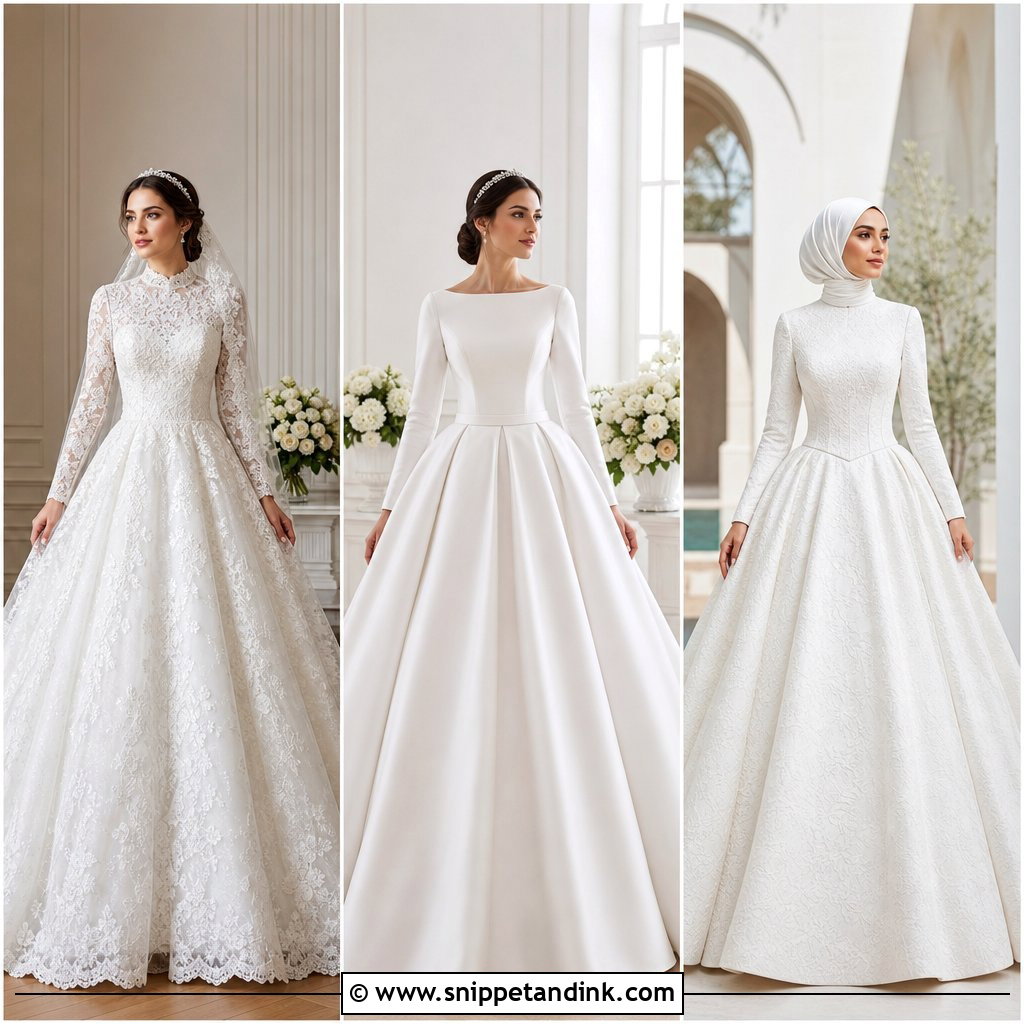
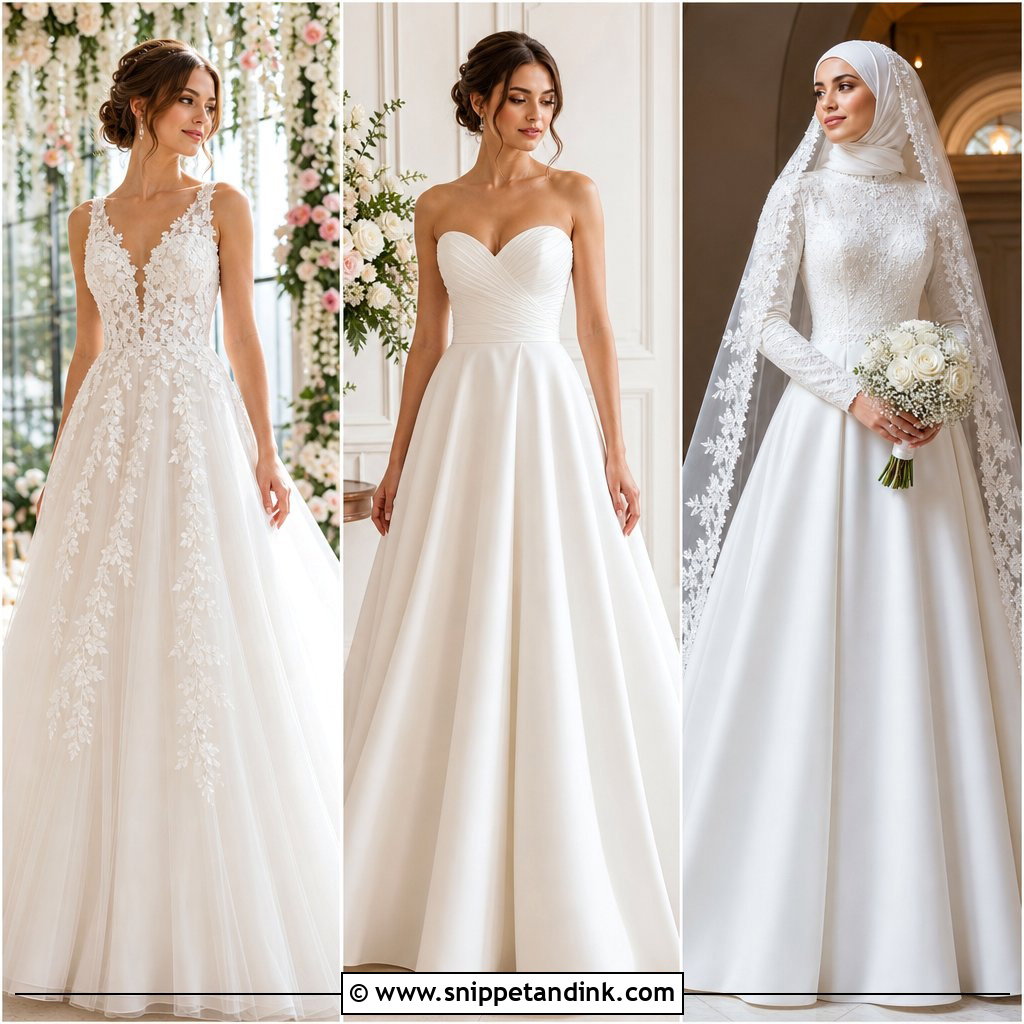
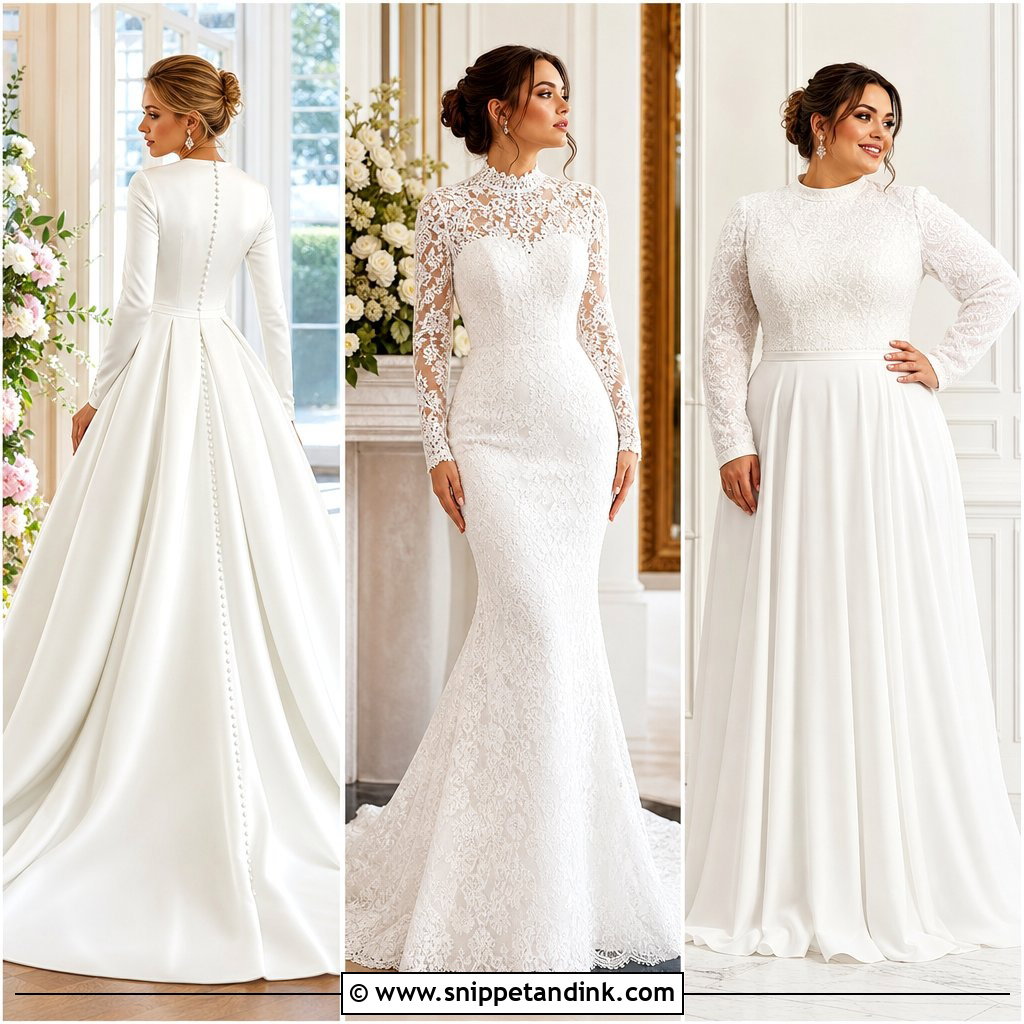
Covering up doesn’t mean losing shape or detail. High necks, sculpted sleeves, lace and very pared-back gowns are all widely available now, which gives modest brides far more to choose from than a few years ago. When I style a covered white gown, I’m looking at the lined bodice, the back, the sleeve length and whether the skirt lets you sit and dance. Season, venue, fabric weight and what your seamstress can realistically alter all come into it too. The twenty dresses below run from ball gowns to courthouse midis, each with accessories and the fitting checks I’d make.
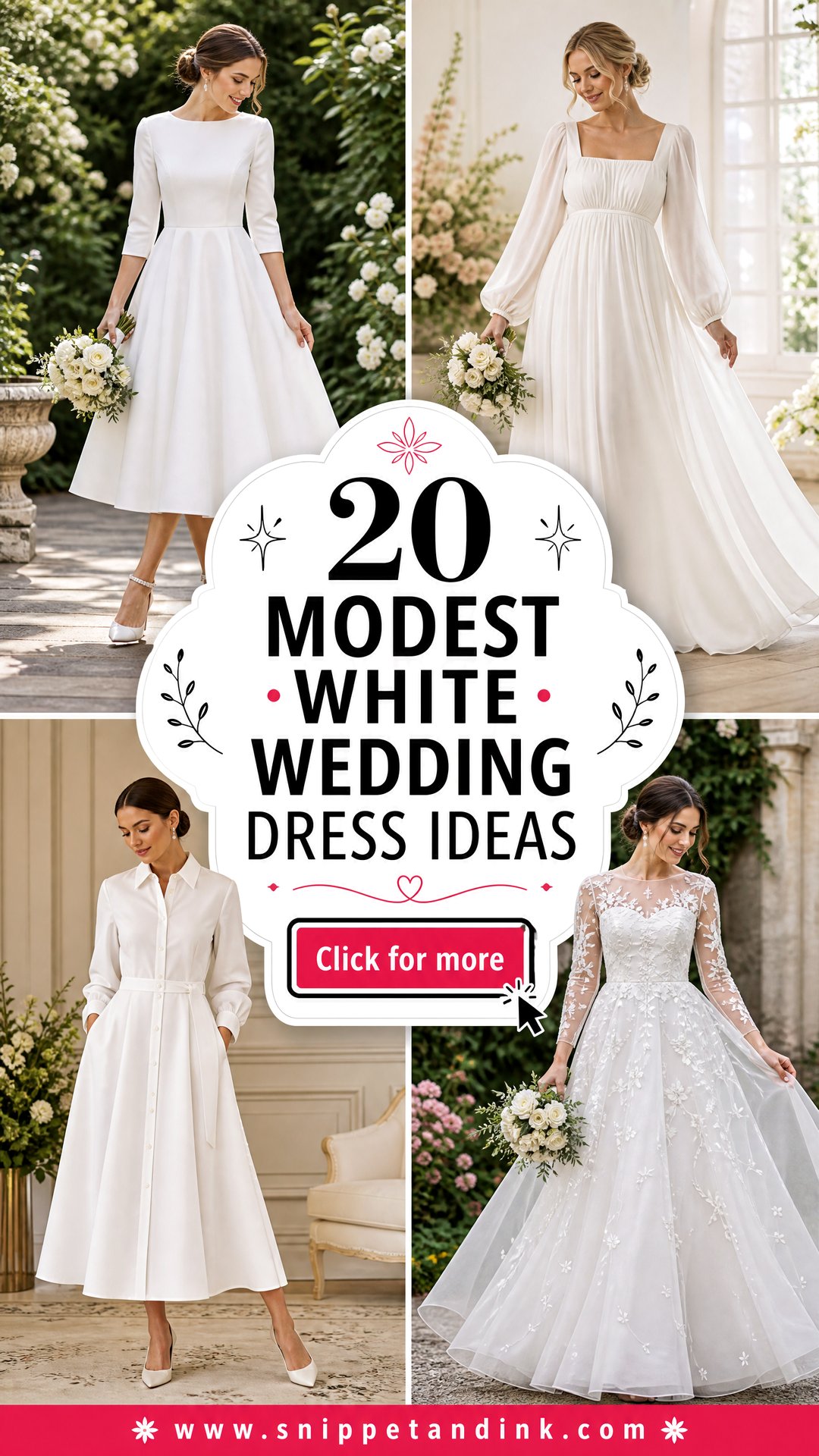
Which White? Matching the Shade to Your Skin and Your Venue
“White” covers a lot of shades in a bridal shop. Bright or optic white has a blue edge and looks crisp on deeper skin tones and in modern spaces. Soft or diamond white is a touch warmer and suits most people. Ivory has a cream undertone that flatters fair and olive skin and looks richer by candlelight. Champagne and blush-lined gowns read almost white in photos but warm the skin.
I hold fabric swatches right under the bride’s chin, in daylight, before we look at shapes. If a shade makes your skin look grey or your teeth look yellow, move one step warmer or cooler.
- Match your veil to the dress, not to a catalogue name. Two different whites side by side are obvious.
- Bright white can photograph slightly blue in shade; ivory holds its tone better outdoors.
- If you’ll wear a hijab or a cape, bring a swatch of the gown when you buy them.
- Lining colour changes how lace and chiffon look; a nude lining under white lace reads warmer than a white one.
1. Long Sleeve Lace A-Line Wedding Dress
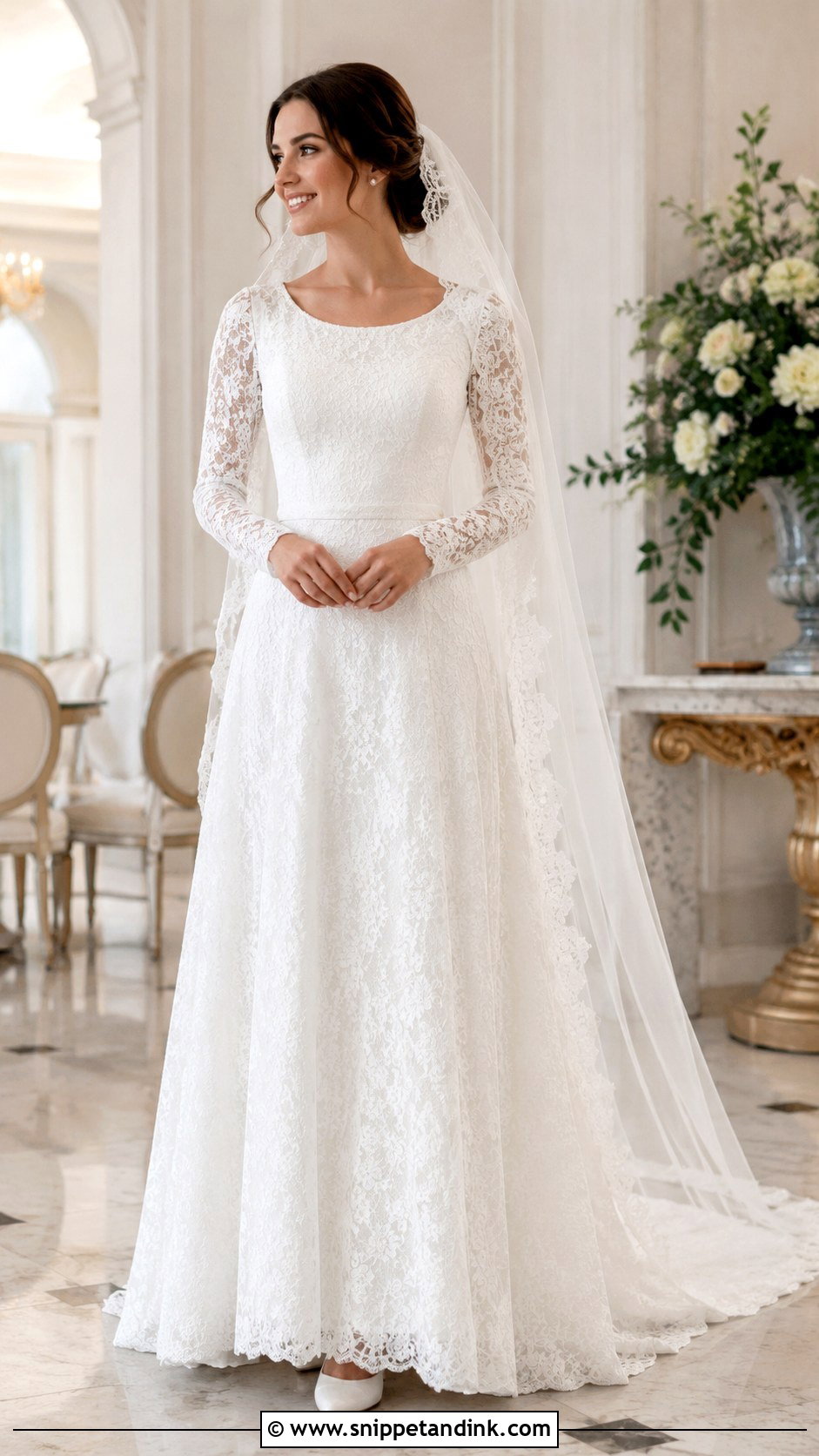
Lace A-lines are the safest starting point for a covered white dress. A fully lined bodice, a modest scoop neck and lace sleeves to the wrist give detail without exposure, and the skirt moves freely from the hip. Lace on loose hair tends to snag, which is one reason I usually suggest a low bun with this style. If you want more cover, opaque sleeve lining or a raised back can both be added at alterations. Closed-toe ivory pumps, pearl studs and a fingertip veil edged in narrow lace keep it cohesive.
2. High Neck Satin Ball Gown Wedding Dress
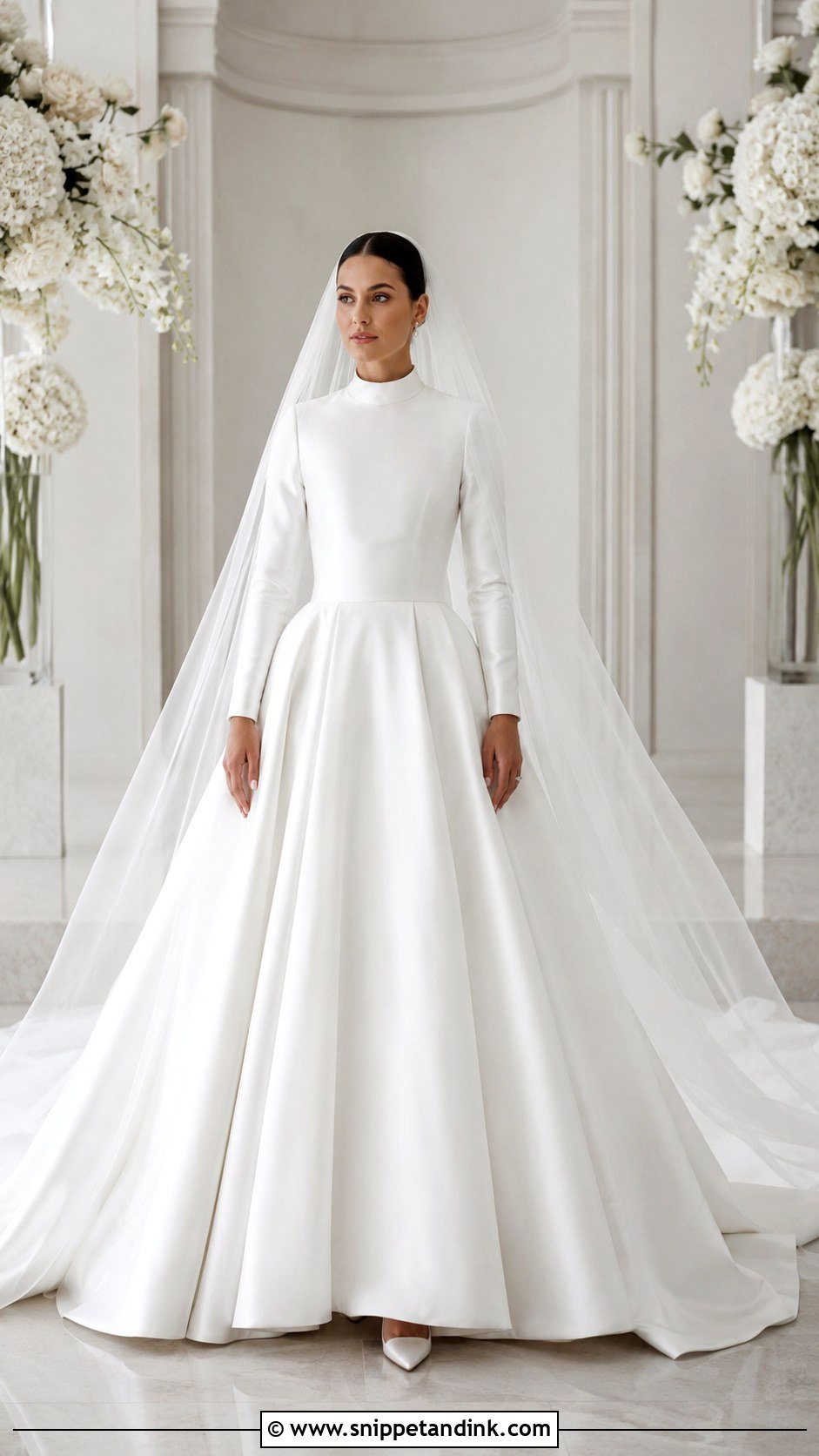
Satin on a high-neck ball gown looks formal with almost no decoration. A structured bodice, high round neck, covered back and fitted long sleeves balance the wide skirt, and a chapel train adds presence. Satin shows every pull, so accurate shoulder, bust and sleeve measurements matter more here than on lace. Hidden pockets are worth requesting for tissues. Pointed satin pumps, pearl drops, a plain cathedral veil and a sleek bun or twist suit its clean surface.
3. Bateau Neck Crepe Column Wedding Dress
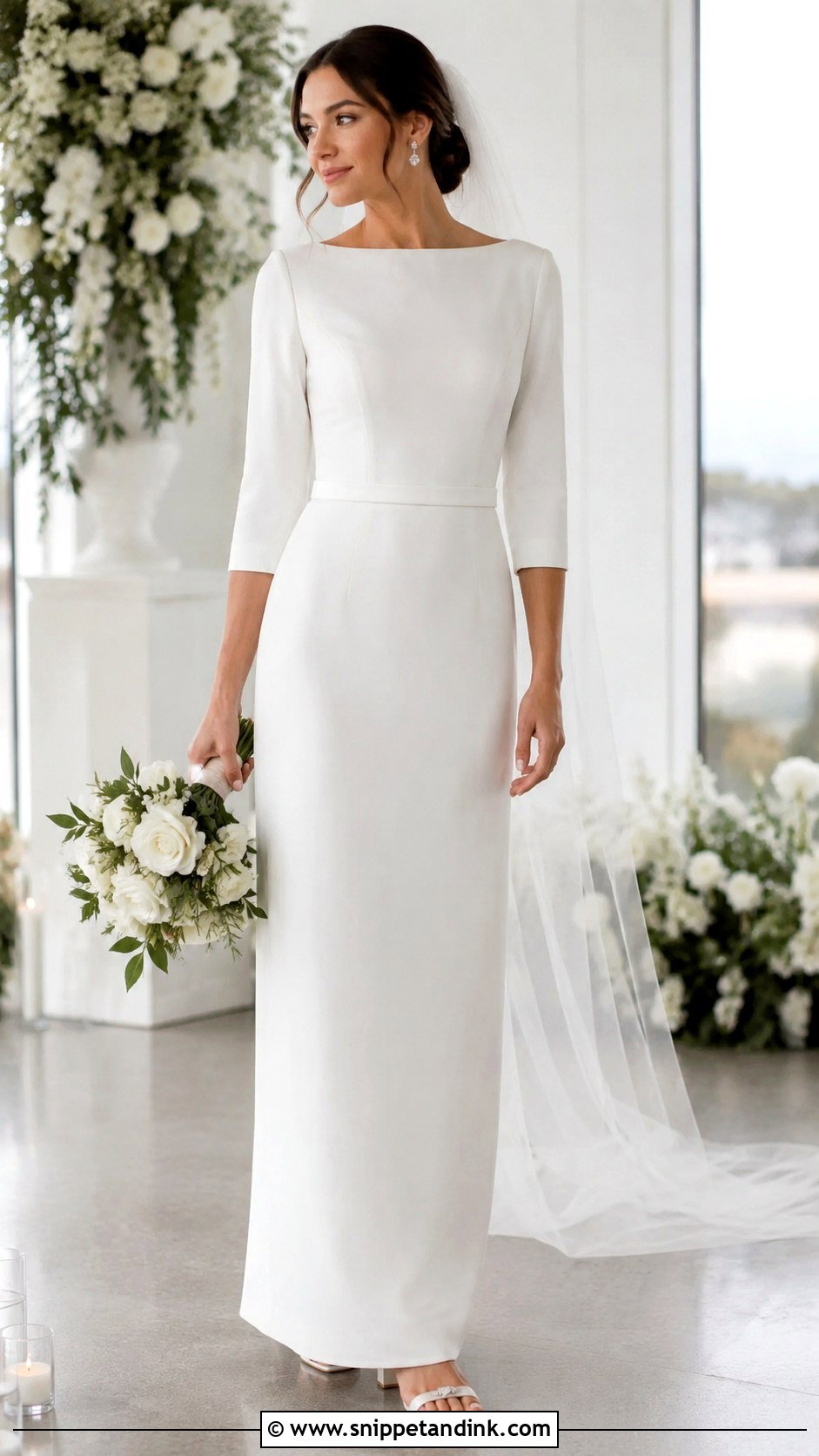
A bateau neck sits wide and shallow across the collarbone, so it frames the face without dipping. On a white crepe column, it makes a quietly sophisticated dress. Three-quarter or full sleeves suit cooler months and a covered back keeps it understated. The detail I’d insist on is enough room through the knee to walk; a column cut too narrow makes you shuffle down the aisle. Low block heels, a structured white clutch, small crystal earrings and an optional narrow belt work well, with a neat chignon and a light veil that falls flat.
4. Square Neck Mikado A-Line Wedding Dress
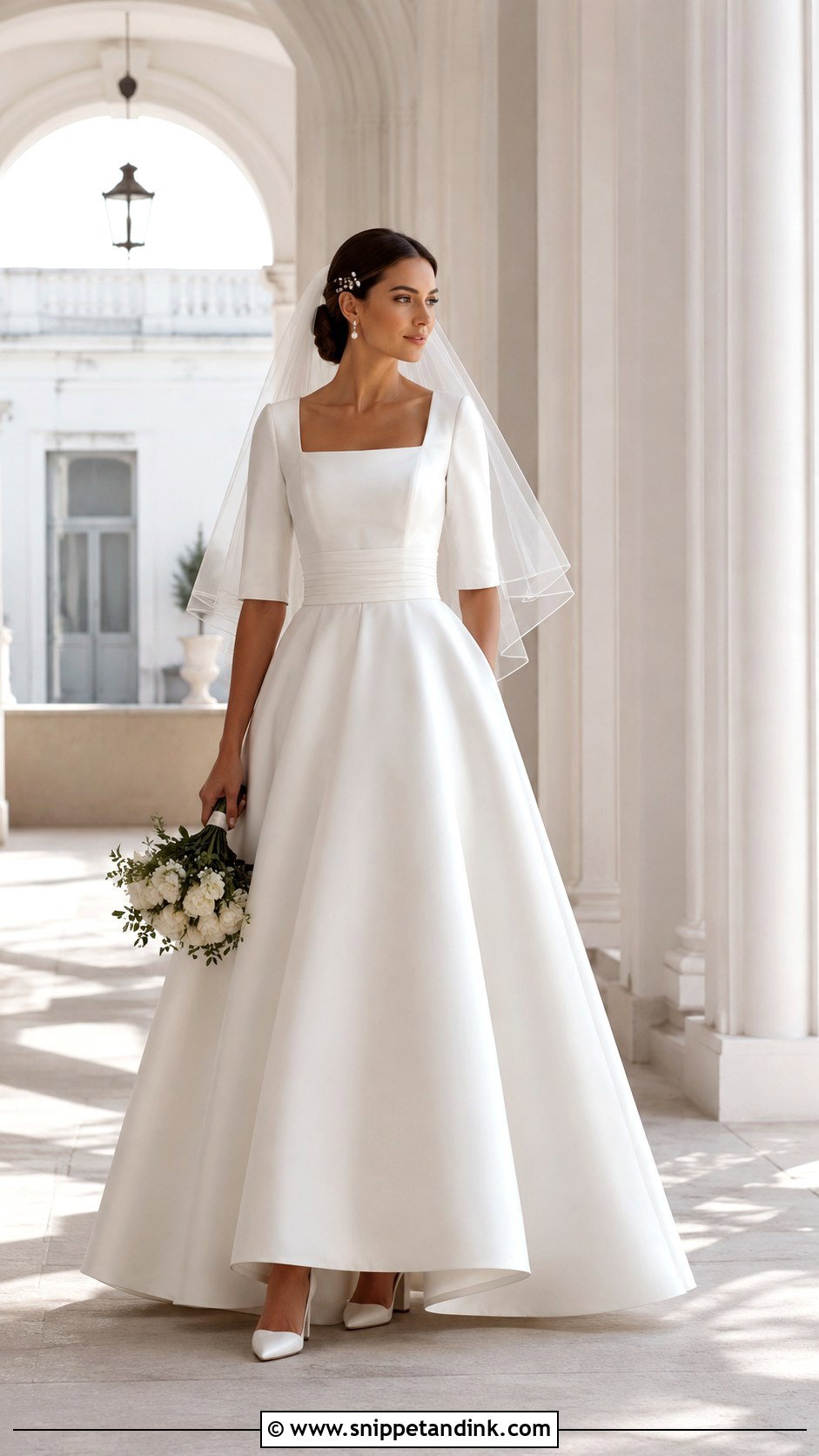
Mikado keeps its structure, which is exactly what a square neckline needs. The corners stay sharp instead of collapsing. The neckline should sit high across the bust, with elbow or full sleeves, a fitted bodice and a gently flared skirt. A wide waistband defines the waist without any skin showing. Move your arms and sit at the fitting: if the corners lift away from your chest, the neckline needs taking in. Pearl hairpins, closed-toe block heels and a medium veil finish it, with very little jewellery.
5. Mock Neck Chiffon Wedding Dress
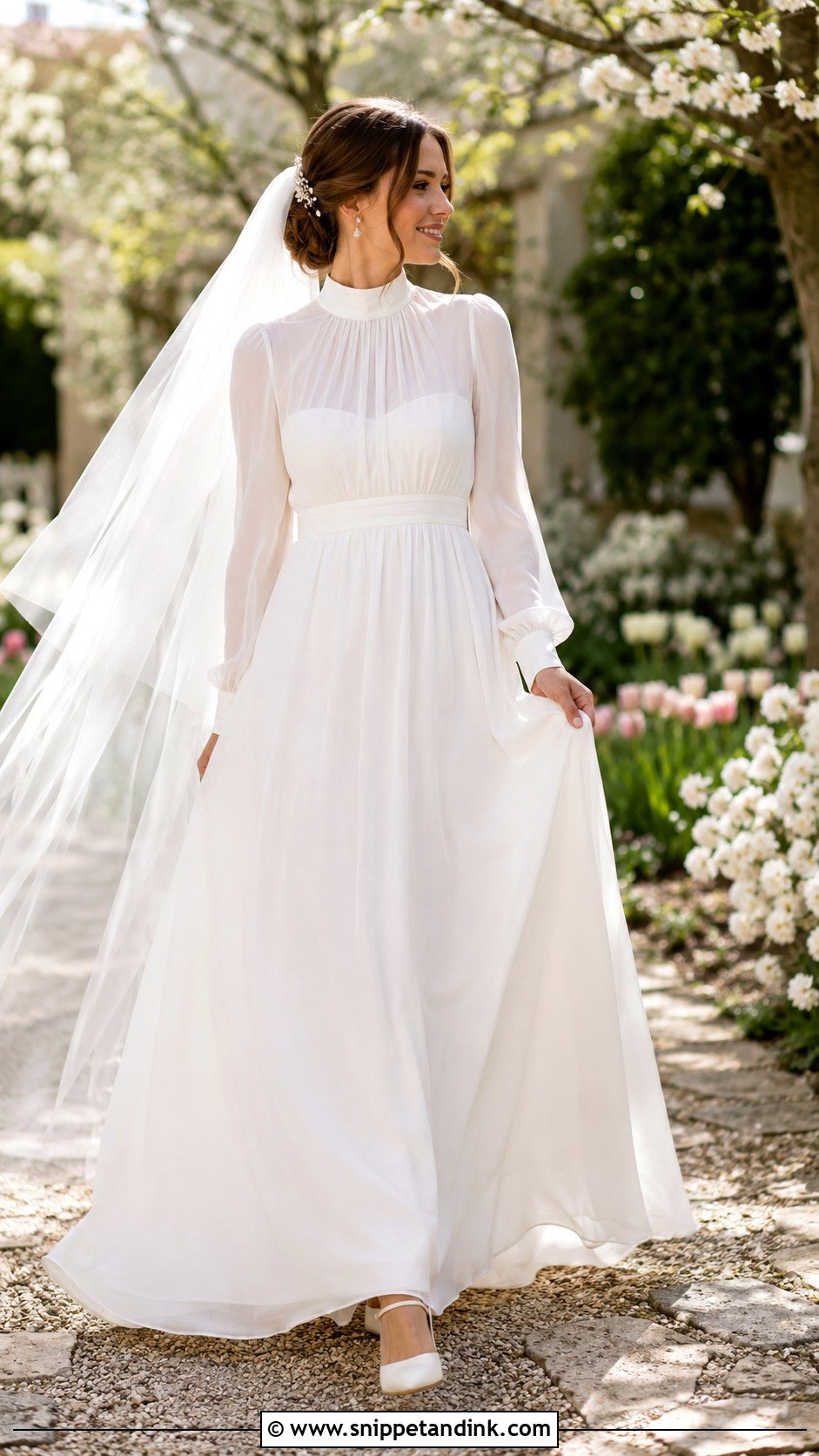
Chiffon takes the stiffness out of a mock neck wedding dress. A gathered neckline and sheer overlay on a fully lined bodice add softness, and long chiffon sleeves with fitted cuffs lead into an A-line or empire skirt. White chiffon is the most transparent fabric on this list, so I always check it with a light source behind the bride; an extra lining layer at bodice, skirt and sleeve seams is often needed. Almond-toe flats or low heels, a pearl comb, a light veil and soft waves pinned back suit spring and summer.
6. Three-Quarter Sleeve Tea-Length Wedding Dress
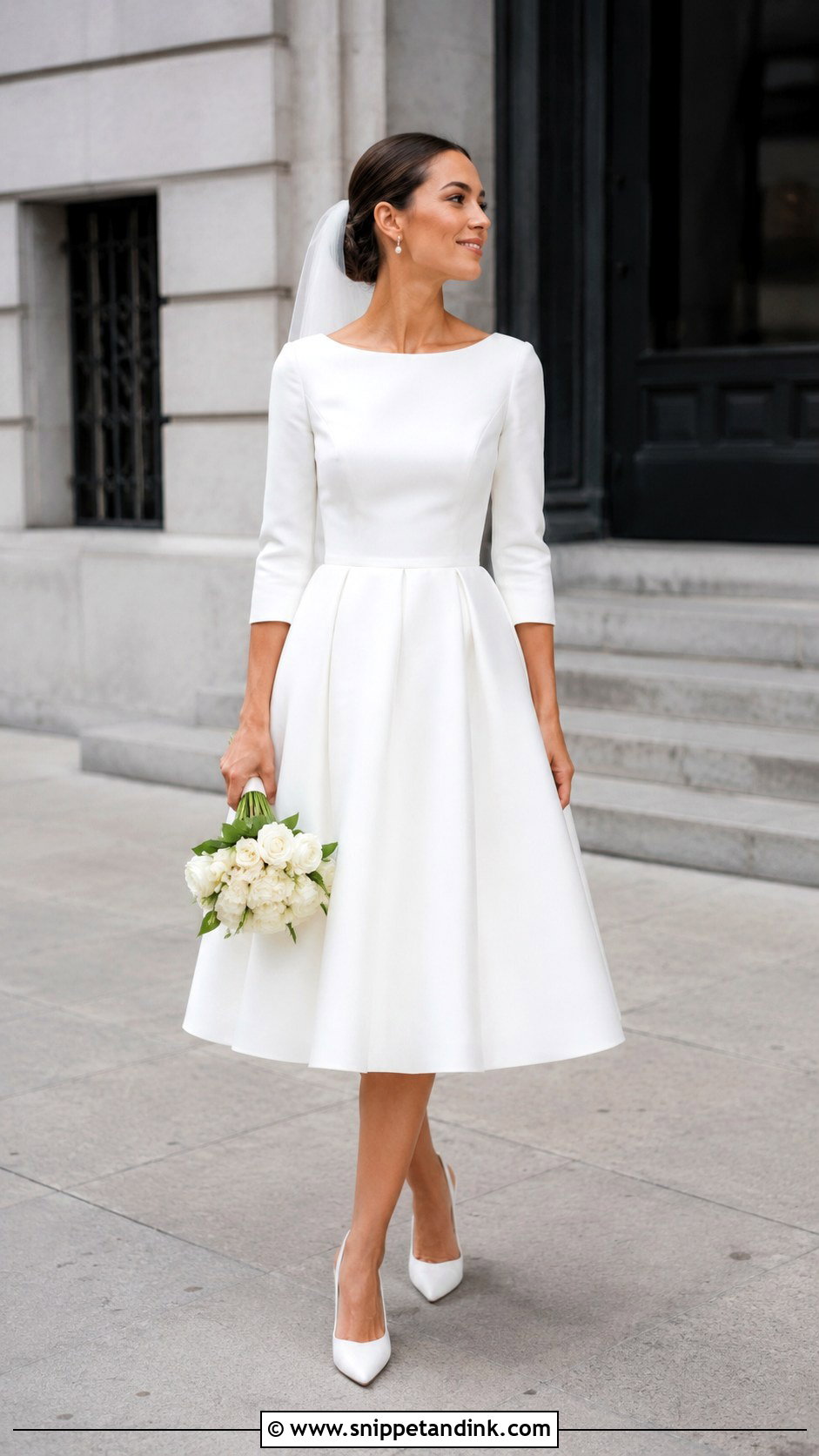
Courthouse ceremonies and daytime parties are where tea length makes most sense. A structured white dress with a modest boat neck, three-quarter sleeves, a fitted waist and a skirt below the knee looks bridal without a train. A tulle layer under the skirt gives volume without feeling like fancy dress. Everyone will see your shoes, so pick closed-toe slingbacks you can stand in for an hour. Pearl earrings and a short veil or headband complete it, and a tailored white coat keeps you warm in the same colour.
7. Bishop Sleeve Empire Waist Wedding Dress
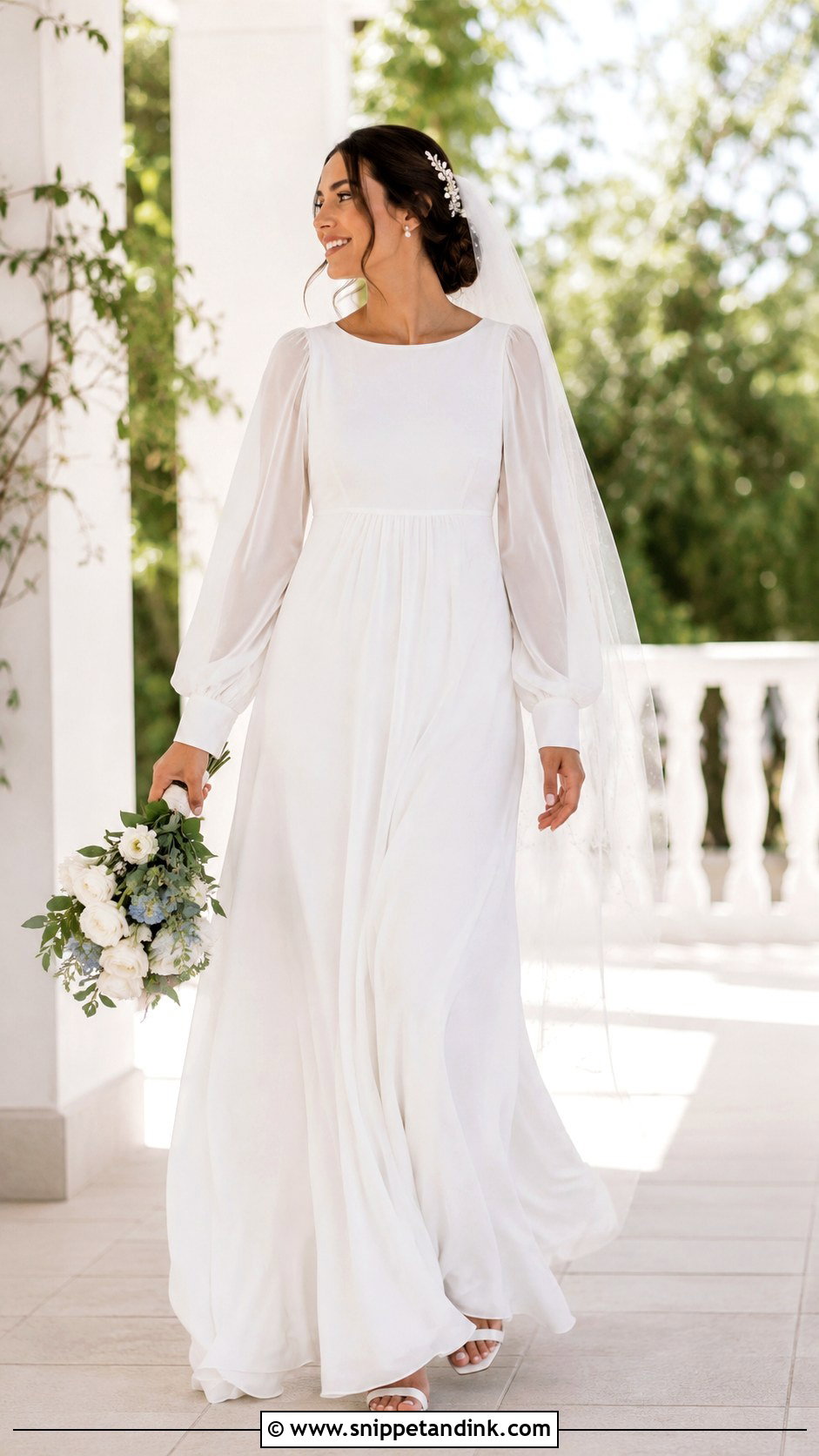
Billowing bishop sleeves on an empire waist dress give softness and plenty of room. Chiffon or light organza sleeves with secure fitted cuffs, a high scoop or jewel neckline and a raised waist let the skirt fall gently over the body. It’s a forgiving shape if you’d rather not have structure around your middle. Keep the bodice lining smooth and opaque. Sleeves should end at the wrist bone; any longer and they swallow your hands in ring photos. Low satin heels, a floral comb and a fingertip veil complete it.
8. Cap Sleeve Princess Wedding Dress
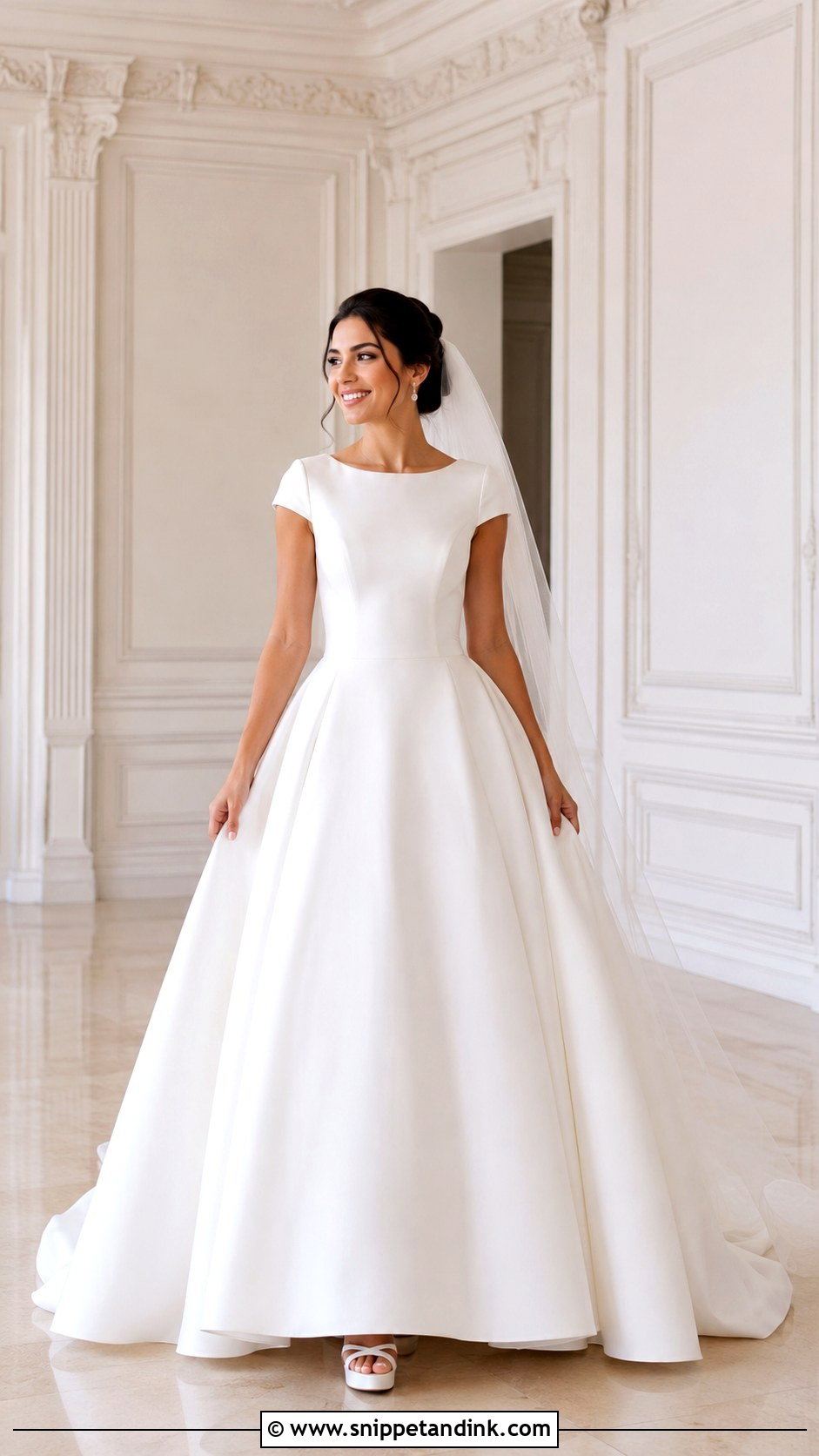
Cap sleeves on a princess gown cover the shoulder and keep the look light. I’d choose a broad cap rather than a narrow strip, with a high scoop neck and fully covered back. Princess seams shape the bodice with no separate waistband, and the full skirt adds volume. Tight cap sleeves cut into the arm, so check the armholes at the fitting; a modesty panel can raise the neckline if needed. Pearl drops, white block heels, a long minimal veil and a half-up style suit it.
9. Jewel Neck Lace Sheath Wedding Dress
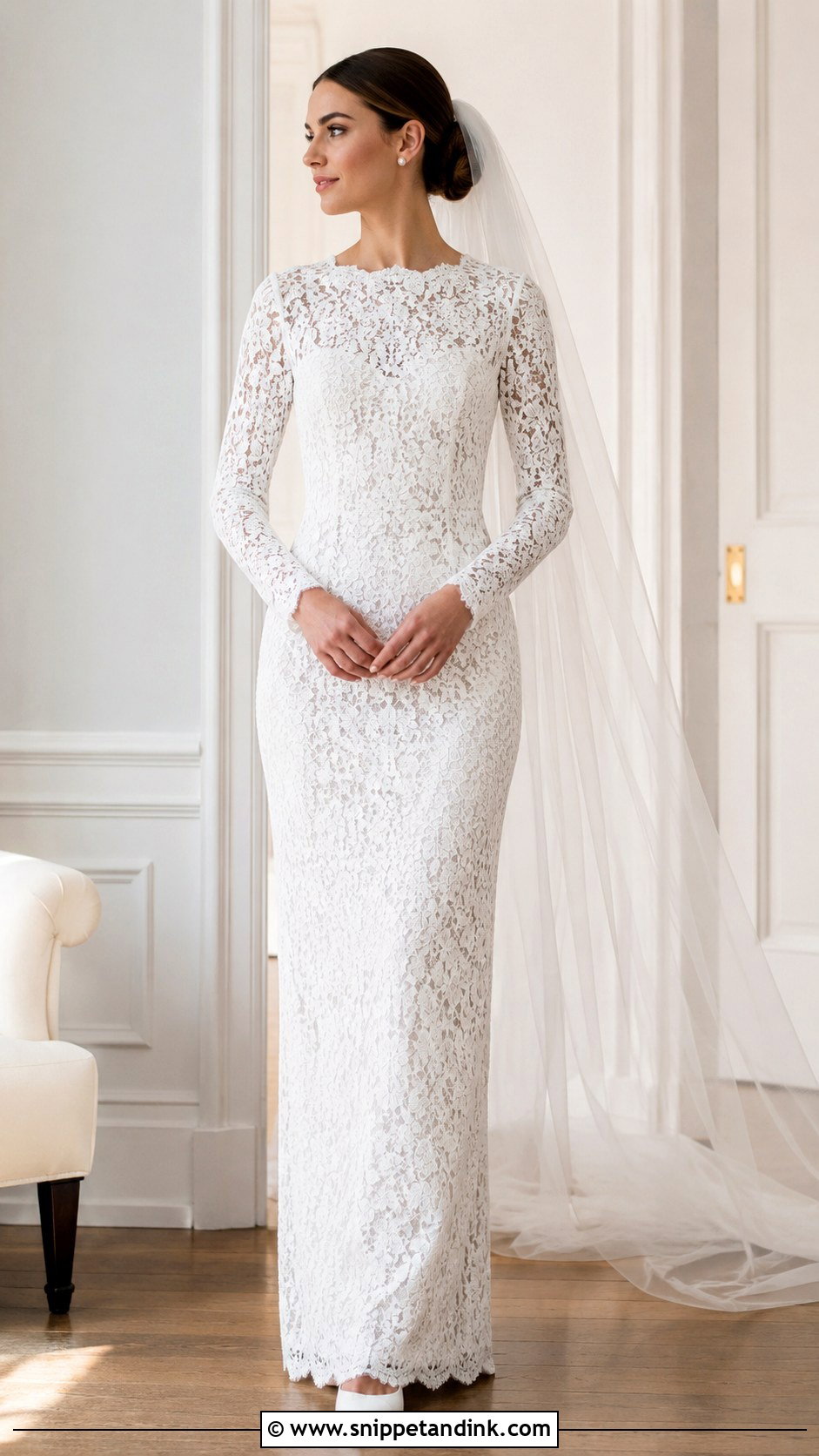
Lace sheaths fit close, so the coverage has to come from the lining. Dense lace over an opaque base, a jewel neck at the base of the throat and long fitted sleeves cover the upper body neatly. The narrow skirt needs a small back slit or hidden kick pleat; without one, walking and steps become awkward. At alterations, look for the lining bunching under the lace at the waist and hips, which shows as lumps in photos. Kitten heels, pearl studs, a plain tulle veil and a low bun keep it polished.
10. Boho Bell Sleeve Wedding Dress
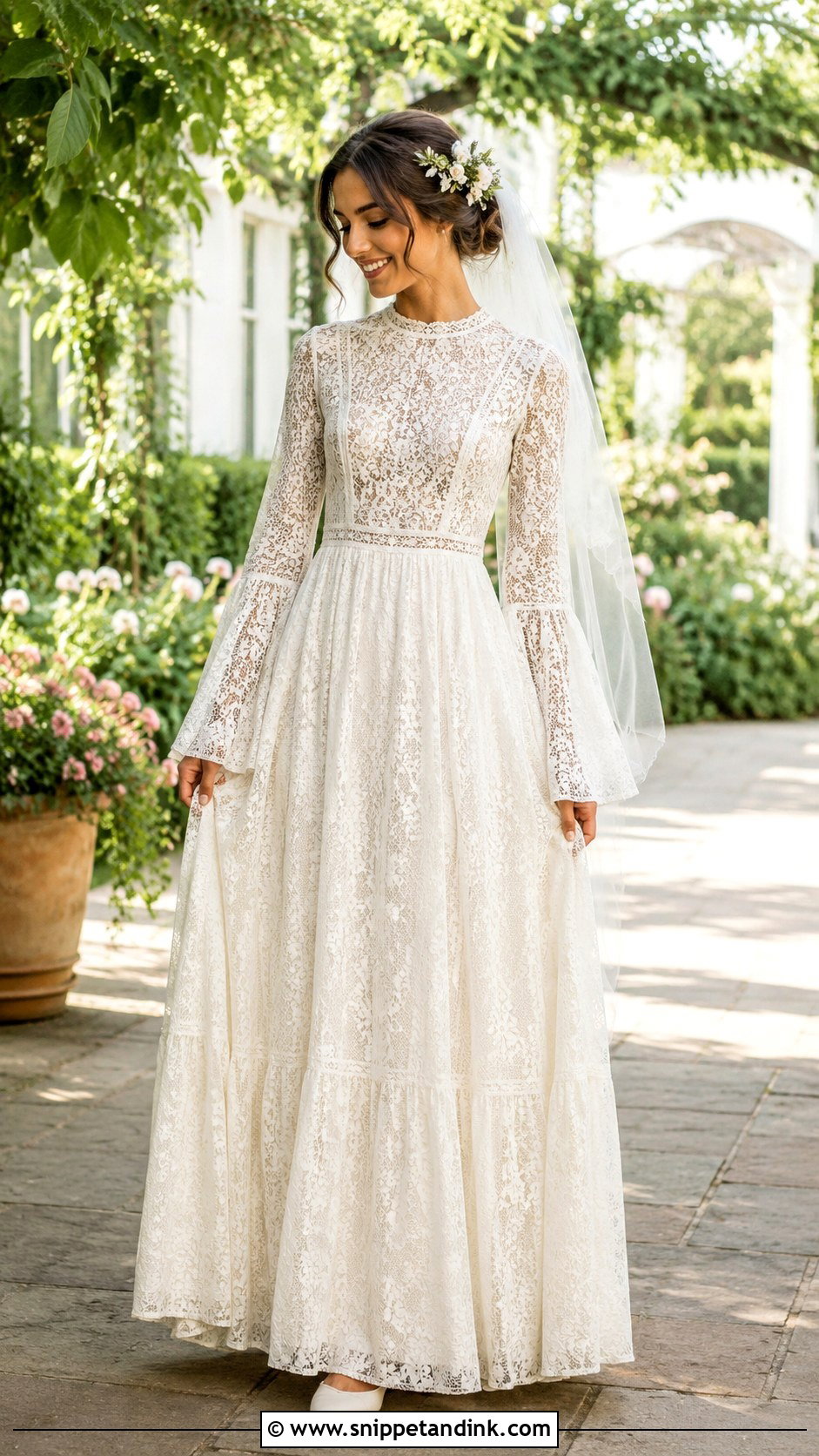
A high neckline and lined lace bodice keep a boho gown modest while long bell sleeves give it its relaxed character. A softly defined waist and floor-length skirt hold the shape. Medium-scale floral lace reads clearly in photos; tiny patterns blur and huge ones overwhelm. Skip stacks of bracelets, which catch inside wide cuffs. If the sleeves are very sheer, have them lined from shoulder to wrist. Simple ivory flats, a small floral hairpiece and a light veil under loose waves suit gardens and woodland venues.
11. Tulle Sleeve Basque Waist Ball Gown
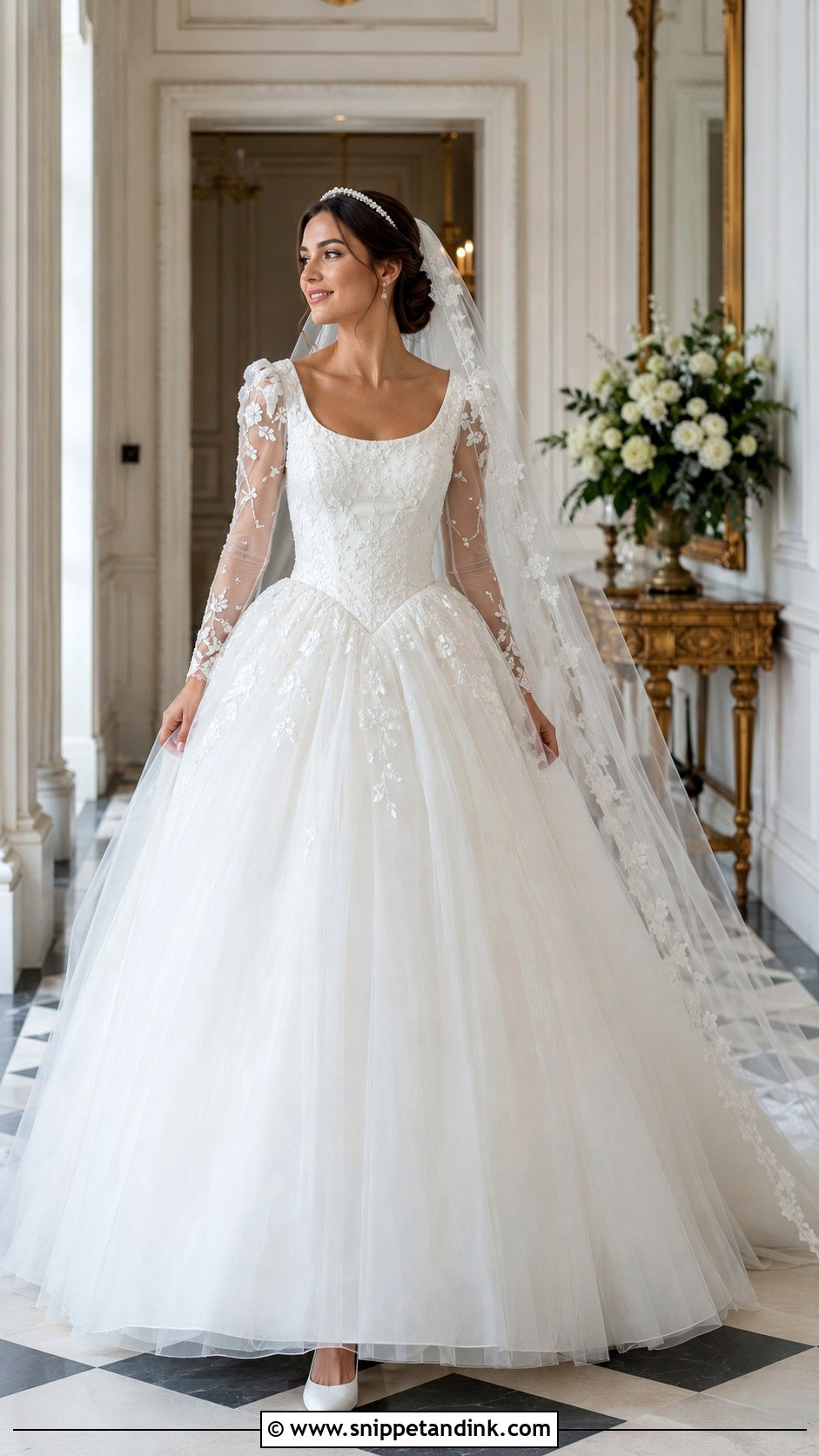
The basque waist dips to a gentle point at the front, which gives a ball gown a strong, slimming line. On this one, a structured white bodice with a modest scoop neck and covered back carries long tulle sleeves with subtle appliqués. The bodice must be fully lined or the point wrinkles. Volume is already high, so leave out bulky accessories. A delicate tiara or pearl headband, closed-toe pumps and a plain cathedral veil are enough. Ask the tailor to check the waist seam stays level when you sit and bend.
12. Collared Bridal Shirt Dress
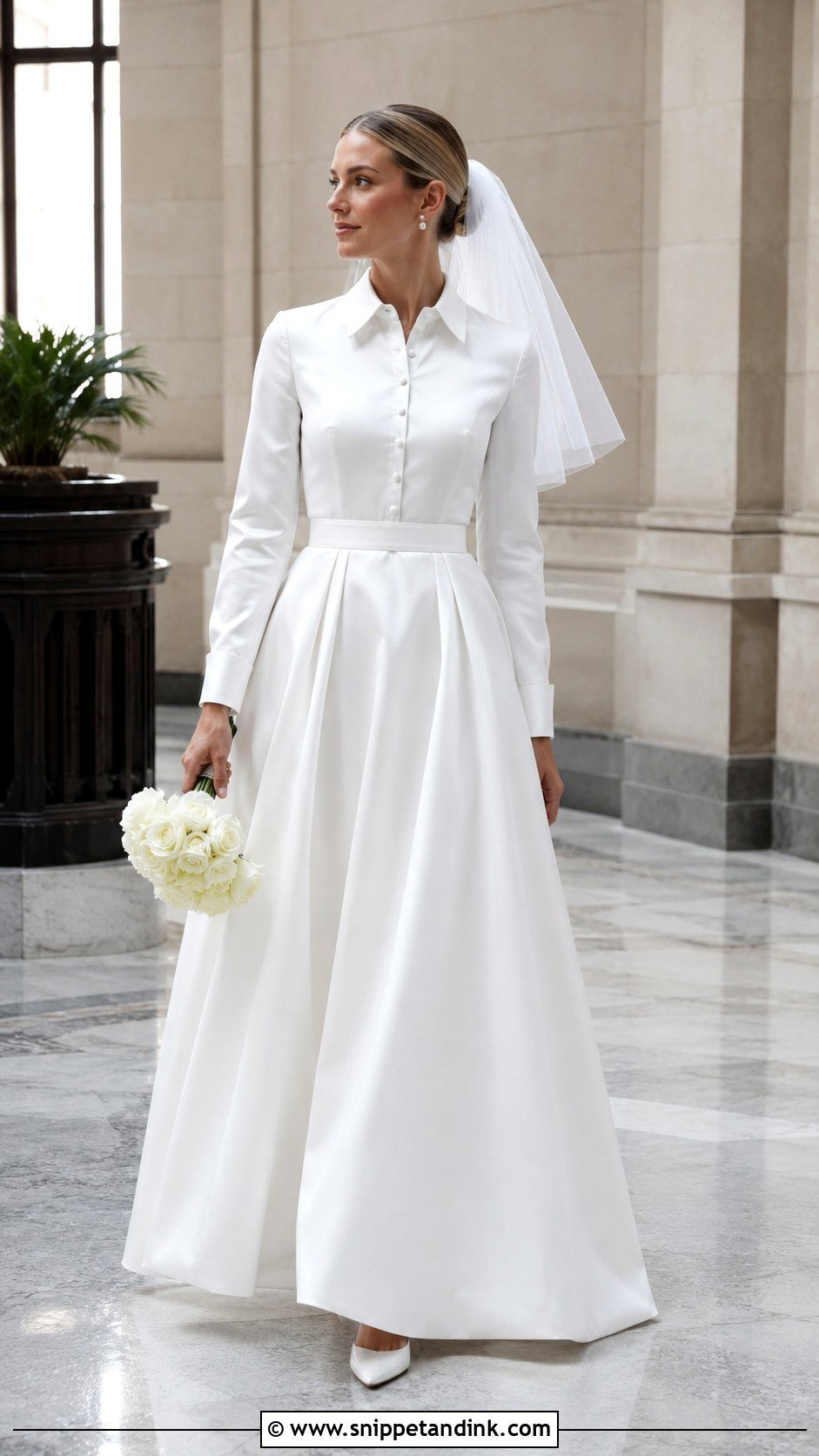
A collared bridal shirt dress is tailored and quietly modern. A floor-length white design with a pointed collar, covered button front, long cuffed sleeves and a defined waist works best with a pleated or gently flared skirt, which keeps it from looking like office wear. Buttoned fronts gape between buttons when you sit, so I add concealed snaps in between. Matte satin, crepe or a weighty cotton blend stays opaque. Pearl earrings, pointed pumps, a top-handle bag, a waist-length veil and a sleek low ponytail suit it.
13. Cape Sleeve Wedding Dress
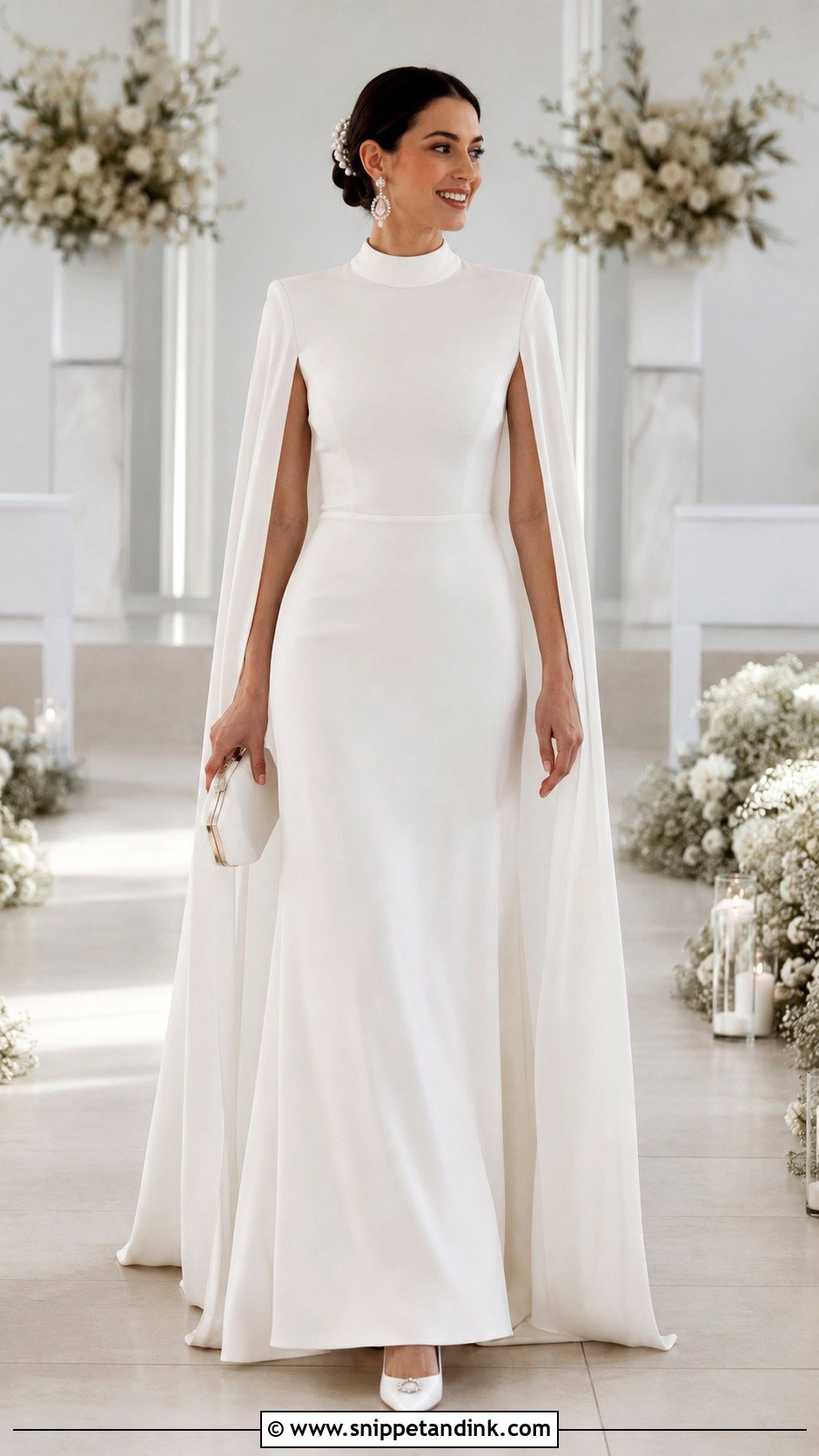
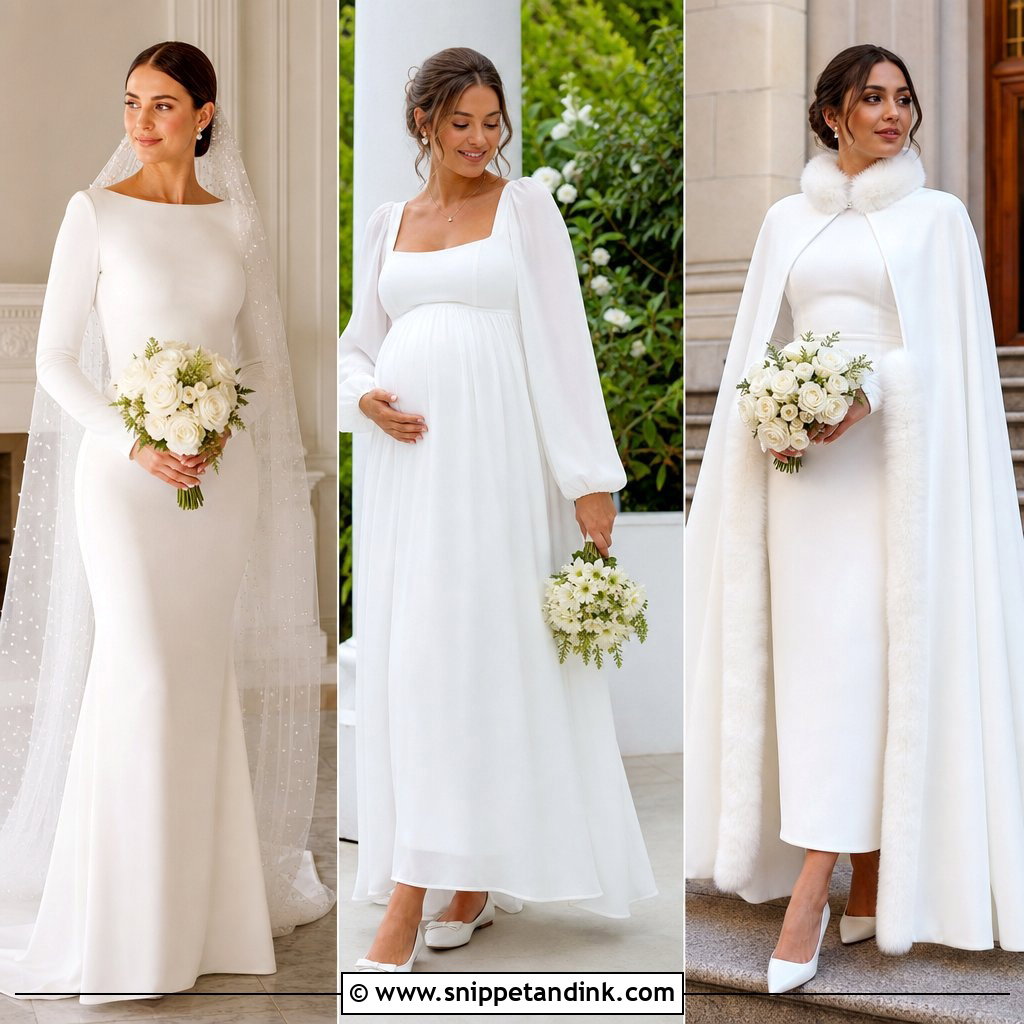
Cape sleeves cover arms and shoulders without anything fitted. A high-neck white crepe gown with a lined bodice and covered back carries cape panels that fall to the elbow or the floor, over a straight or softly flared skirt. If the cape runs down the back, leave out the big veil; layers of sheer fabric hide the cape’s movement. A pearl headband or small comb works instead. Walk in it at the fitting and make sure a floor-length cape won’t slip under your heel. Low pointed heels, crystal earrings and a smooth clutch complete it.
14. Two-Piece Modest Wedding Dress
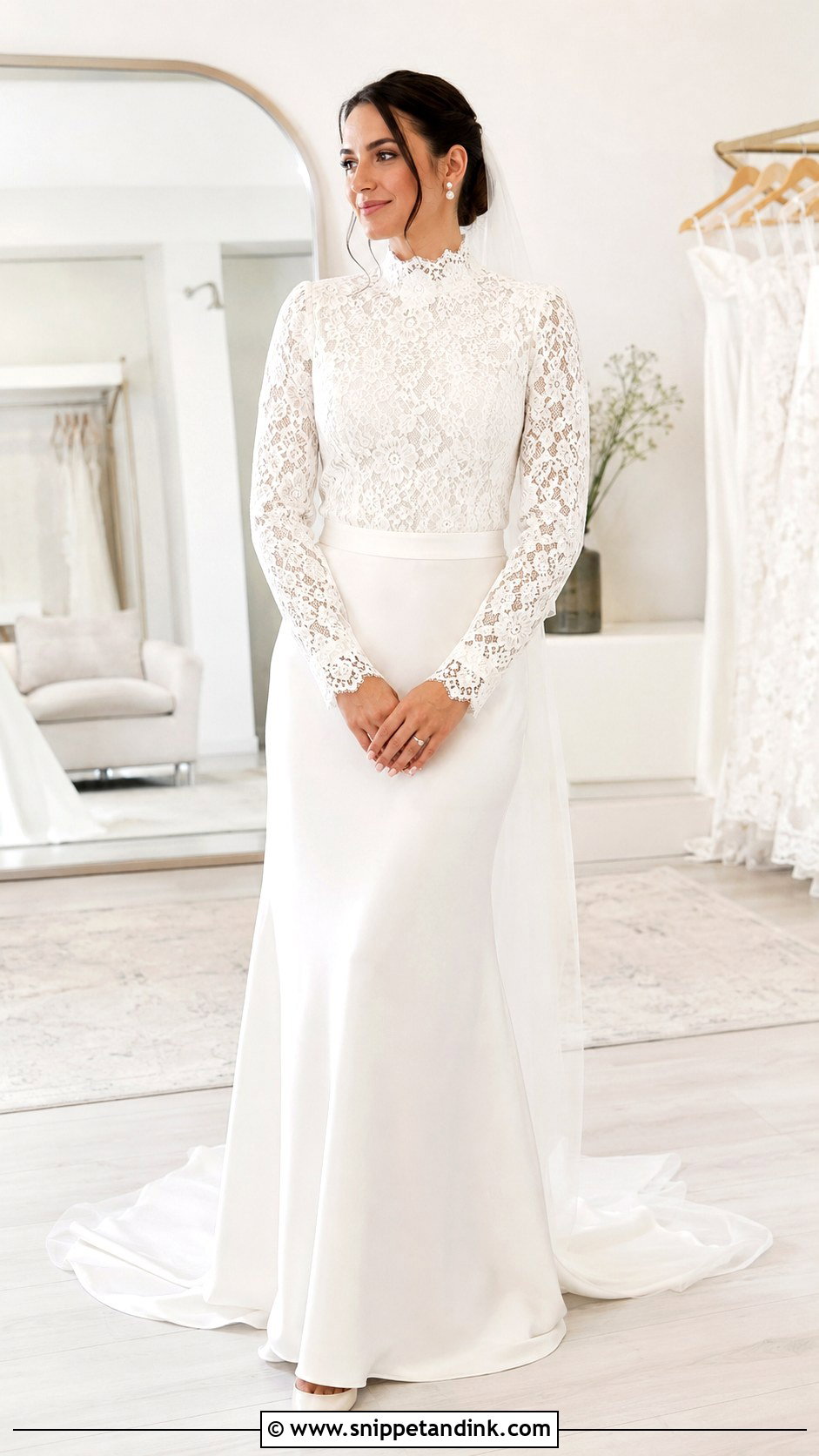
Two-piece bridal outfits only look formal if both halves match exactly in fabric and shade of white. Pair a high-neck, long-sleeve lace top with a high-waisted satin or crepe skirt. The top must overlap the waistband or attach with hidden fasteners so nothing shows when you lift your arms. A short train keeps it bridal. One real advantage: the top and skirt can be altered separately for a precise fit. Check both pieces side by side under bright light, since two whites rarely match perfectly. Closed-toe heels, pearl earrings and a simple veil finish it.



15. Embroidered Organza A-Line Wedding Dress
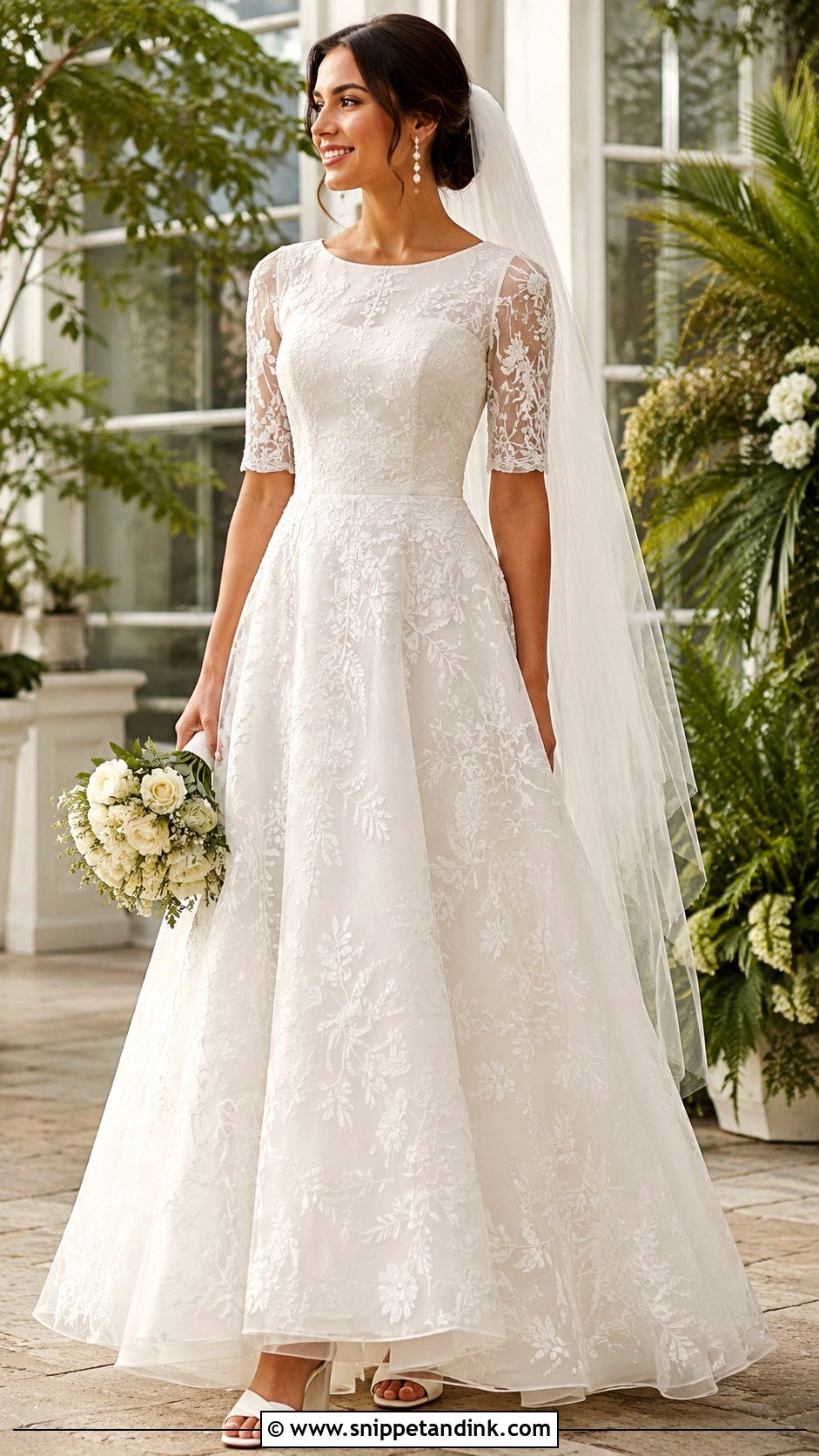
Embroidered organza adds texture without any need for a low neckline. An A-line with a high scoop neck, elbow sleeves and a lined bodice can carry floral embroidery from top to skirt. Organza holds a full shape while weighing less than many layered ball gowns. Rough edges on embroidery and appliqué can scratch at the neck and arms, so run your fingers along them at the fitting and ask for any sharp threads to be finished. Satin block heels, pearl-and-crystal earrings, a plain veil and a softly pinned updo keep the attention on the fabric.
16. Flutter Sleeve Chiffon Wedding Dress
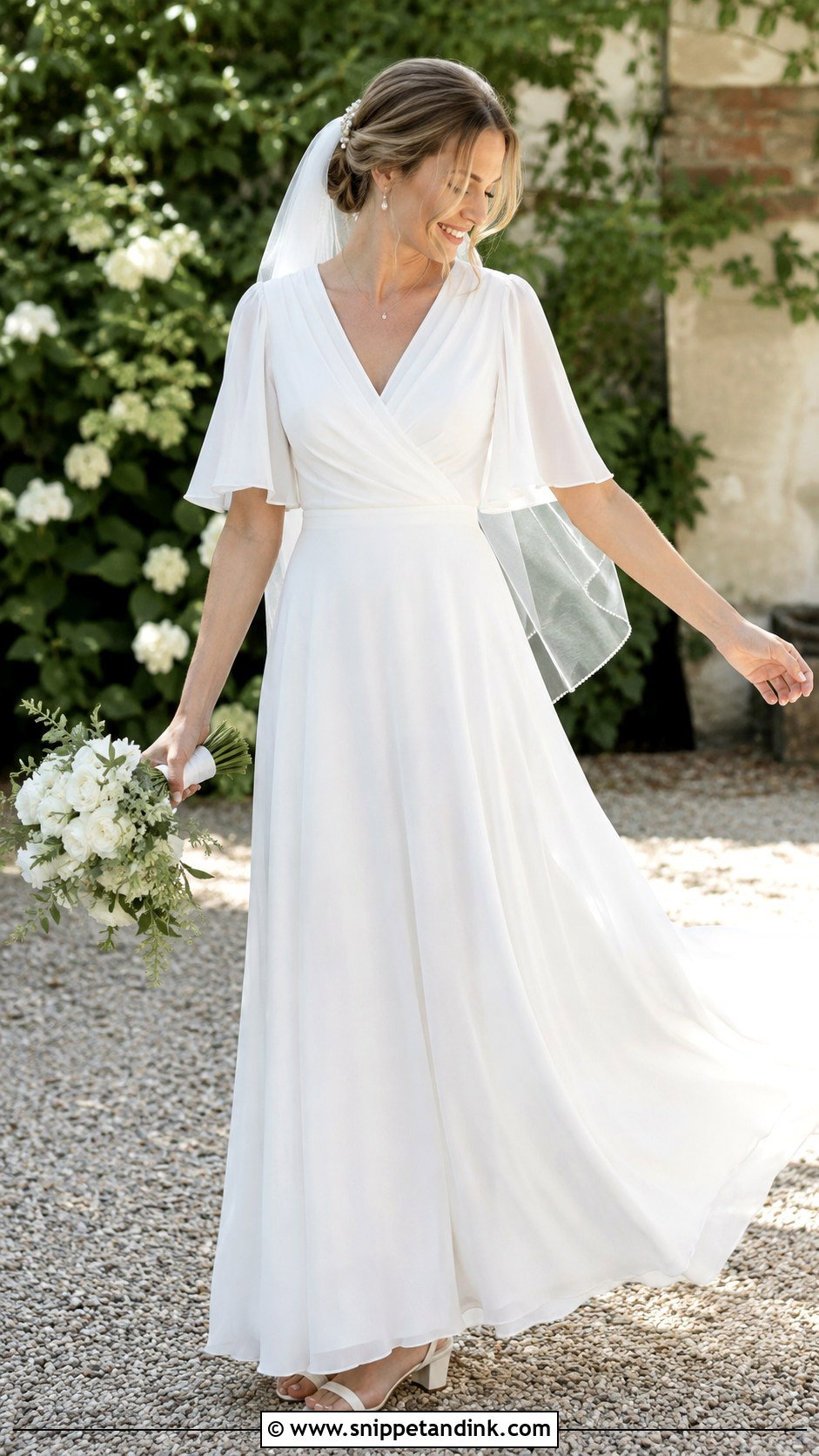
Flutter sleeves suit hot weather, but for modest coverage they need to reach near the elbow. A chiffon gown with a high V or modest scoop, a lined wrap-style bodice and a floor-length skirt that moves in a breeze is light to wear. Wrap necklines shift, so I use fashion tape or a couple of hidden stitches to hold them. The lining should be opaque and a close white match, or the dress looks two-toned outdoors. Low block heels, a small pearl comb and a soft fingertip veil complete it.
17. Long Sleeve Mermaid Wedding Dress
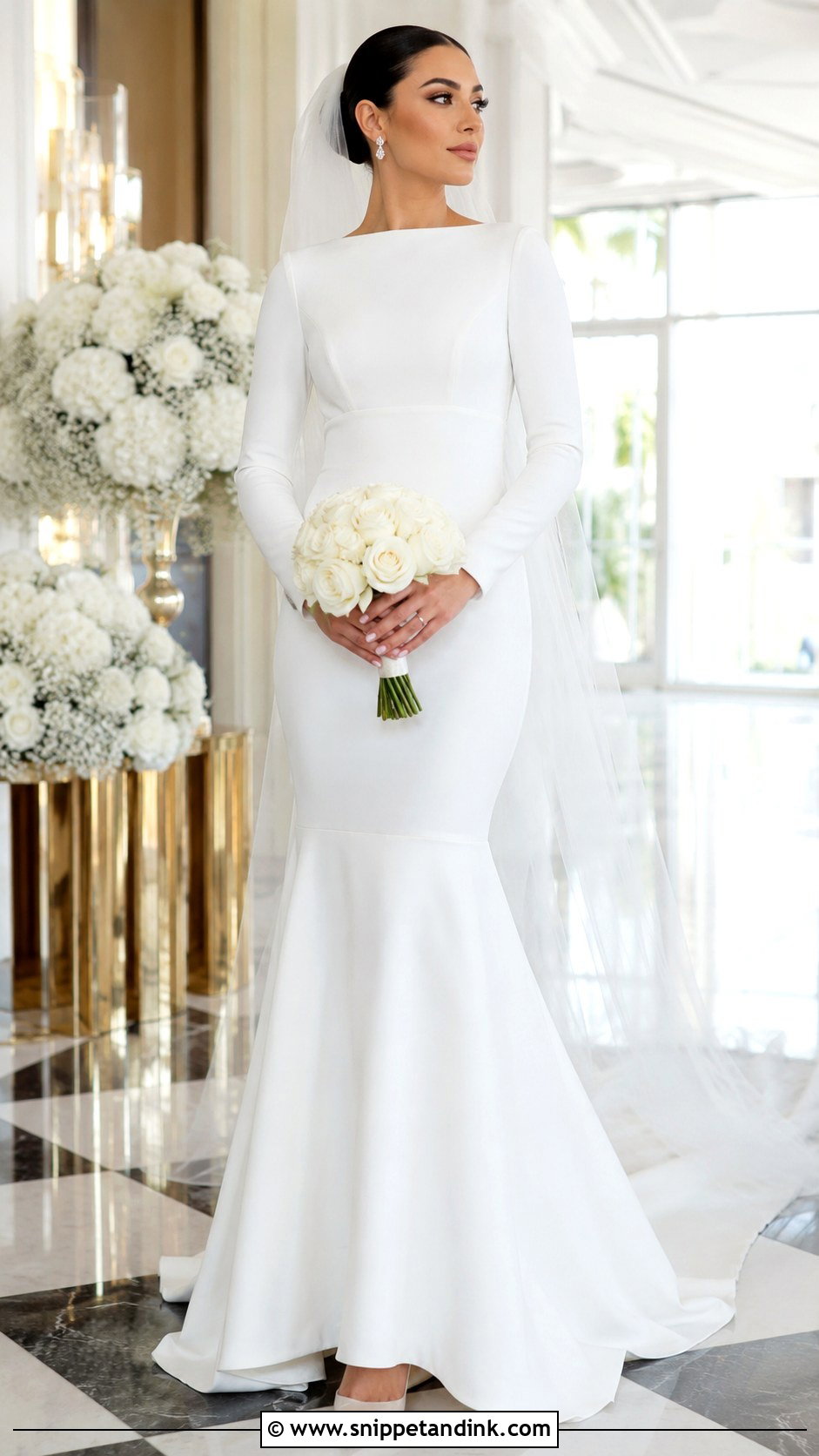
Mermaid gowns can be modest if the coverage is up top: a high neckline, full sleeves, opaque lining and a closed back, in white crepe or lace. The skirt fits through the hips and flares around the knee. Where that flare starts decides your stride, so practise sitting and climbing stairs at fittings. Seam-free undergarments help the fabric lie flat, but they shouldn’t squeeze. Pointed pumps, drop earrings, a narrow chapel veil and a sleek updo show off the sculpted shape.
18. Victorian High Collar Wedding Dress
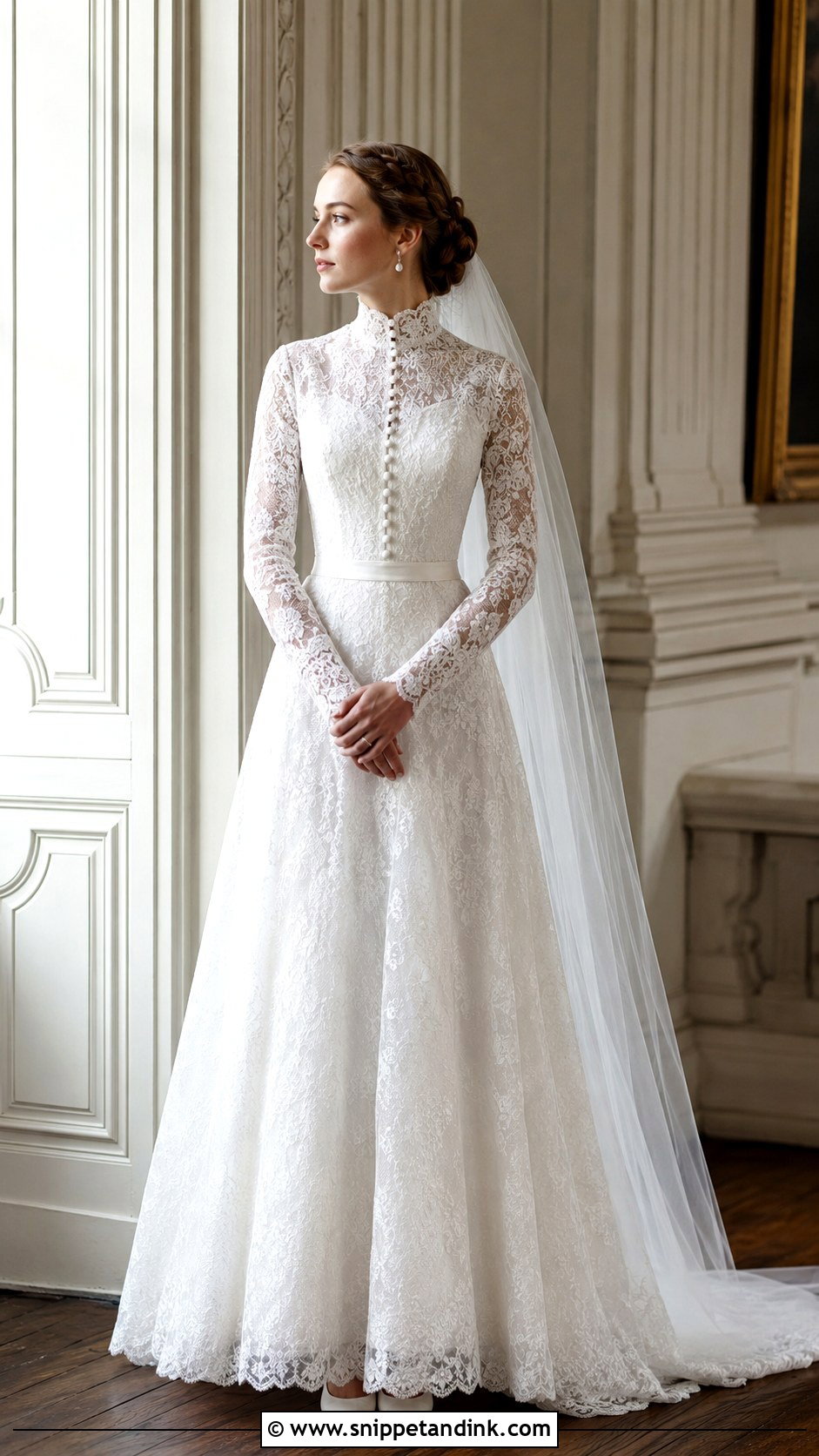
Victorian-style gowns lean on a high lace collar, long sleeves and detailed cuffs. An opaque lined bodice with small covered buttons and a fitted natural waist leads into an A-line or restrained ball gown skirt, which keeps the ornate top from looking theatrical. Lace collars that sit too tight scratch the neck and leave marks, so this is the part I’d check at every alteration. Lace-up ankle boots or closed-toe pumps, pearl earrings, a long plain veil and a low braided bun complete the period feel.
19. Simple Long Sleeve Wedding Dress
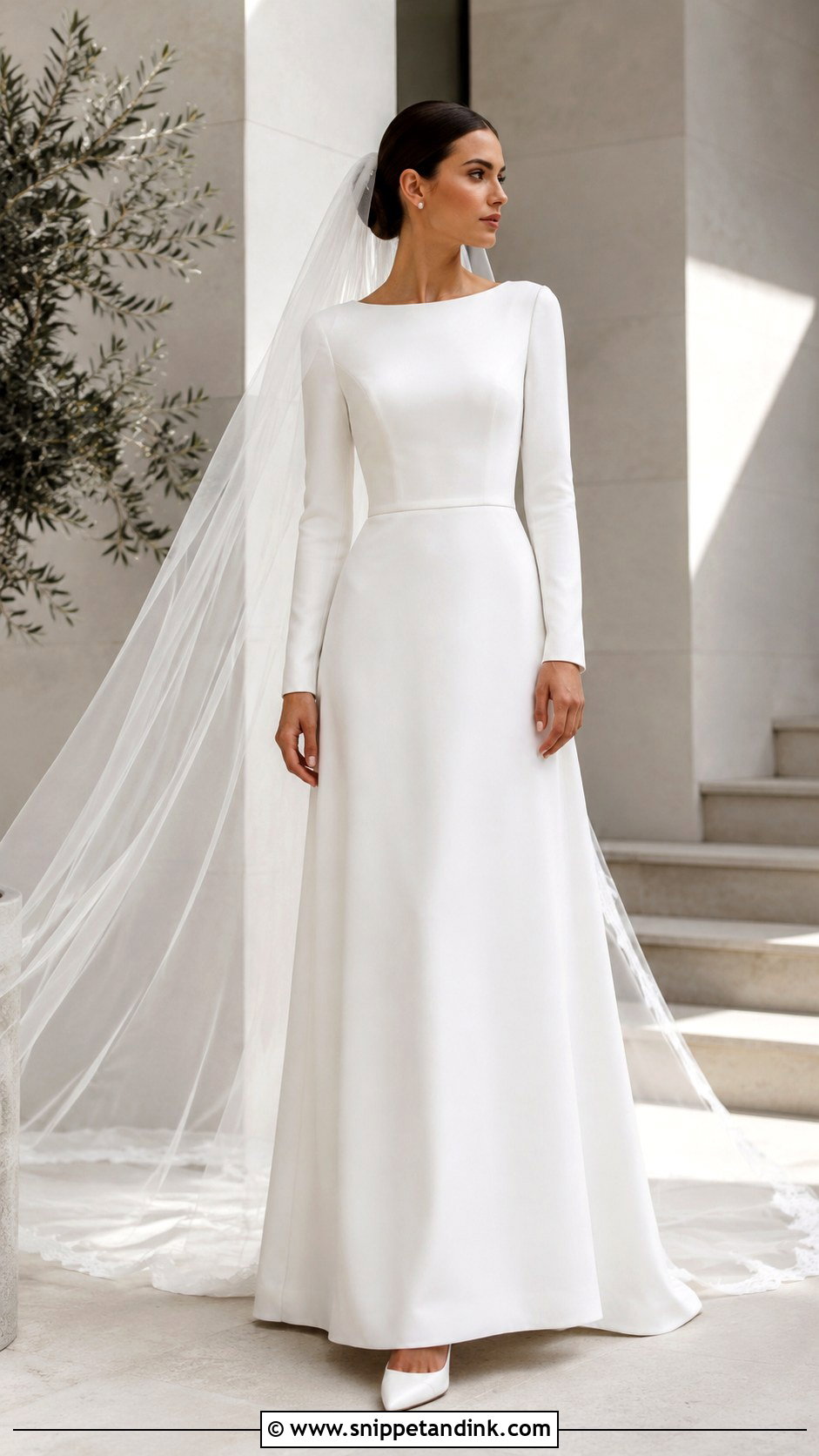
Minimalists will like a white gown with a high round neckline, fitted long sleeves and a clean A-line skirt. Matte crepe drapes smoothly and stops it looking flat. A defined waist seam and a row of covered back buttons add quiet detail. With so little decoration, fit is everything: shoulder seams, sleeve length, waist placement and hem all need to look deliberate. Pearl studs, pointed white heels, a sheer cathedral veil and a polished bun or low ponytail keep the line clean.


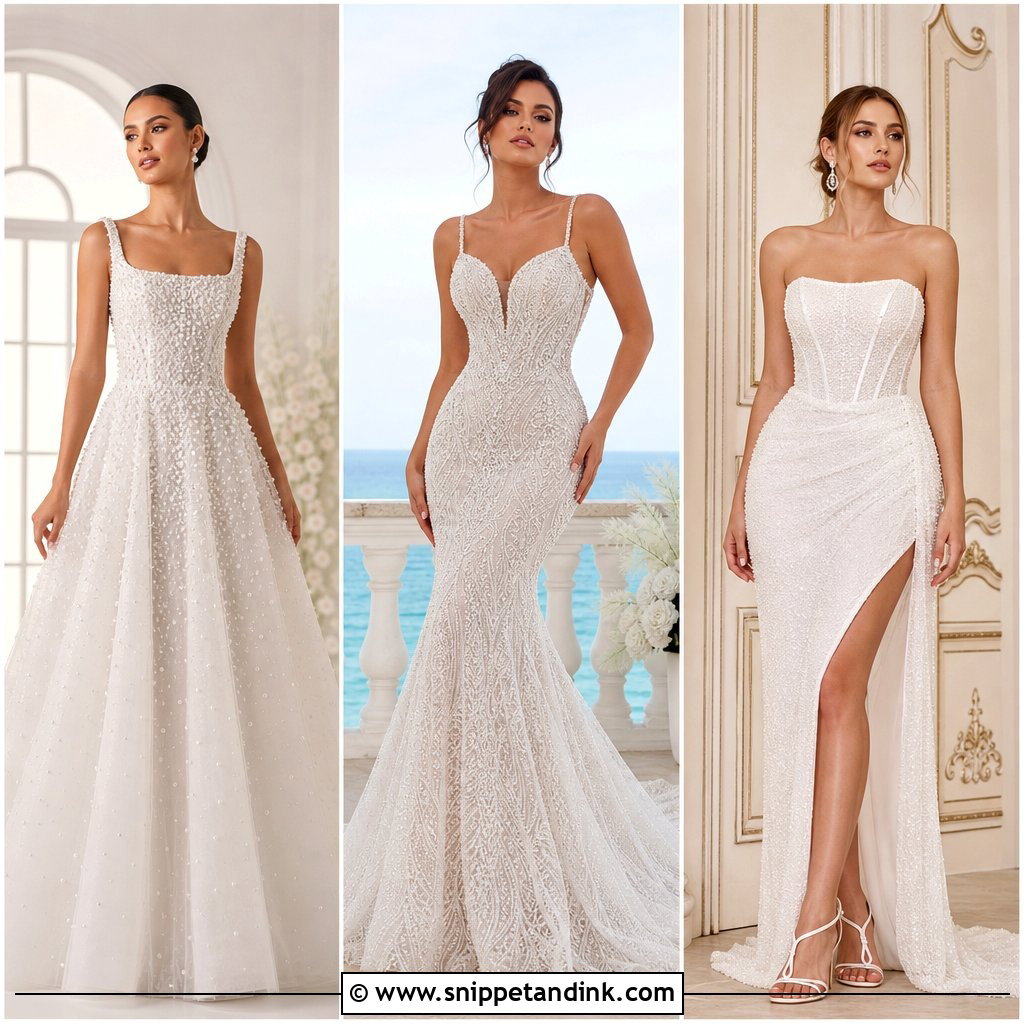
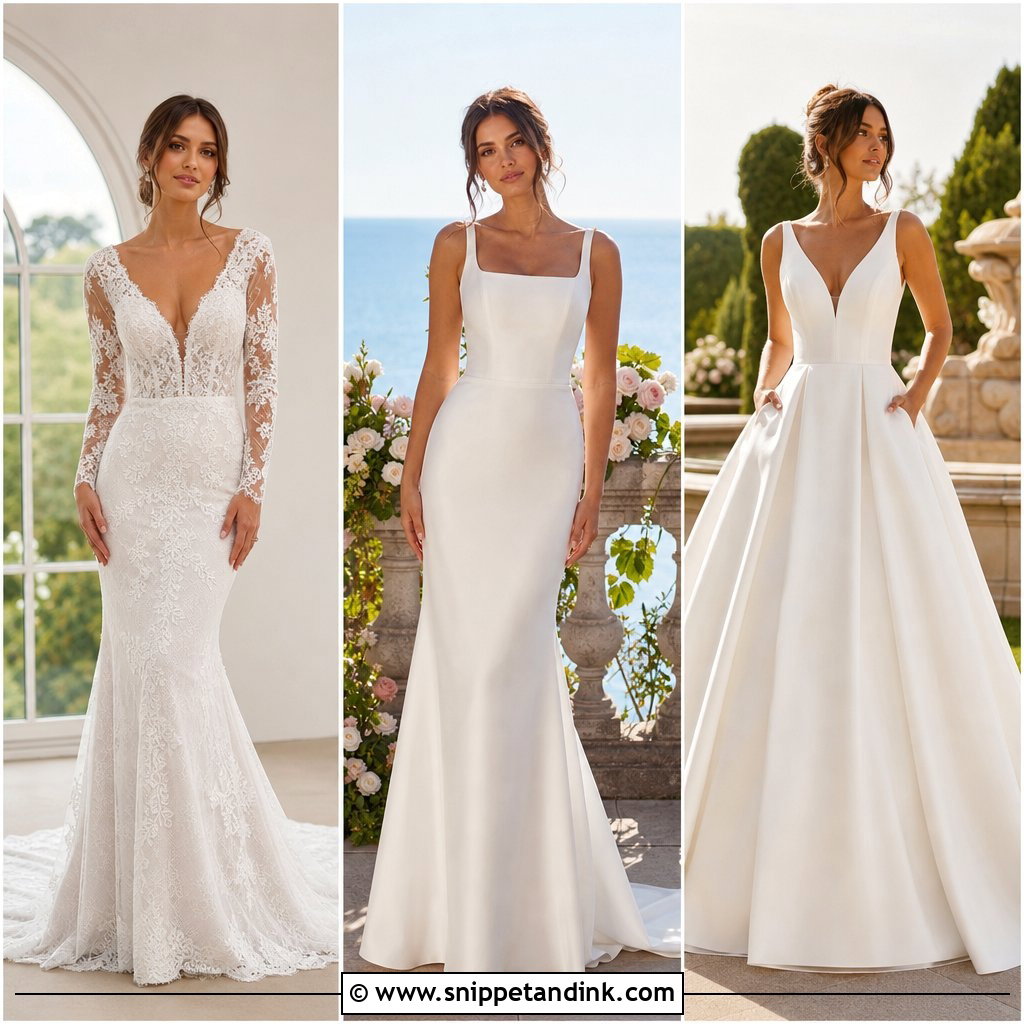
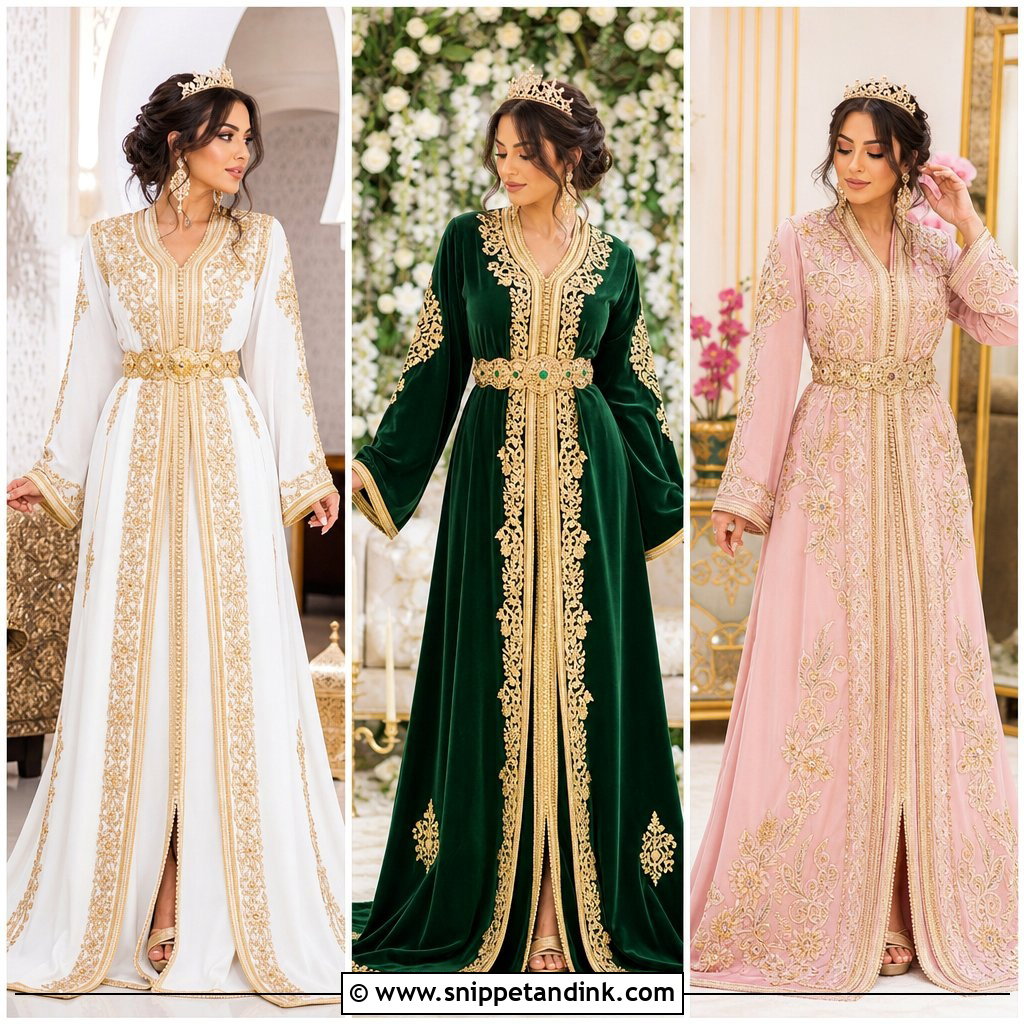
20. Modest White Courthouse Wedding Dress
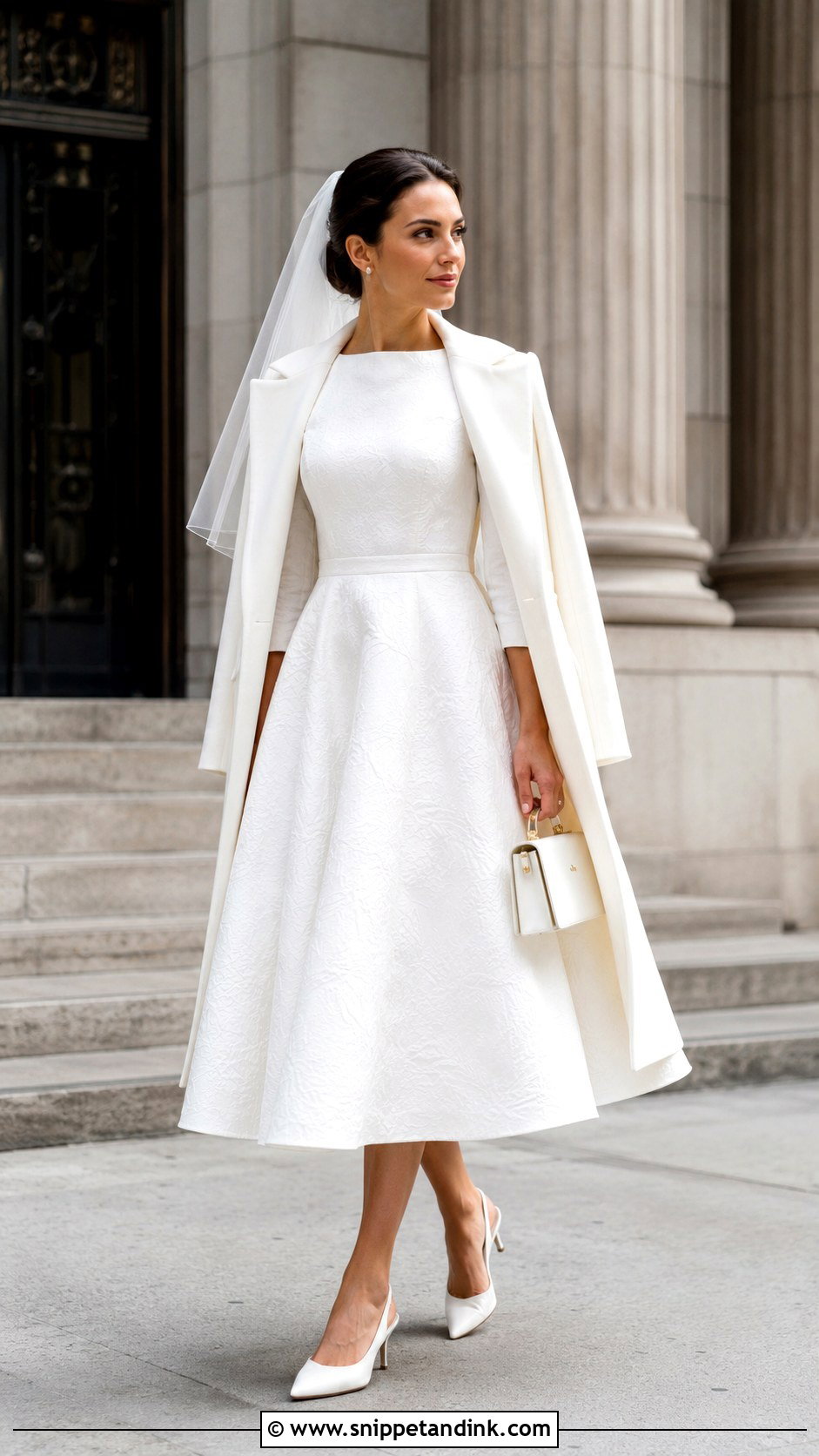
Courthouse weddings don’t need volume. A white midi dress with a bateau neckline, three-quarter sleeves, fitted waist and softly flared skirt in crepe, satin or textured jacquard looks celebratory and smart. The hem should sit below the knee but clear the shoe. Closed-toe slingbacks, a structured mini bag, pearl earrings and a short veil or hair bow make it bridal; a tailored white coat covers cooler days. You can wear it again for anniversaries and formal lunches, which most gowns can’t offer.
Grass, Lipstick and Red Wine on a White Hem
A white dress will pick up marks; the aim is to stop them setting. Foundation on a high neckline and grass on the hem are the two I see most at modest weddings, because covered gowns sit closer to the face and longer skirts touch the ground.
- Dress after makeup is set, and pull high necks on with a silk scarf over your face.
- Blot spills straight away with a clean white cloth and cold water. Never rub, and never use coloured napkins.
- A white chalk stick or stain pen hides small marks for photos until the gown can be cleaned.
- Lift the hem with a wrist loop or bustle before walking on grass or wet paving.
After the wedding
Get the gown to a specialist cleaner within a few weeks. Sugary drinks like champagne dry invisibly, then turn yellow-brown months later if left. Store it flat or folded in acid-free tissue in a breathable box, away from light, rather than hanging it in plastic, which traps moisture and can yellow white fabric.
Look at It From the Back, in Daylight
Lace A-lines, structured ball gowns, minimal crepe, vintage collars, two-piece sets and courthouse midis all give real coverage in different ways. When you compare them, don’t stop at the front view. Check the back, sleeves, lining and opacity from every angle, and stand near a window as well as under shop lighting. Sit, walk and lift your arms before final alterations. Keep shoes, jewellery and veil simple enough that the dress stays the main thing people remember.
You'll Like These Ideas:








Leave a Reply