
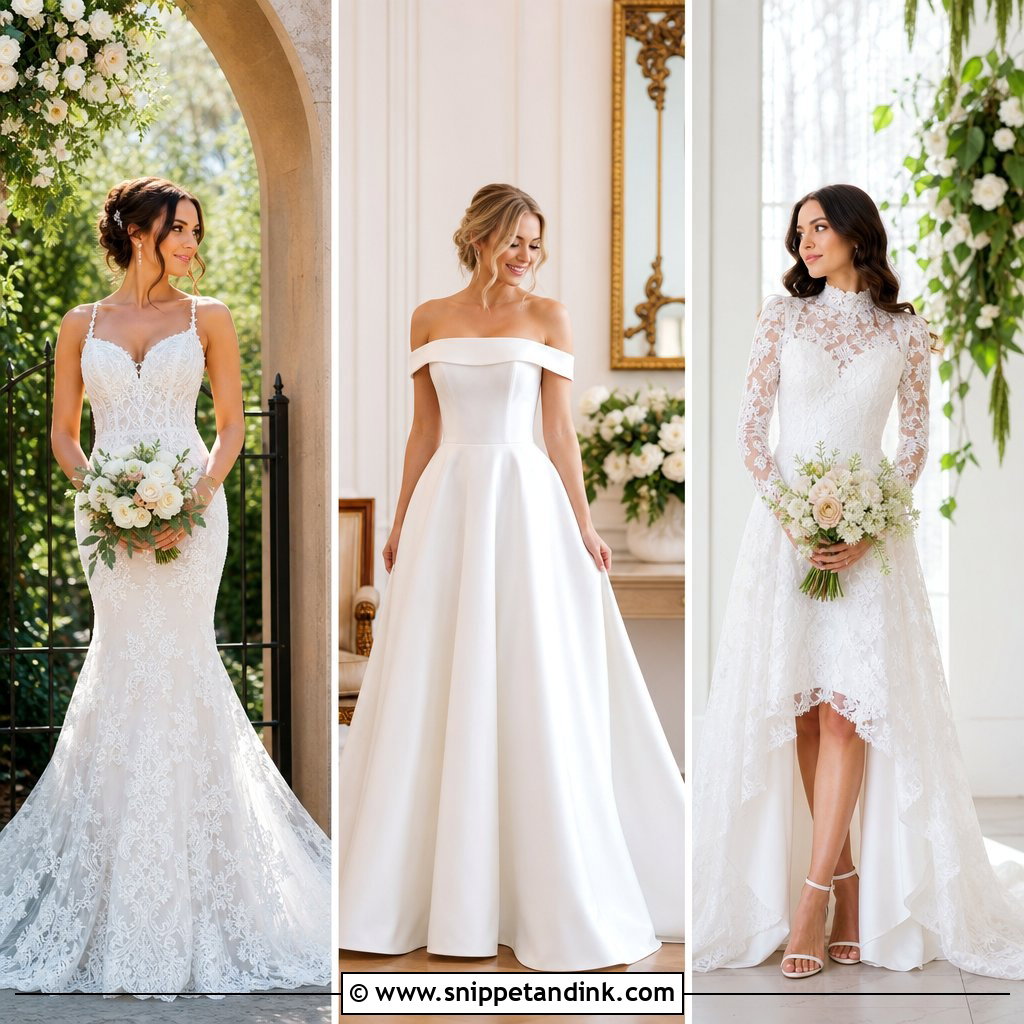
Brides with a smaller chest often arrive at the salon expecting the bodice to be a problem. In my experience it’s usually the opposite: a slim upper body can wear necklines that a fuller bust simply can’t. Sweetheart, cowl and ruched bodices add soft shape where you want it; halters, high necks and deep plunges show off a slender frame as it is. What actually decides the result is fit. Cup placement, bodice length and an inner structure that holds the dress up from the waist matter more than the neckline you start with. Every gown below comes with the accessories and finishing details I’d put with it.
Ordering a Size When Your Bust and Hips Disagree
Bridal sizing runs small compared with high street sizes, and most gowns are ordered from a chart using three measurements: bust, waist and hips. If you have a small bust, your bust measurement will often point to one size and your waist or hips to a larger one. Salons almost always order to the largest measurement.
That is the right call. Taking a bodice in is routine work; letting one out is often impossible because there is little seam allowance. It does mean you should expect bust alterations from the start and budget for them. Before you order, ask the consultant:
- Which measurement the size was chosen from, and how much will need taking in at the bust.
- Whether the cups are moulded or shaped by seams. Moulded cups are harder to reduce than seamed ones.
- Whether the designer offers a custom bust measurement or a cup adjustment at the factory, which is cleaner than altering after delivery.
- How much embellishment sits over the side seams, since every bead moved during alteration adds time.
Sample dresses in salons are clipped to fit you, and the clips can make a bodice look closer than it will be. Ask them to clip it at the back and look at the front in profile. That side view shows you how much space really sits inside the cups.
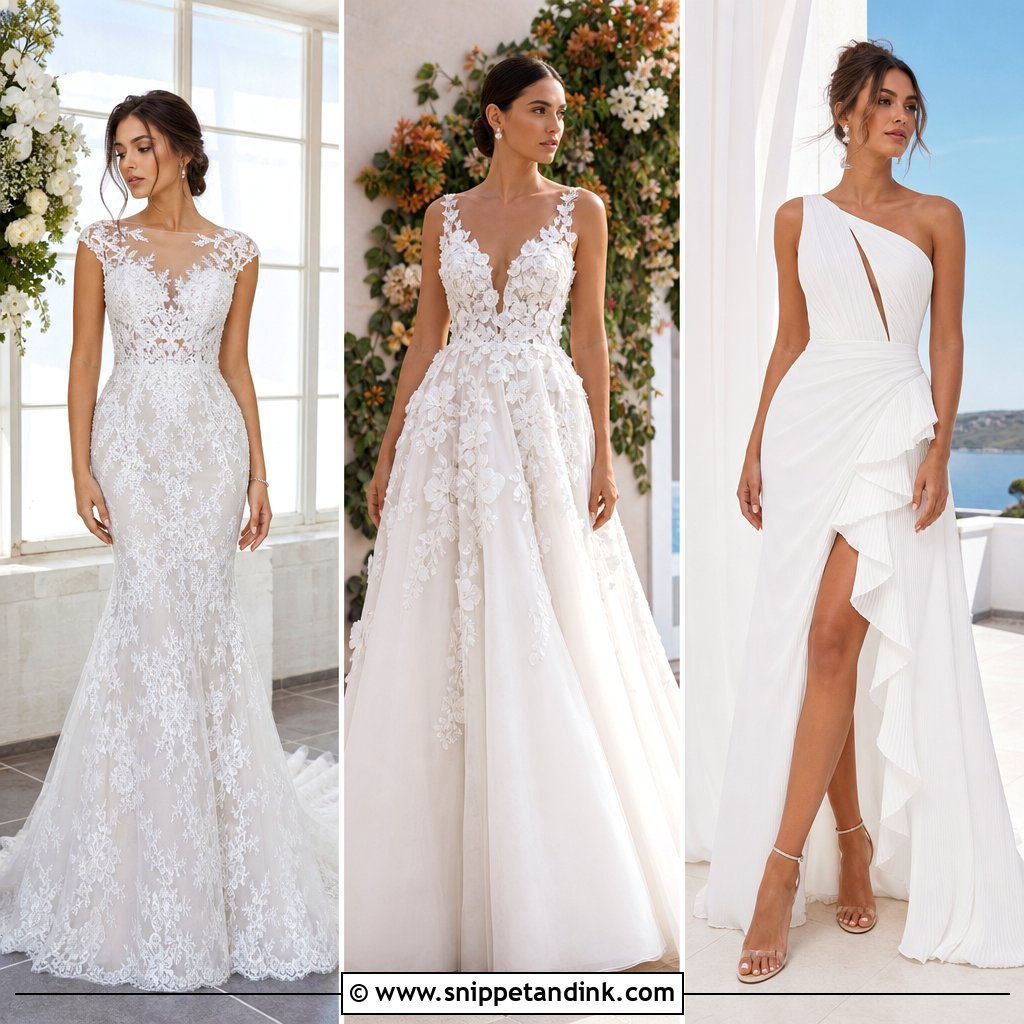
1. Sweetheart Neckline A-Line Wedding Dress
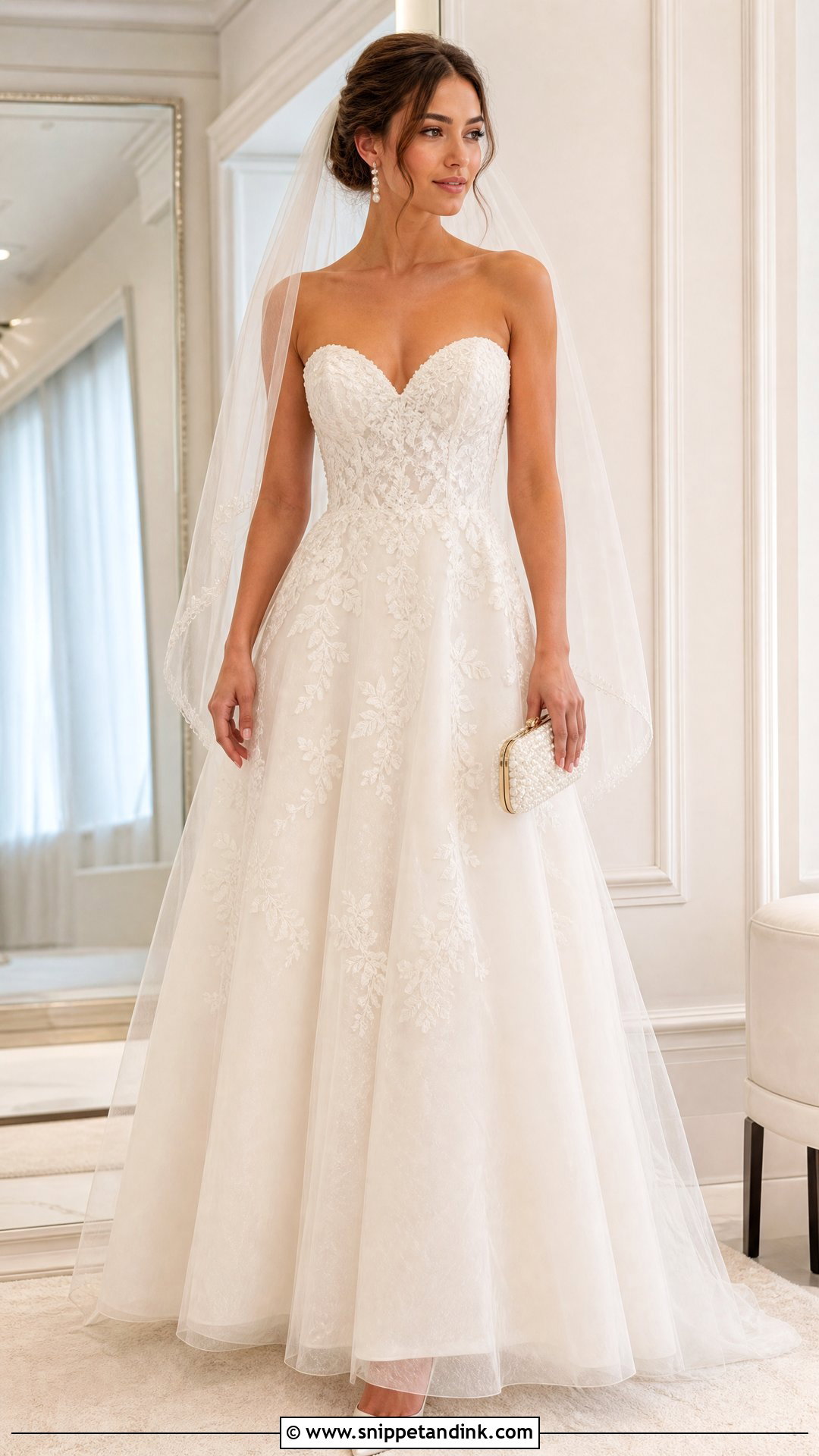
A sweetheart neckline curves around the chest and suggests shape without needing cleavage, which is why it is the neckline I suggest when a bride tells me she’d like a little more fullness. Put it on an A-line with a structured bodice and fitted waist, and keep any ruching or lace appliqué on the cups themselves. Pearl drops, a fingertip veil, pointed ivory heels and a small structured clutch finish it. The one thing to watch is the dip in the middle of the sweetheart: if the cups stand away from your skin there, ask the seamstress to shape them in closer, because that gap is all anyone will notice.
2. Plunging V-Neck Wedding Dress
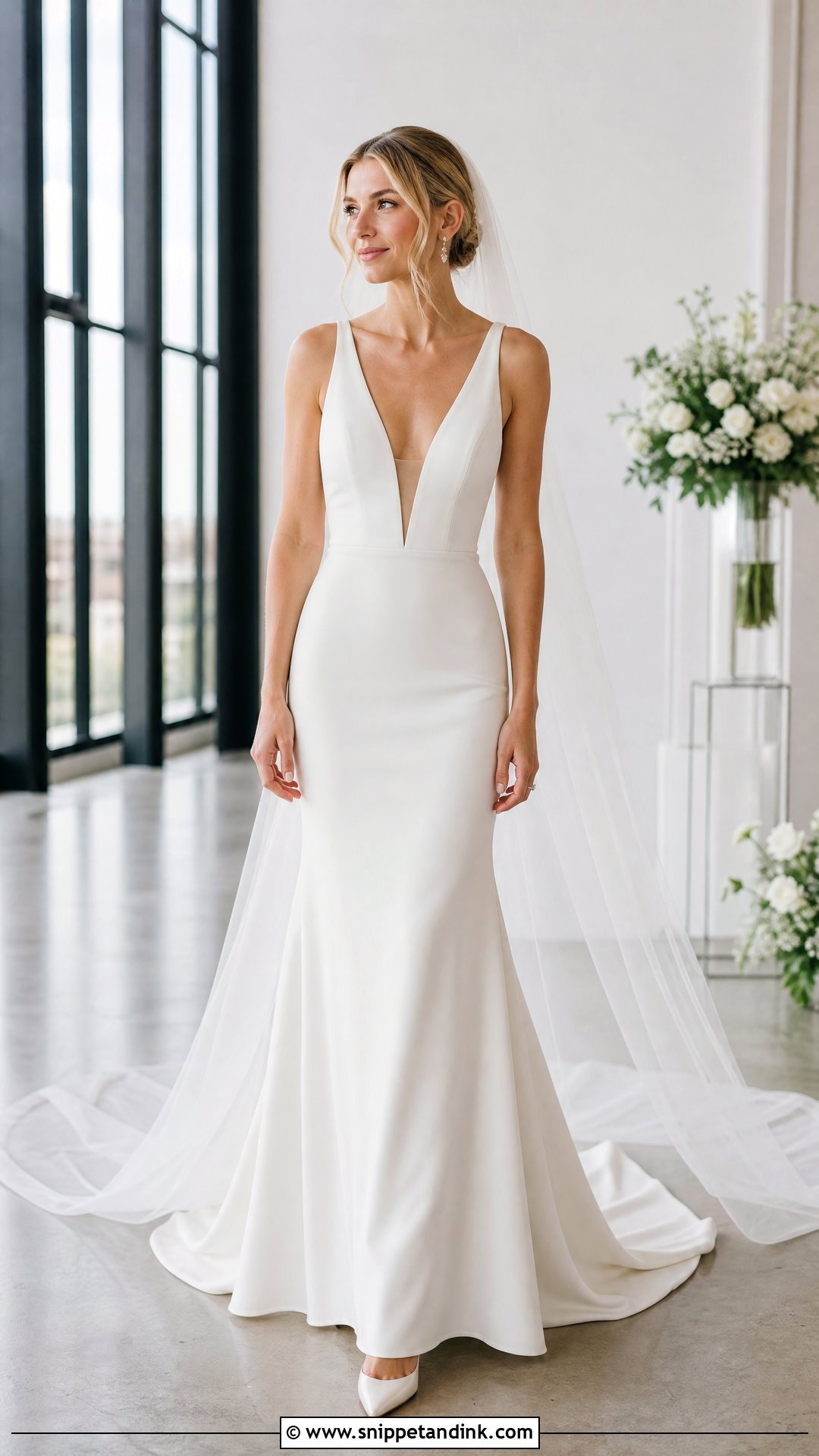
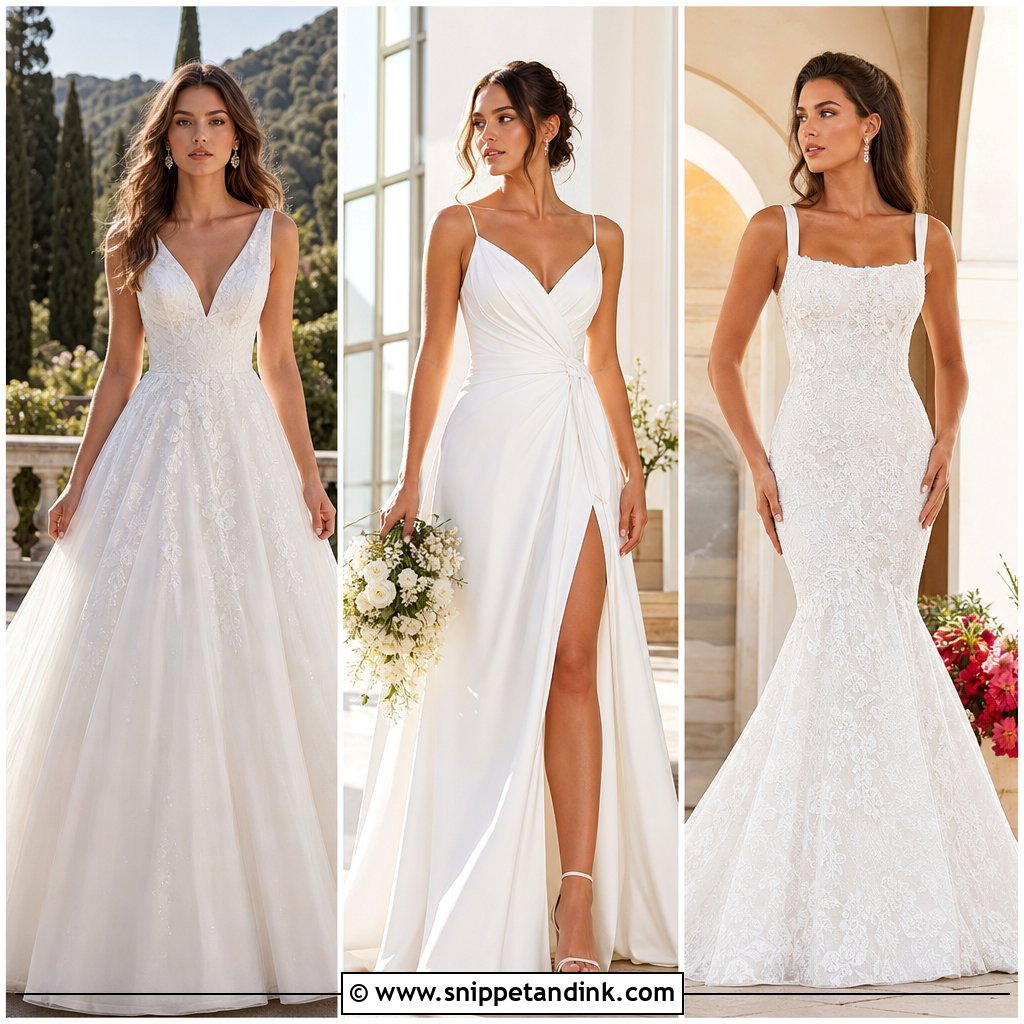
Here’s where a small bust has the advantage. A plunging V-neck wedding dress sits flat and secure on a slim chest without the heavy support a fuller figure would need. Go for a narrow plunge rather than a wide V for the longest line, with illusion mesh between the sides if you want peace of mind. A crepe gown with a defined waist and soft flare keeps it modern. Slim drop earrings, a low bun, ivory pumps and a sheer cathedral veil are enough; leave off the necklace. Bend forward at the fitting. If the edges lift away from your body, they need a fine stay tape along the inside.
3. Square Neck Satin Wedding Dress
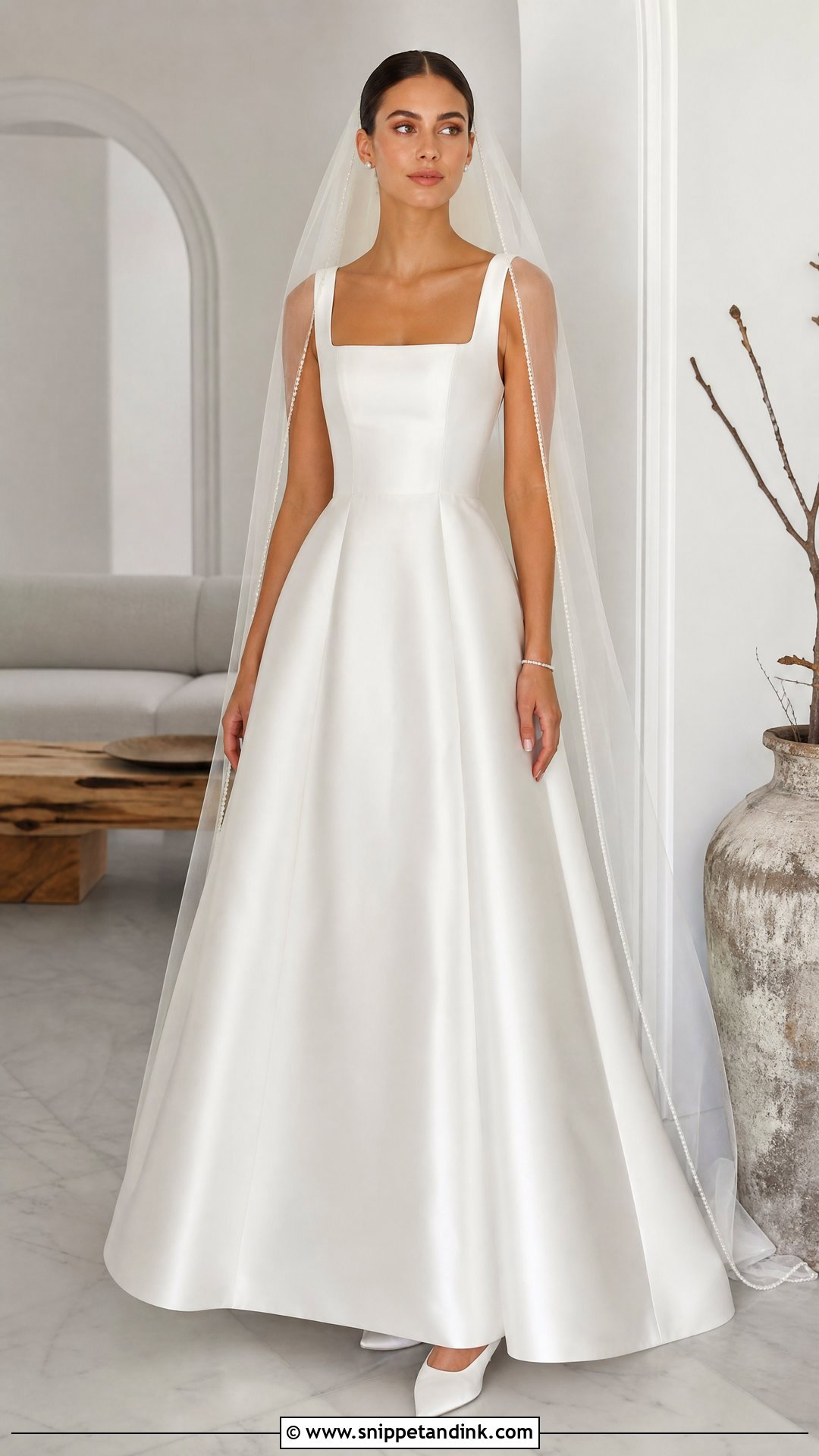
Square necklines add a little visual width across the chest, and the corners frame a smaller bust instead of emptying it. Wide straps and well-shaped seams keep it from shifting. A fitted bodice over an A-line or column skirt gives an architectural finish, especially in mikado or duchess satin, which is stiff enough to hold the straight edge. Style it with a smooth chignon, pearl studs, pointed satin heels and a chapel veil, plus a fine tennis bracelet if you want sparkle. Strap length and cup placement need custom adjustment so that edge lies flat against your skin.
4. Cowl Neck Slip Wedding Dress
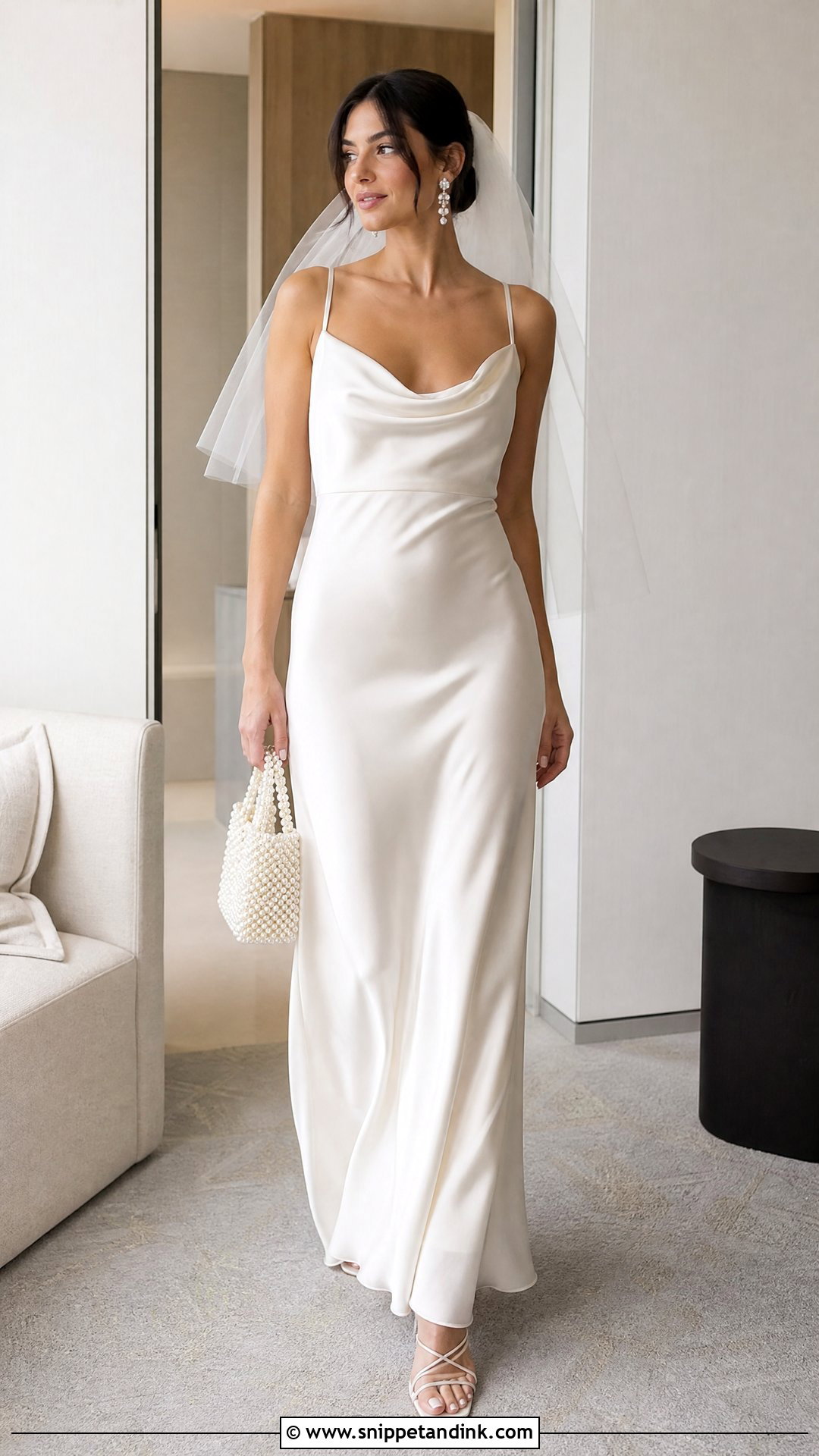
A cowl neckline is the softest way I know to add volume to a small bust: the loose folds create depth with no padding at all. It wants a bias-cut satin slip that follows the body without clinging, with thin straps, a low back and a fluid floor-length skirt. Crystal drops, strappy ivory heels, a small pearl bag, a shoulder-length veil and soft waves suit the relaxed mood. Satin shows every alteration, so choose a tailor who has worked with bias cuts. The cowl should hang in even folds; if it collapses flat or drops too low as you walk, the strap length is off.
5. Strapless Corset Wedding Dress
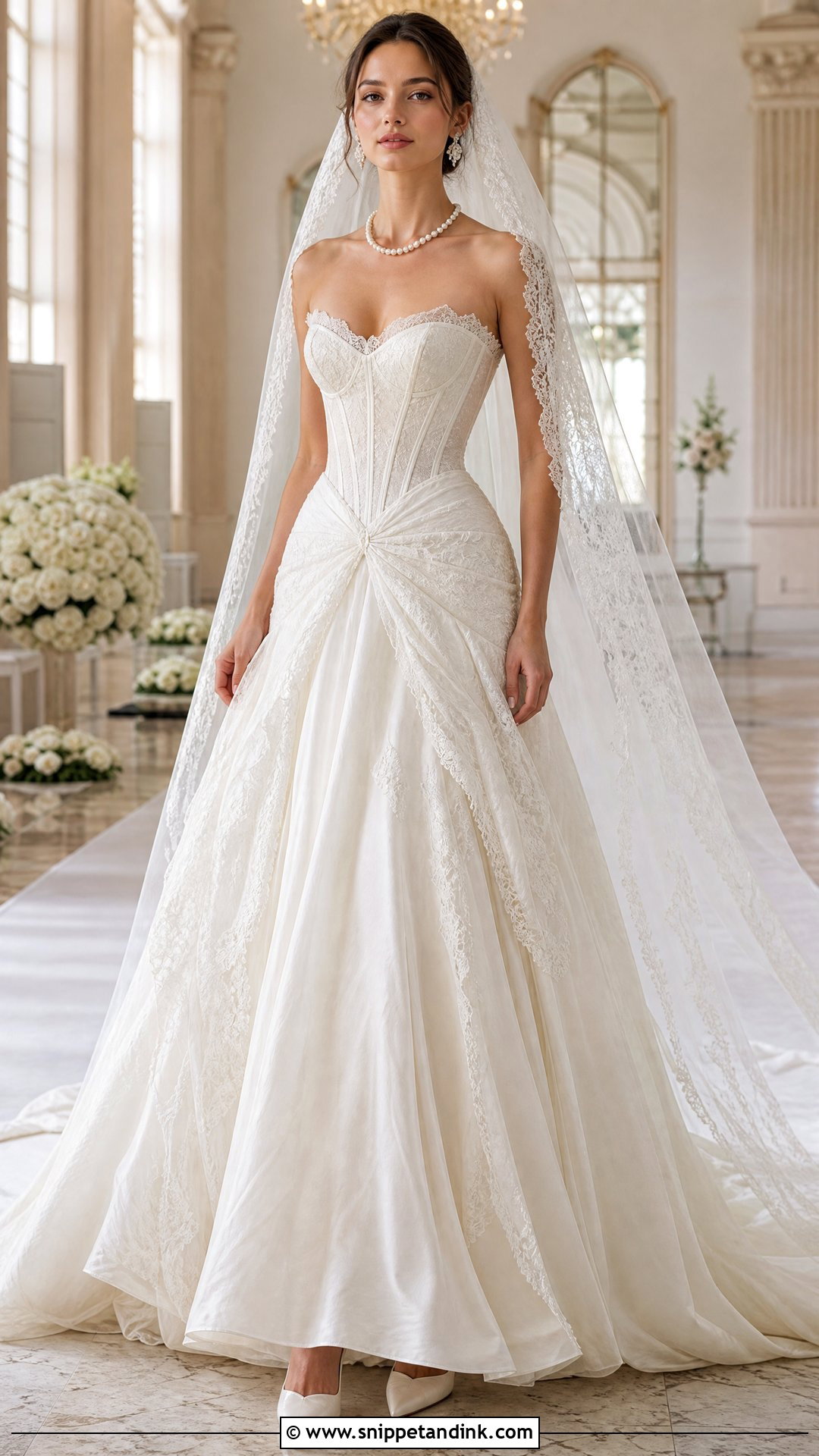
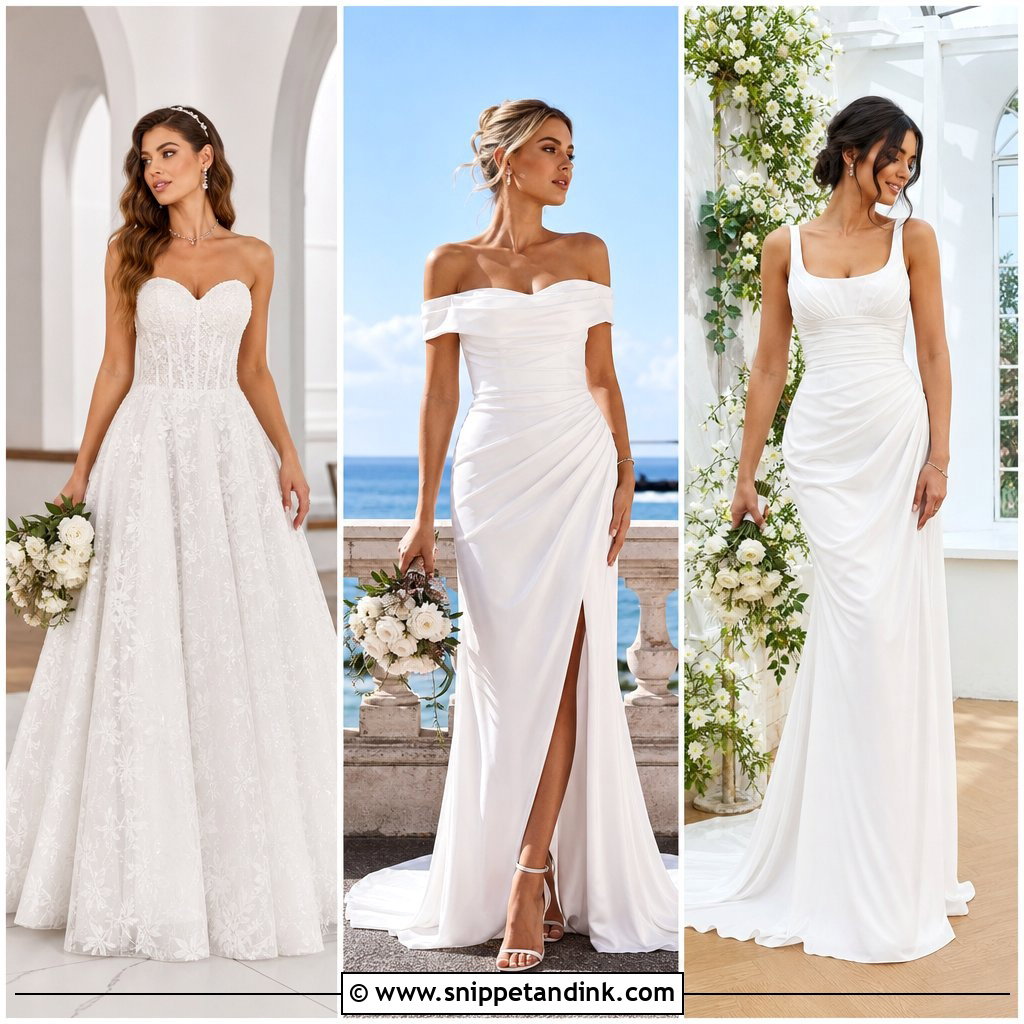
On a smaller frame, the risk with a strapless corset is empty space at the top of the cups. Look for curved cups, vertical boning and a slightly dipped neckline that follows your shape. Lace or draping over the bodice adds dimension. A full A-line or soft ball gown skirt balances the structure, finished with a short pearl necklace, floral studs, pointed heels and a long veil under a polished bun. What holds a strapless dress up is a firm fit at the waist and ribcage, not pressure on the chest. If the bodice only stays up when pulled tight across the bust, it is the wrong size or the wrong cut for you.
6. Halter Neck Wedding Dress
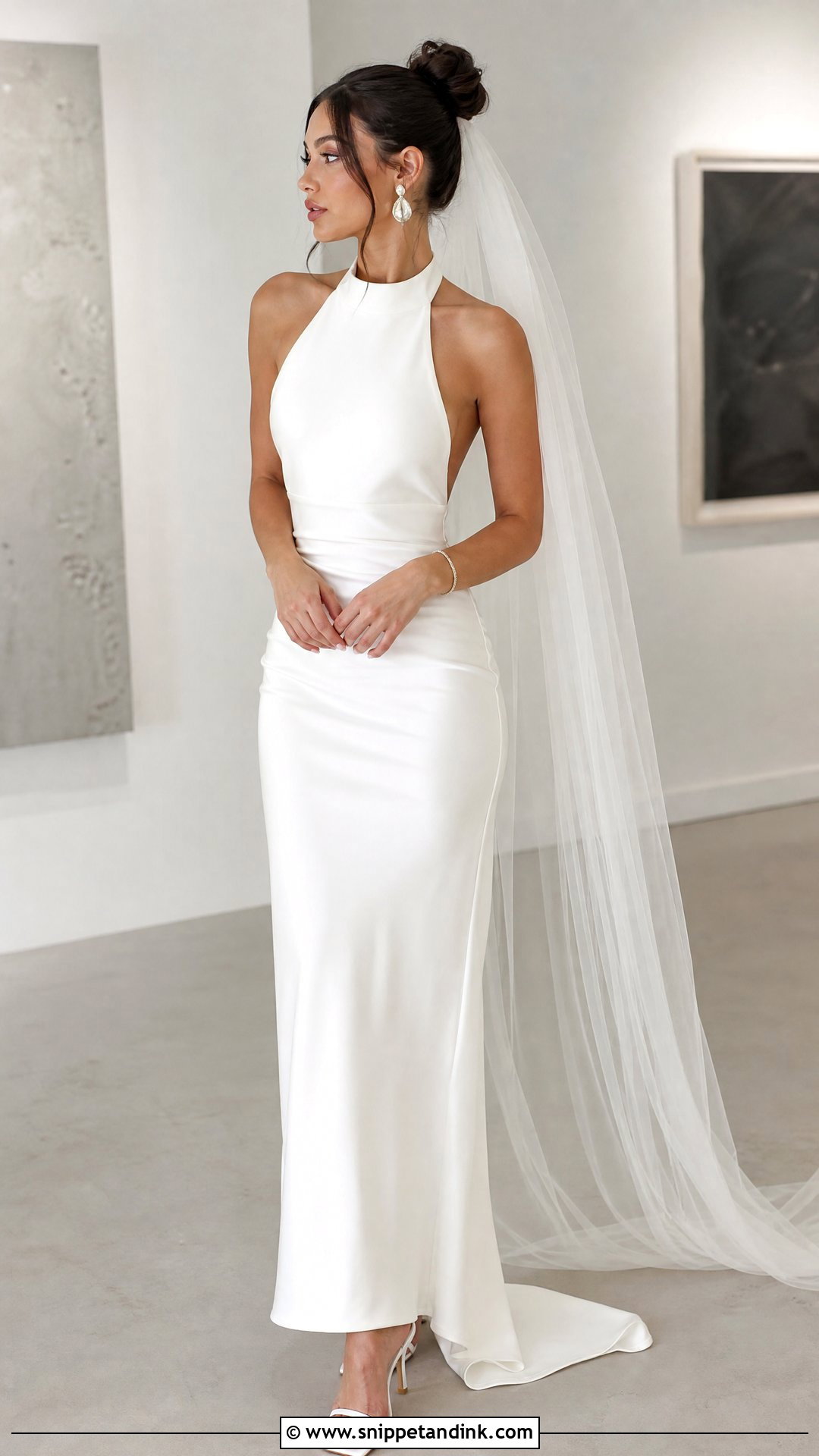
A halter pulls attention up to the shoulders, collarbones and face, so a small bust simply becomes part of a long, sleek line. Smooth satin keeps it minimal; lace or beading makes it decorative. Pair it with a fitted sheath skirt and an open back. Statement earrings replace the necklace, alongside a high bun, slim bracelet, ivory slingbacks and a veil fixed below the hair. The armholes are where this style lives or dies. On a slim torso, they often gape at the side and show the inside of the bodice, so ask for them to be taken in closely.
7. Off-the-Shoulder Ball Gown Wedding Dress
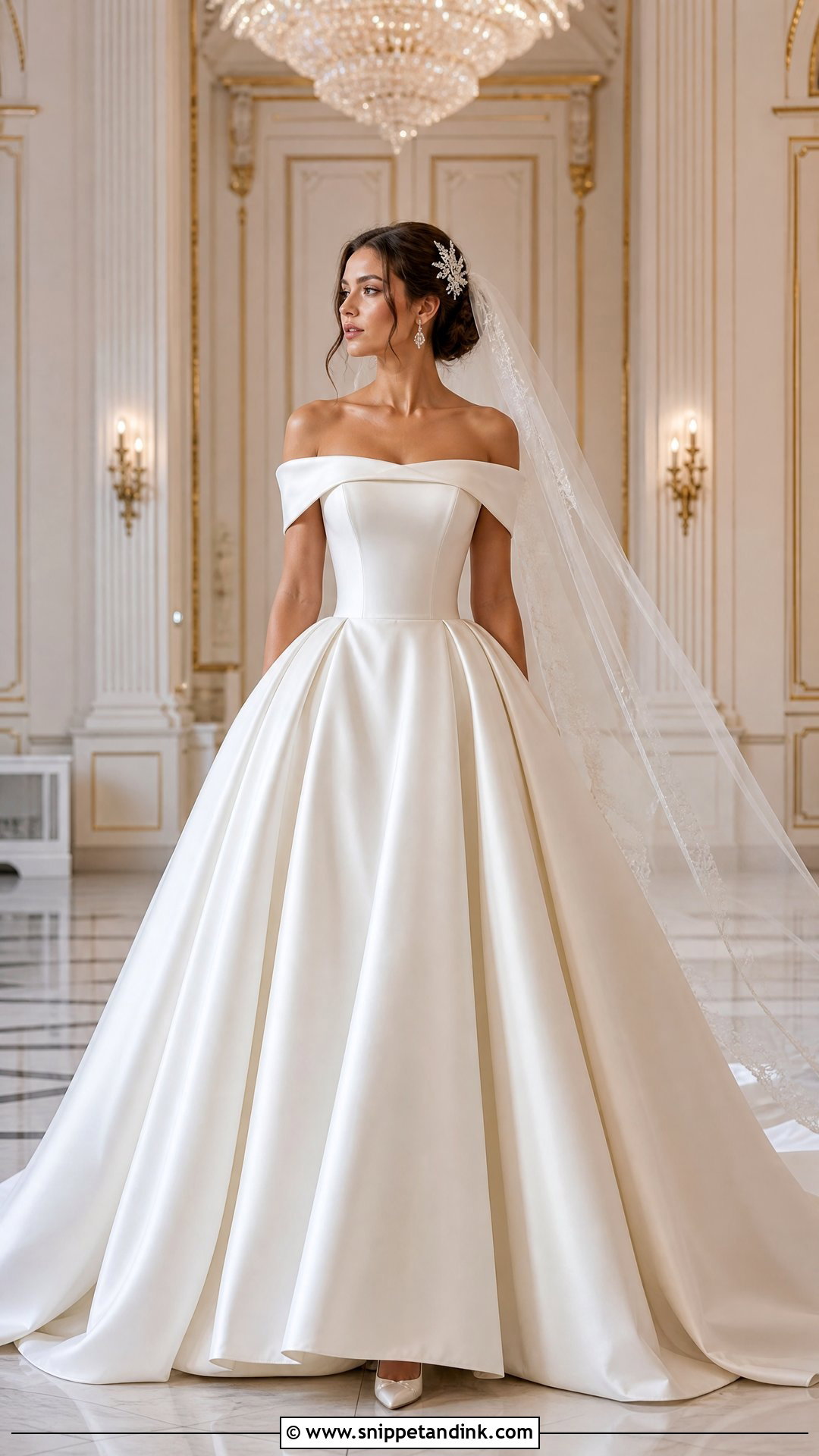
Off-the-shoulder ball gowns add gentle width across the upper body, which balances a narrow chest without any padding. A folded satin band or draped tulle sleeves do the work. Choose a lightly structured bodice, defined waist and full skirt for a formal day, then add a sparkly hair comb, small drops, closed-toe ivory pumps and a cathedral veil. Skip the heavy necklace; bare shoulders are the detail. Lift your arms and sit before you approve the alterations, since a band that cuts into your upper arms will bother you all through the receiving line and the first dance.
8. Ruched Bodice Wedding Dress
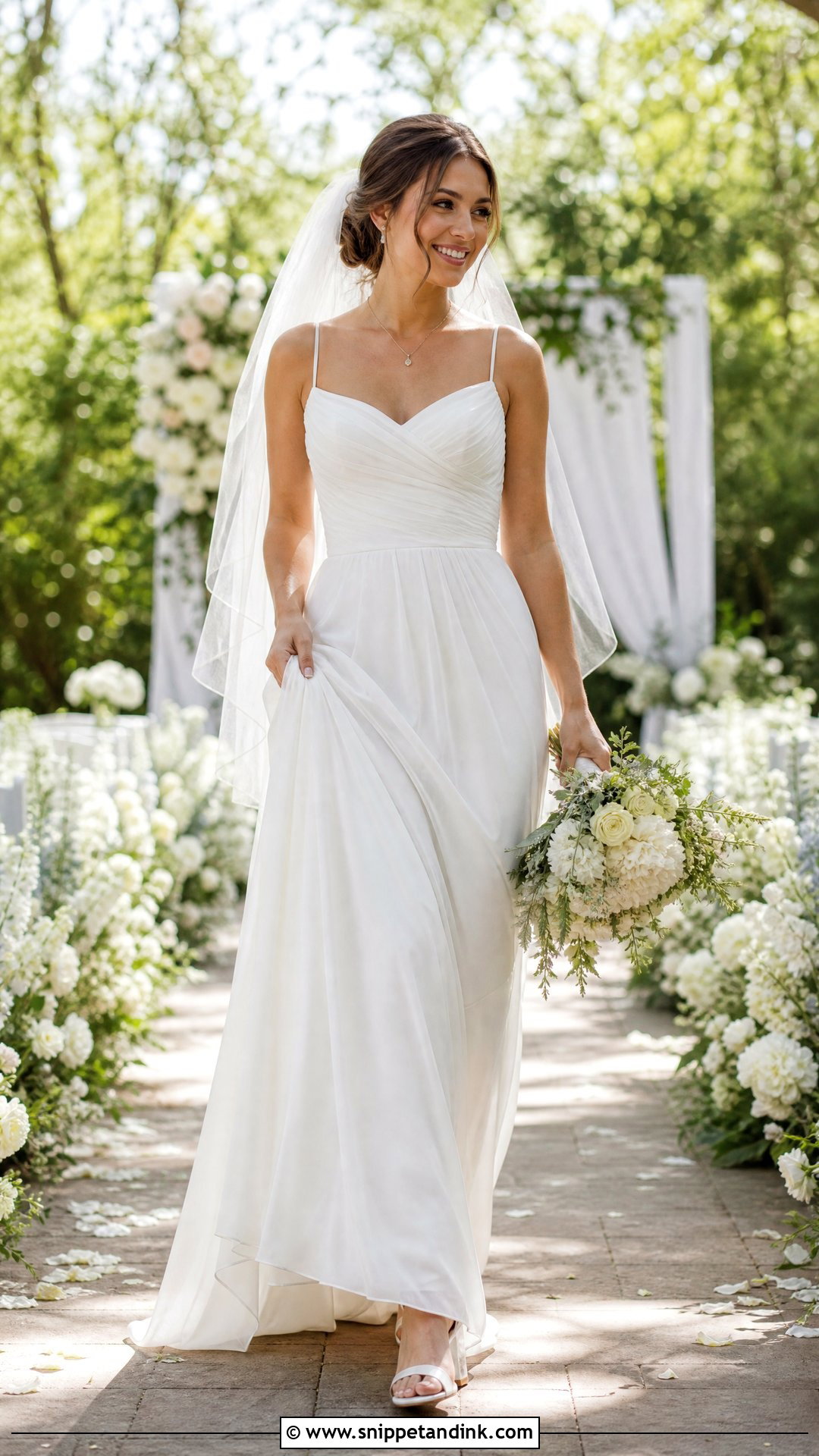
Gathered fabric adds soft volume across the chest, so a ruched bodice wedding dress is a natural choice if you want subtle enhancement. Diagonal ruching is my favourite, as it shapes the torso and leads the eye down to the waist. Chiffon or stretch crepe with a softly curved neckline and an A-line skirt keeps it light. Add a fine pendant, pearl earrings, comfortable block heels and a lightweight veil, and stop there. When the side seams are taken in, the ruching often shifts, so it should be restitched in even folds and secured, not left to bunch.
9. Lace Illusion Neckline Wedding Dress
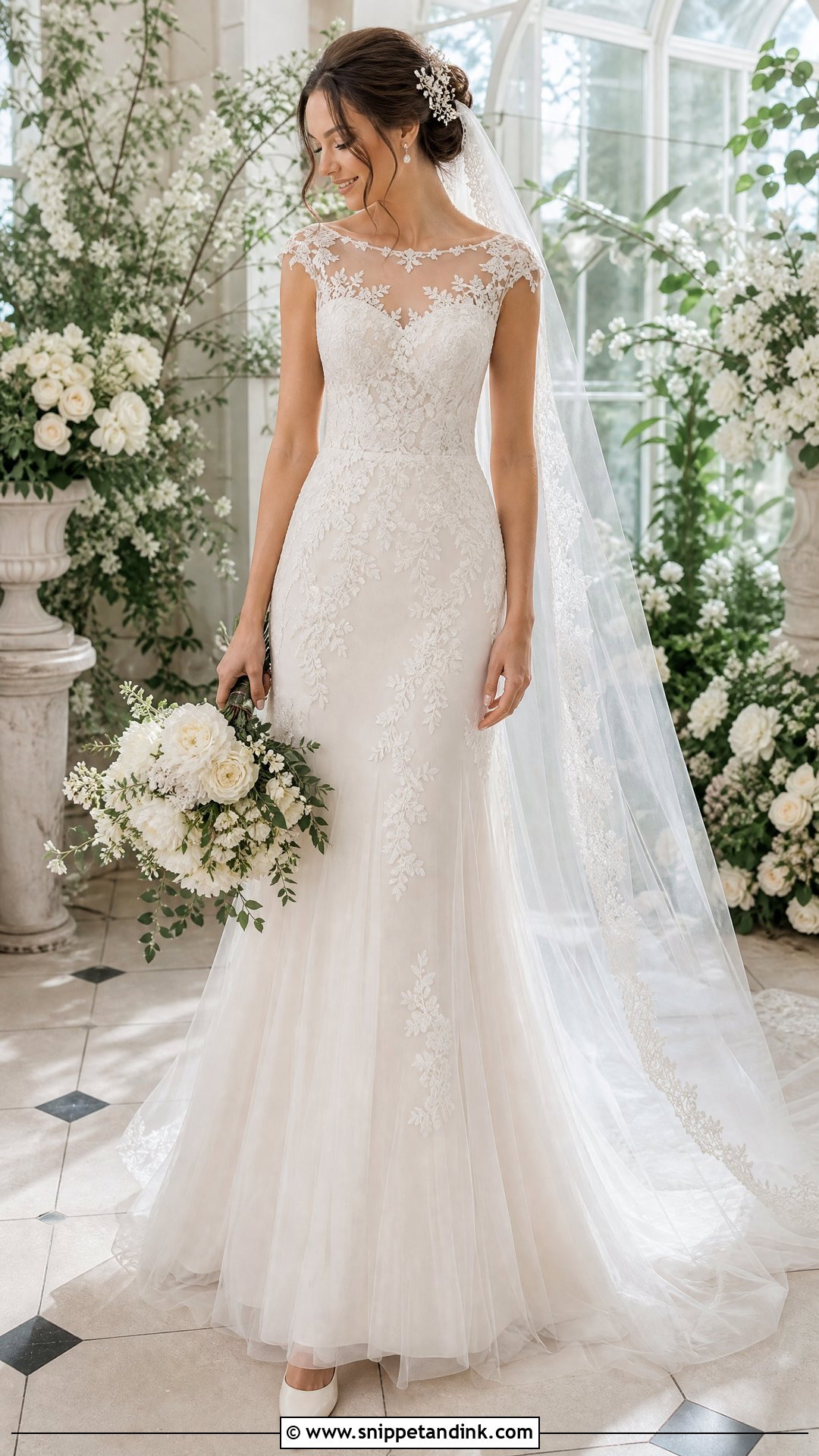
Illusion necklines give coverage while still reading open and delicate. The mesh should match your skin tone closely; a shade too pale shows up as a grey band in photographs. Floral appliqués placed across the chest and shoulders add depth without pretending to change your shape. A fitted lace bodice over a soft tulle A-line is the classic pairing, with pearl earrings, a floral hairpin, ivory pumps and a lace-edged veil. No necklace under the mesh, as it breaks the appliqué. On a slim chest the mesh can float off the skin at the centre, so have it fitted to lie completely flat.
10. High Neck Open Back Wedding Dress
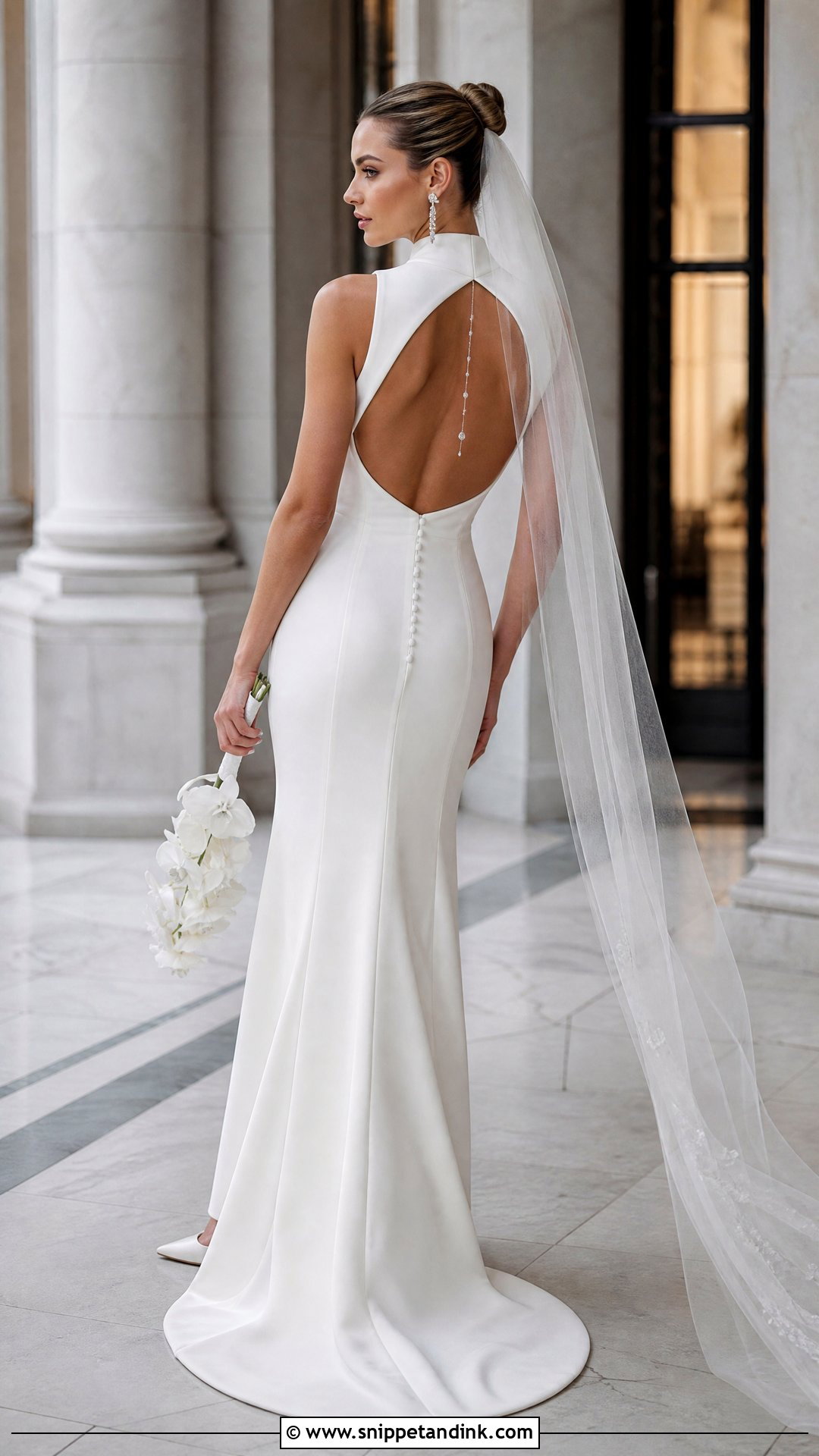
A high neck doesn’t try to add volume at all; it works with a small bust as it is. The covered front makes one long line, and an open back keeps it from feeling buttoned up. Smooth crepe, satin or fitted lace in a column with a modest train all suit it. Style it with a sleek updo, long earrings, a back necklace and pointed heels, and set the veil below the bun so the neckline shows first. Shoulders must be fitted precisely or the bodice sags at the front. The back opening needs reinforcing too, or its weight drags on the neck.
11. One-Shoulder Wedding Dress
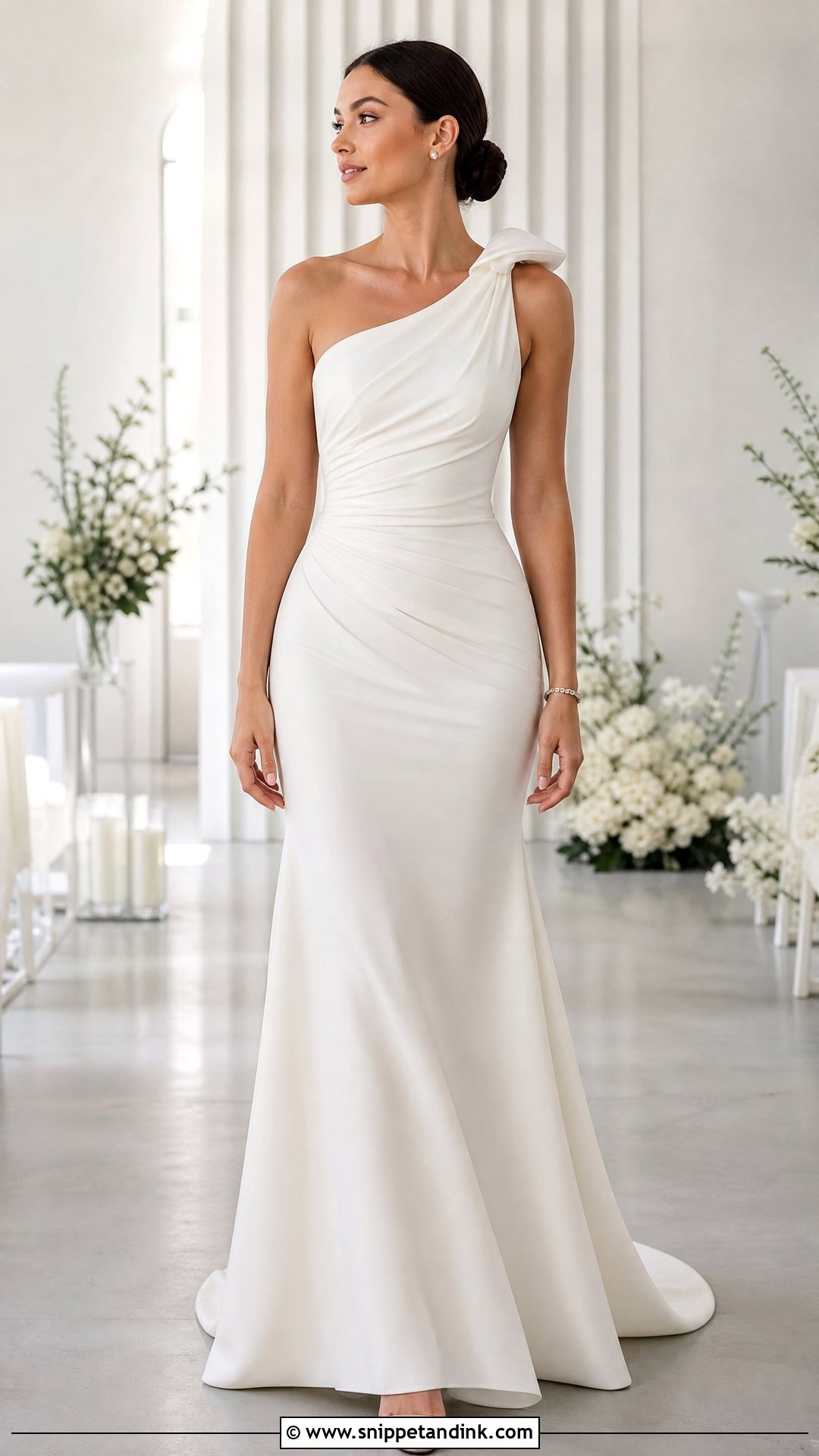
A single shoulder sends the eye diagonally across the body, and that angle gives a smaller chest more shape, especially with pleats or ruching on the bodice. Choose fitted crepe with a defined waist and a soft flare, plus a bow or draped detail at the shoulder if you want drama. Smooth low bun, crystal studs, metallic ivory heels and a slim bracelet; no necklace. The internal bodice should carry the dress so the shoulder strap only rests there. When the strap is doing the holding, the whole gown pulls sideways by the reception.
12. Scoop Neck Tea-Length Wedding Dress
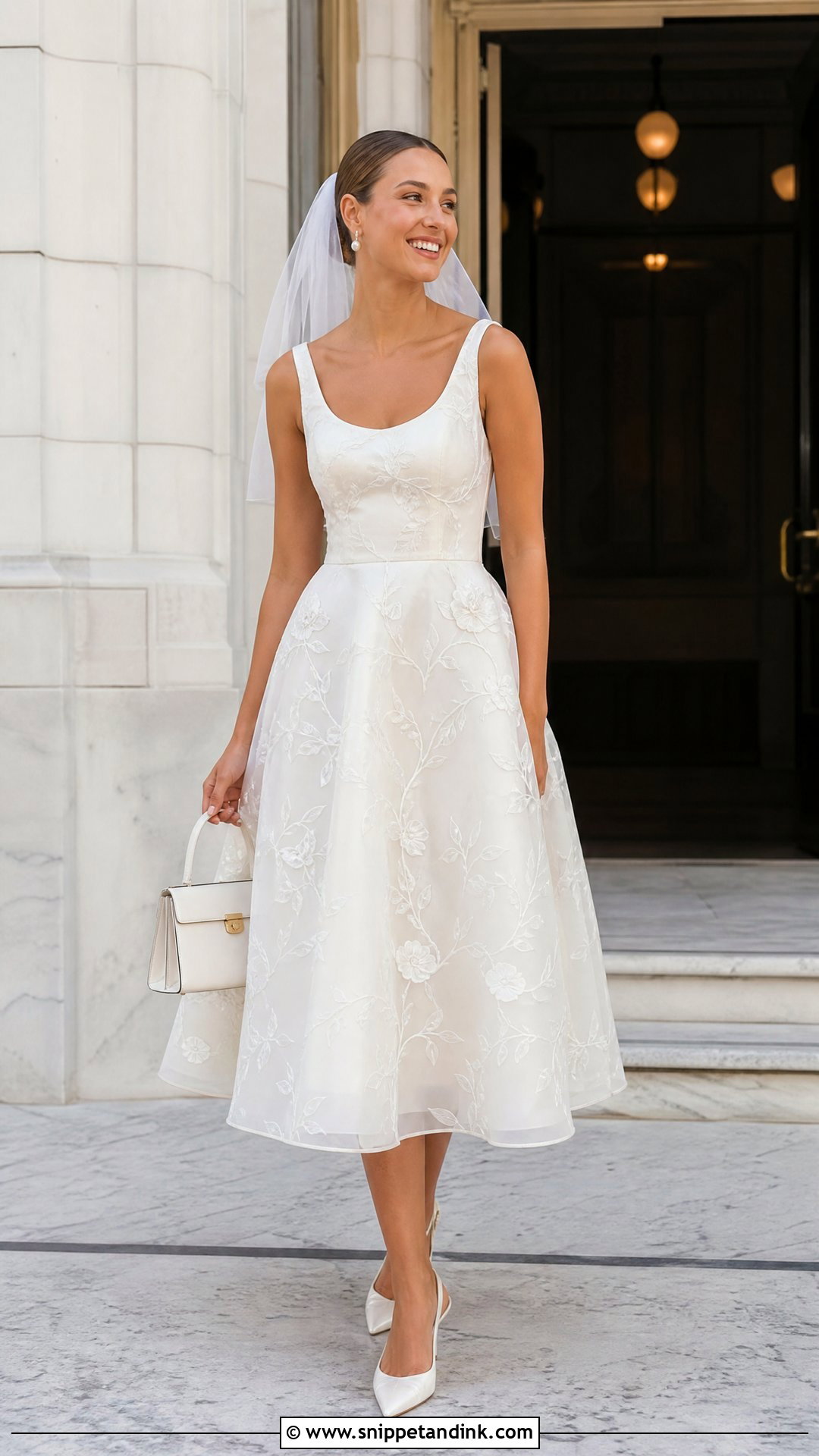
A scoop curves gently and makes the chest read soft and balanced. On a tea-length dress, it has a cheerful, polished feel that suits a courthouse, a garden or a relaxed reception. A fitted bodice, defined waist and softly flared skirt keep the shape classic. Embroidered organza gives detail; smooth satin keeps it clean. Add a short veil, pearl button earrings, pointed slingbacks, a structured mini bag and maybe a narrow belt. Lean forward at the fitting: scoops gape on a small bust more than any other neckline. The hem should land somewhere between the knee and ankle that flatters your calf.
13. Boat Neck Column Wedding Dress
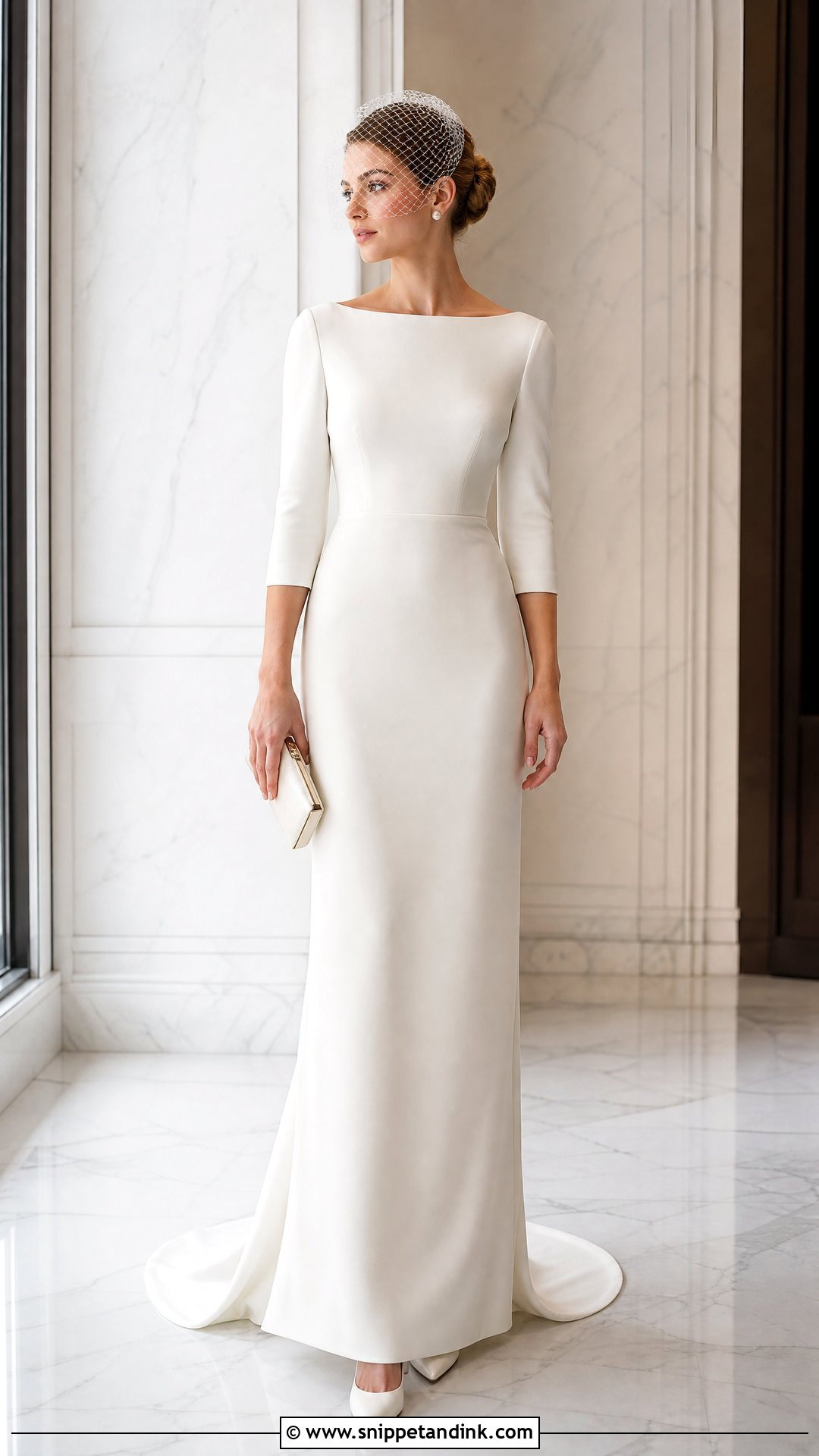
A boat neck runs straight across from shoulder to shoulder, showing the collarbones and adding width up top. On a slim upper body it looks clean and deliberate. A crepe or satin column with a fitted waist and small train is my choice, with three-quarter sleeves for a classic look or none for a crisp one. Pearl studs, a birdcage or fingertip veil, pointed pumps, a compact clutch and a low twist complete it. Covered buttons or a low V at the back give the plain front some balance. The shoulders need precise alteration, or the wide neckline slides off one side as you move.
14. Embellished Bodice Wedding Dress
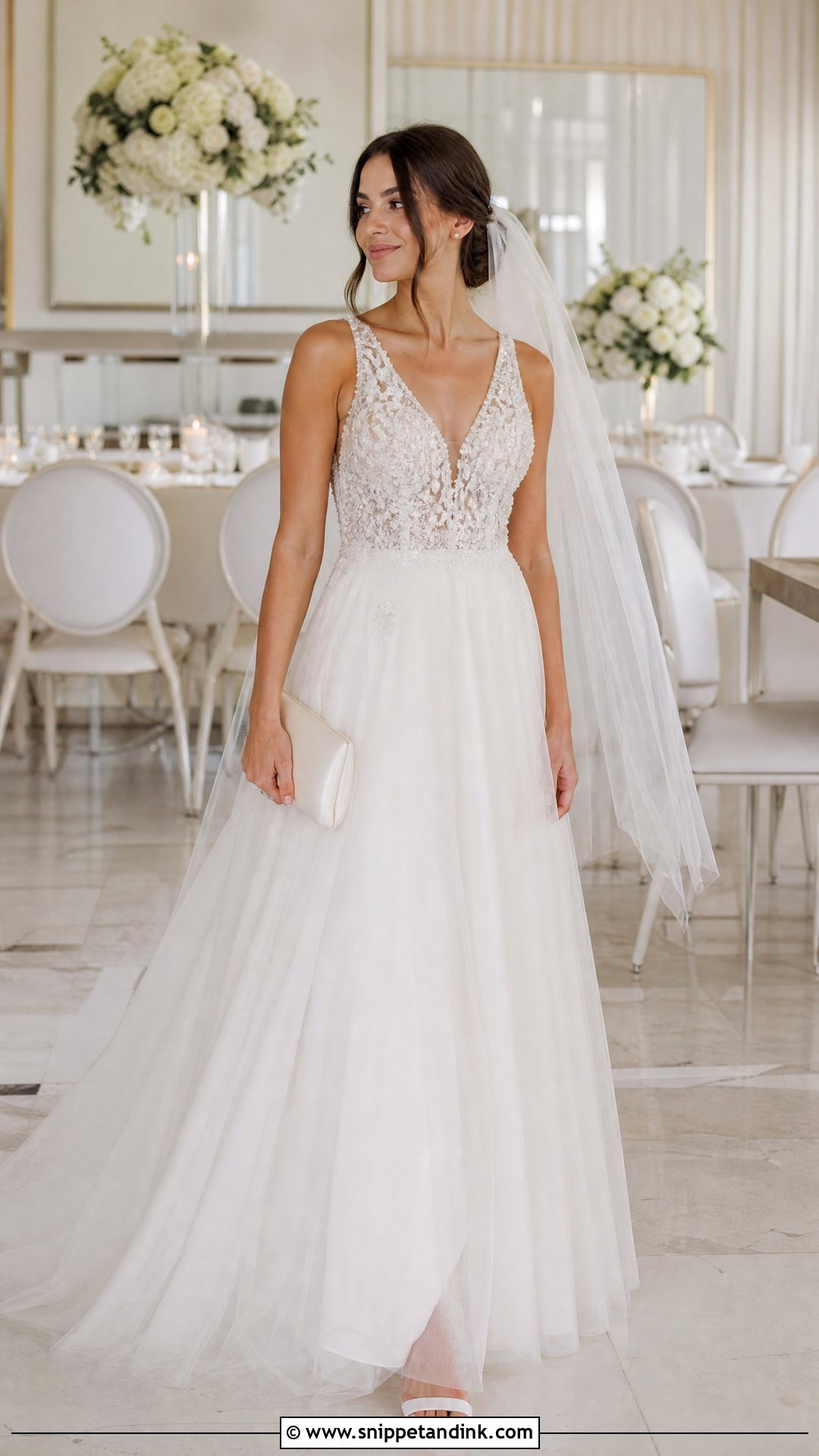
Beading, pearls, sequins and appliqué add depth exactly where you want it, and on a small bust the trick is to concentrate them on the neckline and cups. Keep the skirt simple tulle or satin. A V, scoop or illusion neckline makes a good base under the decoration. Plain satin heels, small studs, a sheer veil and a smooth clutch let the bodice do the talking. Taking in the side seams can crowd or split the embellishment, so check every motif after alterations. It should look symmetrical, with no bare gaps or clumps around the bust.
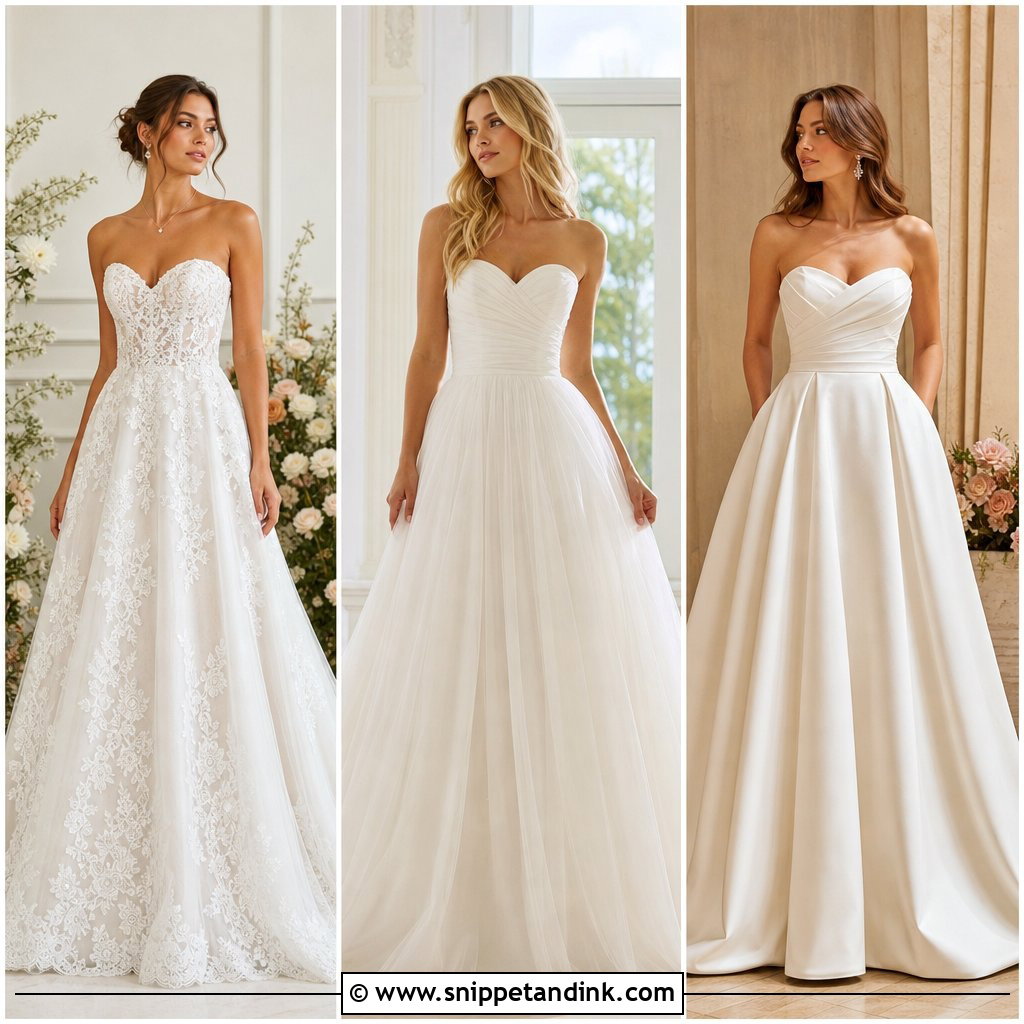
15. Detachable Sleeve Wedding Dress
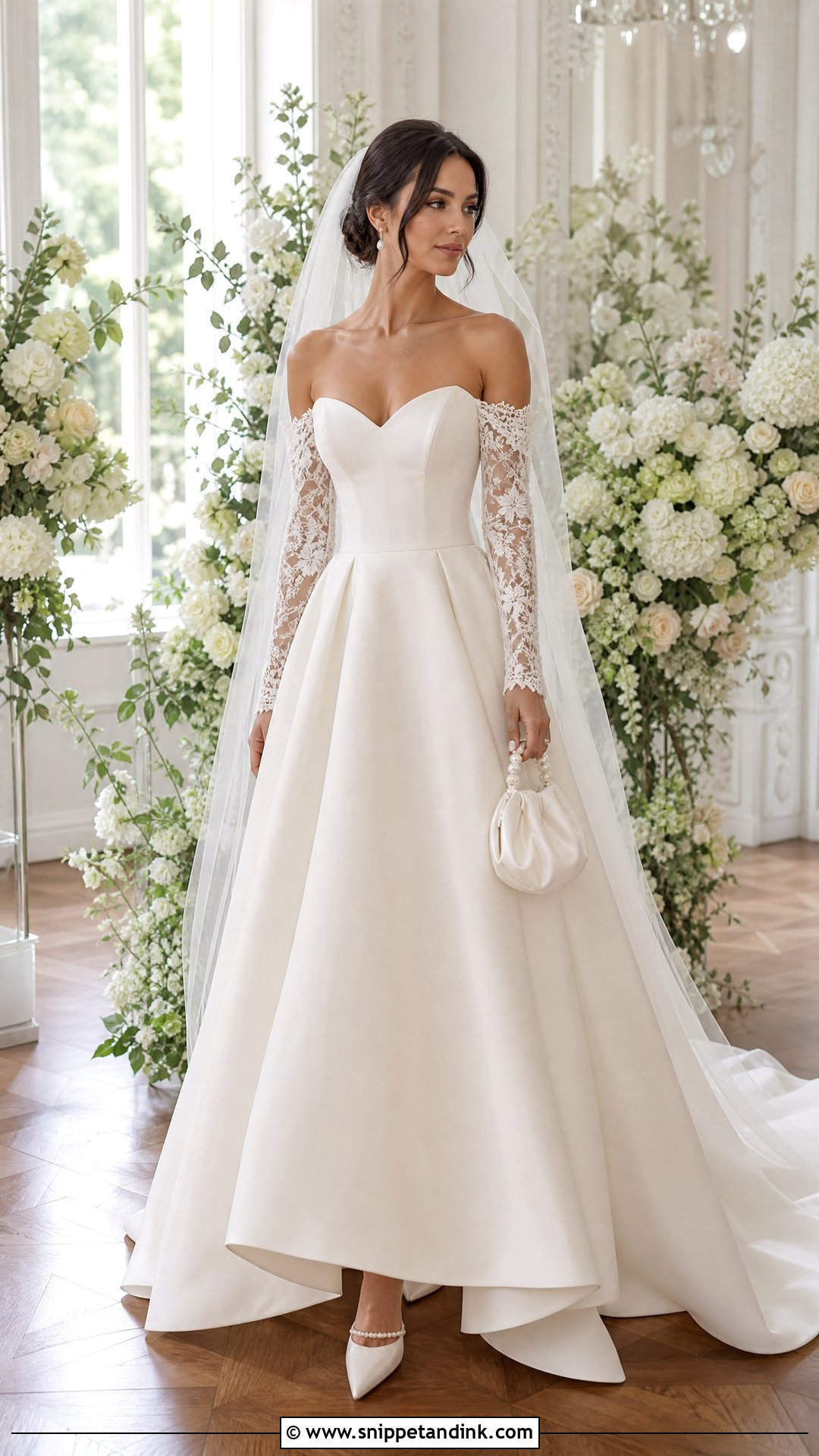
Detachable sleeves change the proportions of a dress without buying a second one. Start with a structured strapless or sweetheart gown fitted closely around the bust, then add off-the-shoulder tulle sleeves for the ceremony and take them off for the reception. A full A-line gives balance and formal presence. Wear pearl drops, a classic veil, pointed ivory heels and carry a small satin bag. If the sleeves are lace, echo the pattern on the bodice or veil. Clip them on and off several times at the fitting. They shouldn’t pull the neckline down or stop you lifting your arms.
16. Basque Waist Wedding Dress
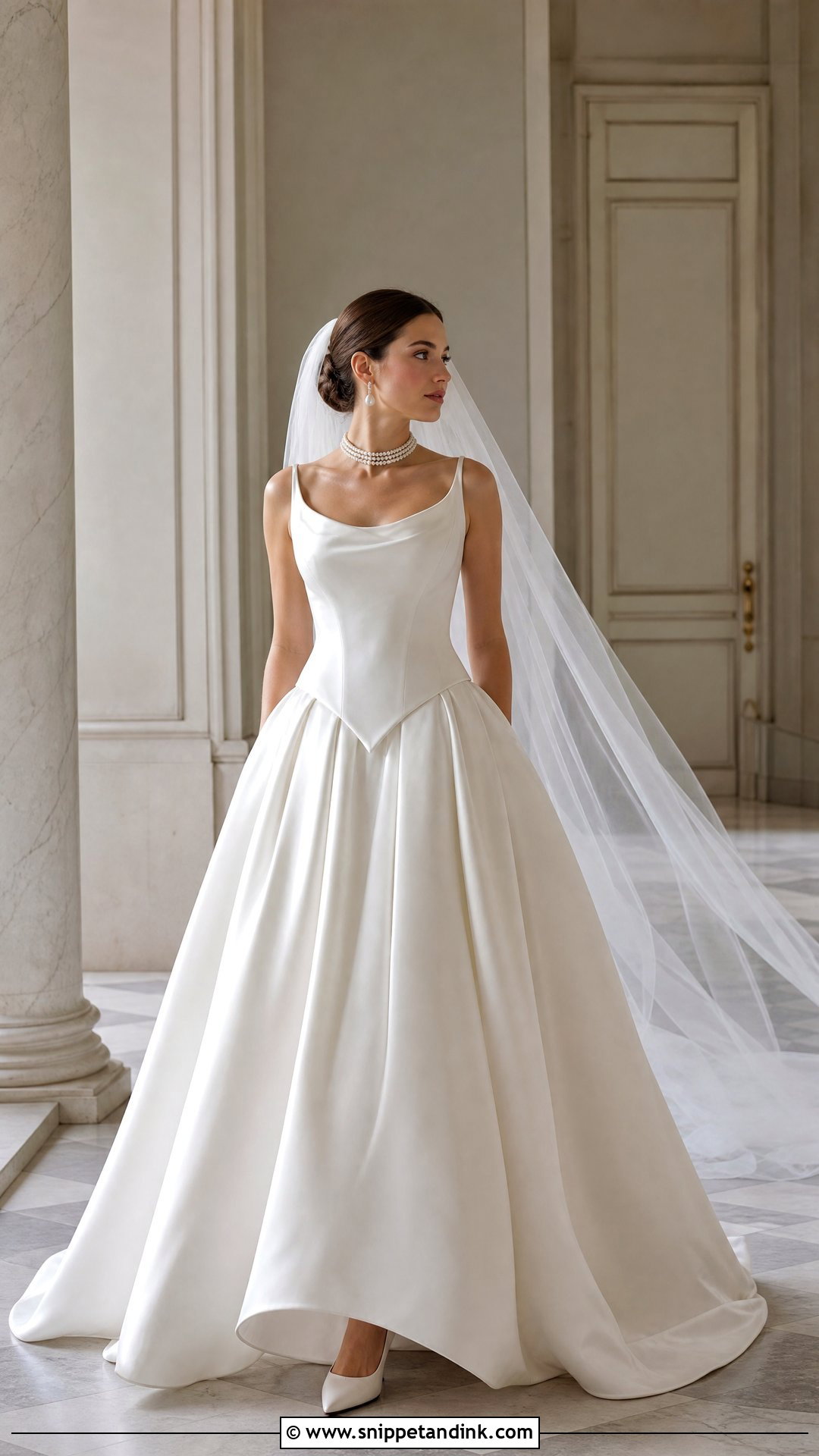
A Basque waist dips into a V below the natural waistline. That point lengthens the torso and, with curved cups or a soft drape above it, gives a small bust an hourglass outline. Choose a satin ball gown or structured A-line with clean seams and moderate volume. A pearl choker, drop earrings, closed-toe pumps, a long veil and a polished hairstyle keep the sculpted bodice visible. Getting the point of the V in the right place depends on accurate torso measurements. A few centimetres too high or low and the gown looks off balance, so have cup depth and bodice length adjusted together.
17. Floral Appliqué Wedding Dress
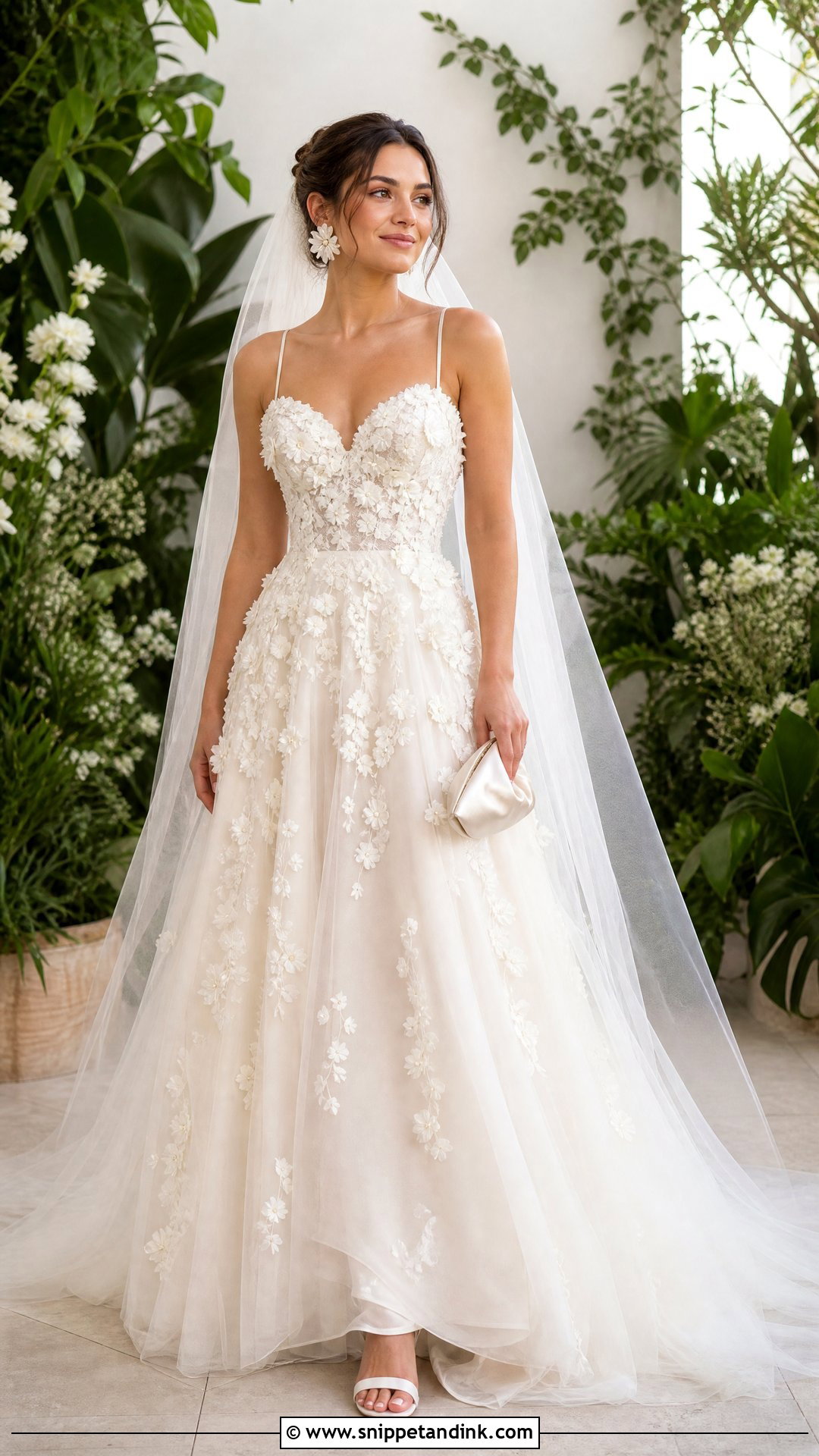
Three-dimensional flowers give the upper body texture and a soft focal point, and they add dimension around a small bust without exaggerated cups. I like them clustered on the bodice and thinning out across the skirt. Square, sweetheart or illusion necklines all suit the flowers. Floral earrings, plain ivory sandals, a sheer veil and a small satin clutch; skip a busy necklace. Repeat one motif in a hair comb or the veil edge. Ask the tailor to reposition flowers after the bodice is fitted, since darts and altered seams can leave the pattern lopsided.
18. Long Sleeve Lace Wedding Dress
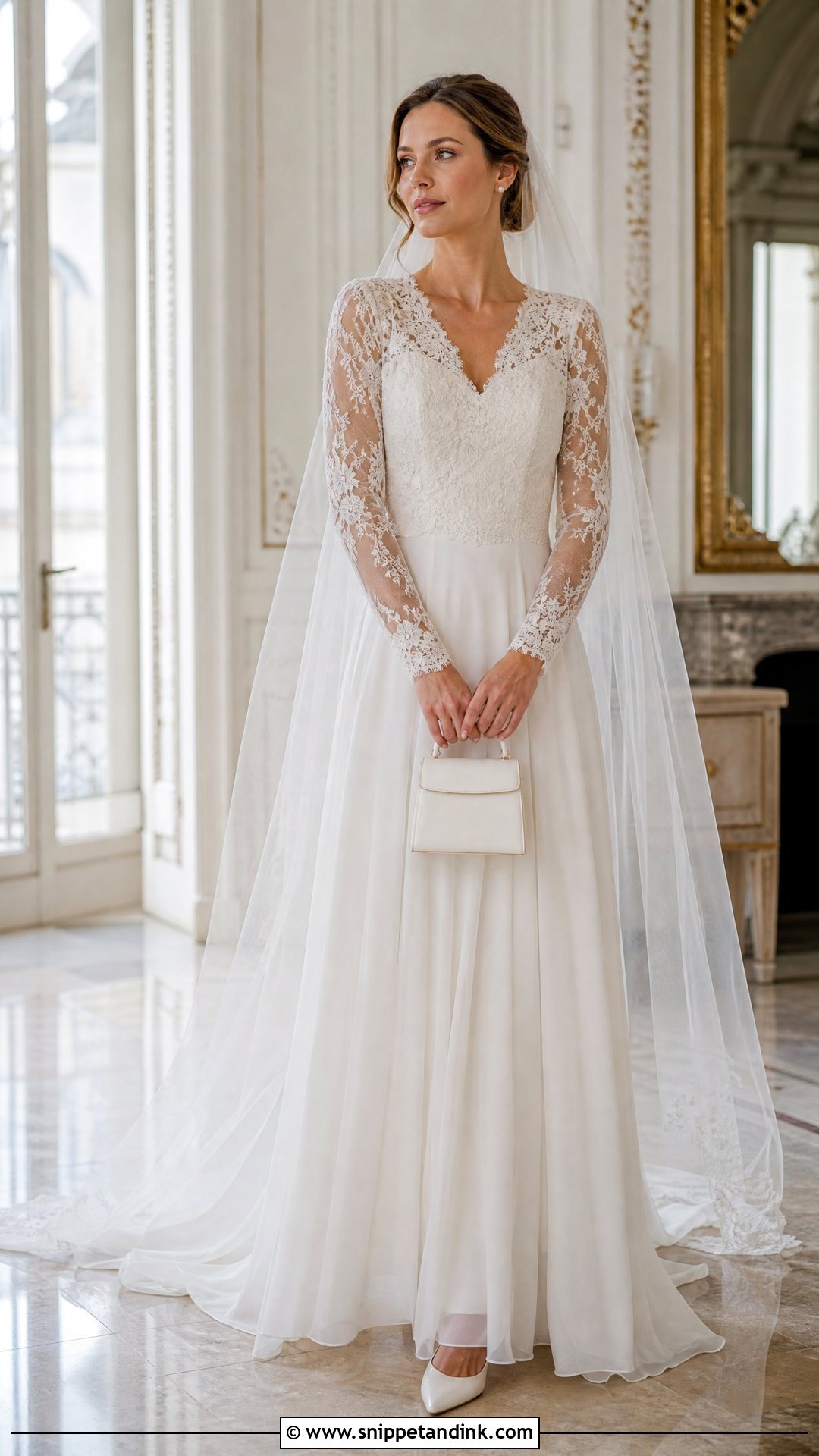
Fine lace on a long-sleeve dress gives texture without heavy structure. A fitted lace bodice over a high neck, shallow V or sweetheart lining adds dimension to a small chest through layers rather than padding. Chiffon underneath feels soft; fitted crepe feels sleek. Pearl studs, ivory pumps, a chapel veil, a plain little handbag and a neat low bun keep the lace on show. Check that the sleeve ends at the wrist bone and lets your elbow bend. The lining colour behind the lace should be consistent all over, or the pattern looks patchy in photographs.
19. Minimalist Satin Slip Wedding Dress
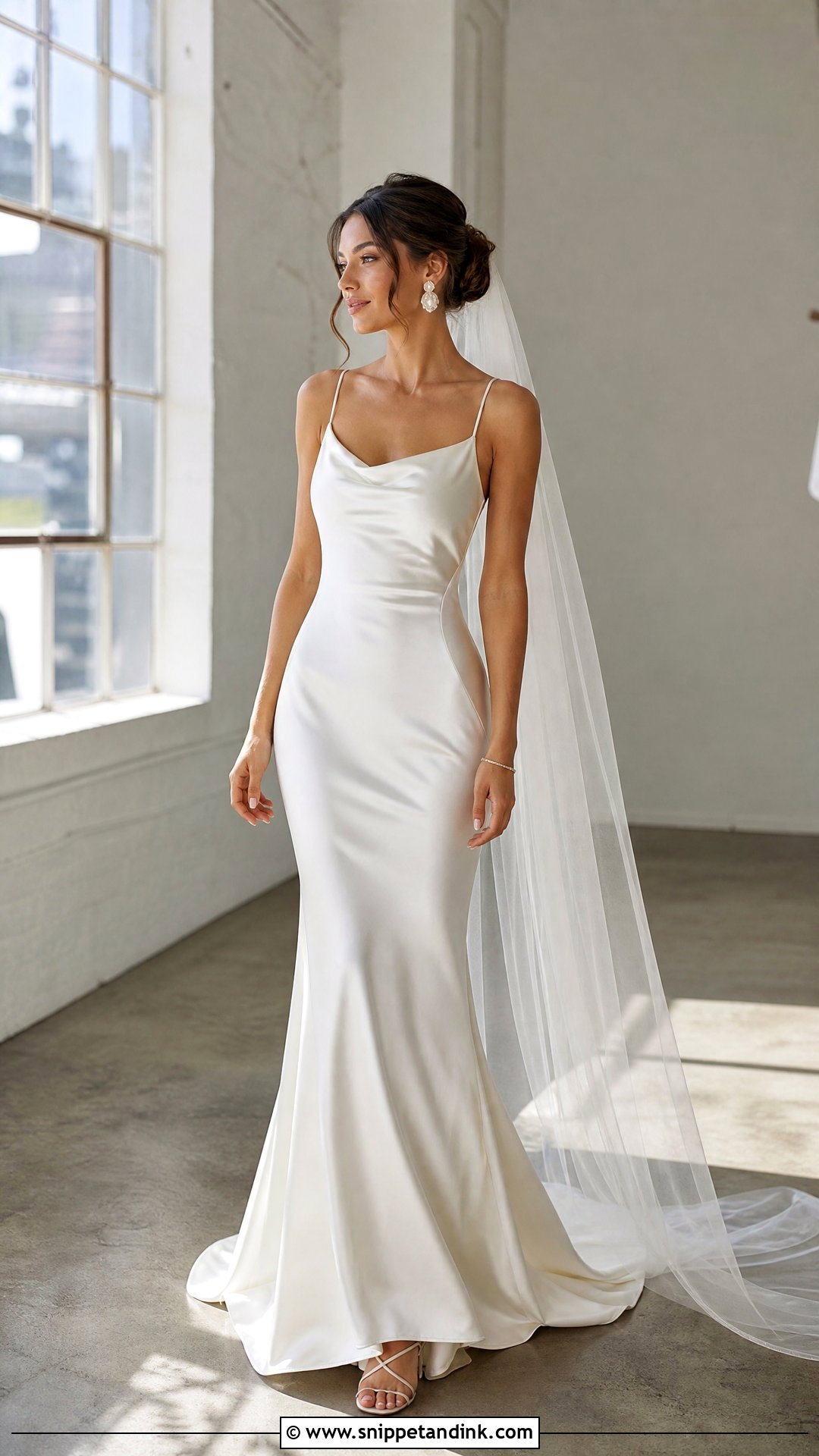
Sometimes the most flattering dress doesn’t try to change anything. A minimal satin slip, with narrow straps, a straight or softly draped neckline and a bias-cut skirt, simply shows a slim upper body as it is. Look for a weighty silk satin that skims rather than clings. Sculptural earrings, a fine bracelet, strappy heels and a sheer floor-length veil, with a sleek bun or glossy waves. With so few details, alterations are everything: adjust straps, neckline and side seams together. Add light sewn-in cups only if you need them; thick padding breaks the drape that makes the slip worth wearing.
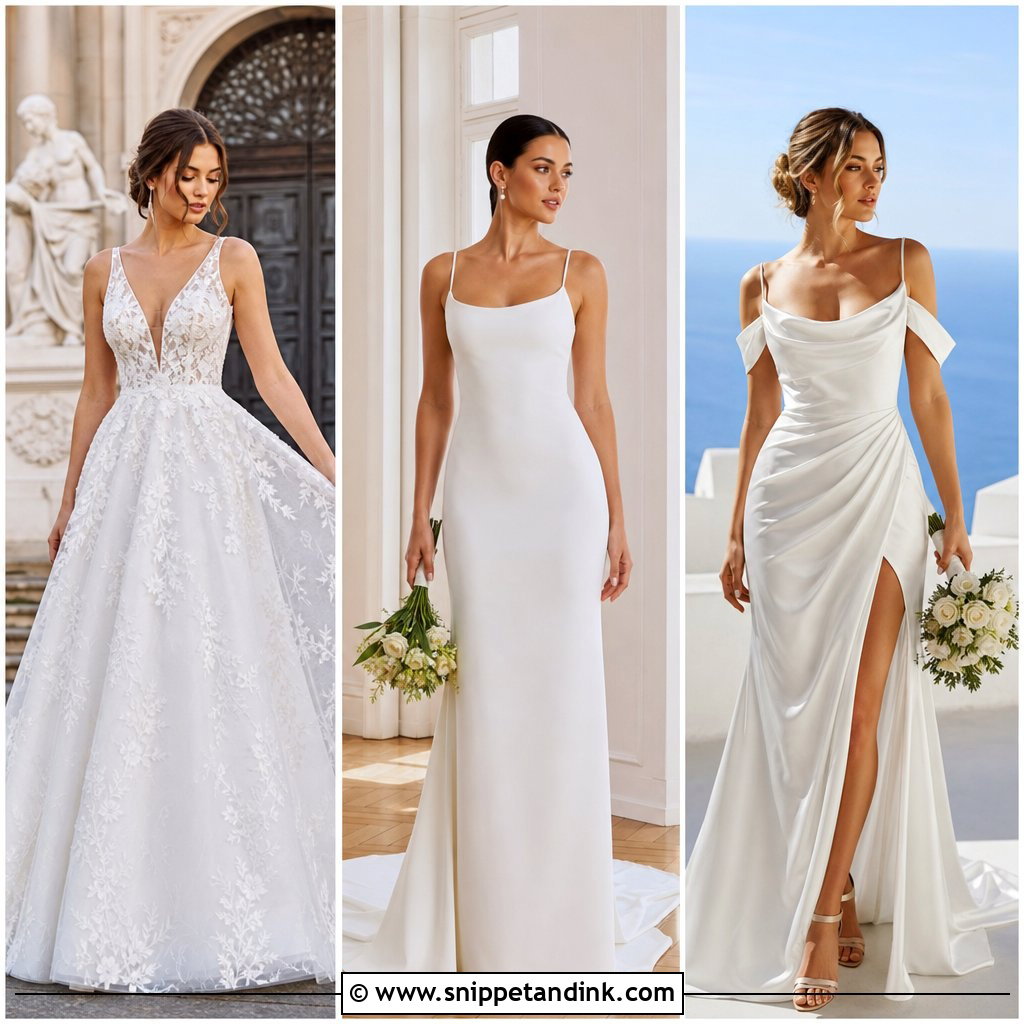
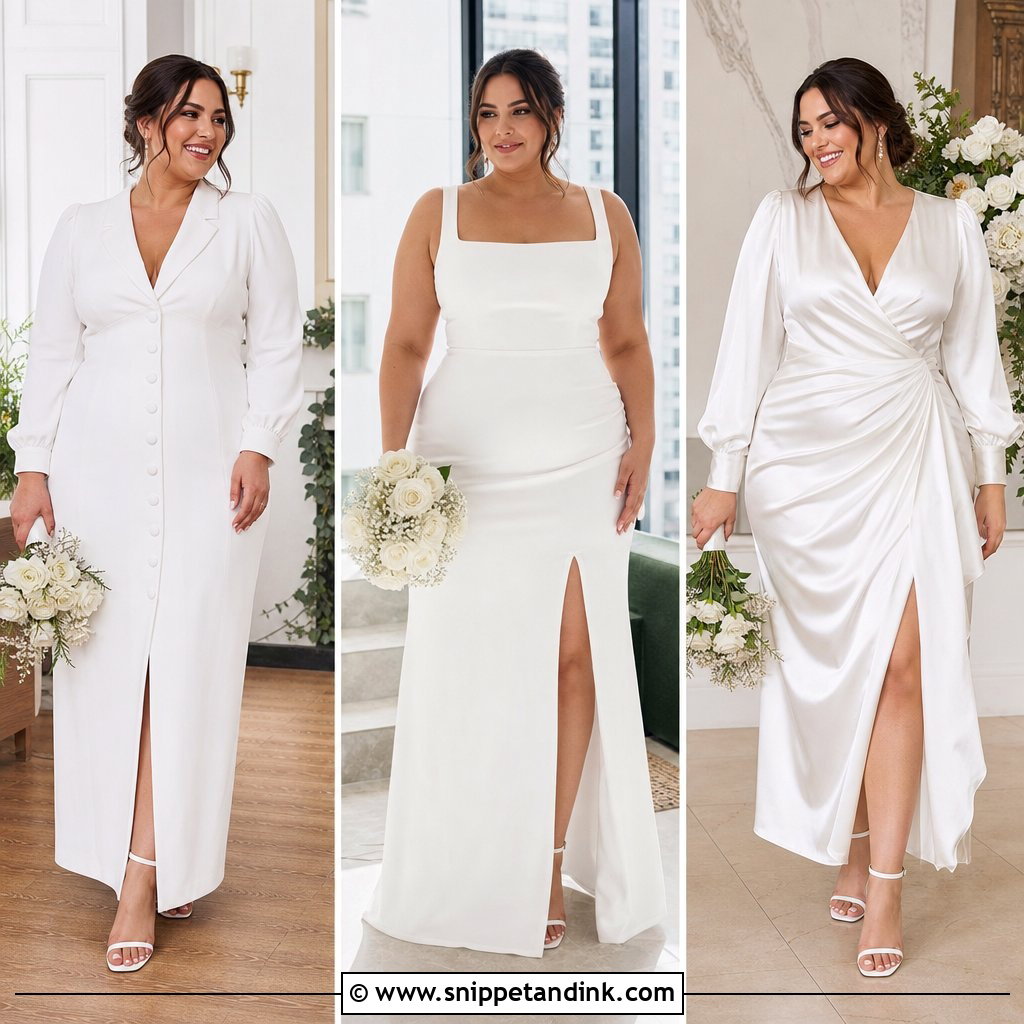
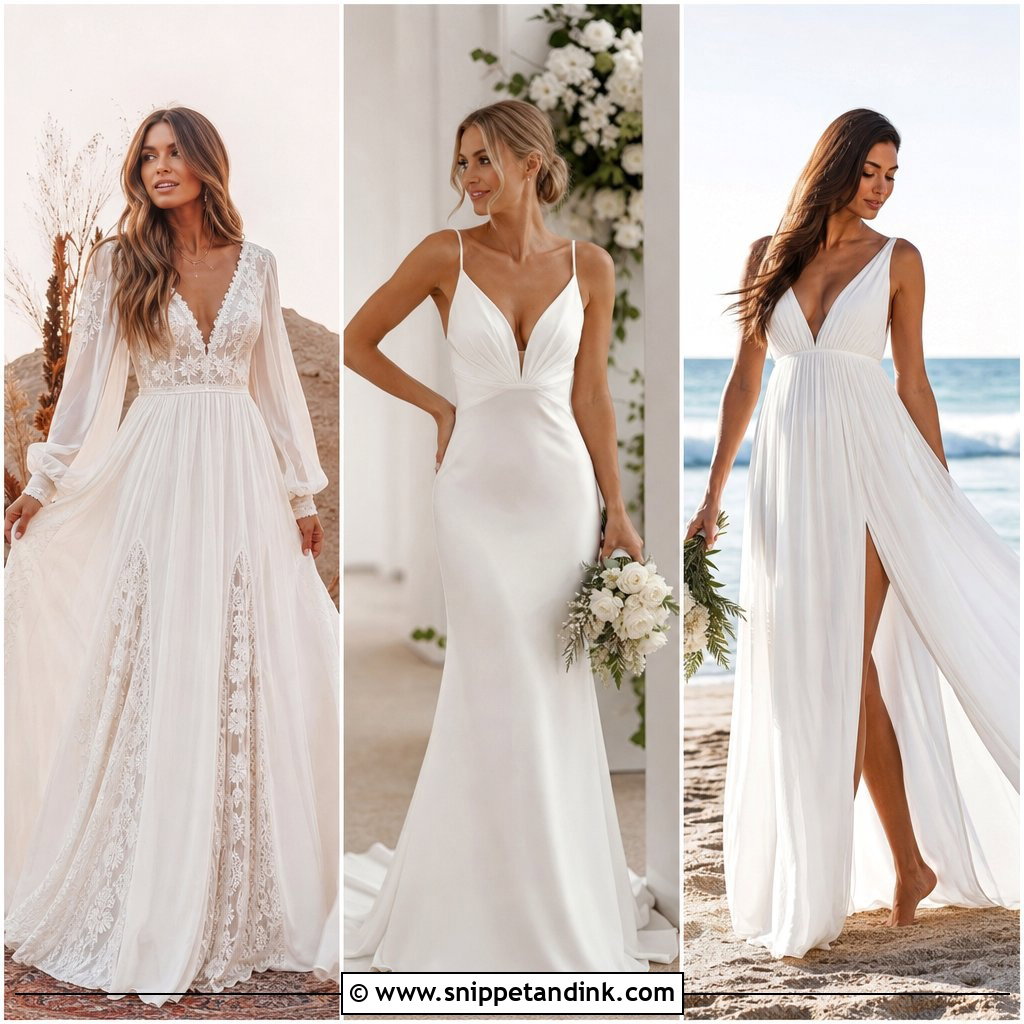
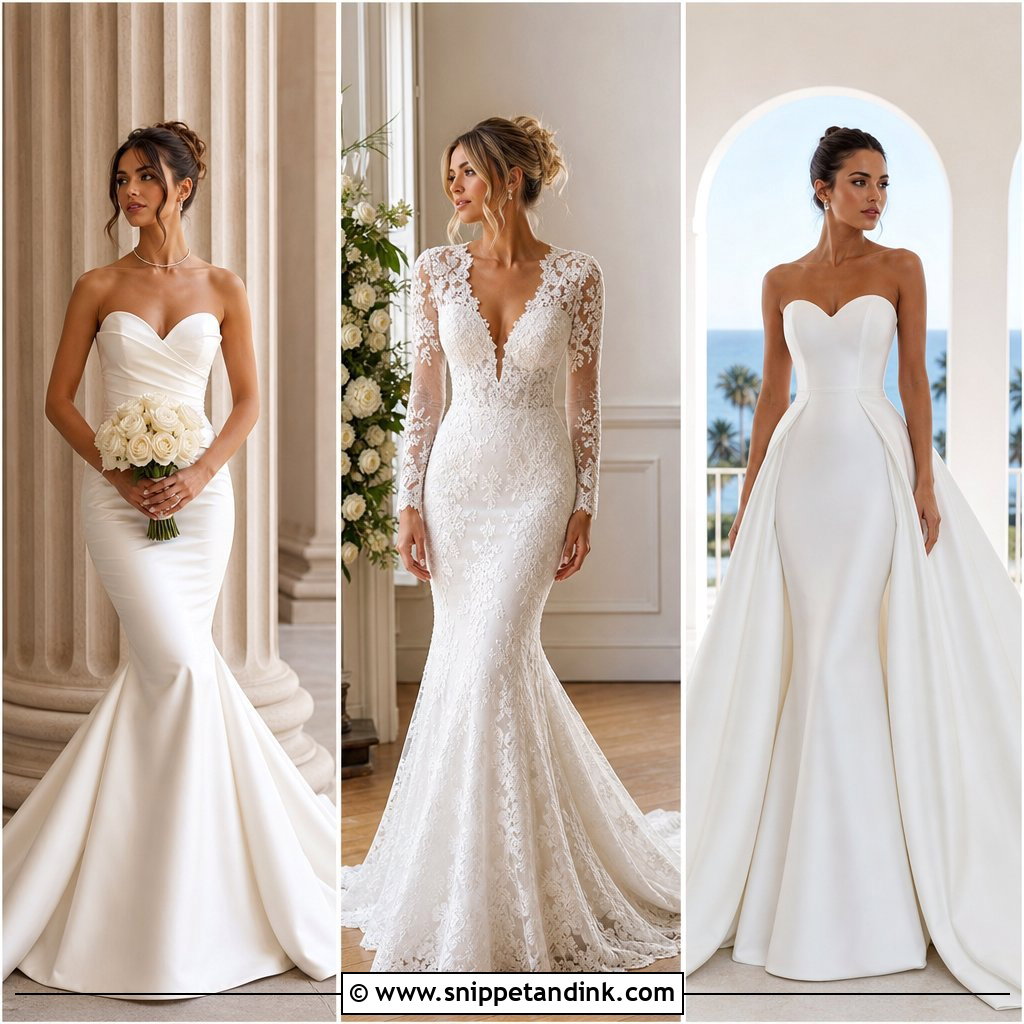
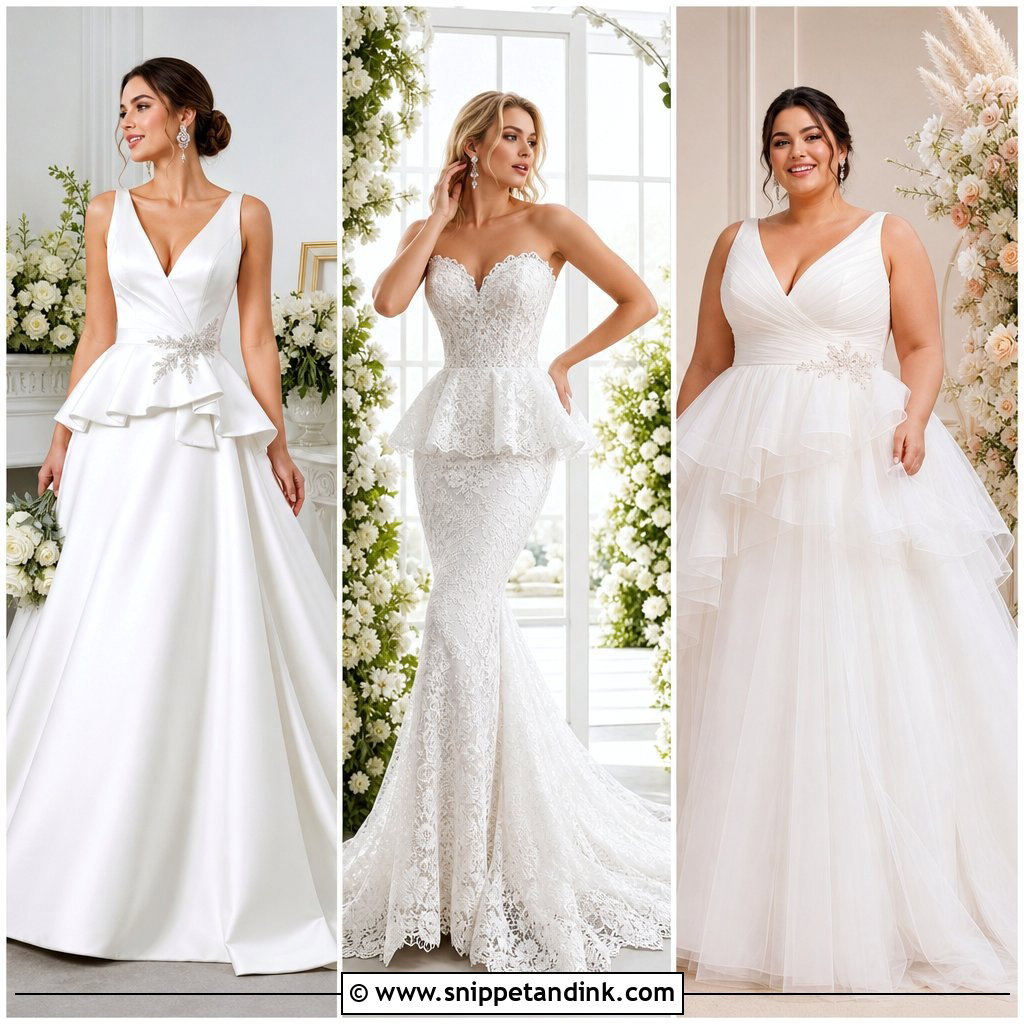
20. Two-Piece Bridal Wedding Dress
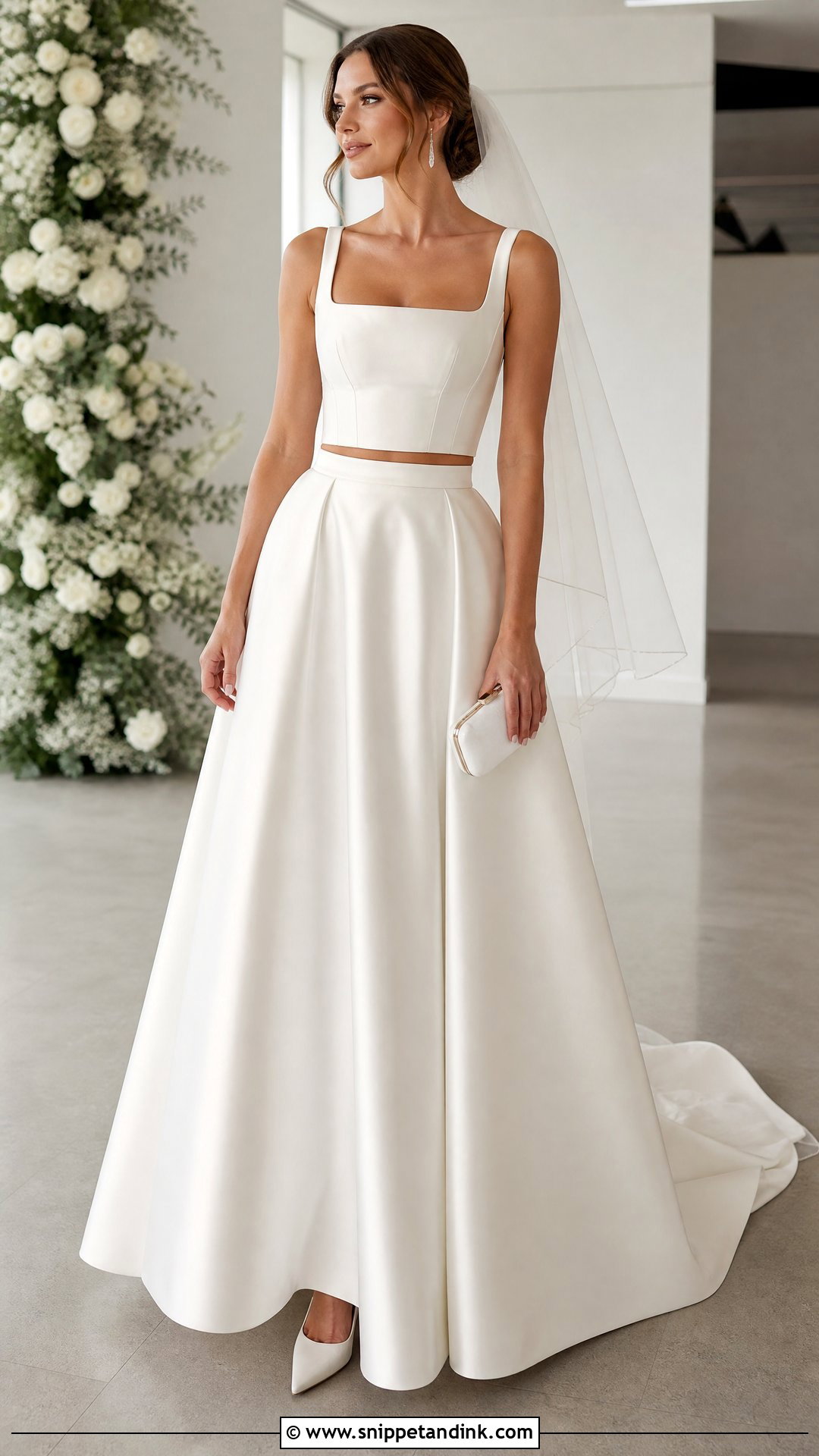
A two-piece is the most precise fit a small bust can get, because the top is sized on its own. Pair a fitted square-neck, halter or embellished corset top with a high-waisted A-line skirt. A sliver of skin at the waist defines your proportions; keep it narrow so it still reads bridal. Matching satin gives a single unbroken look, while a lace top over a crepe skirt adds contrast. Crop tops with coordinated skirts are now a regular option in bridal ranges. Finish with drop earrings, pointed heels, a fingertip veil and a compact clutch. Have both pieces altered at the same appointments so the waistlines meet when you move.
Push-Up Pads, Sewn-In Cups or Nothing at All?
This is the question I’m asked most by brides with a smaller chest, and the honest answer depends on the neckline more than the bust.
Nothing suits a plunge, a high neck, a halter or a bias slip. These necklines are cut to lie flat, and adding shape underneath changes how the fabric drapes. A skin-tone nipple cover is usually all you need.
Light sewn-in cups are right for strapless, sweetheart and corset bodices. They give the cup something to hold its curve against, so the top edge doesn’t fold inward when you lean over. Your seamstress stitches them to the lining, so nothing can slip or show.
Push-up pads I’d use with caution. They add volume, but they also push the bodice forward, so the dress has to be fitted with them in place, at every fitting, and you have to wear the same ones on the day. Swap them late and the bodice gapes or strains.
Whatever you choose, decide before the first fitting. Changing the foundation after the bodice has been taken in means taking it apart again, and that is the alteration that usually runs late.
Fit the Bodice to Your Ribcage and the Neckline Takes Care of Itself
No gown should be trying to make your body look like someone else’s. The right one fits securely, suits your taste and holds up from every angle. Scroll back through these 20 Small Bust Wedding Dress Ideas and you’ll see sweetheart curves, plunges, ruching, corsetry, high necks and embellishment all working in different ways. Try on silhouettes you’d normally skip before narrowing it down. Then put your energy into cup placement, strap length, bodice structure and how the dress moves. Comfortable shoes, restrained jewellery and a veil that sits with the neckline do the rest.
You'll Like These Ideas:






Leave a Reply