
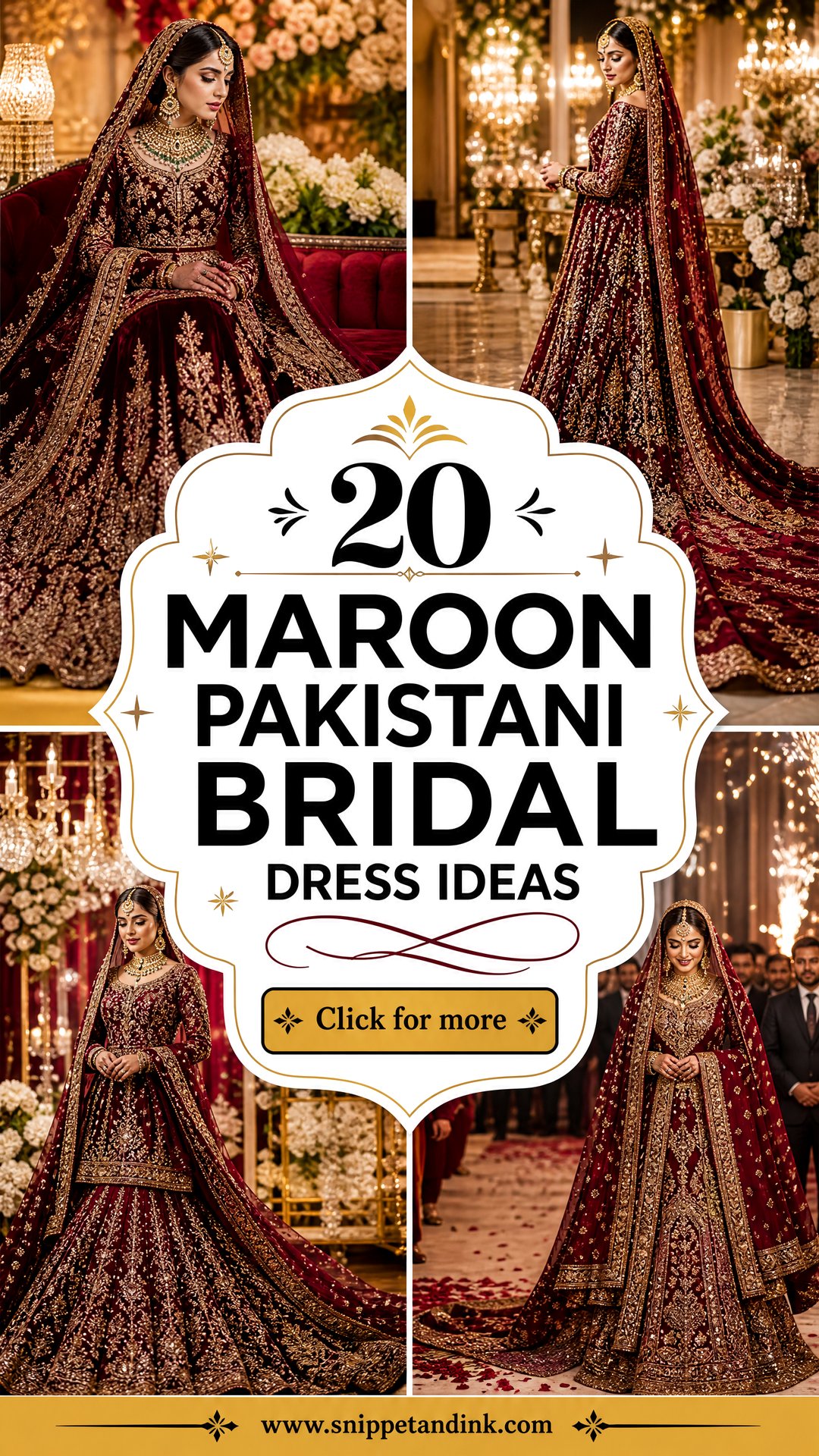
Maroon carries the depth and ceremony that Pakistani bridal wear is built around. It has stayed a constant in bridal collections, worked in velvet, silk and organza with zari, dabka and hand embroidery, and it sits comfortably beside antique gold, champagne, blush and emerald. The looks below cover lehengas, ghararas, shararas, pishwas, sarees and long gowns. When I help a bride choose, we talk about the season, the venue, her jewelry, where the dupatta will sit and, every time, how much the outfit weighs. Good tailoring makes even an elaborate piece wearable for a long evening.
How Long Zardozi and Dabka Work Really Takes
Hand embroidery is slow. A heavily worked bridal lehenga is stitched by artisans over weeks, sometimes months, and custom or designer orders commonly need several months from confirmation to delivery. I’d start conversations with a designer around six months before the baraat, longer if the piece is being made abroad and shipped. Timelines vary a lot between ateliers and busy seasons, so ask for a written delivery date.
Sign off on these before stitching starts
- A physical fabric swatch in your exact maroon, checked in daylight. Screens shift deep reds badly.
- A sample of the embroidery, or a photo of a section in progress, so you can judge density and thread tone.
- Blouse neckline, sleeve length and back depth, drawn and agreed on paper.
- How many fittings are included, and how alterations are handled if you’re ordering from another country.
If you are sending measurements rather than visiting, have them taken by a tailor, not at home, and wear the bra you’ll wear on the day. Ask for some extra seam allowance at the waist and side seams so a local tailor can adjust the fit when it arrives.
1. Maroon Velvet Pakistani Bridal Lehenga
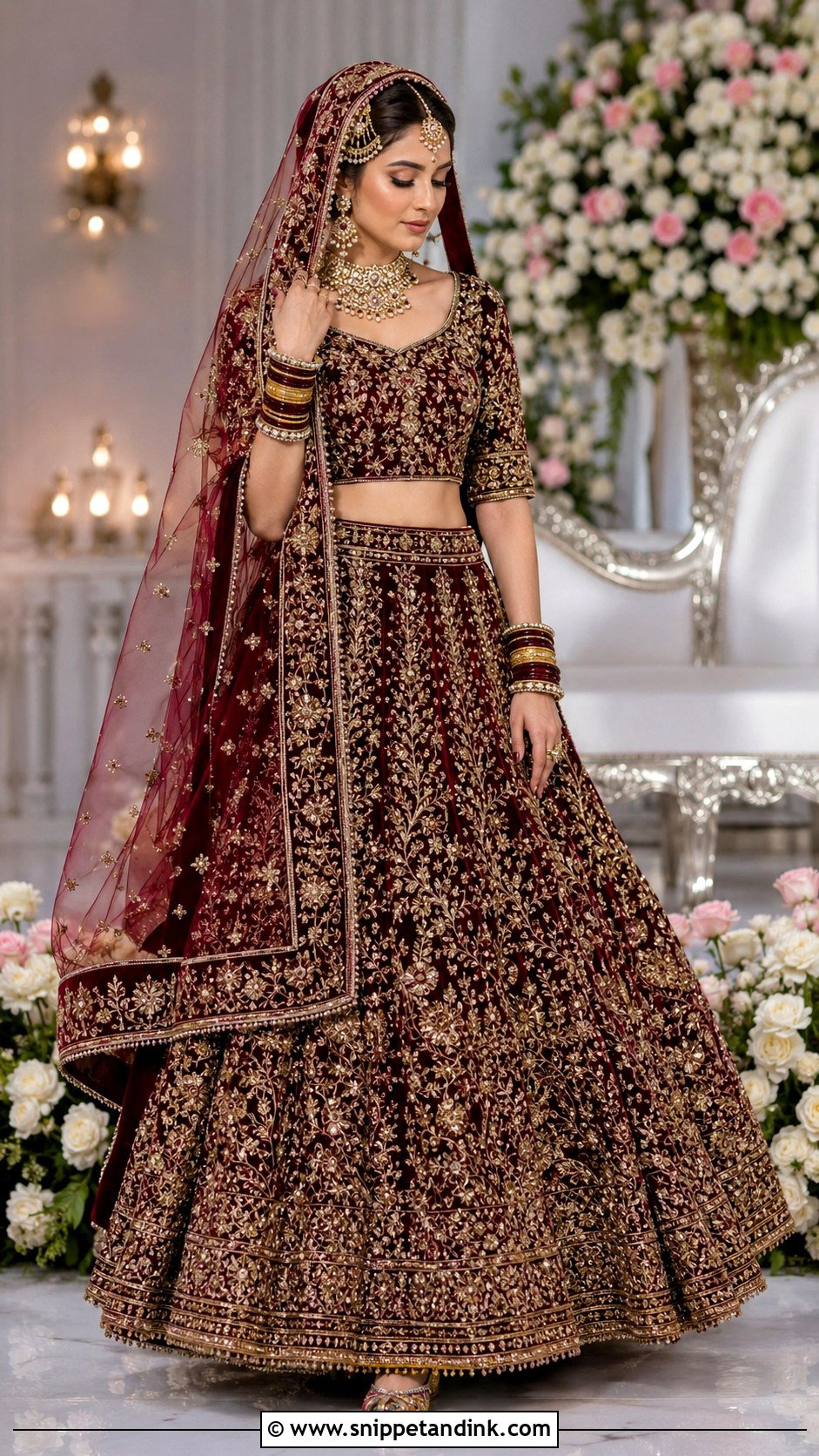
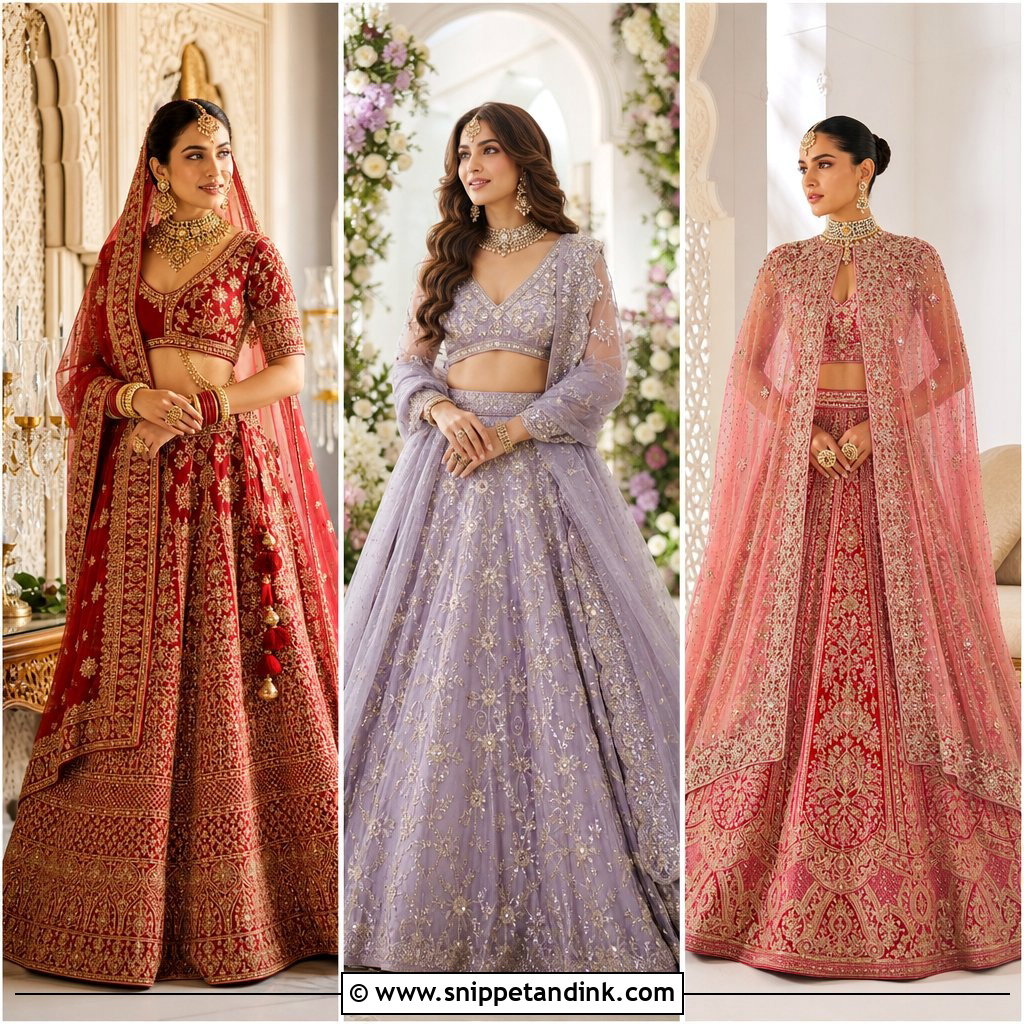
Velvet is the winter baraat fabric, and it’s the warmest thing you can wear on a stage under lights. Choose a structured skirt with antique gold zardozi, dabka and kora work concentrated at the border and rising in balanced motifs, with a fitted velvet choli and elbow sleeves. Velvet already looks heavy, so I steer brides away from embroidery on every inch; spaced work reads richer and is easier to carry. A lightly scattered organza dupatta over the head and a velvet-edged one across the shoulder finish it. Antique gold jhumkas, a choker, matha patti and embroidered khussas complete the set. Leave the neckline open enough for the jewelry to breathe.
2. Maroon Farshi Pakistani Bridal Lehenga
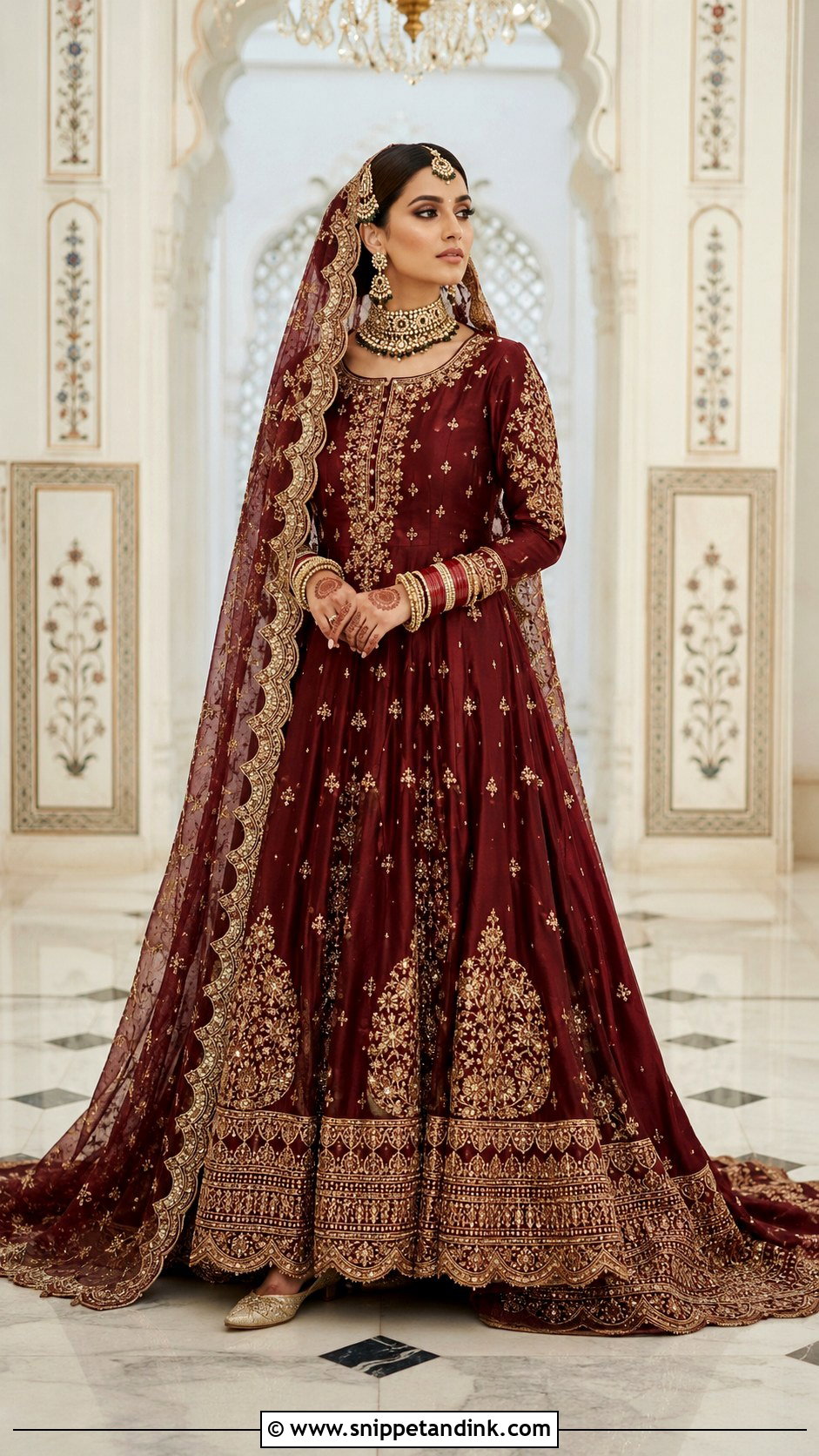
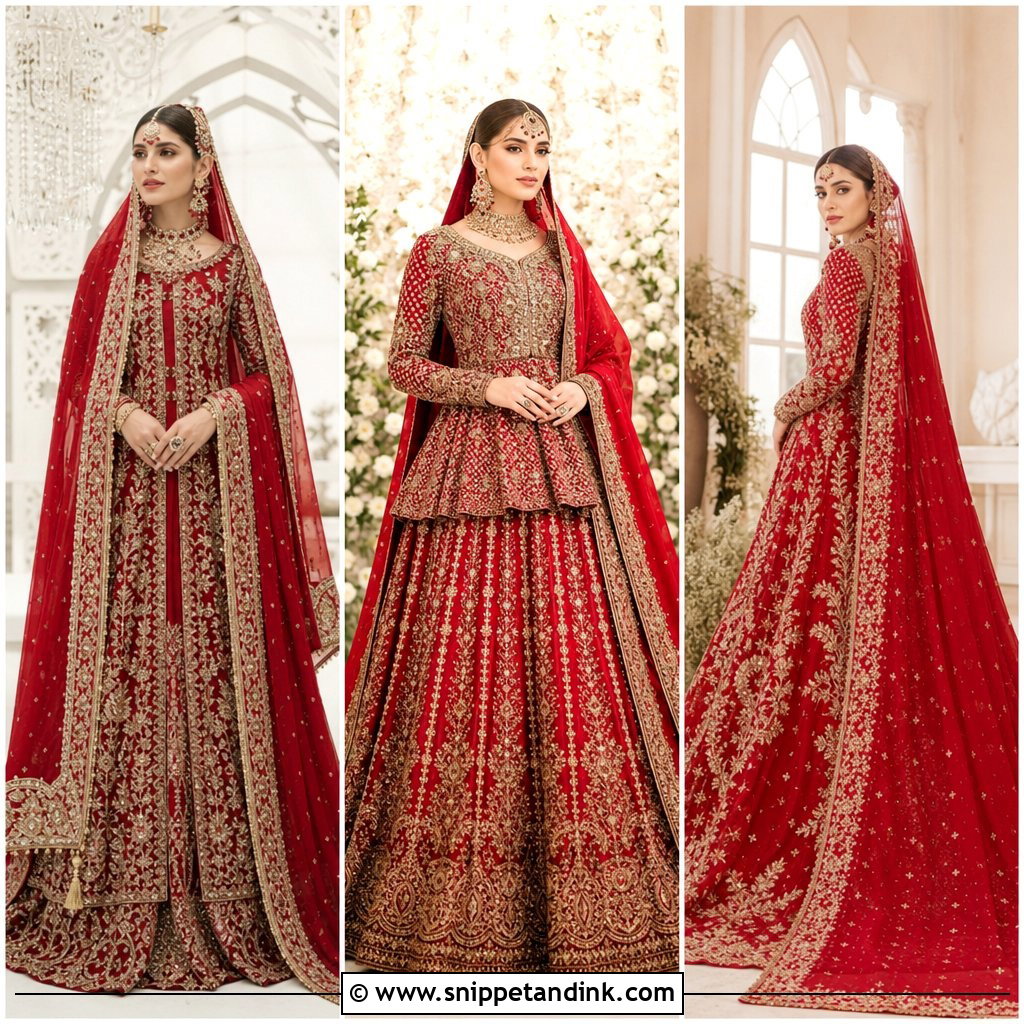
The farshi lehenga is about the entrance. A maroon farshi lehenga trails behind you while a long, straight shirt gives coverage and a tall line. Raw silk holds the shape, decorated with antique gold vines, arched motifs and spaced sequins, with a wide embroidered hem doing the heavy lifting. A sheer maroon dupatta with a scalloped border goes over the head; a kundan choker, drops, stacked bangles and pointed gold khussas finish it. Talk to your tailor about the trail length for your actual venue. A long farshi on a crowded hall floor gets stepped on constantly, and a slightly shorter one photographs just as well.
3. Maroon Pakistani Bridal Gharara
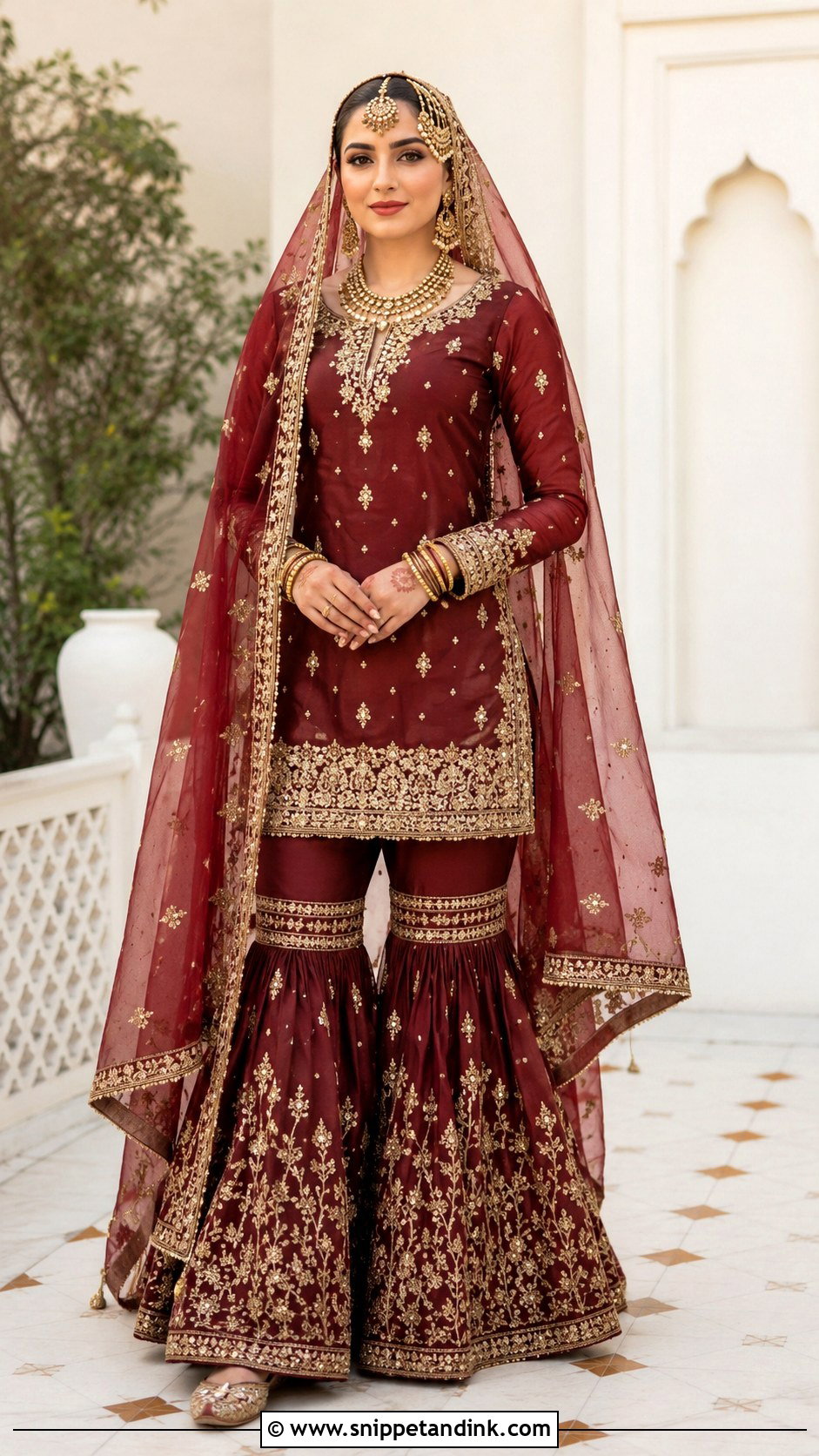
Everything about a gharara depends on where the knee joint sits. Too high and it looks like a skirt; too low and you trip on the flare. I have it pinned while the bride is standing in her wedding shoes. Pair it with a short fitted kameez with a curved hem, full sleeves and gold work at the neckline and cuffs. The flares get zari, pearls and fine gota, and silk or jamawar gives the structured finish. A matching organza dupatta over the head, with one side brought forward to show the border, plus a passa, layered necklace, jhumkas, bangles and khussas, complete it. The shirt should stop high enough to show the gota band.
4. Maroon Pakistani Bridal Sharara With Peplum
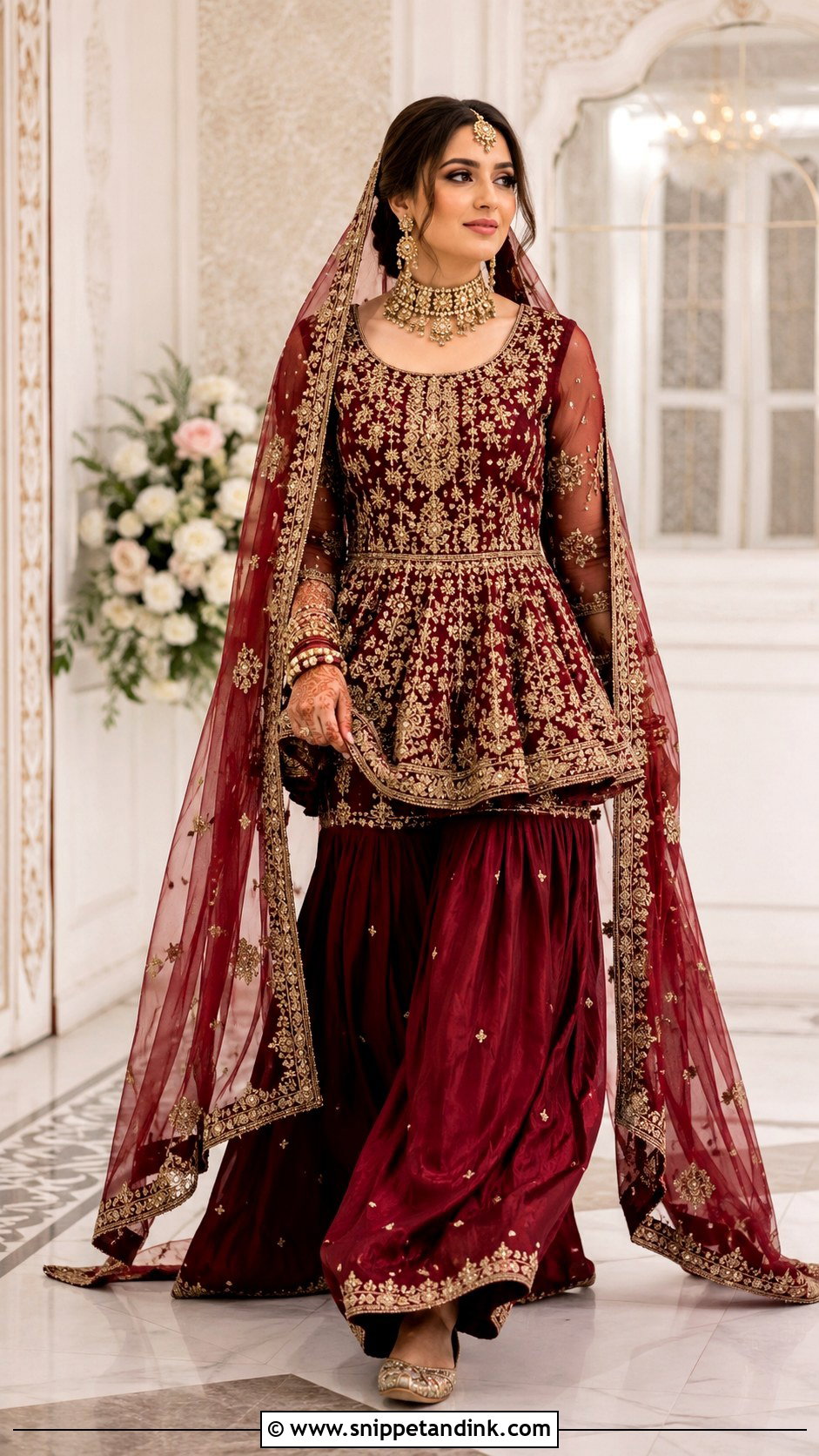
Comfort is the reason to choose a sharara with a peplum. The pants flow and the bodice flares gently from the waist, usually best at hip length so it balances the wide legs. Dabka, pearls and small florals on the bodice can repeat along the sharara border. Fluid silk or chiffon works best for the pants; stiff fabrics make a sharara stand out like a skirt rather than swing. A sheer dupatta embroidered on all four sides goes over the head and wraps softly around one arm. Add a medium choker, matching earrings, a delicate tikka and metallic khussas. Ask for a soft waistband and a light lining, which makes sitting on stage far easier.
5. Maroon Pakistani Bridal Pishwas With Lehenga
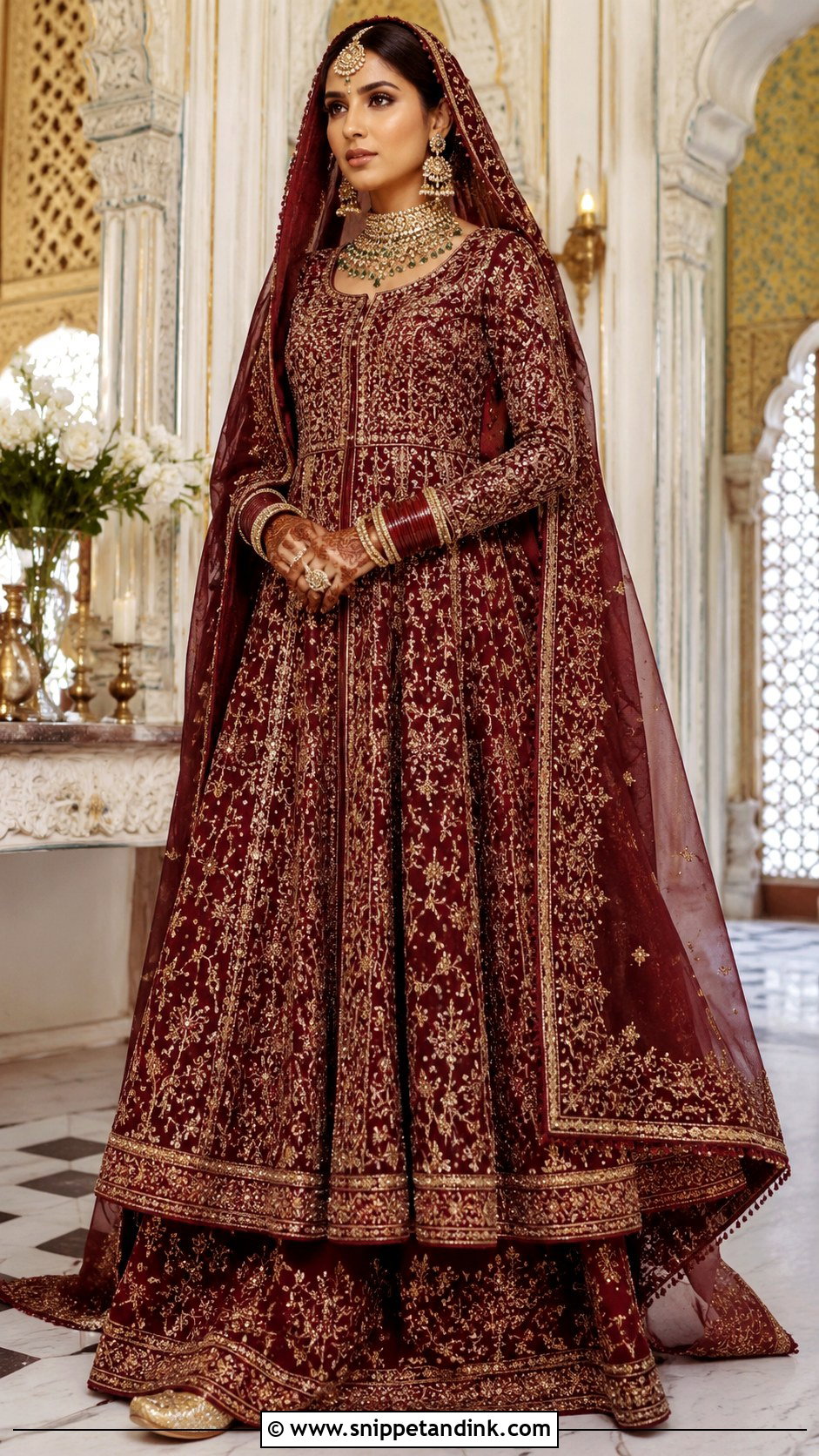
A pishwas gives fullness without a fitted blouse, which many brides find more comfortable. Look for a floor-length pishwas with a shaped bodice, a high waist and many flowing panels, with fine gold work at the neckline, sleeves and lower panels. A lightly worked lehenga underneath adds volume so it doesn’t hang flat in photos. All those panels mean a lot of fabric weight hanging from the high waist, so I ask for the bodice to be lined firmly and checked at the shoulders. A broad-bordered dupatta covers the head, pinned at one shoulder. A round kundan necklace, jhumkas, a small nath, bangles and gold khussas finish it, with full sleeves and a higher back for more coverage.
6. Maroon Pakistani Bridal Anarkali Gown
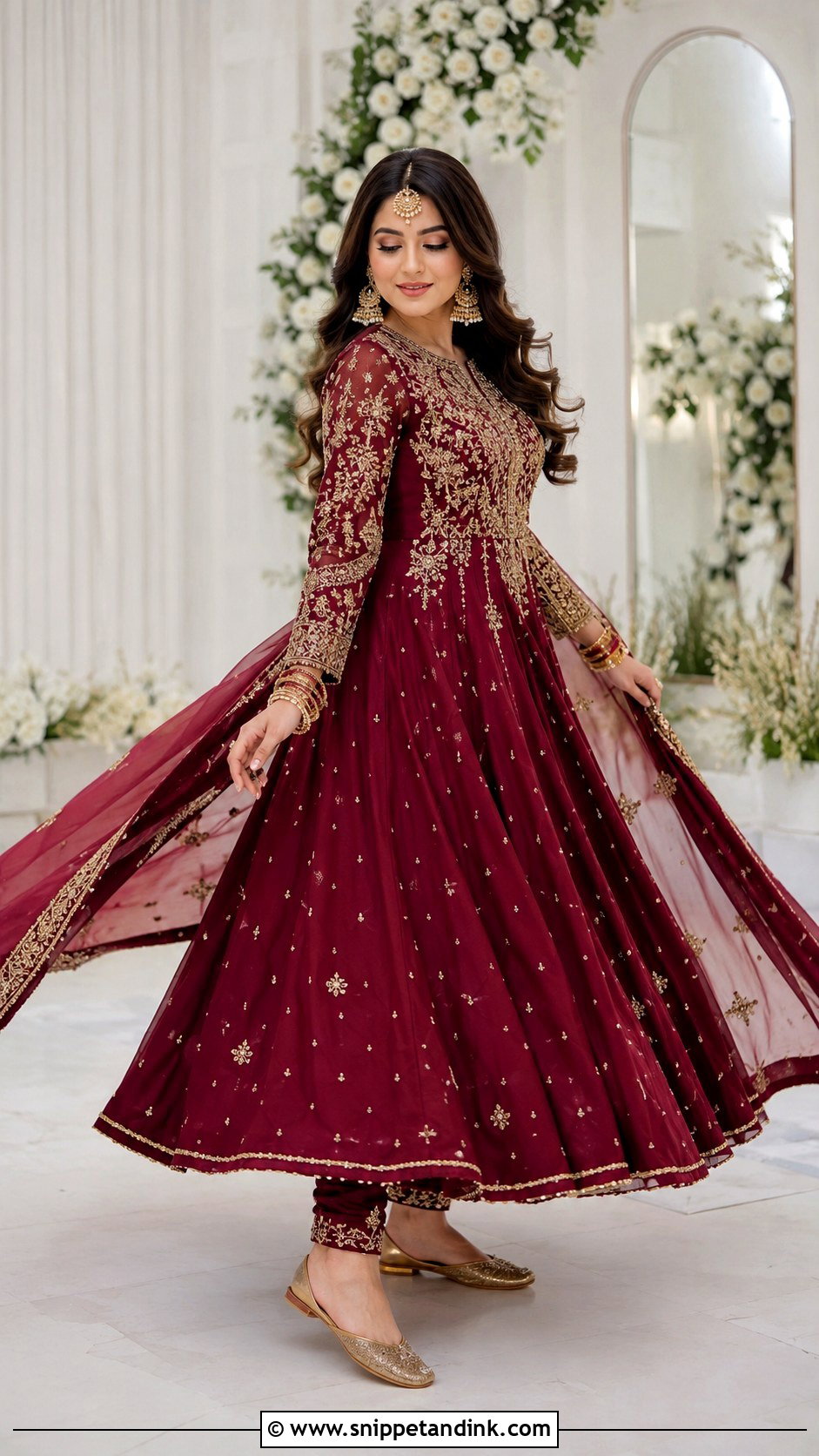
An Anarkali gown swings with every step, thanks to a fitted top and a generous circular skirt. Silk gives structure; chiffon moves more freely. Embroidery at the neckline, waist, sleeves and hem frames it, and scattered motifs keep the skirt from looking empty. A circle skirt drops at the bias sections after hanging, so I let it hang for a day before the hem is leveled. Wear fitted trousers underneath, with a long organza dupatta, a central tikka, statement earrings, layered bangles and closed-toe khussas. A clear waist seam stops the fabric overwhelming a petite frame, and taller brides can carry larger motifs and a wider border.
7. Maroon Pakistani Bridal Maxi With Train
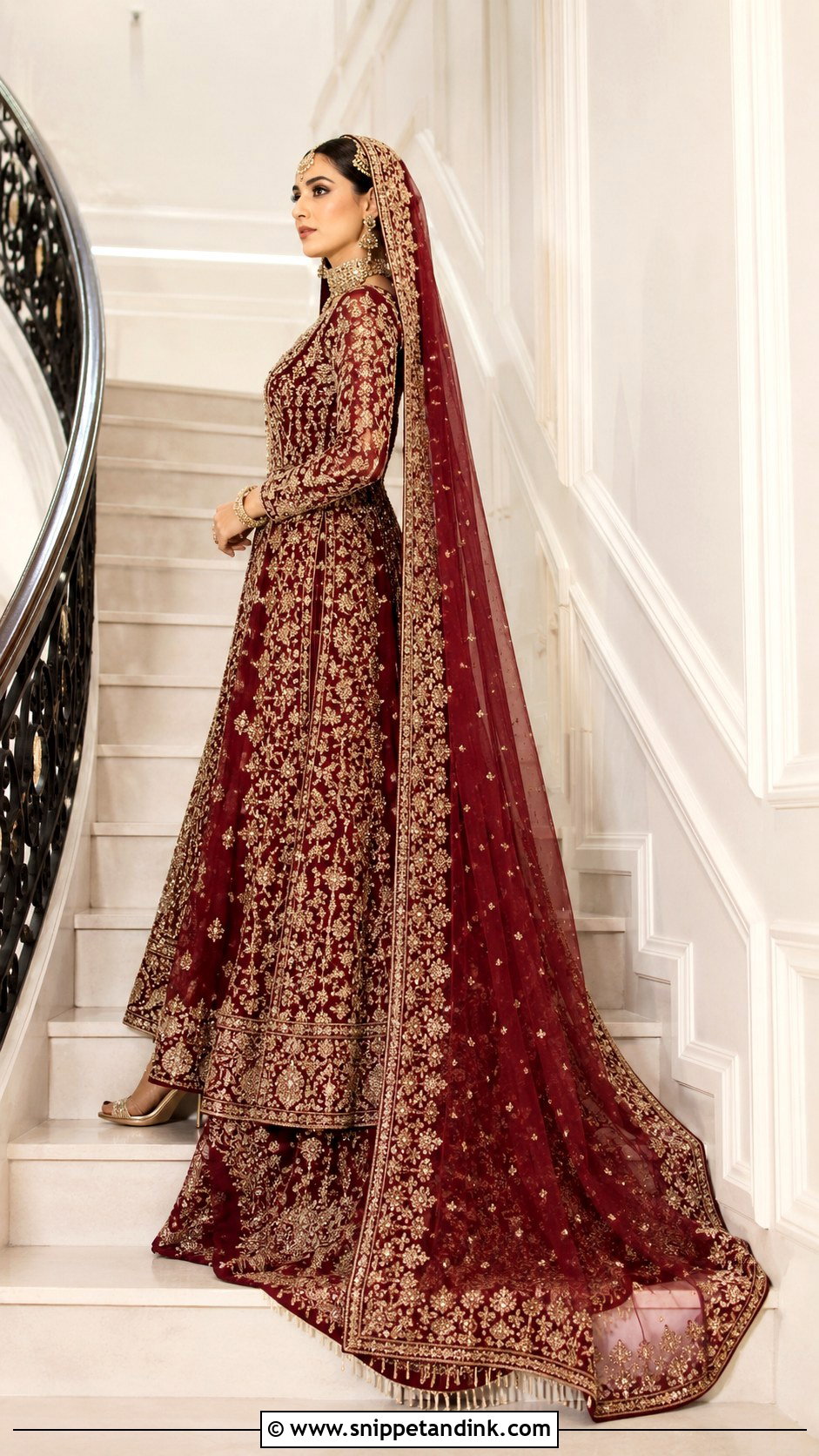
A maxi with a controlled train is the modern choice in this list, but it keeps all the handwork. Choose a fitted bodice, natural waist and a skirt that widens gradually rather than an overly bulky shape. Vertical embroidery lengthens; a dense gold border finishes the train. Sheer full sleeves with embroidered cuffs add coverage. Place a light organza dupatta over the head without hiding the shoulder work. A refined choker, earrings, a delicate matha patti and block-heel gold shoes suit it. Ask for a wrist loop or a hidden bustle in the train; it’s a small detail that lets you walk to the stage without someone carrying your hem.
8. Maroon Front Open Pakistani Bridal Gown
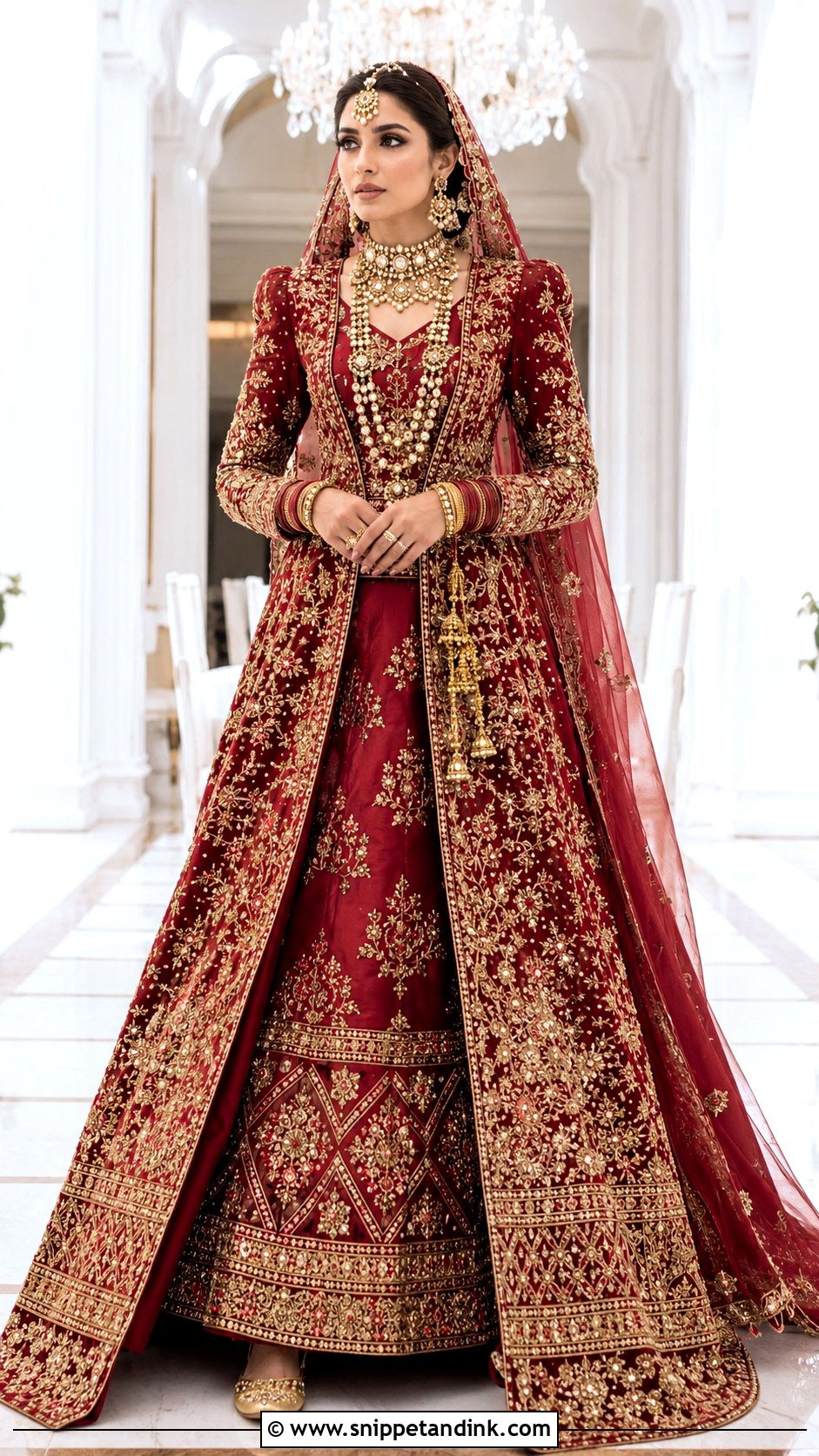
Front-open gowns are all about layering. The outer gown takes the heavy embroidery at the neckline, opening, sleeves and hem, while the lehenga or flared inner dress underneath stays fairly plain, so the outfit never looks crowded. Velvet suits winter; raw silk works in any season. A defined shoulder and a lightly shaped waist stop it looking like a robe. Here’s the fitting check I never skip: the opening should start below the waist, or the layers part awkwardly when you sit. Hidden hooks keep it closed without breaking the border. Add a sheer maroon dupatta edged in gold, a choker, a long necklace, earrings, a tikka and embroidered khussas.
9. Maroon Pakistani Bridal Fishtail Lehenga
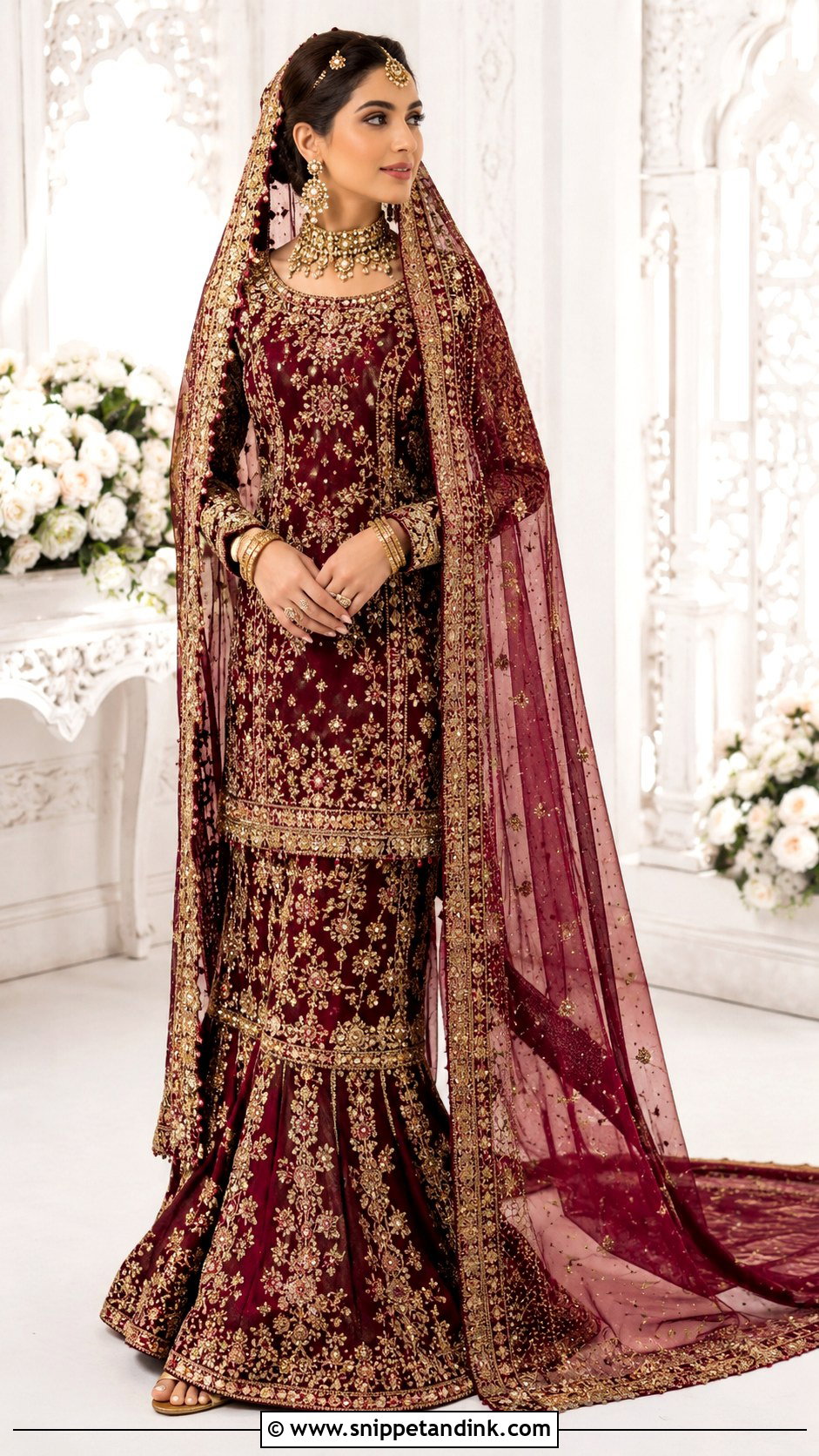
A fishtail lehenga suits a bride who wants a sleek, sculpted line. It fits smoothly through waist and hips and widens below the knee, with a long shirt ending at the upper thigh so the flare stays visible. Vertical gold motifs lengthen, while concentrated work at the hem emphasizes the shape. The fit is the hard part: too tight through the knee and you can’t climb the stage steps. I ask for enough flare, an adjustable inner fastening and a walk up a real staircase at the final fitting. Finish with a sheer dupatta over the head, a narrow second drape on one shoulder, a kundan choker, long earrings, bangles and comfortable gold heels.
10. Maroon Layered Organza Pakistani Bridal Lehenga
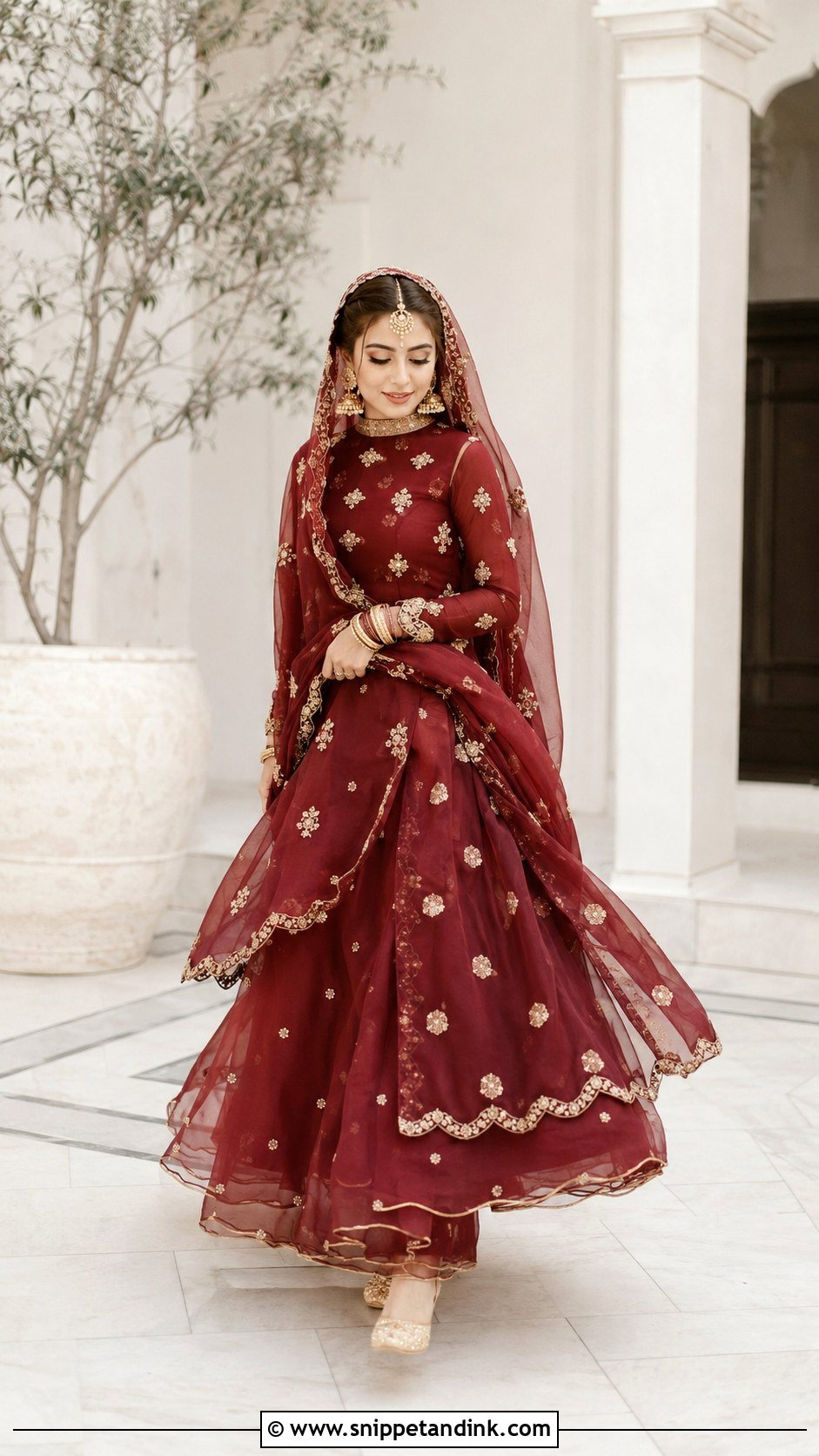
Organza gives volume without weight, which makes a layered organza lehenga the most practical choice for a summer baraat. Choose a structured blouse with full or three-quarter sleeves and light gold work at the neckline. Build the skirt from several soft layers finished with embroidered panels or a wide scalloped border. Dense work kills organza’s airiness, so keep motifs, sequins and metallic thread well spaced. A satin lining improves comfort and stops it turning see-through under stage lights. Add a matching dupatta with narrow embroidery, a medium necklace, jhumkas, a tikka, bangles and gold khussas. A blouse ending at the natural waist defines it more than a very short choli.
11. Maroon Pakistani Bridal Saree
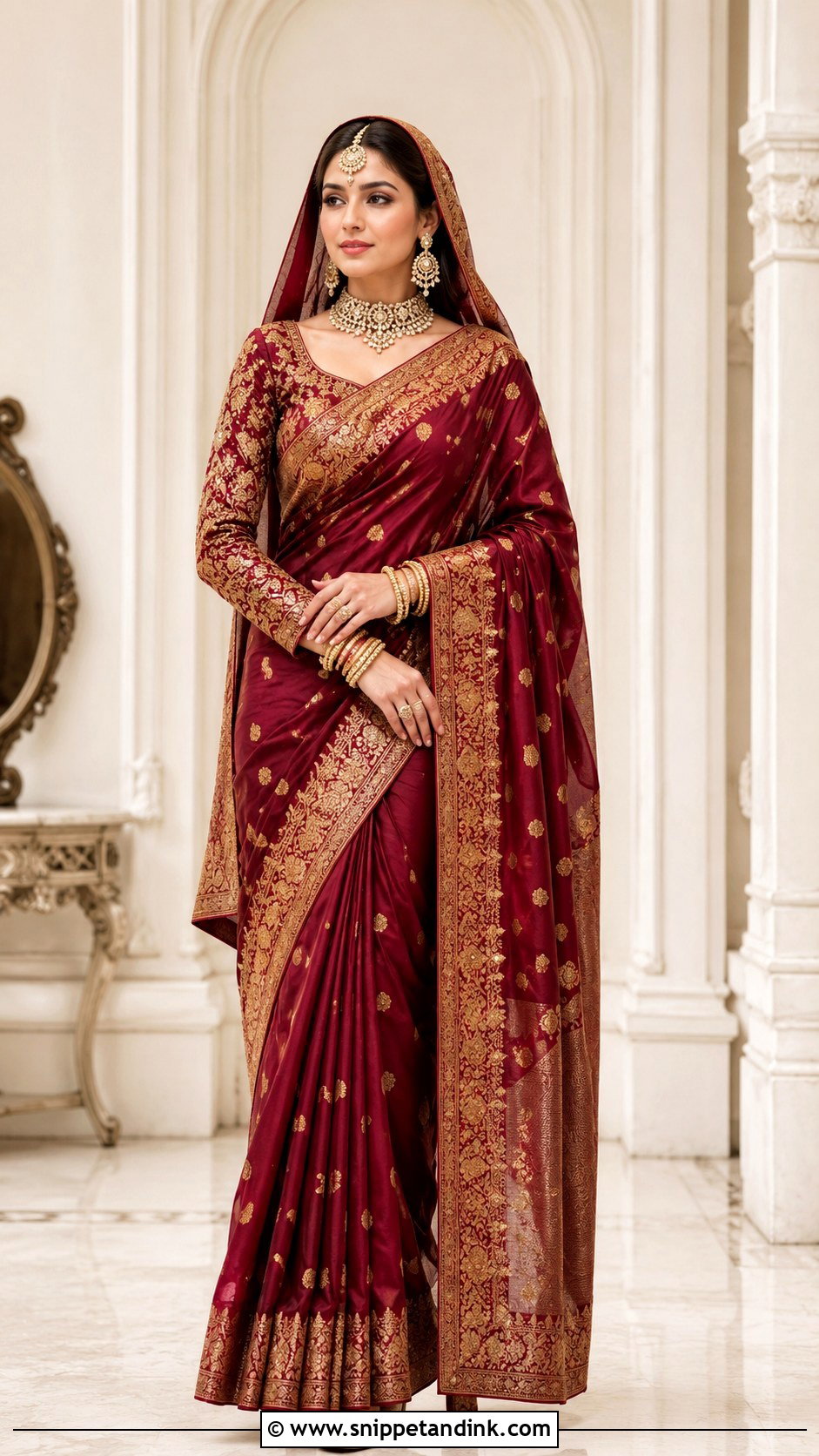
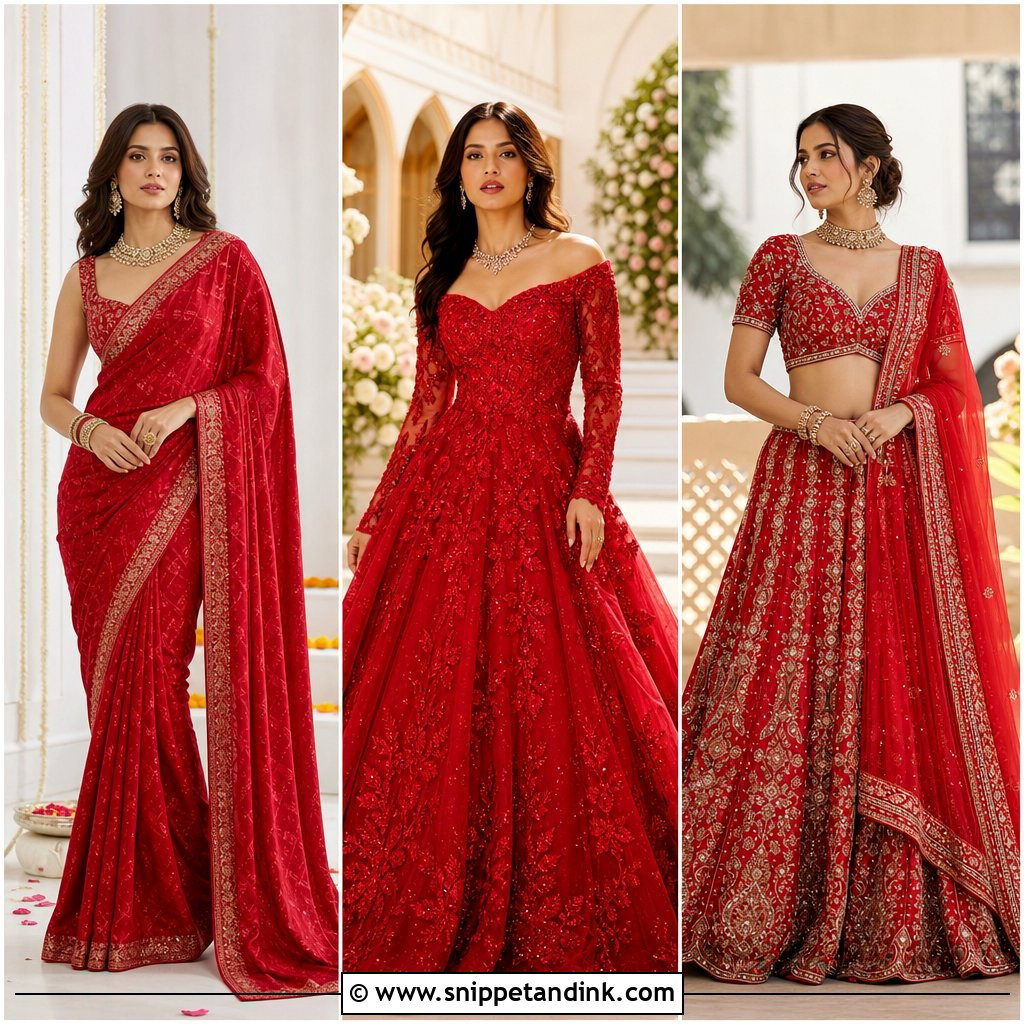
A saree is the refined alternative to a lehenga, and it still shows off serious handwork. Velvet, silk or organza works depending on the season. Pair it with a fitted embroidered blouse with full sleeves, a modest neckline and worked cuffs. An antique gold border defines the drape; scattered florals add shine without stiffening the fabric. The pleats decide whether a saree looks smooth or bulky, and heavy borders make them harder to set, so have them done by someone experienced, or choose a pre-stitched drape. Hidden snaps at the shoulder and waist add security. Wear the pallu over the head or across one shoulder, with a choker, statement earrings, a tikka, bangles and comfortable heels.
12. Maroon Angrakha Pakistani Bridal Gharara
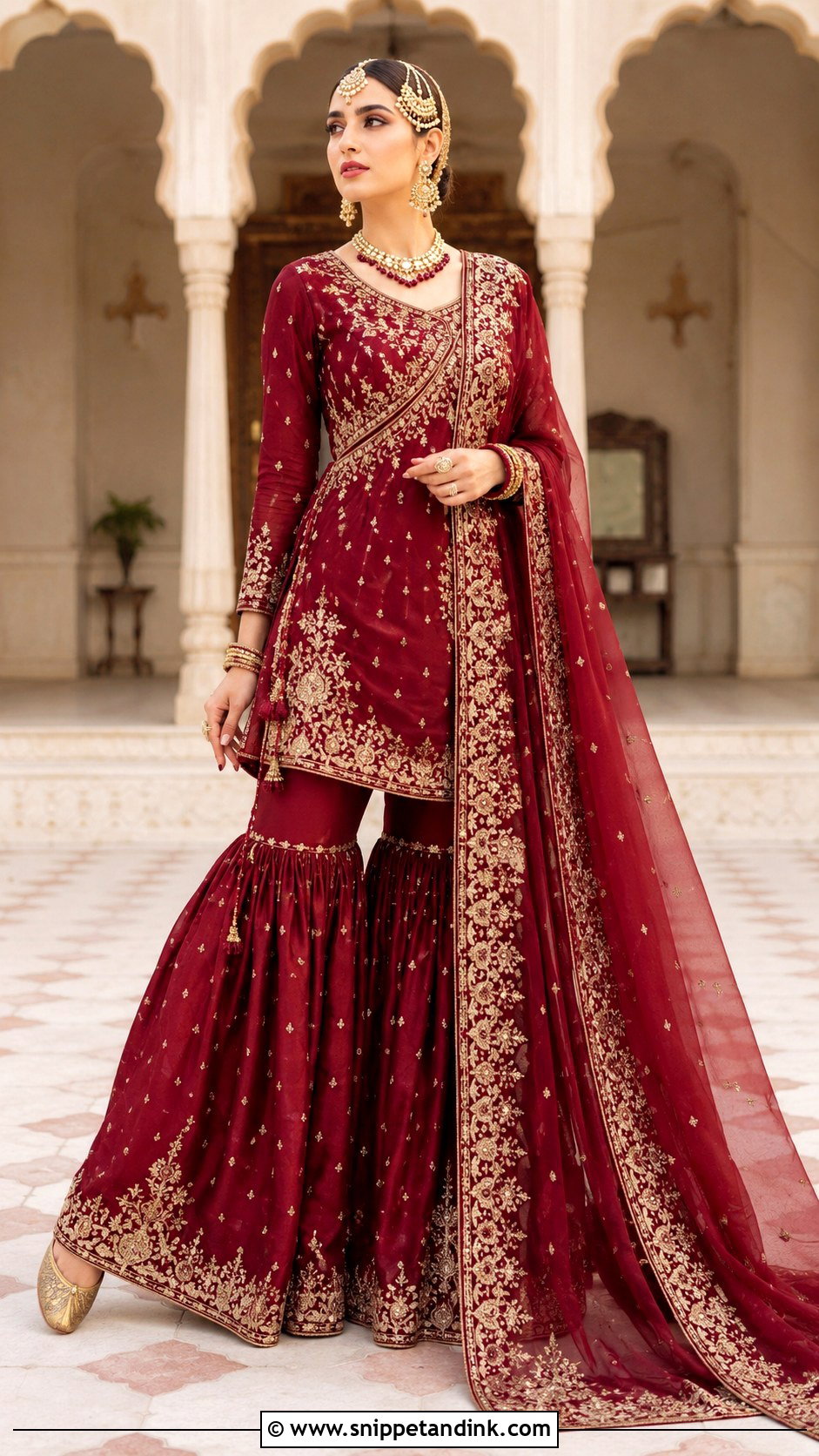
Diagonal lines are what an angrakha brings to a traditional maroon bridal gharara. Choose a wrap-effect bodice with an embroidered neckline, tassels and a gently flared hem, over a farshi gharara that opens into floor-skimming volume below the knee. Gold thread, pearls and small paisleys link the two pieces. Ties alone won’t hold the overlap through a long night, so ask for it to be stitched closed with the ties left decorative. The gharara should just skim the floor without folding under your shoes. An organza dupatta over the head with its broad border along one side of the face, a passa, layered necklace, earrings, bangles and gold khussas finish it.
13. Maroon Pakistani Bridal Jacket Lehenga
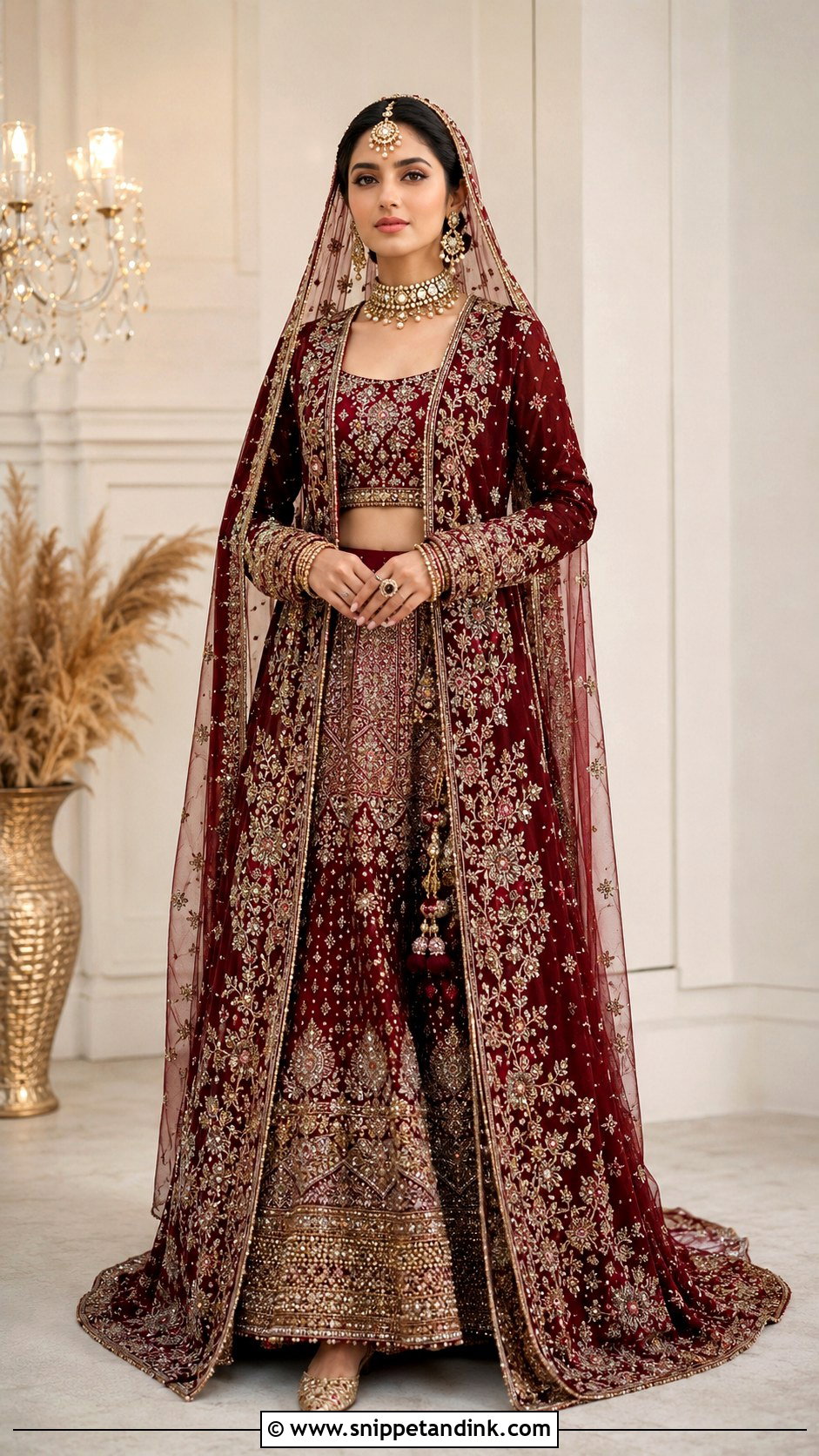
A long embroidered jacket over a lehenga gives a polished fusion look. Start with a simple fitted blouse and a moderately flared skirt, then put the detail in a knee-length or floor-length jacket left open at the front to show the waist and skirt panel. Velvet, raw silk or structured organza change the volume. Gold architectural motifs along the opening and hem make it regal. Shoulders are where a jacket succeeds or fails; avoid stiff padding, and lift your arms at the fitting to check the sleeves move. Keep the shoulders clear under a light dupatta, with a choker, earrings, tikka, bangles and pointed khussas. You can wear the jacket again later on its own.
14. Maroon Long Shirt Pakistani Bridal Dress
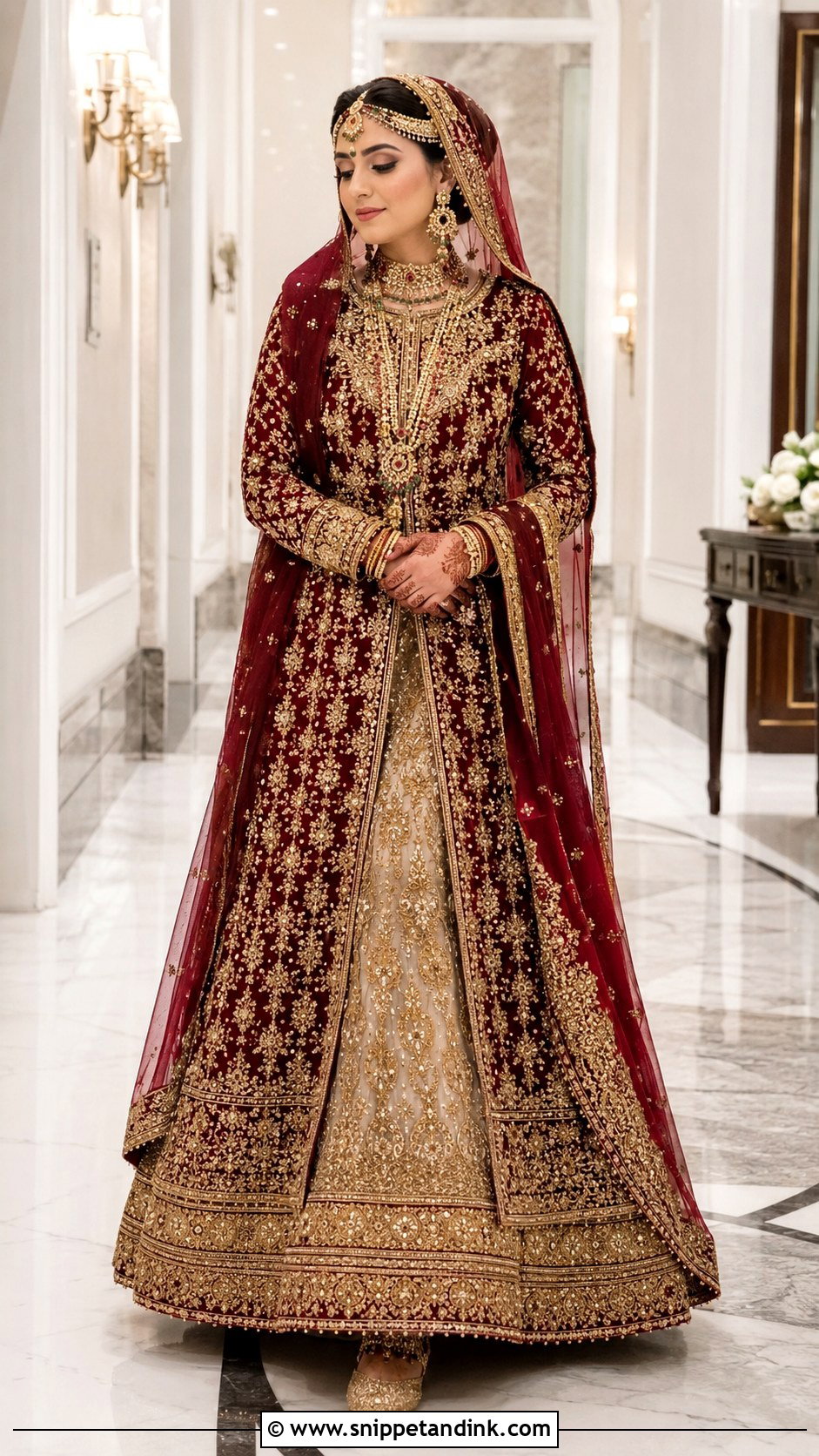
Modest and tall: a floor-length shirt over a lehenga gives that silhouette. Choose a straight or gently flared shirt with side slits showing glimpses of the embroidered skirt. Put gold work at the neckline, sleeves, front panel and hem, leaving small plain areas so the eye can rest. A lehenga with a contrasting gold border adds movement. Proportion depends on height. On a petite bride I use narrower borders and higher slits so the shirt doesn’t swallow her; a tall bride can carry a broad hem and larger motifs. A maroon organza dupatta over the head, brought forward over one arm, plus a long necklace, earrings, matha patti, bangles and khussas, complete it.
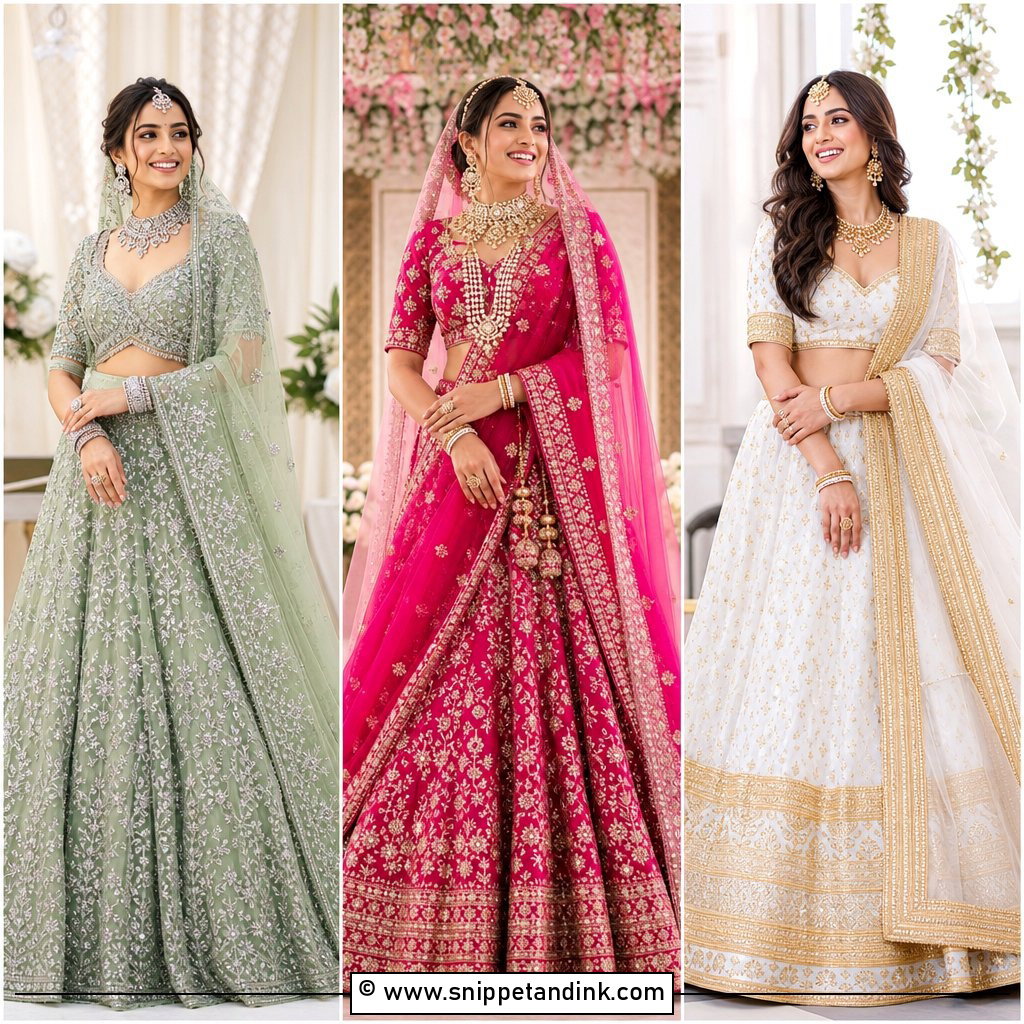
15. Maroon Pakistani Bridal Lehenga With Green Dupatta
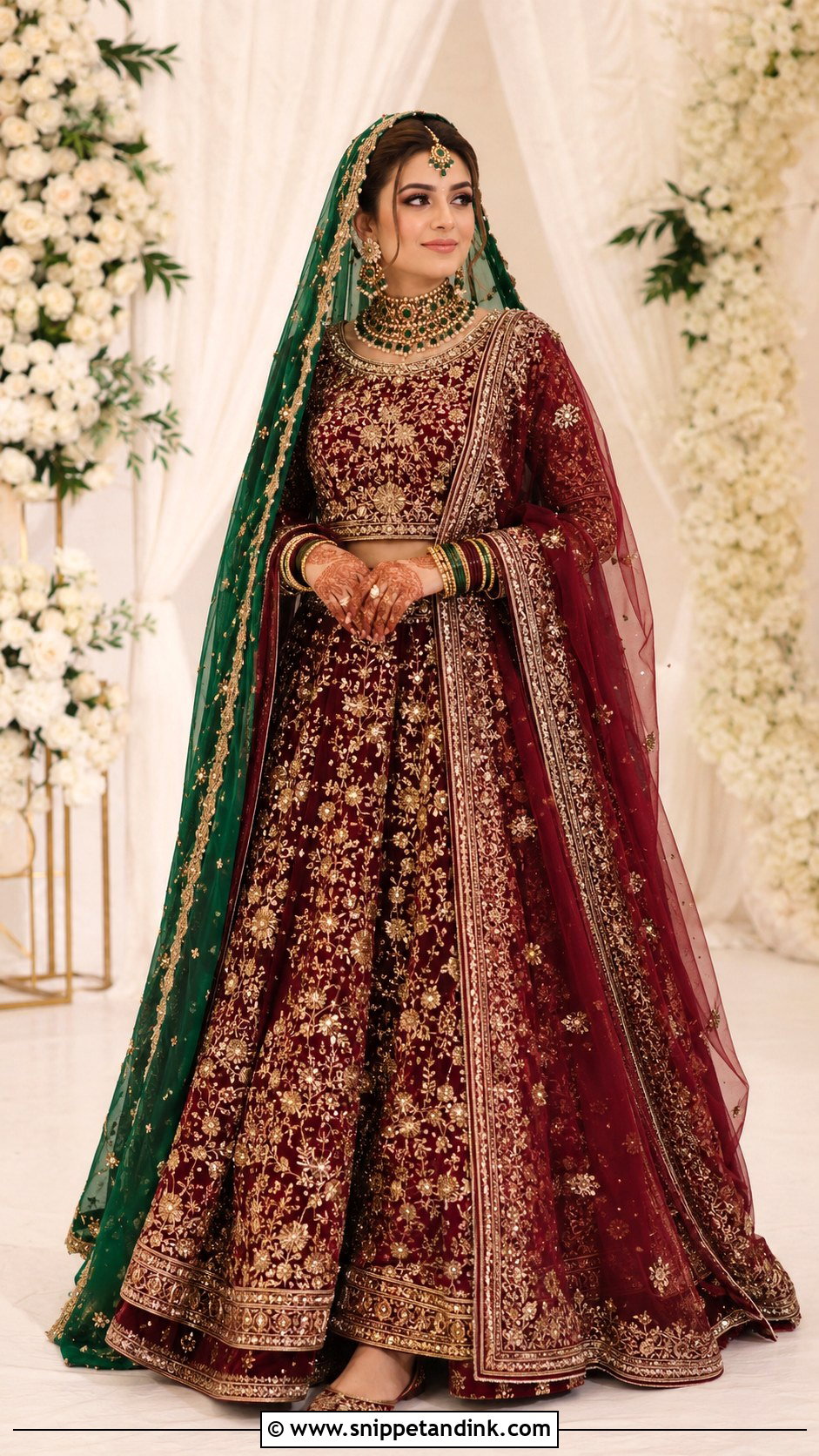
Maroon with emerald is traditional and high contrast. Build the look on a maroon silk lehenga and matching choli, then add a green dupatta with maroon and gold borders. Keep the green in the drape so the pairing looks deliberate, and tie it in with small green details in the skirt embroidery. Antique gold jewelry with emerald accents, a tikka, bangles and maroon khussas complete it. Wear the green dupatta over the head and a lighter maroon one across the torso, which spreads the color evenly. Muted emerald works better than a bright one; bright green next to maroon makes both look harsher in flash photography and pulls attention from the gold work.
16. Maroon Pakistani Bridal Lehenga With Blush Dupatta
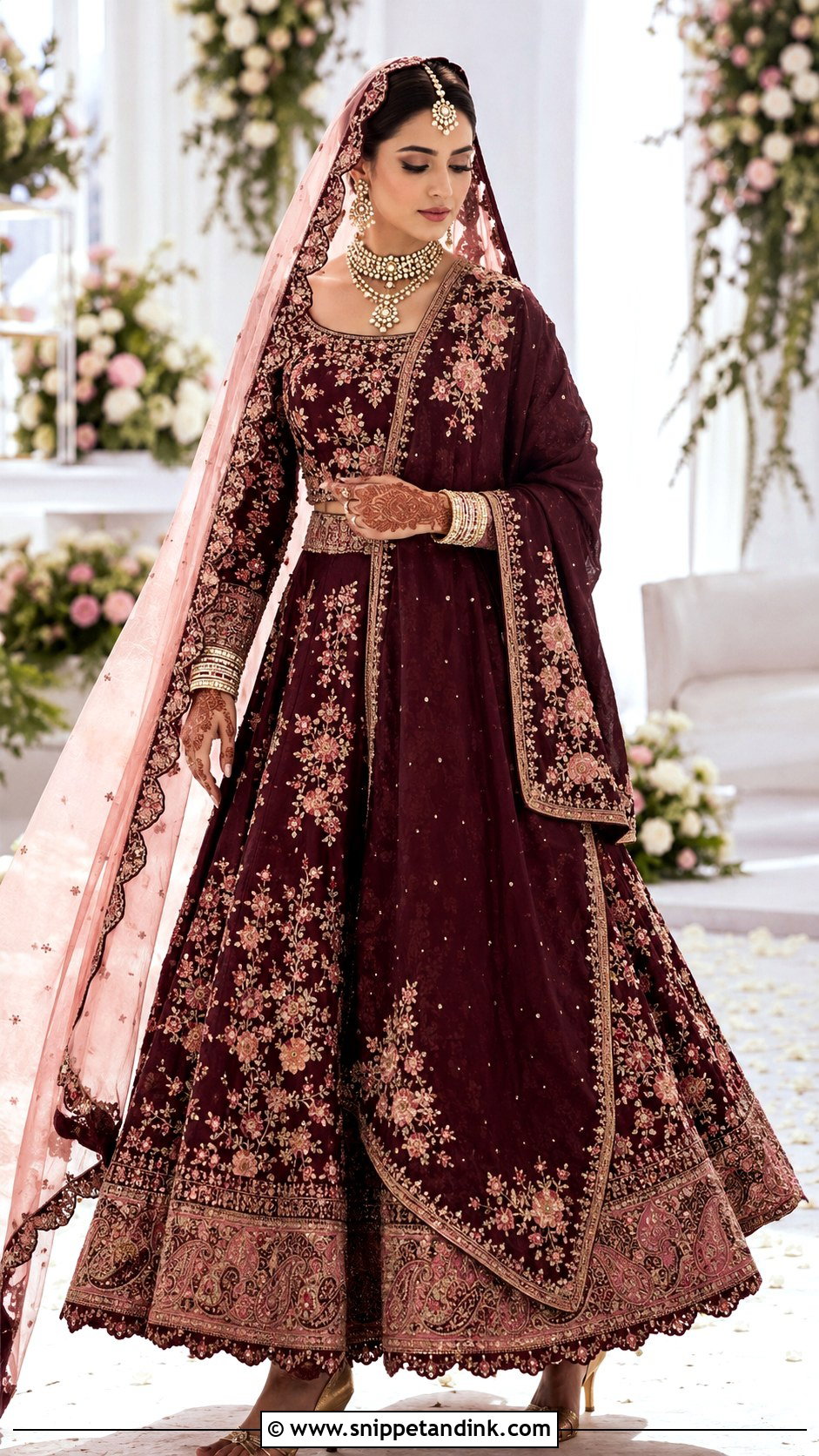
A blush pink dupatta softens a heavily worked maroon lehenga and puts a lighter color near your face, which brides with warm skin often find flattering. Choose a maroon raw silk skirt with antique gold and muted pink florals, and a blouse repeating that color story. The blush dupatta should be sheer enough to show your hair and jewelry, with a scalloped maroon border. Wear it over the head with a lighter maroon dupatta across one shoulder. Keep the pink cool and quiet so maroon stays dominant. Pearl-accented kundan, a delicate tikka, bangles and gold heels or khussas finish it, and a soft pink lip connects the two colors.
17. Maroon And Antique Gold Pakistani Bridal Lehenga
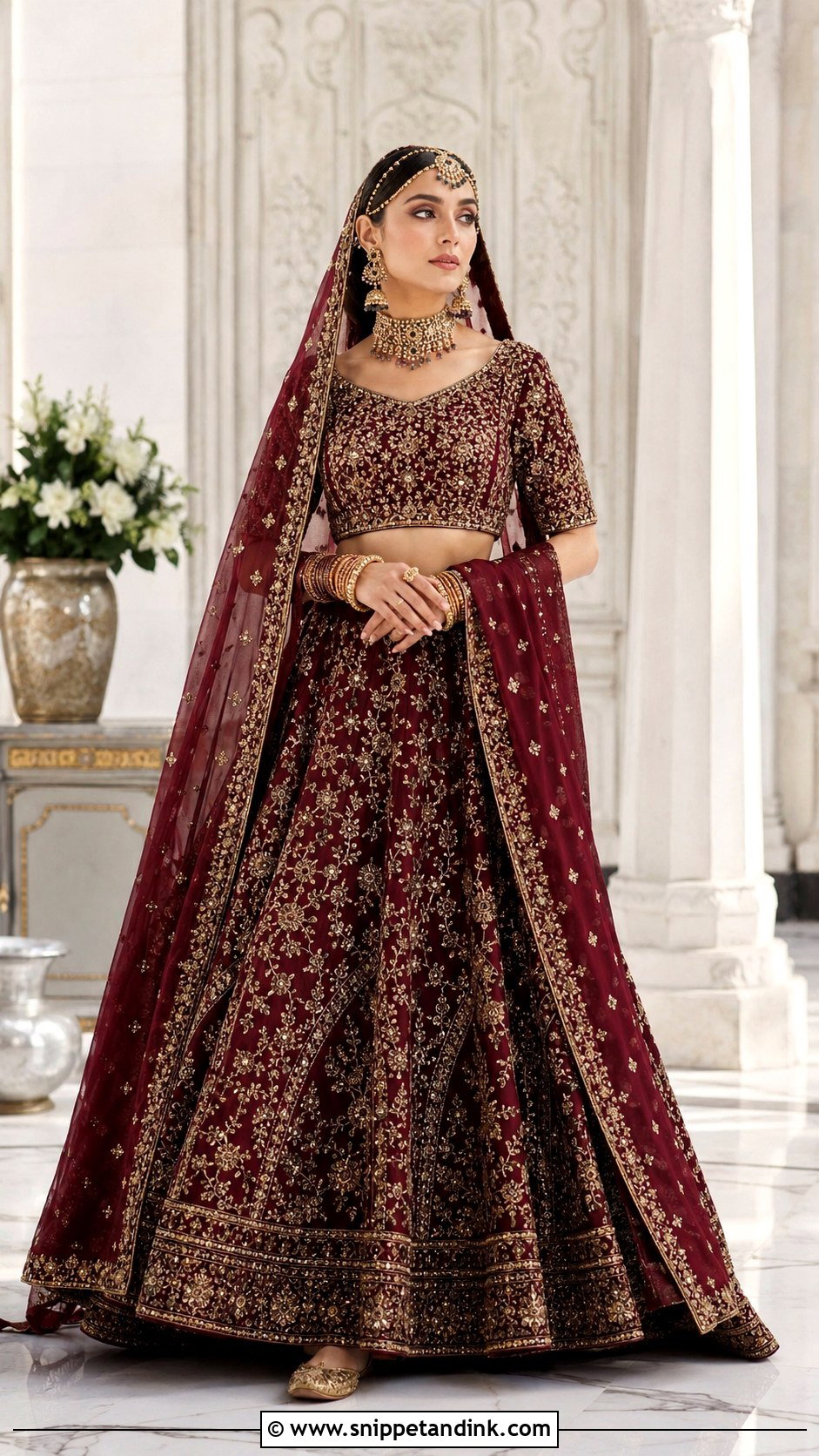
Antique gold makes maroon look deeper and older in the best sense. Use aged metallic thread, dabka and muted sequins across the border, blouse and scattered skirt motifs, rather than bright yellow gold. Bright gold thread on maroon can look brassy under stage lights, which is why I steer brides toward antique finishes. Choose a fitted choli, a defined waistband and a skirt that moves easily. A maroon dupatta with a substantial antique gold edge goes over the head, with a second sheer drape across the arms. Leave visible maroon between motifs so the work has depth. Antique-finish jewelry, jhumkas, a matha patti, bangles, khussas, warm neutral makeup and a neat bun complete it.
18. Maroon And Champagne Pakistani Bridal Dress
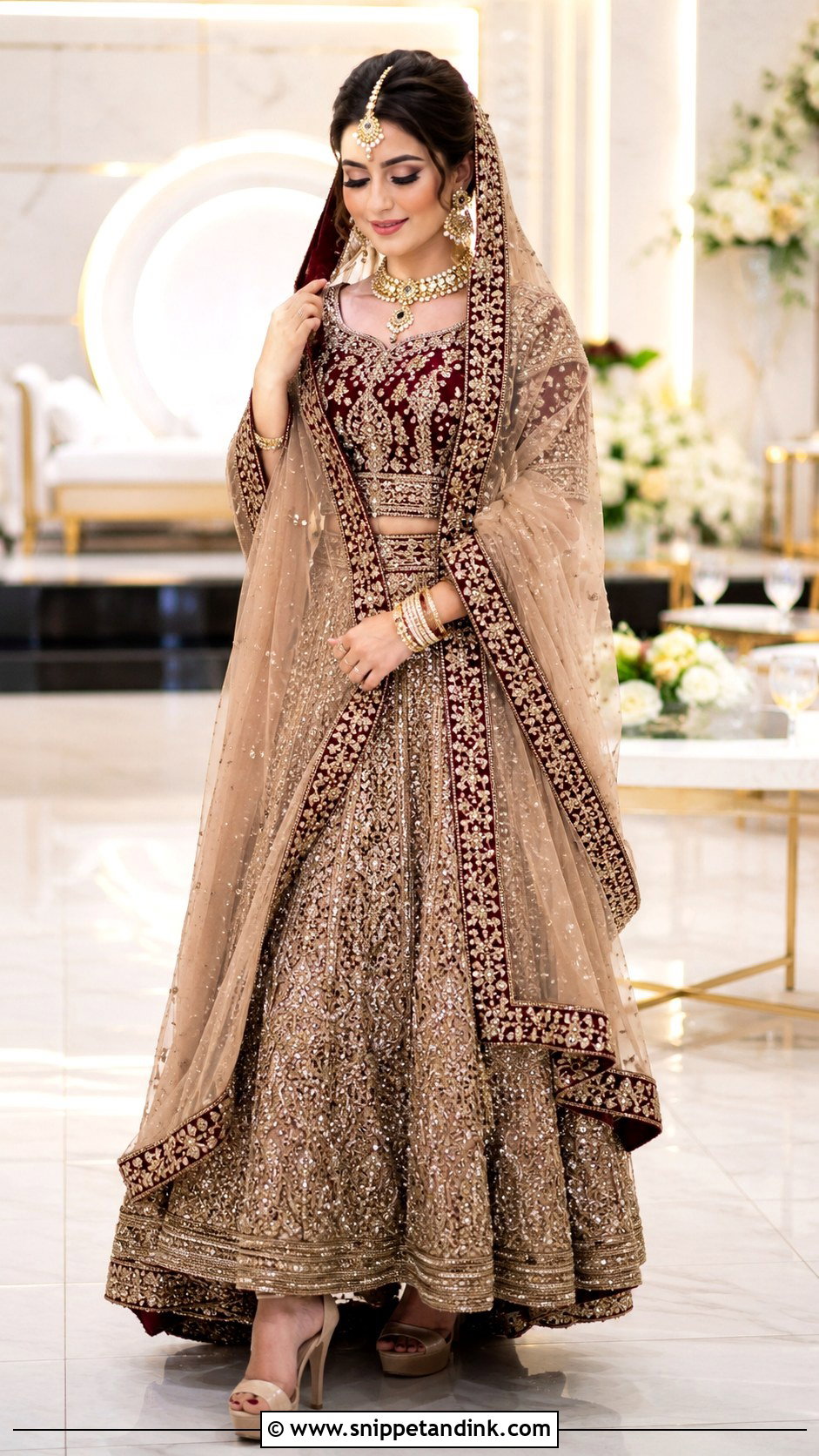
Champagne in place of yellow gold is the softer route to metallic. Begin with a maroon lehenga worked in champagne thread, pearls and crystals. Add a champagne blouse, or keep the blouse maroon with lighter embroidered sleeves. A sheer champagne dupatta over the head brightens the face, with a narrow maroon border linking it to the skirt. Champagne thread shows wear and marks more than gold, so keep it away from henna-stained hands while it’s still fresh and dark. Pearl kundan, drop earrings, a delicate tikka, champagne heels and coordinated bangles suit it. Keep the skirt full without heavy layers, and repeat maroon in the jewelry or shoes so the champagne doesn’t feel separate.
19. Simple Maroon Pakistani Nikkah Bridal Dress
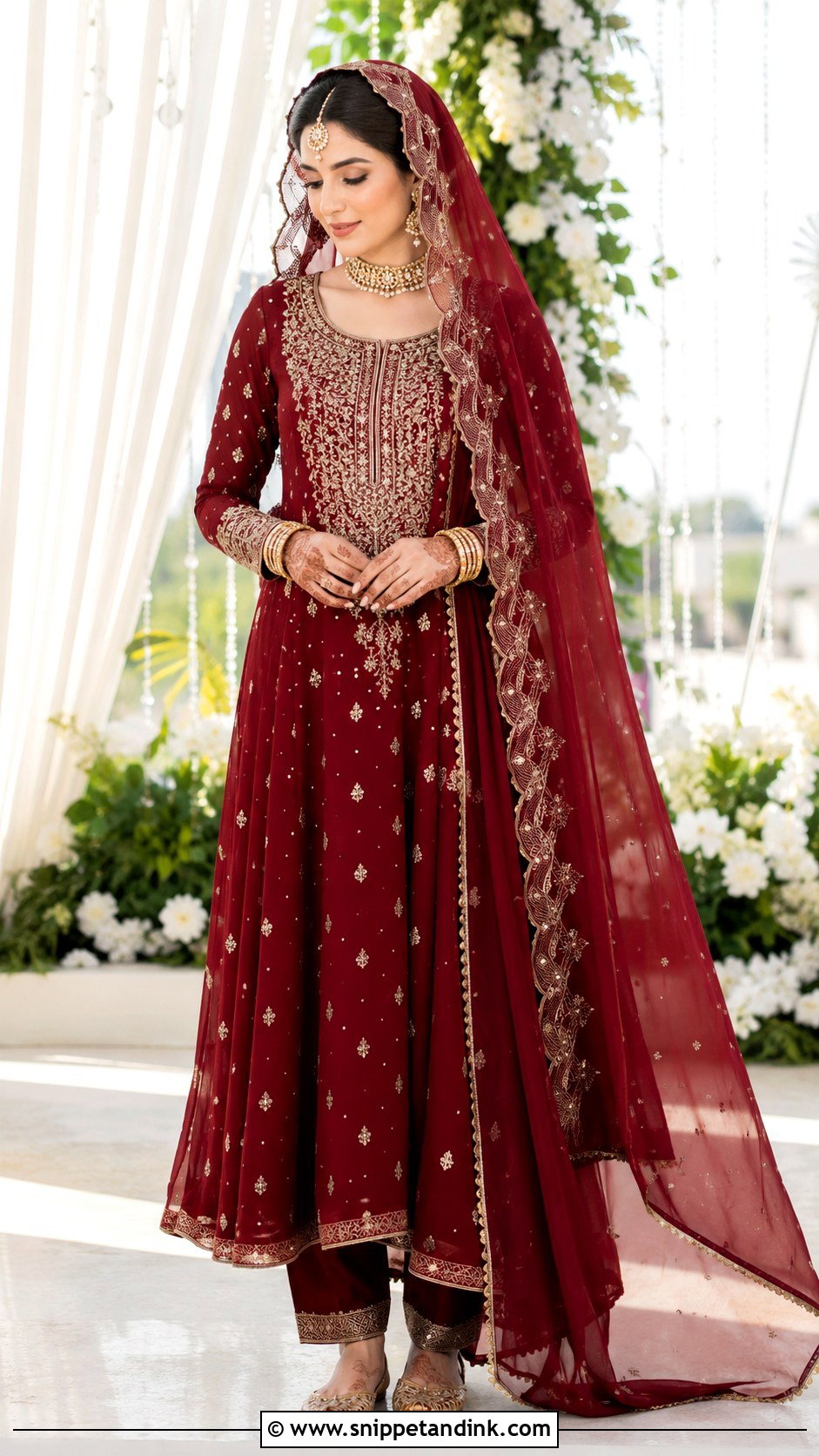
A simple maroon Nikkah dress relies on fabric and fit rather than embroidery. Choose a pishwas or long Anarkali in silk, chiffon or organza, with fine gold work at the neckline, cuffs, waist and hem only. Fitted trousers or a light lehenga underneath set the volume. A sheer dupatta with fine scalloped edging covers the head and falls over both shoulders. Add a medium choker, small earrings, a tikka, bangles and gold khussas. With so little embellishment, fit shows everything, so I spend most of the fitting time on the neckline and bodice. It suits a daytime or intimate Nikkah, and it’s light enough to stay comfortable throughout.
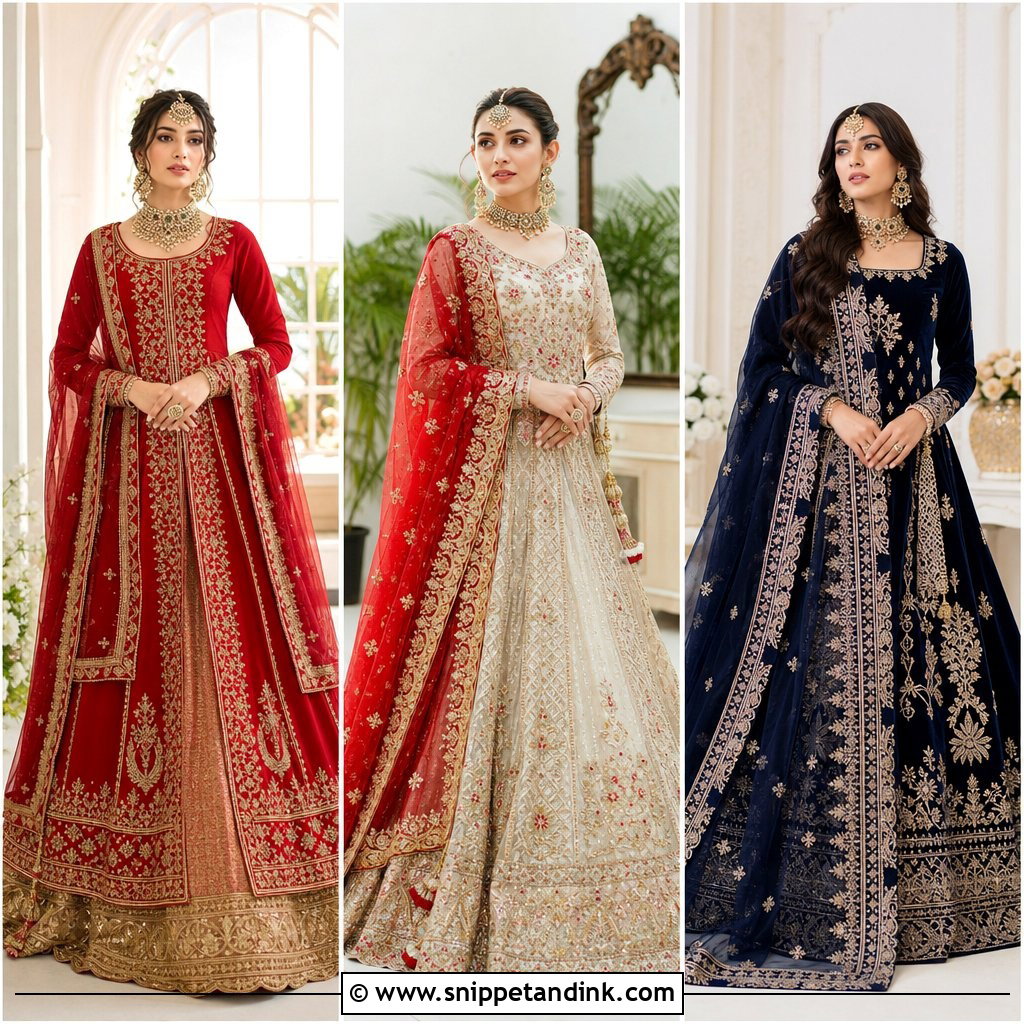
20. Maroon Pakistani Barat Dress With Double Dupatta
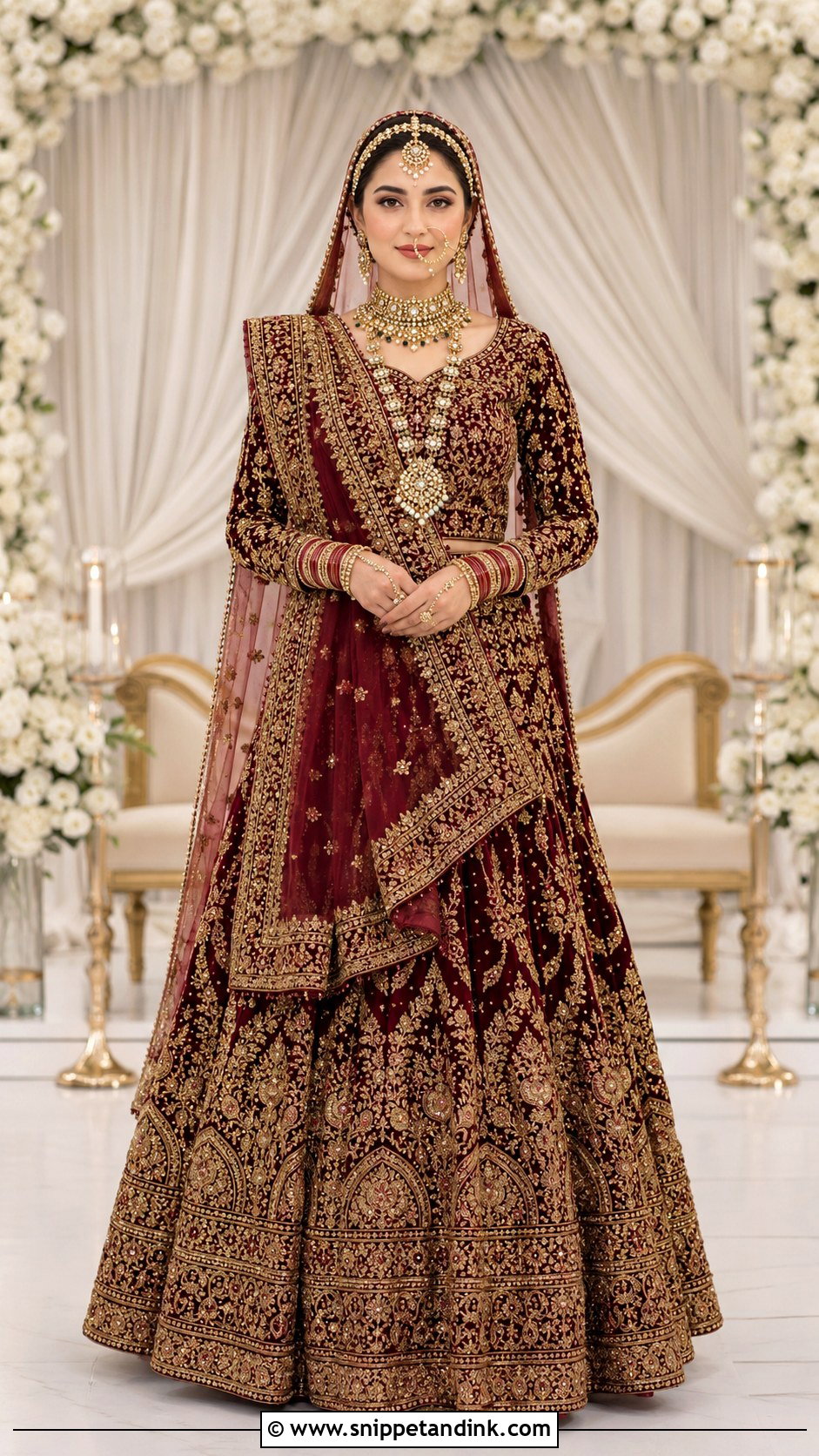
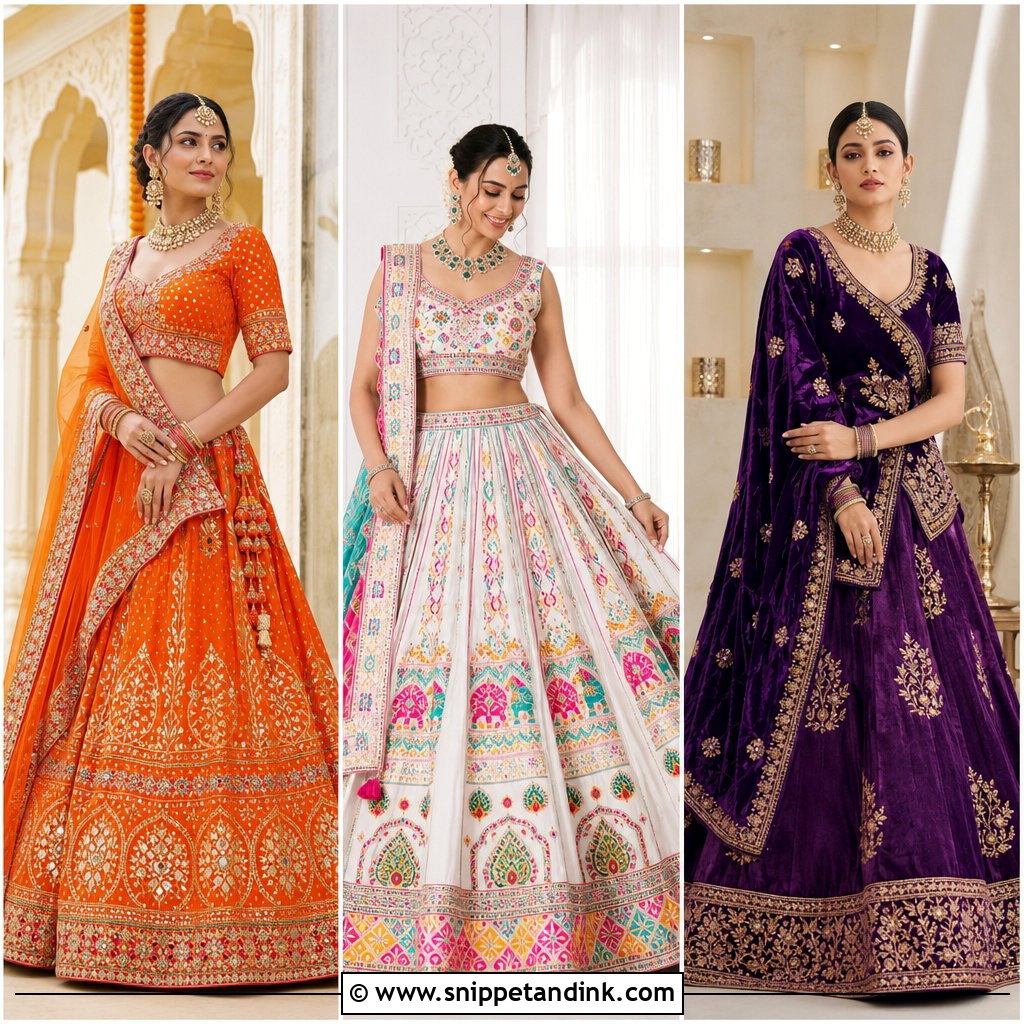
Two dupattas make a baraat look complete and formal. Choose a structured silk or velvet skirt with antique gold work and a matching choli. The lighter organza dupatta goes over the head, secured around the hairstyle; the slightly heavier one runs diagonally across the torso or over one shoulder. Borders should coordinate without matching exactly. Add a statement choker, long necklace, earrings, matha patti, nath, bangles and khussas. Small fabric loops sewn inside the blouse let the pins hold thread rather than fabric, so nothing tears. Spreading the weight between head, shoulder and arm is what keeps this arrangement bearable through the whole baraat.
Carrying Several Kilos of Embroidery Through a Long Baraat
A heavily worked velvet or raw silk lehenga can weigh several kilos once the dupattas are added, and nearly all of it hangs from your waist. That’s why I ask every bride to wear the full outfit at home for an hour before the day, not just stand in it at the final fitting.
- Ask for a wide, padded waistband with hooks and a drawstring, so the skirt rests on your hips rather than cutting in.
- A can-can or light net layer under the skirt adds volume without the weight of extra fabric.
- Have your hairstylist set the head dupatta with pins anchored into the hairstyle; pins in fabric alone pull your head back by evening.
- Plan the bathroom trip with a sister or friend in advance. With a heavy skirt it genuinely takes two people.
Afterwards, keeping the zari bright
Metallic thread tarnishes when it meets moisture and air. Air the outfit for a day before packing it, then wrap it in soft white muslin rather than plastic and store it flat or loosely rolled. Refold it along different lines every few months, because sharp creases eventually crack the embroidery. Keep perfume and deodorant well away from the zari while you wear it.
Try the Whole Outfit On Before You Sign Off
Farshi lehengas, ghararas, shararas, pishwas, gowns and sarees all look regal in maroon, and the color works with antique gold, champagne, blush or emerald to give each bride her own palette. Before you sign off on any of them, try the full outfit together: skirt, sleeves, shoes, jewelry and both dupattas. Sit, stand and walk a few steps. Weight and movement decide how you’ll feel at midnight far more than the embroidery does, and good tailoring can fix most of what that test reveals.
You'll Like These Ideas:


Leave a Reply