
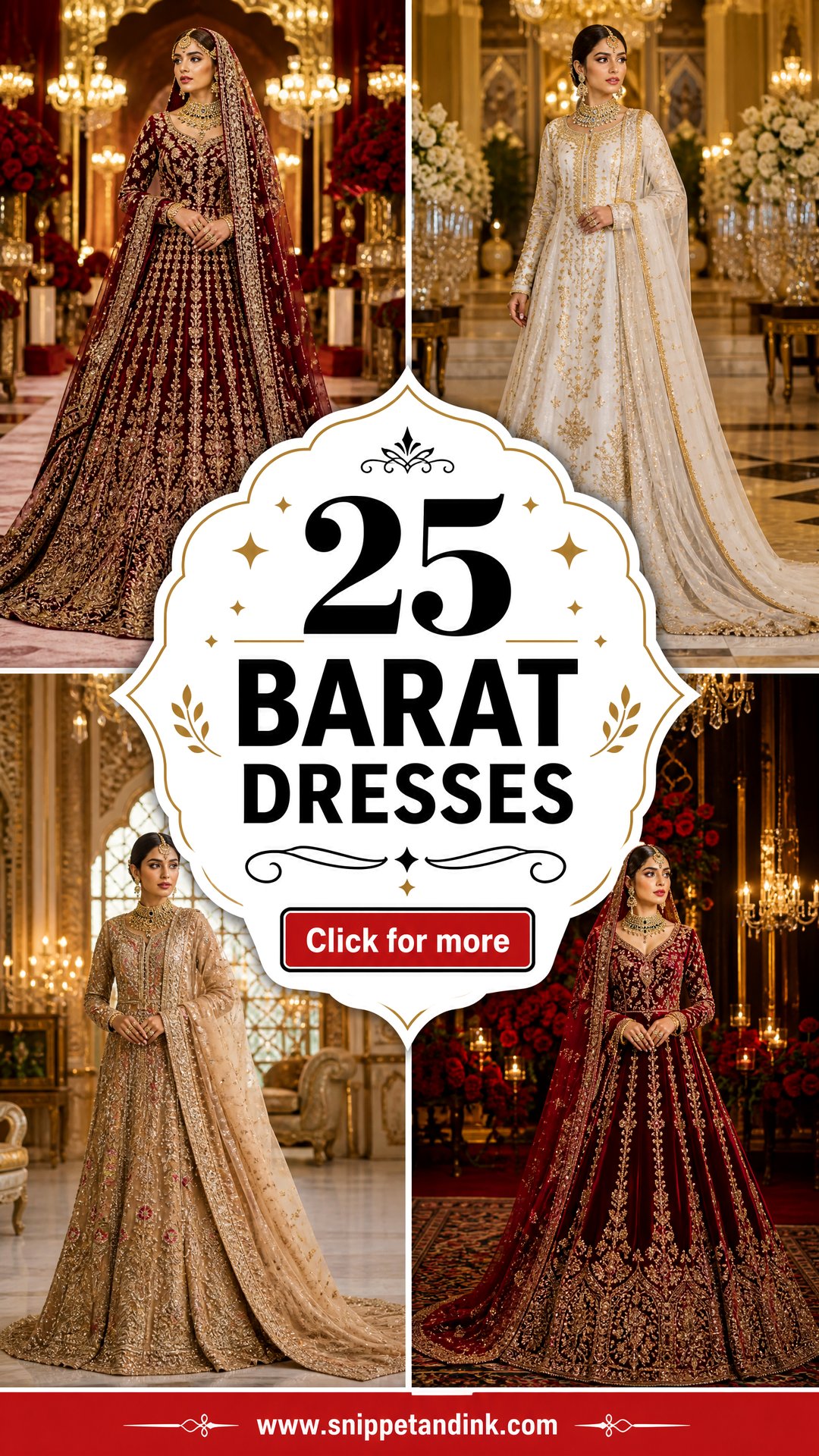
Barat day gets more cameras, more relatives and more hours on your feet than any other day of the wedding, and the outfit has to hold up to all of it. In my fittings, the conversation usually starts with color and ends with weight, because a heavily worked lehenga that looked right on a hanger can feel very different by the time of the rukhsati. Red still leads, but maroon, rust, emerald, ivory and champagne are all on the table, cut as farshi lehengas, ghararas, shararas, peshwas, maxis or jacket layers. Below are 25 Barat Dresses across classic, royal, modern and modest styles, with notes on how each one actually wears.
Custom Embroidery Takes Months, So Plan Backwards
Hand embroidery like zardozi and dabka is slow work, and custom bridal pieces often need several months from order to delivery, with longer queues in peak wedding season. I’d start shopping at least six months out if you want anything made to measure, and leave a few weeks at the end for alterations.
Before you sign off on a design, ask the designer for the approximate finished weight of the skirt and dupatta. A heavily worked lehenga can be very heavy, and a bride who’s 5’2″ carries that differently from one who’s 5’9″. If the answer worries you, ask for the work to be concentrated on the borders and lightened through the body of the skirt. The photos barely change, and your back will thank you.
At the final fitting, wear your actual heels and bring the main jewelry. A heavy necklace changes how a neckline sits, and the hem should be set for the shoes you’ll really wear.
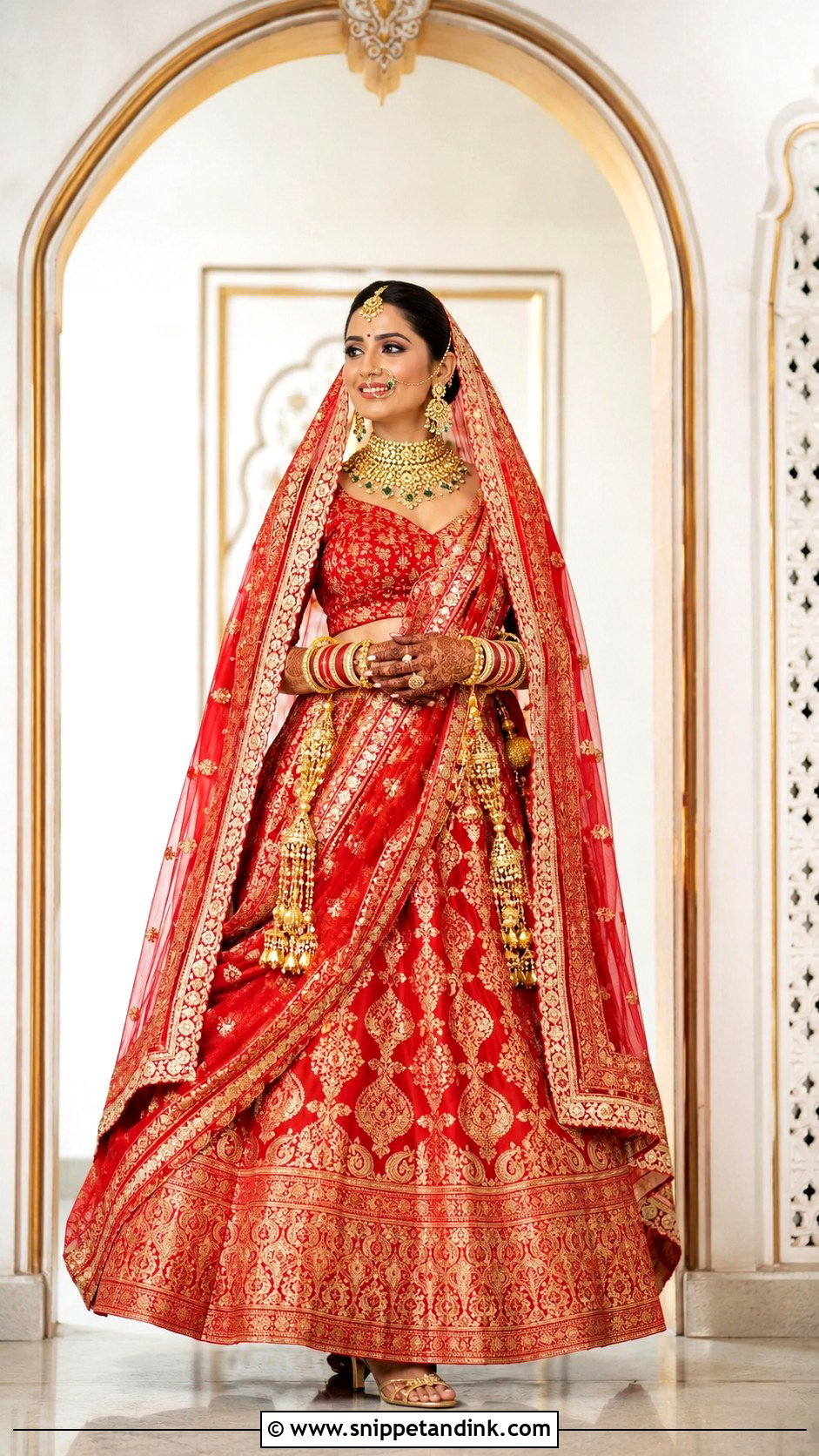
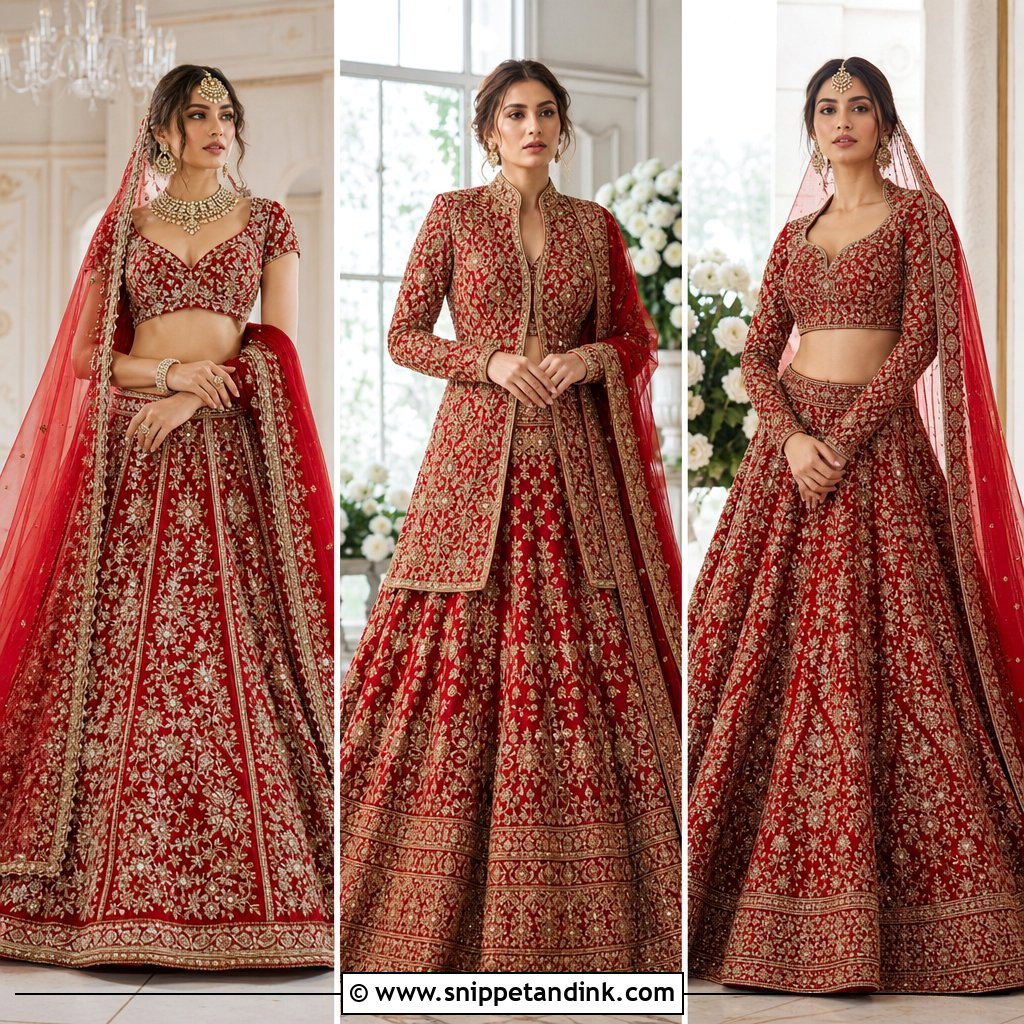
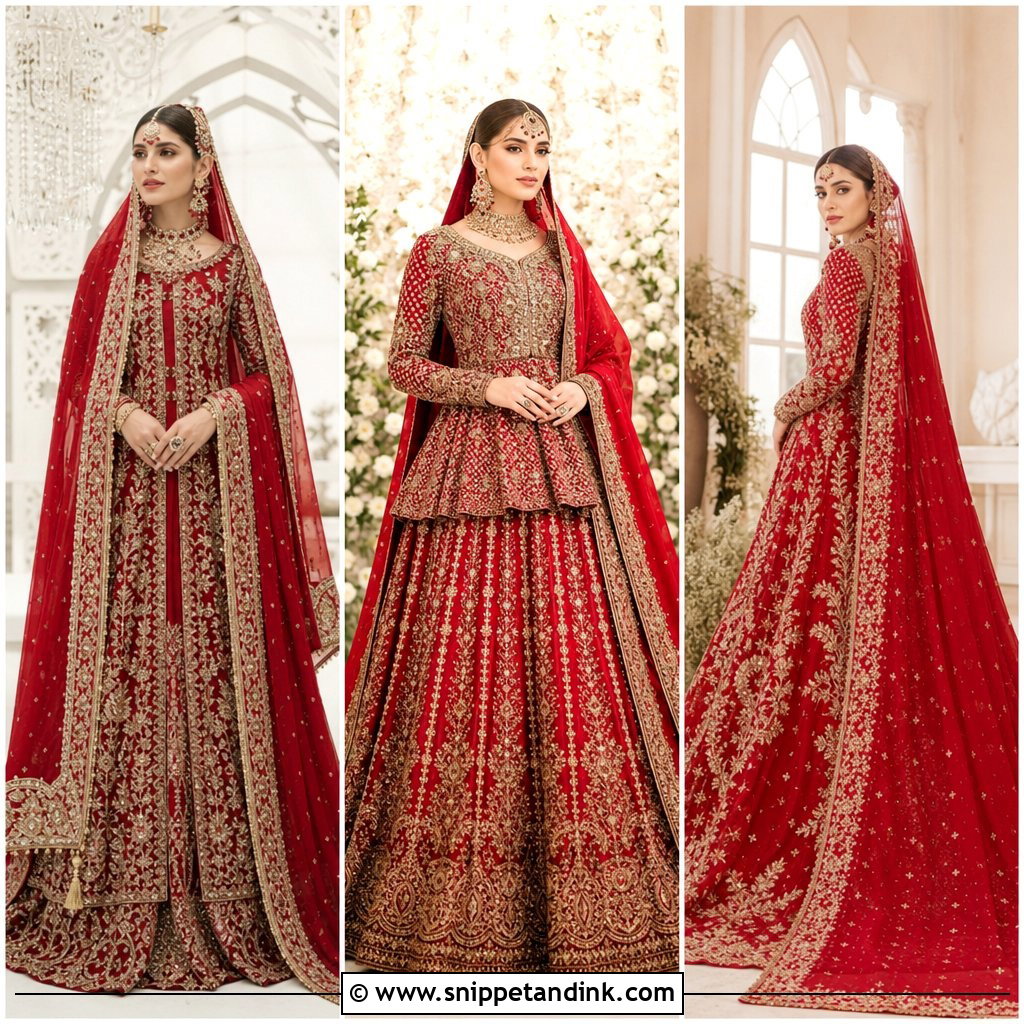
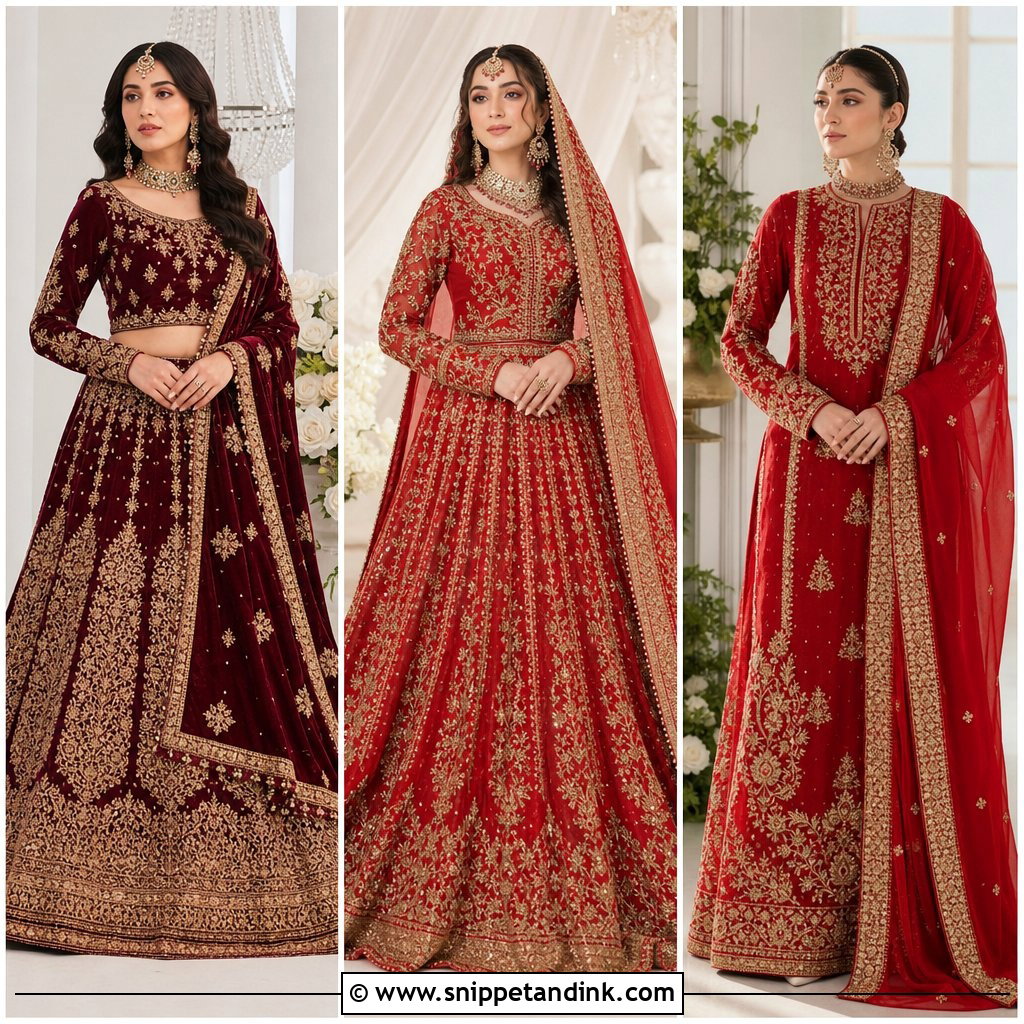
1. Red Barat Lehenga
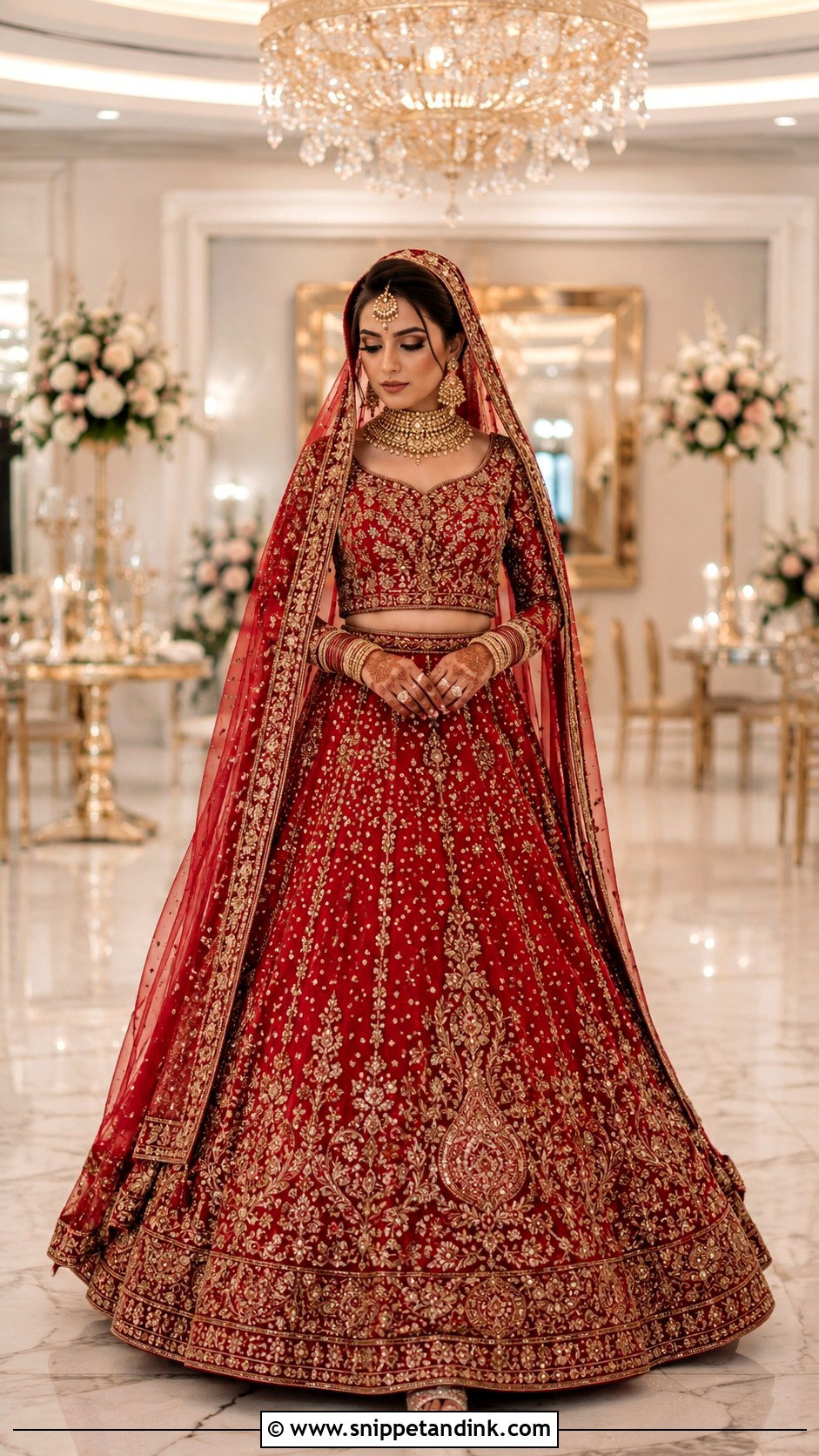
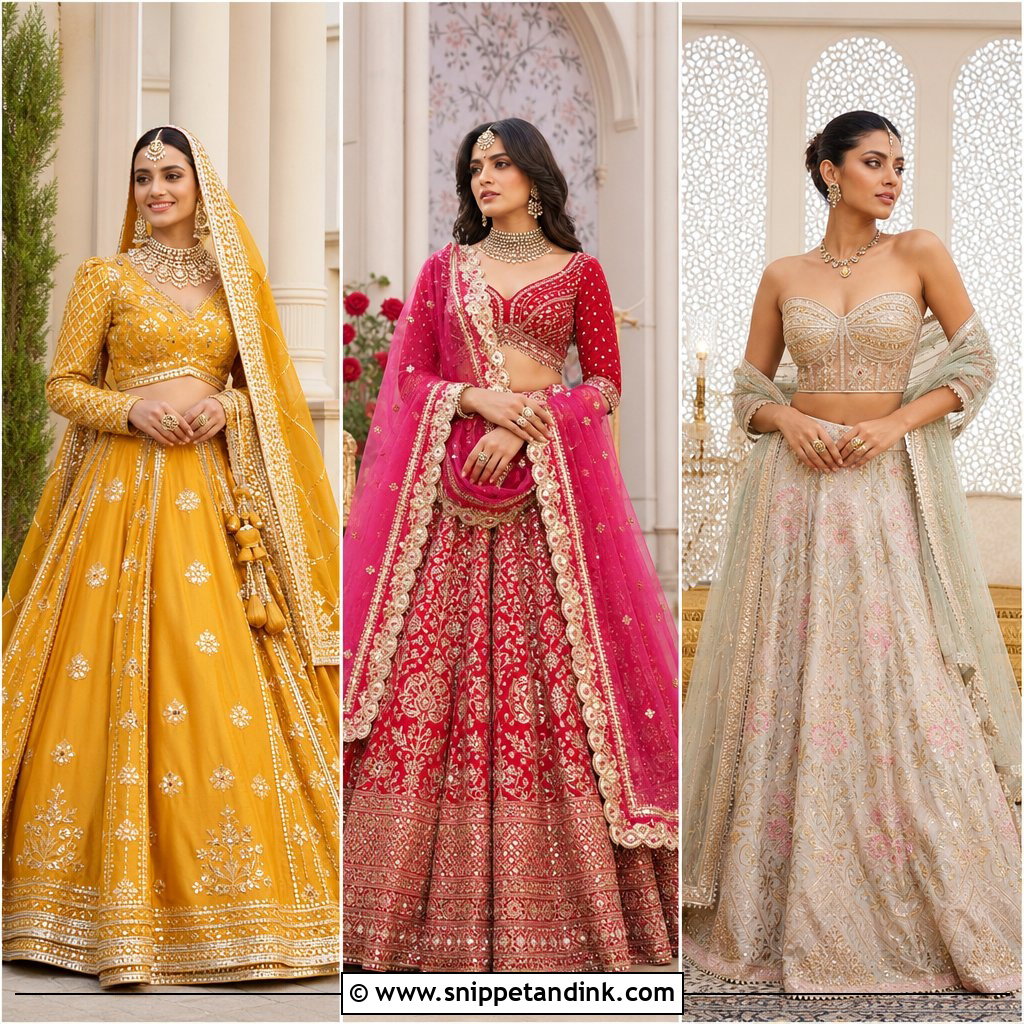
A red Barat lehenga is the look families picture first, and deep ruby is more forgiving under stage lights than a bright orange-red, which can bleed in photos. Zardozi and dabka give it weight and shine. I’d suggest two dupattas, a heavier red one set over the head and a lighter one on the shoulder for movement. Gold jewelry with a matha patti and bangles is traditional here. Keep the makeup glowing rather than heavy, so your face isn’t fighting all that embroidery.
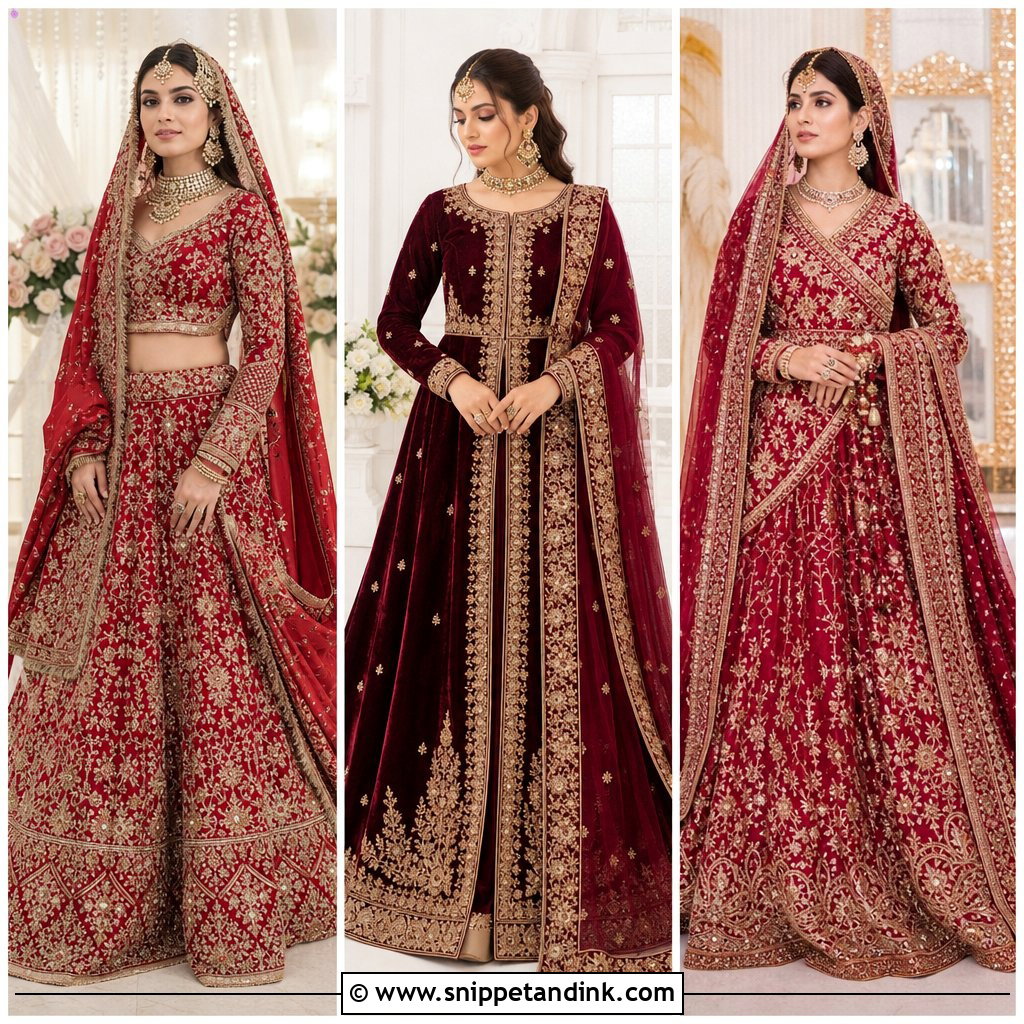
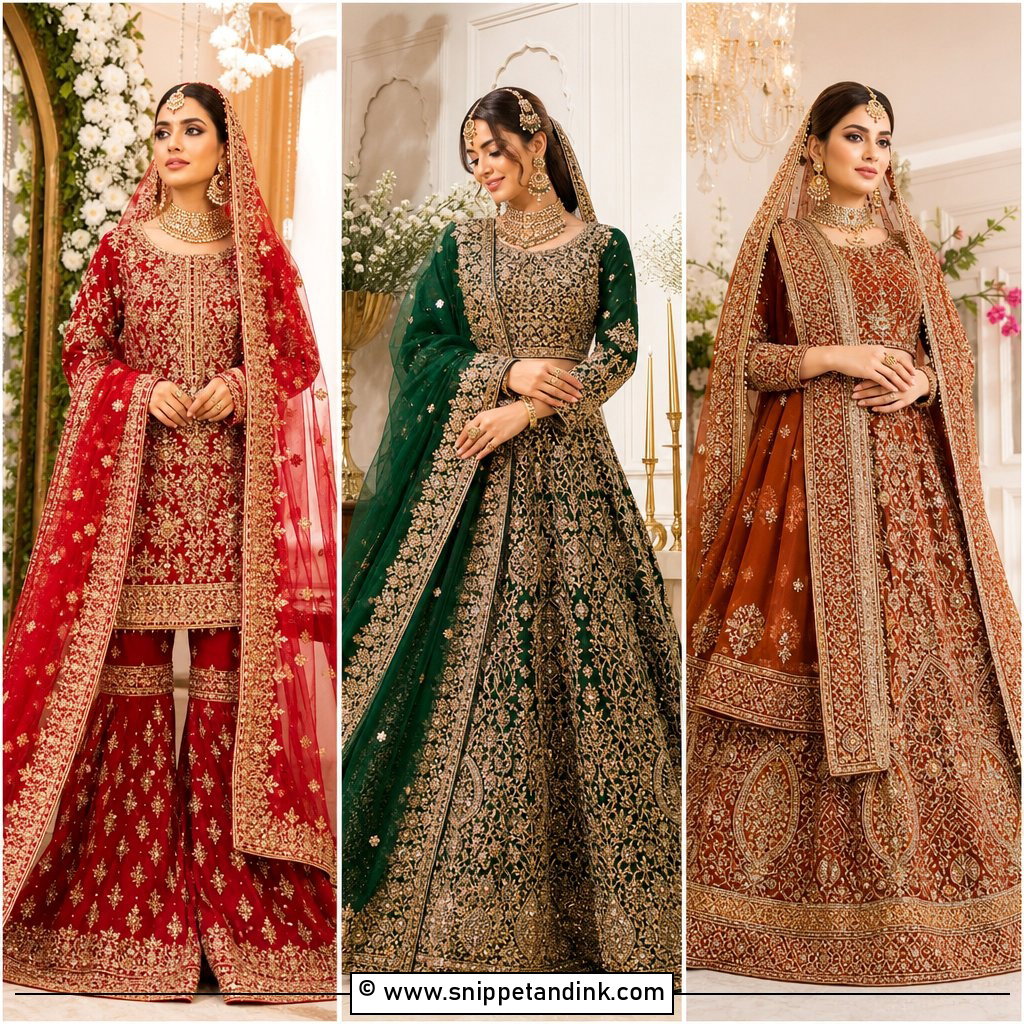
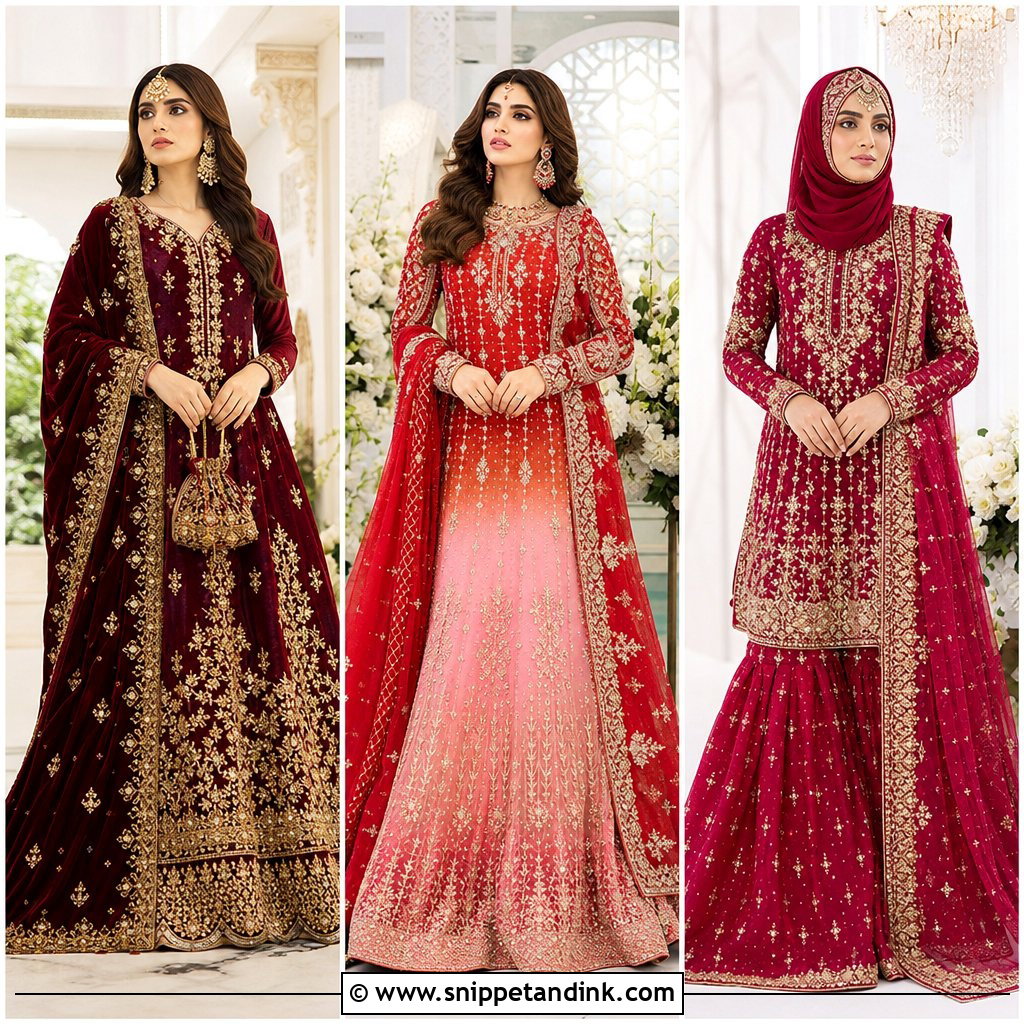
2. Maroon Barat Gharara
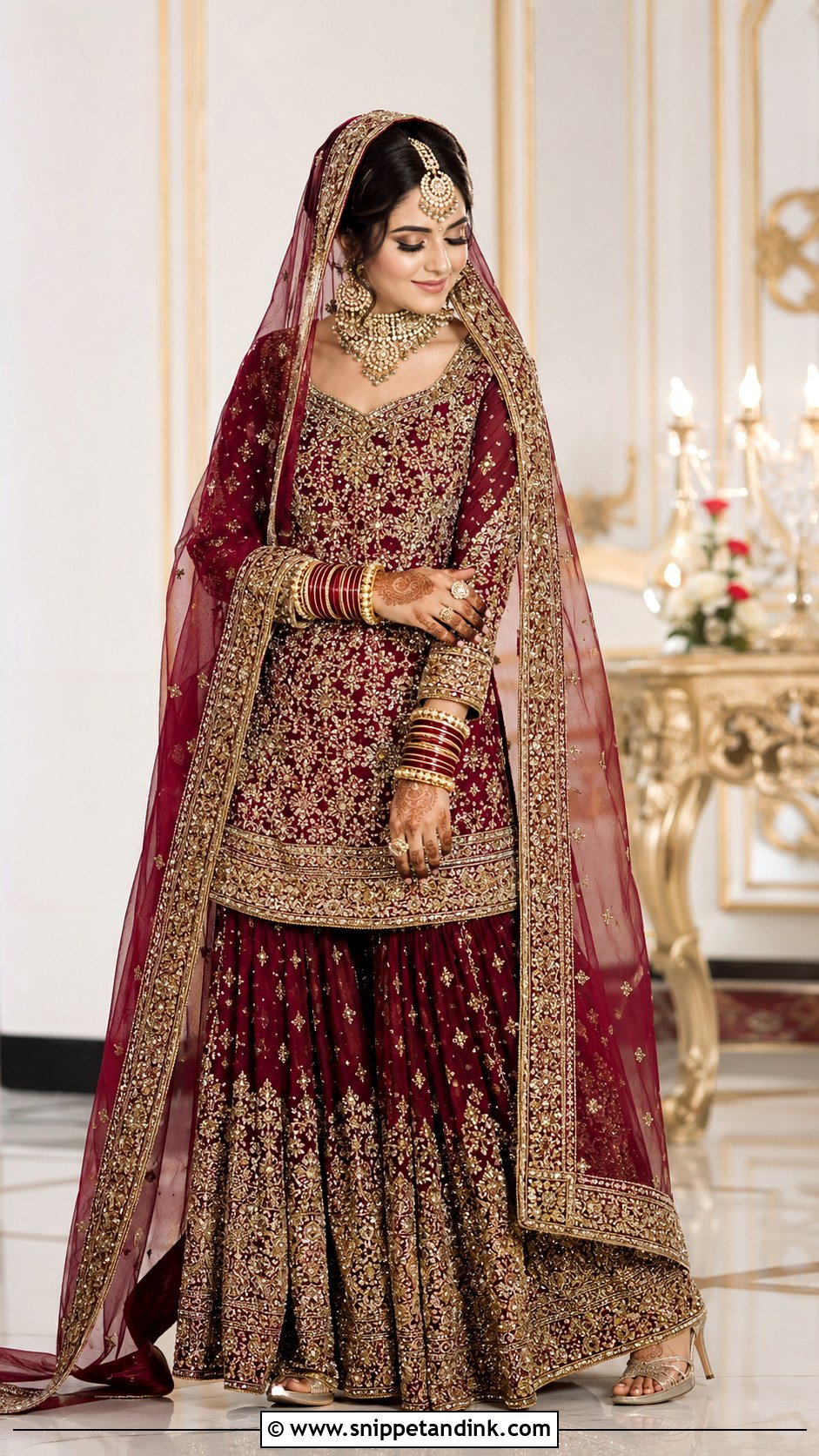
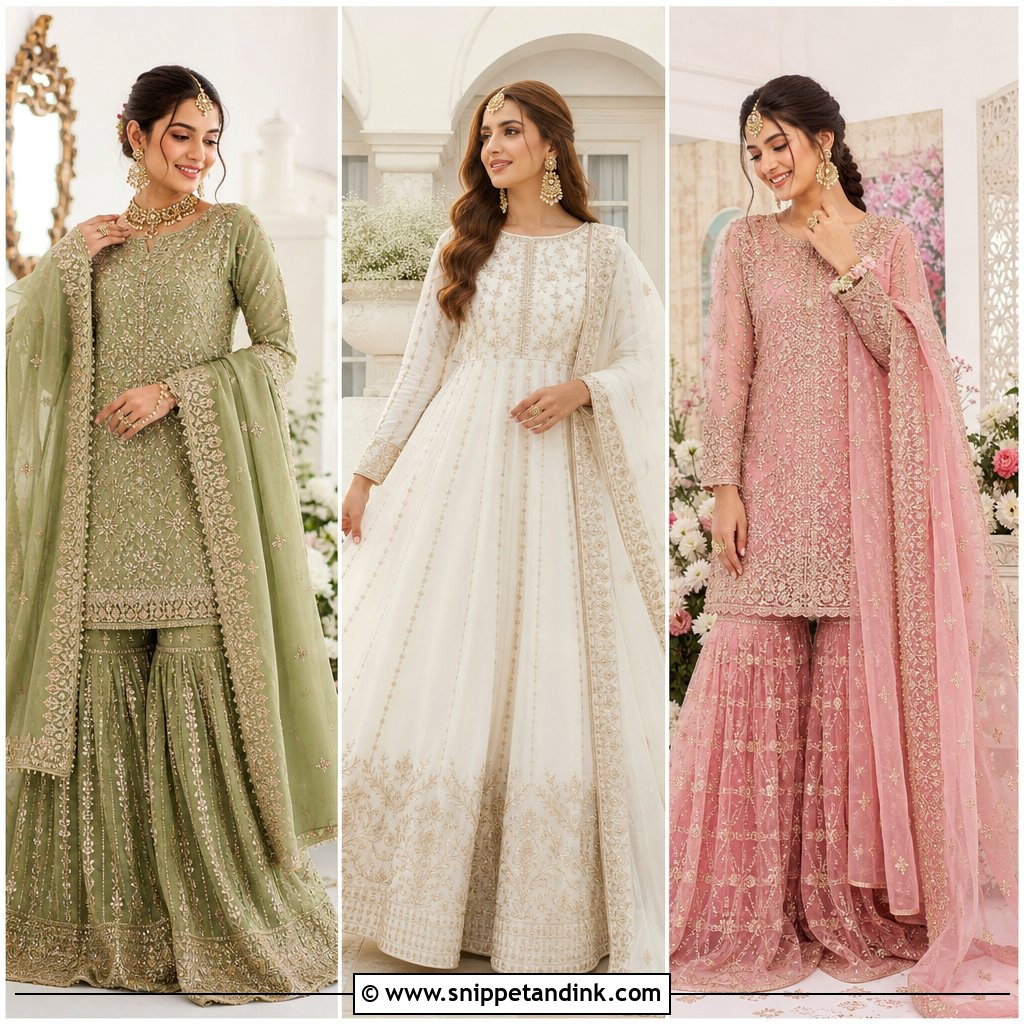
Maroon reads older and quieter than red, and in velvet, raw silk or jamawar it takes on real depth under indoor lighting. The short, heavily embroidered kameez sits over a gharara that gathers at the knee, so check that the knee joint, where all that fabric is stitched in, doesn’t pull when you walk up steps. Antique gold or dull silver work suits maroon better than bright gold. A sheer bordered dupatta, a choker with a long necklace, jhumkas and a passa give it a heritage finish.
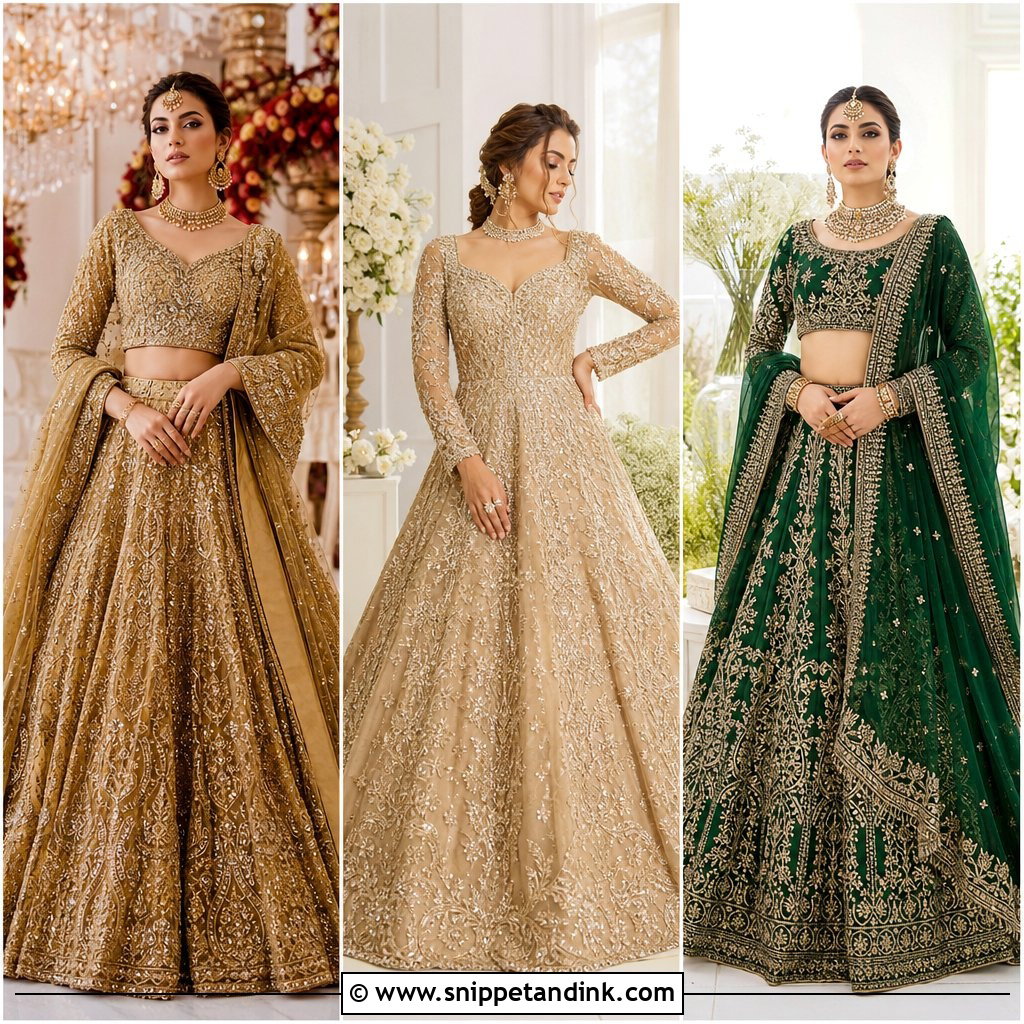
3. Gold Barat Sharara
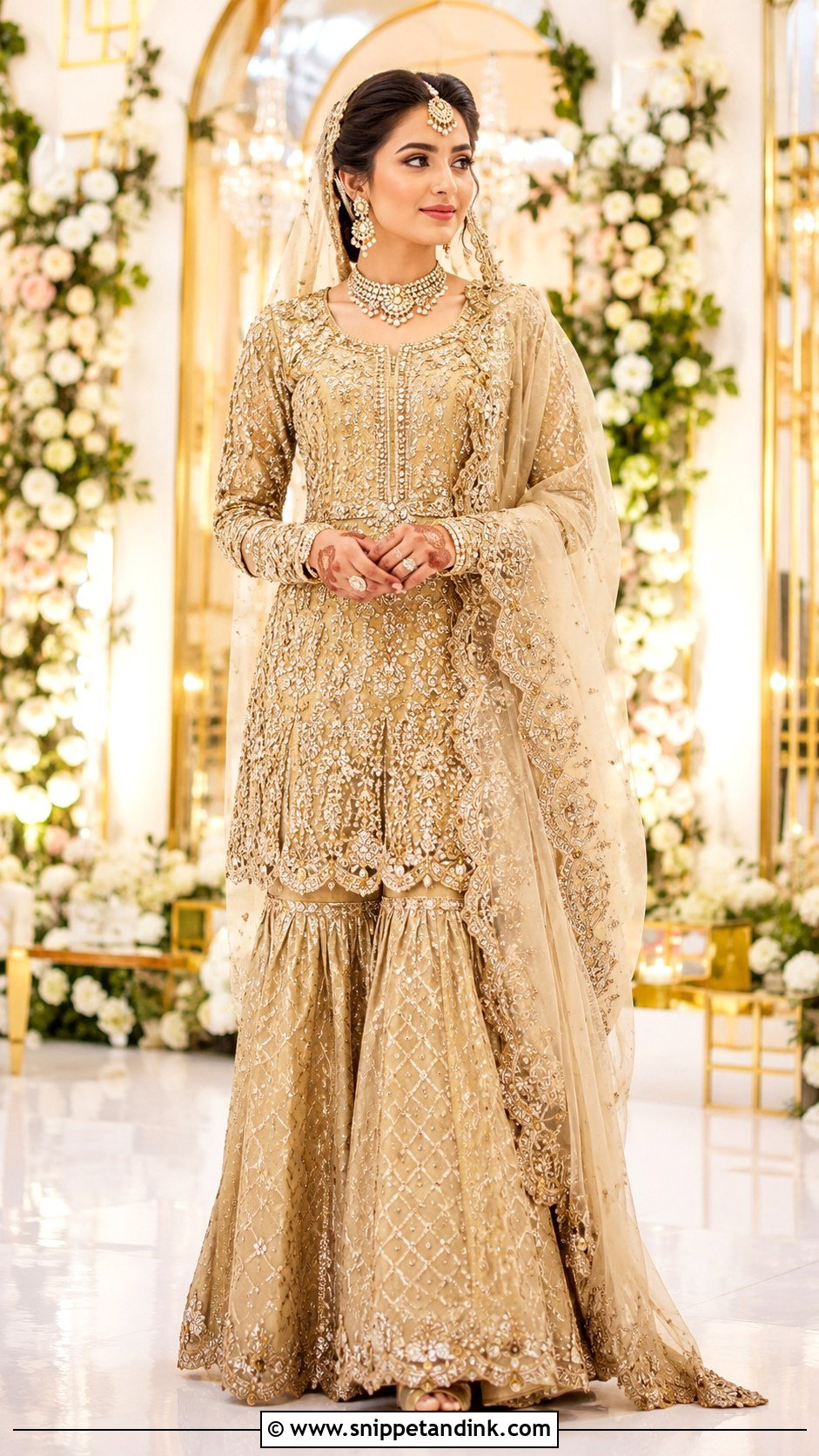
A gold Barat sharara is the answer for a bride who wants to glow without wearing full red. A long embroidered shirt over a wide sharara, with an organza or net dupatta, keeps it formal. Gold-on-gold work can go flat in photos, so I like a thin border of red, emerald or rust to give the eye an edge. Watch the sharara volume too: too much flare and you’ll be stepping on it all evening. Kundan with pearl details and metallic heels finish it.
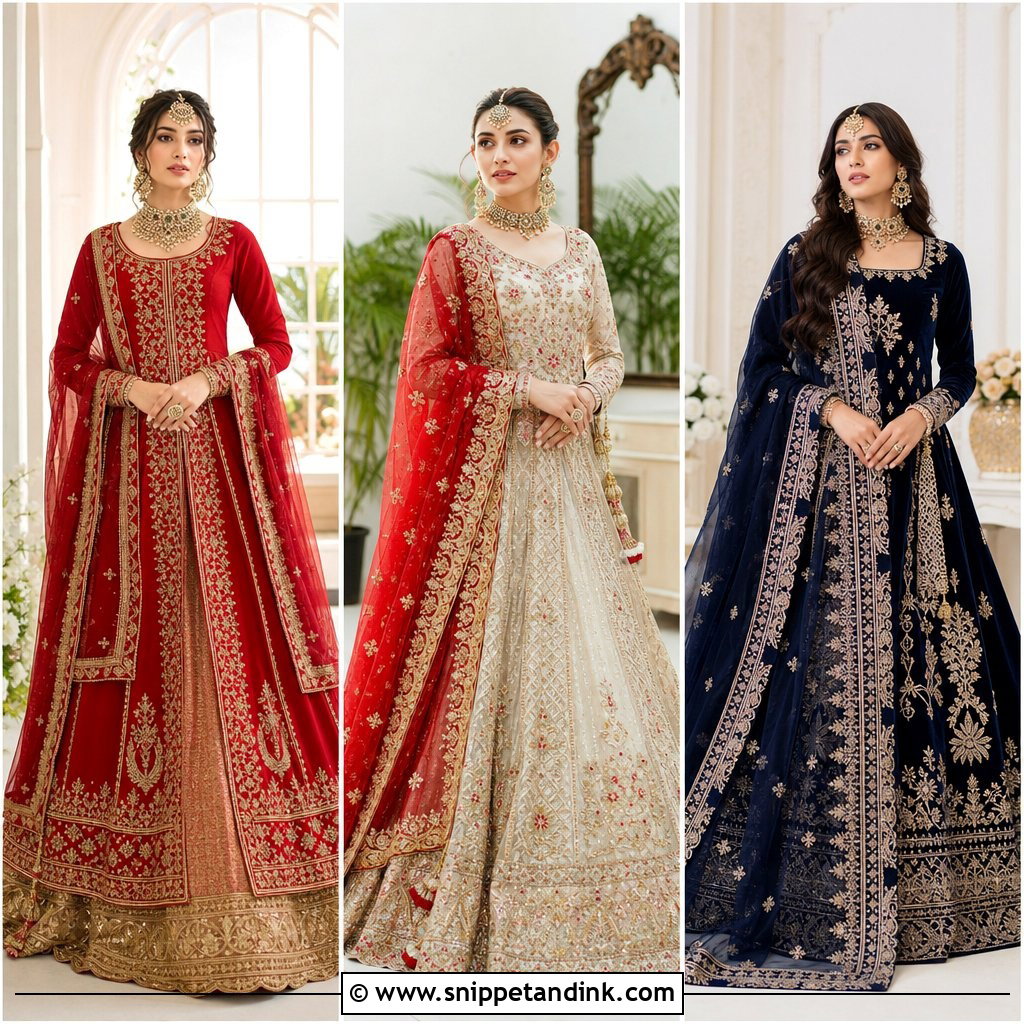
4. Ivory And Red Barat Lehenga
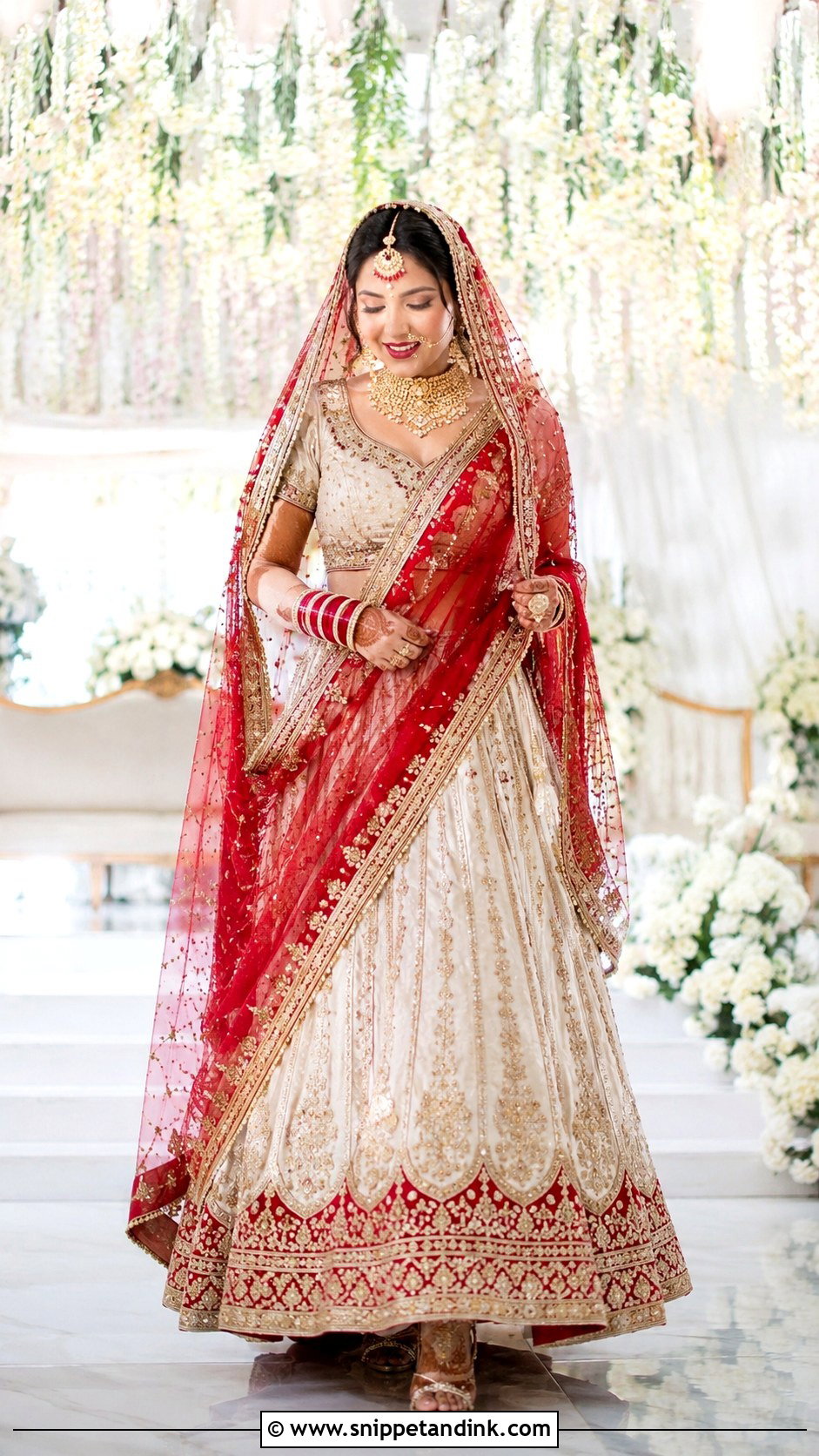
Ivory with red borders gives you a lighter base and still says wedding at a glance. The red can sit in the hem, the embroidery or a red veil set over the head, and gold zari or Mughal-style motifs tie the two together. I’d keep ivory away from anyone eating near you at the stage, because it marks easily. Gold jewelry, red bangles and a classic clutch finish it, and it suits a bride who loves pale colors but wants no doubt about whose wedding it is.
5. Farshi Barat Lehenga
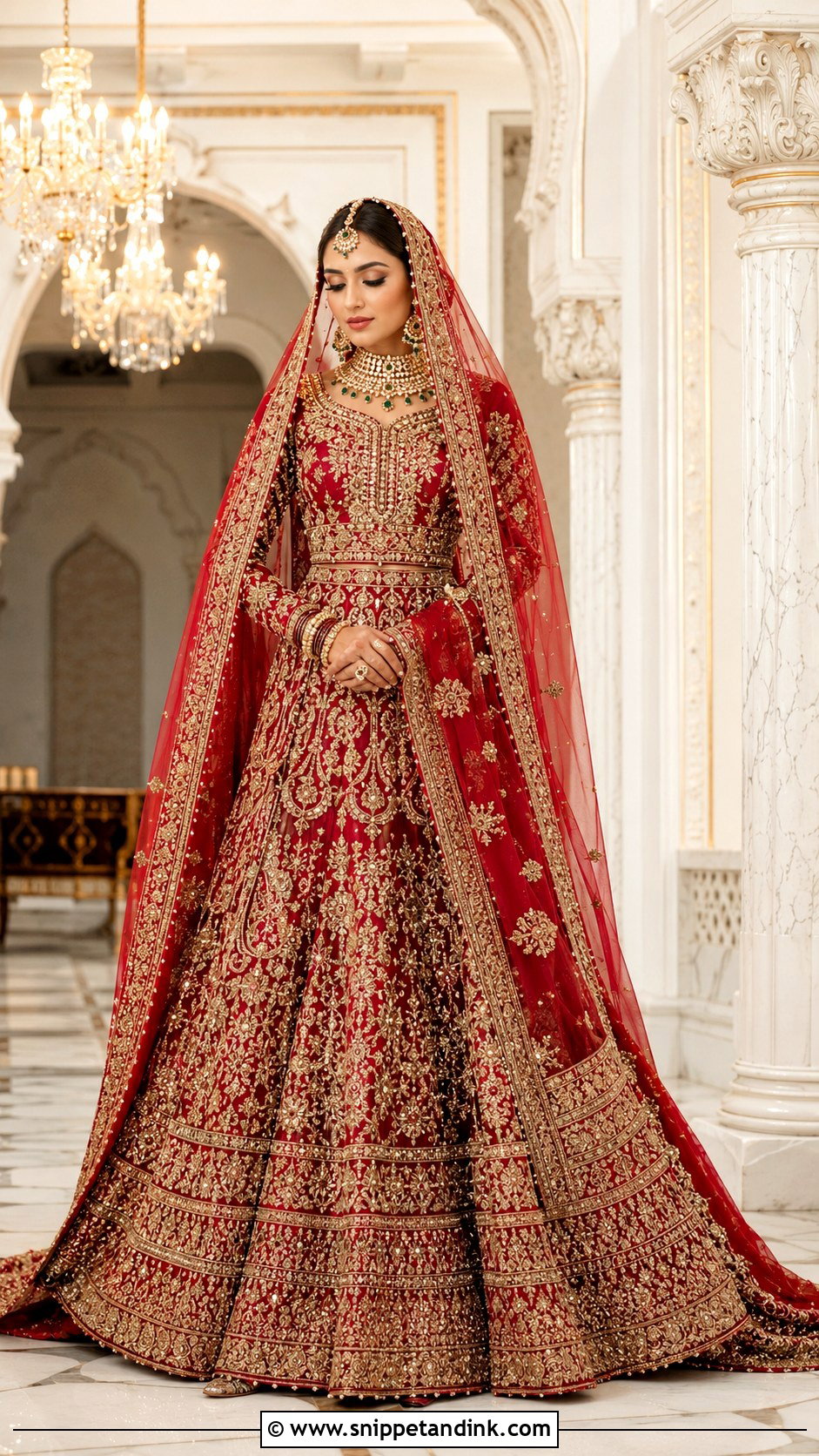
Farshi lehengas sweep the floor behind you, and that is both the drama and the work. Someone will need to lift the back on stairs and stage steps, and you’ll walk slower than you expect. The skirt needs generous flare, a firm waistband and heavy borders that pool on the floor. A fitted blouse or short kameez with a dupatta over the head completes it. Red, maroon, rust and ivory all suit the shape. I’d steer away from it if your venue has a lot of steps or outdoor paths.
6. Velvet Barat Maxi
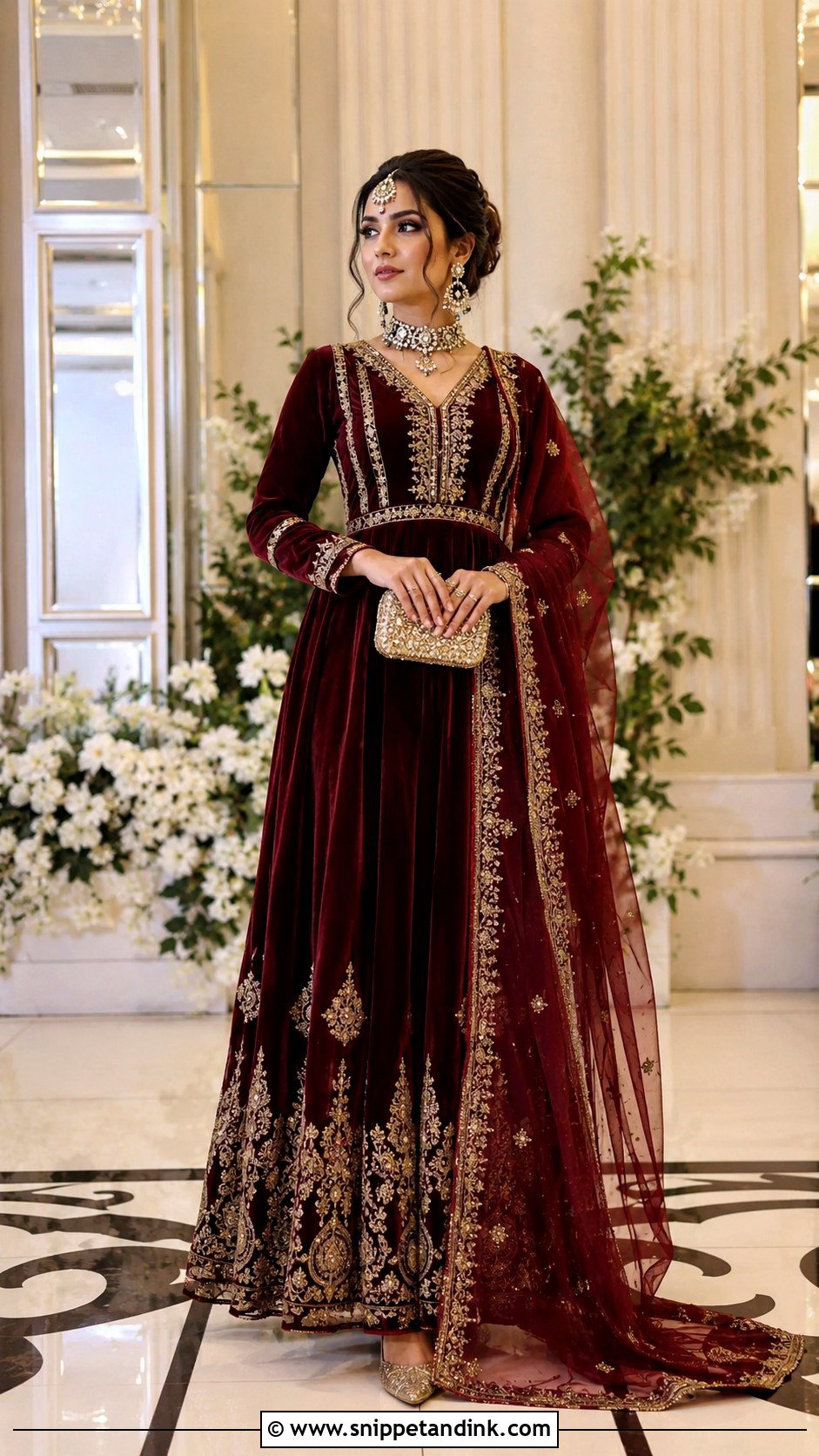
A velvet Barat maxi belongs to winter. Velvet holds color richly in maroon, emerald or navy, but it’s warm, and in a crowded summer hall it becomes uncomfortable fast. Fitted sleeves, a defined waist and a full skirt keep the shape clean, with embroidery on the bodice and hem. Pair it with a sheer organza dupatta so the overall look doesn’t feel dense. Gold or kundan jewelry and a neat bun are enough. Velvet also crushes when you sit for long, so smooth the skirt before every set of photos.
7. Red Peshwas Barat Dress
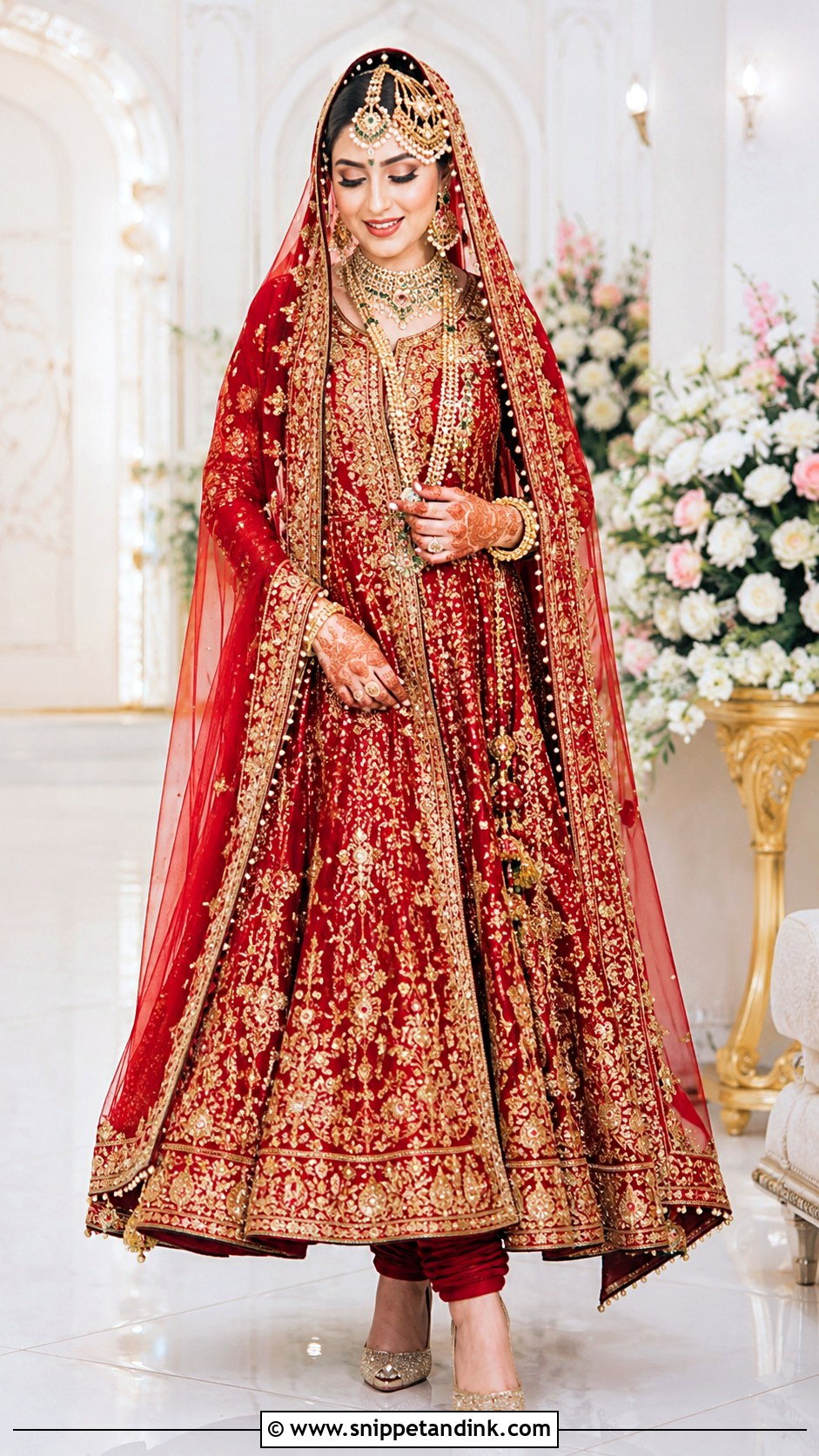
The peshwas is built from many long flared panels, so it moves more than any lehenga when you walk, and that motion is what makes it worth choosing. Ask for heavy work at the neckline, sleeves and hem, and wear it over churidar or with a light lehenga underneath for extra volume. Gold and antique embroidery sit especially well on red. A matha patti, jhumkas and layered necklaces suit the long line. It’s a good choice for modest coverage, since it covers the arms and body without feeling stiff.
8. Rust Barat Lehenga
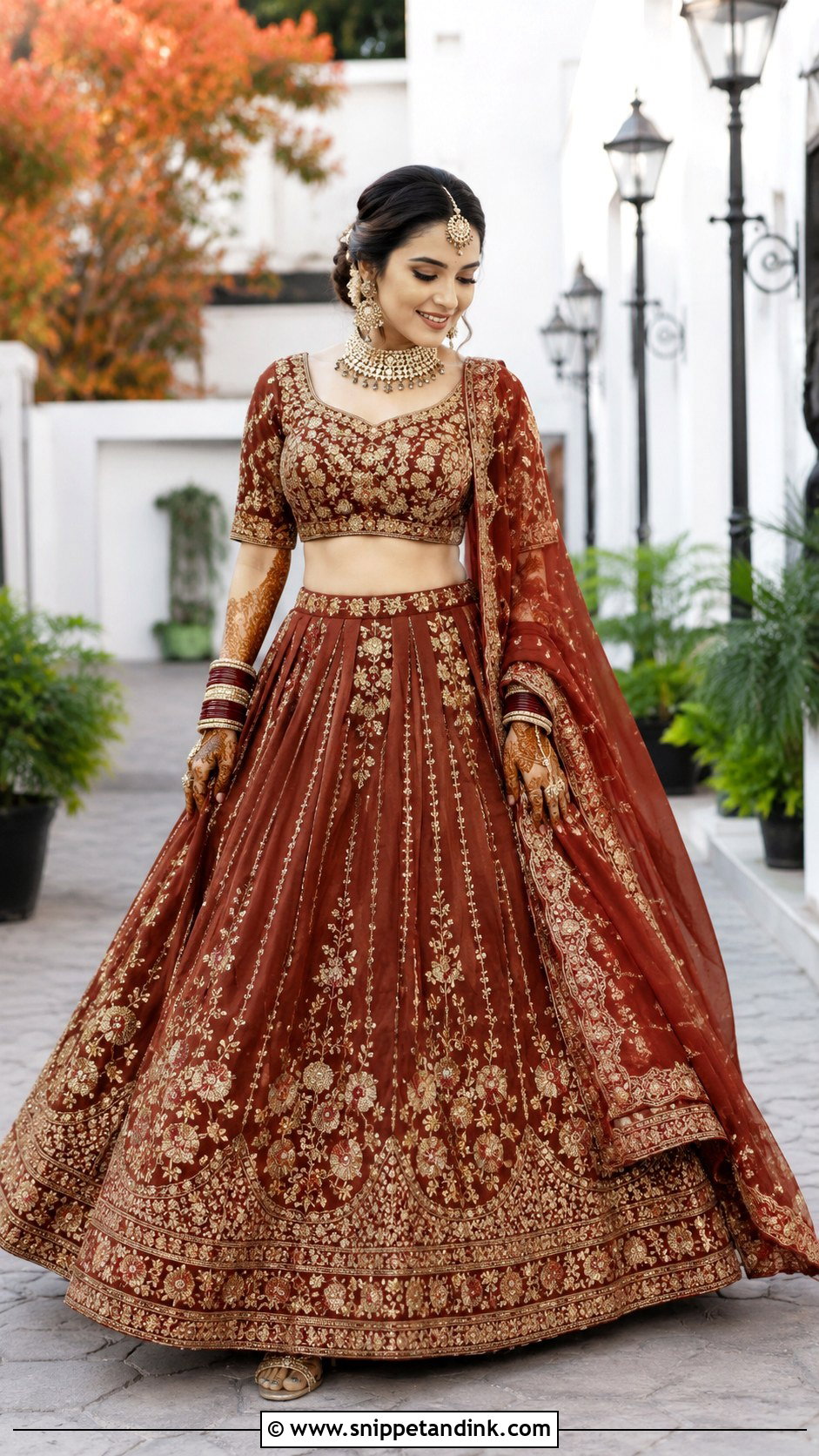
Rust is warm and earthy, and it flatters a wide range of skin tones, especially deeper ones that red can overpower. Antique gold embroidery, mirror accents or threadwork give it depth. You can keep blouse and dupatta matching, or add a gold or deep red dupatta for extra richness. Rust really comes into its own at autumn and evening weddings. Antique jewelry and a soft smoky eye suit it, and the result is bold without shouting.
9. Pink Barat Lehenga
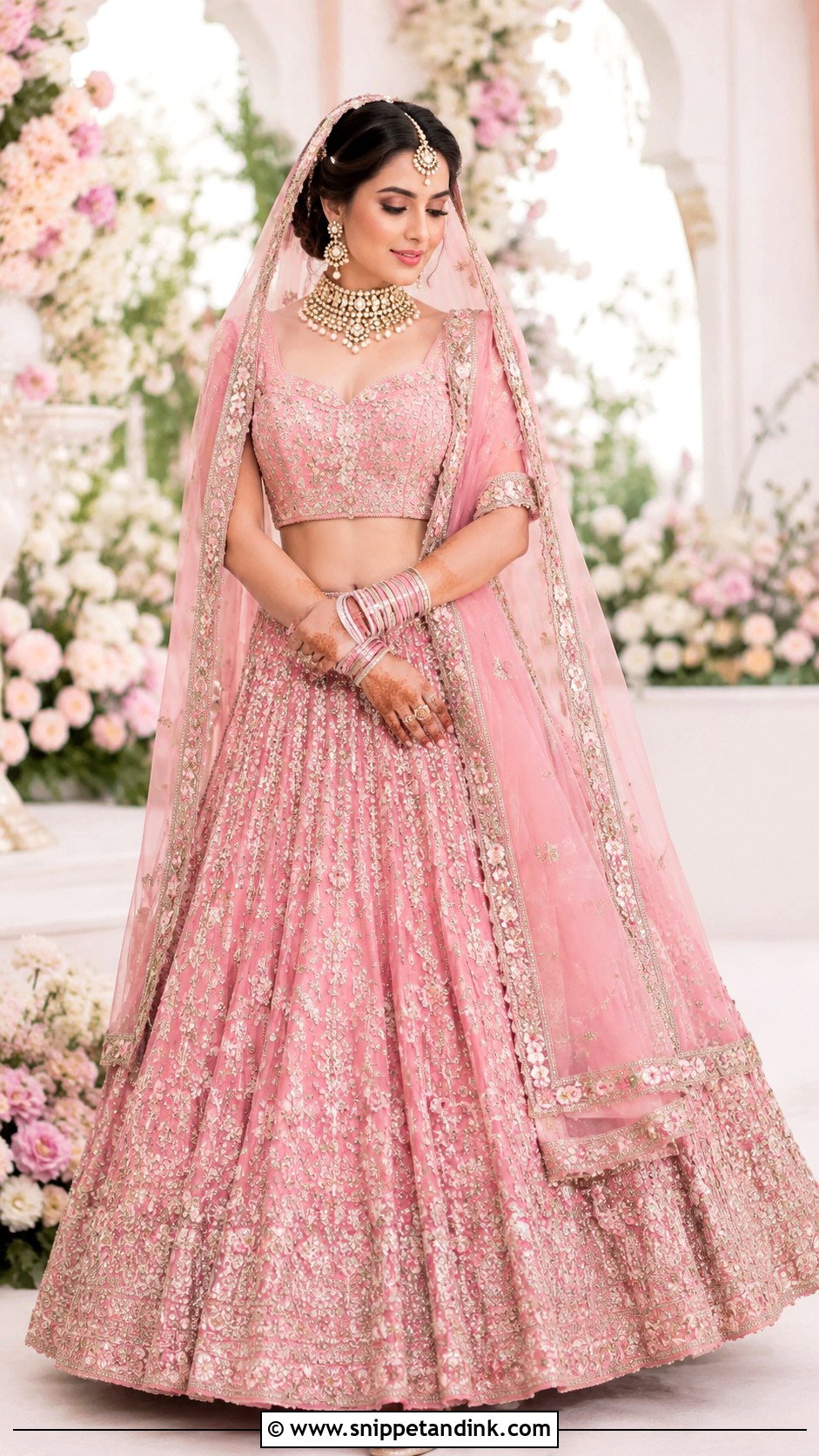
Pink works for Barat only if the embroidery is dense enough to carry it, otherwise it can look like a mehndi outfit. Rani pink feels the most traditional; blush and rose lean softer. A heavily worked blouse, a full skirt and an embroidered dupatta lift even pale pink into wedding territory. Gold, silver or pearl work all sit well on it, and kundan or rose-toned stones suit the jewelry. Soft glam makeup and a neat dupatta drape over the head finish the look.
10. Champagne Barat Gown
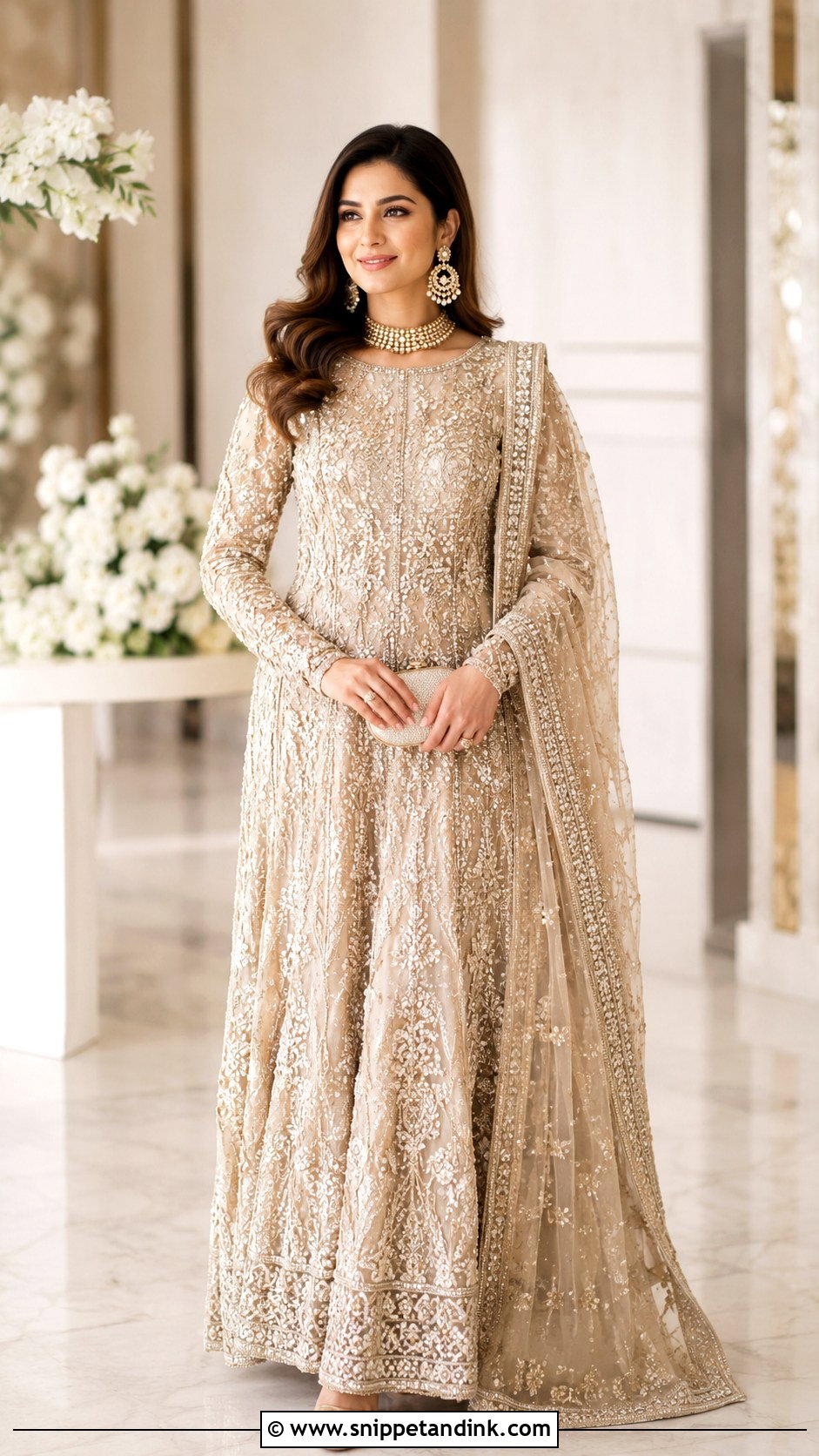
A champagne gown is the modern option here, and the dupatta is what makes it read as Barat rather than a reception outfit. Look for long sleeves, a structured bodice and South Asian embroidery with zari, pearls or fine sequins. Wear the dupatta over the head or across the shoulder, whichever you’re comfortable in. Champagne can look washed out against very fair skin in harsh light, so try it in daylight and under warm bulbs. Diamond-look jewelry and soft gold accessories suit it best.
11. Emerald Barat Sharara
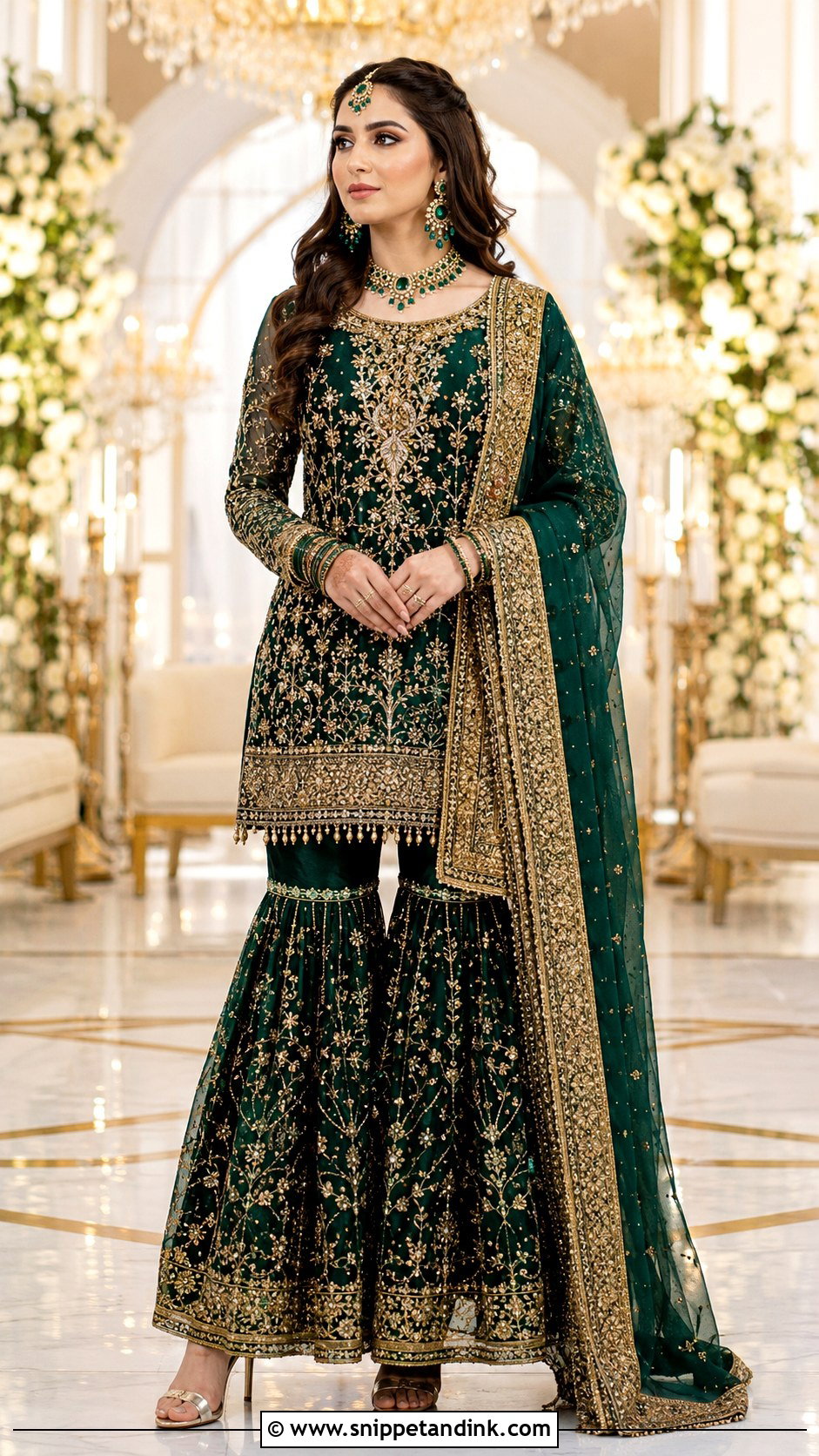
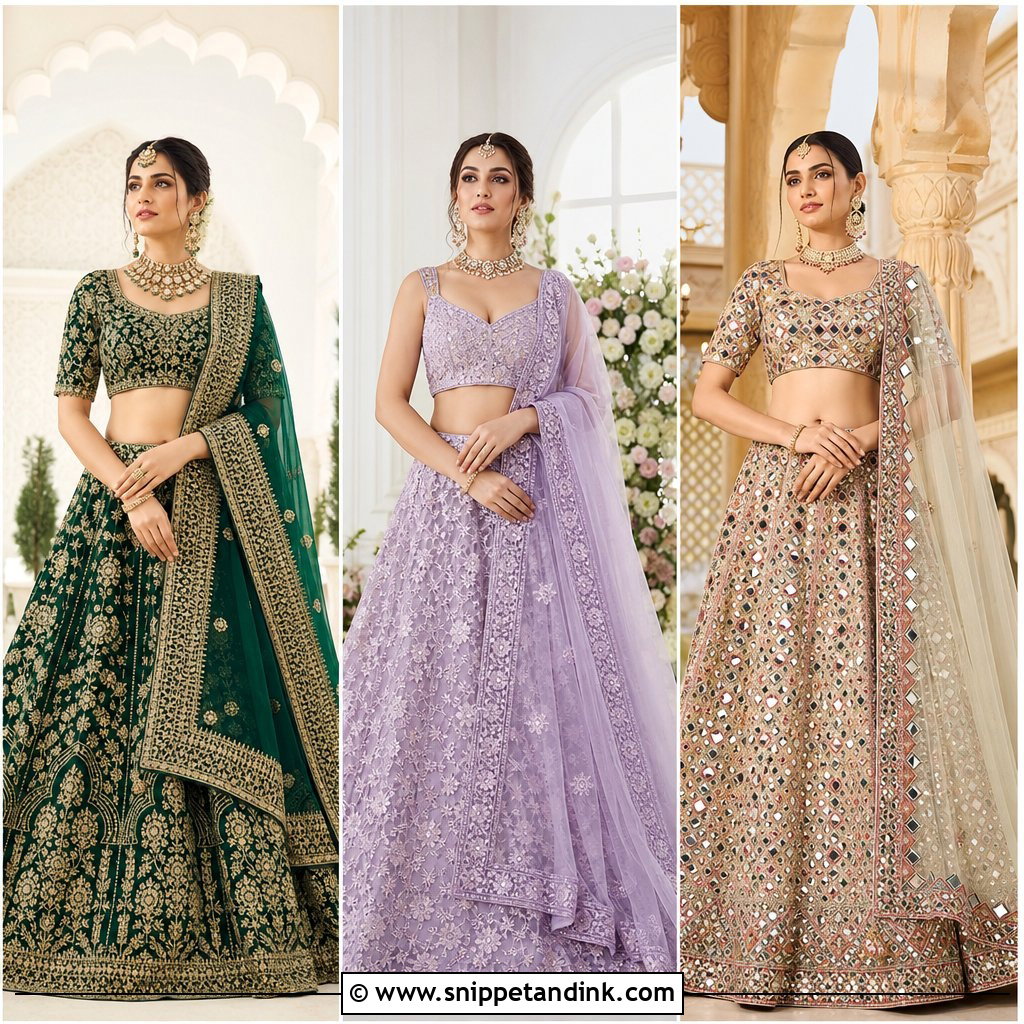
Emerald is the jewel tone I’d suggest to a bride who wants color but none of the red family. A heavily worked shirt with a flowing sharara and an antique-gold bordered dupatta keeps it regal. Velvet, raw silk and organza all hold the color well. A thin red or maroon line in the border nods to tradition if your family expects it. Gold jewelry with green stones repeats the shade, and evening lighting suits it best.
12. Red And Gold Barat Gharara
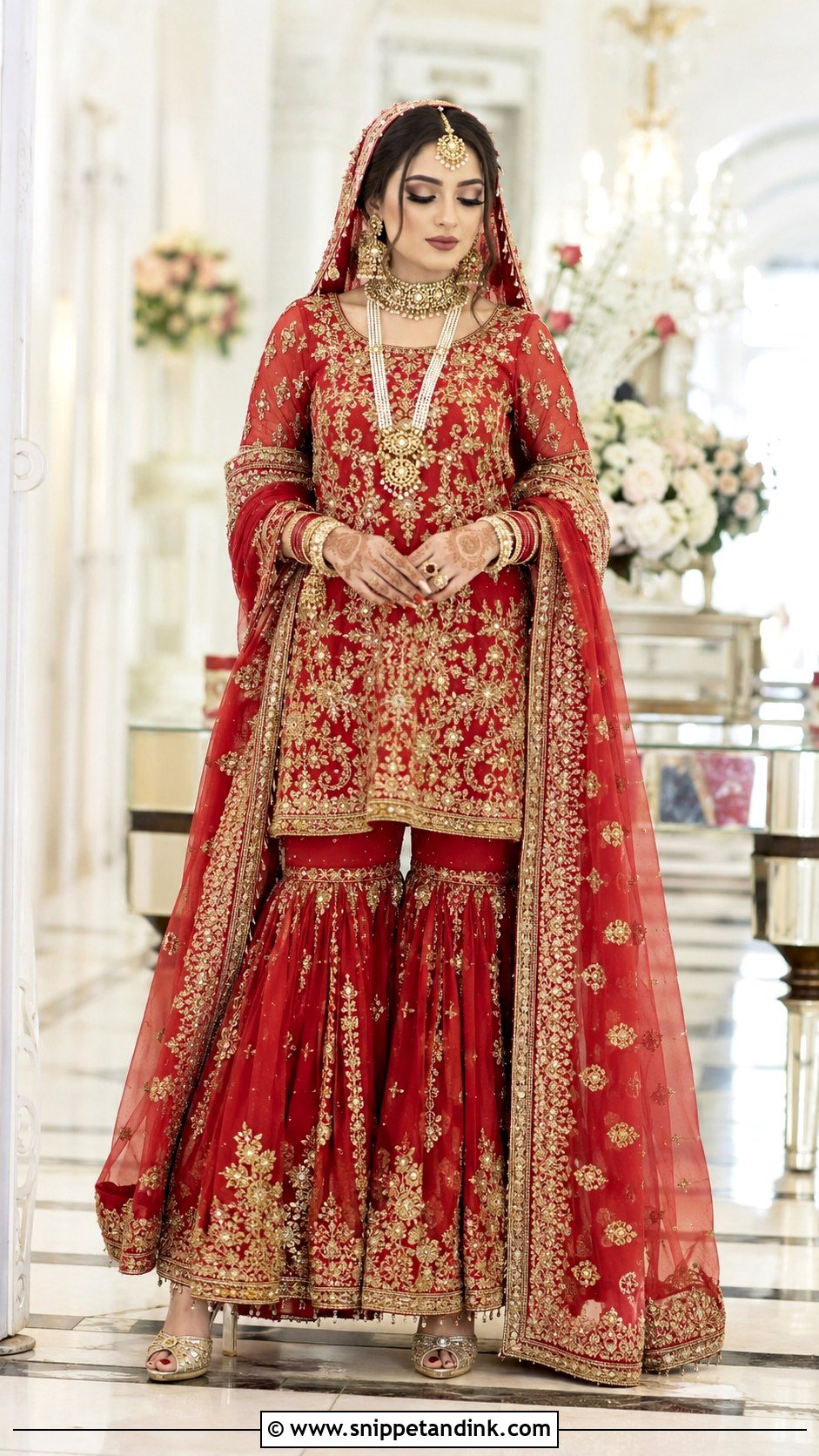
Red and gold in a gharara is the combination many grandmothers wore, and it still feels right. Look for heavy work at the knee, a broad hem border and a matching dupatta. Raw silk and jamawar hold the shape; tissue adds shine but creases easily. A choker, rani haar, jhumkas and bangles complete the traditional set, and a center parting with a soft veil drape suits it. Practise the gharara on stairs before the day, since the gathered knee can catch your heel.
13. White And Gold Barat Dress
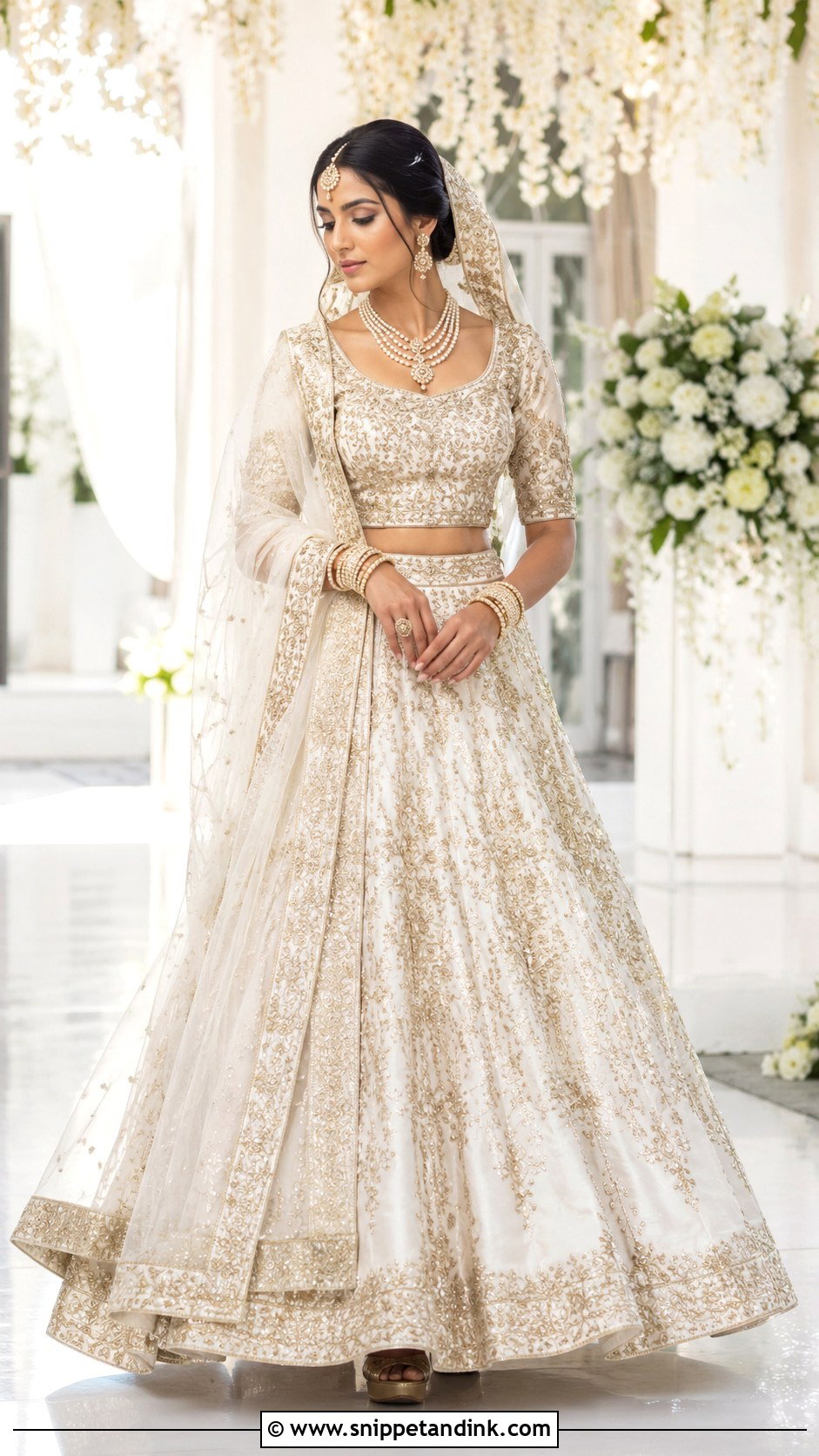
A white and gold Barat dress needs strong embroidery and a full silhouette to look bridal instead of simply pale. A white lehenga, peshwas or gharara with gold zardozi does that well. Add a red or maroon dupatta if your family wants a traditional color, or keep it white and gold for a calmer finish. Pearl and kundan jewelry suit it. Daytime Barat events show it off best, and it marks easily, so keep a stain pen in your clutch.
14. Bridal Anarkali Barat Dress
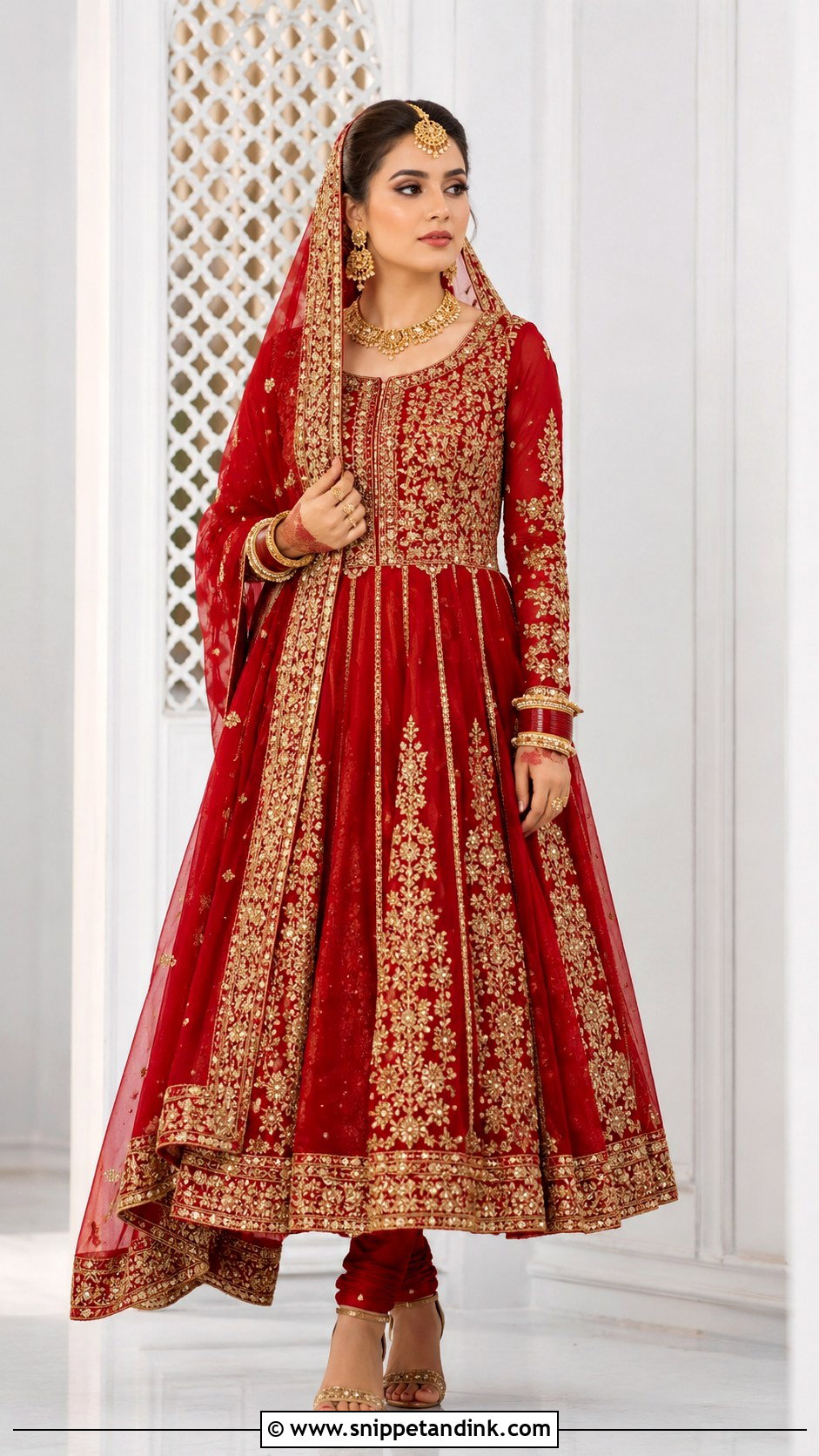
The Anarkali’s fitted top and long flared skirt give modest coverage and move easily, which is why I recommend it to brides who dread a heavy lehenga. Red, maroon, gold, blush and ivory all work. Long sleeves, a deep hem border and a detailed dupatta complete it, worn over churidar or with a light skirt underneath for extra flare. The weight sits on the shoulders, not the waist, so ask for broad, well-anchored shoulder seams. Traditional jewelry and embellished heels finish it.


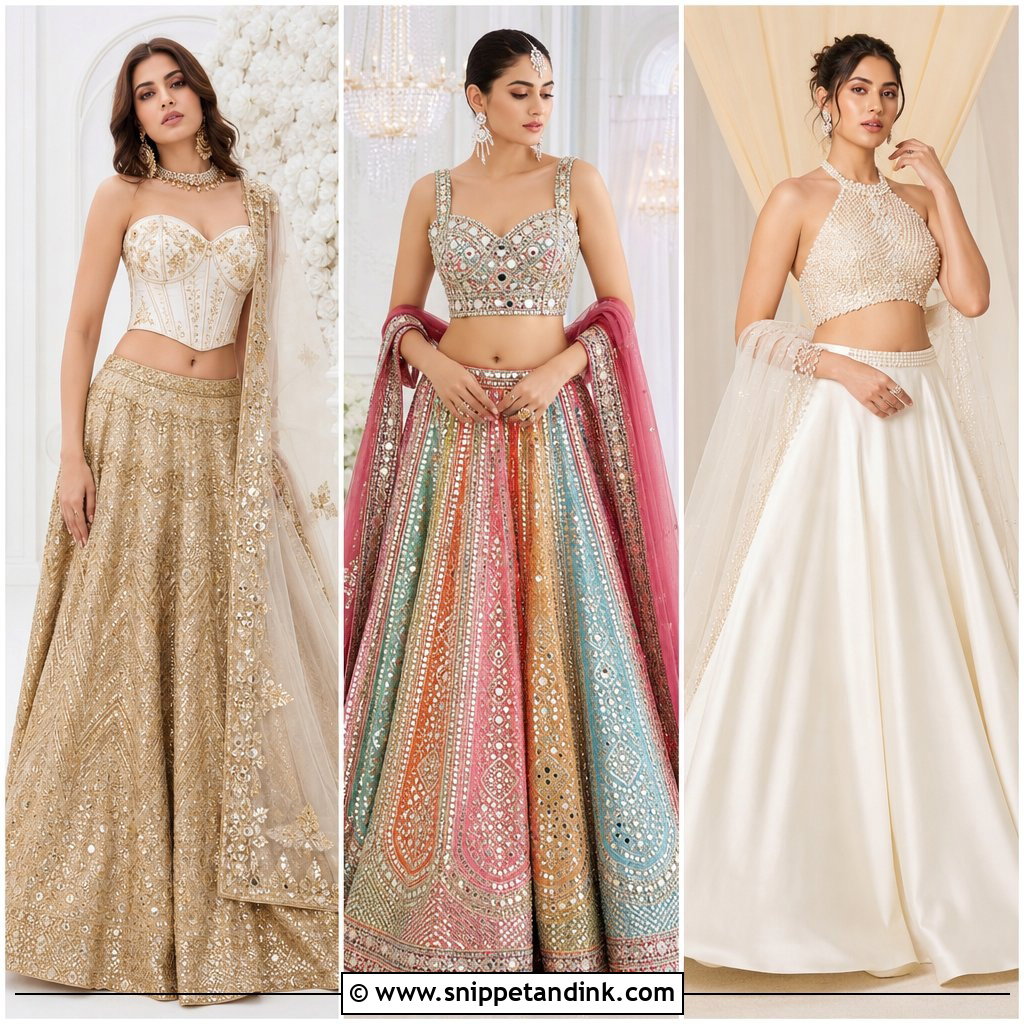
15. Lehenga With Long Shirt Barat Dress
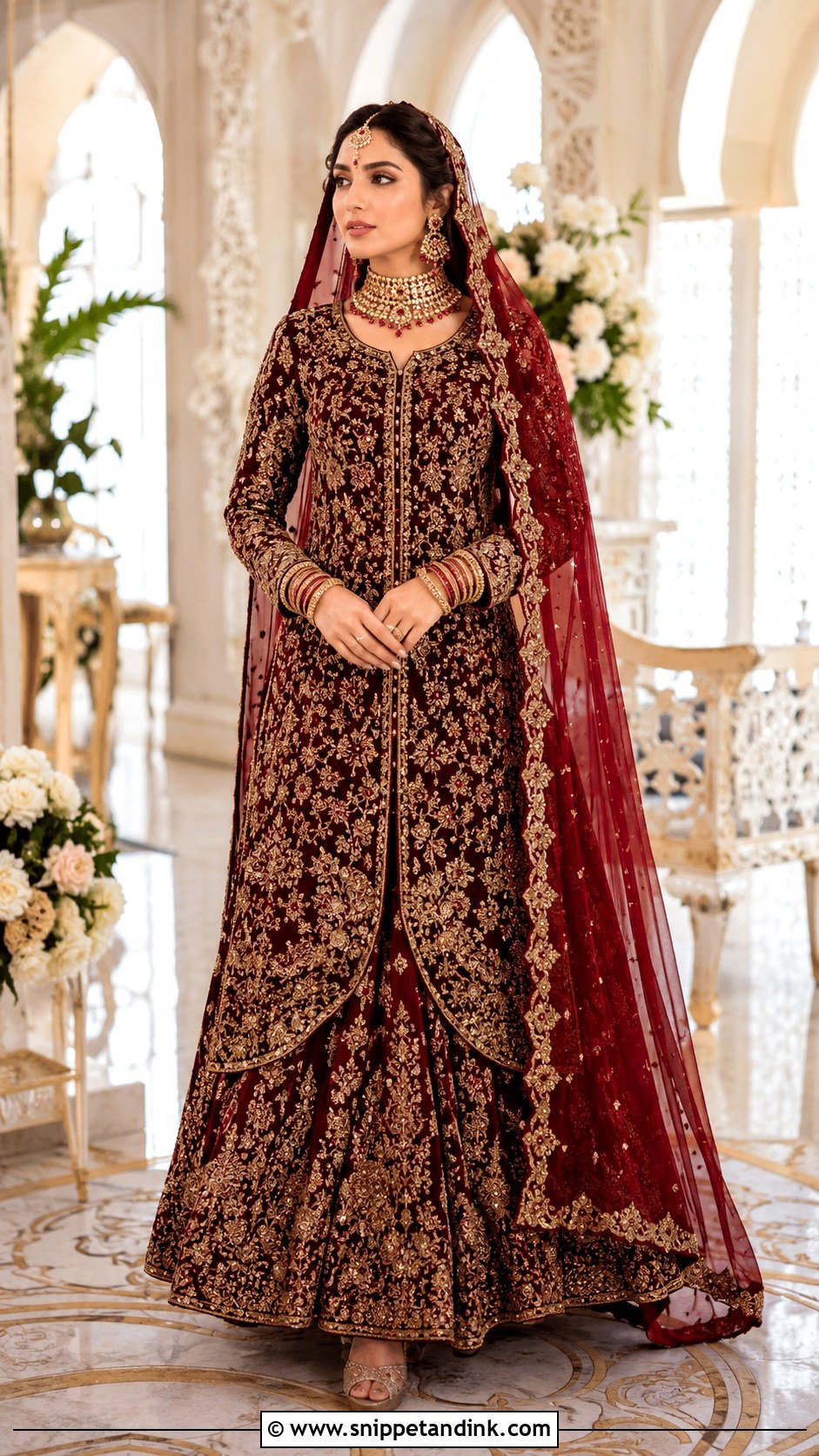
A lehenga with a long shirt gives coverage through the hips while keeping the flare of a skirt underneath. The shirt can be straight, A-line or panelled, with heavy work on the front, sleeves and hem to define its outline. Red, maroon, rust and ivory all suit it. The thing I check is the side slit: too low and the shirt rides up when you sit; too high and it gapes. A sheer dupatta, a statement necklace and comfortable heels finish it.
16. Double Dupatta Barat Lehenga
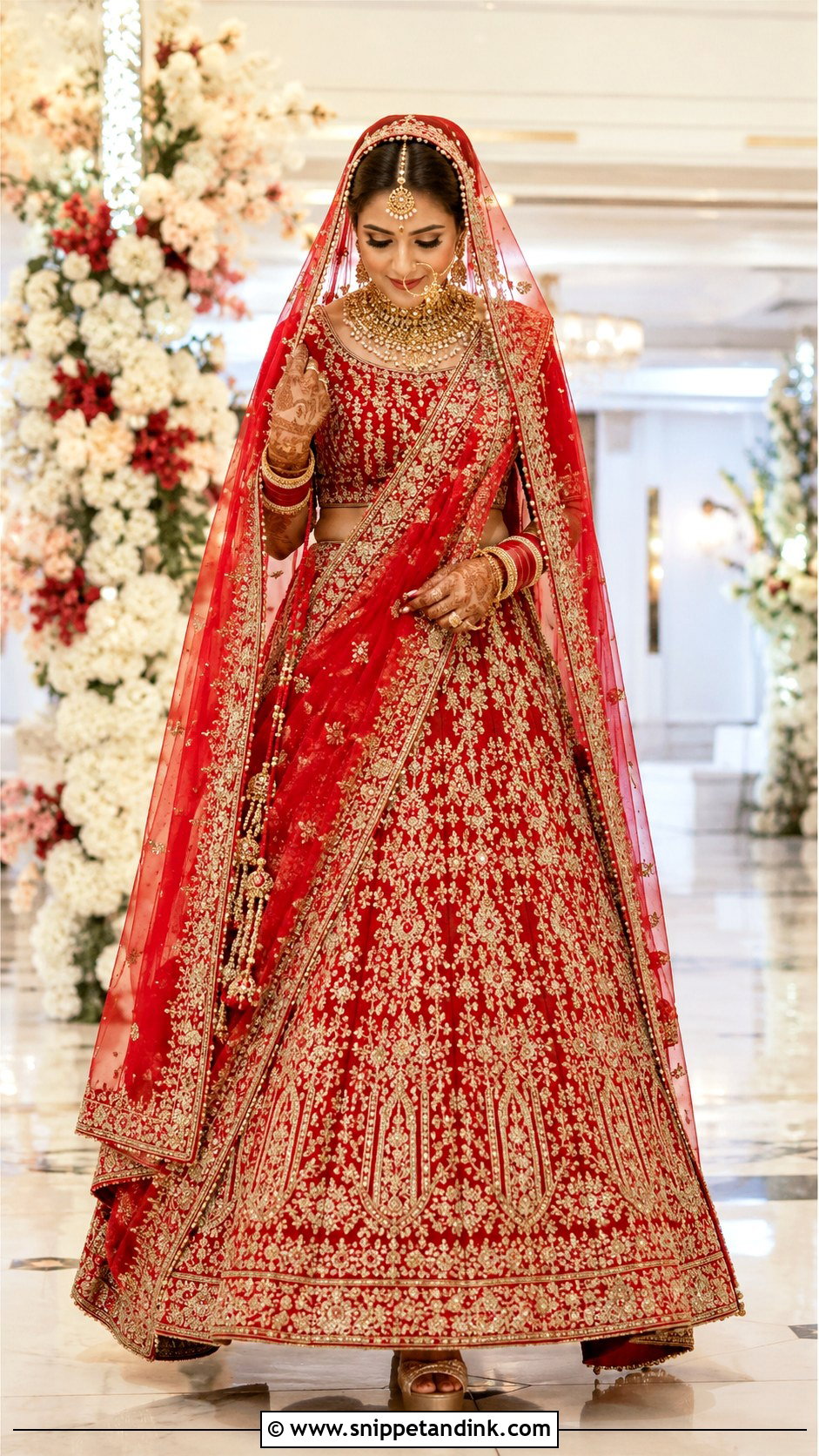
Two dupattas make a lehenga feel formal straight away: one pinned over the head, the other draped across the shoulder or around the arms. The practical rule is one heavy and one light, so you’re not carrying two embroidered borders’ worth of weight on your head. A different shade or texture on the second dupatta looks rich in portraits. Keep the blouse and skirt well fitted so the layers don’t bulk up. It suits red, maroon, ivory and pink lehengas alike.
17. Jacket Style Barat Lehenga
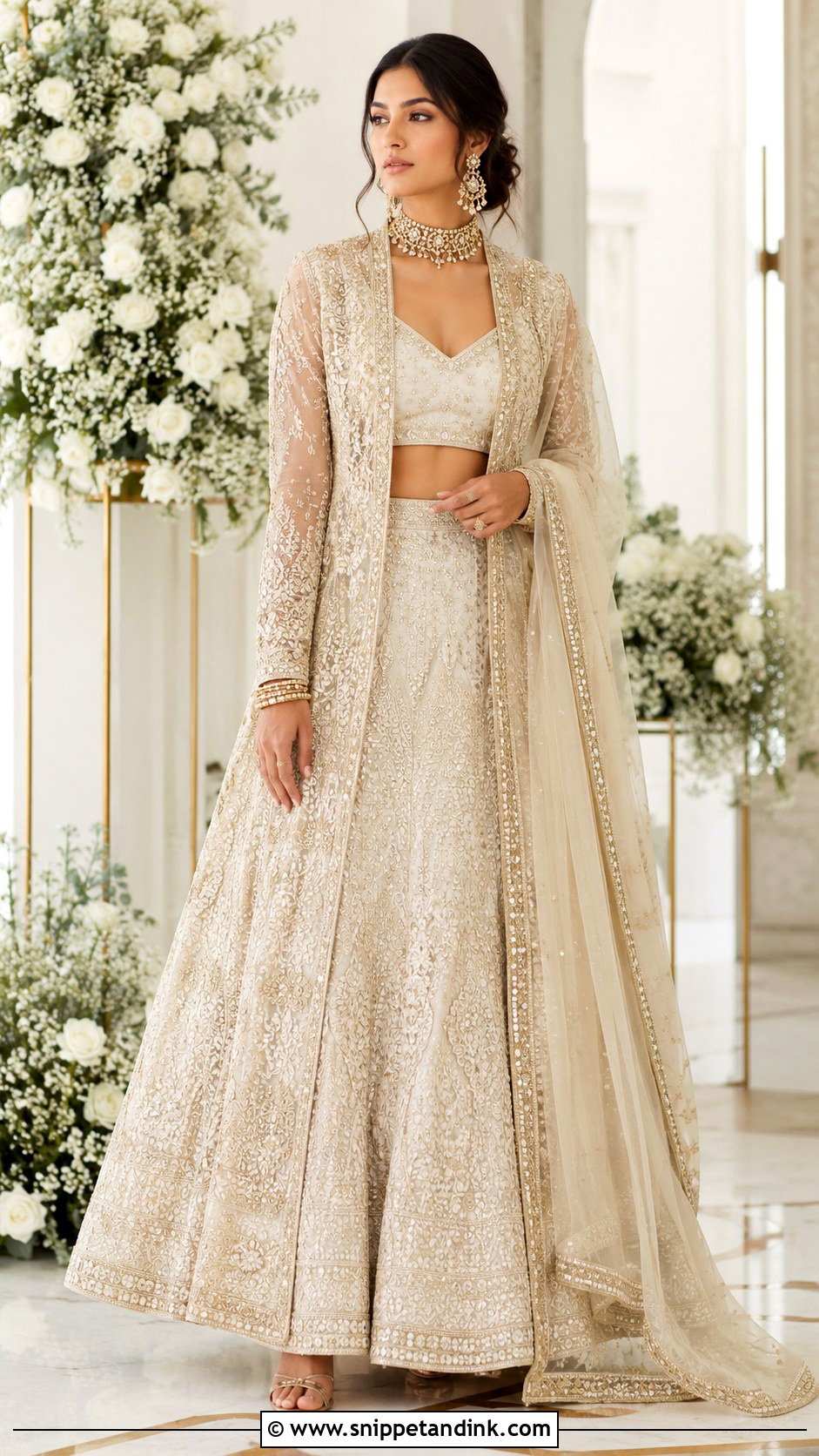
A long embroidered jacket over a blouse and lehenga feels modern while staying formal. The jacket can be open at the front, belted or lightly flared. Sheer organza keeps it light; velvet suits a winter wedding. Gold, ivory, red, blush and emerald all work. If you add a dupatta over the head, keep it sheer so it doesn’t hide the jacket work. Clean jewelry and sleek hair let the detail on the jacket show.
18. Red Saree Barat Dress
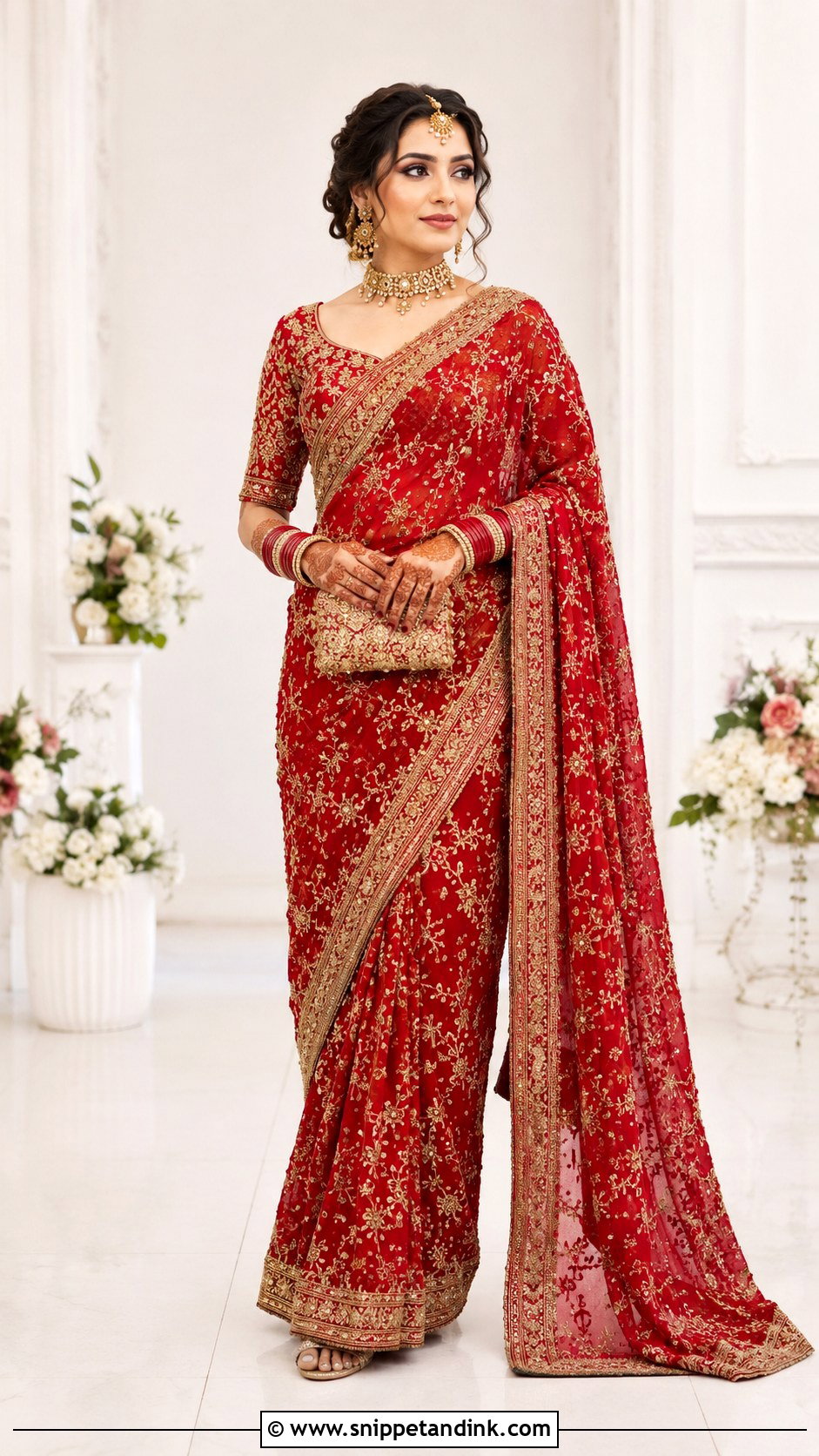
A heavily embroidered red saree is the draped alternative to a lehenga, in silk, organza, tissue or net with a rich border. A long pallu can go over the head for the ceremony, or be pinned down for movement. Have it draped by someone experienced and pinned at every pleat, because a saree that comes loose during the rukhsati is a real problem. A structured blouse holds the line. Traditional jewelry and bangles finish it, and it’s one of the easier bridal pieces to wear again later.
19. Peach Barat Lehenga
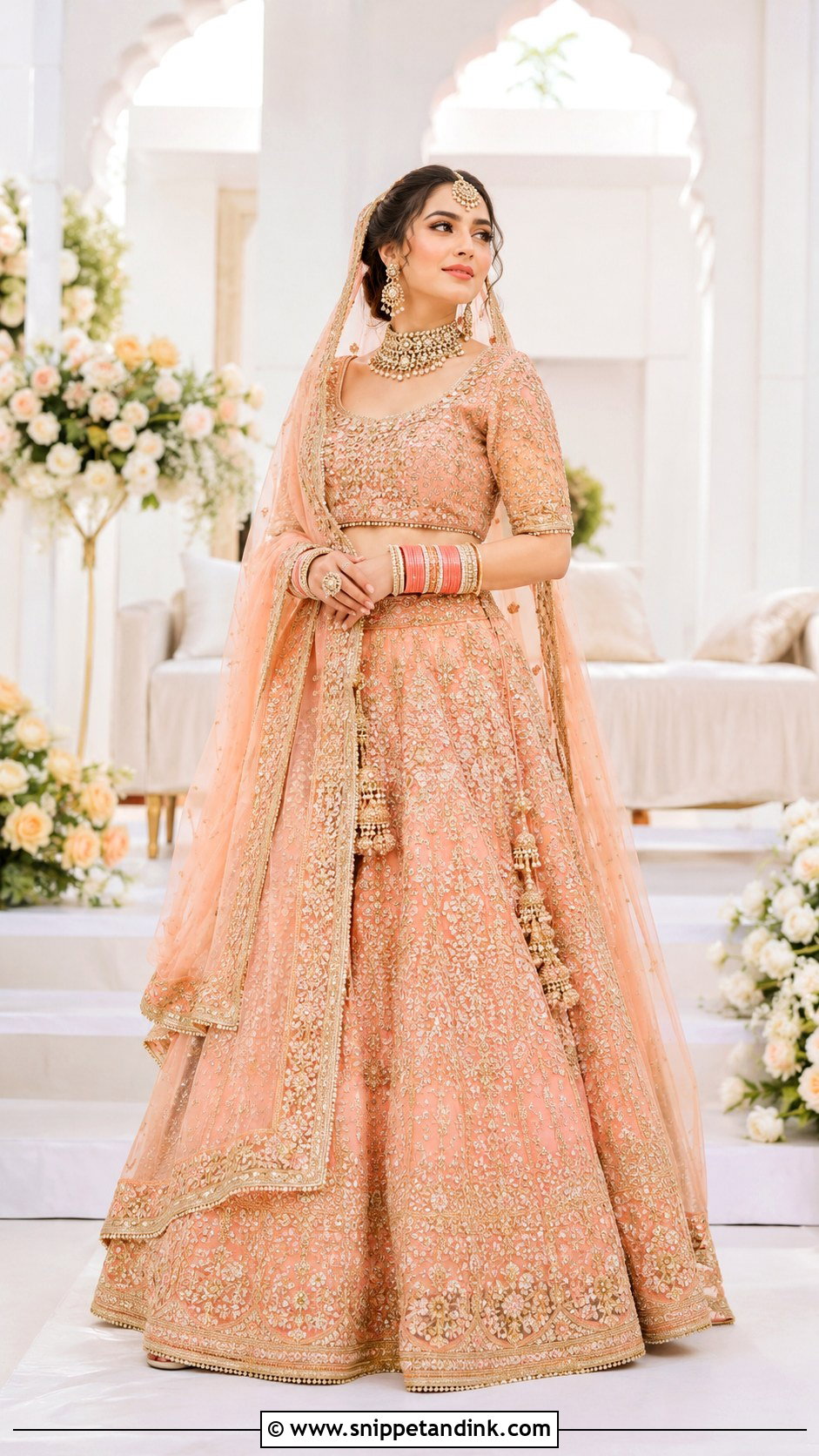
Peach is pretty, but on its own it can look too pale for Barat, so the embroidery has to do serious work. Choose dense gold, champagne or pearl embellishment, a full skirt and a statement dupatta. A deeper border in red, coral or rust adds warmth. Kundan or pearl jewelry and peach-toned makeup suit it. It looks lovely in daytime and outdoor photos, as long as the accessories carry enough weight to match the occasion.
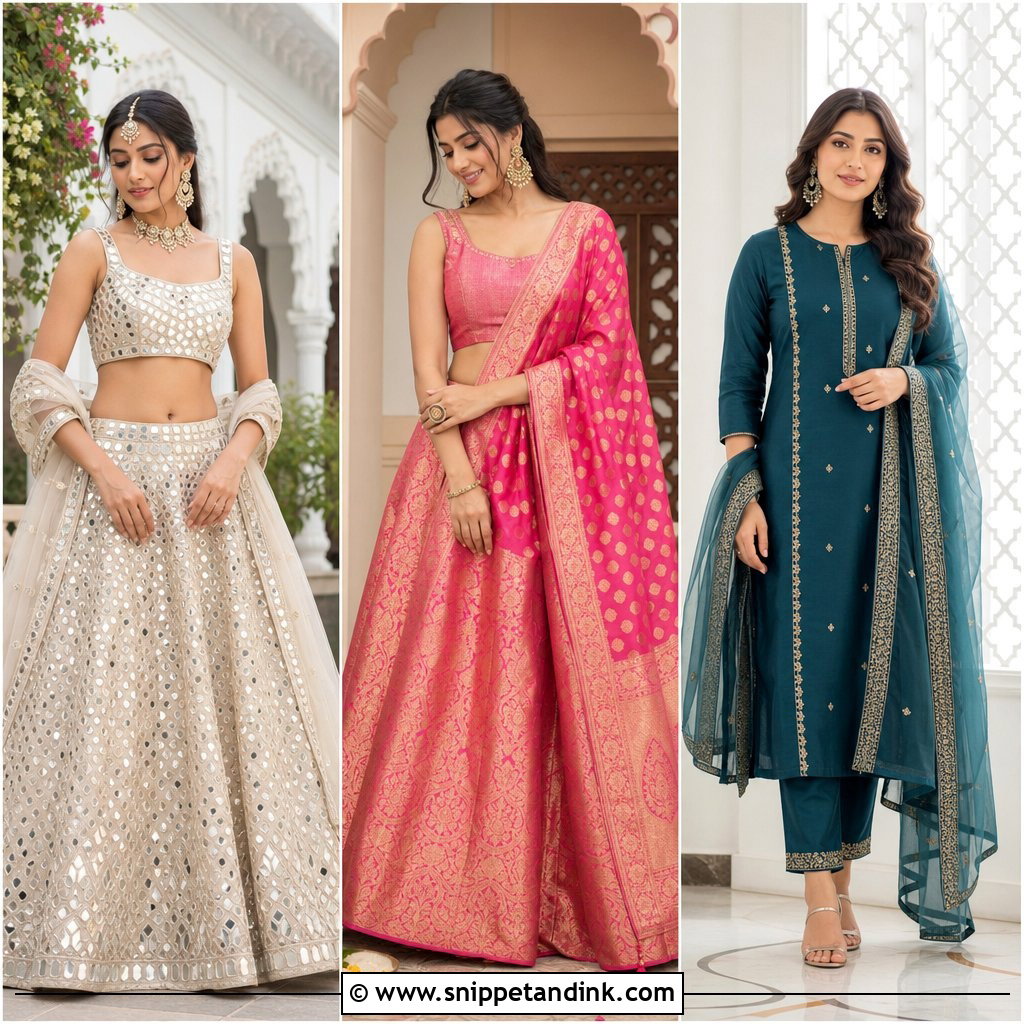
20. Banarasi Barat Lehenga
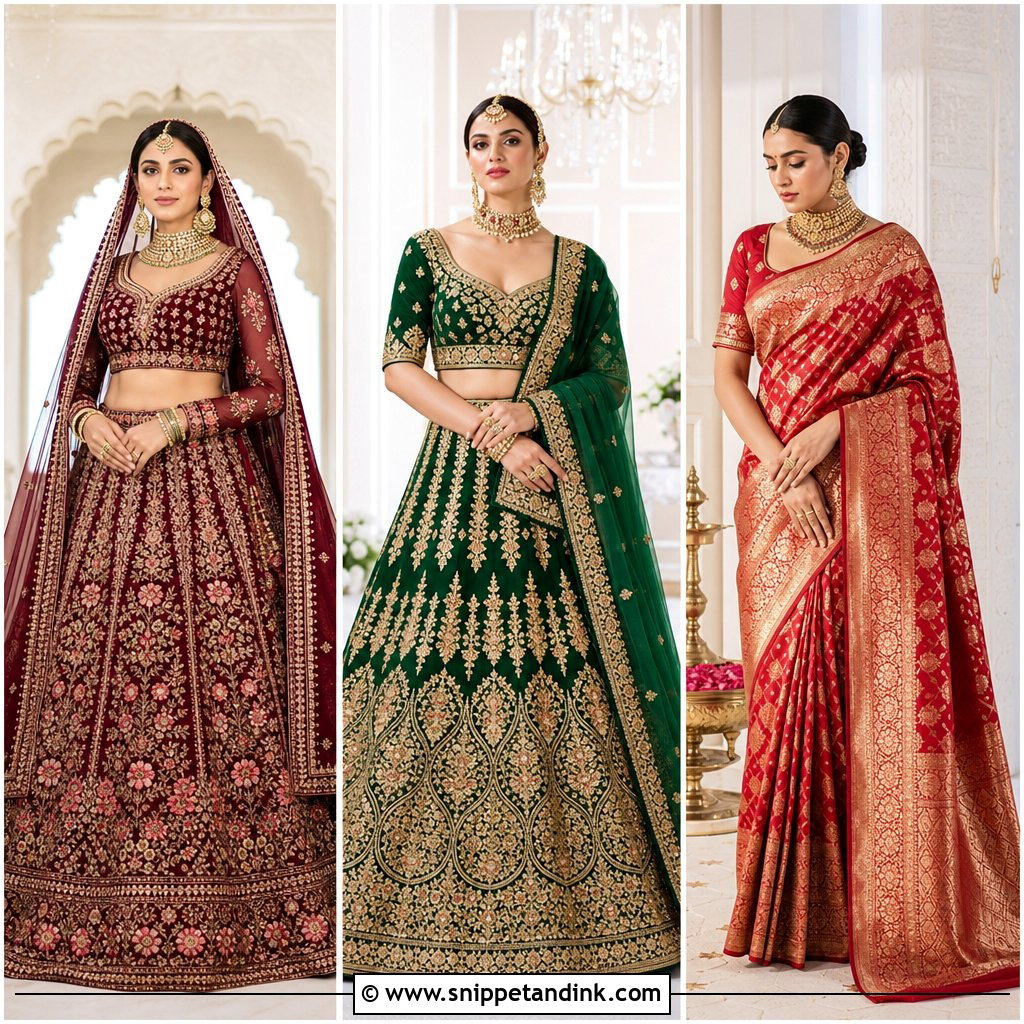
Banarasi is woven, not embroidered, so the richness is in the fabric itself, with metallic motifs worked through the cloth. That makes it lighter than a fully embellished lehenga of similar presence. Red, maroon, pink, emerald and gold Banarasi all suit Barat day. Pair it with an embroidered blouse and a dupatta with a woven or embellished border, and keep the jewelry classic and the makeup clean. A good Banarasi is also the piece most likely to be restyled and passed down.
21. Pastel Barat Gharara
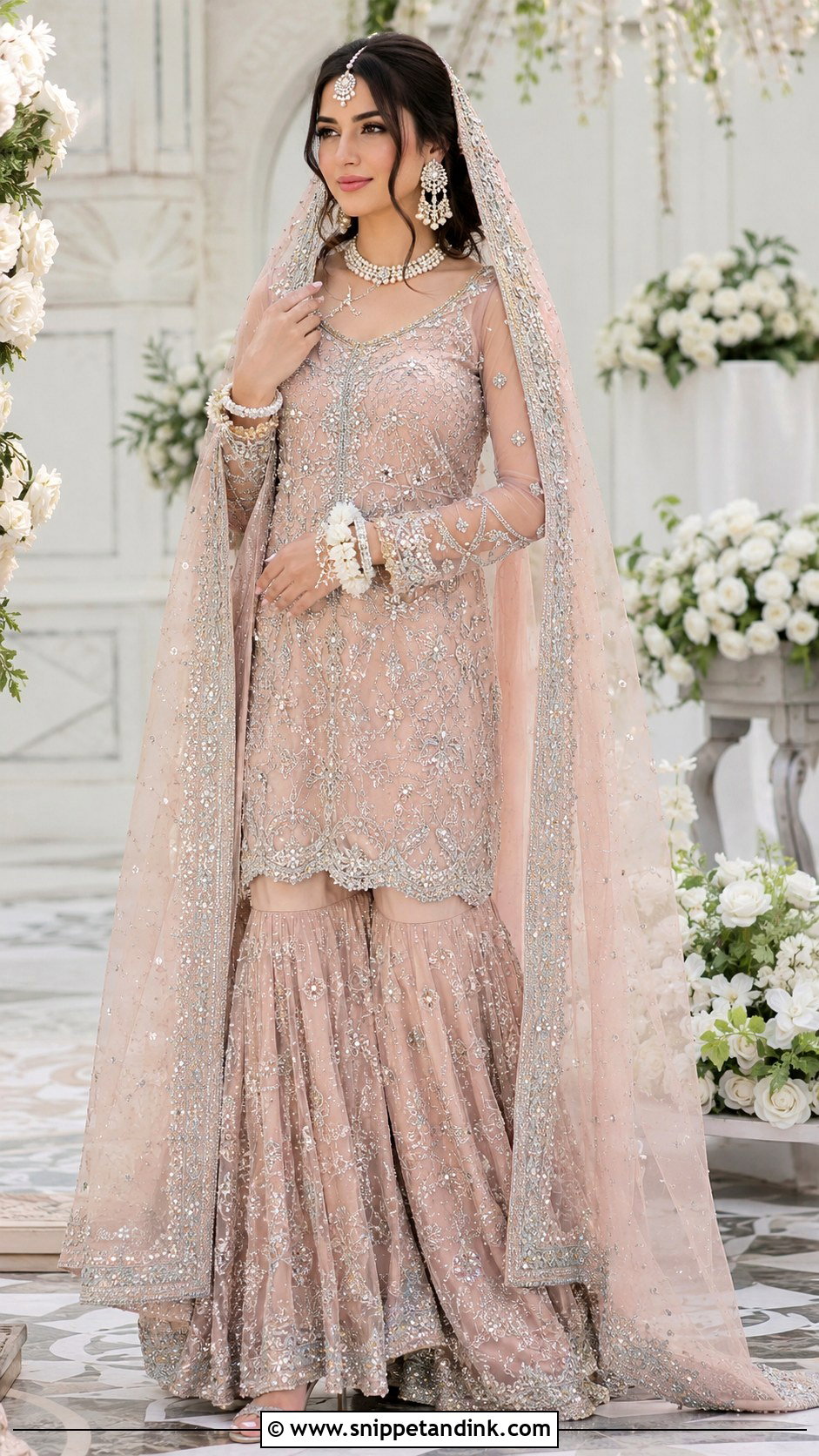
Pastel ghararas suit a daytime Barat, in blush, powder blue, mint, ivory or lavender. The cut and craftsmanship have to feel formal enough, so choose a structured short shirt, a full gharara and a heavily bordered dupatta. Silver, pearl and light gold work suit pastels, and deeper accents can come through the jewelry or dupatta edge. I’d be honest with a bride here: some families read pastels as too light for the main day, so have that conversation early.
22. Red Velvet Barat Lehenga
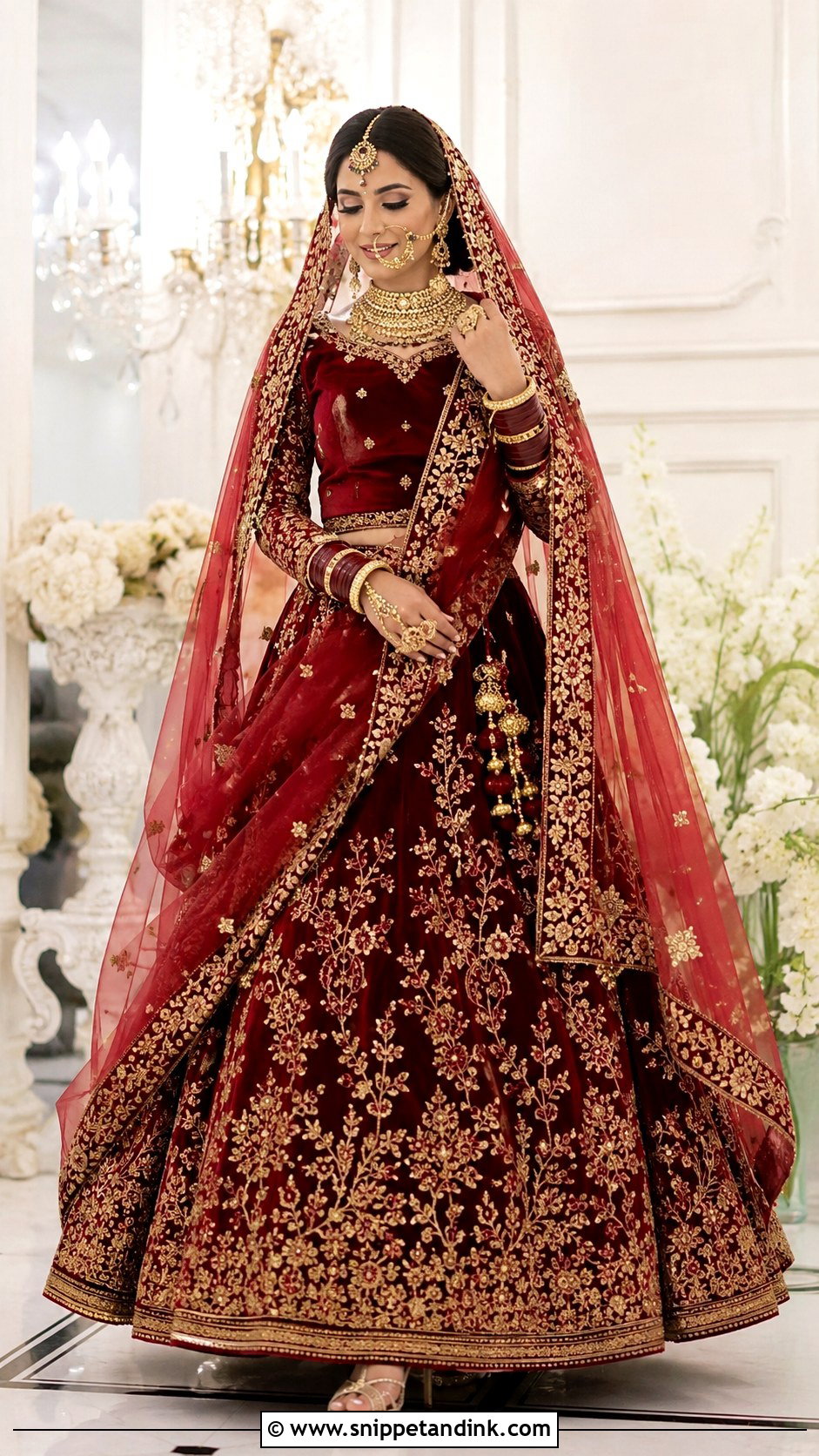
Red velvet makes even simple embroidery look richer, which is why it’s a winter favorite. It’s also heavy, and a full velvet lehenga with heavy hem work gets tiring by the end of the night. Balance it with a light net or organza dupatta and keep your shoes comfortable. A structured blouse and gold or antique embroidery at the hem keep the shape. Traditional gold jewelry, a statement choker and a soft veil drape complete it, and evening photography loves it.
23. Mint Barat Lehenga
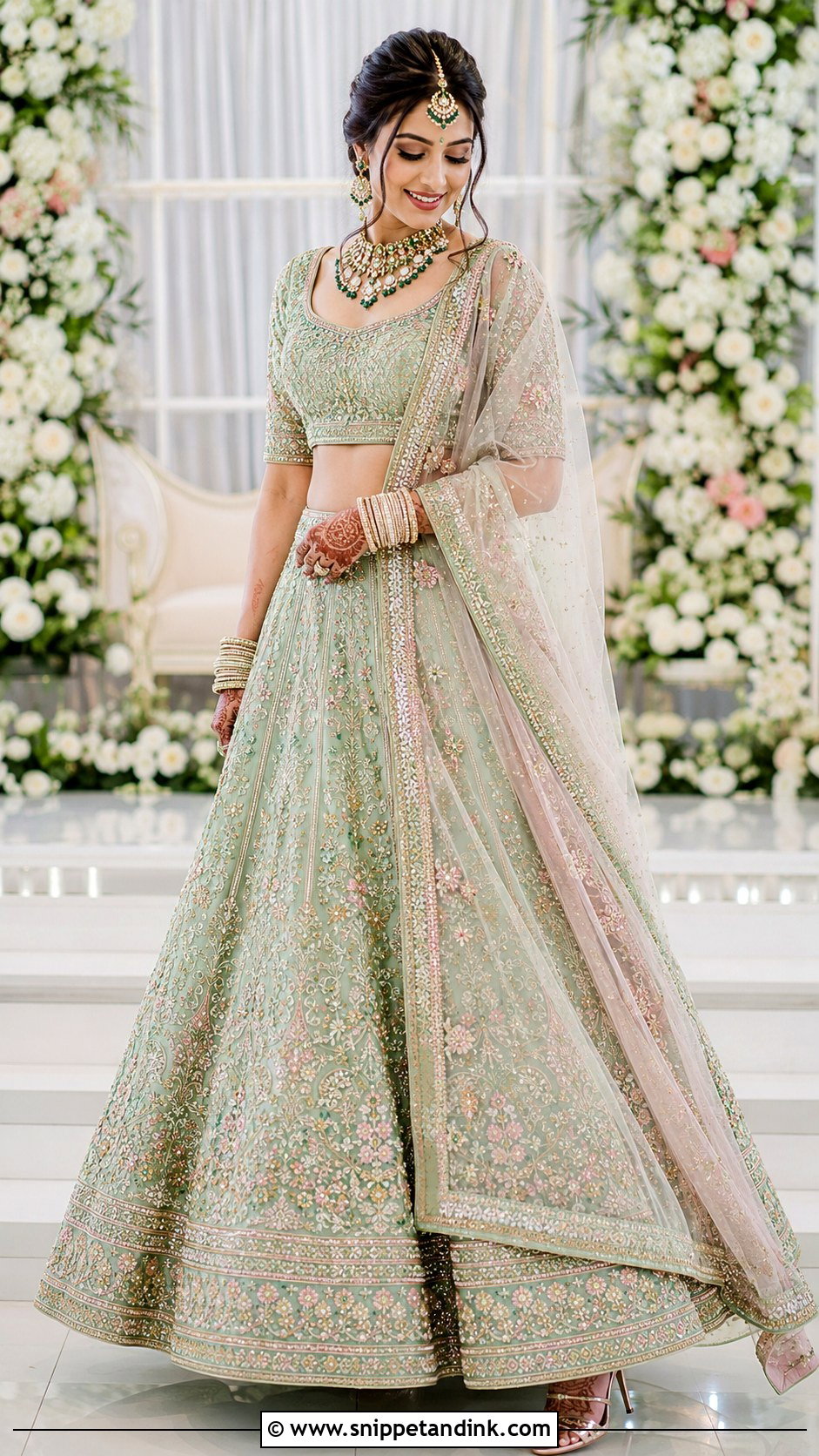
Mint is the coolest shade in this list, and that’s its appeal: it feels fresh beside all the reds of a Barat hall. Gold, pearl or silver embroidery keeps it bridal. A contrast dupatta in blush or deep red adds definition if your family wants more tradition. Keep the silhouette grand with a full skirt and finished borders. Pearl or kundan jewelry with soft green stones suits it. Mint can look grey under fluorescent lighting, so check the venue’s lights if you can.
24. Plum Barat Maxi
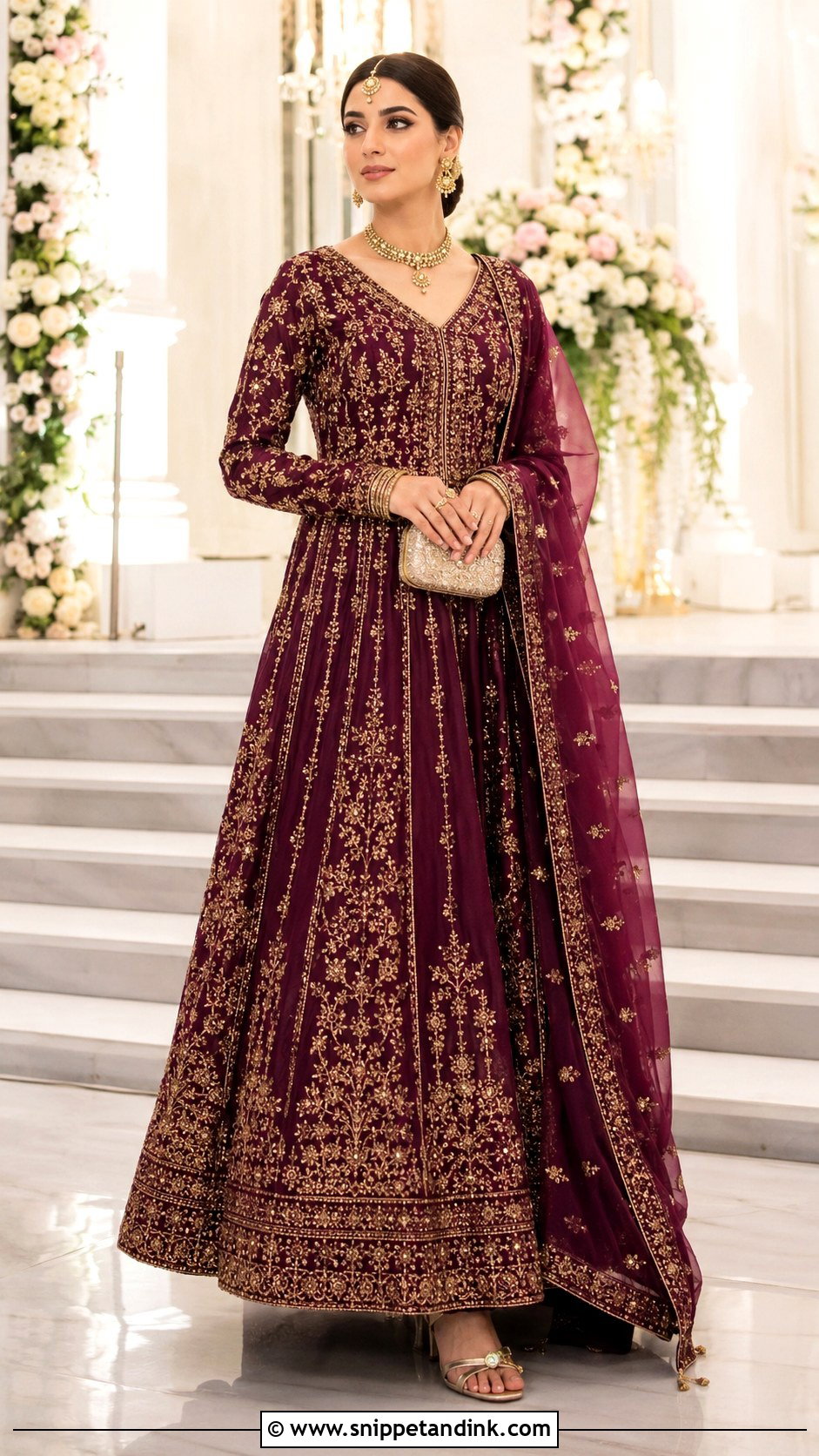
Plum is deep, a little unexpected, and very good under bright event lights, which makes it an evening choice. A long flared maxi with work on the bodice, sleeves and hem gives it structure. Antique gold, bronze or silver embroidery all suit plum. A sheer bordered dupatta keeps it bridal, and traditional jewelry with a sleek hairstyle finishes it. It’s a confident pick for a bride who doesn’t mind standing out from the usual palette.
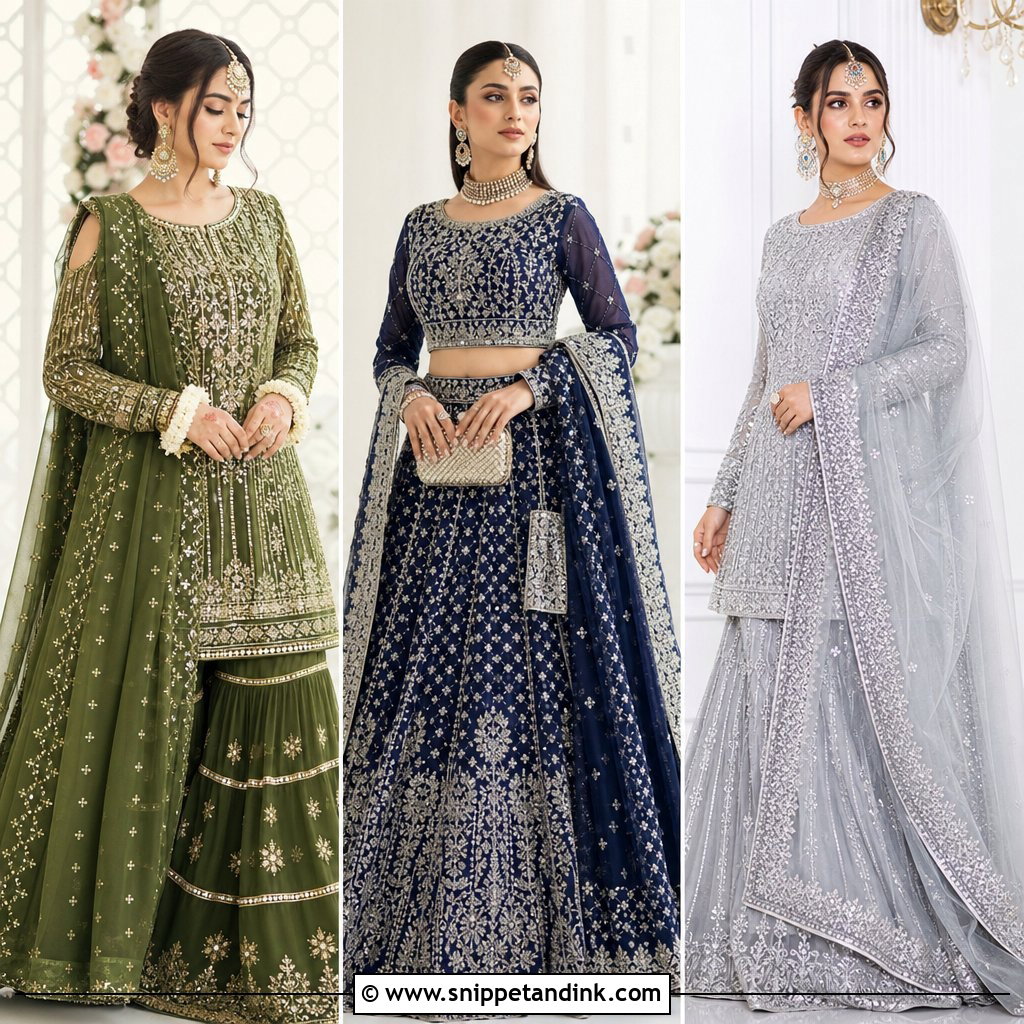
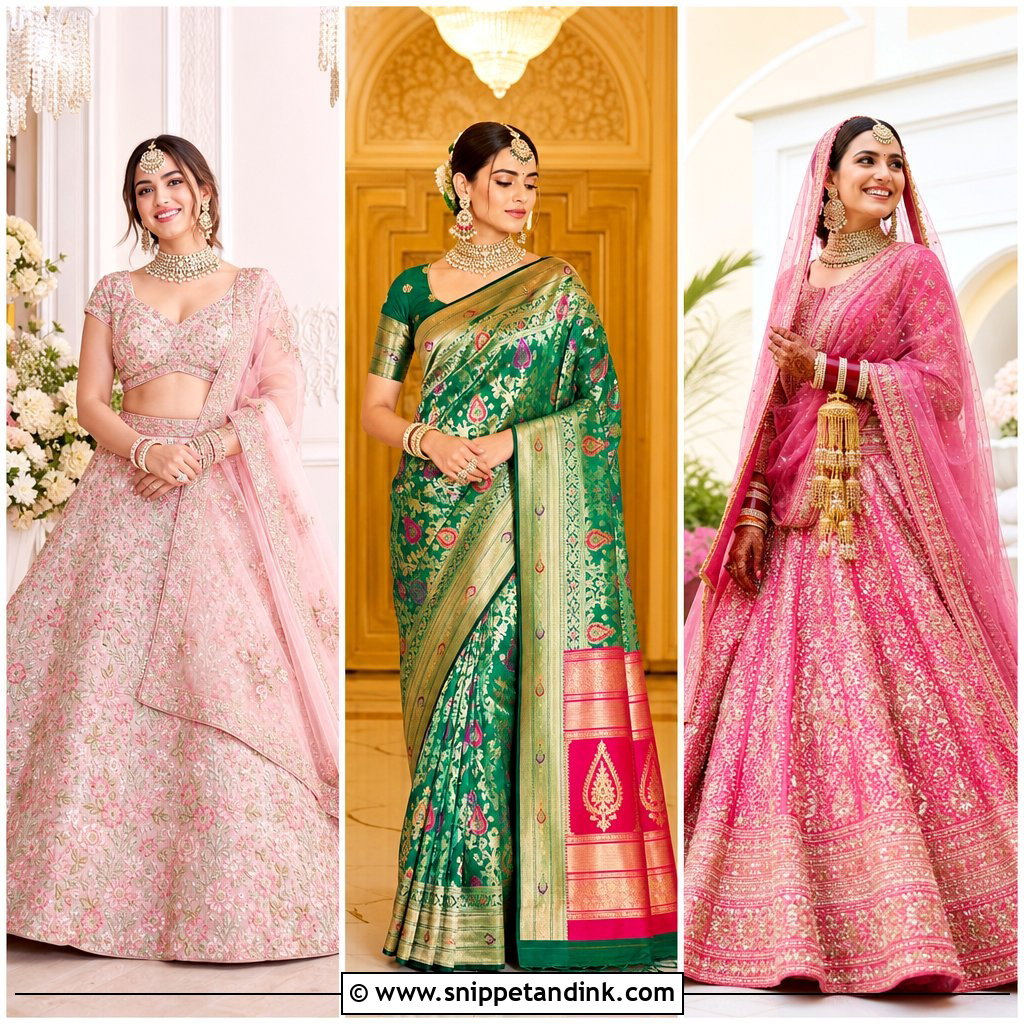
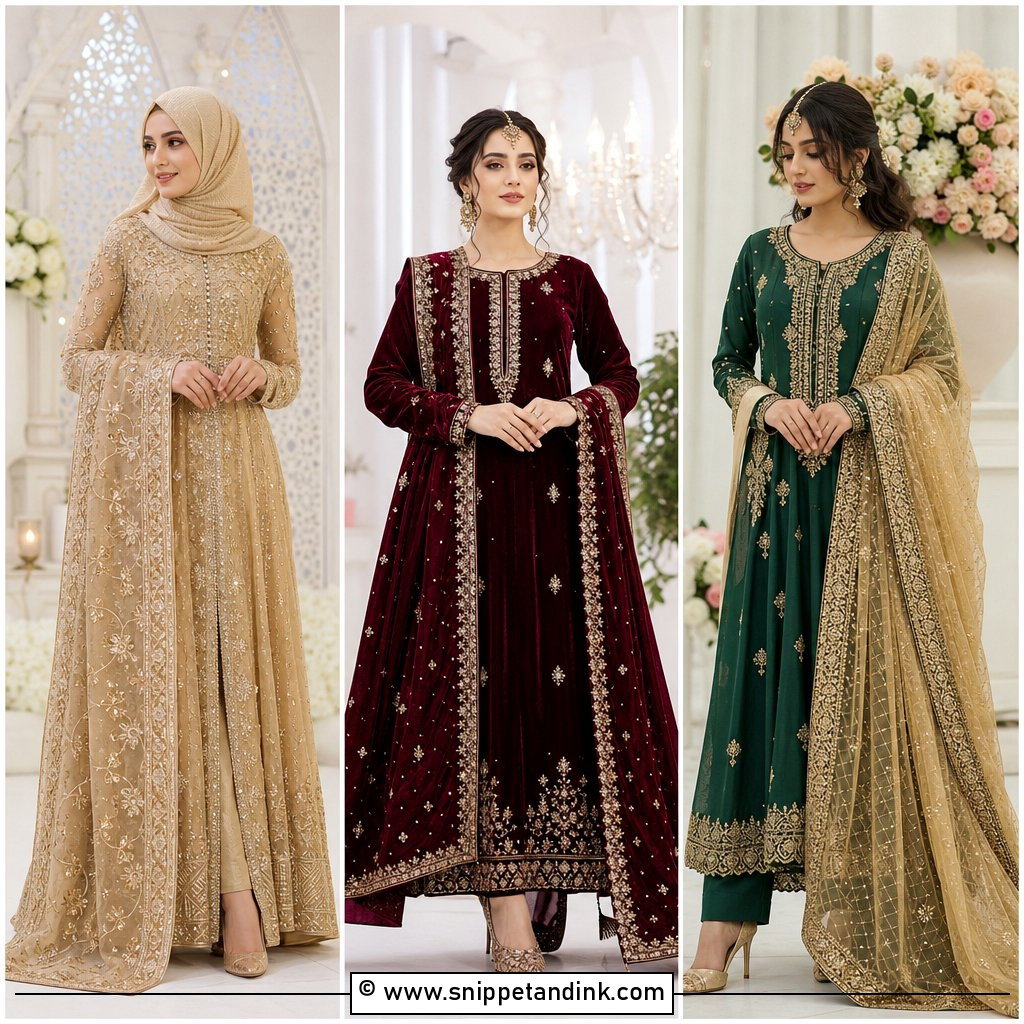
25. Modern Barat Lehenga Choli
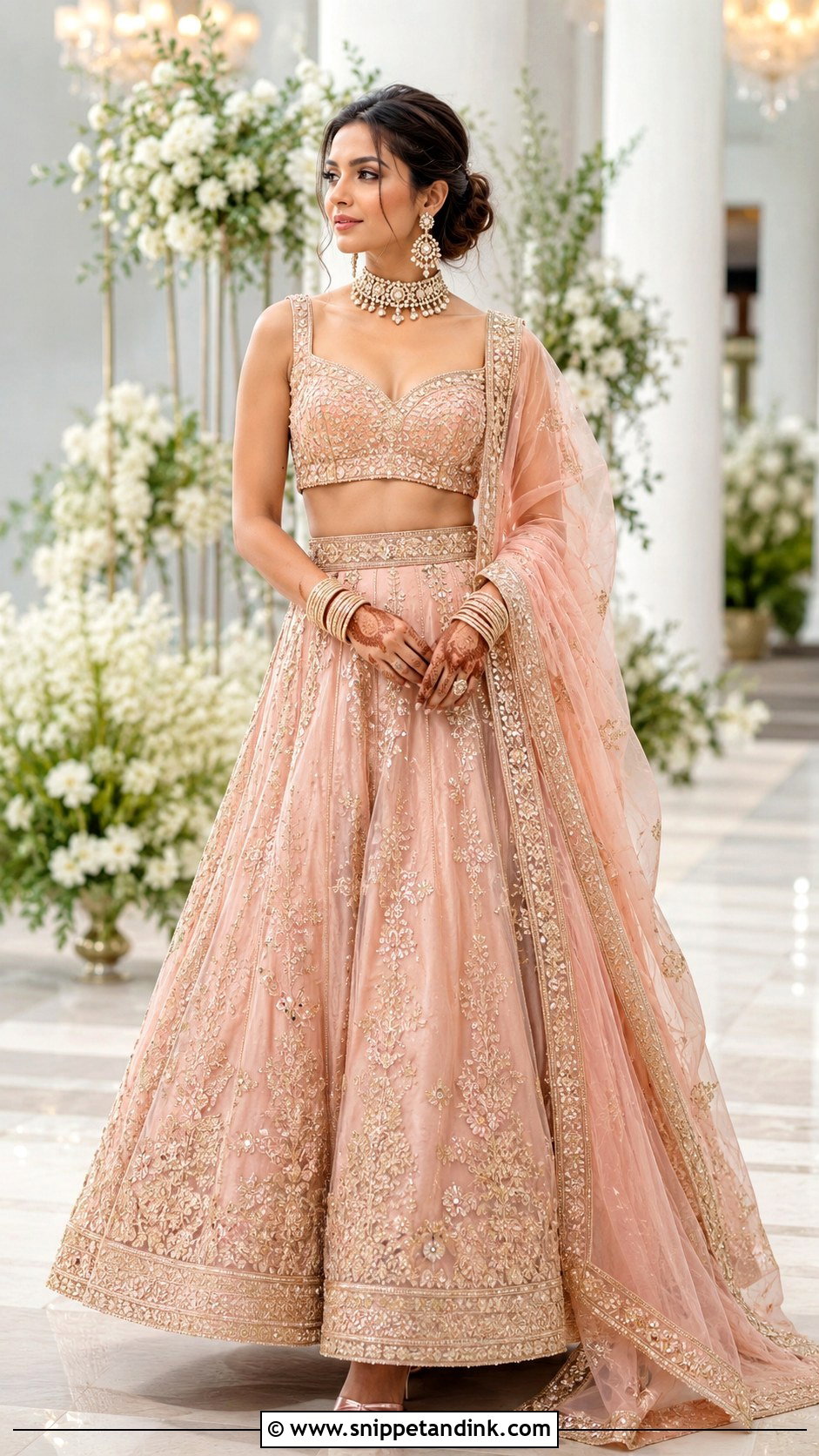
A modern lehenga choli puts the work in a few places instead of everywhere: the blouse, the waistline, the hem and the dupatta border. That makes it lighter and cleaner, but it also means tailoring shows, so fittings matter more than usual. A structured blouse, a high-waisted skirt and a soft dupatta form the base. Red, blush, ivory, gold, rust and emerald all work. Statement earrings, a choker and bangles finish it with a modern edge on a traditional day.
The Dupatta, the Jhoomar and Everything After
Two moments trip brides up more than the outfit itself: getting the dupatta to stay put for hours, and getting the whole thing home and stored without damage. Assign one person to each job before the day, ideally a sister or cousin who has been to your fittings.
Setting the dupatta over heavy jewelry
The head dupatta is pinned after the hair and jewelry are done, and it should be set by someone who has done it before. Pins go into the hair, not just through the fabric, and the dupatta should sit behind a jhoomar or matha patti so it doesn’t pull them crooked. Ask for a final check after you sit down, because a dupatta that looked right standing often slides when you’re seated on stage.
Putting the outfit away once the wedding is over
- Let it air for a day before packing it, so any sweat or perfume can evaporate.
- Wrap embroidered pieces in soft cotton or muslin, never sealed plastic. Metallic threads like zari tarnish faster in trapped moisture.
- Fold with tissue between the layers and refold every few months, so creases don’t set along the embroidery.
- Take stains to a dry cleaner who handles bridal work, and point them out rather than hoping they’ll be noticed.
The Outfit Has to Survive the Rukhsati Too
Start with your setting and season, then let comfort and your own taste do the narrowing. A red lehenga will always feel classic, and ghararas, shararas, peshwas, maxis, sarees and jacket lehengas give real alternatives. Rich fabric, meaningful embroidery, a well-set dupatta and the right jewelry can make almost any color feel bridal. Just make sure the dress photographs well and still lets you sit, walk, greet guests and leave with your family at the end of the night. Wear the one that feels like you.
You'll Like These Ideas:



Leave a Reply