
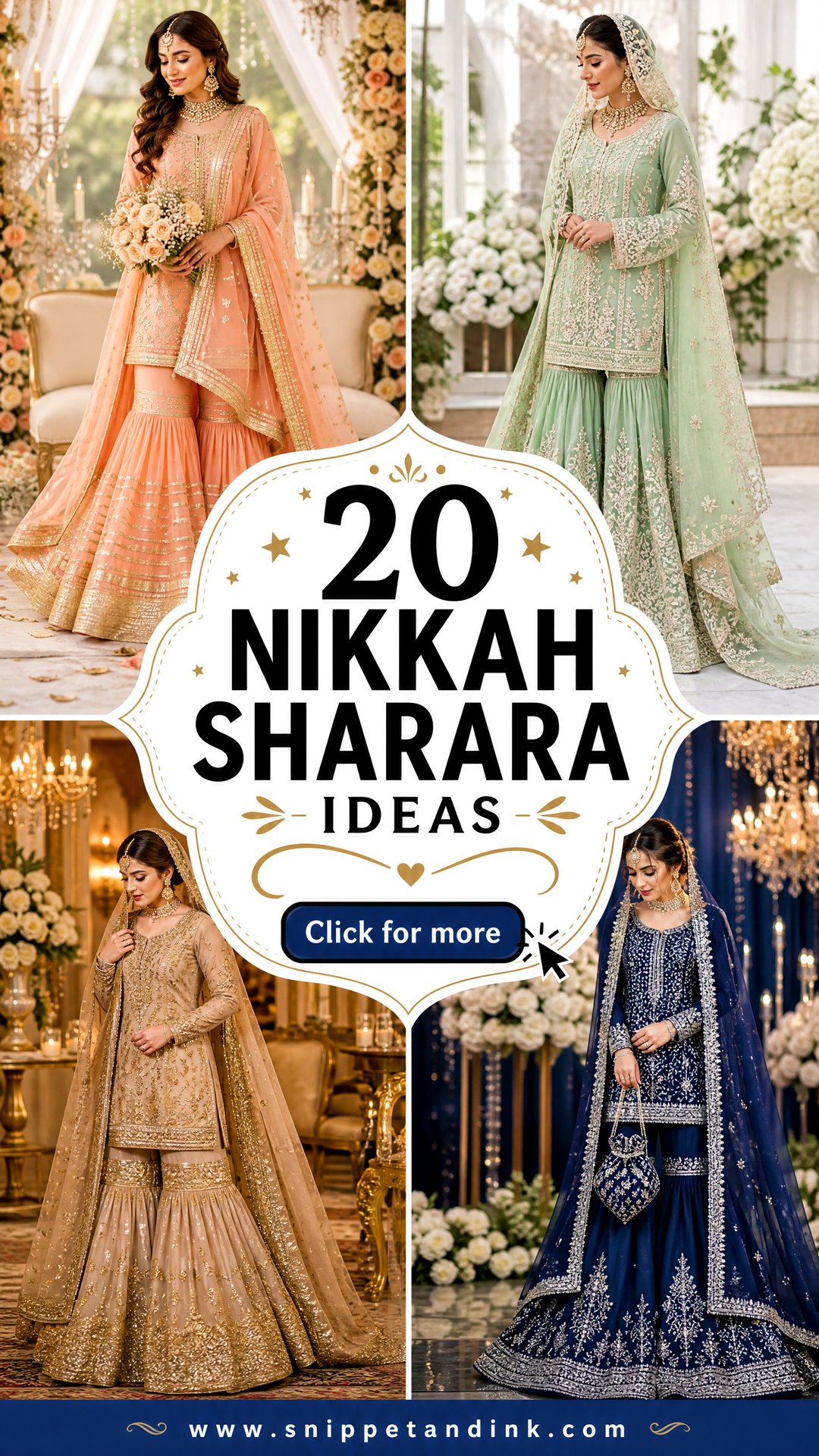
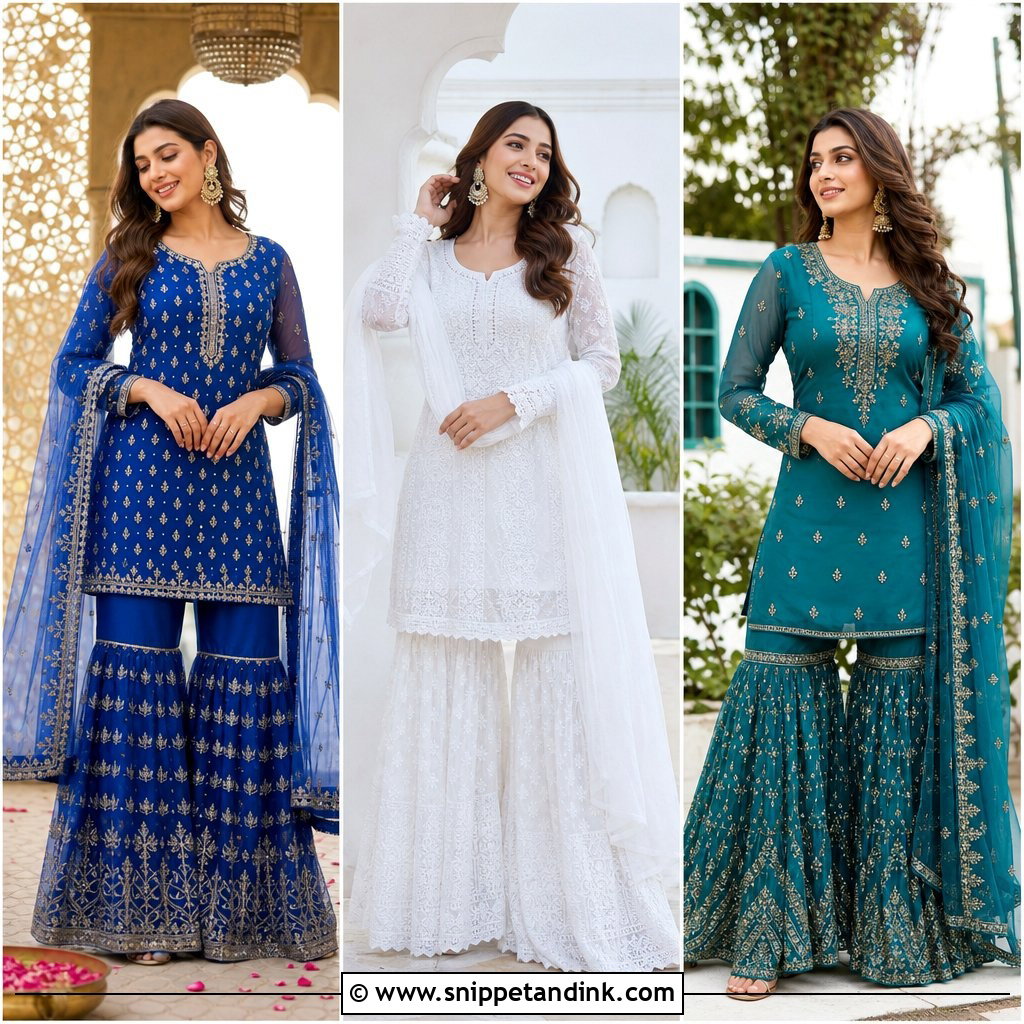
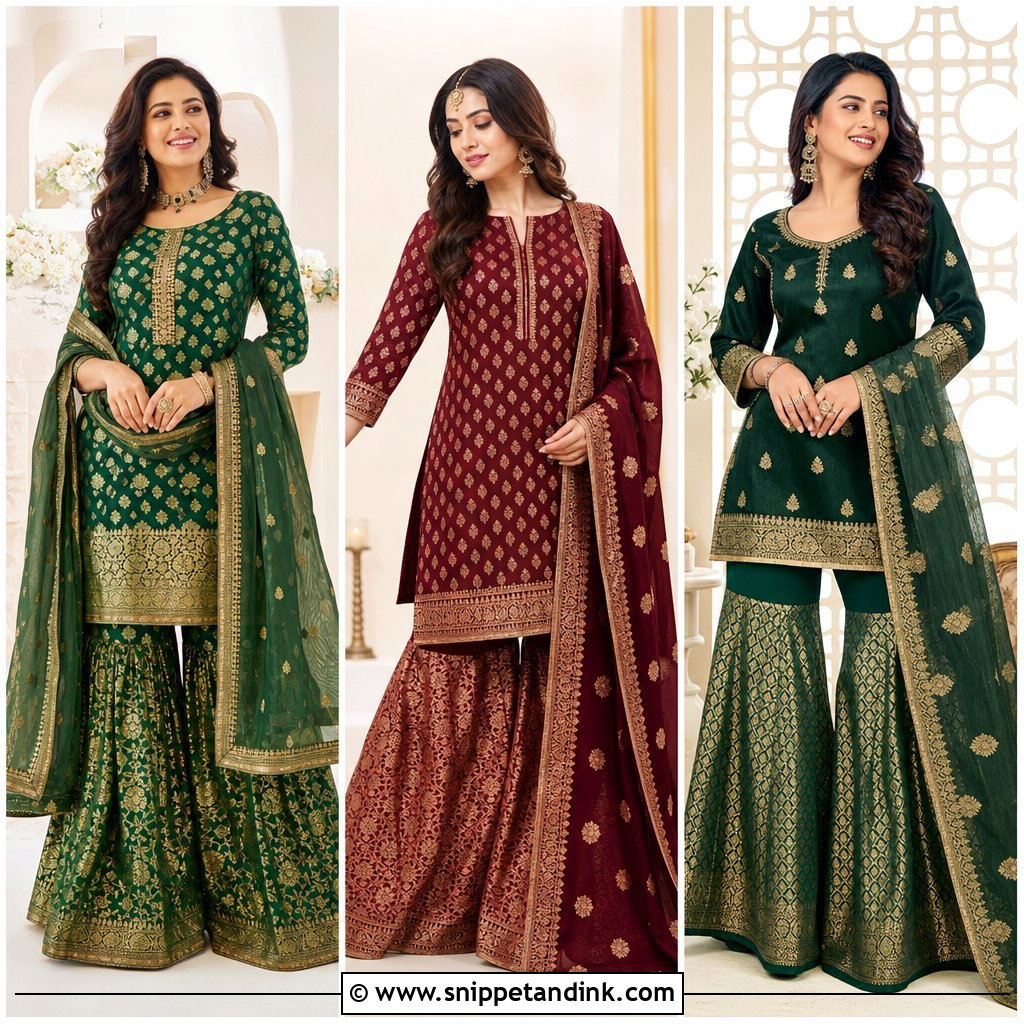
A sharara is wide-legged trousers cut to flare, worn under a short or hip-length shirt, and for a Nikkah it solves a real problem: it gives you bridal volume without the weight of a lehenga. Modern Nikkah fashion leans toward soft colours, refined handwork and modest cuts, and the sharara takes all of that well. Raw silk holds a crisp shape. Chiffon, net and organza move more and weigh less. What changes the look most is the shirt length, the dupatta drape and how much embroidery sits on the hem. Here are twenty sets I’d style for a home, mosque or hall ceremony, with what I’d watch for in each.
Sharara Construction Details I Check on Every Order
Two shararas in the same colour can look nothing alike once you put them on. The difference is almost always in how they were cut, so these are the points I ask a designer about before any money changes hands.
- Panel count. A full sharara is made from many flared panels, often called kalis. More panels mean more swing and more fabric, and a heavier garment. Ask how many metres went into the trousers.
- Where it starts to widen. A sharara cut to flare from the hip moves differently from one that is fitted to the knee. A gharara is the one with a gathered seam at the knee; make sure you’re ordering the shape you actually want.
- Lining. Net and organza need a soft inner layer, and silk benefits from one too, so it falls cleanly instead of clinging.
- Waistband. A drawstring plus a hook gives you adjustment if the fitting date is far from the wedding.
Shirt length shapes the whole outfit. A short kameez shows off the flare and suits petite brides; a hip-length shirt covers more and looks calmer. If you’re between the two, try both lengths pinned up at the fitting before the tailor cuts.
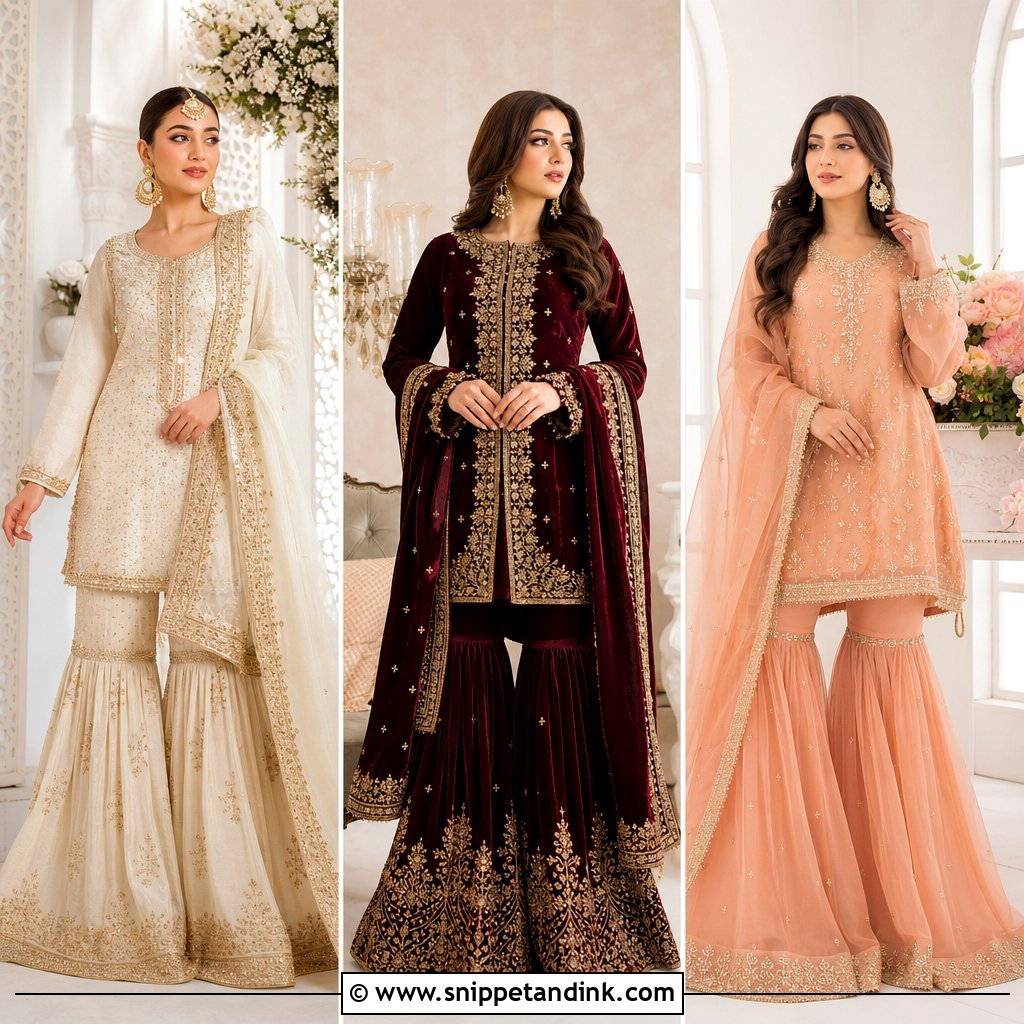
1. Ivory Nikkah Sharara With Pearl Embroidery
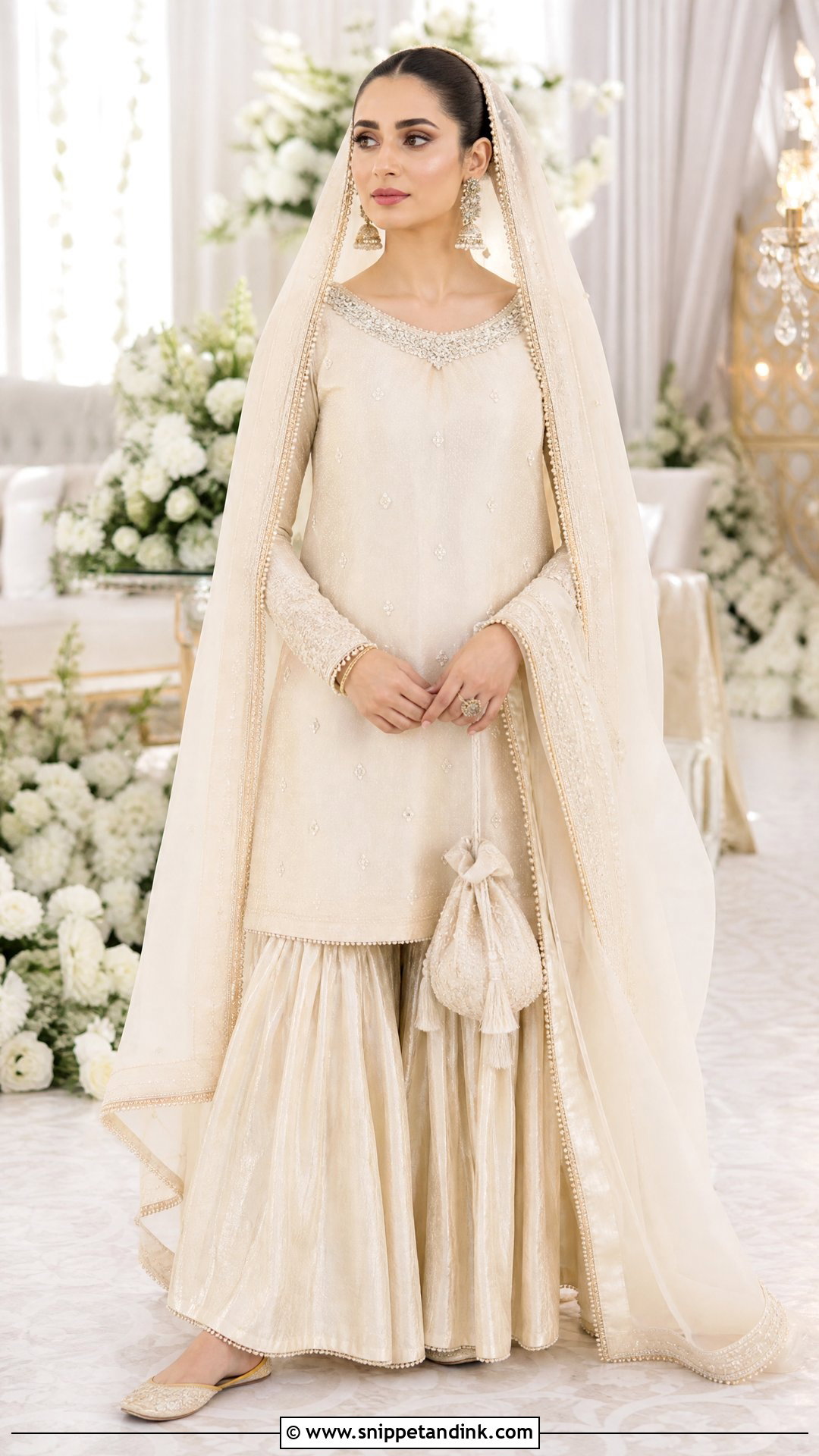
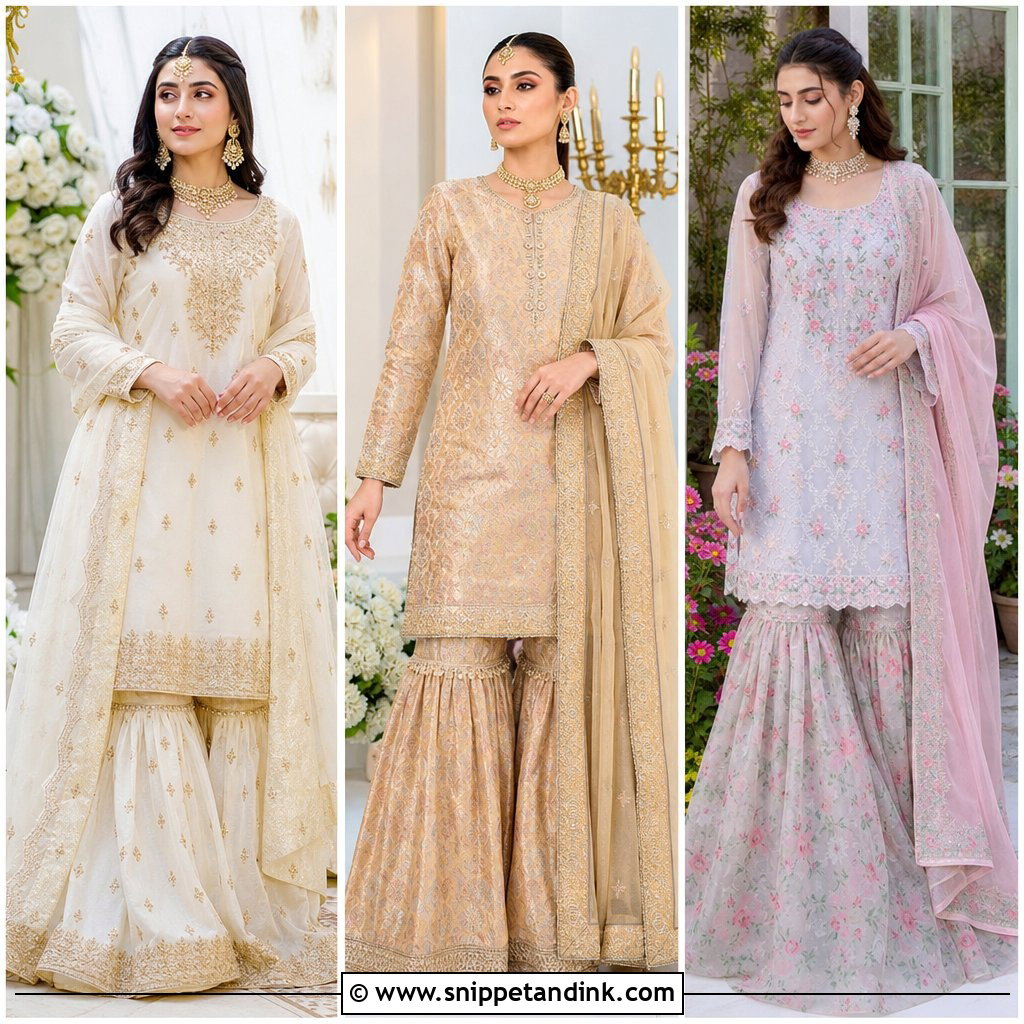
Pearl embroidery on ivory is subtle until the light hits it, which makes it a daytime choice. I’d keep the raw silk kameez short with a structured neckline and full sleeves, so the sharara’s width shows below. Pearls are heavier than thread; if they run all over the sleeves, the sleeves drag. Put them at the neck and cuffs instead. An organza dupatta with a scalloped pearl border over the head, pearl drops, a slim choker and ivory khussas finish it. Ivory can drain the face, so ask your makeup artist for a little more warmth in the cheeks than usual.
2. Blush Pink Nikkah Sharara With Silver Work
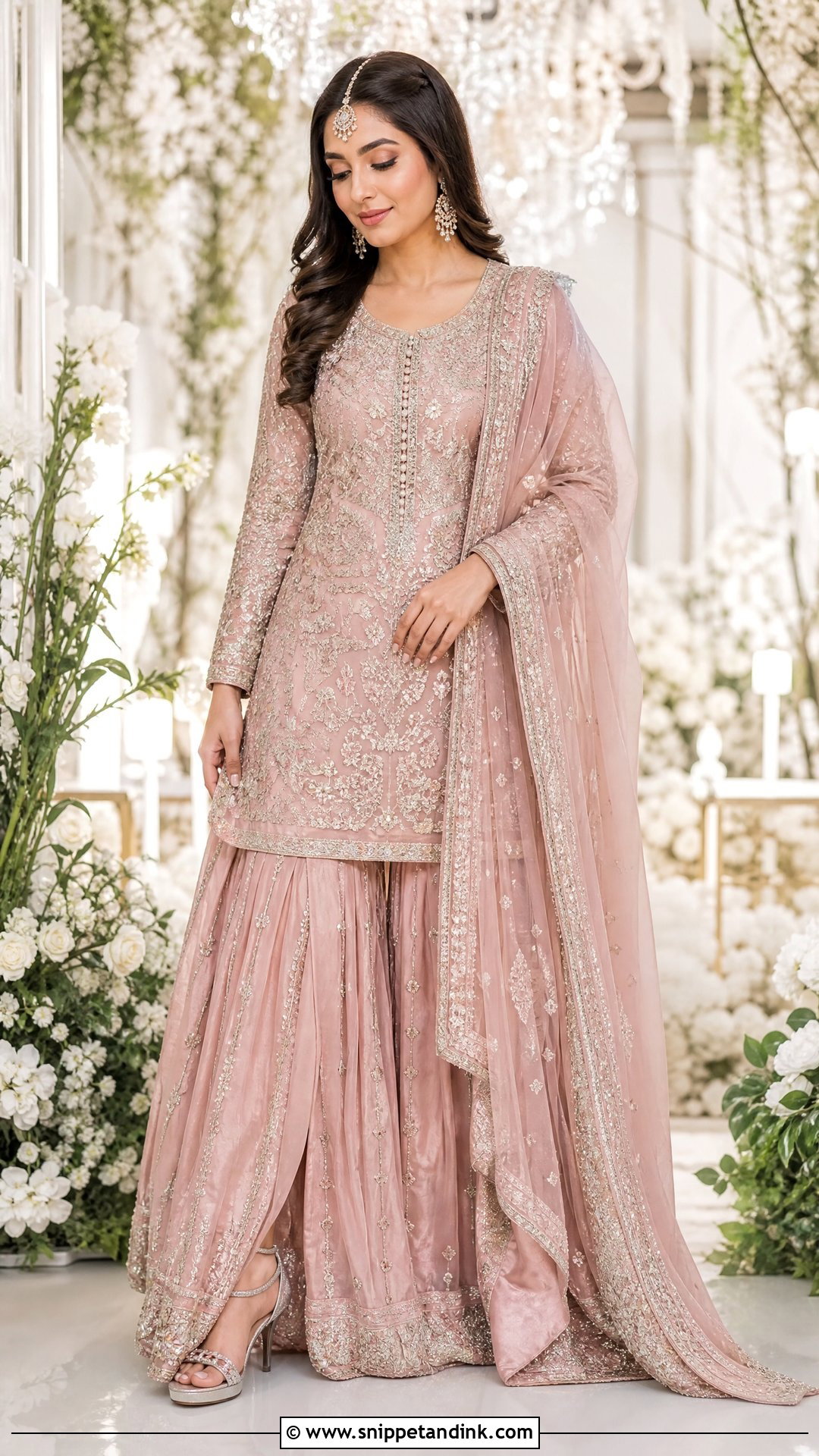
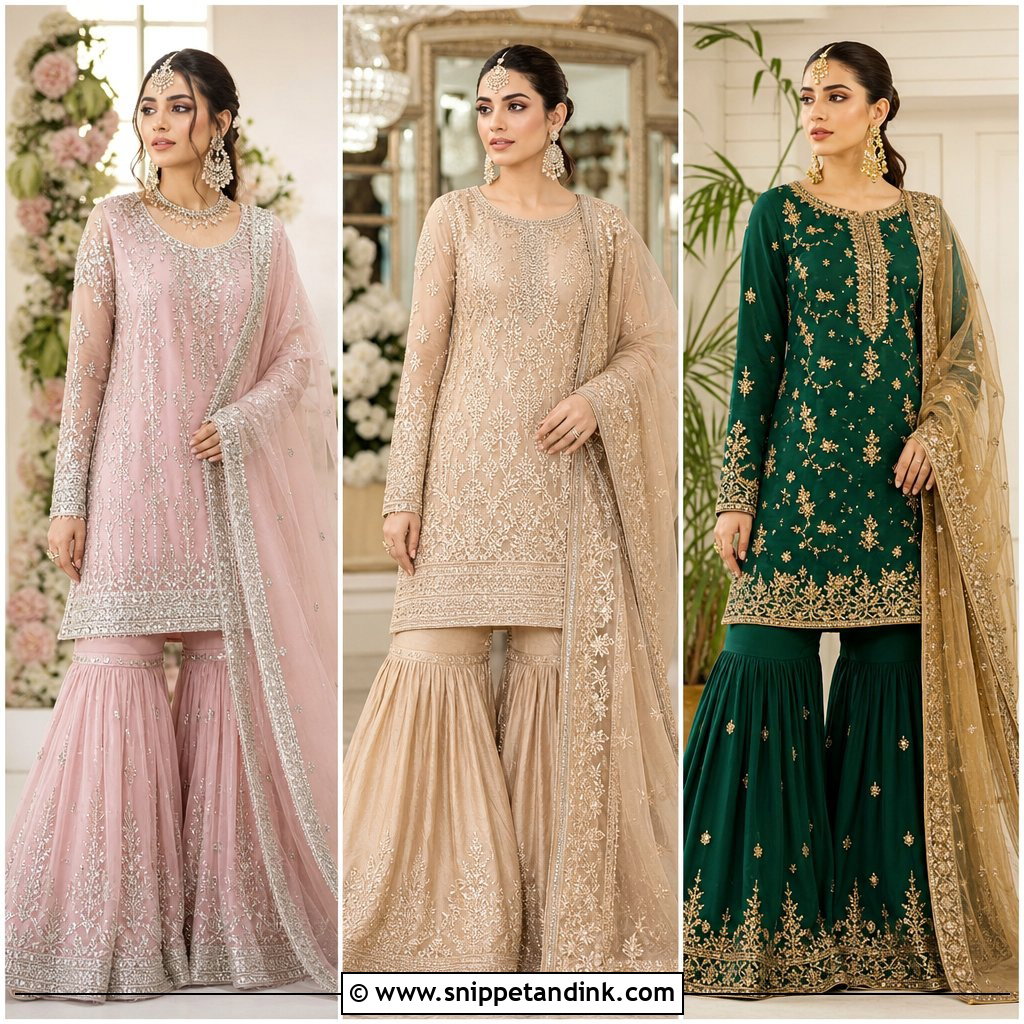
Silver on blush is softer than gold on blush, and it’s the pairing I’d pick for cooler skin tones. A fitted hip-length shirt and a well-flared silk or fine chiffon sharara carry the shape. Keep the zardozi, crystals and pearls to the neckline, cuffs and trouser border. A sheer blush dupatta with scattered silver motifs is enough sparkle near the face. Choose heels or embroidered flats by how long you’ll stand: for a ceremony over two hours, I always pack flats. A slim maang tikka and a loose braided bun suit the mood.
3. Champagne Nikkah Sharara With Gold Embroidery
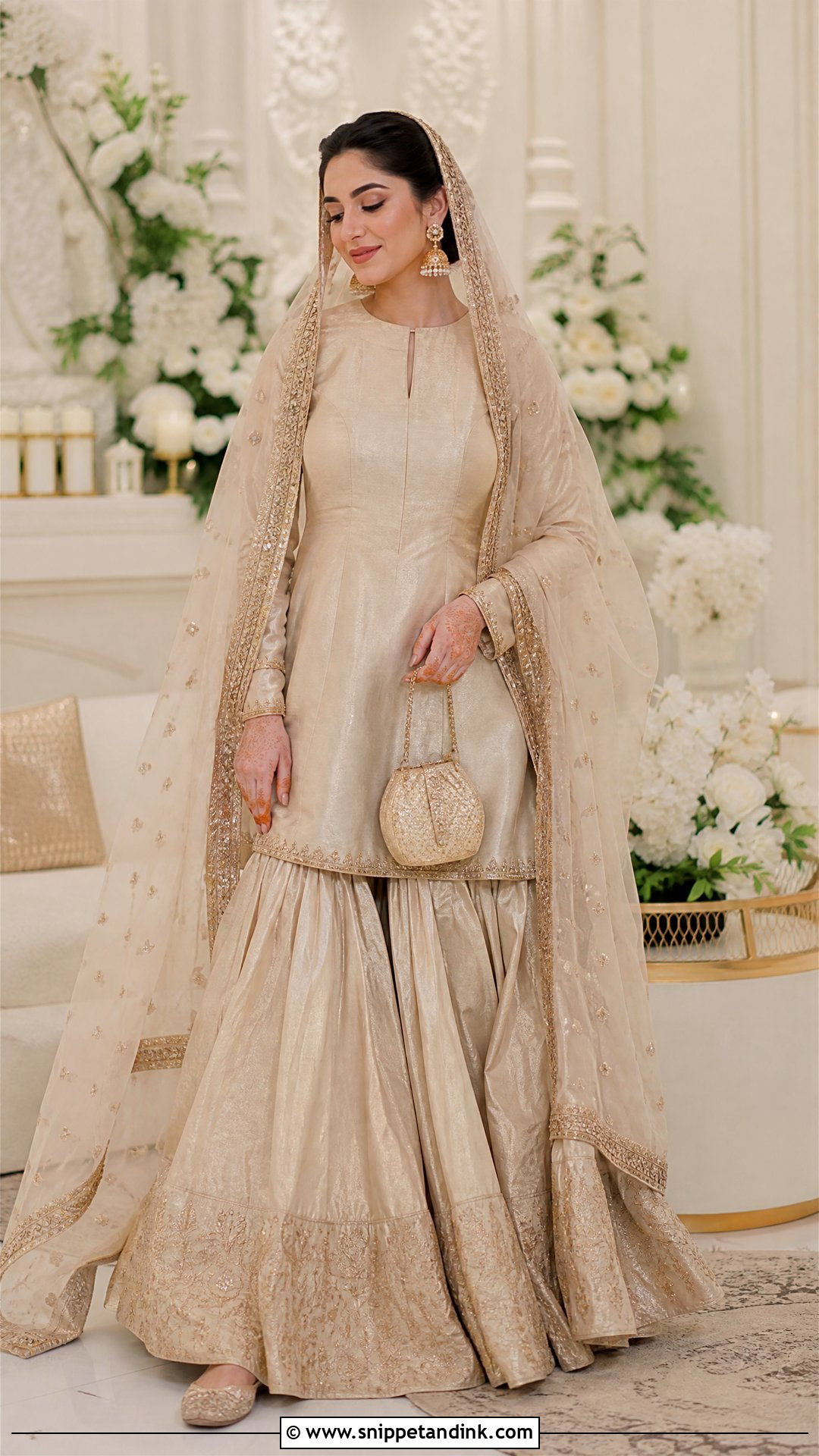
Champagne sits between ivory and gold, so antique gold work blends into it rather than standing out. That’s the trick here. A short silk kameez shaped through the waist, a sharara with embroidered panels and a broad hem, and an organza dupatta with a substantial border to frame the face. Dabka and tilla add relief; fine sequins add a little glint. Too many sequins and the outfit looks like evening wear. Antique gold jhumkas, a tikka and metallic khussas keep it traditional, and warm bronze eyes suit the palette.
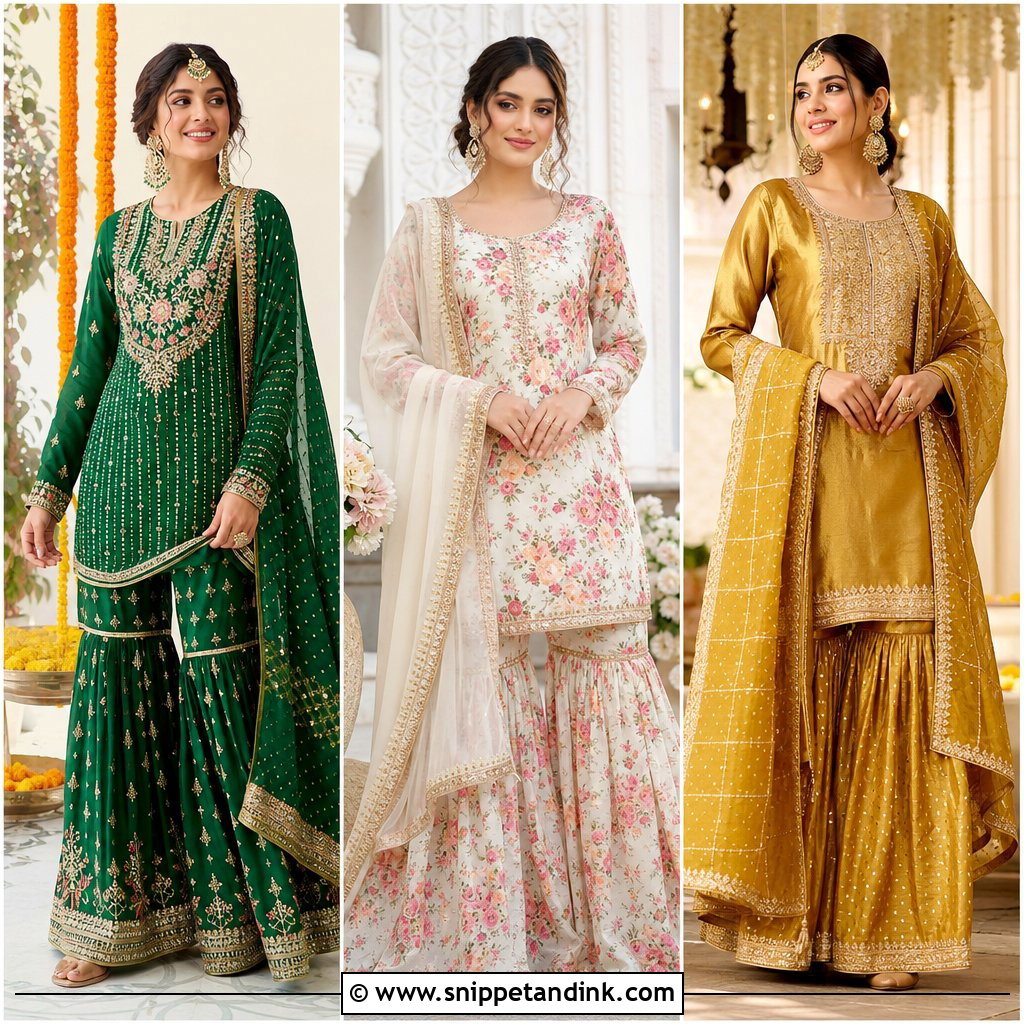
4. Sage Green Nikkah Sharara With Floral Details
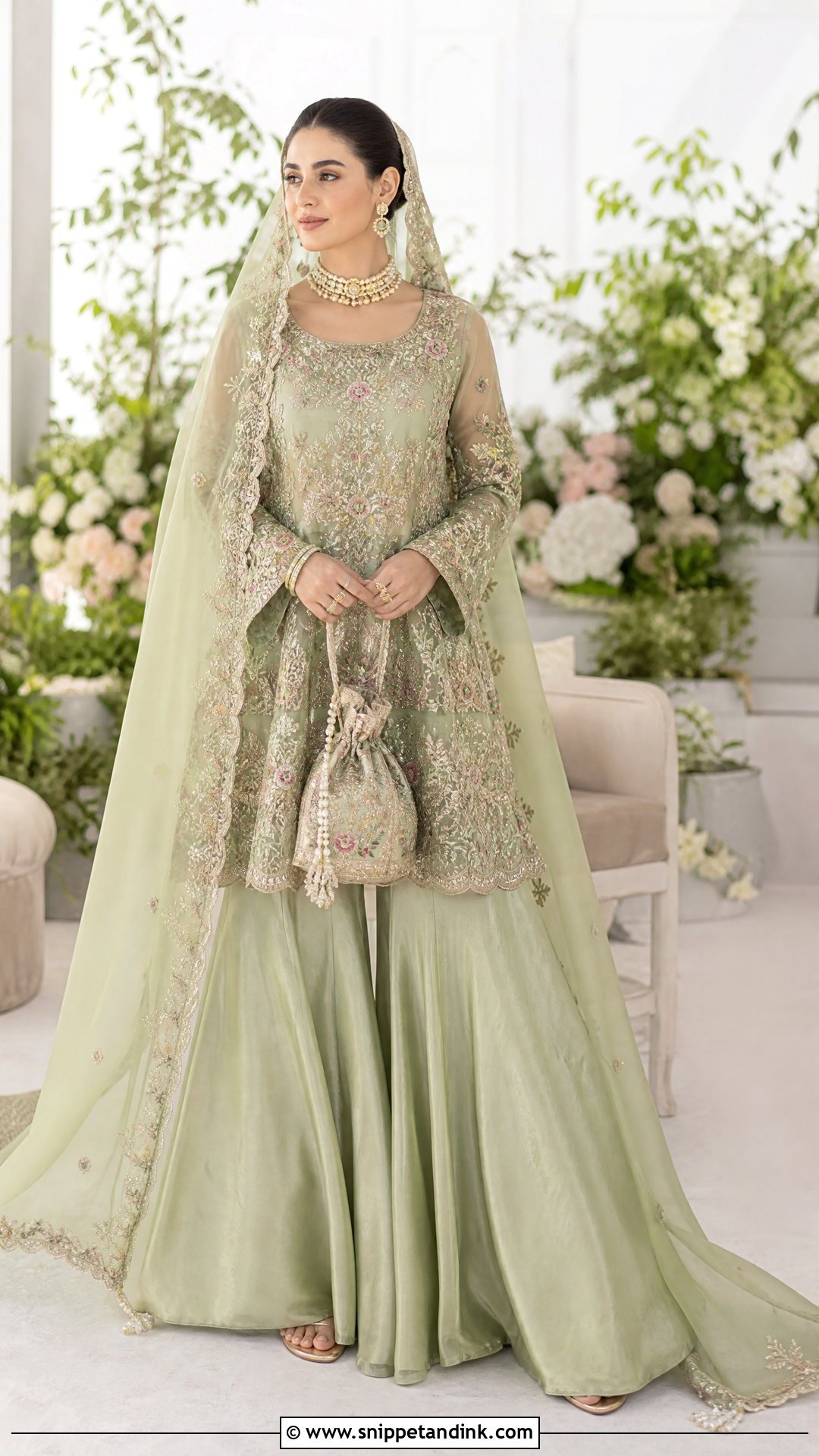
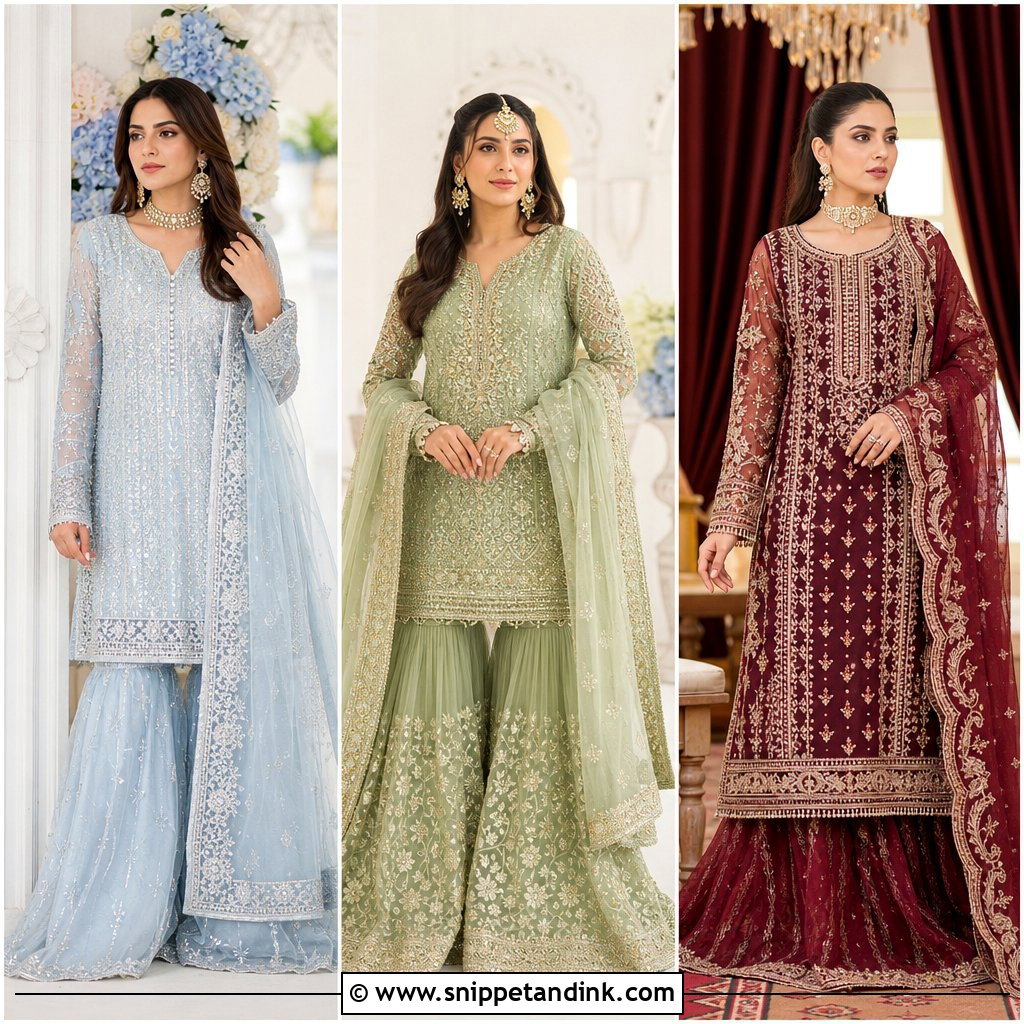
Sage reads best in natural light, so it’s the colour I suggest for garden ceremonies and rooms with big windows. A short peplum shirt with pastel florals in ivory, dusty pink and pale gold keeps the colour gentle. Pair it with a plain silk sharara; two embroidered pieces in sage start to look busy. An organza dupatta with light embroidery, pearl earrings, a delicate passa and neutral gold sandals finish it. Fresh flowers in the bun wilt within a few hours, so ask for them to be pinned in last.
5. Powder Blue Nikkah Sharara With Crystal Work
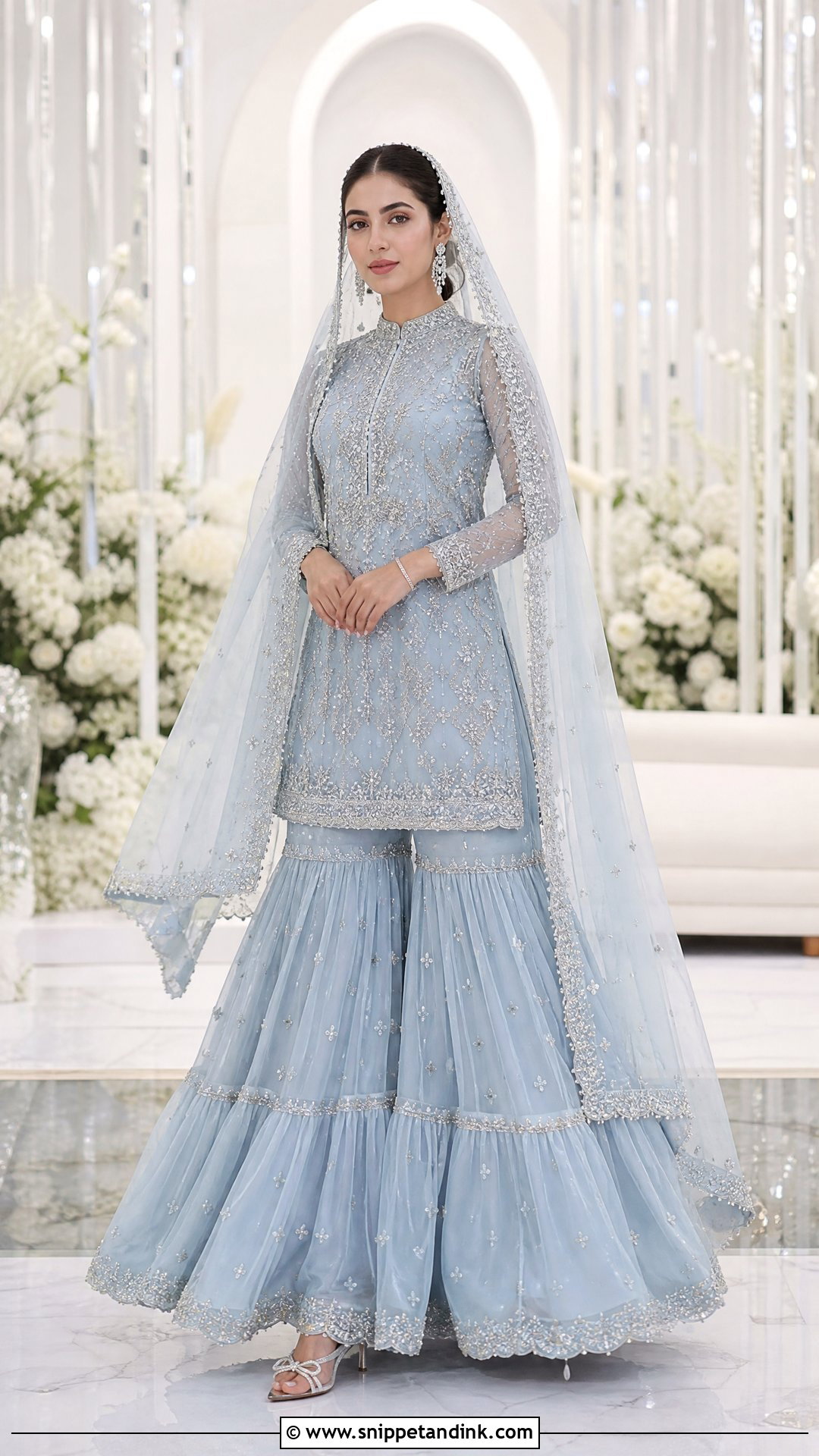
Powder blue with crystal work is cool and crisp. A straight short kameez with a high rounded neck and fitted sleeves lets the handwork at the collar and cuffs carry the outfit. I like a tiered chiffon sharara here, because tiers move easily when you walk and fold neatly when you sit. Pin the net dupatta over one shoulder or lay it loosely over the head. Silver slingbacks and crystal drops are plenty. Crystals already reflect a lot of light, so skip large accessories and keep the makeup on the matte side.
6. Lilac Nikkah Sharara With Pearl Dupatta
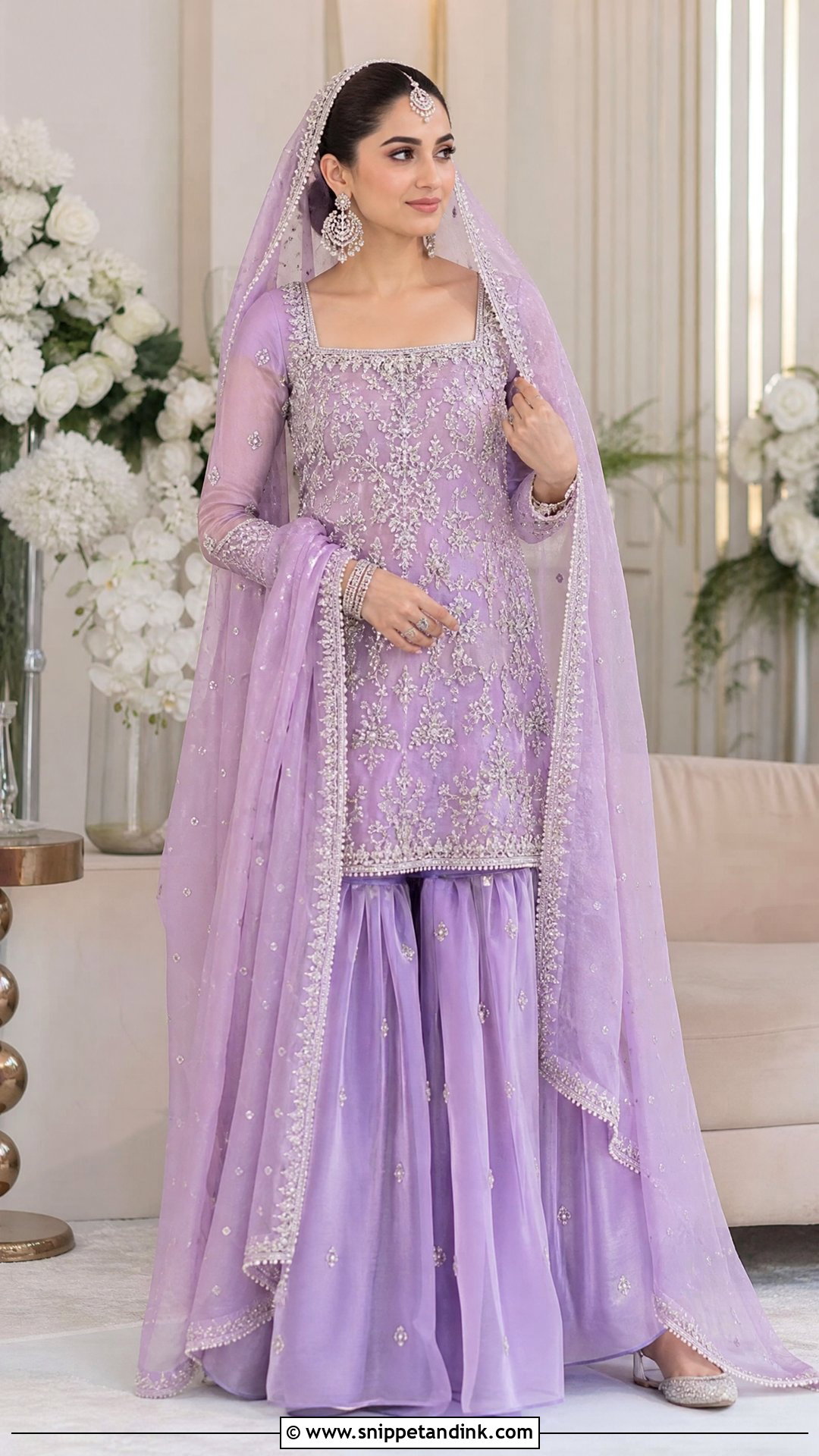
Would you like a pastel that’s less expected than blush? Lilac gives a Nikkah sharara a distinctive finish and works with both pearls and silver. A lightly fitted raw silk shirt with a square neck and long embroidered sleeves sits above a full sharara with fine vertical motifs, which make the legs look longer. Let the sheer organza dupatta with pearl and crystal drops be the main feature. Those drops add weight to the edge, which actually helps the dupatta stay put. Pearl chandbalis and a petite tikka are enough.
7. Pistachio Nikkah Sharara With Net Dupatta
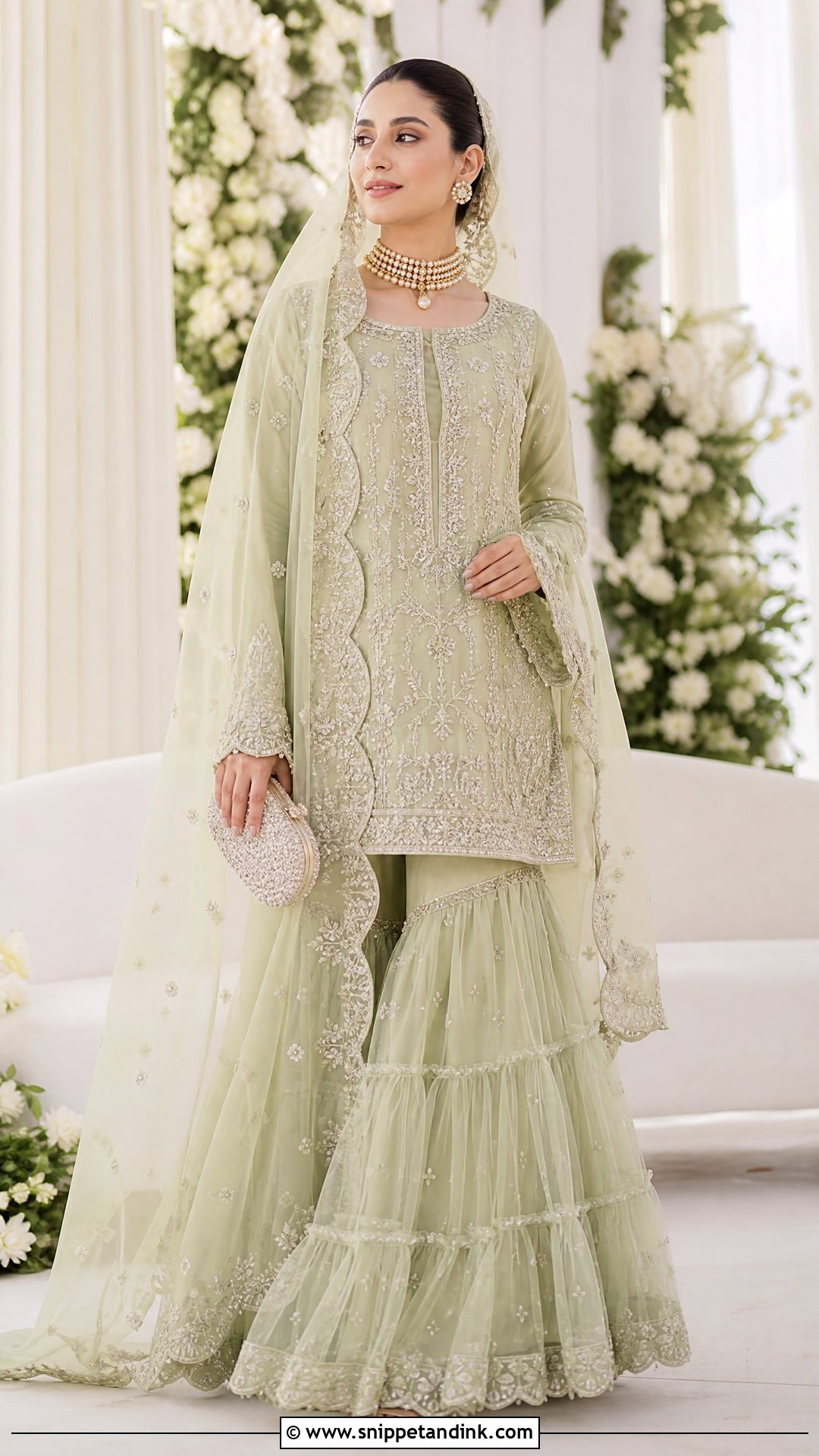
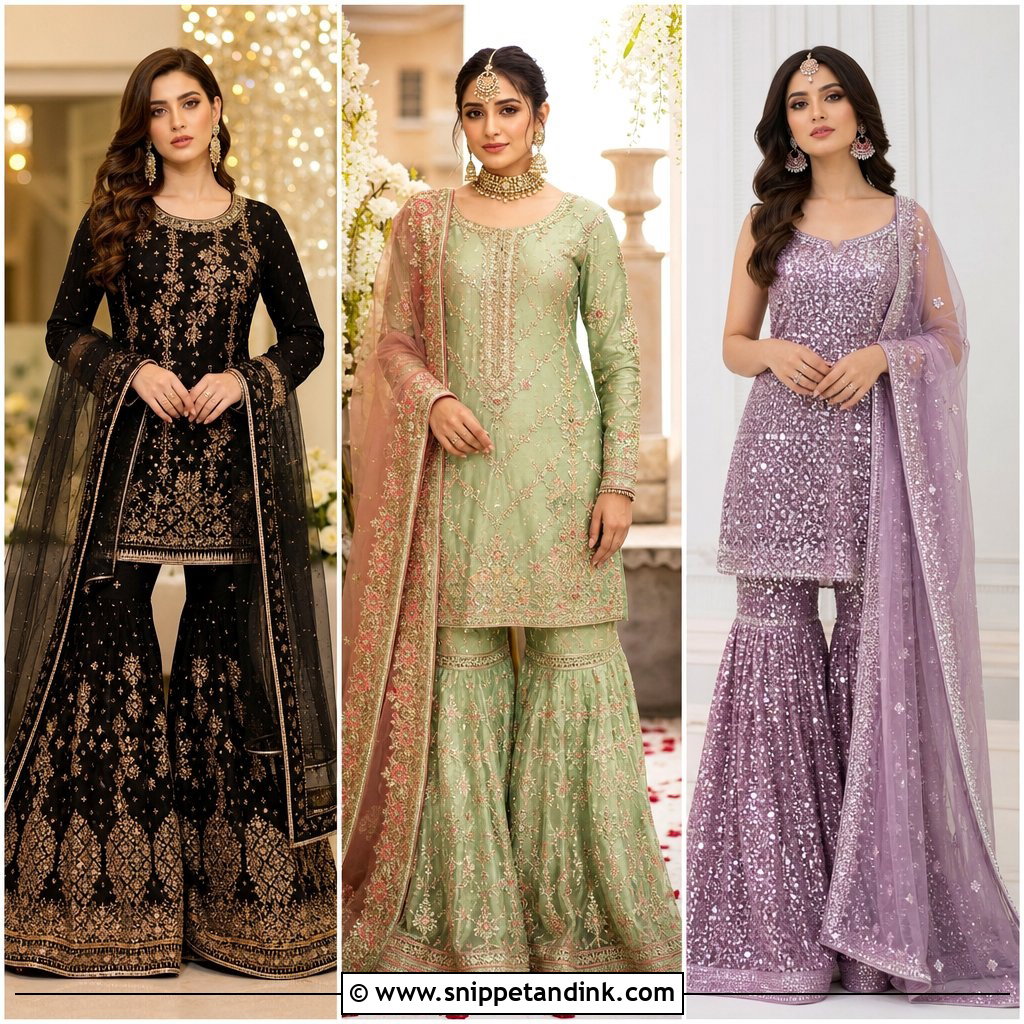
A pistachio sharara is a daytime colour and suits fresh floral decor. The raw silk kurti carries ivory threadwork, small pearls and a little gold. Below it, a double-layered net sharara gives volume while weighing far less than embroidered silk. Net does scratch, though, so make sure the inner layer is soft. Pick a net dupatta with a narrow scalloped border; a heavy border on net pulls the fabric out of shape. For more coverage, ask for a slightly longer shirt and lined sleeves. Peach lips and brown liner keep it calm.
8. White Nikkah Sharara With Silver Embroidery
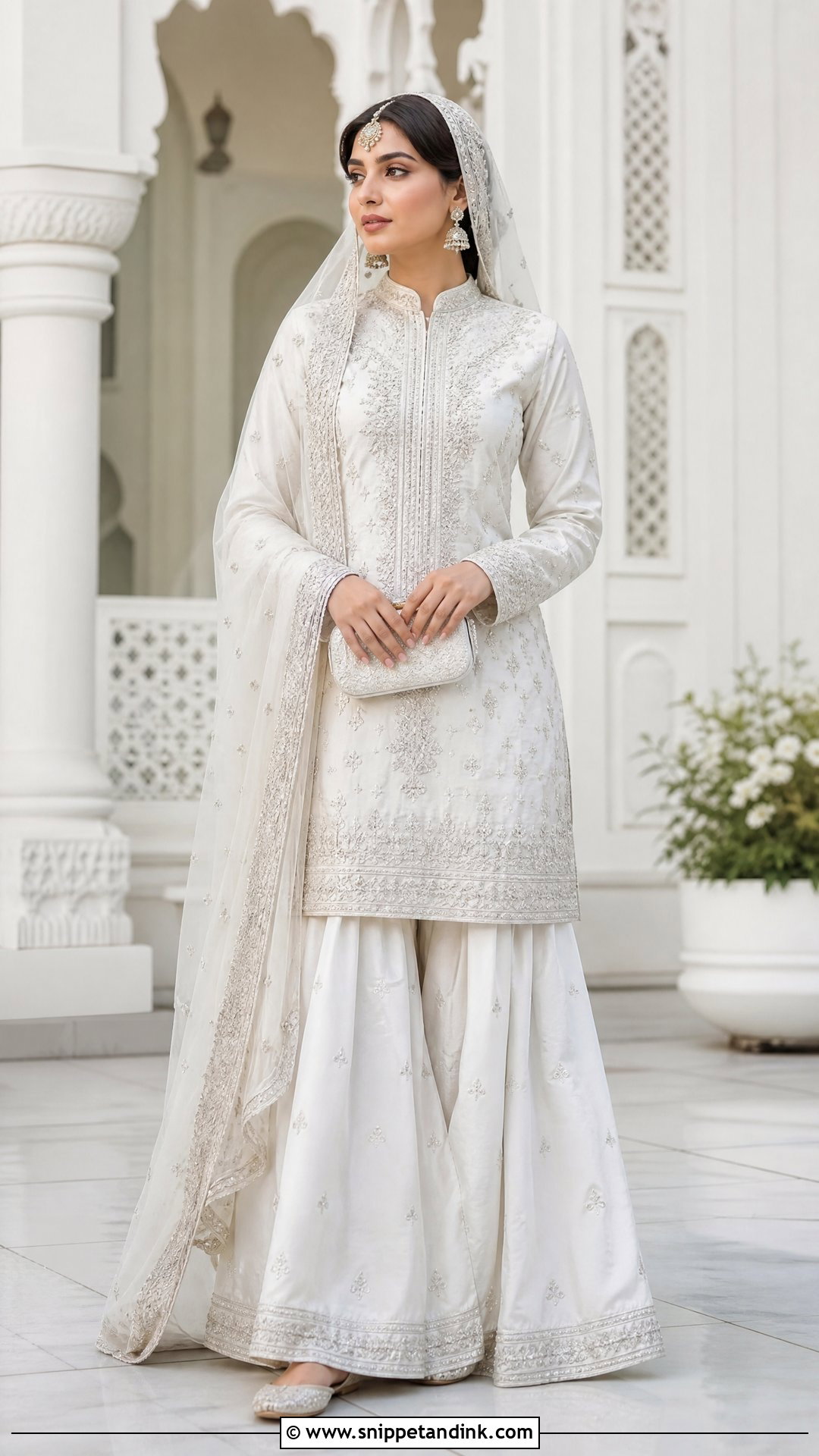
White and silver make the cleanest statement on this list. A structured kameez with a modest boat neck and full sleeves, silver work only along the borders, and a voluminous silk sharara that gives the colour depth through shape. Pin the dupatta at the crown, not just the shoulders, or it slides back during greetings. Silver jhumkas and white flats keep it cool. One honest note: pure white isn’t welcomed in every family tradition, so check with the elders before you order.
9. Peach Nikkah Sharara With Gota Work
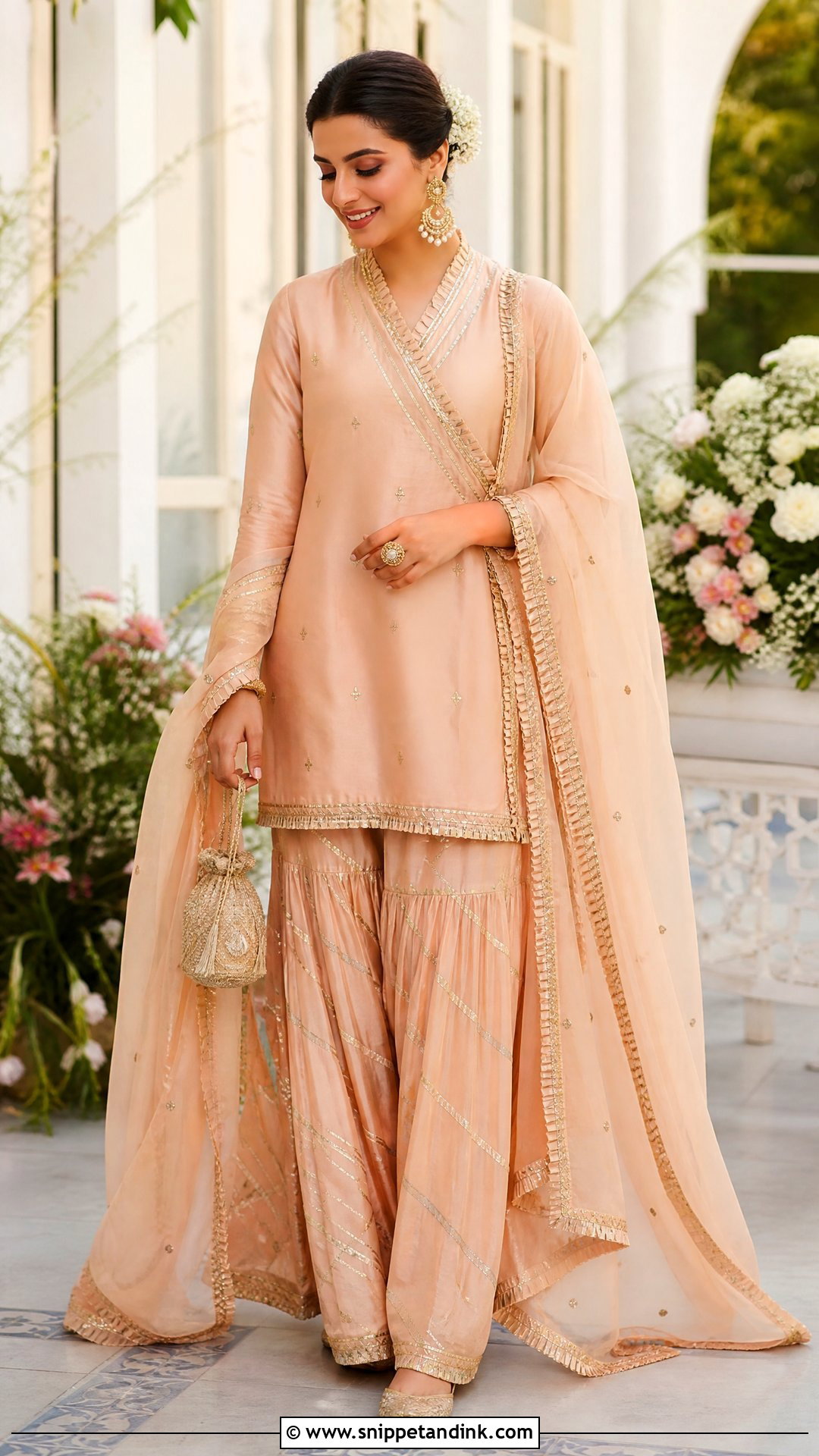
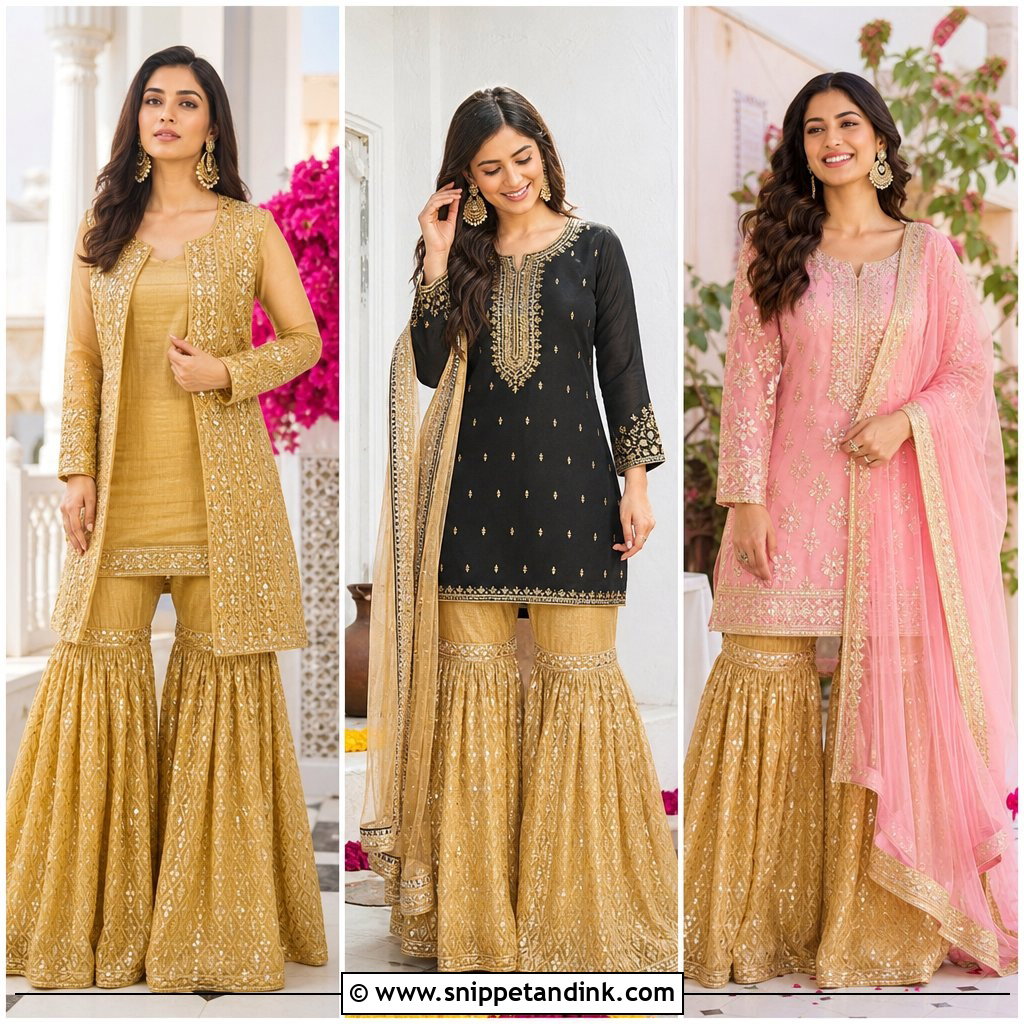
Gota is a flat ribbon of metallic weave stitched on as a border, and it gives shine for a fraction of the weight of zardozi. That makes this peach set one of the most comfortable here. A short angrakha-style shirt with gota along the wrap neckline, sleeves and hem, over a wide lightweight silk sharara. A chiffon dupatta with a narrow gota edge. If the neckline is busy, skip the necklace altogether and let a single statement ring do the work. It suits morning and afternoon ceremonies best.
10. Dusty Rose Nikkah Sharara With Zardozi Work
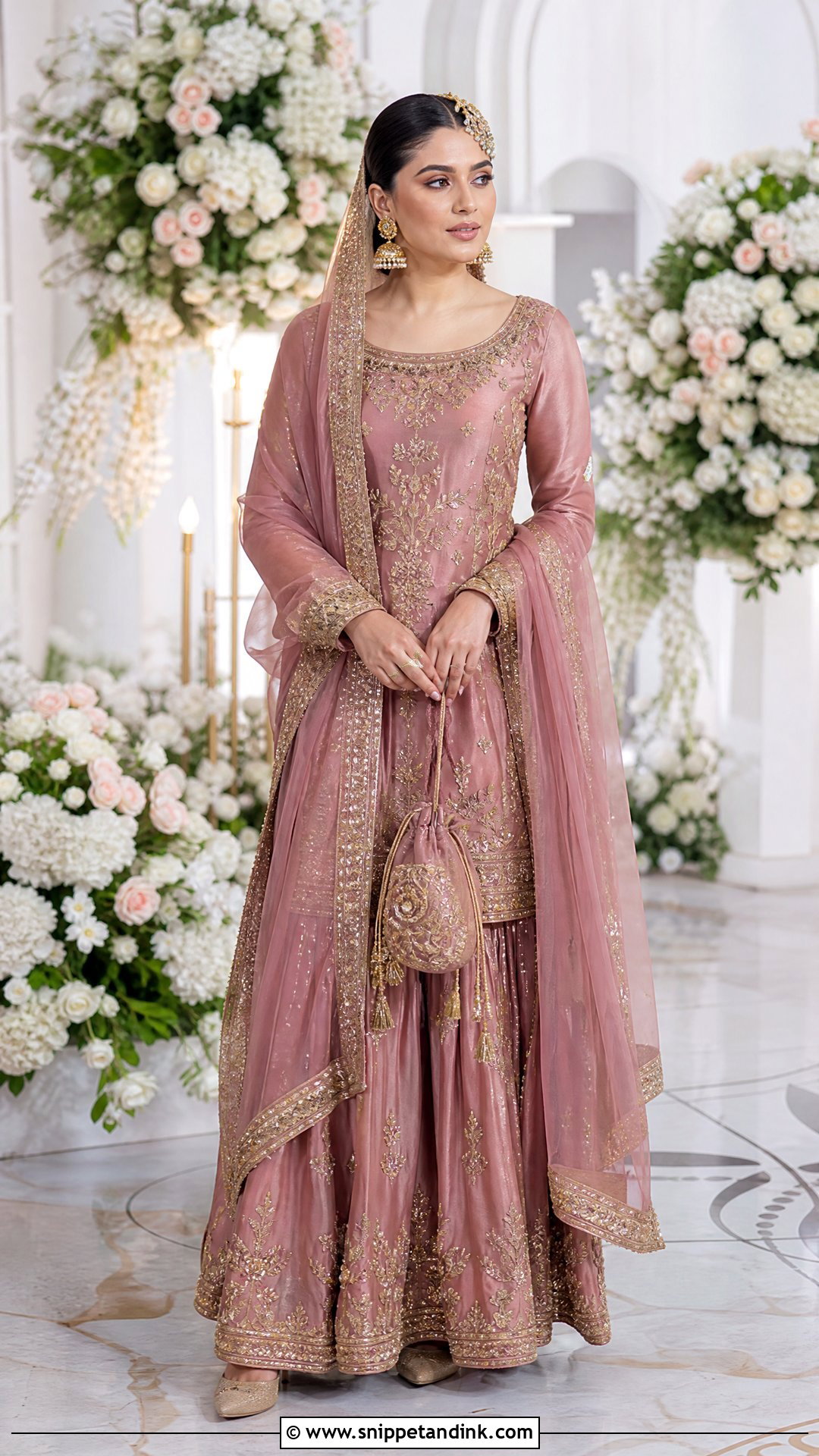
Dusty rose has more depth than pale pink, so it holds up in evening light. Pick velvet for winter, raw silk for warmer months. Antique gold zardozi outlining the neckline, waist, sleeves and hem gives the shirt its bridal finish; keep the sharara lighter, with one detailed border. Velvet is warm and heavy, so I tailor the shoulders closely and leave ease at the waist for sitting. A matching dupatta with antique edging, jhumkas and a small passa complete it, with a berry lip if you want definition.
11. Mint Green Nikkah Sharara With Ivory Embroidery
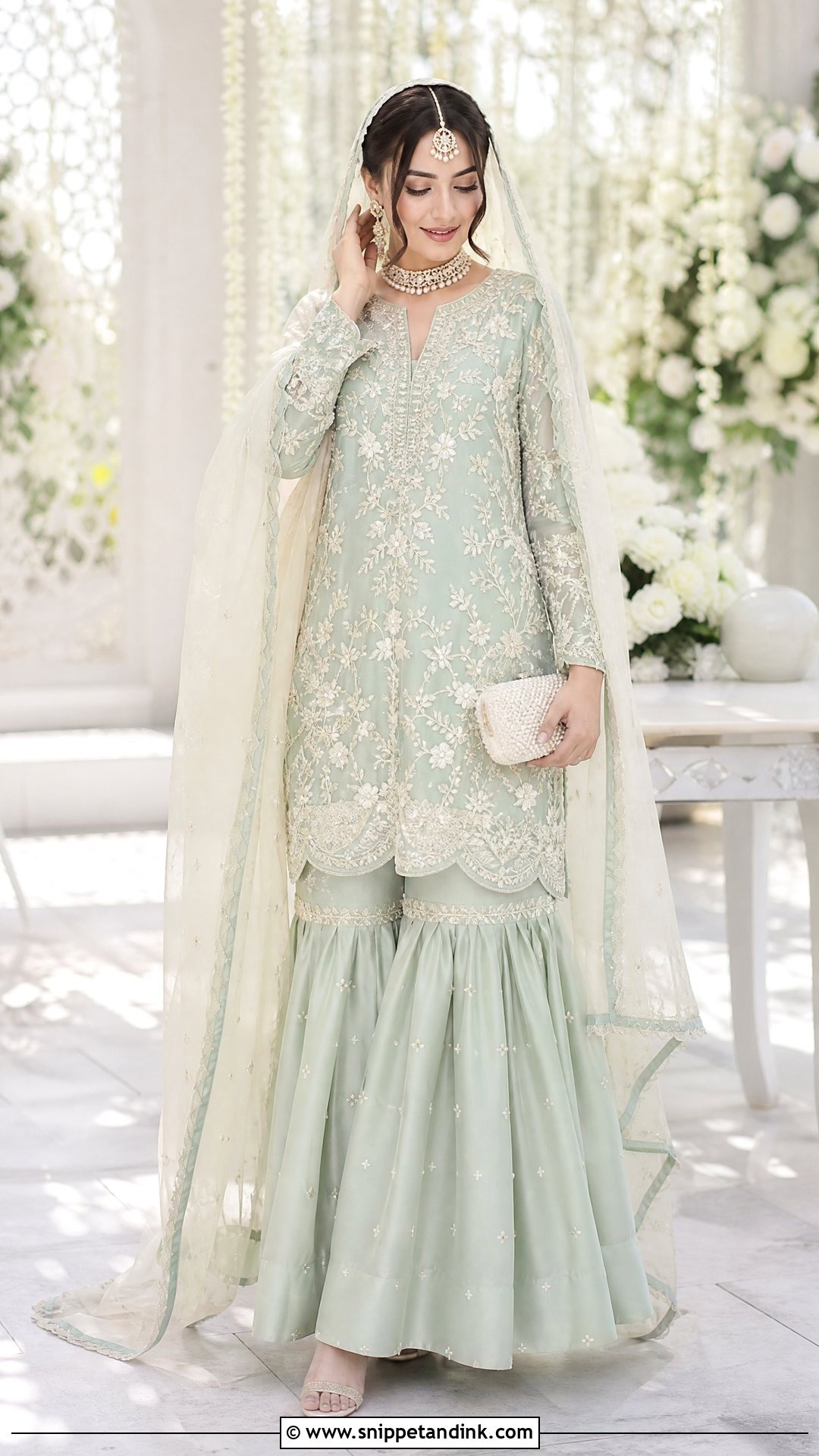
Ivory threadwork on mint looks cooler and fresher than metallic embroidery would. A short kameez with a scalloped hem and floral motifs above a wide sharara. Silk trousers if you want structure, chiffon layers if you want movement. An ivory organza dupatta with mint edging adds contrast around the face. If you wear hijab, an ivory or mint scarf underneath keeps everything secure and gives the dupatta something to grip. Pearls, ivory heels and a beaded clutch keep the palette light for daytime photos.
12. Beige Nikkah Sharara With Antique Gold Work
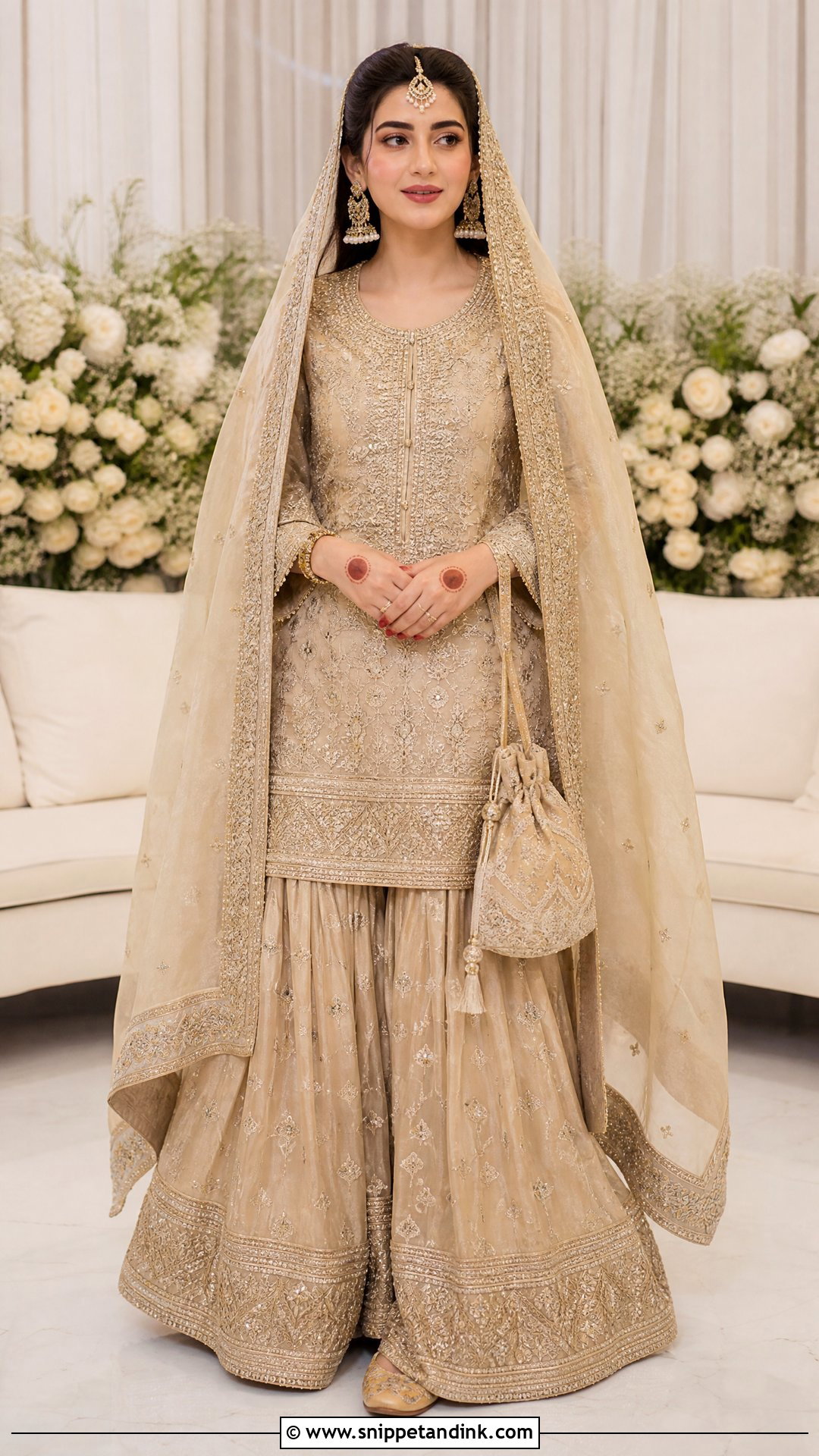
Beige needs texture to look bridal, otherwise it reads as everyday wear. A short brocade kameez gives that texture straight away. Pair it with a plain raw silk sharara that has a broad embroidered border near the floor; putting the work at the hem makes the flare look deliberate and keeps weight off the waist. A tissue or organza dupatta with antique gold edging adds a soft shine. Heirloom-style jhumkas, a tikka, gold khussas and a velvet potli finish it. Ivory flowers in a low bun brighten the neutrals near the face.
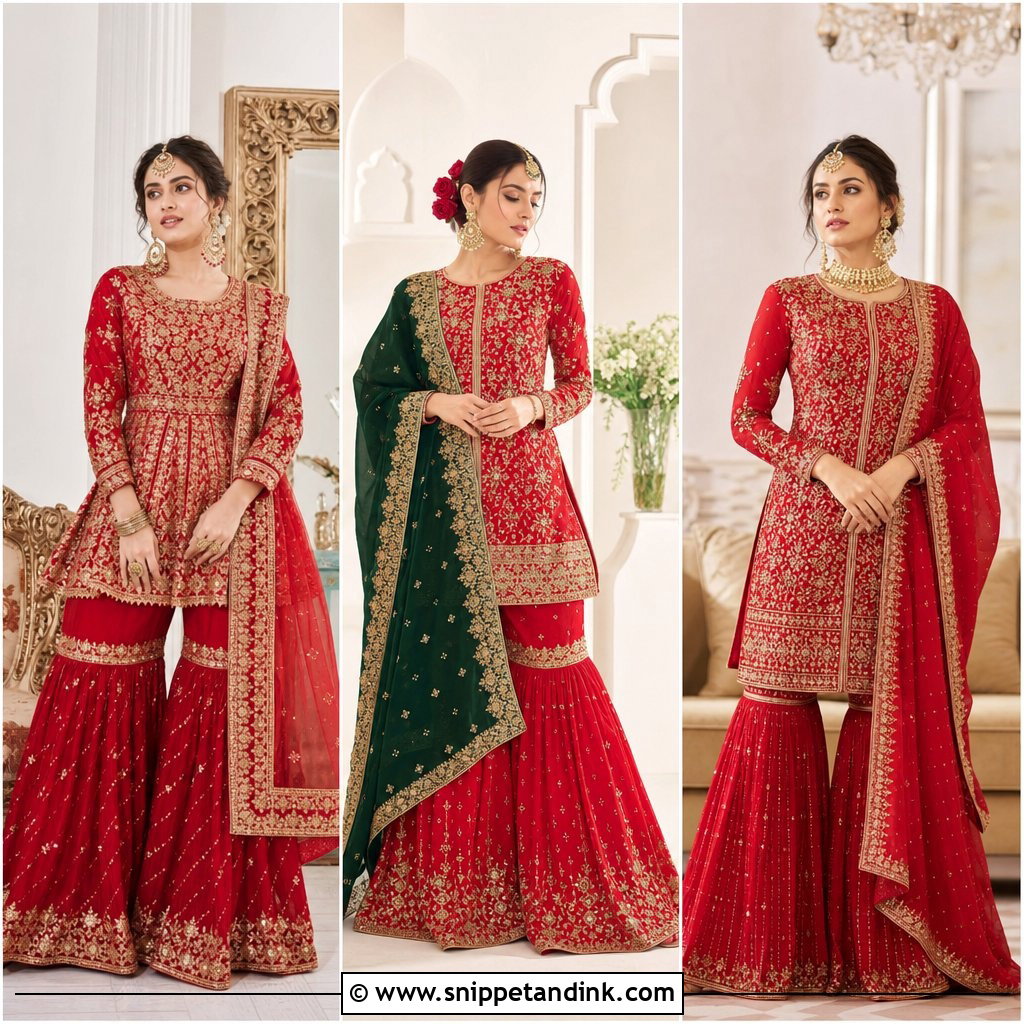
13. Ivory Nikkah Sharara With Red Dupatta
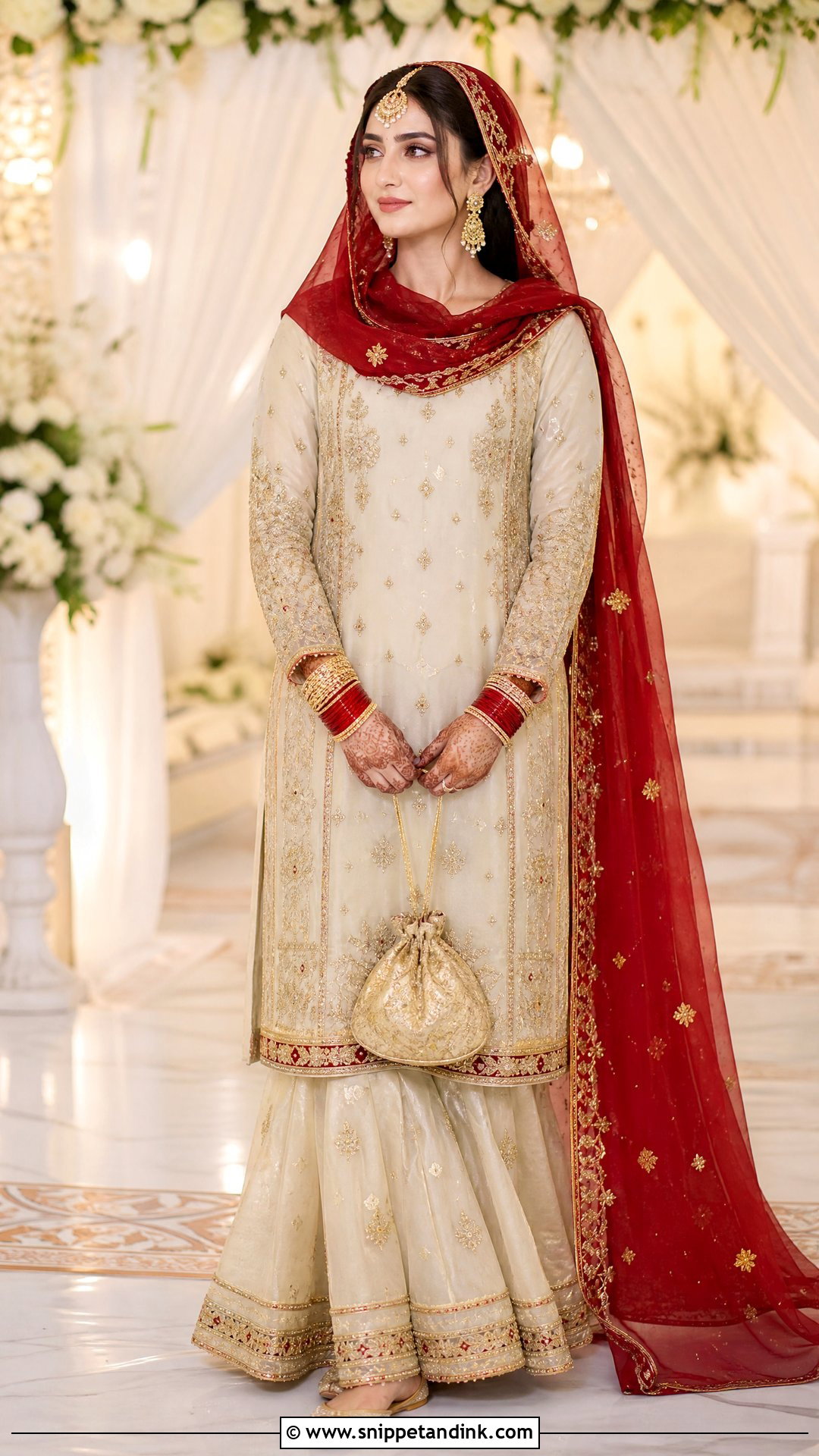
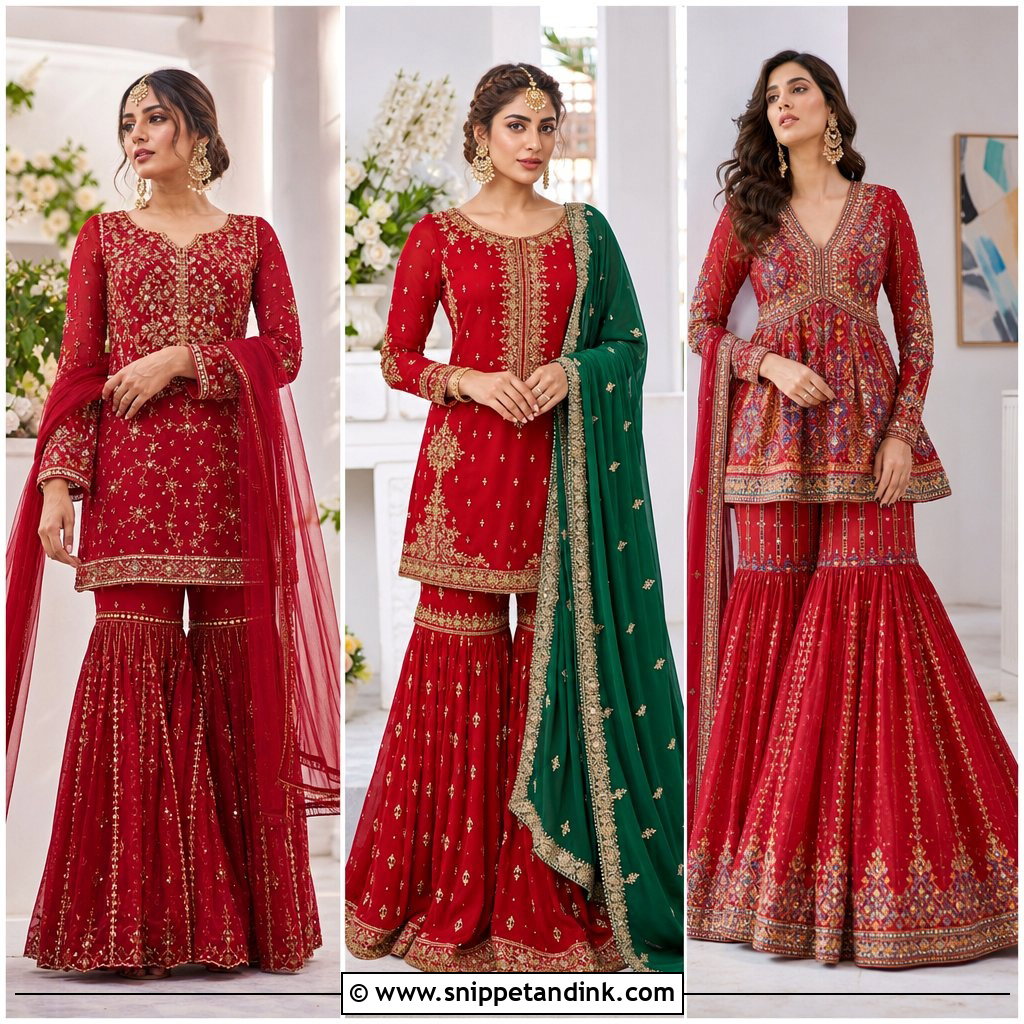
Ivory set, red dupatta: you get traditional bridal red where it counts, around the face, and a lighter outfit everywhere else. Keep the ivory kameez and sharara restrained, with gold embroidery. Choose a deep red organza or net dupatta with a gold border and drape it over the head. If you add a second dupatta for coverage, keep it light and pinned at the shoulder. Gold jhumkas, a tikka, red bangles and ivory shoes complete it. Red dye can run if the dupatta gets damp, so test a hidden corner on white cloth first.
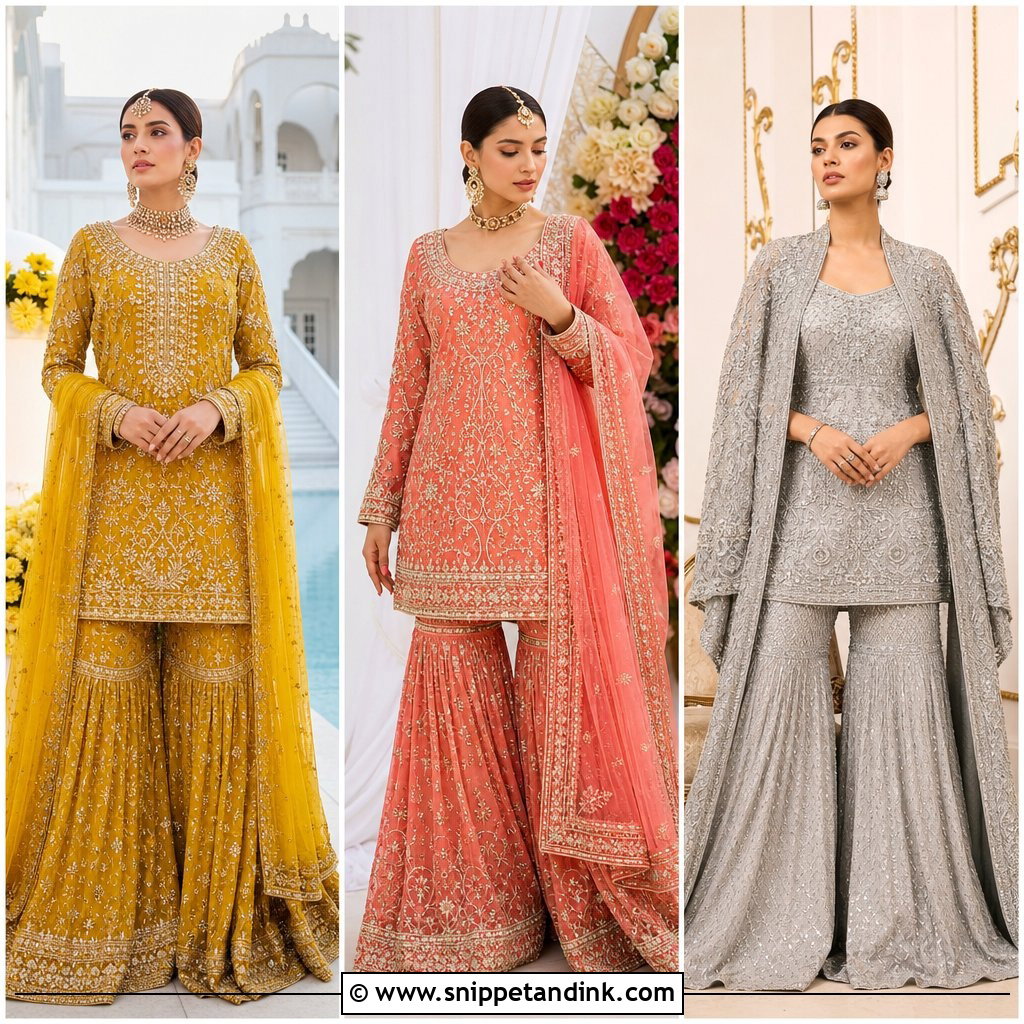
14. Maroon Nikkah Sharara With Gold Borders
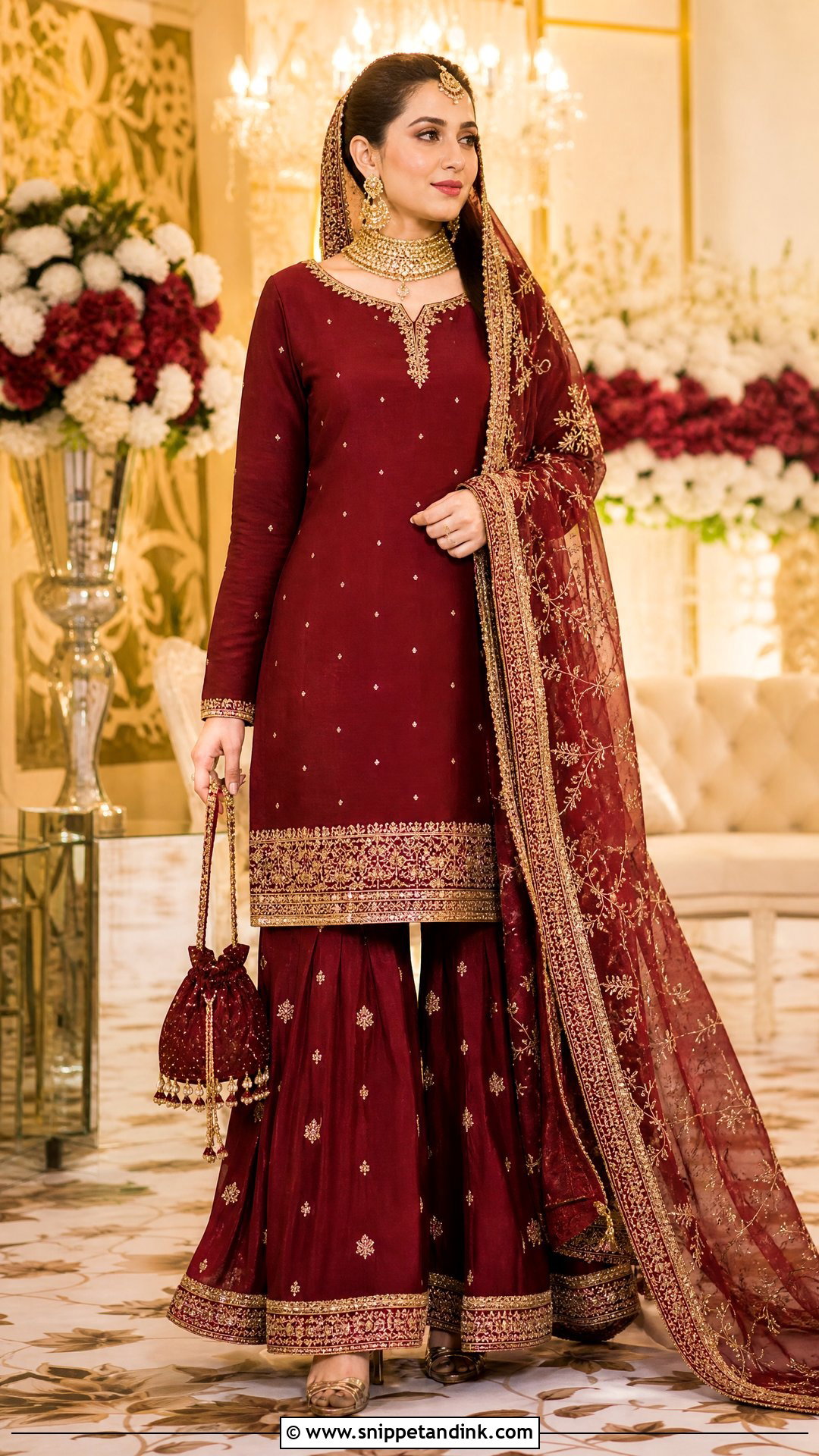
A maroon sharara is my pick when the Nikkah runs into an evening reception. Raw silk in warm weather, velvet in winter. Gold borders around the neckline, cuffs and hem bring richness; leave plain fabric visible between them so the maroon still shows. Small motifs above a wider hem border on the sharara balance the shirt. With a layered choker and a strong colour, keep the hair smooth and controlled. A neutral lip stops the face from competing with everything else.
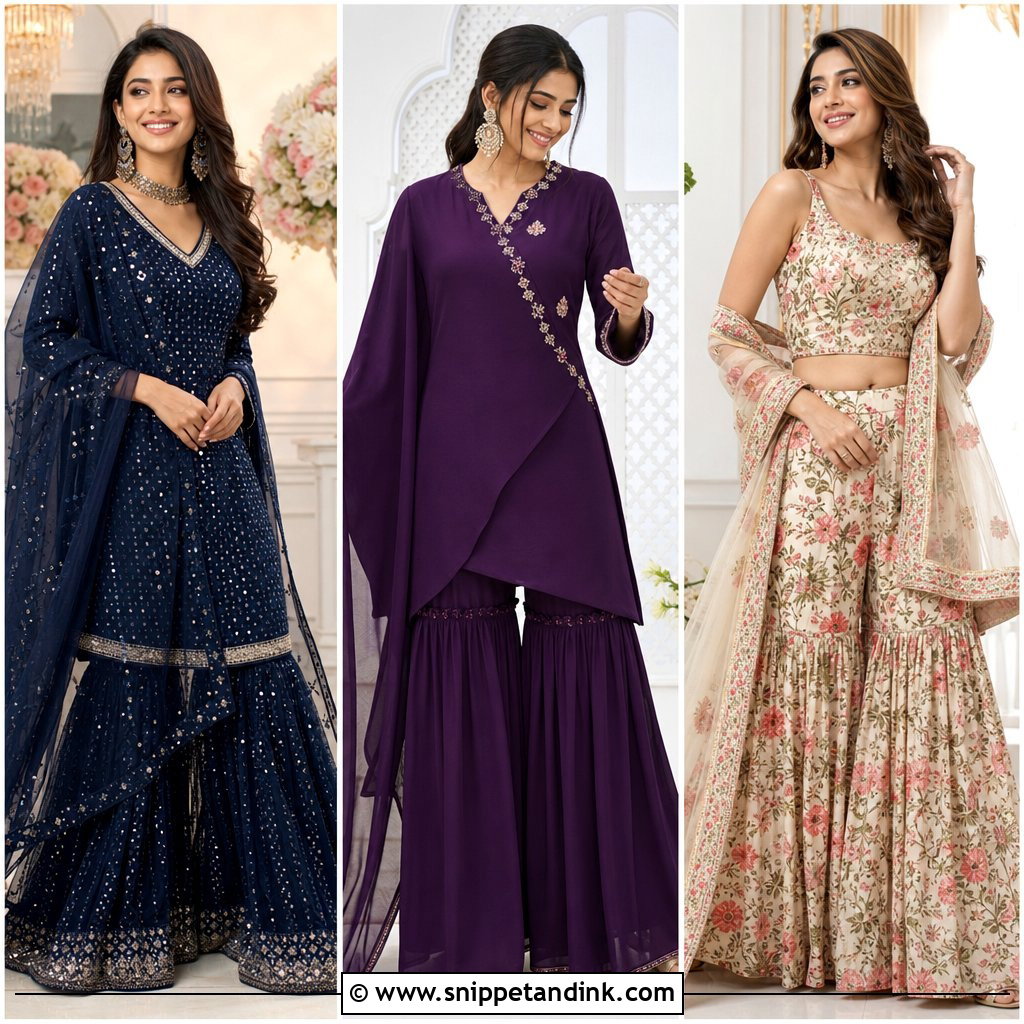
15. Emerald Green Nikkah Sharara With Gold Details
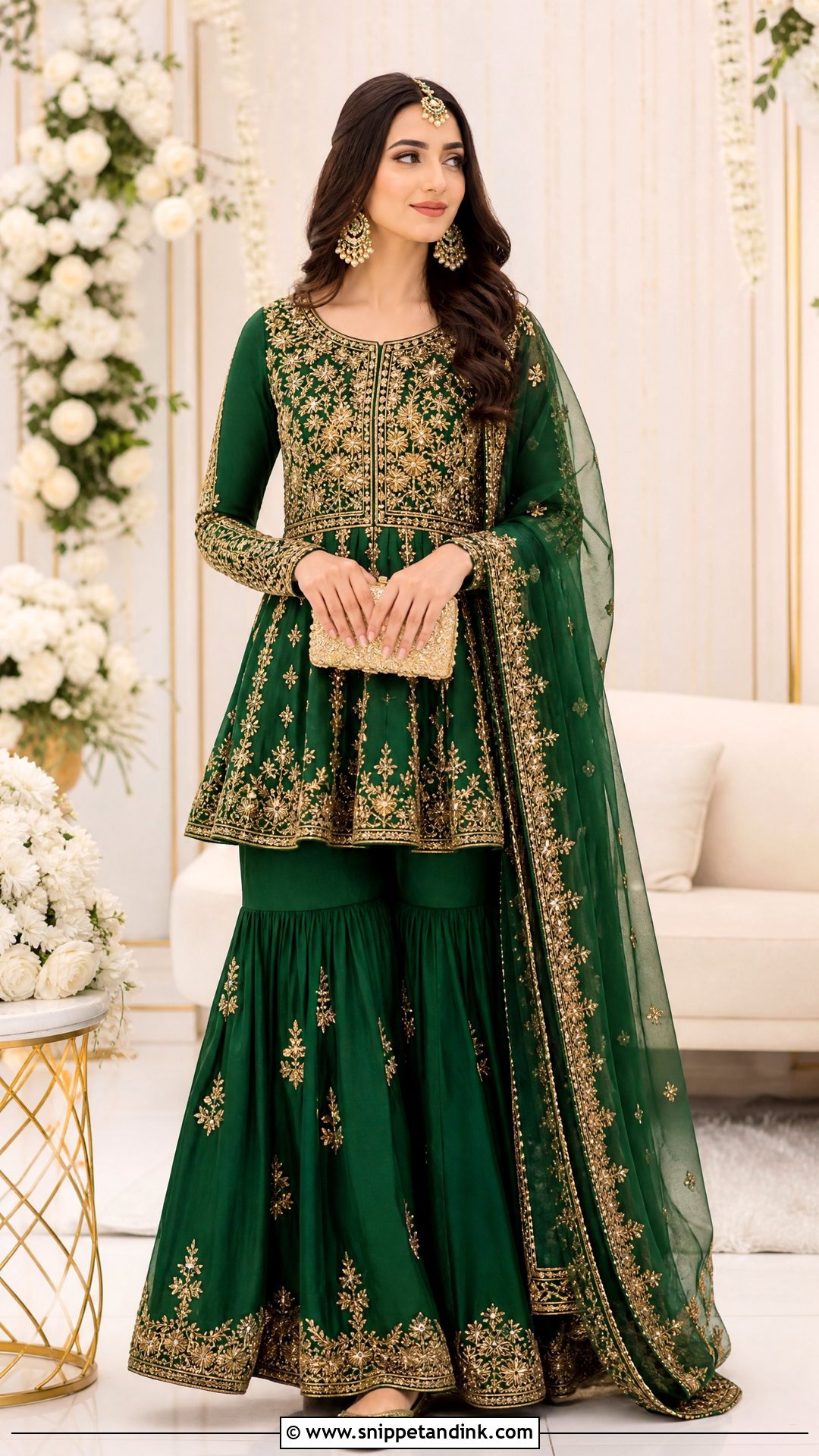
Emerald is a saturated colour, and it looks its richest under bright indoor light against cream decor. A fitted peplum kameez and a silk sharara in the same shade give one continuous column of colour. Gold zardozi with pearls at the neckline and peplum edge marks the waist. A sheer emerald dupatta with a broad gold border is the traditional choice; a champagne one softens it. Heavier dupattas need anchoring, and a sleek bun gives the pins something firm to hold.
16. Navy Blue Nikkah Sharara With Silver Work
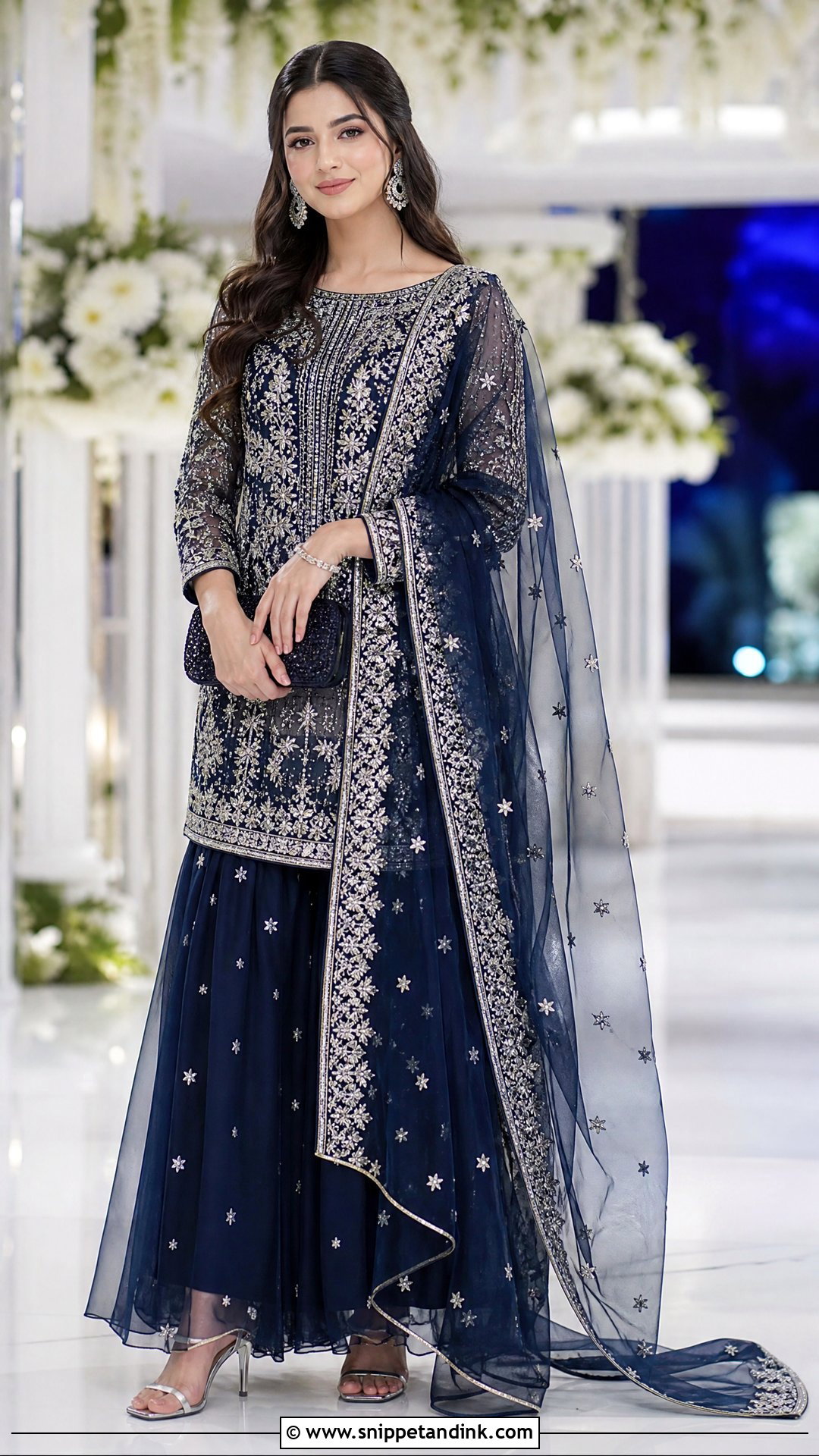
Navy is for the bride who likes dark, cool colours and doesn’t want maroon. Silver threadwork, crystals and pearls around the neckline of a short kameez stand out sharply against it. A fluid chiffon or silk sharara with embroidered vertical panels and a decorated hem keeps the movement going. A navy net dupatta with tiny silver motifs gives a starry effect. Dark fabric shows lint and dust on camera, so keep a lint roller in the bridal bag. It suits evening ceremonies and formal indoor rooms.
17. Rust Nikkah Sharara With Bronze Embroidery
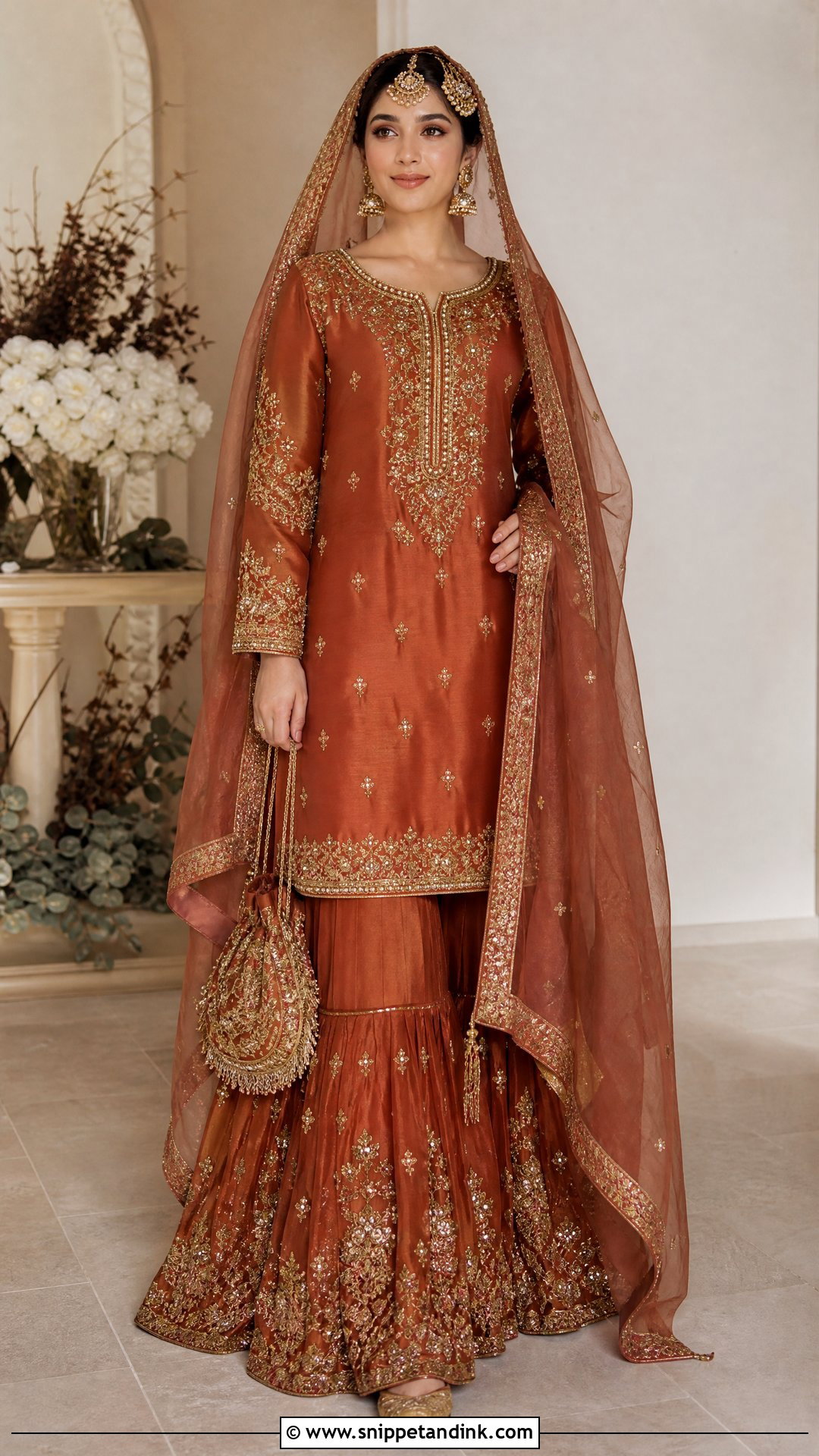
Rust is warm and earthy, a good fit for autumn and for brides tired of pastels and red. Bronze embroidery in floral or geometric borders on a hip-length silk shirt suits the colour better than bright gold. A generously cut sharara shows its flare with every step. I’d soften the deep base with a lighter copper or beige organza dupatta around the face. Bronze jhumkas, an antique passa and brown-gold khussas coordinate easily. Keep bangles to one wrist so they don’t clatter at the signing table.
18. Plum Nikkah Sharara With Rose Gold Work
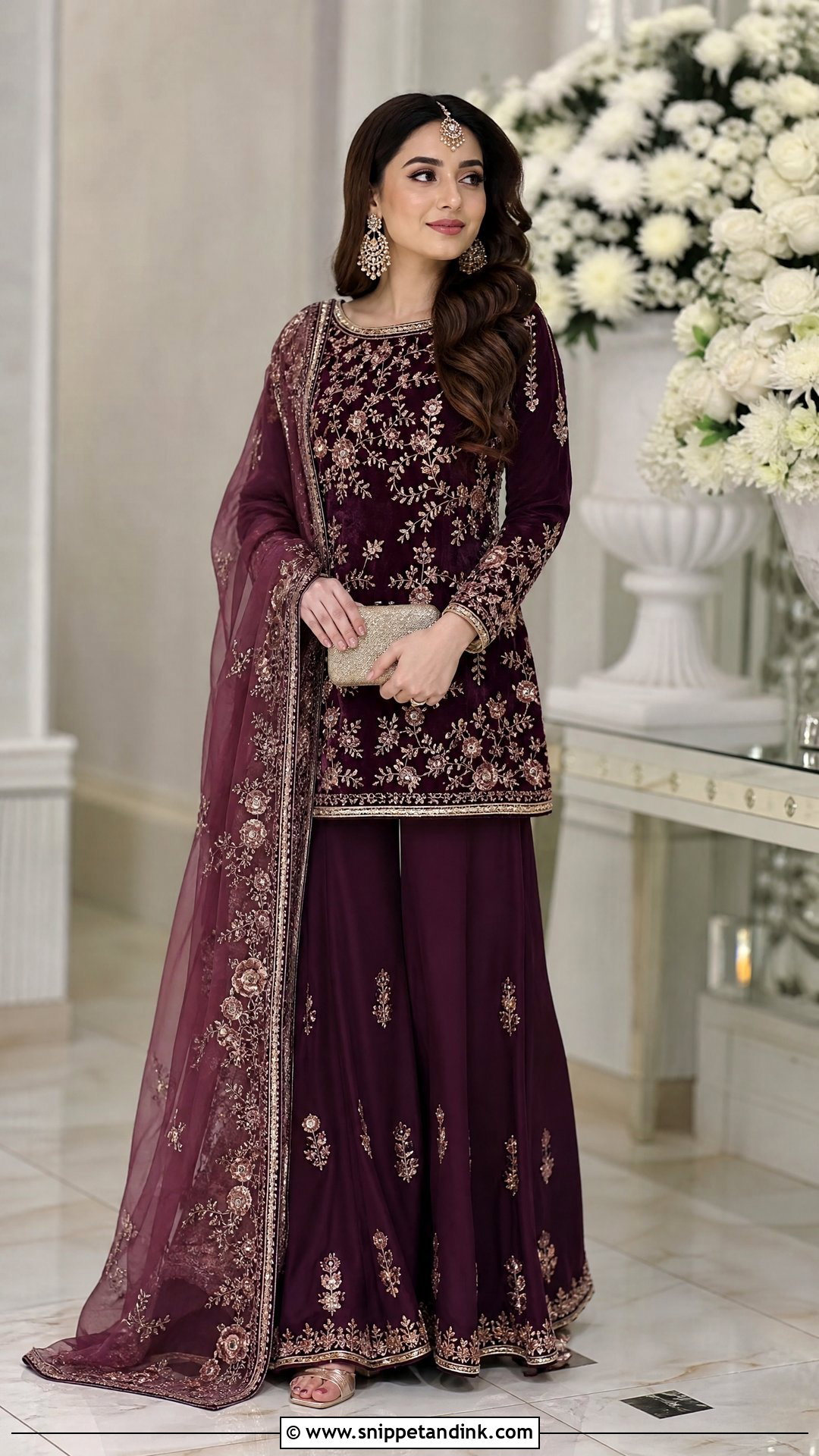
Plum offers richness without the familiar maroon. Pair a short plum velvet or raw silk kameez with a silk or chiffon sharara. Rose gold embroidery gives a softer contrast than yellow gold, and it flatters cool and neutral skin. Concentrate the work at the neckline, sleeve ends, shirt hem and lower trouser panels. A plum organza dupatta with rose gold edging and rose gold heels tie it together. A low textured bun sits comfortably under the dupatta. It suits a cool-weather or evening Nikkah.
19. Floral Nikkah Sharara With Organza Shirt
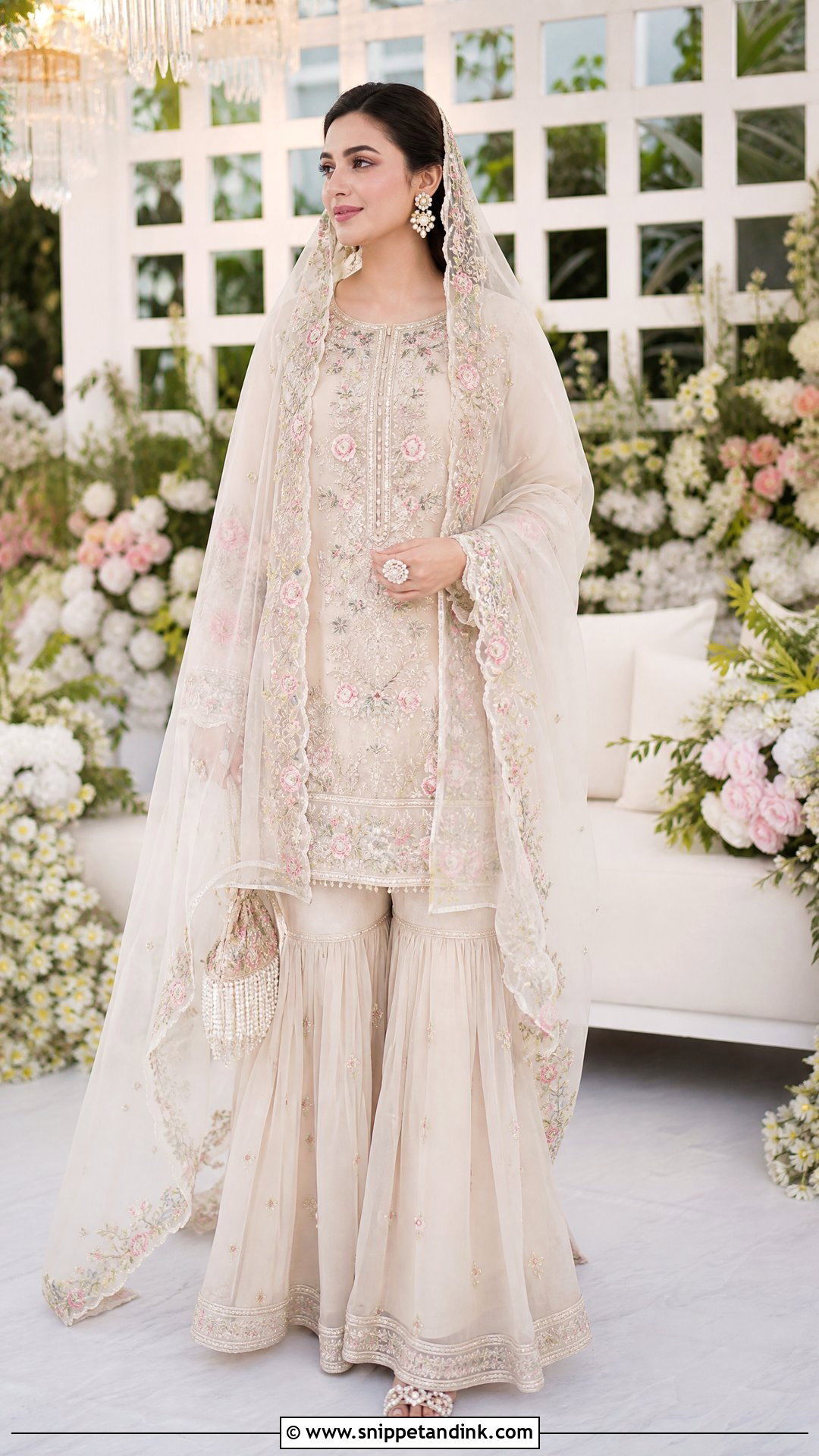
Pastel florals on organza make the sharara feel personal without dense metallic work. The organza shirt needs a lined silk base, or the embroidery shows through as shadows. Keep it short and gently fitted so it balances the sharara. A matching dupatta with flowers only at the corners leaves the centre sheer and light for draping over the head. If the chest is already embroidered, skip the big necklace. Pearl earrings and a floral ring are enough, with soft curls in a low bun.
20. Ivory Nikkah Sharara With Double Dupatta
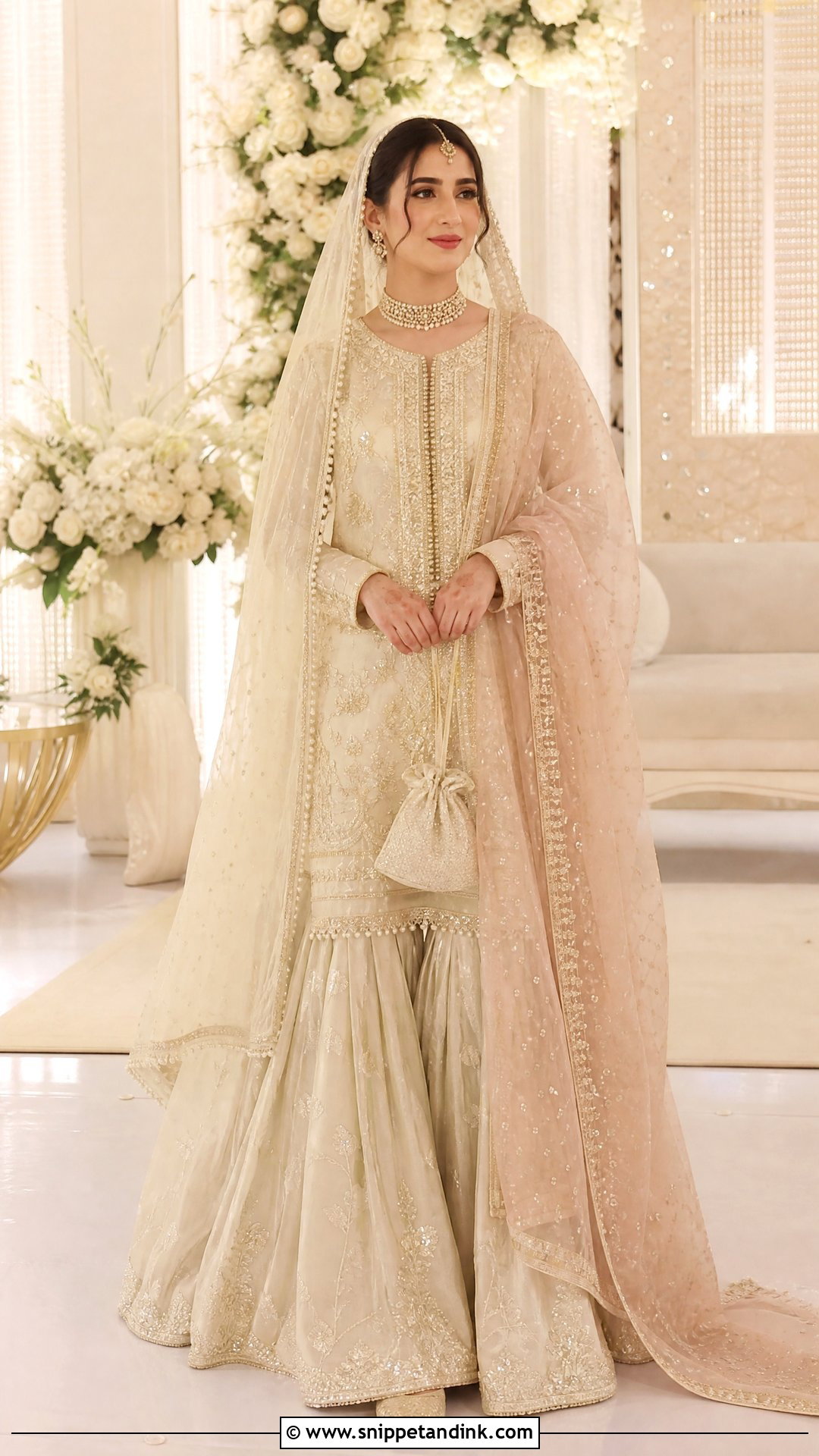
A double-dupatta sharara adds ceremony and coverage without changing the silhouette. Start with an ivory silk kameez and a full sharara in tonal embroidery, pearls and light gold. The net dupatta over the head needs enough border weight to stay down. The second, in blush, sage or champagne organza, goes across one shoulder and around the opposite arm. Two dupattas can trap your arms when you sign or hug, so pin both and test the movement before the day.
Hems, Shoes and Stairs in Wide Trousers
Most sharara mishaps I fix on the day come from the hem. Wide legs catch under heels, sweep up dust and trip you on steps, and all of it is avoidable.
Set the length in your real shoes
Bring the exact shoes to the hemming fitting. Front hems should just clear the floor; a little longer at the back is fine. Switching from heels to flats halfway through the day lowers the hem by the height of the heel, so if you plan to change, hem for the flats and accept a slightly shorter look in heels.
Moving in it
On stairs, gather a handful of fabric from each leg at the thigh and lift slightly; that keeps the hem off the step without exposing anything. Getting into a car, sit first and swing the legs in together, then smooth the flare once you’re seated.
The morning of
Hang the sharara by its waistband the night before so the panels drop. Steam rather than iron, especially over embroidery, and keep the steamer a little away from tissue, velvet and crystal work. Transport it hanging in a breathable garment bag, never folded in a suitcase.
A Sharara Is Only as Good as Its Flare
Colour sets the mood: ivory, blush, champagne and pastels feel calm, while emerald, navy, plum and maroon read richer. But the things that decide how the day goes are fabric, tailoring, trouser flare and dupatta weight, because those control how the outfit moves and how tired you are by the end. Let jewellery support the embroidery. Pin the head drape well and wear shoes you can stand in. Then the sharara you pick will feel traditional, flattering and entirely yours.
You'll Like These Ideas:


Leave a Reply