
The Barat outfit is the one a bride wears longest and sits in most: the entrance, the nikah or pheras, hours on the stage, the meal, the rukhsati. I dress brides for it with that whole day in mind, so below you’ll find classic red lehengas, velvet, pishwas, ghararas, shararas, a saree and a few softer colors, each with notes on embroidery, dupatta draping, jewelry and shoes. Heavy zardozi or a cleaner modern cut can both feel regal. What matters is that you can still carry the outfit at hour six, so think about the venue, the season and how long you’ll be seated before you commit to heavy fabric or extra layers.
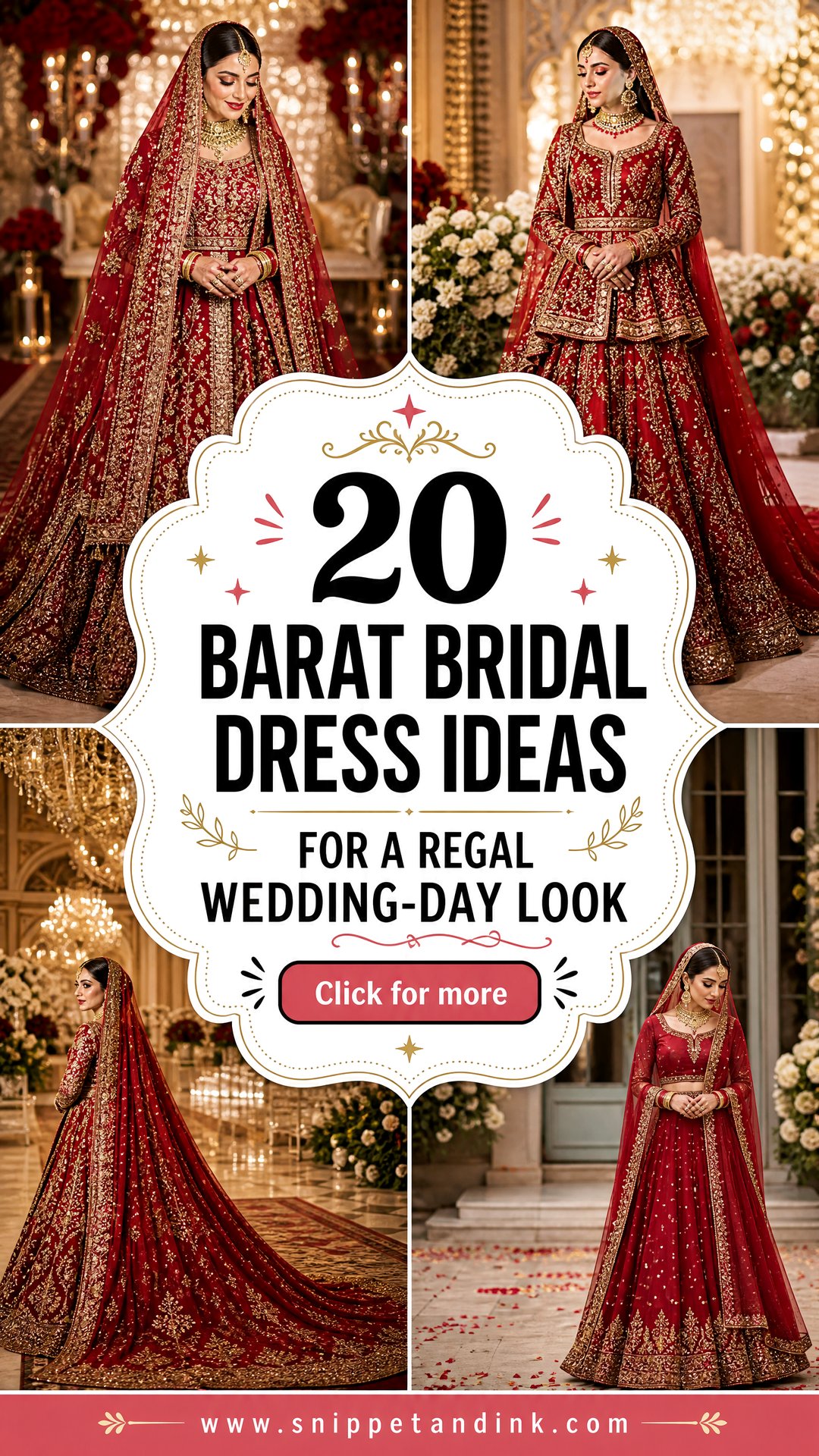
How Heavy Is Too Heavy for a Six-Hour Barat?
A fully worked bridal lehenga with cancan, lining and two dupattas can weigh several kilos, and almost all of that hangs from your waist. At the first fitting I ask the bride to lift the skirt, walk the length of the room and sit on a low chair. If her shoulders creep up or she grabs the waistband, the outfit is too heavy for the day she has planned, however lovely it looks on the hanger.
- Ask the designer where the weight sits. Work concentrated in the border and hem is easier to carry than embroidery spread across every panel.
- Request a can-can that can be removed or reduced; you can wear the fuller shape for the entrance and portraits, then soften it for the long seated hours.
- Try the head dupatta pinned at a fitting, not just draped. Its weight on the hair is what gives most brides a headache by the meal.
- Wear your actual shoes to every fitting so the hem is set to the height you will really stand at.
In summer or at an outdoor venue I’d lean toward raw silk, organza or net over velvet, and toward a sharara or gharara over a layered lehenga, simply because there is less fabric trapping heat around the legs.
1. Traditional Red Barat Bridal Lehenga
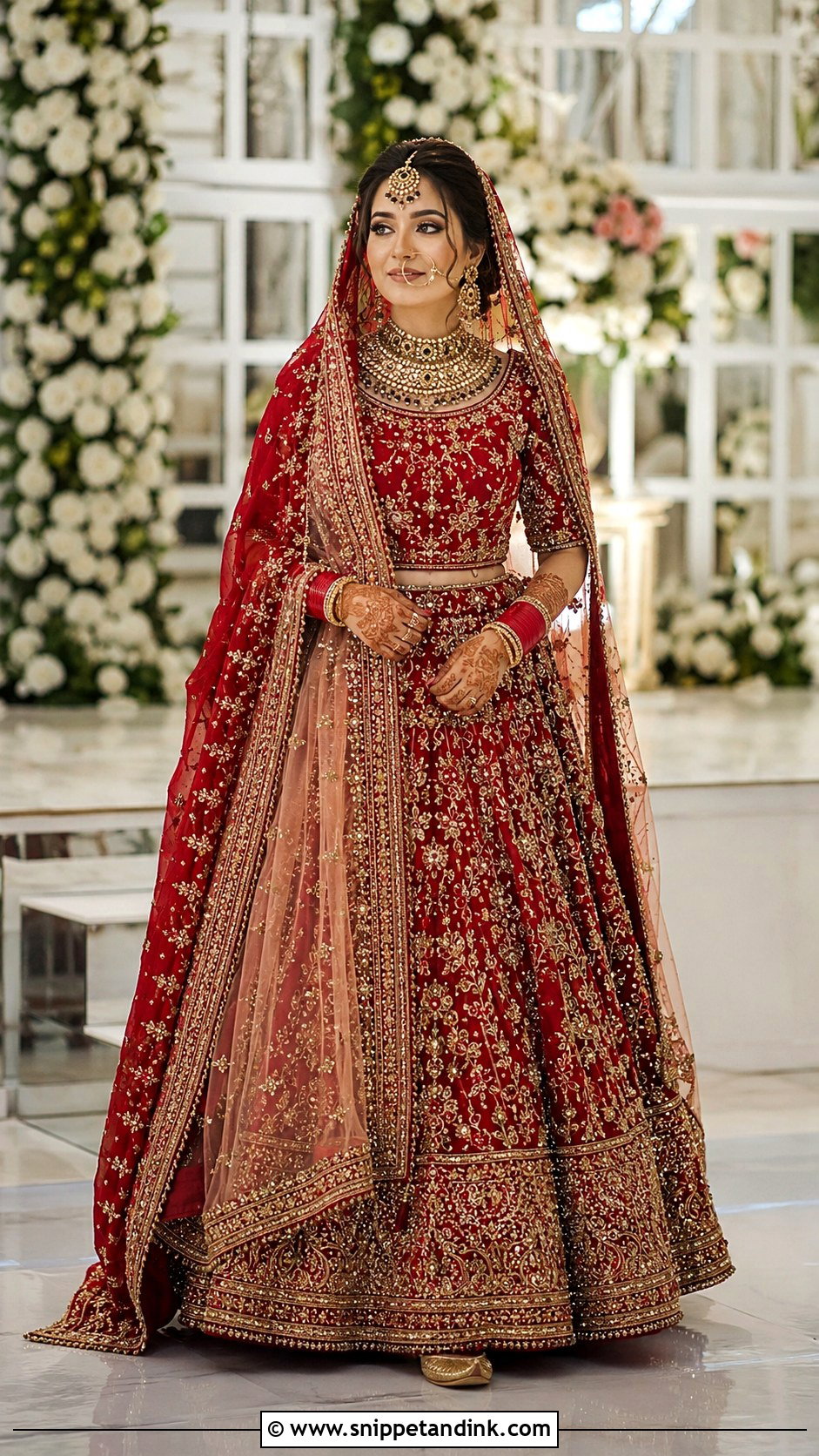
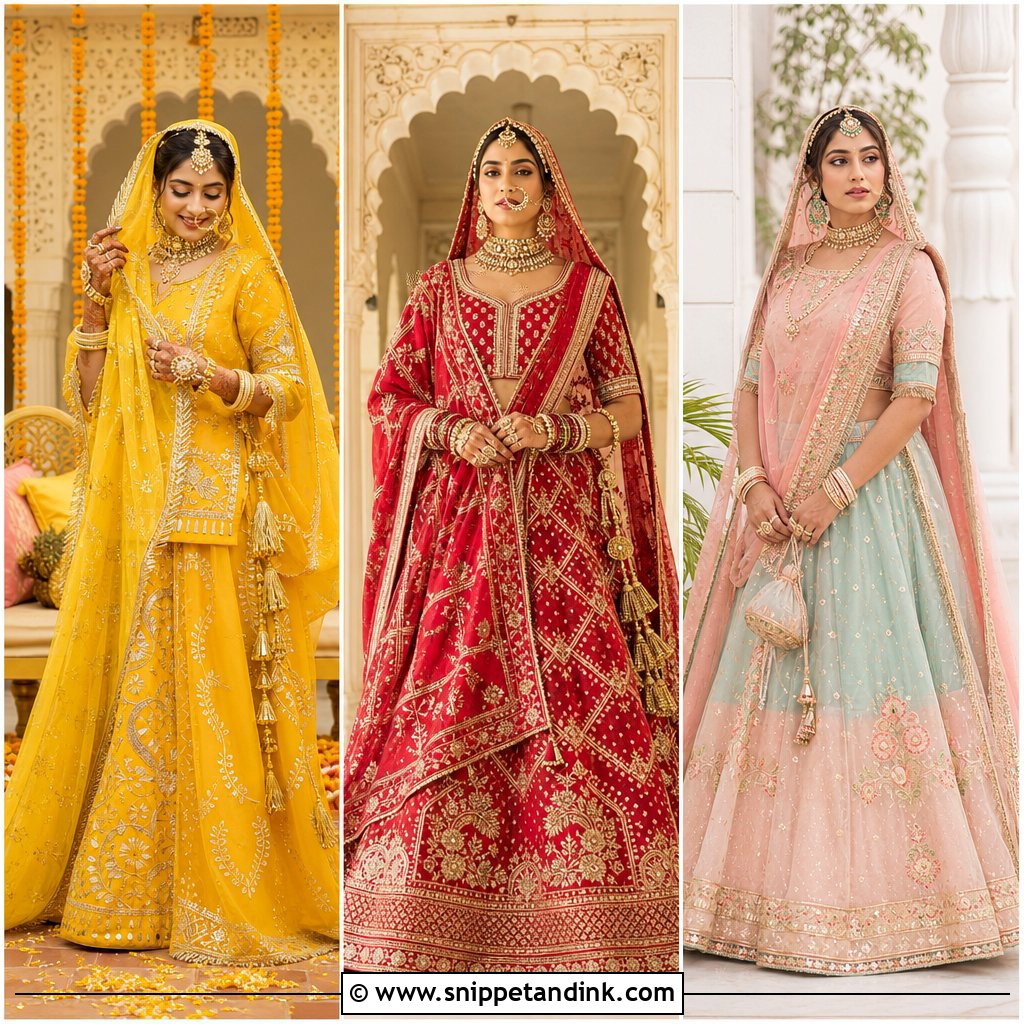
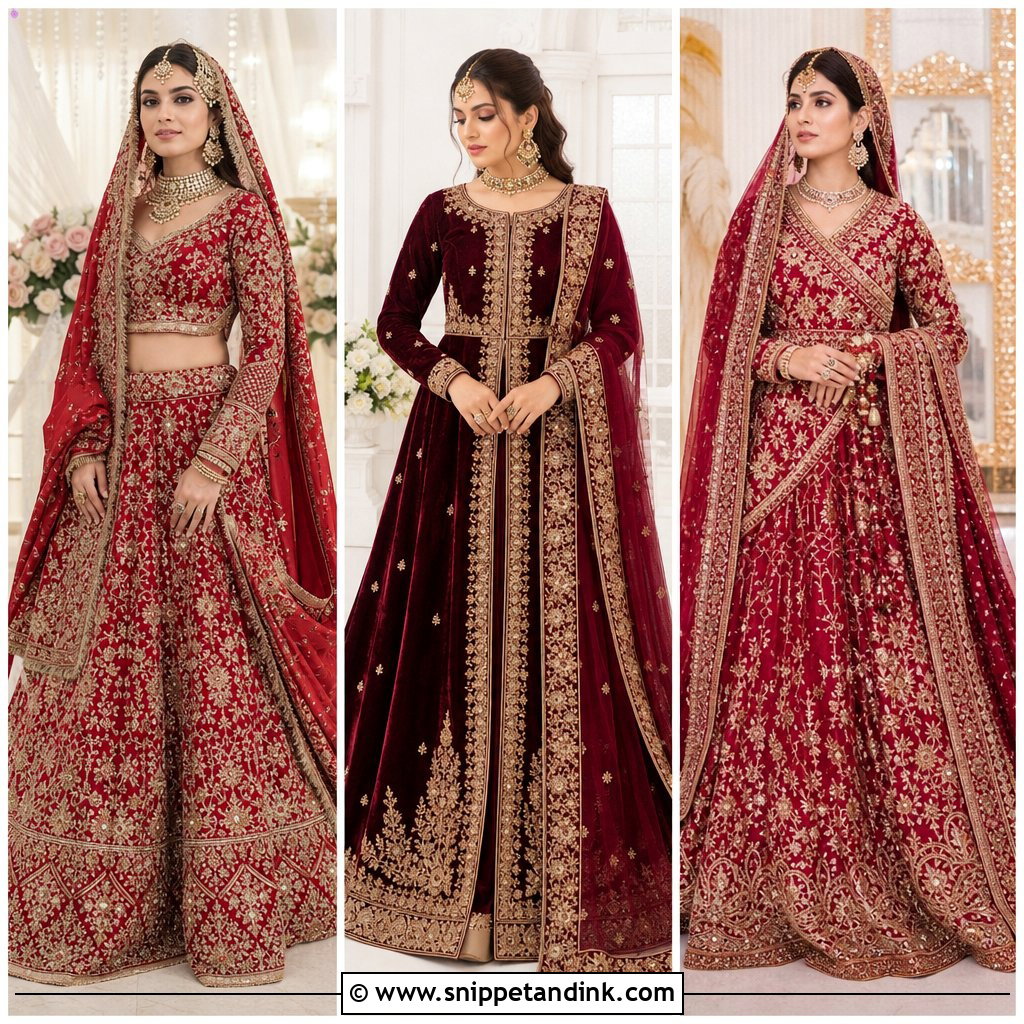
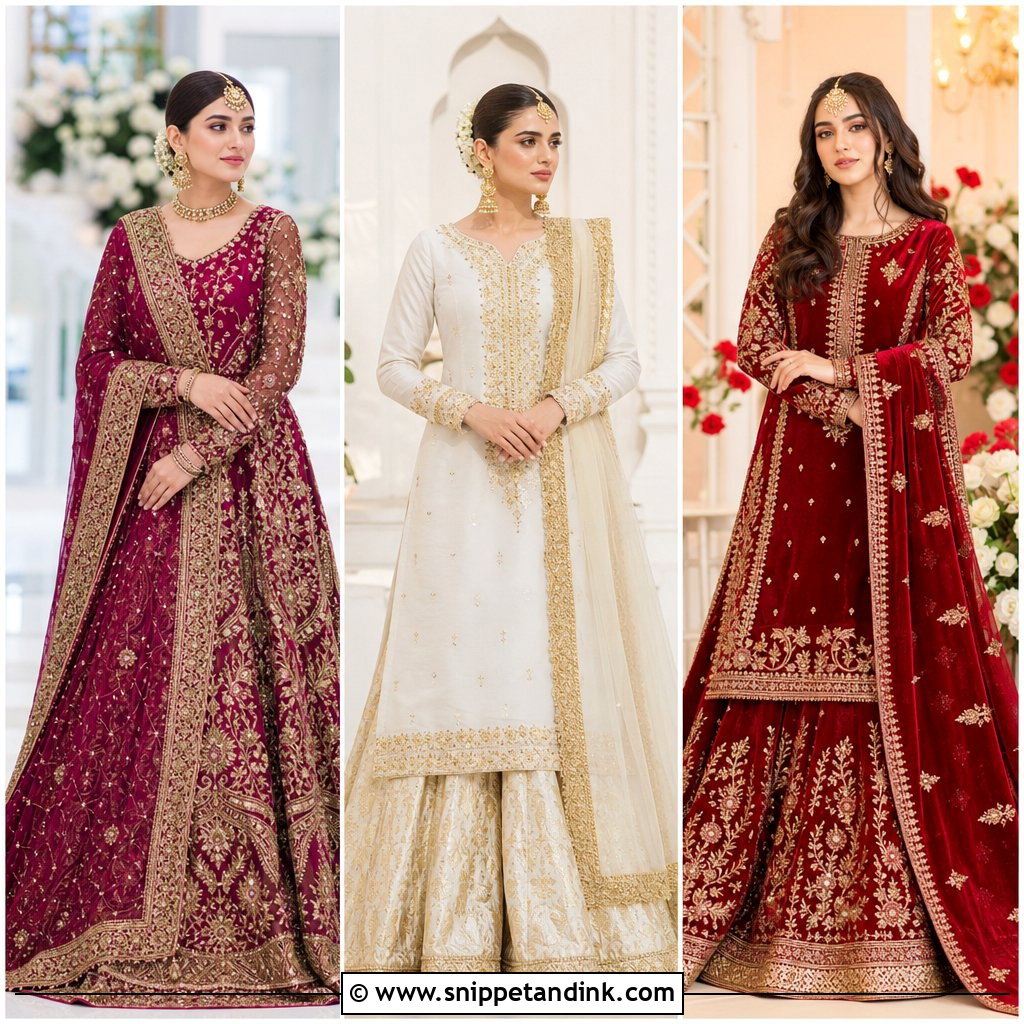
Red raw silk, velvet or jamawar with zardozi, dabka, naqshi and tilla is the look most families picture, and it earns its place. Keep the choli fitted with a modest neckline so the skirt can carry the decoration. I always plan two dupattas here: the heavily worked red one over the head and a light net one across the shoulder. Gold jhumkas, a layered necklace, maang tikka, red bangles and embroidered khussa finish it. One thing I check on the sketch: if the embroidery runs in vertical panels down the skirt, you read taller and the skirt looks less bulky than with horizontal bands.
2. Maroon Velvet Barat Bridal Lehenga
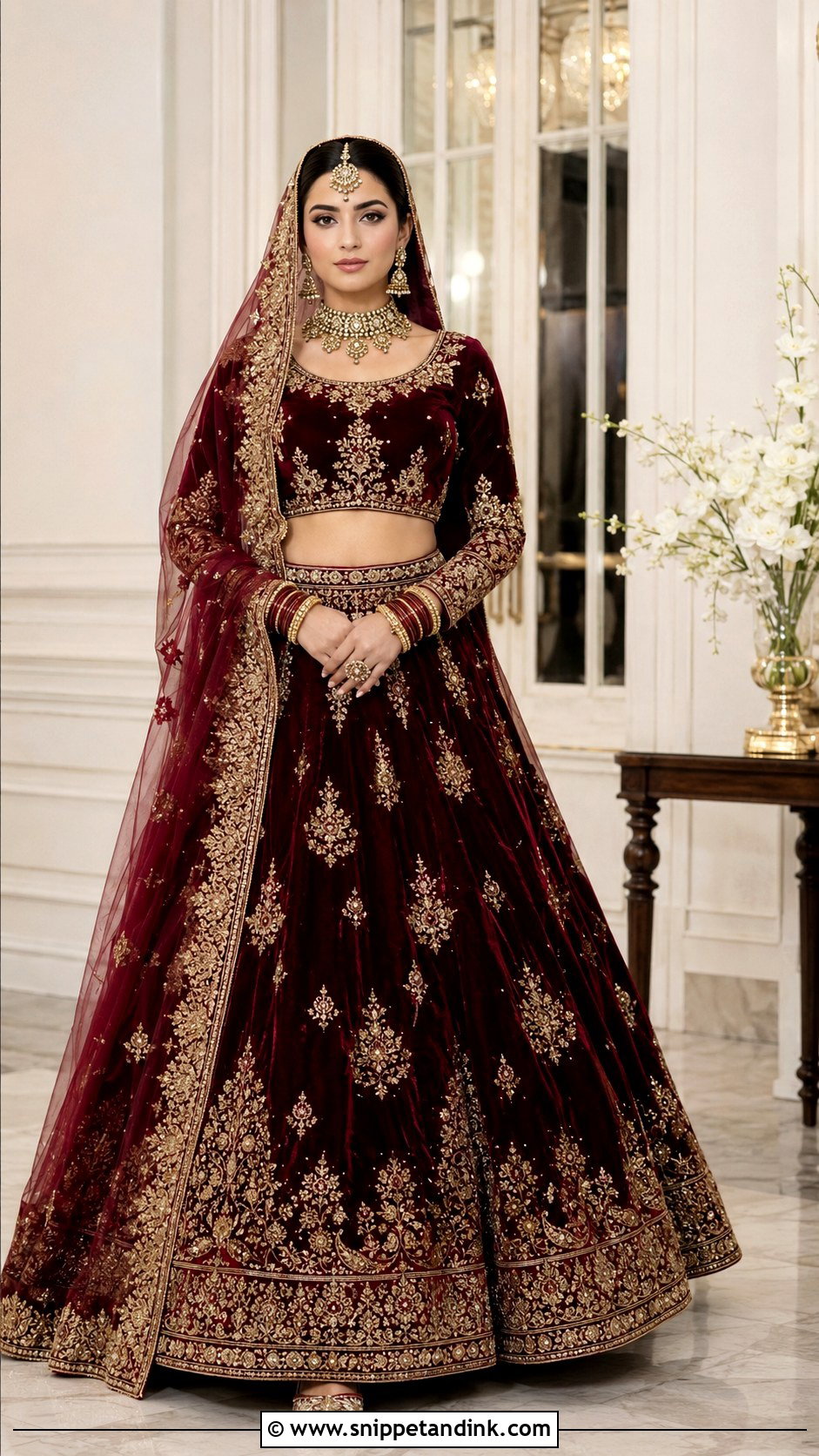
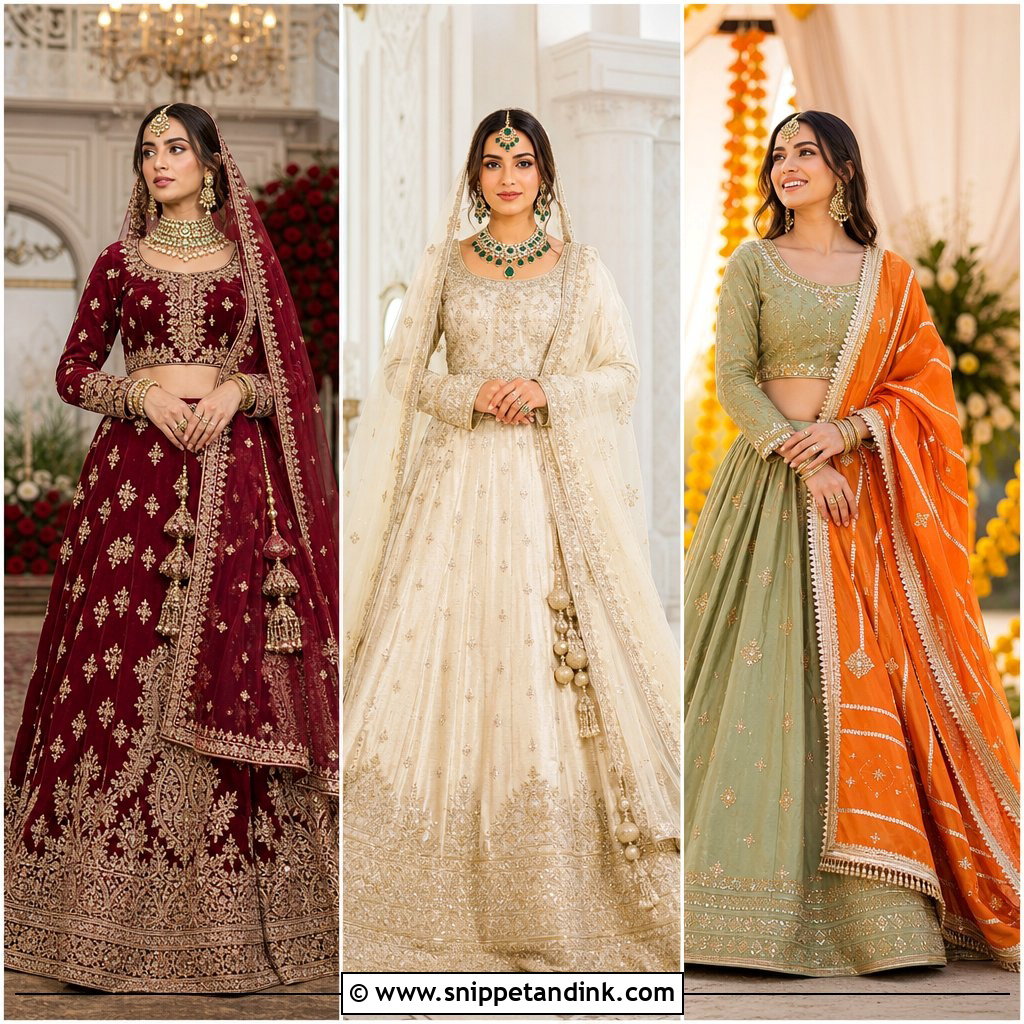
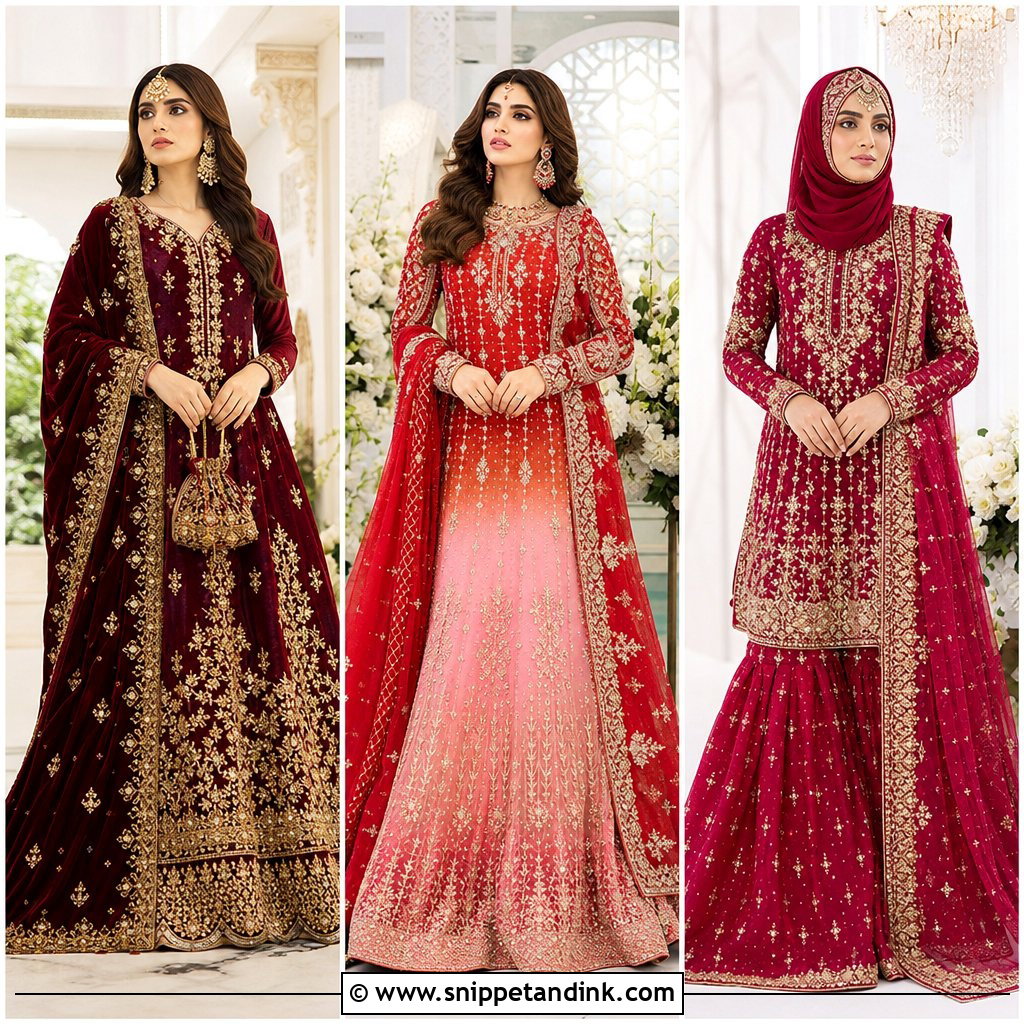
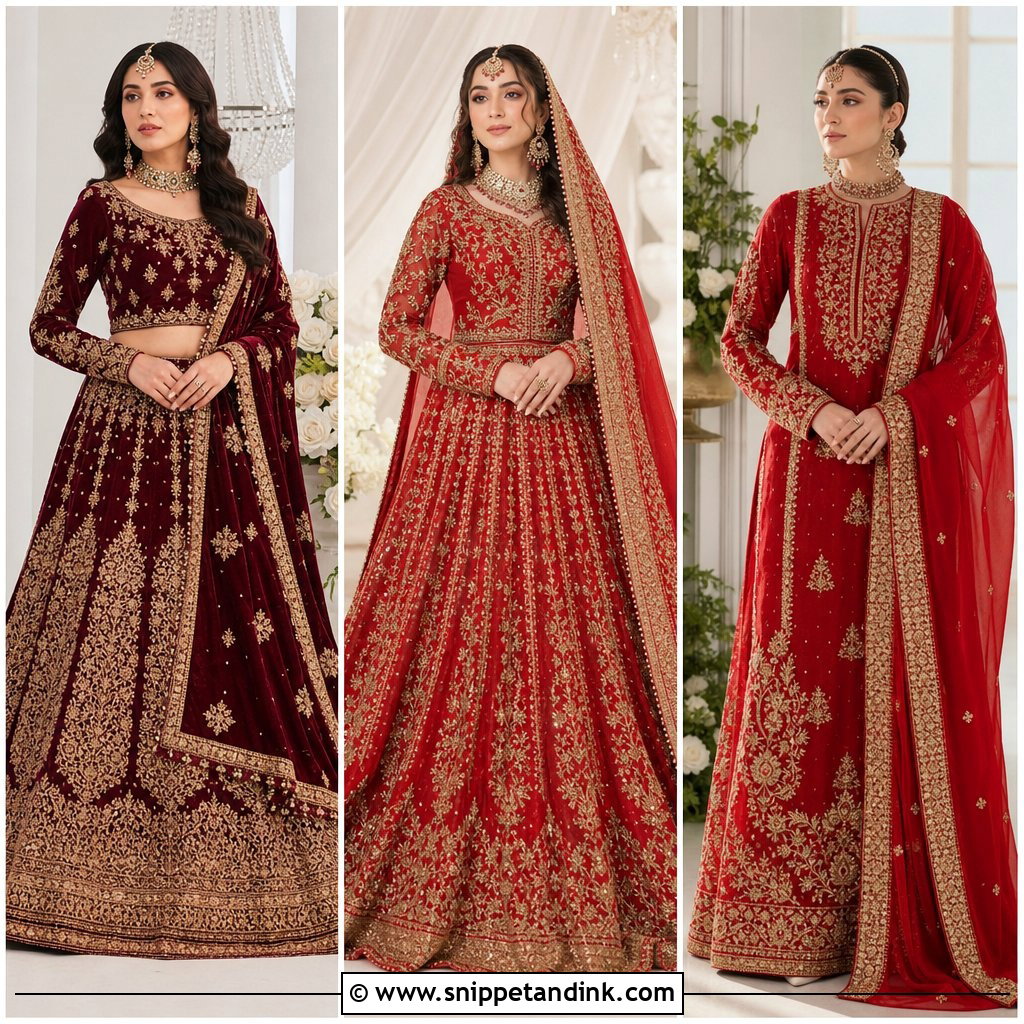
Velvet in a deep maroon color belongs to winter and evening weddings; in a June garden it is punishing. The pile already looks rich, so a paneled skirt with antique gold zardozi borders and scattered motifs is enough. Velvet also crushes where you sit and shows every press mark, so I ask for a breathable lining and have the outfit steamed from the back, never ironed on the face. A sheer maroon or muted gold dupatta keeps the top from feeling heavy. Kundan, a centered tikka, stacked bangles and platform khussa hidden under the hem complete it, with a sleek bun or soft waves. Keep the cancan light so the skirt holds its shape without fighting you on the stage steps.
3. Crimson Barat Bridal Pishwas
A crimson pishwas gives you lehenga grandeur in one continuous line from bodice to floor, and it moves as a single flare when you walk in. Look for fitted sleeves, a defined waist and wide panels worked in tilla, sequins and pearls. The fit point I watch at trials is the waist seam: if it sits even an inch low, the whole flare starts too late and you look shorter. Wear straight trousers or a light churidar underneath. An organza dupatta with a border over the head adds structure without hiding the neckline, and a choker, long necklace, passa and gold heels finish it. Ask for the embroidery to get heavier toward the hem so the weight pulls the panels straight.
4. Red Farshi Gharara Barat Bridal Dress
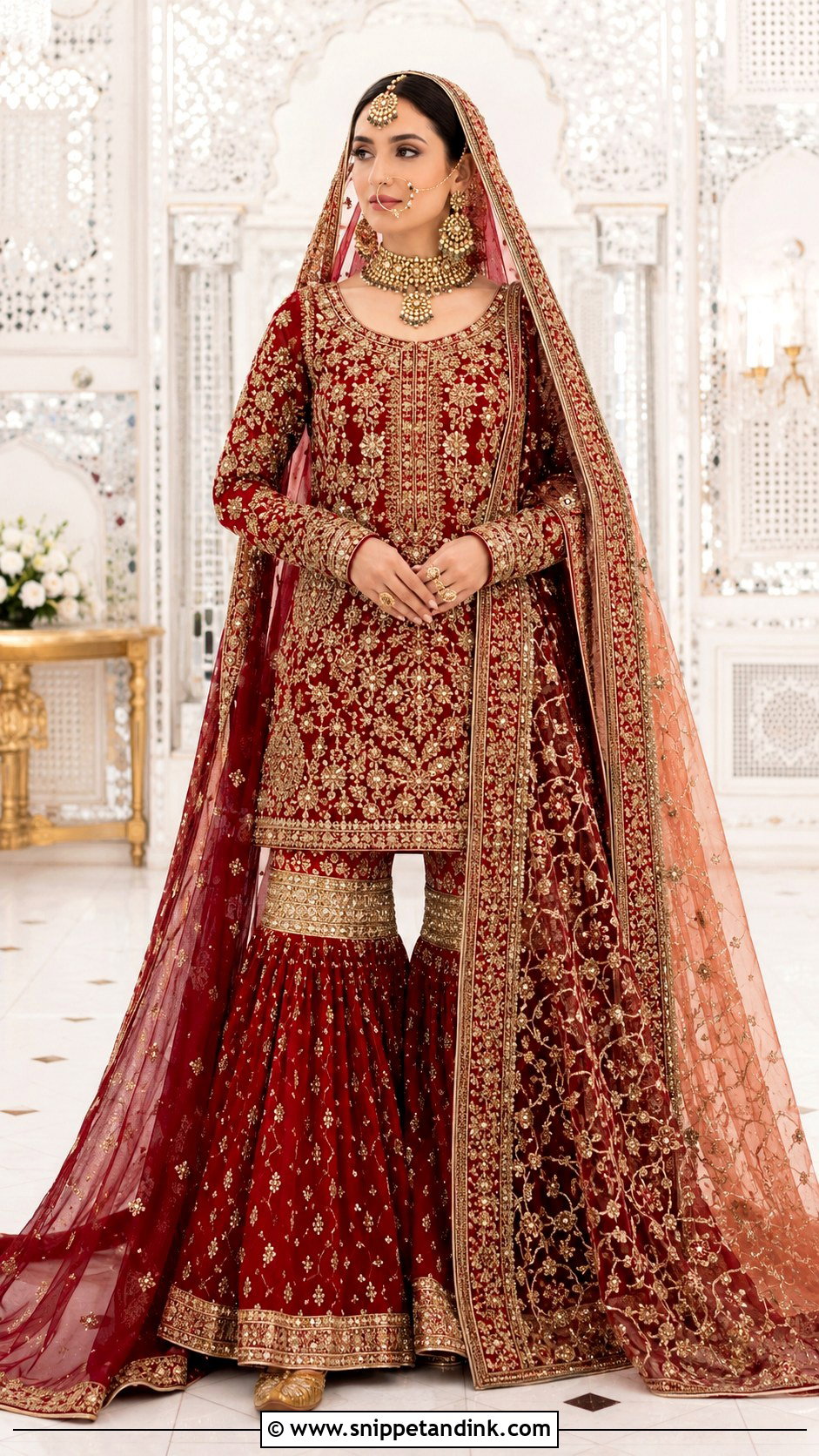
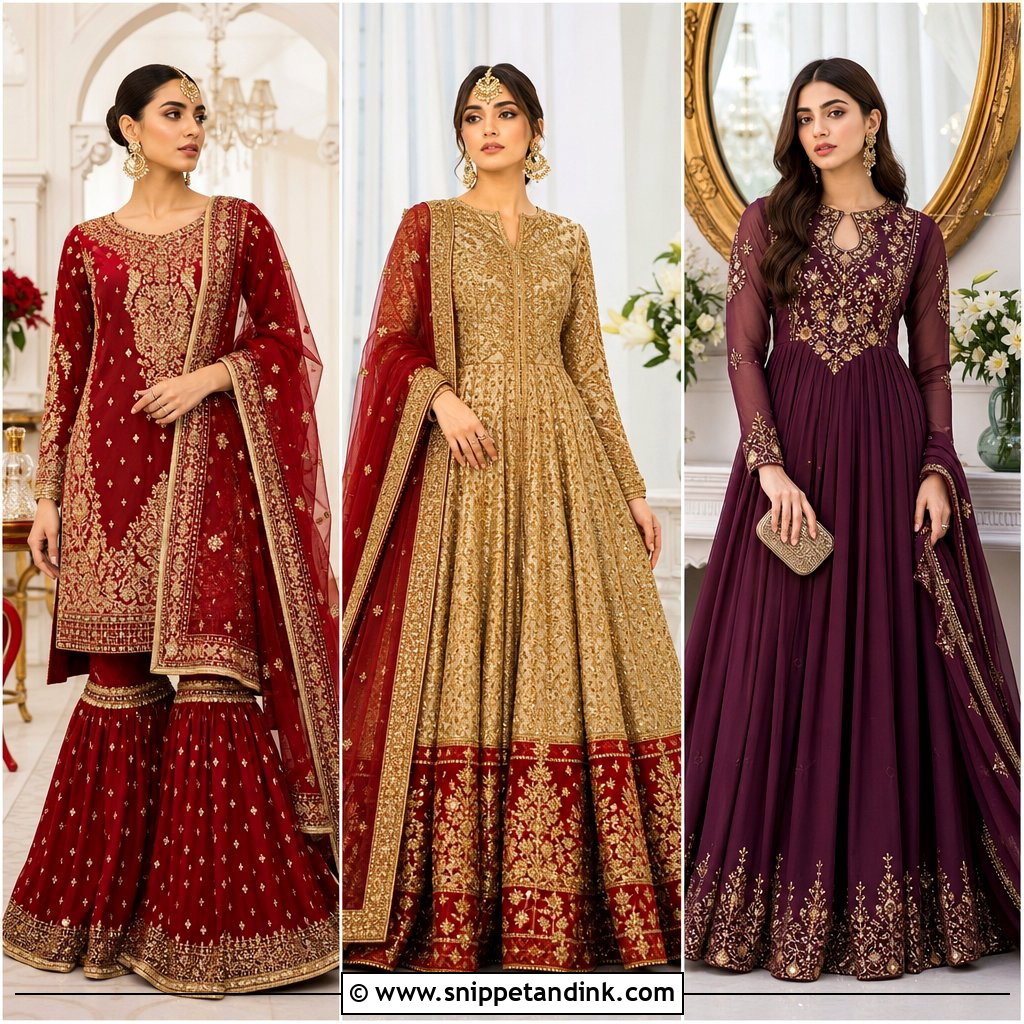
a red farshi gharara is the old-world choice, and it is the hardest outfit on this list to move in. A longer shirt sits over wide pants that flare from a knee band and spread across the floor, worked in antique gold on red raw silk. I keep the shirt ending near the upper thigh so it balances the volume below. A net dupatta goes over the head, a second one rests along one arm, and a polki choker, large earrings, a fine nose ring and embellished khussa complete it. Practice at home: farshi hems trap your feet when you stand up from a low sofa, so learn to gather a handful of fabric at each knee first.
5. Ruby Red Barat Bridal Maxi
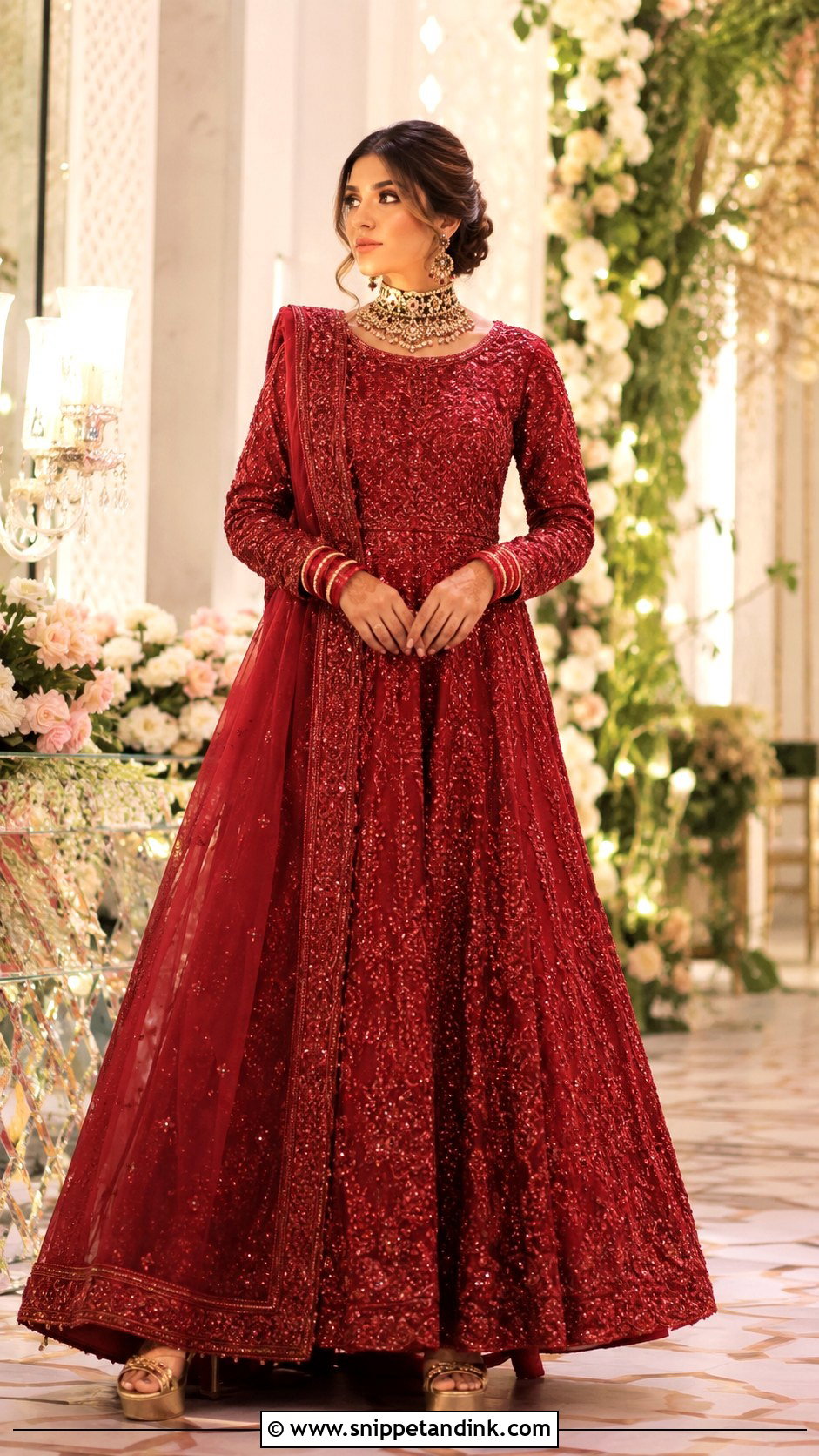
A maxi is one garment instead of a blouse and skirt, which means no waistband digging in after dinner. I like a structured bodice, softly defined waist and a wide embroidered skirt, with vertical floral vines, a little crystal and gold thread keeping the shape clean. Full or three-quarter sleeves give coverage. A light ruby dupatta with an ornate border pins over the head without crowding the neckline, and a choker, drop earrings, red bangles and cushioned heels finish it. Its weak point is a long train on grass or gravel; indoors, on a smooth floor, it’s at its best.
6. Deep Red Double Dupatta Barat Bridal Dress
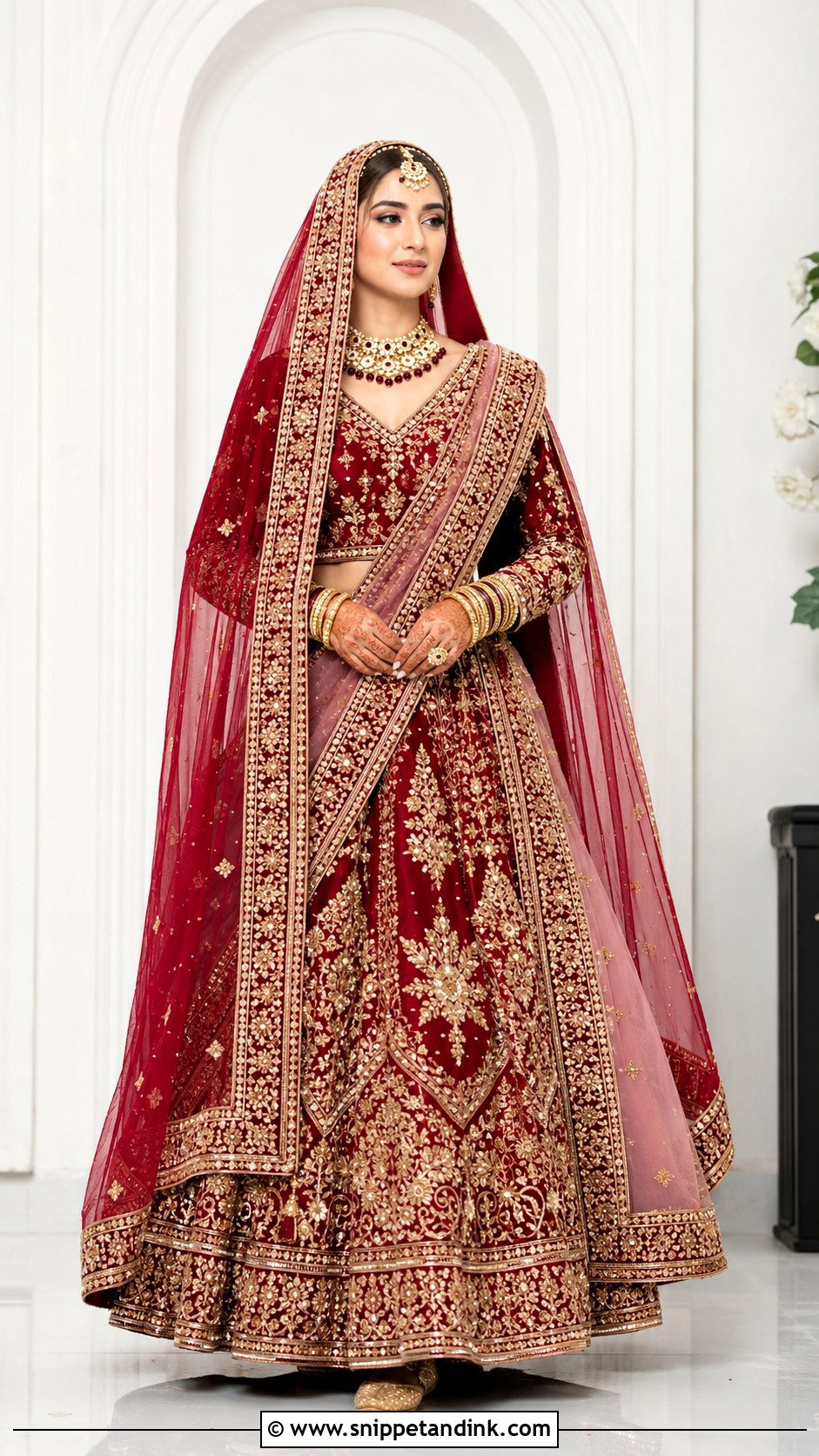
Two dupattas are where a red outfit gets its depth, and also where most on-the-day discomfort comes from. Start with a heavily embroidered lehenga and a blouse built firmly enough at the shoulders to take pinning. The detailed dupatta goes over the head with its border framing the face, never sitting on the eyebrows; the lighter organza or net one crosses the torso or drops from one shoulder. Two slightly different reds add dimension. When I pin, I anchor the head dupatta into the hair base and the blouse straps rather than into loose hair, so the weight pulls on structure instead of your scalp. A kundan necklace, tikka, bangles and comfortable gold shoes complete it.
7. Gold Barat Bridal Lehenga
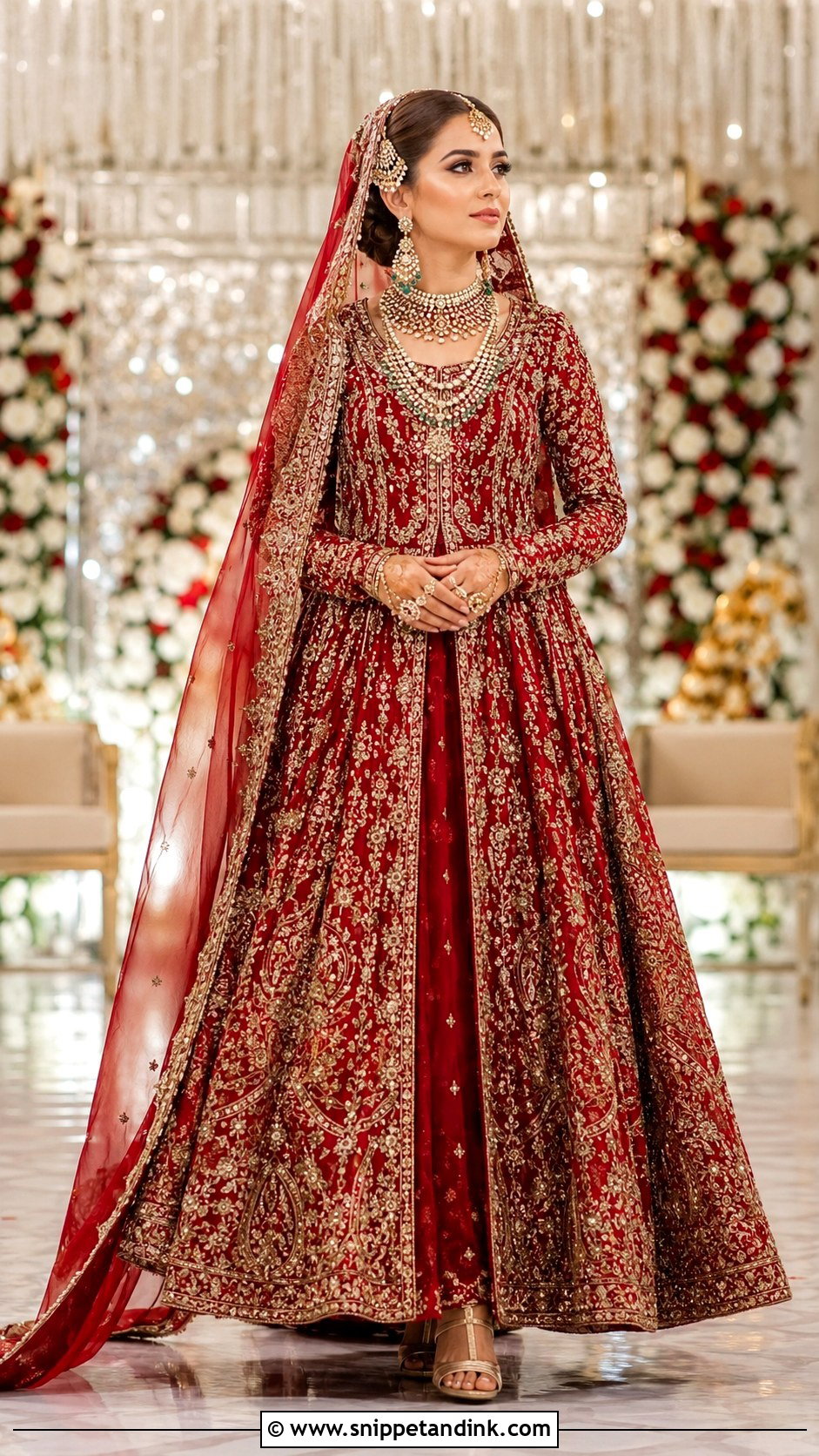
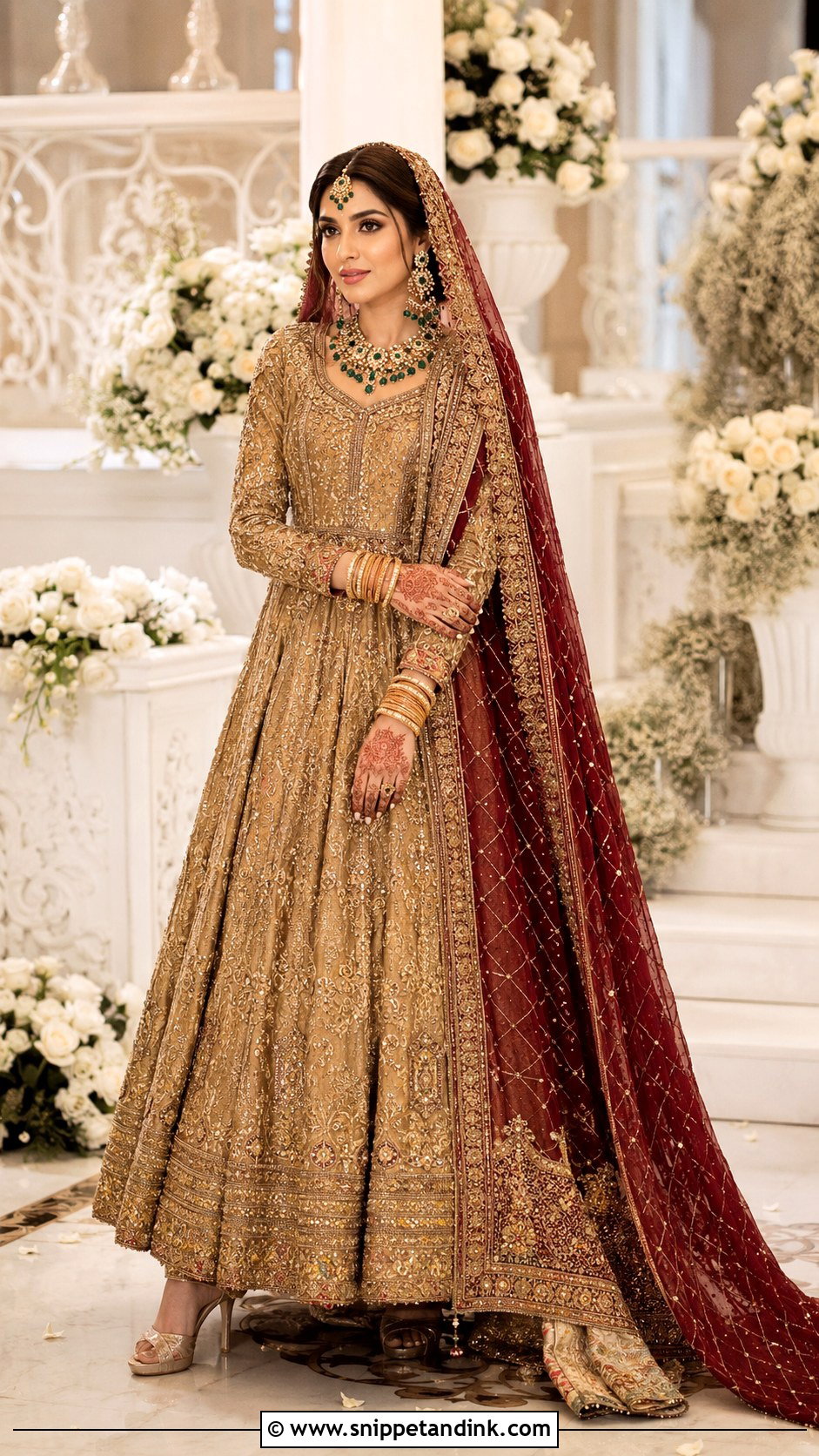
Gold instead of red? It holds its own at a Barat as long as the base fabric is rich and the handwork is real. I steer brides toward antique gold, champagne or muted bronze rather than bright metallic, which turns brassy under flash. Pair the paneled lehenga with a coordinated blouse and put a red or maroon dupatta over the head; that one band of color is what tells the room you’re the bride. Emerald-accented kundan, gold bangles, a tikka and neutral embellished heels work well. Warm makeup with defined eyes and a rose or red lip stops the gold fabric from washing out your face in photographs.
8. Ivory And Gold Barat Bridal Lehenga
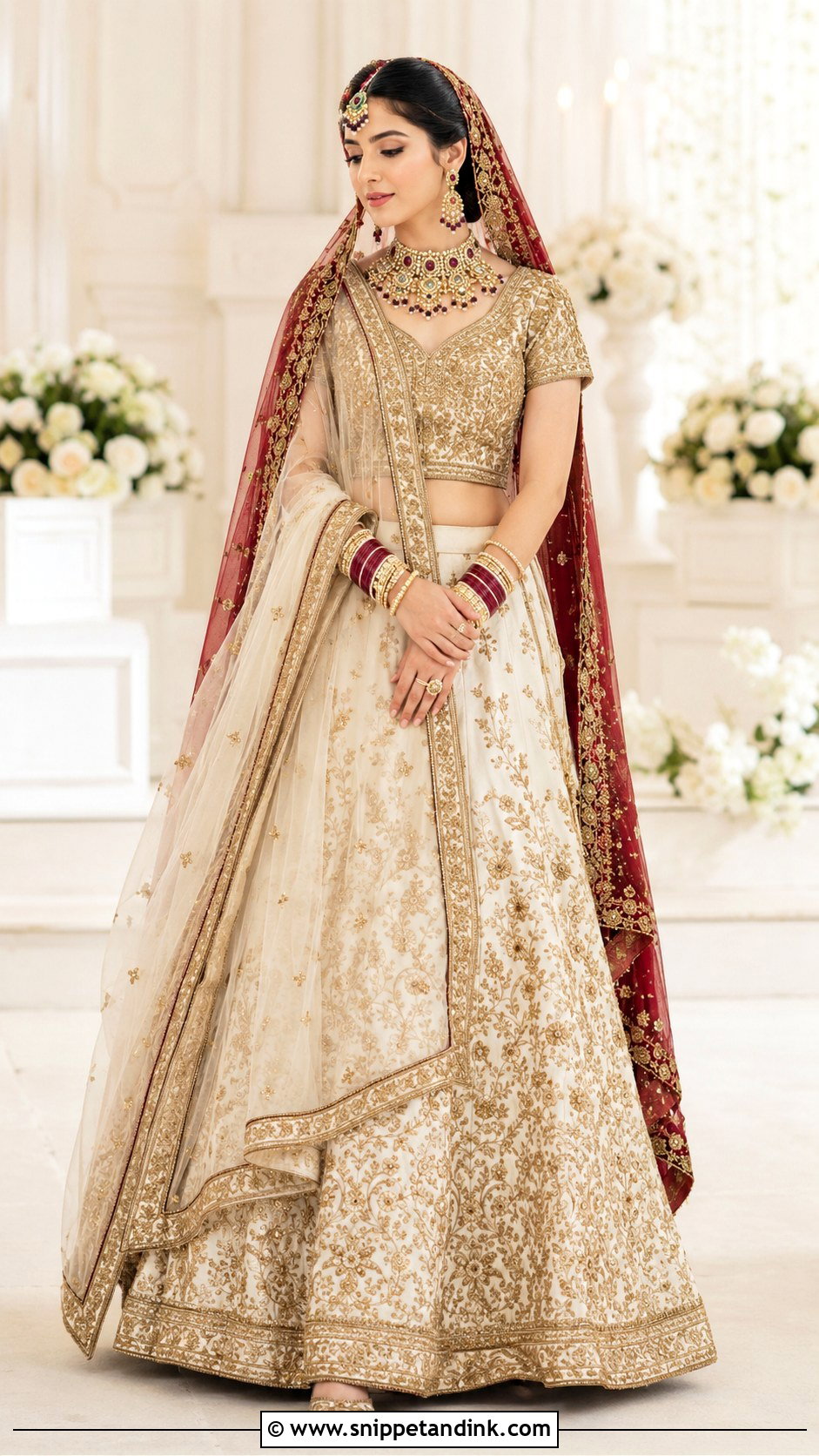
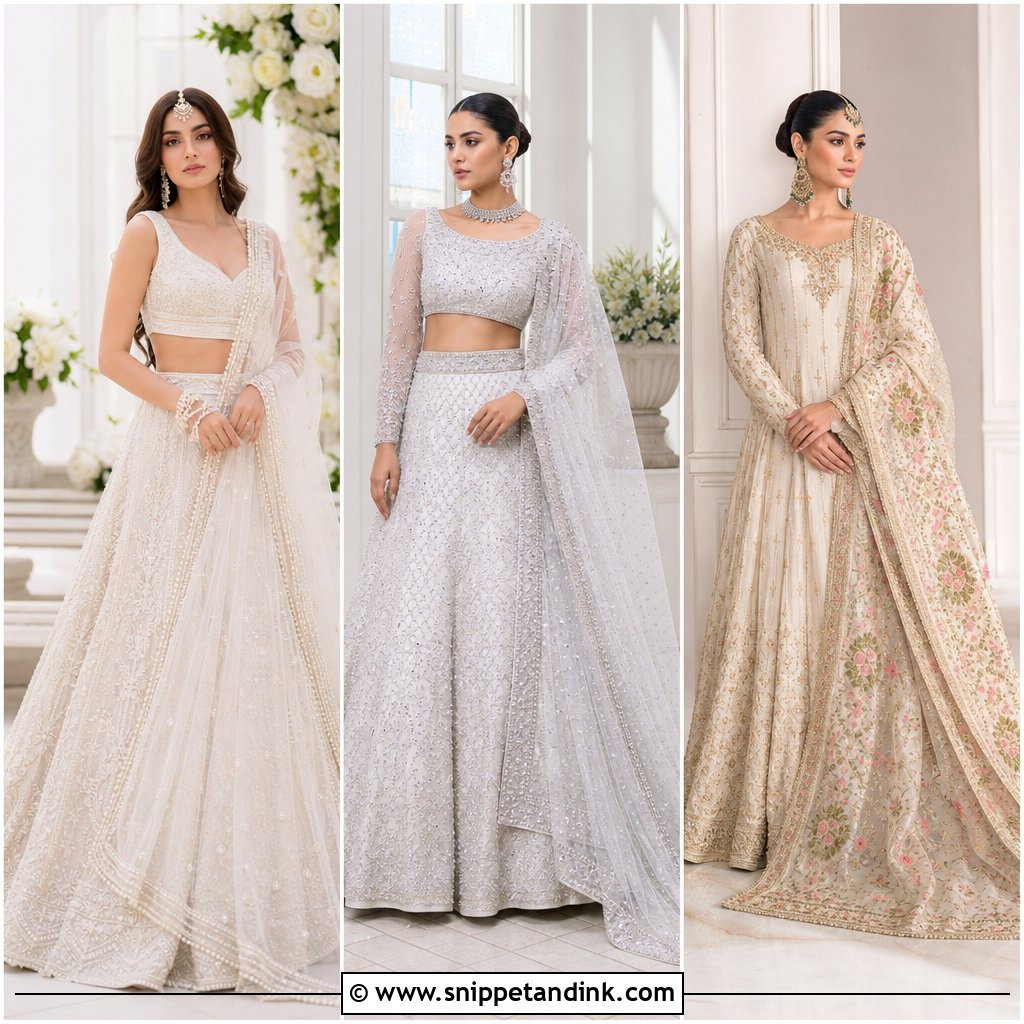
Ivory and gold is the softer route and still formal enough for the main event. An ivory raw silk skirt with antique zari, pearls and sequins in floral or architectural motifs, plus a gold-toned fitted blouse, defines the waist. For a clearer bridal read, put a red, rust or deep pink dupatta over the head and carry a light ivory one on the arm. Kundan with red or green stones, stacked bangles, gold shoes and a neat middle-parted bun complete it. Be honest with yourself here: ivory marks at the hem within the first hour of a reception, and I’d only suggest it to a bride who truly loves pale palettes, not one choosing it because it feels current.
9. Emerald Green Barat Bridal Lehenga
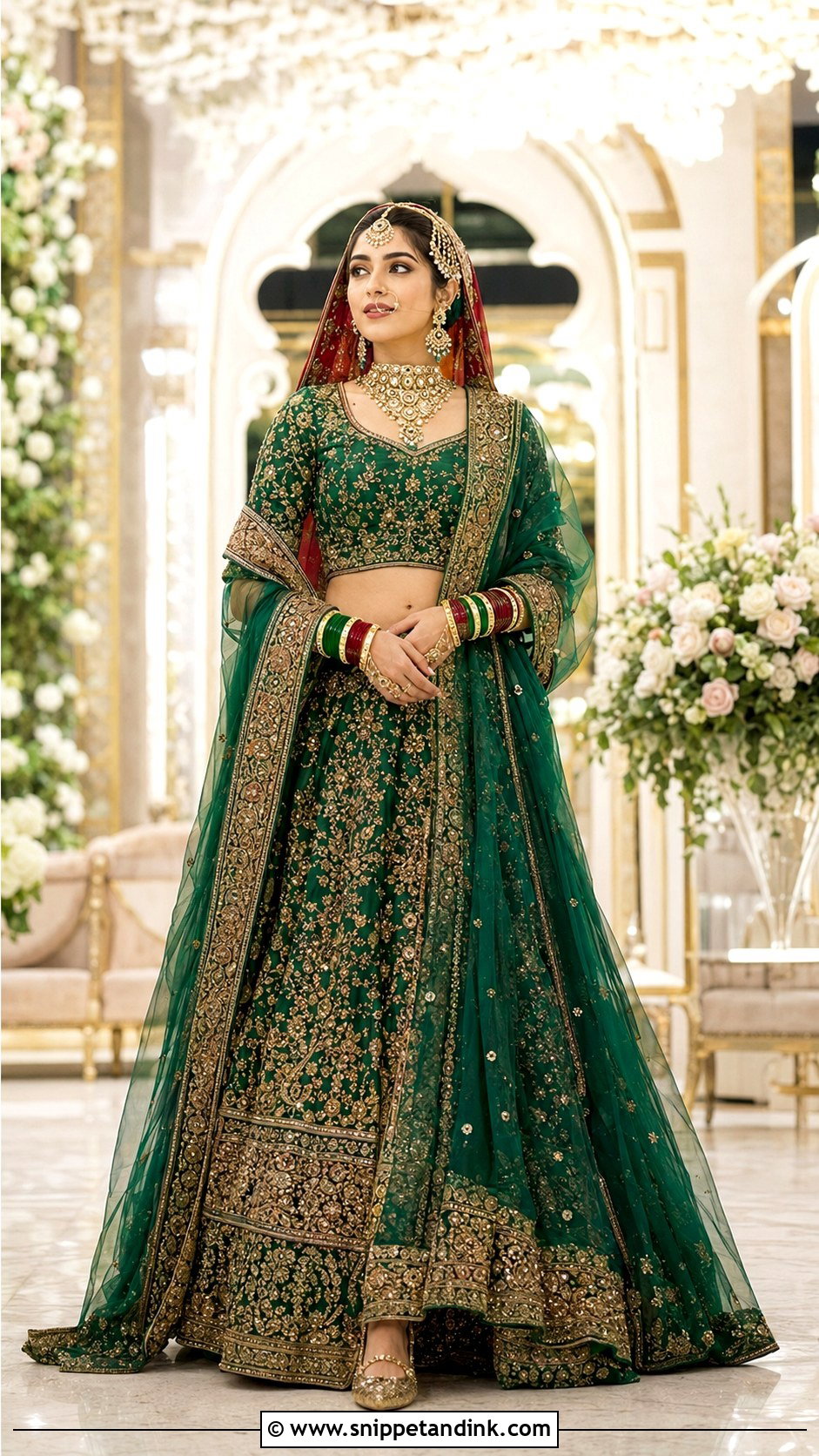
Emerald has real depth under evening light. Velvet, raw silk or jamawar with antique gold work, small red details and well-spaced motifs suits it, with a fitted emerald blouse in a square or rounded neckline that sits well under traditional sets. A red dupatta over the head gives the classic bridal contrast; a lighter green one at the side is optional. Gold kundan, a passa, red and green bangles and metallic khussa finish it. Emerald is already strong, so I limit red to three places: dupatta, jewelry stones and lip. Add a fourth color and the outfit starts to look like a festival rather than a bride.
10. Plum Barat Bridal Lehenga
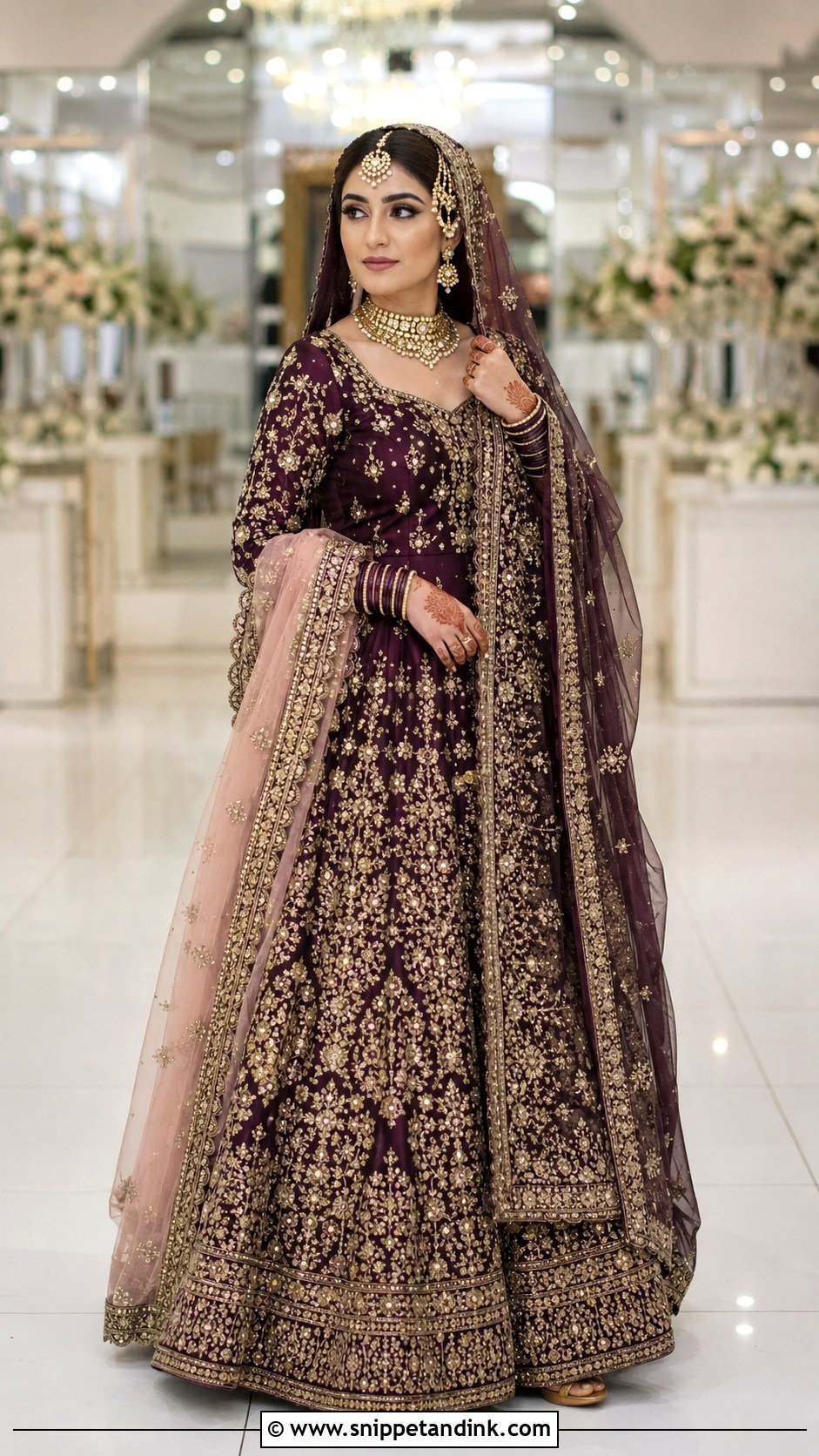
Plum is distinctive and still grand enough for a Barat. Antique gold, copper, rose gold or muted silver all suit it. Keep the borders heavy and the upper panels lighter so the skirt doesn’t look dense. A sheer plum dupatta with a fine worked edge sits over the head, and a blush or dusty rose second dupatta brightens the area near the face. Polki, a passa, plum bangles and gold shoes complete it, with berry makeup and luminous skin. My one warning: very dark plum can photograph almost black in a dim banquet hall, so I ask brides to hold a swatch under the venue’s actual lighting before they order.
11. Rose Pink Barat Bridal Lehenga
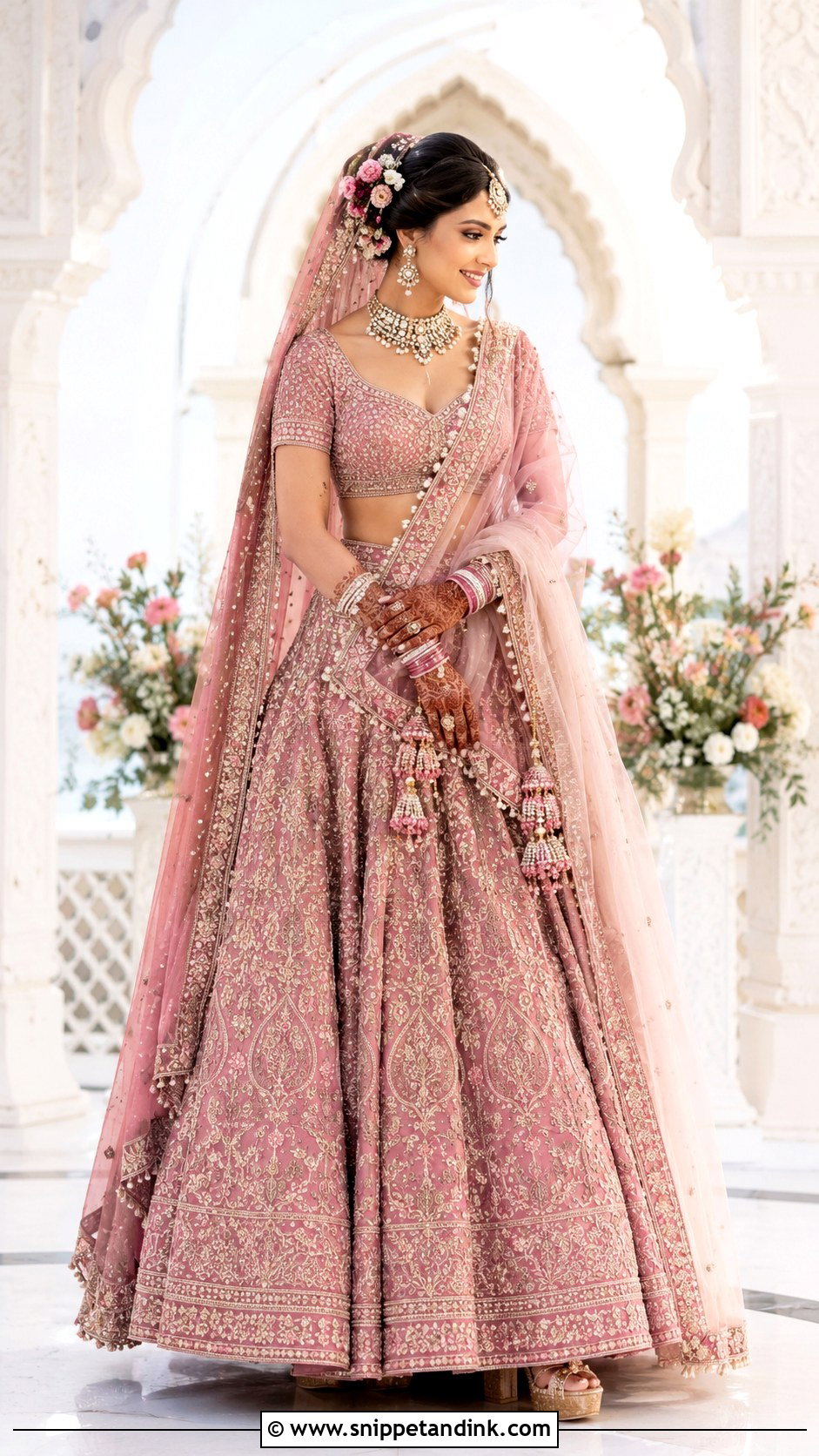
Rose pink reads romantic but needs depth for the main ceremony. Go for deeper rose or dusty pink rather than pale pastel, especially in the evening, because pale pink flattens under warm hall lights. Gold zardozi, pearls, sequins and small florals give the skirt and blouse texture. A matching embroidered dupatta goes over the head with a lighter blush one across the shoulder. Kundan with pearl or emerald details, pink bangles and gold platforms suit it, and a braided bun with a few fresh flowers adds softness. Check that blouse and skirt come from the same dye lot; two pinks that are slightly off cut the outfit in half at the waist.
12. Hot Pink Barat Bridal Gharara
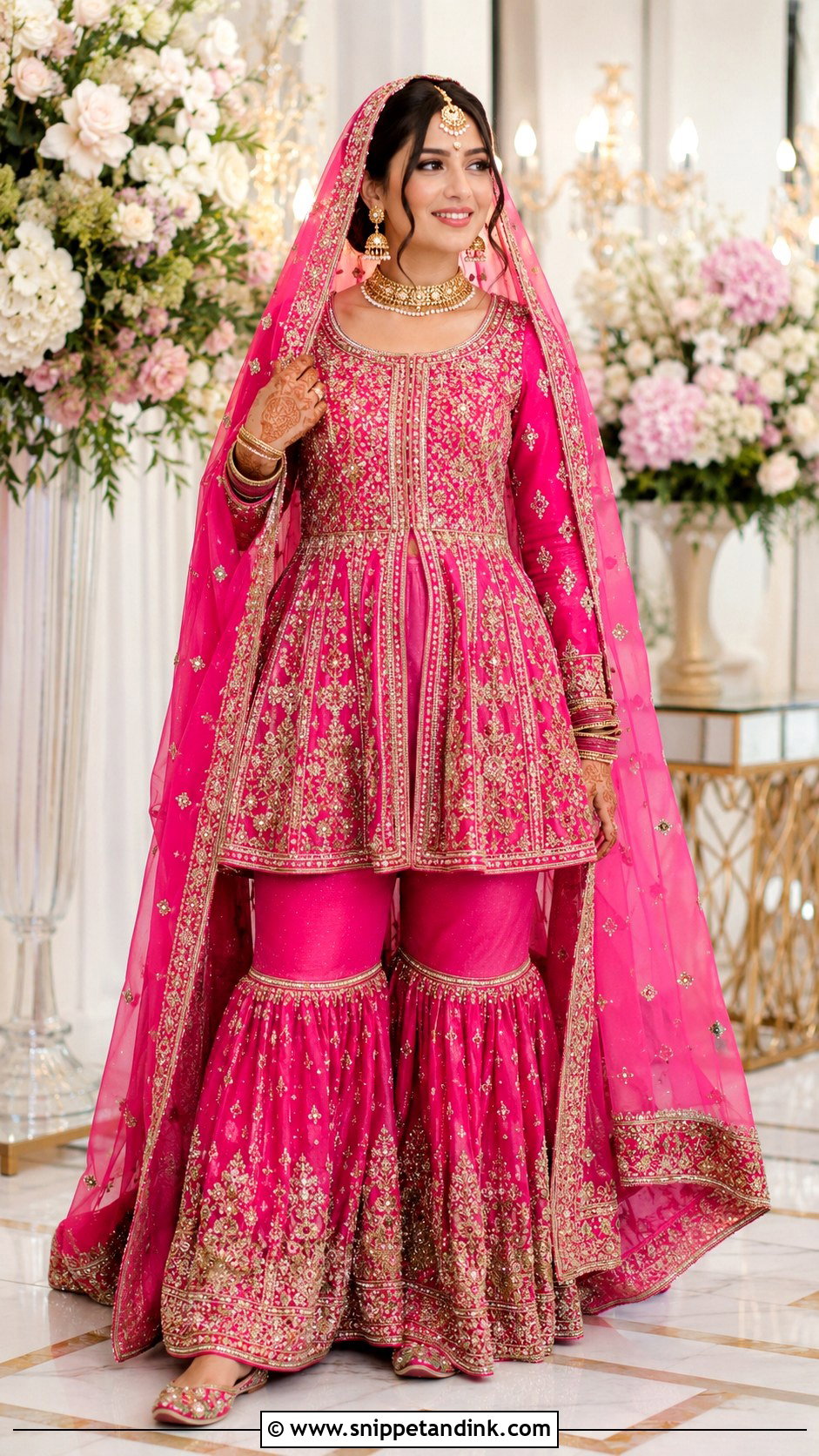
Hot pink brings real energy to a traditional Barat bridal gharara. I balance it with antique gold embroidery, because mirror-bright embellishment on a bright base becomes too much on camera. A short fitted shirt or peplum over wide gharara pants with a detailed knee seam and heavy hem gives the right shape. Put a red, coral or pink dupatta over the head with a border that echoes the pants. Gold jhumkas, a choker, tikka, pink bangles and khussa finish it. Keep makeup restrained: soft gold eyes and a deep pink lip. The gharara is also lighter than a layered lehenga, which matters more than people expect by the time the rukhsati comes.
13. Rust Orange Barat Bridal Lehenga
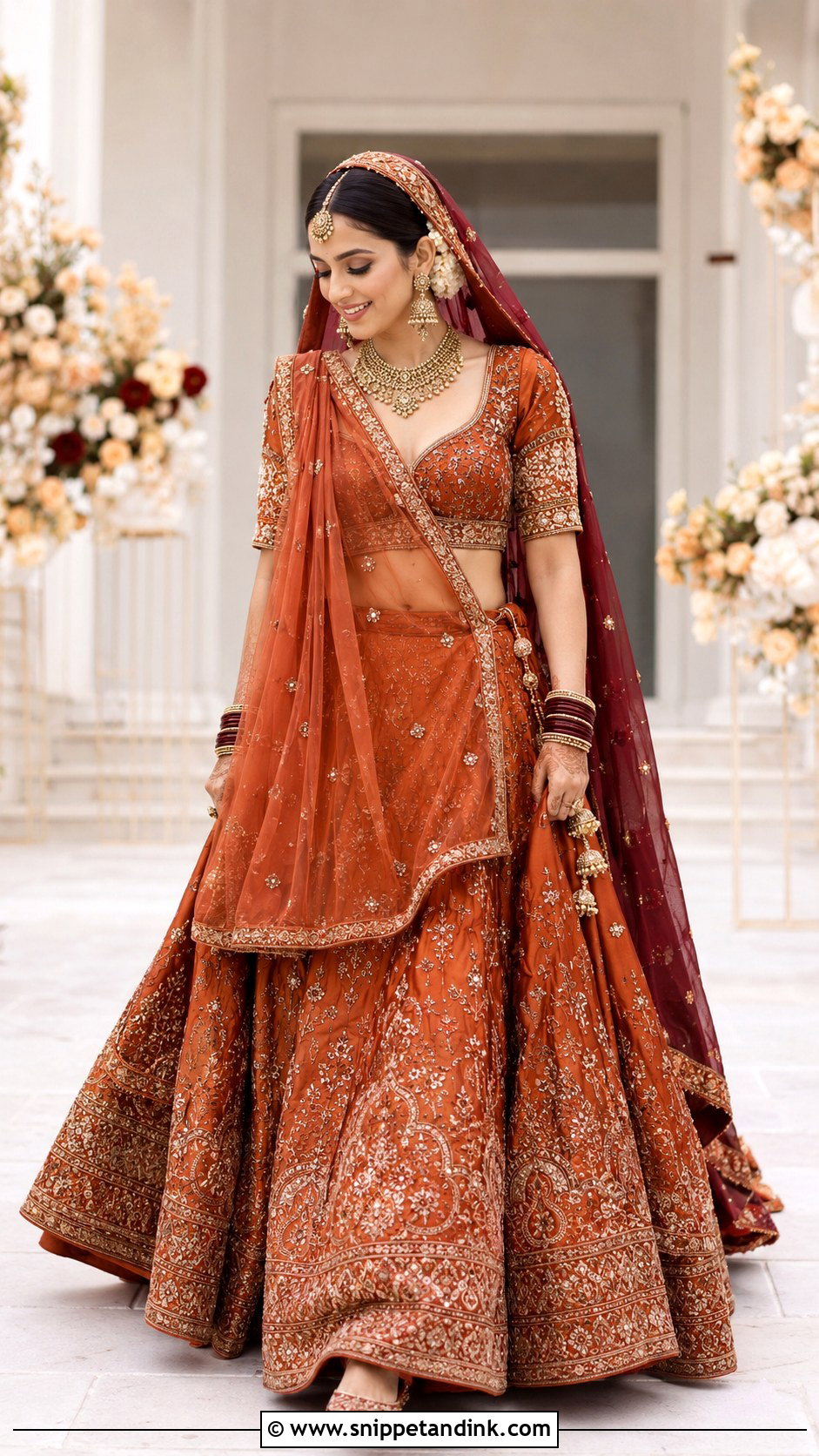
Rust carries the warmth of red with something less expected, and it comes alive in daylight, autumn and outdoor Barats. A rust raw silk or velvet lehenga with antique gold, copper and a little maroon embroidery, plus a structured elbow-sleeve blouse, grounds it. Maroon goes over the head and a lighter rust dupatta drapes along the shoulder. Antique gold jewelry, maroon bangles, a passa and embroidered khussa finish it, with Warm bronze eye makeup and a muted red lip. Rust shifts a lot between dyers. I compare three or four swatches against the bride’s skin by a window, because the wrong orange undertone makes skin look sallow.
14. Red And Gold Barat Bridal Sharara
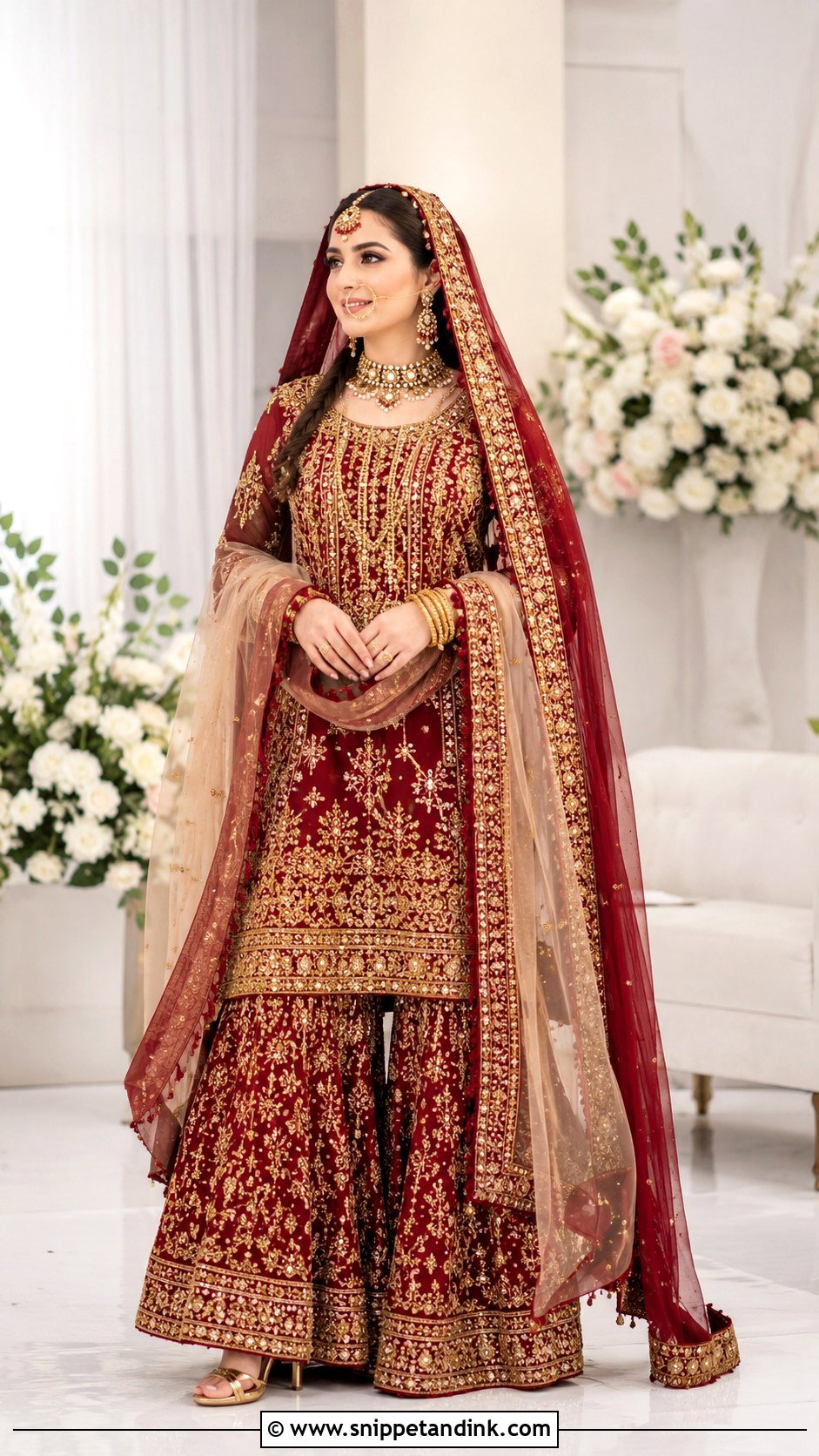
A sharara splits at the leg, so you get flowing volume and can still climb a stage without lifting a skirt. Pair wide sharara pants with a knee-length structured shirt with ornate borders and a clear neckline, keeping the heaviest work at the shirt hem and lower pants. A red net dupatta with a gold border covers the head and a lighter one rests on the arm. A kundan choker, long earrings, bangles, a fine nose ring and gold heels complete it. I hem the sharara with the actual wedding shoes on, so just the toe shows. An inch too long and you’ll step on the flare every time you turn.

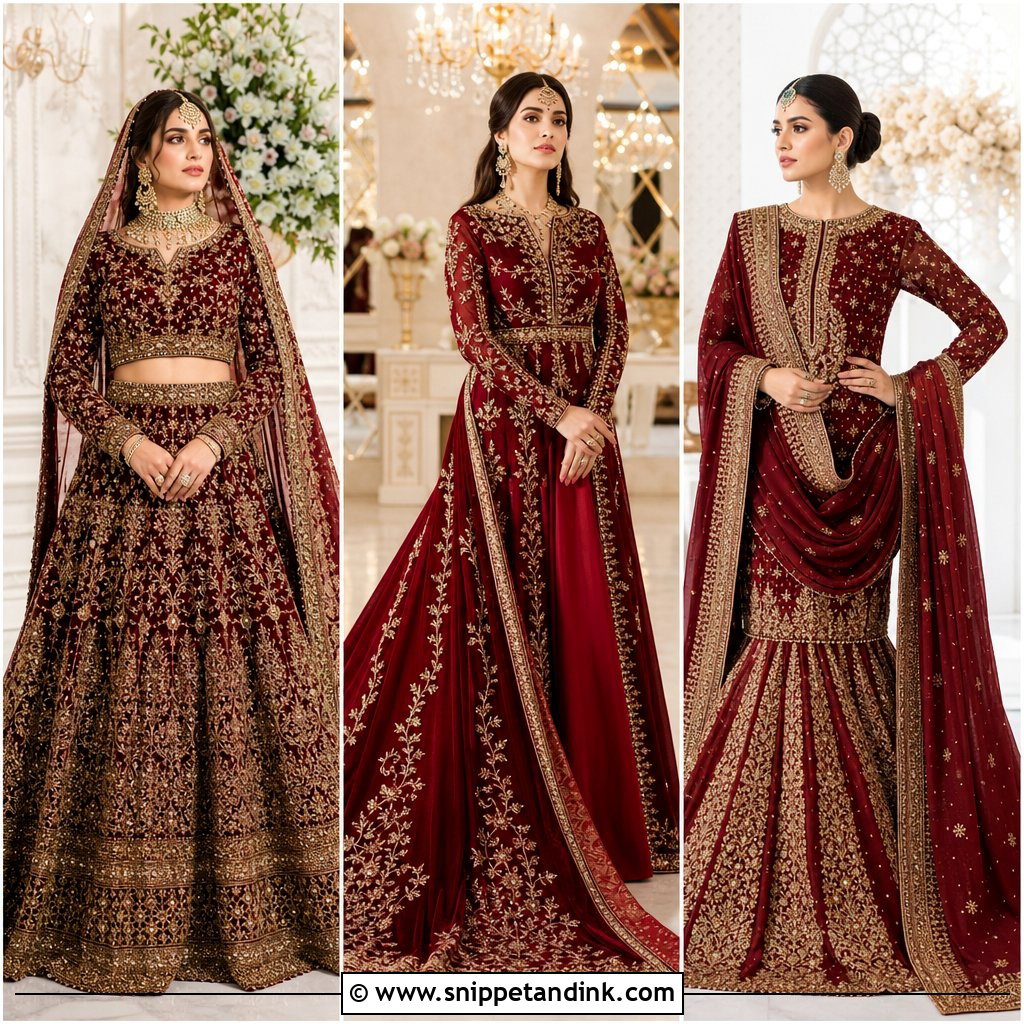

15. Maroon Angrakha Barat Bridal Dress
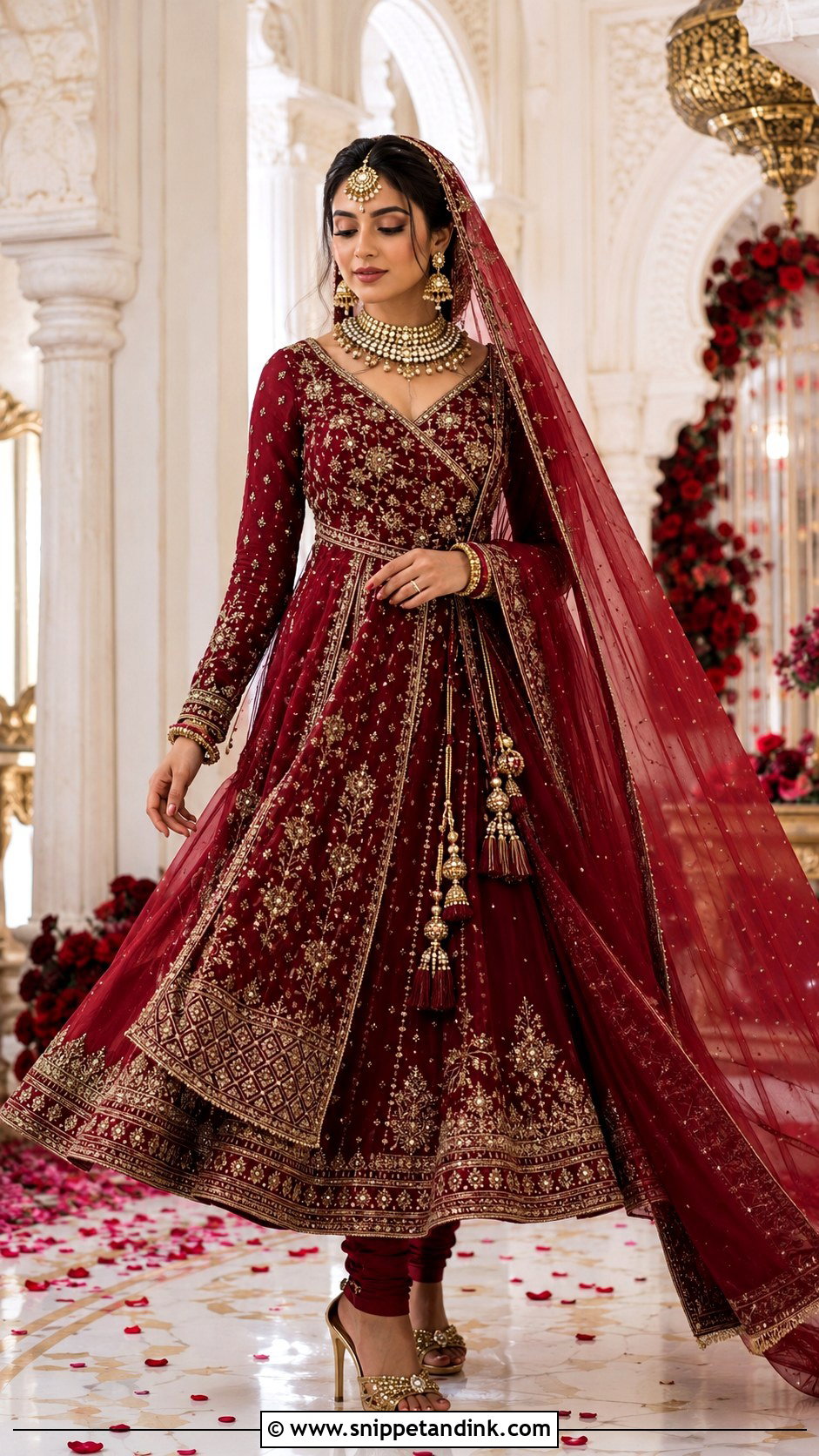
An angrakha’s wrapped front gives definition and a graceful swing below the waist. Look for a long cut with a fitted upper body, a secure side closure and a generous flare, with antique gold along the neckline, crossover, sleeves and hem. Wear it over a churidar or straight trousers with a sheer maroon dupatta on the head. Waist tassels add movement but keep them light, because heavy ones swing into the hem. Layered kundan, jhumkas, a tikka, bangles and cushioned heels finish it. The fitting that makes or breaks this one is the crossover seam across the bust; if it gapes when you sit, I have it re-cut, not just pinned.
16. Red Peplum And Lehenga Barat Bridal Dress
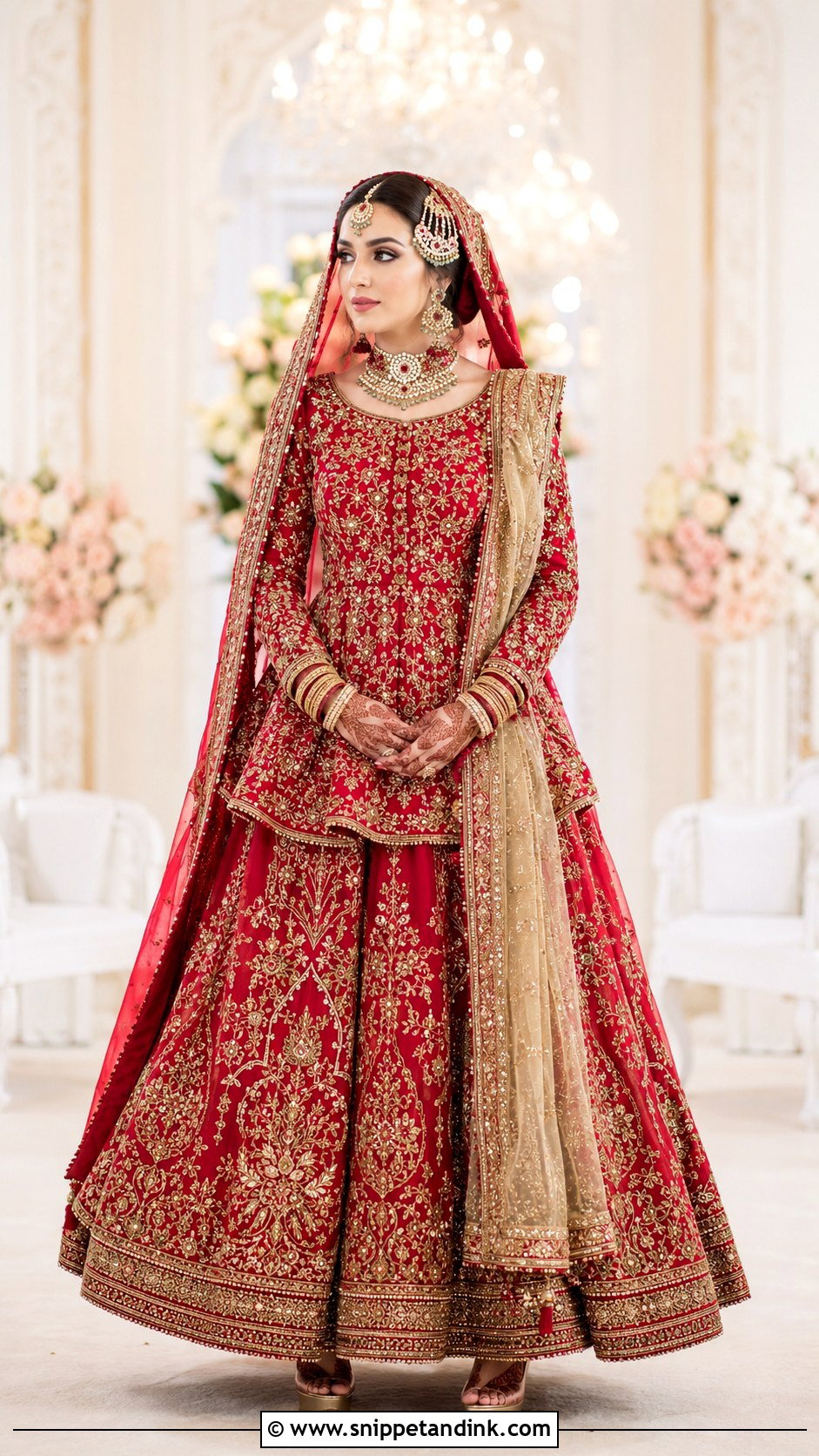
A red peplum over a full matching lehenga gives clear proportions and some coverage at the midsection without losing the waist. The peplum should stop above the widest part of the skirt, with embroidery at the neckline, waist and hem, while the lehenga takes larger motifs and a bold border. Add a red head dupatta plus a gold or peach one on the shoulder, then kundan, a passa, bangles and embroidered heels. I ask tailors to keep the peplum’s interlining soft. A stiff flare stands away from the body and fights the skirt’s volume, especially in seated photos.
17. Red Jacket Lehenga Barat Bridal Dress
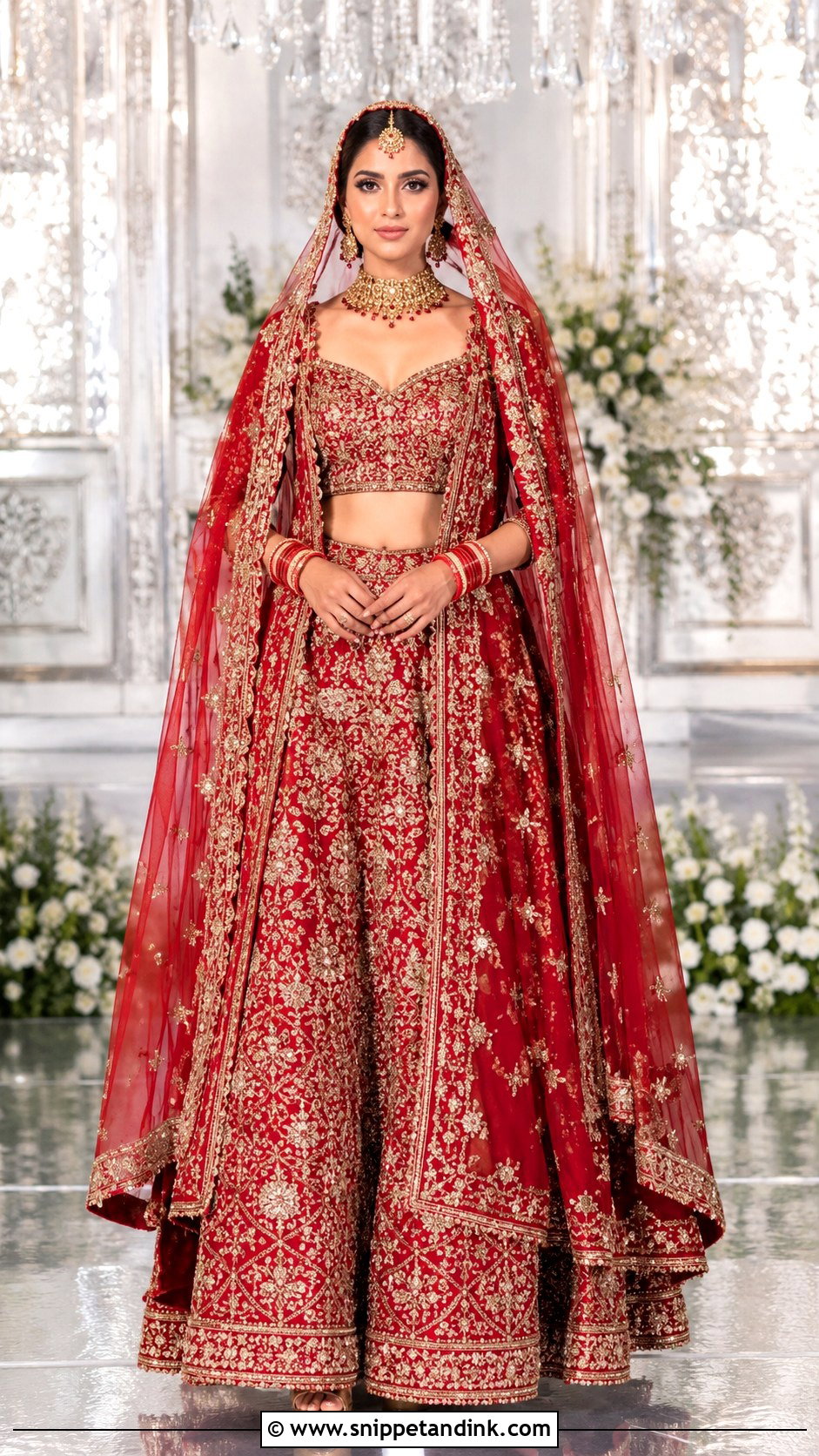
A long open jacket over a blouse and lehenga keeps the red and the craftsmanship while giving a more modern line. Net, organza or light raw silk all work for the jacket, and embroidery down its opening draws long vertical lines that make you look taller. If the jacket is heavy, simplify the lehenga. A sheer red dupatta pins lightly over the head without covering the jacket’s front. A choker, statement earrings, tikka, bangles and platforms finish it. I set the jacket to end just above the lehenga hem; any longer and you’ll tread on two layers at once.
18. Red Bridal Saree For Barat
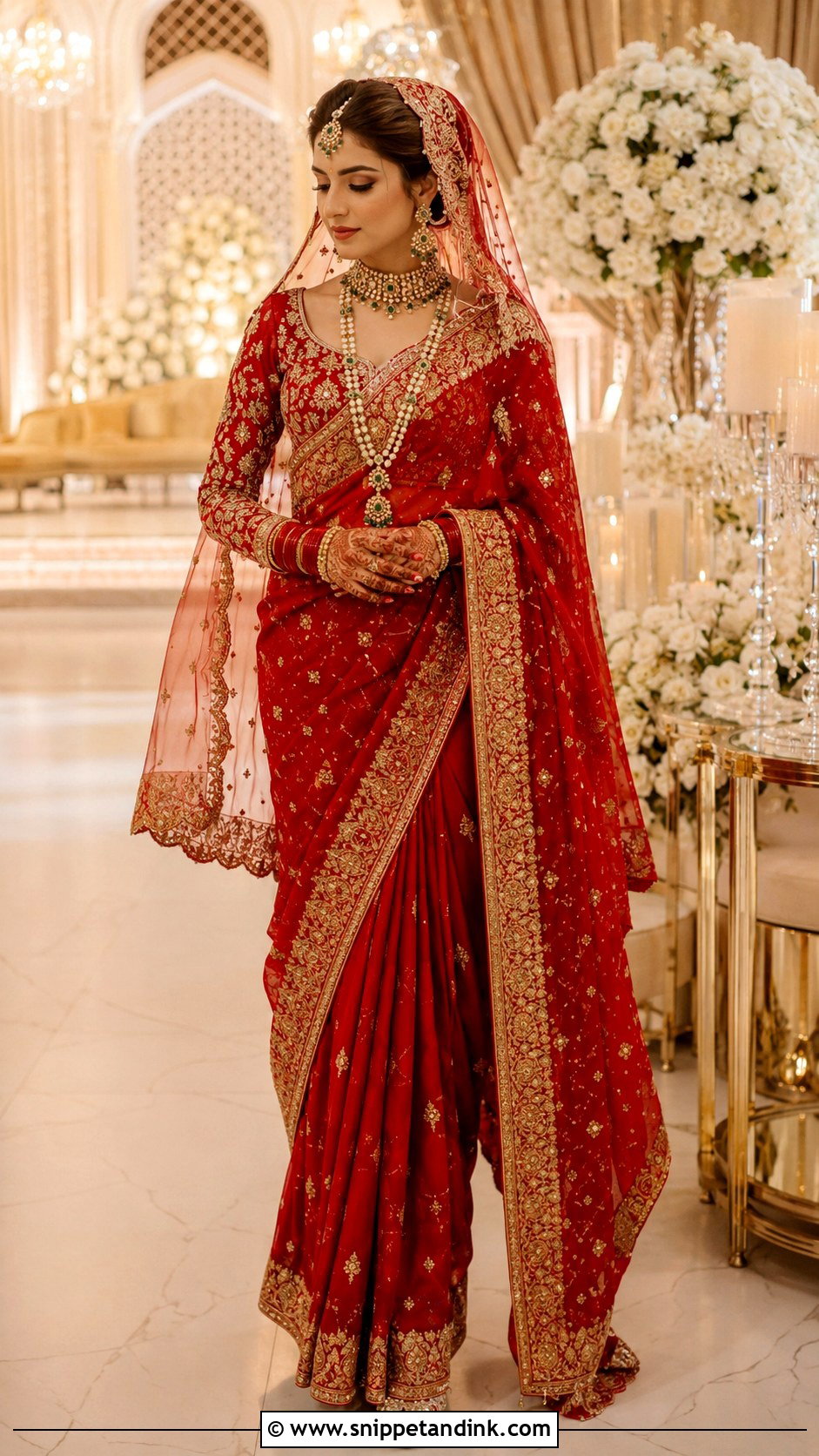
A red bridal saree is the statuesque option, draped rather than voluminous. Silk, tissue, velvet-trimmed net or organza with a gold border and controlled body embroidery all suit it, over a well-structured blouse with bridal sleeves. Drape the pallu over the shoulder and add a separate light dupatta over the head for a more ceremonial look. A kundan choker, long necklace, earrings, tikka, red bangles and embellished heels complete it. I pin the pleats at the waist and the pallu at the shoulder from the inside so nothing shows. If you’ve never sat through hours in a saree, a pre-stitched or partially stitched saree takes away most of the worry about pleats slipping.
19. Red Trail Lehenga Barat Bridal Dress
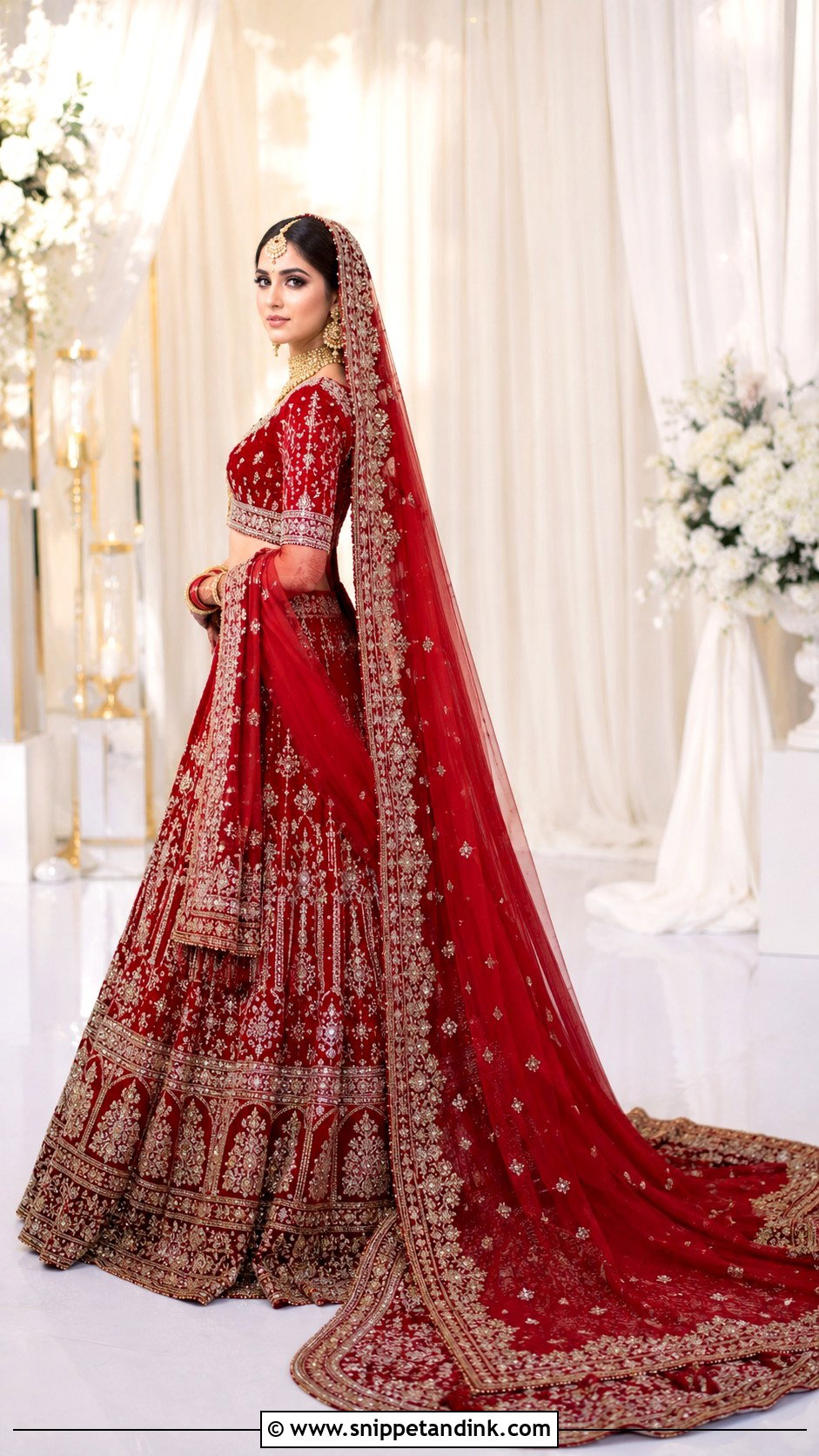
A lehenga with a gentle trail gives the entrance and formal portraits real drama. Keep it a modest extension at the back, not a long train that turns into a hazard on a crowded stage. Detailed work along the trailing hem means it looks finished from behind, while lighter work near the waist keeps the shape balanced. A structured blouse, a bordered head dupatta and a sheer second dupatta on the arm complete the layers, with a statement necklace, earrings, tikka, bangles and stable platforms. Name one cousin as the trail person. Her job is to arrange it before every photo and lift it on steps.

20. Minimal Red Barat Bridal Lehenga
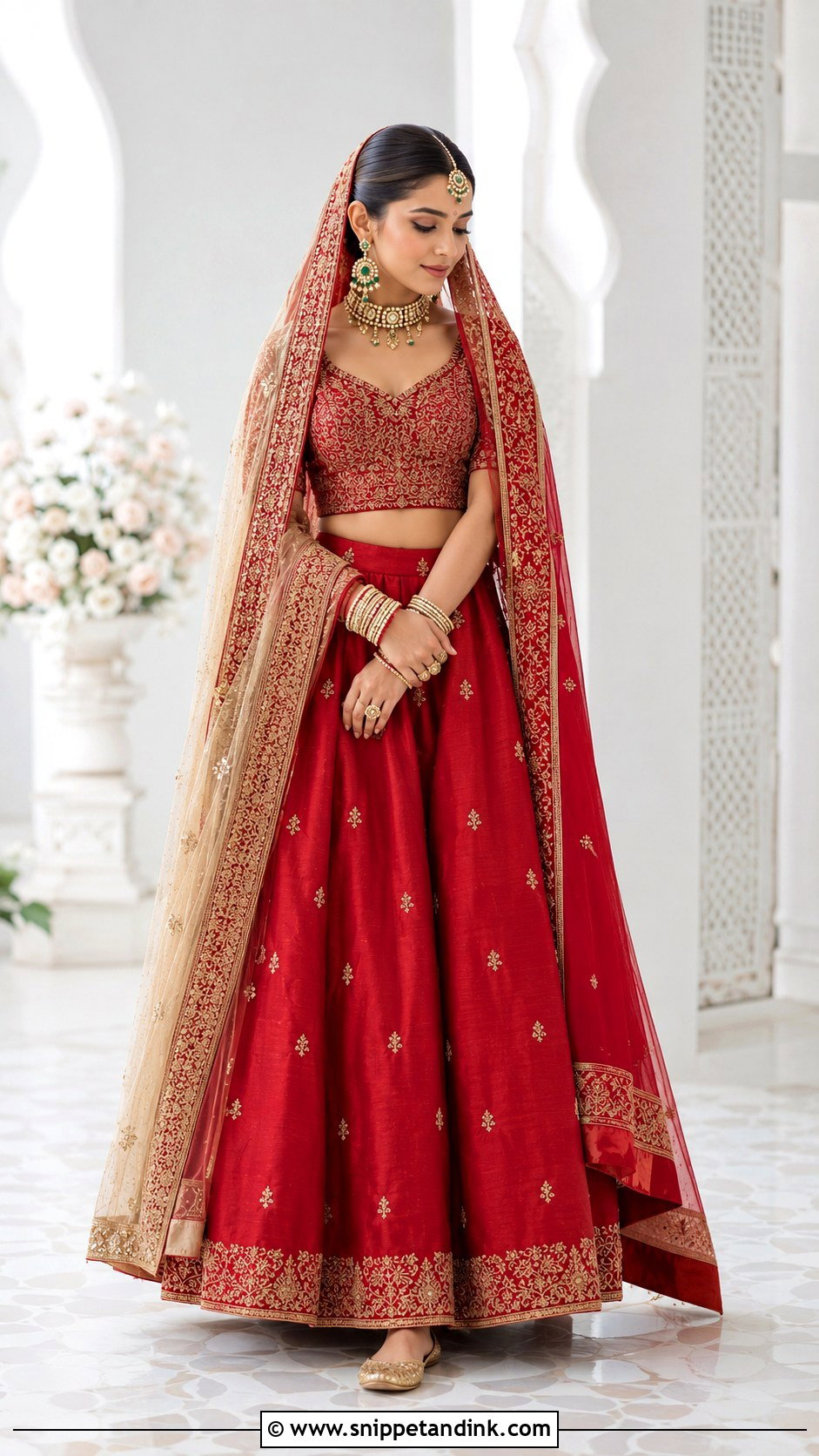
Not every lehenga needs embroidery from waist to floor. A minimal red one relies on excellent raw silk, precise tailoring and placed work: an ornate hem, scattered gold motifs and a blouse with detailed sleeves or a strong neckline. A heavily bordered head dupatta and a lighter second one supply the richness, and bold kundan, stacked bangles, khussa and a sleek bun keep it ceremonial. It weighs far less, which you’ll appreciate by evening. When I check a minimal piece I look at the inside first: clean seams, secure hooks and balanced motif spacing are what make it look expensive, since there’s no dense surface work to hide a weak finish.
Ordering Handwork Months Ahead, Not Weeks
Zardozi, dabka and tilla are done by hand, panel by panel, and a busy workshop in wedding season is booked well in advance. For a custom bridal outfit I plan backward from the date: settle the design and color about six months out, approve fabric and a sample motif, then leave room for at least two fittings and a final one about three weeks before the Barat. Ready-to-wear pieces need less time but still need alterations, and a heavy lehenga is slow to alter because the work has to be unpicked at the seams.
When the outfit arrives, check it in daylight before you sign anything off: count the hooks, pull gently at the dupatta borders, look at the hem for loose threads and compare the blouse and skirt color side by side.
After the Rukhsati: Airing and Storing a Heavy Outfit
The morning after, hang the outfit somewhere airy and out of sunlight for a day so perspiration and perfume can dry out. Never put it away damp. Have food or makeup marks handled by a dry cleaner who works with embroidered bridalwear, and point the stain out yourself.
- Fold rather than hang a heavy lehenga; hanging lets the embroidered skirt drag on its own waistband and stretch it.
- Wrap it in a soft cotton or muslin cloth, never a sealed plastic bag, which traps moisture and dulls metallic thread.
- Lay tissue between embroidered layers so sequins and tilla don’t snag each other.
- Refold along different lines every few months so permanent creases don’t form along the zari.
Store the jewelry separately, in its own boxes. Stones and clasps left inside the folds are one of the most common reasons I see torn net dupattas years later.
Wearing It From the Entrance to the Rukhsati
The outfit that works on the day honors the occasion and still feels like you. Across these looks you’ve seen traditional reds, jewel tones, lighter neutrals, classic silhouettes and layered modern cuts. Compare them on fabric weight, where the embroidery sits, how the color behaves under your venue’s lights, how securely the dupatta pins and how easily you can walk and sit. Let jewelry and shoes support the dress. Book fittings early and do one full rehearsal with every accessory on. A well-tailored outfit you can move in will be remembered far longer than an uncomfortable one picked for a trend.
You'll Like These Ideas:






Leave a Reply