
A guest kurti has a harder job than it looks. It has to feel festive next to the bride’s family, survive a full day of sitting, eating and dancing, and still not compete with the couple. Today’s options go well past the plain straight kurti: layered flares, cape and jacket sets, sheer fabrics and coordinated bottoms. I dress guests, bridesmaids, sisters of the bride and close family, and the fabric and the event usually decide more than the trend does. Every look below is styled head to toe, so you can copy it or swap one piece.
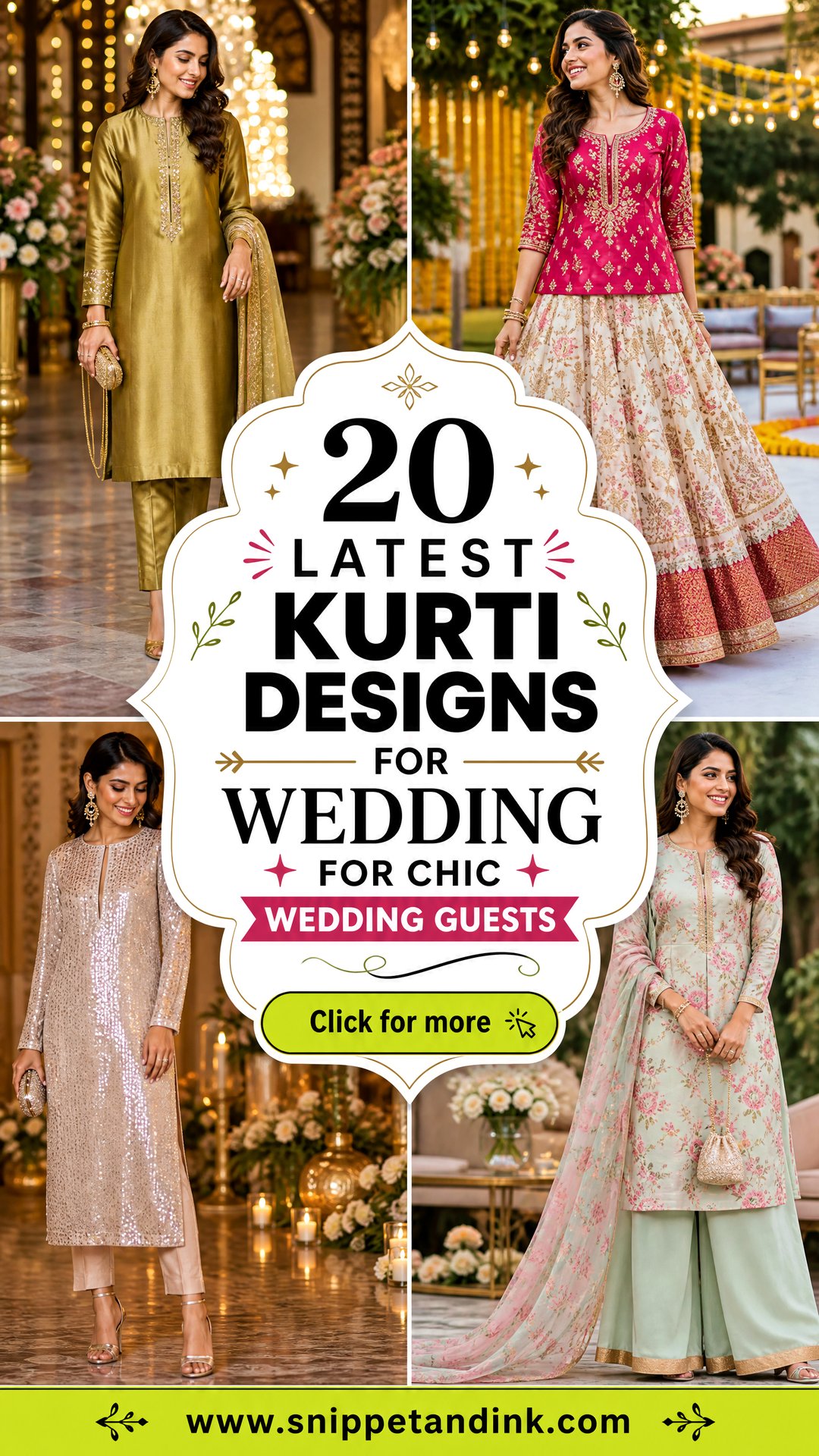
Which Kurti for Haldi, Mehndi, Sangeet or the Ceremony?
Each function has its own practical demands, and I match the kurti to the function before thinking about color.
- Haldi: wear something you won’t mind ruining. Turmeric paste stains silk and pale cotton yellow, and some of it never fully washes out. A cotton or printed kurti in yellow or a bright shade hides splashes.
- Mehndi: you’ll sit on cushions for hours, and you may get henna yourself. Short or elbow sleeves, a light dupatta and nothing that drags on the floor.
- Sangeet: you’ll dance, so choose flare and stretch. Sharara, palazzo and cape sets move well; tight churidars and long front slits can restrict your stride.
- Ceremony: expect to sit, stand and sometimes sit on the floor. Carry a dupatta if the ceremony takes place in a gurdwara or temple where heads are covered.
- Reception: this is the time for velvet, sequins, organza and jackets, since you’ll mostly stand, eat and pose.
On color, I’d check with the family before wearing red or heavy bridal gold to the main ceremony, since some families keep those for the bride. In some communities, all-white or all-black outfits read as mourning colors at a wedding, so ask if you’re unsure.
1. Embroidered Anarkali Kurti With Churidar
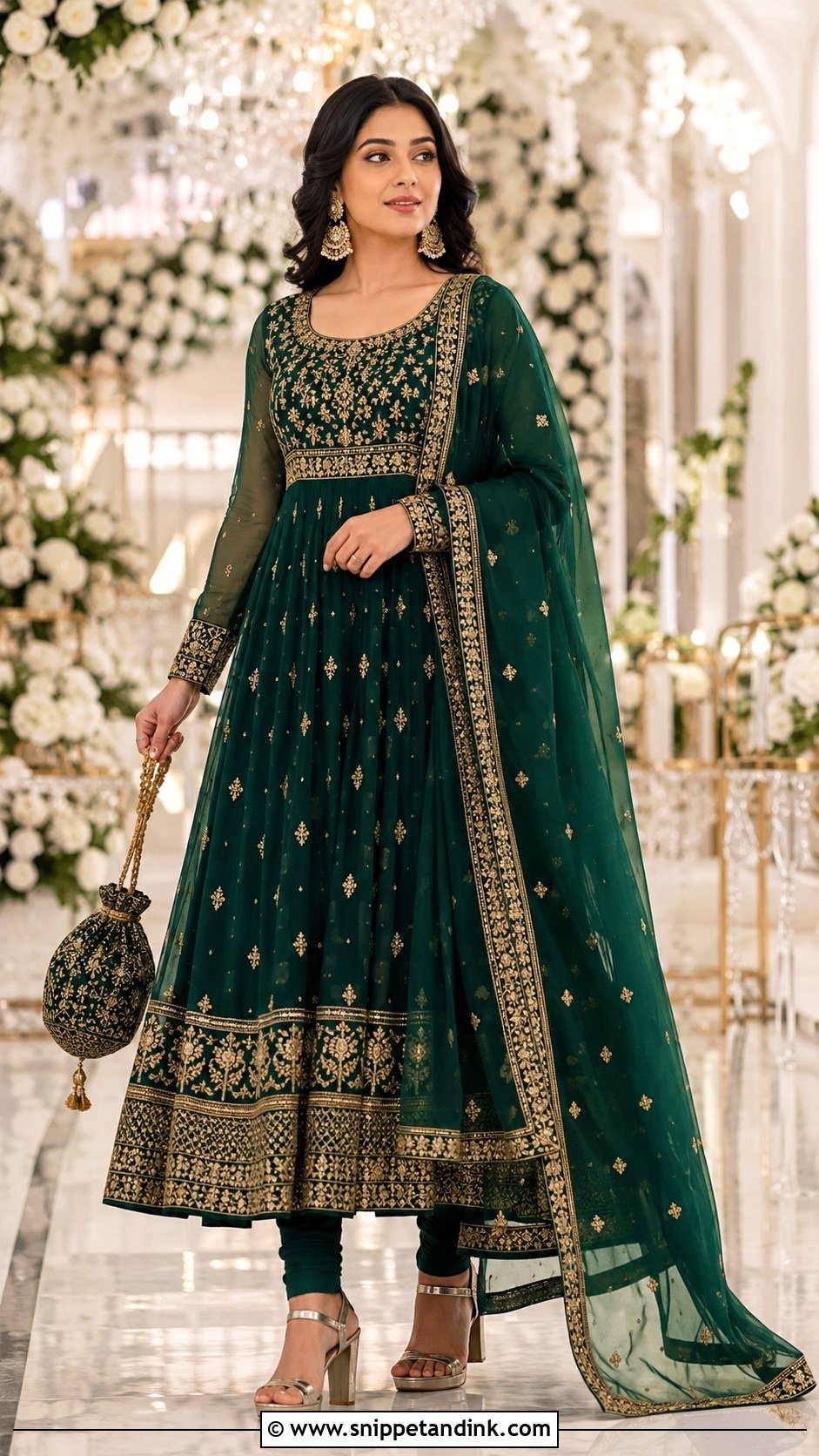
An Anarkali is the safest choice I know for a guest who doesn’t want to think hard about styling. A fitted bodice, a flared skirt to the calf or floor, and zari, resham or sequin work are enough on their own. Emerald, royal blue, wine and magenta suit evening ceremonies. The churidar matters more than people think: its gathered ankle balances the volume above, which a straight pant can’t do. Add a net or organza dupatta with a worked border, metallic block heels, jhumkas and a potli. Three-quarter sleeves are the length I’d pick for a long event.
2. Angrakha Kurti With Palazzo Pants
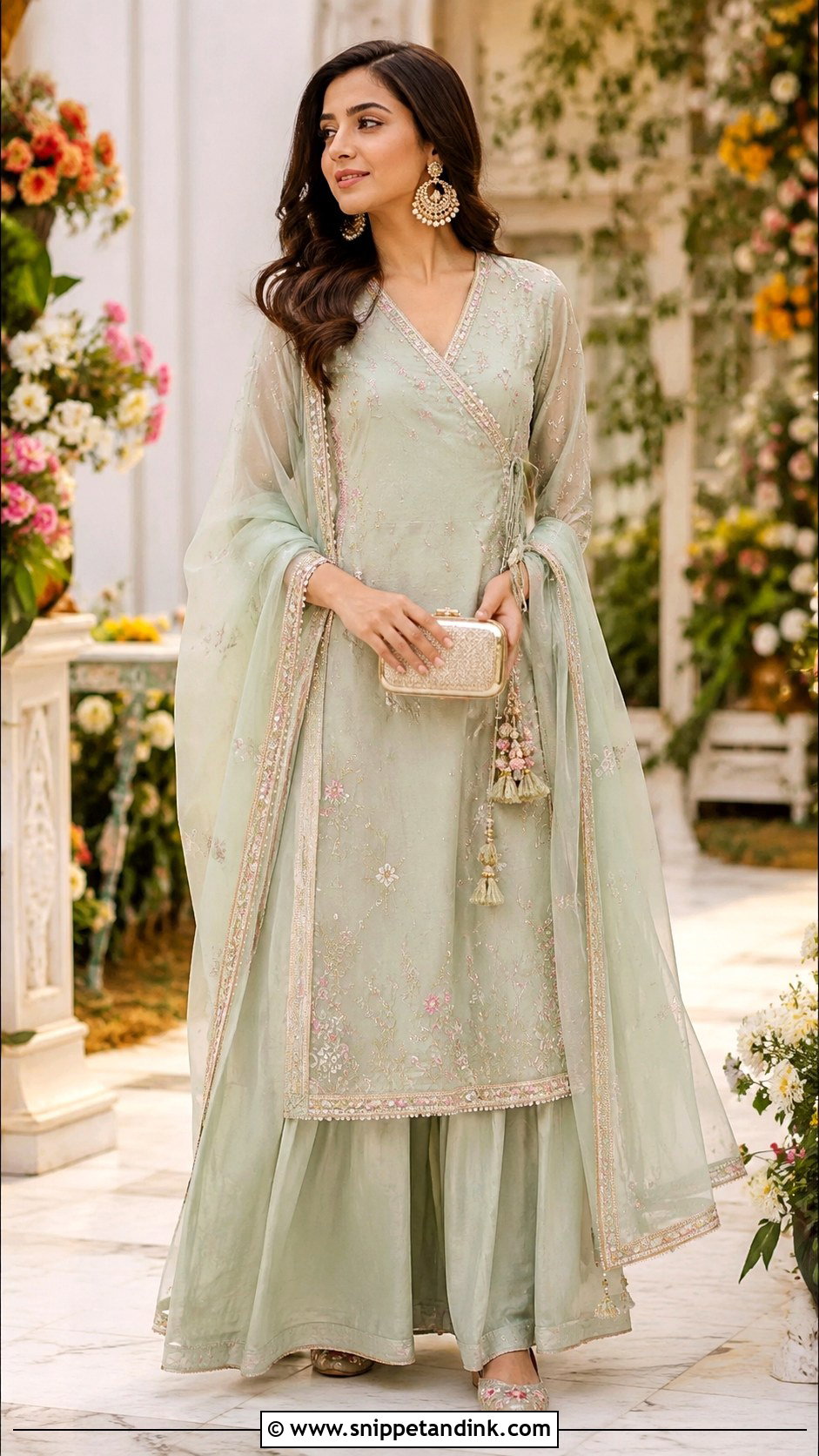
The overlap is the whole point of an Angrakha, so keep the dupatta off it and over one shoulder only. Look for a side tie, beaded tassels and embroidery at the neckline and cuffs, in solid silk or brocade over coordinated palazzos. That diagonal neckline draws the eye down and lengthens the torso, which suits shorter guests well. For daytime I’d go blush, powder blue, mint or peach with gold. A quick check before you buy: the tie should be backed by a hidden hook, or the wrap slowly opens as you dance.
3. Silk Straight Kurti With Cigarette Pants
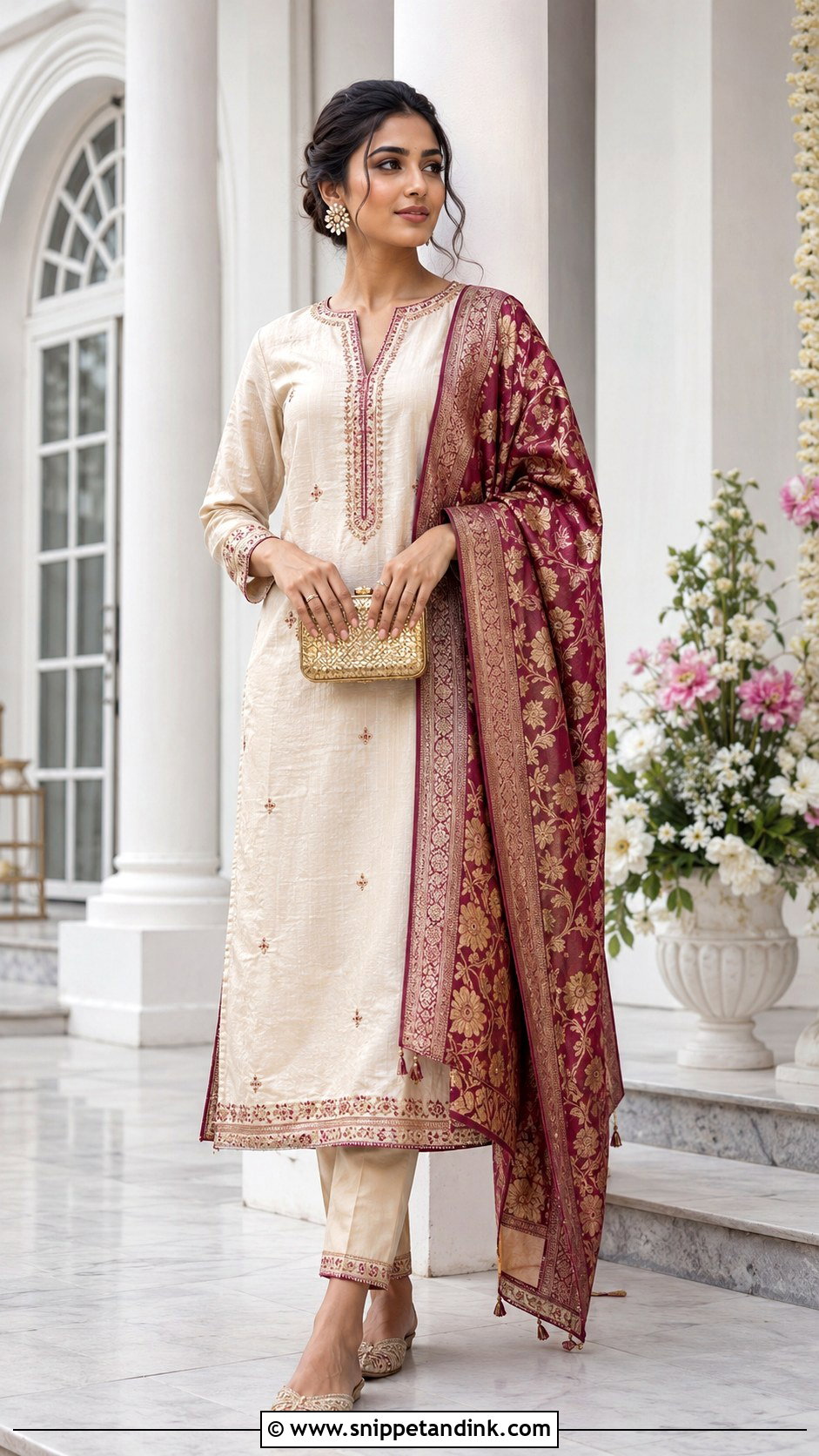
Straight silk and cigarette pants are what I suggest to guests who dislike volume. A knee or calf-length kurti in raw silk or Chanderi with a zari border keeps the line clean, and a contrasting Banarasi or organza dupatta adds the color. Try ivory with ruby, teal with antique gold, or mustard with deep pink. Raw silk creases at the hip crease after an hour of sitting, so steam it just before you leave. A sleek bun and statement studs suit engagement parties and formal daytime weddings.
4. Peplum Kurti With Sharara
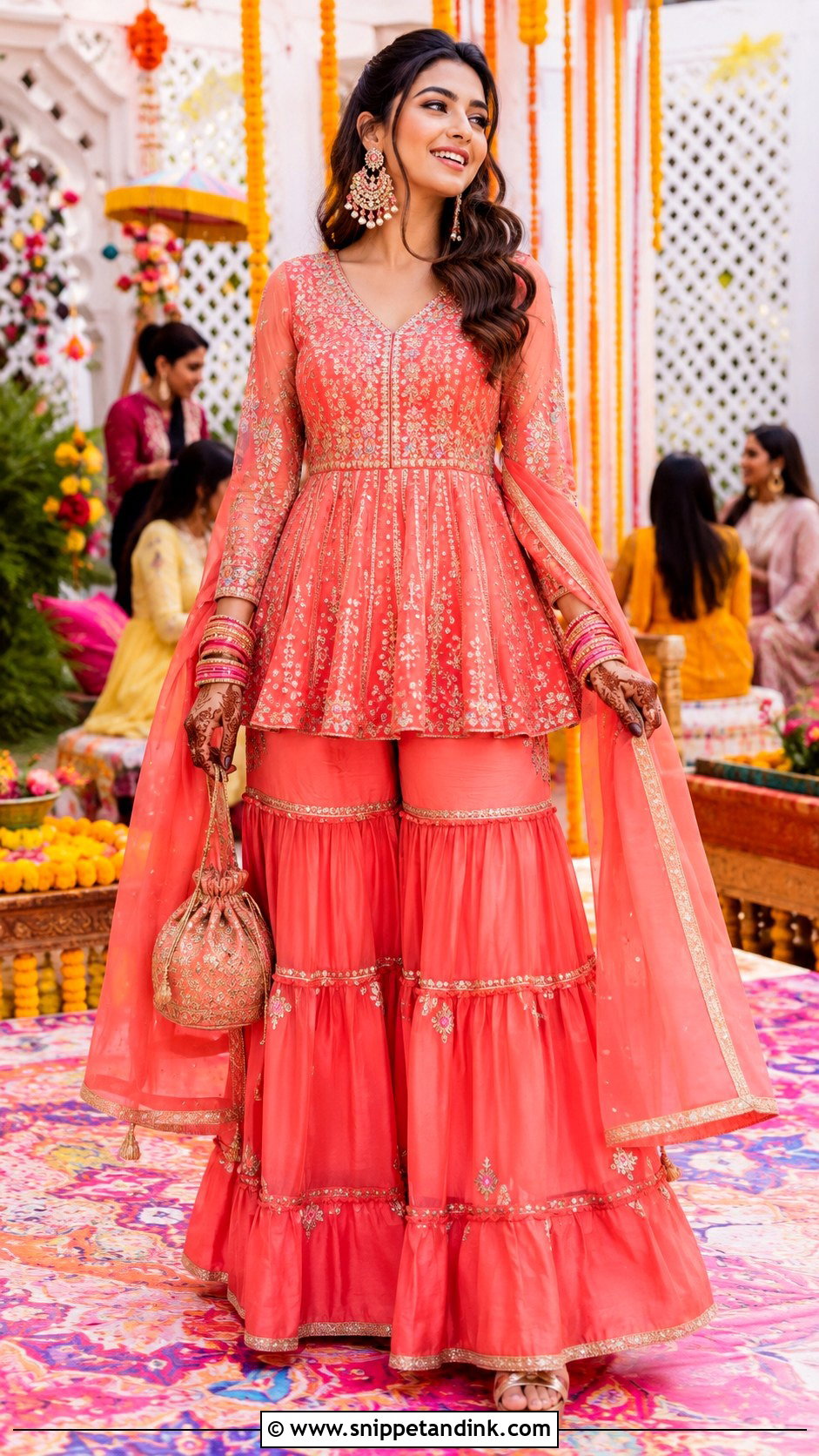
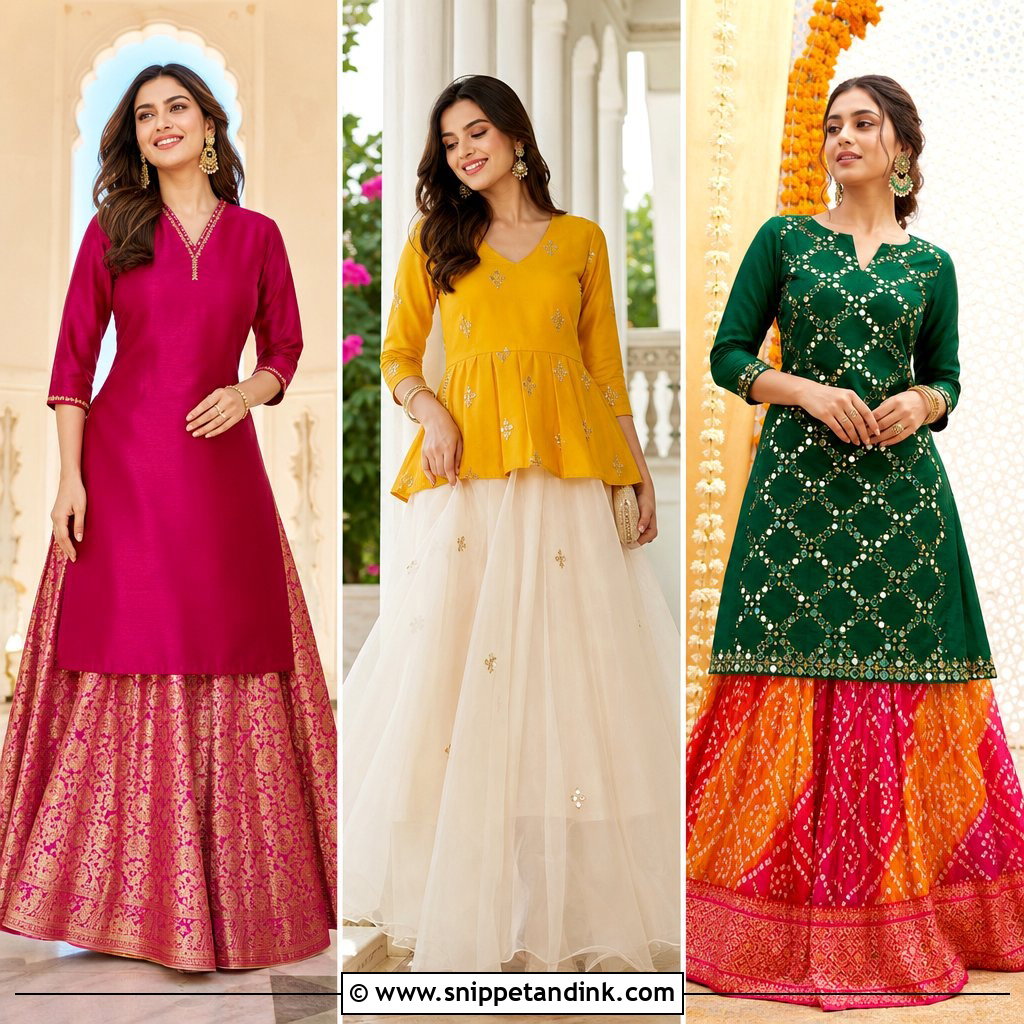
A fitted peplum kurti needs to sit exactly at your natural waist before it flares, otherwise the peplum lands on the widest part of the hip and adds width. Pair it with a tiered sharara with gota borders or light sequins, matching or in a print. Coral, fuchsia, turquoise and sunshine yellow are happy colors for mehndi and sangeet. I keep the dupatta over one arm instead of wrapped around, so the peplum shape stays visible. Platform sandals, big earrings and stacked bangles are enough, and the necklace can go.
5. Front-Slit Kurti With Lehenga Skirt
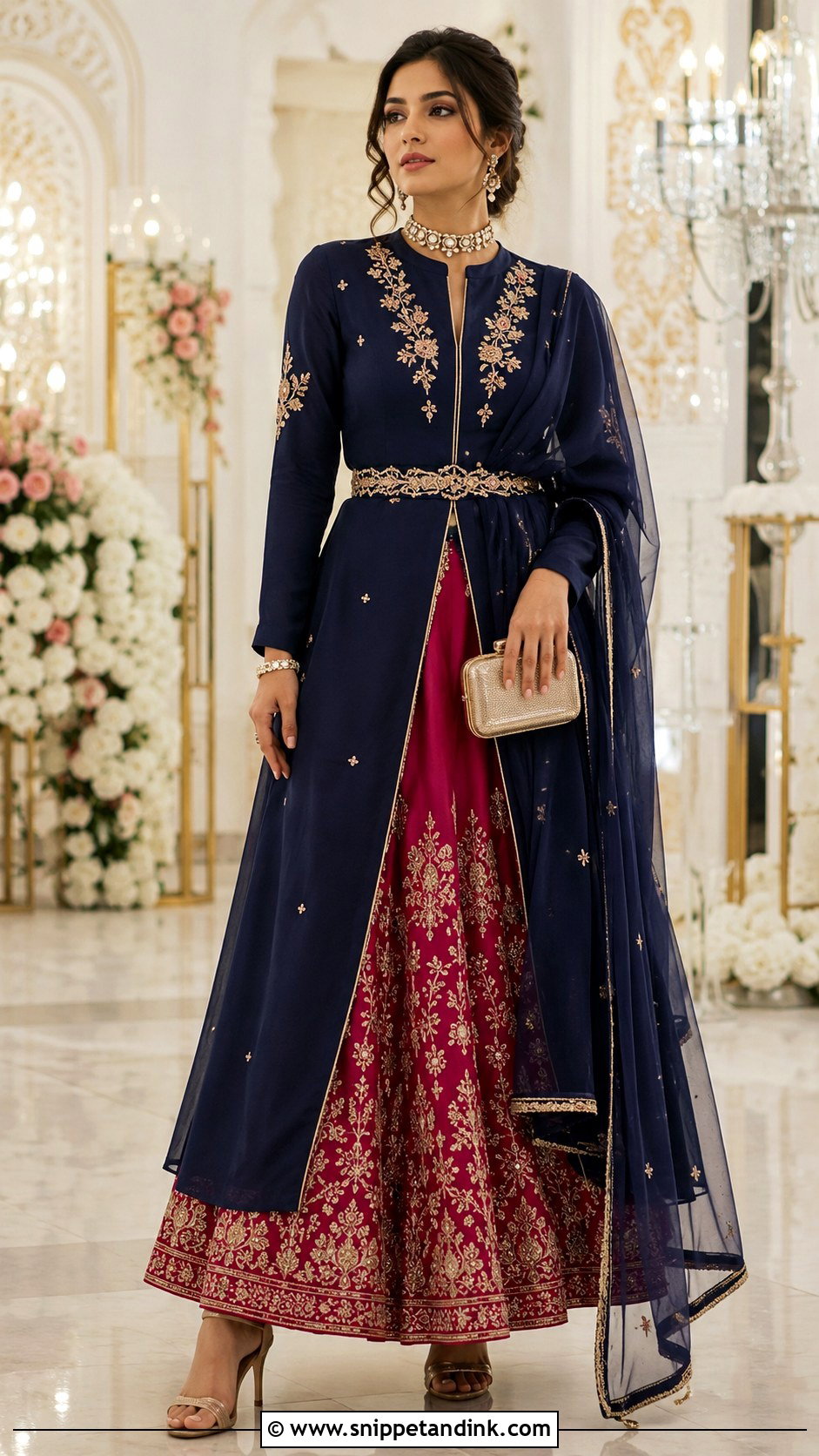
Over a lehenga skirt, a front-slit kurti gives you the sweep of a lehenga with the cover of a kurti. The slit can open from the waist or the upper thigh, showing an embroidered or printed skirt beneath. Velvet and brocade suit winter; georgette and silk work all year. A belt pins the dupatta neatly at the waist. Hem length is where guests trip: I like the skirt to cover the front of the shoe by a finger’s width and no more, which you can only judge with the shoes on. Add a choker and a hard-case clutch.
6. Jacket Kurti With Palazzo Pants
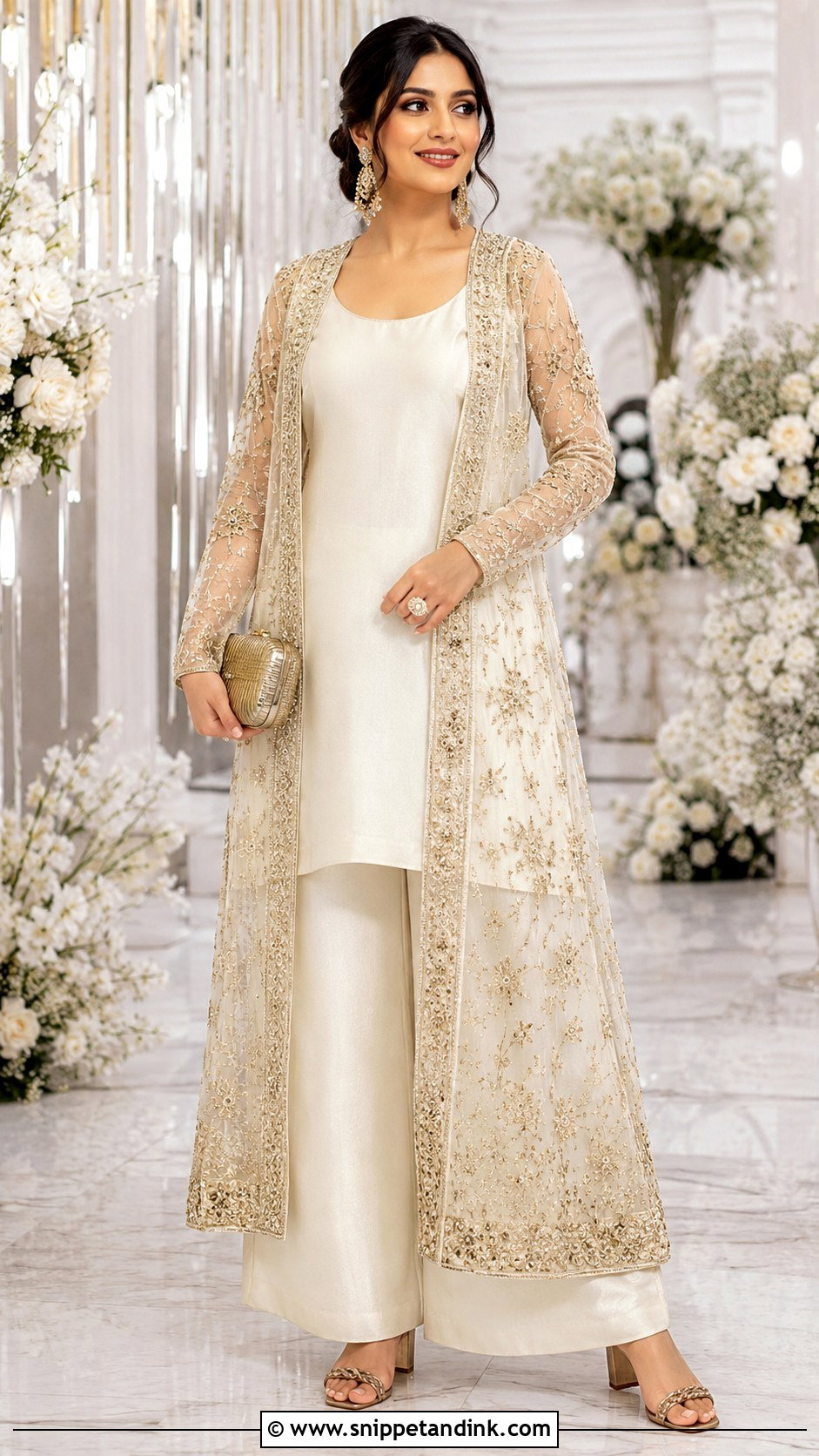
This is the set I recommend most for venues where the temperature is unpredictable. A clean sleeveless or short-sleeved kurti with palazzos sits under an embroidered long jacket with an open front or a structured collar. When the hall warms up, the jacket comes off and you’re still dressed. Keep the inner layer plain so the jacket carries the detail. Ivory and gold read refined for a reception; navy, maroon and forest green suit evenings. Heavy jacket work means you can skip the dupatta altogether.
7. Chikankari Kurti With Straight Pants
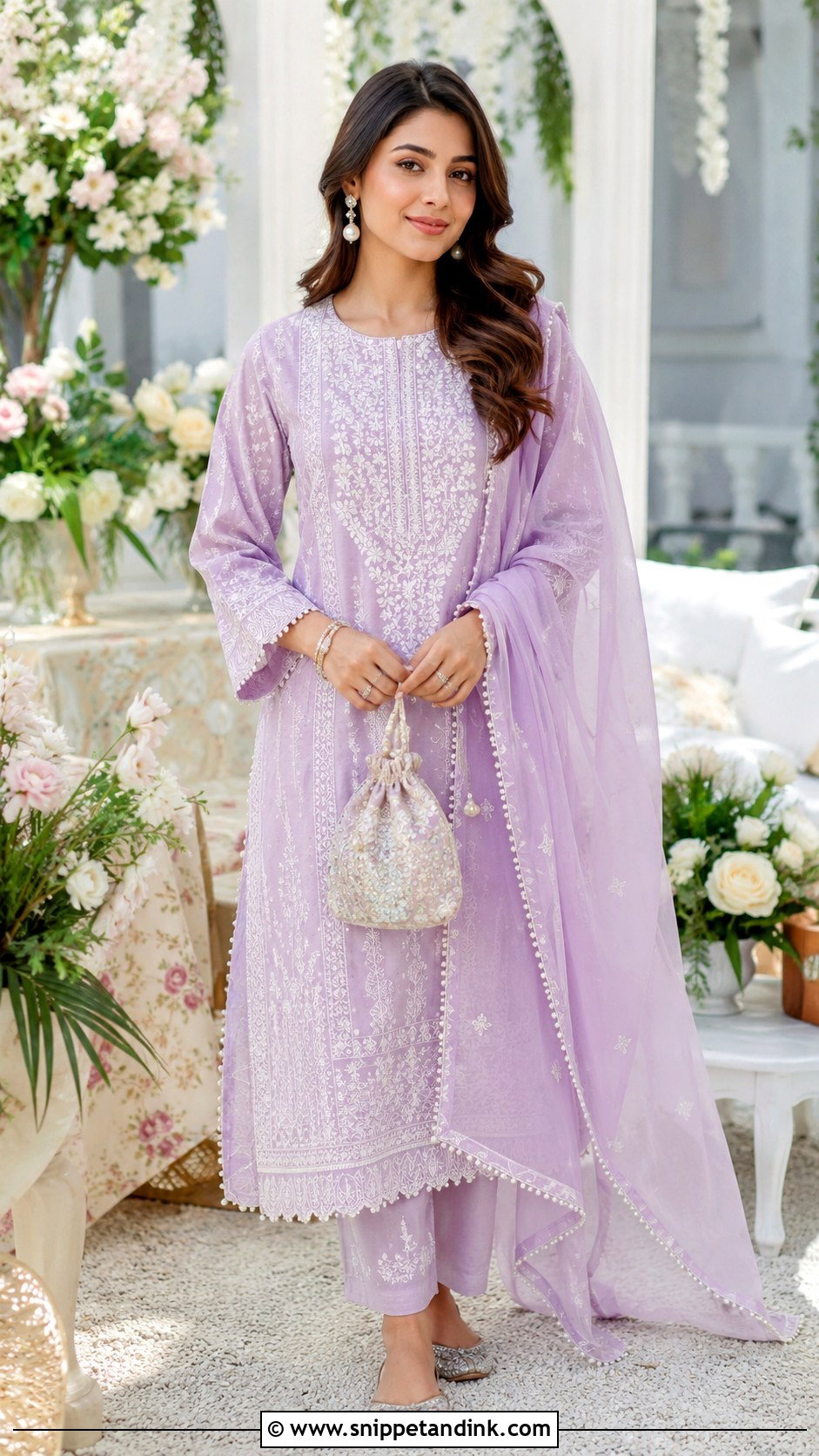
Chikankari is hand embroidery in white or tonal thread on a light base, and that’s exactly why it suits daytime heat. Georgette, cotton-silk or muslin with a comfortable lining keeps it cool. I’d pair it with straight pants finished in lace or a scalloped hem, in lilac, pistachio, butter yellow, blush or powder blue. A pearl-edged organza dupatta is plenty. Go easy on jewelry here, because heavy pieces fight the soft surface; pearl earrings and a few fine bangles are right. Hand-worked chikankari can be gently hand washed, but I’d dry clean a georgette piece with sequins.
8. Mirror Work Kurti With Sharara
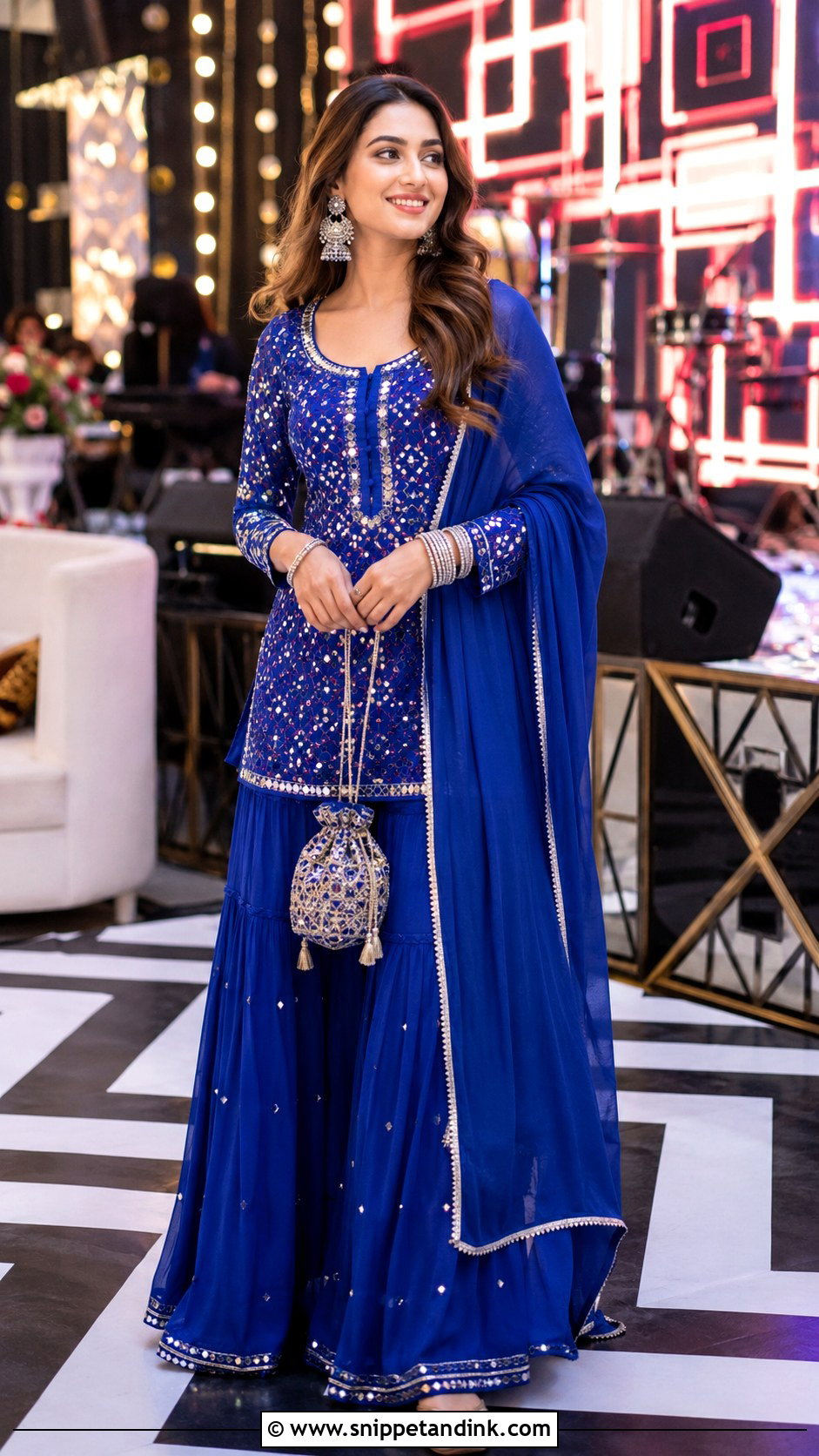
Garba nights and sangeets are made for mirror work. Pick a short or mid-thigh kurti with mirrors gathered at the neckline, sleeves and hem, and a sharara with matching edges rather than mirrors everywhere. That mirror-work kurti and sharara pairing in cobalt, hot pink, orange or green reads festive from across a room. One warning from fittings: mirrors are stitched with a thick thread ring, and on the inner arm they rub. Look for a soft lining behind any mirrors on the sleeve. Plain chiffon dupatta, silver jewelry, cushioned juttis.
9. Bandhani Kurti With Gharara
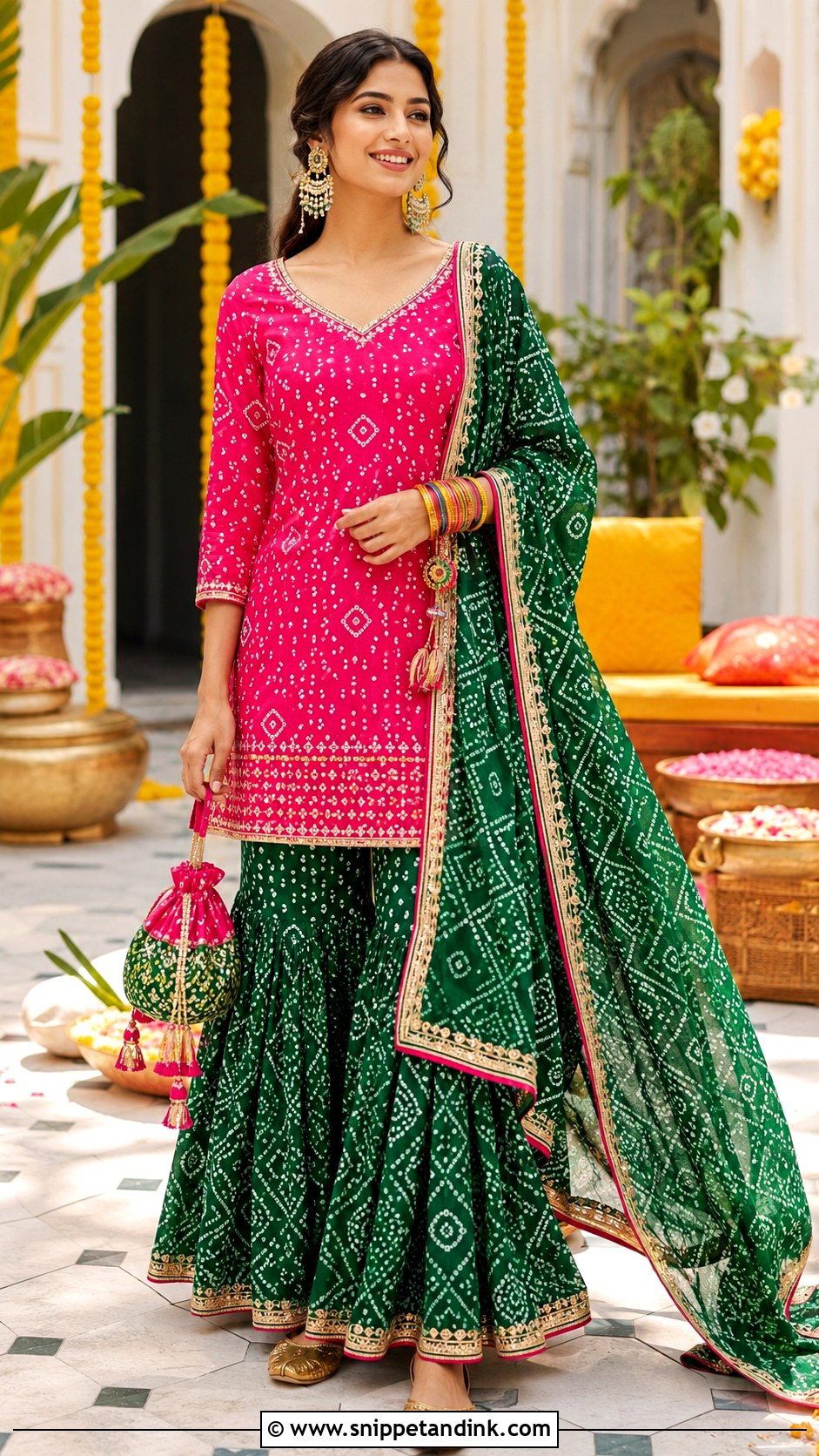
Bandhani is tie-dye done by hand, thousands of tiny knots before dyeing, and the dots tell you whether it’s real. A Bandhani kurti with gharara pants in red, rani pink, green or maroon is classic for haldi, mehndi and family functions. I check the gharara knee seam with the guest sitting, because if it’s placed too low it pulls when you cross your legs. A plain dupatta calms a fully printed set. Real bandhani can bleed color, so keep it away from white upholstery on a damp day and dry clean the first time.
10. Velvet Kurti With Churidar
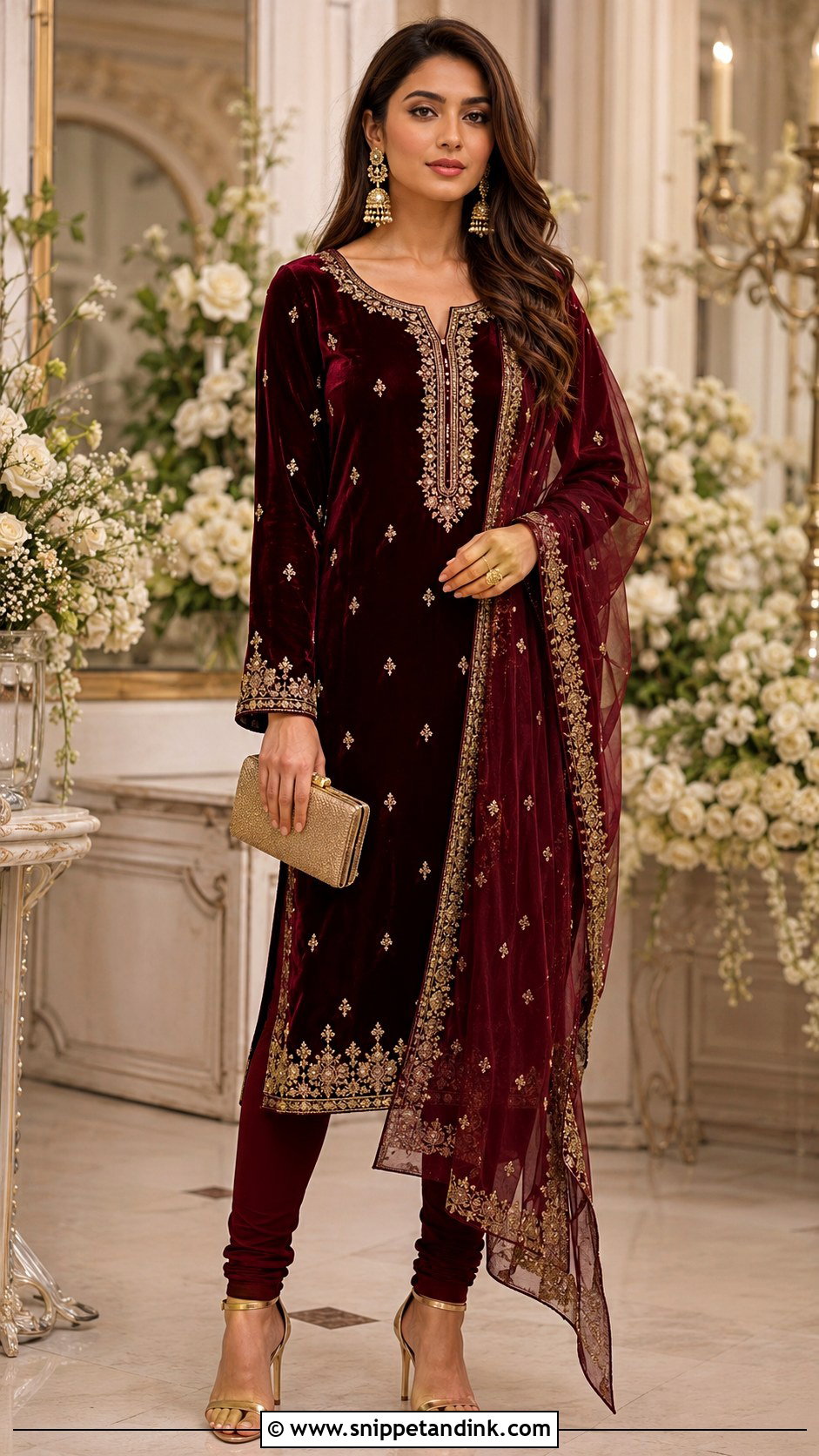
Winter weddings are when I reach for velvet. A long straight or lightly flared kurti in burgundy, midnight blue, emerald, plum or black takes gold zari and antique embroidery richly. Keep the churidar slim and the dupatta light, preferably net, because velvet already carries visual weight. One bold ring, statement earrings and a structured clutch are enough. Avoid velvet in a heated indoor hall with a crowd. It holds warmth, and you’ll feel it by dinner.
11. Organza Kurti With Palazzo Pants
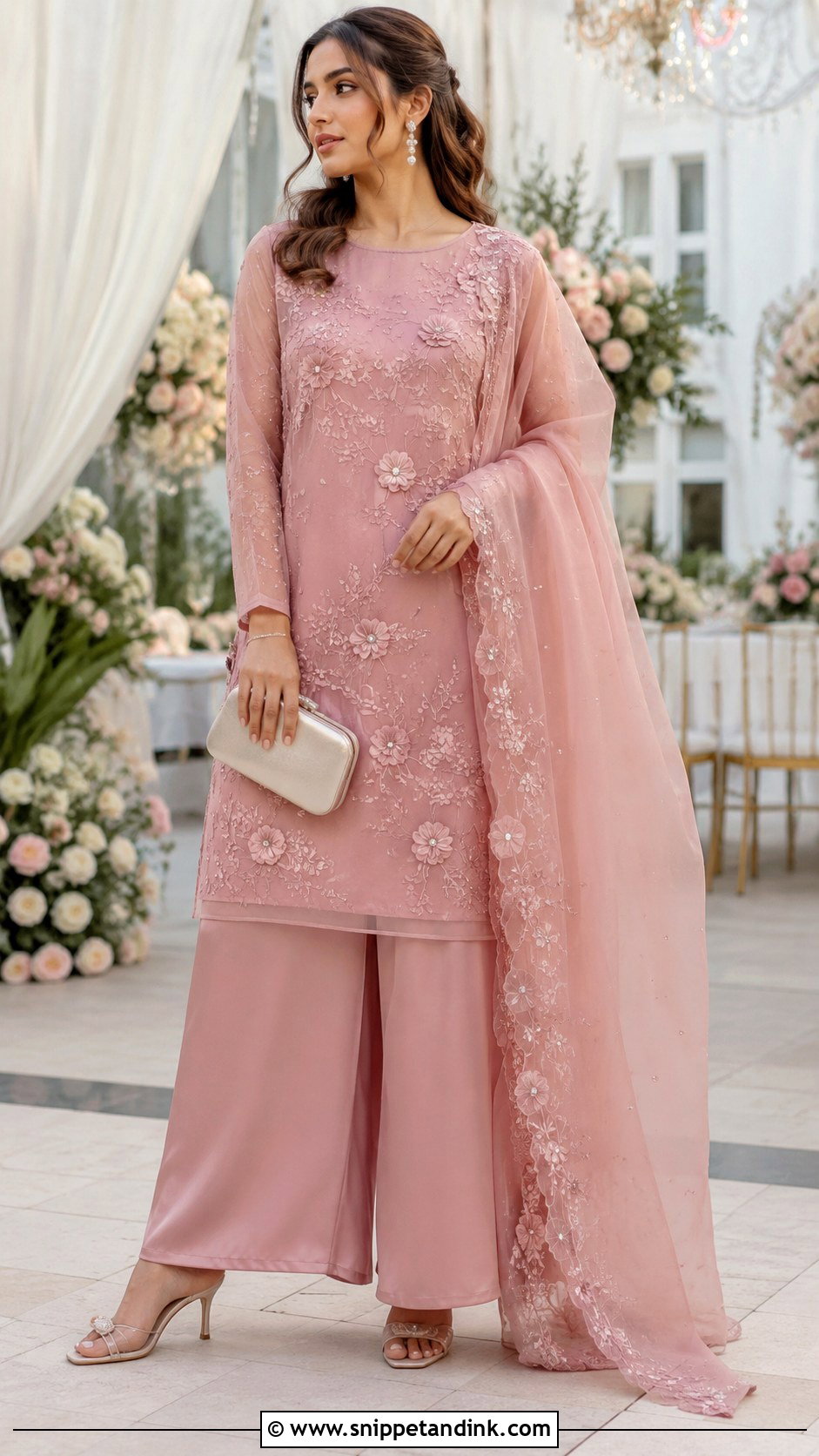
Organza has body but no stretch, so the cut matters. Straight or gently flared kurtis hang cleanly, while very full ones stand away from the body and look boxy. Choose a lined piece with embroidered flowers, pearls or appliqué at the neckline and hem, over satin, crepe or silk-blend palazzos. Sage, dusty rose, ice blue and ivory suit daylight. The real hazard is snagging: prong-set rings, sequined bags and rough bracelets pull threads in organza within minutes. I tell guests to pick smooth jewelry with this one.
12. High-Low Kurti With Dhoti Pants
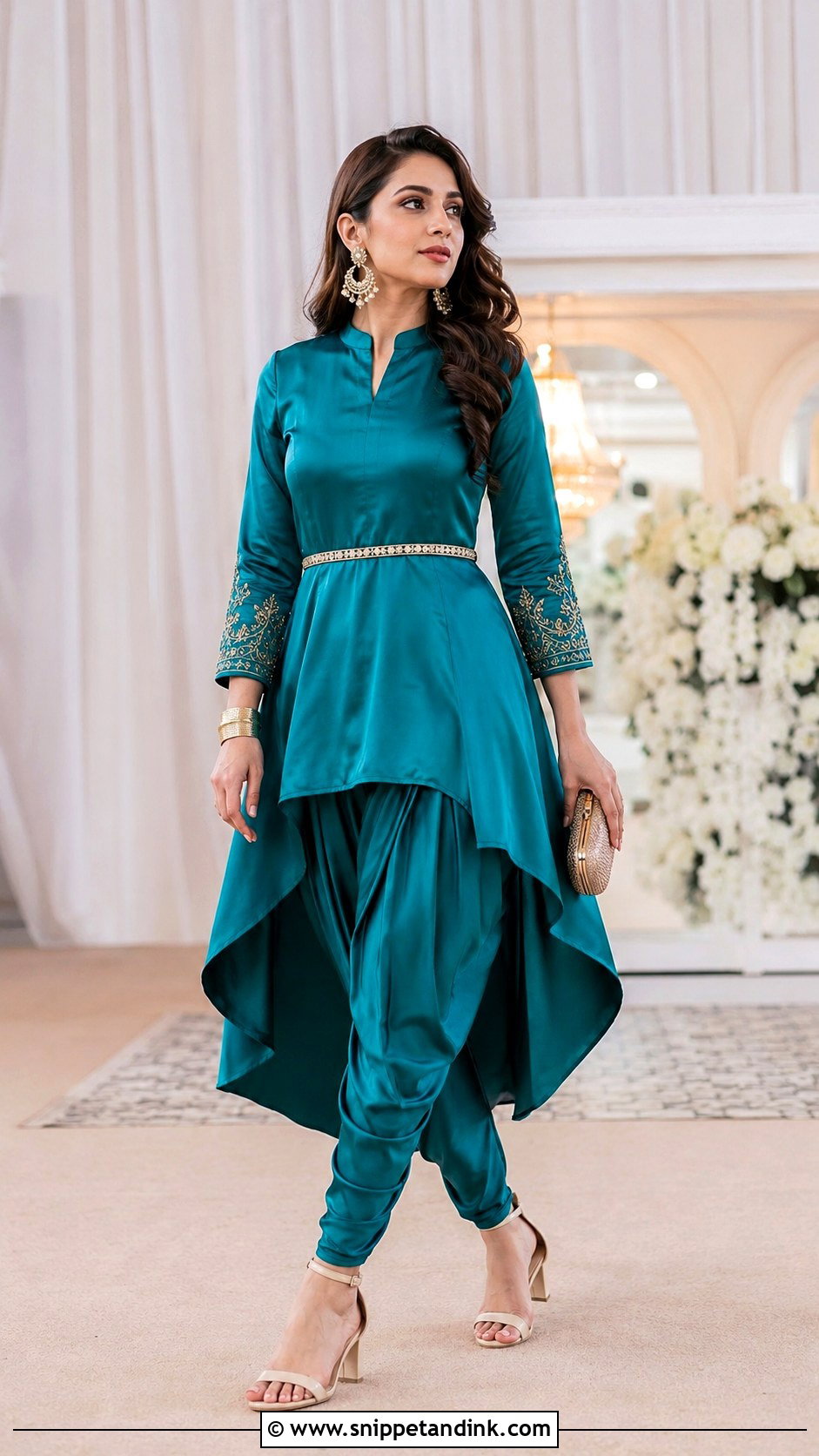
High-low hems need a fitted upper half or the whole kurti looks oversized. Shorter in front and longer behind, it shows off pleated dhoti pants, which suit guests who want something modern and comfortable. Solid silk, georgette or crepe with embroidery at the neck or cuffs keeps it neat. Matching dhotis look sleek; a contrast is more playful. An embroidered belt adds waist definition. I’d skip the dupatta here, or drape a very light one over a single shoulder.
13. Cape Kurti With Straight Pants
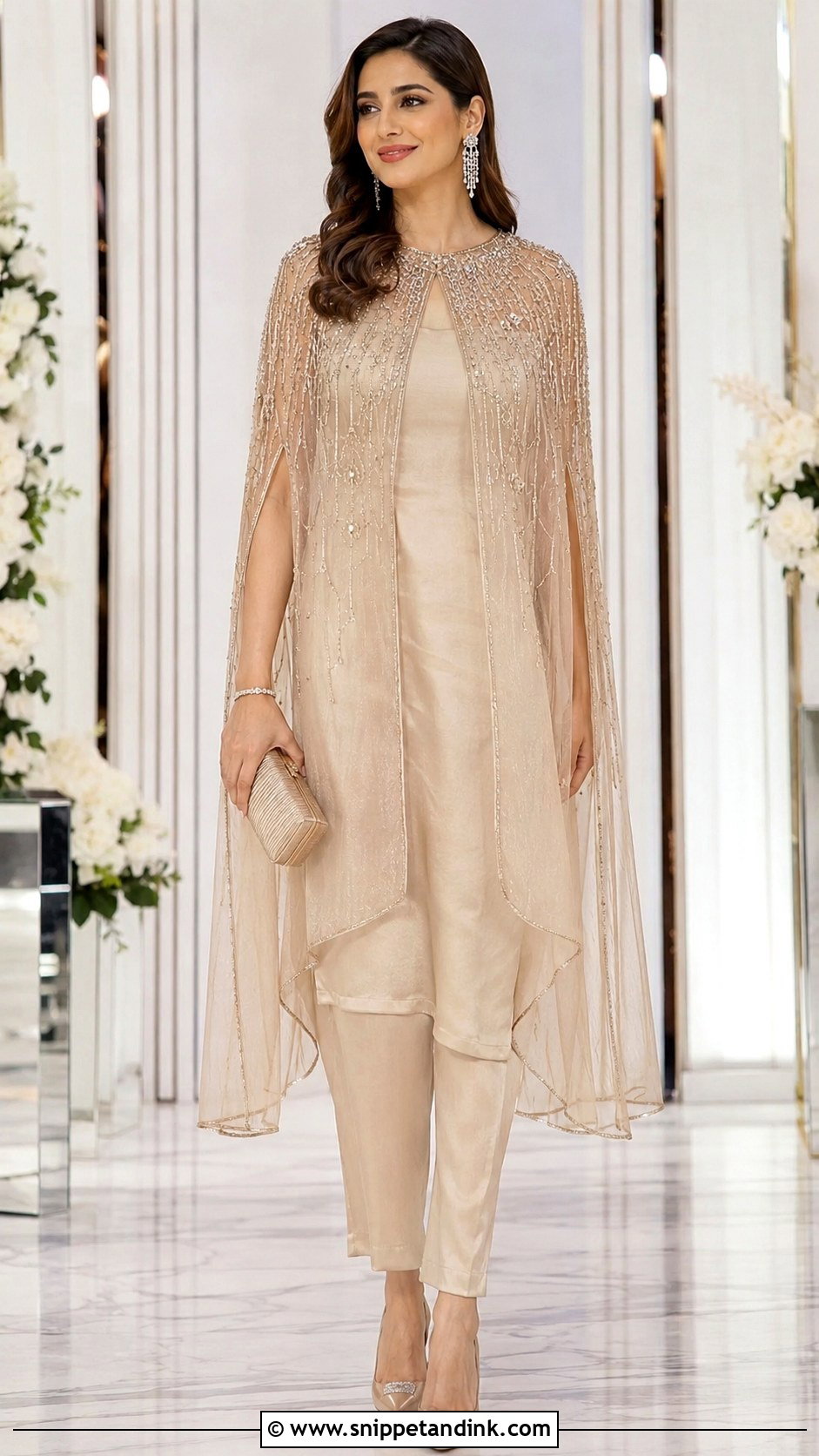
A cape replaces the dupatta and frees both hands for the plate and the dance floor. The fitted inner kurti and straight pants stay simple, and a sheer cape at the shoulders or neckline carries beadwork or scattered sequins. Length between elbow and knee is my rule, because a longer cape swamps petite frames. Champagne, mauve, navy and emerald suit evenings. With all that volume at the shoulders, skip the heavy necklace and wear the hair up in a smooth ponytail or low bun.
14. Asymmetric Kurti With Palazzo Pants
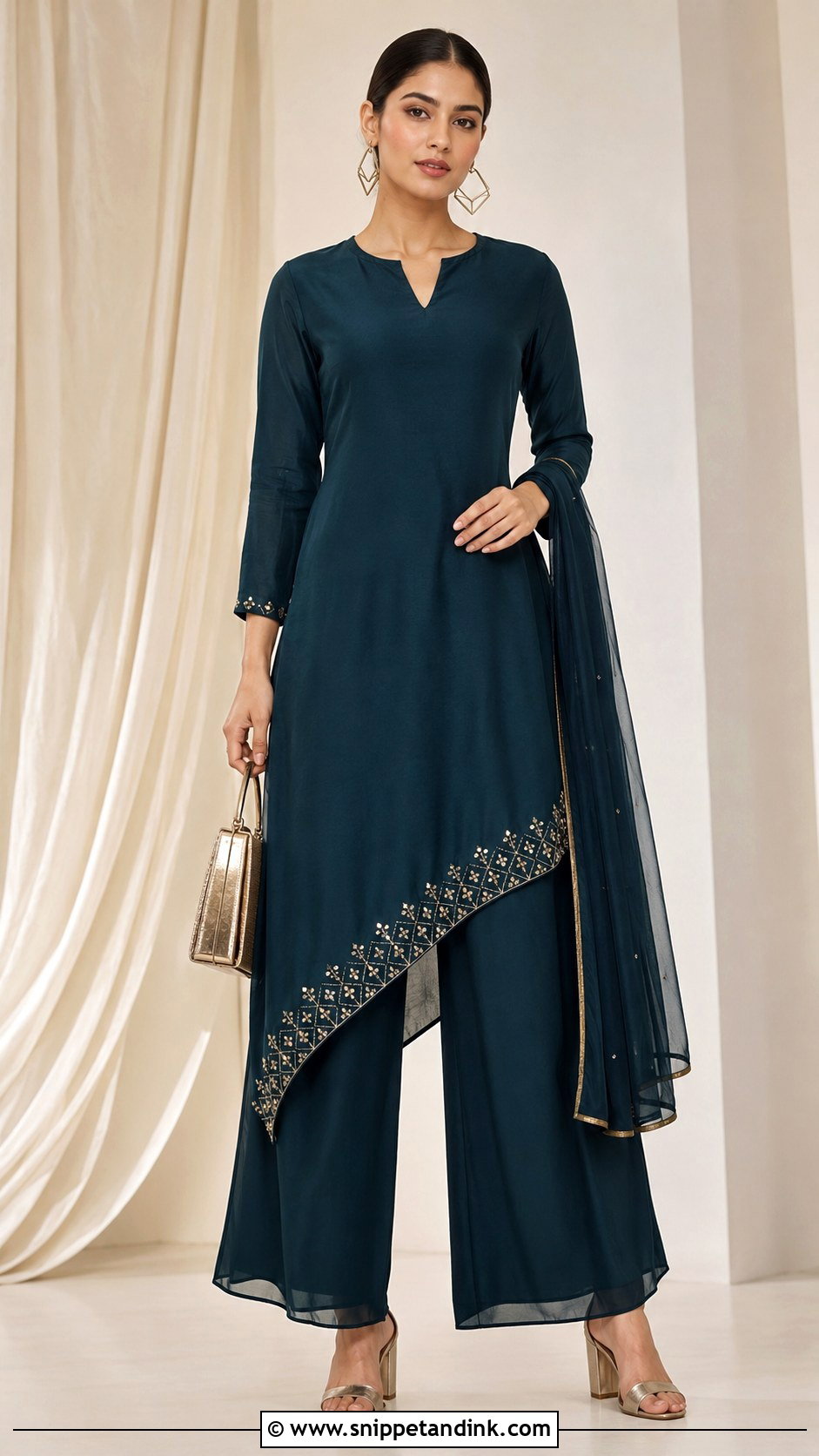
Asymmetric hems are unforgiving of poor tailoring. If the shoulders and bust don’t fit, the diagonal section twists instead of hanging straight. A side-draped or uneven hem with embroidery along its edge, over plain flowing palazzos, gives a sharp contemporary outline. Deep teal, aubergine, rust and berry are smart for afternoon or evening. Geometric earrings and metallic block heels suit the angles. Carry a narrow dupatta over one arm if you want one.
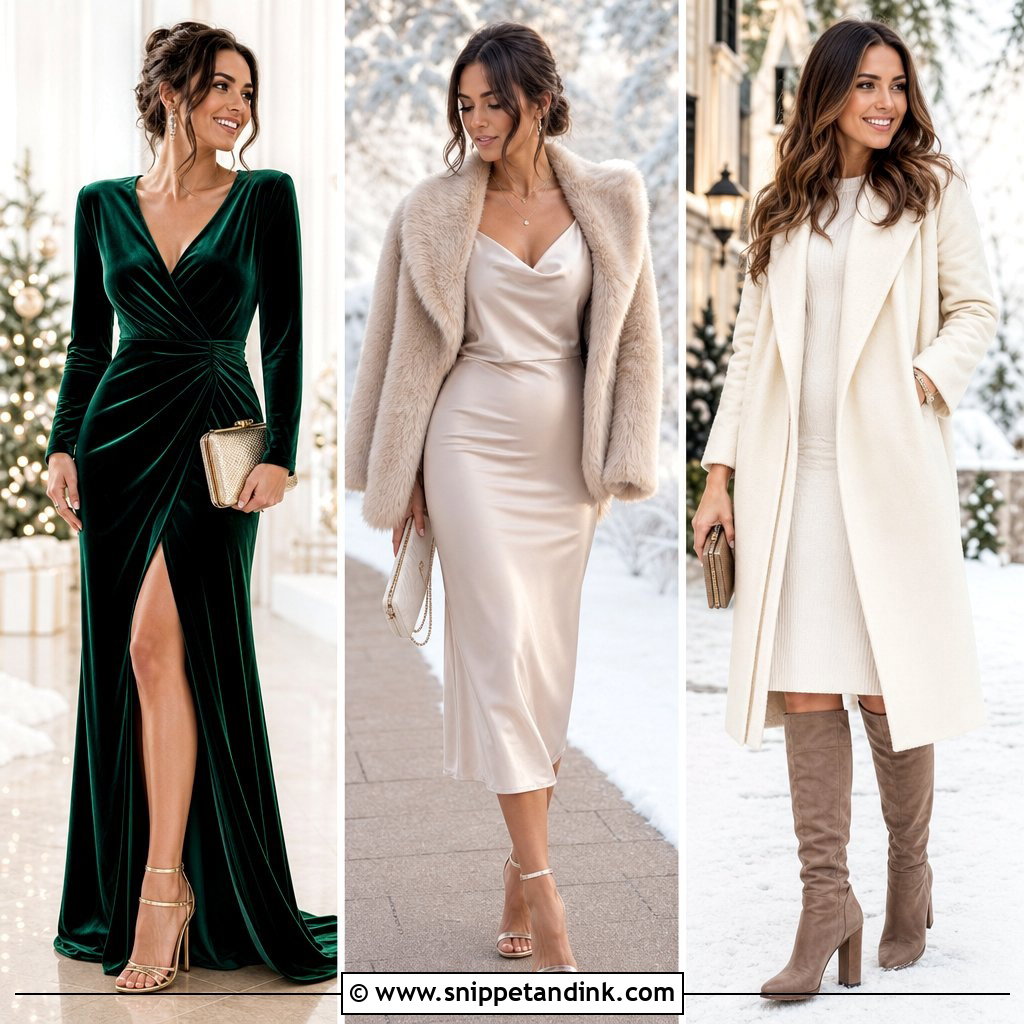
15. Floor-Length Embroidered Kurti Gown
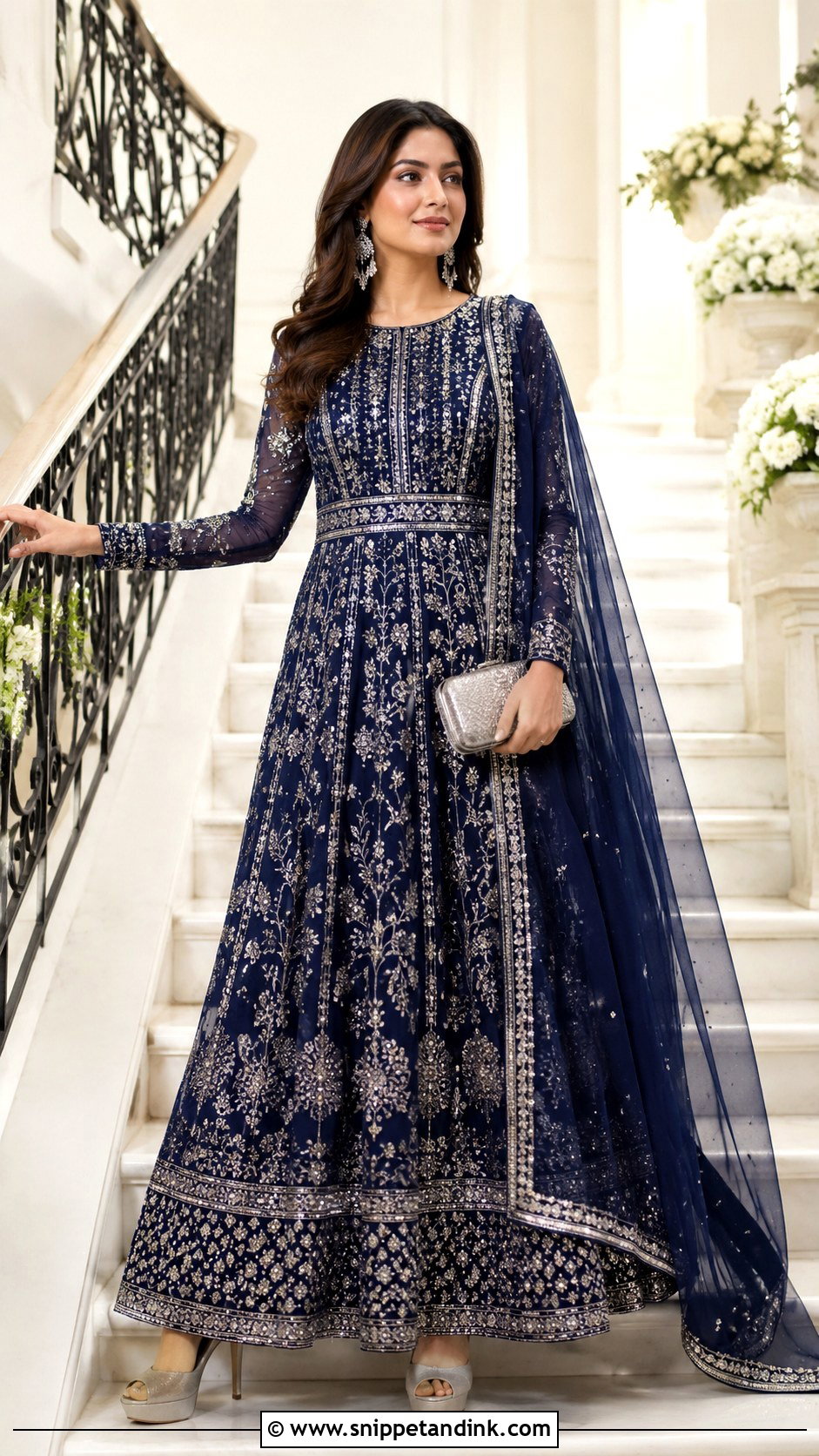
A kurti gown gives you the grandeur of an Anarkali in a single piece. Look for a fitted top, a defined waist and a flare controlled enough to walk in, with embroidery concentrated at the bodice and sleeves. Deep red, sapphire, bottle green and muted gold suit formal ceremonies, though I’d ask whether red is reserved for the bride in that family. Concealed leggings help if the fabric is sheer or the venue is cool. Have the hem skim the floor rather than pool on it, especially at venues with stairs or lawns.
16. Short Kurti With Flared Skirt
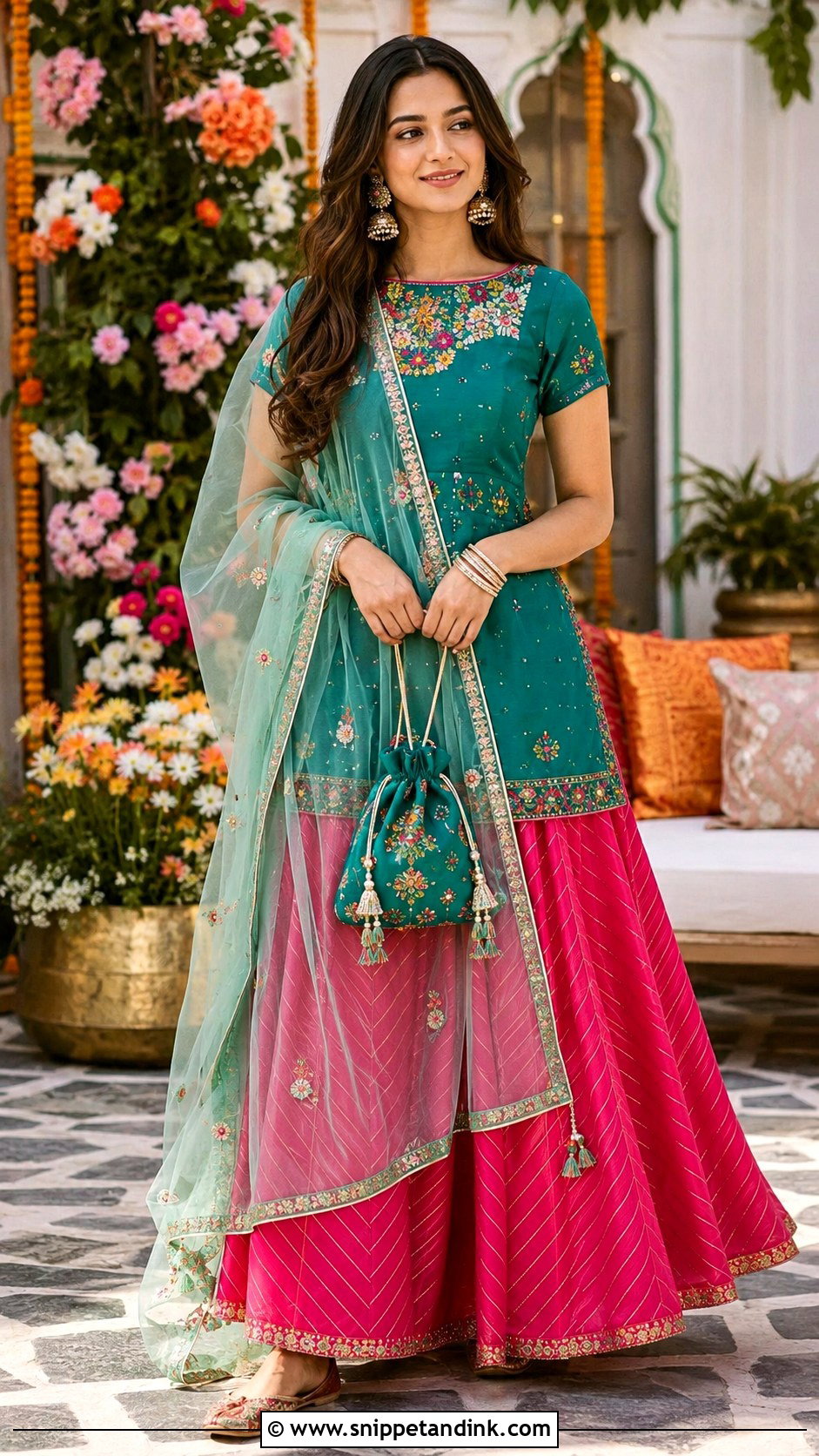
Think of this as a lehenga for guests who’d rather not wear a lehenga blouse. A waist or hip-length kurti with a decorated neckline sits over a high-waisted flared skirt in block print, brocade or floral work. Coordinate the colors on purpose: green over pink for mehndi, ivory over a jewel tone for daytime. Pin the dupatta diagonally across the body so it stays put. The high waist covers the midriff completely, and it makes the legs look longer too.
17. Zari Work Kurti With Salwar
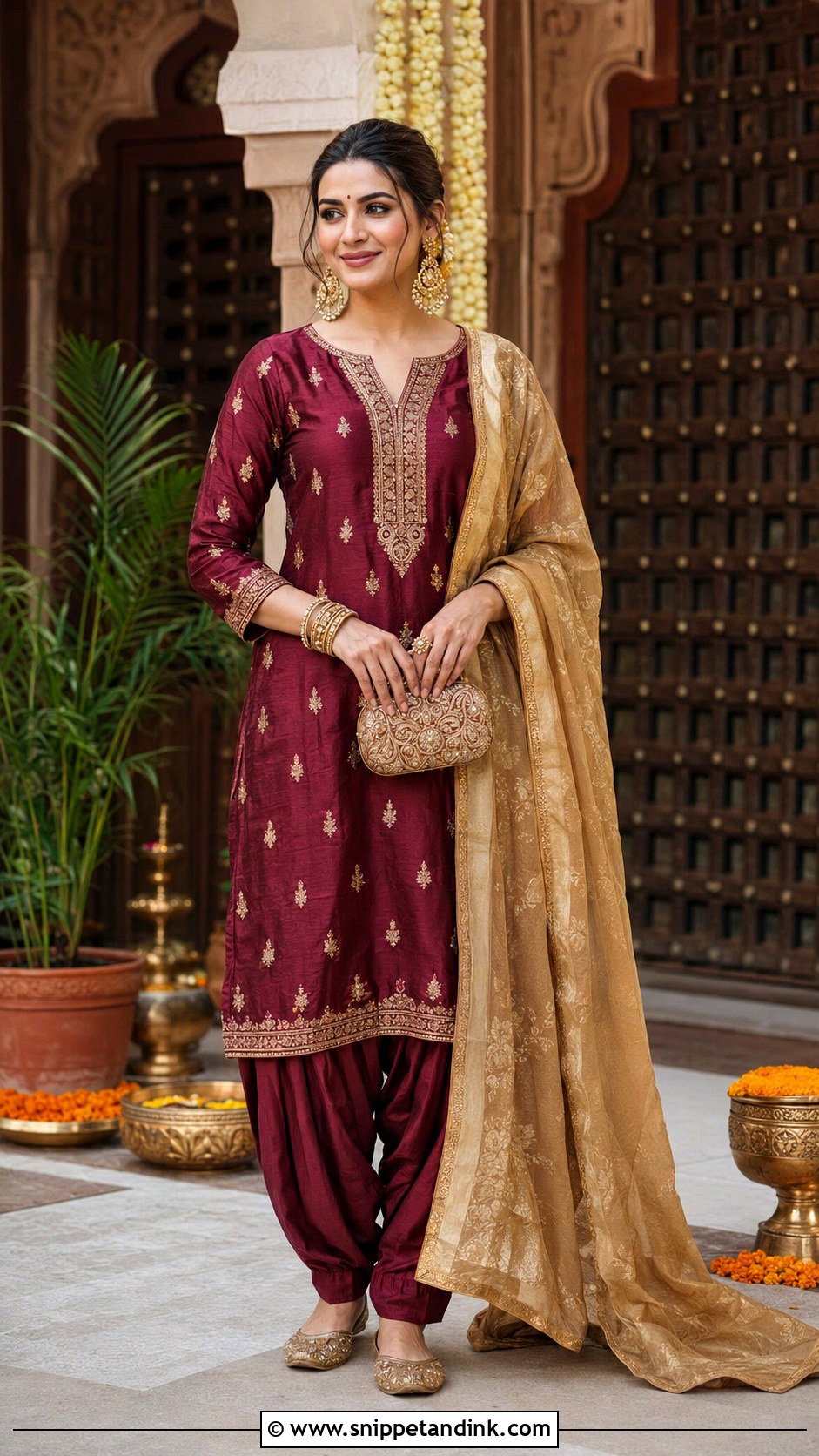
For a long ceremony where you’ll sit for hours, a zari-work kurti and traditional salwar is about as comfortable as wedding dressing gets. Silk, brocade or Chanderi with metallic motifs and three-quarter sleeves pairs with a softly pleated salwar. Maroon with gold, mustard with magenta and green with rust are old combinations for good reason. Drape a Banarasi or tissue dupatta over one shoulder. I’d choose one metal tone across the zari, jewelry and juttis; mixing gold and silver zari with rose-gold jewelry looks accidental.
18. Sequin Kurti With Cigarette Pants
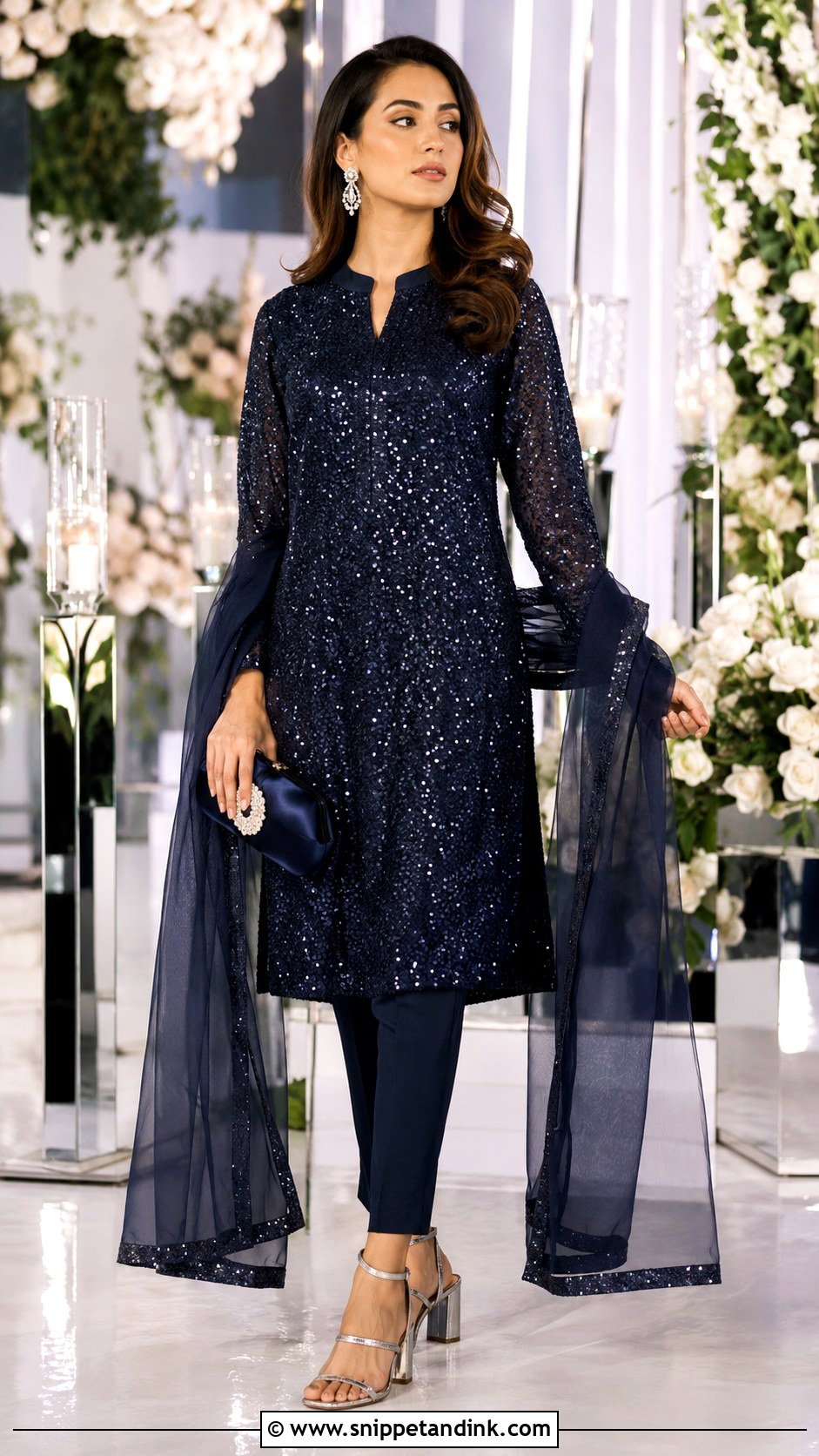
Sequins are hard to get wrong in a simple shape. A straight or A-line kurti in tonal sequins, never several colors, over plain ankle-length pants keeps evening glamour in check. Black, navy, pewter, mauve and deep green suit reception lighting. Scattered sequins look soft; concentrated panels look dramatic. Turn the kurti inside out before you buy it. Rough sequin stitching scratches the skin at the underarm and waist, and a smooth full lining is what makes a sequin piece wearable for five hours.
19. Kalamkari Kurti With Silk Pants
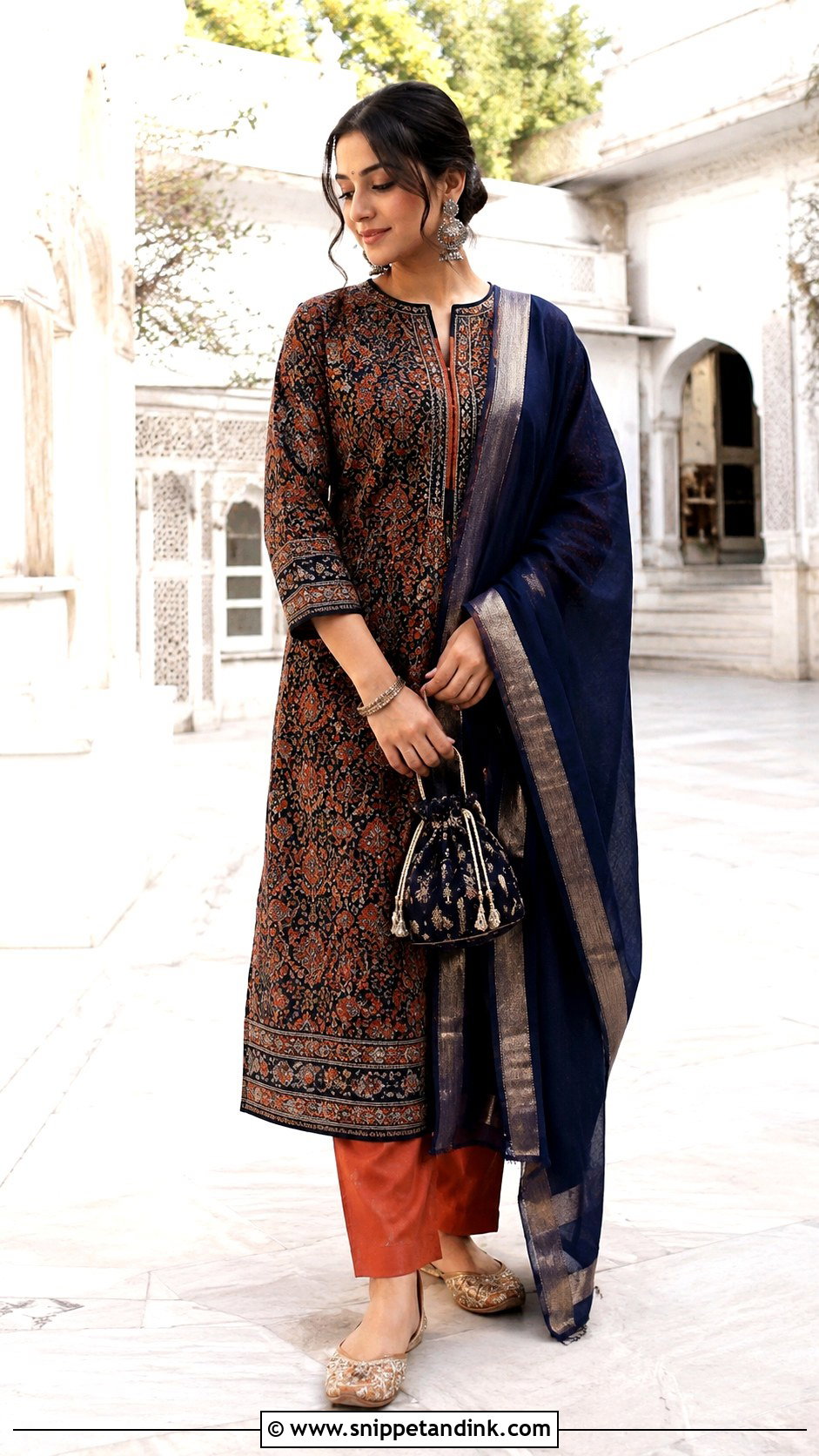
Kalamkari is hand-painted or block-printed with natural dyes, so the pattern itself is the jewelry. A long A-line or straight kurti with a solid embroidered yoke and earthy red, indigo, mustard, olive or black print pairs with plain silk pants that repeat one shade. A solid dupatta with a zari border frames it. Keep makeup quiet and pick antique-finish earrings with wooden or metal bangles. Natural dyes can fade with harsh washing, so dry clean or hand wash in cold water.
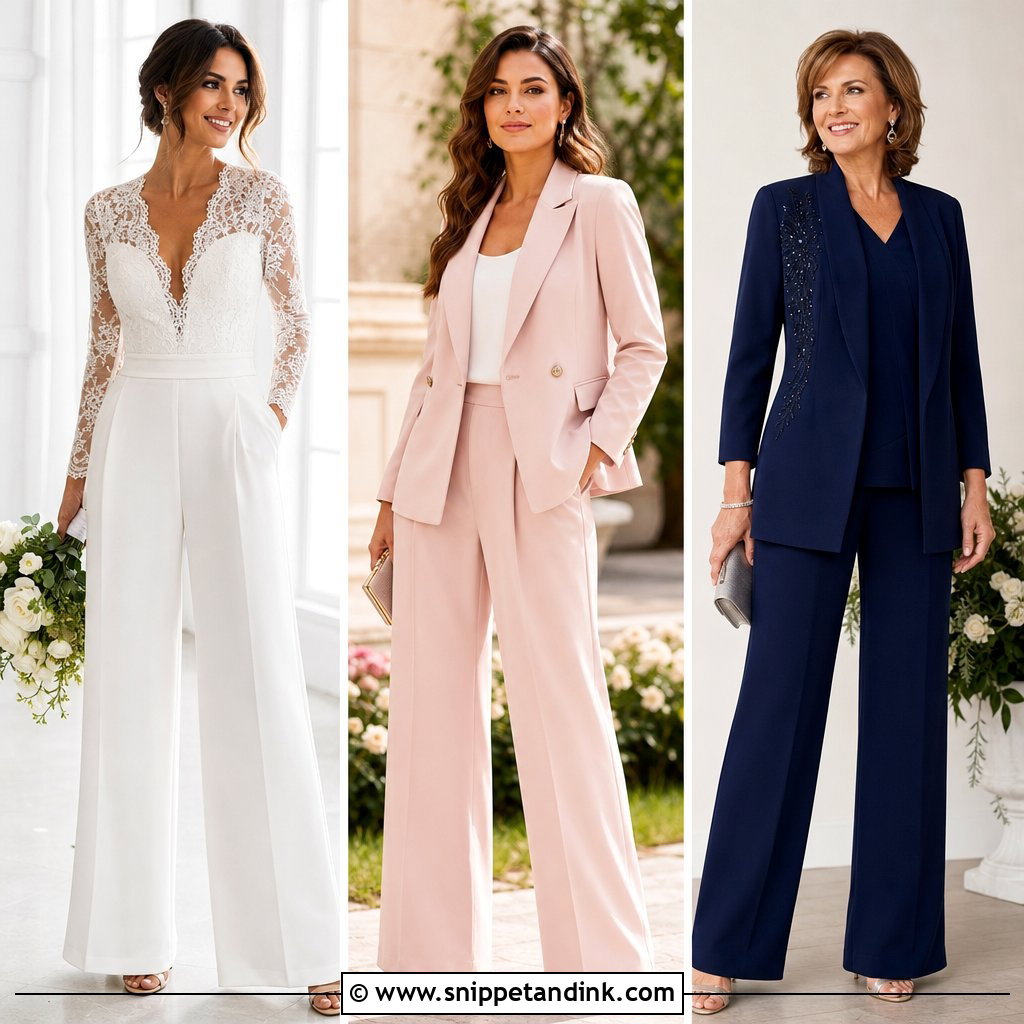
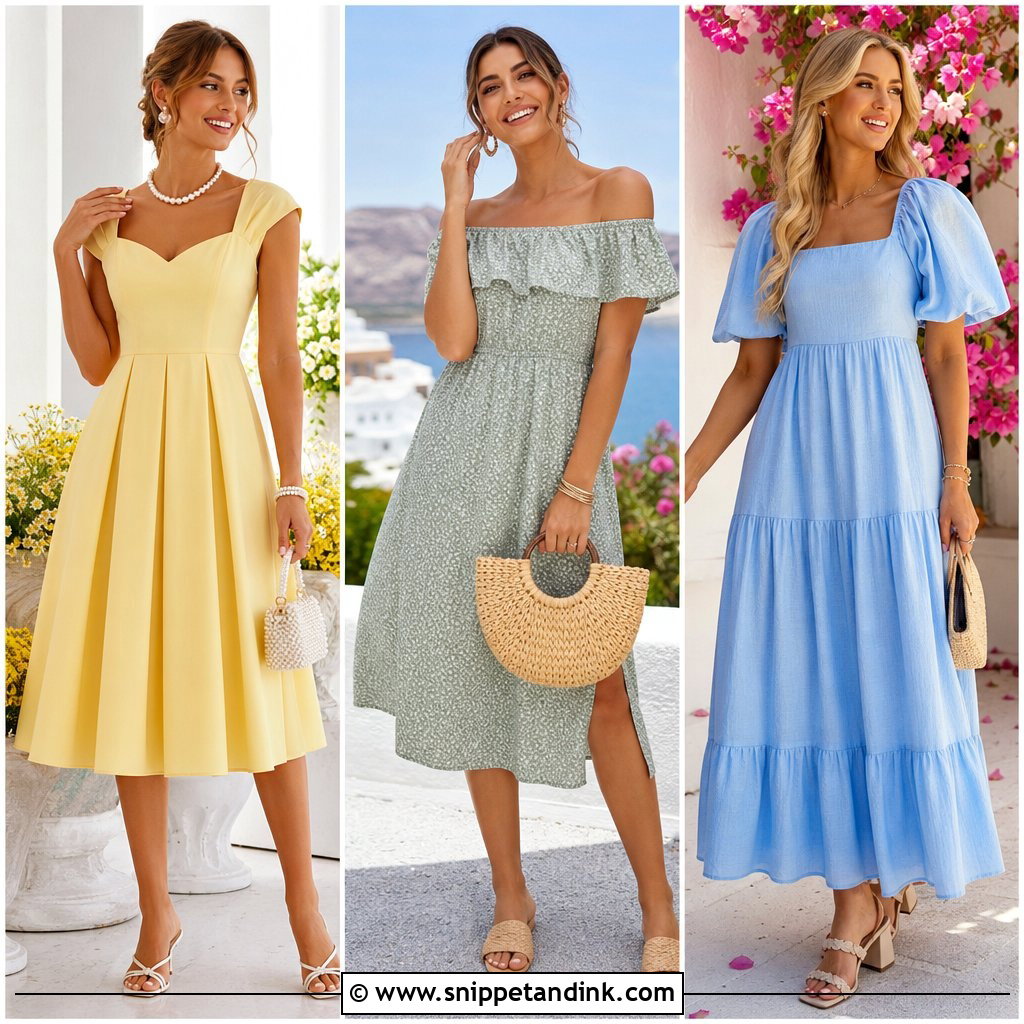
20. Pastel Floral Kurti With Palazzo Pants
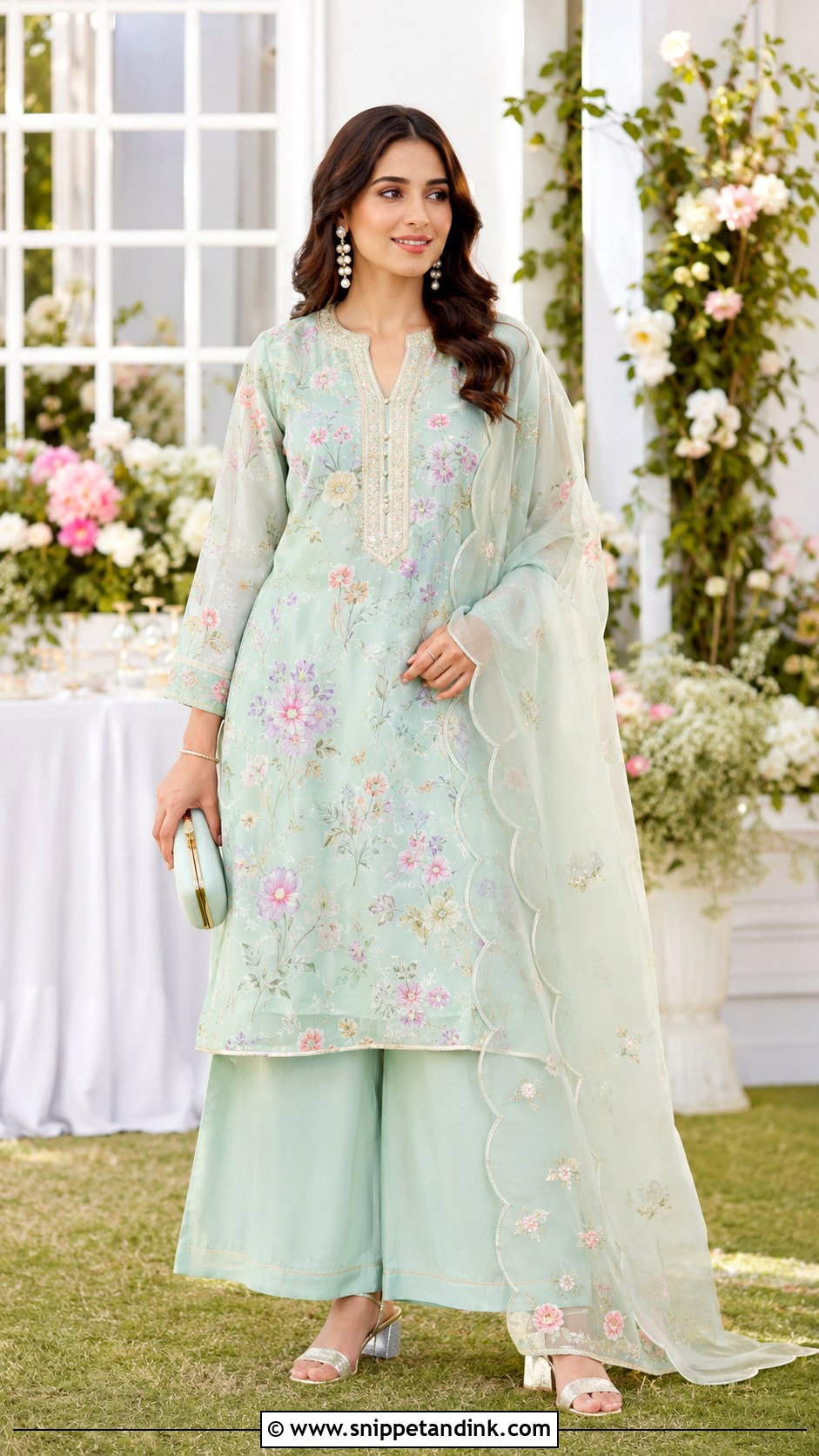
Garden venues, morning ceremonies and destination weddings call for pastel floral work. Blush, lavender, mint, peach and pale blue in delicate threadwork with scalloped edges stay festive without weight. Matching palazzos make the outline long and coordinated, and an airy organza dupatta with a floral border finishes the set. On grass or gravel I’d keep the hem a little shorter than usual; long pastel hems pick up dust and grass stains fast, and they show on pale fabric.
Altering a Ready-Made Kurti Set in the Last Two Weeks
Most guests buy ready-made, and most ready-made kurtis need some alteration. The good news is that a few changes make a big difference. I’d take the full set to a tailor at least two weeks before the wedding, wearing the shoes you plan to wear.
- Shoulders first. If the shoulder seam hangs past your shoulder bone, the whole kurti looks borrowed, and it’s the hardest part to fix, so buy for the shoulder.
- Side seams next. Most kurtis carry a seam allowance that can be let out or taken in. Ask your tailor to check before you assume it’s too tight.
- Sleeve length, so bangles show and cuffs don’t drag through food.
- Hem last, with your shoes on. Sharara and palazzo hems should just brush the floor; churidar should gather at the ankle bone.
On the day, keep a few safety pins, a small roll of fashion tape and a spare hook in your clutch. A dupatta that won’t stay put or a gaping neckline is usually fixed in seconds with those three things.
Dressed for the Sangeet, Comfortable at the Pheras
Wedding kurtis prove that comfort and celebration can sit together, from embroidered Anarkalis and velvet to cape sets and peplum-sharara pairings. Weigh the venue, the weather, the time of the event and how formal the family is before deciding. Darker colors and rich fabrics belong to evenings; pastels, organza and chikankari suit the daytime. Fit and fabric make the outfit. Choose a kurti and bottom you can walk, sit and dance in, then add good footwear, a little jewelry and one bag you love.
You'll Like These Ideas:



Leave a Reply