
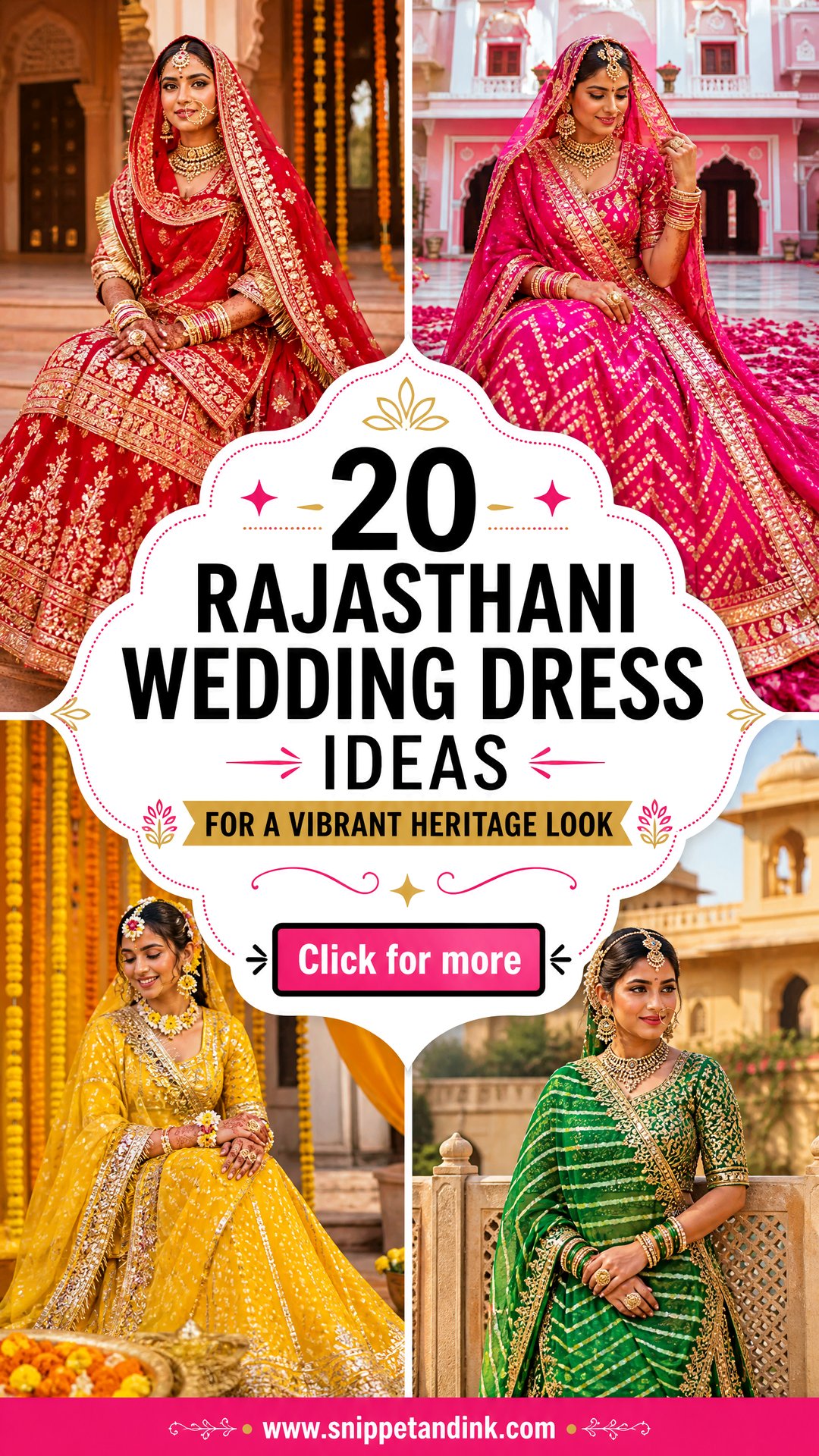
Rajasthani wedding dress layers color and handwork until the whole body becomes part of the celebration. The classic pieces are the Rajputi poshak, the ghagra choli, the bandhani lehenga and the embroidered odhni, worked in gota patti, zari, zardozi and mirror work. Deep red and maroon still carry bridal meaning, while pink, saffron, green, blue and ivory cover the other ceremonies. A borla, an aad necklace, a nath, bajuband and stacked bangles complete the picture. I’ve arranged twenty complete outfits below, from the main pheras to mehendi, haldi, sangeet and reception, for brides, family and guests alike.
What the Four Pieces of a Rajputi Poshak Each Do
A Rajputi poshak is a set rather than a single dress, and many photos only show three of its four parts. Knowing what each piece does makes ordering one far less confusing.
- Ghagra: the skirt, cut from many panels called kalis, which is where the huge flare comes from. More kalis means more fabric and more weight hanging from the waist.
- Kanchli: the fitted bodice worn closest to the body. It has to fit precisely, so I’d have it made to measure even if the rest of the set is ready-made.
- Kurti: a sleeveless top worn over the kanchli, usually reaching the hip. It covers the midriff and often carries much of the embroidery.
- Odhni: the long head covering, often the most decorated piece and the one that frames the face in every photograph.
Made-to-measure poshaks take time, especially with hand-worked gota or zardozi, so leave a comfortable margin before the wedding. Book the final fitting with the borla and odhni in place, because the head covering changes how the neckline and shoulders sit.
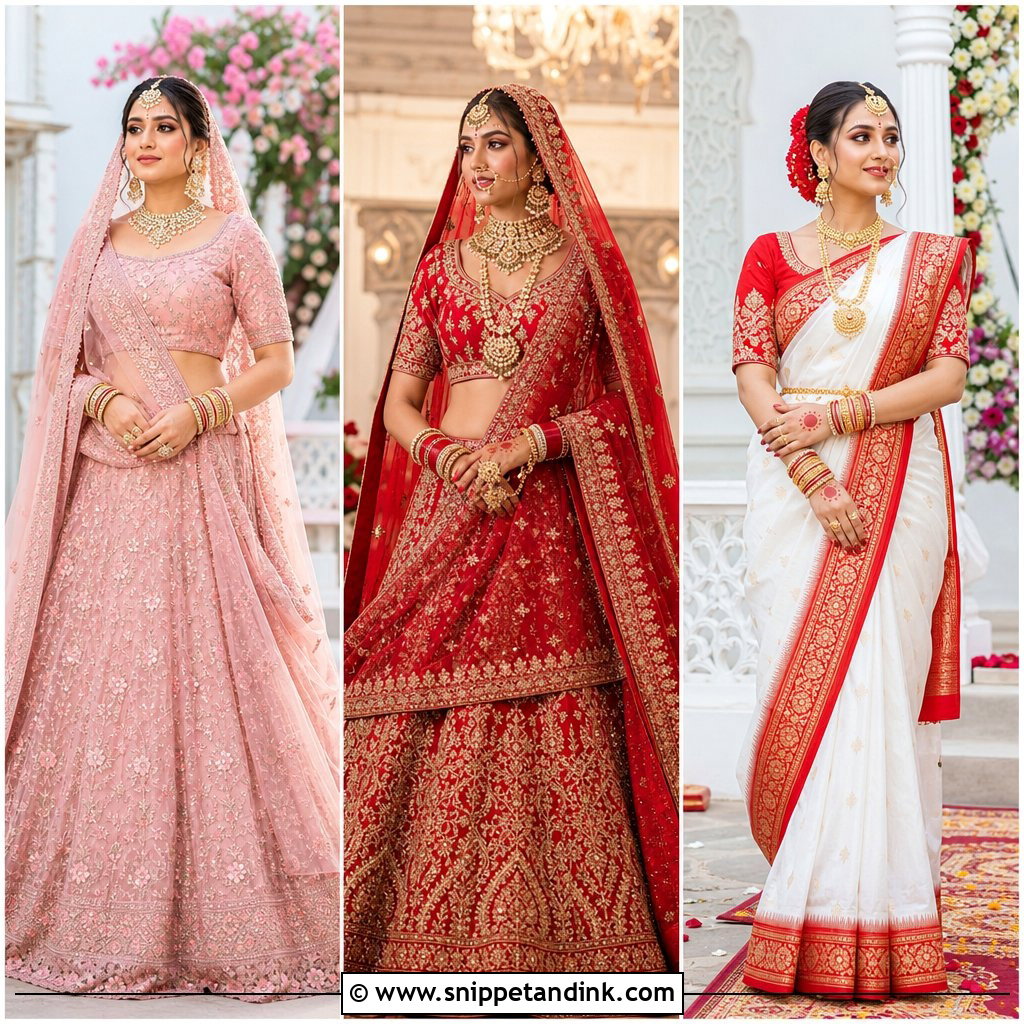
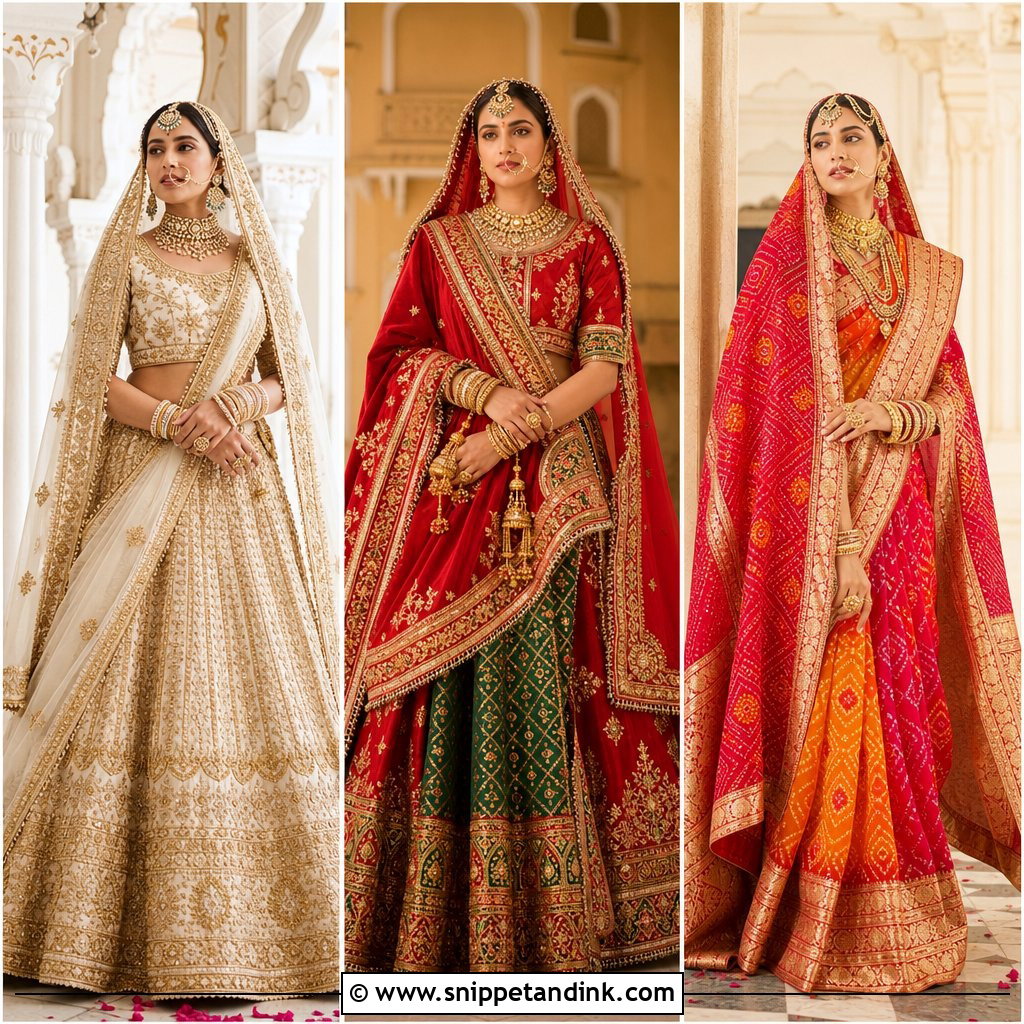
1. Red Rajputi Bridal Poshak
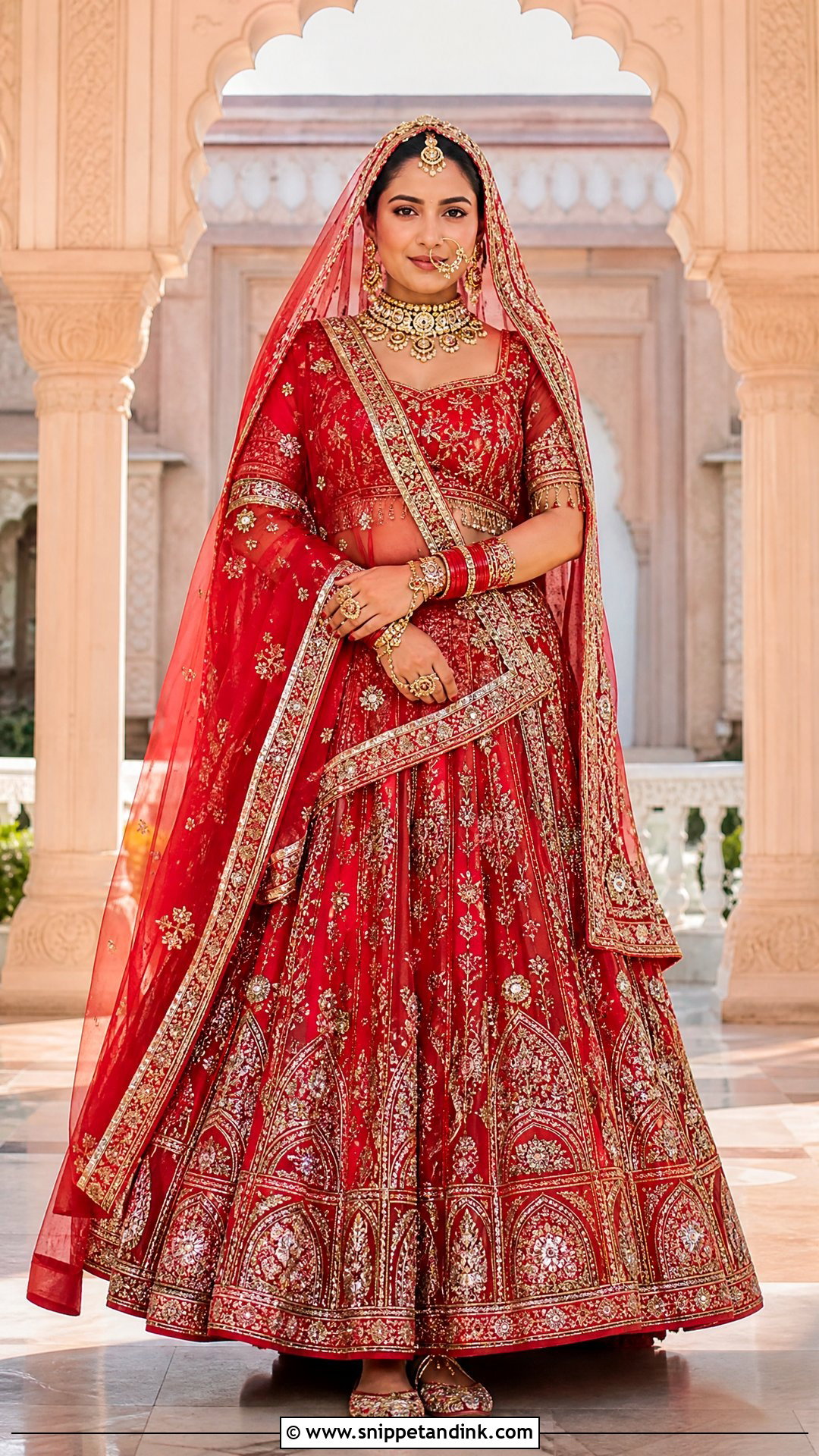
Nothing in Rajasthani dress carries more ceremony than a red Rajputi poshak, and it’s built for sitting through long rituals with dignity. Choose a generously flared ghagra, a fitted kanchli and a sheer odhni with broad gold gota borders, with zari, dabka or kundan-style embroidery that adds richness without hiding the red. The odhni goes over the head with one side falling across the shoulder. I pin it in at least three places, because sheer fabric slides on smooth hair. A gold borla, layered aad, a statement nath, ivory-colored bangles, bajuband and embroidered juttis. Defined eyes, a soft red lip and a smooth low bun to hold the borla and odhni make it the outfit for the ceremony and the portraits.
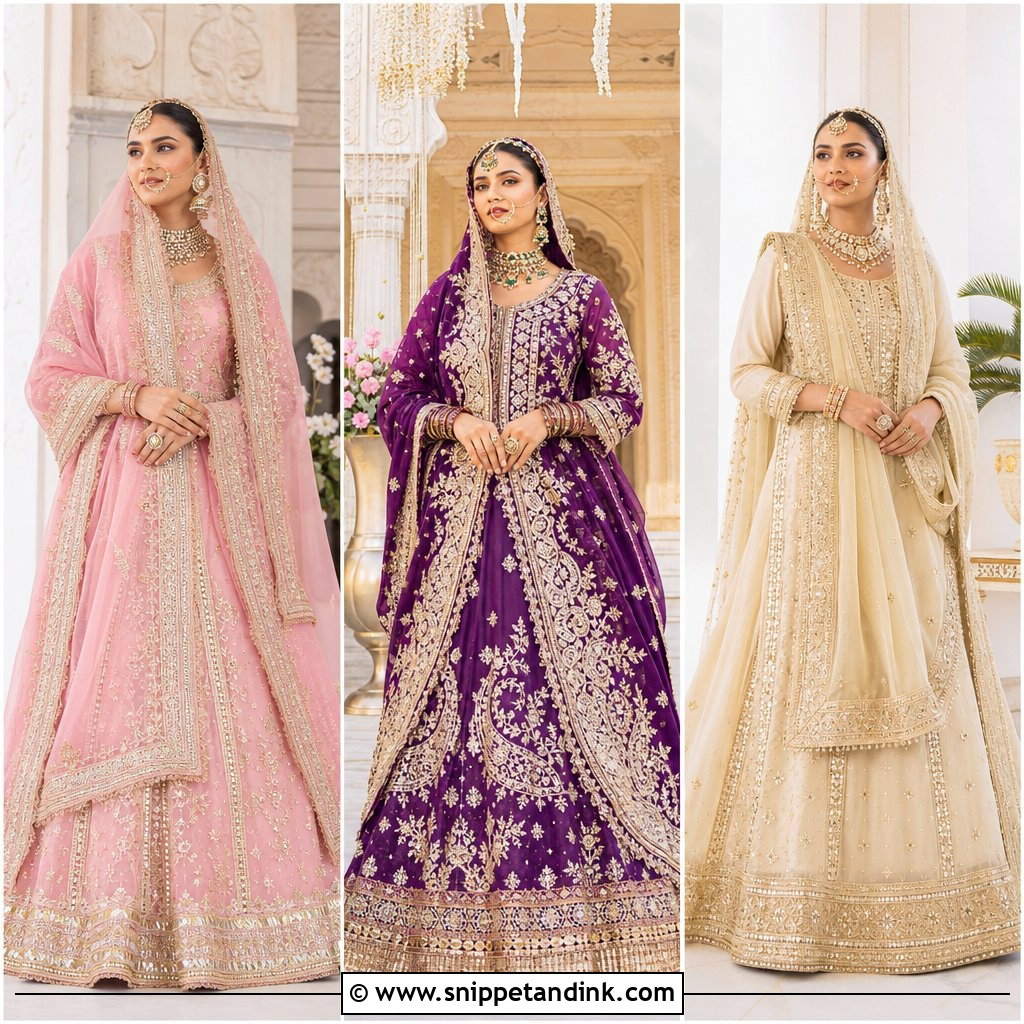
2. Maroon Gota Patti Bridal Lehenga
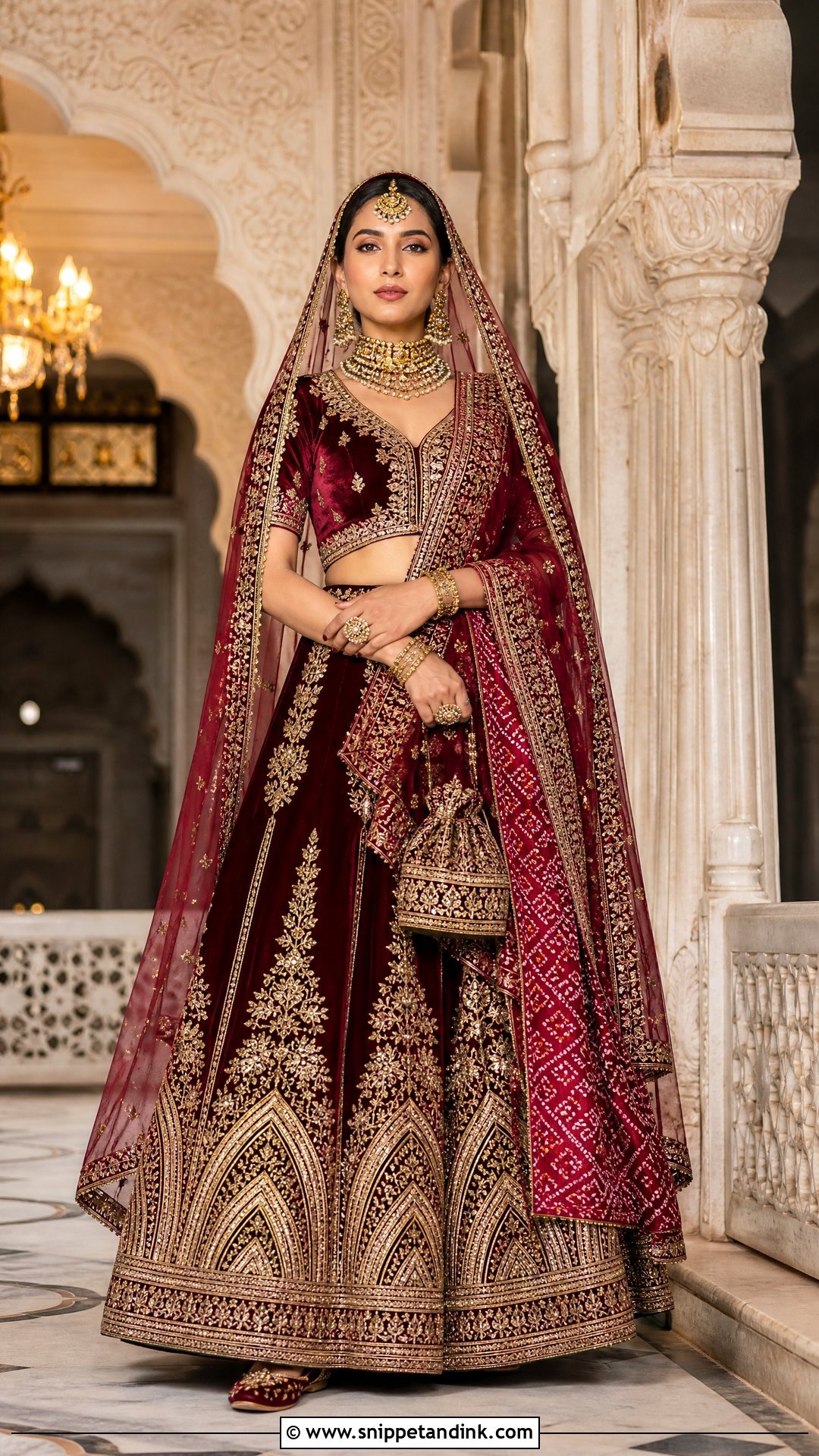
Under evening light maroon deepens instead of fading, which is why I like it for night pheras. Select silk or velvet with antique gold gota patti, fine zari vines or spaced florals, and a structured short-sleeve blouse with two dupattas: a light net one over the head and a heavier bandhani or embroidered one across the torso. With two dupattas, the heavy one must be pinned at the waist as well as the shoulder, or it drags the head dupatta sideways. An antique gold borla, choker, long necklace, earrings and nath, with maroon velvet juttis and a small potli. Neat, defined makeup suits it better than heavy shimmer. Winter weddings and heritage venues are its setting.
3. Bandhani Bridal Lehenga With Double Dupatta
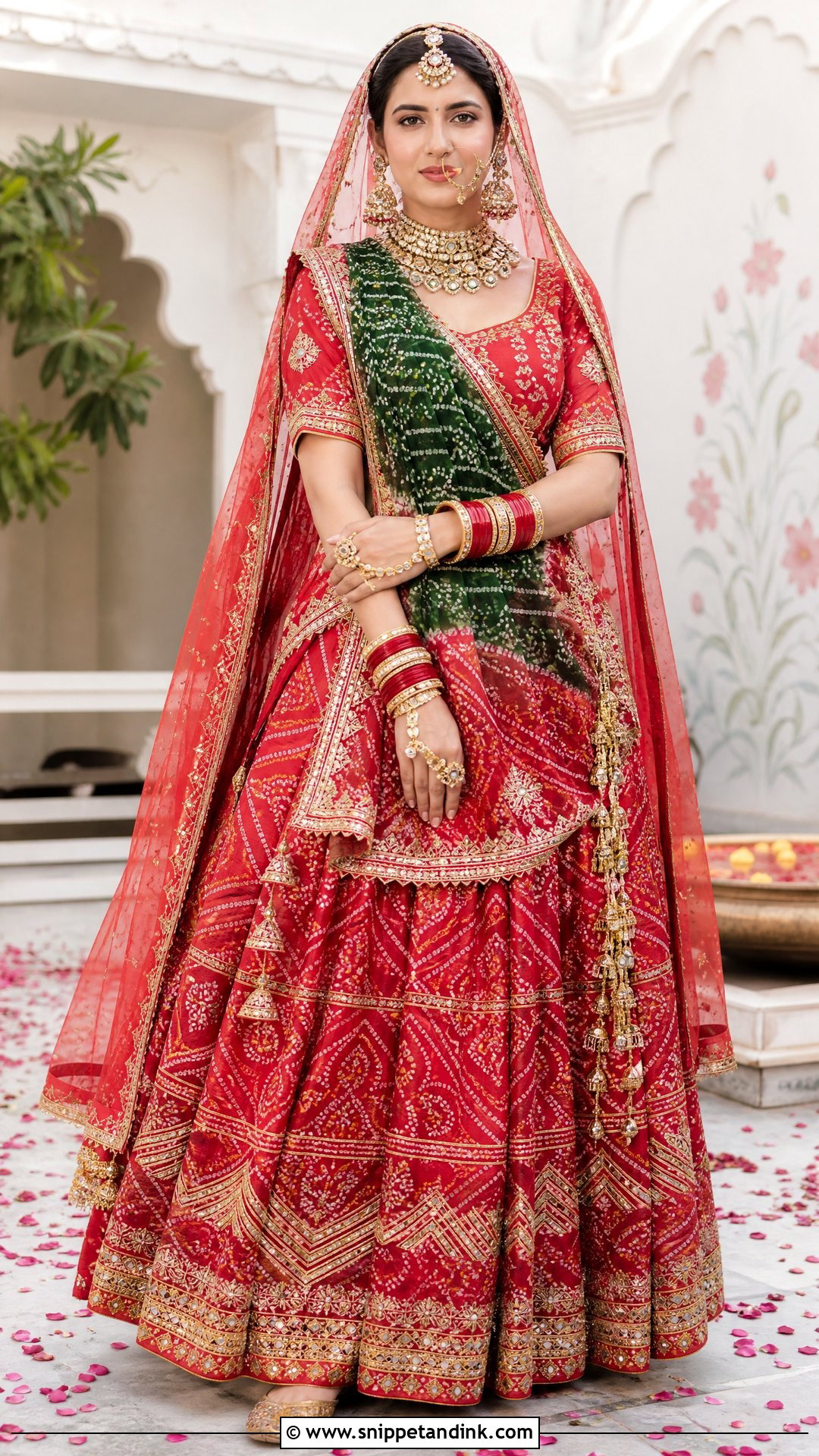
Bandhani gives a bridal outfit instant regional identity, and the tiny dots read as texture even from across a courtyard. Start with a red, magenta or crimson bandhani lehenga with a broad gota patti hem, and a blouse with restrained embroidery so the tie-dye stays visible. Layer a light dupatta over the head and a contrasting green, orange or pink odhni across the shoulder; matching gold borders on both are what make the color mix look deliberate. A borla, kundan choker, long necklace, hathphool, bangles and embellished juttis. I build a braided bun under the head covering because the braid gives the pins something to grip. Tie-dyed textiles sit at the heart of Rajasthani celebration wear, so this is a meaningful choice for a bride who cares about regional craft.
4. Royal Blue Velvet Rajasthani Lehenga
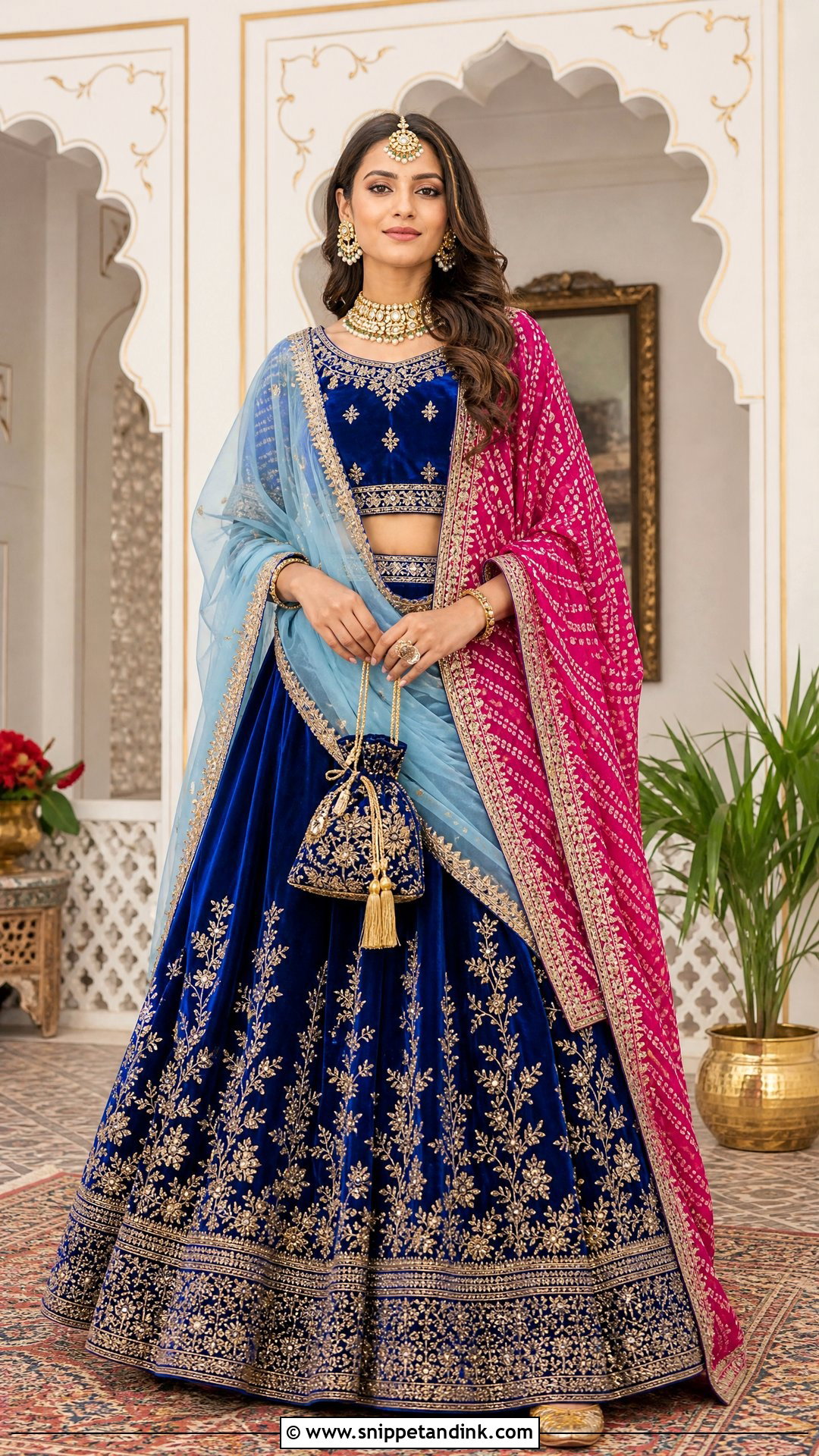
Royal blue velvet keeps all the grandeur of a Rajasthani bridal outfit without the red. Look for a full lehenga with antique gold zardozi, peacock motifs or architectural borders at the hem, a matching velvet blouse, and a lighter blue net dupatta so the look doesn’t become one heavy block. Add a pink or red bandhani odhni if you want a stronger regional note. Kundan with emerald or ruby accents suits the saturated blue. Velvet keeps pressure marks wherever it’s been folded or sat on, so I steam it hanging, from the reverse, and never press it flat. Gold juttis, a structured potli and a polished low bun. Cool weather and evening events only.
5. Emerald Green Kundan Work Poshak
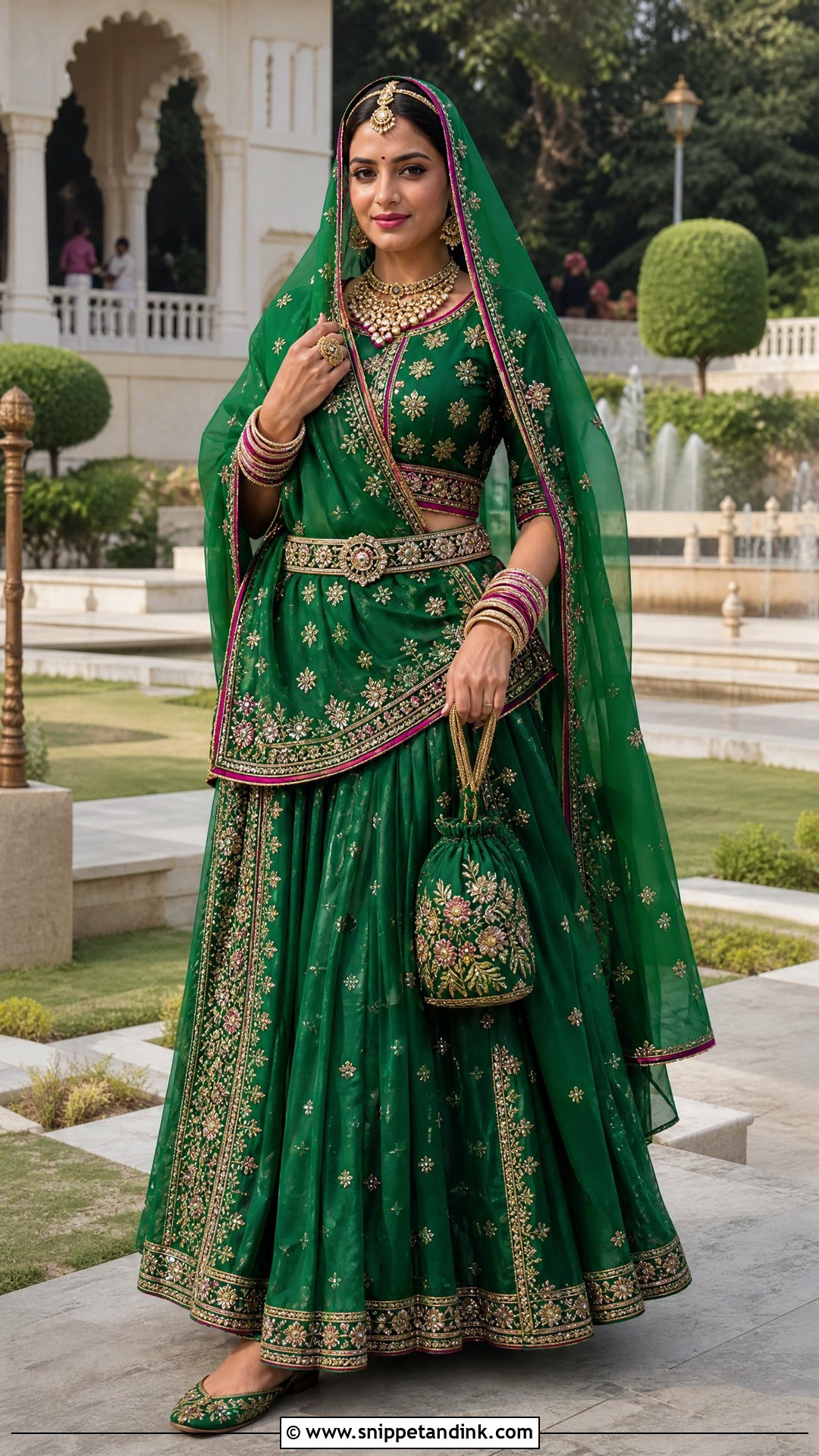
Emerald turns a poshak luxurious. Choose a satin, silk or light brocade ghagra with gold kundan-style embellishment along the panels and hem, a fitted kanchli with elbow sleeves, and a sheer green odhni, adding a red or magenta border if you want traditional contrast. Stones at the hem add weight that actually helps a ghagra swing, but they also catch the odhni wherever it falls across them, so look for an odhni with a smooth, finished edge. A gold borla, aad necklace, drop earrings, bangles and a delicate waist belt, plus green juttis for long ceremonies. Center part, low bun, softly lined eyes. A bride can wear it to a pre-wedding ceremony, and a close relative can wear it on the main day.
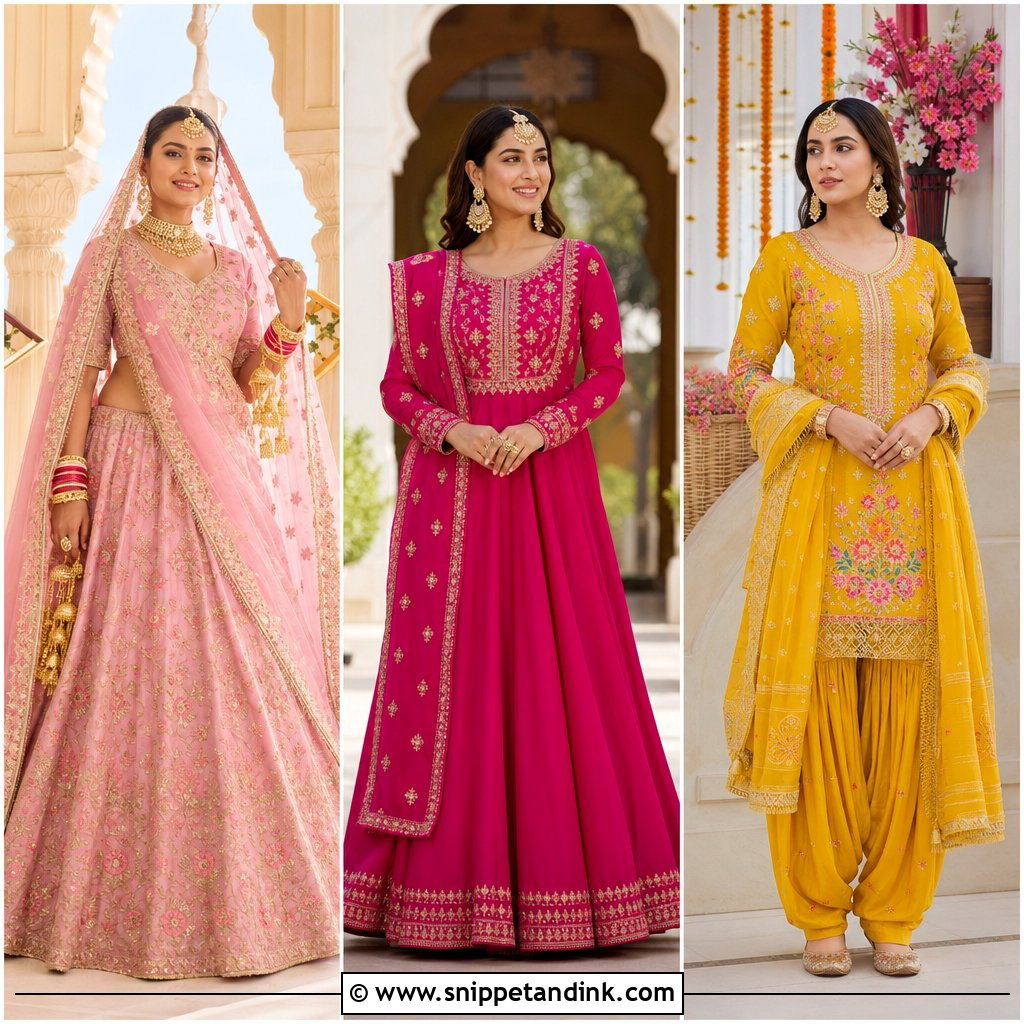
6. Rani Pink Gota Patti Lehenga
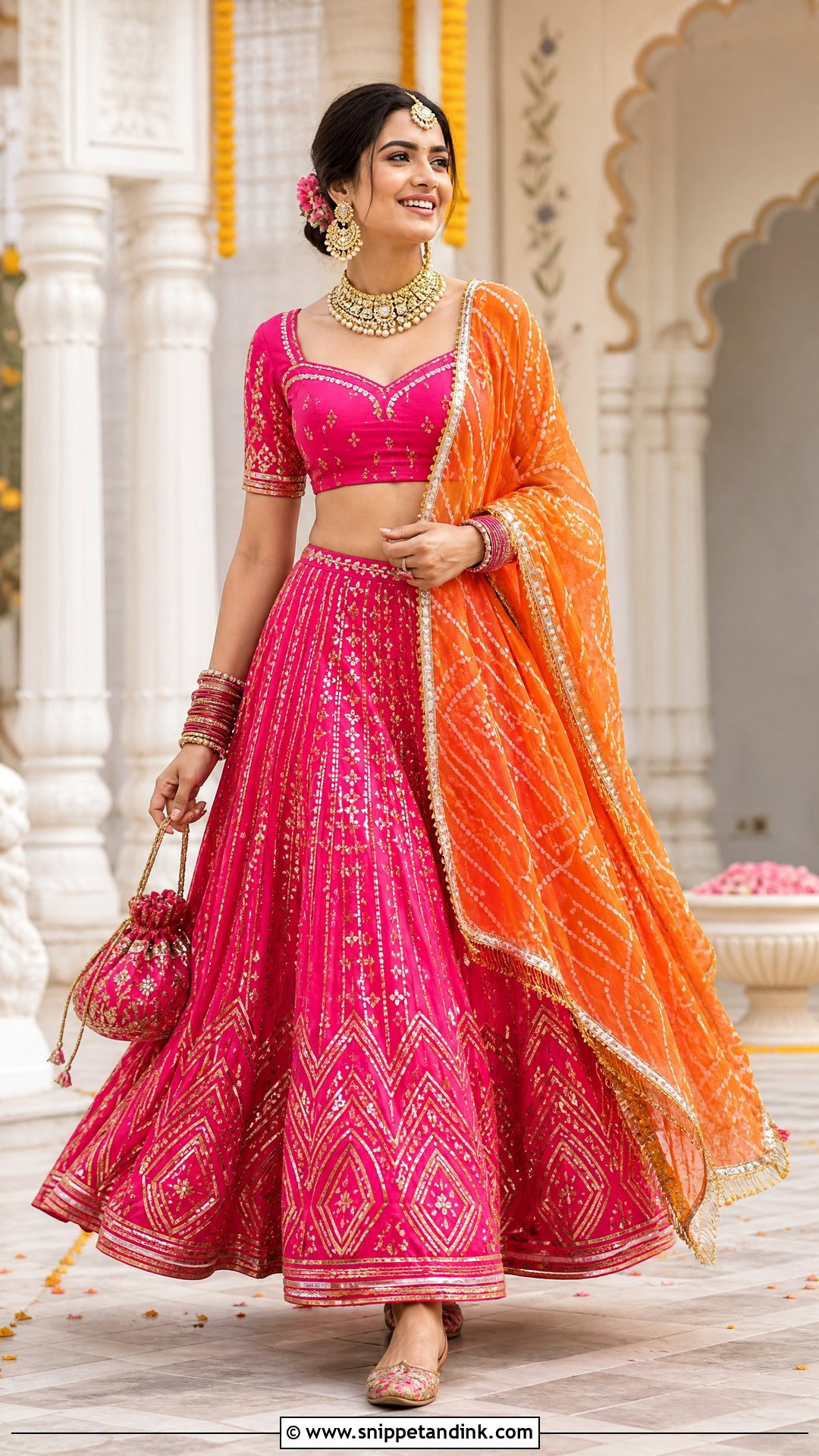
Rani pink suits a wide range of skin tones, and it keeps its color in both daylight and evening light. Choose a voluminous lehenga with floral gota patti, scalloped borders or small metallic motifs, a matching blouse, and an orange, red, or green bandhani dupatta for a bold combination. For a cleaner line, swap in a sheer pink dupatta with a narrow gold edge. Gold jewelry, a borla, colorful bangles, embroidered juttis and a small potli. Outdoors, a neat braid holds up in wind far better than a flower-wrapped bun. A bride at her sangeet, a sister of the bride, or a guest who wants to be festive without bridal red can all carry this one.
7. Saffron Leheriya Mehendi Lehenga
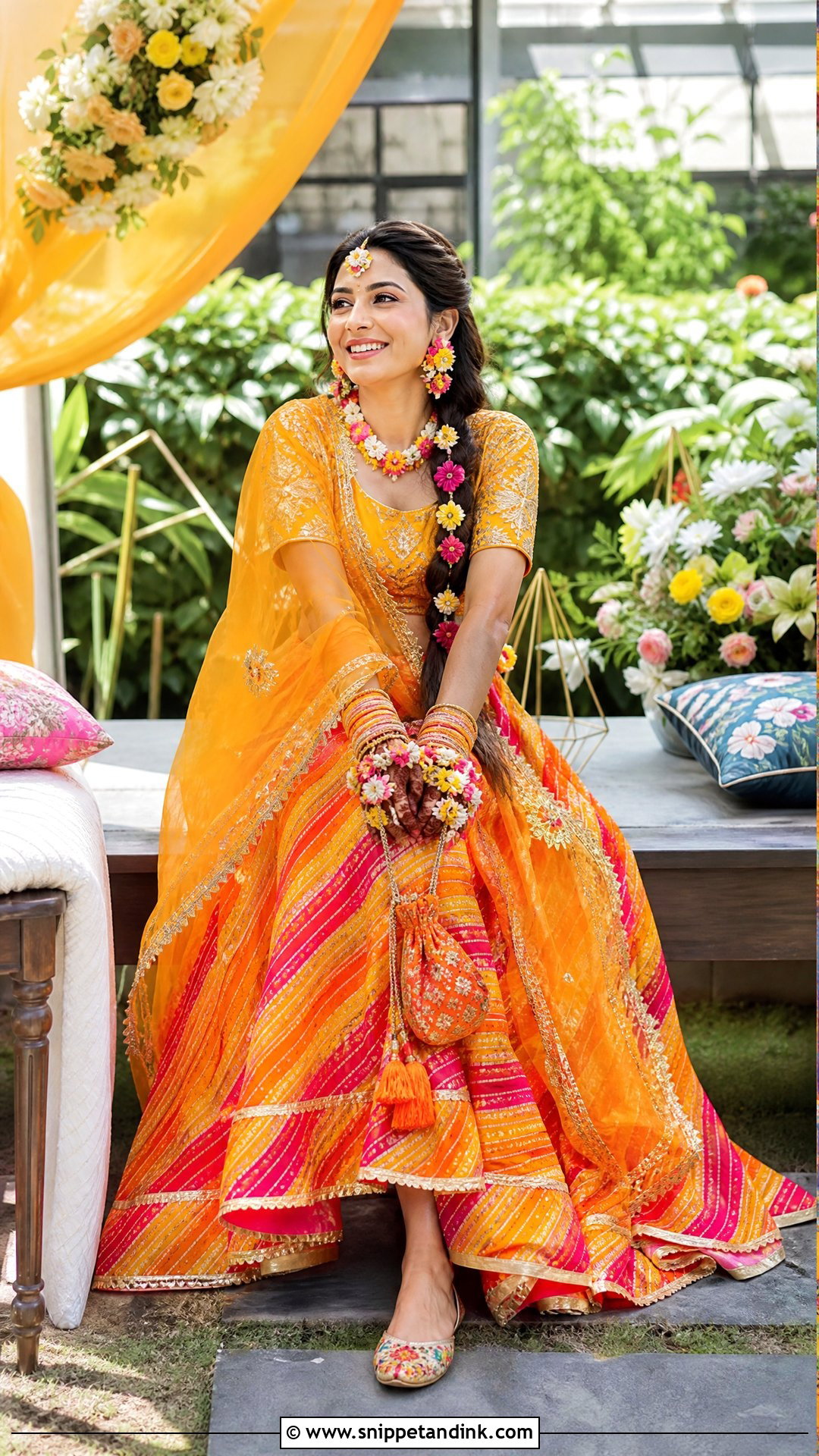
For a mehendi, the sleeves decide everything. Short or elbow sleeves let the artist work up the forearm without you holding fabric out of the way for hours. Try a saffron and pink leheriya lehenga with a simple cropped blouse and a light gota-edged dupatta. The skirt needs enough flare for dancing later but should be comfortable for a long sit, so I avoid stiff can-can here. Floral earrings, a light borla, stacked bangles, a fabric potli and cushioned juttis. A loose braid finished with small flowers or tassels, and soft, fresh makeup. Henna paste marks fabric, so pin the dupatta well away from the hands while the design dries. The bright waves of leheriya make the look feel rooted in Rajasthan without any heavy work.
8. Yellow Bandhani Haldi Poshak
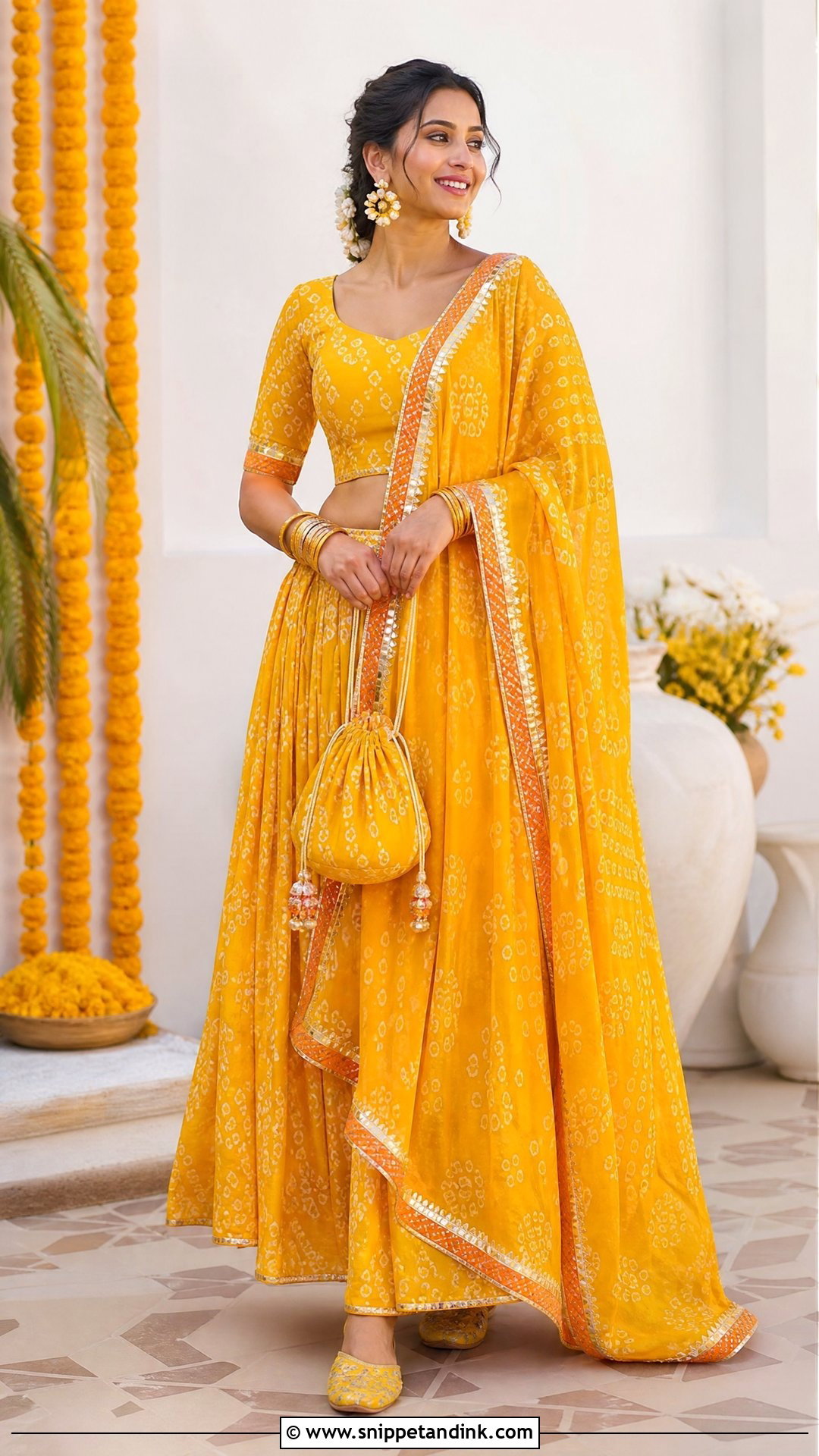
Haldi clothes have one job: surviving turmeric. Choose a lightweight yellow bandhani poshak with an easy ghagra, a comfortable kanchli and an airy odhni, with small gota details at the neckline, sleeves and hem. An orange or pink border adds brightness. Floral jewelry, simple bangles, flat juttis and a small fabric potli, with the hair in a braid, low ponytail or secure bun. Cotton-silk or georgette breathes best at an outdoor summer event. Turmeric stains set quickly and rarely leave silk, so I tell brides to treat this outfit as spent after the ceremony and to skip delicate handwork entirely. For a pithi or haldi, that’s all it needs to be.
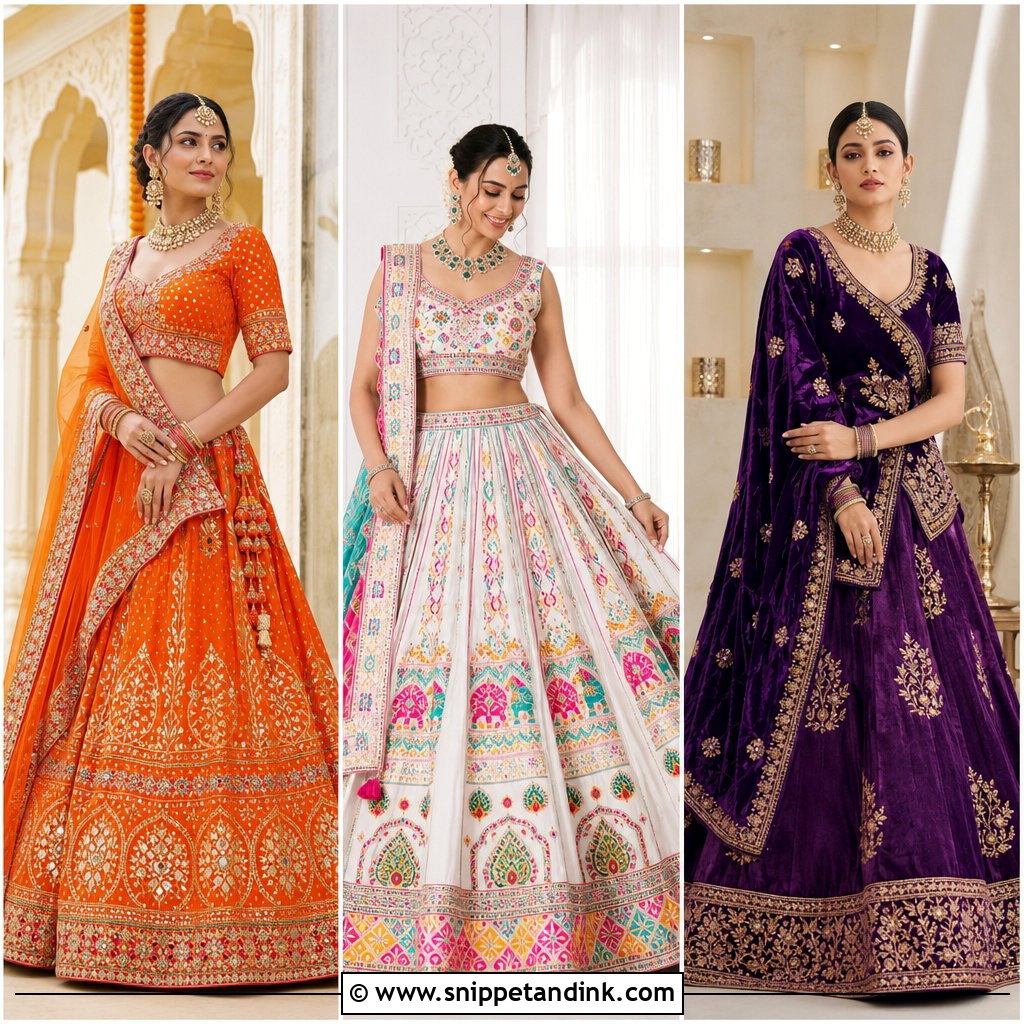
9. Orange And Pink Ghagra Choli
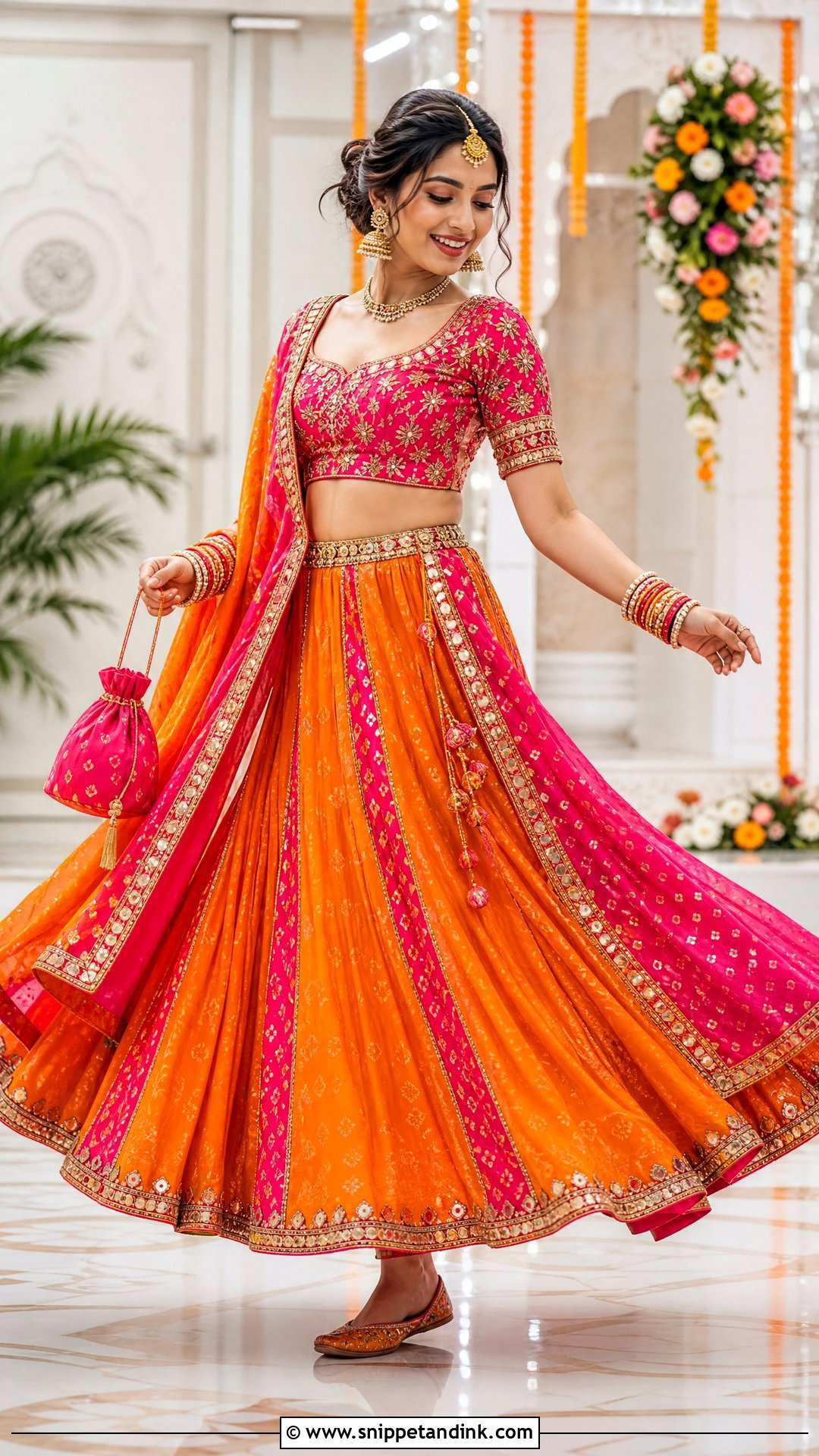
Orange and pink together feel like a Rajasthani celebration in two colors. Start with an orange flared ghagra with pink panels, gota borders or small mirrors, then a fitted pink choli and a two-tone odhni that pulls both shades together. Medium weight is the sweet spot: enough fabric to swing in a dance, light enough not to tire you by the second hour. Gold jhumkas, a simple borla, pink bangles, a waist belt and orange juttis, with a small pink potli. A side braid or half-up style. It also coordinates easily across sisters and cousins, each wearing a different ratio of the two colors at a sangeet or welcome party.
10. Ivory Gold Rajasthani Reception Lehenga
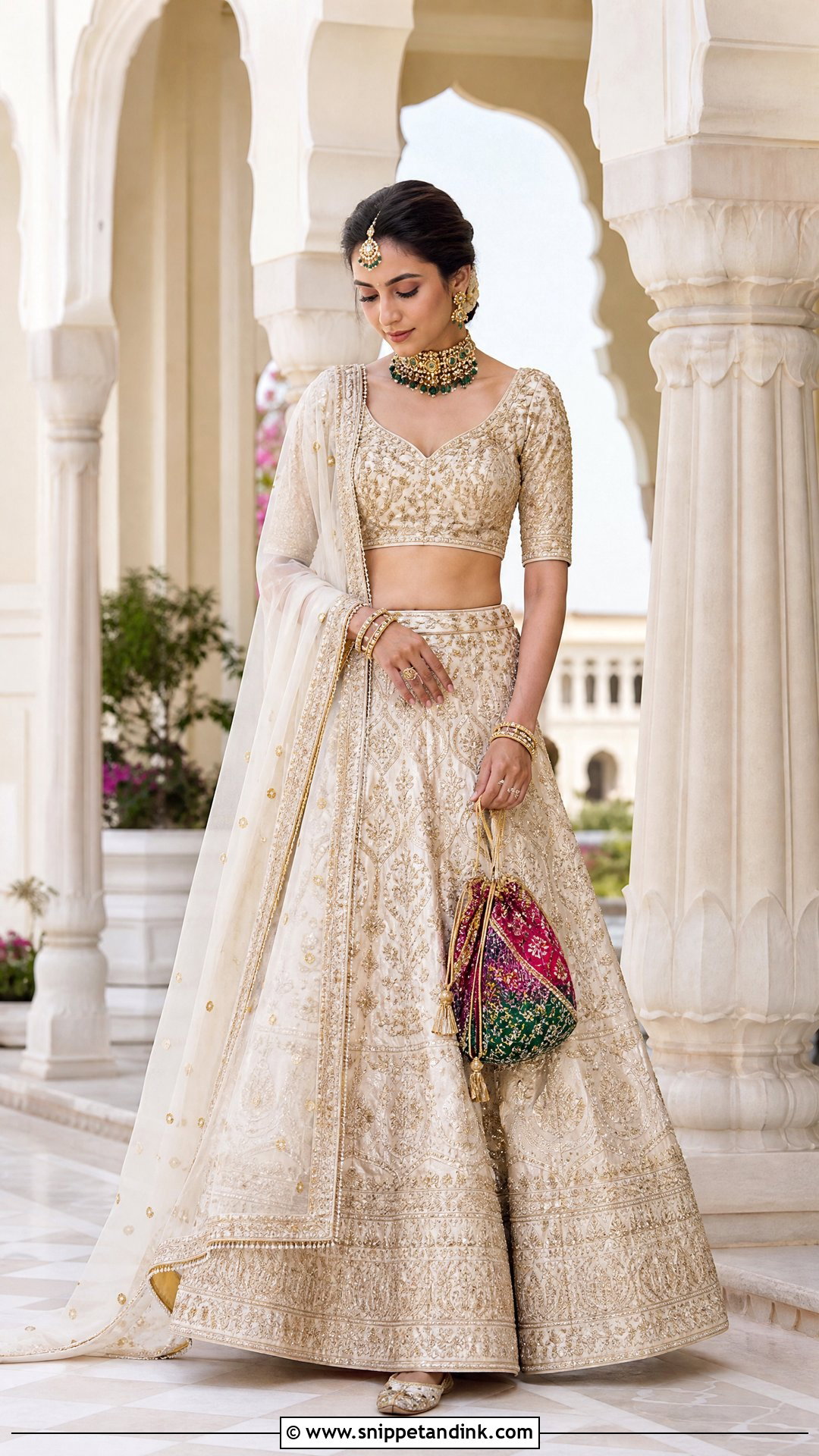
After days of saturated color, an ivory reception lehenga looks fresh. Choose ivory silk with gold gota patti, zari borders and placed paisleys or florals, a fitted blouse and a sheer ivory dupatta with metallic edging. Bring the Rajasthani character back through a bandhani-lined border, a borla or a bright embroidered potli. Emerald jewelry gives contrast; pearls keep it tonal. Gold juttis or block heels, depending on the floor. Ivory silk yellows when stored in plastic or near light, so plan where it will live afterward before the wedding, not after. A sleek bun and luminous makeup. It works as a bride’s second look and for mothers or sisters who want something formal.
11. Pastel Pink Rajputi Poshak
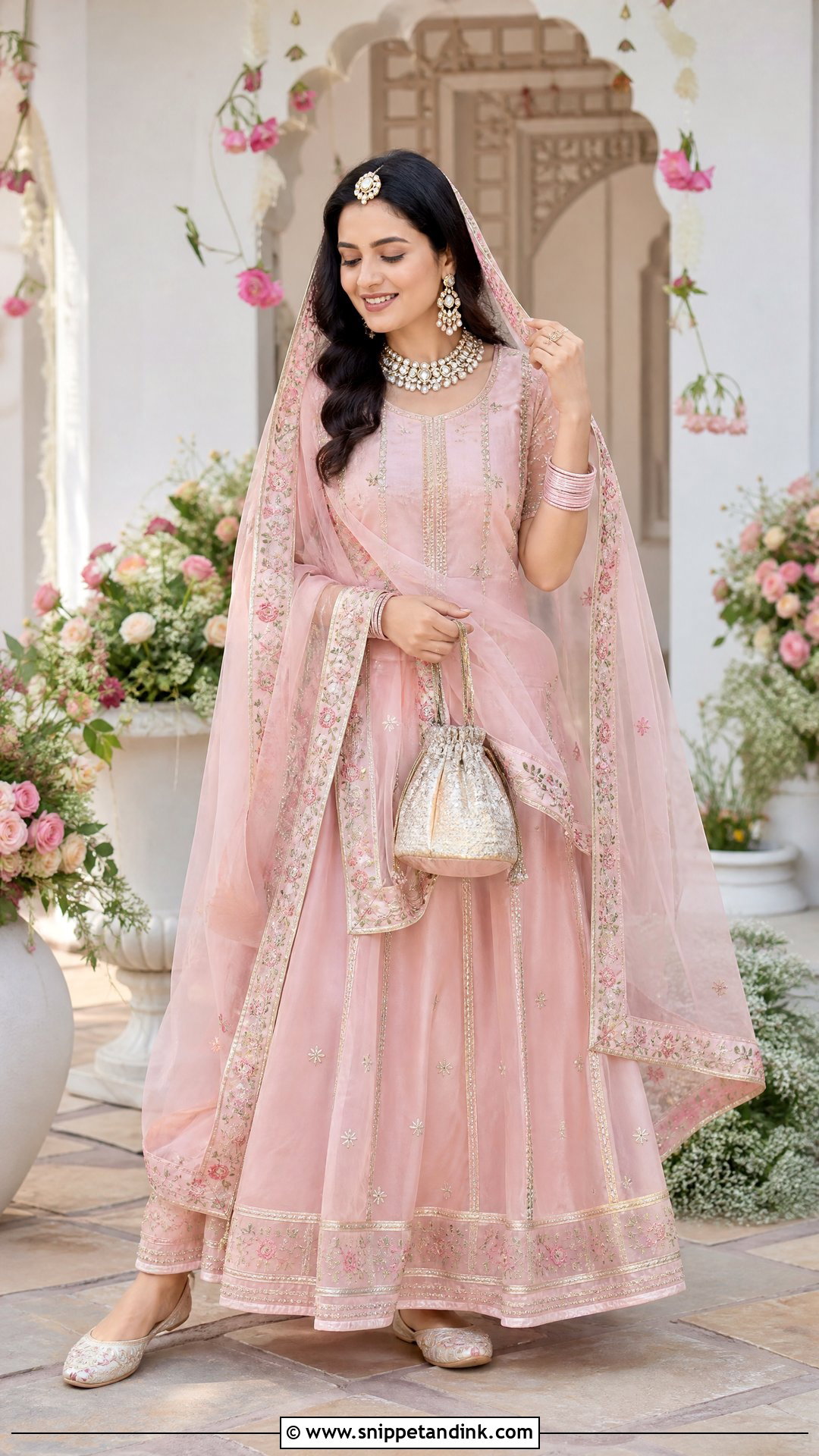
Pale pink softens the strong shape of a poshak. Choose a flowing ghagra with silver-gold gota, pearls or delicate florals, a fitted kanchli, and a sheer odhni draped over the head or pinned across one shoulder. Pale colors flatten in photos, so a deeper rose border is doing real work here; it gives the camera an edge to find. Pearl and kundan jewelry, a small borla, blush bangles, pale juttis and a compact potli with subtle metallic detail. Wear loose waves only if the odhni stays off the head, because a covered drape needs a low bun to pin into. Engagements, daytime receptions, a wedding brunch or the vidaai suit this softer palette.
12. Teal Zardozi Rajasthani Lehenga
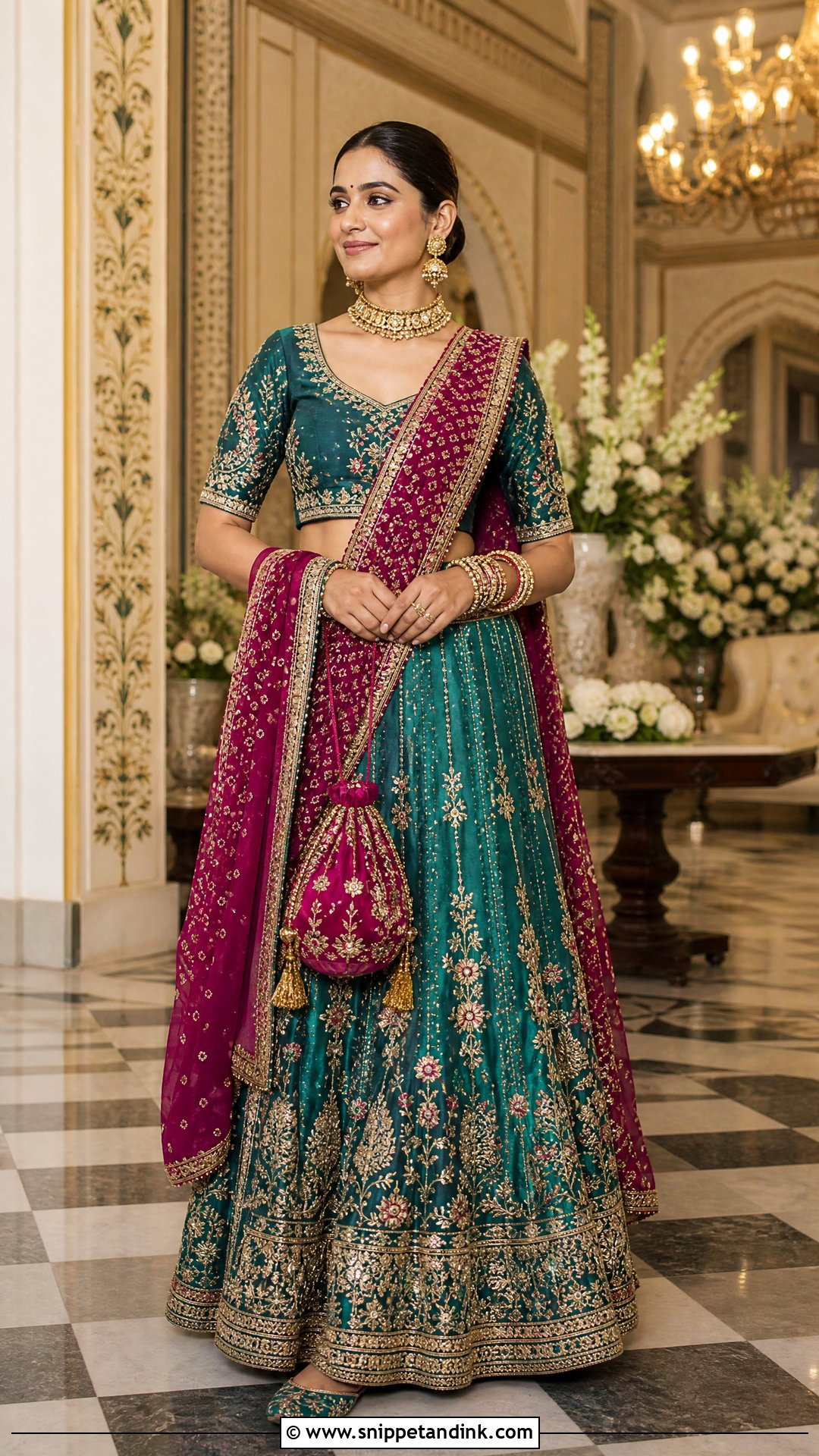
Teal is the unexpected color that still looks rooted in tradition, especially under gold zardozi. Pick silk or raw silk with zardozi, paisleys and a broad border, a matching blouse, and a magenta or orange bandhani dupatta for regional color. Antique gold choker, earrings, bangles and an optional borla. Raw silk has natural slubs and a dry feel, so it doesn’t cling in a warm room the way satin does, which I find makes it easier to wear through a long evening. Teal juttis and a magenta potli tie the accessories back to the dupatta. A center-parted bun or a long braid with small ornaments, bronze eyes and a muted rose lip suit an evening sangeet or a palace venue.
13. Purple Mirror Work Ghagra Choli
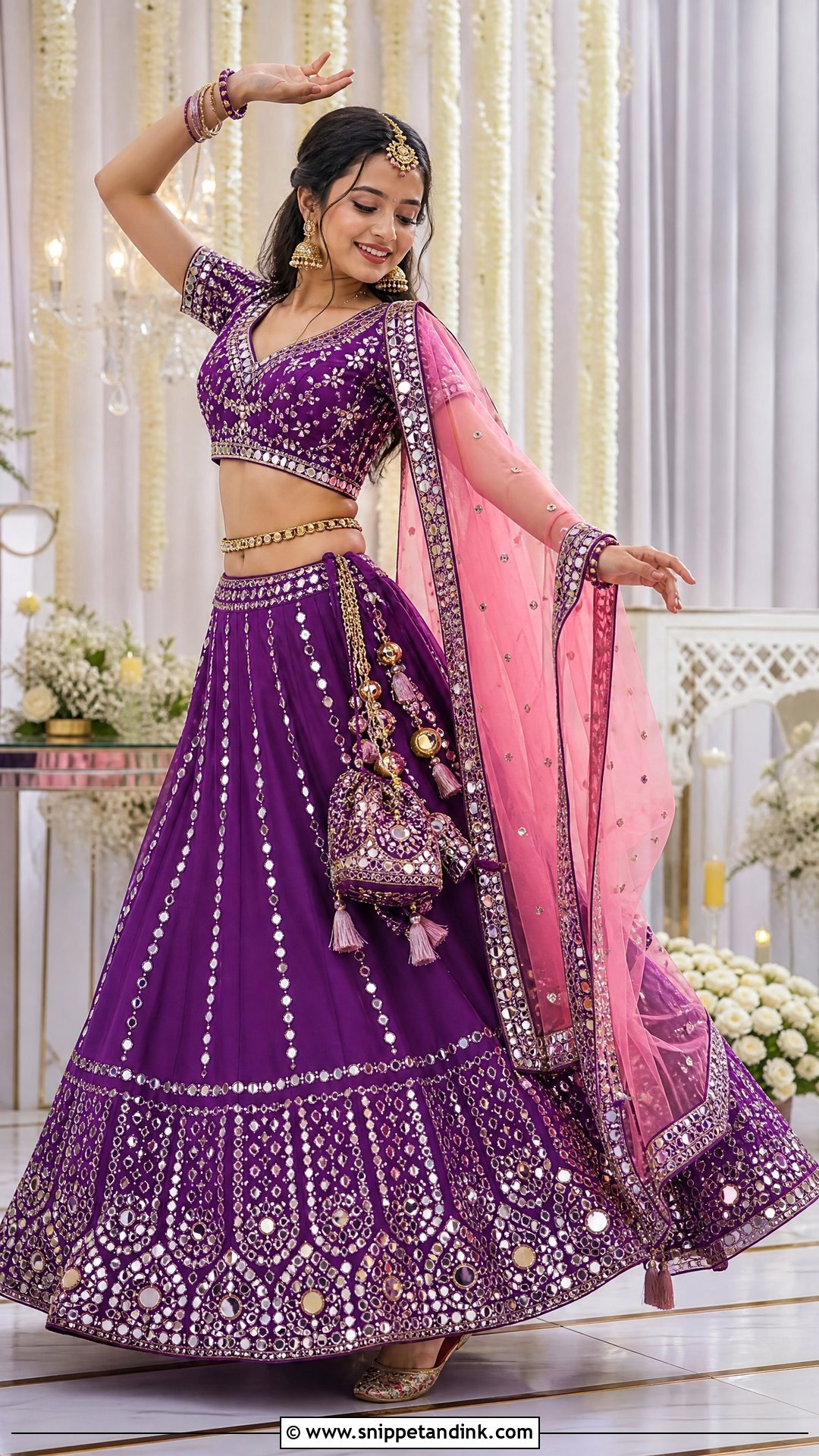
Purple mirror work under sangeet lights is sparkle enough, so the jewelry has to step back. Choose a violet or deep purple ghagra with controlled mirror embellishment, embroidered panels and a gota hem, plus a choli with a comfortable neckline and a sheer purple, pink or orange dupatta. Gold jhumkas, a slim borla, a few bangles and a delicate waist belt are plenty. Mirrors flash in camera light, so I keep the skin fairly matte with a touch of glow only on the cheekbones; shimmer on top of mirrors looks oily in photos. Cushioned juttis, a small potli and a high braid or half-up style keep it dance-friendly for a guest who wants detail without bridal weight.
14. Red Bandhani Saree Wedding Outfit
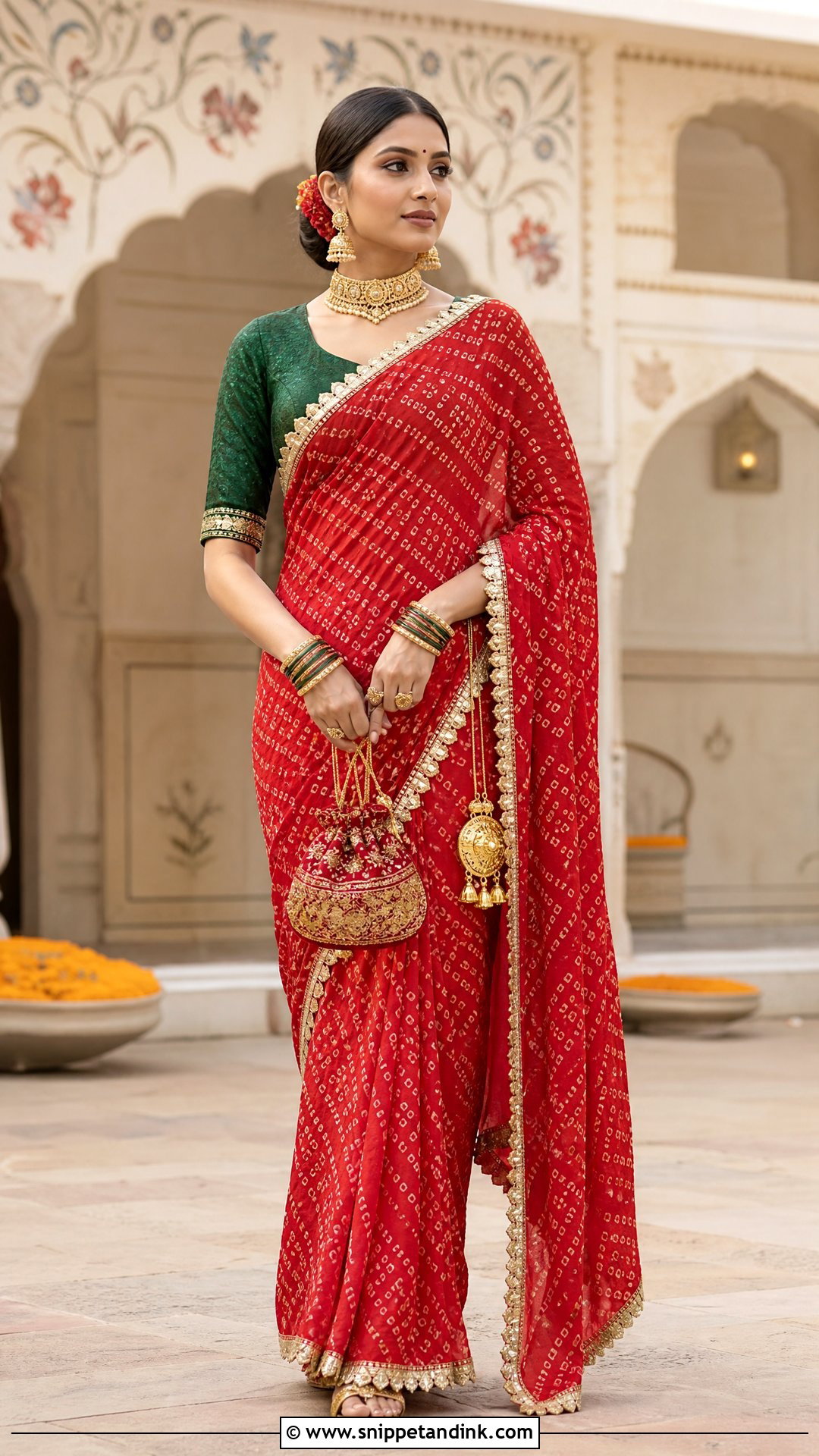
A red bandhani saree suits anyone who would rather drape than carry a full lehenga. Choose silk, georgette or chiffon with a broad gota patti border and small tie-dye dots, and a structured gold, green or red blouse with elbow sleeves. Georgette and chiffon bandhani are slippery, so I use more pins at the pleats than I would on cotton and fix the pallu to the blouse at the shoulder. Bring the pallu over the head for the ceremony. A borla, aad-style choker, jhumkas, stacked bangles and gold sandals or juttis, with a low bun so the jewelry shows. Mothers, aunts and married guests often choose it, and with a heavier border and layered jewelry a bride can wear it to a smaller function.

15. Green Leheriya Saree With Gota Blouse
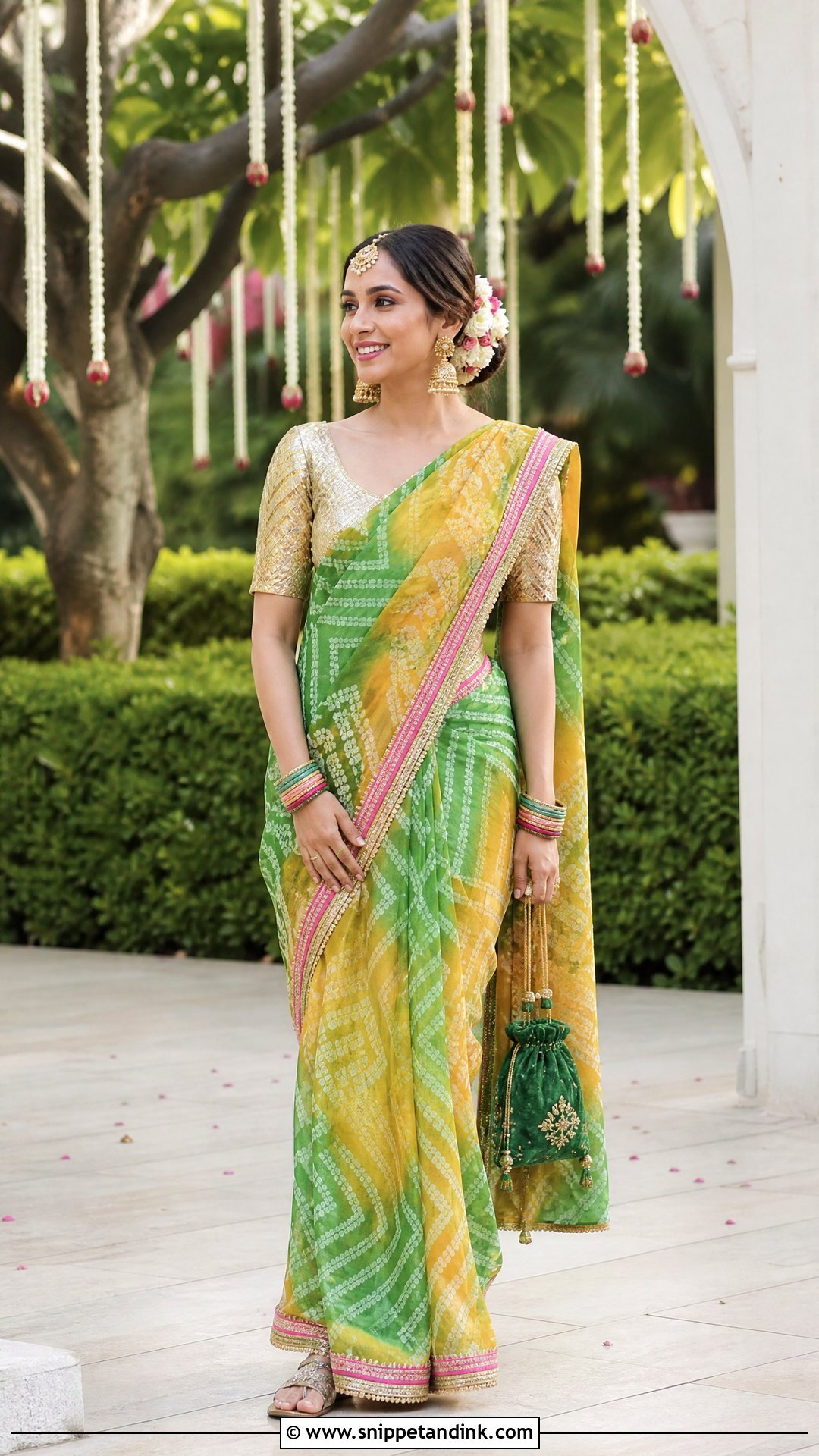
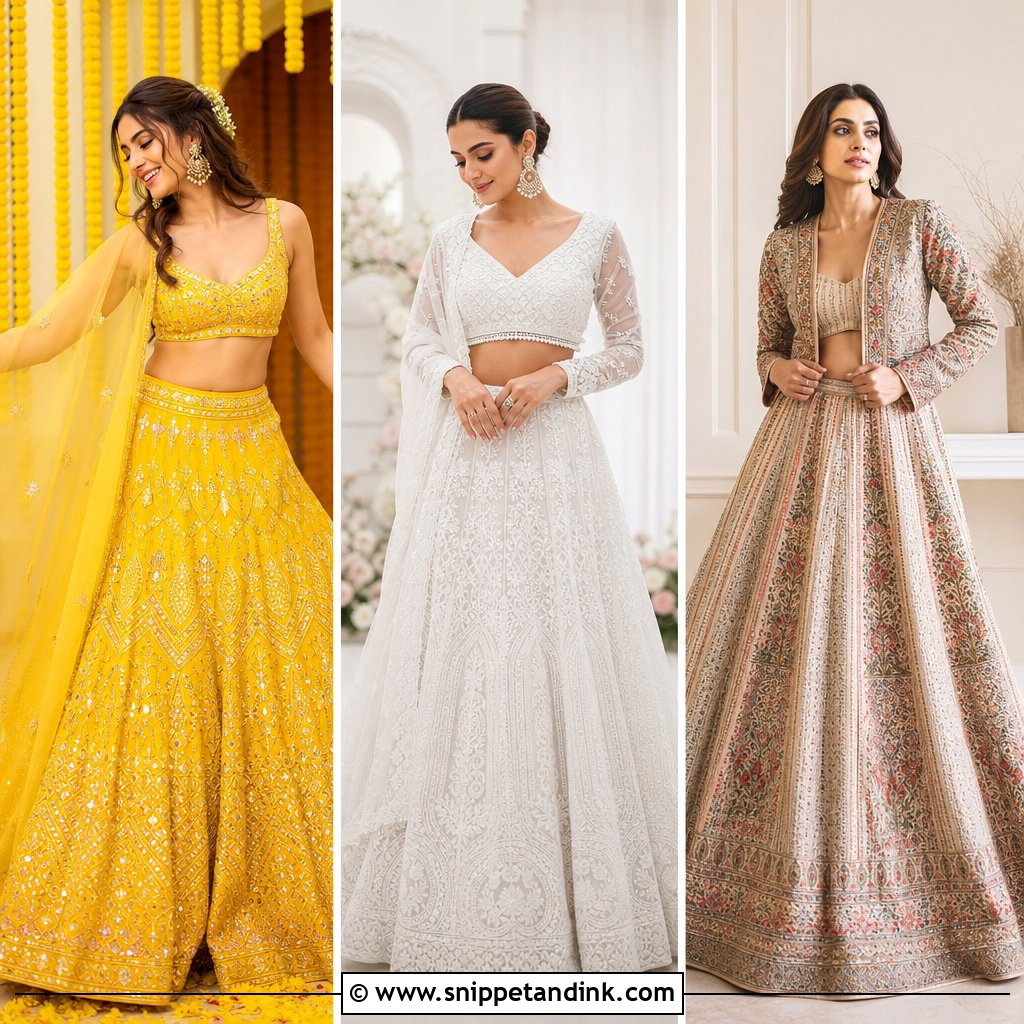
Leheriya works on a saree because the diagonal lines flow with the drape instead of fighting it. Select a lightweight green and yellow leheriya with a fitted gold gota blouse, adding a pink border if you want contrast. Keep the pleats neat and pin the pallu so it survives greetings, photos and dancing. Gold jhumkas, a small borla or maang tikka, stacked bangles and a coordinating potli, with flat metallic sandals or green juttis. A low bun with flowers or a polished side braid. Gota blouses can scratch the inner arm, so ask for a soft lining before the event, not halfway through it. Mehendi, a daytime ceremony or a warm destination wedding suit it.
16. Printed Anarkali With Bandhani Dupatta
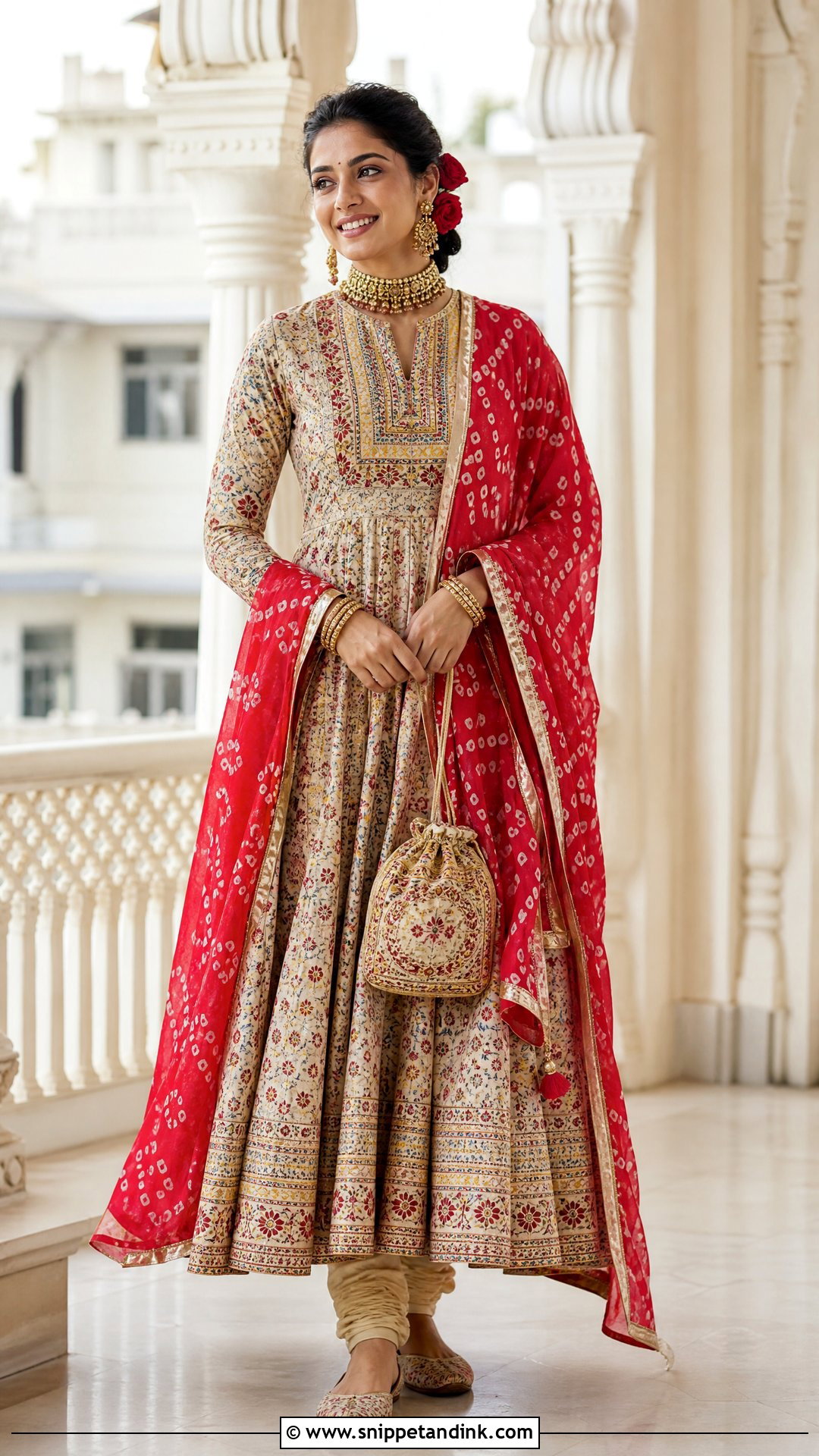
An Anarkali is the comfort pick in this list: one long piece, no separate skirt to manage. Choose a floor-length style with Rajasthani block prints, gota accents or small embroidered motifs, fitted through the bust and flaring gently below, over slim churidar, with a vivid red, pink or yellow bandhani dupatta. A gold choker, jhumkas, bangles, an embroidered potli and flat juttis. Cotton-silk for daytime, chanderi or georgette for evening. Churidar legs are cut long so they gather at the ankle, and that gathering should sit above the shoe, so try them with your juttis. I often suggest this to older guests and expectant mothers, since the skirt falls free from the bust.
17. Peplum Kurti And Lehenga Set
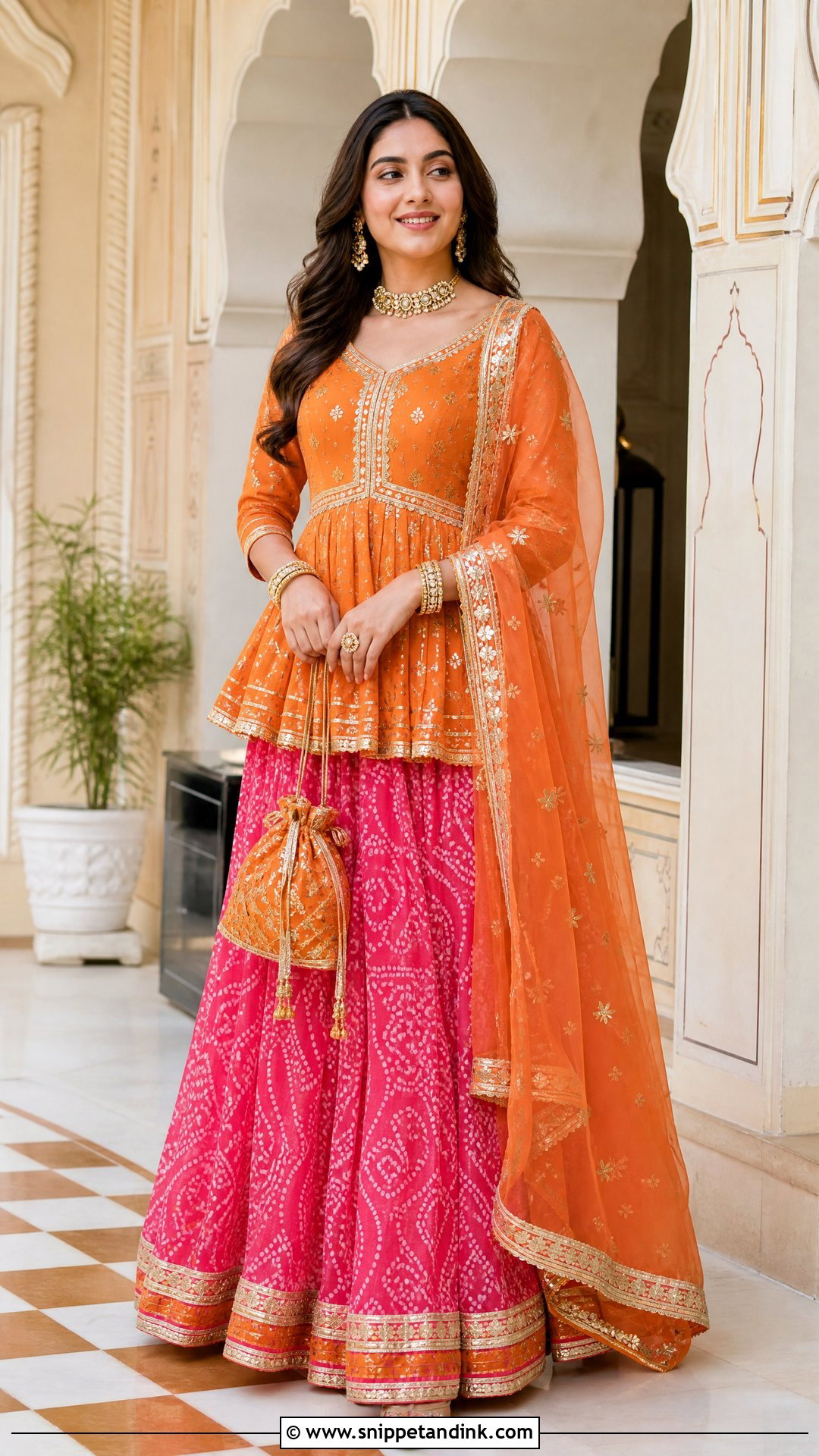
A hip-length peplum kurti over a lehenga gives coverage and a modern line together. Choose a fitted peplum in gota patti or delicate zari with a flowing bandhani or solid silk lehenga; pink and orange feel playful, maroon and gold formal. Wear a light dupatta over one shoulder so the peplum stays visible. A choker, drop earrings, bangles, a small potli and embroidered juttis, with a sleek ponytail, braid or center-parted bun. The peplum’s flare should start at the natural waist, not below it, or it adds width at the hips, and I pin it at a fitting to check exactly where it breaks. Women of different ages and builds can wear it to a sangeet, engagement or family dinner.
18. Jacket Lehenga With Rajasthani Embroidery
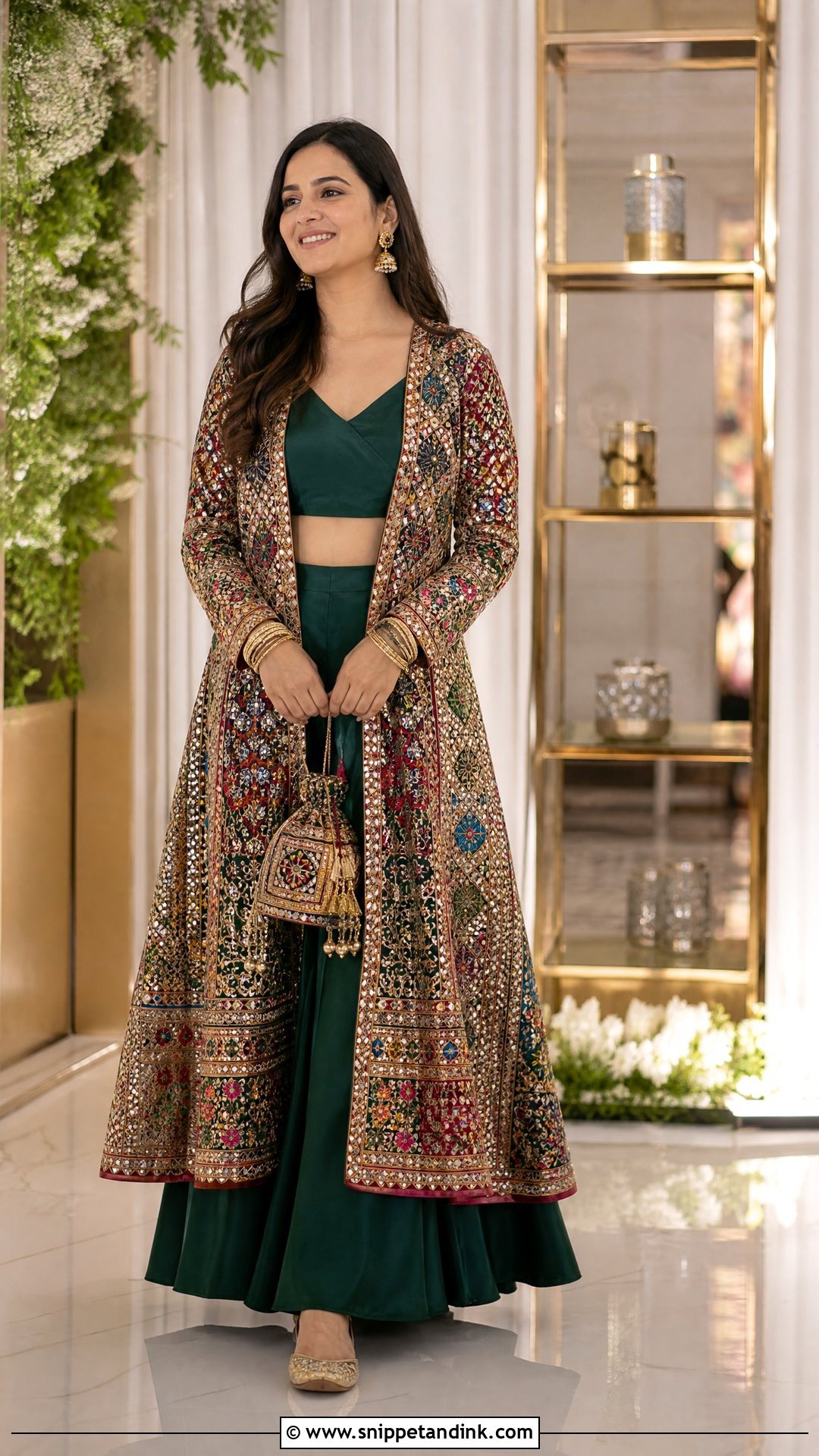
A long embroidered jacket can carry all the decoration so the rest stays simple. Start with a plain or lightly worked silk skirt and fitted blouse, then layer an open-front jacket with mirror work, gota borders, block-printed panels or threadwork. Keep the jacket streamlined. A flared jacket over a full skirt adds volume in every direction. With that much outer detail, skip the dupatta or wear one lightly over a shoulder. Medium earrings, stacked bangles, a structured potli and metallic juttis, with a sleek bun or soft waves. Sit down in it before the event to check the fronts hang evenly. It suits a reception, sangeet or cool evening, and it’s a good guest choice for coverage without a bridal poshak.
19. Sharara Set With Gota Patti
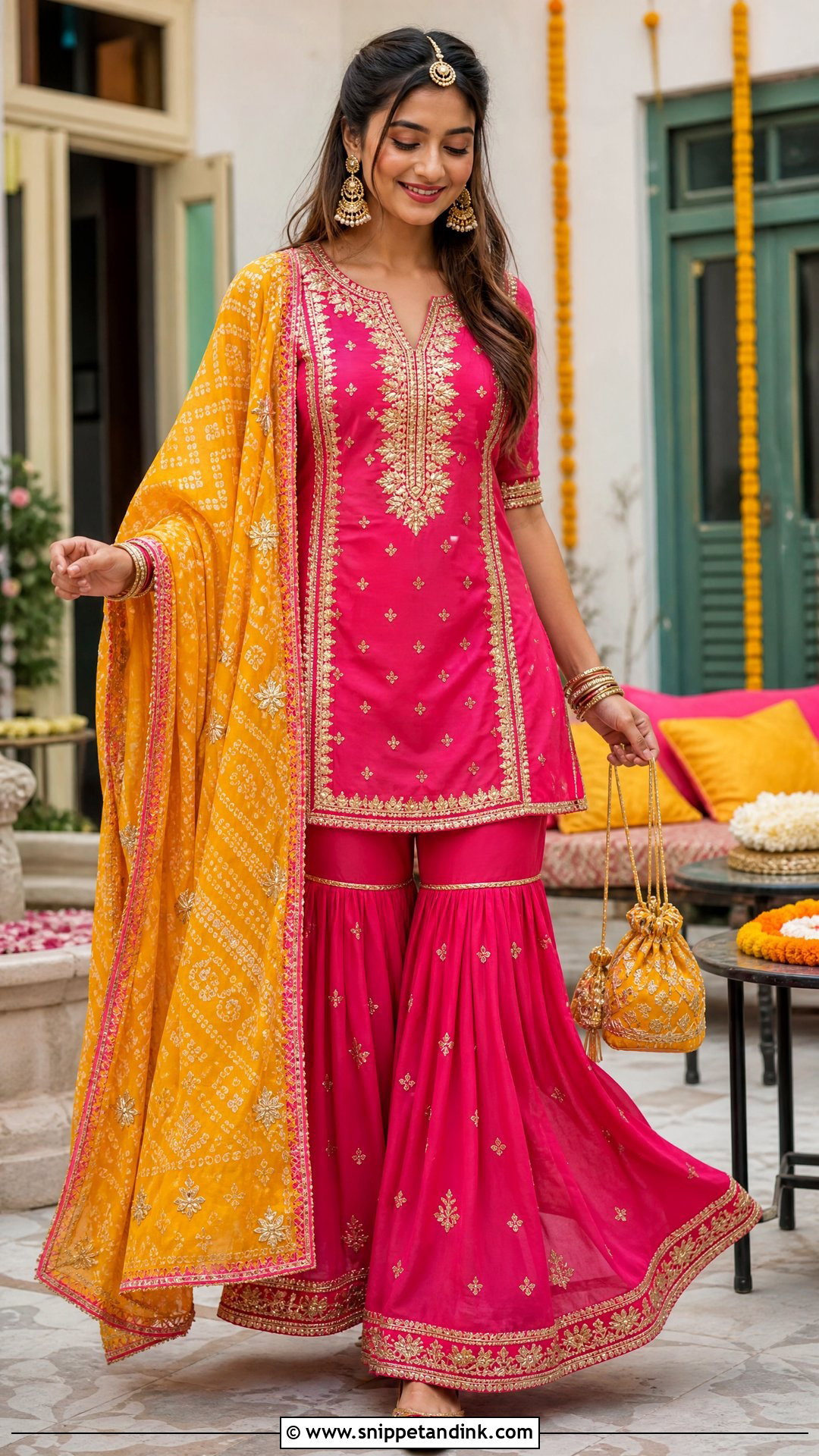
A gota patti sharara set is the most practical outfit for a long party night, since divided legs let you walk and dance freely. Choose a short kurti with a structured neckline and wide, flowing sharara pants in rani pink, emerald, saffron or royal blue, with a contrasting bandhani dupatta edged in metallic. A maang tikka or small borla, jhumkas, bangles, a drawstring potli and pointed juttis. Sharara flares are generous, so hem them to the exact shoes you’ll dance in and take stairs carefully. A braid or relaxed low bun. Younger guests, bridesmaids and family can wear it to a mehendi, sangeet or welcome lunch.
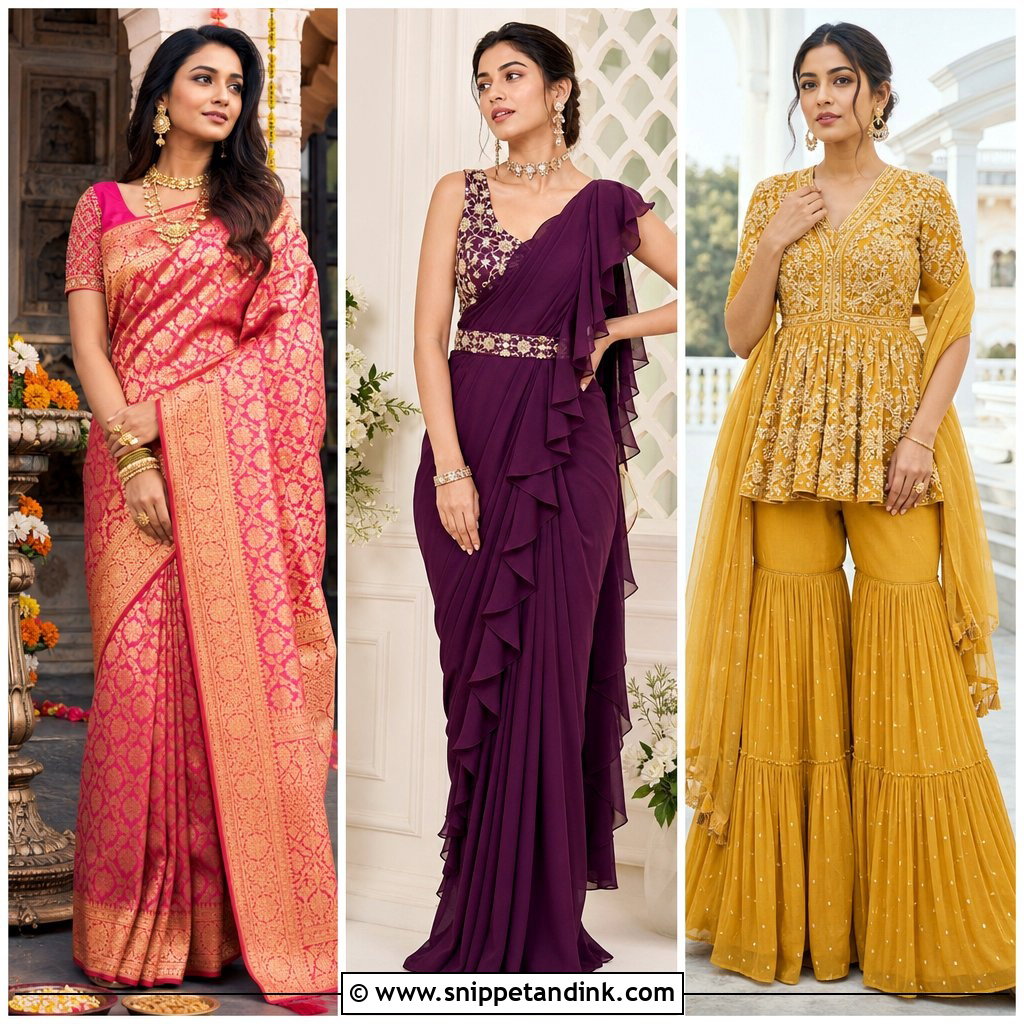
20. Multicolor Rajasthani Wedding Guest Lehenga
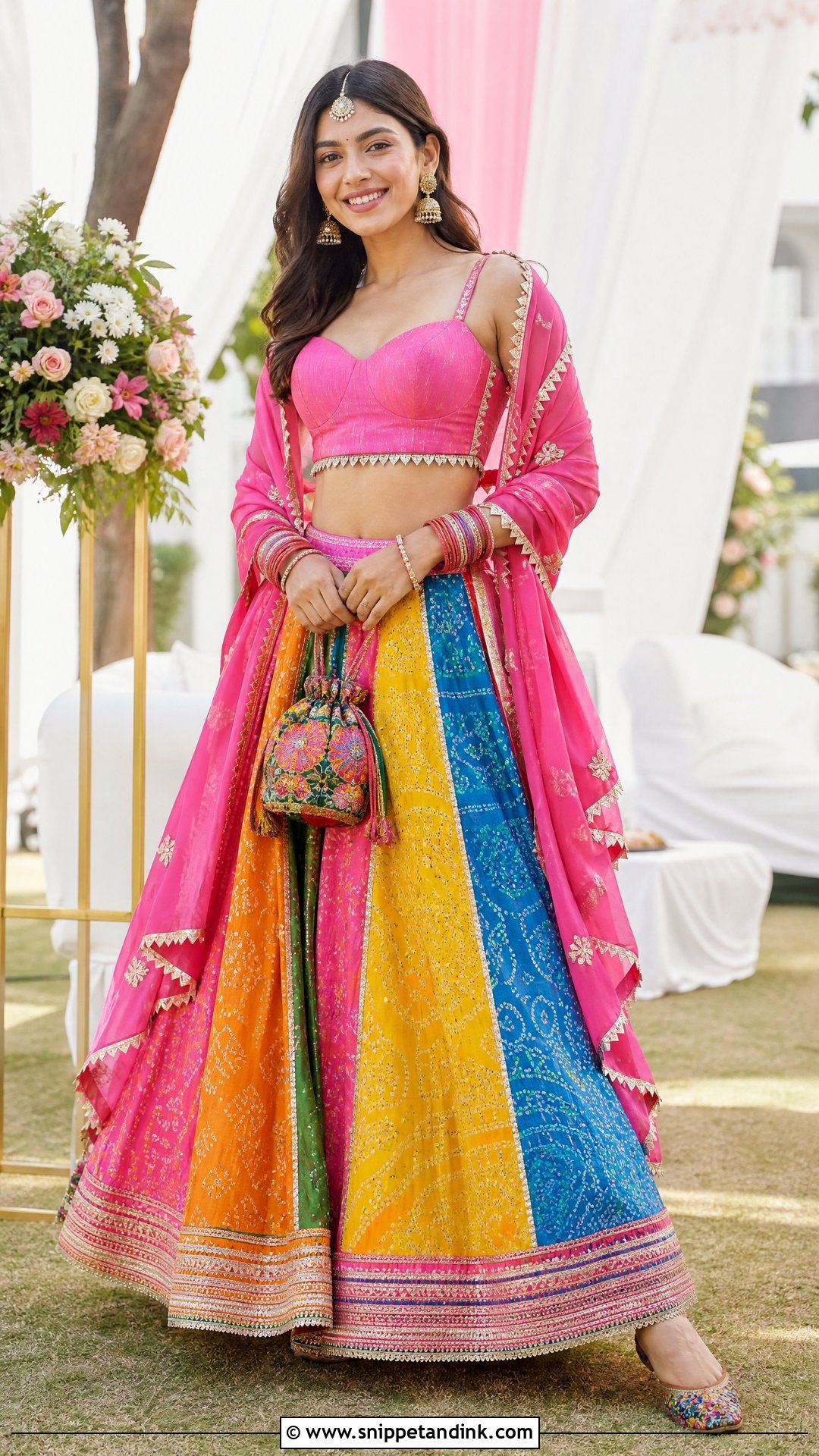
Can’t settle on one bright color? A multicolor lehenga lets you wear all of them. Look for a paneled skirt where pink, orange, green, yellow and blue come through bandhani, leheriya or block-printed sections, a solid blouse in one of the skirt’s colors, and a light gota-edged dupatta. As a guest, keep the embellishment moderate so you don’t read as bridal from across the room. Gold jhumkas, colorful bangles, a small maang tikka, juttis and a simple potli. For the blouse I usually pick the deepest shade in the skirt, because it anchors all those panels. A loose braid or low ponytail with fresh makeup suits daytime ceremonies, mehendis and colorful destination weddings.
How a Borla, Nath and Aad Stay Comfortable Through the Pheras
Rajasthani bridal jewelry is heavy, and each piece pulls in a different direction: the borla on the forehead, a large nath at the nose, an aad across the collarbones, bajuband on the upper arms. These are the fixes I set up before the bride ever stands up.
- Borla: it hangs from a chain or thread anchored at the crown. I pin it into a braided base rather than loose hair, so it stays centered on the forehead and doesn’t swing.
- Nath: a large nath pulls on the nostril. A chain hooked into the hair behind the ear takes most of the weight, and it’s worth practicing that hook before the day.
- Aad: it sits flat and wide, so check it against the kanchli neckline; a high neck pushes the aad up toward the chin.
- Bajuband: tie it firmly but leave a finger’s width of room, since arms swell a little in the heat.
- Heavy earrings: support chains looped into the hair keep the lobes from dragging by the end of the night.
Wear the full set at home for an hour, odhni included. If something aches or slips, that’s the moment to fix it, not in the middle of the ceremony.
Red for the Pheras, Every Other Color for the Rest
A red Rajputi poshak remains the strongest bridal statement in this tradition, while bandhani lehengas, leheriya sarees, gota shararas and printed Anarkalis cover every other function and every guest. Breathable fabrics belong to daylight; silk and velvet belong to cool evenings. Pin every dupatta in more places than feels necessary, wear the jewelry at home for an hour to test its weight, and dance in your shoes before the sangeet. Treat the textiles with some respect too. Bandhani, leheriya and gota are crafts with long histories, and they look best when they are the point of the outfit rather than a pattern added on top.
You'll Like These Ideas:






Leave a Reply