
I reach for a sharara whenever a bride or her family wants to look properly dressed for a function and still be able to sit cross-legged, climb onto a stage and dance without hitching anything up. The wide, flared pants carry the drama, so the top can stay shorter and lighter than a lehenga blouse ever could. What makes or breaks the outfit is usually not the embroidery. It’s the weight of the fabric, the length of the hem against your shoes, and how the dupatta is fixed. Organza and chiffon breathe at a daytime haldi; silk and velvet hold their shape at an evening reception. The 25 sets below are grouped loosely by function, with notes on what I’d check before buying each one.
Sharara, Gharara or Palazzo? Getting the Cut and Hem Right
Shops use these names loosely, so it helps to know what you’re looking at. A sharara flares from the waist or hip and widens all the way down. A gharara is fitted to the knee, gathered there, often under a band of gota or embroidery, and then flares out. Palazzos are wide but straight, without the dramatic flare. All three are lovely, but they move differently, and a gharara restricts how you sit more than people expect.
At a fitting I check four things before anything else:
- The hem, measured while you wear the exact shoes for the function. It should graze the floor, not drag. An extra inch of hem collects dust and gets trodden on during pheras.
- The waistband. Shararas often use a drawstring, and with several metres of fabric it sits heavier than it looks. I prefer an elastic back with a drawstring front for long functions.
- Lining. A sharara in organza or net without a full lining shows the outline of the legs in flash photography.
- How you sit. Sit on the floor in the trial room and stand up again. If you need to gather the fabric in both hands, the flare is too wide for a mehendi or haldi.
If you’re ordering from a tailor or online with custom sizing, give yourself at least four to six weeks, more for hand embroidery, and keep a week free for a second fitting. Readymade sets nearly always need the hem taken up.
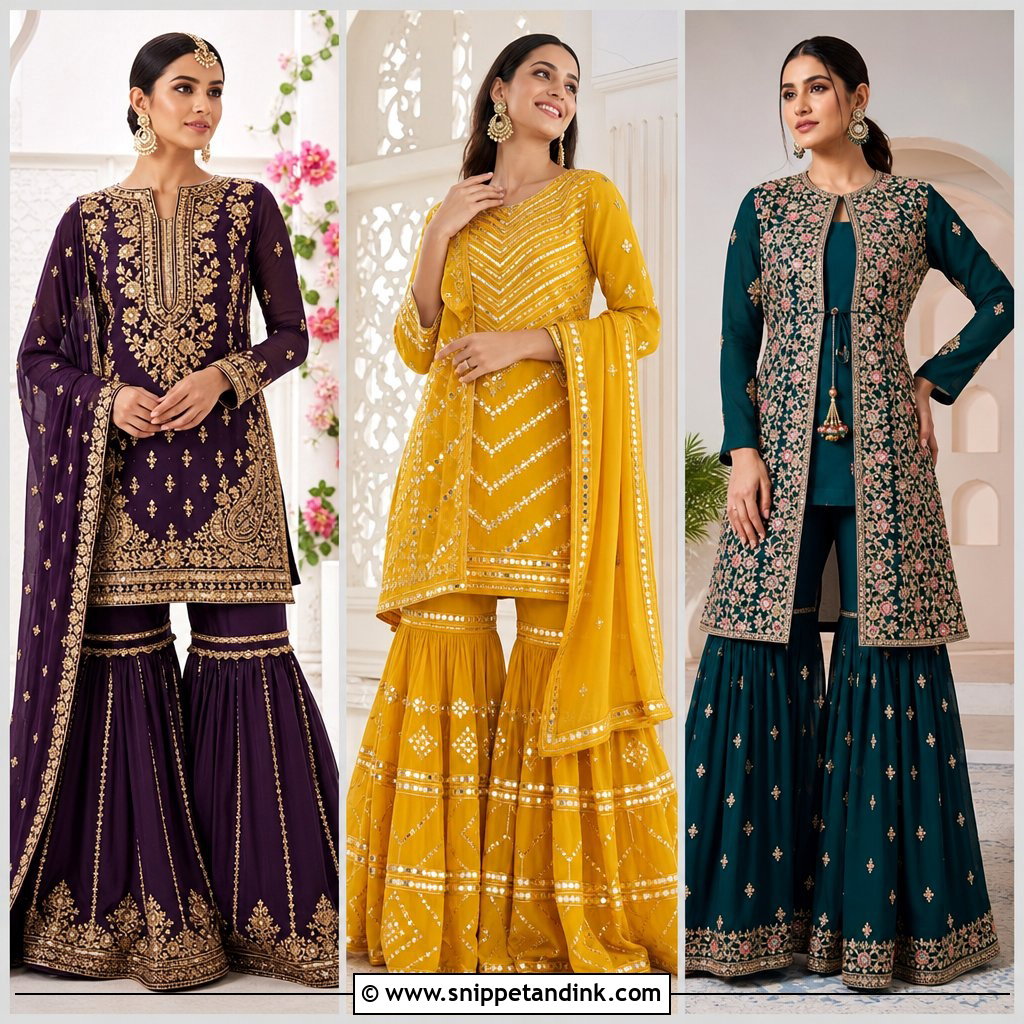
1. Yellow Sharara Set For Haldi
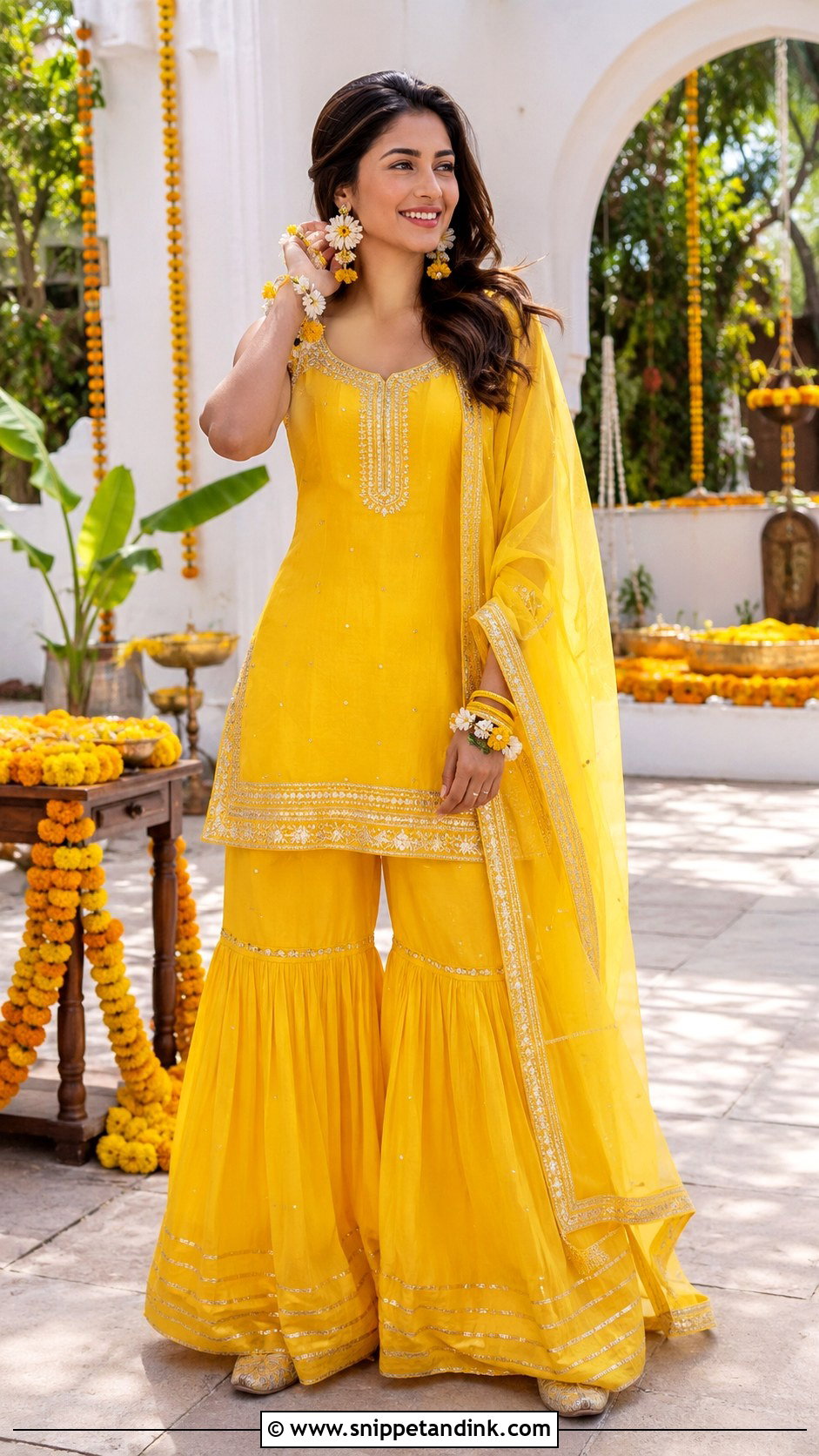
Haldi is the one function where I tell people to buy for the mess, not the photos. Turmeric paste stains cotton and silk permanently, so a yellow sharara set is popular partly because the stain disappears into it. Keep the kurta short, with gota patti or light thread work rather than anything glued, since glued stones lift once wet paste gets under them. An organza or chiffon dupatta dries quickly if it gets splashed. Floral earrings, a few bangles and flat juttis are enough, because you’ll likely be sitting on the floor for part of it.
2. Green Sharara Set For Mehendi
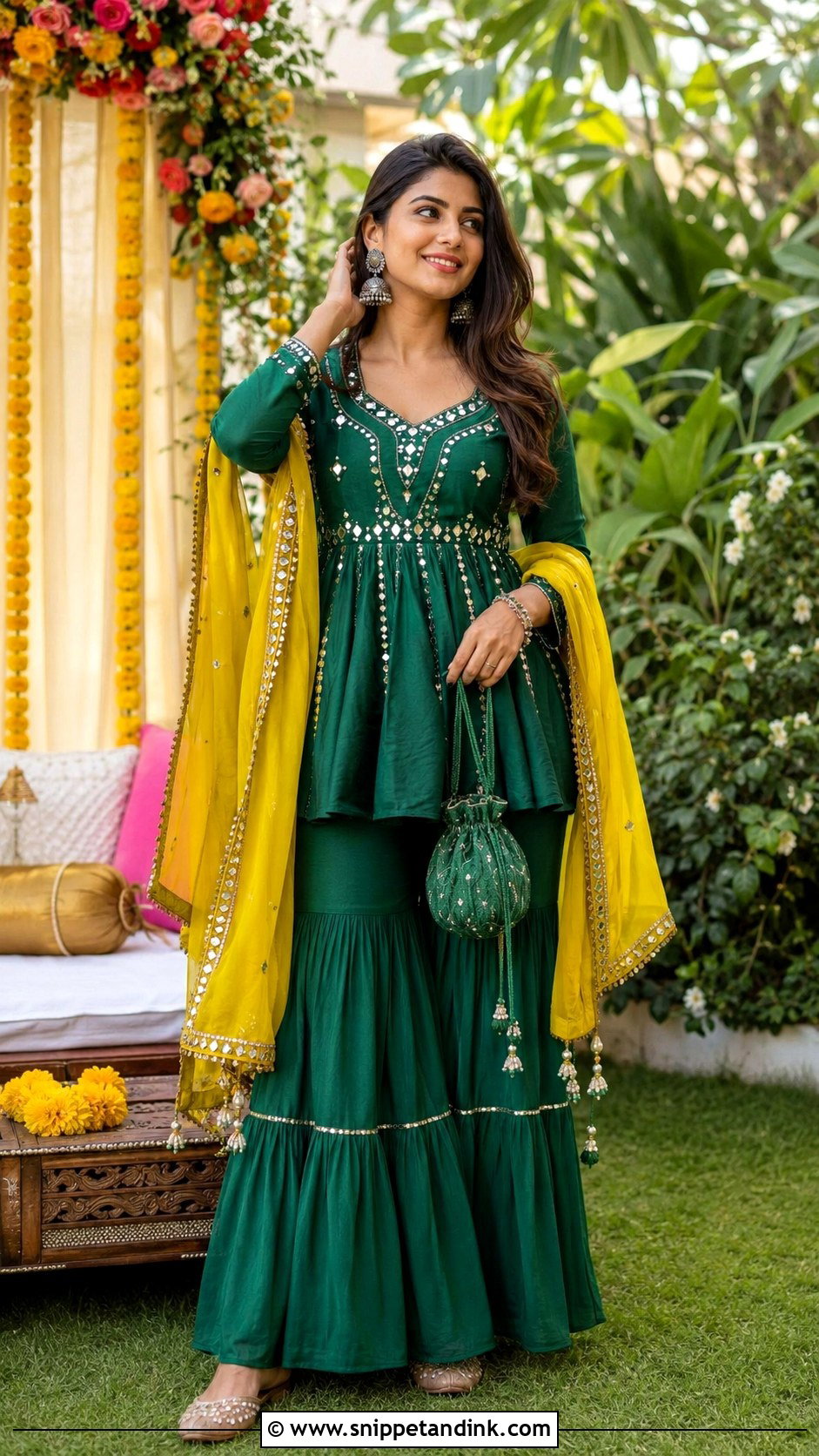
Green sits next to fresh henna in nearly every mehendi photo, and the dark orange-brown of a developing stain looks richer against parrot green or sage than against pink. The practical issue is the hands. Once the henna is applied, the bride can’t touch her dupatta, her bag or her hem for a couple of hours, so I keep the top sleeveless or short-sleeved and pin the dupatta firmly at the shoulder before the artist starts. A mirror-work peplum is festive without weight. Choose a sharara flare narrow enough that she can sit for a long application without yards of fabric bunching under her knees.
3. Pink Sharara Set For Wedding Guest
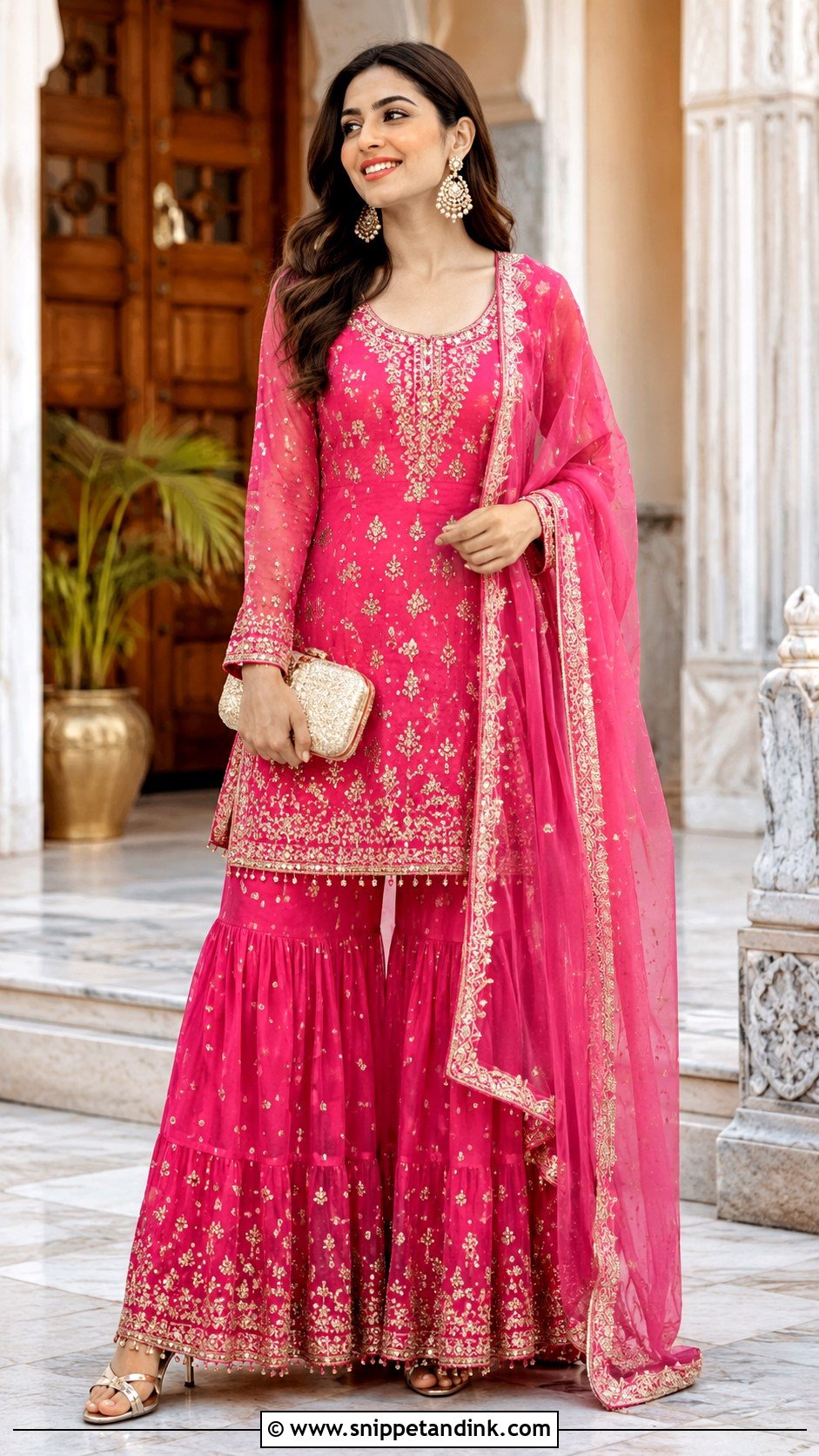
Pink is my default suggestion for a guest who isn’t sure what to wear, because there’s a shade of it for almost every complexion and almost every venue. Blush and dusty rose read well in daylight. Rani pink and fuchsia hold up under evening lighting, which flattens paler colours. I match the embroidery to the formality: sequins for a reception, zari for a ceremony. Gold heels, kundan earrings and a small clutch keep it finished, and a dupatta pinned over one shoulder gives the outfit a line it otherwise lacks.
4. White Sharara Set With Dupatta
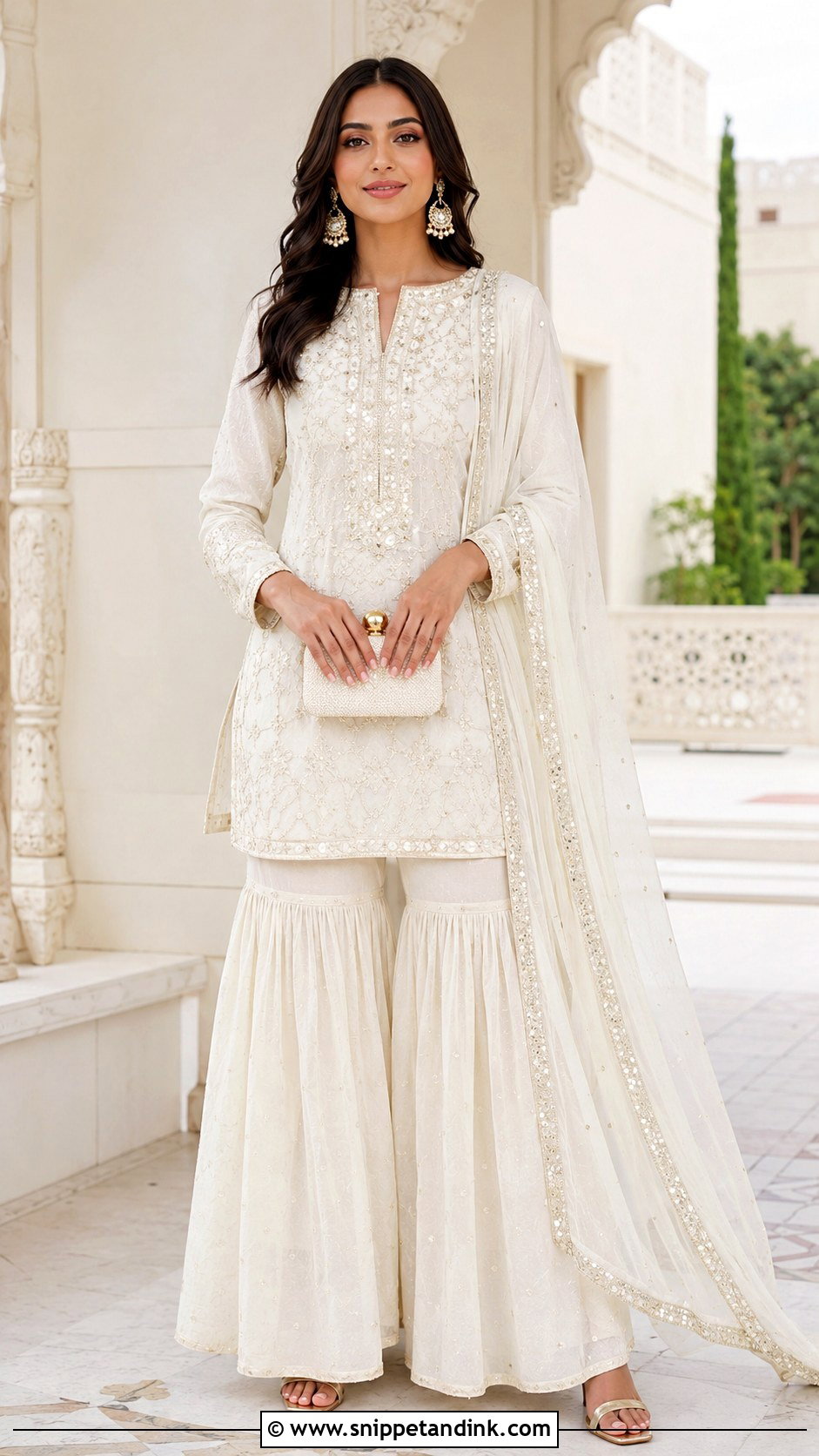
White and ivory need more care than any other colour on this list, because the fabric’s undertone shows. A cool white next to a warm skin tone can look flat in photos, so I always hold ivory and pearl next to the face before committing. Gold, silver or pastel embroidery is what keeps it festive rather than plain. A sheer dupatta with a scalloped edge adds finish. Check the lining in good light, too; cheap white shararas are often lined in a slightly different white, and it shows through organza. Pearl earrings and a kohl-lined eye suit daytime engagements and pre-wedding lunches.
5. Red Sharara Set For Bride
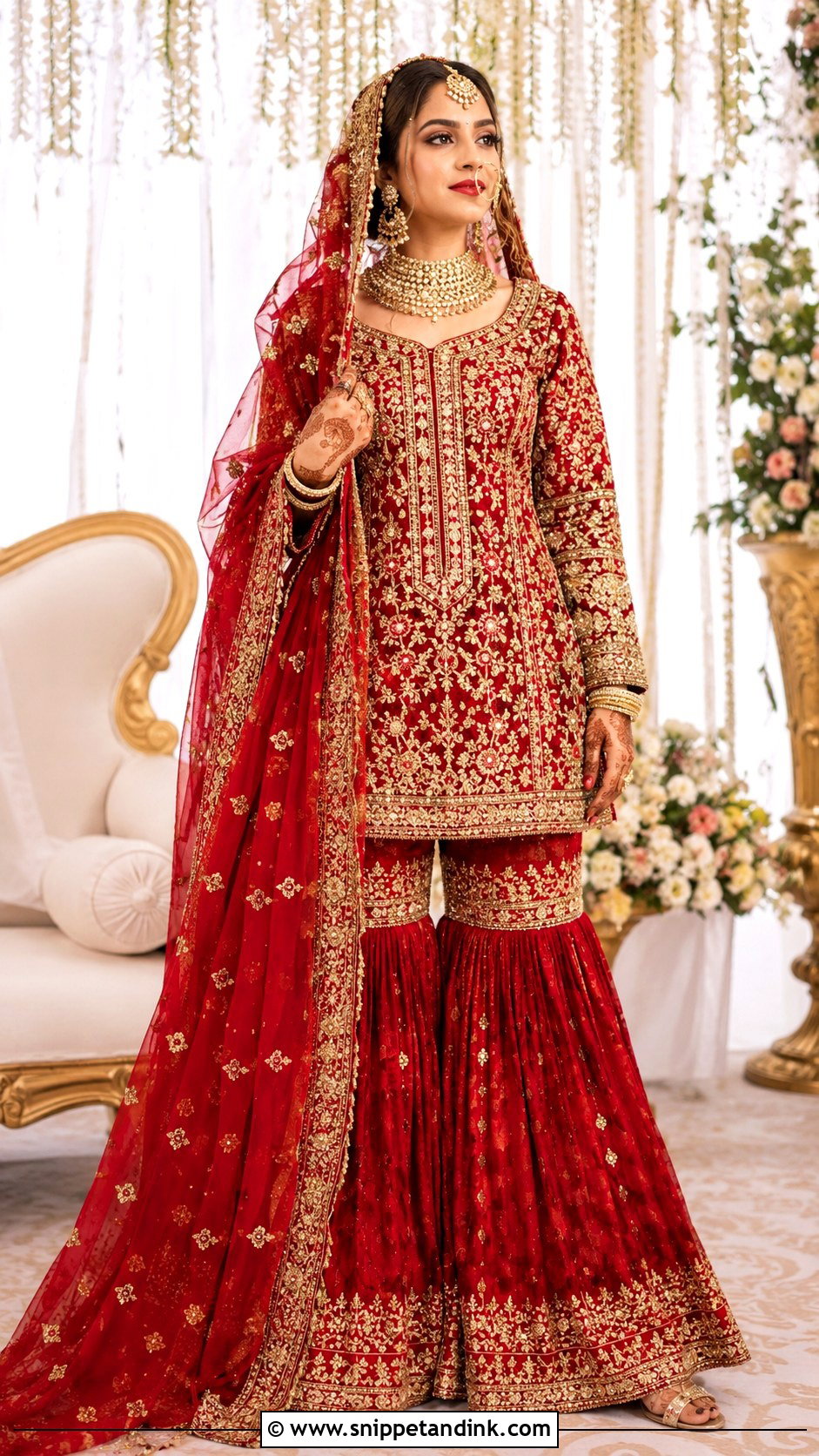
A red sharara is the choice I suggest to brides who want to look traditional at a nikah or a smaller ceremony but dread hours in a heavily worked lehenga. Put the weight into a short, richly worked kurta and a statement dupatta with zari, zardozi, or sequin detailing, and keep the sharara itself lighter so it moves. Deep red, maroon and sindoor tones all read as bridal on camera. Add a matha patti, choker and bangles. If you plan a second dupatta over the head, have it pinned at the trial; two heavy dupattas fight each other unless the head one is fixed to the hairstyle with U-pins first.
6. Pastel Sharara Set For Day Wedding
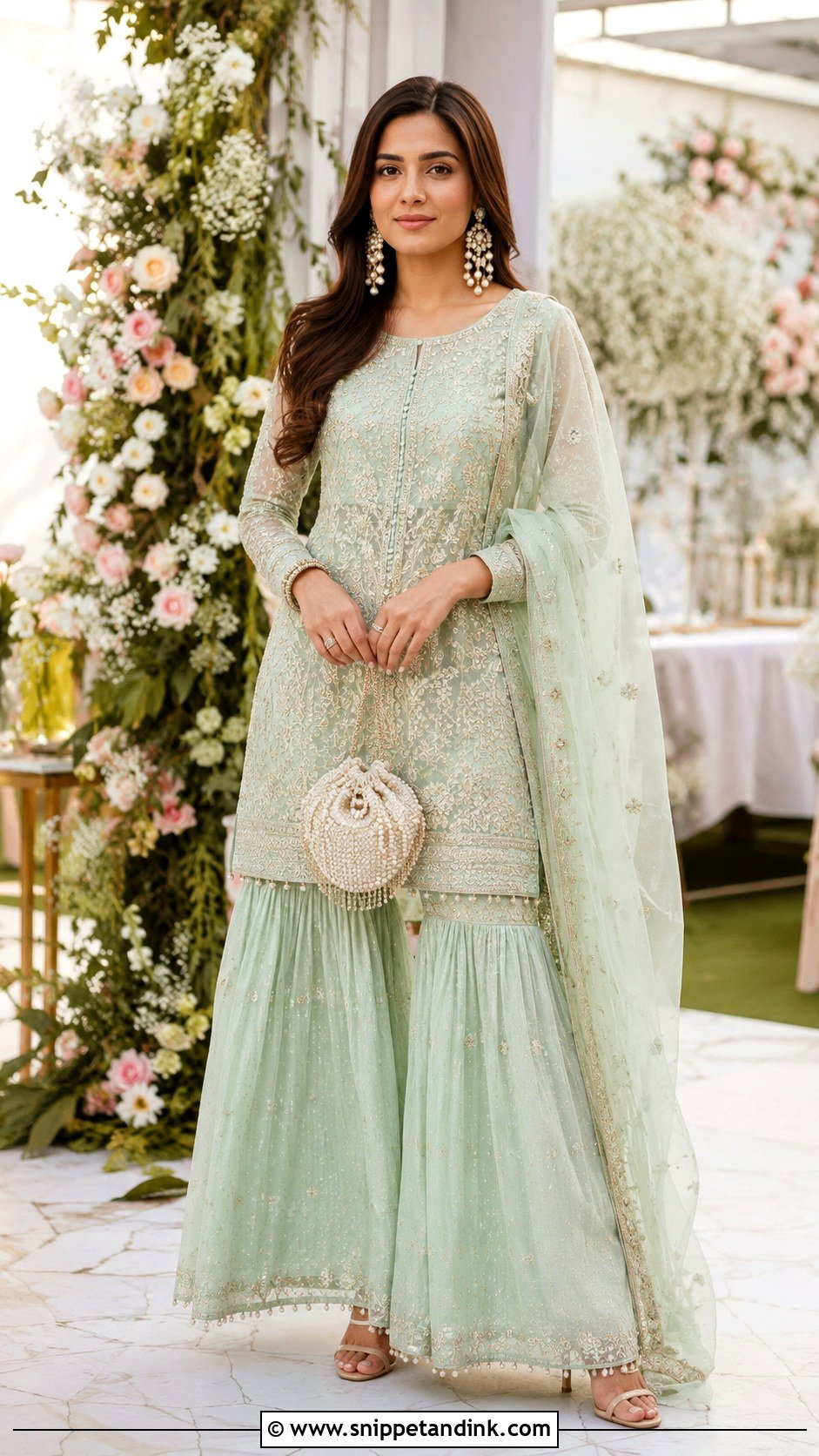
Natural daylight is kind to pastels in a way that mid-afternoon sun is not. Mint, powder blue, blush, peach and pistachio all glow in shade or soft morning light, but under harsh overhead sun they can wash out. If the function is outdoors at noon, I steer toward the deeper end of a pastel, such as peach over blush. Organza and georgette keep the outfit airy. Pearls, nude heels and soft waves or a low bun finish it without adding weight.
7. Black Sharara Set For Reception
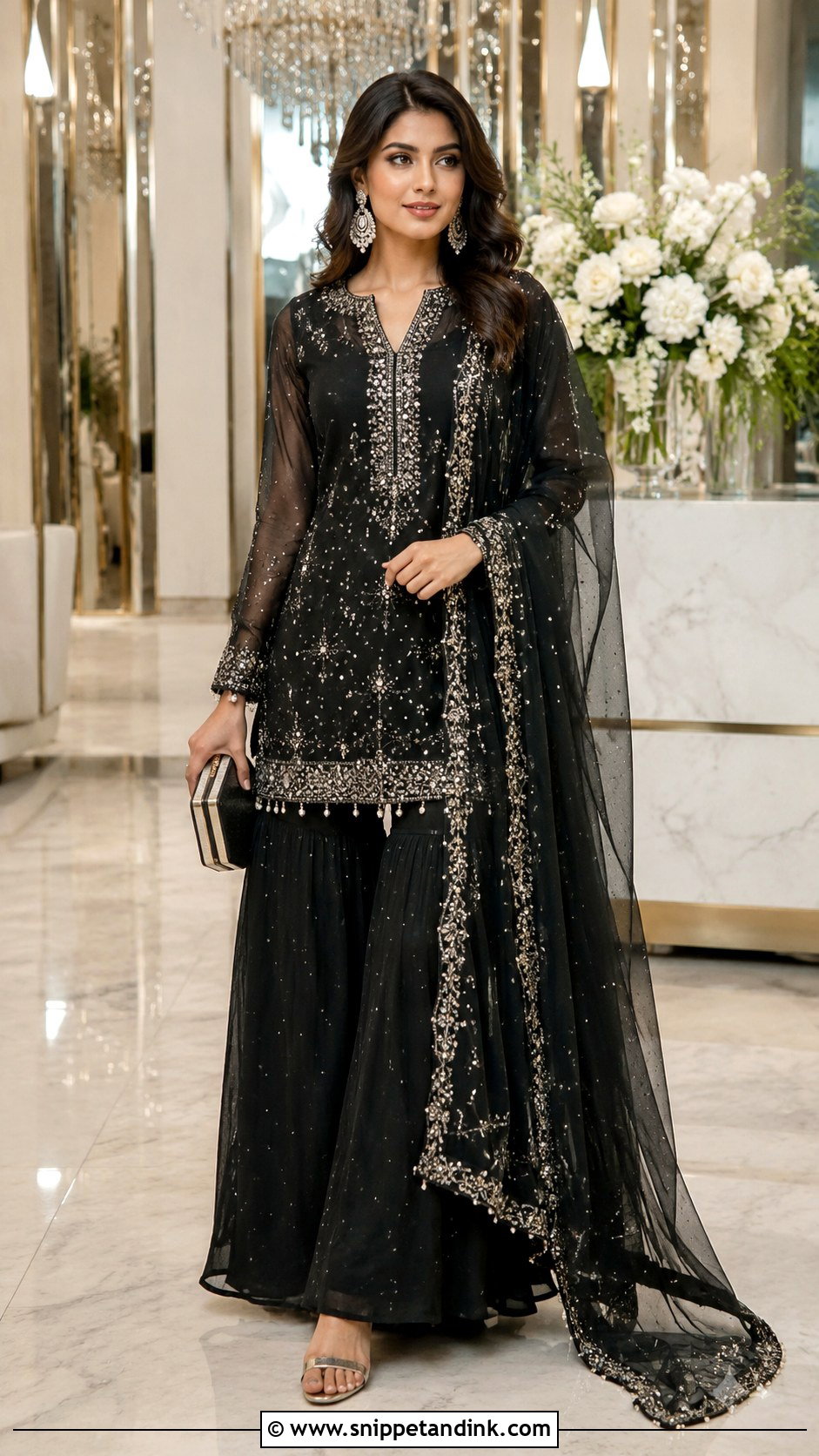
Some families still consider black unlucky at a wedding, so before I suggest it to a guest, I ask whether the couple’s family would mind. For a modern evening reception it’s often welcomed. Georgette, velvet or silk with gold, silver or tonal embroidery keeps it festive. A fitted short kurta or jacket balances the wide pants. With black, restraint pays off: one pair of statement earrings, metallic heels and a box clutch. Pile on more and the outfit starts to look busy rather than sleek.
8. Velvet Sharara Set For Winter Wedding
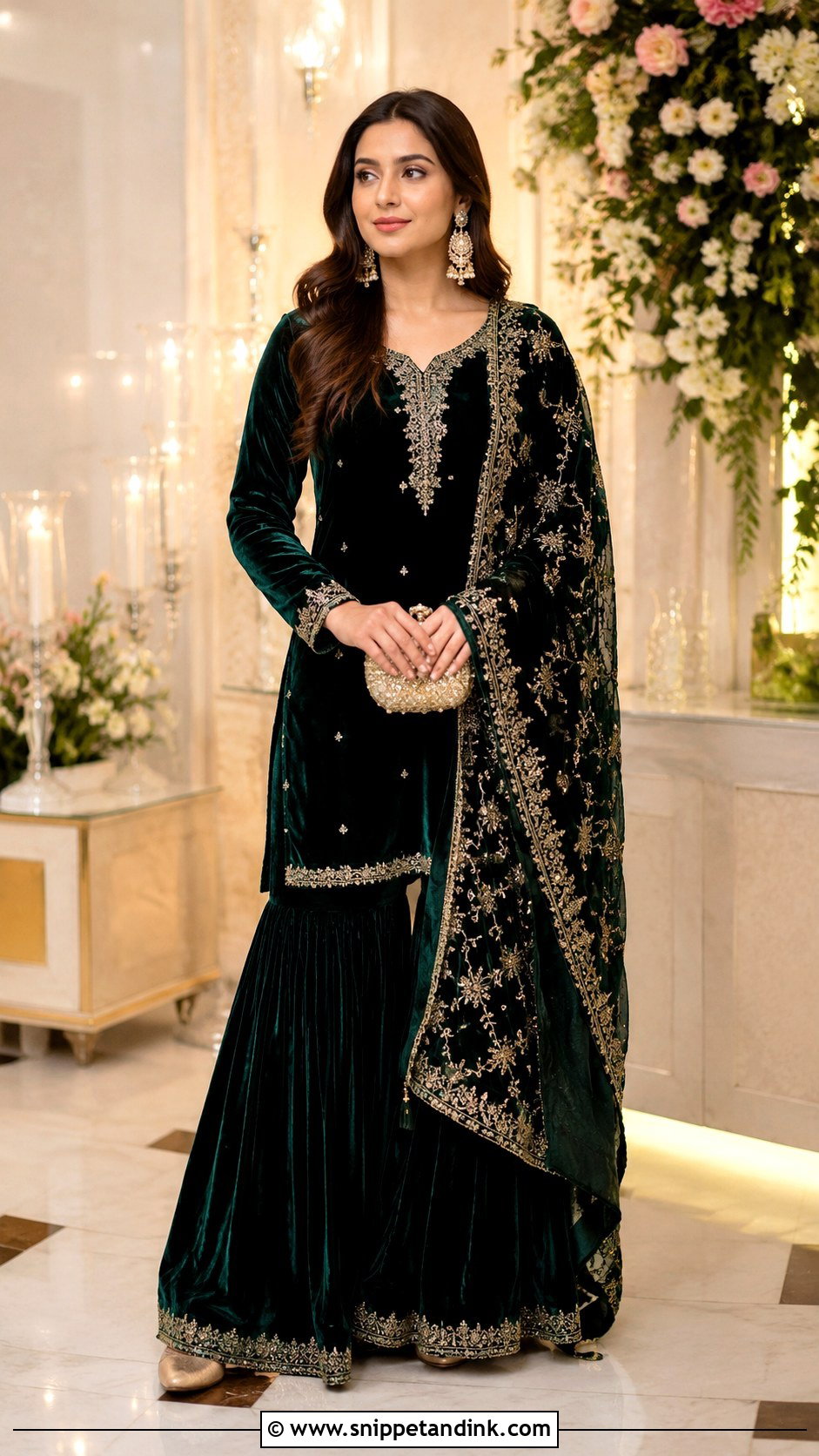
Velvet is warm and photographs with real depth in wine, emerald, navy and plum, but it is heavy. A full velvet sharara can weigh more than people expect, and the weight drags at the waistband by the end of the night. My usual fix is a velvet kurta or short jacket with the sharara in a matching silk or crepe, so the warmth stays on the upper body and the pants still swing. Kundan jewellery and closed-toe heels suit it. A heavier dupatta can stand in for a shawl at an outdoor winter phera.
9. Mirror Work Sharara Set For Sangeet
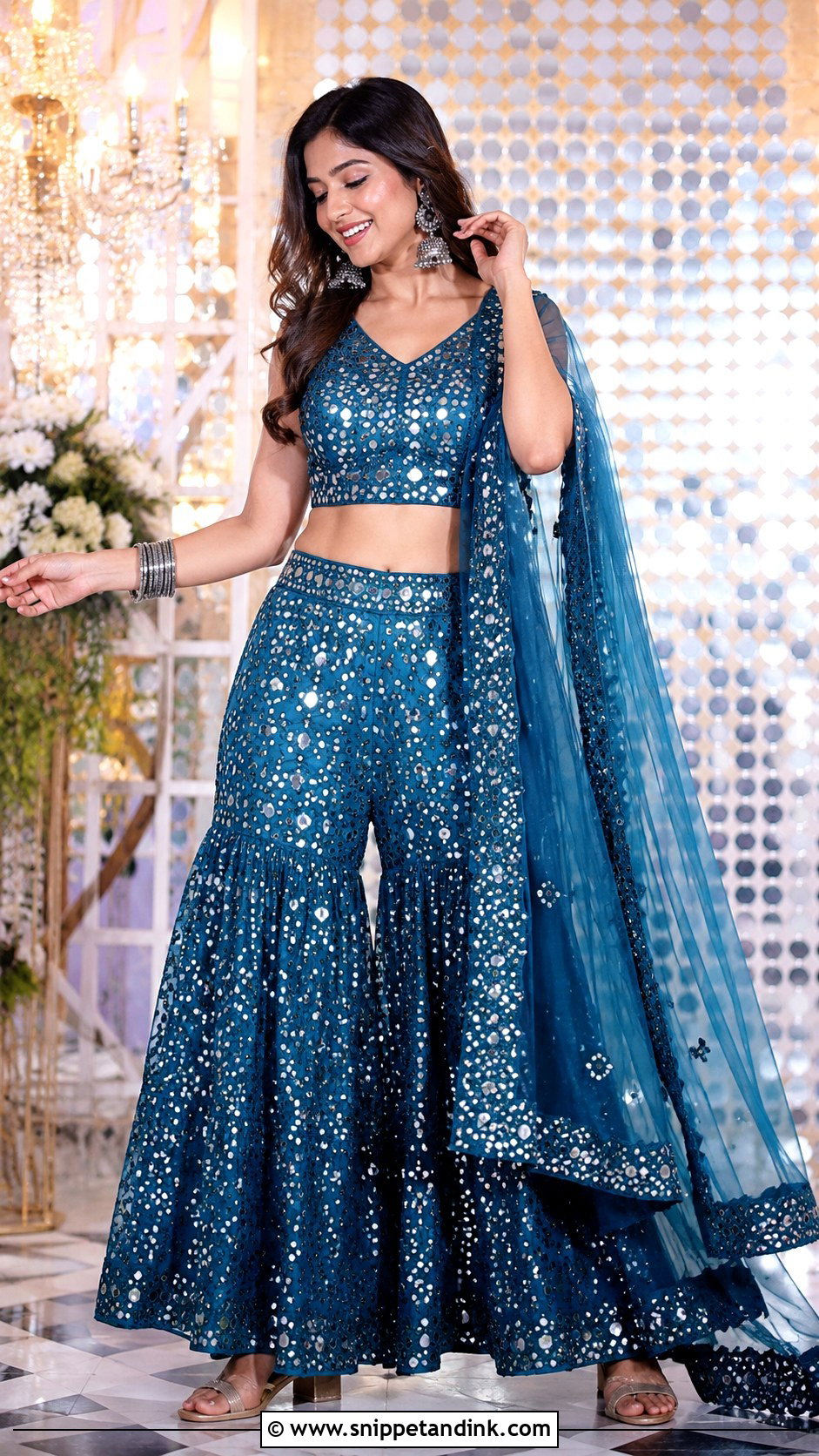
Mirror work does its best work under moving light, which is exactly what a sangeet dance floor gives you. Teal, orange, pink and royal blue all suit it. A mirror work sharara set is lighter than sequins of the same coverage, but the edges of the mirrors can catch on a chiffon dupatta, so I pair it with a firmer net or crepe dupatta and pin it at the shoulder and the waist. Oxidised earrings, stacked bangles and block heels or embellished flats will carry you through a long night of choreography.
10. Anarkali Sharara Set For Wedding
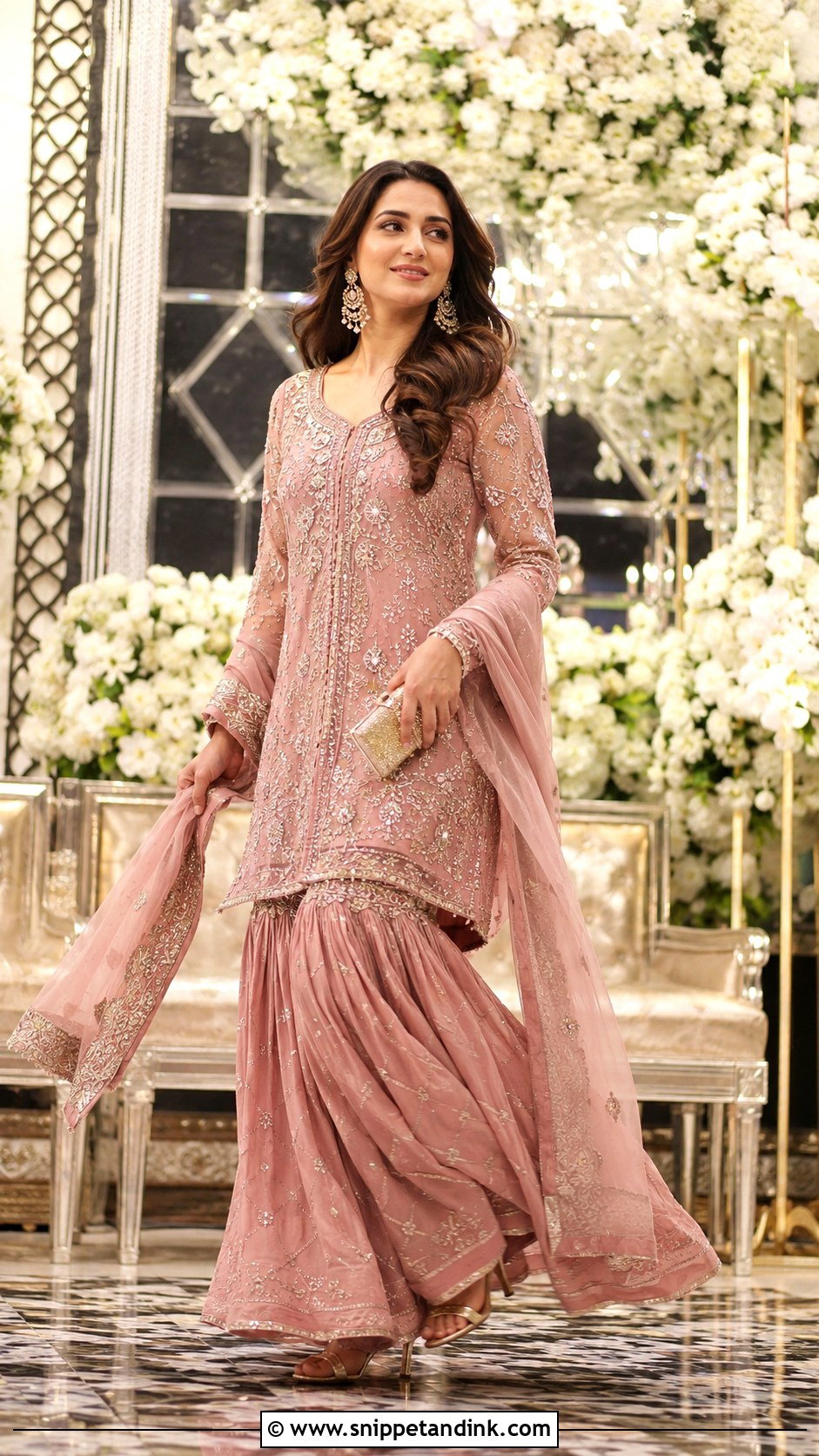
An Anarkali over a sharara puts flare on flare, and on a petite frame that can swallow the wearer. I usually keep the Anarkali to knee length or a little above, with a clear waist seam, so the pants still show. Georgette, silk and chiffon drape well; stiff brocade in this silhouette tends to stand away from the body. A light dupatta and chandelier earrings are enough. It suits engagements and formal family functions where you want a fuller, more traditional shape.
11. Peplum Sharara Set For Indian Wedding
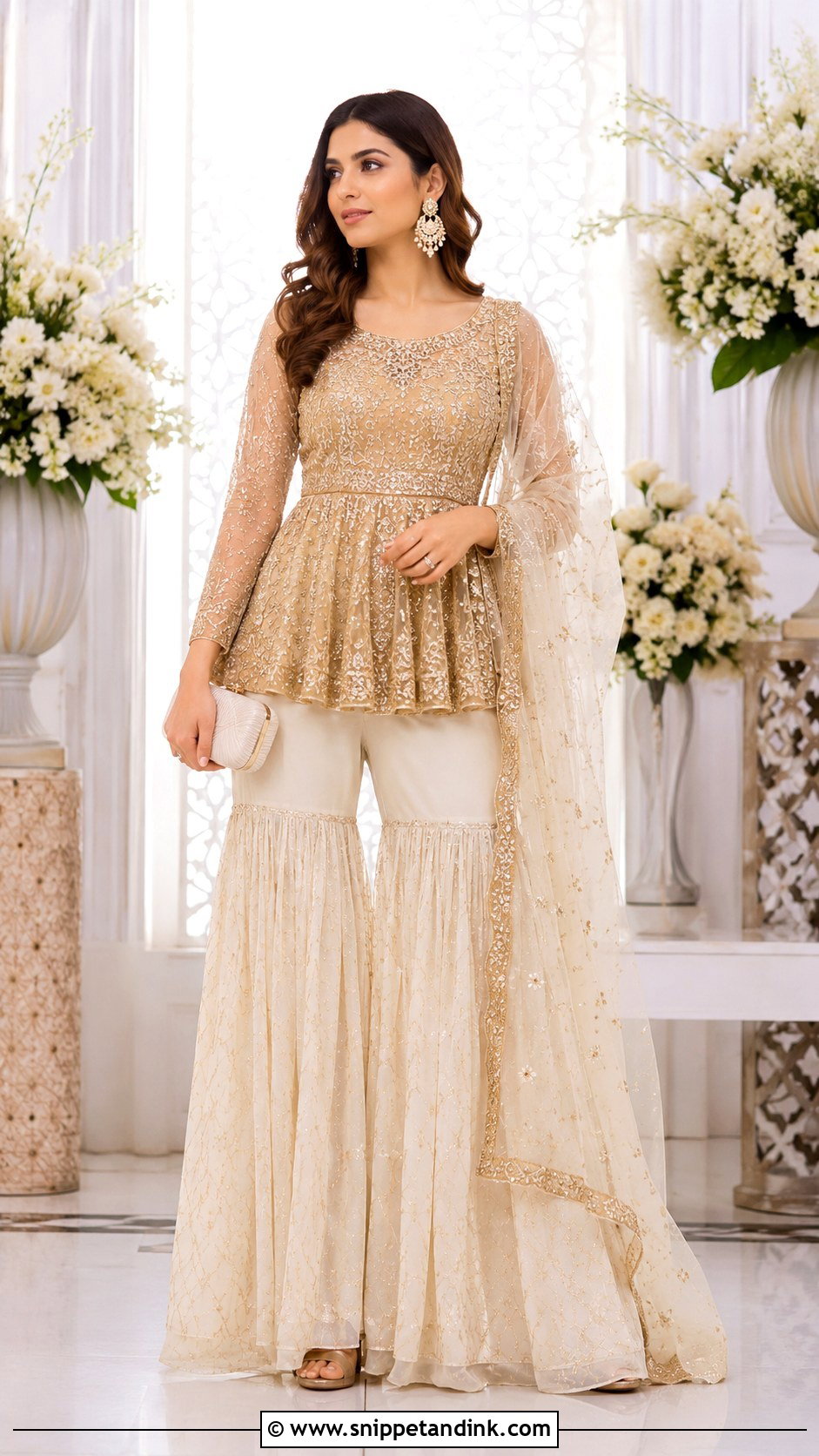
Peplums only flatter if the flare starts at the natural waist. When the seam sits too low, the top cuts the body in half and the sharara looks short. Check this first at any fitting. Brocade and silk hold a crisp peplum shape; organza gives a softer one. Embroidery around the neckline, waist and sleeves frames it, and a dupatta draped to one side keeps the waist visible. It’s a modern pick for a sangeet or cocktail-style engagement while still sitting comfortably within Indian dress codes.
12. Cape Sharara Set For Reception
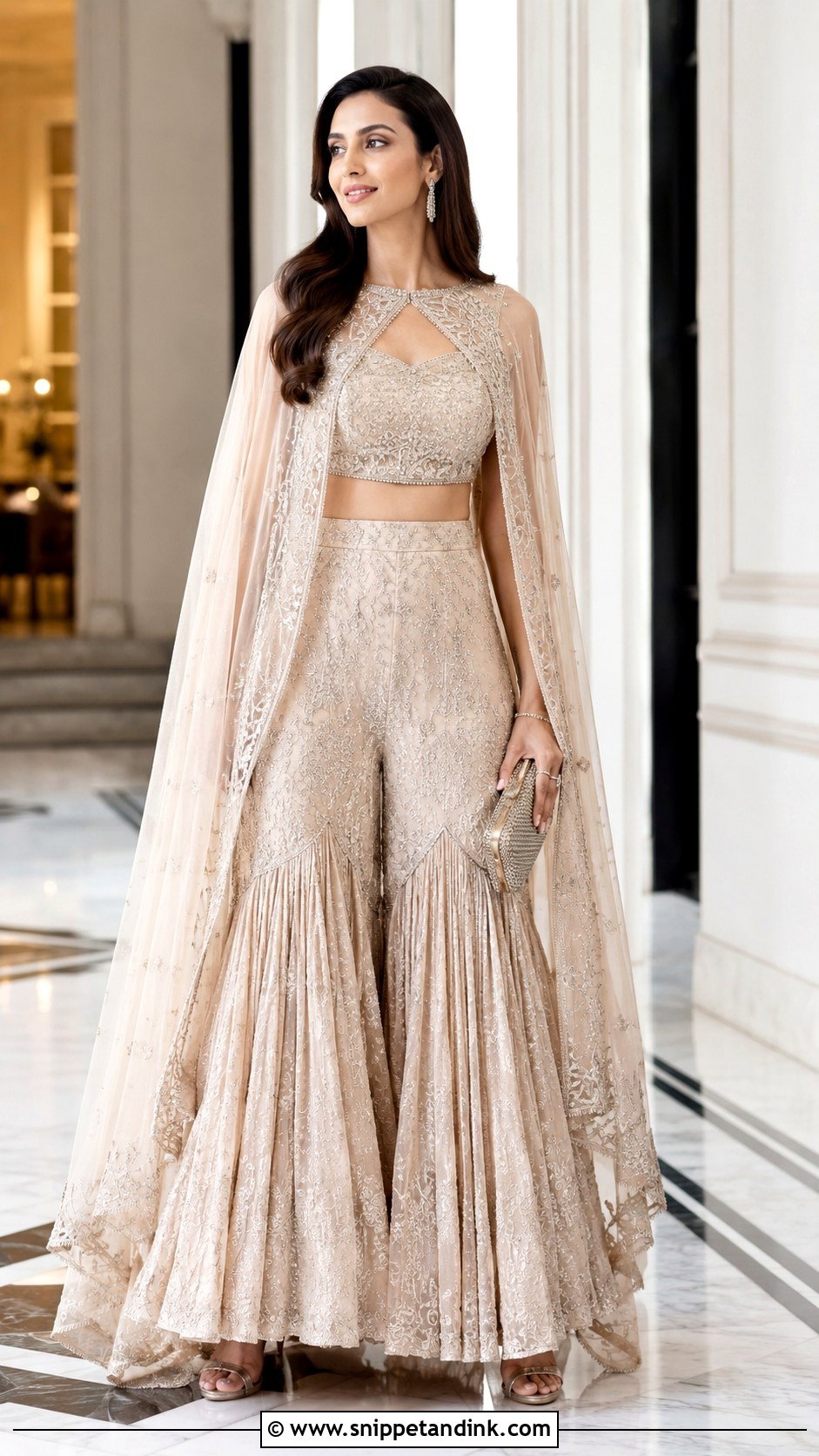
The cape replaces the dupatta, which is why I like it for receptions where you’ll be shaking hands and holding a plate for hours. Your hands stay free and nothing slides off a shoulder. A heavily embellished blouse or kurti under a net, chiffon or organza cape in champagne, navy, blush or emerald looks finished in photos. Because the cape already frames the shoulders, skip the necklace and let earrings or a bracelet carry the jewellery. Be honest about one limitation: capes catch on chair backs, so sit forward.
13. Jacket Sharara Set For Wedding Function
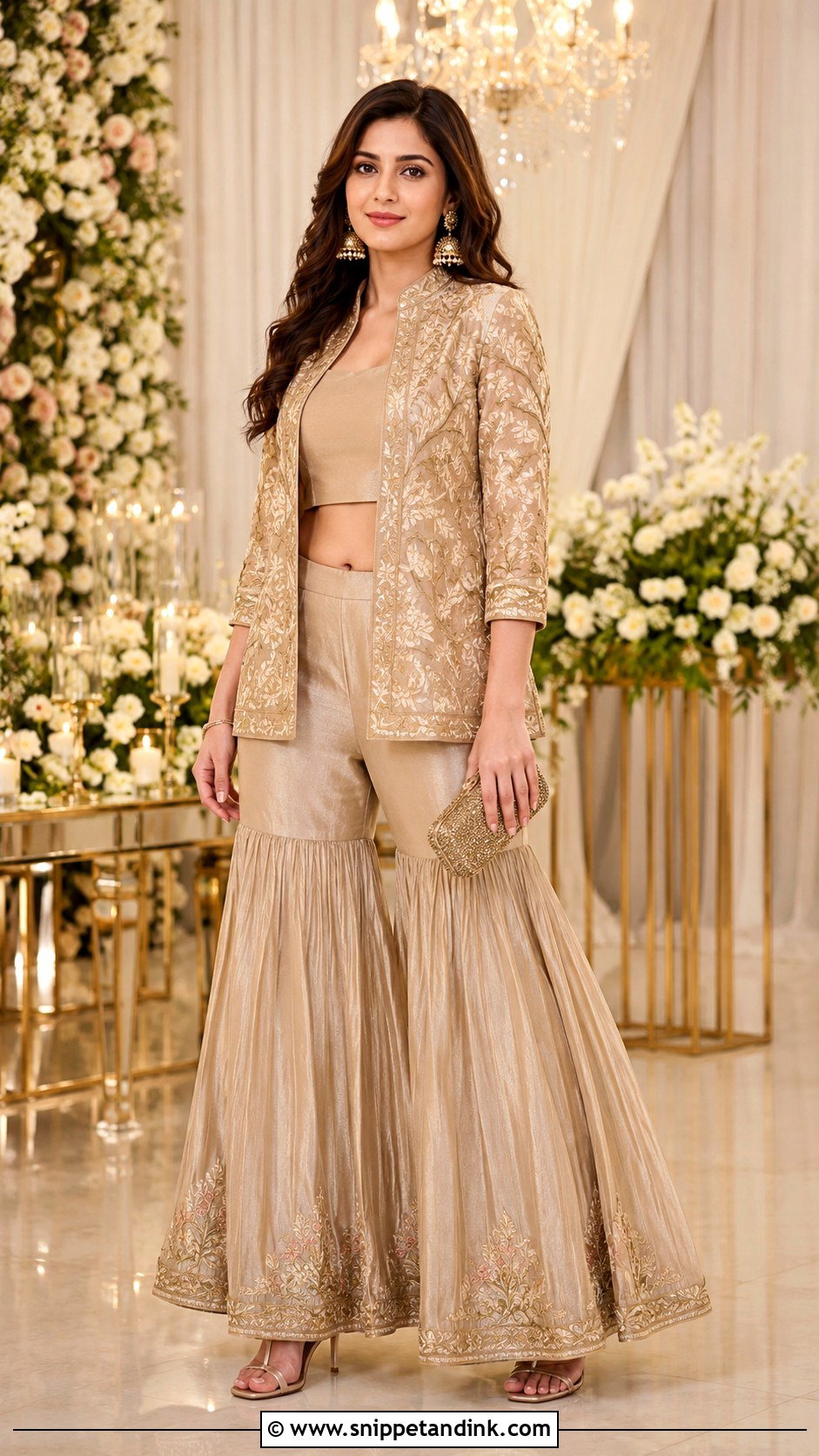
Jackets earn their place at engagements and family dinners in cooler months or in temples where shoulders should be covered. A long jacket adds height; a cropped one moves better on a dance floor. Brocade jackets are structured and warm, sheer ones are decorative and barely there. Underneath, keep the blouse or kurti simple so the layers don’t compete. Jhumkas, heels and a clutch finish it. It also solves the dupatta question entirely for anyone who finds one fiddly.
14. Organza Sharara Set For Day Function
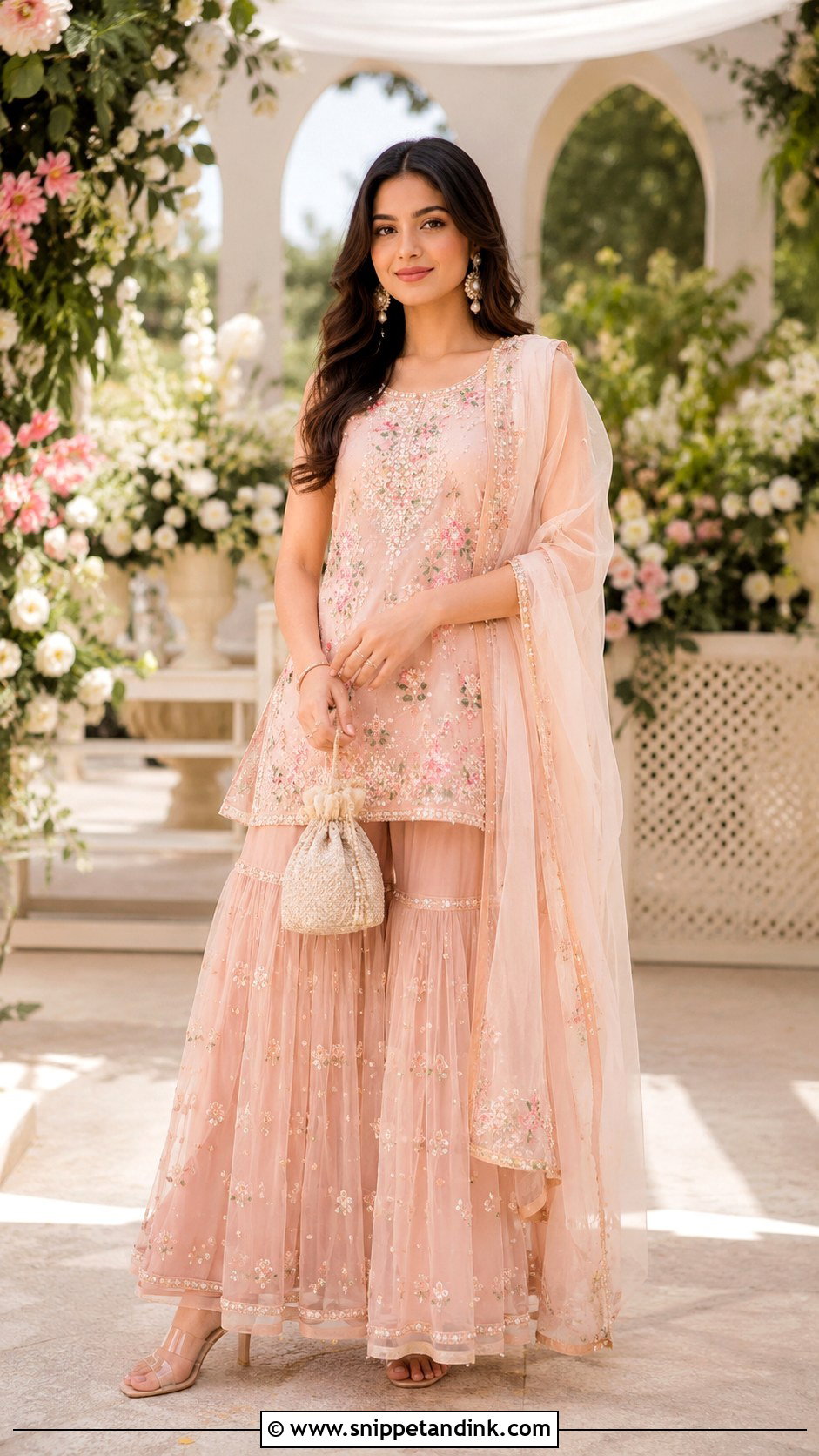
Organza has a slight stiffness and sheen that makes even fine thread embroidery look richer than it is, which is why I send people toward it for roka ceremonies and day receptions. Pastel shades, floral thread work and delicate sequins suit it. The trade-off is creasing. Organza marks easily in a car and doesn’t relax the way georgette does, so travel with the sharara hung, not folded. Since the fabric already has volume, keep jewellery small: pearl earrings, nude heels and a minimal potli bag.
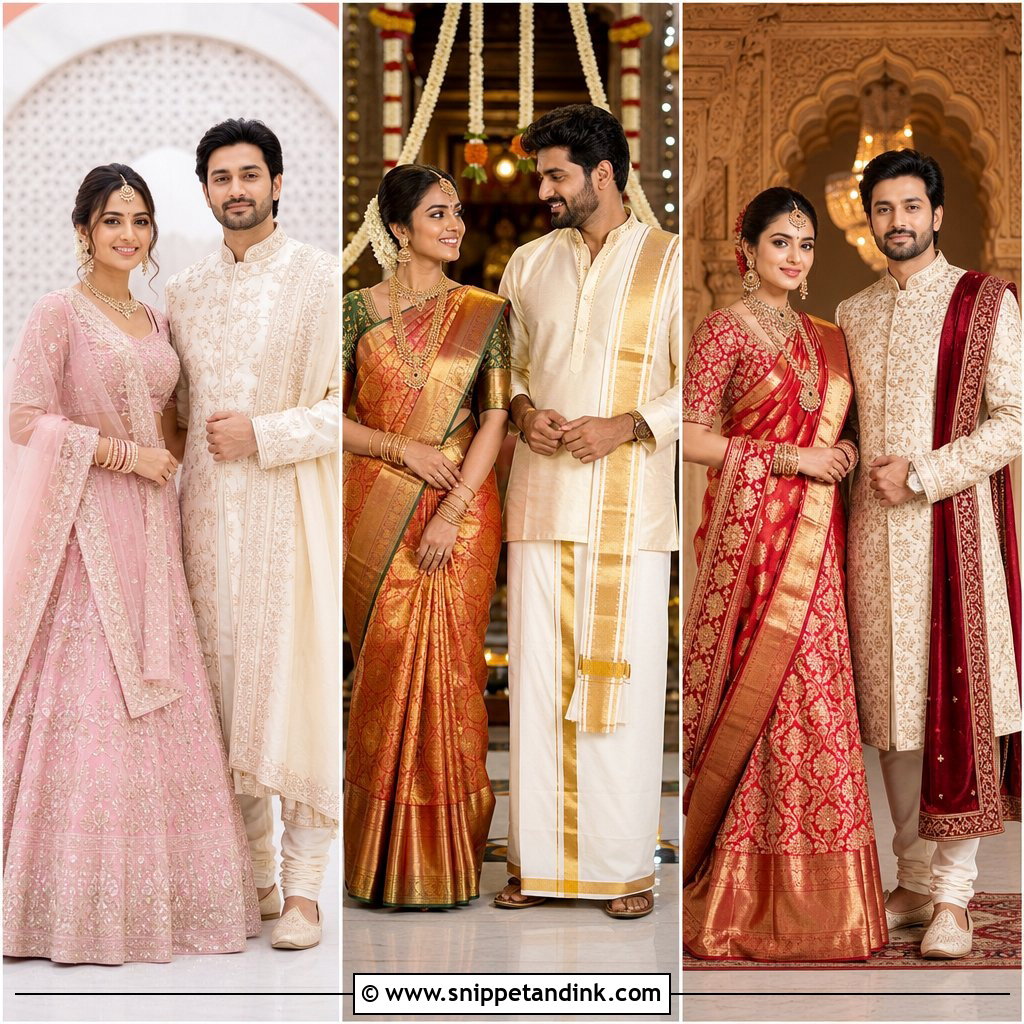
15. Silk Sharara Set For Traditional Wedding
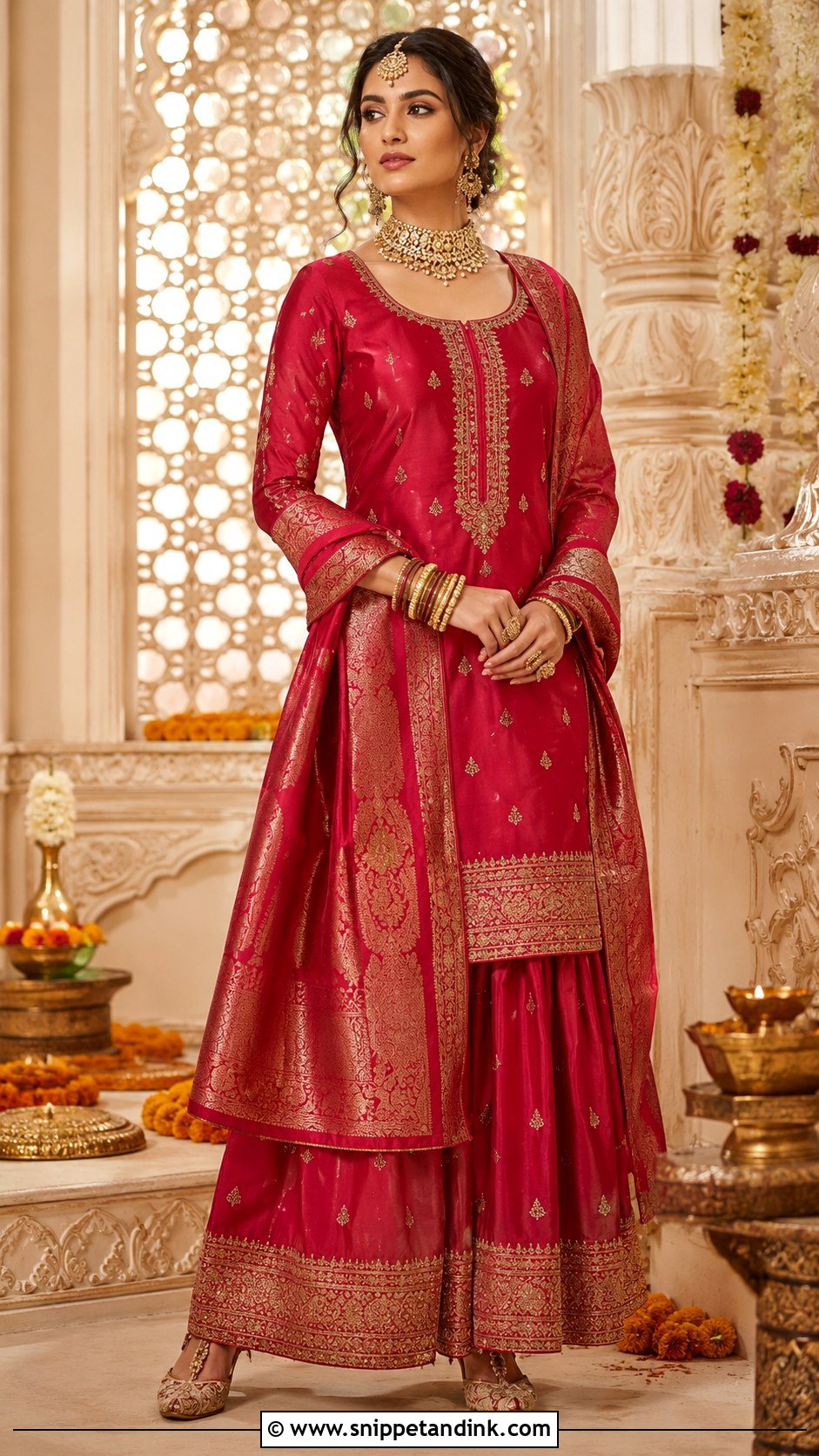
Silk is my pick for the main ceremony because it holds its colour and drape for hours in a crowded, warm room. Ruby, emerald, mustard, royal blue and magenta all read as festive. A silk kurta with zari borders or hand embroidery pairs well with wide sharara pants, and a dupatta with a woven border completes it. Real silk wrinkles where you sit, so expect some creasing at the lap by the end. Gold jewellery, bangles and embroidered heels suit it. It has the comfort of a suit with the presence of something much heavier.
16. Chikankari Sharara Set For Wedding Guest
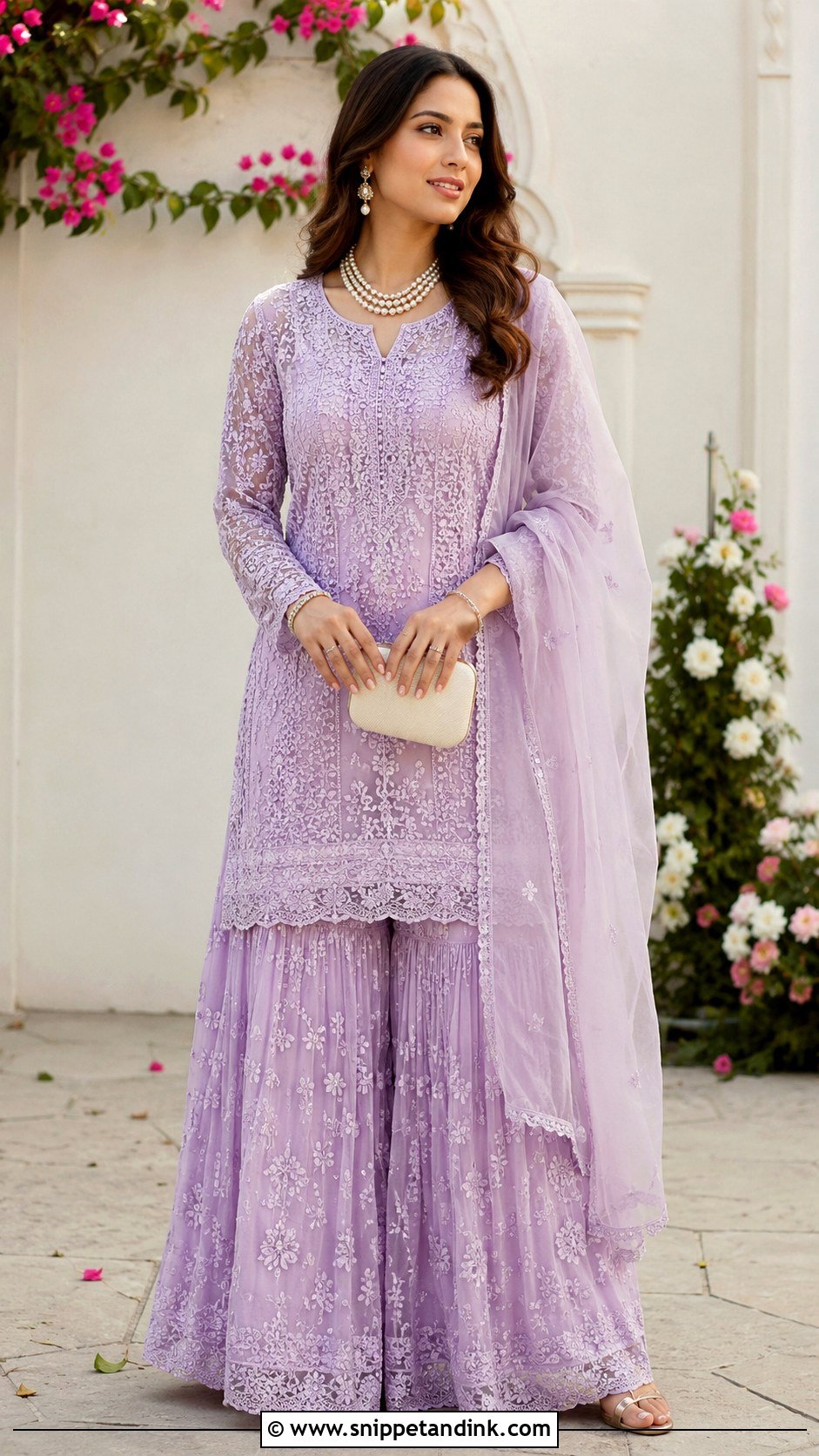
Chikankari is hand embroidery in fine white or tonal thread, and its charm is texture rather than sparkle. That makes it a smart guest outfit for day weddings, mehendi brunches and summer ceremonies, where heavy sequins feel wrong. Ivory, pastel pink, mint and powder blue are classic. Look for a sharara with matching border work so the set feels complete, and a chiffon or organza dupatta. Hand-worked pieces need gentle washing, so dry clean the first time. Pearls and metallic sandals finish it.
17. Sequin Sharara Set For Sangeet Night
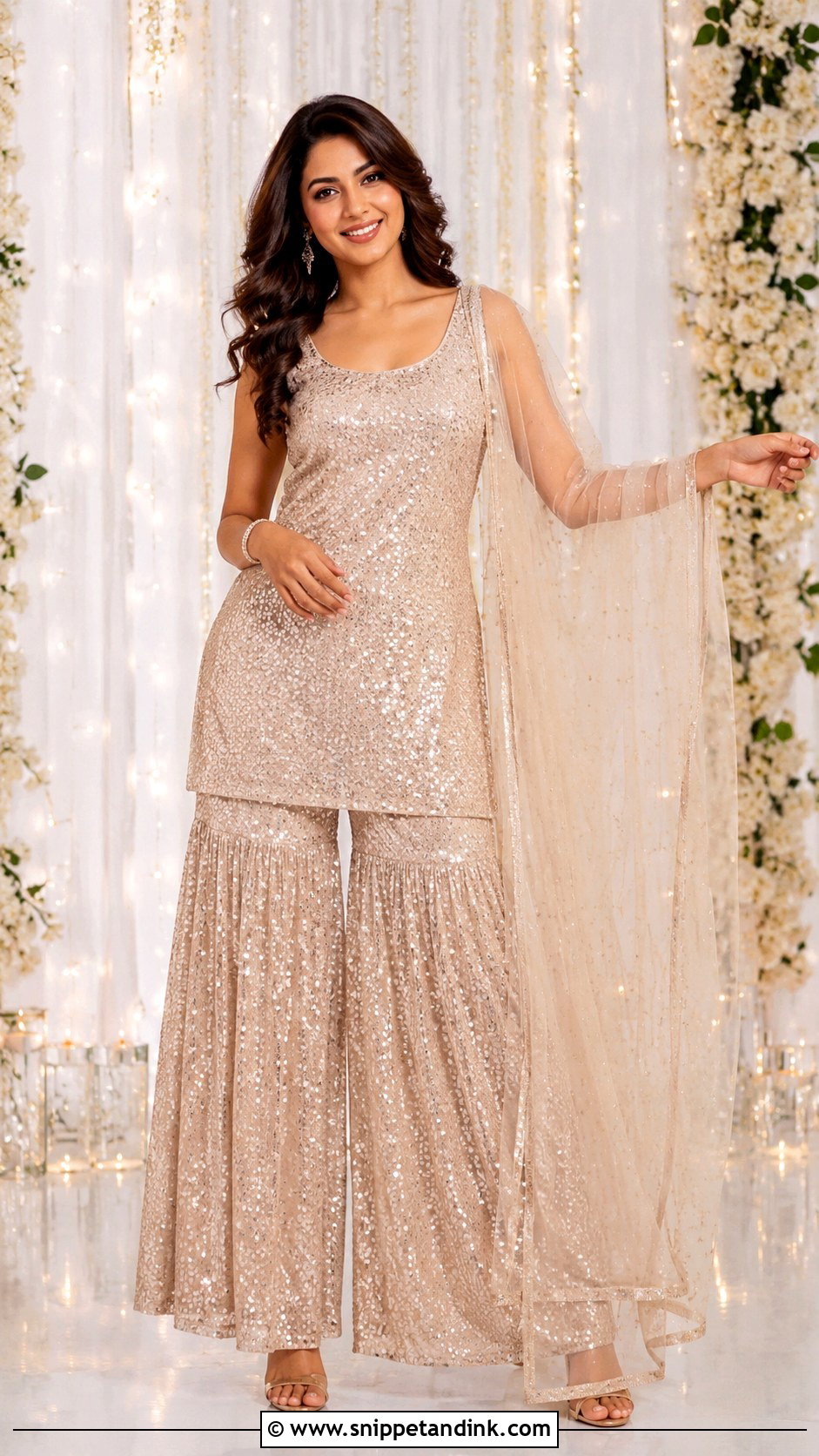
Sequins do the jewellery’s job, so I strip accessories back to studs and a bracelet. Champagne, rose gold, navy, emerald and silver catch stage lighting best. A fitted short kurti, crop top or sleeveless blouse balances the sparkle, and the dupatta can be sheer or skipped. One thing I warn every client about: sequinned seams scratch the inner arm and underarm after a few hours of dancing, so check the inside of the blouse for a soft lining before you buy. Keep makeup to glowing skin and a defined eye.
18. Floral Sharara Set For Mehendi
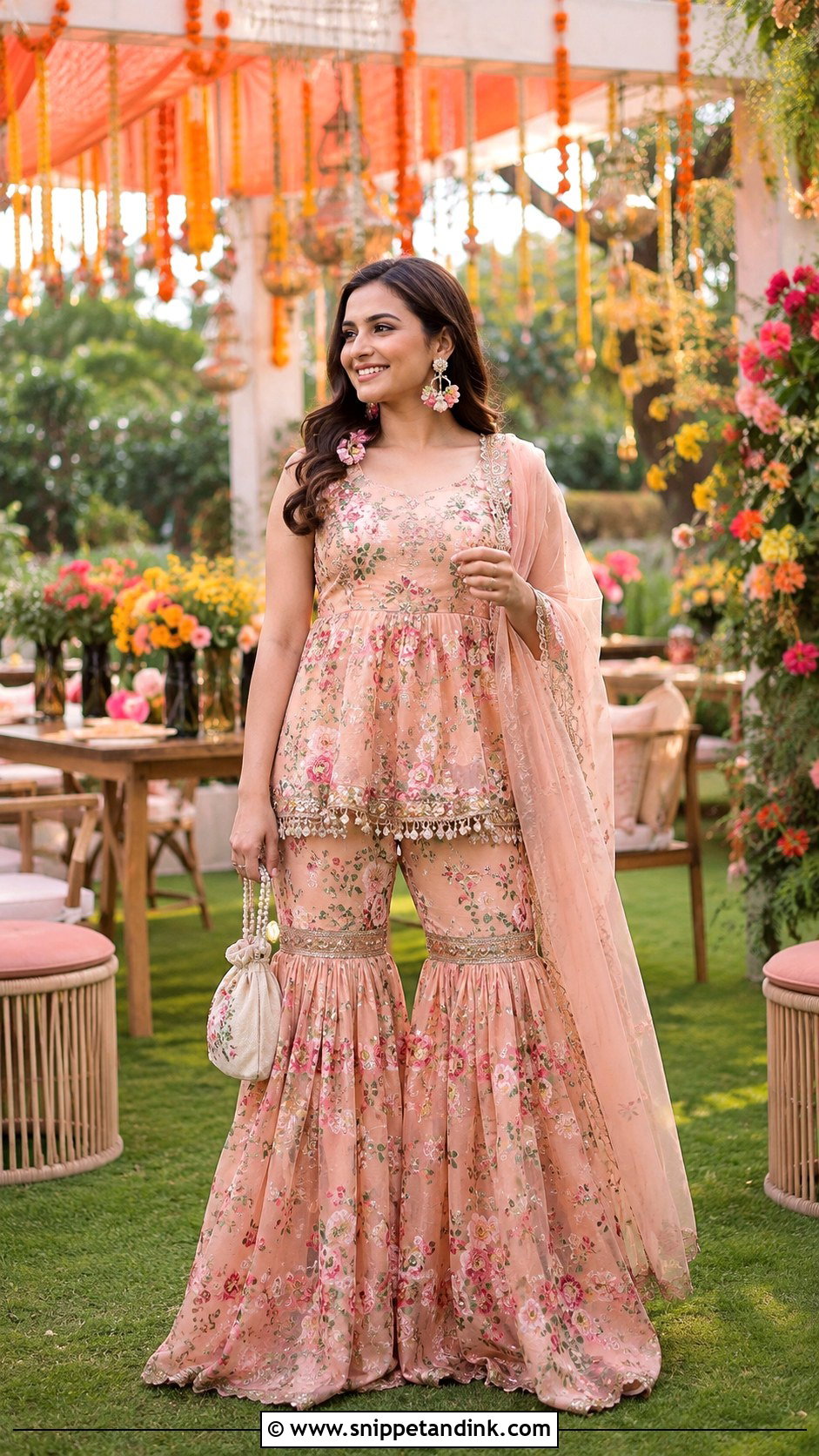
Florals relax the mood for an outdoor mehendi and hide the inevitable henna smudge better than a plain fabric. Pick from printed florals, embroidered flowers, or appliqué in pink, green, yellow, peach or blue. A short kurta or peplum keeps it easy, and the flared sharara adds movement. Choose a bag with a wrist strap. Guests getting henna can’t open a clasp for an hour, and anything held in the hand will be put down and forgotten. Comfortable flats are wiser than heels on grass.
19. Blue Sharara Set For Engagement
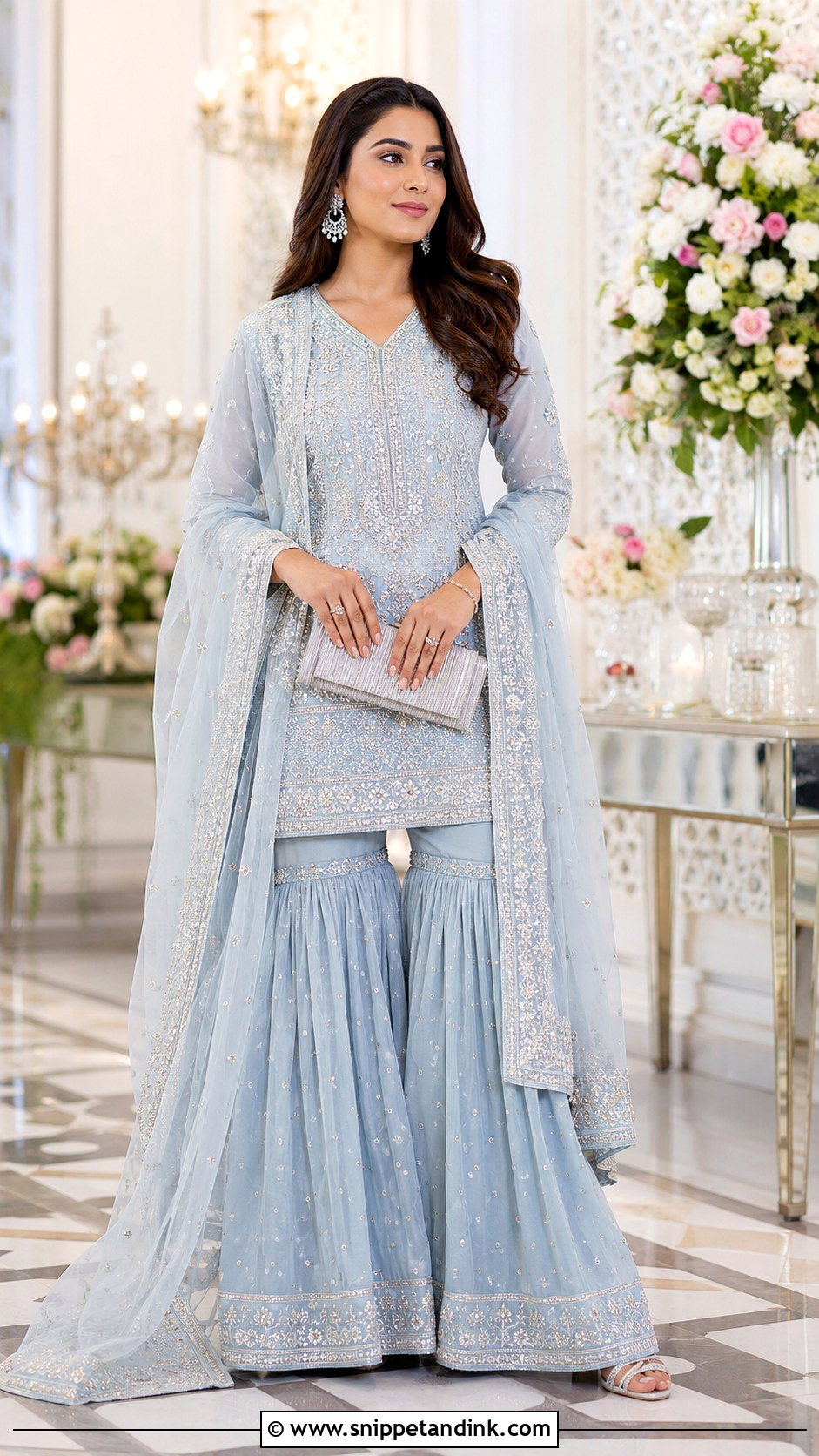
Blue gives an engagement outfit a cooler, more formal feel than pink or red, which suits the bride’s sister or a close relative who shouldn’t look bridal. Powder and ice blue belong to daytime with silver or pearl work. Royal blue and navy can take zari, sequins or velvet accents for evening. A structured kurta with wide sharara pants gives it a formal finish. Diamond-style earrings and silver heels keep the metal tone consistent, which matters more with blue than with warmer colours.
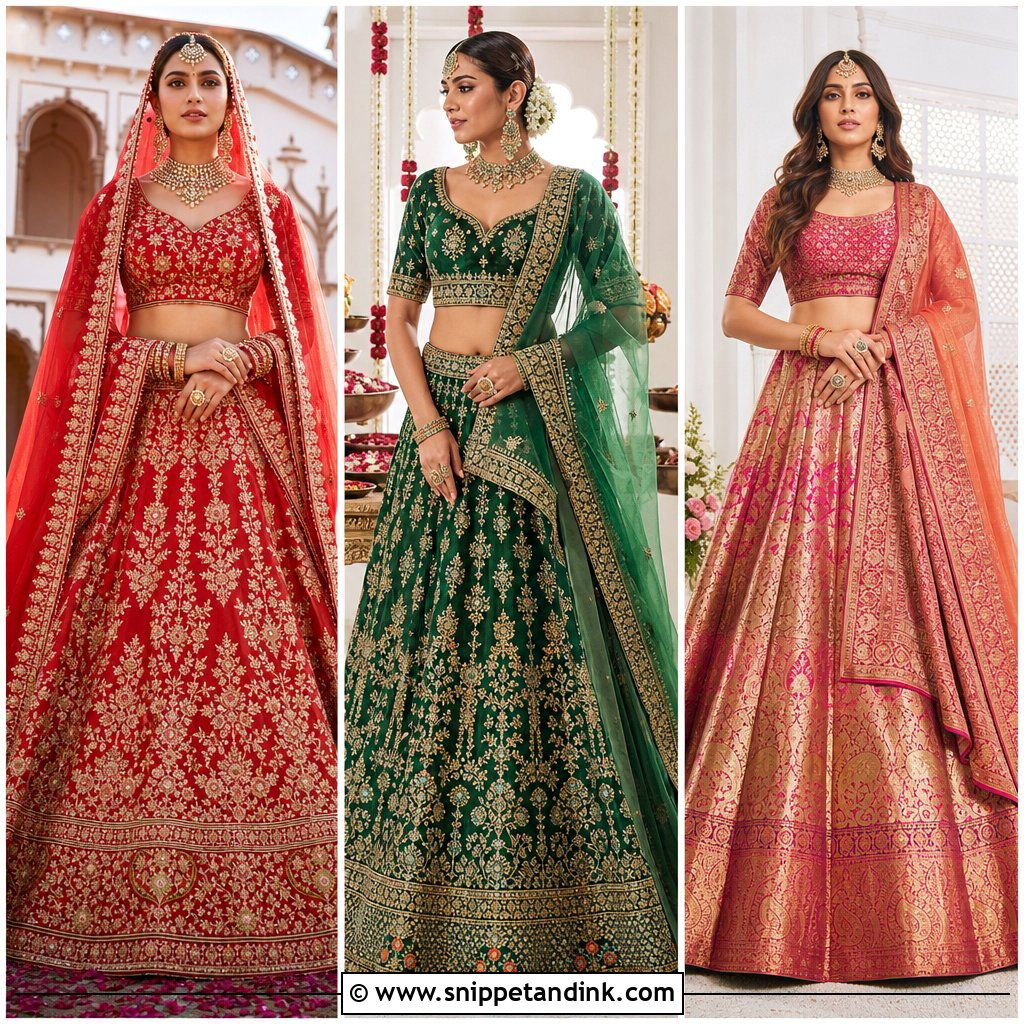


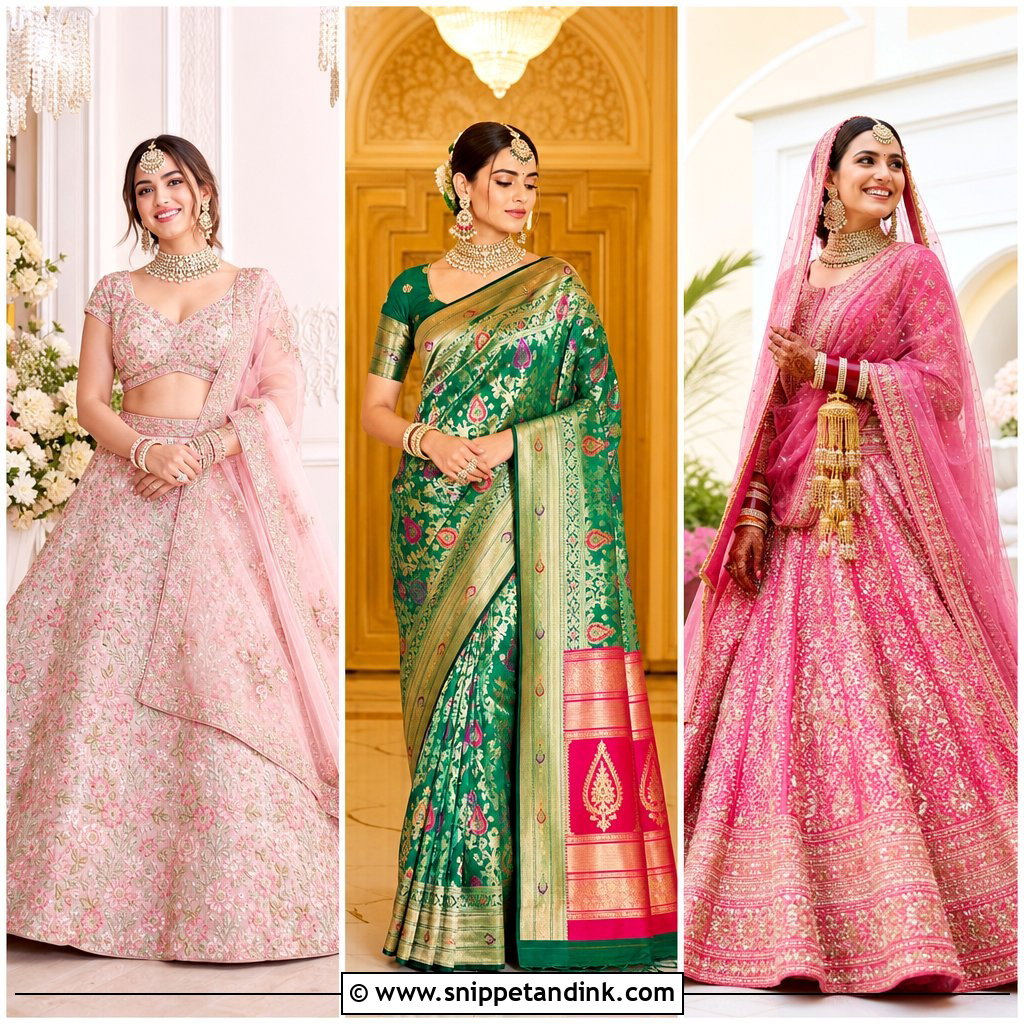

20. Orange Sharara Set For Haldi Mehendi
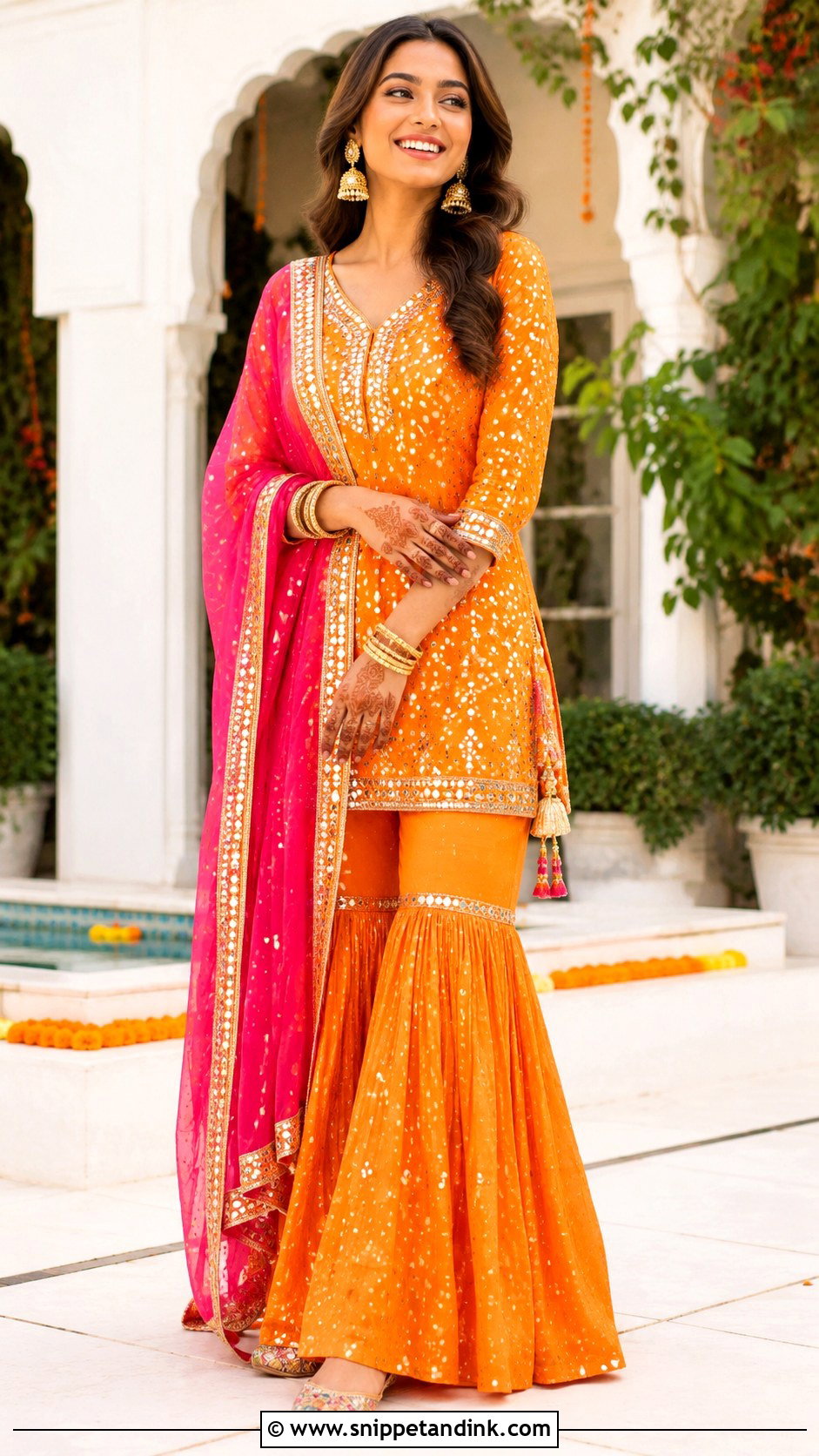
Orange is cheerful in person but can turn harsh in photos if the shade is too pure. I steer guests toward rust, marigold or coral, which sit better against most skin. Mirror work, gota patti and thread embroidery all look good on orange. A contrasting dupatta in pink, green or yellow breaks up the colour, and gold jhumkas and embellished juttis finish it. Keep makeup warm with coral blush. At a haldi, remember that orange also hides turmeric marks well.
21. Purple Sharara Set For Wedding Reception
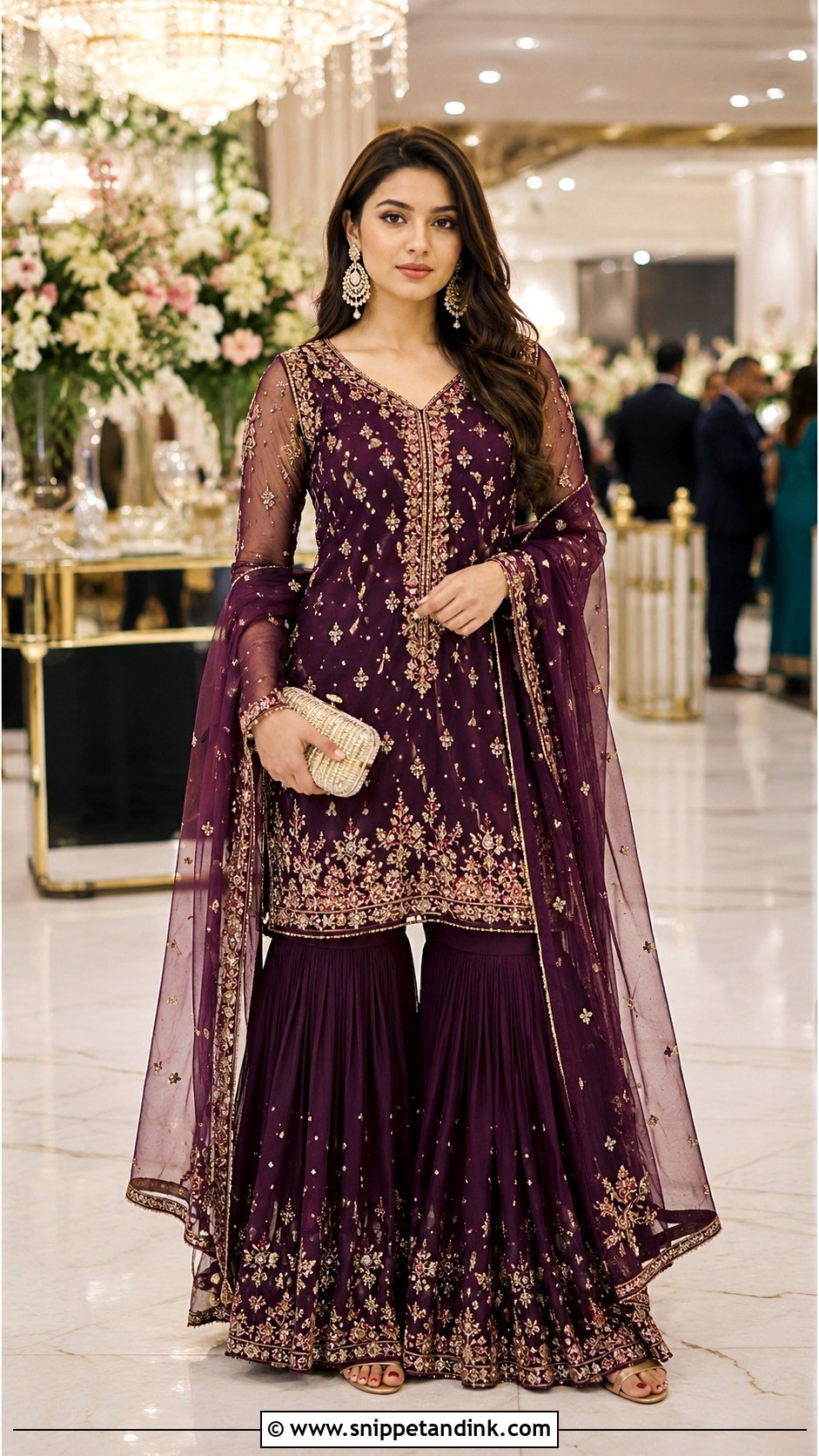
Deep purples like plum and aubergine have a richness under evening lights that brighter colours can’t match, while mauve and grape soften it. Silk, velvet, georgette or net with metallic embroidery all work. A short kurta with a defined neckline keeps the top balanced against wide pants. Choose silver-toned or kundan jewellery depending on which metal the embroidery uses. Wear heels: a reception sharara is often cut long, and flats leave the hem dragging on the floor.
22. Gota Patti Sharara Set For Wedding
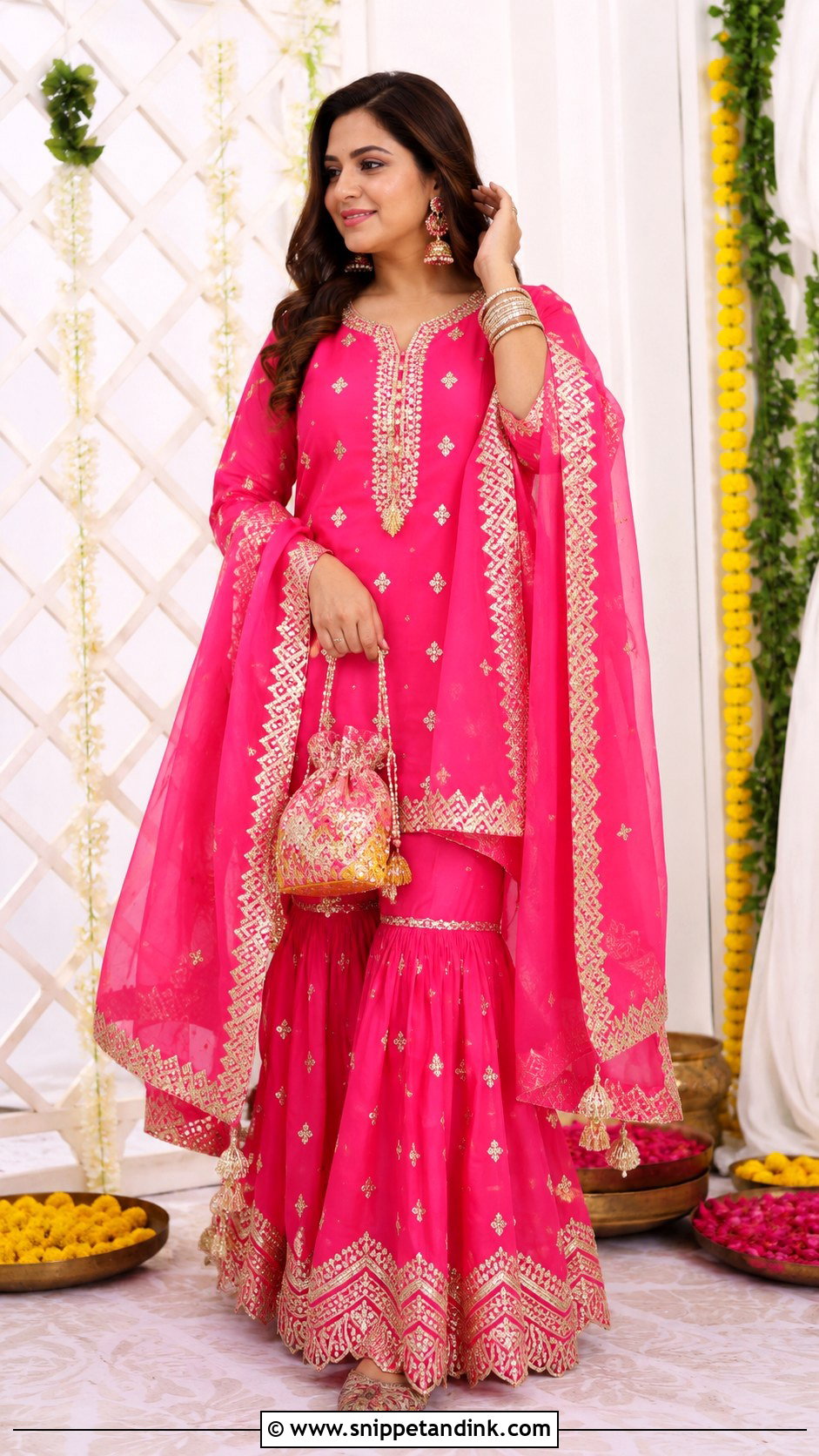
Gota patti is a Rajasthani technique of appliquéd metallic ribbon, and its great advantage is that it shines without much weight. A gota patti sharara set suits yellow, pink, green, red, orange and ivory. Look for gota on the kurta borders and a decorative band at the sharara hem, which gives the flare weight so it swings rather than floats. Old-style gota tarnishes over time, so store it wrapped in muslin. Jhumkas, bangles and a potli bag keep it classic for mehendi, haldi and roka.
23. Short Kurti Sharara Set For Wedding
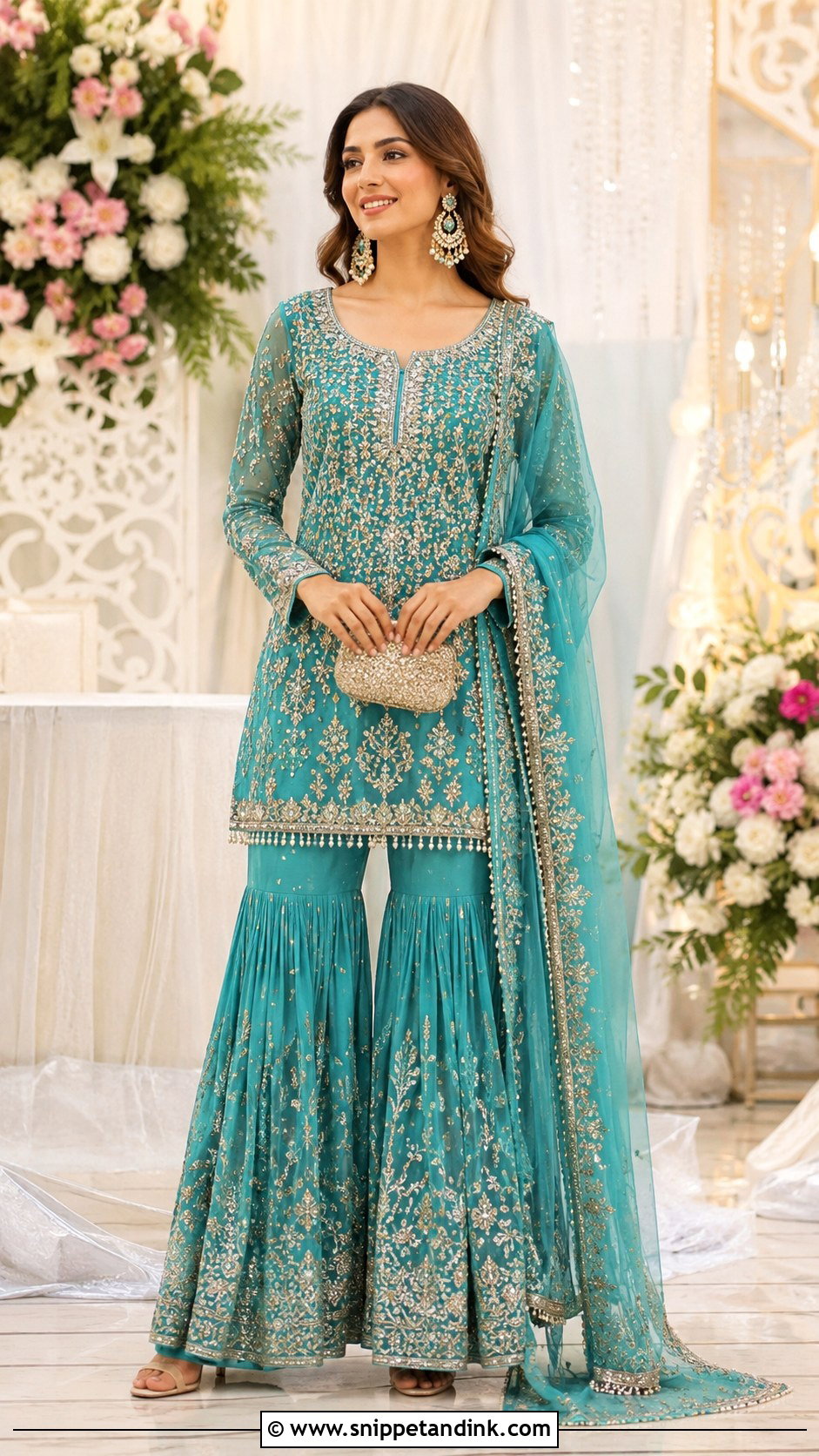
The short kurti is the most forgiving cut here. It ends at the hip, so the full width of the sharara shows and the proportions balance on most heights and ages. Embroidery at the neckline, sleeves and hem finishes it. For a formal wedding I’d pick silk or georgette; for day functions, cotton silk, organza or chiffon. Pair it with a matching dupatta and juttis or heels you can stand in. If you’re buying one sharara to wear across several functions, start here.
24. Long Kurta Sharara Set For Indian Wedding
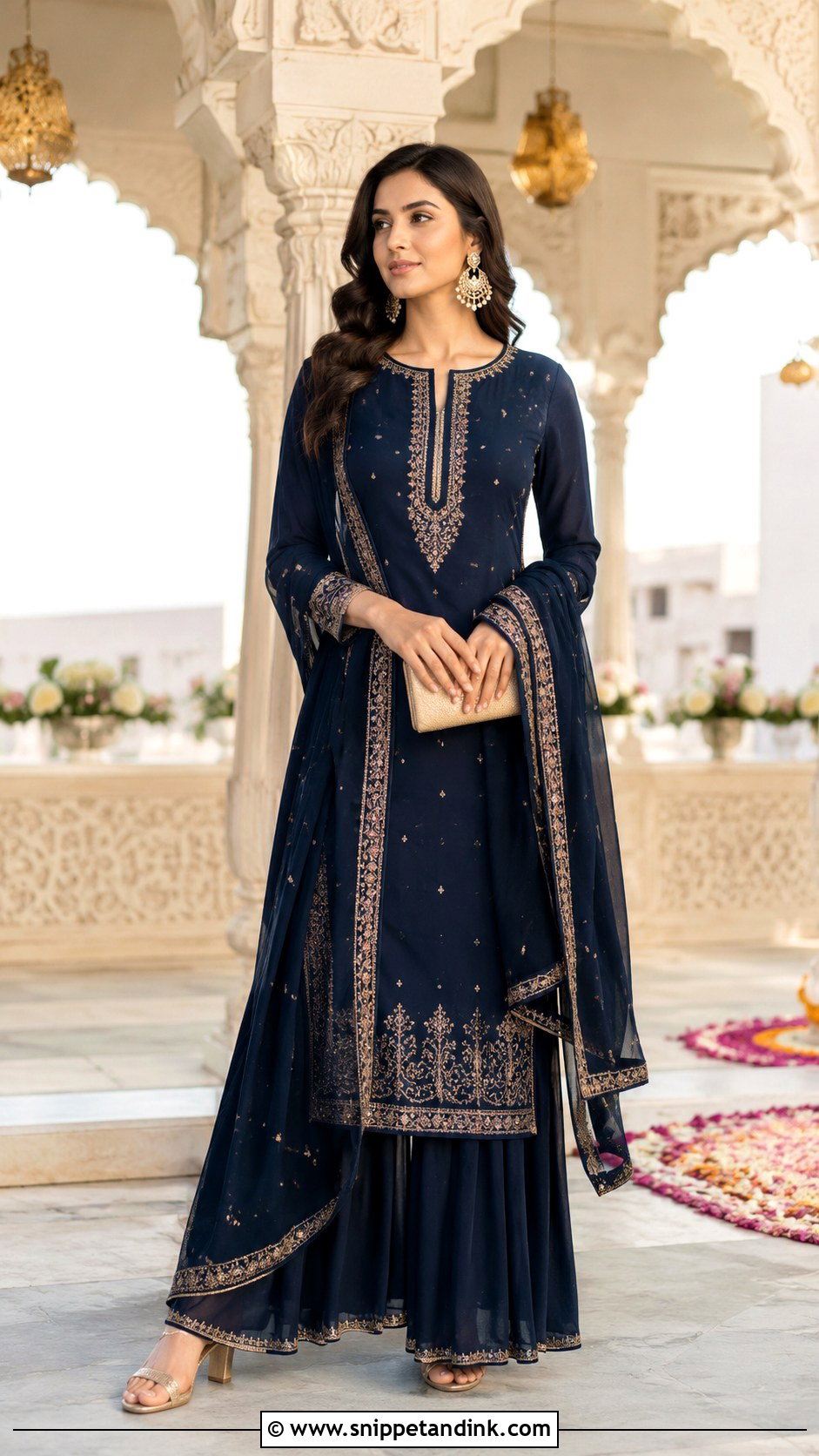
A long kurta suits anyone who prefers more coverage, and it makes the body look longer. The risk is that it hides the sharara entirely. Side slits fix that, letting the pants show as you walk. Embroidered necklines, zari borders and sleeve details make it wedding-ready. Drape the dupatta neatly over one shoulder and add statement earrings and heels. Mothers and aunts often prefer this cut because it sits comfortably through long rituals.
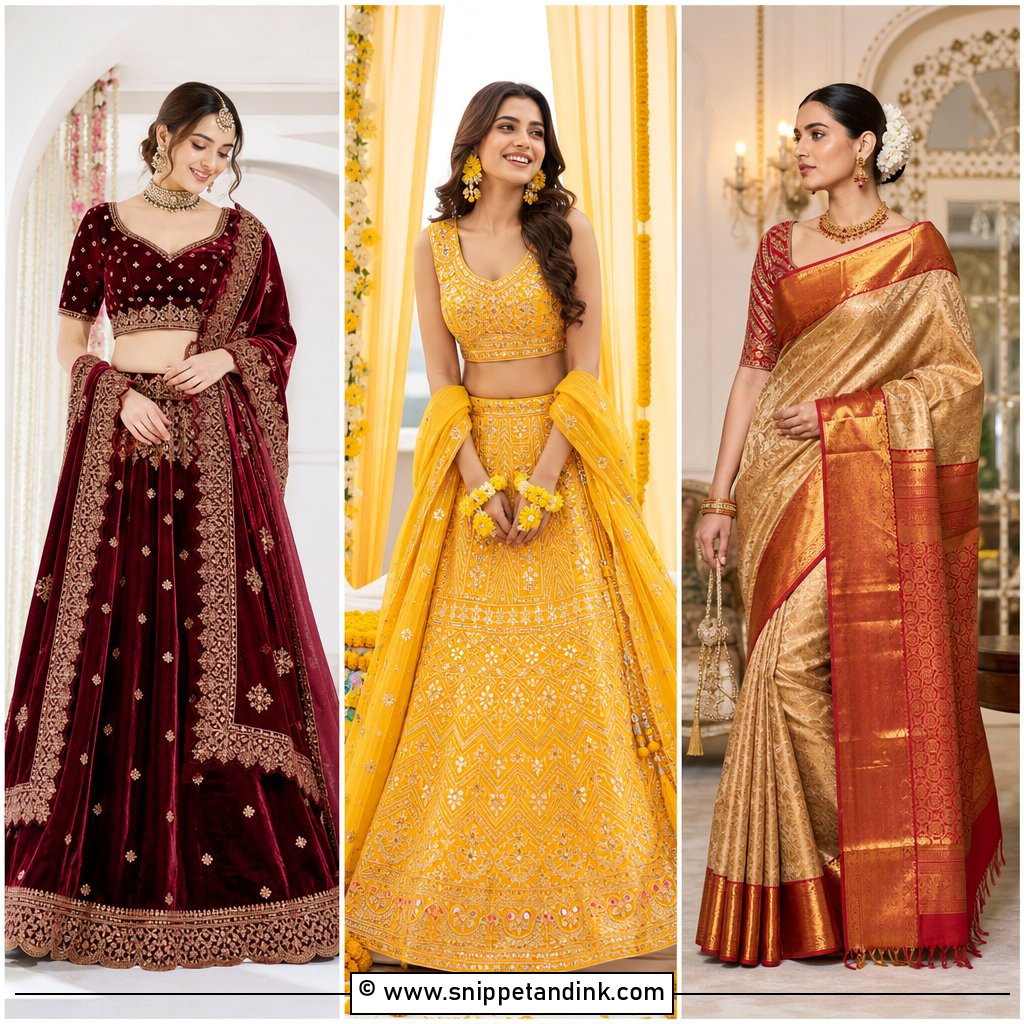

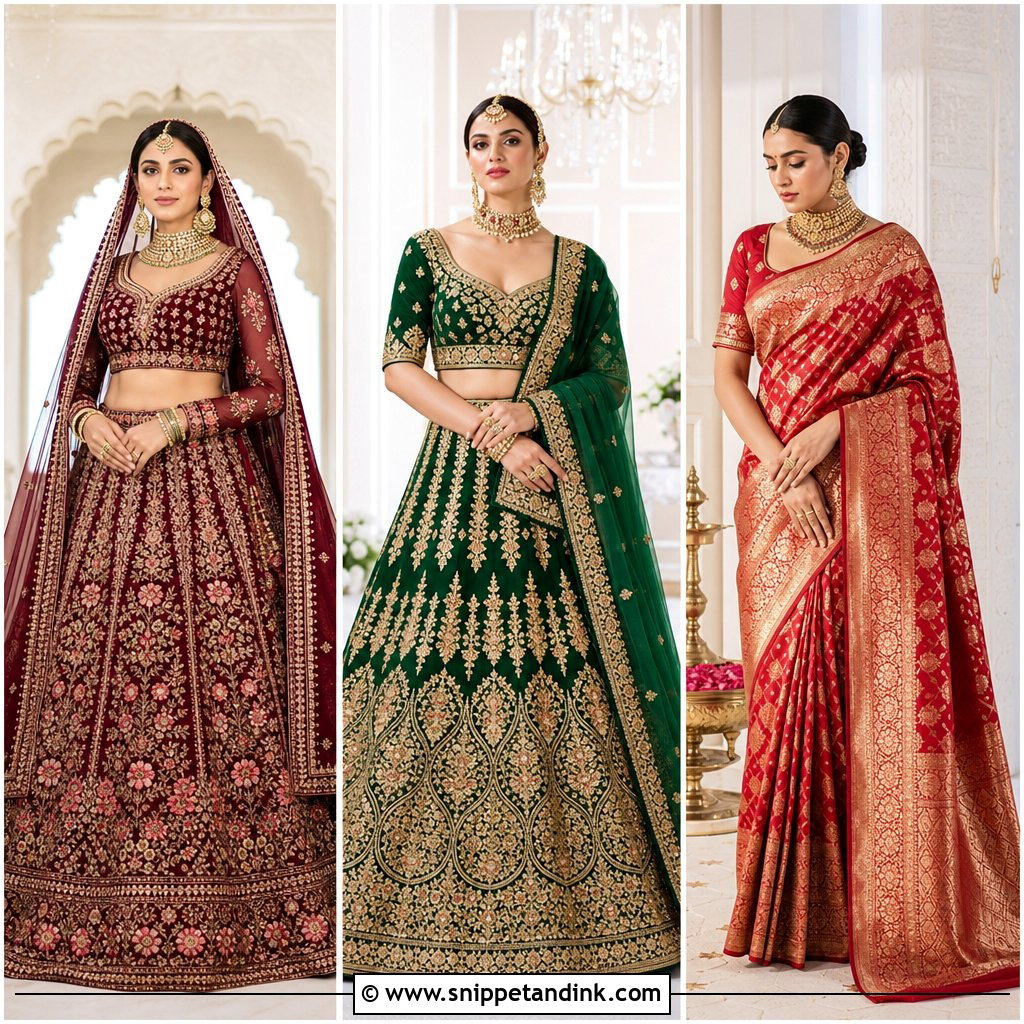
25. Sharara Set With Heavy Dupatta
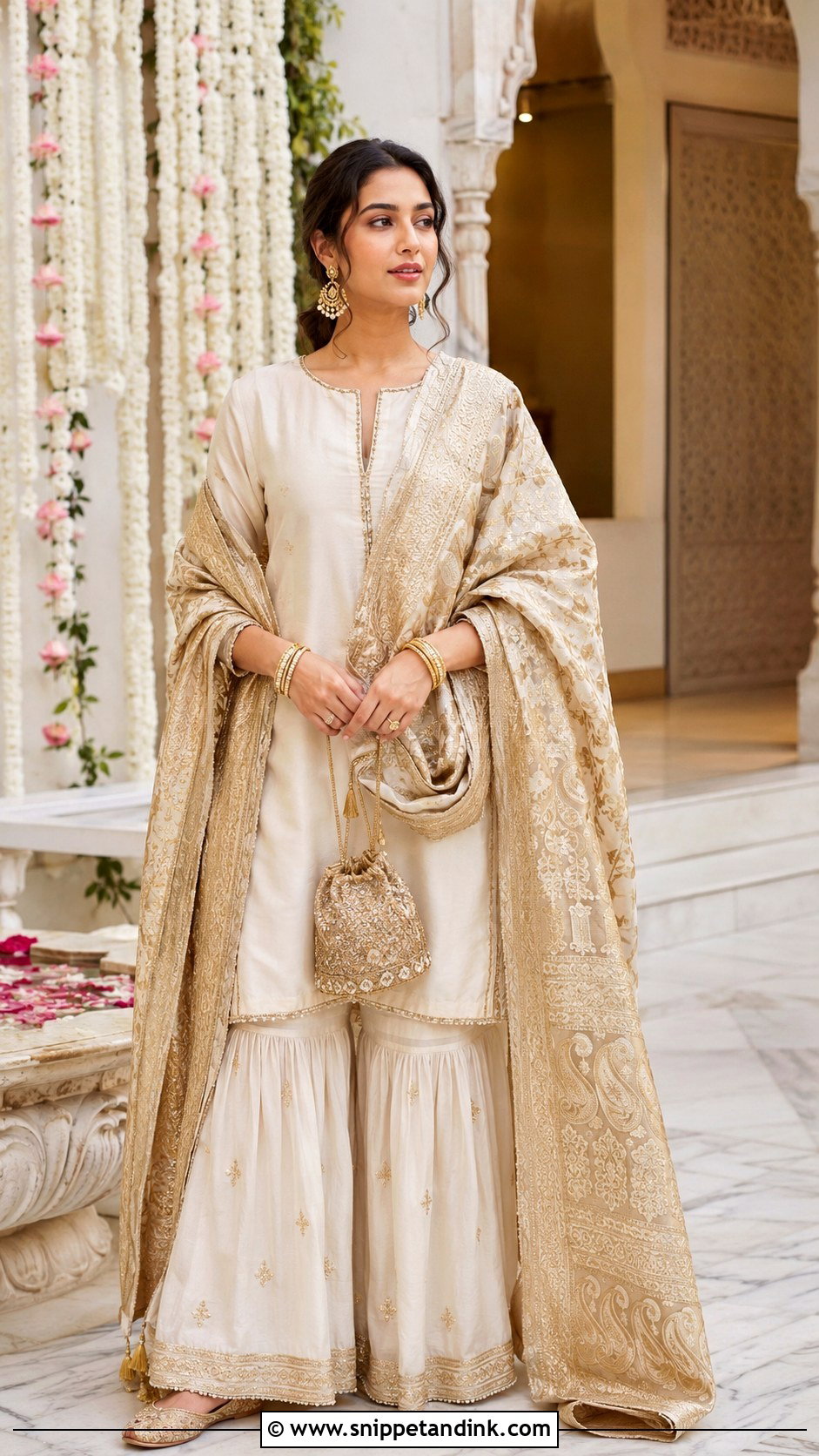
This is my favourite way to stretch a budget. Spend on the dupatta and keep the kurta and sharara simple, because the dupatta is what shows in every portrait. A sharara set with a heavy dupatta works with silk, net, organza or banarasi fabric worked in zari, sequins, gota patti or scalloped borders. Draped across both shoulders it looks formal; over one shoulder it’s easier to move in. A heavy dupatta slides, so it needs two or three safety pins at the shoulder. Keep the neck clear and let earrings and bangles do the rest.
Stairs, Stages and Floor Seating in a Full Flare
Most of the trouble I’m called to fix on a wedding day comes from movement, not the outfit itself. A sharara is easier than a lehenga, but the flare still behaves in predictable ways.
On stairs and stage steps
Lift the front of the flare at the side seams with both hands, not from the centre. Lifting from the centre drags the back hem under your heel. Going down, lift slightly more, since that’s when people trip.
Sitting for rituals
Before you sit cross-legged, sweep the flare forward over your knees. Otherwise you’ll sit on the back panel, which creases badly and pulls the waistband down. Silk shows those creases in every photo afterward.
Between functions
Hang the sharara from its waistband the night before so the flare drops. Steam from the reverse side; never put an iron directly on zari, sequins or mirror work, because the heat dulls metallic thread and can melt sequin coatings. After the wedding, air it before packing it away, fold embroidered areas between layers of muslin or soft cotton, and keep it out of plastic covers, which trap moisture.
A Sharara for Every Function, From Haldi to Reception
A sharara is the rare wedding outfit that can be worn from haldi through the reception and still feel right, provided the fabric fits the hour and the room. Light organza, chiffon and chikankari belong to daytime; silk, velvet and sequins come out at night. Before you buy, hold the colour against your face in daylight, try it with the shoes you’ll actually wear, and pin the dupatta the way it will sit. Those three checks matter more than the embroidery.
You'll Like These Ideas:










Leave a Reply