
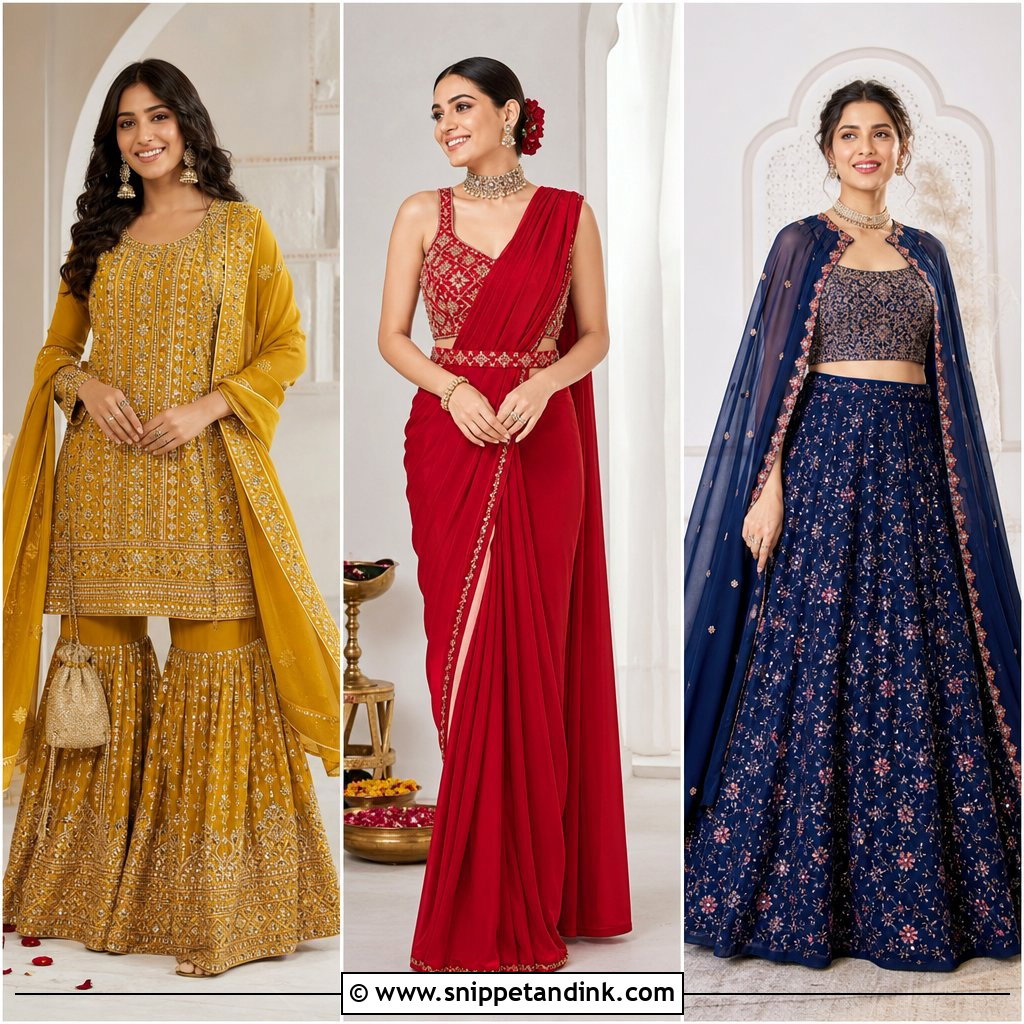
A kurti is the most useful piece a wedding guest can own, because the same top can be dressed down for a haldi morning and up for a reception with a different bottom and dupatta. Guests now wear them with shararas, palazzos, lehenga skirts, straight pants and big statement dupattas. My rule when I put a guest look together is simple: lighter fabric and thread work for daytime, silk, velvet, zari and deeper colour after sunset. Jewellery, shoes and bag should support the kurti’s detail rather than compete with it. Below are complete looks, each with a note on who it suits and what I’d watch for.

Which Kurti Goes to Which Function
Every function in a wedding week has its own practical problems, and the right kurti for one can be the wrong one for the next. This is how I’d match them:
- Haldi: cotton or cotton silk in yellow or a soft pastel, and nothing precious. Turmeric paste stains fabric, and it’s very hard to get out of light silk.
- Mehndi: short or three-quarter sleeves so they stay clear of wet henna, and greens, mustard or bright prints. A sharara or palazzo lets you sit on floor cushions.
- Sangeet: anything you can dance in. Separates, shorter kurtis and secure dupattas beat long flared Anarkalis here.
- Ceremony: your most traditional piece, usually silk, Banarasi or a full Anarkali. Expect to sit for long stretches, so check the bottom doesn’t pinch.
- Reception: the evening fabrics, velvet, zari, capes and jackets, especially if the hall is air-conditioned.
Before deciding on colours, ask the family quietly if any are being kept for the bride or the immediate family. Red is the usual one, and some families also prefer guests to avoid all-black or all-white outfits at the main ceremony.
1. Anarkali Kurti With Churidar
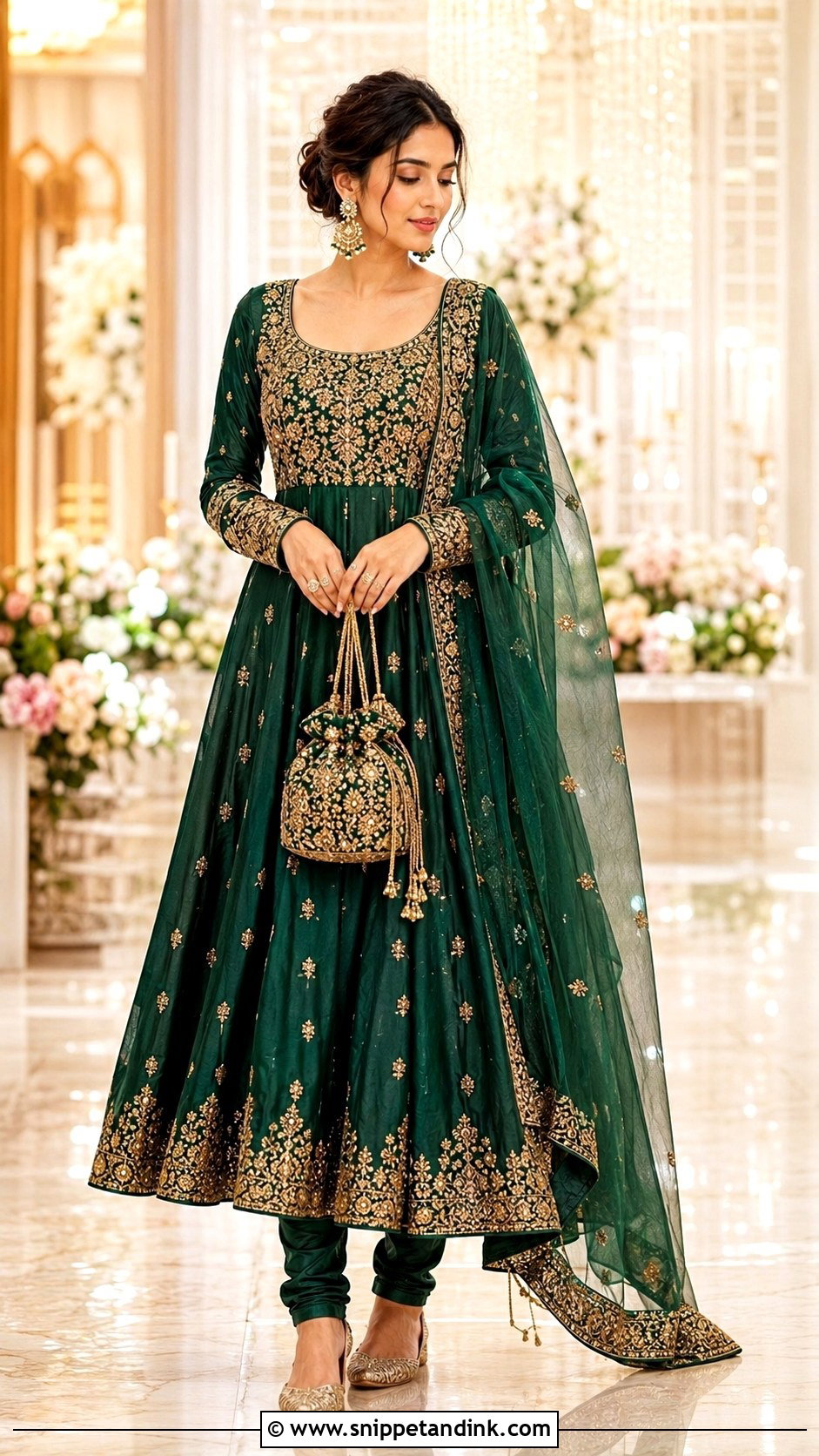
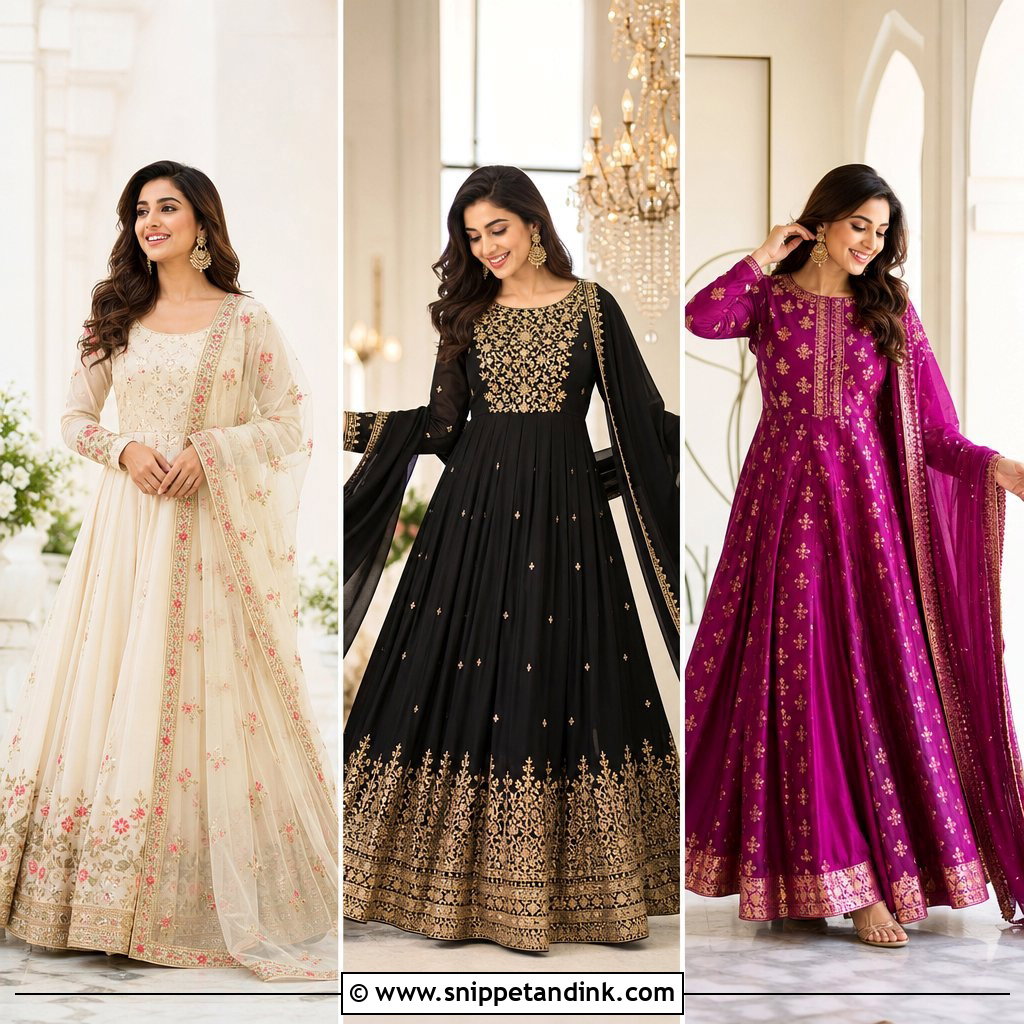
An Anarkali kurti with a fitted churidar is the safe formal choice, and the flare is everything. In silk, georgette or Chanderi with zari borders, emerald, ruby or royal blue all read right for an evening ceremony. Keep the churidar close to the kurti colour so the eye follows the full length. The flare is where I tailor for height: petite guests look better in a moderate flare that starts at the natural waist, while a very full Anarkali can swamp them. Metallic juttis, jhumkas, a dupatta over one shoulder and a structured potli finish it.
2. Embroidered Kurti With Sharara
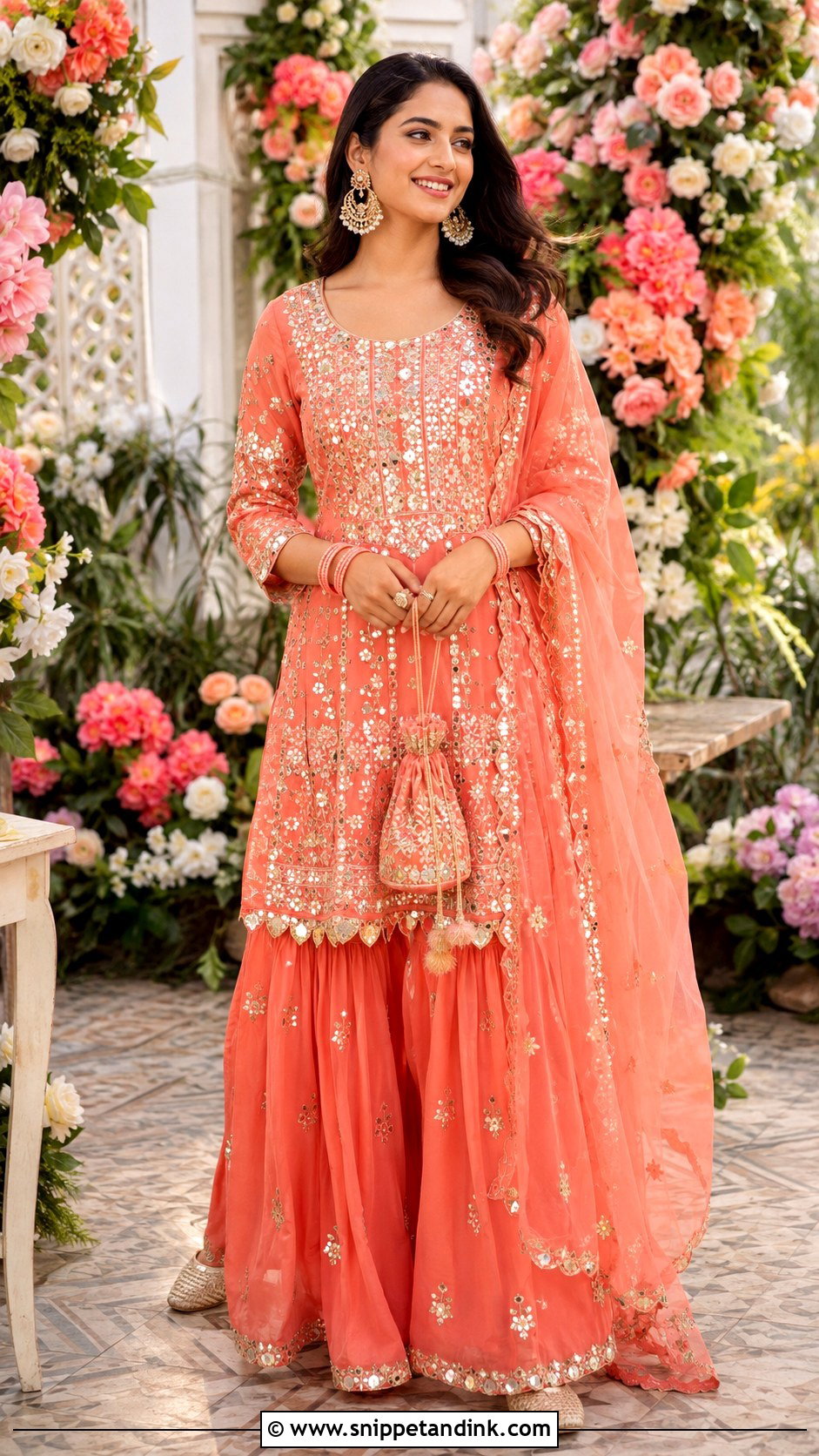
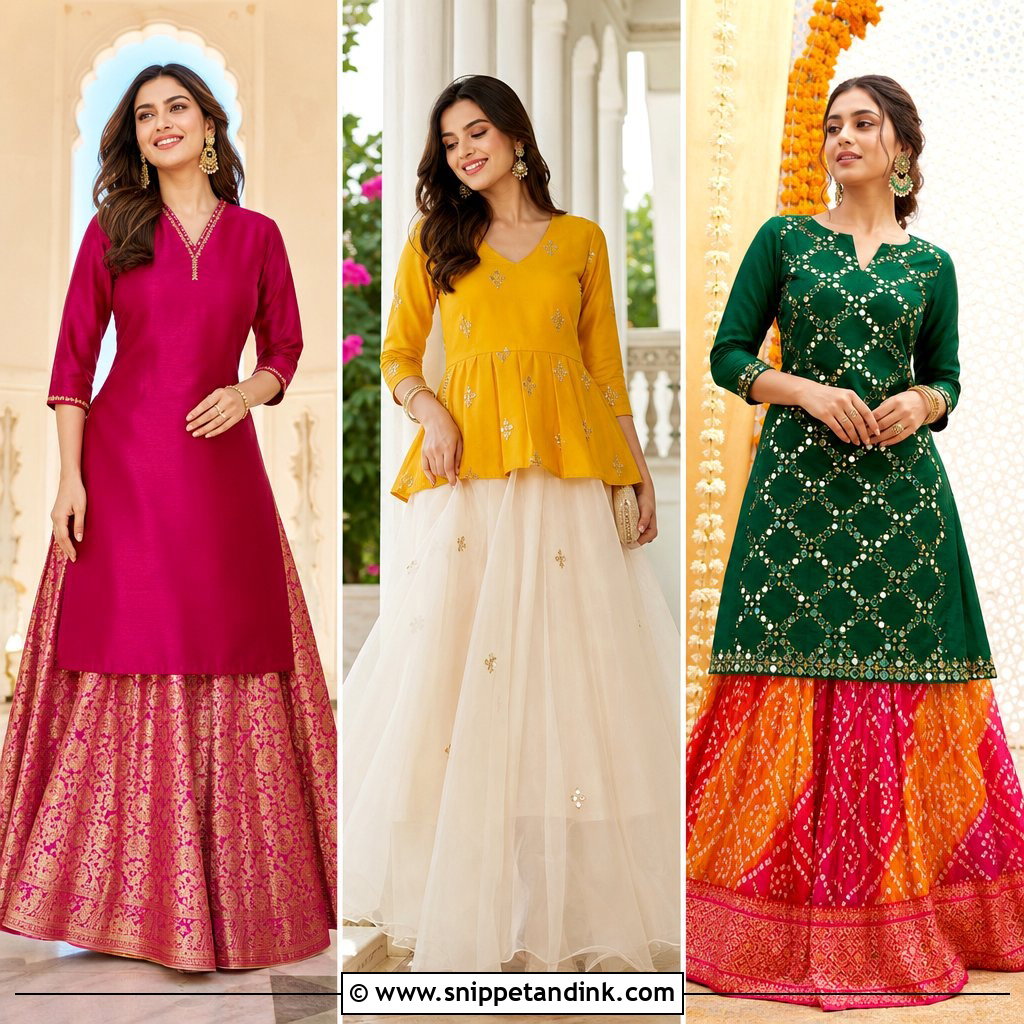
A short embroidered kurti over a sharara gives a lot of festive presence for very little effort to wear. The kurti has to stop at mid-thigh or above, otherwise the sharara’s width disappears and you look boxy. Thread work, mirror accents, gota or small sequins are all light enough for a long day. Coral, turquoise, mustard and fuchsia suit a mehndi. Chandbalis frame the face and embellished juttis keep you steady on a dance floor. Shararas do pick up dust at the hem, so I’d skip this for an outdoor event on bare ground.
3. Silk Kurti With Palazzo Pants
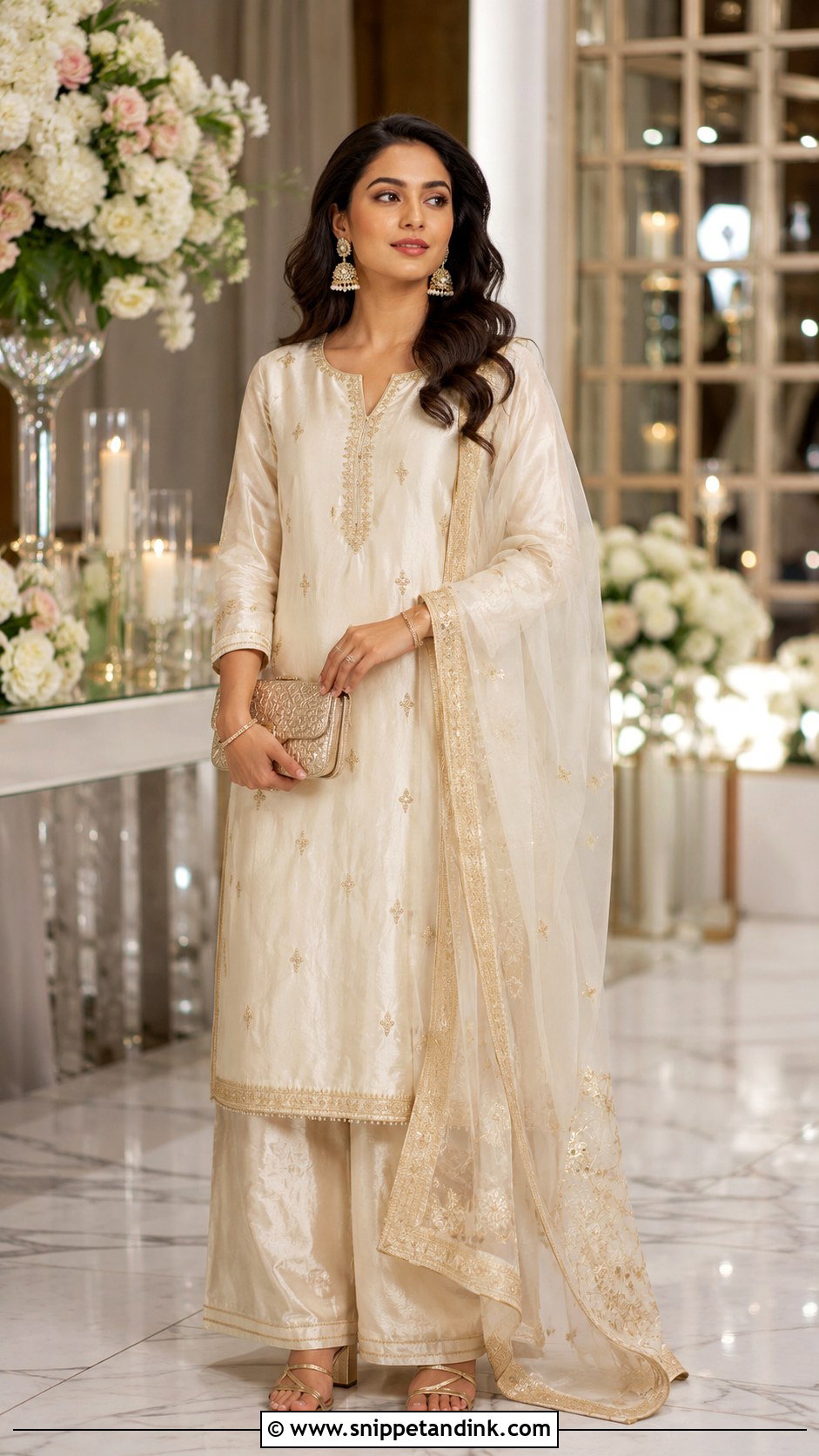
Silk and wide palazzos are the reception outfit I’d suggest to anyone who hates restrictive bottoms. A straight silk kurti with restrained zari at the neckline or hem, with palazzos that fall cleanly from the waist, looks formal without trying. Ivory with gold and navy with antique gold are combinations I come back to. A sheer organza dupatta keeps all that silk from looking heavy. Silk palazzos crease at the knee when you sit for dinner, so pick a silk with some body rather than a thin habotai. If the neckline is detailed, swap the necklace for bangles.
4. Short Kurti With Lehenga Skirt
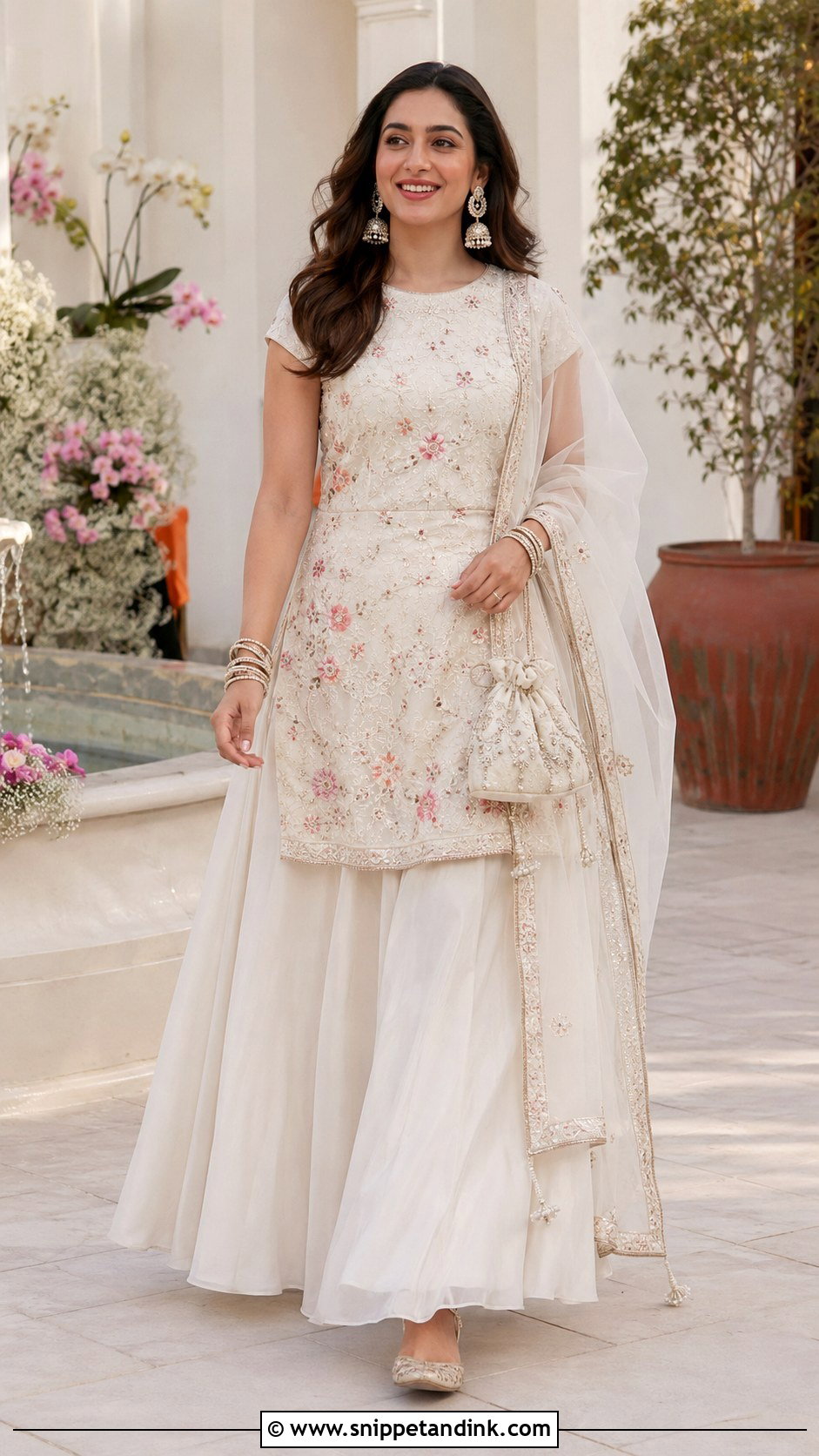
This pairing gives you a lehenga’s presence while letting you mix and rewear the pieces. A kurti ending near the upper hip, with a high-waisted skirt in silk, brocade or georgette, is the basic set. Let one piece lead: a solid embroidered kurti over a printed skirt, or detailed brocade over a plain flare. Two busy pieces fight. I check the waist join carefully, because if the kurti hem and skirt waistband sit at the same line they create a band across the widest point. Heeled juttis, statement earrings and a light dupatta finish it, and it moves well for sangeet dancing.
5. Angrakha Kurti With Cigarette Pants
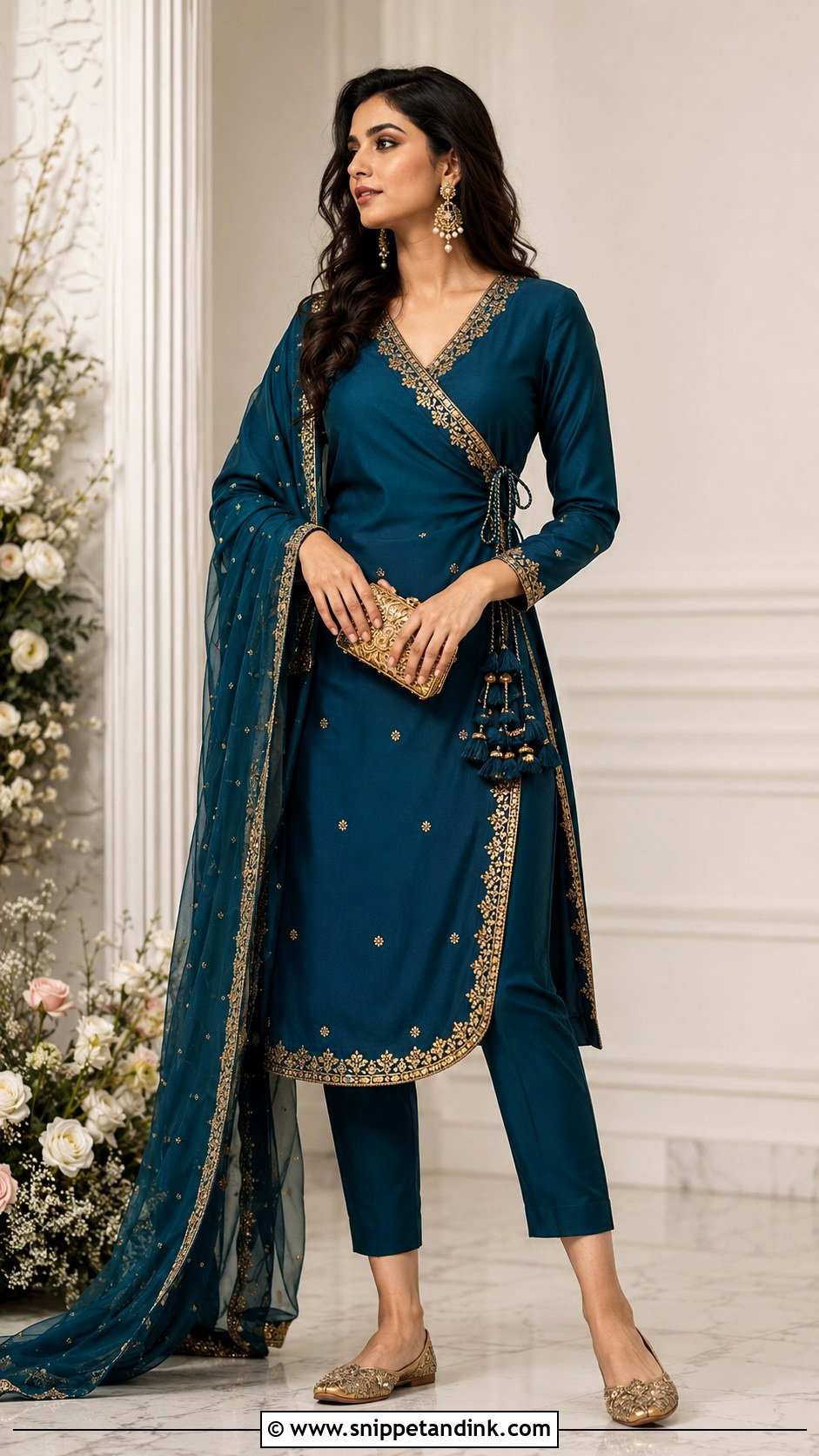
The angrakha’s wrap neckline is one of the most flattering cuts on this list, because the diagonal line draws the eye up and the side ties let you adjust the waist through a long meal. Knee length with embroidery following the crossover works best, over fitted cigarette pants. Wine, teal, plum and deep green suit evenings; peach and mint suit daytime. I’d skip a heavy necklace and wear drop earrings that echo the V. One practical note: the wrap can open when you bend, so a hidden hook at the crossover point is worth asking for.
6. Peplum Kurti With Gharara
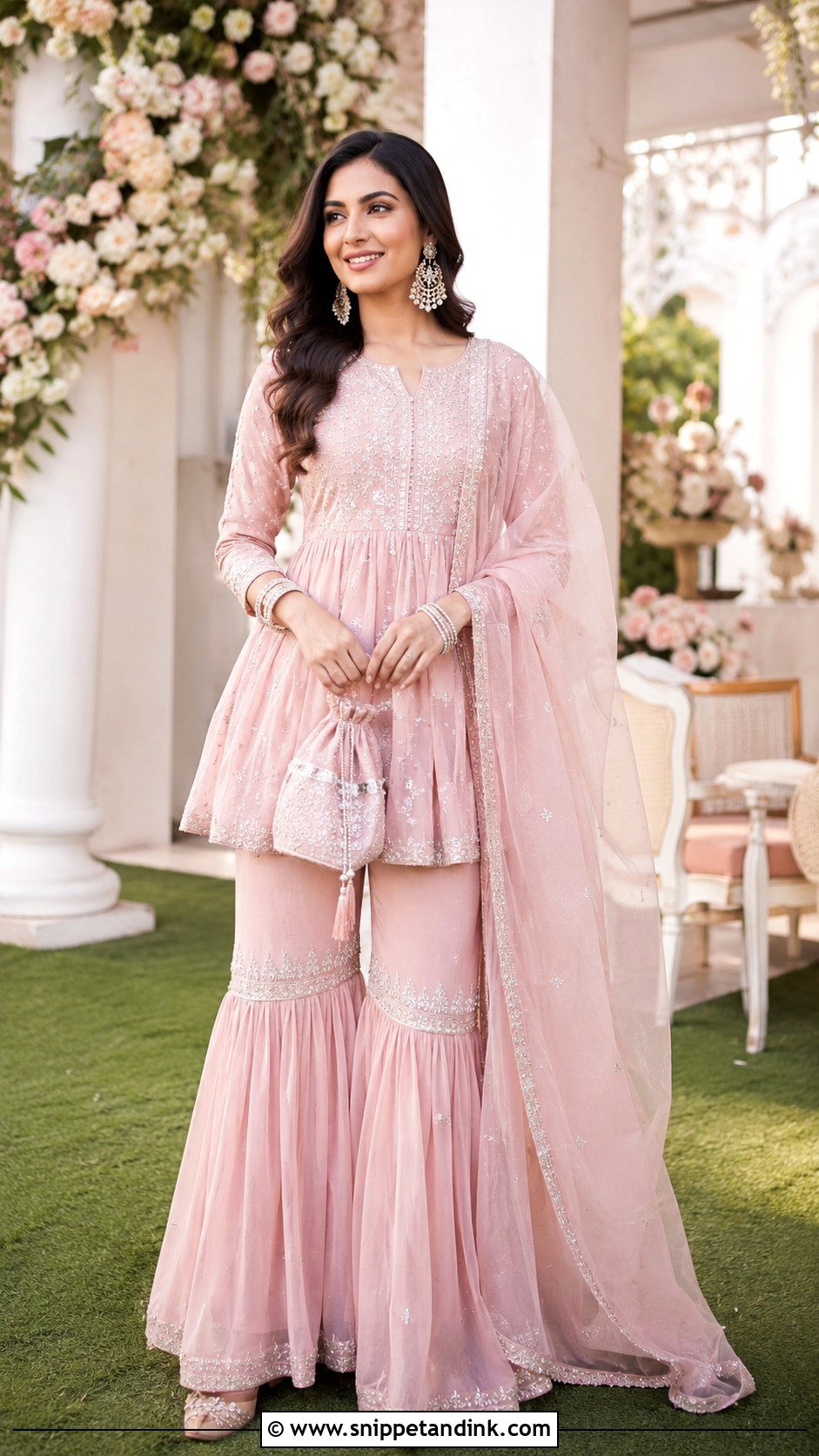
Peplum kurtis need precise fitting through the bodice. If it’s loose above the flare, the waist definition is gone. A peplum kurti with a flared gharara looks young and lively, with the gharara’s knee seam and border adding structure below. Pastels like pistachio and lavender suit daytime; magenta and emerald suit evening. Drape the net or organza dupatta so it doesn’t cover the peplum. Platform juttis and a beaded potli finish it. If the bodice is heavily worked, leave the necklace off.
7. Jacket Kurti With Straight Pants
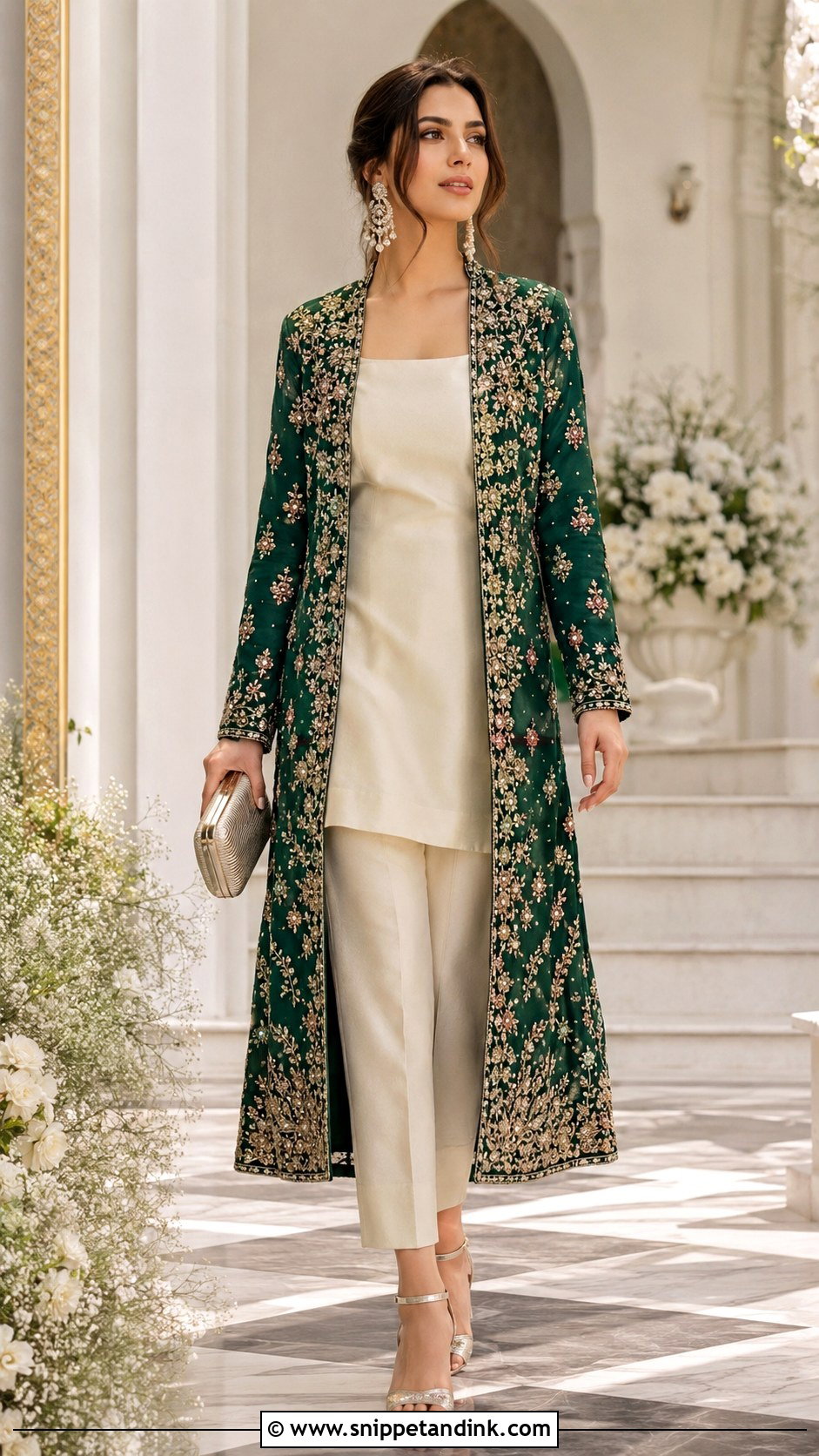
Layering a long embroidered jacket over a plain kurti and straight pants is a smart answer for cold evenings and air-conditioned halls. The inner set should be simple, sleeveless or short-sleeved, so the jacket stays the focus. Organza, brocade, velvet or embellished net each set a different level of formality. The length matters: a jacket ending just below the knee or near the ankle gives the long vertical line that suits most heights. Block heels, a slim clutch and shoulder-grazing earrings. Keep hair up so the jacket collar shows.
8. Asymmetrical Kurti With Dhoti Pants
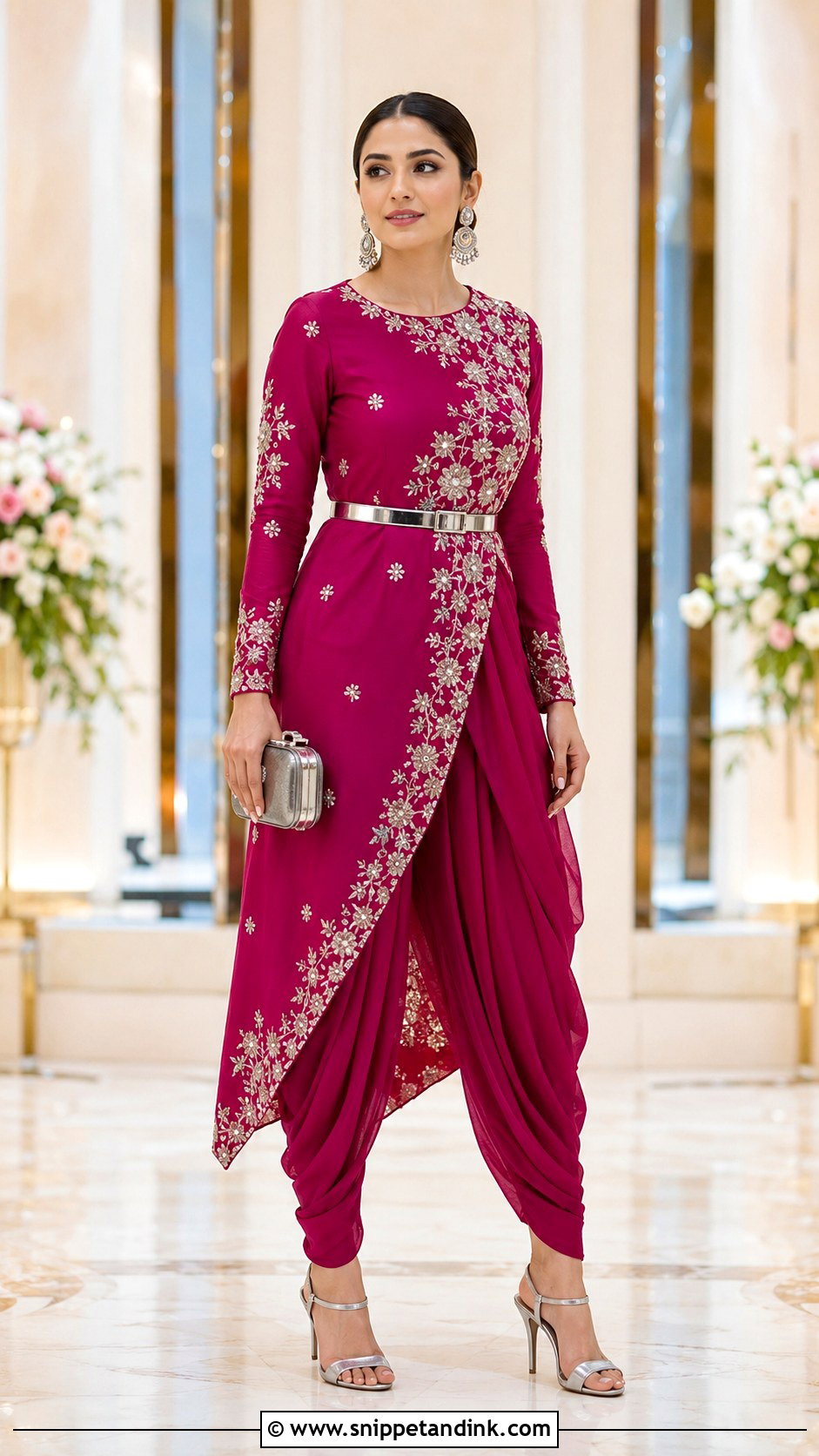
Dhoti pants only work if the kurti lets them show. That’s why the high-low or diagonal hem is essential here. Crepe, satin, georgette and light silk drape smoothly; cotton dhotis get bulky around the hips. A solid kurti with metallic embroidery reads formal, and a print feels more like daytime. A belt is optional and only if it doesn’t fight the drape. I’d skip the dupatta entirely, since the layers already carry enough movement. Sleek hair, defined eyes and sculptural earrings give it the modern edge that suits sangeet performances and receptions.
9. Chanderi Kurti With Pants And Dupatta
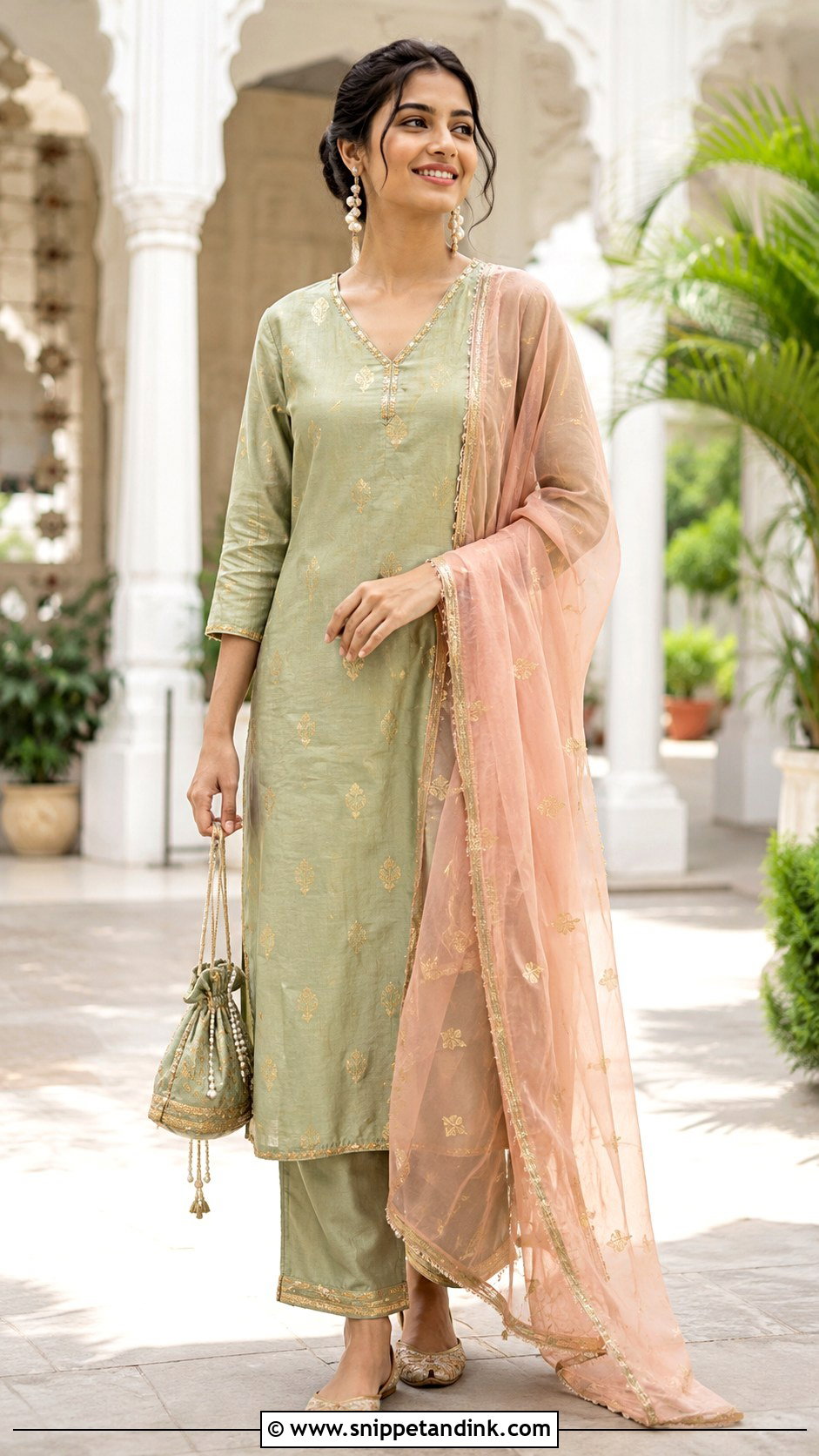
Chanderi is the fabric I recommend most for hot daytime ceremonies. It’s light, has a gentle sheen and holds woven motifs and fine zari well. A straight or gently flared kurti with matching ankle-length pants gives a clean, unbroken line, and a contrasting Chanderi or organza dupatta adds colour. Soft yellow, sage and sky blue look fresh outdoors. Chanderi is slightly sheer, so a smooth cotton lining is not optional. Embroidered juttis, pearl or kundan earrings and a small potli finish it.
10. Velvet Kurti With Trousers
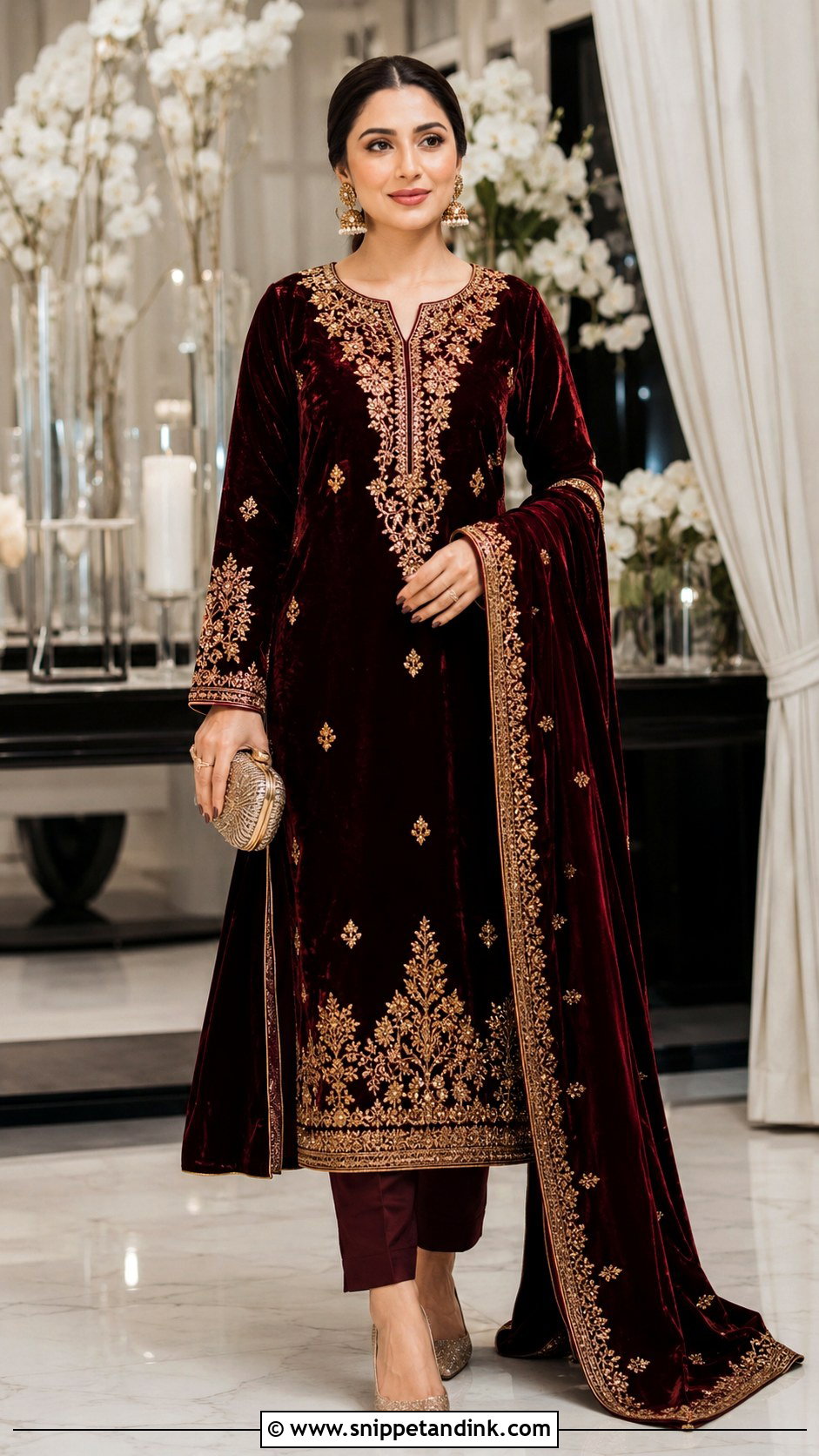
Velvet suits winter receptions, but it’s heavy and warm, so I keep everything else light. A long straight kurti in burgundy, navy, forest green or plum with gold work at the neck, cuffs and hem is enough decoration. Pair it with slim trousers in silk or a lighter fabric, never velvet again. A detailed kurti often doesn’t need a dupatta. Velvet also crushes where it’s pressed, so don’t hang it folded and give it a steam from the inside before you leave. Closed-toe heels and antique gold earrings suit it.
11. Floral Kurti With Flared Skirt
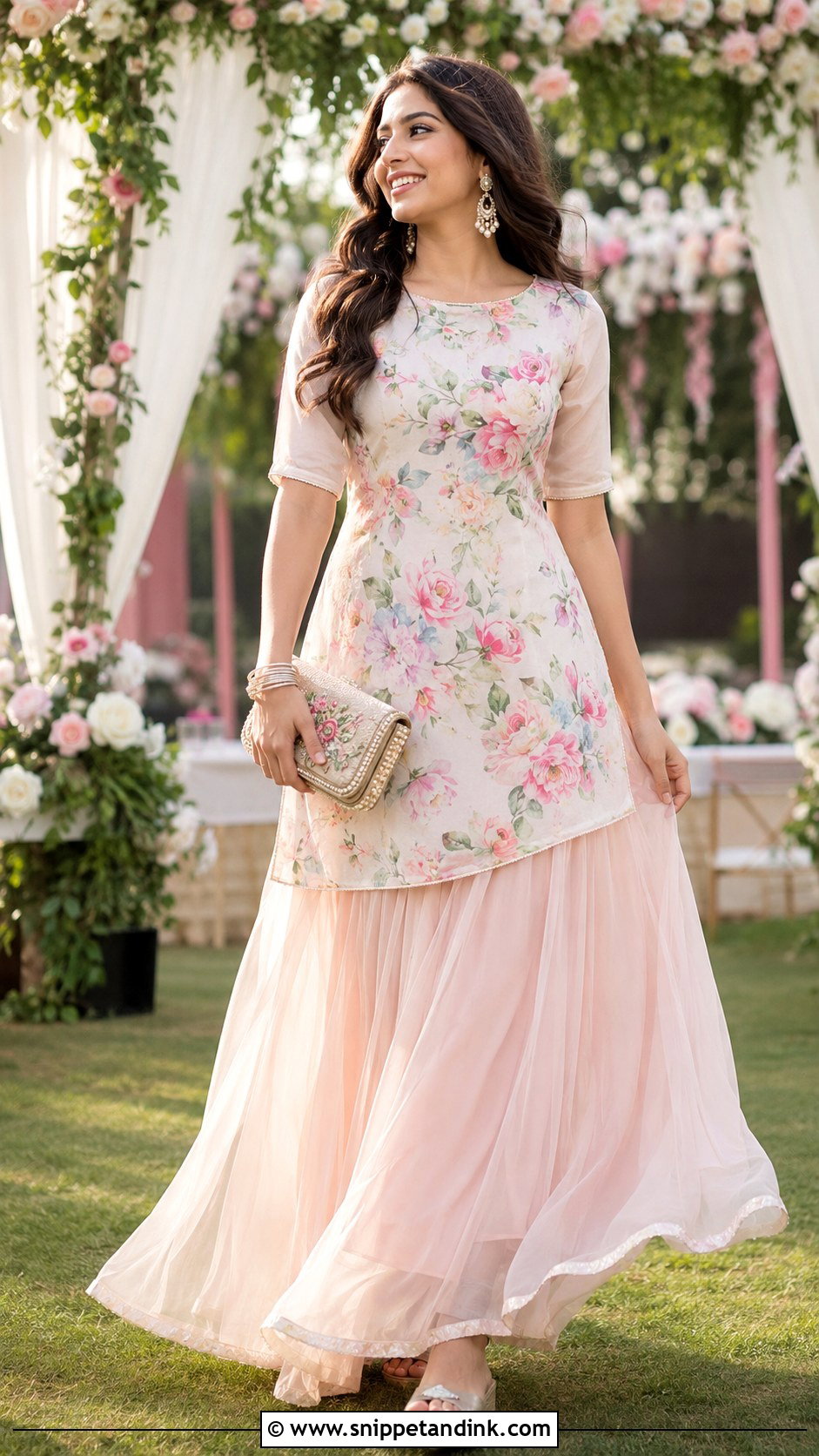
Floral kurtis with a solid flared skirt suit outdoor and daytime pre-wedding events. Choose a print, embroidery or hand-painted flowers on a knee-length or shorter kurti, then repeat one of its colours in the skirt, or reverse it with a plain top and printed skirt. Cotton silk, organza and georgette stay cool. The mistake I see most is mixing two unrelated prints in one outfit. One print per look. Pearl earrings and wedges (heels sink on lawns) finish it, and a dupatta is optional.
12. Mirror Work Kurti With Sharara
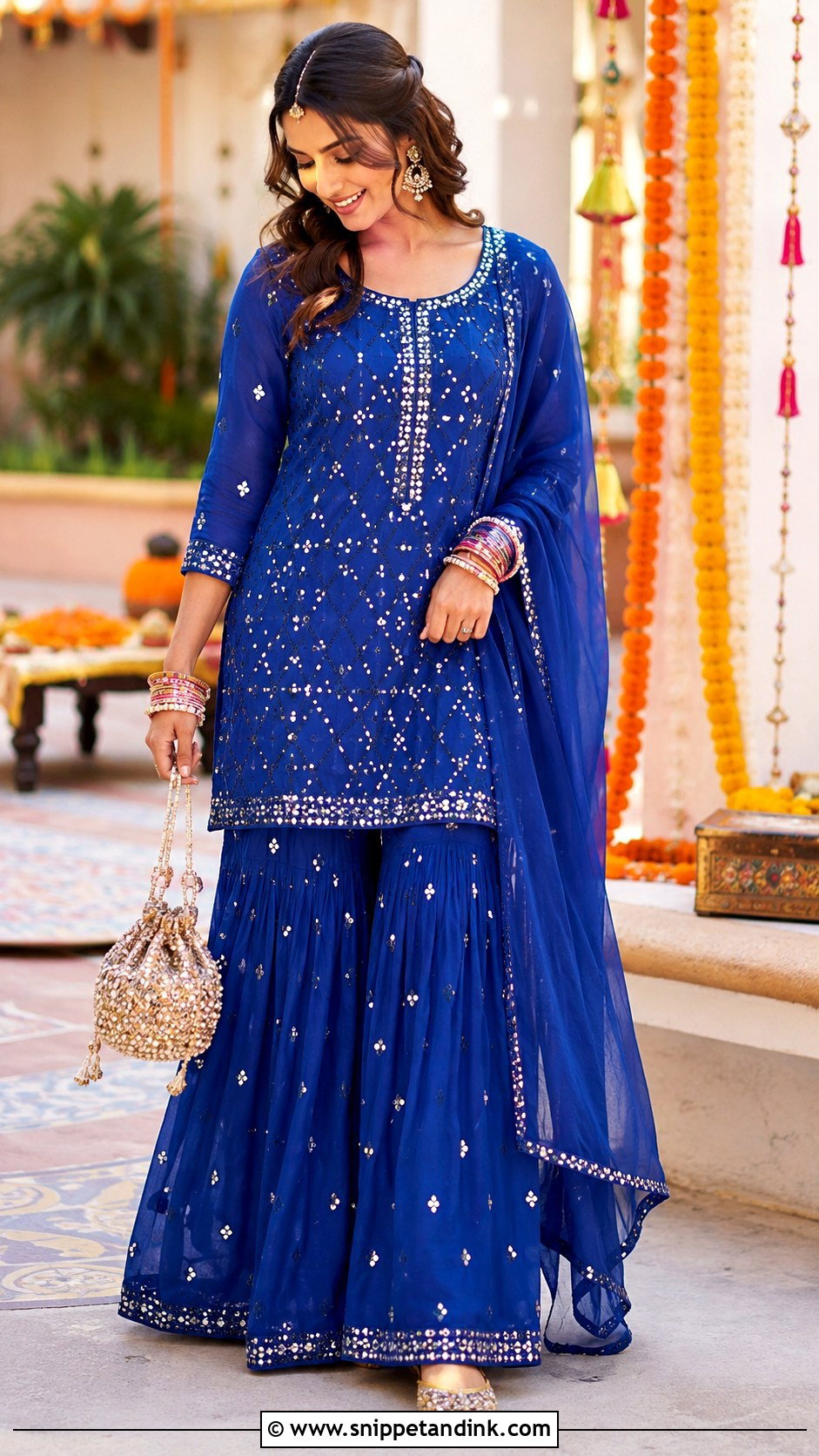
Mirror work catches every light at a mehndi or sangeet, and that’s the whole point. Choose a short kurti with small, evenly spaced mirrors on a solid cobalt, hot pink, orange or green base, with a matching sharara and a dupatta carrying a narrow mirror border. Run your fingers over the inside before the event. Badly finished mirror edges scratch and snag dupattas and other people’s clothes. Don’t add reflective jewellery on top; coloured bangles and medium earrings are plenty. A braided ponytail keeps hair off the neckline.
13. Zari Kurti With Palazzo Pants
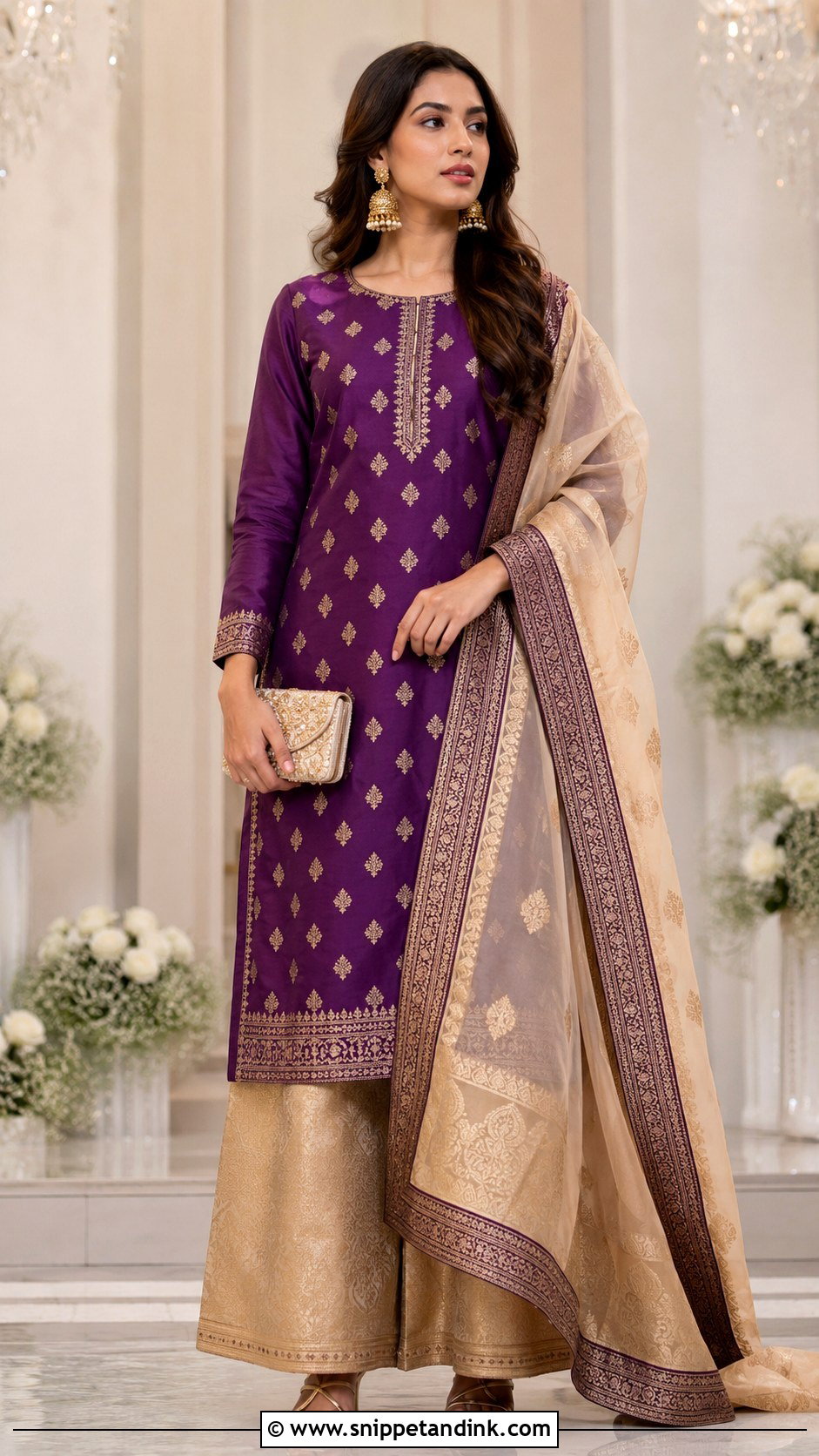
Zari puts the richness into the fabric itself, so the outfit doesn’t need layers. A straight kurti with woven or embroidered zari at the neckline, sleeves and hem, over wide palazzos in a solid shade, looks formal and quietly expensive. Black with gold and purple with champagne are strong evening pairs. Zari can tarnish and feels scratchy against bare skin at the underarm, so a lining matters. For shorter frames I’d keep the kurti at the knee and the palazzos moderately wide. Classic jhumkas and gold-toned sandals finish it.
14. Cape Kurti With Tapered Pants
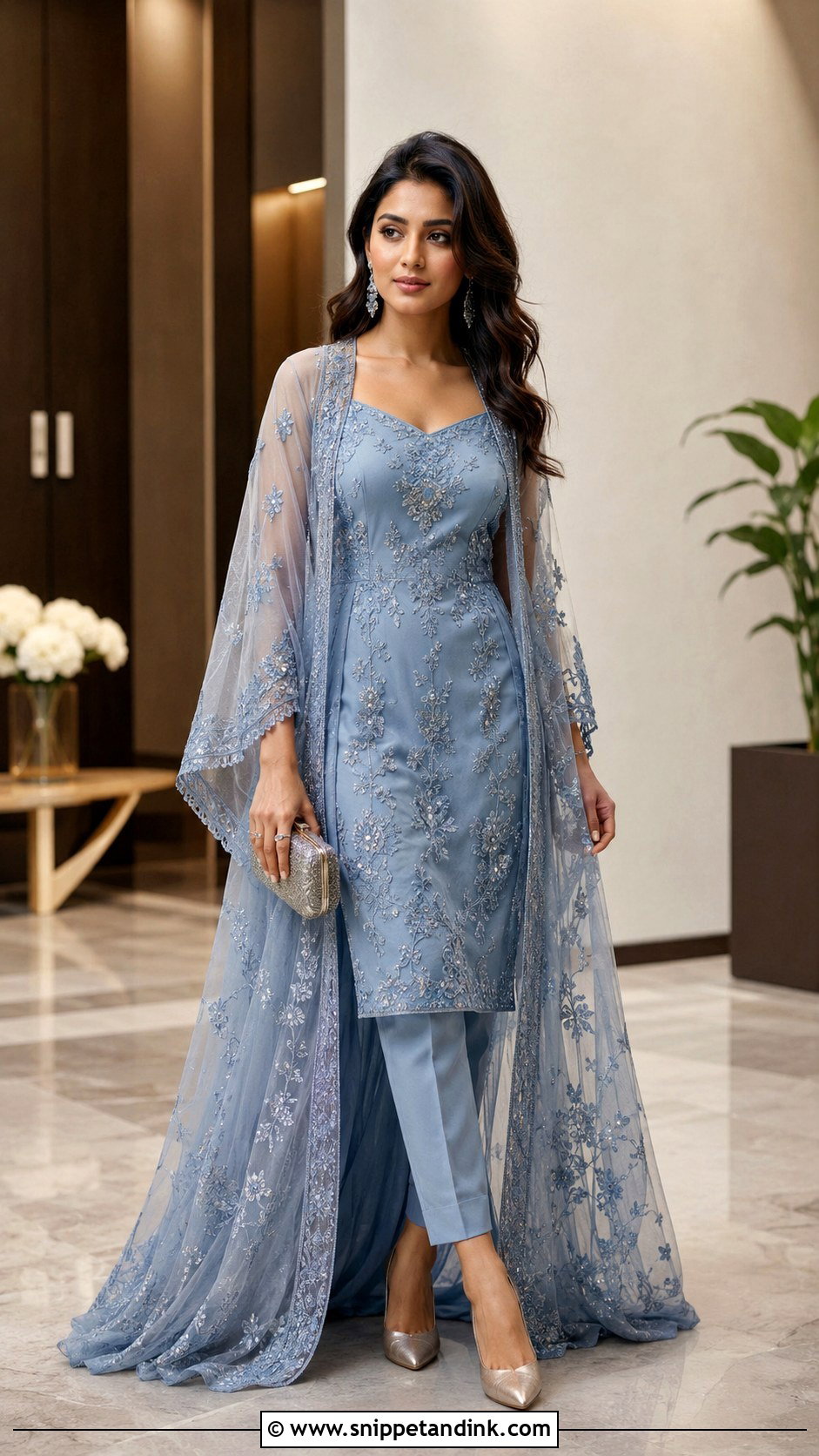
A cape kurti gives you arm coverage without sleeves, which I find guests appreciate at receptions. A fitted inner kurti with a sheer embroidered cape falling to the elbow, knee or ankle, and clean ankle-length pants underneath. The cape replaces the dupatta, so don’t add one. Monochrome blush, dusty blue or mauve looks refined; jewel tones are stronger at night. Long capes catch on chair backs, so if there’s a seated dinner I’d pick elbow or knee length. Pointed heels and a low bun keep the line clean.
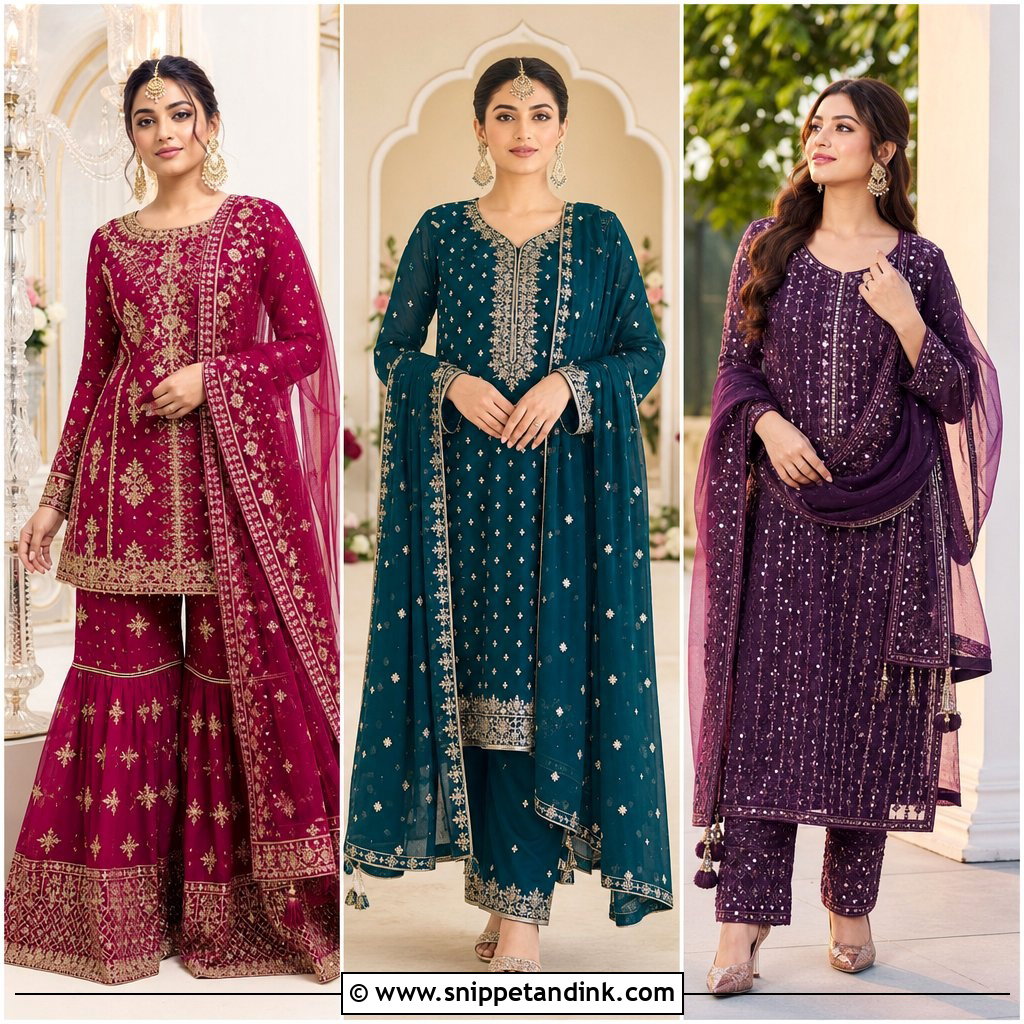
15. High Low Kurti With Cigarette Pants
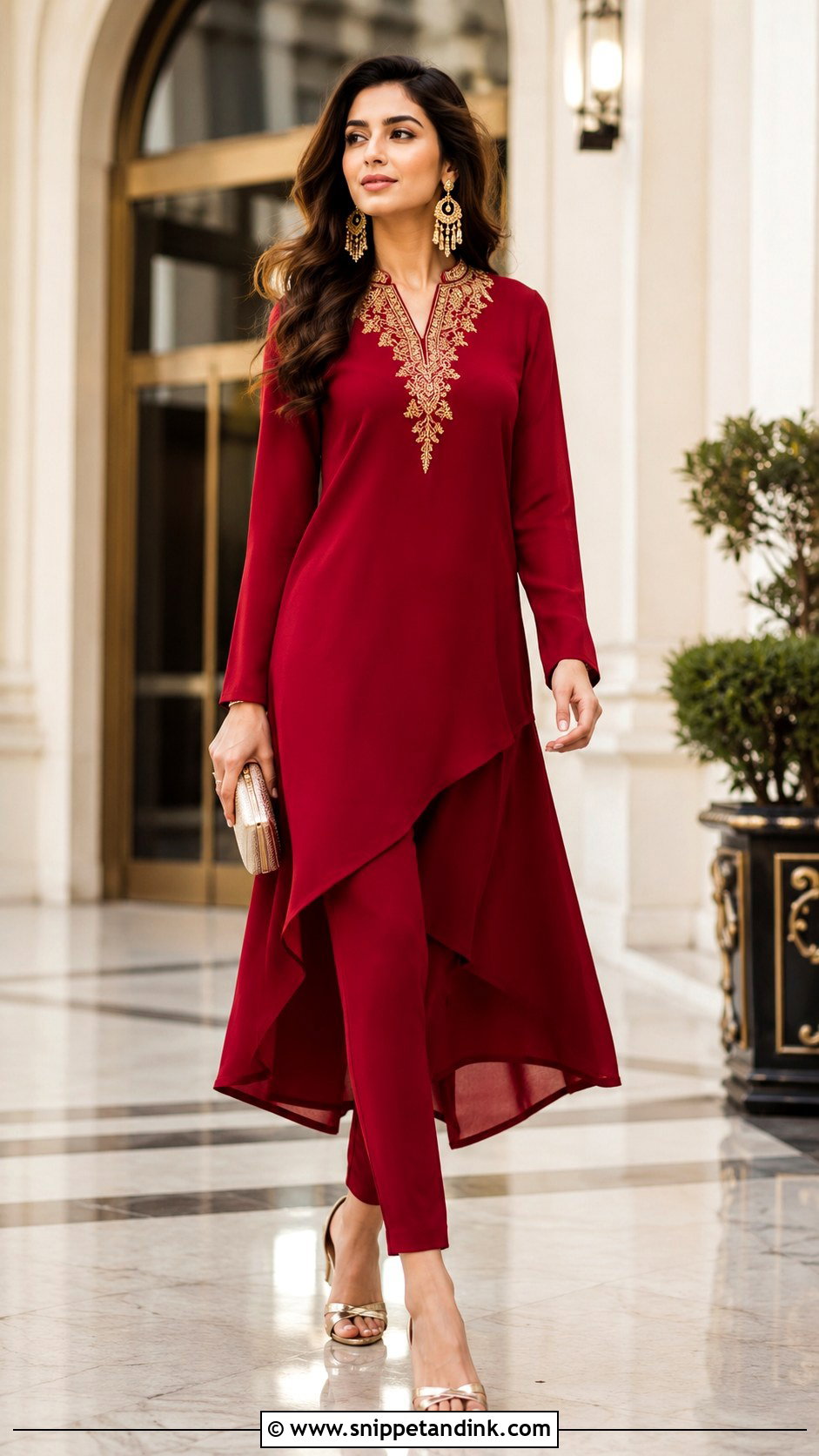
The high-low hem only works if the fabric has enough body to hold its shape, so silk blends, crepe or structured georgette, not soft rayon. Embroidery at the neck or along the lower edge defines it. Close-fitting cigarette pants and heeled sandals show the shorter front. If you add a dupatta, keep it narrow over one shoulder so it doesn’t hide the hem. A small clutch and statement earrings are enough. It suits semi-formal functions where you’ll be standing and mingling more than sitting.
16. Banarasi Kurti With Straight Pants
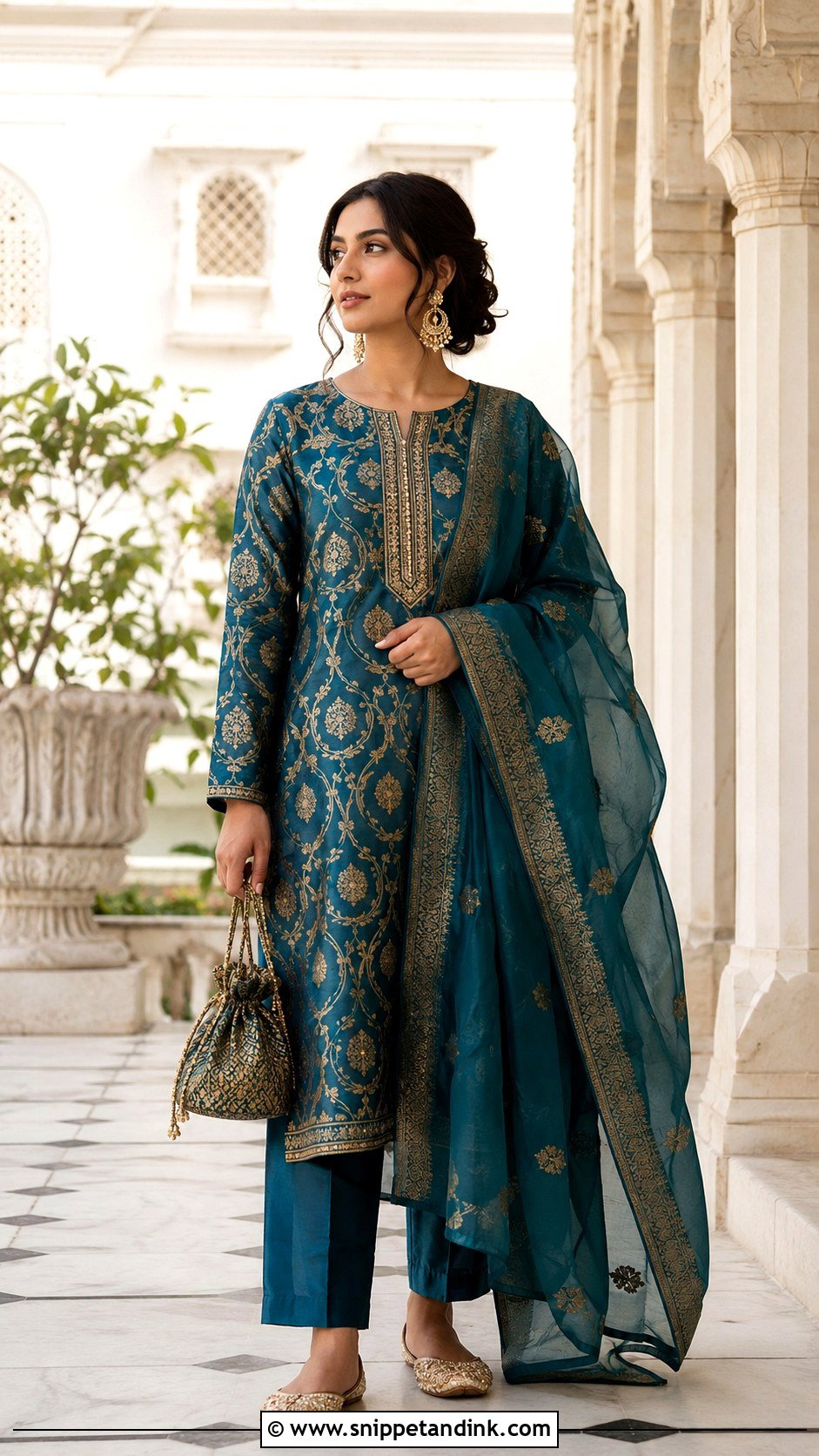
Banarasi brocade already carries sheen and pattern, so everything around it should be quieter. A kurti with small butis, floral motifs or a brocade border, over plain straight pants in matte silk or satin, is the balance I’d aim for. Deep red, peacock blue and emerald look formal; ivory and pastels suit daytime. Pick a light organza or silk dupatta, not another woven one. Banarasi has little stretch, so make sure there’s ease across the shoulders and a smooth lining. Kundan earrings and a brocade potli finish it, and the pieces rewear well.
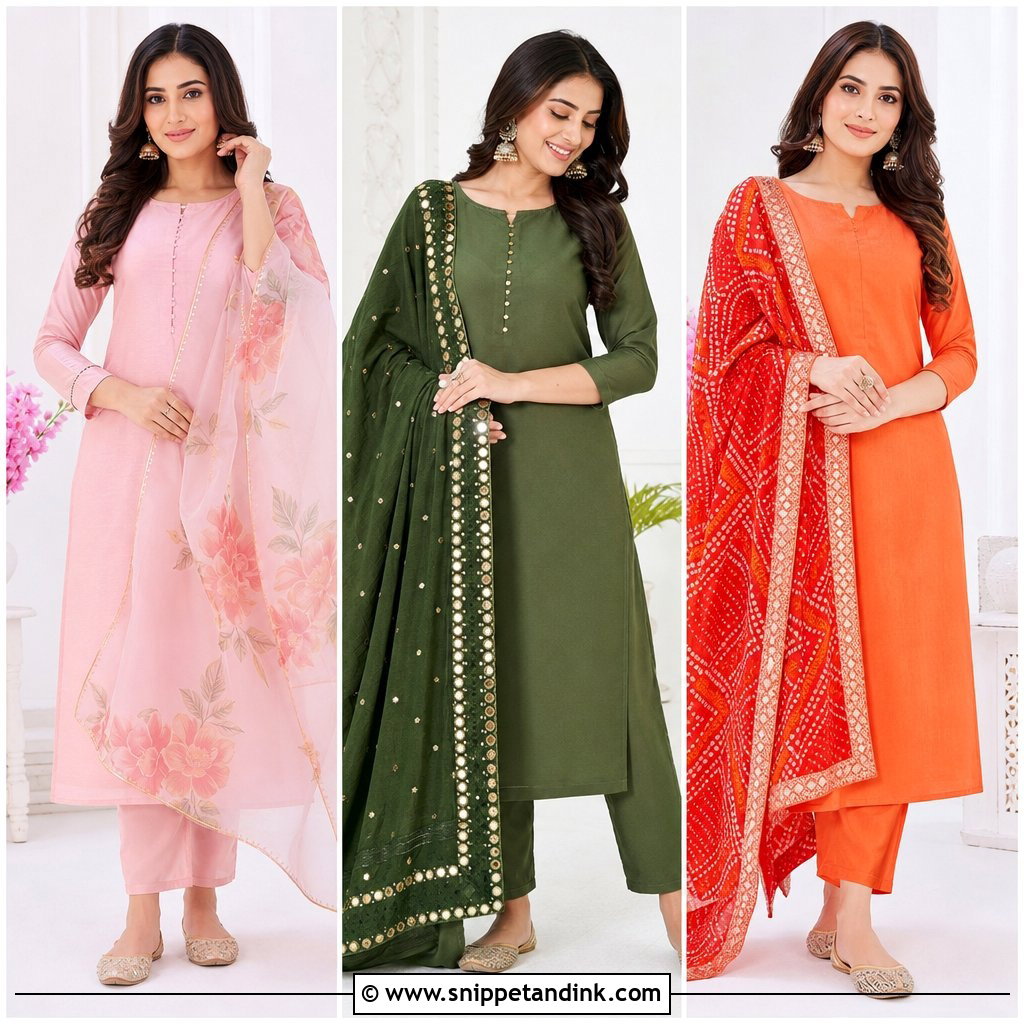
17. Pastel Kurti With Organza Dupatta
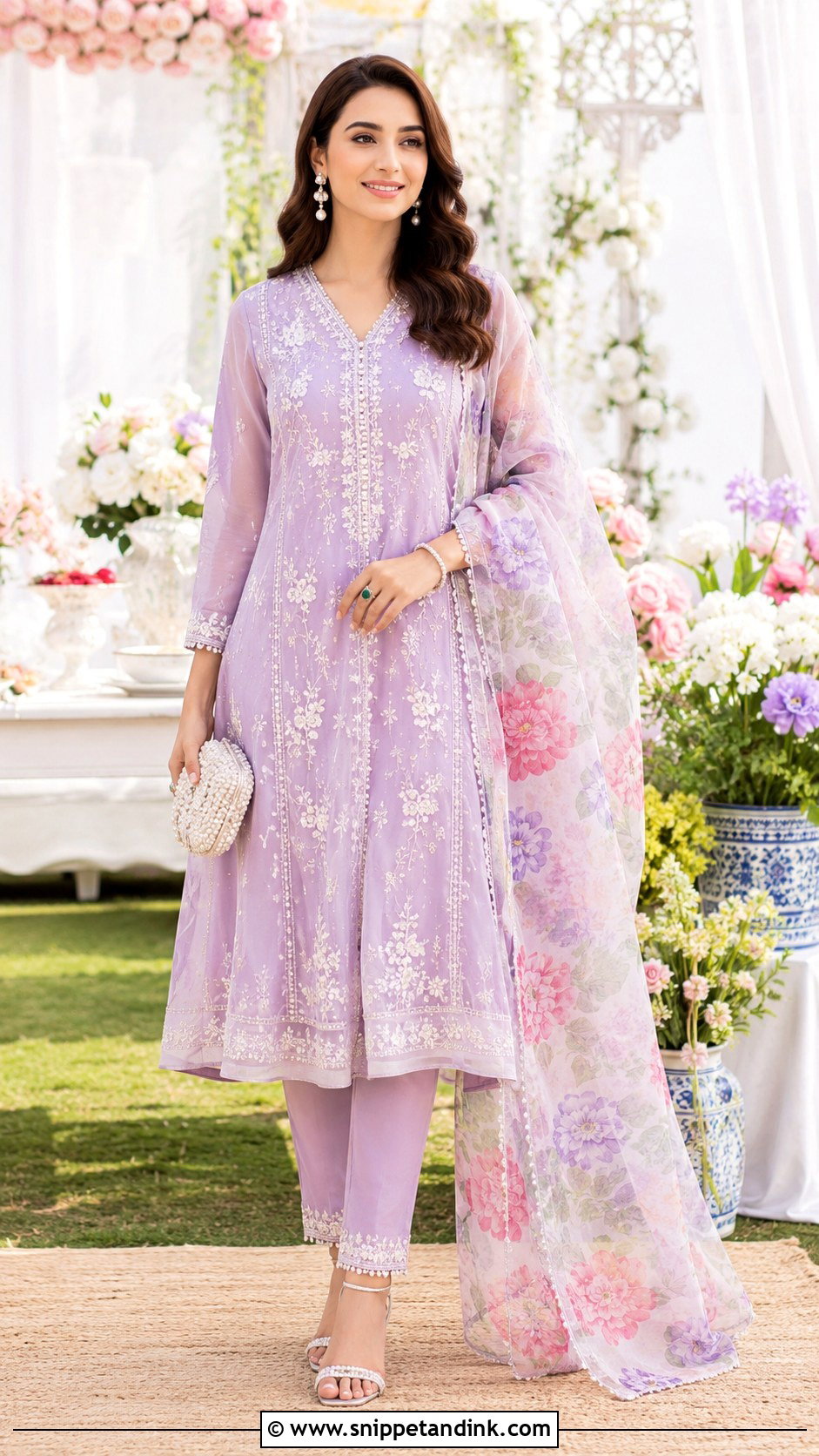
A pastel kurti with matching pants and an organza dupatta is the daytime look I’d send most guests out in. Pick one shade, then let the dupatta bring the contrast through floral embroidery or a scalloped or fine metallic edge. Pearl work and fine sequins add depth without weight. Pale fabric is the one to check in sunlight before you buy, since many pastel georgettes become see-through outdoors and need a full lining. Silver sandals, pearl earrings and a loose bun keep it light.
18. Plus Size A-Line Kurti With Palazzo Pants
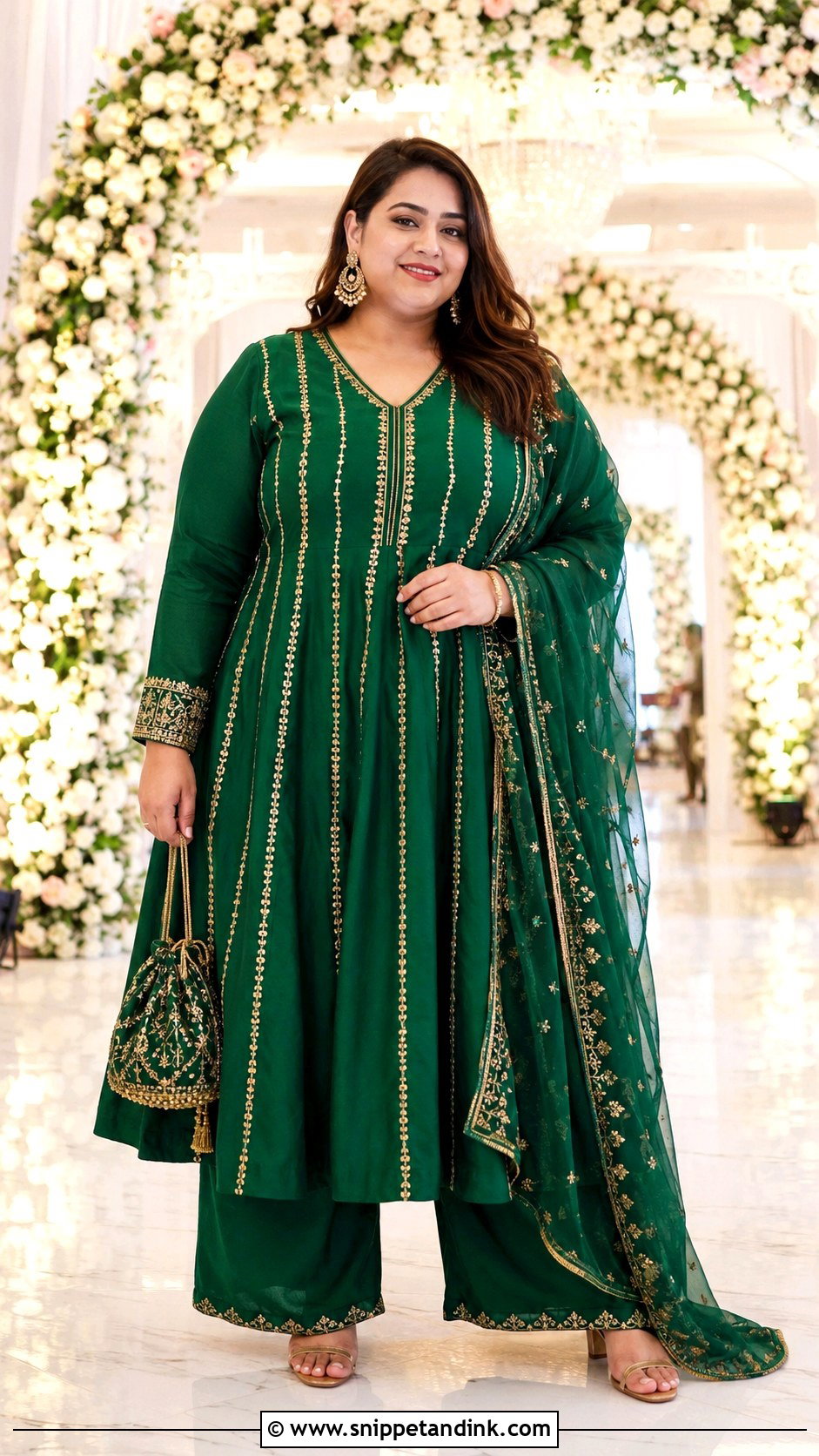
For plus-size guests, an A-line kurti with flowing palazzos is a cut I trust, but the fit has to start at the shoulder. The kurti should follow the shoulder seam exactly and widen gradually, without stiff flare at the hips. Vertical embroidery, an open neckline and side slits keep the line long, and palazzos that skim rather than cling fall better. Silk blends, crepe and georgette move well. Ready-made sizes are often tight at the upper arm, so tailoring there is worth it. Wear whichever colours you like; both jewel tones and pastels work.
19. Minimal Kurti With Statement Dupatta
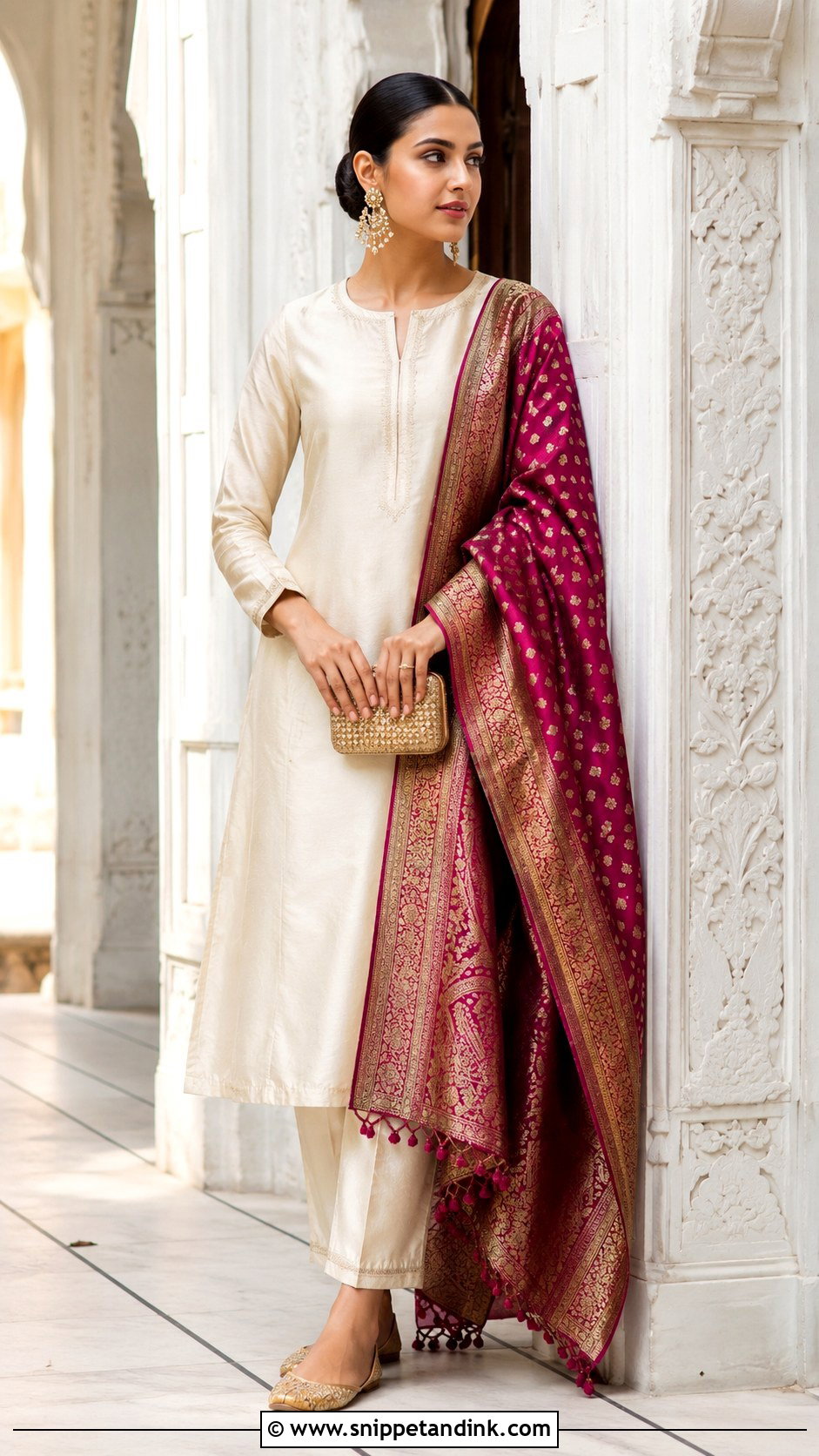
Not every wedding outfit needs heavy embroidery. A plain straight kurti and pants with a statement dupatta puts all the detail in one piece you can drape and rewear. Silk, Chanderi or crepe for the set, then a Banarasi, bandhani, phulkari or embroidered organza dupatta for colour. Keep the neckline clean. Ivory under a jewel-toned dupatta is classic; a monochrome base feels modern. Match the clutch to the dupatta’s border. It’s the most rewearable look here, since each piece works separately after the wedding.
20. Red Kurti With Gharara
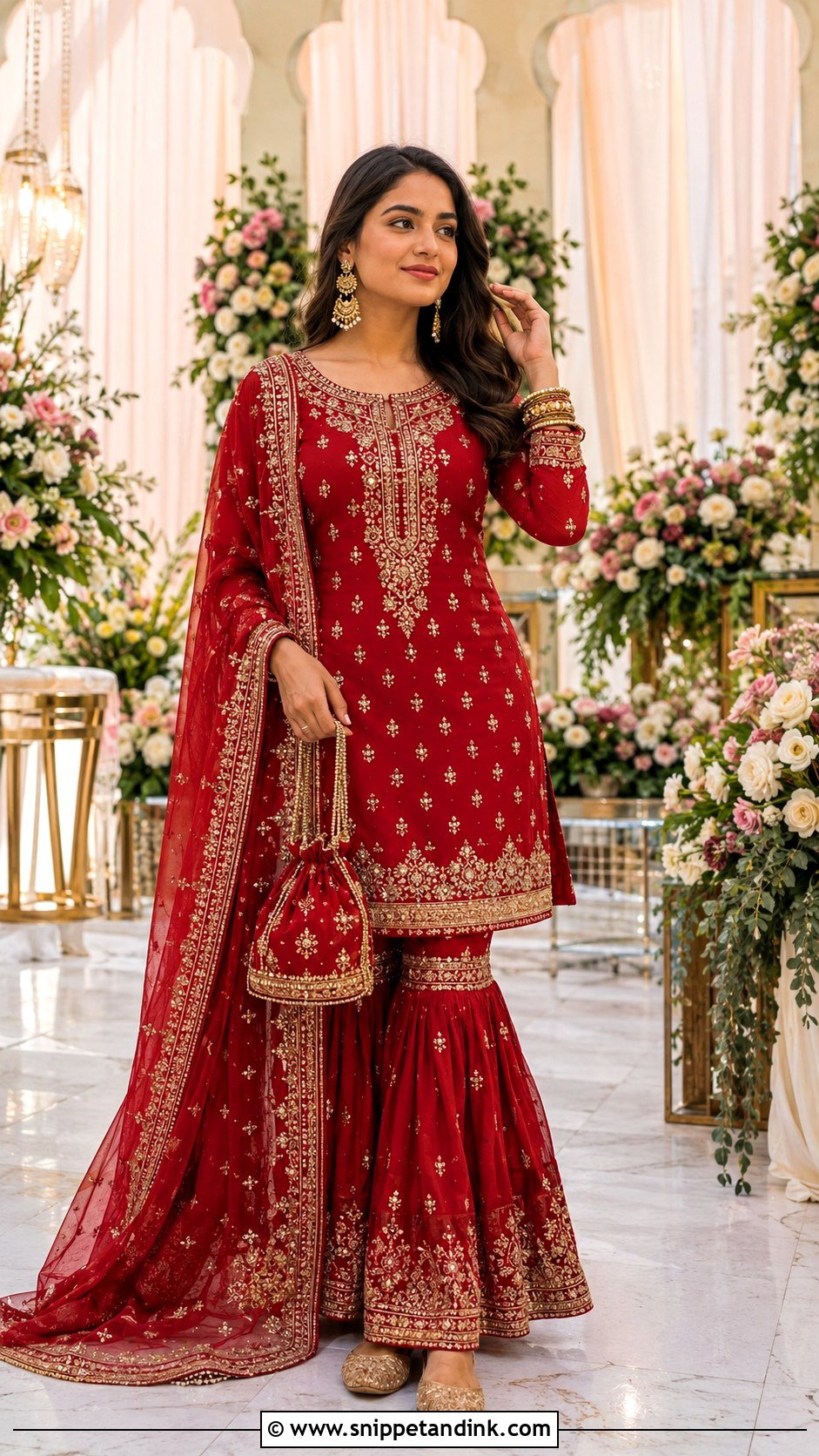
Red with a gharara is bold and traditional, and before anything else I’d say this: as a guest, check that red is fine for the event. In many families red is the bride’s colour, and a close relative in red at the main ceremony can cause friction, while a pre-wedding function may be different. If it’s welcome, a short crimson or maroon kurti with gold embroidery balances the gharara’s volume. A sheer red or beige dupatta with a zari edge, juttis, gold bangles and kundan earrings complete it. Keep the bag small.
Pinning a Dupatta So It Survives the Dance Floor
A loose dupatta spends the evening sliding off one shoulder, and net and silk slip worst of all. I pin every dupatta I drape, even a light one.
For a one-shoulder drape, pleat the end you’ll pin into four or five narrow folds and fix it to the kurti at the shoulder seam with a small safety pin from underneath, so the pin doesn’t show. Add a second pin at the back, about level with the shoulder blade, so the weight hangs from two points. For dancing, cross the dupatta over the chest and pin both ends at the back waist. Brooch pins look nice but tear fine organza, so use small plain pins on sheer fabrics.
Small Alterations That Make a Ready-Made Set Look Tailored
Most ready-made kurti sets need at least one change before they look custom. Allow a week or two for a tailor and try everything on with your wedding shoes. These are the alterations I ask for most often:
- Shoulder seams taken in so they sit on the shoulder bone rather than down the arm
- Sleeves shortened to the wrist bone, so bangles show
- Side slits lowered if they open too high when you sit
- Palazzo, sharara or churidar hems set for the actual shoe height
- A lining added to any sheer pastel or Chanderi piece
Plan the Whole Wedding Week Around Two or Three Kurtis
One good kurti can cover more of a wedding week than people expect. Anarkalis and Banarasi sets handle the formal ceremony, while cape layers, high-low hems and dhoti pants take you through the sangeet and reception. Buy with the bottoms and dupattas in mind, so each kurti has two looks. Think of the outfit as a set: kurti, bottom, shoes, dupatta, jewellery and bag chosen together. Daytime wants breathable fabric and softer colour, evening wants richer texture. And get it tailored. A plain kurti that fits will always look better than a heavily worked one that pulls.
You'll Like These Ideas:



Leave a Reply