
A kurti over a skirt gives you most of a lehenga’s swing for far less weight, and because the pieces are separate, you can mix one you own with one you buy. I style these for every kind of function: a haldi, mehndi, sangeet, ceremony or reception. The combinations below range from a short kurti over a sweeping skirt to a slit kurti layered over a lehenga, and from cotton handloom to sequins. What holds them together is proportion and fabric weight, so for each one I’ve noted where the kurti should end, what the skirt is made of, and what tends to go wrong.

Turn the Skirt Inside Out Before You Buy It
Most skirt disappointments come from what’s on the inside, not the print. When I shop separates with a client, I turn every skirt inside out first. Here is what I’m looking at:
- Kalis or panels: a skirt cut from many flared panels moves and falls more evenly than one long strip of fabric gathered at the waist.
- Can-can: a stiff net underlayer adds volume but makes sitting, car rides and bathroom trips harder. For long functions I prefer a soft lining or a single light layer of net.
- Waistband: flat with a side zip or hooks sits smoothly under a kurti; a thick drawstring shows as a ridge.
- Lining length: it should reach close to the hem, or sheer outer fabric shows a line.
- Weight: lift it. If a skirt feels heavy in your hand, it will feel heavier at hour five, and it will drag a lightweight kurti out of shape.
Pockets are rare but worth asking a tailor to add. A phone in your skirt beats hunting through a potli every time someone wants a photo.
1. Silk Kurti With Brocade Skirt
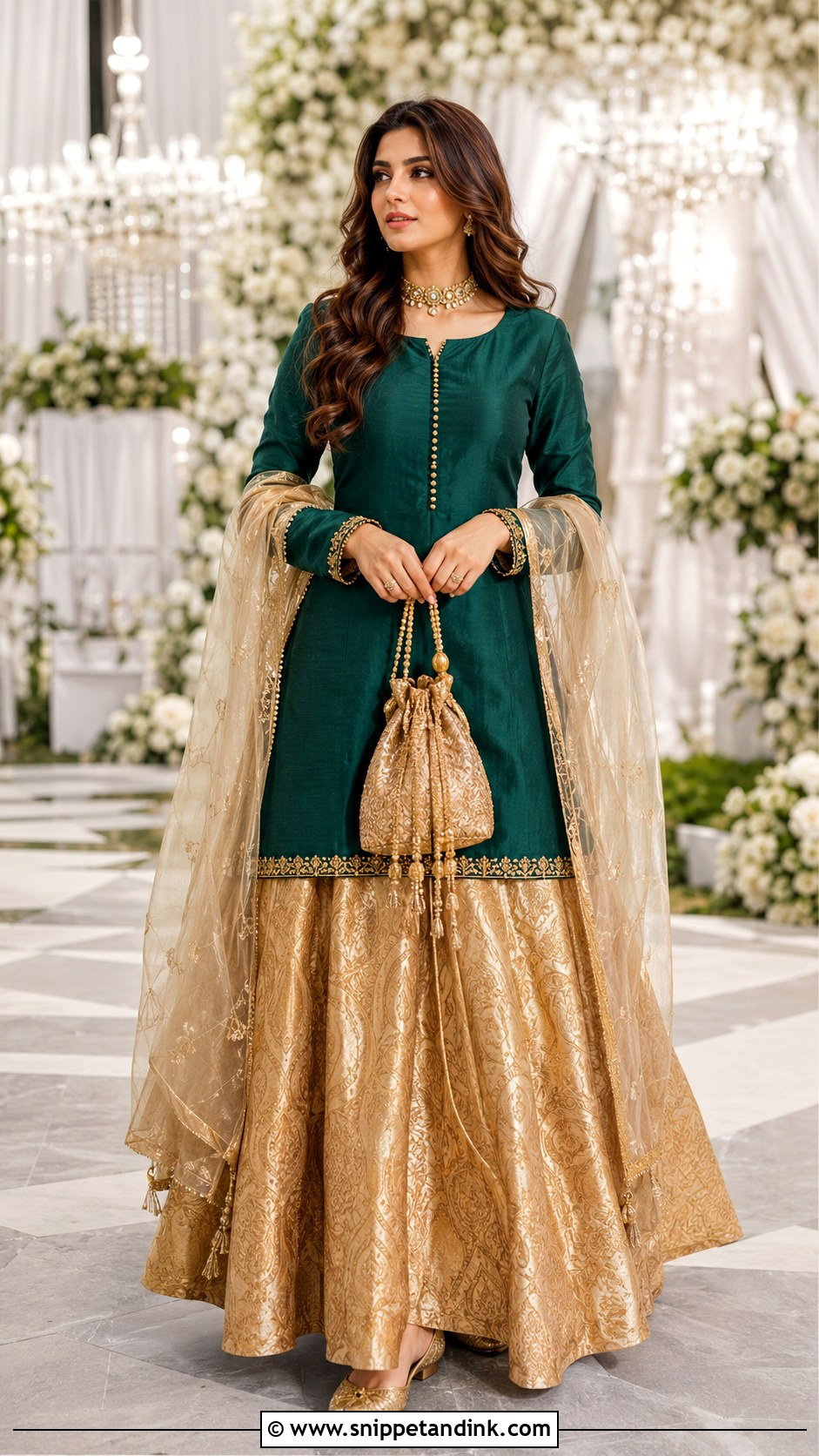
Brocade skirts are heavy, and that’s the first thing I consider before pairing one. A gold-woven brocade with moderate flare, rather than a full circle, keeps the weight manageable over a long ceremony. On top, a fitted hip-length silk kurti in emerald, ruby or navy should stay fairly plain, because the skirt’s woven pattern is the reason you chose it. A wide neckline leaves room for a kundan choker. Swap a heavy dupatta for tissue or organza over one shoulder, and carry a structured potli bag with gold juttis.
2. Embroidered Short Kurti With Lehenga Skirt
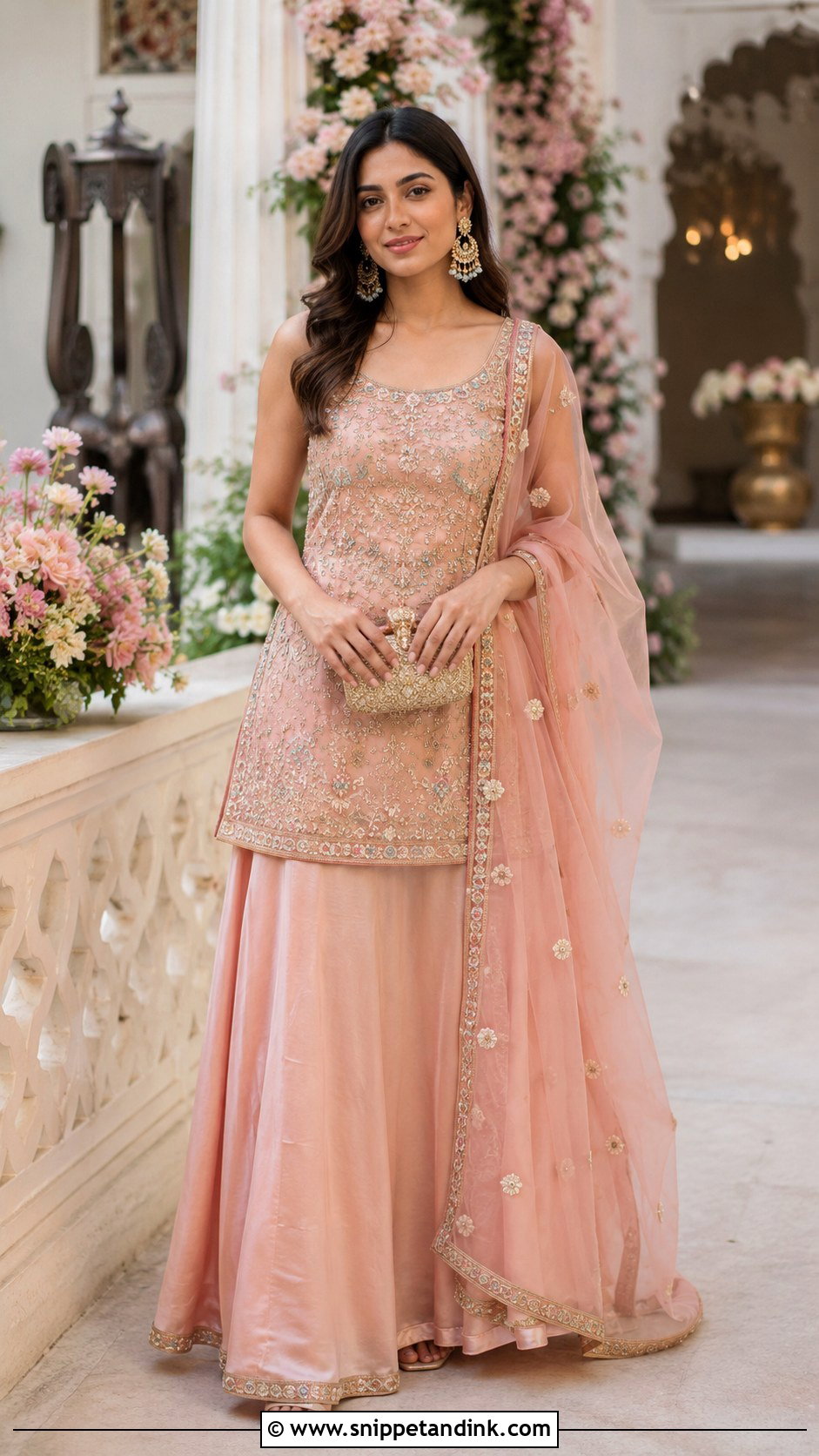
With a short kurti over a lehenga skirt, the hemline has to stop around the upper hip, so the skirt’s waistband and flare still read clearly. Any lower and you lose the waist entirely. Zari, pearls or sequins on the kurti mean you don’t need a separate blouse. I’d steer you away from skirts with a stiff can-can underskirt here: they look full on the hanger, then make sitting in a car or on a low sofa a struggle. A softly lined skirt dances far better. Drape a sheer dupatta from one shoulder and loop it at the wrist.
3. Long Kurti With Printed Skirt
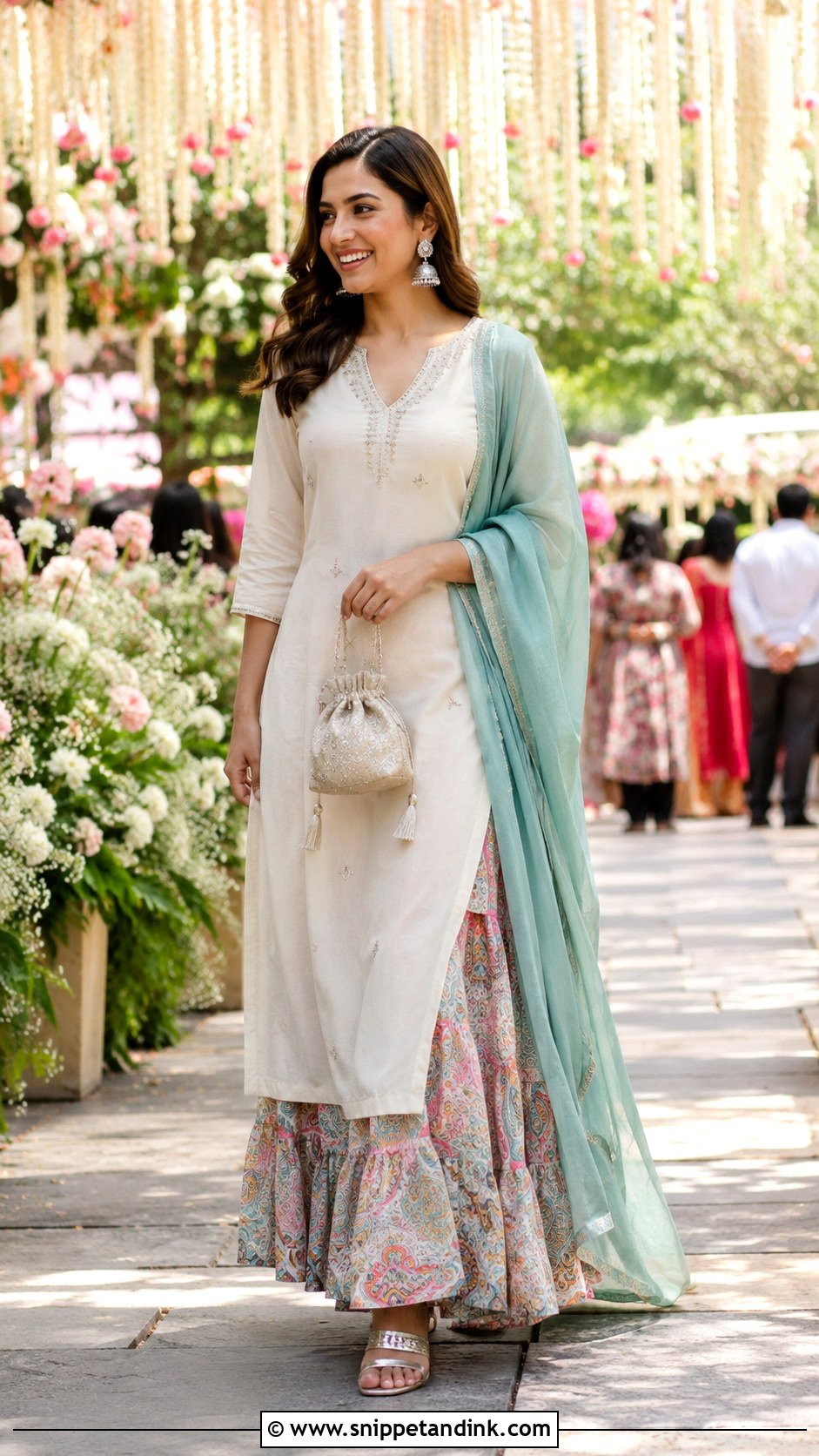
A long kurti hides most of the skirt, so I rely on high side slits to let the print show when you walk. Solid ivory, teal or rust over a floral or paisley skirt works when one small colour from the print repeats in the kurti’s embroidery. The detail people overlook is the waistband. A gathered drawstring makes a visible ridge under a fitted kurti; a flat, smooth band or a side zip doesn’t. It’s a relaxed choice for a day wedding or pre-wedding lunch, with jhumkas and metallic kolhapuris.
4. Peplum Kurti With Organza Skirt
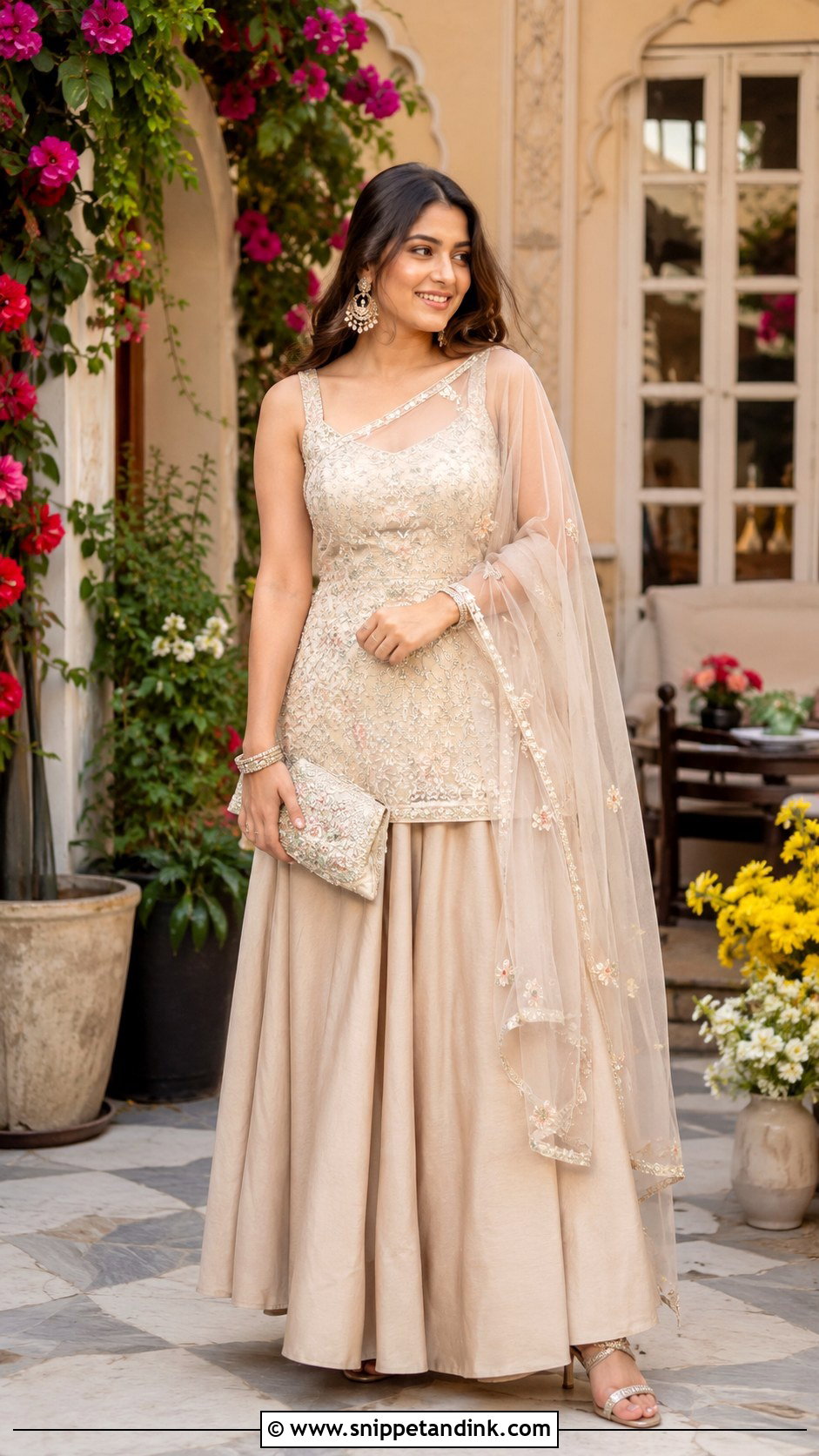
Two flares stacked on top of each other can overwhelm, which is the risk with a peplum over organza. I keep the organza skirt layered but not heavily gathered, so its volume begins lower and the peplum still defines the waist. Embroidery belongs on the bodice and sleeve edges, and pastel blue, blush, lavender or champagne all sit well in daylight. Instead of a full dupatta, pin a narrow one behind both shoulders like a light cape. Pearl earrings and low block heels finish it.
5. Side-Slit Kurti With Sequin Skirt
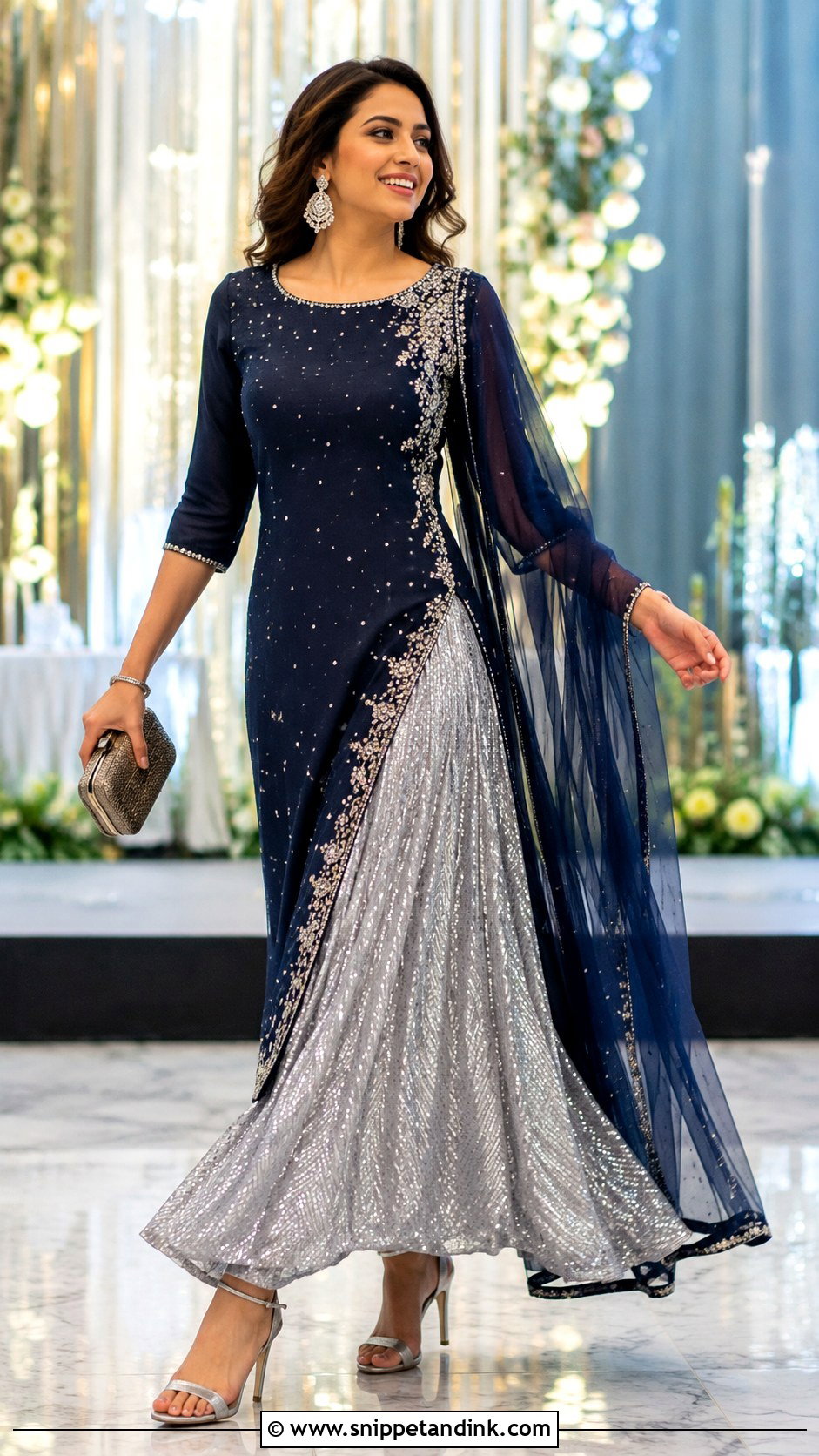
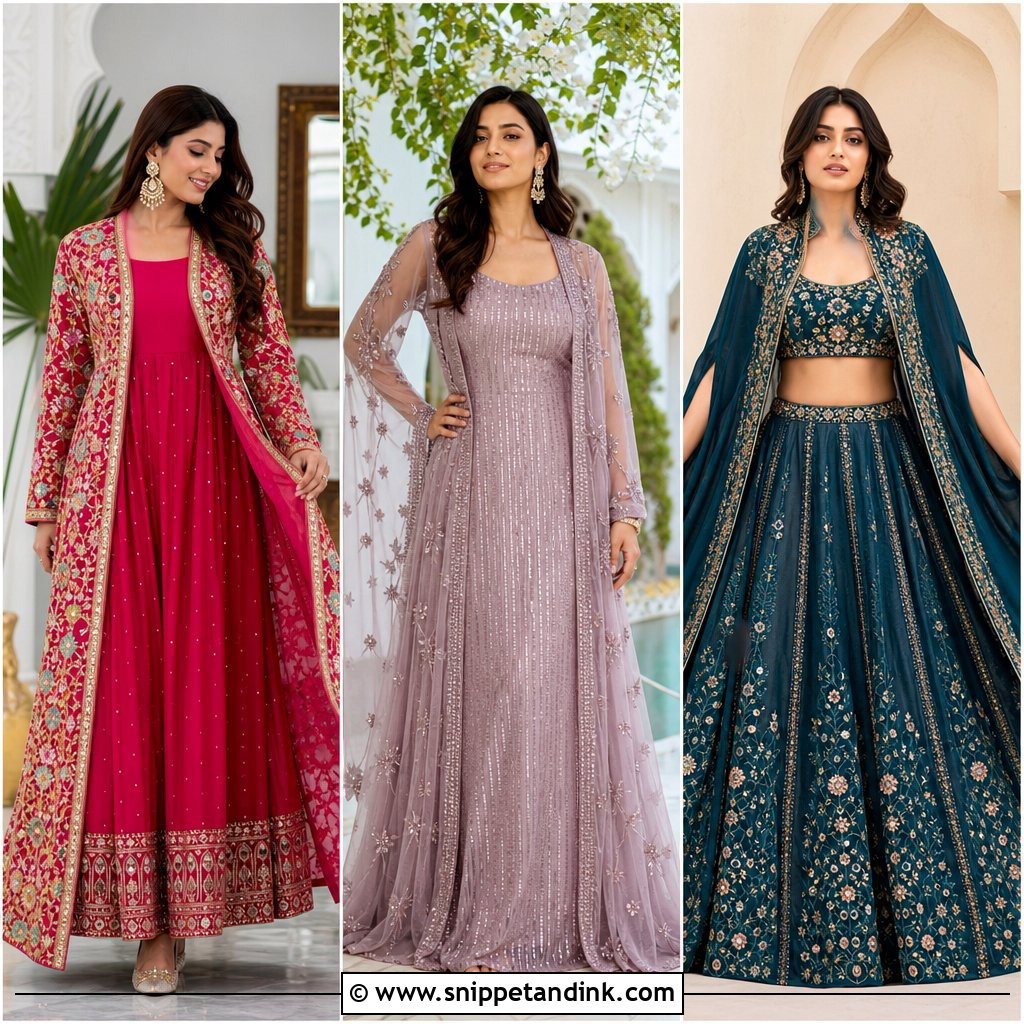
Sequin skirts look their best under evening lights and move like liquid when you dance. I’d only pair one with a long side-slit kurti that has selective embellishment, because sequins on sequins turns into glare in flash photos. Navy, wine or midnight blue suits a sangeet. Run your hand inside the skirt before buying: sequin skirts without a full smooth lining scratch the legs within the hour. Skip the traditional dupatta or use a narrow drape pinned at the shoulder, with silver heels and a box clutch.
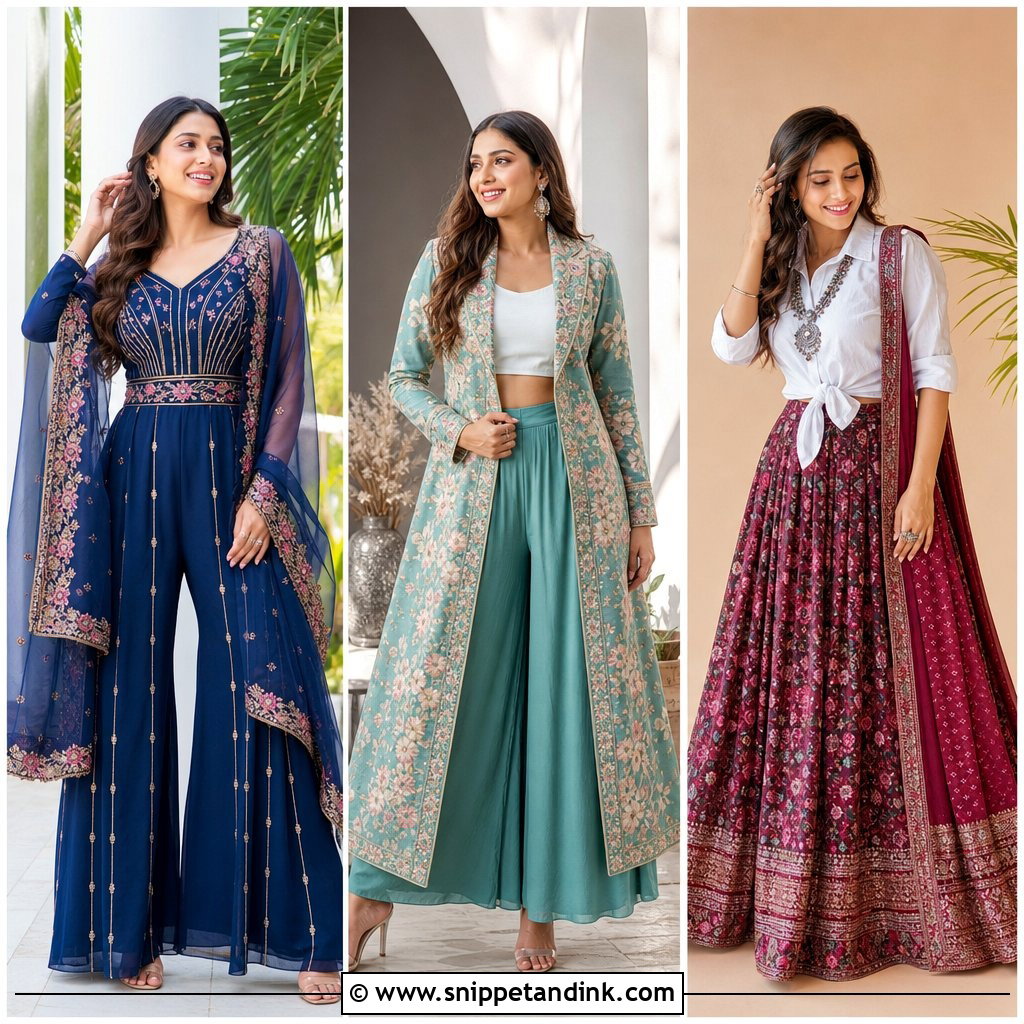
6. Jacket Kurti With Solid Flared Skirt
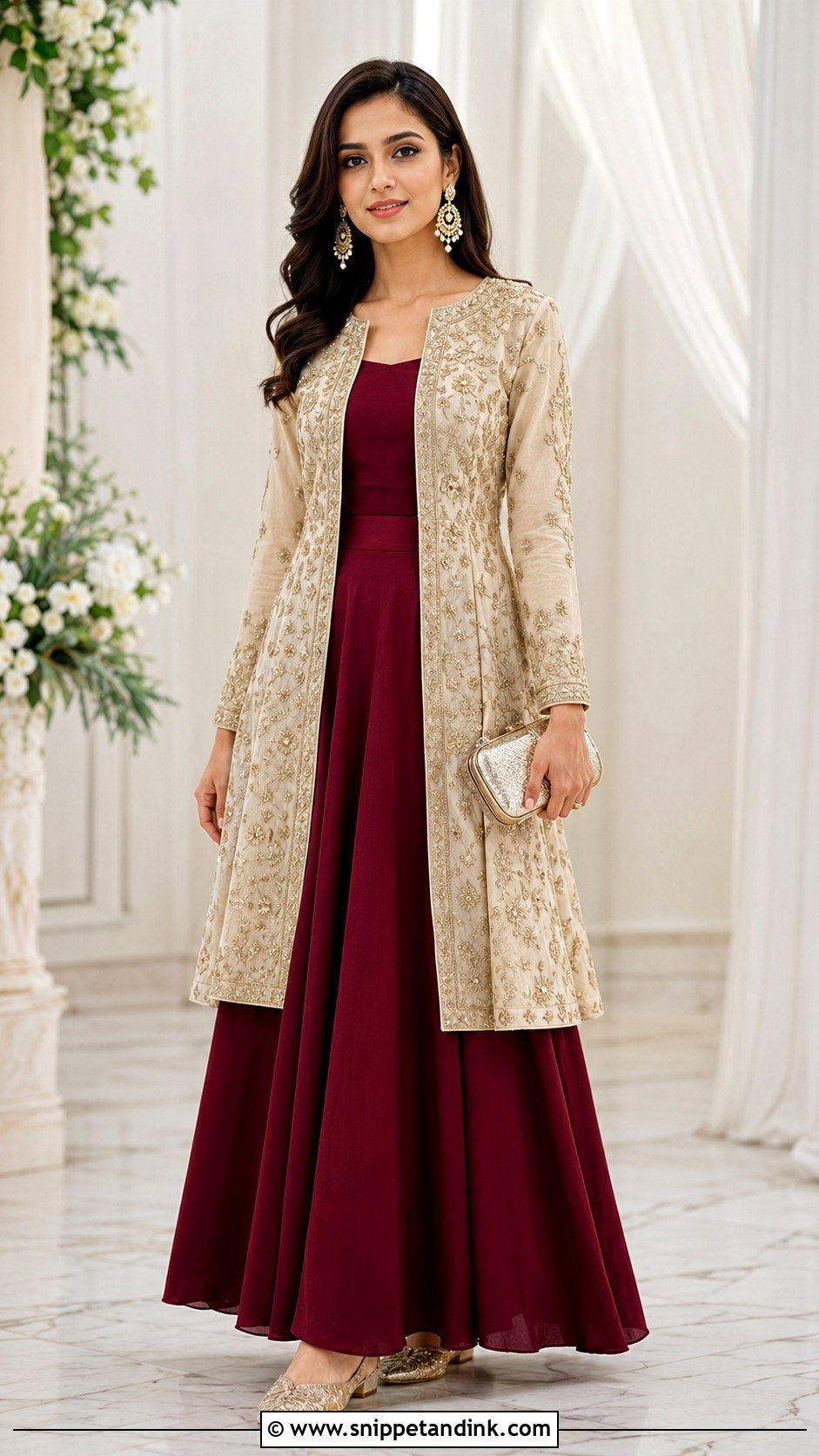
The open-front jacket kurti turns a solid skirt into a polished Indo-Western wedding outfit. Underneath, a fitted top in the skirt’s colour gives one unbroken base, and the jacket, knee or calf length with a sharp shoulder, frames it. Ivory and gold over deep green, burgundy or navy is the combination I return to. Keep the skirt fluid; a stiff flared skirt fights the jacket’s structure. A dupatta is optional here, so I usually leave it off and add chandelier earrings.
7. Mirror Work Kurti With Bandhani Skirt
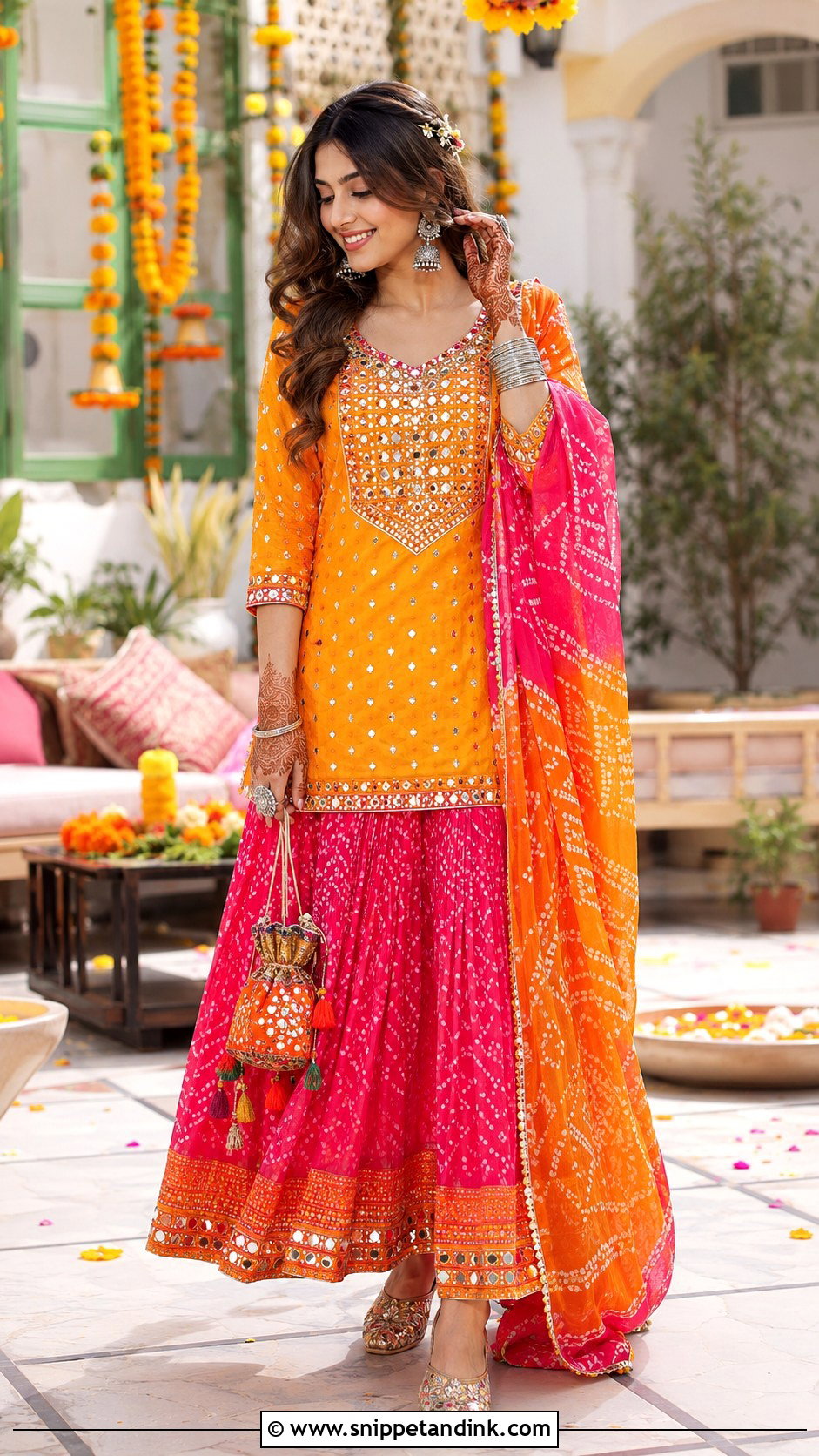
Mirror work and bandhani both shout, so one shared colour is what keeps this outfit for a mehndi from turning into noise. Small mirrors on a hip-length kurti, a full bandhani skirt in fuchsia or orange, and oxidized silver earrings. Whatever else you add, keep sleeves at elbow length or shorter. At a mehndi you’ll hold your hands still for an hour or two while the paste dries, and long sleeves smudge the design. A braid or low ponytail keeps hair off the wet henna too.
8. Chikankari Kurti With Shimmer Skirt
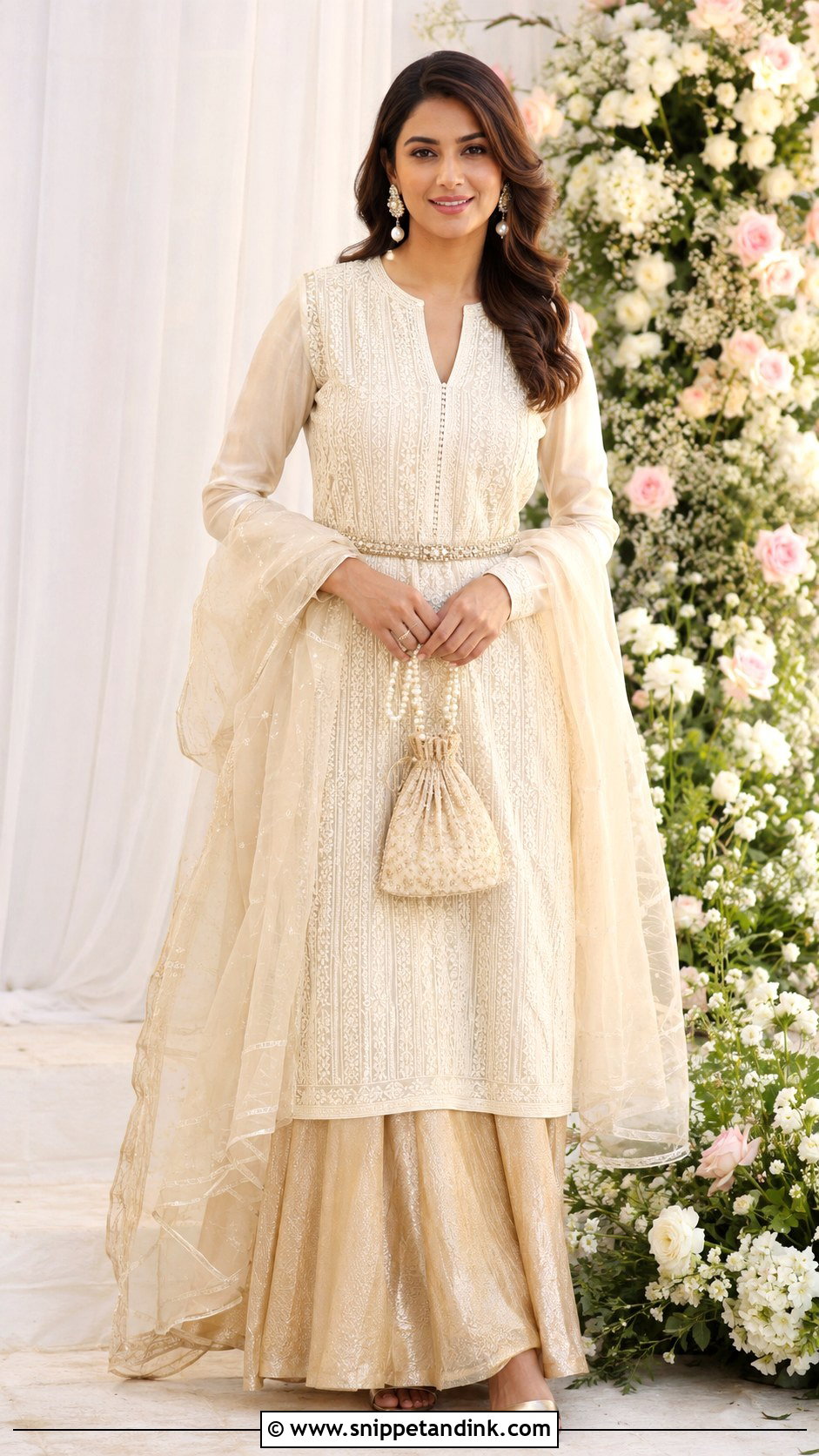
Chikankari’s white threadwork against a satin or tissue skirt gives you texture next to shine, a quieter way to dress up. Pale chikankari is sheer, and in bright daylight it shows the lining edge and your skin, so a matching inner slip is not optional. If the kurti is short enough, a narrow embellished belt defines the waist. A sheer organza dupatta, pearl drops and metallic sandals suit a day ceremony or wedding brunch. Avoid satin skirts in very pale shades if you’ll be sitting a lot; satin shows every crease.
9. Velvet Kurti With Raw Silk Skirt
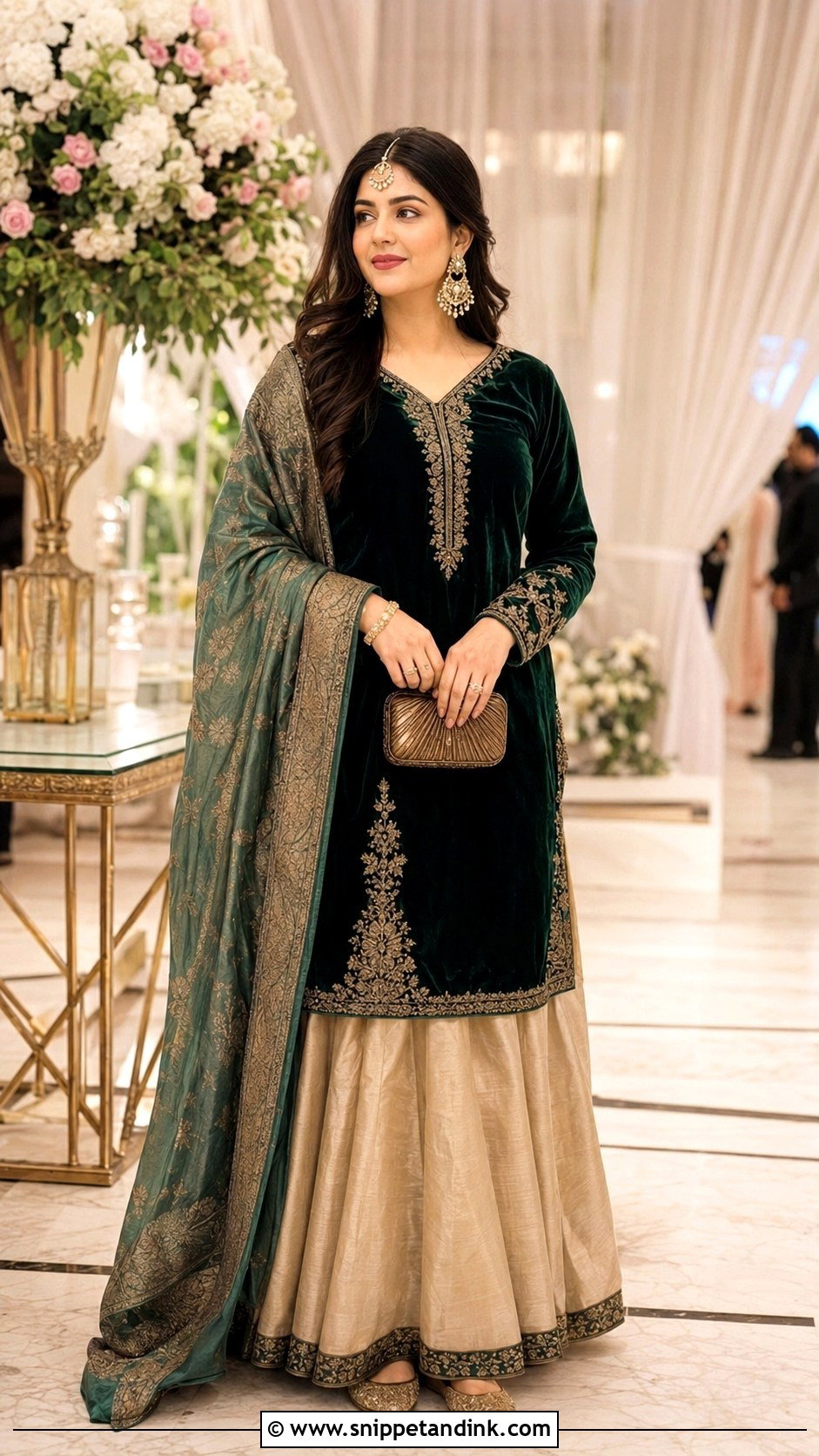
Velvet’s weight wants a skirt that holds its own without adding bulk, and raw silk does that: it has body but stays fairly light. A fitted velvet kurti in maroon, bottle green or plum with gold at the neckline and cuffs suits an evening ceremony in winter. The skirt should be medium volume and floor length. Keep necklaces short so they sit above the embroidered neckline, and wear just one kada if the sleeves are long. Velvet marks easily, so steam it from the inside and never press it flat.
10. Floral Kurti With Plain Satin Skirt
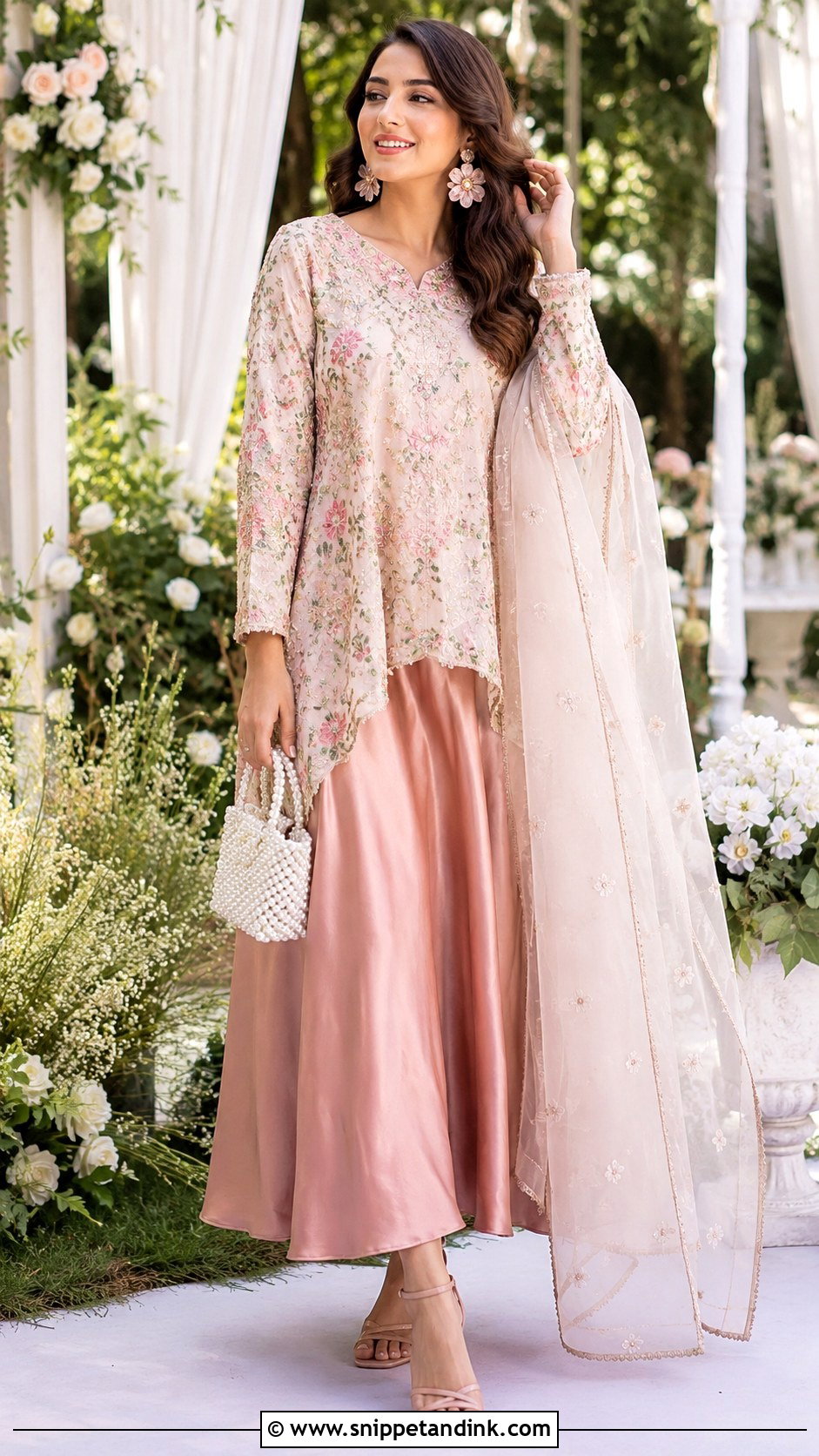
I pull the satin skirt’s colour from the quietest shade in the floral kurti, never the loudest, so the print stays the focus. A short kurti with two or three coordinated flower colours over a high-waisted A-line skirt suits a garden wedding. Satin catches sunlight hard and can look shiny in photos, so a matte-finish satin is worth looking for. A light chiffon dupatta over the arms handles any coverage needed during the ceremony. Strappy block heels and a small beaded bag finish it.
11. Yellow Gota Patti Kurti With Skirt
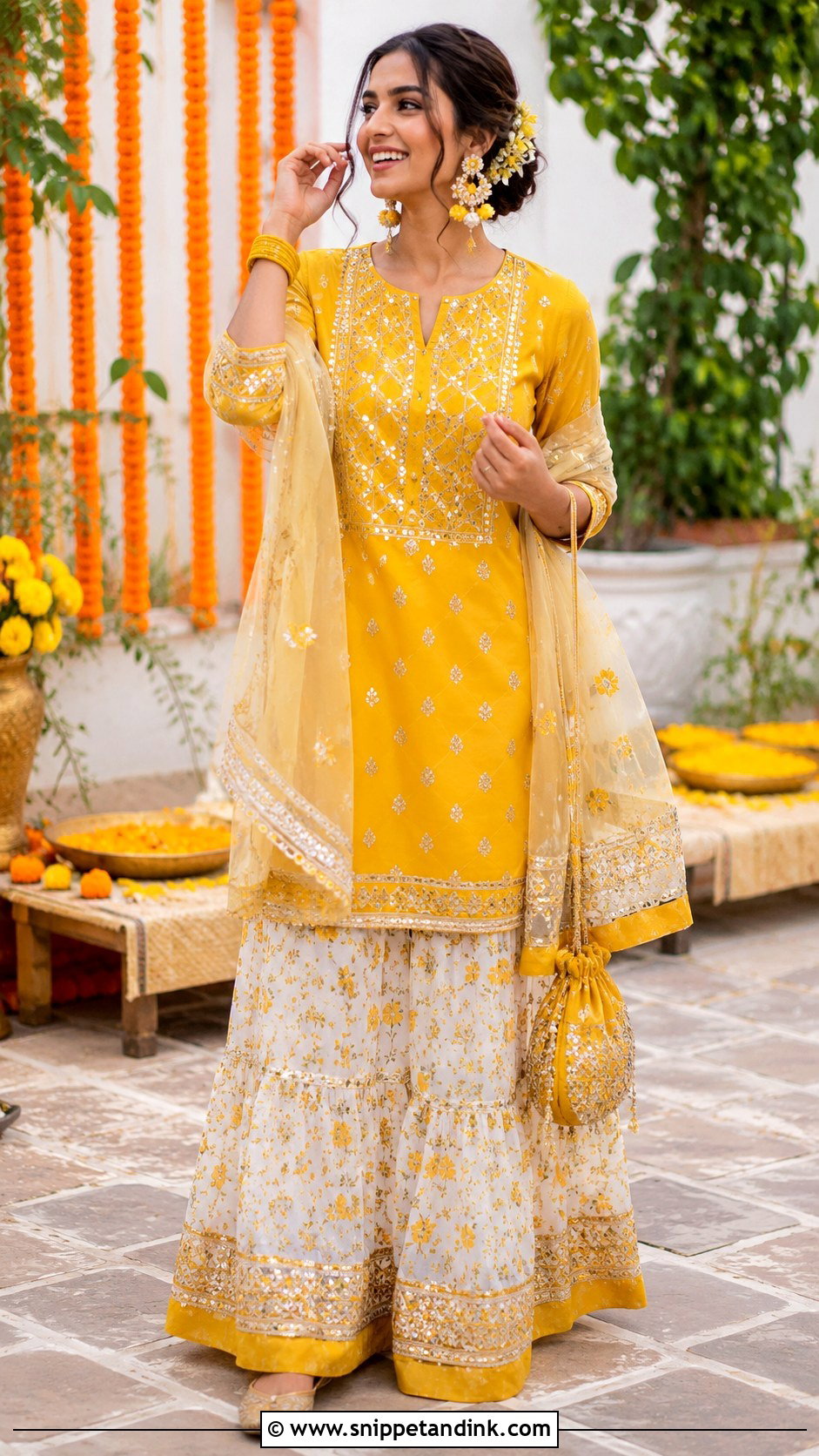
Haldi means turmeric paste, laughter and stains, so I’d buy this yellow outfit in cotton or a cotton blend you can wash at home. Gota patti, the flat metallic ribbon work, catches the sun nicely, and repeating it on the skirt hem ties the two pieces together. Elbow sleeves and a short kurti keep you moving freely. A short organza drape pinned across one shoulder won’t trail into the paste the way a long dupatta does. Wear flat juttis you don’t mind getting yellow.
12. Green Embroidered Kurti With Skirt
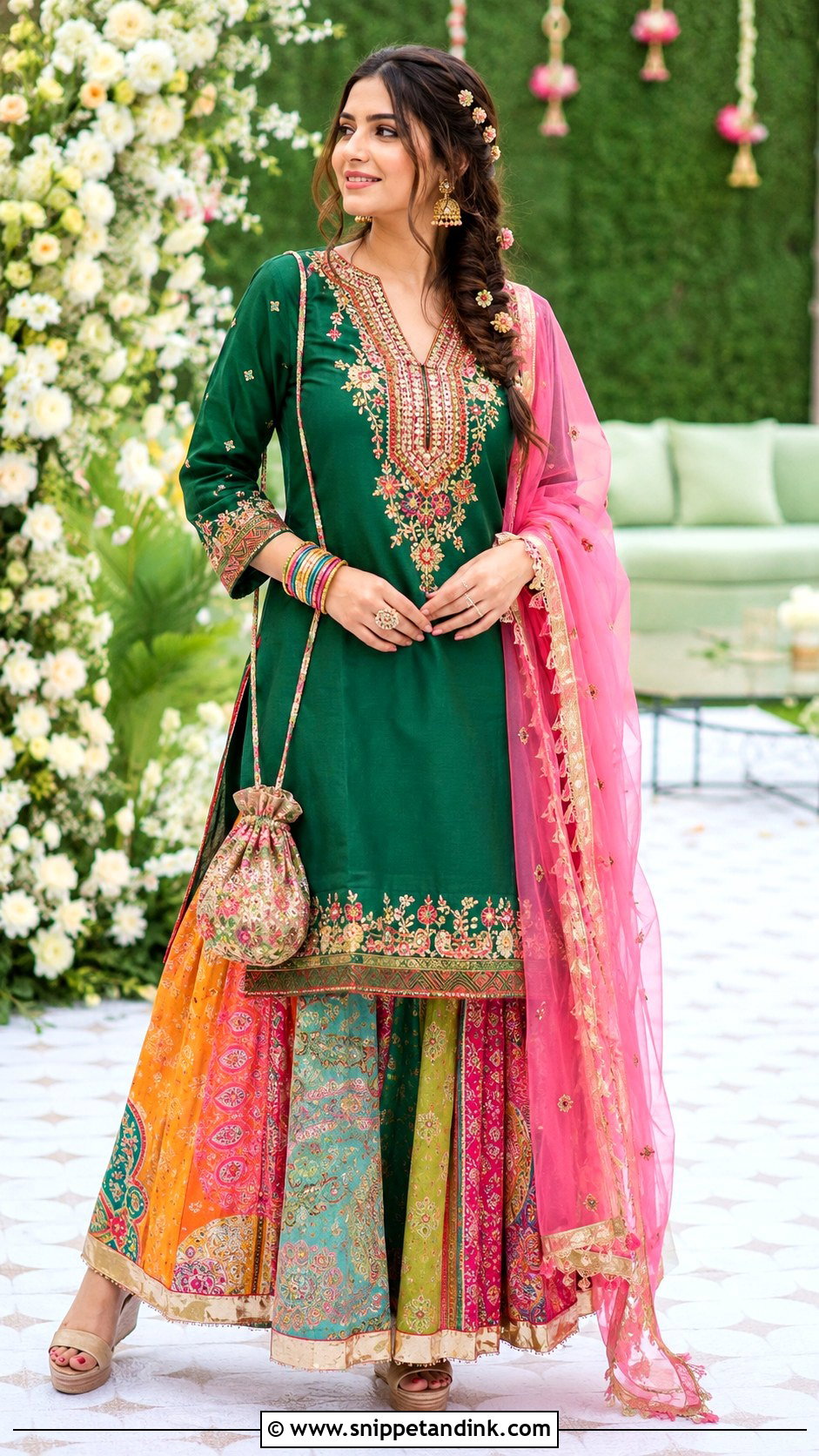
A green kurti-and-skirt outfit belongs at the mehndi, and I’d build it around how much sitting the function involves. Mehndi guests usually sit for long stretches while the artist works, so the skirt should be soft enough to fold under you without crushing. Emerald or parrot green with threadwork and tiny mirrors pairs with pink, blue or mustard. A crossbody potli leaves your hands free, and a dupatta pinned at shoulder and waist won’t slide into wet paste. Keep hair in a side braid.
13. Navy Sequin Kurti With Skirt
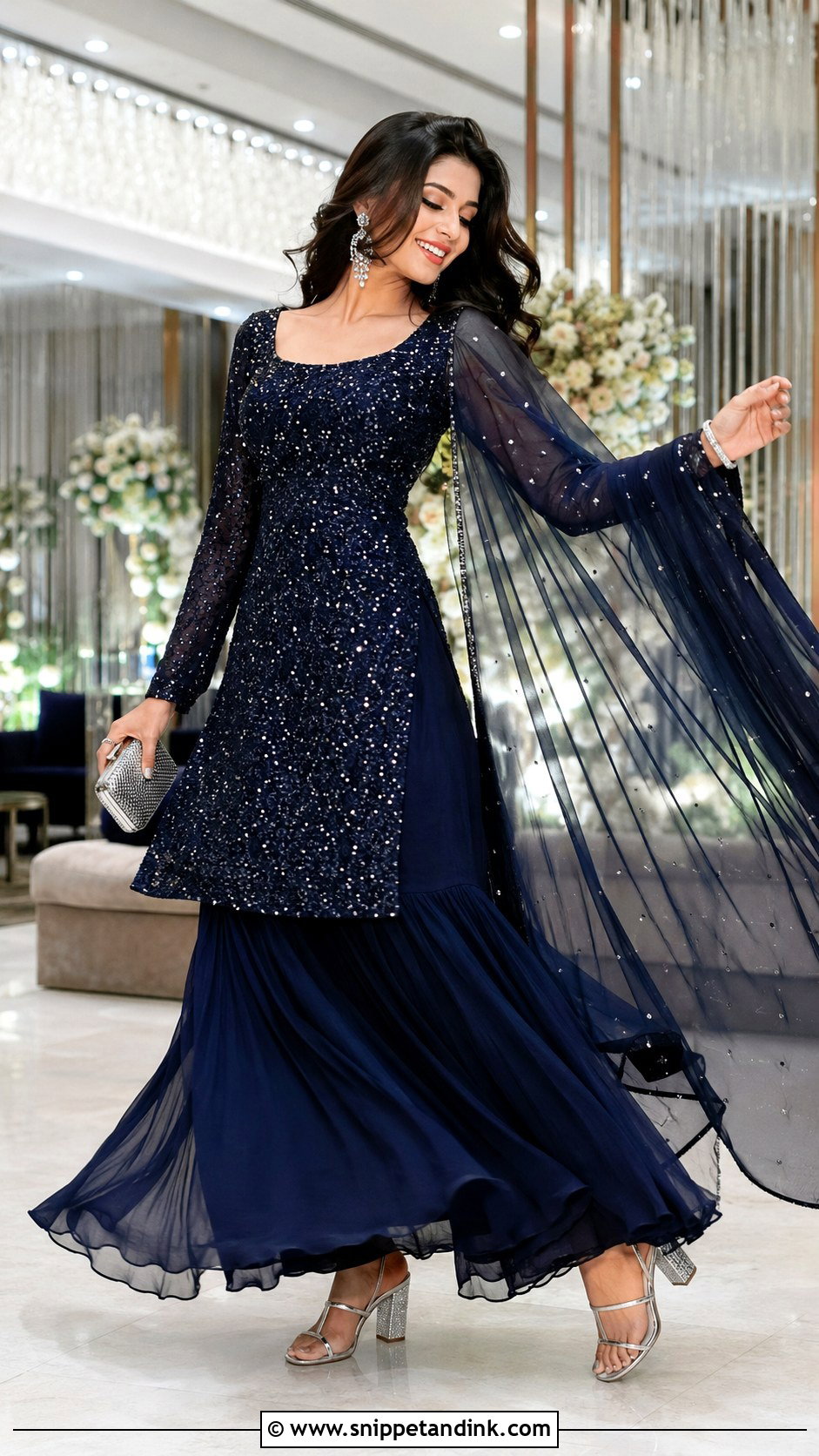
Navy is my answer for a sangeet guest who wants to sparkle without looking like she’s competing with the bride. A fitted kurti with scattered sequins or beading over a flowing navy skirt makes one long line that photographs taller under stage lights. If the skirt is heavily embellished, the kurti needs a breathable lining; you’ll be dancing, and two layers of beading trap heat. A one-shoulder drape, pinned securely, adds movement. Silver block heels and crystal earrings keep the cool palette.
14. Pastel Kurti With Organza Skirt
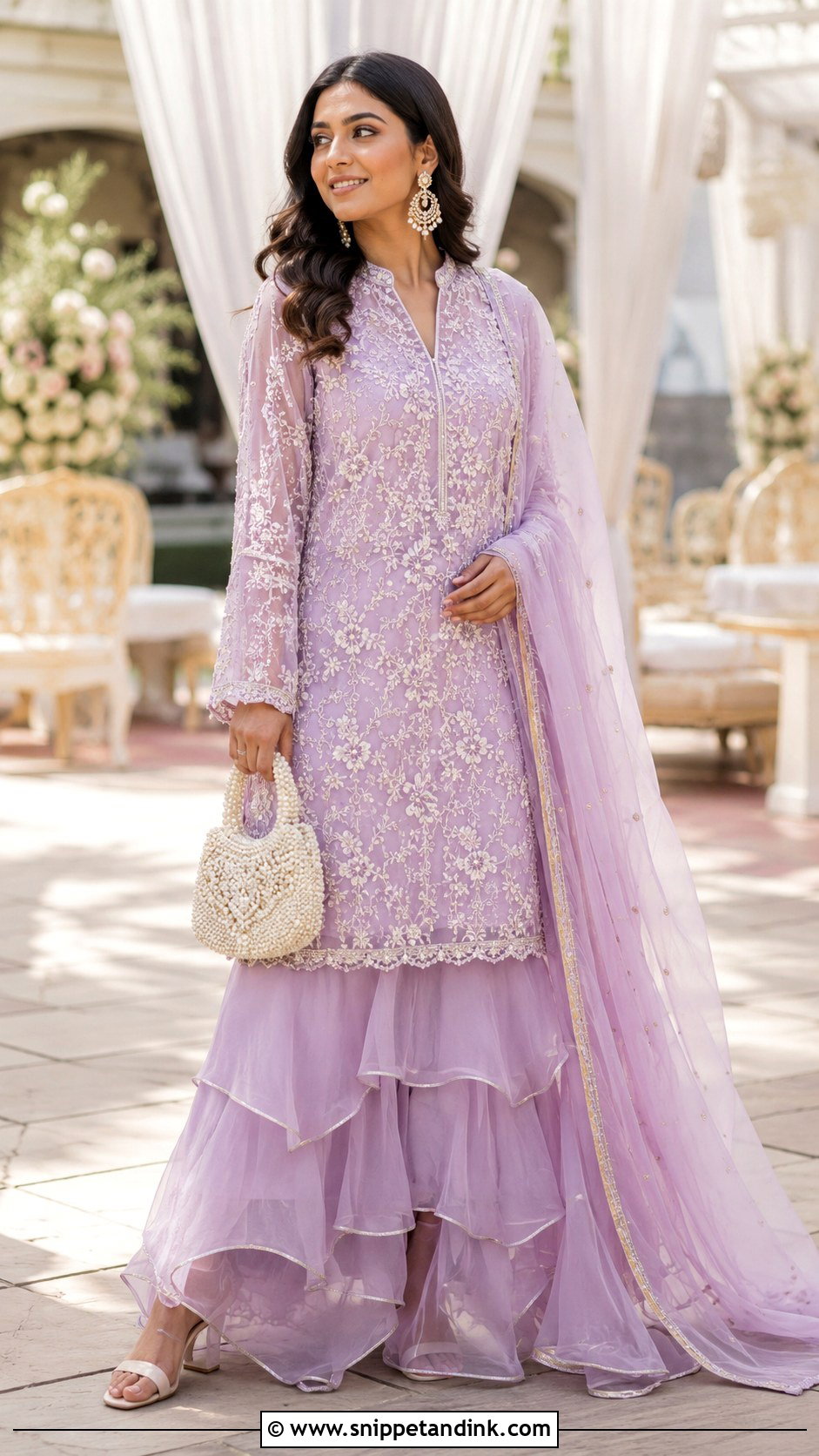
With pastels, I limit the outfit to two shades at most. More than that and the colours start to cancel out in daylight photos. A blush or mint kurti with tonal embroidery over a fully lined organza skirt in the same shade gives volume that doesn’t look stiff. Outdoors, have the skirt hemmed just clear of the ground; organza picks up dust and snags on grass. Pearl or polki earrings, a sheer embroidered dupatta and champagne heels suit a morning ceremony.
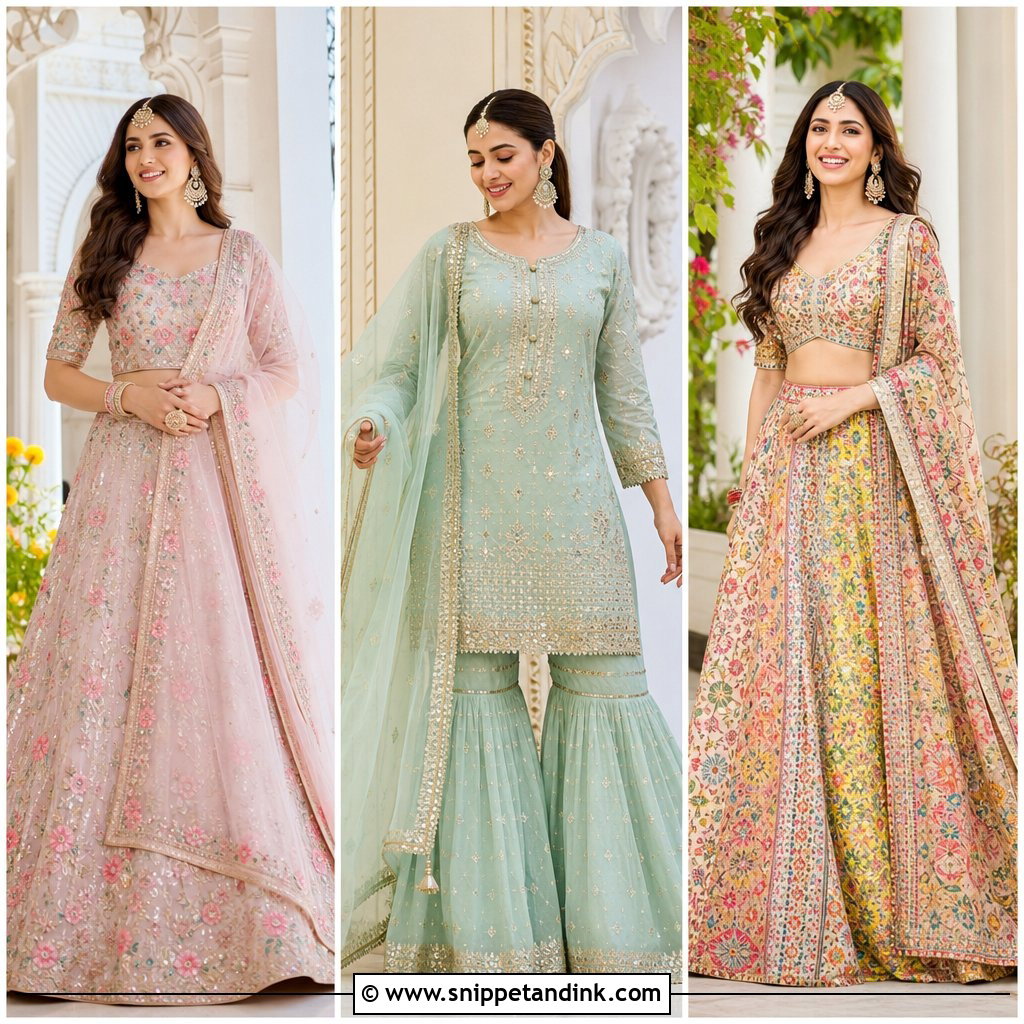
15. Maroon Kurti With Gold Skirt
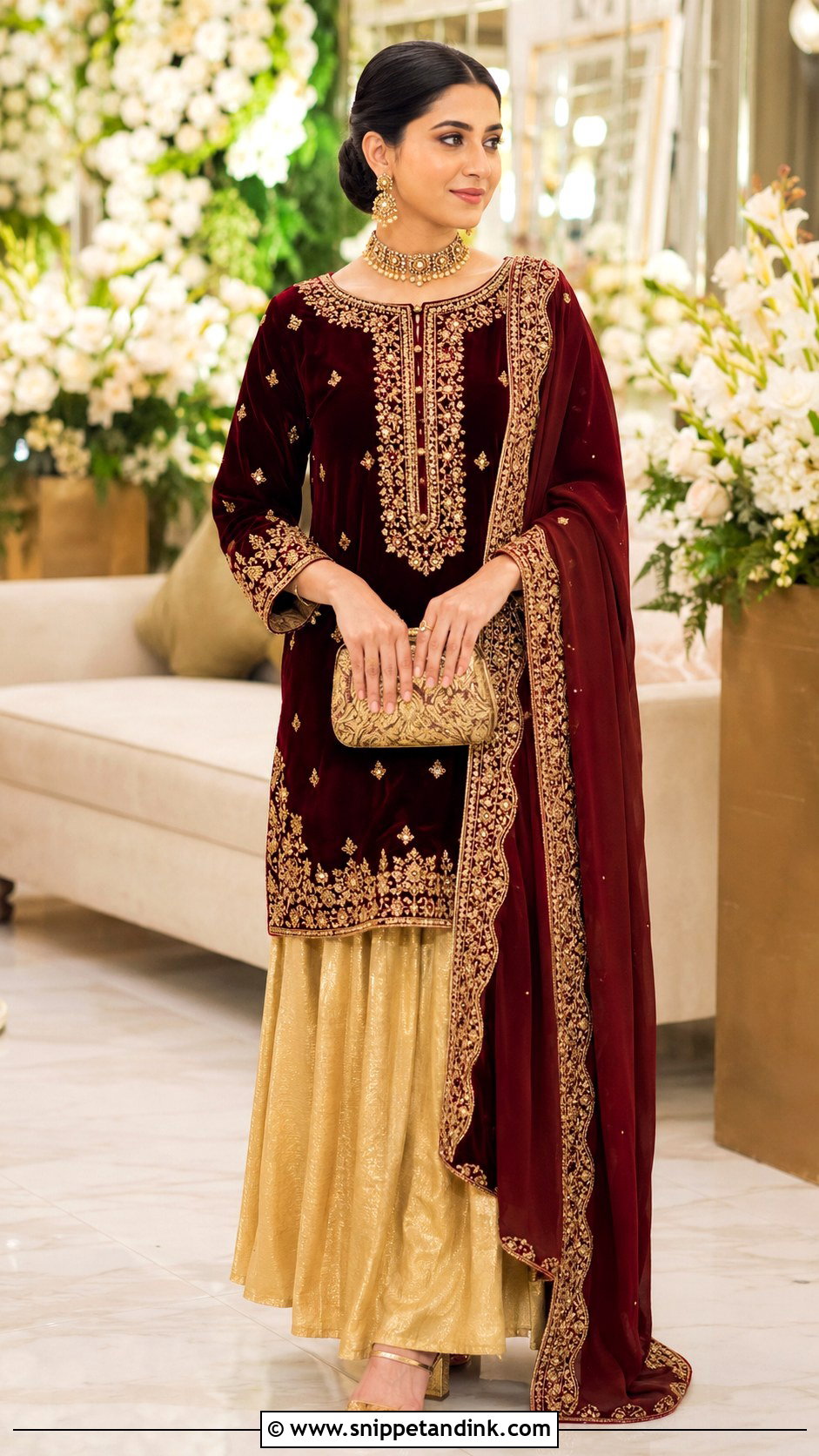
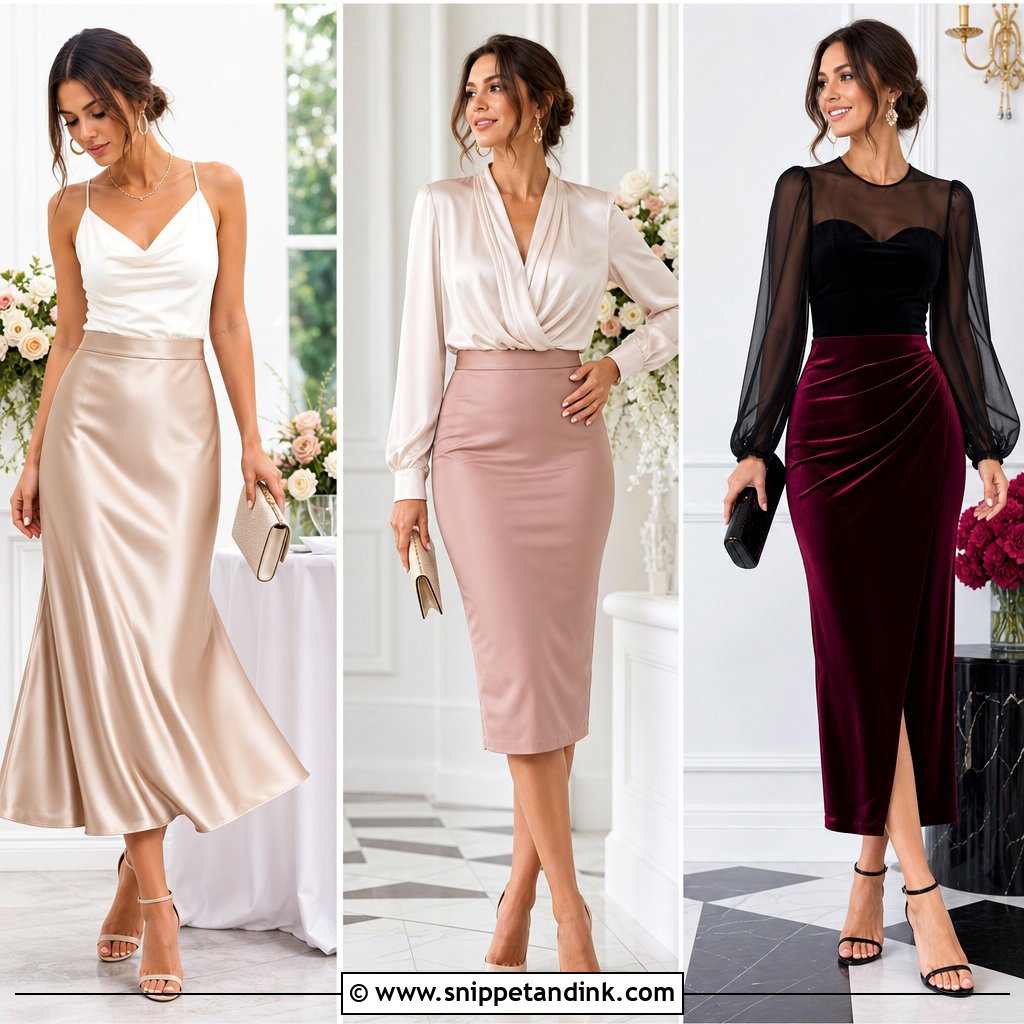
Maroon and gold is the classic evening pairing, and the choice of gold decides how expensive it looks. I lean toward champagne gold over bright yellow gold, which can look brassy in warm venue lighting. A structured velvet, silk or brocade kurti with antique-gold work and a sweetheart or square neckline frames a choker. If the kurti is detailed, keep the skirt’s embellishment near the hem so the weight spreads across the outfit. A maroon dupatta with a slim gold border pulls the separates together.
16. Ivory Kurti With Gold Temple Border Skirt
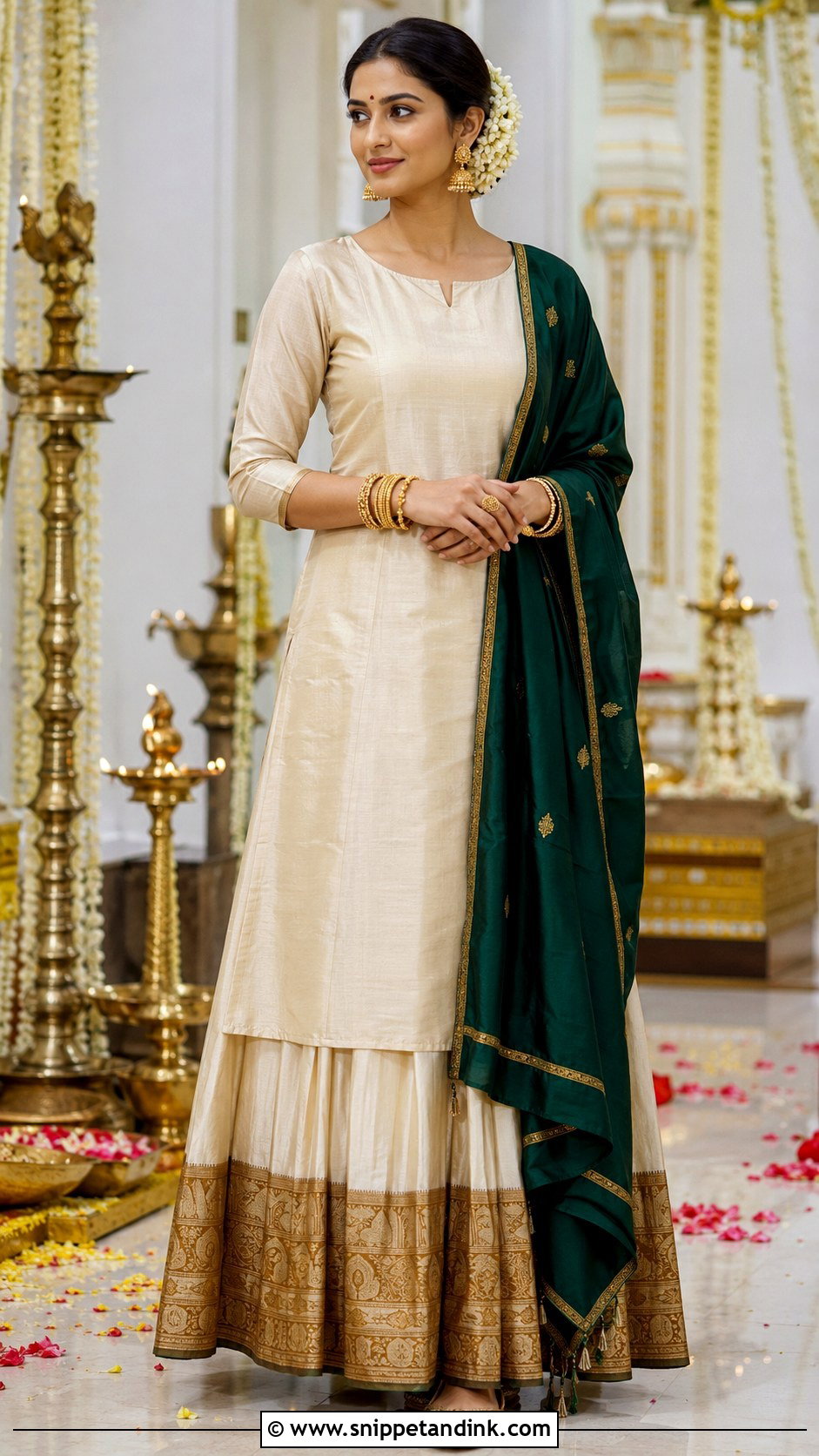
Ivory with a gold temple border is the South Indian ceremonial look, and it relies on restraint. A cotton-silk kurti with fitted shoulders and zari only at the neckline sits over a cream skirt whose broad temple border does the decorating. Jasmine in a low bun completes it, though fresh jasmine wilts within hours in heat, so I’d add it just before the ceremony. Keep every metal gold; silver accessories break the palette. Pale fabrics turn sheer under strong lighting, so check the lining.
17. Empire Kurti With Flowing Skirt
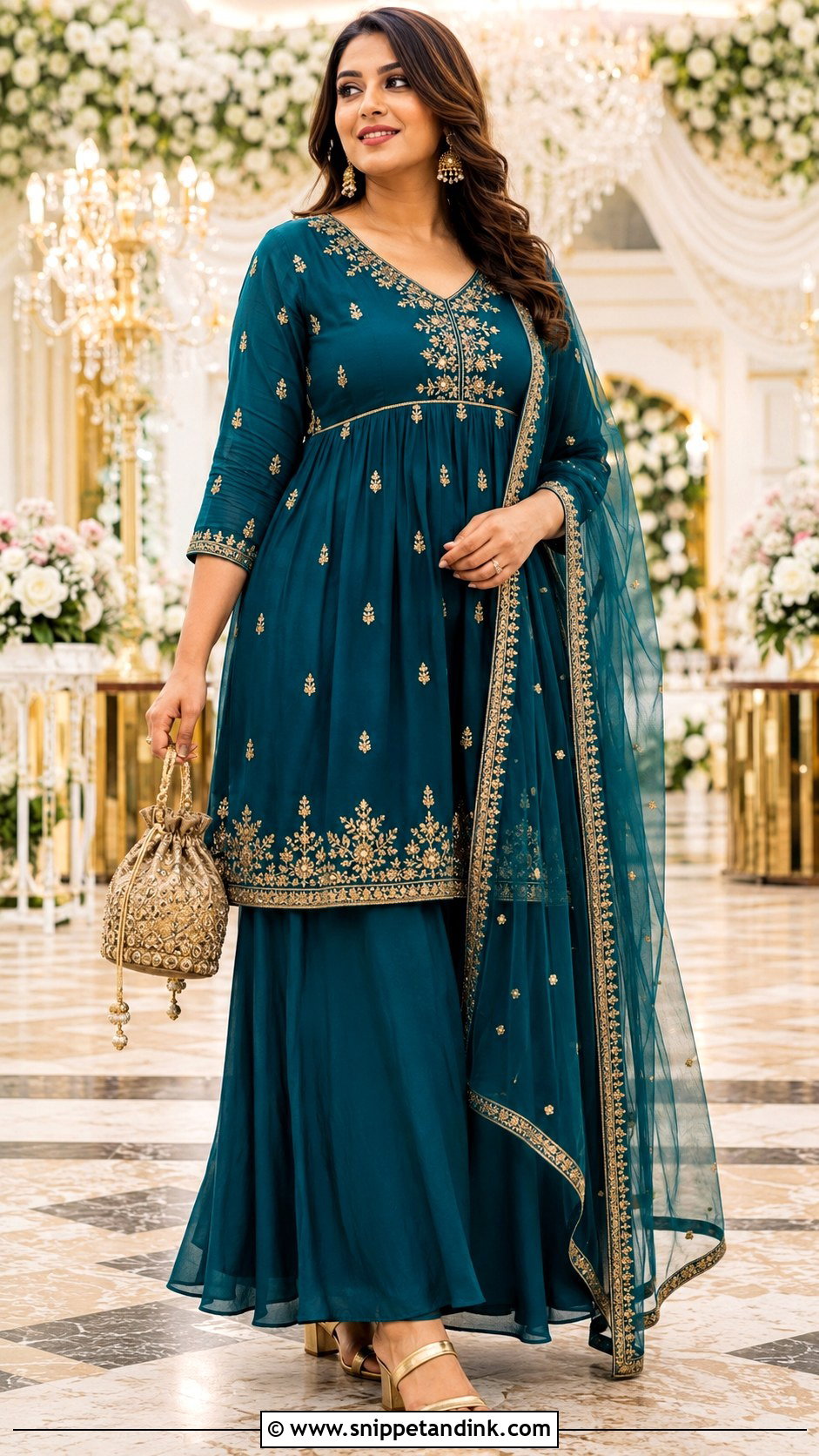
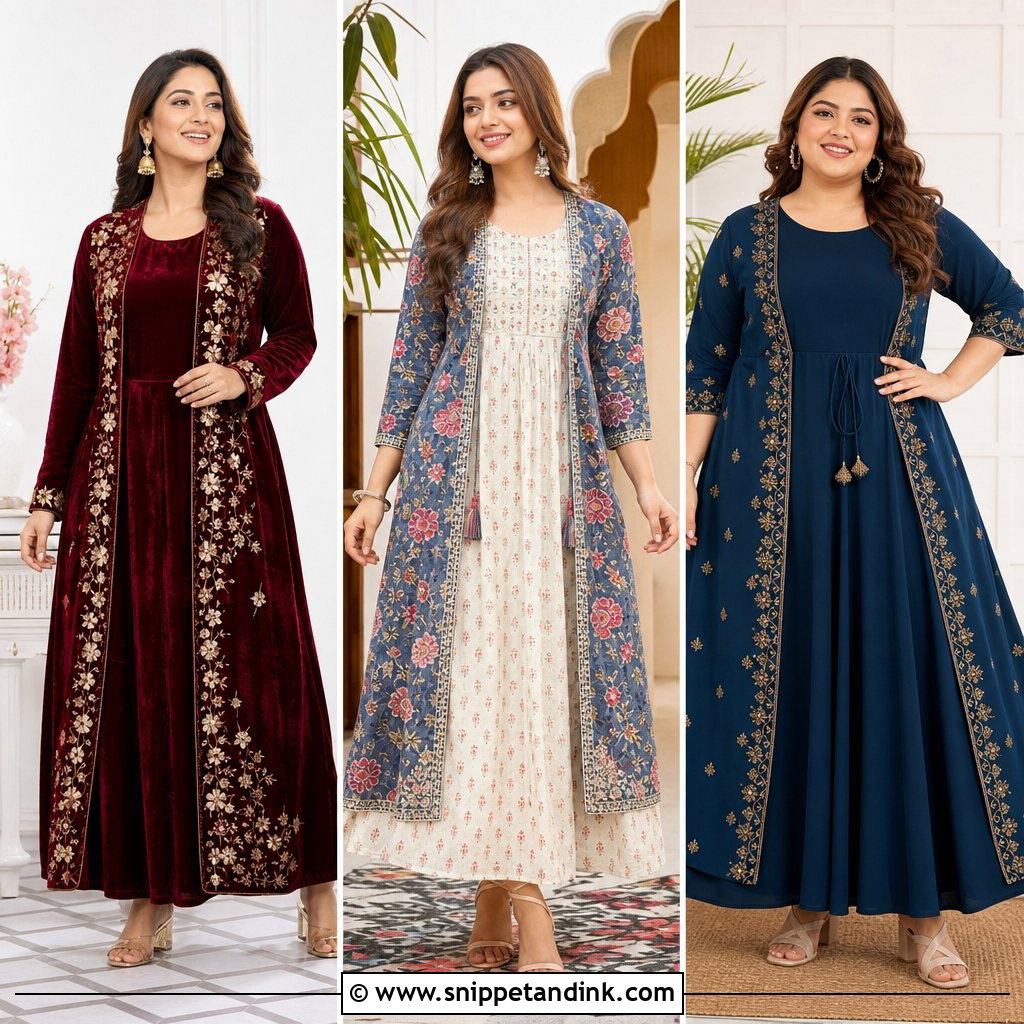
Empire kurtis are the shape I most often recommend to curvy and plus-size guests. The seam sits just below the bust and the fabric falls from there, so nothing clings at the waist or stomach. Pair it with a smooth A-line skirt on a flat waistband; gathers right under the kurti break the line. Deep teal, berry or forest green with gold embroidery suits most skin tones. Sit down in the fitting room and check the armholes and waistband; if they pinch seated, they’ll hurt by the end of the evening.
18. Short Kurti With High-Waist Skirt
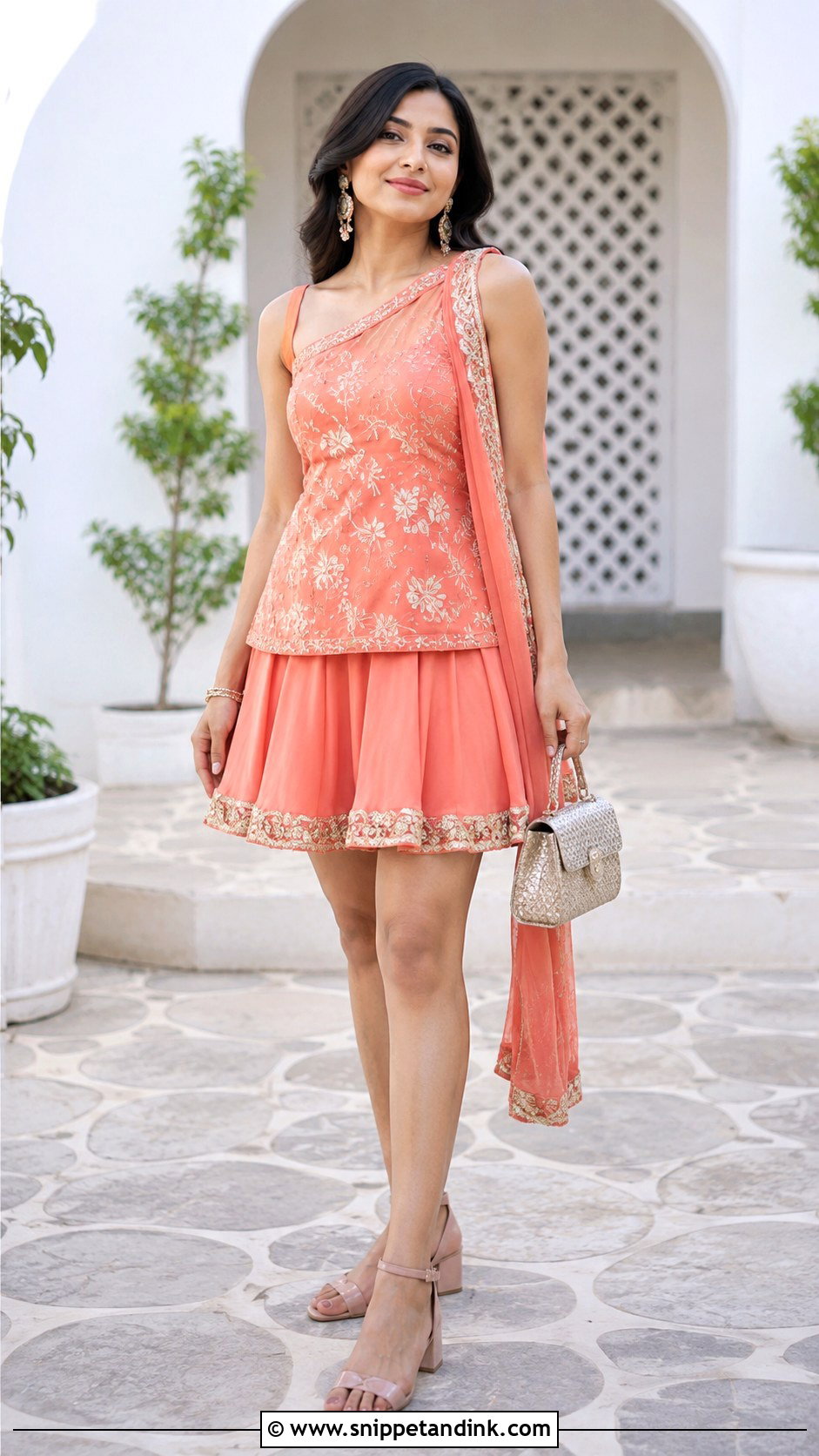
For petite guests, the skirt starting at the natural waist does more than anything else to lengthen the legs. A kurti ending at or just above the hip leaves that waistline visible. Moderate flare is better than a very wide skirt, which can swallow a small frame. One colour head to toe, coral or royal blue, makes a continuous line, and vertical embroidery helps further. Have the skirt hemmed in your shoes so it skims the floor without becoming a tripping hazard.
19. Full-Sleeve Kurti With Pleated Skirt
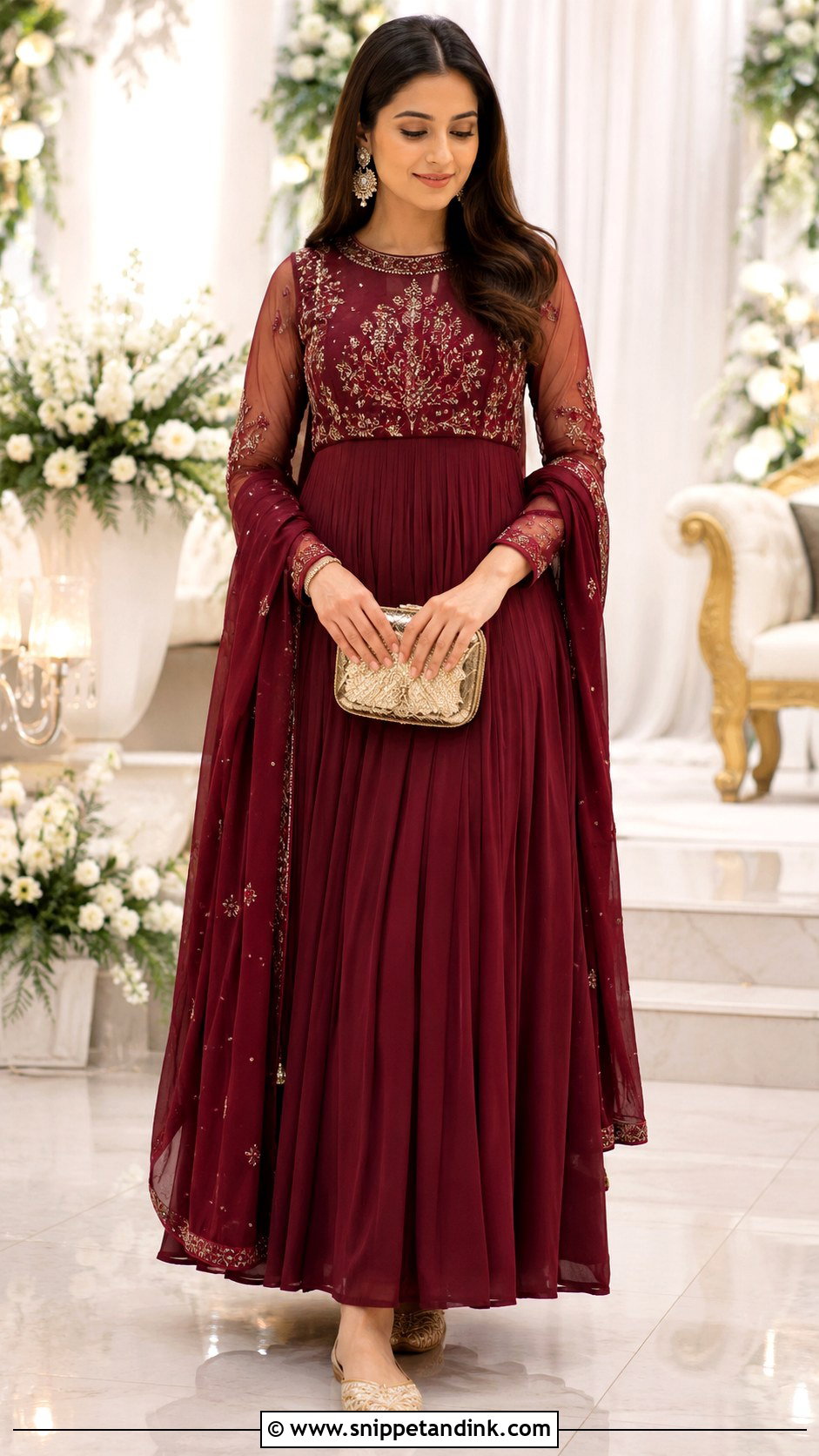
Full sleeves and a pleated skirt give coverage for ceremonies where shoulders and arms are kept covered, without feeling heavy. Sheer embroidered sleeves on a fitted kurti, over a georgette or chiffon pleated skirt, move easily. I ask for the pleats to be stitched flat for the first few inches below the waistband, so the kurti doesn’t sit on a ridge of fabric. If the sleeves are densely embroidered, one fine bracelet is enough. A matching dupatta can go over the head when needed.
20. Handloom Kurti With Woven Skirt
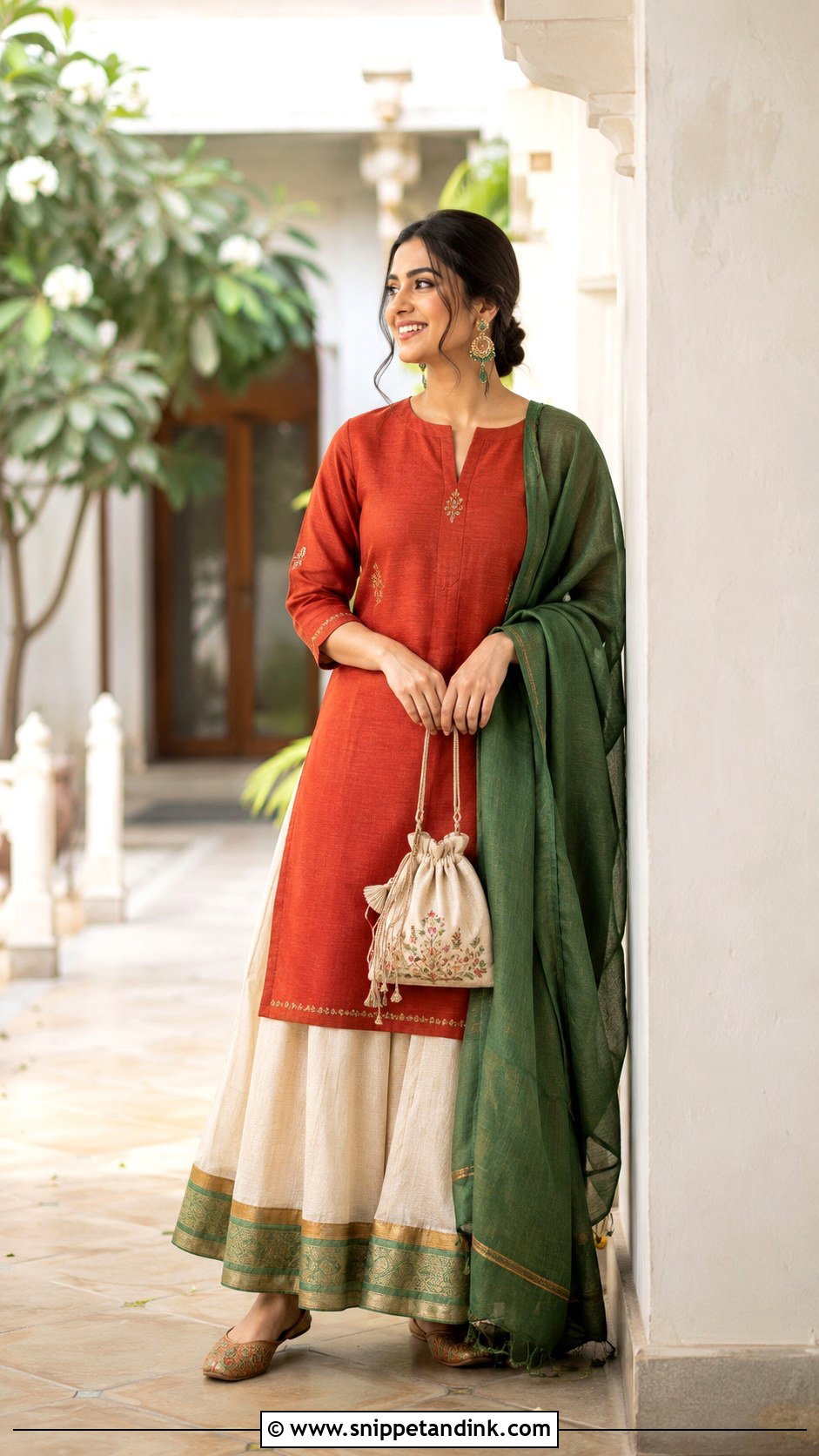
A handloom kurti over a woven skirt is for the guest who cares about cloth more than sparkle. Cotton-silk or Chanderi-style weaves with stripes, checks or a contrasting border, rust with cream, indigo with red, make combinations people ask about. Handwoven fabric is thicker than mill fabric, so I keep the kurti tailored close; loose handloom quickly looks bulky. Handcrafted silver earrings, a fabric potli and leather juttis suit an intimate wedding or day ceremony.
When the Kurti and Skirt Come From Different Shops
Mixing your own pieces is half the appeal, but separates bought apart rarely match as well at the venue as they did in the shop. Colour shifts with light. Shop lighting is often cool and bright, while wedding venues tend toward warm yellow light, so a green that matched under one can look clearly mismatched under the other. I always carry the two pieces to a window and check them in daylight, then check again on a phone photo.
Three checks I make before committing
- Match fabric weight, not just colour. A floaty georgette kurti over a stiff brocade skirt looks like two outfits stacked.
- If you can’t match a shade exactly, contrast it on purpose. A near miss looks like a mistake; a clear contrast looks chosen.
- Tie the two pieces together with a third element: a dupatta that carries both colours, or the same metallic in the kurti’s embroidery and the skirt’s border.
Finally, sit down in the full outfit with the dupatta on. That’s when you’ll find out whether the kurti rides up over the waistband or the skirt pulls at the zip, and both are easy fixes for a tailor if you find them a week before rather than an hour before.
Where the Kurti Ends Decides the Whole Outfit
Separates give you room to play: an ornate kurti with a simpler skirt, or a woven, printed or sequined skirt taking the lead under a plain top. What makes any of them look right is balancing fabric weight and the point where the kurti stops. Choose shoes you can stand in, pin your dupatta, and keep your bag in scale with the outfit. You can also restyle a festive kurti or a lehenga skirt you already own. Pick the pieces you can move, sit and eat in, from mehndi brights to reception jewel tones.
You'll Like These Ideas:


Leave a Reply