
Lit gowns are no longer a novelty act, but they still go wrong in predictable ways: too bright, too busy, a battery pack that bulges at the hip. The good ones treat the light as a fabric effect. Fibre-optic cloth spreads a soft glow across tulle; small LEDs, placed carefully, pick out a bodice, a hem, a cape or a removable skirt. Below are twenty gowns, from glowing ball gowns to reception minis and lit trains. With each I’ve noted where the light sits, what I’d check at a fitting, and what to wear so the jewellery doesn’t fight the glow. Whichever you choose, test the controls, the movement and the battery position long before the wedding.
Fibre Optic Fabric or LED Strips? The Difference in Person
Brides often assume these are the same thing. They aren’t. Fibre-optic fabric has thin light-carrying threads woven in, fed by small LEDs at their ends, so the whole surface glows faintly and evenly. It is soft in photographs but less bright, and the fibres don’t like being crushed or sharply folded.
LEDs are individual points, either on flexible strips or as tiny sewn-in lights. They’re brighter and can change colour, but they need layers of tulle or a lining over them to blur into a glow. Without that diffusion they look like fairy lights pinned to a dress.
- Fibre optics: gentle, even, best for full skirts and capes.
- LEDs under tulle: brighter, more flexible in colour, need several layers above them.
- Either way, ask to see the gown switched on in a dark room before you order.
1. Fiber Optic Ball Gown Wedding Dress
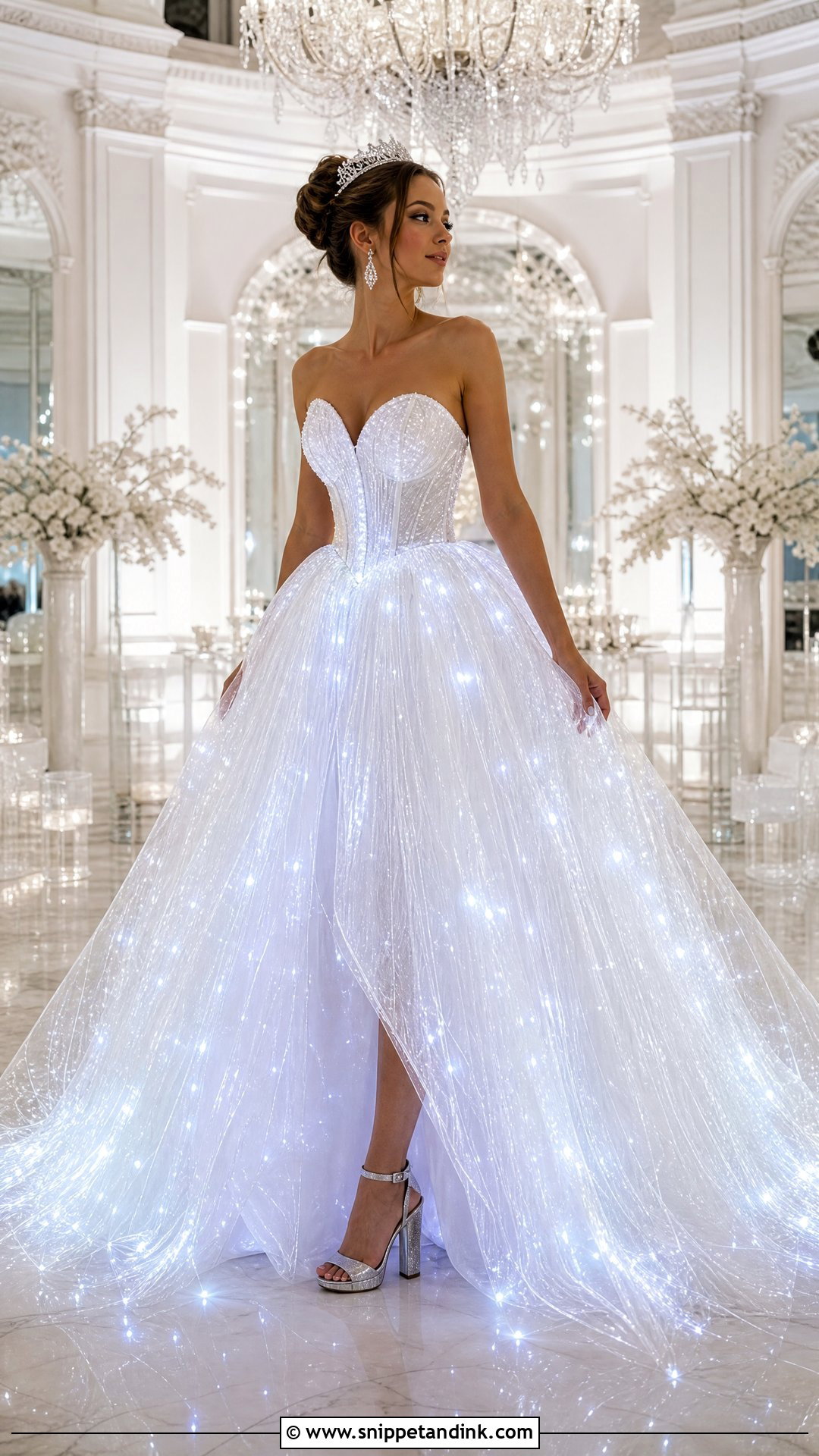
Fibre optics give the softest glow of any option here, because the light runs along hair-fine strands woven into the skirt rather than shining from points. A fitted white bodice over a full layered skirt, lit in white or pale blue, looks like a classic ball gown that happens to shimmer. Fibres can snap if the skirt is crushed or folded sharply, so I always ask how the gown should be stored and packed. Crystal drops, a fine tiara and silver block heels hidden under the skirt; an updo leaves the neckline clear. Insist on a hidden but reachable battery pocket, and test it walking, sitting and turning.
2. LED Tulle A-Line Wedding Dress
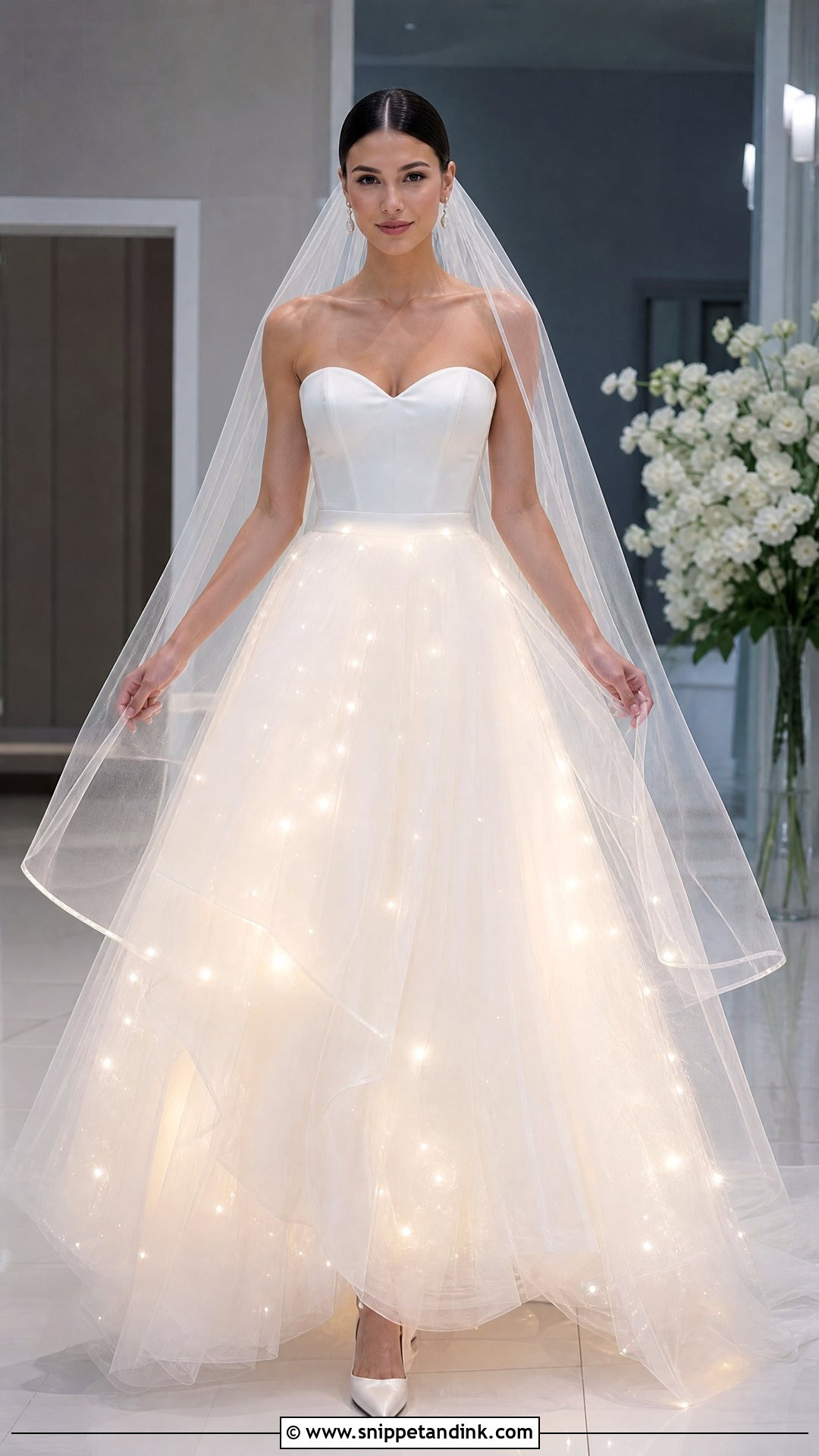
Tulle is the best diffuser a dressmaker has. Put small cool-white LEDs between several layers, not against the lining, and the individual dots blur into a haze. An A-line with a supportive bodice and natural waist is the shape I’d steer most brides toward, since it handles the extra weight of wiring better than a clingy cut. Pearl studs, a fingertip veil, stable satin pumps and a loose low bun. Ask for a steady setting and a gentle twinkle, and leave out the fast patterns entirely; they never look bridal in motion.
3. Starry Night Light Up Wedding Dress
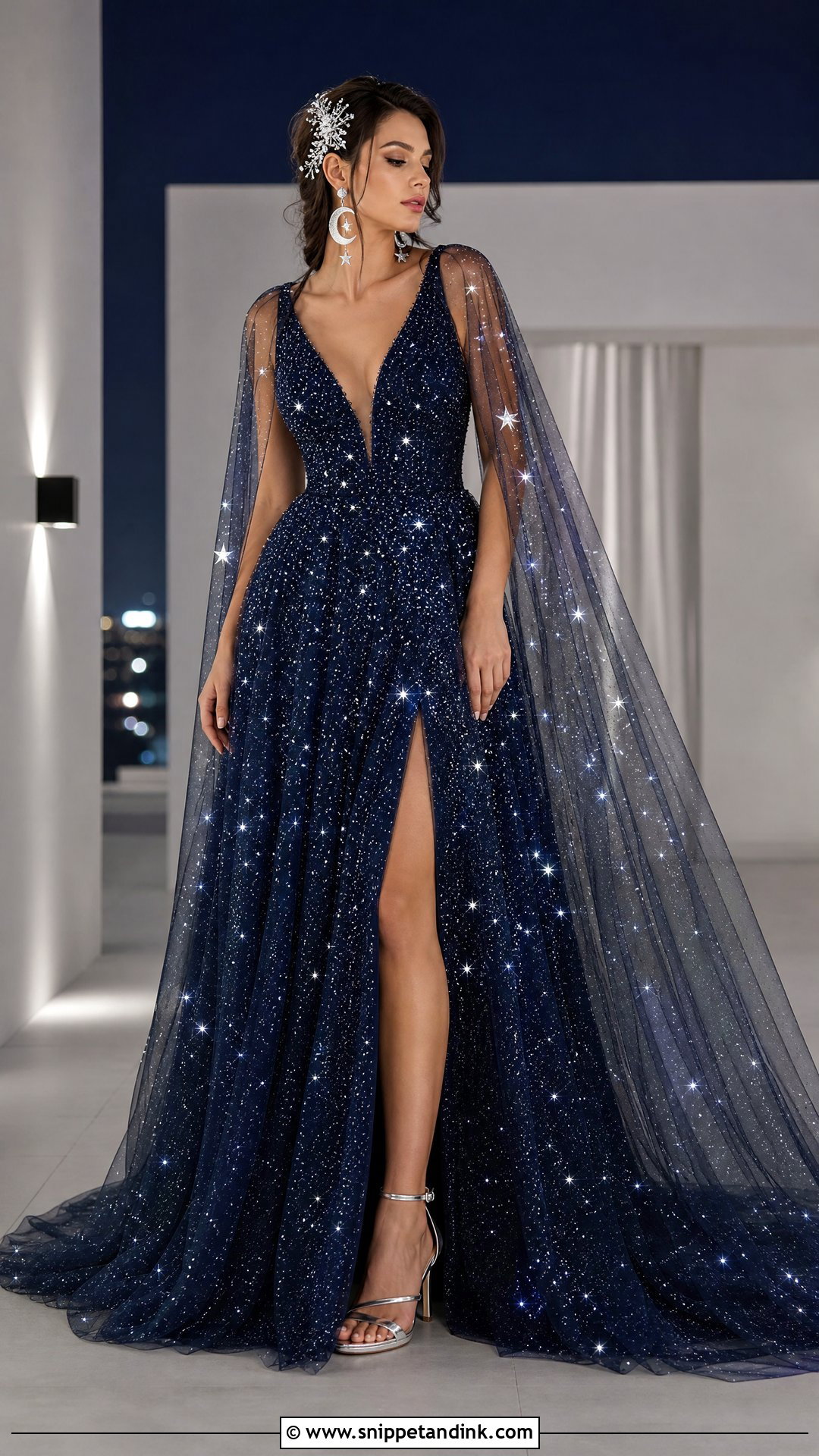
The starry-sky gown swaps white for a deep navy or midnight-blue wedding gown scattered with small white and pale blue lights. Against a dark base, even dim LEDs read clearly, so this design needs fewer lights than you’d think. A fitted bodice and floor-length skirt give the points room to spread. Silver heels, a crystal comb and small moon earrings carry the theme; anything more starts to look like fancy dress. A sheer navy cape adds a second layer for sparkle. Set a slow, irregular twinkle. Rooftops and night-sky themes suit it, and so do couples who love astronomy.
4. Color Changing LED Wedding Dress
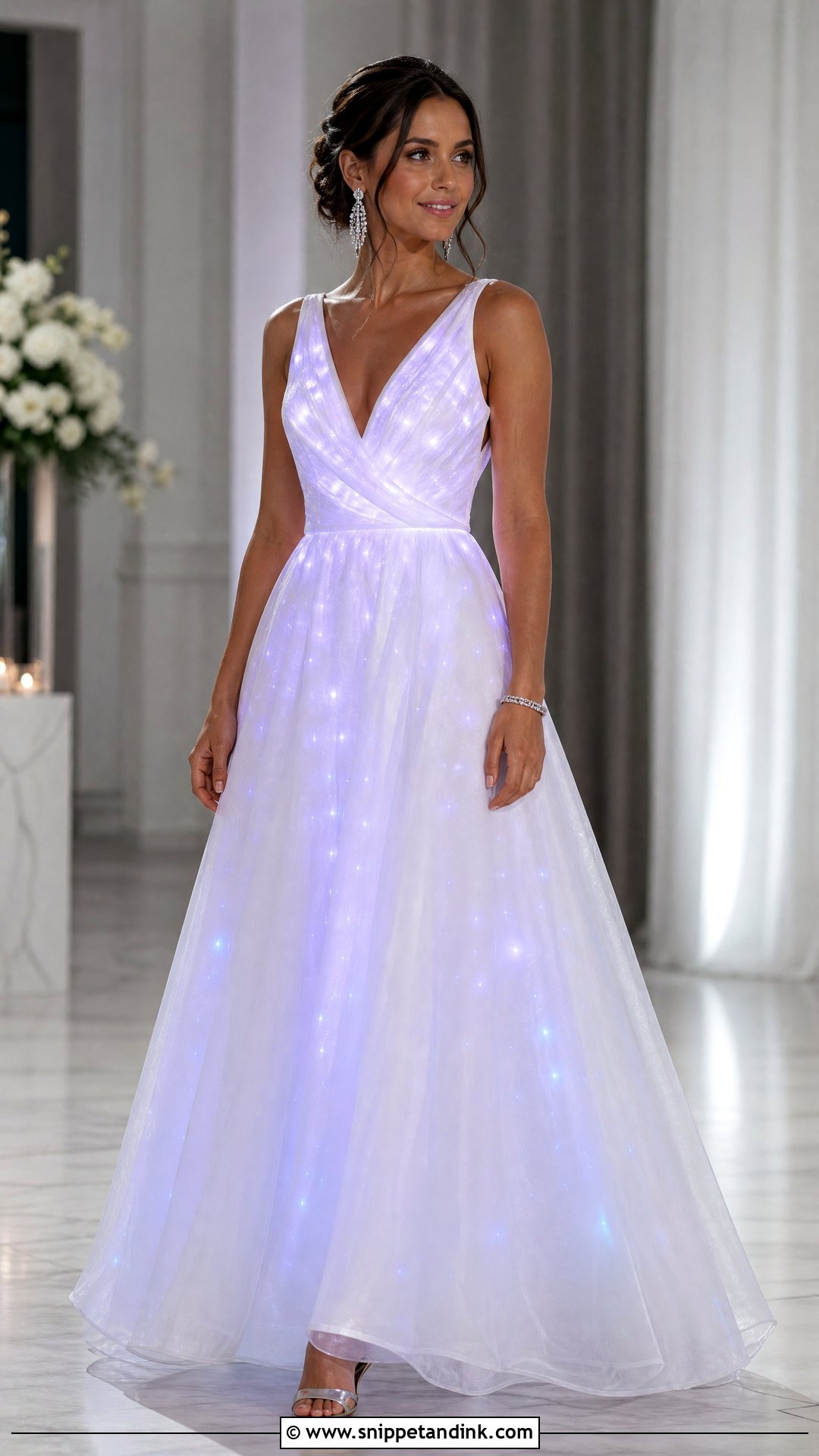
Colour-changing gowns let you start the ceremony in soft white and move to lavender, blue, pink or a custom shade for the party. The silhouette has to stay simple, an A-line or fit-and-flare, or the dress turns into a light show. I always ask the maker to limit the controller to a few slow fades; the rapid modes are hard to avoid pressing by accident. Metallic sandals, small crystal earrings and one bracelet. Skip a heavy necklace if the bodice is lit. Test every setting under the venue’s actual lighting, since coloured light looks very different against dark walls. Give the remote to one attendant, or keep it in a secure pocket.
5. Light Up Lace Wedding Dress
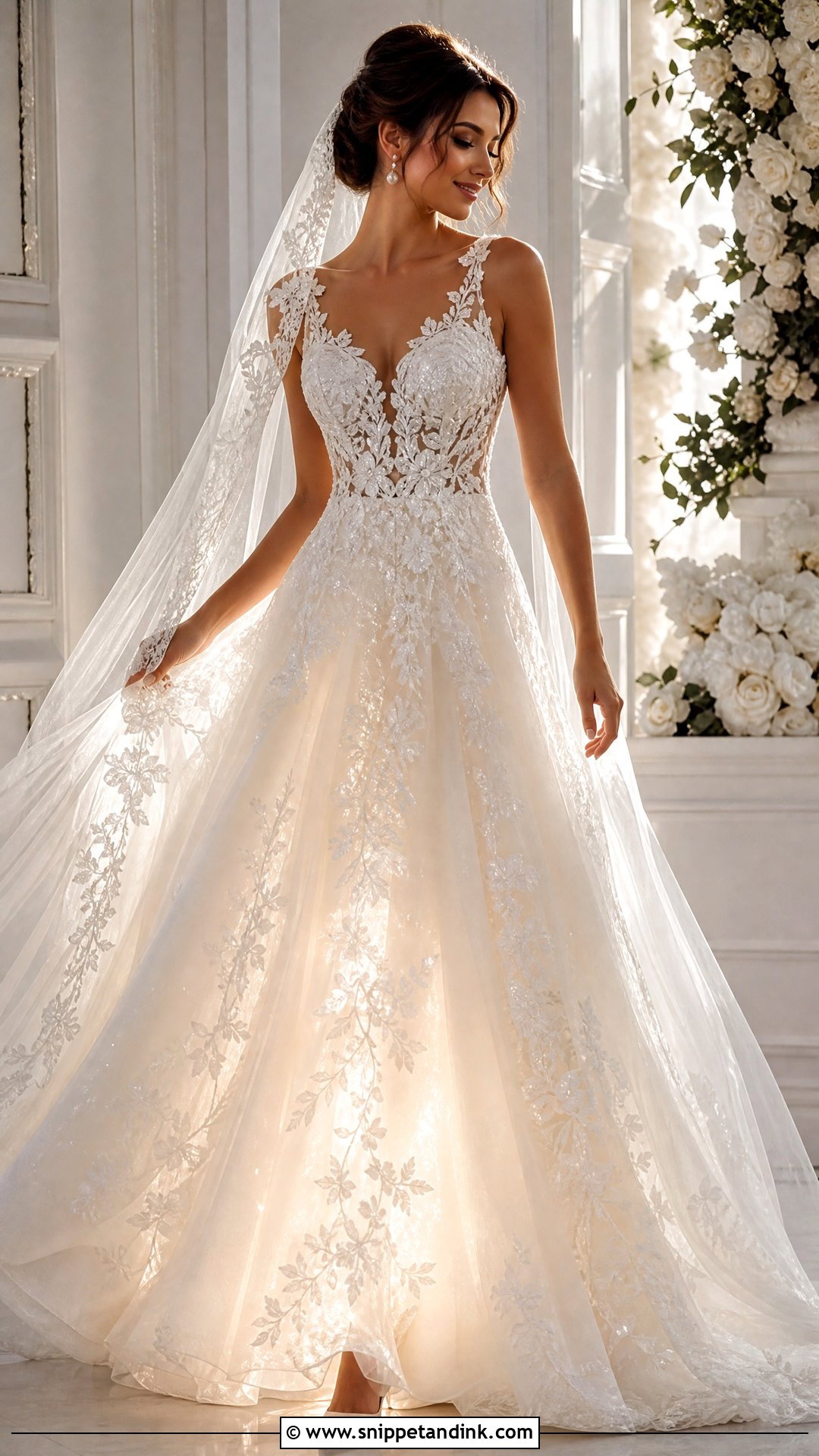
Light behind lace turns the pattern into a silhouette, the way a lampshade shows its print. A fitted lace bodice over a softly lit lining, carried down through an A-line or slight mermaid skirt, keeps a traditional gown underneath the effect. Warm or neutral white keeps it bridal; saturated colours make lace look cheap. The lining must be opaque enough that wires never show through the gaps in the lace, which I check by holding the bodice up to a lamp. Pearls, ivory heels, a lace-edged veil and soft waves or a low chignon suit a vintage lover who wants one modern touch for the evening.
6. Light Up Hemline Wedding Dress
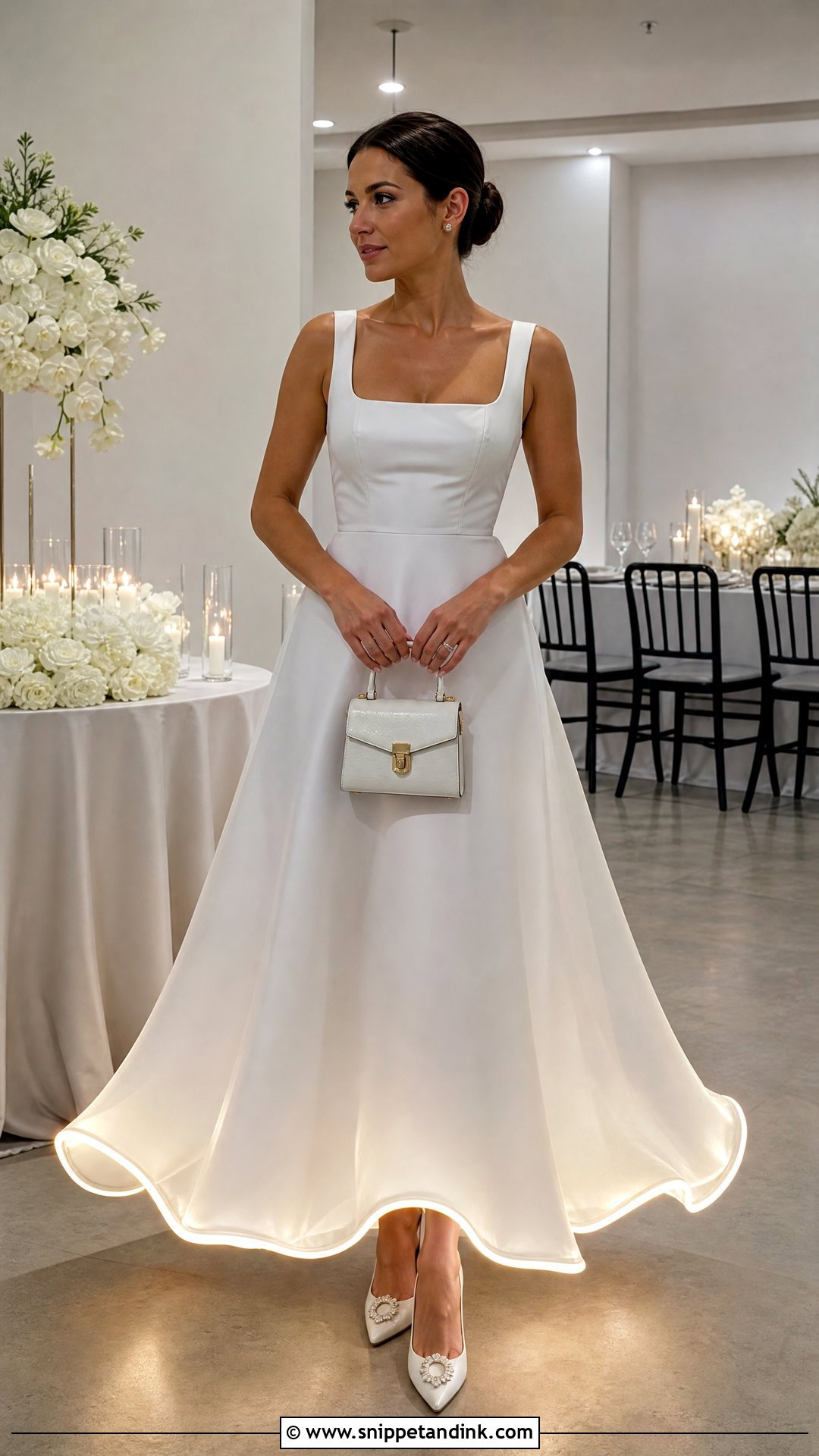
A lit hem is the most restrained choice on this list: a narrow strip of LED or fibre optic at the edge of a satin, organza or tulle skirt, so each step glows and the dress seems to float on a dark dance floor. It also takes the most abuse. Heels catch it, floors scrape it, guests tread on it. I’d ask the dressmaker to set the lights inside a channel slightly above the very edge and keep the hem flexible. Pair it with a simple strapless or square bodice, pointed white pumps, a small structured bag, crystal studs and a sleek bun.
7. LED Train Wedding Dress
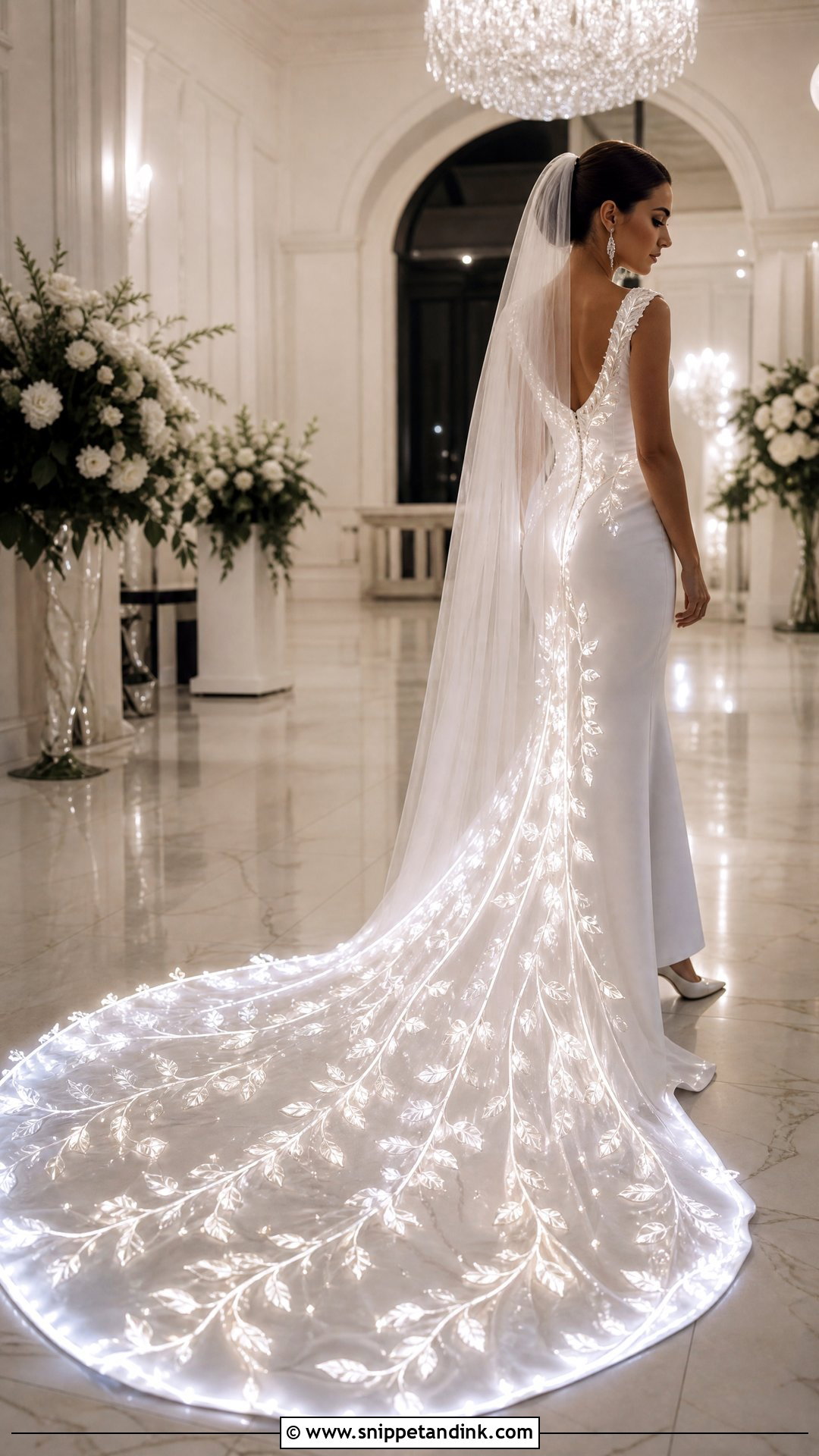
Trains give lights the most room, and a lit chapel-length or cathedral-length train following embroidered vines, geometric lines or scattered crystals makes the entrance. Keep the front quiet. The part people forget is the bustle: the train has to fold up without bending the wiring, so I ask for bustle points designed around the light runs, and someone in the wedding party needs to practise it before the day. Low veil, drop earrings, closed heels, a sleek updo to keep hair off the connections. Large evening venues with long aisles show it off.
8. Off Shoulder Light Up Wedding Dress
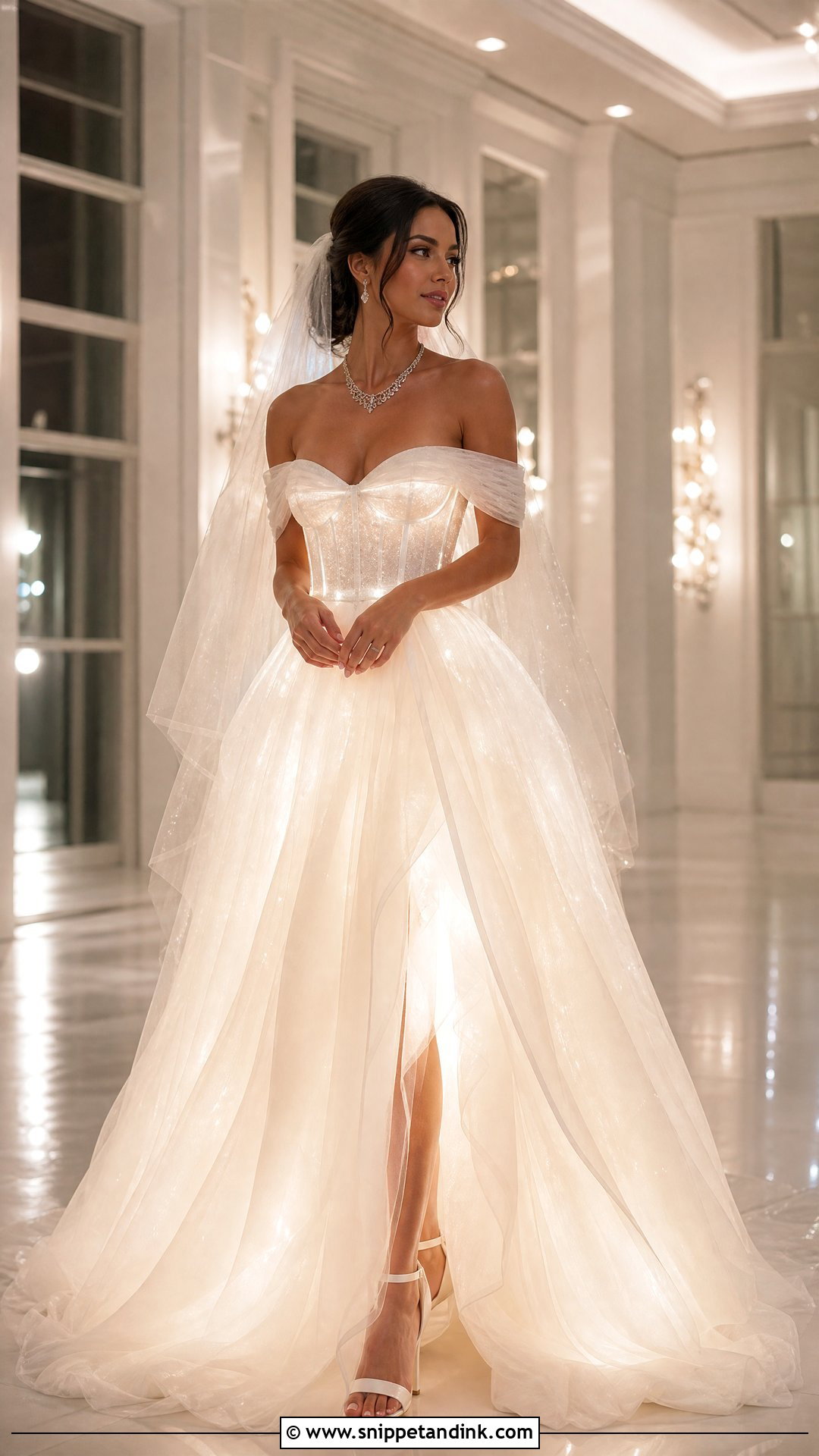
Off-the-shoulder necklines and lit skirts pair well because the light stays below the waist, leaving close-up portraits about the face and shoulders. A structured bodice, fitted waist and a skirt with small lights under sheer tulle or organza. Short crystal necklace, drop earrings, satin block heels and a soft updo; a detachable veil for the ceremony. I check this bodice with arms raised, since the extra weight in the skirt pulls down on an off-shoulder neckline more than on a plain gown. Steady white for the formal part, a soft twinkle later.
9. Long Sleeve Light Up Wedding Dress
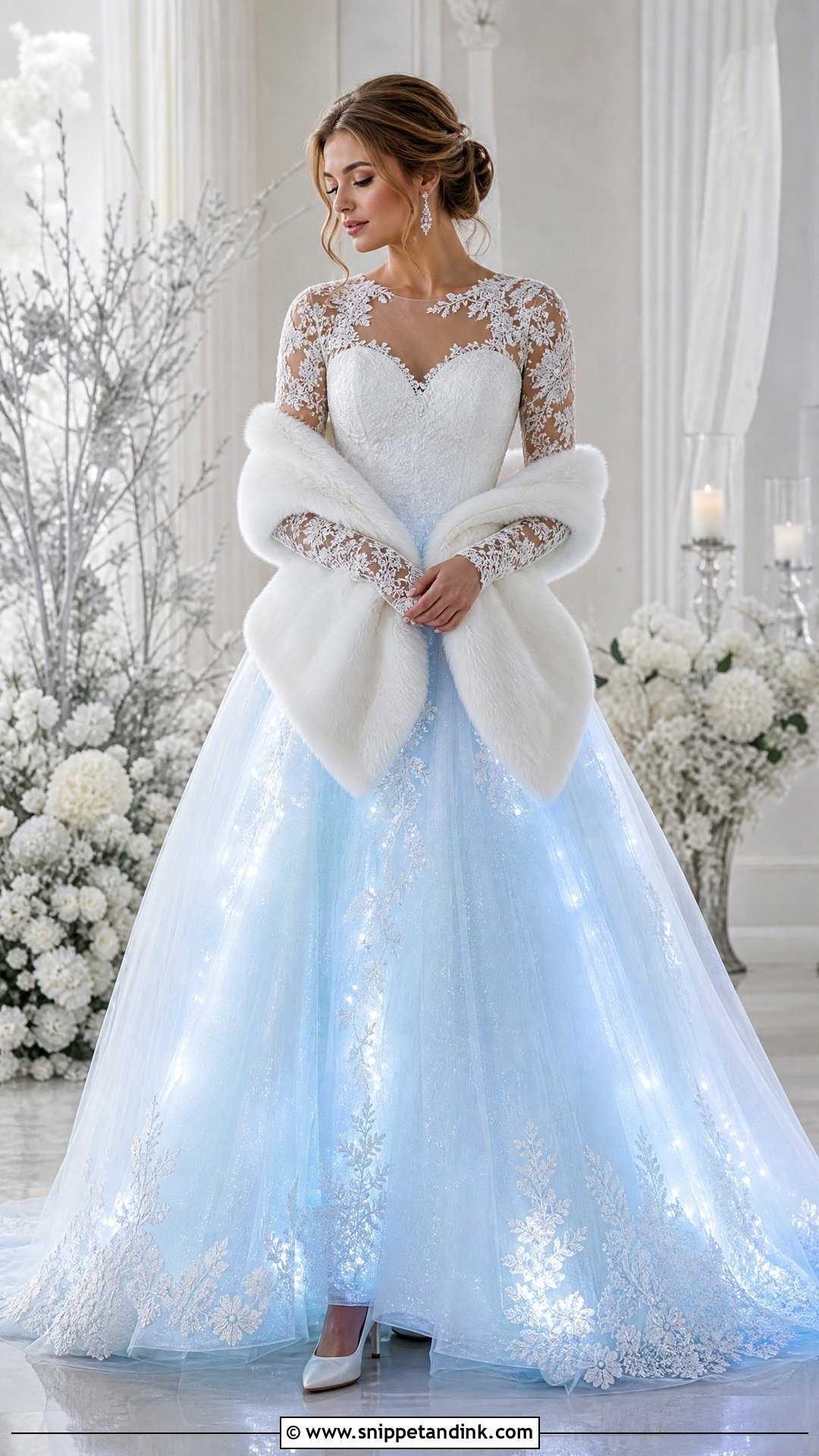
For a winter wedding, long lace sleeves and an icy glow look right together. A lined bodice, sheer lace arms and a full tulle skirt in white or pale blue light. I’d keep electronics out of the sleeves altogether; small reflective beads there catch light from the skirt without adding wires where arms bend constantly. Closed satin heels, crystal earrings and a white or ivory faux-fur wrap for outdoors. A low bun keeps hair off the lace. With the lighting concentrated in the skirt, wiring and batteries are easier to hide, and the glow against snow or a dark evening sky is striking.
10. Light Up Mermaid Wedding Dress
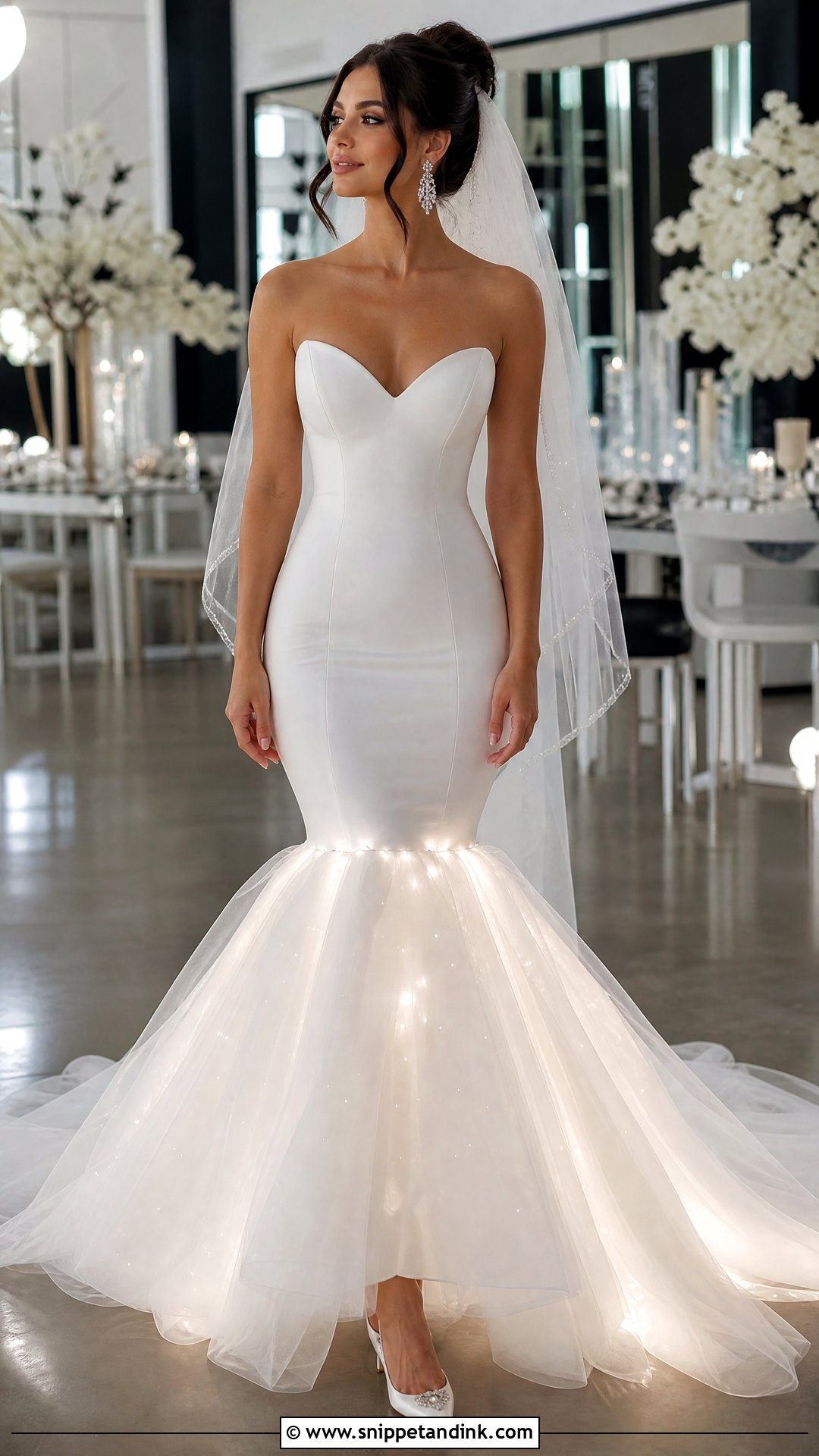
On a mermaid gown, light placed from the knee down makes the flare glow while the fitted top stays sleek. The order of work matters: get the fit right first, with enough stretch to sit and walk, and only then add electronics. A battery tucked against the thigh in a mermaid is uncomfortable and visible, so I ask for it at the back waist or in a detachable panel. Crystal earrings, pointed heels and a fingertip veil; smooth waves or a side updo. A steady glow outlines the shape better than any flashing pattern.
11. Short Light Up Reception Dress
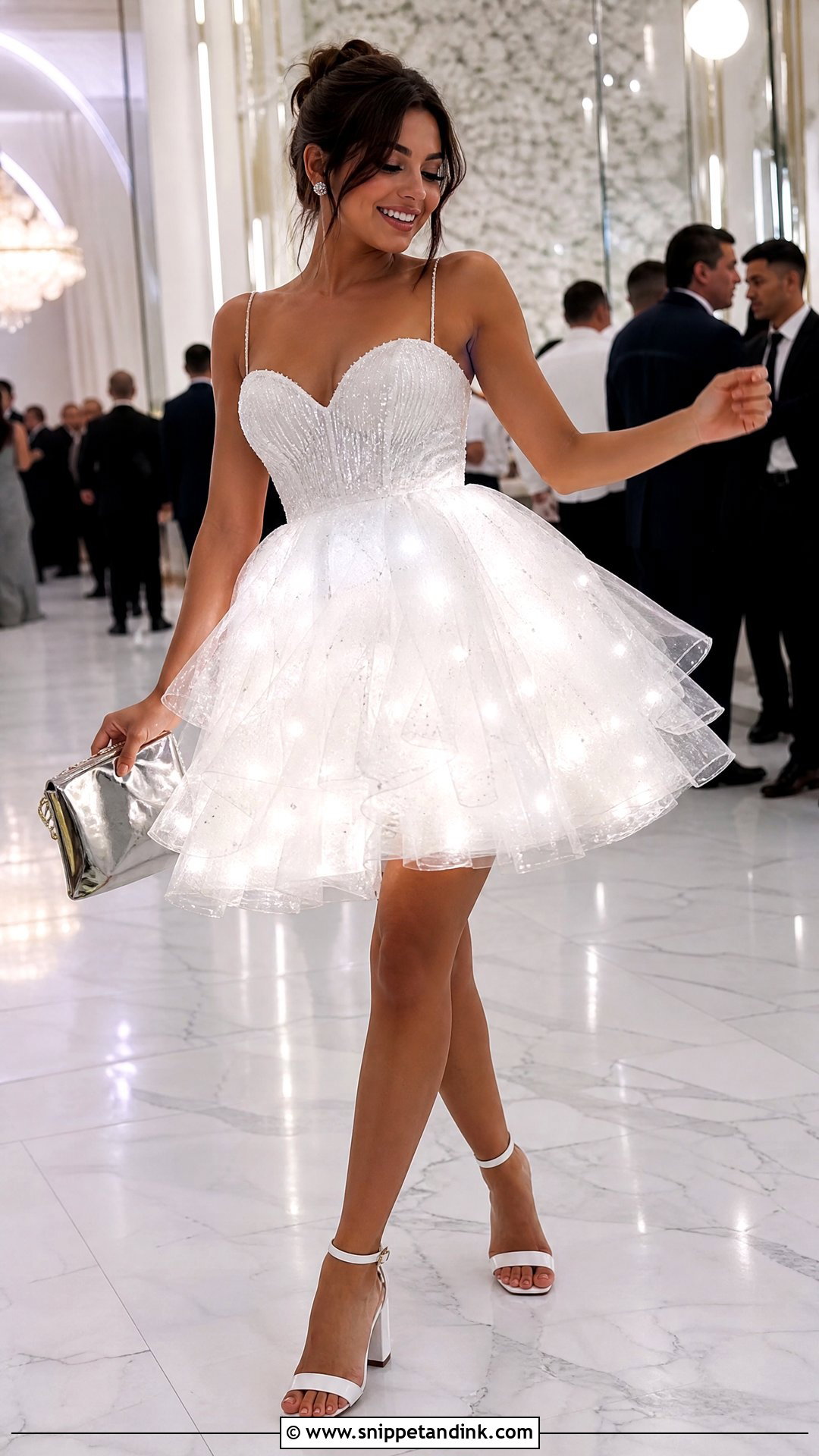
Short reception dresses are the easiest lit option to wear, and I recommend them to brides who want the glow but not the weight of a long gown. A white mini or knee-length fit-and-flare with layered tulle, fringe or a sheer LED overskirt. Check the inside before anything else: the lining must be smooth enough that no wire or chip touches skin while you dance. Built-in shorts help under a flared skirt. White ankle-strap block heels, crystal studs, a small metallic clutch, a high ponytail or loose waves. Choose a slow twinkle or steady glow, never a strobe.
12. LED Sequin Fringe Wedding Dress
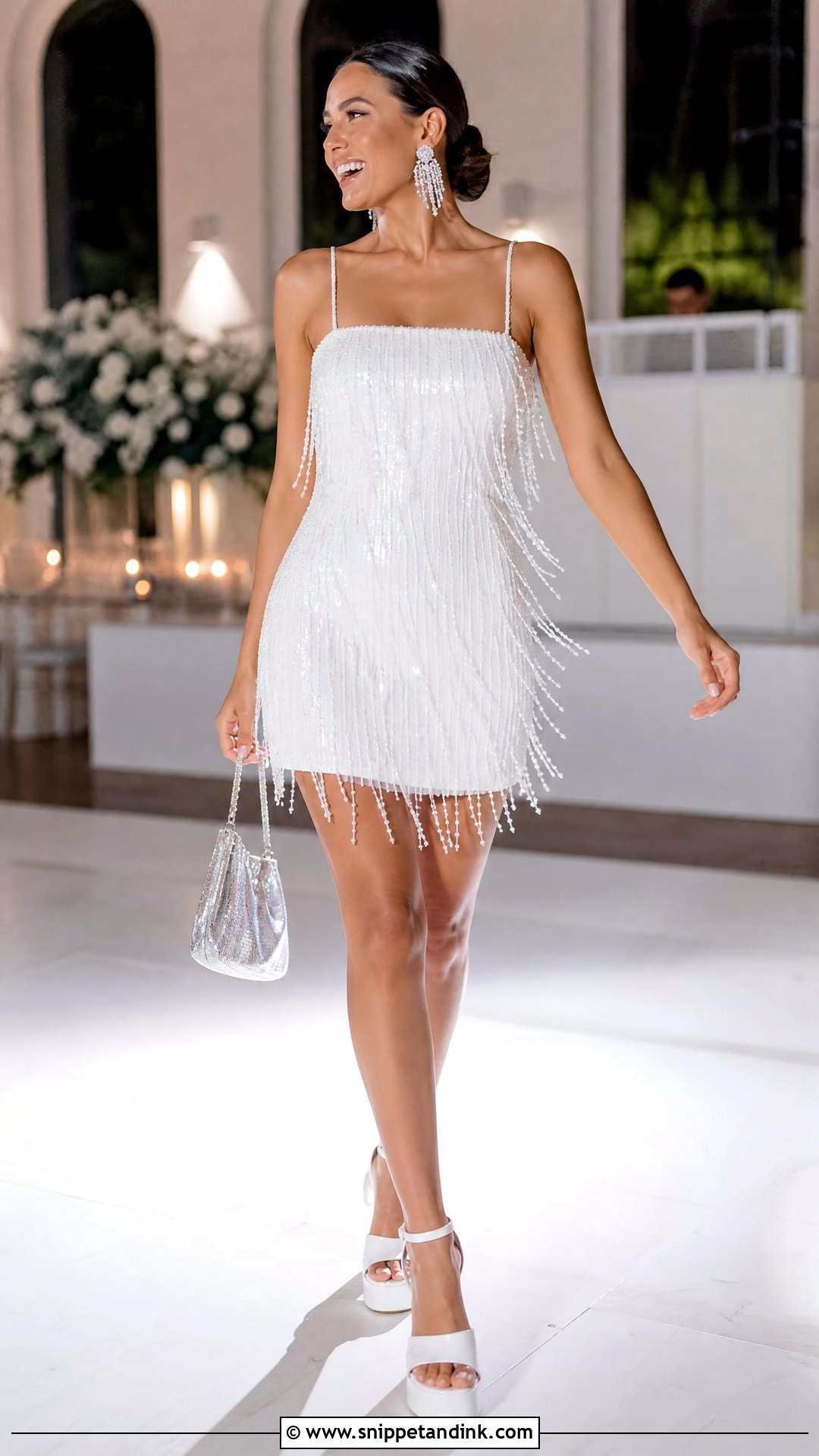
Fringe swings, sequins scatter light, and a few LEDs at the fringe roots make both move with you. A fitted white mini with a comfortable lining and fringe across the skirt or sleeves. Wires near moving trim are a hazard, so every connection should be stitched down and the controller secured before the first song. White platforms, bold crystal earrings, a small silver bag and a sleek ponytail. It is ideal as a second dress, after-party outfit or a lit send-off.
13. Celestial Light Up Wedding Dress
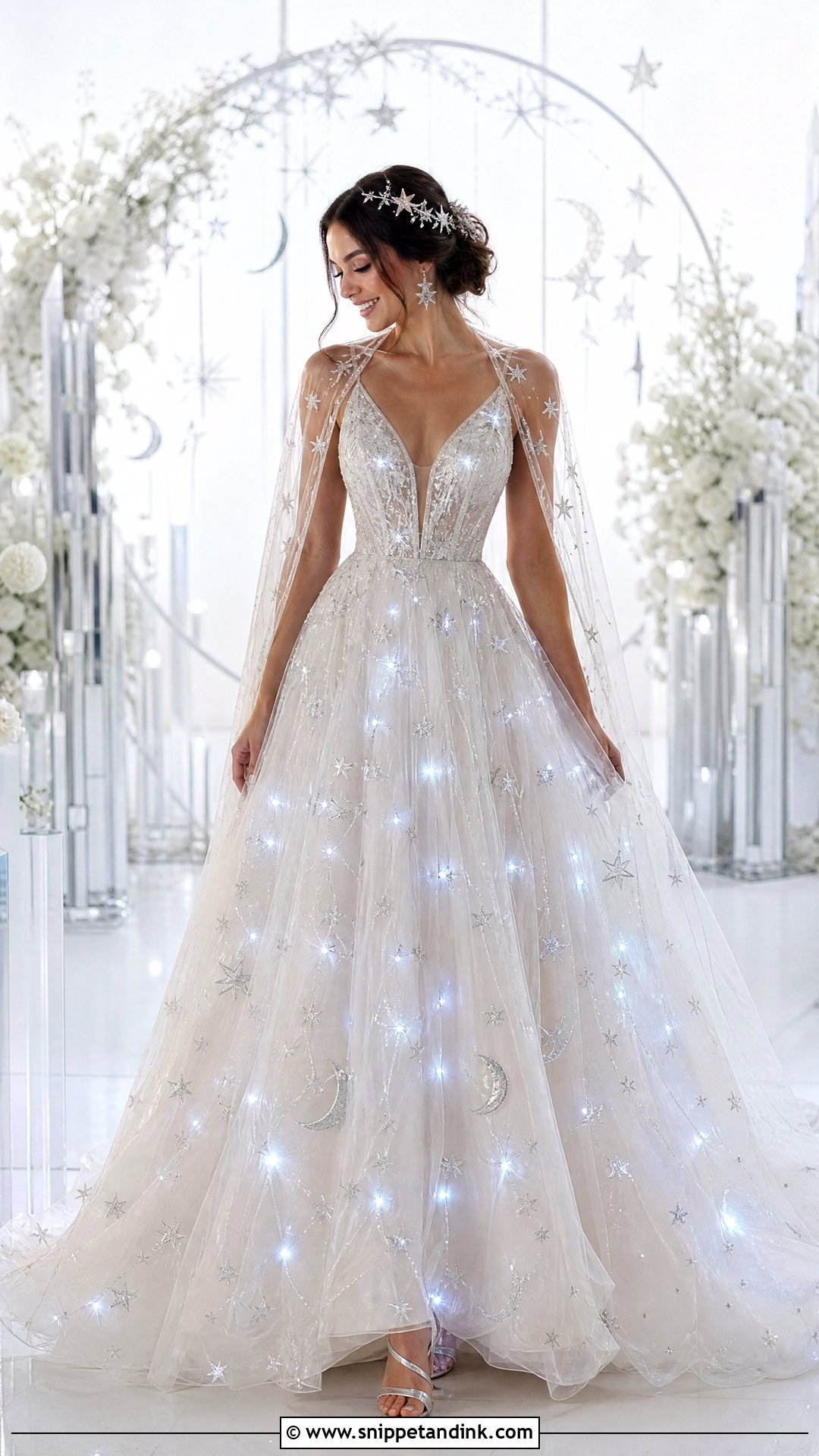
Celestial gowns combine bridal white with stars, moons, crystals and small points of light. A soft grey, ivory or white tulle A-line with silver embroidery and cool-white lights hidden beneath the outer layers. Place the lights irregularly; rows look mechanical, while a scatter reads like a night sky. A star-shaped comb, silver sandals and understated crystal earrings, or a sheer cape with small metallic stars in place of a veil. I’d stop at one themed hairpiece and one pair of earrings. More than that and the theme takes over.
14. Aurora Light Up Wedding Dress
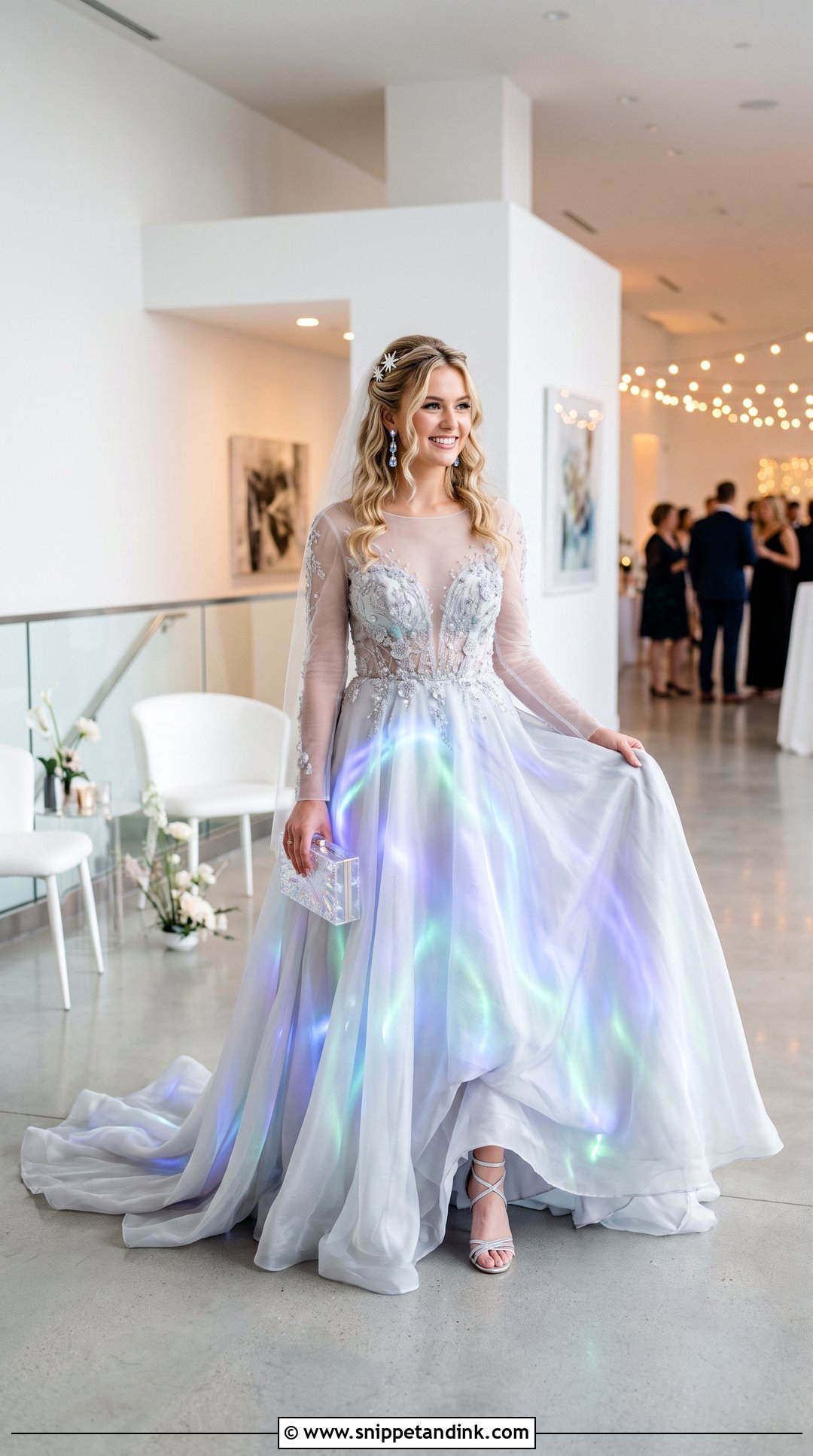
Blue, violet and green light under layered chiffon, tulle or organza can turn a floor-length gown into an aurora-inspired bridal look. The lights sit beneath the outer fabric so the colours blend rather than show as dots, and the program should move through slow gradual changes, like waves crossing the skirt. Silver heels, iridescent earrings, a clear clutch and a loose braided updo. This dress needs the venue to dim its lights for the entrance; in a bright room the effect almost disappears, so speak to the venue coordinator early.
15. Floral Light Up Wedding Dress
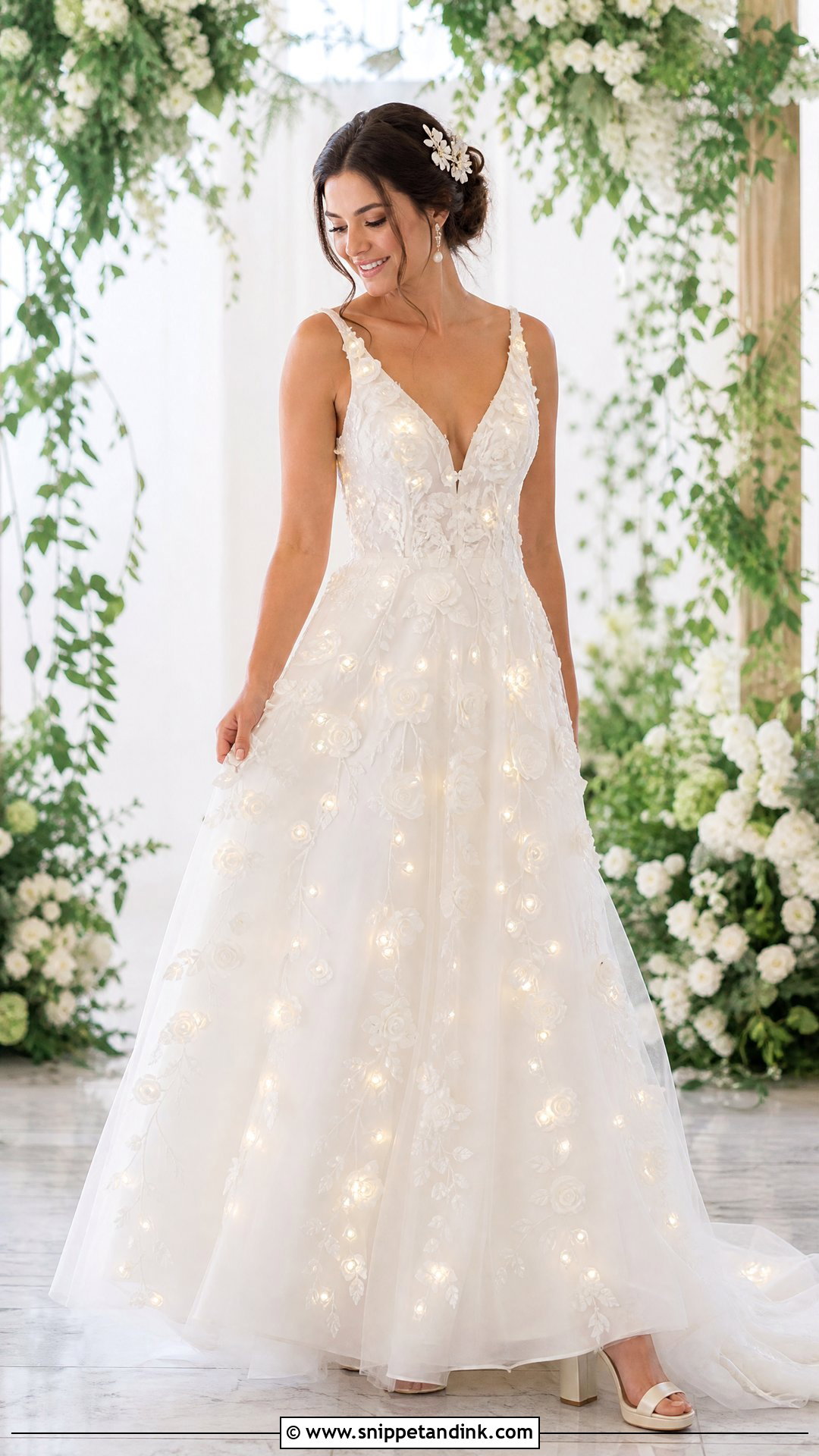
Embroidered vines, appliqués and raised petals can hide micro-lights well. On a white A-line with flowers running from bodice to skirt, I’d light only some of the motifs, never all, so the embroidery still has depth. Pearl drops, ivory block heels and a small floral comb. The veil can echo the appliqués without any electronics. Keep the battery access away from the raised flowers so they don’t get crushed every time someone adjusts the pack. Soft waves or a relaxed bun suit an outdoor wedding that carries on after sunset.
16. Pearl Light Up Wedding Dress
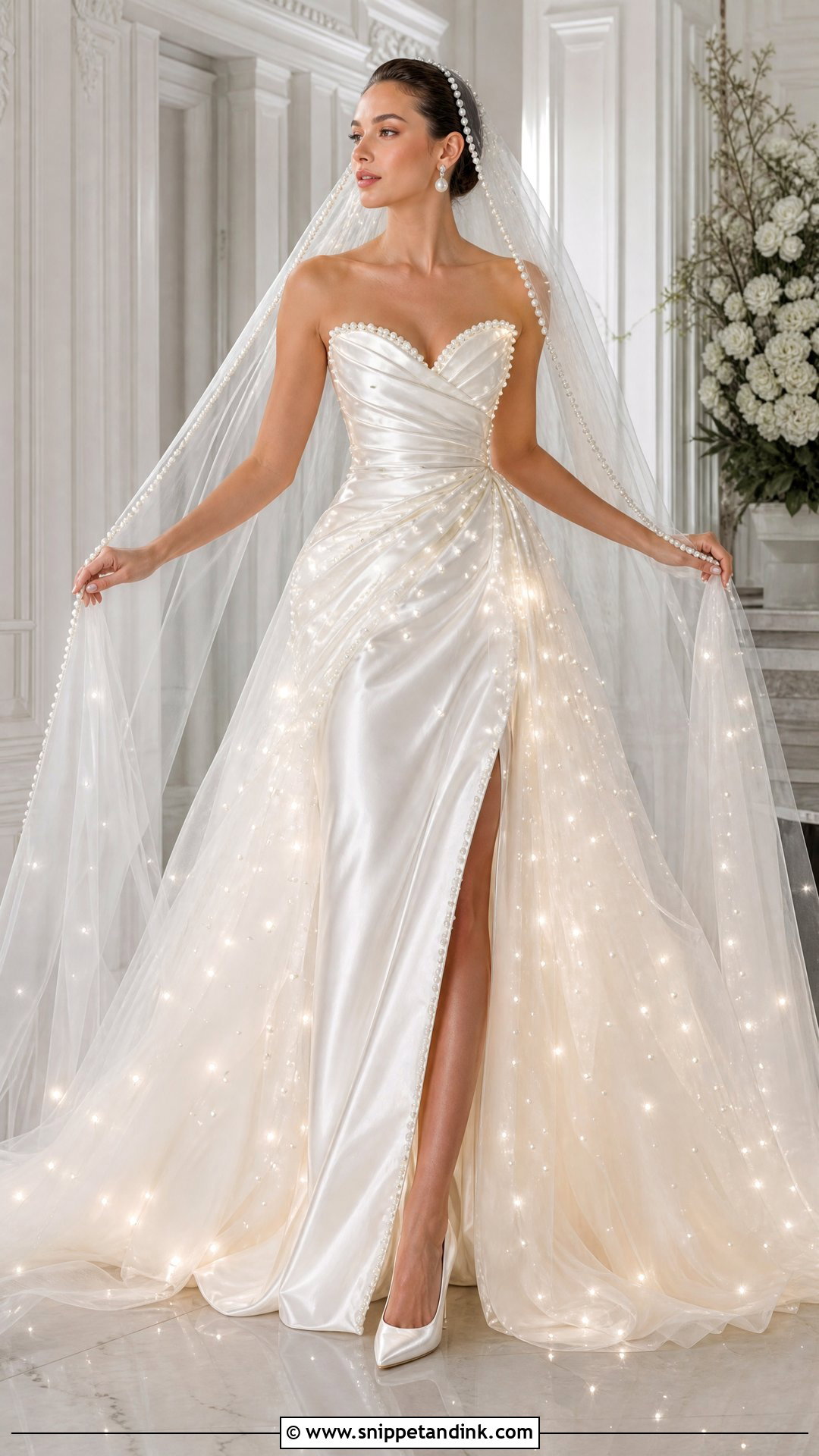
Pearls lit from behind seem to glow from inside. A satin or tulle gown with pearls across the bodice and scattered down the skirt, with neutral-white lights under the upper tulle. Low brightness is the key here; too bright and the pearls lose their surface and look like plastic beads. Pearl earrings, satin pumps and a pearl-edged veil, with little or no necklace if the neckline is decorated. A smooth chignon keeps hair from snagging on raised beading. A good choice for a bride who wants the light to be almost a secret.
17. Minimalist Satin Light Up Wedding Dress
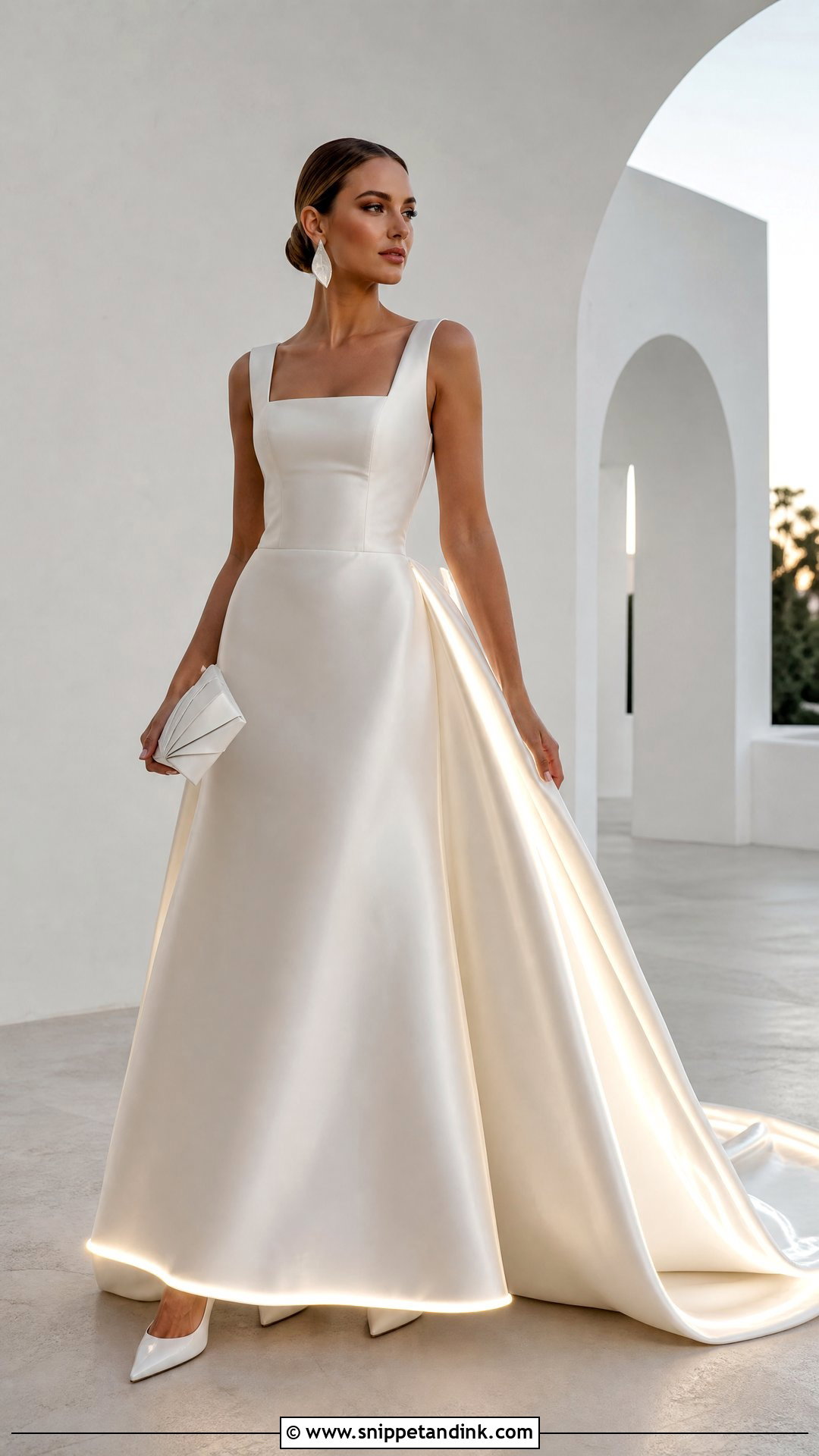
Can plain satin carry lighting? Yes, if the light stays in one place. A column or A-line in satin with a square neck and a single line of light along the back hem, the waist or a detachable train. Satin is unforgiving, though: any battery bump or wire ridge shows through the smooth surface, so I’d want every component padded and hidden before agreeing to this design. Sculptural earrings, white pointed heels, a structured satin clutch and a sleek bun or ponytail. One soft white tone only.
18. Plus Size Light Up Wedding Dress
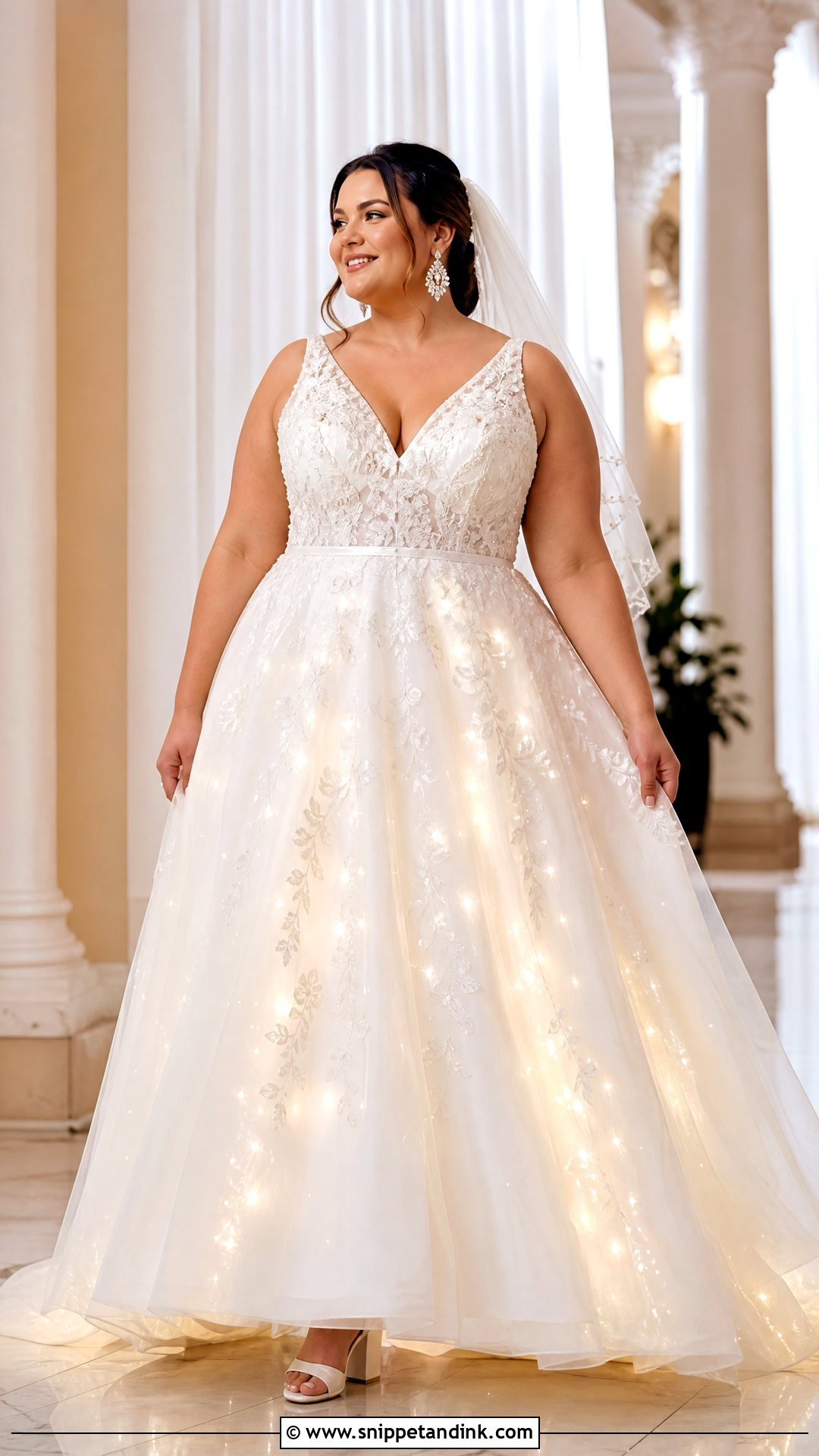
Support comes first in a plus-size lit gown, and the lighting is added only once the fit is right. I’d look at an A-line with wide straps, a structured V-neck bodice and a layered skirt glowing from the natural waist down, with lights scattered evenly so no single area becomes a bright patch. Foundation garments and alterations should be finished before any electronics are installed. Ask for adjustable straps, flexible wiring, and a battery pocket placed where it won’t press against the body when seated. Supportive block heels, statement earrings and a soft fingertip veil.
19. Detachable Light Up Overskirt Wedding Dress
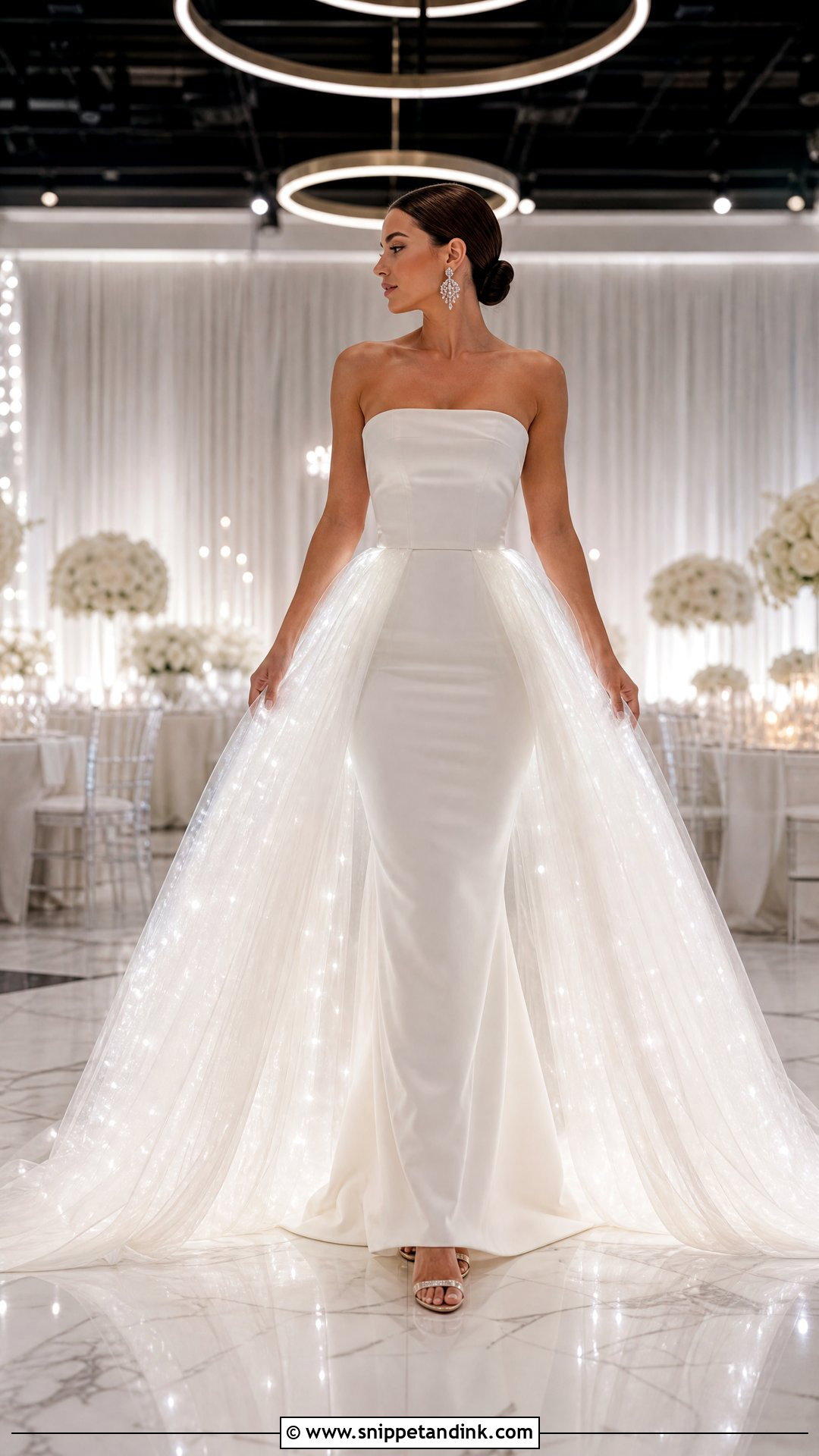
Two looks, one base dress. A detachable illuminated overskirt goes over a clean fitted gown or jumpsuit for the entrance, portraits or first dance, then comes off for the party. I like this design because all the electronics stay in the removable layer, which makes dressing, charging and cleaning far simpler. The waistband must close firmly without pressing on the base garment’s zip. Labelled controls and marked attachment points help whoever is helping you change. Metallic heels, crystal earrings and a sleek low bun.
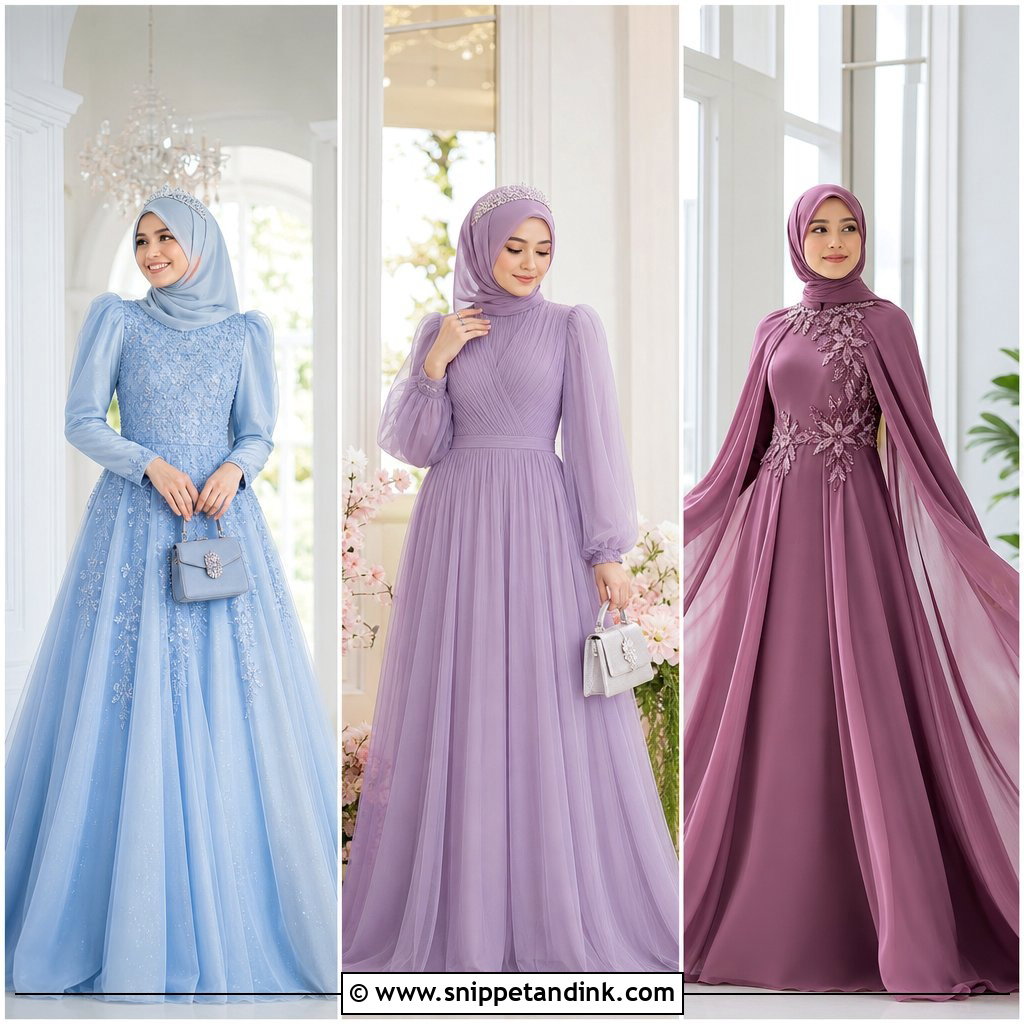
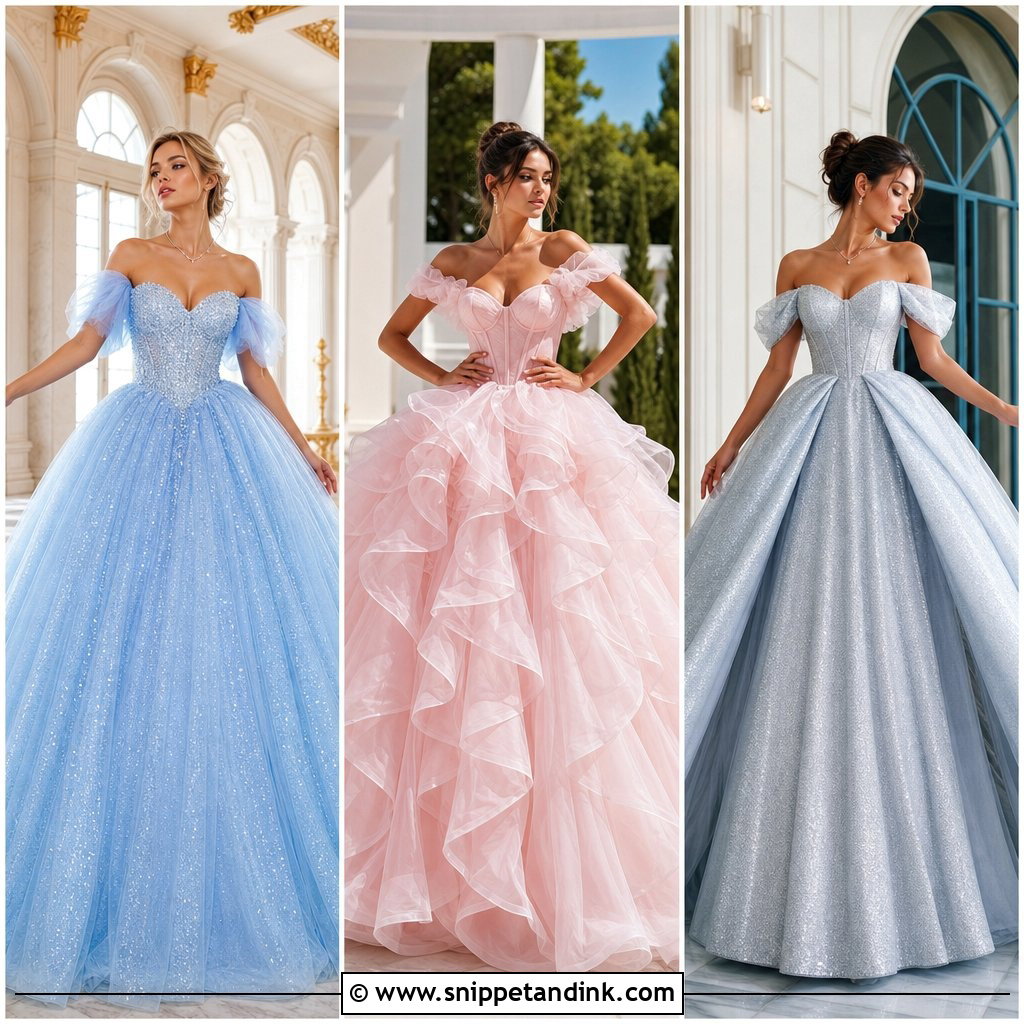
20. Light Up Cape Wedding Dress
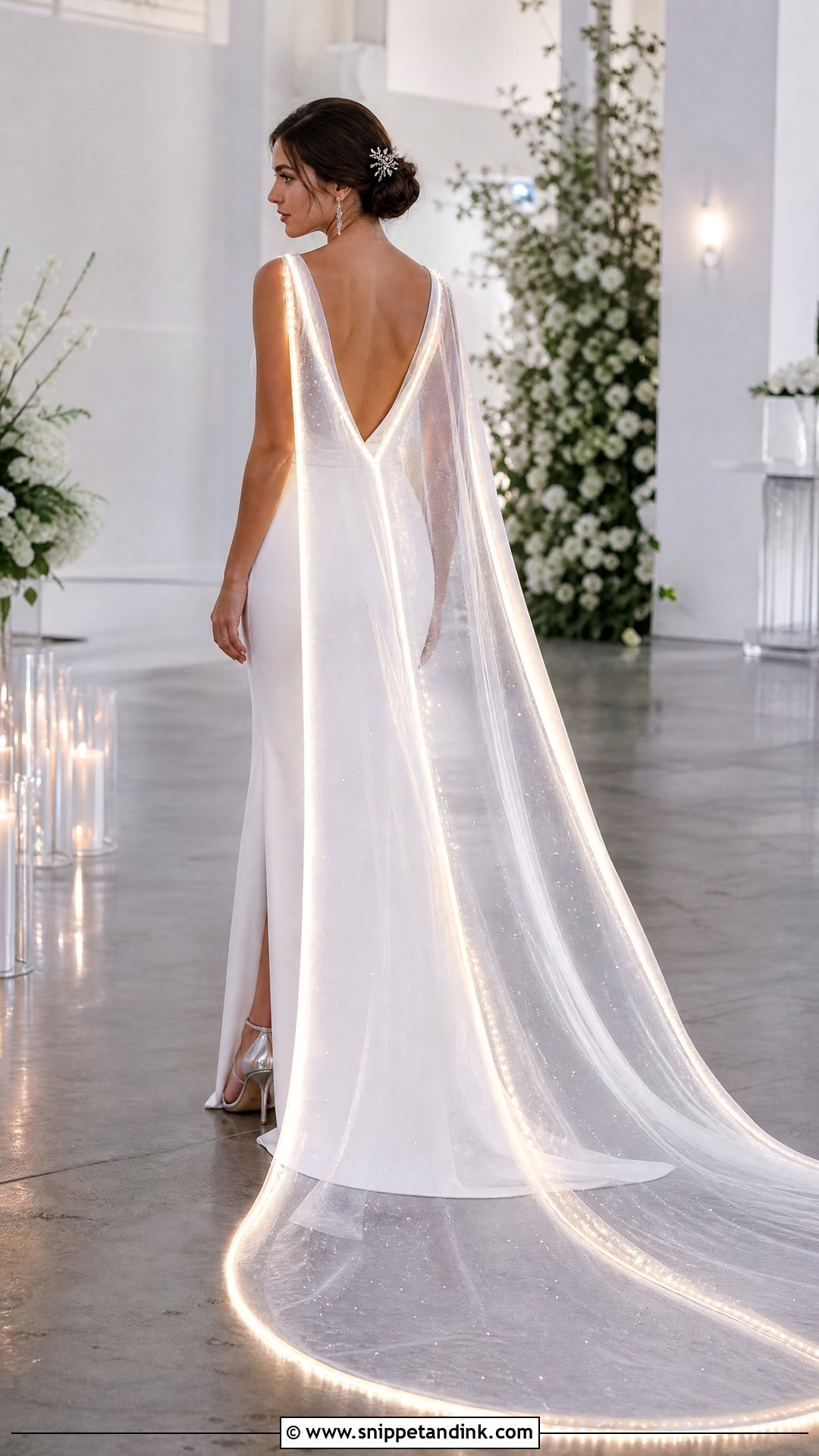
A lit cape gives you drama for the entrance while the gown underneath stays traditional. A sleek white dress with a simple neckline, then a floor-length sheer cape trimmed with fibre optics or small LEDs, which can come off before dinner. Keep the gown lightly decorated so the cape stands out. The cape should fasten at the shoulders without dragging the neckline back. Have the wiring checked by the maker, and use the protected battery system supplied with it, never loose lithium cells, which can overheat or short. Silver heels, fine drops and a crystal comb above the fastening.
Battery Life, Charging and Who Holds the Spare
Most lit gowns run from a rechargeable pack similar to a phone power bank, and run time depends heavily on brightness and colour settings. Ask the maker for an honest figure at the setting you plan to use, then plan as if it will be shorter. Lots of brides only need the glow for the entrance, first dance and late portraits, so switching off between those moments stretches it a long way.
- Charge the pack fully the day before and again in the morning.
- Give a fully charged spare to a bridesmaid along with a short note on how to swap it.
- Carry battery packs in hand luggage if you are flying; airlines restrict lithium batteries in checked bags.
- Remove all electronics before the gown goes to any cleaner, and tell the cleaner where they were.
Getting the Glow to Show Up in Photographs
Camera flash flattens a lit dress. The glow shows best when the room lights are dimmed and the photographer uses little or no flash with a longer exposure. Tell your photographer in advance which moments you want lit shots of, so they can plan the settings, and ask the venue whether house lights can be lowered for a few minutes. A short dark-room test with your phone at the final fitting tells you which setting photographs best.
Soft Light, Steady Settings and a Charged Spare
A lit wedding dress doesn’t need to flash or run through every colour. The gowns that look best use soft light to show off lace, tulle, a train or a removable skirt. Pick the silhouette you’re comfortable in first, then the lighting. Test the whole outfit walking, sitting and dancing, use a protected battery pack, follow the maker’s charging instructions, and give one trusted person charge of the controls. Prepared like that, the glow feels personal rather than gimmicky.
You'll Like These Ideas:


Leave a Reply