
Three things make a gown read as Cinderella: a fitted bodice, a clearly defined waist and a skirt big enough to sweep. Everything else is variation, from ivory satin to powder blue tulle, sparkle, floral appliqués, corsetry and romantic sleeves. Ball skirts, Basque waists, bows and soft blue tones keep turning up in bridal collections for good reason. In my experience, the accessories decide whether the result looks polished or like a costume, and the practical questions decide whether you enjoy wearing it. So before falling for a silhouette, I’d think about your venue, the season, the train, the fabric’s weight and whether you can sit and dance in it. Here are twenty complete looks to compare.
Satin, Mikado, Tulle and Organza Over a Twelve-Hour Day
Two ball gowns with the same shape can feel completely different by evening, and the fabric is usually why. Here’s how each one behaves once you’re actually wearing it.
- Satin: smooth and luminous, but it shows creases from car seats and chairs. Heavier duchess satin recovers better than thin, shiny polyester satin.
- Mikado: stiff enough to hold pleats and a clean shape all day, and it barely wrinkles. It’s warm, so I lean toward it for autumn and winter.
- Tulle: the lightest way to get volume, and it breathes. It catches on jewellery, rough floors and bouquets, and the hem can fray if it drags outdoors.
- Organza: crisp and see-through, holding a puff without weight. It creases sharply if crushed and needs a steam before photos.
For a summer or outdoor wedding, I’d steer toward tulle or organza. For a cold evening in a ballroom, satin or Mikado gives that solid fairytale shape and keeps you warmer.
Weight is the other thing nobody mentions in the shop. A full satin ball gown with a lined petticoat can be surprisingly heavy, and all of it hangs from your waist. When a bride tries one on, I ask her to stand in it for ten minutes before deciding, then sit and stand again. If her lower back or hips ache already, a lighter tulle skirt over a hoop gives the same shape with far less strain by the time the speeches start.
1. Classic Ivory Satin Cinderella Gown
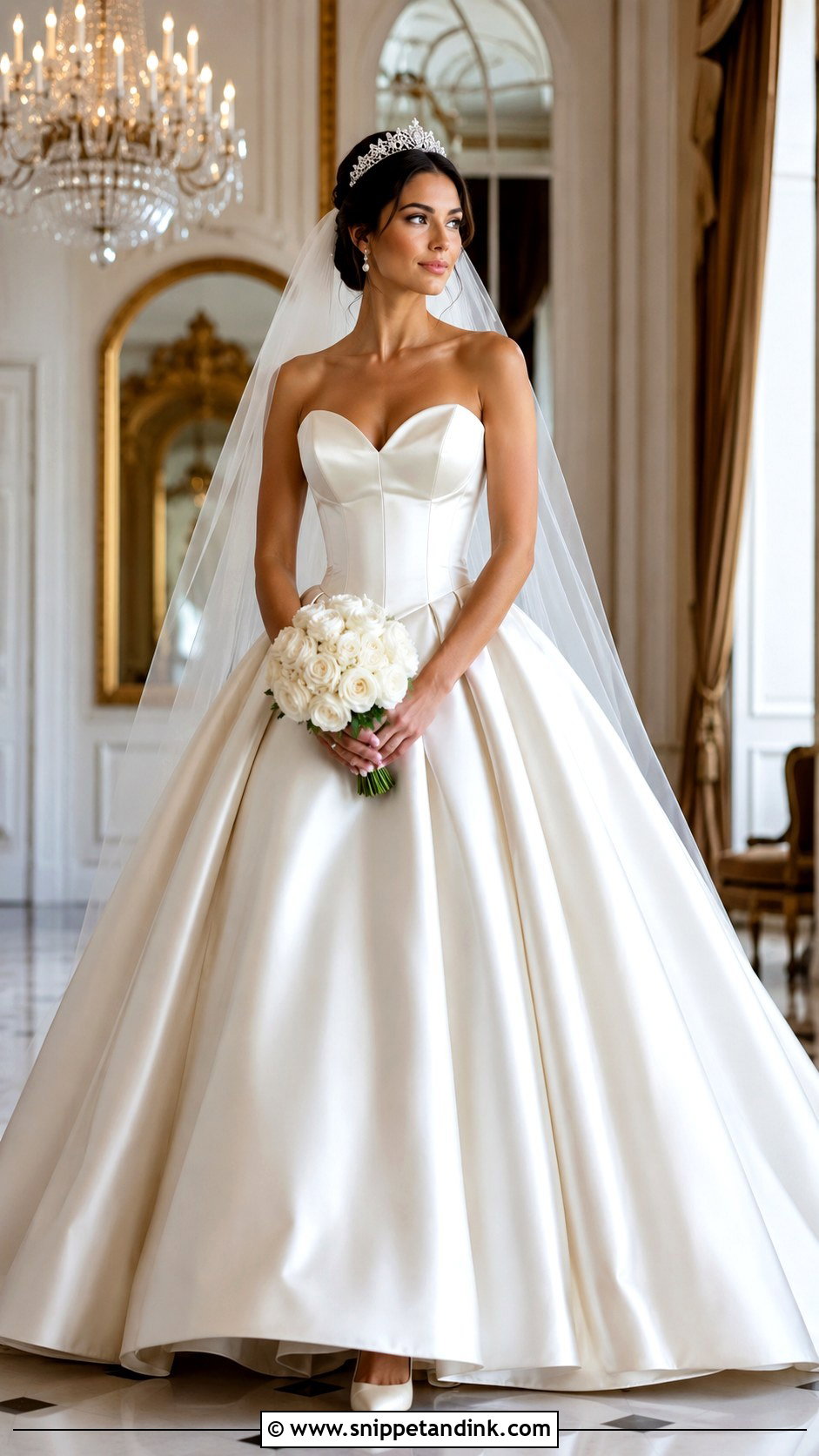
Ivory satin is the safe classic, and I mean that as praise. A structured ball gown with a sweetheart neckline, a fitted bodice and a full skirt from the natural waist, with gentle pleats that add volume while letting the sheen show. Pearl drops, a delicate tiara, a chapel veil with a clean edge and pointed ivory pumps. Ivory flatters far more skin tones than stark white, which is why I suggest it first. Have a bustle sewn in so the train lifts after the ceremony. Ballrooms, estates and hotels let the satin glow in photos.
2. Powder Blue Tulle Cinderella Gown
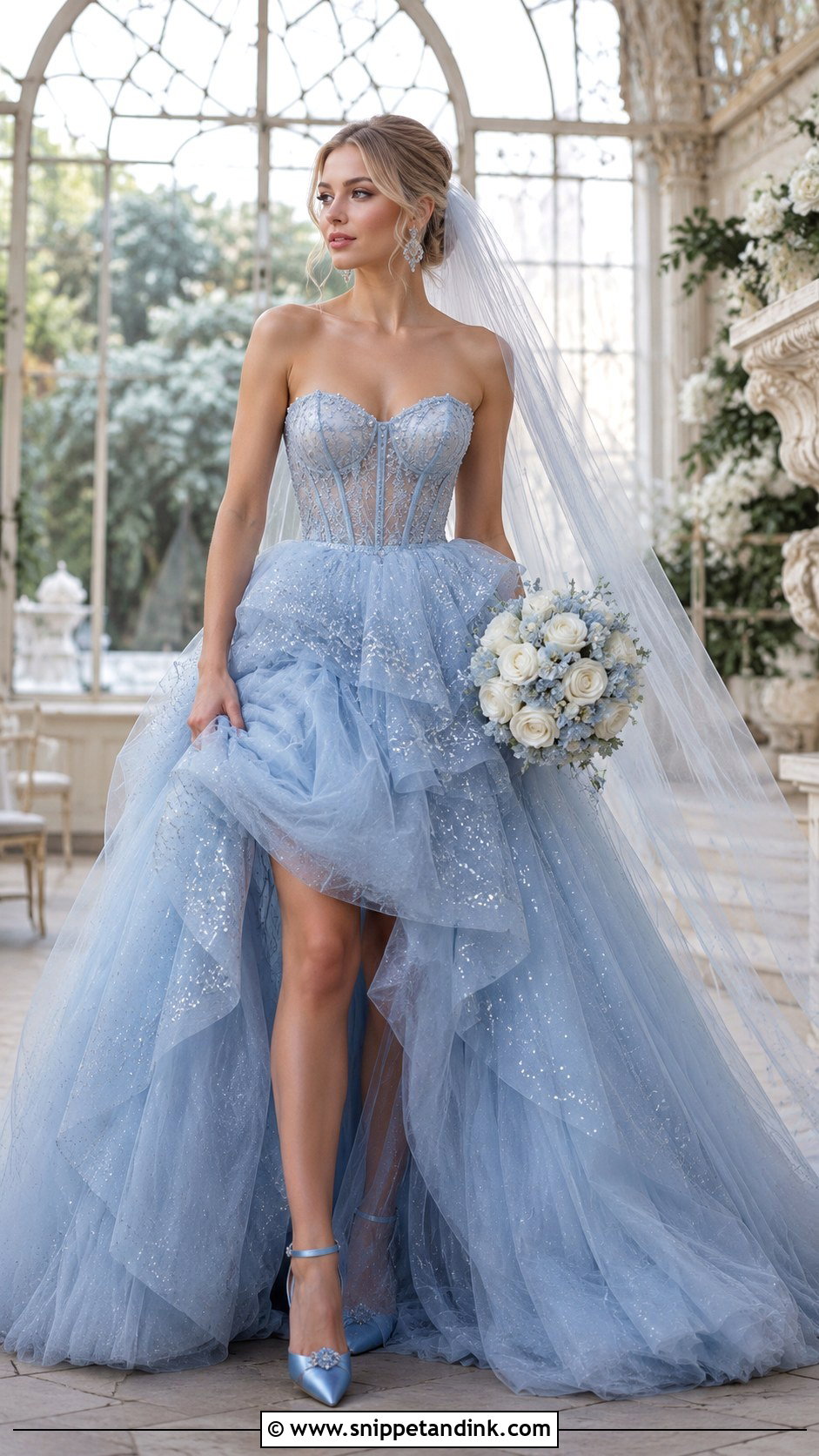
Powder blue tulle gives the Cinderella mood without leaving the wedding behind. A pale blue gown with a fitted corset bodice, a layered skirt and a little shimmer in the fabric, and a sheer neckline if you want coverage. Silver crystal earrings, light blue satin heels and a cathedral veil in blue-tinted ivory. Coloured tulle shows the layers underneath, so each one changes the final shade; I always look at the full skirt, not a single swatch. A small white-and-blue bouquet keeps it coherent. Ballrooms, glass conservatories and winter venues suit it.
3. Off-The-Shoulder Lace Cinderella Gown
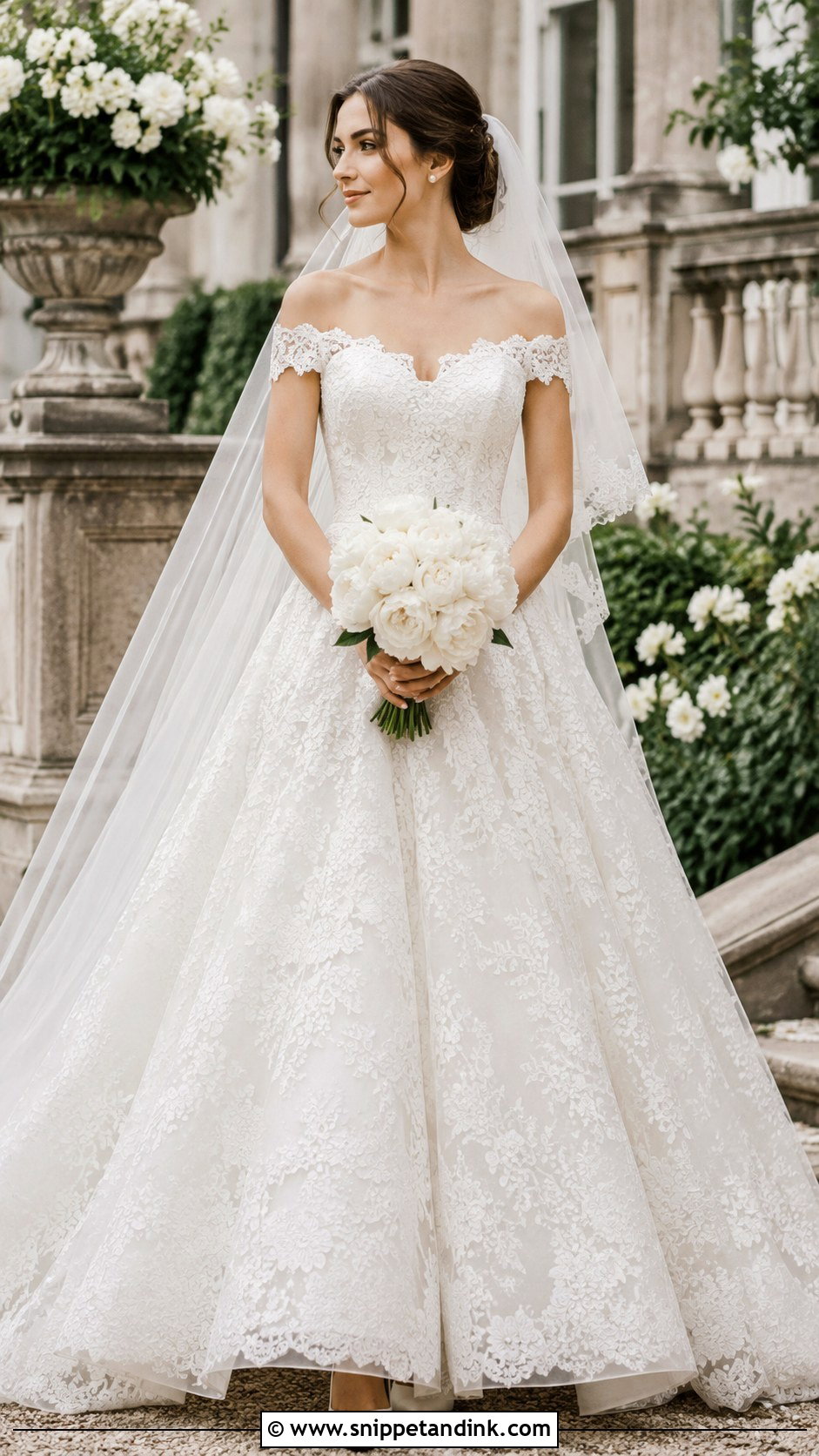
Lace across the shoulders is about as romantic as bridal gets. An off-the-shoulder gown with a supportive fitted bodice, a full lace-covered skirt and a scalloped neckline; vertical lace placement on the bodice lengthens the torso. A low bun, crystal pins, pearl studs and a fingertip veil that doesn’t fight the lace. Closed-toe heels and white peonies soften it. Scalloped lace edges are cut by hand around each motif, and they can lift or curl at the neckline after a few hours of body heat, so ask for a few invisible stitches to tack them down. Hidden straps inside the bodice help on the dance floor.
4. Basque Waist Cinderella Gown
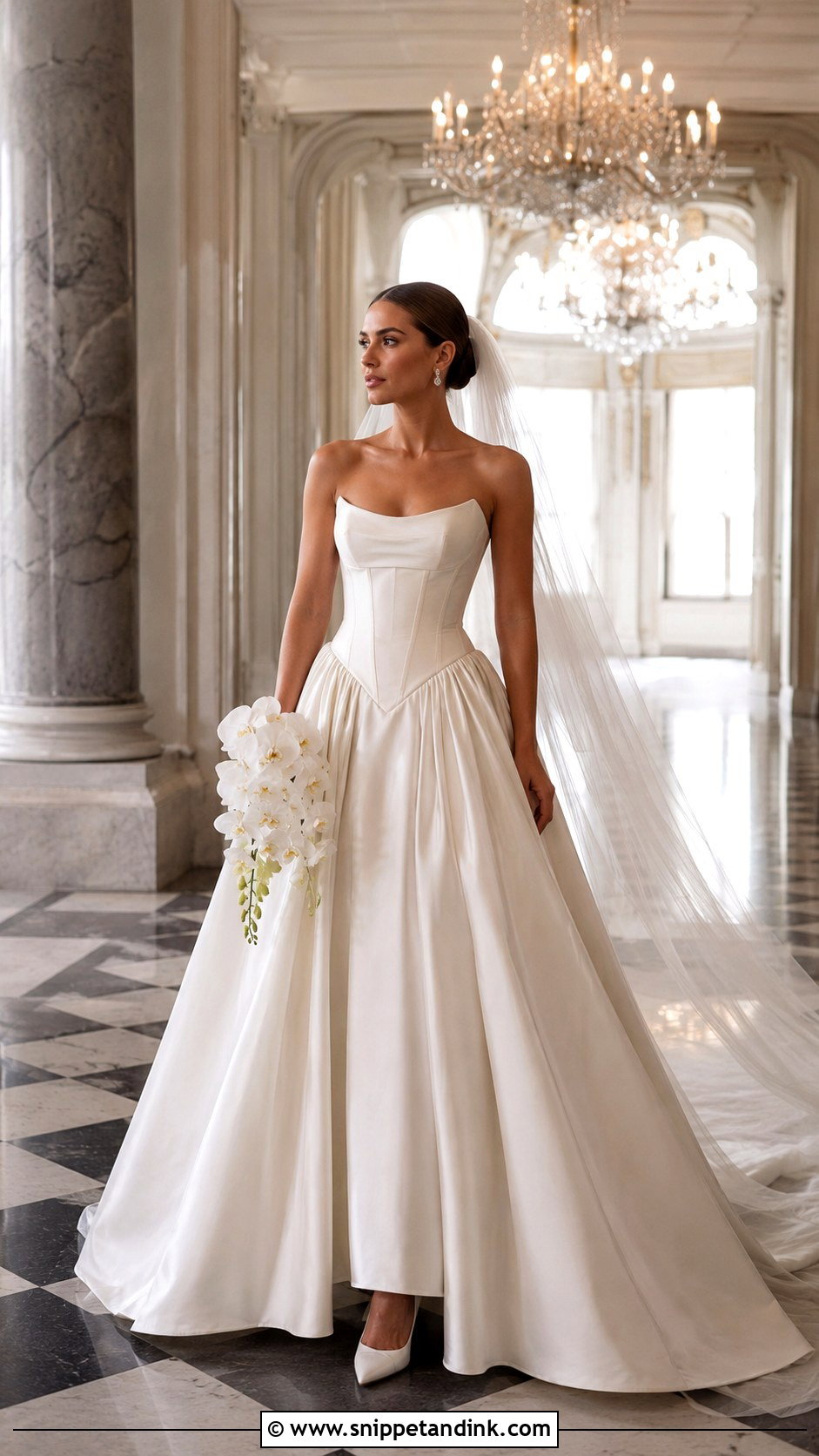
A Basque waist drops into a soft V below the natural waist and lengthens the whole body. A boned bodice with a voluminous satin, Mikado or crisp organza skirt. Plain cathedral veil, oval crystal earrings and matching ivory pumps, with a sleek updo so the bodice lines stay visible. An elongated bouquet of white orchids repeats the vertical line. The point of the V should sit flat on the lower stomach when you sit, never press in. I book a fitting specifically to test it seated. Grand venues and formal ceremonies suit it.
5. Long Sleeve Lace Cinderella Gown
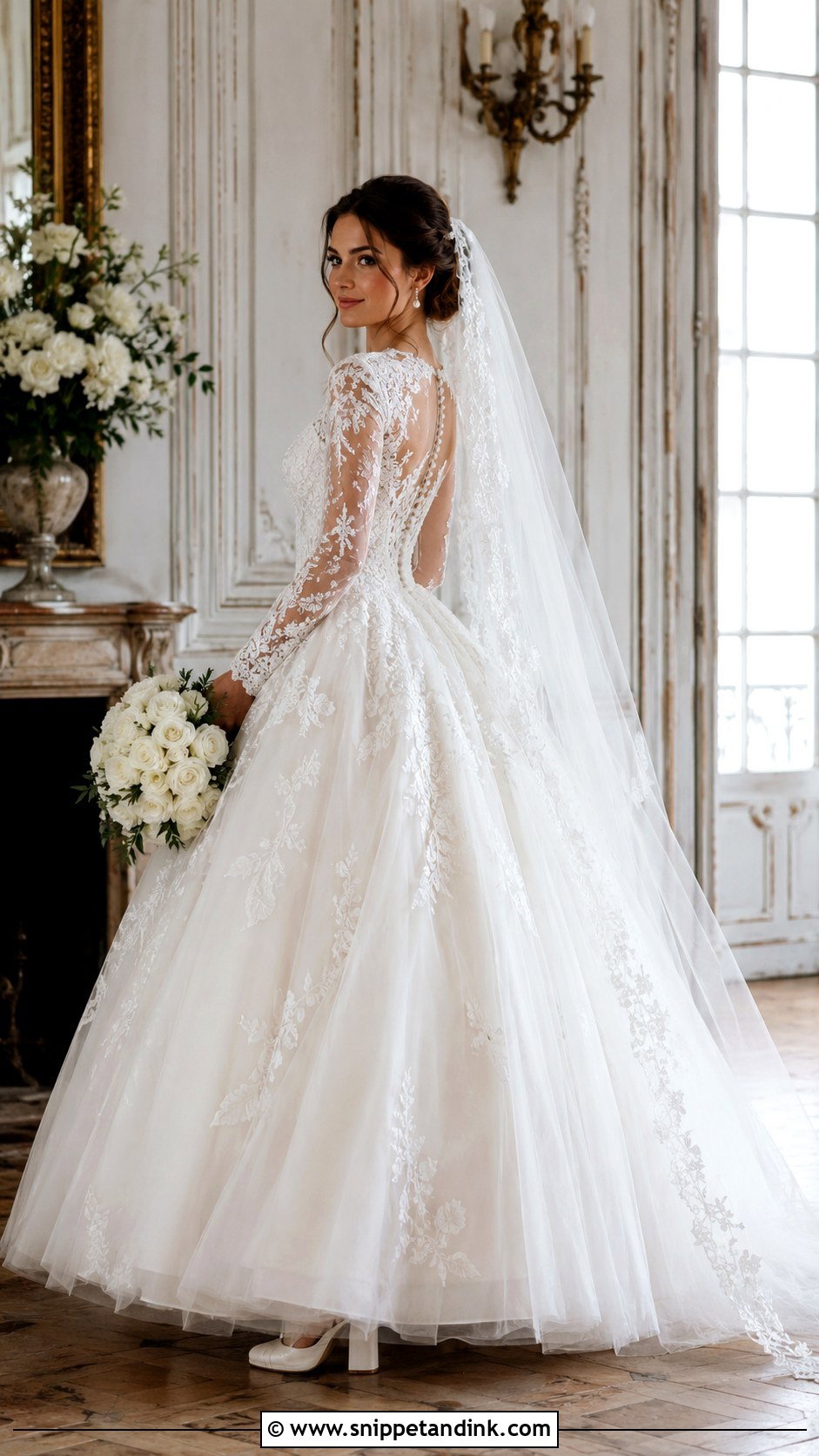
A long sleeve Cinderella gown keeps you covered without feeling heavy. Sheer lace sleeves with placed appliqués, a structured lined bodice and a full tulle or organza skirt; covered buttons at the wrists and back add tradition. Pearl earrings, an embroidered veil and closed-toe block heels. A soft chignon stops the neckline from looking crowded. My test here is the armhole. A high, narrow armhole lets you lift your arms freely; a low one drags the whole bodice up when you reach. Autumn, winter and early spring ceremonies suit it.
6. Sparkling Tulle Cinderella Gown
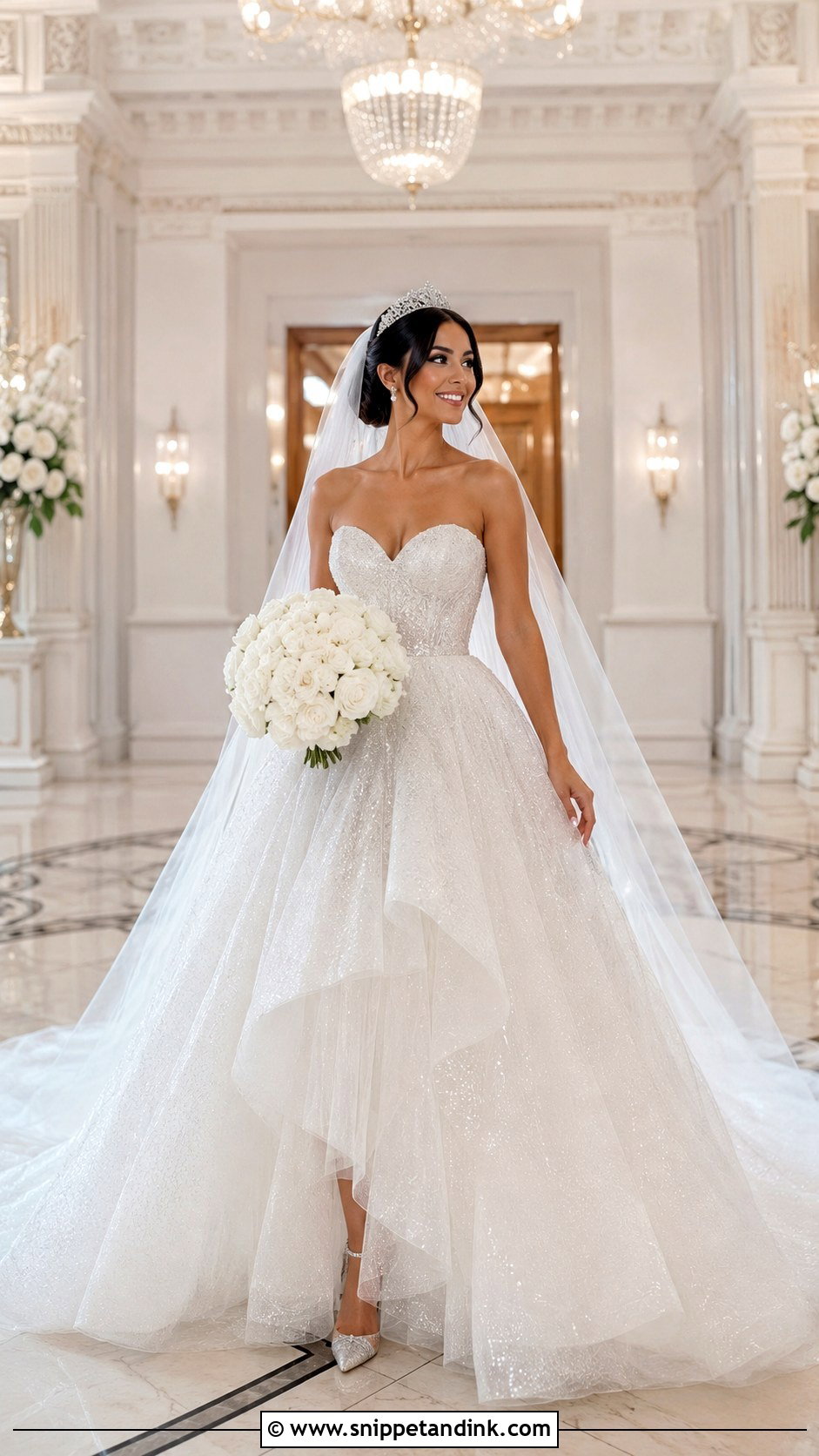
Sparkle tulle gives obvious shine and stays airy. A fitted sweetheart bodice over supportive corsetry, then a full skirt with fine glitter or scattered crystals. Pick one kind of sparkle; glitter plus sequins plus crystals looks cheap. Understated crystal studs, a narrow tiara, a plain cathedral veil and silver or ivory pointed heels. Glitter tulle can feel scratchy on bare arms when you hold the skirt, so I’d run your hand over it before buying. An all-white bouquet with very little green keeps it clean. Evening ballroom receptions suit it.
7. Floral Appliqué Cinderella Gown
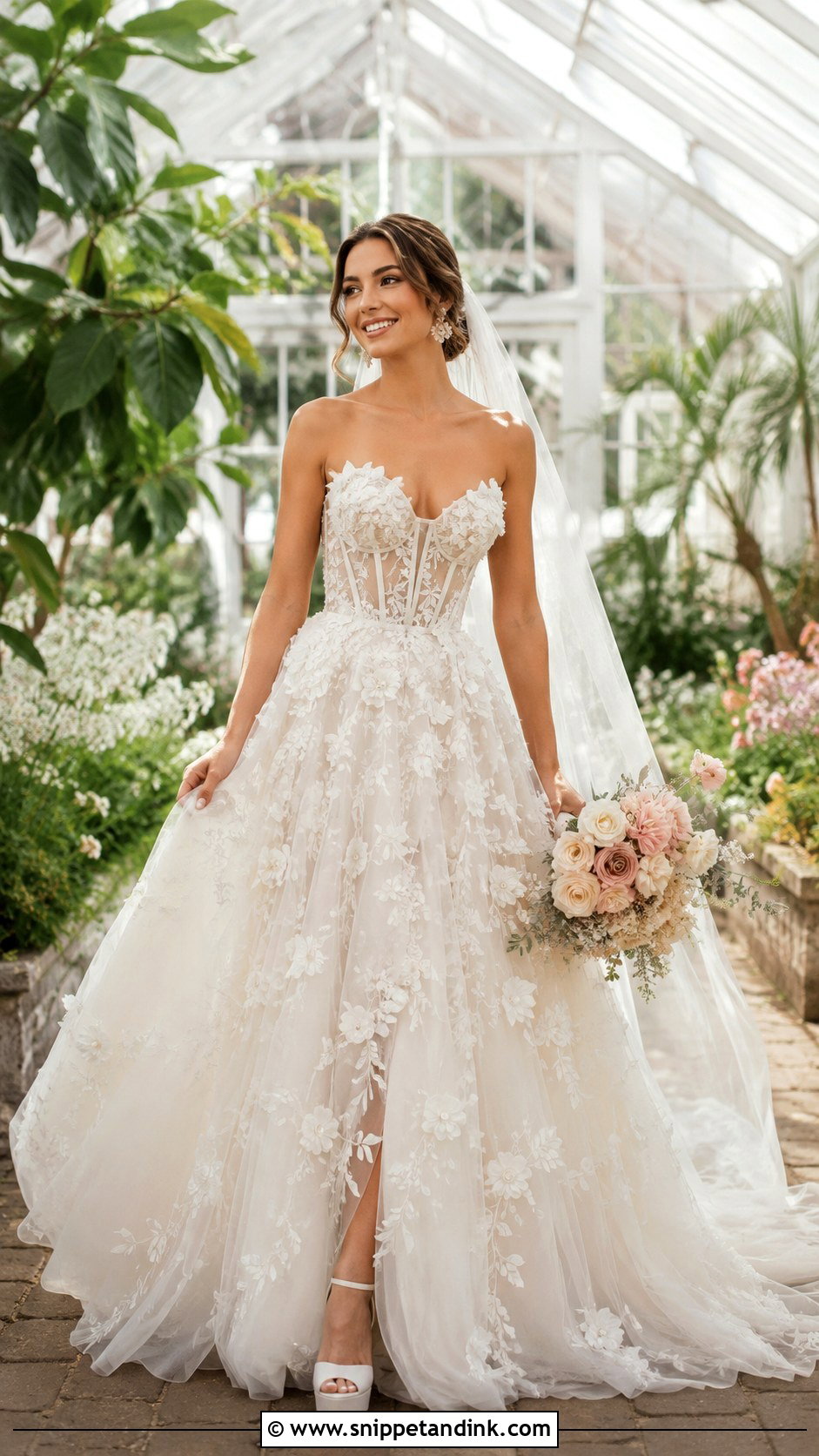
Raised flowers bring a garden into the princess shape. Appliqués scattered from the corset bodice onto a layered tulle skirt, thinning toward the hem so the gown doesn’t look busy. Flower earrings, a simple tulle veil and block or low-stiletto heels; floral pins in a loose bun. Carry a bouquet that echoes one or two of the gown’s flowers. Appliqués are usually stitched on by hand after the dress is made, which means a seamstress can move or remove a few if one sits awkwardly on the bust. Conservatories, botanical gardens and spring weddings suit it.
8. Ruffled Organza Cinderella Gown
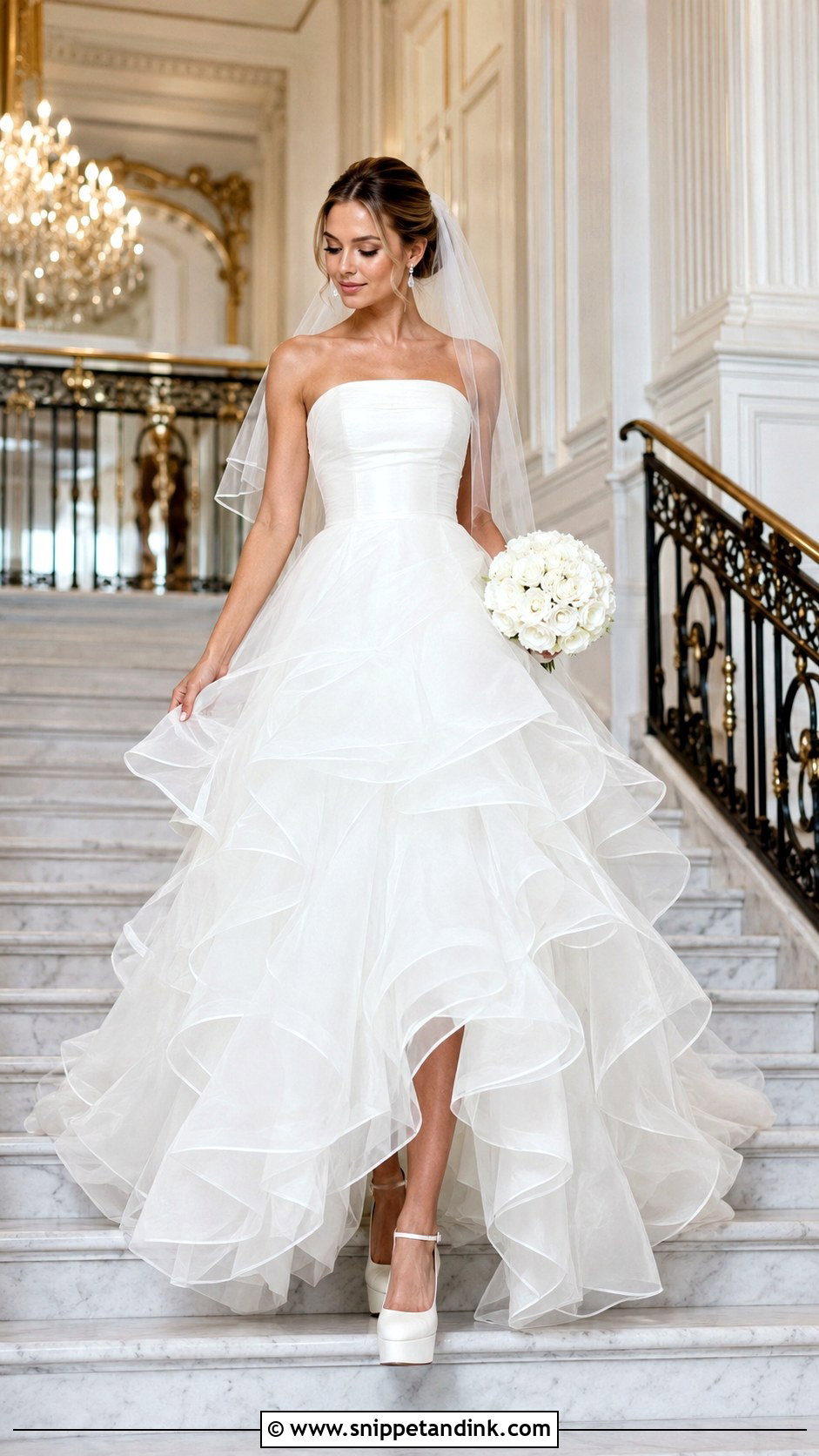
Layers of ruffled organza move with every step, which is what makes the entrance and the first dance. A fitted bodice with a clean neckline balances all that volume below. Soft, cascading ruffles look more refined than stiff, evenly stacked tiers. Sleek bun, small drops and a fingertip veil. Platform heels give height and stay hidden. Stairs are the hard part with this much skirt. I’d practise in a similar full skirt or a hooped petticoat before the wedding, lifting the front with both hands and stepping down sideways. Big ballrooms and estates suit it.
9. Pearl Beaded Cinderella Gown
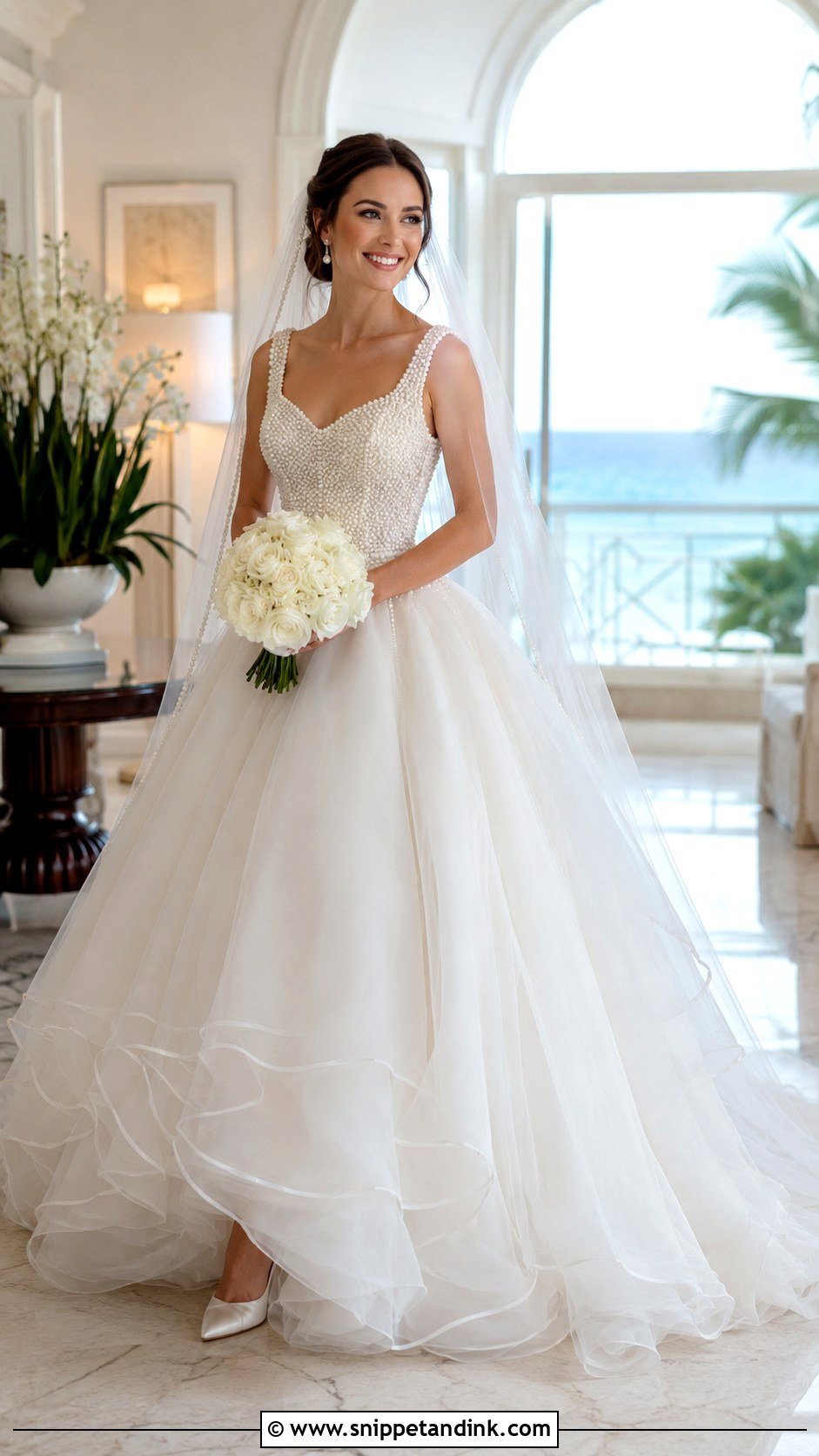
Pearl beading glows rather than glitters. Pearls clustered at the neckline and bodice, fading into a tulle or organza skirt, with a scoop, sweetheart or gentle cat-eye neckline. Pearl drops, a pearl-edged veil and satin pumps; no busy necklace. A polished low bun and white roses complete it. Pearls are heavier than crystals, so a heavily beaded bodice needs firm boning or it sags at the front by evening. Check every bead is secure and keep a needle and thread in your kit. Ballrooms and coastal hotels suit it.
10. Square Neck Cinderella Gown
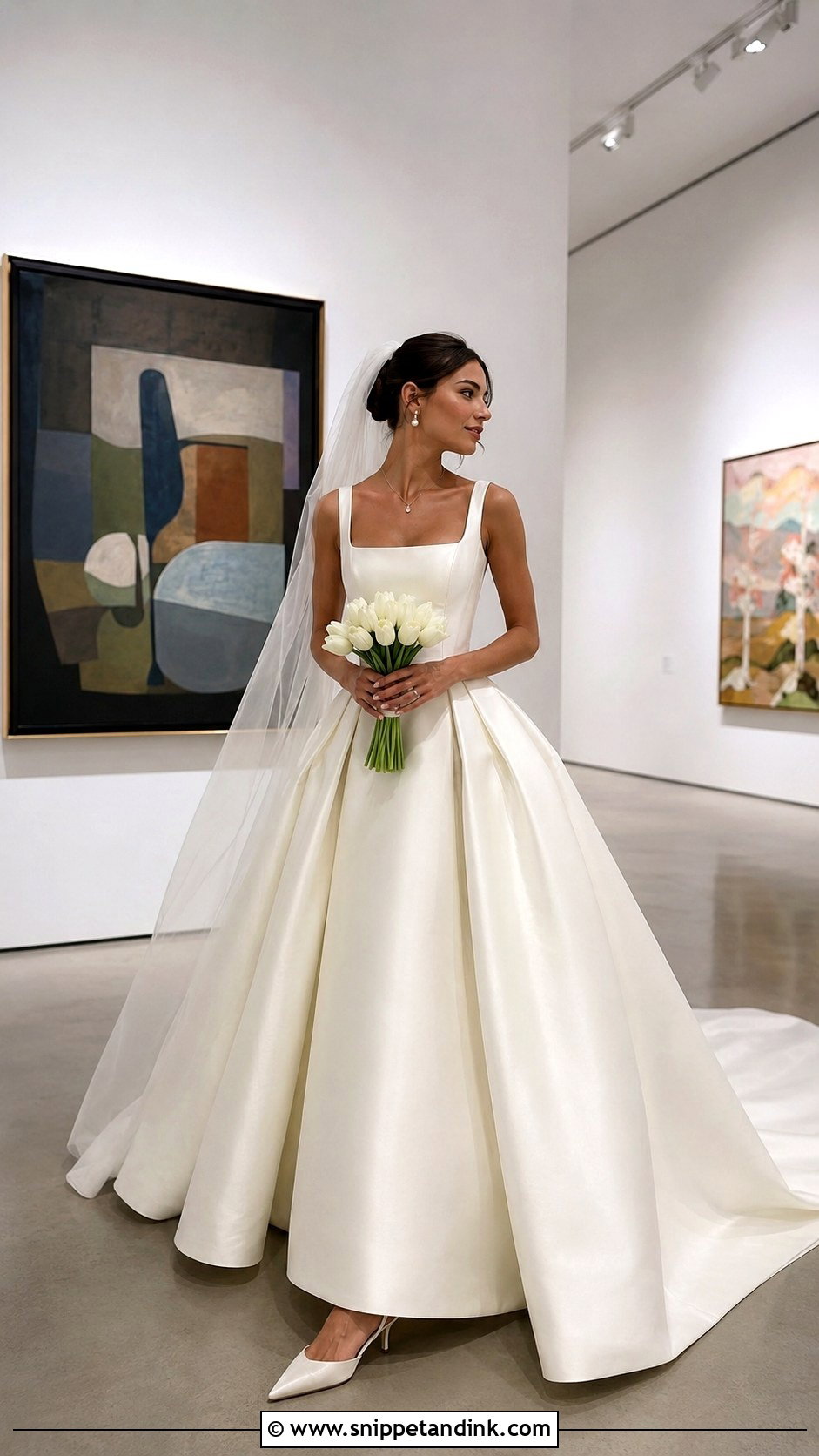
Square necklines give the ball gown a cleaner, slightly modern edge. A structured satin or Mikado bodice with wide straps and defined seams, over a full skirt with controlled pleats. The neckline frames the collarbone and supports better than strapless. A fine pendant, small pearl earrings, a smooth cathedral veil and pointed slingbacks; white tulips or callas follow the clean lines. Alterations on this neckline need precision: the straps and the top edge must lie flat from every angle. I check from the side in a mirror, which is where gaping shows first. Museums, modern hotels and minimalist ballrooms suit it.
11. Sweetheart Tulle Cinderella Gown
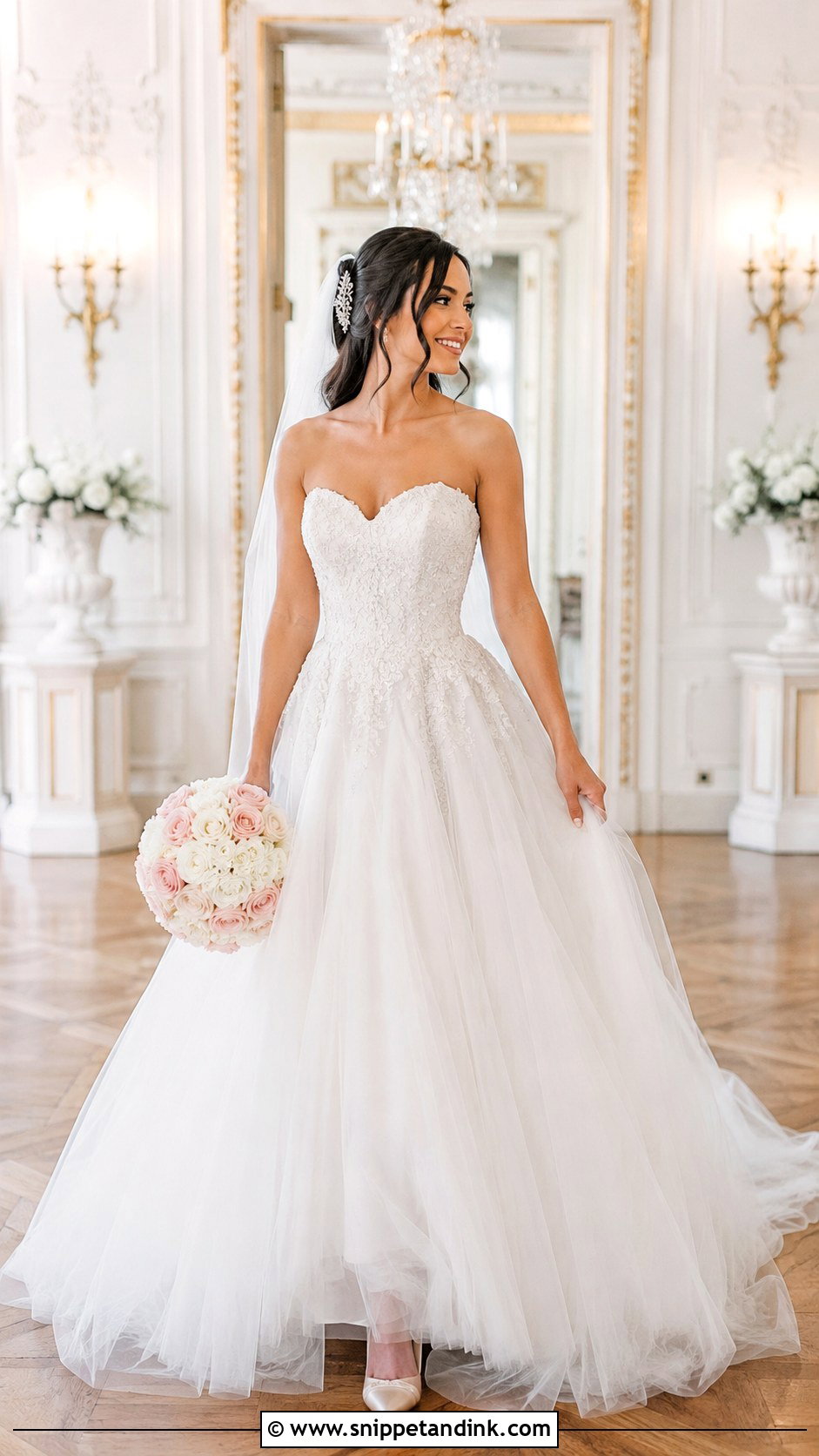
Sweetheart necklines and tulle skirts belong together. Internal boning, a defined waist and several soft layers that move without stiffness; light draping or embroidery on the bodice adds interest. A crystal comb, a loose low bun, drop earrings and a chapel veil. Pointed pumps or embellished flats, depending on how much height you want. It suits a lot of bodies and venues. I check the neckline with the bride sitting and leaning forward to sign the register, because that’s the moment a sweetheart gapes if the support is wrong.
12. High Neck Lace Cinderella Gown
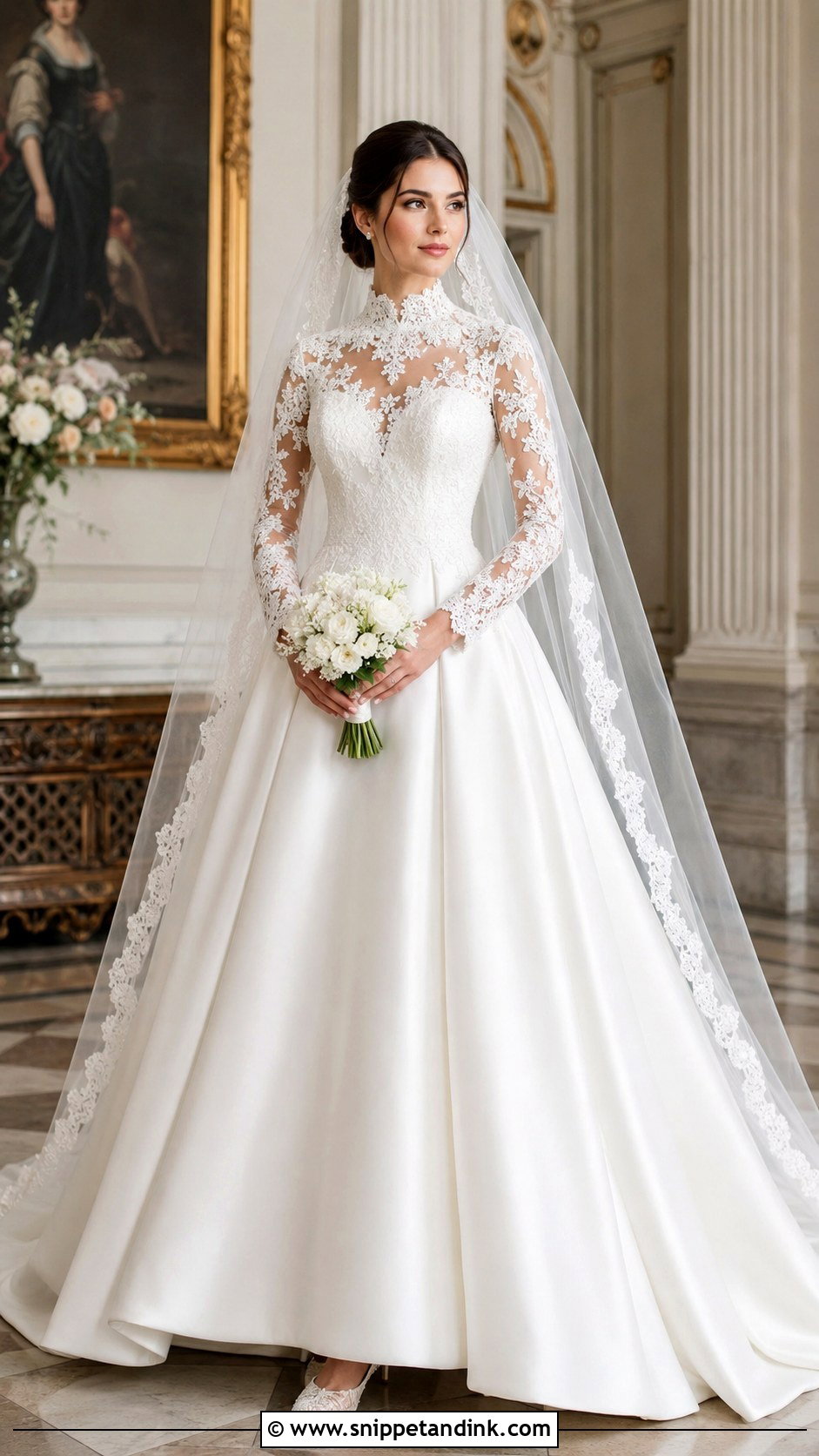
A high lace neckline reads regal and modest at once. An illusion bodice with appliqués over supportive lining, balanced by a smooth satin or soft tulle skirt; sleeveless works in warm months, long sleeves in cool ones. Pearl studs or slim drops instead of a necklace. A neat bun, lace-edged veil and closed-toe ivory pumps. Lace at the throat can itch, especially if it’s a stiffer re-embroidered lace with cord. I rub it against the inside of the wrist before buying; if it scratches there, it’ll scratch your neck all day. Historic venues and formal halls suit it.
13. Detachable Overskirt Cinderella Gown
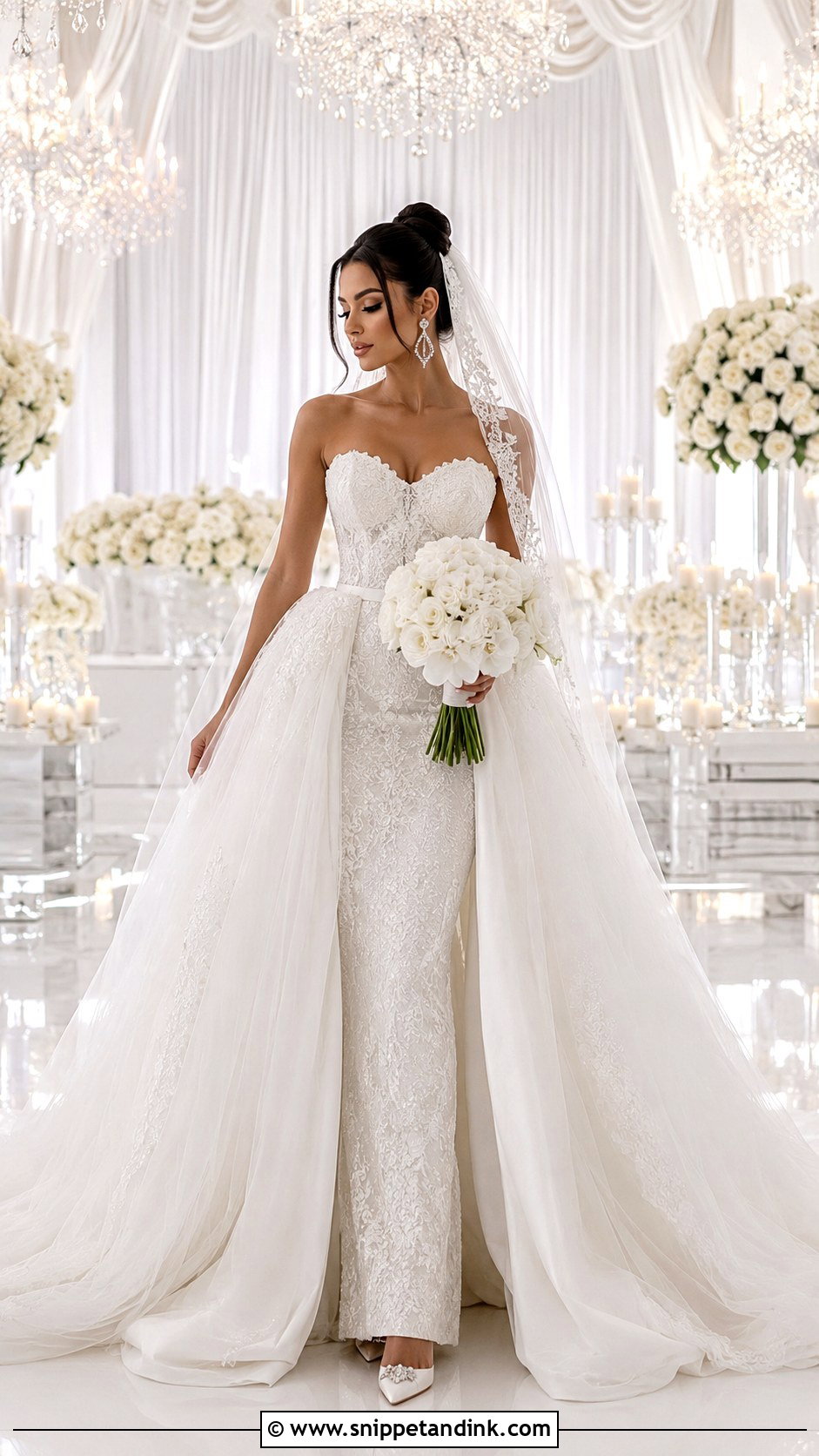
A detachable overskirt gives you a dramatic Cinderella ceremony look and a lighter reception outfit from one design. Start with a fitted A-line or column gown, then add a full tulle, organza or satin overskirt at the waist, finished cleanly front, sides and back. Cathedral veil, crystal earrings and pointed heels for the ceremony; a jewelled comb afterwards. The underdress has to look finished on its own, so check its waist seam and hem with the overskirt off. Practise removing it at the final fitting and pick a helper.
14. Bow Back Cinderella Gown
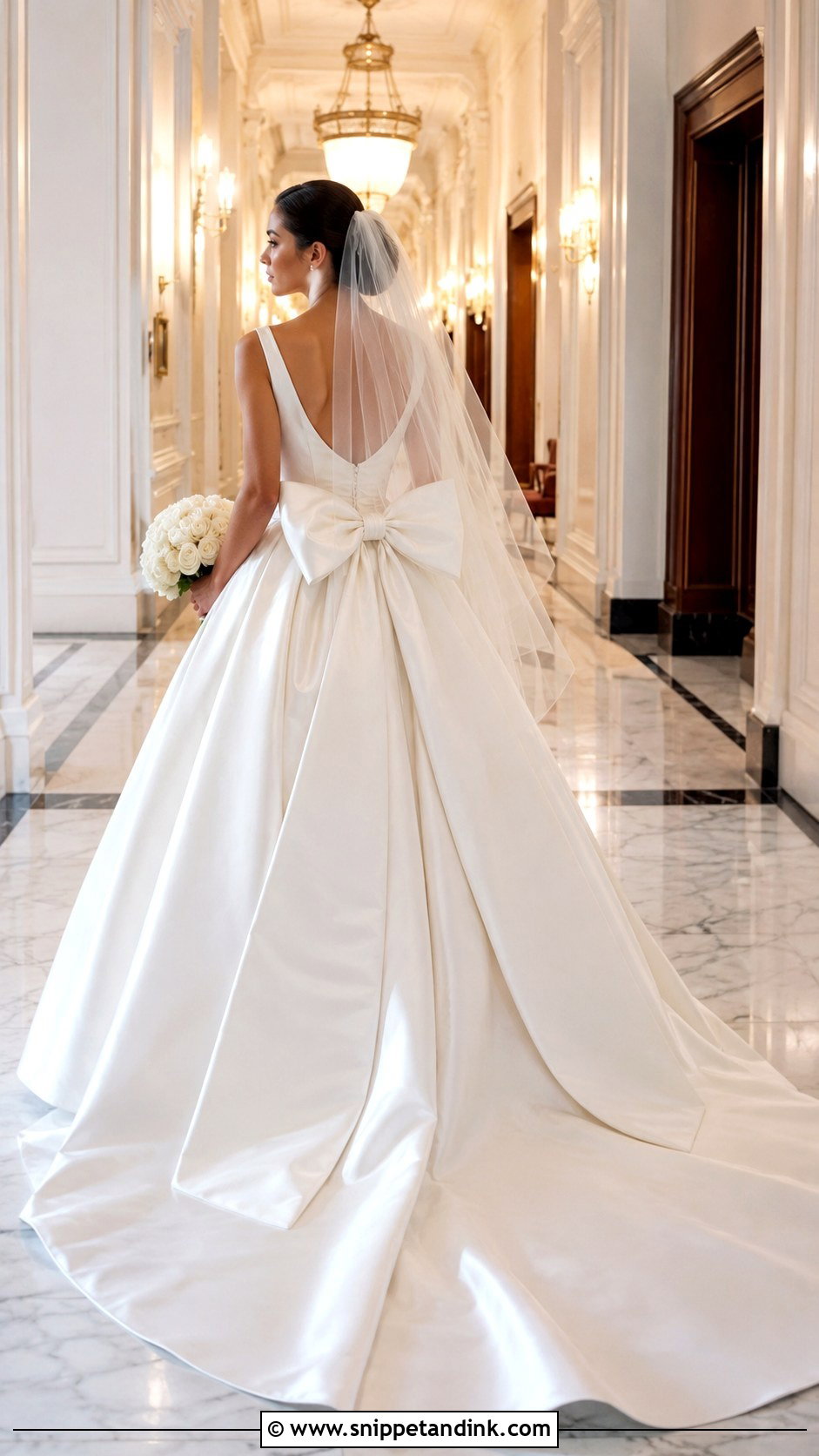
The back bow gives a focal point without cluttering the front. A satin ball gown with a fitted bodice, a clean neckline and an oversized detachable bow at the waist or upper train. Structured loops look formal; long tails move more softly. Pearl earrings, a sleek updo and a plain veil placed above the bow. Ivory pumps and a compact rose bouquet. A large bow on the train gets sat on and crushed during dinner, so I like one that unhooks before the meal. It’s the detail guests remember from the aisle, so position matters: try it high and low with the veil on.
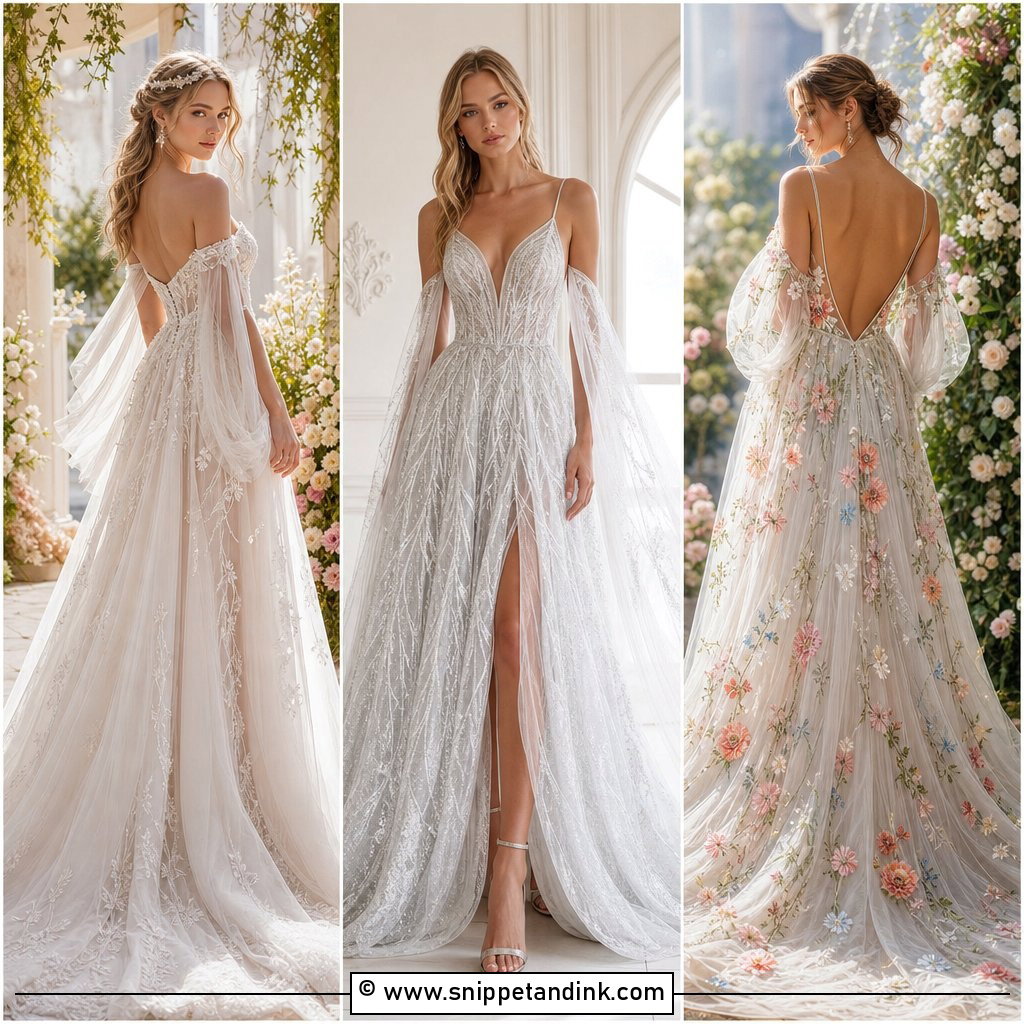
15. Chapel Train Cinderella Gown
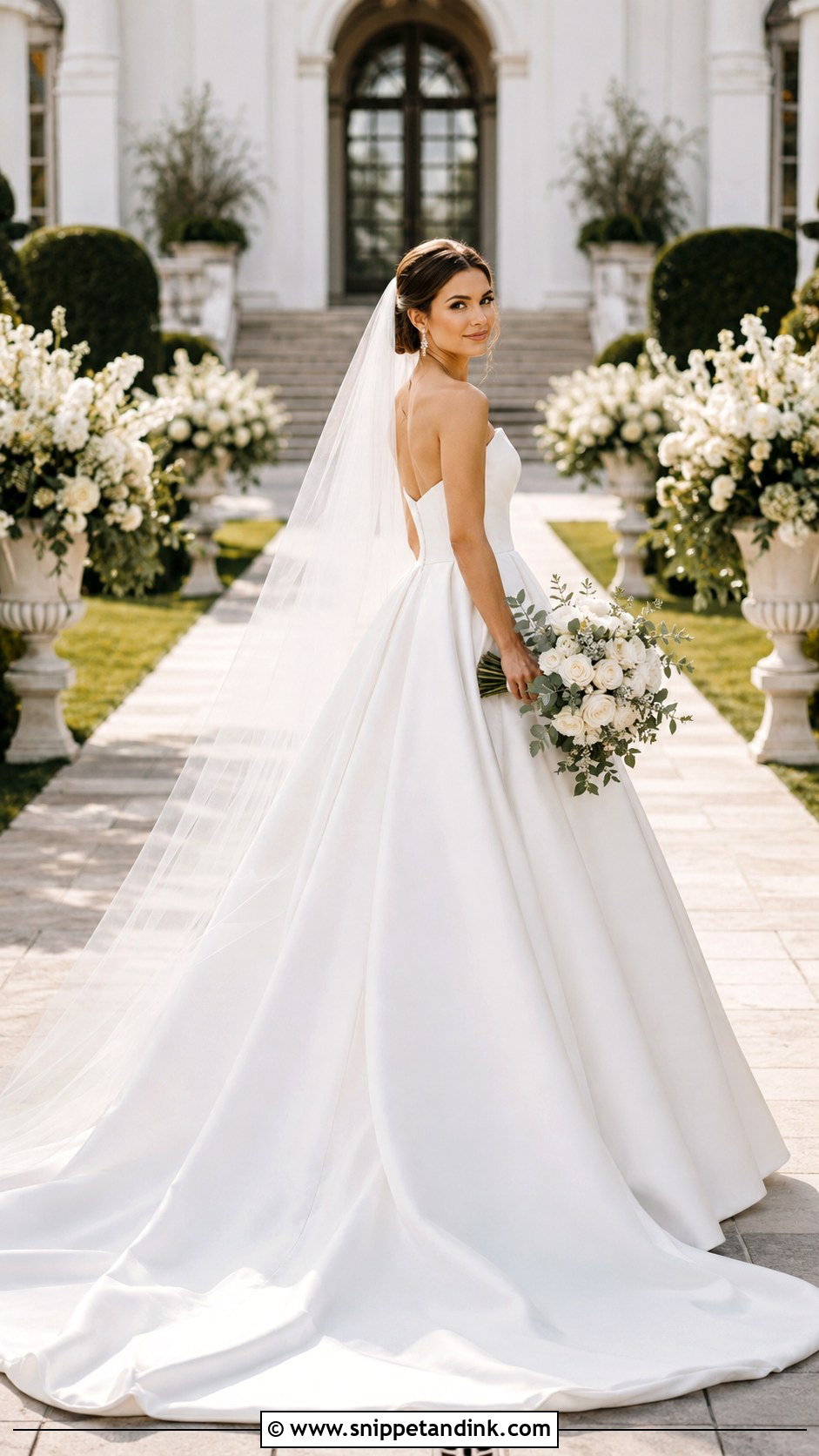
A chapel train gives a proper entrance without the work of a cathedral length. A supportive bodice and full skirt flowing into the train without heavy layers; satin looks sculptural, tulle and organza softer. A fingertip or chapel veil, crystal earrings, stable low heels and a medium bouquet in proportion to the skirt. A chapel train usually needs only one or two bustle points, so it’s quick to lift. Still, show someone how to do it before the reception. Traditional aisles and estate weddings suit it.
16. Cathedral Train Cinderella Gown
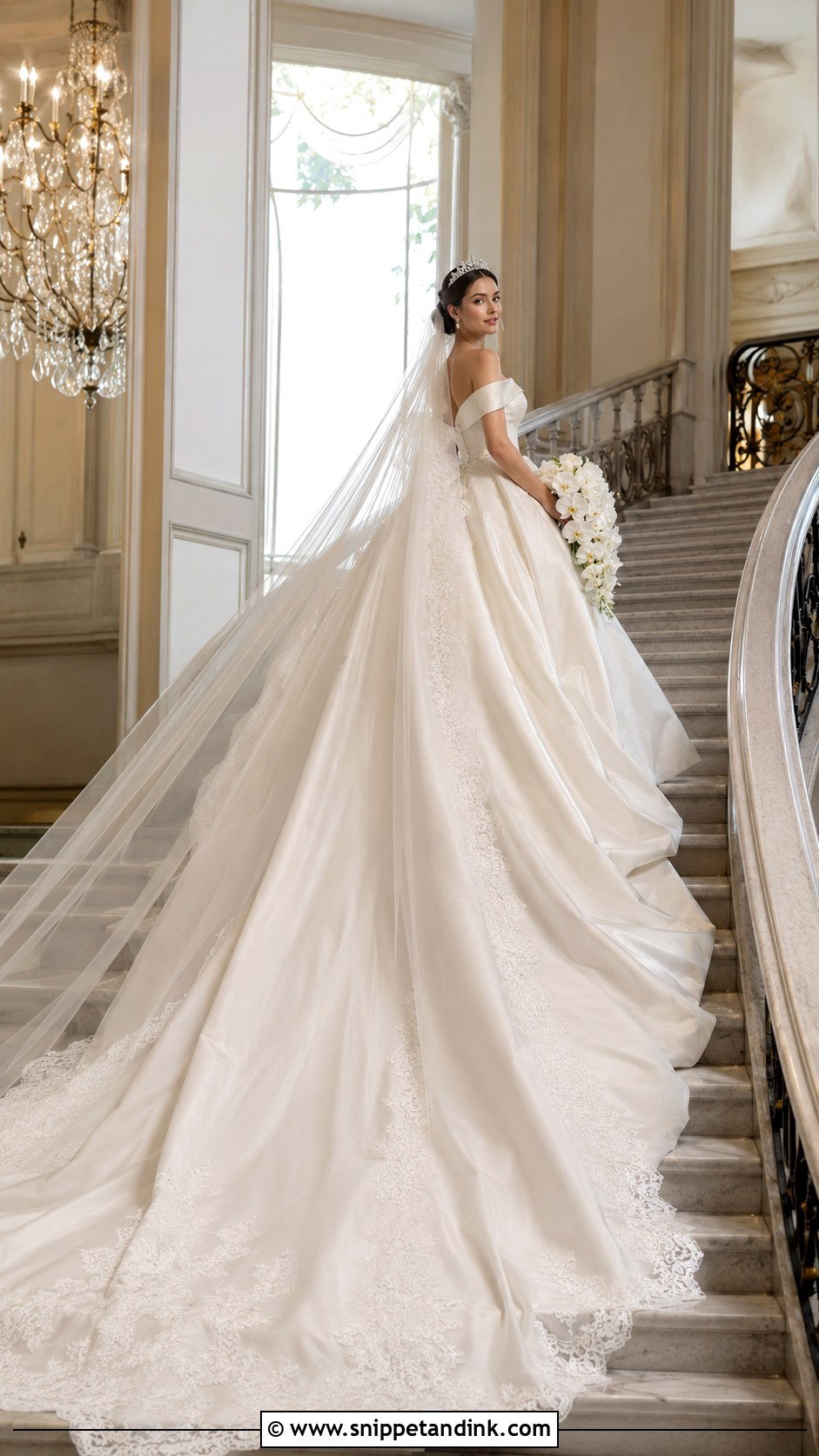
A cathedral train turns the ball gown into full ceremony drama. Look for a train that extends smoothly behind you rather than bunching into heavy folds, with lace edging, appliqués or light beading defining it in wide shots. A cathedral veil, a delicate tiara, drop earrings and cushioned heels; a streamlined bouquet keeps attention on the gown. Measure the aisle and the space at the altar before you commit. A cathedral train needs a strong, multi-point bustle and a helper to spread it out before the processional and portraits.
17. Blush Pink Cinderella Gown
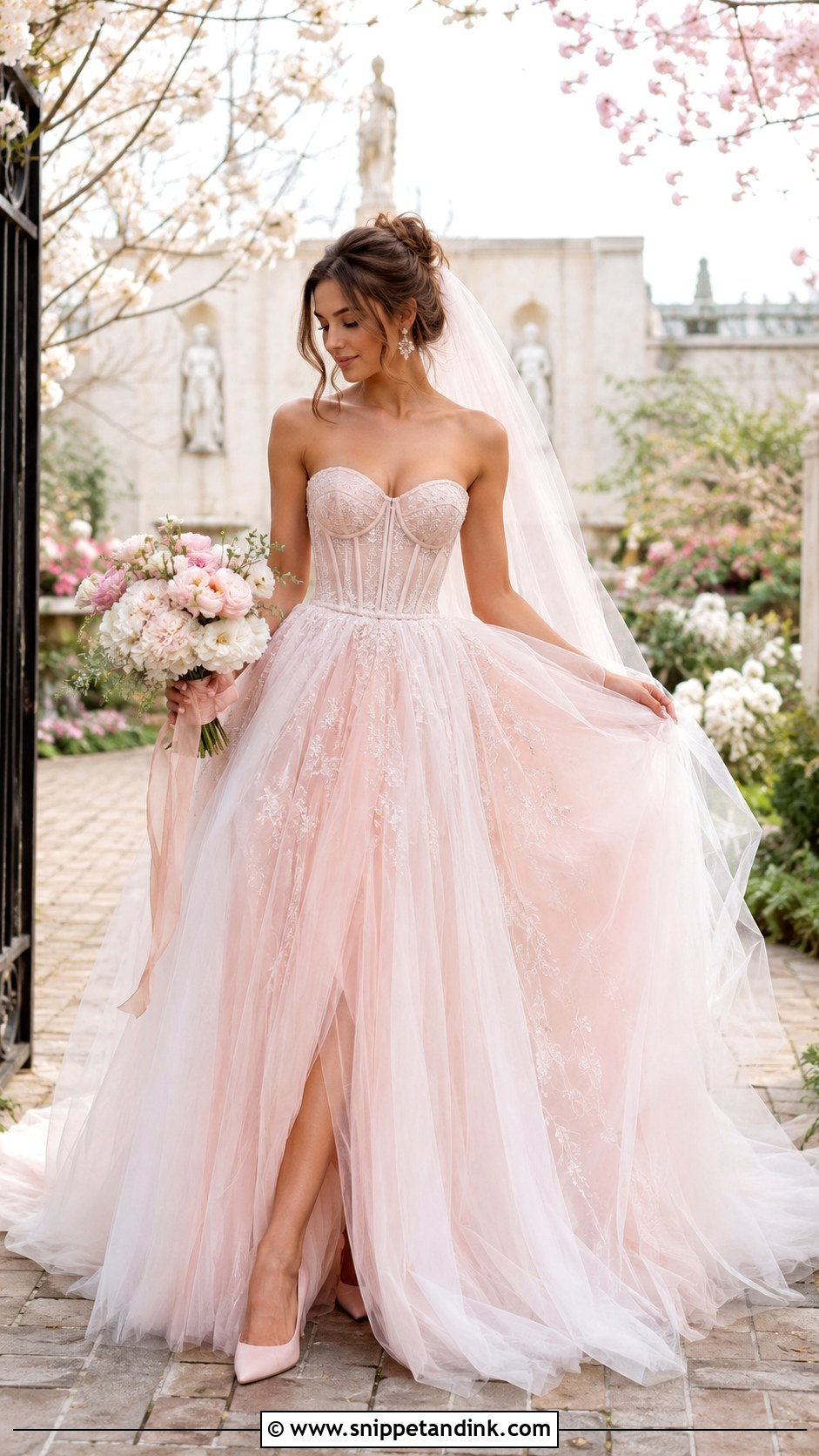
Blush is the gentlest step away from ivory. A pale pink underlayer under ivory tulle, lace or organza gives depth while staying delicate, with a corset bodice and full skirt keeping the Cinderella shape. Rose gold earrings, blush pumps and an ivory veil with minimal edging; flowers in ivory, pale pink and muted green. Blush either flatters or fights your skin depending on undertone. Peachy blush suits warm skin; cooler, slightly lilac pinks suit cool skin. I compare them in natural light and venue light. Spring gardens and estates suit it.
18. Silver Shimmer Cinderella Gown
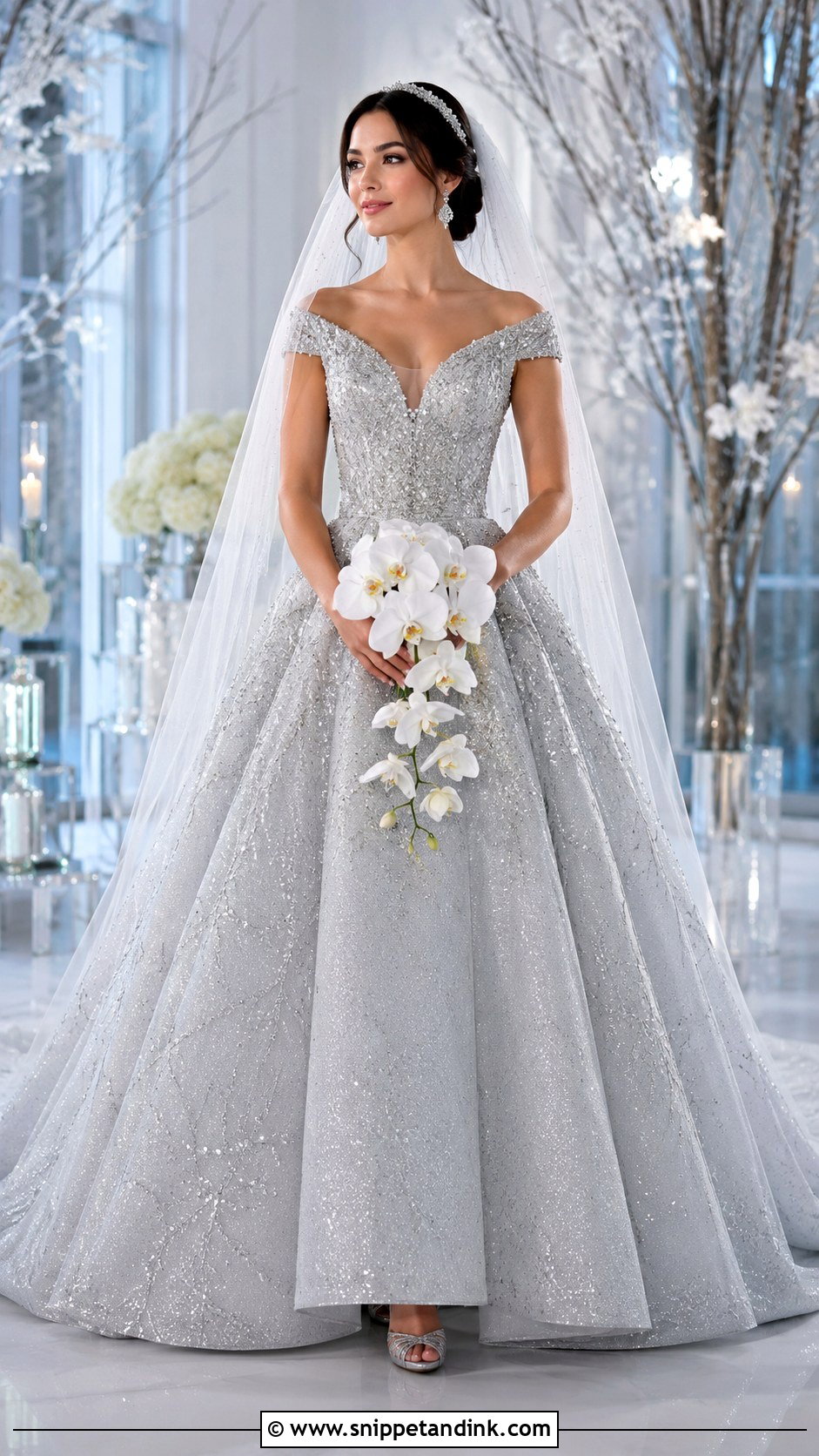
Silver shimmer gives a cooler, modern take on Cinderella’s enchanting bridal look. An ivory or pale grey base covered in fine silver thread, sequins or crystals, with a traditional defined waist, structured bodice and generous skirt. Silver drops, a slim crystal headband and metallic heels; a soft grey or ivory veil keeps the reflection in check. White orchids or roses with silver-green foliage. Ask the salon to photograph you in it with a flash. Highly reflective fabric can blow out to white patches on camera. Winter weddings and evening ceremonies suit it.
19. Plus Size Corset Cinderella Gown
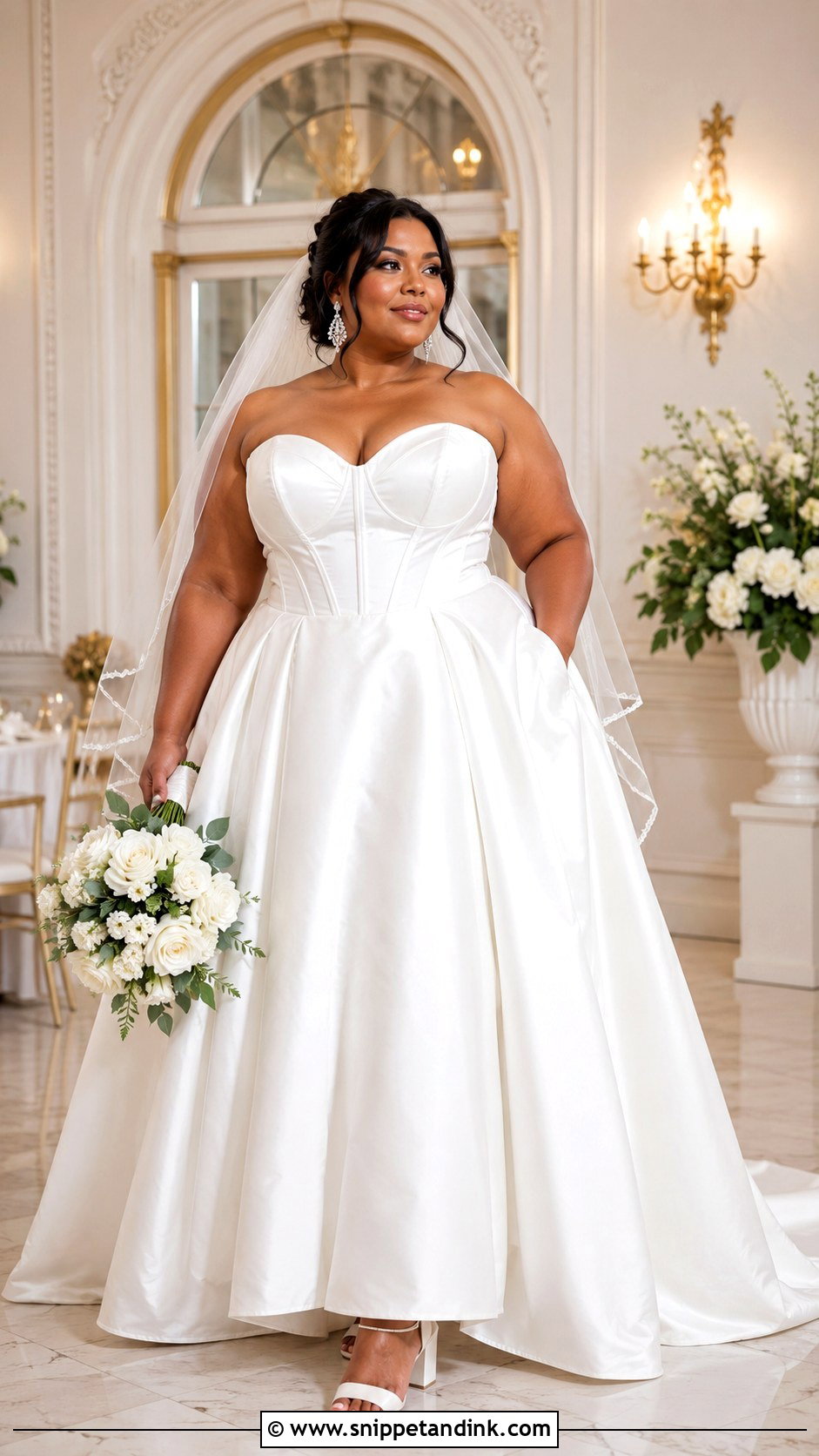
Good corsetry supports and shapes across every size range. Look for structured boning, built-in cups, wider back panels and a full skirt falling smoothly from the waist. A lace-up back adjusts; a hidden zip gives a cleaner line. Supportive block heels, statement earrings and a light veil. An updo draws the eye upward without hiding the neckline. Choose by fit and proportion, never by a body-type rule. In fittings, I watch where the boning ends: it should finish on the hip, not dig into the soft area just above it. Sit, walk, raise your arms and breathe deeply each time.
20. Minimalist Mikado Cinderella Gown
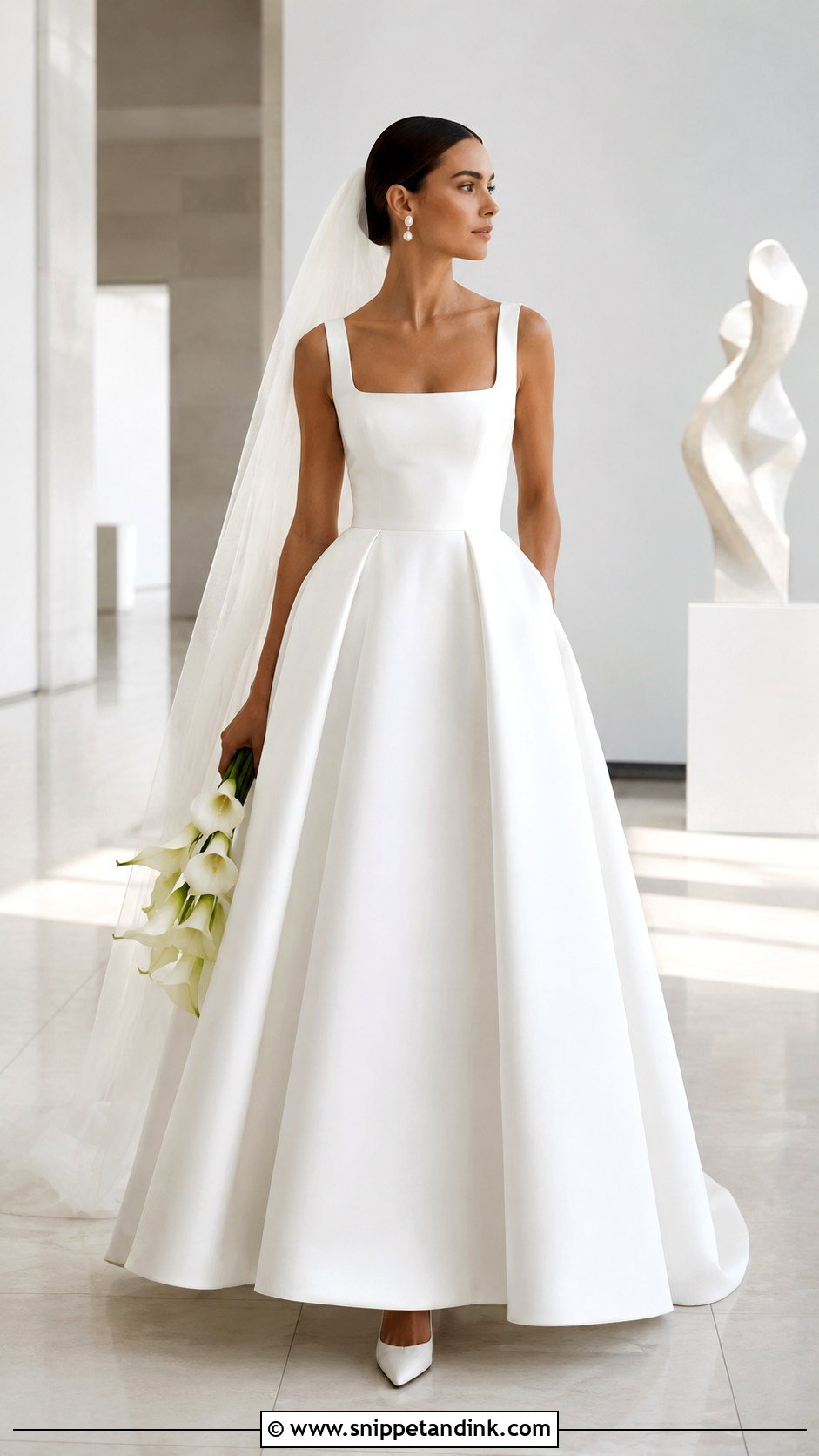
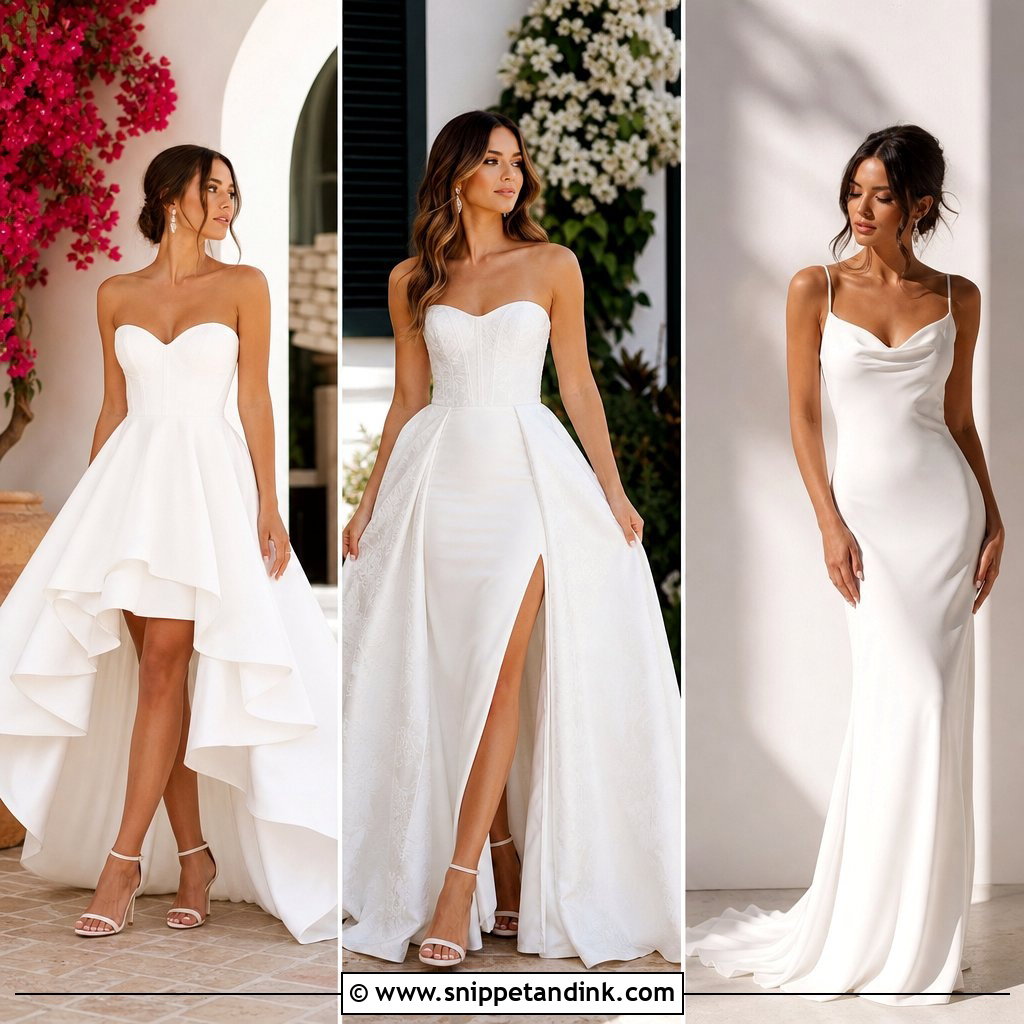
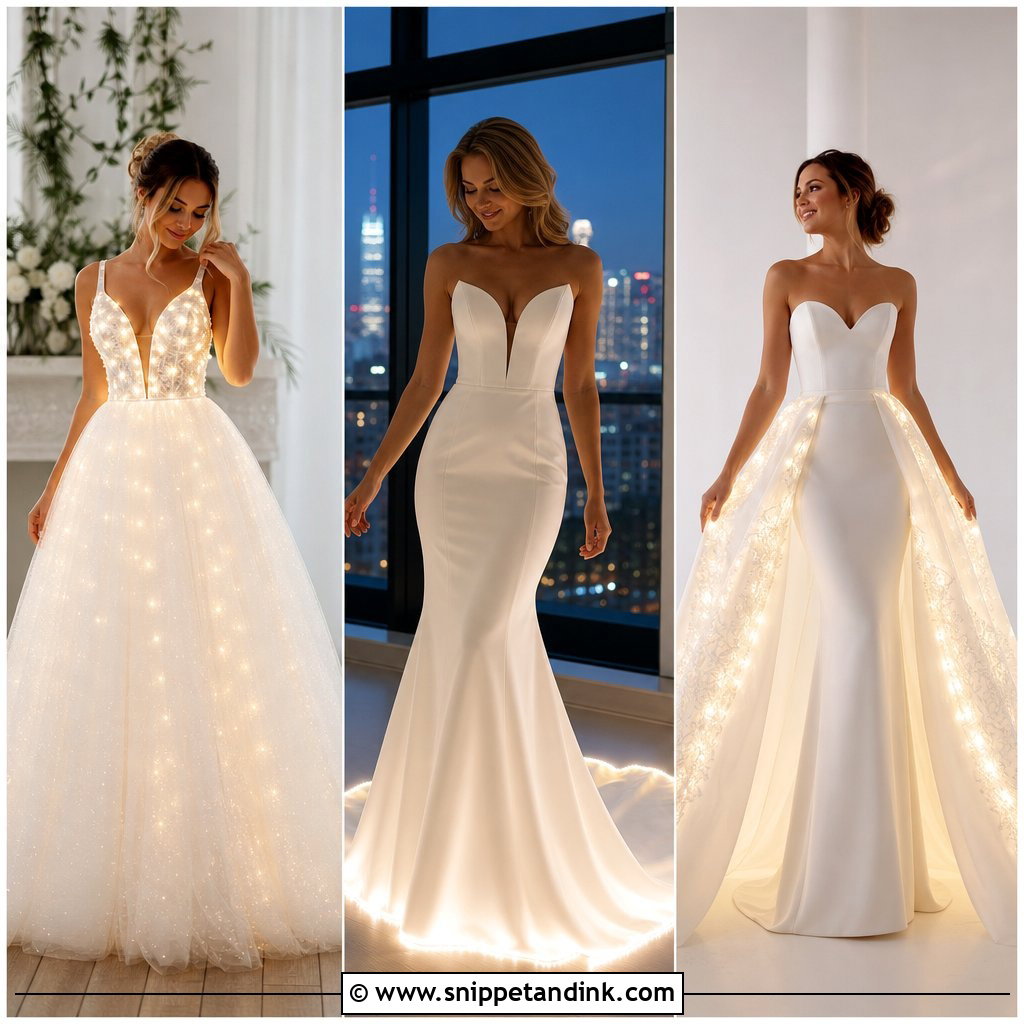
Mikado is a heavy, slightly crisp silk or silk-blend that holds sculptural pleats on its own, and that’s what makes this version architectural. A smooth structured bodice, a defined waist and a full skirt shaped by wide pleats, not decoration. Strapless, scoop or square neckline. Sculptural pearl earrings, a sleek bun, pointed satin pumps and a plain cathedral veil; white callas or tulips. Pockets fit neatly into the pleats. With nothing to hide behind, every seam shows. I spend extra fitting time on minimalist gowns for exactly that reason. Modern hotels and museums suit it.
A Realistic Timeline From First Appointment to Final Fitting
Ball gowns are usually made to order, and adding sleeves, a bow or an overskirt adds time. This is the schedule I give brides, though every salon and designer varies, so confirm with yours.
- Ten to twelve months out: start trying on shapes, even if you don’t buy yet.
- About eight to nine months out: order, because many gowns take four to six months to arrive.
- Three months out: first fitting, with your actual shoes and underwear.
- Six to eight weeks out: second fitting and any added details, such as a bow or detachable sleeves.
- Two weeks out: final fitting, bustle lesson for your helper, and a practice removal of anything detachable.
If you have less time, look at sample gowns or ready-to-wear ball gowns, and pick a fabric that’s easy to alter. Tulle is far more forgiving than structured satin when a seamstress is short on time.
Does the Gown Survive the First Dance?
A Cinderella gown works when the drama and the comfort are planned together. A full skirt, a supportive bodice, fabric with presence and a few chosen accessories create the effect, but each part should also fit your venue and your schedule. Try different necklines, waist placements, colours and train lengths before deciding, and walk, sit, turn and dance at every fitting. If you’d like to keep browsing, there are more Cinderella Gown Wedding Ideas in powder blue tulle, sparkle, Mikado and lace. Go with the one you forget you’re wearing by the second hour.
You'll Like These Ideas:




Leave a Reply