
Most of the brides I dress for a second look aren’t trying to top their gown. They want to sit down at dinner without a crinoline, lift their arms on the dance floor and stop worrying about a train on wet grass. A good change still reads as bridal from across the room, which usually comes down to colour, one finished detail and shoes that suit the new hemline. Below are the shapes I reach for most, from pearl minis and bias-cut slips to suits, jumpsuits and detachable overskirts, with notes on who each one suits and where it tends to go wrong. Think of it as the outfit for cake cutting, the first dance or the late-night celebration, not a replacement for the dress you walked down the aisle in.

How Long the Change Really Takes and Who Should Help
Brides usually budget ten minutes and need closer to thirty. Getting out of a ceremony gown means bustle loops, a corset back or a long row of buttons, and someone has to undo them carefully. Then the new outfit, the shoe swap, a hair adjustment and a makeup blot. I build it into the timeline as its own slot, usually between dinner and the first dance or straight after the speeches.
- Pick one helper, not three. A calm friend or your stylist who has practised the fastenings beats a room full of excited bridesmaids.
- Book a private room near the dance floor with a full-length mirror, a chair and decent light.
- Lay the second look out in the order you’ll put it on, with shoes, earrings and any tape or clips on a tray.
- Bring a garment bag and padded hanger for the gown so it doesn’t end up over a chair.
If hair is changing too, plan five extra minutes. Taking pins out of a veil-ready updo and shaking it into waves is quick; building a new sleek ponytail from curled hair is not.
1. Bride Pearl Mini Dress Second Look
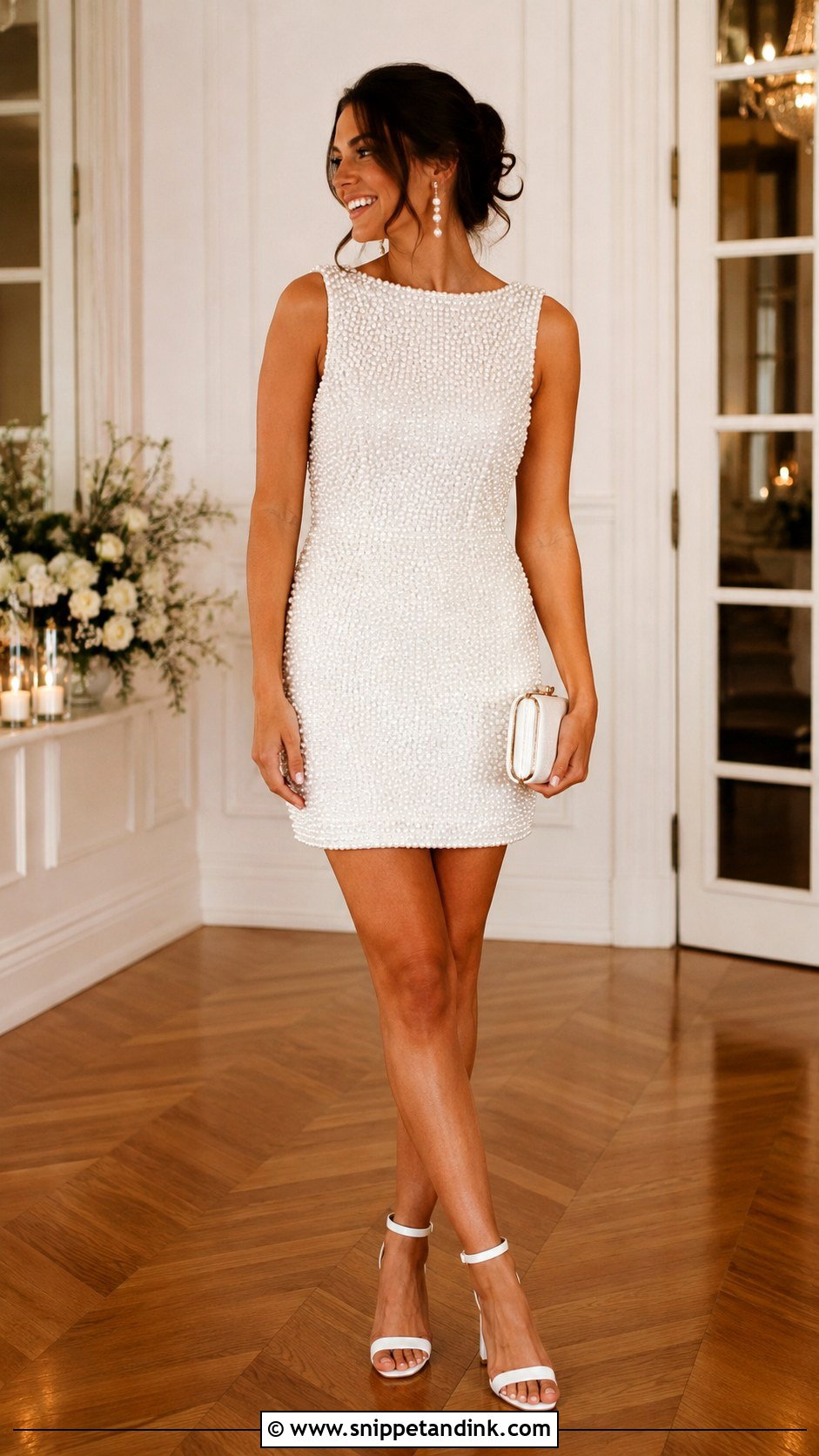
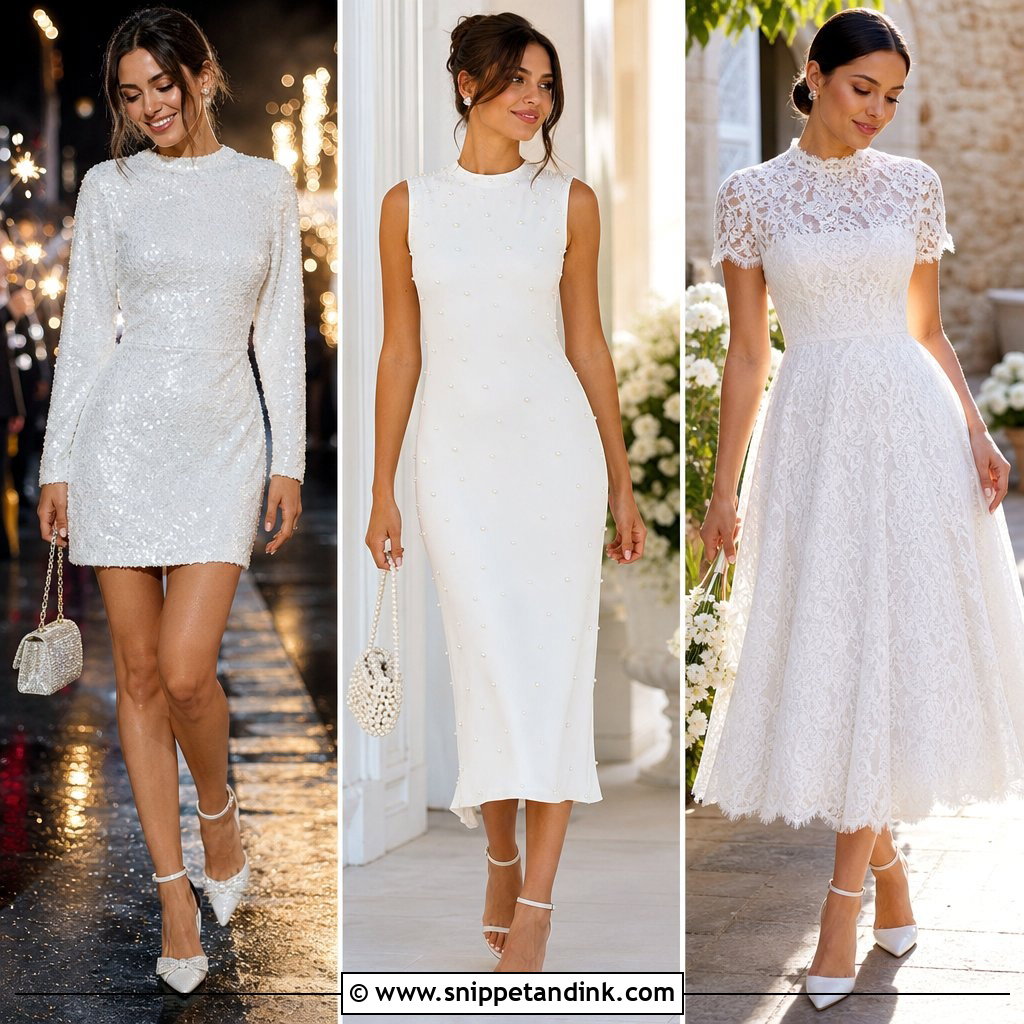
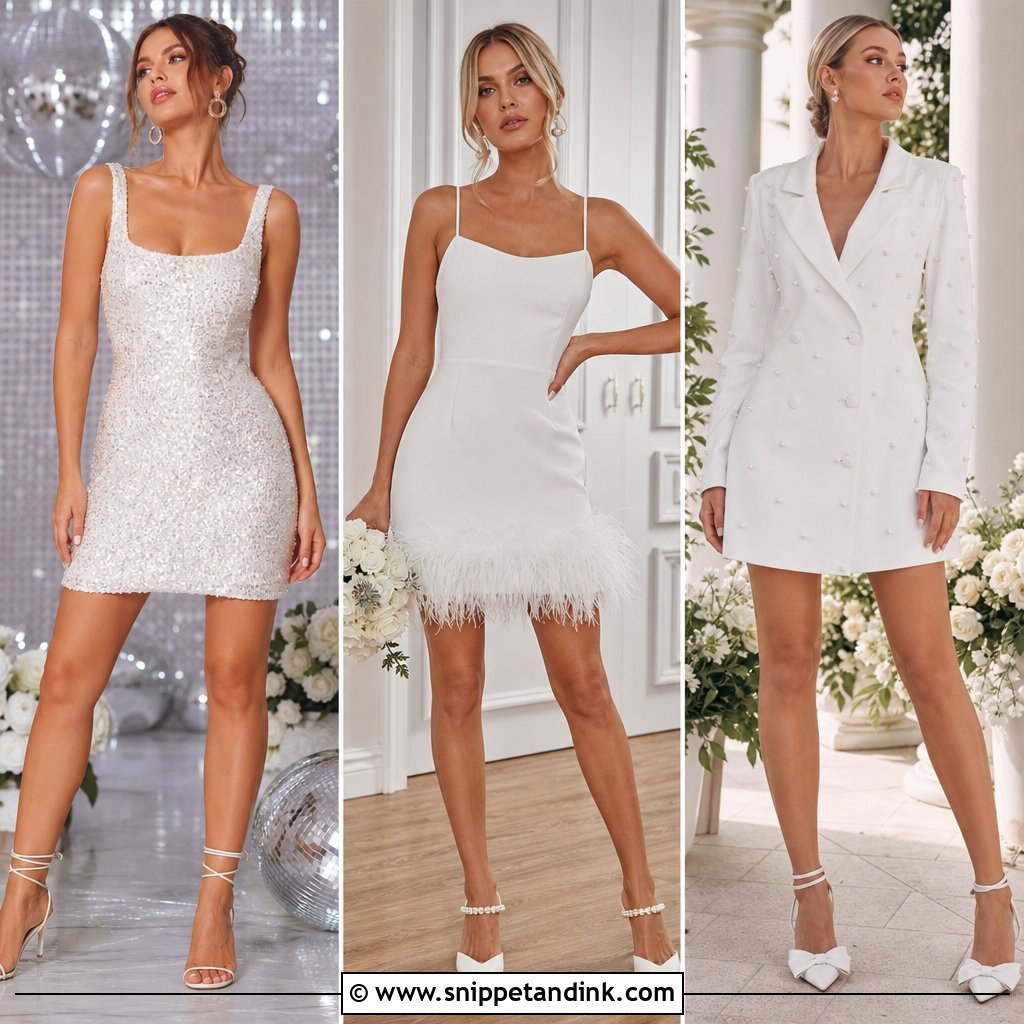
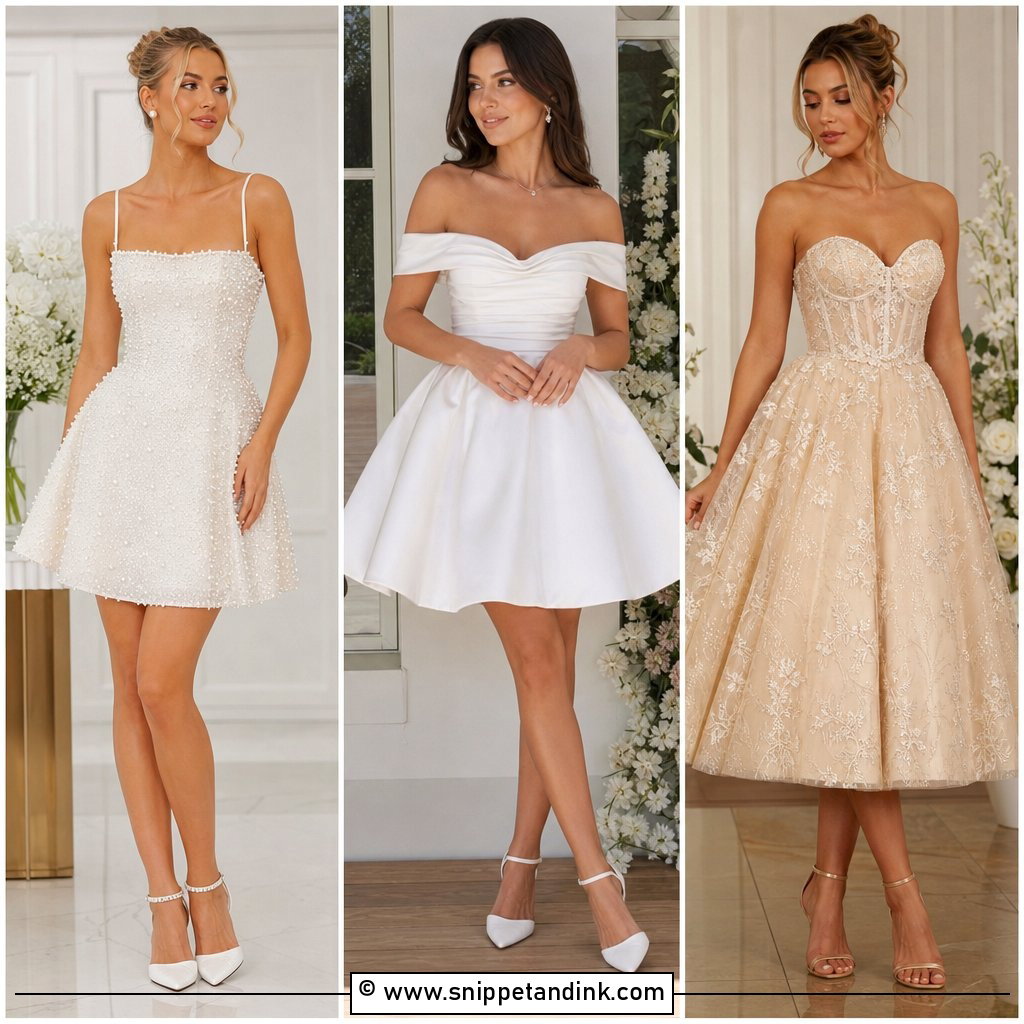
Pearls are heavy. A mini covered in them can weigh more than you’d expect, and the first thing I check at a fitting is whether the shoulder straps are carrying that weight or whether it’s dragging the bodice down. Look for ivory or white with a clean neckline and enough ease at the waist to sit through speeches. Satin block heels and pearl drops finish it; a small structured clutch keeps the bag from fighting the beading. With a heavily beaded version I take the veil off completely, because tulle snags on pearl clusters and you’ll spend the night unhooking it. A sleek bun or loose waves sits better against all that texture.
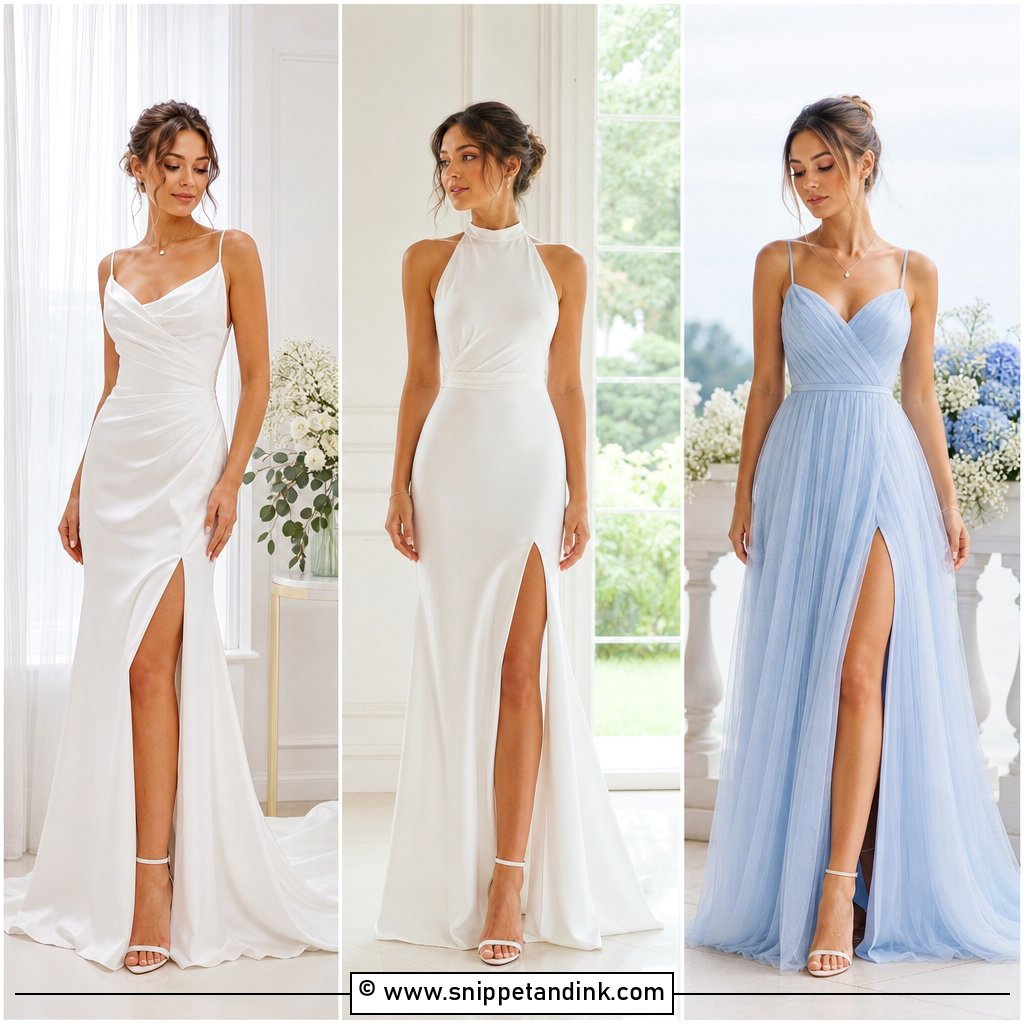
2. Bride Satin Slip Dress Second Look
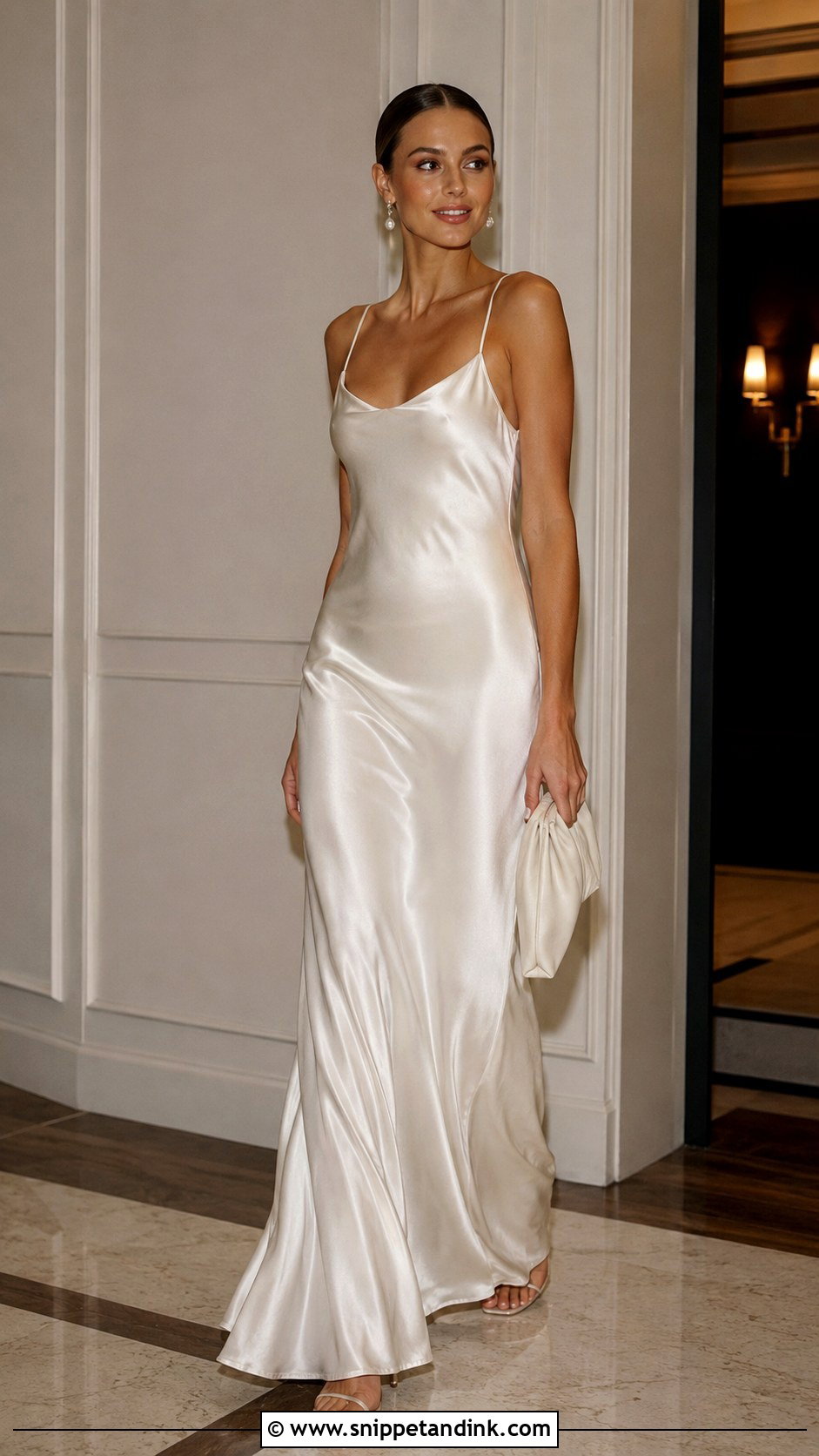
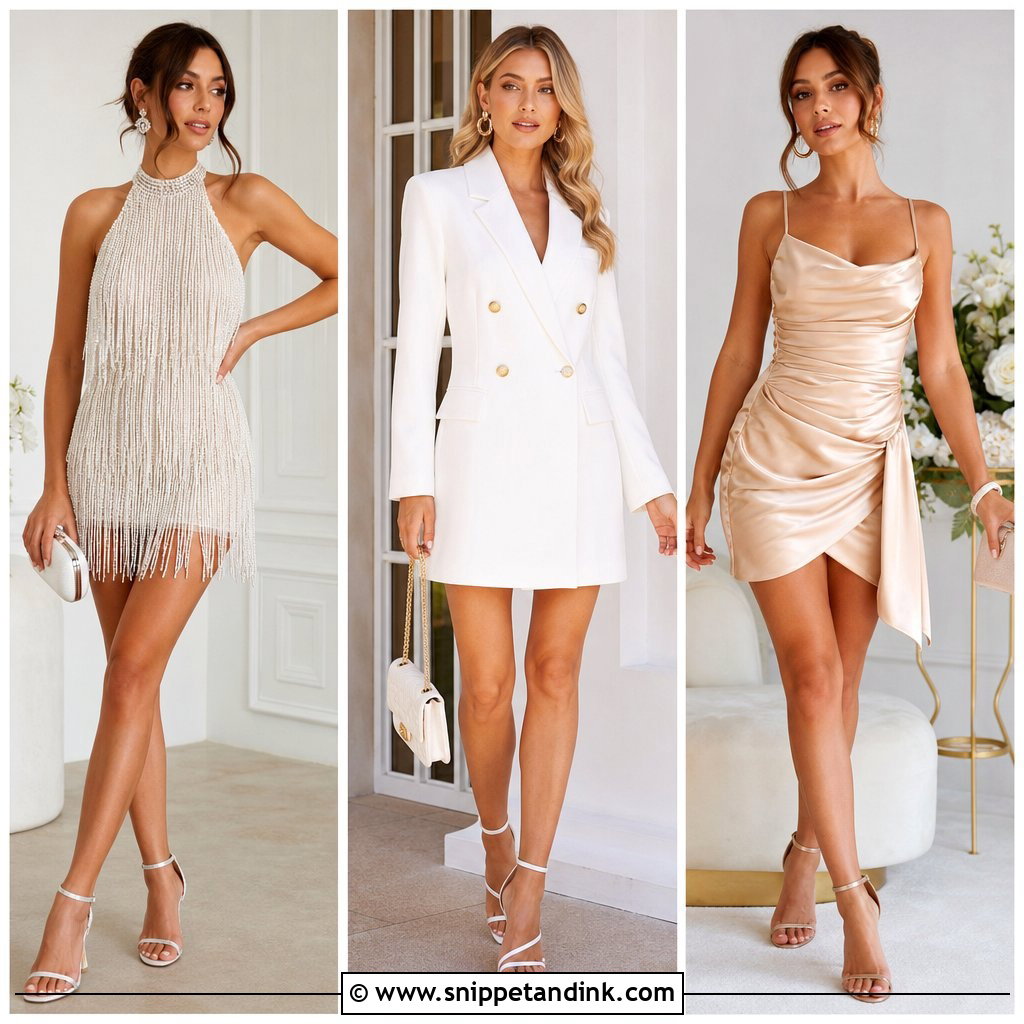
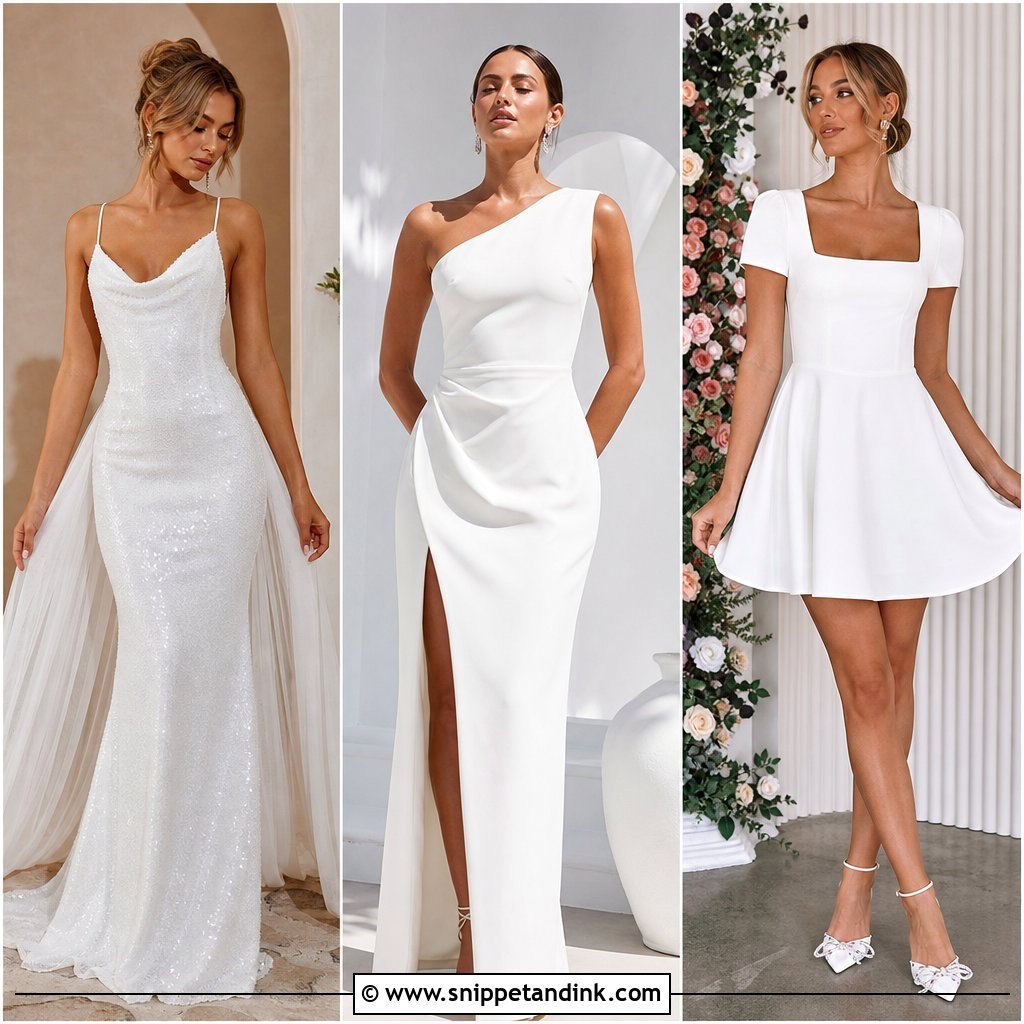
Bias-cut satin is the most forgiving fabric to move in and the least forgiving to fit. Because it’s cut on the diagonal, it clings and shows every seam underneath, so I always ask brides to bring their reception underwear to the fitting, not the bra they wore for the gown. Thin straps are classic; a cowl neck or low back moves it on. Satin also creases where you sit, so expect some lines across the lap by the time dessert arrives. If you want cover for an evening breeze, a cropped faux-fur wrap or a sheer scarf works without hiding the cut. I like this one most for hotel and rooftop receptions where the floors are smooth and the light is warm.
3. Bride Feather Mini Dress Second Look
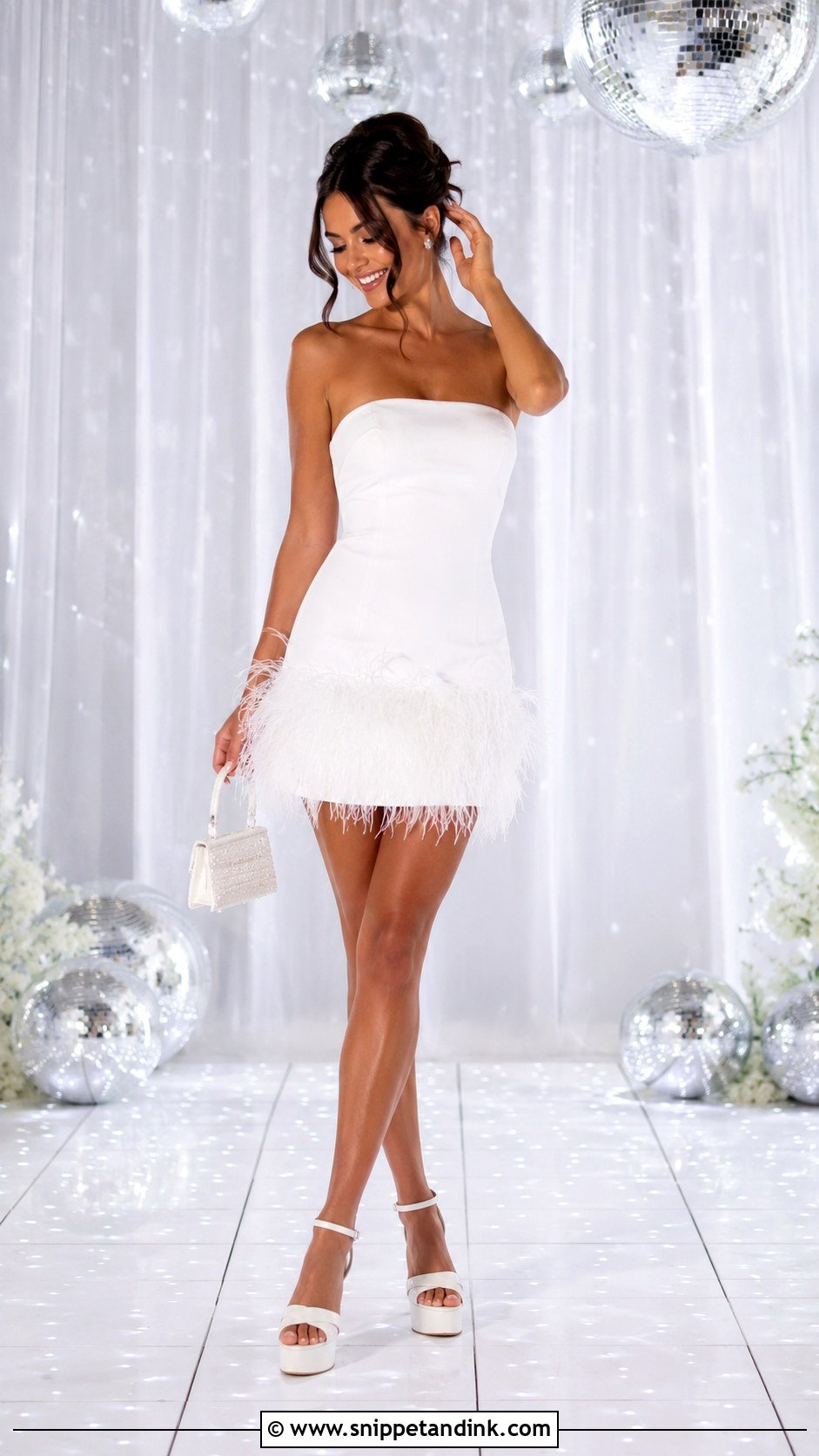
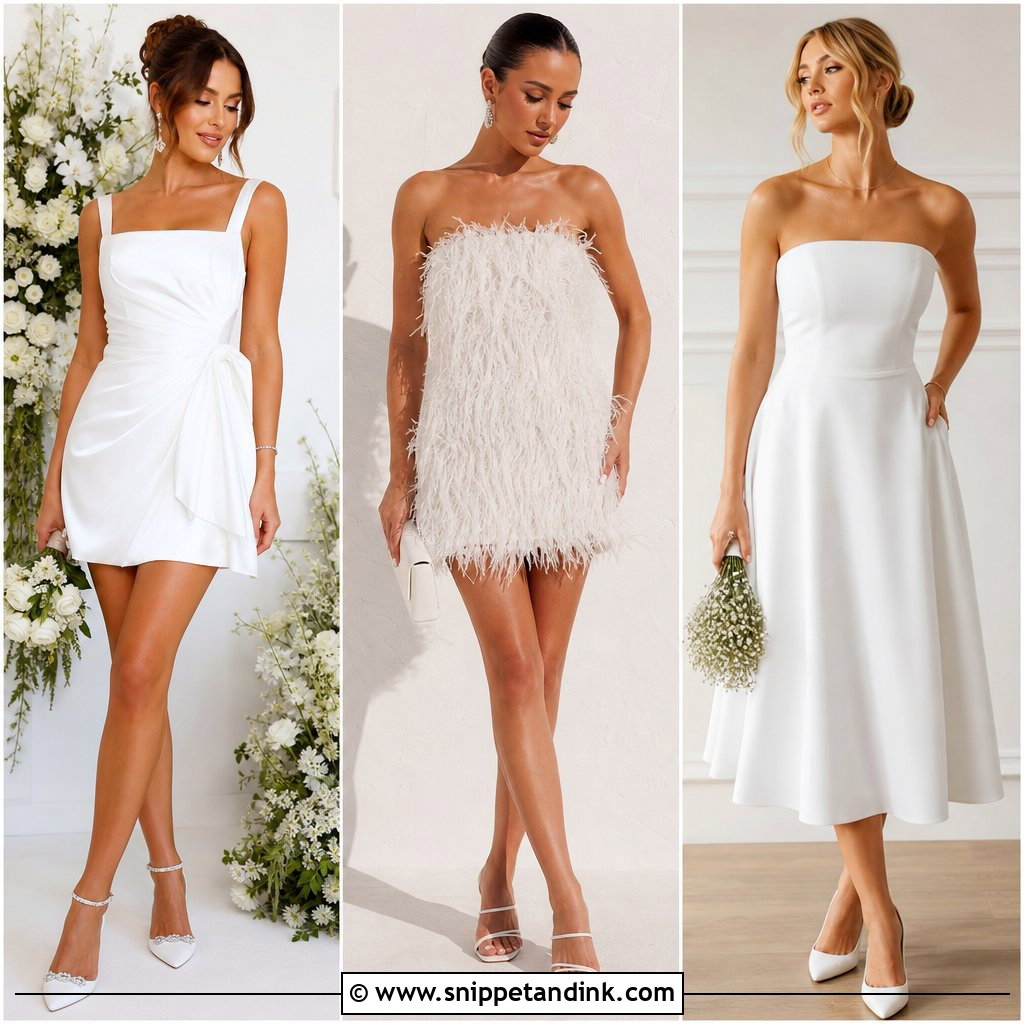
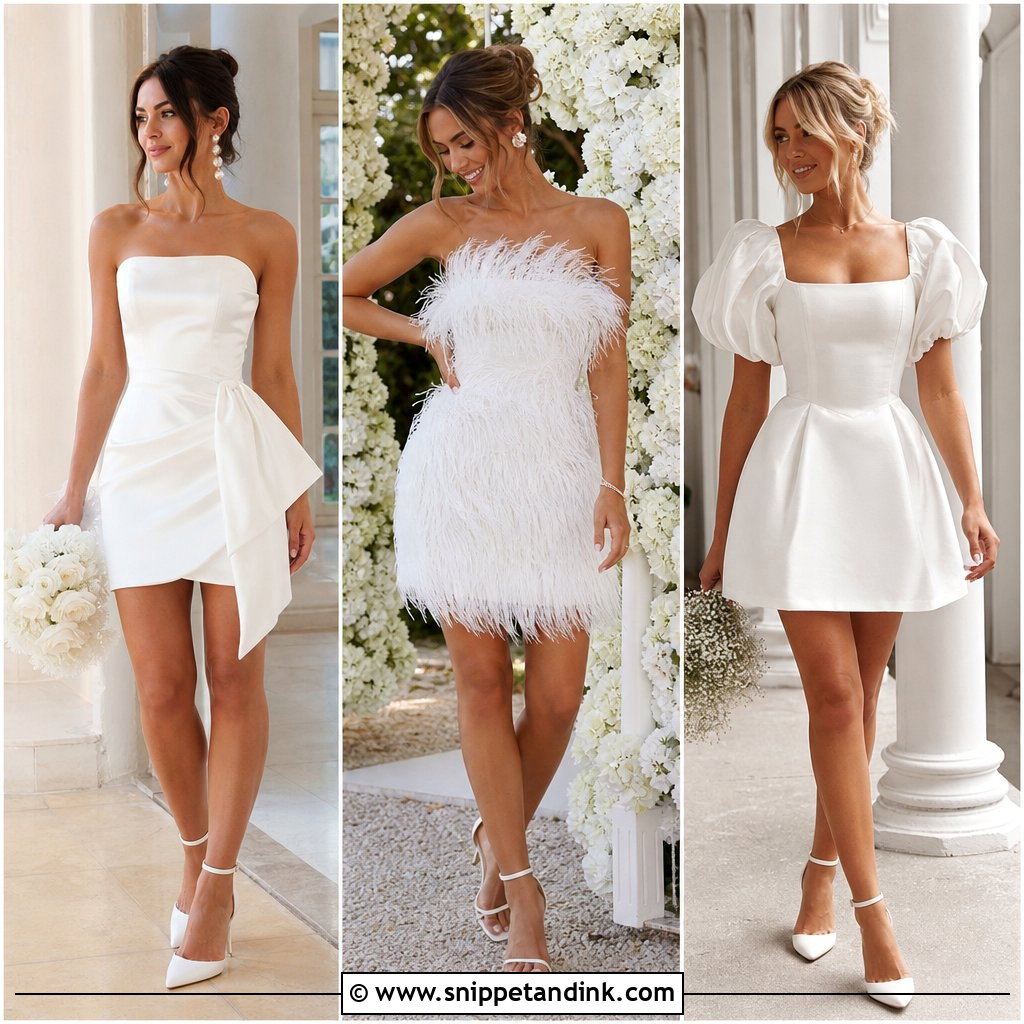
Feathers move with the air around you, which is exactly why they’re so much fun on a dance floor. I’d keep them to one zone: the hem, the cuffs or the neckline. A dress feathered all over can look costume-like up close and sheds onto everyone you hug. Ostrich trim is softer and swishes; marabou is fluffier and moults more, so ask which one you’re buying. Pointed heels or platform sandals let the dress do the talking, and a sleek ponytail stops the feathers catching in loose hair. Pack a lint roller for your new spouse’s jacket.
4. Bride Sequin Mini Dress Second Look
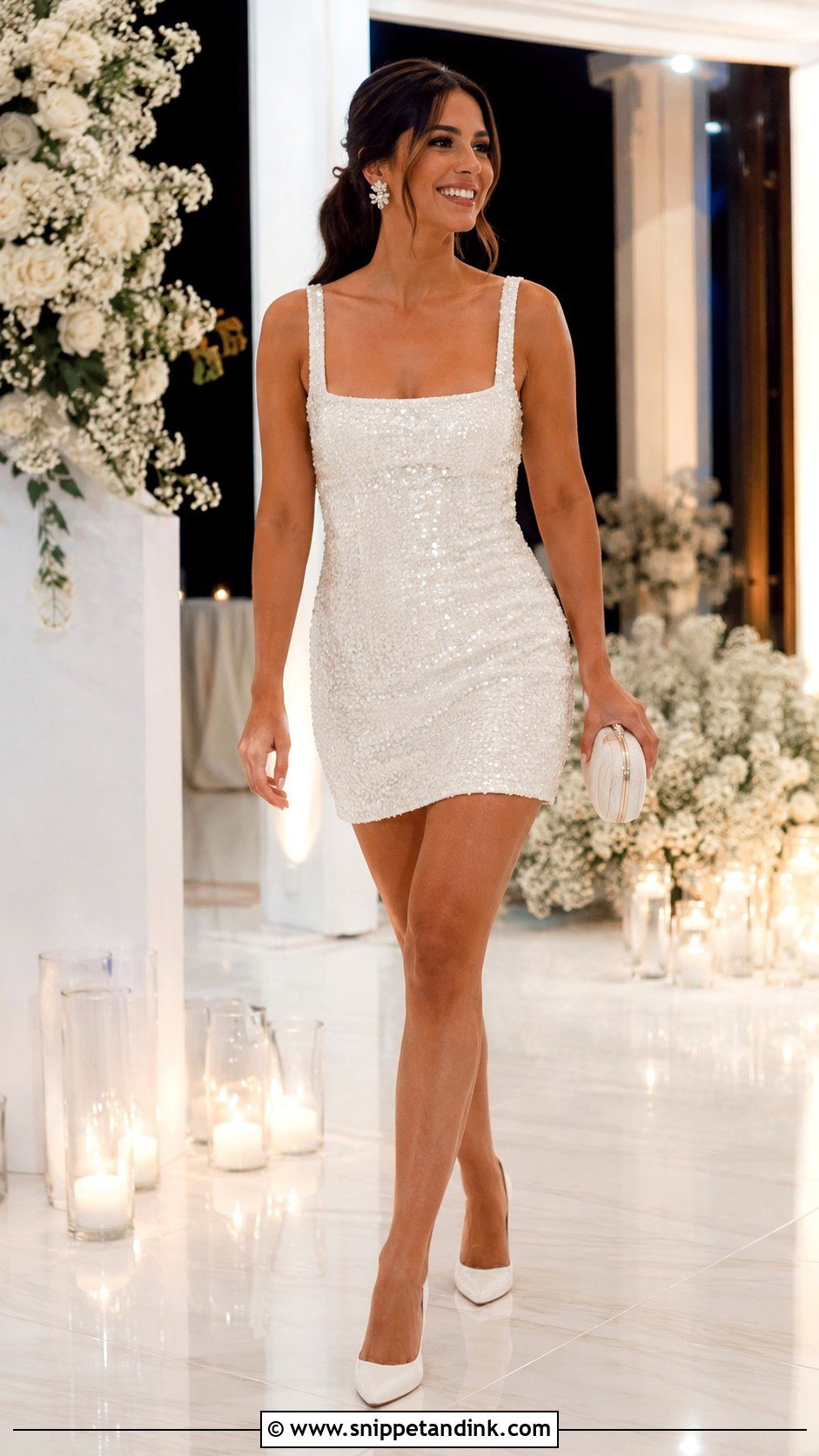
Sequins need light to work, so before I recommend one I ask what the reception lighting looks like. Under a dance floor wash or uplighting, a sequin mini glows. In a dim barn with candles only, it can look flat. Ivory, champagne and soft silver read most bridal. Long sleeves balance the short hem; sleeveless feels lighter. Check the inside seams too, because cheaper sequin fabric scratches the underarms after a few hours of dancing. One pair of crystal earrings and plain white heels is enough. If your ceremony dress was soft and romantic, this gives guests a real “second entrance” moment.
5. Bride White Jumpsuit Second Look
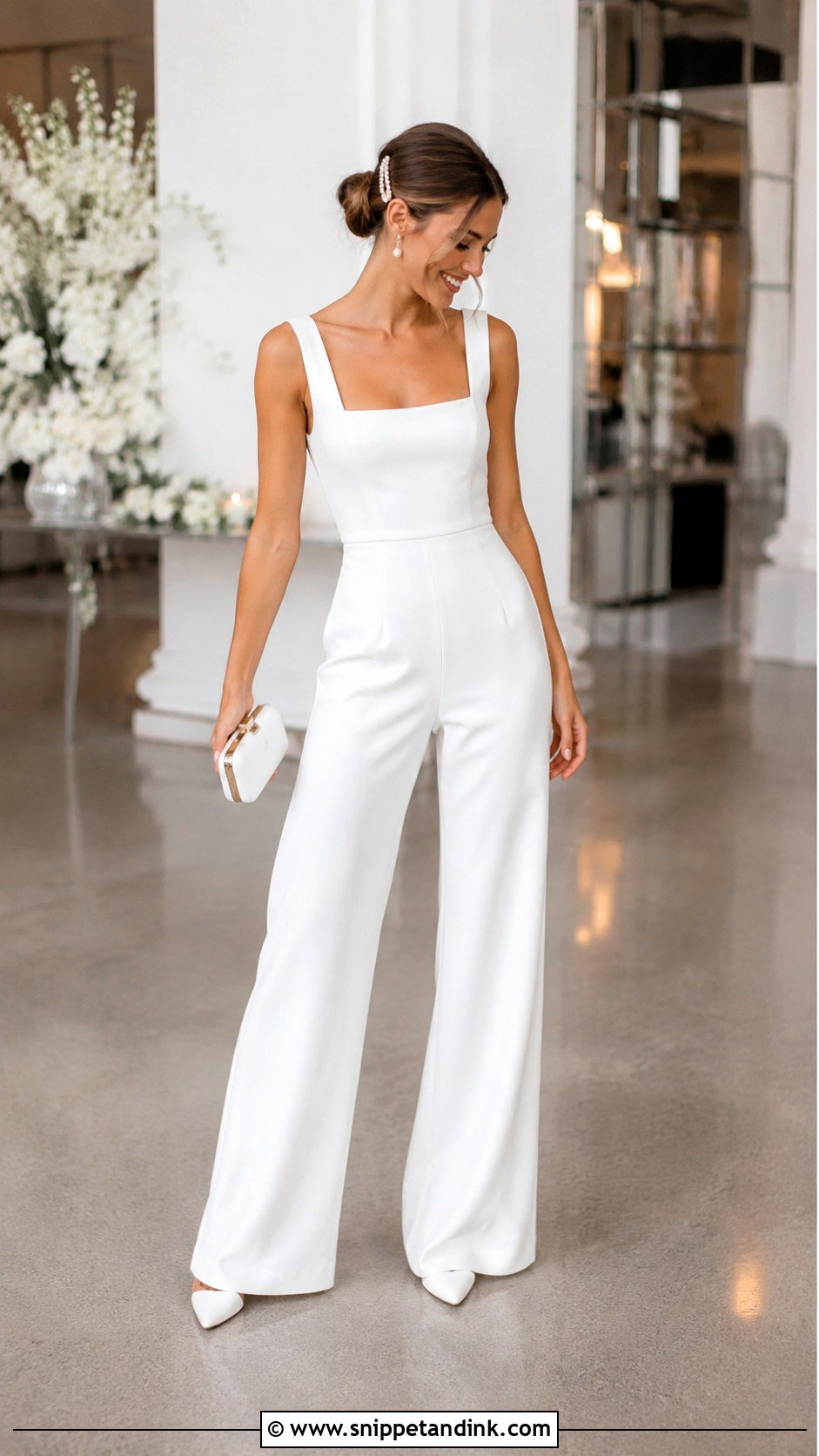
A jumpsuit solves the problem of wanting a full outfit change without another dress. The cut I’d steer most brides toward is a fitted bodice with a wide leg, since it defines the waist and the trouser hem skims the shoe. The trap is the toilet: a back zip with no help nearby is a real nuisance, so I look for a side zip or a separate top and trouser that only looks like one piece. Crepe or a heavier satin hangs better than thin polyester. Pointed pumps, a pearl hair clip and a slim clutch keep it polished, and a cape overlay or open back adds drama if you want it. It’s still a clear bridal change because the whole silhouette shifts.
6. Bride Blazer Dress Second Look
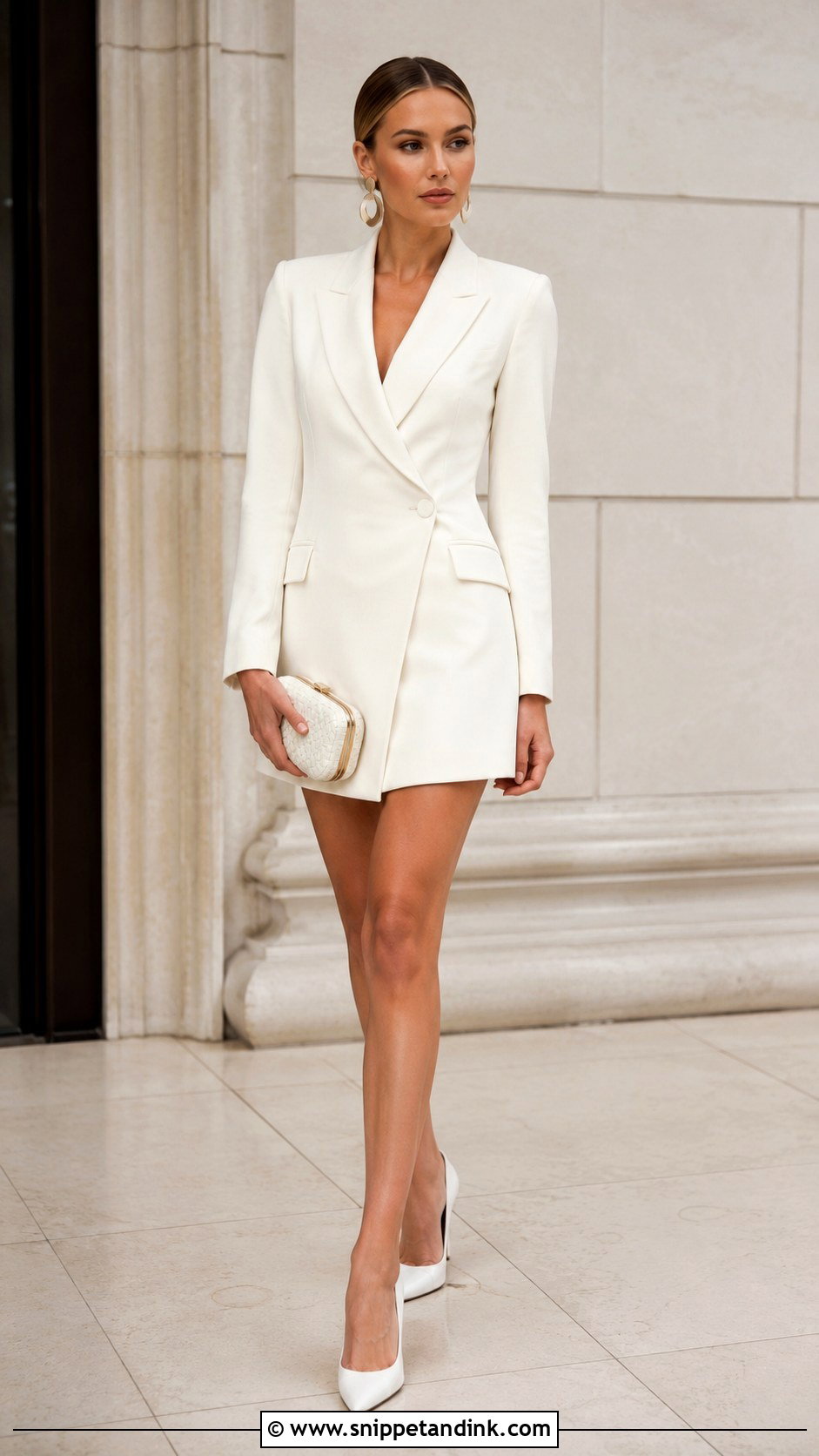
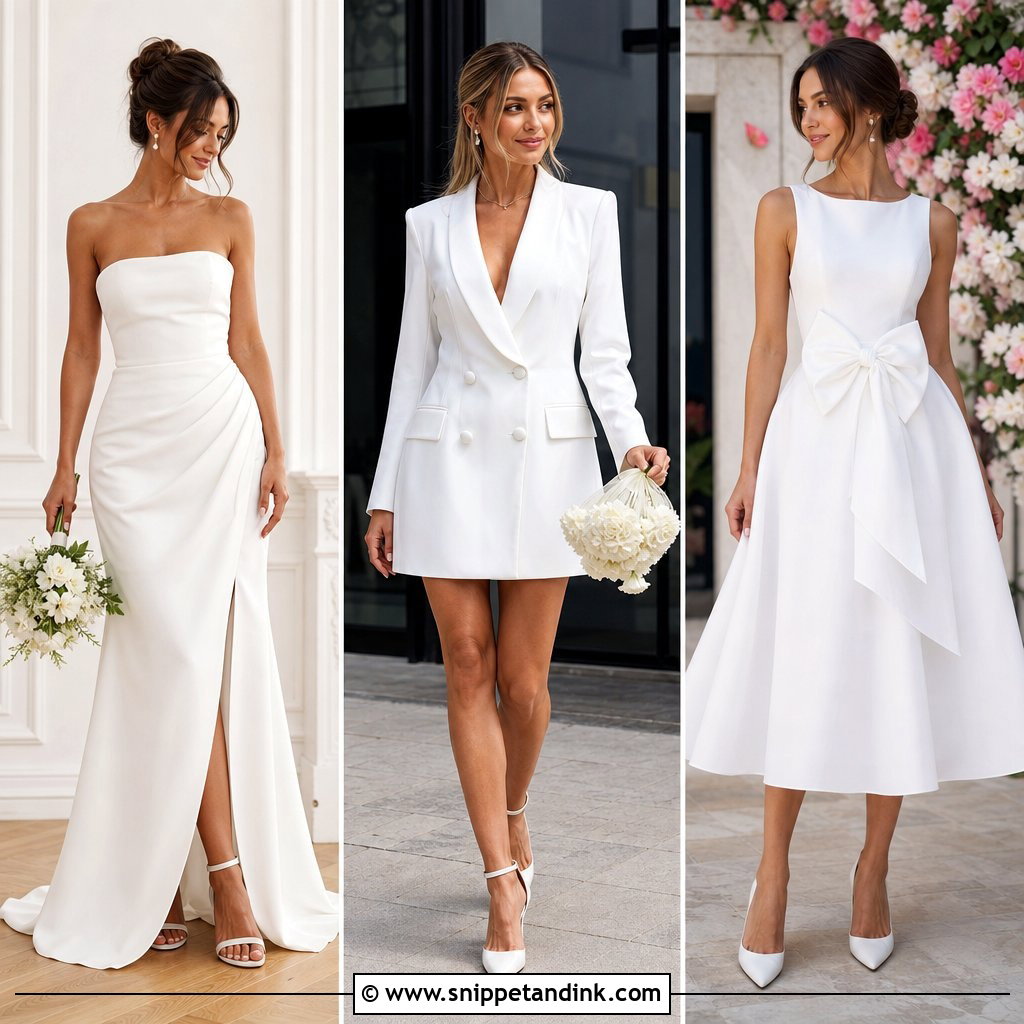
This is the sharpest option on the list and it needs tailoring to look intentional. A blazer dress that’s slightly too big reads as borrowed. I check three things: the shoulder seam sits on your shoulder bone, the button closes without pulling into an X, and the hem stays decent when you sit. Sheer tights help on a cool evening. Pointed heels and sculptural earrings suit the clean lines, and a low bun or slicked-back hair keeps the collar clear. It suits city weddings and registry-style celebrations far more than a rustic marquee.
7. Bride Bow Mini Dress Second Look
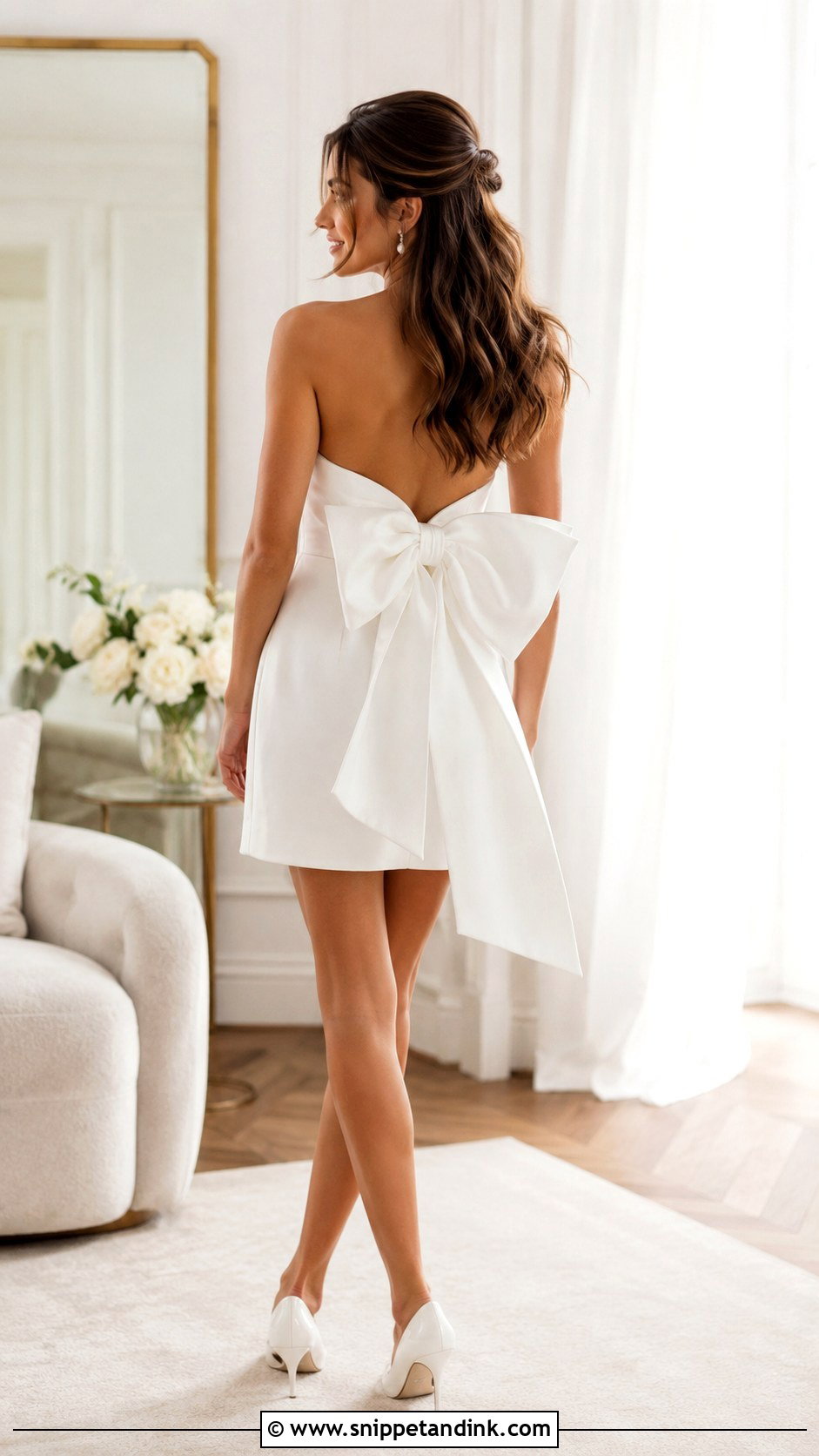
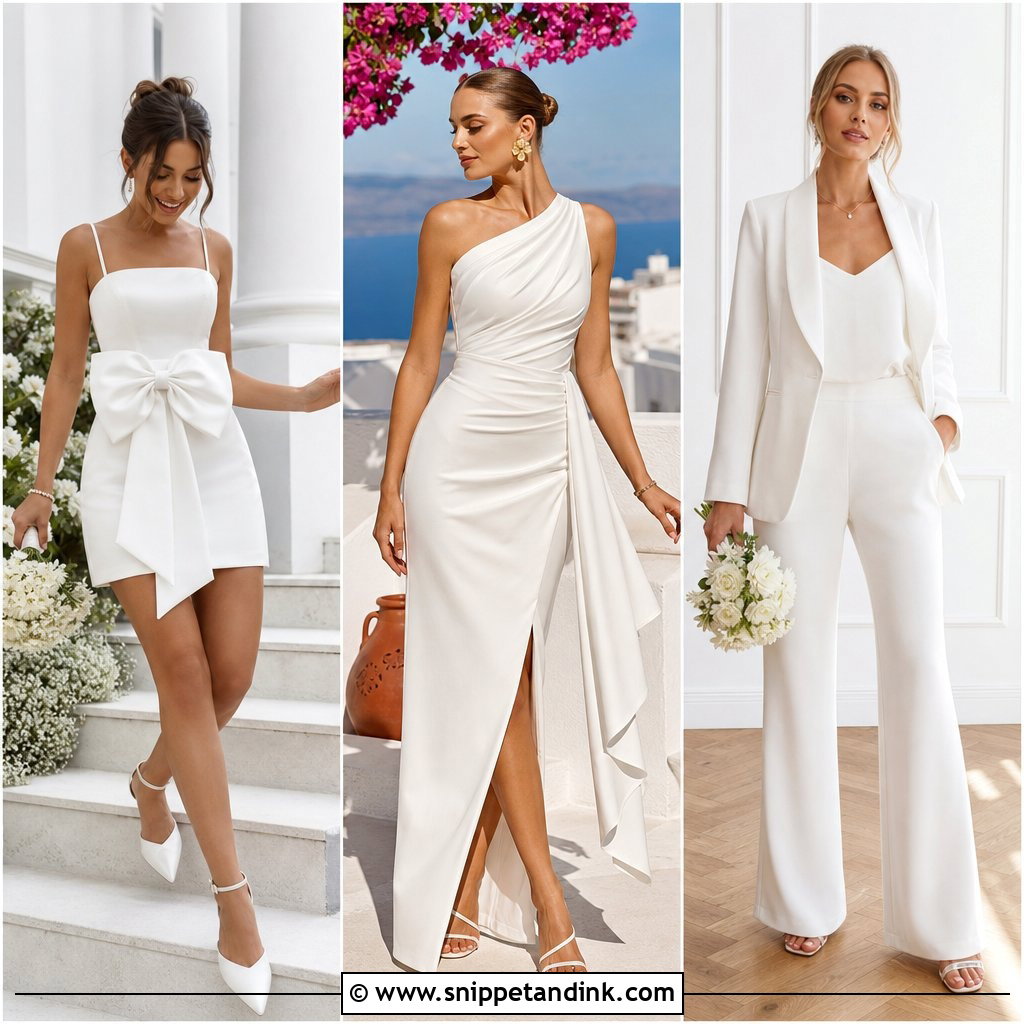
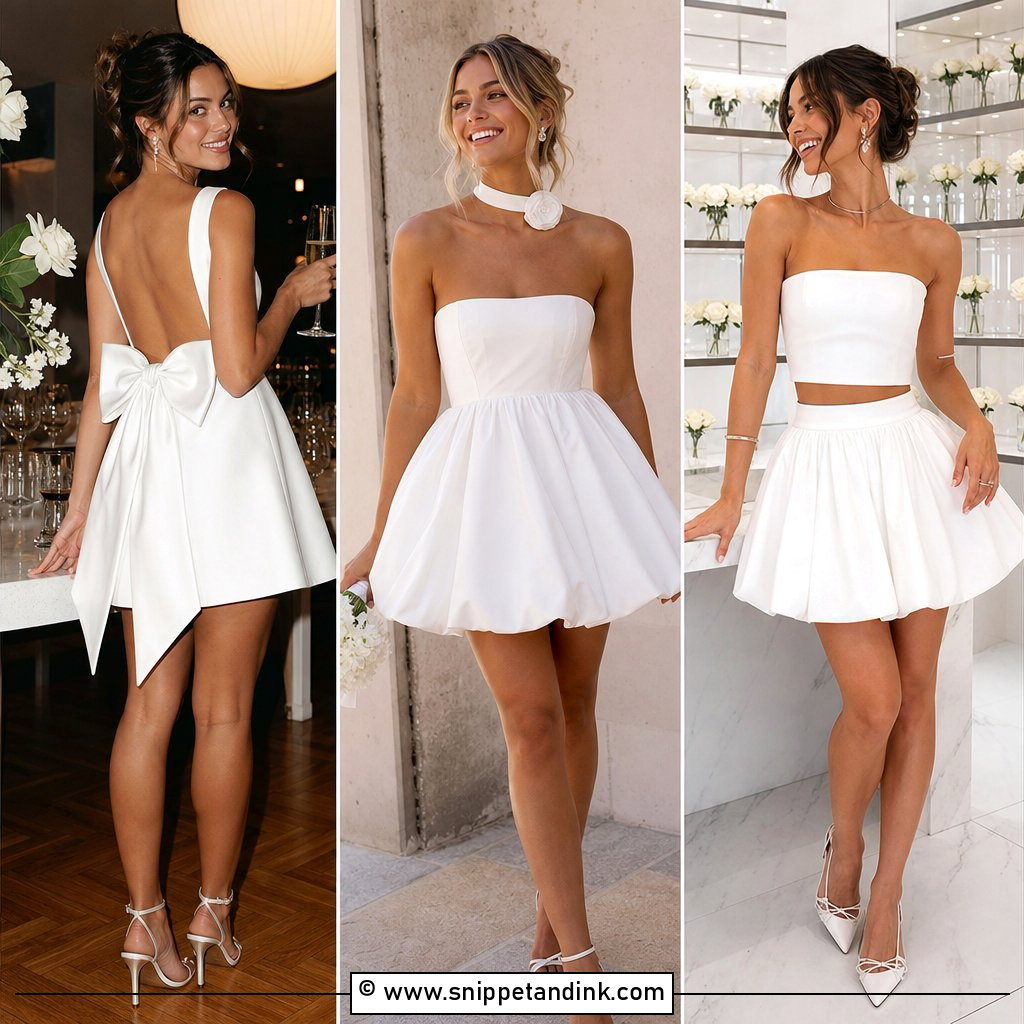
The bow is the whole point, so decide where it lives. A single oversized back bow photographs best as you walk away from the camera, during the exit or heading onto the floor. The thing I watch for is a large bow on a bodice with no structure: the weight pulls the back of the dress down and the bow droops within an hour. Ask whether it’s stitched to an interfaced base. Satin pumps, pearl earrings and a soft half-up style suit it, and I’d leave other accessories plain so the bow stays the focus.
8. Bride Corset Mini Dress Second Look
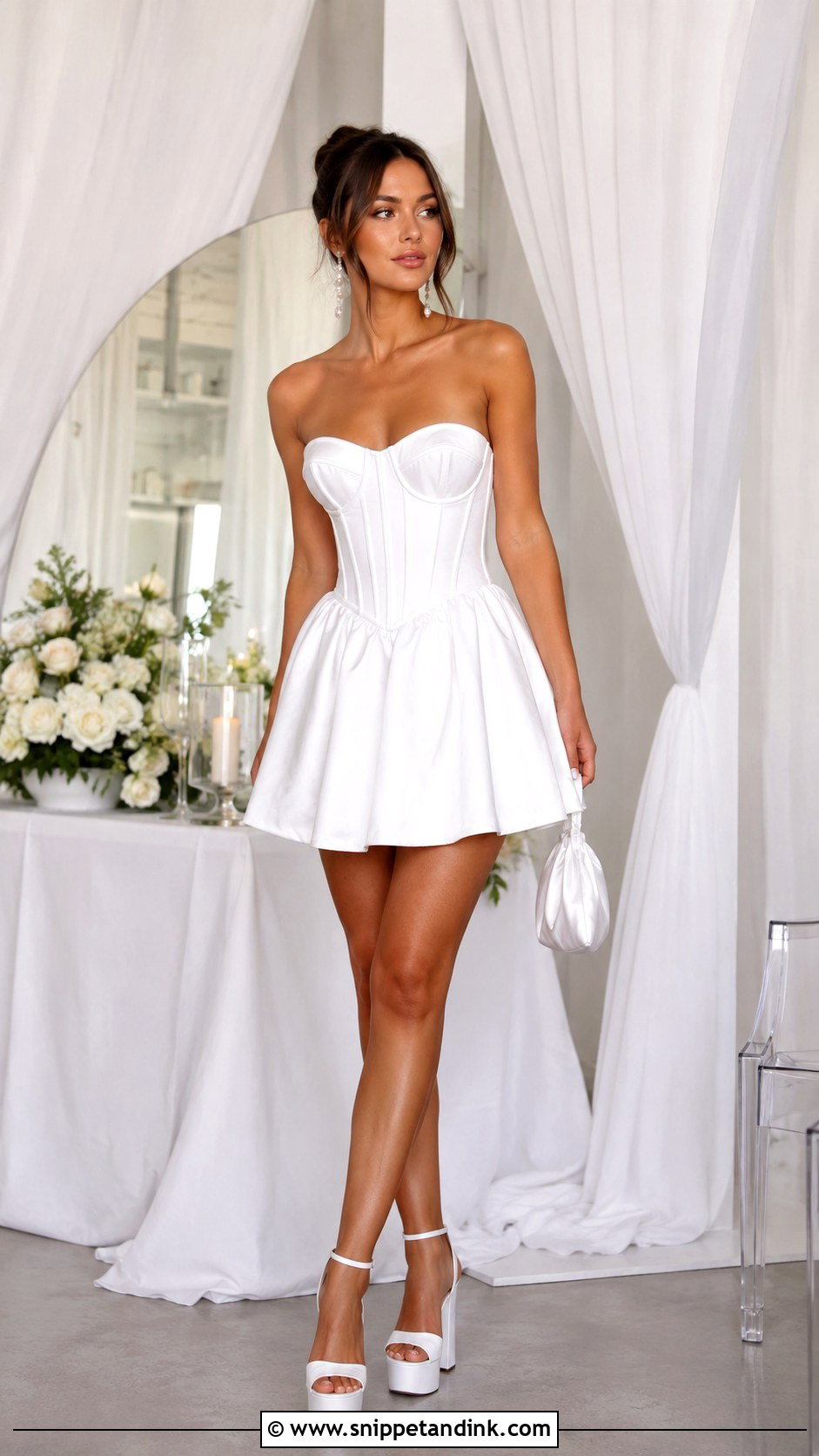
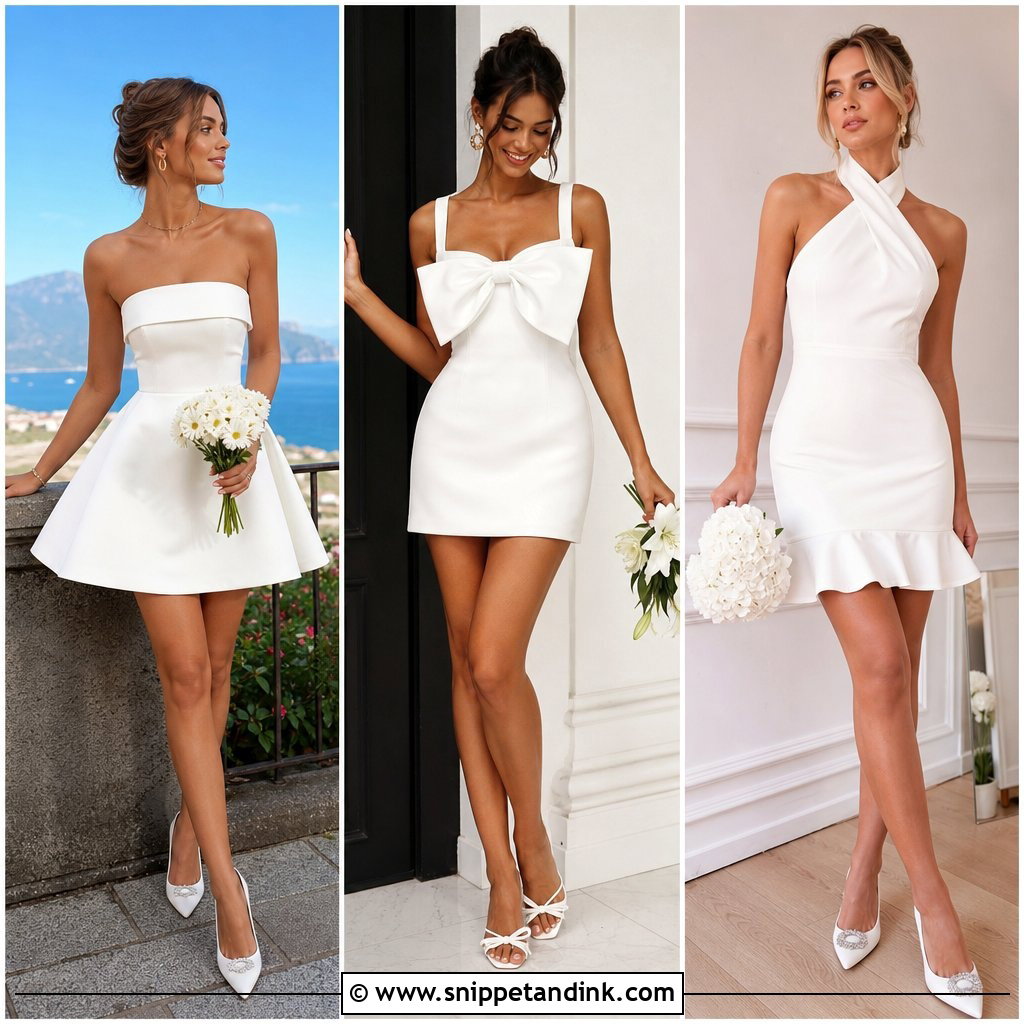
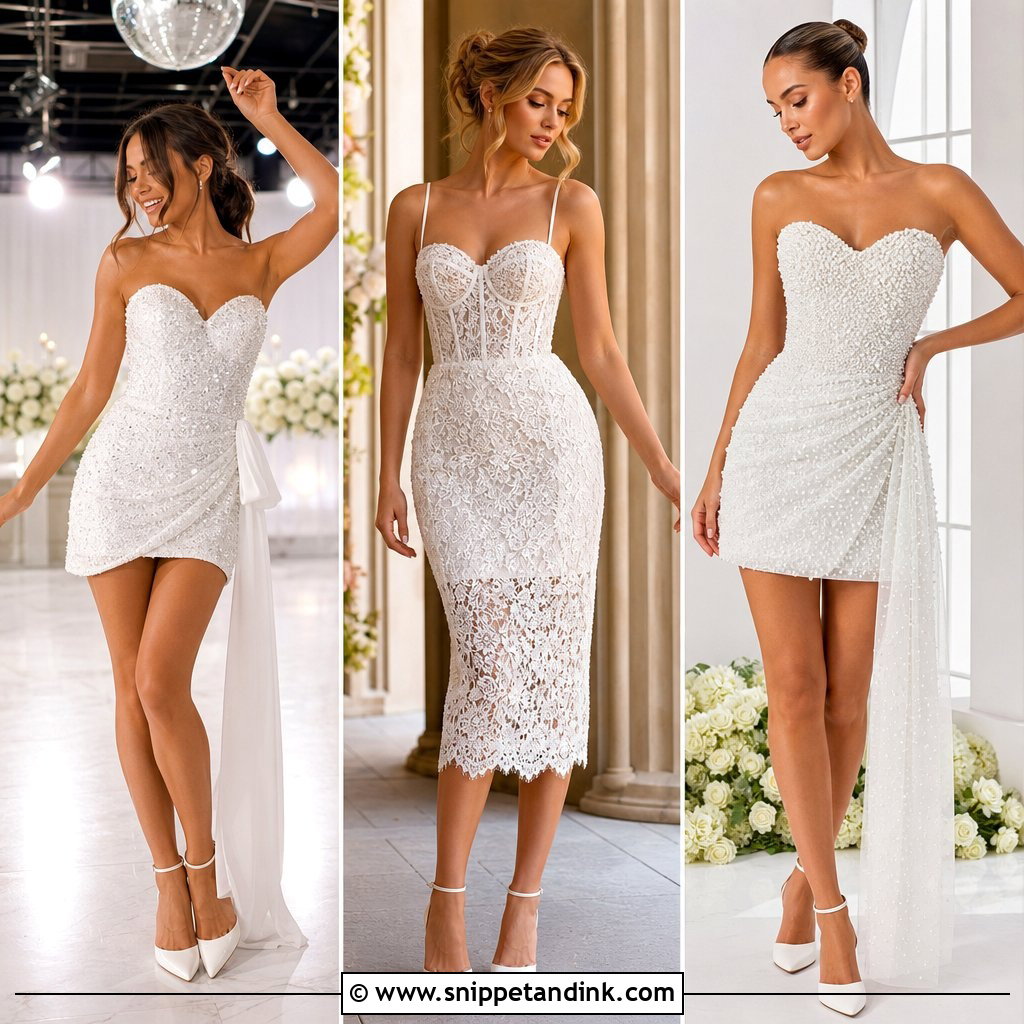
A corset mini gives shape without the weight of a full gown, and visible boning instantly looks finished. The fit is everything here. Real boning should sit flat against your ribs when you breathe in, not dig in when you sit, so I always have brides sit down and eat a little at the fitting. An A-line, bubble or pleated skirt softens the structure and gives you room to dance. Platform heels, drop earrings and a small satin bag work well. With a dramatic sweetheart or plunge, skip the necklace.
9. Bride Bubble Hem Mini Dress Second Look
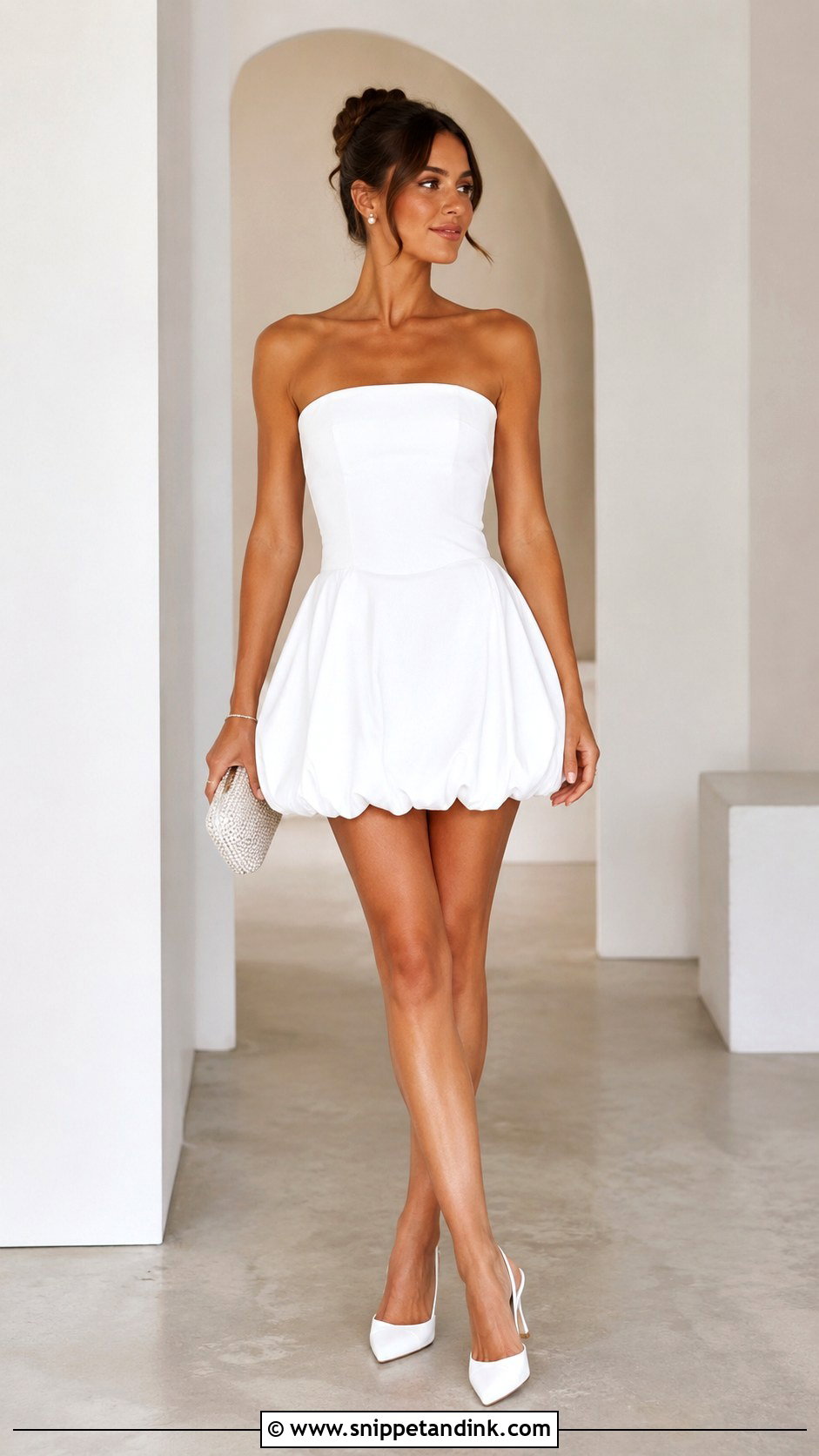
Bubble hems make a big shape with very little fabric. They’re a great contrast if your ceremony gown was a sleek column, since the silhouette changes completely. What goes wrong is length: a bubble that sits too high rides up further when you sit, because the gathered hem pulls inward. I’d aim for a hem that lands mid-thigh when standing. Pointed slingbacks or satin pumps, pearl studs and a smooth bun keep it neat. Crisp fabric like taffeta or faille holds the puff; soft fabric collapses.
10. Bride Two Piece Set Second Look
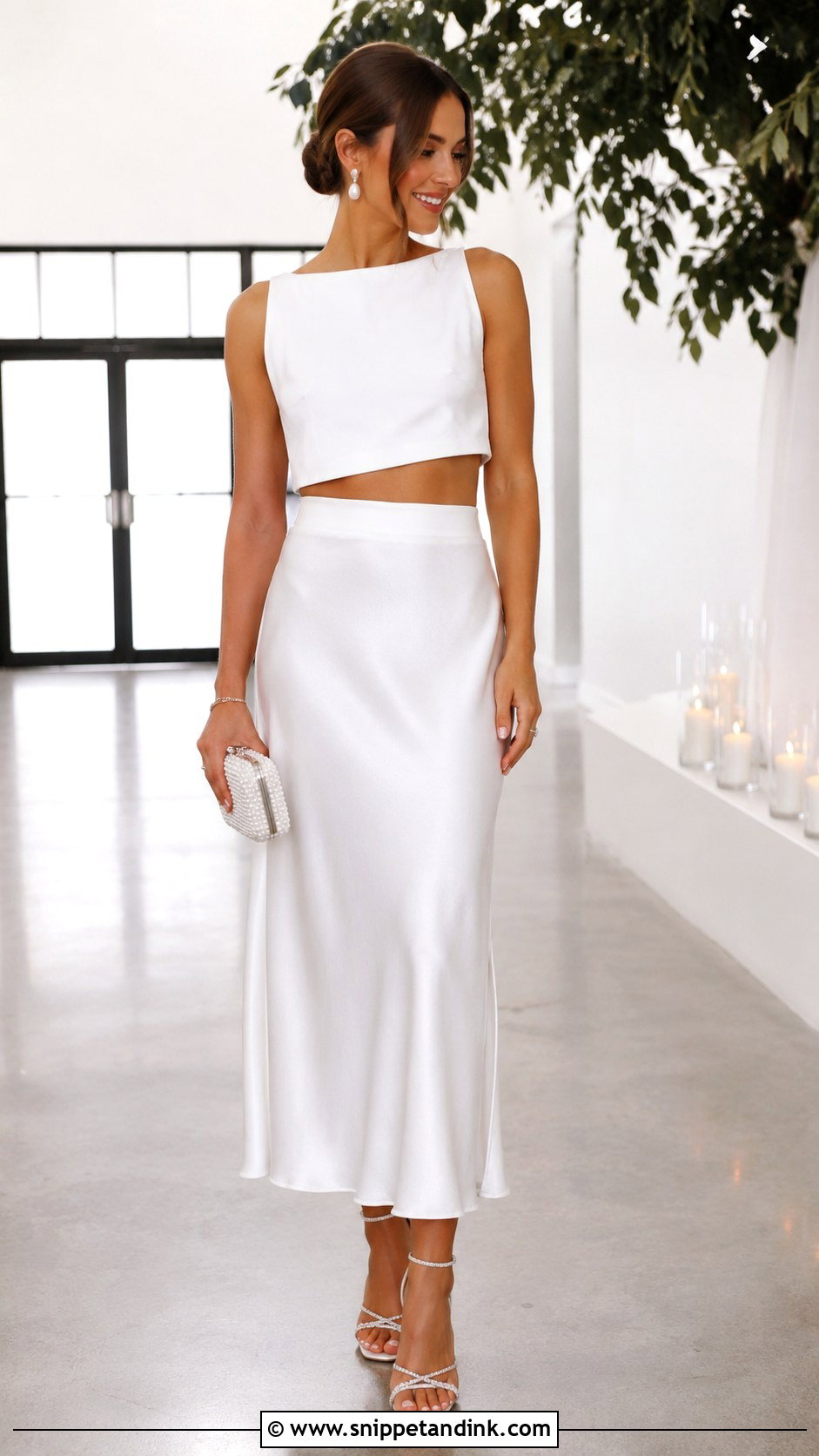
Two-piece sets are the most rewearable choice here, and I like them for that alone. A cropped top with a high-waisted skirt, a beaded camisole with tailored trousers or a satin bandeau with a matching midi all work. The rule I use is balance: a fitted top wants a fuller bottom, and a slim skirt wants texture or structure above. If you’re not keen on showing skin at the midriff, ask for the skirt waistband to sit a touch higher so the gap closes when you raise your arms. White heels, soft waves and minimal jewellery keep it reading as bridal.
11. Bride Tulle Mini Dress Second Look
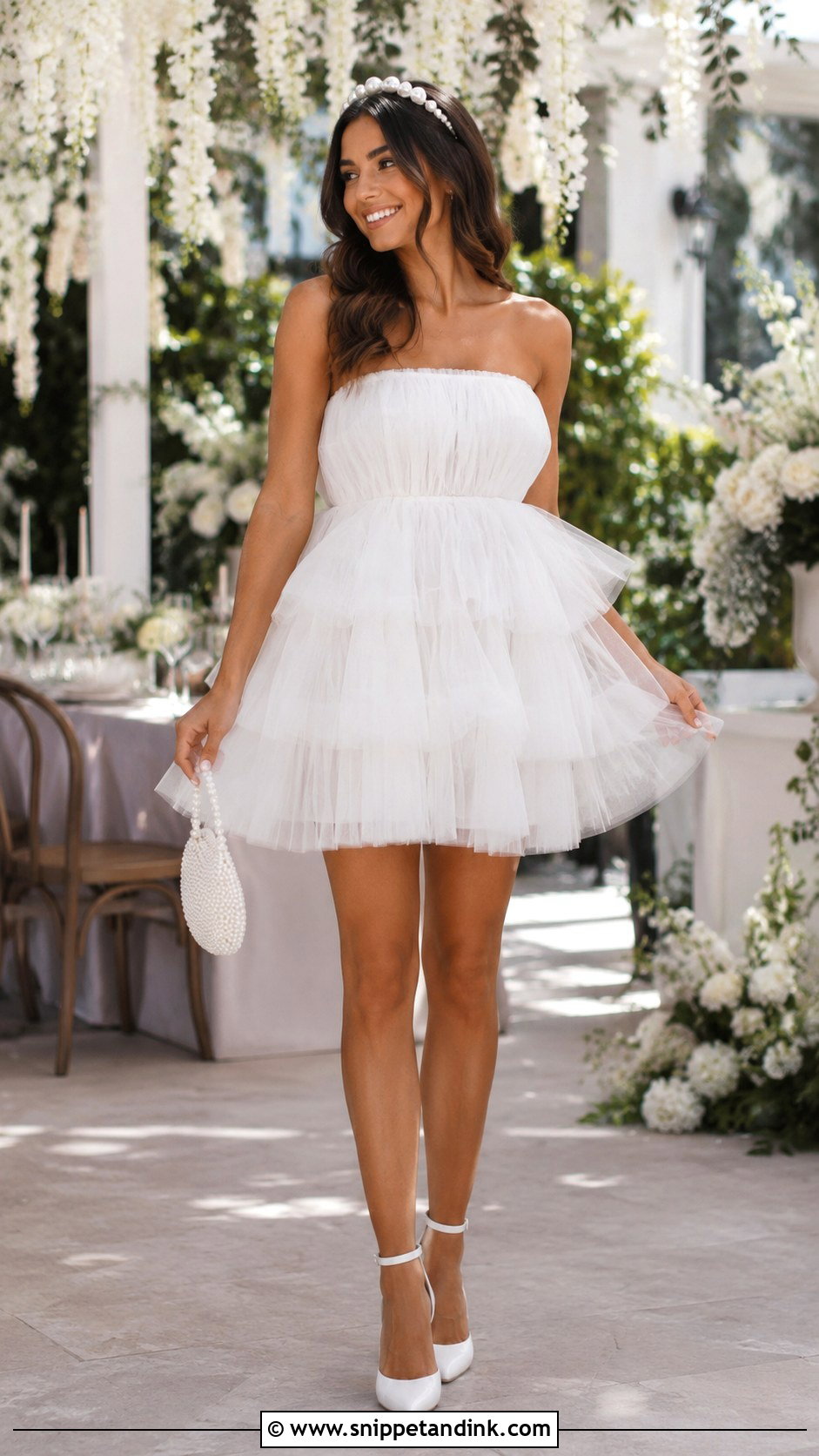
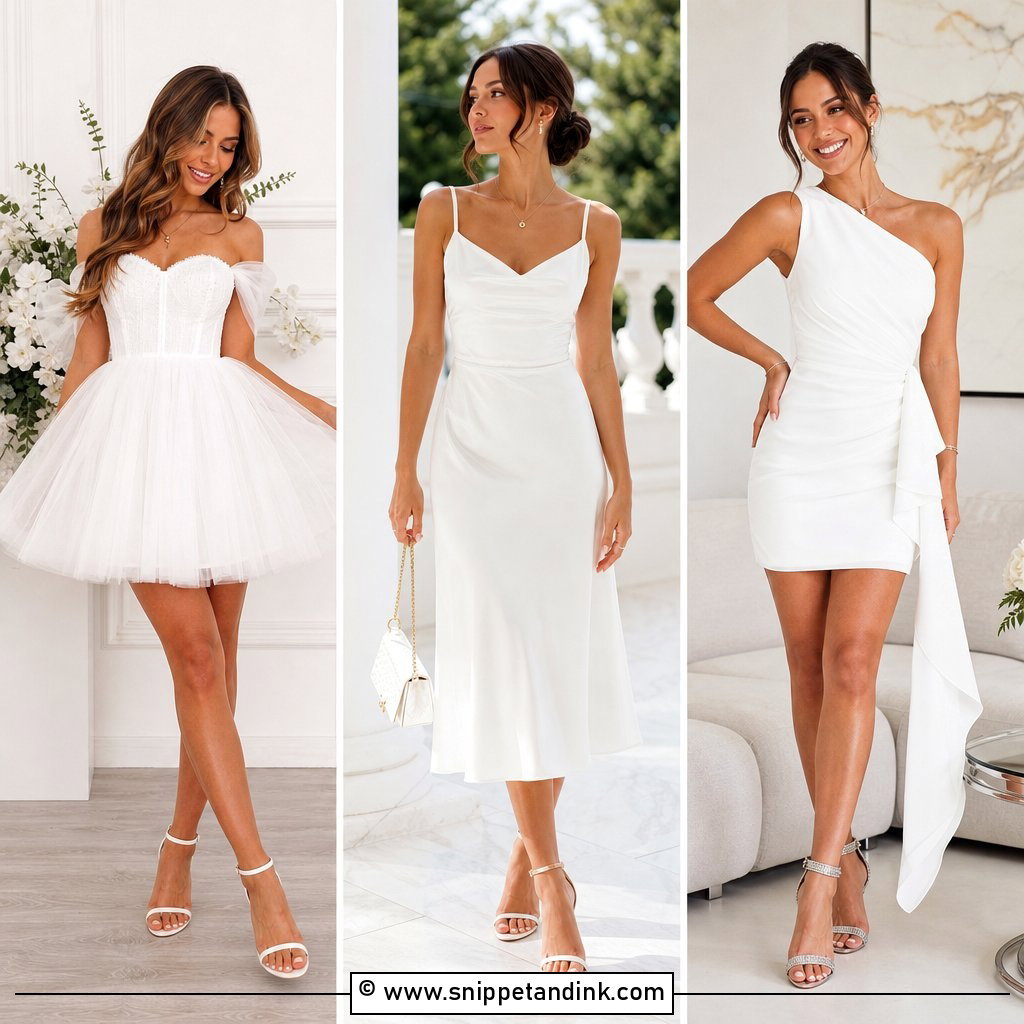
Tulle keeps the feeling of a wedding gown in a much lighter package. Layers matter: three or four layers of soft bridal tulle over a lining look full without stiffness, while cheap stiff netting scratches the legs. Ask about the lining before you buy. A fitted bodice with fine straps or a little floral appliqué is enough decoration. Satin heels and a pearl headband suit it, and I’d go easy on everything else since tulle already looks dreamy. It’s especially good in garden settings, though tulle catches on rose bushes and bench splinters, so watch where you sit.
12. Bride Lace Mini Dress Second Look
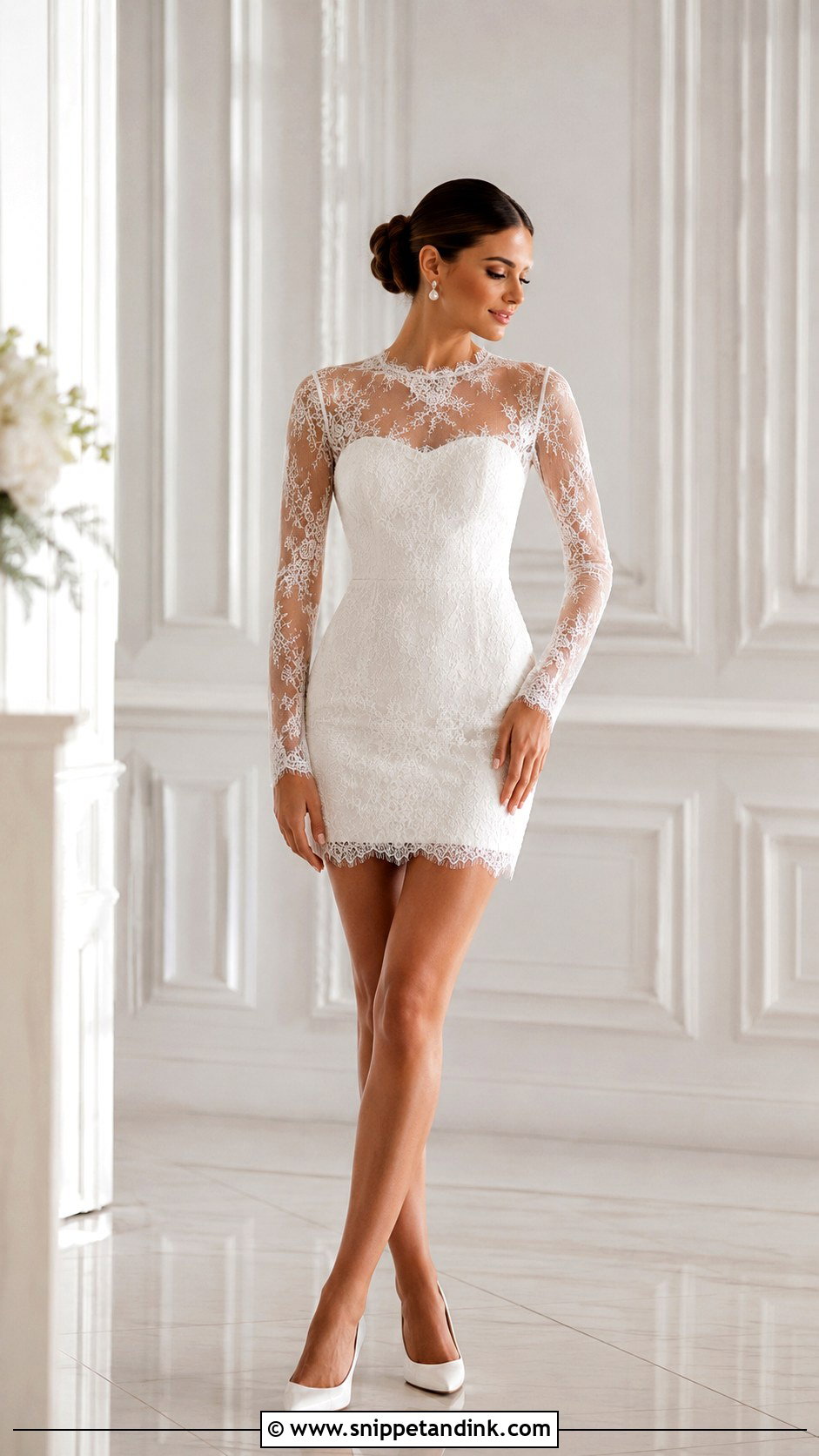
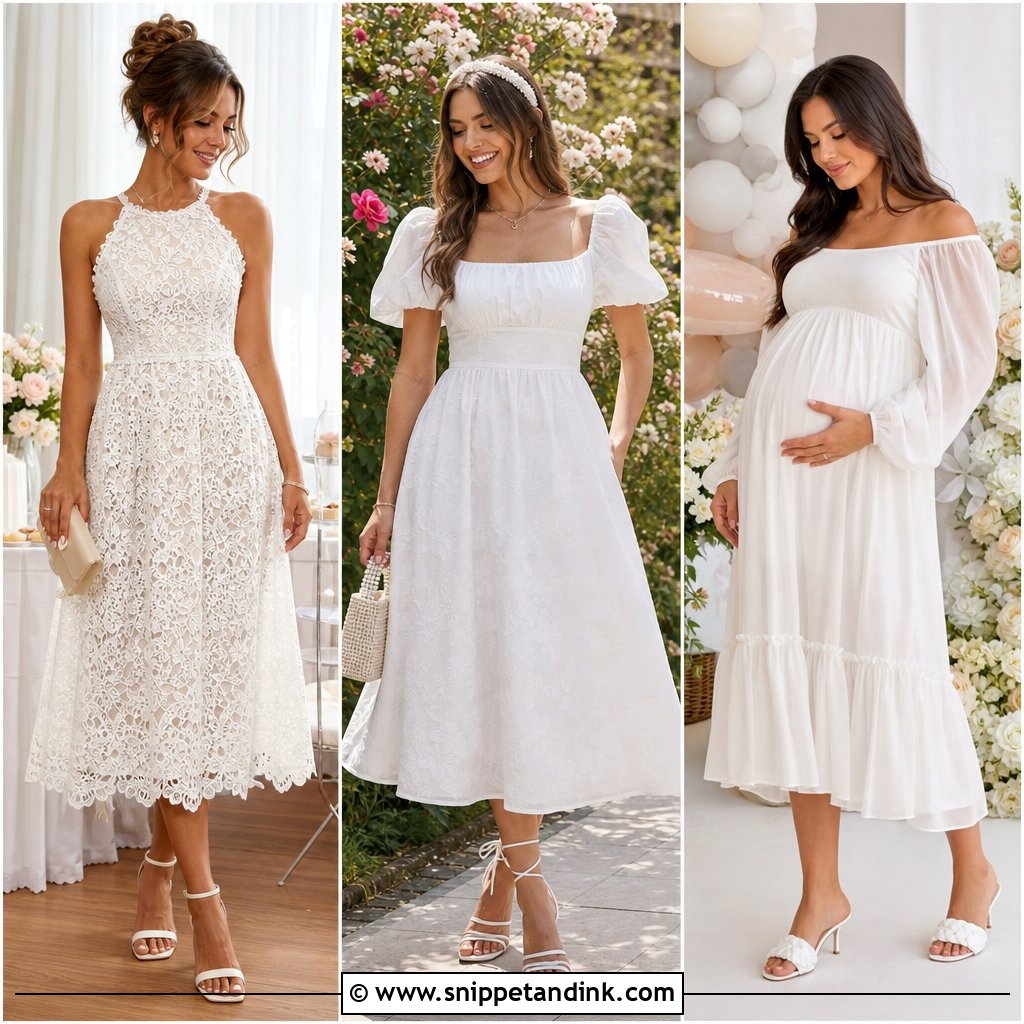
Lace says bridal before anyone sees the rest of the outfit, which makes it a safe bet if you’re nervous about going short. Floral Chantilly is fine and soft; corded or guipure lace has more body and holds its shape on a mini. Long sleeves or a high neck read refined, and sheer sleeves feel lighter in summer. I like this most when the ceremony gown was plain satin or crepe, because the texture becomes the change. White pumps, pearl earrings and a low chignon finish it. Check the lining hem, since lace minis often have a lining that ends shorter than the lace.
13. Bride Midi Dress Second Look
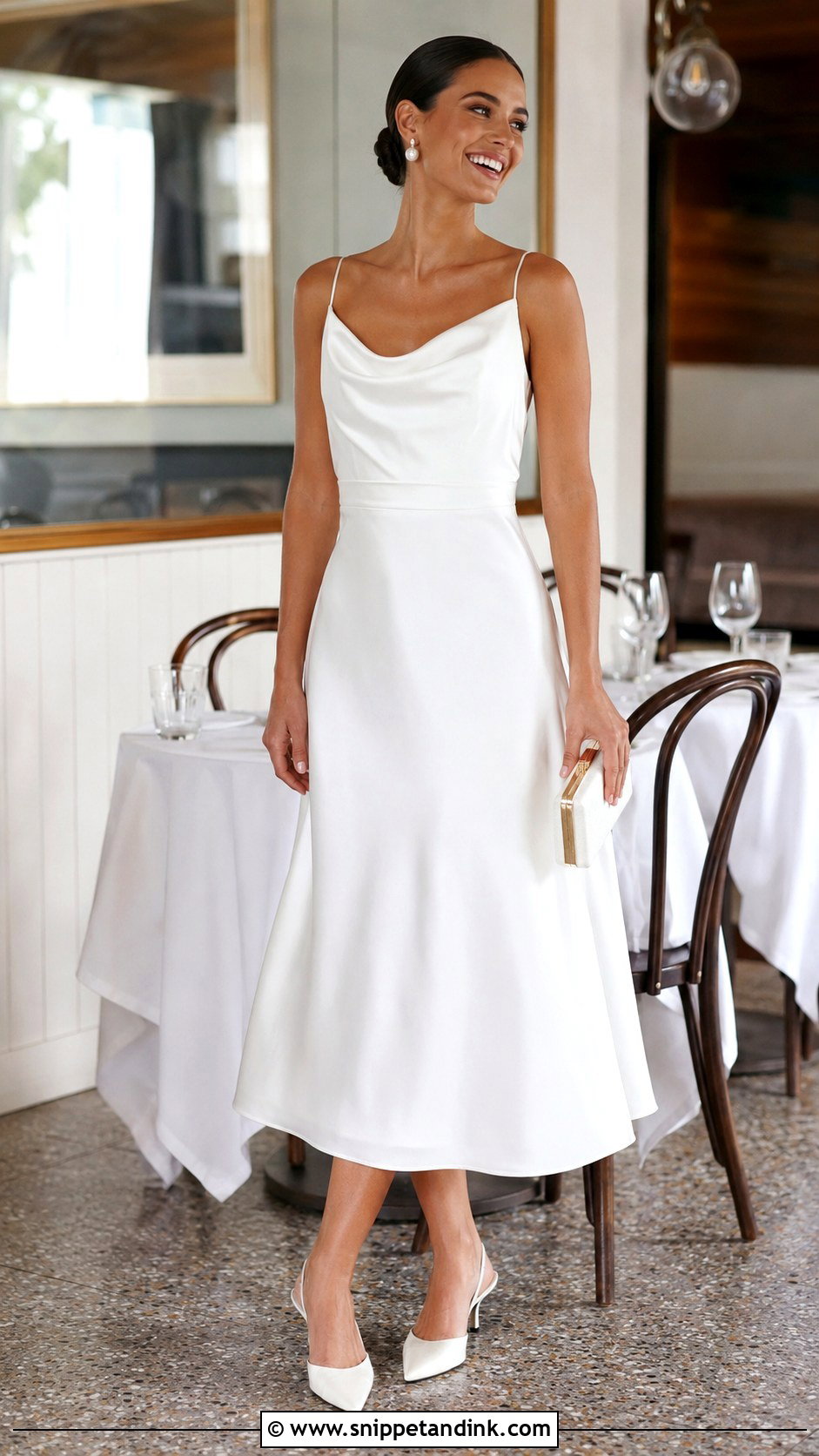
Not every bride wants her knees out at a family dinner, and a midi is my usual answer for intimate receptions and restaurant venues. It gives more coverage than a mini and none of the weight of a gown. White satin, crepe or a lace midi dress all work. The length that flatters most people sits just below the widest part of the calf; mid-calf exactly can shorten the leg in photos. A fitted waist and a skirt with some swing matter more than decoration. Slingback heels, a structured clutch and pearl or crystal earrings keep it grown-up.
14. Bride High Low Dress Second Look
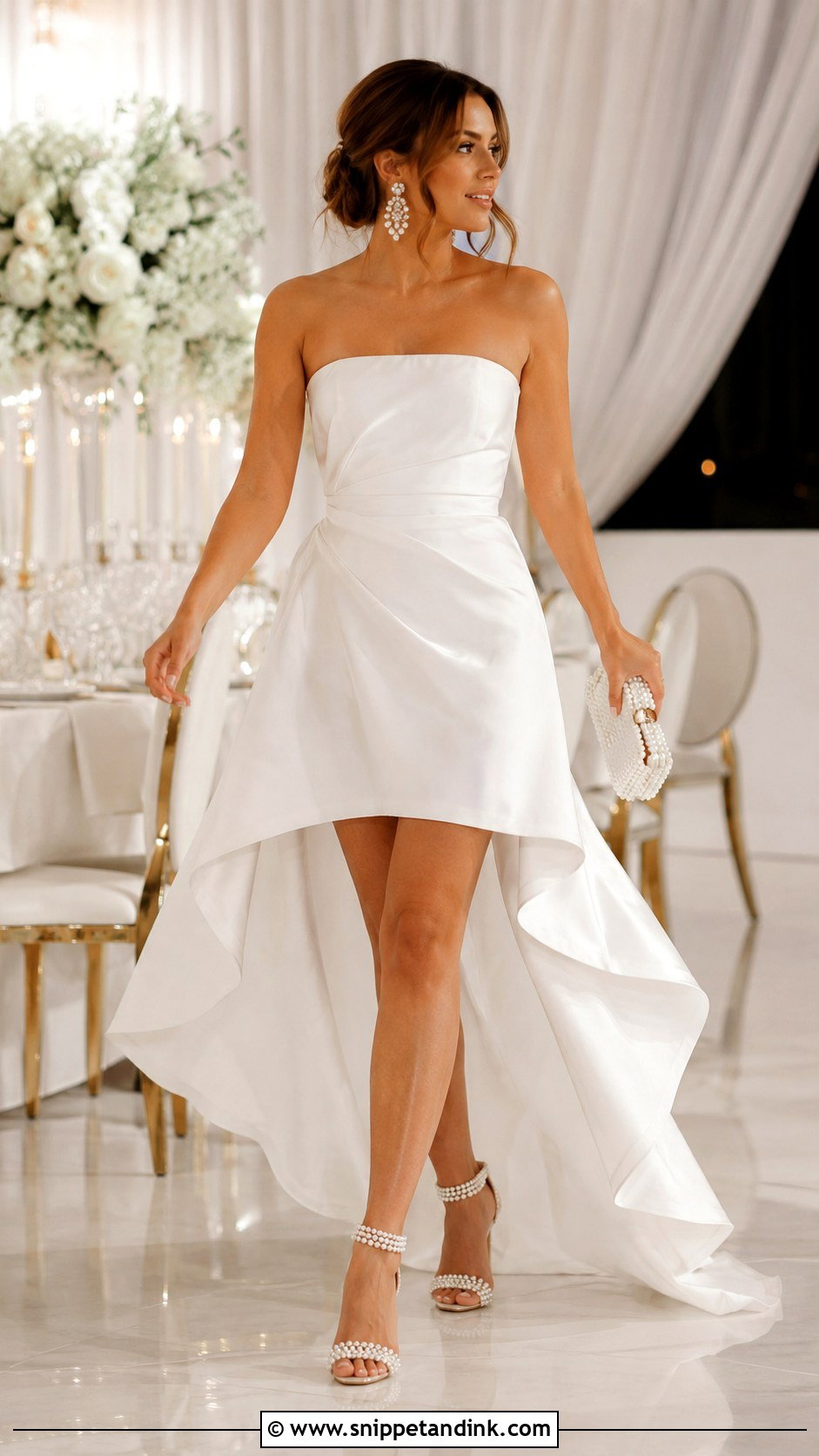
A high-low hem keeps a little of the gown’s drama at the back while freeing your feet at the front. That front hem shows your shoes all night, so choose them on purpose: satin platforms, pearl heels or crystal sandals. The fit point people miss is the back length. On a dance floor, a long back panel still gets stepped on, so I’d keep it ending just above the floor rather than trailing. A fitted bodice and a skirt with enough volume to move is the shape I like. Keep the clutch and earrings in the same mood as the dress.
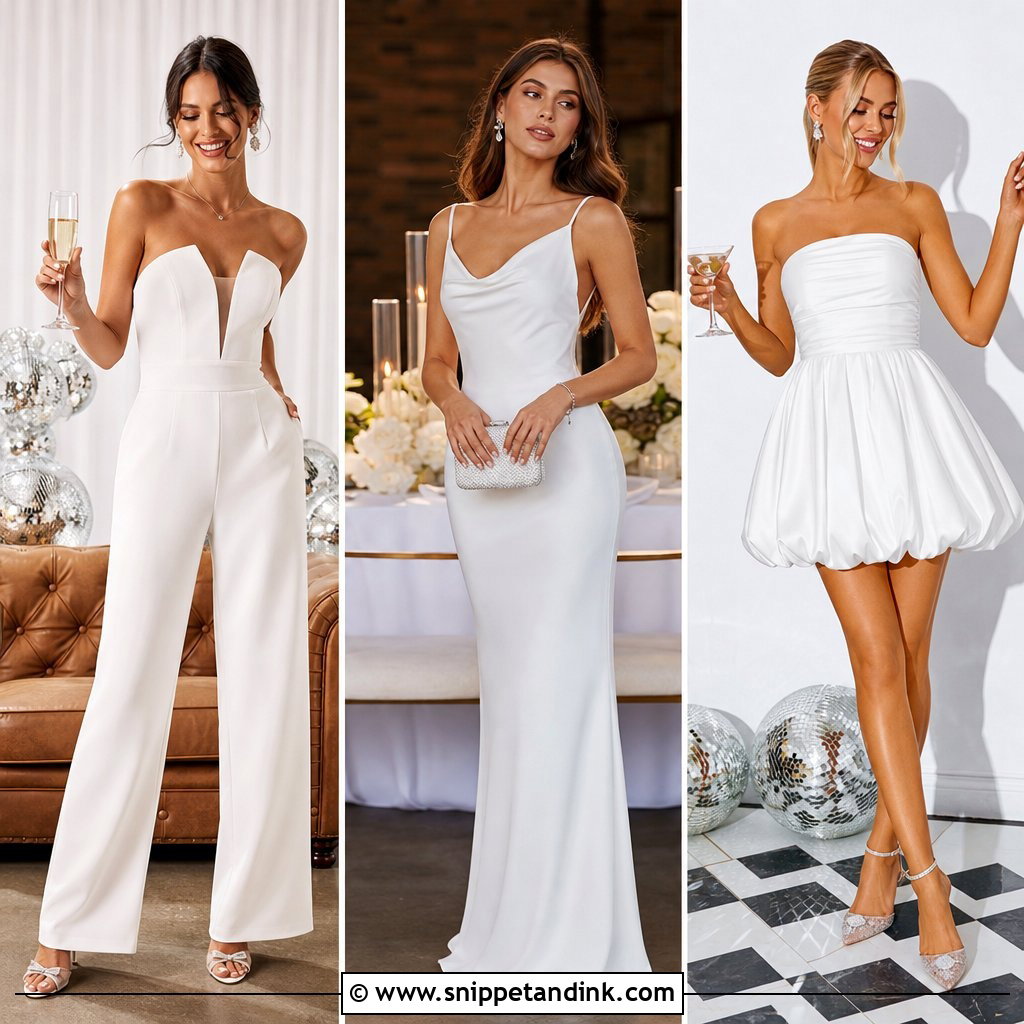
15. Bride Reception Gown Second Look
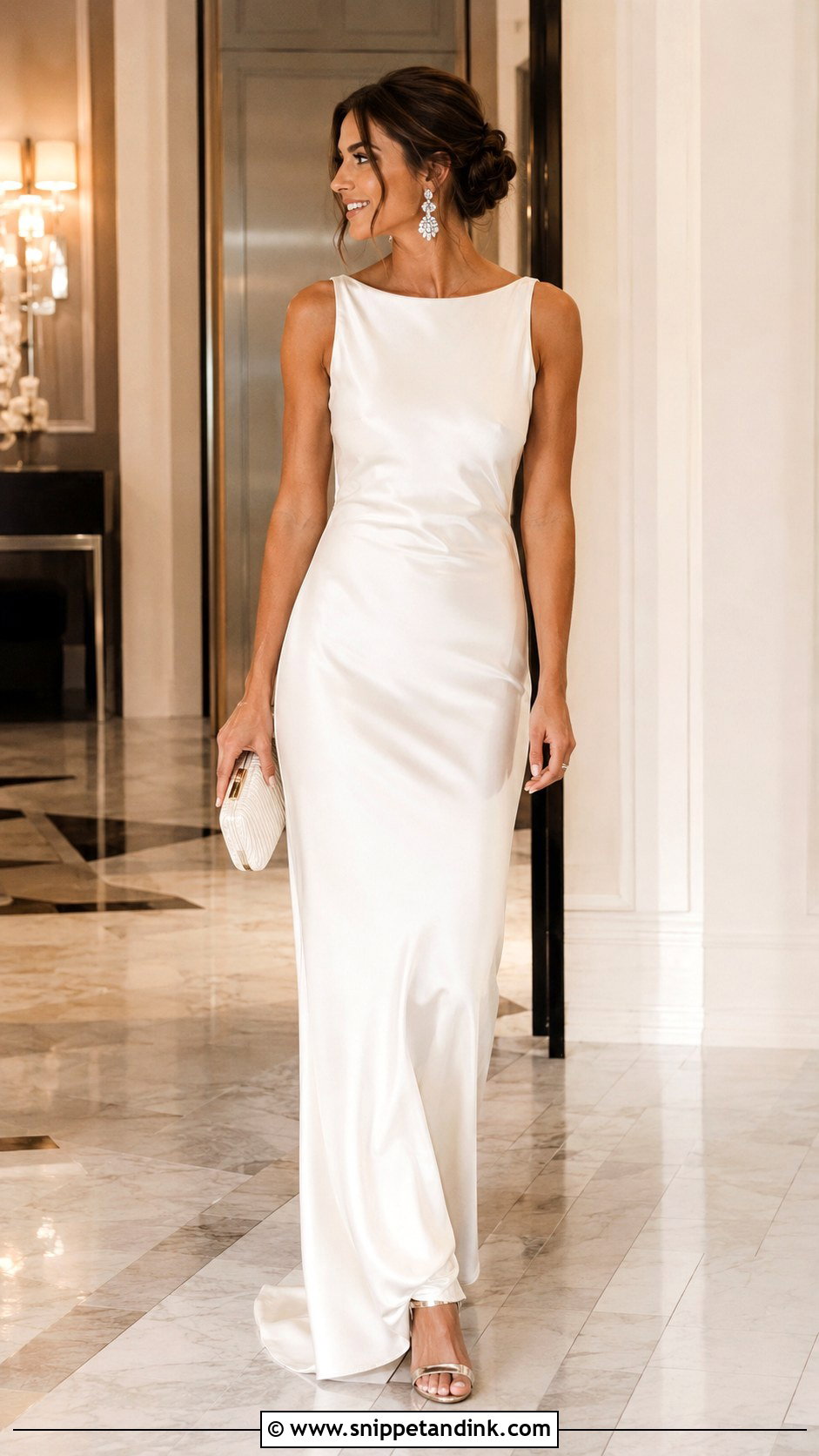
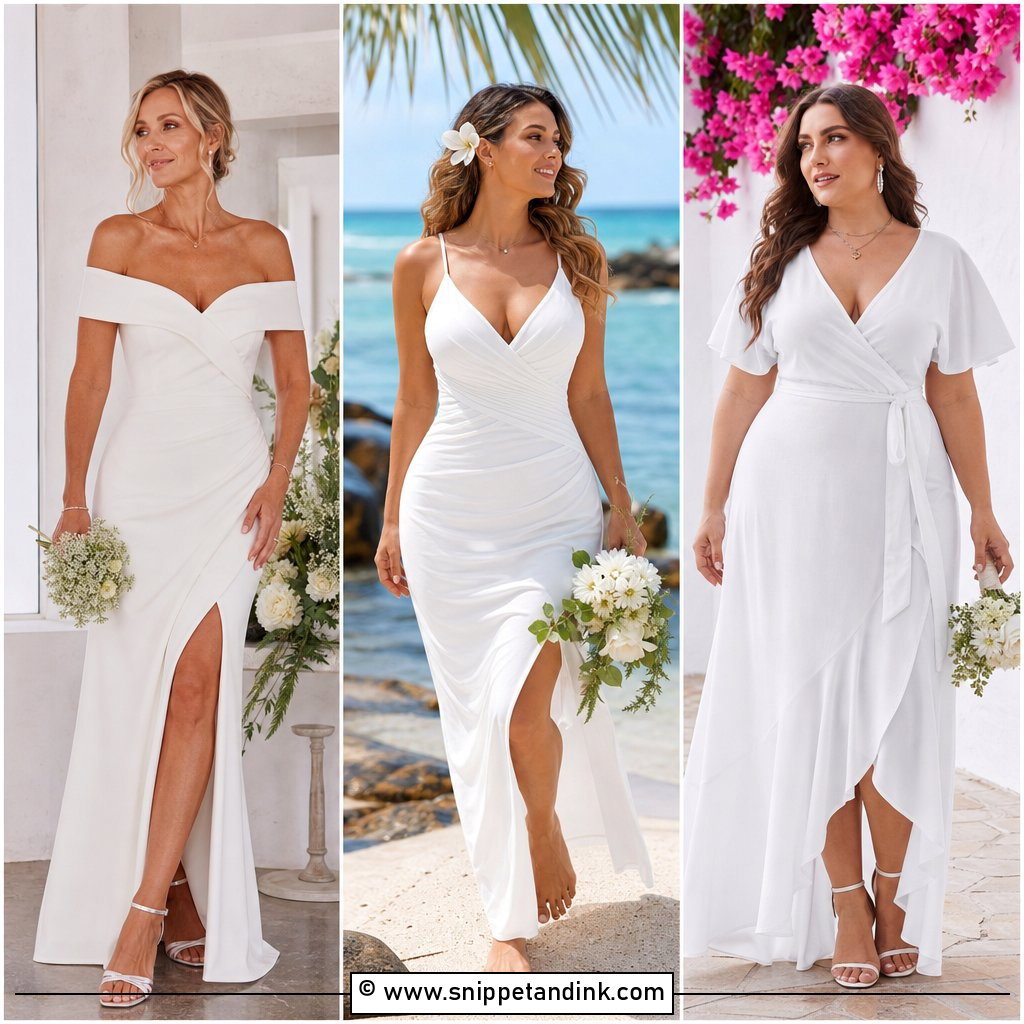
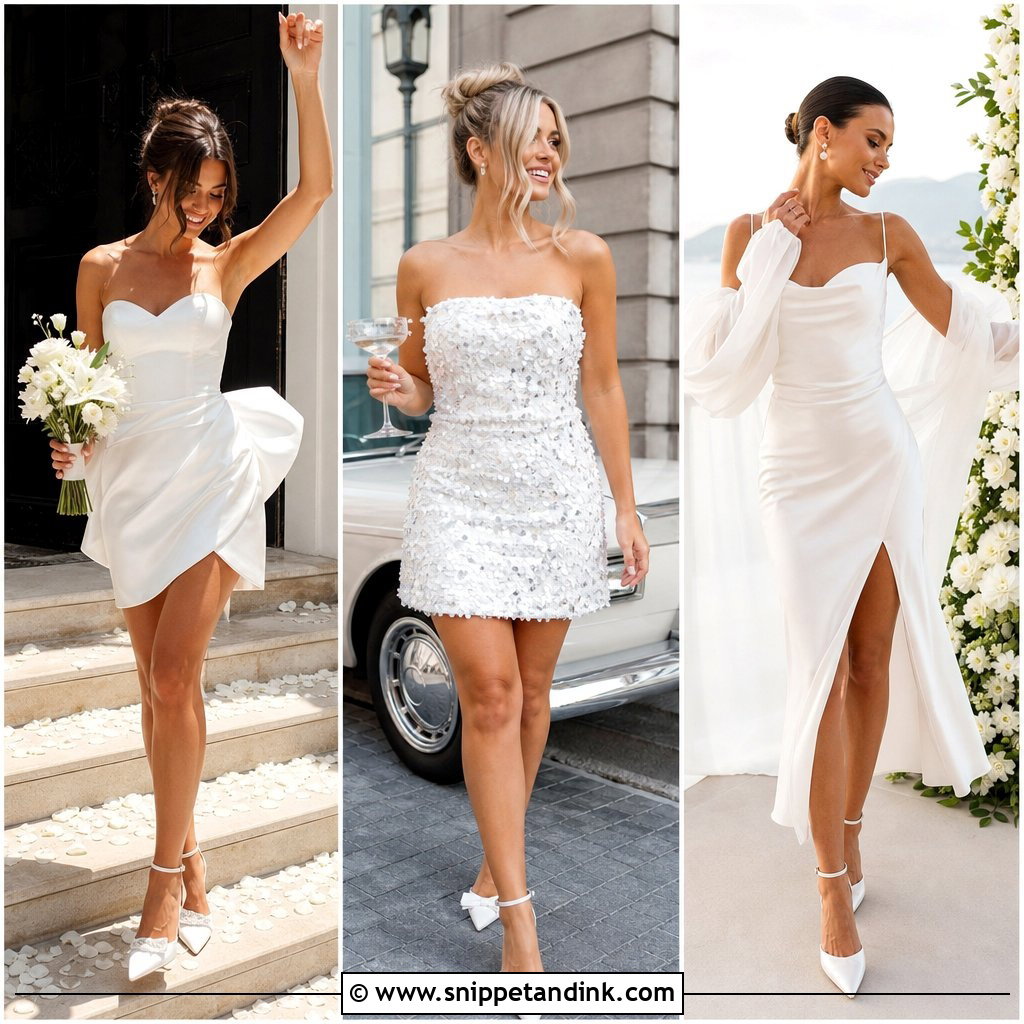
Some brides don’t want a mini or a jumpsuit at all, and a reception gown is the right answer for them. The difference from the ceremony dress should be weight and train: a satin column, a crepe sheath or a soft drape with no heavy skirt. For black-tie and evening weddings this keeps the formality intact. Changing the hair, perhaps from a veil-friendly bun to loose waves, makes it feel like a new look even if the colour is the same. Statement earrings and metallic heels suit it. I’d make sure it has a bustle-free hem, because the whole point is not having to manage fabric anymore.
16. Bride Halter Dress Second Look
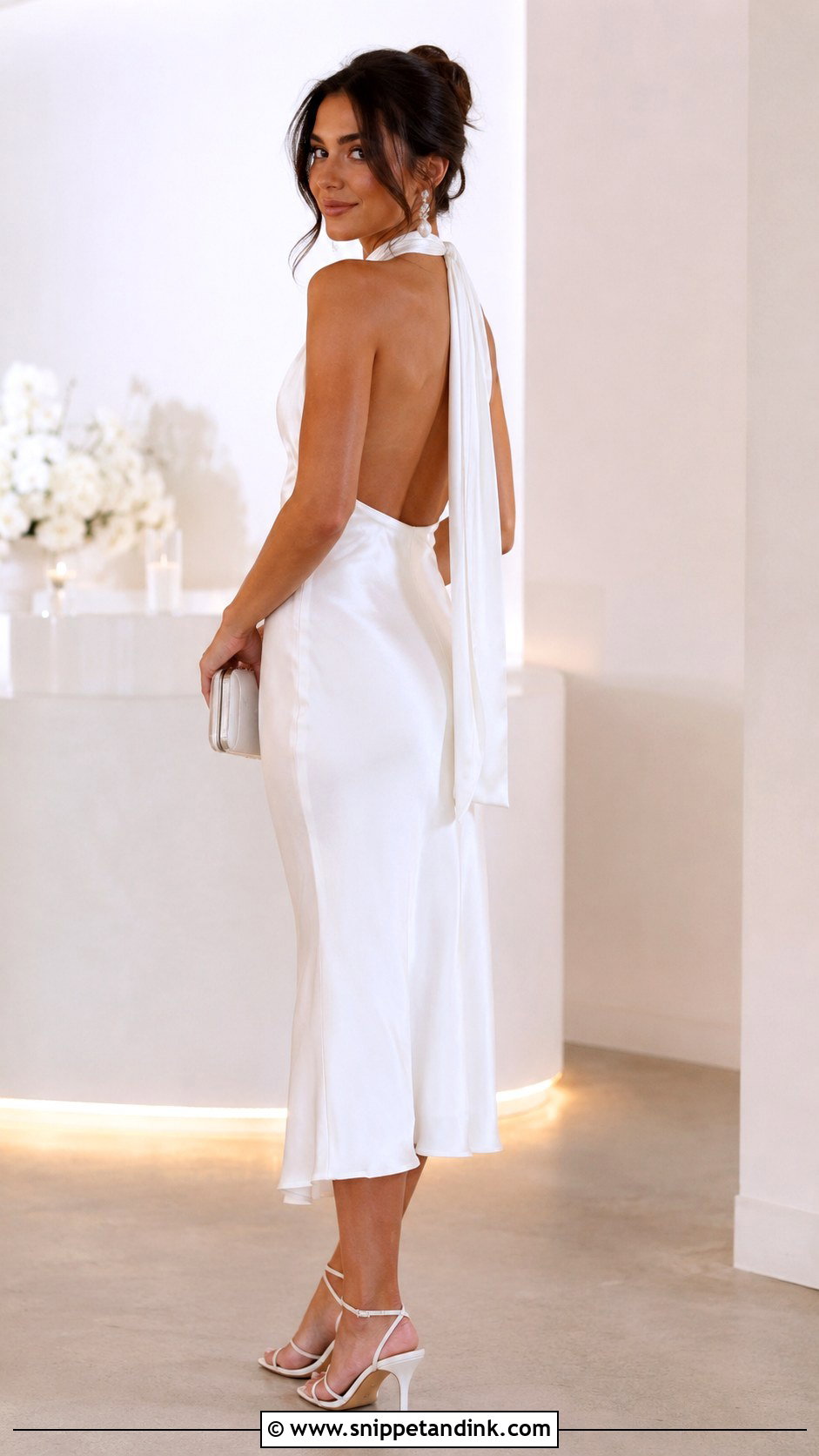
A halter neckline frames the face and shoulders, and it’s my favourite follow-up to a strapless ceremony gown because the shape change is obvious straight away. A satin mini, crepe midi or backless gown all work depending on formality. Since the neckline already does the work, skip the necklace and wear earrings. Strappy heels and a smooth bun keep the neck clear. One honest warning: halters hang from the neck, and a heavy beaded one can give you a sore neck by midnight. A wider tie or a hidden back strap spreads the weight.
17. Bride Off Shoulder Dress Second Look
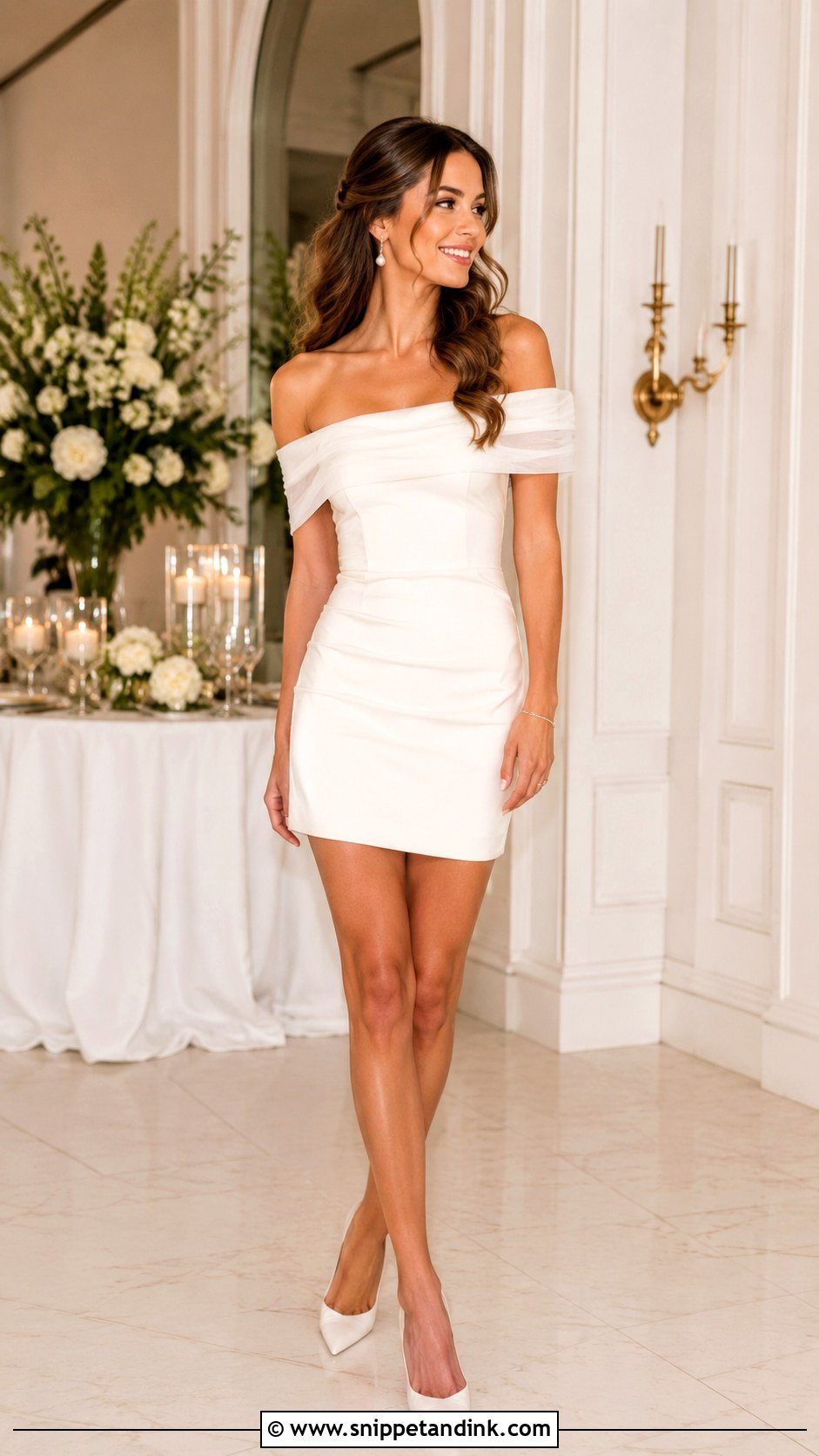
Off-shoulder necklines flatter most collarbones and still give more coverage than thin straps. The fitting issue is arm movement. A tight off-shoulder band pins your arms down, and the first time you lift them to dance, the whole neckline rides up. At fittings I ask brides to raise both arms over their head. If the dress has sleeves, that test matters even more. A fitted mini, a satin midi or a draped crepe gown all suit this neckline. Pearl earrings, soft curls and pointed heels give it a classic finish.
18. Bride One Shoulder Dress Second Look
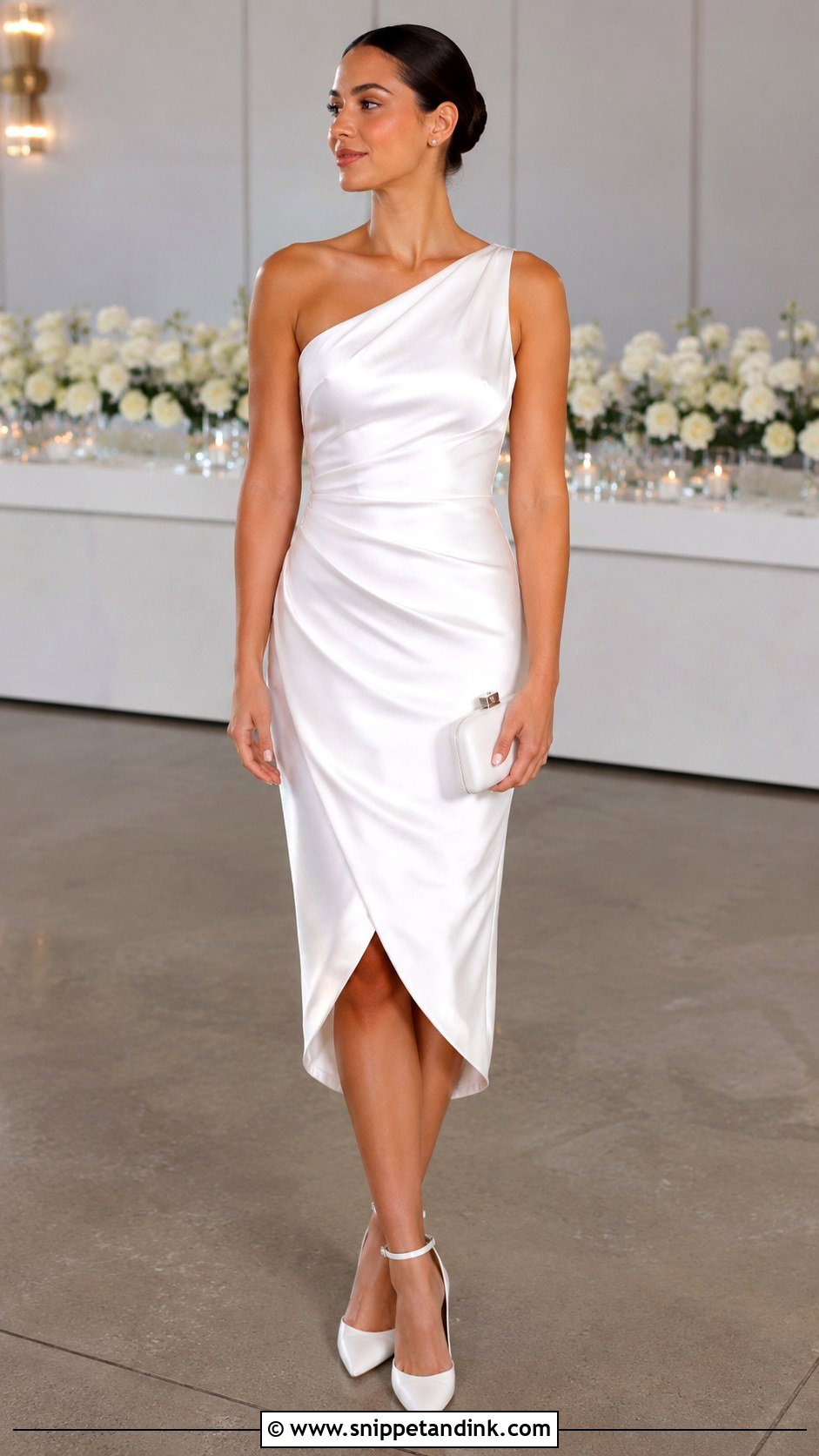
An asymmetric neckline does the decorating for you, so this one needs almost no beading or styling. A white one-shoulder mini feels like an after-party look; a satin midi is more refined. Keep jewellery to one statement earring or small crystal studs. The line across the shoulder draws the eye up, which suits a lot of figures. What I check is the single strap: it needs a grip strip or silicone tape inside, or the bodice slides toward the bare side through the night.
19. Bride Detachable Overskirt Second Look
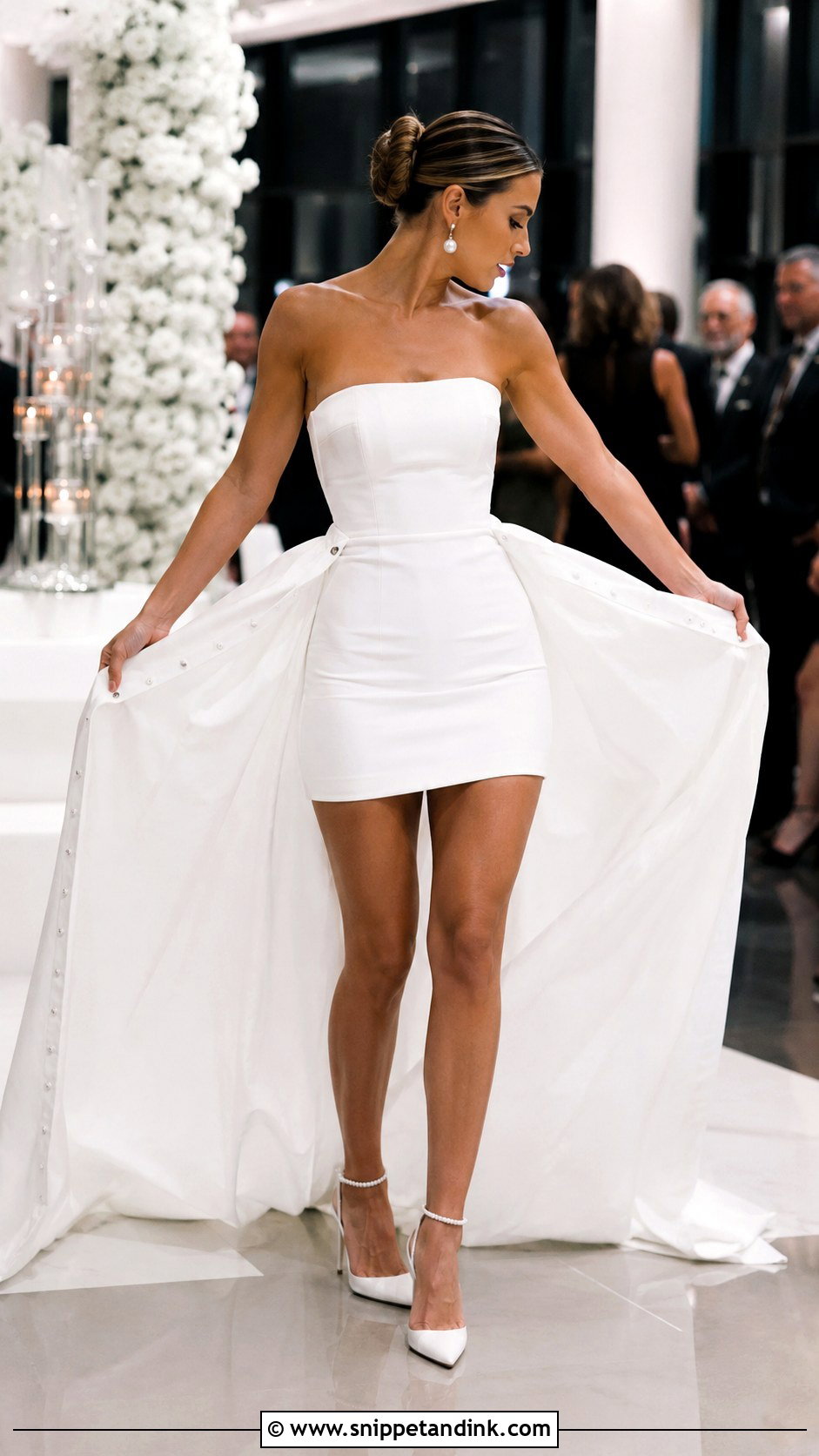
A detachable overskirt gives you two looks without a full change, and I recommend it most to brides with a tight timeline. You wear the skirt for the ceremony, then unclip it to reveal a fitted dress, mini or jumpsuit underneath. How it fastens matters more than anything. Hidden hooks and bars or a snap waistband come off fast; a long line of tiny buttons does not. Practise taking it off with whoever will do it on the day. Shoes need to work with both lengths, so test them against the base dress too.
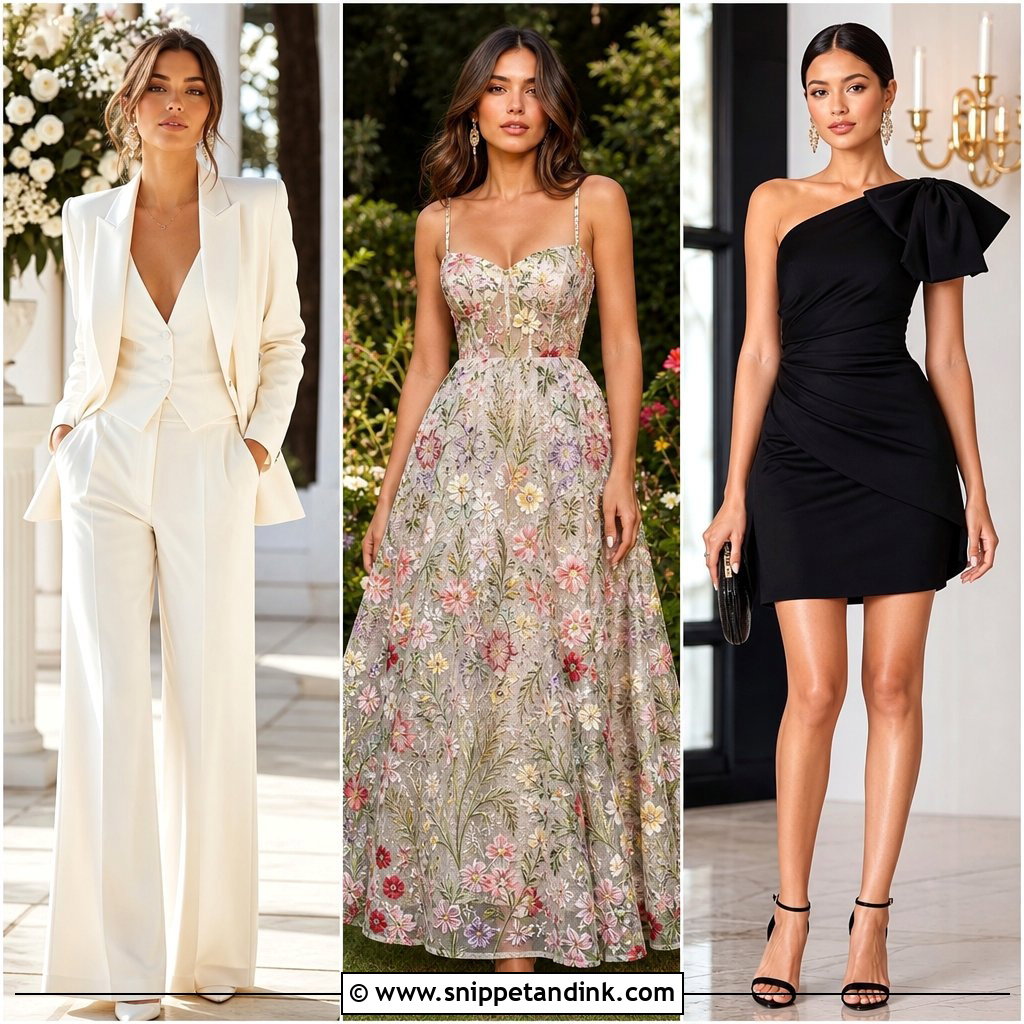
20. Bride Suit Second Look
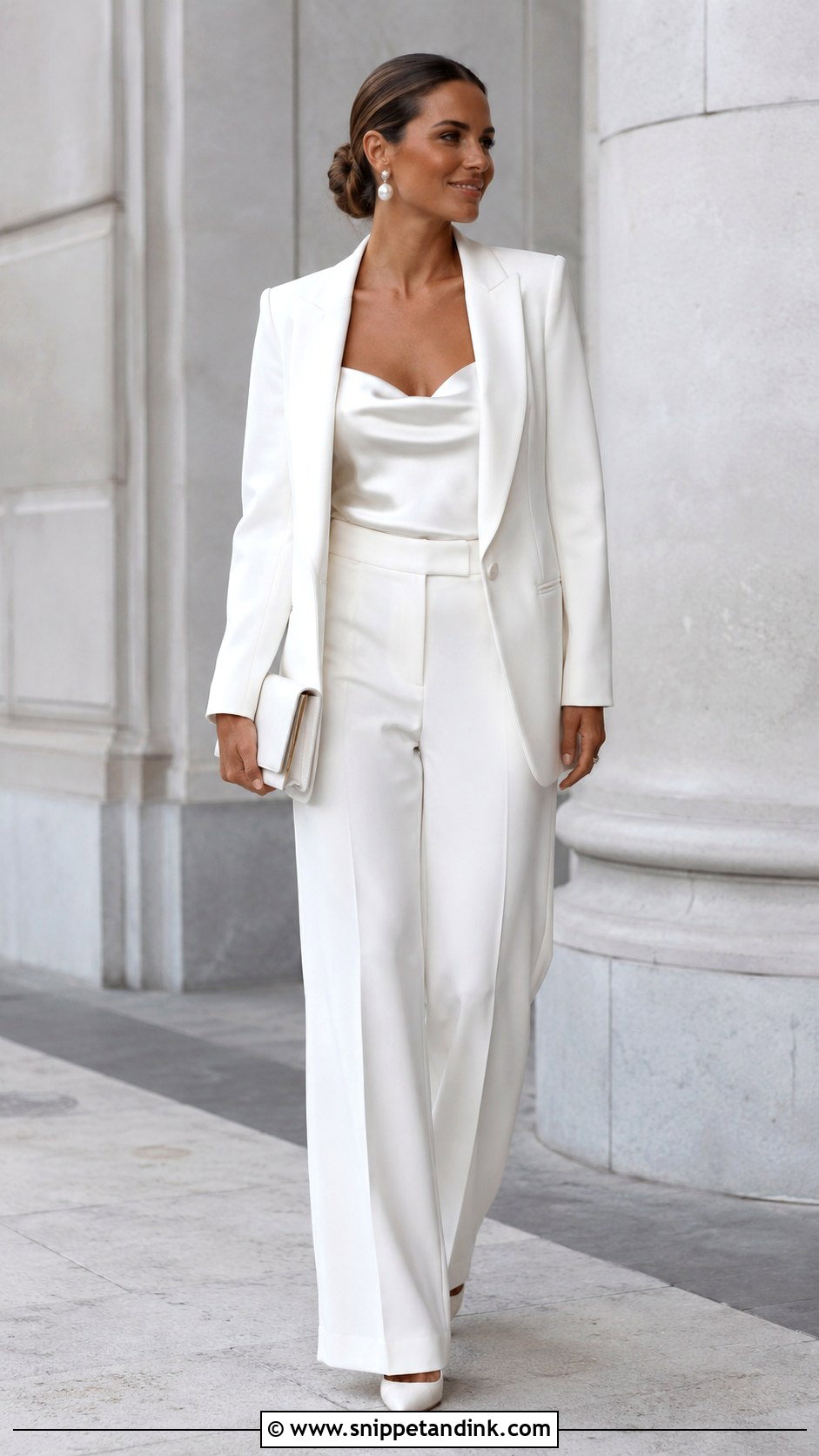
A white suit is a strong look and easy to dance in. Fit is where a suit lives or dies: the shoulder seam should end at your shoulder bone, the sleeves should show a little wrist and the trouser hem should be finished for the exact heels you’ll wear. A fitted blazer with wide-leg trousers and a satin camisole is the safe version. Wearing the blazer buttoned with nothing underneath can look sharp, but only with toupee tape and a blazer cut close enough not to gape when you lean. Pearl earrings, a sleek bun and a structured clutch finish it. It feels most at home in city venues and modern hotels.
21. Bride Wide Leg Pants Second Look
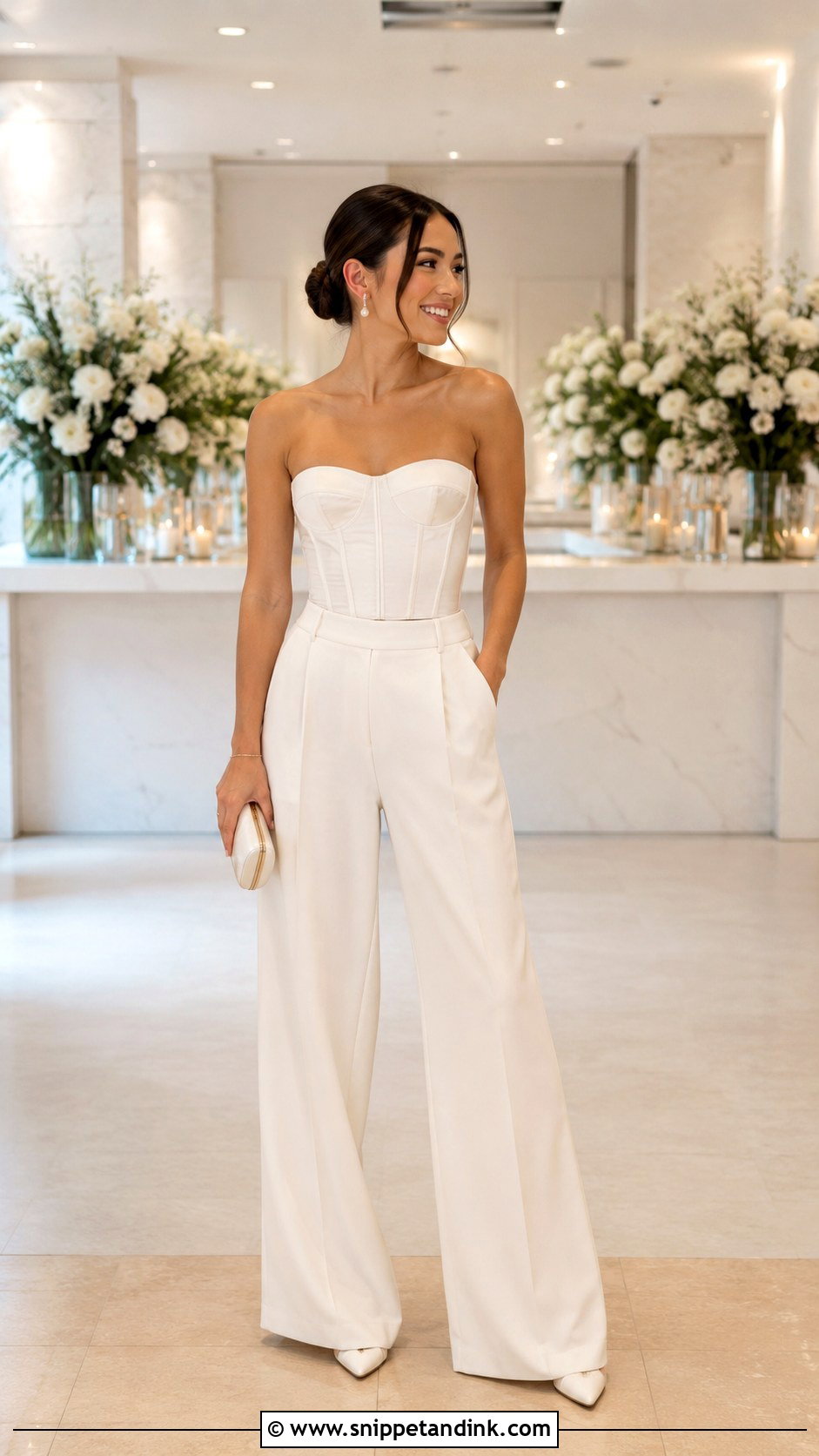
Wide-leg trousers are a quiet hero for outdoor receptions, since you won’t be lifting a hem off grass, gravel or stairs all evening. White or ivory crepe or a fluid satin hangs best. Pair them with a corset top, a beaded blouse or a tailored vest. The hem length is the detail to get right: it should nearly touch the floor in your shoes, so take those shoes to the alteration fitting. Pointed pumps or platforms lengthen the leg line. A small clutch, pearl earrings and a sleek hairstyle keep it refined.
22. Bride Beaded Dress Second Look
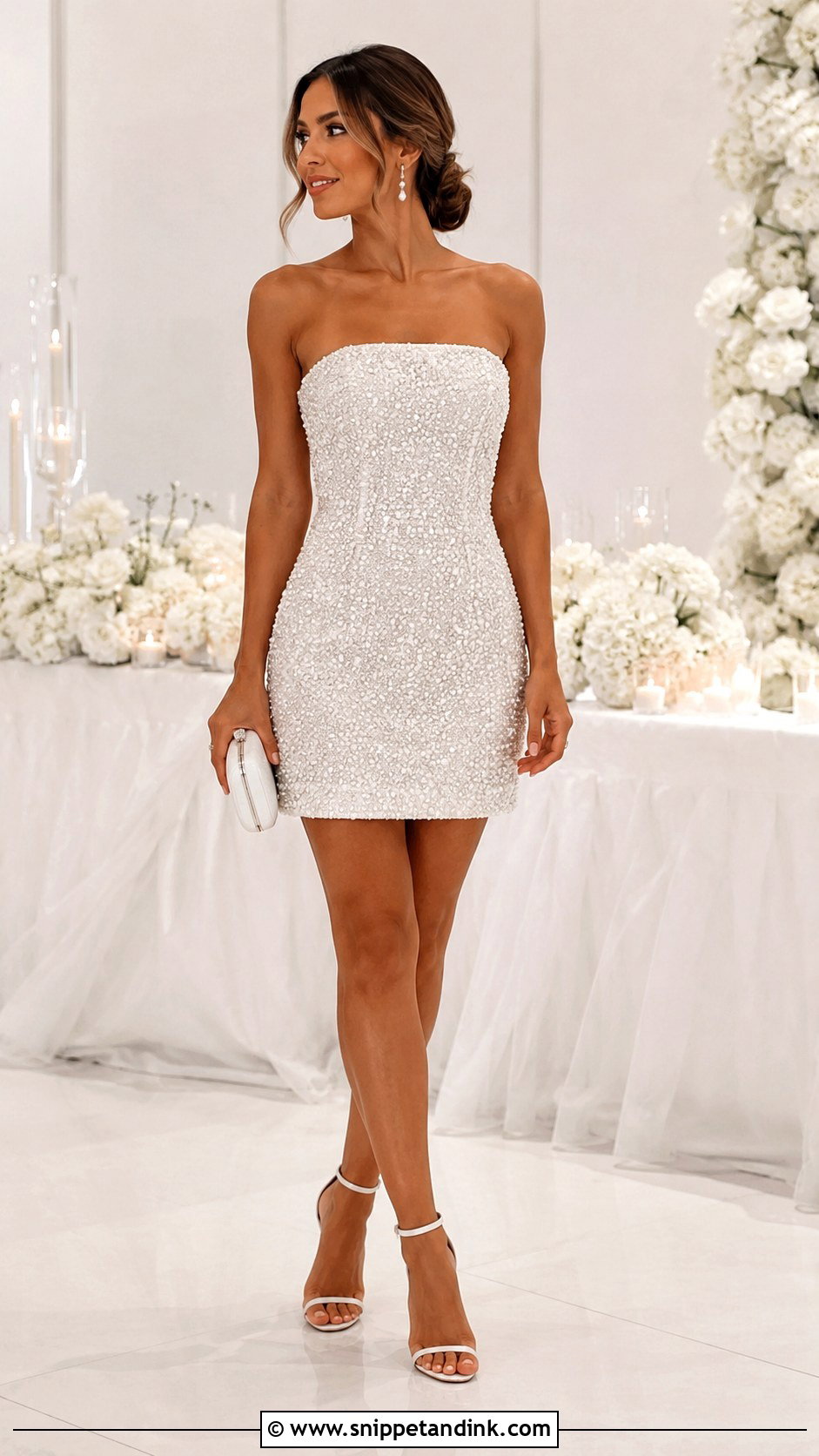
Beading has more depth than sequins and catches light in small points rather than one big flash. Pearl, crystal and floral patterns all read bridal. Because beaded fabric is heavy, check the fit at the shoulders and waist with the dress fully zipped and after you’ve sat for a while. A beaded mini dances well; a midi is more formal; a slim gown suits an evening reception. Ask whether the beads are hand-sewn or glued, since glued beads pop off with heat and movement. Simple heels, a smooth clutch and delicate earrings are plenty.
23. Bride Fringe Dress Second Look
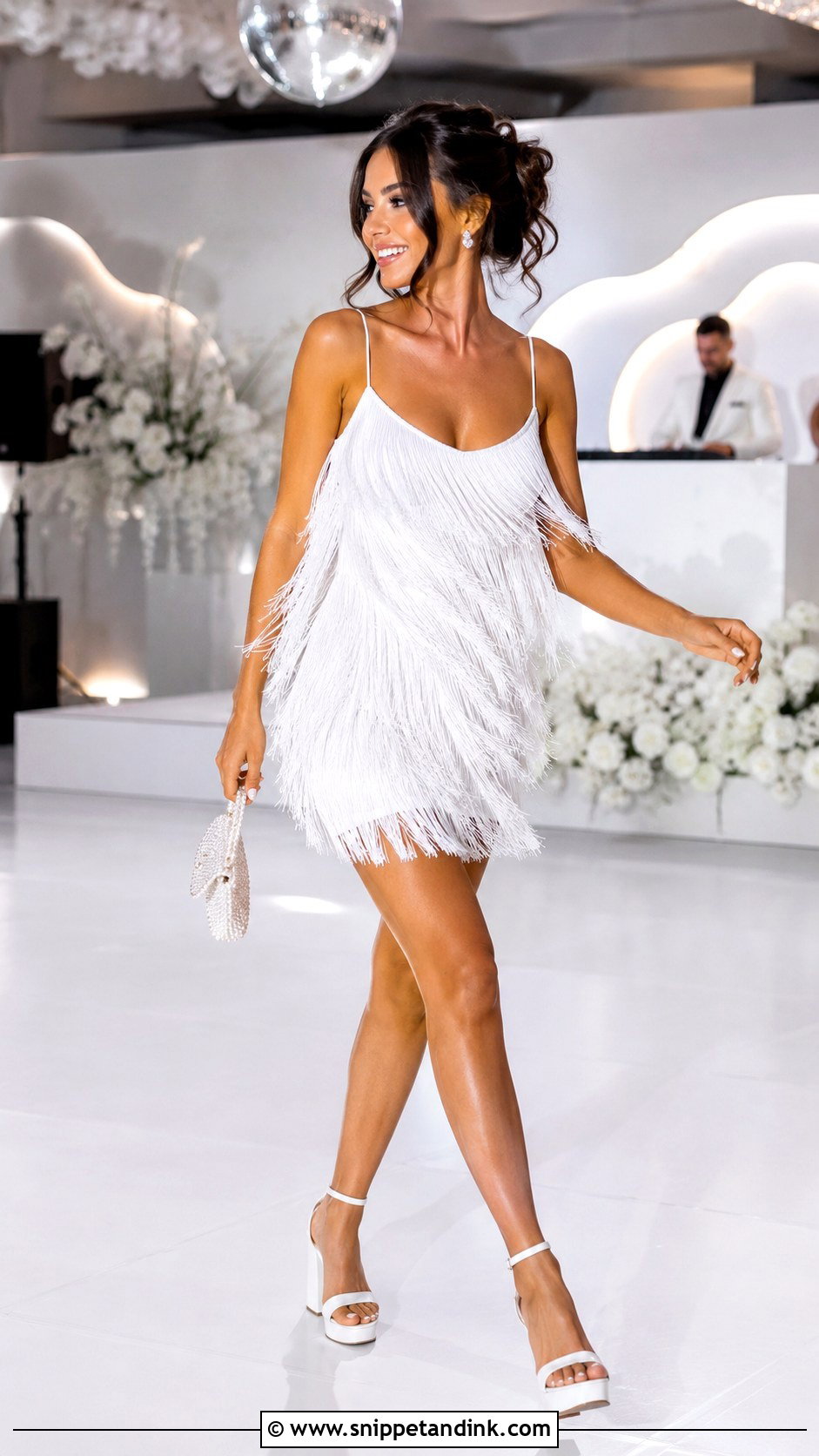
A fringe dress is built to move, and every spin shows it off. I’d pick white or ivory fringe on a mini or midi, and look hard at the lining. Fringe usually hangs off a mesh base that can scratch, so a soft full lining makes it wearable for hours. Keep the shape plain because the strands add enough drama. Fringe also tangles in long loose hair and catches on chair backs, so a high ponytail and a quick shake after sitting help. Block heels, crystal studs and a small bag finish it.
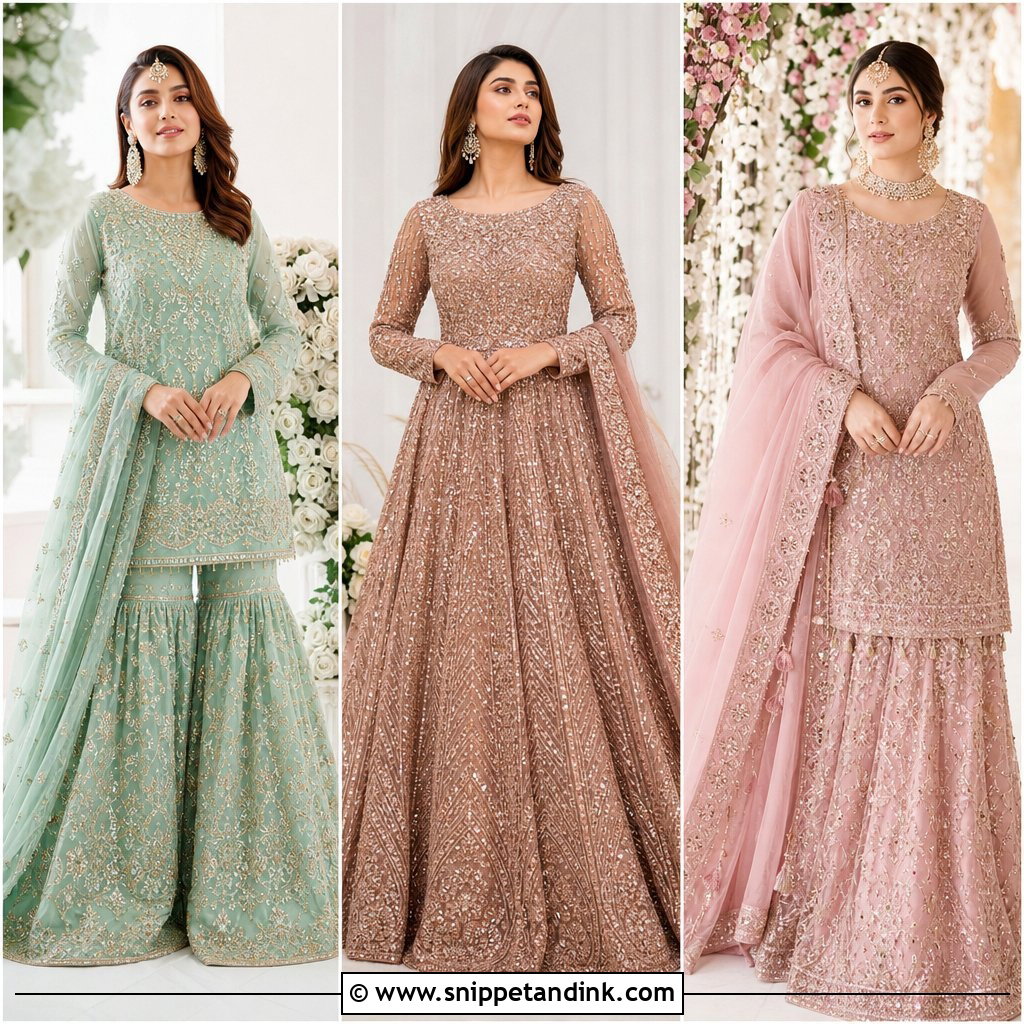
24. Bride Something Blue Second Look
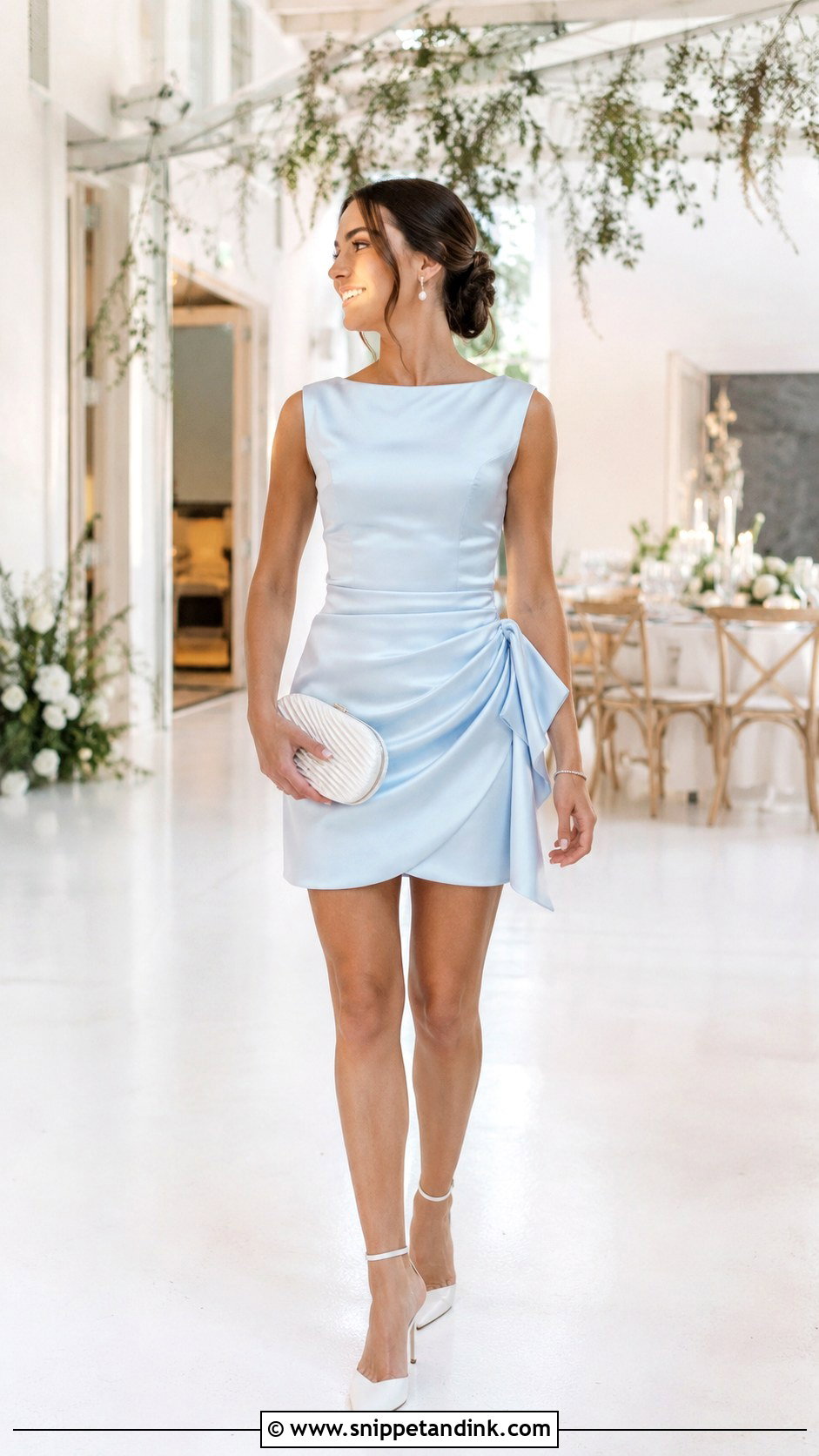
Going blue gives you a colour moment that still carries meaning. Powder blue satin, pale blue tulle or blue beading on white all read soft rather than loud. Try a blue mini with white heels, a blue slip with pearl earrings or a blue midi with silver sandals. My one caution is lighting: pale blue can look grey under warm tungsten reception light, so I like to see the fabric in the evening, not just under shop lights. Keep the accessories bridal so it still connects to the wedding. It works especially well when the ceremony gown was very traditional.
25. Bride Sneaker Second Look
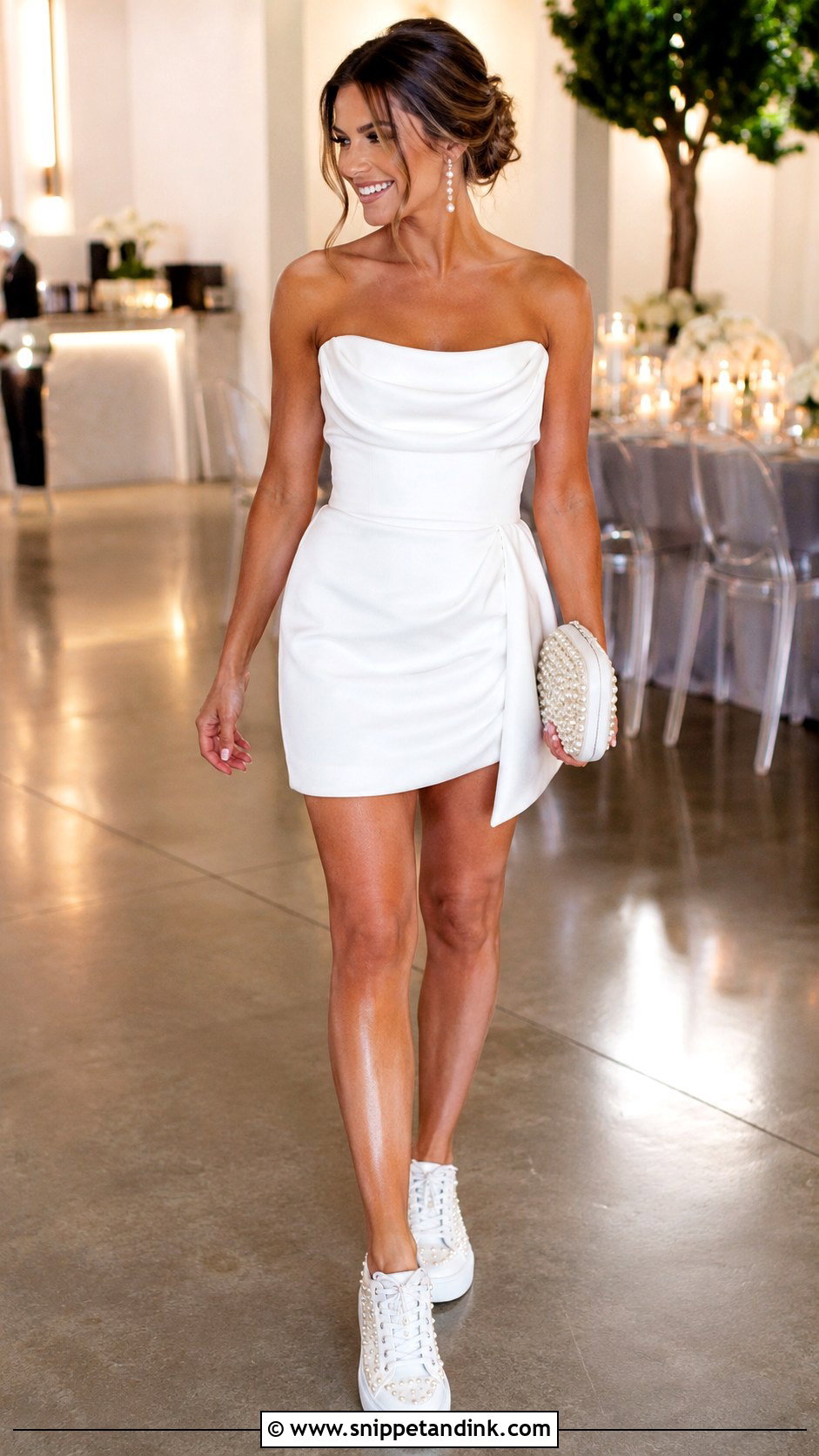
A bridal sneaker second look works best when you build the outfit around the shoes instead of just swapping them in at 10 p.m. A white mini with pearl sneakers, a jumpsuit with clean leather trainers or a tulle mini with embellished low-tops all hold together. Wear them in for a week before the wedding; new leather rubs the heel just as much as new pumps. Choose a clean, structured pair rather than gym trainers. A small crossbody and a fresh hairstyle change finish it, and your feet will thank you at the exit.
Fitting a Dress You’ll Only Wear for Four Hours
A second look often gets one quick fitting at the end, after all the attention went to the gown. That’s where most reception outfit problems start. Short dresses and suits show fit faults more than a full skirt, because nothing hides a pulling seam or a hem that’s crept up.
What I check at that fitting
- Sit test: hem length and bodice comfort after five minutes in a chair.
- Arm test: both arms up, then a hug, to see if necklines or straps shift.
- Shoe test: wear the actual shoes so trouser and dress hems are cut to them.
- Underwear test: bring what you’ll really wear, especially under satin and white crepe.
Leave at least four weeks for small alterations on a ready-to-wear piece and longer for anything custom. Taking in a seam is fast; shortening a beaded or fringed hem is slow handwork.
What Happens to the Gown Once It’s Off
Nobody plans this part, and it’s how gowns end up crumpled in a car boot. Before the day, decide who takes the gown home and when. Hang it in a breathable cotton or non-plastic bag, never sealed plastic, which traps damp from a warm day of wear. Spot any obvious marks on the hem but don’t scrub them; tell the cleaner what they are when you drop it off within a few weeks. Sugar from champagne or cake can turn yellow over time even when it looks invisible.
Your Shoes, Your Venue and the Hour You Change
The right change matches how you want to feel after the vows, and that differs a lot between brides. Some want sparkle for the dance floor; others want a suit or a jumpsuit so they can actually sit and talk. Whatever you pick, wear the full outfit at home once before the wedding with the shoes, jewellery and hair plan, and move in it: sit, hug, raise your arms. If it passes that test, it will look good in the photos too, because you won’t be fussing with it.
You'll Like These Ideas:


Leave a Reply