
Spring is a generous season for bridal hair and a fussy one. The light is soft, there are flowers everywhere to borrow from, and texture looks natural against a garden backdrop, but the weather can swing from a damp morning to a warm afternoon within one wedding day. The styles below run from cascading curls to sleek buns and braided crowns, and for each one I’ve written what it takes to hold, which hair it suits, and where I’d change it for a veil, a breeze or a long evening.
What Spring Weather Does to a Curl
Spring is the season I pack the most backup pins. Mornings are often damp, afternoons can turn warm, and outdoor ceremonies come with wind. Moisture in the air is what makes a curl drop: hair absorbs it, the shape that heat styling set starts to relax, and a tight morning curl is a loose wave by the reception.
How much your hair fights back decides most of my plan, so I prepare differently by texture.
Fine or Silky Hair
I prep with a light mousse at the root and a setting spray through the lengths, curl tighter than the finished look needs, and let each curl cool pinned in a coil before touching it. A half-up or full updo will outlast a fully down style. Grip comes from backcombing hidden under the top layer, not from more hairspray.
Thick, Heavy or Long Hair
Here weight is the problem rather than slipperiness. A heavy bun pulls on its pins all day and can start to ache by evening, so I anchor it to a small hidden ponytail. For styles worn down, I aim for waves rather than tight curls, because gravity will loosen them anyway.
Natural Curls and Coils
Humidity is less of an enemy, since defined curls already work with moisture. What matters is setting your curl pattern the day before or early that morning, then leaving it alone and using a hold product suited to your curls instead of brushing anything out.
1. Half Up Half Down Wedding Hair With Waves
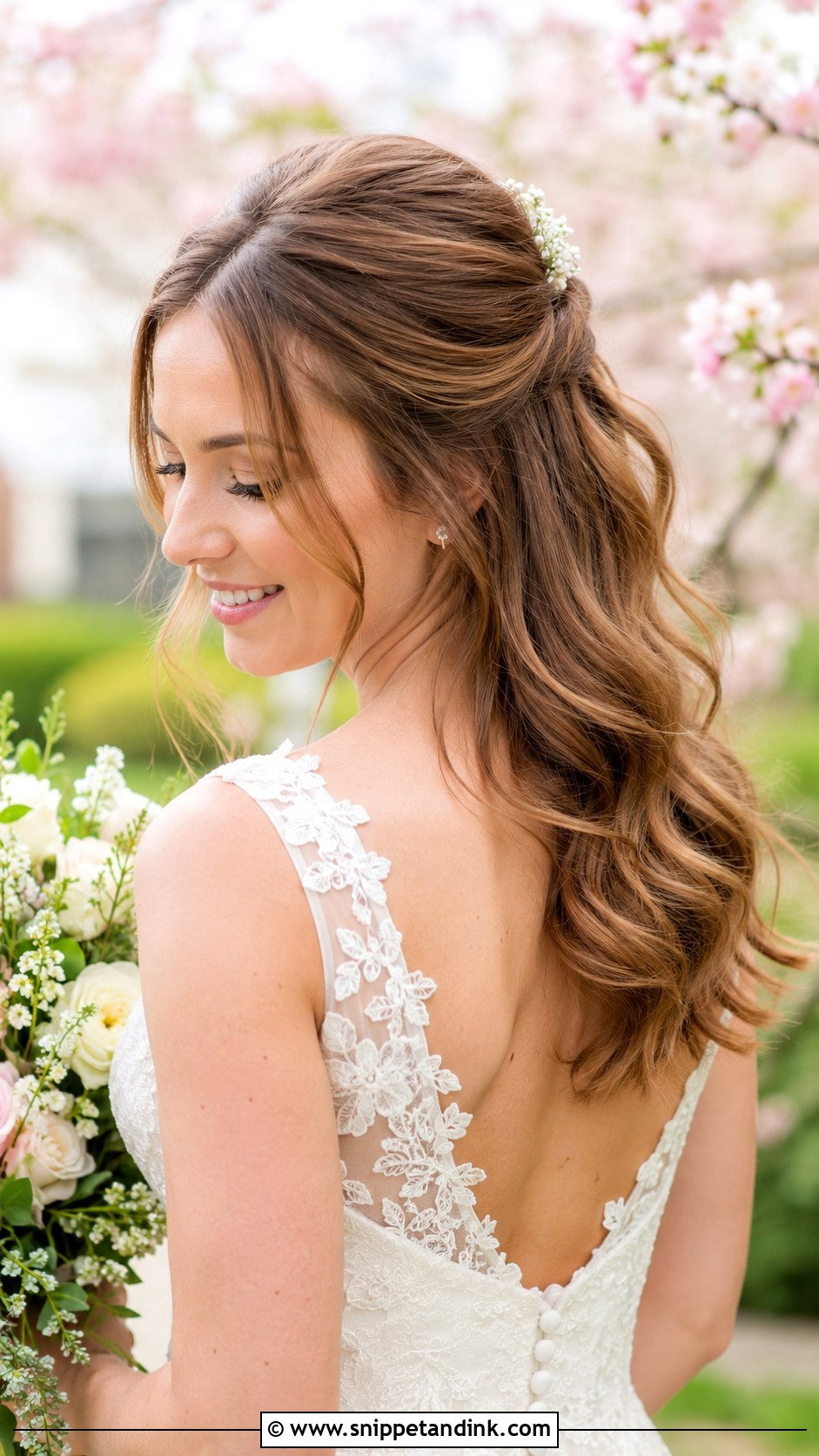
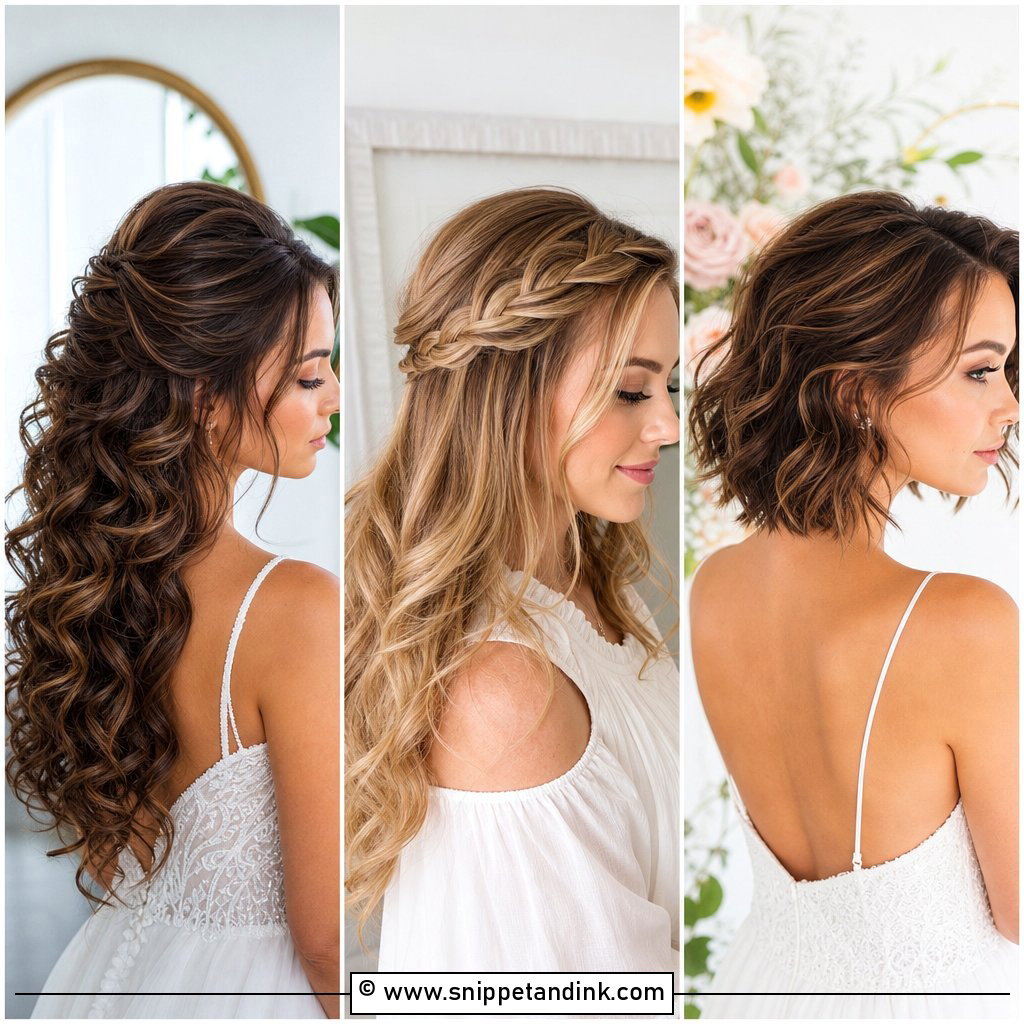
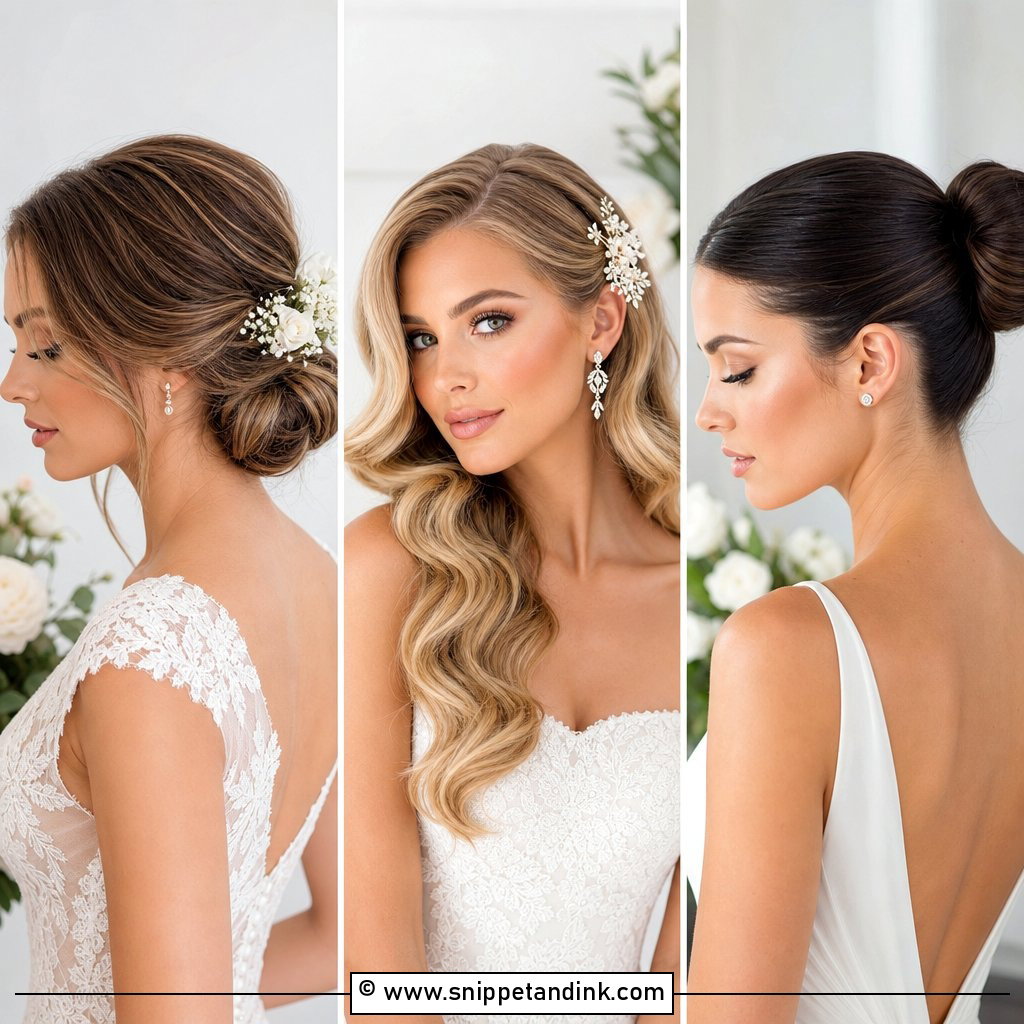
Half up, half down is the style I’m asked for most, because it gives you the length of hair worn down with the security of an updo at the crown. The top section comes back and is pinned, which keeps hair out of your eyes, and the waves fall over the shoulders. That pinned section needs a little backcombing at the base so the pins have something to grip; without it, the top slides loose within a few hours on silky hair. A crystal comb sits neatly over the pinning point and hides it. It suits most face shapes and any length from the collarbone down.
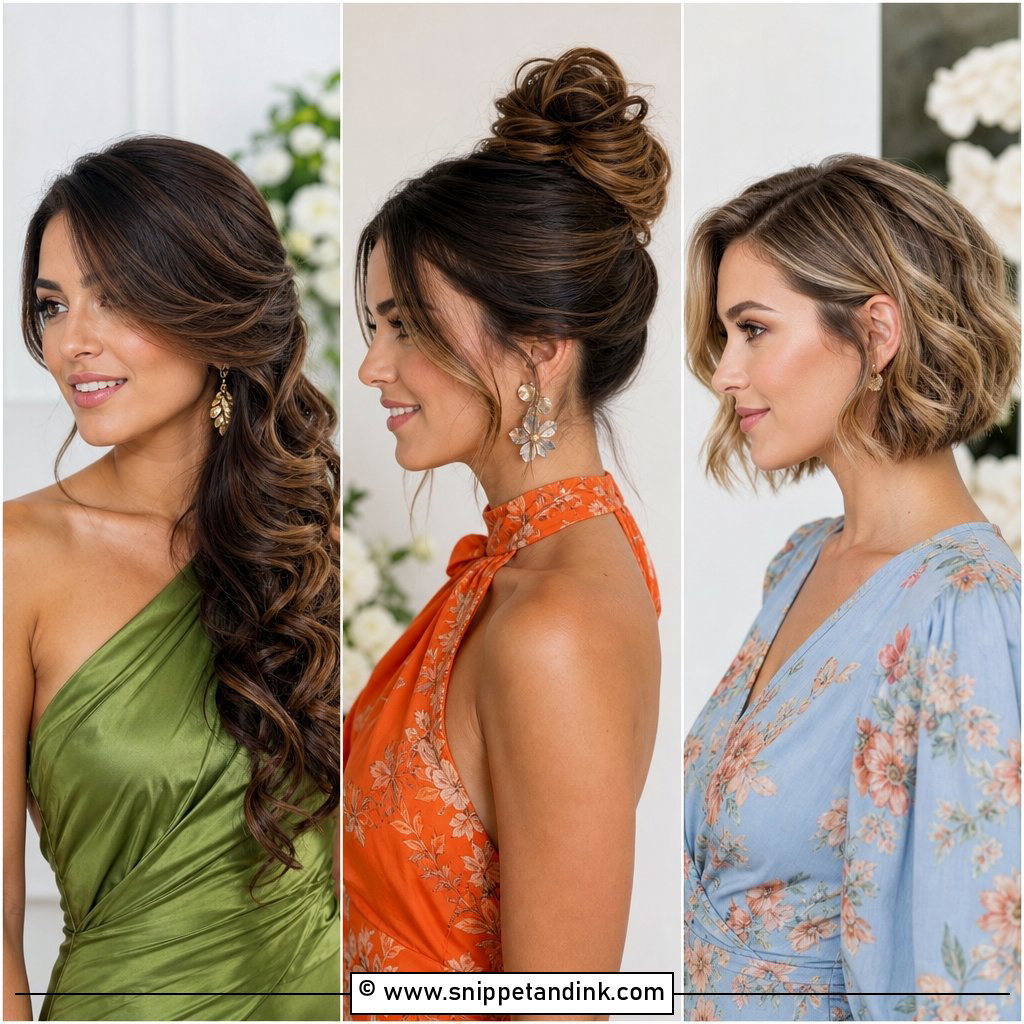
2. Messy Bridal Bun With Loose Strands
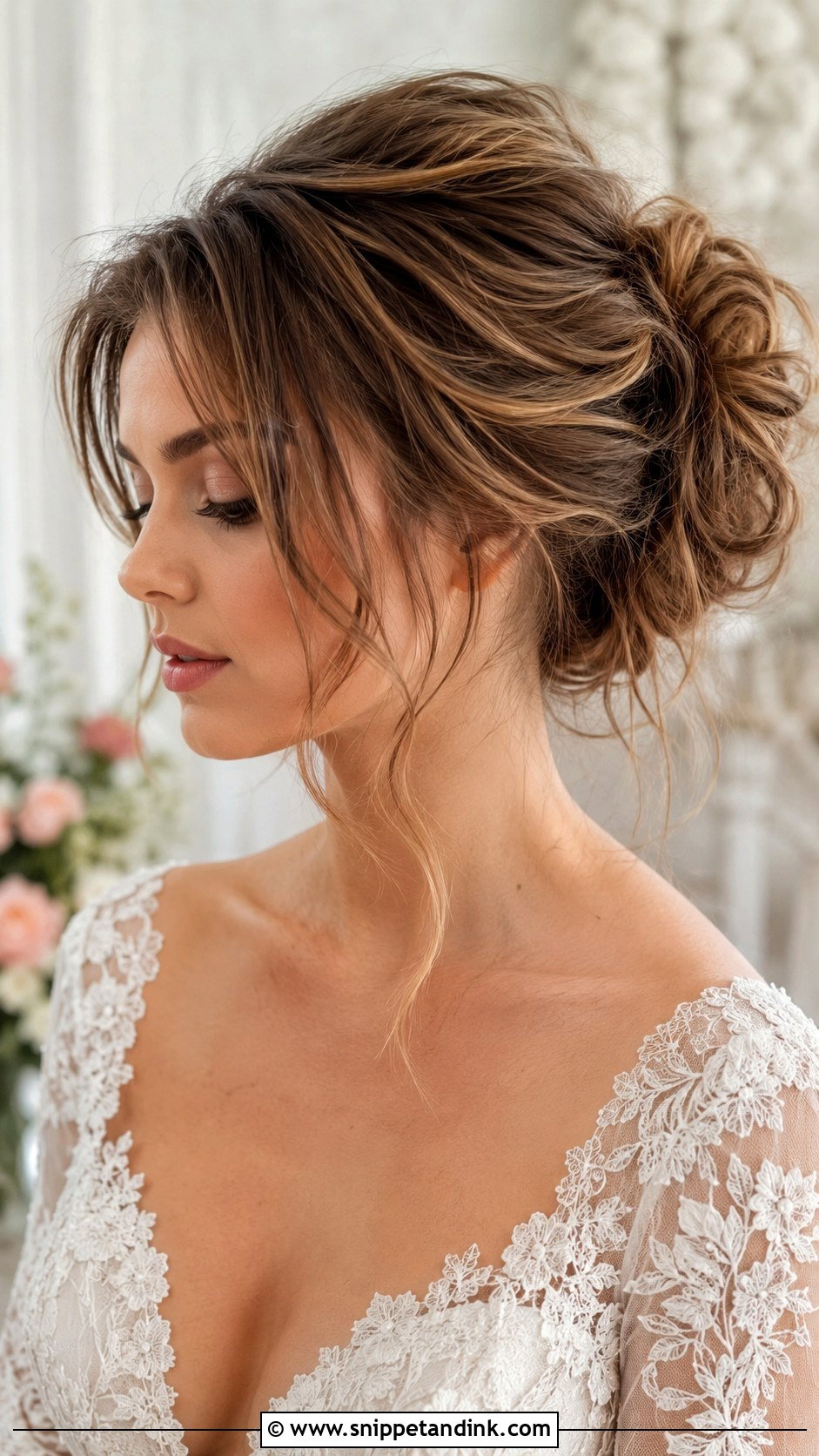
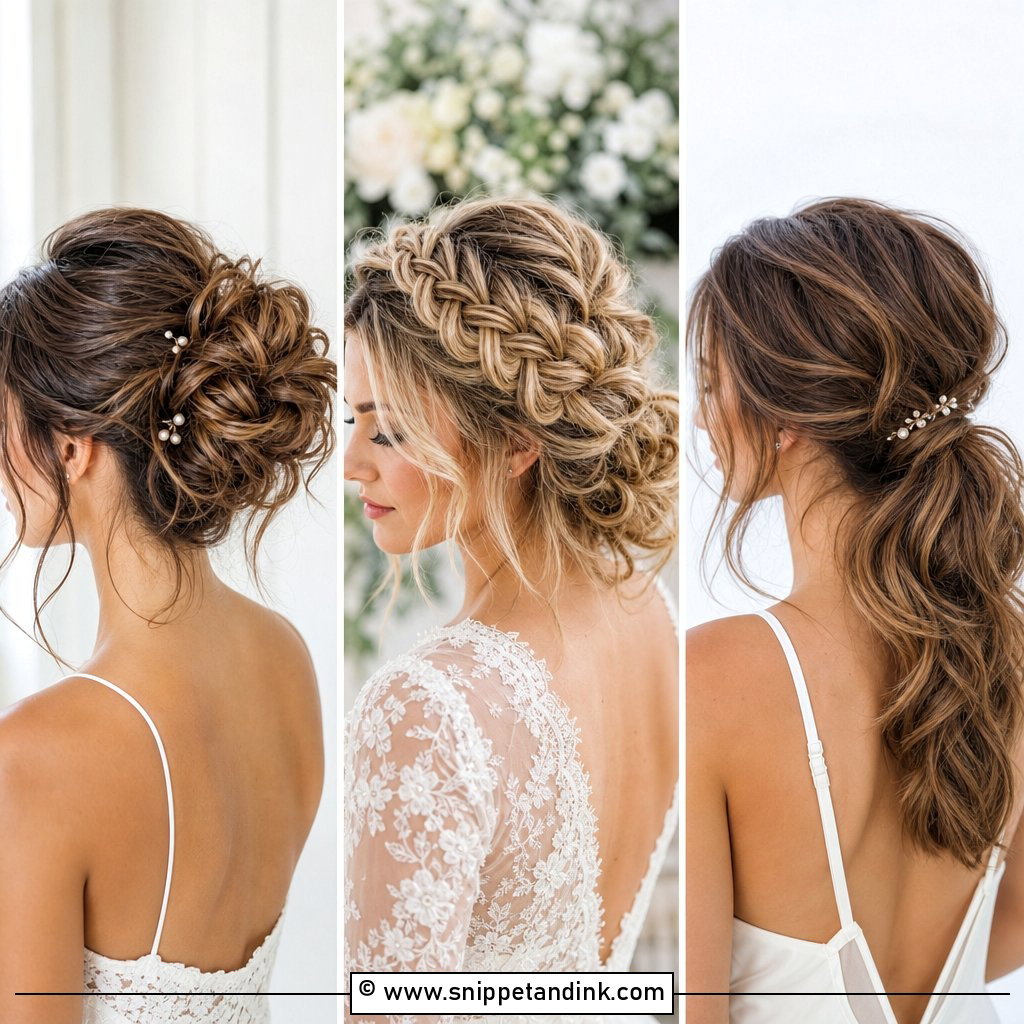
A messy bun only looks careless. Instead of a tight, structured knot, I build it from loose sections pinned one at a time, so the volume is real and the texture won’t collapse by dinner. The strands around the face are placed, not left to chance, and I curl them so they fall in a deliberate direction. On fine hair I work texture spray through before starting, or the bun ends up small and flat. With no tension at the scalp it stays comfortable all night, and it leaves a long neckline or statement earrings on show.
3. Floral Crown Wedding Hairstyle
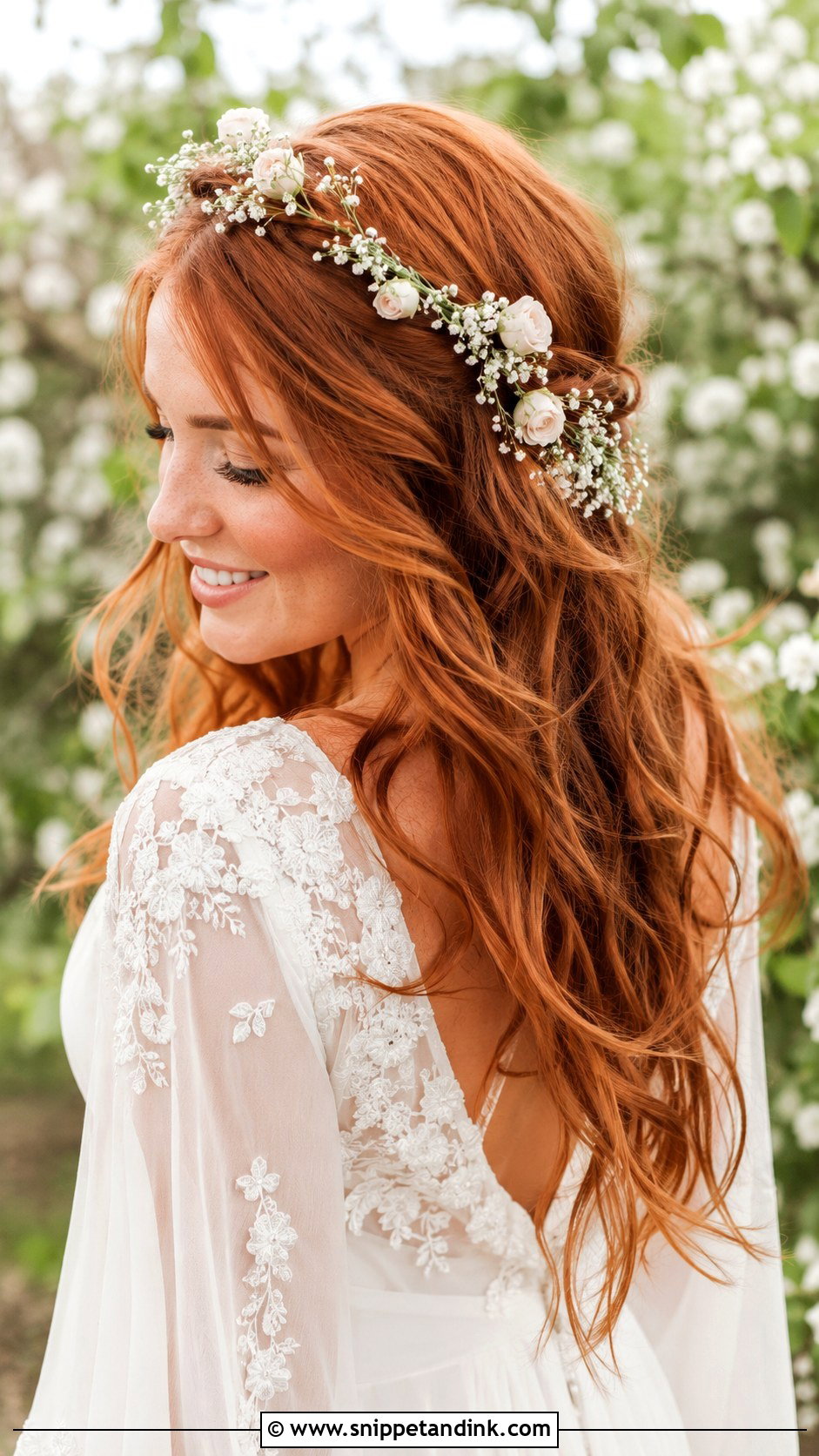
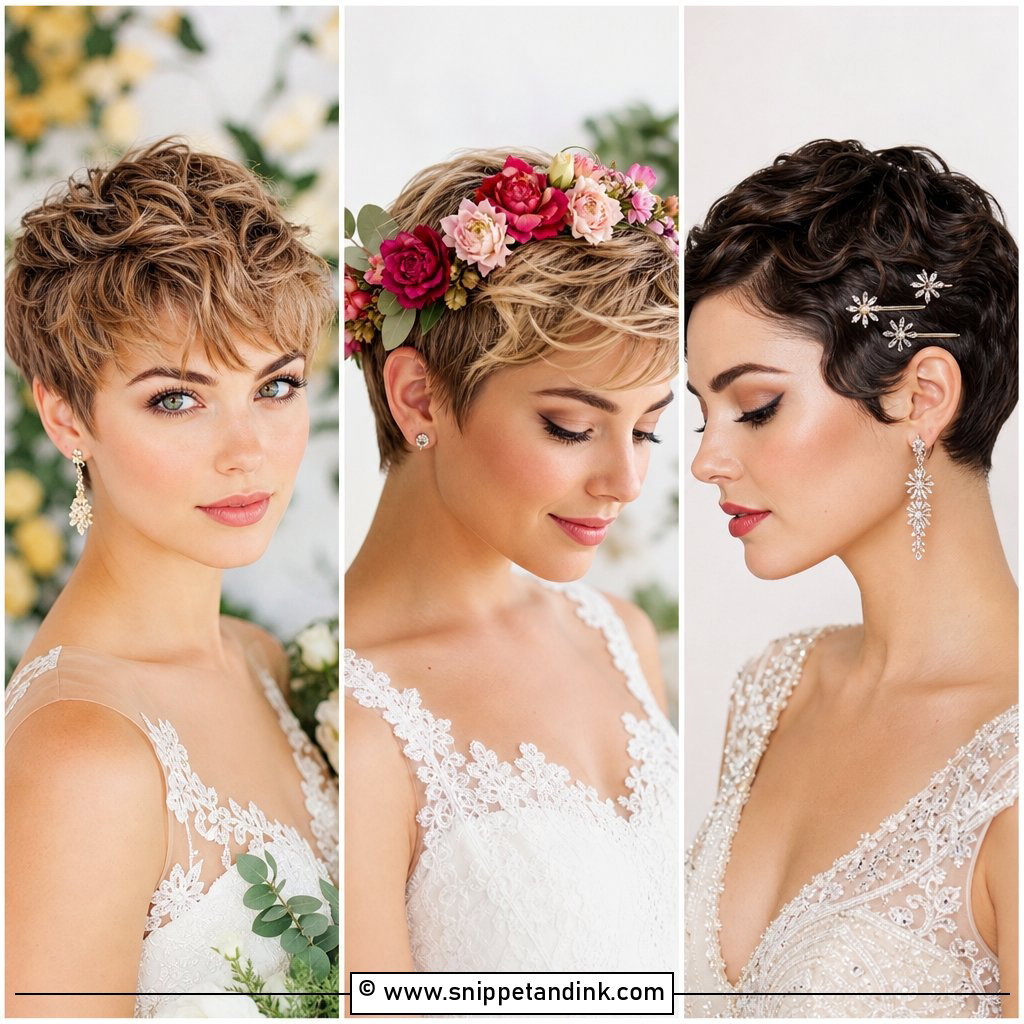
A floral crown changes the whole look depending on scale. Lush blooms read boho and dramatic, while tiny buds threaded through waves look much quieter. Either way, the florist builds it on a wire base and I secure it with pins crossed underneath, through the hair, at both sides and at the back, so it doesn’t ride up every time you move your head. It sits best on loose hair, braids or a half-up style. Matching the flowers to your bouquet ties the photos together. Baby’s breath, ranunculus and small roses are the usual picks, though how long each lasts out of water varies a lot, which I cover further down.
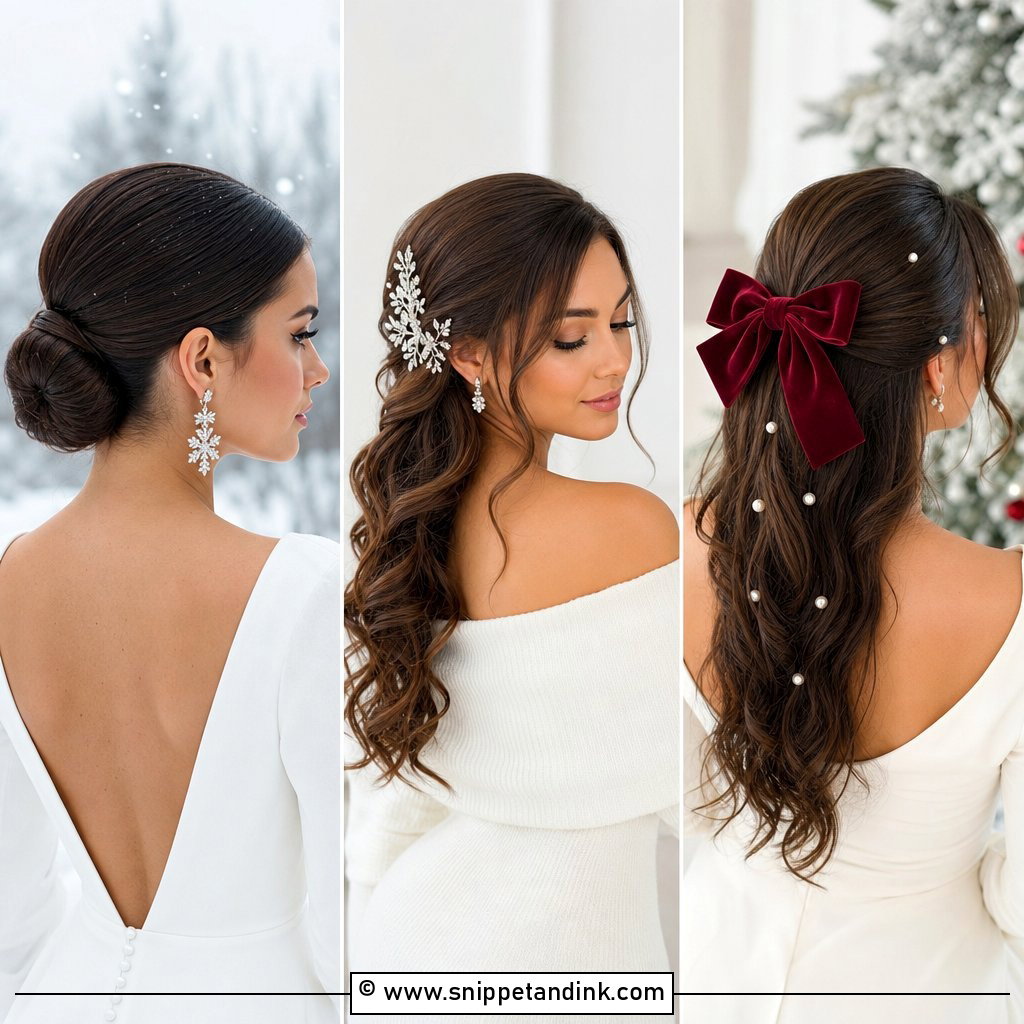
4. Sleek Low Bun For Brides
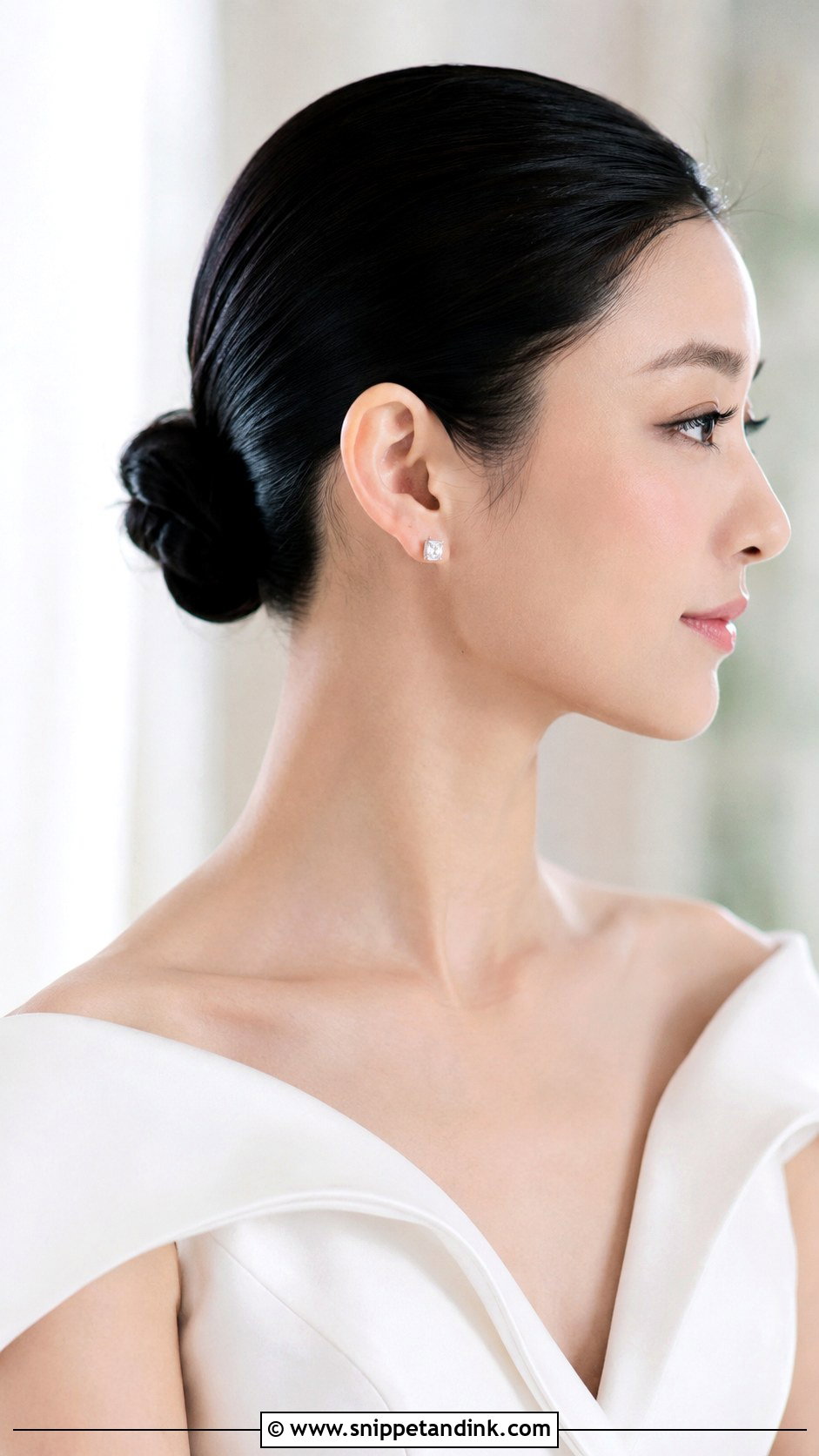
The sleek low bun is the most exacting style on this list, because there’s nowhere to hide. Every section is smoothed back with a bristle brush and a little gel or cream, then wound into a knot at the nape. Any bump or flyaway shows, so I usually blow-dry the hair straight first even if it’s naturally wavy. It shows off the jawline and lets statement jewelry do the talking, which is why it pairs so well with structured gowns and city weddings. One honest warning: a tight, slicked style can make a sensitive scalp ache after many hours, so ask for moderate tension.
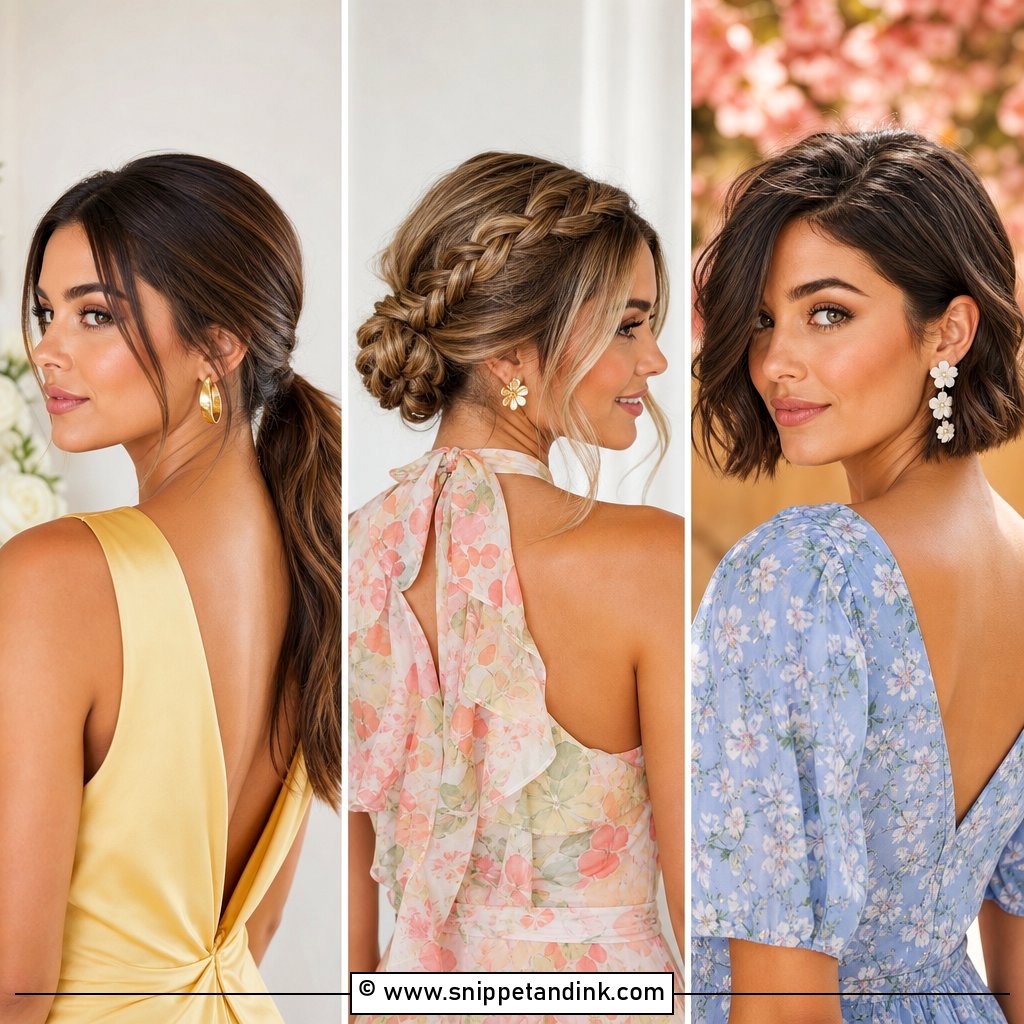
5. Braided Updo Wedding Hairstyle
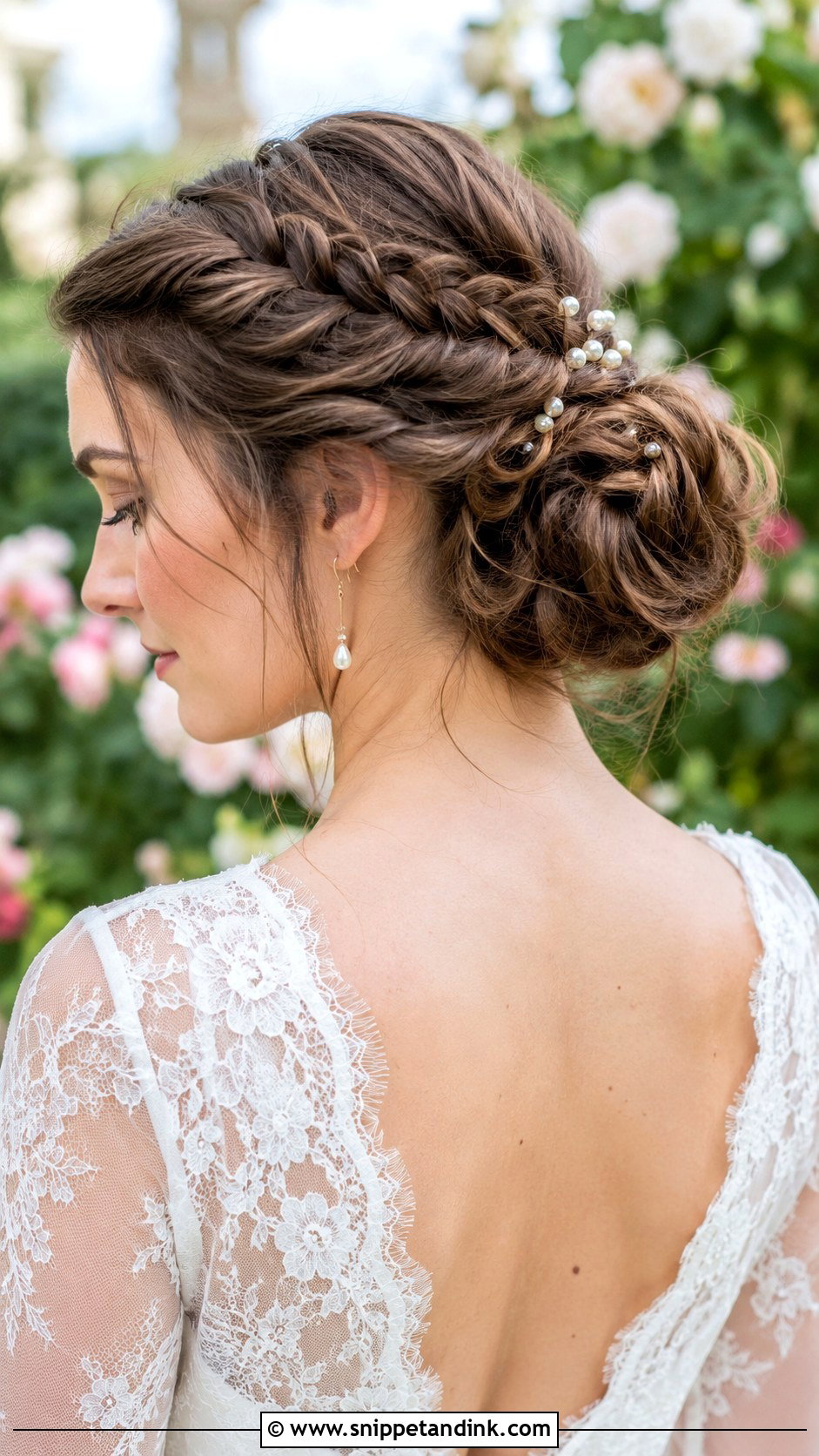
Braids are what make an updo last. Each woven section holds its own shape and gives the pins something solid to anchor into, so a braided updo is one of the most secure styles I can offer for a long, warm day. A classic three-strand and a fishtail look quite different: the first is bolder, the second finer and more detailed. I gently pull the edges of each braid outward so it looks fuller from a distance. It suits long and medium hair, and small flowers or pearls can sit along the braid line.
6. Soft Cascading Waves For Long Hair
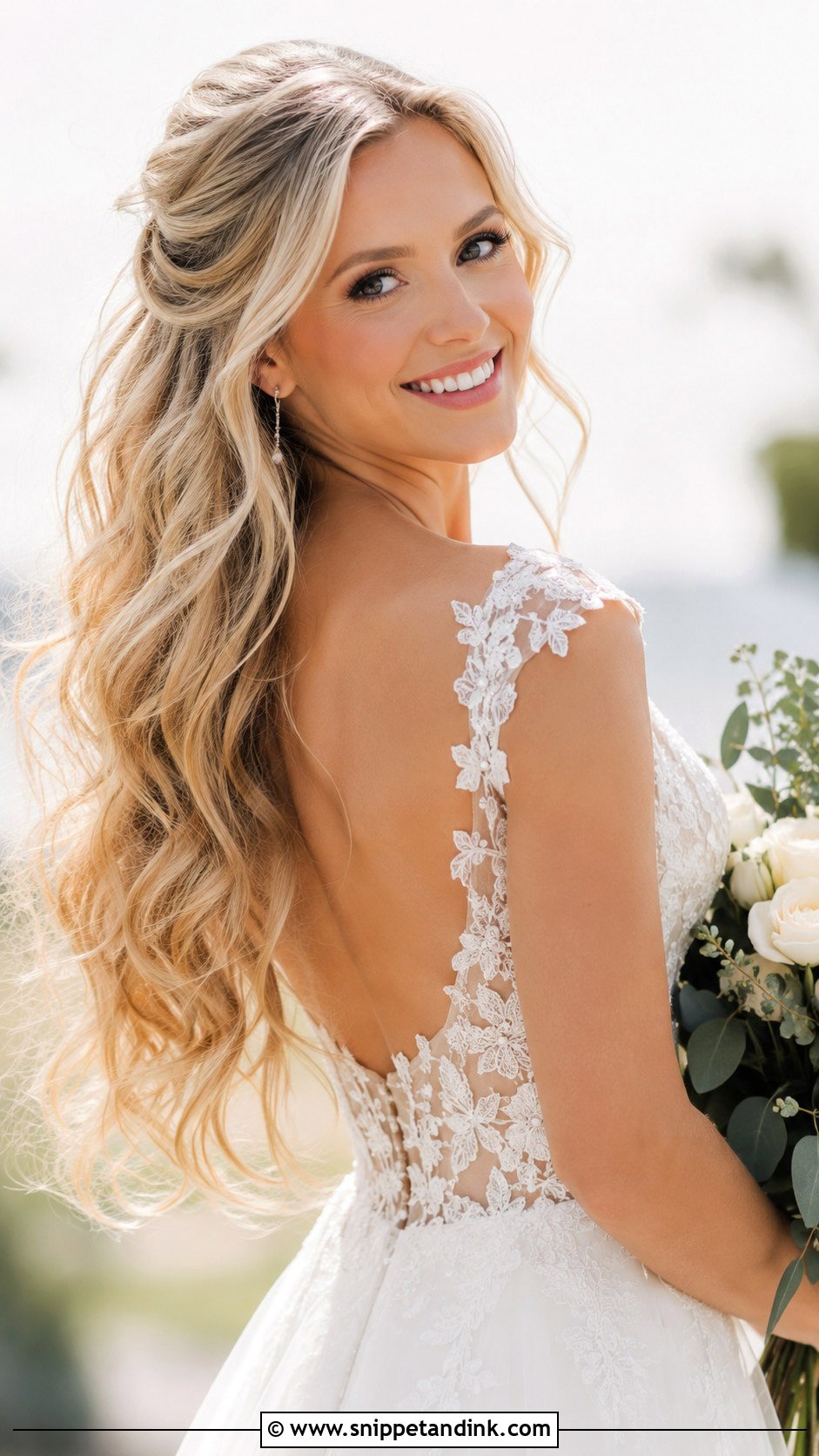
If you want to wear long hair down, soft cascading waves are the natural choice, but they’re also the style most at risk in spring humidity. I curl with a large barrel, pin each curl in a coil to cool, then brush them out into waves only at the very end so they keep their spring. A veil, floral pin or side clip all work with it. A center part looks modern, a deep side part adds volume. If your hair drops curl easily, I’d plan to pin one side back for the ceremony and release it later.
7. Half Up Bridal Hairstyle With Braids
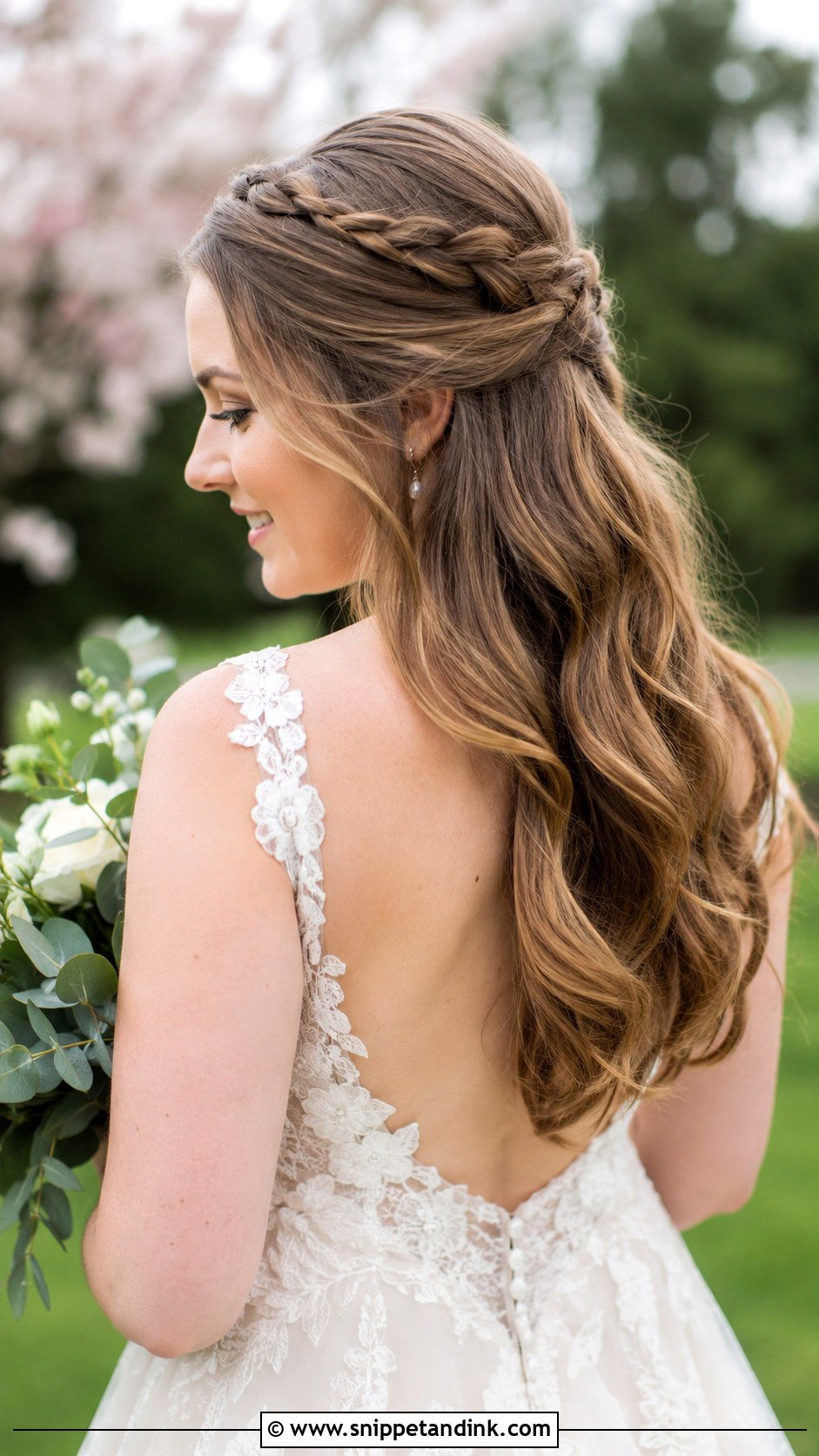
Adding braids to a half-up style gives the crown texture and solves a practical problem too: braids hold the top section back far better than pins alone. Two small braids taken from the temples and joined at the back of the head is the simplest version, with the rest of the hair falling in waves. Tiny blooms or pearl pins thread into the braid easily. It frames the face and suits boho and garden weddings, though on heavily layered hair the braids can’t catch every short piece and some will escape.
8. Classic Chignon Wedding Updo
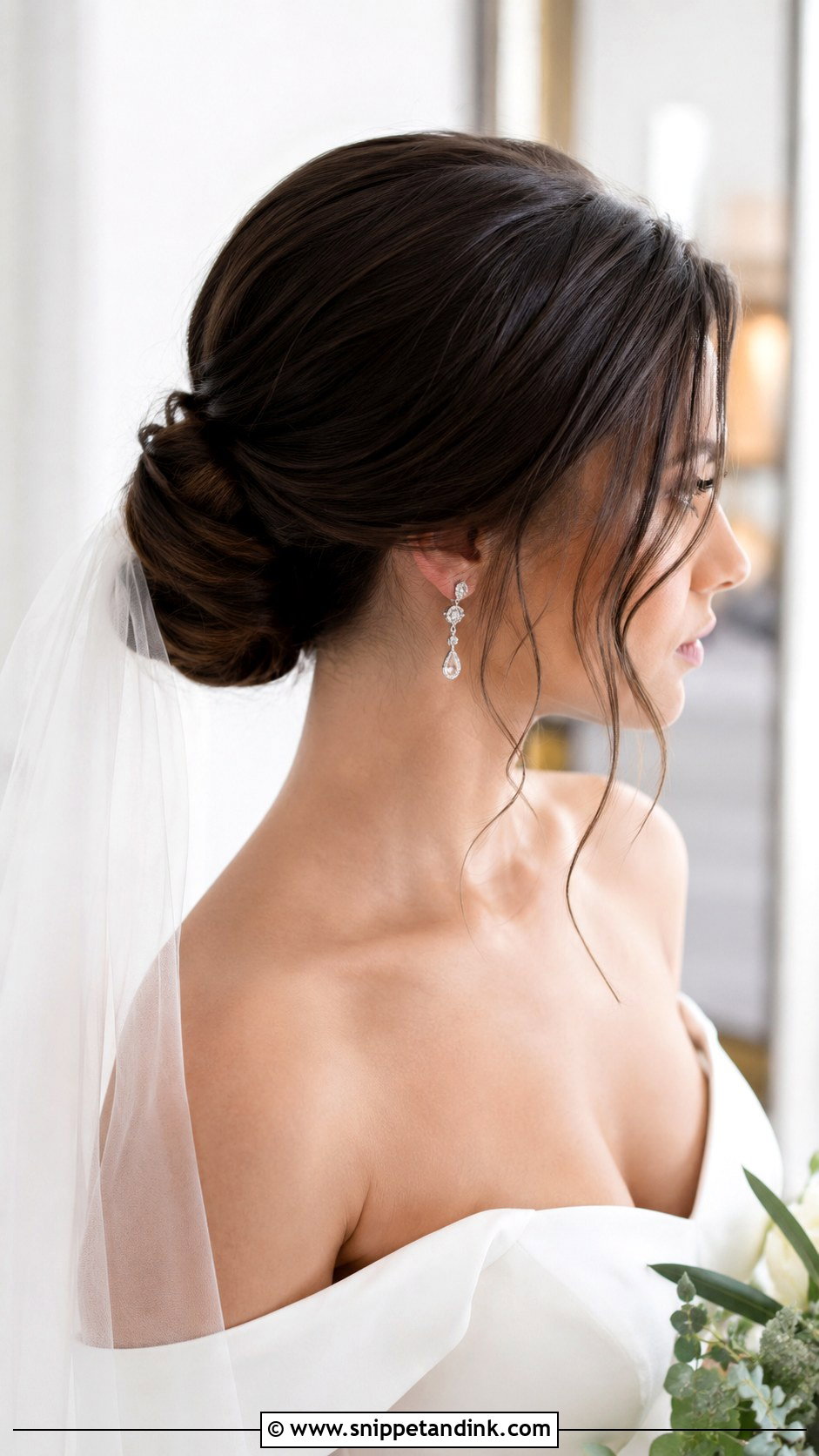
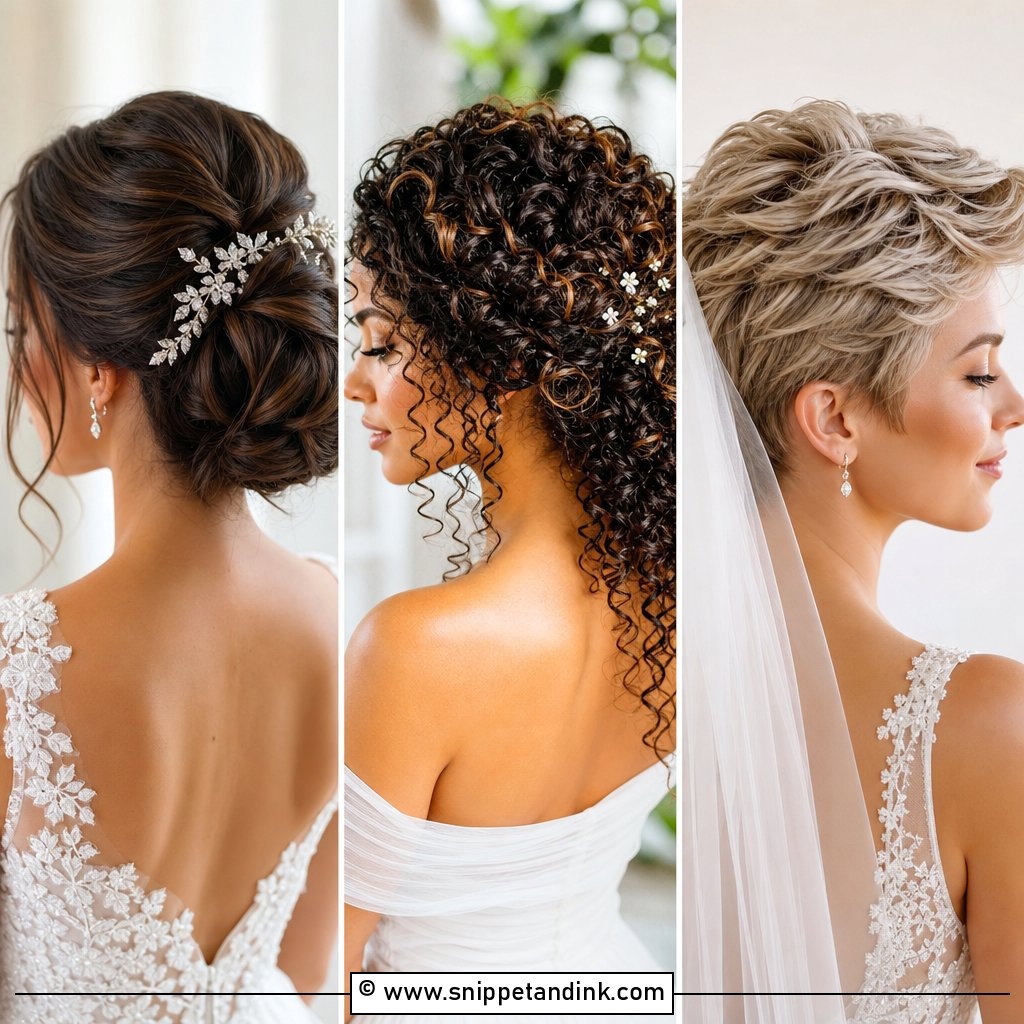
A chignon is a twisted knot set low at the back of the head, and it’s the updo that works with almost any veil or accessory, because a comb slides in just above it without disturbing the shape. Built around a small hidden anchor ponytail, it stays put through hours of dancing. Keep it smooth for a formal ceremony or soften it with face-framing tendrils. With a traditional gown, I’d choose this over a messy bun every time.
9. Curly Wedding Hair Down
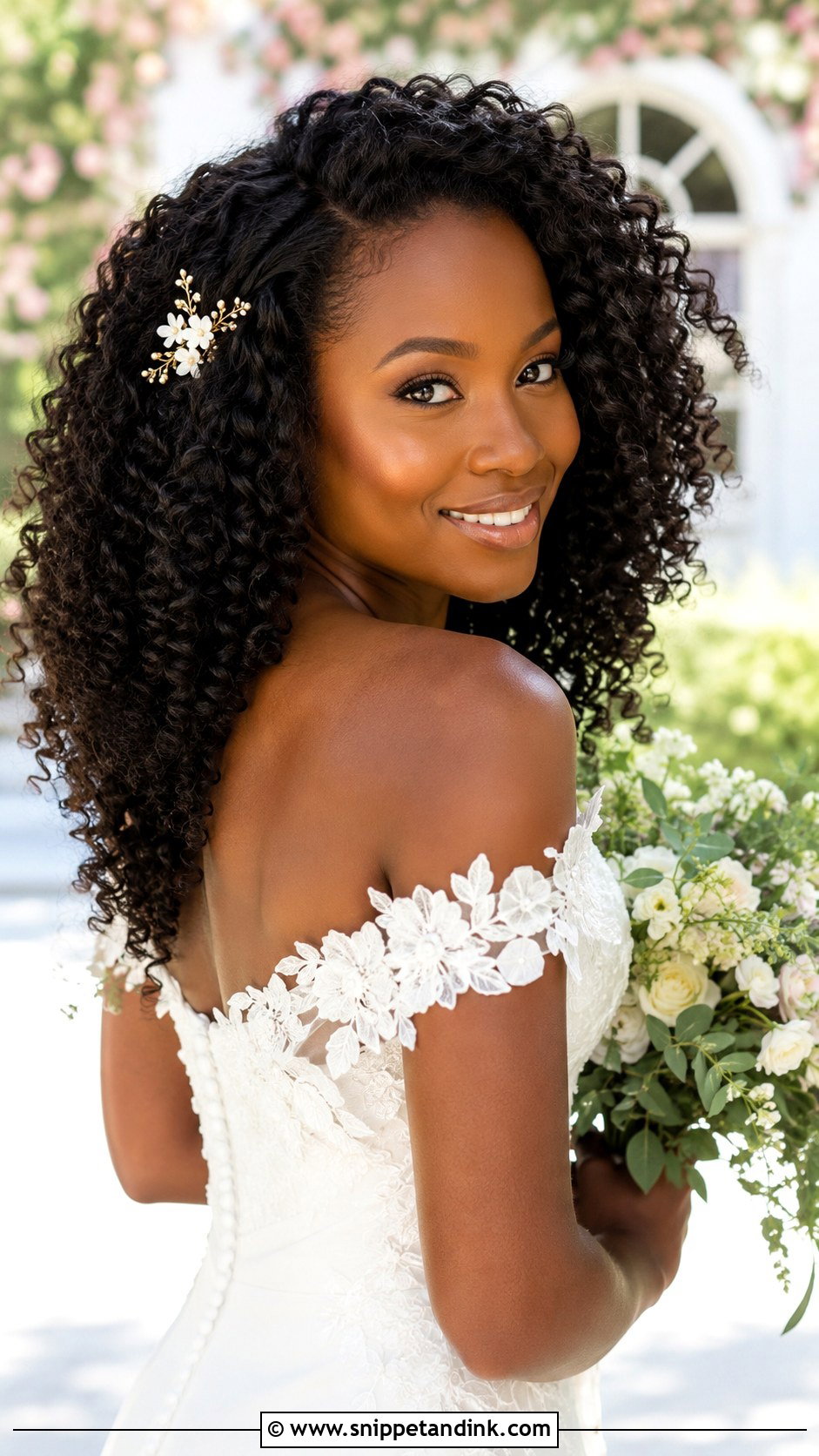
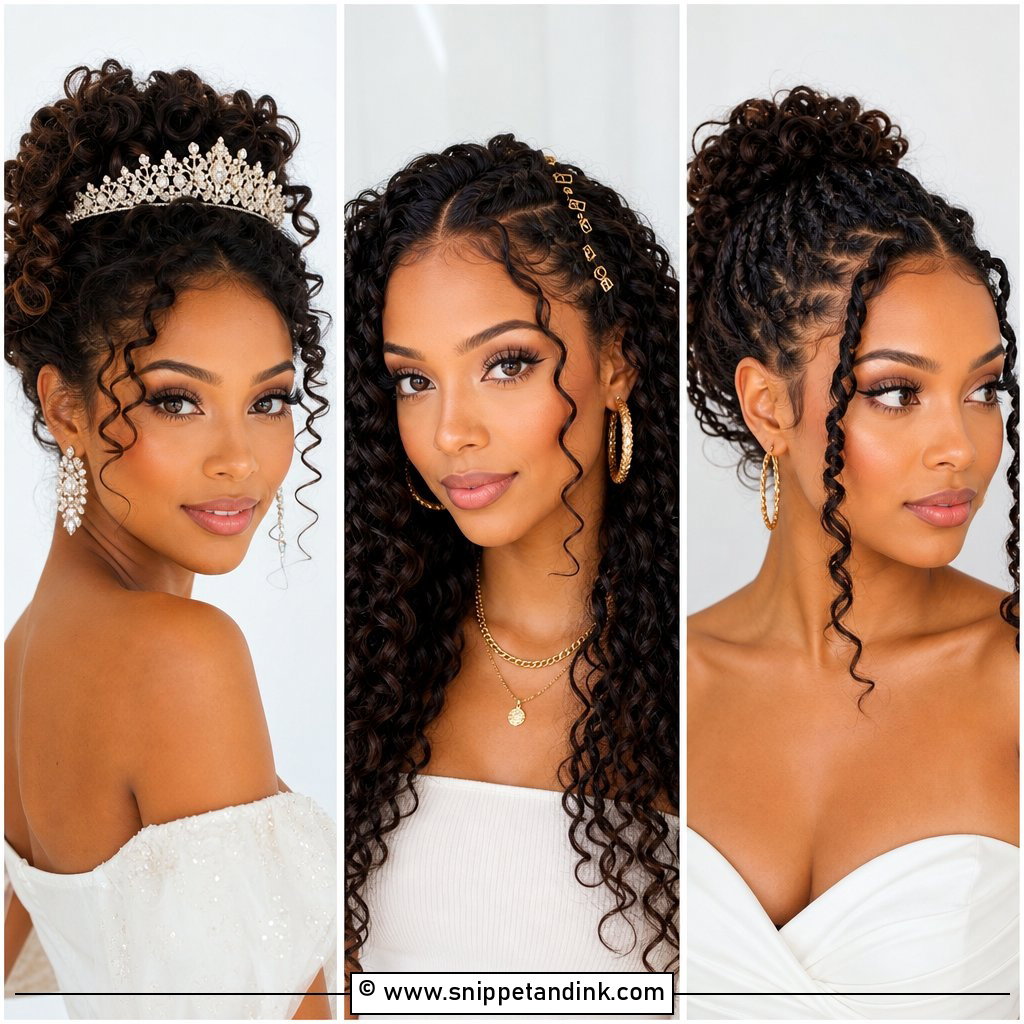
If you have natural curls, wear them. The biggest favor you can do your stylist is to arrive with your curls washed and defined the way you know works for you, not blow-dried. From there I refine rather than re-curl, and I never brush through, which would turn defined coils into frizz. This works for every curl type, from loose waves to tight coils. A delicate pin or a single flower behind one ear is all it needs. Volume reads well in photos, so I lift at the root instead of smoothing it flat.
10. Low Ponytail Bridal Hairstyle
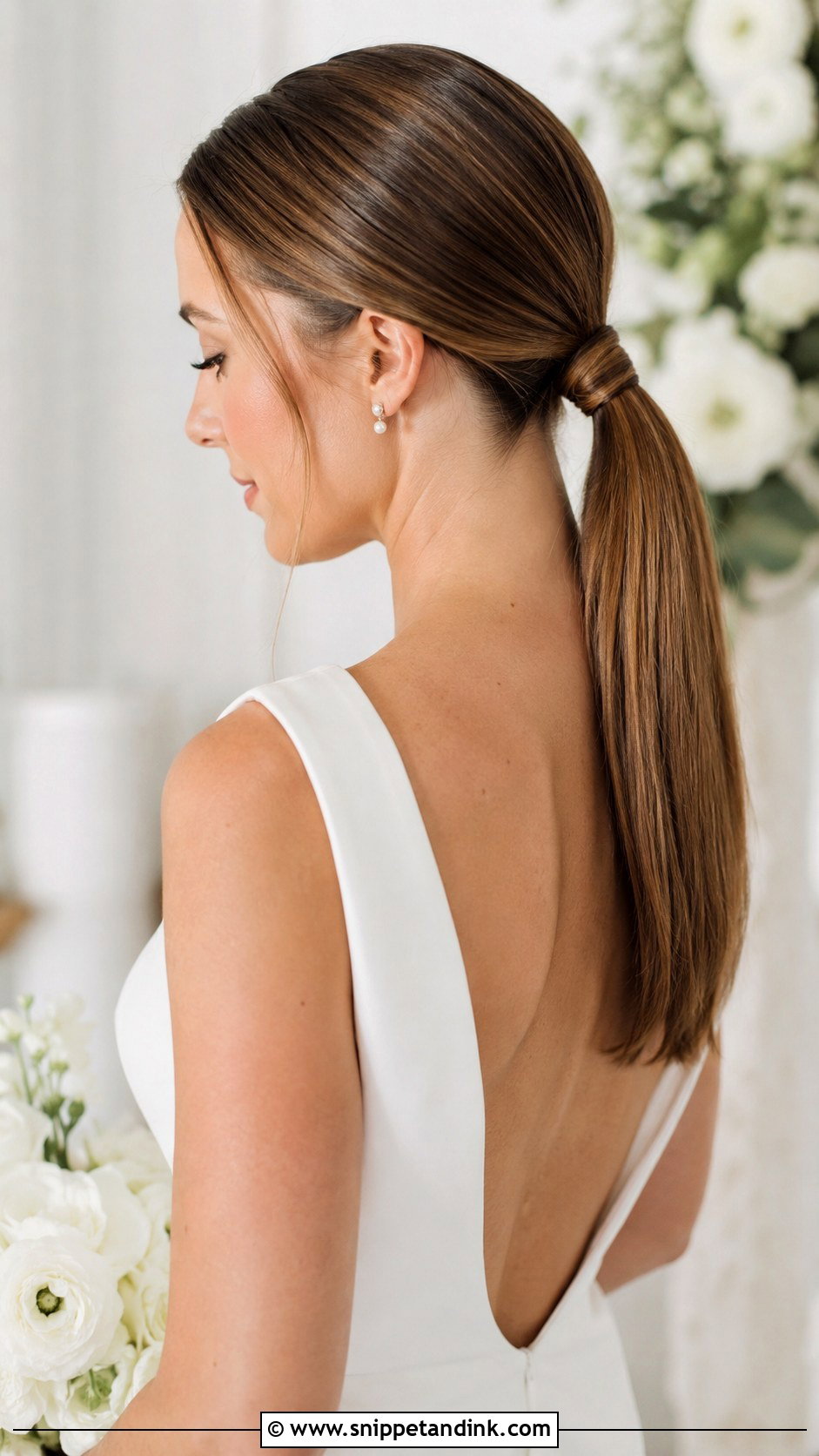
The low ponytail is quick, comfortable and very modern. Gathered at the nape, it stays sleek without pulling, and I wrap a strand of hair around the base and pin it underneath to hide the elastic. A second elastic slightly lower down stops it from drooping by evening. Waves through the length look romantic; straight looks editorial. It suits minimalist gowns and modern venues. In wind, though, a ponytail tangles faster than you’d expect, so for a beach or hilltop ceremony a bun is the safer bet.
11. Boho Wedding Hair With Tendrils
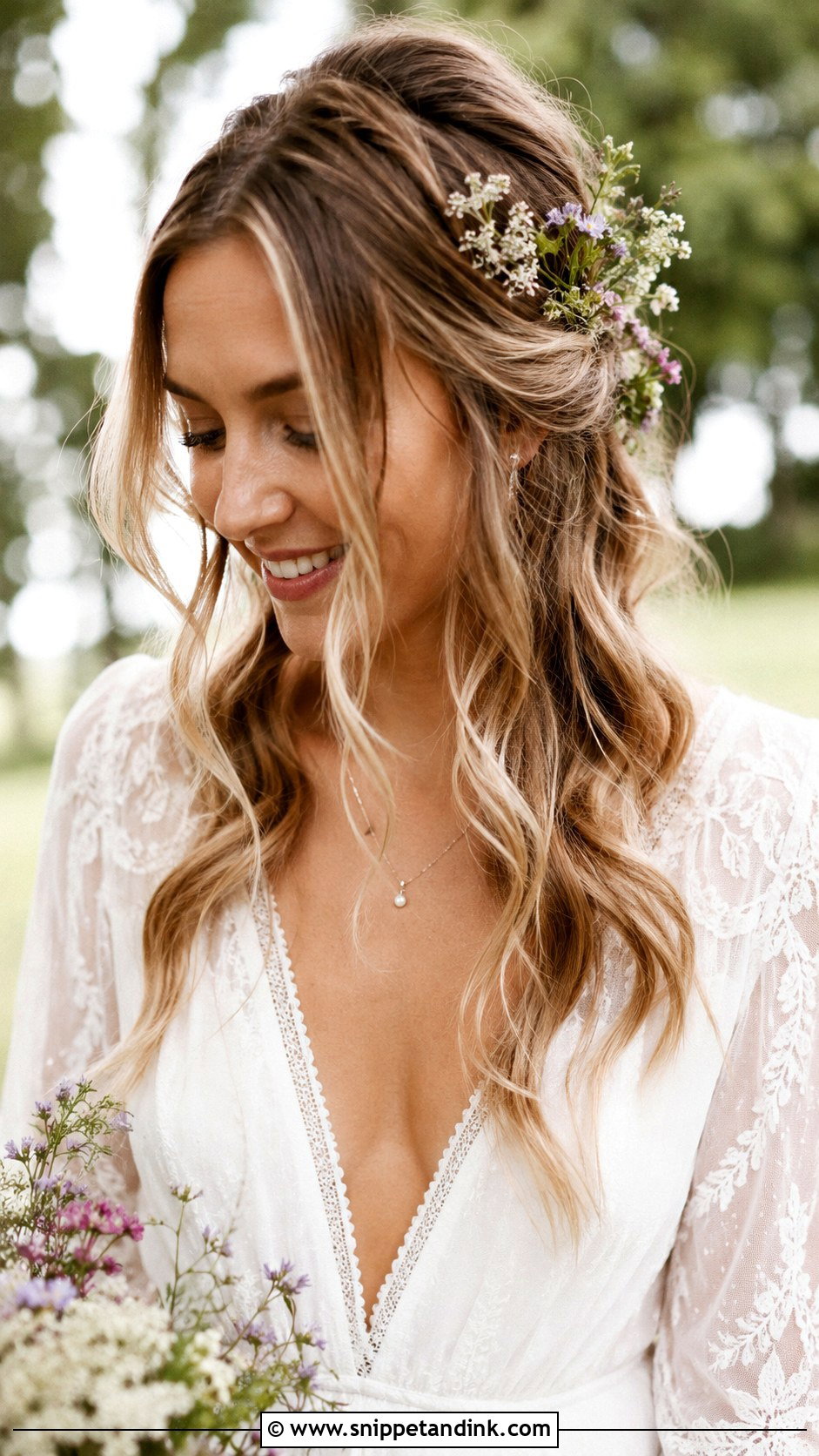
Tendrils are the detail that makes or breaks a boho style. Too many and the updo looks as if it’s falling down; one or two on each side, curled, softens the face. The base is a relaxed updo or half-up with braids or twists woven through, and the texture should look lived-in rather than neat. Wildflowers suit it, as do flowing dresses and garden settings. On fine, straight hair, tendrils fall flat within an hour unless they’re curled with a small iron and given a light mist of spray.
12. Twisted Half Updo For Brides
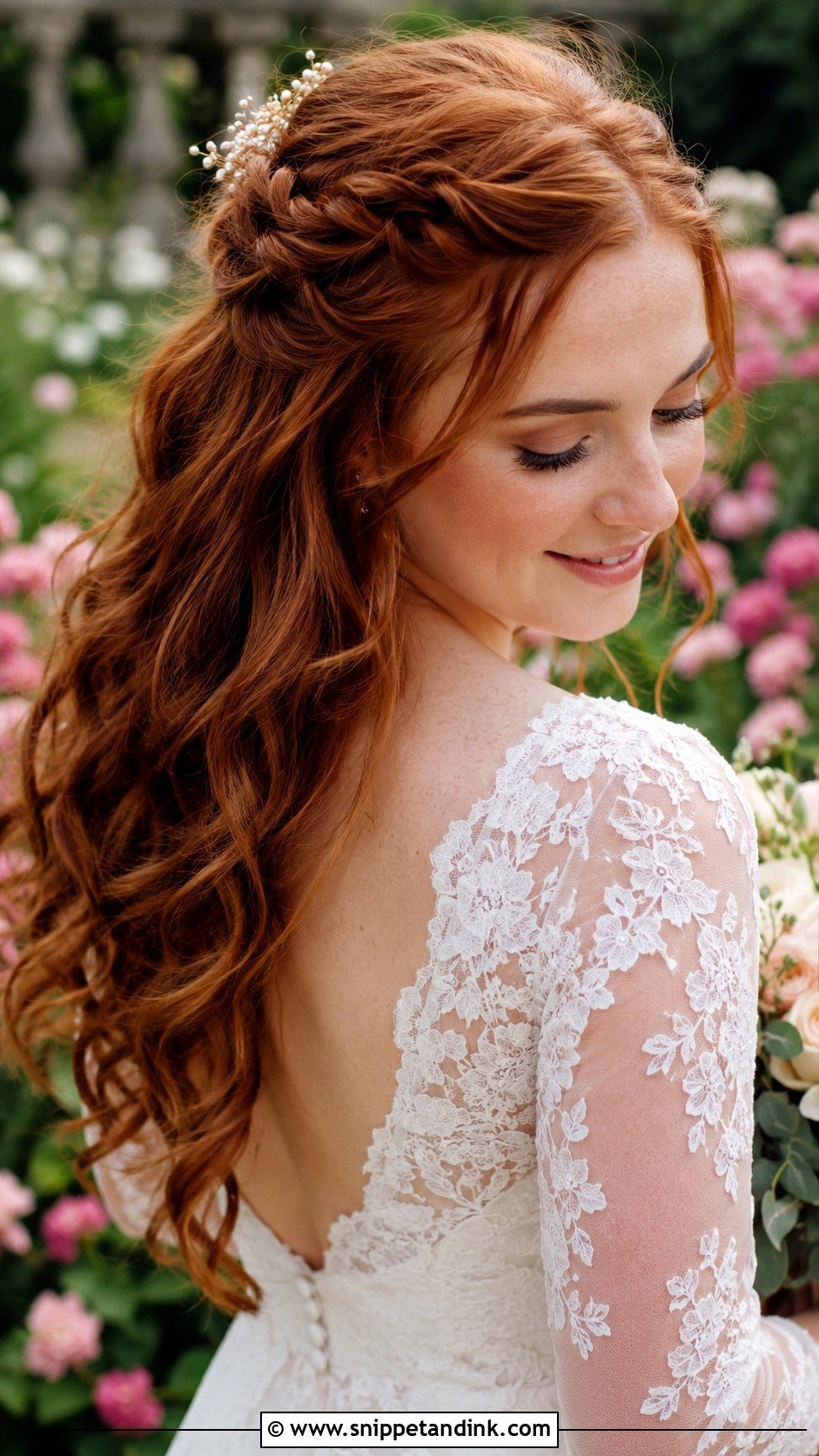
A twisted half updo is lighter work than braids and looks less obviously structured. Sections from each side are twisted back and pinned at the crown, and the twists themselves supply the texture while the rest falls in waves or curls. I cross two pins in an X over each twist so they hold. On thick hair it’s quick and secure. On fine hair I tease each section slightly before twisting so the twists don’t look thin. Wildflowers or pearls tuck neatly into the folds.
13. Sleek Straight Wedding Hair
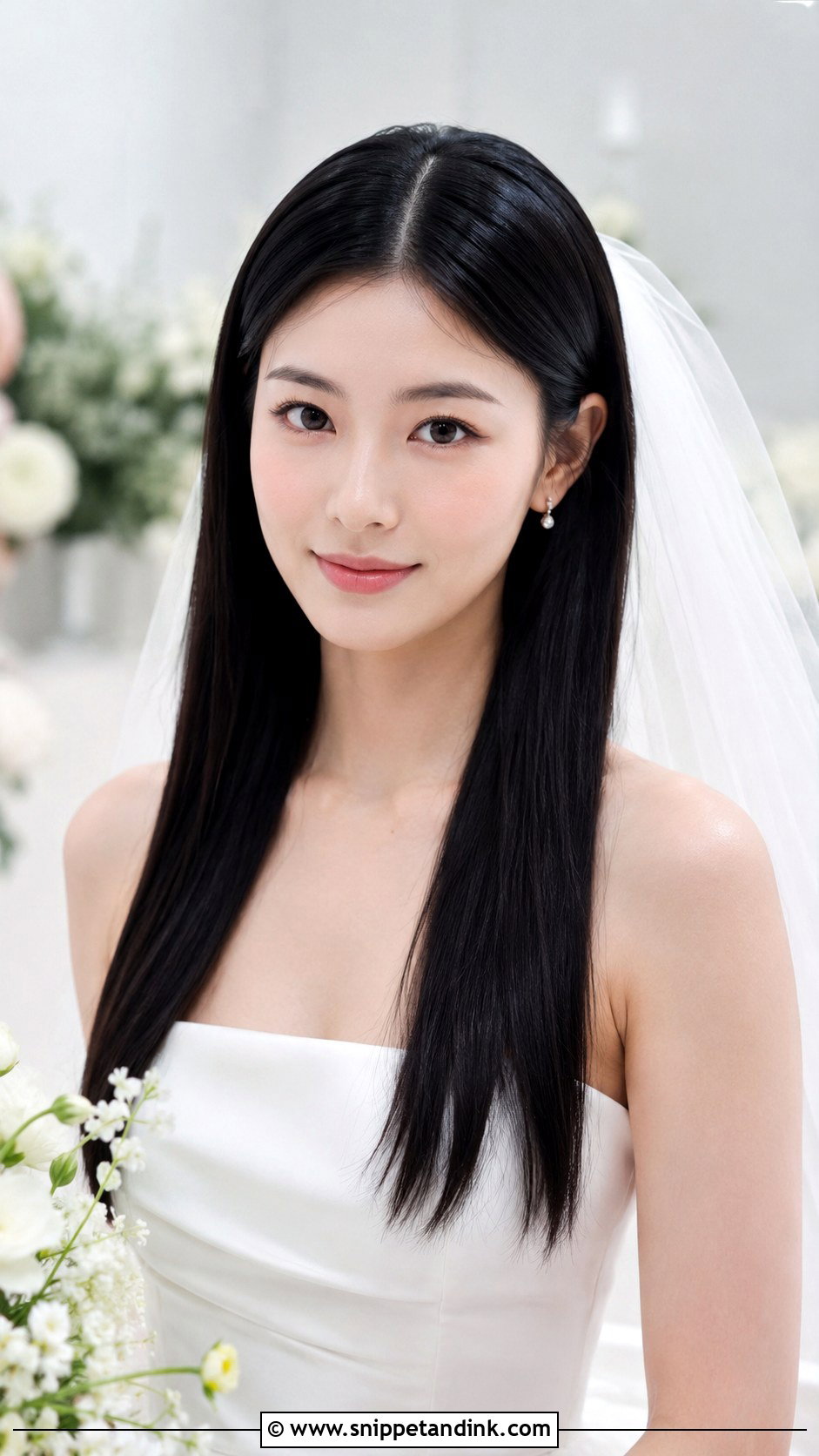
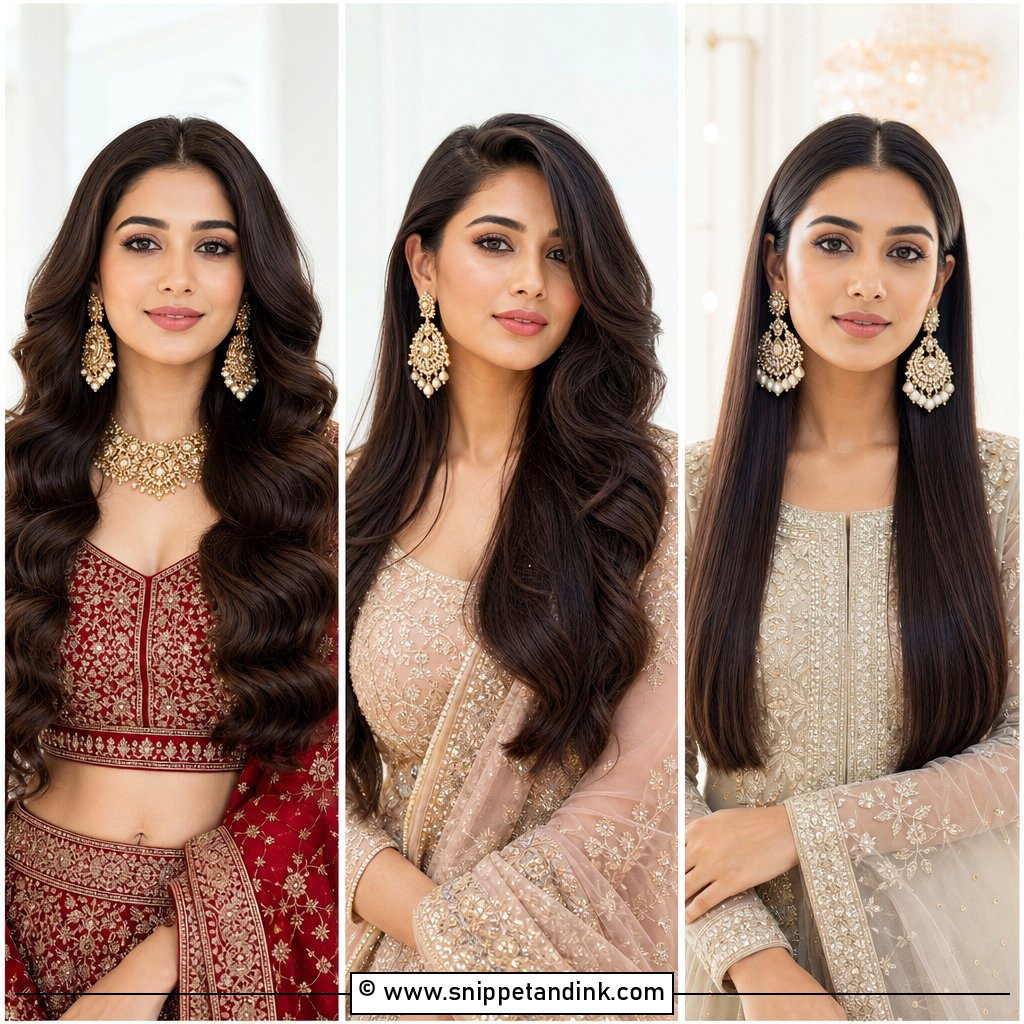
Sleek straight hair is the simplest-looking style and one of the hardest to keep. In spring humidity, straightened hair often frizzes at the ends or loses its glassy finish by the afternoon, so I seal it with a smoothing serum and an anti-humidity spray. A center part looks symmetrical; a side sweep adds a little drama. It puts the face, neckline and jewelry front and center and pairs well with a minimalist gown and sleek veil. If your hair is naturally curly, I’ll be honest that straight may not survive an outdoor ceremony on a damp day.
14. Bridal Hair With Veil And Waves
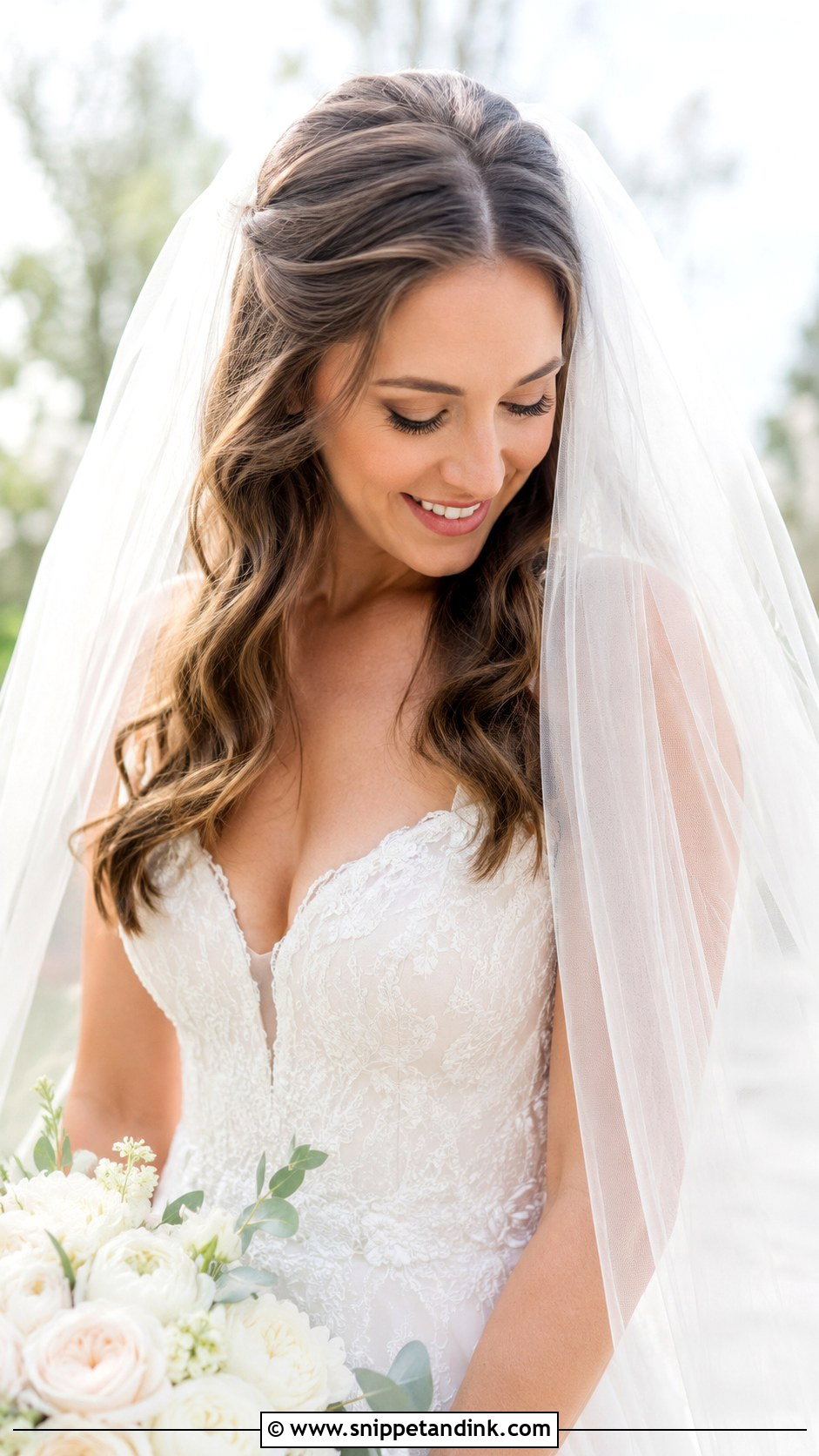
Veils and waves work well together, but placement changes everything. A veil comb pinned high on the crown gives height and drama; one tucked low near the nape is subtler and leaves the waves visible. I place the comb before I finish the front pieces, so I can see where the hair falls around it. When the veil comes off after the ceremony, lifting the comb straight out rather than pulling it back keeps the waves intact for the reception. The aisle and first-look photos are where this pairing really shows.
15. Flower Accented Bun Wedding Style
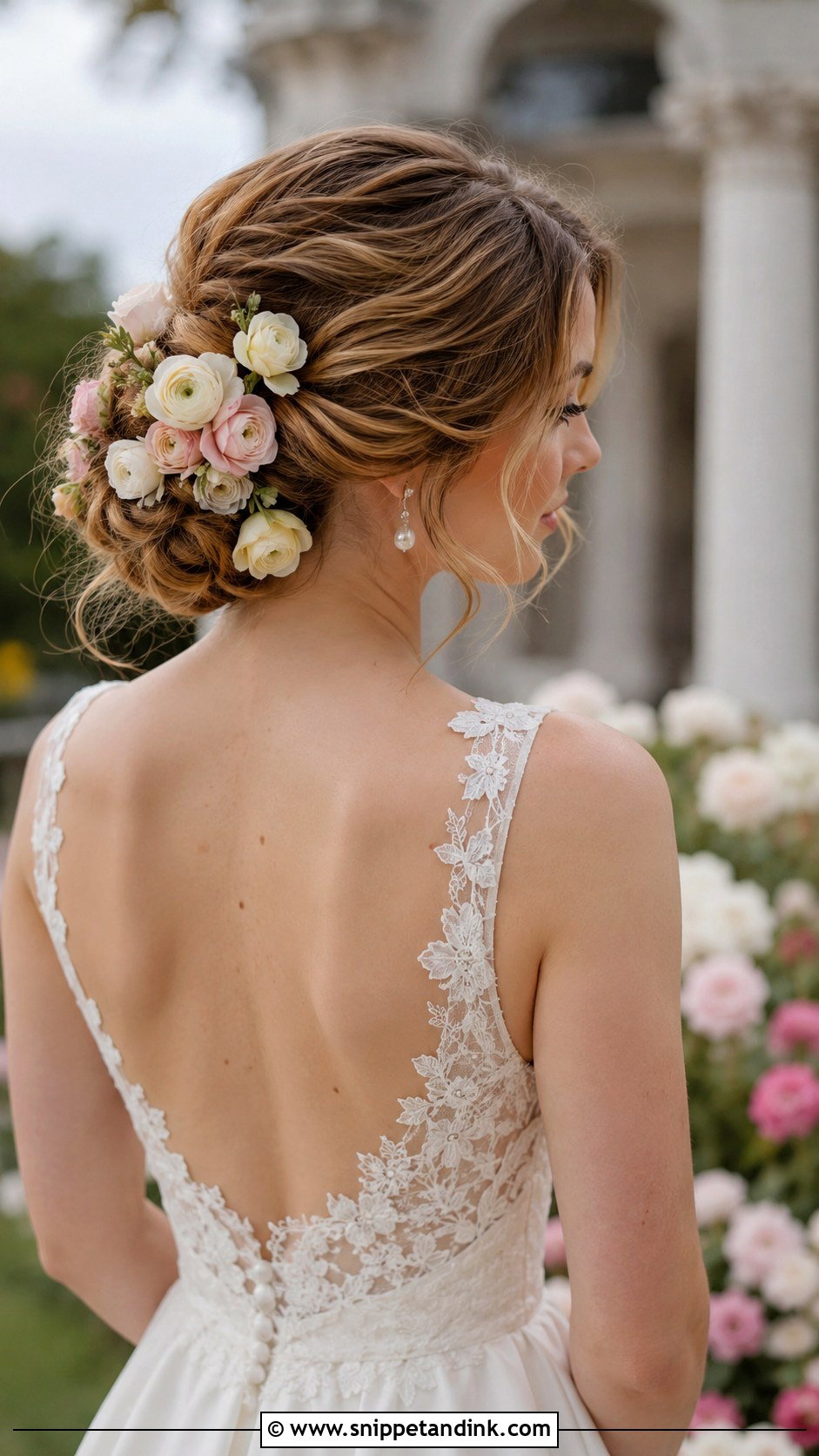
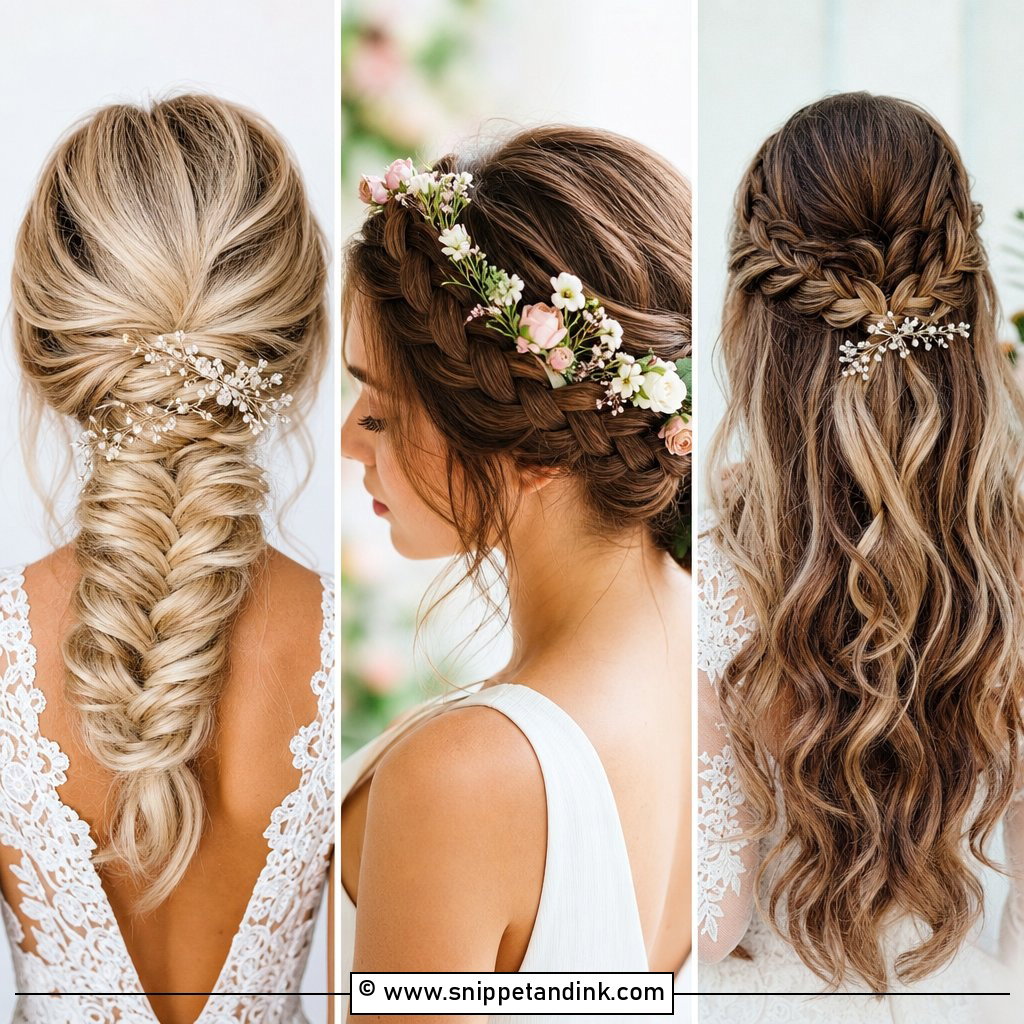
Fresh blooms in a bun are the most direct way to bring spring into your hair. A bun gives flowers a firm base to sit in, which is why they last longer here than in loose hair. Sleek or messy both work. Small roses, ranunculus or baby’s breath are common choices, ideally echoing the bouquet. I add them last, after the hairspray, and sit the stems down into the folds of the bun rather than perching them on top. It also keeps hair off the neck on a warm day.
16. Vintage Waves Wedding Hairstyle
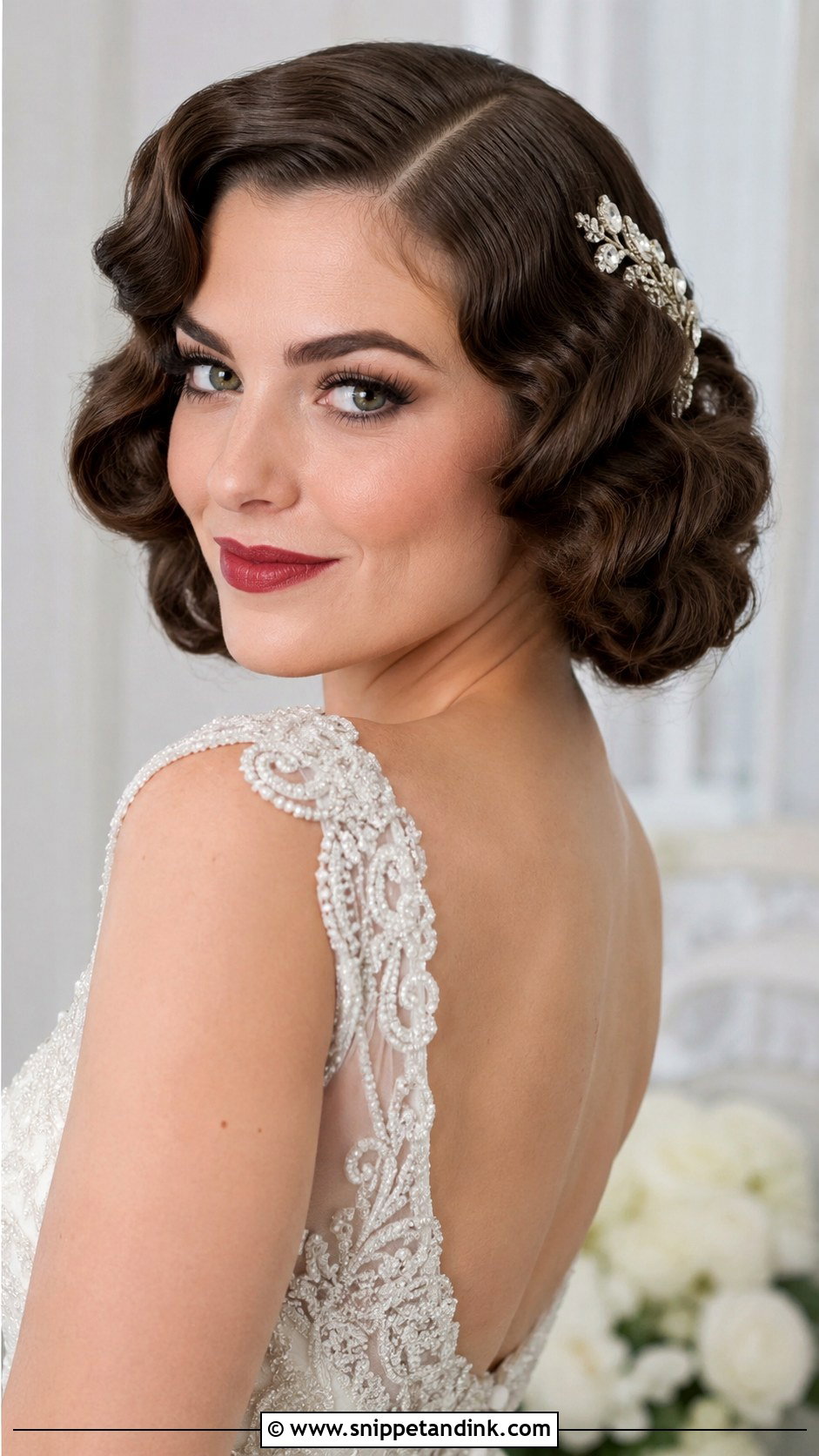
Vintage waves take more time than almost any other style here. These are structured, finger-wave curls in the old Hollywood mold, each wave set in a defined S-shape with a curling iron and clips or with setting lotion and pin curls. Once brushed out and shaped, they hold their form and look polished. Wear them down or pinned into a side-swept shape, with statement earrings or a jeweled comb. Ask your stylist to plan extra time, because rushed vintage waves end up looking messy rather than sculpted.
17. Crown Braid Wedding Hairstyle
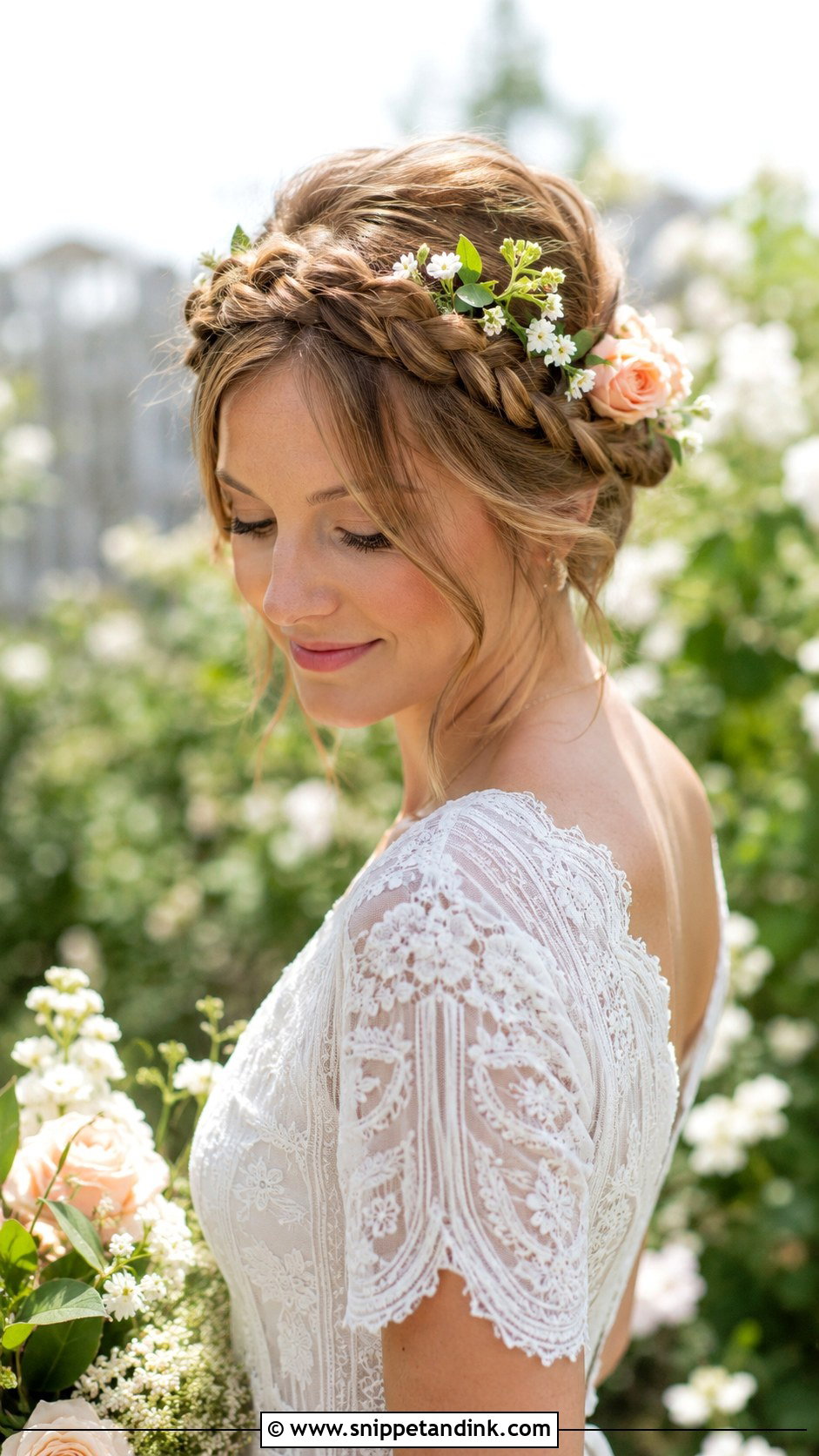
A crown braid circles the head like a halo, and it’s one of the most secure styles you can wear outdoors, since everything is pulled back and pinned flat. For one braid to reach all the way around, hair needs to be well past the shoulders; on medium hair I often use two braids that meet at the back instead. Small flowers tucked into the braid suit a garden setting. On fine hair, a small clip-in extension braided in makes it look fuller in photos.
18. Side Swept Bridal Hairstyle
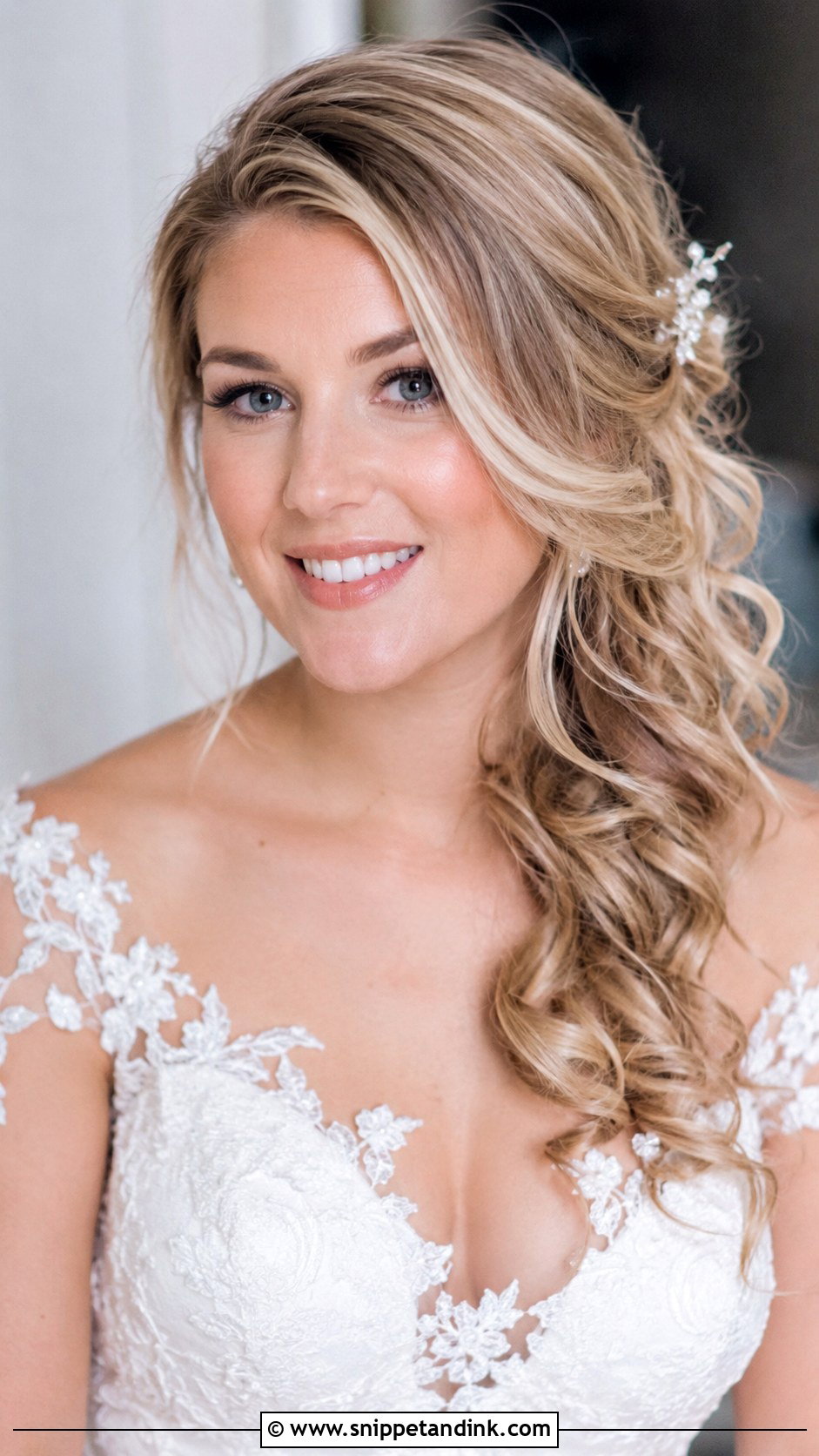
Sweeping hair to one side shows off one ear and one shoulder, and that asymmetry is the whole point. Waves or curls gather over one shoulder, pinned firmly behind the opposite ear so the weight doesn’t drag everything back to center. Long and medium hair suit it best. Decide early which side you want, because it affects which side the photographer should favor during the ceremony. Pin it loosely for a relaxed feel or tighter for polish.
19. Pearl Accented Wedding Hair
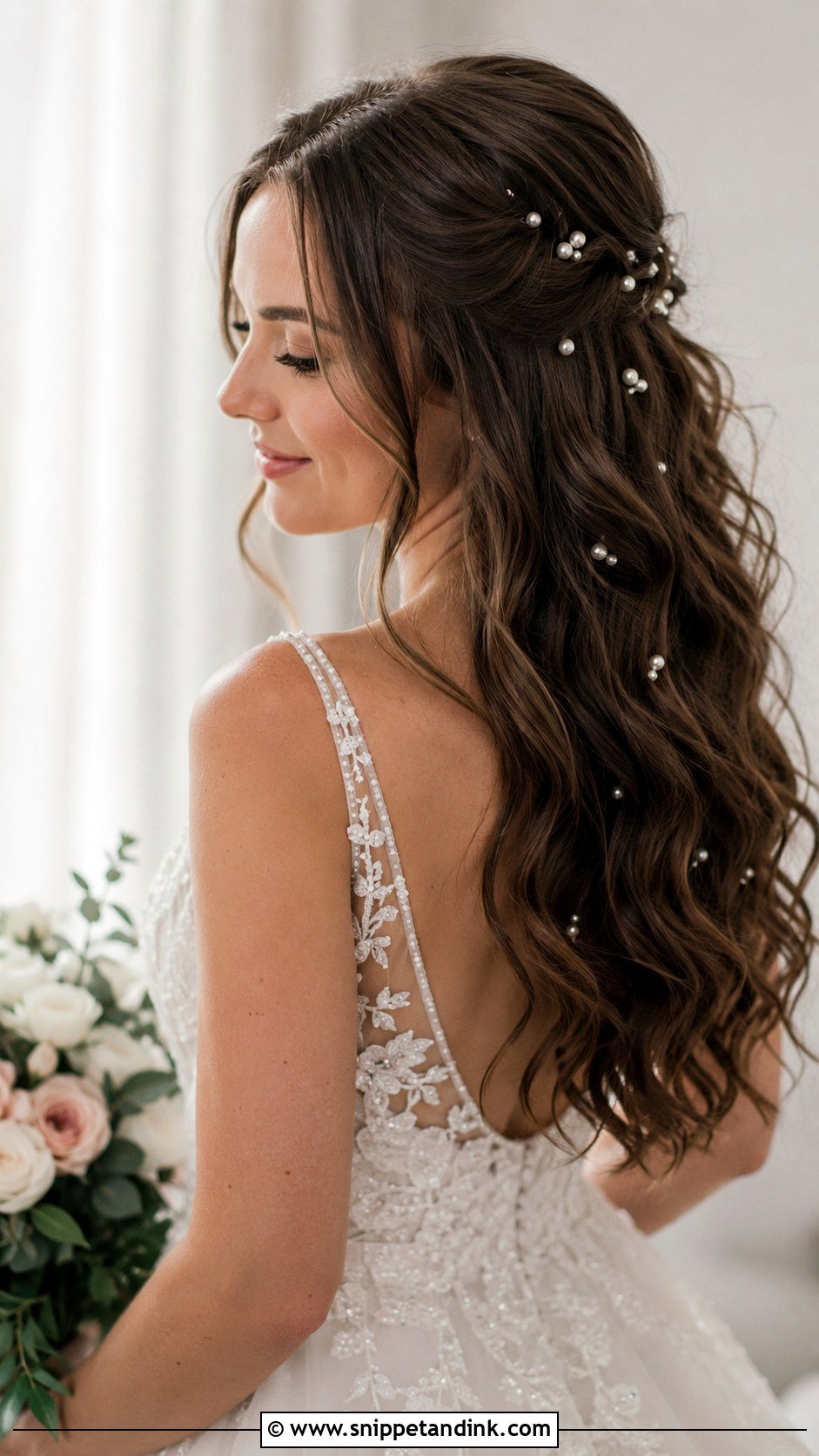
Pearl pins are an accessory I reach for constantly because they work on almost any style: waves, braids, sleek buns, messy updos. I either cluster them in one spot or scatter them across the back like a constellation. Each one needs to go in against the direction the hair falls and then be turned and tucked, or it slips out within an hour. Pearls suit most gowns and skin tones and reflect soft light nicely in photos. Keep them as your only hair accessory and they look refined.
20. Soft Updo With Face Framing Pieces
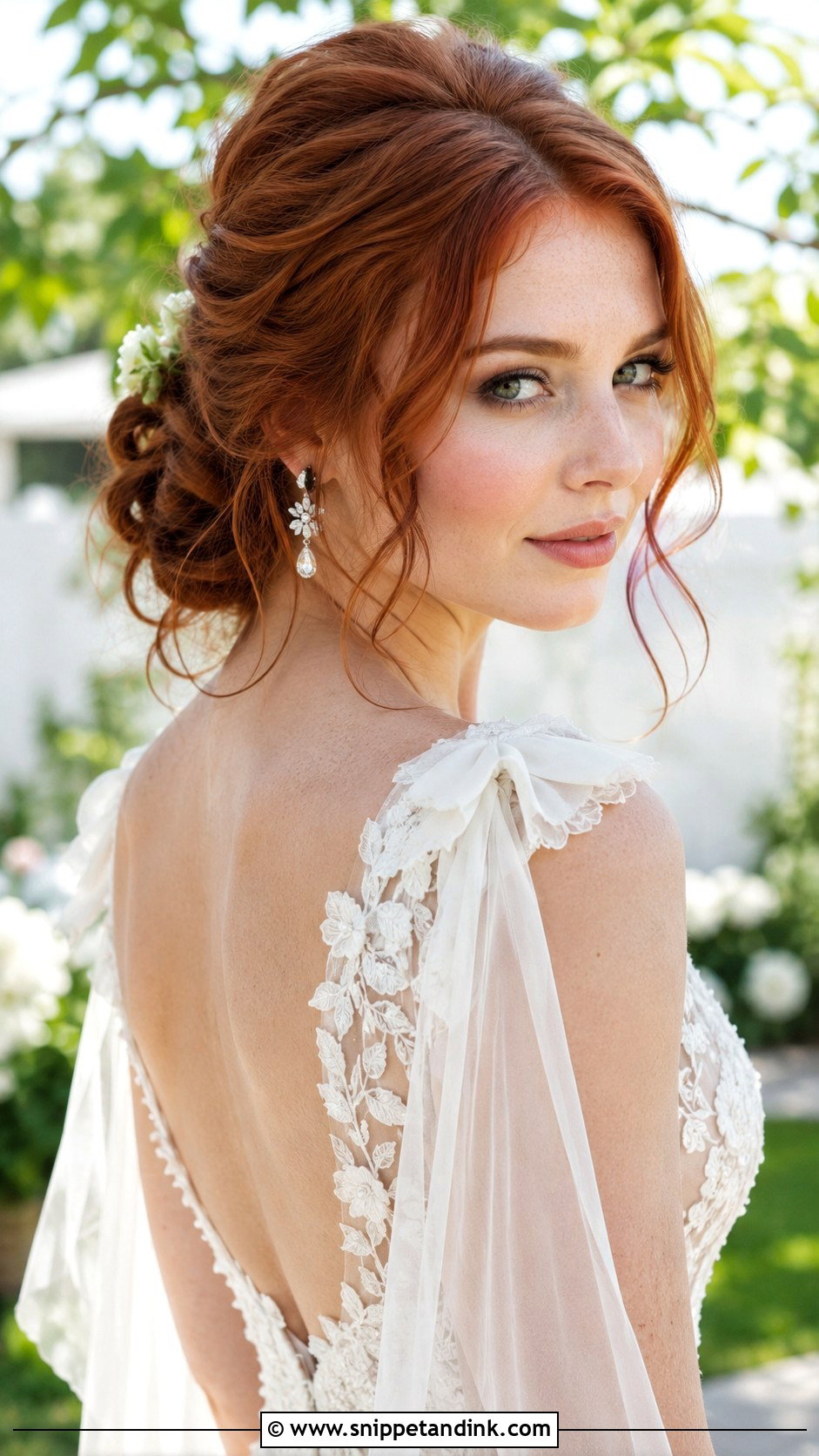
If you’re torn between up and down, this is the style I’d suggest. Most of the hair is gathered into a relaxed, voluminous updo, with a few loose strands left around the face to soften the structure. I pull those strands out of the hairline before I put the rest up, so they come from the right place rather than being tugged loose afterward. It suits most face shapes. Florals, pearls or a single pin can be added, and built on a hidden anchor it stays secure through a long celebration.
Blooms That Last Until the Last Dance
Flowers in hair spend ten hours or more out of water, sitting against the warmth of your head, and some varieties simply aren’t built for that. Gardenias brown at the edges within hours and bruise at a touch. Hydrangea wilts quickly once it’s away from water. Larger garden roses and ranunculus can hold up, but full open heads get heavy and slip.
The ones I’d trust in hair:
- Spray roses and small rose buds, which are sturdy and light
- Waxflower and baby’s breath, which dry gracefully rather than wilting
- Dendrobium orchids, which tolerate a long time out of water
- Lavender sprigs and small greenery, wired into tight bundles
Ask your florist to wire and tape the stems into small picks and keep them cool until the last moment. I put them in after the hair is finished and sprayed, never before, because both hairspray and heat from styling tools brown petals. For an outdoor ceremony on a hot afternoon, or if you want flowers to look fresh in the evening photos, good silk or dried flowers are a sensible alternative, and from a few feet away nobody can tell.
Weather First, Then the Gown, Then the Flowers
Your spring hair should feel like you and survive the day you’ve actually planned. Cascading waves, chignons, floral crowns and pearl-accented updos all suit the season, but the right one depends on your hair type, your veil and how much weather the day might bring. If you love hair down, have a plan for pinning it up if the forecast turns damp. If you want blooms, talk to your florist early. And do a full trial in similar conditions, ideally wearing the veil, so the wedding morning holds no surprises.
You'll Like These Ideas:



Leave a Reply