
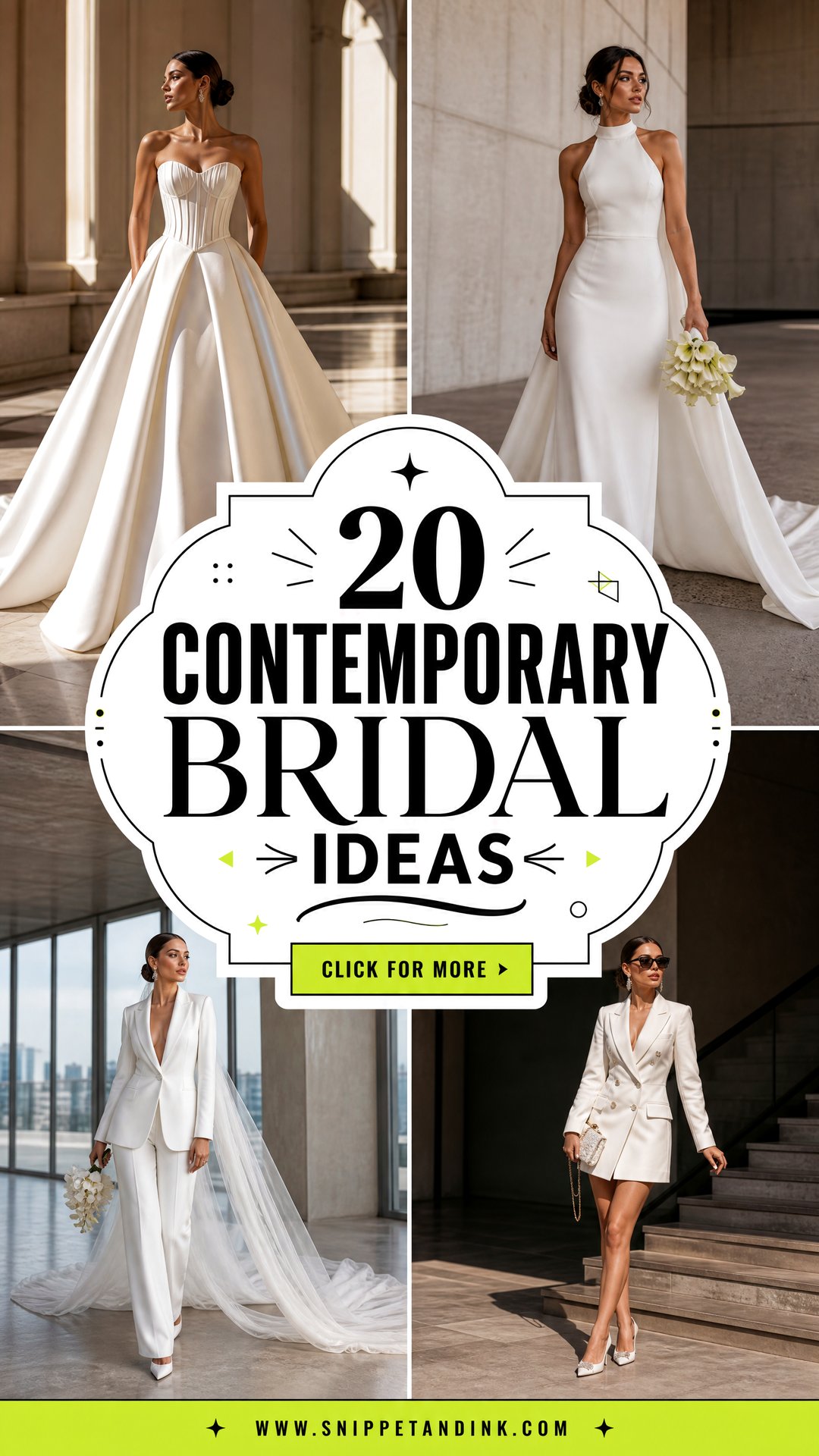
Bridal dressing has opened right up. Clean satin, sculpted corsetry, sharp tailoring, separates and short reception dresses all read as bridal now, provided the cut and finish are serious. What makes an outfit feel current isn’t the trend it borrows from; it’s how controlled it is. One strong idea, a fit that’s been worked on properly, and accessories that stay in their lane. I’ve built each of the looks below around that idea, with notes on the fitting and styling decisions I’d make if you brought it to me.
Will a Trend-Led Dress Still Look Right in Twenty Years?
This is the question I get most from brides drawn to something modern. My honest answer: fit and fabric age well, gimmicks don’t. A clean satin column will look as good in an album decades from now as it does today, because nothing about it is tied to a single season. A huge novelty bow or an extreme cut-out tends to date fastest.
When a bride wants a strong trend, I suggest putting it somewhere removable or limited: a detachable sleeve, a cape, a bold earring, a reception-only mini. The core gown stays classic, and the fashion statement lives in pieces you can take off. That way the ceremony photos feel like you without pinning you to one year.
- Ask yourself whether you’d still like the dress if it came in plain ivory with no detailing. If yes, the shape is right.
- Limit yourself to one feature that’s clearly of the moment.
- Look at the dress in a black-and-white photo on your phone. Strong silhouettes survive that test; fussy details turn to noise.
1. Minimalist Satin Bridal Gown
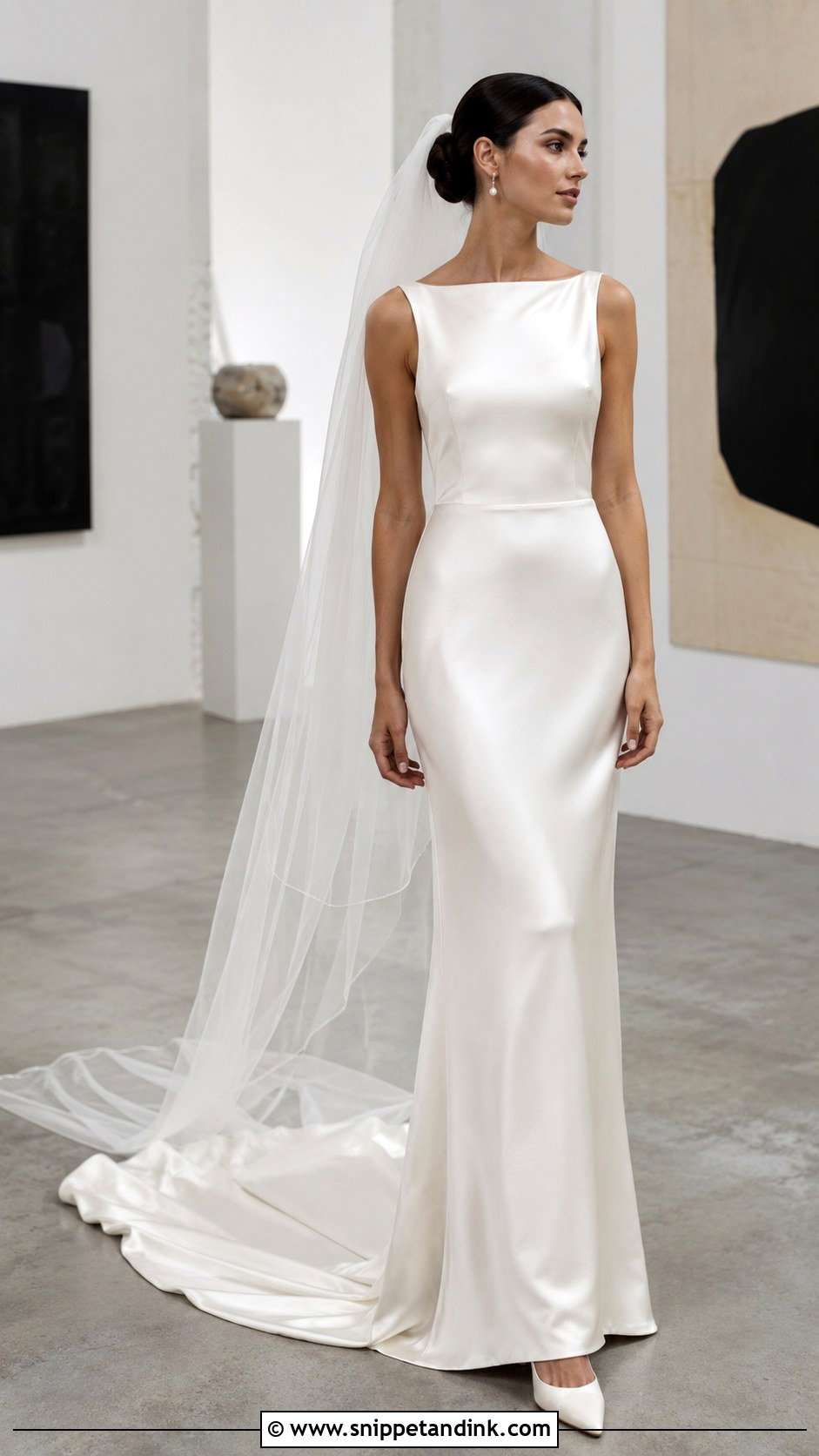
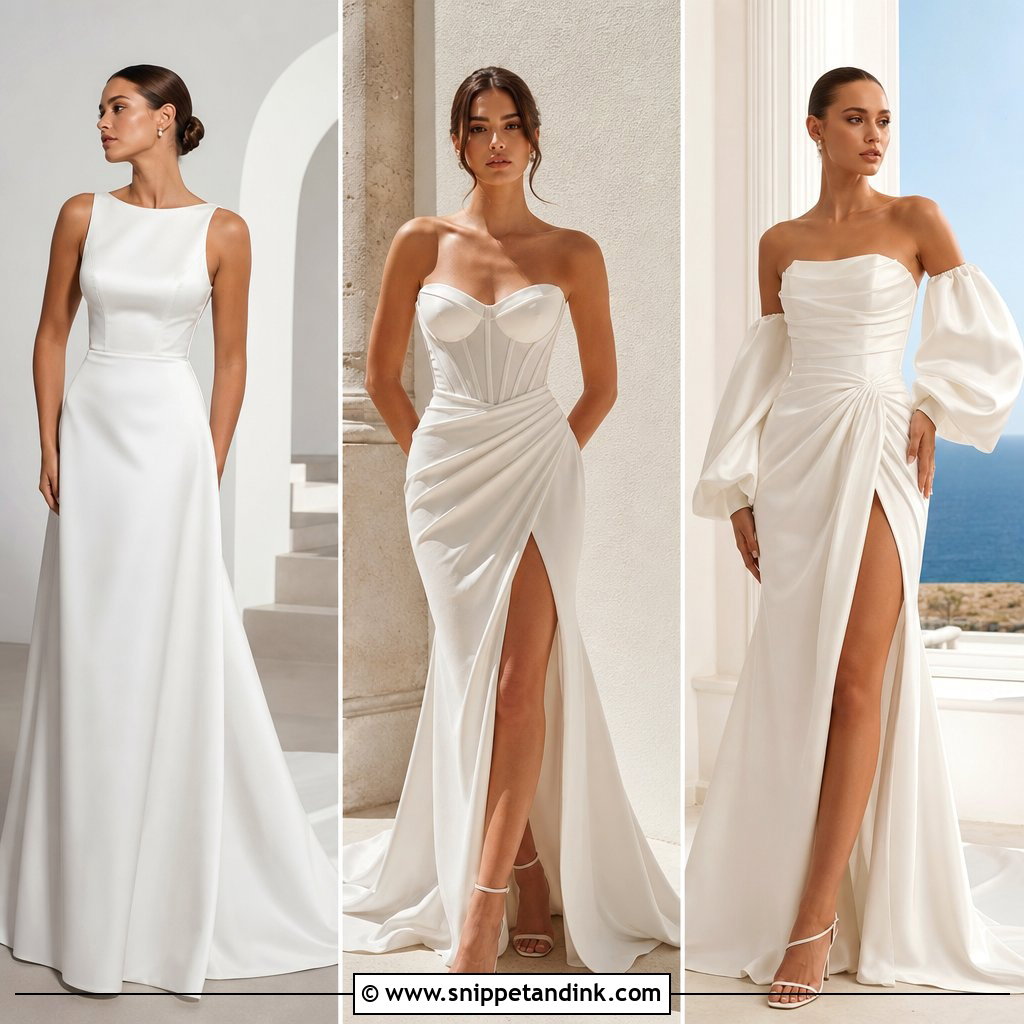
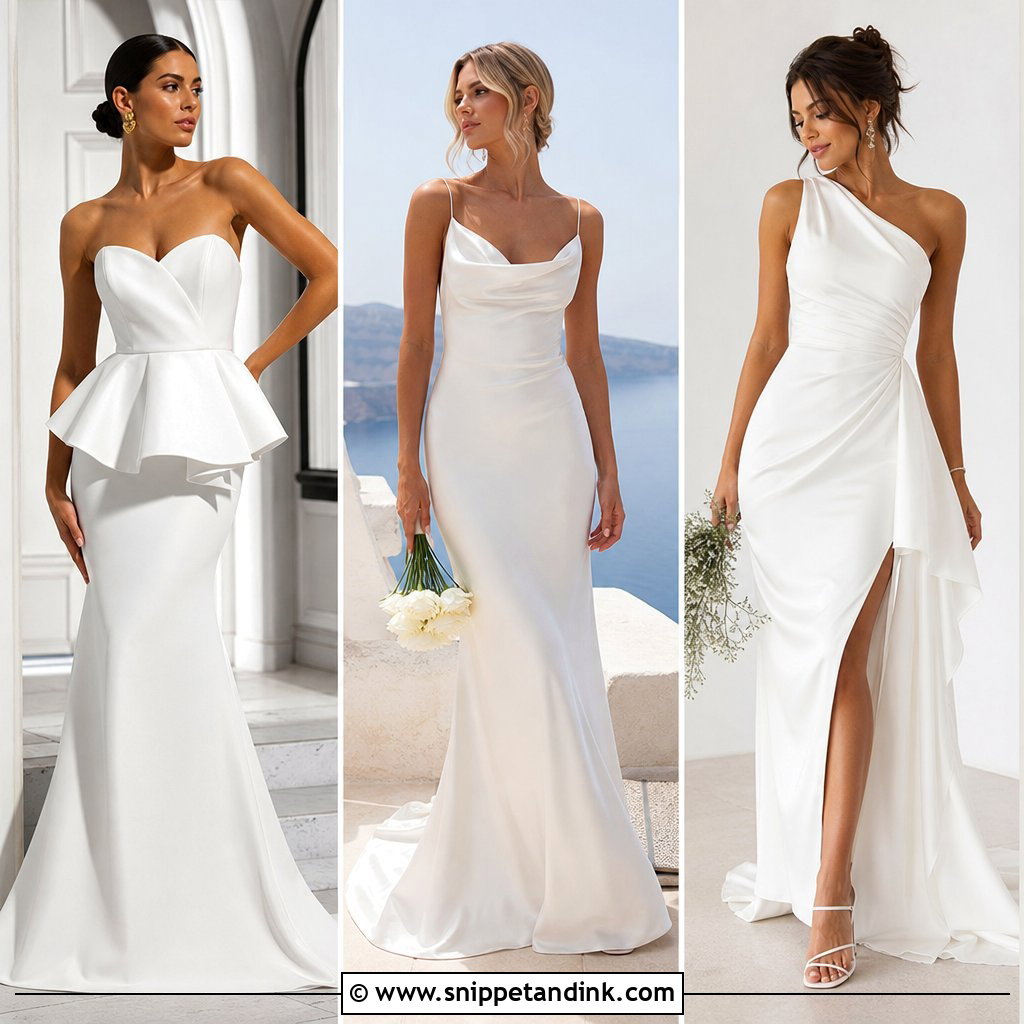
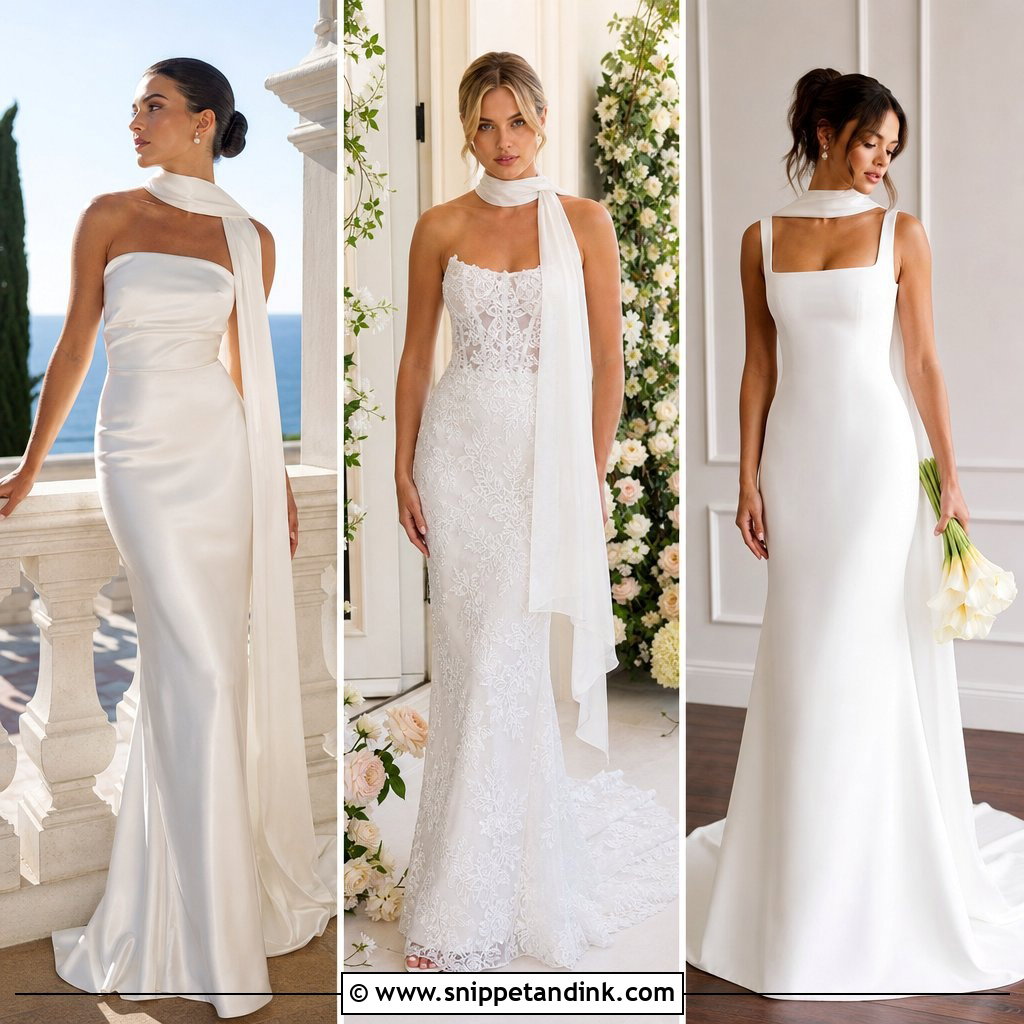
Plain satin is the hardest dress to get right, because there’s nothing to distract from the seams. When I look at a minimalist gown, I check the side seams and the zip first: they should lie flat with no puckering, since ivory satin catches light along every ripple. A softly structured column or A-line with a small train is enough. Pointed ivory pumps, pearl drops and a structured mini bag carry the portraits, and a sleek low bun keeps the neckline clear. Choose a fingertip veil with a raw cut edge instead of lace trim. Galleries and modern hotels suit it, because their plain walls echo the gown’s lines.
2. Basque Waist Bridal Ball Gown
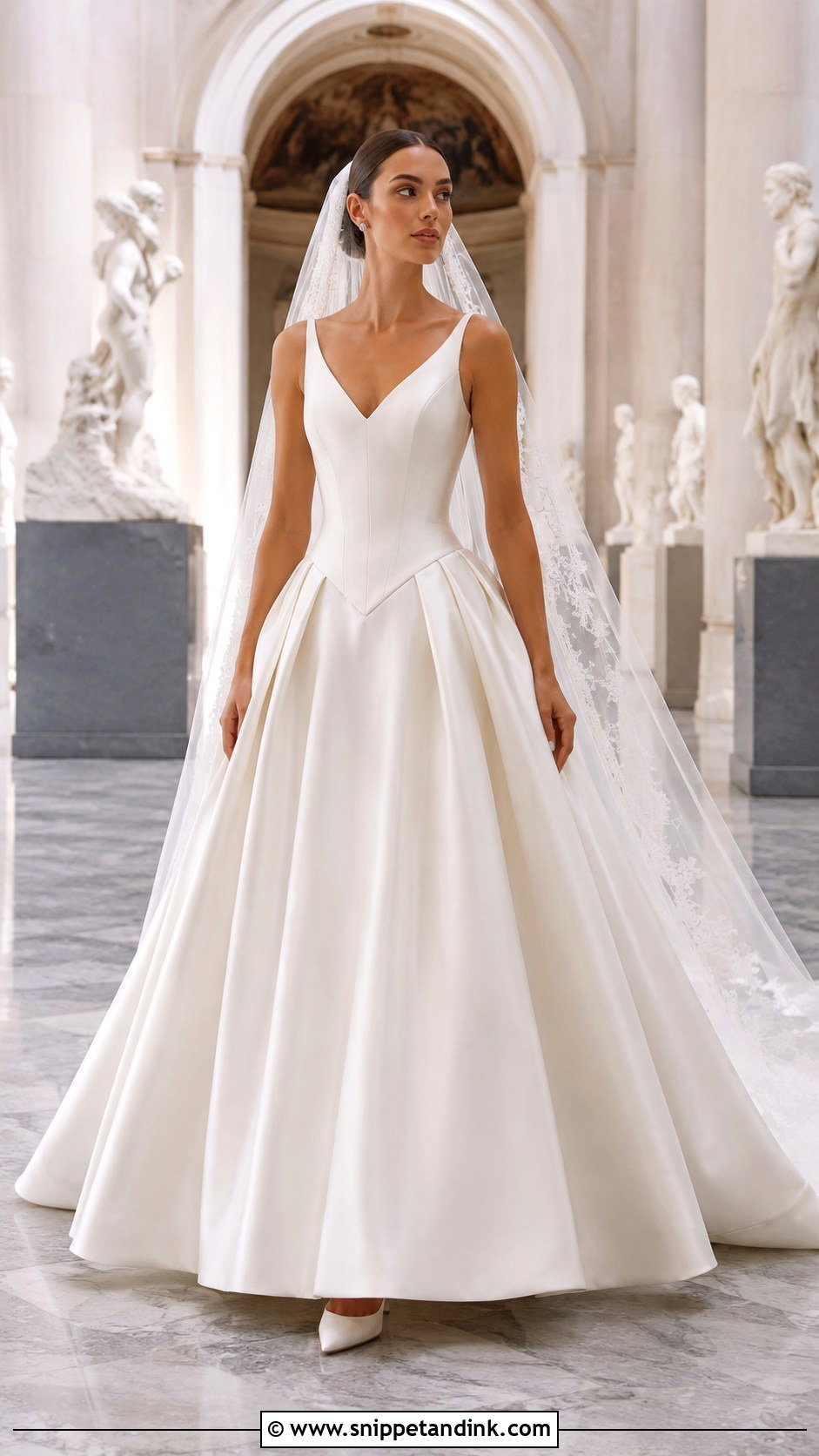
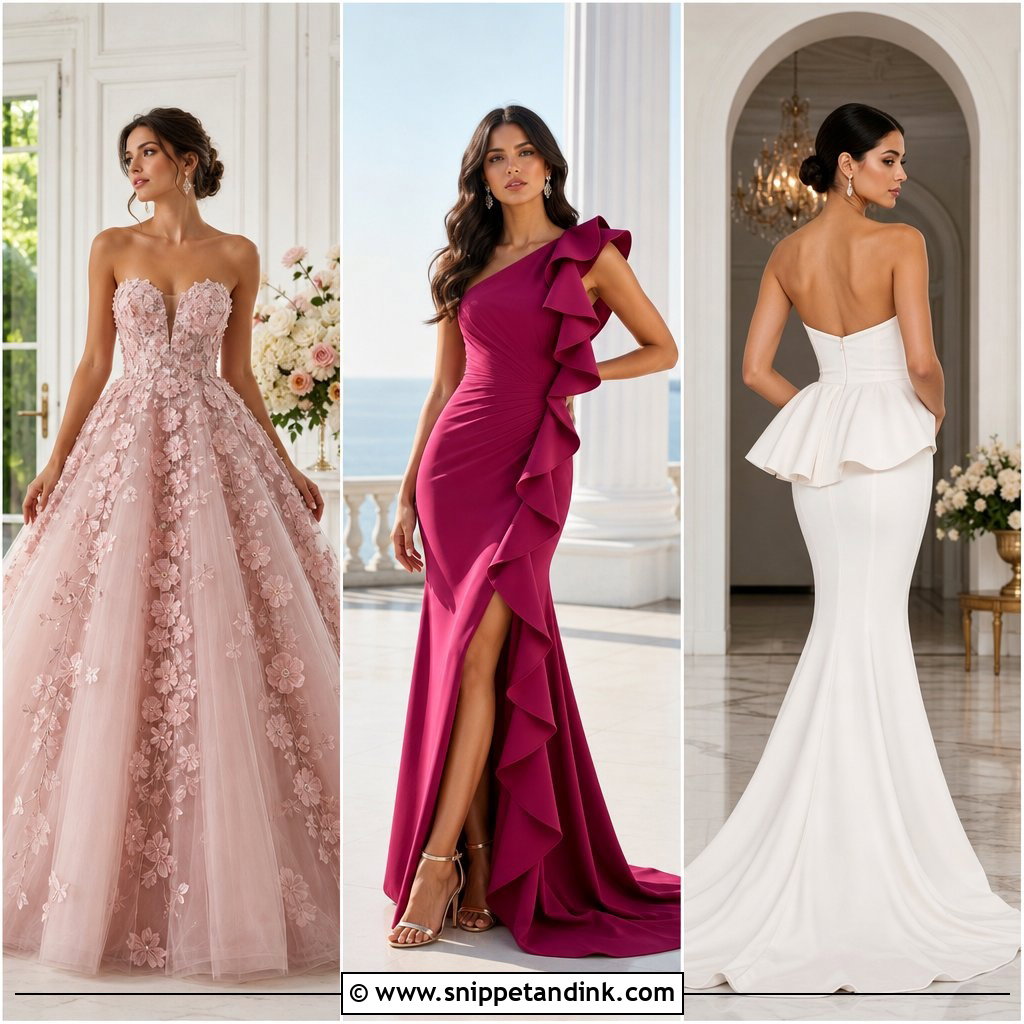
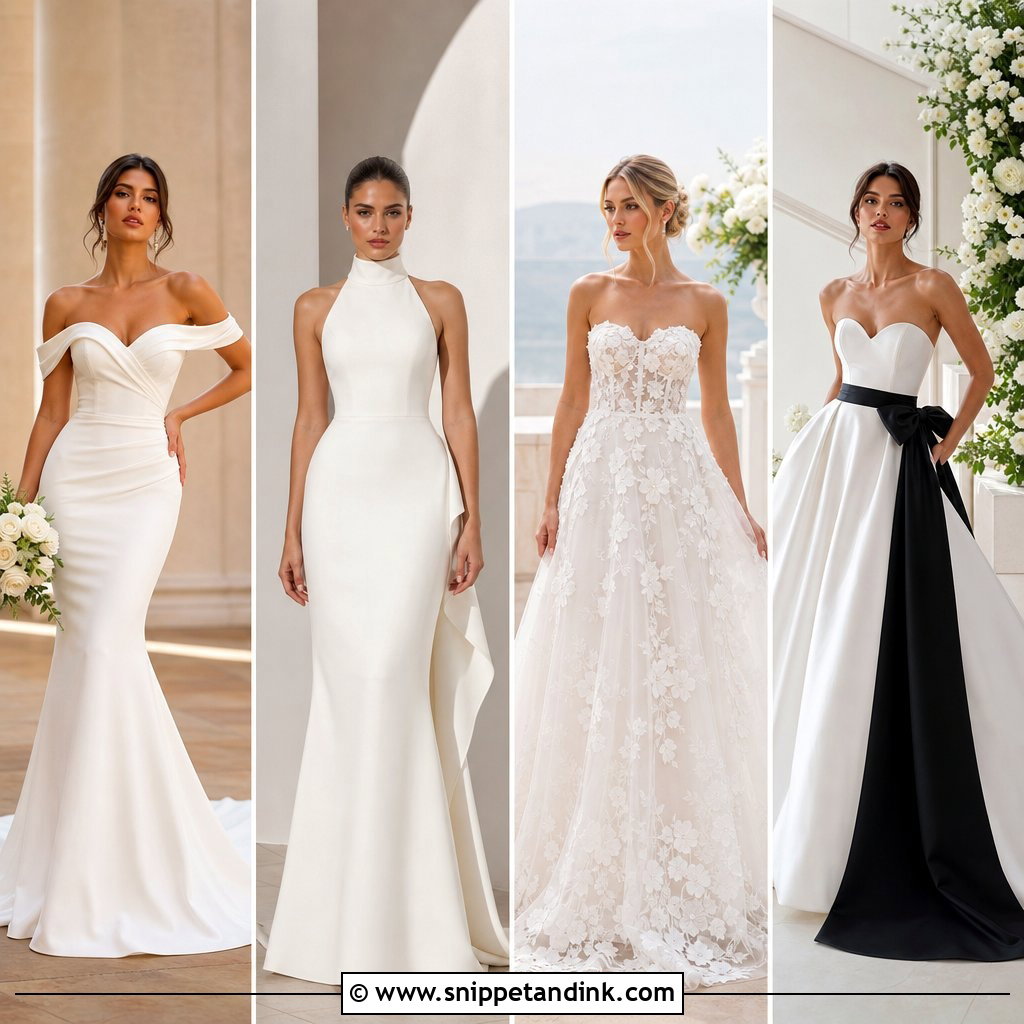
The basque waist dips into a V below the natural waist, which lengthens the torso and makes a full skirt look sharper. It flatters a wide range of figures, but the point of the V has to sit exactly at your centre, so I mark it on the body rather than trusting the sample. Matte satin or mikado keeps the line crisp; shiny fabrics soften it. If you want real shaping, ask for a corseted interior with comfortable boning and built-in bust support. Pointed pumps, small diamond or crystal studs and a cathedral veil under a smooth bun finish it, and a sculpted neckline needs no necklace. It carries a museum or ballroom well.
3. Drop Waist Bridal Gown
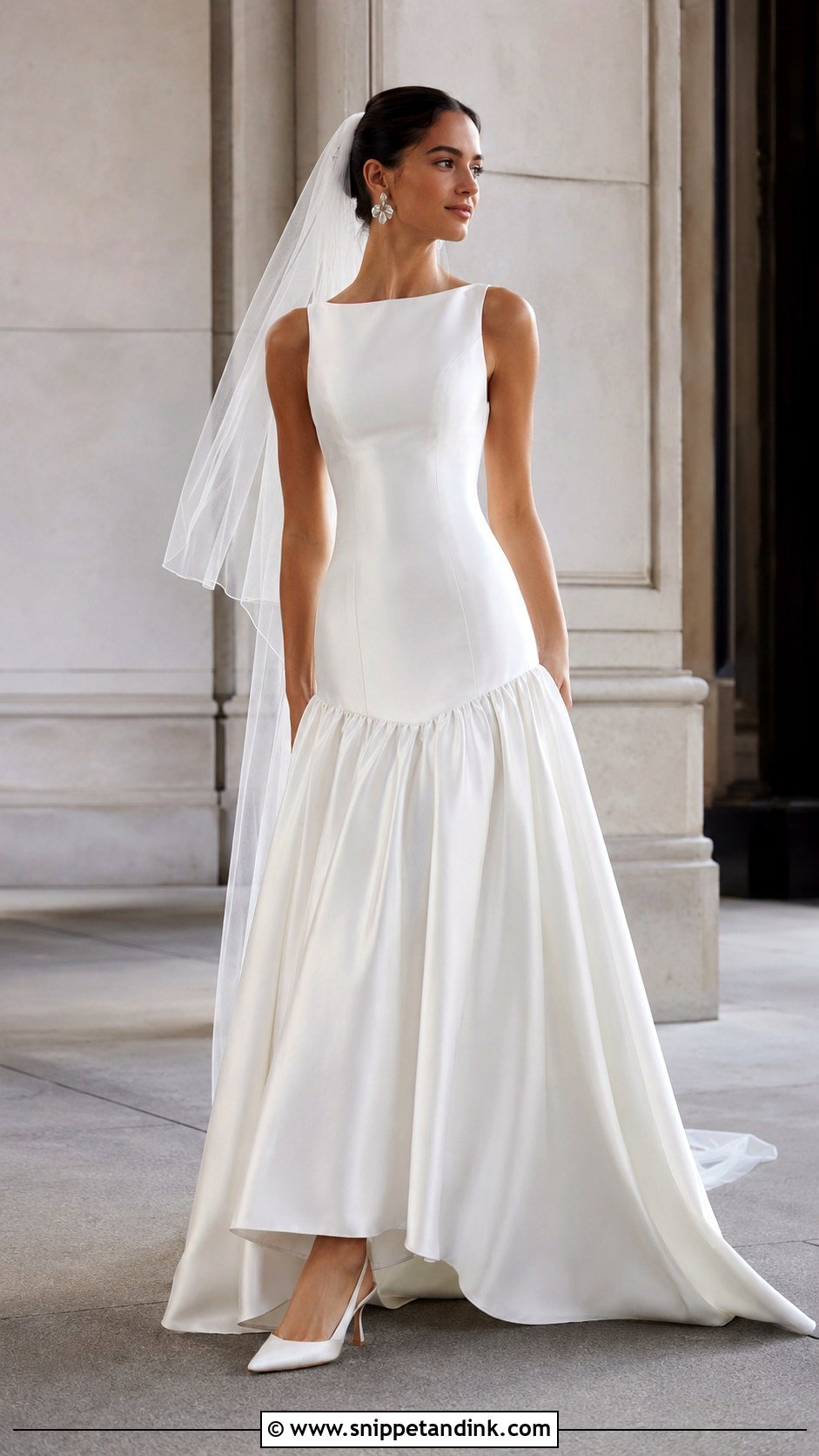
A drop waist moves the fitted section down toward the hips, and on the right body it looks long and quietly dramatic. On the wrong placement it cuts you in half, which is why this is one silhouette I won’t sign off without a seamstress pinning the seam on you. A softly gathered or pleated skirt adds movement below the sleek top. Slim slingbacks, sculptural silver earrings, a plain tulle veil and a centre-parted chignon or smooth shoulder-length cut all keep the eye moving downward. Carry a small posy; a big round bouquet hides exactly the line you chose this dress for.
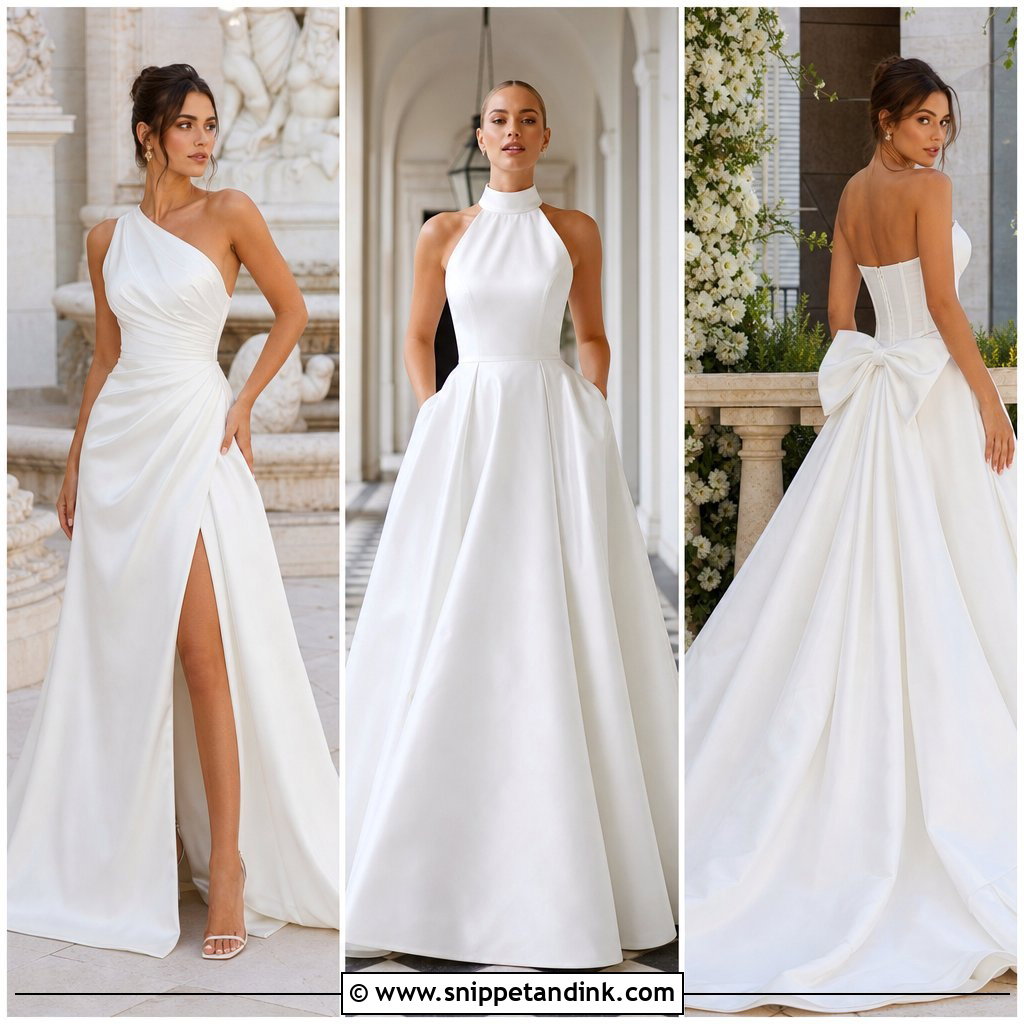
4. Draped Off Shoulder Bridal Dress
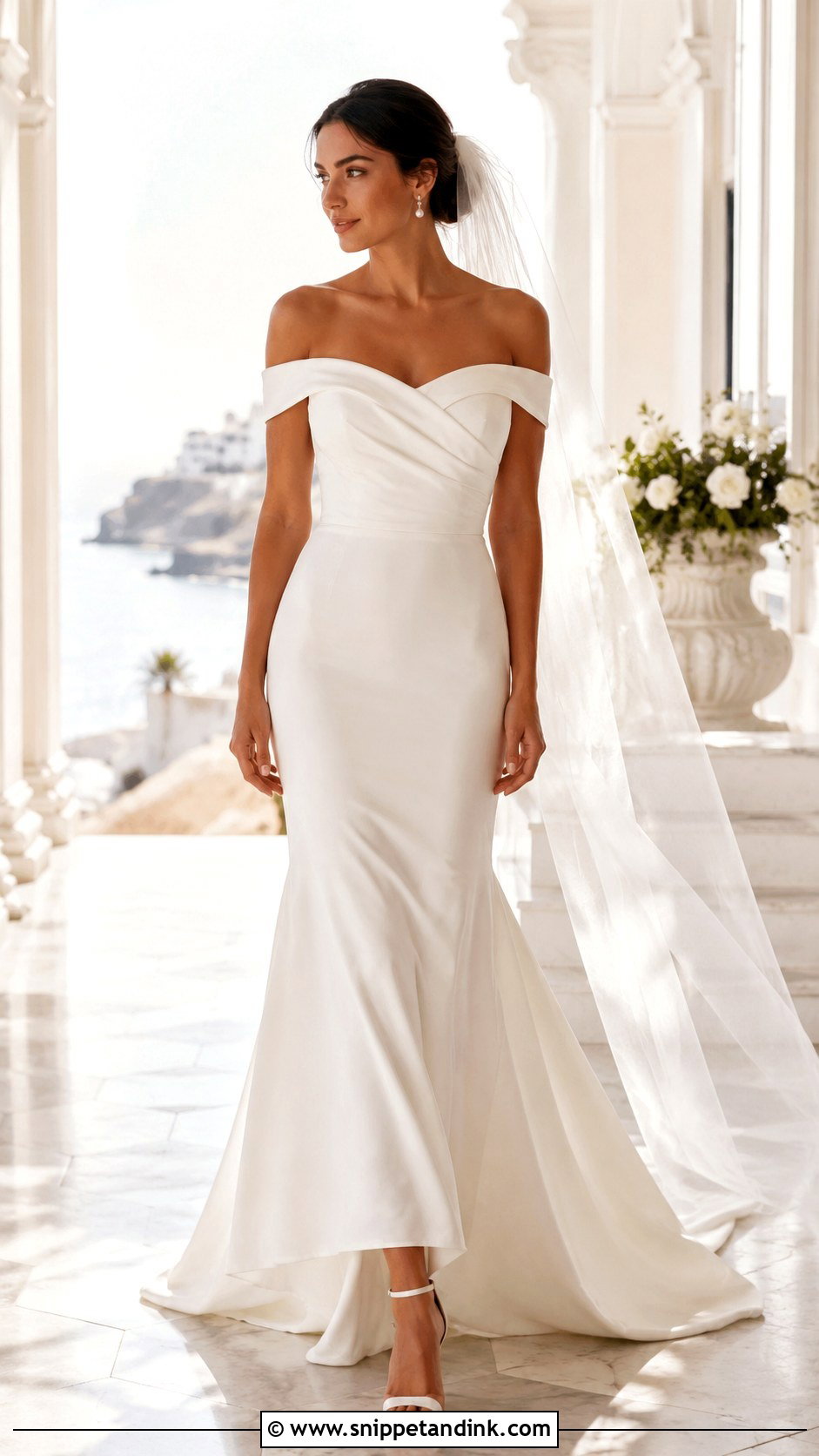
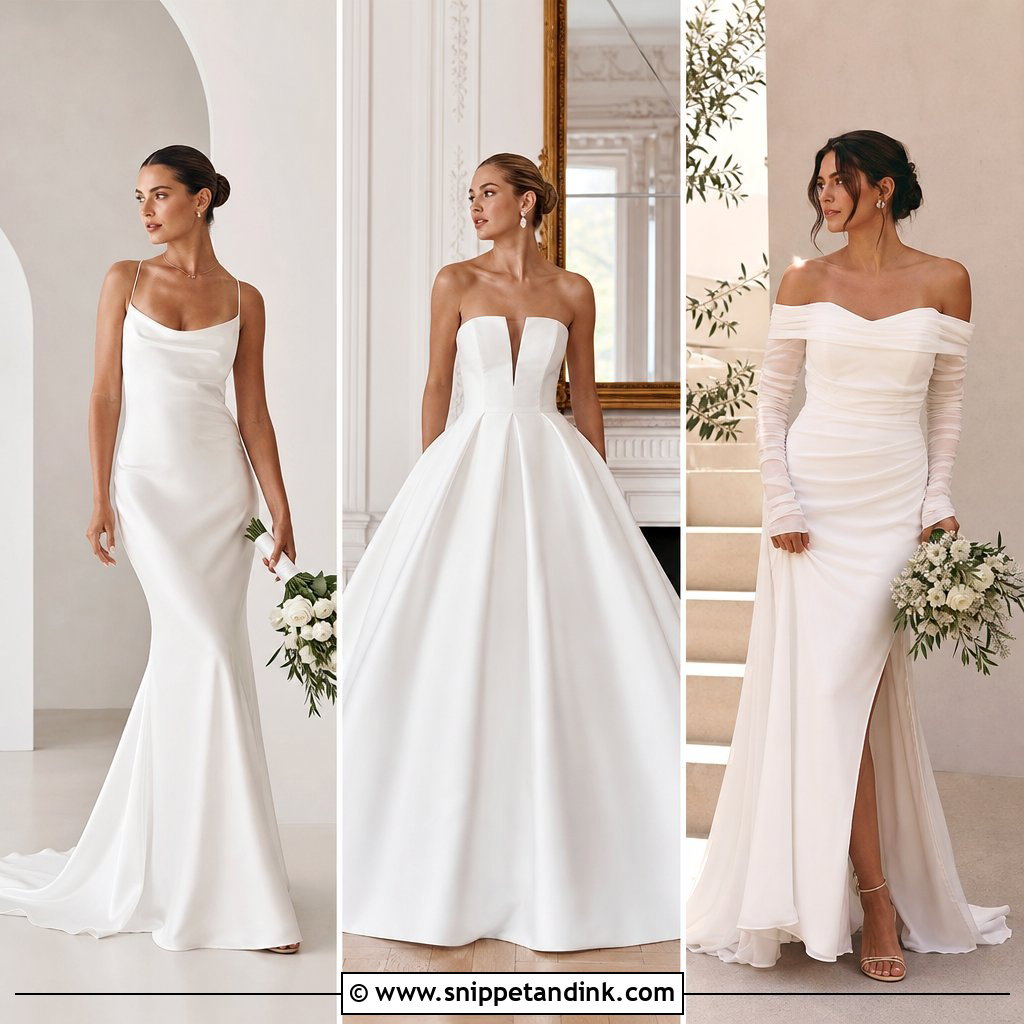
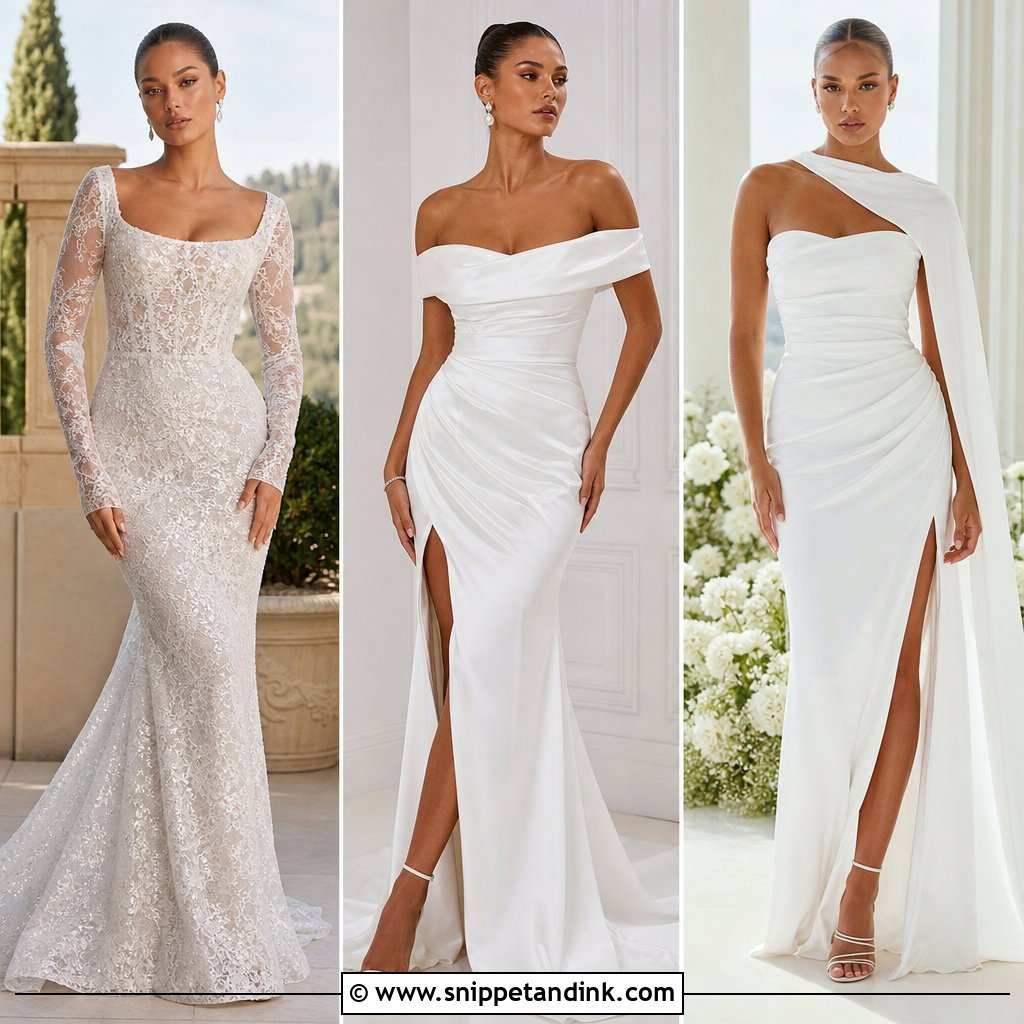
Draped off-shoulder necklines need fabric with some body. Fluid crepe, satin or light mikado will hold soft folds, while chiffon collapses and slides. A fitted waist and gently flared skirt balance the bare shoulders, and a back slit or short train lets you walk freely. I check how the drape behaves when the bride lifts her arms, because heavy folds can creep upward and bunch at the neck. Pearl button earrings, ivory ankle-strap heels and a narrow bracelet are plenty. A loose low bun keeps the shoulders clear, with a sheer chapel veil tucked underneath for the ceremony, swapped for a compact clutch afterward.
5. Halter Neck Bridal Gown
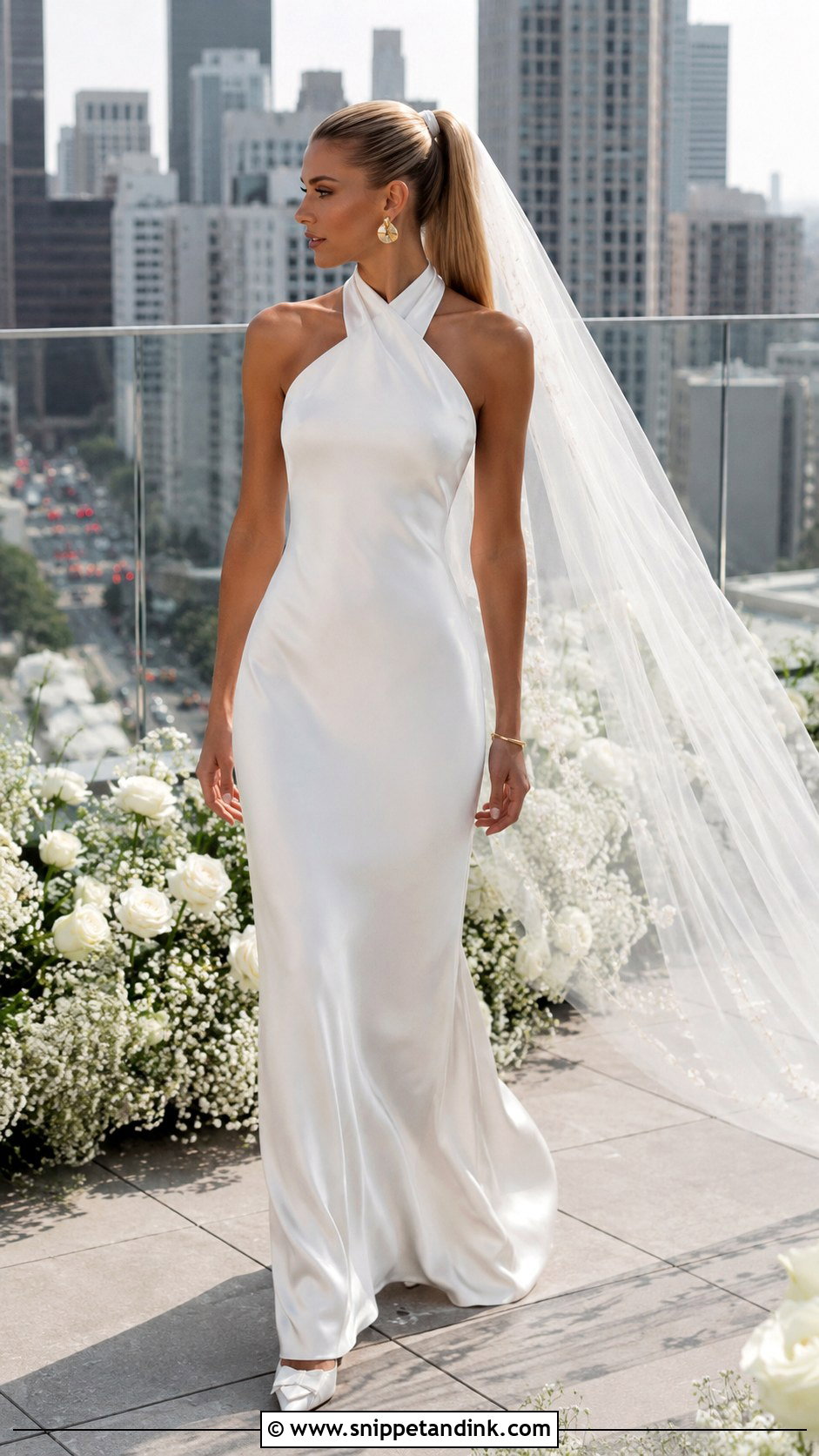
Halters show off the shoulders and back, and they move well, which is why I recommend them for brides who plan to dance hard. A high halter gives more coverage; a softer draped version feels more relaxed. Crepe and satin follow the body without needing decoration. Because the neckline is the feature, I’d skip a necklace entirely and wear a polished bun or a high ponytail so nothing breaks the line across the shoulders. Low pointed heels, modern gold earrings and a slim cuff work well. Attach a long veil below the hair rather than at the crown, where it would crowd the neck.
6. Square Neck Bridal A Line Dress
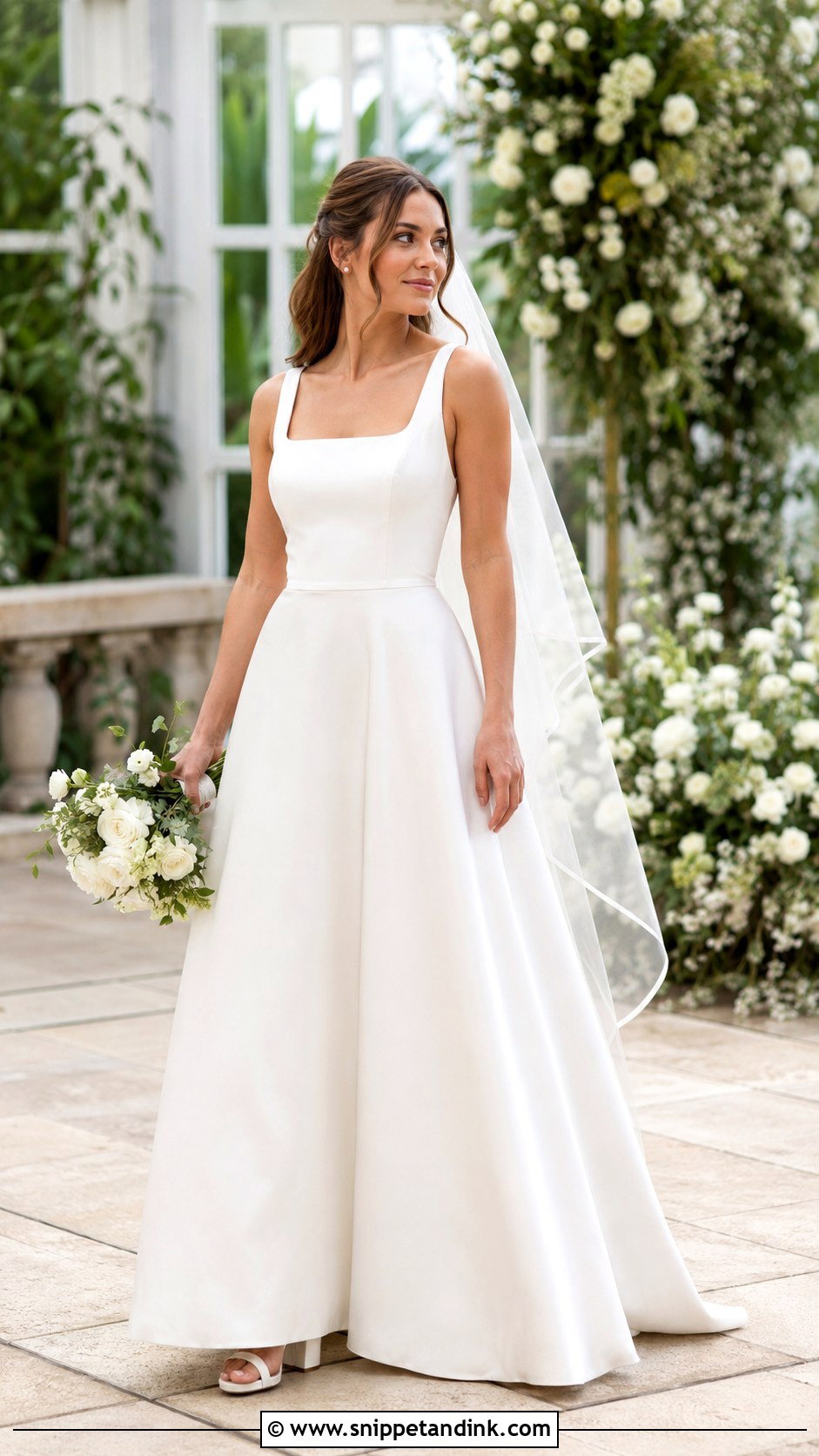
Square necks frame the collarbones, and the wider straps that usually come with them hold a proper bra, so this is a dress you can wear for twelve hours. Smooth satin keeps it minimal; jacquard gives subtle pattern. The thing I check is the corner points of the neckline: they should sit flat when you lean forward. Pearl studs, block-heel sandals and a medium veil with a fine satin edge suit it, and the neckline works with a waved bob, a half-up style or a neat bun. For more coverage at a religious ceremony, a fitted sheer topper slips on and off easily.
7. Sheer Sleeve Lace Bridal Gown
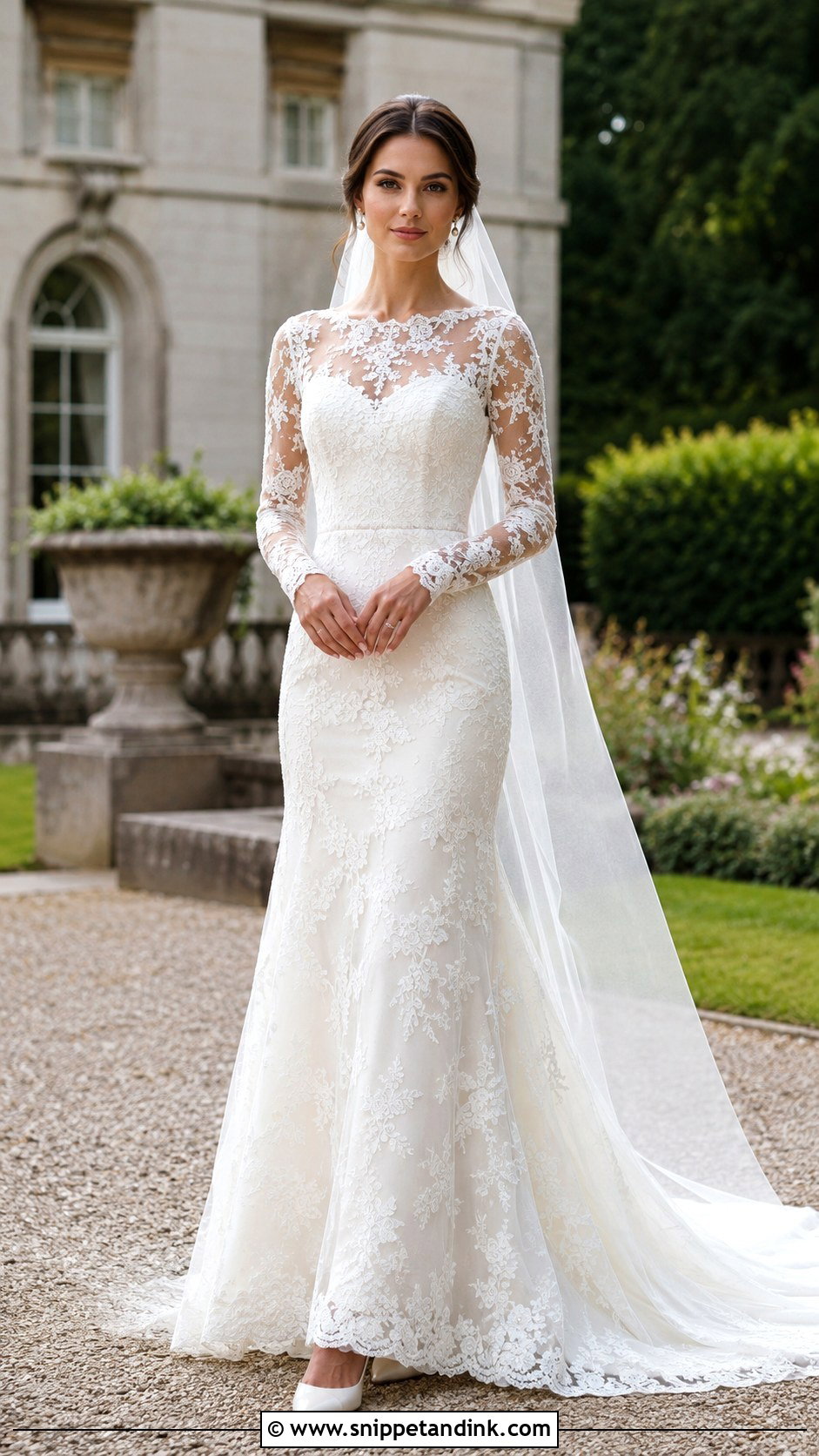
Sheer sleeves make lace feel light. The lace itself matters, though: open spacing, clean florals or a geometric pattern look current, while dense allover lace drifts back toward traditional. A simple lining keeps the texture visible without muddying it. The weak spot on sheer sleeves is the armhole seam, which can be stiff, so I always ask brides to cross their arms and reach forward in the fitting. A low textured bun shows off the sleeves and back, and a plain veil avoids two lace patterns clashing. Closed-toe ivory pumps and small pearls are enough. For a cold-weather wedding, a tailored white coat covers the outdoor portraits.
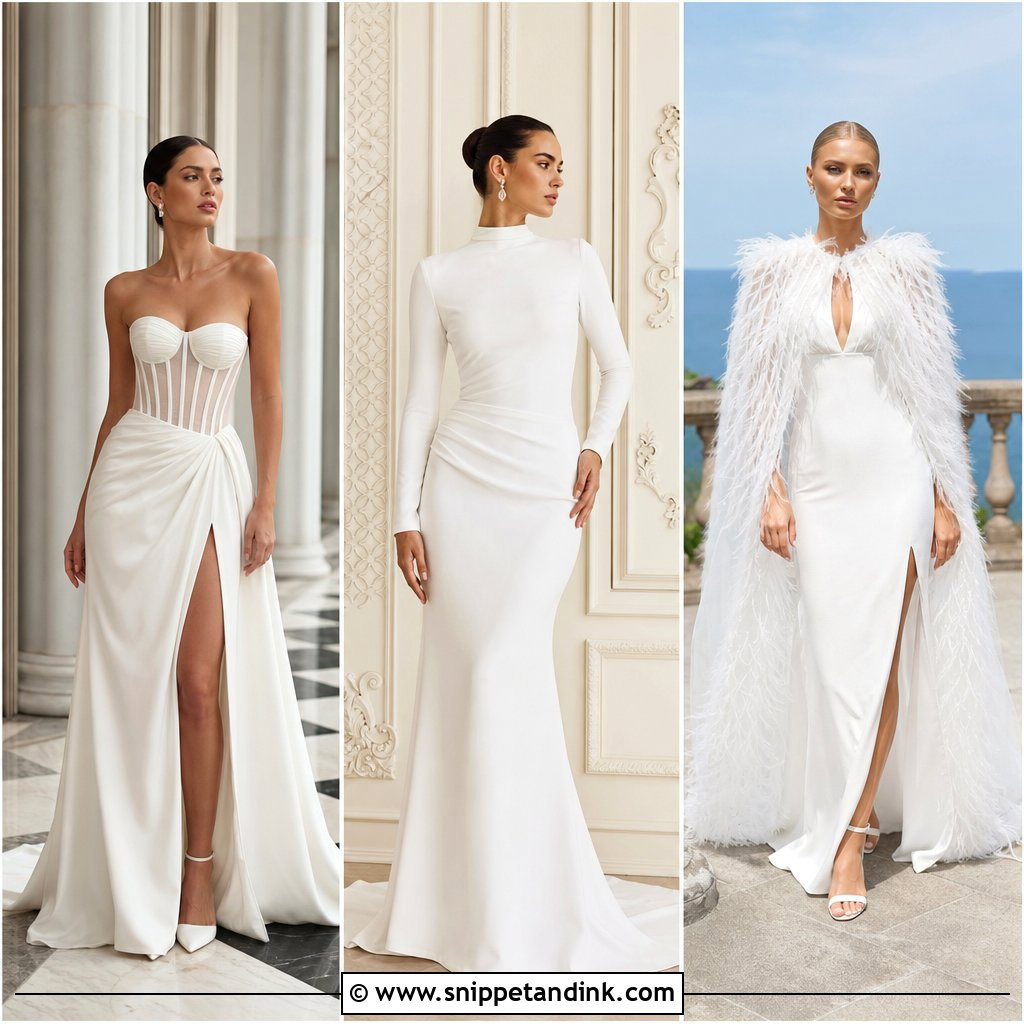
8. Corset Bridal Gown With Overskirt
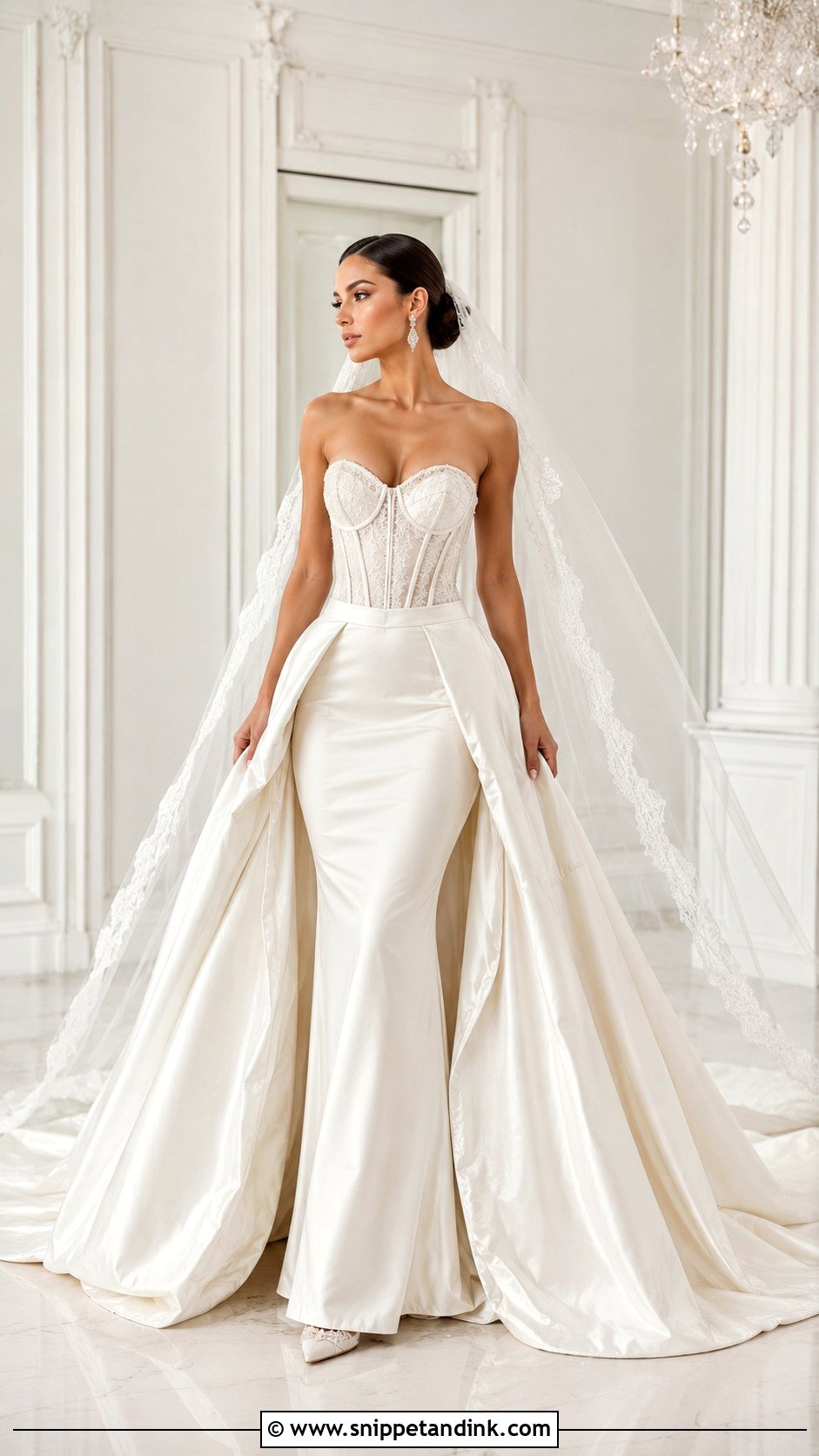
This is two silhouettes for the price of one fitting schedule. You start in a structured corset gown under a full satin or organza overskirt, then unhook the outer layer after photos to reveal a column or fit-and-flare for dinner. The fastening is everything. If the waistband ridges once the overskirt is off, the reception look is spoiled, so I ask seamstresses to finish the base waist as carefully as the overskirt. Practise removing it with whoever will help you on the day. Pointed heels, crystal studs and a sleek bun suit both versions; a long plain veil for the ceremony and a metallic clutch later.
9. White Bridal Pantsuit
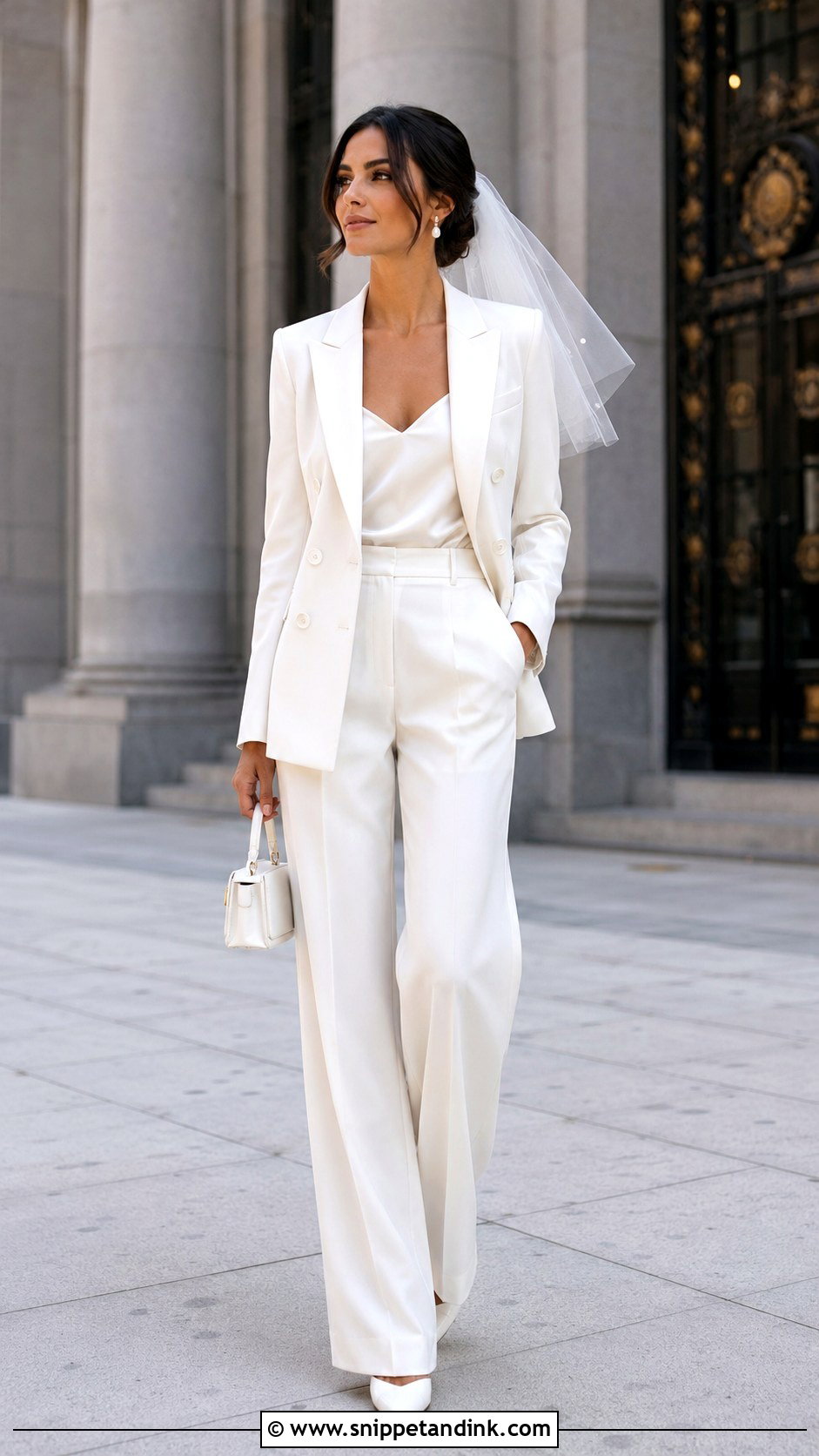
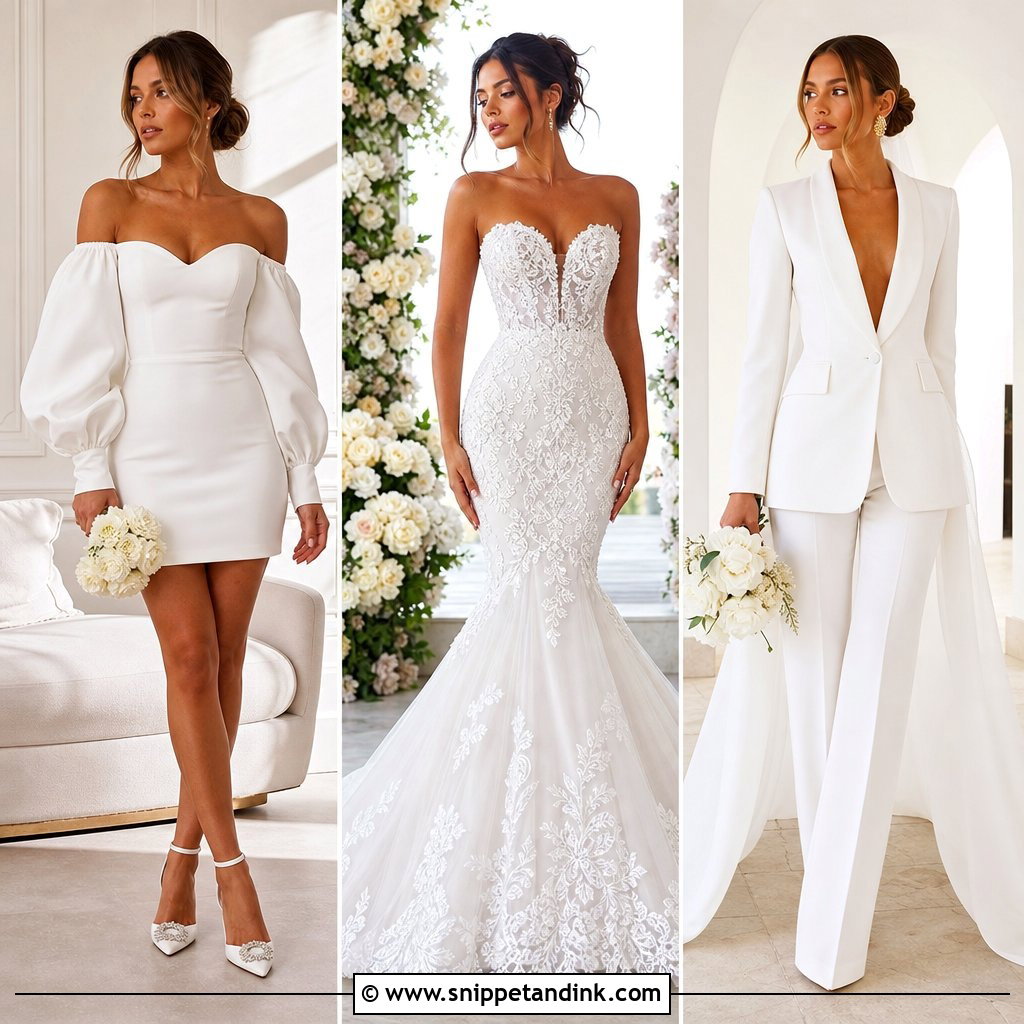
A white pantsuit carries real formality when the tailoring is precise. Start with a well-fitted blazer and straight or wide-leg trousers, then choose what goes underneath: a silk camisole, a structured corset or a high-neck blouse. The trouser length is my priority at the fitting: hem them with your shoes on so they just skim the floor, because white trousers that pool look sloppy in photos. Pointed pumps, a top-handle bag and bold pearl or crystal earrings sharpen it, and a birdcage or short tulle veil makes it read as bridal. Wear the jacket open over a fitted top if you want a softer waist.
10. Bridal Jumpsuit With Cape
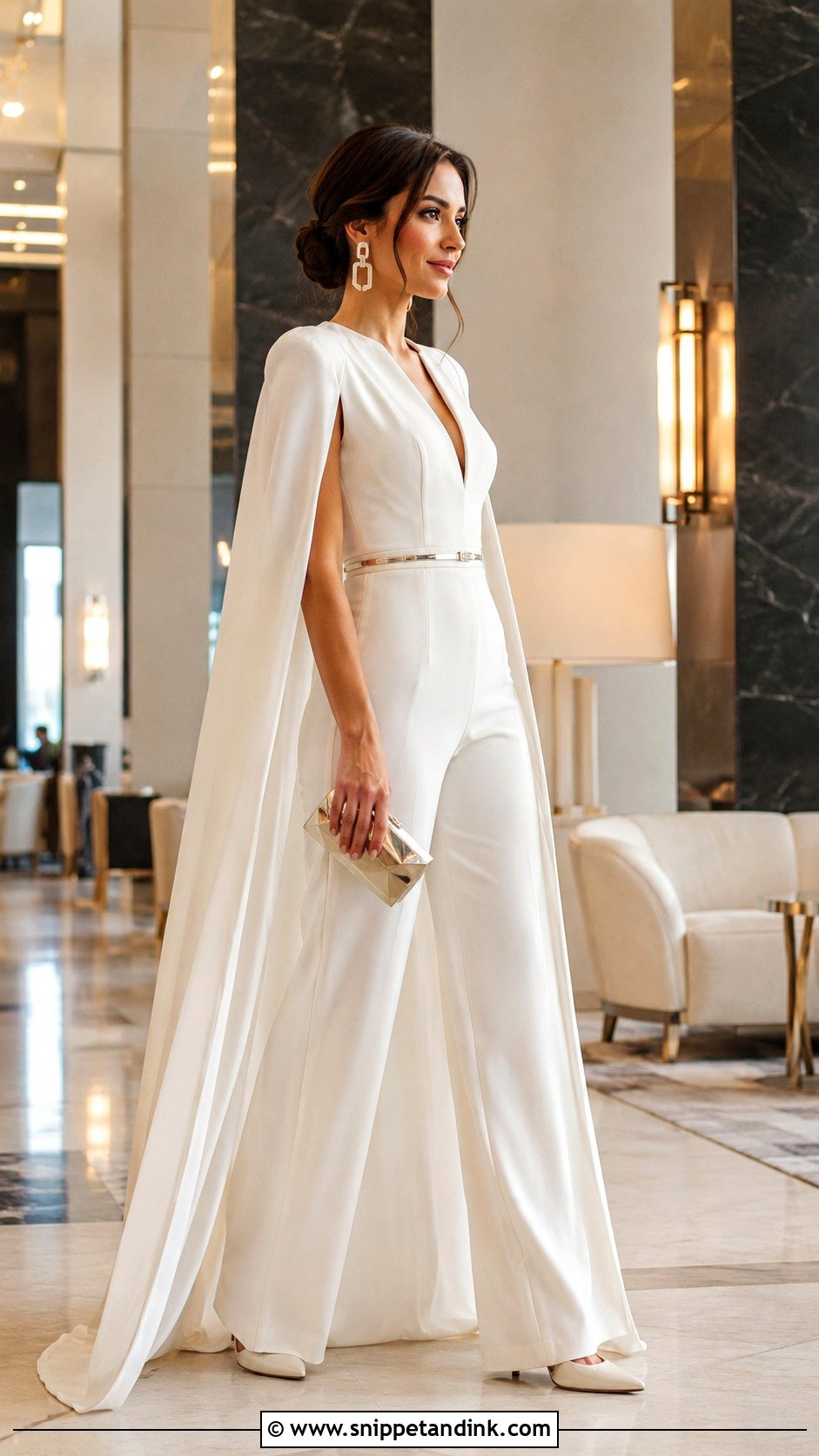
A tailored bridal jumpsuit with a cape gives you the sweep of a train with both legs free. Look for a defined waist, wide legs and a supportive bodice. The cape should attach at the shoulders so it falls straight down the back without pulling the neckline. Hair is the practical question here: loose hair tangles in a cape within minutes, so I’d go with a high bun or a sleek ponytail. Match the fabric of the cape and jumpsuit so they read as one piece. Pointed pumps, geometric earrings and a small metallic clutch complete it, and the side and back views carry the whole effect in photographs.
11. Bridal Two Piece Skirt Set
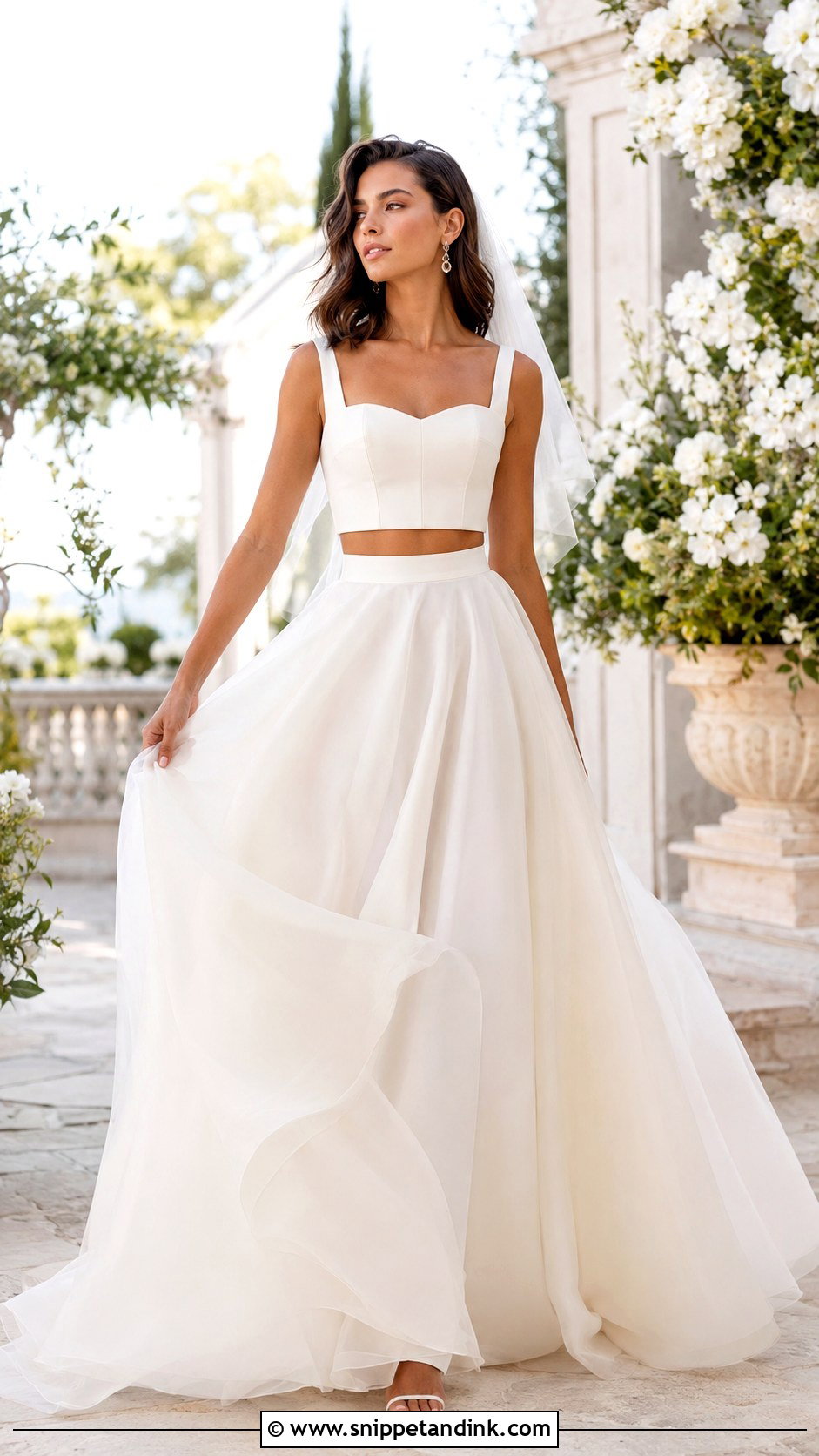
A cropped bodice with a high-waisted skirt feels fresh, and the separate pieces let you mix sizes if your top and bottom don’t match one sample. Satin, crepe or organza skirts all work, slim or full. Most brides want only a narrow strip of skin showing. The test I insist on is sitting and raising both arms: the gap shouldn’t double when you move. If it does, lengthen the top or add a sheer fitted layer. Minimal sandals, drop earrings, a shoulder-length veil and a clean bun or soft waves keep the look approachable for a garden or summer destination wedding.
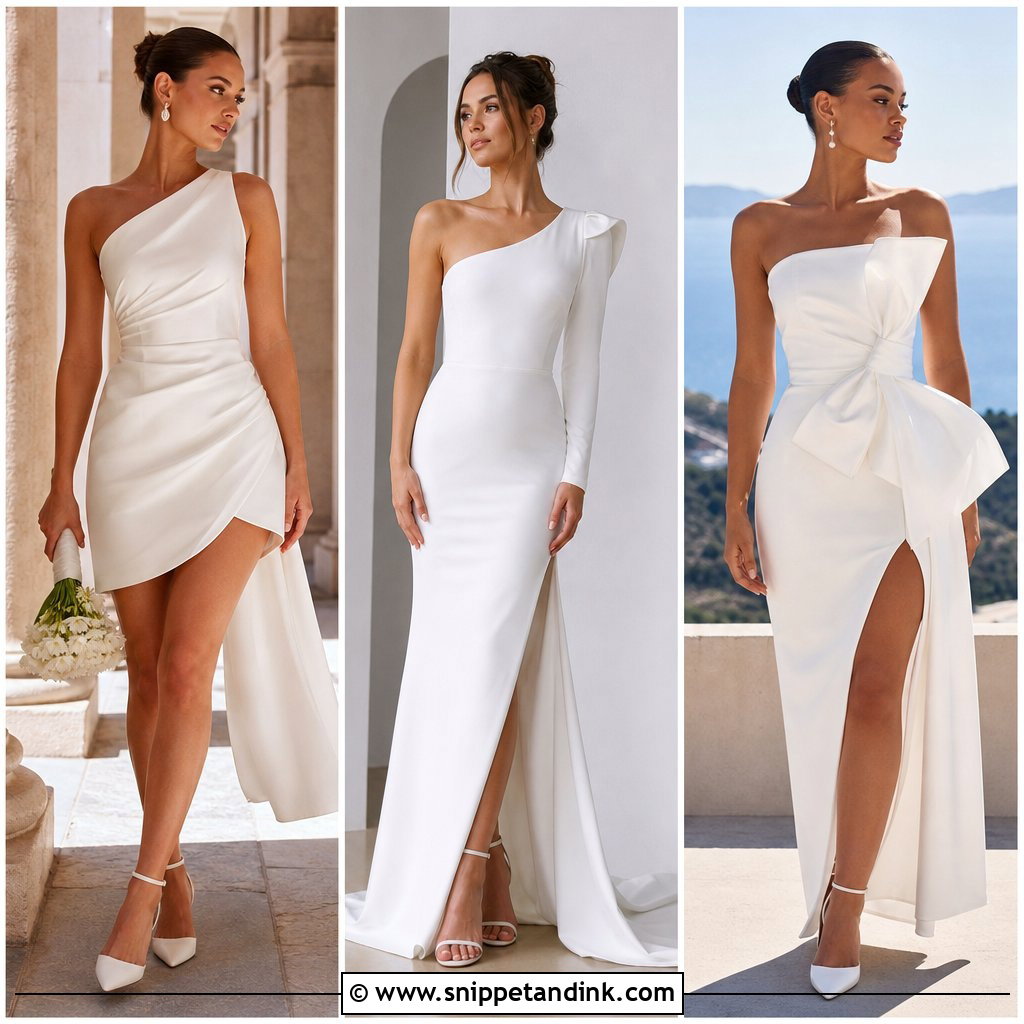
12. Bridal Mini Dress With Veil
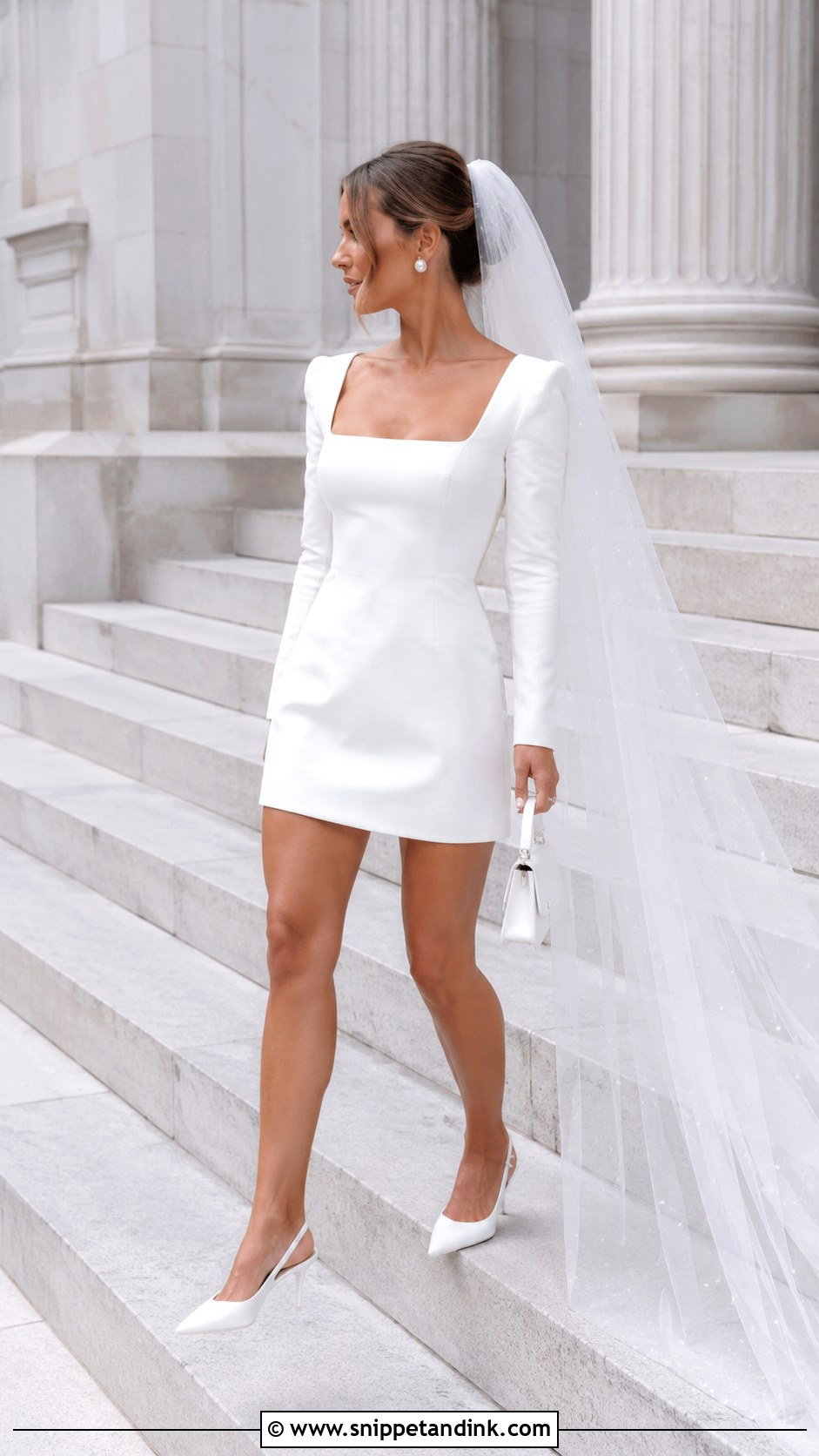
Bridal minis live or die on structure. A clean square neck, long sleeves or subtle embellishment keeps the dress from looking like party wear, and a dramatic veil instantly tips it into ceremony territory. Balance the short hem with pointed slingbacks or refined pumps. I’d check how much the hem rises when you sit before committing, especially if you’ll be on a stage or a raised table. Pearl earrings, a compact bag and either a smooth bun or a curled bob finish it. A long white coat covers you outside, which makes it a good courthouse or second-look option.
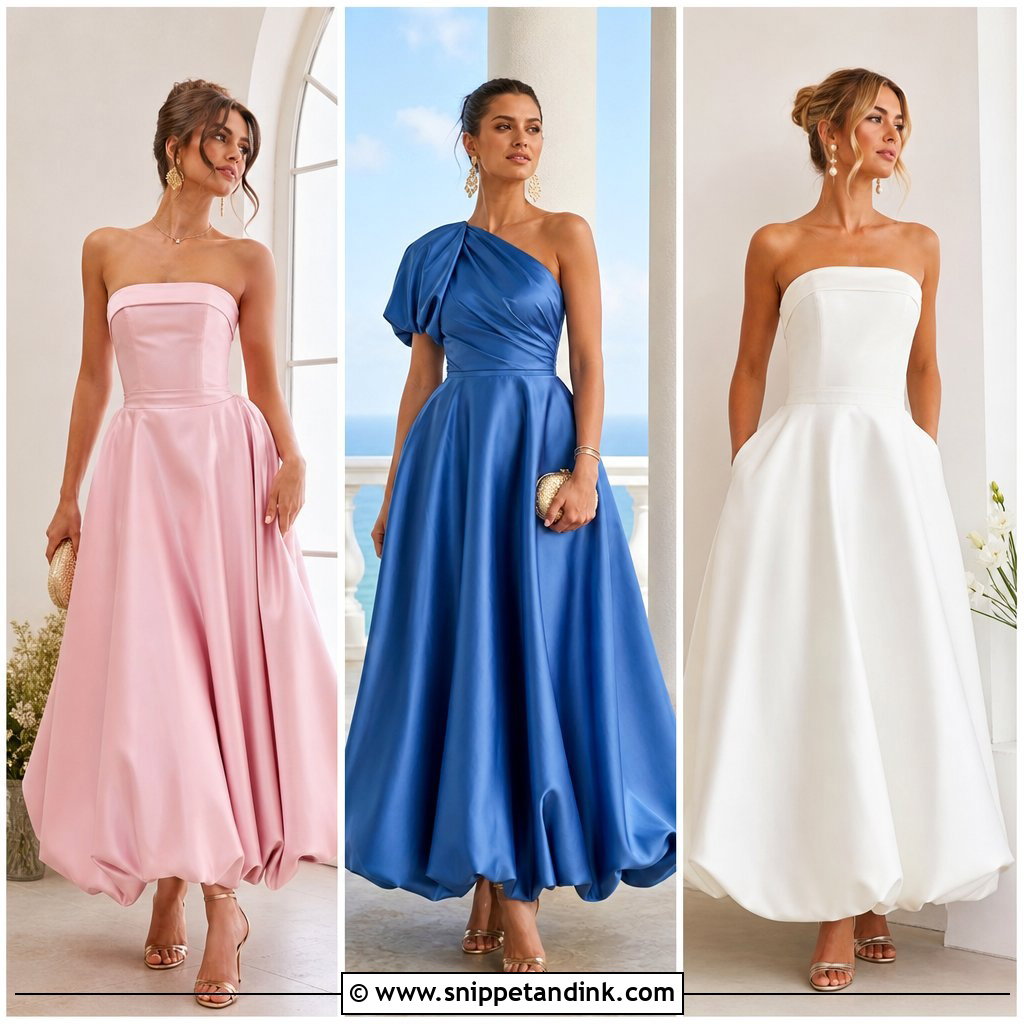
13. Tea Length Bridal Dress
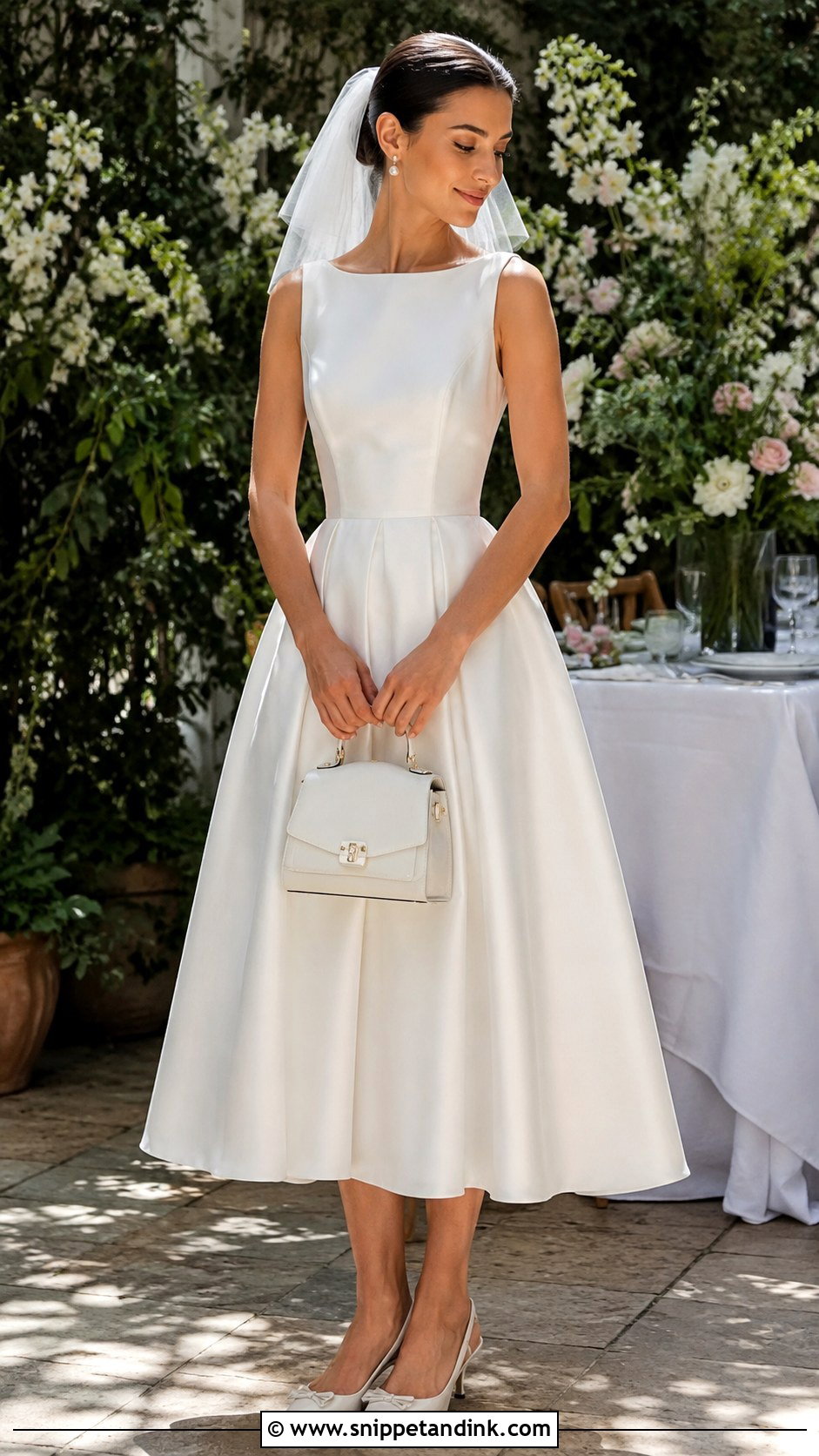
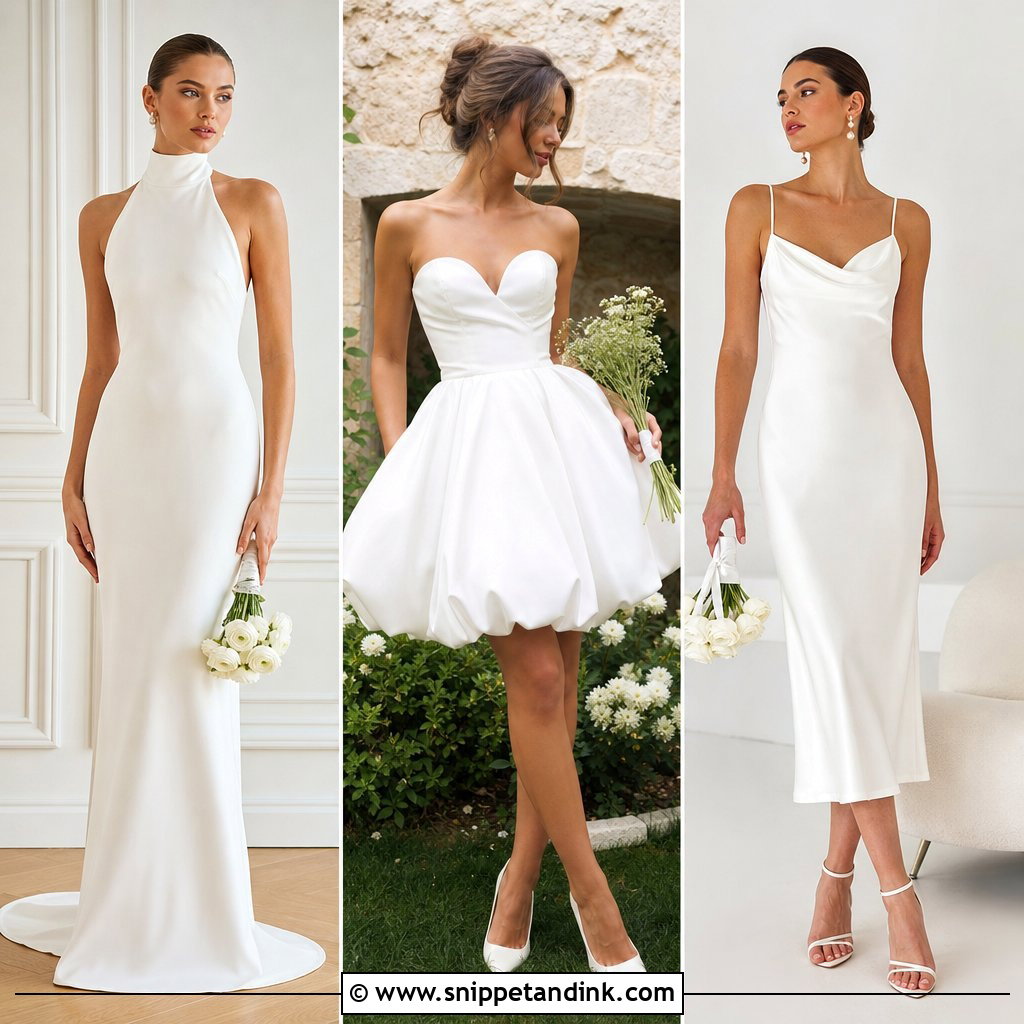
Tea length ends between the lower calf and ankle, so your shoes become a real part of the outfit. Satin, organza and jacquard hold the full skirt shape; soft tulle gives a lighter swing. I’d pick the shoes before the final hem, since a kitten heel and a block heel change where the skirt falls. Pointed kitten heels or slingbacks, pearl earrings, a short veil and a structured handbag suit it. Keep the hair neat rather than formal, perhaps a low ponytail or brushed waves. This is the length I suggest when a bride wants to walk around a garden lunch or a restaurant without managing fabric.
14. Silk Slip Bridal Dress
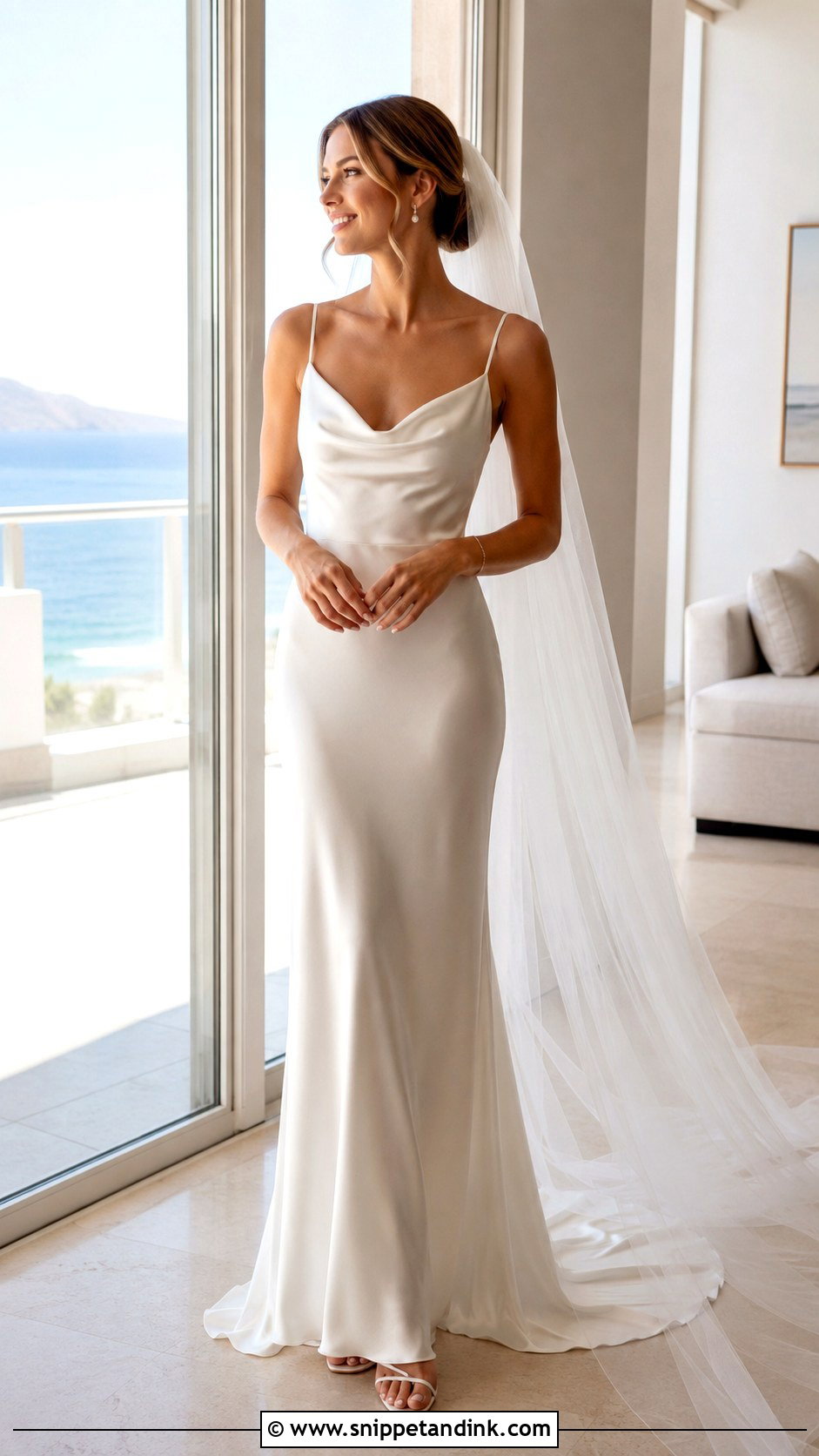
Bias-cut silk follows the body closely, so the fit has to be gentle. If the slip clings at the hip, it needs letting out rather than more shapewear, which shows straight through silk. A draped neckline or simple V keeps it refined, and wider straps give extra support. Silk also marks easily with water and creases at the lap after a seated ceremony; steam it on the morning and keep a white cloth handy at dinner. Strappy ivory sandals, delicate earrings and a slim bracelet are all it needs. A sheer floor-length veil adds ceremony drama, and a tailored blazer or satin wrap covers you as the evening cools.
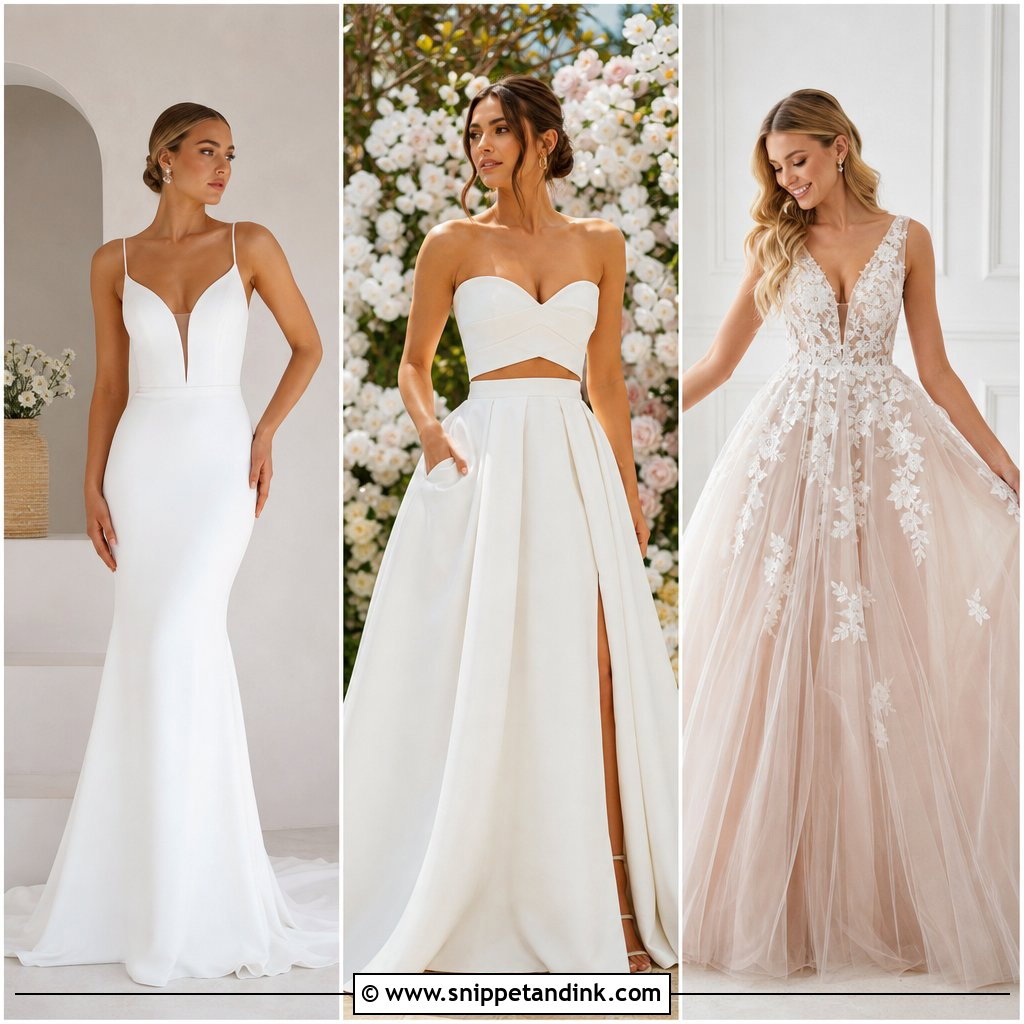

15. One Shoulder Sculptural Bridal Gown
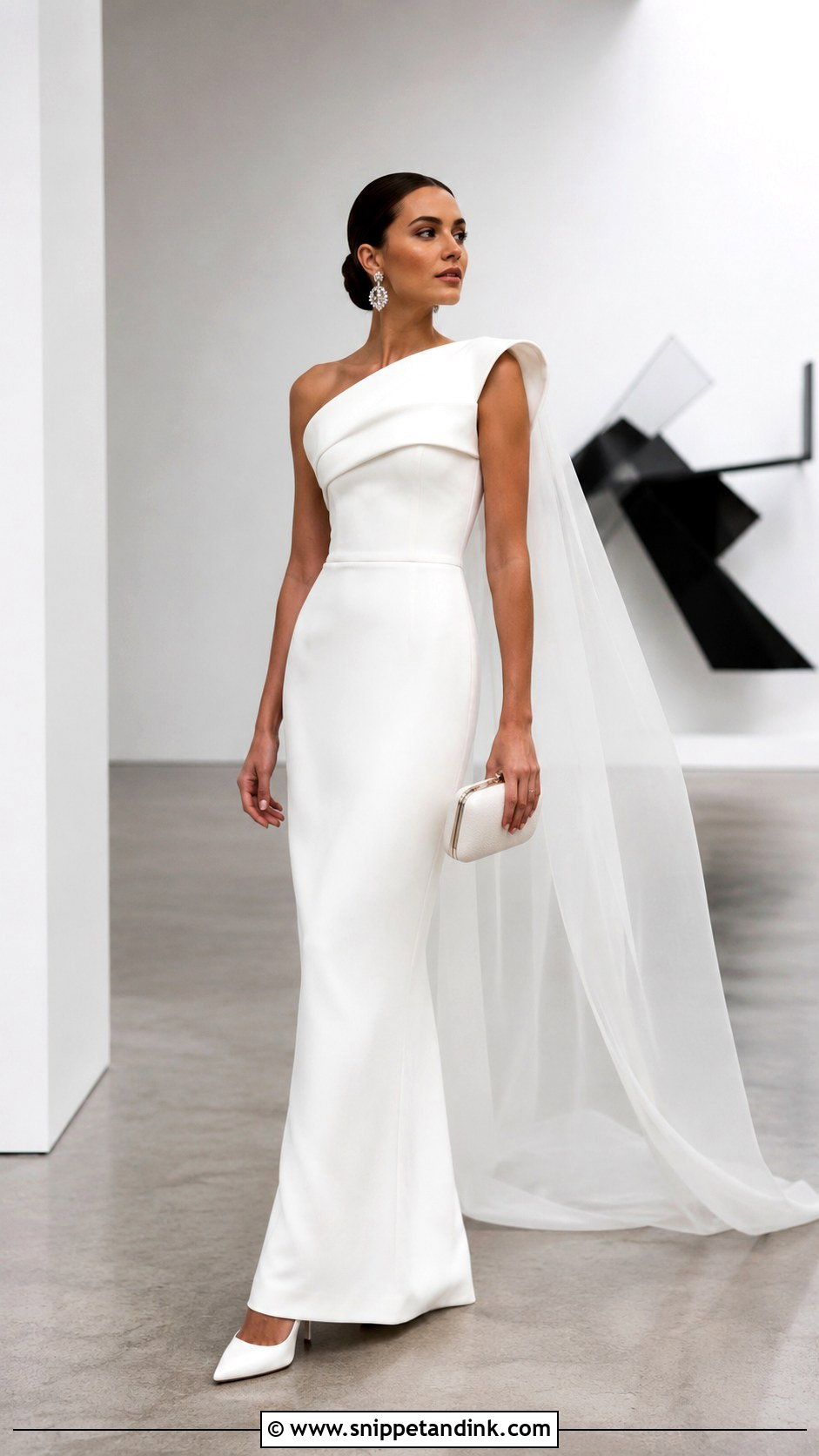
One shoulder gives a simple column a focal point without beading. Look for an asymmetric neckline with controlled draping, a folded detail or a sculpted bow at the shoulder. The fitted skirt keeps attention up top. Hair goes to the opposite side; a side-parted bun on the same side as the bow crowds it. Instead of a veil, I like a long sheer cape attached discreetly at the back, which doesn’t fight the asymmetry. Clean pointed pumps, a single statement earring or matching studs and a smooth clutch finish it, and the look suits galleries and design hotels.
16. High Neck Crepe Bridal Dress
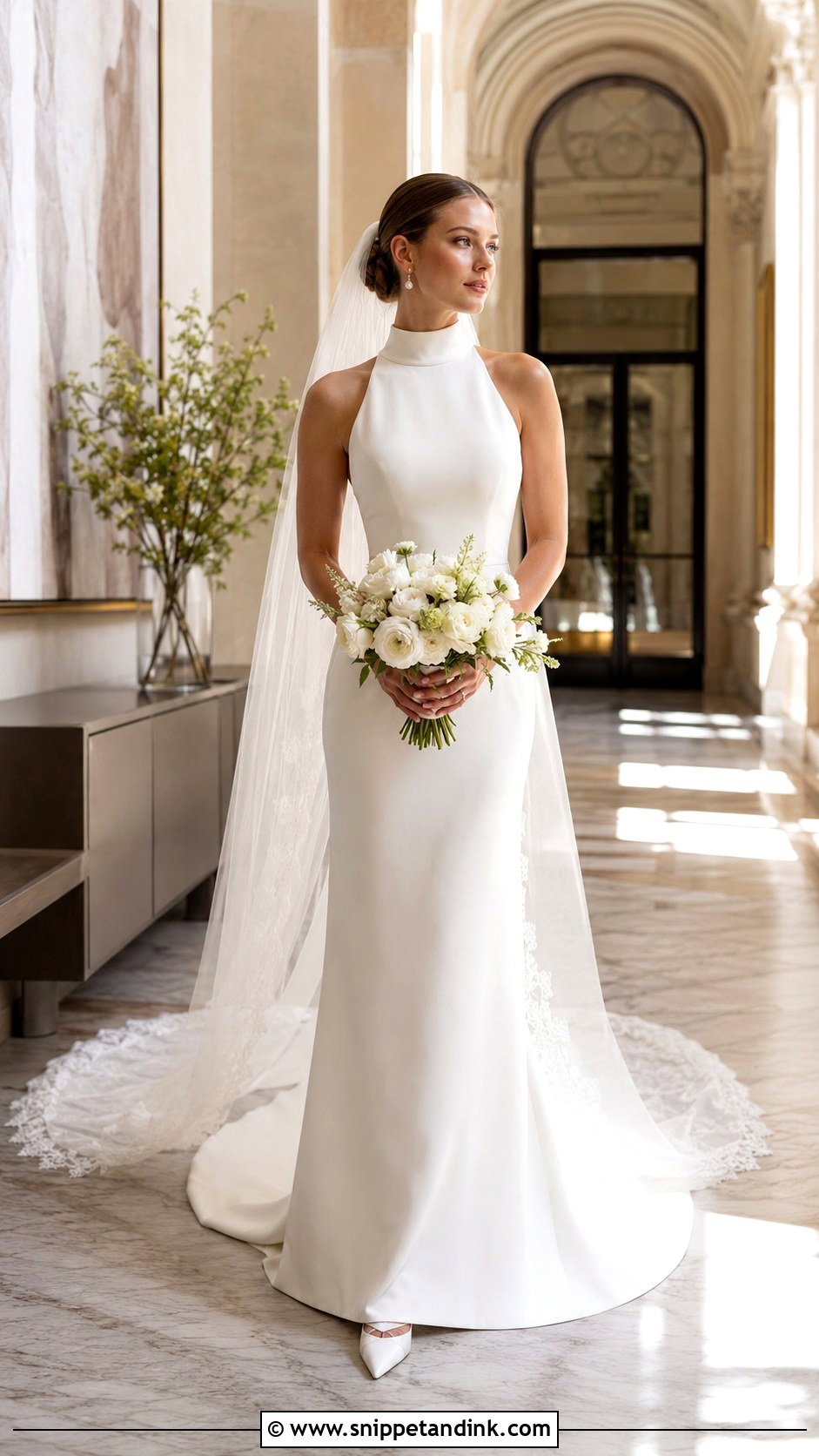
A high neck in crepe is coverage without fuss. Sleeveless for summer, fitted long sleeves for winter. Crepe has enough weight to hold the column shape with no added volume, and a low back, covered buttons or a narrow train give quiet detail. Fit at the neck is the thing I watch: a high collar that’s even slightly tight feels suffocating by the speeches, so you should be able to swallow and turn your head freely. A low bun keeps the neckline visible, with a cathedral veil anchored underneath. Sleek pumps and pearl drops are enough, plus a decorative comb if the front is plain.
17. Floral Applique Bridal Gown
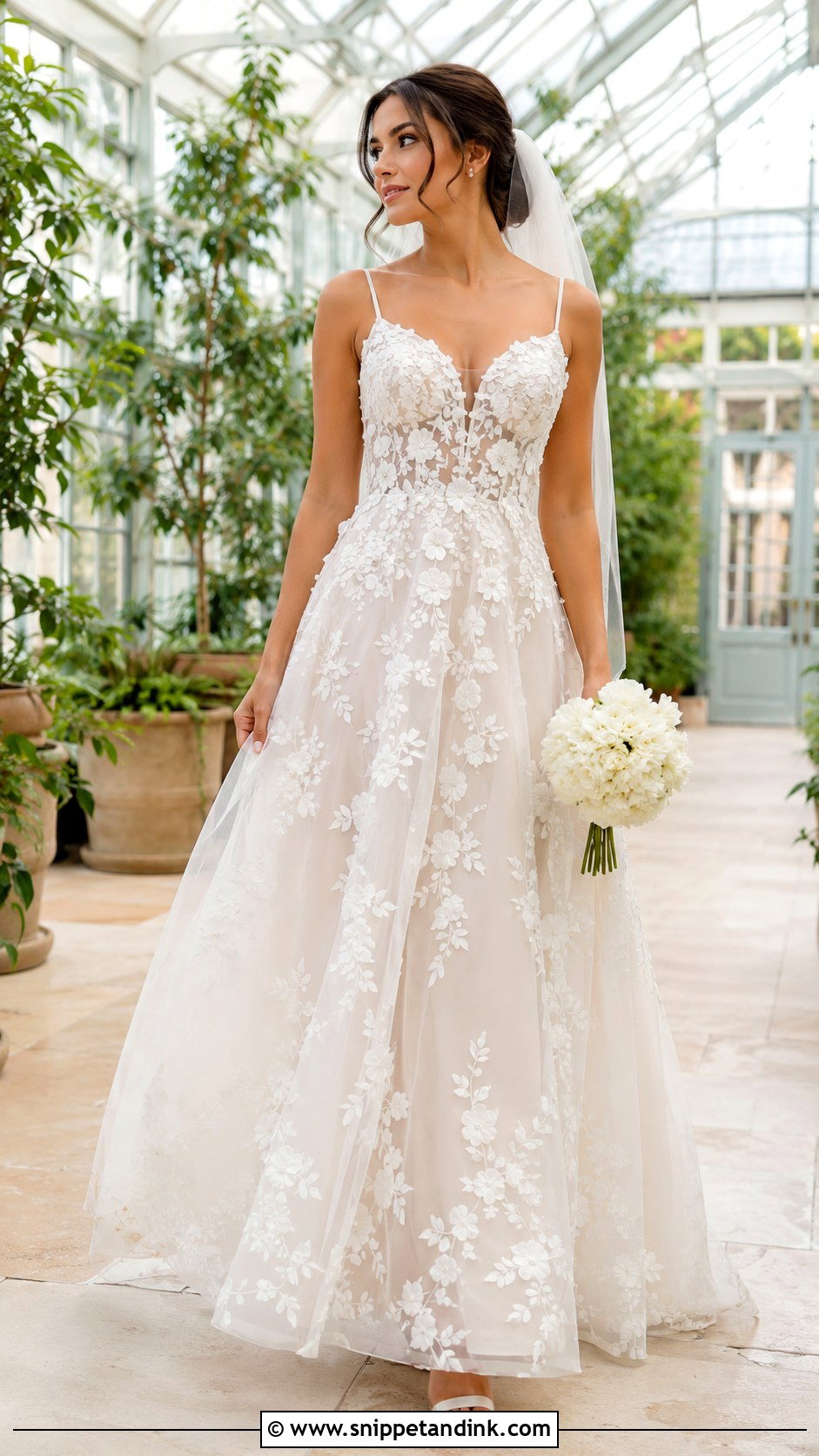
Three-dimensional appliqués add texture without making a gown heavy, provided they’re placed with some restraint. Clustered on sheer tulle or organza over a clean base, they look modern; scattered everywhere, they look busy. A simple A-line or column keeps them in check. Scale is worth thinking about: large blooms read from the back of a church, small ones only up close. I’d also check that no flower sits directly under the arm, where it rubs. Understated ivory sandals, small gemstone earrings, a plain veil and a low bun suit it, along with a compact bouquet that doesn’t cover the bodice.
18. Pearl Beaded Bridal Column Dress
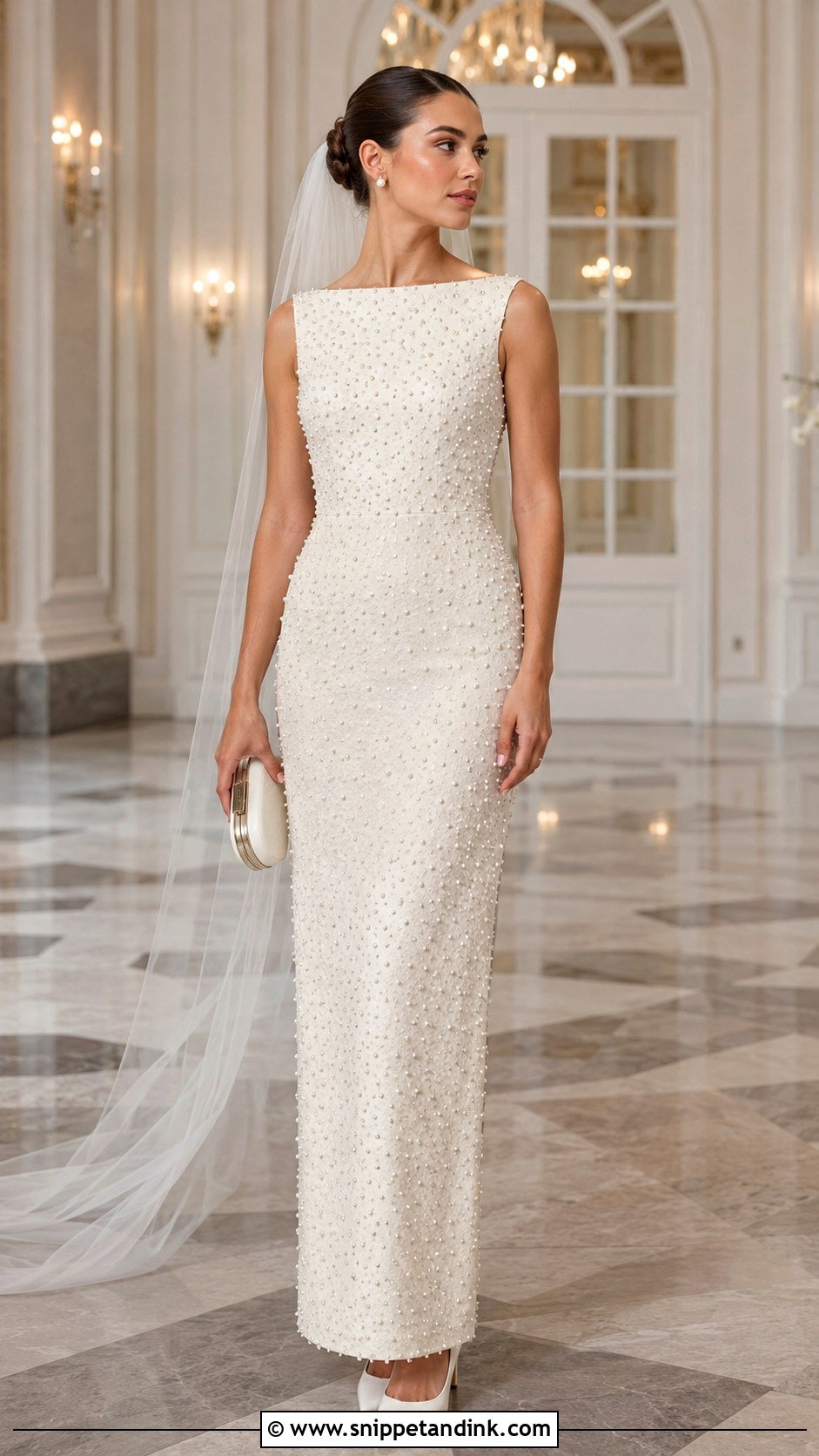
Pearls give soft shine instead of the hard sparkle of crystal, and they photograph without glare under flash. Evenly spaced pearls, linear patterns or beading concentrated at the neckline and waist all keep a fitted column looking clean. Beaded dresses are heavier than they look, so walk and sit in it for a few minutes before alterations are finalised; weight pulls a column dress downward over a long evening, and the hem should be set with that in mind. Choose a plain veil, since pearls snag fine tulle edging. Satin pumps, pearl studs, a structured clutch and a sleek bun or tucked waves suit formal evening venues.
19. Bridal Gown With Black Accents
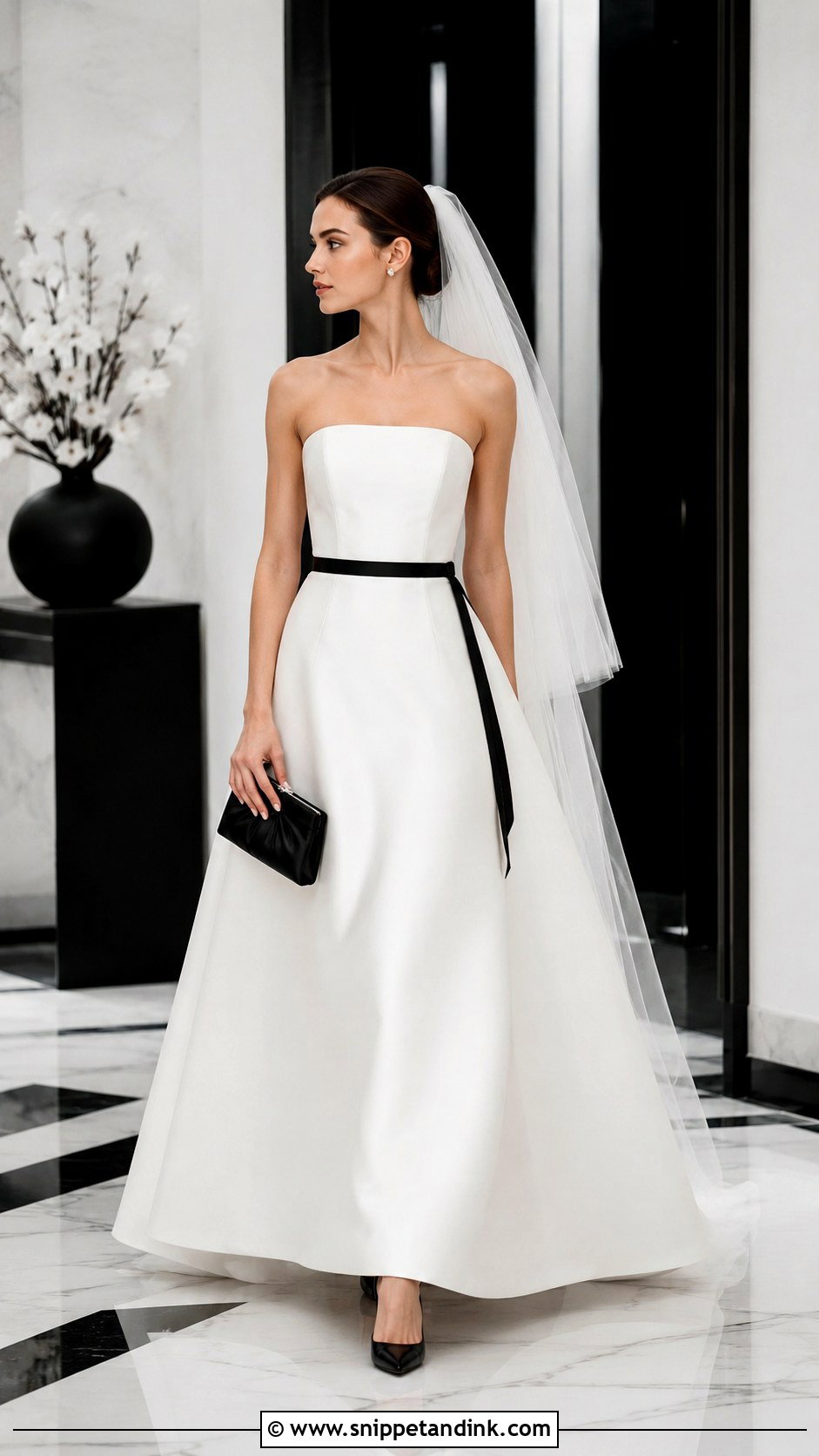
Black on white is graphic, and it needs discipline. Start with a simple white column, A-line or ball gown, then add black in two places at most: a narrow waist ribbon, a structured bow, opera gloves or pointed pumps. Three or more and it starts to look like a costume. Small diamond studs and a black satin clutch work at the reception, while a plain white veil softens the contrast during the ceremony. If you love the idea but worry about it in family photos, charcoal or deep navy is gentler. I’d also tell your photographer, since strong black and white needs careful exposure.

20. Bridal Blazer Dress With Pumps
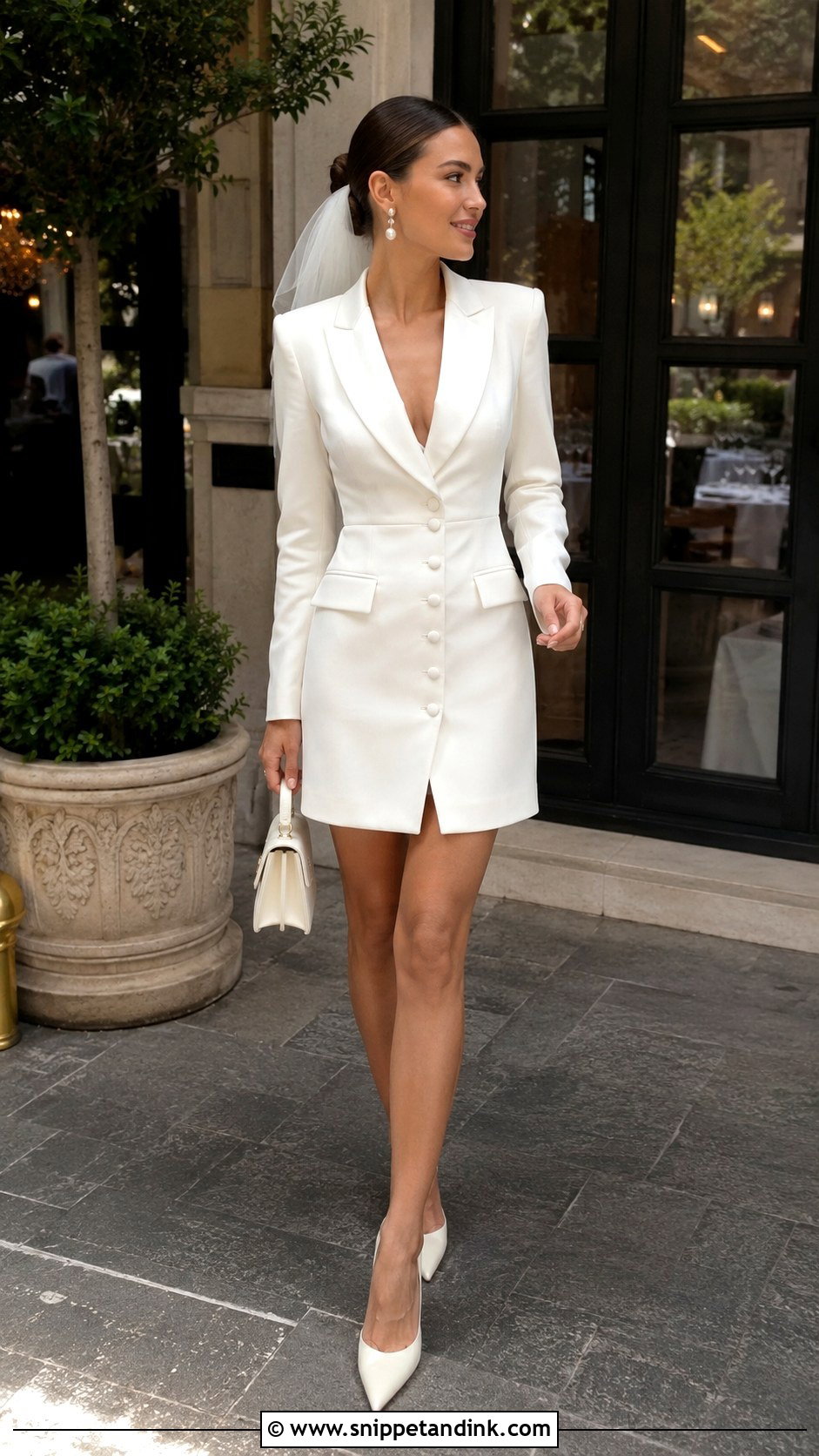
A bridal blazer dress gives you tailoring with a short hem. Double-breasted with a defined waist and a secure closure is the classic version. Length needs checking when seated, because a blazer dress rides up more than a skirt. A satin lapel, covered buttons or strong shoulders push it toward formal. In cool weather, sheer tights look polished with pointed ivory pumps and a top-handle bag. Statement pearls and a short veil, pillbox headpiece or hair bow mark it as bridal, and a polished bun keeps the neckline sharp. Layer a long white coat on top outdoors.
Wearing Trousers or a Mini to a Traditional Ceremony
Several looks here, especially the pantsuit, jumpsuit and minis, can raise eyebrows in a church, temple or family setting with clear expectations. I’d check two things before buying. First, whether your venue or officiant has any dress requirements, such as covered shoulders or knees. Second, how much the people closest to you care, so nothing becomes a surprise on the day.
There’s usually a middle path. A floor-length cape or overskirt can cover a jumpsuit or mini during the ceremony and come off afterward. A sheer topper or bolero handles bare shoulders. Wide-leg trousers in a heavy crepe move like a skirt when you walk, which reads more formal than a slim cut.
Timing an Outfit Change So Nobody Misses You
Second looks are popular, but changing takes longer than brides expect. A corset gown with a lacing back can take fifteen minutes to get out of and into something else, and that’s before touching up hair. I plan the change for a natural gap, usually between dinner and the first dance, and tell the planner so music and speeches wait for you.
- Hang the second outfit in the changing room before the ceremony, steamed and unzipped.
- Choose one helper who has practised your fastenings.
- Pick shoes that work with both outfits, or bring a second pair already broken in.
- Have a garment bag ready for the first dress so it isn’t left on a chair.
Modern Means Fitted, Not Merely New
The most current bridal look isn’t the newest silhouette. It’s the one that fits properly, feels like you and suits the room you’re marrying in. A plain gown with the right veil can be dramatic; a pantsuit, jumpsuit, mini or set of separates can look every bit as ceremonial as a ball gown. Think about the whole outfit at once, from shoes and jewellery to hair, outerwear and the bag you’ll carry. Then wear everything together before the day and walk, sit and dance in it. Minimal or tailored, romantic or unconventional, the right choice is the one you stop thinking about once you’ve put it on.
You'll Like These Ideas:





Leave a Reply