
An architectural dress is engineered before it’s decorated. The seams, the boning, the weight of the fabric and the way a fold is stitched down do the work that lace and beading do on other gowns. Bridal design right now leans hard into this: structured corsets, Basque waists, asymmetric necklines, sculpted skirts and big controlled folds that carry couture drama without a single crystal. When I style one, the questions are physical. Where does the weight sit? Can you sit down? What happens to that fold after six hours? The twenty dresses below are styled head to toe, with the fitting checks each shape needs.
Mikado, Faille or Crepe: Which Fabric Holds a Fold
A sculpted design drawn on paper only works in a fabric that can hold it. When a bride falls for a structured shape, I hand her the fabric before the dress, because the same sketch made in different cloth becomes a different gown.
- Mikado: heavy, slightly lustrous and stiff. It holds big skirts, bows and folded necklines better than anything else, though water drops can mark it.
- Silk faille: a fine crosswise rib gives it a matte, crisp hand. Excellent for cuffs, peplums and bows that need to stand up.
- Duchess satin: weighty and glossy. It sculpts well but reflects every ripple, so the seamstress has to be precise.
- Crepe: matte and fluid. It suits clean columns and curved seams, but it can’t hold volume without an underlining.
- Organza: sheer and crisp. Light volume for tiers and petals, but it creases and snags easily.
Ask the salon what’s inside the dress too. Interlining, horsehair braid at the hem and spiral steel boning are what keep a shape standing at midnight, and a cheaper dress often saves money on exactly those hidden layers.
1. Basque Waist Architectural Wedding Dress
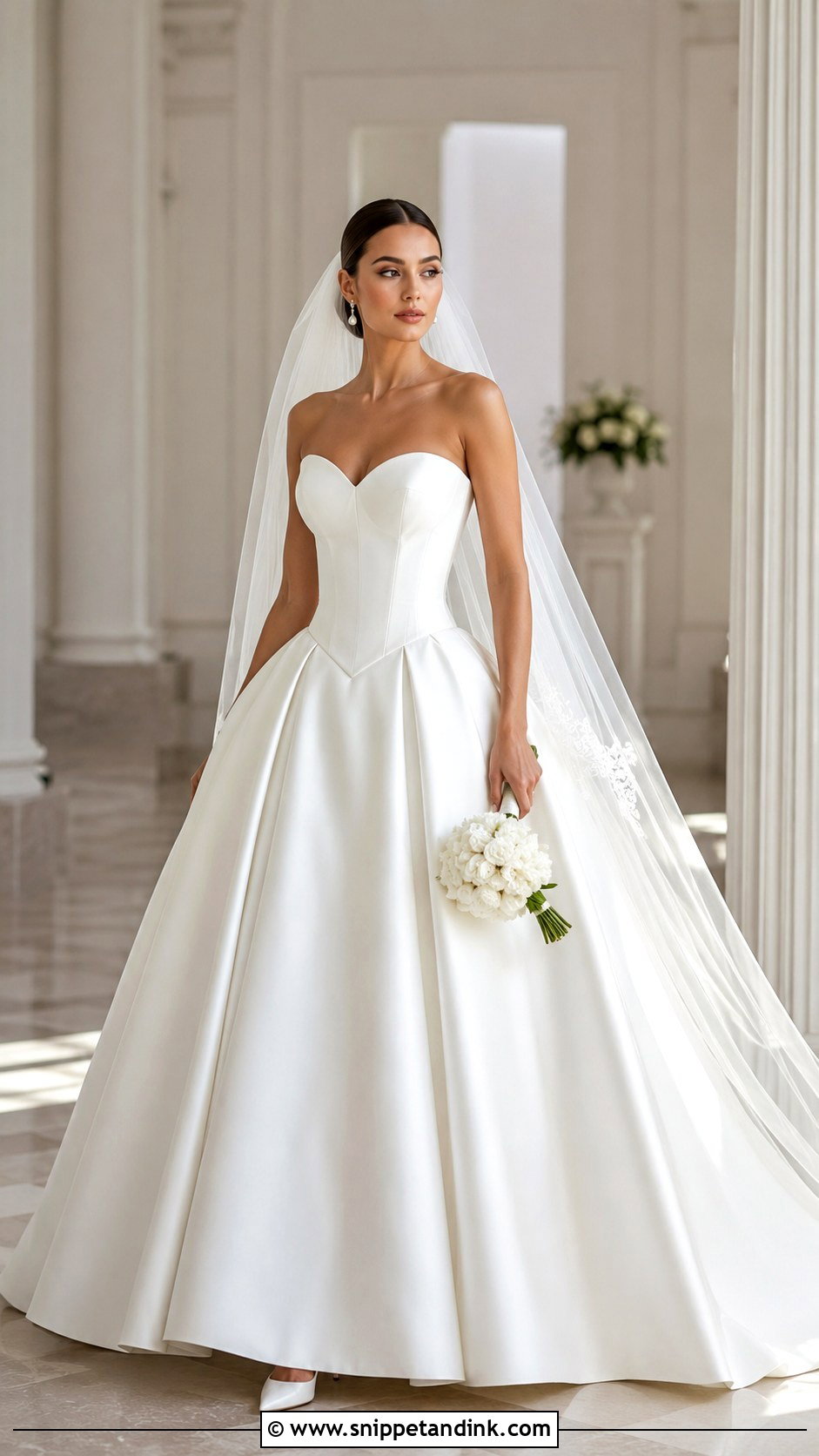
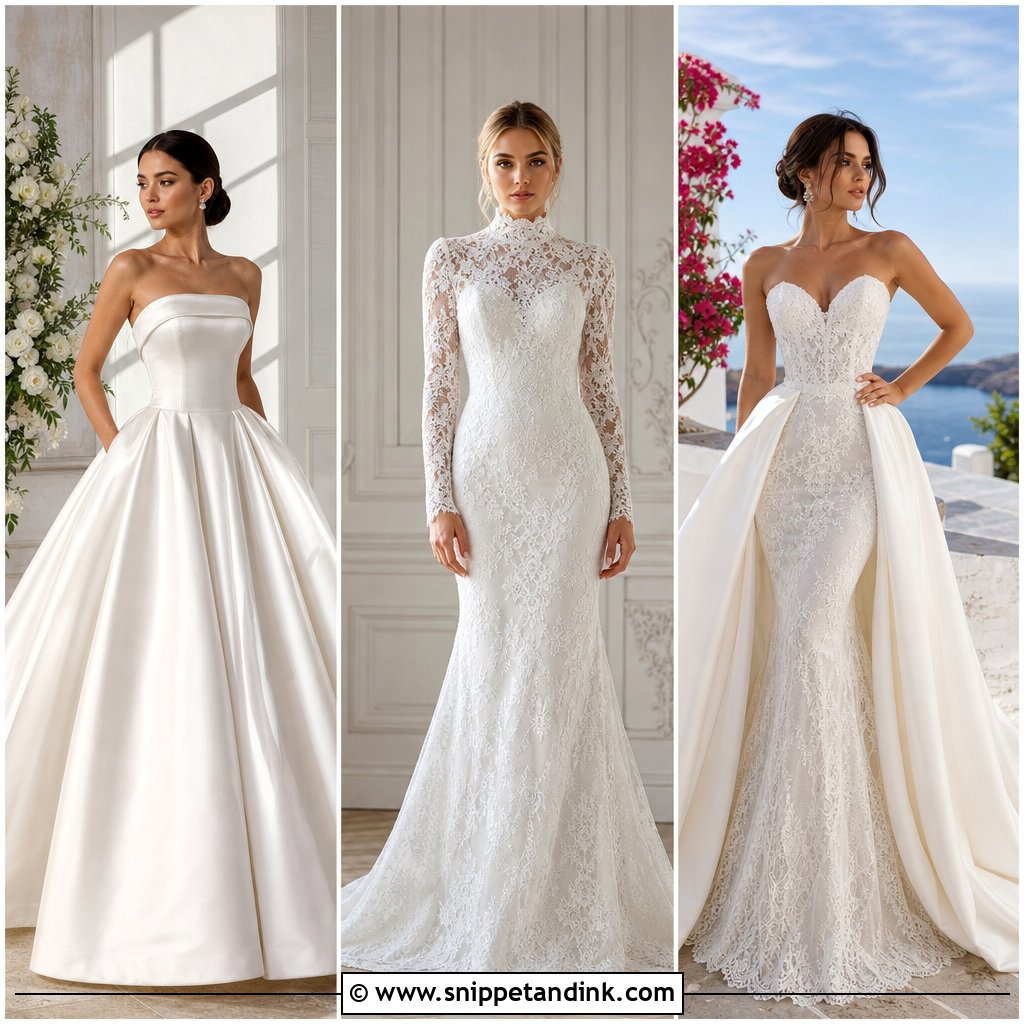
The Basque waist dips into a V below the natural waistline, which lengthens the torso and makes the waist look narrower before the skirt opens out. Ivory Mikado or duchess satin on a strapless corset bodice gives the cleanest point. Pointed satin pumps, pearl drops and a small structured bag suit it, with a cathedral veil set under a smooth bun so the waistline stays visible from behind. I always make brides sit, walk and raise their arms in the fitting room. The tip of that V is rigid, and if it’s placed too low it presses into the tops of the thighs every time you sit at the table.
2. Draped Satin Architectural Wedding Dress
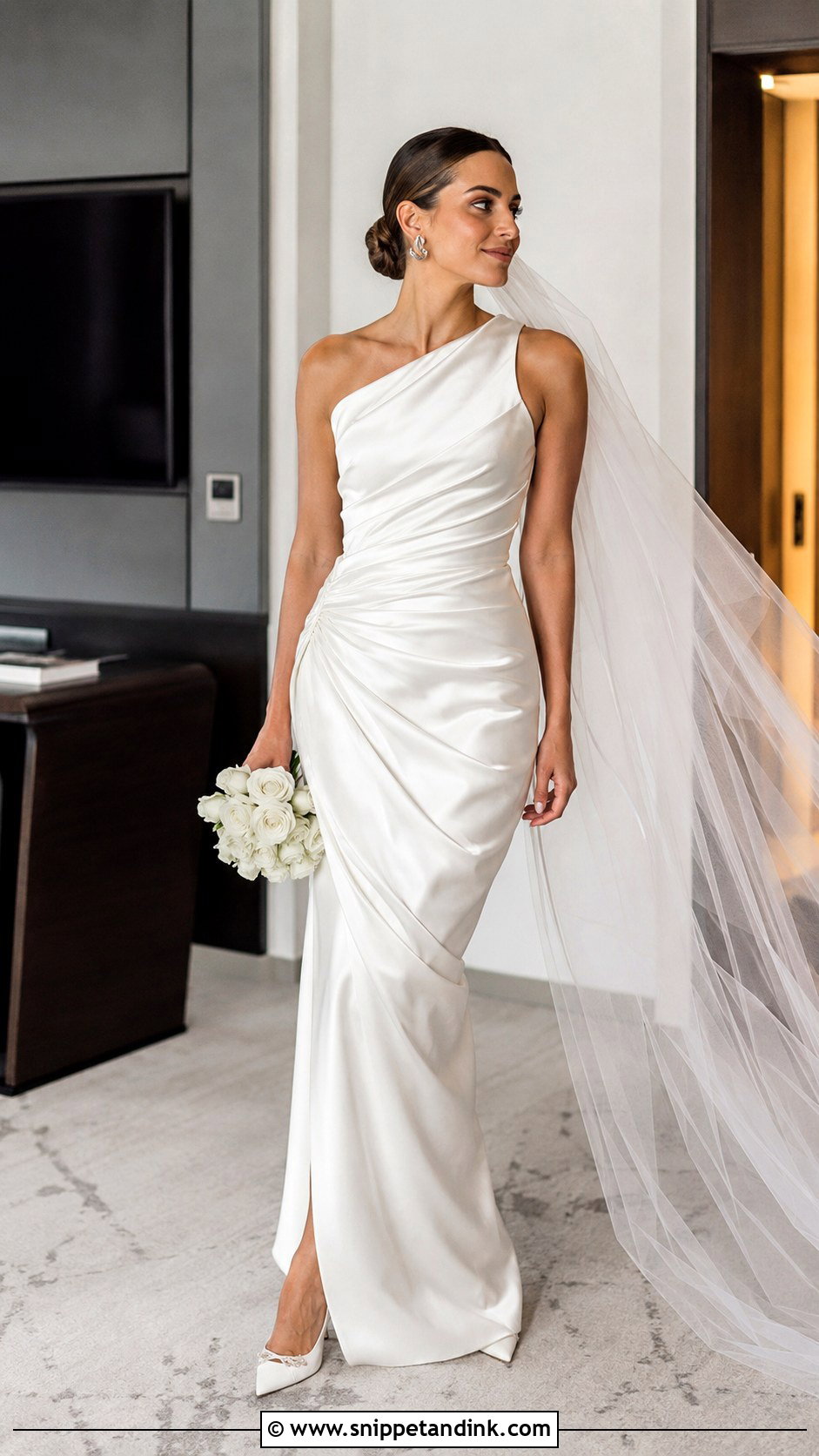
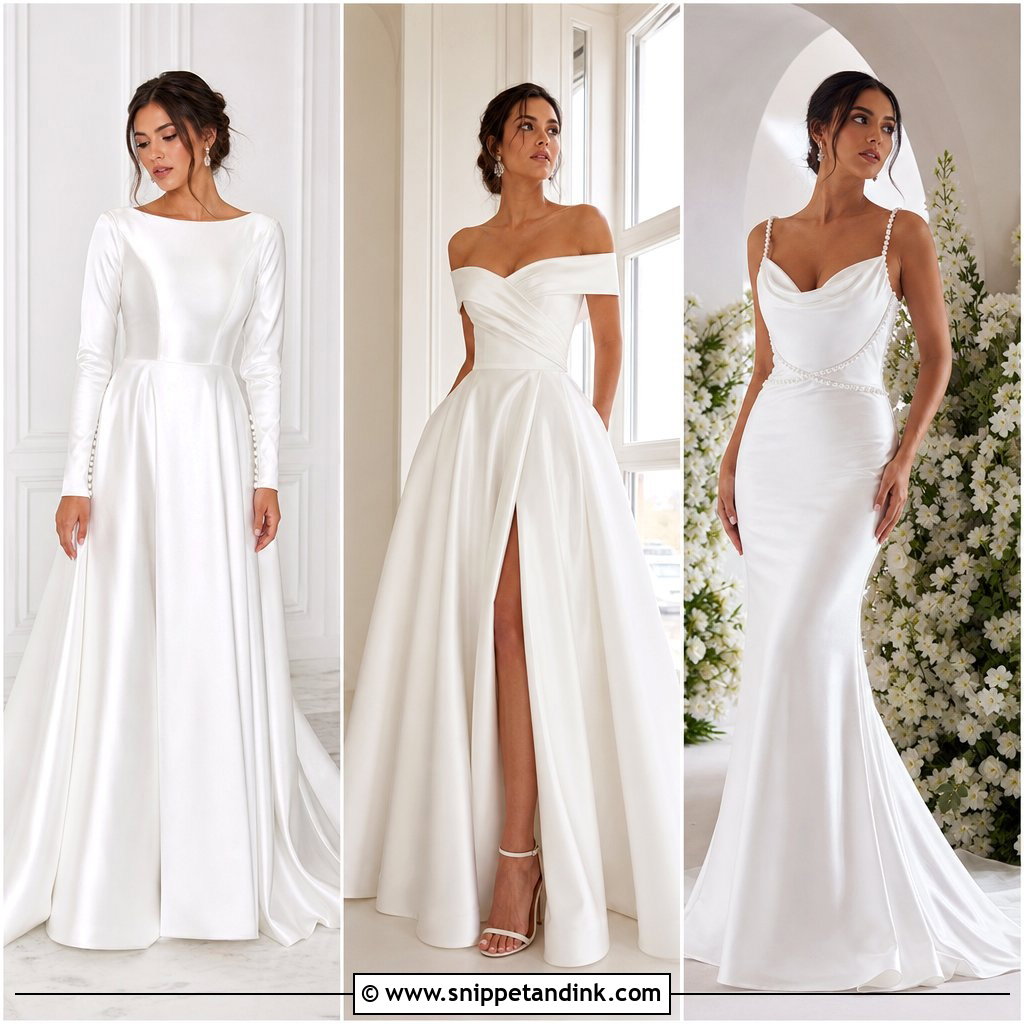
Satin folded diagonally across the bodice and gathered at the hip turns a soft fabric into sculpture. An asymmetric neckline with a fitted waist over a column or gentle A-line skirt draws the eye on a diagonal, which lengthens the body. Glossy satin highlights every fold, good and bad, so I look at draped bodices in daylight and under a camera flash before deciding. The folds should look deliberate from the side and back too, not bunched over one hip. Sleek ivory slingbacks, curved silver earrings and a small satin clutch suit it, with a low twisted bun and the veil set to one side.
3. Corset Ball Gown Architectural Wedding Dress
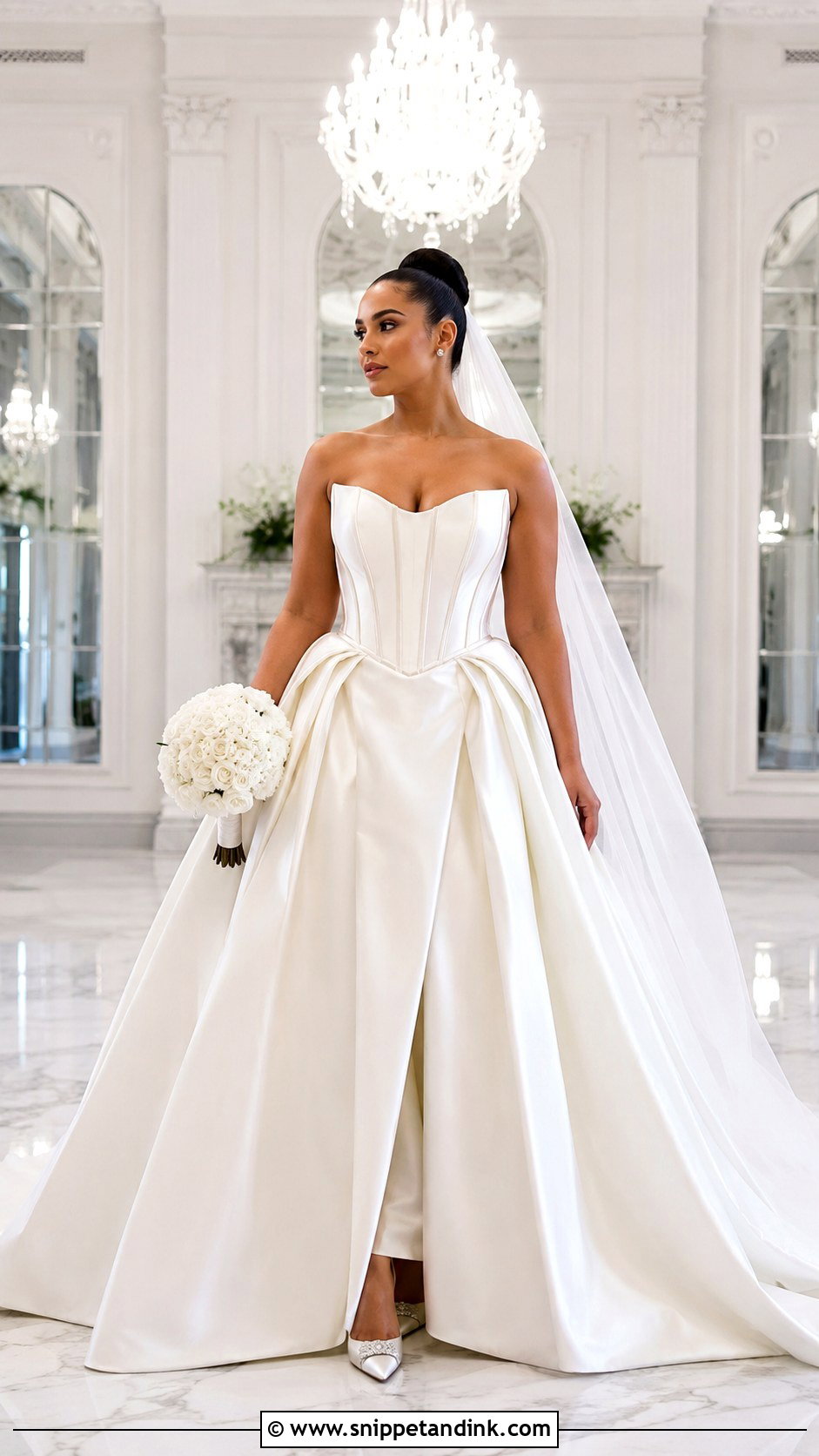
Could anything feel more commanding than a sharp corset over a sweeping ball gown skirt? Matte Mikado holds that volume without any visible decoration, and a curved-seam bodice with built-in cups gives real support. Pointed pumps with a stable heel, crystal studs and a long plain veil with a narrow satin edge keep it clean, and a compact bouquet stops the silhouette from turning into a pile of volume. Brides with larger busts usually need wider internal support and a slightly higher neckline. Petite brides should ask for a smaller skirt circumference. Hoop size can be reduced far more easily than most people think.
4. Asymmetrical Neckline Architectural Wedding Dress
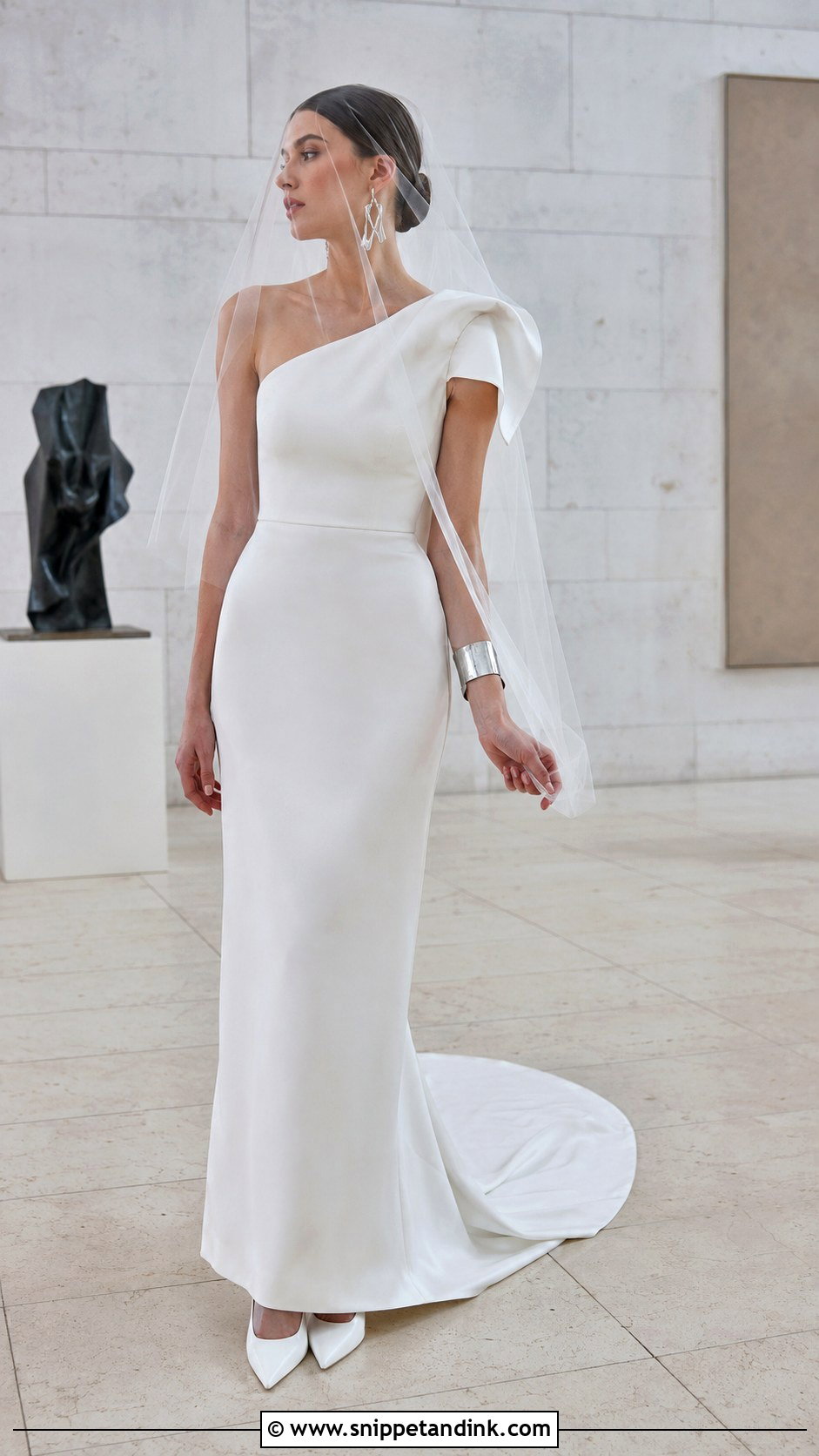
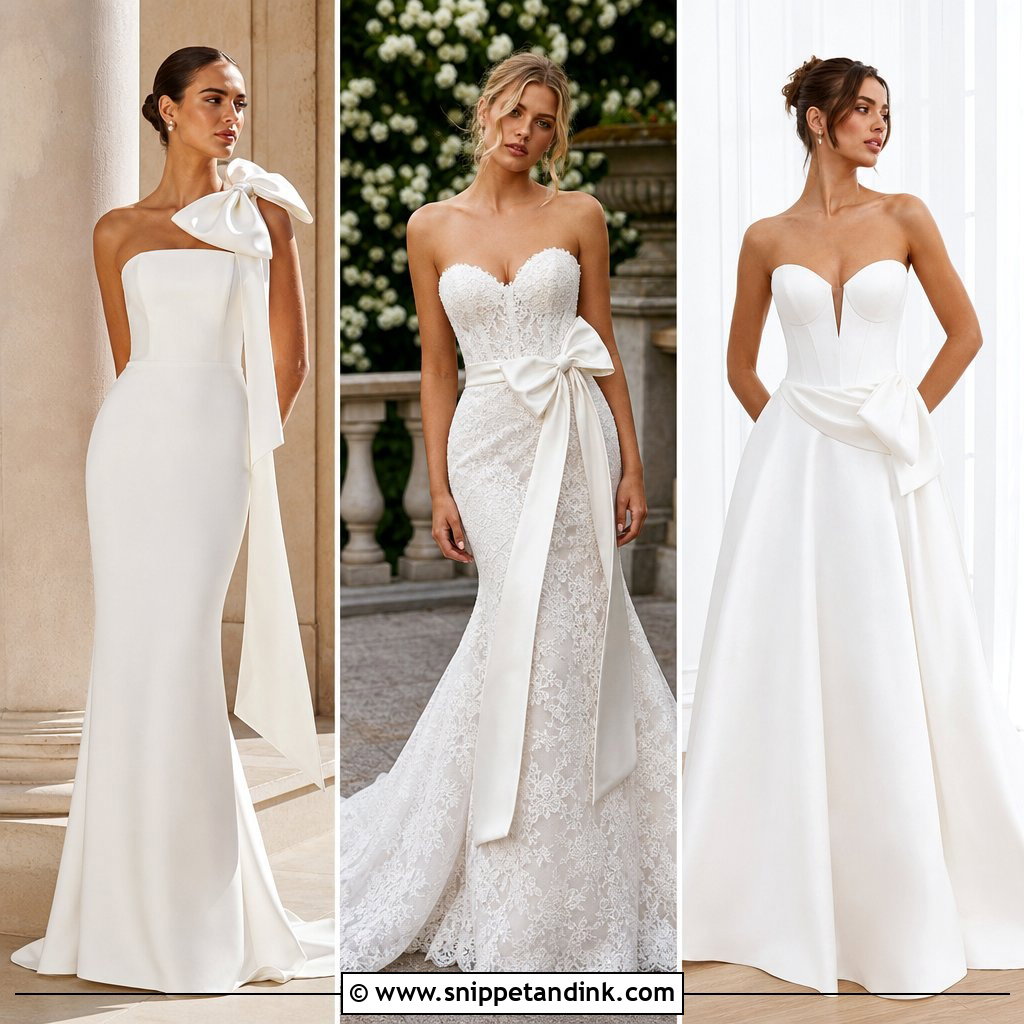
One raised shoulder gives a plain gown direction straight away. A folded satin neckline over a fitted skirt with a restrained train looks modern in a gallery or rooftop setting. The risk is the raised side collapsing. A fold with nothing inside it will slump by evening, so ask whether there’s a stiffened interlining or a hidden strap supporting it. Skip a necklace and wear a single sculptural earring, or a mismatched pair. White leather pumps, a smooth cuff and a fingertip veil set low at the back finish it. Move your shoulder freely at the fitting; you’ll be hugging people all day.
5. One Shoulder Architectural Wedding Dress
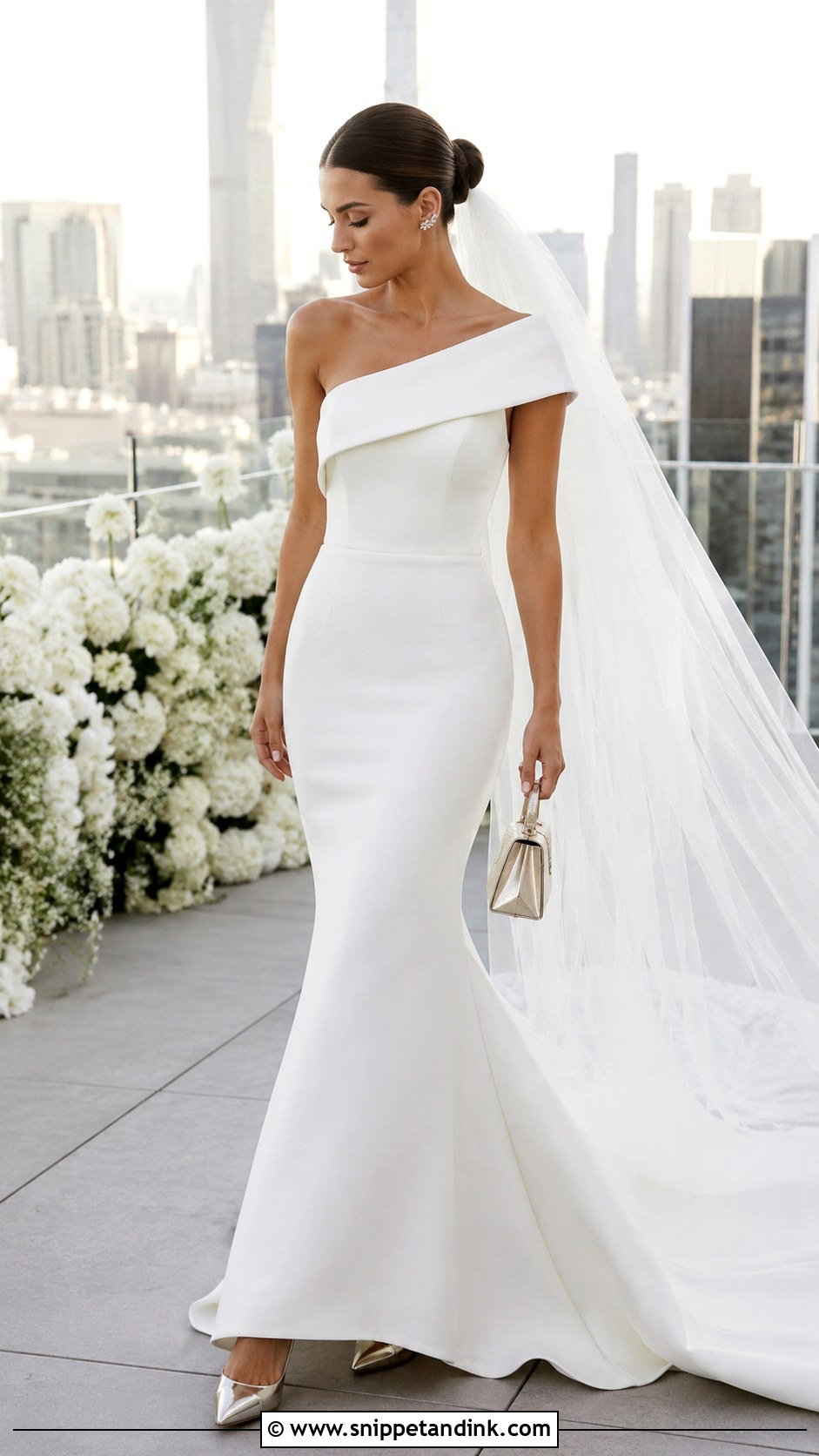
The one-shoulder version folds a wide band across the collarbone into a fitted bodice. A slim trumpet or clean A-line skirt keeps it balanced. A single shoulder carries more of the dress’s weight than you’d expect, and that’s why it often pulls sideways by the evening. I ask for a waist stay, a grosgrain band sewn inside at the waist, which takes the load off the shoulder and keeps the neckline in place. Metallic or ivory pointed heels, a small top-handle bag and ear climbers suit it. No necklace. A smooth low bun with a long veil underneath completes it.
6. Column Architectural Wedding Dress With Cape
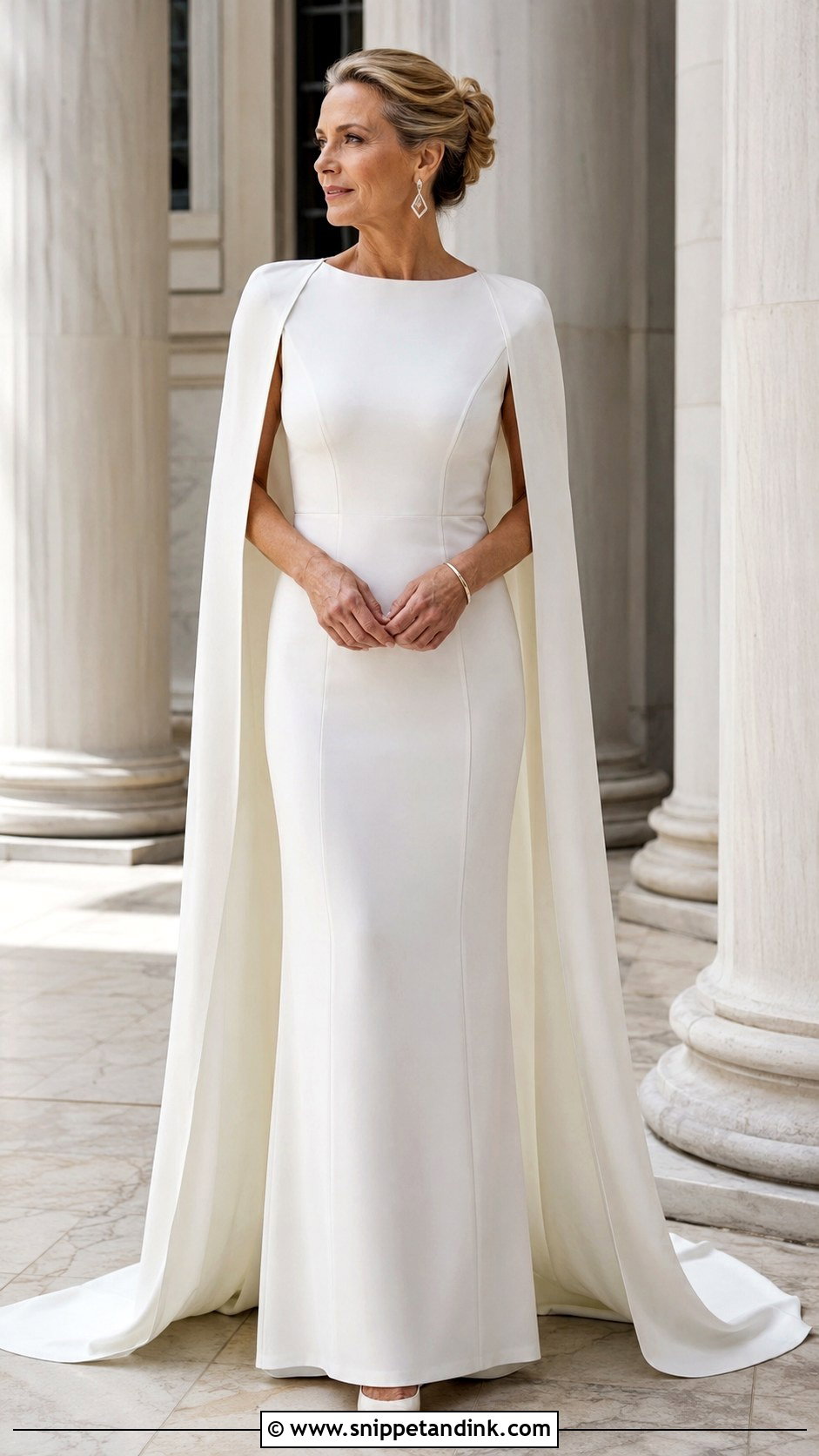
A column gown with a cape looks quietly powerful. Crepe or heavy silk with a high bateau neck and long vertical seams makes the base; a detachable floor-length cape at the shoulders or upper back adds ceremony and then comes off for the party. Lightweight crepe, organza or sheer tulle all move better than a heavy cape. Before buying, I make brides turn sharply and walk. A cape that’s slightly too long gets stepped on, and the pull lands on the neckline. Pointed white pumps, geometric studs and a narrow bracelet finish it, with a polished bun or straight hair tucked behind the ears.
7. Peplum Architectural Wedding Dress
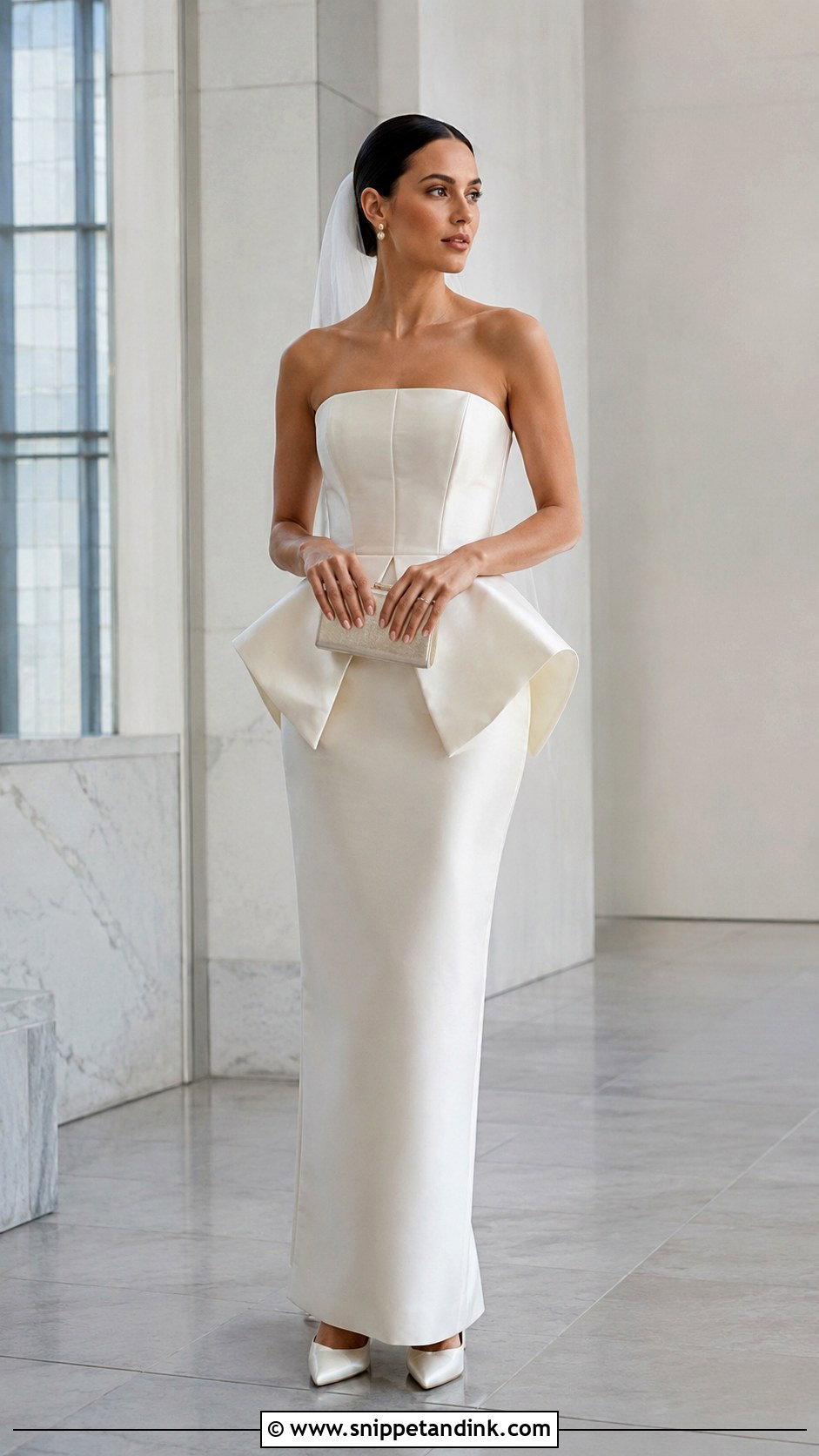
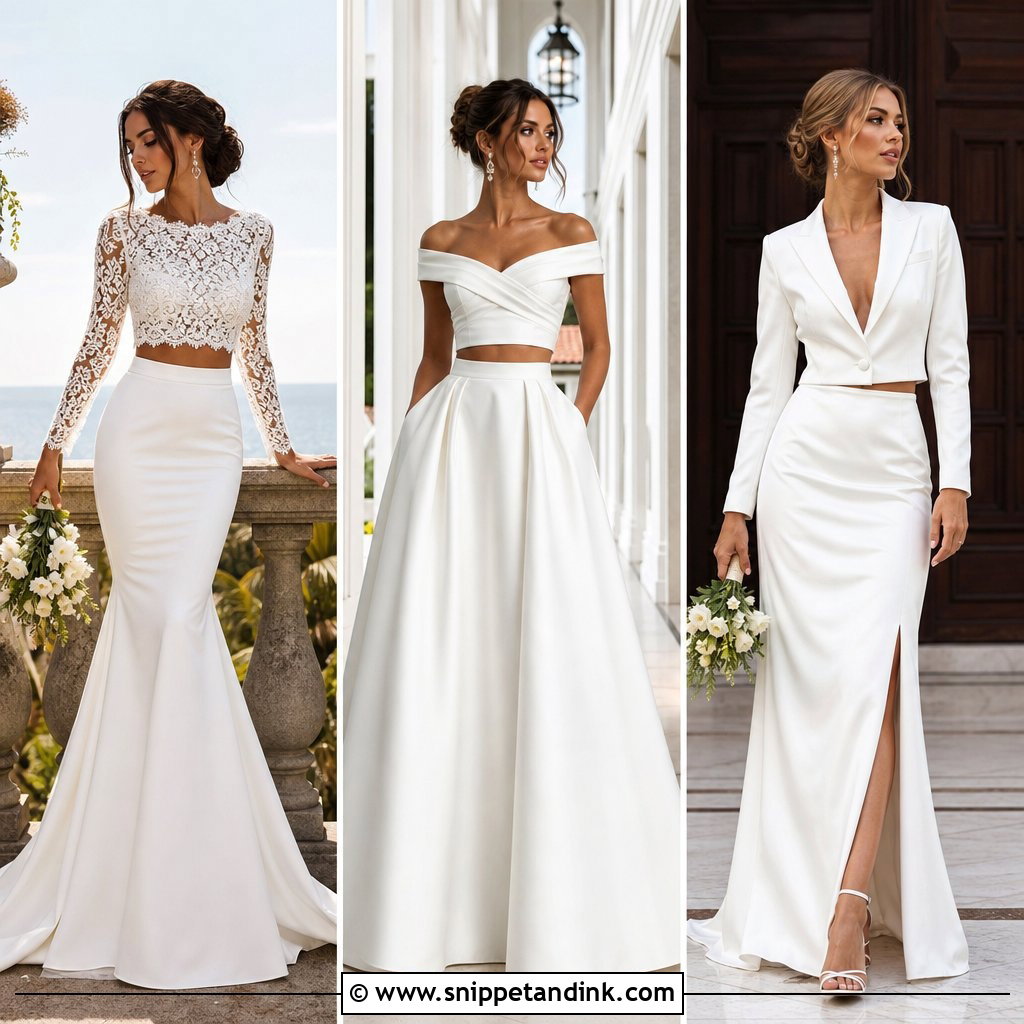
Structured peplum panels flare out from a corseted waist and then cut in sharply to a narrow column skirt. Crisp Mikado makes the peplum angular; satin rounds it into a softer curve. Placement is everything. A higher, narrower peplum lengthens the legs, while a full one at the hip widens it, so I pin a few positions during the first fitting and look at each one in a long mirror. The panels must also lie flat when you sit. Closed-toe heels, pearl and metal earrings and a compact box clutch suit it, with a short veil or sculptural hair comb.
8. Pleated Architectural Wedding Dress
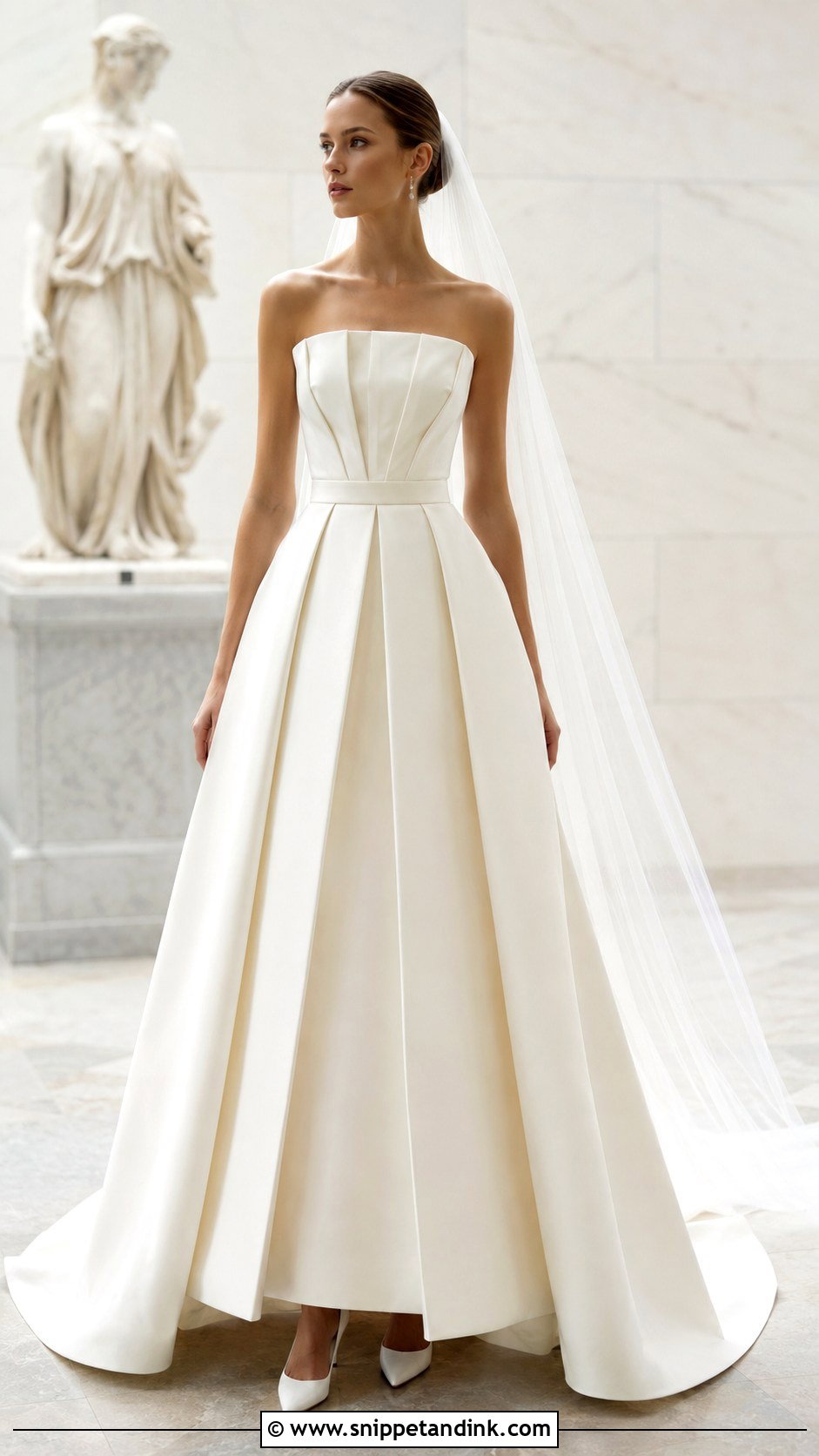
Sharp pleats make plain ivory fabric look like folded paper. Structured pleating across the bodice that opens into controlled folds down the skirt needs a strapless or square neckline to give it space. Minimal drops, white pointed pumps and a narrow cathedral veil keep everything else quiet, with sleek hair and a small monochrome bouquet. Pleats are the most fragile detail on this list. Direct steam softens folds that were set with heat and starch, and once they relax they rarely come back the same. Ask the salon exactly how the dress should be steamed, and never let anyone press it with a household iron.
9. Tulip Skirt Architectural Wedding Dress
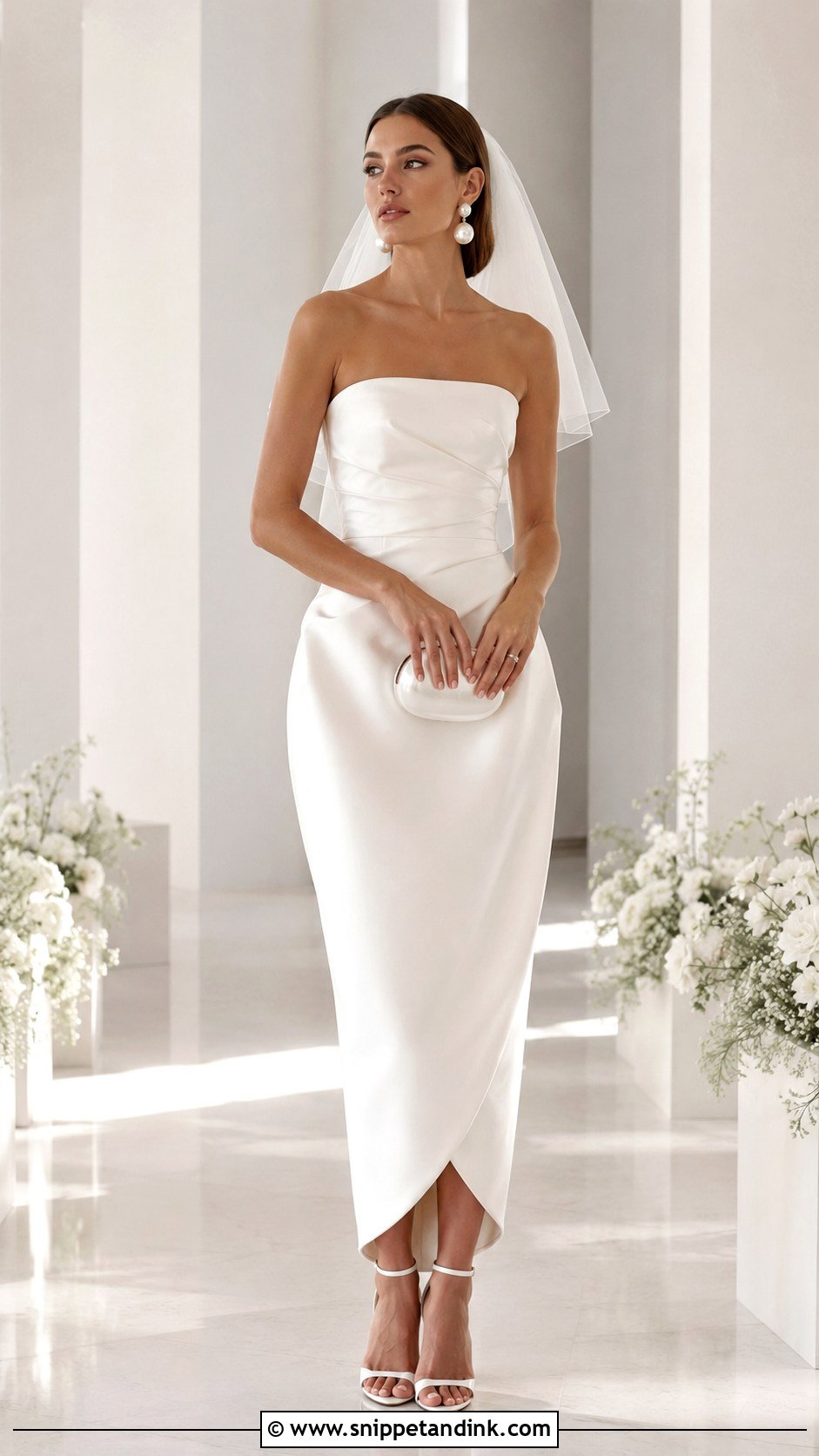
A tulip skirt swells at the hips and narrows toward the hem, like a closed flower turned upside down. A fitted strapless bodice with wrapped front pleats suits it, but the lower skirt must still leave room for a normal stride. Many tulip shapes include a back slit or a hidden opening, and I’d want one. Stairs are the real test. Slim ankle-strap heels, statement pearls and a small rounded clutch echo the curve. A short blusher or shoulder veil sits better than a heavy veil that would flatten the volume. The widest point should land where it flatters your hips, not below them.
10. Bubble Hem Architectural Wedding Dress
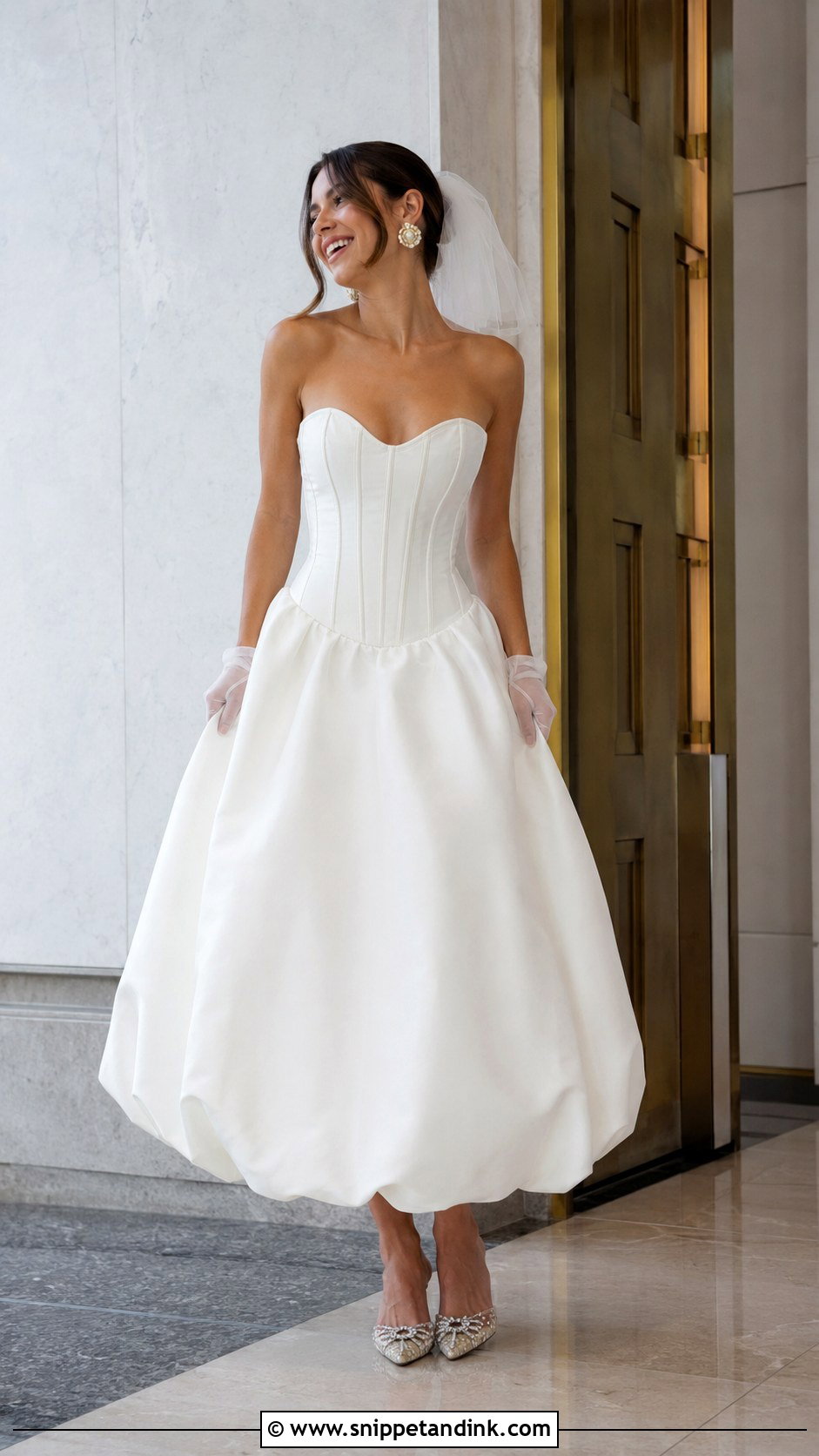
A bubble hem is playful, and it’s one of the few architectural shapes that works at tea or ankle length. A fitted corset bodice over a tucked, rounded hem shows off shoes, so pointed slingbacks or embellished pumps, short gloves and bold studs all make sense. A compact veil or polished headband keeps it fresh for a courthouse or city party. The internal netting holds the bubble, and if it’s unevenly gathered the hem sags in patches by evening. Push on the hem gently at the fitting to see if it springs back. If the volume feels like too much, choose fewer gathers and a longer bodice.
11. Square Neck Architectural Wedding Dress
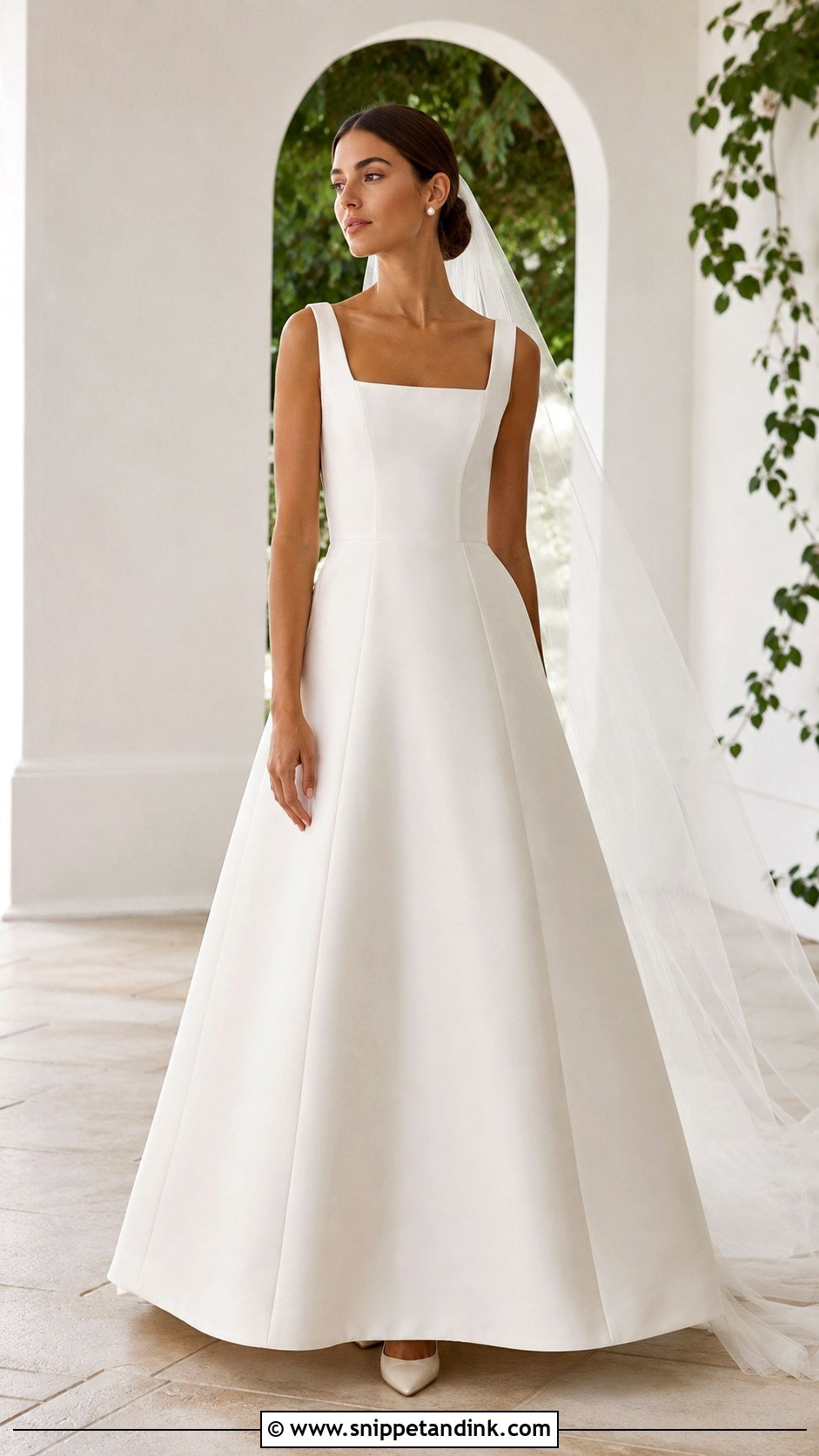
A square neckline frames the collarbones with straight lines. Weighty satin or Mikado with wide straps, a close bodice and a sharply cut A-line makes a clean, minimal gown, and vertical seams through the torso give it structure. Wide straps also hide a supportive bra or let the bodice carry built-in cups, which is a real advantage on a structured dress. A completely sharp square can look severe on a softer face, so I often ask for the corners eased a touch. Pearl studs, pointed block heels and a long raw-edge veil suit it, with a centre-parted bun. Keep the straps flat and the neckline level.
12. Off Shoulder Architectural Wedding Dress
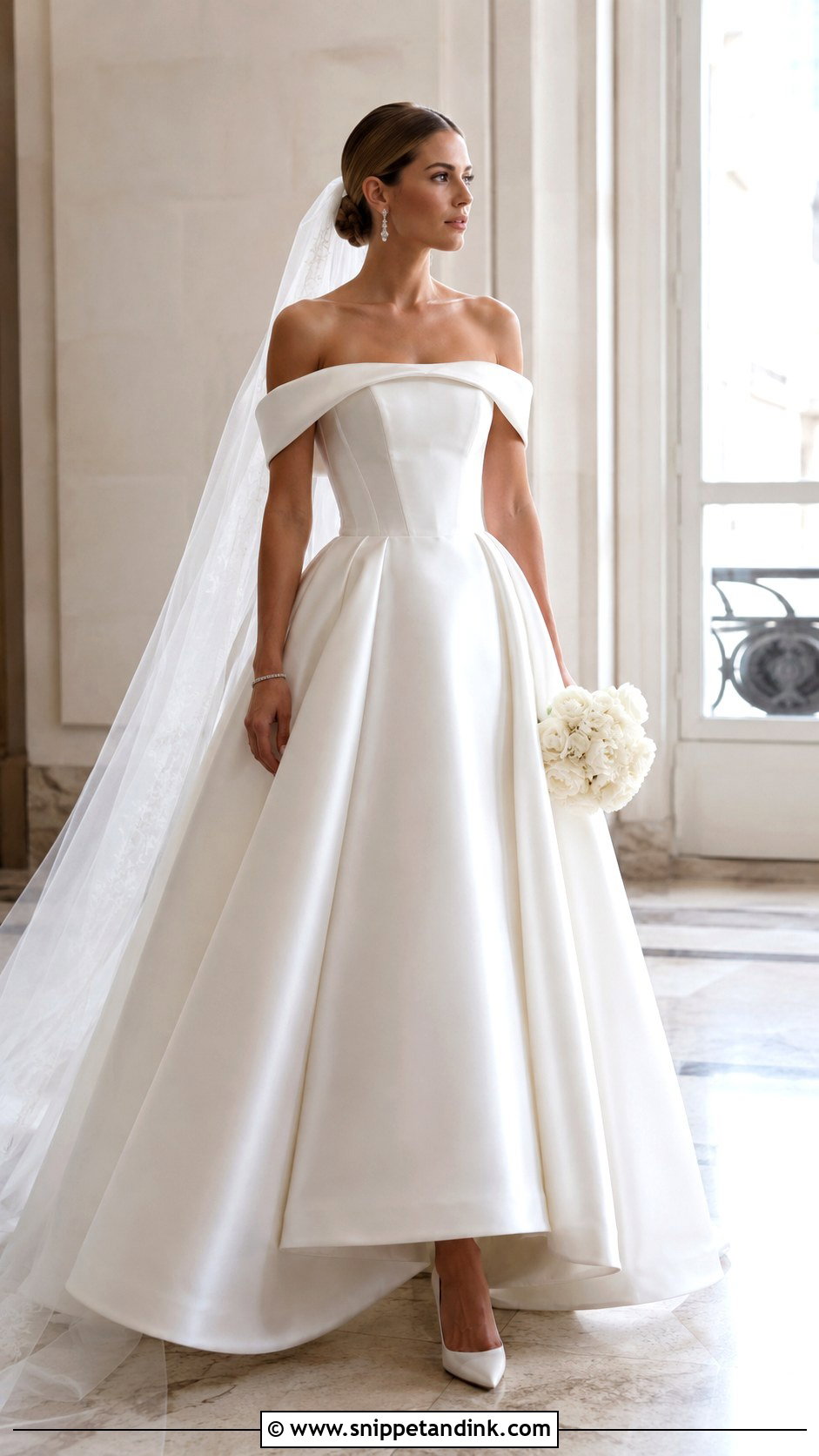
An off-shoulder neckline built from firm, folded fabric is sculptural rather than romantic. A fitted corset base with a wide cuff wrapping the upper arms works over a full skirt or a clean trumpet. Mikado and faille hold the fold best; softer fabrics droop. The cuff limits how high you can lift your arms, and I ask brides to mime a hug and pick up a glass. Discreet elastic or a hidden fastening inside the cuff stops it sliding down. Drop earrings, a simple bracelet and pointed satin pumps suit it, with a cathedral veil under a low bun. Ask if the cuff detaches for the reception.
13. High Neck Architectural Wedding Dress
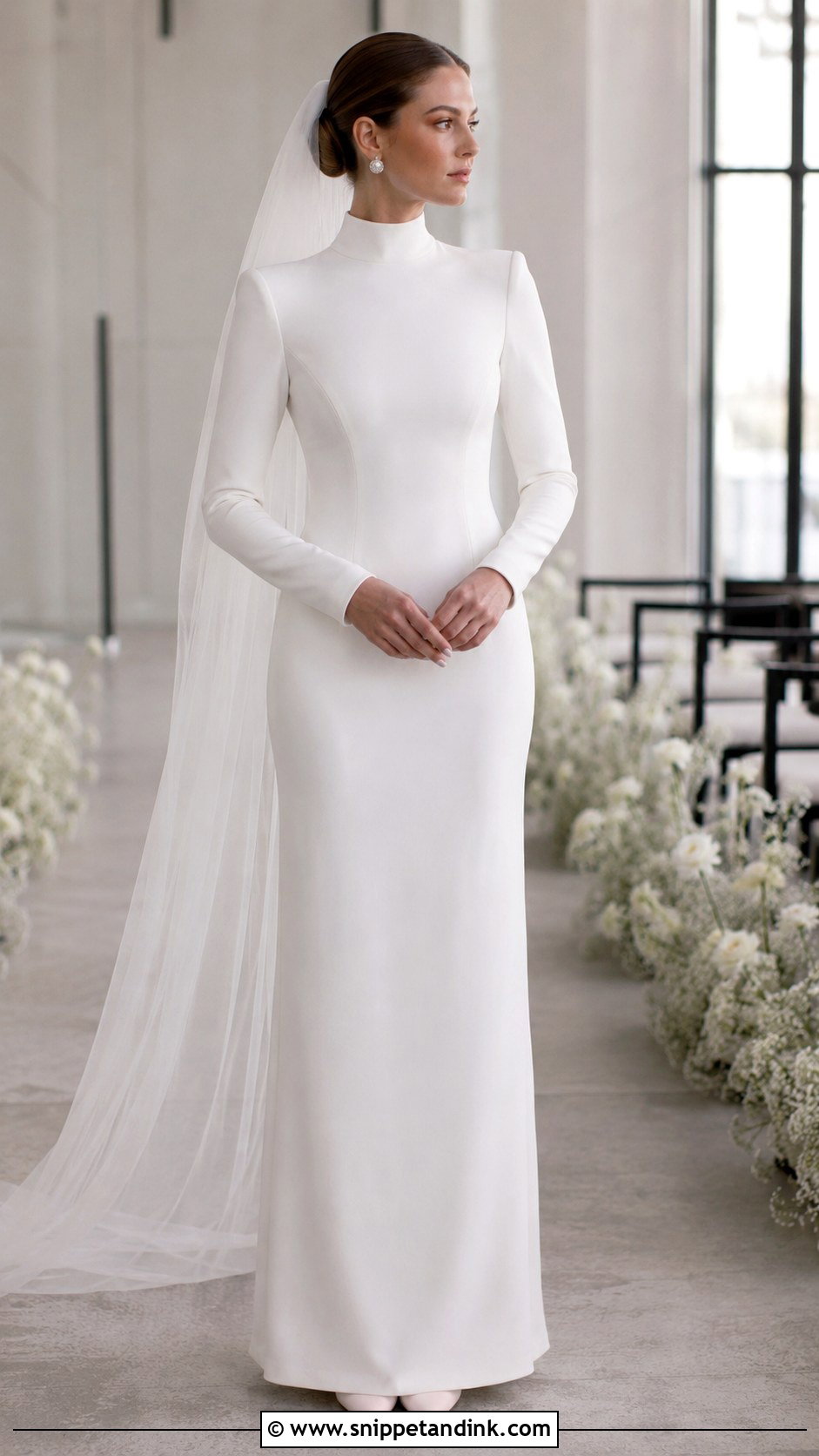
A raised collar gives a fitted gown a sense of structure. Shaped shoulder seams and a smooth column skirt in crepe, satin or light Mikado keep the front plain, while an open or buttoned back adds contrast. No necklace; the collar already frames the face. Small sculptural earrings, pointed pumps and a low bun with the veil secured underneath finish it. A high collar must let you turn and nod. If it rubs at the fitting, it will chafe after a few hours, so ask for a softer facing inside. Precise shoulder tailoring stops the chest bunching.
14. Cutout Architectural Wedding Dress
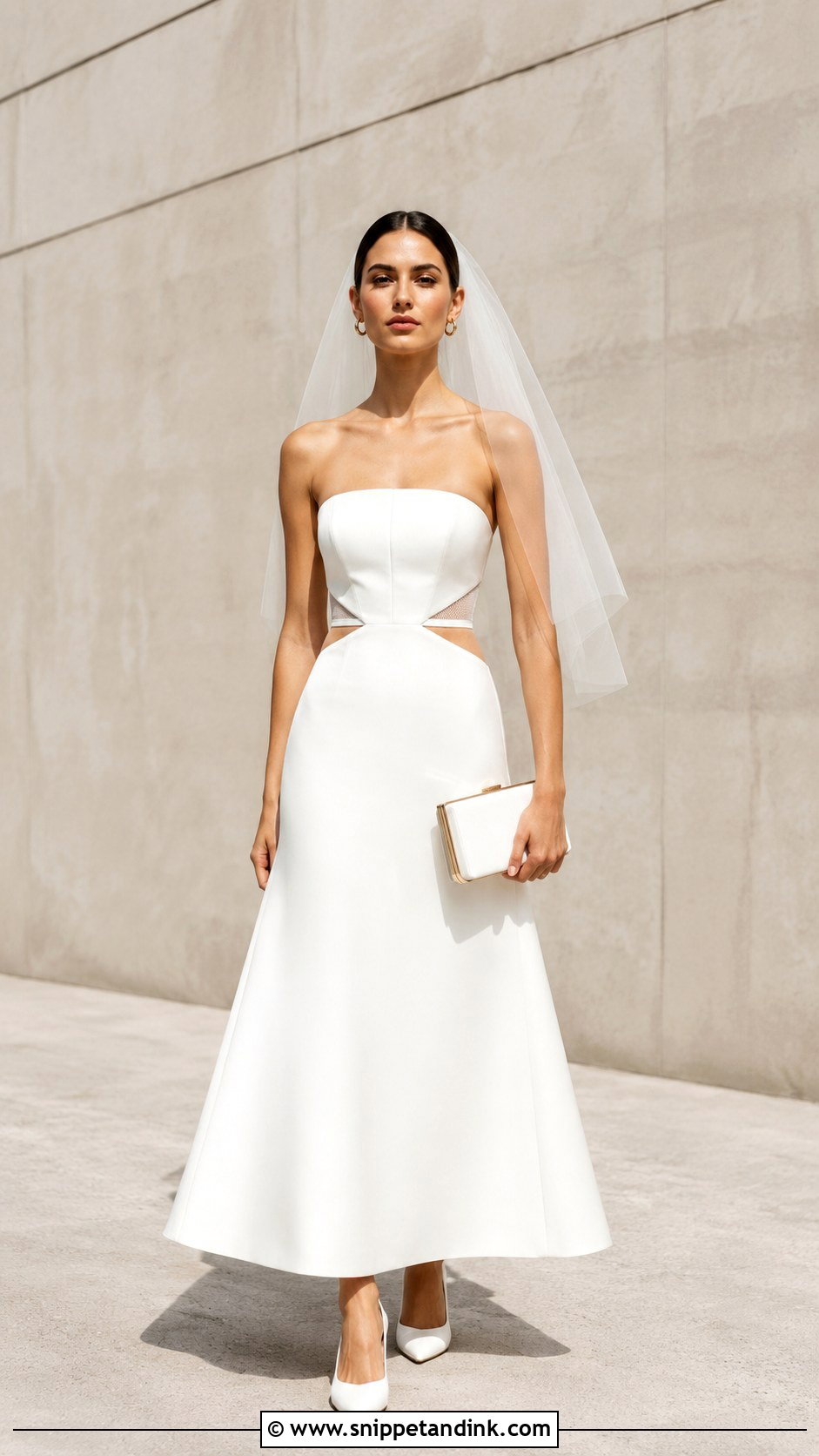
Cutouts work best when there are only a few of them. Small openings at the waist on a structured bodice, balanced by a full A-line skirt, give a graphic shape without showing much skin. Mesh panels behind the openings add security. Cutouts move when the body bends, so a gap that looks neat standing can gape or pinch when you sit. Test it seated and while reaching. A tailor can enlarge or shrink the openings. Sleek pumps, simple hoops, a plain fingertip veil and a structured clutch keep the look modern. Skip any other embellishment.
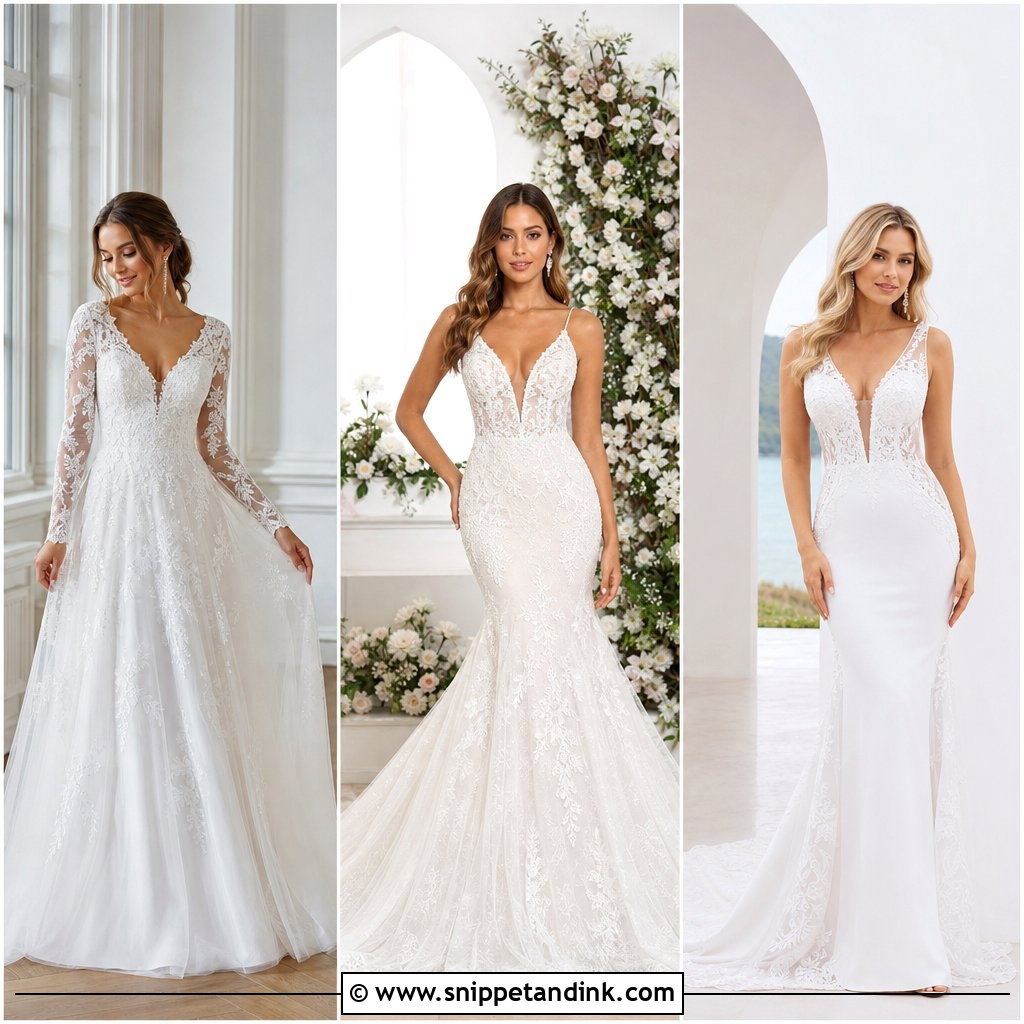
15. Detachable Overskirt Architectural Wedding Dress
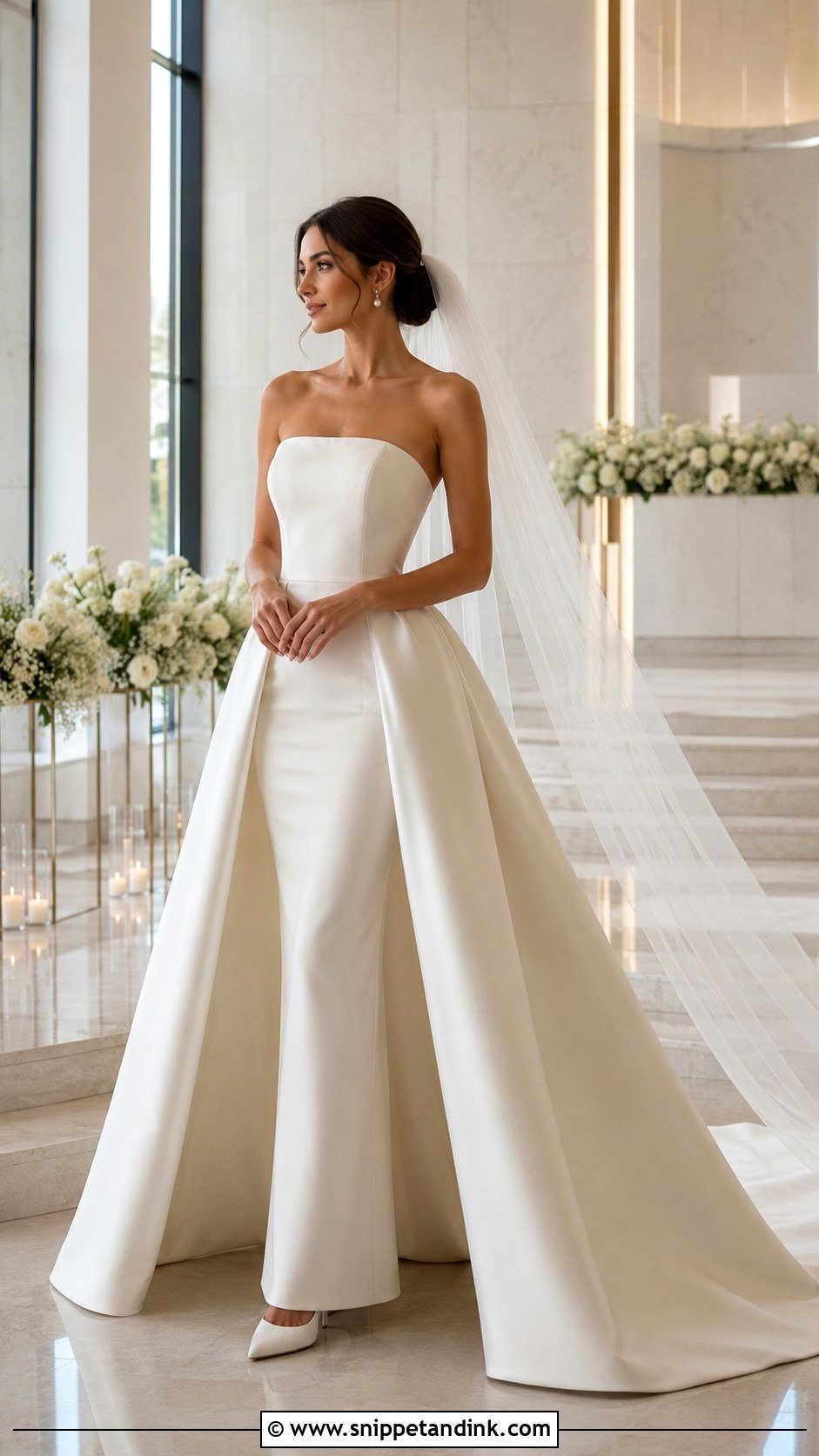
A detachable overskirt gives two looks from one dress. A fitted column or mermaid base takes a structured Mikado overskirt that fastens at the waist and opens at the front. Wear the full version with a long veil, pearl earrings and pointed pumps for the ceremony, then remove it and switch to a short veil or hair accessory. The fastening is what I examine most closely. Snaps, hooks or a concealed zip should lie flat and stay hidden in profile, and the overskirt waist must line up with the dress seams. Practise the removal with whoever will help on the night.
16. Sculptural Bow Architectural Wedding Dress
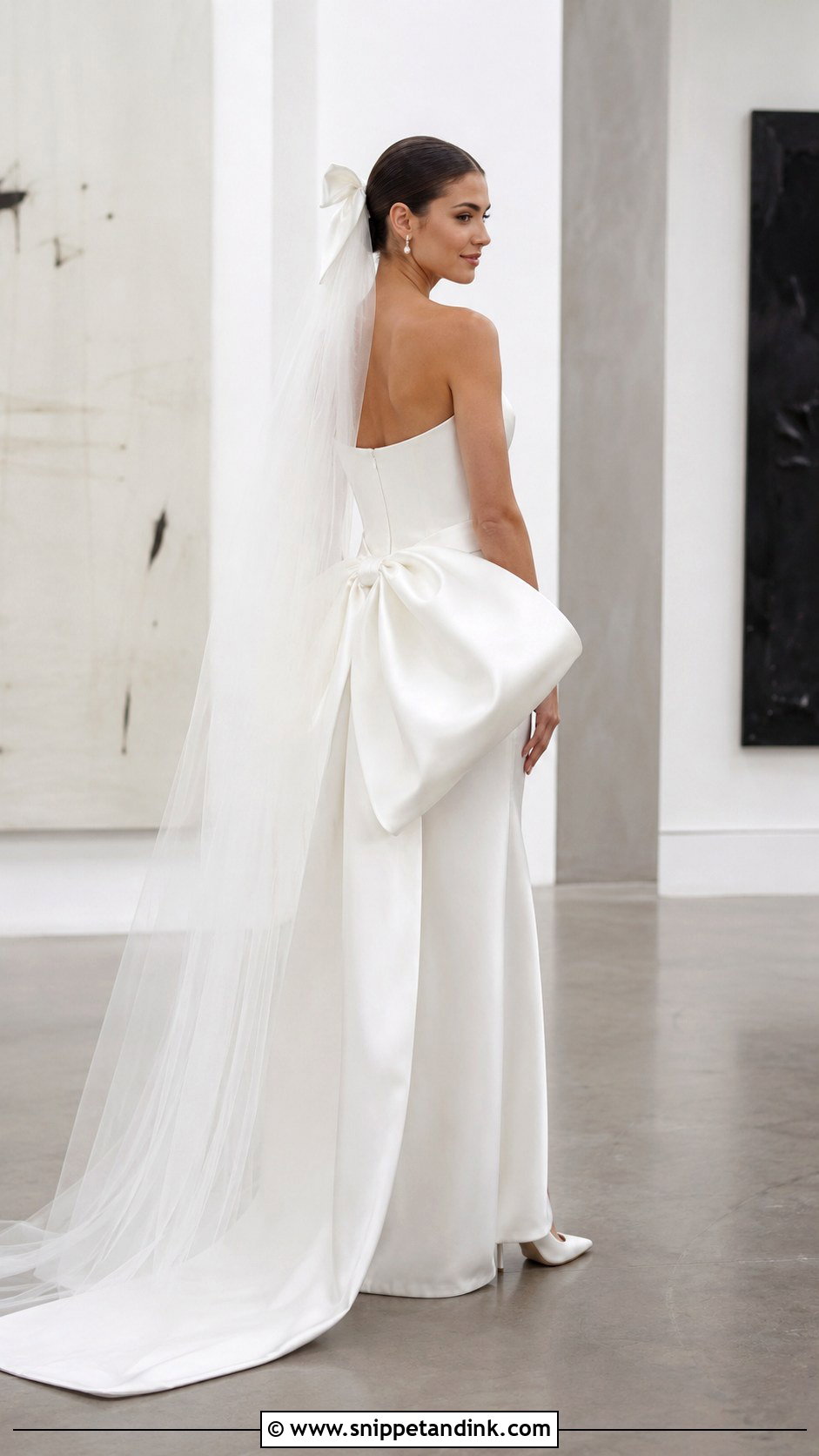
A large bow can be part of the structure, not a small accent. A clean strapless bodice with an oversized bow at the back or across one shoulder needs a plain skirt so it has room. Crisp Mikado or silk faille keeps the loops standing; softer fabric flops by the speeches. A bow at the back also means leaning against chairs all evening, so ask whether it can be detached or bustled up. Understated studs and white pumps suit it. If the bow sits high, skip the veil or choose a short one attached beneath it, and wear a smooth bun. Check it from several camera angles.
17. Floral Architectural Wedding Dress
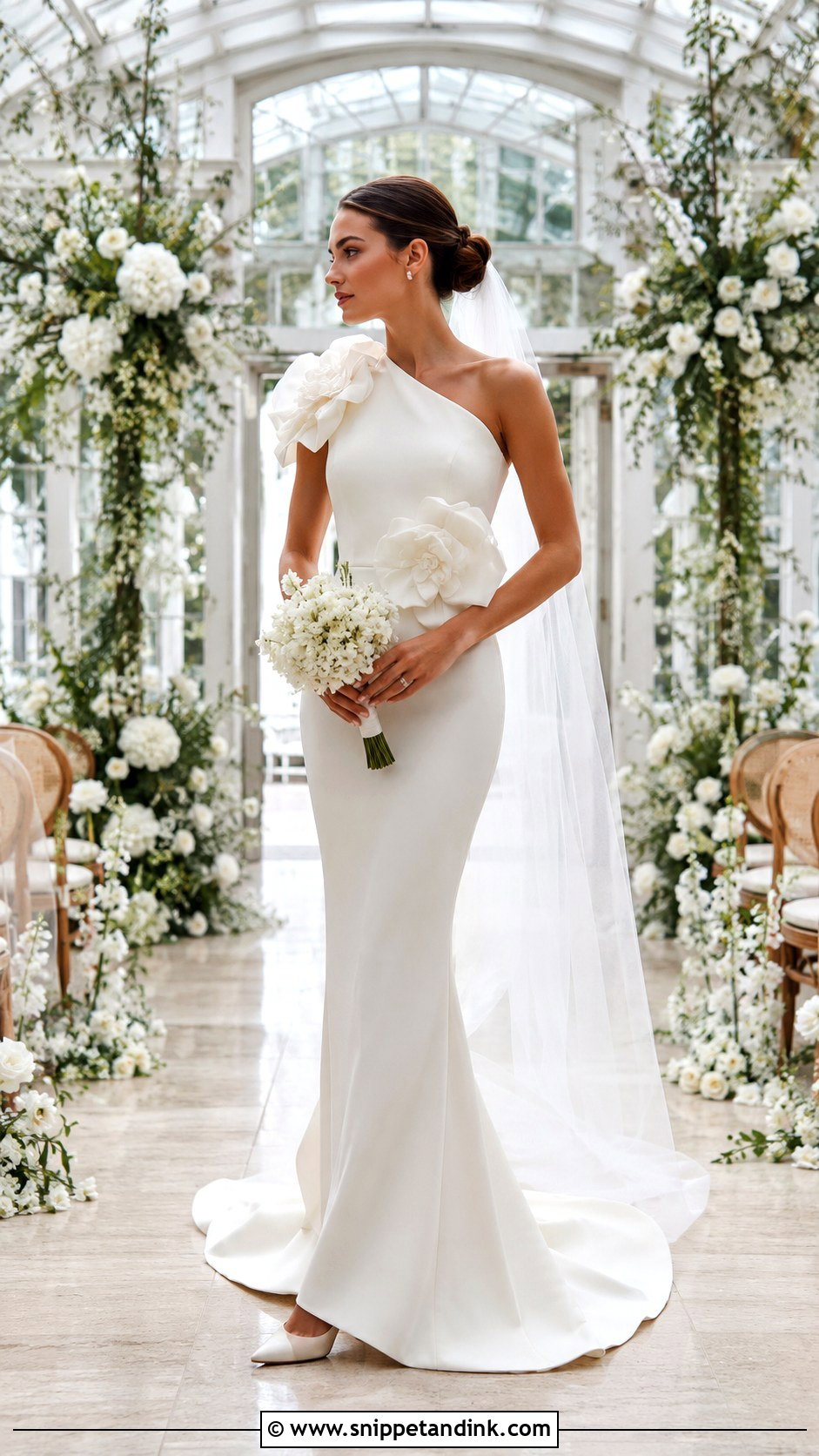
Raised flowers look architectural when they’re clustered, not scattered. Sculpted organza petals around one shoulder, at the waist or along the edge of a structured skirt make a deliberate shape. A smooth crepe or satin base keeps the flowers under control. Tonal petals that blend into the fabric are subtle; big blooms are a fashion statement. I check how each petal is attached and where it sits relative to the arms and bouquet, because loose stitching on a petal near the wrist catches on bracelets and pulls. Simple pointed heels, small pearls and a sheer untrimmed veil finish it, with a restrained bouquet.
18. Tiered Organza Architectural Wedding Dress
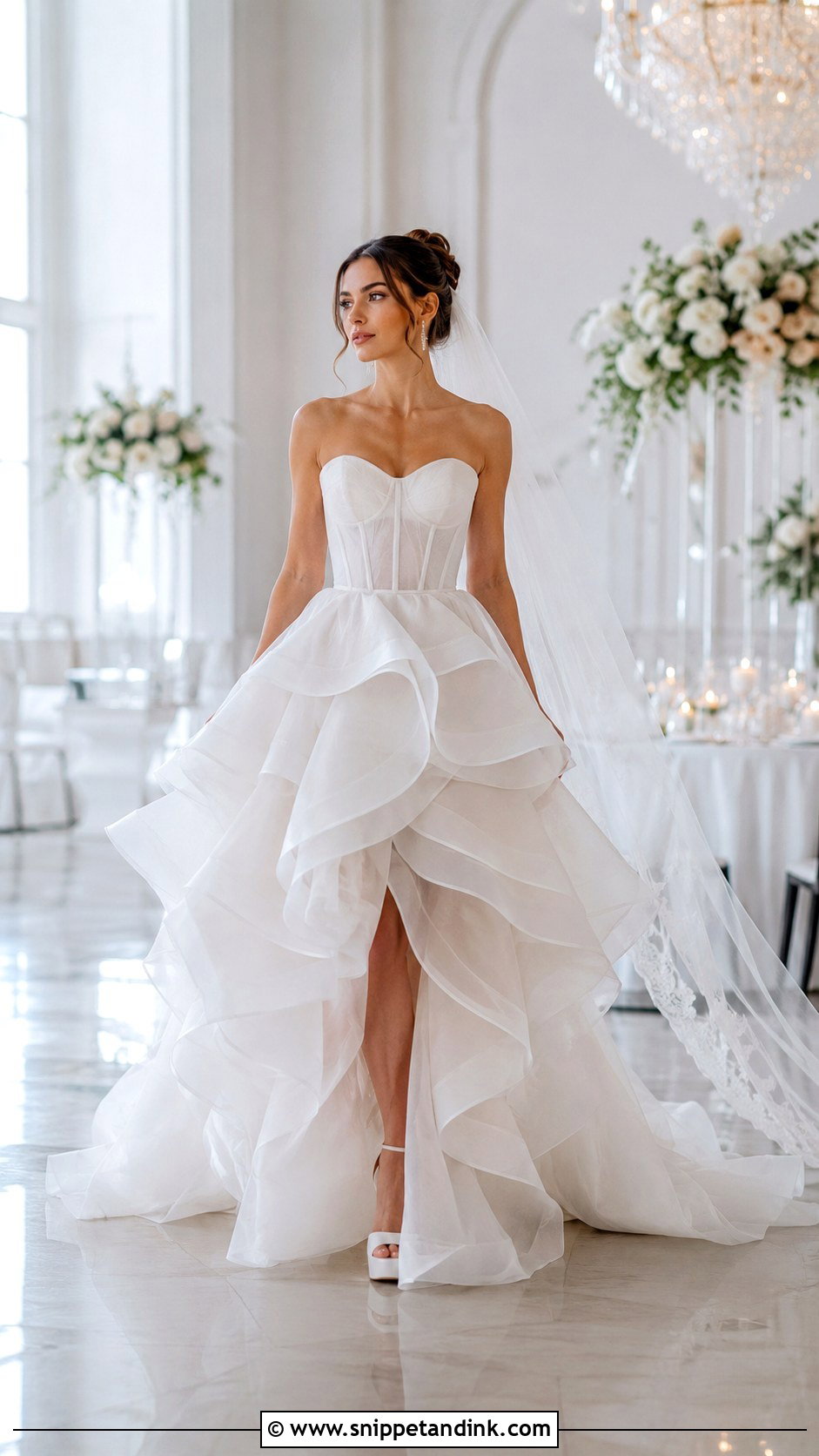
Crisp organza in wide structured tiers creates volume that still looks light, because the edges are see-through. Choose tiers built as flat panels, not soft ruffles, for the architectural effect. Stable platform heels hidden under the skirt, delicate studs and a simple veil that ends above or below the tiers suit it, with a smooth updo. Organza creases and snags easily. Ask how to store and transport it, and hang it from the inner loops in a breathable bag. The tiers must be hemmed to your exact ceremony shoes, since uneven layers are obvious. I’d schedule the final fitting close to the date.
19. Pannier Architectural Wedding Dress
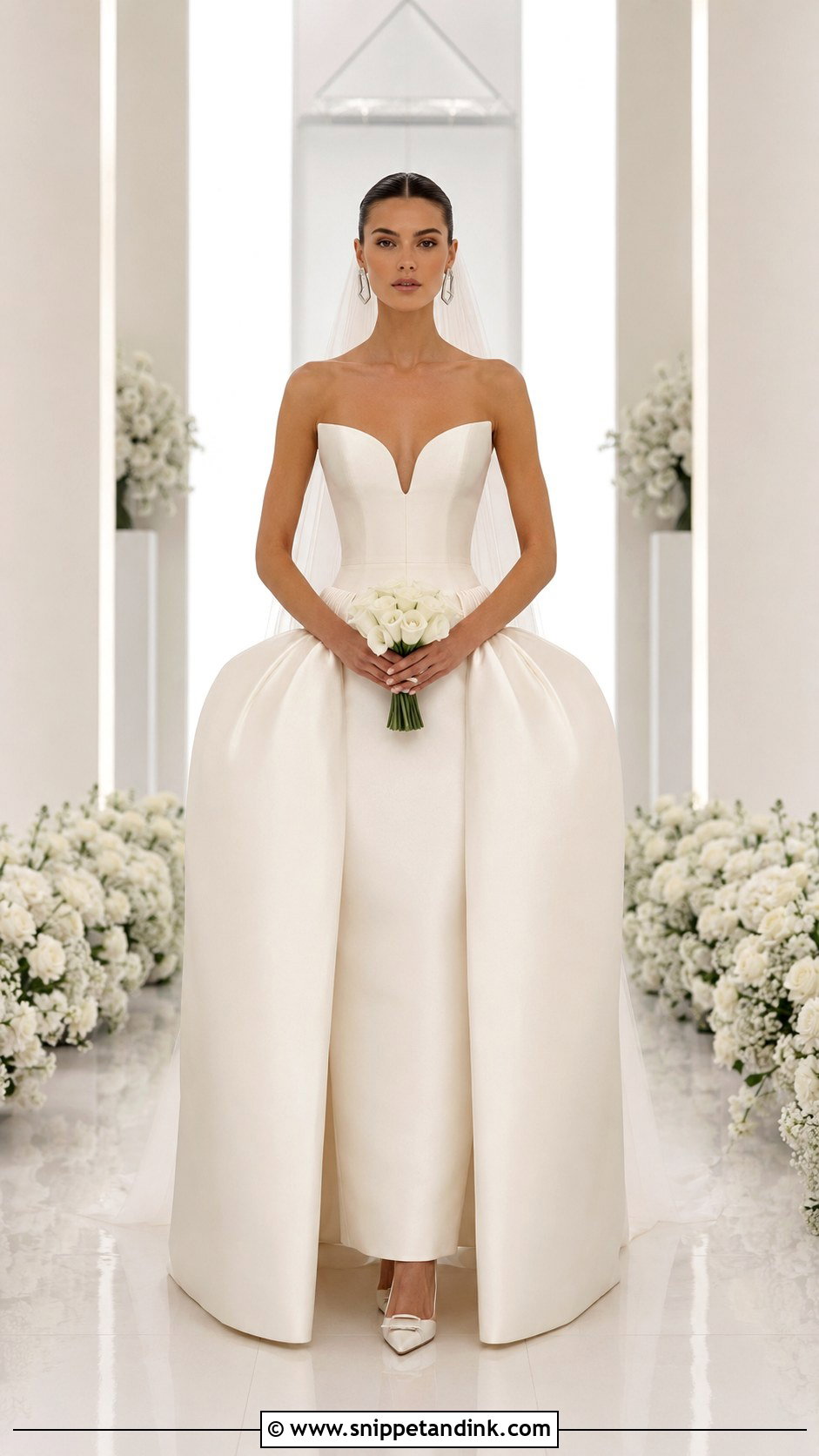
A pannier-inspired architectural wedding dress spreads width at the hips while the front and back stay slim. Modern versions use curved seams, side draping or internal shaping rather than the historical frames. A fitted bodice with a straight or softly curved neckline lets the side panels do the talking. The width must start at a flattering point on your body, and it must fit through real spaces: doors, the aisle, between tables, into a car. I’d measure the widest point and walk the venue in your head. Petite brides suit a reduced version. Pointed pumps, geometric earrings, a narrow veil and a compact bouquet finish it.
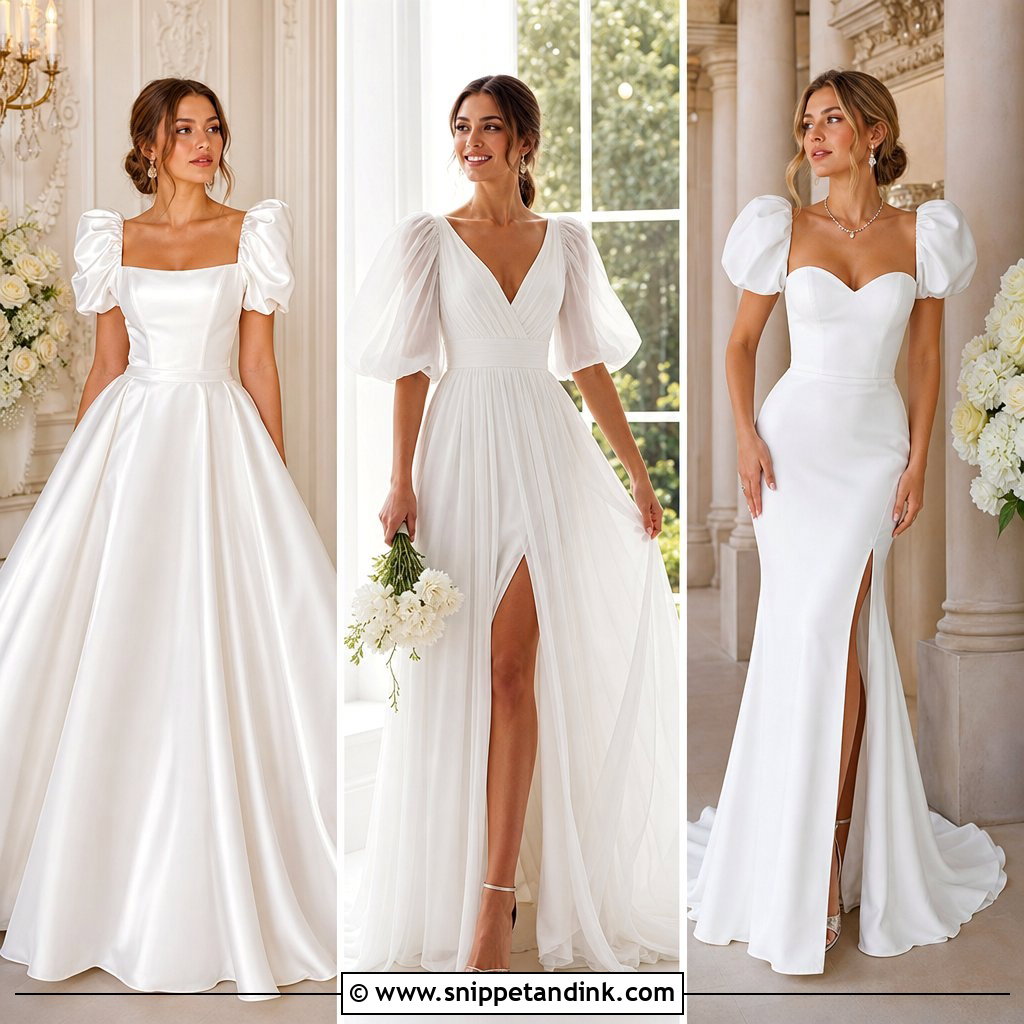
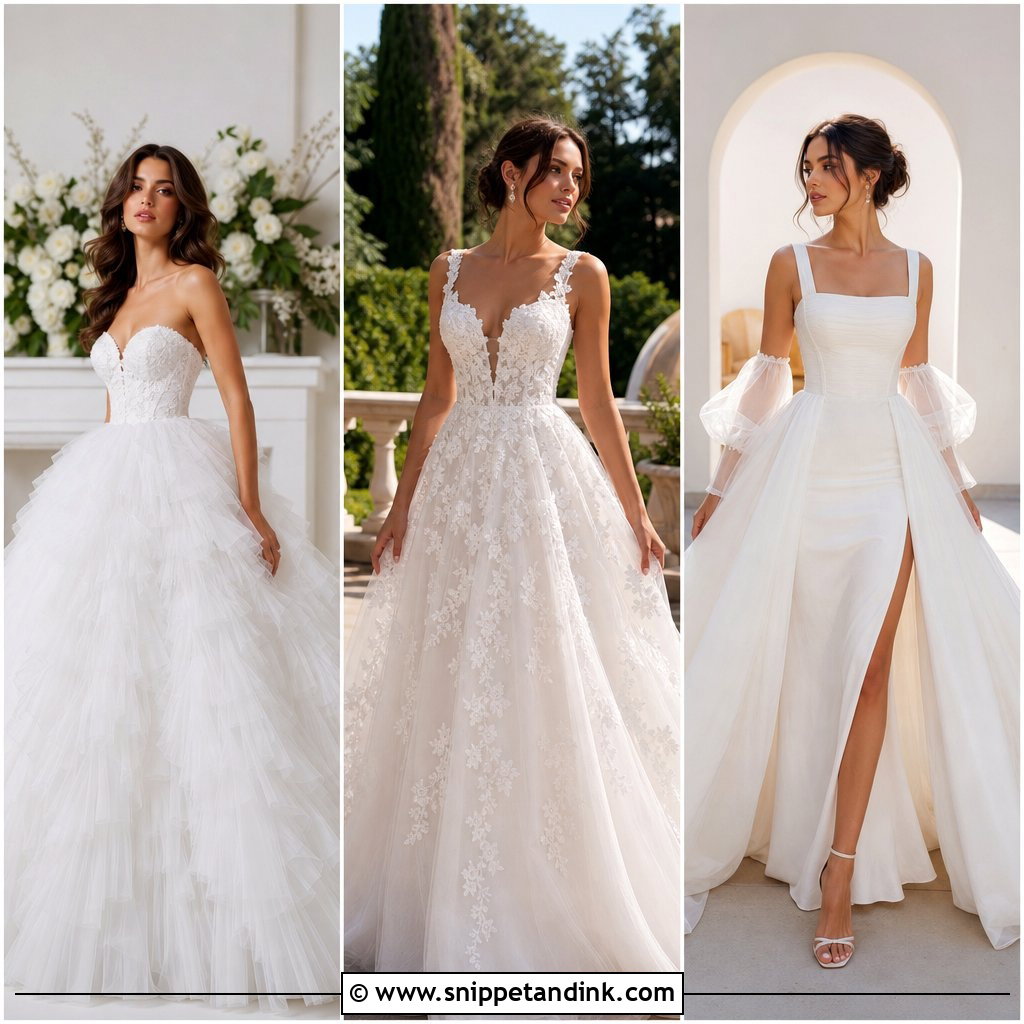
20. Curved Seam Architectural Wedding Dress
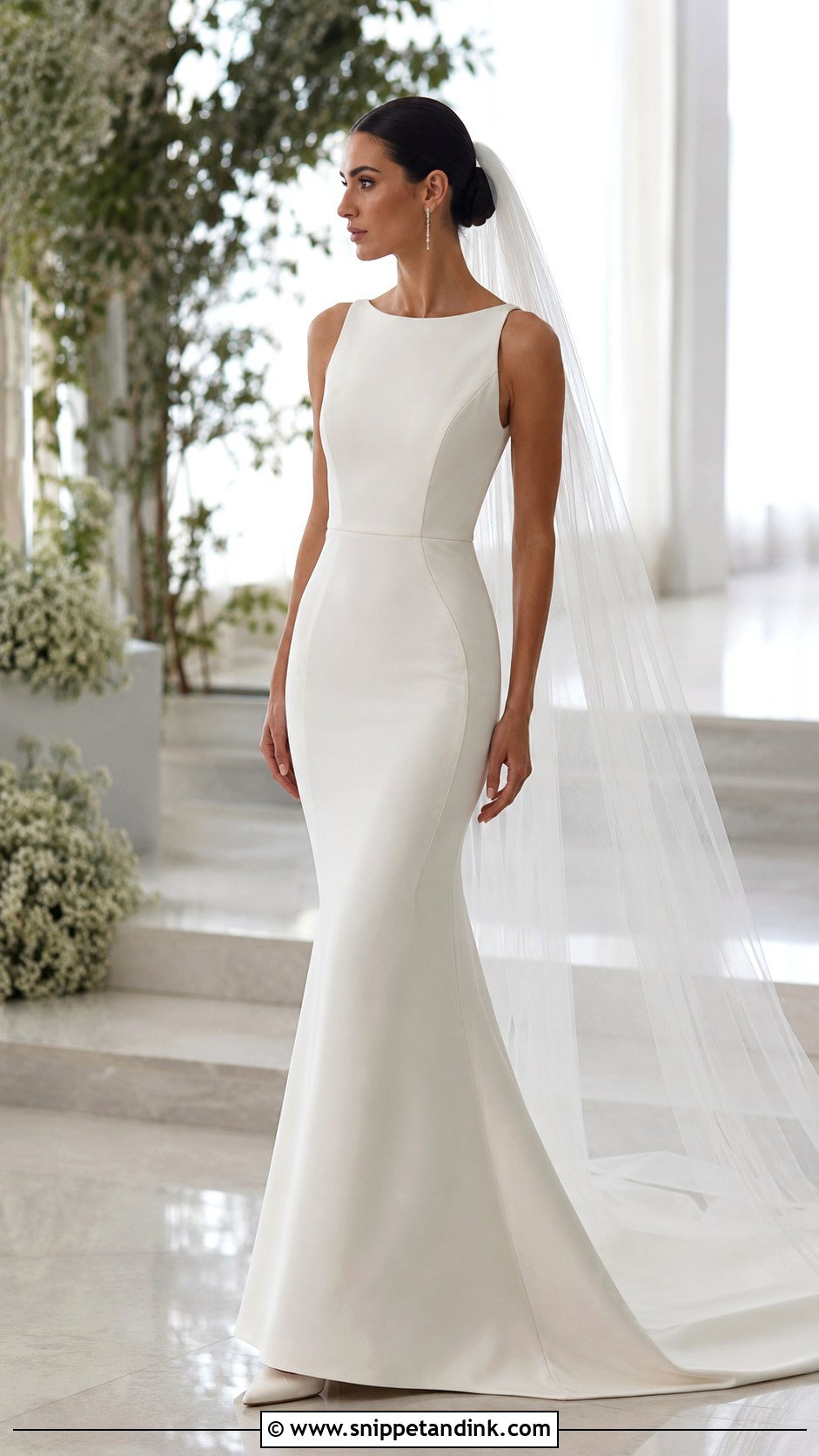
Sometimes the most compelling construction is the quietest. Curved seams trace the torso, define the waist and shape a clean mermaid or column skirt with no decoration at all. Matte crepe looks soft; satin shows more dimension. Every seam has to align across bust, waist and hips, and on crepe a seam that’s a few millimetres off is visible from across the room. That’s why this dress needs the best seamstress you can find. Elongated drop earrings, pointed pumps and a sheer cathedral veil suit it, with a polished ponytail or low bun.
A Sculpted Gown in a Car, a Hotel Room and a Doorway
Structured dresses are built to be seen standing still. Travel and a long day are where they get damaged, so plan the logistics as carefully as the fittings.
Getting it there
Collect the dress as late as the salon allows and carry it flat or hung in a long breathable bag, never folded into a box in a car boot. A full skirt or wide pannier may need the back seat of a larger car, so check before the day. Bows, cuffs and petals should face up and stay uncrushed.
The night before
Hang the dress high from its inner hanging loops so the bodice isn’t stretched by the weight of the skirt. Steam only what the salon told you to steam, from the inside, and keep the steamer moving. Pleats and pressed folds stay away from steam altogether.
On the day
Put the dress on last, after hair and makeup, stepping in rather than pulling it over your head. Ask one helper to own the train, the bustle and any detachable parts. Wide shapes go through doorways sideways; it’s worth one practice run at the venue.
Structure You Can Sit, Hug and Dance In
Statement construction only works if you can live in it. Basque waists, crisp pleats, sculptural bows, curved seams and big skirts all create shape without heavy decoration, but each one has a weak point: a fold that slumps, boning that digs in, a hem that’s too wide for a door. Bring reference images to appointments and stay open to fabrics you hadn’t considered. Sit, walk, turn and lift your arms in every gown before deciding. The right structured dress will feel secure, flatter your proportions and still look like you.
You'll Like These Ideas:


Leave a Reply