
Wearing your hair down is the request I hear most often, and it is also the one that takes the most planning. An updo is held by pins; loose hair is held only by how well it was set, so the prep matters more than the style name. The looks below range from glossy Hollywood waves to brushed curls, half-up details, natural texture and pearl accents. Down styles sit well with most necklines, from strapless gowns to high necks, but your hair’s weight, your venue’s humidity and your veil all decide which of them will still have shape by the evening.
Why Loose Hair Drops Faster Than an Updo
When hair is pinned up, the pins carry the weight. When it is down, every curl is hanging from the scalp and gravity pulls on it from the moment it cools. The longer and heavier the hair, the faster the curl relaxes, which is why a waist-length wave that looked perfect at 10am can be almost straight by the first dance. I plan every down style around that pull.
Prep the hair the day before, not the morning of
Freshly washed hair is slippery and won’t hold a set. I ask brides to wash the evening before, dry it smooth and skip conditioner on the roots. A light texture or setting spray on damp lengths gives the curl something to grip. If your hair is very fine, clip-in extensions add enough density that the waves look full in photos instead of stringy, and they hold a curl better than fine natural hair.
Set it tighter than the finish you want
I curl with a smaller barrel than the final look calls for, pin each curl while it cools, and only brush it out at the end. It looks too curly for about ten minutes. By the ceremony it has relaxed to what you saw on your mood board, and it keeps relaxing slowly instead of dropping all at once.
- Humid or coastal venue: favor half-up, twists or a braid over fully loose waves.
- Very thick hair: ask for weight to be pinned underneath on one side so the shape doesn’t pull flat.
- Very fine hair: consider extensions and a set curl rather than soft brushed waves.
- Naturally curly hair: plan on enhancing your own pattern rather than straightening and recurling.
1. Hollywood Waves Wedding Hair
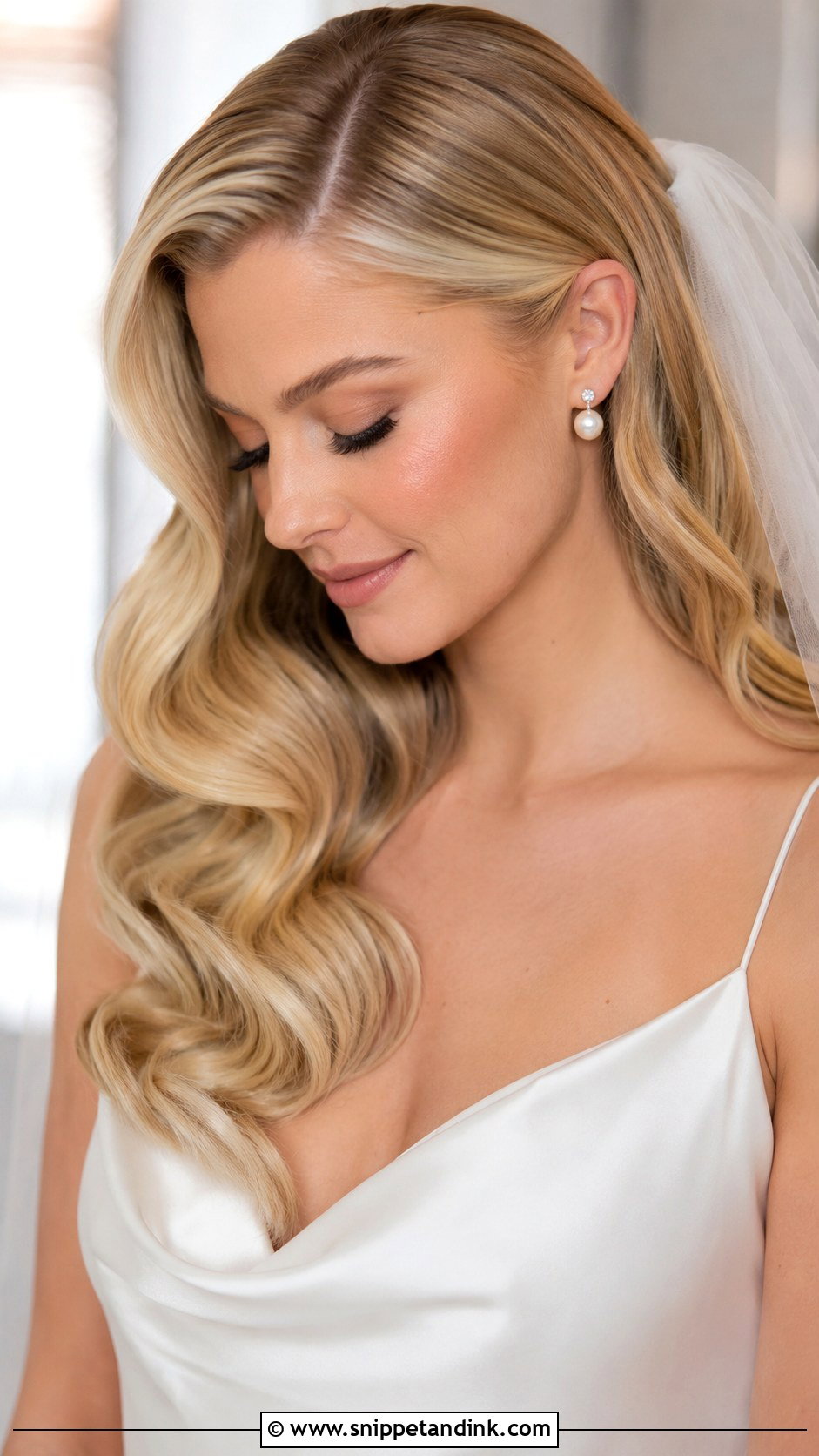
This is the most disciplined style on the list. Every curl is wound in the same direction, left to cool fully, then brushed together until the hair moves as one ribbon rather than separate ringlets. I set the curls with clips while they cool, because a warm curl that drops early never springs back. A deep side part gives you the drama; a center part reads more current. It needs a smooth neckline to land on, so satin gowns and simple veils suit it far better than heavy lace at the shoulder.
2. Soft Waves Wedding Hair
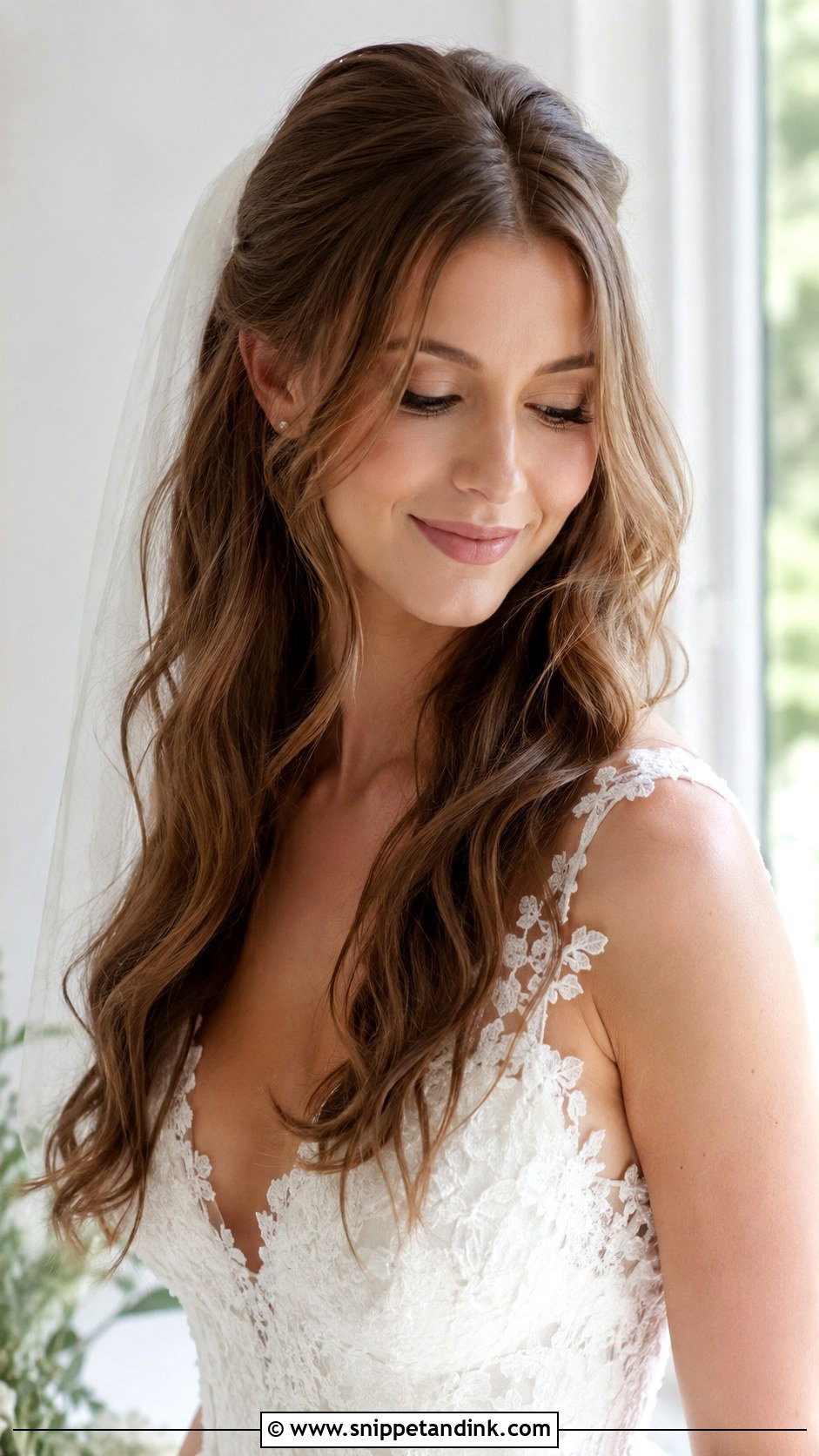
Soft waves are looser and brushed out further, so you see movement without a defined curl shape. The trade-off is hold: because the curl is relaxed on purpose, it is the first style to fall flat in a damp garden. I start the waves below the cheekbone to keep the face open and use a light shine spray rather than oil, which weighs long lengths down. A floral comb or a sheer veil at the crown sits easily on this texture.
3. Half Up Long Wedding Hair
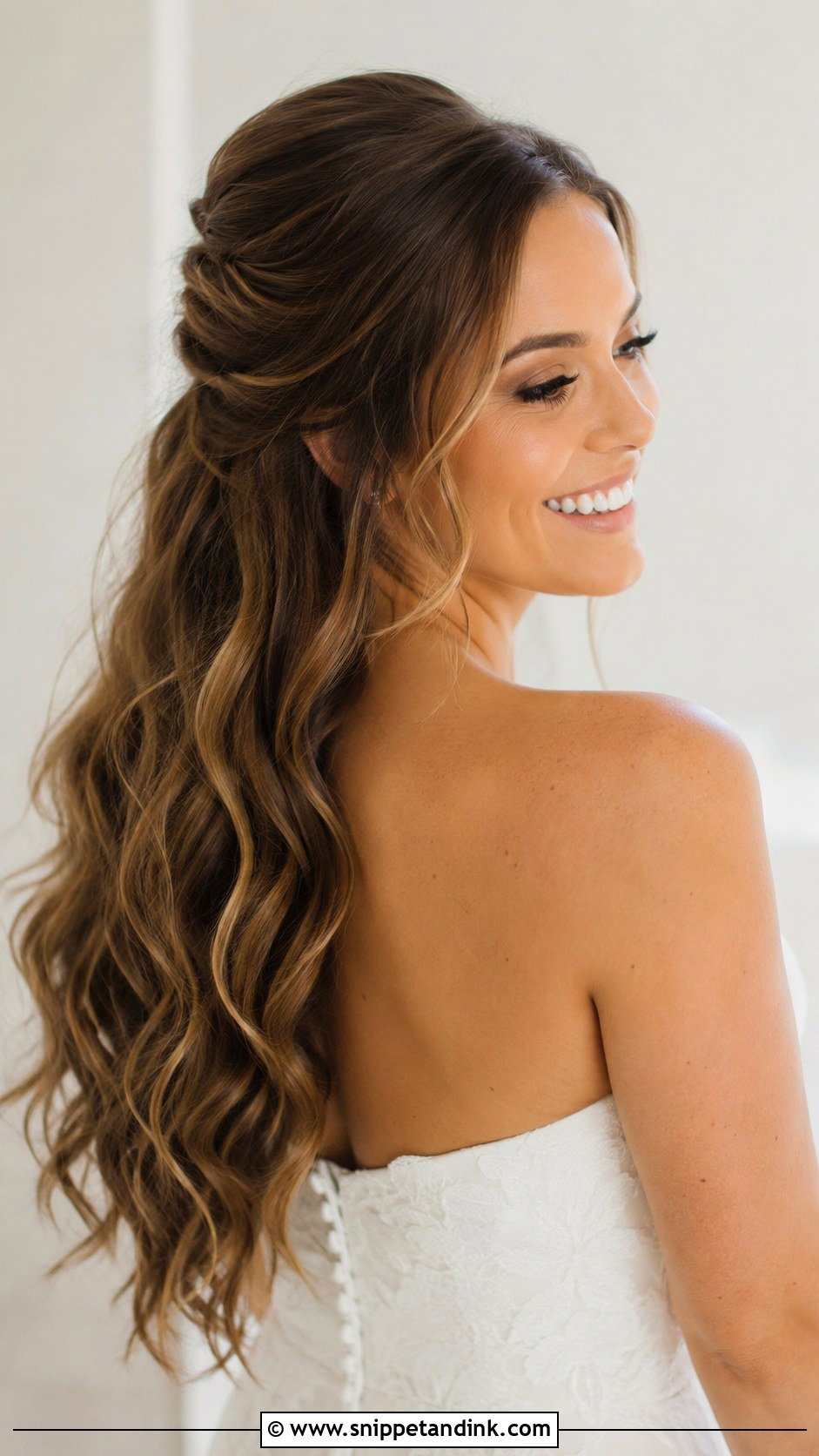
Taking just the top section back solves the biggest complaint about loose hair: pieces falling into your face during vows, hugs and every photo where you look down. That top section can be twisted, pinned, braided or simply gathered. I keep the crown lifted with a little backcombing underneath, never on the surface, so it looks soft rather than teased. If you plan to wear a veil, this is the shape I reach for first, because the gathered section gives the comb something solid to bite into.
4. Long Wedding Hair With Veil
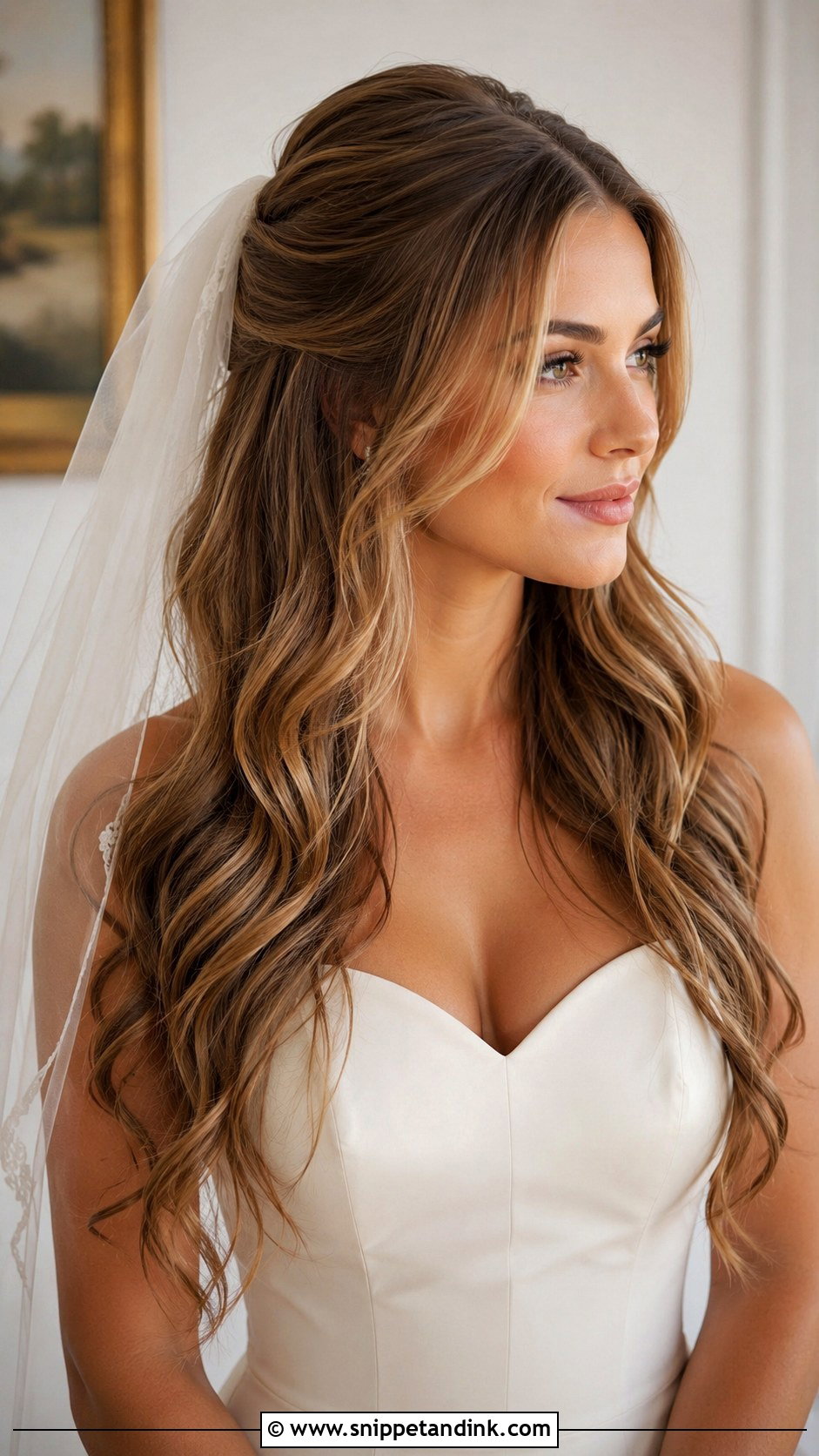
A veil comb slides straight out of clean, loose hair, so the work here is hidden. I build an anchor under the crown, either a criss-cross of bobby pins or a tiny braid, and slide the comb into that rather than into the hair itself. From the outside the hairstyle stays soft. Placing the veil high gives a traditional outline; lower at the back feels softer and lets more of the length show in ceremony portraits. Bring the actual veil to your trial, since the weight of a cathedral length pulls very differently from a fingertip one.
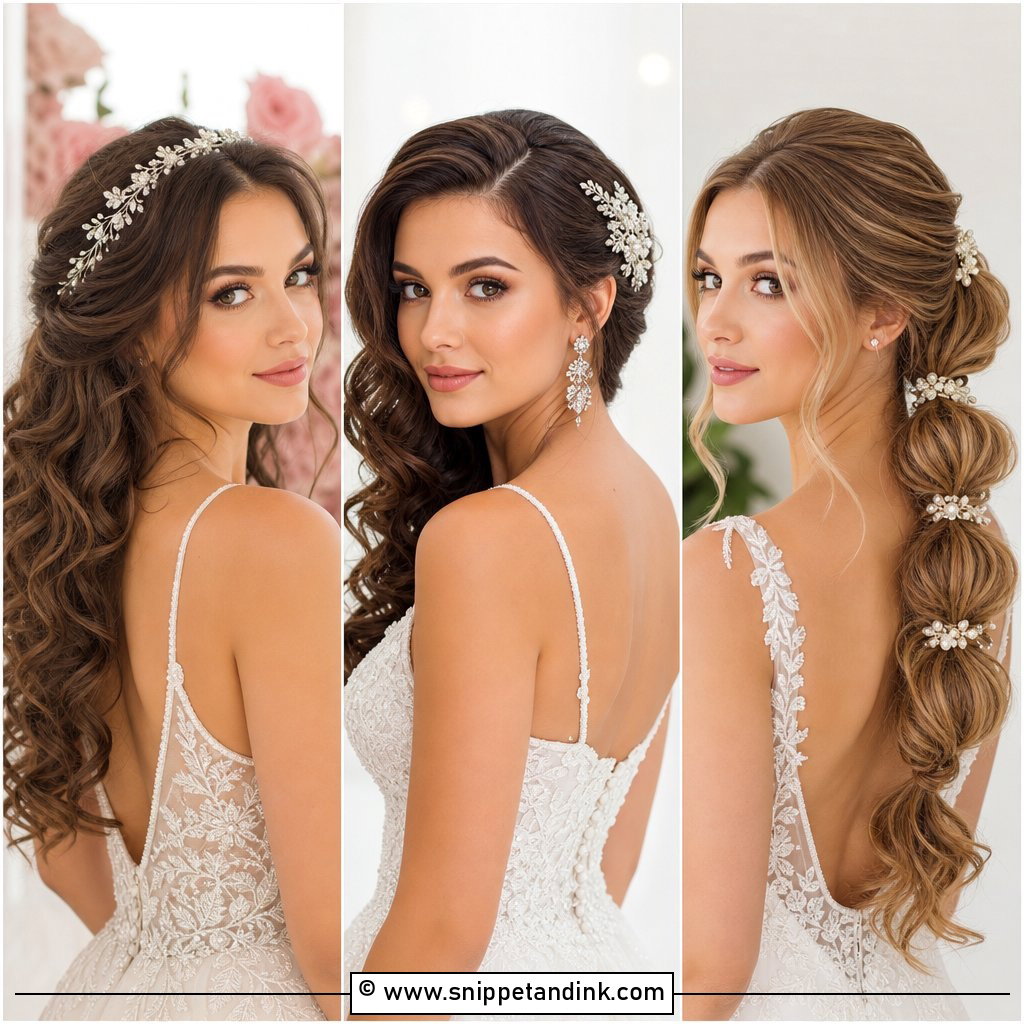
5. Long Wedding Hair With Pearl Pins
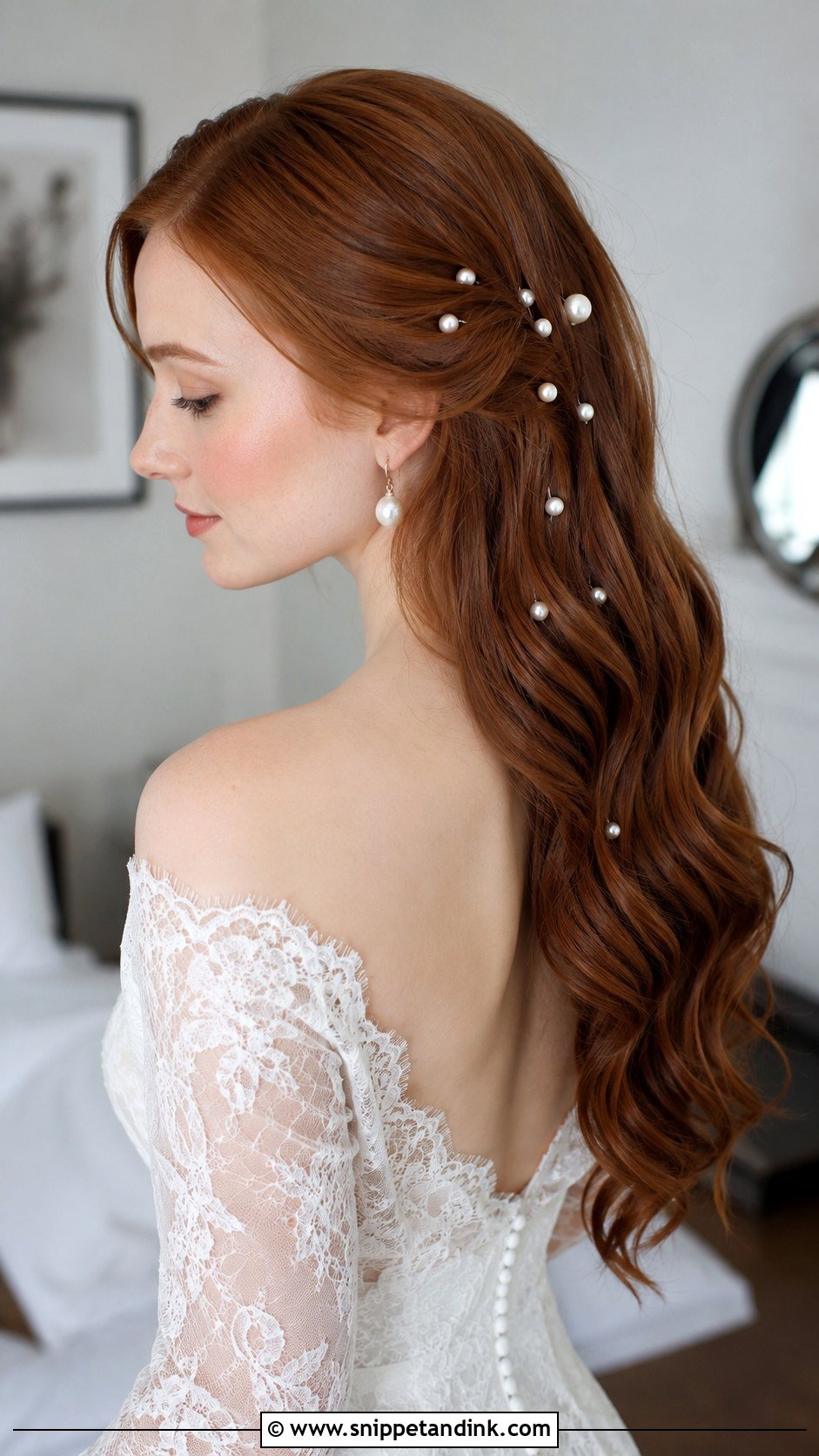
Pearl pins add detail without competing with the hair. I scatter them along one side for an asymmetric line or set them around a twist when the style needs structure. Small pearls read delicate; larger ones show up from the back of the room. The hair underneath has to be smooth, though, because pearls sitting on frizz look cluttered rather than placed. They echo pearl earrings and lace bodices well, and I angle each pin slightly so it catches light instead of sitting flat.
6. Side Swept Wedding Hair
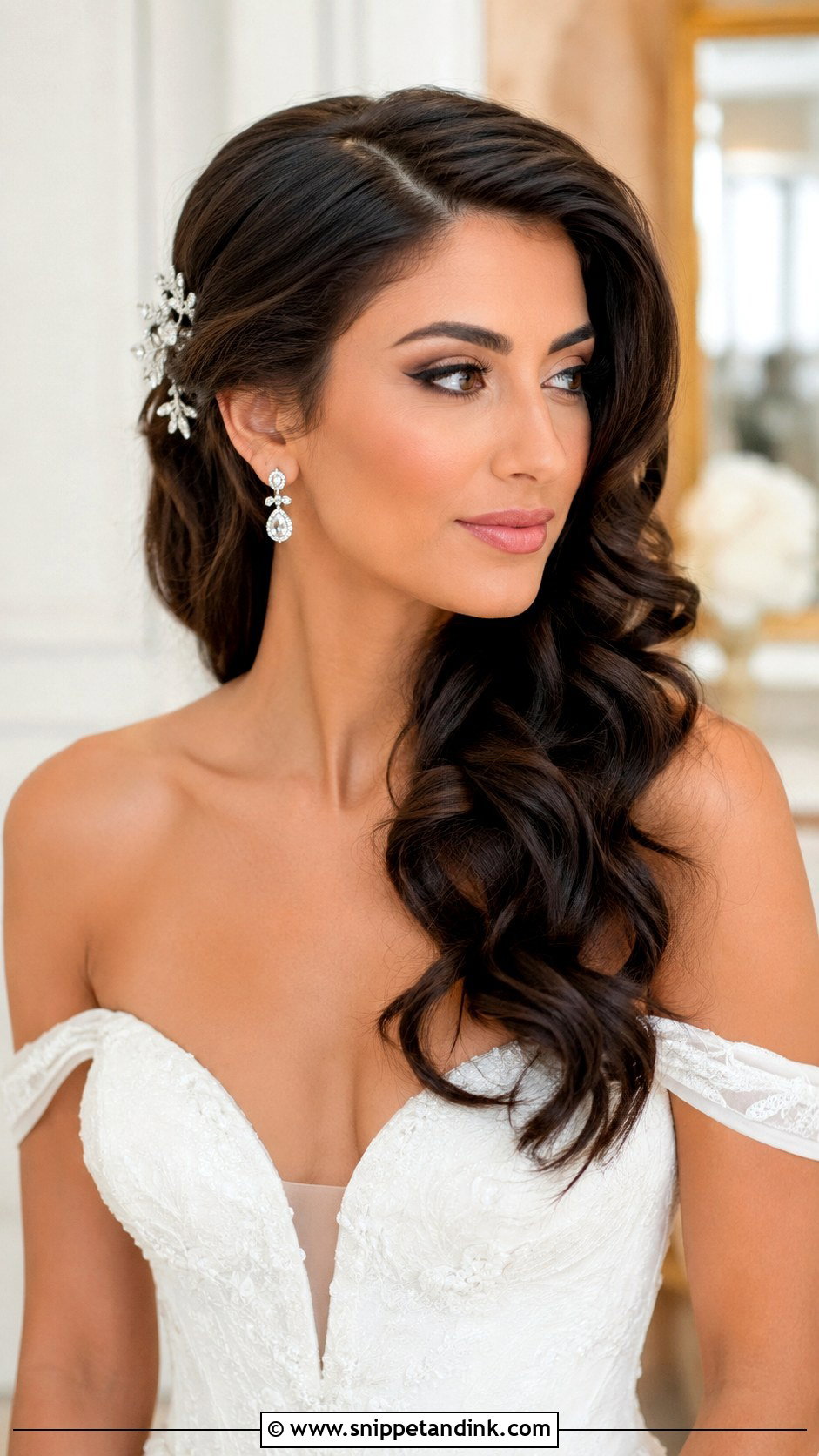
Sweeping the length over one shoulder shows off the opposite side of the neck and gives a red carpet outline without an updo. I curl everything first, then pin the far side behind the ear with pins hidden under a section so they never show. It suits one-shoulder and off-the-shoulder gowns and lets a statement earring take the bare side. On very thick hair the swept side can feel heavy by evening, so I anchor it with a row of pins underneath and finish with a flexible spray that still lets it move.
7. Long Wedding Hair With Curtain Bangs
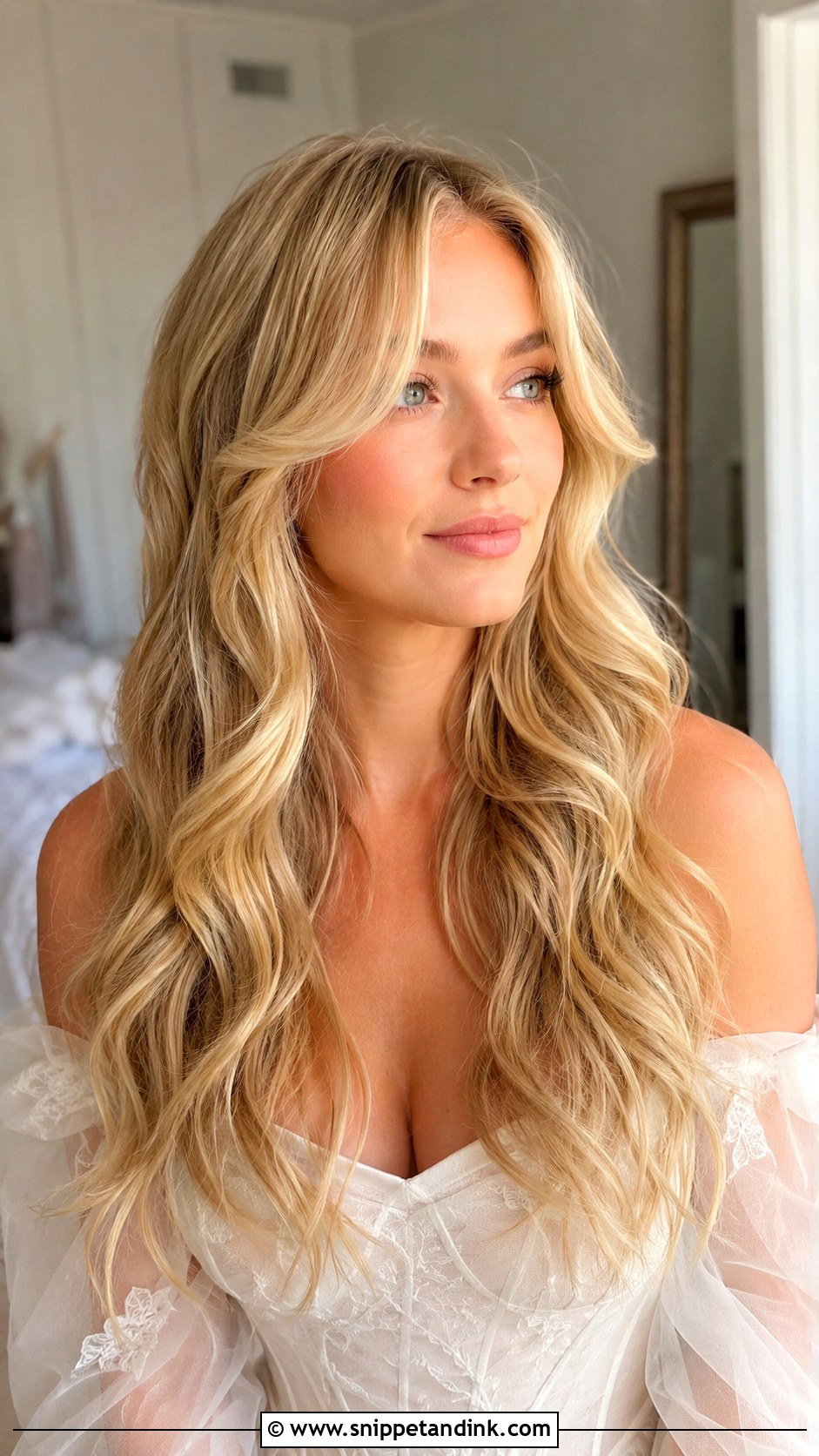
Curtain bangs frame the cheekbones and blend into the waves, so the whole style feels relaxed. Bangs are also the part that misbehaves first: skin oils and makeup setting spray make them separate by mid-afternoon. If yours are short, I curve them away from the face with a round brush; longer ones I curl into the rest of the hair so you can’t see where the fringe ends. Avoid a fresh fringe trim in the final week, because bangs always sit a little too short for the first few days.
8. Long Wedding Hair With Loose Curls
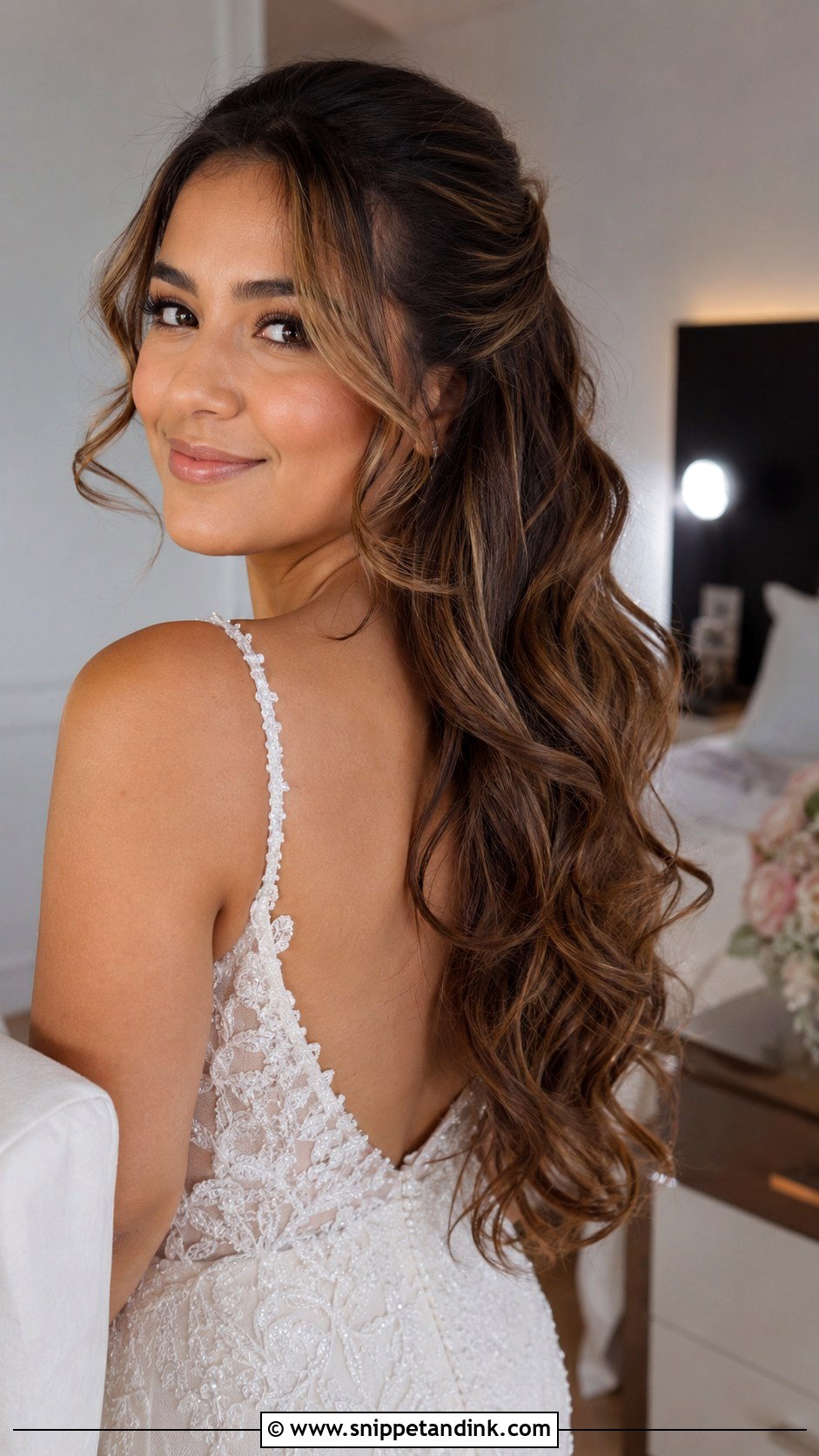
Loose curls give the most volume of any down style and they are the easiest to refresh at the reception. The rule I follow is to curl tighter than the finish you want, because long hair pulls every curl longer under its own weight within a couple of hours. Once the curls are set and cool, I separate them with fingers rather than a brush. A middle part keeps it modern, a side part pushes it toward glamour, and a few face-framing pieces stop it from looking like a wig.
9. Long Wedding Hair With Floral Pins
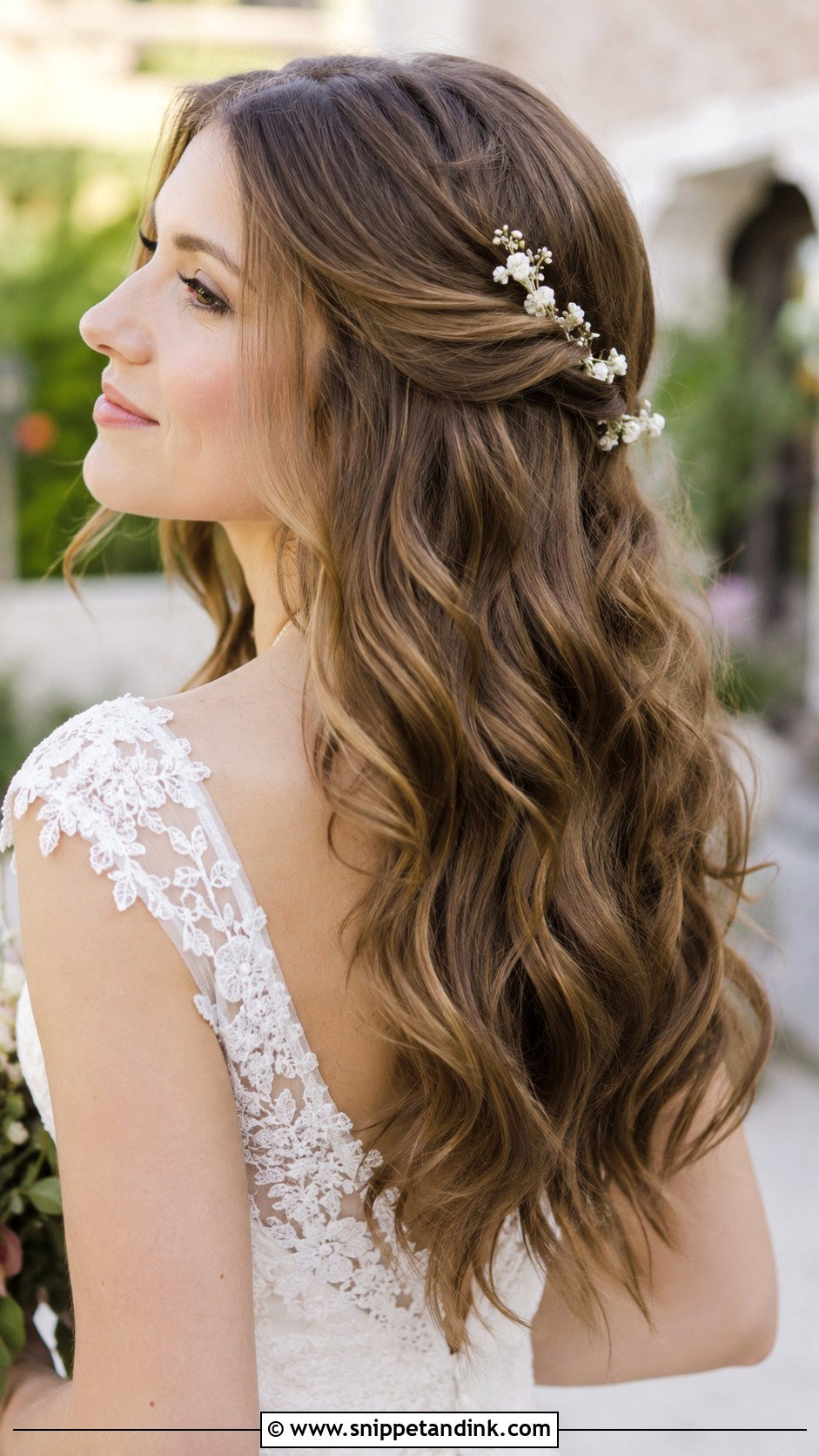
Flowers suit garden ceremonies and spring dates, and you can choose fresh, silk or preserved stems. Fresh flowers wilt against a warm scalp faster than people expect, so for summer I usually suggest silk or preserved pieces wired onto pins. Tiny white blooms along one side are subtle; a small cluster at the back of a half-up section makes more of a point. I ask the florist for the same stems used in the bouquet so the colors match up close.
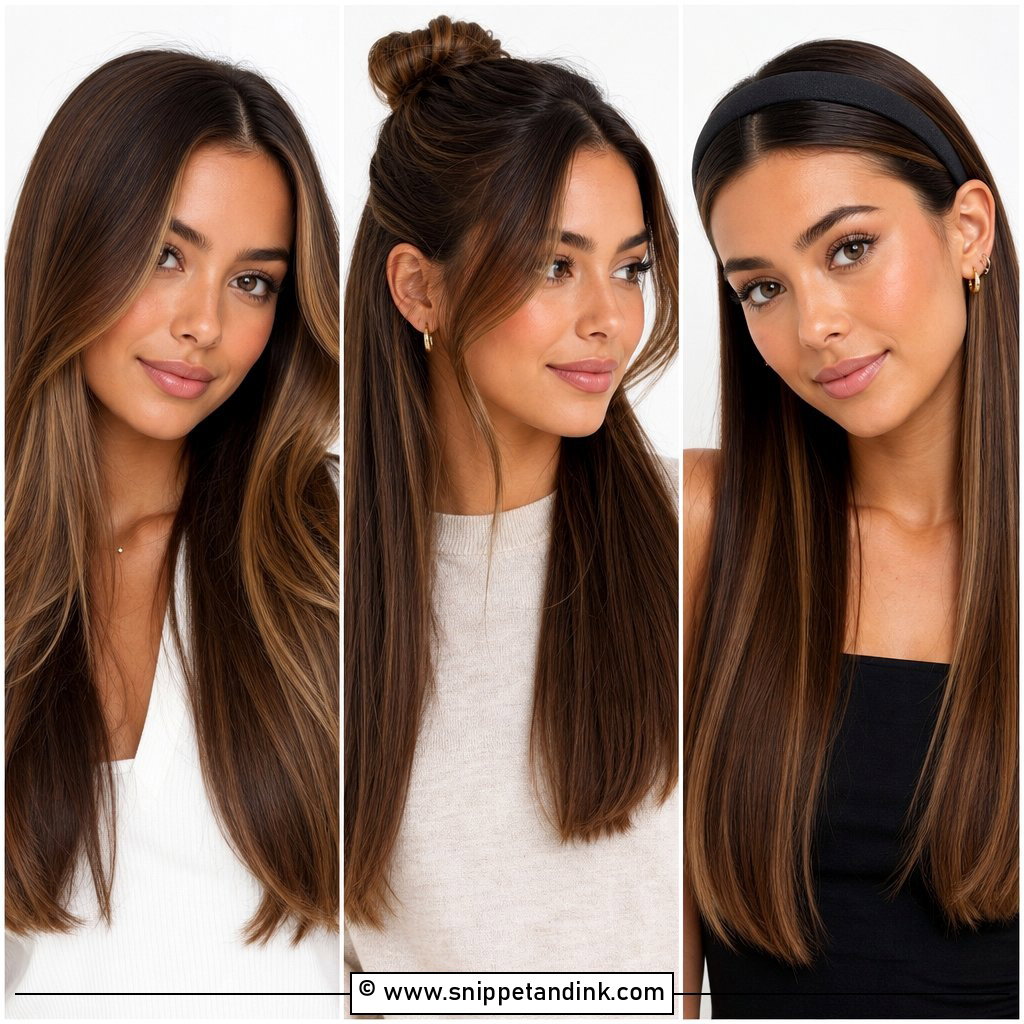
10. Sleek Straight Wedding Hair
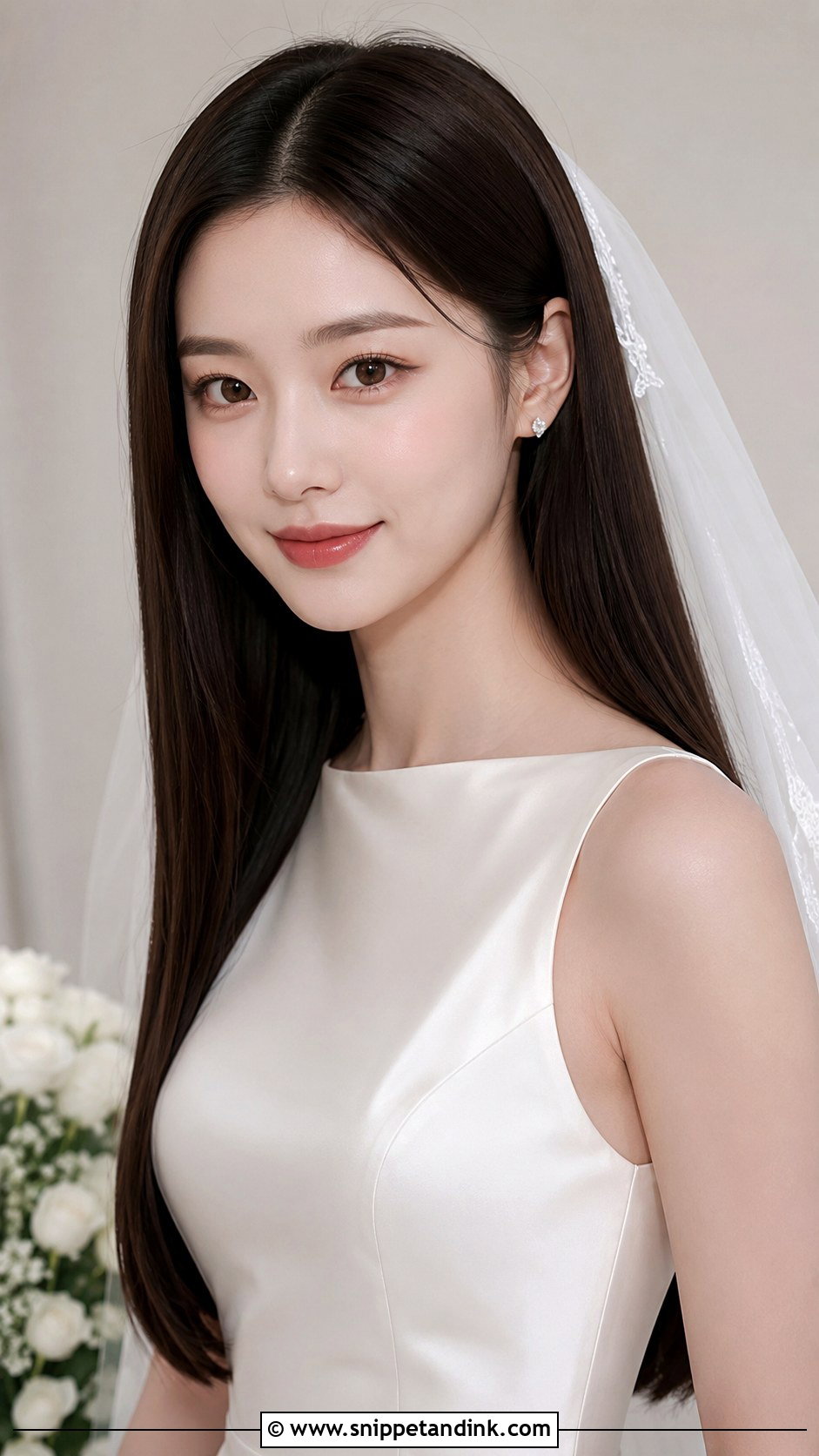
Sleek straight hair looks simple and is one of the least forgiving styles to wear for ten hours. Every frizzy strand and every crease from a hair tie shows. I polish from root to ends, finish the ends blunt or with a slight bevel, and use heat protectant plus a light smoothing cream rather than anything greasy. It is a strong match for minimalist and high-neck gowns. I steer brides away from it in high humidity unless their hair is naturally straight, because flat irons can’t fight a damp afternoon outdoors.
11. Long Wedding Hair With Braided Crown
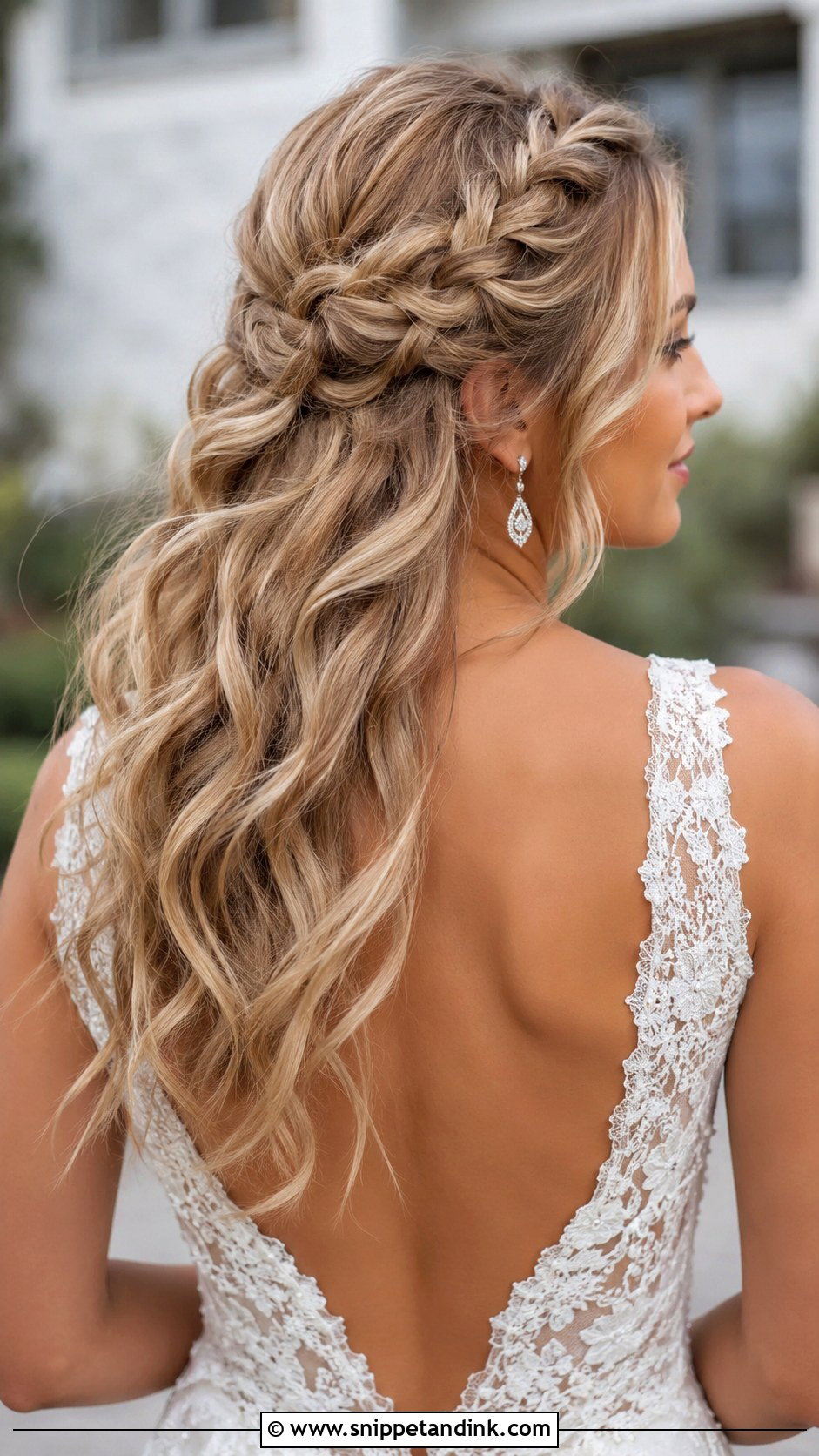
A braided crown keeps most of the hair down while giving the top a soft, rounded shape. The braid can wrap across like a headband or sit further back where it is barely noticeable. I braid fairly firmly, pin it, then pull the loops apart by hand; pancaking a loose braid makes it collapse within an hour. It suits rustic venues and open-back dresses, and tiny flowers or pearls can sit in the braid’s gaps without extra pins.
12. Long Wedding Hair With Waterfall Braid
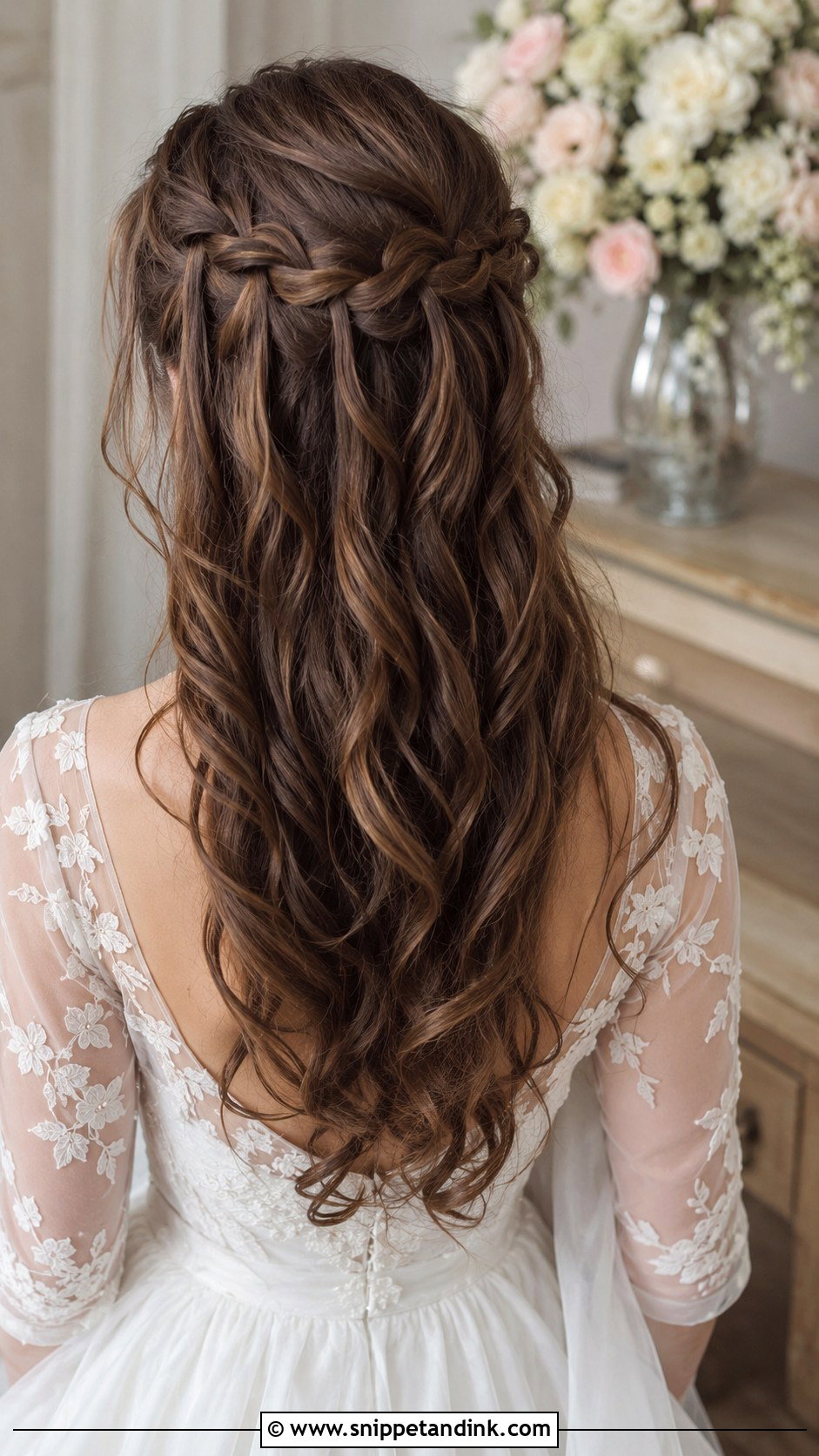
A waterfall braid styling travels across the back of the head while strands drop through it and fall into the waves below. Texture is what makes the pattern readable, so I always curl first and braid second. Too loose and the dropped strands slip out; too tight and it looks childlike. Garden, beach and vineyard weddings suit it, and if you add pearl pins or flowers I keep them off the braid line so the pattern still shows.
13. Long Wedding Hair With Deep Side Part
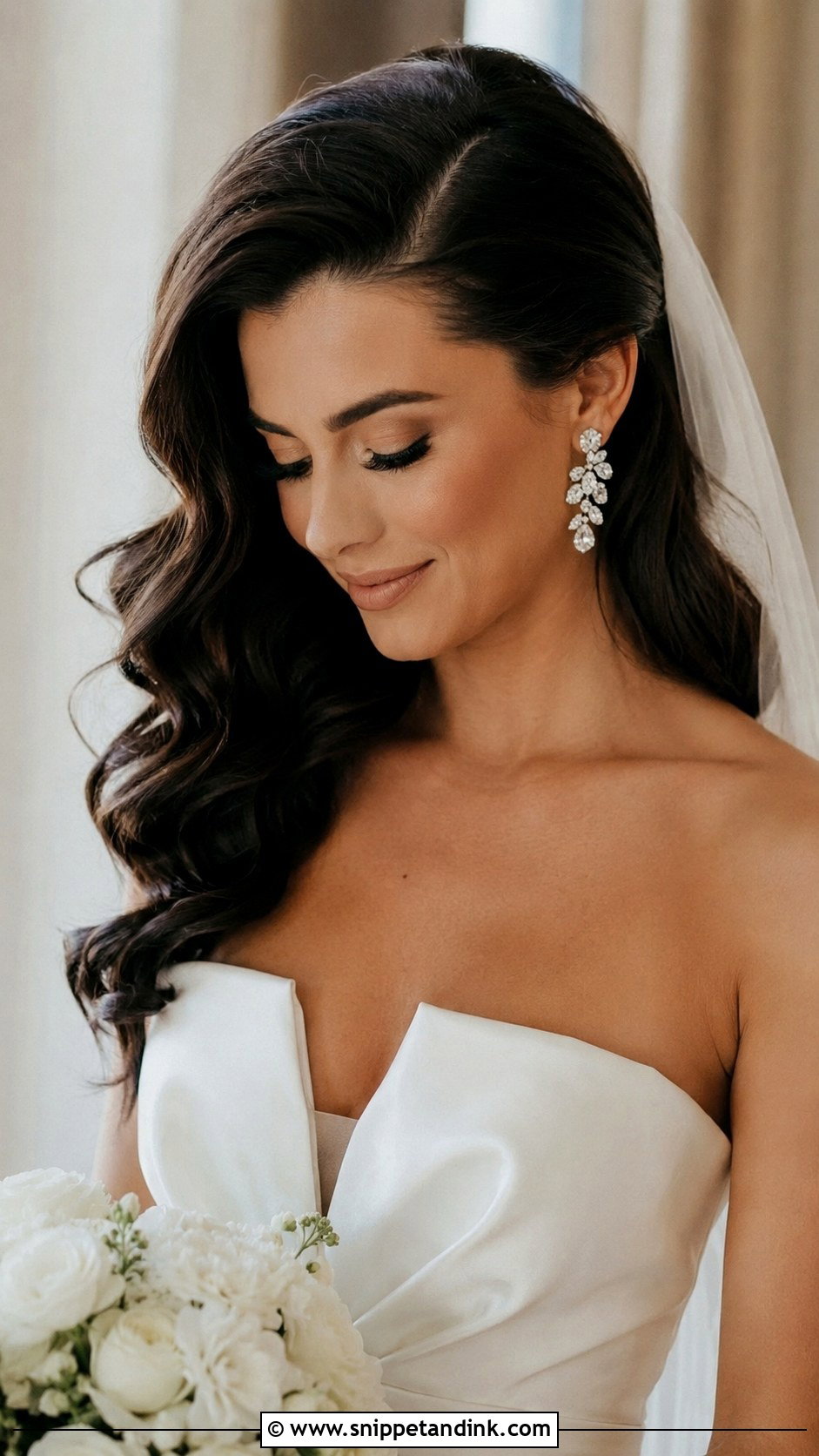
Moving the part deep to one side lifts the front instantly and gives long waves that red carpet outline. The heavier side carries the volume, while the smaller side tucks behind the ear to show an earring. The catch is that a part that isn’t your usual one fights back all day. I train it the night before with a damp section and a clip, then use root lift spray and a firm but flexible hairspray. A low veil at the back sits neatly behind it.
14. Beach Waves Wedding Hair
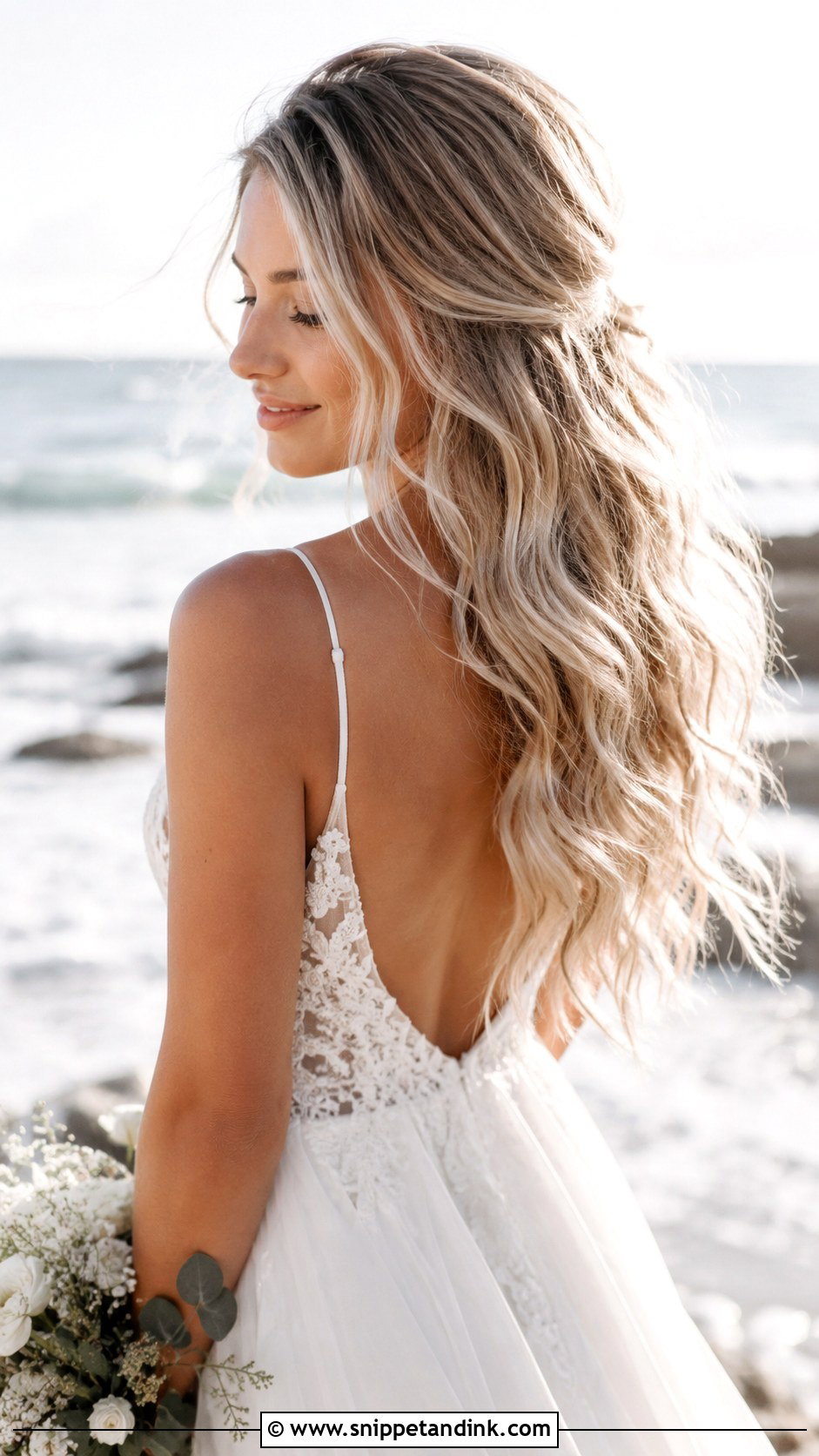
Beach waves should look relaxed, not messy, and that difference is all in the top. I keep the crown smooth and only add bend through the mids and ends, using a flat iron twisted on itself instead of a round barrel. Salt sprays dry the hair and get crunchy in sea air, so I use a light texture spray and a flexible hold product instead. Simple gowns and natural makeup suit it. A small side pin or comb adds a bridal detail without fighting the texture.
15. Long Wedding Hair With Hair Vine
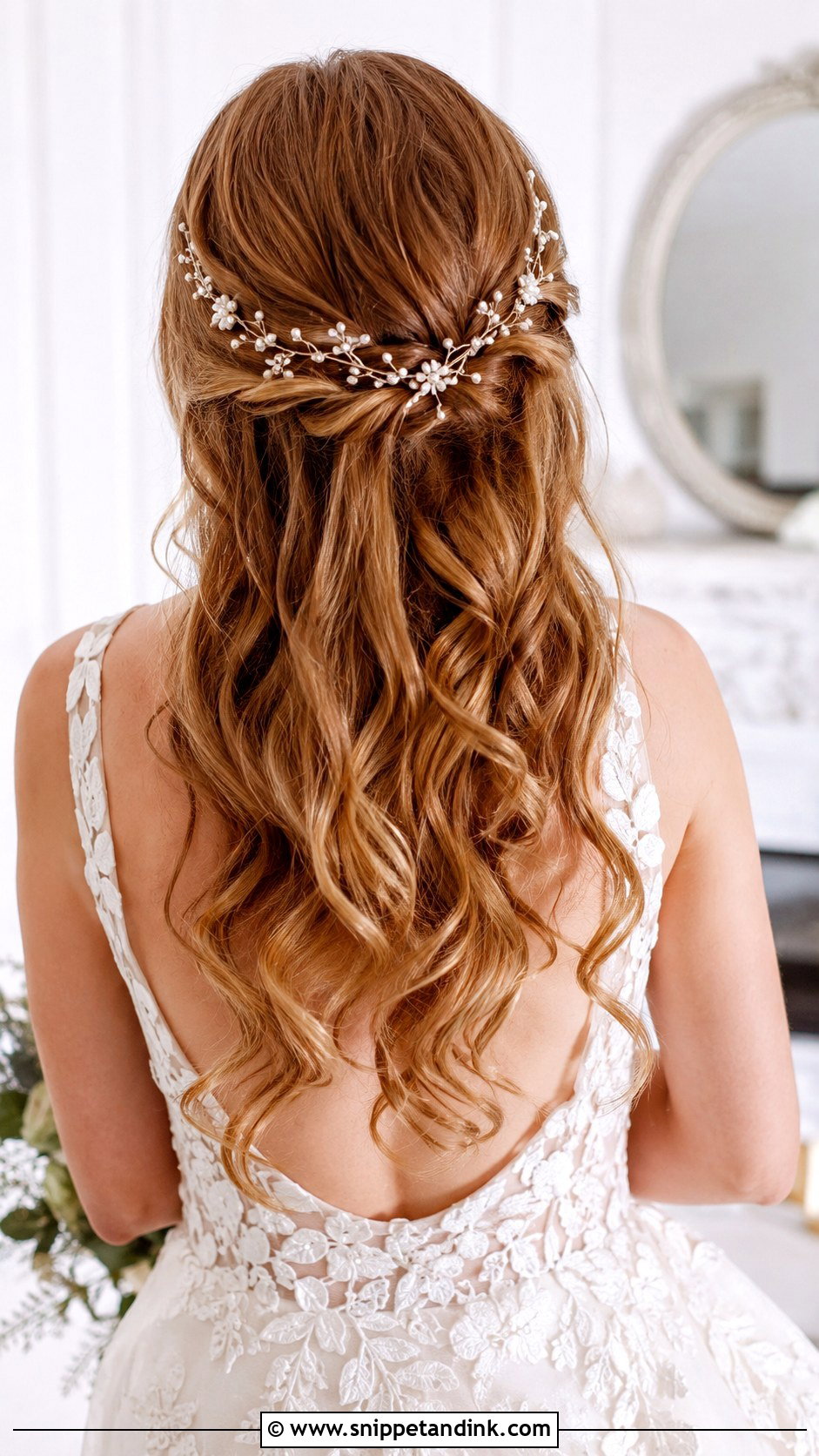
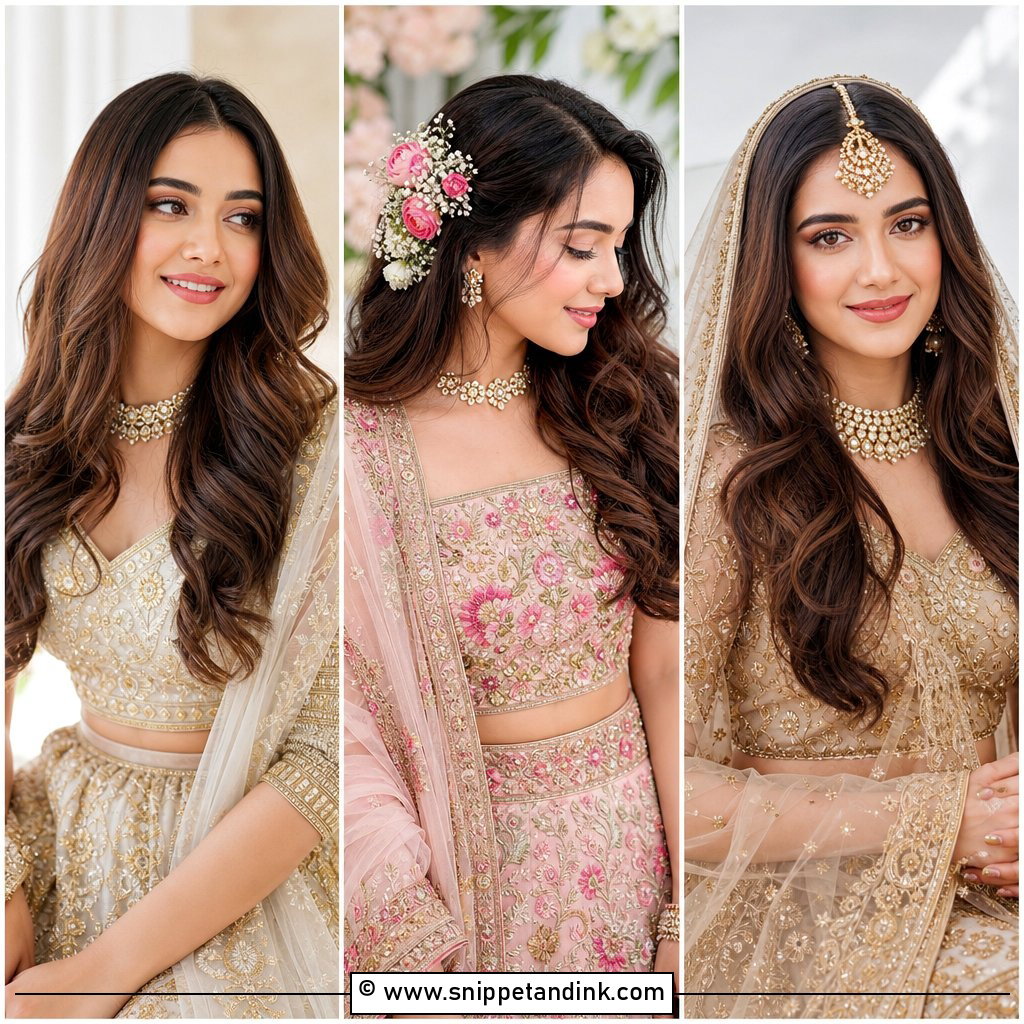
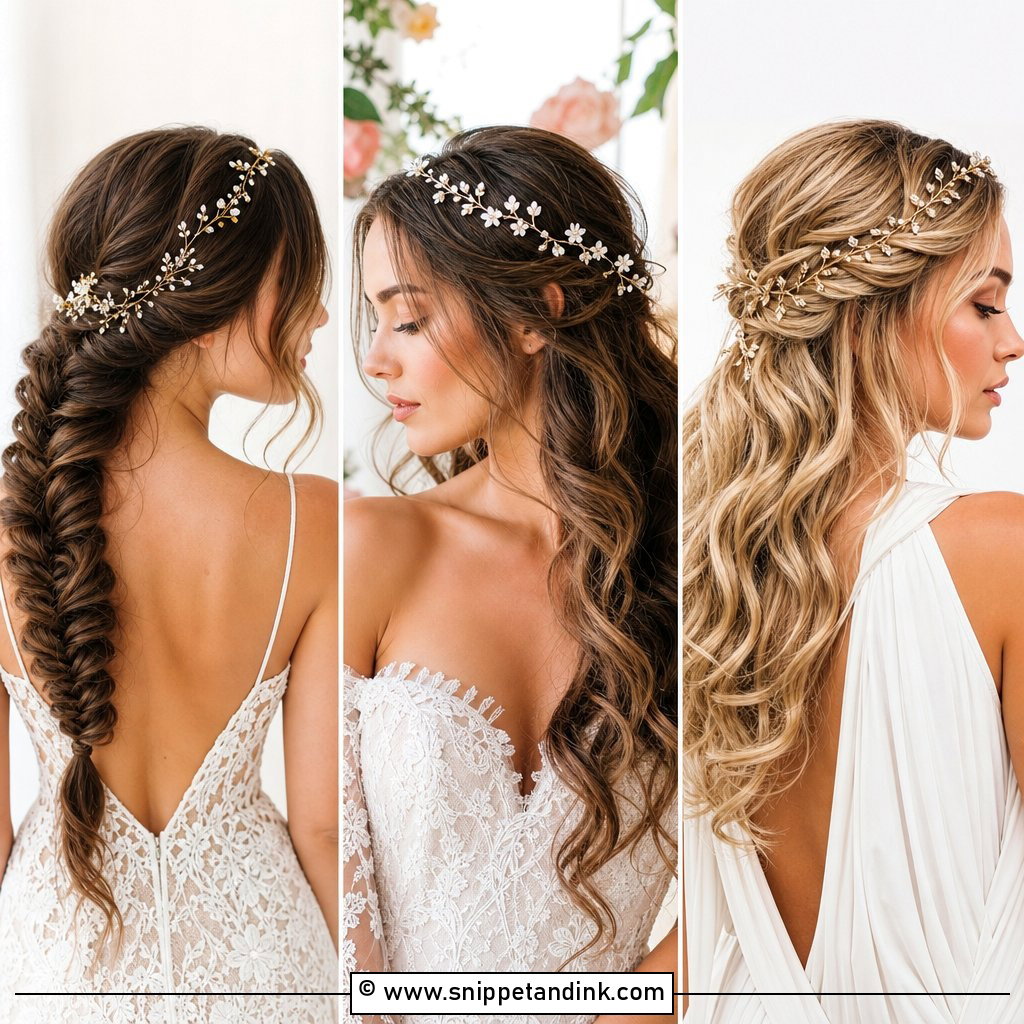
Most hair vine accessories are flexible wires you can bend around waves, a half-up twist or the back of the crown, which makes them a good pick if you want sparkle but don’t want a tiara. I sew them into place with bobby pins every few centimeters along the wire, because a vine held at only two points droops forward as the hair moves. Pearls look classic, crystals bounce light, floral pieces read garden. Place it where it will catch light in portraits, usually just behind the crown.
16. Long Wedding Hair With Face Framing Layers
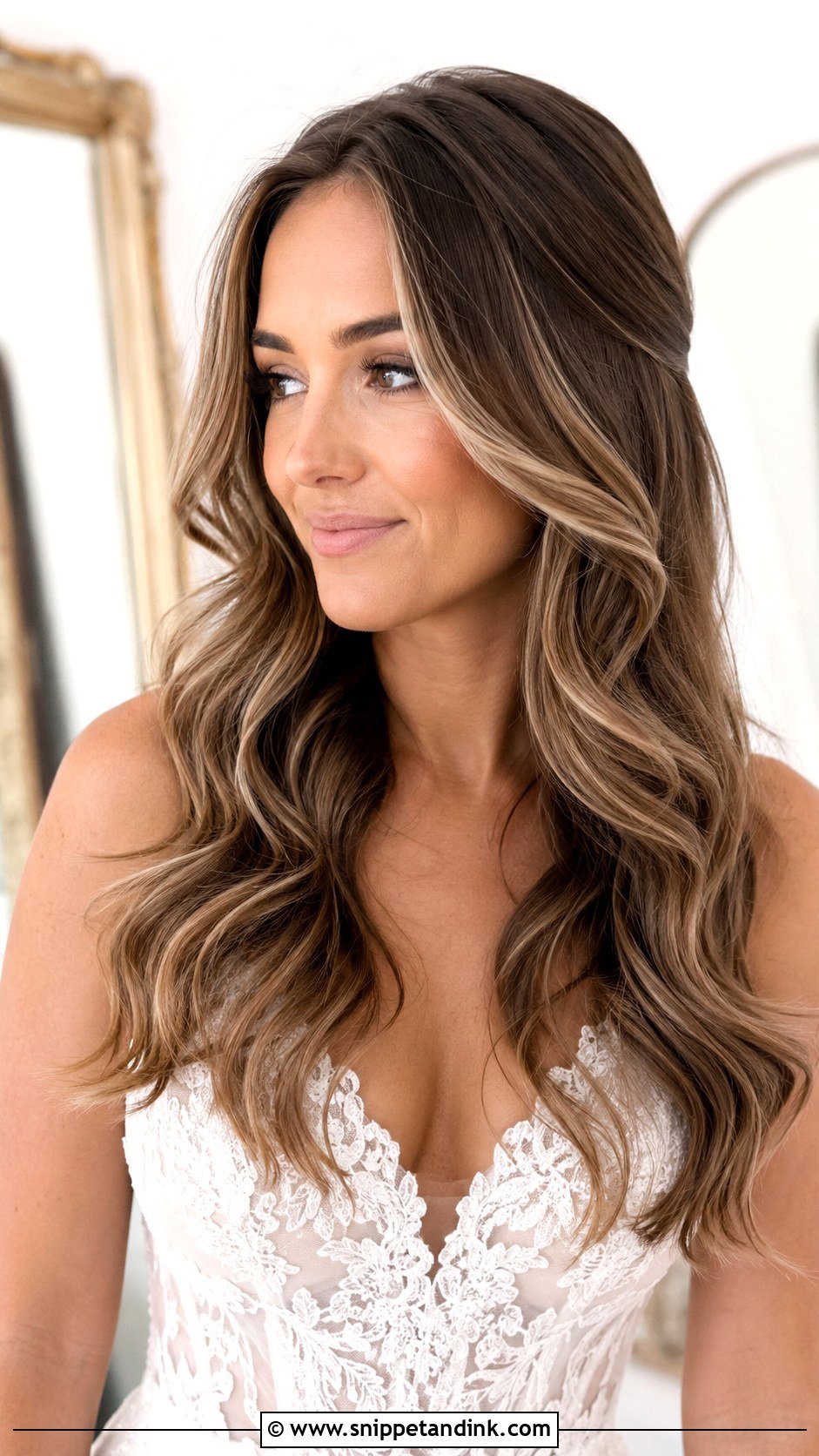
Shorter layers around the face give very long or thick hair some lightness and stop the front from looking flat. I curl those pieces away from the face so they open up the cheekbones and jaw. One thing to know: face-framing layers fall out of pins faster than the rest of your hair because they’re shorter, so if you want them tucked later, I place a spare pin under them in advance. They finish loose waves, polished curls or a small half-up pin equally well.
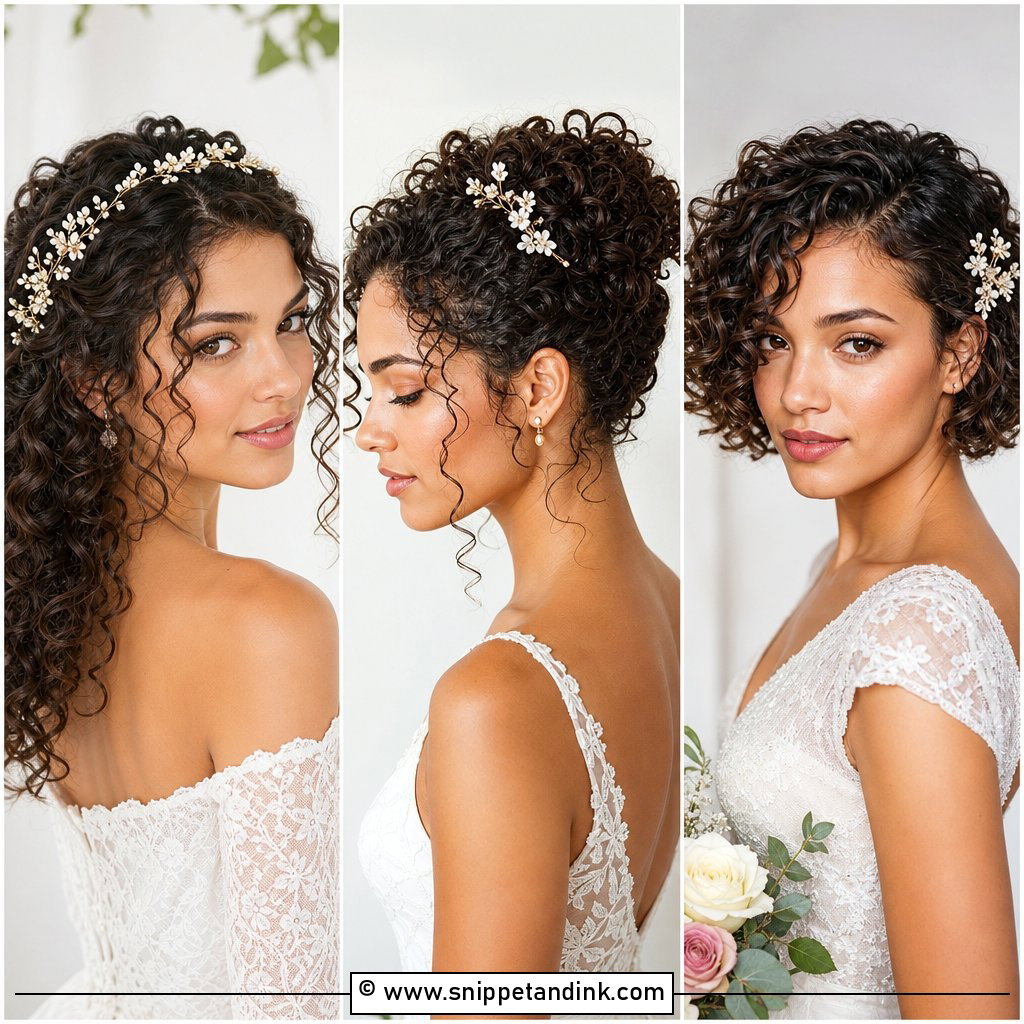
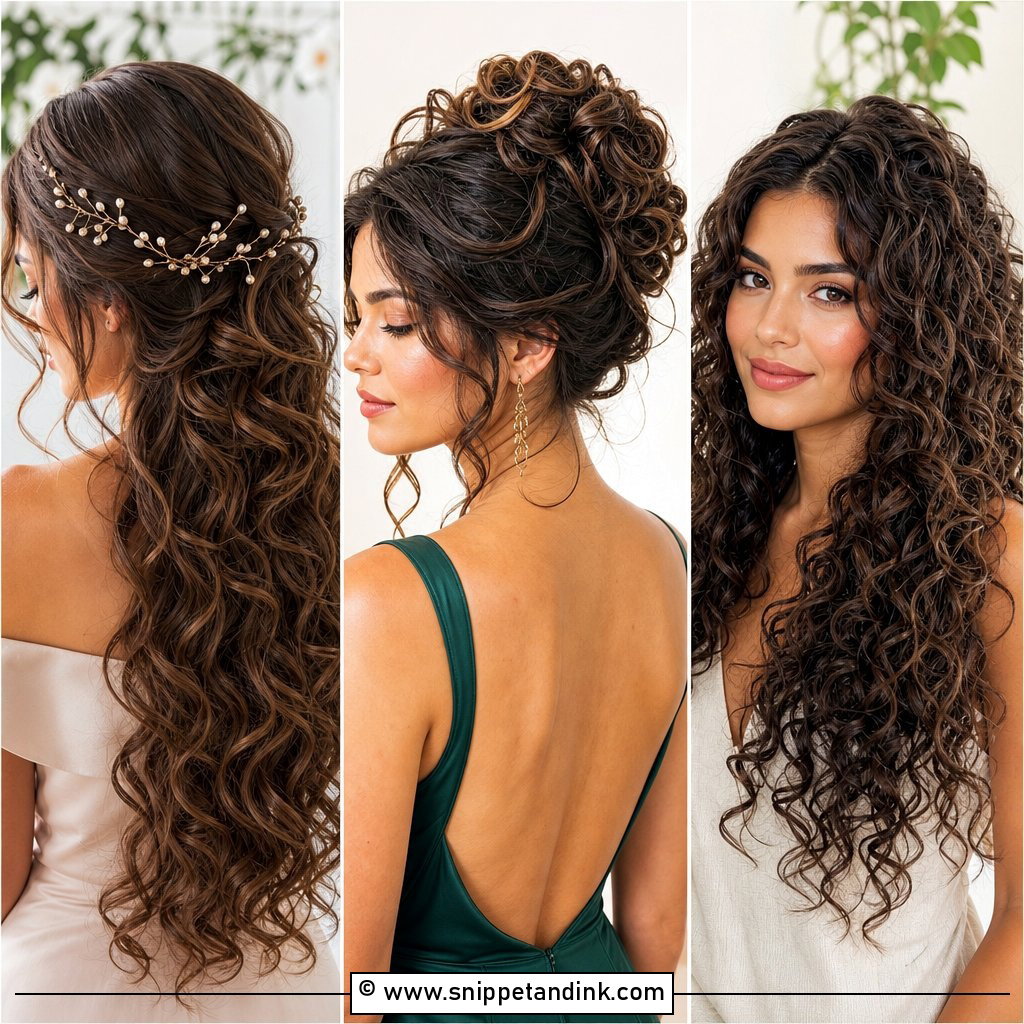
17. Long Wedding Hair With Natural Curls
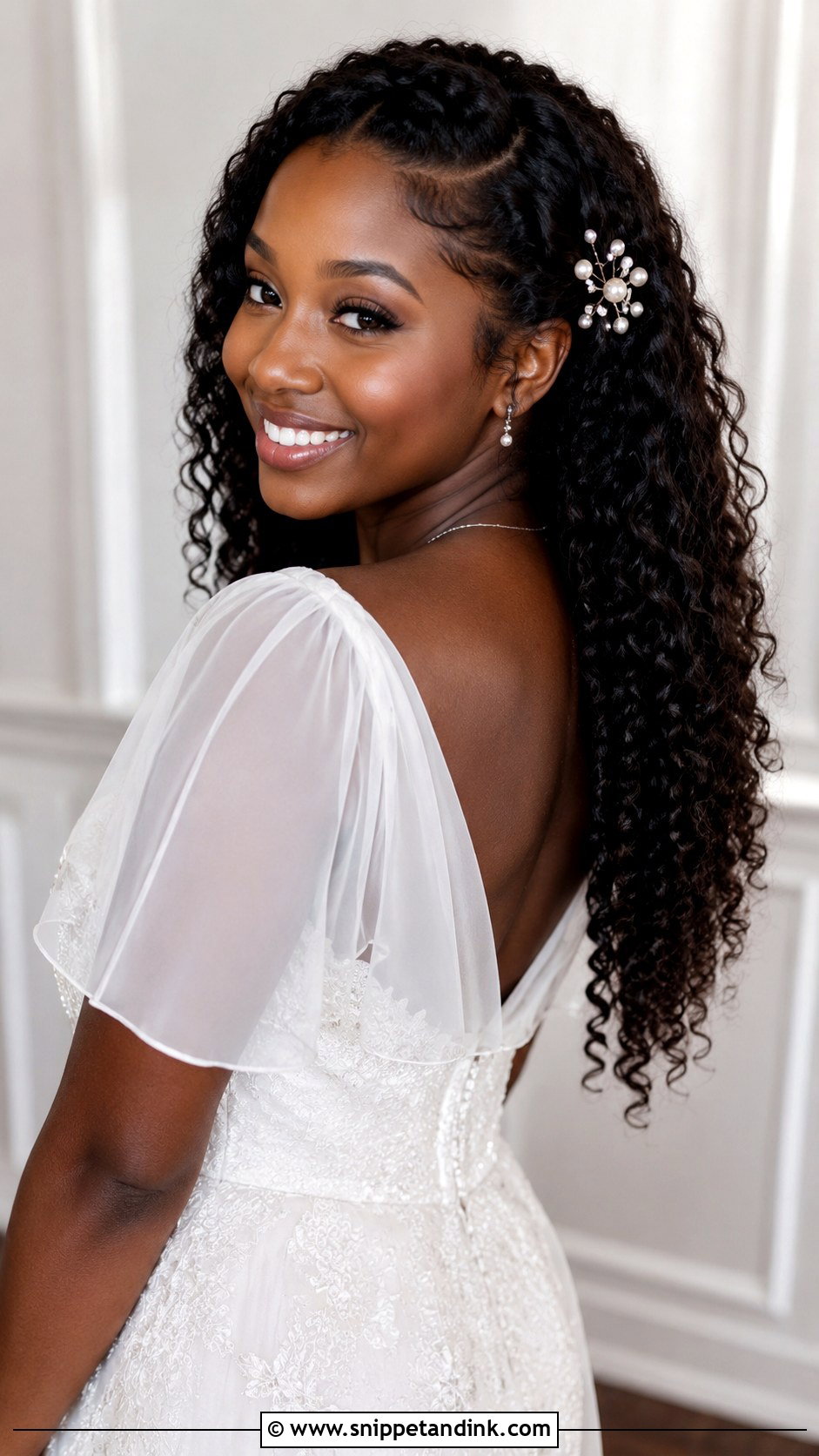
Natural curls bring volume and personality that a curling iron never quite copies. Hydration is everything here: I’d rather you deep condition the week before and trim dry ends a month out than pile on product on the morning. On the day I work with curl cream and gel, diffuse, then touch up only the curls that set unevenly. Wearing your texture down means a veil needs a secure crown area to tuck into. Test your products early, since curl pattern changes with water hardness and climate if you’re traveling.
18. Long Wedding Hair With Old Hollywood Curls
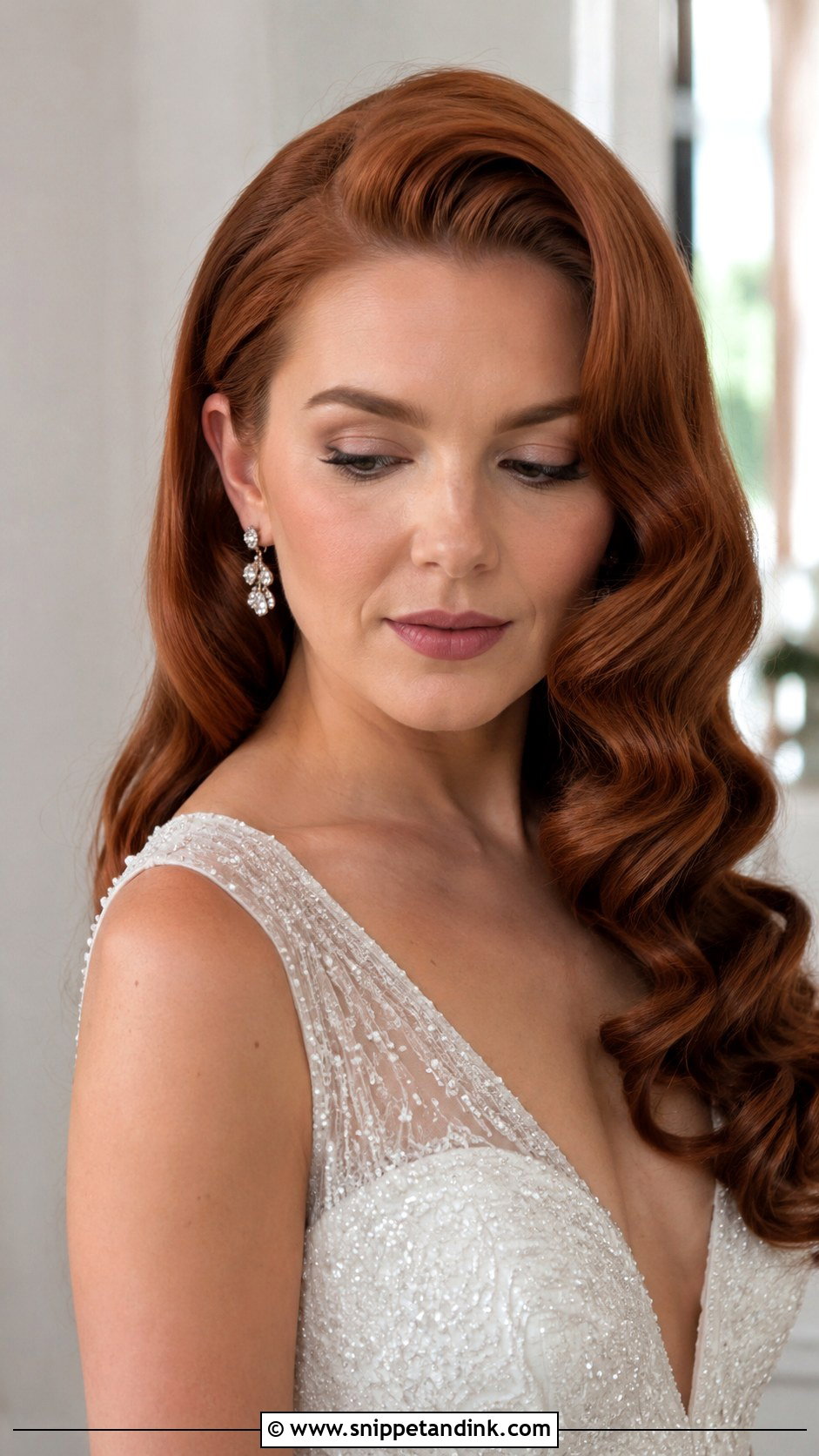
Old Hollywood curls are sculpted rather than soft. Each curl is set in the same direction, brushed into one shape and then pressed into finger waves near the face. With a side part, classic makeup and statement jewelry, they suit black-tie and ballroom venues, along with satin or beaded gowns. The modern version keeps shine and some movement. If I spray so heavily that the shape won’t shift, the style turns into a costume, so I use brushing and clips to hold it and spray only lightly at the end.
19. Long Wedding Hair With Twisted Sides
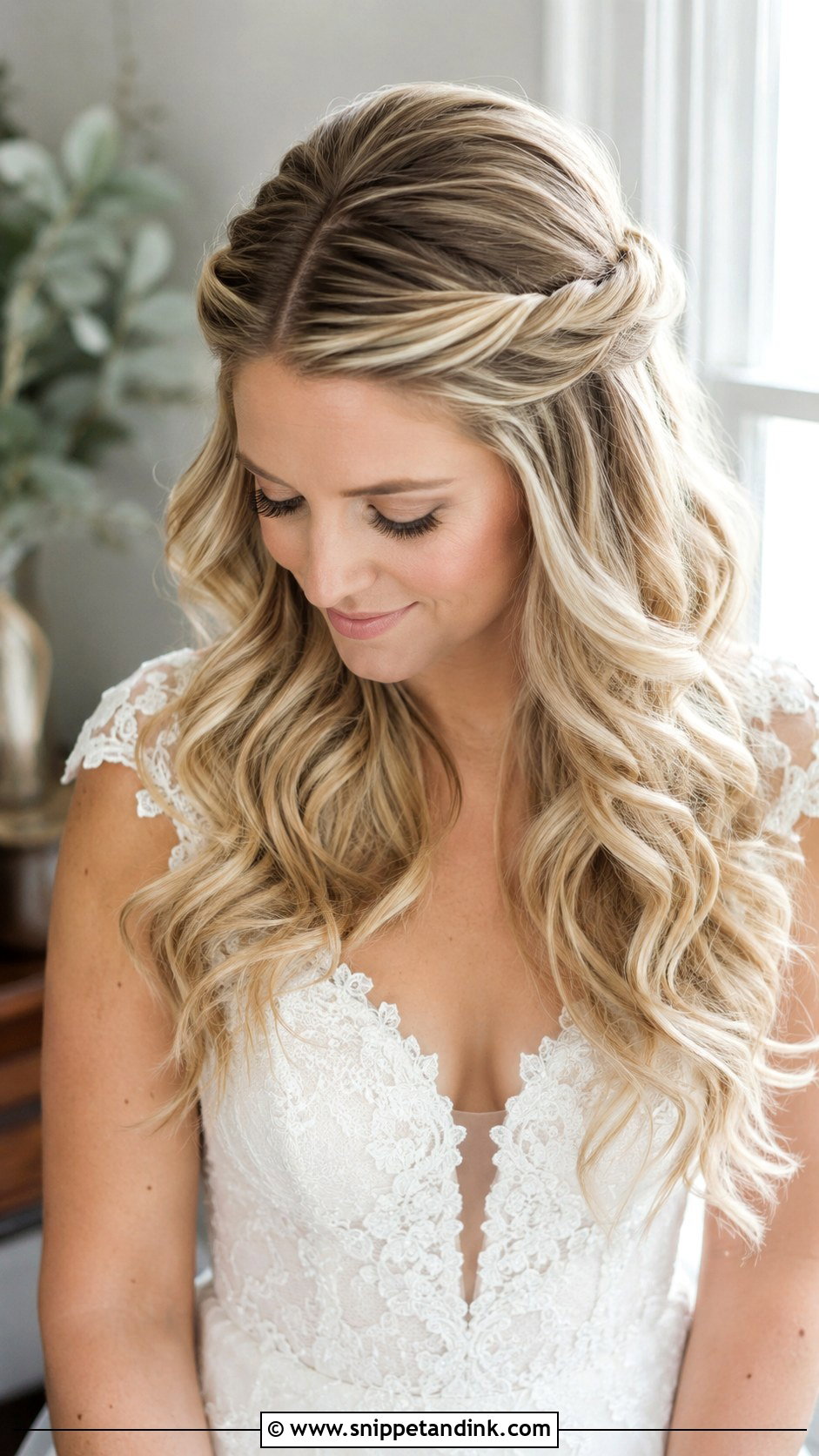
Twisting just the front sections back and pinning them is the most comfortable half-up option, because there’s no tension at the crown. The rest of the length stays down in waves or curls. High twists add lift; lower ones look more relaxed. I pin each twist with two pins crossed in an X, which gives a firm base for a comb or veil. Opening the face like this flatters most face shapes and still keeps the length on show.
20. Long Wedding Hair With Bow
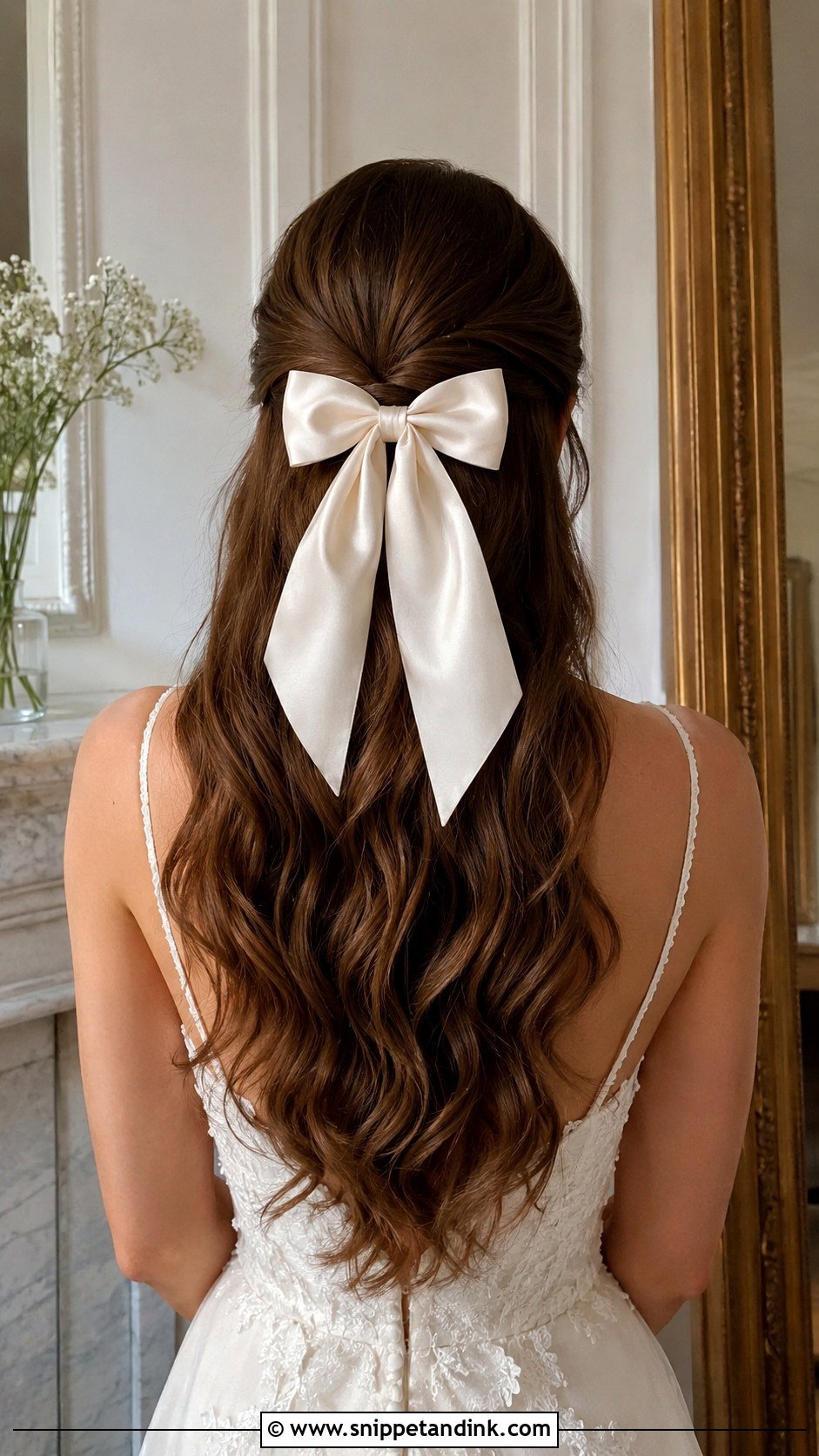
A bow detail is a sweet, modern finish that does not need a complicated base. It can sit at the back of a half-up section, above loose waves or at the end of a twist. Satin and silk bows look polished; sheer organza feels lighter and more playful. Long ribbon tails tangle with loose curls, so I trim them to stop above the curl line or let them sit on top of the hair rather than inside it. The back view is where a bow earns its place, so keep the rest of the style quiet and scale the bow to the dress.
What Loose Hair Goes Through Between the Aisle and the Last Dance
Long hair worn down rubs against everything you wear and everyone you hug. Lace and beading at the shoulders catch strands and create a tangle at the nape. Sitting in a chair presses curls against the back of the seat. Lip gloss and a windy portrait session send pieces straight into your mouth. None of this ruins the style, but it helps to know where the trouble comes from.
I always check the back of the dress during the trial. If the bodice has beading or a lace edge at the shoulders, I’ll suggest a side-swept or half-up shape so the length isn’t constantly scraping across it. For outdoor portraits, I place a few hidden pins at the temples that you can pull out once the photos are done.
A small kit for your maid of honor
- A wide-tooth comb for the nape tangle, never a brush on set curls
- Bobby pins matched to your hair color, plus two or three spare decorative pins
- A travel-size flexible hairspray
- A few clear elastics in case a half-up section loosens
- Blotting papers, so nobody pushes hair off an oily forehead with their fingers
If the curls fall flat by the reception, don’t try to recurl the whole head. Twist the front sections back, pin them, and let the length hang. It reads as a deliberate change for the party and takes about five minutes.
Matching the Finish to Your Hair, Not the Photo
Most of these styles will work on you; the question is which one your hair will hold. Fine, straight hair does best with structure such as a half-up section, a twist or set curls. Thick, heavy hair needs firm anchoring and curls set tighter than you think. Curly hair looks best when we enhance it instead of fighting it. Book a trial, bring the dress neckline in a photo and the real veil and accessories in hand, and ask your stylist to send you home with the style so you can see how it looks after six hours. That afternoon tells you more than any inspiration picture.
You'll Like These Ideas:




Leave a Reply