
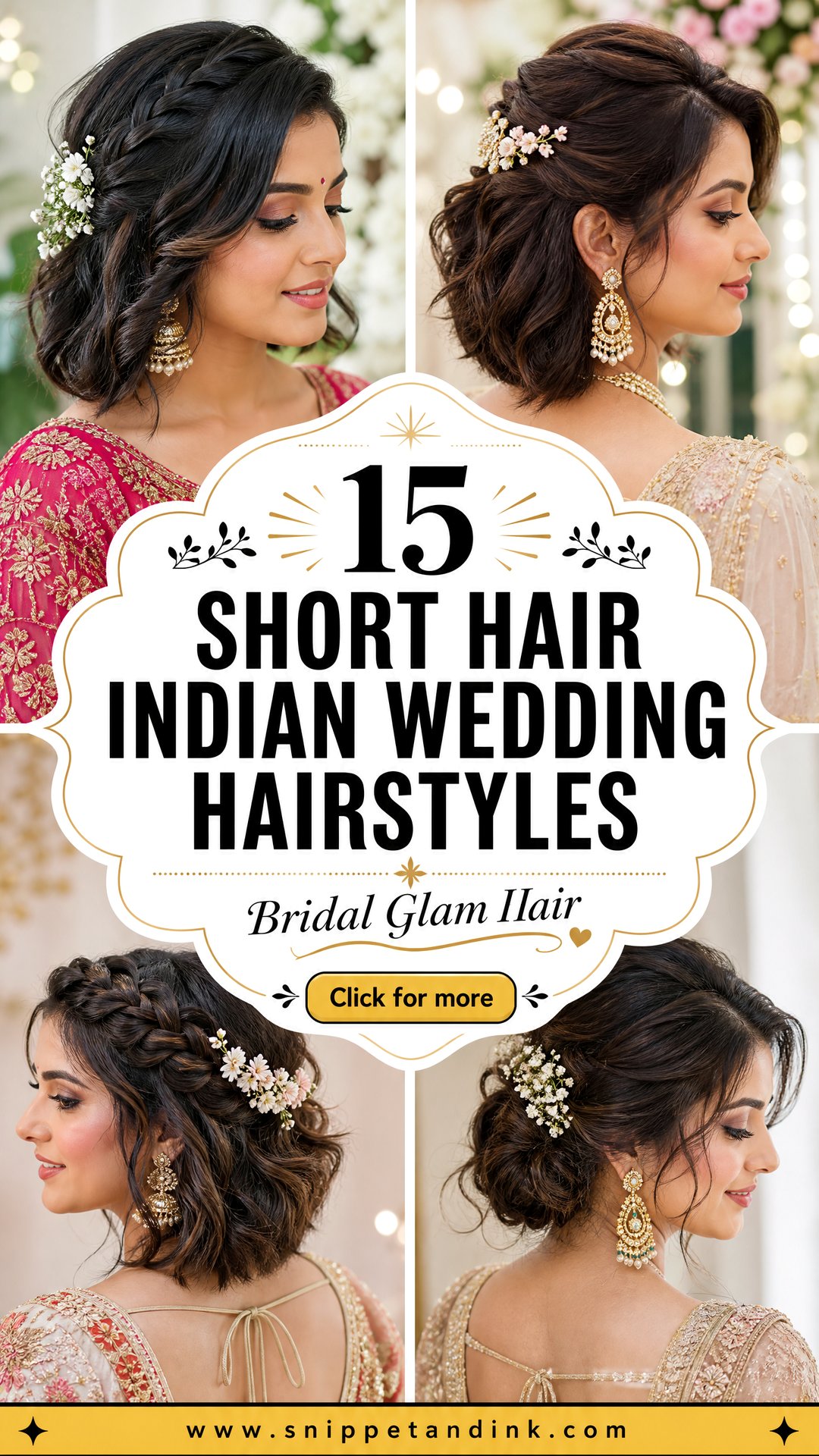
An Indian wedding asks a lot of short hair. There may be four or five functions, each with a different outfit, a dupatta that gets pinned and re-pinned, and jewellery that needs a firm base. None of that requires waist length hair. It does require choosing each style for what it has to hold. A playful curled bob suits a mehndi, while the pheras usually need something neater and pinned. These short hair Indian wedding hairstyles are for bobs, lobs, pixies and shoulder grazing cuts, and I’ve noted which ones suit the bride and which work better for sisters, bridesmaids and guests.
Mapping Styles Across Haldi, Mehndi, Sangeet and Pheras
Short hair has an advantage over a long mane during a multi day wedding: it washes and dries fast. I use that. Rather than one style held together with more spray each day, I plan a fresh style per function and decide in advance which days need a wash.
- Haldi: a braid or a pinned back style that keeps hair away from the paste. Turmeric stains light and highlighted hair, so I keep it tucked and wash it out the same day.
- Mehndi: curls or waves, since you’ll be sitting for hours with your hands out of action. Nothing that needs fixing.
- Sangeet: something that survives dancing. A half up style or a braided bun, pinned with real bobby pins.
- Wedding ceremony: the most secure look, usually a bun or faux bun, because the dupatta goes over the head and the jewellery is heaviest.
Heat is the risk across several days. Curling short hair every morning for four days dries out the ends, so on at least one function I’d go with a heat free style such as a braid or natural curls.
1. Short Hair Indian Wedding Low Bun
If I had to pick one style for a short haired bride at the ceremony, it would be this low bun. Chin to shoulder length hair can be sectioned, looped and pinned into a neat shape at the nape, and it sits comfortably under a dupatta draped over the head. Prep with texture spray so the pins grip. A centre part takes a maang tikka; a soft side part reads as a lighter guest look. Sleek suits a saree, slightly textured suits a lehenga. Jasmine, pearl pins or a slim hair chain finish it.
2. Short Hair Indian Wedding Wavy Bob
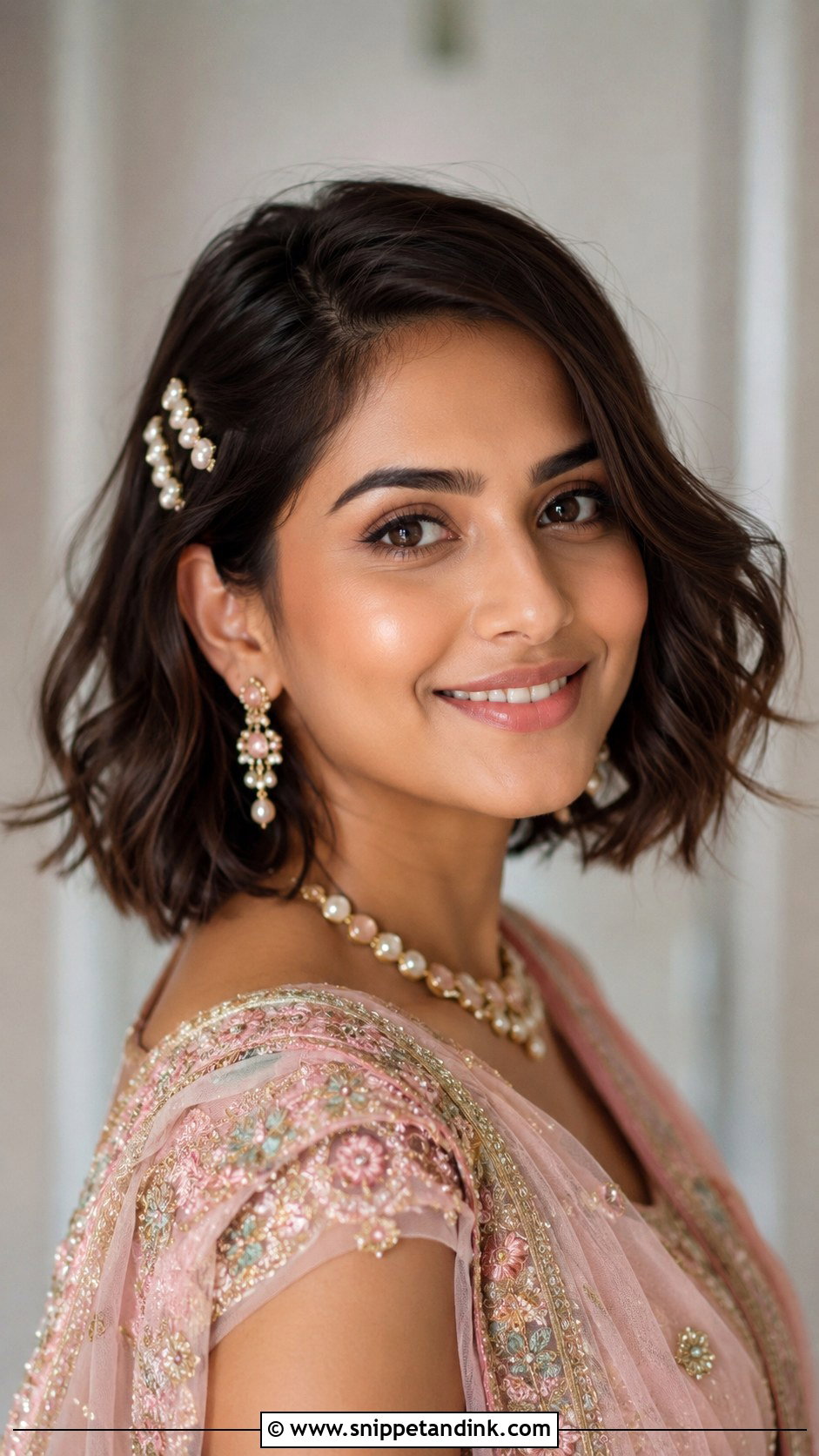
Waves keep the haircut visible, which is why sisters of the bride and modern brides often choose them for the sangeet or reception. I set them with a 1 inch iron, let them cool fully, then brush through for a polished bend rather than a loose beachy texture; messy waves look unfinished next to an embroidered outfit. A side part adds volume, a centre part takes a tikka. Pearl clips or kundan pins near one ear add the festive note. Expect them to relax over a long function, so set them a touch tighter than the final look.
3. Short Hair Indian Wedding Sleek Bob
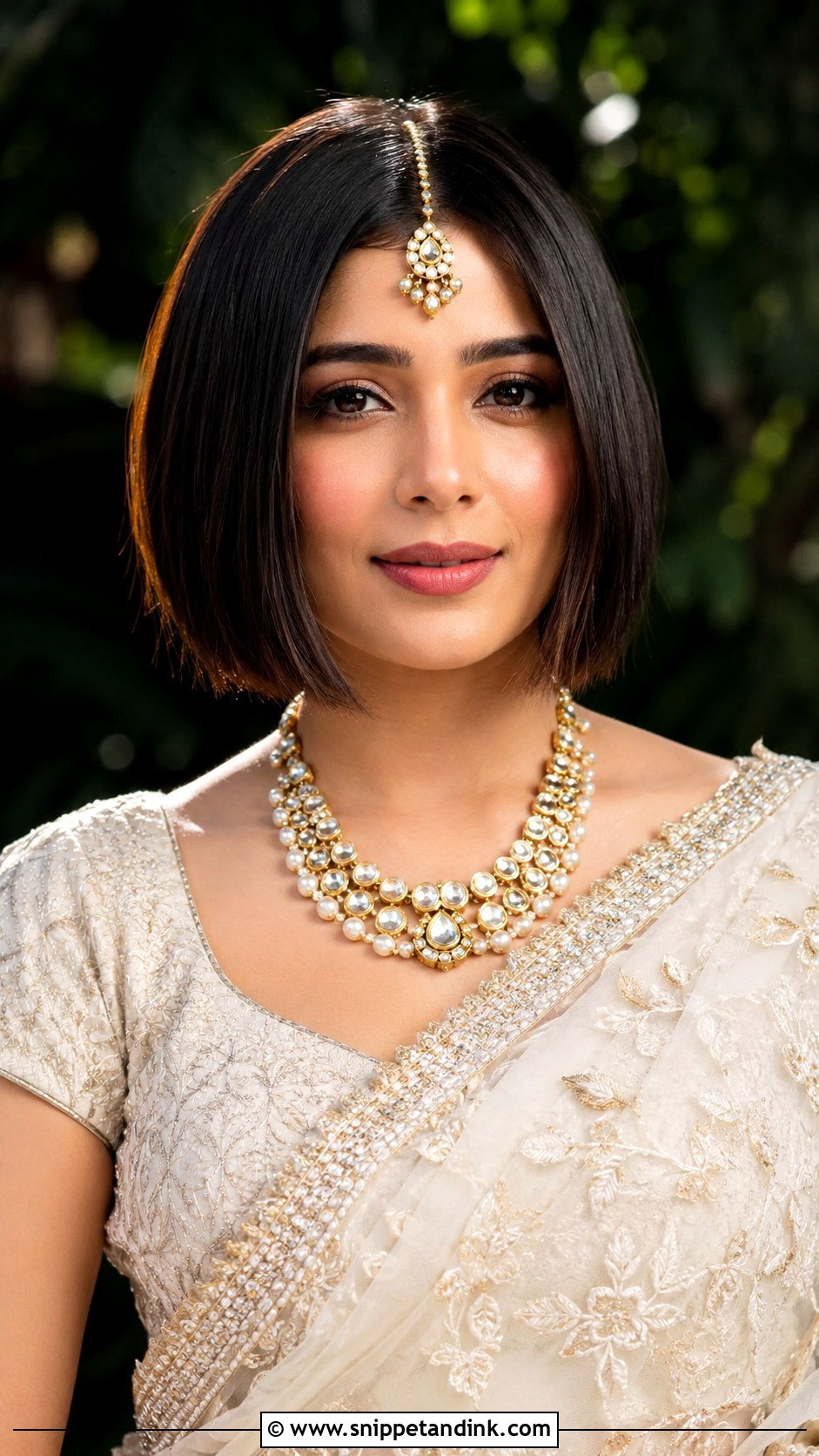
A sleek bob relies on the cut. Blunt and angled bobs hold a sharp shape; a heavily layered bob will look stringy when straightened. I blow dry with a paddle brush, smooth the crown, keep the part crisp and tuck one side behind the ear to show off jhumkas or a choker. It suits a reception or cocktail evening. For a traditional touch, add a maang tikka, matha patti or a single jewelled clip. Hold back on serum; too much makes the ends separate under warm lights.
4. Short Hair Indian Wedding Side Braid
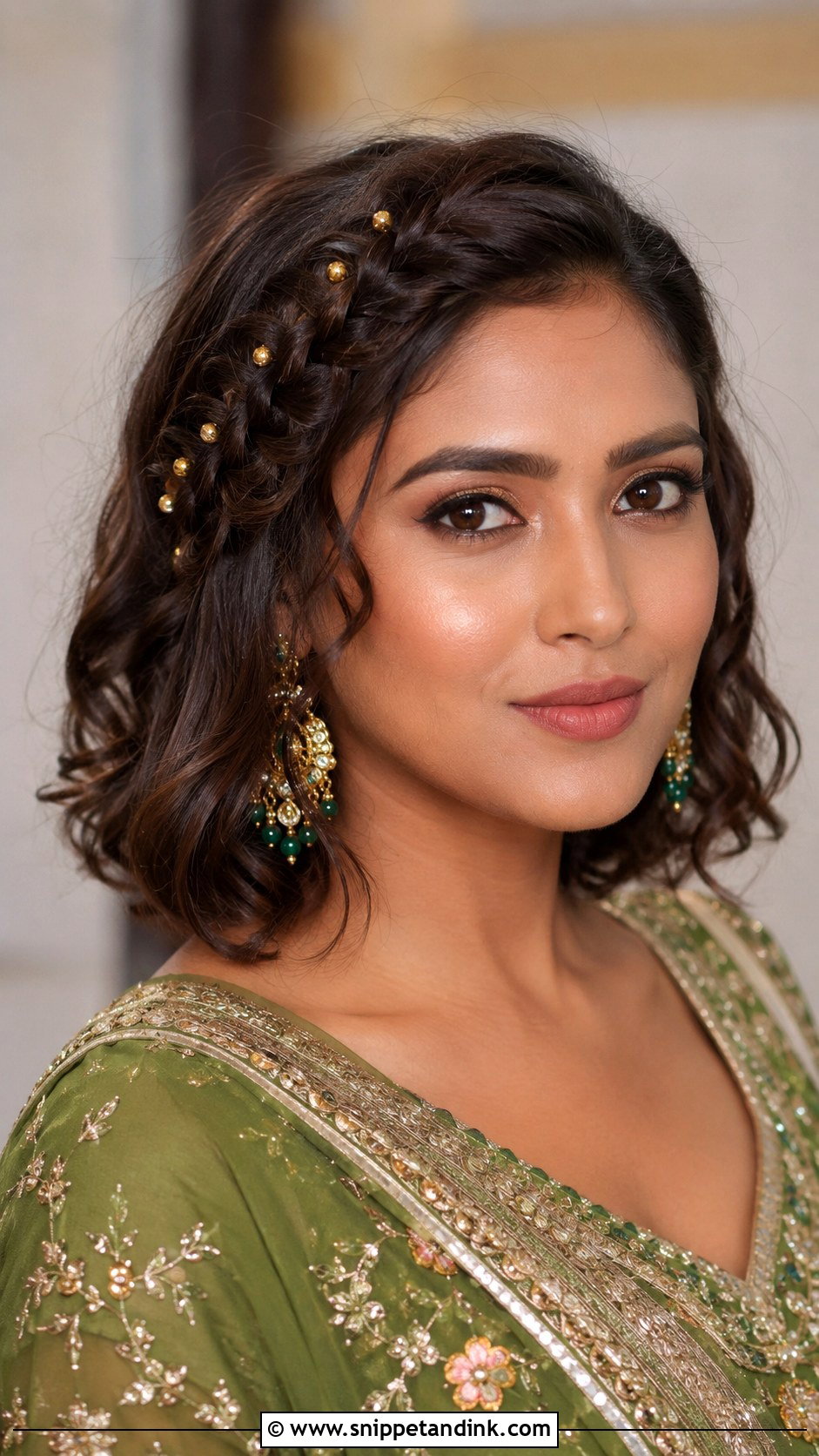
Front layers on a bob have a habit of falling into the eyes during a long ritual. A side braid starting at the hairline solves that. It then blends into waves, a small tucked bun or pinned ends. I use a Dutch braid on short layers because it tucks the ends under. It’s well suited to mehndi, haldi and sangeet, where you’re sitting, laughing and moving for hours. Small flowers or gold pins along the braid add colour. Lehengas, shararas and lighter sarees all work with it.
5. Short Hair Indian Wedding Half Up Hairstyle
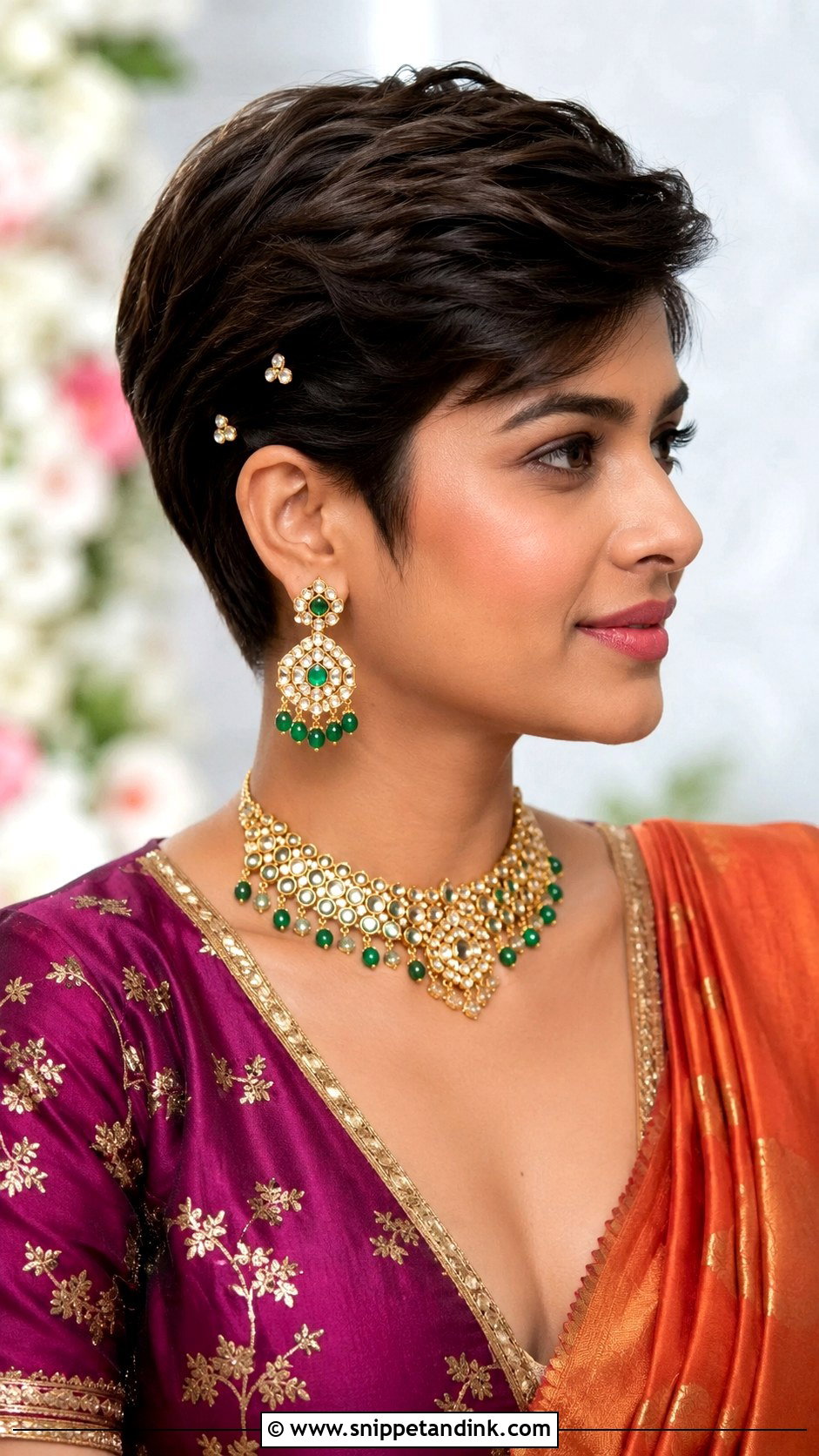
Half up sits between open and fully pinned. The top section is twisted, braided or given a small puff at the crown, and the rest falls in waves or curls. It needs a lob, shoulder length cut or grown out bob; on a chin length bob the top won’t reach far enough back to pin. The pinned crown gives a stable base for a maang tikka. Keep the crown smooth and curl the lengths underneath so it looks finished. Guests and bridesmaids find it comfortable for a long evening.
6. Short Hair Indian Wedding Curly Bob
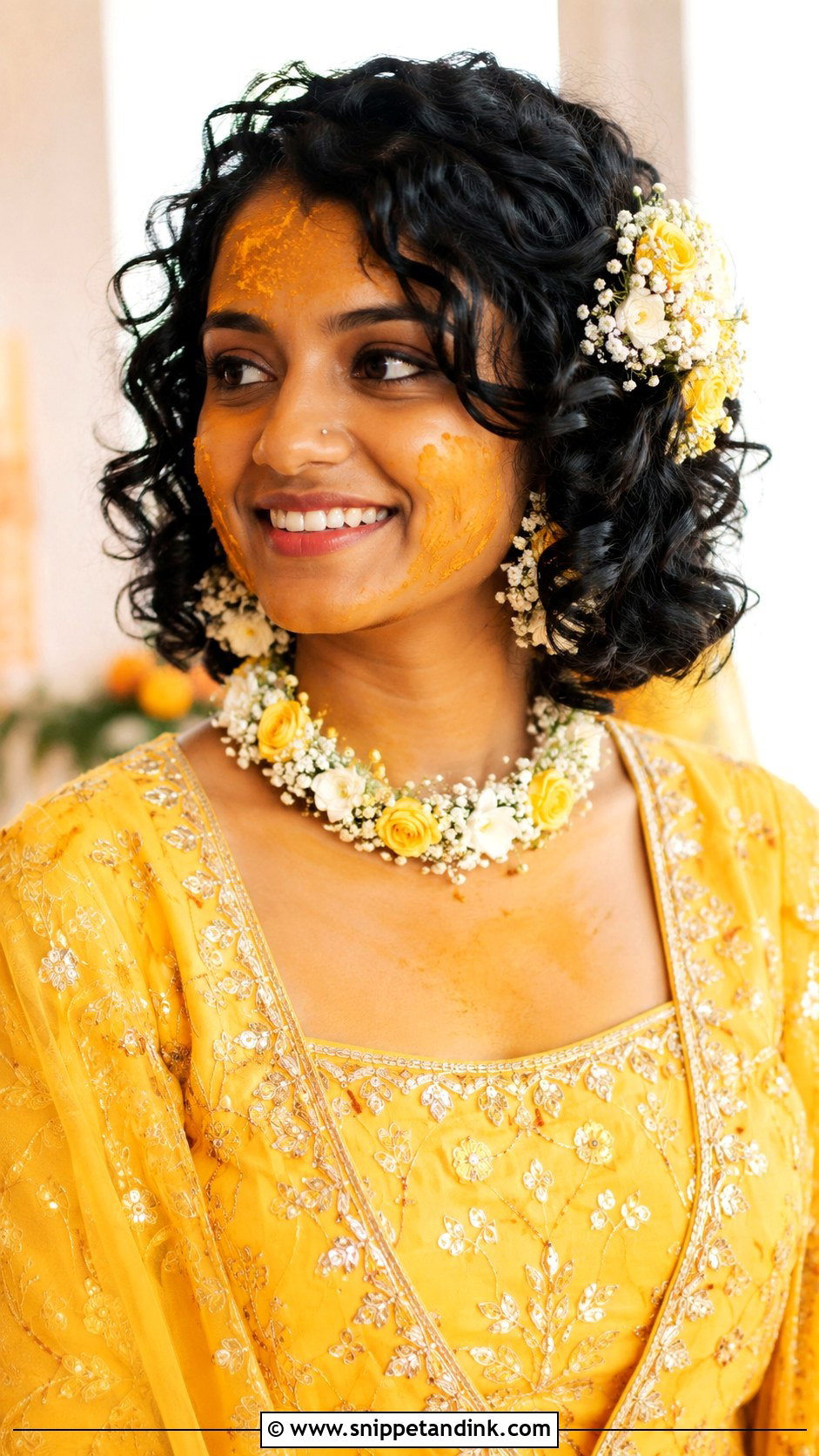
A curly bob can be natural or wand made, and both look lively with Indian clothes. The thing I watch is width. Curls at the sides can push heavy earrings outward and get caught in the dupatta, so I keep volume on top and close at the ears. A jewelled side clip or a delicate tikka dresses it up. Haldi, mehndi and morning ceremonies suit this one best. If the curls are natural, hydrate them well in the days before.
7. Short Hair Indian Wedding Pixie Cut
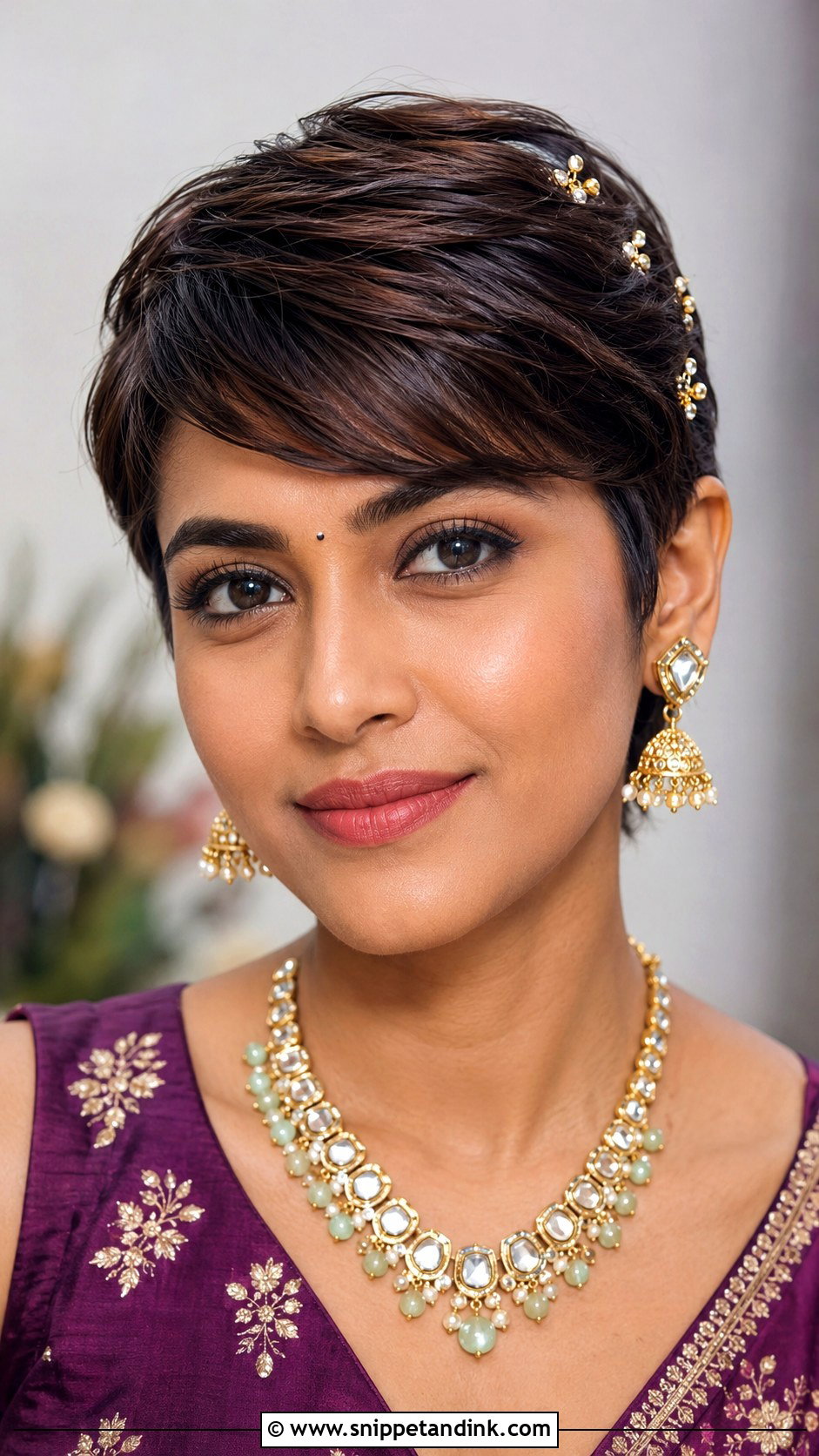
On a pixie, the outfit and jewellery carry the festive feel, so the hair needs only shape and shine. Sweep it to one side, wave the front slightly, or sculpt it close to the head. A slim headband, a kundan clip or a small passa can be pinned at the side if there’s enough length to hold it; test that at the trial. High neck blouses and big earrings look especially good because nothing covers them. In hot weather, it’s by far the most comfortable option on this list.
8. Short Hair Indian Wedding Side Swept Waves
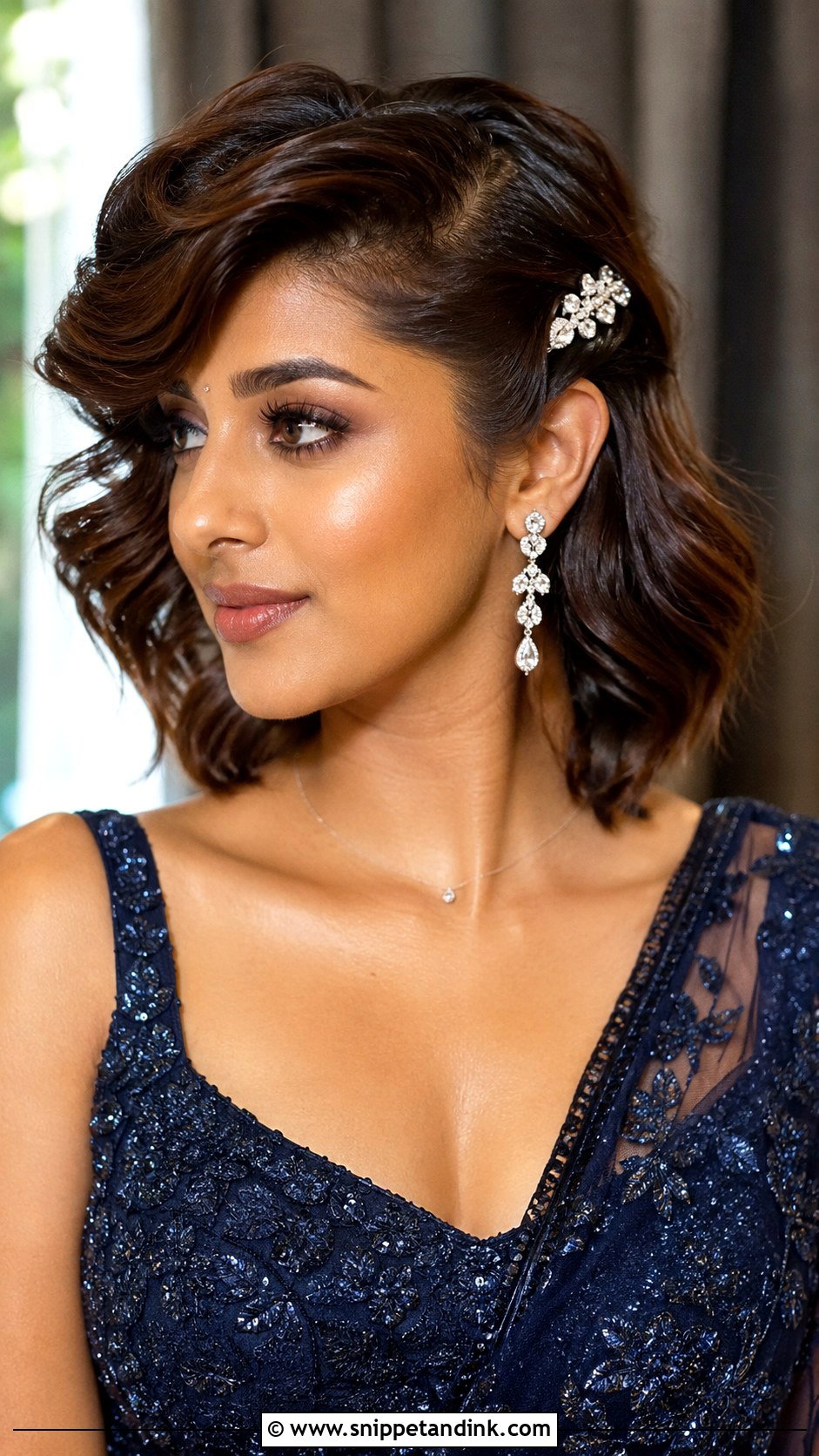
Side swept waves are the reception style I’m asked for most. They need bob or lob length. I part deeply on one side, curl away from the face, and brush everything toward the fuller side. The smaller side is pinned flat behind the ear, and that’s where a jewelled clip or fresh flowers go. Pin it firmly, because short waves swept to one side tend to fall forward when you bend. It frames statement earrings very well.
9. Short Hair Indian Wedding Crown Braid
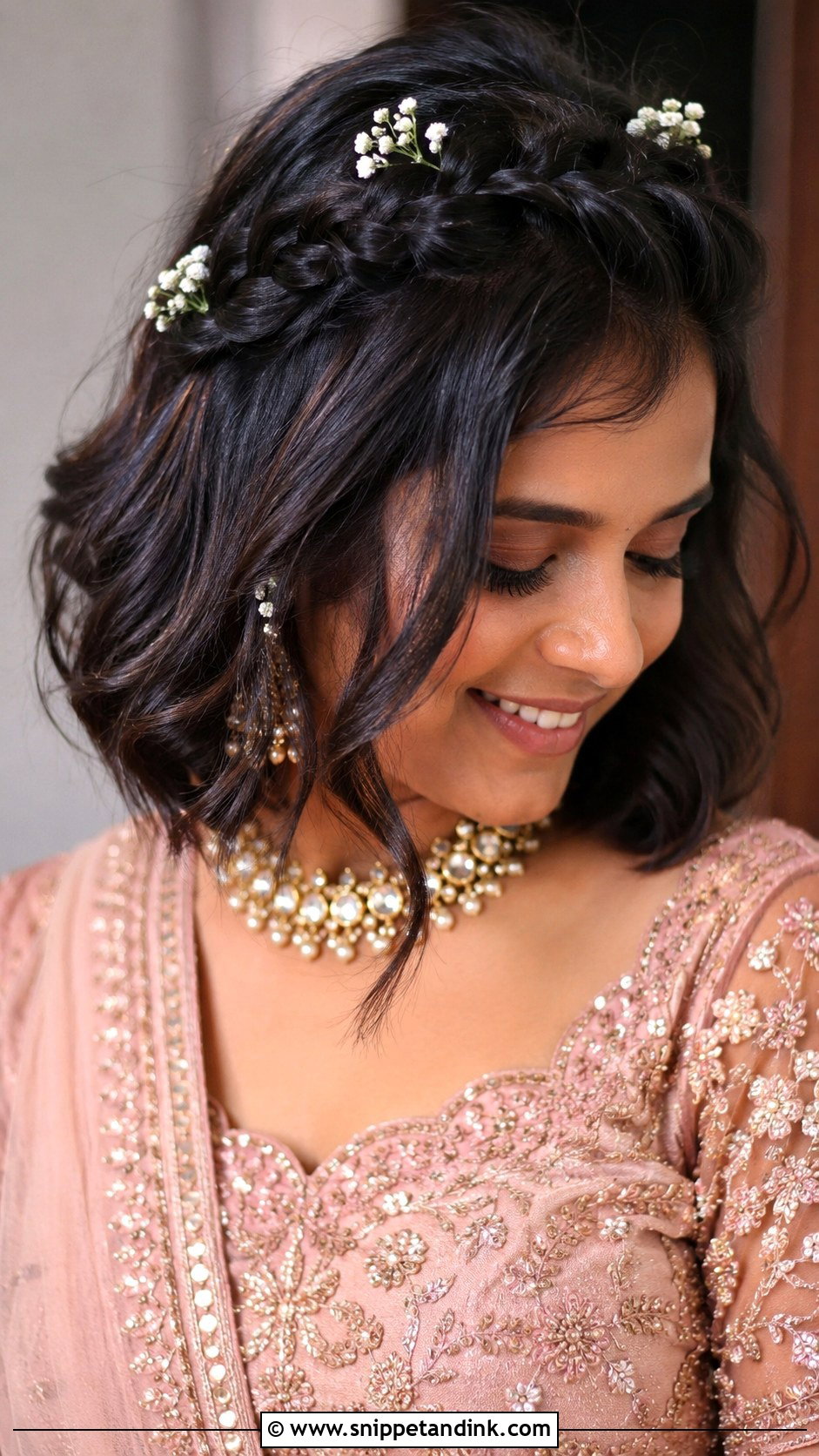
On short hair, a crown braid usually covers the front and sides only, which looks just as traditional. The rest can be curled or pinned into a small bun. It’s the style I’d pick for haldi: it holds through turmeric paste being applied to the face and arms, and it’s easy to rinse afterwards. Baby’s breath, jasmine buds or gold pins along the braid add detail. If your layers are short, braid with a little cream on your fingers to stop ends poking out.
10. Short Hair Indian Wedding Messy Bun
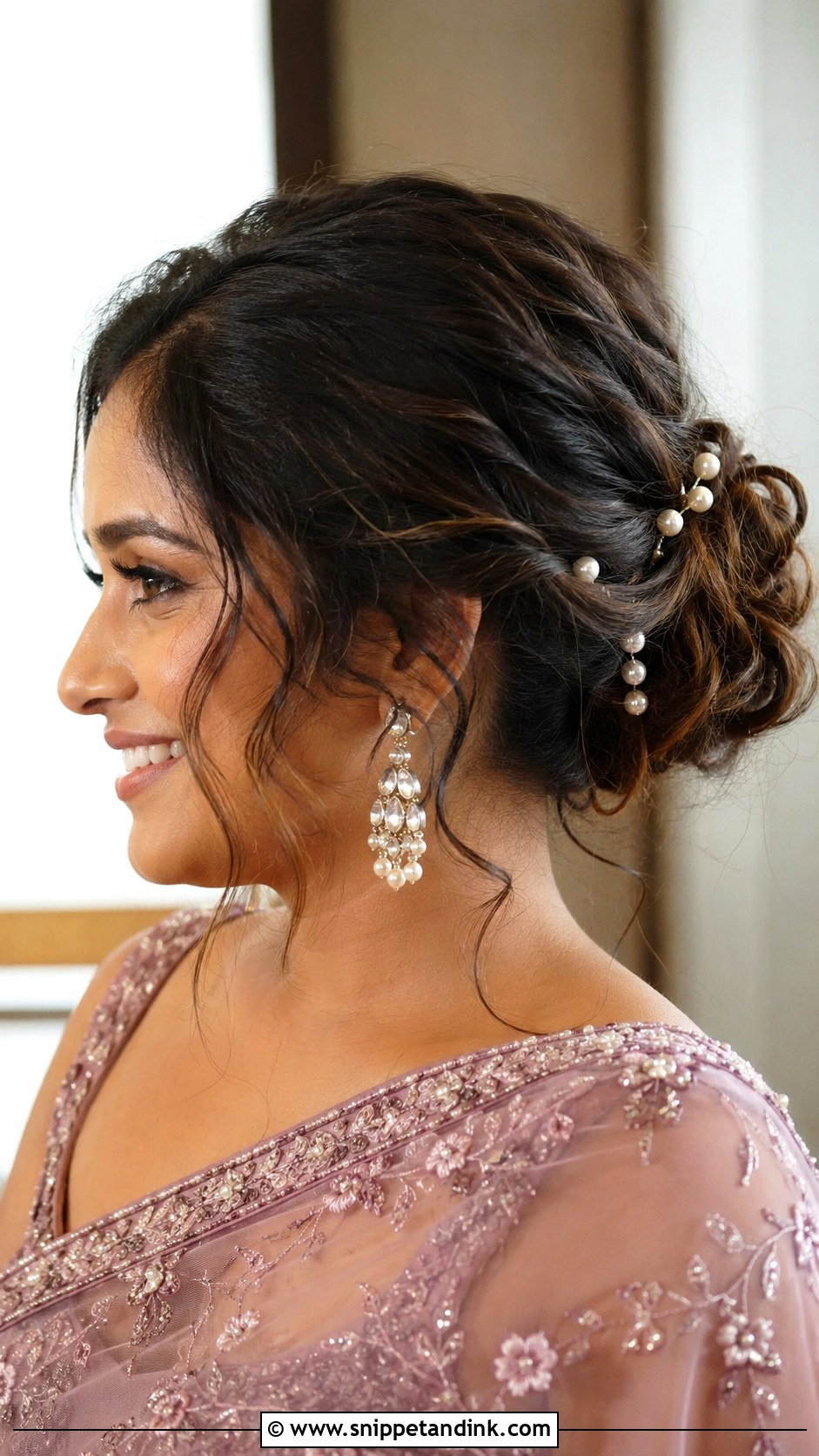
A messy bun on short hair is built, not thrown together. I twist small sections, pin each one into a loop and pull a little texture at the crown, then leave face framing pieces out. Too loose and it looks like it’s falling down. Use proper bobby pins, not the decorative ones, if you’ll be dancing at the sangeet. It suits bridesmaids and guests, and a bride can wear it with flowers or pearls for a smaller function.
11. Short Hair Indian Wedding Maang Tikka Hairstyle
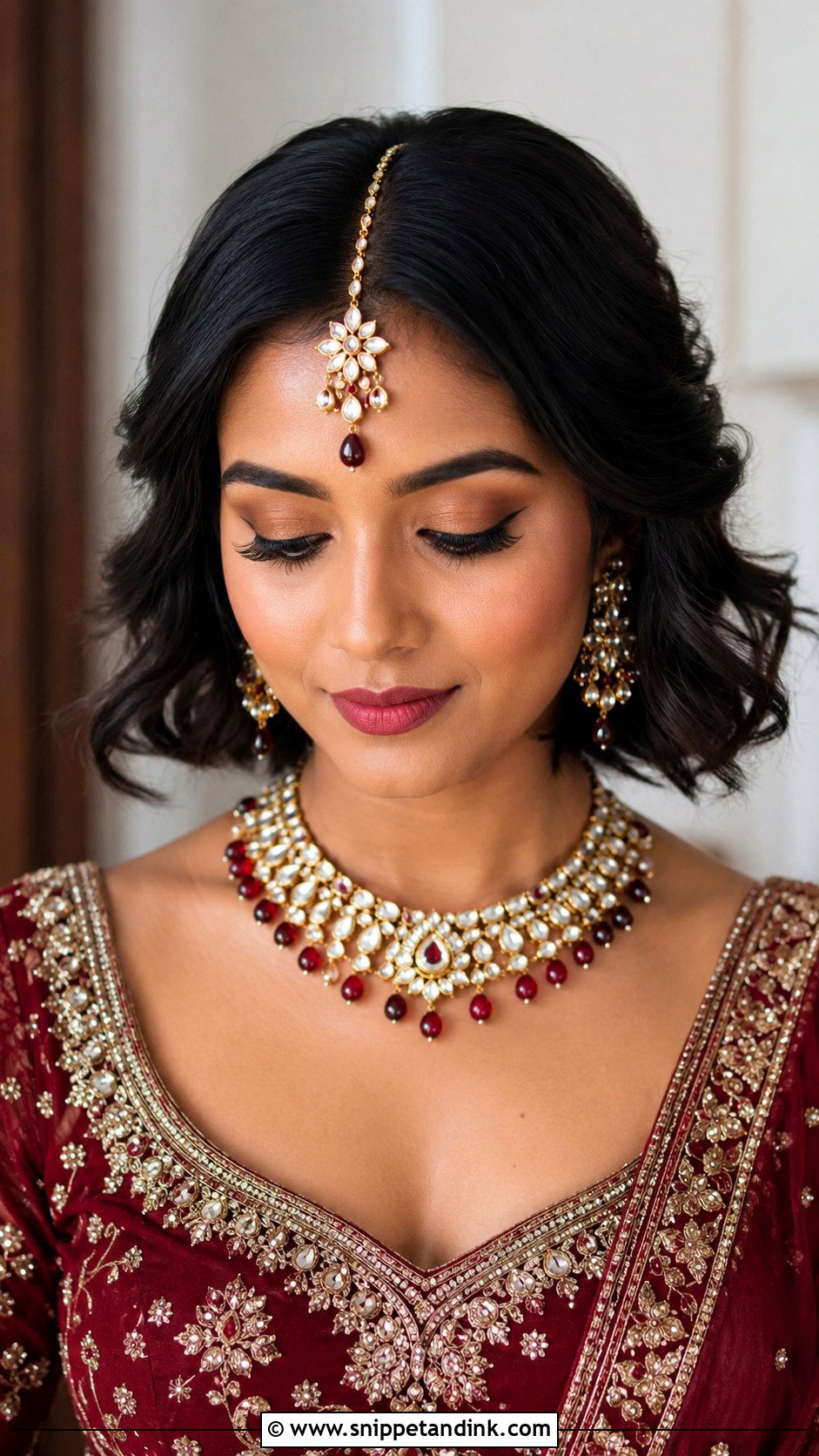
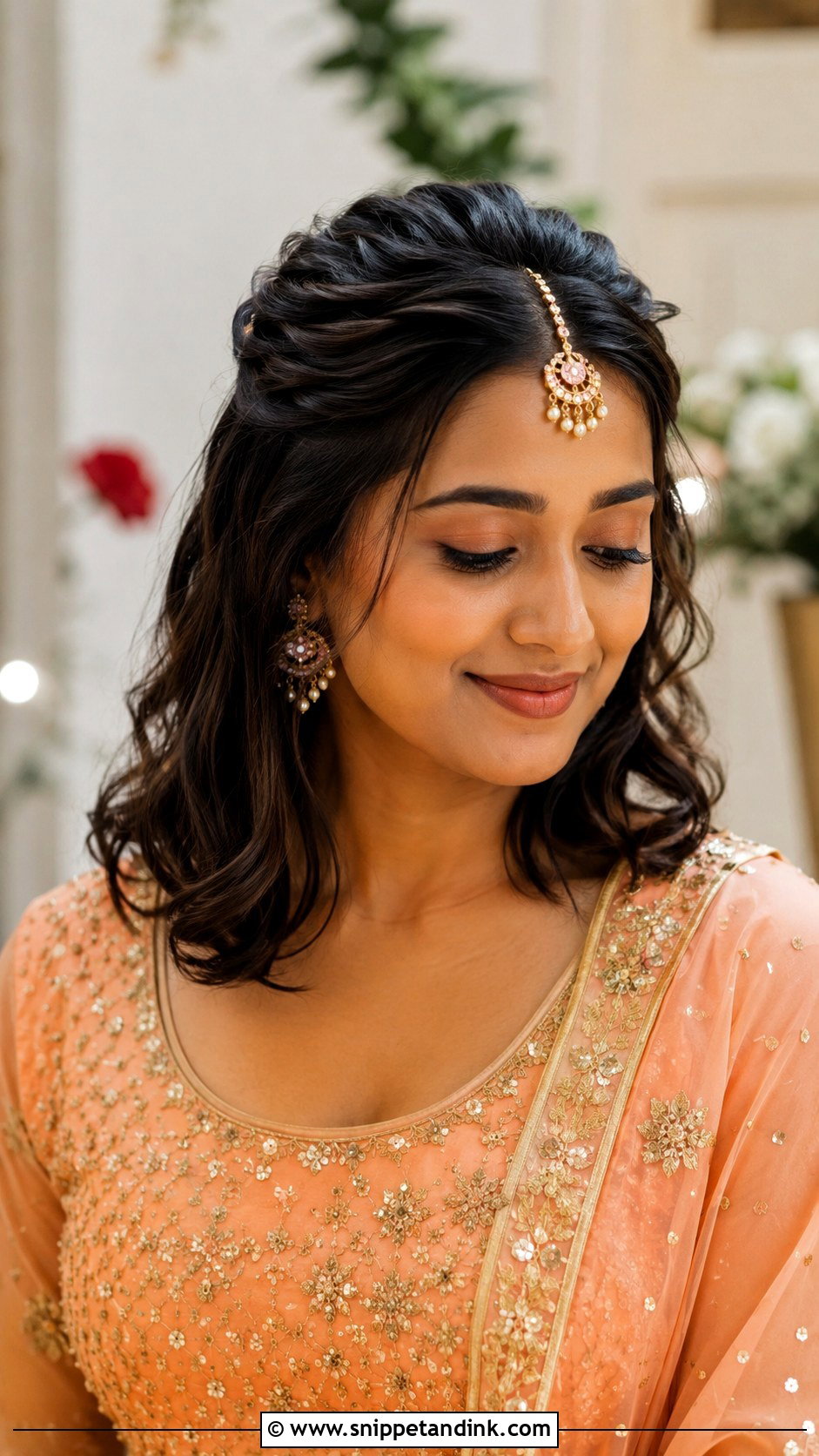
A tikka sits straight on short hair when it’s hooked under a small pinned section just behind the parting, with the top layer brushed over to hide the pins. The best base is usually a center-parted bob, a low bun, or waves with a pinned crown. A clean part matters, so set it before blow drying. On very short hair, I pin the chain at the crown with hidden pins as well. Lehengas, sarees and anarkalis all suit it.
12. Short Hair Indian Wedding Flower Bun
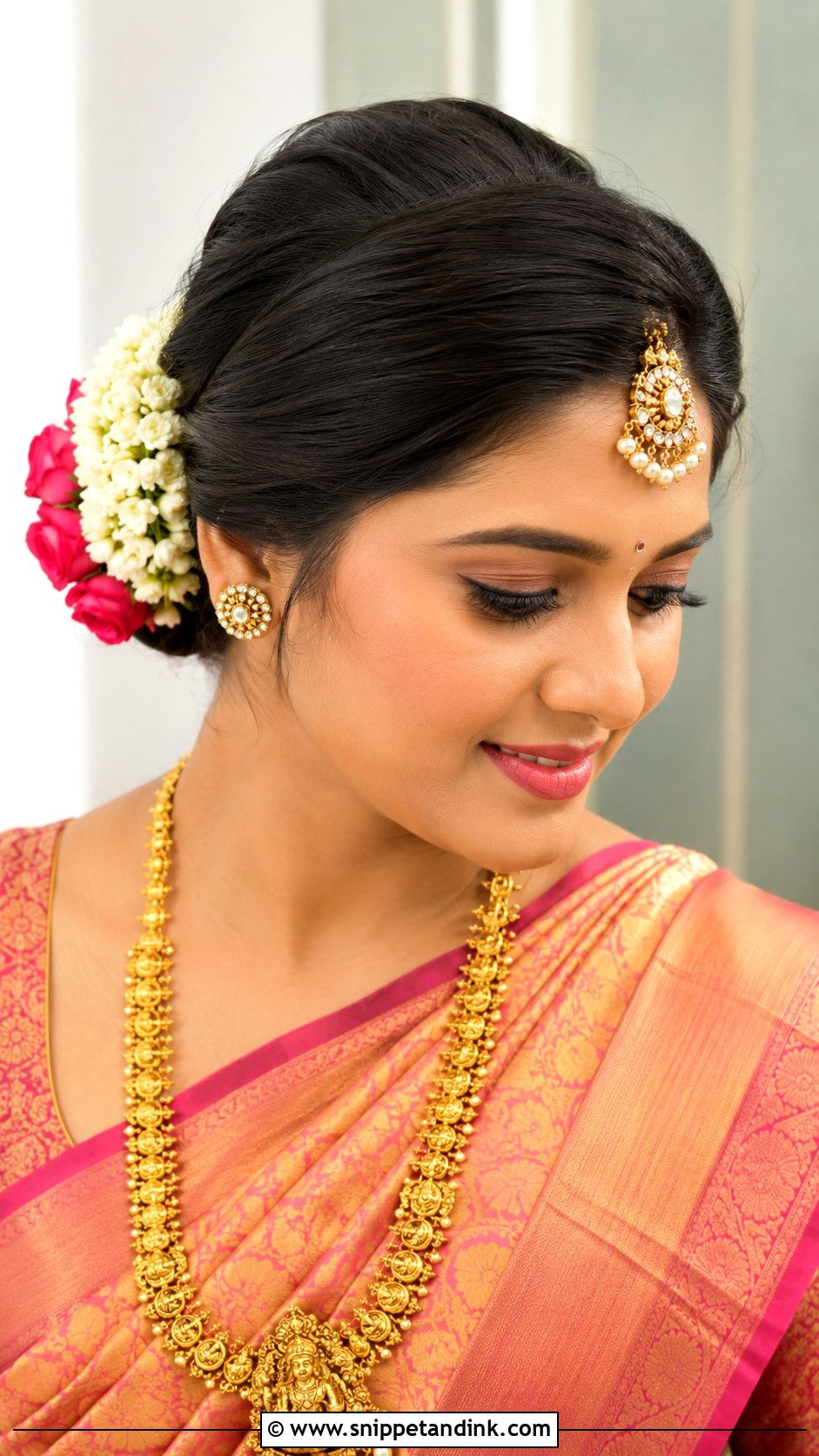
A short haired bride’s bun will be smaller, and that’s where flowers do the work. Jasmine, mogra, roses or small white blooms wrapped around it add width that the hair alone can’t. I ask for a firm base and a little soft volume at the crown so the flowers have something to sit against. Fresh jasmine is heavier than it looks once it’s a full gajra, so pin it at three or four points. It goes well with silk sarees and temple jewellery.
13. Short Hair Indian Wedding Faux Bun
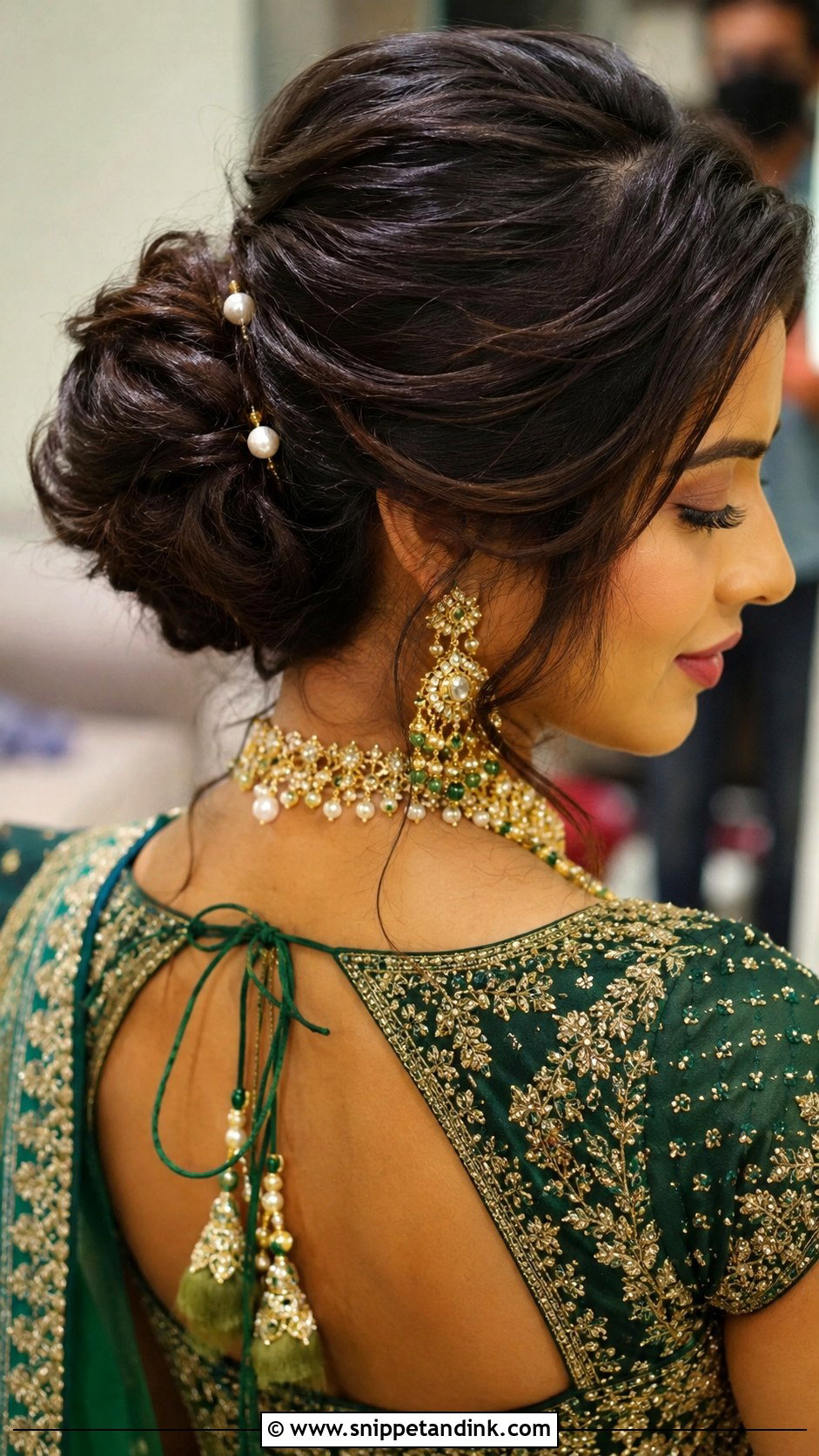
A faux bun is how I give a classic bridal bun shape to hair that’s too short to make one. I gather the natural hair into a tucked base at the nape, pin it firmly, then attach padding or a bun piece over it. The real hair is the anchor; the piece sits on top. Done this way, it supports flowers, a heavy dupatta and jewellery for the pheras. The colour match is what gives it away, so check it in daylight. Keep the front smooth or softly parted.
14. Short Hair Indian Wedding Vintage Waves
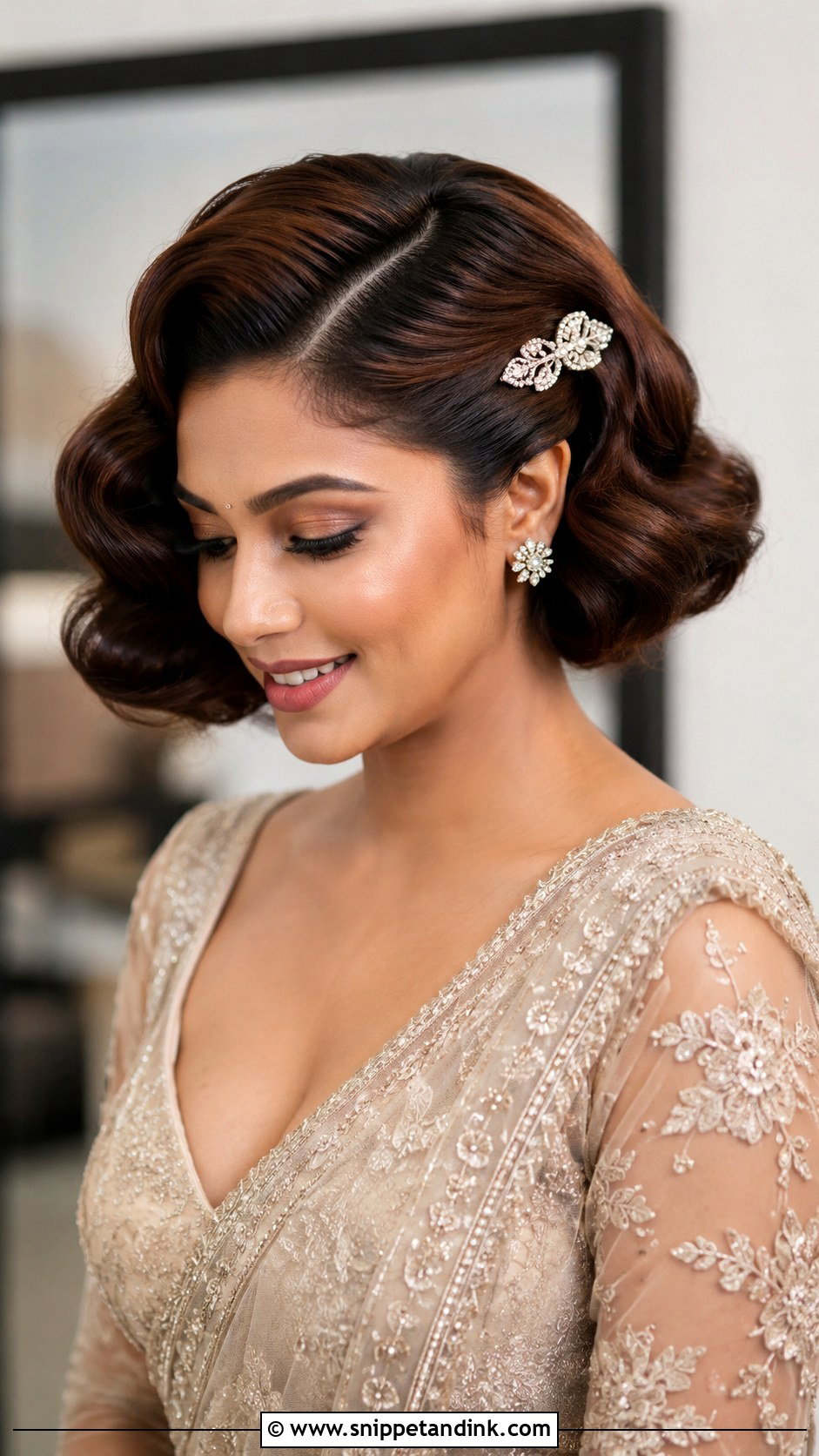
Vintage waves look striking on a bob because the short length keeps each ridge defined. I set them on damp hair with gel and clips, or as pin curls brushed out on dry hair for a softer finish. The crown stays smooth and the waves run through the sides and ends. Pair them with a silk saree, embroidered gown or structured lehenga. A side clip, passa or crystal pin goes on the side without waves so it doesn’t break the pattern. Firm hold and a little shine spray keep them glossy through the evening.

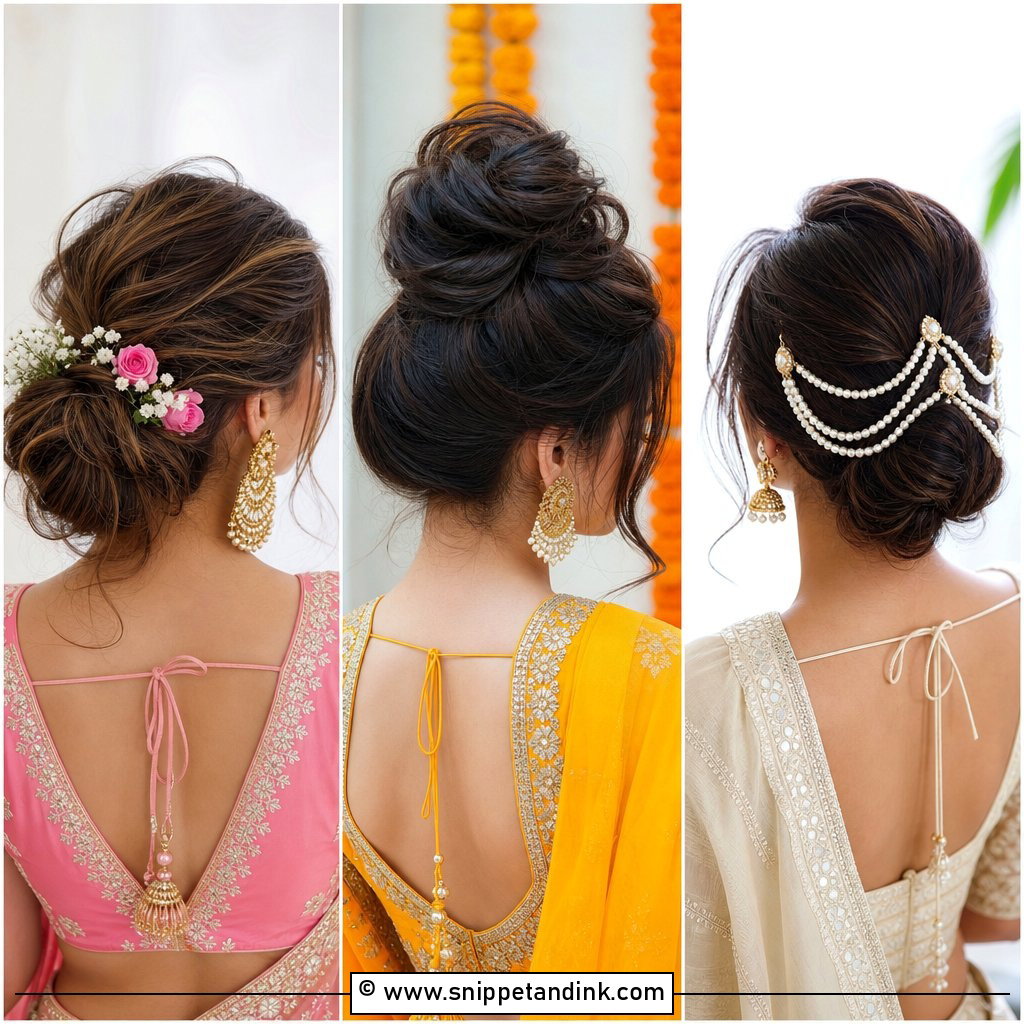
15. Short Hair Indian Wedding Braided Bun
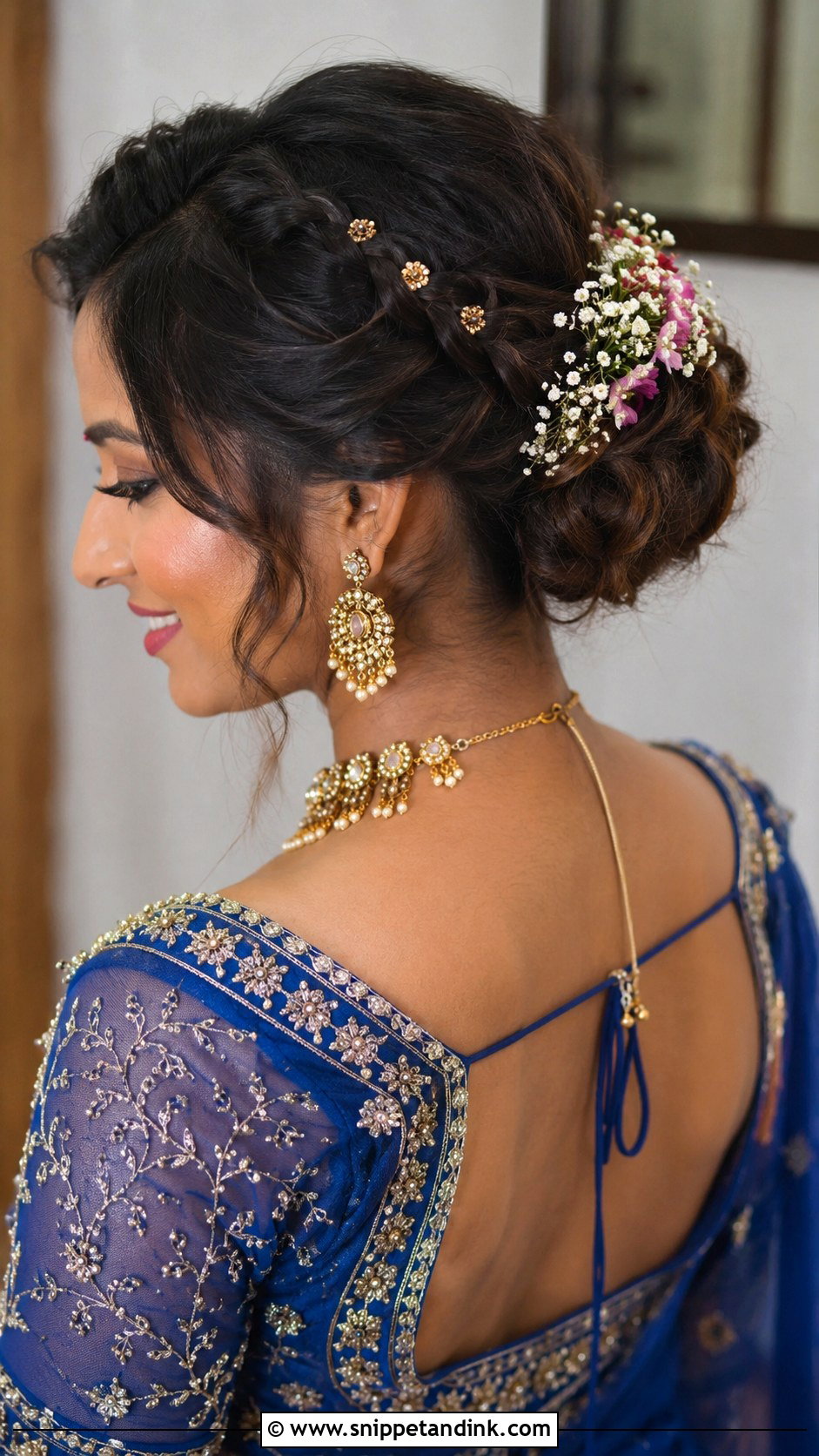
A braided bun gives a short updo visible detail and extra security. The braid can start at the front, crown or side and feed into a small low bun. On layered hair, I often put a little extra hold through the braid because shorter pieces work loose at the bend near the nape. It suits brides, bridesmaids and close family. Pearls or small flowers along the braid catch the light. Under a dupatta it’s one of the most secure styles here.
Blending a Bun Piece Into a Bob So the Join Doesn’t Show
Several styles above, especially the faux bun and the flower bun, look fuller with a hairpiece. Done well, nobody notices it. Done badly, the join shows in every photo of the back of your head, and those photos are common at Indian weddings, since the pheras are mostly photographed from behind and the side.
Colour and material
Match the piece to the hair at your nape, not at your crown; the underneath is usually darker. Check the match in daylight. Human hair pieces can be curled with a hot iron, while many synthetic ones will melt or frizz, so ask before your stylist heats it.
Attaching it
I make a firm pinned base with your own hair first, then pin the piece onto that base, never directly to loose hair. Flowers or a hair chain over the join hide any gap. Buy the piece early enough to wear it once at your trial, so you know whether the weight bothers you after a couple of hours.
One Bob, Five Functions, Each Styled for Its Job
Short hair can be worn open, pinned, braided, curled, sleek or shaped into a bun across an Indian wedding. Match the style to what it has to hold. For the ceremony itself, a low bun, flower bun, faux bun or tikka style gives a firm base. For mehndi, haldi and sangeet, wavy bobs, crown braids, curly bobs and half up looks feel lighter. Secure and comfortable wins every time, because you’ll be wearing it for hours.
You'll Like These Ideas:





Leave a Reply