
Most brides I dress arrive with a picture saved on their phone and leave in a different silhouette, and that’s completely normal. A gown looks one way on a hanger and another once it’s carrying your posture, your stride and several hours of standing. Below are thirty-five looks grouped loosely by shape, fabric, neckline and occasion, each with the styling I’d pair with it and the fitting questions I’d raise before you commit. Read them with your venue and your season in mind, because a dress that suits a ballroom in December can be miserable on a lawn in July.
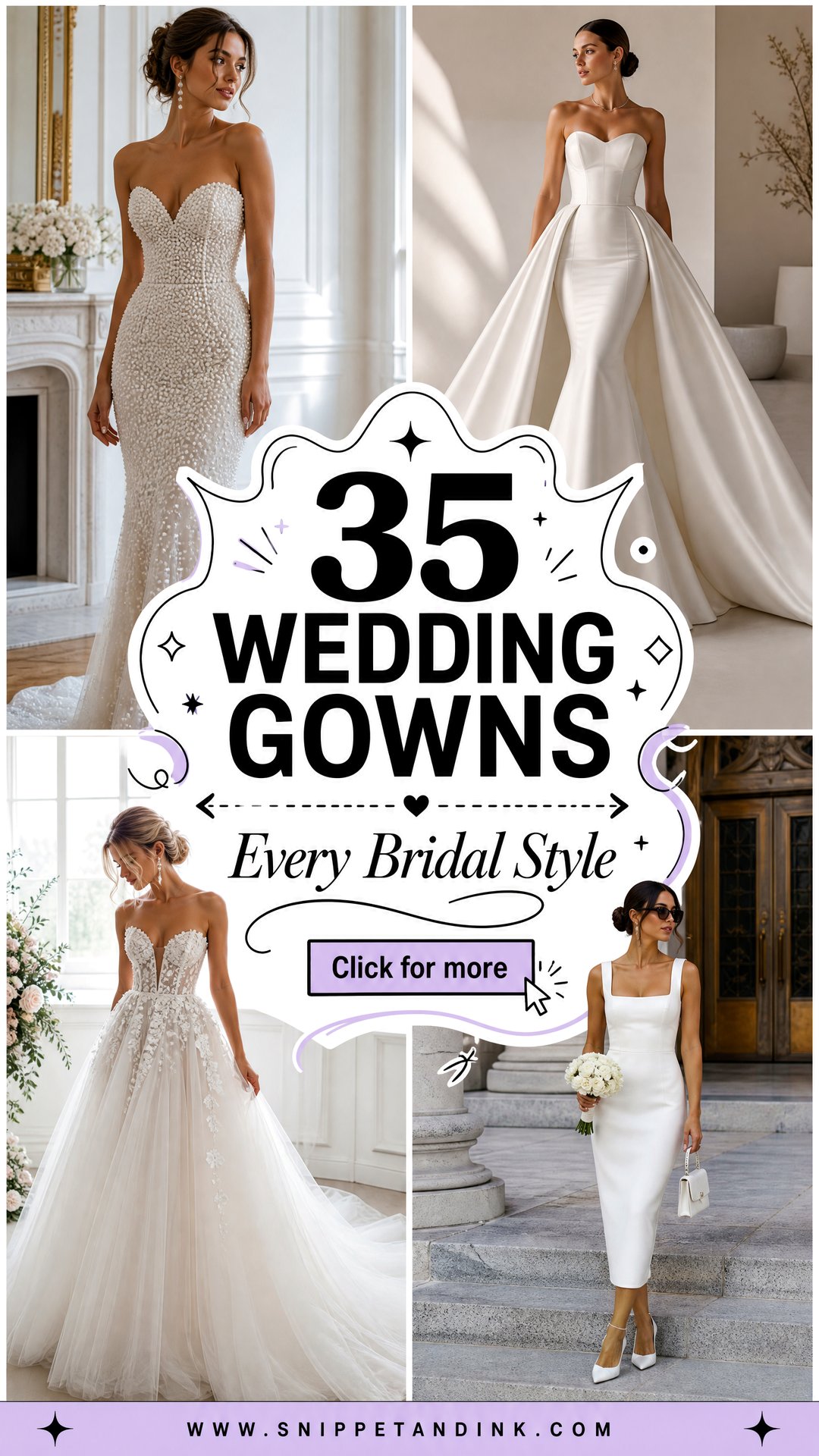
Sit, Reach and Walk in Every Sample
Salon mirrors are kind and the lighting is flattering. The gown, though, will spend most of the day doing things you never do in a fitting room, so I ask brides to test each sample the way the day will test it.
- Sit on a low chair. Notice whether the bodice digs in under the ribs and whether the skirt bunches at the hip.
- Raise both arms as if hugging someone taller. A strapless or off-shoulder bodice that slips here will slip all evening.
- Walk ten steps, turn and walk back. If a slim skirt makes you shuffle, it will need a slit or a different cut.
- Climb a step or two if the salon has them. Long trains and stiff fabrics show their problems on stairs.
- Check the back with a hand mirror. Guests look at your back for the entire ceremony.
Bring shoes close to the heel height you’ll wear, plus the bra or shapewear you plan to use. Samples are usually clipped to fit, so judge the line and how it feels to move in, not the exact size on the label.
Fabric Weight Versus the Thermometer
Weight matters as much as shape. Heavy duchess satin and mikado get warm under a summer sun, while chiffon and light silk can look thin and feel chilly in a December church. If your venue has no air conditioning or you’re outdoors in July, rule out the heaviest fabrics before you fall for one.
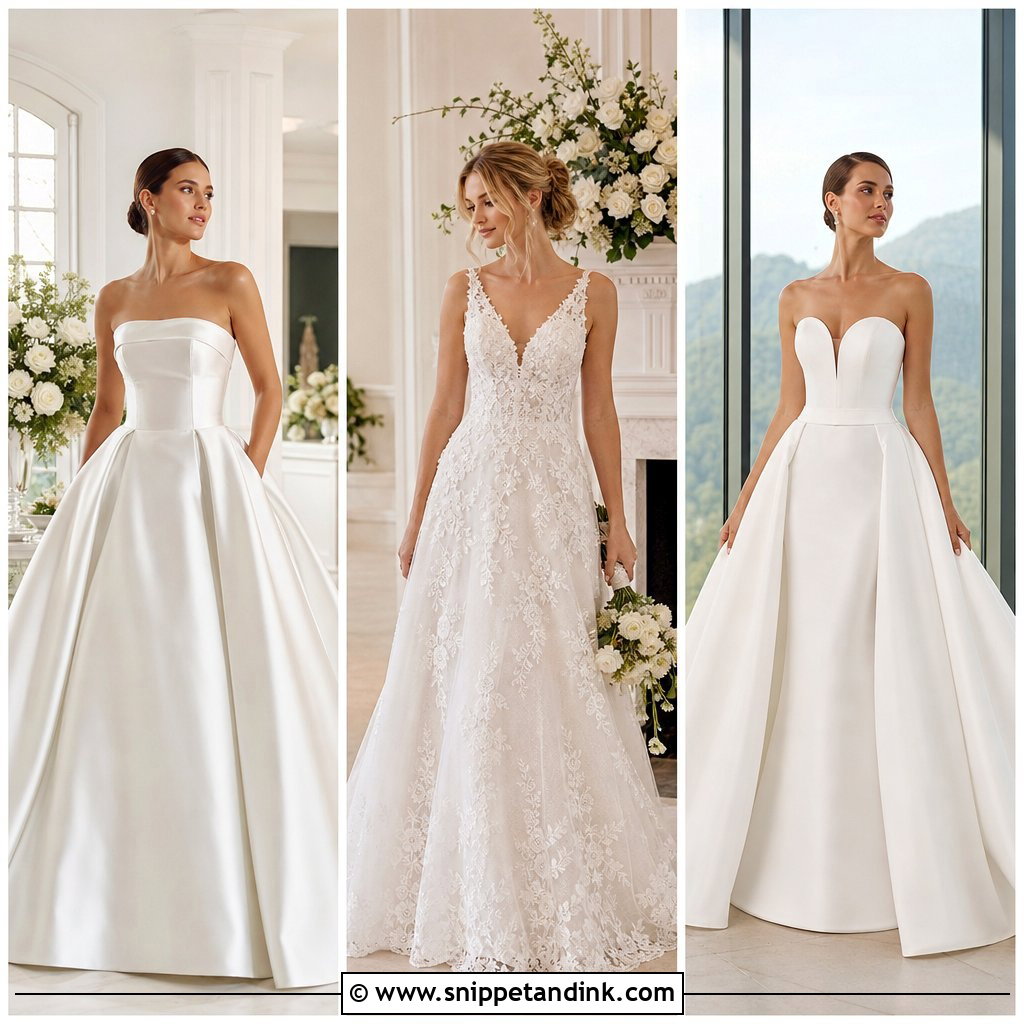
1. Ball Gown Wedding Gown
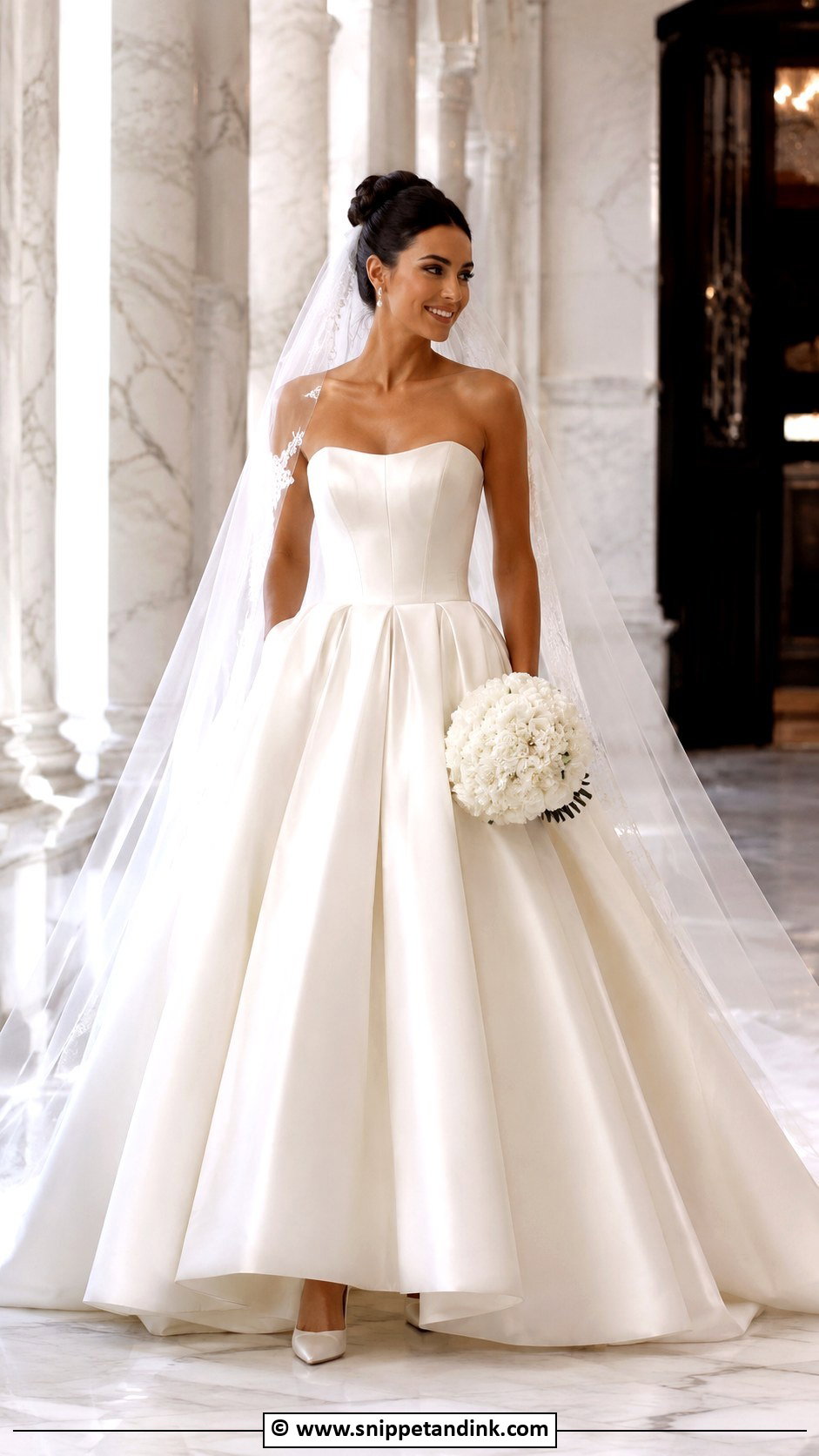
This is the shape I reach for when the room is big enough to need it: a ballroom, an estate staircase, a long church aisle. The fitted bodice carries the whole skirt, so the waist seam has to land exactly at your natural waist or the volume starts to look like it’s wearing you. I’d look at satin, mikado, or organza here, since all three hold a skirt out without a hoop the size of a paddling pool. On a petite frame I’ll often ask for a petticoat layer to come out; taller brides can carry the extra tulle and a chapel train. Finish it with a cathedral veil, pearl drops and pointed satin pumps.
2. A Line Wedding Gown
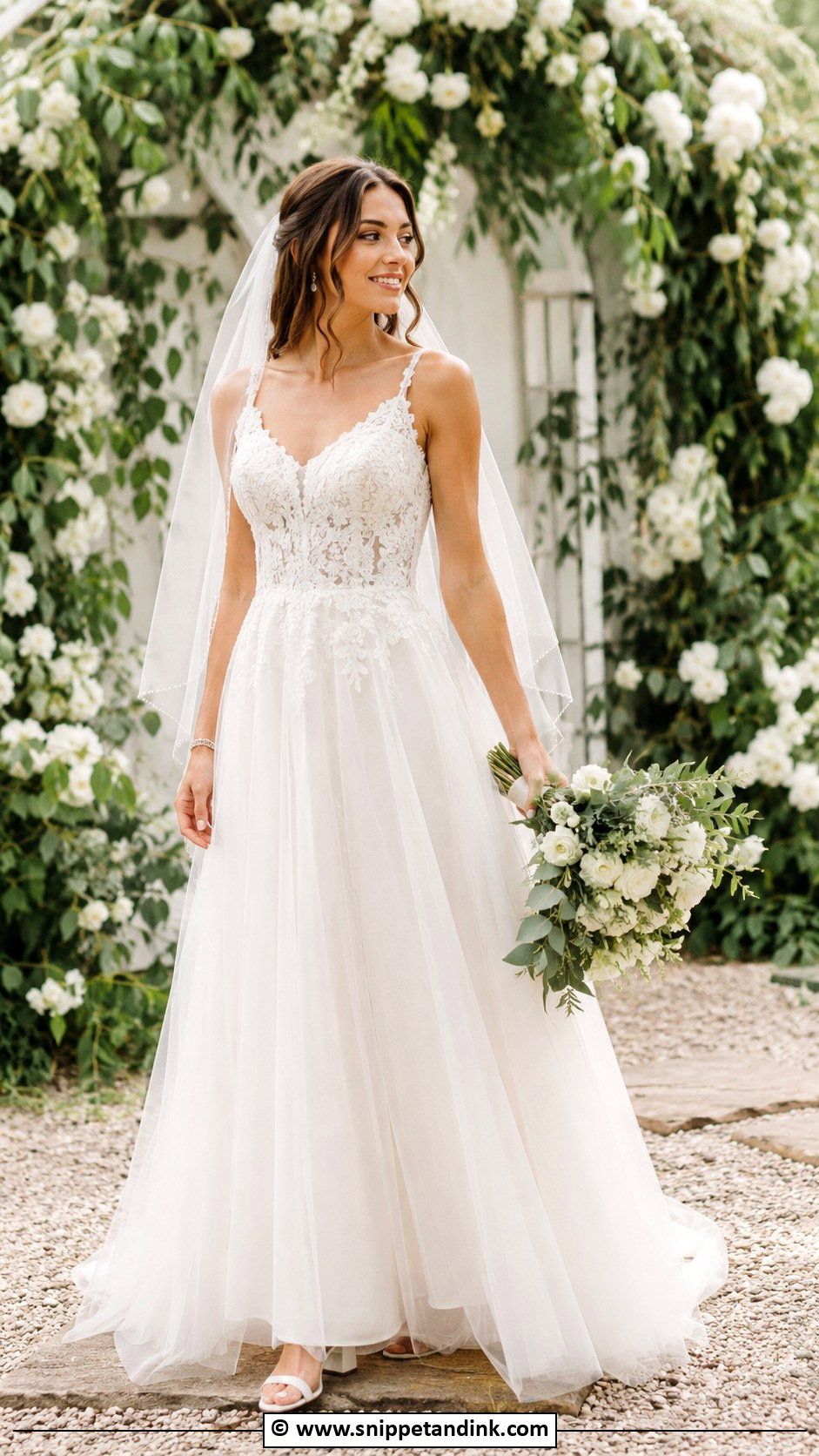
If I had to put one silhouette on a bride sight unseen, it would be this one. It skims rather than grips, so it forgives a full lunch and still lets you climb into a car without help. Lace reads romantic, crepe reads modern, tulle reads soft; pick by venue rather than by trend. The thing I check is where the skirt starts to flare. Too high and you lose your waist, too low and it begins behaving like a fit-and-flare. A low bun, a short veil and block heels keep it grounded.
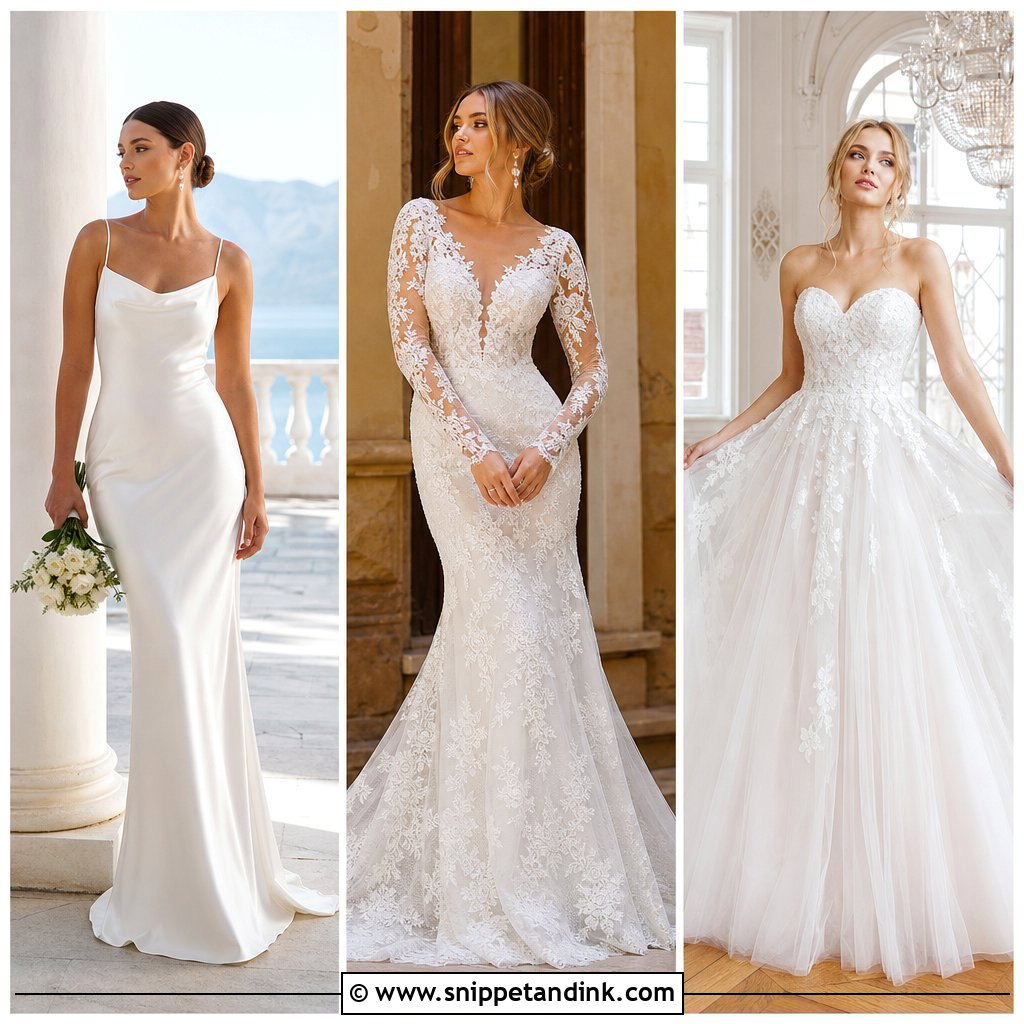
3. Mermaid Wedding Gown
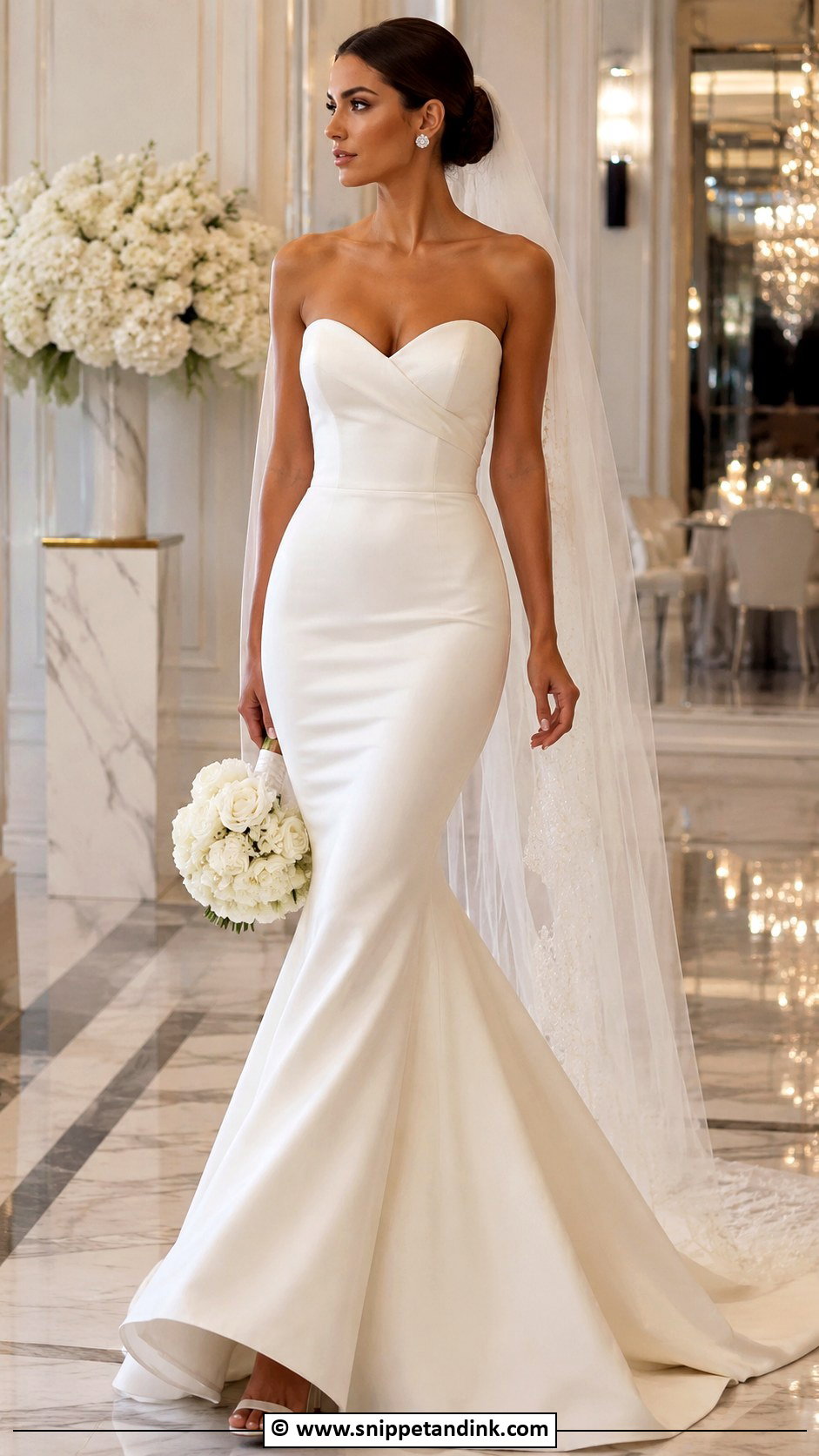
Fitted from bust to knee and flared below, the mermaid gives the strongest hourglass on this list and the least freedom. Before anyone buys one, I ask her to sit on a low chair and climb two stairs in the sample. If the flare starts above the knee you’ll shuffle all night; below it, you may need a slit or a godet to walk. Stretch crepe forgives the most, heavy satin the least. It’s at its best in formal indoor rooms with a long veil and a smooth chignon, and the bustle has to be solid, because a fishtail train gets stepped on within the first hour of dancing.
4. Sheath Wedding Gown
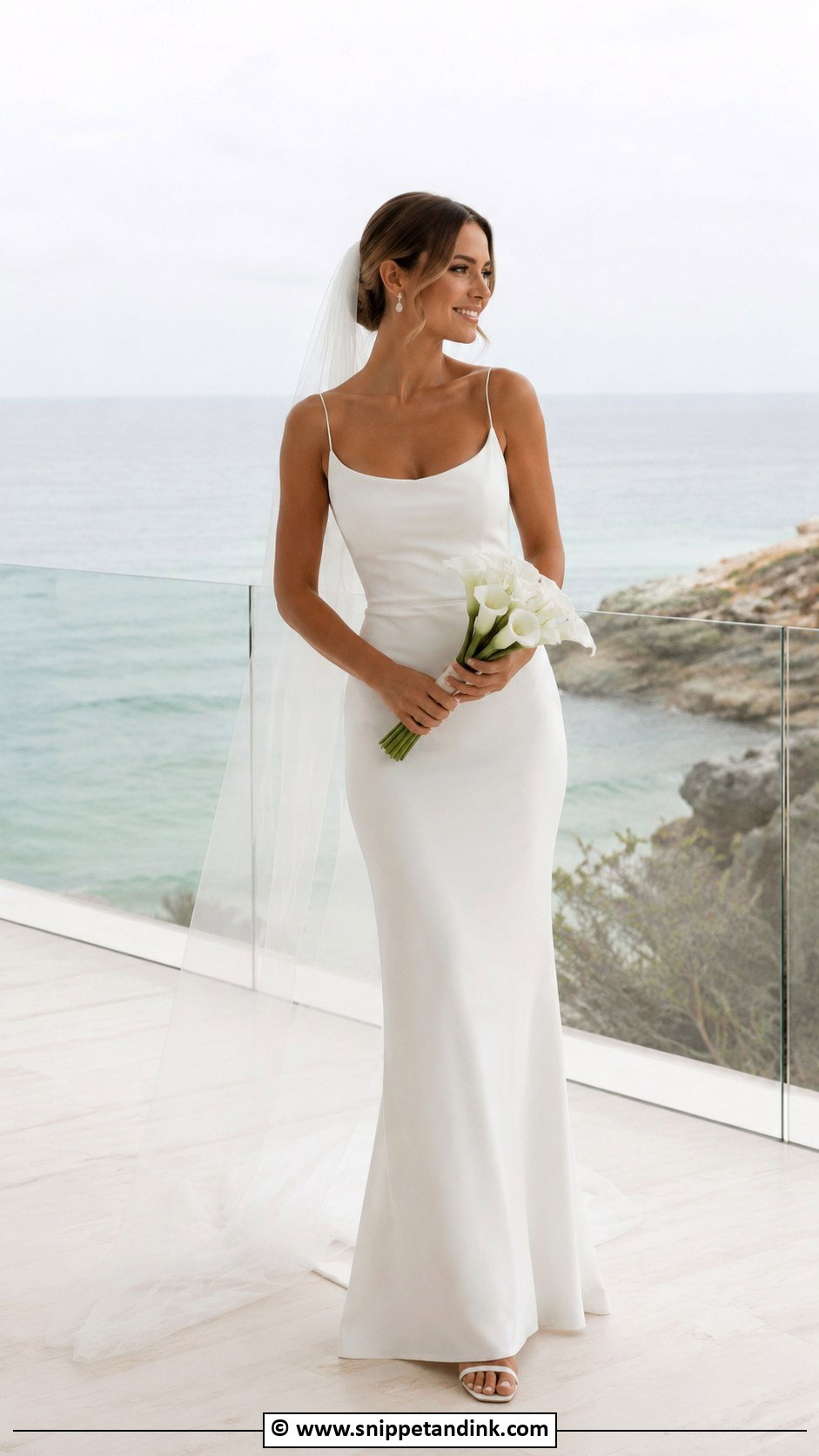
A sheath hides nothing. That’s exactly why minimalist brides love it and why I’m fussy about the fit. With no flare to pull the eye away, every pucker at the hip and every line of your underwear shows. Crepe and heavier silk are the kindest fabrics; thin satin clings where you’d rather it didn’t. Beach and courthouse weddings suit it, finished with barely there heels and a sheer fingertip veil. Budget for a good tailor before you budget for jewelry.
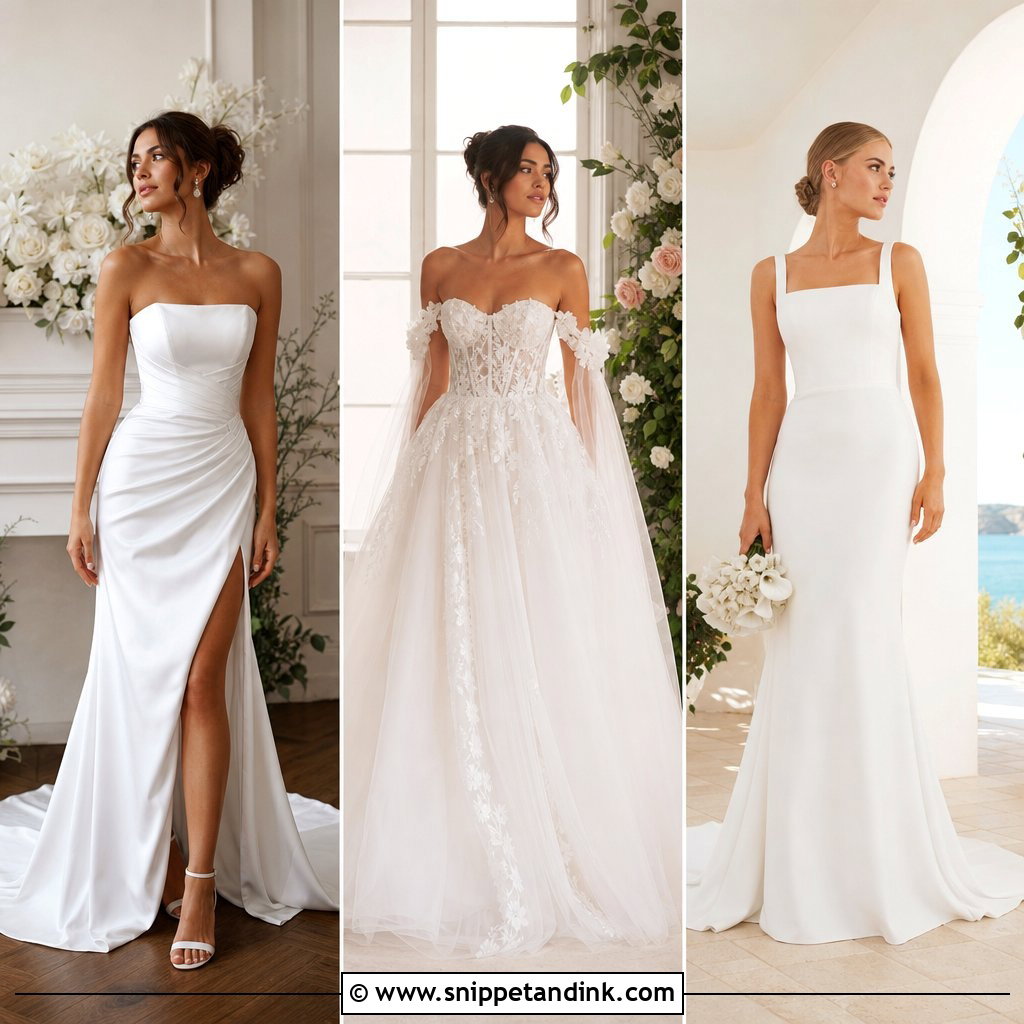
5. Satin Wedding Gown
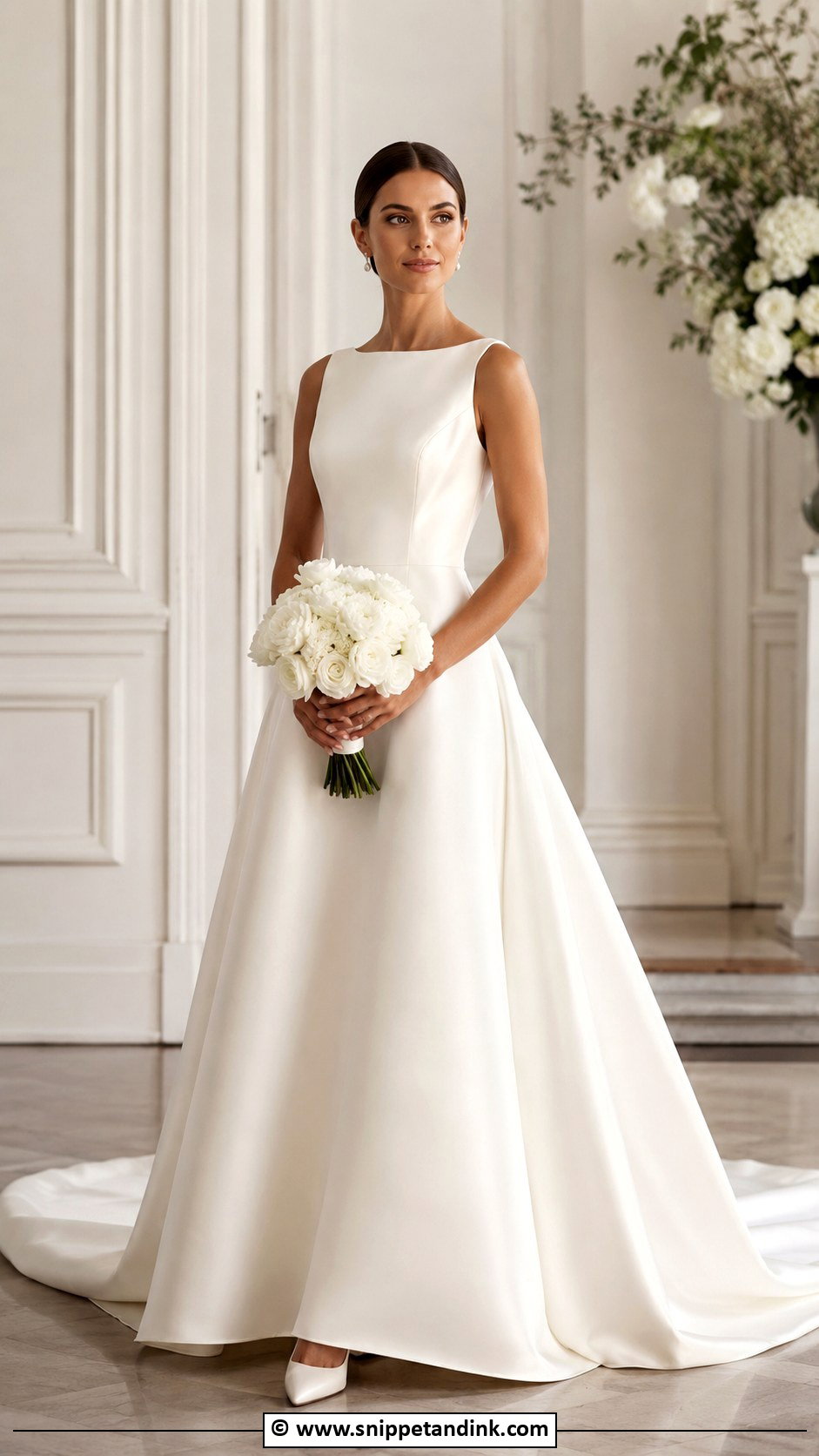
Satin reflects light, so a plain cut looks expensive and every flaw in the fit shows twice. It also creases at the hip the moment you sit, which is why I steam gowns on site and keep brides standing for the getting-ready photos. Heavy duchess satin belongs to winter and evening ceremonies, while a lighter silk-satin can carry spring. Keep the styling short: pearl studs, a sleek veil, satin pumps. Tailoring isn’t optional with this fabric.
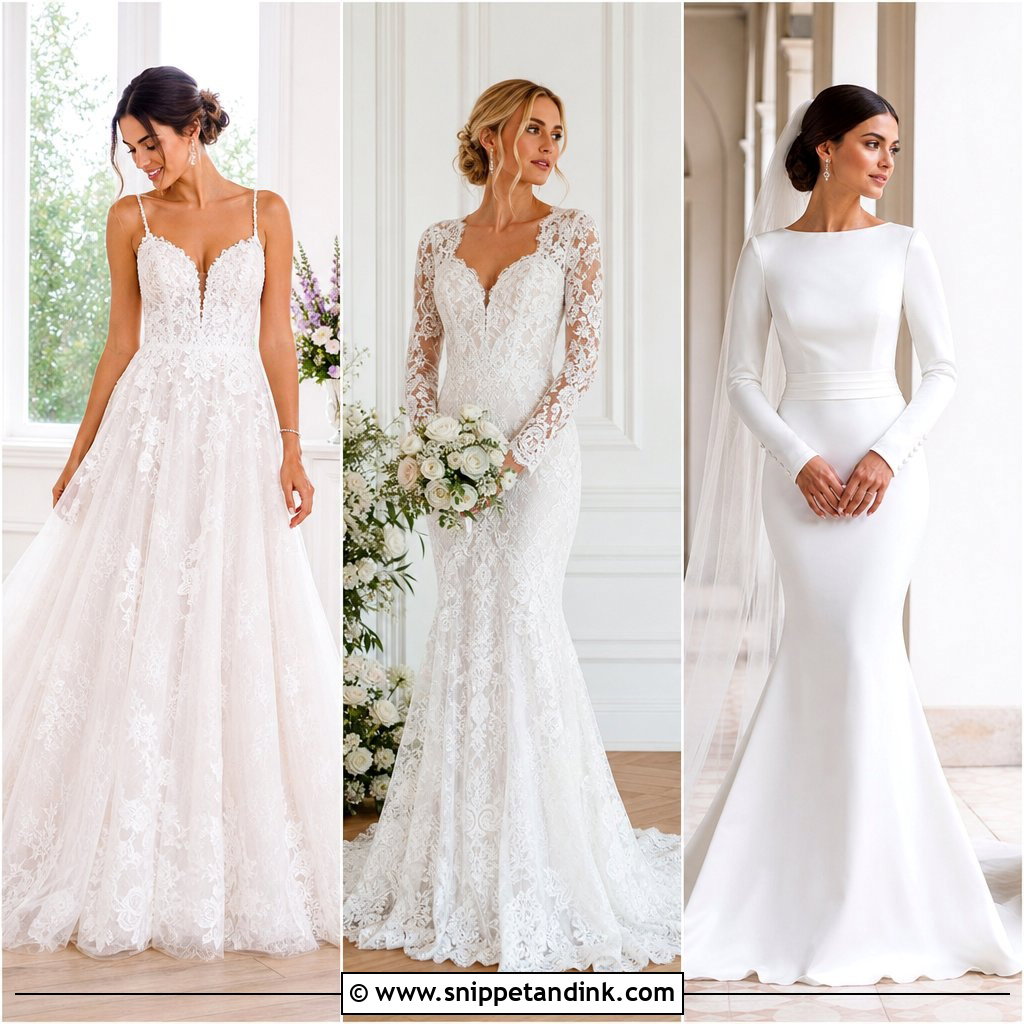
6. Lace Wedding Gown
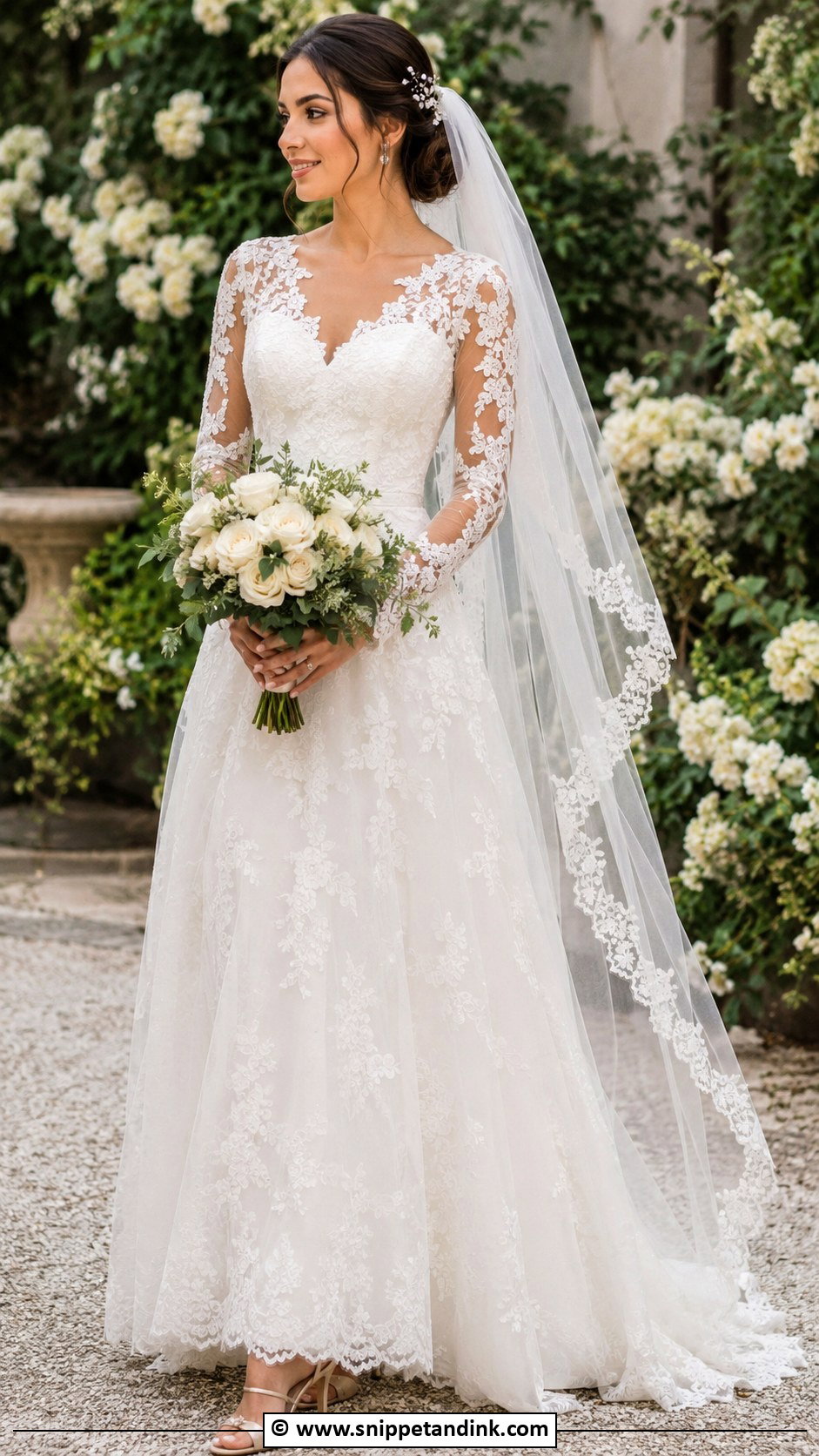
Lace changes personality with the pattern. A fine Chantilly reads delicate and slightly vintage; a corded Alençon with raised motifs feels heavier and more formal. Over a nude lining it gives depth in photos, and white on white looks traditional. One working note from fittings: ask how the lace is joined at the side seams. Well-made gowns have motifs hand-cut so the pattern flows across the seam, and cheaper ones simply stitch straight through the flowers. Soft curls, pearl pins and a lace-trim veil suit garden and vineyard ceremonies.
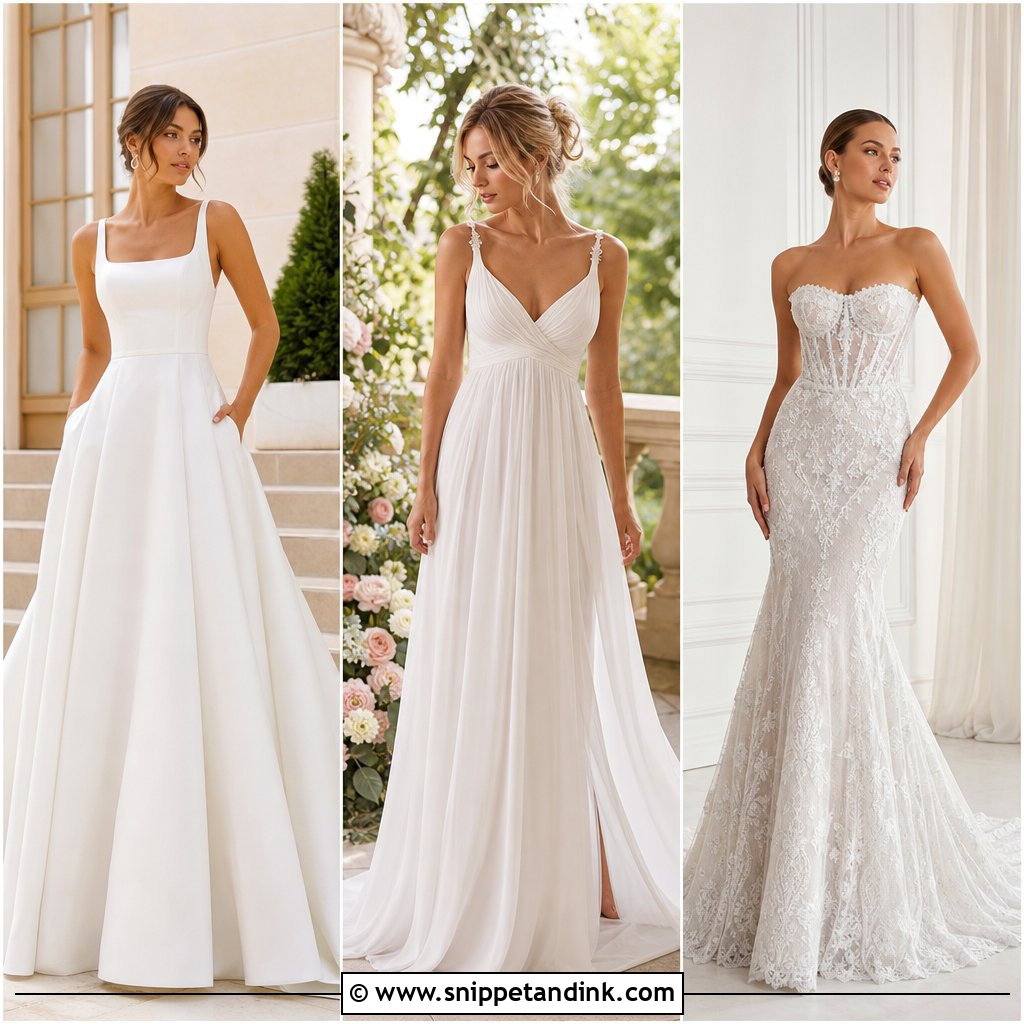
7. Minimalist Wedding Gown
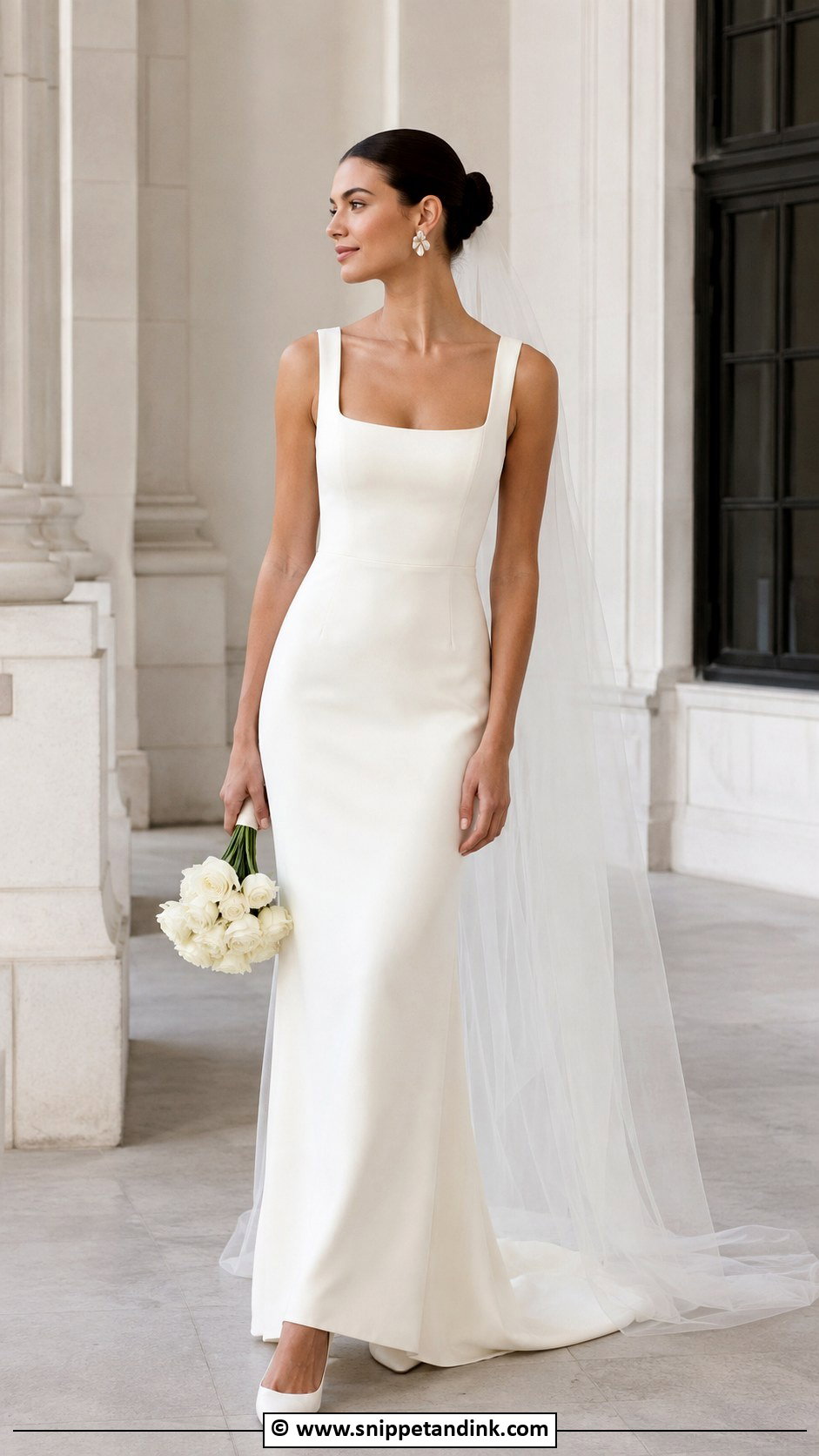
With no beading to hide behind, I judge a minimalist gown by its seams first. Run a finger along the bodice and side seams; they should lie flat without ripples or pulling. A square-neck crepe, a satin slip or a clean A-line can all sit in this camp, and brides drawn to quiet luxury tend to land here. I’d pair it with sculptural earrings, a smooth bun and a plain veil, then spend the money you saved on embellishment on an extra fitting.
8. Off Shoulder Wedding Gown
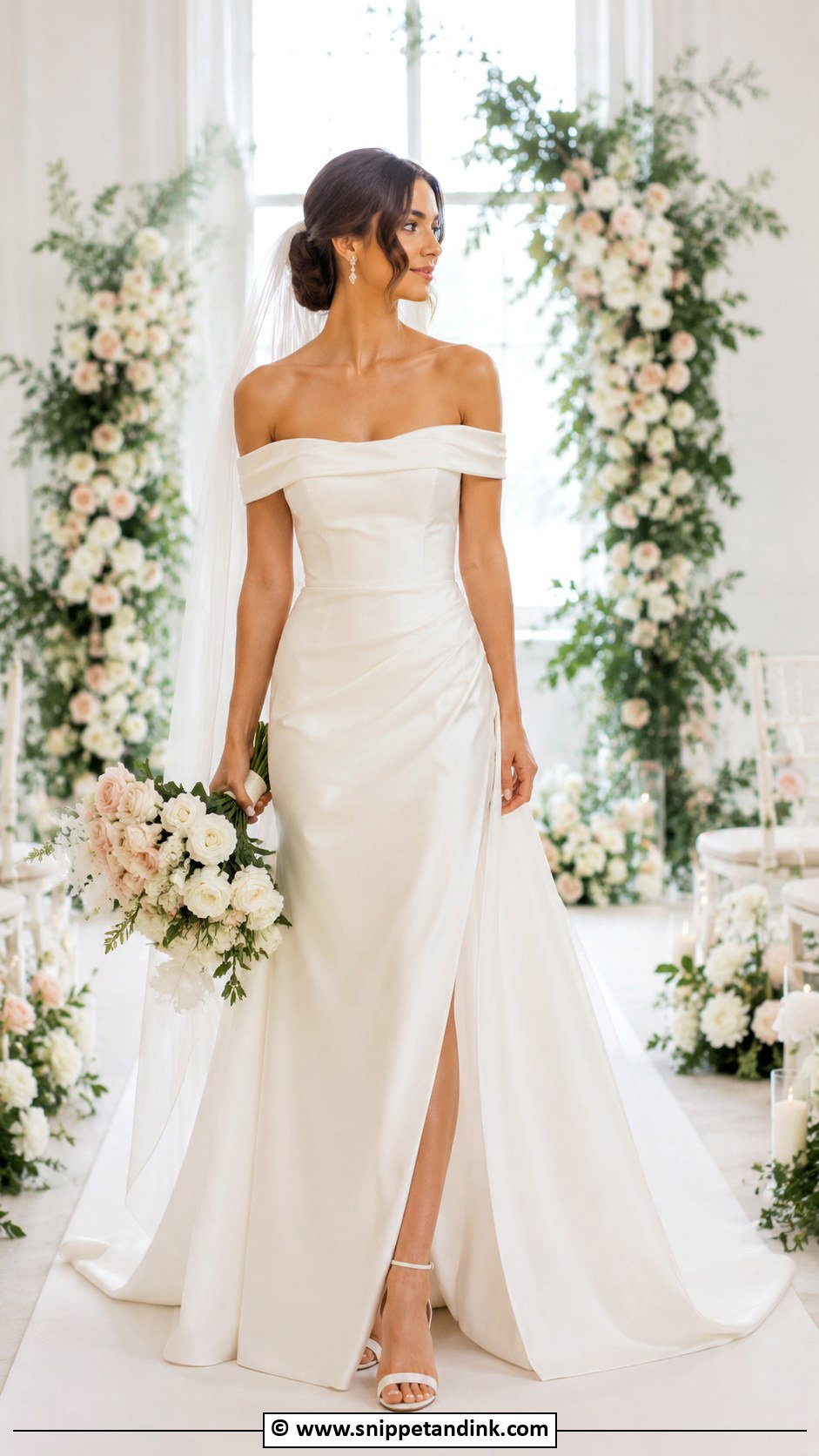
Off-the-shoulder necklines frame the collarbone and look soft in close-ups, but there’s a catch: your arms. Every hug and every raised glass pulls the band upward, so I look for silicone grip tape inside the band and a bodice snug enough to hold it down. The neckline sits happily on A-line, mermaid or ball gown skirts. For a cold-weather ceremony, add removable sleeves or a wrap for outdoor portraits, then a low bun and drop earrings to keep the shoulders on show.
9. Strapless Wedding Gown
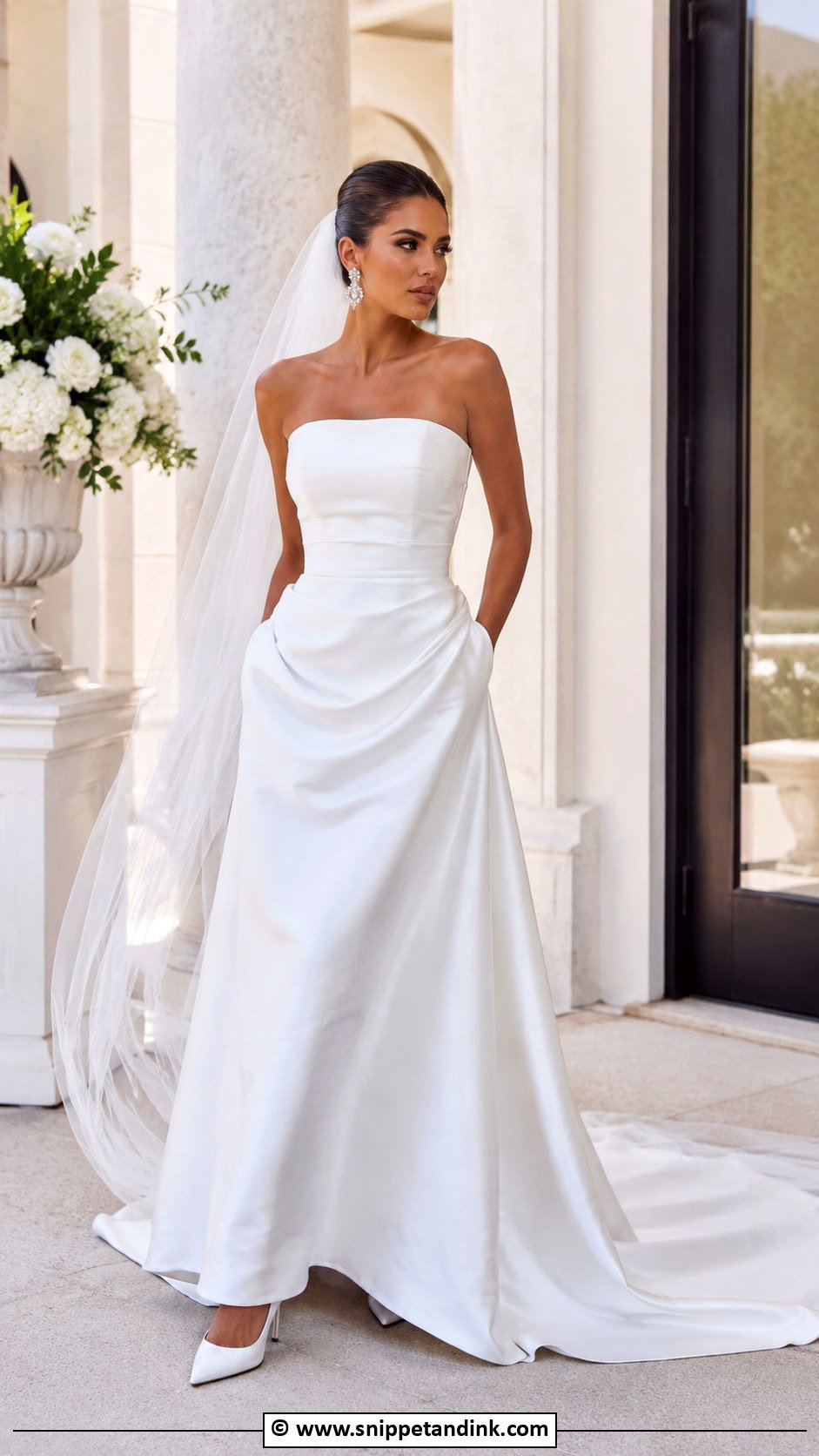
Support decides whether a strapless gown works, and you can’t judge it on a hanger. I want internal boning, a waist stay and a bodice cut close enough that it never needs hoisting. Put both arms above your head in the fitting room; if the top slides, it needs taking in at the sides. Once it’s secure, the bare neckline gives jewelry room. Choose a statement necklace or bold earrings with a sleek veil, not both. It’s an easy pick for summer weddings and formal receptions.
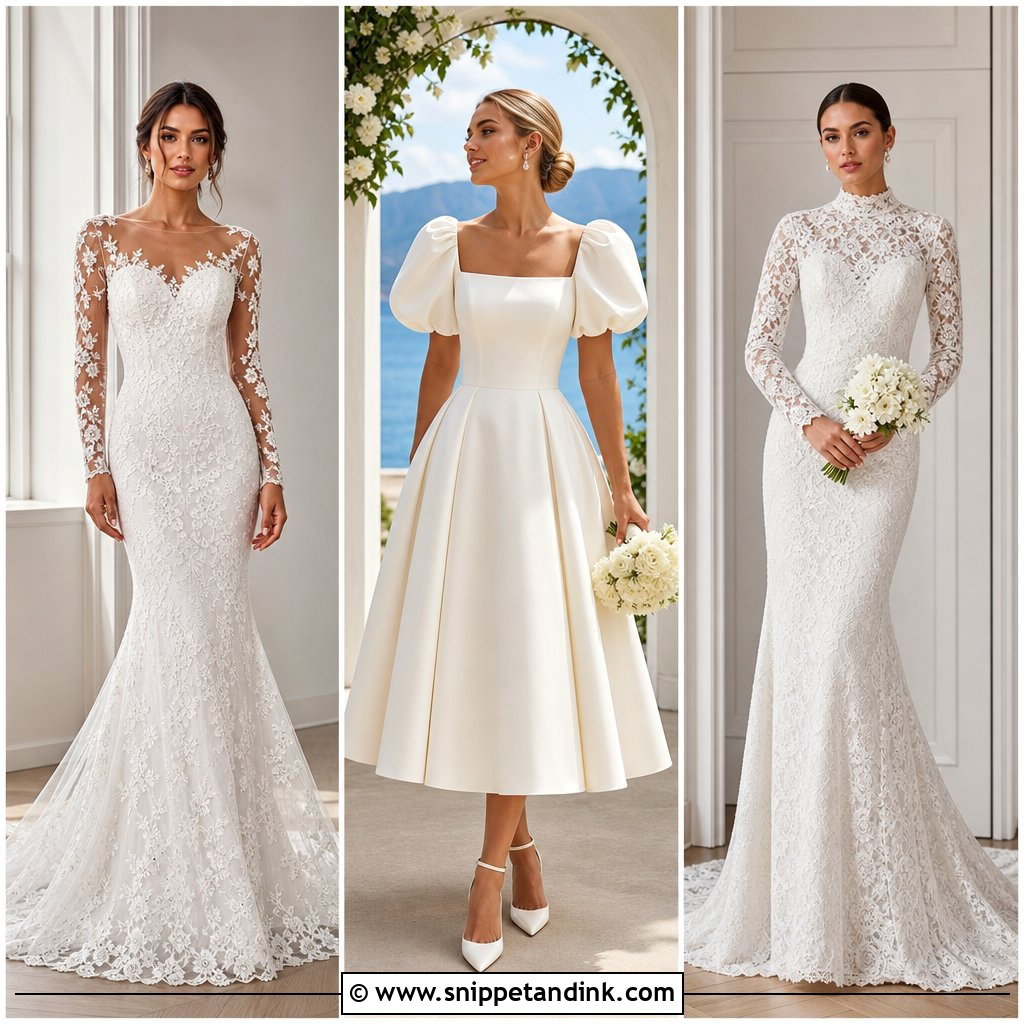
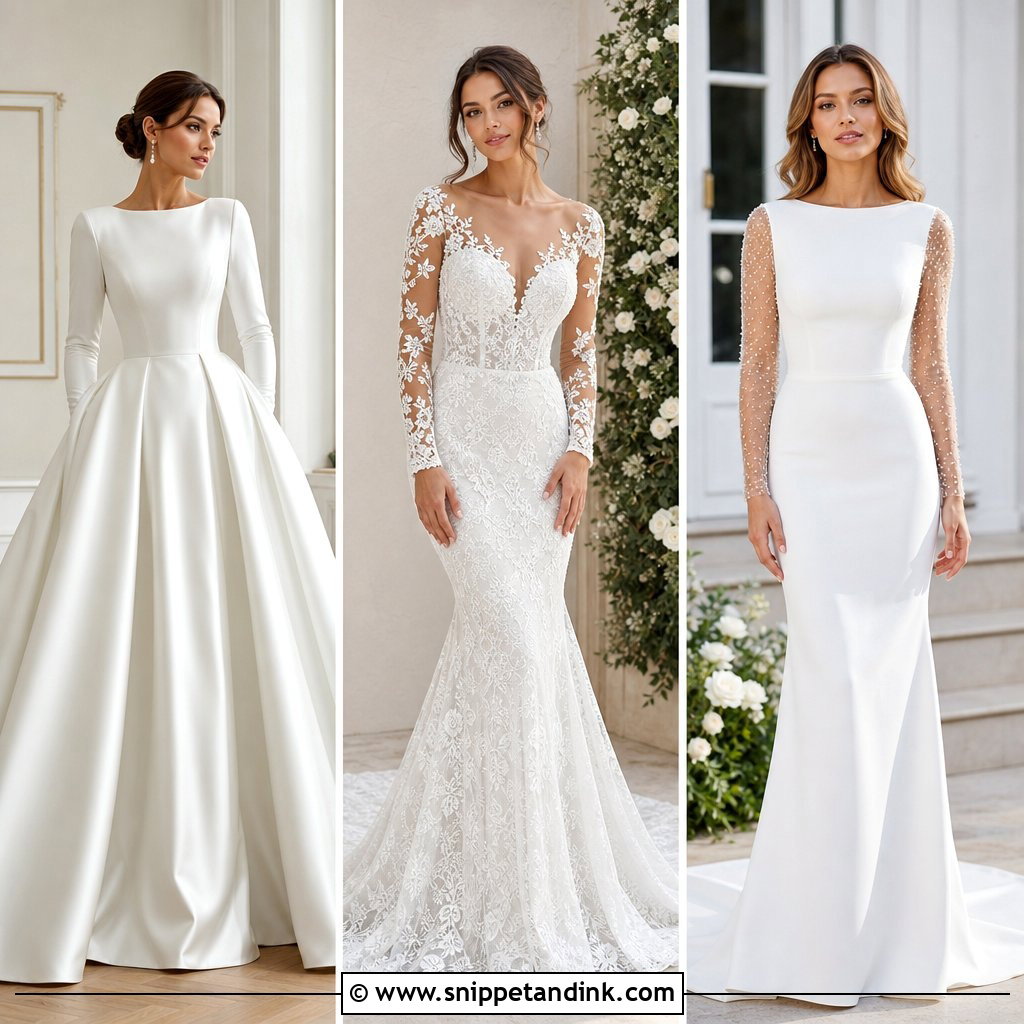
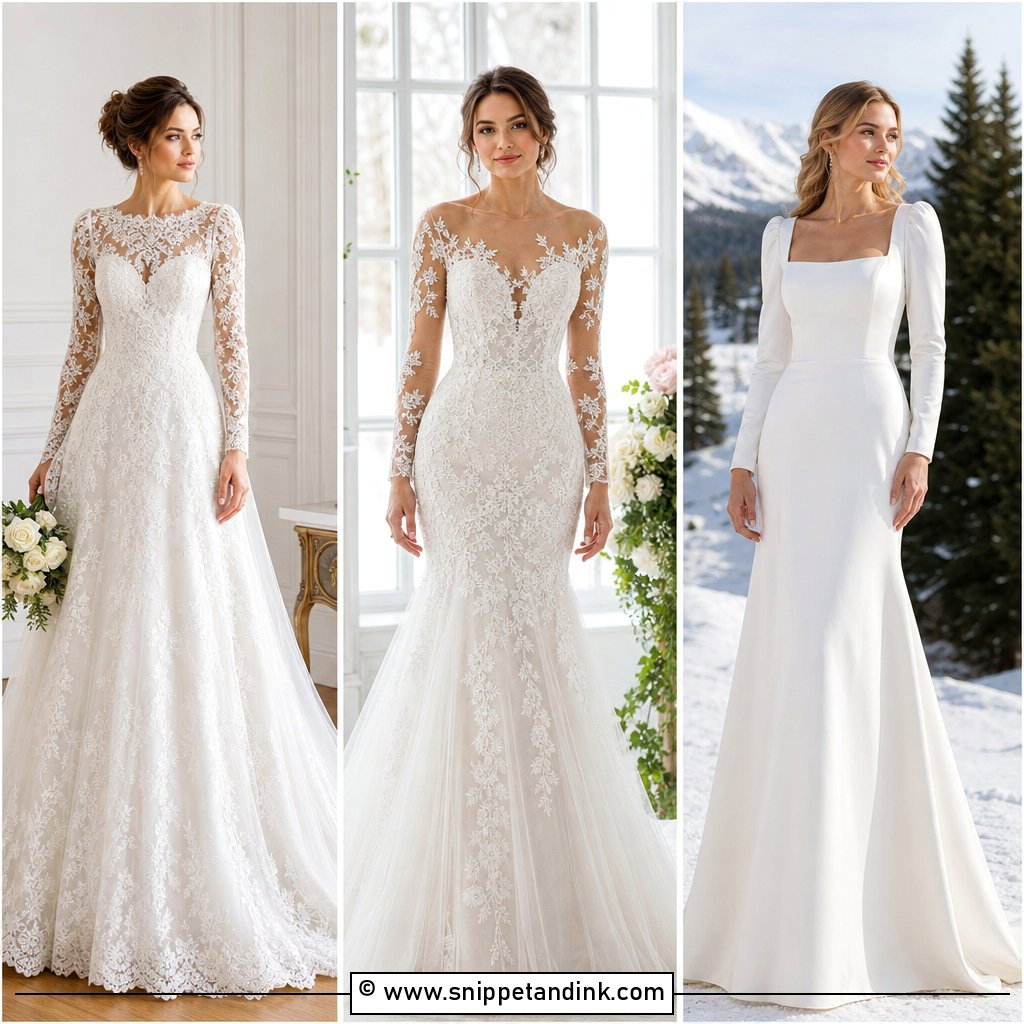
10. Long Sleeve Wedding Gown
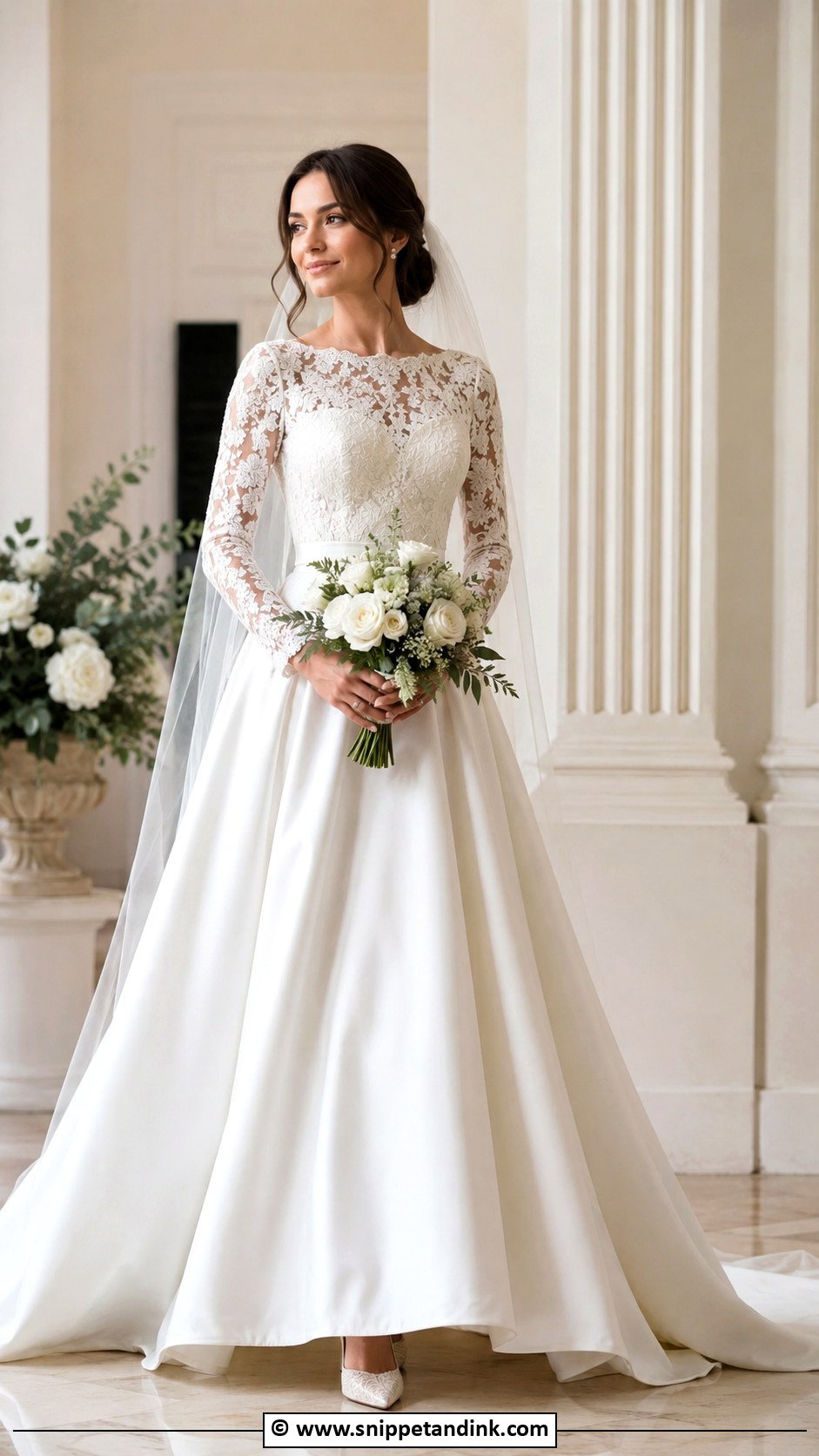
Sleeves set the mood fast. Sheer lace feels romantic, plain crepe feels modern, a puffed shoulder feels like fashion. The detail most people miss is the armhole. Ask to hug someone during the fitting; a sleeve set too tight will restrict every embrace for the rest of the day. Autumn and winter weddings suit it, and so does any ceremony where you need your arms covered. If the sleeves are busy, skip the bracelet, and keep the rest calm with a low bun, pearl studs and closed-toe heels.
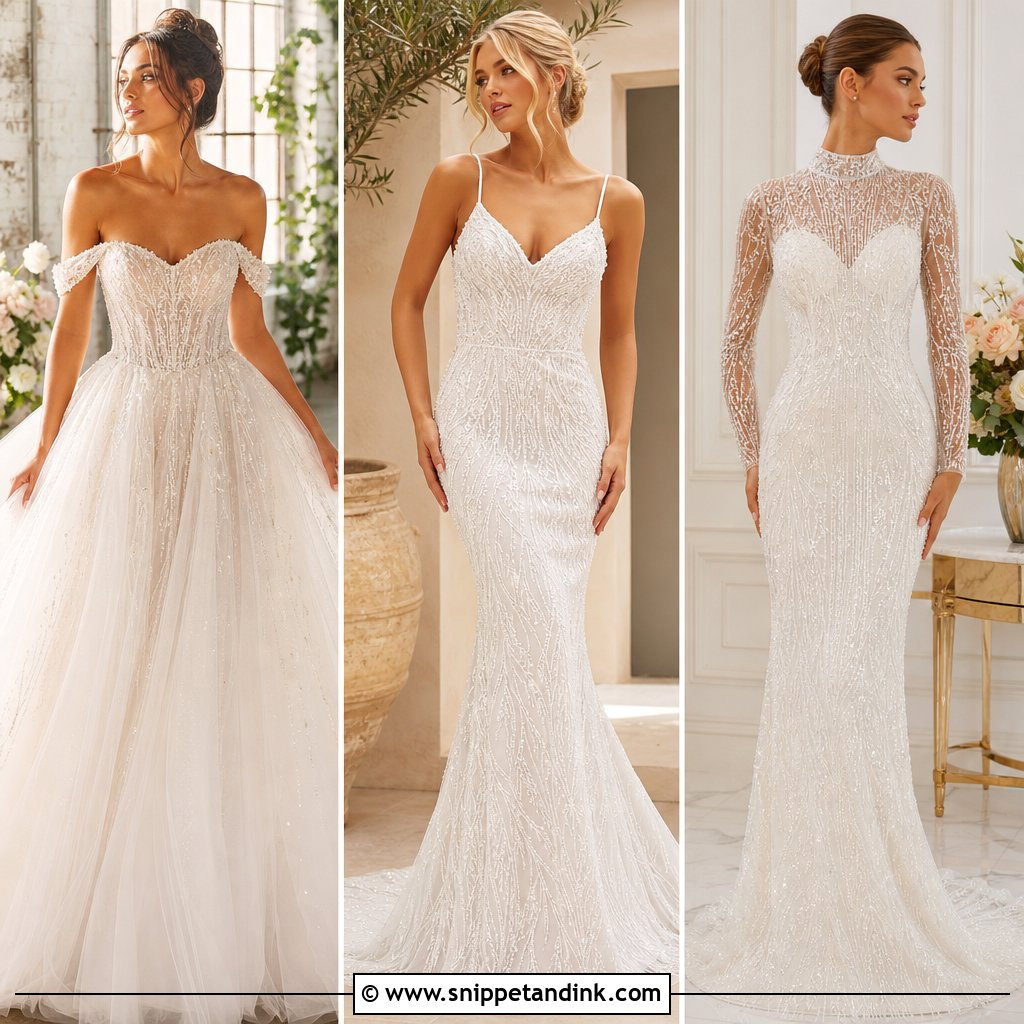
11. High Neck Wedding Gown
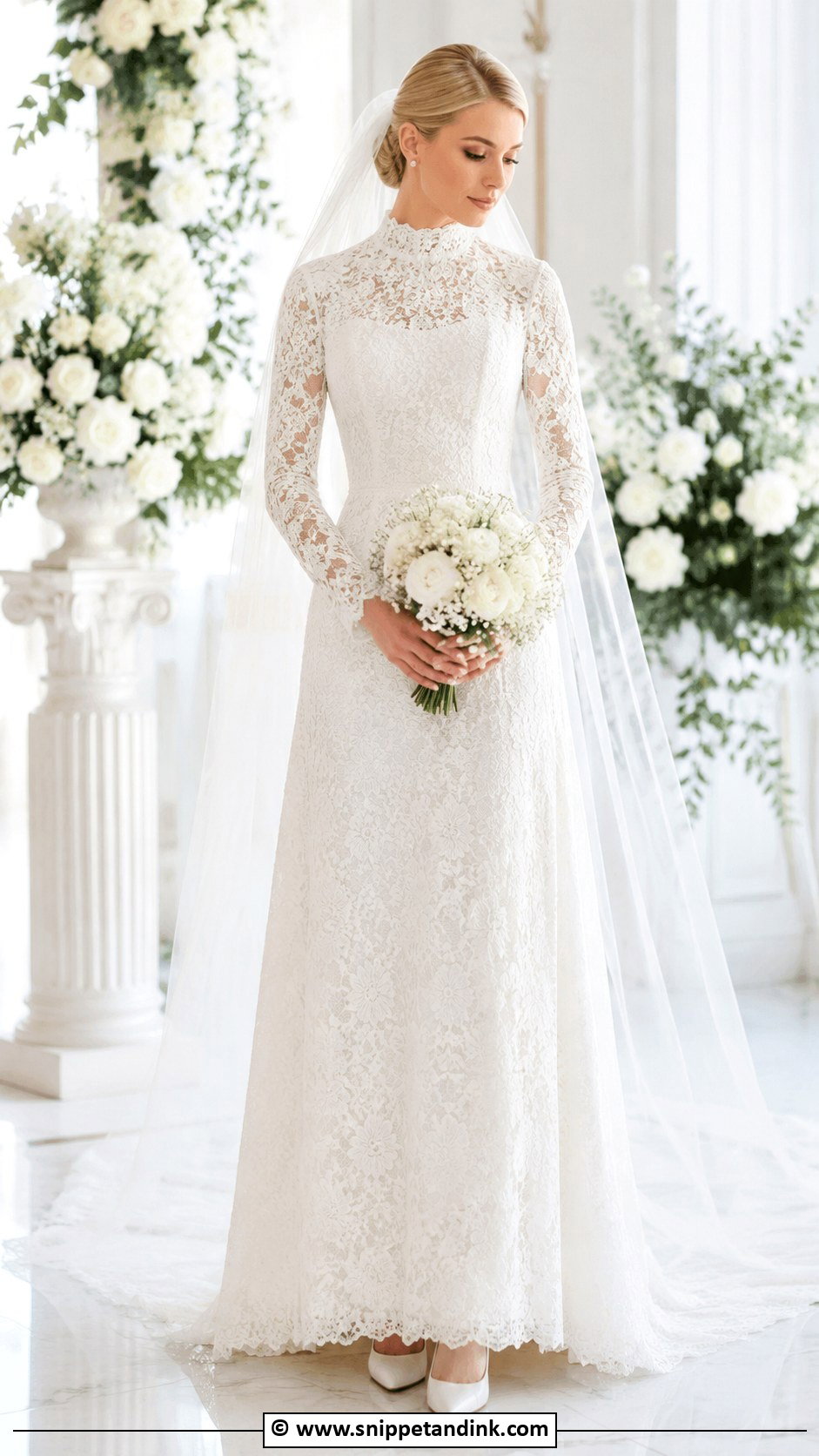
A high neckline pulls the eye up to the face, so this is the one cut where I nearly always recommend wearing your hair up. An updo, small earrings and no necklace let the bodice lead. It works in lace, satin, crepe or embellished tulle, on a slim sheath as easily as a full skirt. The risk is a heavy, closed look on a shorter neck. Sheer shoulder panels or an open back fix that by giving the eye some skin to rest on.
12. Square Neck Wedding Gown
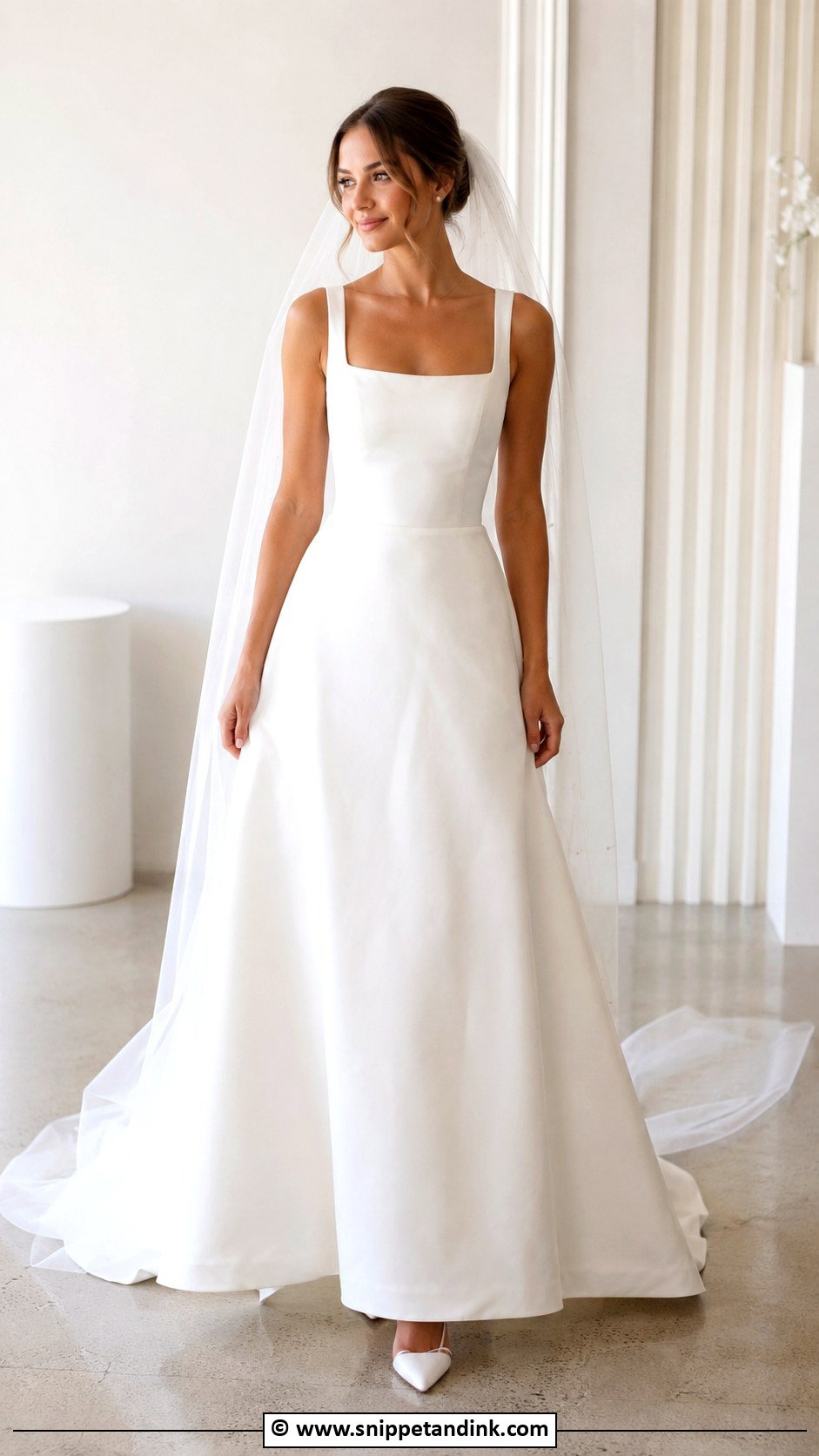
The square neck is quietly practical. It frames the collarbone, gives more bust support than a plunge and keeps its shape on thick straps, long sleeves or a strapless bodice. At fittings I watch the corners: if they gape when you lean forward, the bodice needs taking in at the side seams rather than shortening the straps. Satin or crepe keeps the line crisp. A smooth bun, pearl studs and classic pumps are all it needs.
13. Plunging Neckline Wedding Gown
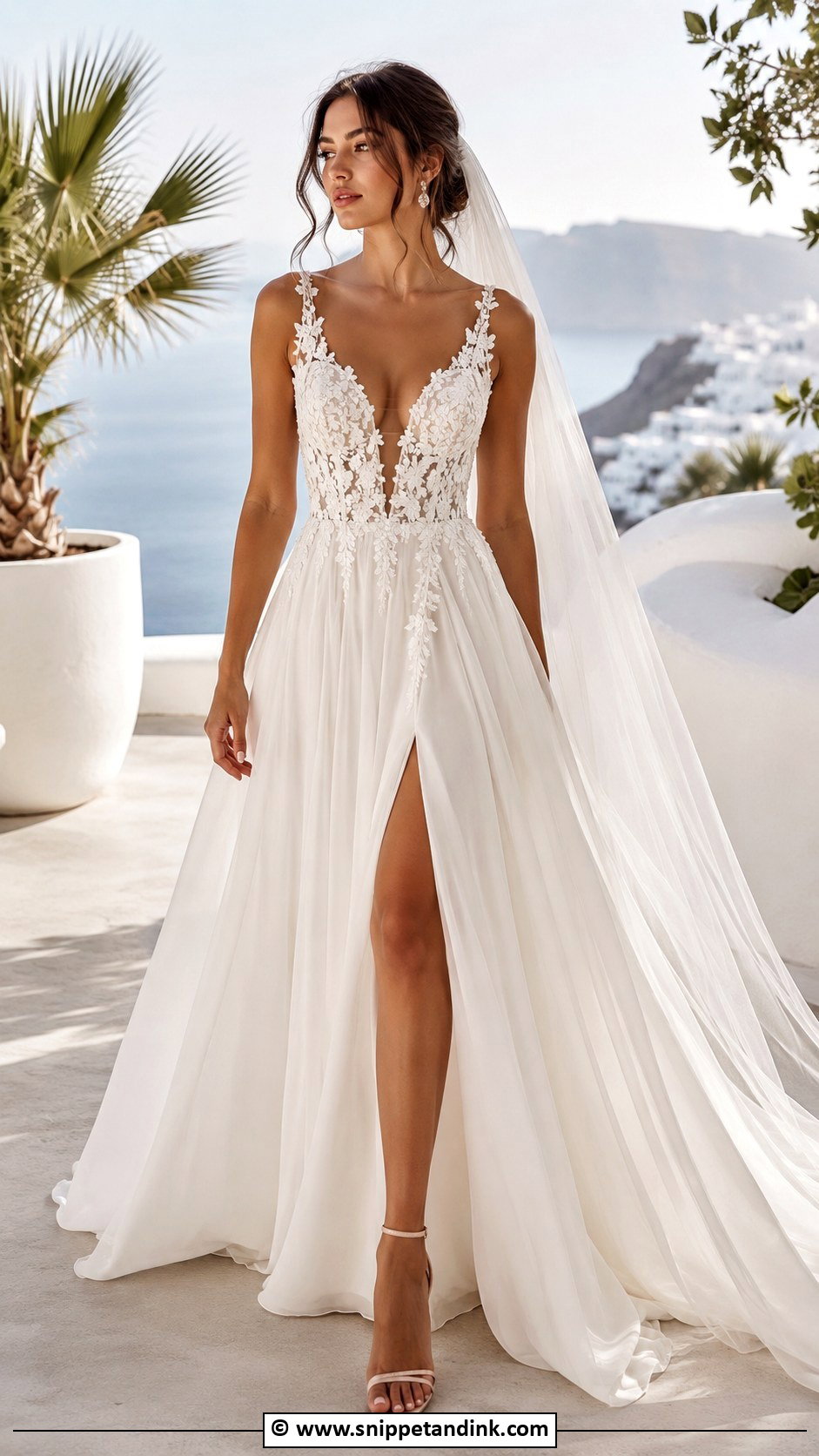
A deep V is about engineering more than nerve. Supportive mesh at the centre, boned side panels and wider straps keep the front where it belongs through the ceremony and the dancing, and I add fashion tape on the morning regardless. A fuller skirt or long sleeves balance the depth. Jewelry should stay small, because the neckline already is the jewelry. If you love the shape but not the depth, ask your seamstress about an illusion panel behind the plunge; it’s a common alteration.
14. Corset Wedding Gown
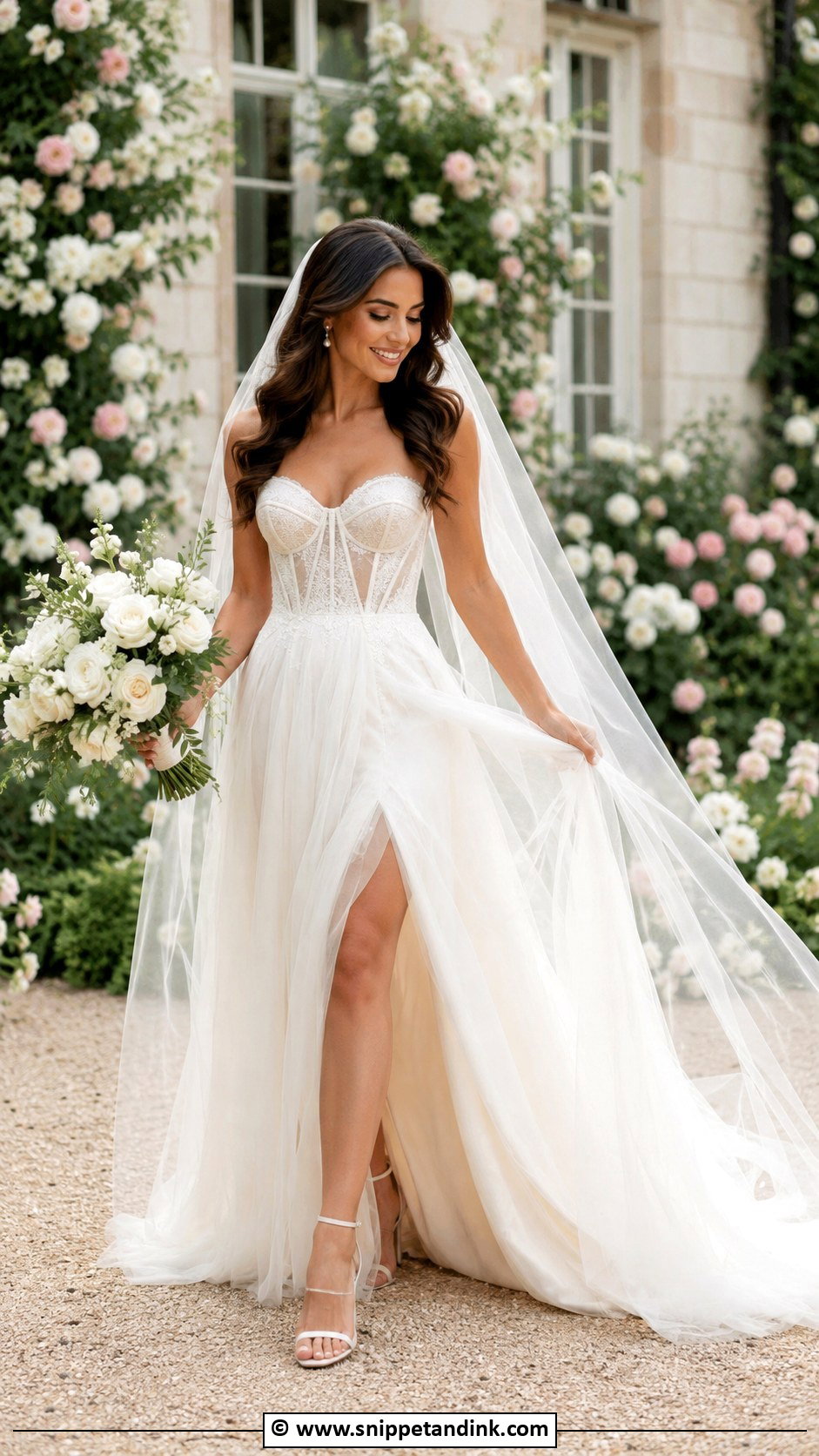
Here the boning shapes the waist, so the bodice itself becomes the detail. Over tulle it softens; over satin it turns dramatic. My test is simple: take a full breath and laugh. If you can’t, it’s too tight, and nobody wants to feel faint during the vows. A lace-up back is also forgiving if your weight shifts in the final weeks, because the gap can be adjusted on the morning itself. Soft curls and a sheer veil keep the structure from looking stiff.
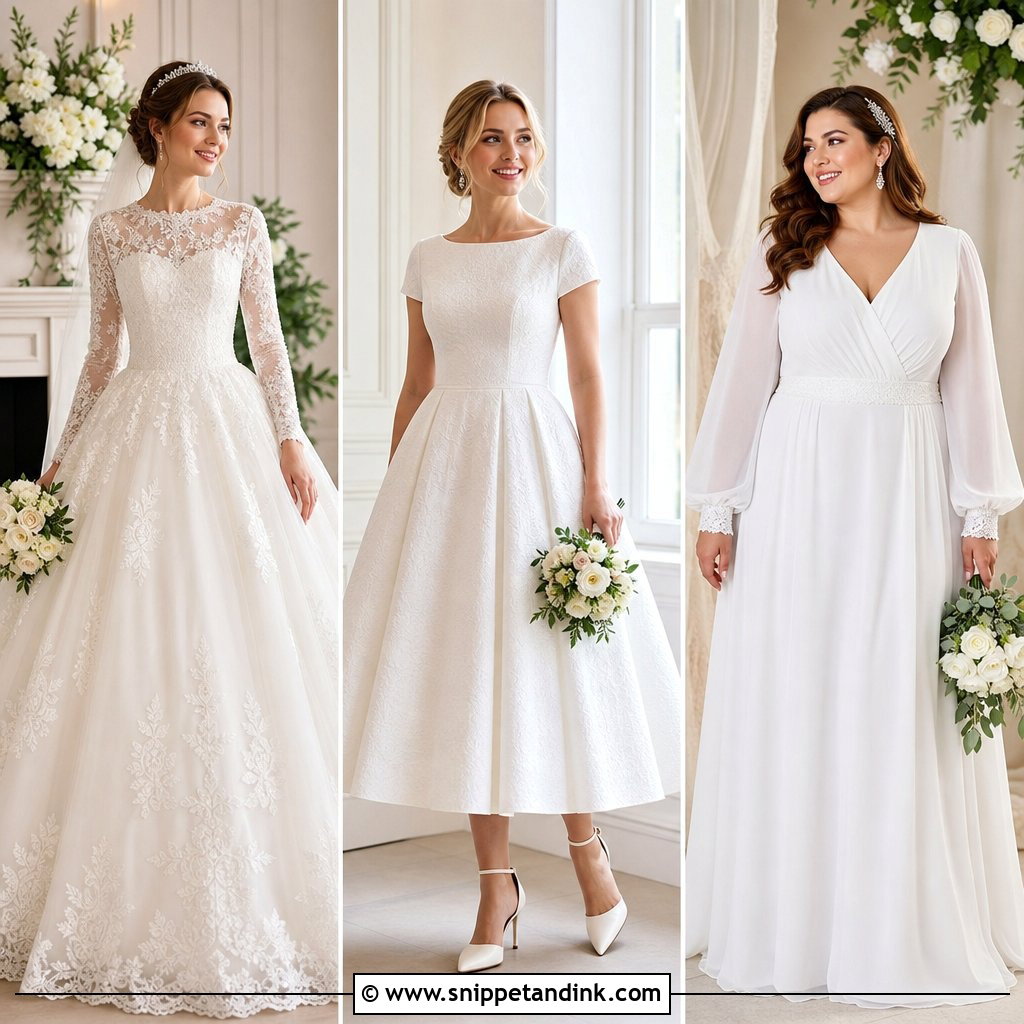

15. Basque Waist Wedding Gown
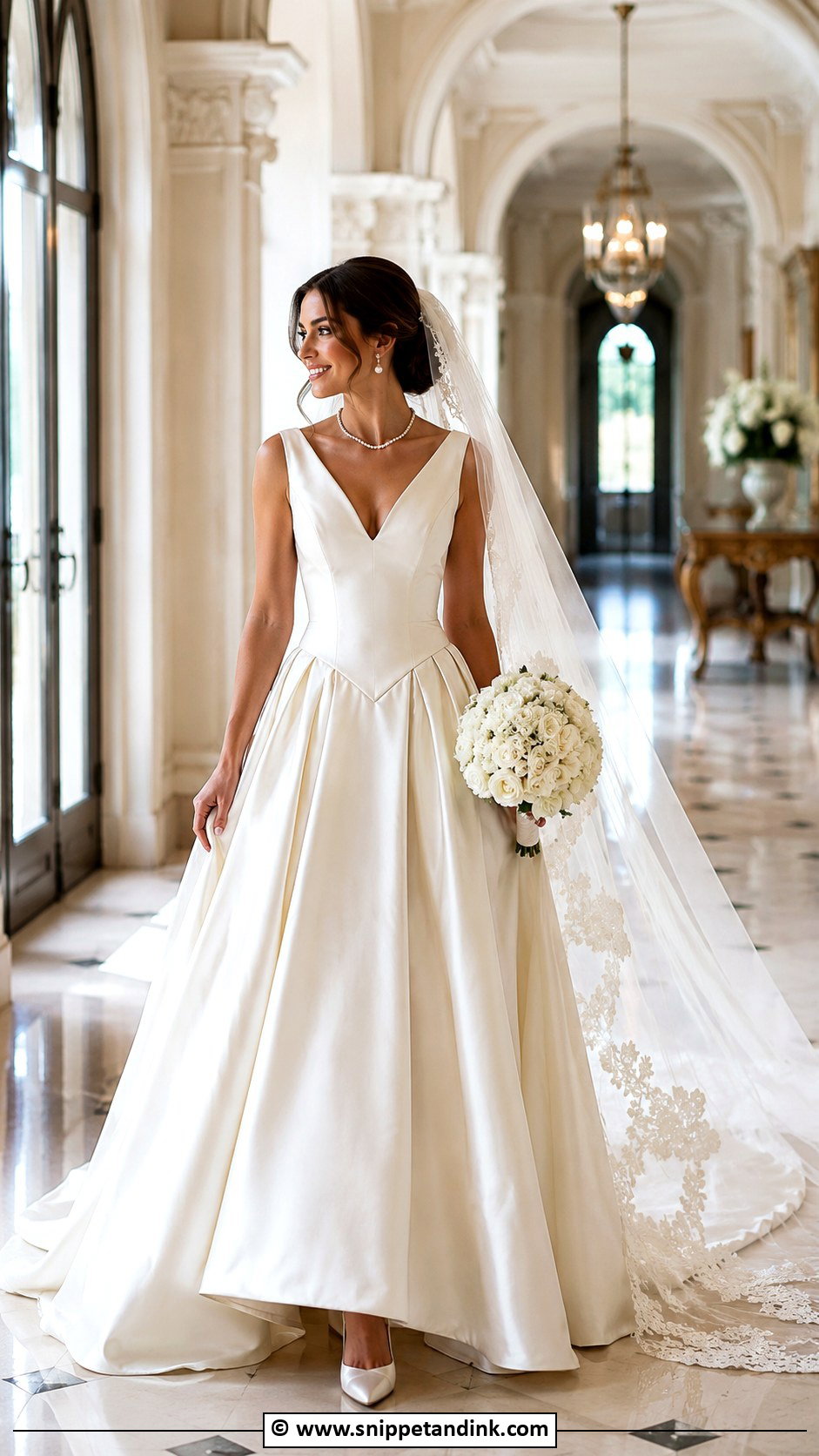
The basque waist dips into a V below the natural waistline, which lengthens the torso and has returned in a big way in recent collections. It needs a full skirt, a lace bodice or structured satin, because the point of the V wants volume beneath it to sit against. That point has to land centred and level. I check it with the bride standing straight and again after she sits, since a long torso can pull it off-centre. Keep the styling calm with a cathedral veil, pearls and a soft updo.
16. Drop Waist Wedding Gown
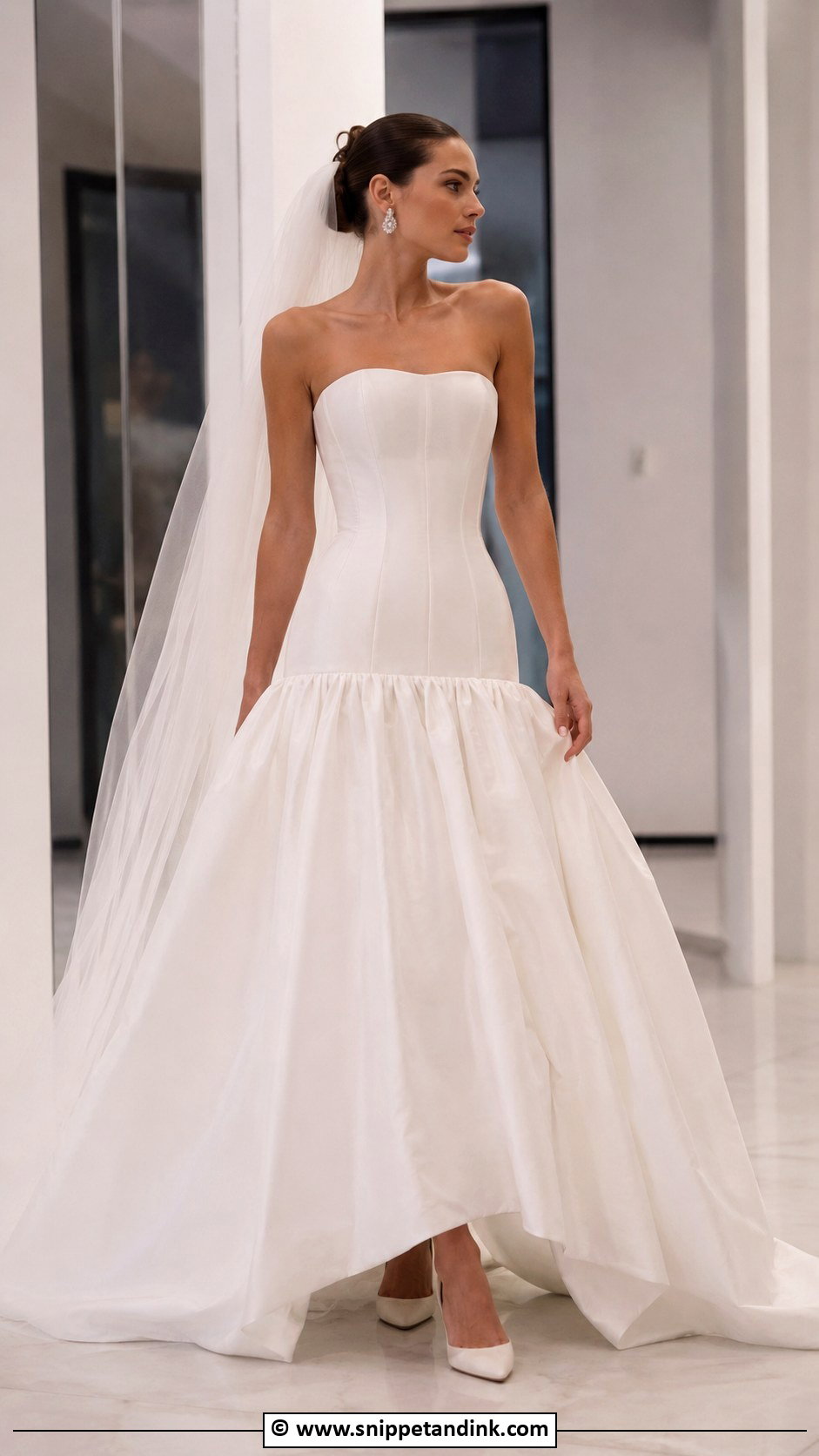
Drop waists sit on the hip and stretch the bodice before the skirt begins. They’re unforgiving of proportion. On a short torso the seam can land so low it cuts the leg line in half, so I’d only order one after trying it on, never from a photo. In satin with a full skirt it feels formal; in lace it turns playful. A simple veil, statement studs and a polished bun let the line speak.
17. Pearl Wedding Gown
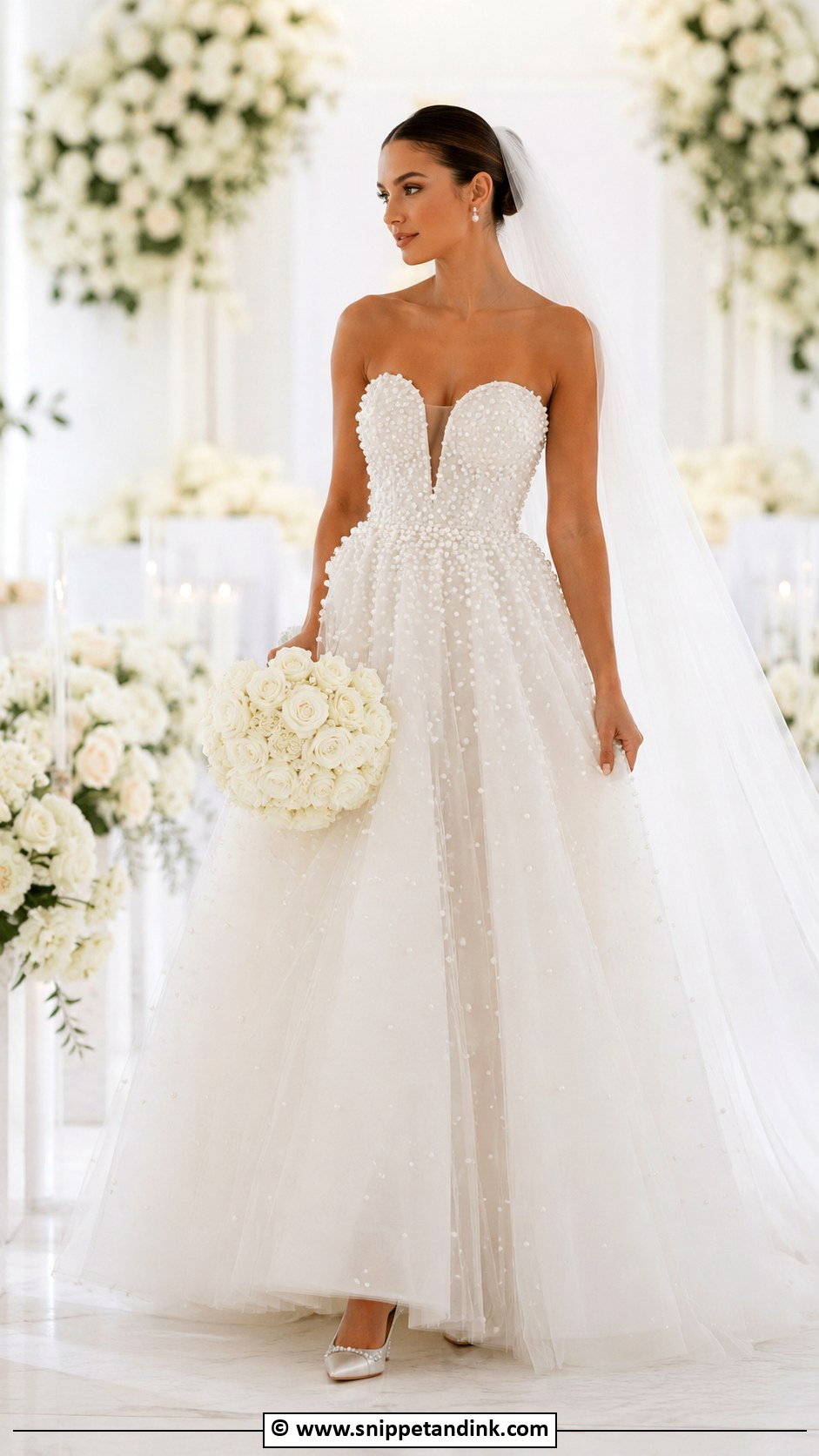
Pearls give a soft glow instead of the hard sparkle of crystals, and that suits both daylight and candlelight. They can cover the bodice, trace the straps or scatter across a skirt. Worth knowing before you shop for the veil: pearls add weight, and they catch on lace veil edges, so hold the two together before buying both. Keep jewelry to pearl earrings and the hair smooth. For a quieter take, look for pearl buttons running down the back.
18. Beaded Wedding Gown
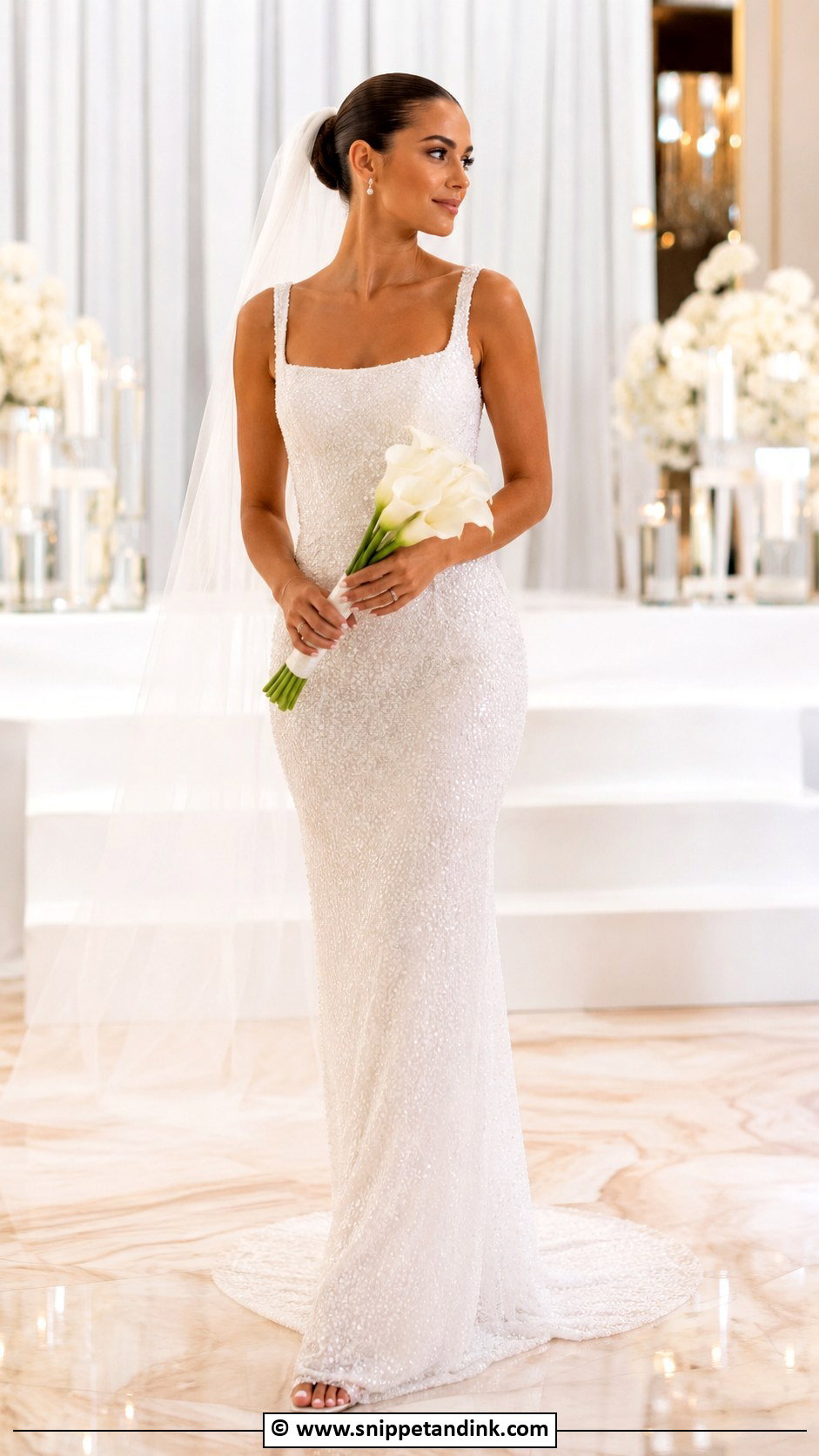
A beaded wedding gown catches reception lighting in a way plain fabric can’t, and the pattern sets the era: geometric beadwork reads art deco, scattered sequins read modern. It’s also heavy. A fully beaded skirt can weigh several pounds, so sit, walk and do a slow turn in the fitting room before you decide. Ask how the bustle will be built, because beaded trains pull ordinary hooks loose. Small earrings and a plain veil stop the whole outfit tipping into too much.
19. Floral Applique Wedding Gown
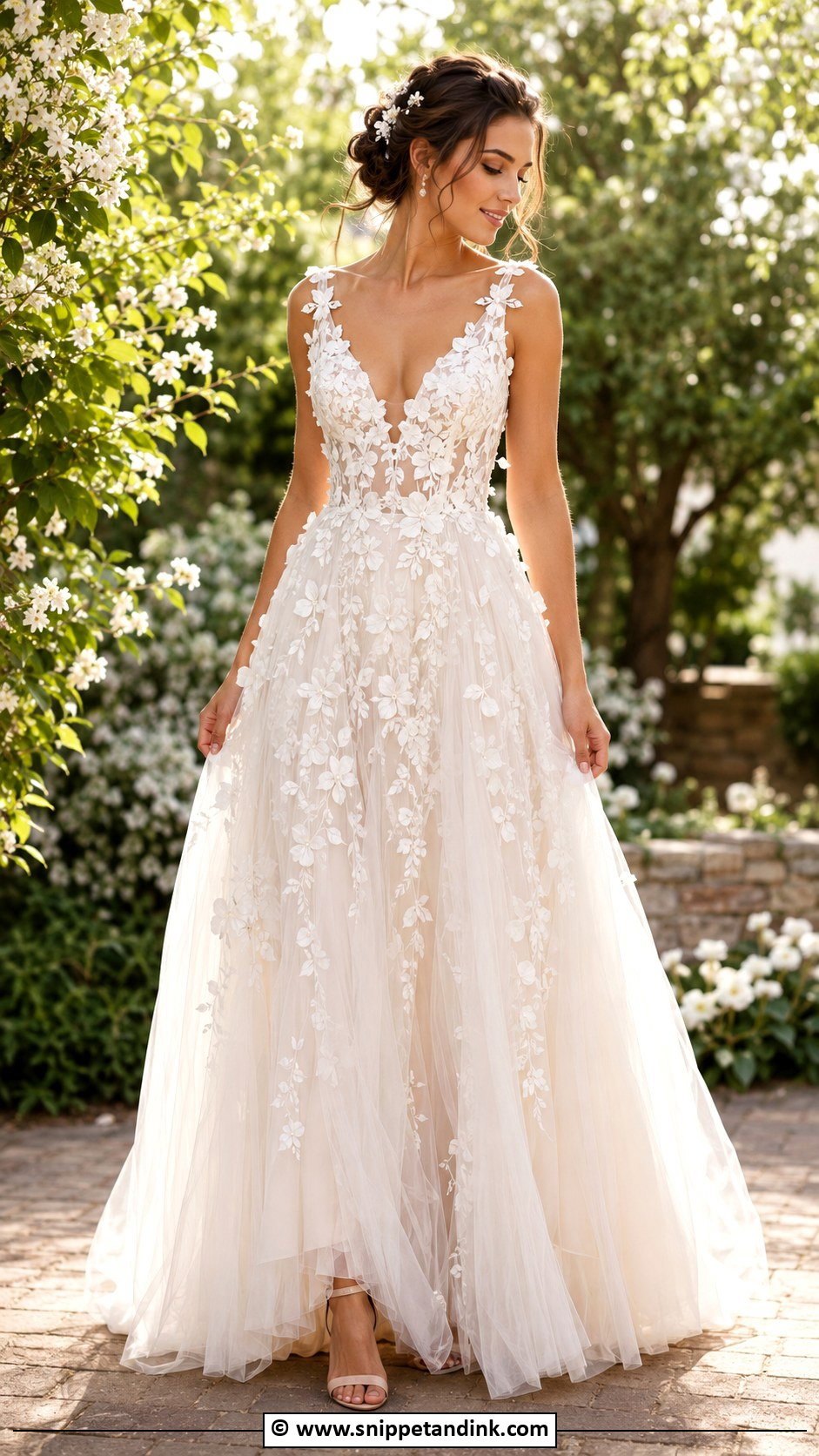
Appliqué flowers are stitched onto the dress rather than printed, so they lift off the fabric and throw tiny shadows. That’s where the depth in photos comes from. Large three-dimensional blooms on a clean silhouette look modern, while small ones scattered over tulle look soft. If the appliqué is bold, carry a simpler, smaller bouquet, or the two start fighting at waist height. Also check for raised petals near the inner arm; they can scratch across a long day.

20. Bow Wedding Gown
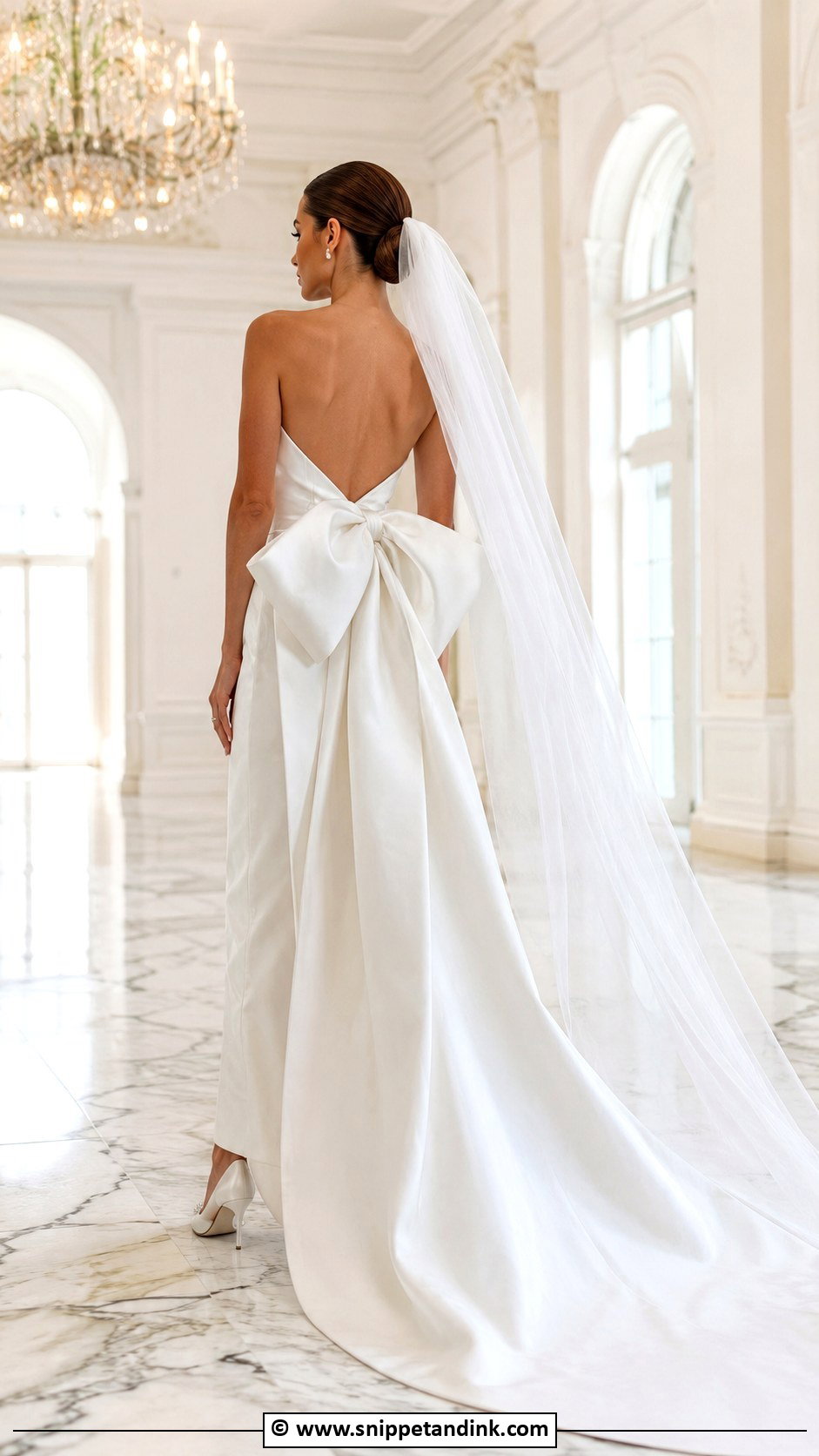
A bow gives the eye one place to land, usually at the back waist, the shoulder or the start of the train. Small ones read sweet, oversized ones read fashion. What I always check is the bow against the veil: a big back bow and a long veil compete, and one of them has to give. Since the detail lives mostly at the back, this gown earns its keep during the aisle walk, when guests are seeing you from behind. Simple jewelry and a polished updo keep the focus where it belongs.
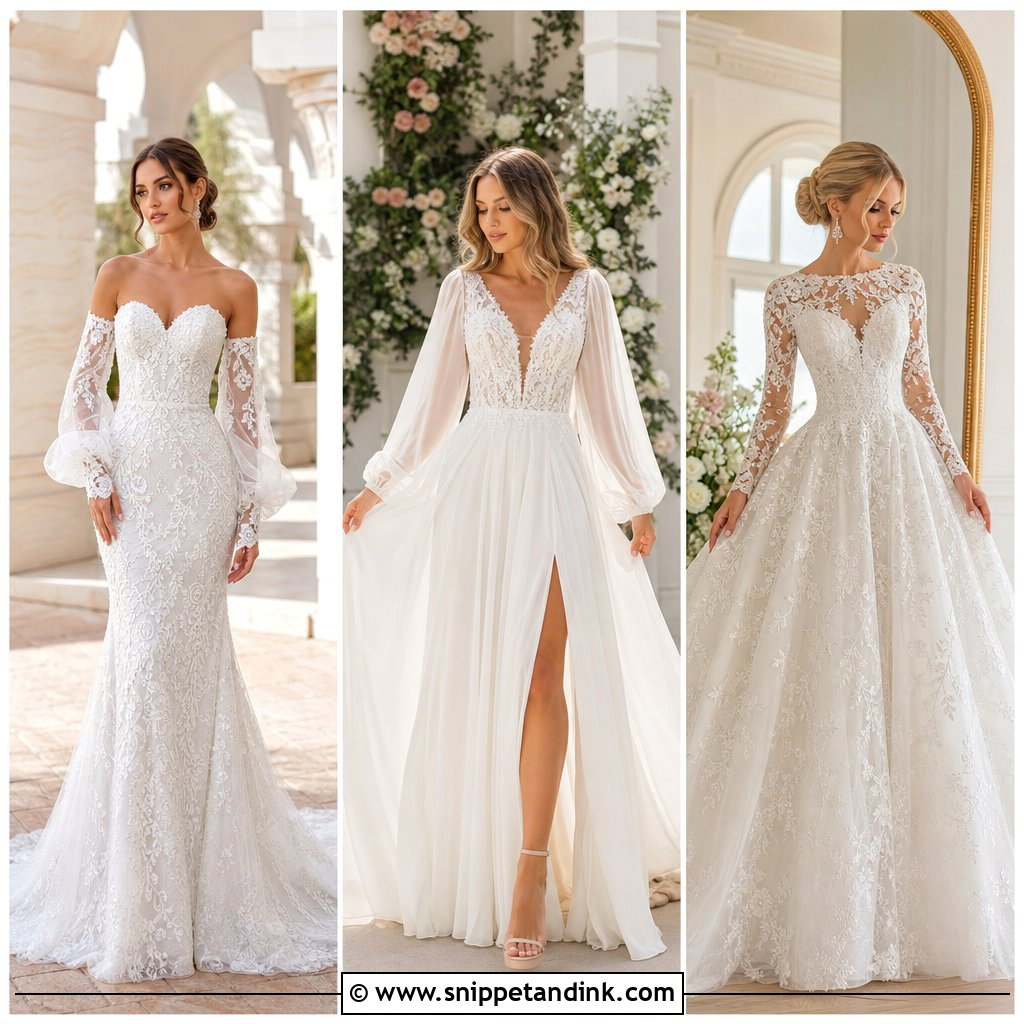
21. Detachable Sleeve Wedding Gown
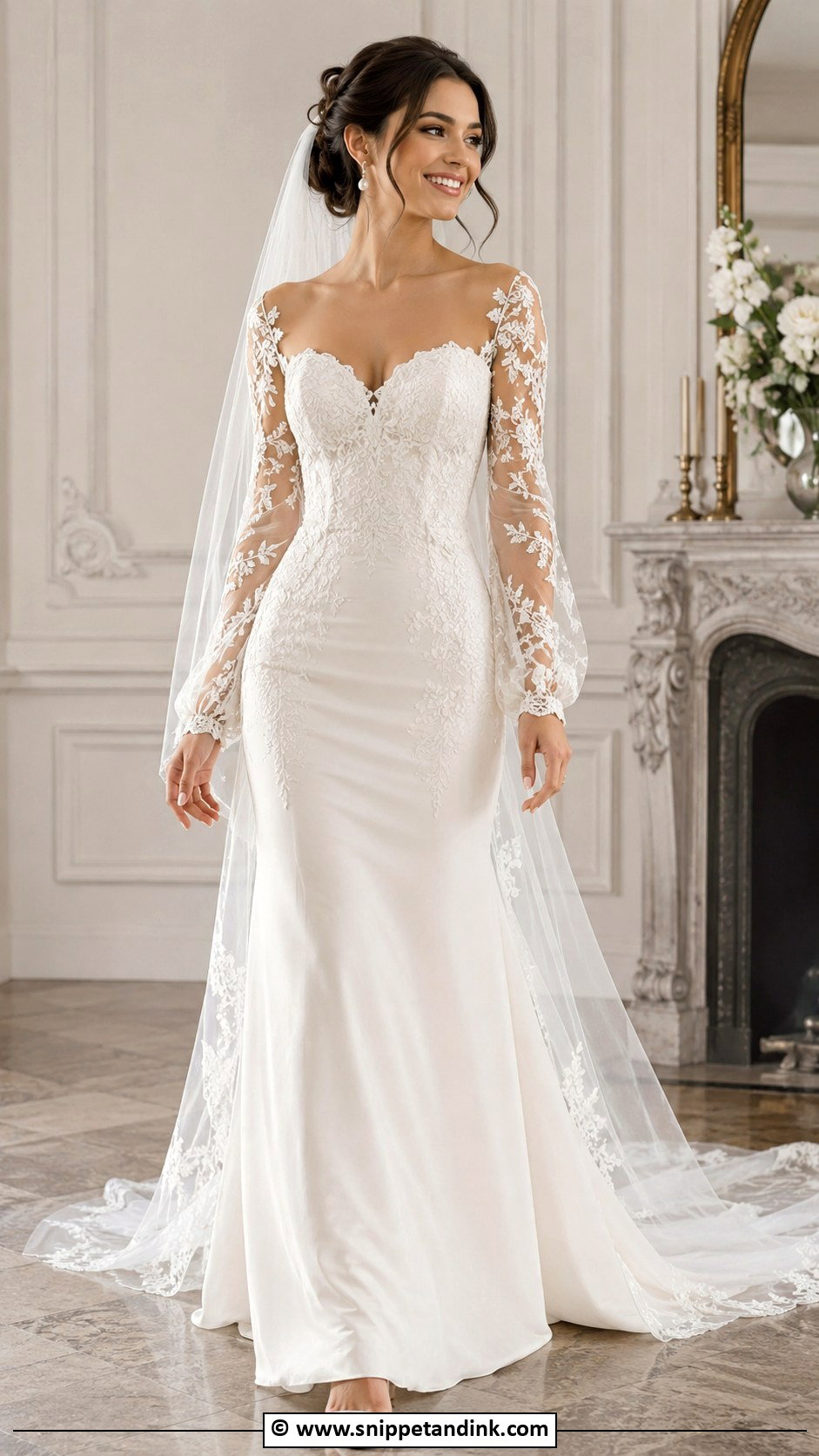
Removable sleeves give you a covered ceremony and a lighter reception without buying a second dress. Everything depends on the attachment. Snaps or small buttons under the arm are far easier to handle than ties, and whoever is helping you on the day should practise taking them off at least once. The bodice must look finished without them too, so try the gown both ways at every fitting, not just the first. Sheer lace sleeves suit romantic gowns; puffed ones bring drama.
22. Detachable Overskirt Wedding Gown
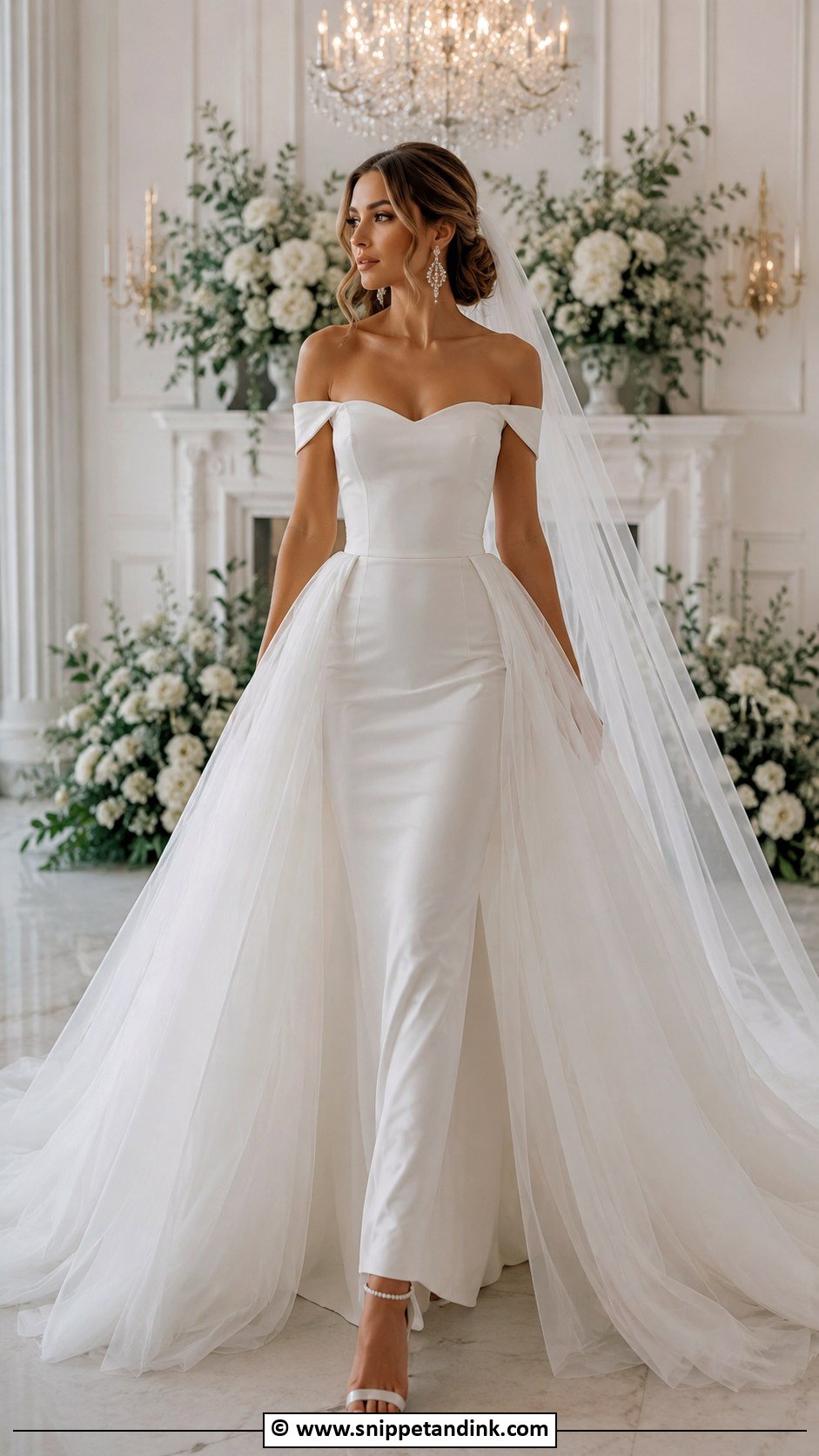
A detachable overskirt wedding gown gives you the big aisle moment and then a sleeker base dress for dancing. The overskirt supplies the volume and train; underneath sits a sheath, mermaid or short dress. During fittings, practise the clasp with your helper, walk in both versions and check that the overskirt waistband lies flat on the base so there’s no ridge while it’s on. A long veil for the ceremony, statement earrings once the skirt comes off.
23. Cape Wedding Gown
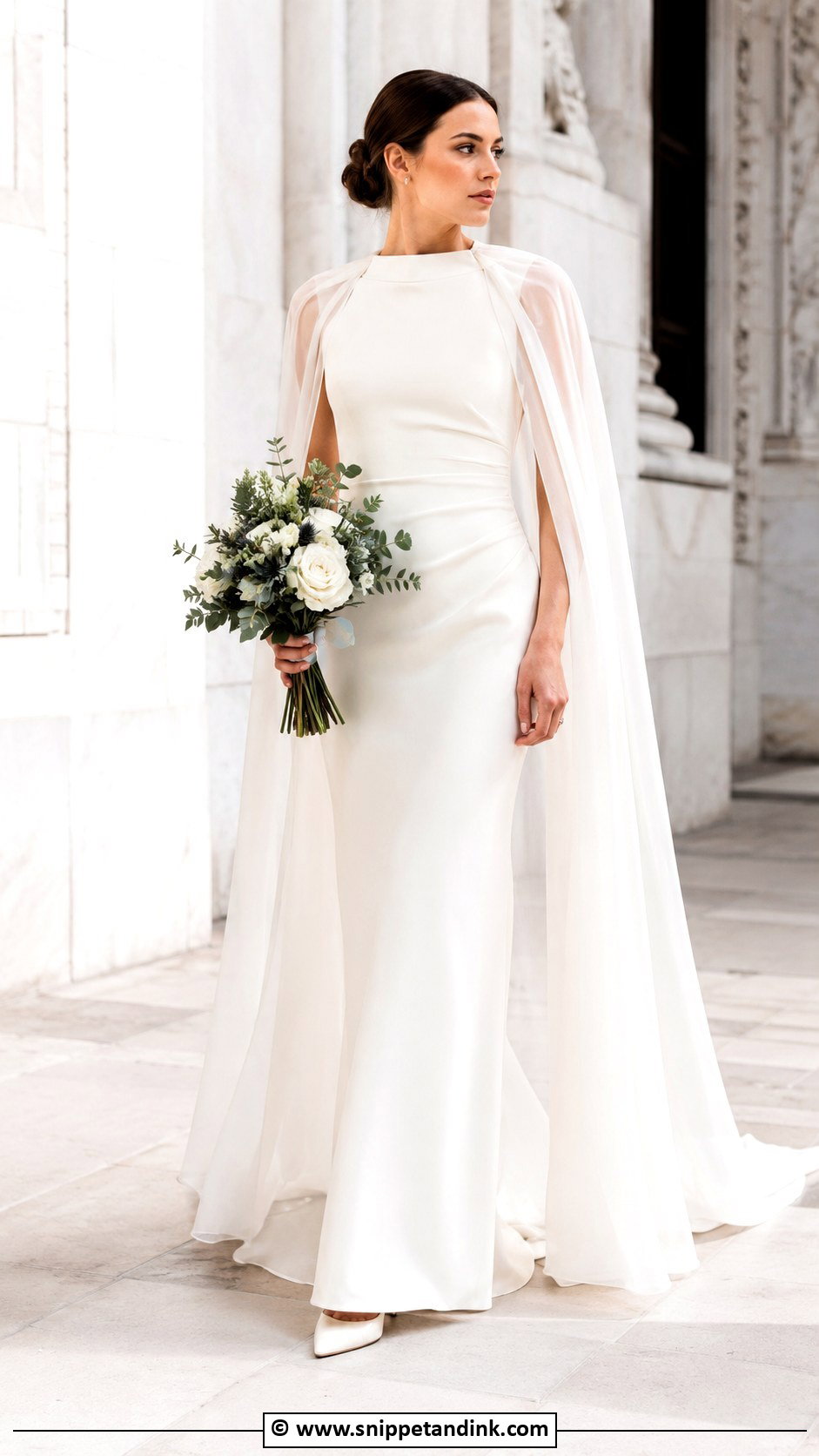
Brides with an intricate updo often prefer a cape, because it gives the movement and coverage of a long veil while leaving the hair visible. It can be sheer, lace-edged, pearl-trimmed or long enough to trail. Placement matters more than people think. Shoulder clasps can drag a strapless bodice down, so on strapless gowns I attach at the back or neckline instead. A low bun and sleek earrings finish it, and it comes off for dancing in seconds.
24. Tulle Wedding Gown
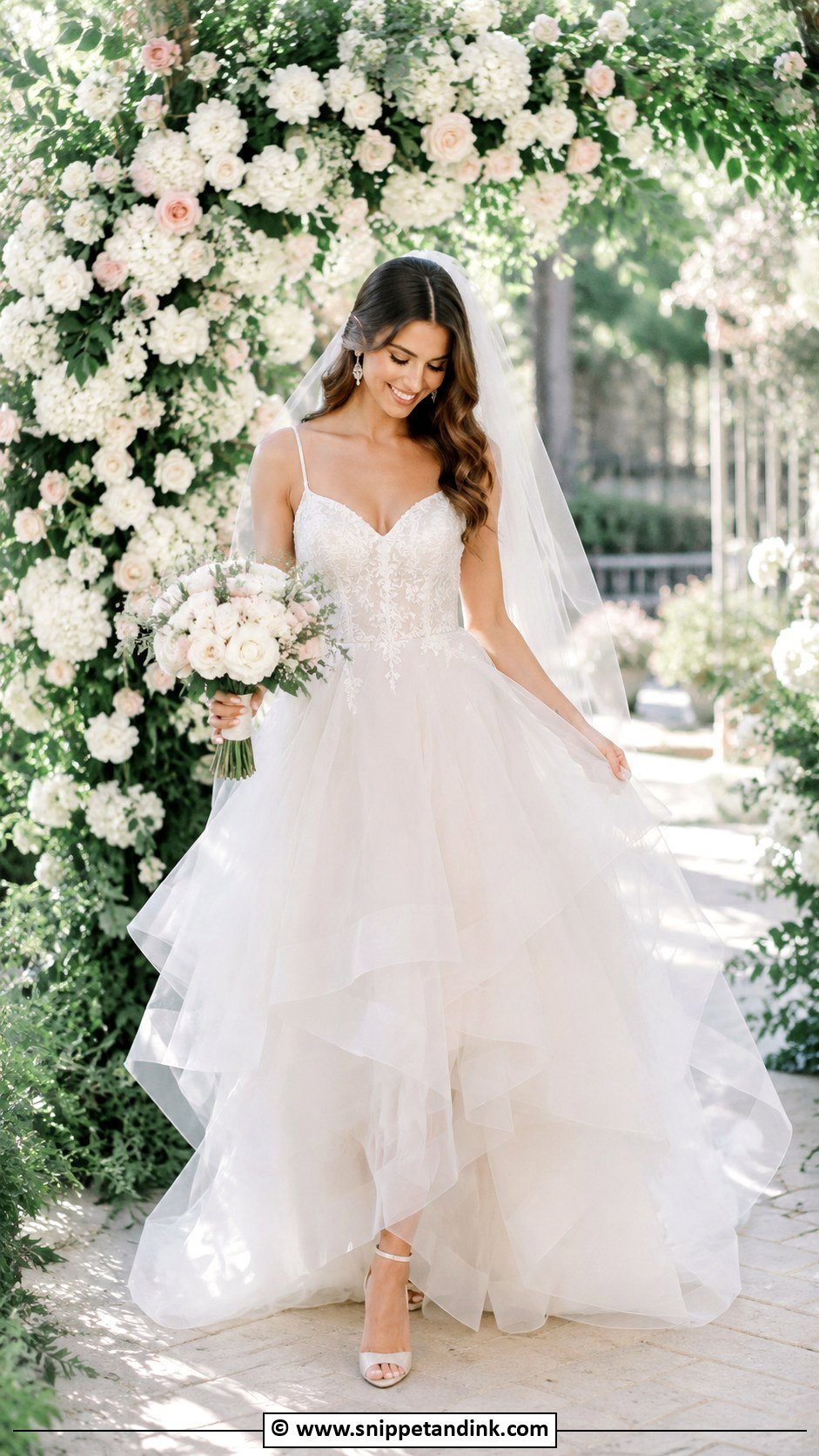
Tulle gives volume with very little weight, so a full tulle skirt moves more easily than satin or brocade of the same size. It’s also fragile. Heels, bracelet clasps and bouquet wire all snag it, and a pulled thread shows on a pale skirt, so I keep a small pair of scissors and clear nail polish in my kit. Classic in a ball gown, whimsical in an A-line, more modern under a structured bodice. Soft curls and a sheer veil keep the airy feel.



25. Organza Wedding Gown
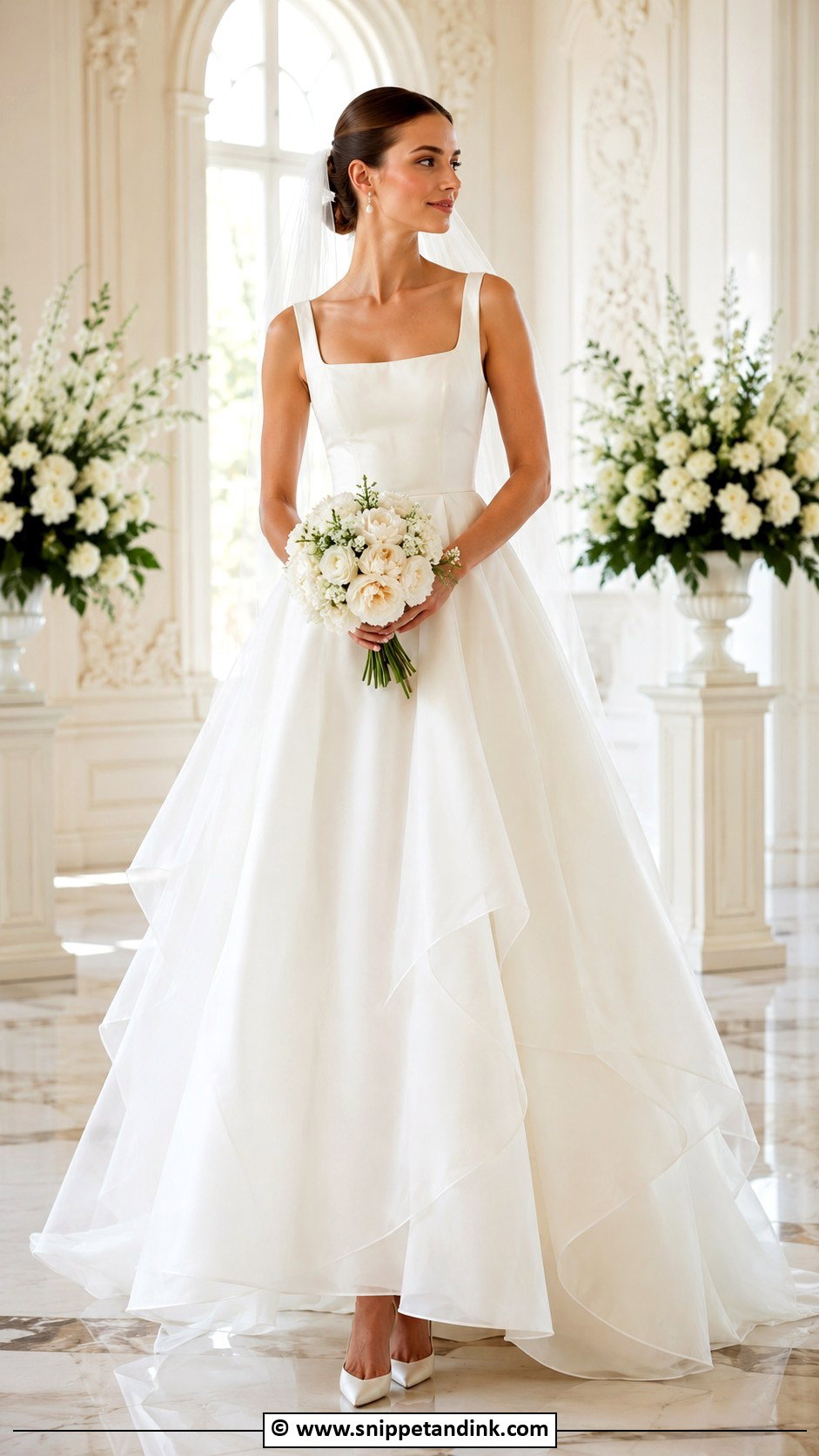
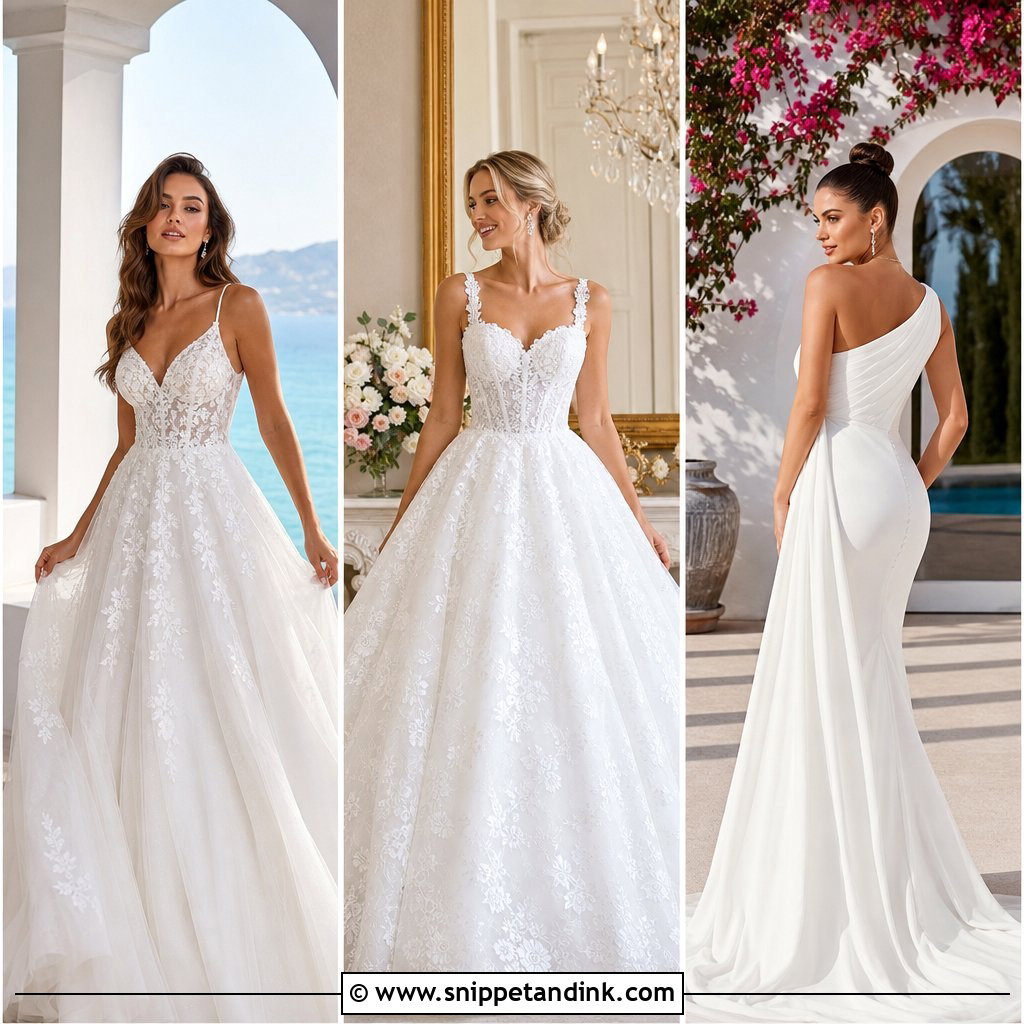
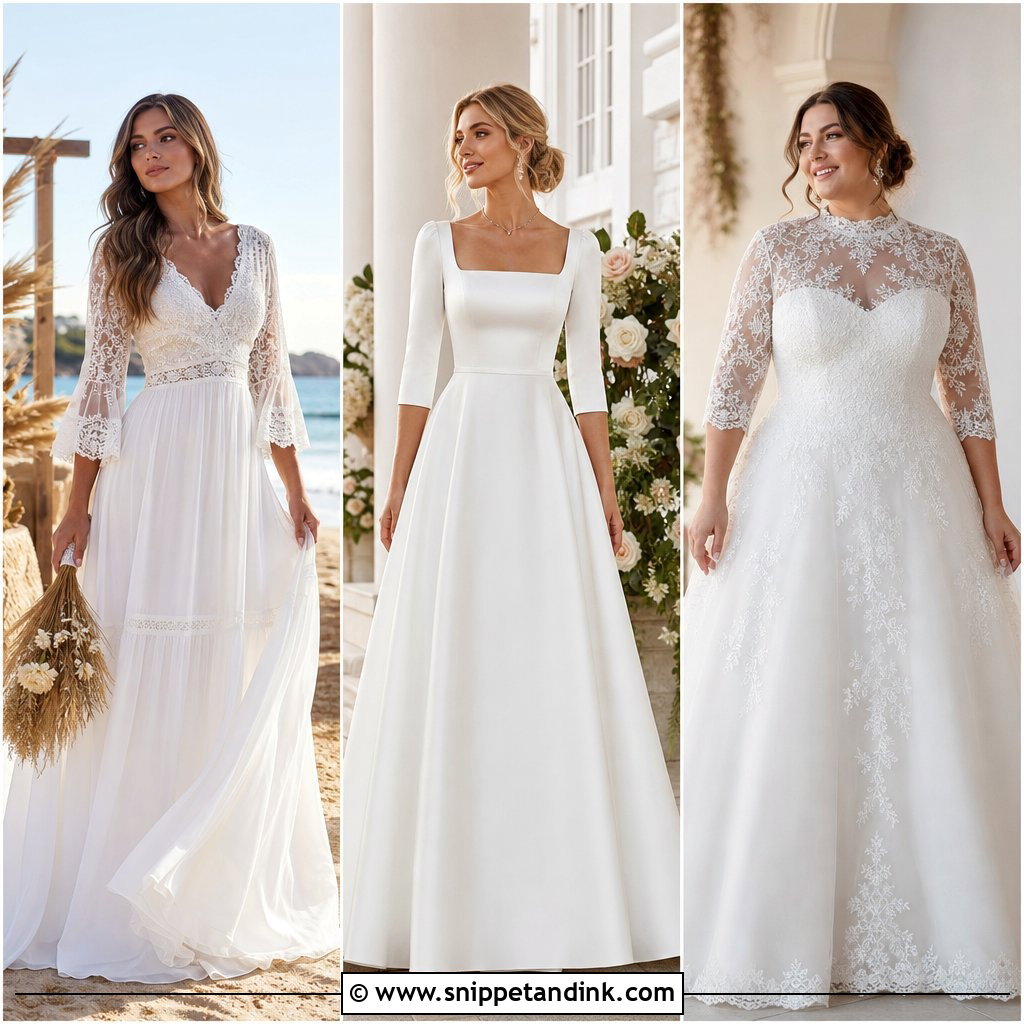
Organza sits halfway between tulle and satin: crisp, translucent and able to hold a shape without much weight. It suits A-line and ball gown skirts for spring and summer daytime weddings. The trade-off is creasing. Organza keeps a hard fold if it’s packed tightly, so I unpack these gowns the moment they reach the venue and steam on a low setting. In bright rooms the slight sheen looks clean and fresh, and a neat bun with pointed pumps matches its crispness.
26. Crepe Wedding Gown
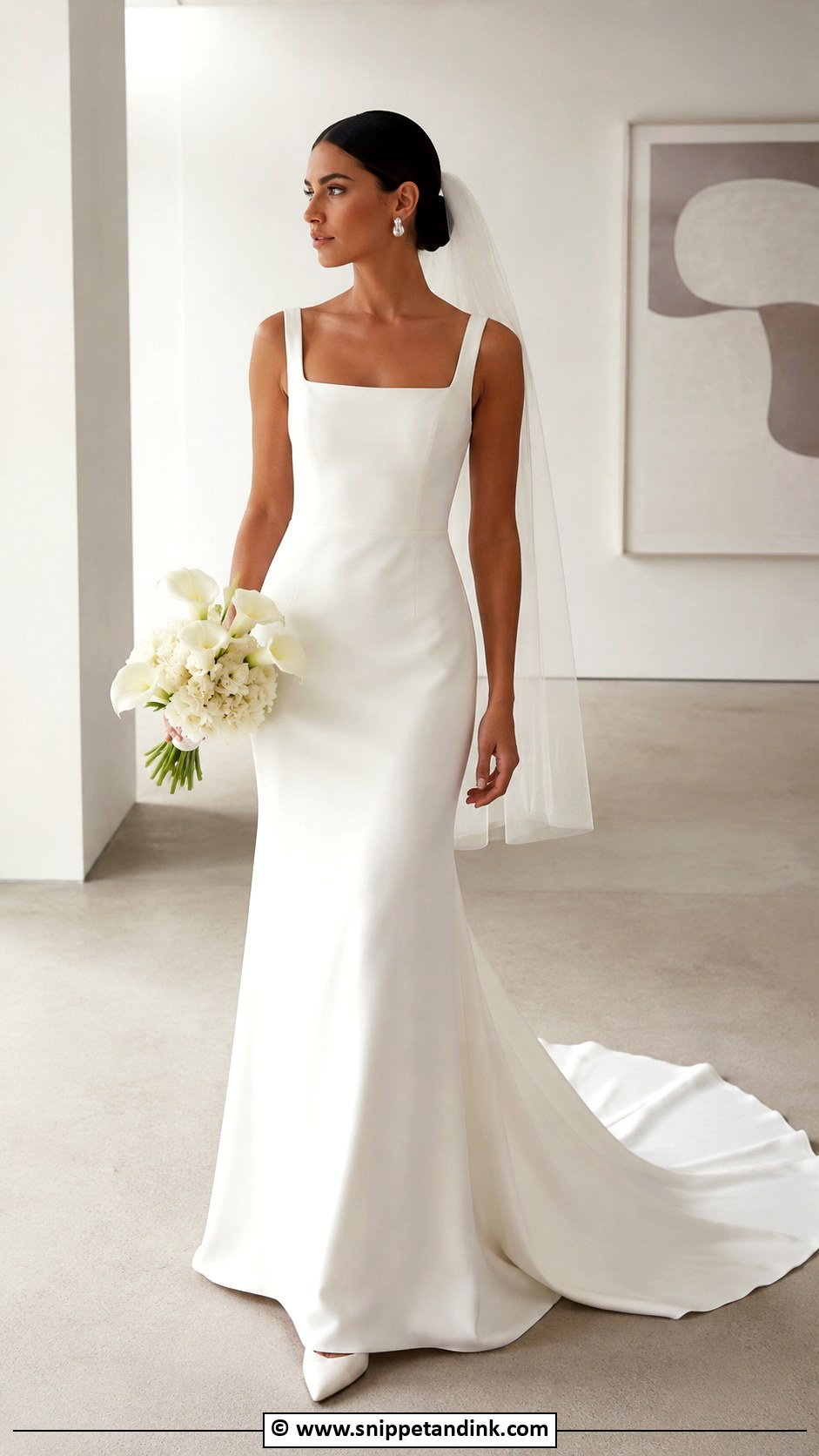
Crepe has enough weight to skim the body and a matte surface that looks modern next to satin. You’ll see it on sheath, fit-and-flare, square-neck and long-sleeved gowns. Because it shows every line underneath, I ask brides to bring their actual wedding underwear to the very first fitting. Sculptural earrings, a low bun and pointed heels suit city weddings and minimalist brides who’d rather let the cut speak.
27. Silk Slip Wedding Gown
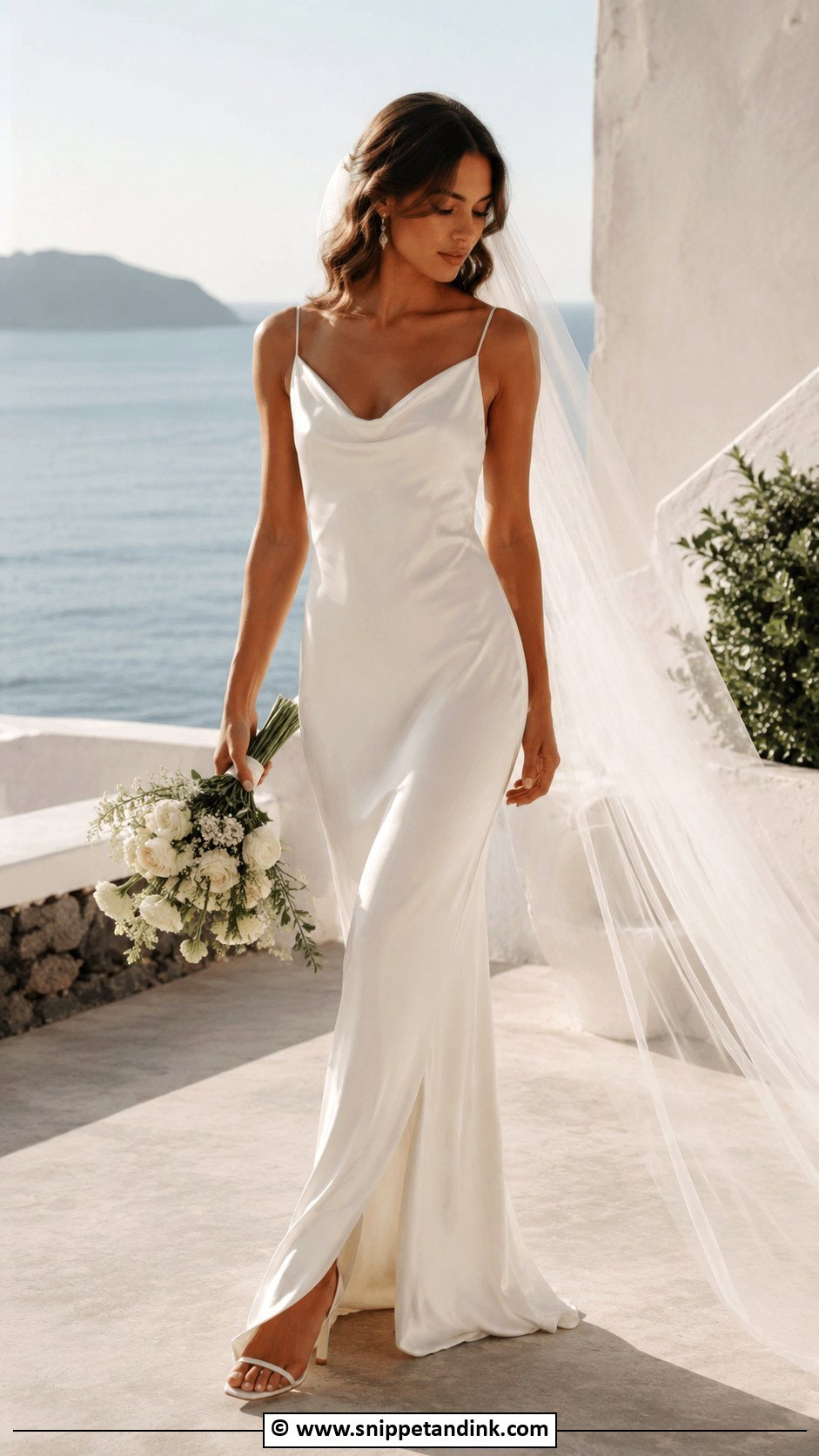
A bias-cut silk slip moves with you like nothing else here, and it’s the least forgiving dress on the list. Cutting on the bias lets the fabric stretch slightly and drape, which also means it reveals every undergarment edge, so smooth, seam-free underwear in a matching tone is part of the dress, not an extra. Silk water-marks easily too; a splash of champagne can leave a ring. Beach weddings and elopements suit it, with strappy heels and smooth waves. For more coverage at the altar, layer a cape or a soft wrap.
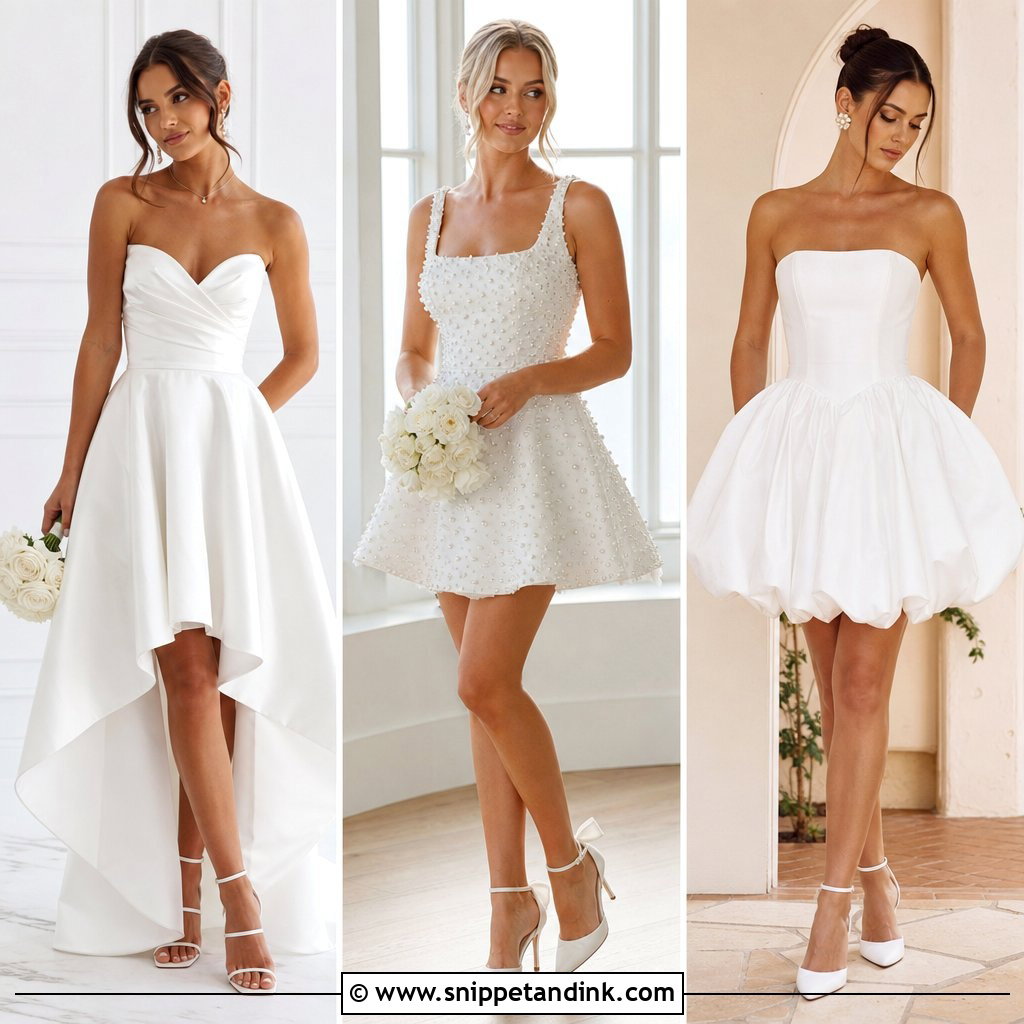
28. Tea Length Wedding Gown
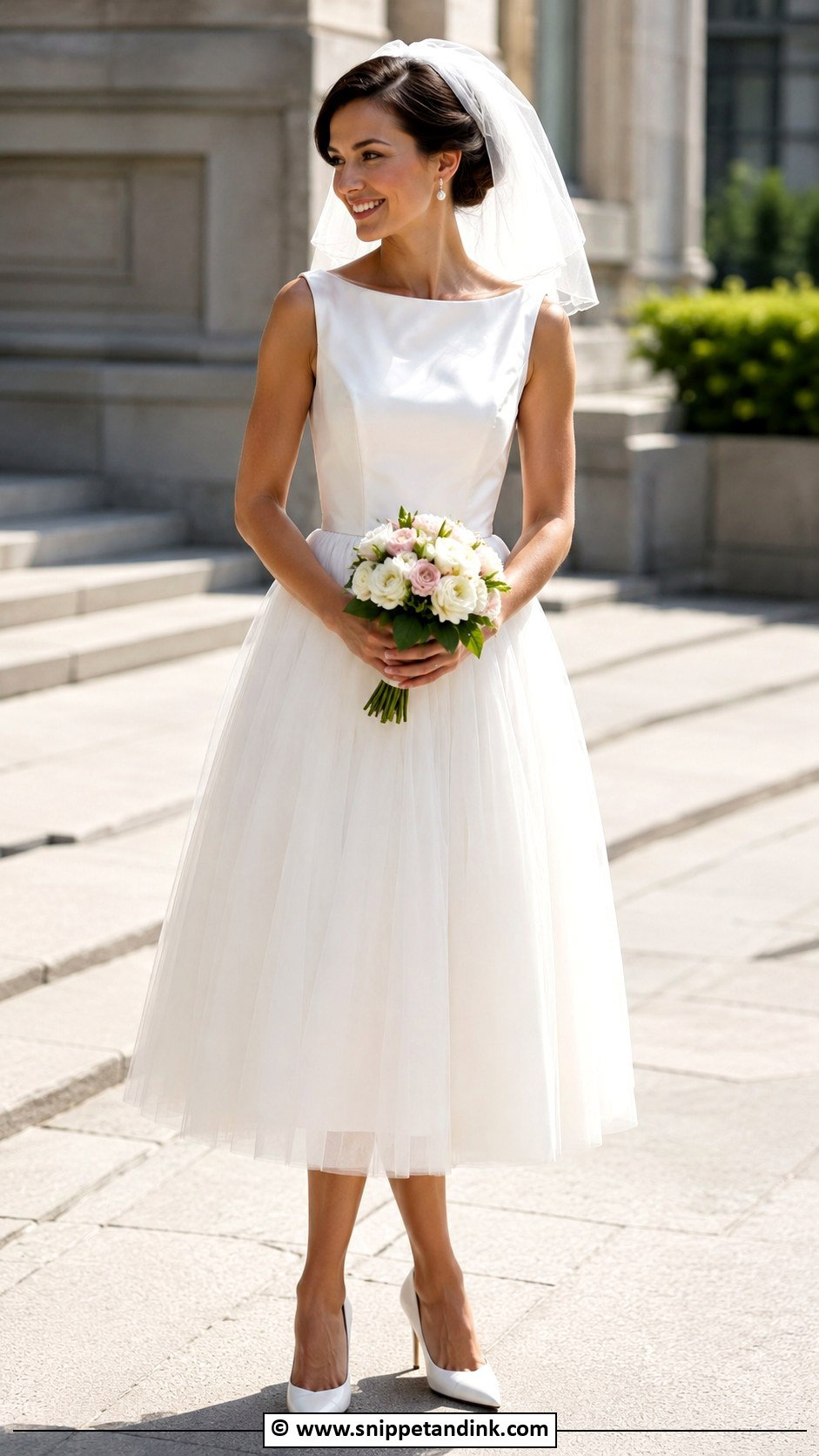
Falling between knee and ankle, tea length is easy to dance in and puts your shoes on show. That second point matters more than people expect: once the shoes are visible they become part of the outfit, so choose a pair worth photographing. Tulle, satin, lace and mikado all hold well at this length. Pointed pumps, pearl earrings and a short veil keep the vintage spirit without tipping into costume. Courthouse ceremonies and daytime receptions are its natural home.
29. Short Wedding Gown
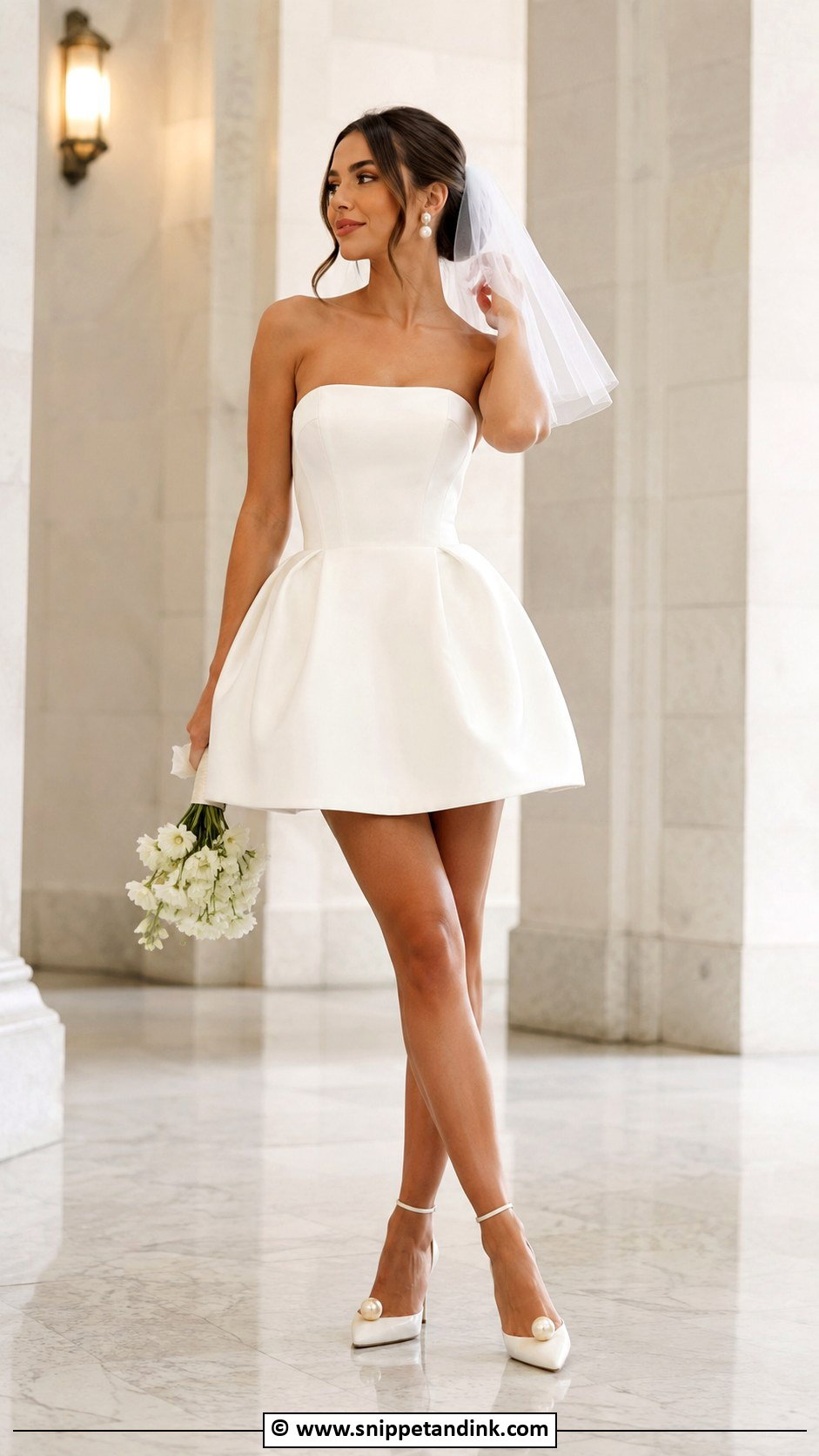
Short gowns suit civil ceremonies, reception changes and after-parties. The risk is looking dressed for a cocktail party rather than your own wedding, and structure is the fix: a clean tailored mini, a knee-length lace dress or a short gown worn with a dramatic veil. Gloves or a bow add ceremony weight. In hot weather, or if you’re travelling, a short dress is also the most comfortable option you have.
30. Vintage Wedding Gown
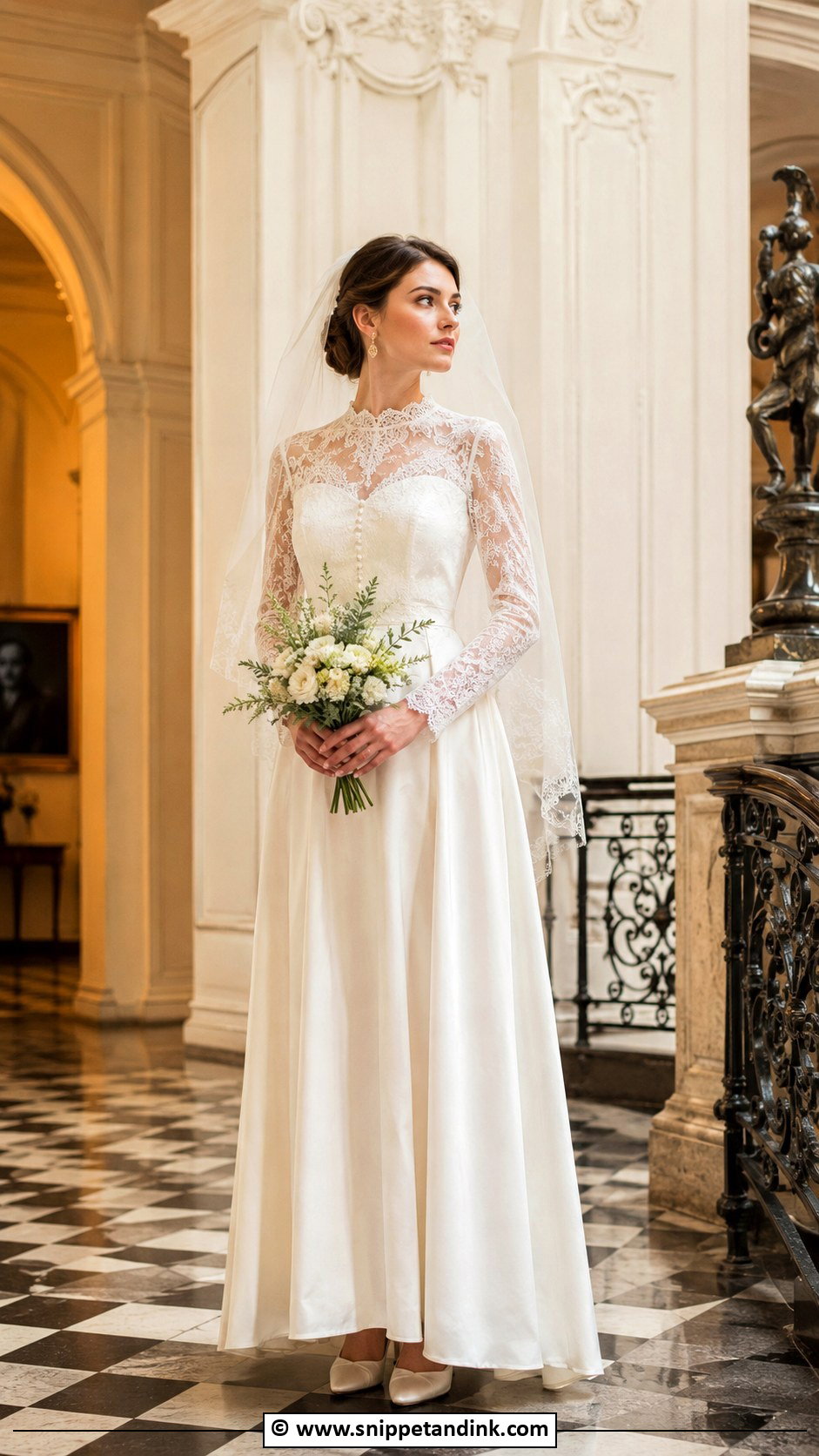
A truly vintage gown has history built in, and fabric that’s decades old needs careful handling. Have it cleaned by a specialist in delicate and antique fabrics, and let someone experienced with old lace do the alterations, because aged silk can split along a stress point if it’s pulled or pressed hard. Older sizing also runs small and close through the waist. If that worries you, a new gown with vintage details gives the look with easier fitting. Pair it with a soft veil and antique-style earrings in a historic venue.
31. Boho Wedding Gown
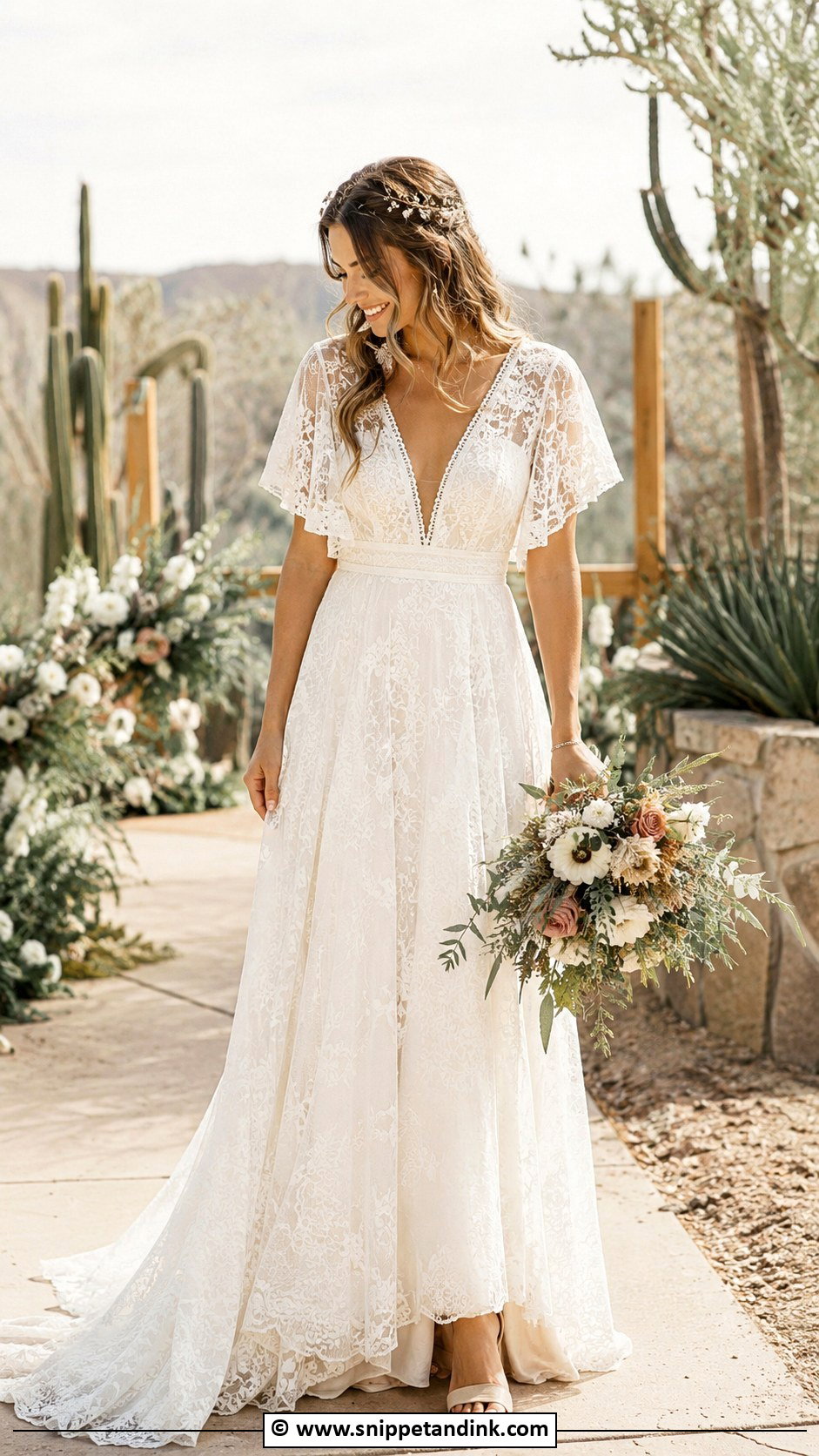
Boho gowns depend on movement: soft lace, flutter sleeves, open backs and skirts that swing when you walk. The danger is costume, and that nearly always comes from piling on accessories. One focal point, a hair vine or statement earrings, is enough. Choose breathable fabric for desert, beach and garden ceremonies, and block heels or sandals so you aren’t sinking into the lawn. Loose waves and a light bouquet finish it.
32. Beach Wedding Gown
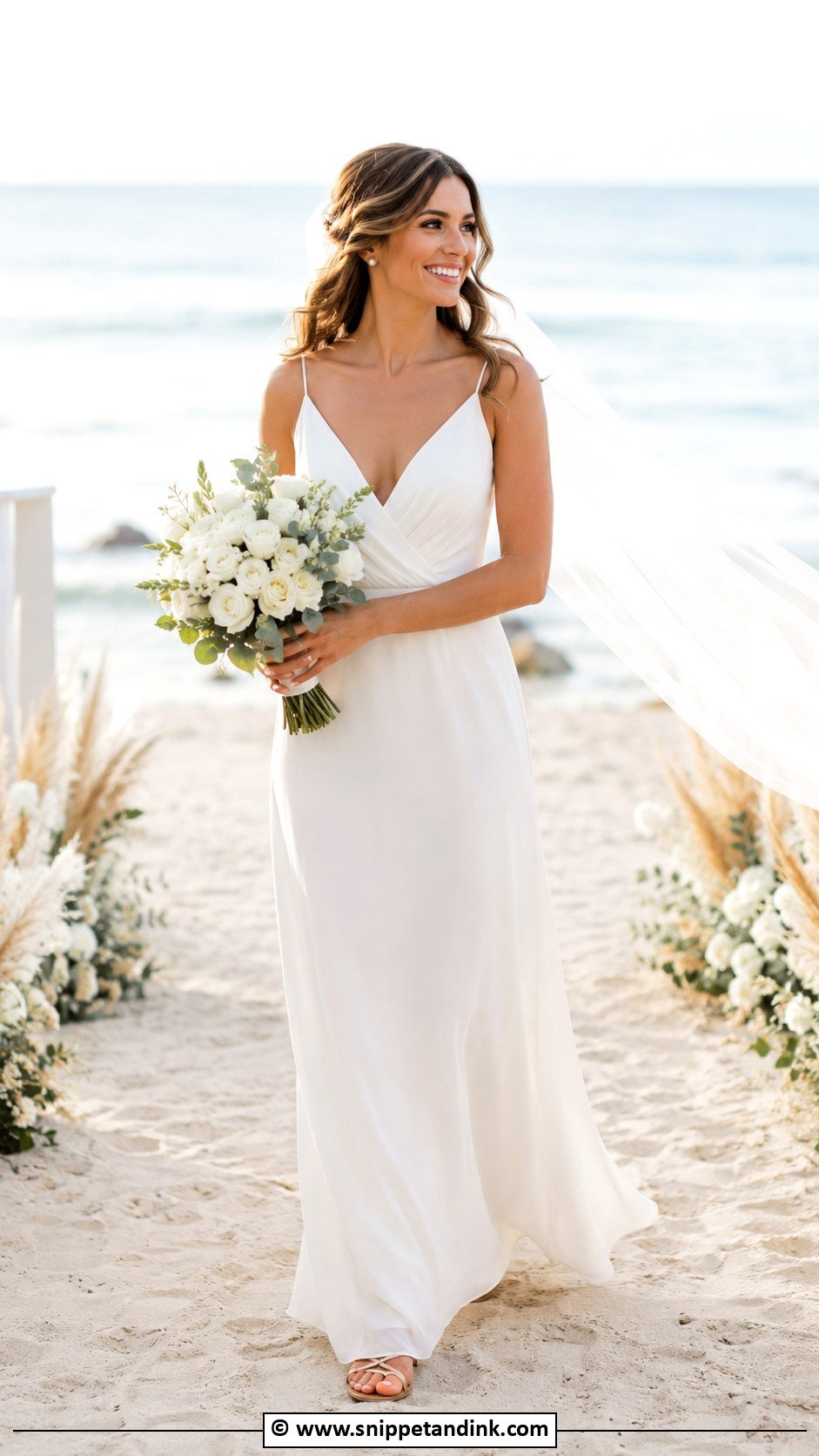
Sand and wind decide a beach gown more than fashion does. Heavy trains collect sand and wet hems, and stiff fabrics fight the breeze, so I’d stay with chiffon, silk, soft crepe or light lace in a sheath, slip or easy A-line. Hem it for flat sandals or bare feet, not heels, since that’s how you’ll actually walk the aisle. On a windy day, secure the veil with extra combs or leave it off. Pearl studs and loose waves suit the setting.
33. Courthouse Wedding Gown
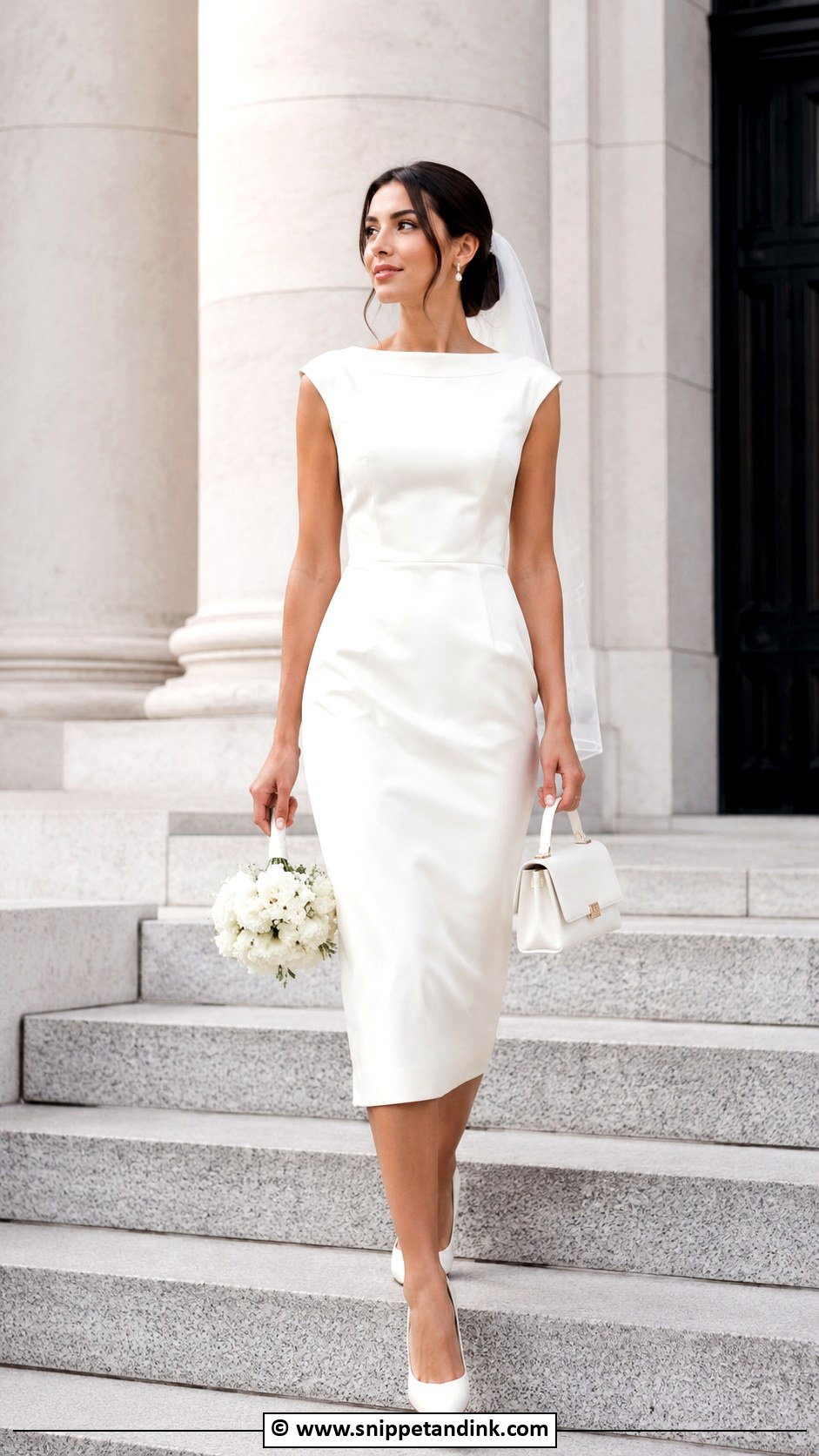
Courthouse ceremonies are short and close, so people see the dress from a few feet away. A short dress, sleek midi, tailored sheath or minimalist satin gown all suit the setting, and the fit needs to be sharp because nothing distracts from it. Add pointed heels, pearl earrings and a short veil or hair bow, plus a structured bag for the photos on the steps outside city hall. Ivory, champagne and soft blush look warm against stone and wood.
34. Plus Size Wedding Gown
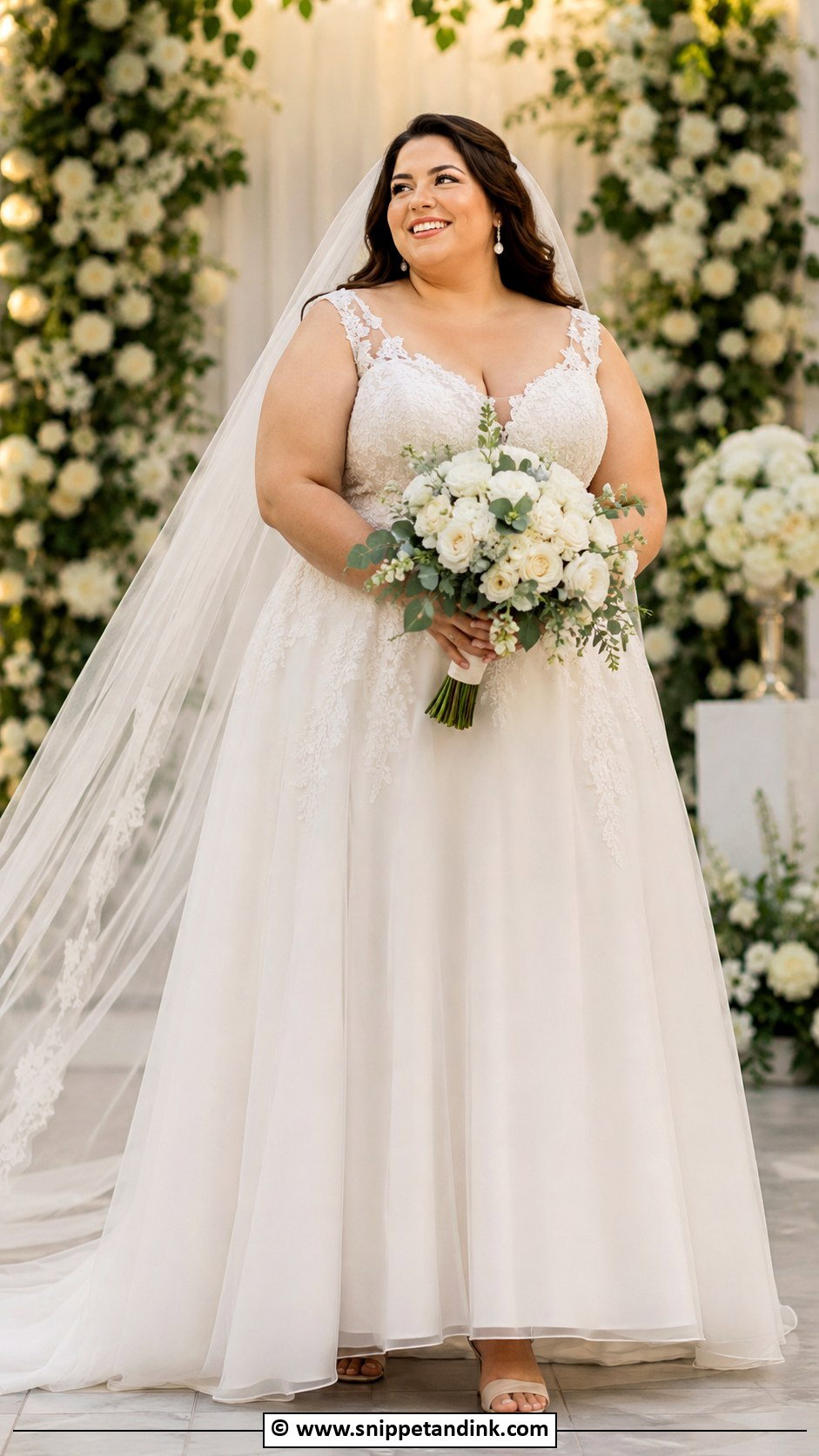
Every silhouette in this collection can work on a plus-size body when the internal structure is right, so I don’t steer brides toward one shape. What I look for is a boned, supportive bodice, a comfortable lining, strong straps where you want them, and seams that shape without digging in. If the salon has samples in your size, try those; a dress clipped down from a smaller sample tells you very little about how the real one will sit. Bring your undergarments to every fitting, and ignore anyone telling you what plus-size brides “should” wear.
35. Reception Wedding Gown
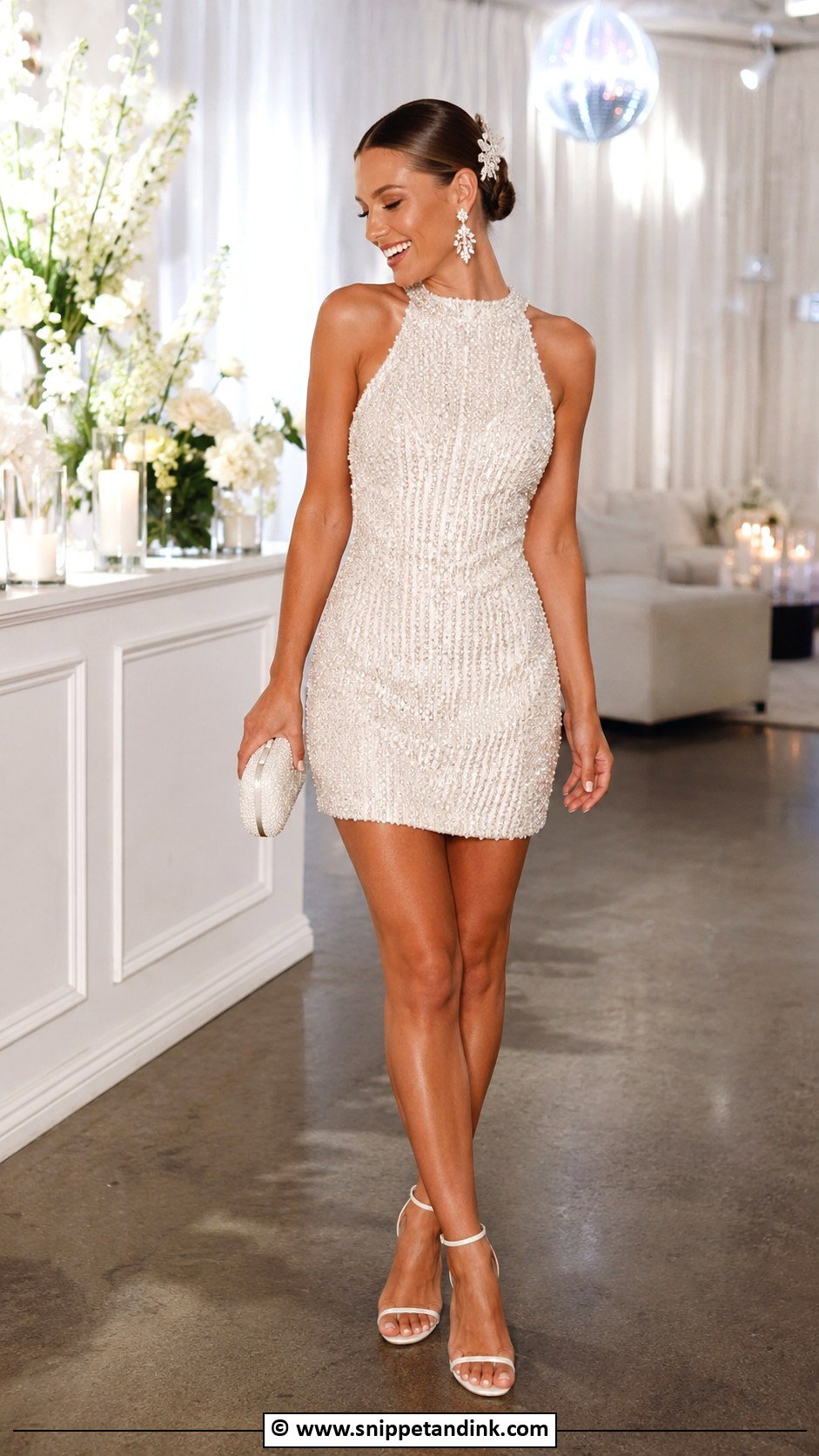
A reception gown exists so you can dance. It can be shorter, lighter, sparklier or simpler than the ceremony dress, and satin minis, beaded sheaths, tea-length dresses and slim crepe gowns are the usual picks. It earns its place when the main dress is heavy, has a long train or a bustle you don’t trust. Build the change into the timeline, because with a hair tweak and new earrings it rarely takes less than twenty minutes, and make sure someone is there to help with the buttons. Dance-friendly heels and a playful hair accessory finish it.
The Calendar Behind a Made-to-Order Gown
Most bridal gowns are cut and sewn after you order, not pulled from a stockroom, and that takes longer than people expect. This is the rough timeline I plan around, though it varies by designer and by how busy the season is:
- Nine to twelve months out: shop and place the order. Many designers quote around four to six months for production, plus shipping.
- About three months out: first alteration fitting, once the gown has arrived.
- Six to eight weeks out: second fitting, where the hem is set with your actual wedding shoes and the bustle is planned.
- Two to three weeks out: final fitting. Bring the person who will bustle the dress and have them practise it twice.
Rush production exists, but it usually carries a fee and narrows your choice of designer. If you’re under six months away, sample sales and ready-to-wear bridal lines are the calmer route.
Over or Under: Matching the Bustle to the Train
An over bustle lifts the train with hooks and loops onto the back of the skirt, which suits lace and lighter fabrics. An under, or French, bustle tucks it beneath with ribbon ties, which keeps satin and plain trains looking clean. Heavy beaded trains often need extra pick-up points so they don’t sag or tear a hook during the first dance.
Sugar Stains, Plastic Bags and the Morning After
Champagne and cake often dry invisible, then oxidize into yellow or brown marks over the following months. That’s why I tell brides to get the gown to a specialist wedding dress cleaner within a few weeks, not the following year, and to point out every spill they remember, even the ones they can’t see.
For storage, take the dress out of any plastic garment bag, which traps moisture. Wrap it in acid-free tissue and keep it in an acid-free box or a breathable cotton bag somewhere cool and dark, never an attic or basement. A heavy gown shouldn’t hang by its shoulder straps for months; the hanging loops sewn in at the waist are there to take that weight.
Your Gown at Hour Nine, Not Minute One
Look back at the dresses that made you stop scrolling and notice what they share. Usually it’s a neckline, a fabric or a waistline, and that pattern is your starting point at the salon. Then test it against your venue, your weather and how you plan to spend the evening. A ball gown, a crepe sheath, a pearl-covered dress or a short reception change can each be right for a different bride. Trends move every season, but a gown that fits well and lets you move will still feel right in the photos you look at twenty years from now.
You'll Like These Ideas:





Leave a Reply