
Long hair gives a bridal stylist the most to work with, and it also brings the most weight to manage. A thick braid wrapped in gajra, a full bun at the mandap, pearls woven through a fishtail: all of these need length, and all of them need a firm base so they don’t drag by the third ritual. Here are 25 Indian wedding hairstyles for long hair, from a classic South Indian braid to soft curls and modern half-up looks, with notes on how each one is built and the hair it suits.
Why Very Long Hair Needs More Pinning, Not Less
Brides with long hair often assume their styles will be the easiest, and in some ways they are. But every extra inch is extra weight. Curls stretch out under their own weight, buns get heavy enough to sag, and a single ponytail carrying waist-length hair, flowers and ornaments can bring on a headache by mid-afternoon.
So I spread the load. For big updos I split the hair into two or three anchor sections instead of one ponytail, set curls with mousse and let them cool completely before brushing, and use spiral or screw pins for anything heavy. Ask your stylist how each style will be anchored. A good one will have a clear answer.
When You Add a Jada or Paranda
Traditional braid ornaments add real weight. A South Indian jada with gold billas down the braid, or a heavy Punjabi paranda, hangs from the top of the plait, so the braid has to be tight and well secured at the crown. I put the full set on at the trial and have the bride sit, stand and turn. If the braid pulls at her scalp when she bends her head, the top attachment needs reinforcing before the wedding, not on the morning of it.
1. South Indian Braid With Gajra
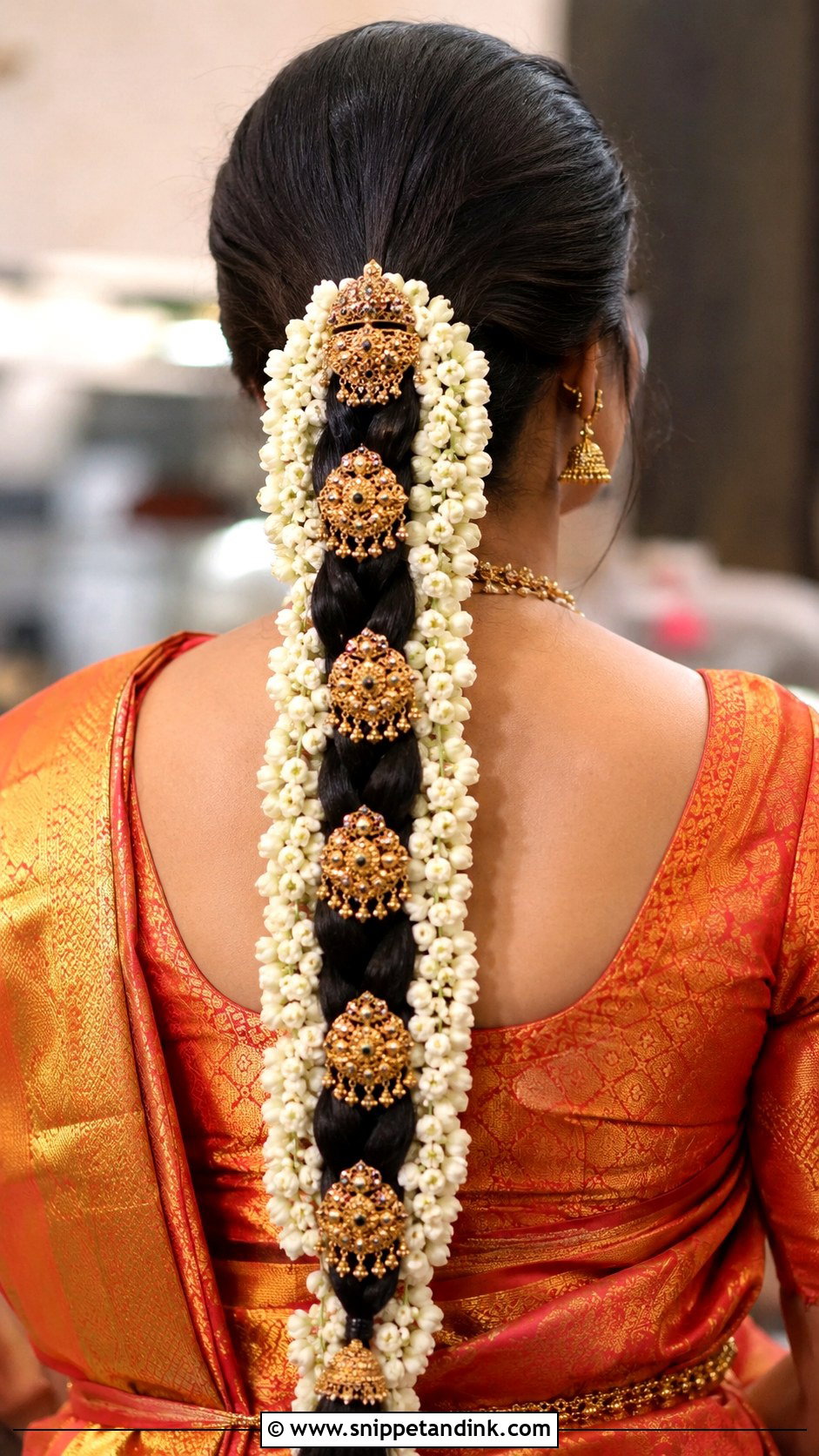
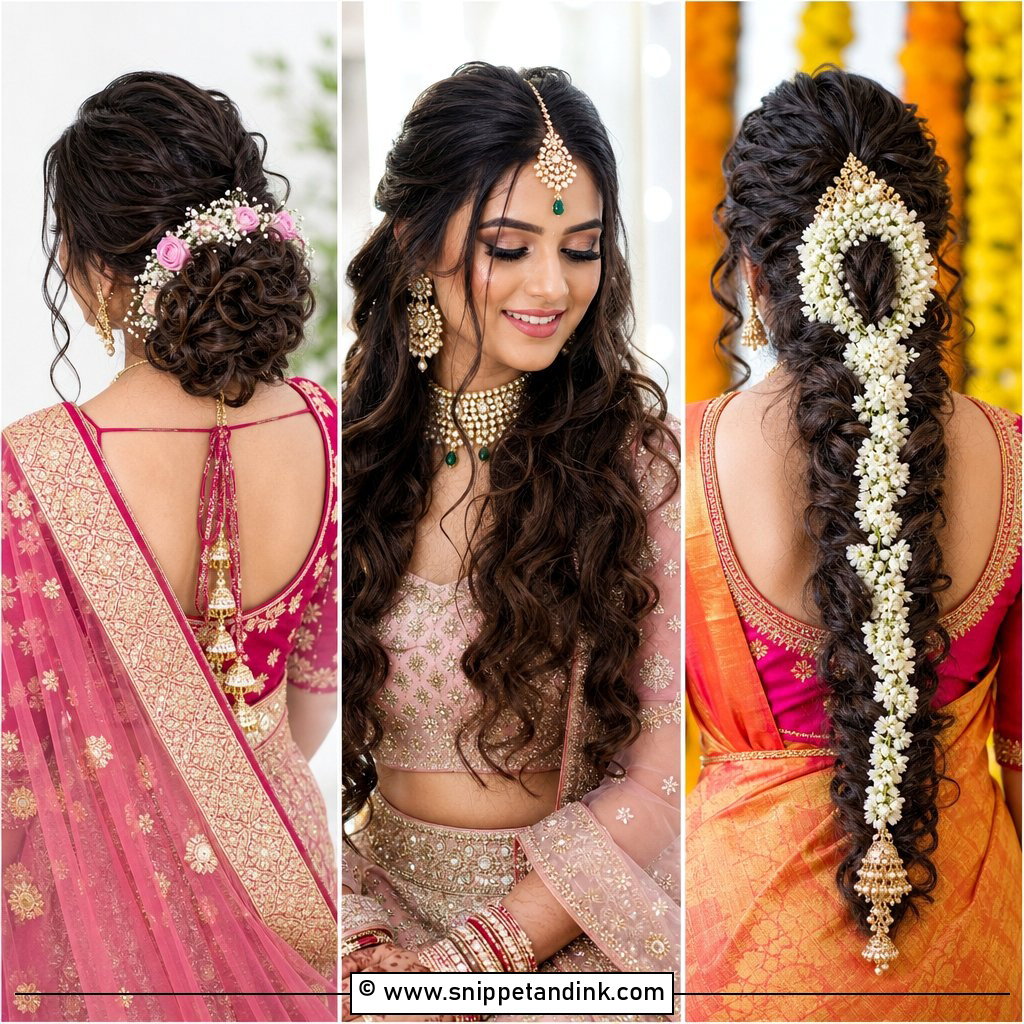
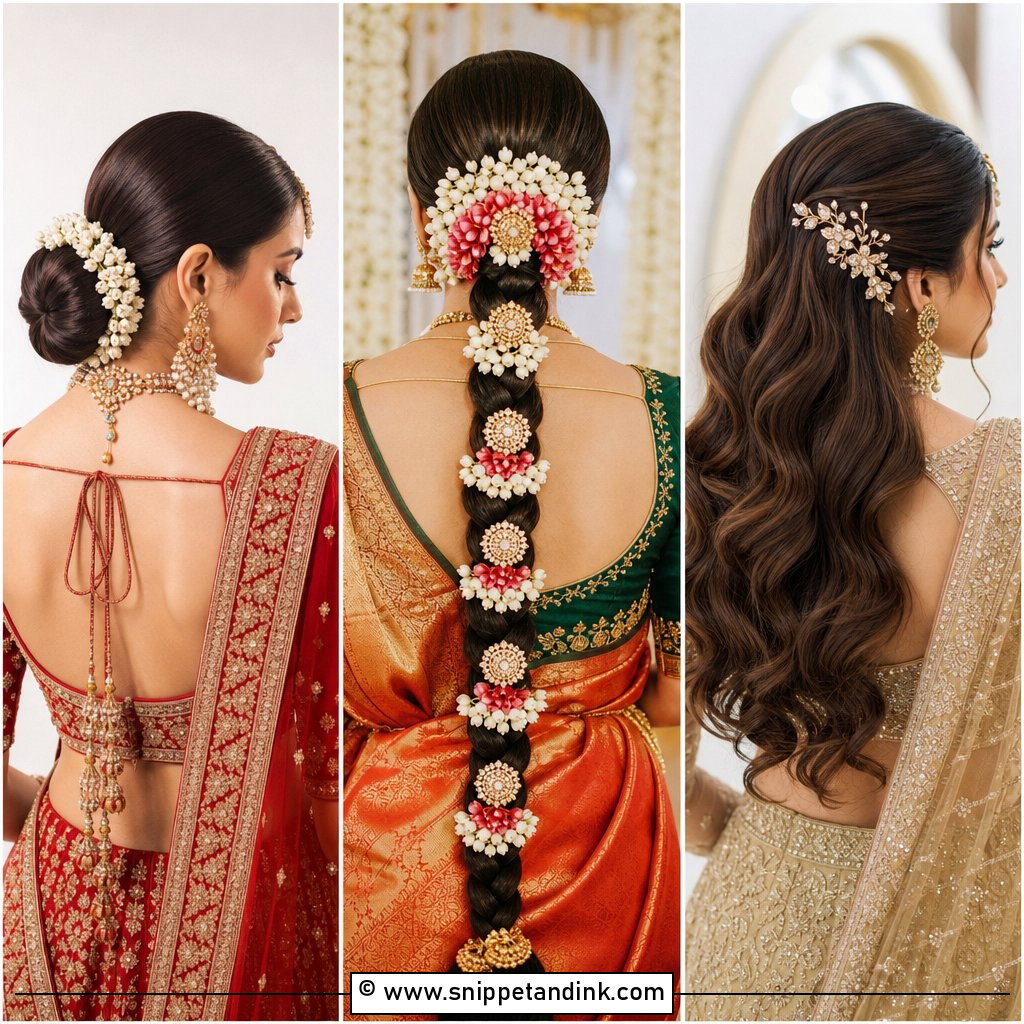
In a Kanjeevaram silk saree, a thick braid down the back is the classic finish. For the South Indian braid, I section the hair into one full plait and wrap jasmine gajra around it from top to bottom, with temple jewelry or gold danglers along the length. The longer and thicker your hair, the more dramatic it gets; where length falls short, a matching extension braided into the lower half fills it out. The top of the braid has to be pinned firmly at the crown, because the whole weight of flowers and ornaments hangs from that one point. It belongs at muhurtam ceremonies with heavy gold and a maang tikka.
2. Floral Low Bun
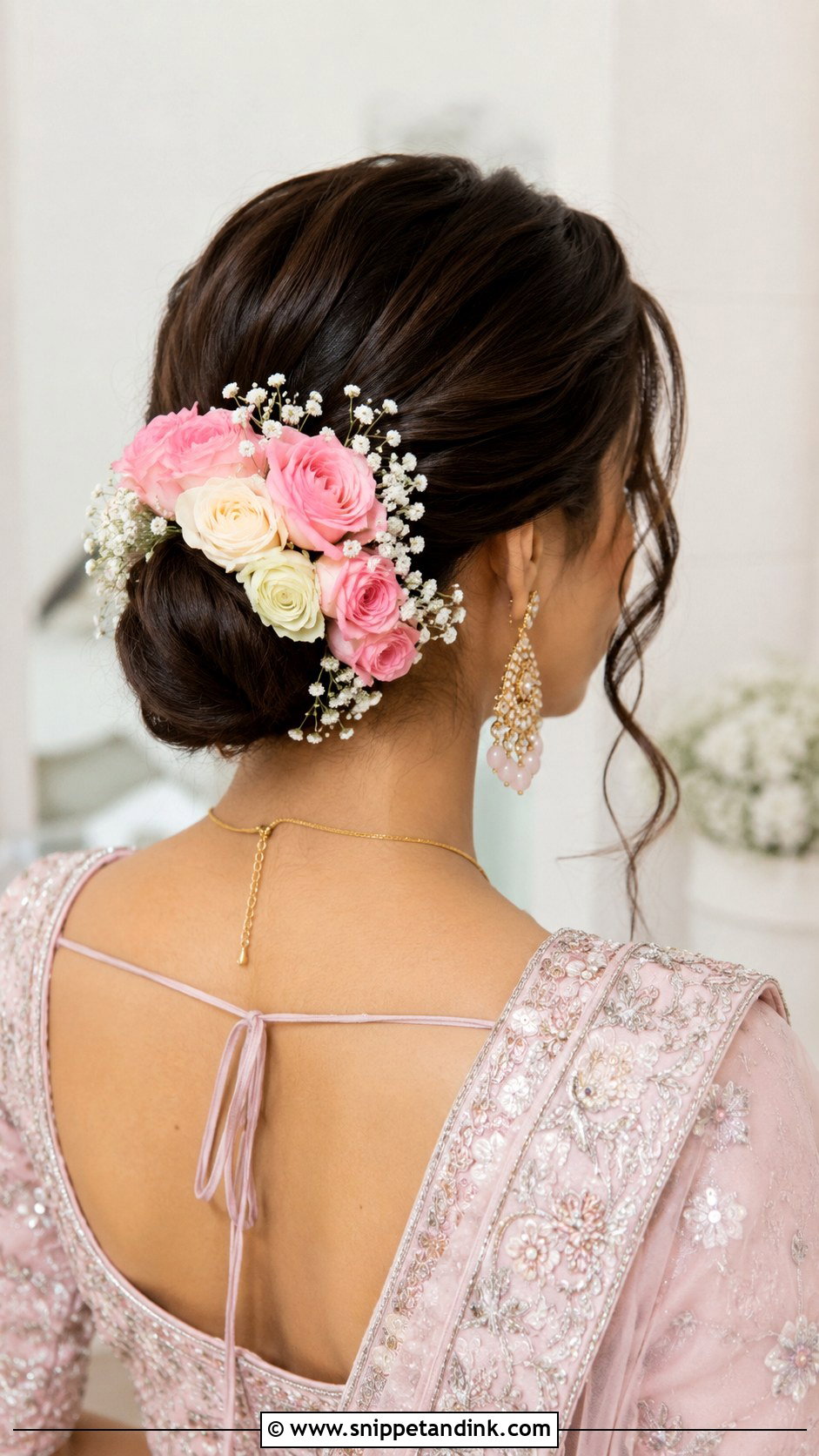
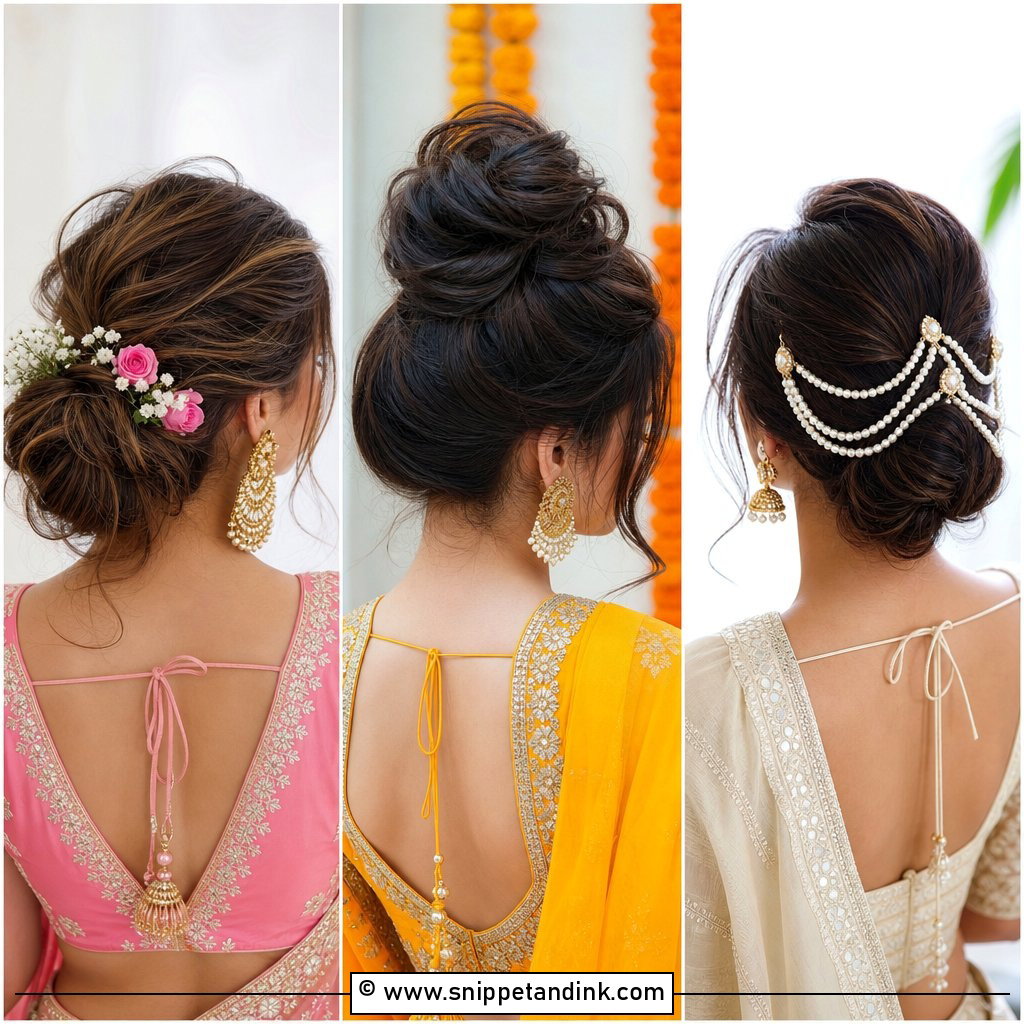
Gathered at the nape and twisted into a smooth or slightly textured bun, with roses or orchids tucked around the base. I like it under a dupatta, because a low bun gives the fabric a ledge to rest on without lifting it away from the head. Long hair can make a low bun huge, so I sometimes braid part of the length first and wrap it, which keeps the size in proportion with heavy earrings. Receptions and engagement functions suit it, with a delicate maang tikka in front.
3. Messy Braided Bun
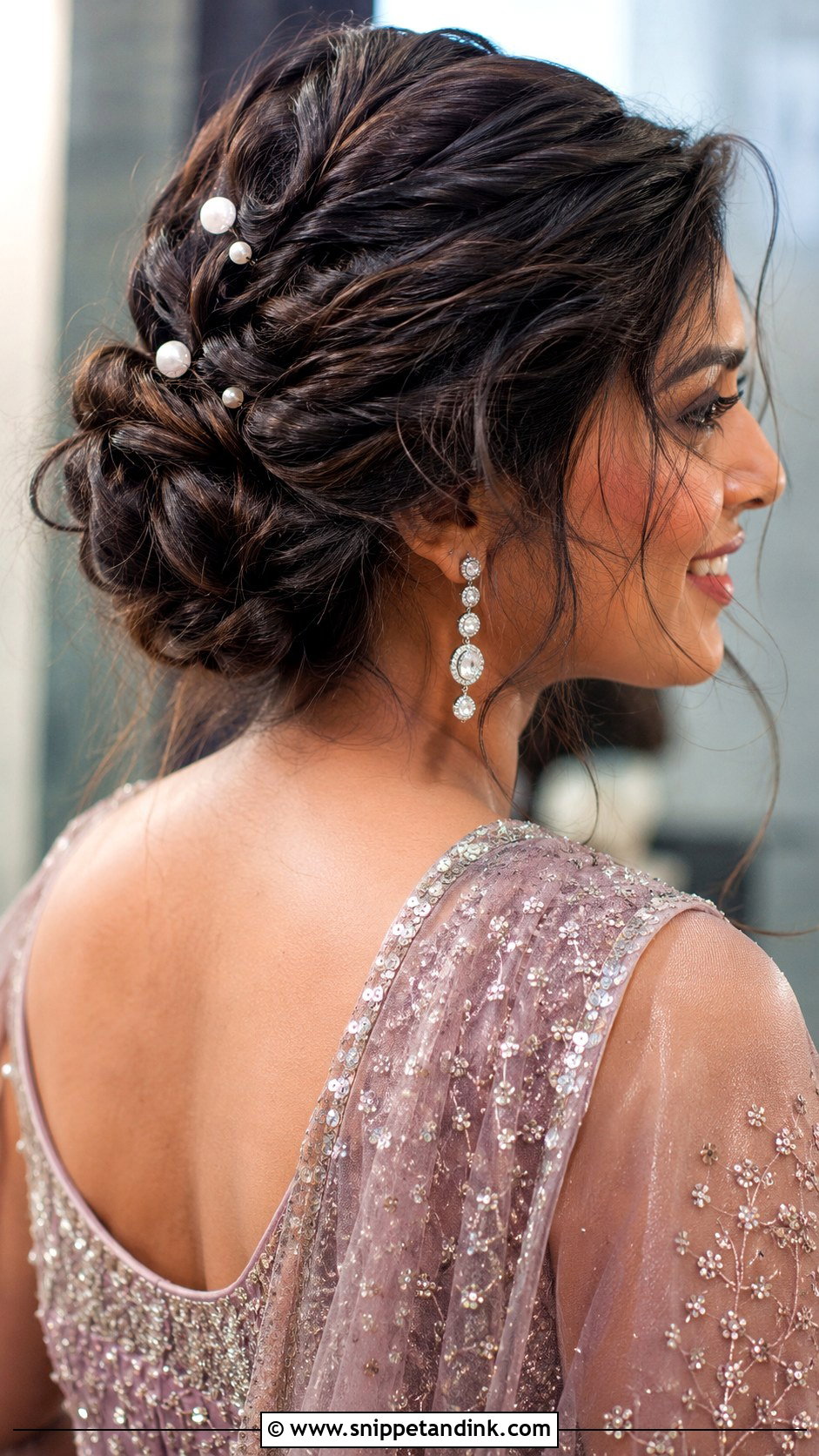
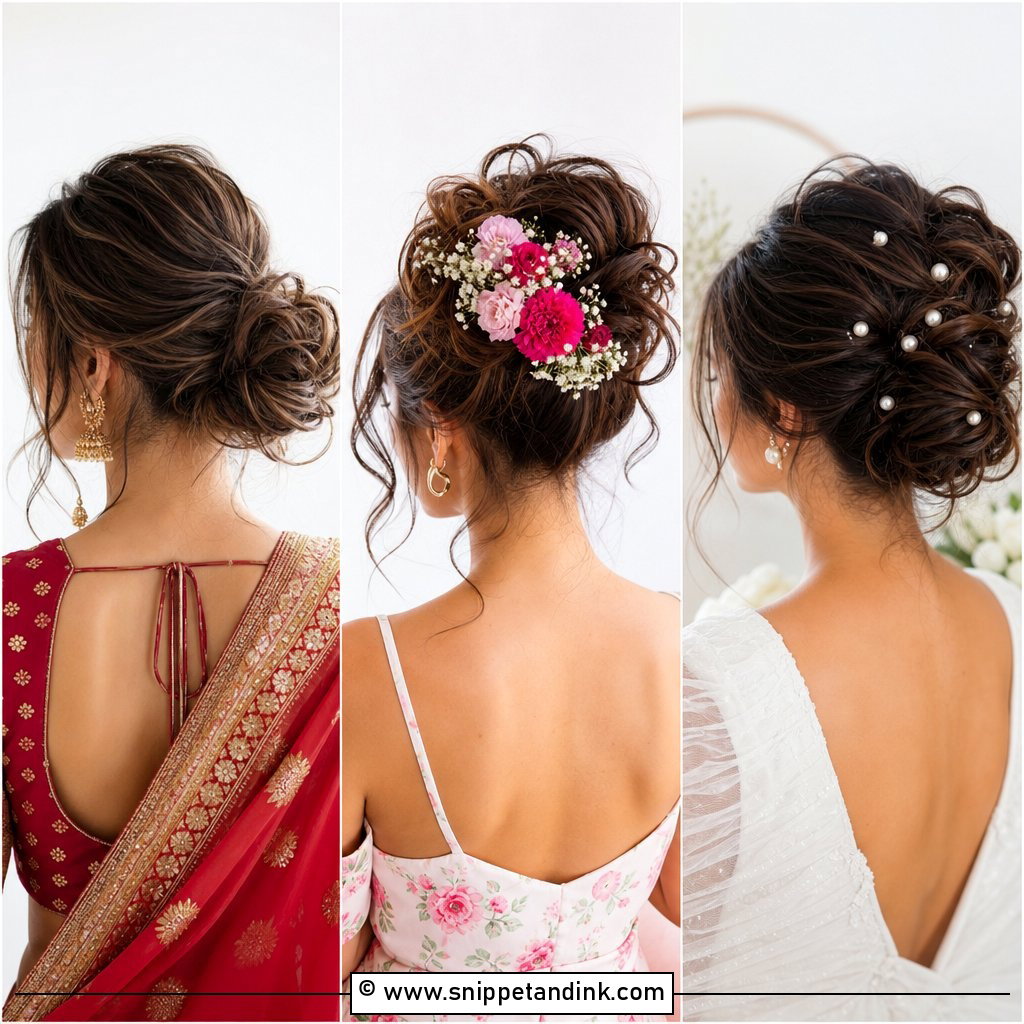
The hair is braided in sections, then looped and pinned into a relaxed bun with a few strands pulled out to soften the edges. A braided base builds fullness on its own, which helps if your hair is long but not especially thick. Small pearls or jeweled pins add detail without weight. I pull the loose strands out after the final spray, not before, so they stay soft rather than crunchy. Sangeet nights and cocktail functions suit the undone finish.
4. Fishtail Braid With Pearls
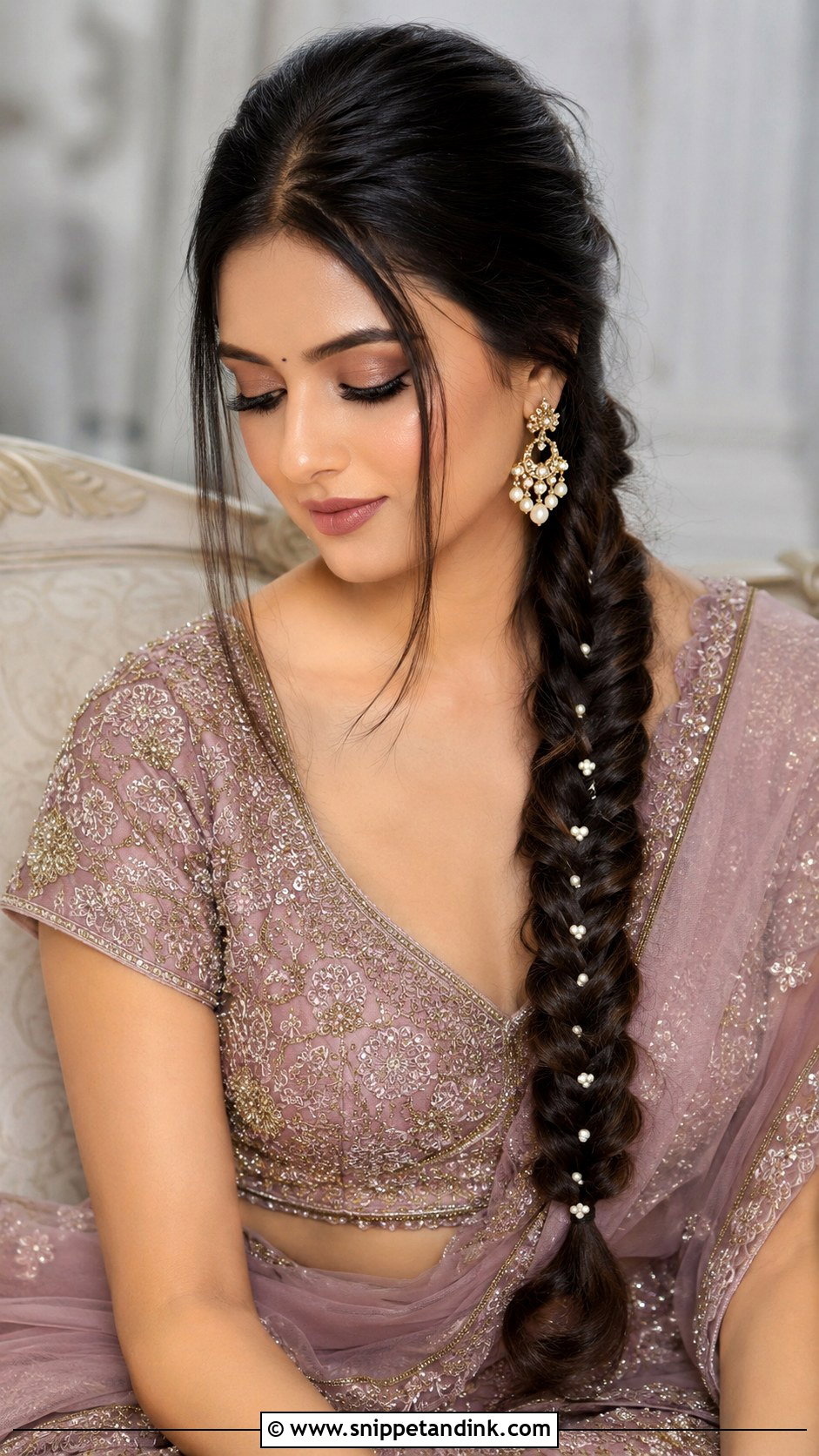
A fishtail looks far more detailed than a regular plait because each crossing takes only a thin strand. Tiny pearls or mini jewels on pins go into the outer edges of the braid, where they catch the light, and it drapes over one shoulder with a lehenga or saree. It holds well through long ceremonies. On very long hair it also takes noticeably longer than a three-strand plait, so give your stylist the time. Extensions can add thickness at the ends, where long hair naturally thins.
5. Half-Up Half-Down With Waves
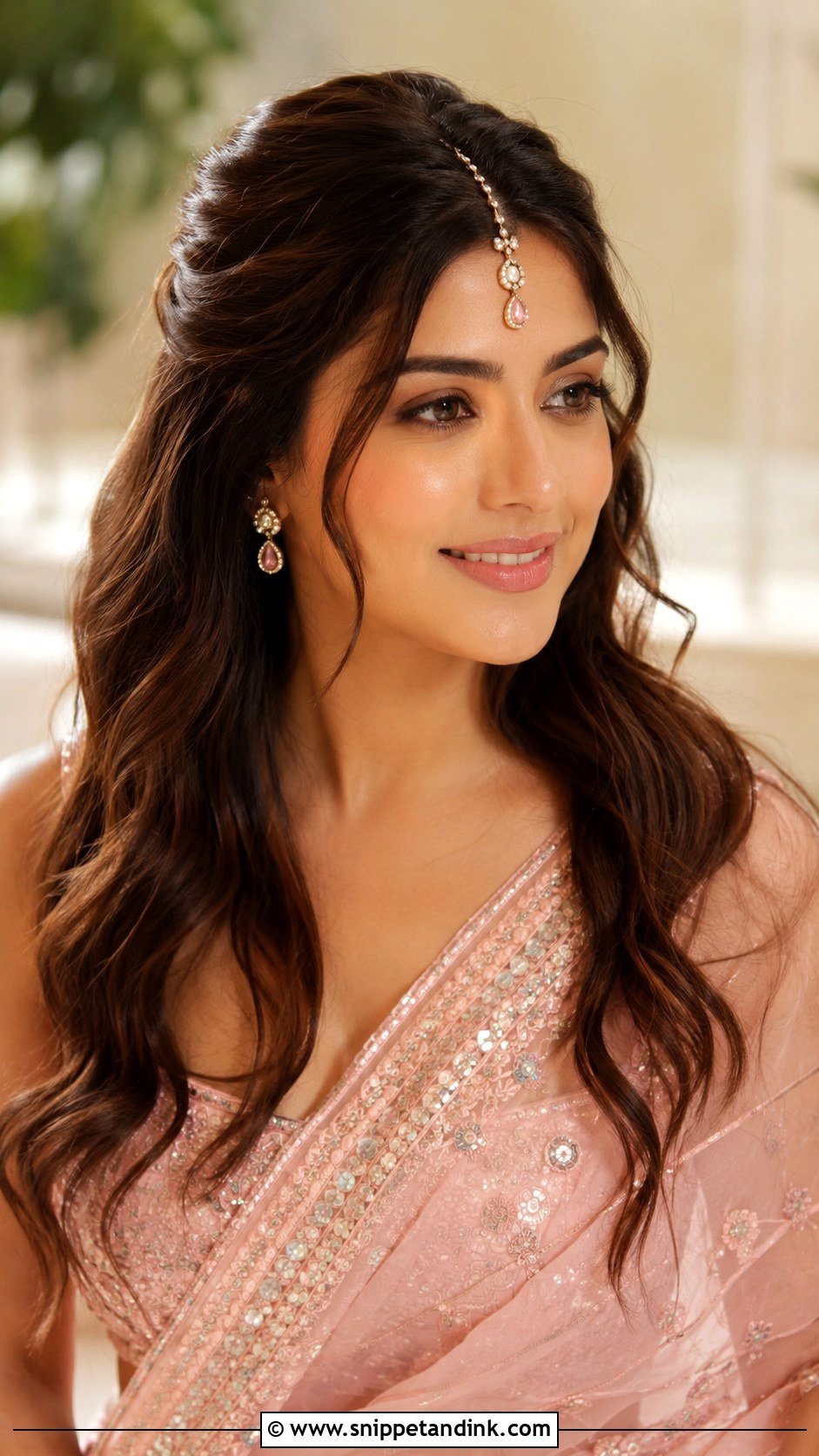
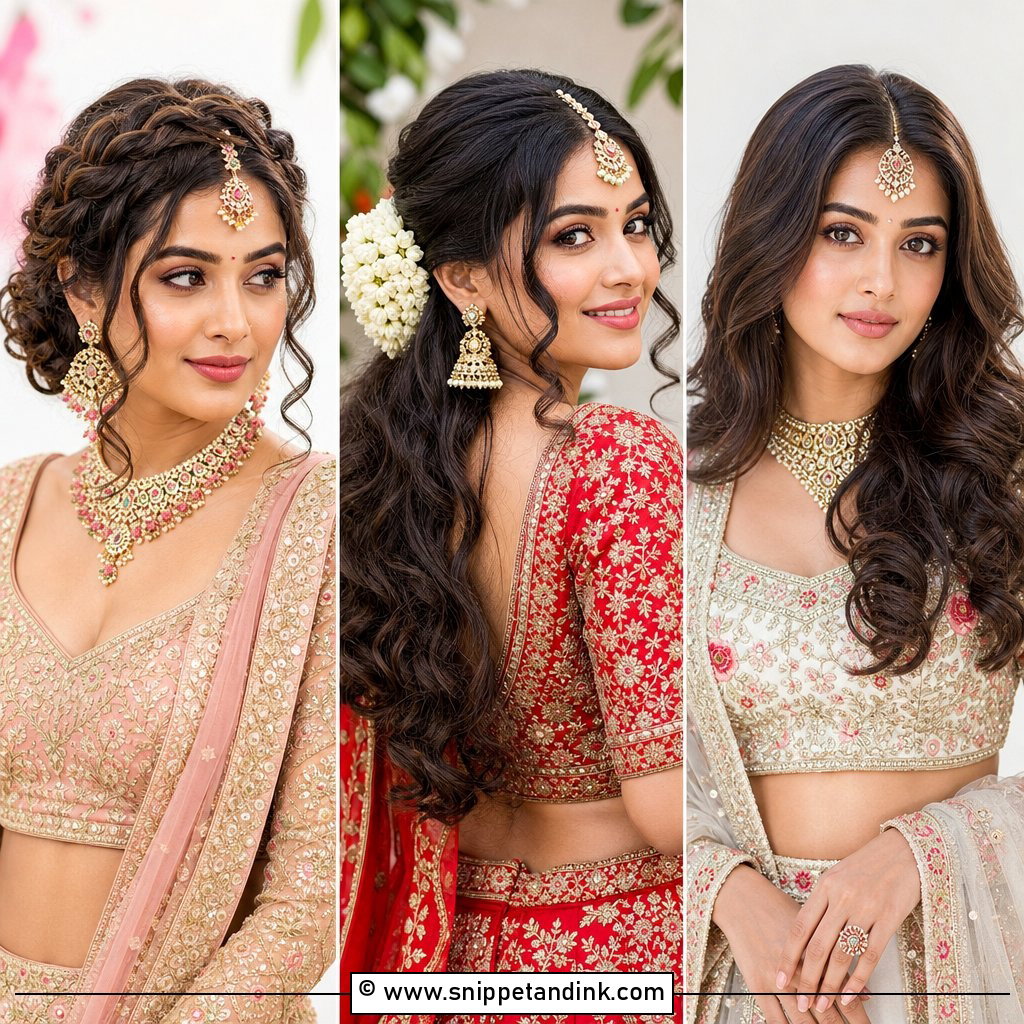
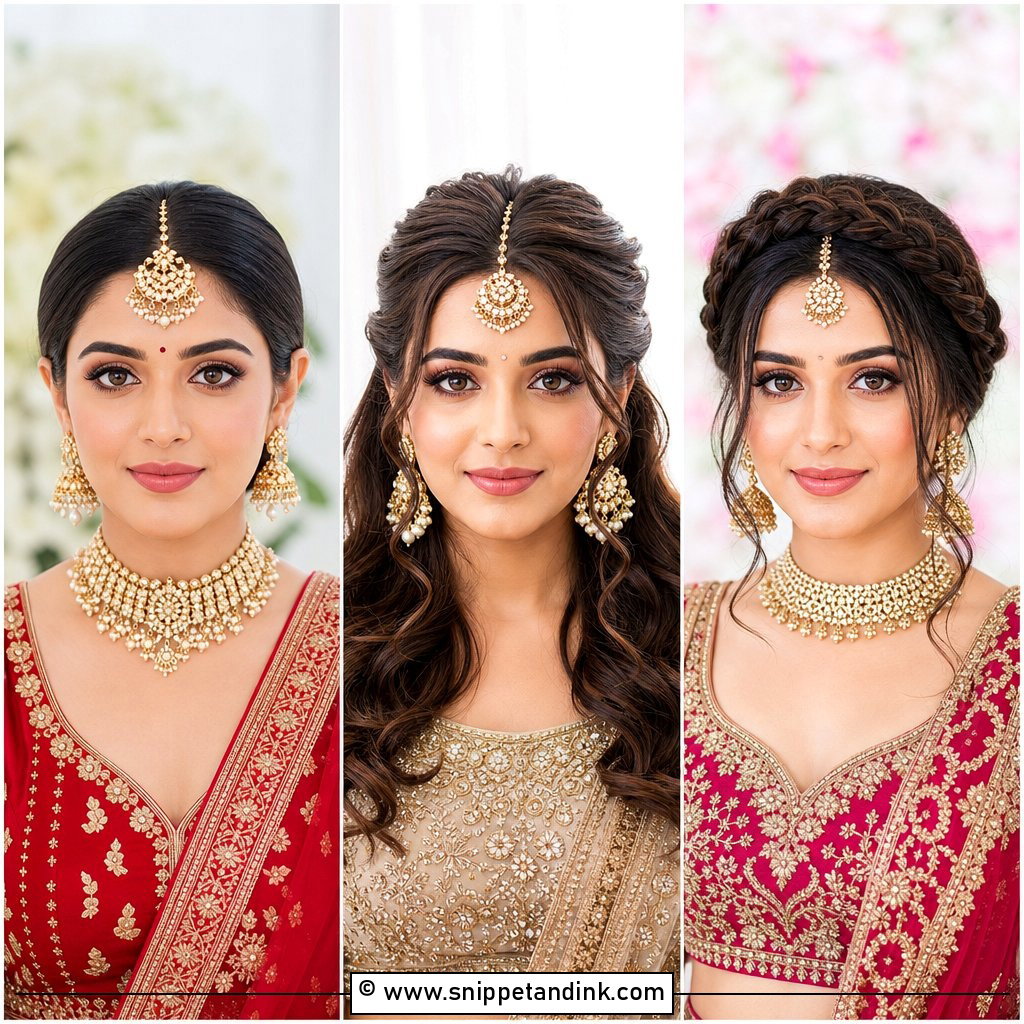
Half-up pins the top section back neatly and lets the rest of your length fall in soft waves, which shows long hair off better than any updo. A maang tikka or small floral clip sits at the crown. Very long hair pulls waves straight under its own weight, so I set them with a slightly smaller iron than the final wave I want and let them relax into shape. It’s popular for pre-wedding shoots, mehndi and receptions.
6. Gajra Bun With Maang Tikka
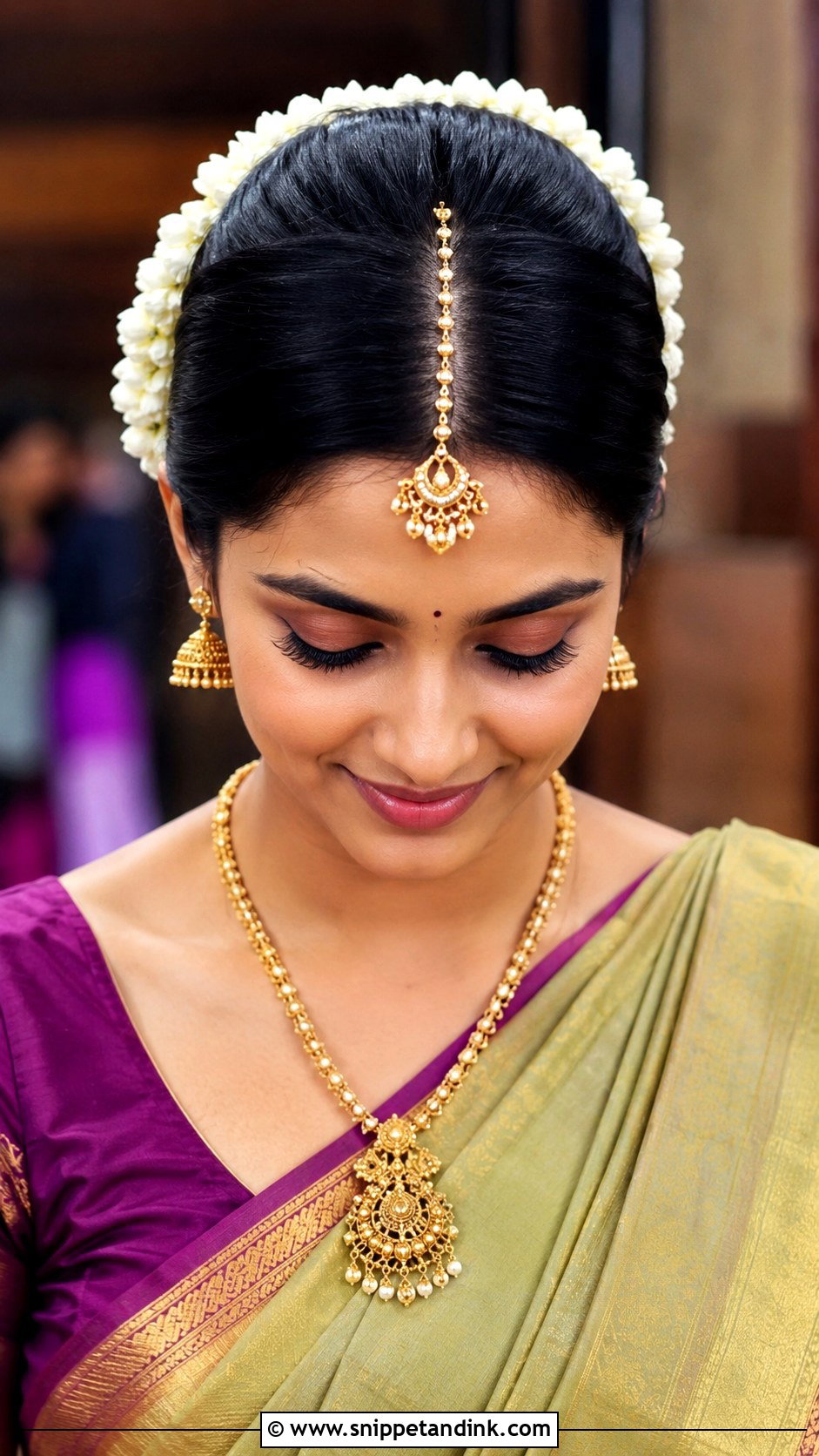
A sleek bun wrapped in fragrant gajra sits at the back of the head, with a circle of jasmine around it and a statement maang tikka on the center part. Through long muhurtam rituals in a silk saree or traditional lehenga, it’s one of the most secure styles there is. With long, heavy hair I split the ponytail into two halves and wrap them in opposite directions, so the bun comes out round and evenly weighted instead of lopsided.
7. Crown Braid Into Low Bun
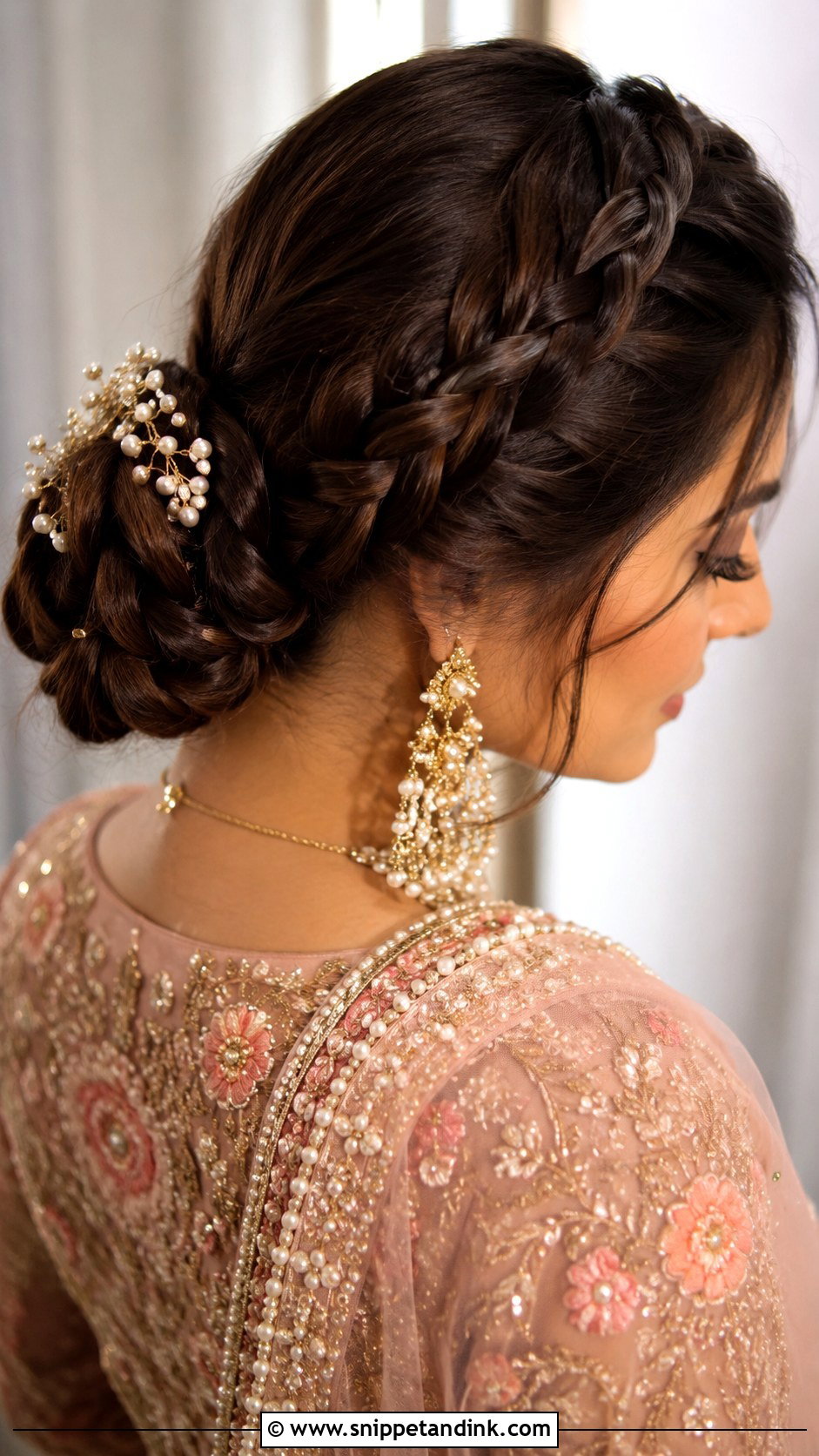
A braid wraps across the crown like a band, and the remaining length gathers into a soft bun at the nape. I braid along the hairline first and only then collect the rest, keeping the braid tension light so it doesn’t pull at the temples during a long ceremony. Pearls or small flowers tucked along the braid add shine. It suits the wedding ceremony itself and looks finished from the front and the back.
8. Open Curls With Maang Tikka
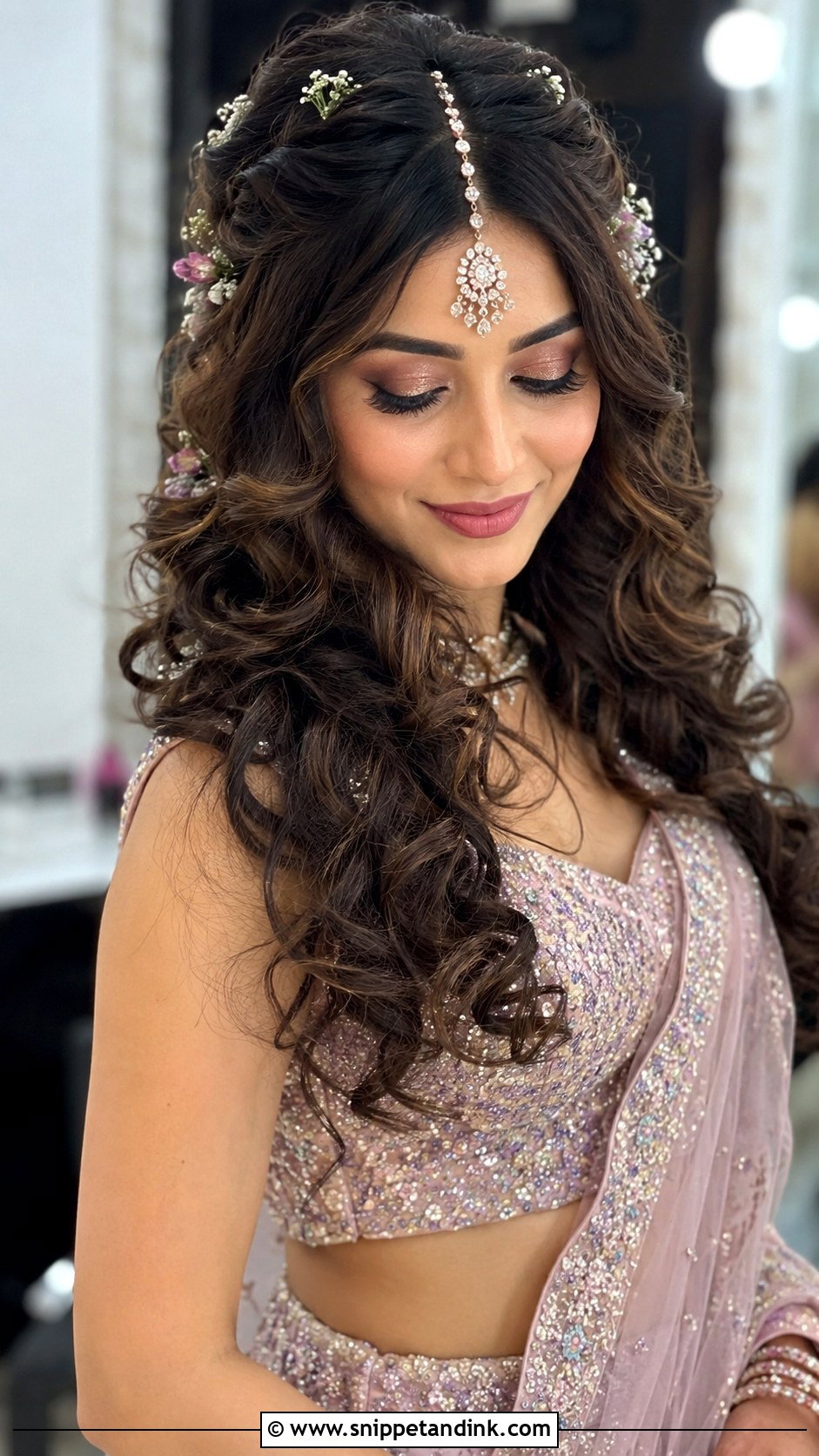
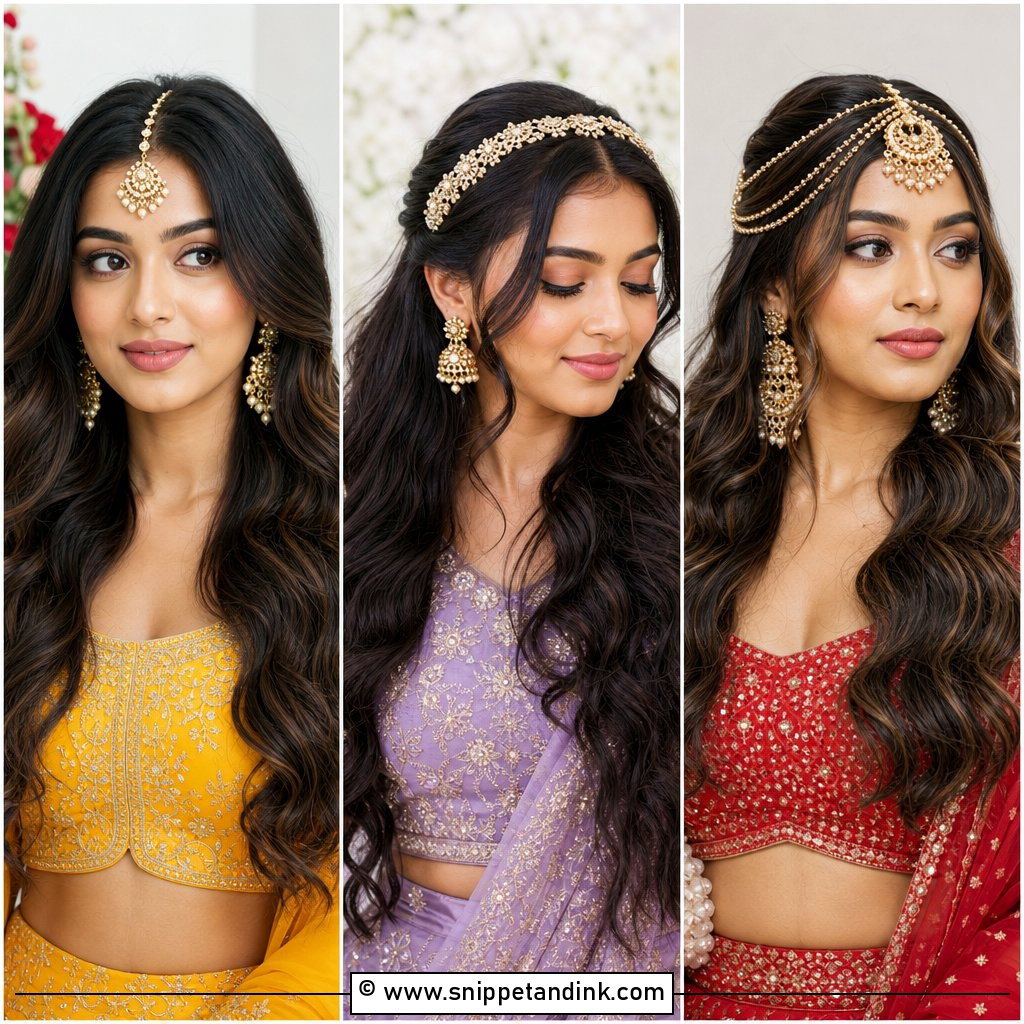
Loose curls down the back and shoulders keep your full length on display, with a maang tikka and tiny floral clips for bridal detail. Curls give fine hair body, but long, heavy hair loses curl fastest of all, since the weight stretches it out. I use setting mousse on damp hair before drying and plan a five-minute touch-up before reception photos. It works with flowing lehengas or lightweight sarees at engagement parties, sangeet and receptions.
9. Side Swept Curls With Flowers
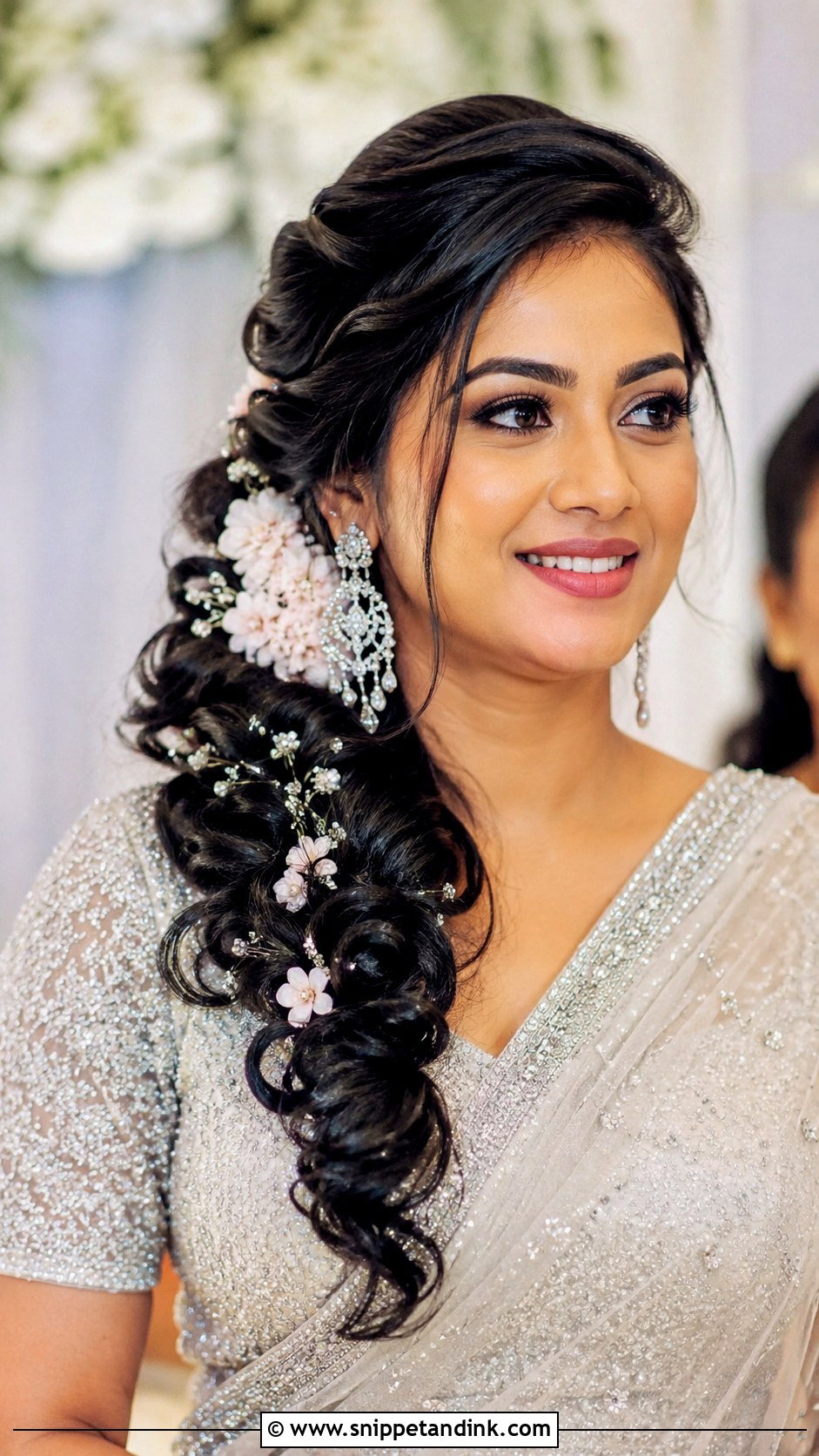
Every curl gathers over one shoulder, with flowers or jeweled pins where the hair parts and a statement earring on the bare side. With long hair the sweep gets heavy, so I braid a small hidden anchor behind the opposite ear and pin the curls across it. Soft volume at the crown balances the asymmetry. It flatters oval and long faces and suits receptions and cocktail nights.
10. Rose Twist Hairstyle
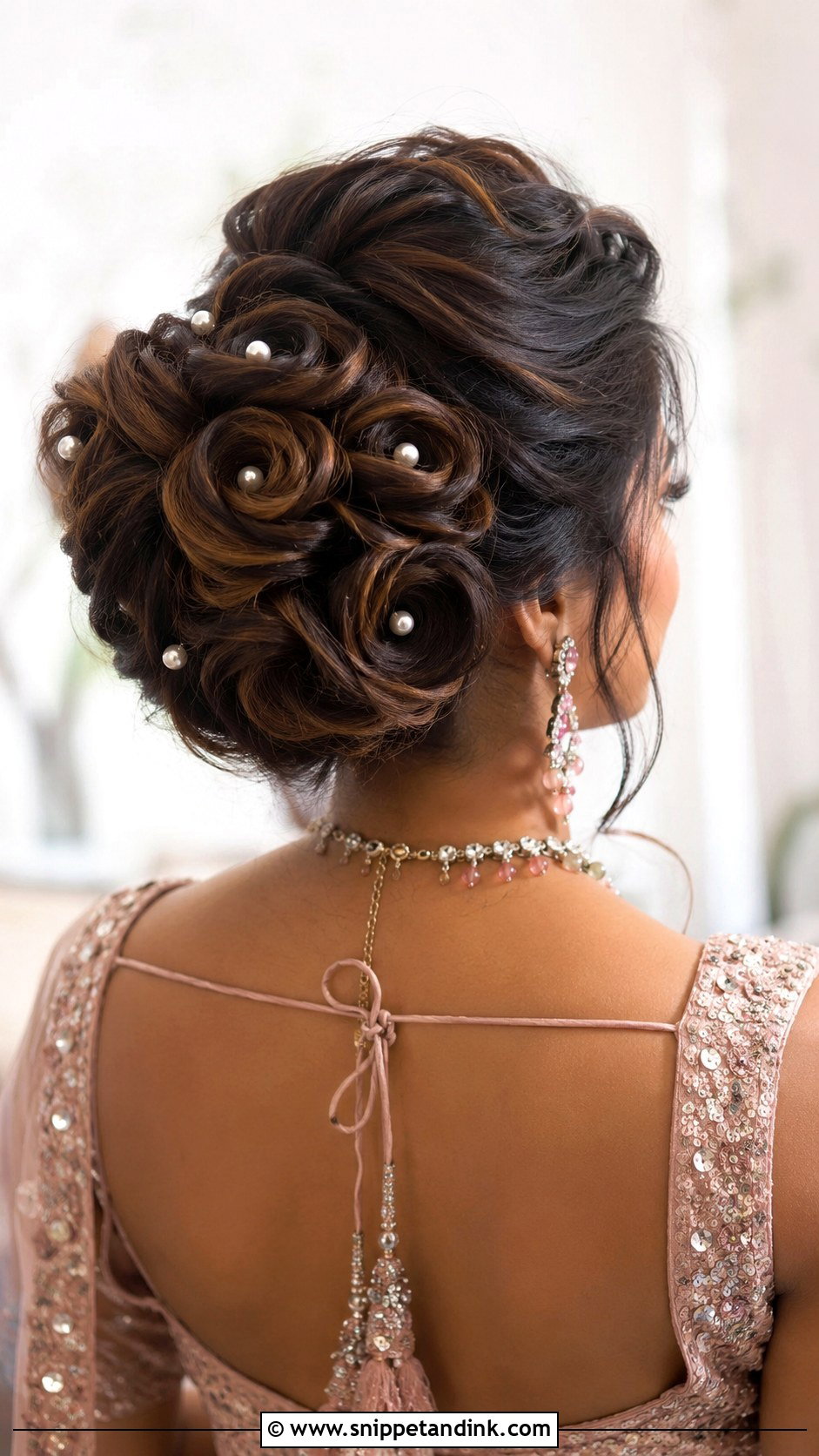
The rose twist is a sculpted detail: sections are twisted and coiled into a swirl that looks like an opening flower, set at the back or side of the head. The rest of the hair flows in waves or gathers into a loose bun, and pearls or tiny crystals sit within the twists. Keeping the petals neat takes a practiced hand, so I’d ask to see your stylist’s own photos of it before booking it in. It’s an artistic choice for sangeet or a reception.
11. Braided Bun With Fresh Flowers
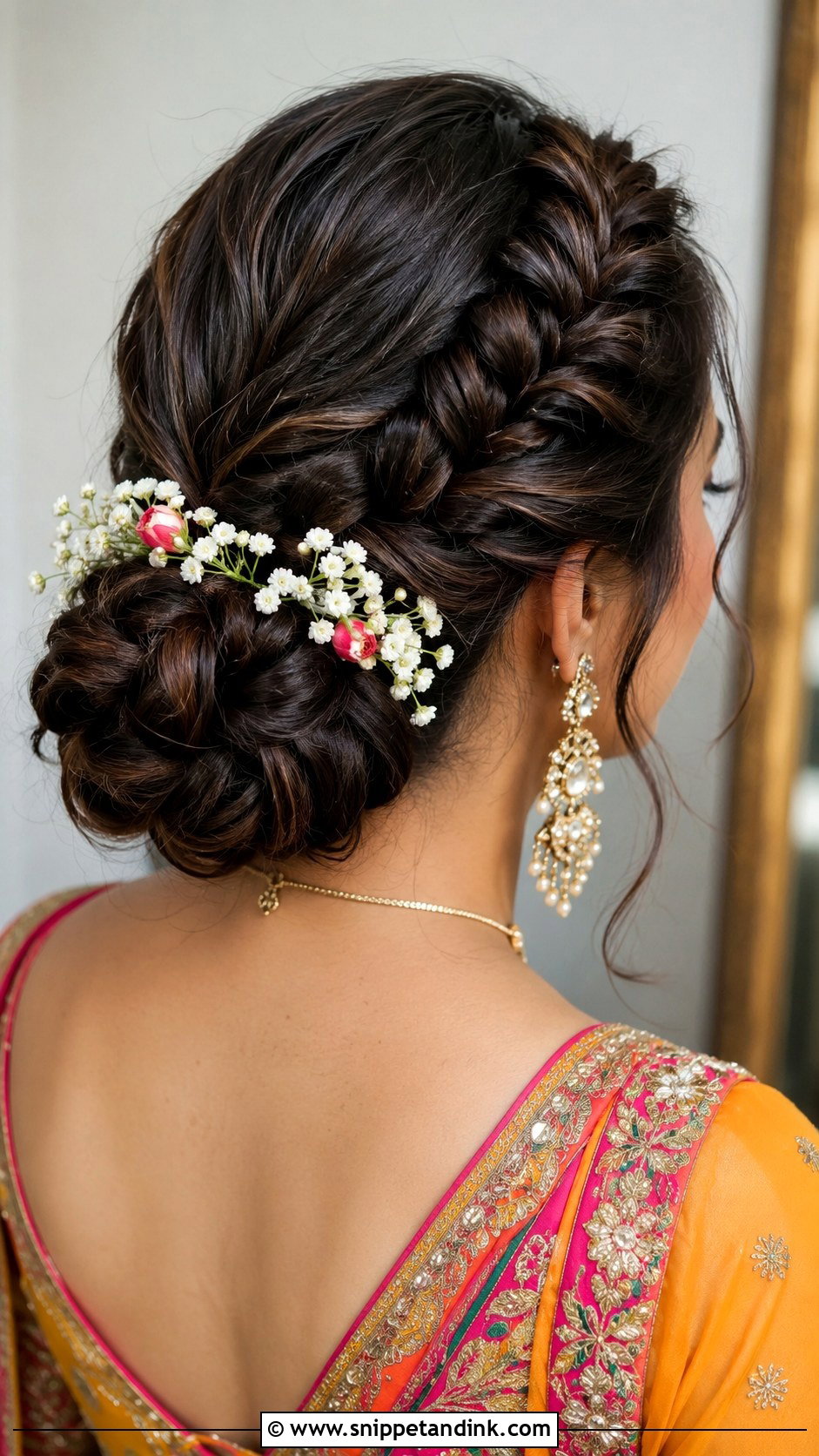
The hair is braided first, then coiled into a full, rounded bun at the nape, with marigolds or jasmine around the base. Braiding before coiling packs a lot of length into a compact shape, which is how I handle waist-length hair without building a bun the size of a melon. It sits well with silk sarees and heavy temple jewelry and stays secure through long rituals.
12. Sleek Low Ponytail
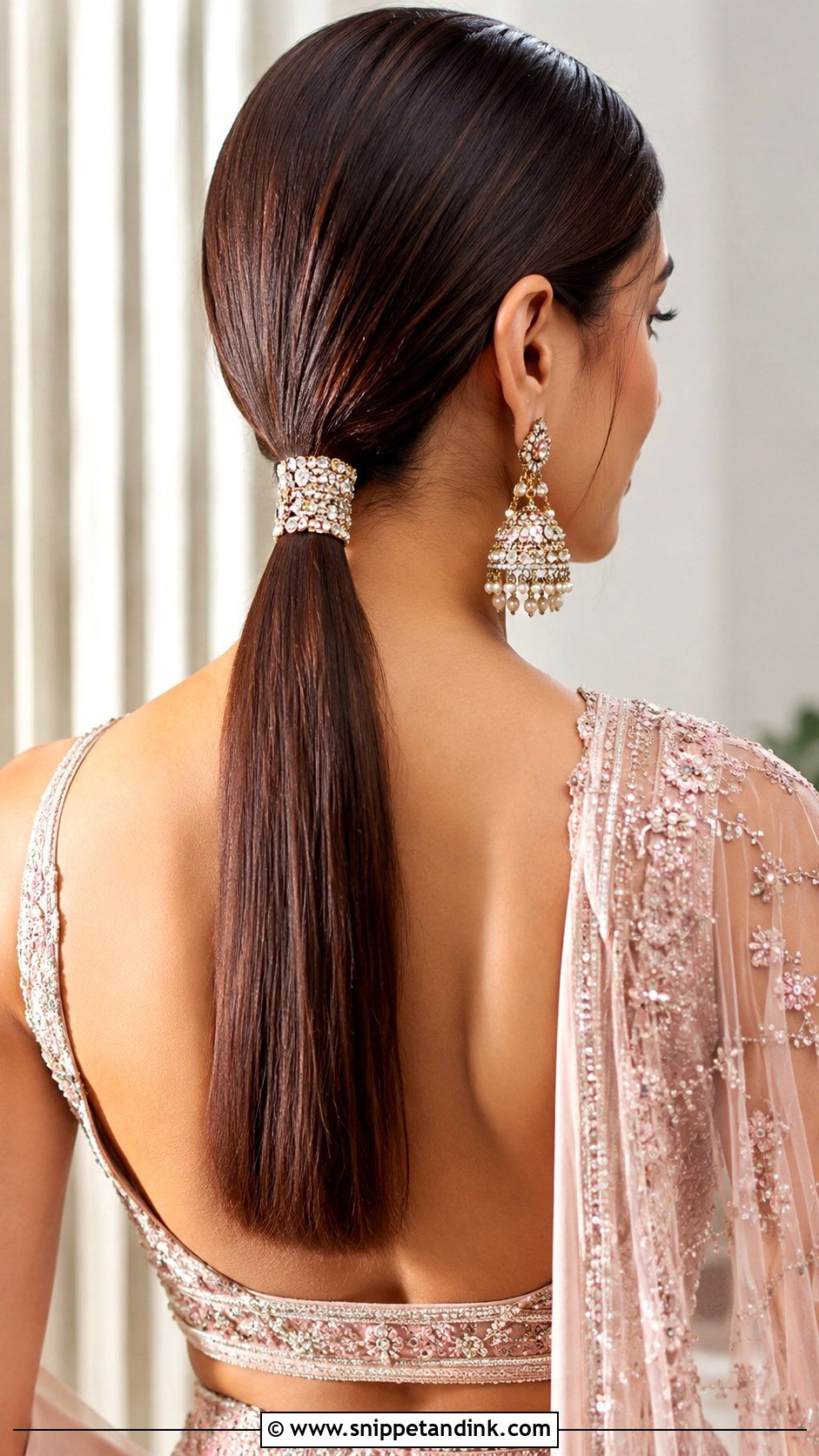
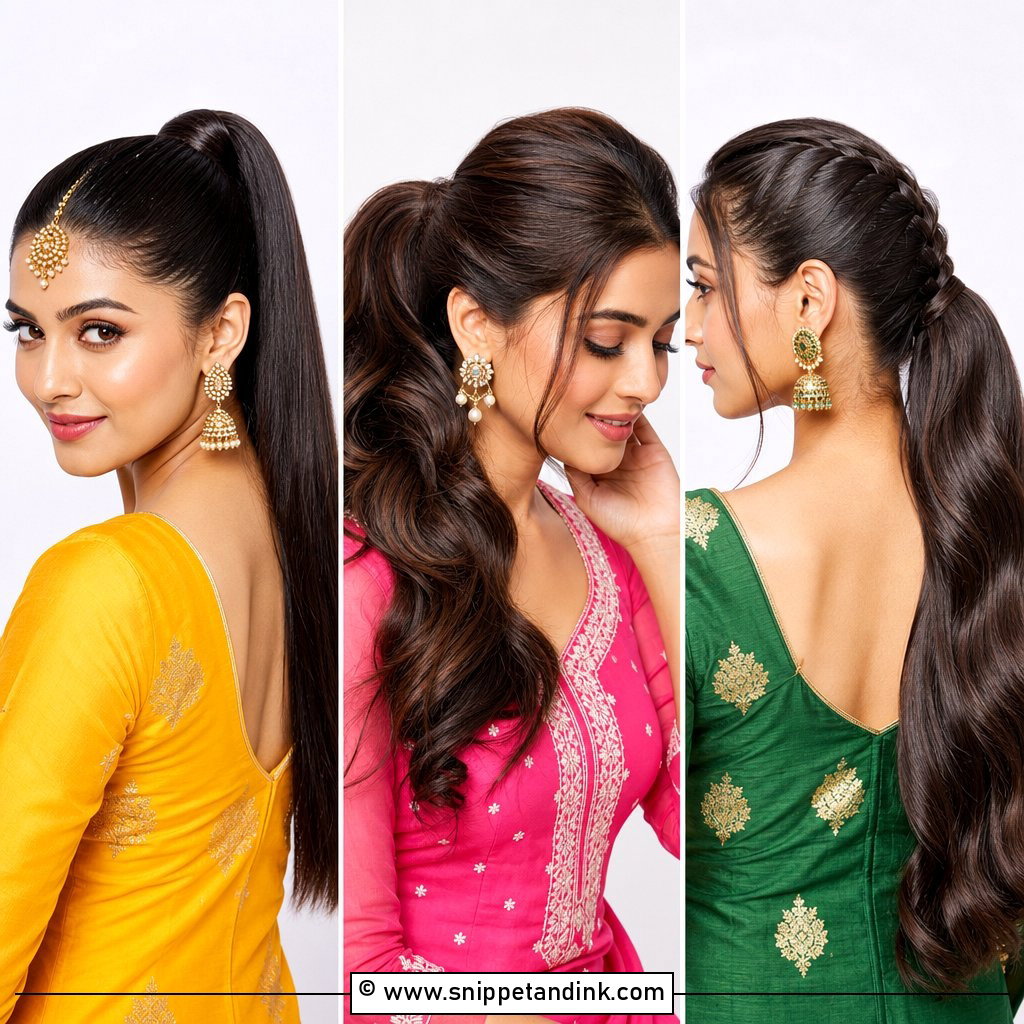
Long hair smoothed back, gathered at the nape and left to fall in one polished stream, with a small section wrapped around the base to hide the elastic. I smooth it with a fine-tooth comb and a little gel before tying, because every bump shows on a sleek ponytail. Pearls or a jeweled cuff dress it up. It suits strong jawlines and statement earrings at engagement parties and cocktail functions. Pared back this far, too much jewelry can look stark, so I keep it to one bold piece.
13. Dutch Braid Updo
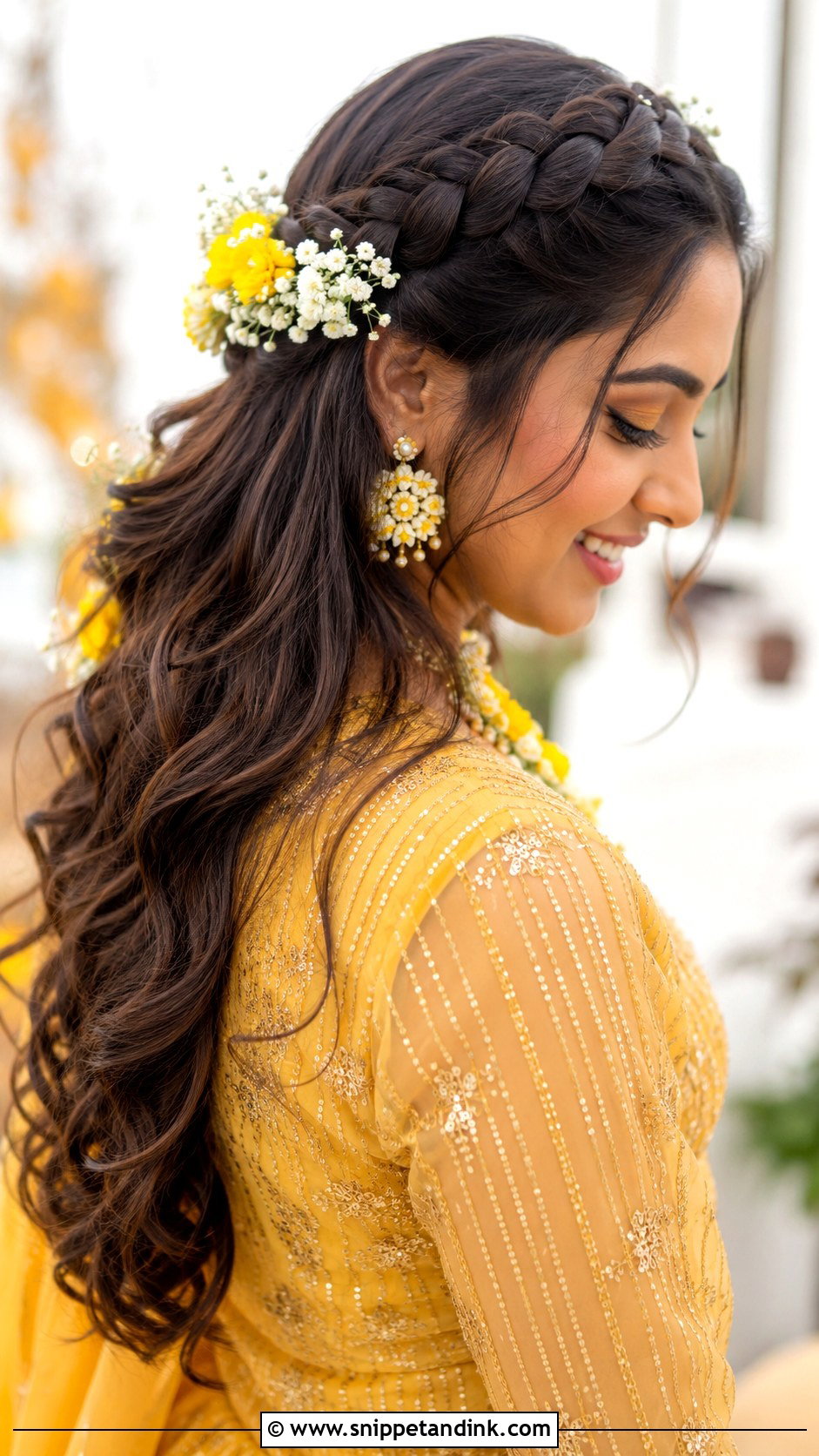
Crossing strands under rather than over makes a Dutch braid sit raised off the head with a three-dimensional texture. I weave one or two, then finish them into a bun or twist. On long hair the braid tails are long too, so they get coiled into the bun rather than tucked, which would leave a lumpy finish. Small flowers or jeweled pins highlight the pattern for mehndi and sangeet.
14. Bun With Pearl Strings
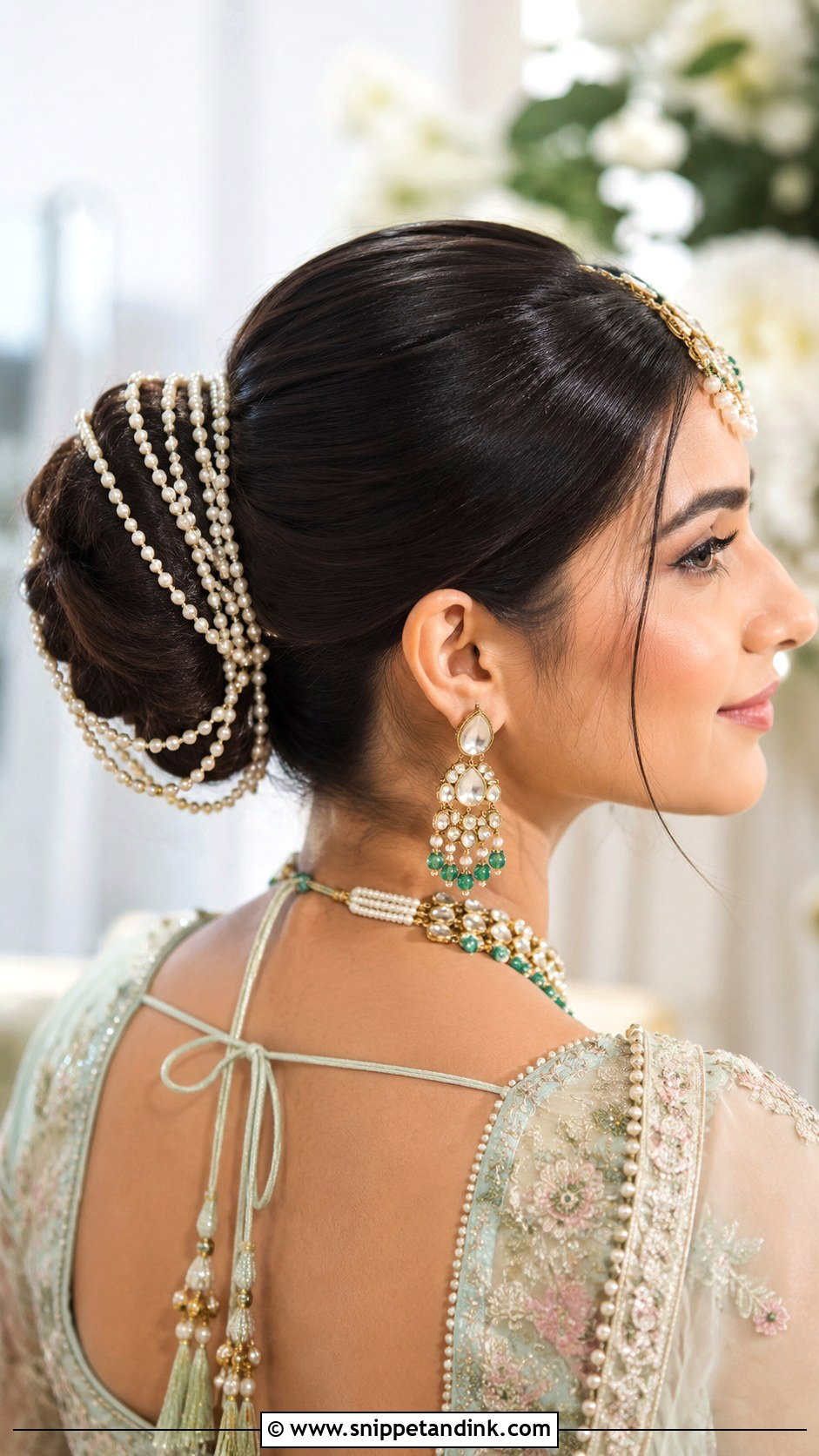
Long hair goes into a smooth bun, then delicate pearl strings drape across and around it. Pearls give shine without the weight of heavy flowers, which matters on a long, hot day. I pin each string at both ends, never just one, because a loose end swings and slides every time you turn your head. Pastel lehengas and lighter outfits suit it, and a matching maang tikka finishes the look for a daytime wedding.

15. Mermaid Braid With Accessories
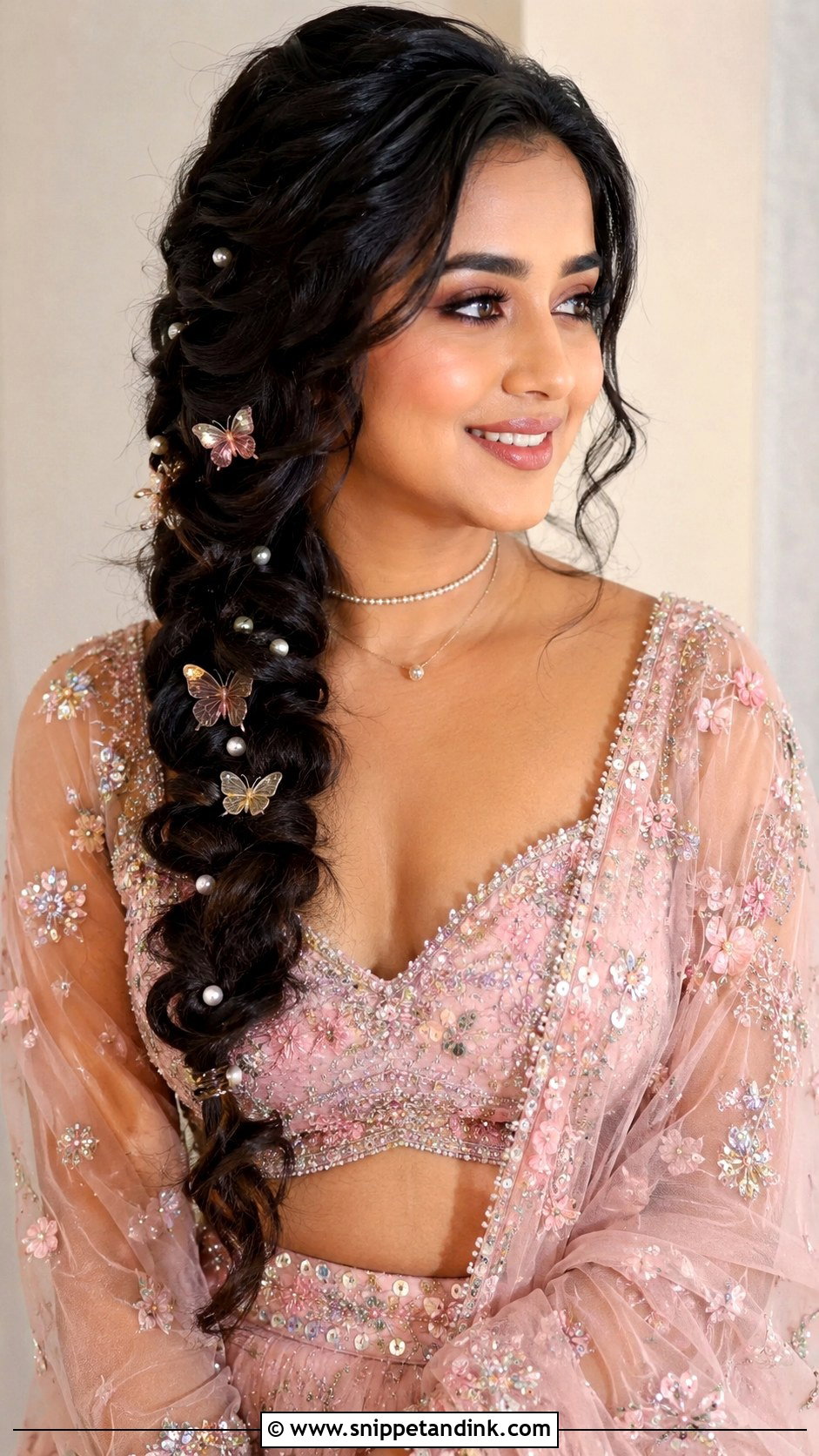
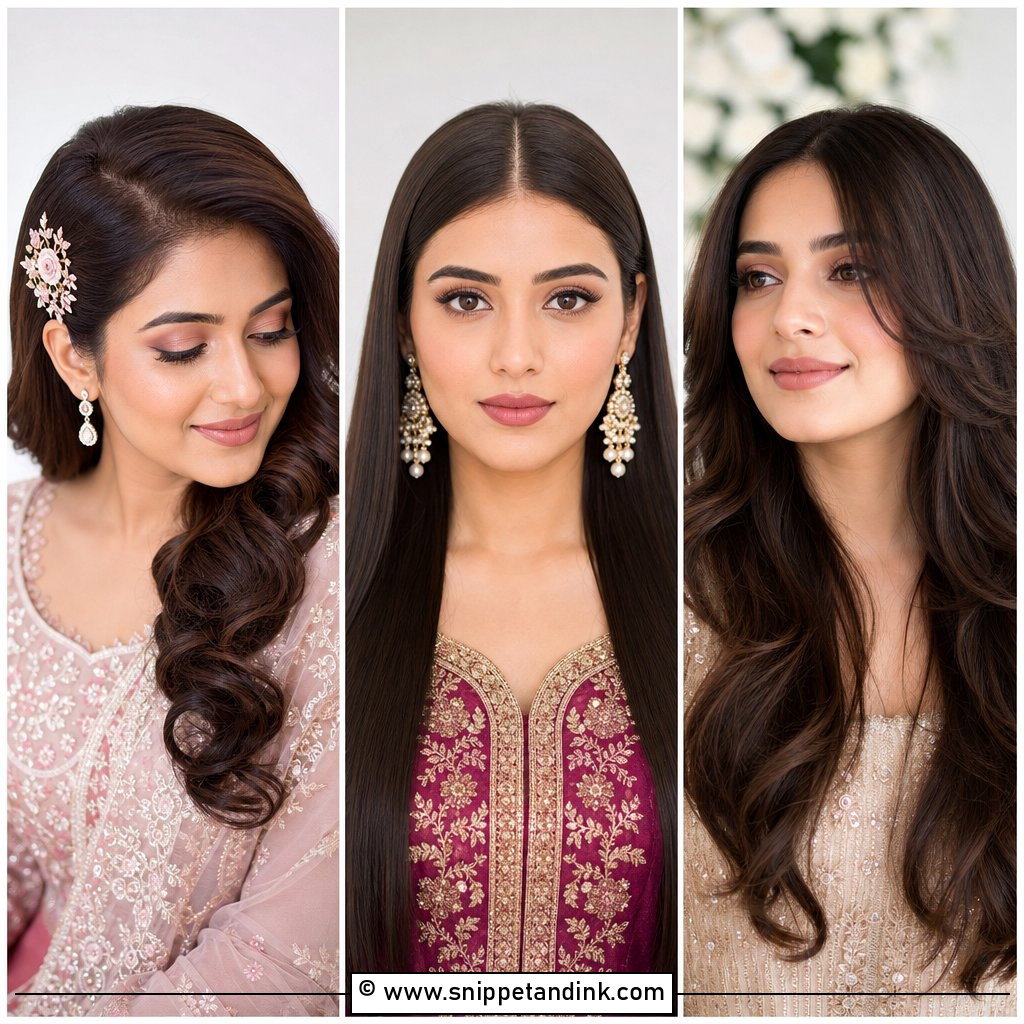
A mermaid braid weaves many thin sections into a wide, flat plait with a rippled texture. It needs real length, and extensions can make it thicker still. Brides decorate it with mini butterflies, pearls or jewels and wear it over one shoulder for sangeet or a pre-wedding shoot. It’s a slow braid to make, so I’d save it for a function with a relaxed morning rather than a wedding with an early muhurtam.
16. Bun With Gota Patti Accessories
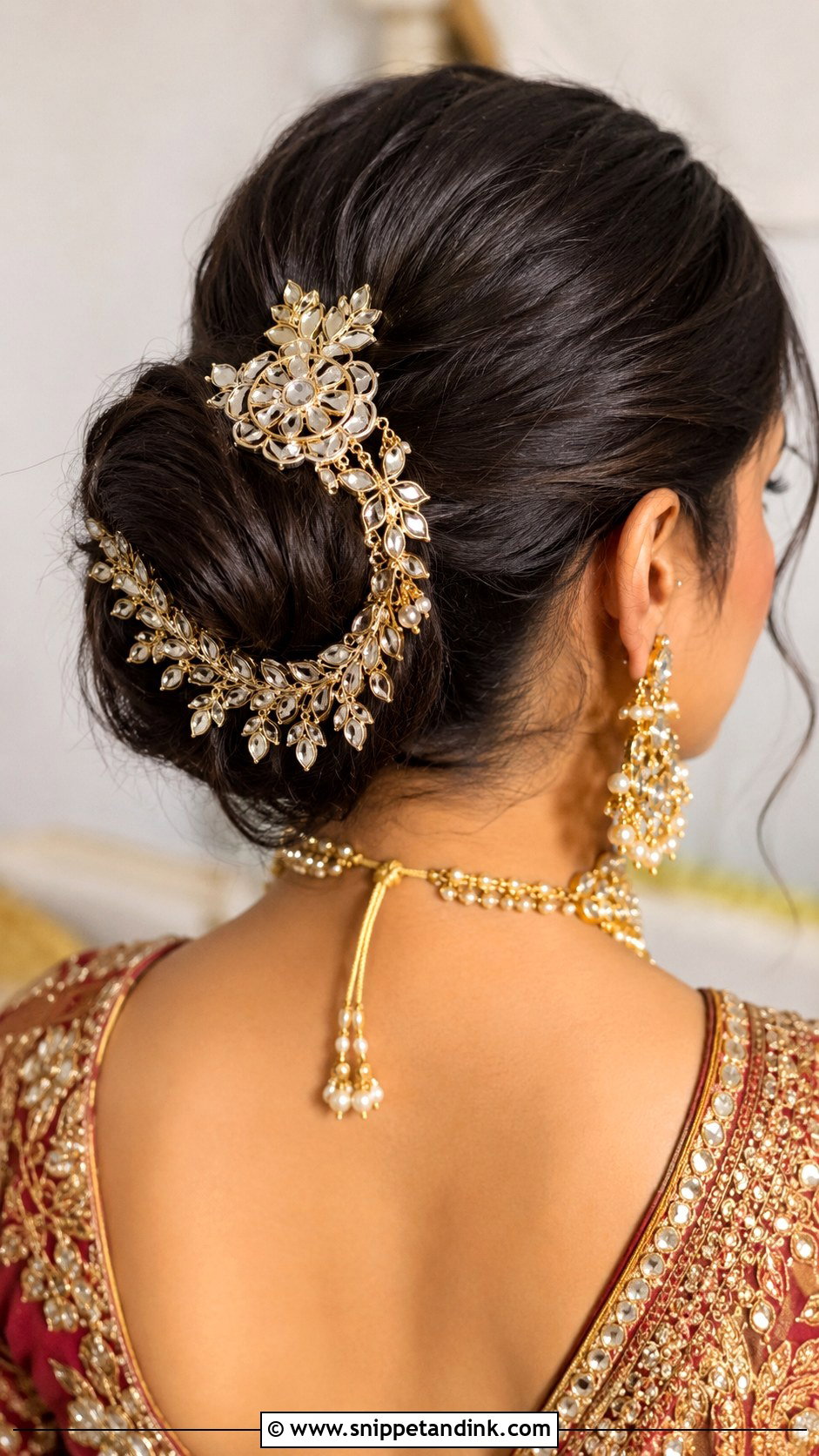
Gota patti accessories bring traditional metallic sparkle to a neat bun, along with jeweled accents or gold detailing. The bun has to carry those ornaments plus a maang tikka, so I make it firmer than a plain bun, built over a padding donut. Gota itself is light, which makes it one of the easier ways to add ornament without strain. With a rich lehenga and heavy jewelry it suits the main ceremony.
17. Loose Waves With Side Parting
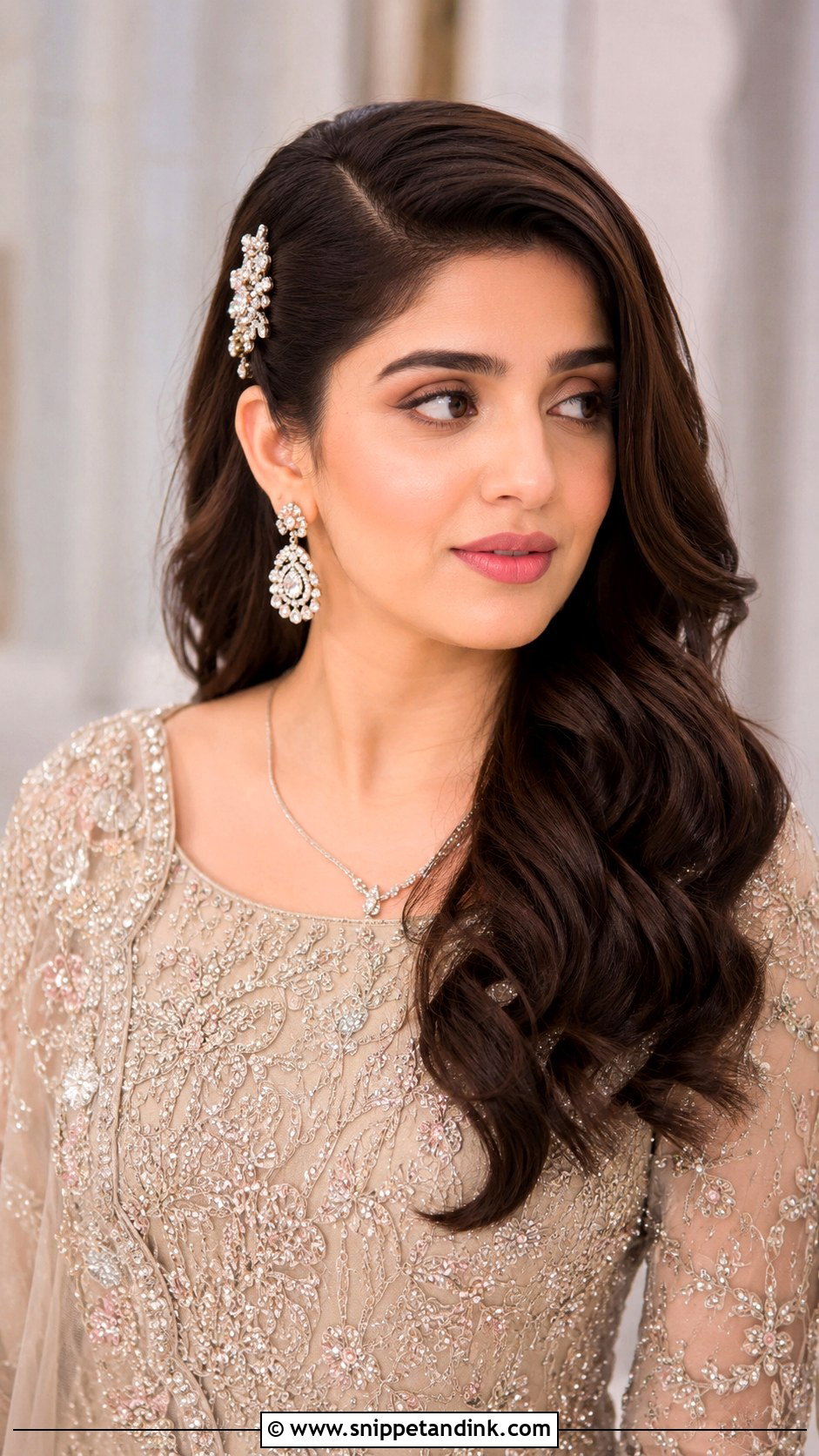
Loose waves with a deep side part keep long hair free and put the volume on one side. A small jeweled clip or floral pin decorates the heavier side; I place it slightly back from the face so it actually holds the hair instead of just sitting on top. The waves suit sarees and gowns at receptions and cocktail events. Long hair tangles at the back when you’re seated against a chair for hours, so keep a wide-tooth comb in your clutch.
18. Braided Crown With Open Hair
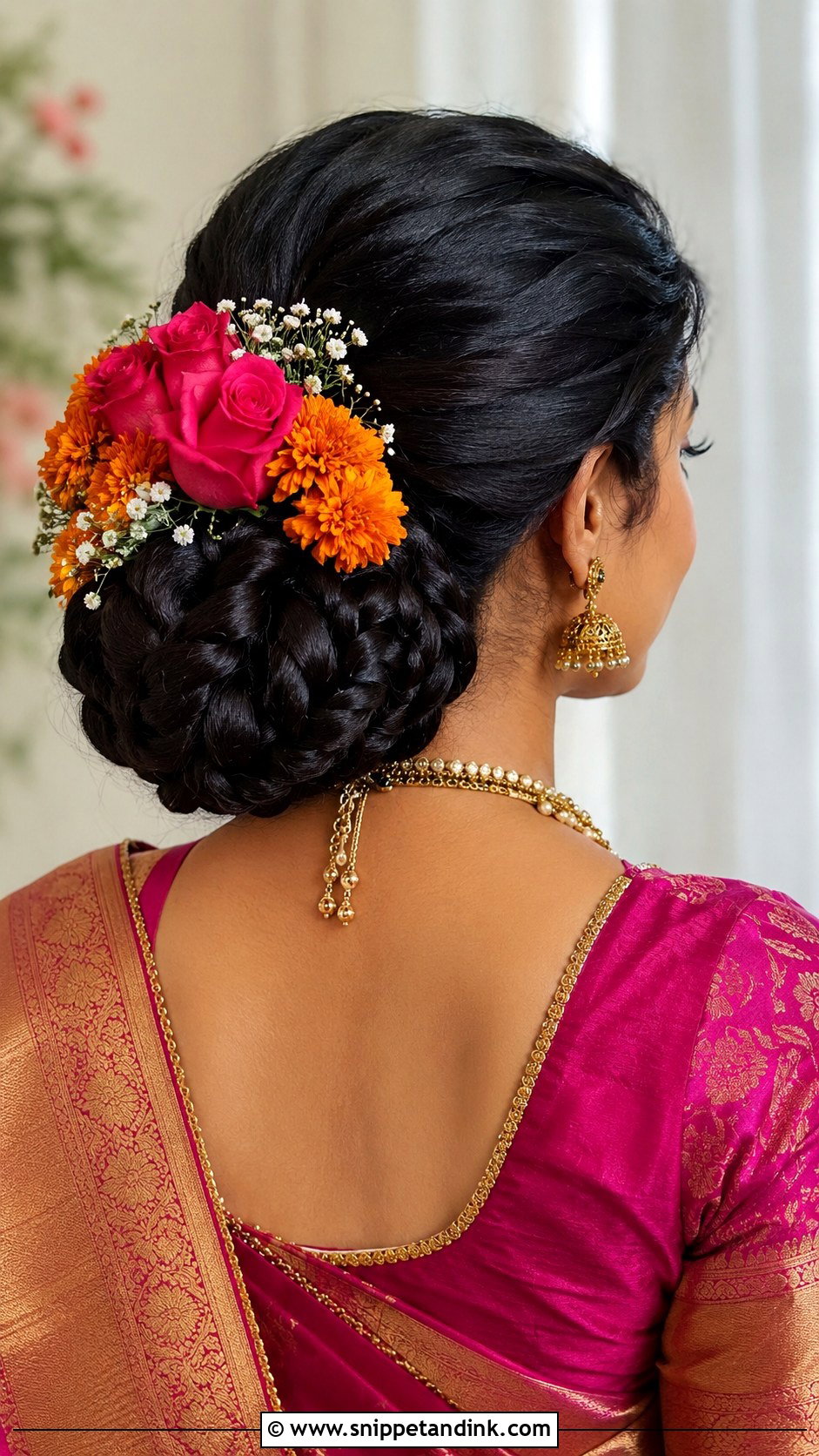
A braid across the top of the head like a band, with the rest of your length flowing below, gives you an updo’s neatness and open hair’s movement. Fresh flowers or small jewels decorate the braid. Mehndi suits it especially, because the braid keeps hair away from wet henna on your hands and arms. Soft framing at the sides flatters round and heart-shaped faces.
19. High Bun With Maang Tikka
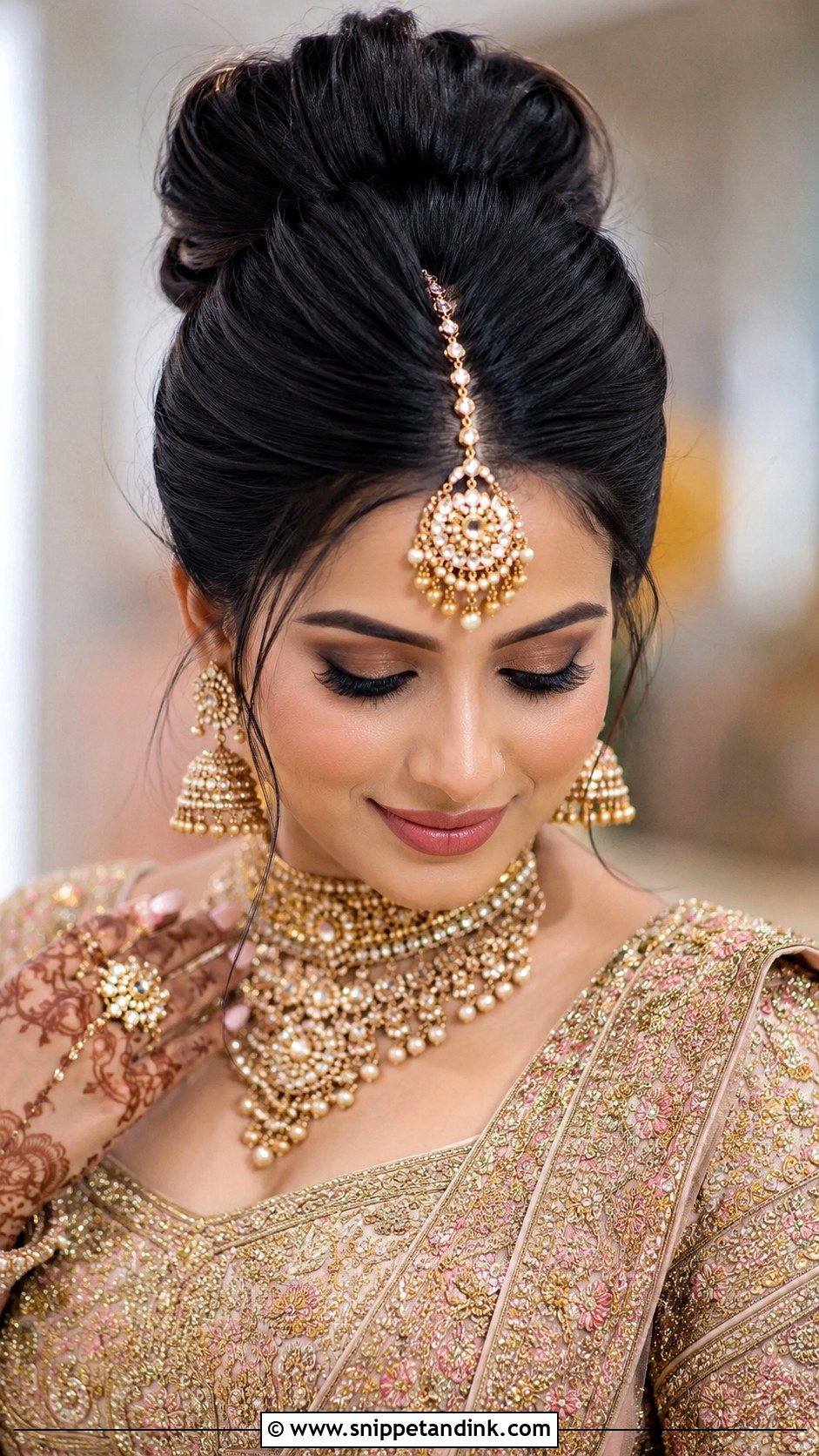
A full bun placed high on the crown adds height and lengthens the neck. Long, thick hair makes the volume with no padding at all, which is the main reason to choose it if you have that hair. A statement maang tikka and jhumkas finish it alongside a heavy lehenga and traditional jewelry. The trade-off is weight sitting high on the head, which some brides find tiring after hours, so wear it at the trial for longer than feels necessary.
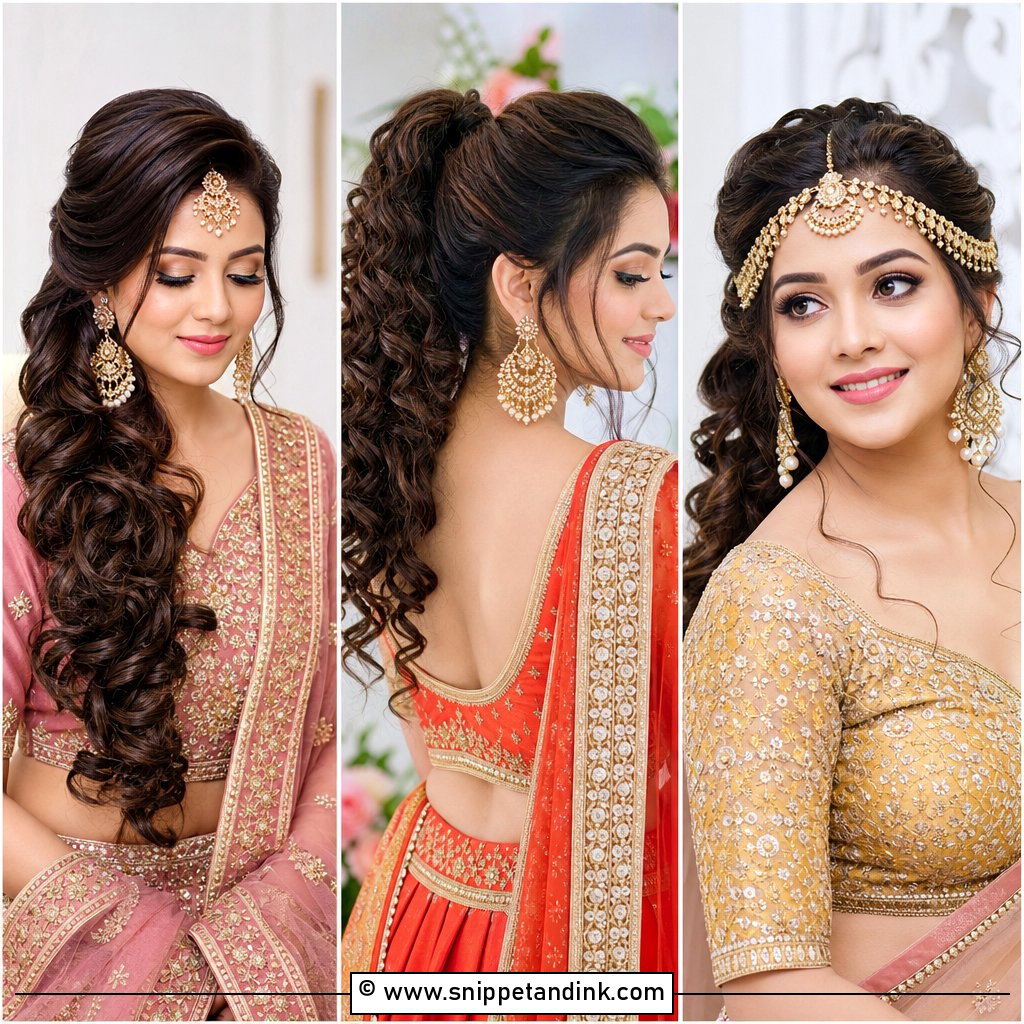
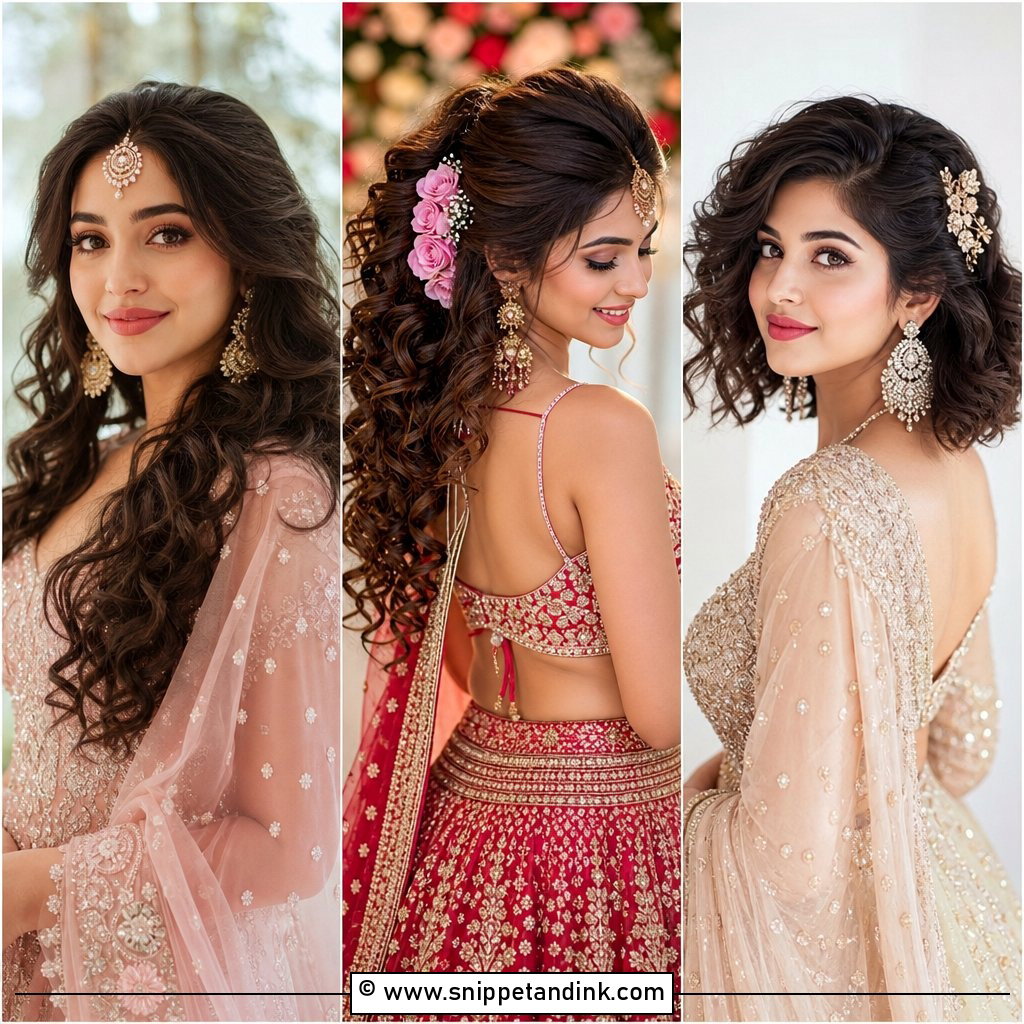
20. Waterfall Braid With Curls
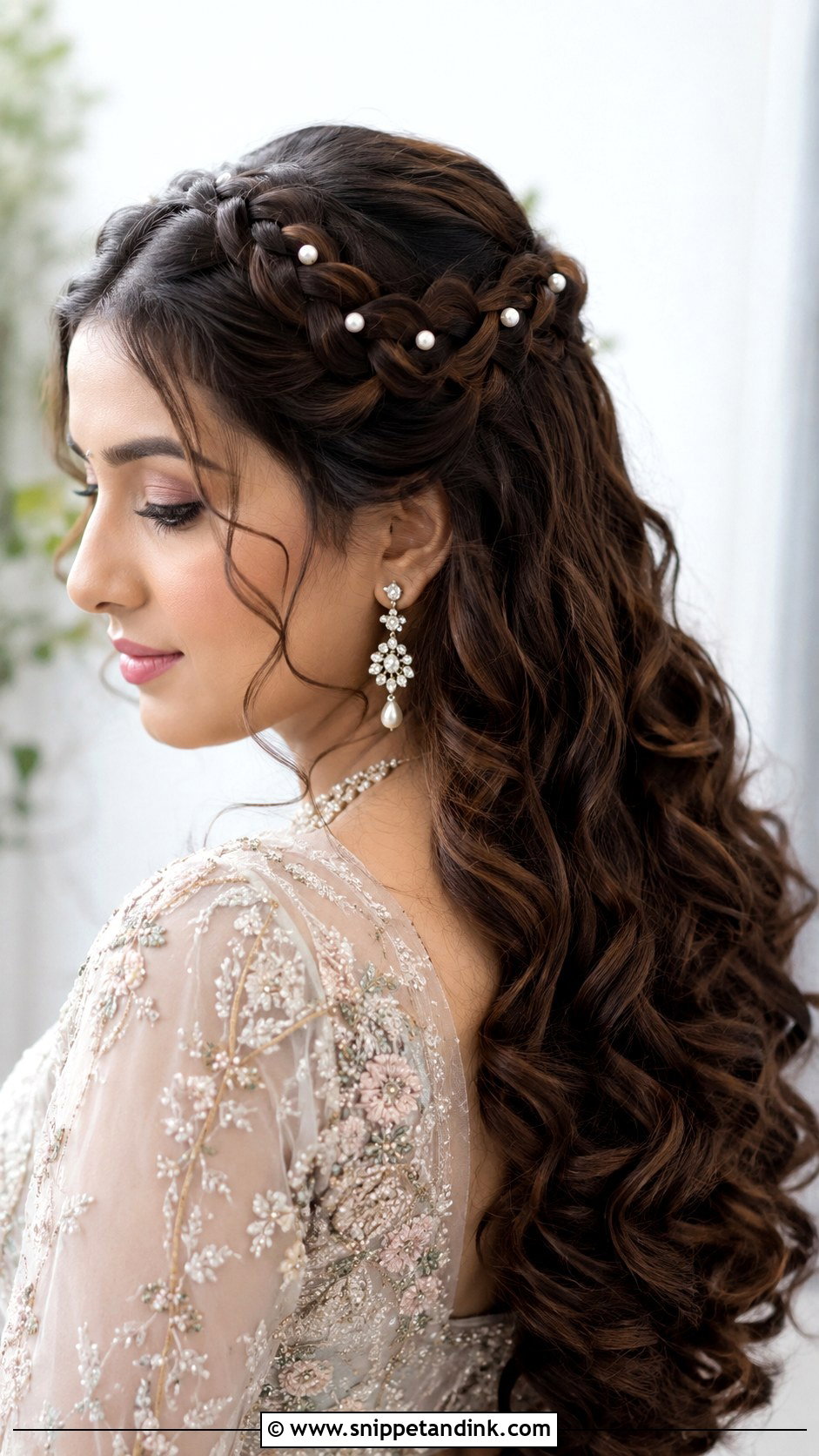
As the braid moves across the head, one strand is dropped at every crossing and replaced with new hair, which creates the strands that “fall” like a waterfall. The braid frames the crown and the dropped pieces join the curls underneath. Small flowers or pearls can dot it. Very slippery hair loses the shape of the dropped strands, so I texture it first. It suits engagement parties and pre-wedding shoots.
21. Bun With Maang Tikka and Veil
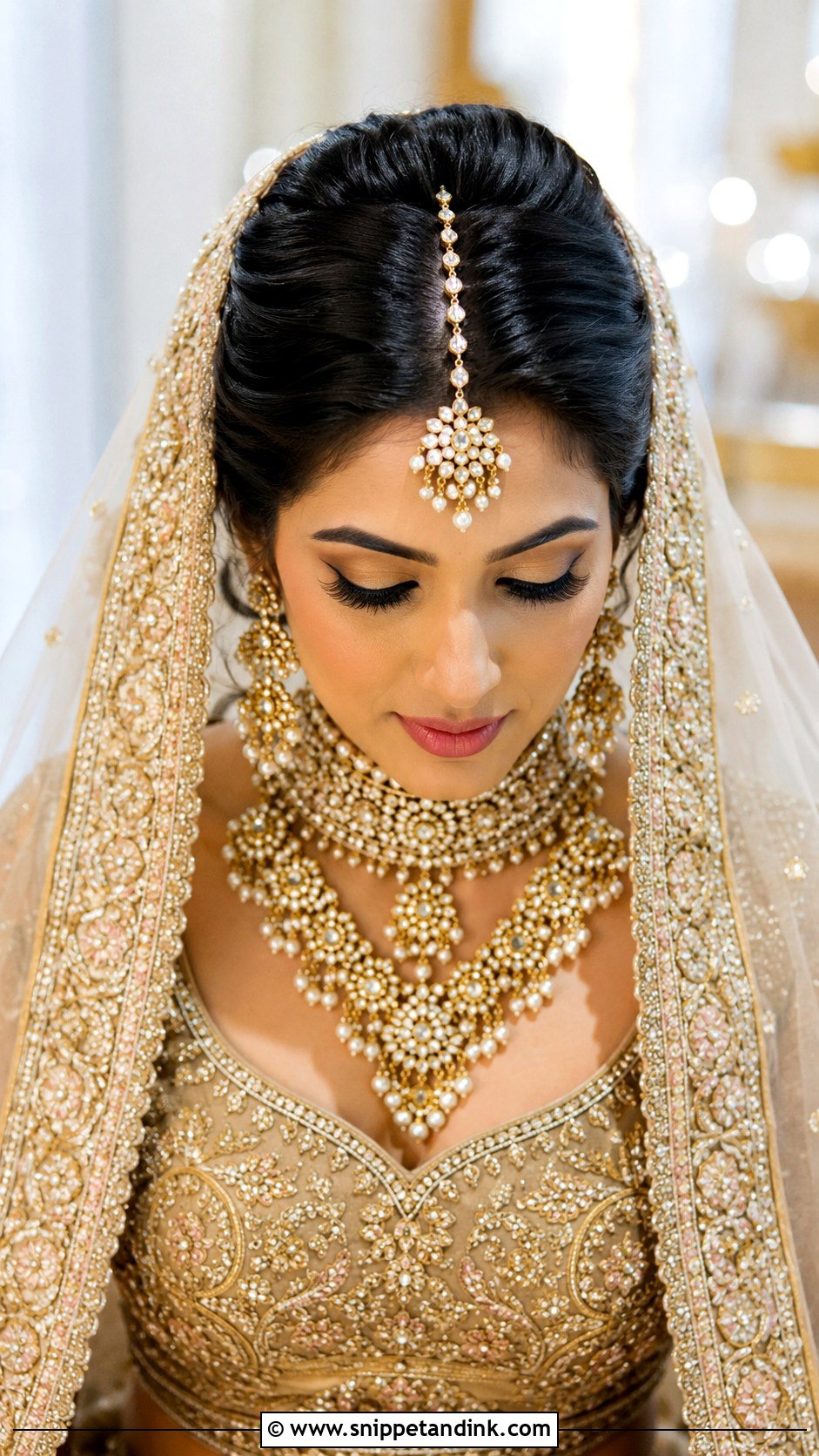
A dupatta or veil needs a solid anchor, and a sturdy bun at the back or nape gives it one, with a maang tikka resting on the center parting. Long hair helps here, since there’s enough bulk to pin the fabric into without the pins reaching the scalp. For main rituals under heavy fabric, I pin the dupatta at the top of the bun and on either side, so it doesn’t drag backward when you stand. Pearls or small flowers can decorate whatever part of the bun the fabric leaves visible.
22. French Braid Into Bun
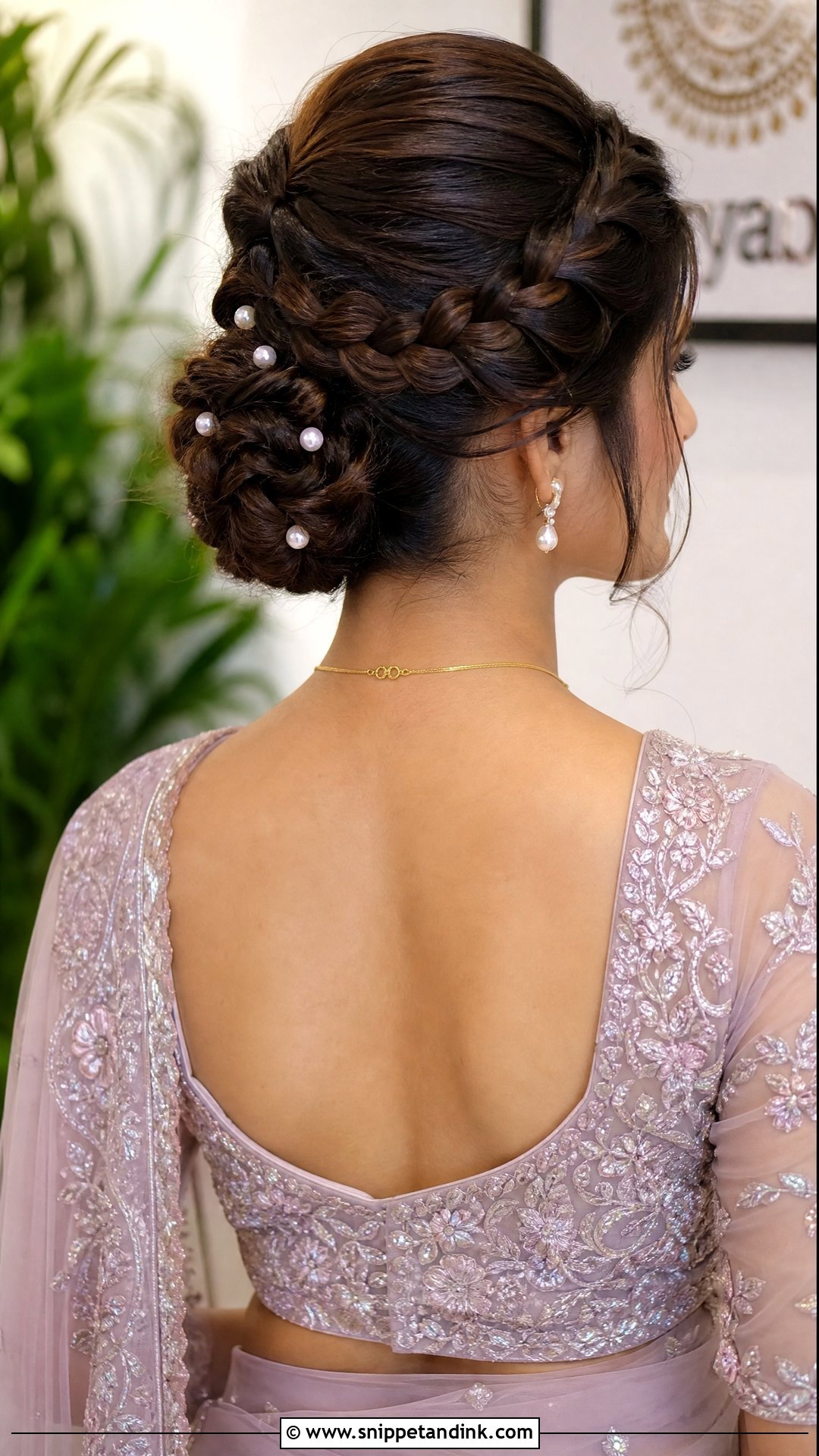
A smooth French braid runs from the crown down and the length gathers into a bun at the nape. It’s neat and secure, with refined texture along the back, and suits daytime ceremonies. On long hair there’s a lot of length left after the braid, so the bun can get large; I taper the braid narrower toward the nape to balance it. Flowers, pearls or jeweled pins decorate it, and most hair types hold it well.
23. Twisted Side Bun With Gajra
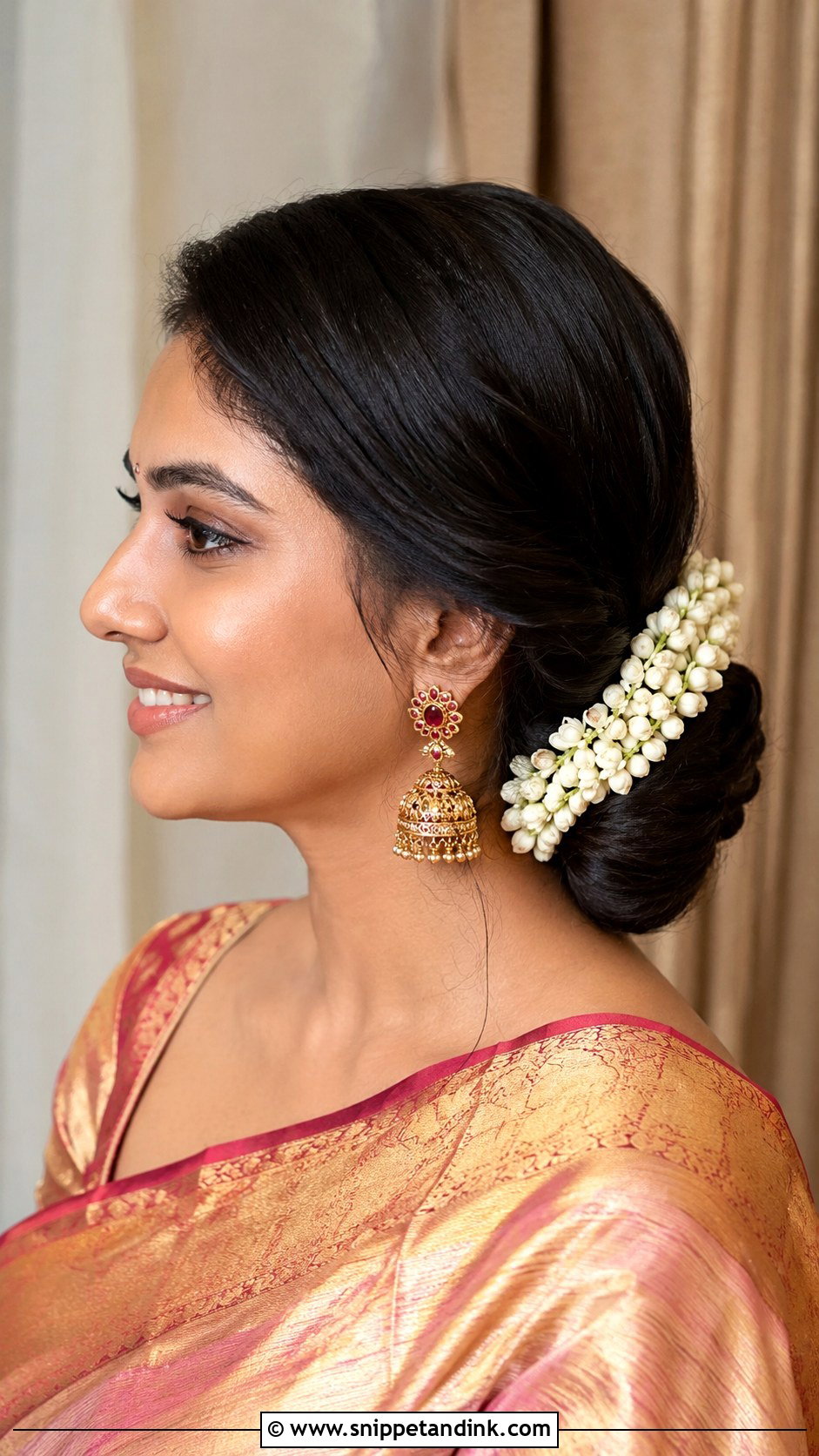
Long hair gathers to one side and twists into a low bun near the ear, framed with a wrap of gajra. With a statement earring on the opposite side, it suits silk sarees and traditional lehengas at muhurtam ceremonies or receptions. A side bun on long hair is bulky and can press on your shoulder when you turn your head, so I set it behind the ear rather than below it.
24. Layered Curls With Hair Jewelry
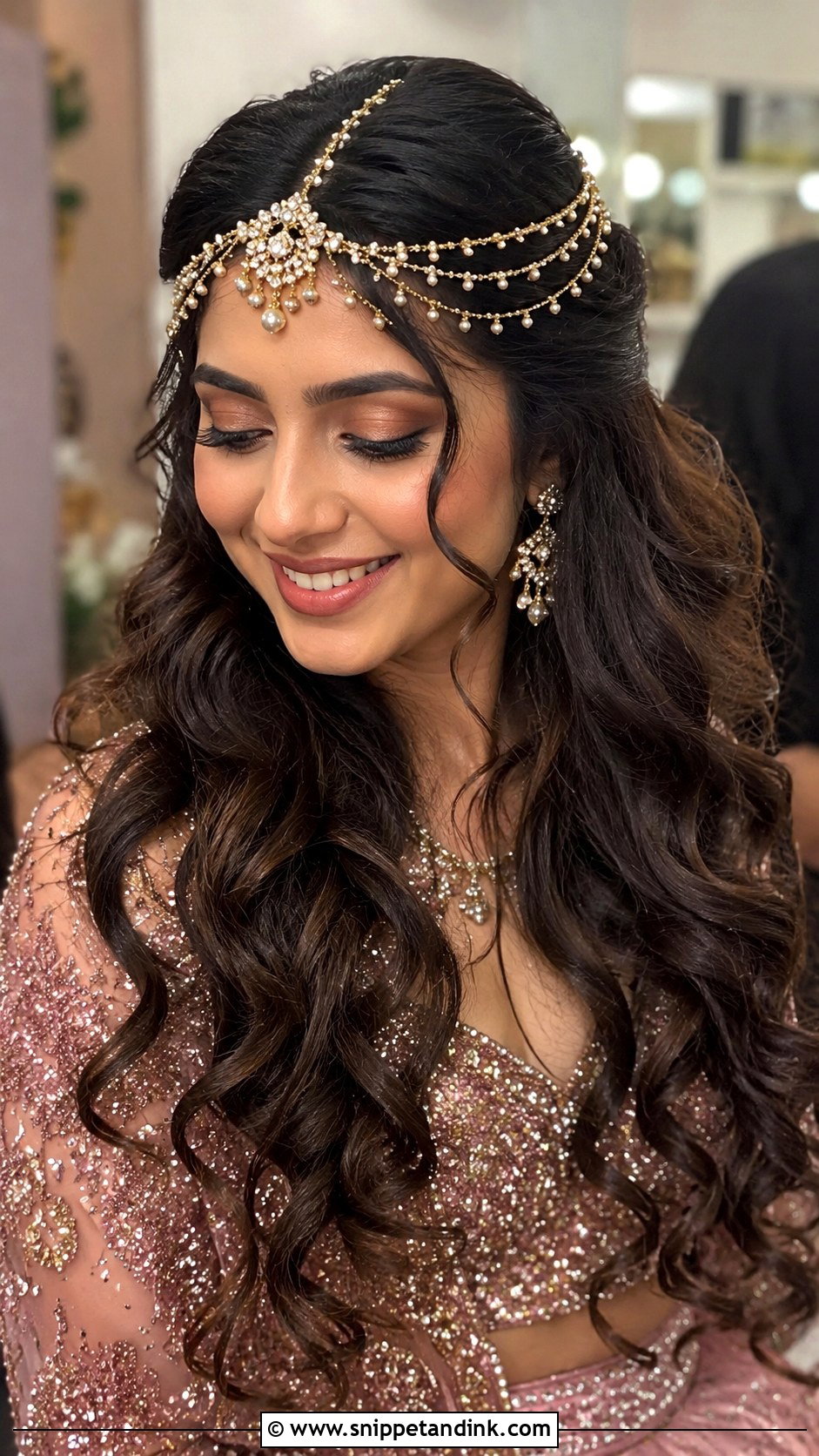
Bouncy curls through the lengths give long hair body, with a matha patti, jeweled clips or fine chains worked in. Chains tangle in curls far more than in straight hair, so I lay them on after the curls are finished and pin each end down. Hair worn down with this much sparkle sits well with lightweight lehengas or flowing gowns at sangeet and receptions.
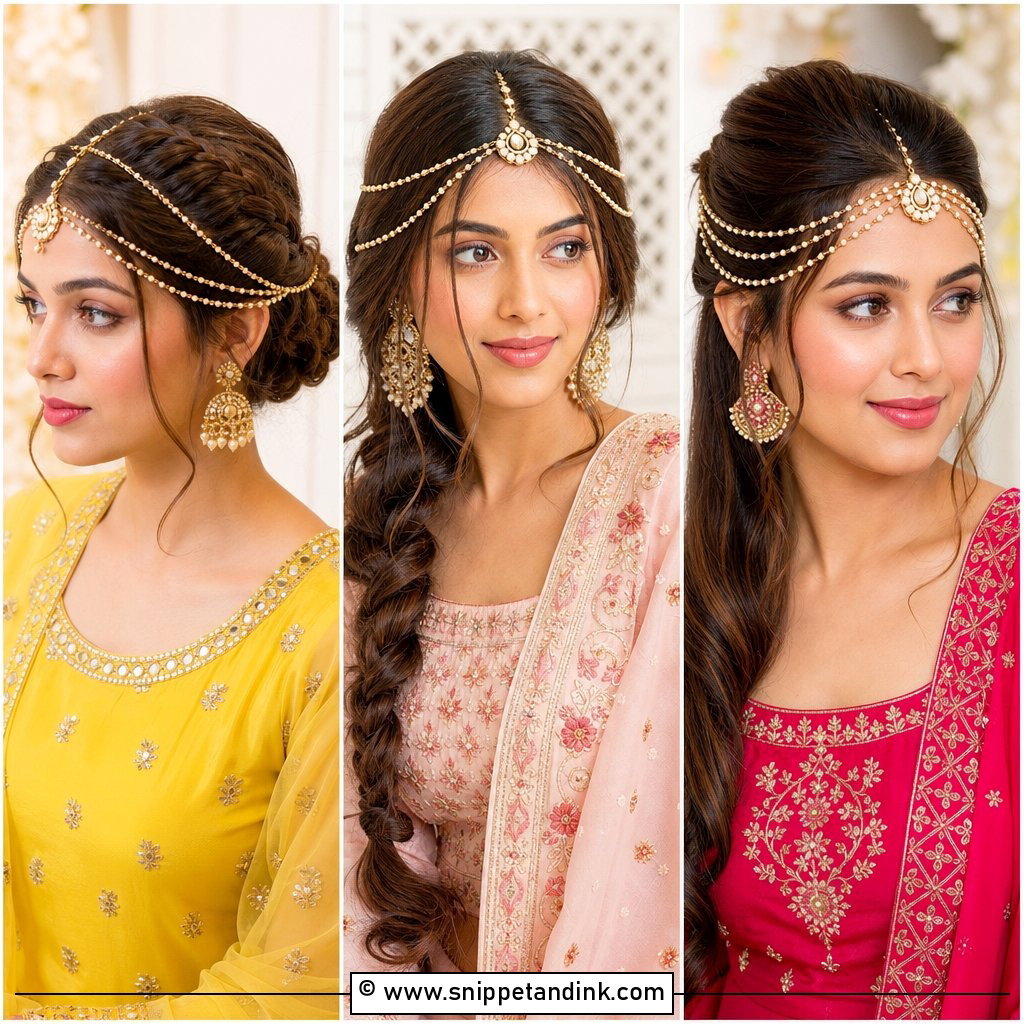
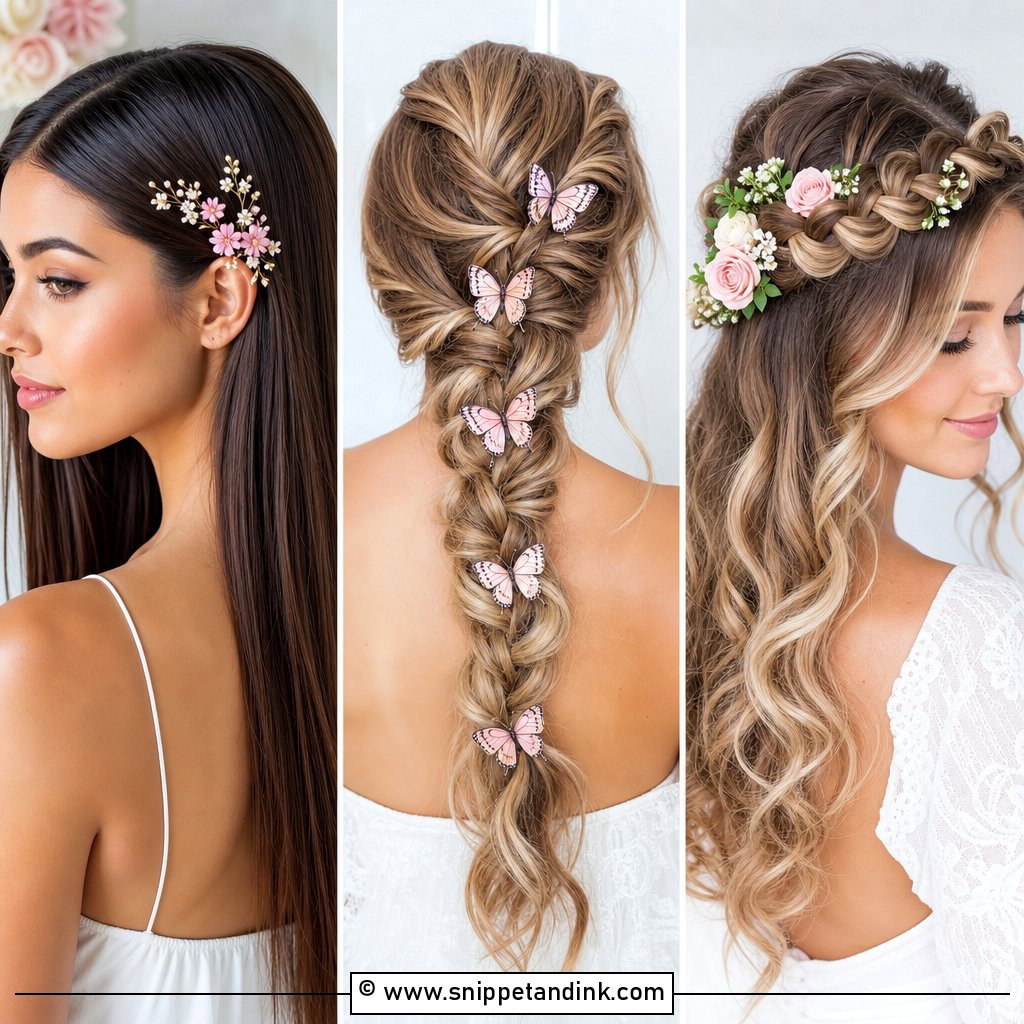
25. Sleek Bun With Statement Accessories
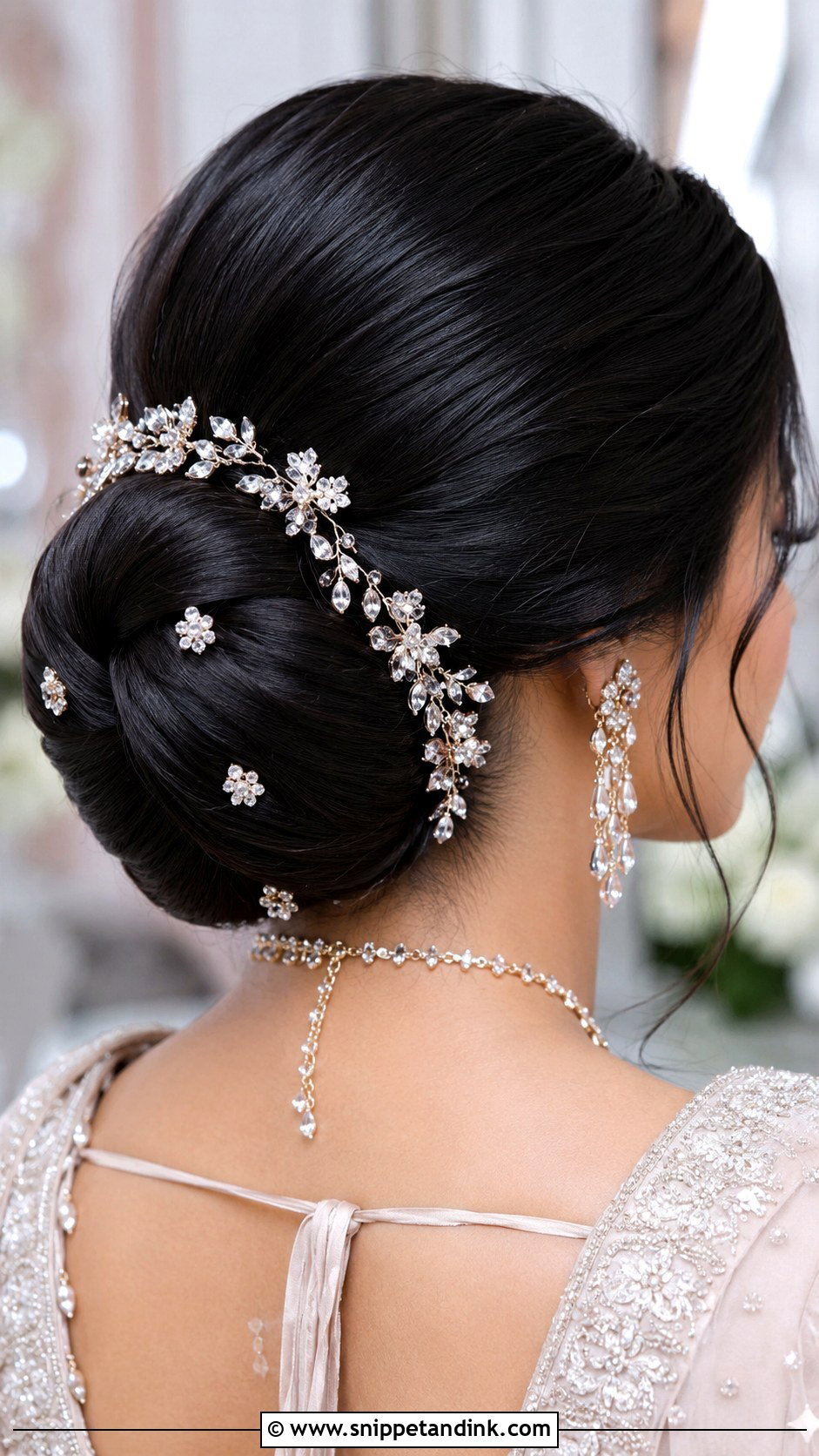
A sleek bun at the nape or crown is the plainest base on this list, and that’s the point: it becomes a canvas for jeweled hair vines, crystal pins or ornate gold pieces. Smoothing long hair into a tight bun takes more product than people expect, usually a cream through the lengths and a gel at the hairline. With traditional or contemporary outfits, it keeps the focus on your face and jewelry.
The Last Two Months Before the Wedding, for Your Lengths
Long hair shows wear at the ends first. A light trim a few weeks before the wedding does more than a big cut at the last minute: it has time to settle, and the ends look healthy without the shape changing. If you’re coloring, book it a week or two ahead so the tone softens slightly and any scalp sensitivity has passed.
Talk to your stylist before booking a smoothing or keratin treatment. These leave hair glossy but also slippery, and curls and pinned styles can struggle to hold on freshly treated hair. If you want one, do it well ahead and mention it at your trial so your stylist can prep for more grip. For the final week, sleep with your hair in a loose braid on a smooth pillowcase to cut down on tangles and breakage.
Your Length Is Where the Plan Starts
With long hair you can do almost anything: grand braids, full buns, soft cascading curls and every style in between. A gajra bun at the muhurtam and a rose twist at the sangeet can sit happily in the same wedding. Think about your face shape, outfit and jewelry, and be honest about comfort, because long hair adds weight to everything it holds. Bring reference photos and your real accessories to a trial, and wear each look long enough to know it will last the day.
You'll Like These Ideas:






Leave a Reply