
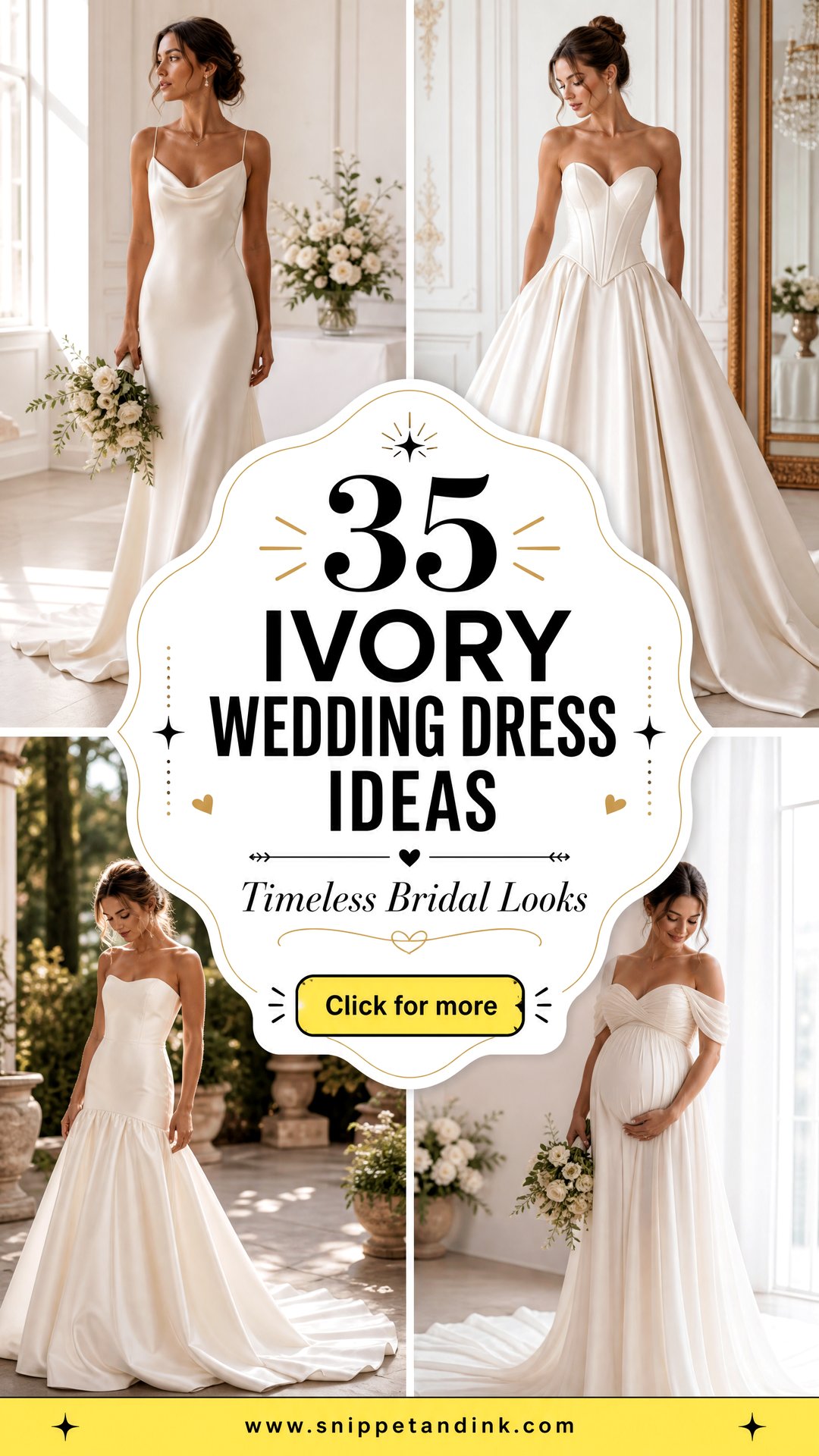
Most of the gowns brides pull in my fitting room are ivory, even when they walk in asking for white. Pure white has a blue cast that can make skin look flat under warm indoor light, while ivory carries a little yellow that sits kinder against most complexions. It also changes with the fabric: ivory satin reads creamy, ivory tulle almost disappears into white, and ivory lace often looks a shade deeper than the lining under it. Below are the ivory silhouettes and details I actually see work, with what I check on each one before a bride commits.
Ivory Has More Shades Than Most Bridal Shops Admit
There is no single ivory. Every bridal house dyes to its own standard, so one label’s ivory can look like another’s soft white, and a third’s leans close to champagne. I tell brides to judge the shade with their own eyes, not the tag.
- Stand by a window. Shop lighting is warm and flattering, and daylight shows the real undertone of both the fabric and your skin.
- Hold a sheet of plain printer paper against the skirt. If the dress suddenly looks yellow, the shade may read as dated in outdoor photos.
- Fair skin with pink undertones usually suits a paler, cooler ivory. Olive, golden and deeper skin tones often glow in a creamier one.
- Ask for a fabric swatch to take home. You’ll want it later for the veil, shoes, bridesmaid colours and florist.
Veils and shoes are where most mismatches happen. A veil ordered separately in white next to an ivory gown can make the dress look grubby by comparison, so order it to match the swatch, or go one shade lighter only if the stylist has seen both side by side.
1. Ivory Satin Ball Gown Wedding Dress
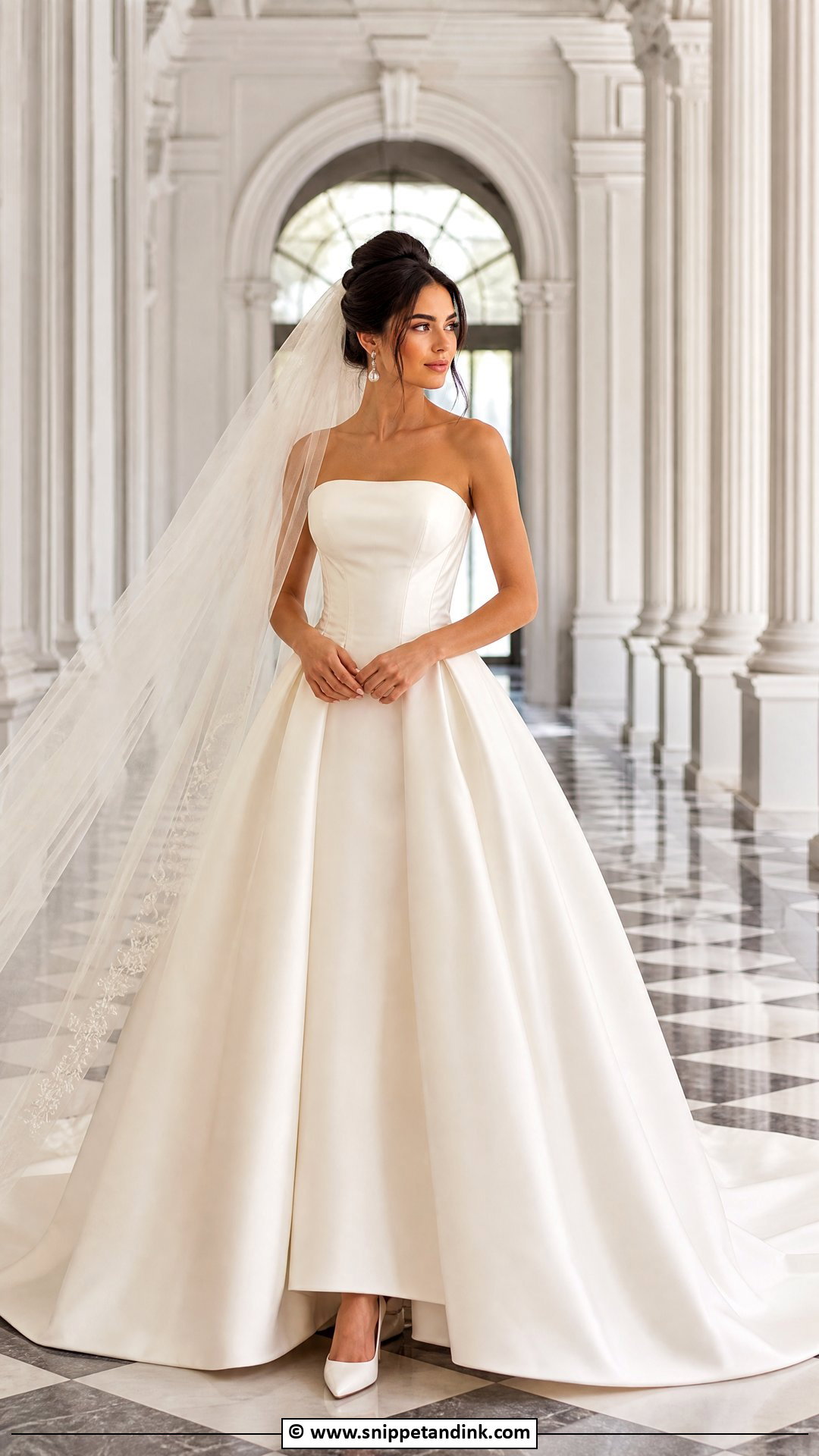
Satin ball gowns are heavy. A full skirt with a crinoline can weigh more than people expect, so the first thing I check is whether the bodice has enough boning to carry that weight without the waist seam dragging down by evening. Sweetheart, square and off-the-shoulder necklines all sit well on this shape. Because satin already throws light, I keep the extras quiet: pearl earrings, a cathedral veil, pointed ivory heels and a low chignon. Grand ballrooms and hotel venues give the skirt the floor space it needs; a narrow aisle does not.
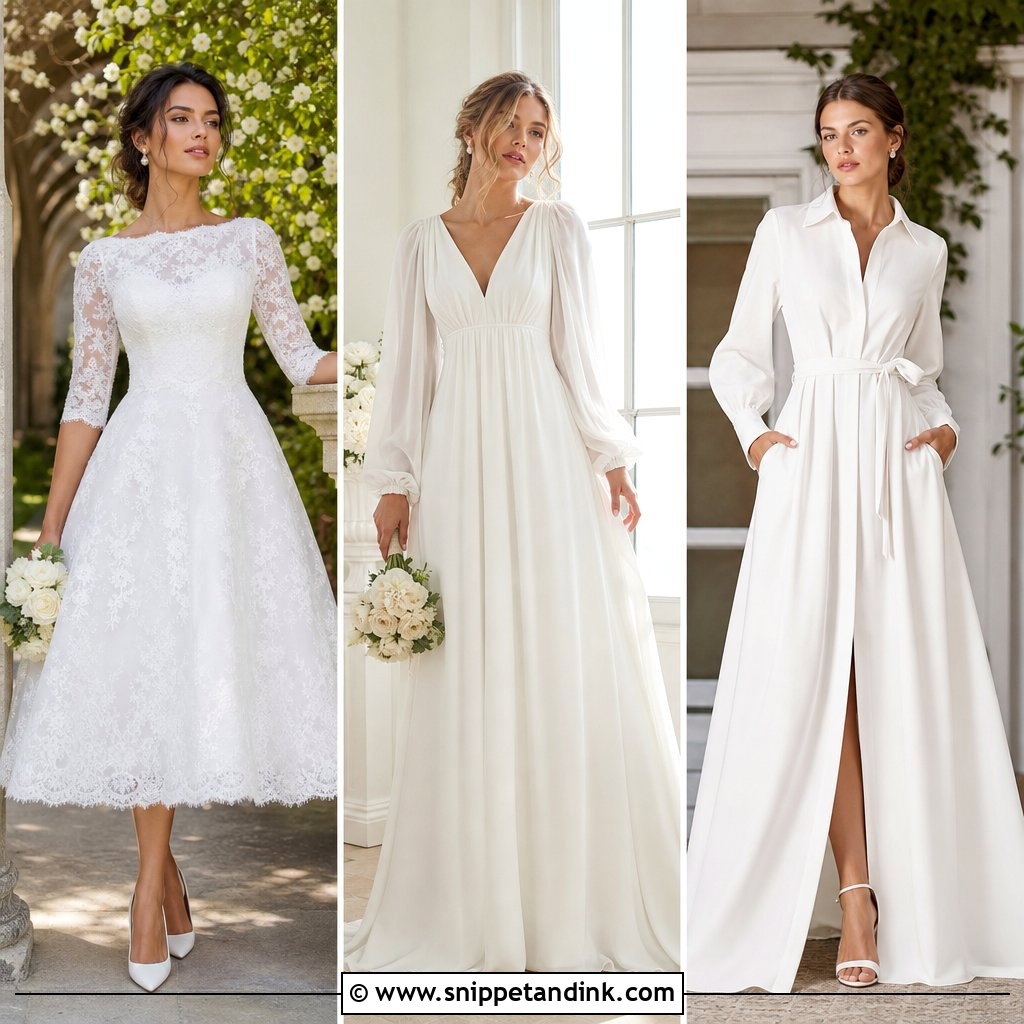
2. Ivory Lace A Line Wedding Dress
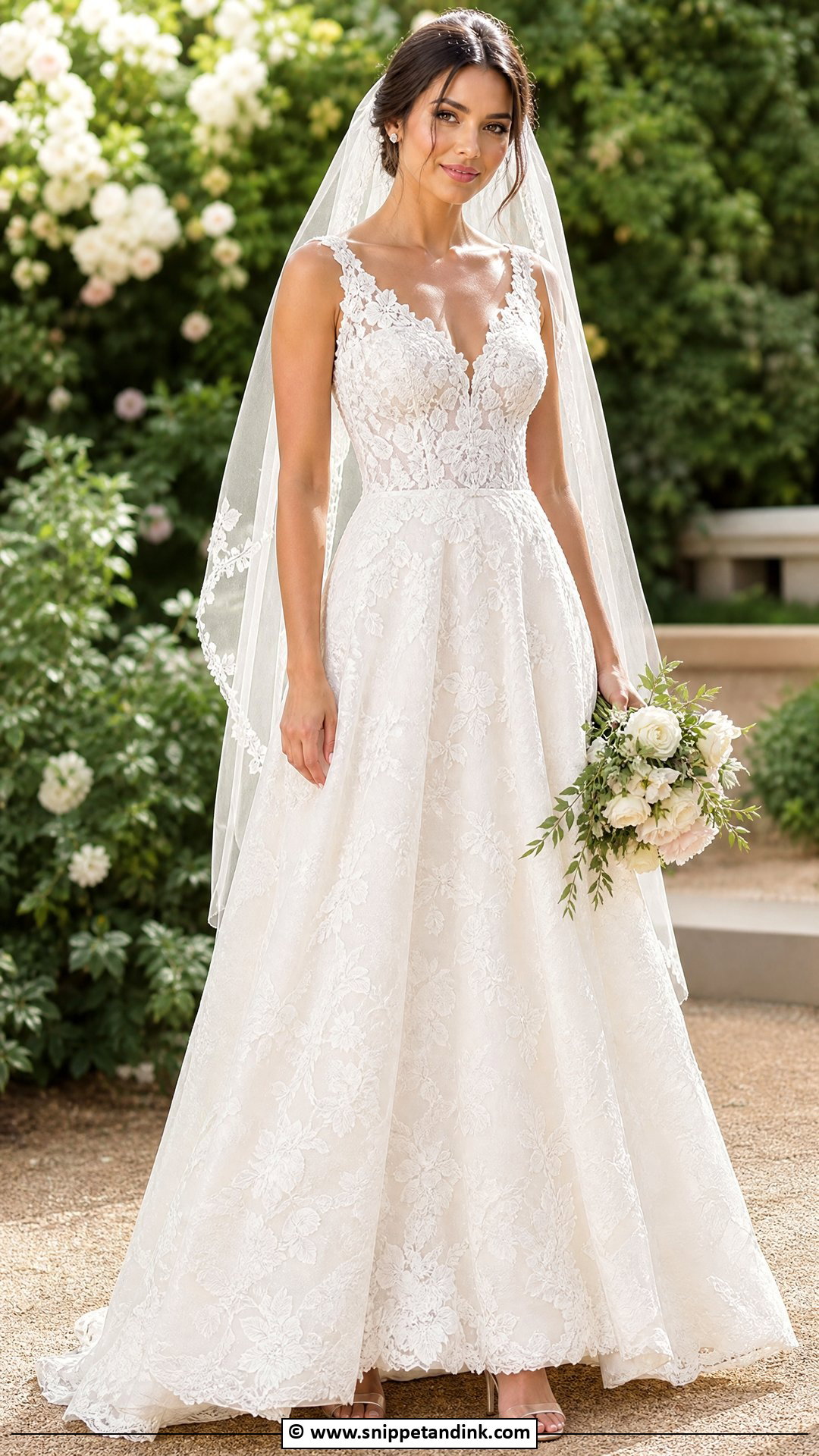
Lace A-lines are the dress I’d hand to a bride who has no idea where to start, because the fitted top and gently released skirt suit a wide range of figures. Hold the lace up to daylight before you buy. Floral and vine laces sit on a net base, and if that net is a whiter tone than the motifs, the gown can look patchy in photos. Sheer heels, small pearl studs and a fingertip veil keep it balanced. A garden or estate venue suits vintage-feeling lace, and soft waves or a half-up style finish it without fuss.
3. Ivory Mermaid Wedding Dress
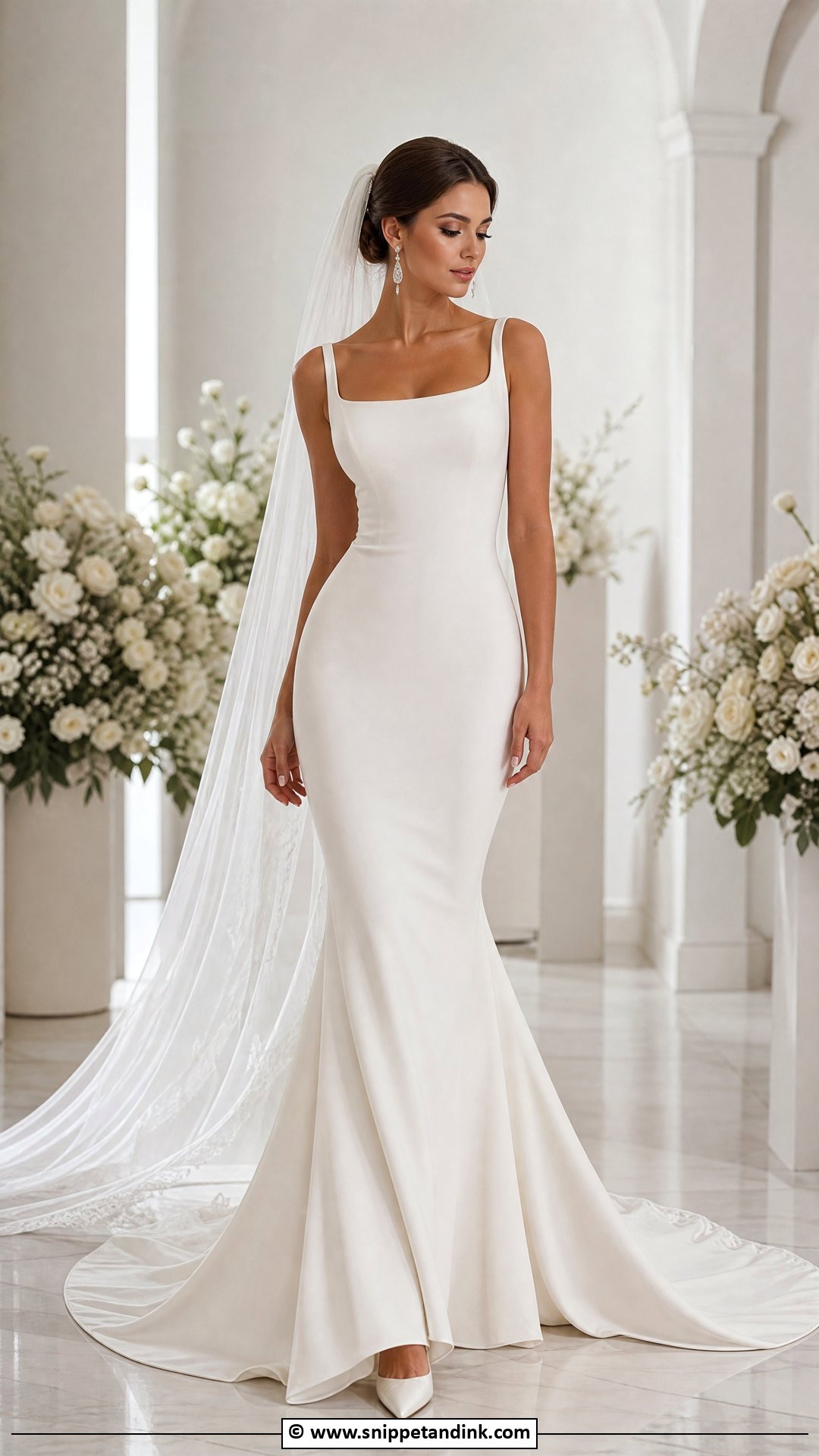
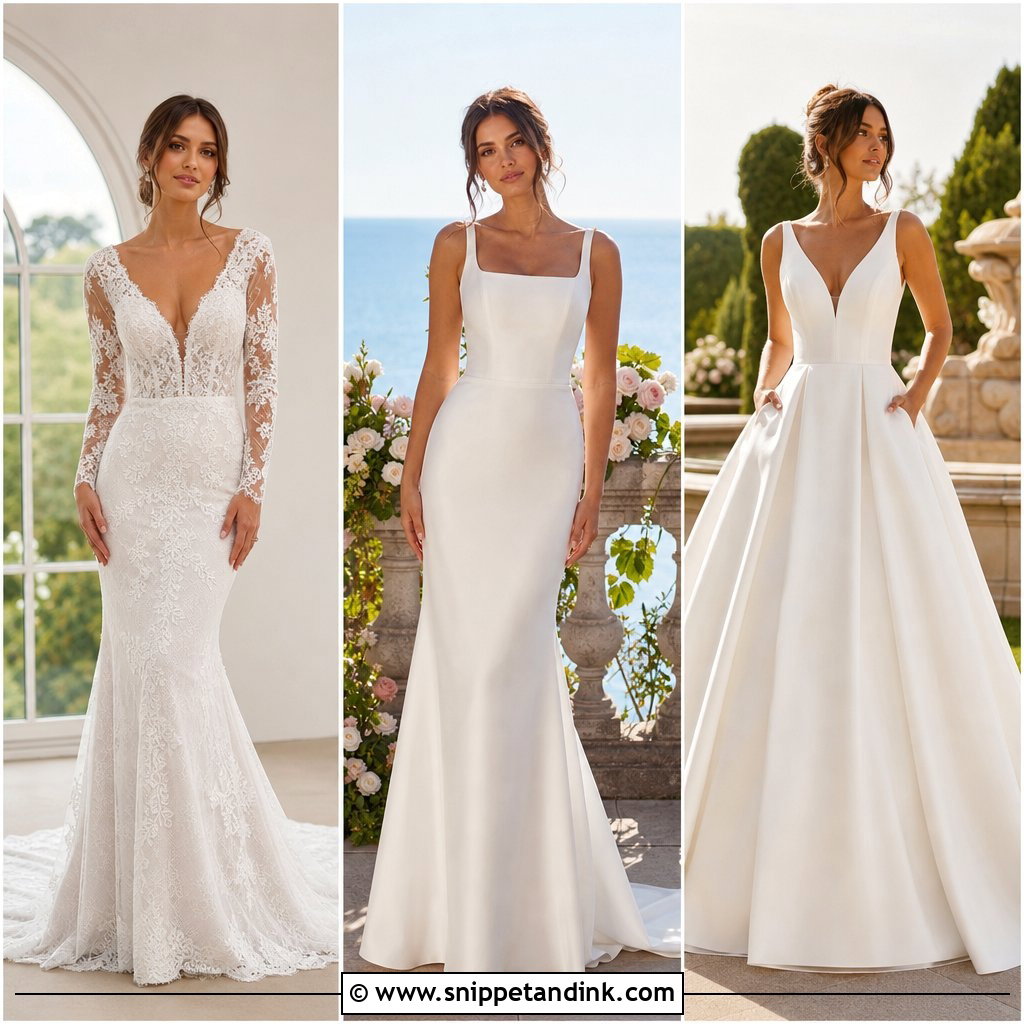
The mermaid is fitted through the bodice, waist and hips and flares below the knee, so where that flare starts decides everything. Too high and it looks like a trumpet; too low and you’ll shuffle down the aisle. I always ask a bride to sit, climb a step and walk fast in it at the fitting. Crepe gives a clean line, lace gives detail, and satin shows every seam, so it needs perfect tailoring. Keep accessories small, add drop earrings and a long veil, and let side-parted waves do the softening.
4. Ivory Off Shoulder Wedding Dress
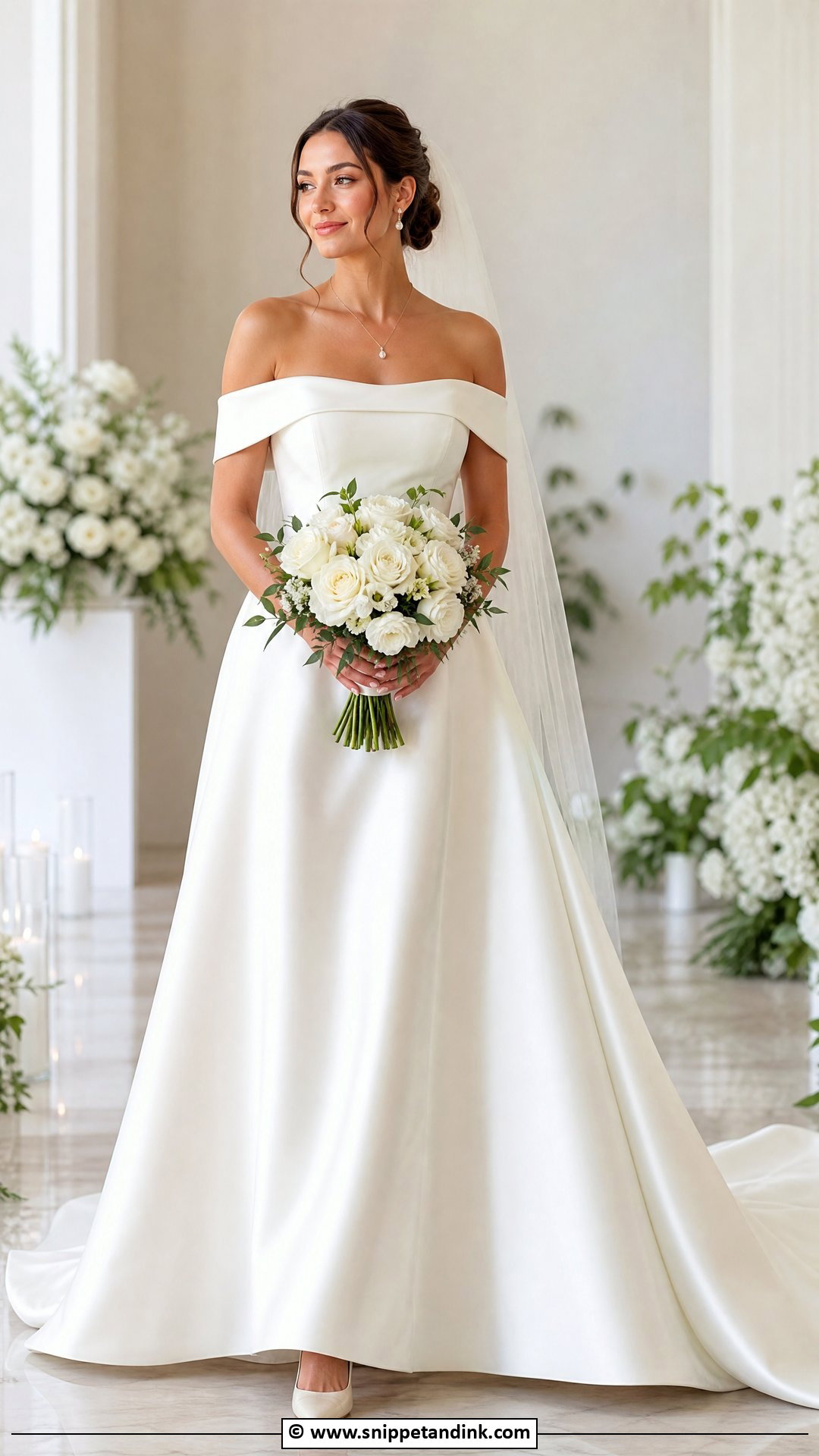
Off-the-shoulder sleeves frame the collarbone, but they also limit how high you can lift your arms. At a fitting I have brides hug me and raise a glass to check the band doesn’t climb or dig. The neckline sits on fitted gowns, A-lines and ball gowns alike. Leave most of the chest open, with a fine pendant at most, then add satin pumps, a soft veil and a structured bouquet. On camera the bare shoulders give the face a clean frame.
5. Ivory Long Sleeve Wedding Dress
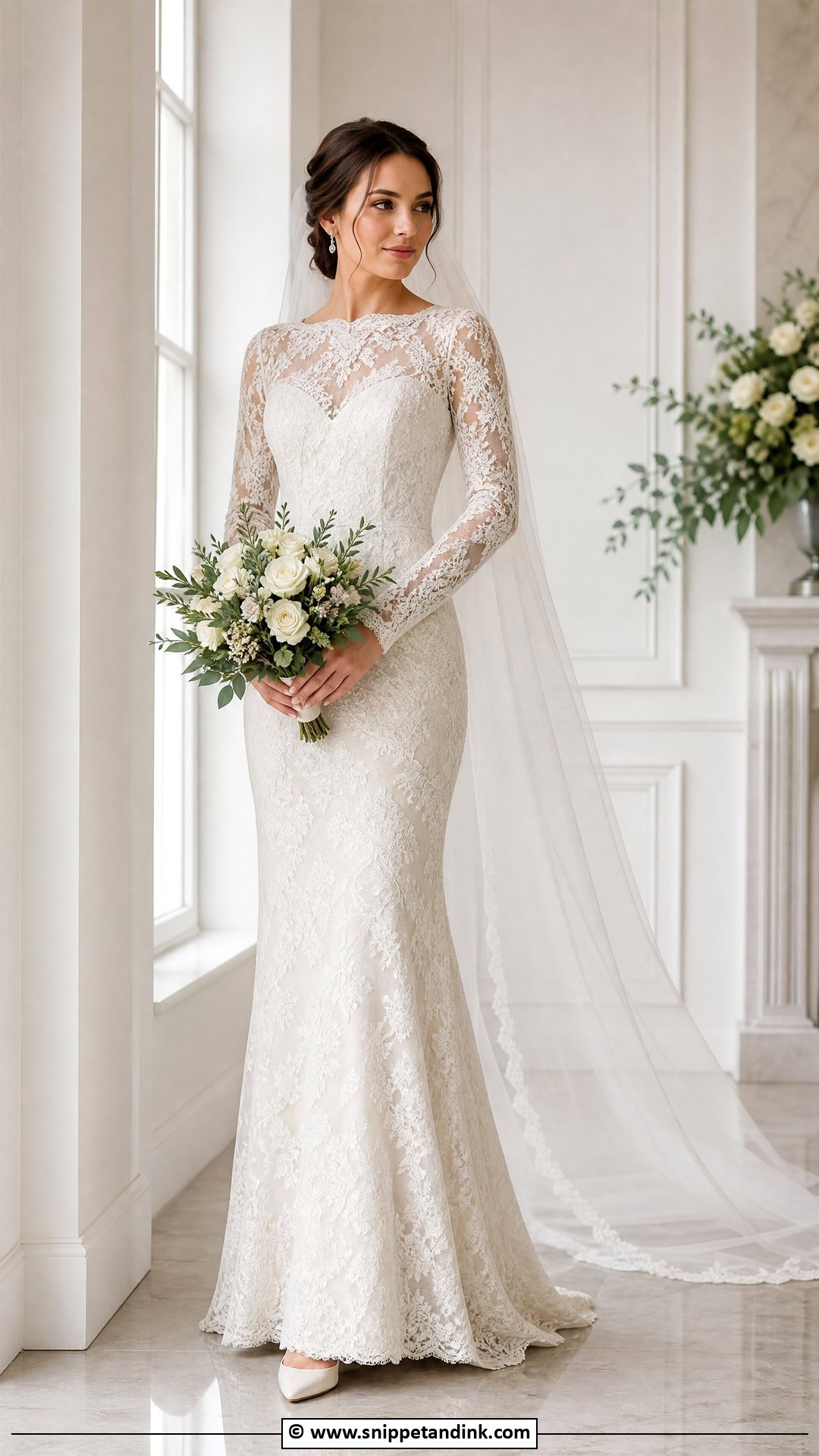
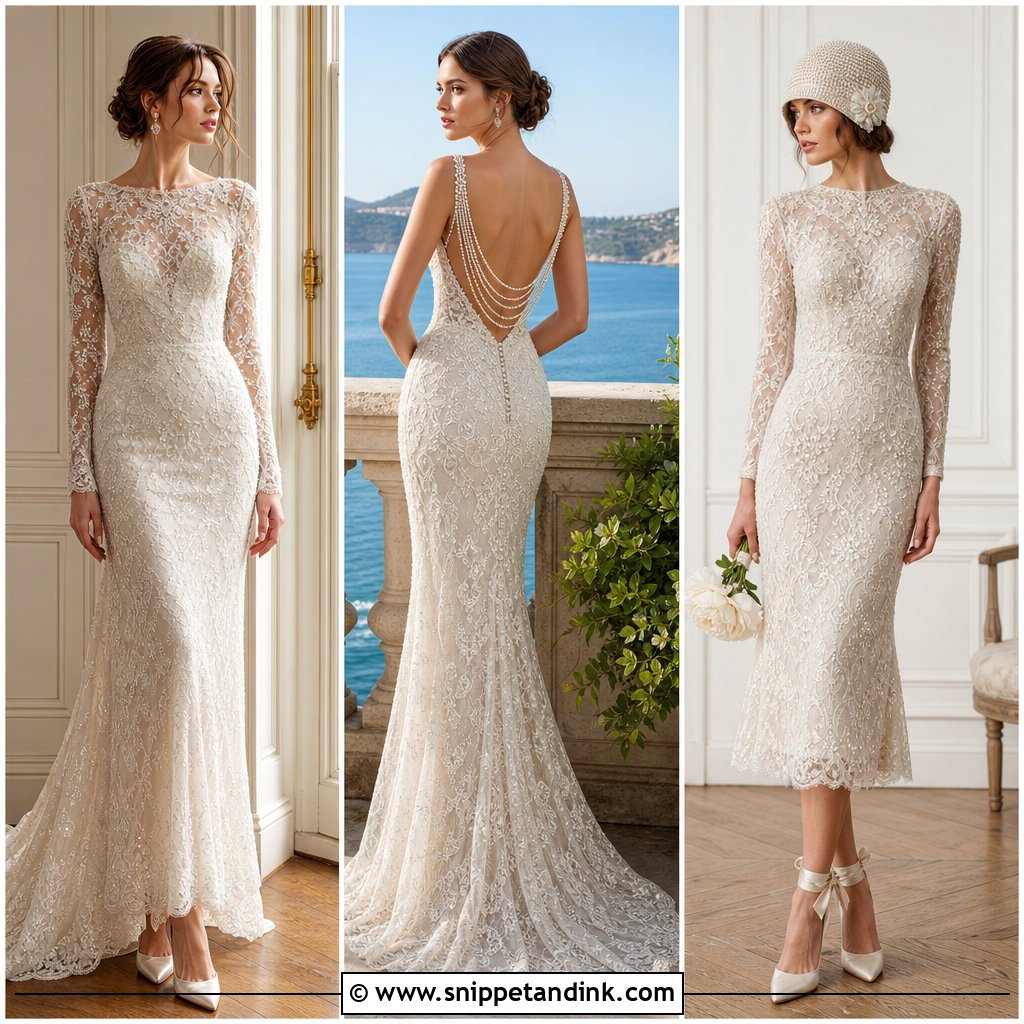
Sleeves change how a gown feels to wear more than how it looks. Sheer lace sleeves breathe; satin or crepe sleeves are warmer and much less forgiving if the armhole is cut too low, because the whole bodice lifts when you raise your arms. Fall, winter and formal indoor weddings suit them best, though illusion sleeves work fine in spring. Closed-toe heels, pearl or crystal earrings and a veil that doesn’t swallow the sleeve detail are all you need. If the cuffs are beaded or scalloped, wear your hair up so they show.
6. Ivory Strapless Wedding Dress
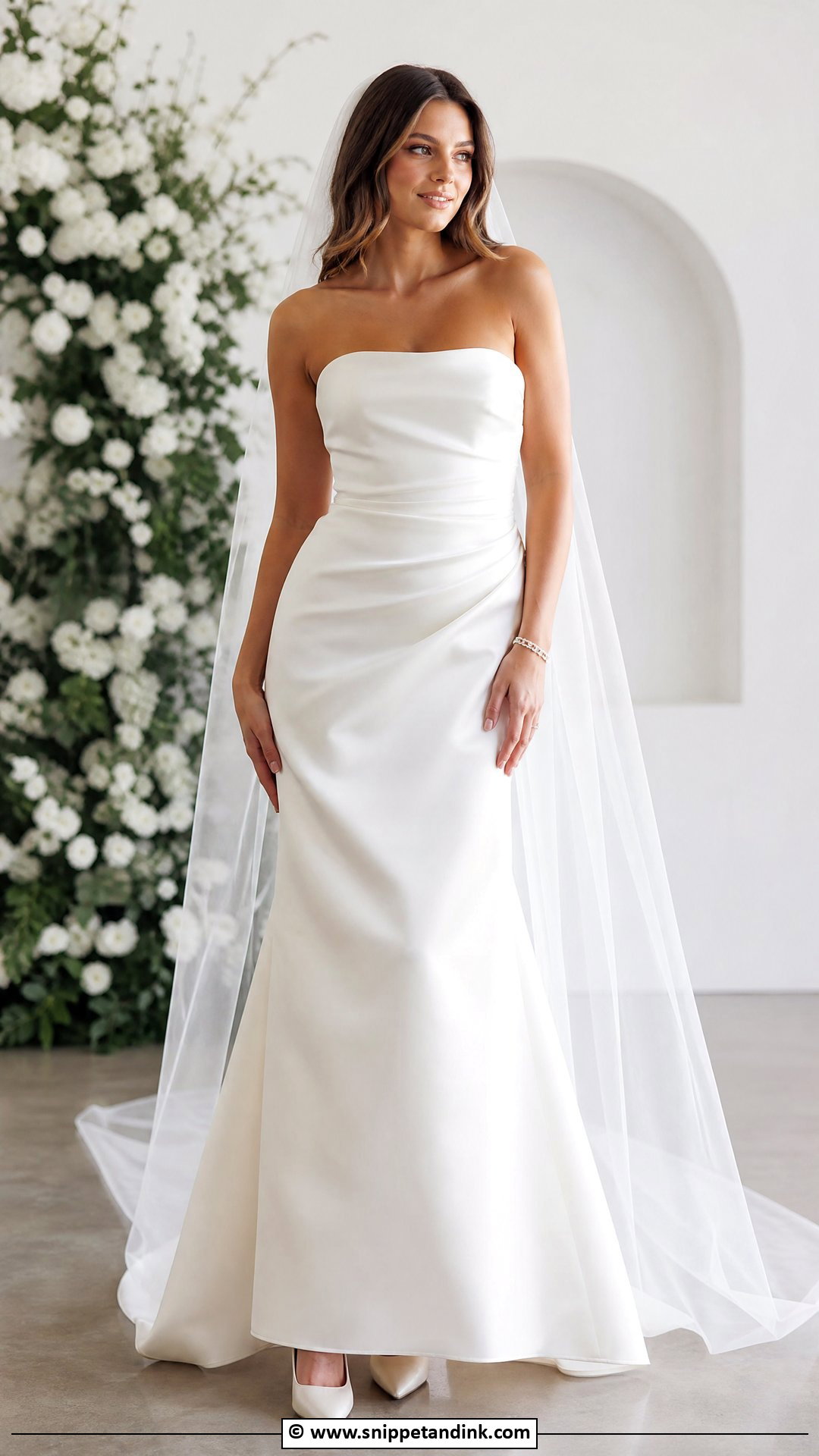
A strapless bodice only stays put if it’s built properly, and that’s the part I test hardest. I look for internal boning, a waist stay and a grip strip along the top edge, then I ask the bride to dance for thirty seconds. If she tugs at it once, it needs another fitting. Get the structure right and the shape takes any styling you like: statement earrings, a delicate necklace, sleek hair or soft curls, with a satin ball gown, fitted crepe or a tulle skirt.
7. Ivory Square Neck Wedding Dress
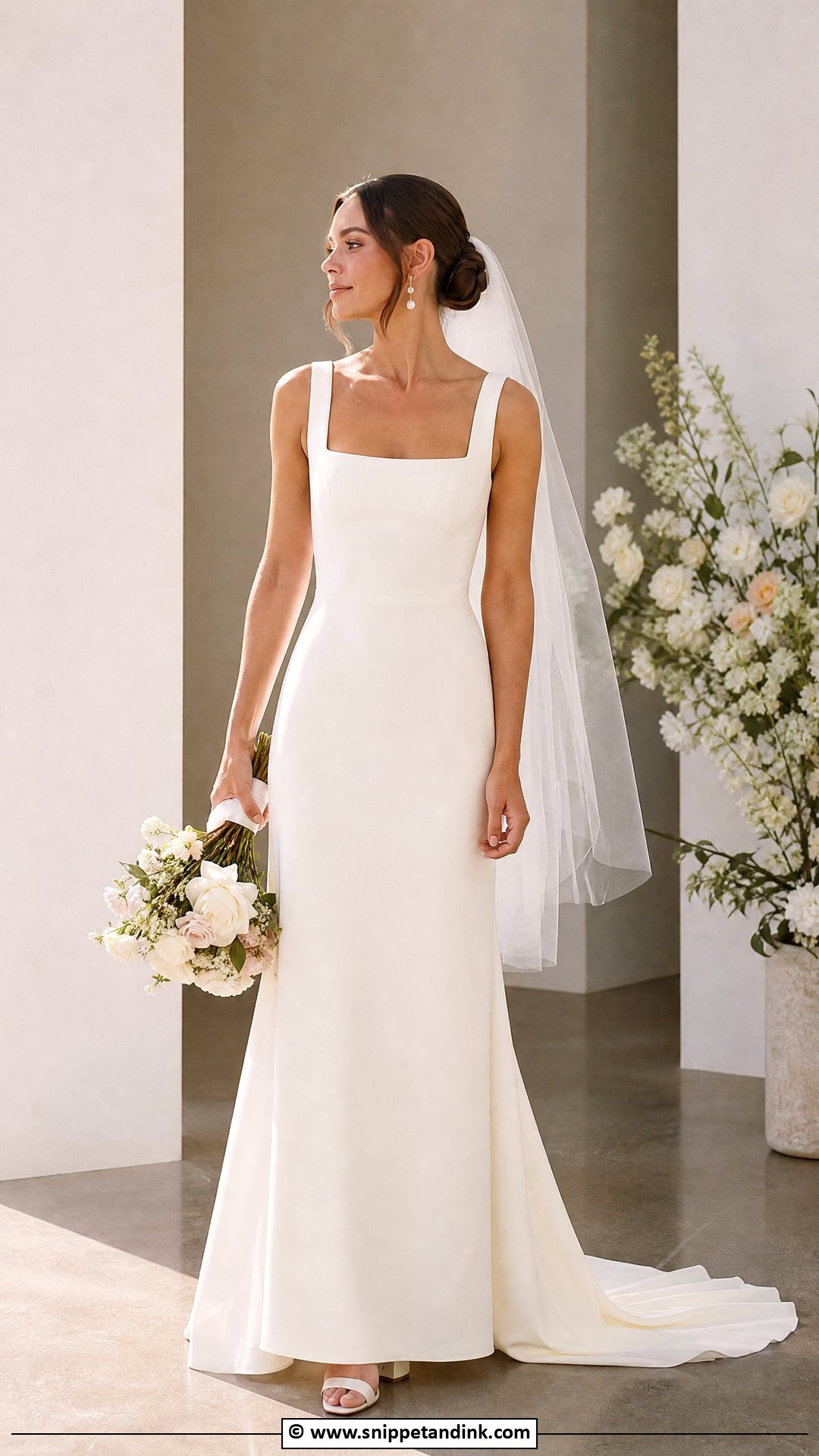
Square necklines give the upper body structure and look faintly vintage without seeming old-fashioned. They sit best with wide straps, long sleeves or a fitted bodice; on very thin straps the corners can gape when you lean forward. Crepe makes it modern, satin classic, lace softer. Pearl drops, a low bun and block heels suit it, and a plain veil keeps the straight lines crisp where a lace edge would blur them.
8. Ivory V Neck Wedding Dress
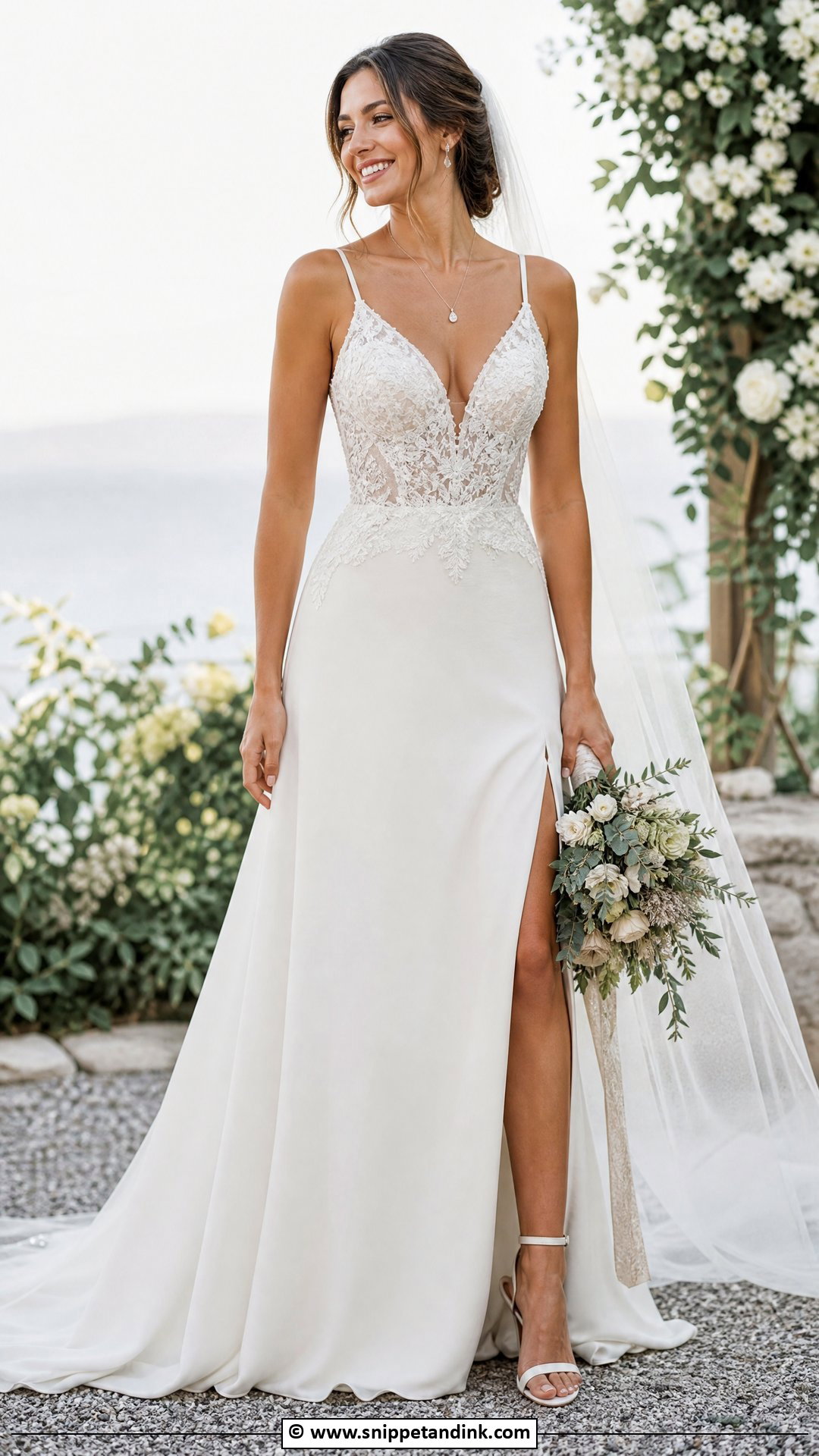
A V-neck lengthens the torso, which is why I reach for it with brides who feel boxed in by fuller bodices. The depth matters more than the style name. A deep plunge needs fashion tape and sometimes a mesh insert, and I test it by having the bride lean over a table as if signing the register. A softer V needs neither. A-line, sheath and chiffon skirts all pair well. If the back is low too, an updo or tucked waves keep the line visible.
9. Ivory High Neck Wedding Dress
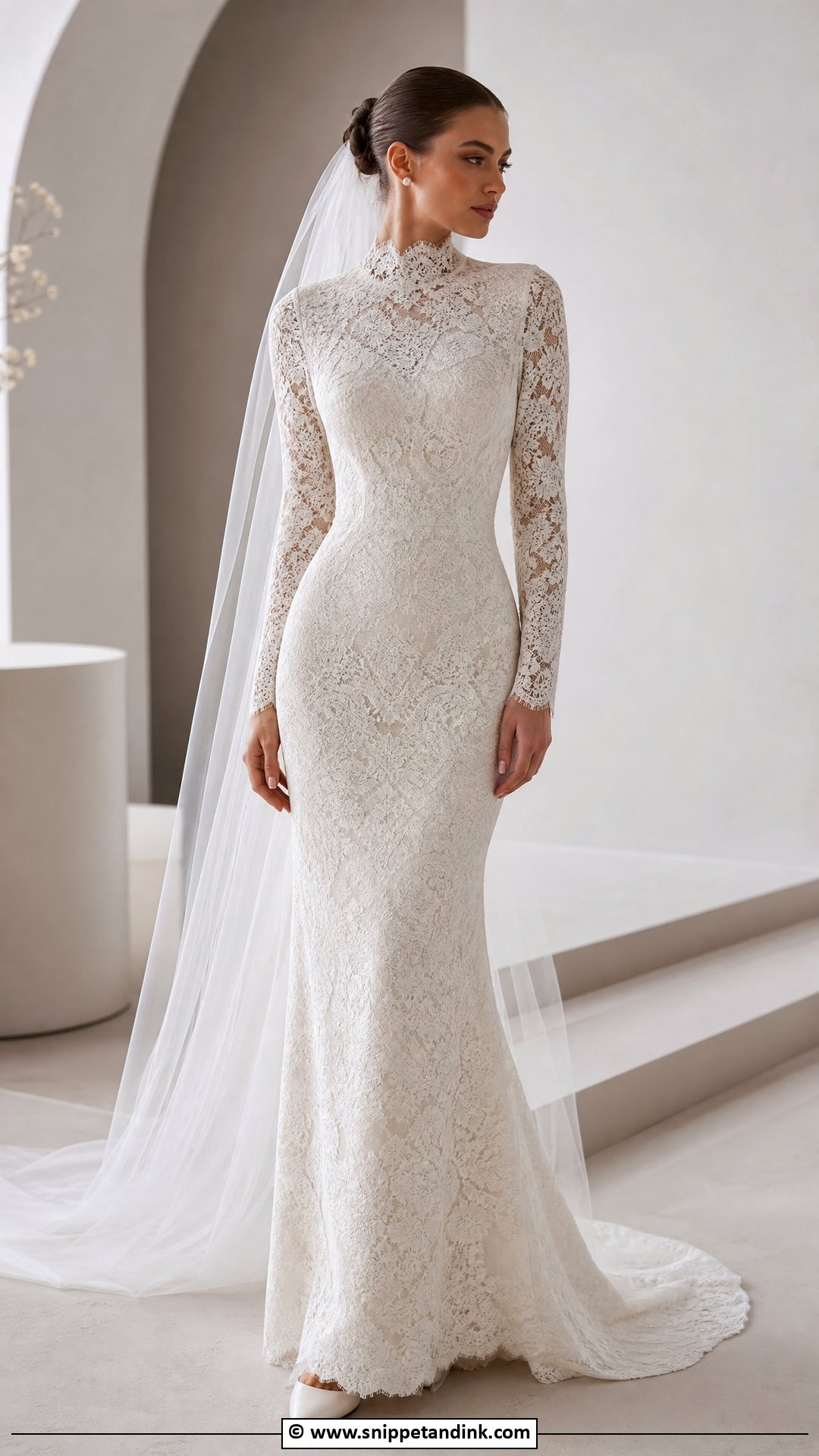
High necks put all the attention on your face and posture, so they suit sleek hair and minimal jewelry. Skip the necklace entirely and go for pearls, small crystals or a sculptural stud. Lace, crepe and satin all hold the collar shape, but check the closure: a high neck with a row of tiny buttons can take ten minutes to fasten, and someone has to know how. Pair it with a low back or a fitted skirt so the coverage feels balanced, plus pointed heels and a simple veil.
10. Ivory Sheath Wedding Dress
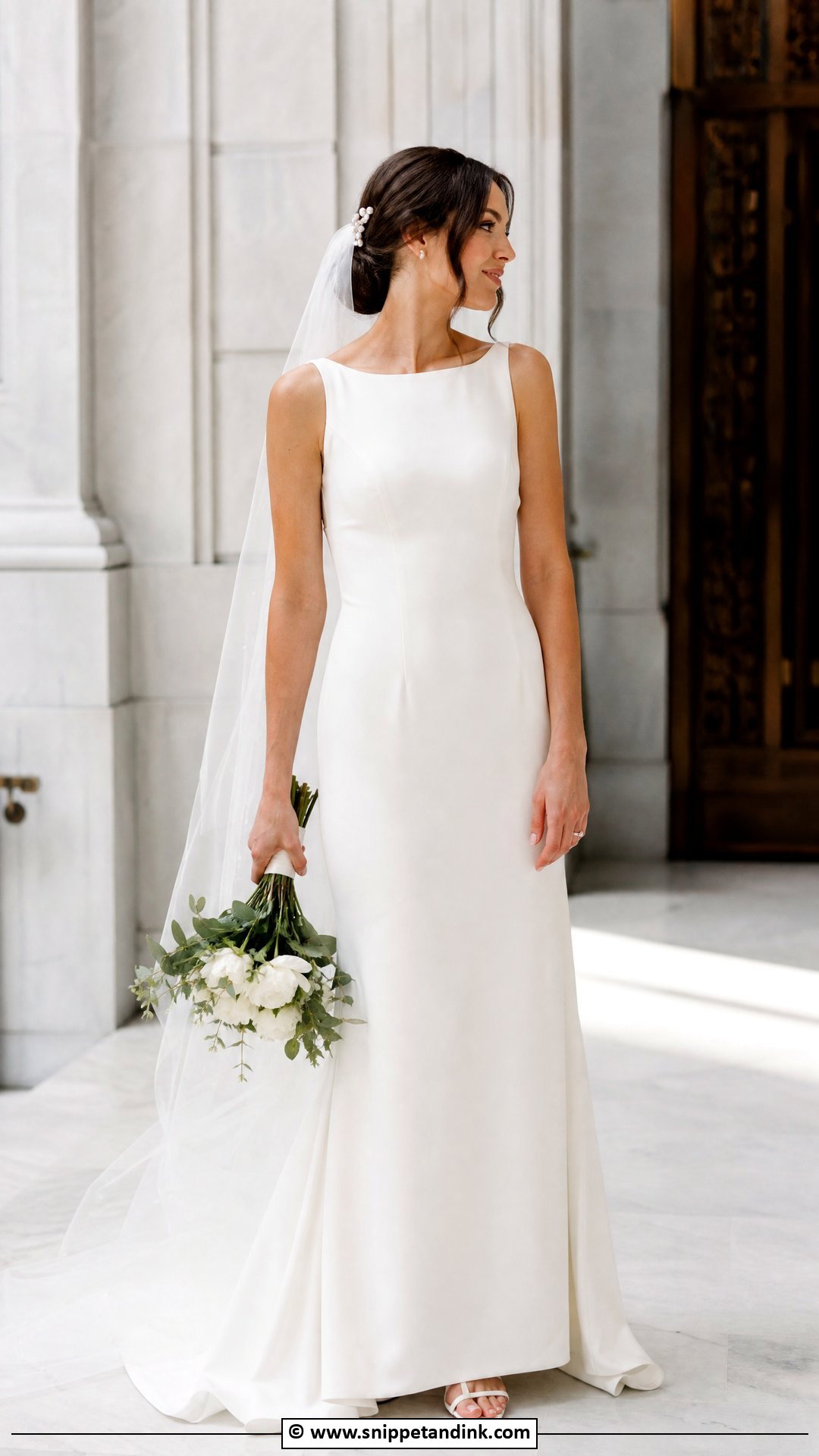
An ivory sheath wedding dress follows the body without the flare of a mermaid or the volume of a ball gown. Comfort and movement are the reason to choose it. Crepe and satin skim the figure, though satin will show the line of underwear more than you’d think, so bring your actual undergarments to every fitting. Minimal earrings, a sleek veil and sandals or pumps keep it light, and a pearl comb or sheer cape adds interest. Beach ceremonies, rooftops and small city weddings suit it best.
11. Ivory Slip Wedding Dress
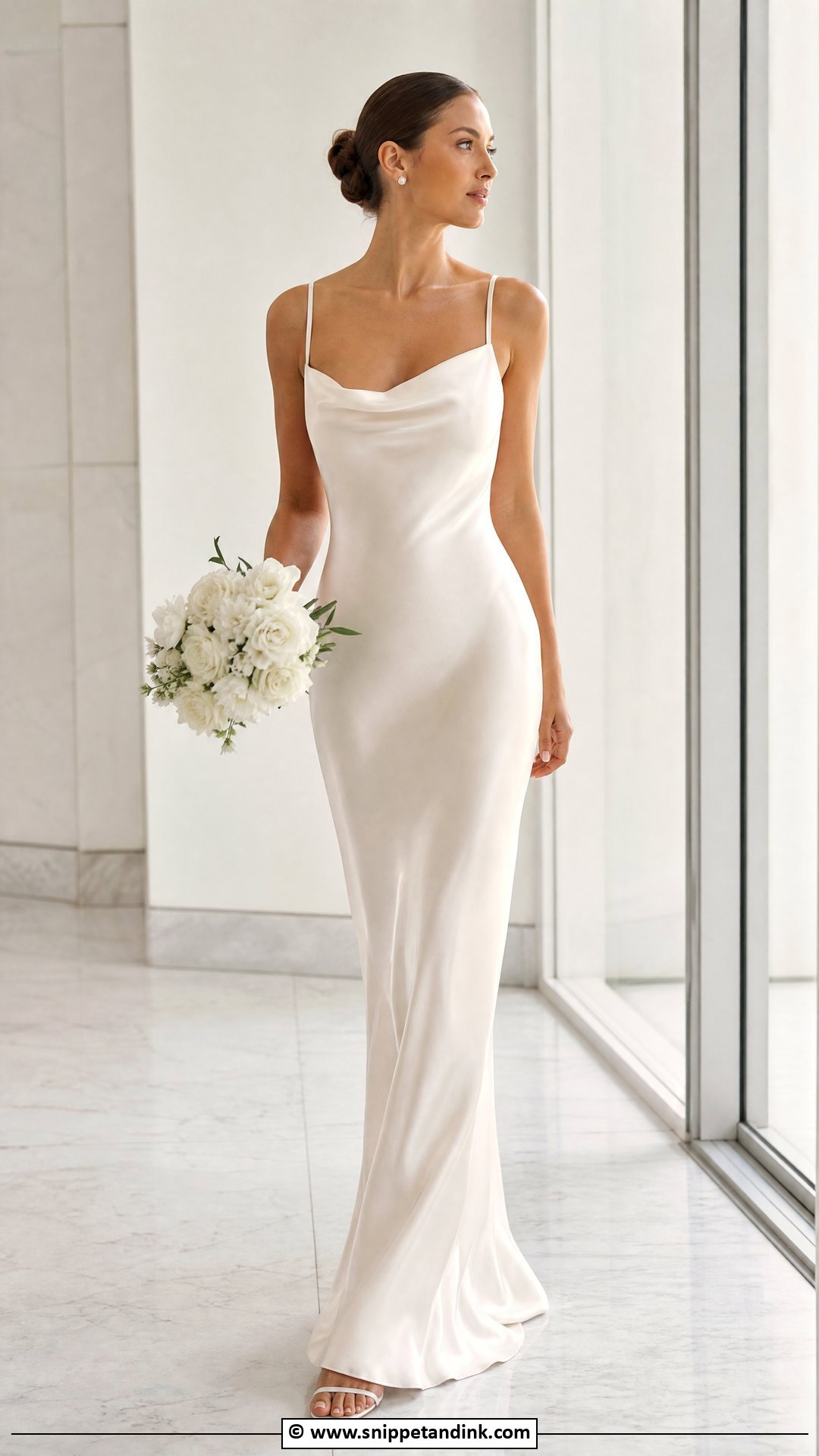
Slip dresses look simple and are anything but. Bias-cut silk or satin drapes beautifully and also shows every seam, strap line and crease from sitting in the car. I steam a slip on the morning rather than the night before. Barely-there heels, a clean low bun and small diamond or pearl earrings are enough. For cooler weather, a sheer wrap, a tailored bridal blazer or a long veil adds warmth without bulk. City weddings and intimate rooms are where it looks most at home.
12. Ivory Tulle Wedding Dress
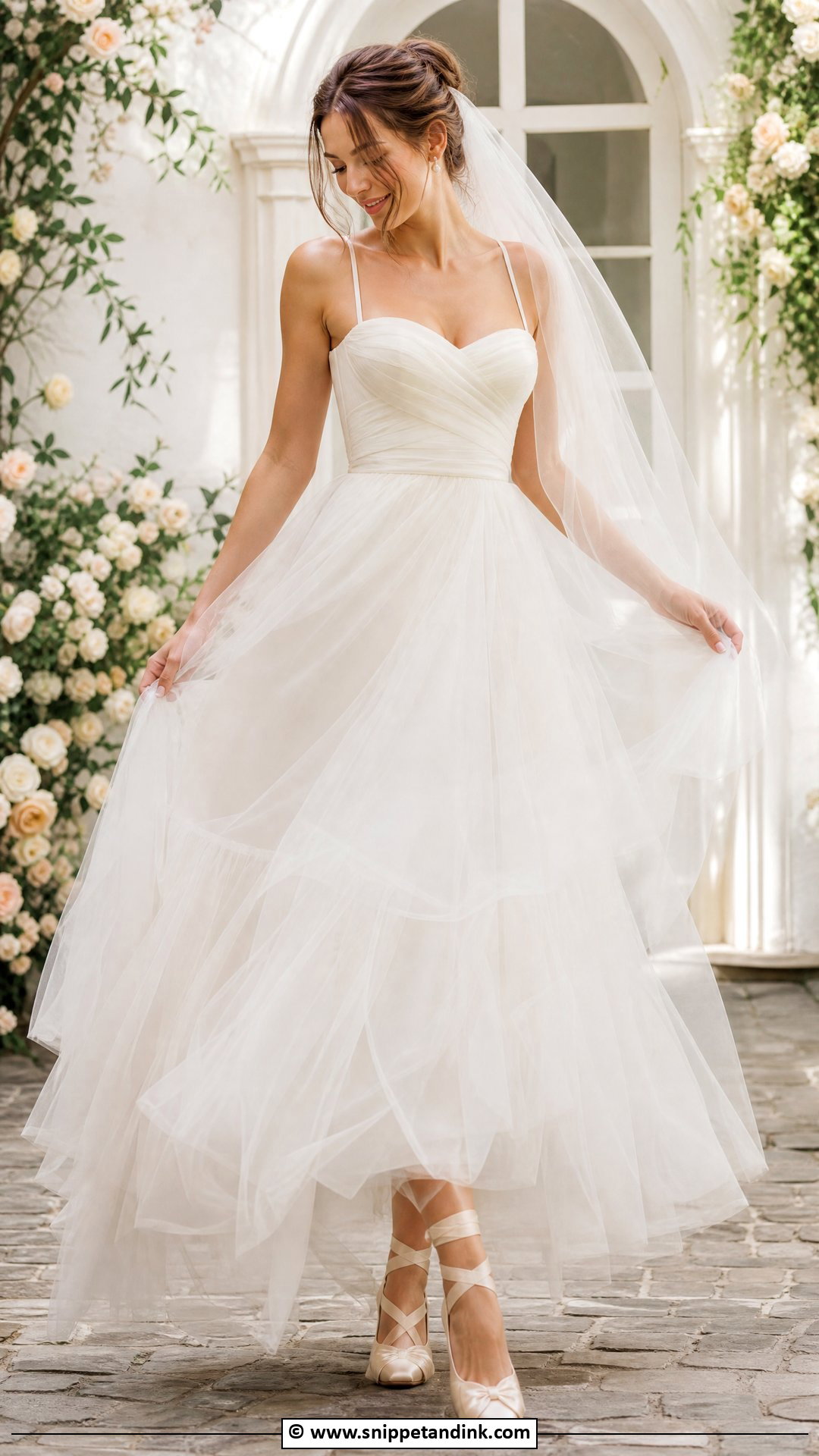
Tulle moves in a breeze, which is the appeal, and it catches on everything, which is the catch. Rough venue floors, bouquet stems and Velcro on a groomsman’s shoe can all snag a layer. A fitted bodice anchors all that float and defines the waist. Pearl earrings, ballet-style heels and a sheer veil keep it gentle, and floral appliqué or a little sparkle gives the skirt texture. Garden venues and outdoor portraits show off how it moves.
13. Ivory Crepe Wedding Dress
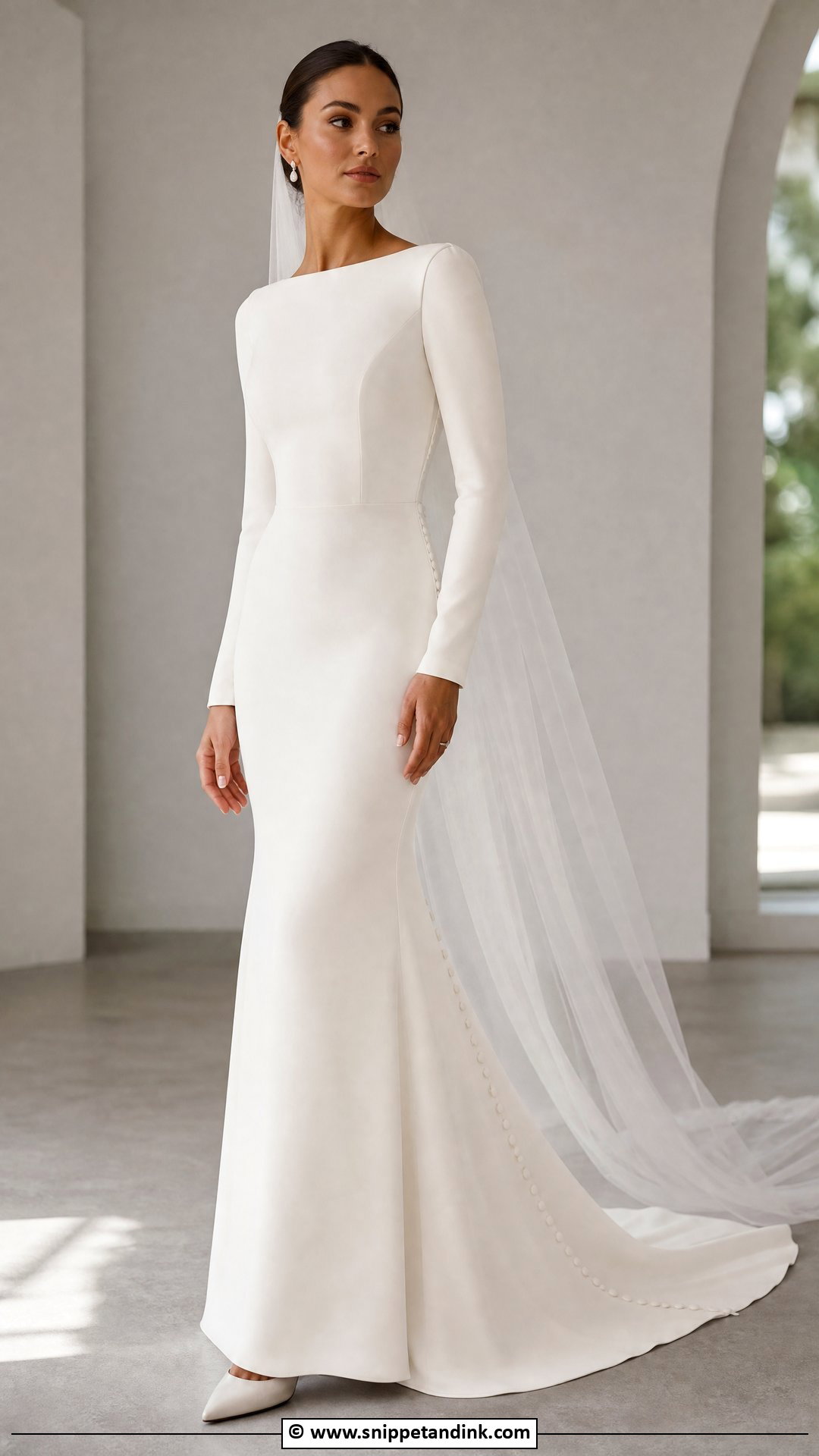
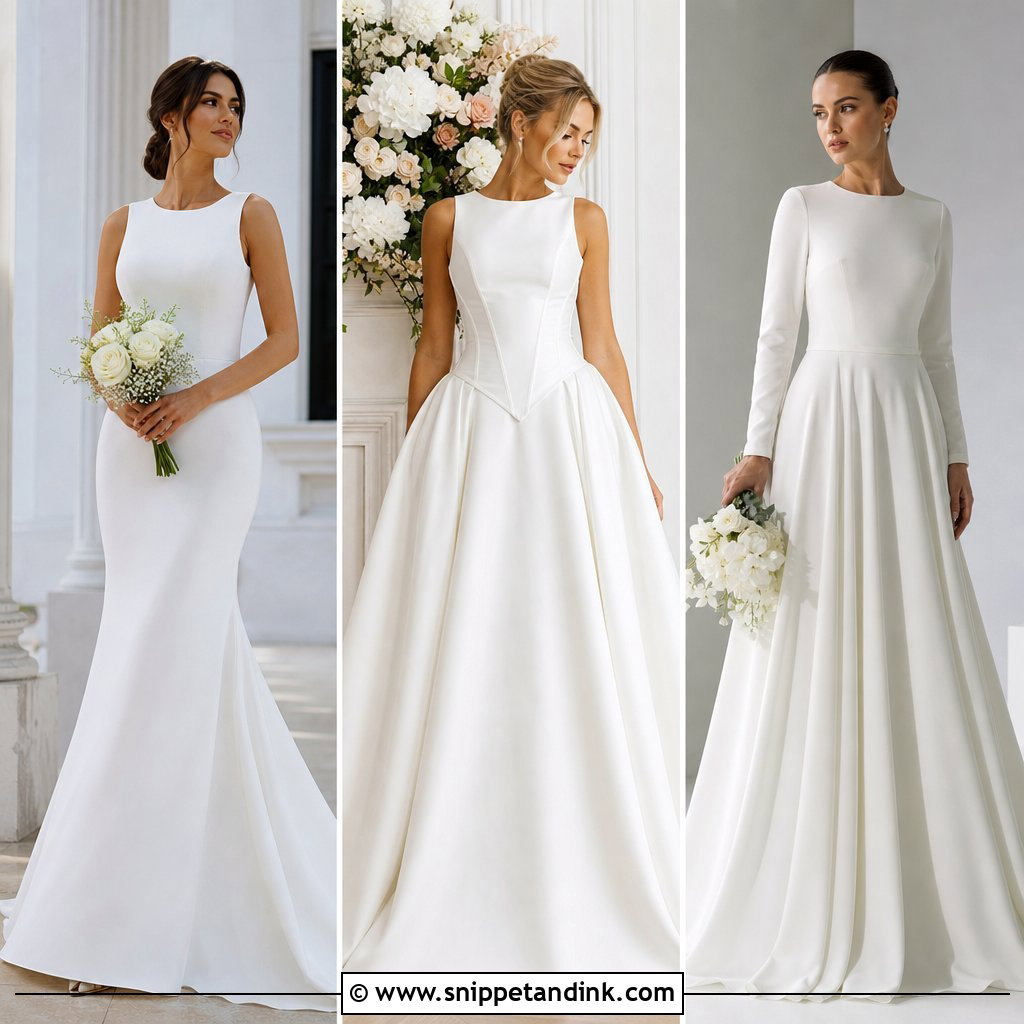
Crepe has weight, and that weight is what smooths the body and gives a sculpted line. It’s also the fabric I’d steer you away from if you’re nervous about fit, because there’s no lace or beading to disguise a pulled seam. With so little decoration, the details carry the gown: a sharp neckline, covered buttons, a low back or a long train. Sheath, fit-and-flare, column and long-sleeve cuts all work. Pointed heels, sleek earrings and a smooth veil finish it.
14. Ivory Organza Wedding Dress
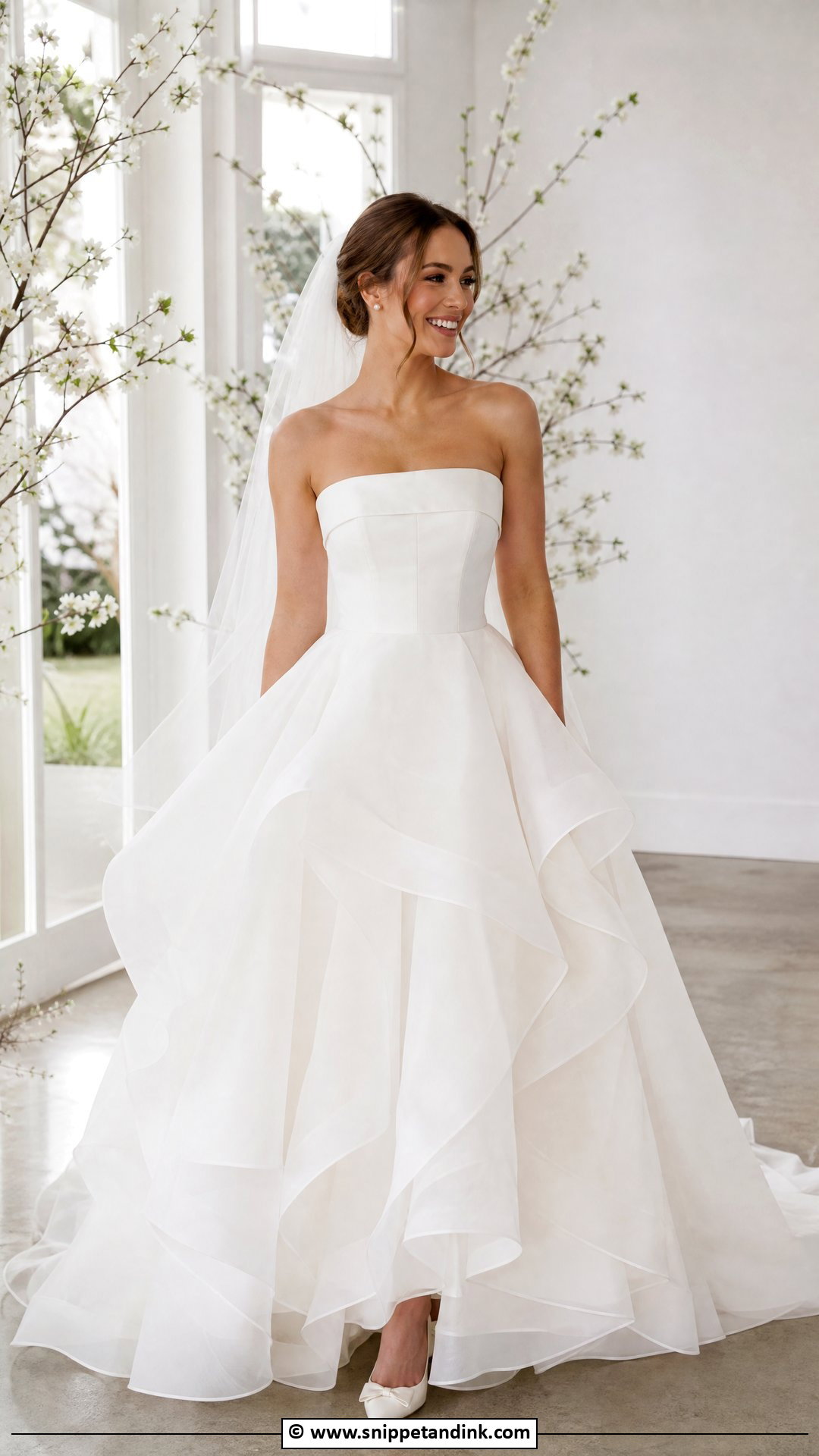
Organza is crisp and holds its shape, so it gives you volume without the weight of satin. That makes it my pick for full skirts, puff sleeves and layered overskirts in spring and summer heat. The trade-off is that it creases sharply and can look crumpled after a long car ride, so plan to steam it at the venue. Satin heels, pearl studs and a simple veil let the fabric lead. With a dramatic skirt, keep the hair neat in a low bun or polished waves.
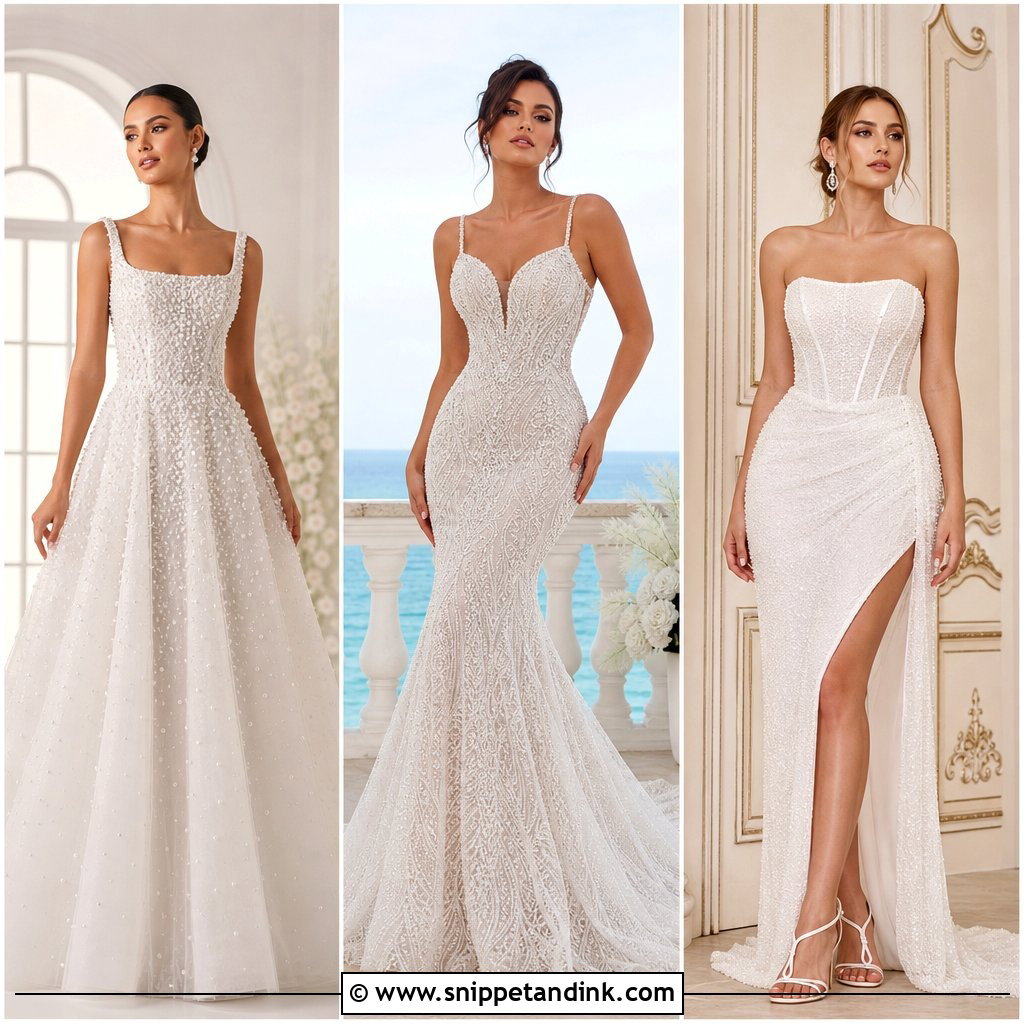
15. Ivory Beaded Wedding Dress
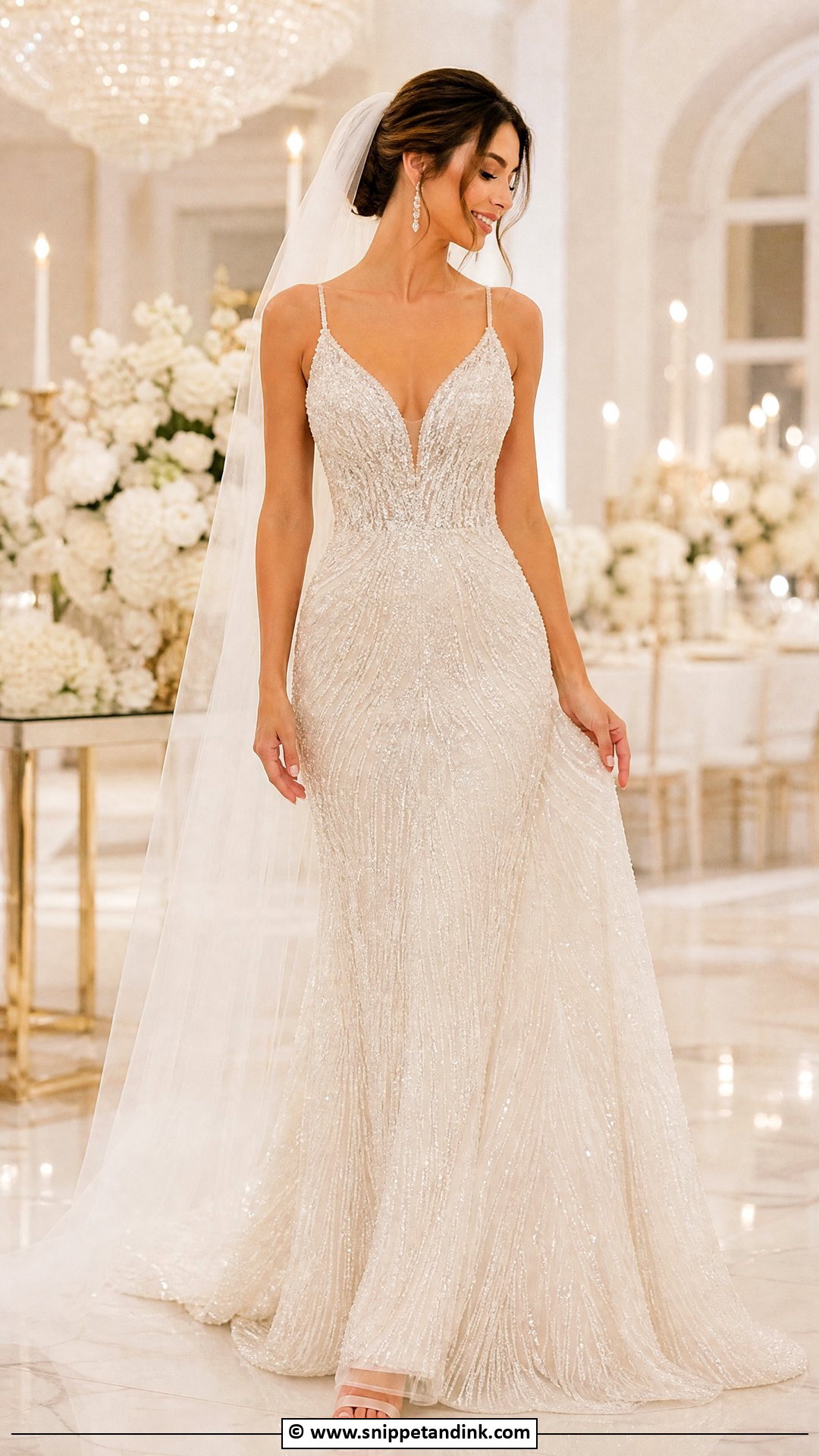
Beading gives shimmer without the coldness of bright silver, and ivory warms it further. It can trace lace patterns on the bodice or cover the whole gown. Before you fall for it, lift the skirt: heavily beaded dresses can be very heavy, and beads on the inner arm can scratch when you hug people all night. Small crystal earrings, plain heels and a veil with little or no trim keep it from tipping over. A fitted cut reads red-carpet; an A-line feels softer under evening ballroom light.
16. Ivory Pearl Wedding Dress
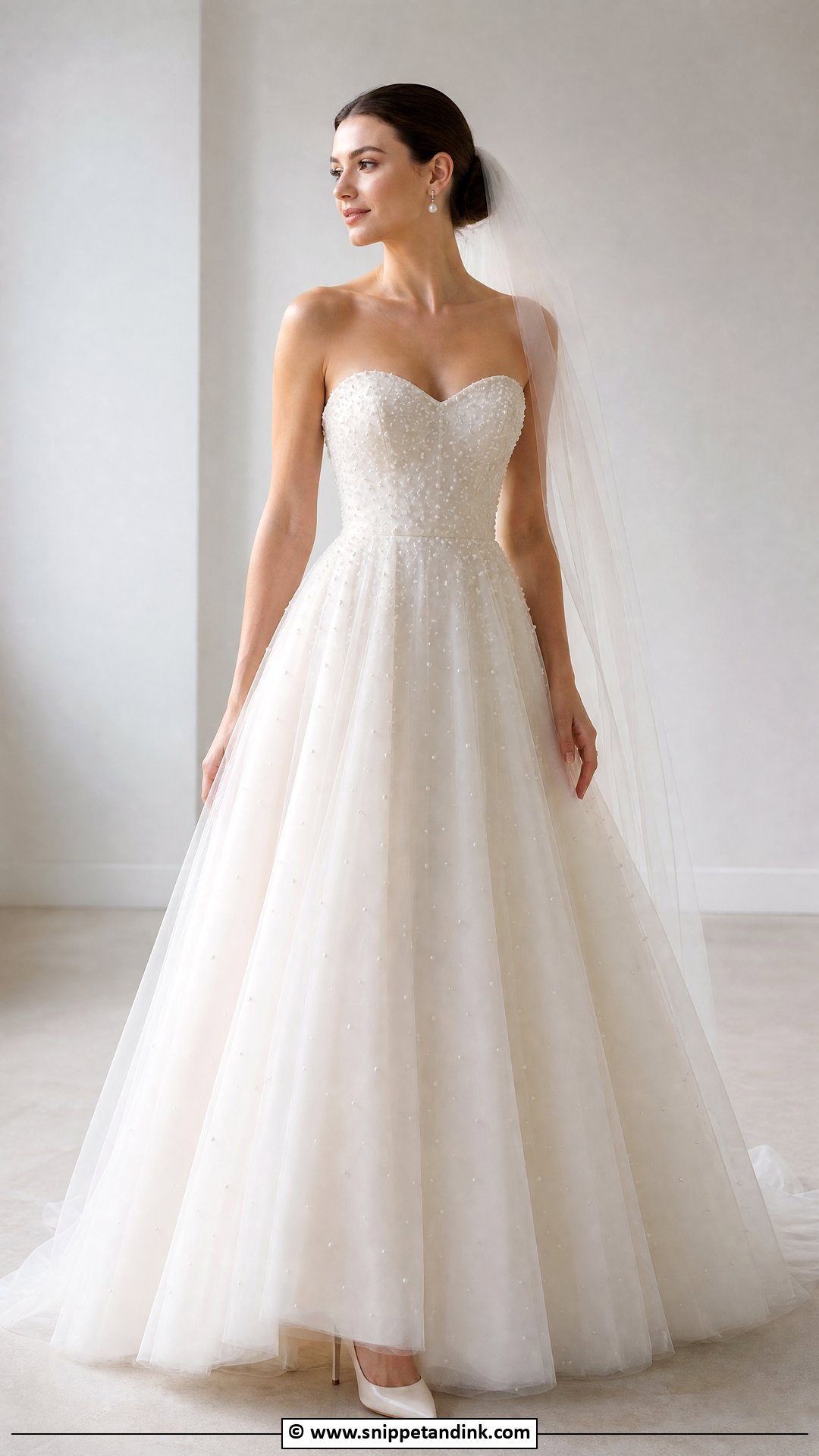
Pearls blend with ivory instead of contrasting the way they do on bright white, so the effect is quieter than you’d expect. They can be scattered over tulle, edged along the neckline, set on the sleeves or used as buttons down the back. Match your earrings to the pearl tone in the gown, since pearls range from cream to almost pink. If the dress is heavily embellished, stop at the earrings and skip the pearl necklace, bracelet and hair pins. A smooth bun and a clean bouquet do the rest.
17. Ivory Floral Applique Wedding Dress
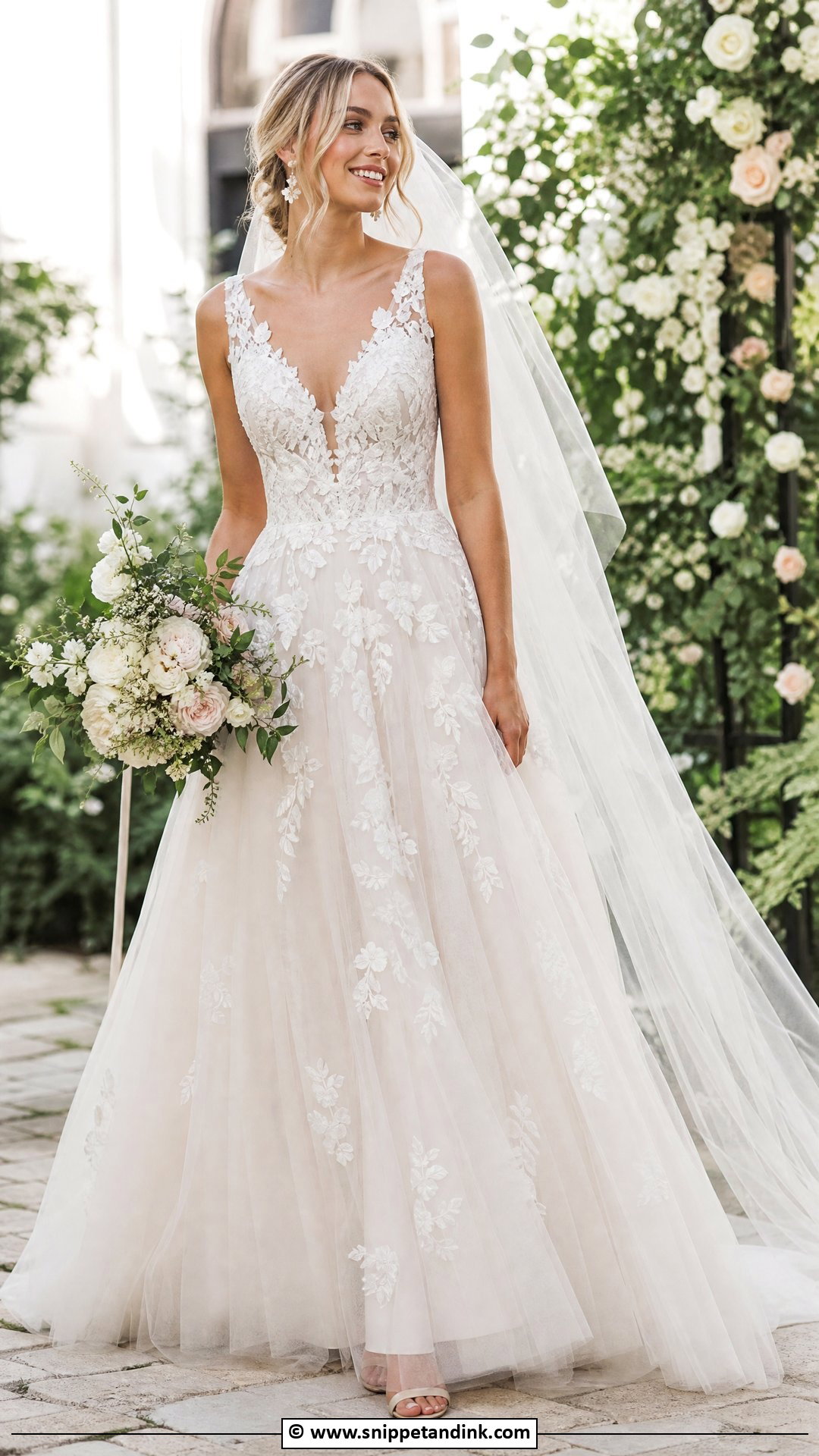
Appliqué flowers add depth, and their scale decides the mood: small blooms read delicate, large dimensional ones read bold. A-line, tulle, organza and fitted lace all carry it. The two things I watch are the veil and the bouquet. A heavily embroidered veil edge fights with raised flowers on the bodice, and a busy bouquet held against a floral skirt turns into visual noise. Choose a plain veil, simple heels and a clean bouquet so the flowers on the dress have space. Spring and summer garden weddings suit this best.
18. Ivory Basque Waist Wedding Dress
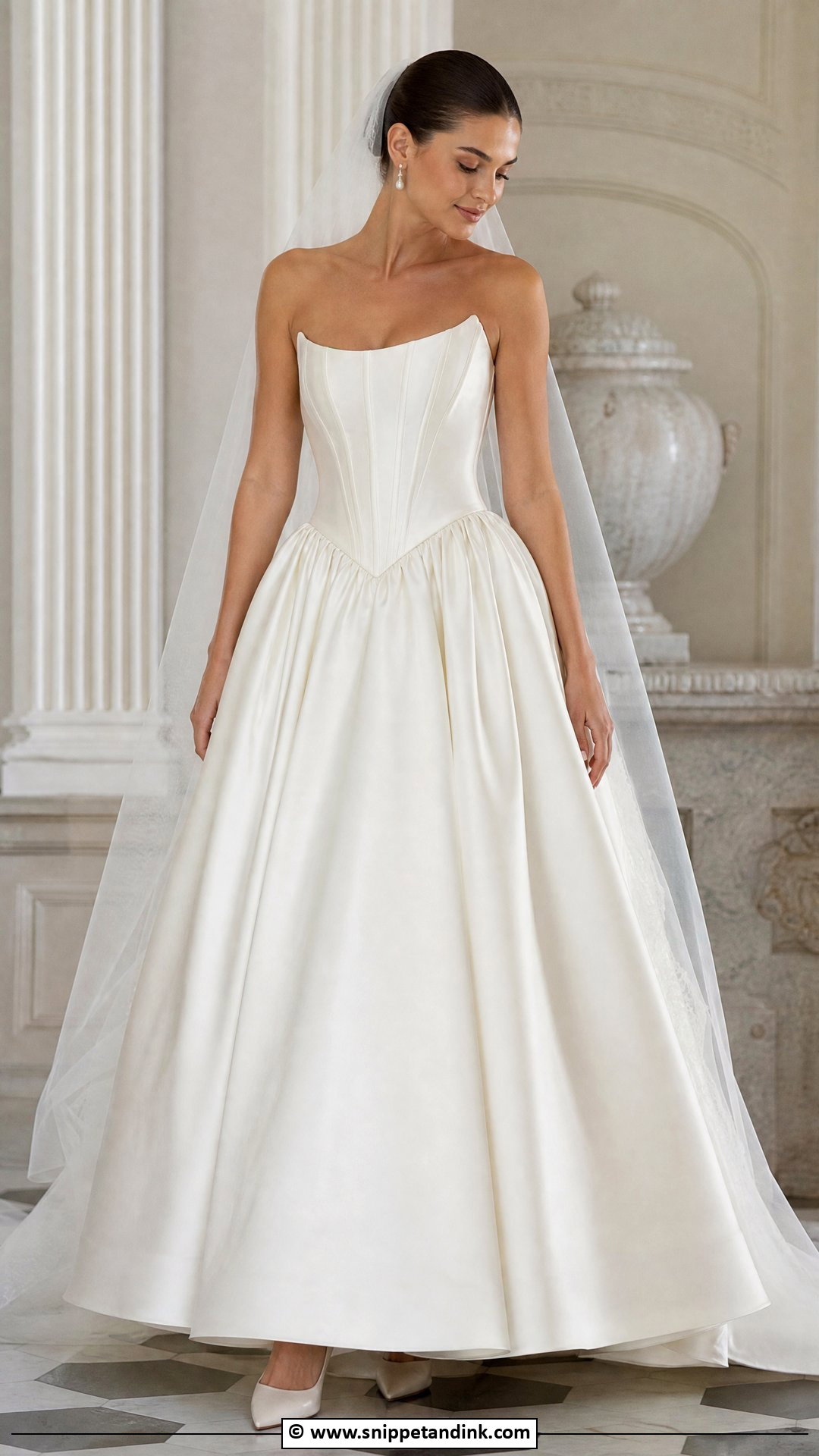
An ivory basque waist wedding dress dips into a point just below the natural waist, which lengthens the torso and sharpens the hourglass. It’s the waistline I suggest to brides with a short body who want definition without a straight seam cutting them in half. Clean satin, structured taffeta and soft tulle all work. A long veil, pearl earrings and ivory pumps keep it classic; a strapless or square-neck version with minimal jewelry feels more current.
19. Ivory Drop Waist Wedding Dress
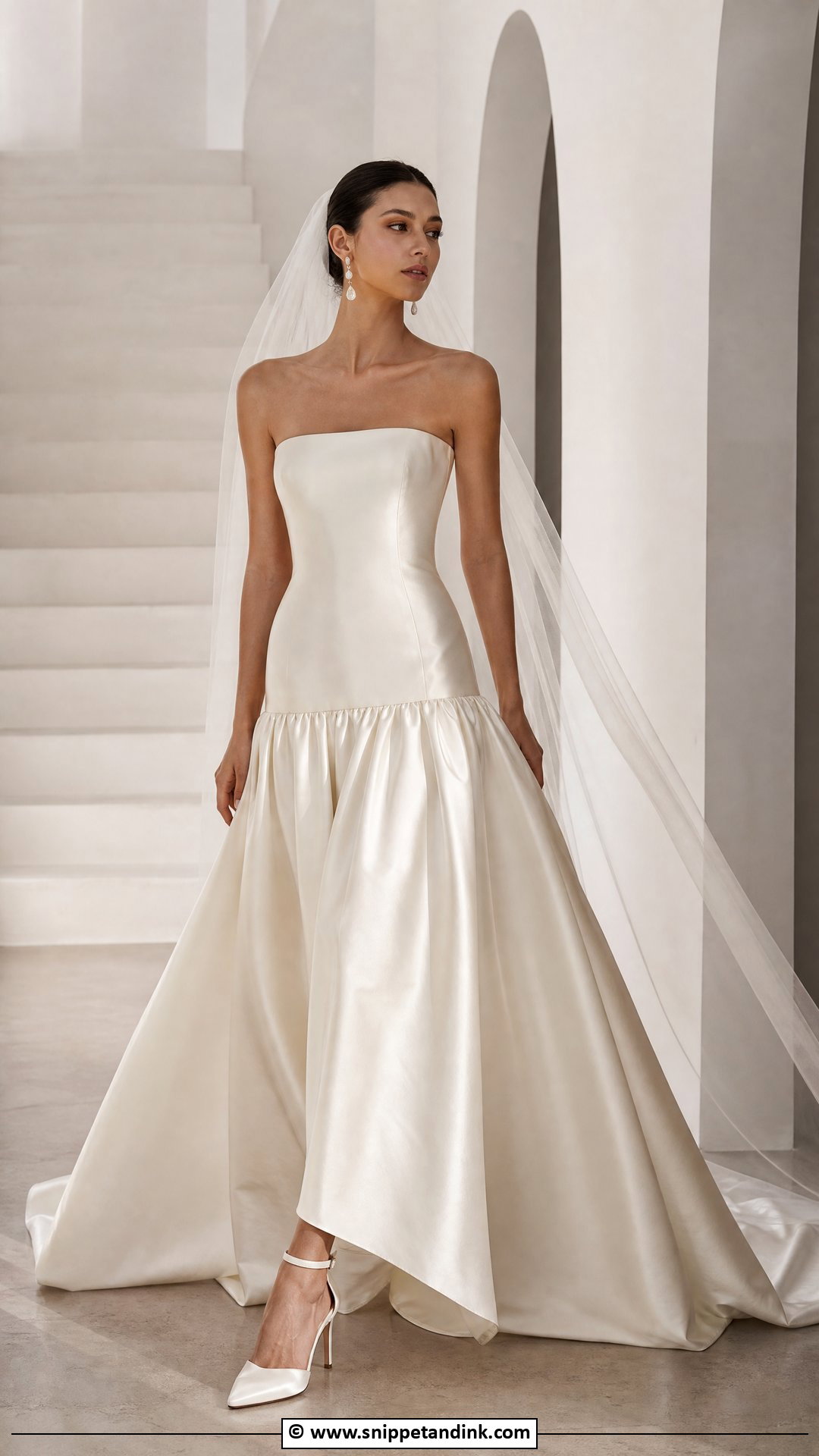
A drop waist sits around the upper hip before the skirt flows or flares, and it elongates the torso in a way few other cuts do. Honestly, it isn’t for everyone. On a short-waisted bride it can make the legs look shorter, so try it before you rule it in. Satin, lace and tulle all suit the line. Choose a veil that falls past the waist seam so it doesn’t stop at an awkward point, then add sleek heels and drop earrings and keep everything else refined.

20. Ivory Corset Wedding Dress
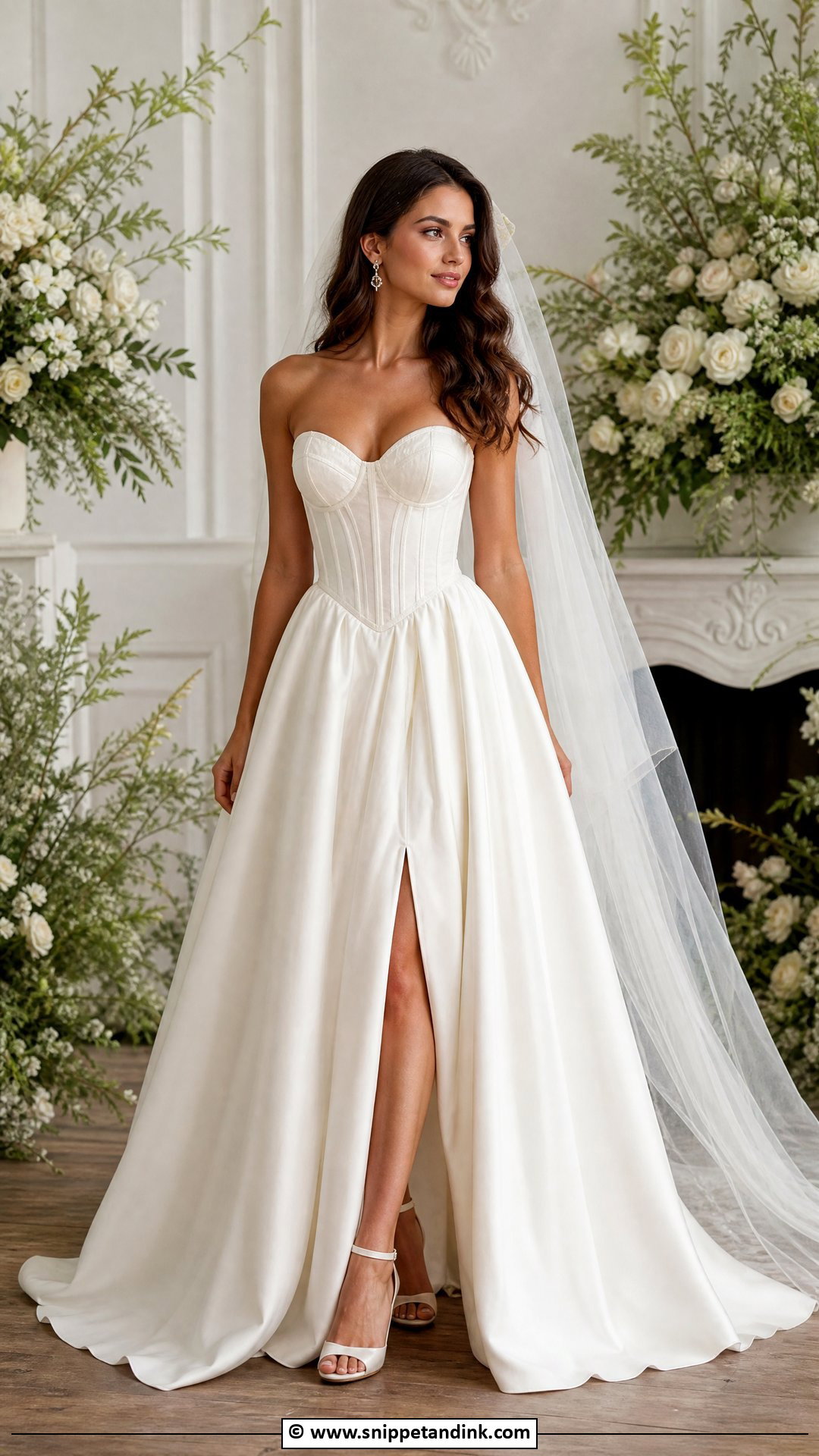
Corset bodices give support and a defined waist, and they’re one of the few styles where you can adjust the fit on the day if they lace at the back. Learn who is lacing you, and practise once at the final fitting: laces pulled unevenly leave the back panel crooked in photos. Boning can be visible or hidden under lace or smooth satin. Full skirts, fit-and-flare and column shapes all take a corset top. Soft curls and fine earrings soften the structure; skip the necklace if the bodice is detailed.
21. Ivory Backless Wedding Dress
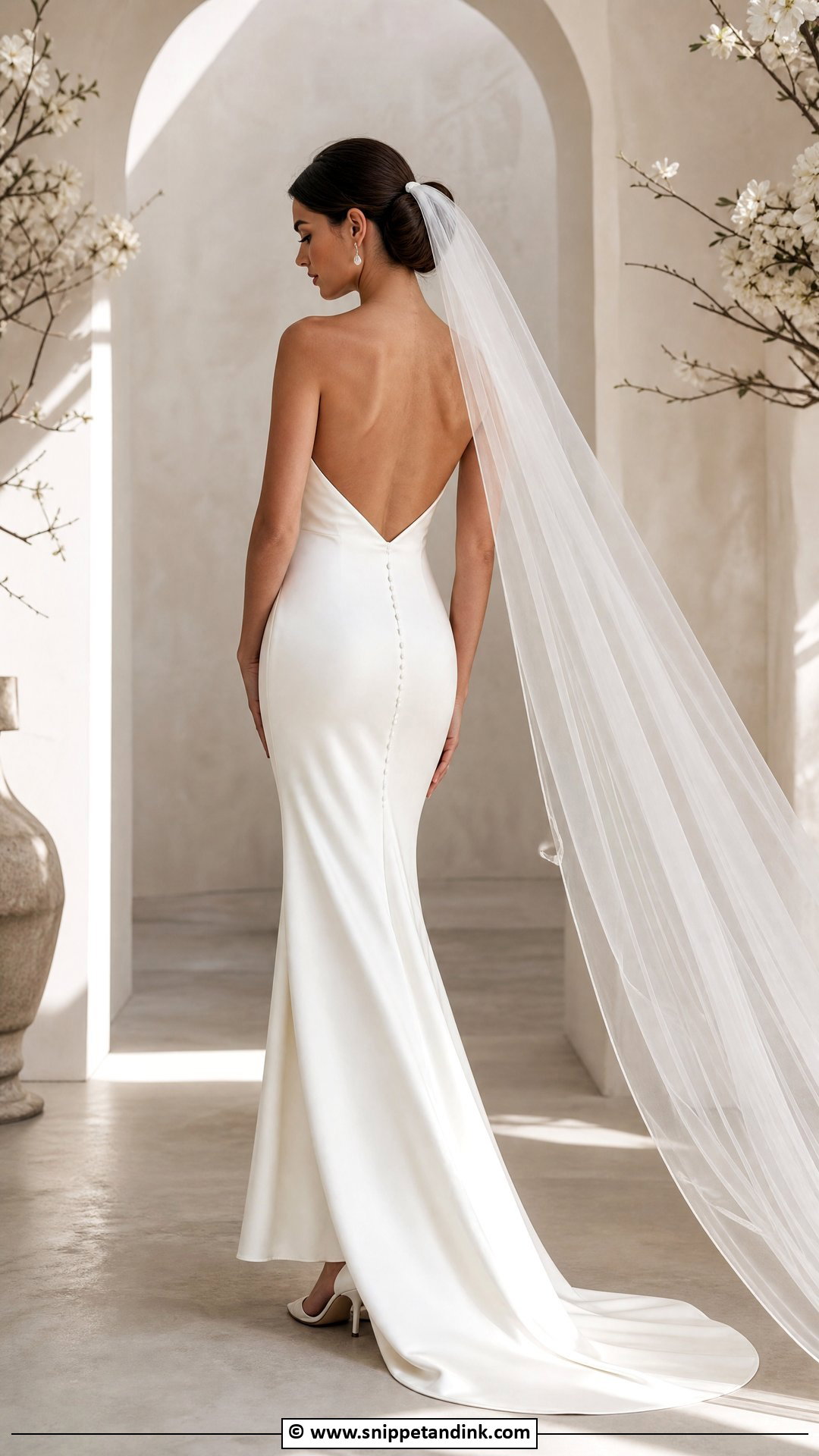
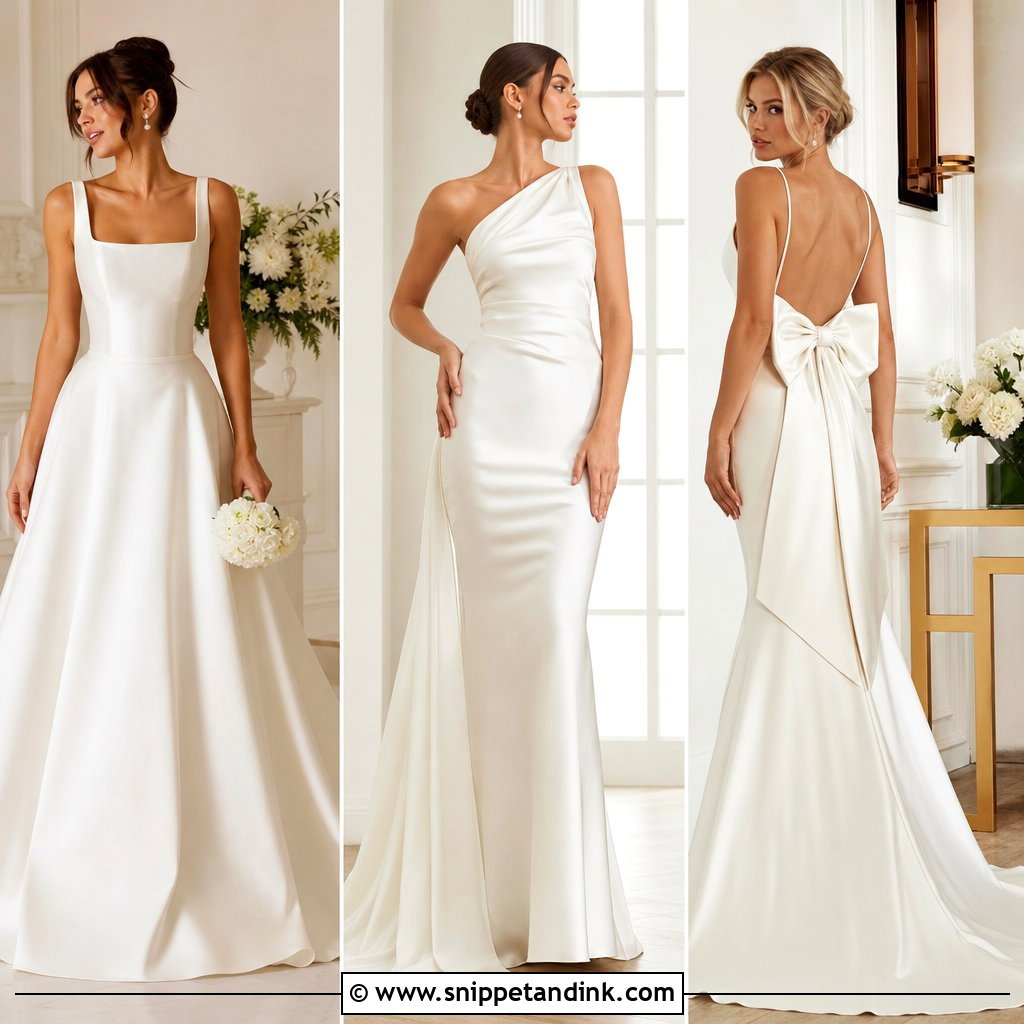
Your back faces your guests for the whole ceremony, which is what makes an open back worth considering. The front can stay plain with a high neck, cowl or fitted bodice. The engineering is the part to question: ask where the support comes from, because an open back usually means a built-in cup and a firm waist stay. Smooth crepe or satin looks modern; lace looks softer. An updo, back-drop earrings or a fine hairpiece points the eye to the open line.
22. Ivory Halter Wedding Dress
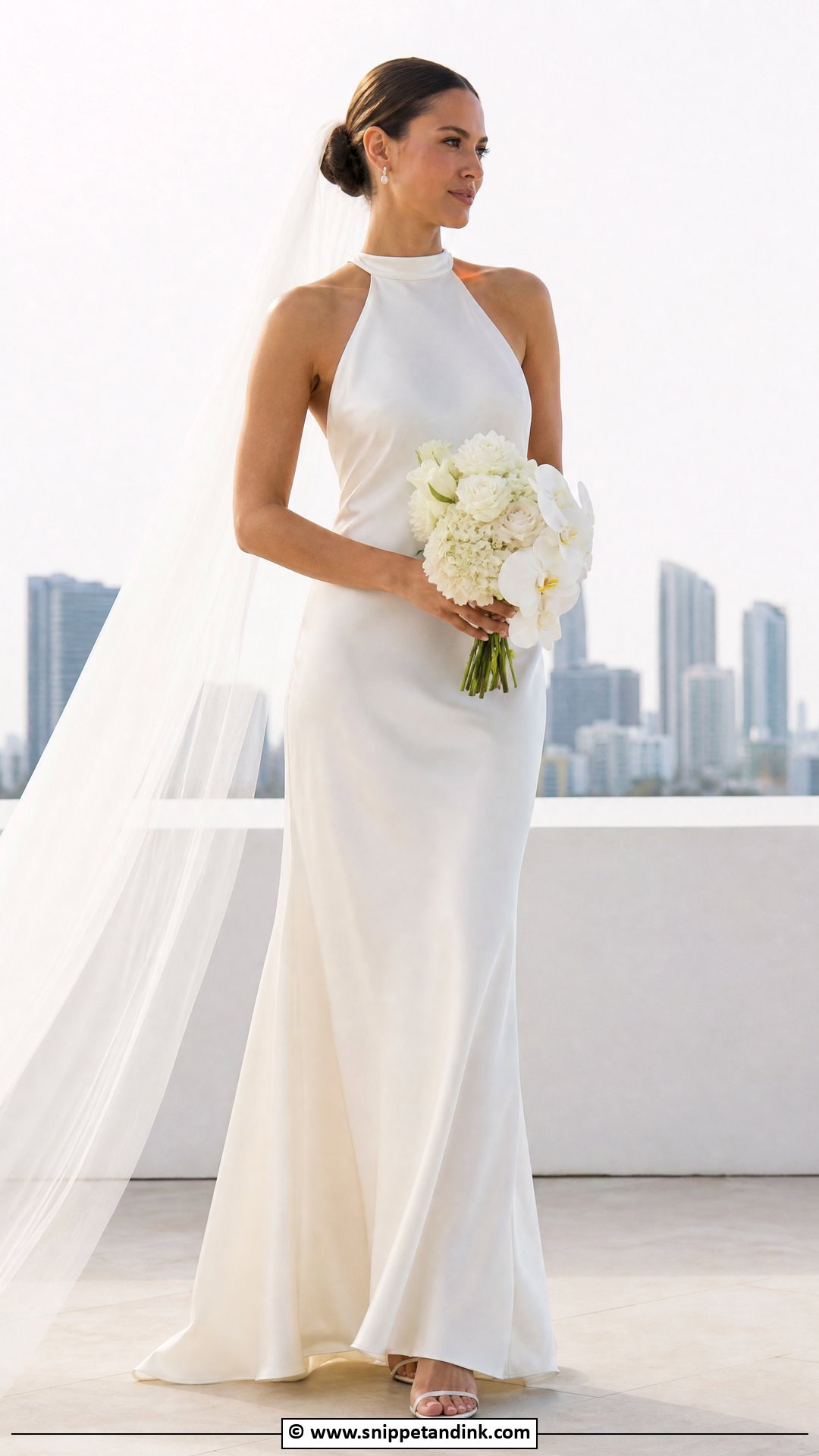
Halters show the shoulders and draw the eye up, while feeling more secure than strapless because the neck carries some weight. The one complaint I hear is a sore neck by late evening if the halter is heavy or tied tight, so check the strap width at your fitting. Satin halters look sleek; lace versions feel romantic. Small earrings, a smooth bun and ivory heels keep the neckline clean, and a long veil softens it for the ceremony. Beach and warm-weather weddings suit it best.
23. Ivory Tea Length Wedding Dress
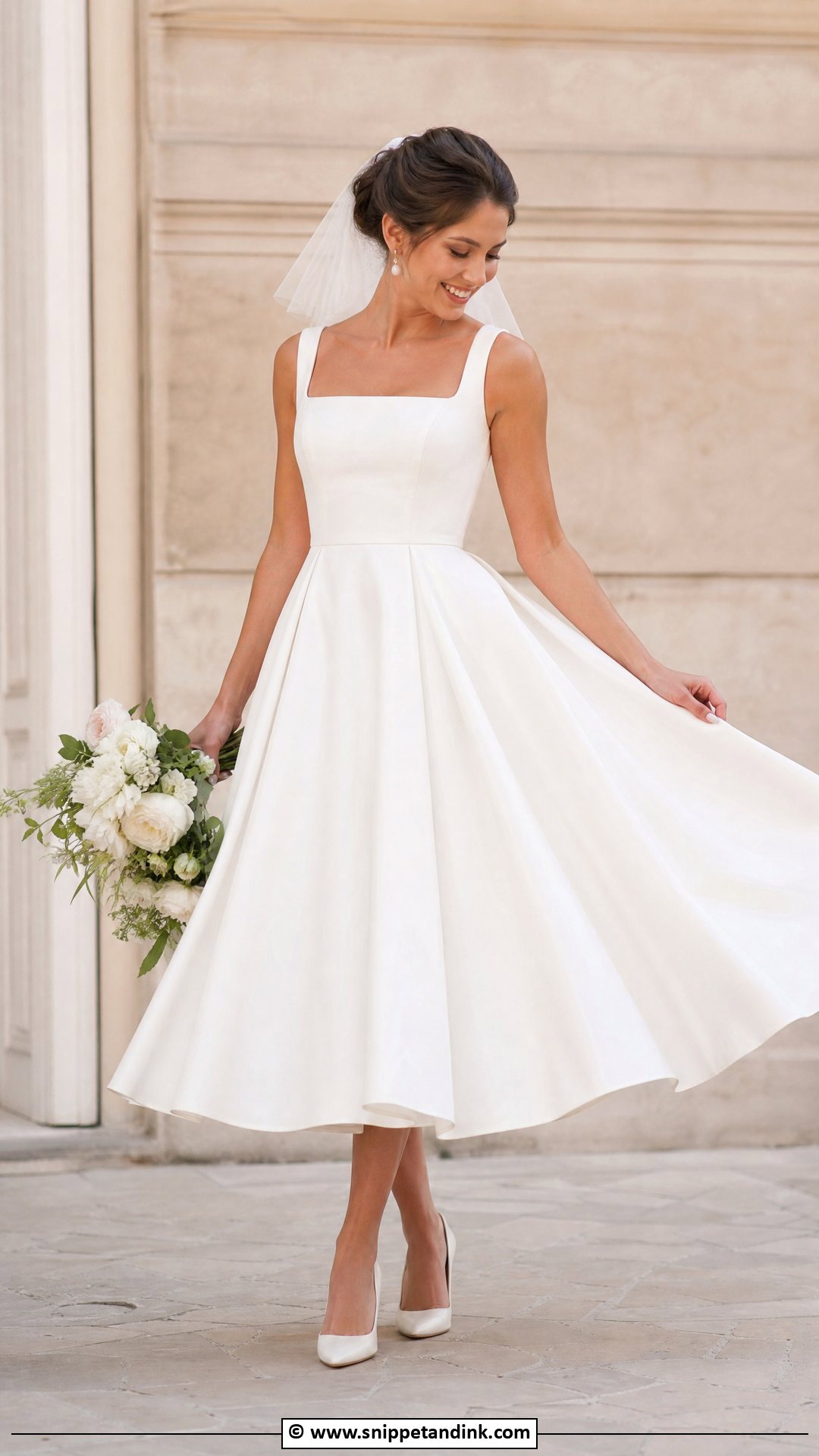
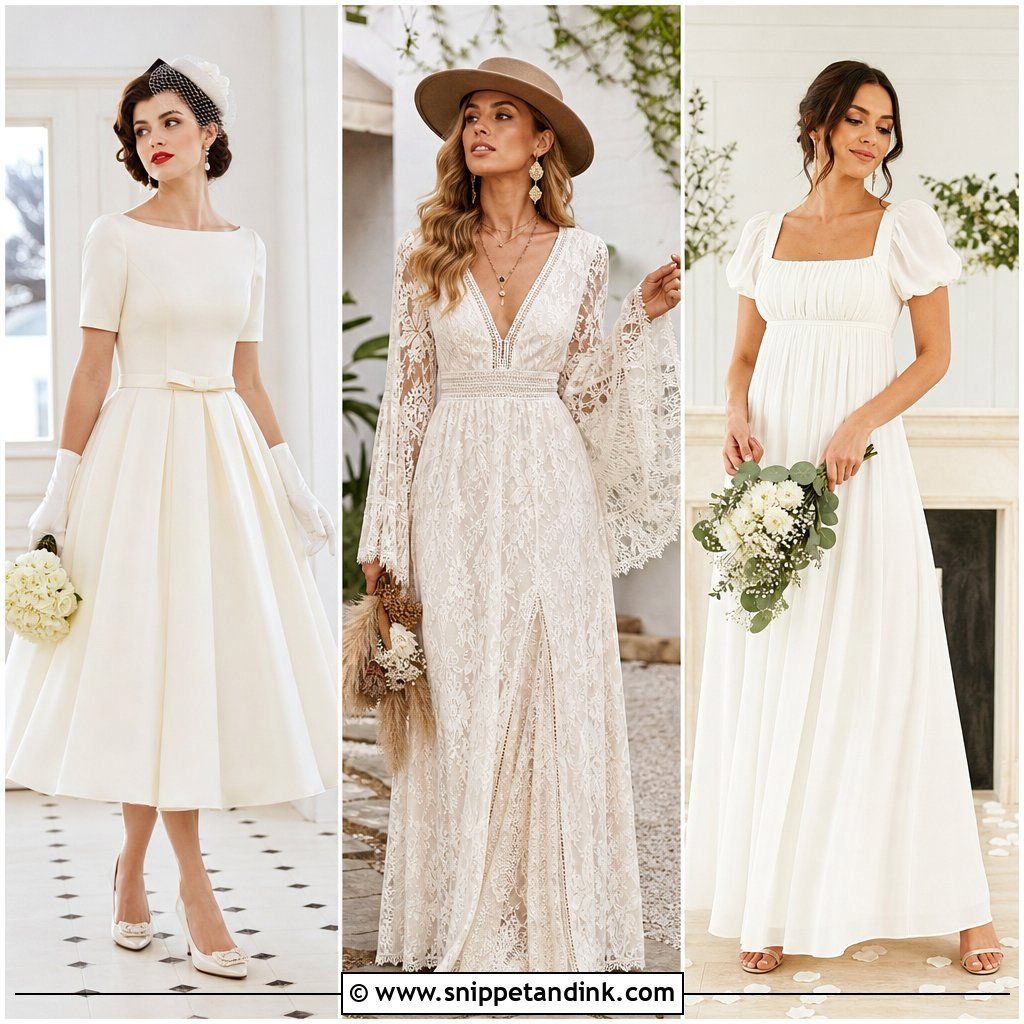
Tea length lands between knee and ankle, so your shoes become part of the outfit and you never trip on a hem. I like it for courthouse ceremonies, garden parties and second-dress receptions. A fitted bodice with a full skirt gives a 1950s shape, while a slimmer cut feels modern. Pick shoes you’d be happy to have photographed all day: pointed pumps, bow heels or a dressy block heel in ivory or soft metallic. Pearl earrings and a short veil or headband complete it.
24. Ivory Mini Wedding Dress
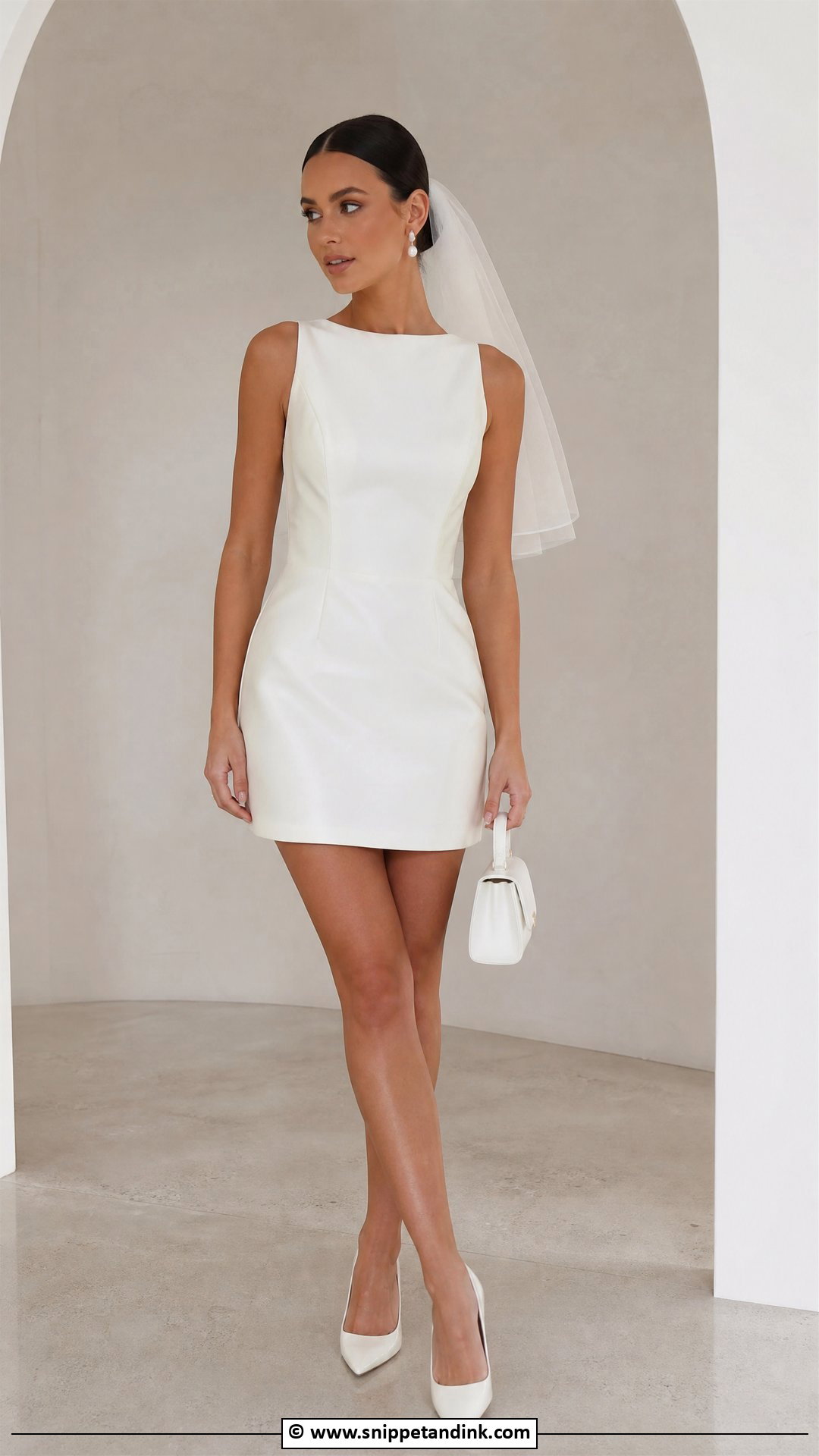
Minis work for civil ceremonies and reception changes, and ivory satin, crepe, lace or beading keeps them bridal. Fit is the whole game at this length. A mini that’s a touch loose looks borrowed, and one that’s a touch tight rides up every time you sit, so sit and stand repeatedly in it. If the dress is plain, a bold sleeve or bow adds interest; if it’s embellished, keep accessories minimal. Pointed heels, a short veil, pearl earrings and a structured mini bag finish it.
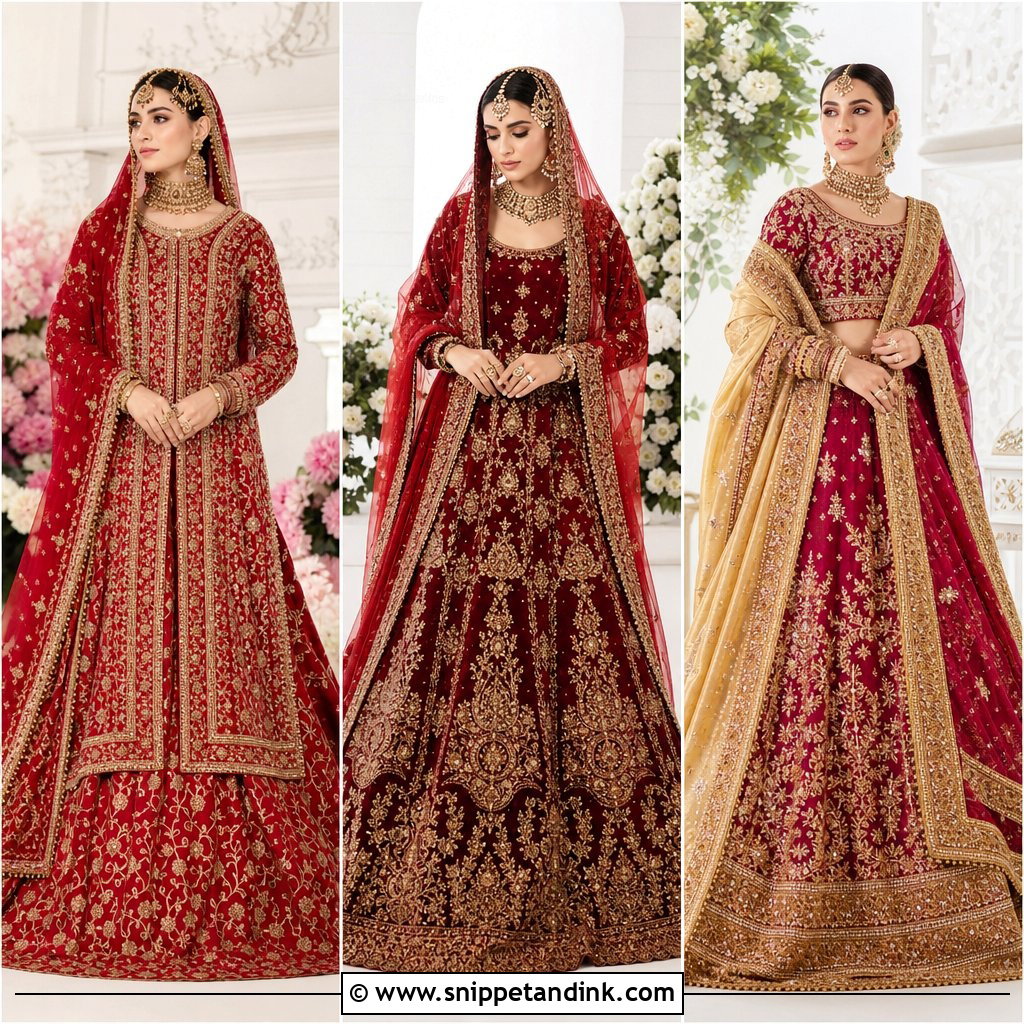
25. Ivory Wedding Dress With Bow
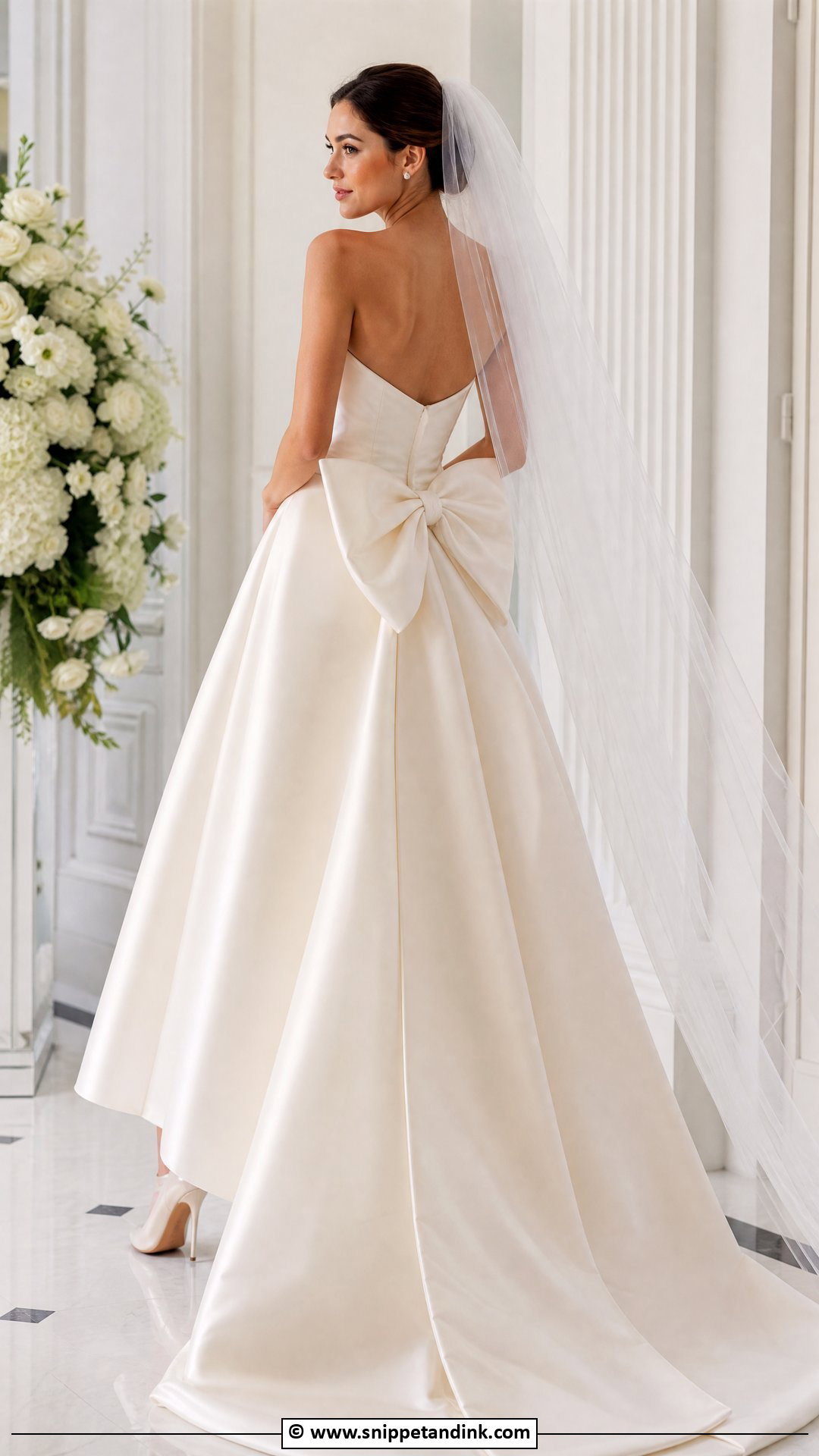
A bow gives you one sweet detail without sparkle or heavy lace. Where it sits changes the effect: back waist, shoulder, neckline or train. A large satin bow reads formal, a small one reads delicate. Watch the back bow when you sit for dinner, since a big one can crush flat against the chair, so ask your seamstress whether it can be steamed back or should be detachable. Clean heels, pearl studs and a plain veil, with hair up or swept aside so the bow stays visible.
26. Ivory Wedding Dress With Cape
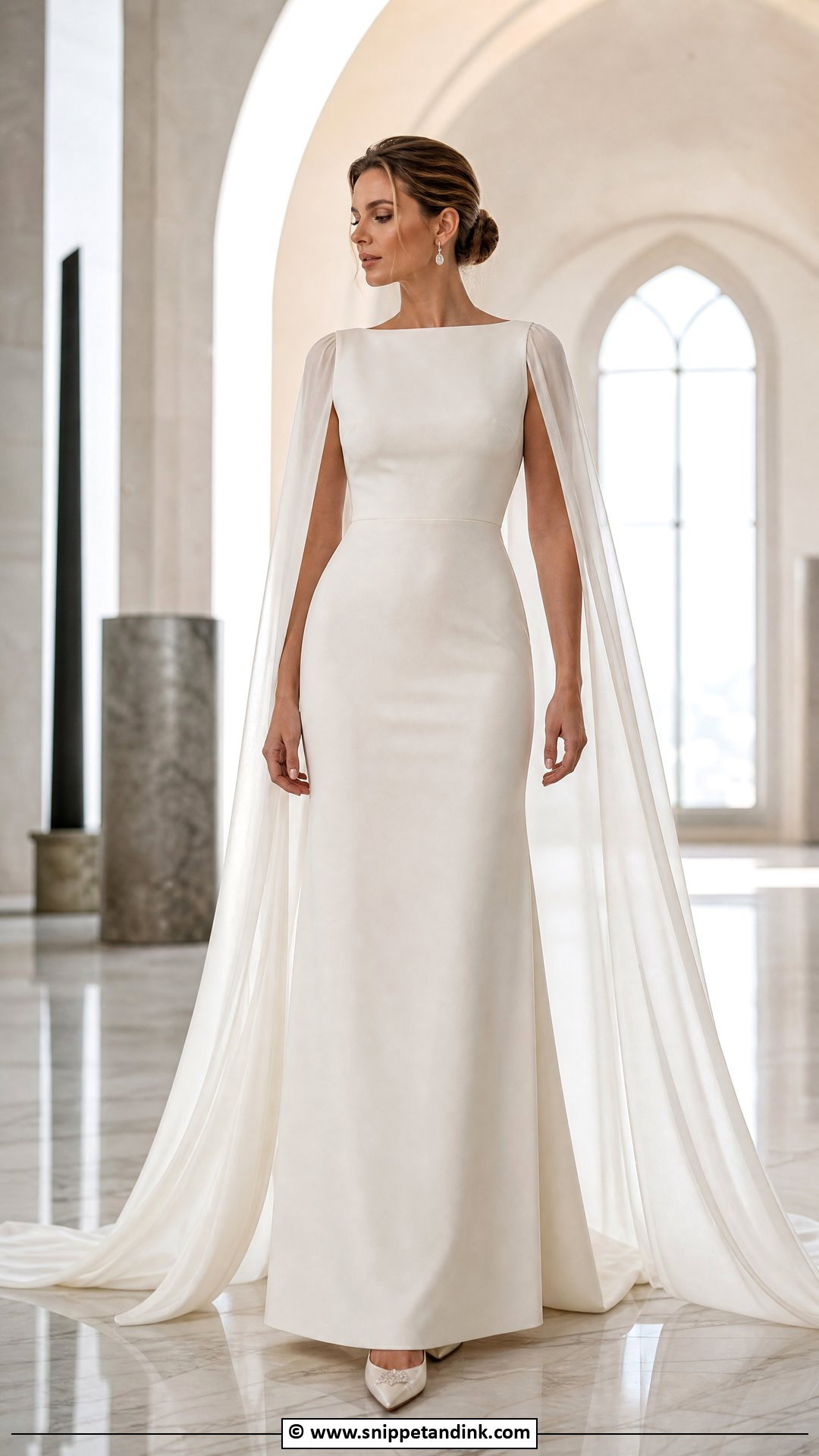
A cape gives the movement of a veil with a sharper shape. Sheer capes soften a fitted gown; satin or crepe capes feel architectural. Most are attached at the shoulders or neckline with hooks or snaps, and I always check that the cape doesn’t pull the neckline back when the bride lifts her arms for her first dance. A removable cape gives you a second look for the reception. Simple earrings, sleek heels and polished hair keep the focus on it.
27. Ivory Wedding Dress With Detachable Sleeves
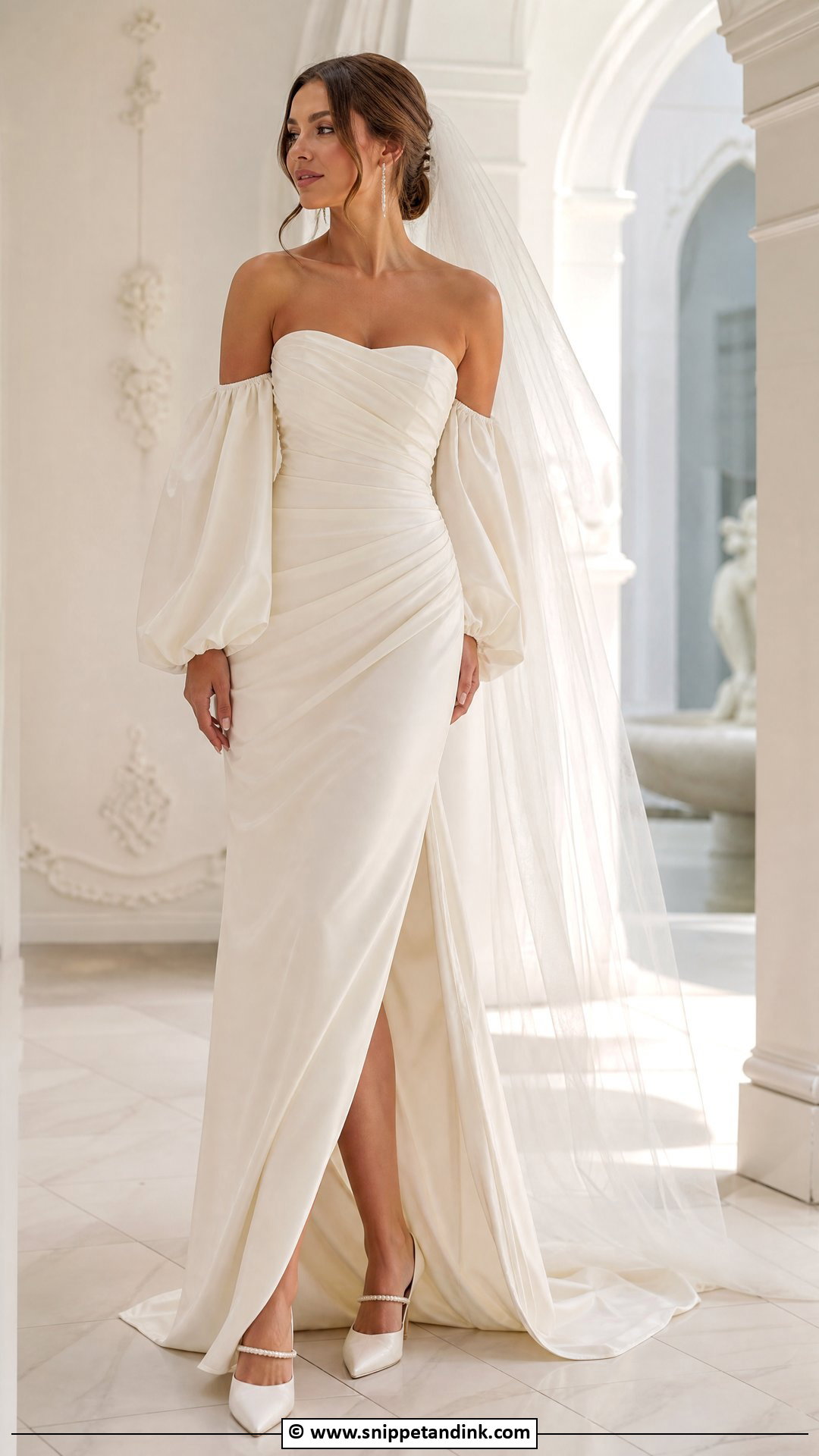
Detachable sleeves solve the ceremony-versus-dance-floor problem: wear them for the vows and portraits, take them off when the room warms up. Puff, lace, illusion and draped sleeves each set a different mood. Ask how they attach before buying. Snaps and hidden loops are quick; anything sewn needs a bridesmaid with scissors and a steady hand. Match your earrings to the sleeve detail, and if the sleeves are bold, keep hair and other accessories quiet.
28. Ivory Wedding Dress With Slit
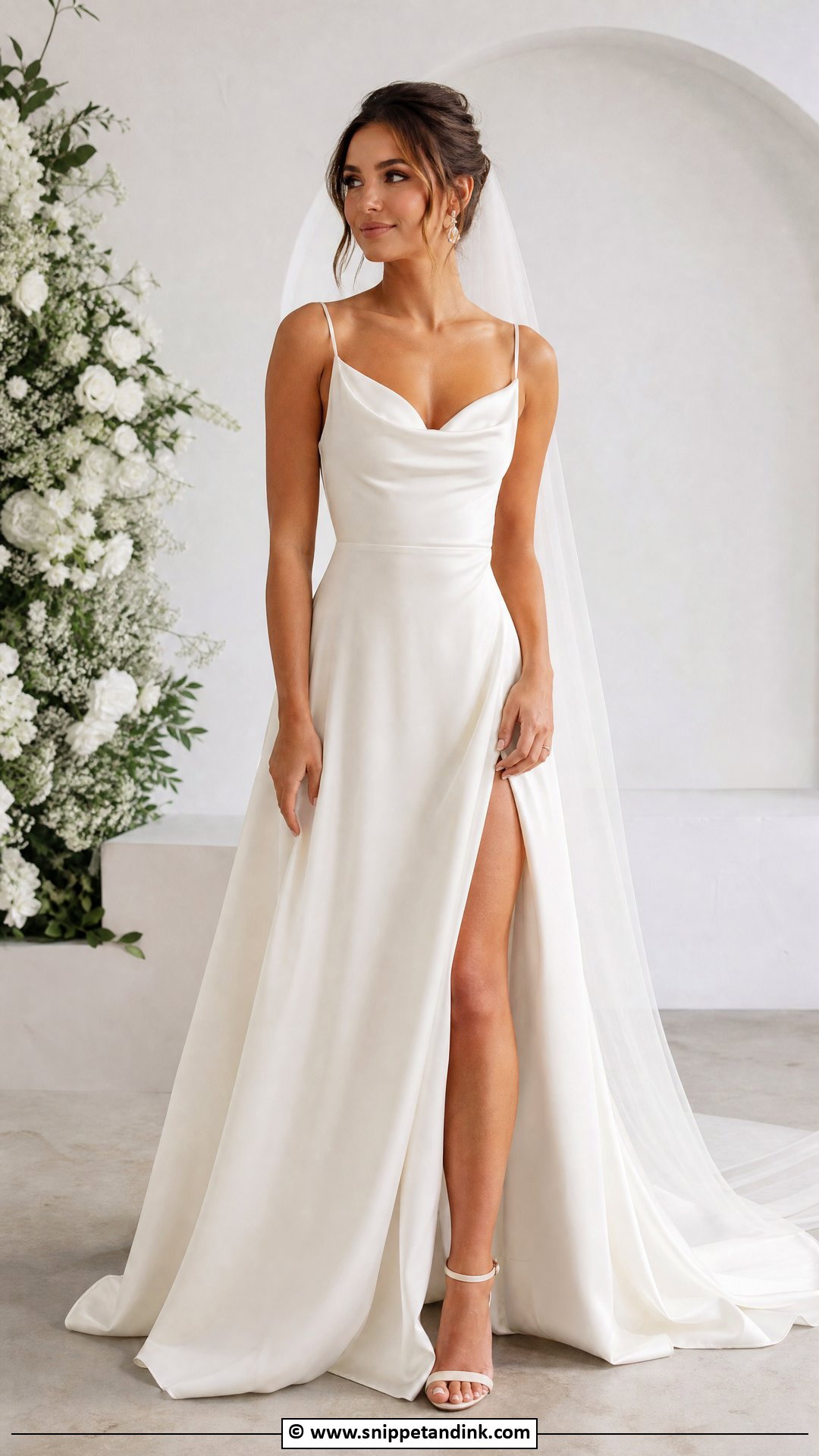
A slit adds movement and makes walking far easier, especially on grass or stairs. The height is something to test sitting down, not standing: a slit that looks modest at the mirror can open much higher once you cross your legs at dinner. Satin, crepe, chiffon and soft A-lines all take one. Since your shoes will show, choose sandals, pointed heels or embellished pumps that suit the gown, then add a simple veil and fine earrings.
29. Ivory Chiffon Wedding Dress
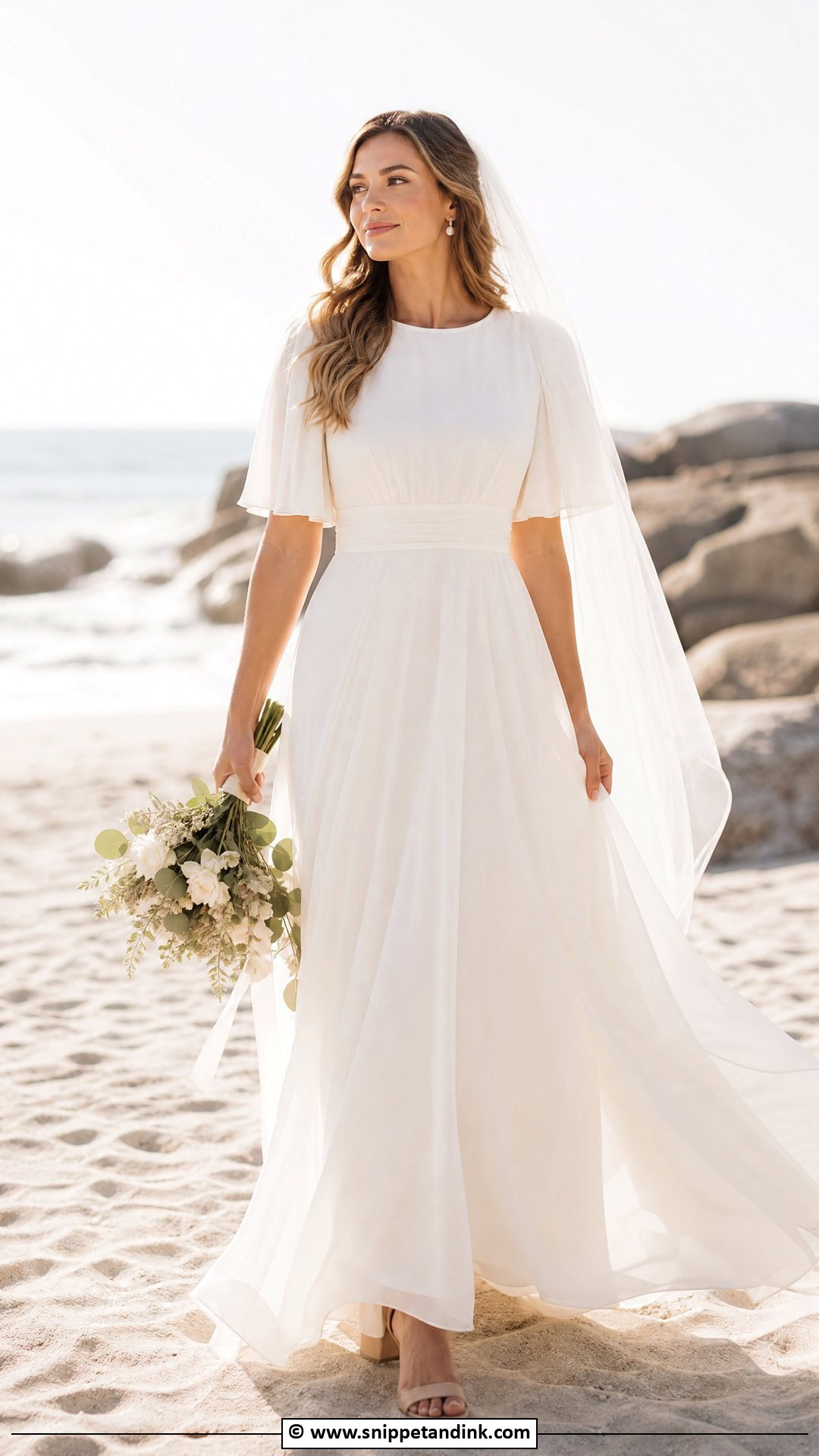
Chiffon is light, breathable and moves at the slightest breeze, which makes it the fabric I suggest for beach and garden weddings in heat. It’s also thin, so check the lining. Unlined or single-lined chiffon can turn see-through in bright outdoor sun, and you won’t know until you see the photos. A-line, empire and soft sheath shapes suit it. Flat sandals or low heels work on sand and grass, with small earrings, a soft veil and loose waves.
30. Ivory Boho Wedding Dress
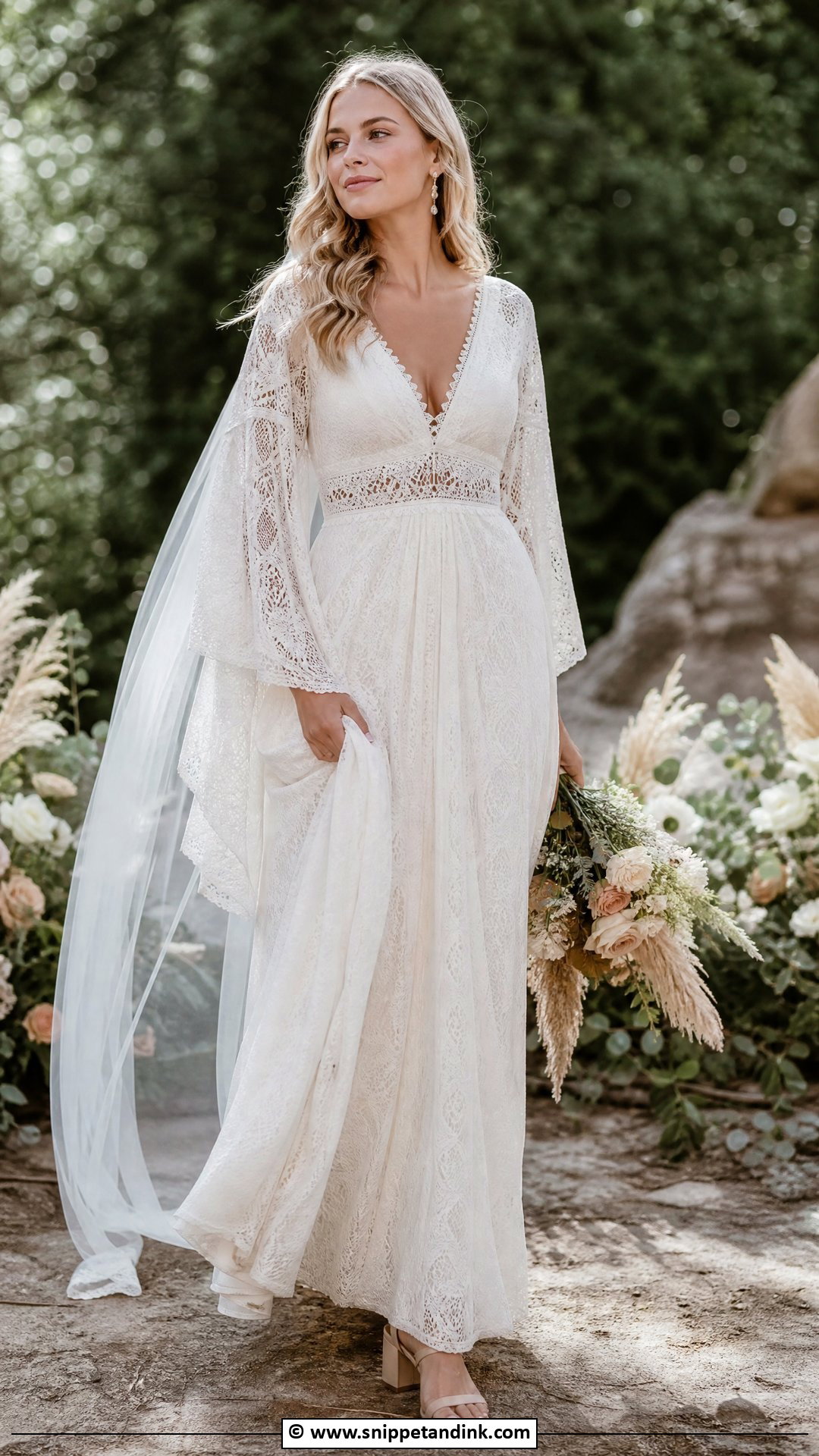
Boho dresses should look relaxed, not undone, and the difference is usually fit through the shoulders and bust. Soft lace, flowing sleeves, light skirts and crochet-style trims all belong here. Keep the styling loose: waves, simple earrings and sandals or block heels, with a floral comb or soft veil to make it bridal. Outdoor, desert, beach and backyard venues suit it. Choose fabrics that move on their own, because stiff lace in a boho cut fights the whole idea.
31. Ivory Minimalist Wedding Dress
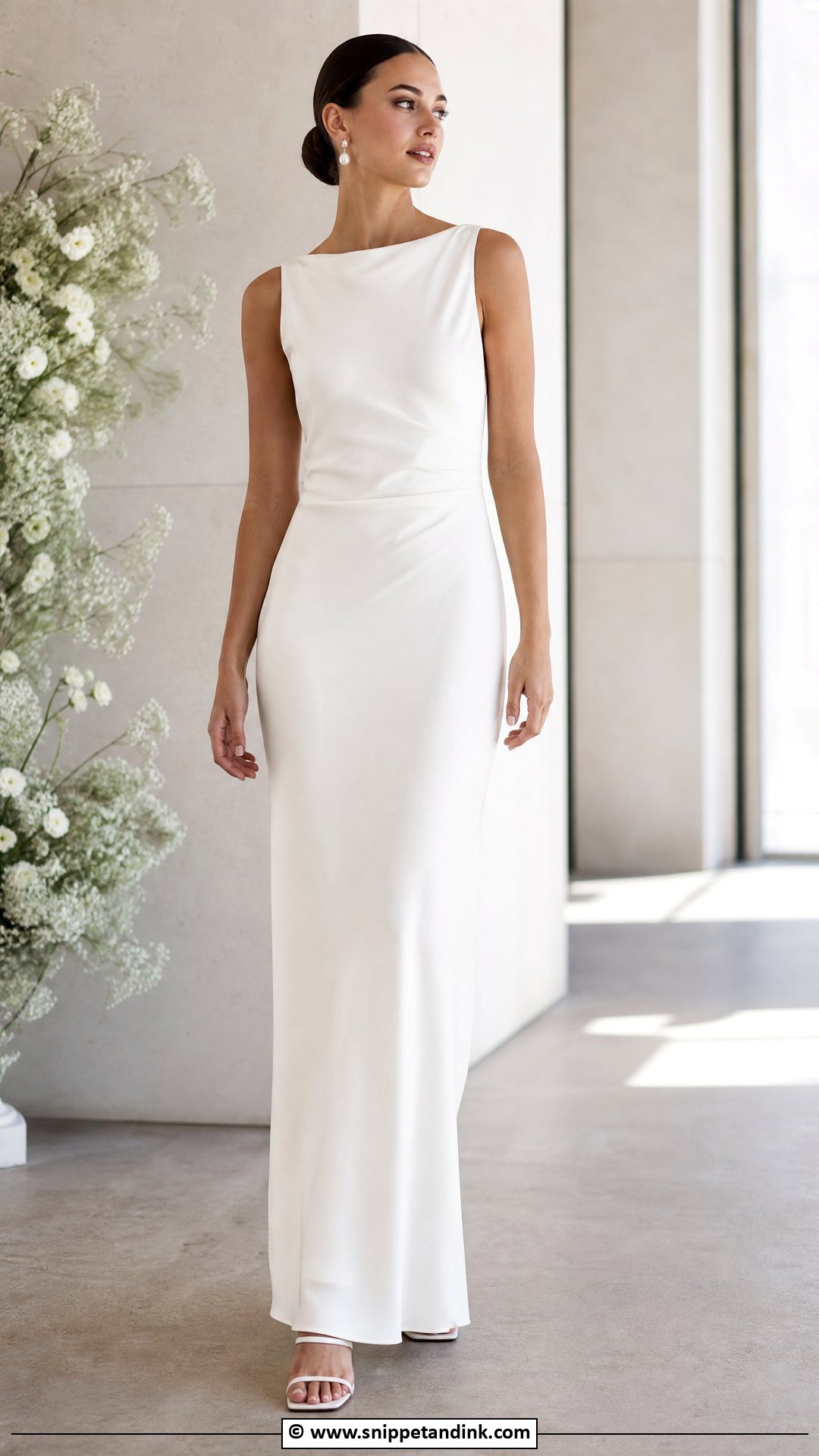
Minimalist gowns are where fabric and tailoring can’t hide. Satin, crepe, and silk carry this look because they let the cut speak, but they also reveal every wrinkle and seam pull, so I book an extra fitting for simple dresses rather than one fewer. Column gowns, slips, square necks and strapless shapes all qualify. Sleek heels, modern pearl earrings and a plain veil or none at all, plus a smooth bun and fresh makeup, are all it needs.
32. Ivory Vintage Wedding Dress
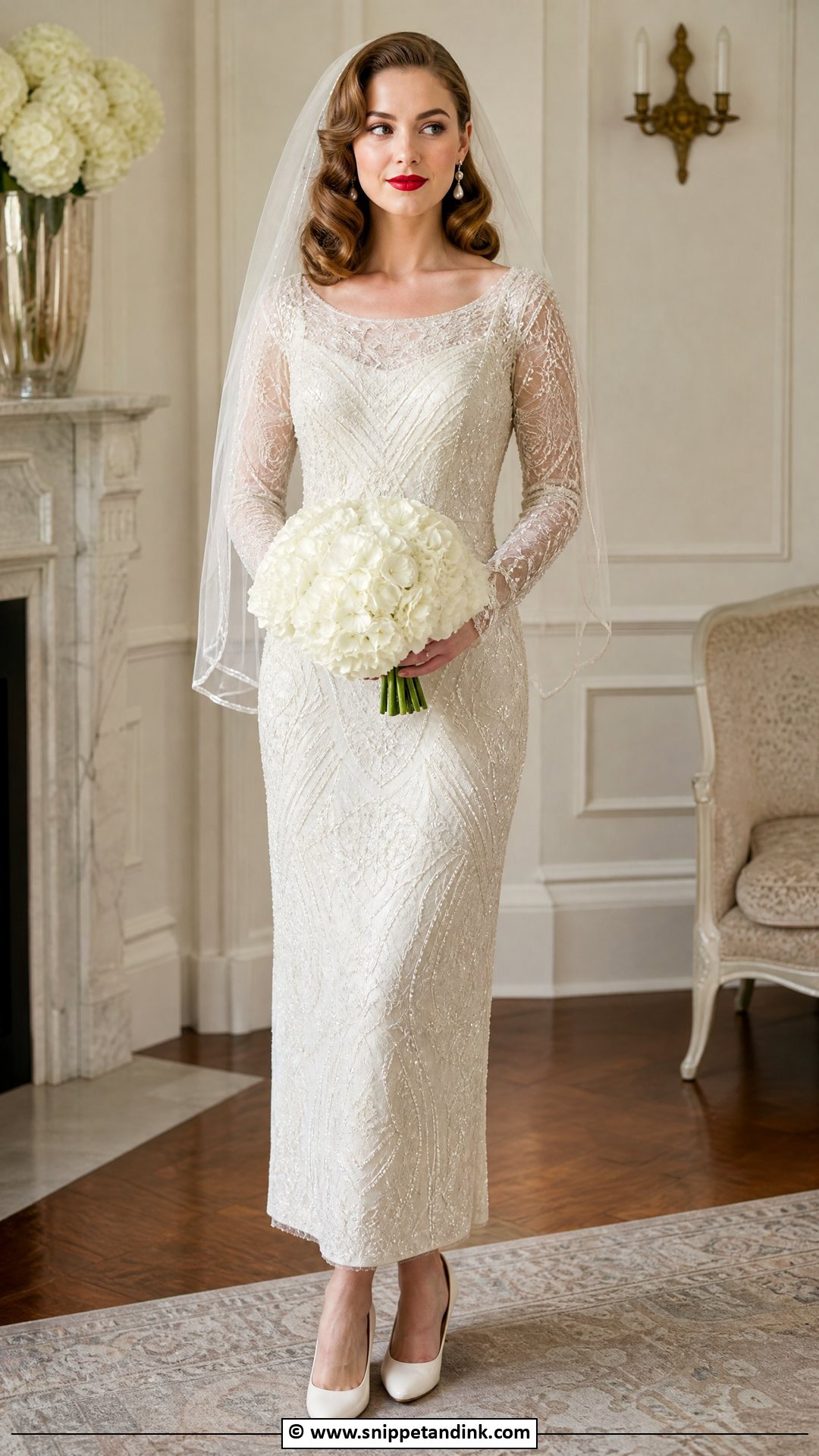
An ivory vintage wedding dress can borrow from the 1920s, 1950s, or 1970s and still feel current. Beaded sheaths, tea-length skirts, lace sleeves and high necklines each point to an era. My rule is one era per outfit: a 1920s beaded dress with a 1950s birdcage veil looks like a costume. If you’re buying a true vintage piece, have the seams and underarms checked by a seamstress first, since old fabric can tear under stress. Ivory reads warmer and older than white, which helps the period feel.
33. Ivory Plus Size Wedding Dress
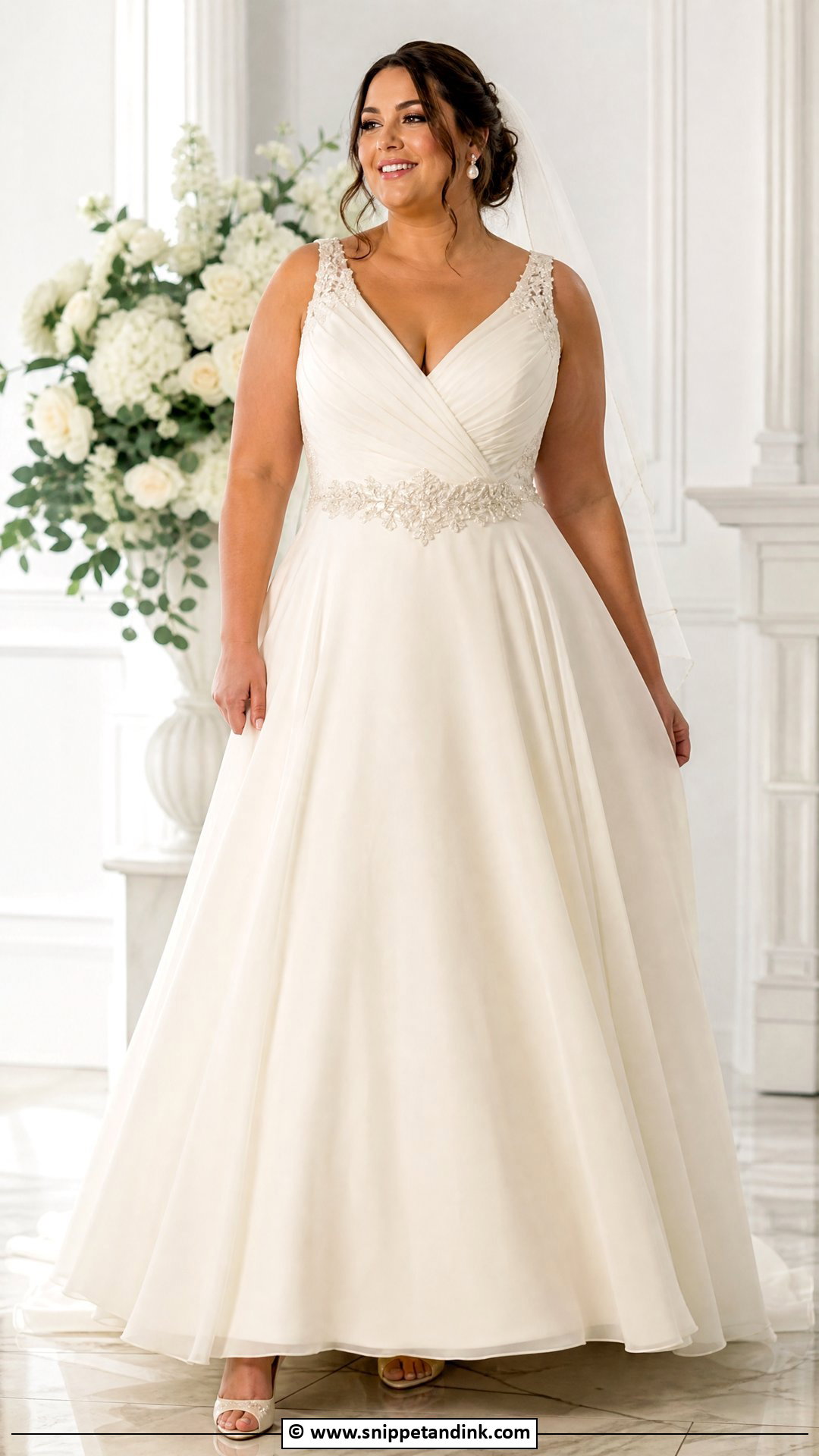
An ivory plus size wedding dress lives or dies on construction. I look for wide or adjustable straps, a firm built-in foundation and a waist that is defined by seaming rather than squeezed by a tight bodice. A-line, ball gown, wrap-style and corset bodices all work, in fabrics that hold shape without going stiff, such as satin, crepe, lace and structured tulle. Bring your actual undergarments to every fitting. A good alteration on the straps and waist often makes a bigger difference than switching dresses.
34. Ivory Maternity Wedding Dress
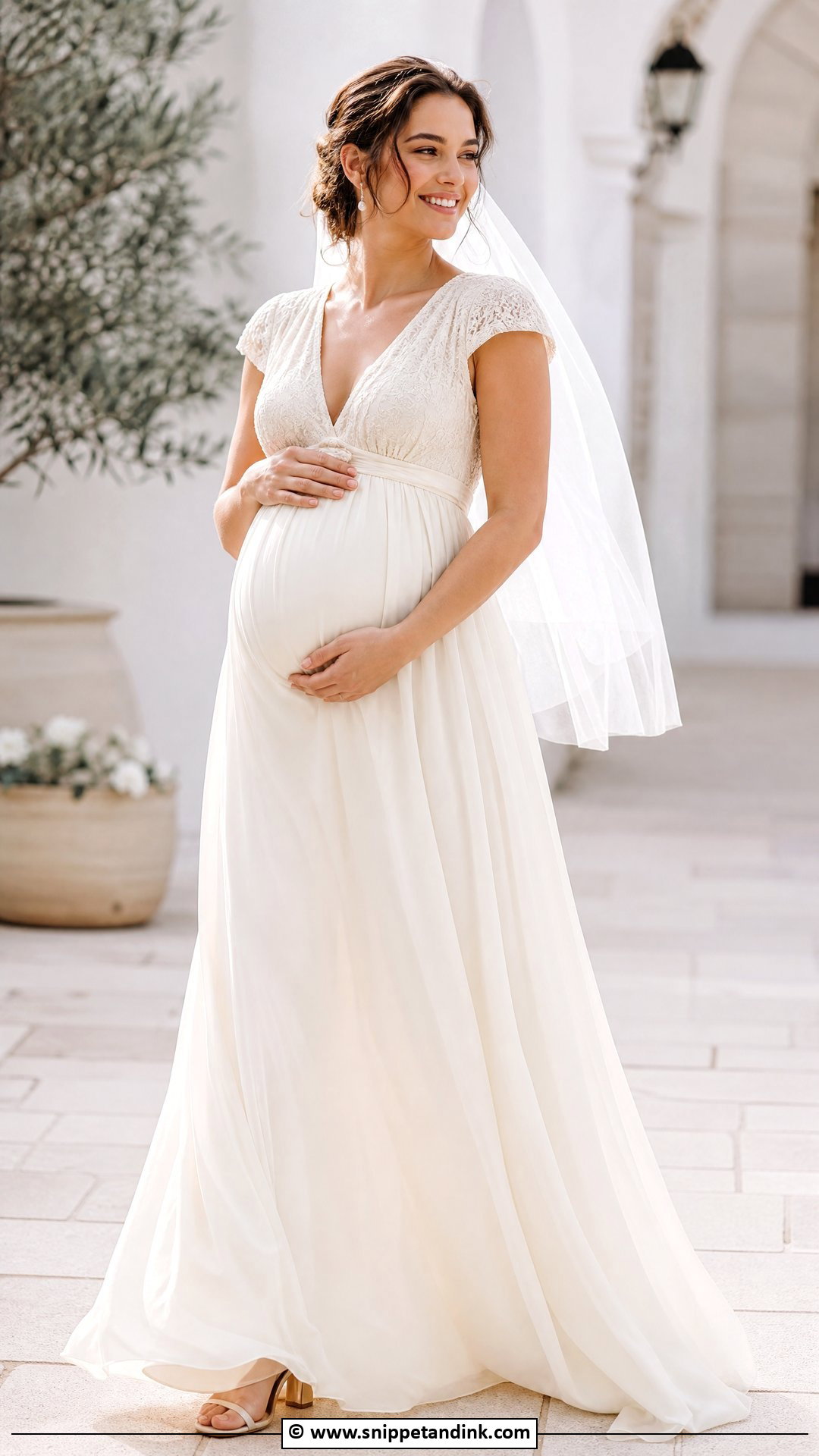
With maternity gowns, the date of your final fitting matters as much as the dress. A bump can change noticeably in the last few weeks, so I book the last alteration as close to the wedding as the seamstress will allow. Empire waists, flowing chiffon, soft A-lines and stretch lace give room under the bust. Avoid anything firm at the ribcage. Low block heels, fine earrings and a lightweight veil keep you comfortable, and a sheer sleeve or wrap adds coverage if you want it.
35. Ivory Reception Wedding Dress
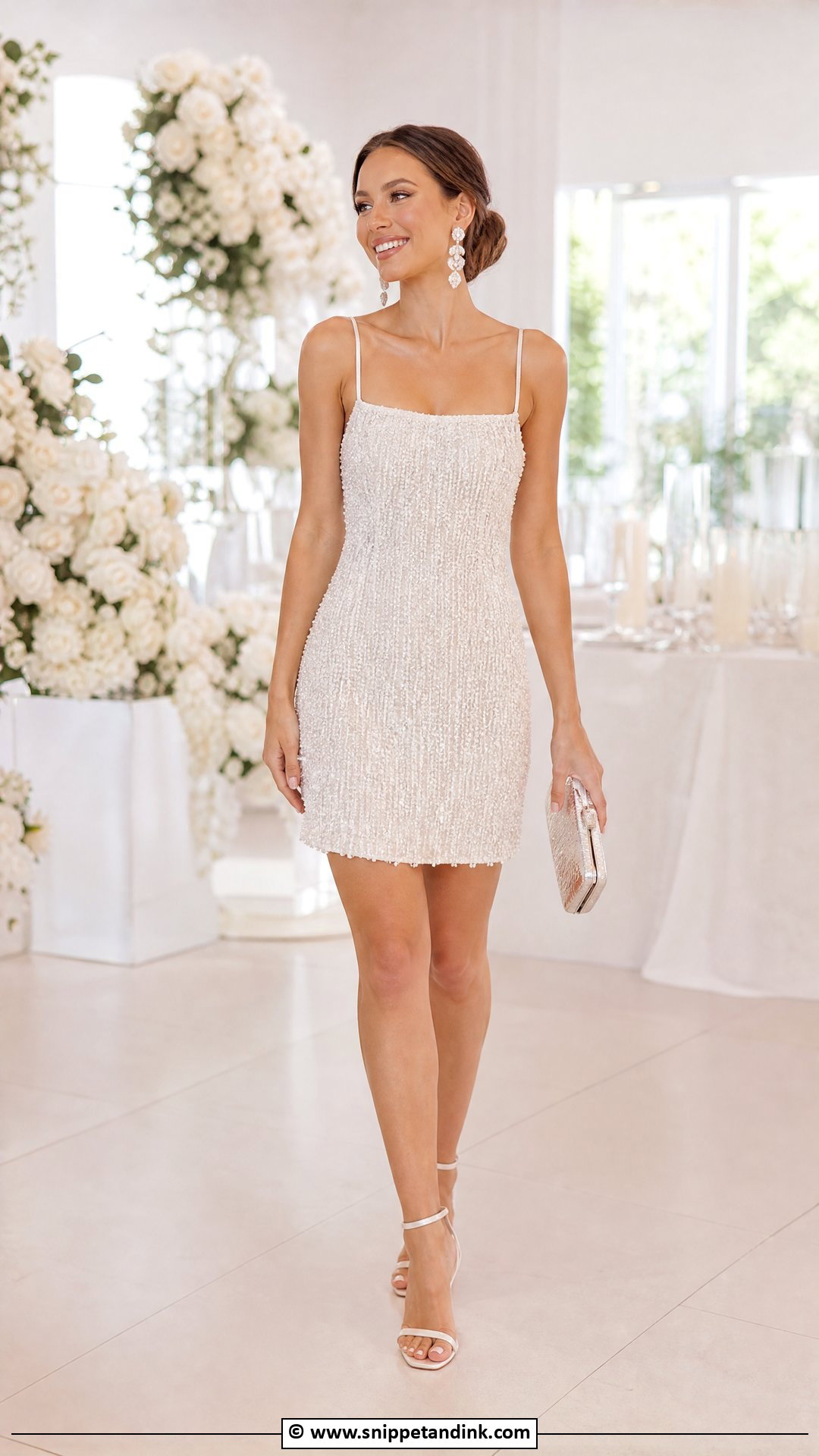
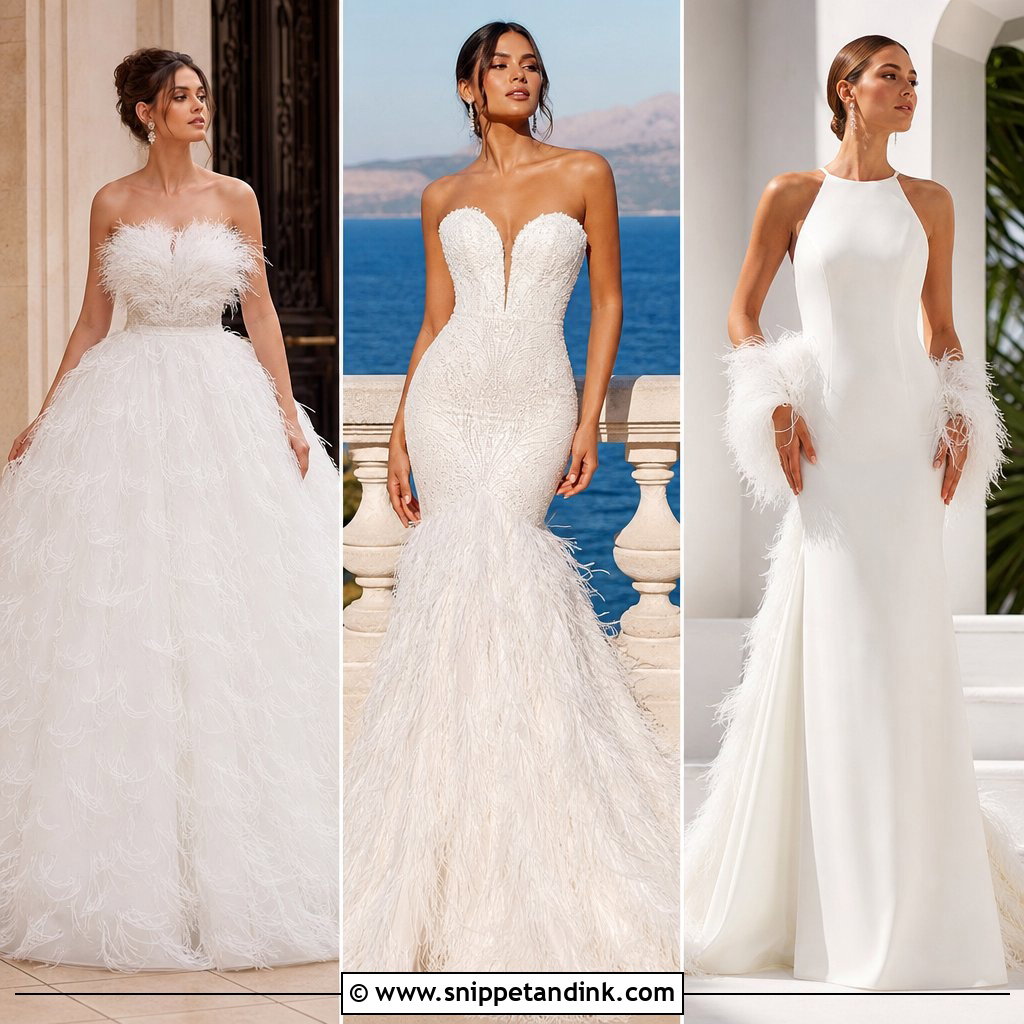
A reception dress is about movement after hours in a heavier gown. Minis, tea-length dresses, slips, feather hems and simple beaded gowns all qualify, as long as they still look bridal. Plan the change itself: who unbuttons the ceremony dress, where it gets hung, and who takes it home. Contrast helps too. After a dramatic ceremony gown, go clean; after a simple one, add sparkle or texture. Comfortable heels, statement earrings and a small clutch are plenty.
Ivory Next to White Flowers, White Linens and Bright Bridesmaids
The setting can change how ivory reads. Pure white peonies held against the bodice, crisp white table linen behind you, or a chapel painted bright white will all make an ivory gown look deeper than it did in the shop. That isn’t wrong, but it surprises people in the photos.
Share your swatch with the florist so she can lean the bouquet toward cream roses, garden spray roses or blush tones that sit beside ivory rather than against it. If your bridesmaids wear pale colours, keep them in a different family, such as sage, dusty blue or champagne, so nobody in the line-up looks whiter than you.
Steaming, Stains and Getting the Gown to the Venue
Collect the dress from alterations a week or two out, hanging inside its breathable garment bag, never sealed in plastic. Satin and silk pick up yellow marks from long storage in the wrong bag, and ivory hides that less well than you’d hope.
- Hang it from the waist loops, not the shoulder straps, so heavy skirts don’t stretch the bodice.
- Steam on the morning, from the inside of the skirt where possible. Never iron satin directly; it leaves a shine mark.
- Pack a small kit: white chalk for scuffs, a stain pen tested on a hidden seam, safety pins and fashion tape.
- After the wedding, get it to a specialist cleaner within a few weeks. Sugar and champagne spills look invisible at first and turn brown with time.
Fabric First, Then Shape, Then Everything Else
Ivory works across satin, lace, tulle, crepe and nearly every silhouette here, which is why it’s hard to go wrong with it and easy to get overwhelmed. Start with the fabric that suits your season and venue, then the silhouette that suits how you want to move, then the neckline. Shoes, veil, jewelry and hair come last and should be chosen with the dress on. Fit beats everything else on this list, so leave room in your schedule for the alterations that make any of these gowns look like they were made for you.
You'll Like These Ideas:








Leave a Reply