
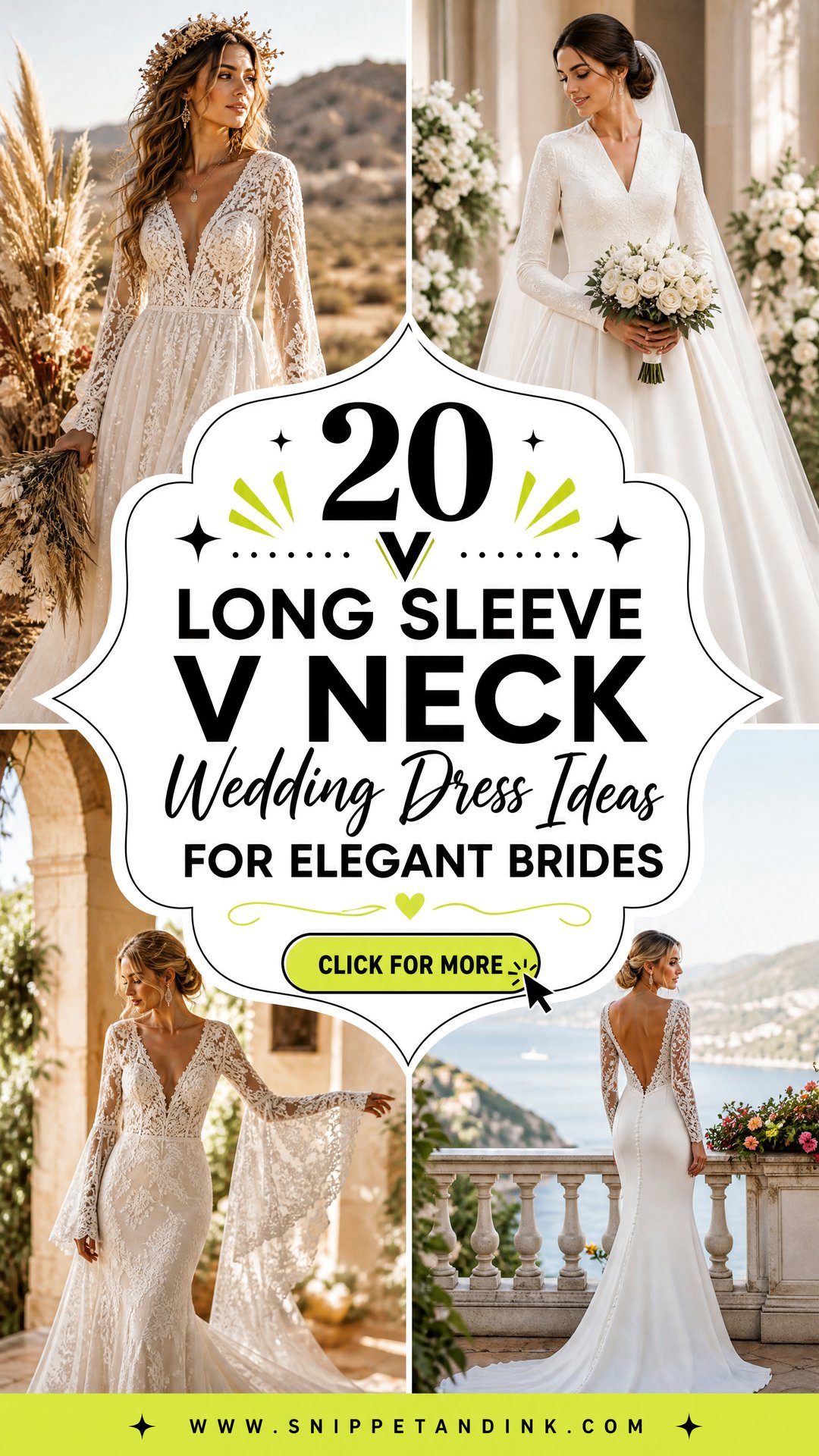
A long sleeve and a V-neckline pull in two directions, and that is exactly why the pairing works. The sleeves cover and steady the arms, while the V opens a clear line from the chin down to the bodice. I see it chosen for formal ballrooms and for barn ceremonies alike, in lace, satin, crepe, organza and tulle, from plain tailoring to raised floral appliqués. The fabric gets most of the attention in a shop, but the silhouette decides how you feel after six hours in the dress. An A-line gives you room through the hips, a fitted shape reads long and lean, and a ball gown brings the drama. Below are twenty versions I’d pull for a client, from romantic and vintage to minimal and size-inclusive, with notes on what each one asks of your fittings.
Three Fitting Room Tests for Sleeves and a V Together
A strapless dress only has to stay up. A sleeved V has to stay put while your arms move, and the sleeve and the neckline are joined at the shoulder, so a problem in one shows up in the other. When I take a bride through samples, I run the same three checks on every dress before we talk about lace or beading.
- Arms overhead. Raise both arms as if you are waving to someone at the back. If the whole bodice rises and the V slides toward your throat, the sleeves are set too low in the armhole. That is hard to alter, so treat it as a reason to move on.
- The hug. Wrap your arms around someone and hold it. Fitted sleeves with no ease across the back will strain at the shoulder seam, and lace sleeves are where I see tears happen on the day.
- Sitting and leaning forward. Sit on a normal chair and lean toward a table. Watch the V in a mirror; if it gapes, the fix is usually at the shoulder seams or in added cups, and a good seamstress can tell you which within minutes.
Also notice where the point of the V lands. On most bodies I like it to finish a little above the bra band so the dress needs no special underwear. A V that drops lower needs mesh, cups or tape, and knowing that early saves an expensive surprise at fitting two.
Sleeve length is measured with your arm bent
A sleeve pinned with the arm hanging straight will ride up an inch or so every time you hold a bouquet. I ask the seamstress to mark the length with the elbow bent, the way you will actually stand at the ceremony, so the cuff still meets the wrist bone in photos.
1. Lace A Line Long Sleeve V Neck Wedding Dress
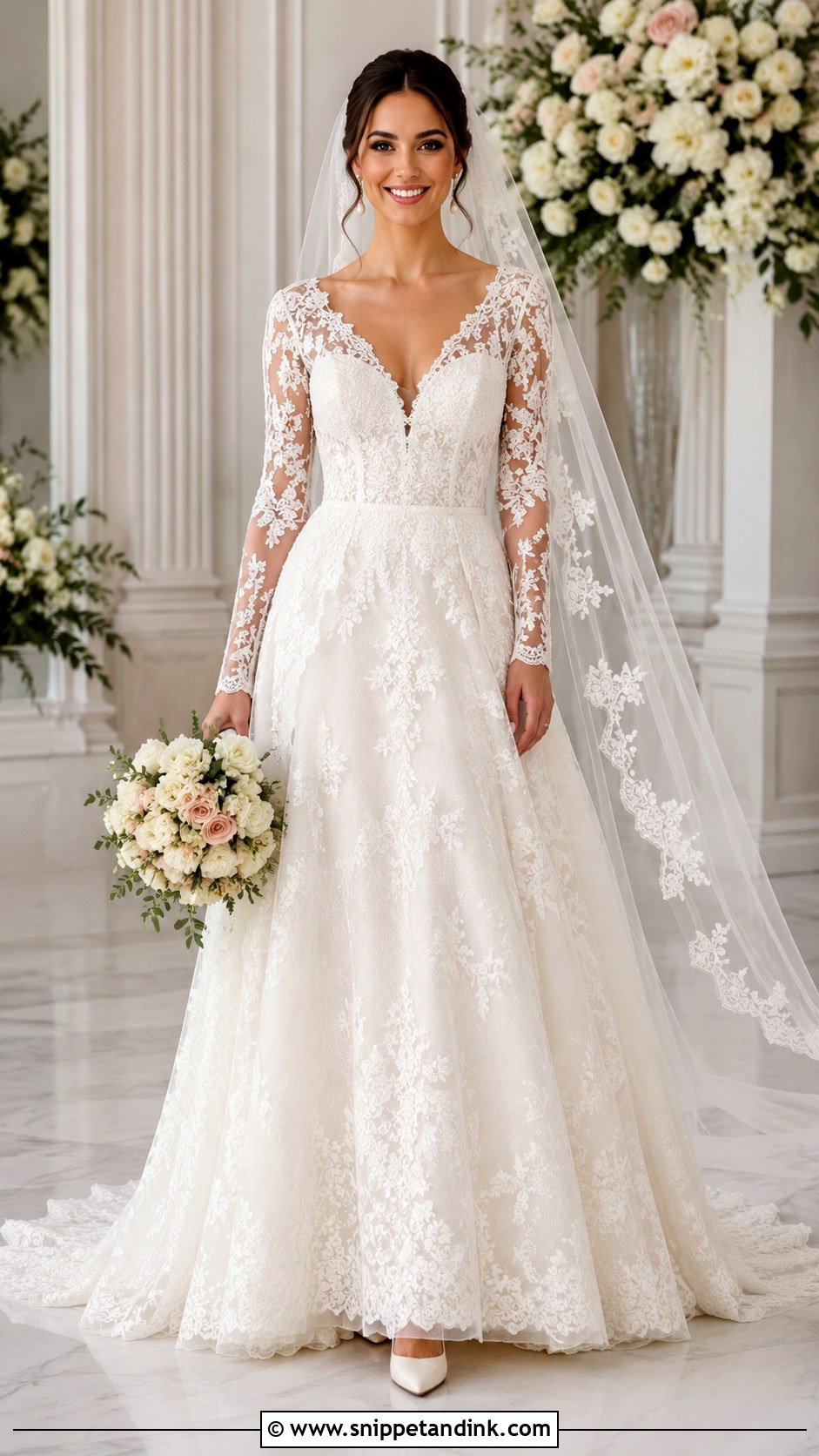
Lace on an A-line skirt is the safest place to start if you have never tried on a sleeved gown. The skirt widens slowly from a natural waist, so there is nothing to fight when you sit or climb into a car. Floral or vine lace over an ivory lining keeps the motif readable; over a nude lining the same lace can look grey in daylight. I keep accessories quiet here: pointed satin pumps, pearl drops and a fingertip veil with a narrow lace edge. A low chignon leaves the sleeve pattern visible. At fittings I ask the seamstress to check the shoulder seams before anything else, because a V that gapes when you sit is almost always a shoulder problem, not a neckline one.
2. Satin Ball Gown Long Sleeve V Neck Wedding Dress
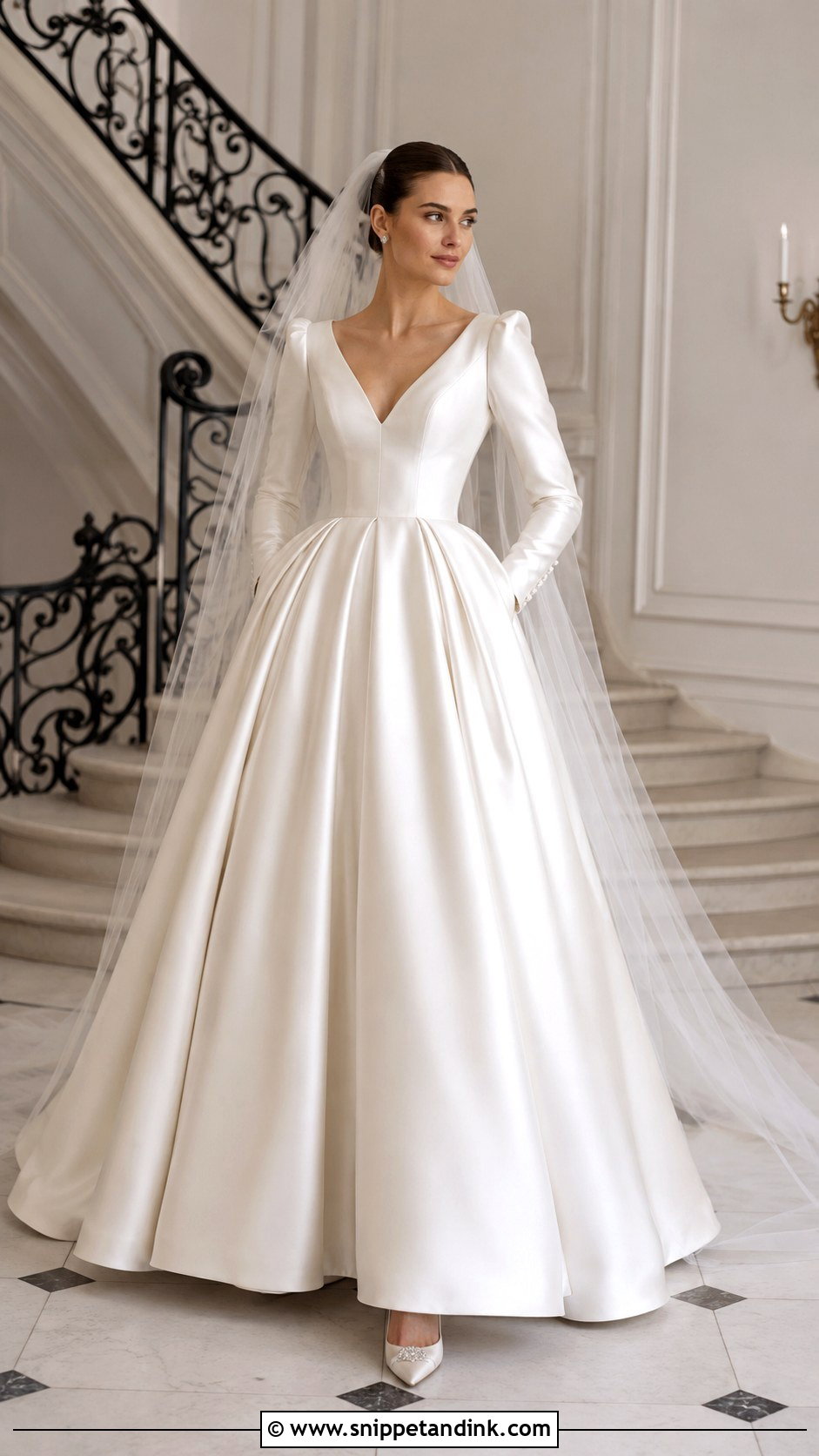
Satin is unforgiving, which is why a satin ball gown looks so finished when the tailoring is right. Look for a structured V bodice, fitted sleeves, a defined waist and pleats that fall evenly into a full skirt. Covered buttons at the wrist are enough decoration; anything more fights the clean surface. Crystal studs, ivory pointed heels and a cathedral veil without heavy edging complete it, with a sleek bun or a low waved ponytail. Lift the skirt before you commit. Several layers of satin and lining can weigh more than brides expect, and a built-in corset with properly set shoulders is what carries that weight off your arms so the neckline stays flat.
3. Crepe Sheath Long Sleeve V Neck Wedding Dress
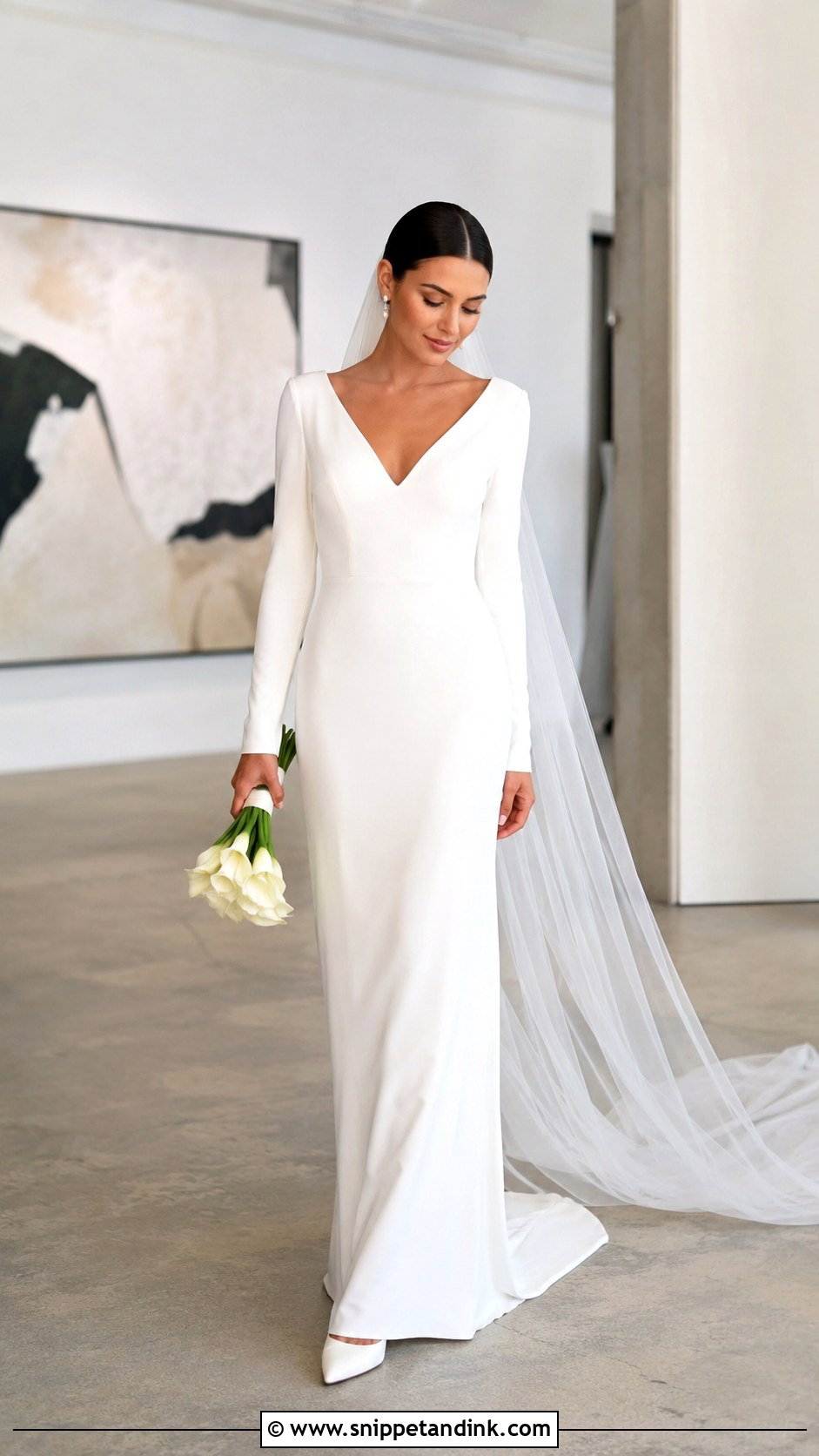
Crepe is the fabric I reach for when a bride says she wants to look like herself, only sharper. A medium-weight crepe sheath skims the body with a soft matte face, quieter than satin, and a simple V with fitted sleeves needs nothing else. A lightly shaped waist, a hidden zip and a row of fabric-covered buttons give the back some interest. Minimal drops, ivory pumps and a plain chapel veil are plenty; add a small structured bag for the reception if you like. Here’s the catch. Crepe shows every line underneath, so bring your actual undergarments to every fitting. Then take a full stride and bend your elbows: a sheath with no ease will pull across the shoulder blades the moment you reach for anything.
4. Tulle Ball Gown Long Sleeve V Neck Wedding Dress
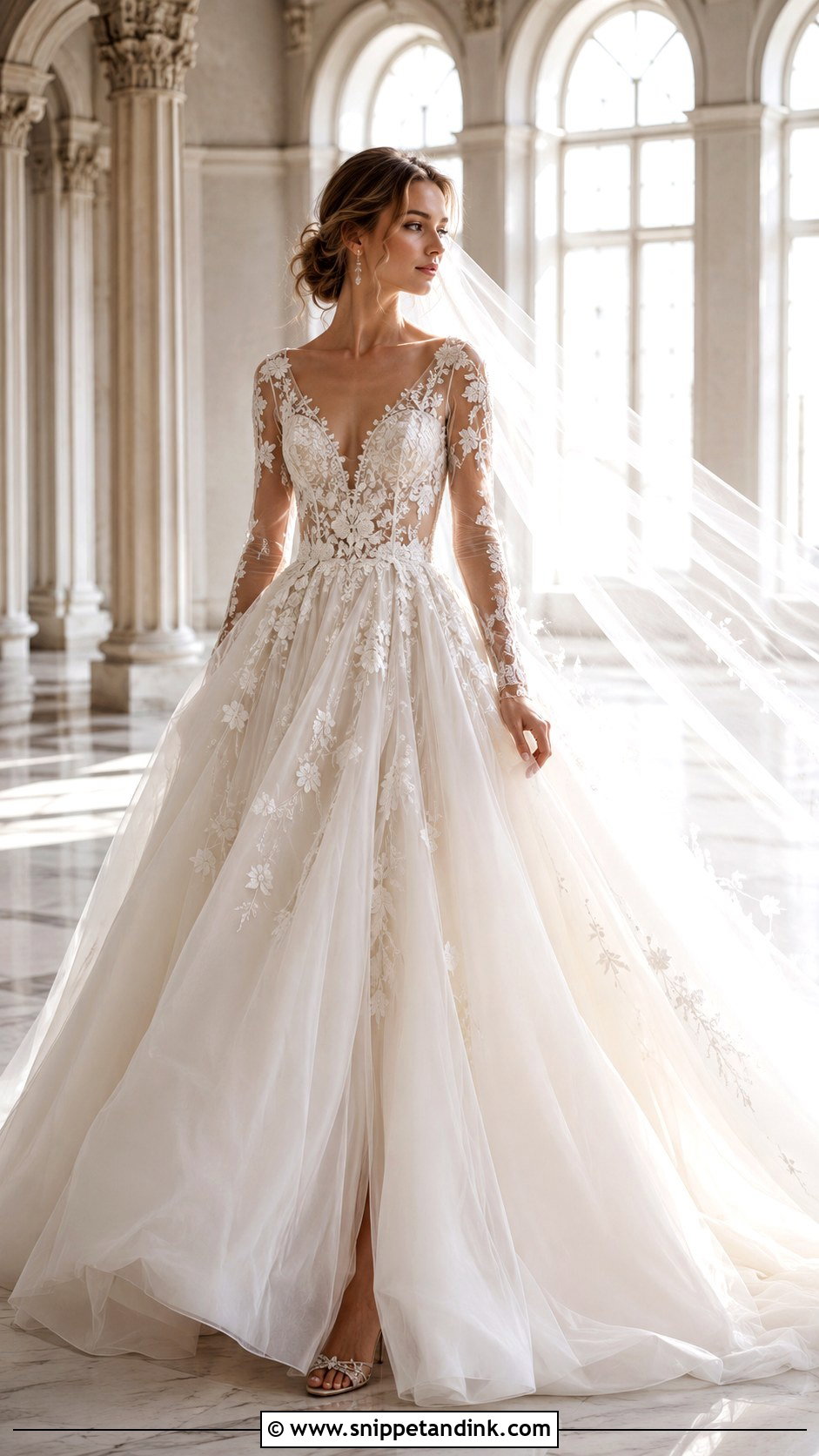
Tulle gives you volume without weight, and that is the whole appeal of this princess shape. A fitted embroidered bodice, sheer sleeves and a full skirt from the natural waist look most cohesive when the appliqués drift down from bodice into skirt rather than stopping at the seam. Crystal-trimmed heels, small earrings and a light cathedral veil that floats behind the train suit it, with a loose updo and a few face-framing pieces. Skip a large necklace; the bodice is already busy. My practical note: wear your wedding shoes at every hem fitting, because several tulle layers each get hemmed to that heel height, and ask for a wrist loop or a proper bustle before the last fitting, not after.
5. Boho Lace Long Sleeve V Neck Wedding Dress
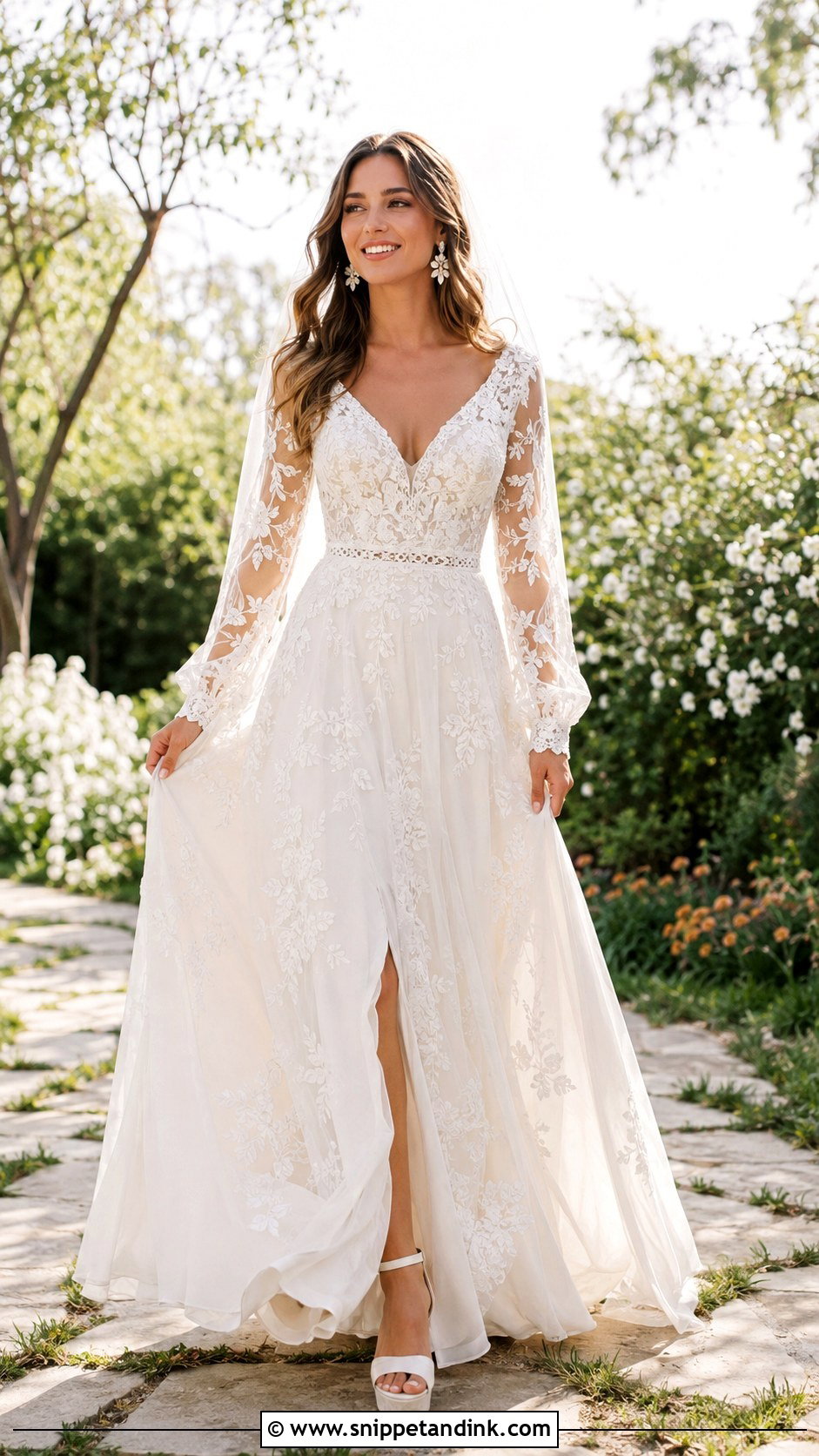
Boho dresses fail when they look slept in, so I look for lace with enough body to hold its shape. A V bodice with semi-sheer fitted sleeves, light shaping and a flowing lace or chiffon skirt is the usual formula, and botanical or scalloped lace suits a garden or field ceremony. Ivory block-heel sandals sink less in grass than stilettos. Small floral earrings and a loose veil tucked under waved hair finish it; a fine pendant only works if the neckline itself is plain. Check that the skirt lining breathes, since outdoor summer ceremonies are where boho brides overheat. A removable chiffon sash or a narrow velvet ribbon personalizes it, and I’d keep the palette to ivory, champagne and muted greens.
6. Mermaid Long Sleeve V Neck Wedding Dress
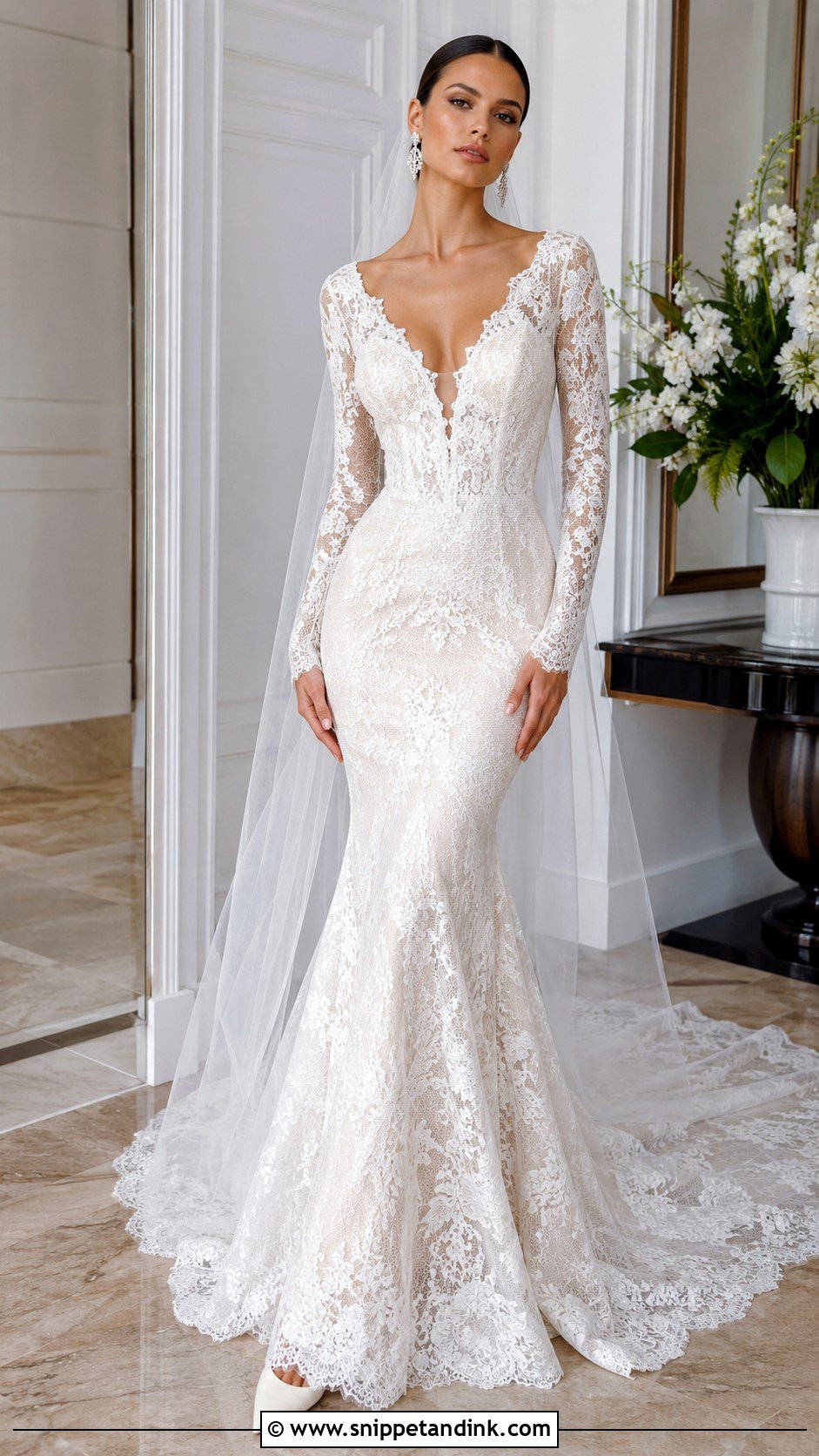
A mermaid shape is sculpted to the knee and then released, which looks dramatic and asks the most of your fittings. Stretch crepe or stretch lace is kinder here than rigid fabrics because it moves with you. A firm V bodice, fitted sleeves and good internal structure keep the top smooth. Pointed pumps, long crystal earrings and a sleek chapel veil suit it, with a polished low bun. The test I make every bride do in a mermaid: sit down, climb two steps and take your longest stride. If the flare starts too high on the leg you will shuffle all day, so ask for it to begin where your knees can actually bend, and keep the train light with a secure bustle.
7. Illusion Long Sleeve V Neck Wedding Dress
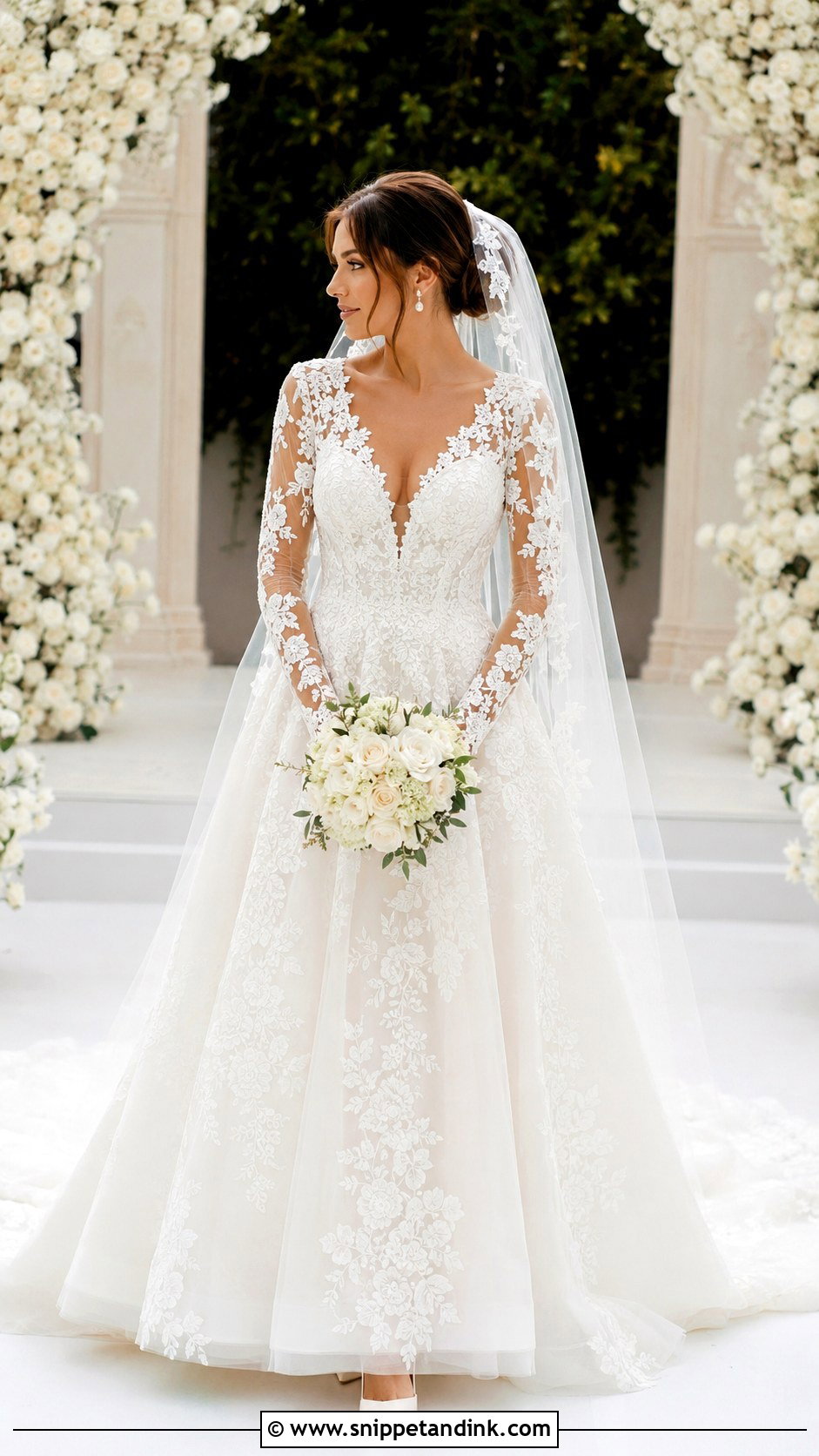
An illusion V-neckline gives the look of a deeper cut while the mesh quietly holds everything in place. Lace appliqués are scattered over the mesh across the bodice and down the sleeves, and an A-line or fit-and-flare skirt balances that fine upper half. Pearl earrings, closed-toe ivory heels and a veil with matching scattered appliqués tie it together, with a soft twisted updo to keep the neckline clear. Mesh shade is the detail people miss. I compare the mesh against the bride’s skin by a window, not under shop lighting, because the wrong shade reads as a visible panel in daytime photos. The panel should lie flat with no ripples, and most seamstresses can raise or lower the V a little if you ask early.
8. Deep V Long Sleeve Wedding Dress
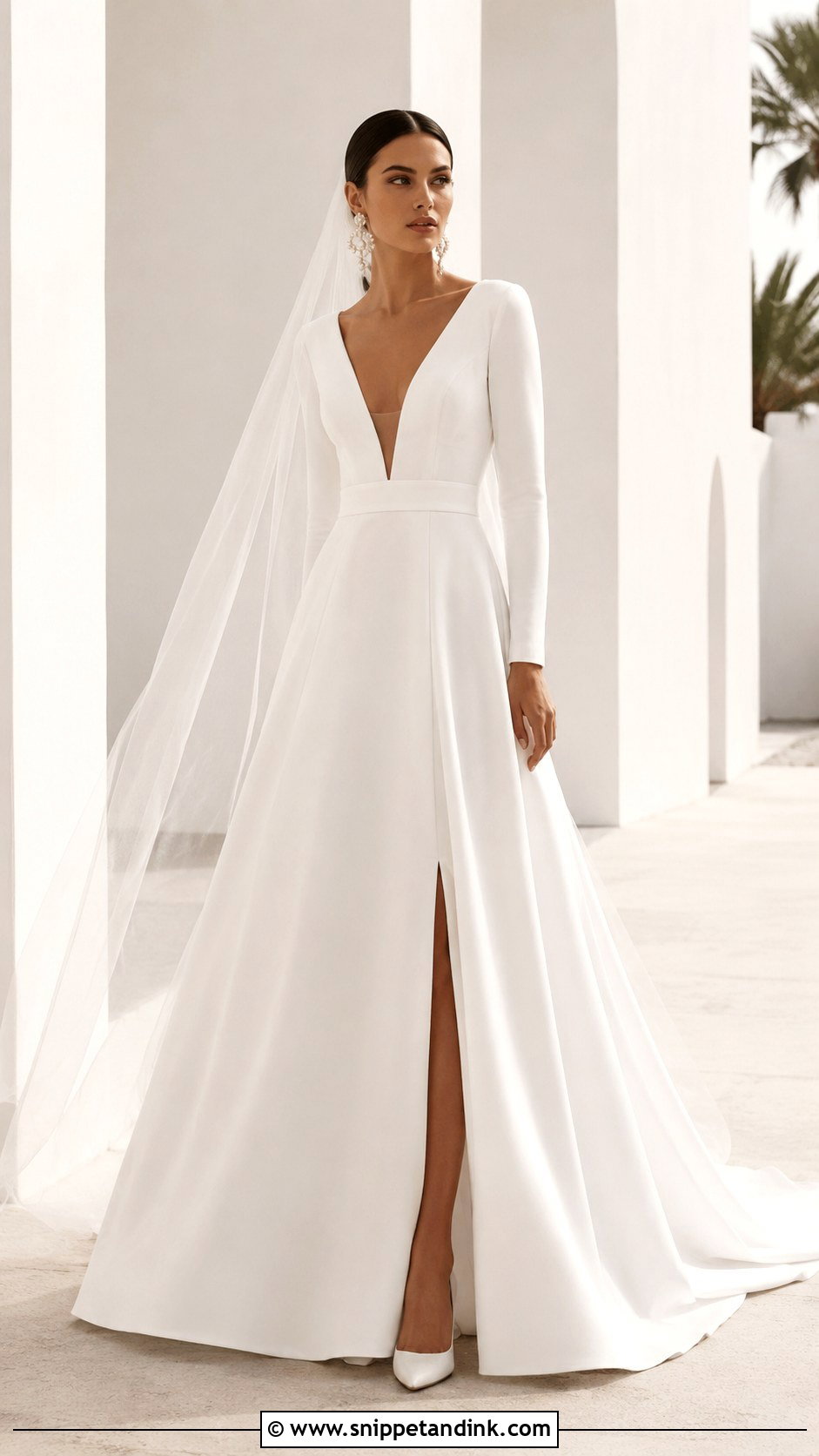
Covered arms are what let a deep V feel modern rather than risky. The bodice needs firm illusion mesh, built-in cups and supportive side panels; without them, a plunge is a day of adjusting yourself. Fitted crepe sleeves and an A-line skirt keep the mood clean, so go with sleek pointed heels, small statement earrings and a plain cathedral veil. No necklace. A smooth ponytail or sculpted bun repeats the vertical line of the V. In the fitting room I have brides raise both arms, bend forward to pick something up and sit. Fashion tape is a backup on the day, never the fix for a bodice that was not taken in properly.
9. Modest Long Sleeve V Neck Wedding Dress
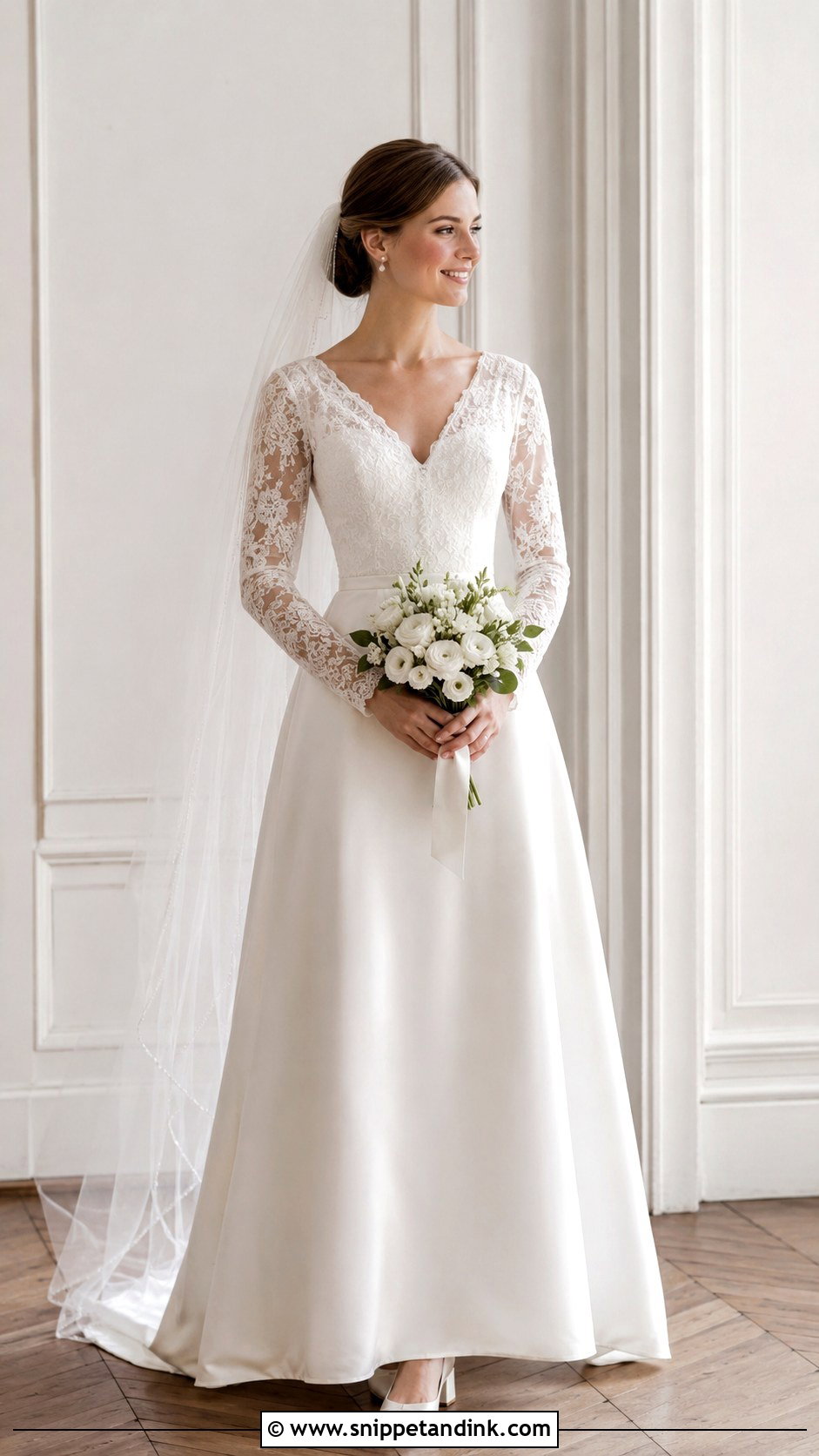
A shallow V frames the face just as well as a deep one and keeps the chest covered, which is why I suggest it for religious ceremonies and for brides who will be hugging relatives all evening. Fully lined sleeves and a gently moving A-line skirt in matte crepe, soft satin or lined lace keep it understated. Low block heels, pearl studs, a fingertip veil with a cut edge, a low bun and natural makeup are all it needs. If the V turns out lower than the sample suggested, a seamstress can add a lace or mesh inset that matches. Watch the wrist openings: covered sleeves that are too narrow at the cuff become uncomfortable by the reception, and small covered buttons there add detail without bulk.
10. Vintage Lace Long Sleeve V Neck Wedding Dress
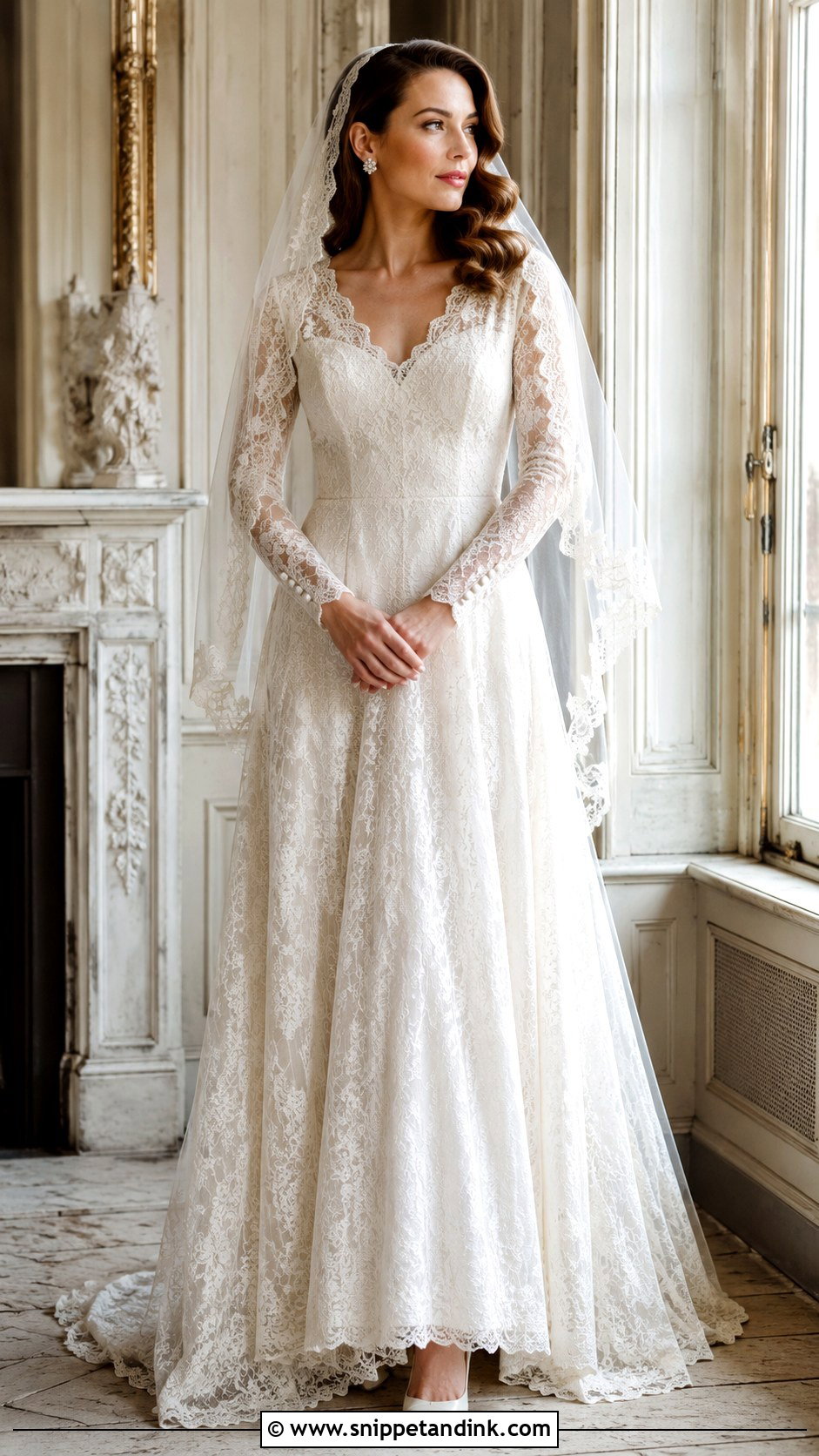
Vintage lace has to look like a choice, not a costume, and the way to manage that is to pick one era and stop. A fitted V bodice, narrow sleeves, covered buttons and a soft train suit most of them. Geometric lace leans toward the 1920s; small floral lace reads earlier and more romantic. Almond-toe pumps, pearl cluster earrings and a lace-edged veil are enough, with finger waves, a rolled updo or polished Hollywood curls on top. I’d line older-looking lace in ivory, cream or pale champagne so the pattern stands out instead of disappearing. Wearing an heirloom brooch or comb? Place it on a plain area of the dress or hair, away from heavy embellishment, or nobody will notice it.
11. Floral Applique Long Sleeve V Neck Wedding Dress
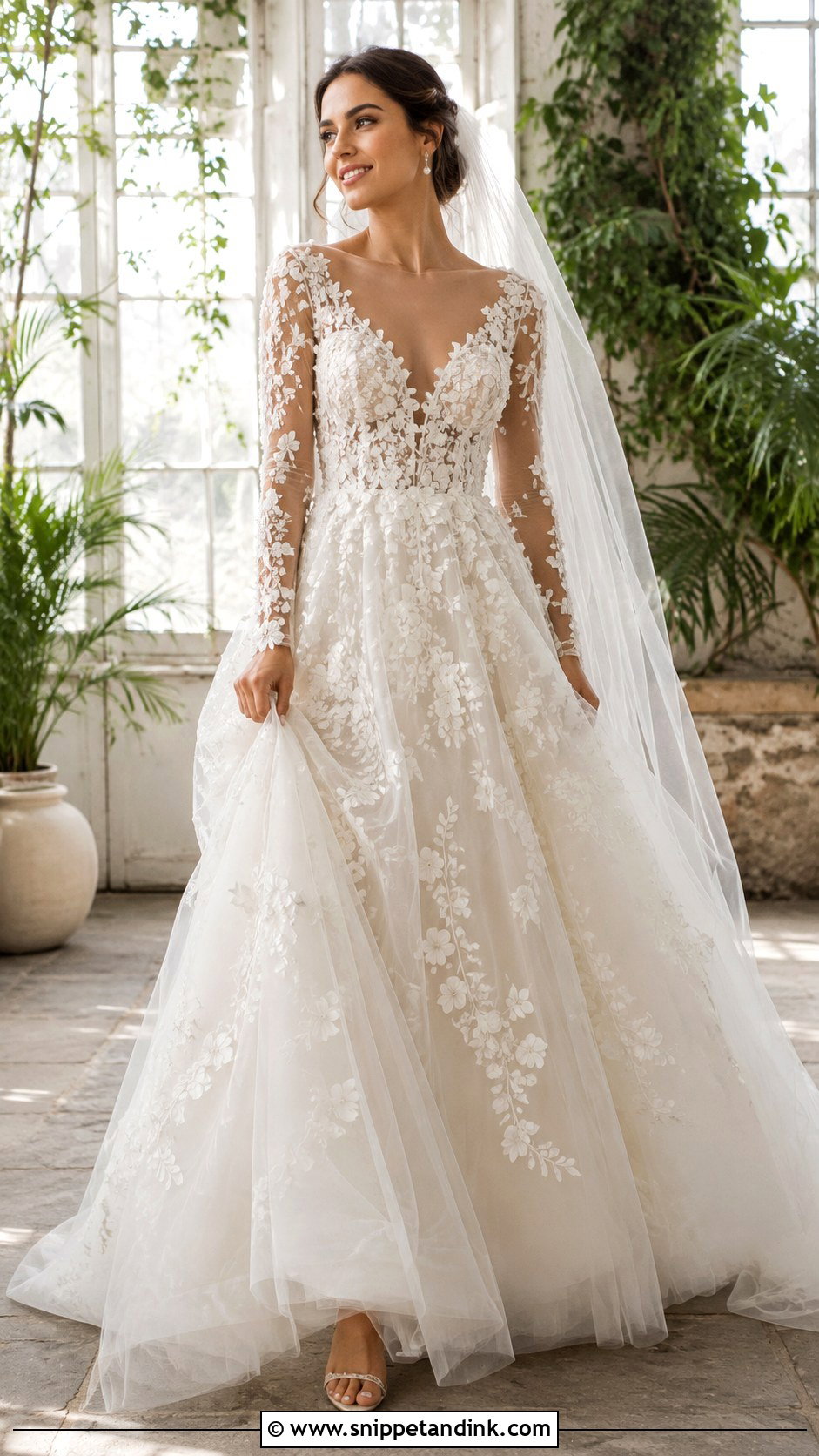
Raised appliqués give a sleeved gown texture without adding color. Flowers spread over the shoulders, sleeves, waist and upper skirt sit best on a soft tulle A-line, which leaves space between them so they look scattered rather than piled up. Plain ivory heels, small pearl drops and an unembellished veil let the dress lead, and a loose updo with a few floral pins echoes it. Placement is what I check at the mirror, front, side and back. A large flower landing on the bust point or under the arm looks like an accident in photos. I also run a veil over the appliqués: any loose petal or open stitch will catch the tulle, and it is far easier to secure before the day.
12. Beaded Long Sleeve V Neck Wedding Dress
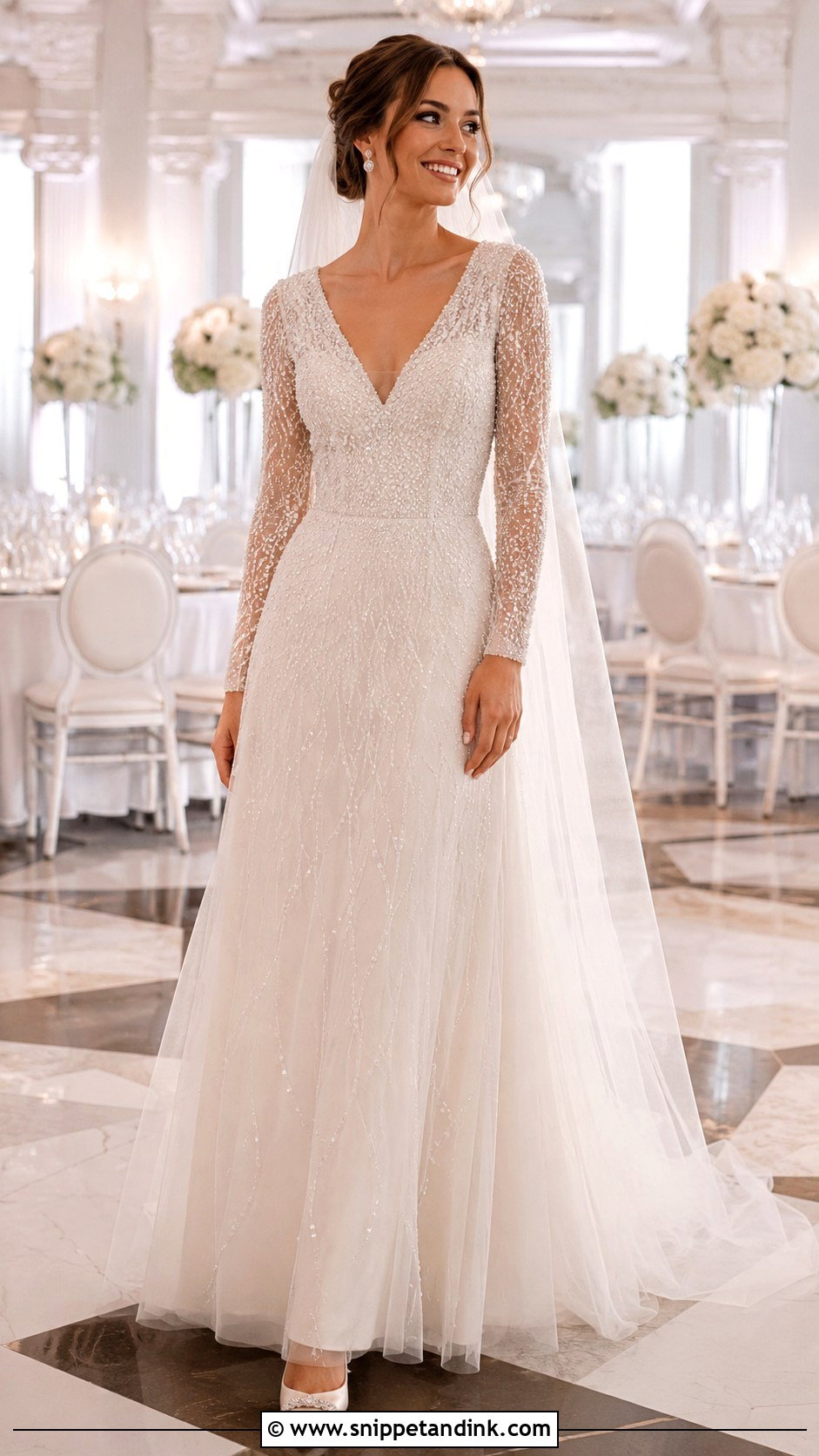
Beading catches light as you move, so it looks quieter on a hanger than it will at the ceremony. Fine beads spread evenly over fitted sleeves and a structured bodice, above a plainer tulle, crepe or chiffon skirt, keep the dress from feeling heavy. Satin pumps, crystal studs, a plain fingertip veil and a neat bun or side-parted waves are all the styling it needs. Before buying, I pick the dress up to feel its weight and run a hand under the arms; beads there rub through a long day unless the lining is good. Bring a fabric swatch shopping for jewelry, because silver, clear, pearl and champagne beads all reflect differently and mixing tones makes the bodice look patchy.
13. Pearl Long Sleeve V Neck Wedding Dress
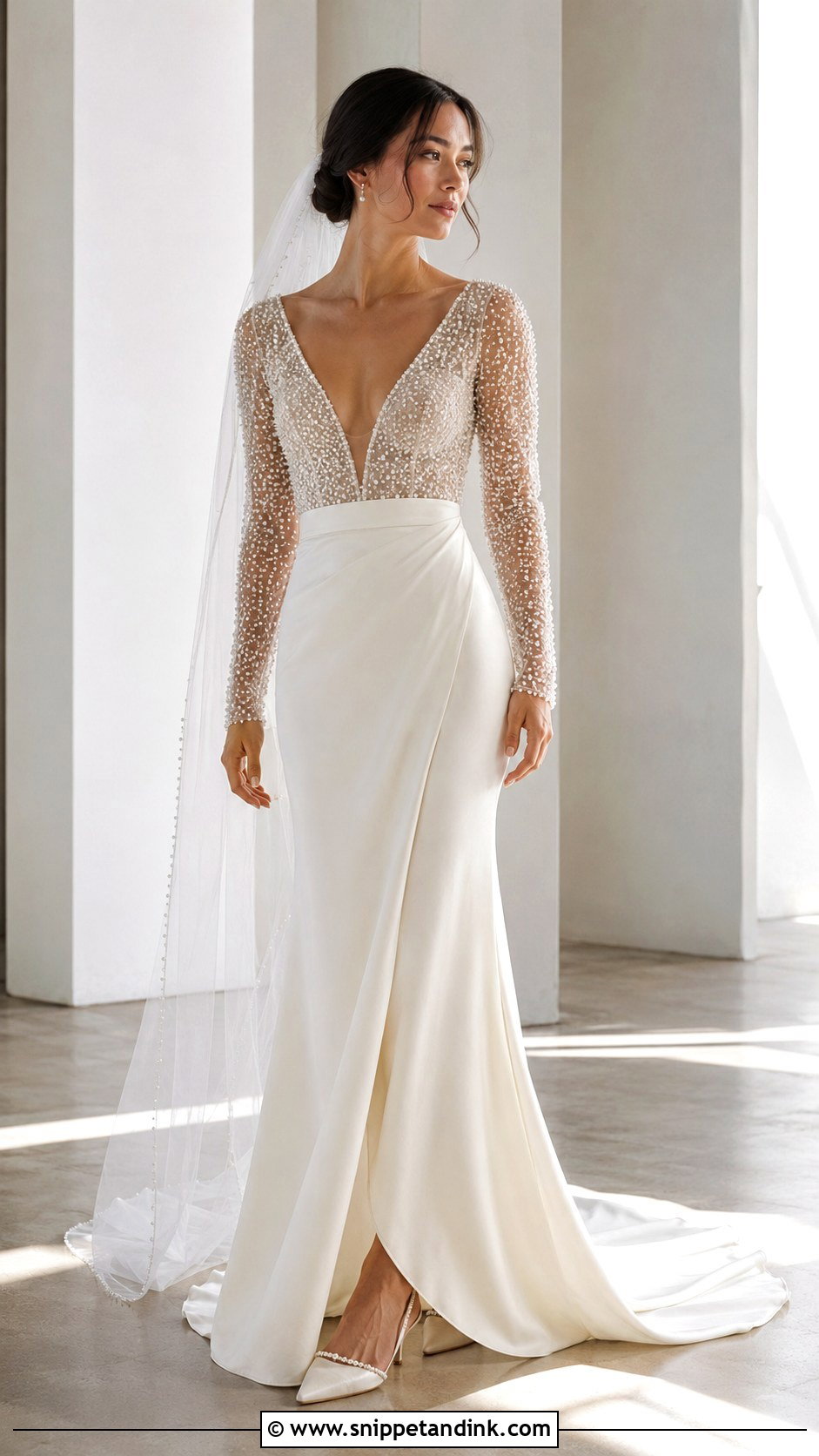
Pearls bring a soft glow rather than sparkle, which suits brides who find crystals too loud. A V tulle bodice with scattered pearls, sheer fitted sleeves and a flowing crepe or chiffon skirt puts the texture up top and keeps the lower half light. Pearl earrings, ivory slingbacks and a plain veil with a few matching pearls at the edge finish it. One rule I keep: stay with one or two pearl sizes. A mix of large and tiny pearls looks less polished than a consistent scale. A low chignon or half-up style keeps the shoulders visible. Tug gently at the pearls near the cuffs and underarms during fittings, since those are the ones that work loose, and if the bodice already reads busy, leave the necklace at home.
14. Bell Sleeve V Neck Wedding Dress
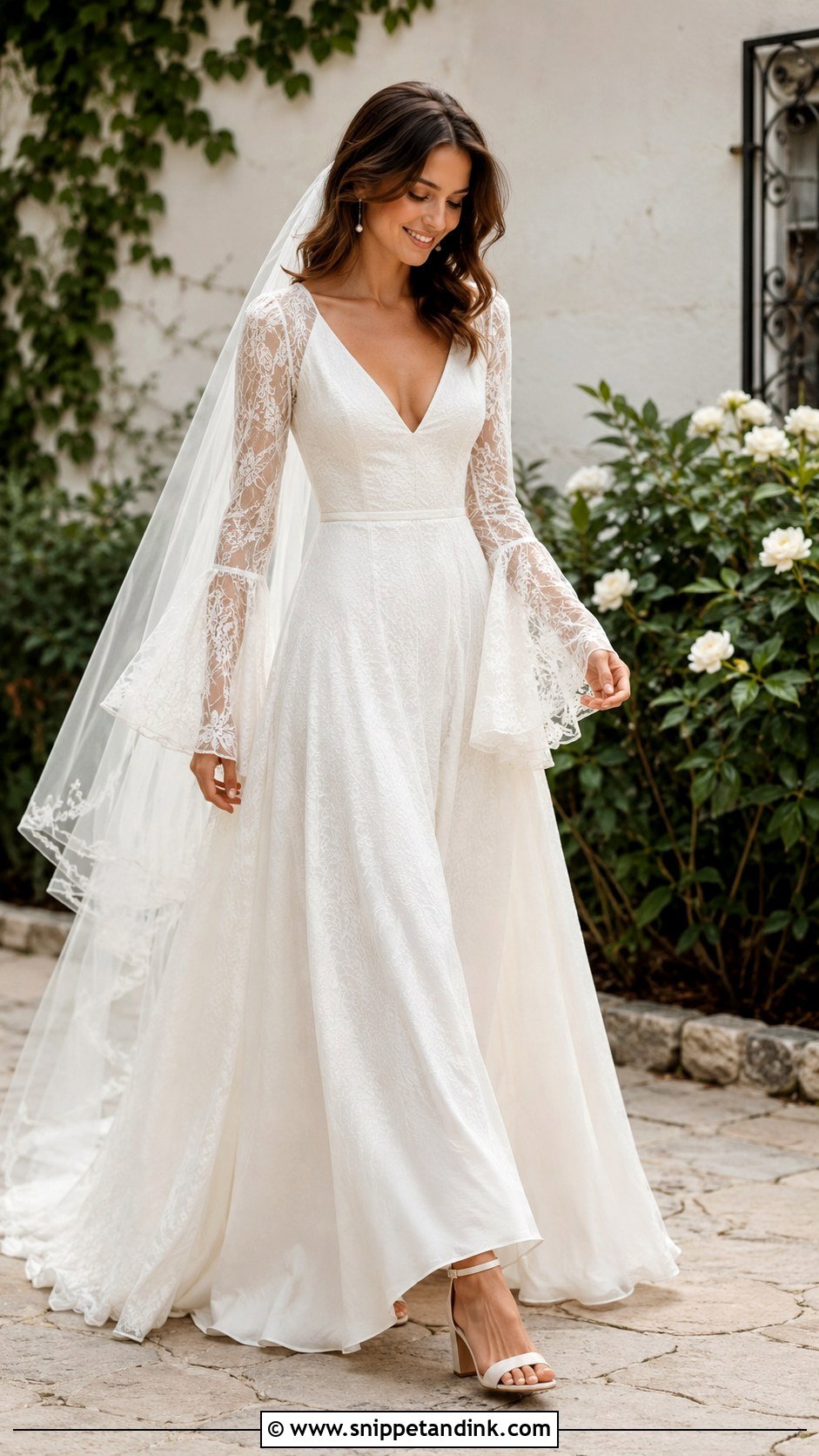
Bell sleeves give the gown movement every time you lift a hand. The ones that look best stay close above the elbow and widen gradually to the wrist, in a light lace or chiffon, over a fitted V bodice and a simple A-line skirt. Block-heel sandals, small earrings and a soft chapel veil under loose waves suit the relaxed mood. Leave off bracelets and large rings; they snag the flare. I make brides hold their bouquet, pretend to eat and shake hands in the fitting room, because a bell that covers the fingers gets dragged through cake frosting. If it’s long, ask for small loops sewn inside so you can lift the sleeve during dinner.
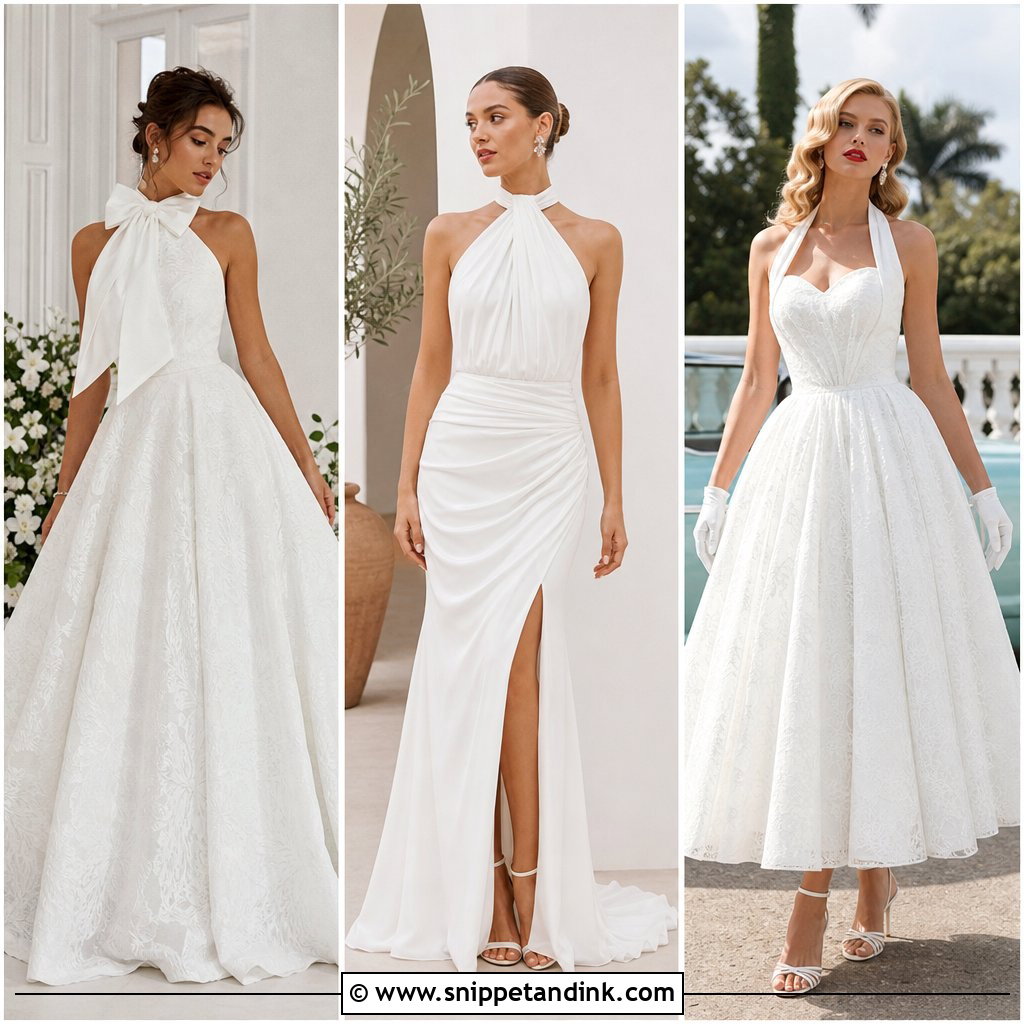
15. Bishop Sleeve V Neck Wedding Dress
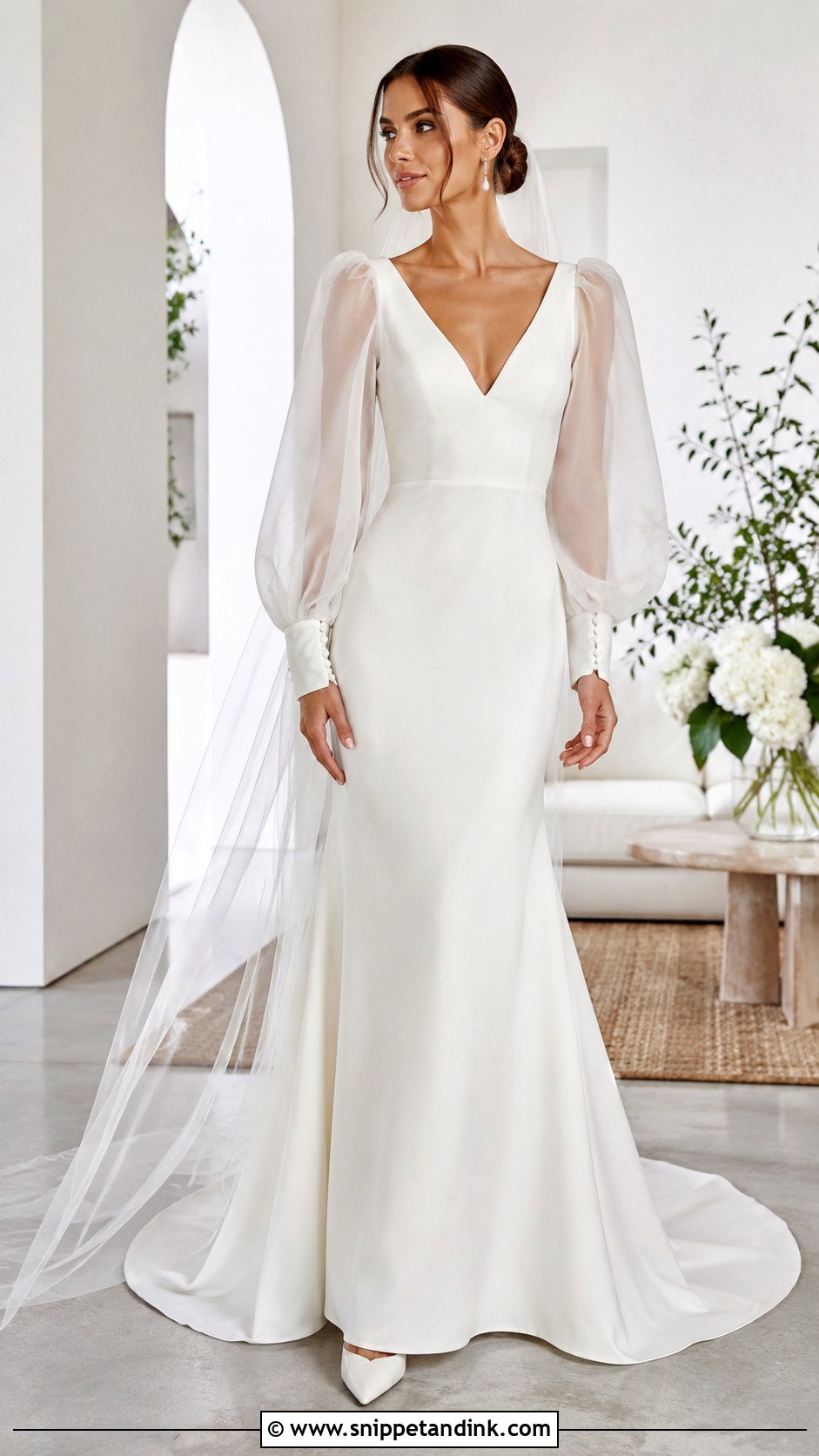
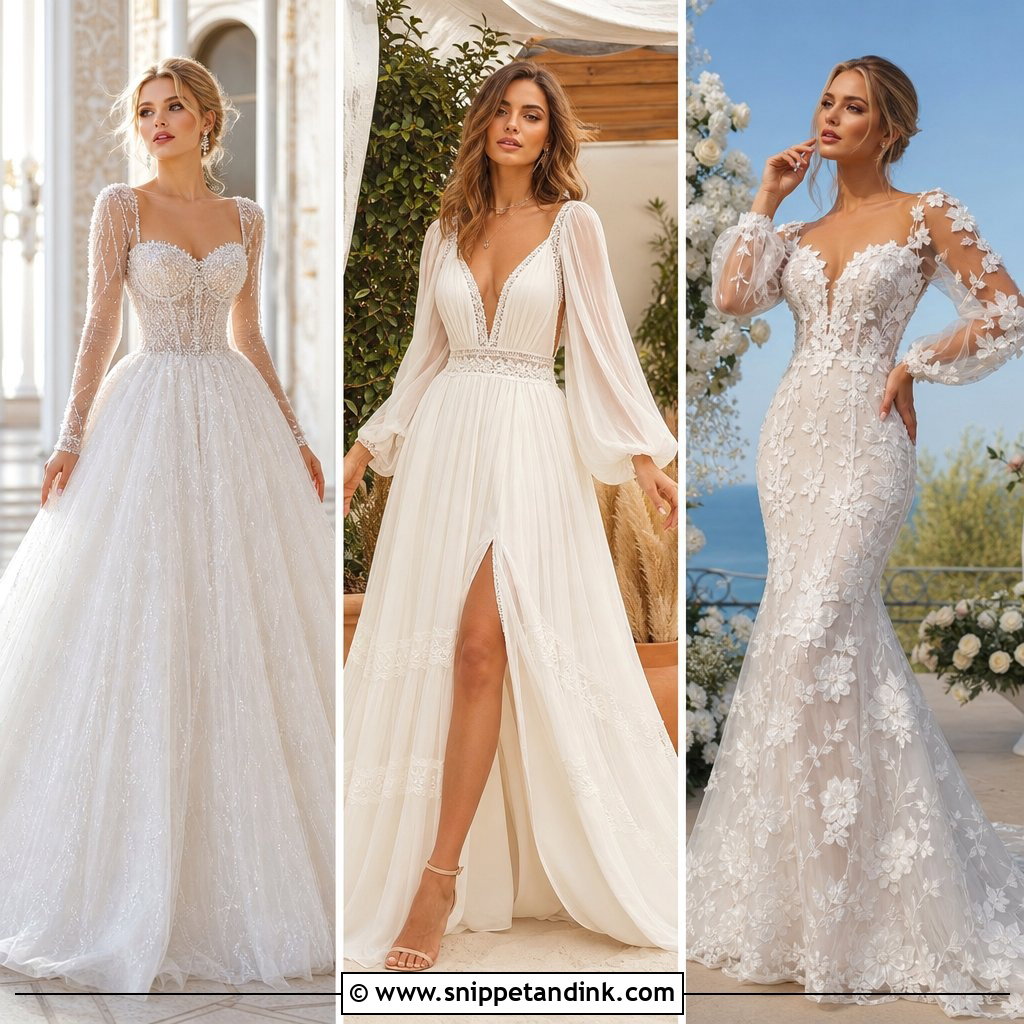
Bishop sleeves gather softly at the shoulder, billow along the arm and close into a fitted buttoned cuff. In sheer organza, chiffon or tulle they look airy; a clean V bodice and a softly flared skirt stop that volume from overwhelming you. Pointed ivory pumps, drop earrings and a narrow chapel veil keep things tidy, and a sleek bun balances the fullness at the arms. Bend your elbows at the fitting. The sleeve needs enough fabric to move without bunching into a lump at the joint, and the cuff buttons should fasten without help from two people. With very sheer sleeves, look closely at how the shoulder seams and armholes are finished, because every seam shows through in daylight.
16. Button Sleeve V Neck Wedding Dress
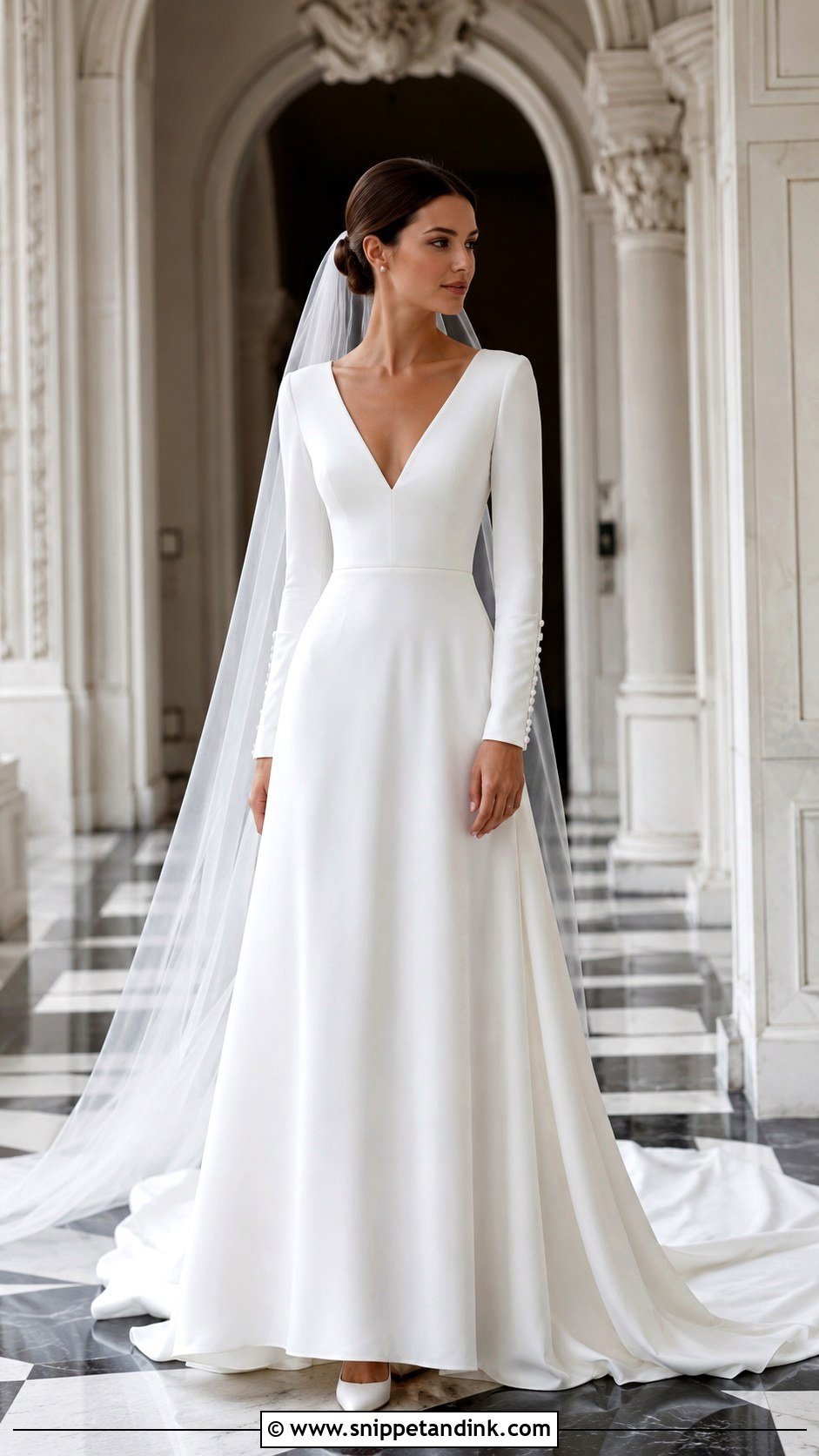
Narrow sleeves with covered buttons from wrist to elbow are a small detail that gets photographed constantly, every time your hands are in frame. They suit a satin or crepe gown with a medium V and a tailored bodice, and repeating the same buttons down the back makes the dress feel planned. Pearl studs, pointed satin heels and a clean cathedral veil, with a center-parted low bun, keep it symmetrical. Ask straight away whether the buttons are functional. Working loops look right but add real dressing time and need a helper with a button hook; decorative buttons over a hidden zip are far easier. Check the button line runs straight down the arm, and ask your seamstress for a few spares for the emergency kit.
17. Low Back Long Sleeve V Neck Wedding Dress
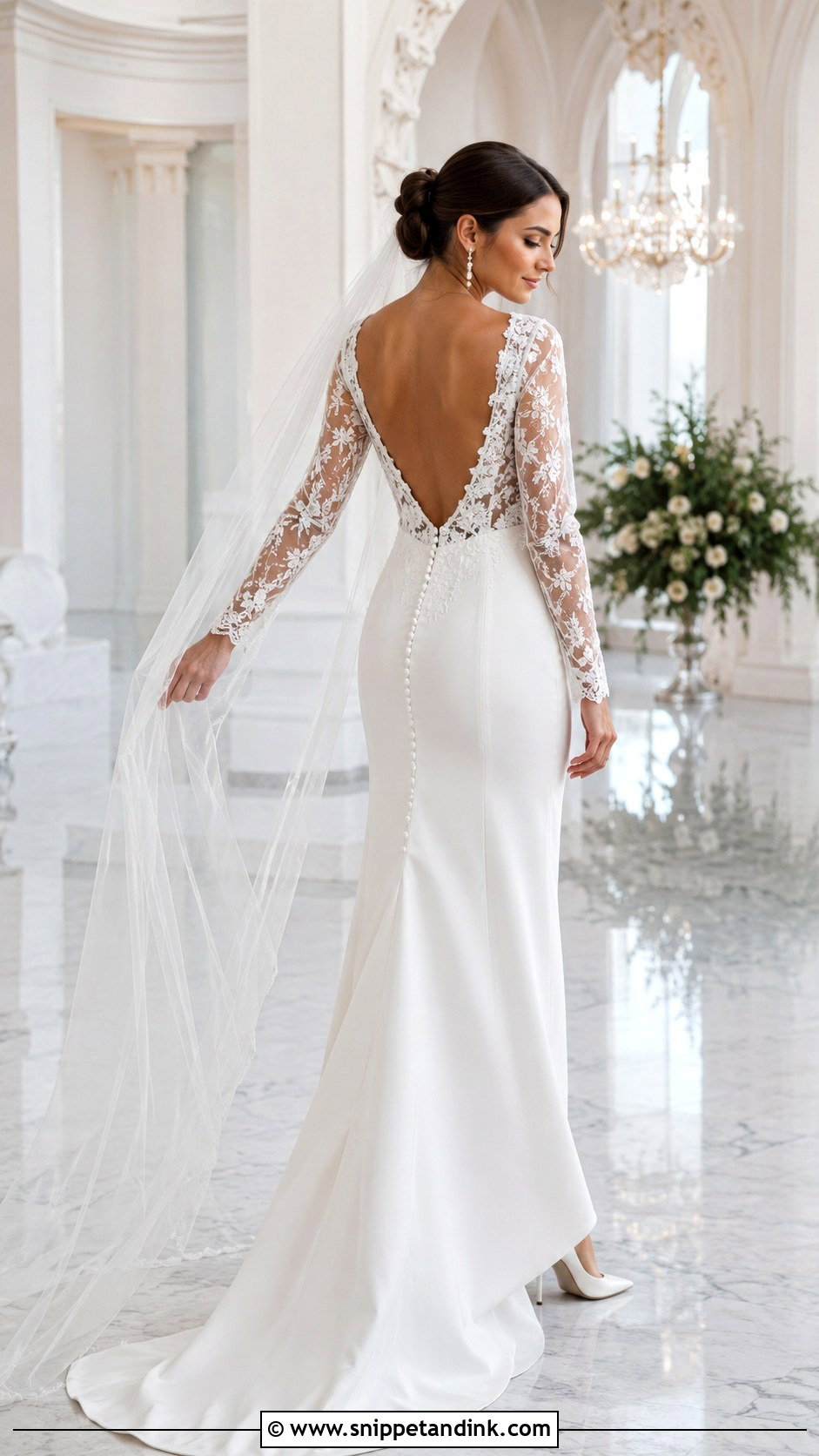
A low back behind a covered front and long sleeves is a surprise reveal at the altar, when the guests are looking at your back. The bodice still needs to be secure, with fitted lace or crepe sleeves and a back opening that stops above the waist. Covered buttons, illusion mesh or lace edging can frame the opening. Drop earrings, sleek pumps, a sheer veil that shows the back, and an updo so nothing hides the design. Underwear is the first thing I sort for this dress, since a low back rules out most bras. At fittings I stand behind the bride while she lifts her arms: if the back gapes, or the shoulders creep down, she needs internal support or clear stabilizing straps.
18. Plus Size Long Sleeve V Neck Wedding Dress
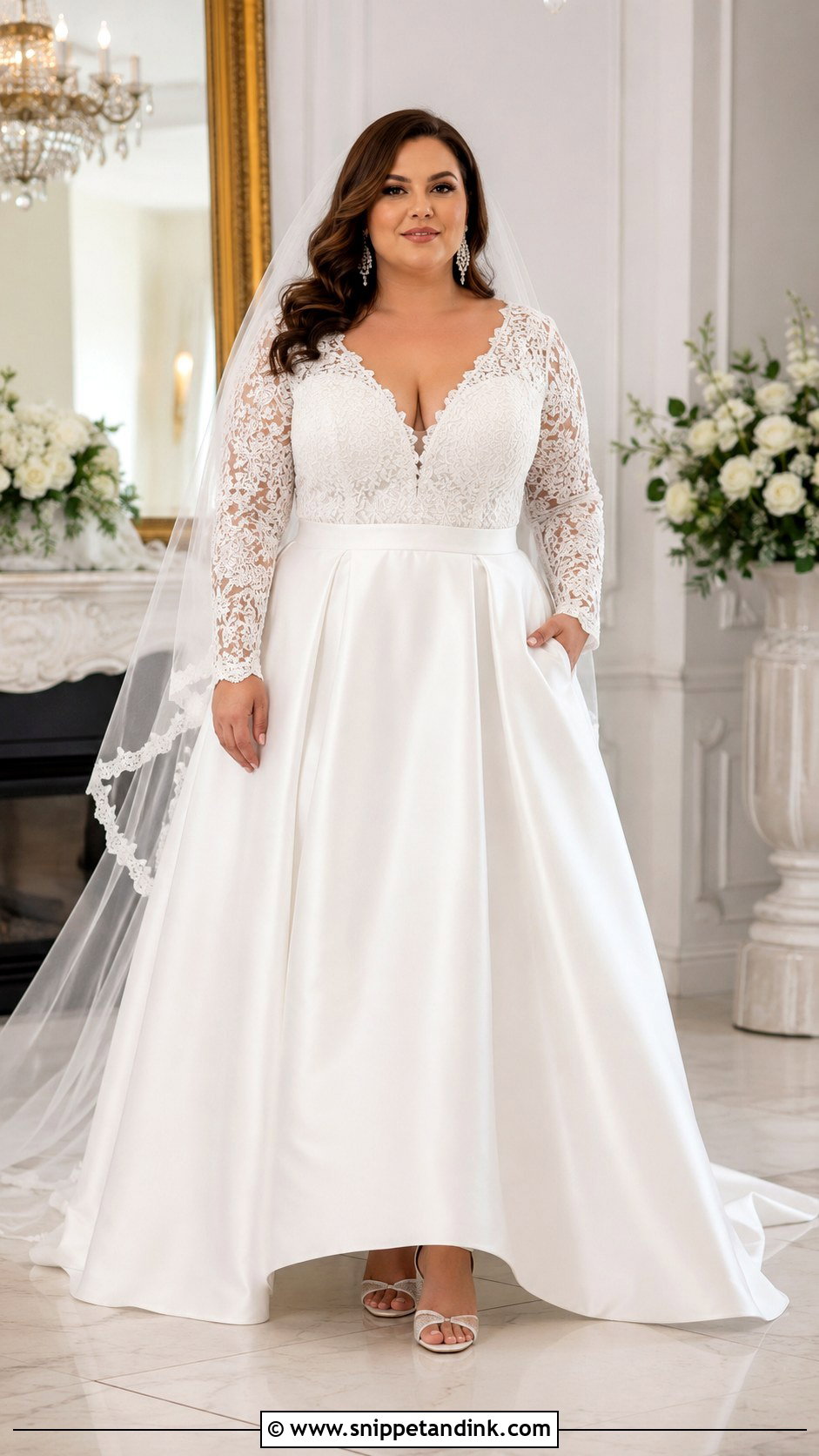
For a plus-size bride, construction matters more than any rule about what flatters. I’d start with an A-line in a structured bodice, a defined waist, stretch lining and sleeves cut with room in the upper arm, since too-tight sleeves are the most common complaint I hear. Lace panels add softness; a smooth crepe or satin skirt keeps a long vertical line. Stable block heels, statement earrings and a chapel veil set into a low updo finish it. At fittings, check three things: the V lies flat on the chest, the waist seam sits where it was designed to, and nothing pinches when you hug. Go to a seamstress who knows bridal structure, because placing cups, boning and shoulder adjustments properly changes comfort without changing the design.
19. Petite Long Sleeve V Neck Wedding Dress
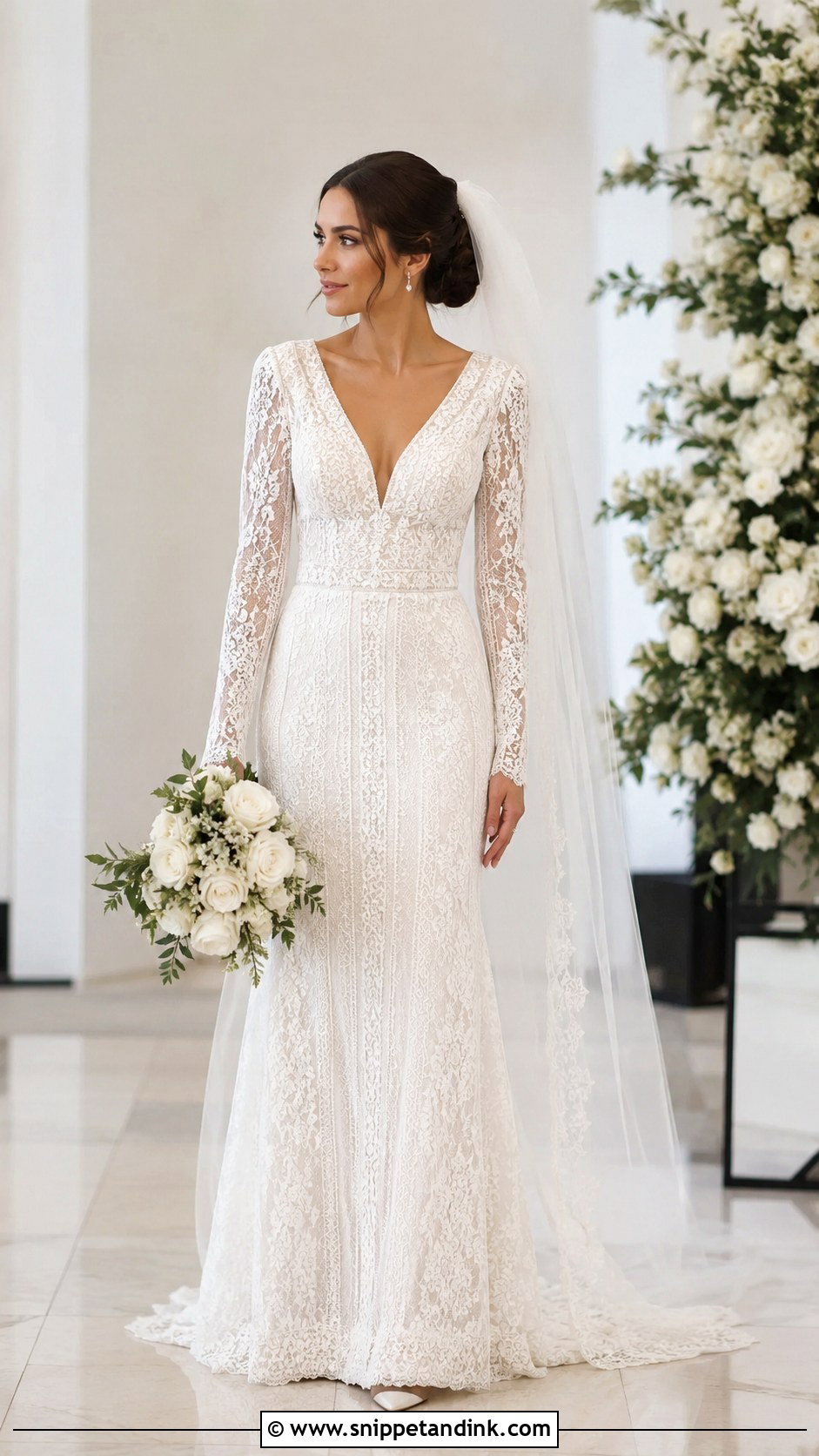
Petite brides lose a gown not to its length but to its proportions. A narrow A-line or column with a moderate V, fitted sleeves and a waist seam that meets your real waist keeps things in scale, and vertical lace, covered buttons and an uninterrupted skirt all lengthen the line. Comfortable pointed heels, small drops, a compact low bun or shoulder-length waves, and a veil that does not swamp the train are enough. The mistake I see is simply hemming a standard sample. The bodice may need shortening, the sleeves may need to come up from the shoulder, the flare may start too low and the appliqués may need moving. Petite cuts or a skilled seamstress fix this; a hem alone does not.
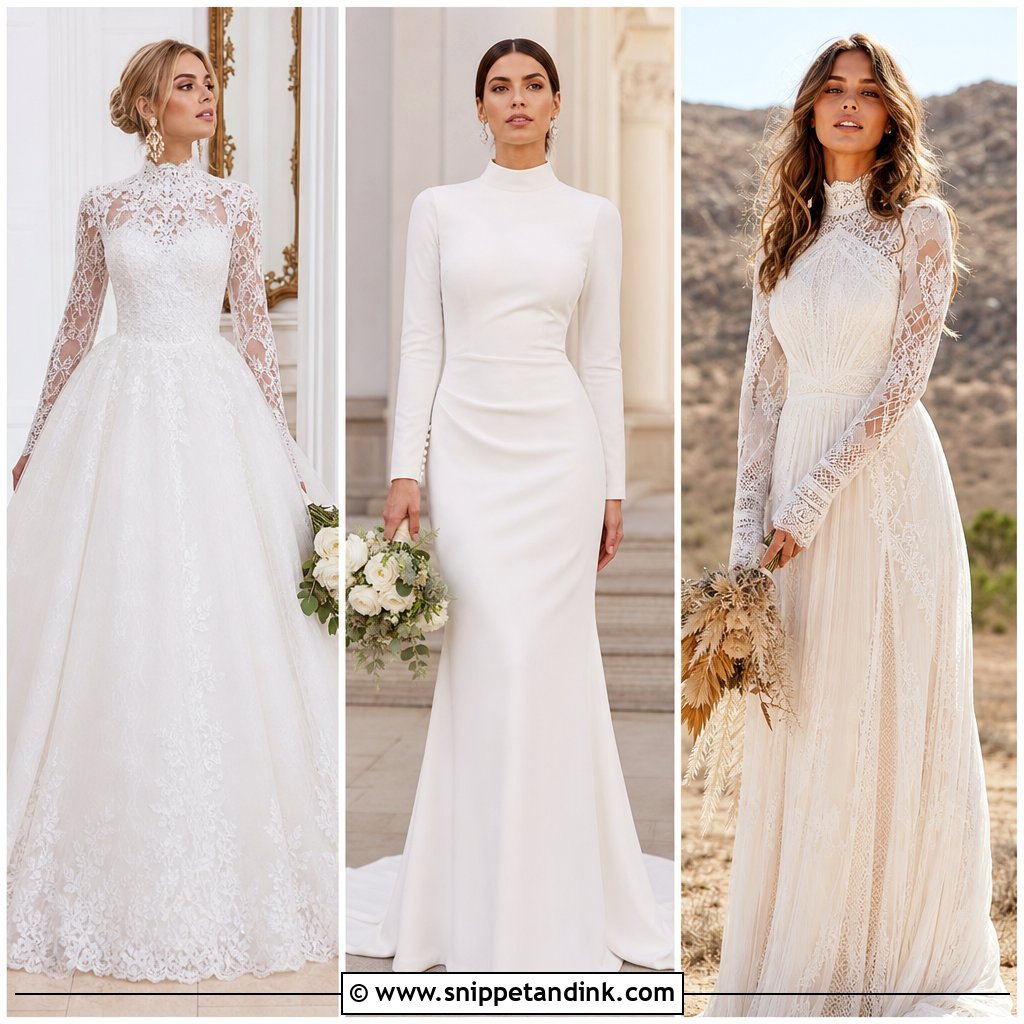
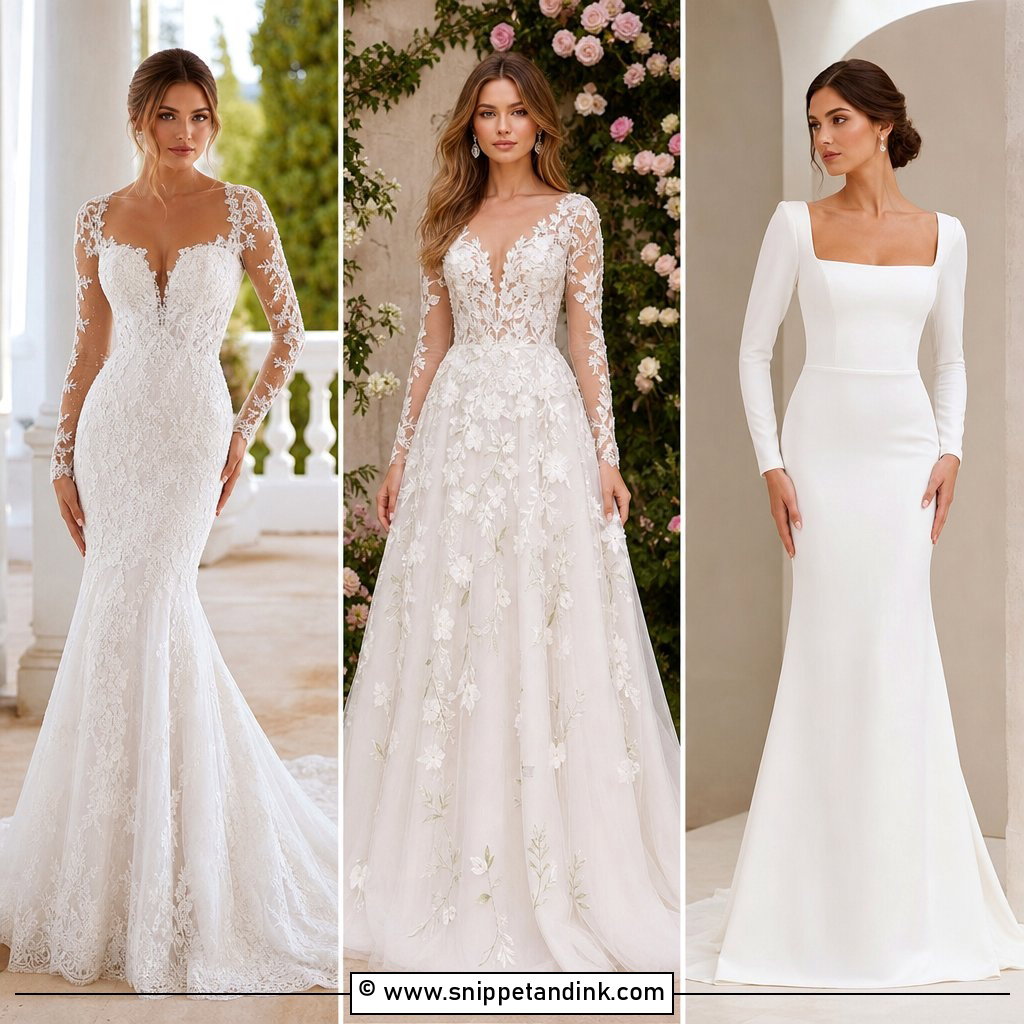
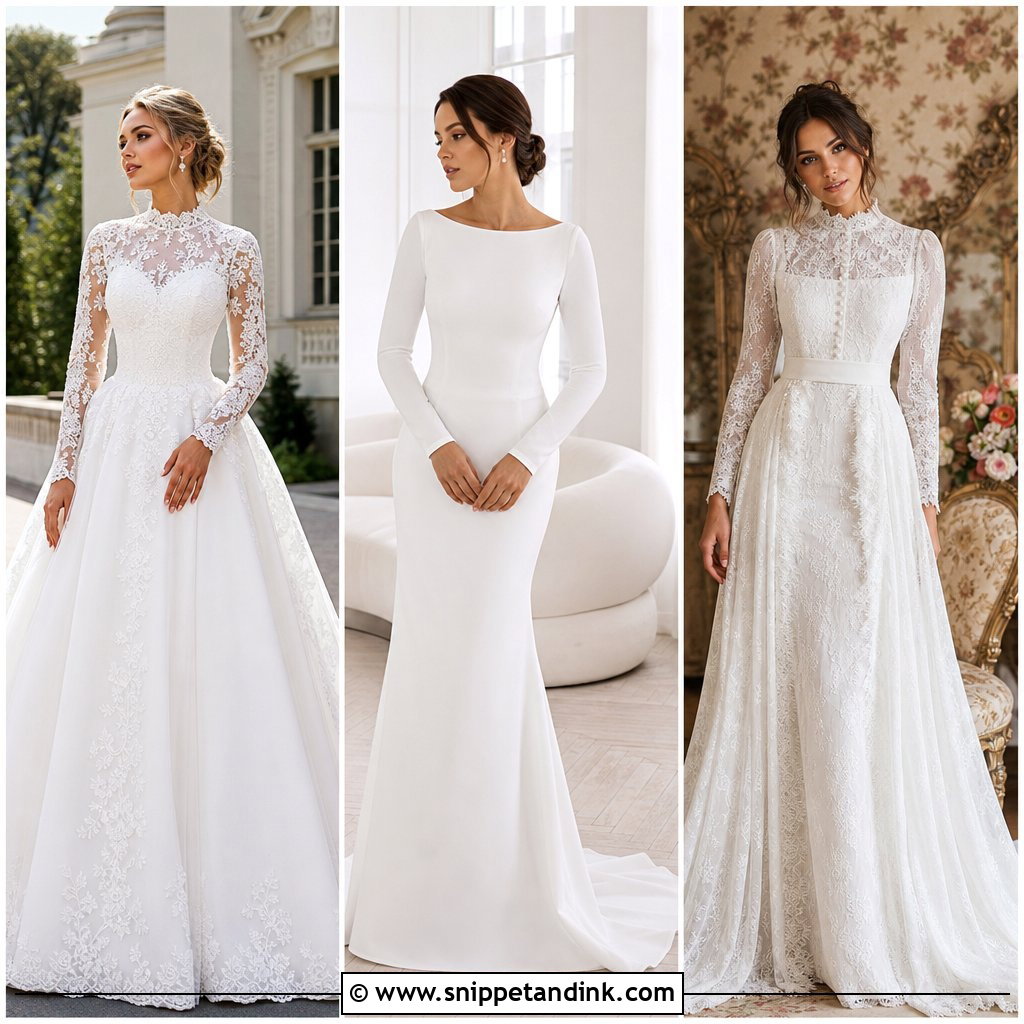
20. Winter Mikado Long Sleeve V Neck Wedding Dress
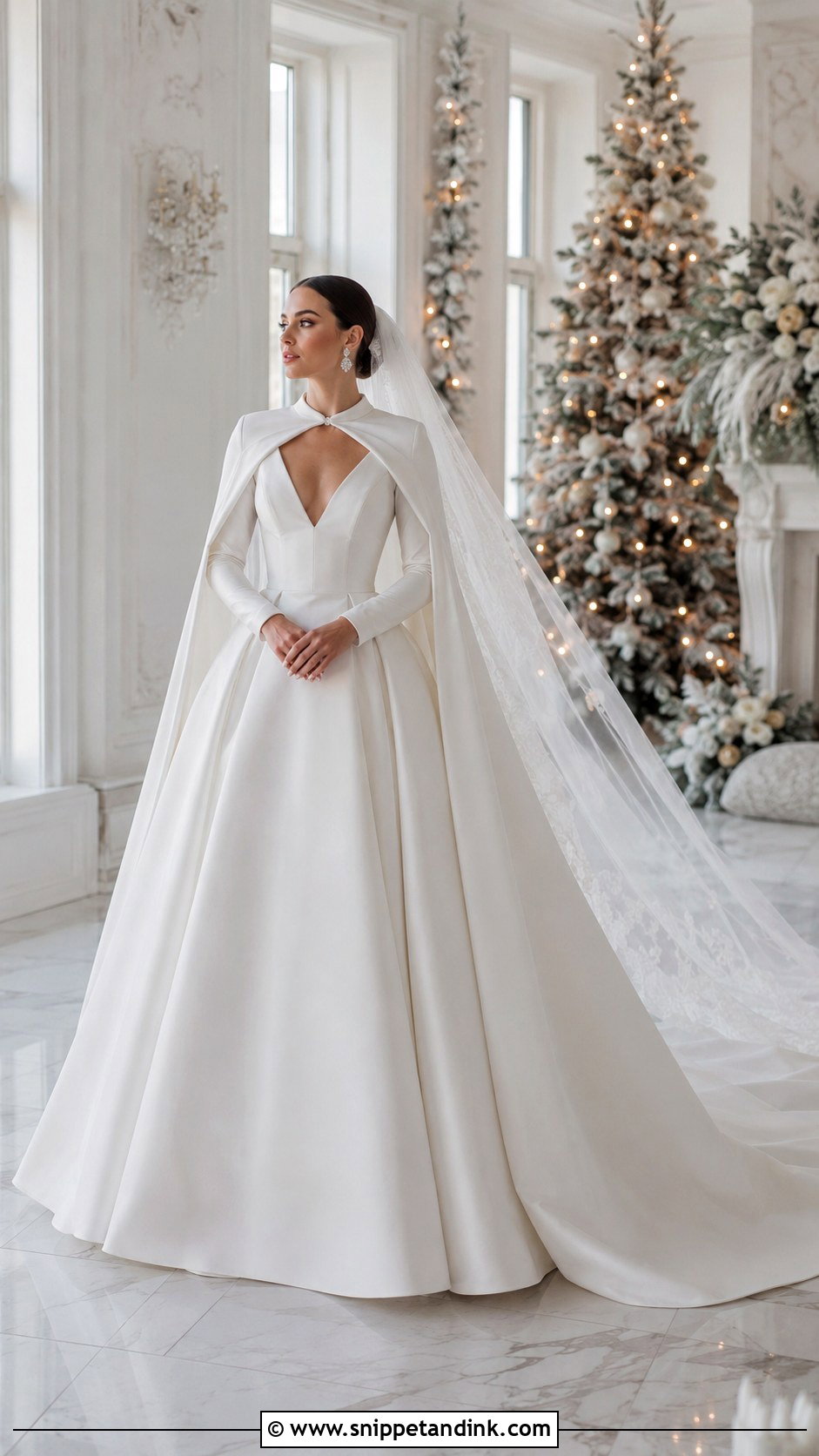
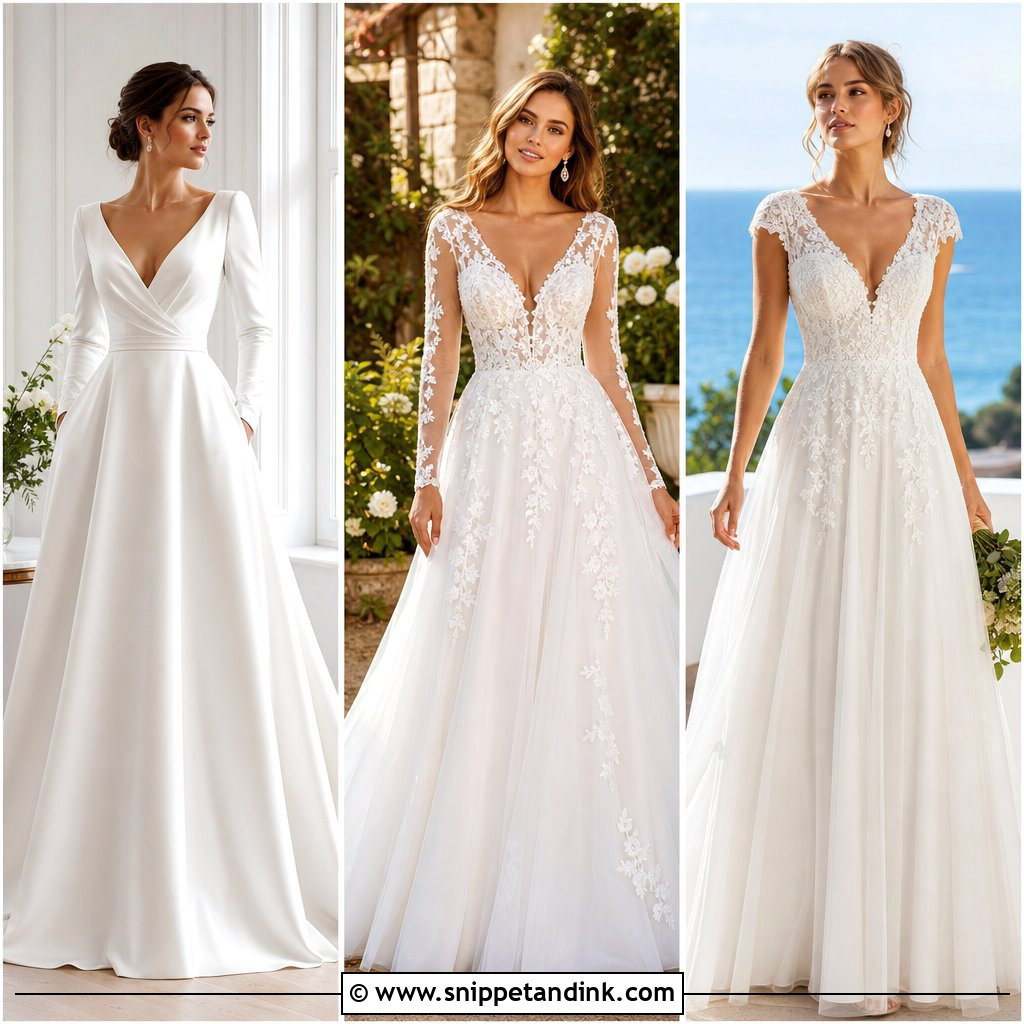
Mikado is a heavy, slightly crisp silk blend that holds its shape on its own, which is why it suits a winter wedding. Look for a sharp V bodice, tailored sleeves, a defined waist and a full A-line or ball gown skirt with deep pleats and covered buttons. Closed-toe pumps, crystal earrings and a long plain veil suit it, with a polished updo. For outdoor portraits, a removable ivory cape or faux-fur wrap keeps you warm without hiding the neckline in every shot. Because Mikado does not drape, it does not forgive. Tailoring at the shoulders, elbows and waist must be precise, and I always have brides sit and bend their arms, since the fabric can fold into stiff creases at the elbow.
Why Sleeved Gowns Need Extra Alteration Time
Sleeves are where alteration schedules slip. Shortening a plain sleeve at the cuff is quick, but lace sleeves with a scalloped edge or a buttoned cuff usually have to be taken up from the shoulder, which means unpicking the armhole and resetting the sleeve. That work affects how the neckline sits, so the V often needs a second look afterwards.
For that reason I plan an extra fitting for sleeved dresses and ask brides to have the gown in hand earlier than they would a strapless one. Bring your shoes, your actual undergarments and any shapewear to every appointment. If you plan to wear a cardigan, cape or bolero at any point, bring that too, because a cape that pulls at the shoulder will drag a carefully fitted V out of place.
Staying Comfortable in Long Sleeves at a Warm Reception
Long sleeves sound like a winter decision, but plenty of my brides wear them in June. What matters is the fabric. Sheer lace, tulle and chiffon sleeves breathe; satin and Mikado sleeves trap heat once the dance floor fills.
- Ask whether the sleeves are lined. An unlined lace sleeve is cooler, though it can scratch, so try it with your arms moving.
- Sweat marks show fast on satin and crepe. Discreet dress shields sewn or pressed into the underarm lining are worth asking about at your first fitting.
- If the reception is hot, check whether the sleeves can be detached. Some gowns are built that way, and a seamstress can sometimes convert a sleeve to button off at the shoulder.
- Keep a small fan and blotting papers with whoever is holding your lipstick. A flushed face above a covered arm photographs more strongly than you might expect.
Fabric First, Then Every Sleeve Detail
One neckline and one sleeve length end up covering a huge range of brides. Lace and tulle soften the combination; satin, crepe and Mikado give it structure. Illusion panels, pearls, buttons, bishop sleeves or a low back are how you make it yours. My advice is to settle the silhouette and the fabric first, based on your venue and how much you want to move, and only then think about shoes, jewelry, hair and veil, keeping each one quieter than the V. Then book your fittings with time to spare and test the dress the way you will use it: walking, sitting, hugging and raising your arms. A dress you stop thinking about after the first hour is the right one.
You'll Like These Ideas:


Leave a Reply