
A sleeve changes far more than coverage. It decides how high your arms can lift for a hug, how the bodice settles when you sit, and where the eye lands in every photo from the waist up. The gowns below run from fine lace to crisp mikado, with sheer illusion work, sculpted volume and modest cuts in between, and detachable sleeves are still one of the most requested options in fitting rooms because they give you two looks from one dress. I’ve paired each gown with the shoes, veil and hair I’d actually send a bride out in, along with the fitting check I would make before signing off on it.
How a Long Sleeve Should Feel When It’s Cut Right
Most sleeve complaints I hear at fittings come down to the armhole, not the sleeve itself. A high, close armhole actually gives you more lift, because the arm can rise without dragging the whole bodice up with it. A low, loose armhole looks roomier on the hanger and does the opposite: raise your hands and the waist seam climbs. When you try a gown on, check these before you look at the lace.
- Lift both arms to shoulder height. The bodice should stay put at your waist.
- Cross your arms across your chest. Tightness across the upper back means the sleeve cap or back width needs easing.
- Bend your elbow fully. Lace and mikado have little give, so the inner elbow is where they pinch first.
- Let your arms hang. The cuff should land at the wristbone, or just past it if it has a point over the hand.
Fabric changes the answer. Stretch lace and crepe forgive a slightly snug fit; satin and mikado won’t, and they need the most precise cutting at the shoulder.
Wearing Sleeves to a Summer Wedding
Sleeves aren’t only for winter, but the fabric choice matters more when it’s warm. Illusion tulle and unlined lace breathe well, and a lot of brides are surprised by how cool a sheer sleeve feels compared with a thick satin bodice. Heavy mikado, lined crepe and full beading trap heat, and that’s the combination I’d steer you away from for an outdoor July ceremony.
If you fall for a heavier gown anyway, the detachable route is the honest compromise: sleeves for the vows and photos, bare arms once the dancing starts. Ask for dress shields sewn into the underarm, too. They protect the fabric from deodorant and perspiration marks, which are hard to lift from silk afterward.
1. Long Sleeve Lace A-Line Wedding Gown
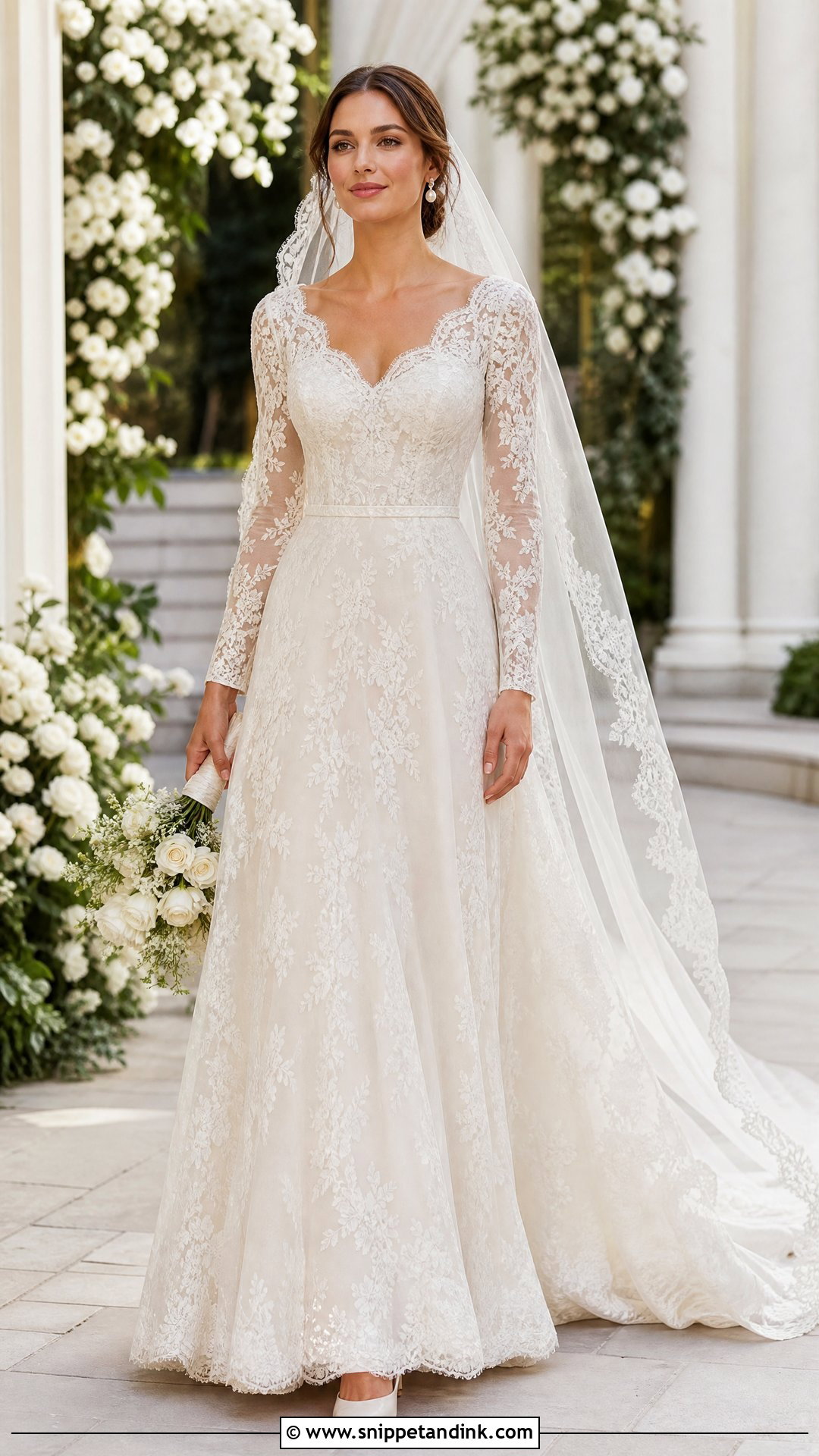
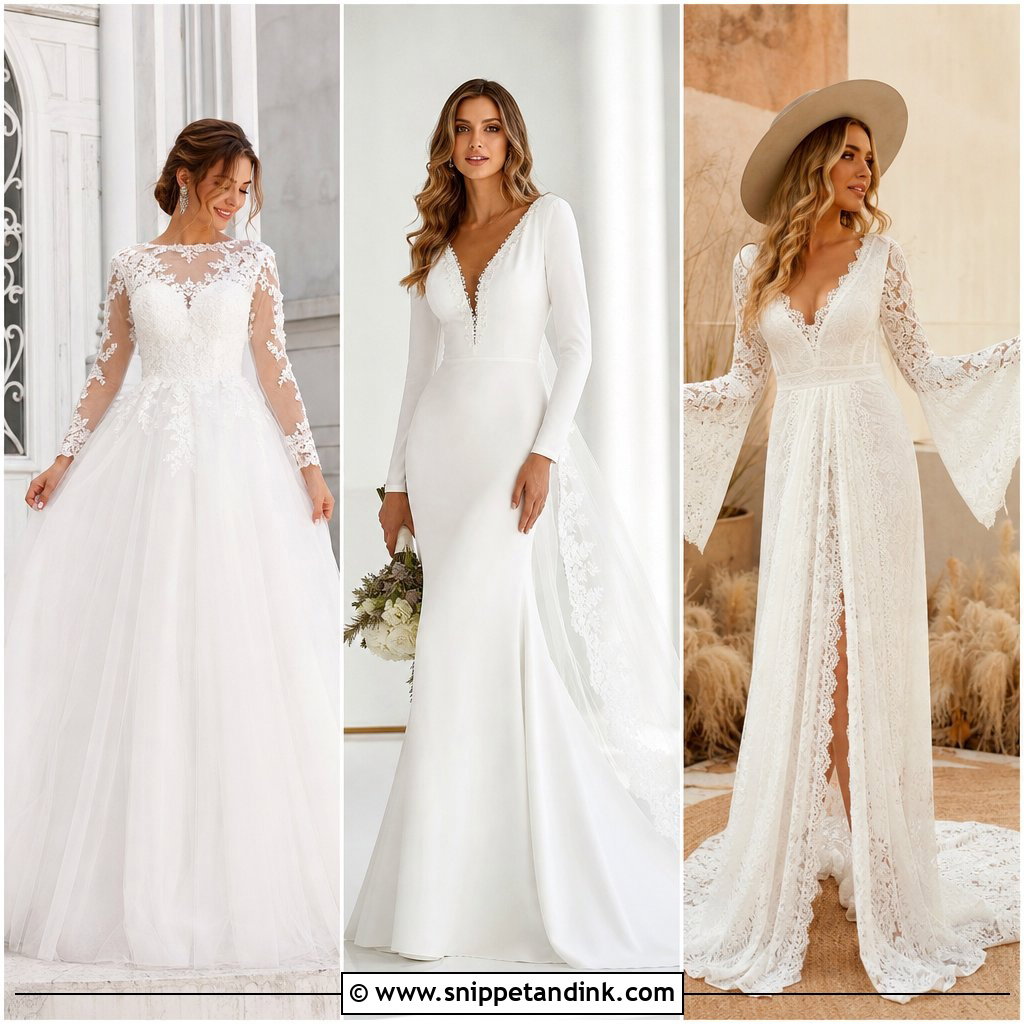
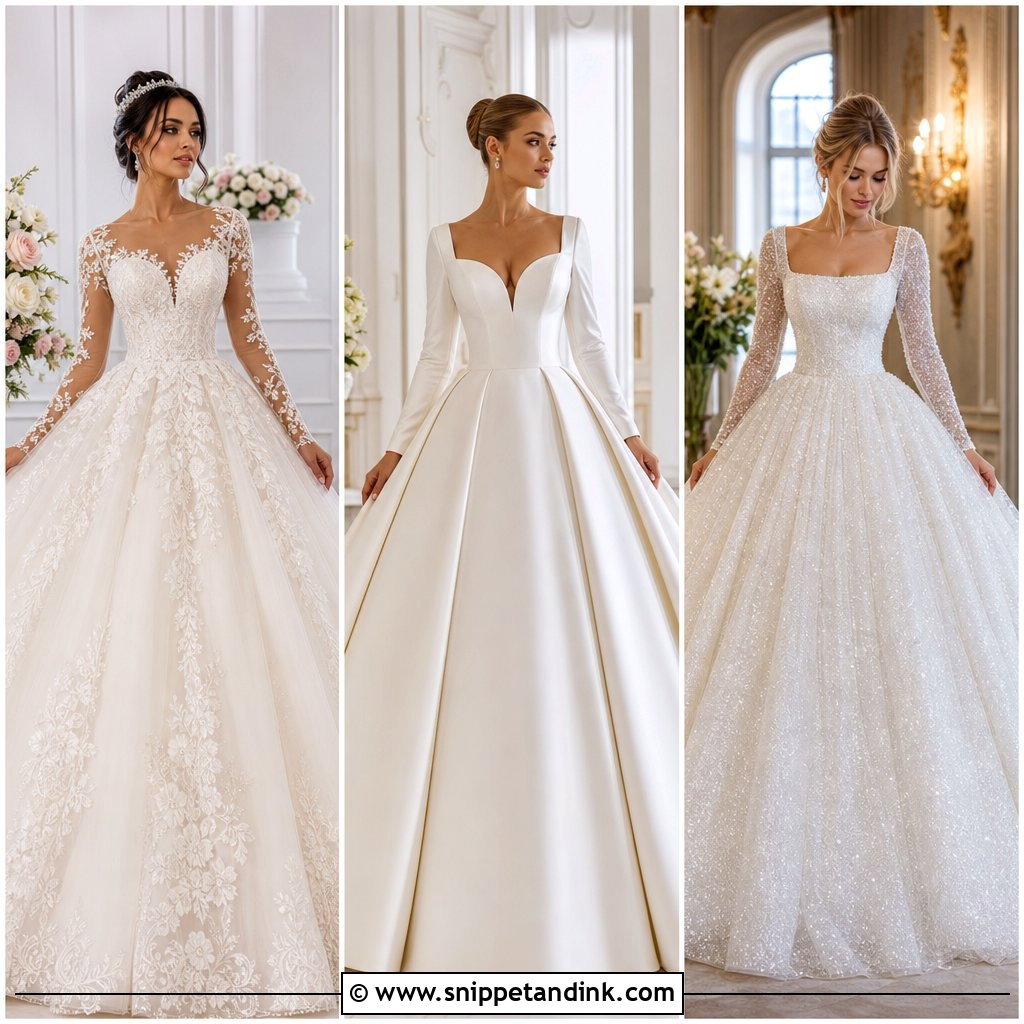
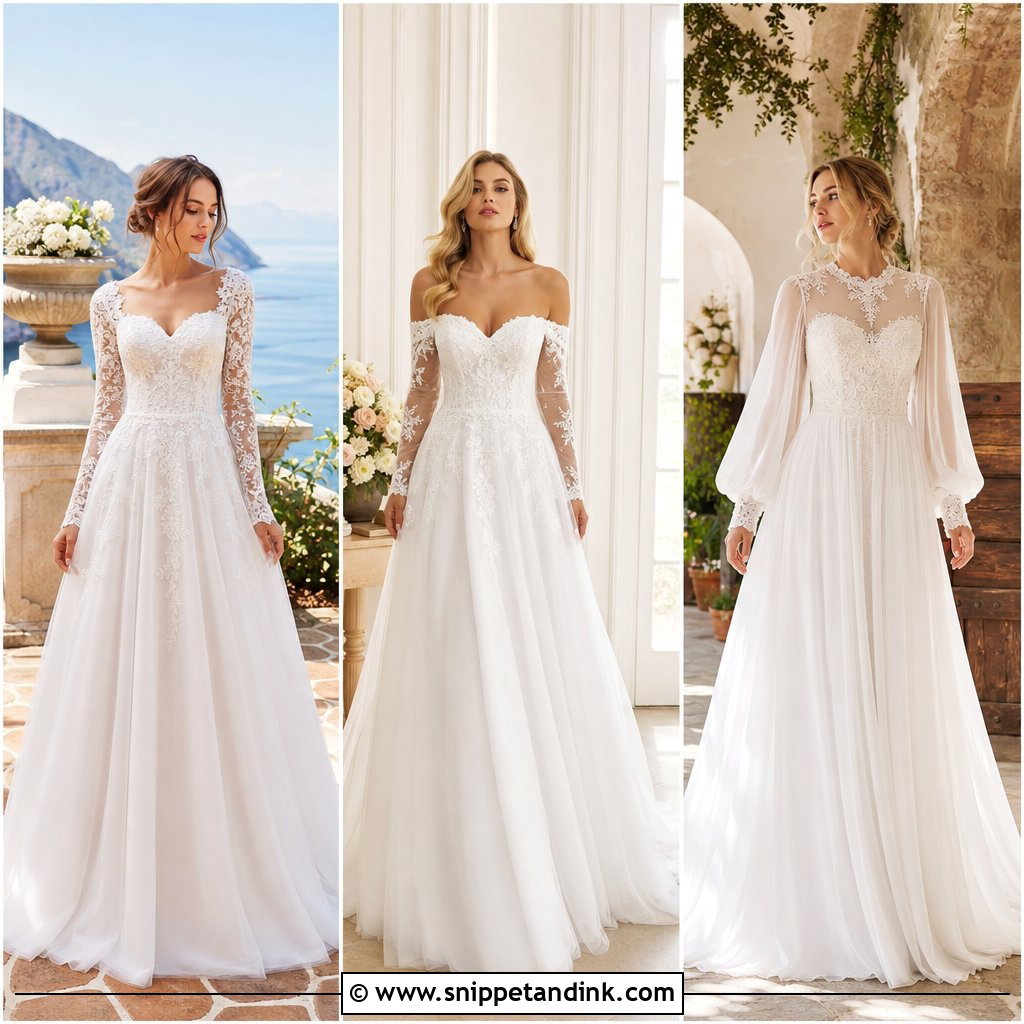
Lace A-lines are forgiving, and that’s why I reach for them first with brides who are nervous about sleeves. The trick is motif placement: the lace should travel from the bodice over the shoulder and down the arm as one pattern, not stop at a seam and restart. A slightly sheer neckline keeps it from feeling heavy, and a lined bodice gives more coverage if you want it. I’d finish it with ivory pointed pumps, pearl drops and a fingertip veil edged in the same lace, plus a low bun with a few loose pieces at the face. Garden and estate venues suit it well. At the fitting, bend your elbows fully. Lace with little stretch will bite right in the crook of the arm, and that’s fixed by easing the sleeve, not by living with it.
2. Long Sleeve Satin Ball Gown
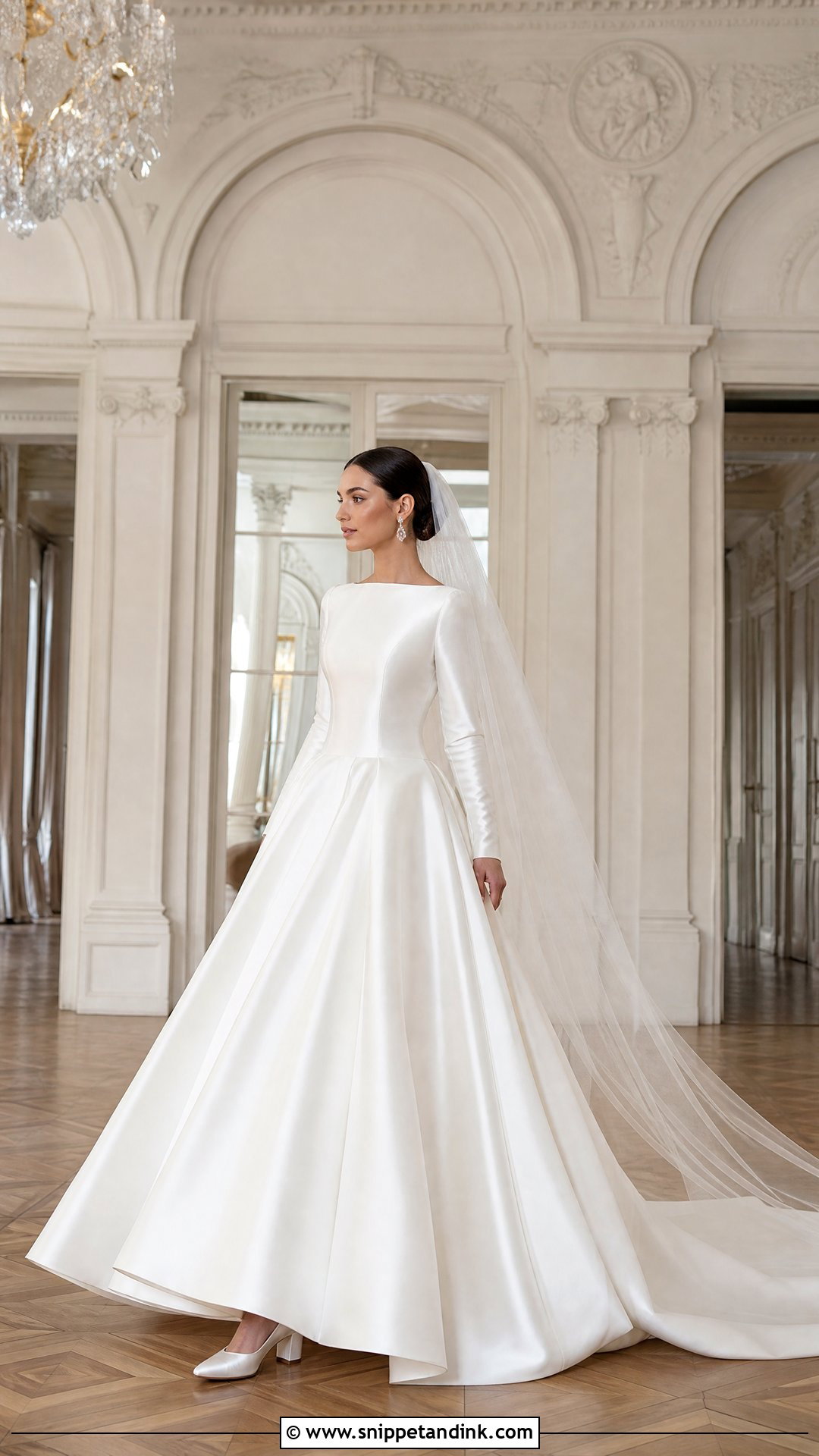
Satin does the work here, so the ball gown doesn’t need beading to read as formal. I look for a fitted bodice with a natural or basque waist and a skirt with enough underlayers to hold its shape. A bateau or modest scoop neckline keeps the top clean and lets the sheen of the fabric show. Crystal studs, a cathedral veil, block-heel satin pumps and a sleek chignon are all it needs. Watch the cuffs. Satin shows every ripple, so a sleeve that’s half an inch too long will bunch at the wrist in every ballroom photo.
3. Long Sleeve Crepe Sheath Wedding Gown
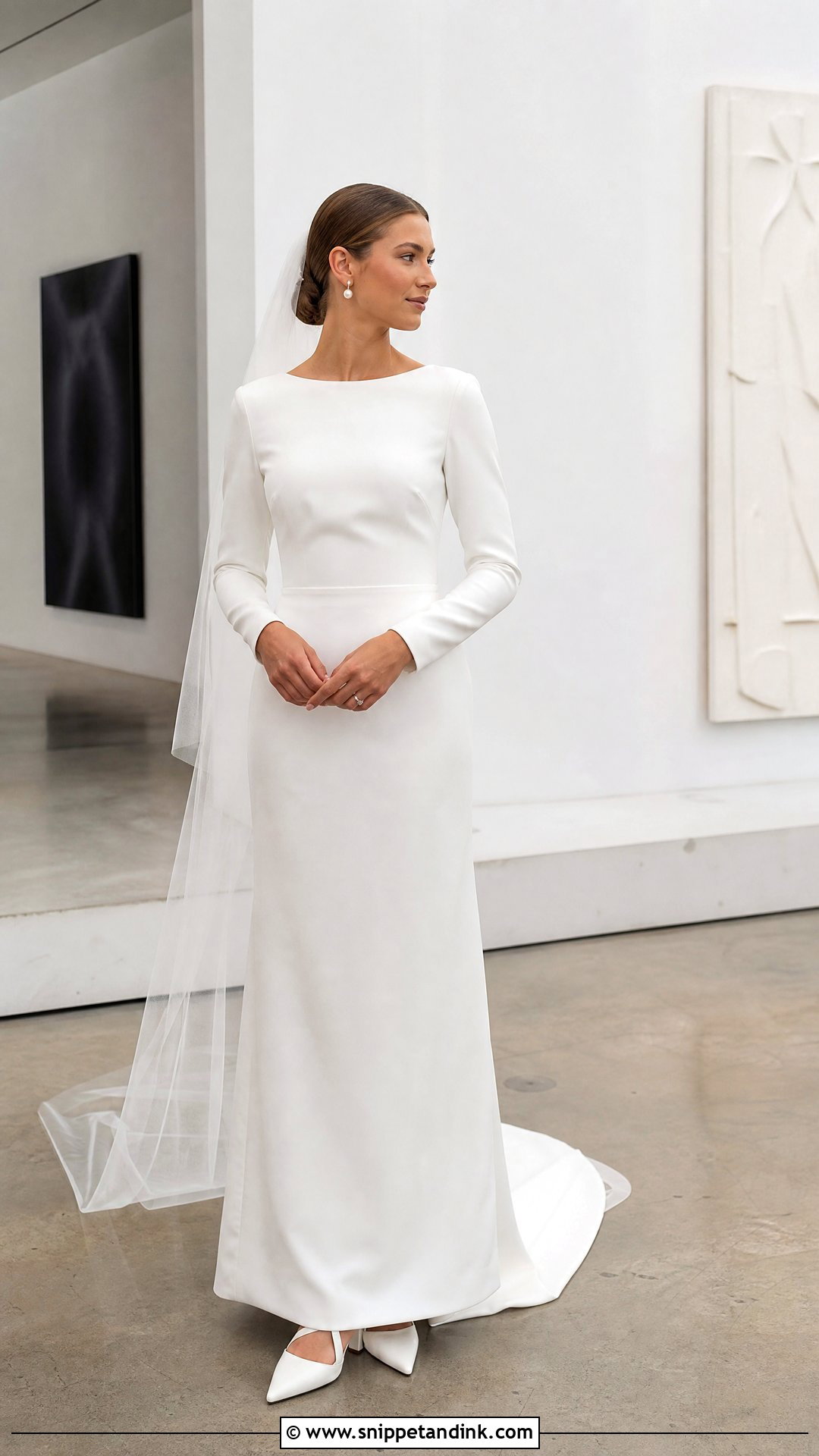
Crepe sheaths are for the bride who wants the cut to be the detail. A medium-weight crepe skims the body and has a matte surface that photographs flatter and more modern than satin. What makes or breaks it is the seaming: princess seams and a softly shaped waist give it structure, and a short train adds ceremony without fuss. Pearl or sculptural gold earrings, slingback heels, a plain chapel veil and a low ponytail keep the mood spare. Because crepe shows everything underneath, bring your actual undergarments to every fitting. Smooth, no-line shapewear and a properly fitted bra change how this fabric falls more than any alteration.
4. High Neck Long Sleeve Lace Wedding Gown
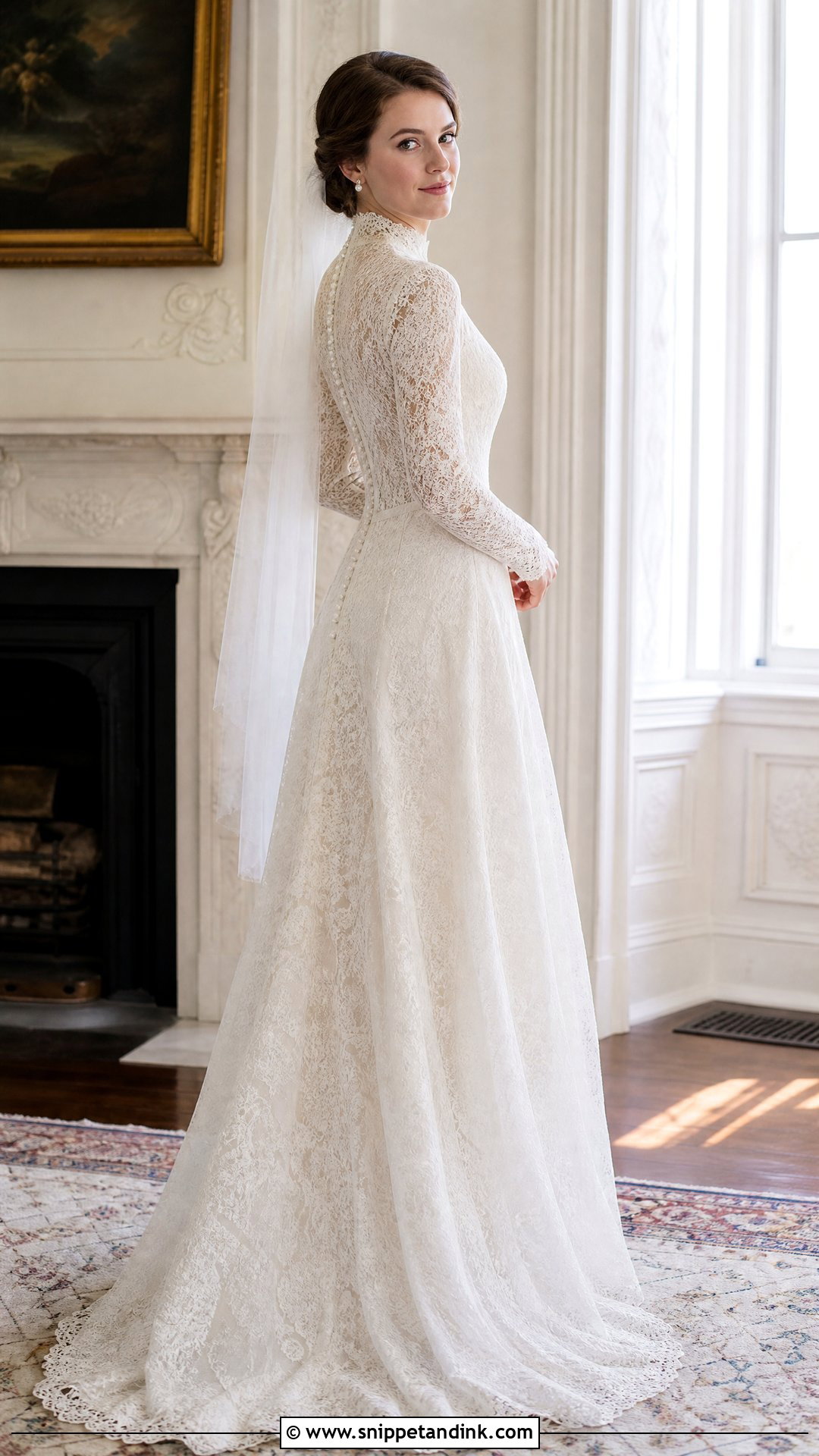
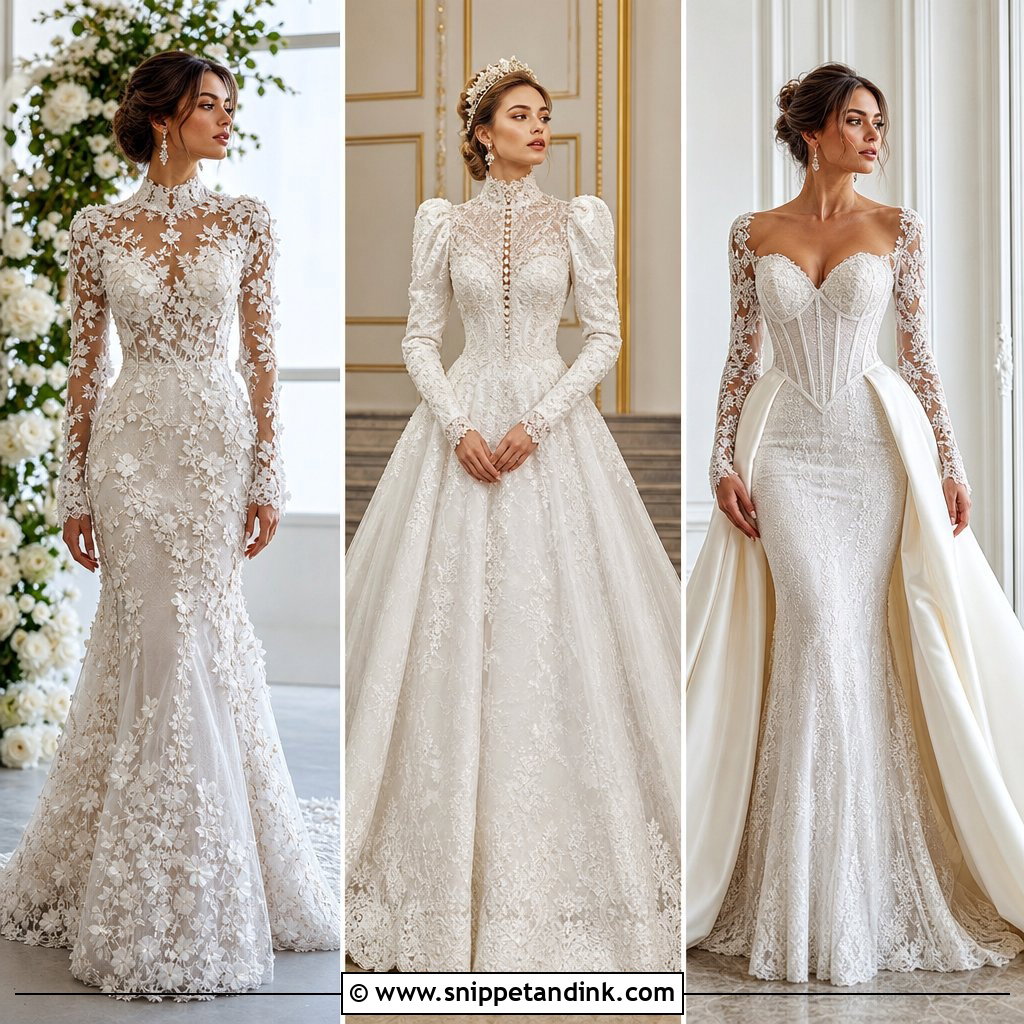
High necks are where I’m fussiest about weight. Heavy lace over a high collar can make you feel buttoned in by the cocktail hour, so I steer brides toward a fine lace over a supportive lining. A narrow scalloped edge at the neck, fitted sleeves and covered buttons running to the wrist give the vintage line. Let the skirt flow, either A-line or column, so the detail stays up top. Small pearl earrings and a veil tucked beneath a smooth low bun are plenty, and skip the necklace entirely. Turn your head side to side in the mirror; if the collar rubs or folds at the jaw, it needs letting out before the wedding.
5. Off Shoulder Long Sleeve Wedding Gown
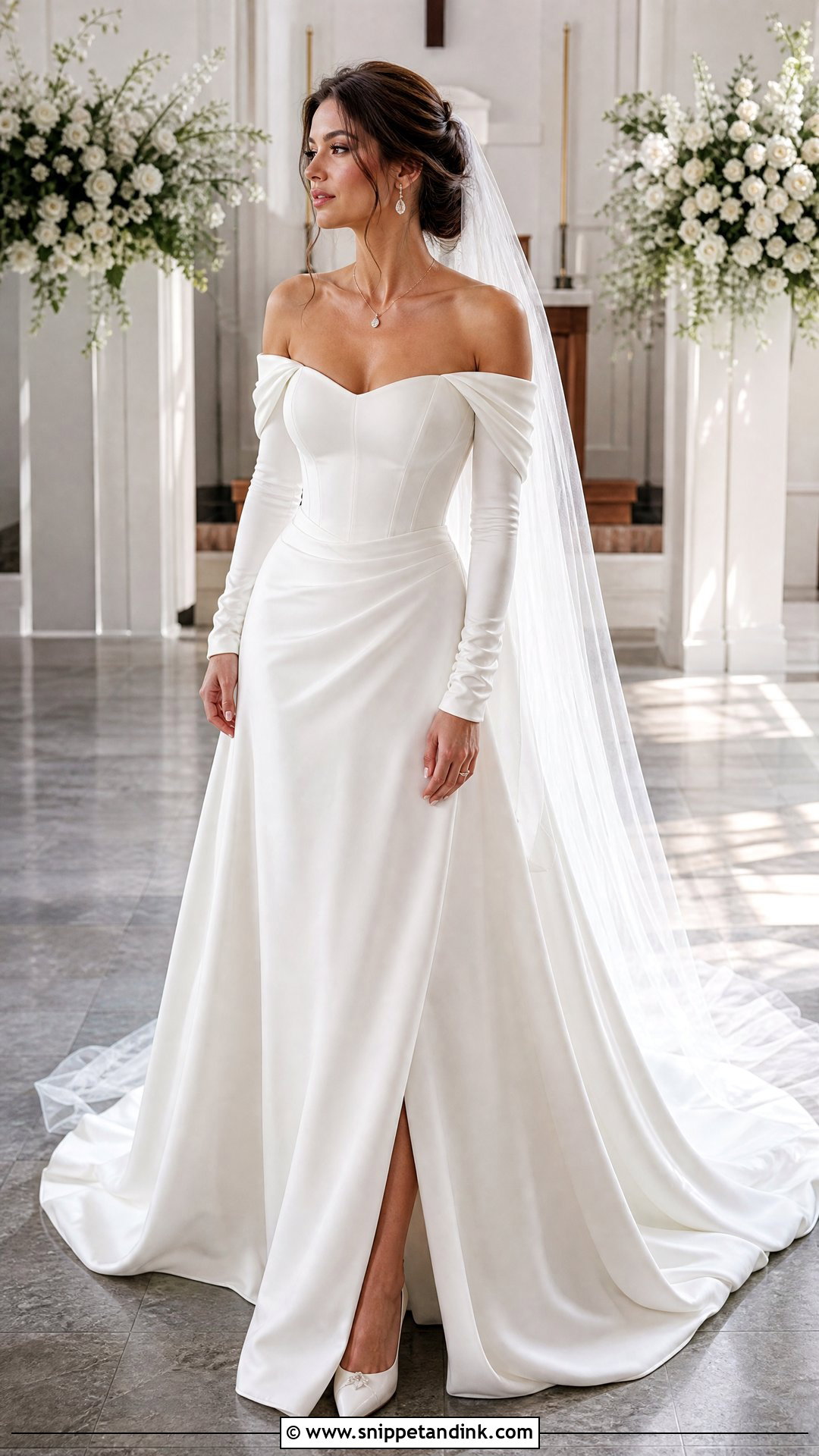
The mistake I see with off-the-shoulder sleeves is expecting them to hold the dress up. They can’t. The bodice needs its own internal structure, boning or a corset base, so the sleeves simply rest on the upper arm. Draped satin gives a sculptural line, while lace reads softer. A low updo shows off the collarbone, and a light veil should fall behind the shoulders rather than over them. This style restricts how high you can lift your arms, which is normal, but at the fitting hug someone and raise your hands as if to dance. If the sleeves ride up or pinch, the bodice is doing too little.
6. Illusion Long Sleeve Wedding Gown
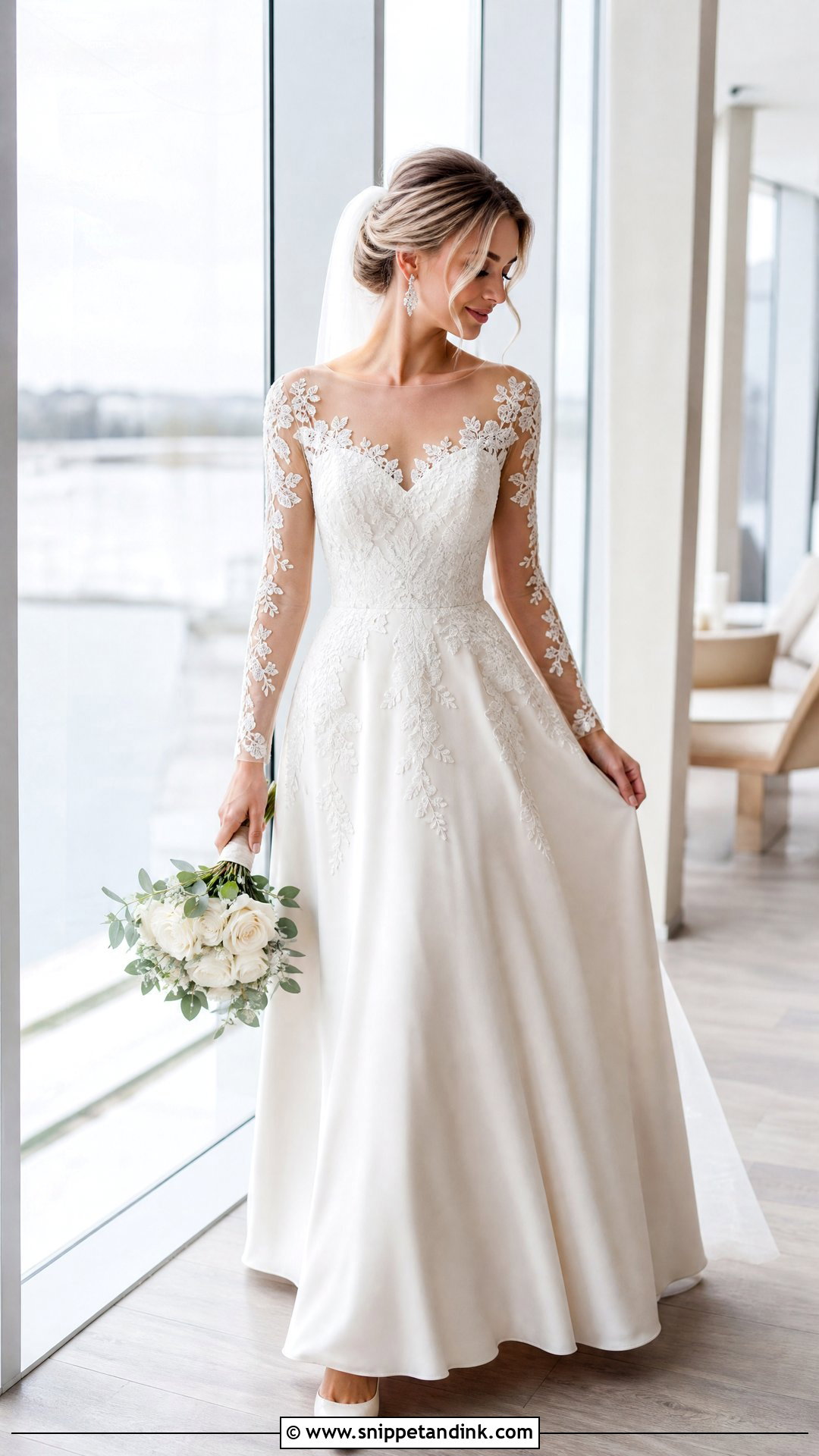
Illusion sleeves only work if the mesh disappears. Hold the sleeve against your arm in daylight, not under the boutique’s warm lighting, because a mesh that looks invisible indoors can show as a pale or grey film outdoors. The appliqué motifs should be spaced evenly to the cuff. A lined bodice and fuller skirt balance the sheerness, and crystal earrings with a minimal-edged veil keep attention on the arms. Wear your hair up or swept back so nothing covers the detail. Ask how the armholes are reinforced. Fine tulle takes the most strain there and can split if the fit is tight.
7. Beaded Long Sleeve Wedding Gown
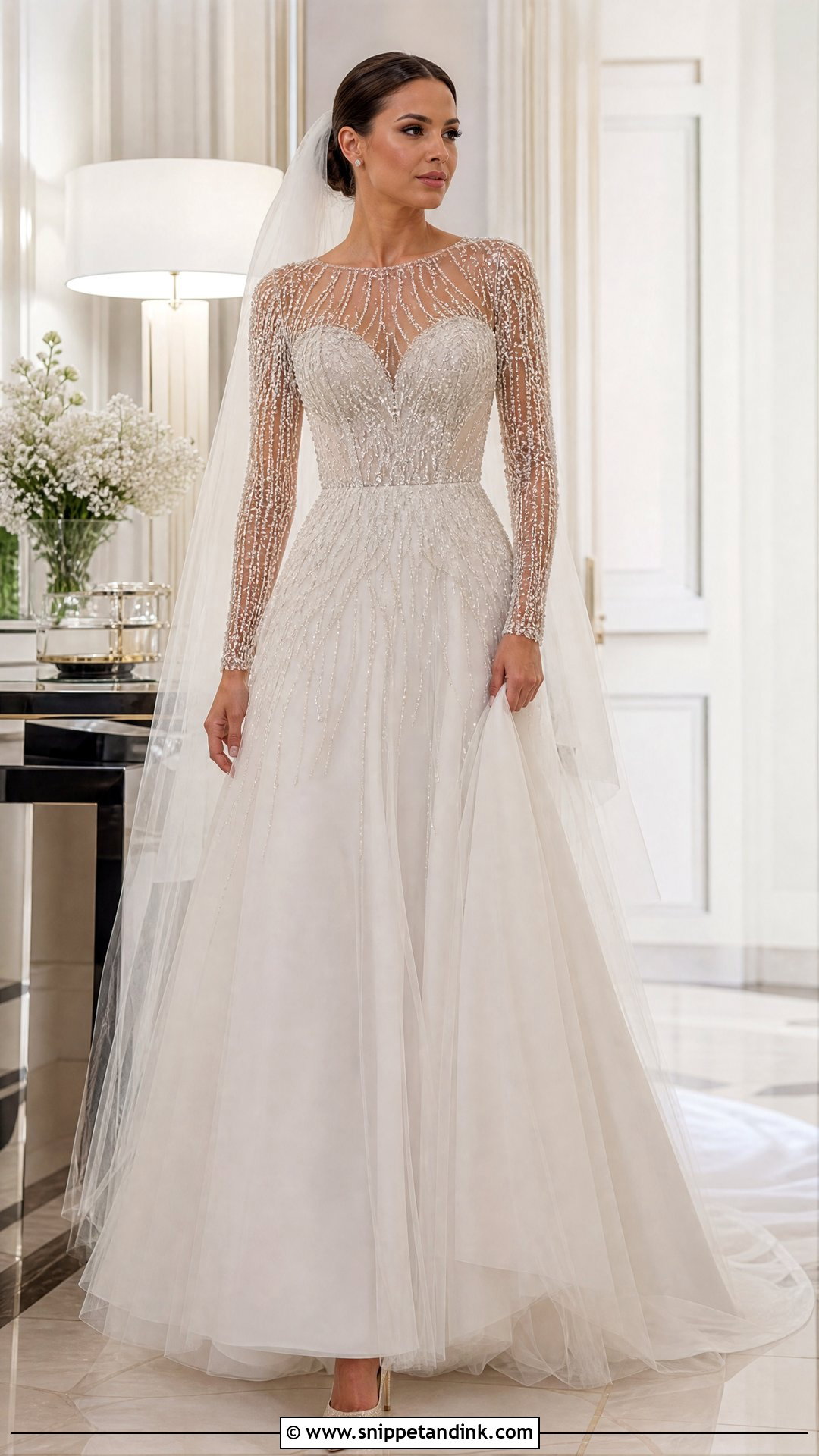
On a beaded gown, I care about the inside of the sleeve as much as the outside. Beading concentrated on the bodice and arms, then thinning across the skirt, keeps the dress balanced and lighter to walk in. Either a soft tulle A-line or a fitted shape works under it. Because the gown already sparkles, crystal studs, metallic heels and a plain veil are enough, with a polished updo. Run your fingers along the underarm and inner elbow. Rough bead backs there will scratch through a long evening, and a good seamstress can add a soft lining strip if they do.
8. Floral Appliqué Long Sleeve Wedding Gown
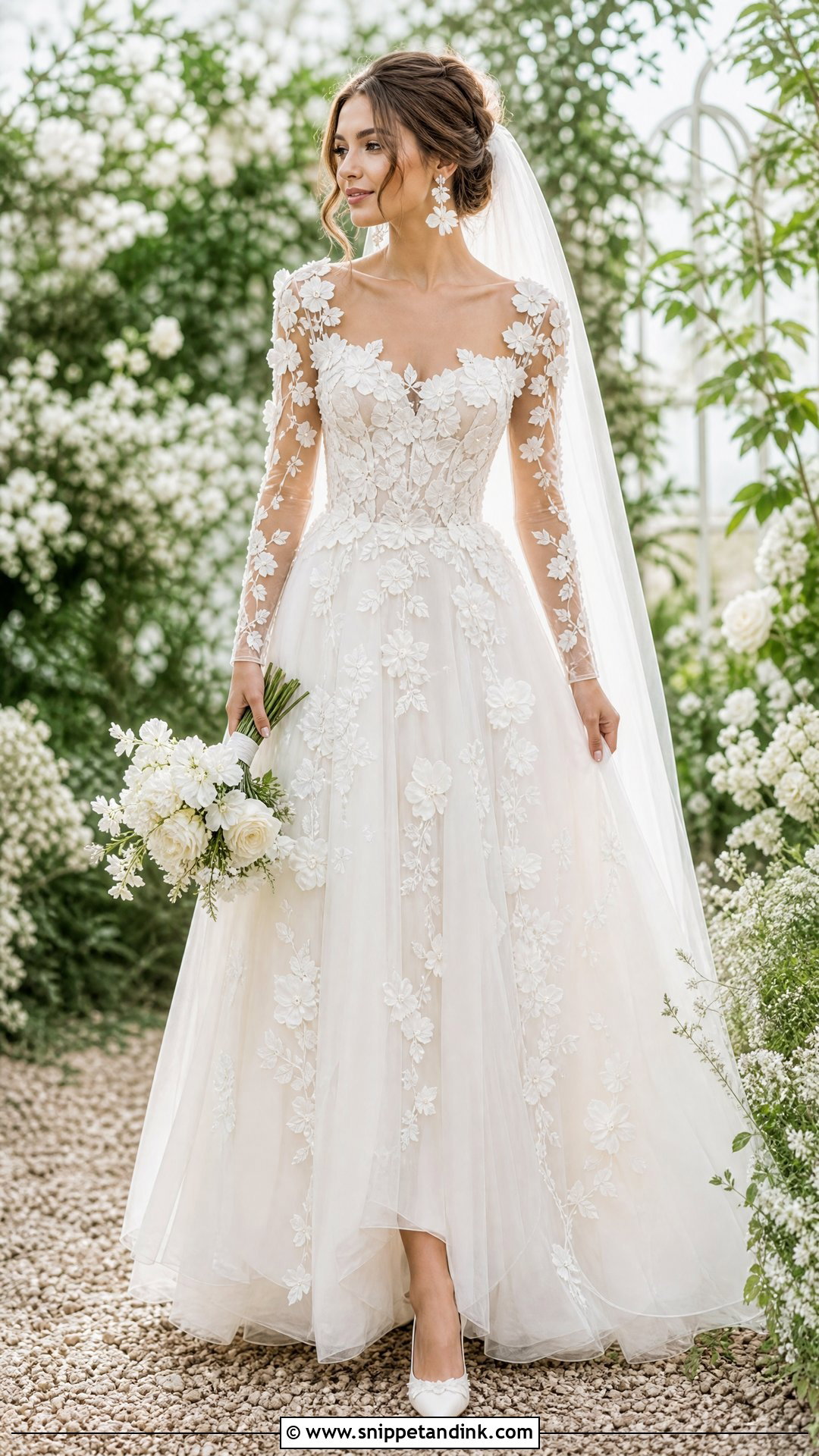
Three-dimensional appliqué looks best when the flowers scatter the way they would grow, thick across the shoulders and thinning as they reach the skirt. A sheer tulle base keeps it airy. Floral earrings, ivory sandals and a barely edged veil pair well, with loose waves or a textured low bun. I’d keep the bouquet modest so it doesn’t sit on top of the appliqué you paid for. The practical issue nobody mentions is the veil: raised petals snag tulle. Wear your actual veil at a fitting and turn around a few times to see whether it catches.
9. Bell Sleeve Boho Wedding Gown
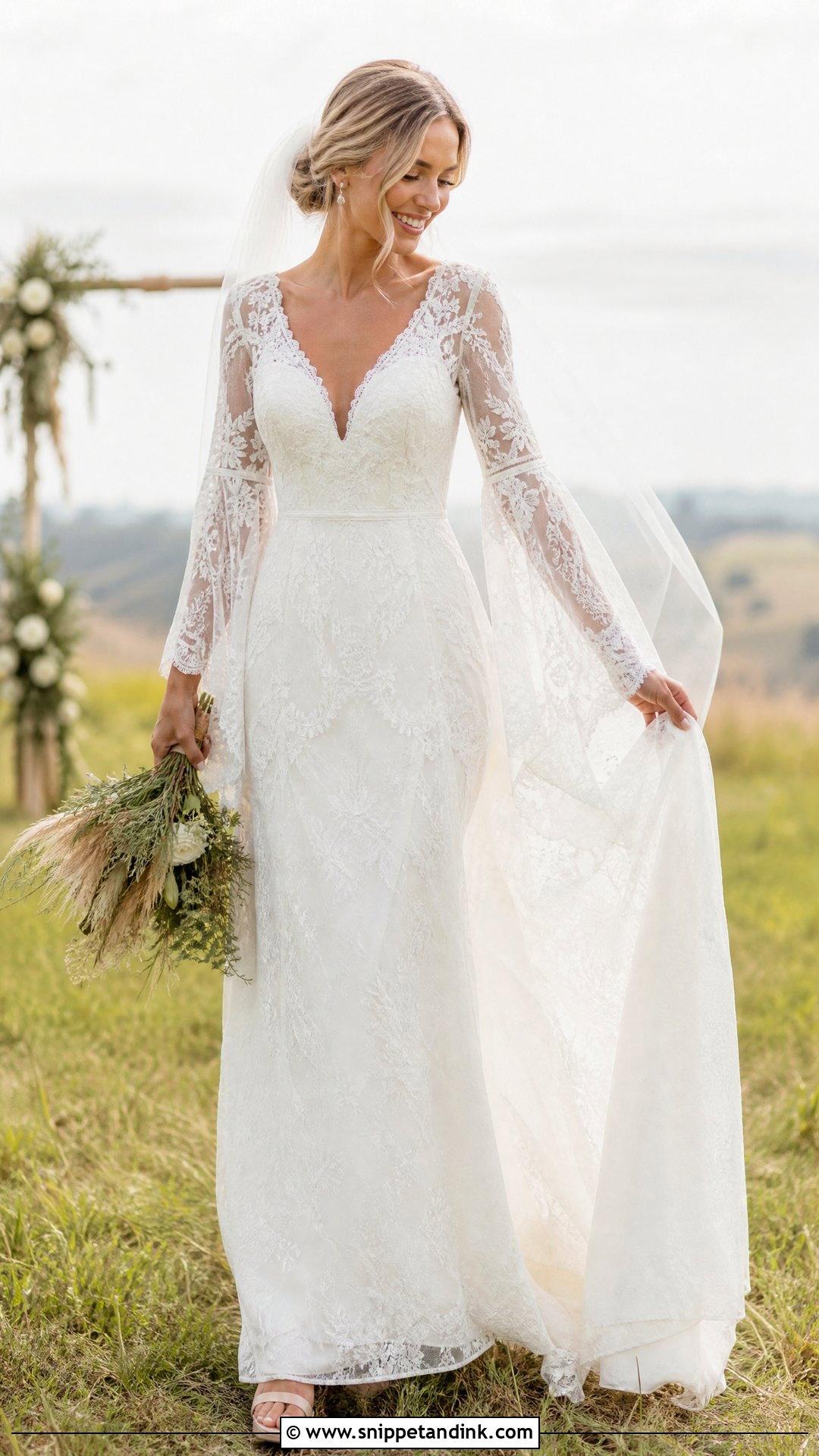
Flowing bell sleeves need to stay fitted to the elbow and widen only below it, otherwise the whole arm looks shapeless. Soft lace or chiffon moves best. A defined waist and a fluid A-line keep the silhouette from going loose. Low block-heel sandals, small drops and either a chapel veil or a light hair scarf suit meadow and desert ceremonies. Skip bracelets, since the wide cuffs already frame the wrist. The real test is practical. Hold your bouquet and reach for a glass across a table; a long bell sleeve can drag through cake frosting or catch a candle flame, so have the length set with that in mind.
10. Bishop Sleeve Wedding Gown
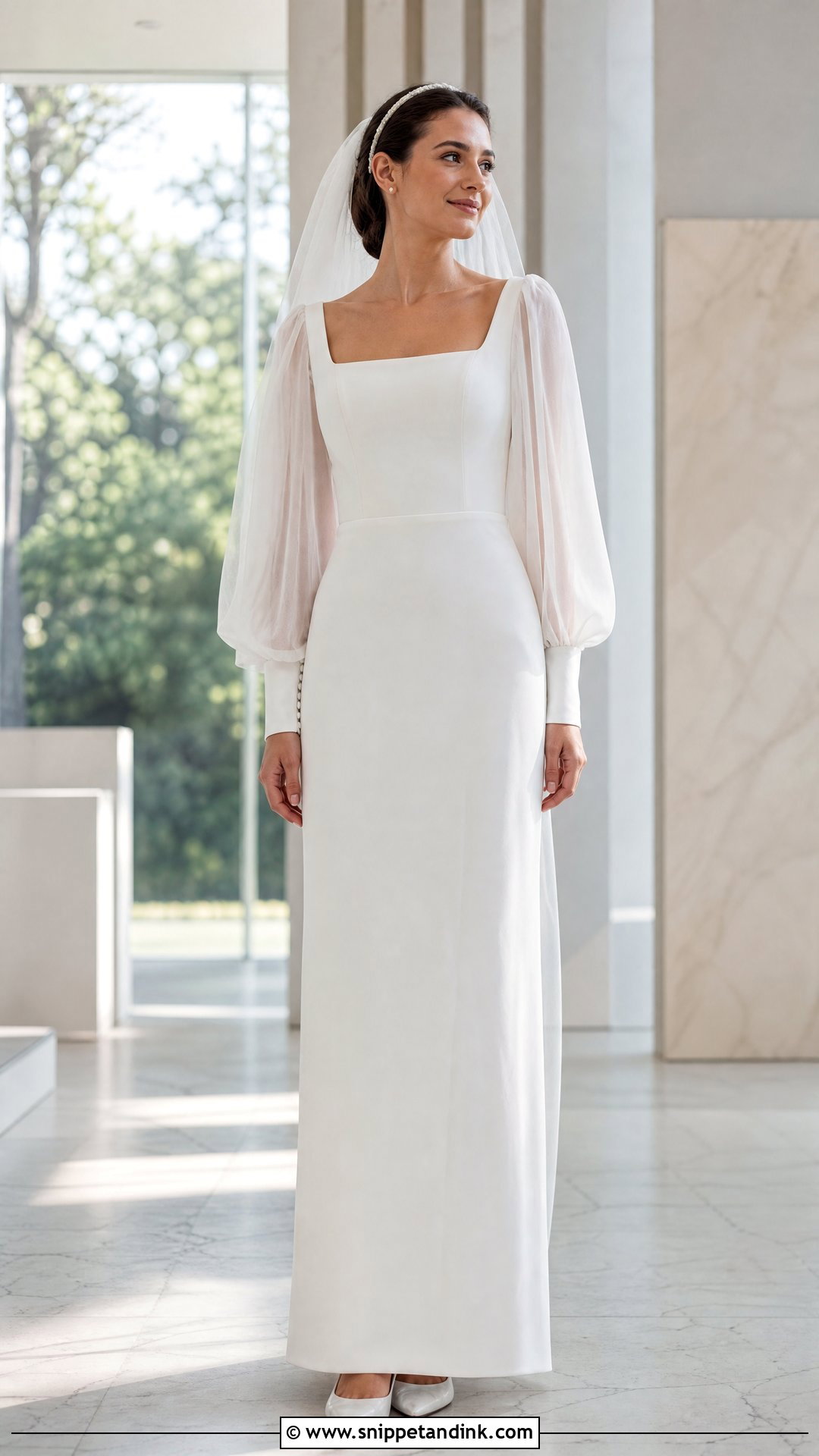
Bishop sleeves gather their volume into a fitted cuff, so the fabric has to be light. Chiffon, organza or a fine crepe billows softly; anything heavier just looks puffy. Pair the sleeve with a fitted bodice and a clean skirt so the volume has somewhere quiet to sit. Pearl studs, a narrow headband and a veil set beneath a low bun keep it graceful, and the neckline will push it toward romantic or modern. I find it works best for fall and indoor weddings. Have the cuff set snugly at the wristbone. A loose cuff lets the puff slide forward over your hands every time you gesture.
11. Square Neck Long Sleeve Wedding Gown
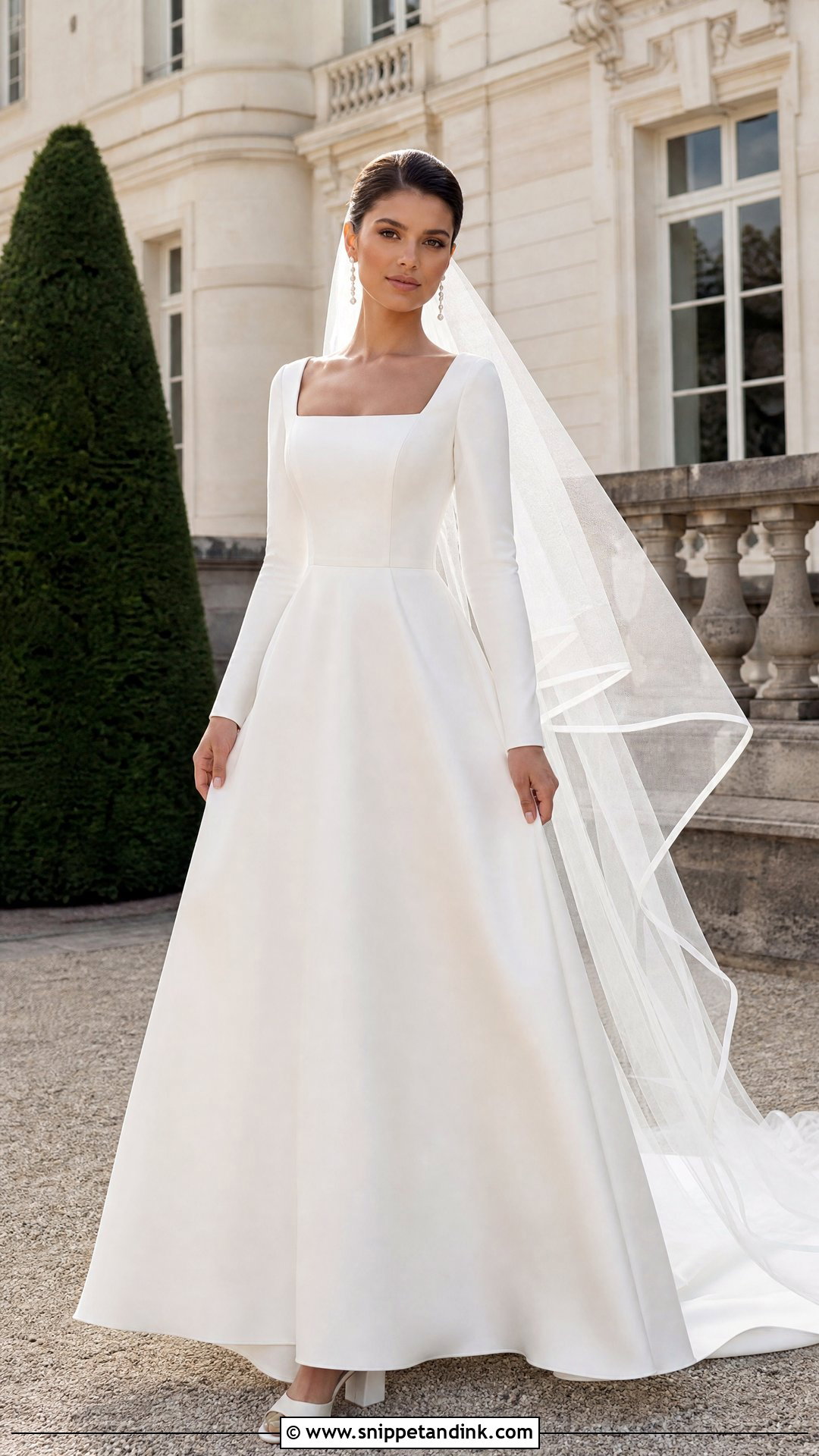
A square neckline frames the face and collarbone with a crisp edge, and it pairs naturally with structured satin, mikado or crepe. Keep the sleeves fitted and the skirt a clean A-line. Jewelry should stay small, a slim pendant or pearl drops, because anything large fights the geometry. A cathedral veil and a center-parted low bun suit it. If you love a matching square back, make sure the bodice has proper internal support. The fitting check is the corners: lean forward and sit down. If either front corner gapes or lifts away from your skin, it needs taking in at the seam.
12. V-Neck Long Sleeve Wedding Gown
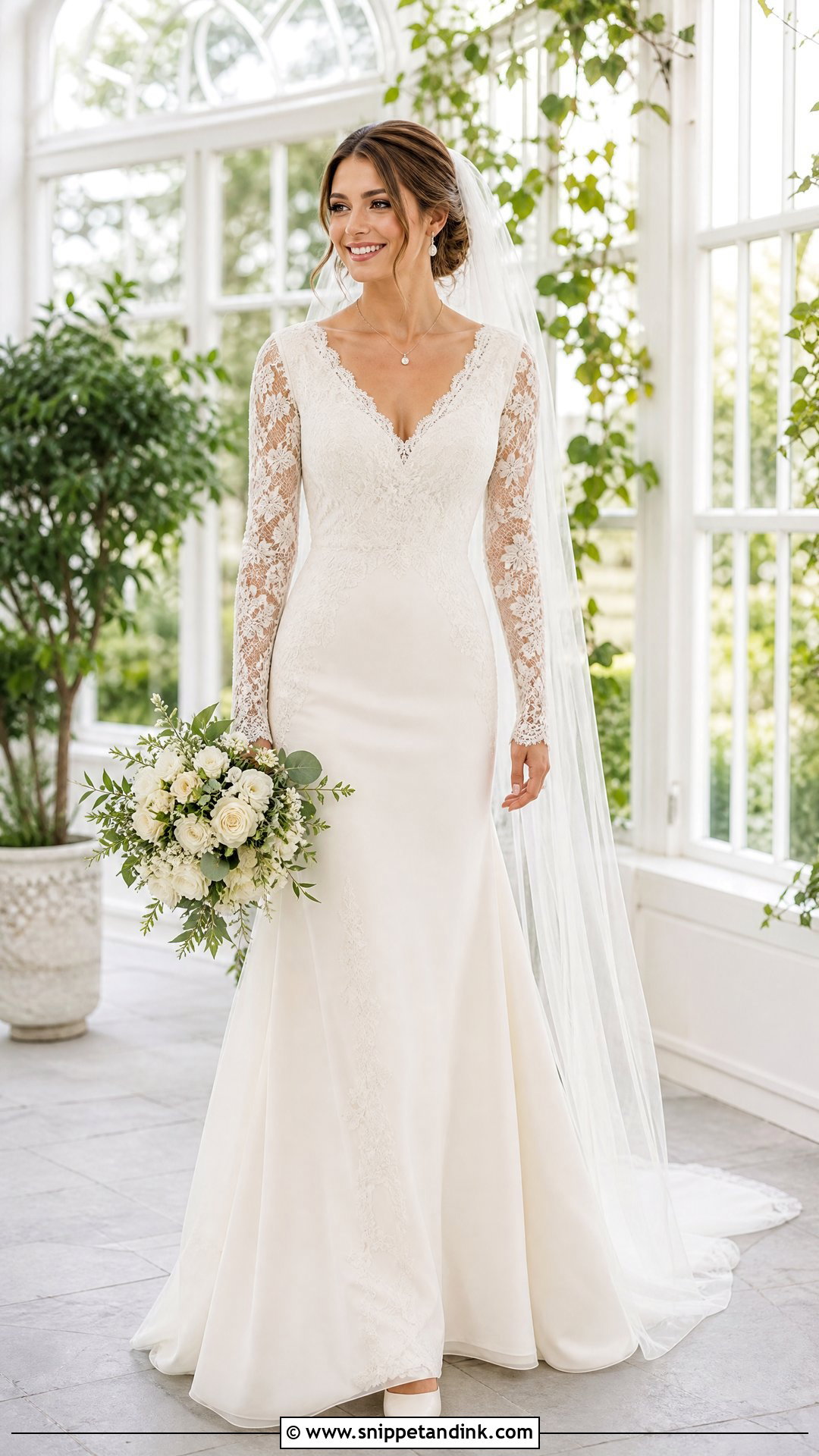
V-necks open the face while the sleeves keep the arms covered, which is why this shape suits almost any venue. Decide on depth honestly, based on your ceremony and how you’ll feel greeting older relatives. Lace sleeves with a softly lined bodice look traditional; plain crepe sleeves look sharper. A delicate pendant, pearl earrings and a veil beginning below a low updo complete it. A deep V moves when you lean, so I always ask the seamstress about a strip of nude mesh or a discreet stitch at the base of the V. Bend over a table at your fitting to check it holds.
13. Basque Waist Long Sleeve Wedding Gown
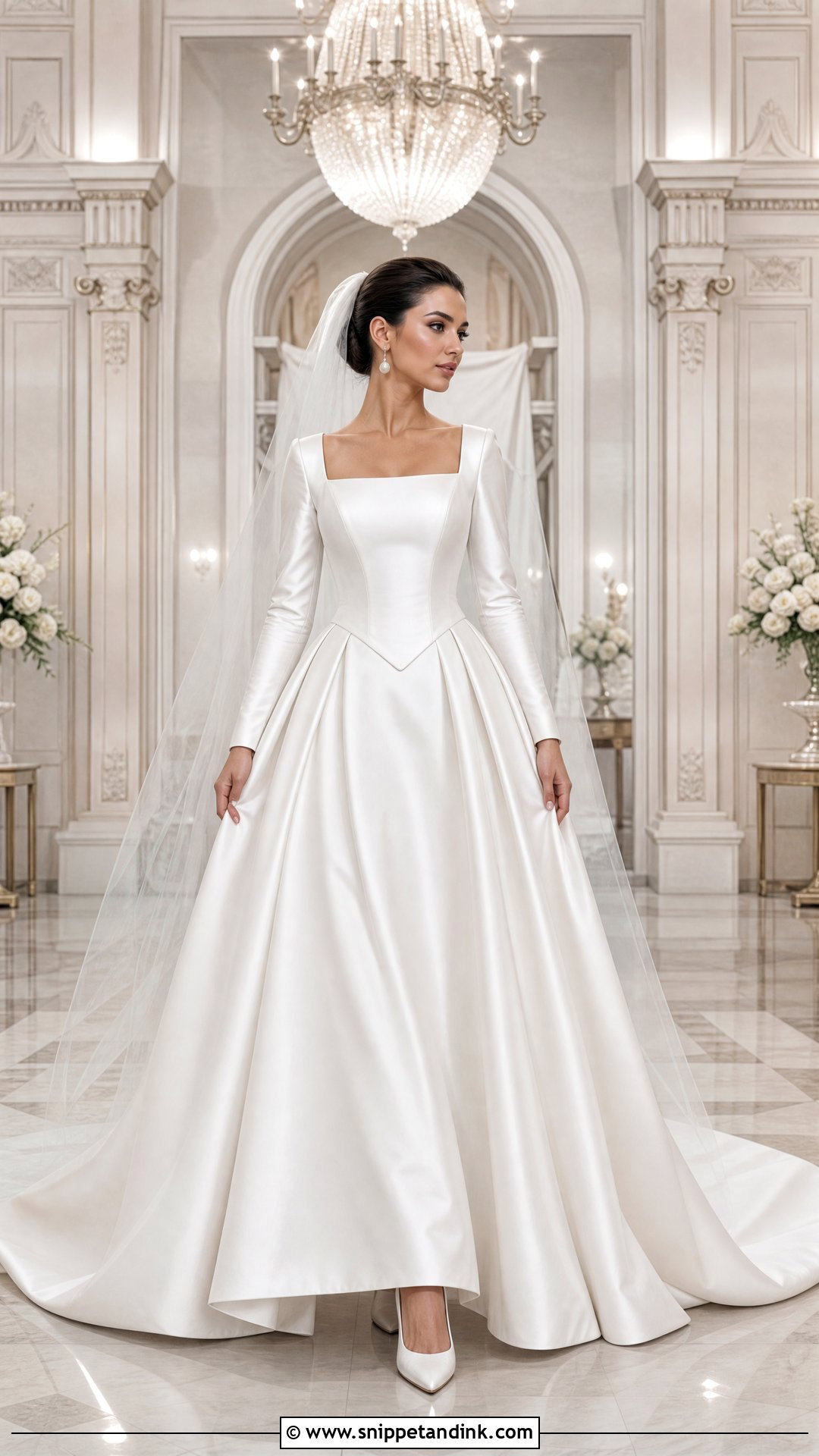
A basque waist dips to a soft point at the front and gives the gown a sculpted, formal shape. It needs a structured satin or mikado bodice and a full skirt to carry that point properly. A scoop or square neck softens the architecture so it doesn’t tip into costume. Pearl drops, pointed satin pumps, a long veil and a sleek bun suit it, and a medium bouquet keeps the waist visible. Sit in it for a full ten minutes at your fitting. That dropped point presses into the stomach when seated, and it should feel supportive, never like it’s cutting in.
14. Modest Long Sleeve Wedding Gown
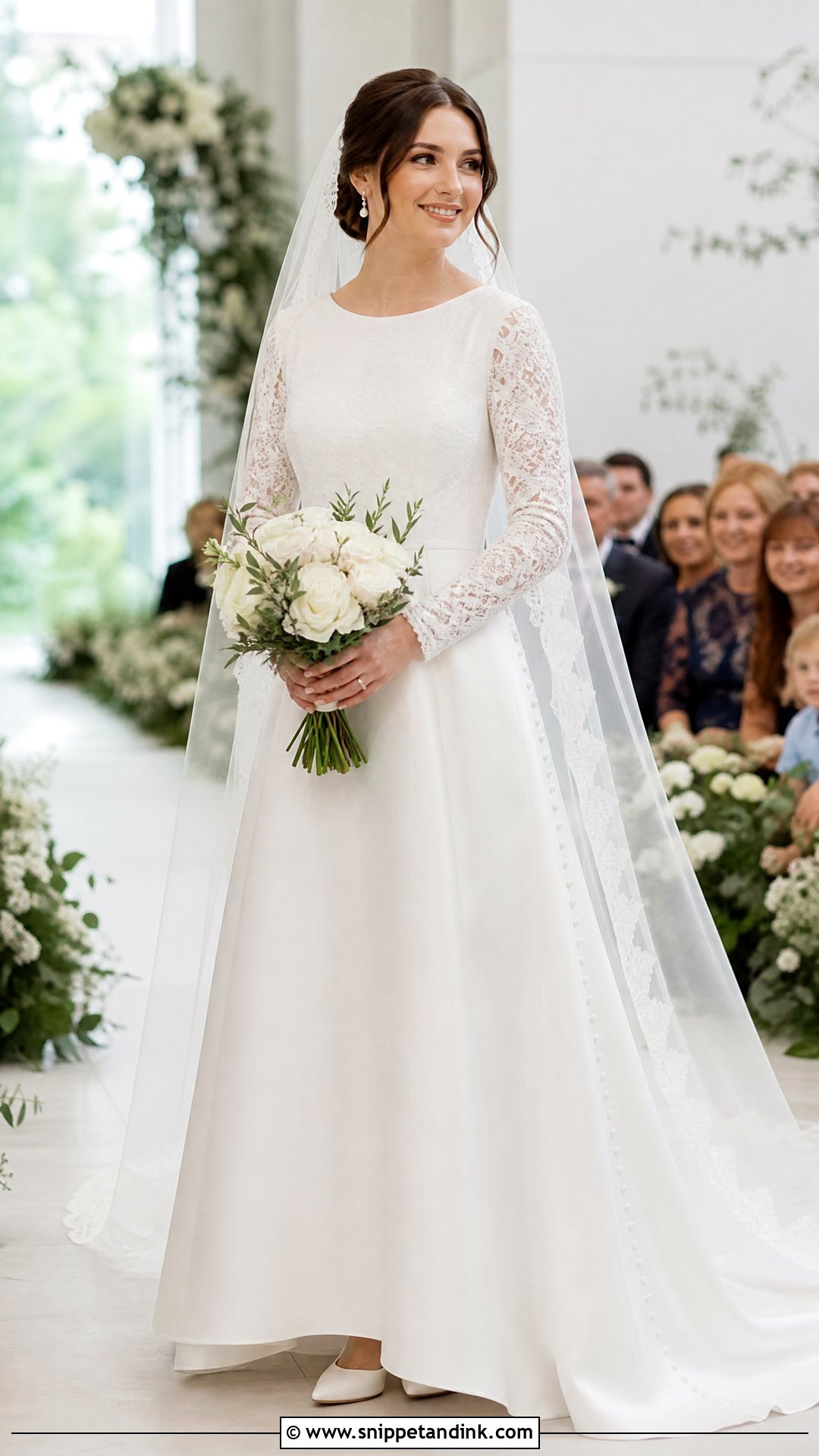
Modest gowns get dismissed as plain, and they don’t have to be. I look for a lined bodice, a high or softly rounded neckline, opaque sleeves and an A-line that lets you move freely. Matte crepe keeps it modern, while lined lace adds traditional texture, and covered buttons down the back give decoration without showing skin. Pearl earrings, closed-toe pumps and a cathedral veil finish it. Raise both arms over your head and hold them there. With full coverage, any tightness in the shoulders pulls the neckline up and the hem with it, and a good tailor can add ease through the sleeve cap.

15. Victorian Long Sleeve Wedding Gown
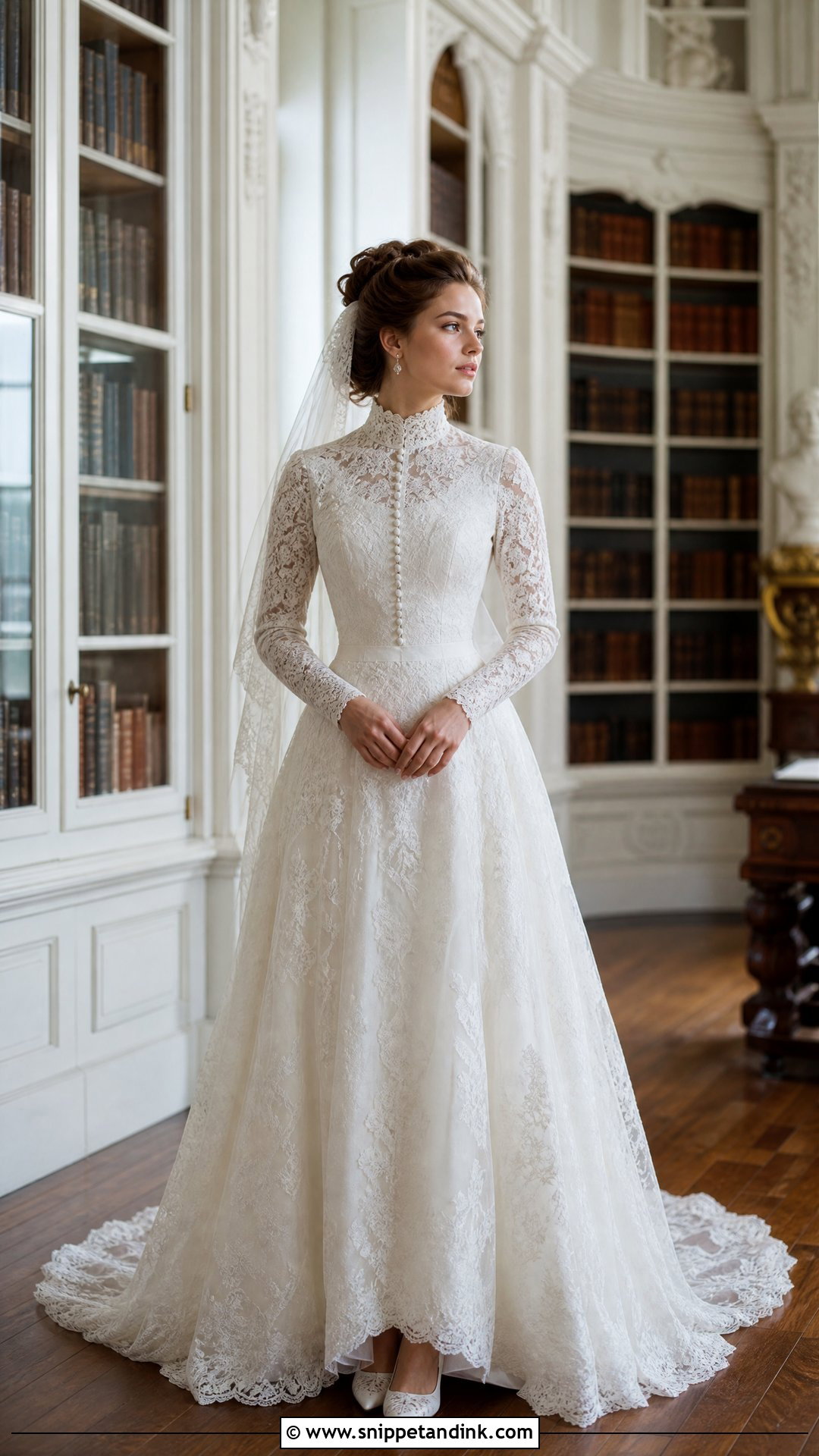
Victorian details work best when one or two are taken seriously and the rest are left alone. A high lace neckline, long fitted sleeves and covered buttons are enough; a flowing A-line keeps the reference from turning literal. I’d choose ivory over bright white here, as it reads softer and older. Pearl earrings, lace-trimmed pumps, a simple veil and a smooth low bun, with a small comb if you want extra detail. Historic houses and libraries suit the style. Ask about the lining at the neck and wrists, since unlined corded lace is scratchy against skin after a few hours.
16. Long Sleeve Mikado Wedding Gown
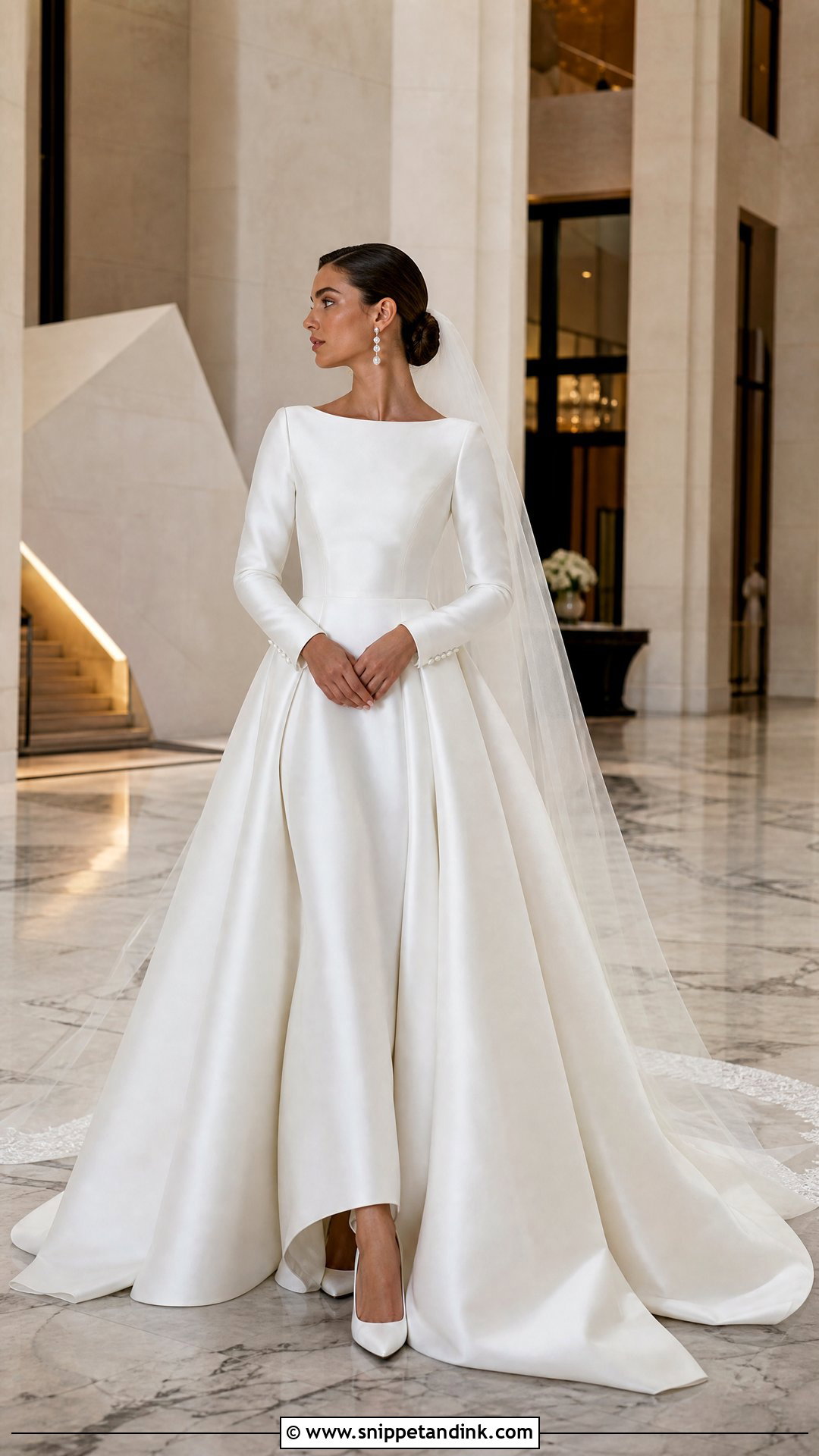
Mikado fabric is a stiff, slightly ribbed silk or poly blend that holds pleats and architectural lines on its own, so the gown doesn’t need beading to look formal. A fitted bodice, tailored sleeves and a pleated A-line or full skirt suit it, and a bateau front with a lower back balances coverage. Sculptural pearl earrings, satin pumps and a sleek chignon complete it. That stiffness is also its weakness. Mikado won’t stretch, so the sleeve has to be cut precisely at the shoulder and elbow, or you’ll see deep folds across the upper back every time you reach forward.
17. Plus Size Long Sleeve Wedding Gown
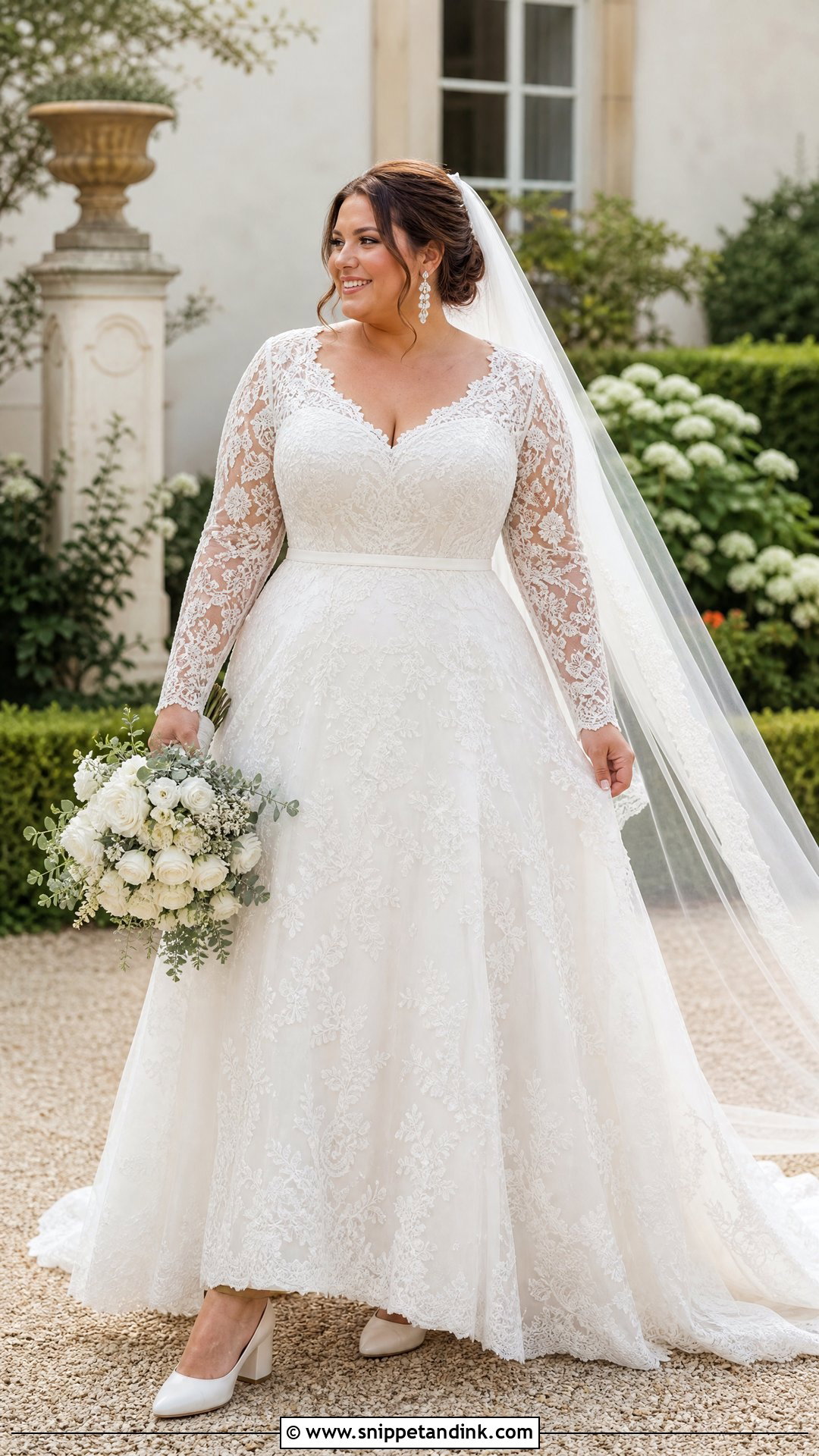
A plus size long sleeve gown should support you without hiding your shape. I start with a structured bodice and a waist seam placed at your natural waist, not where the sample put it. An A-line gives movement, while a fitted mermaid shows curves. Vertical lace placement draws the eye neck to hem. Block heels, drop earrings and a veil sized to the train finish it, and I’d ignore any rule that says what you can or can’t accessorize with. One firm point: insist the boutique orders the size closest to your largest measurement. Taking a gown in is routine; letting one out often isn’t possible.
18. Petite Long Sleeve Wedding Gown
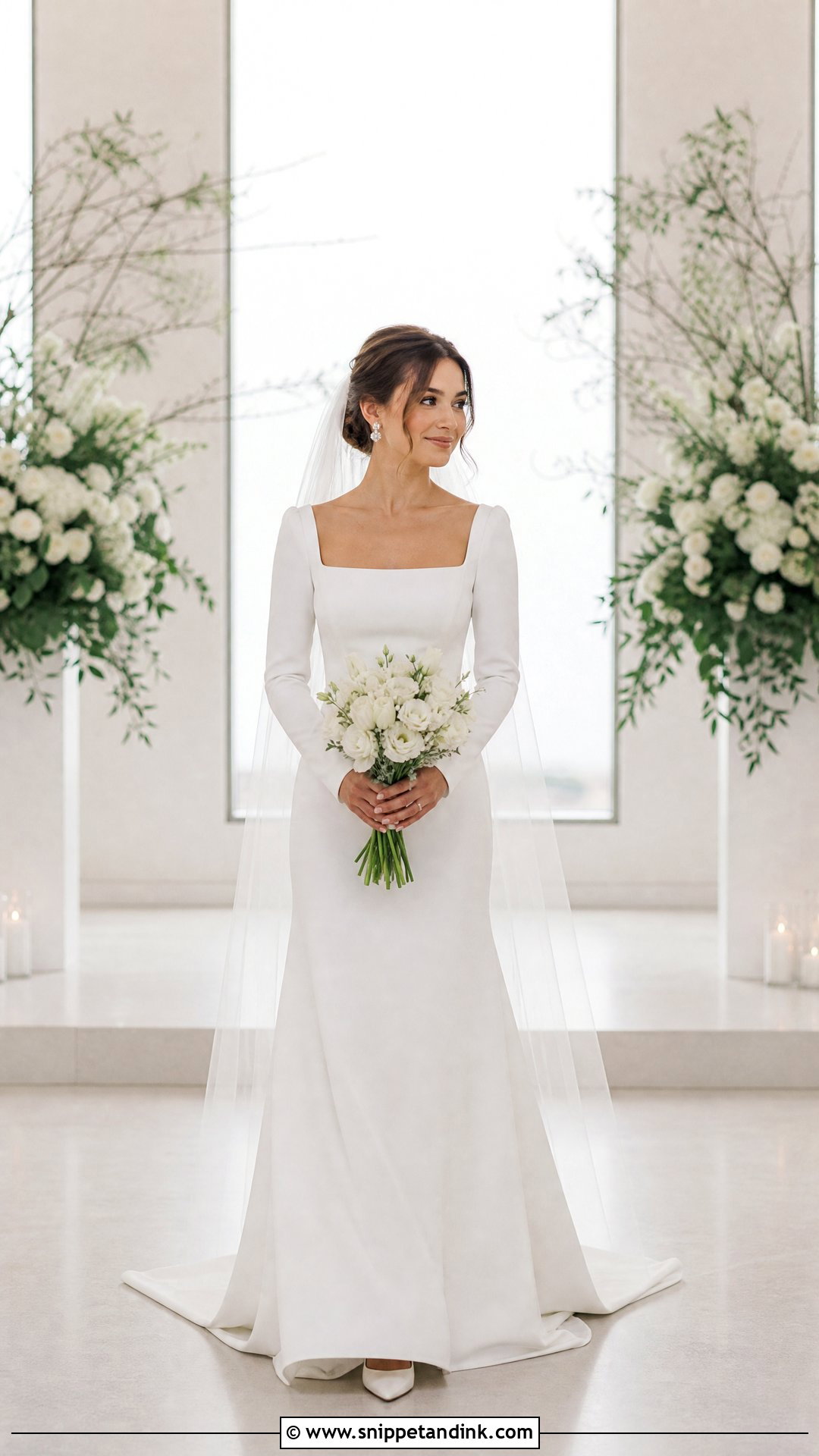
On a petite frame, the risk with long sleeves is too much fabric. A narrow A-line, sheath or soft flare with a defined waist keeps the proportions right, and a V or open square neckline creates length. Lightweight lace or crepe won’t swamp you. Pointed heels, small earrings, a narrow bouquet and a fingertip or chapel veil suit the scale. A high bun adds height, though a sleek low style works with the right neckline. The petite label matters less than the alterations. Shortening sleeves on a lace gown often means removing and reattaching the cuff motif, so budget time for it.
19. Detachable Long Sleeve Wedding Gown
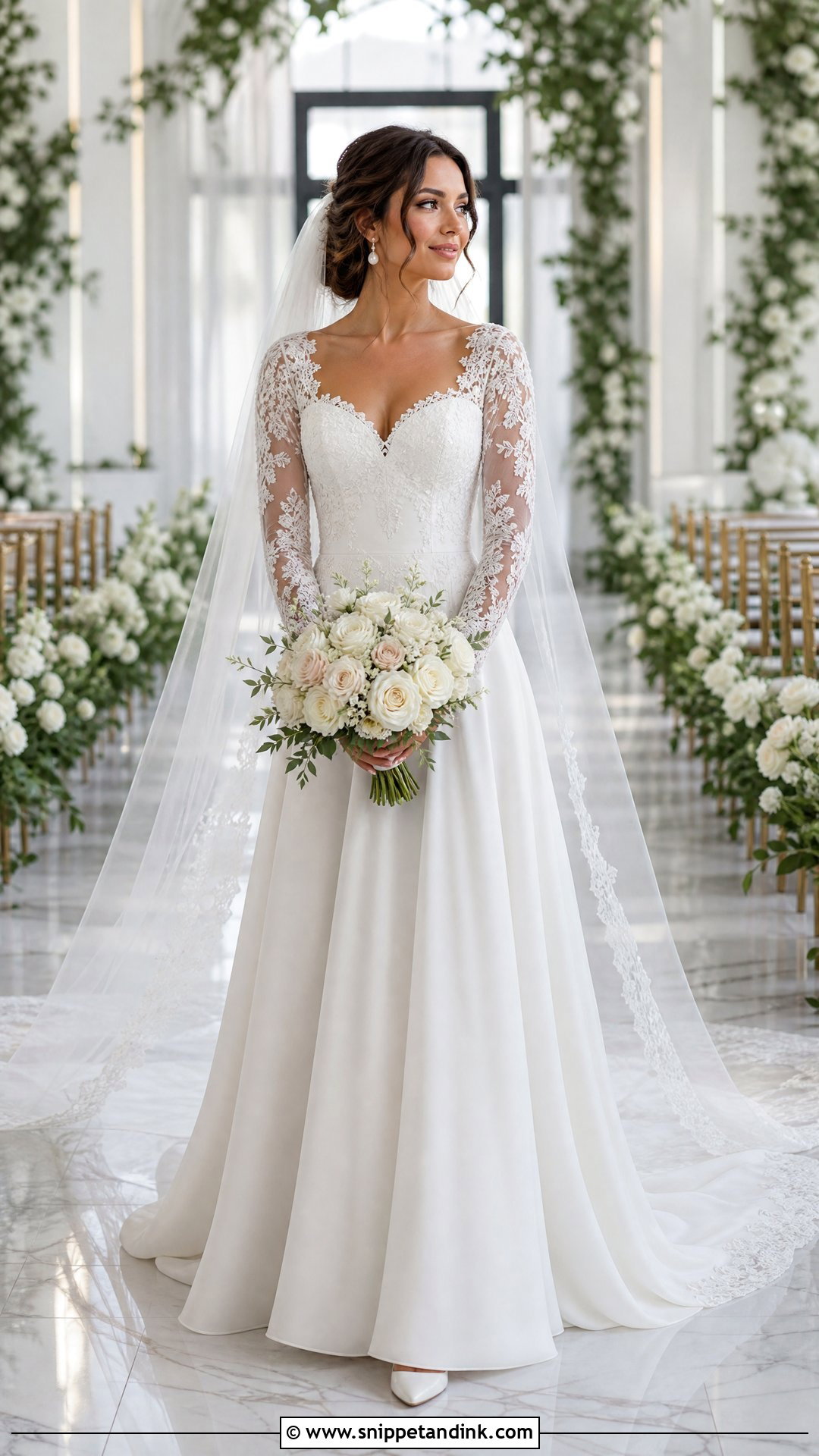
Detachable sleeves give you two looks, and the base dress has to stand alone for that to work. Start with a supportive strapless or sleeveless gown, then add lace, draped satin or sheer appliqué sleeves for the ceremony. For the reception, take them off and switch to statement earrings or a shorter veil so the change looks deliberate. I always rehearse the removal with whoever will help on the day. Snaps, hidden buttons or thread loops should be invisible and quick, and bulky fastenings at the underarm are something to send back, not tolerate.

20. Long Sleeve Mermaid Wedding Gown
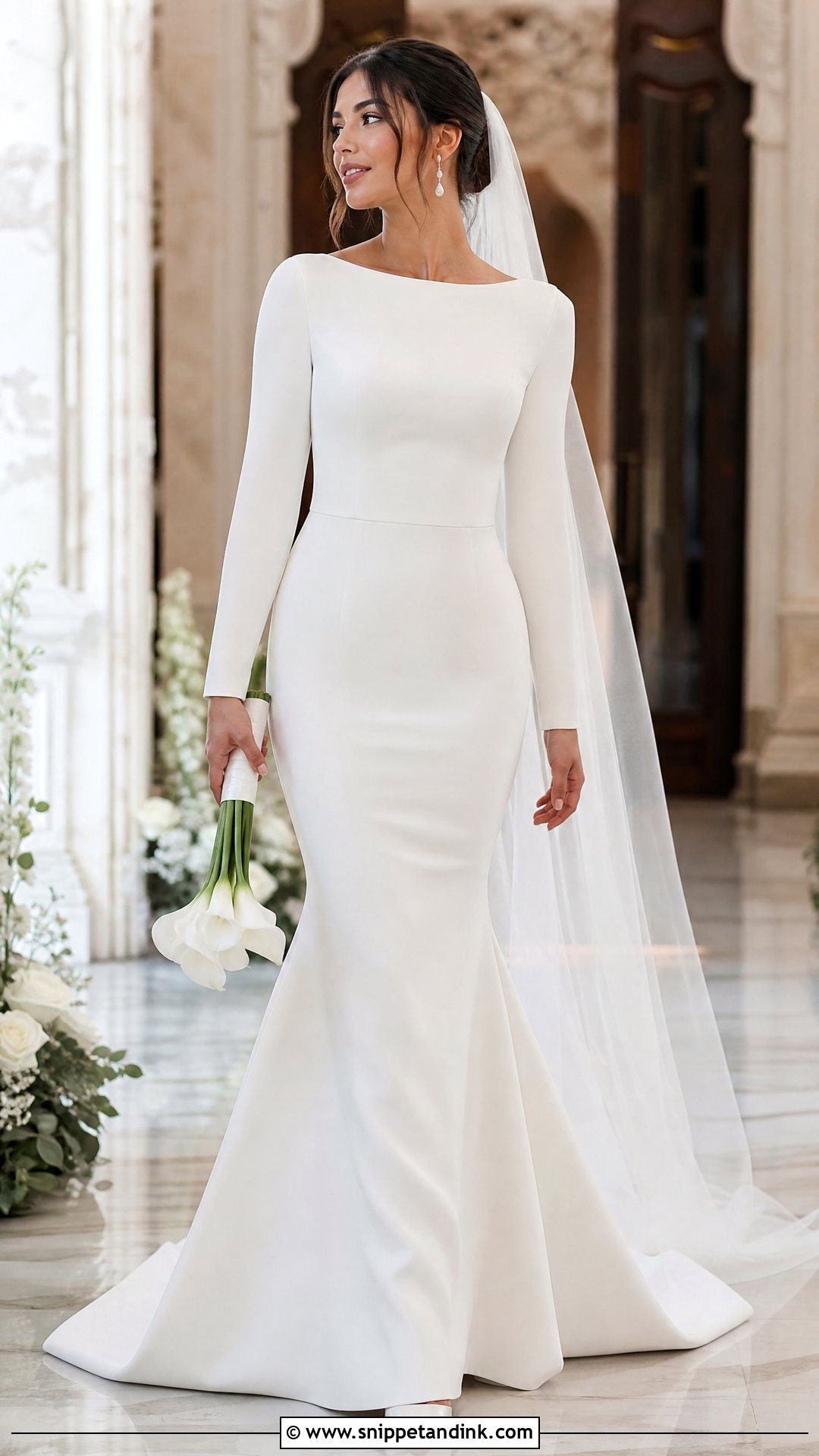
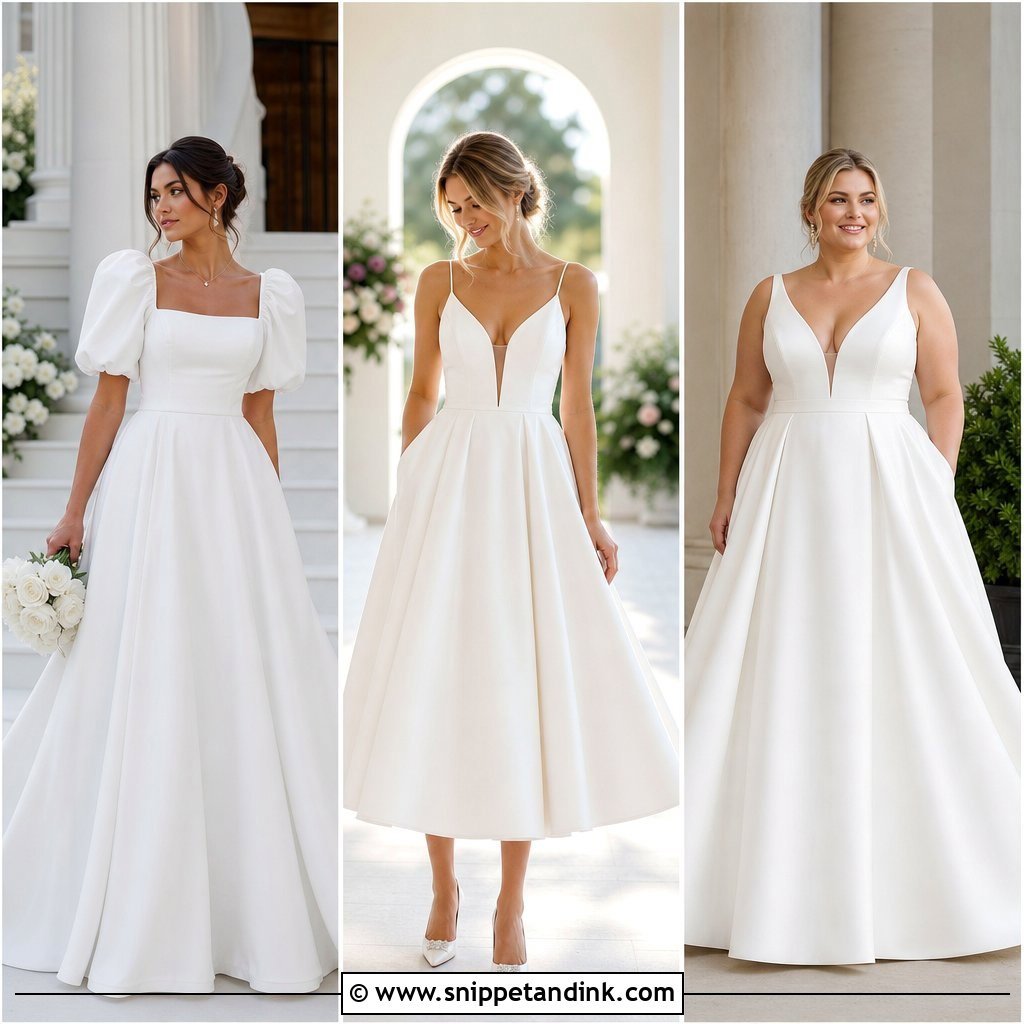
A long sleeve mermaid hugs the bodice, hips and thighs and flares near the knee. Stretch crepe looks sleek and modern; lace looks more romantic. A bateau, V or gentle scoop balances the close fit, and drop earrings with pointed heels and a chapel veil finish it. Keep the bouquet narrow so the hip line stays visible. Walk your normal stride at every fitting, and climb a step if you can. The flare point decides how freely you move, and the bustle has to lift the train without flattening that flare.
Why Sleeve Alterations Need an Extra Fitting
A hem is straightforward. A sleeve often isn’t. On a lace gown, the cuff usually ends in a scalloped edge or appliqué motif, and shortening it means unpicking that motif, trimming the sleeve and hand-stitching the edge back on. Covered buttons at the wrist have to be moved too. That takes time, and it’s why I tell brides to plan their first fitting earlier than they would for a sleeveless dress.
Bring your wedding shoes, undergarments and any jewelry you’ll wear at the wrist to every appointment. A bracelet or watch can catch on lace, and a heel height change shifts how the whole gown hangs. At the final fitting, do the full routine: sit, stand, hug, raise a glass and dance a few steps. If anything pulls, say so then, because there’s rarely time to fix it afterward.
The Sleeve Test That Settles It
Lace gives softness, satin and mikado give structure, and crepe gives a clean modern line, but the sleeve’s construction matters as much as its look. Whatever you try, sit, hug, walk and raise your arms in it before you decide. Think about venue, season, neckline and train as parts of one outfit, and keep accessories in proportion. Pick details because they suit you, not because they’re everywhere this year, and good tailoring will do the rest.
You'll Like These Ideas:







Leave a Reply