
Long sleeve bridal gowns are the ones I see brides fall for and then worry about: will they be too hot, too restrictive, too formal? Usually none of those, if the sleeve is cut and fitted properly. Lace, satin, crepe, sheer illusion fabric and detachable sleeves all behave differently on the arm, and a sleeve changes how a neckline, a bodice and even a veil sit. The gowns below cover every season and silhouette, from a winter ballroom to a beach ceremony, with notes on what each one asks of you in a fitting.
The Hug Test Every Sleeve Has to Pass
In every fitting I ask the bride to hug me, hold an imaginary bouquet at chest height, then raise both arms as if she’s waving at guests. Those three moves show me in a minute what standing still never will. A sleeve that looks perfect on the mirror can lift the bodice, pull at the shoulder or dig in at the elbow once you move.
Where sleeves usually go wrong
- Low armholes: the bodice rides up when you lift your arms. A higher armhole feels tighter standing but moves far better.
- Tight upper arms: the sleeve pulls the whole bodice forward when you hug.
- Length: a sleeve should finish at or just past the wrist bone. Longer covers your rings in photos.
- Stiff fabric with no stretch: satin and mikado need more ease than lace or stretch crepe.
Sleeves are among the trickier alterations, so I’d allow time for at least two fittings and bring the shoes you’ll wear, since height changes your posture and the way a sleeve falls.
1. Lace Long Sleeve Wedding Dress
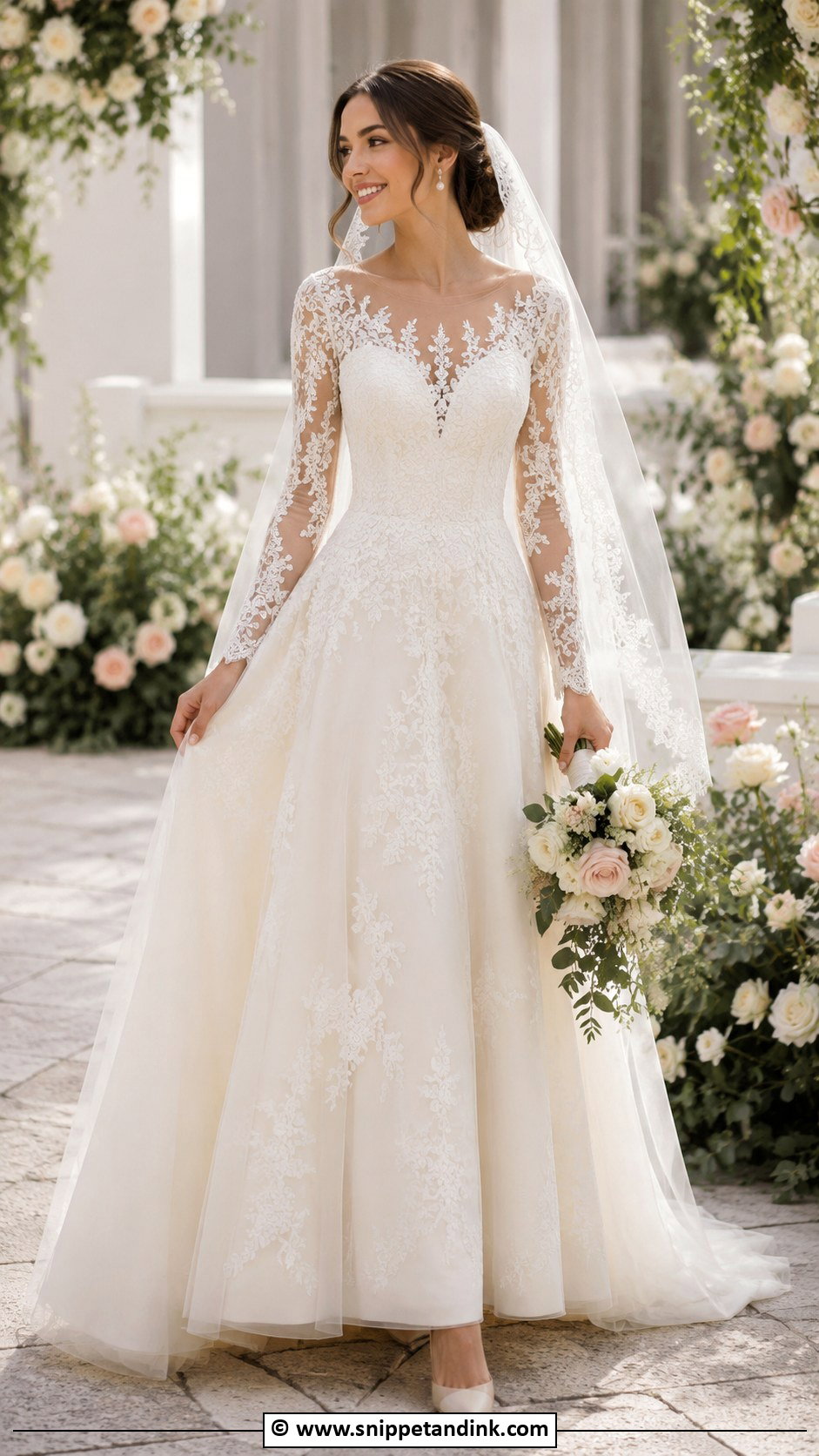
Lace is the most forgiving fabric for a sleeve because it has a little give and hides small fitting adjustments. On the body it frames the neckline, shoulders and hands, and it sits happily on an A-line, mermaid or sheath skirt. The thing I check with lace sleeves is the cuff: a scalloped edge should finish just past the wrist bone, not halfway over the hand, or it catches on rings and the bouquet stems. Choose floral lace for a garden, Chantilly lace for something finer and flatter, or corded lace for raised texture the camera can pick up. Pearl drops and a fingertip veil leave the lace visible.
2. Satin Long Sleeve Wedding Dress
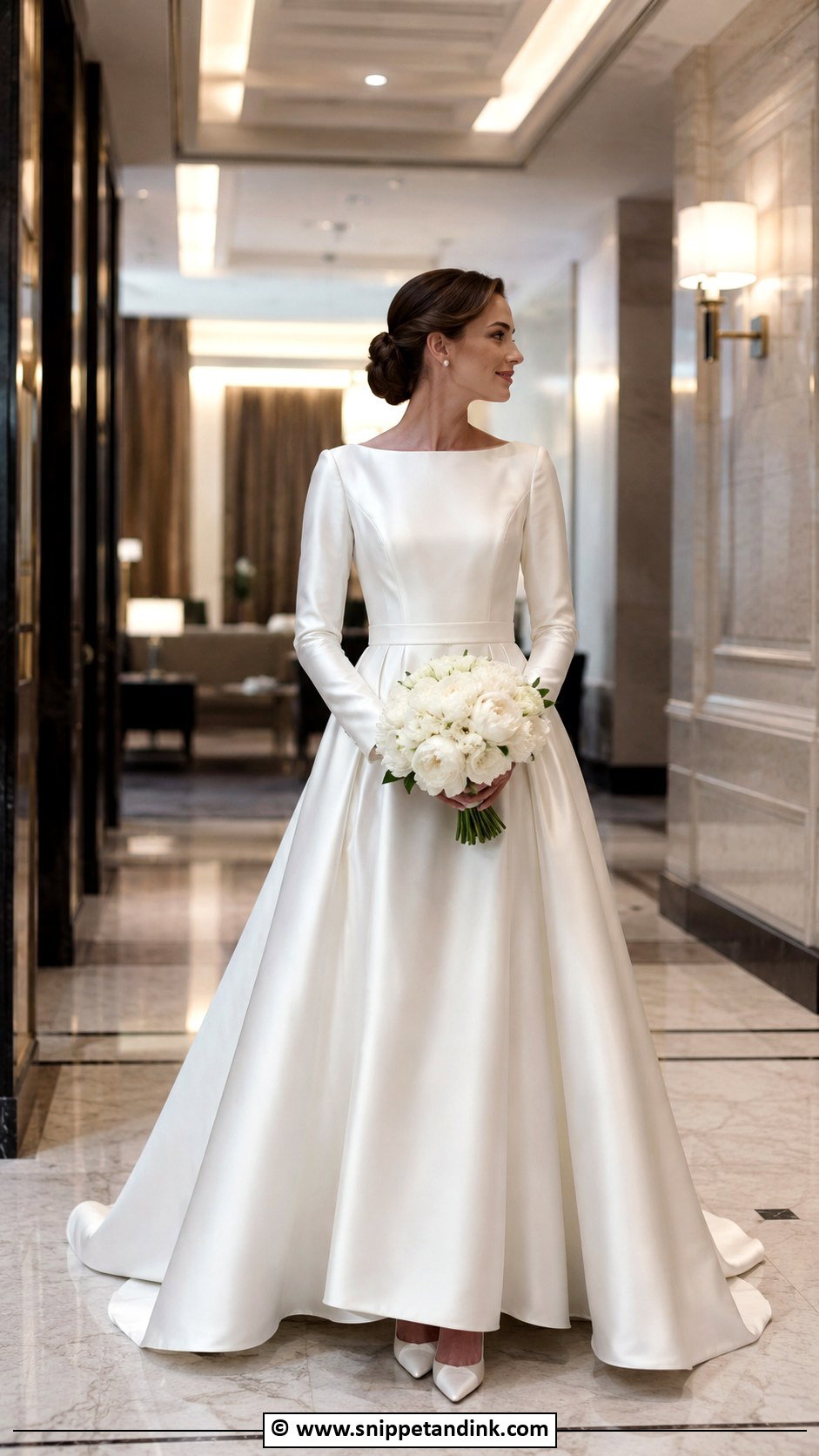
Satin sleeves look sculpted, but satin has no stretch, so the fit lives or dies at the armhole. Too low and the whole bodice lifts when you raise your arm; cut higher and closer, it moves with you. Its natural sheen works in daylight and evening light, and a fitted bodice with a straight skirt looks modern while a fuller skirt reads formal. Satin is already a statement, so I keep accessories to pearl studs and sleek heels. Hotel weddings, winter ceremonies and black-tie receptions suit it.
3. Crepe Long Sleeve Wedding Dress
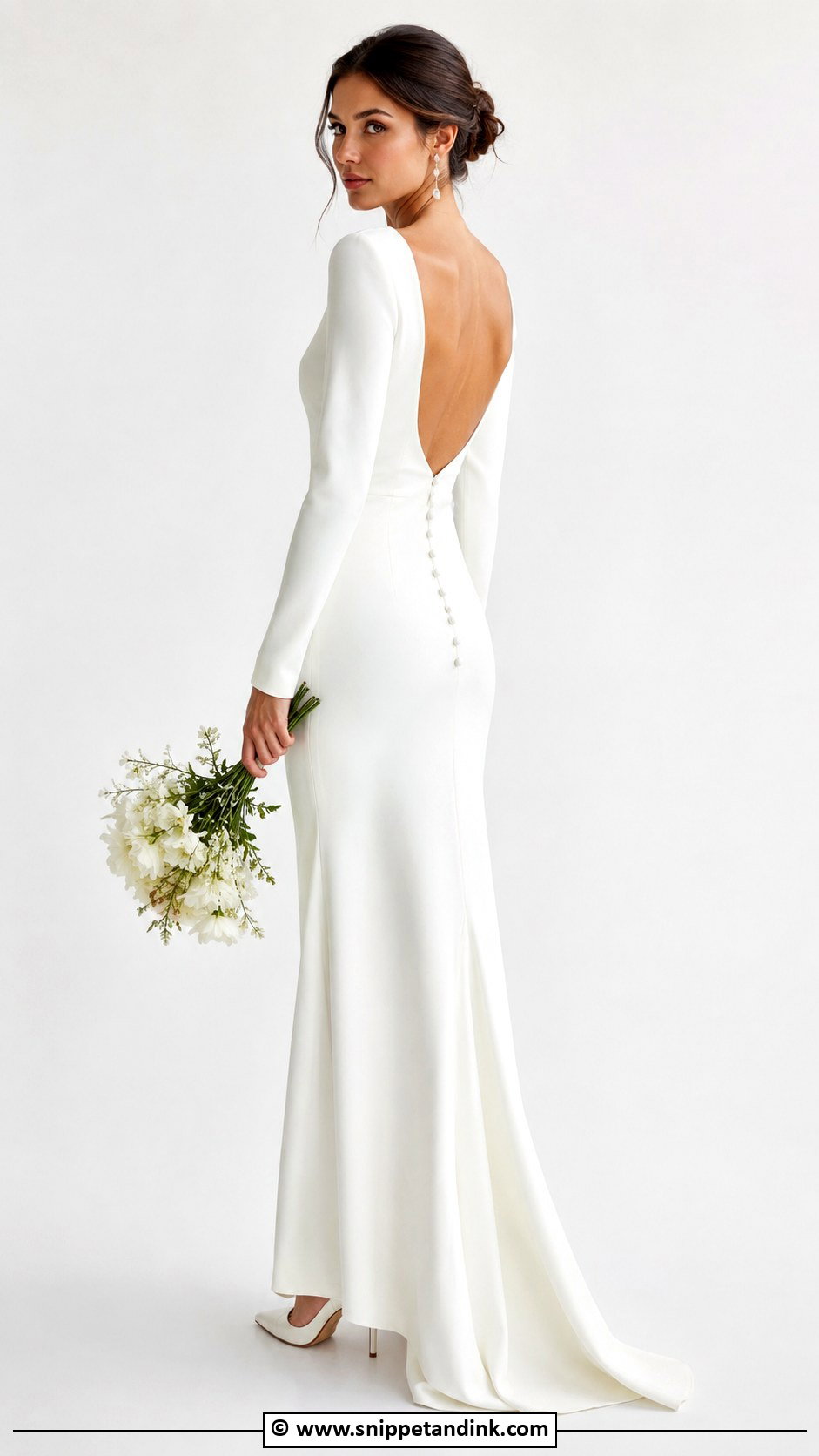
Crepe gives a tailored line without stiffness. It follows the body, holds its shape on a sheath, fit-and-flare or column gown, and has a matte finish that never glares. Many bridal crepes have a little stretch, which makes a crepe sleeve the most comfortable on this list for dancing. Its weakness is that it shows everything underneath, so fit in your actual undergarments. A long veil, delicate earrings and closed-toe heels finish it, and covered buttons down the back add detail without fuss.
4. Illusion Long Sleeve Wedding Dress
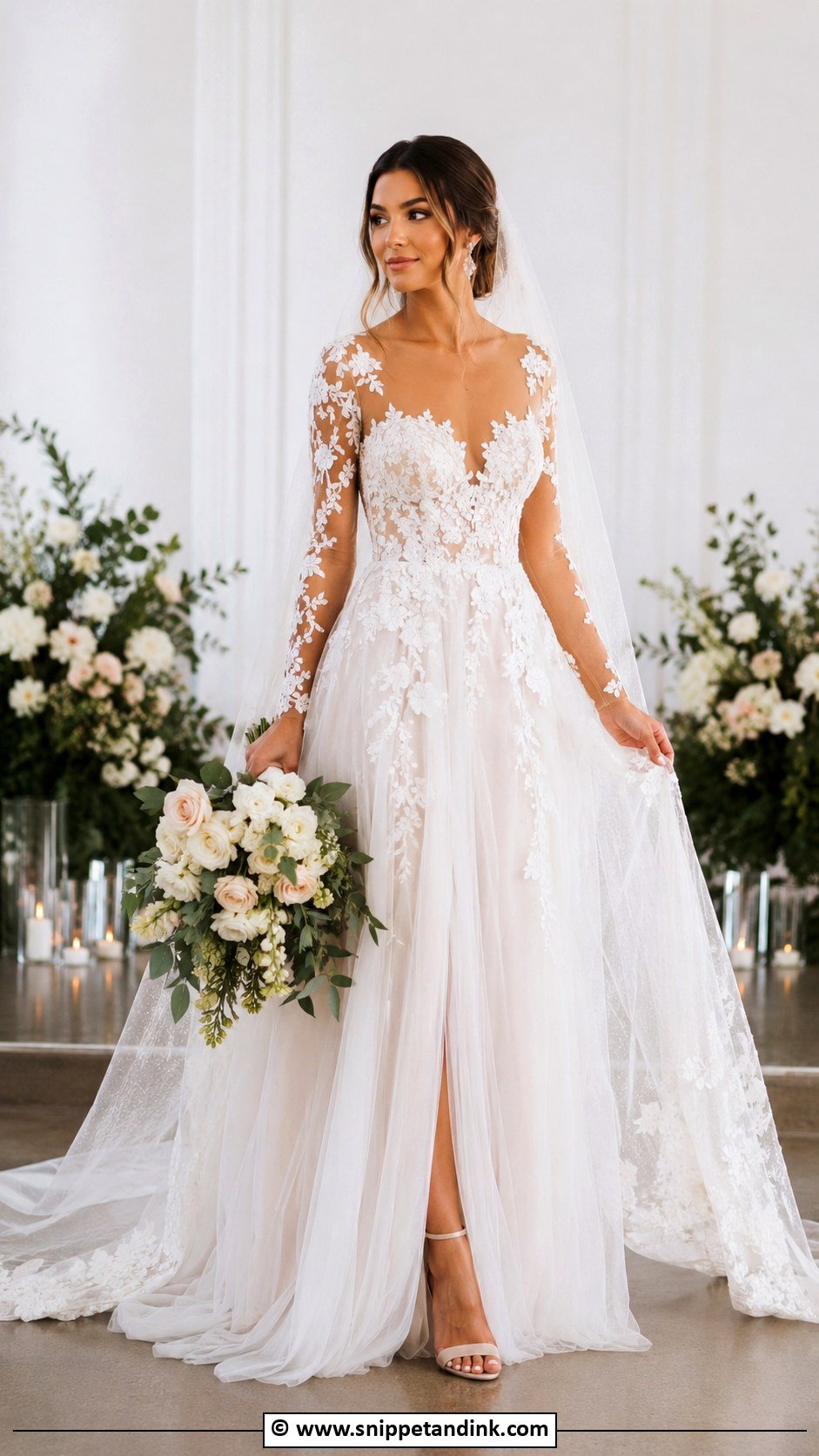
Illusion sleeves are a sheer mesh base with lace, beading or embroidery placed on top, so the detail looks like it floats on the skin. They give coverage with very little weight. I check where the appliques sit at the elbow, because a heavy motif right on the crease bunches every time you bend. Illusion works with open backs, high necklines and fitted bodices, and with soft bridal makeup that lets the skin tone through the mesh. Ask the shop to match the mesh shade to your skin; a mismatch shows up clearly in daylight portraits.
5. High Neck Long Sleeve Wedding Dress
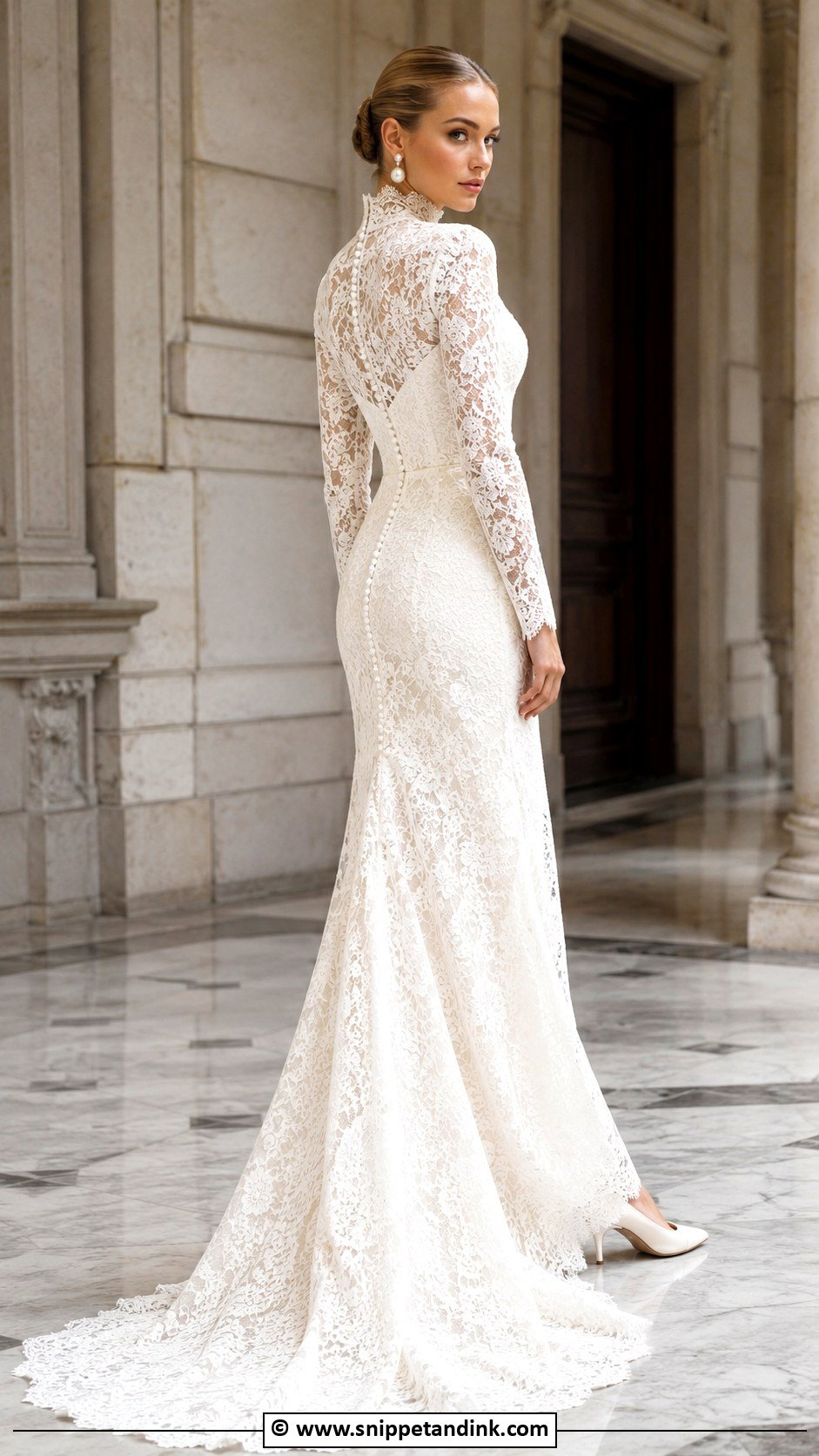
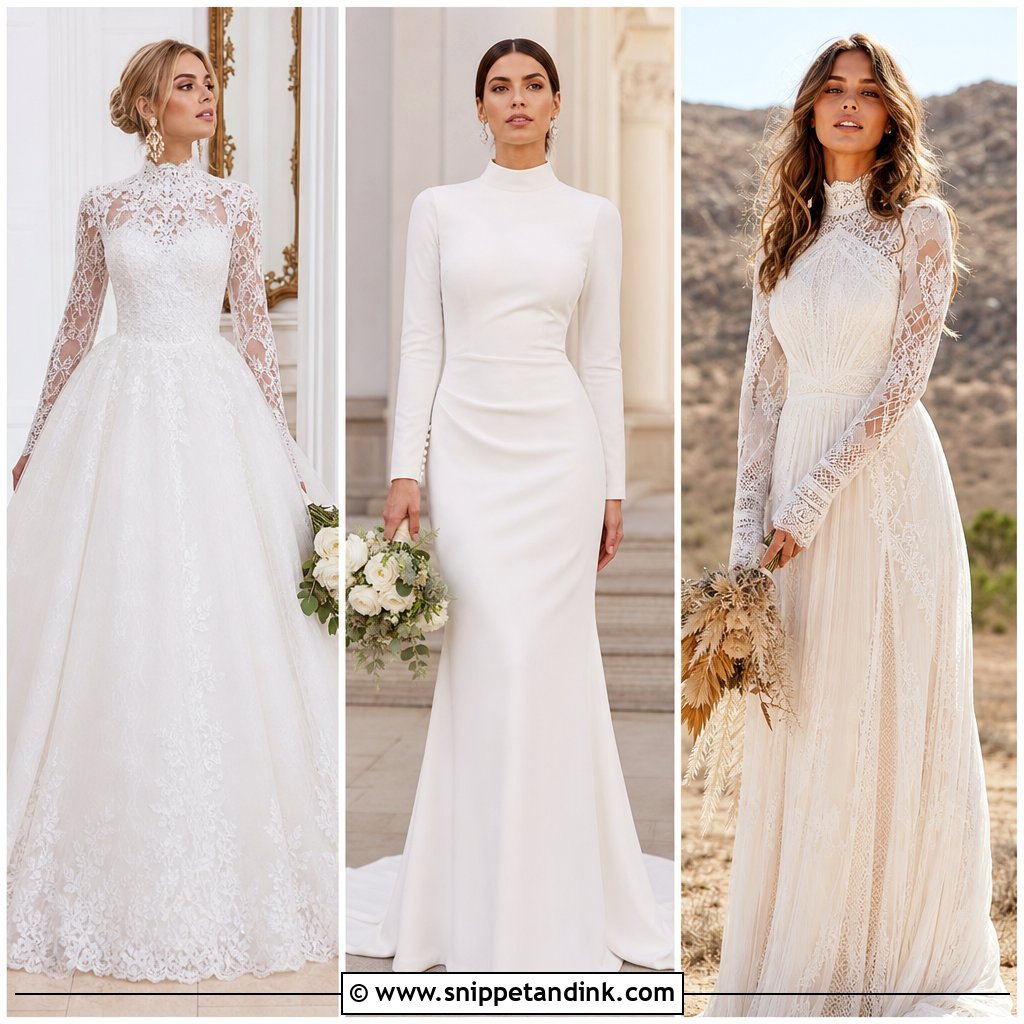
A high neck long sleeve wedding dress frames you from collarbone to wrist, which makes jewelry simple: no necklace, statement earrings, a sleek updo. I place the veil at the crown rather than below an updo with this neckline, so the comb doesn’t sit against the collar. Lace, crepe, satin and beaded fabric all suit it. A fitted column looks sleek, a full skirt traditional. High necks can feel warm, so I’d ask for a slightly open back or a breathable lining if the ceremony is in summer.
6. Long Sleeve Ball Gown Wedding Dress
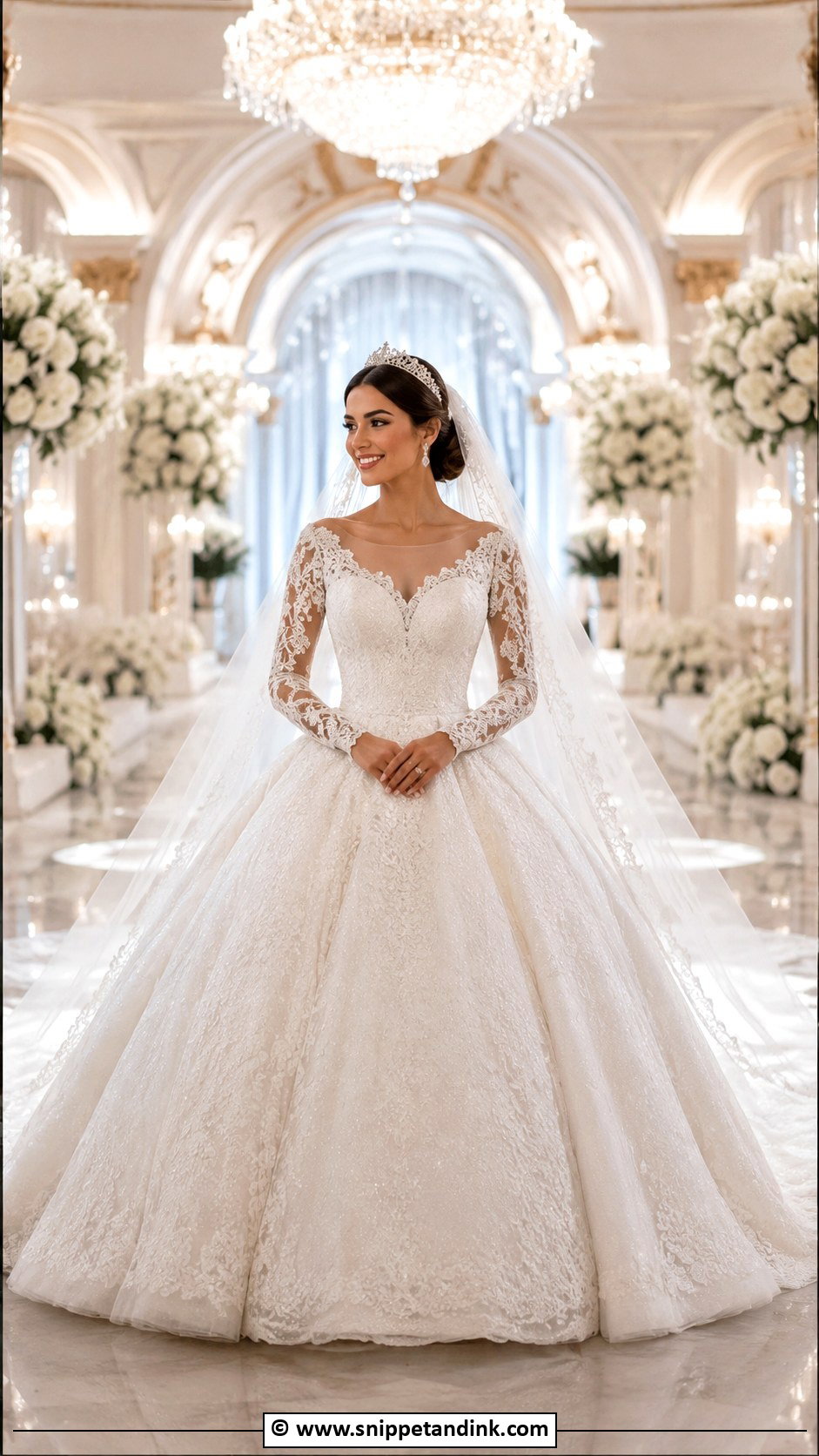
A ball gown with long sleeves is about balance. The full skirt creates width, and covered arms stop the top half from looking small against it. Lace sleeves soften the volume; satin sleeves sharpen it into something closer to a royal wedding. A cathedral veil, crystal earrings and a polished bun suit the scale. With this much skirt, your shoes are hidden, so choose comfort over looks. The detail I plan for is the bustle: a heavy skirt with a train needs several bustle points to stay up through dancing.
7. Long Sleeve Mermaid Wedding Dress
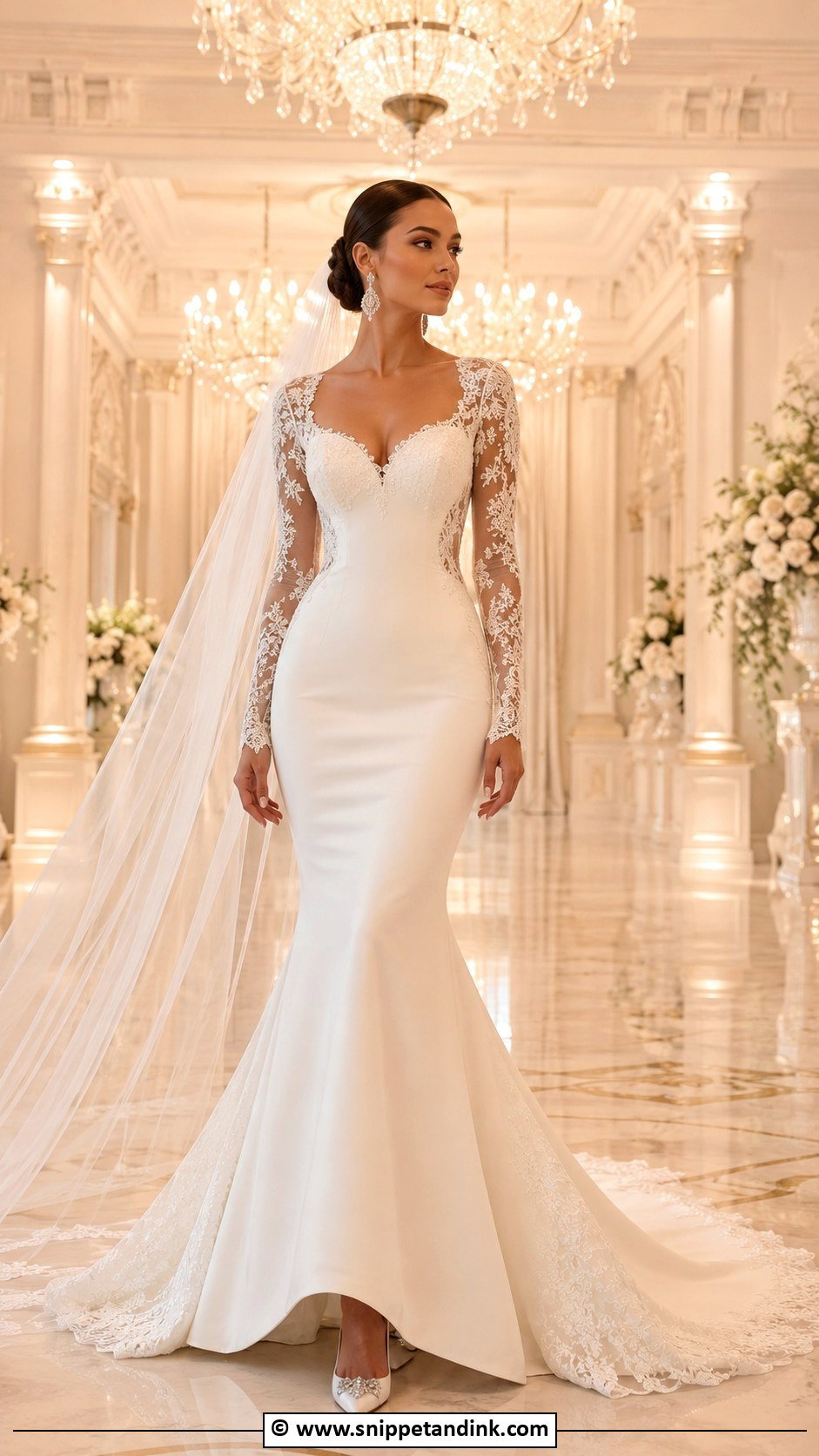
Mermaid gowns hug the body through the bodice, waist and hips and flare near the knee. Add sleeves and the look turns elegant rather than revealing, especially with a sweetheart, bateau or high neckline. The fitting challenge is walking: if the flare starts too high, you shuffle. I have brides walk the length of the shop and climb a step before we set the flare point. Lace softens the shape, crepe and satin sharpen it. Sculptural earrings and a smooth veil suit evening and ballroom receptions.
8. Long Sleeve A Line Wedding Dress
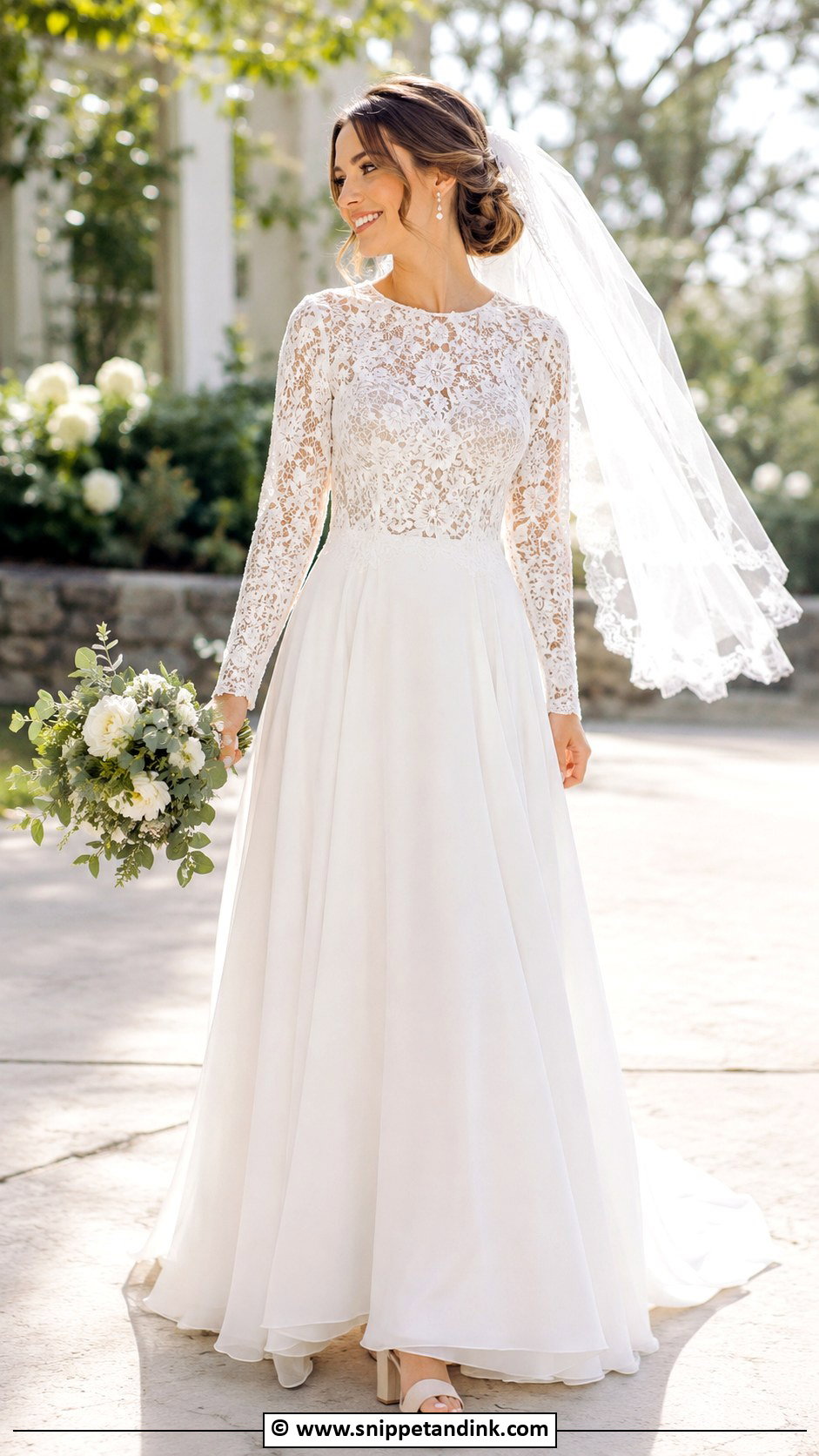
If a bride is unsure where to start, I often pull an A-line with sleeves first. Fitted at the top, gently flaring below, it suits most bodies and venues and lets you walk, sit and dance without thinking about the dress. Lace sleeves make it romantic; plain crepe sleeves modern. A soft veil, pearl earrings and ivory pumps or block heels complete it. The A-line is the one I see brides forget they’re wearing by mid-reception, which is a real compliment for a wedding dress.
9. Long Sleeve Sheath Wedding Dress
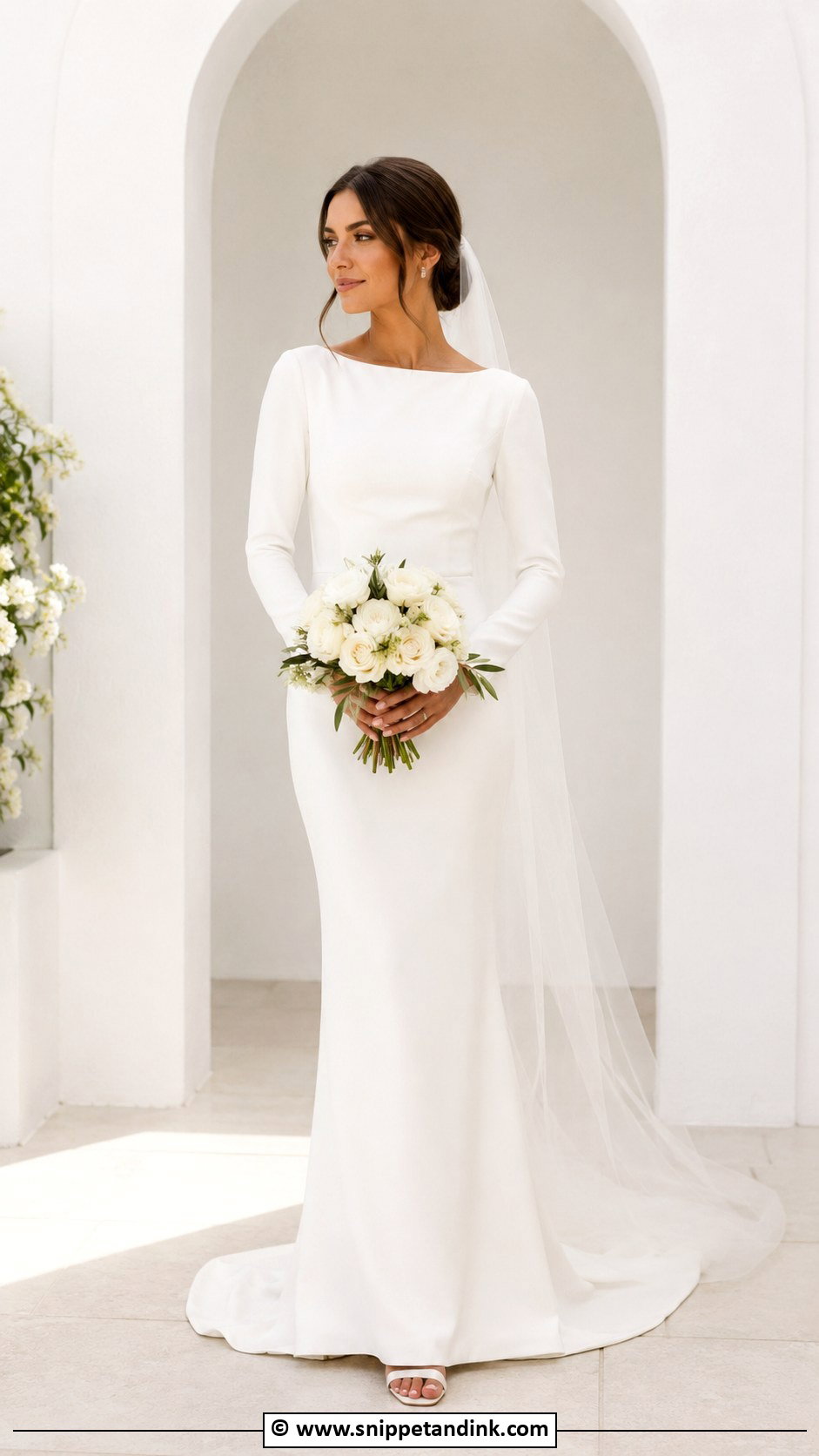
A sheath follows the body without a dramatic flare, so it is more forgiving to walk in than a mermaid and less formal than a ball gown. Crepe, satin, lace and chiffon all work. Plain fronts need interest somewhere, and I usually suggest it goes on the back: a column of buttons, lace or a short train. A low chignon and long veil keep the line long. It suits beaches, intimate ceremonies and courthouse weddings.
10. Long Sleeve Boho Wedding Dress
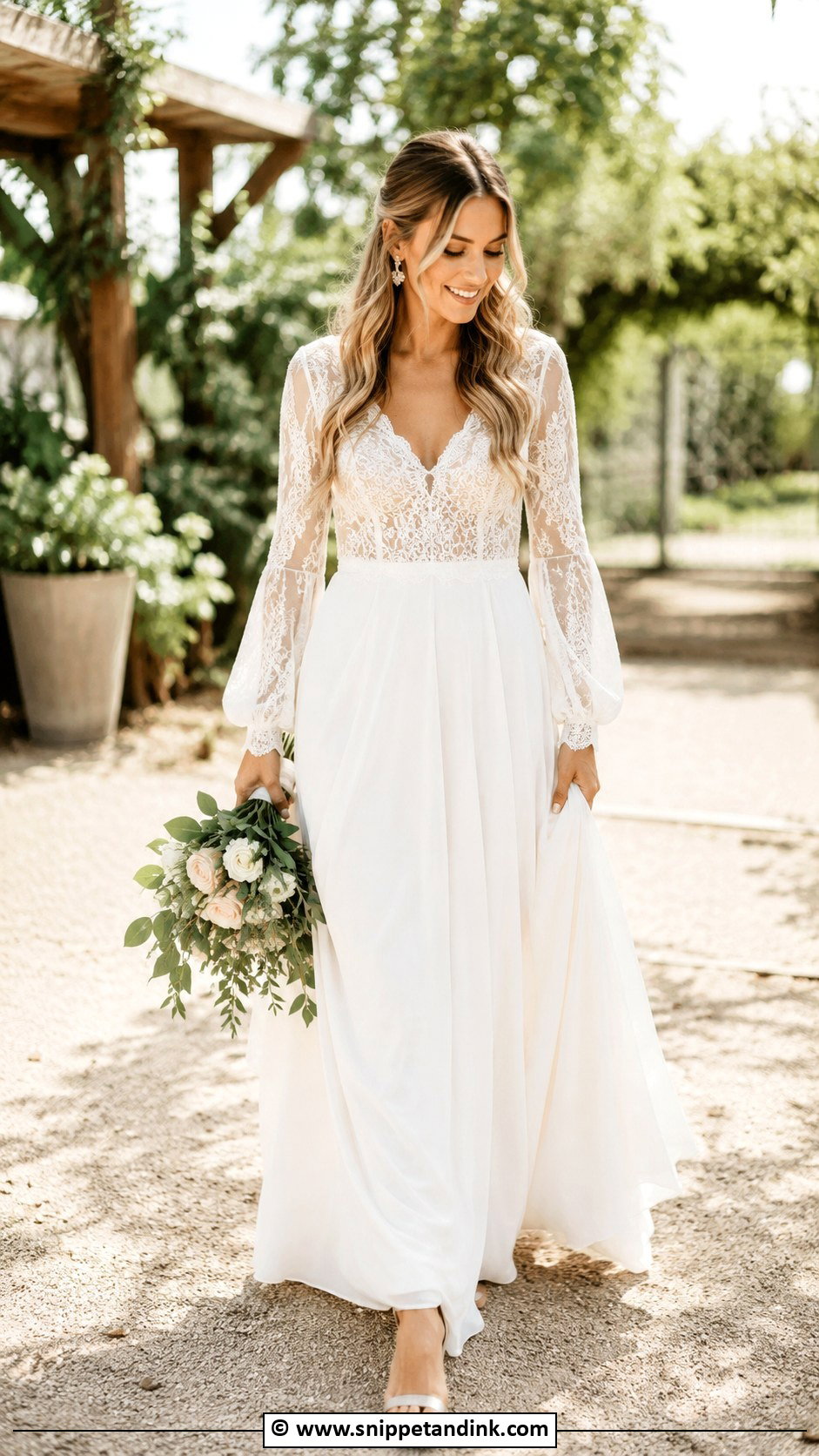
Boho sleeves usually flare at the wrist or gather into a soft cuff, and that flare is worth testing with your bouquet. Wide bell sleeves drape over stems and sometimes into the cake knife. Soft lace, flowing skirts and light embroidery set the mood, with loose waves, natural makeup and comfortable block heels or bridal sandals. A floral hairpiece suits outdoor venues if it stays small. For warm gardens, deserts or destination weddings, choose an unlined or lightly lined sleeve.
11. Long Sleeve Modest Wedding Dress
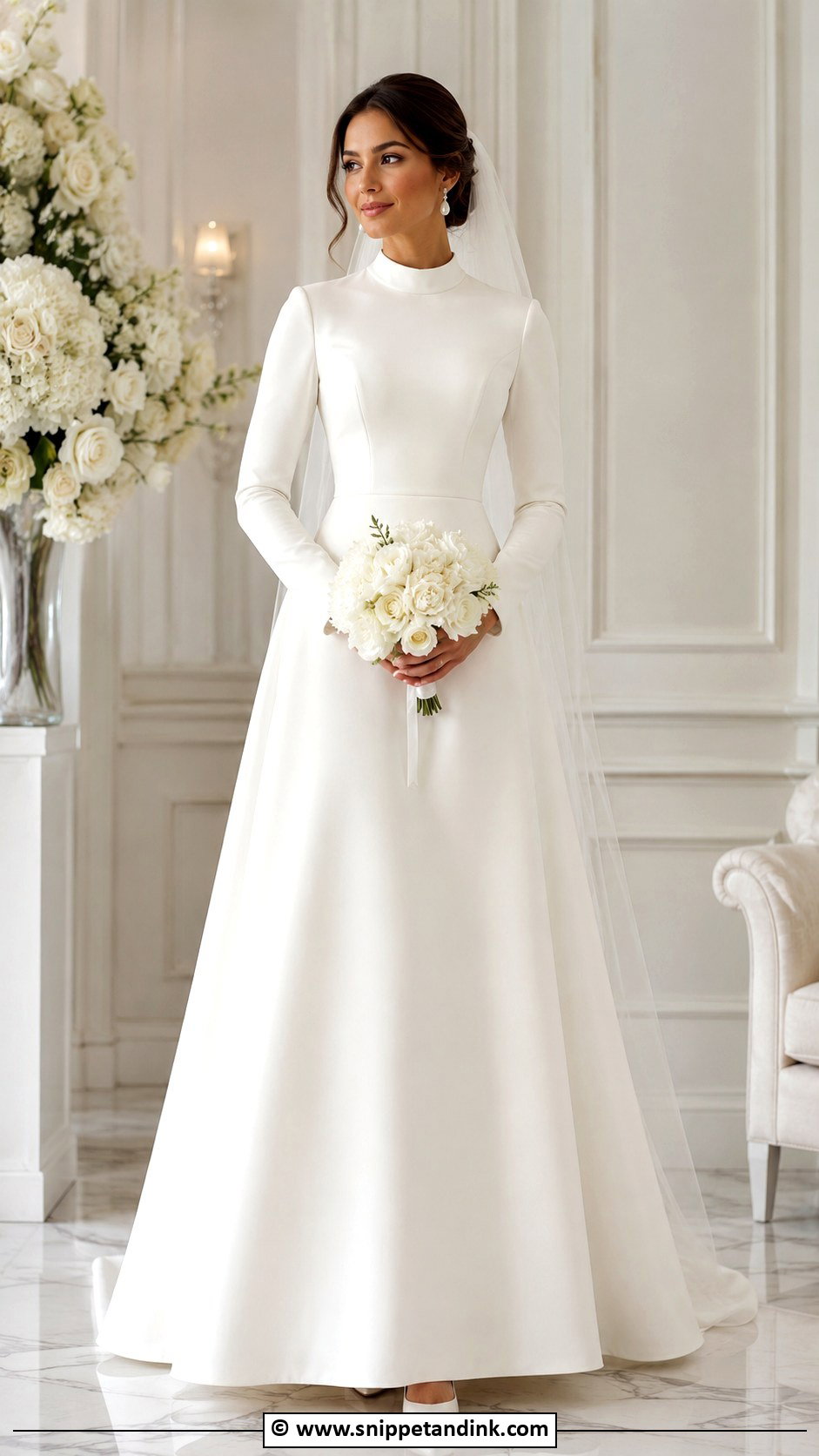
A long sleeve modest wedding dress looks modern when the coverage is designed, not added. High or bateau necklines, lined sleeves and full-length skirts all look refined when the fit is clean. I’m careful with lined sleeves: an opaque lining should be cut slightly looser than the outer layer, or it twists on the arm. Crepe, satin, mikado and lace give the gown structure, and covered buttons, soft pleating or lace trim add detail. Pearl earrings and closed-toe heels finish it.
12. Long Sleeve Beaded Wedding Dress
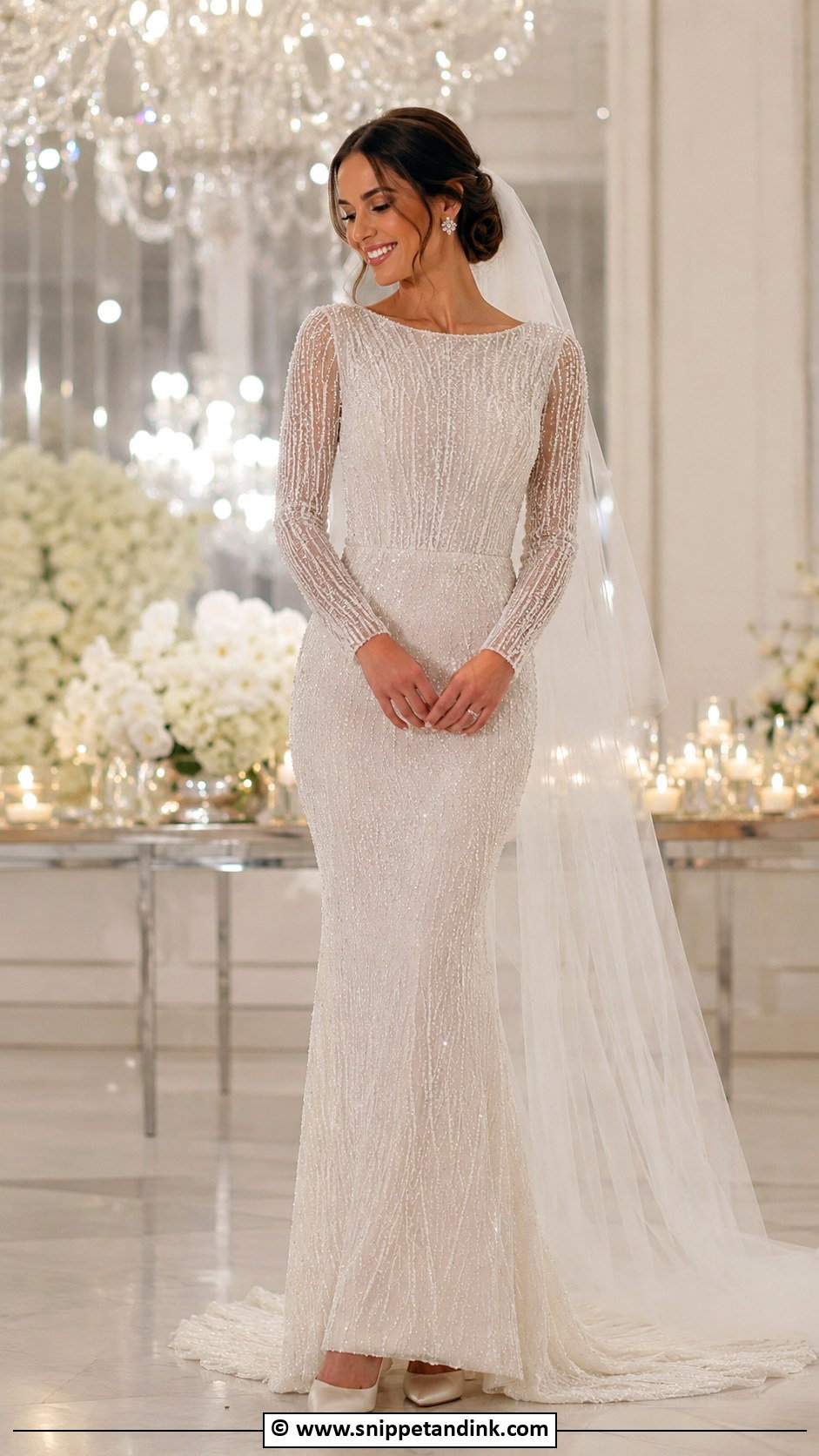
Beading on a sleeve adds weight to the arm itself, which surprises brides at the first fitting. Light scattered beading barely registers; fully beaded sleeves can feel heavy by evening and pull the shoulder seam down. I’d check the comfort through the arms and shoulders by holding your arms forward for a minute, as you would for a bouquet. Simple earrings, a clean hairstyle and a plain veil soften the sparkle. Evening and ballroom lighting shows beadwork at its best.
13. Long Sleeve Floral Wedding Dress
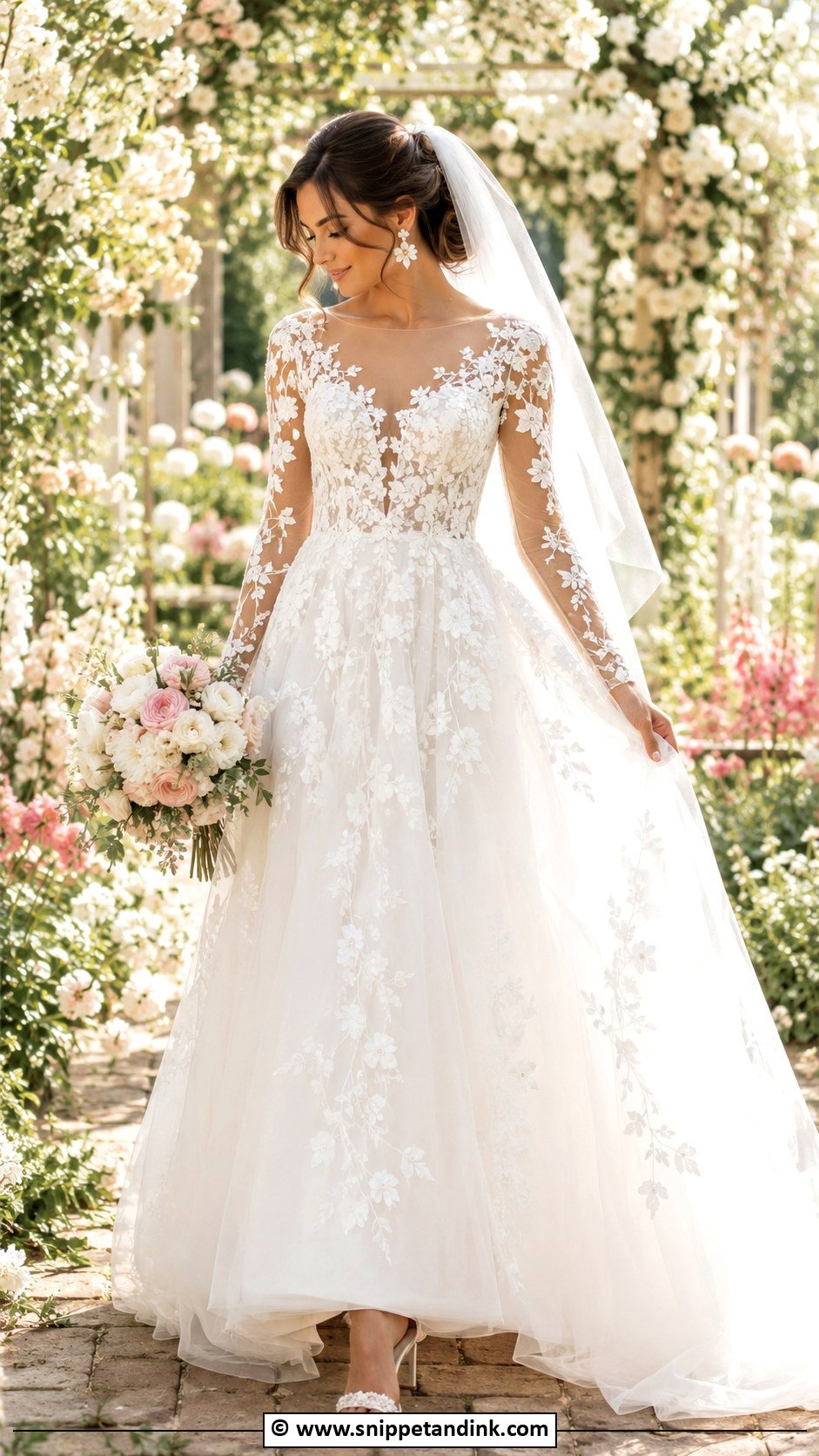
Floral detail on a sleeve can be lace, applique, embroidery or raised petals. Smaller flowers read delicate, larger appliques dramatic. It suits spring, summer and garden weddings, but in heavier fabric it works year-round. I’d keep raised florals off the inner arm, where they rub against the bodice with every movement and flatten by the end of the night. Soft waves, pearl earrings and a simple veil stop it from looking busy.
14. Long Sleeve Vintage Wedding Dress
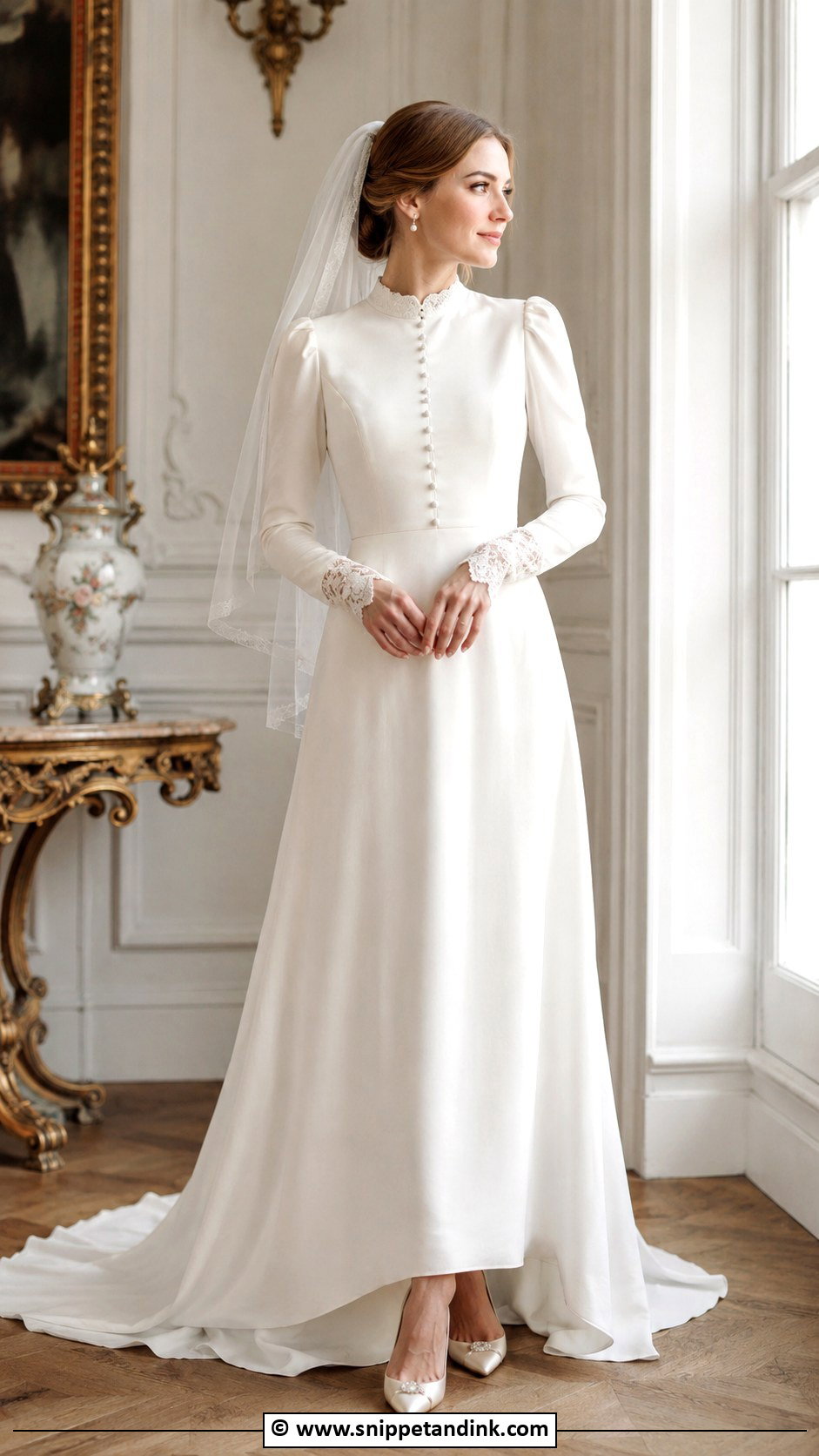
A vintage-style sleeve often comes with lace cuffs, covered buttons, a high neckline, puff sleeves or a softly structured bodice. The goal is inspired by the past, not a costume. Ivory, cream and champagne tones read more authentic than bright white. Covered buttons at the wrist look lovely but take time to fasten, so I tell brides to have someone ready to button them, and to ask whether the seamstress can add a hidden zip under them. A simple veil, vintage pearls and classic satin heels complete it.
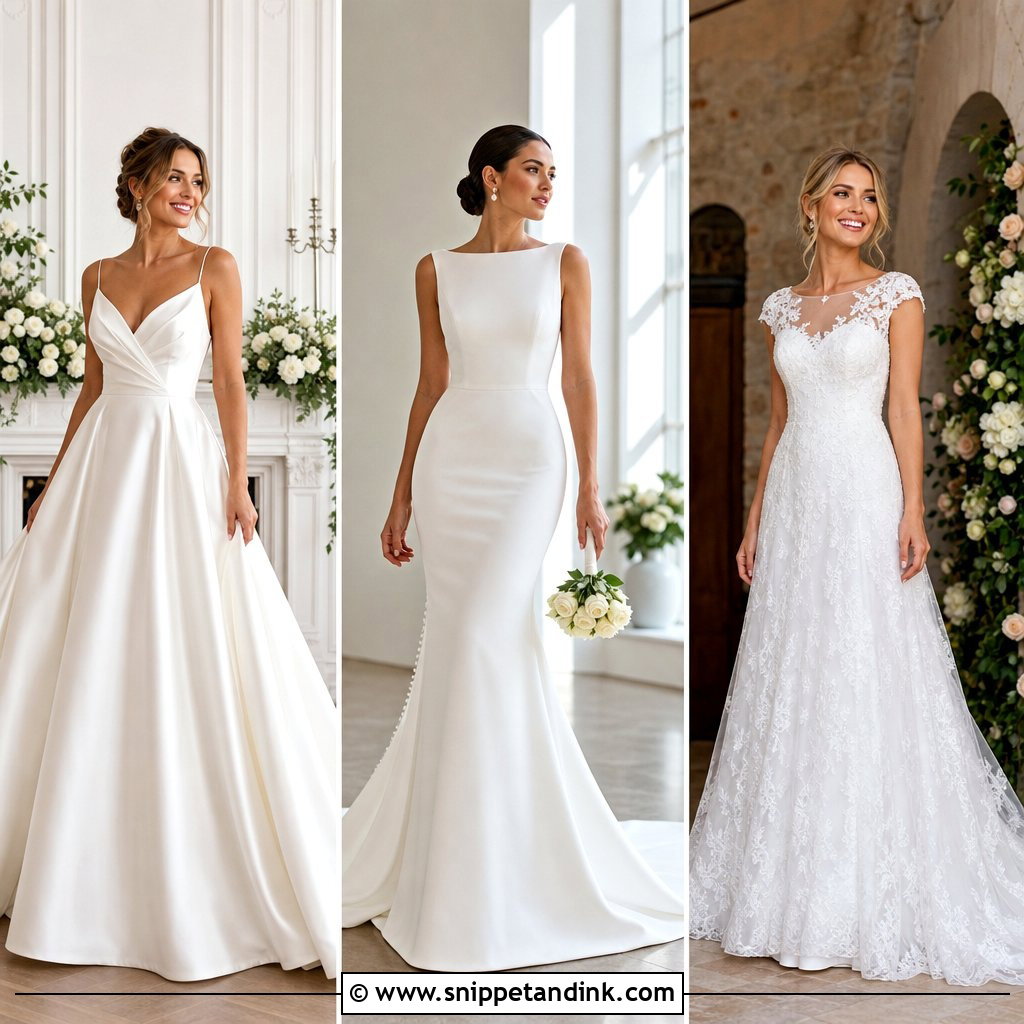
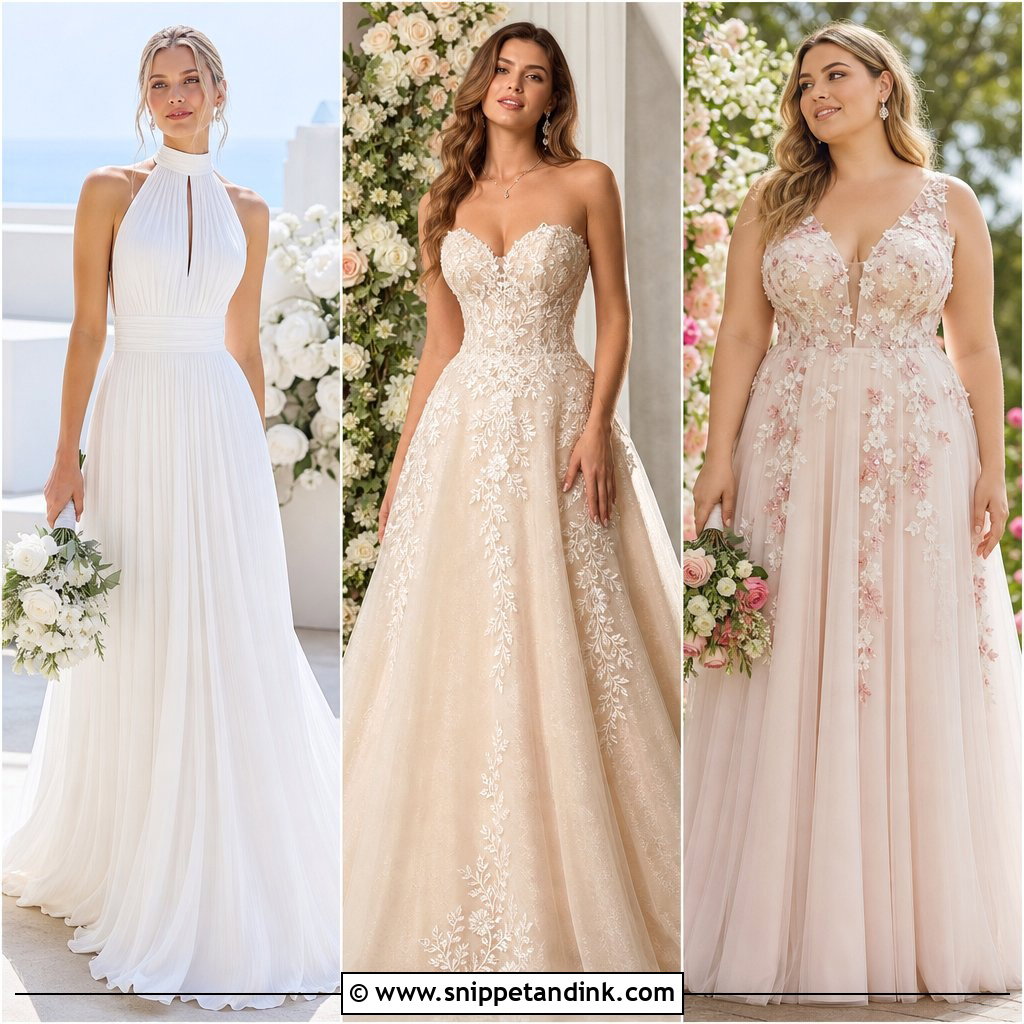
15. Long Sleeve Minimalist Wedding Dress
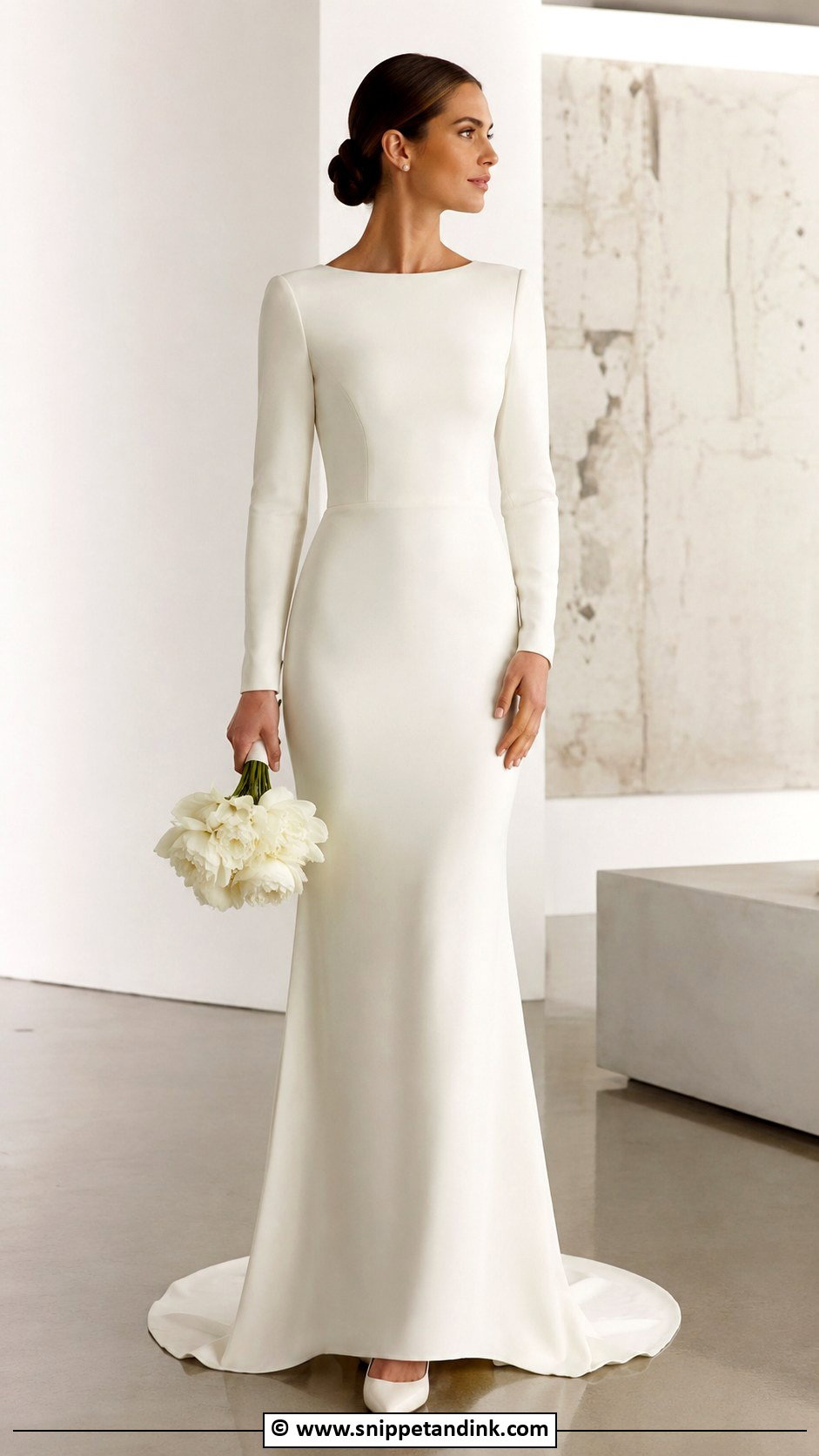
Minimalist gowns rely entirely on fit, because there is no lace or beading to distract from a wrinkle. Smooth crepe or satin in a column, sheath or A-line shape, with small pearl studs, sleek heels and a smooth veil. I spend more fitting time on these dresses than on heavily decorated ones; a sleeve that is a centimetre too long shows clearly on plain fabric. City venues, galleries and rooftops suit the clean look.
16. Long Sleeve Square Neck Wedding Dress
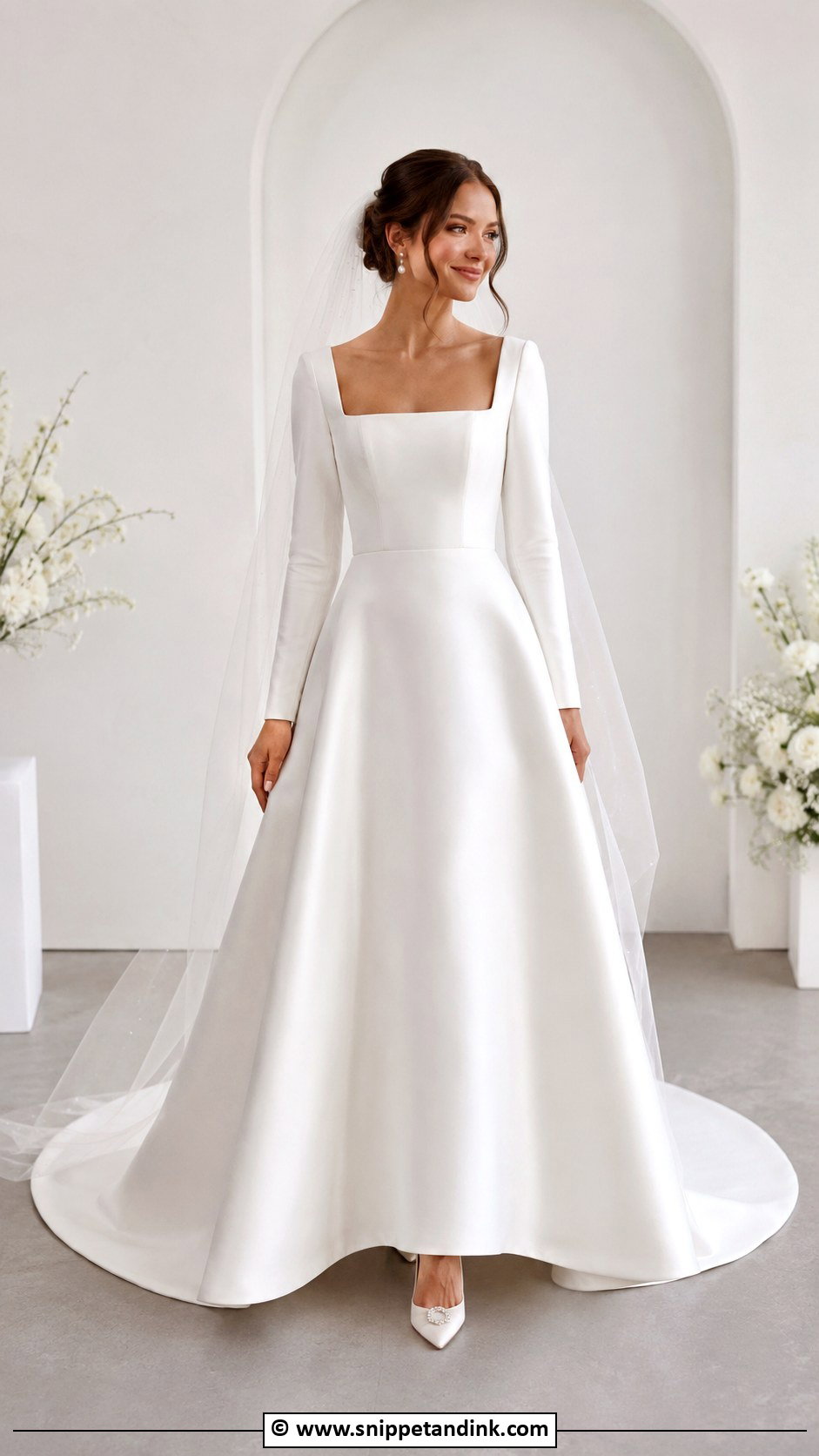
A square neckline opens the chest and collarbone while the sleeves add structure, which makes it one of the most balanced combinations here. Pair it with a delicate necklace or skip it for pearl drops. The corners of a square neck need firm stitching or boning, otherwise they curve into a scoop by the end of the day. A sleek bun and pointed heels finish it. Fitted, A-line or full skirts all work, in satin, crepe or lace.
17. Long Sleeve Off Shoulder Wedding Dress
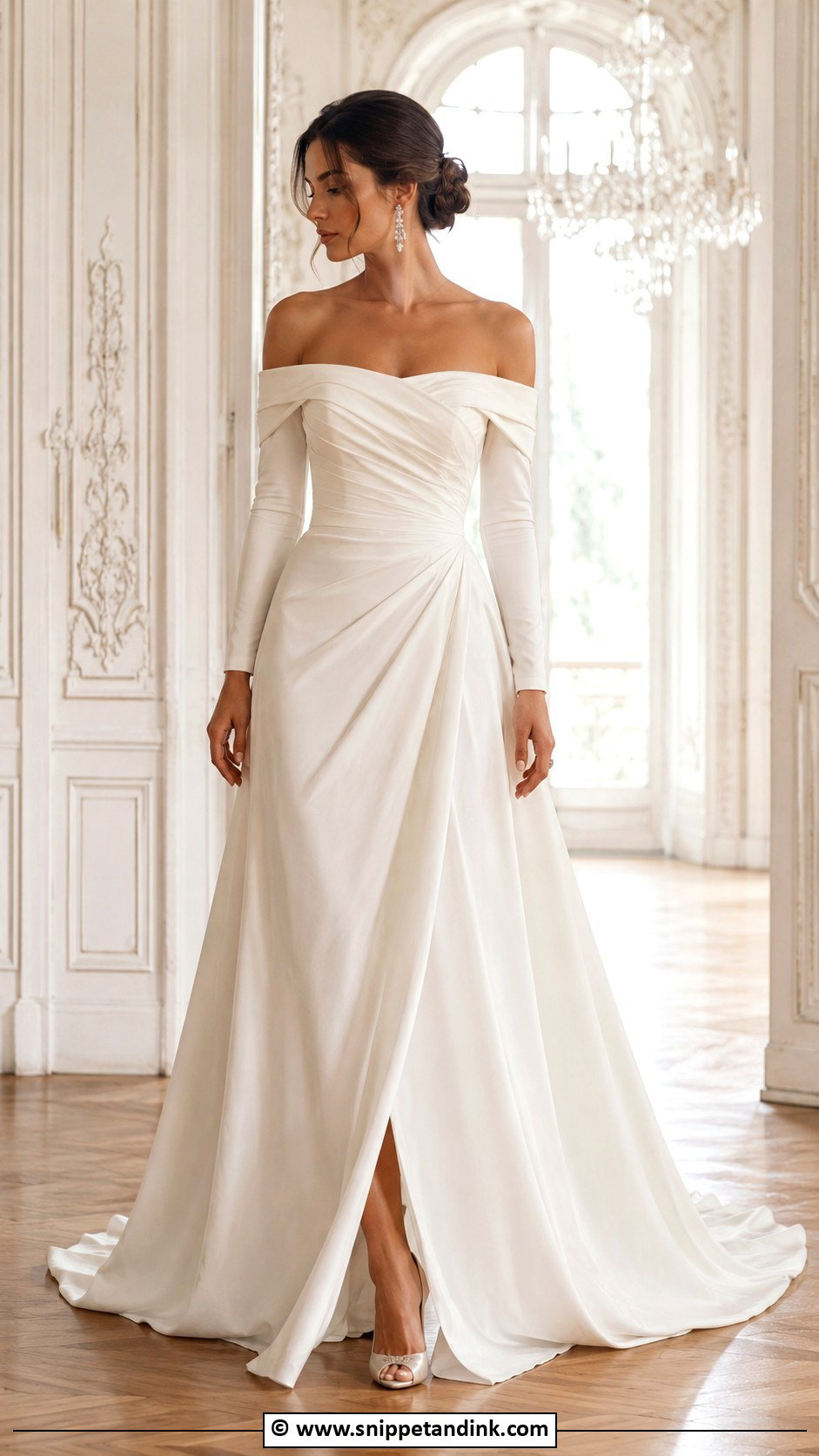
Off shoulder sleeves cover the arm but leave the shoulder line open, which is pretty and a little restrictive. Because the band sits below the shoulder, you can’t lift your arms as high as in a set-in sleeve. I always show brides exactly how far they can raise their arms before the first dance. Drop earrings, a low bun and a smooth veil are enough jewelry. Lace, satin, tulle or crepe, fitted or A-line, all suit ballrooms and gardens.
18. Long Sleeve V Neck Wedding Dress
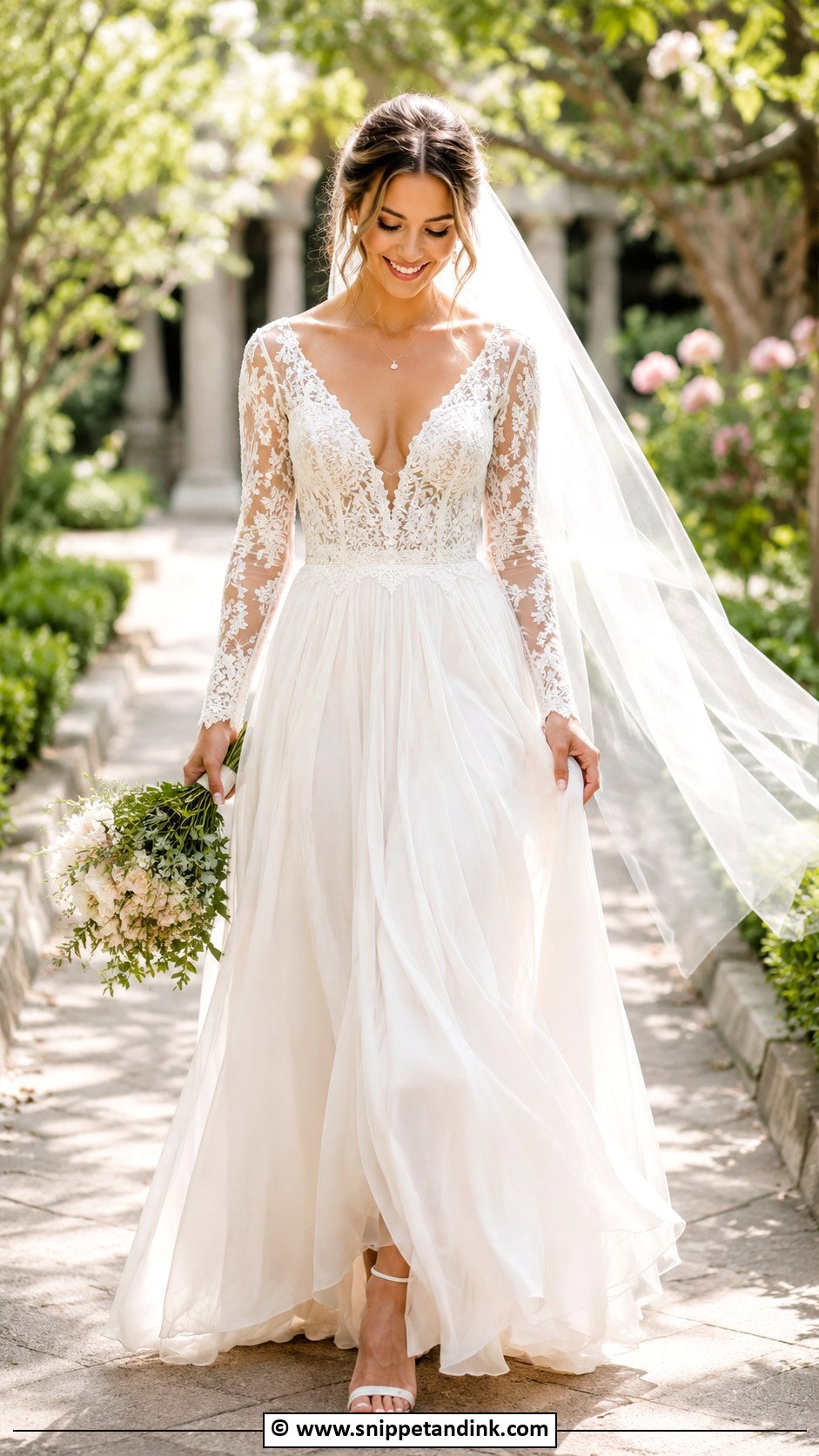
A V neck draws the eye vertically, and long sleeves balance the open neckline. The depth can be modest or dramatic. I’d match the jewelry to the bodice: a pendant on a plain V, earrings only when there’s lace or beading. Deep Vs need a little fashion tape or a hidden mesh panel so they stay put when you hug guests. Chiffon, lace, crepe and satin all work for outdoor and destination weddings.
19. Long Sleeve Open Back Wedding Dress
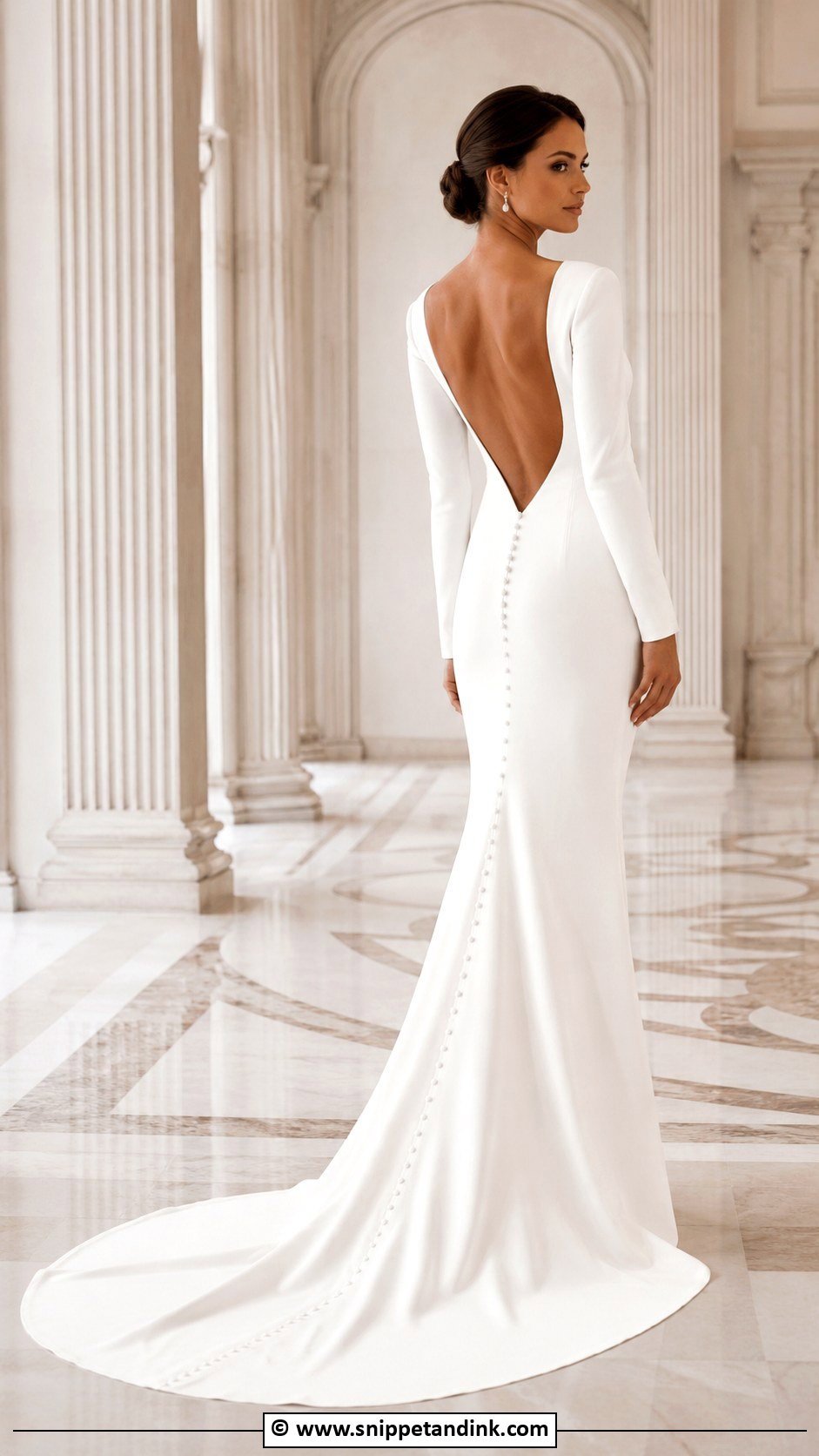
Covered arms and an open back is a favourite combination of mine, because it reads modest from the front and modern from behind. Lace backs feel romantic; a smooth crepe gown with a low back feels sleek. A low bun or side-swept waves keeps the back visible for aisle photos. Long sleeves on an open back have little to anchor them, so the shoulders need a well-fitted cut or they slide outward. Clean heels and a simple veil keep attention where it belongs.
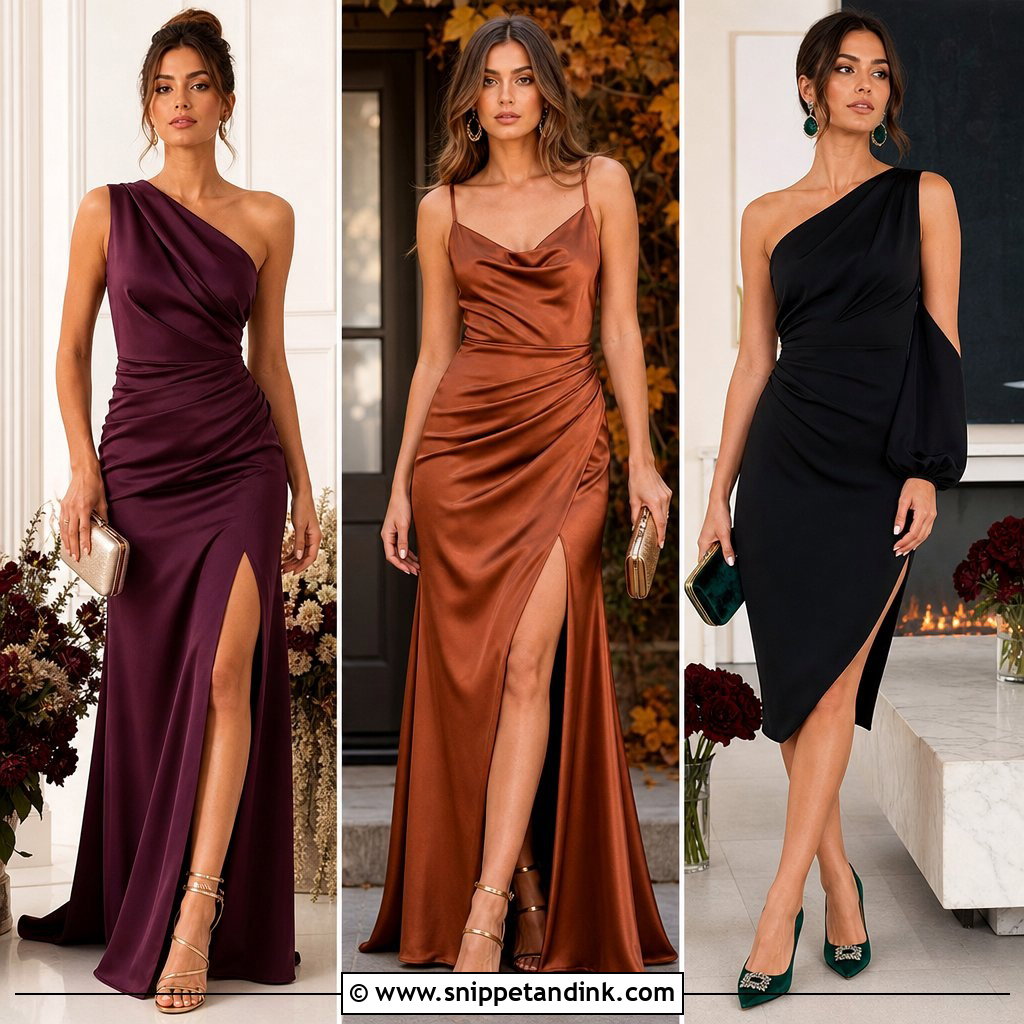

20. Long Sleeve Cathedral Train Wedding Dress
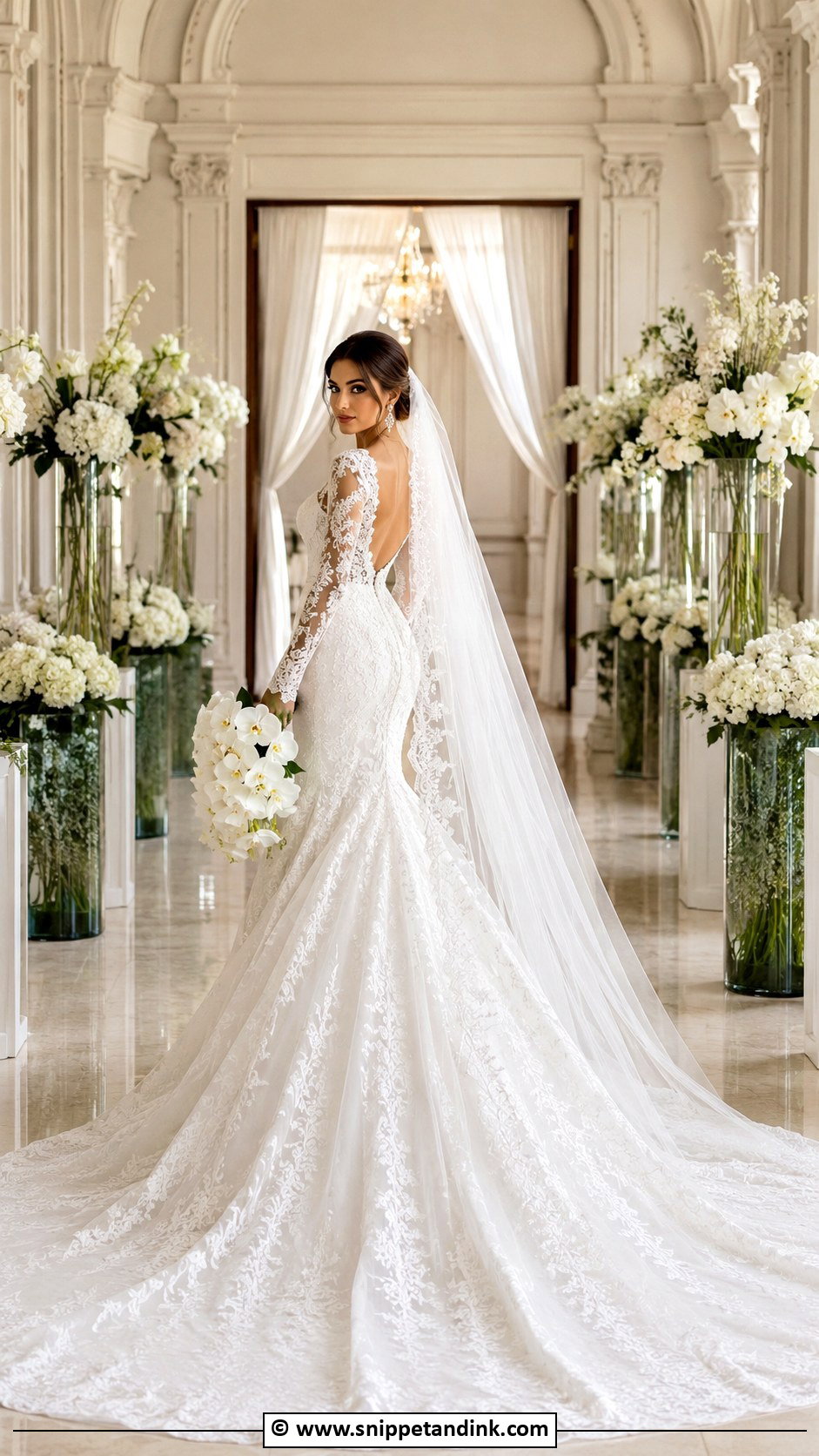
A cathedral train needs space, a formal venue and an aisle long enough to show it. The sleeves keep it regal. If the dress has lace, keep the veil simple; plain satin or crepe can take a lace-edged veil. The part brides underestimate is the bustle. A cathedral train can have many hooks or ribbon loops, and someone needs to practise fastening it before the day. I’d also have a bridesmaid ready to straighten the train before every portrait.
21. Long Sleeve Winter Wedding Dress
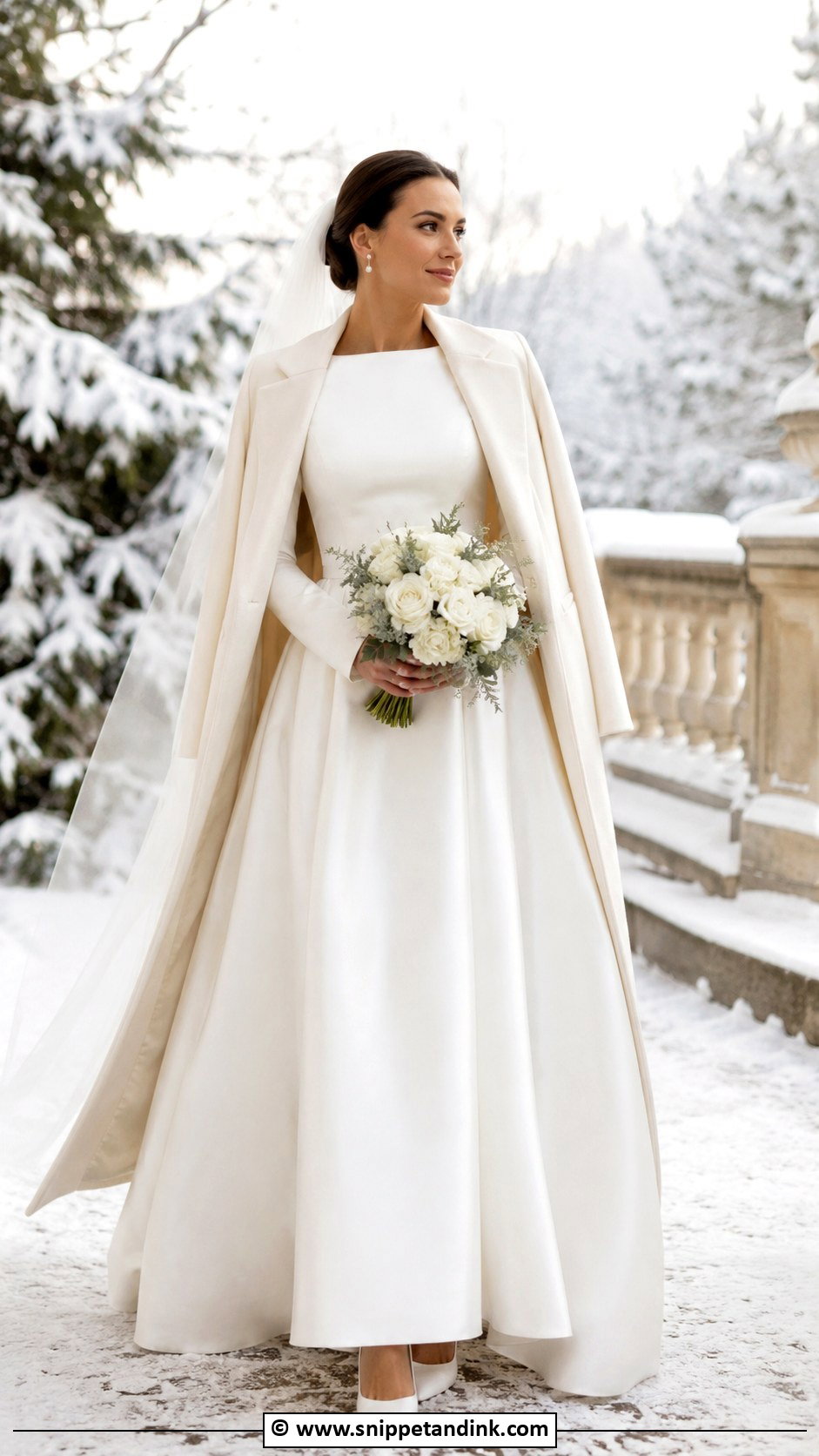
Winter is where sleeves feel natural. Satin, mikado, crepe or lined lace look right for the season, and ivory, diamond white or soft champagne stay bright against grey skies. A tailored bridal coat or faux fur wrap covers outdoor portraits. One practical point: indoor venues are often heated, so a lined satin sleeve that feels right outside can feel warm during dancing. Candlelit venues, ballrooms and snowy settings suit it.
22. Long Sleeve Beach Wedding Dress
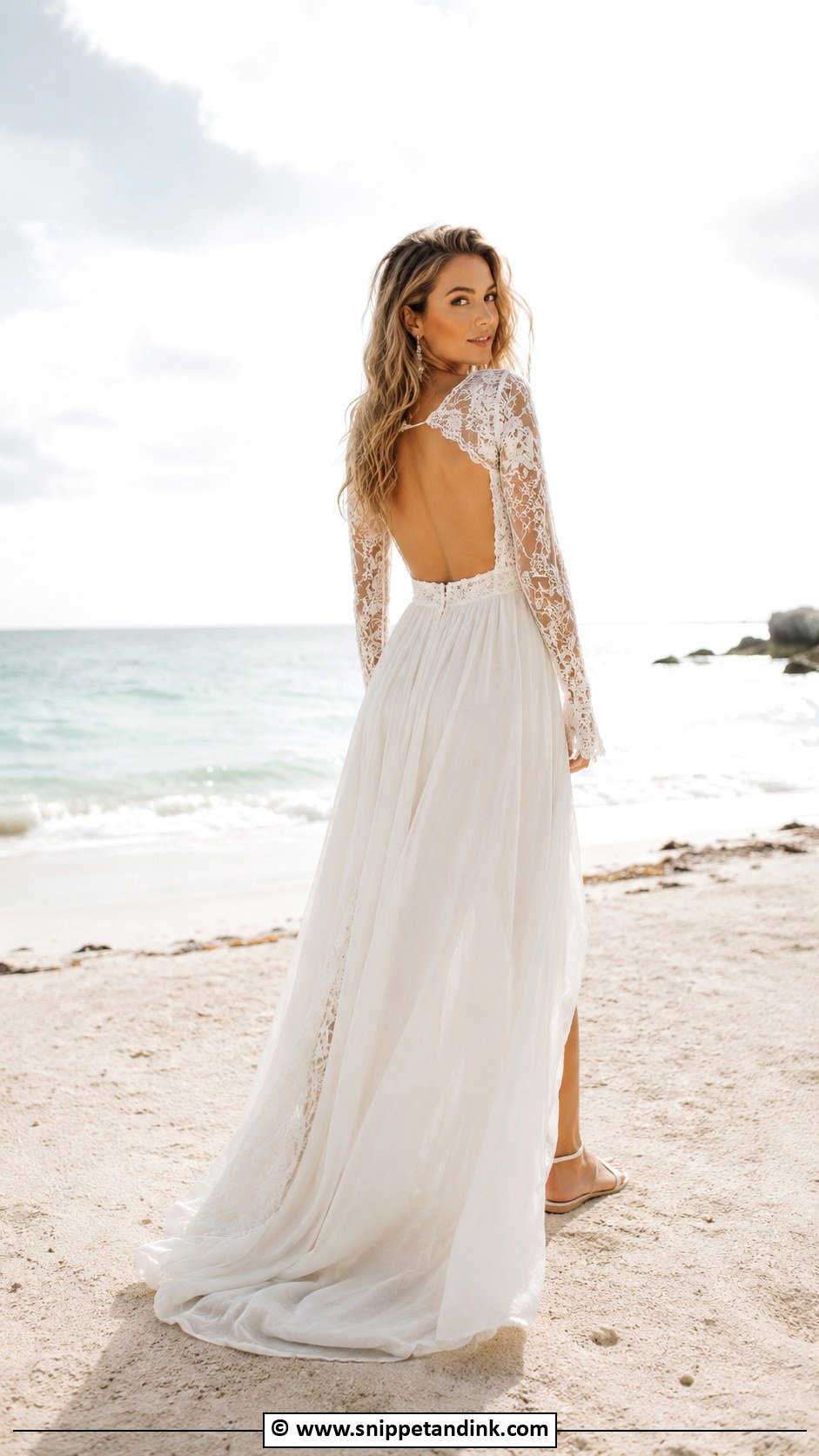
Sleeves on a beach need to breathe. Soft chiffon, airy lace or lightweight crepe, never heavy satin. Sheer sleeves, open backs and simple skirts work by the water. Salt air and sun make sheer synthetic mesh feel warmer than you’d expect, so I lean toward silk chiffon or unlined lace. Loose waves, flat sandals or low block heels for sand and boardwalks, and a short veil or hair ribbon instead of a long veil in coastal wind.
23. Long Sleeve Courthouse Wedding Dress
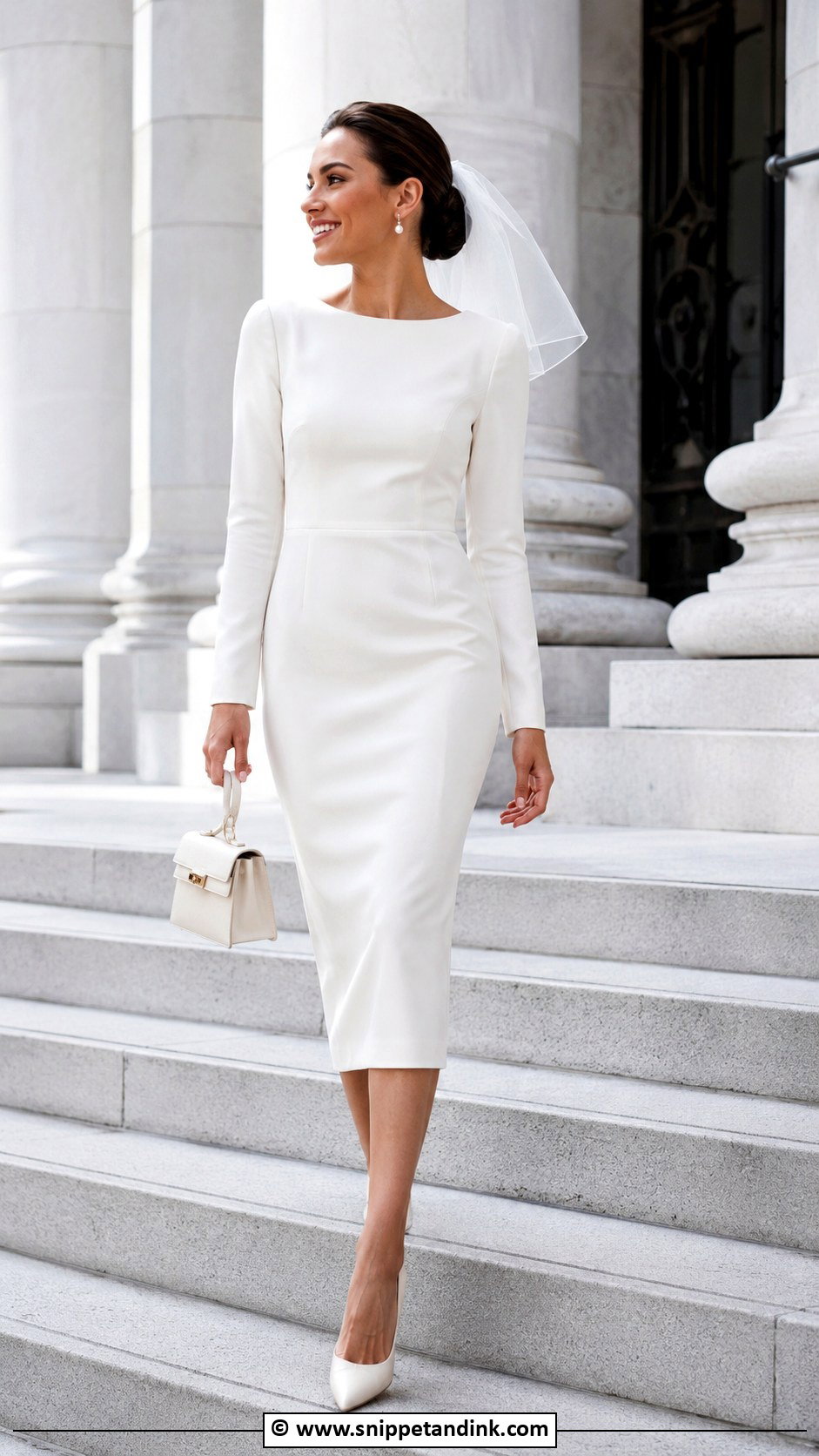
Courthouse dressing can still be fully bridal. A short dress, midi, sheath or column works for a civil ceremony, ideally in crepe or satin that looks refined without volume. Courthouse rooms tend to be small and brightly lit, so a structured sleeve photographs cleaner there than a floaty one. Pointed pumps, pearl earrings, a structured mini bag and a short veil or bow suit city streets afterward.
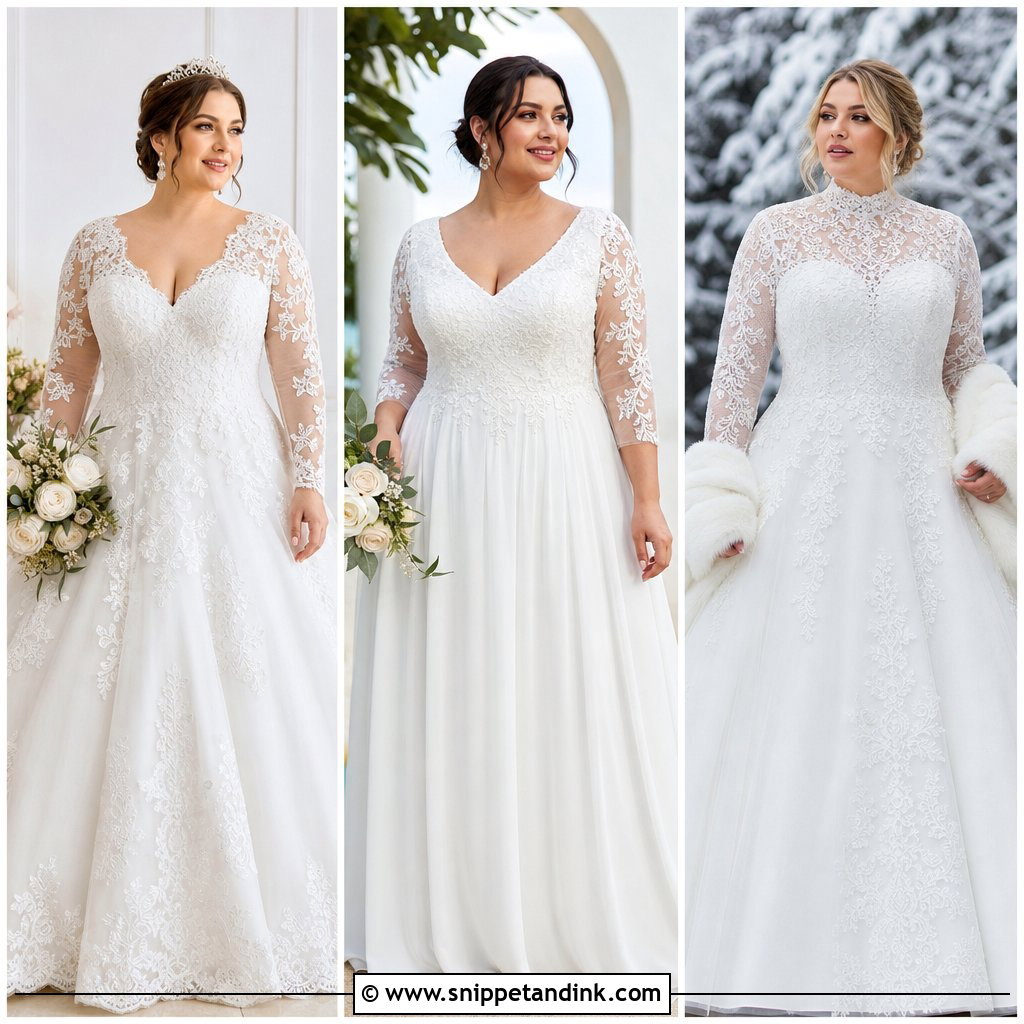
24. Long Sleeve Plus Size Wedding Dress
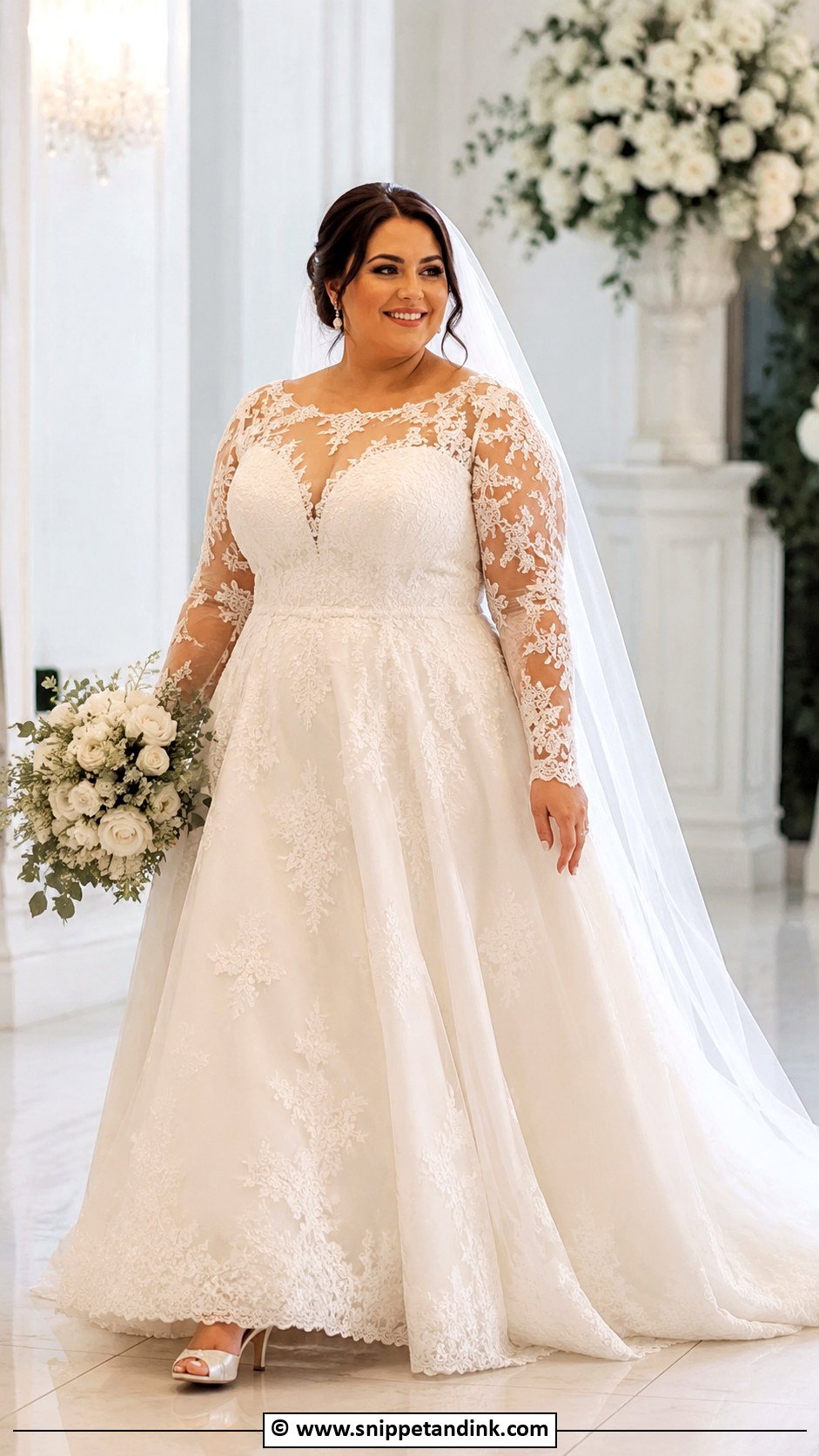
Plus size sleeves need tailoring through the bust, waist, arms and shoulders, and the arm is where most off-the-rack gowns fall short. A-line, structured bodices, wrap-style necklines and fit-and-flare silhouettes all work well. Soft lace sleeves, stretch crepe or lined illusion sleeves stay comfortable all day. I always check that a sleeve has enough ease at the upper arm to bend and hug without pulling the bodice. Supportive heels or elegant flats, and jewelry that highlights the neckline.

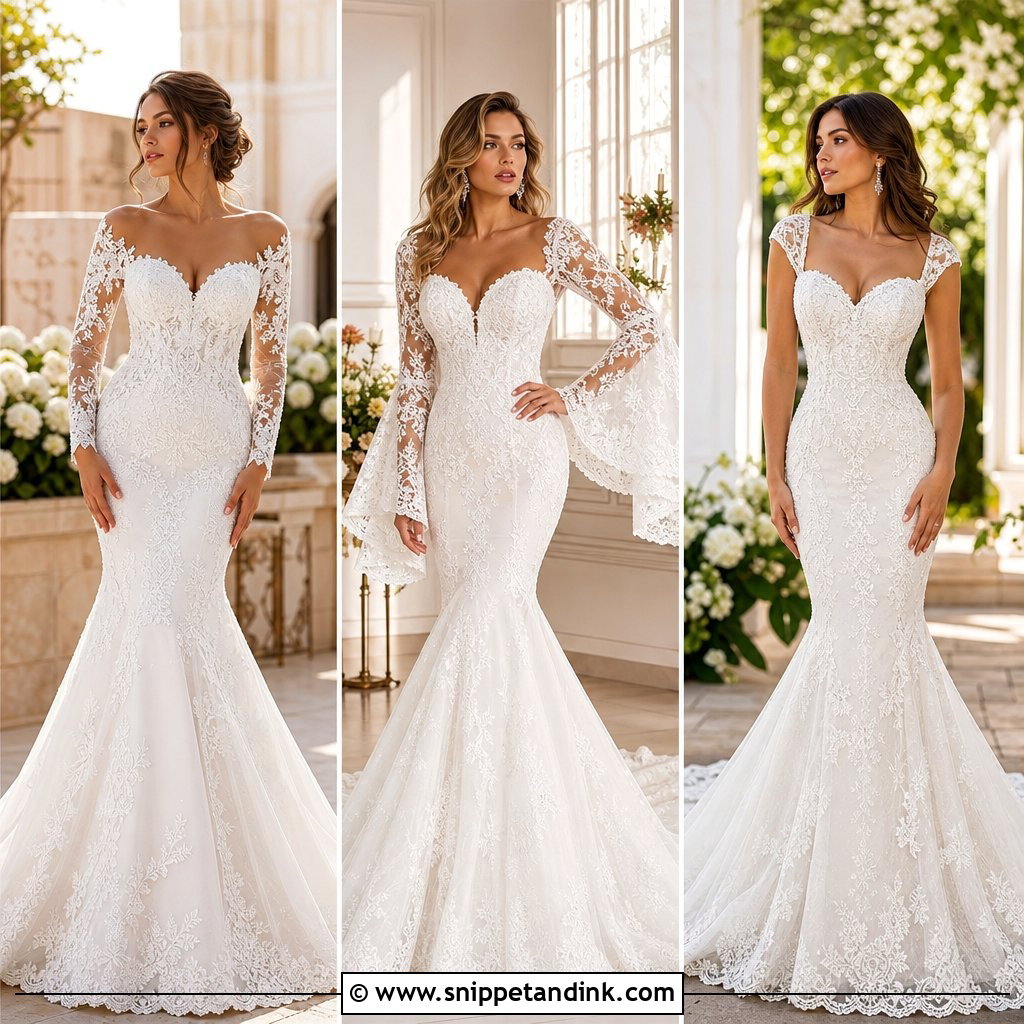
25. Long Sleeve Detachable Sleeve Wedding Dress
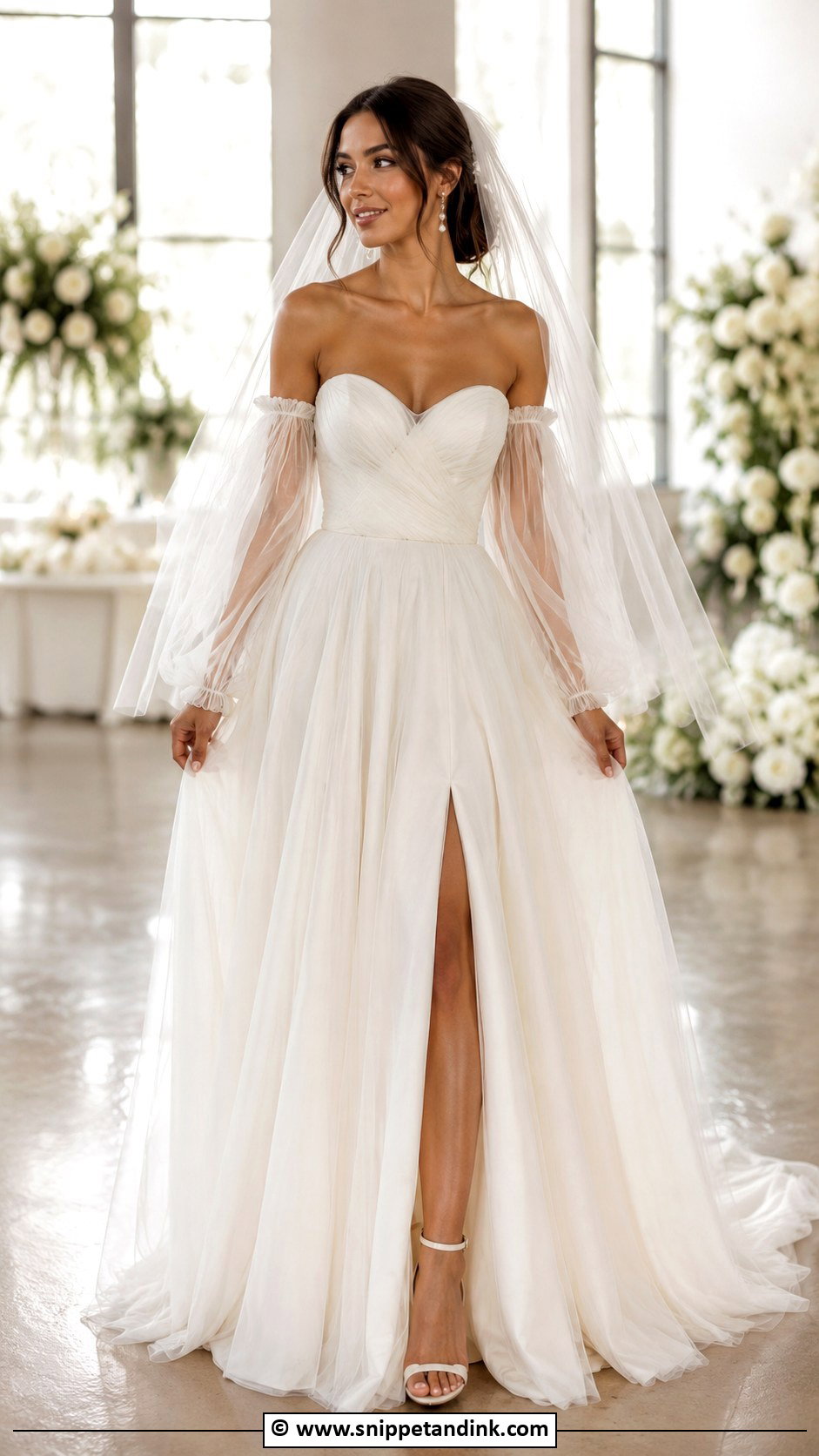
Detachable sleeves give you two looks without a second dress. Lace, tulle, satin, puffed, fitted or draped sleeves can create a formal ceremony outfit, then come off for the reception. Choose a dress that looks finished without them, since both versions will be photographed. The fastening matters: sleeves held only by a ribbon tie tend to slip, while those with snaps or hook-and-eye tape stay put. Versatile earrings and comfortable heels carry through both looks.
How Warm Does a Sleeved Gown Get in Summer?
This is the question I hear most from brides planning a warm-weather wedding. The honest answer is that the fabric and lining matter much more than the sleeve itself. A sheer lace or illusion sleeve with no lining is barely warmer than bare arms. A lined satin sleeve in July is a different story.
- Coolest: unlined lace, illusion mesh and silk chiffon, which let air through.
- In between: lightweight crepe and soft tulle sleeves.
- Warmest: lined satin, mikado and heavily beaded sleeves, best saved for cool months or air-conditioned venues.
If you love a heavier sleeve for a summer date, consider a detachable pair for the ceremony, or ask the seamstress whether the sleeve lining can be removed. Plan shaded spots for outdoor portraits and keep blotting papers on hand, since warm arms in a fitted sleeve can feel stuffy long before the rest of you does.
Sleeves Should Move When You Do
Long sleeves have stayed in bridal fashion because they offer coverage, comfort and character all at once. Lace, satin, crepe, floral applique and cathedral trains each create a different mood. What I care about most in a fitting is not the fabric but how the sleeve behaves when you walk, sit, raise your arms and dance. Get that right, choose accessories that support the dress, and the sleeves will feel like part of you rather than something you’re wearing.
You'll Like These Ideas:









Leave a Reply