
A high neck with long sleeves is the most covered bridal silhouette there is, and that is exactly why fit decides everything. There’s nowhere for a pulling seam or a tight armhole to hide. The neckline frames your face; the sleeves balance the skirt. Done well, the look can be minimal, romantic, vintage or modest. In the fitting room, I care less about the photo a bride brought and more about two simple tests: can she turn her head without the collar biting, and can she hug someone without the sleeves dragging the whole bodice upward? The gowns below run from plain crepe sheaths to lace ball gowns, with what I’d check on each.
Sleeve and Collar Checks I Do at Every Try-On
Long sleeves and a high neck are where off-the-rack gowns fail most often, because they’re cut for a sample size and every arm and neck is different. I run the same short routine with every bride before we even talk about lace or satin.
- Arms straight up, then forward as if hugging. If the waist lifts or the shoulder seam digs in, the armhole is too low or the sleeve too narrow.
- Bend the elbow fully. A sleeve without ease at the elbow will strain against the seam all day.
- Look at the cuff on the wrist bone. It should just cover it. Sleeves that reach the knuckles look borrowed and get stained at dinner.
- Turn your head left and right and look down. A collar that touches the jaw or presses on the throat needs to be lowered or softened.
- Hold illusion mesh against your inner wrist in daylight. Mesh comes in several skin tones, and the right one disappears.
Most of these are fixable by a good seamstress, as long as you spot them early. Lowering a collar or adding a gusset under the arm is far easier before lace has been cut and reshaped.
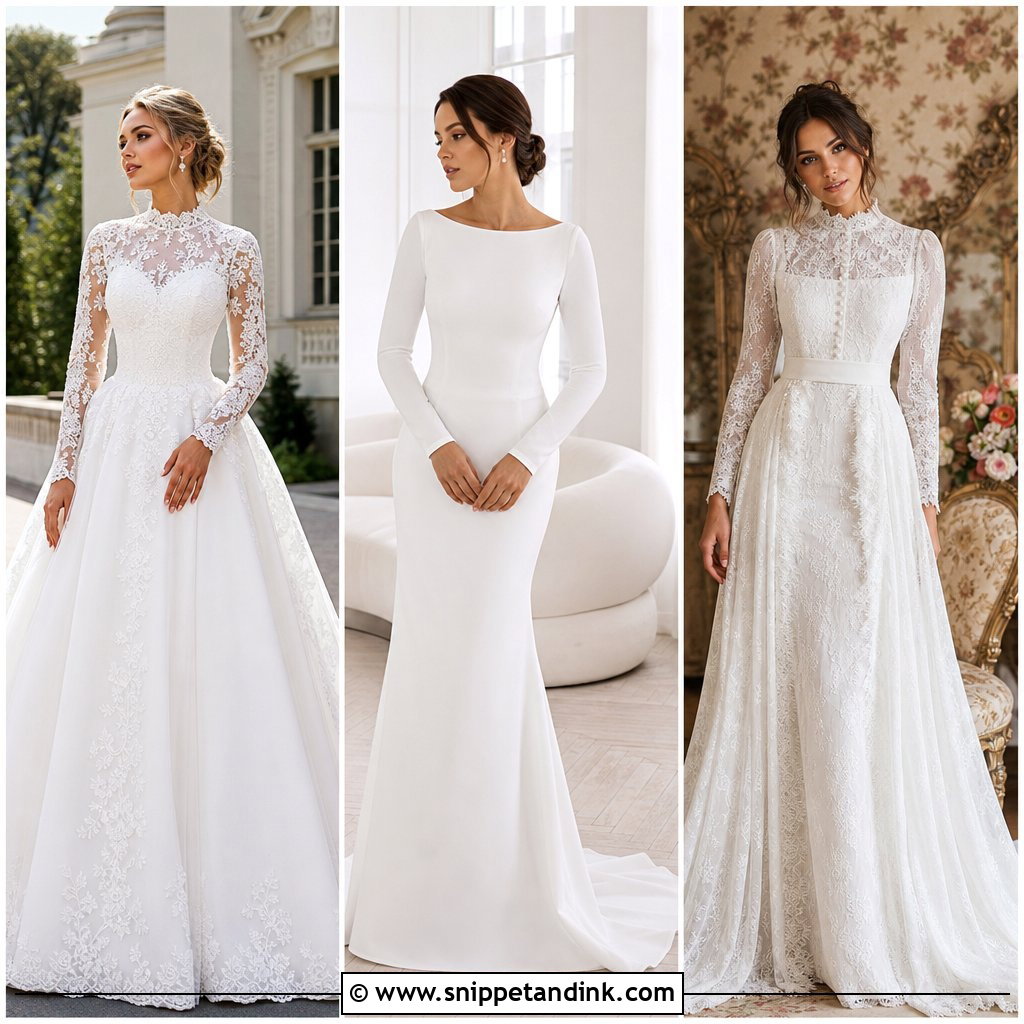
1. High Neck Long Sleeve Lace Ball Gown
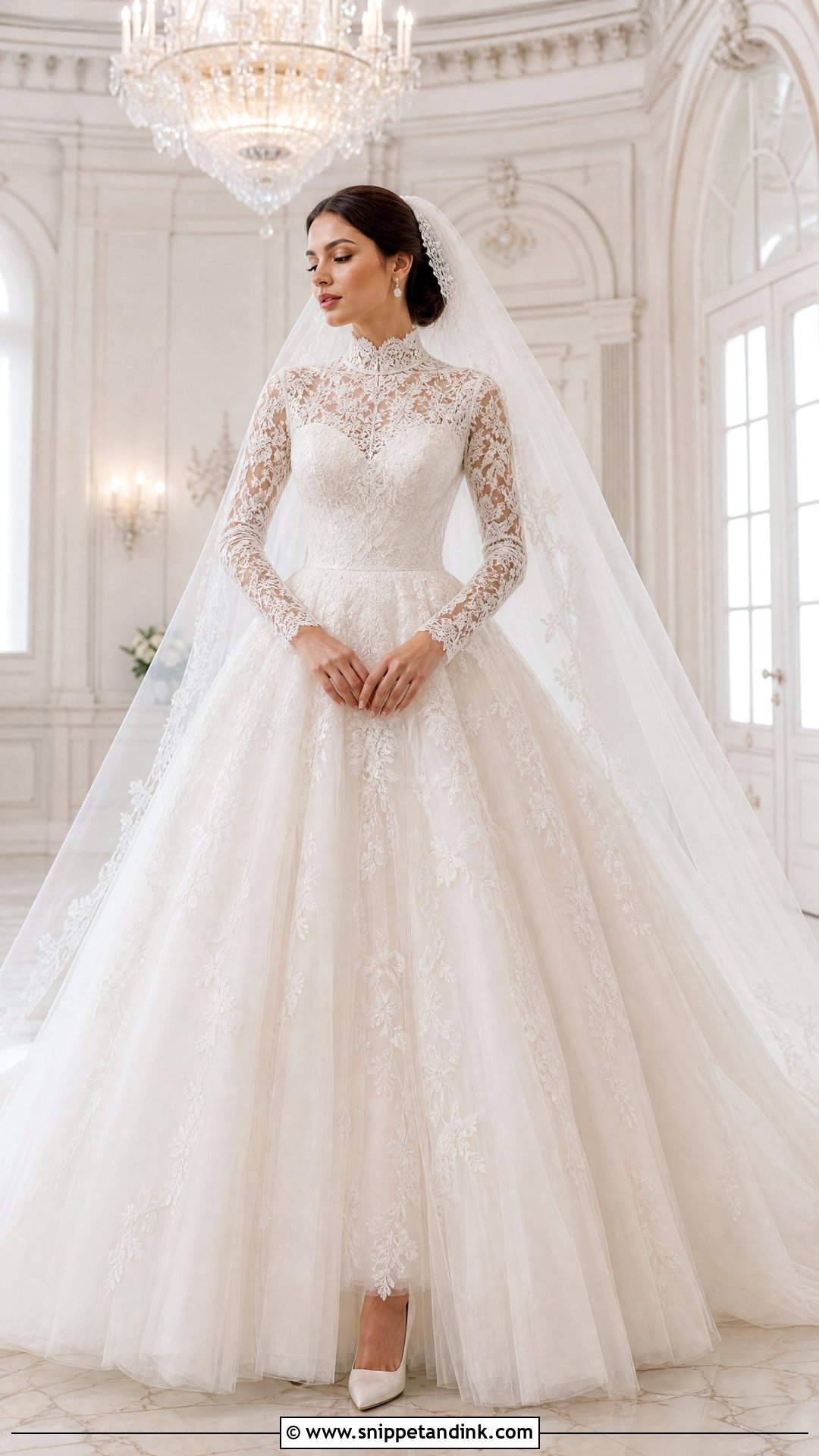
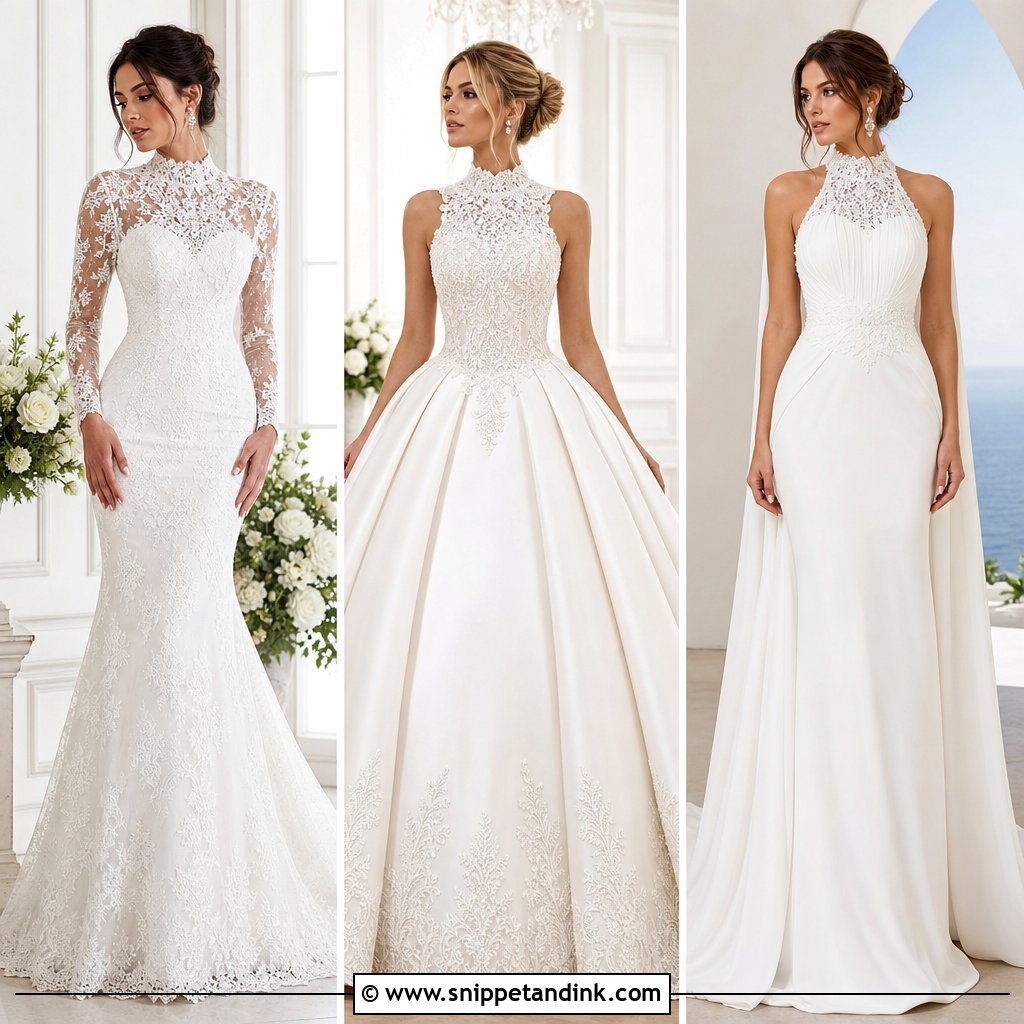
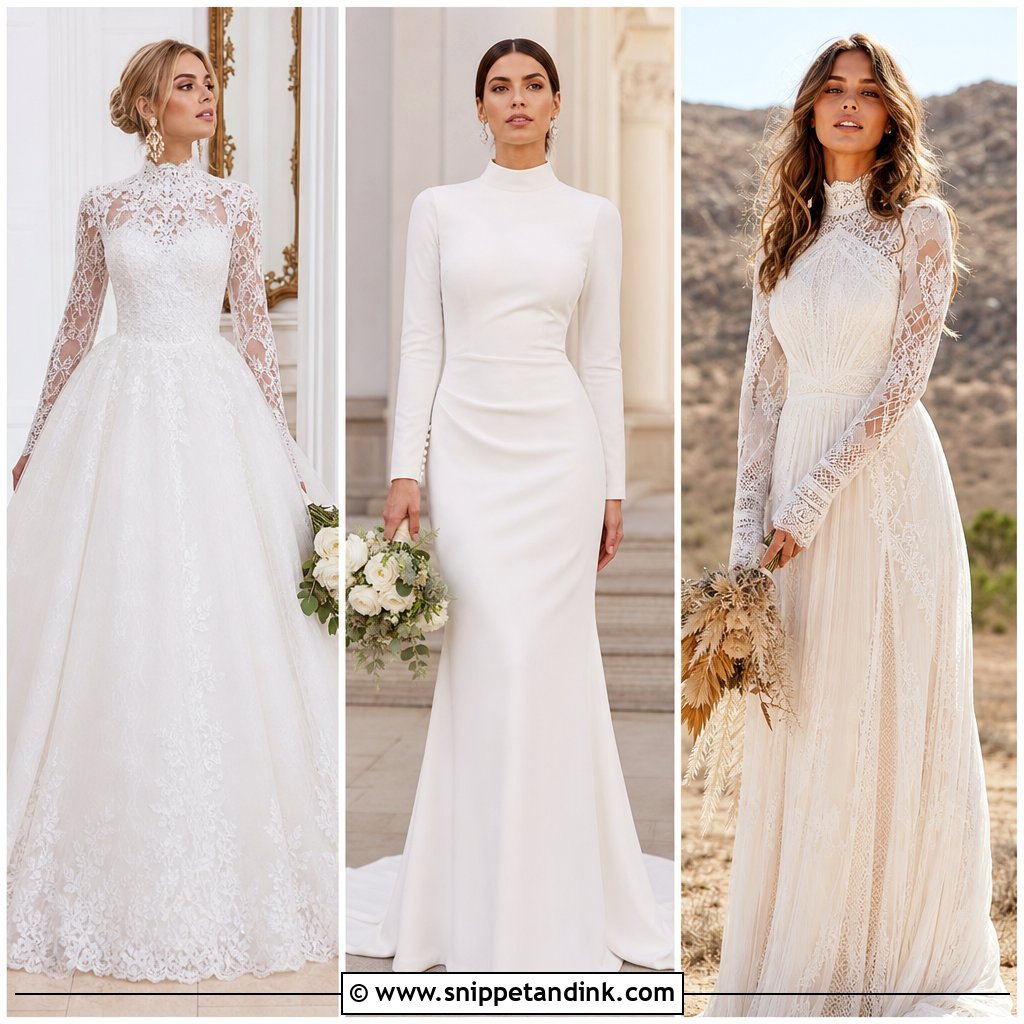
This is the classic version: a lace-covered high bodice over a full tulle or organza skirt. Sheer illusion sleeves keep the top half light, and appliqués carried from bodice to skirt join the two. The illusion mesh should be matched to your skin tone, not the sample’s; a too-pale mesh looks grey in photos. A chapel train gives impact without the wrangling of a cathedral one. Skip the necklace and keep earrings to pearl studs. Ballrooms and historic estates suit the formality.
2. High Neck Long Sleeve Crepe Sheath Dress
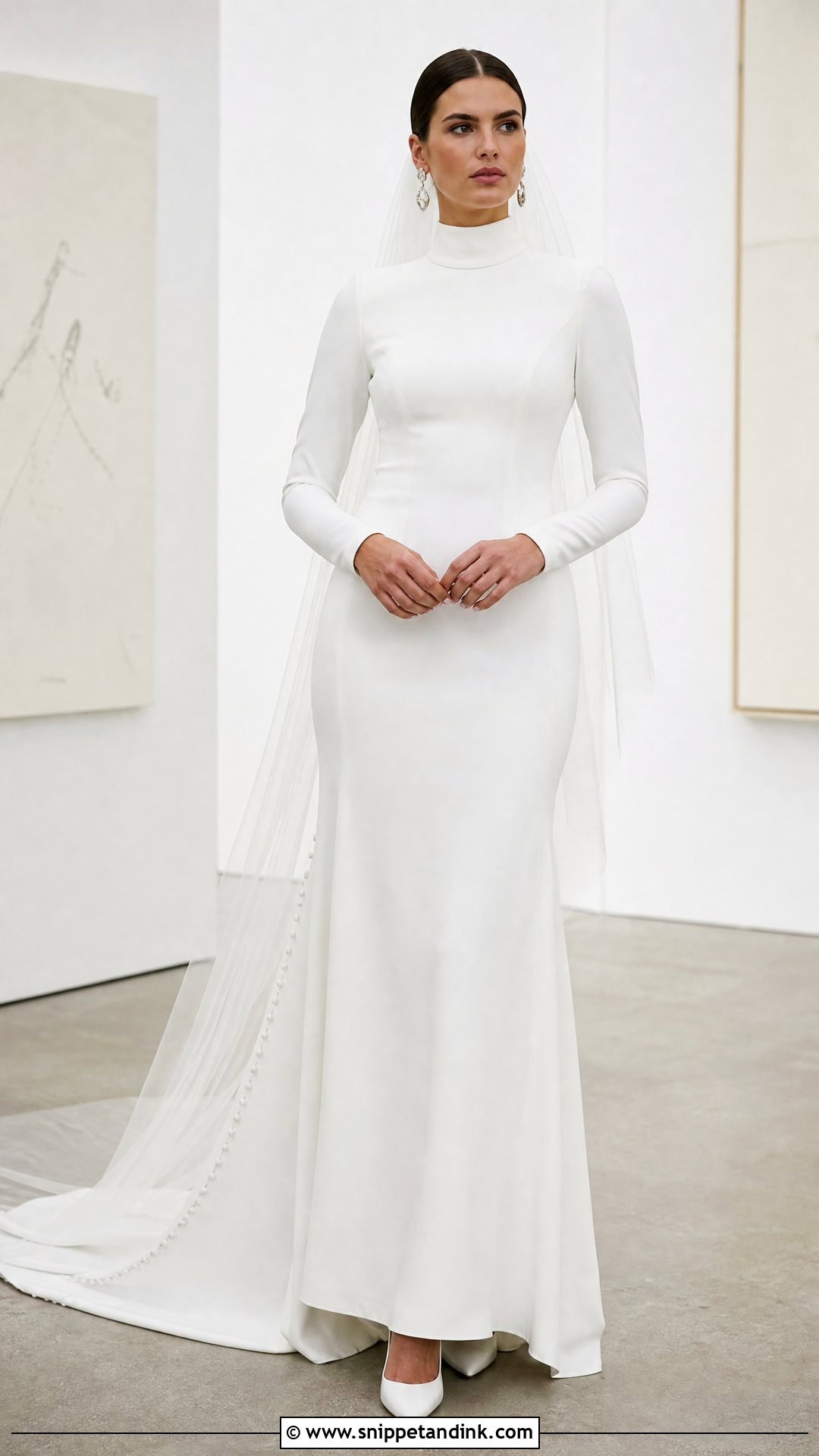
Crepe is the plainest fabric here and the hardest to fit, because a sheath in crepe shows every tight spot as a ripple. I ask for full lining in the sleeves; unlined crepe sleeves cling to the arm once you warm up. A mock neck and a column of covered buttons down the back are all the detail it needs. Sculptural earrings and a centre-parted bun keep it modern. Courthouses, galleries and city venues let the tailoring carry the look.
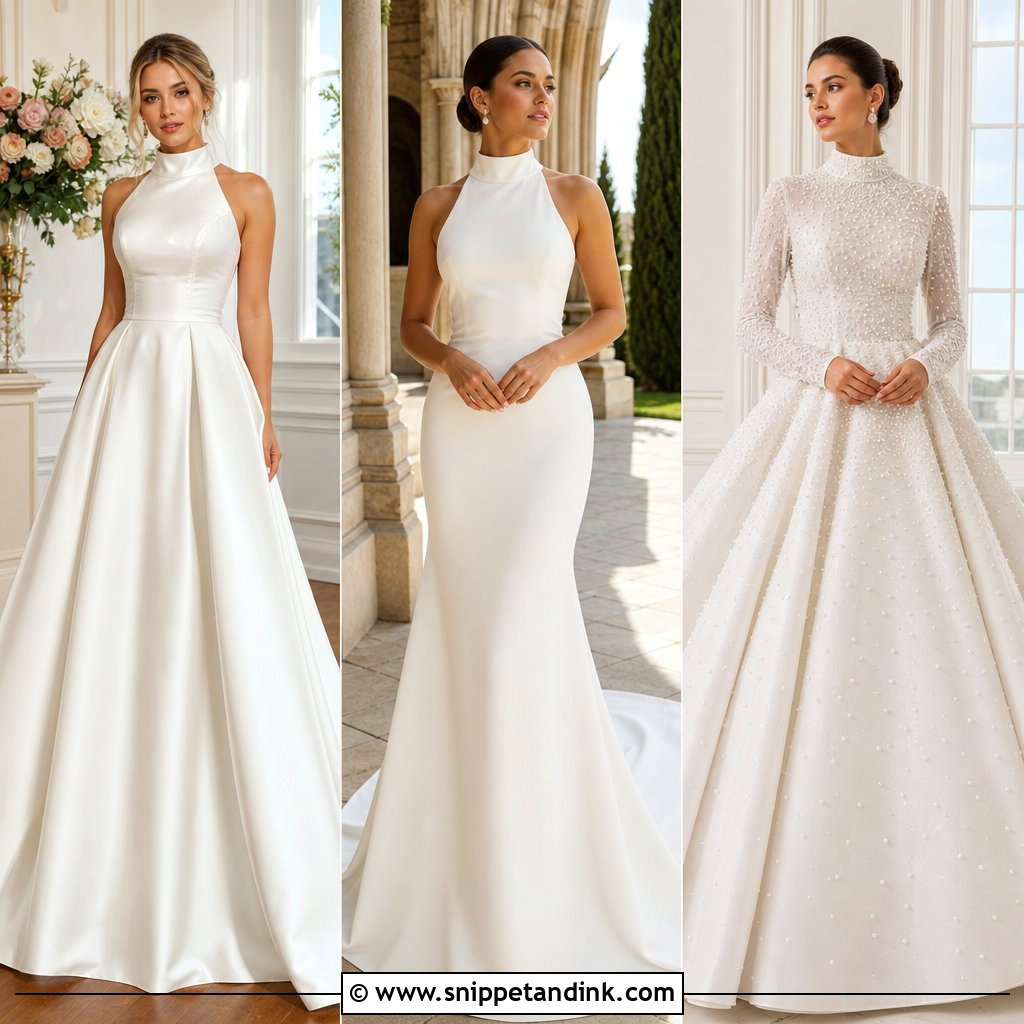
3. High Neck Long Sleeve Satin A-Line Dress
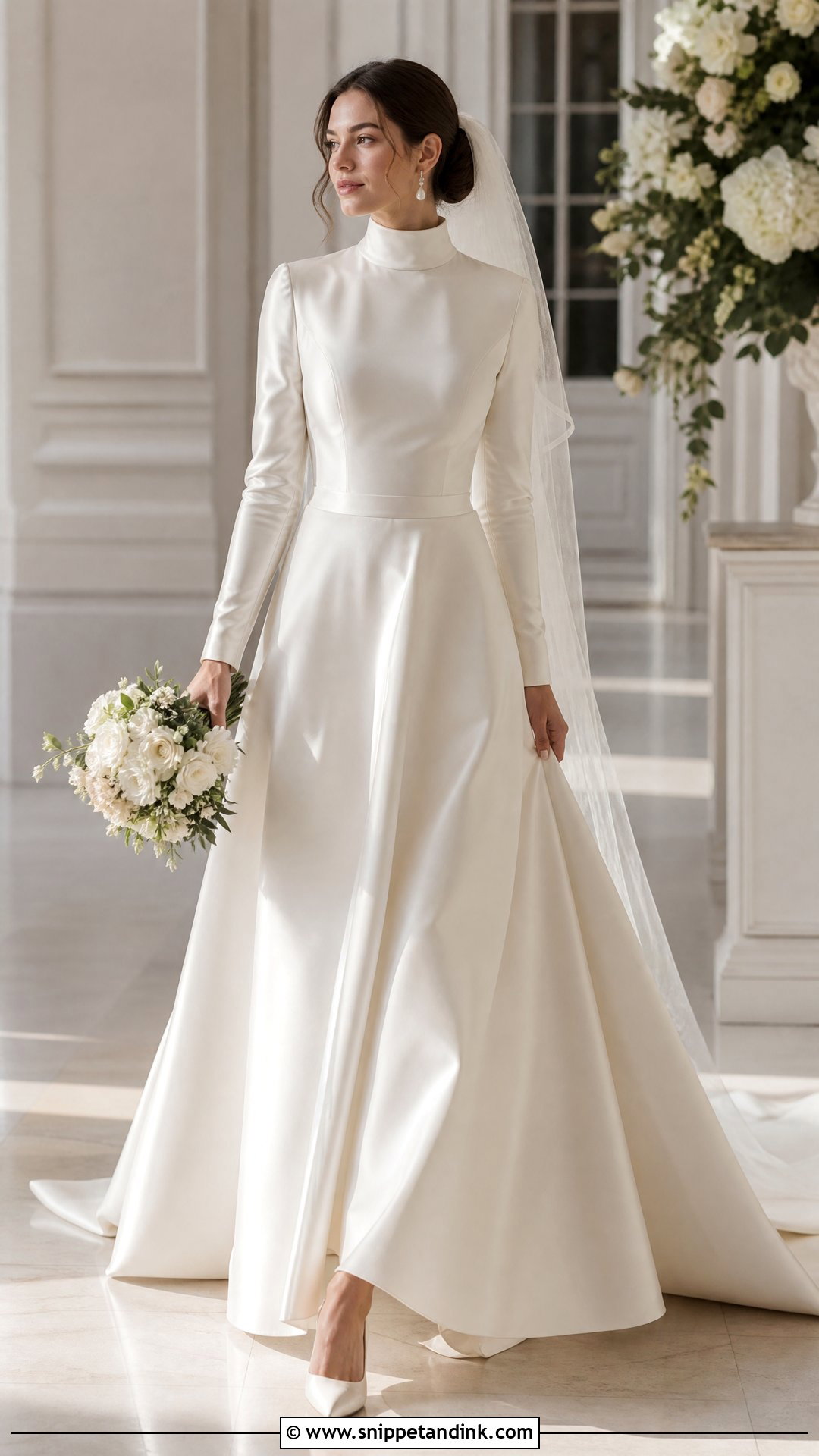
Satin has natural sheen, so with an A-line it looks polished without ornament. A softly structured high neck defines the bodice, and the fitted sleeves need to be cut with a little ease at the elbow, since satin doesn’t stretch and binds when you bend your arm to hold the bouquet. A narrow waistband or seaming gives shape. Pockets are worth asking for. Satin is warm, so this is my pick for autumn and winter rather than a hot summer afternoon.
4. High Neck Long Sleeve Mermaid Wedding Dress
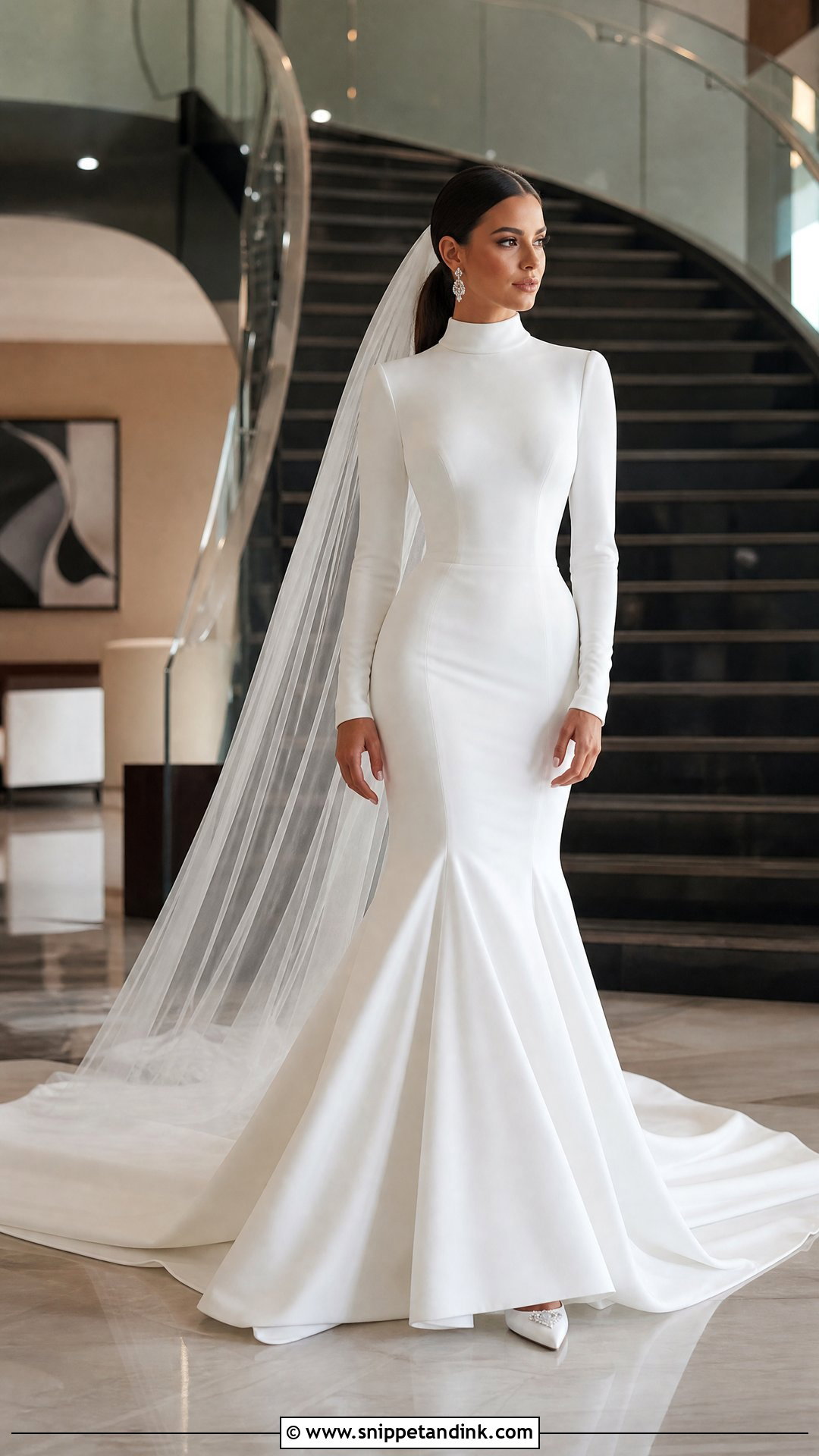
A mermaid that fits from the high neck down to the knee is the most demanding silhouette on this list. The knee flare has to sit exactly at the knee, or you’ll walk in small steps all day. Stretch crepe gives the most movement; satin looks sleeker but is less forgiving. Long fitted sleeves balance the flare. I’d make the bride sit, climb a step and dance at every fitting, because tightening the hips after a weekend of nerves is a common last-minute request. A narrow veil that follows the train avoids extra width.
5. High Neck Long Sleeve Chantilly Lace Dress
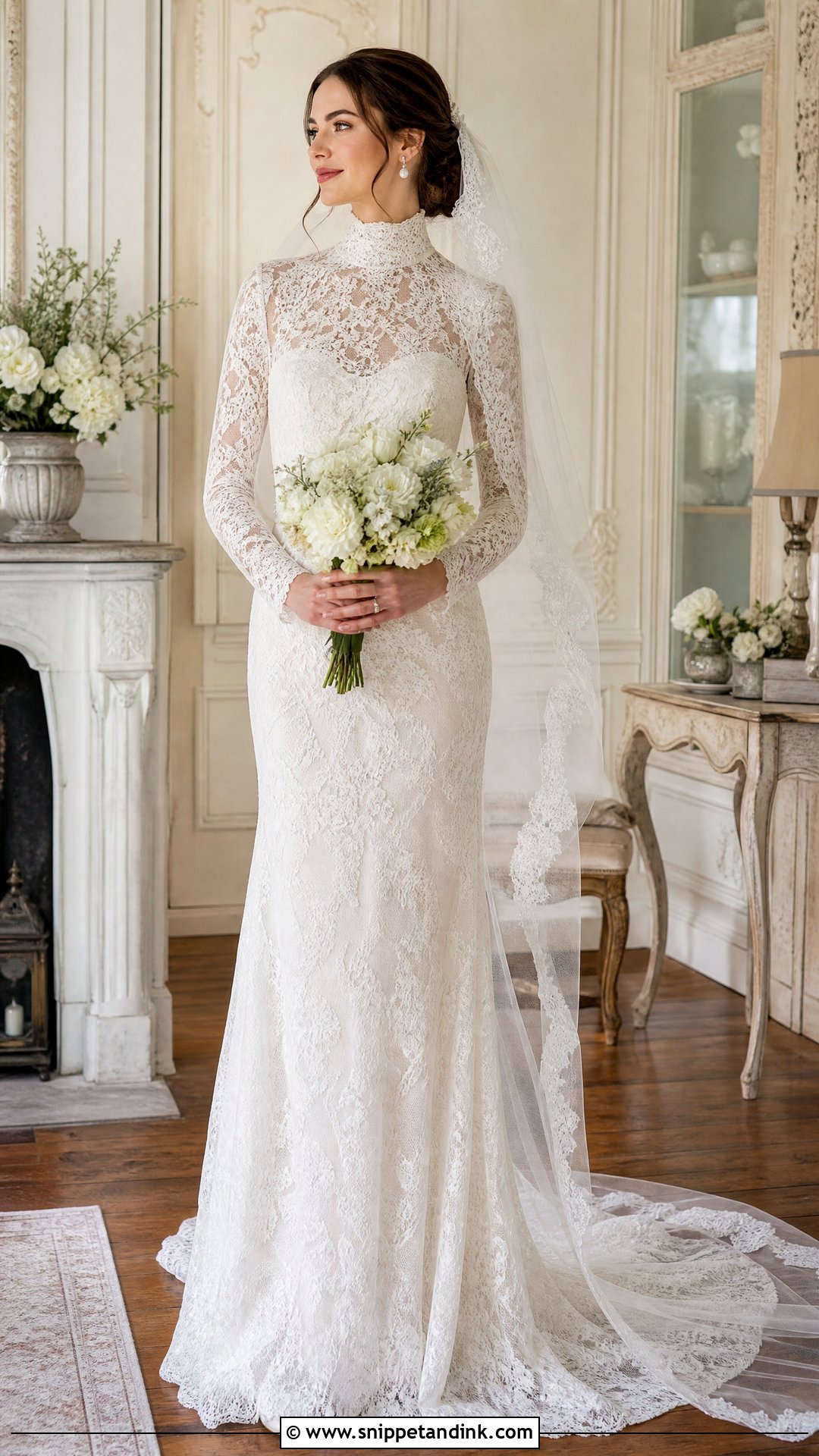
Chantilly is a fine, flat lace with delicate outlines and a soft hand, so it sits well at the throat without scratching. Fine Chantilly lace on a softly fitted gown with scalloped edges and narrow sleeves looks quietly detailed. A nude lining shows the pattern; an ivory one gives fuller coverage. I check the scallops at the cuffs, because thin lace edges fray where they brush against a table. A lace-edged veil that repeats the gown’s texture finishes it. Daylight venues let you see the pattern.
6. High Neck Long Sleeve Mikado Ball Gown
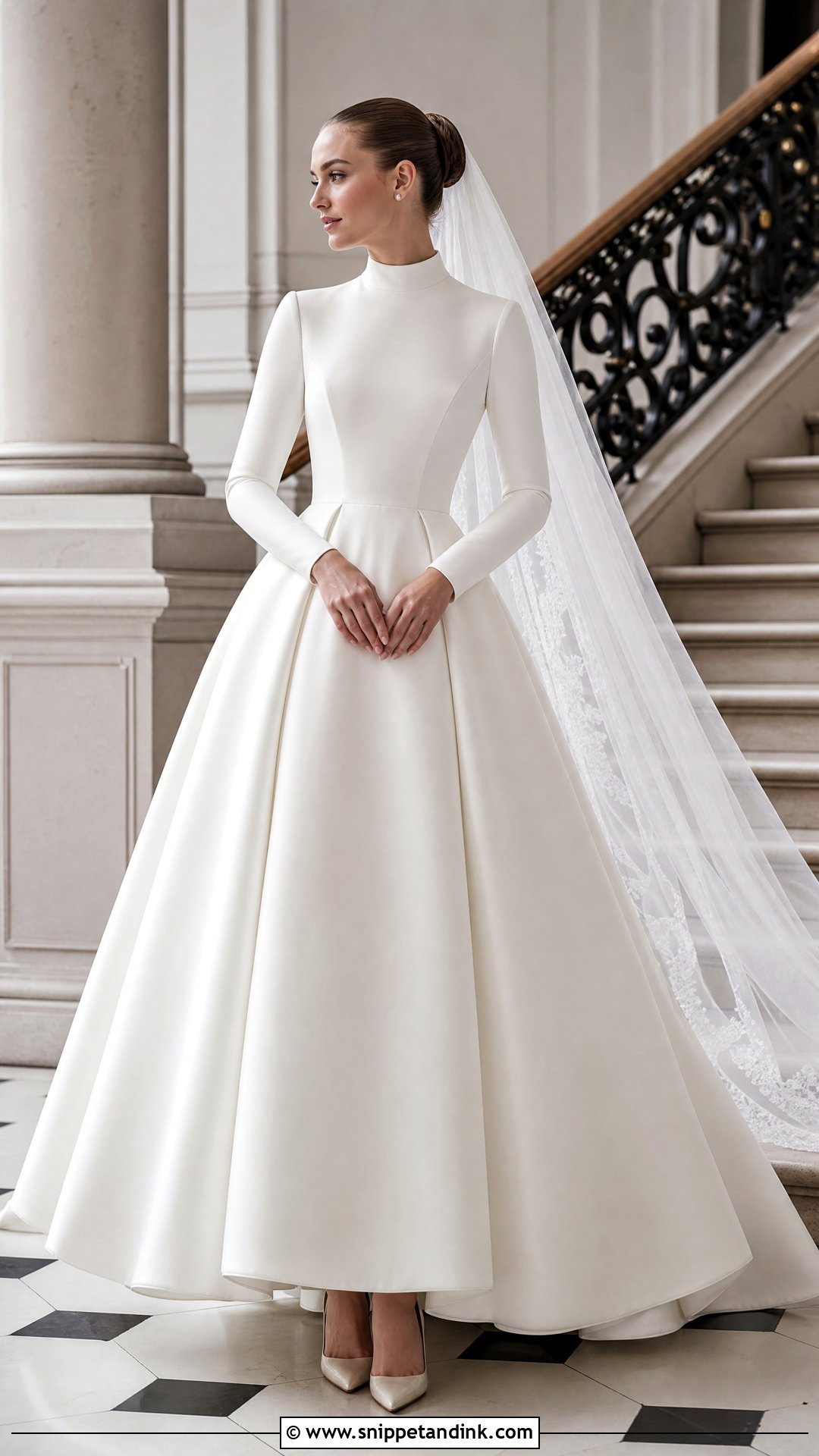
Mikado is a stiff, heavy silk-blend weave, and on a high-neck ball gown it gives a strong, architectural shape with almost no decoration. The downside is movement: Mikado sleeves don’t give, so I’d have the armholes cut high and close and the sleeves eased at the back, which counterintuitively lets you lift your arms more freely. A low open back or a row of covered buttons adds a quiet surprise. Keep the bouquet neat and tight. Museums, staircases and winter weddings suit it.
7. High Neck Long Sleeve Floral Appliqué Dress
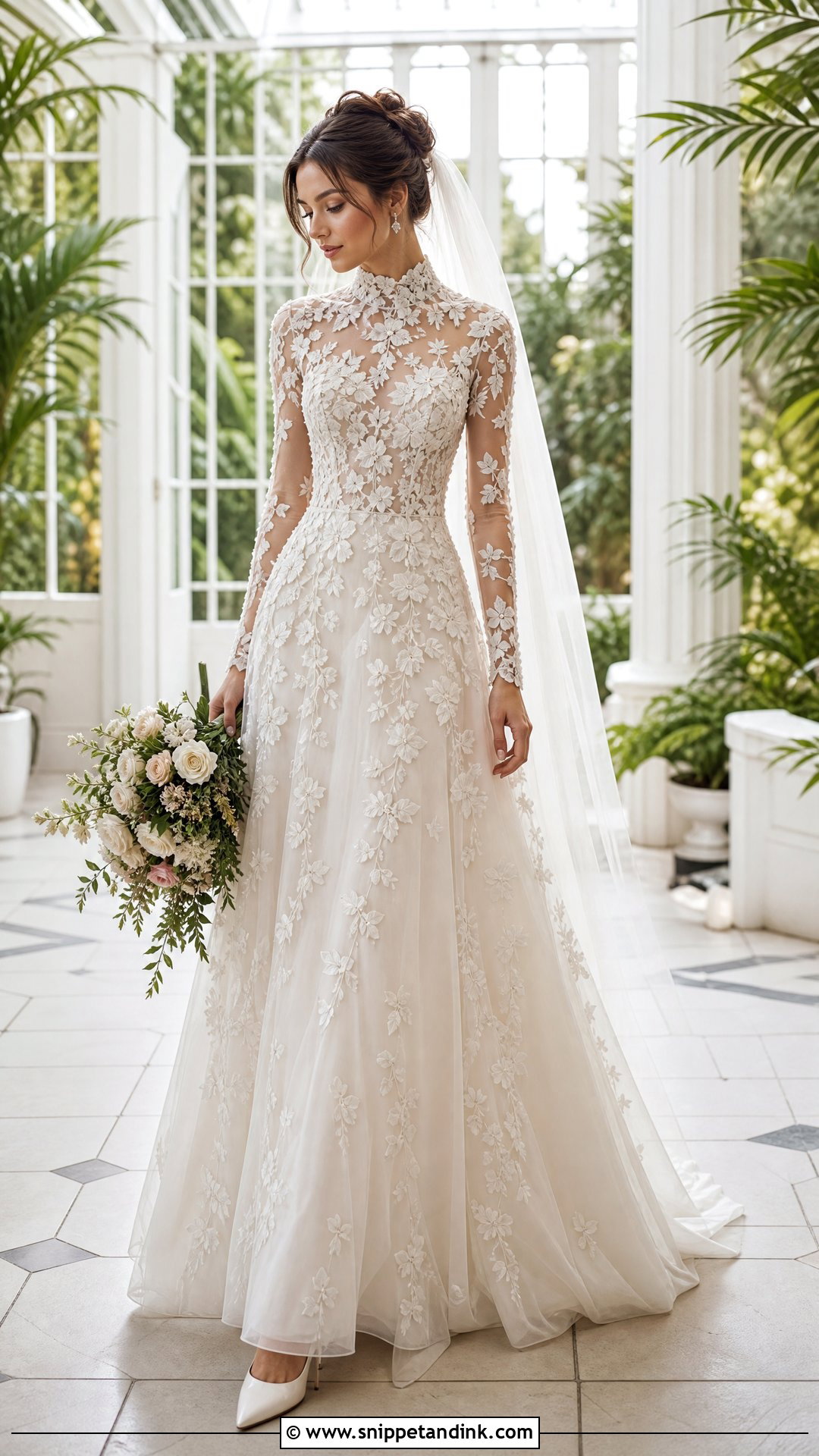
Raised floral appliqués give a covered dress real texture. On an illusion bodice, the flowers across the neckline, sleeves and waist also do a practical job: they hide where the mesh joins the lace. A soft A-line gives them room. Look at the edges of each flower; unsecured petals catch on veil tulle constantly. A plain veil and a twisted updo keep the flowers on show. Conservatories and botanical venues echo the theme.
8. High Neck Long Sleeve Pearl Beaded Dress
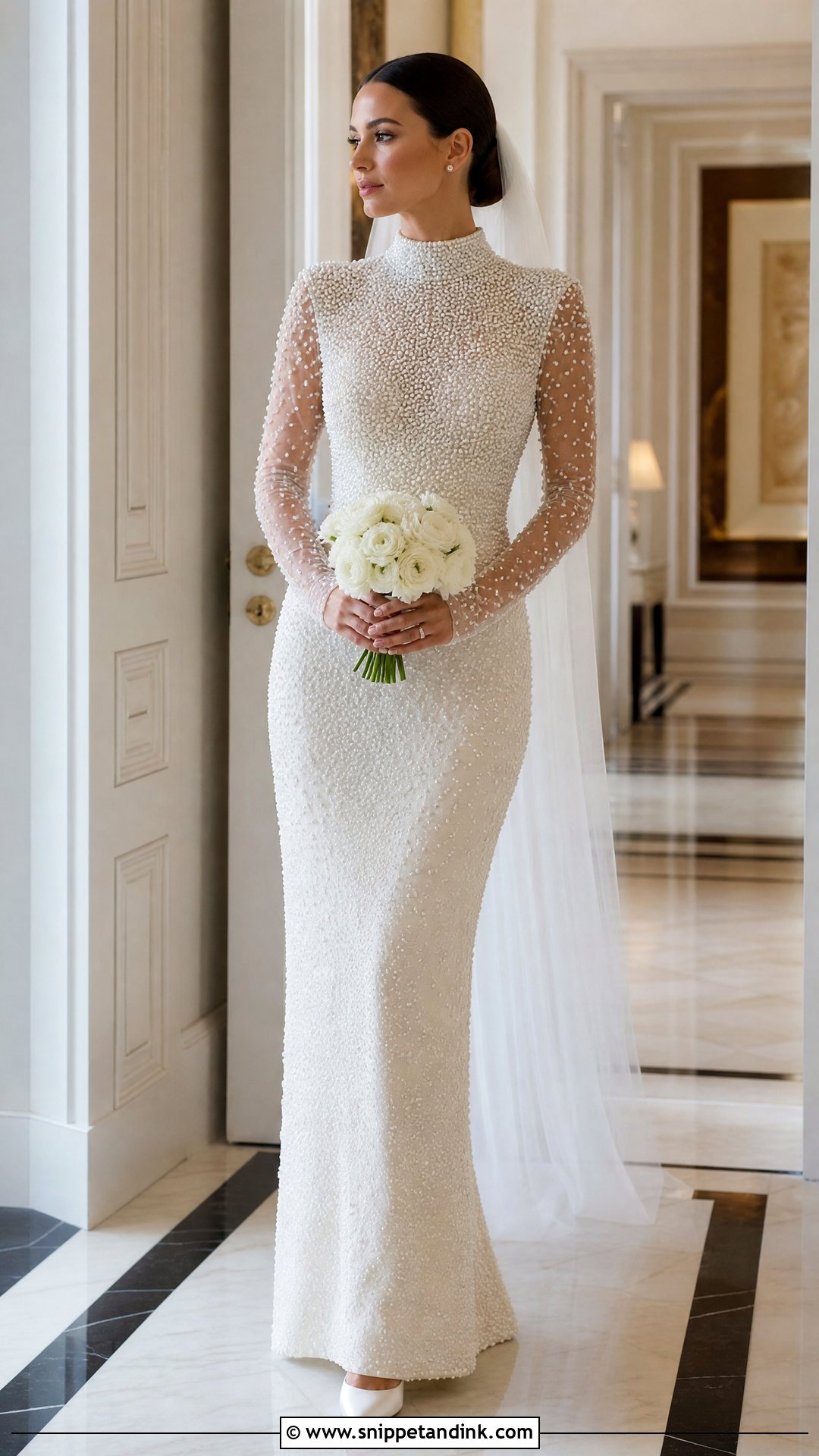
Pearls on illusion sleeves and around the neckline give a soft glow without glitter. On a column or gentle A-line, the beading reads as intentional rather than busy. The inner sleeve is my main concern: pearls are sewn through the mesh, and every knot sits against your arm, so a fine lining or a facing at the inside of the sleeve makes a long day far more comfortable. Pearl studs and an unembellished veil keep the styling quiet. Hotels and evening receptions suit the soft shine.
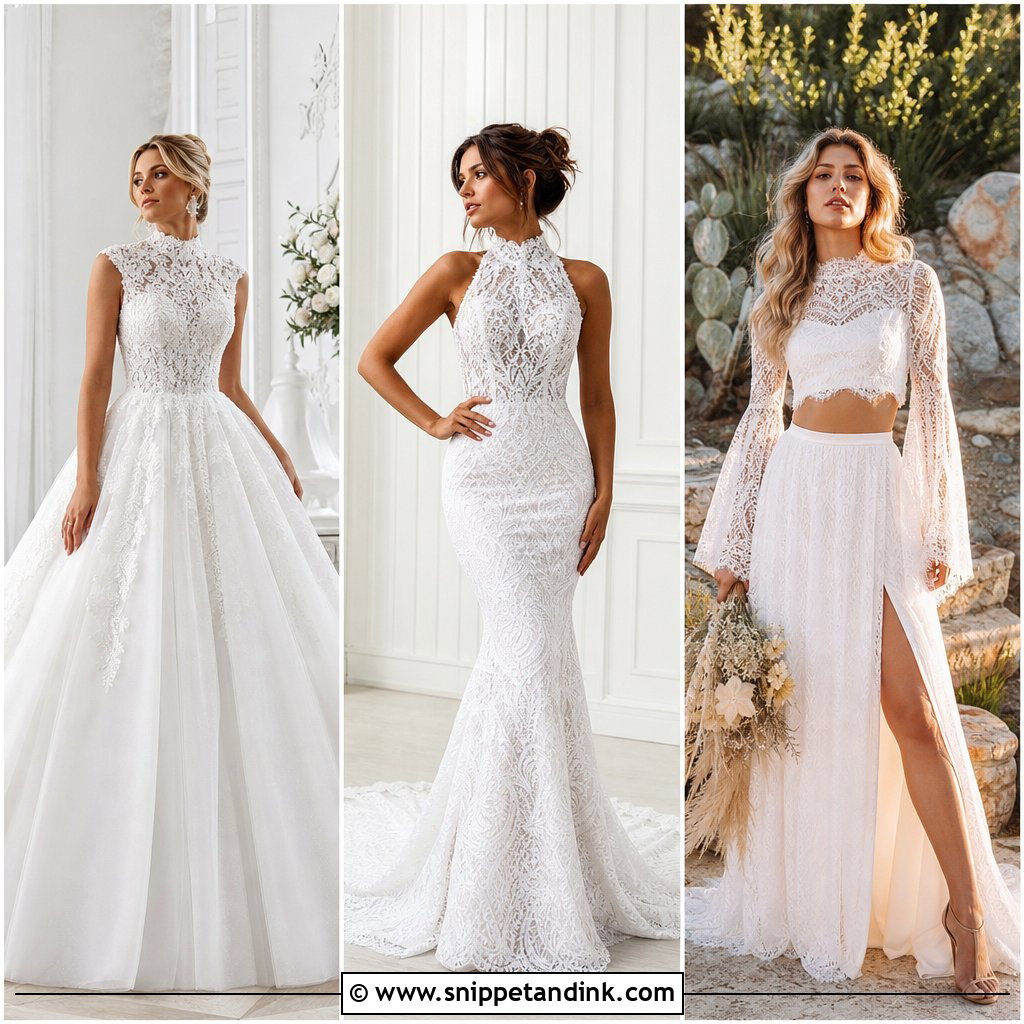
9. High Neck Long Sleeve Boho Lace Dress
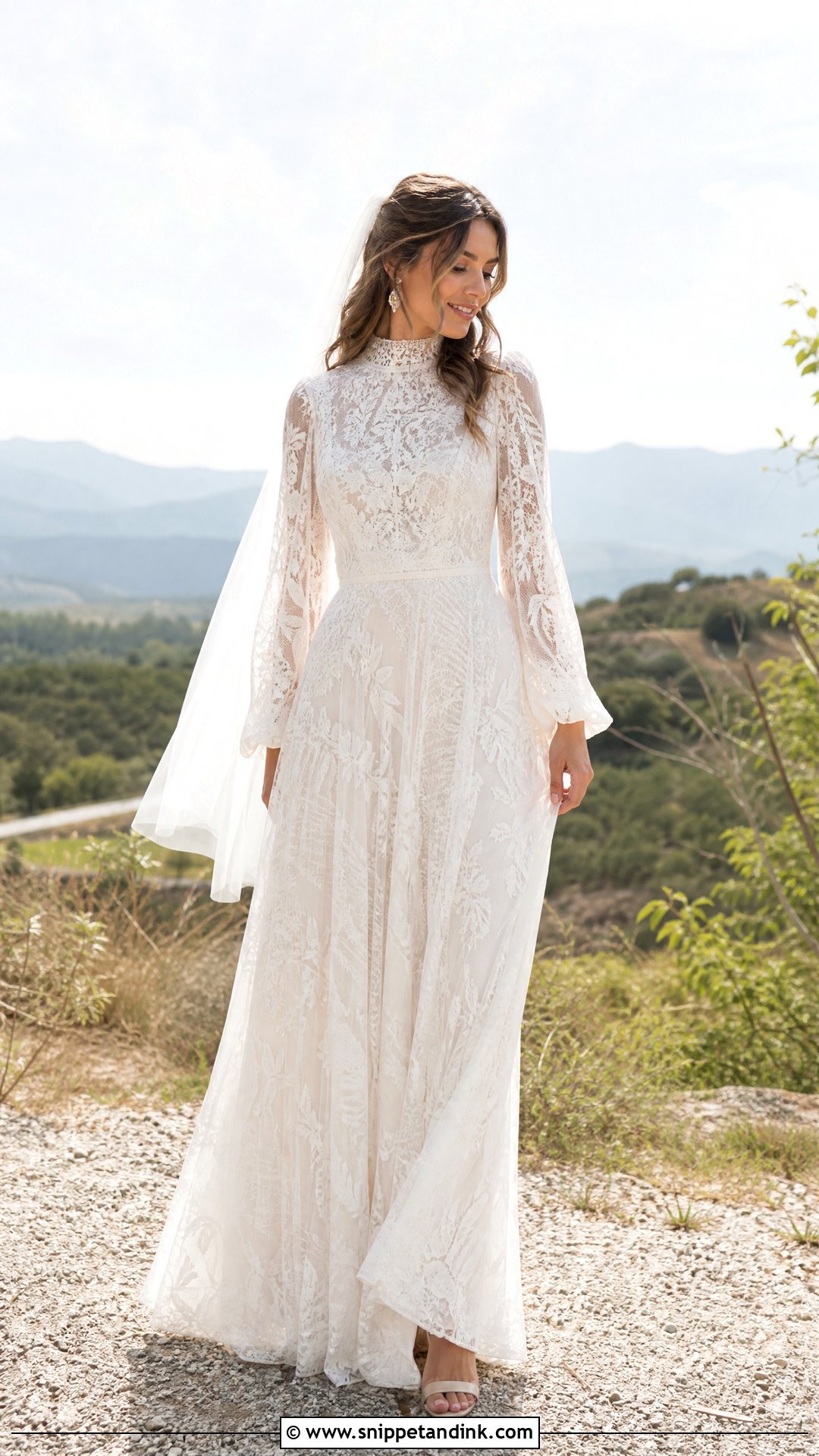
Boho lace relaxes the covered silhouette. A fluid sheath or soft A-line in crochet-inspired lace, botanical lace or embroidered tulle moves easily, and slightly looser sleeves with a light lining let air in. That airflow matters for the outdoor settings this dress belongs to. Loose waves, block-heel sandals and a simple tulle veil or floral comb suit it. Do a walk test on the real ground surface: a lace train on sand or bark picks up debris quickly, and a short sweep is often wiser.
10. High Neck Long Sleeve Victorian Wedding Dress
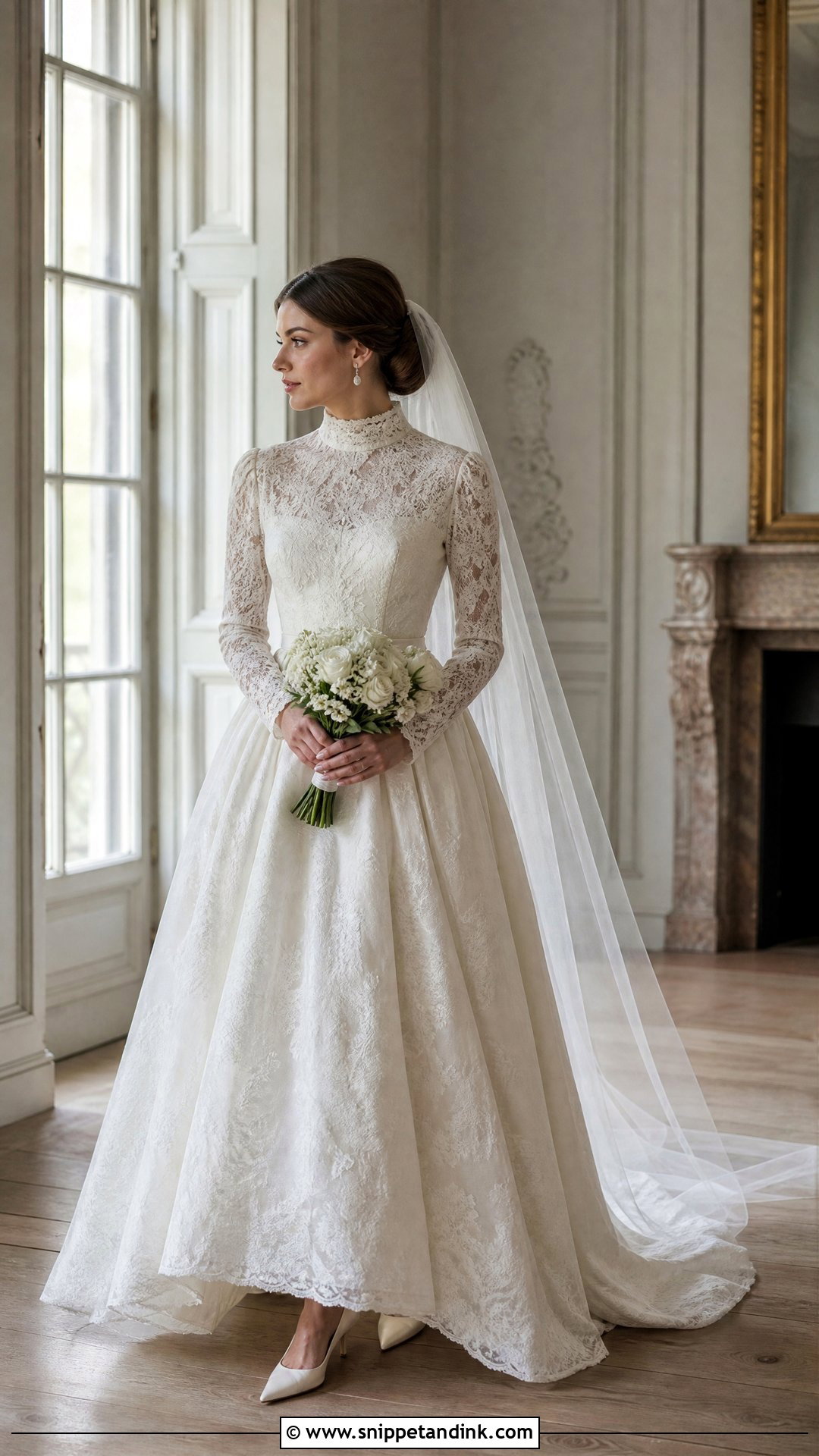
Victorian details are a short step from costume, so I use them sparingly. A raised lace collar, a fitted bodice, long sleeves with narrow cuffs and tiny covered buttons are enough. Keep hair, makeup and earrings modern to stop it tipping into a period drama. The collar should have a soft interfacing or boning short enough to let you look down at your vows. Historic estates, libraries and old theatres are natural backdrops.
11. High Neck Long Sleeve Minimalist Column Dress
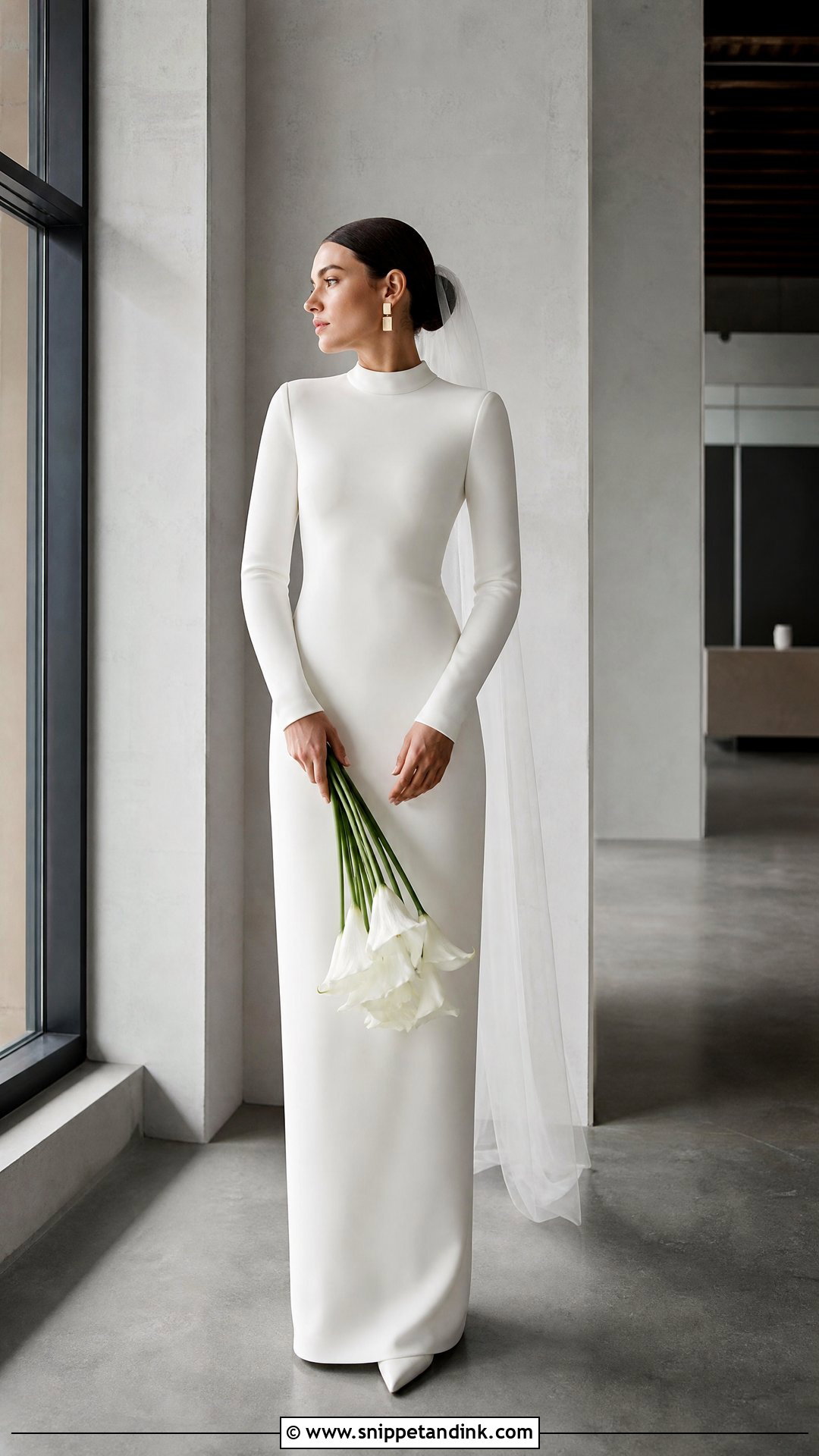
With no lace or beading, a column has nothing to hide behind, so this one lives or dies on tailoring. Matte crepe, silk or double-knit with clean shoulder seams, a straight fall from the hips and a short sweep train look modern. A centre-back slit is not optional; without it you’ll shuffle. A narrow cathedral veil and long-stemmed flowers repeat the vertical line. Lofts, galleries and rooftop ceremonies suit it.
12. High Neck Long Sleeve Tulle A-Line Dress
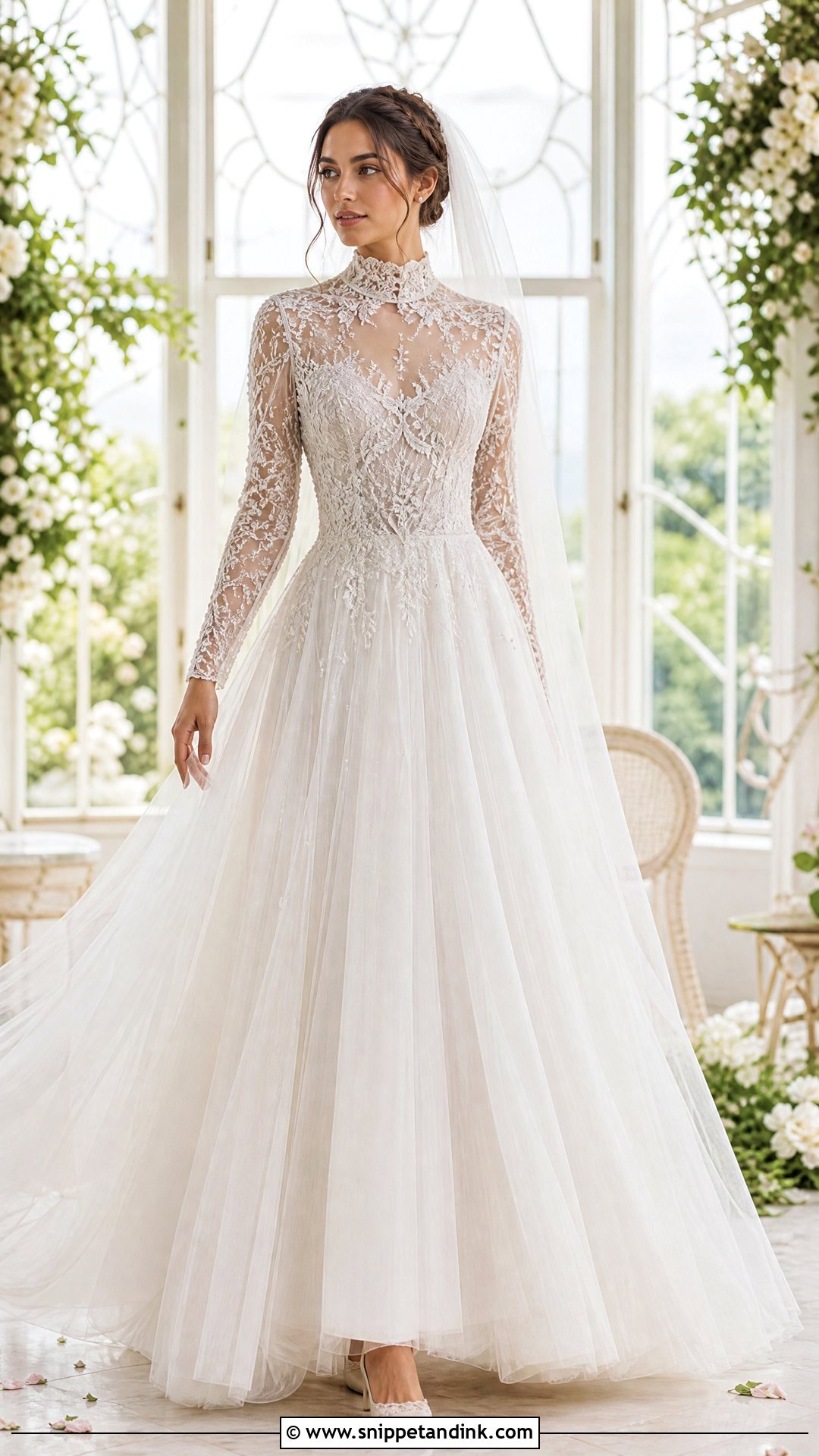
Tulle floats, which is why it suits a covered bodice that might otherwise look heavy. An illusion bodice with light embroidery, sheer sleeves and a gathered A-line skirt look airy. Tulle skirts are built in layers, and I always ask how many: past a certain number, the skirt gets warm and heavy around the legs. A fingertip veil blends into the skirt. It gives volume without the corsetry of a ball gown, and garden rooms and bright ballrooms suit its softness.
13. High Neck Long Sleeve Embroidered Dress
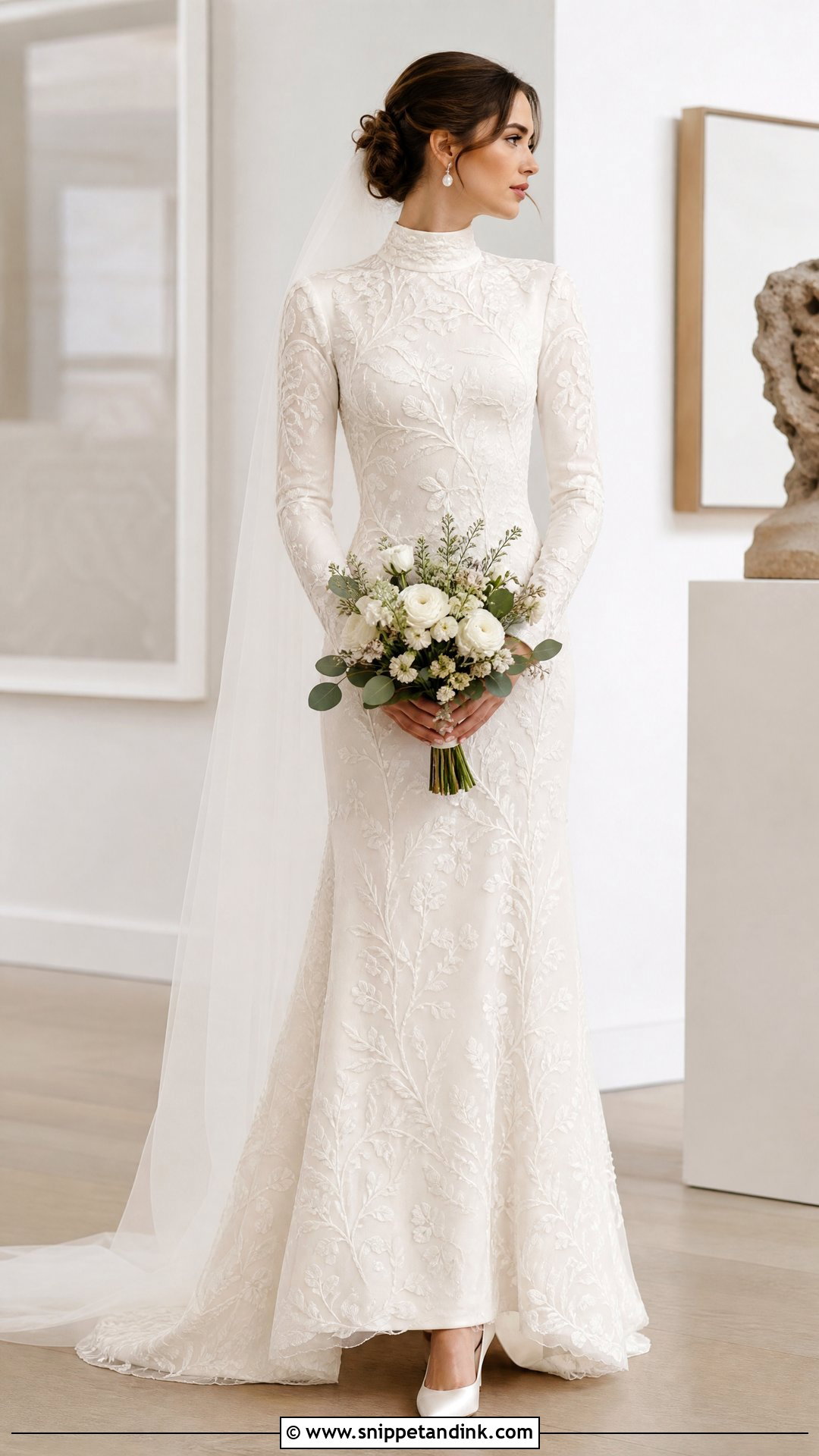
Embroidery gives a covered gown personality without depending on lace. Vines, tonal flowers or geometric patterns can travel across the neck, sleeves and skirt. The detail I check first is alignment: embroidery should meet cleanly at the shoulder and sleeve seams, and a pattern that breaks mid-motif there signals rushed construction. A lightly flared skirt keeps the work visible. Choose a plain veil so two patterns don’t argue.
14. High Neck Long Sleeve Pleated Chiffon Dress
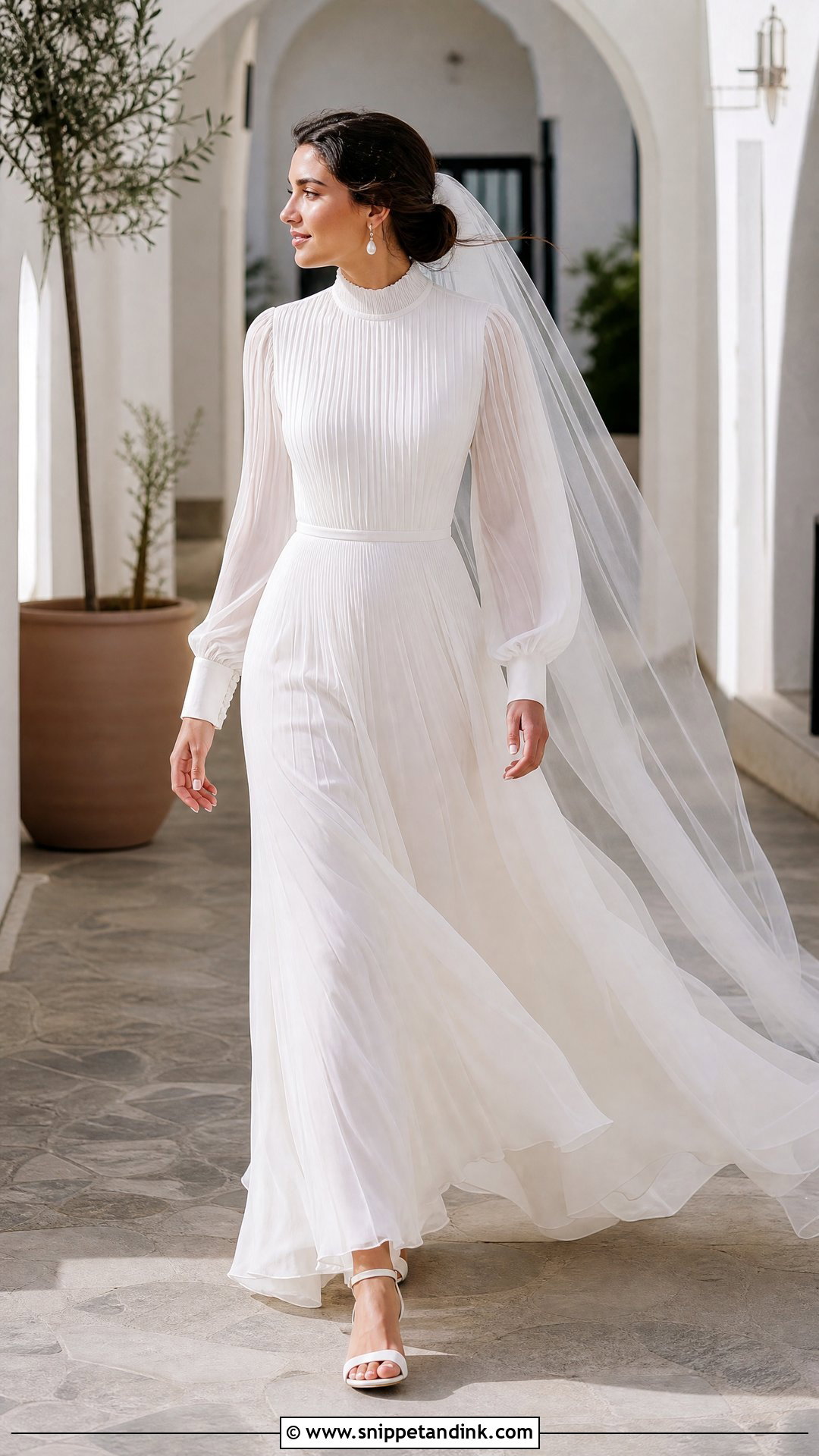
Pleated chiffon moves with every step, and gathered sleeves with fitted cuffs keep the volume under control. A smooth lining gives coverage while the chiffon floats. Chiffon breathes better than satin, which makes this my first suggestion for destination weddings in warm climates. Test the gown near a fan or an open window at the fitting, since chiffon lifts in a breeze. An airy low bun and a chapel veil suit it.
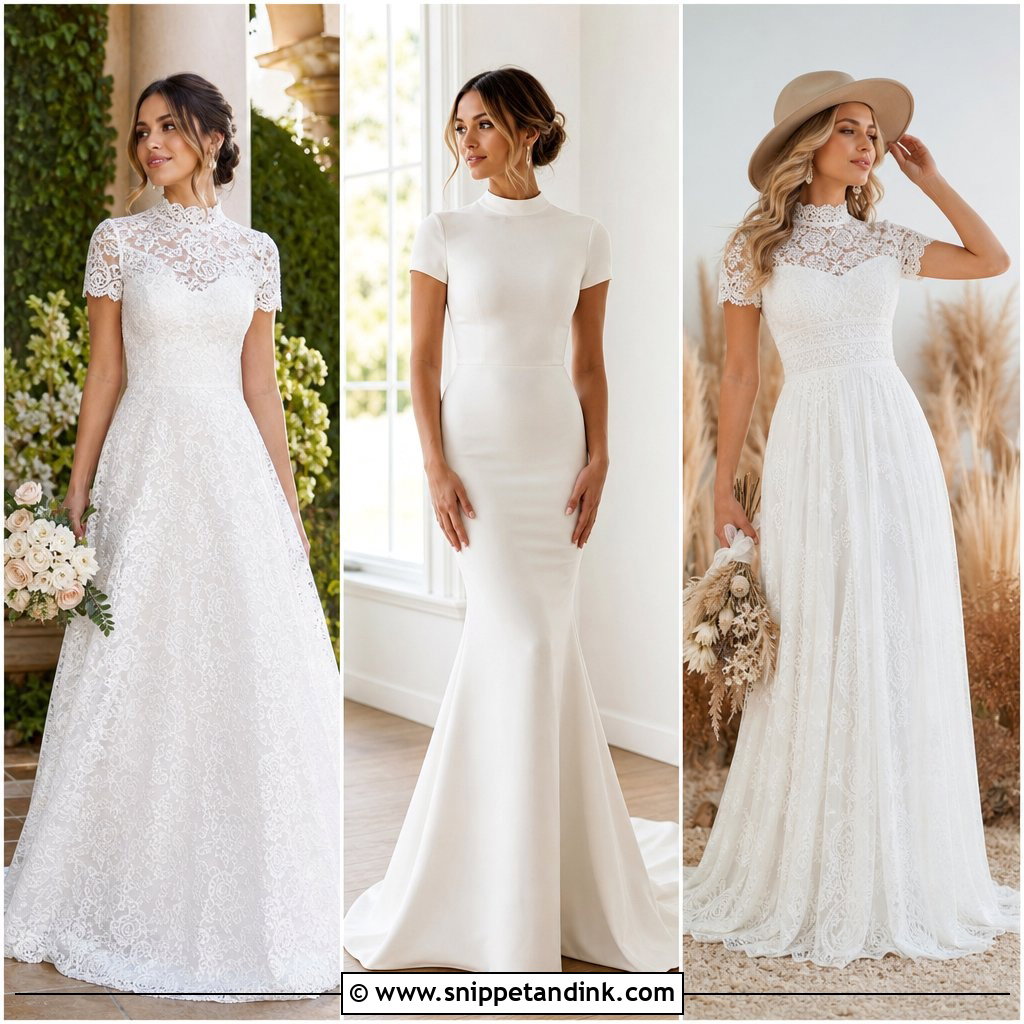
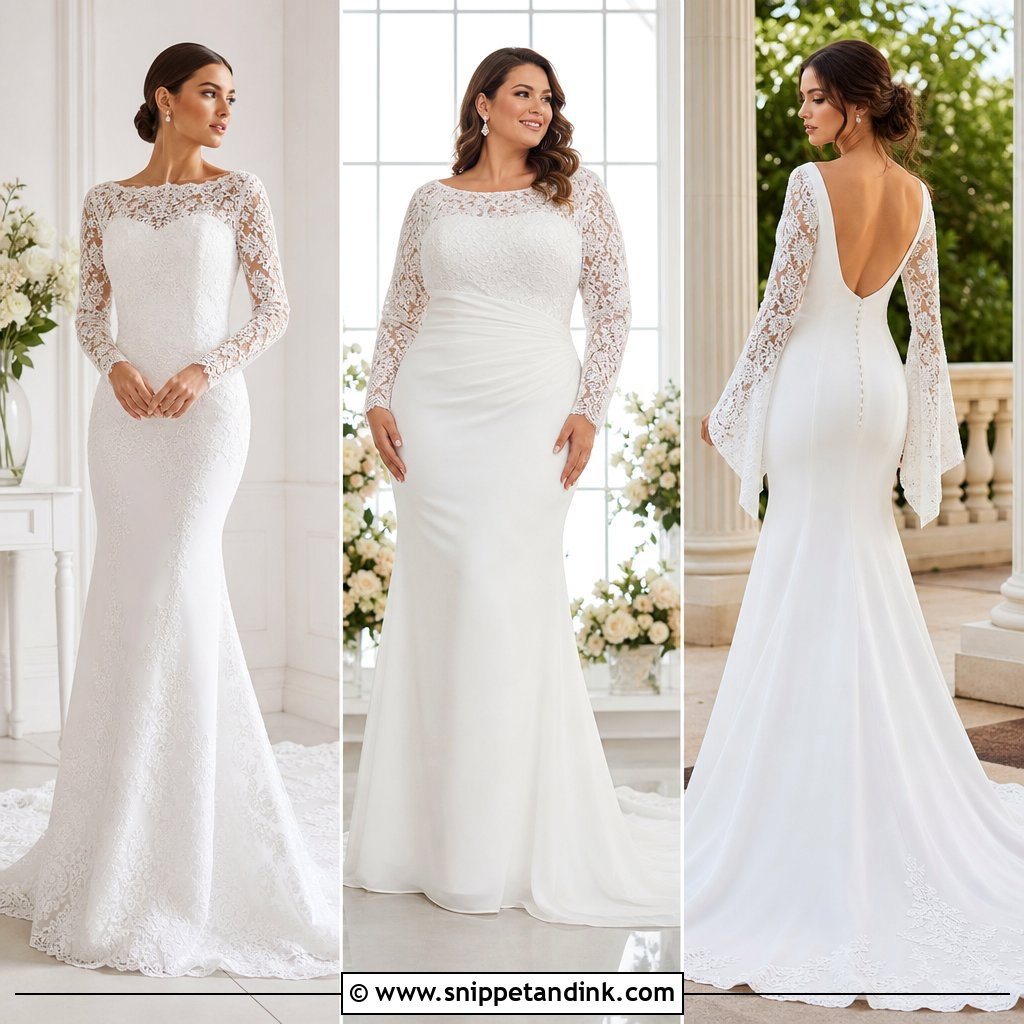
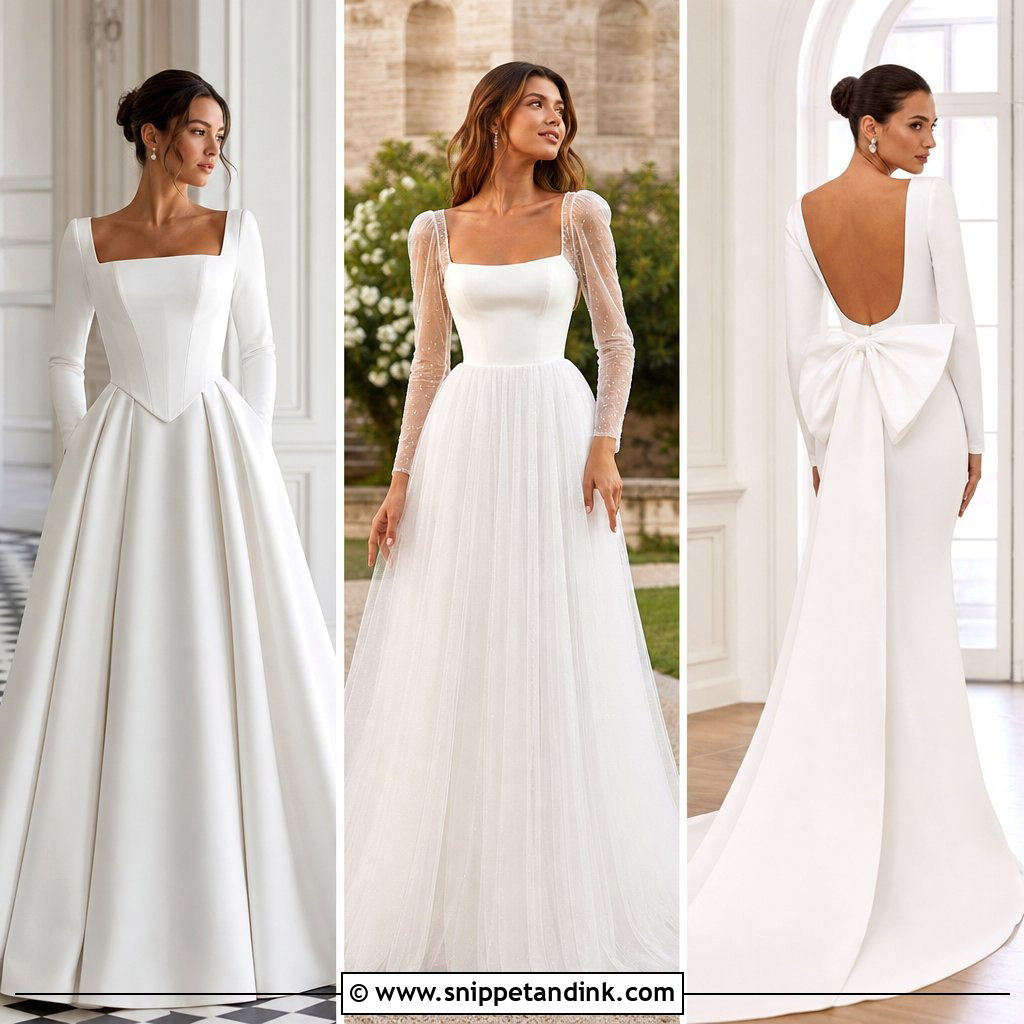
15. High Neck Long Sleeve Open Back Dress
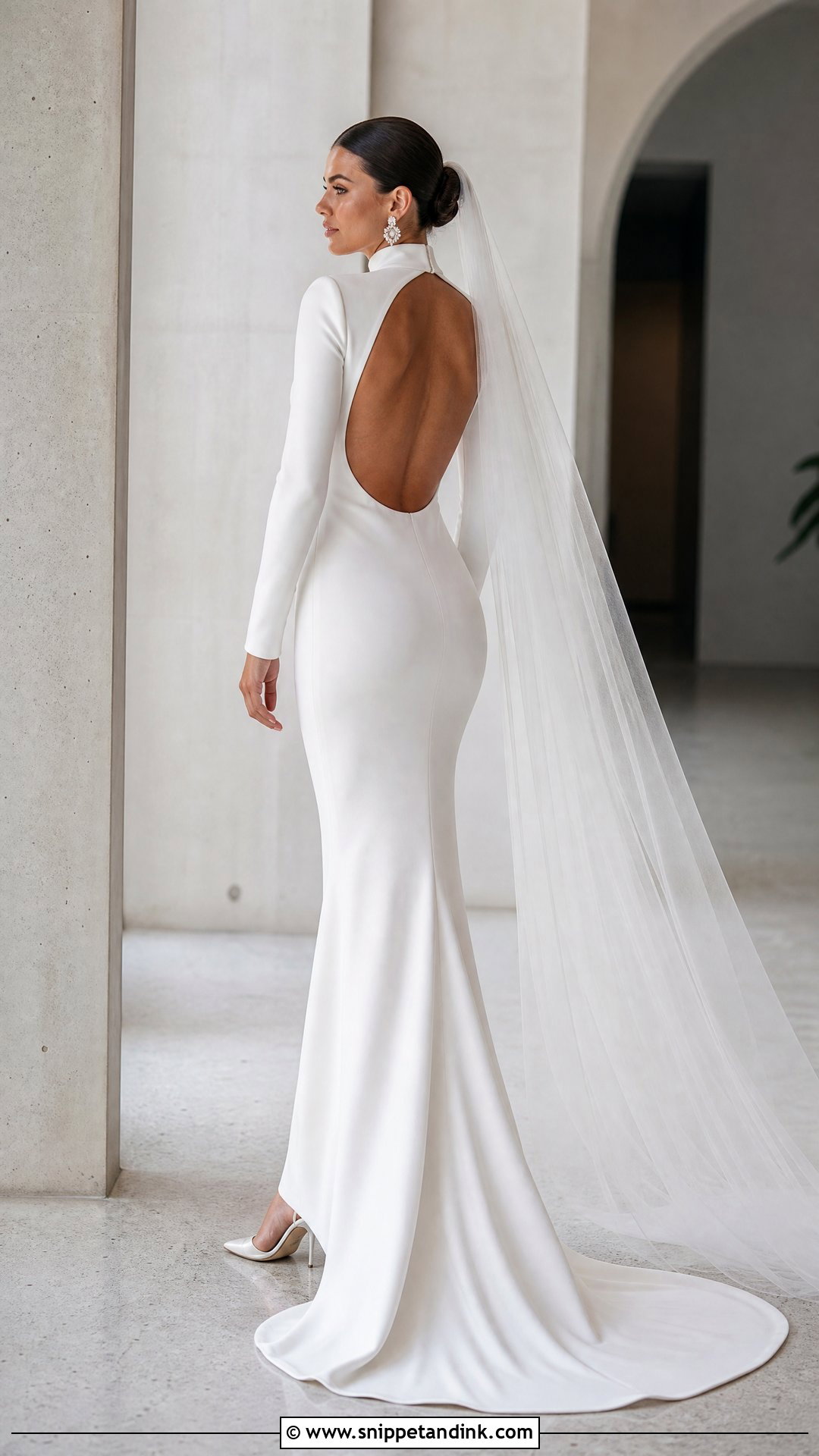
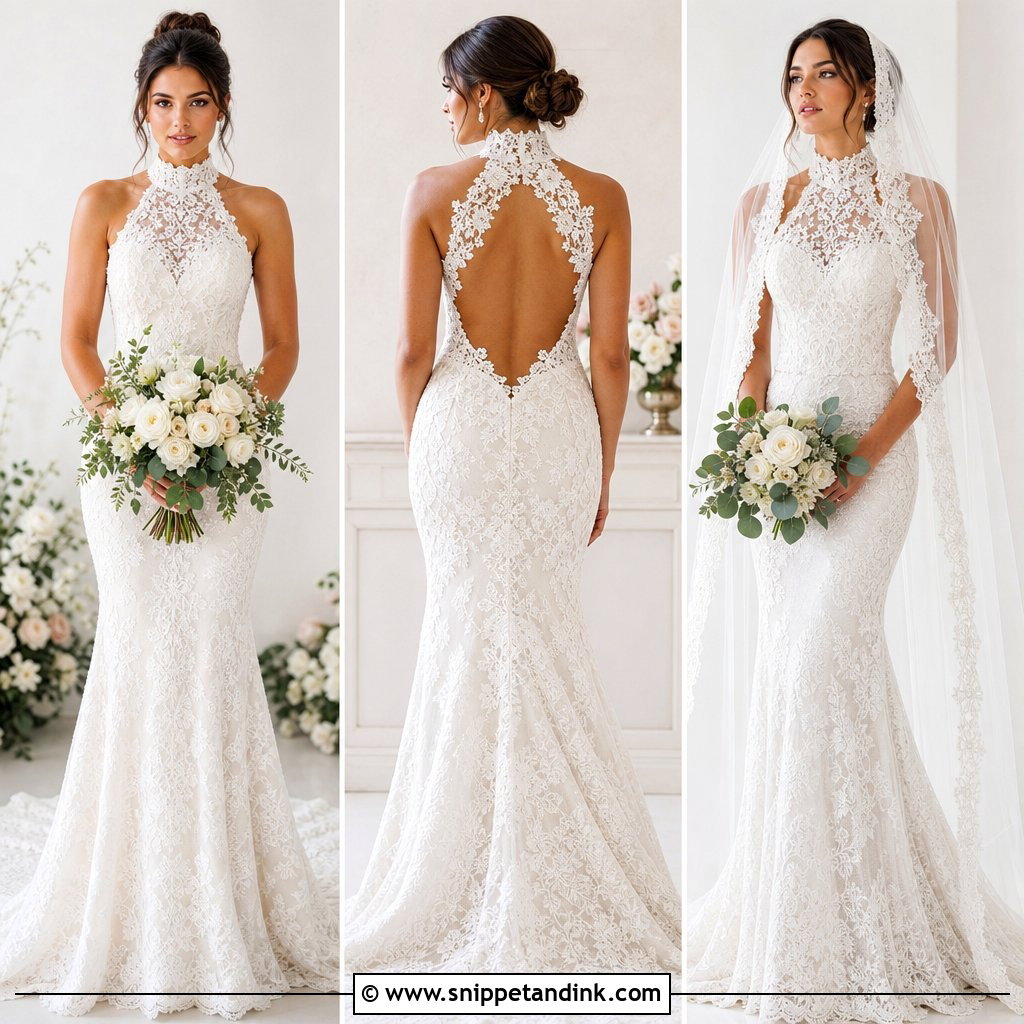
An open back balances a fully covered front. The opening can be rounded, oval or square, and the edges need a stay tape or light boning to stop them gaping when you lean forward. Sort undergarments early: a low-back bodysuit or cups sewn into the dress. Set the veil comb below the bun so the back stays visible down the aisle. Contemporary venues and formal hotels suit the contrast.
16. High Neck Long Sleeve Button Back Dress
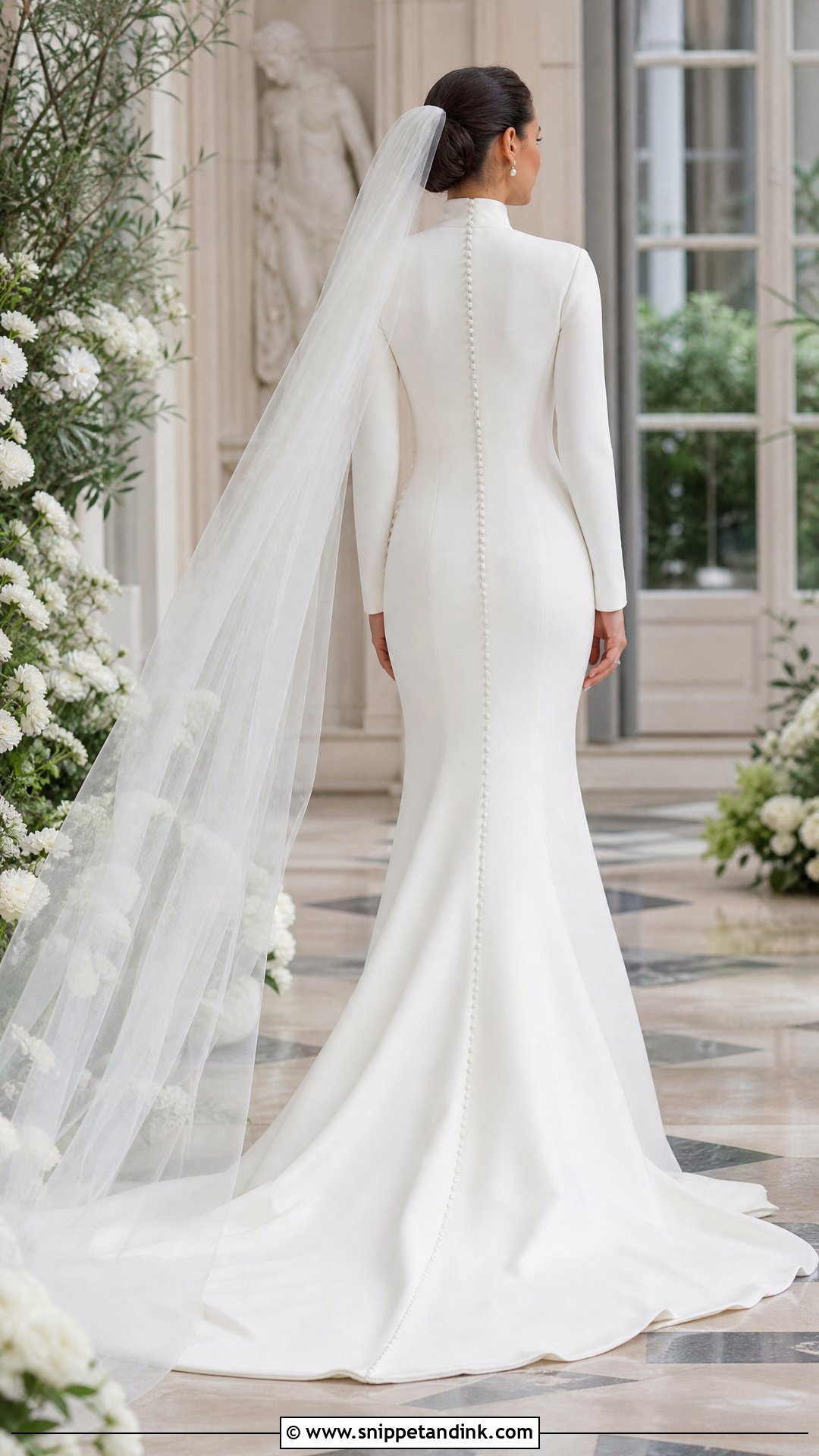
A row of covered buttons runs from the upper back to the train and adds old-fashioned detail to a plain gown. If the buttons are functional, dressing takes time, so I ask the seamstress to add a hidden zip or hooks underneath and keep the buttons decorative. That saves ten anxious minutes on the morning. Crepe keeps it understated; satin makes the buttons look more formal. The back should lie flat across the shoulder blades with no pull.
17. High Neck Long Sleeve Basque Waist Dress
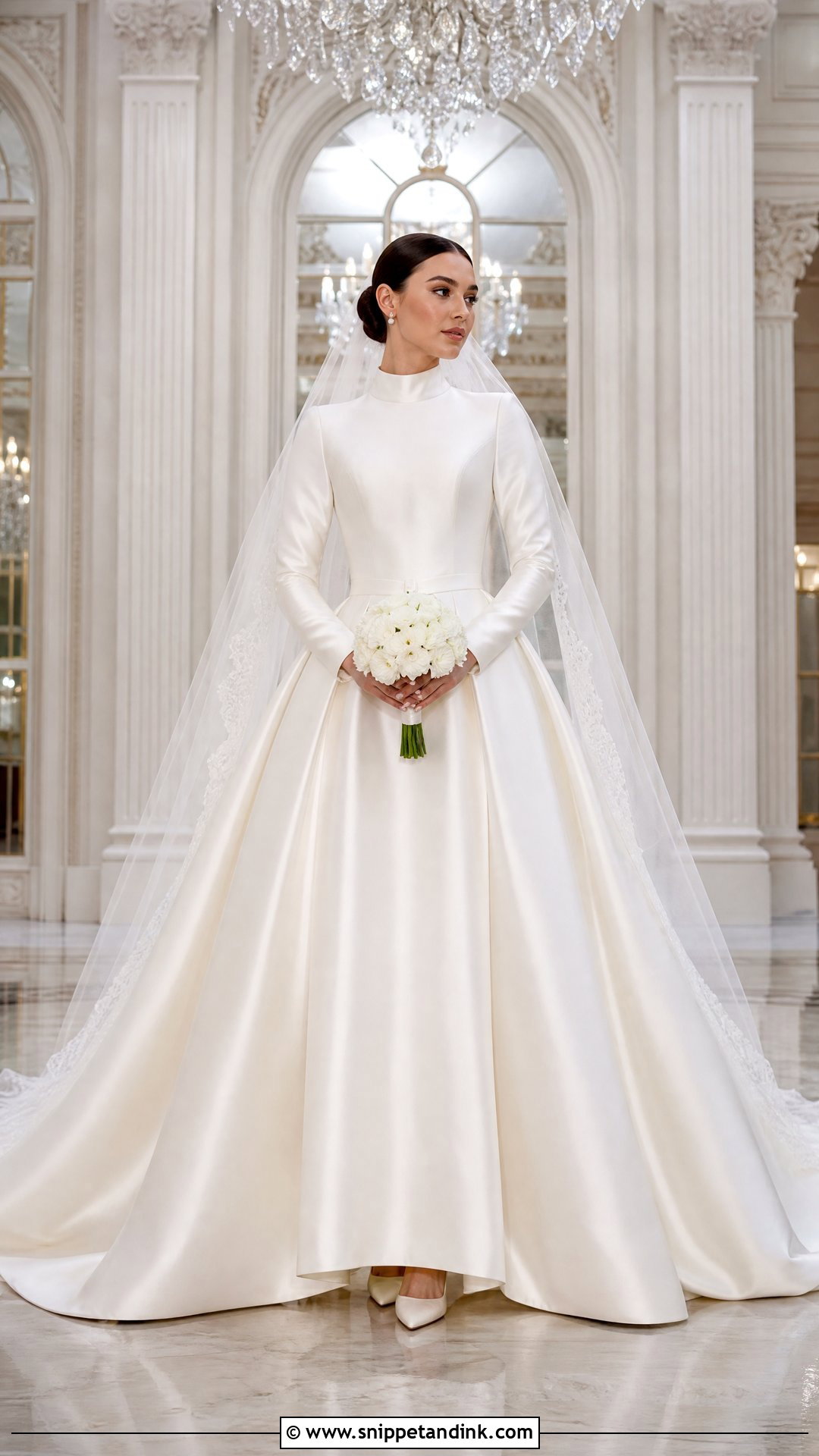
A Basque waist extends the bodice into a point or curve below the natural waist, which looks especially sharp under a high neck. It needs precise corsetry. I check that the bride can take a full breath and sit down comfortably, because a Basque bodice that’s too firm digs into the ribs at dinner. A full satin, lace or tulle skirt gives the drama. Carry a compact bouquet so the point isn’t covered.
18. High Neck Long Sleeve Dropped Waist Dress
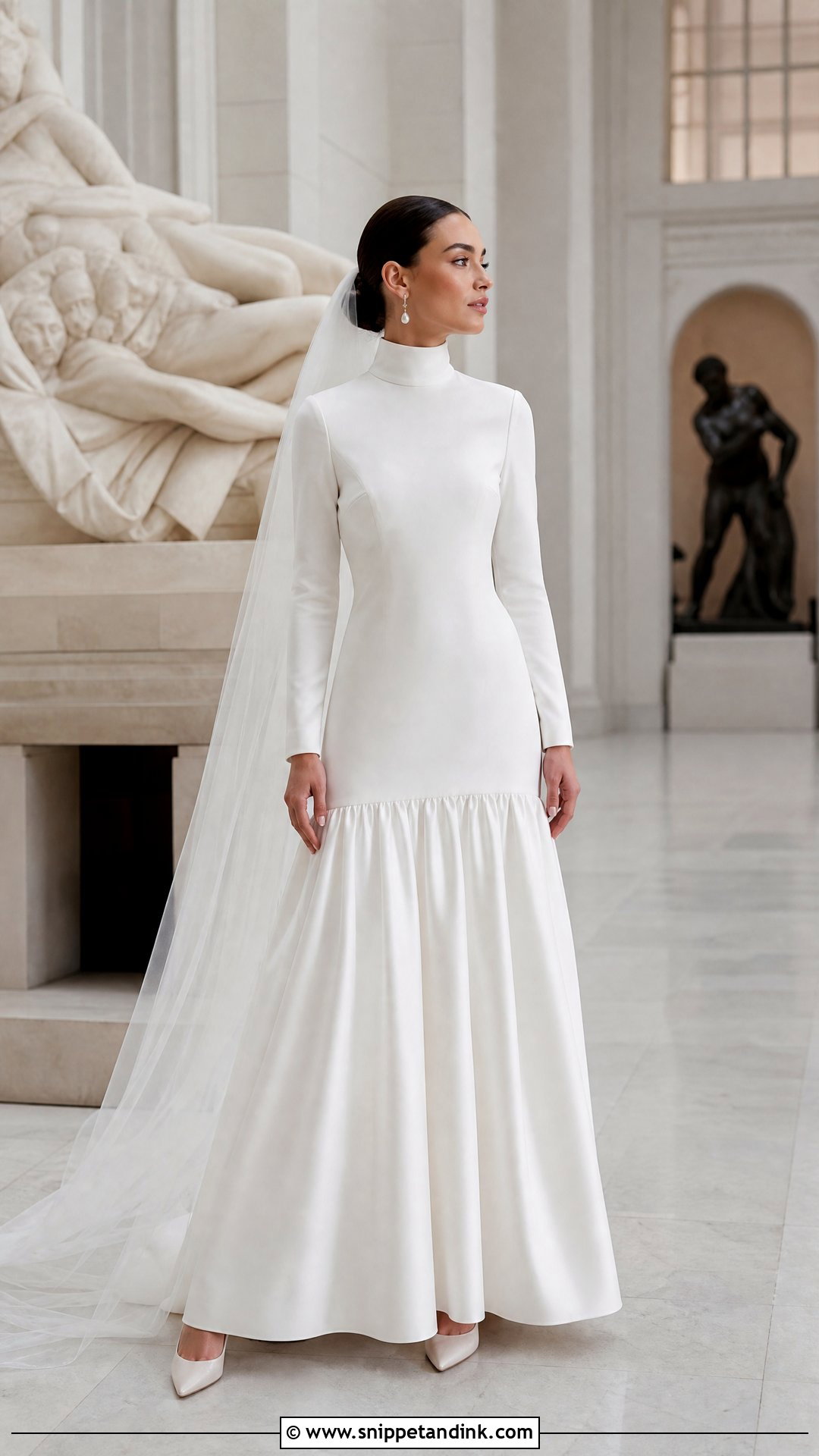
A dropped waist runs the bodice below the natural waistline before the skirt opens, lengthening the torso. Satin and Mikado define the transition; crepe softens it. Because the seam lands at the upper hip, I test it on stairs and on a low chair, where tightness shows straight away. Long fitted sleeves keep the top streamlined. A plain veil set low on the head and pointed pumps finish it. Museums and modern hotels suit its clean geometry.
19. High Neck Long Sleeve Cape Wedding Dress
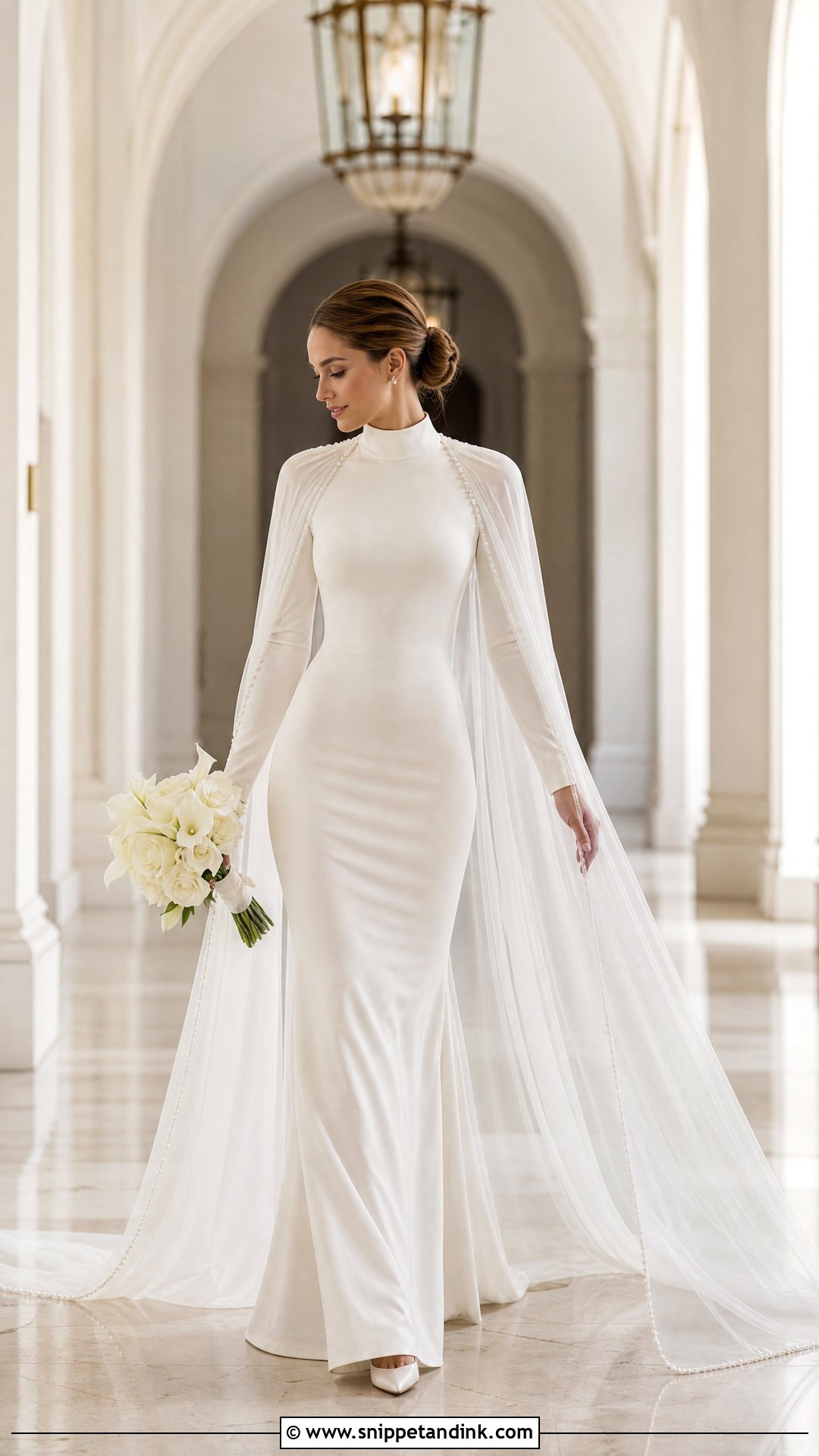
A detachable tulle cape adds ceremony without a veil. Start with a long-sleeve crepe or satin sheath and attach the cape at the shoulders. Lace edging, scattered pearls or a plain finish all work. The fastening is what matters: a cape hooked only at the collar pulls on the neck when you walk, so ask for anchors at the shoulder seams as well. Take it off for dinner and you have a second look.


20. High Neck Long Sleeve Overskirt Dress
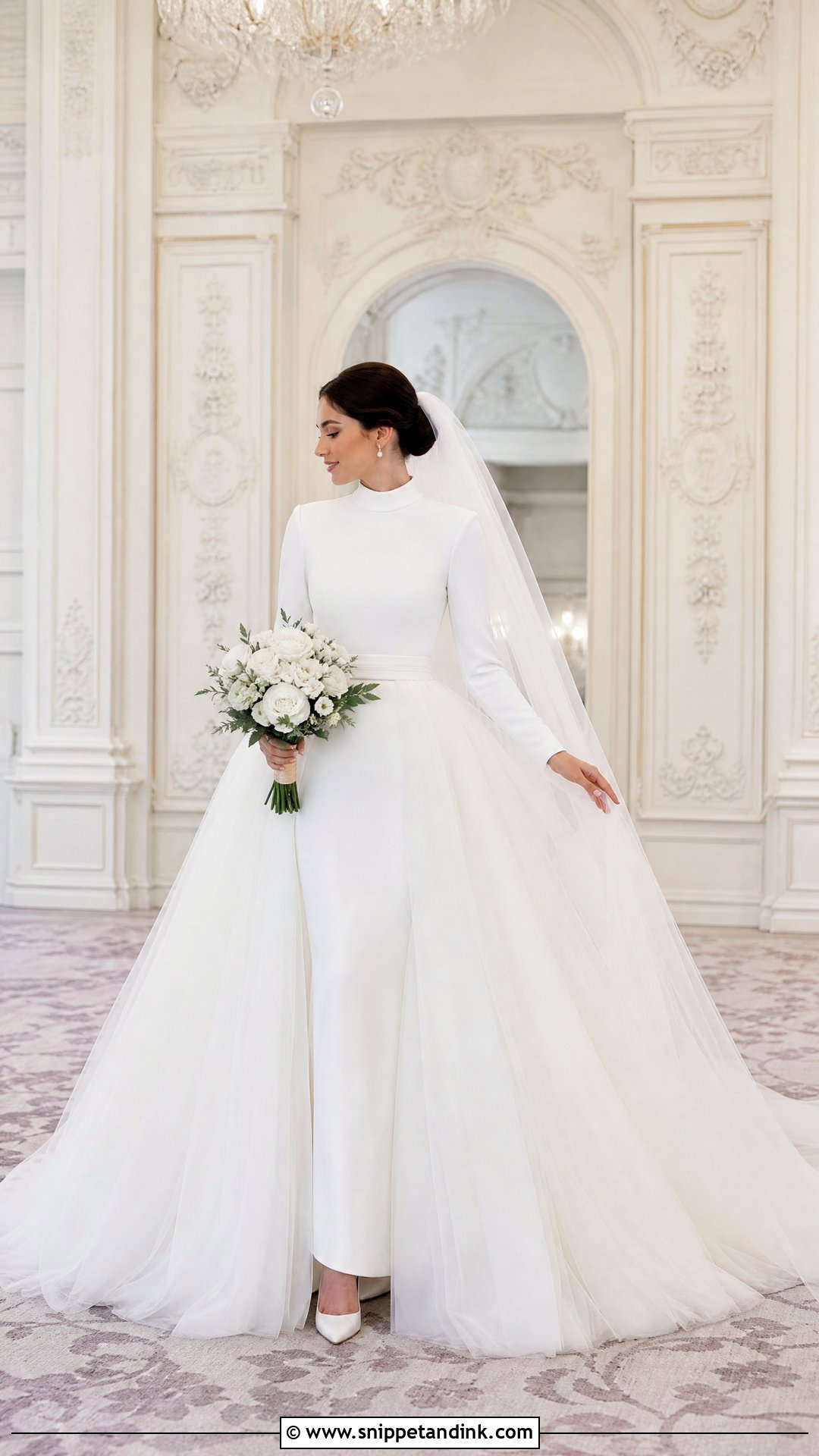
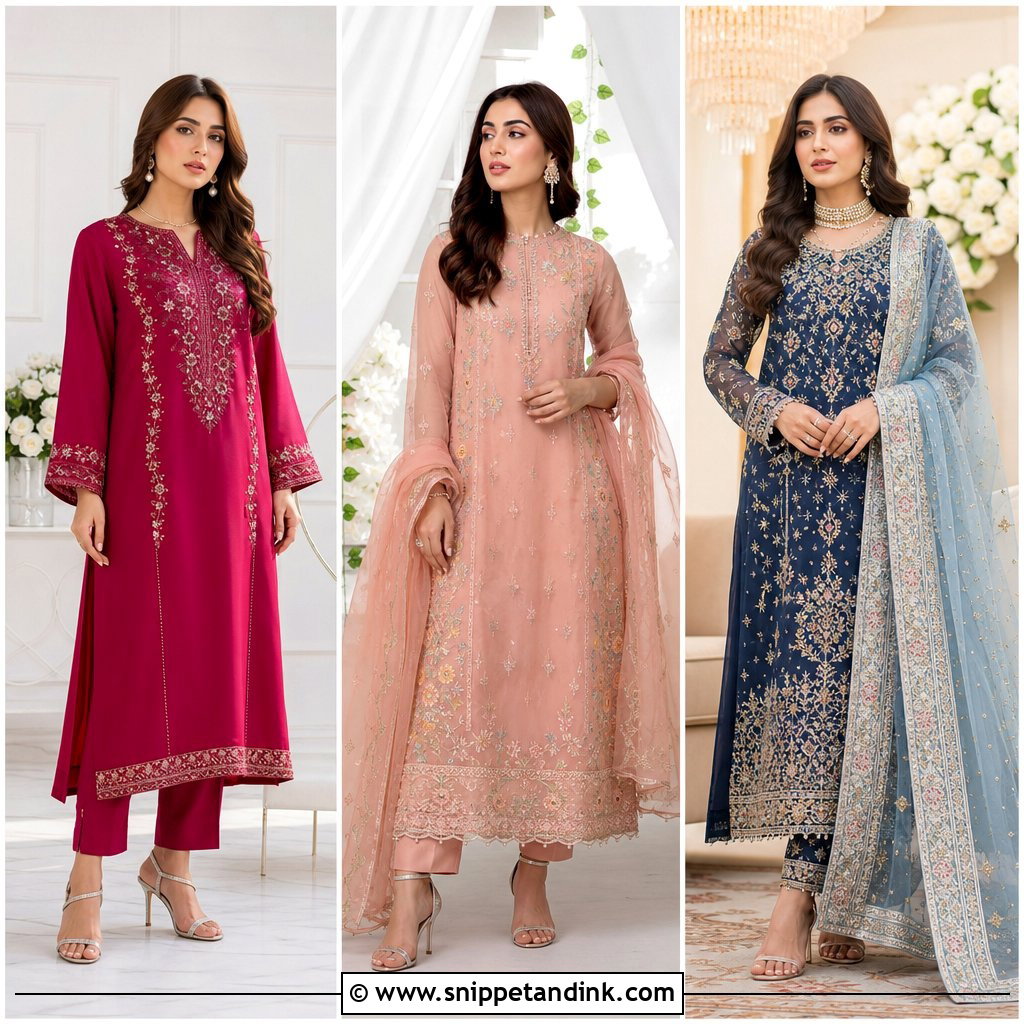
An overskirt turns a fitted long-sleeve sheath or mermaid into a full ceremony gown, then comes off for the reception. The attachment should be smooth at the waist with no bulky band. I’d have the bride and her attendant practise removing it twice before the wedding, ideally in the bathroom of the venue if they can, because cramped spaces make hooks harder to find. The fitted gown underneath must stand on its own.
21. High Neck Long Sleeve Short Wedding Dress
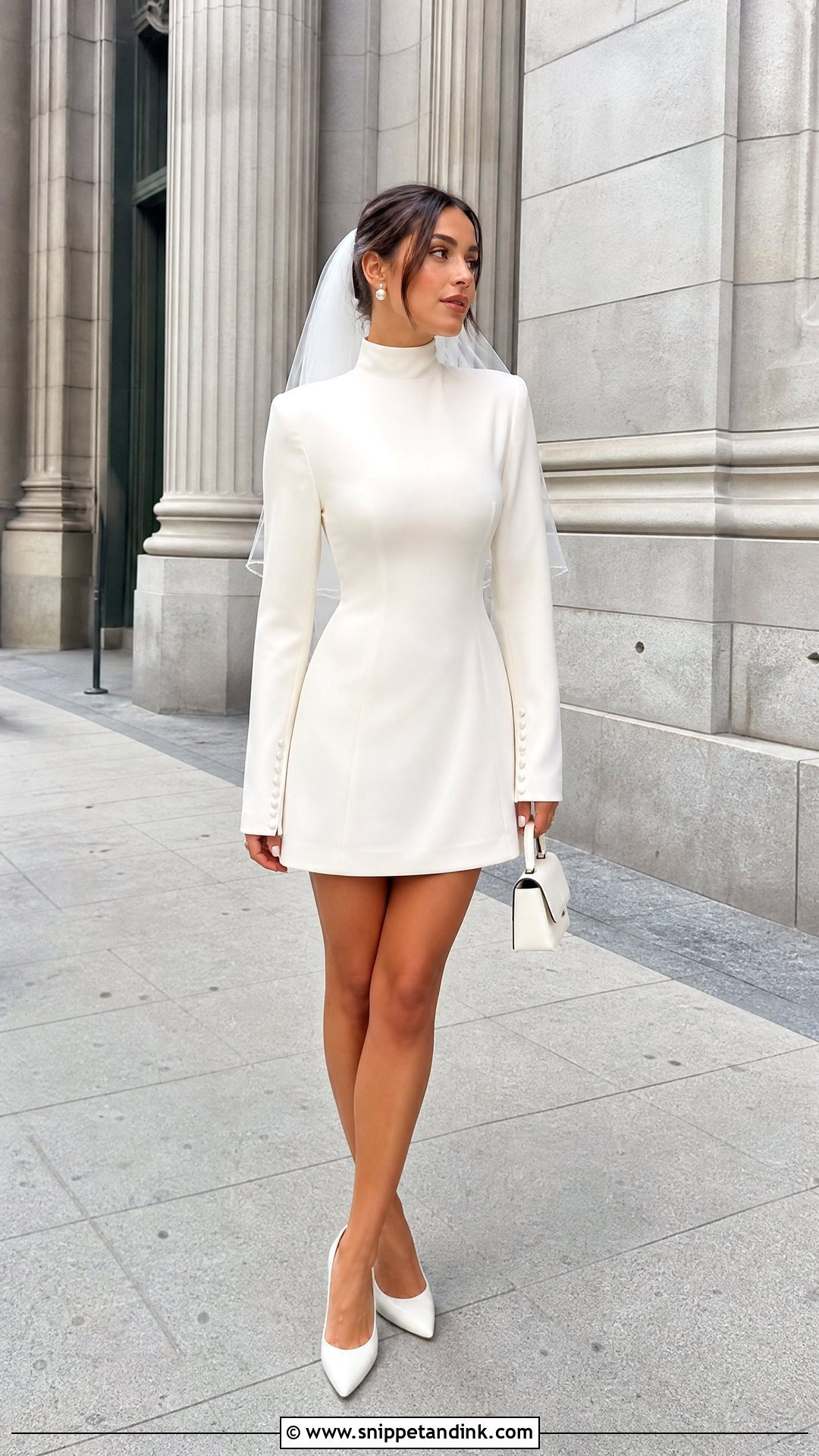
A short dress keeps the coverage at the top and frees the legs. A fitted mini or knee-length A-line in crepe, satin or jacquard pairs well with a mock neck and tailored sleeves. Covered buttons or a detachable bow add detail. A short veil or a hair bow suits the proportions better than a cathedral veil. Check the hem while seated, since short skirts ride up more than expected. Courthouse ceremonies, bridal lunches and a second reception look are where I see it most.
22. High Neck Long Sleeve Tea Length Dress
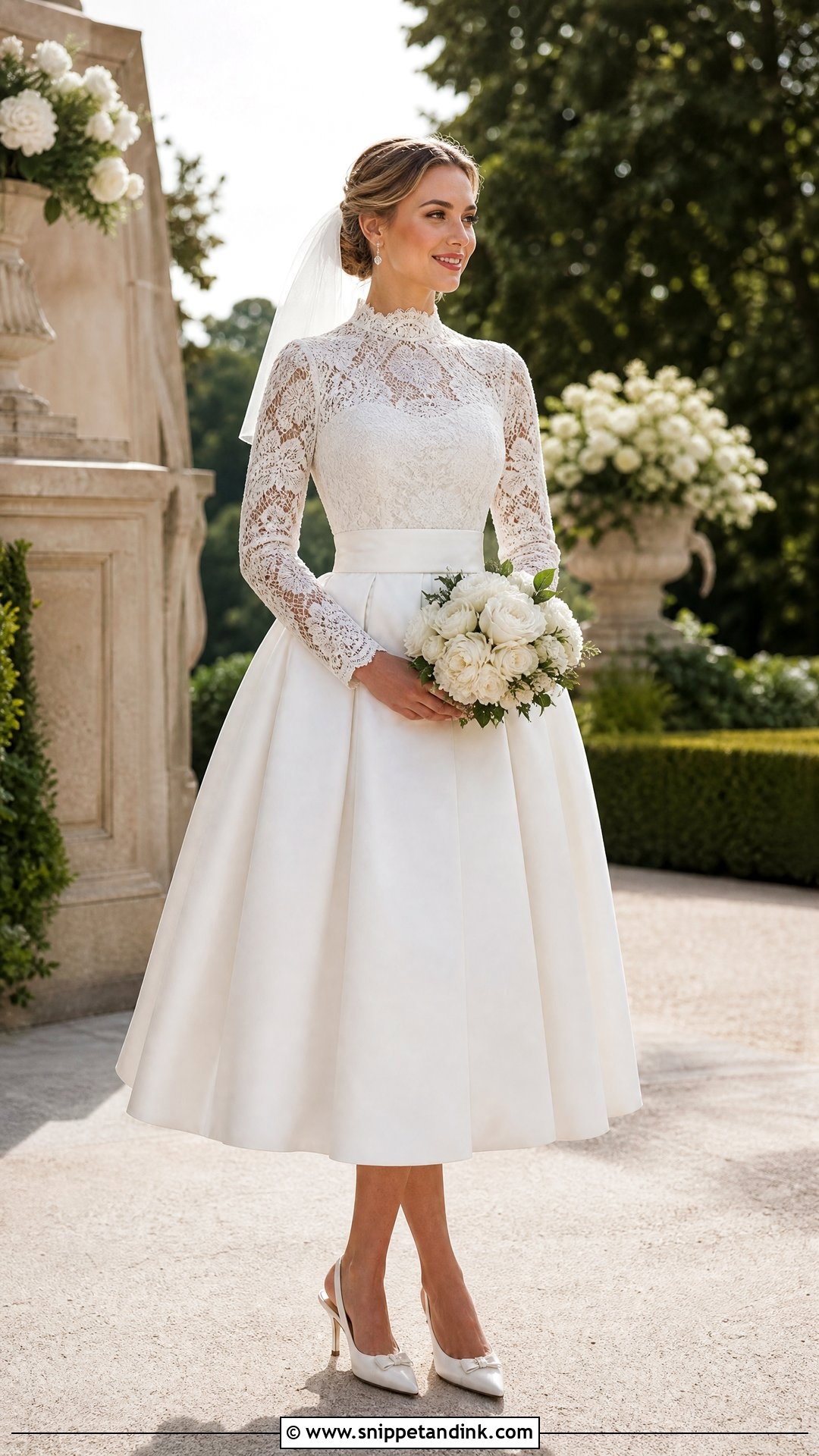
Tea length, ending between knee and ankle, has vintage proportions and lets you walk freely. Your shoes are on show, so choose them as carefully as the dress. A light petticoat adds volume, but I’d keep it soft enough to sit on without the skirt flipping up. A defined waistband gives shape and a place for small beading. A short veil should end above the skirt hem. Daytime ceremonies, gardens and restaurants suit it.
23. High Neck Long Sleeve Jacquard Dress
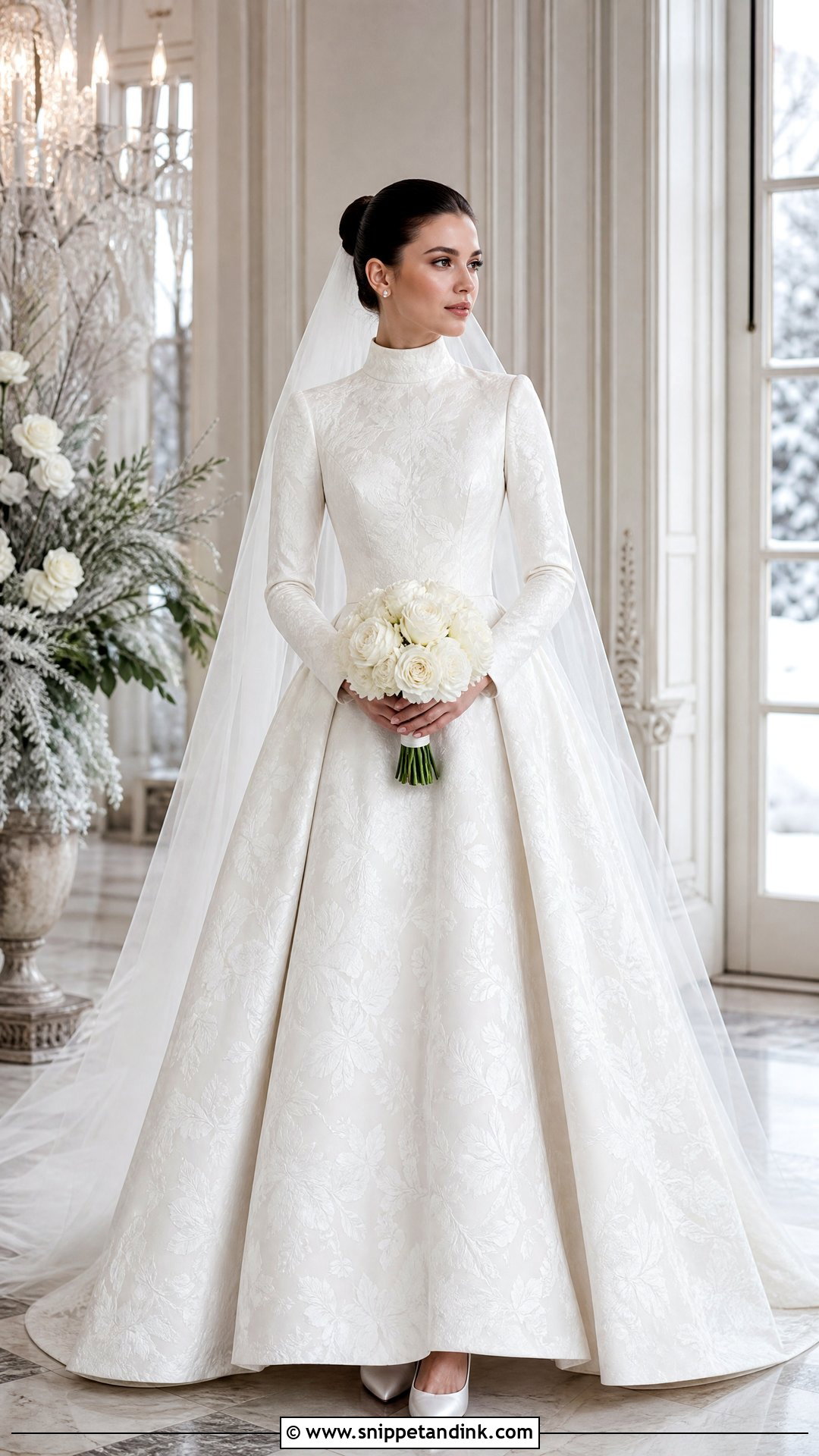
Jacquard has a woven pattern, so it gives texture and full coverage without any sheerness. A high-neck A-line or ball gown in floral jacquard catches light softly. Firm jacquard is warm and has little give, which means I check the elbows and armholes carefully and may ask for a lighter lining to cut the weight. A plain veil is the right partner; lace edges fight the woven pattern. Winter ceremonies and grand interiors suit it.
24. High Neck Long Sleeve Bishop Sleeve Dress
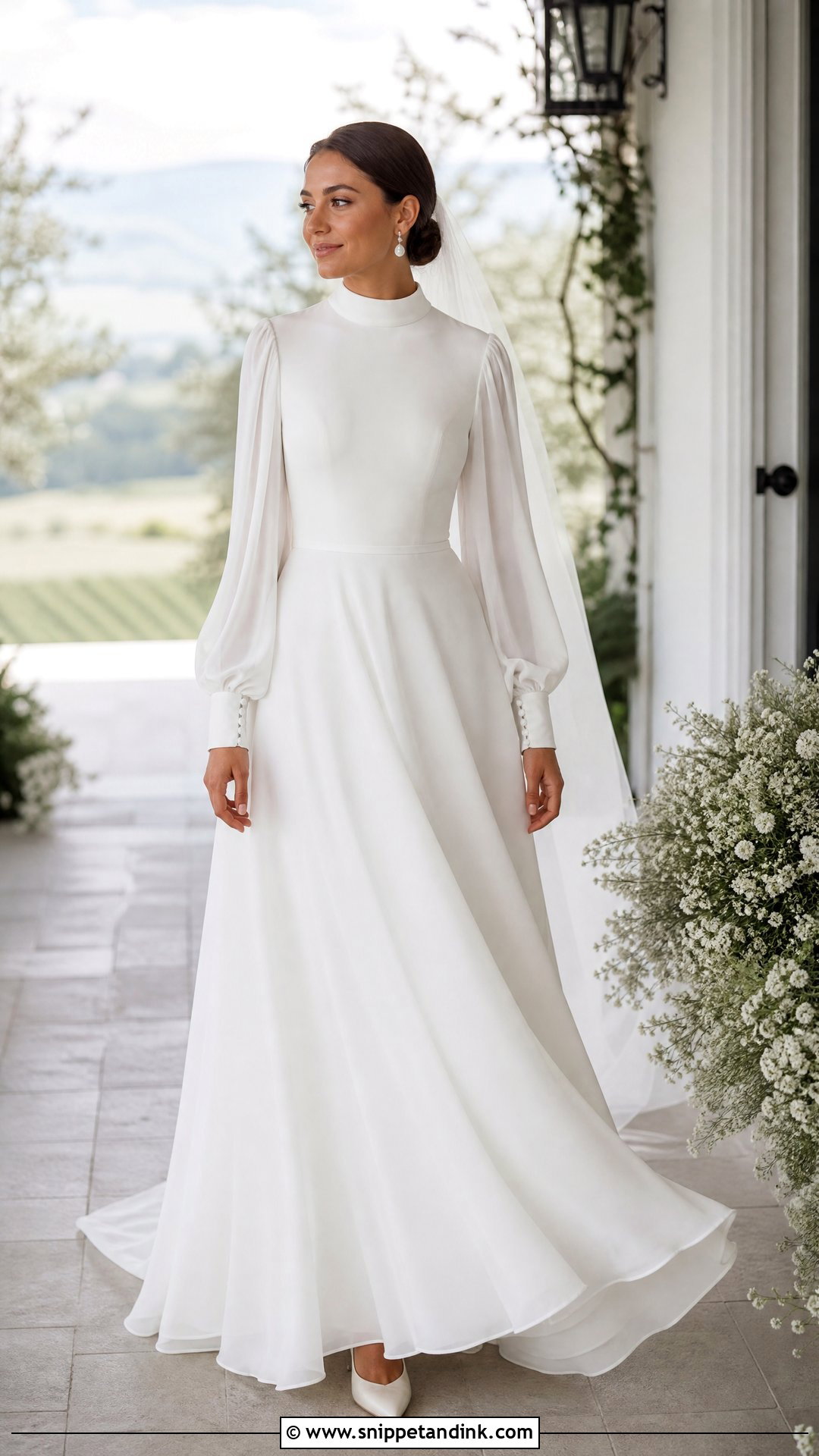
Bishop sleeves gather from the shoulder and narrow into a cuff, softening a structured high neckline. Chiffon, silk and light tulle create volume without stiffness. Watch where the fullness falls: a sleeve that billows at the wrist drags through food and catches on the bouquet, so I usually suggest the volume sits at the forearm with a snug cuff. Small covered buttons or narrow lace on the cuff add detail. Countryside venues and airy ballrooms suit its ease.
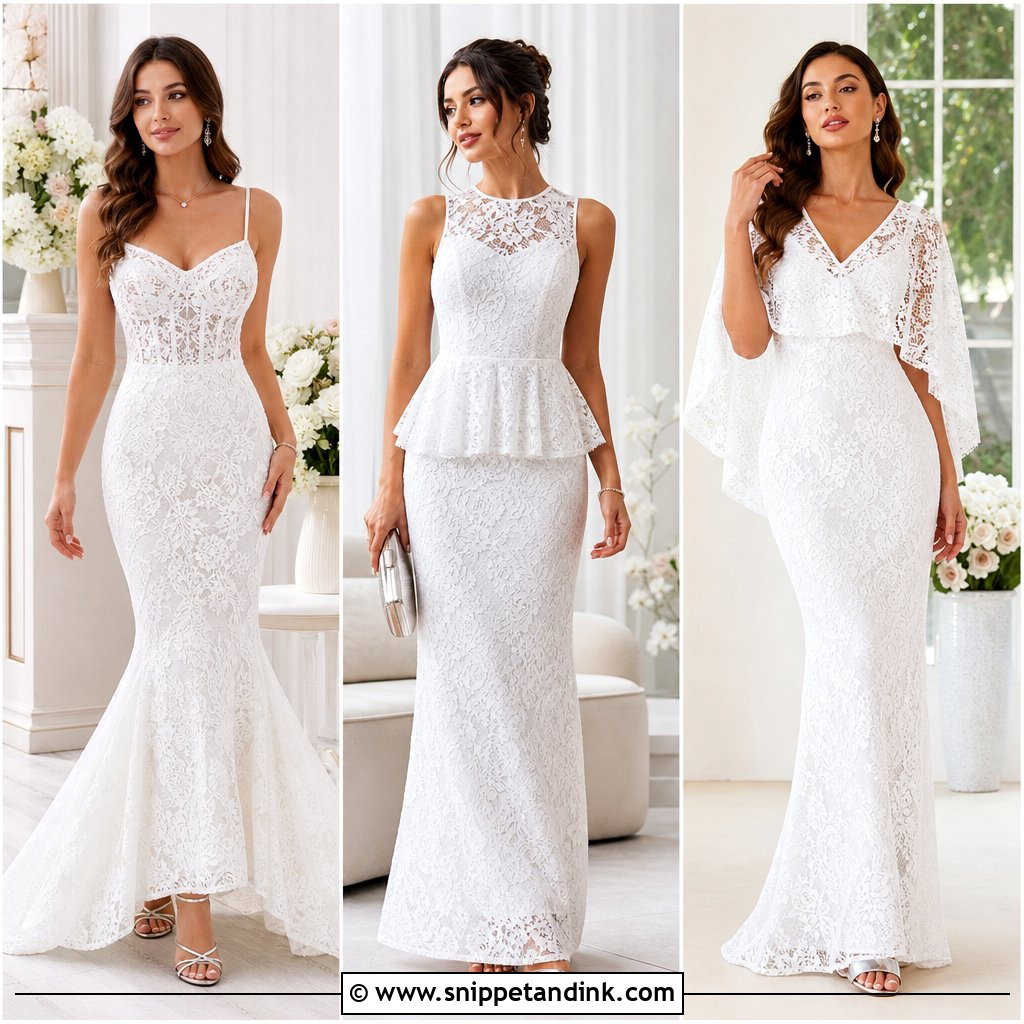

25. High Neck Long Sleeve Modest Wedding Dress
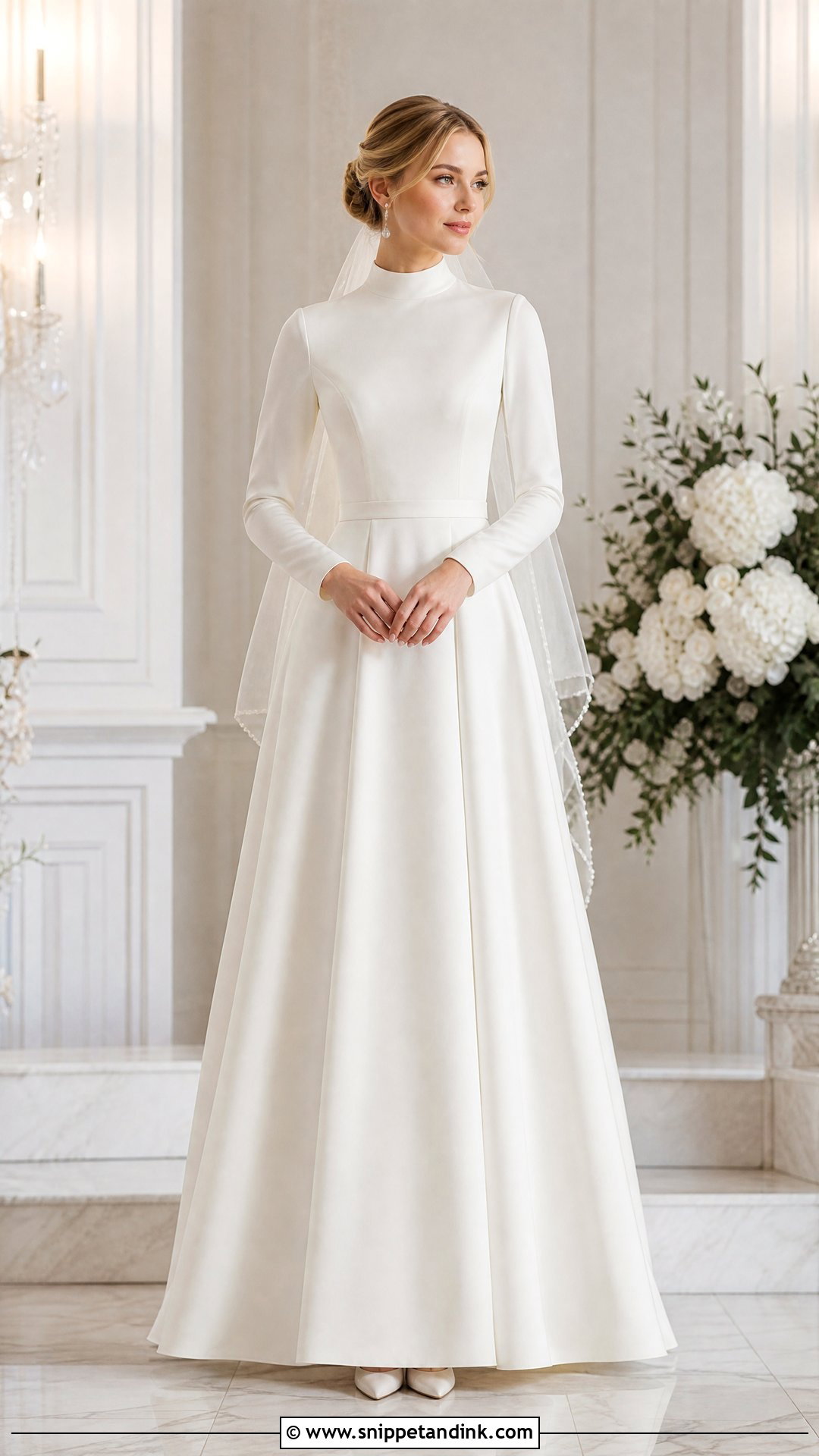
A fully lined modest gown gives complete coverage and still looks bridal. An opaque high neck, fitted or gently tapered sleeves and an A-line skirt are the base. Crepe, satin or lined lace set the level of texture. A defined waist and a button back add shape without showing skin. My final check is movement: bend, sit and raise your arms, and the bodice should stay put without riding up at the waist. Good tailoring keeps full coverage from feeling heavy.
Wearing Full Coverage at a Summer Wedding
Brides ask me if long sleeves are a bad idea in July. Not necessarily, but fabric choice matters more than the silhouette. Chiffon, light crepe, silk georgette and unlined illusion tulle breathe; satin, Mikado, jacquard and heavily beaded lace hold heat against your skin.
I’d ask for the sleeves to be lined only where necessary, choose a cotton or silk lining in the bodice rather than polyester, and keep a pair of discreet dress shields sewn in under the arms to protect the fabric. Plan portraits for shade or the cooler early evening, and keep a small fan and blotting papers with your attendant.
Earrings and Hair Against a High Neckline
With the neck covered, the space between your collar and your hairline is where the eye goes. That’s why I almost always style these gowns with hair up or swept to one side. Hair worn down tends to tangle in lace collars and hides the neckline you chose.
Earrings should end above the collar. Long drops tap against the lace with every movement and can snag it. Studs, small pearl drops or a single sculptural earring look cleaner, and a necklace is almost never needed. If you want sparkle, put it in a hair comb at the back, where it frames the bun and shows during the ceremony.
A Collar and Sleeves That Move the Way You Do
A covered silhouette ranges further than most brides expect. Lace and tulle soften it; crepe, satin, Mikado and jacquard give it structure; open backs, bishop sleeves, buttons and overskirts make it personal. Think about the venue’s temperature and the ground you’ll walk on. At the shop, turn your head, lift your arms and sit down before you fall for any dress. Then put your budget into a good seamstress, because on a high neck and long sleeves, the fit is the whole look.
You'll Like These Ideas:




Leave a Reply