
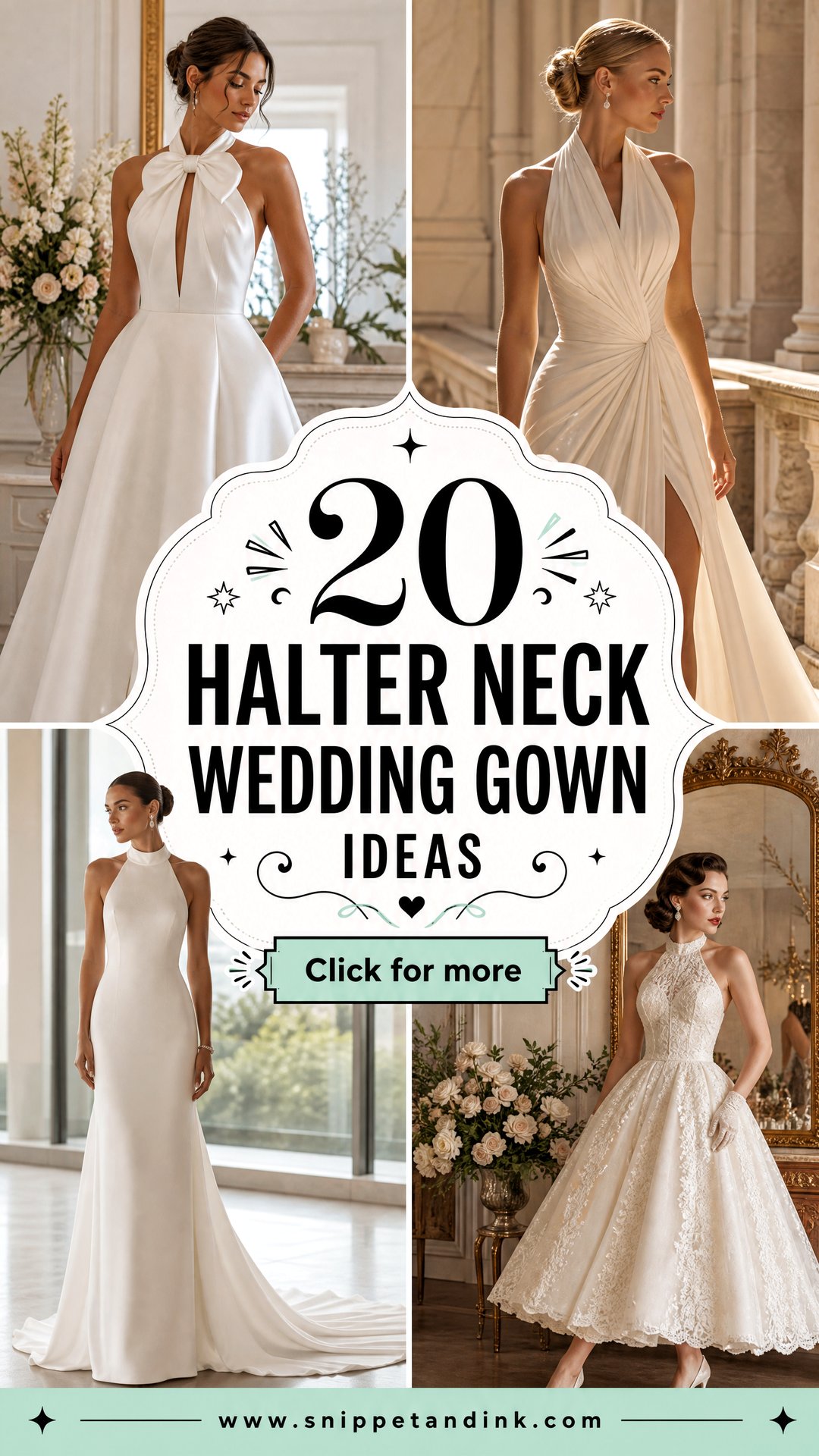
A halter pulls the eye straight up to your face, shoulders and upper back, and it adapts to almost any skirt, from a narrow column to a full ball gown. Bridal designers keep coming back to it in clean satin, sculpted shapes, lace and soft draping. In the fitting room it’s the neckline brides either fall for instantly or rule out too early, usually because the first sample was the wrong strap angle for their shoulders. The twenty gowns below are grouped by fabric and shape, and each comes with the detail I’d look at before deciding, so you can match one to your venue and to how much structure you like wearing.
Your Shoulder Line Decides Which Halter Works
There isn’t one halter. The angle of the strap, where it starts on the bodice and how wide it is all change what it does to your frame, and that’s the first thing I adjust when a bride says halters don’t suit her.
- Broad or athletic shoulders: a strap cut in from the shoulder point, angling to the nape, narrows the top and shows off arm definition. Avoid very wide straps that sit out on the shoulder edge.
- Narrow or sloping shoulders: wider straps starting closer to the armhole add width. A high neck can also balance a fuller hip.
- Fuller bust: look for wide straps, a sewn-in cup and a bodice that reaches the side seam. Thin string halters put all the weight on the back of the neck.
- Smaller bust: almost any halter works, and the plunging and cowl versions often sit best on you.
When you try one on, stand side-on to the mirror as well as facing it. The strap should lie flat across the collarbone without cutting in, and the bodice shouldn’t gape at the underarm. If either happens, it’s usually a size or strap-length problem, not the neckline being wrong for you.
1. Satin Halter Neck Wedding Gown
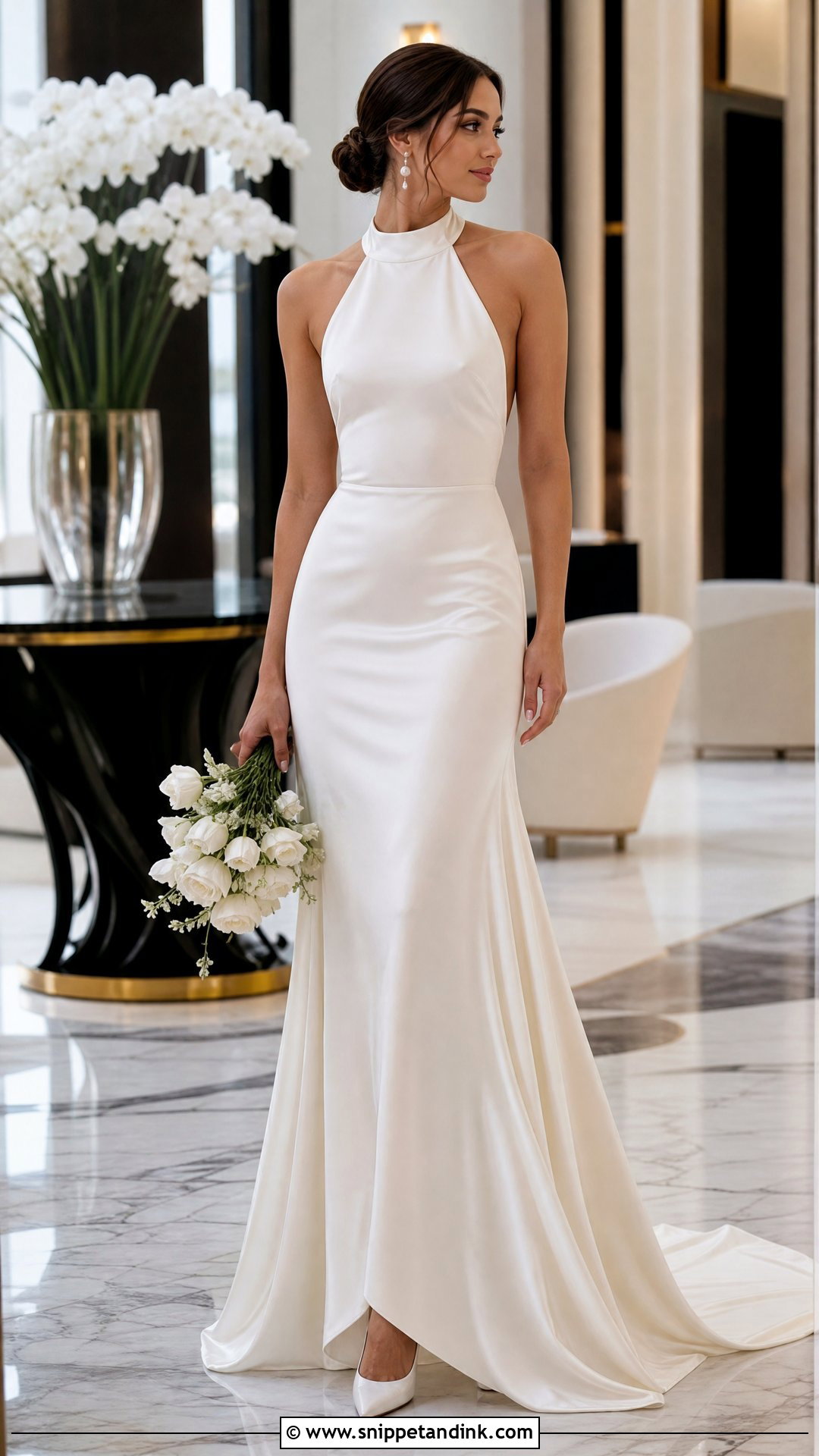
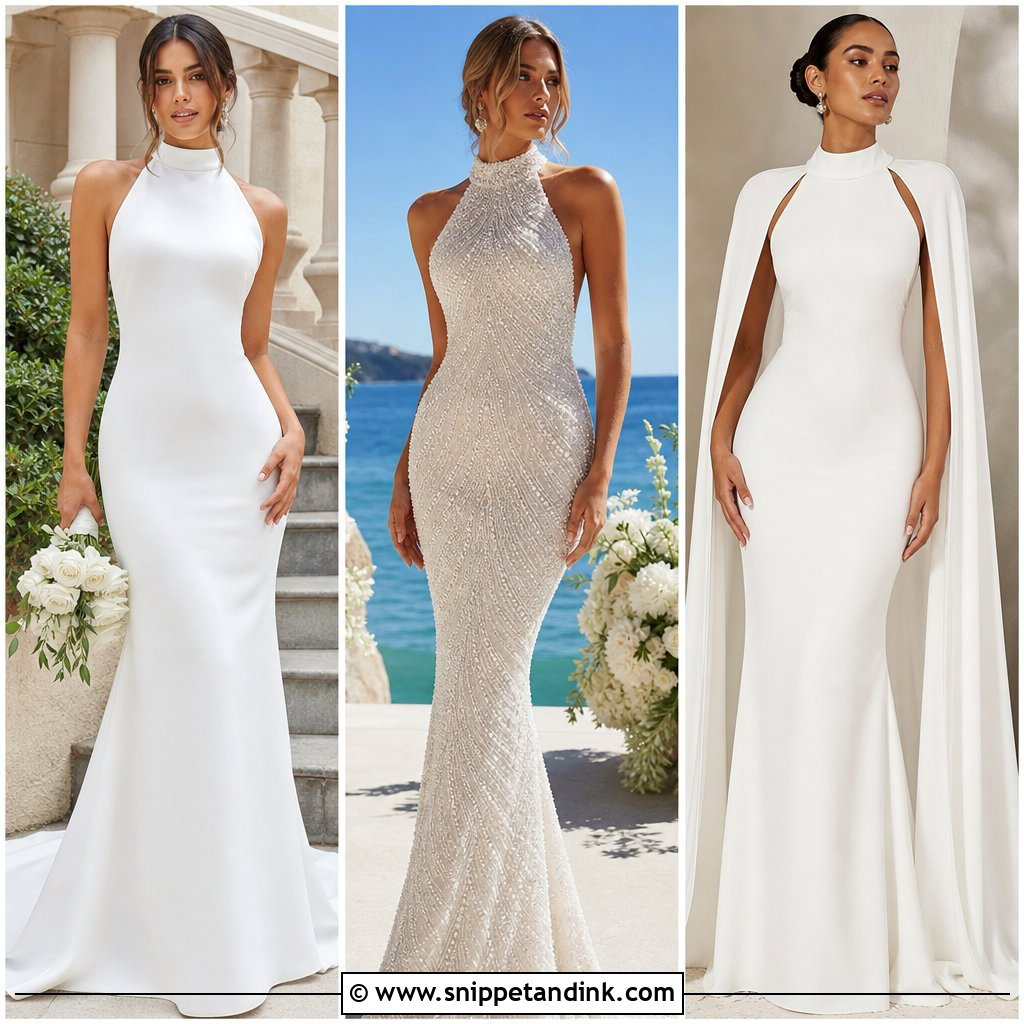
Satin on a halter looks polished and slightly old-Hollywood. A softly fitted bodice with a high neck, a defined waist and a gently flared skirt is the classic version, and an open back gives the covered front something to contrast with. I’d pair it with pearl drops, a low twisted bun and pointed ivory pumps, and a structured bouquet of white roses or calla lilies. Satin bounces light, which also means it highlights every wrinkle at the waist and hips. Budget for careful tailoring there and at the back closure. It belongs in a hotel ballroom or a gallery with even indoor lighting.
2. Lace Halter Neck Wedding Gown
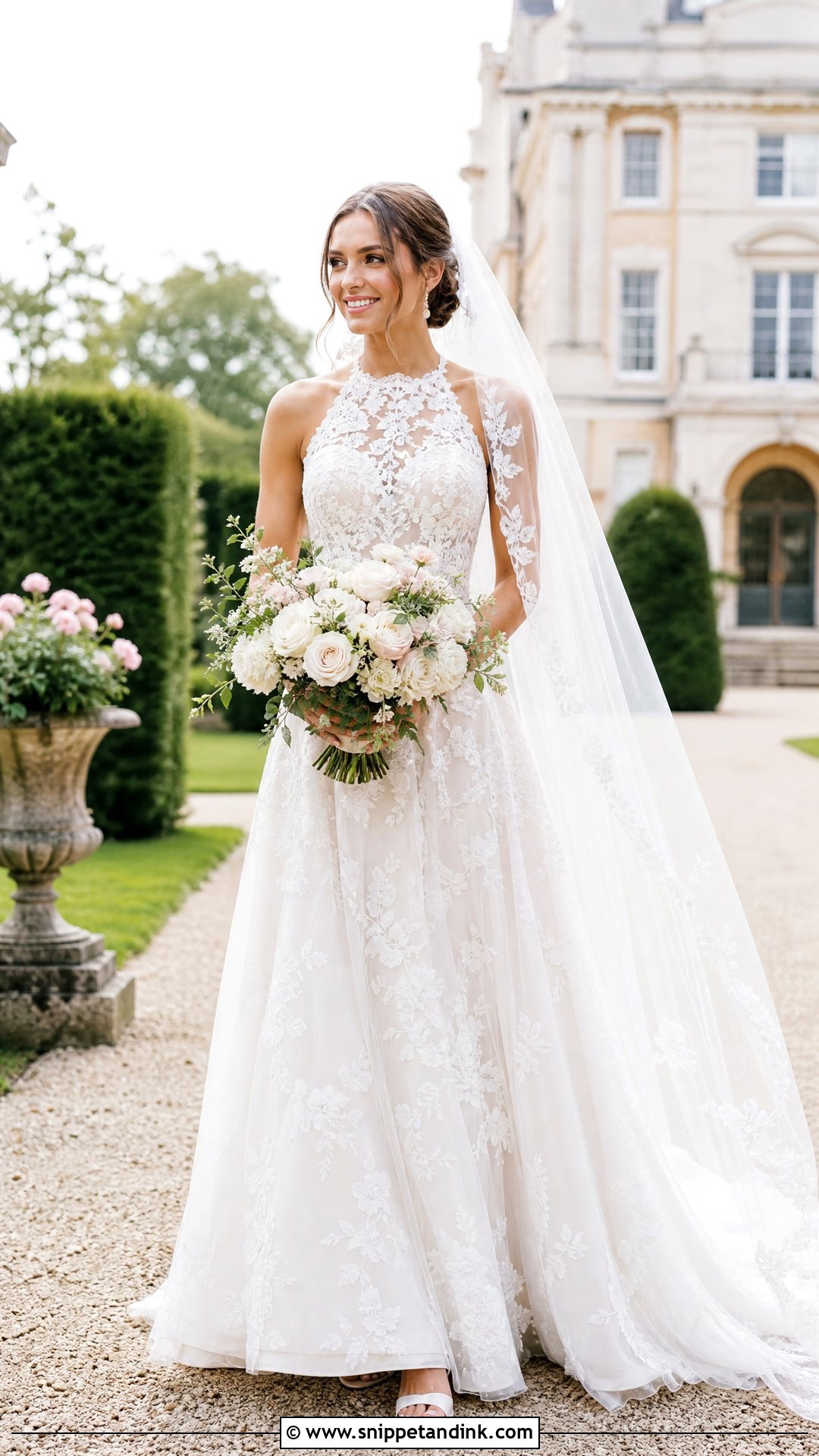
Lace takes the edge off a structured halter. Floral lace across the neckline and torso over a flowing A-line skirt is the easy version, with a light lining so the pattern still shows. A fingertip veil with a narrow lace border, pearl studs and ivory block-heel sandals fit, along with a loose chignon that leaves the neckline clear. Carry a garden bouquet with white roses and greenery. One thing I check on lace halters: the strap edge. Where lace wraps the neck, a soft binding inside stops it scratching by the evening. It suits gardens and country estates best.
3. High Neck Halter Wedding Gown
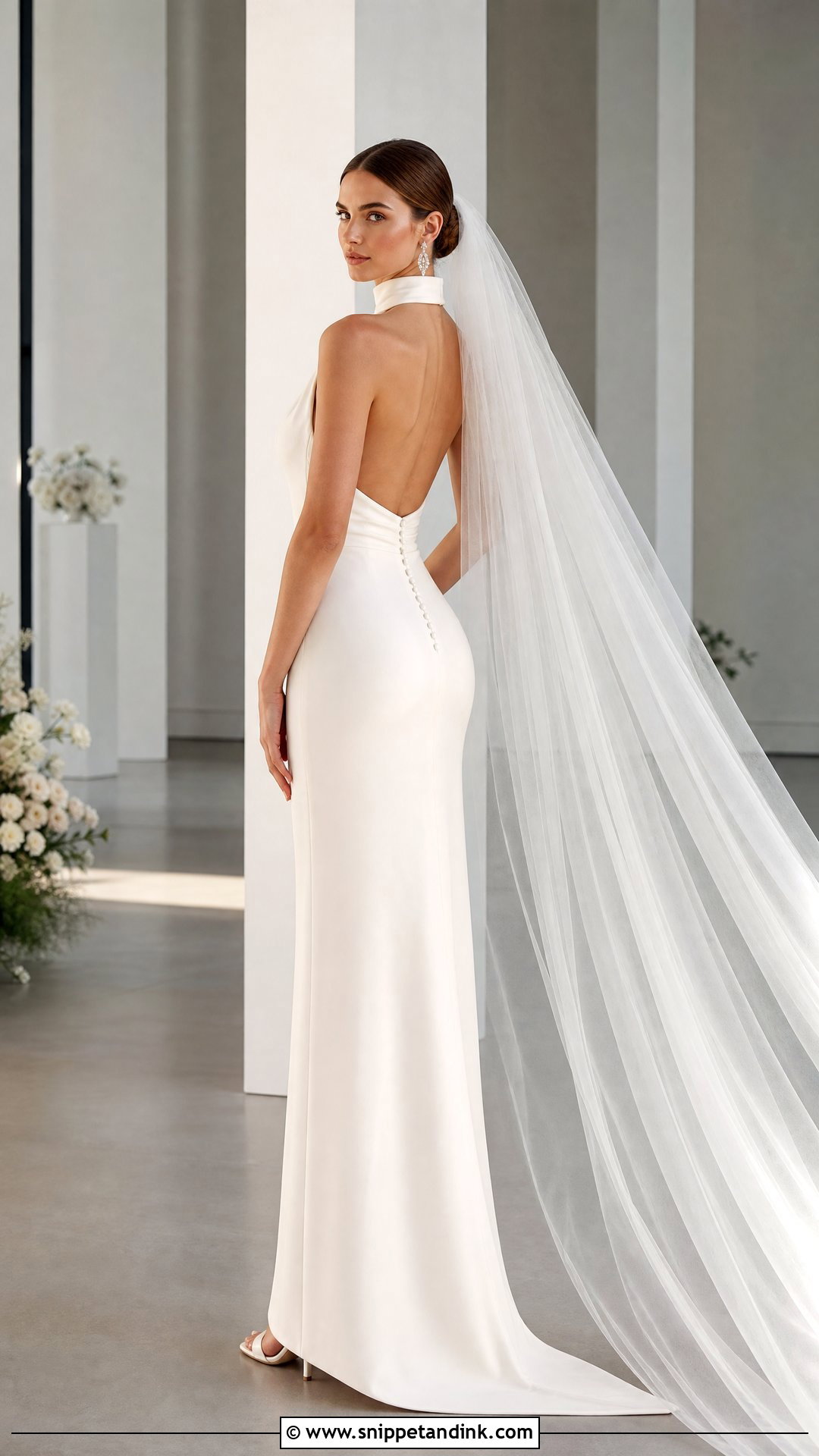
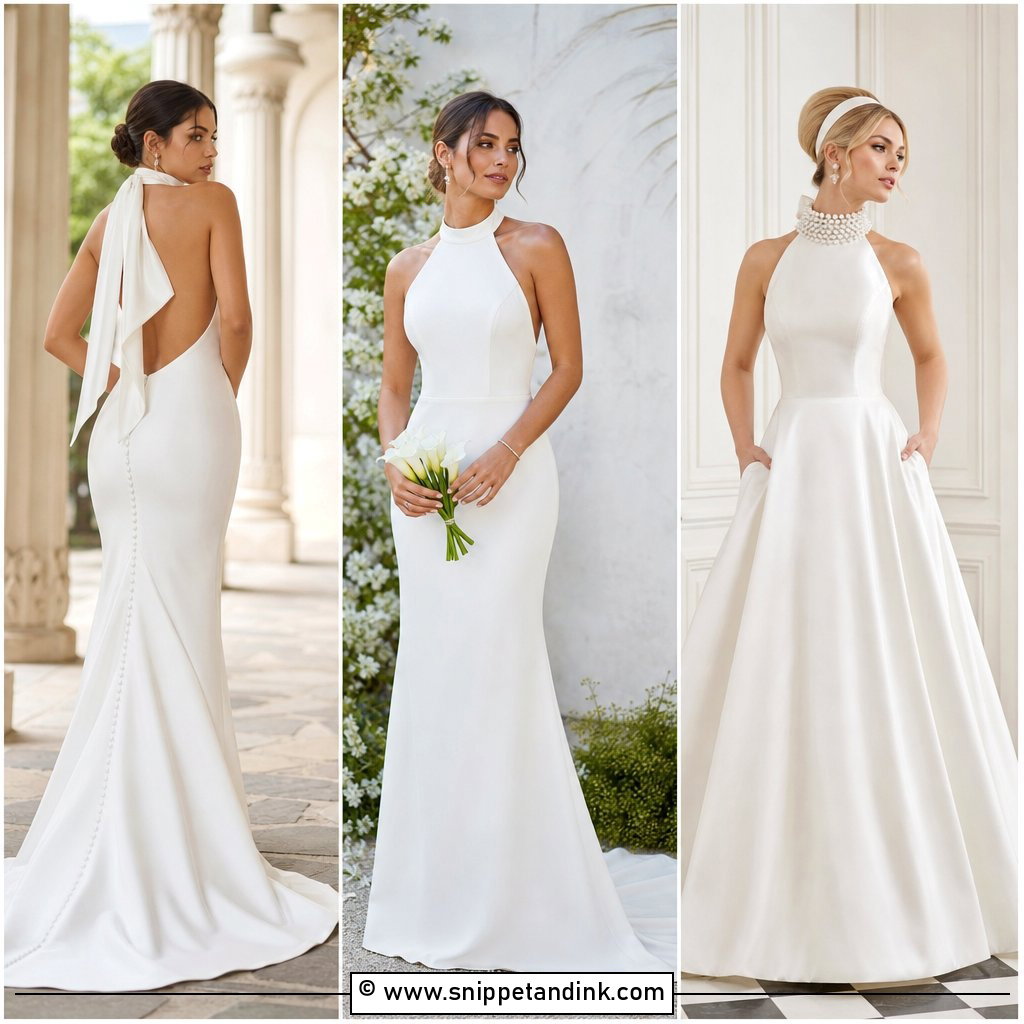
Closing the neckline high makes the bride look taller and the front almost architectural. Look for a fitted high neck, sleeveless shoulders and a long column or fit-and-flare skirt, then let a low back, covered buttons or a train do the talking. Keep the hair in a sleek bun so the line of the neck stays visible. Crystal drops, a slim bracelet and pointed satin heels are plenty; a necklace would only crowd it. A long veil adds tradition to an otherwise modern dress. If you have a shorter neck, try it before ruling it out, but compare it against a slightly lower collar too.
4. Plunging Halter Neck Wedding Gown
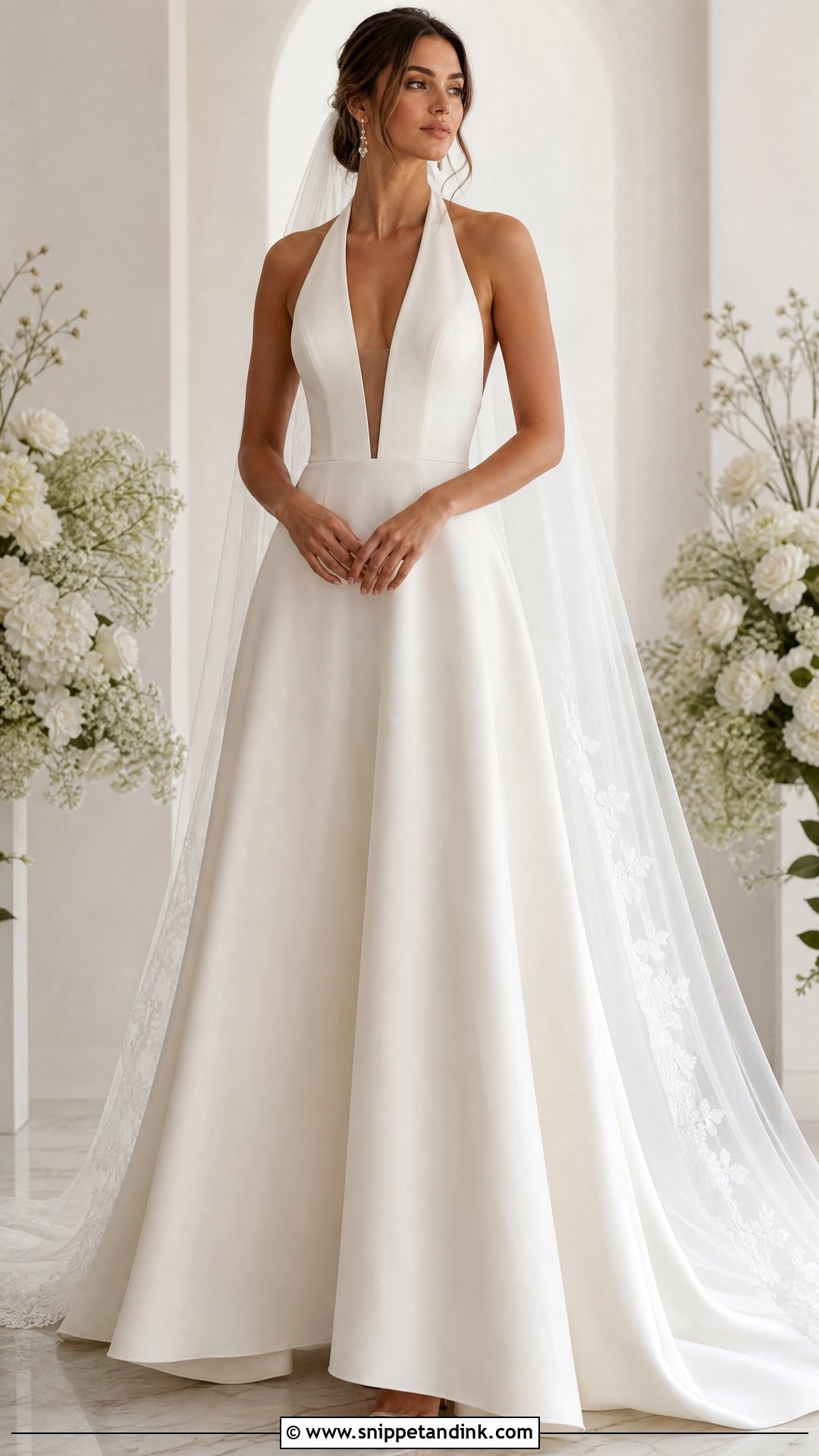
The plunging halter is the boldest cut here: an elongated V-shaped front held by straps that meet behind the neck. Insist on illusion mesh down the centre. Without it, the two sides of a deep plunge drift apart every time you lift your arms. A structured bodice and soft flared skirt balance it. Delicate earrings, a low ponytail and barely-there sandals keep the focus where it should be, with a plain cathedral veil. Have the tailor check you sitting, walking and reaching up; if anything gapes, small bra cups sewn to the lining usually fix it. Not my first pick for a fuller bust without that internal structure.
5. Open Back Halter Neck Wedding Gown
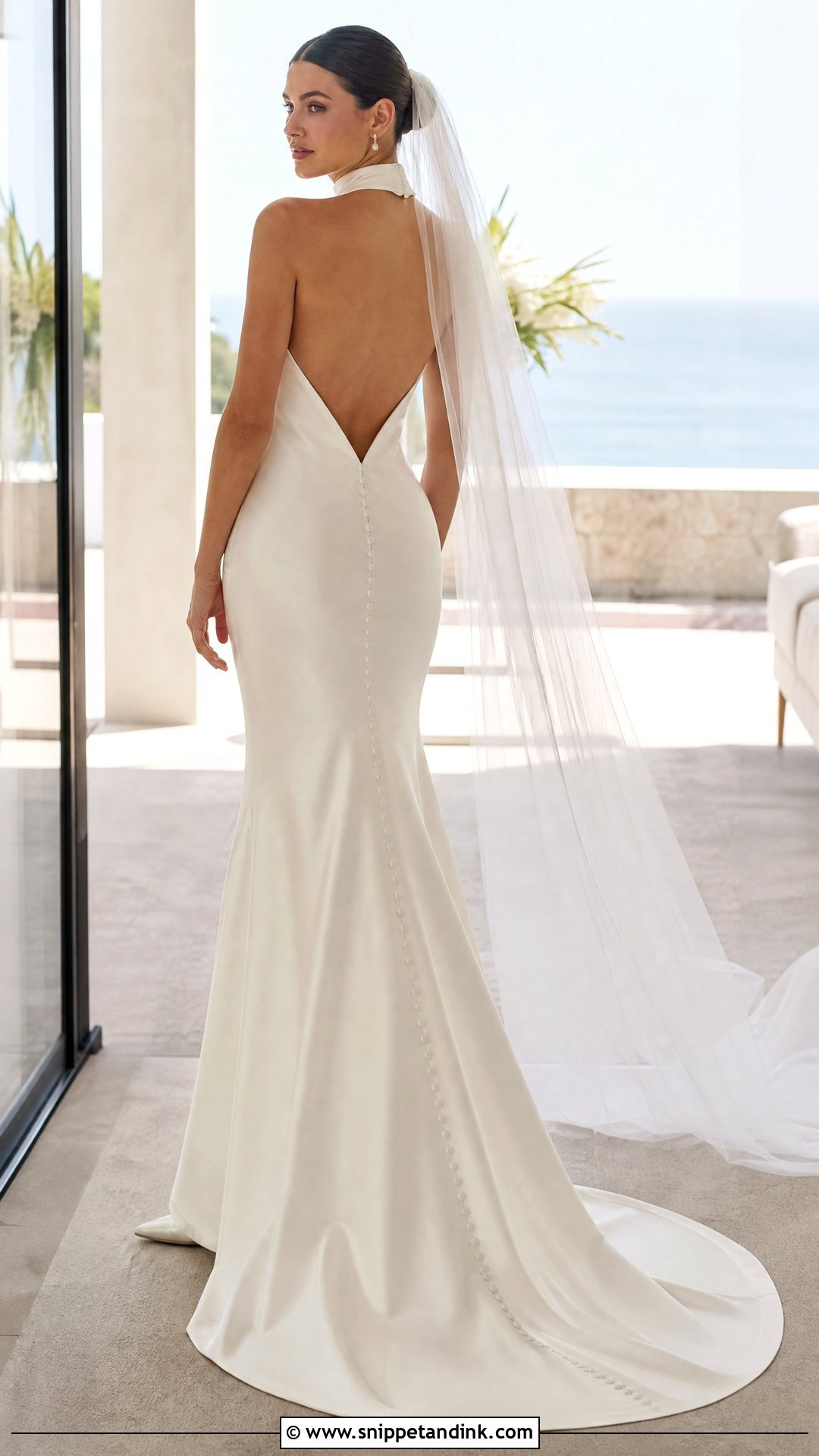
A halter and an open back belong together, since the strap at the nape leaves the whole back free. Wide straps, a fitted waist and a low curved or V back give a strong view from the aisle and the dance floor. Satin, crepe and silk keep the shape clean; covered buttons add tradition. Wear an updo or a side-swept style. Pearl earrings and pointed heels work, plus a fine back necklace if the gown allows, and fix the veil below the hair so it frames the back rather than hiding it. Ask how the back edge is finished. A good one has a narrow elastic or boning channel so it doesn’t stand away from the skin when you bend.
6. A-Line Halter Neck Wedding Gown
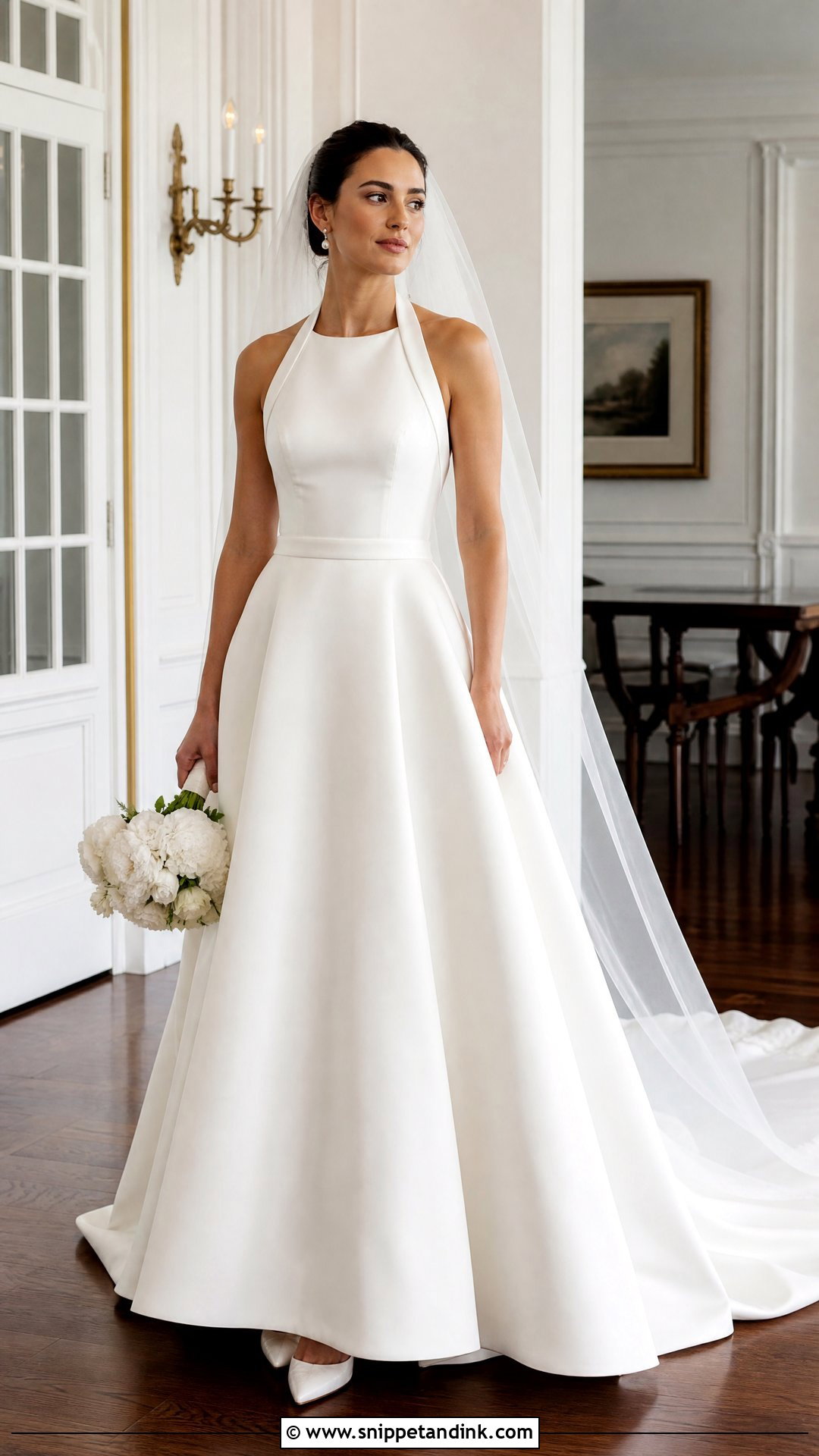
Could one gown give you structure and still be easy to wear for twelve hours? The A-line usually does, defining the upper body before the skirt widens gently from the waist. Pick crisp mikado to make it formal; chiffon softens it. A natural waist seam, wide straps and a medium train keep proportions balanced. Pearl or crystal earrings, a neat bun and ivory pumps fit, with a sheer chapel veil and a round bouquet that stays smaller than the bodice. It’s the gown I’d suggest when you’re marrying somewhere that isn’t clearly formal or casual, since it moves comfortably between both.
7. Mermaid Halter Neck Wedding Gown
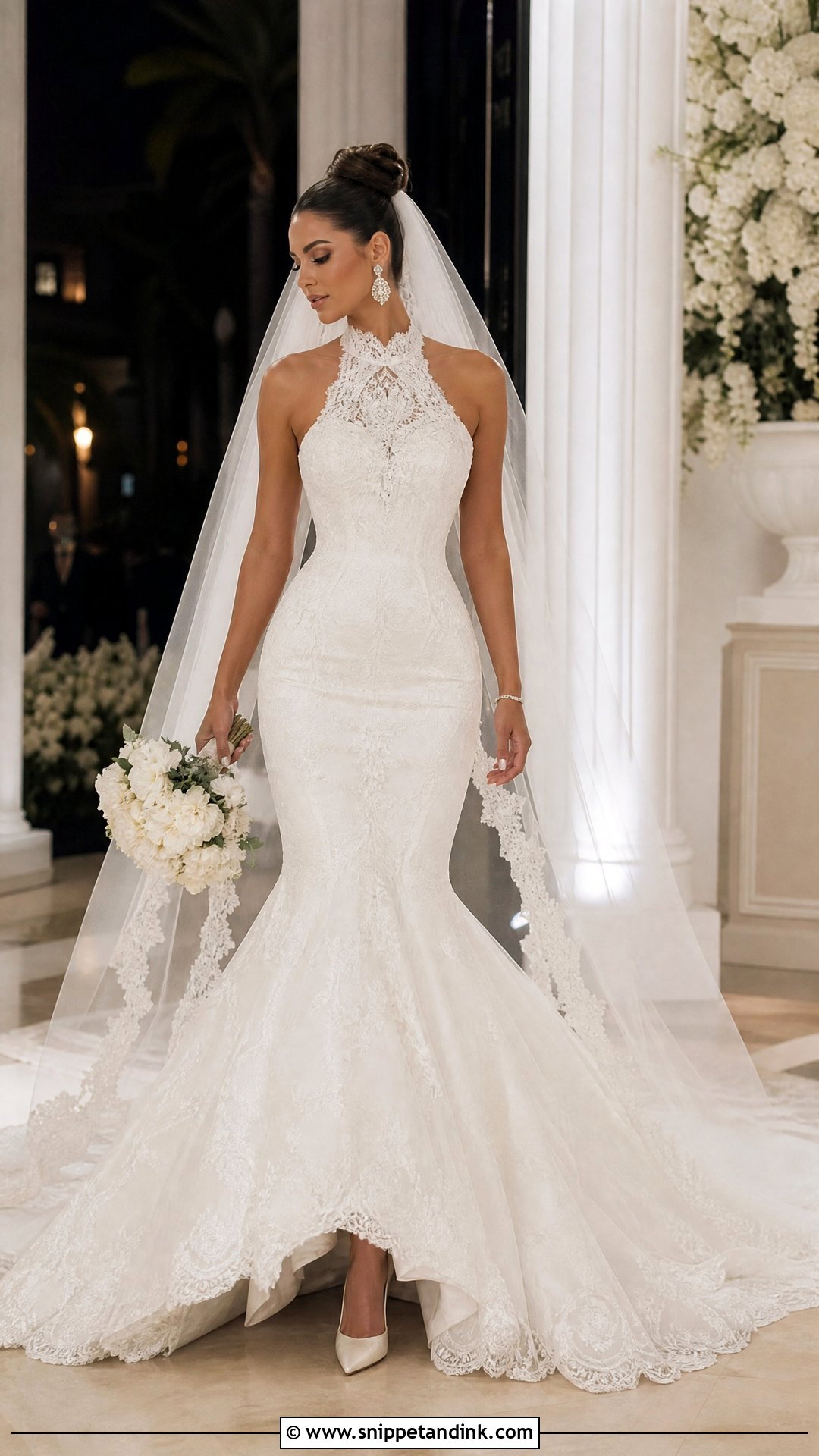
The mermaid looks balanced on a halter because the strap widens the shoulders visually while the skirt narrows below. The skirt should follow waist and hips and flare near the knee. Stretch crepe keeps it simple; lace appliqué adds detail. A high bun, statement earrings and pointed heels with enough lift for the hem suit it, with a cathedral veil for the ceremony only and a slightly long bouquet. The usual problem is tension. If the skirt is tight across the hips, every seated moment pulls the halter forward against your neck, so sit down at every fitting and say so if you feel it.
8. Ball Gown Halter Neck Wedding Gown
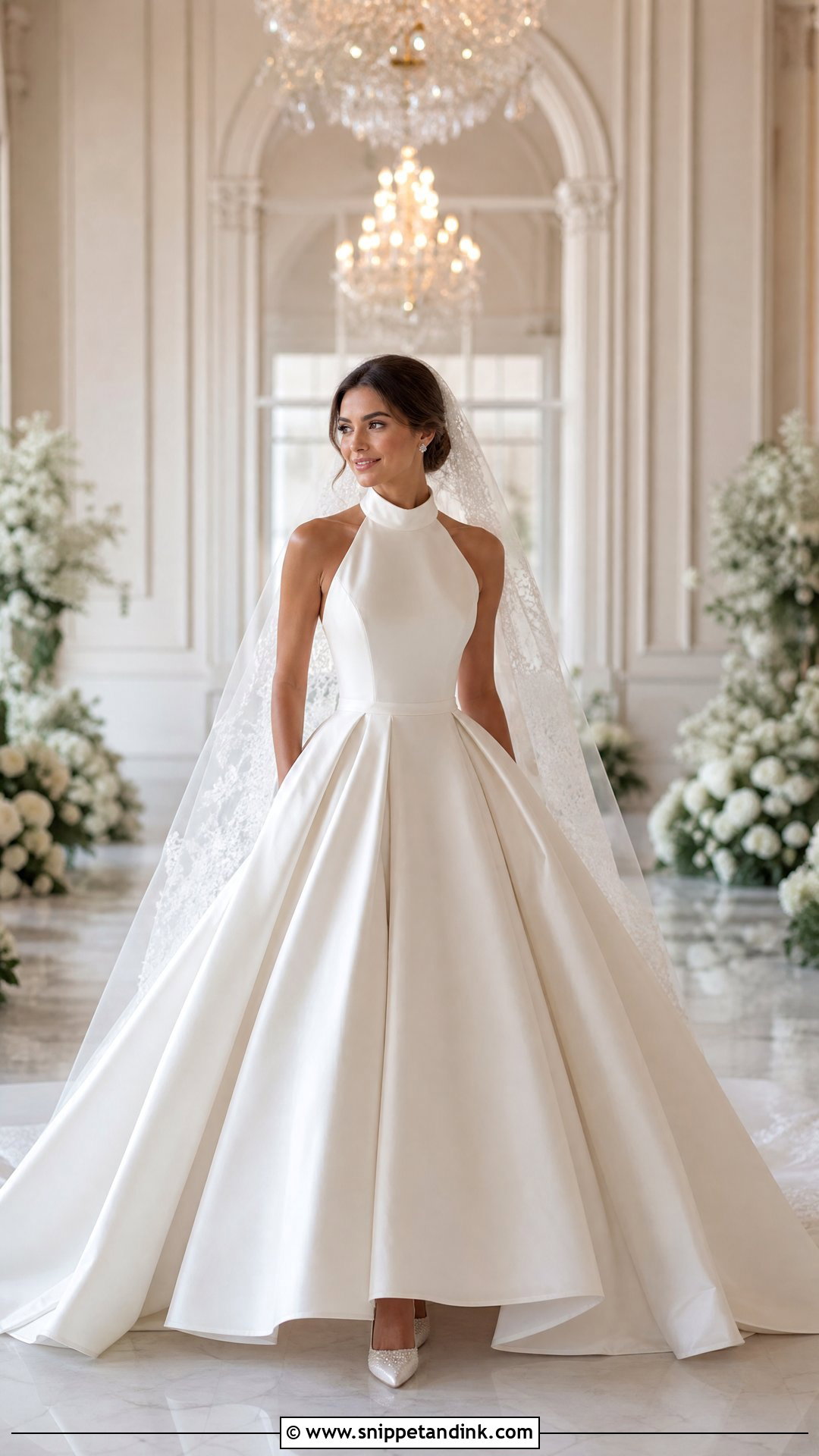
Pairing a halter with a full skirt feels fresher than the usual strapless ball gown. A fitted bodice, a defined waist and a big skirt in mikado, satin or layered tulle make it grand, and a high halter front balances all that volume below. A smooth bun, sparkling studs and closed-toe pumps are enough. Add a cathedral veil and leave the necklace off. These skirts are wide, so ask your venue about door widths, the bridal suite and the car. Grand hotels and historic houses with spacious rooms are where this one feels right.
9. Chiffon Halter Neck Wedding Gown
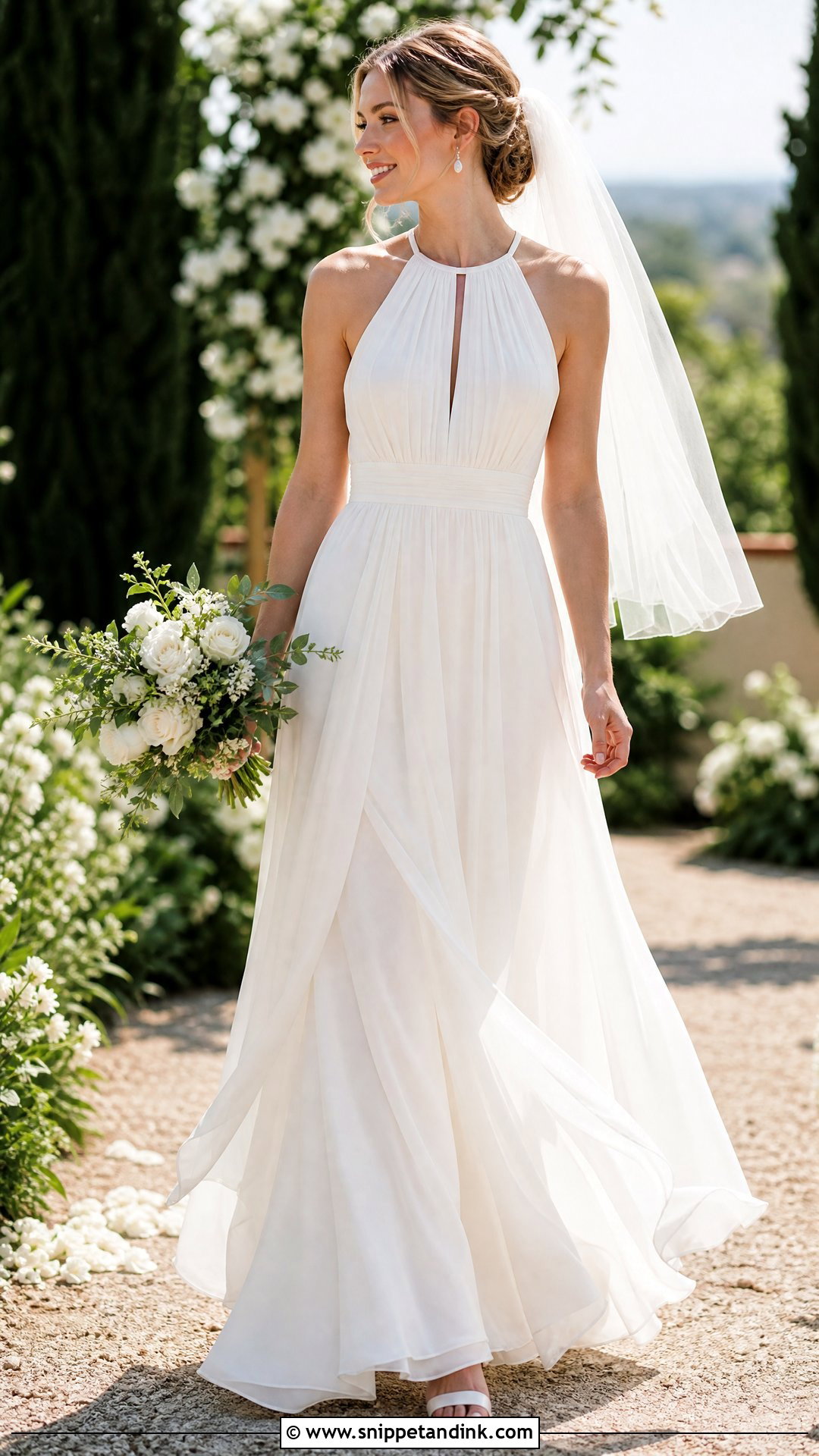
Chiffon brings soft movement around a halter bodice and stays cool, which is why I recommend it for summer and outdoor ceremonies. A softly gathered neckline, defined waist and layered skirt that floats rather than balloons is the shape to look for, and a small keyhole adds interest. A loose low bun, small drops and block-heel sandals for grass or sand suit it, with a fingertip veil and a bouquet of white flowers and soft greenery. Check what’s holding it up. Chiffon itself has no structure, so the bodice needs inner support or the whole dress hangs from the back of your neck.
10. Crepe Halter Neck Wedding Gown
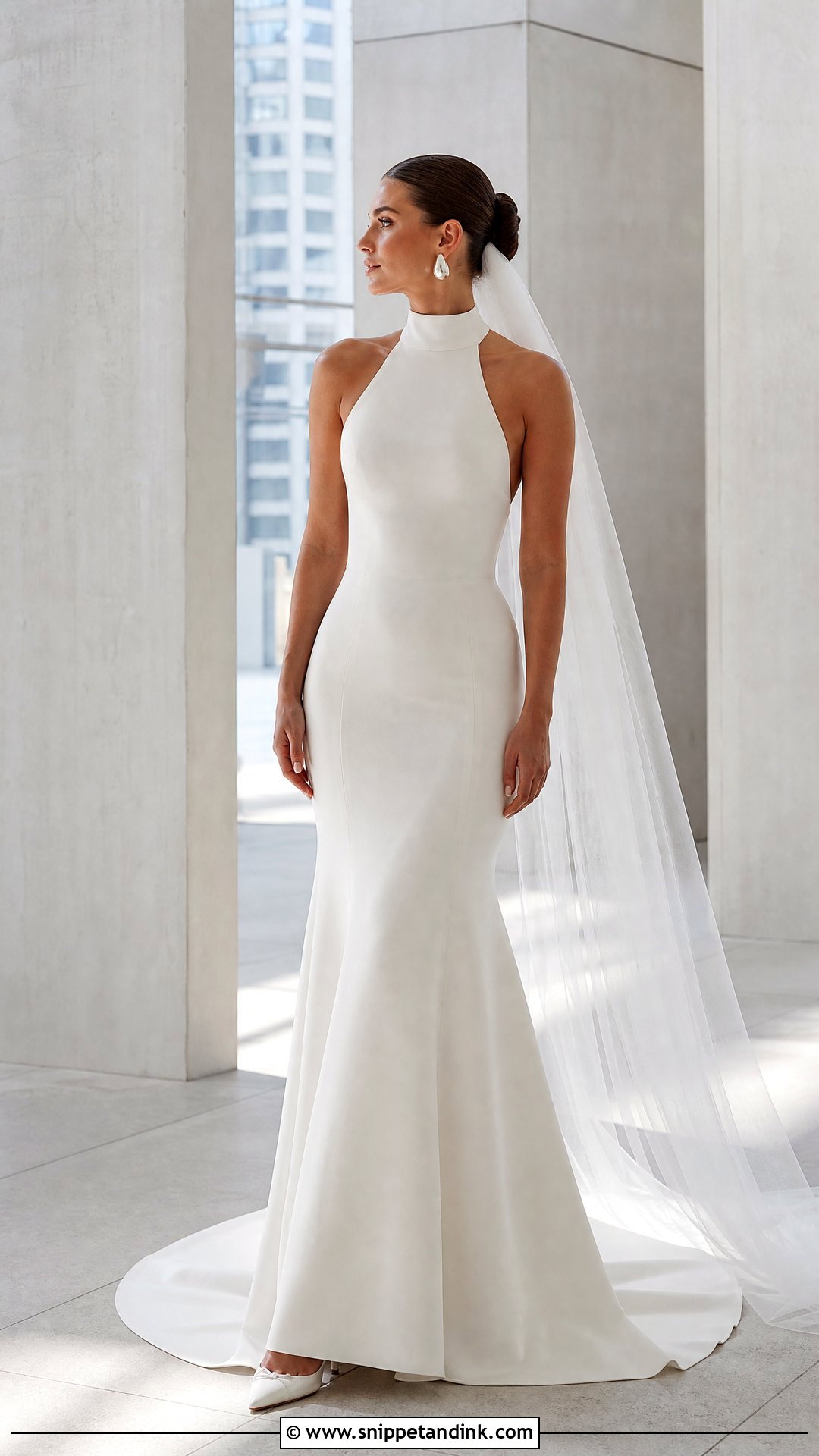
Matte crepe is the modern choice: no shine, no texture, just cut. A fitted column or fit-and-flare with strong seams, a high neck and an open back lets construction carry the look. Sculptural earrings, a sleek centre-parted bun and pointed leather or satin heels fit, with a long plain veil to make it ceremonial and a compact bouquet with little greenery. Crepe takes a removable overskirt or cape well if you’d like two looks. Its weakness is fit. Crepe skims when it’s tailored right and clings at every bump when it’s not, so leave time for an extra fitting.
11. Beaded Halter Neck Wedding Gown
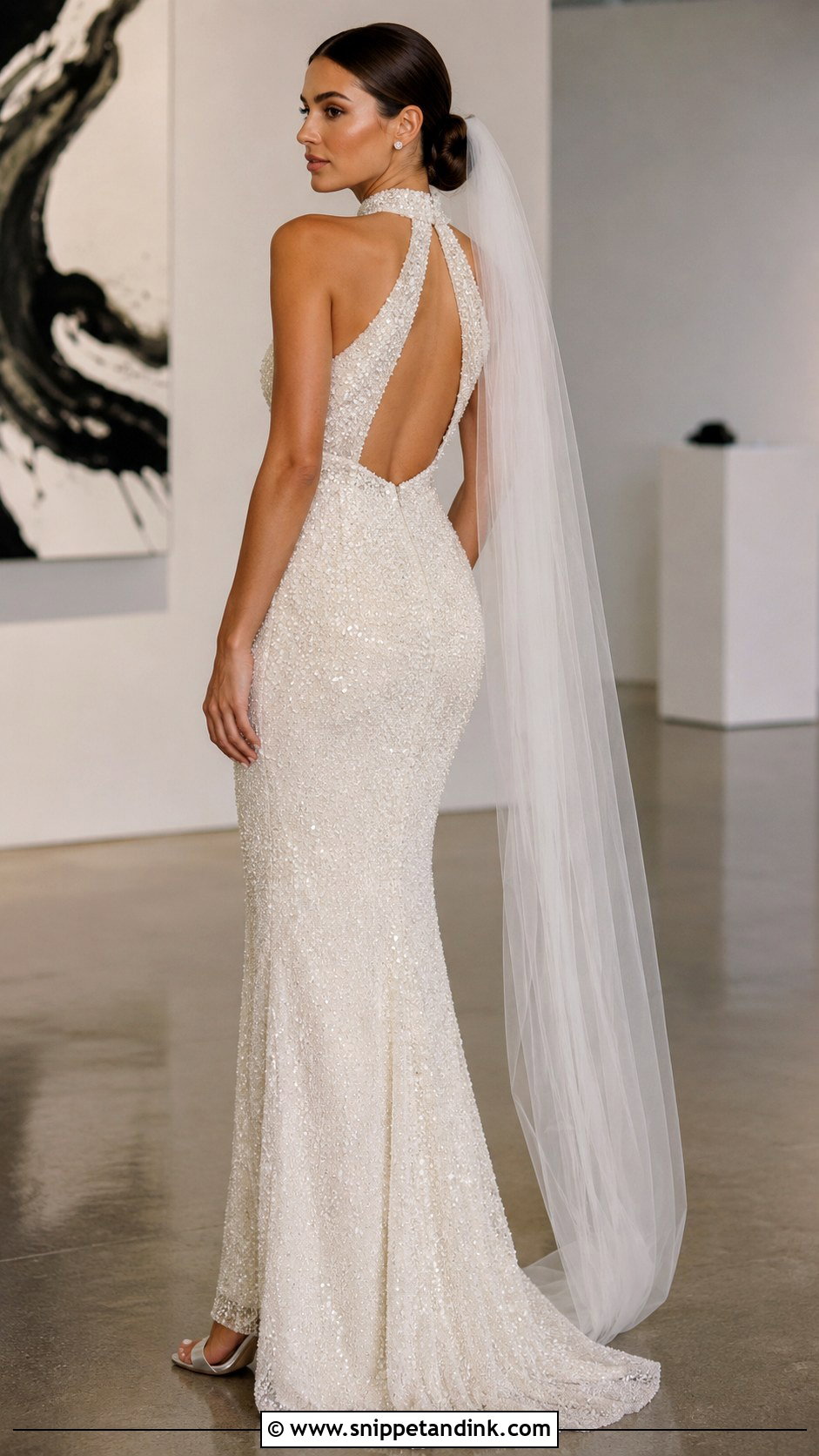
Beads and crystals catch light with every move. To keep it from tipping into too much, pair the beading with a streamlined sheath or gently flared skirt rather than a huge volume. A lined halter bodice keeps it comfortable, and an open or keyhole back stops it feeling enclosed. Crystal studs, metallic ivory heels and a low chignon are all you need, plus a plain tulle veil for contrast. No necklace. Heavy beading adds real weight to a halter strap, so ask how much of it the waist seam carries. Evening receptions with controlled lighting show this gown at its best.
12. Pearl Halter Neck Wedding Gown
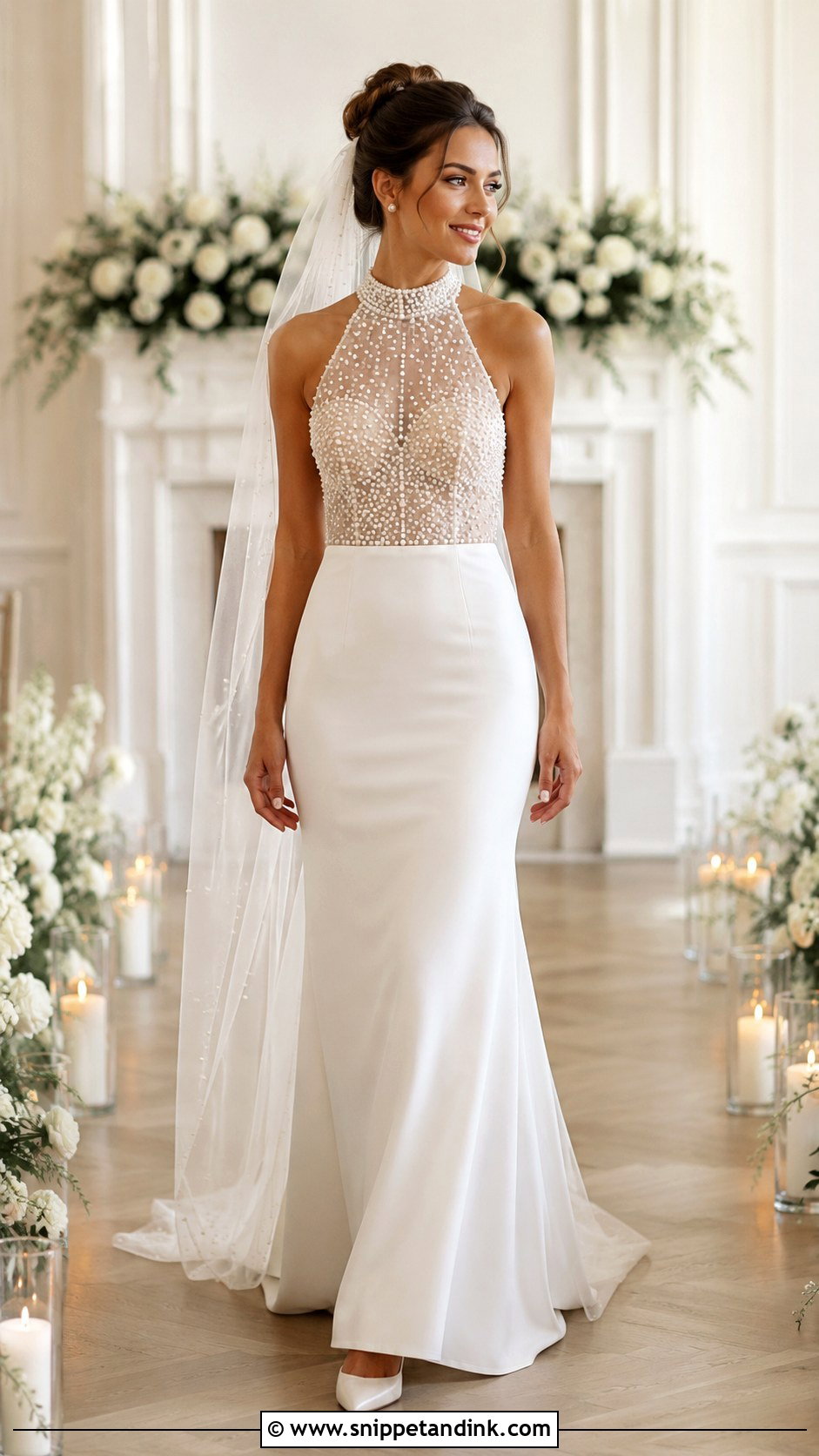
Pearls give a simple halter a lot of detail without the sparkle of crystal. They can be scattered over sheer tulle, cover the bodice or edge the neckline and open back. Balance them with a smooth crepe, satin or chiffon skirt. Pearl studs, an updo and plain ivory pumps finish it, and a veil with a few pearls can continue the theme. What I’d avoid is pearl shoes plus pearl gloves plus a pearl bag. Ask how the pearls are finished under the arms and around the neck; raised beads there rub through a long day of hugging guests.
13. Keyhole Halter Neck Wedding Gown
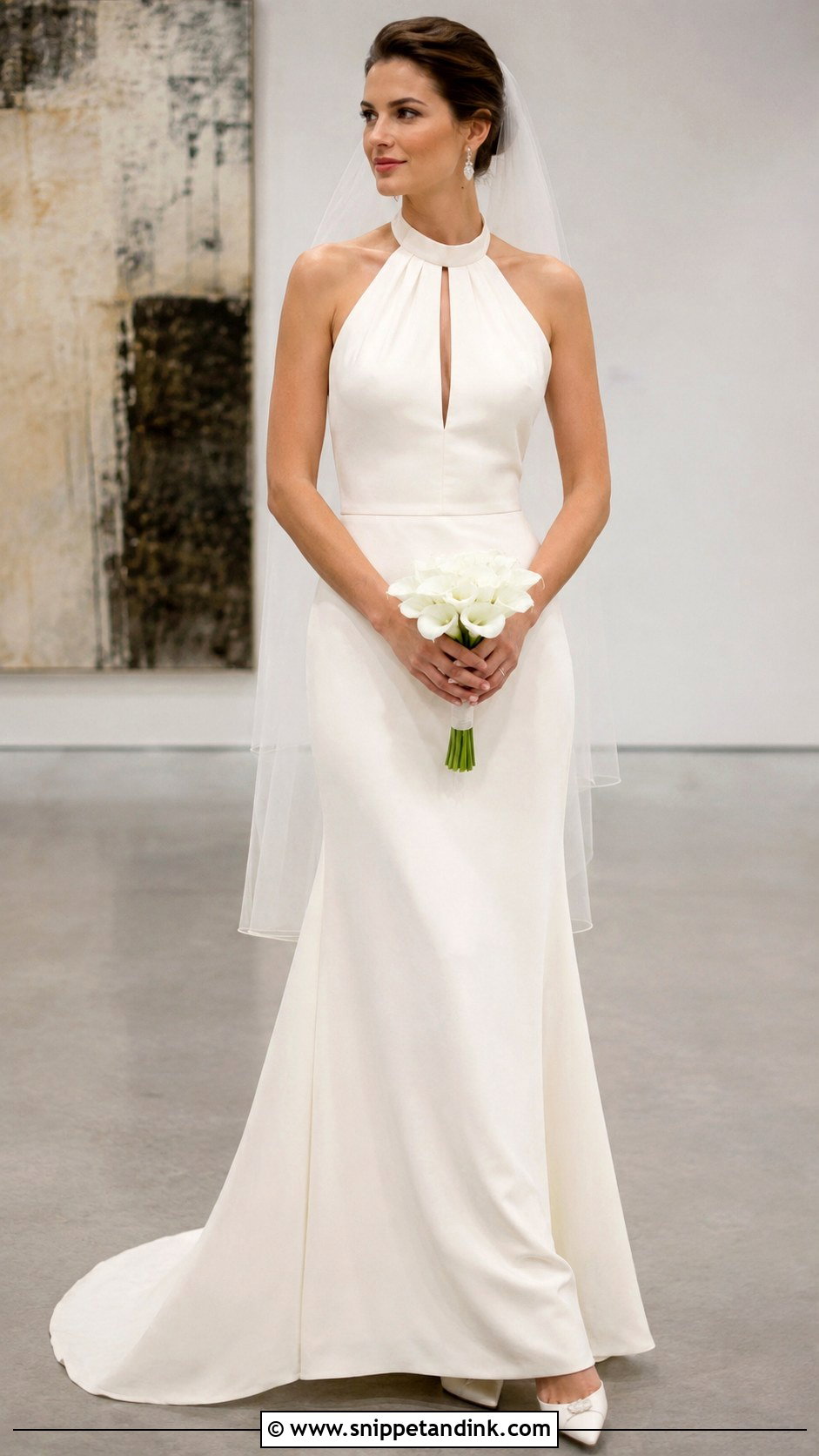
A keyhole halter gown opens a small window in the bodice without a full plunge. The keyhole might be a narrow vertical slit, a soft round or an outline of lace and beads. A fit-and-flare skirt makes it sleek, while an A-line makes it romantic. Drop earrings, swept-back hair and pointed heels work, with a simple veil and compact bouquet so the small detail isn’t lost. Sit down in it at the fitting. A keyhole can buckle when you’re seated; a strip of illusion mesh or a fine stay stitch behind it keeps it flat.
14. Bow Halter Neck Wedding Gown
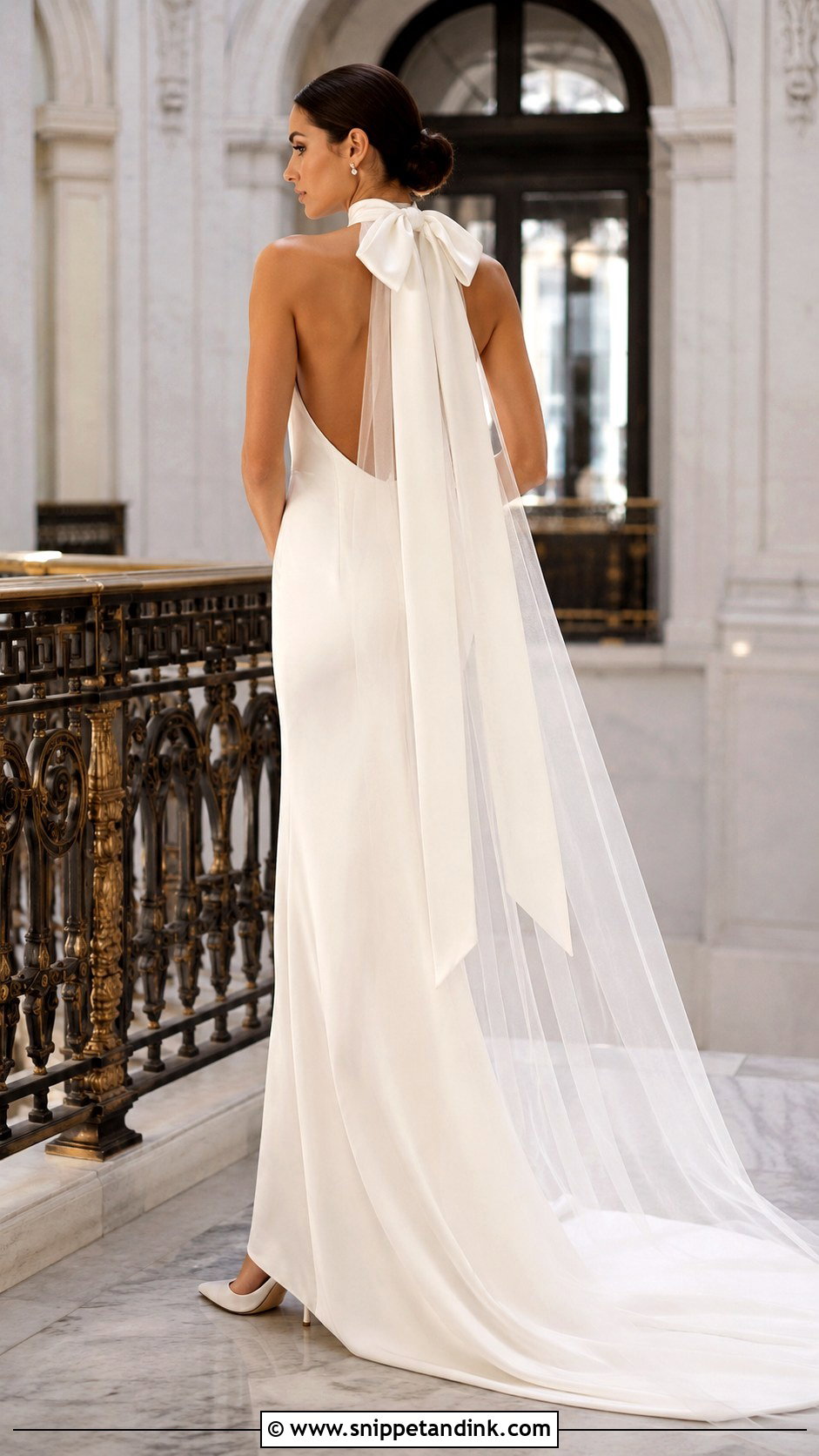
A bow at the neck or upper back is the playful version. Long ties can form a crisp bow, a soft knot or a trailing sash. Because that detail already adds volume up top, keep the skirt plain: a satin column, crepe fit-and-flare or clean A-line. Put the hair in a side bun or low updo so it doesn’t sit on the bow, and fix the veil below it. Small earrings and pointed pumps are all else you need. Heavy ties drag on the neck after a few hours, so pick a light fabric, and have the bow stitched into place rather than retied on the morning.
15. Draped Halter Neck Wedding Gown
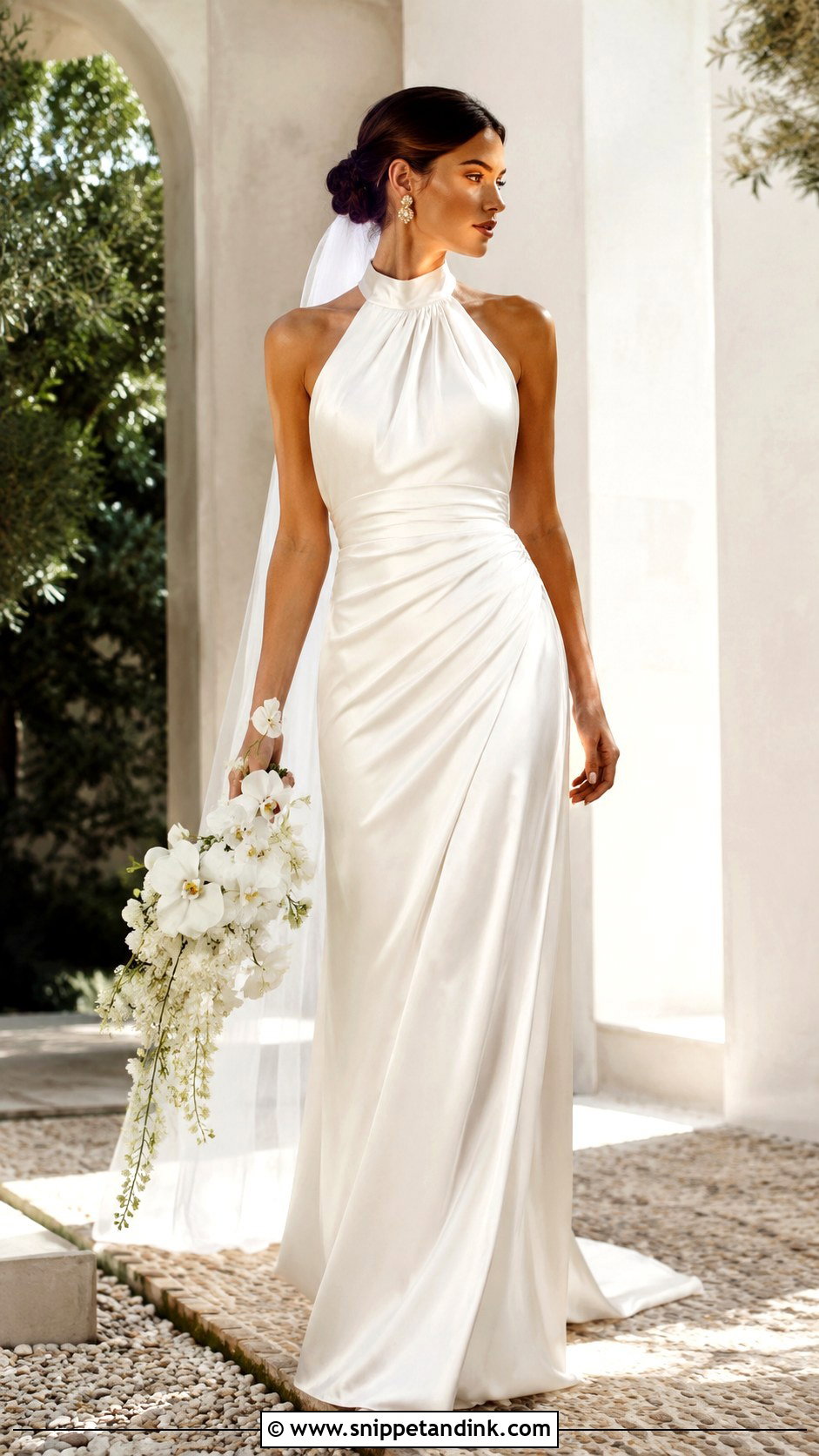
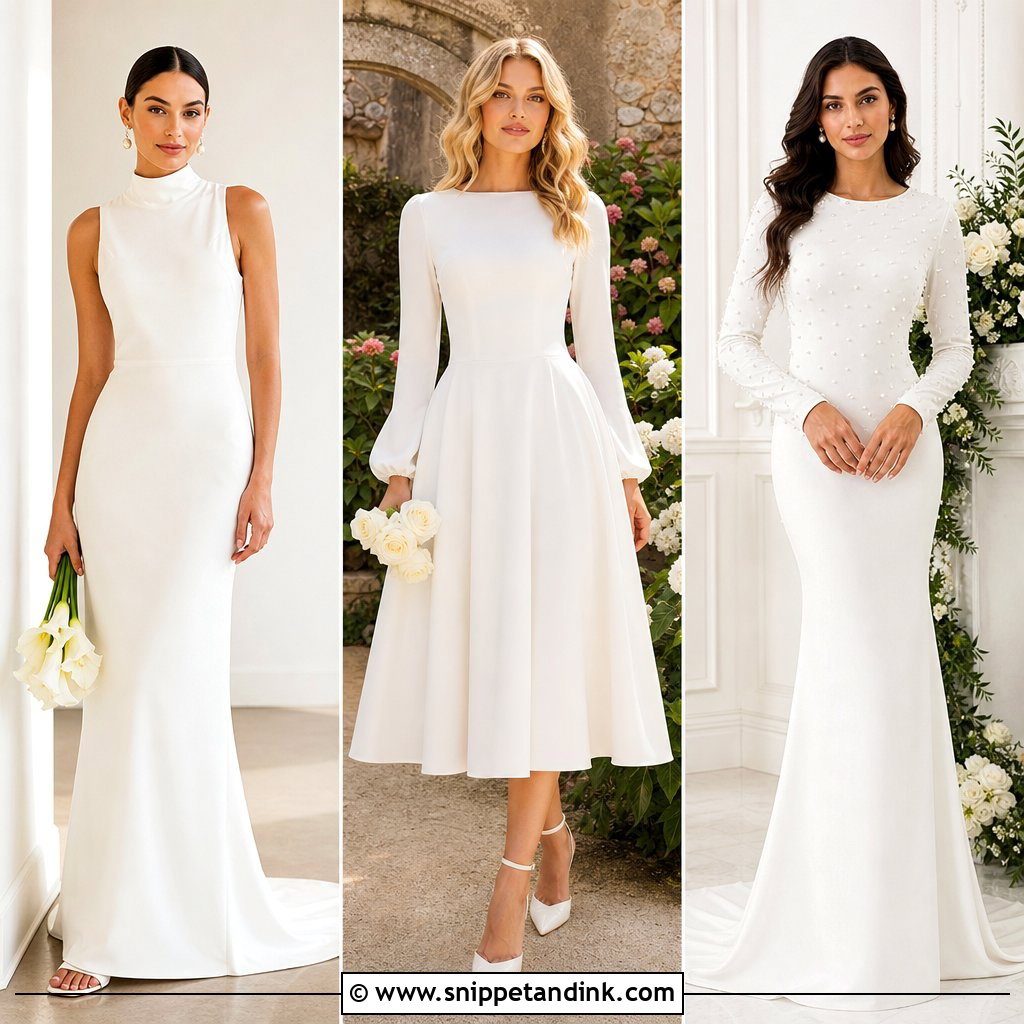
Draping gives shape with fabric alone. It might be gathered at the neck, twisted across the bodice or wrapped diagonally at the waist. Silk, satin and light crepe make the softest folds. A smooth low bun, sculptural gold or pearl earrings and delicate heeled sandals suit it, with a simple veil and a loose bouquet. Look at yourself from the side as well as the front. Drapes add volume where they gather, and a fold that sits on the fullest part of the bust or waist can add bulk you didn’t ask for; a fitter can usually reposition it by an inch.
16. Minimalist Halter Neck Wedding Gown
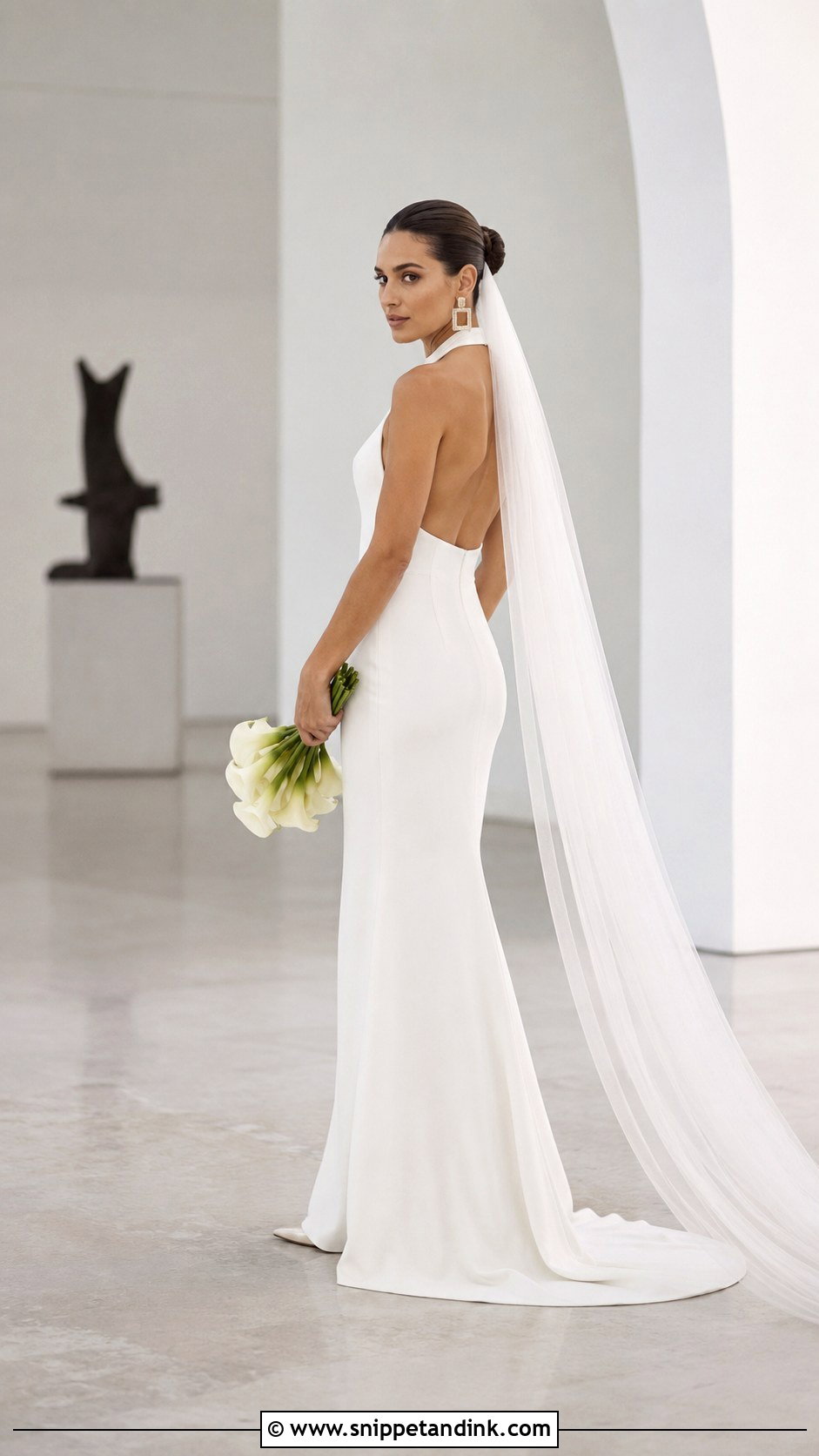
A quiet venue suits a quiet dress. An unbroken neckline, precise waist shaping and a column or gentle A-line skirt are all this gown needs. Matte crepe reads soft; satin or mikado adds sheen and structure. Geometric earrings, a sleek bun and sharp pointed heels fit, and a plain cathedral veil comes off after the ceremony to show the back. A single-colour bouquet of calla lilies or roses keeps it consistent. With nothing to disguise construction, fit is the design. Watch the neckline, side seams, hem and back closure closely, because any line that pulls will be the first thing a camera finds.
17. Vintage Halter Neck Wedding Gown
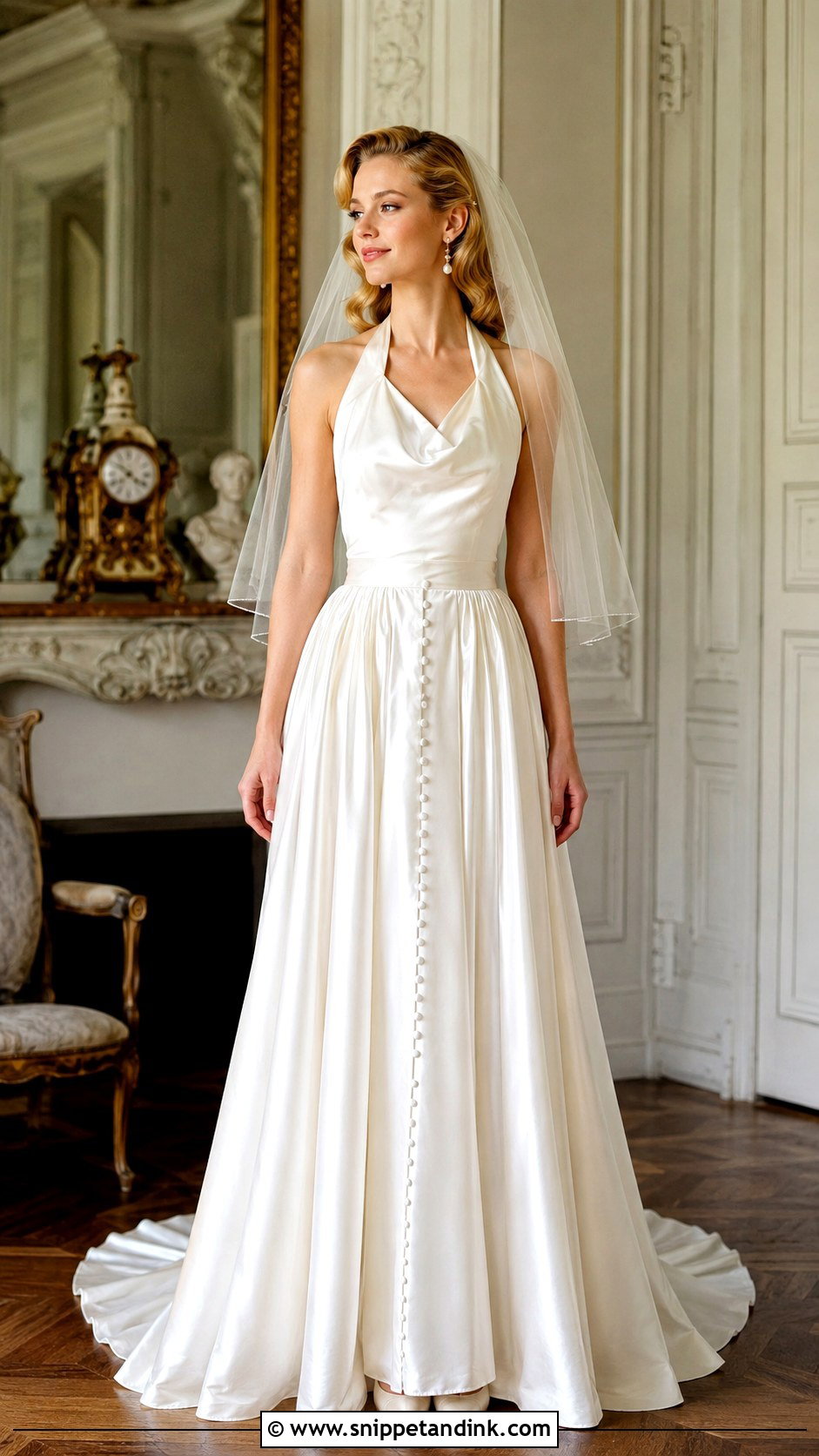
Vintage halters borrow from mid-century glamour and 1970s ease. A softly draped satin bodice, a natural waist and a fluid skirt with a few pleats set the tone, and lace edging, covered buttons or a neck tie add period detail. A waved updo, pearl drops and round-toe ivory shoes fit, with a short blusher or simple fingertip veil. Pick one decade and stick to it; mixing a 50s veil with 70s hair is where it starts looking like a costume. Roses with a little greenery suit a historic venue or a city hall wedding.
18. Boho Halter Neck Wedding Gown
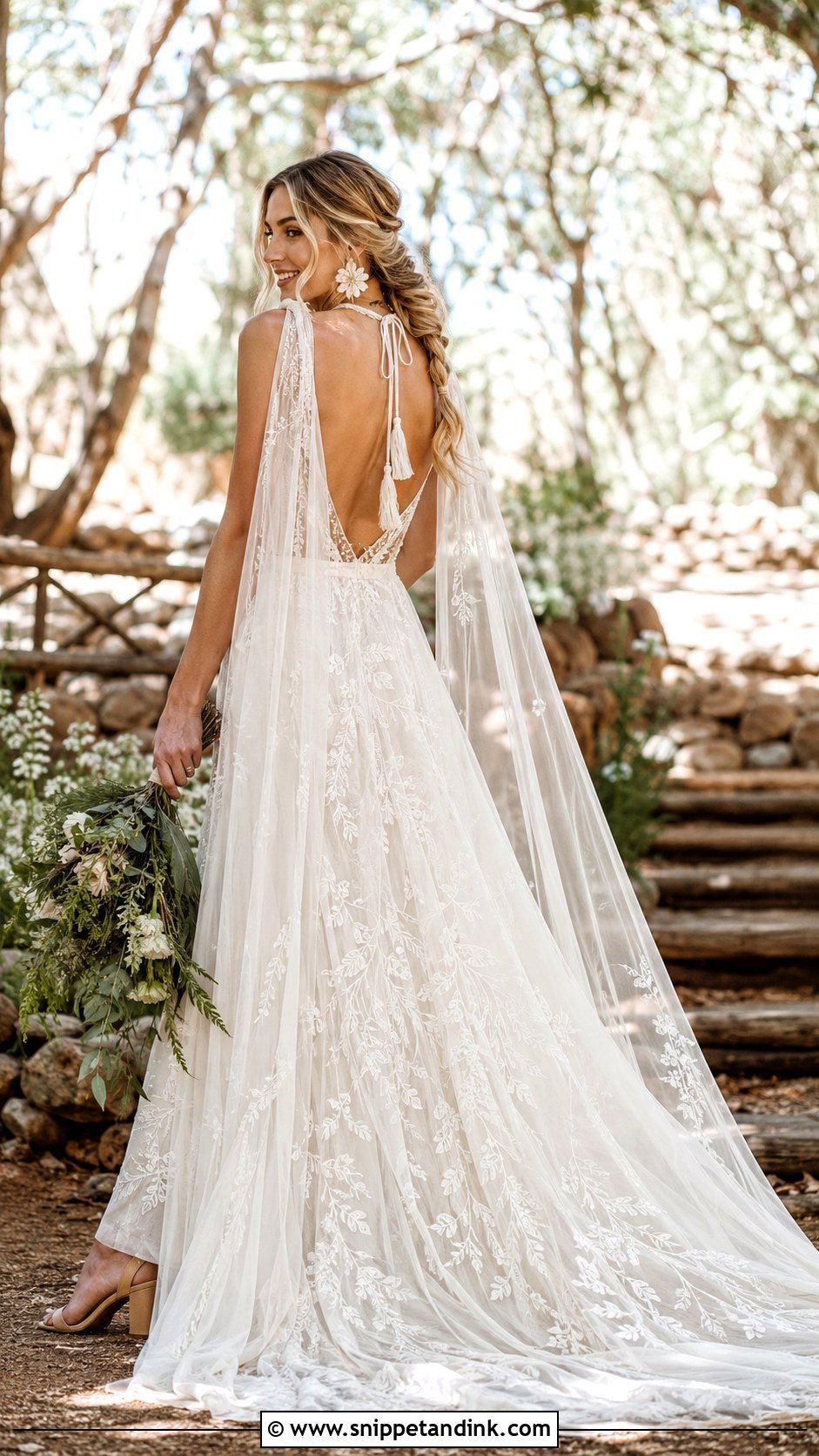
Boho halters are softer and more casual in feel, built on botanical lace, a gathered waist and an open back over a soft A-line or sheath. A tasselled tie or crochet-style trim adds character. Loose waves or a low textured braid, small floral earrings and neutral block-heel sandals keep it relaxed, with a light veil or sheer cape. Choose a loose bouquet with plenty of greenery. For woodland or desert ceremonies, check the hem fabric; open lace picks up burrs and sand, and a lining slightly shorter than the lace helps.
19. Plus Size Halter Neck Wedding Gown
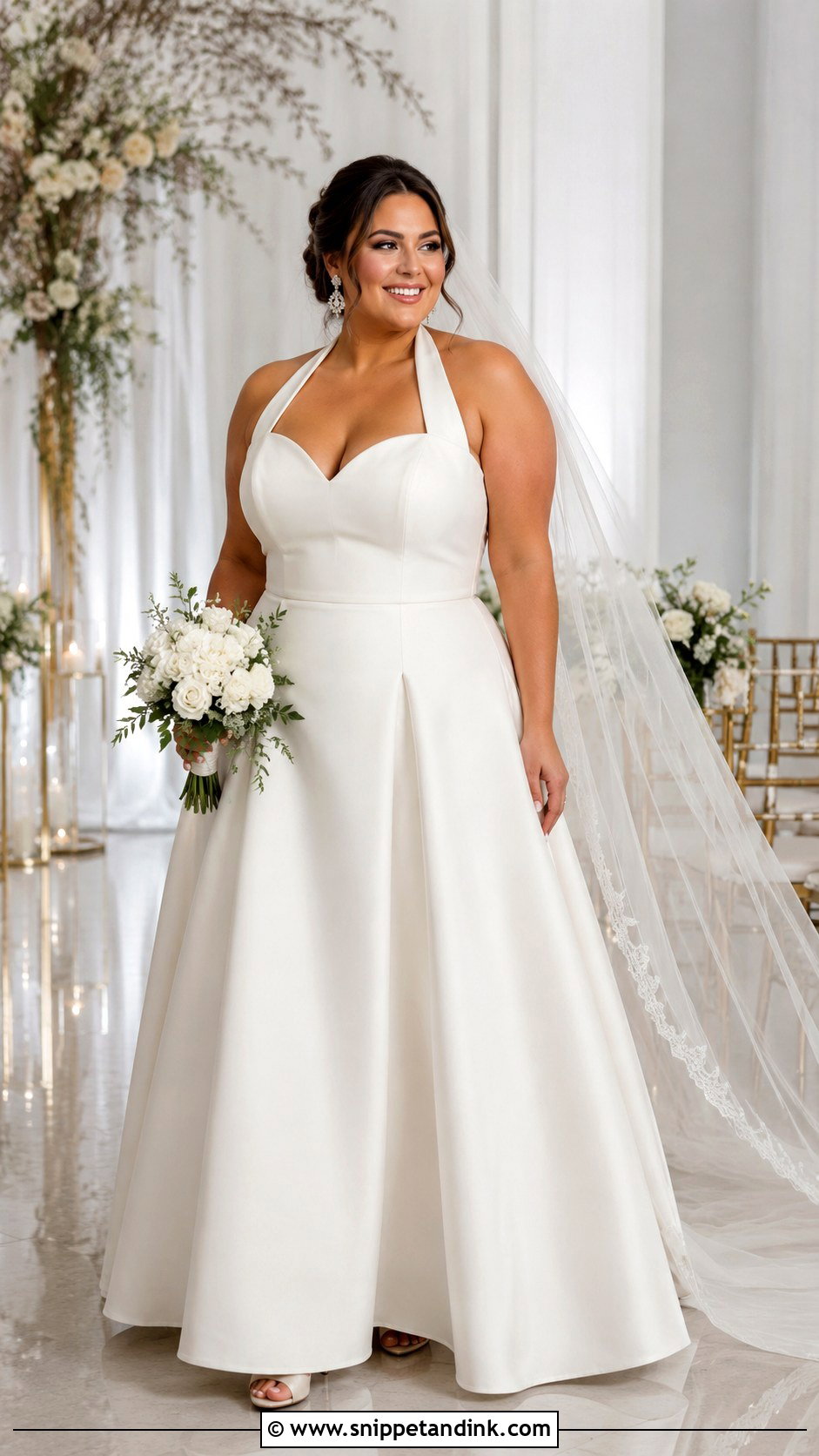
A plus size halter needs its support built into the bodice, not hung on the strap. Look for wide halter straps, a lined supportive bodice and a proper back closure rather than a neck tie alone. An A-line or structured fit-and-flare gives a smooth line and room to move. Statement earrings, an updo and cushioned ivory heels work, with a chapel veil and a medium bouquet that leaves the neckline in view. Ask whether the sample in the shop has the same internal construction as the gown you’d order in your size. A skilled bridal tailor can then adjust strap length, bust support, waist position and back height until it feels secure.
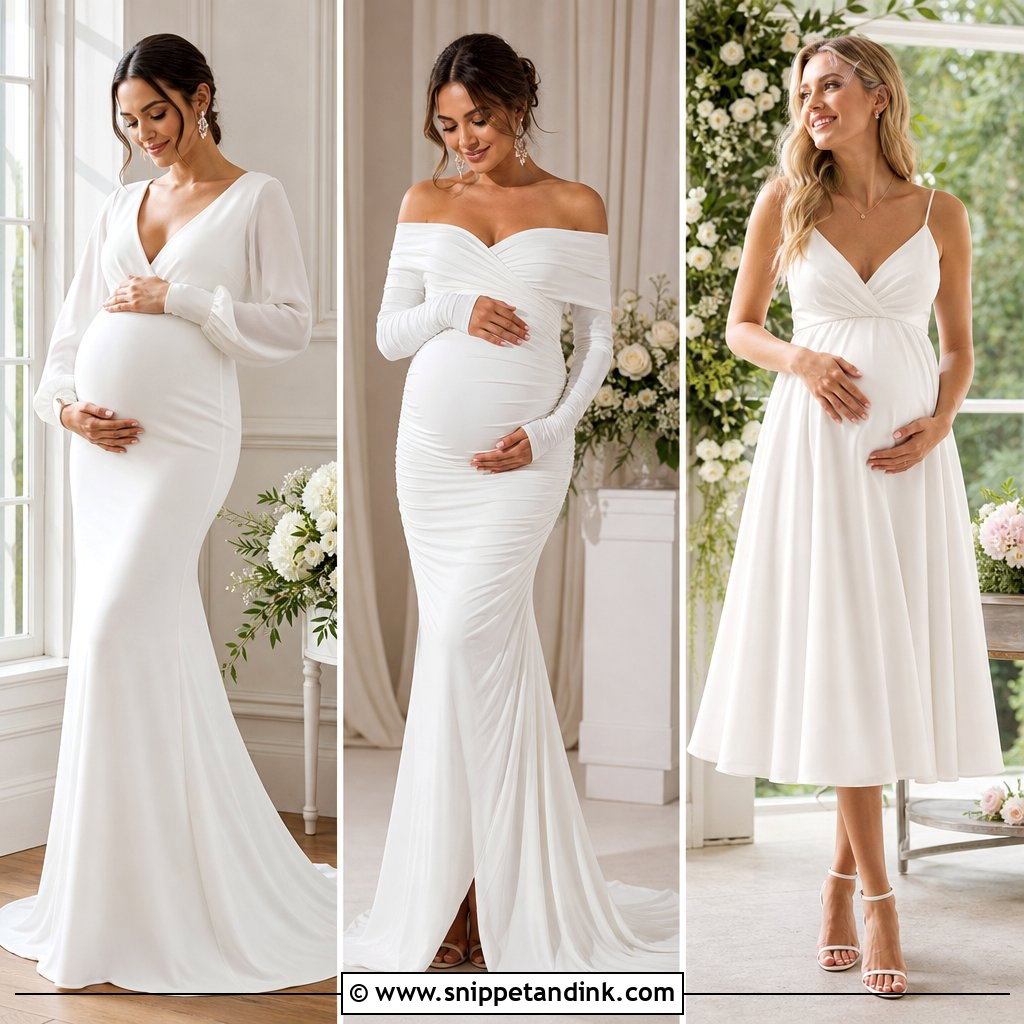

20. Short Halter Neck Wedding Gown
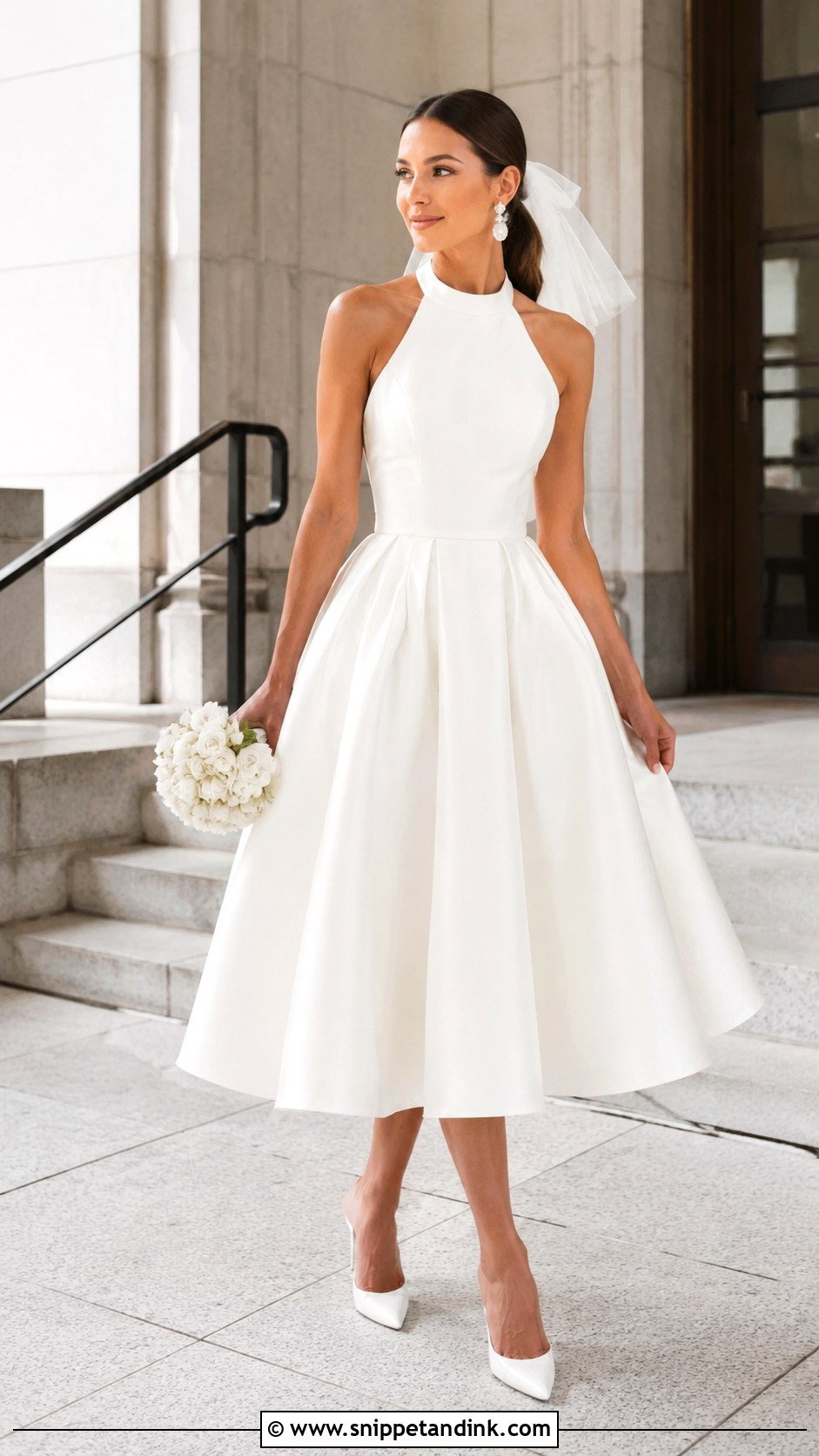
Short halters work for courthouse ceremonies, destination trips, reception changes and small dinners. A fitted mini, tea-length A-line or draped midi sets the level of formality; satin is polished, while lace or embellished fabric is festive. Statement earrings, a neat bun or ponytail and shoes worth looking at, such as pointed pumps or ankle straps, finish it. A short veil, bow veil or simple hair piece suits it far better than a long train. Your legs and shoes are on show, so look at the hem from all sides and walk, sit and dance in it before the wedding.
Covering Bare Shoulders for a Church or a Cold Night
Some places of worship ask brides to cover their shoulders, and an outdoor reception in spring or autumn can turn chilly once the sun drops. A halter leaves a lot of skin, so plan the cover-up when you choose the dress, not the week before.
For the ceremony
A sheer bolero or a lace jacket in the same ivory as the gown is the neatest solution, because it comes off cleanly for the reception. Ask your salon whether the designer makes a matching topper. A long cathedral veil worn over the shoulders also counts as cover in many churches, but confirm with the officiant rather than assuming.
For the evening
- A faux fur stole or a cashmere wrap looks deliberate in photos, while a borrowed cardigan doesn’t.
- A cape in matching fabric gives warmth and drama for outdoor portraits.
- Keep whatever you choose free of rough trims that might catch on lace or beading at the neck.
Bring the cover-up to your final fitting. Your seamstress can check that it sits over the halter strap smoothly and doesn’t flatten the neckline or bunch at the back of your neck.
One Neckline, Twenty Ways to Wear It
The same halter strap can look modern, vintage, boho or ballroom depending on the fabric below it. Satin and crepe give clean lines; lace, pearls and beading add texture; chiffon belongs outdoors; a ball gown takes the halter somewhere formal. When you try them on, turn around. Check the back, where the straps sit, how the bodice is supported and how it feels moving. Then keep hair, veil, earrings, shoes and flowers in a supporting role. The right one is the gown that feels secure on your neck and still looks like you.
You'll Like These Ideas:




Leave a Reply