
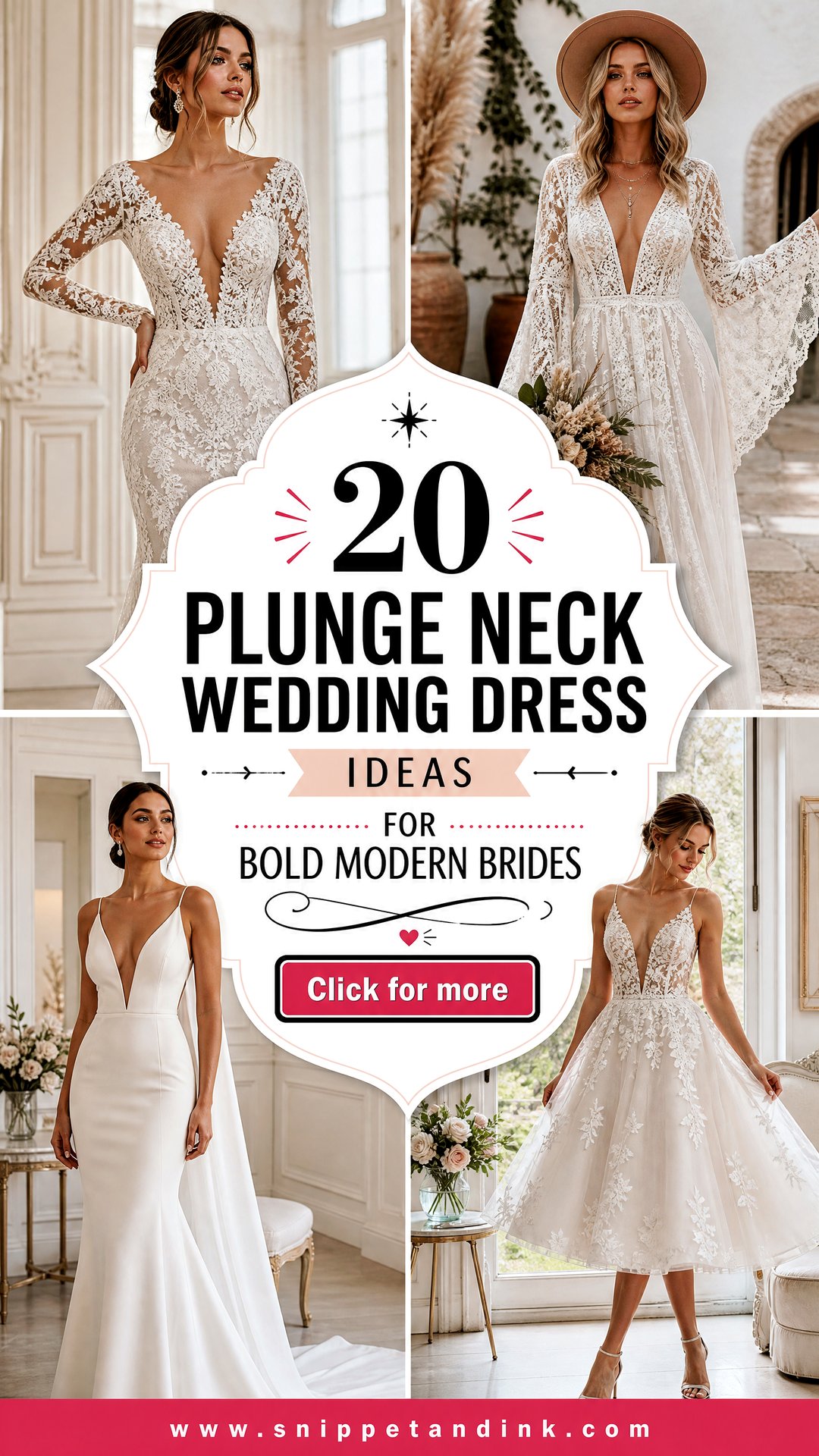
A deep neckline changes how a whole wedding dress reads, often more than the skirt does. Below are twenty plunging gowns in lace, satin, chiffon, crepe and beadwork, across very different silhouettes. A plunging V draws the eye down and makes the torso look longer, and the parts you don’t see (illusion mesh, straps, boning, placed appliqués) are what keep it where it belongs. In fittings, my job is less about how low the V goes and more about whether it stays put from the vows to the last song. Each look below comes with veil, jewelry, shoes and flowers, styled for its venue and season.
How Low Is Too Low? Measuring the V on Your Own Body
Sample sizes hide how deep a plunge will really sit on you, because the point lands wherever the sample’s bodice length puts it. I measure from the hollow of the throat to where you want the V to stop, then compare that with the dress’s actual depth. Most brides are comfortable with the point sitting somewhere between the bottom of the bust and the top of the ribcage; below that, you need mesh or very firm structure.
Width matters as much as depth. A narrow V reads elegant even when it’s deep, while a wide V at the same depth shows much more of the chest and is harder to keep flat. The straps’ position on your shoulders sets that width, and moving them a centimeter in or out at the fitting changes the whole look.
Three quick checks in the fitting room
- Lean forward as if signing the register and watch whether the neckline lifts away from your skin.
- Raise both arms as if fixing your veil. If the V spreads, the straps need repositioning.
- Hug the consultant. The edges should stay in contact with your chest the whole time.
1. Lace A-Line Plunge Neck Wedding Dress
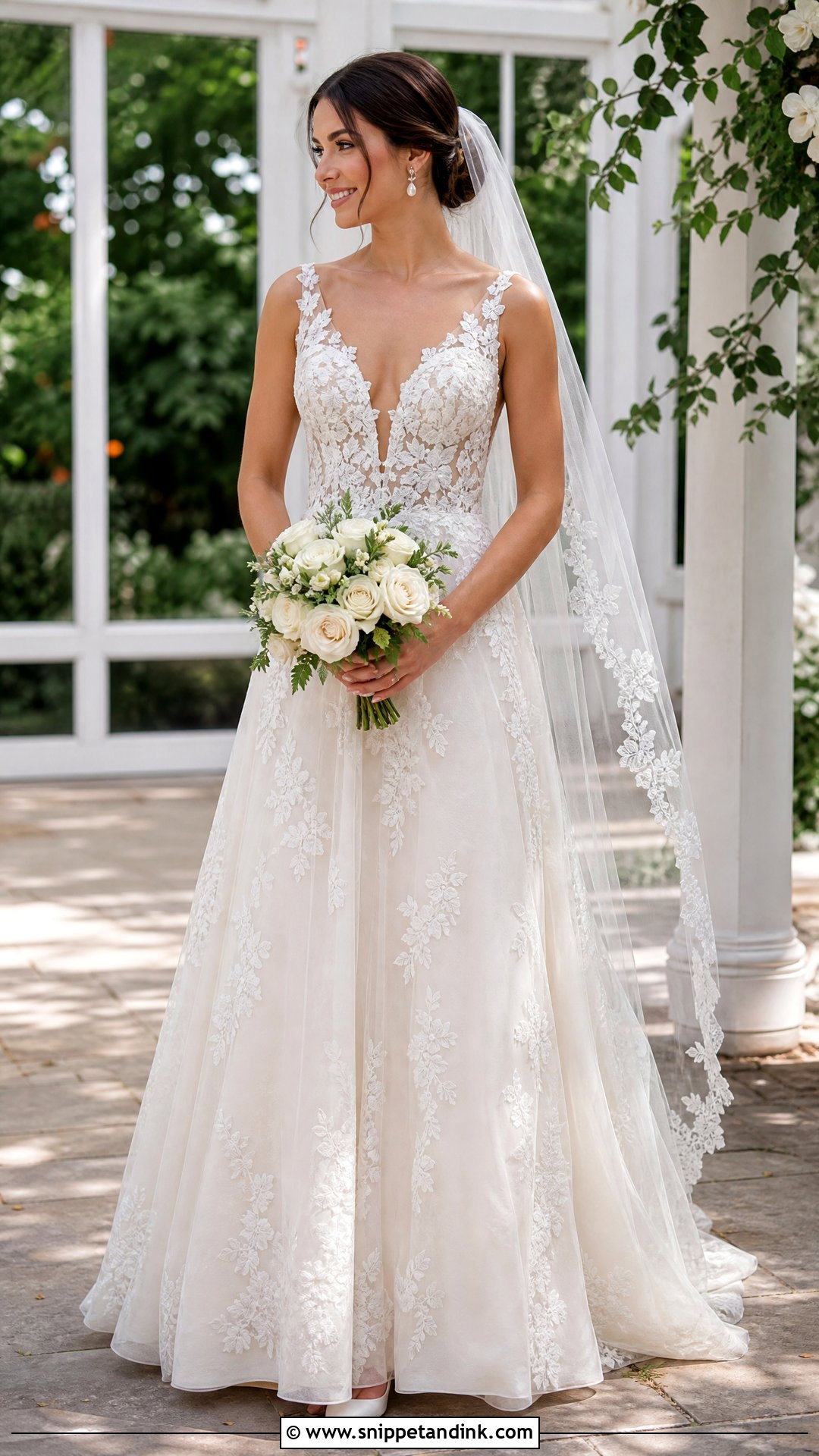
Lace A-lines are the plunge I recommend to brides nervous about the cut, because appliqués along the edge break up the skin and the flared skirt keeps the overall shape soft. Look for a narrow V with an illusion panel matched to your skin, and test that match by the window, not under salon spotlights, since mesh that vanishes indoors can turn grey in daylight. A lace-edged fingertip veil, pearl drops and pointed ivory pumps suit it. A loose low bun keeps the neckline clear. Carry roses with a little greenery. Gardens, estates and ballrooms all suit it.
2. Satin Ball Gown Plunge Neck Wedding Dress
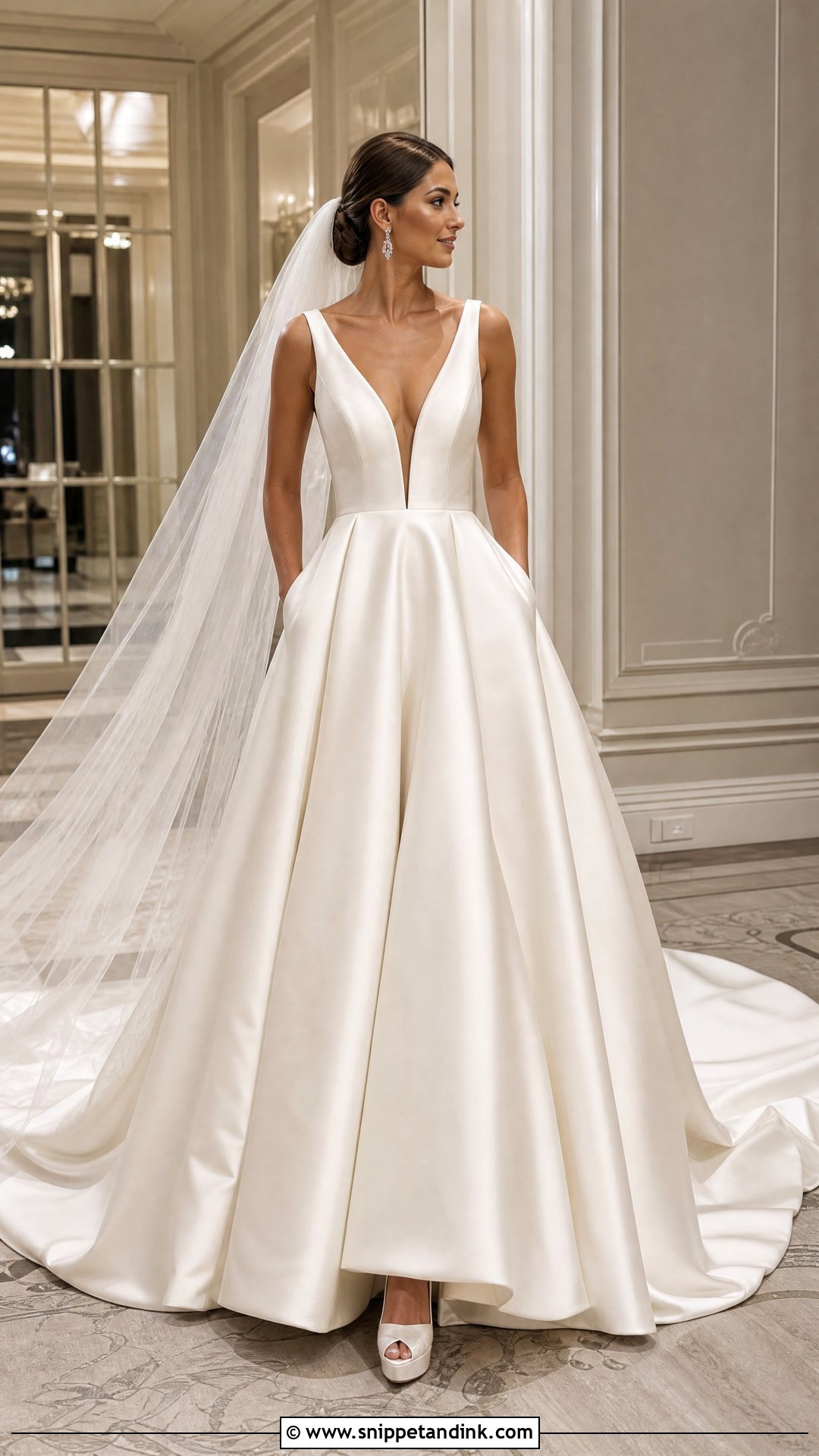
Satin shows every seam, so a plunging ball gown in it depends on good structure: wide straps, internal boning and a V that stops just above the natural waist. Soft box pleats in the skirt give volume without fuss. Satin also shows sweat at the center front sooner than lace does, which is one reason I like a crisp, cool venue for this gown. Style it with a cathedral veil, crystal studs and platform heels hidden under the hem, plus a sleek chignon. No necklace. A thin bracelet and a compact bouquet of calla lilies are enough. Grand hotels and evening receptions suit its formality.
3. Long Sleeve Lace Plunge Neck Wedding Dress
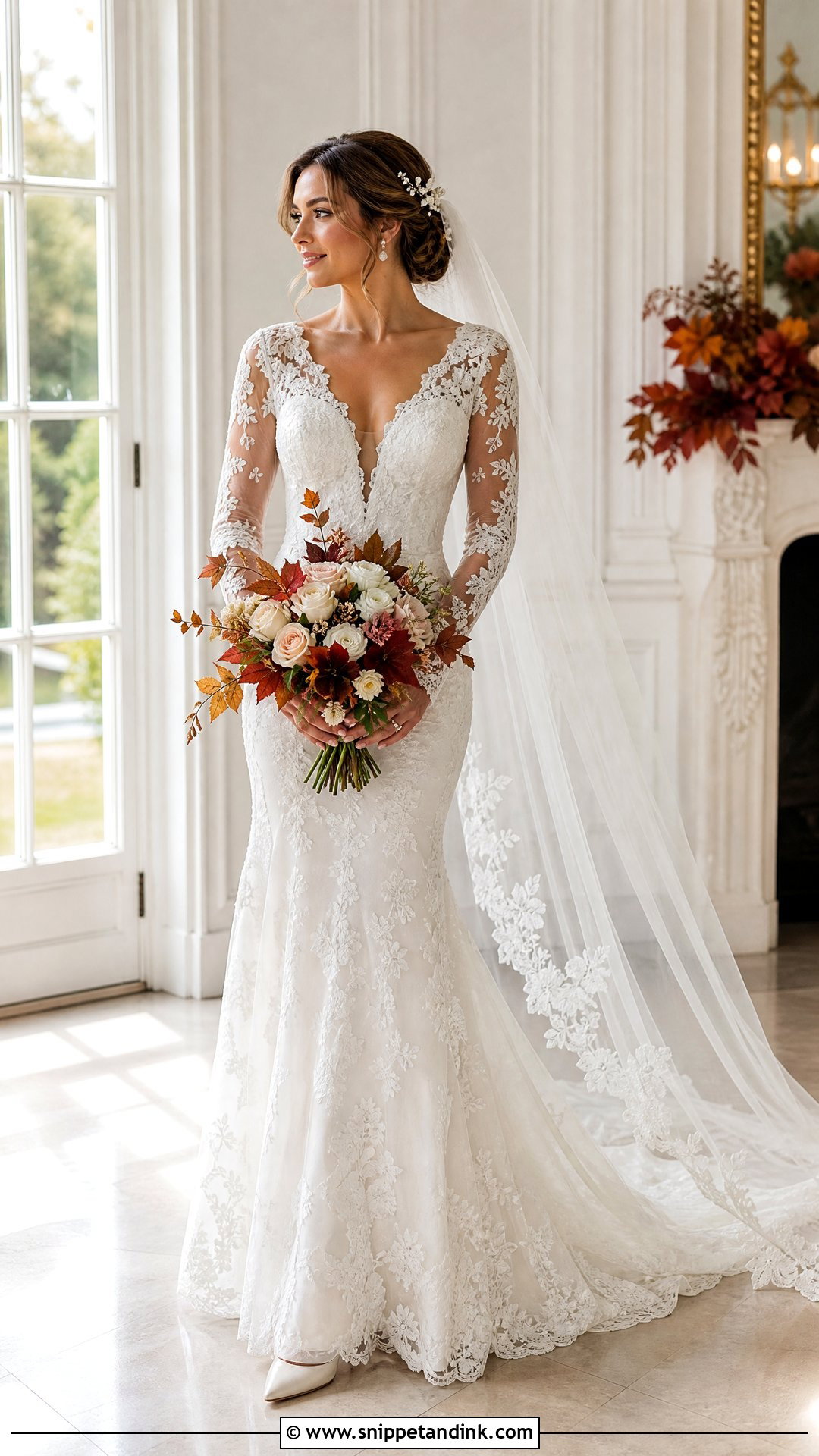
Long lace sleeves calm a daring V, and fitted illusion sleeves with floral embroidery keep it light. The skirt should flare gently rather than cling. Scalloped lace around the neckline frames the plunge, while a sheer center panel does the real work of holding the two sides in place; that combination is the most common way designers make a deep V secure without losing its shape. Check that the sleeves let you lift your arms to shoulder height without the V pulling open. Pearl hairpins in a low textured bun, small diamond earrings, closed-toe ivory heels and a chapel veil with scattered appliqués finish it. Fall and winter suit it best.
4. Crepe Mermaid Plunge Neck Wedding Dress
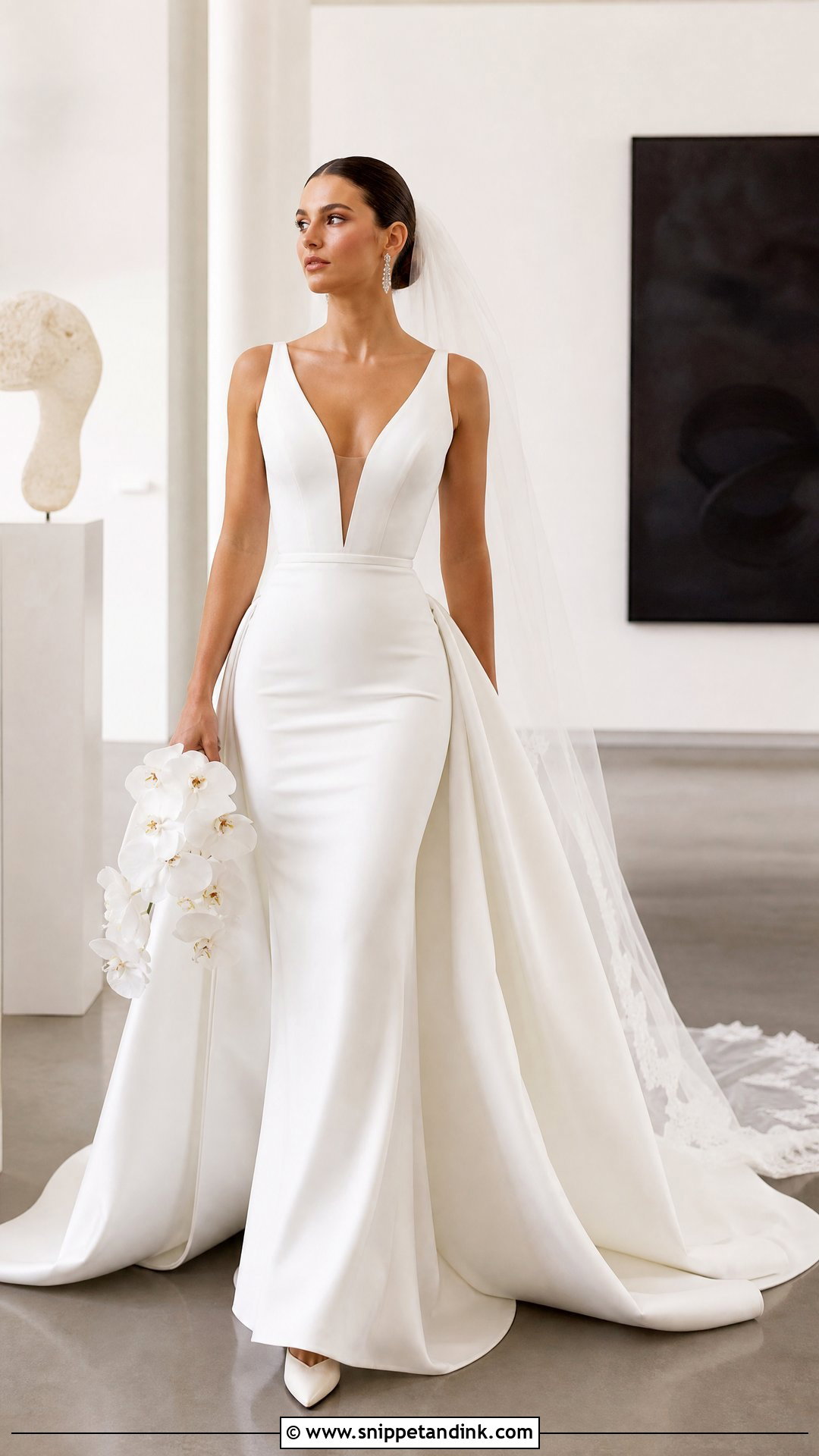
Thick stretch crepe is what makes a mermaid plunge look sculpted rather than revealing. It smooths the body and holds the edges of the V flat against the skin. Wide straps and careful seaming through the bust and waist do the supporting before the skirt flares below the knee. If you want more drama for the ceremony, a detachable overskirt gives you that and leaves a sleek reception dress underneath. Polished waves, long crystal earrings, pointed pumps, a plain cathedral veil and a narrow bouquet of white orchids keep it modern. Book a movement test at your fitting. Sit, walk and dance, because crepe that fits standing can bite at the knee once you’re seated.
5. Chiffon Plunge Neck Beach Wedding Dress
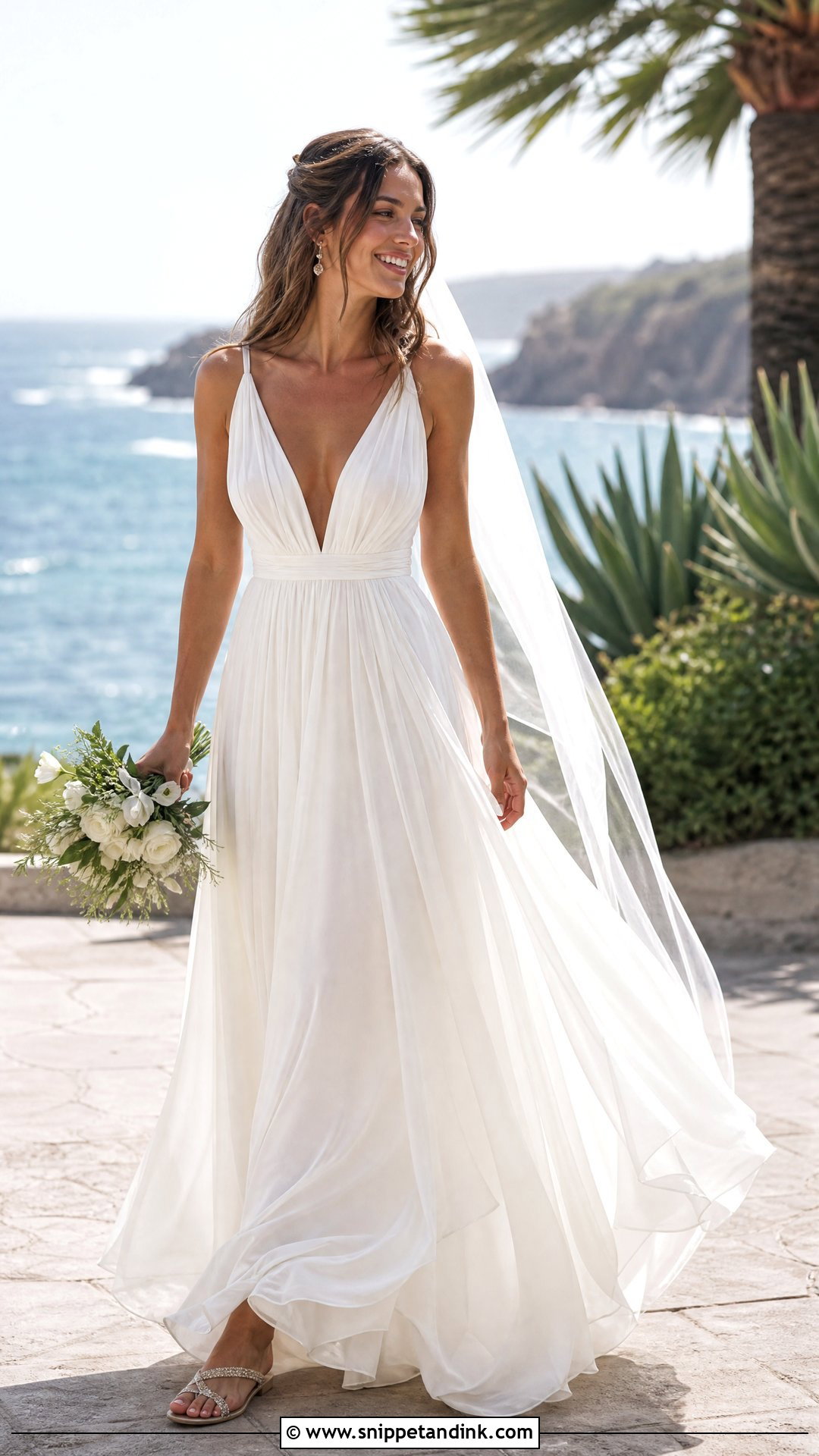
Chiffon belongs by the water. It’s light, it breathes, and a sea breeze gives it movement you can’t get indoors. A soft A-line with layered skirts and a gathered plunge bodice works best, with slim straps your seamstress can reinforce. Gathered chiffon is forgiving on the bust, but wind is not, so I add a light illusion insert even for brides who don’t want one indoors. A fingertip veil manages outdoors far better than a cathedral length. Wear flat embellished sandals or block heels for sand and uneven paths. Loose waves, delicate drops, fresh luminous makeup and a bouquet with a touch of soft blue suit a destination ceremony.
6. Beaded Plunge Neck Wedding Dress
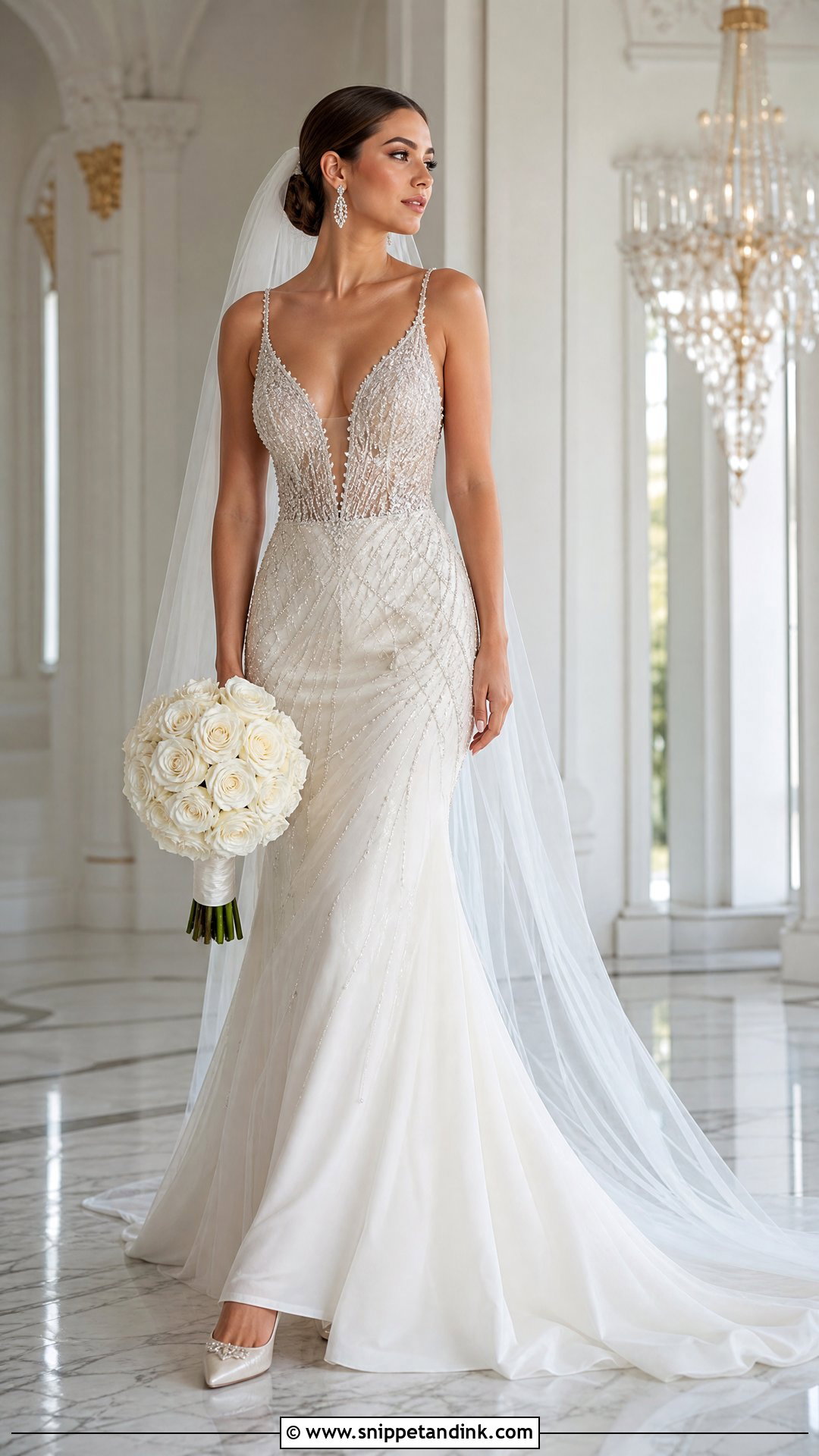
Beading works hardest when it’s concentrated: heavy around the neckline and waist, thinning out across the skirt. That keeps the shape defined without making the dress tiring to wear. A neutral illusion panel gives the beadwork a clean edge to finish against. One thing I check on beaded plunges is the weight pulling on the straps, because heavily beaded bodices can drag the V wider by evening if the straps aren’t anchored to the boning. Wear a sleek ponytail or low bun, crystal drops and metallic ivory heels. Skip the statement necklace, add a plain chapel veil, and carry a structured bouquet of white roses. It’s an evening look for ballrooms and formal hotels.
7. Boho Plunge Neck Wedding Dress
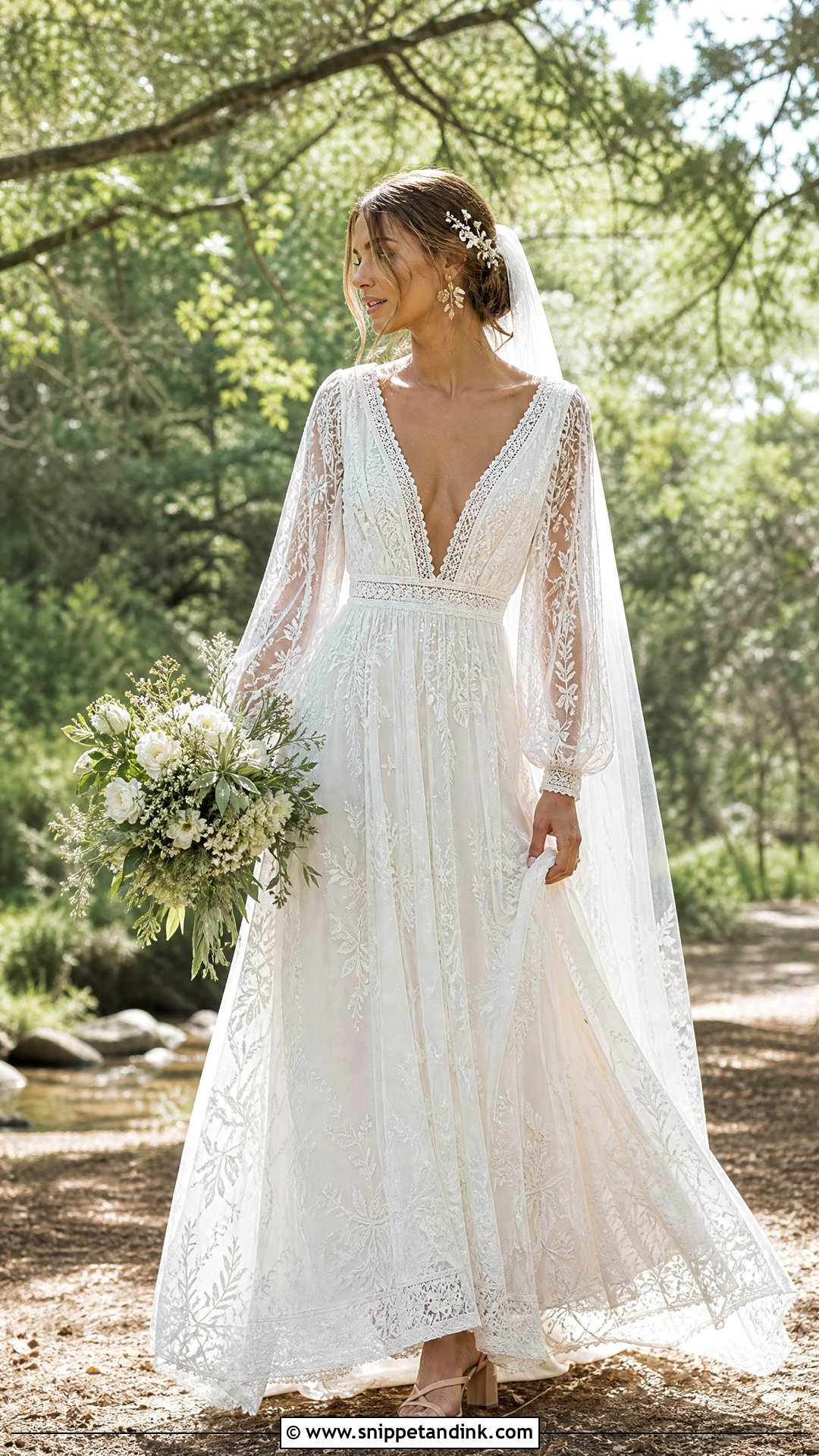
Boho plunges get away with less structure because the lace is soft and the skirt unlined or lightly lined. Choose a deep V with embroidered lace and flutter or loose bishop sleeves; the sleeves balance the open front. The trade-off is support. An unstructured bodice suits a smaller bust far better than a fuller one, and if you need lift, ask for soft cups sewn into the lining rather than relying on a separate bra. Style with waved hair, small floral pins and gold earrings. Low block sandals, a simple lace veil and a loose bouquet with feathery greenery and dried accents suit woodland, desert and rustic venues.
8. Minimalist Satin Plunge Neck Wedding Dress
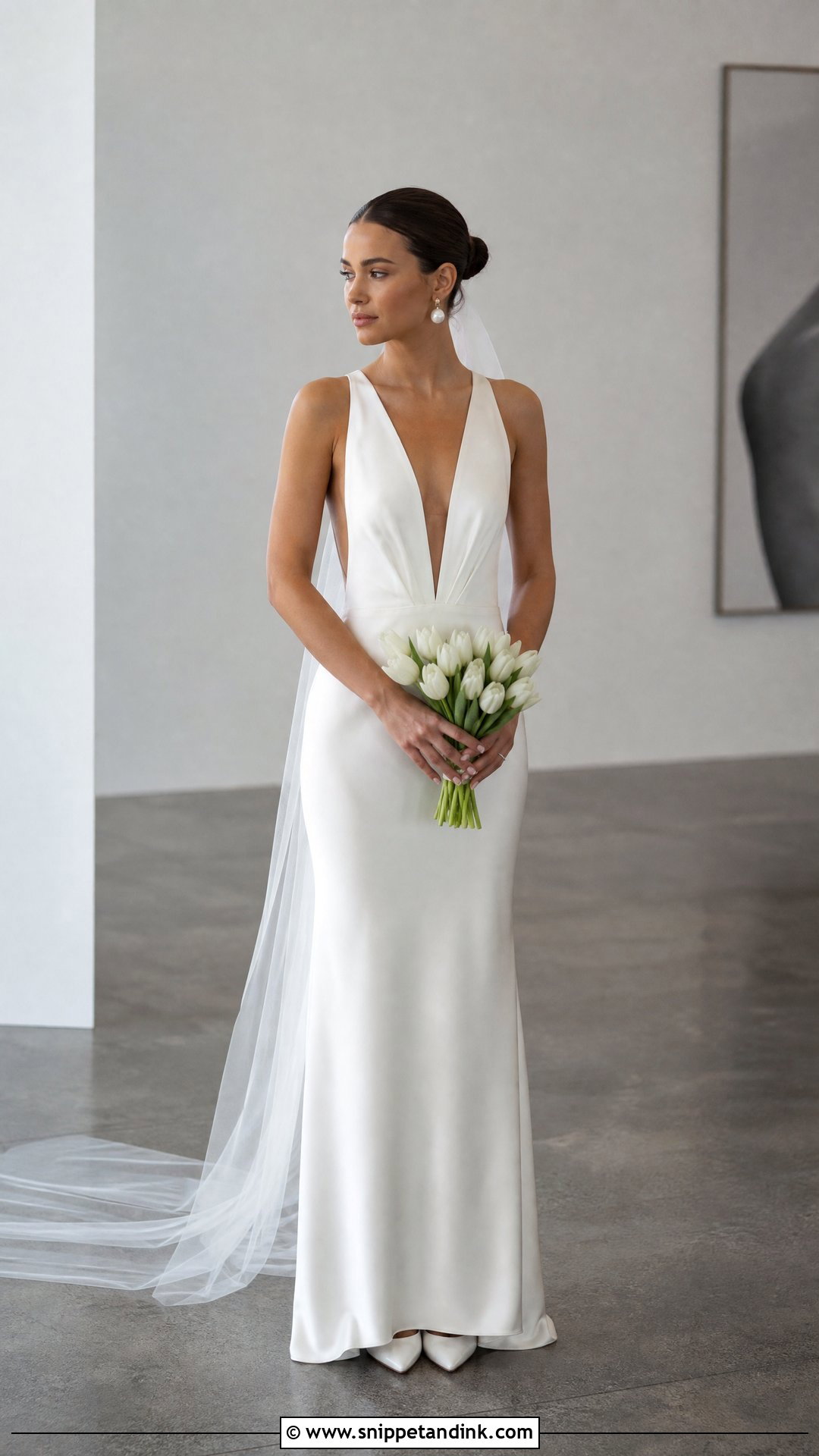
Minimal dresses are where tailoring shows, because there’s nothing to hide behind. A satin column with a narrow plunge, clean seams and a gently draped skirt needs a structured bodice and a discreet illusion insert to keep that sharp V from softening. Have the seamstress check the neckline while you’re seated, since a narrow plunge on a column can bow outward when you lean forward to sign. Pair it with a sleek bun, sculptural pearl earrings, pointed white pumps and a long plain veil. White tulips or callas suit the restraint. If the back is open too, skip the necklace and wear a slim bracelet. Galleries, rooftops and city venues are its natural setting.
9. Floral Appliqué Plunge Neck Wedding Dress
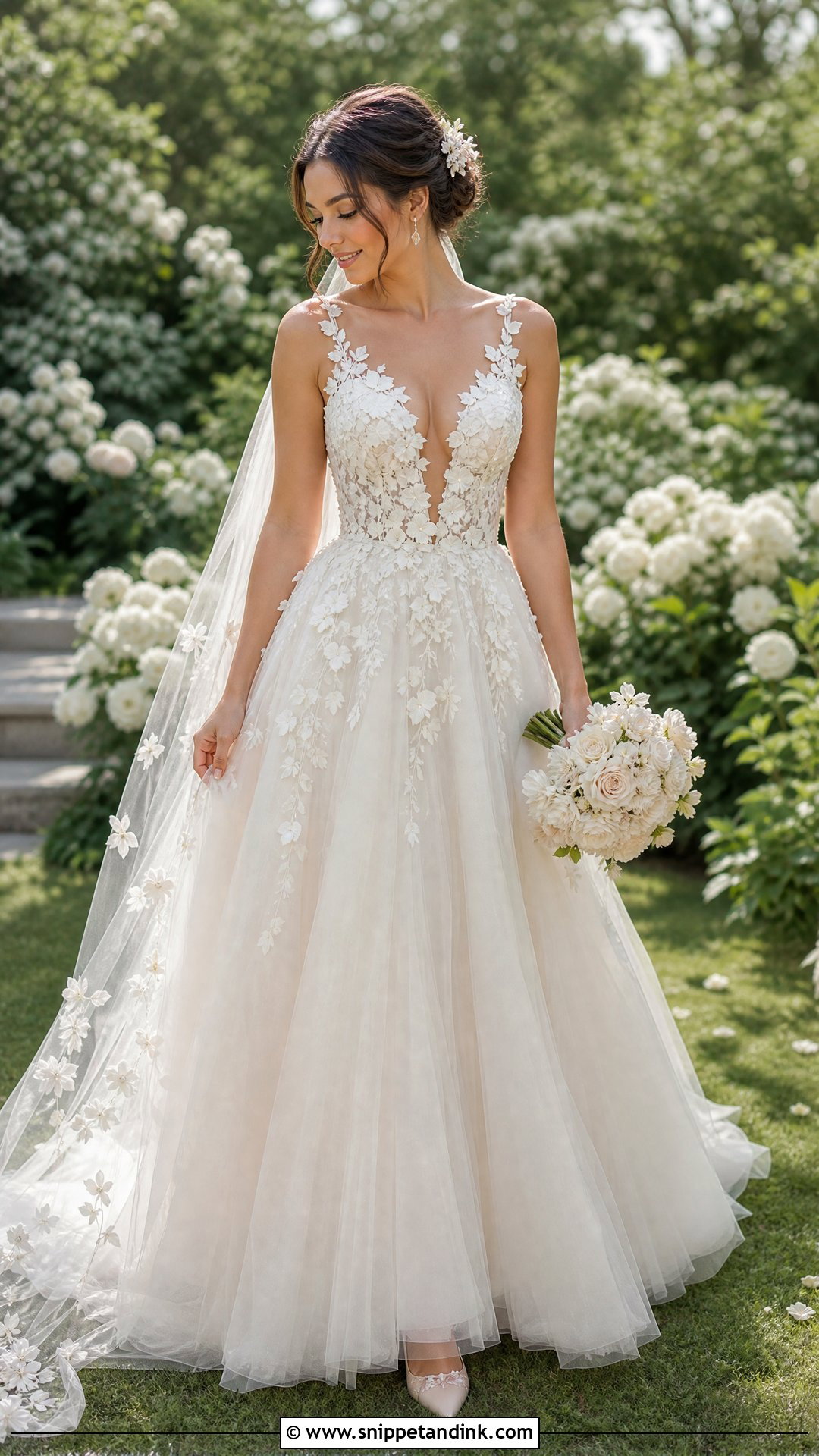
Raised flowers soften a deep V so it reads romantic rather than revealing. The best versions frame the neckline, run over the straps and then scatter thinly down a tulle A-line skirt. A few blossoms can also be moved to give coverage exactly where you want it, which is an easy alteration. Ask your seamstress to do that after the final fit, once the illusion panel is set and tone-matched to your skin. A soft updo, floral pins and simple pearl earrings suit it, with ivory or pale blush closed-toe pumps. Echo a few flowers on a sheer veil. Keep greenery in the bouquet light so the dress’s own florals lead.
10. Plunge Neck Wedding Dress With Cape
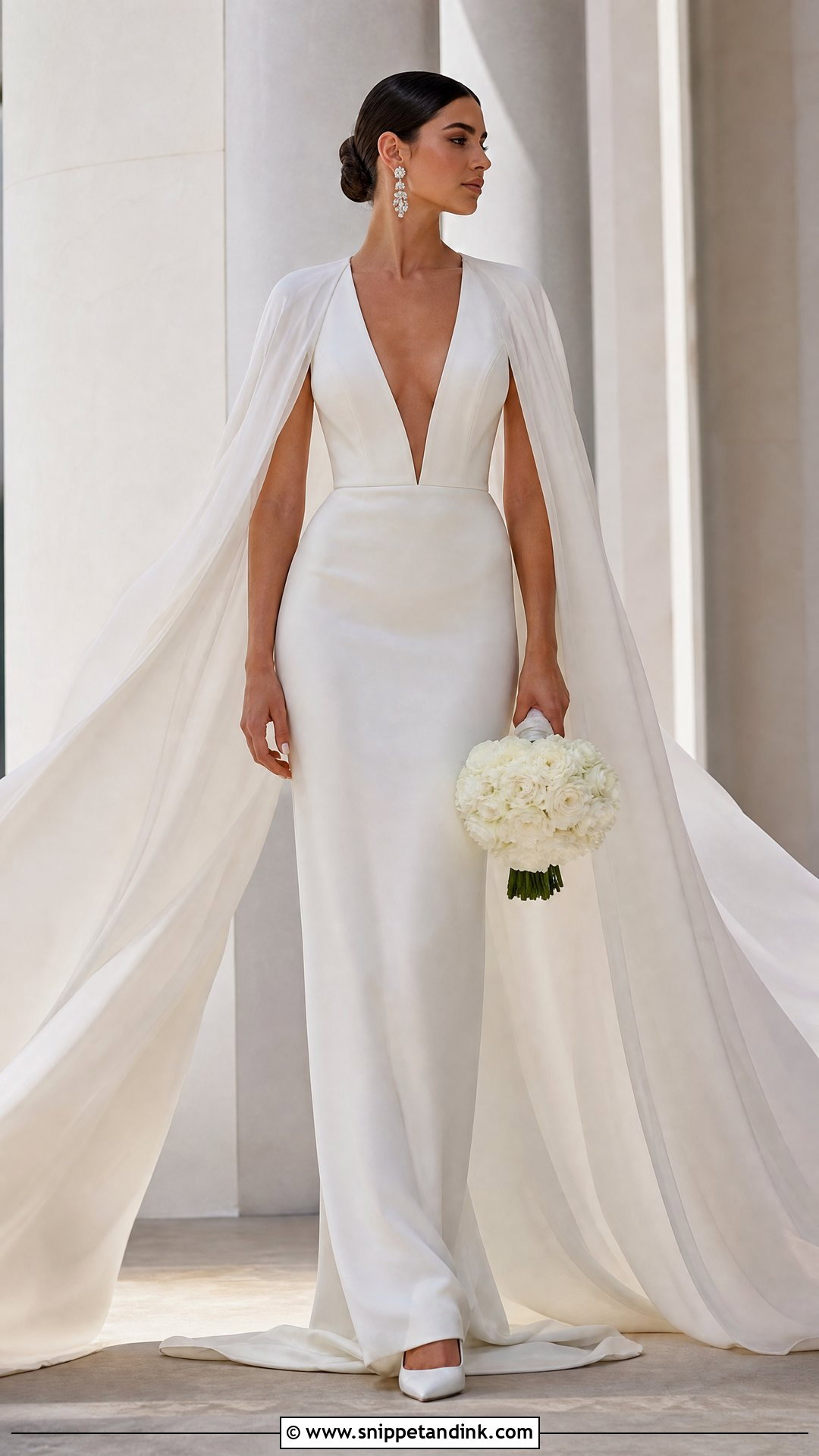
Start with a fitted crepe or satin gown, a clean plunge and a straight or softly flared skirt, then add a chiffon cape fastening at the shoulders. At chapel or cathedral length it replaces the veil and creates the entrance. A cape actually helps a plunge: its weight sits on the shoulder seams and gently pulls the straps outward, so check at fittings that the V doesn’t widen once it’s clipped on. Polished low bun, statement earrings, pointed pumps and a bare neckline keep the vertical line strong. Carry a structured white bouquet. Unclip the cape after the ceremony for dinner and dancing.
11. Plunge Neck Wedding Dress With Overskirt
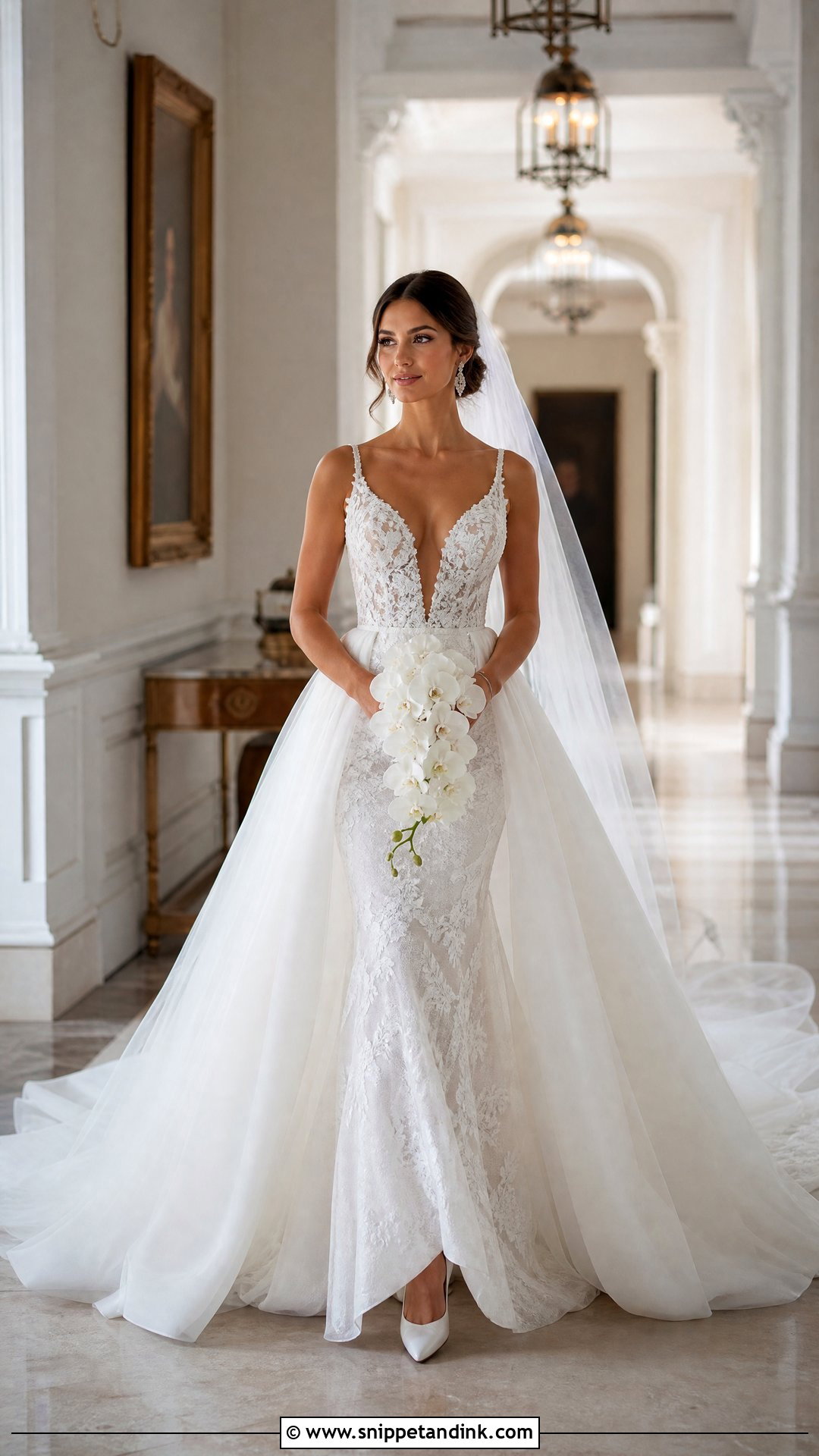
A detachable overskirt lets one fitted plunge gown play two roles. Layer full tulle or mikado over a crepe, lace or satin base for the ceremony, then remove it to show the sleek dress for the reception. The waistband needs to be discreet, because once the overskirt comes off, any visible hooks or a thick band look like something’s missing. Pair a cathedral veil, drop earrings and classic pumps for the ceremony. Later, swap the veil for a jeweled comb. Hold a narrow bouquet so the full skirt doesn’t feel crowded.
12. Plunge Neck Wedding Dress With Slit
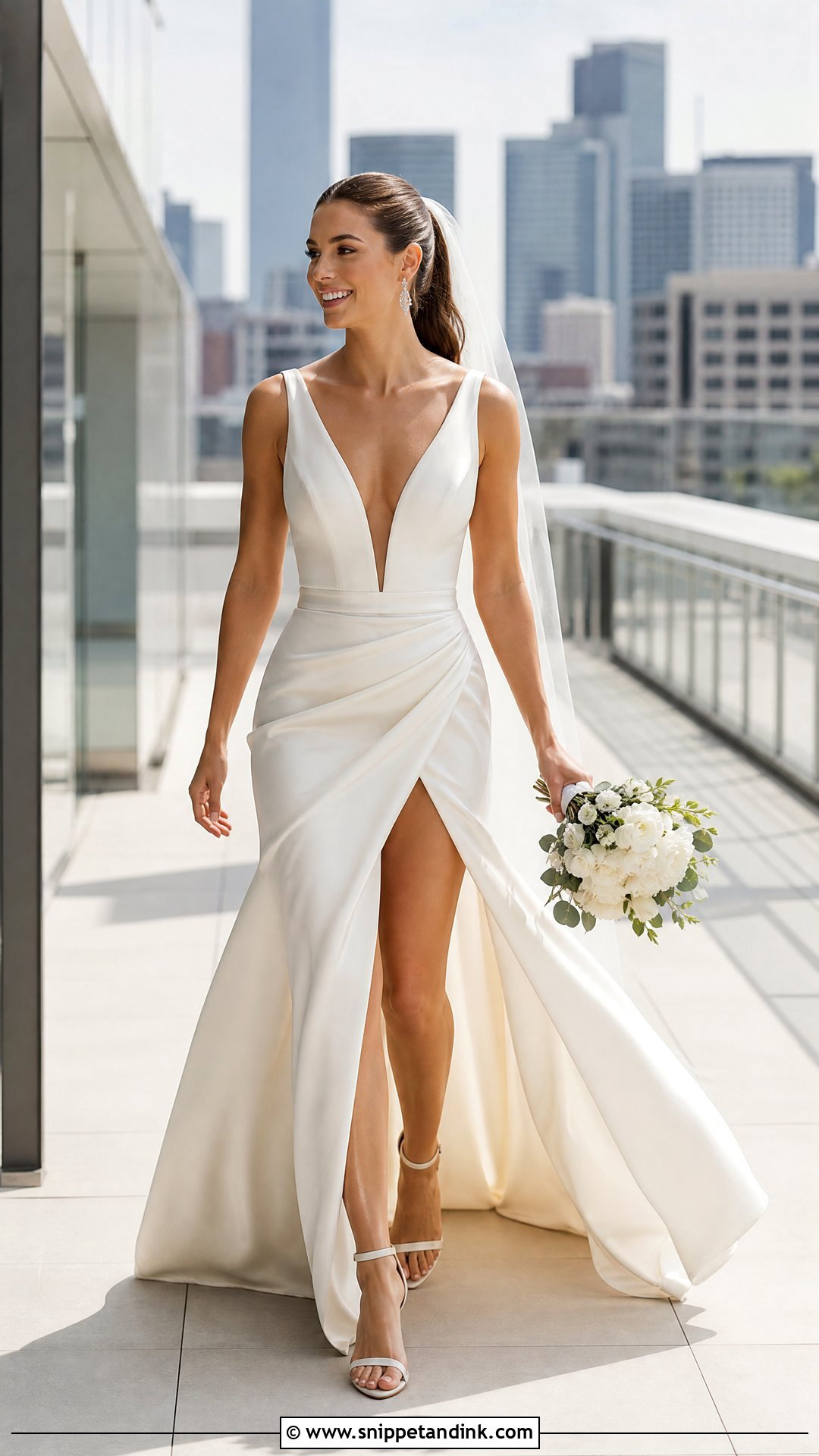
A thigh-high slit gives a plunging gown movement, but a plunge plus a slit is two strong features, so everything else stays quiet. Soft satin, crepe or chiffon with a structured V bodice works, ideally with the slit cut along an existing seam so it opens as you walk and stays closed when you stand. I always have brides climb a few stairs at the fitting; the slit that looks right on a flat floor can open much higher on steps. Ankle-strap heels, statement earrings, a simple fingertip veil and a polished ponytail or side-parted waves finish it. Rooftops and destination receptions suit it.
13. Plus Size Plunge Neck Wedding Dress
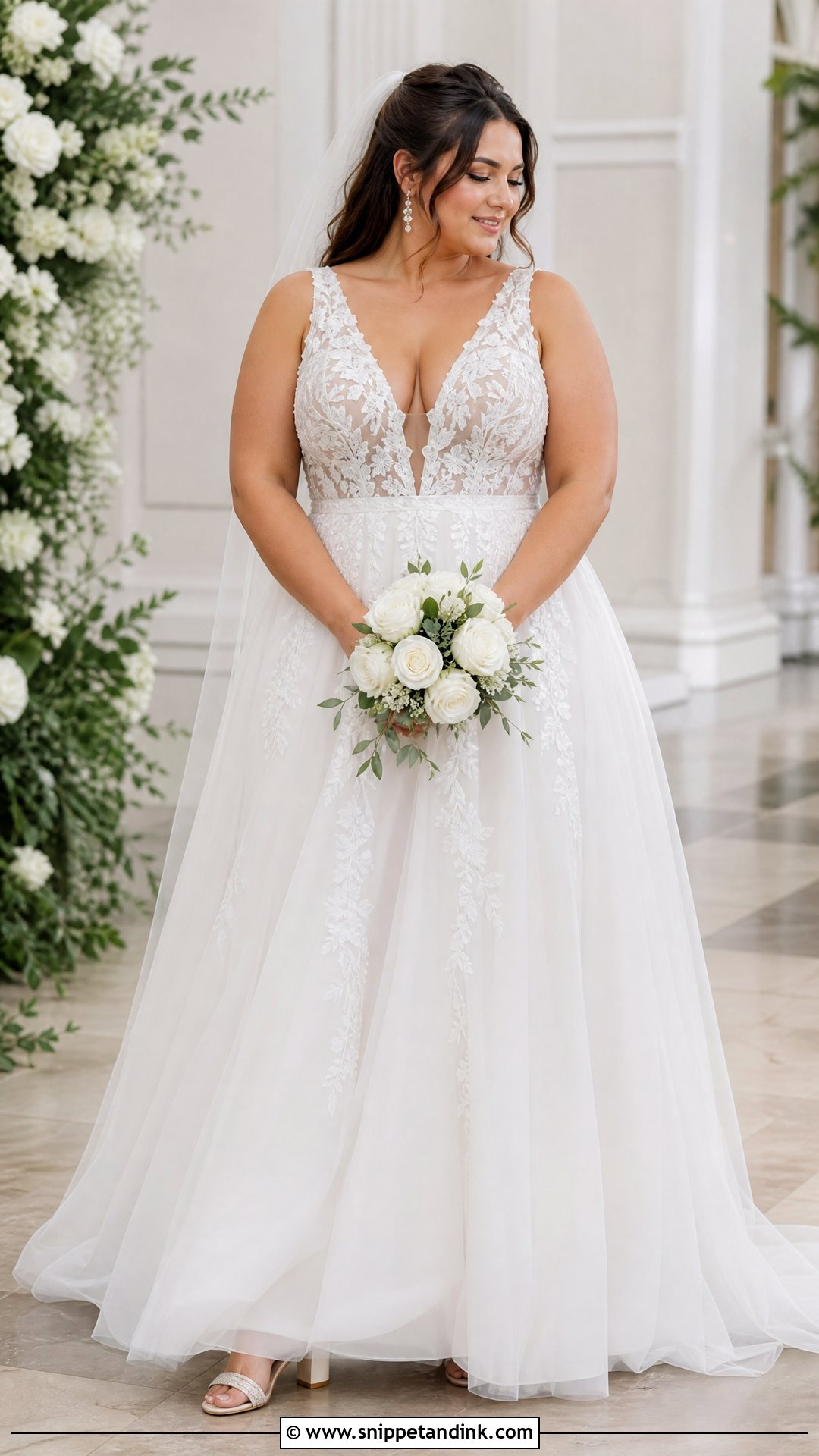
On a fuller figure, a plunge is all about the build inside the dress. Wide straps, firm boning, built-in cups and a structured waistband anchor the bodice so the V stays crisp. A narrow illusion insert keeps the shape and adds security. An A-line or fit-and-flare skirt balances the bust and moves comfortably. Bridal sizes run small and vary between designers, so ignore the label and judge the fit. I’d ask your seamstress to place the cups to your body, adjust strap length and match the mesh tone, all three. A soft gathered veil, medium drop earrings, block heels and a half-up style work well.
14. Petite Plunge Neck Wedding Dress
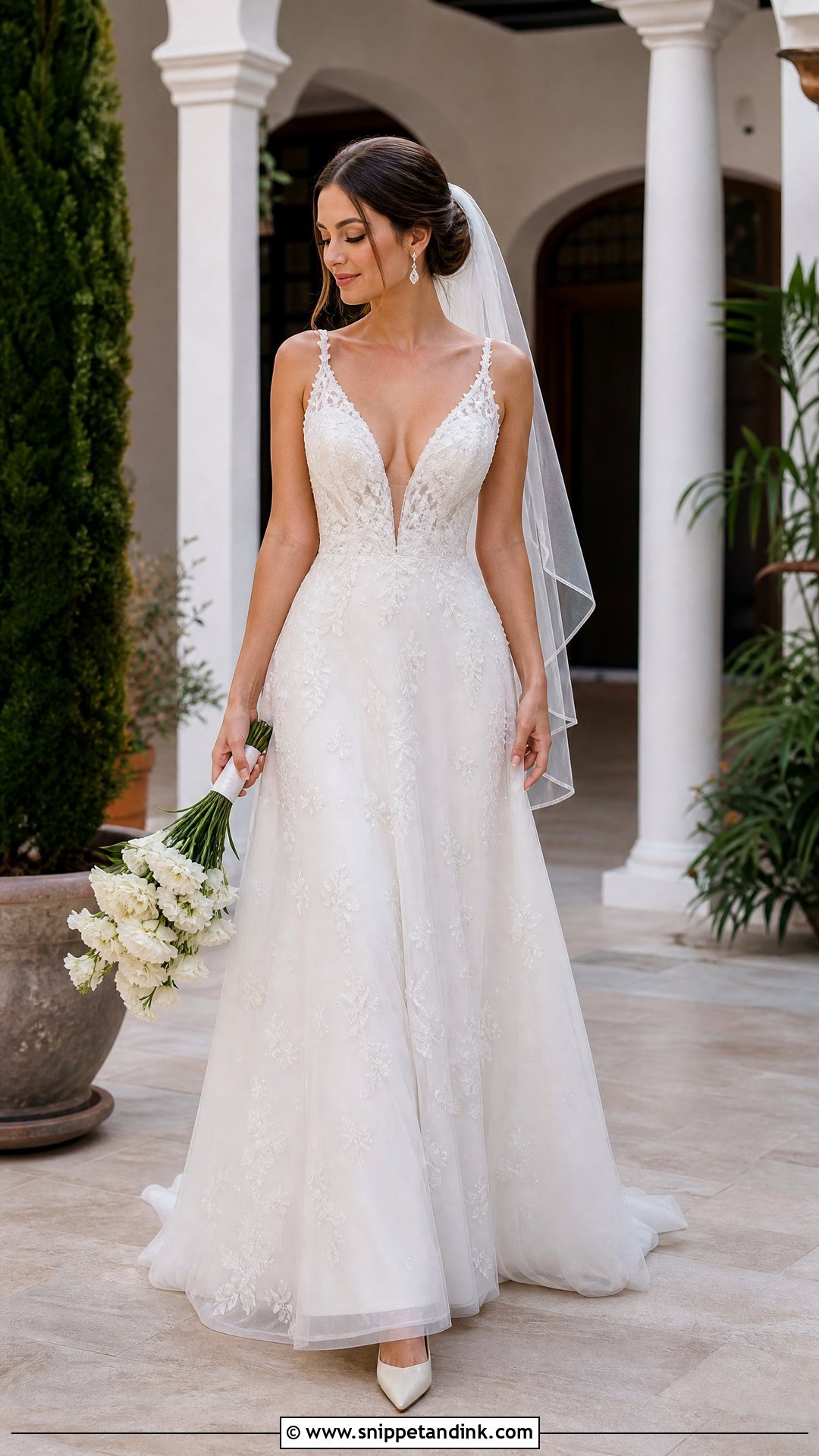
Petite brides often get steered away from a plunge, and I don’t agree. A narrow V creates a long vertical line that adds height visually; it’s the very wide V that swamps a small frame. Keep the waist at your natural waist and choose a sheath, soft A-line or gentle fit-and-flare, with small-scale appliqués. The alteration that matters most is shortening the bodice itself, not just the hem, so the plunge point, cups and waist all sit where your body actually is. Pointed shoes, delicate drops, a narrow bouquet and a fingertip or chapel veil stay in proportion. Wear a low bun or sleek half-up style.

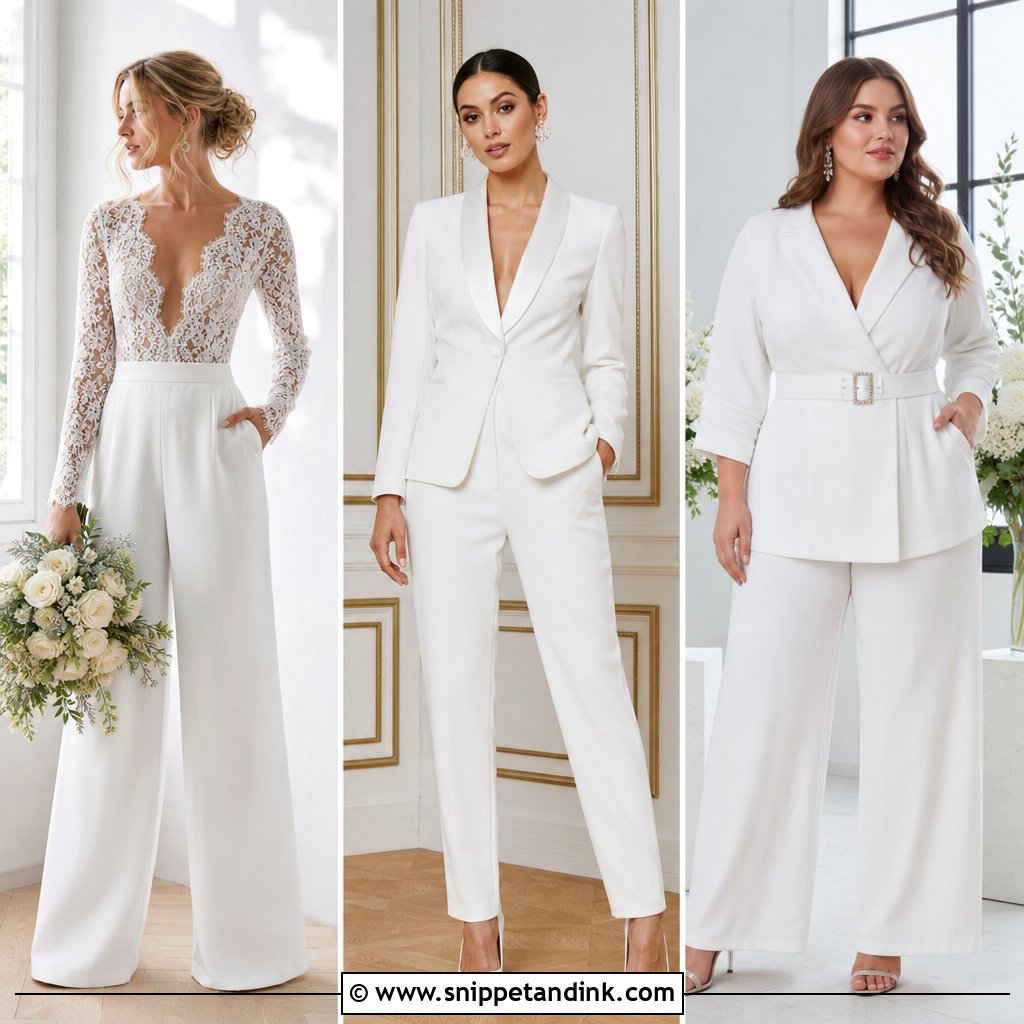
15. Modest Illusion Plunge Neck Wedding Dress
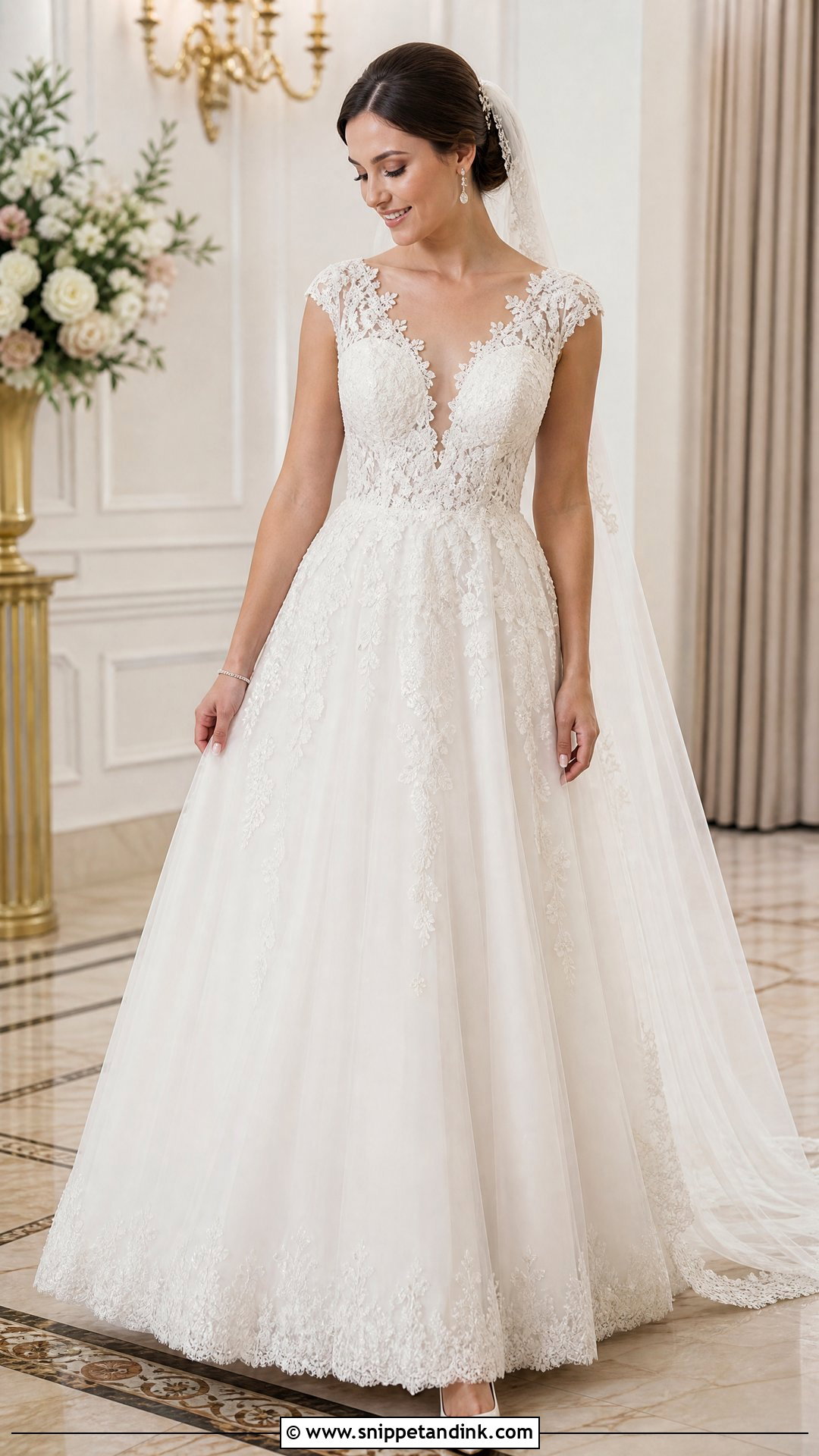
Sheer mesh lets a dress keep the long V shape while covering the chest, and it’s my first suggestion for brides marrying in a conservative ceremony. Choose mesh that disappears on your skin, then edge it with lace and add appliqués wherever you want more coverage. The mesh can be raised as high as you like without losing the plunge outline. An A-line skirt with cap sleeves or long illusion sleeves keeps it balanced. Pearl earrings, a classic bun, closed-toe pumps and a lace-trimmed veil suit it. Don’t lay a necklace over the mesh; it snags embroidery and breaks the line.
16. Square Back Plunge Neck Wedding Dress
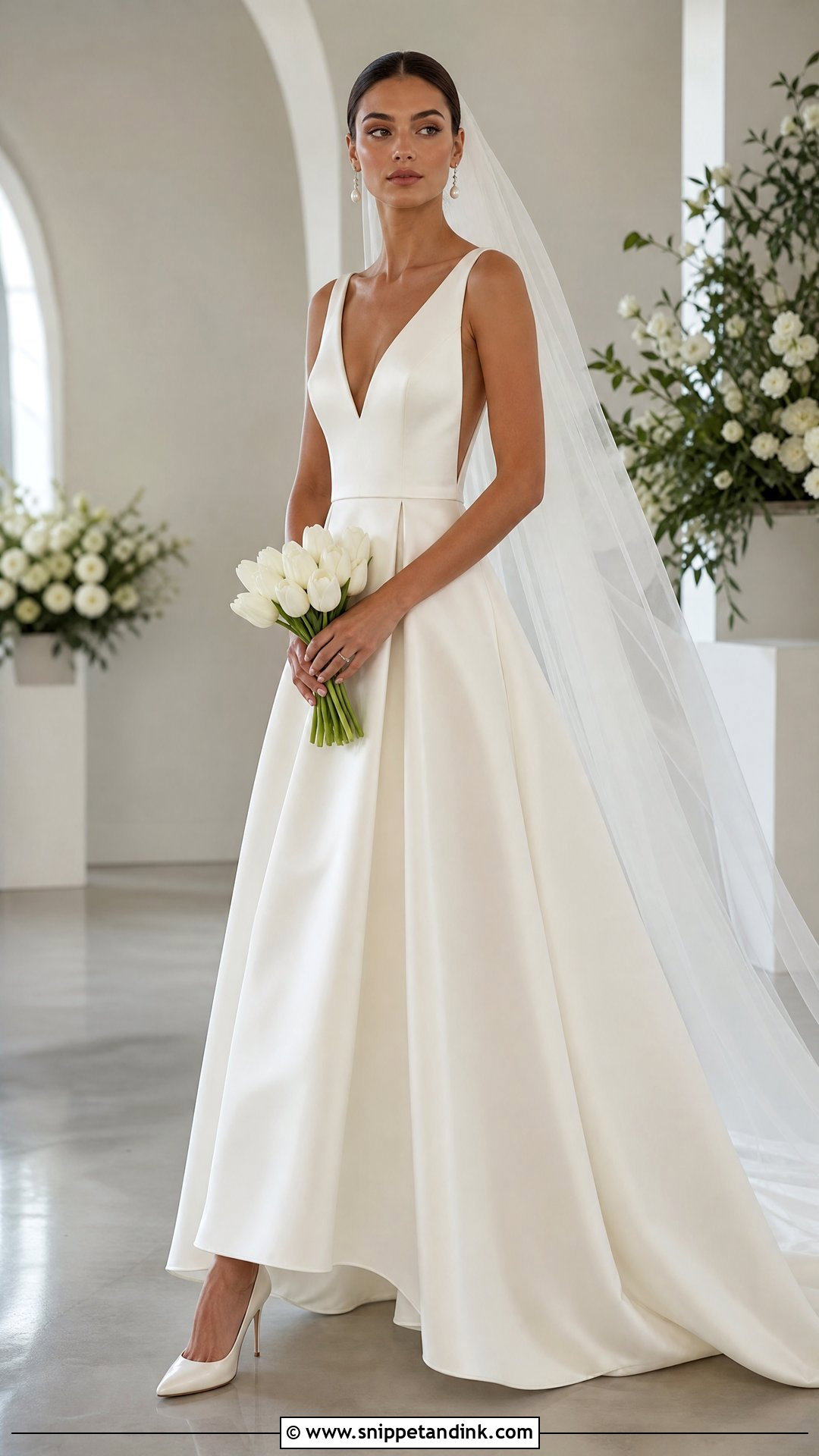
A square back gives a deep front V something solid to pull against. Wide straps, clean edges and a fitted waist in satin or crepe hold the shape, and the geometric back adds contrast while giving far more support than a fully backless design. Mechanically, the back band is what keeps the front V from gaping when you lean in, so it’s a sensible pick for fuller busts that still want the cut. Wear a neat chignon to show both sides, pearl drops, a thin bracelet and pointed pumps. A sheer chapel veil lets the back show through. White roses or tulips keep the lines clean.
17. Low Back Plunge Neck Wedding Dress
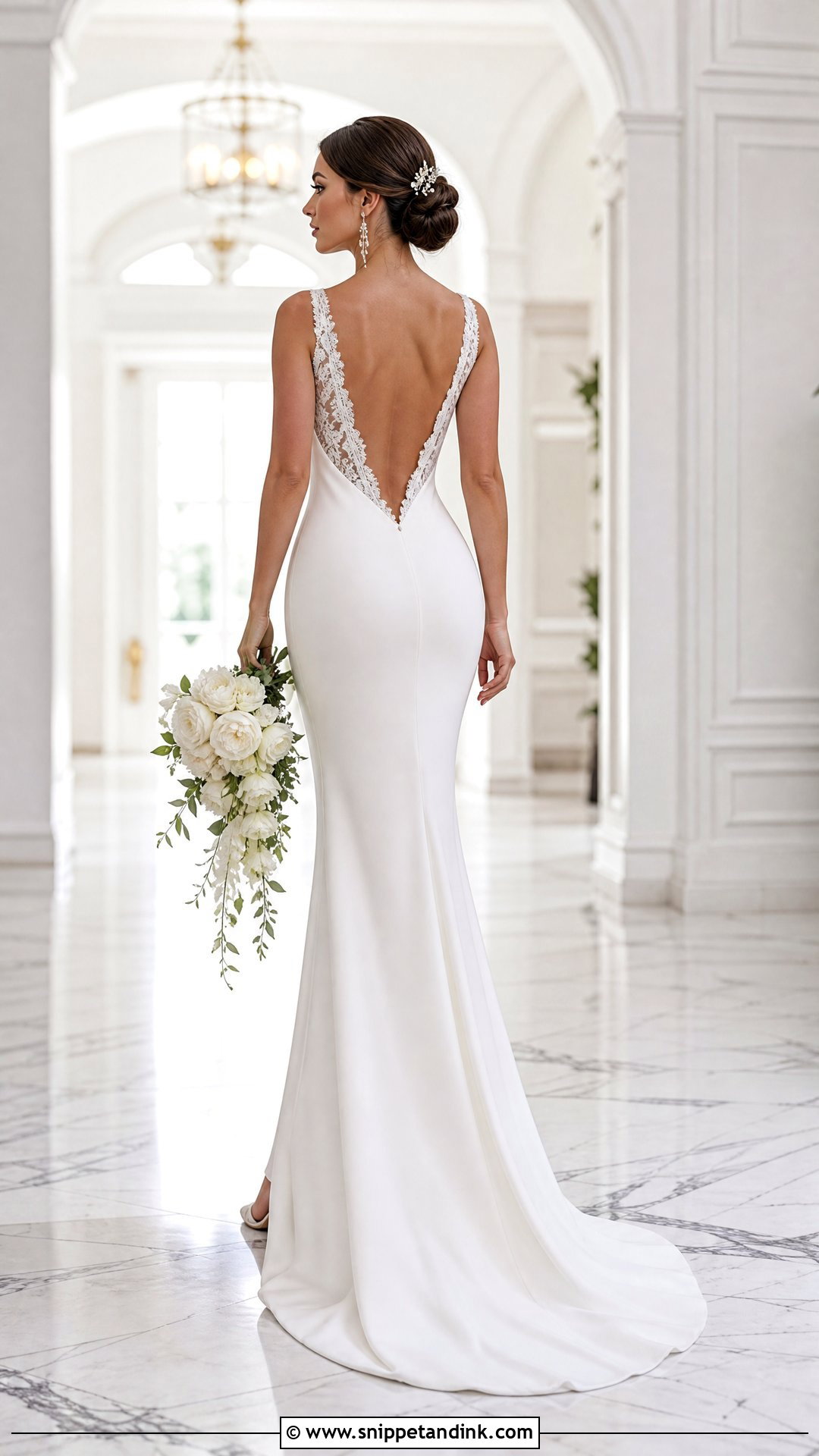
Low front and low back together leave the dress very little to hold onto, so construction carries everything. Supportive side panels, secure straps and internal boning are non-negotiable here. Lace edging softens both openings; satin or crepe looks sharper. Wear an updo to show the back and long earrings in place of a necklace. Attach the veil low or use a slim comb so nothing covers the dress. Slim heels and a cascading bouquet that doesn’t hide the bodice finish it. Test arm movement, sitting and dancing before you approve alterations. Fashion tape is a backup, not a substitute for good construction.
18. Plunge Neck Wedding Dress With Bow
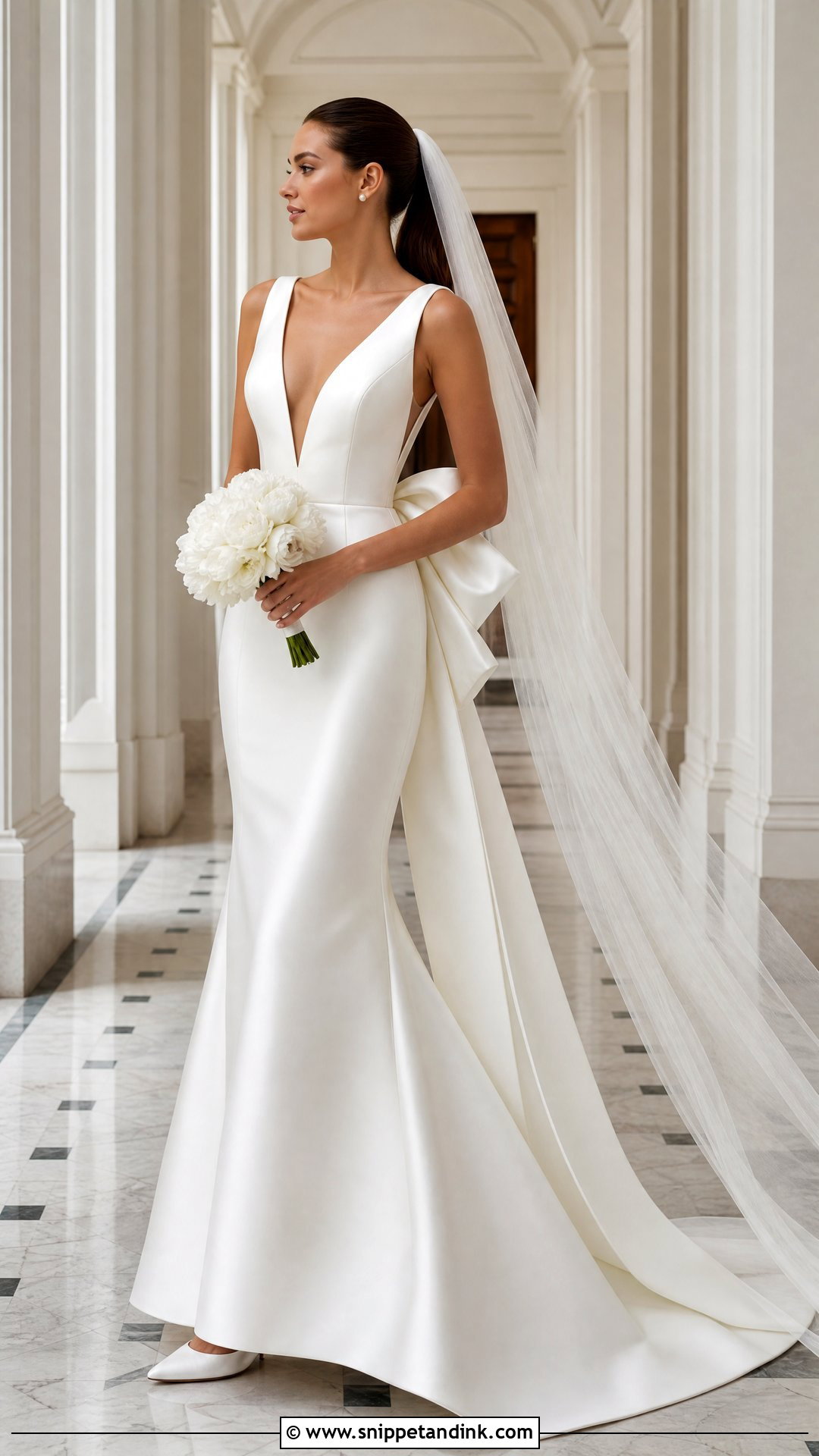
A bow at the waist or lower back is a playful counterweight to a plunging bridal gown. A clean V bodice on a satin A-line or fitted crepe gives it a calm base. Structured bows look architectural; long trailing ribbons move more. Ask for the bow to be detachable. Big bows crush when you sit on a long bench, and it’s easier to reattach a fresh one after dinner. Keep the rest understated with pearl studs, a simple bracelet and classic pumps, and choose a sleek bun or ponytail so the bow shows from behind. A plain cathedral veil can come off after the ceremony, and a compact bouquet won’t cover the front.
19. Sparkle Tulle Plunge Neck Wedding Dress
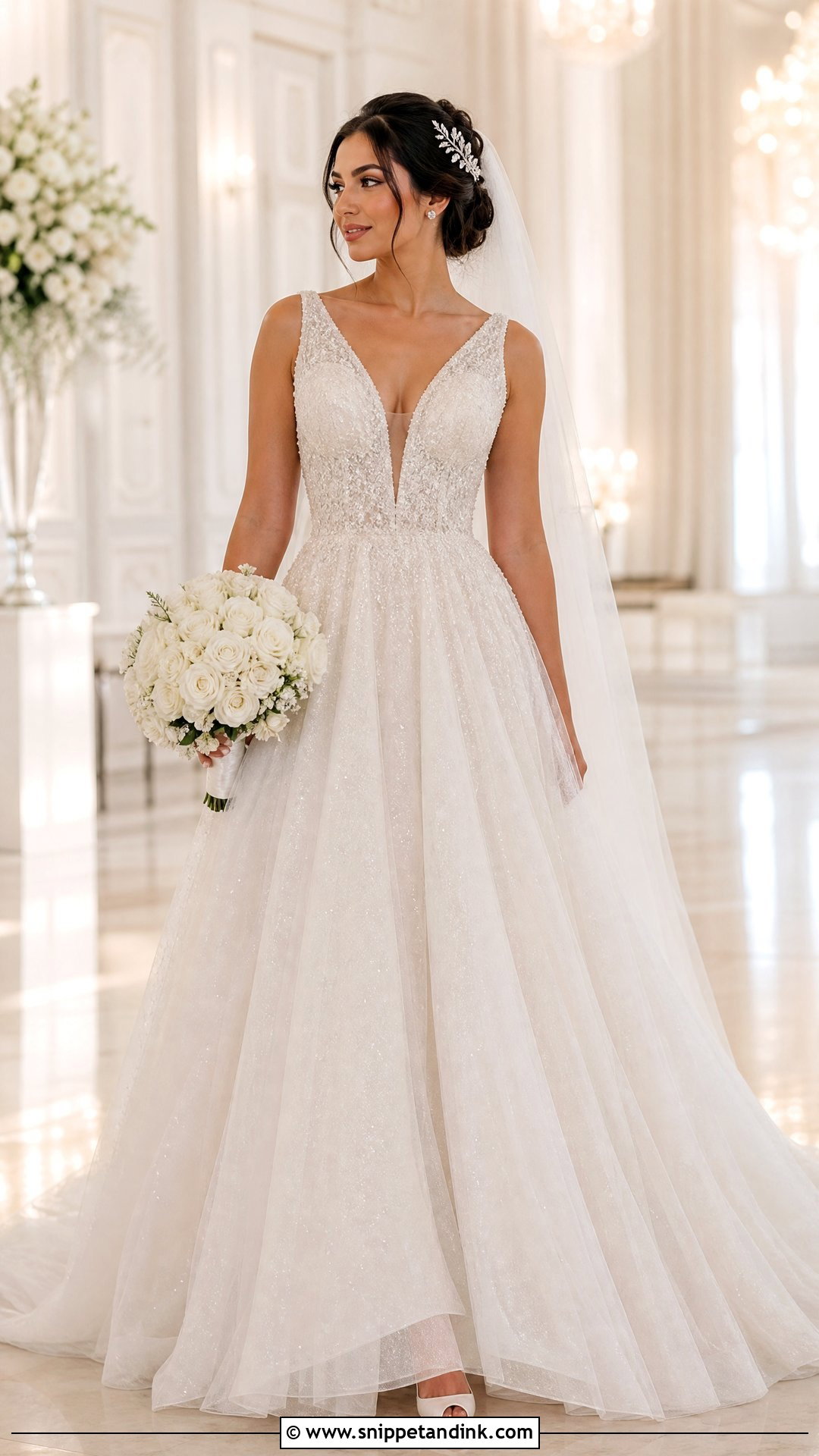
Sparkle tulle shifts subtly every time you move, which makes it one of the more forgiving fabrics on camera. Choose a plunge bodice with beaded straps, good boning and an illusion panel. A full A-line skirt gives fairy-tale volume without satin’s stiffness. My one rule: pick one finish. Sequins, crystals and metallic lace together turn noisy. Crystal studs, a delicate tiara or jeweled comb, neutral ivory heels and a plain veil let the shimmer through. A rounded bouquet of white flowers with little greenery suits it. Bright indoor lighting in a ballroom or formal estate shows the sparkle at its best.
20. Tea Length Plunge Neck Wedding Dress
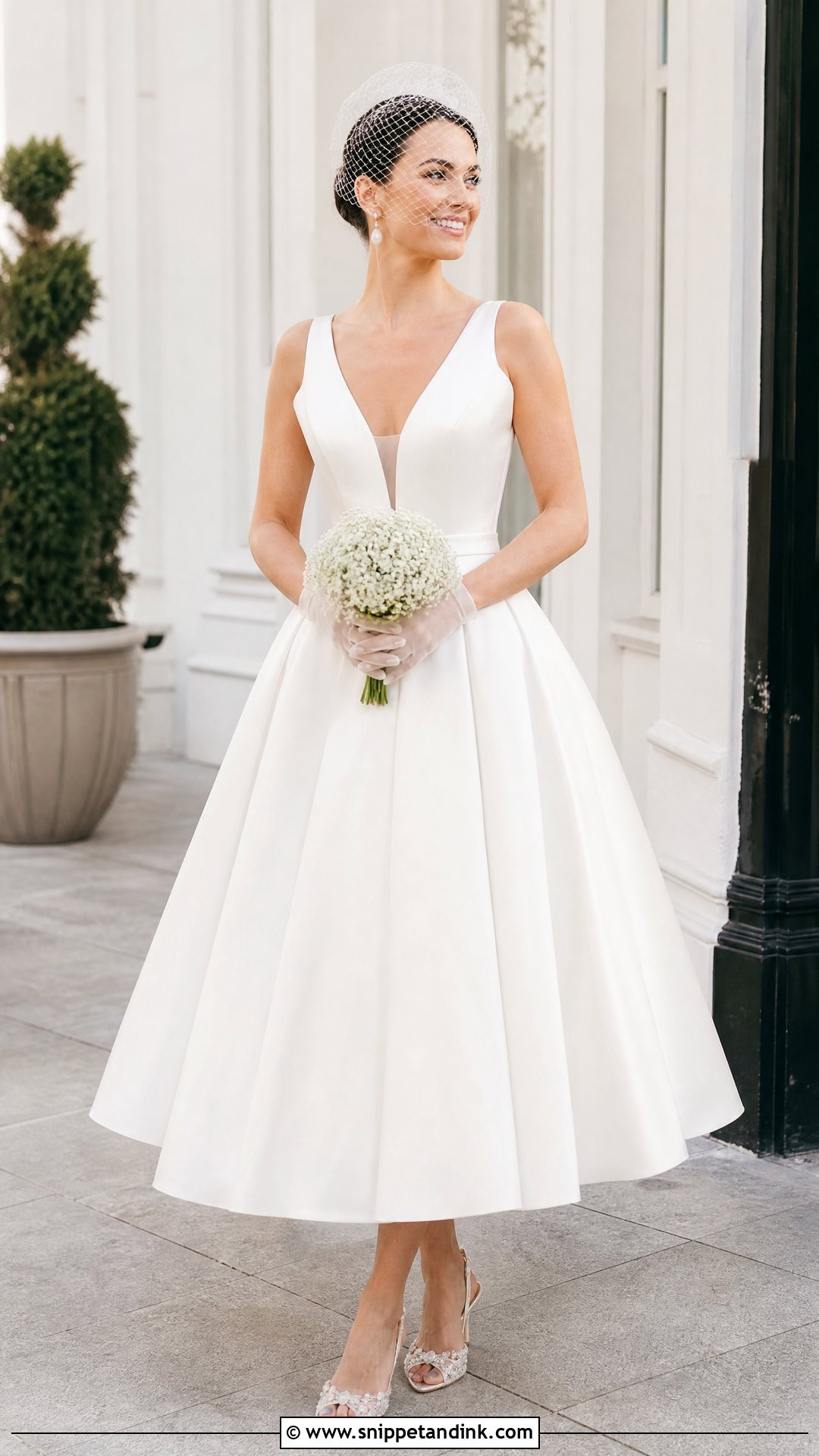
Tea length takes the plunge somewhere lighter. A structured V bodice with an illusion insert over a full skirt ending between knee and ankle needs a fabric with body, so mikado, satin or embroidered organza hold that short shape. With the shoes fully on show, choose embellished pumps, slingbacks or polished block heels. Short gloves or a birdcage veil add a vintage note. Keep the jewelry simple, though; gloves and a busy necklace together fight the neckline. A neat updo, pearl earrings and a small rounded bouquet keep the scale right for a city or courthouse wedding.
The Hidden Engineering That Keeps a Plunge in Place
Almost every secure plunge relies on the same few parts. Boning set along the side of the bust keeps the edge rigid. Cups sewn into the lining replace a bra, which would show in any real V. A strip of silicone grip or a narrow elastic tape stitched inside the neckline stops the fabric rolling outward. If your gown has none of these, ask whether the seamstress can add them. They’re common alterations and much cheaper than worrying all day.
Double-sided fashion tape is useful insurance, with conditions. It only holds on clean, dry skin, so skip body lotion and shimmer oil along the neckline that morning, and press it on a few minutes before you dress. In heat or a long dance set, tape can lift, so give your maid of honor a spare strip and small scissors.
Undergarments that work with a deep V
- Built-in cups, shaped by your seamstress, are the most reliable option.
- Adhesive bras suit smaller busts in cool rooms but tend to slip as skin warms.
- Plunge bras with a very low center only help if their center sits below the neckline point. Wear the one you’ve tested at fittings, not a new one on the day.
Depth Is Personal, Construction Isn’t
How low you go is your call. What holds it there is the dressmaker’s, and that’s where your attention should go before you order. Look closely at straps, cups, boning, illusion mesh and waist support, in lace, satin, crepe or chiffon alike. Bring your real shoes and any undergarments to every fitting, then walk, sit, hug and dance in the gown. Let accessories frame the neckline instead of covering it. A gown that’s been tailored properly stops being something you check in mirrors and becomes something you simply wear.
You'll Like These Ideas:







Leave a Reply