
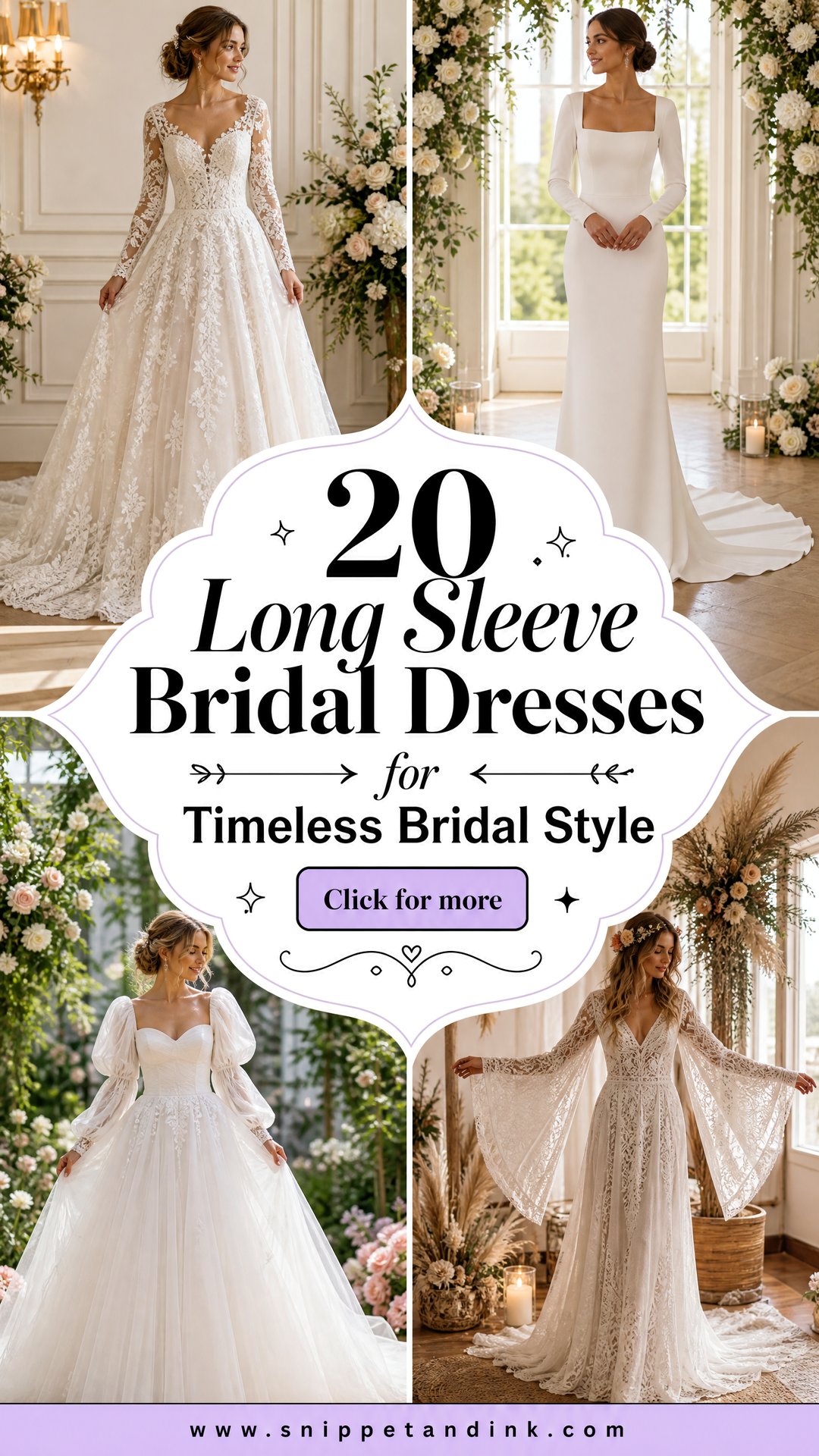
Sleeves change a wedding gown more than any other single detail. They decide how warm you’ll be, how far you can reach, and what the eye lands on in every photo of you holding the bouquet. Lace is still the fabric most brides ask me about, but crepe columns, structured satin, chiffon and detachable sleeves all have a place, and the right one depends on your venue, the season and how much you plan to move. I’ve gathered twenty long-sleeve gowns here, traditional through modest to bohemian, each with the shoes, veil and fitting notes I’d give a bride trying it on.
Can You Wear Long Sleeves in Midsummer?
Yes, but the fabric decides how it feels at three in the afternoon. I ask every bride about the month and the venue before she tries a single sleeve, because a gown that’s comfortable in an air-conditioned ballroom can be hard work at an outdoor July ceremony.
- Coolest: chiffon, unlined tulle and fine illusion mesh. Air moves through them, and bishop or bell shapes let it circulate around the arm.
- Middle ground: light lace over thin tulle. Comfortable unless the lace is dense or lined to the wrist.
- Warmest: satin, mikado and crepe. They don’t breathe much, and a fitted sleeve in them traps heat. Better saved for autumn and winter.
For a hot day, I’d also look at the bodice lining. A breathable cotton or silk-blend lining makes more difference than people expect. Detachable sleeves are another honest answer: wear them for the ceremony and portraits, then take them off before the dancing starts.
1. Long Sleeve Lace A-Line Bridal Dress
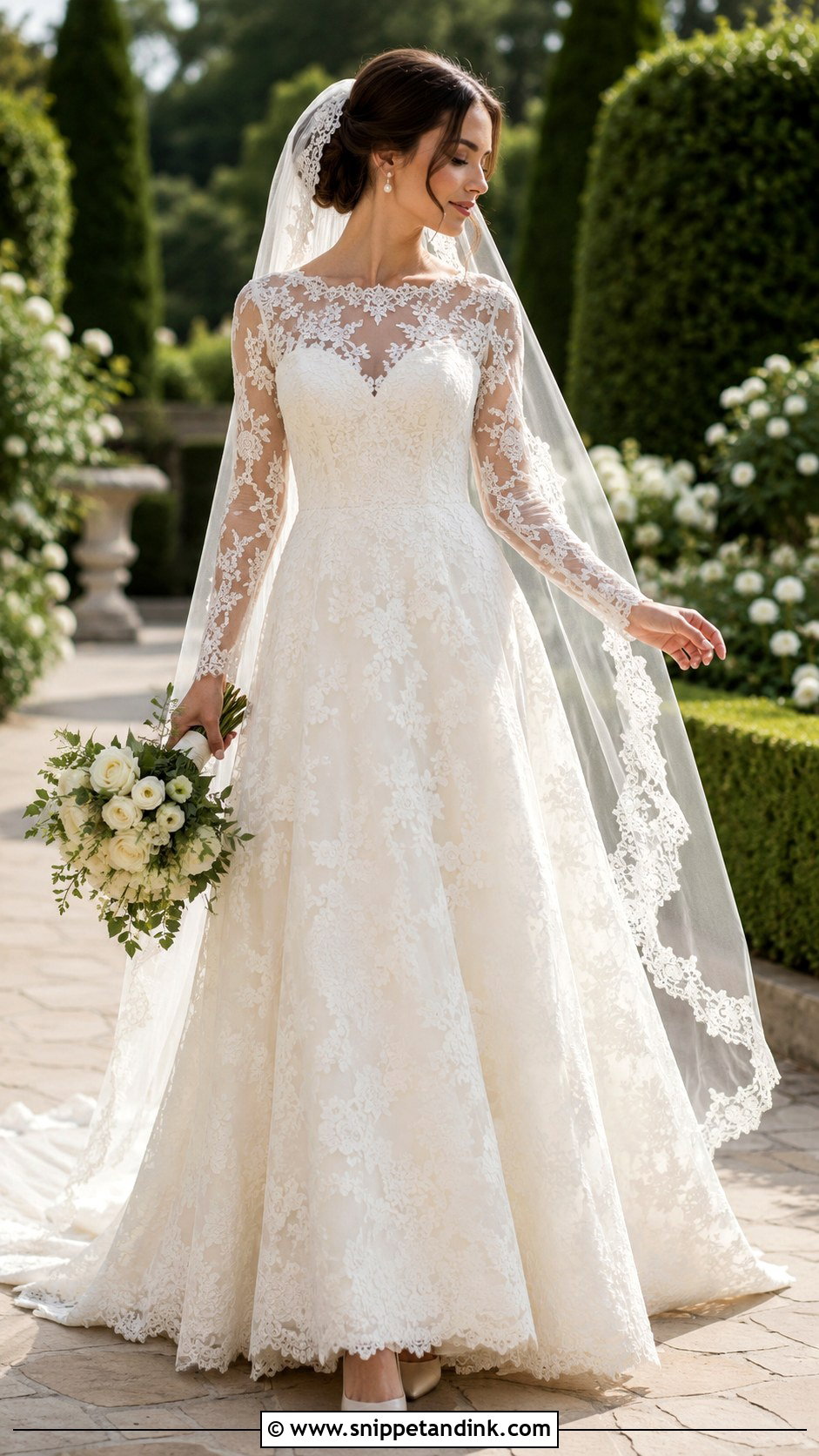
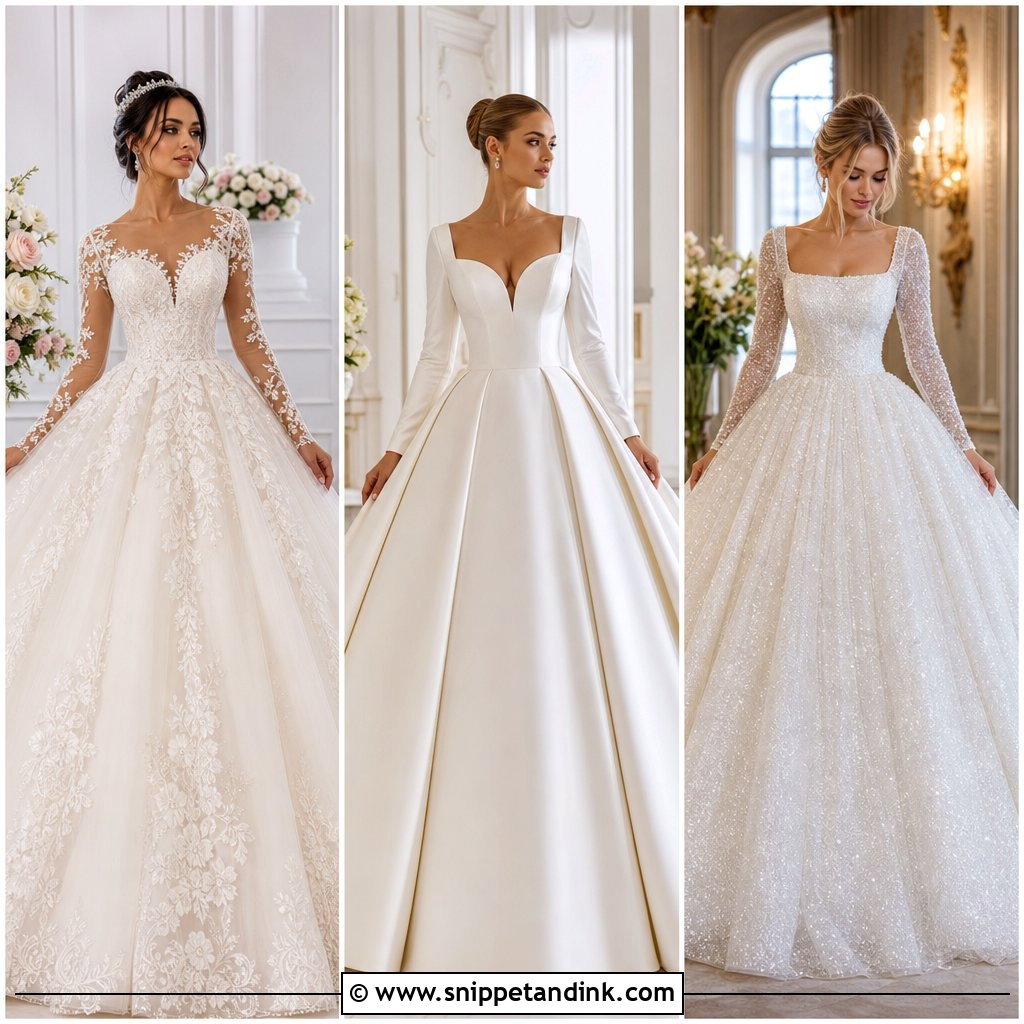
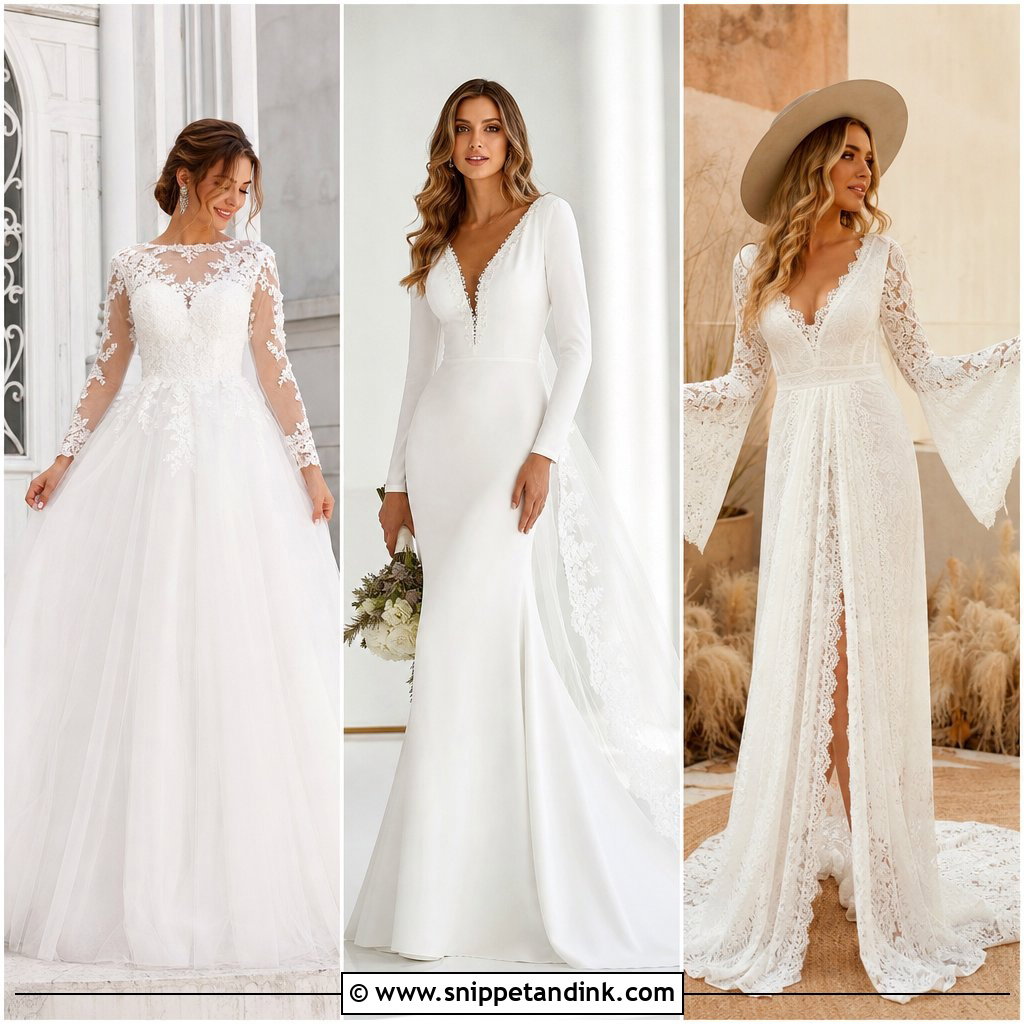
Lace A-lines are where most of my long-sleeve appointments begin, and for good reason. The waist is defined, the skirt moves without weight, and illusion sleeves with placed appliqués give coverage that still feels light. Pair pointed pumps with pearl drops and a fingertip veil edged in matching lace, and wear a low chignon. For an outdoor ceremony, keep the train at chapel length; anything longer drags through grass. When we pin sleeve length, I have the bride bend her elbows. A sleeve marked with straight arms will ride up halfway to the forearm the moment she holds her flowers.
2. Long Sleeve Satin Ball Gown Bridal Dress
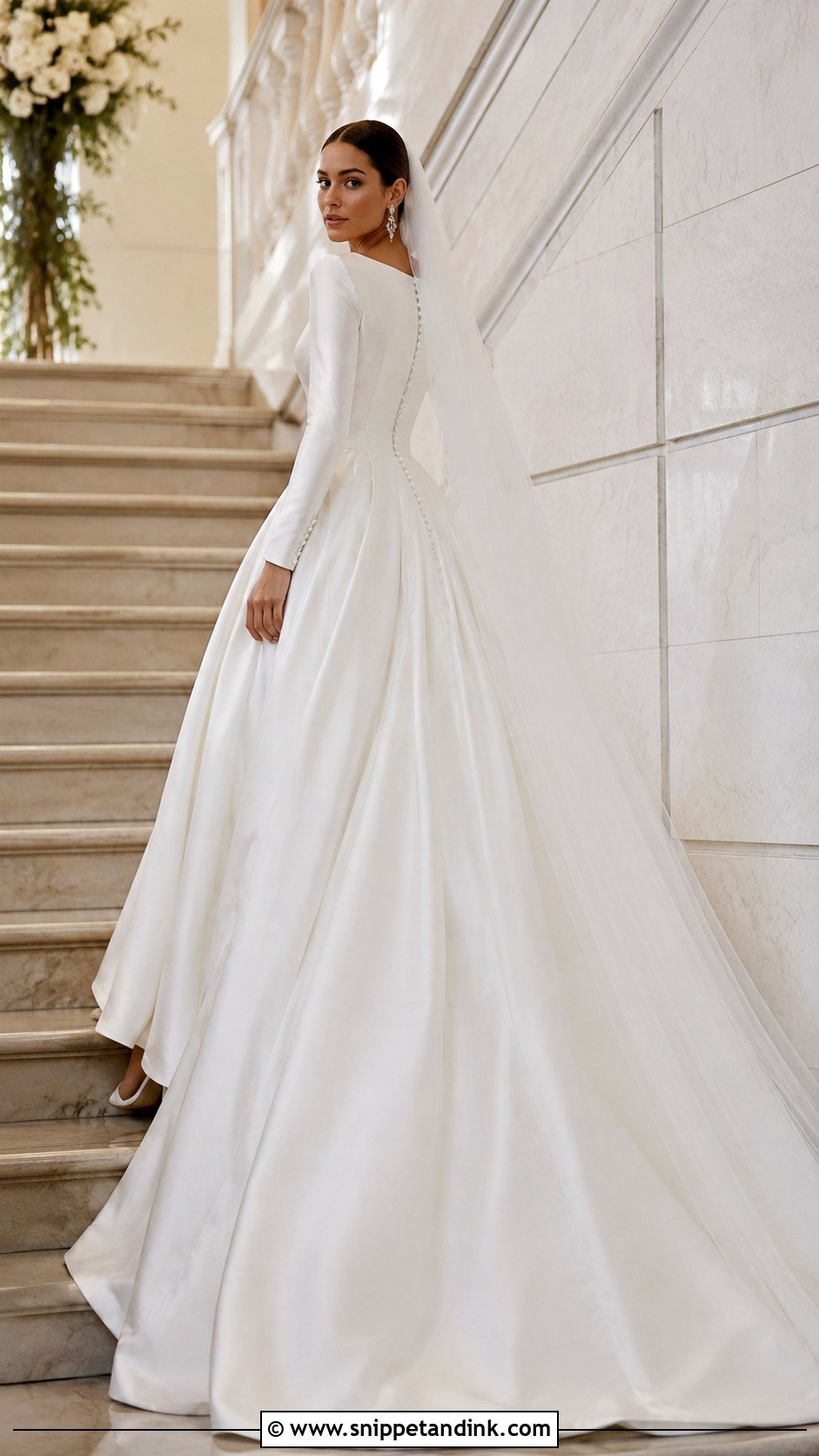
Satin ball gowns need almost no decoration. A structured bodice, a natural or basque waist, a full skirt in deep pleats and a line of covered buttons running down the back toward the train. Satin is honest about fit, though. It shows every pull at the shoulders, elbows and waist, so I’d budget time for careful tailoring there. Block heels, crystal studs and a plain cathedral veil, and leave room for an heirloom piece if you have one.
3. Long Sleeve Crepe Column Bridal Dress
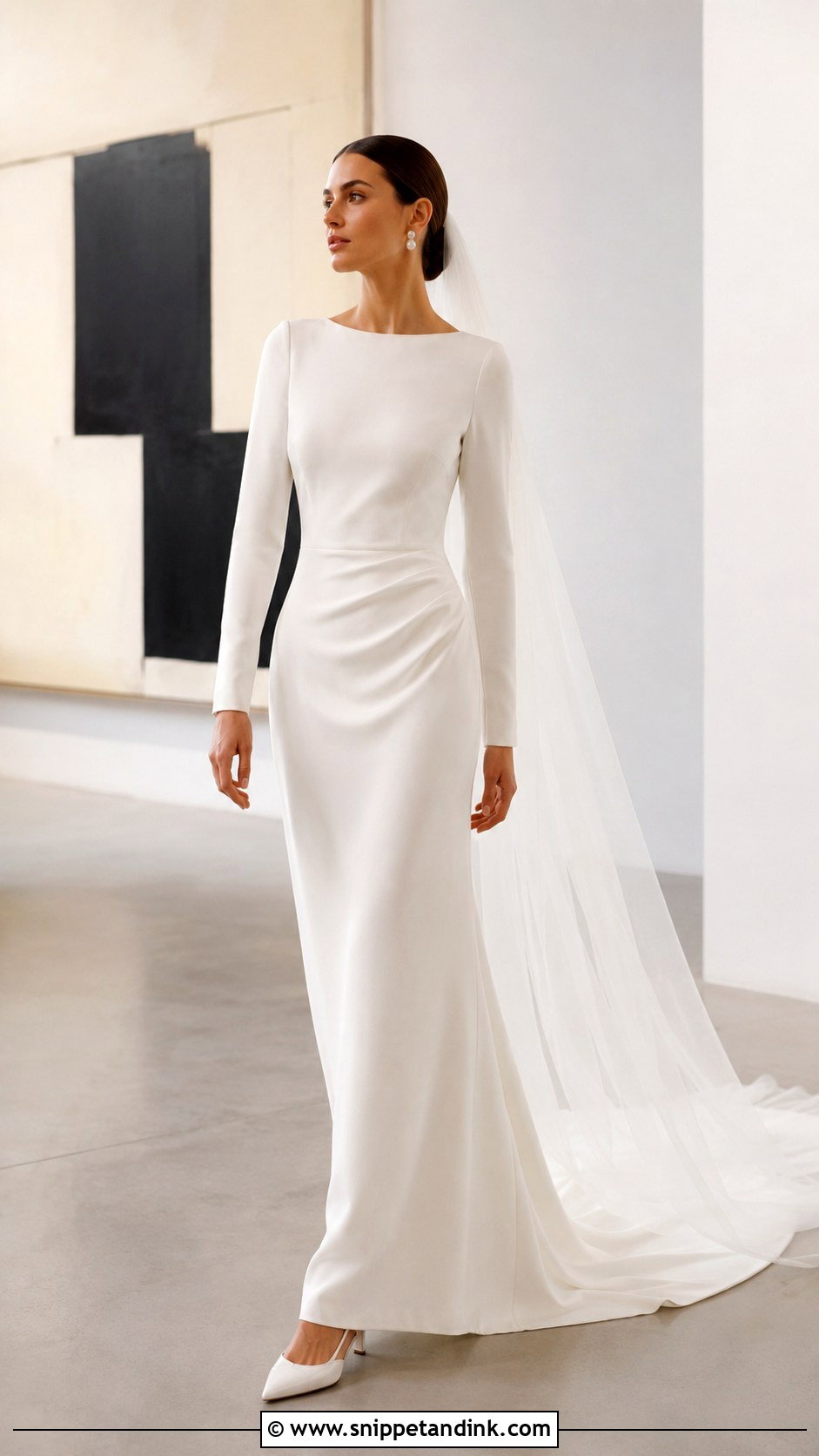
A crepe column should skim, not grip. If it’s tight enough to show the line of your hips standing, it will crease across the lap when you sit. A bateau, square, or subtle V-neckline gives this simple shape its point of view. Slingback heels, sculptural pearl earrings and a low ponytail keep it modern. Because there’s no decoration to hide behind, the tailoring and underwear have to be right; I’d buy smooth, edge-free underwear before the first fitting so the alterations are made over it.
4. High Neck Long Sleeve Lace Bridal Dress
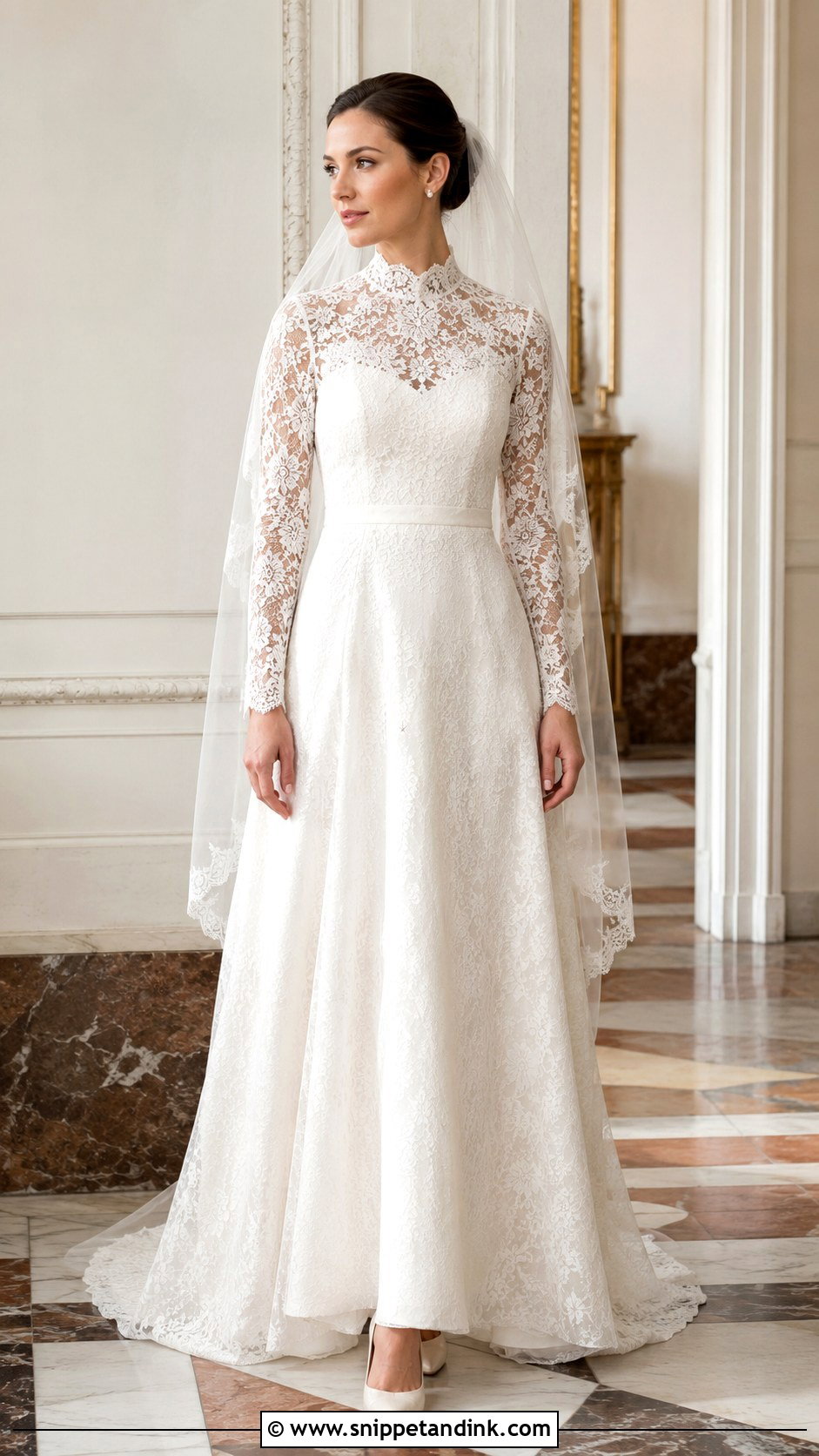
High-neck lace covers you and still shows off texture. Ask for a comfortable lining through the bodice; sheer lace sleeves keep it lighter. An A-line or gently fitted skirt stops the high neck from feeling stiff. Skip the necklace, wear pearl studs, and attach the veil under a smooth bun. If the lace runs unbroken from shoulder to hem, a thin satin ribbon at the waist gives definition. Lace collars can rub the neck as you turn your head, so check the inside edge and ask for a soft facing if it scratches.
5. Square Neck Long Sleeve Satin Bridal Dress
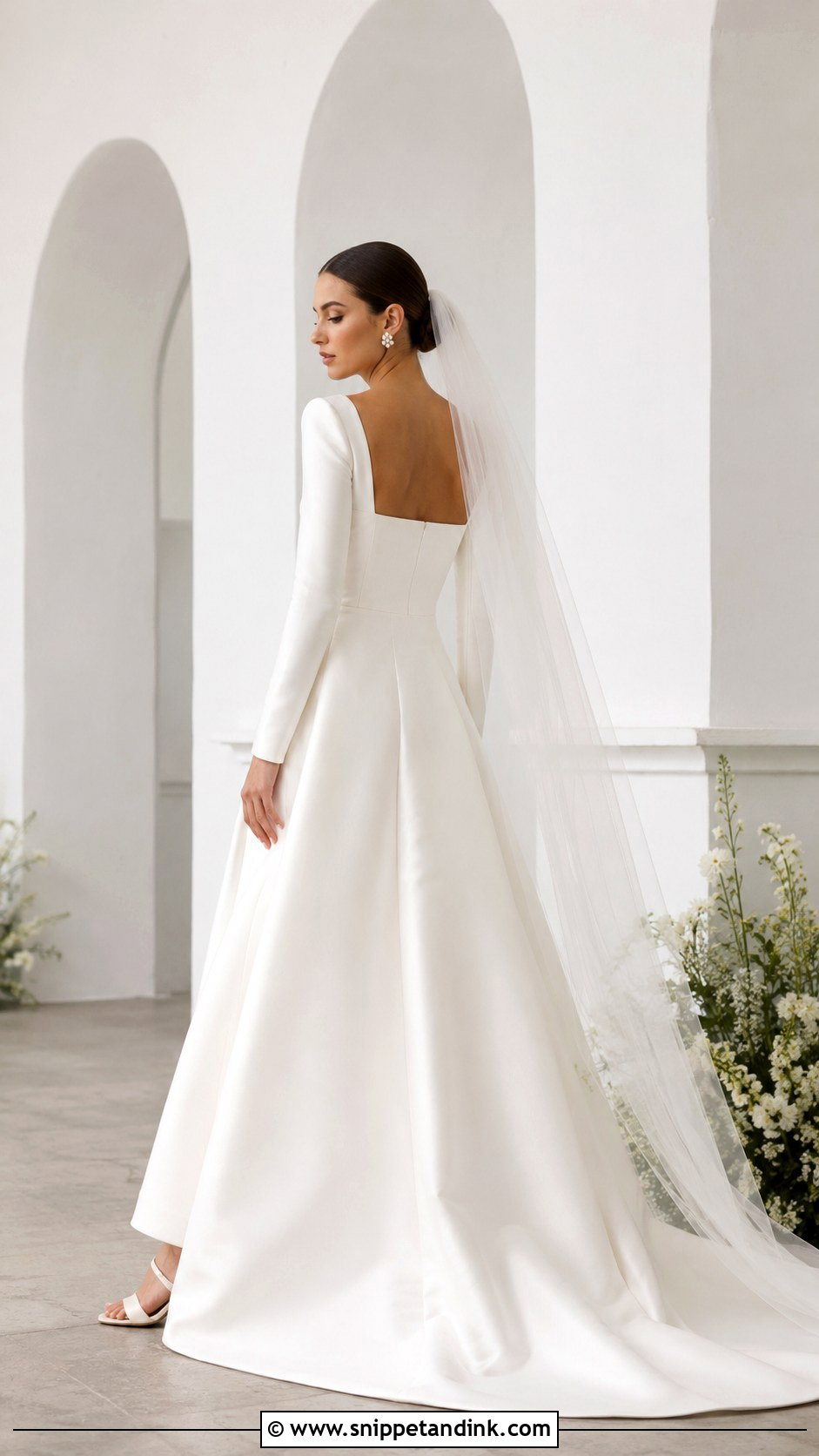
Satin and a square neck make a crisp pairing. Slim sleeves, a fitted waist, an A-line skirt, and maybe a low square back echoing the front with covered buttons below it. Pearl cluster earrings and block-heel sandals; no big necklace. What I watch at alterations is the corners. Square necklines lift at the corners when the shoulder seam is even slightly loose, and on satin that gap is very visible in photographs.
6. V-Neck Long Sleeve Illusion Bridal Dress
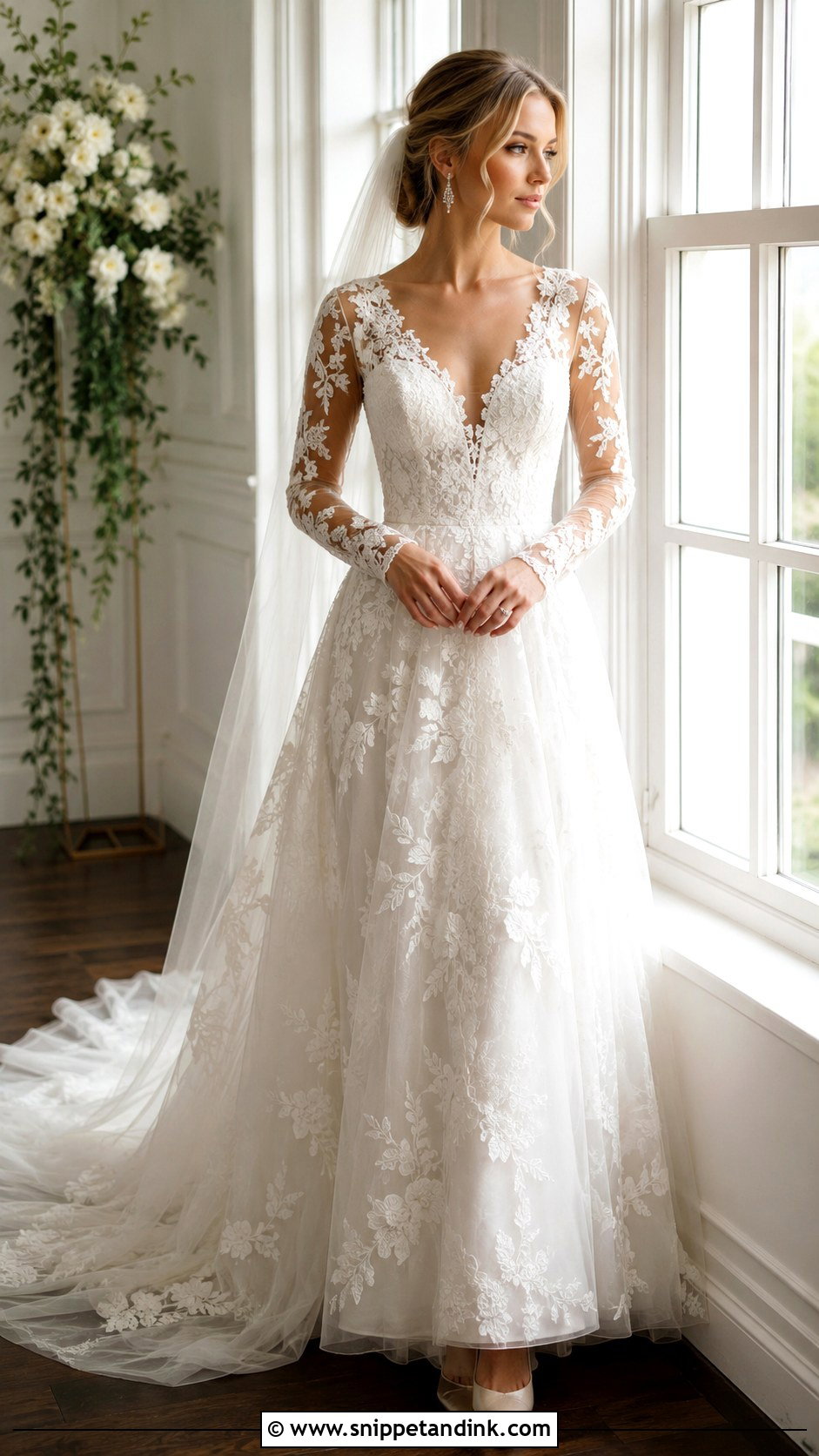
Illusion V-necks feel open but stay secure, because a sheer mesh panel holds everything in place. Lace appliqués running from the neckline across the sleeves tie it together, and a light tulle A-line keeps it airy. Crystal drops, pointed heels, a chapel veil with scattered appliqués. Look at the mesh outdoors before you decide. A shade that matches your skin under shop lights can show as a pale or grey band in daylight. Then bend and sit, to be sure the V doesn’t gape.
7. Off Shoulder Long Sleeve Bridal Dress
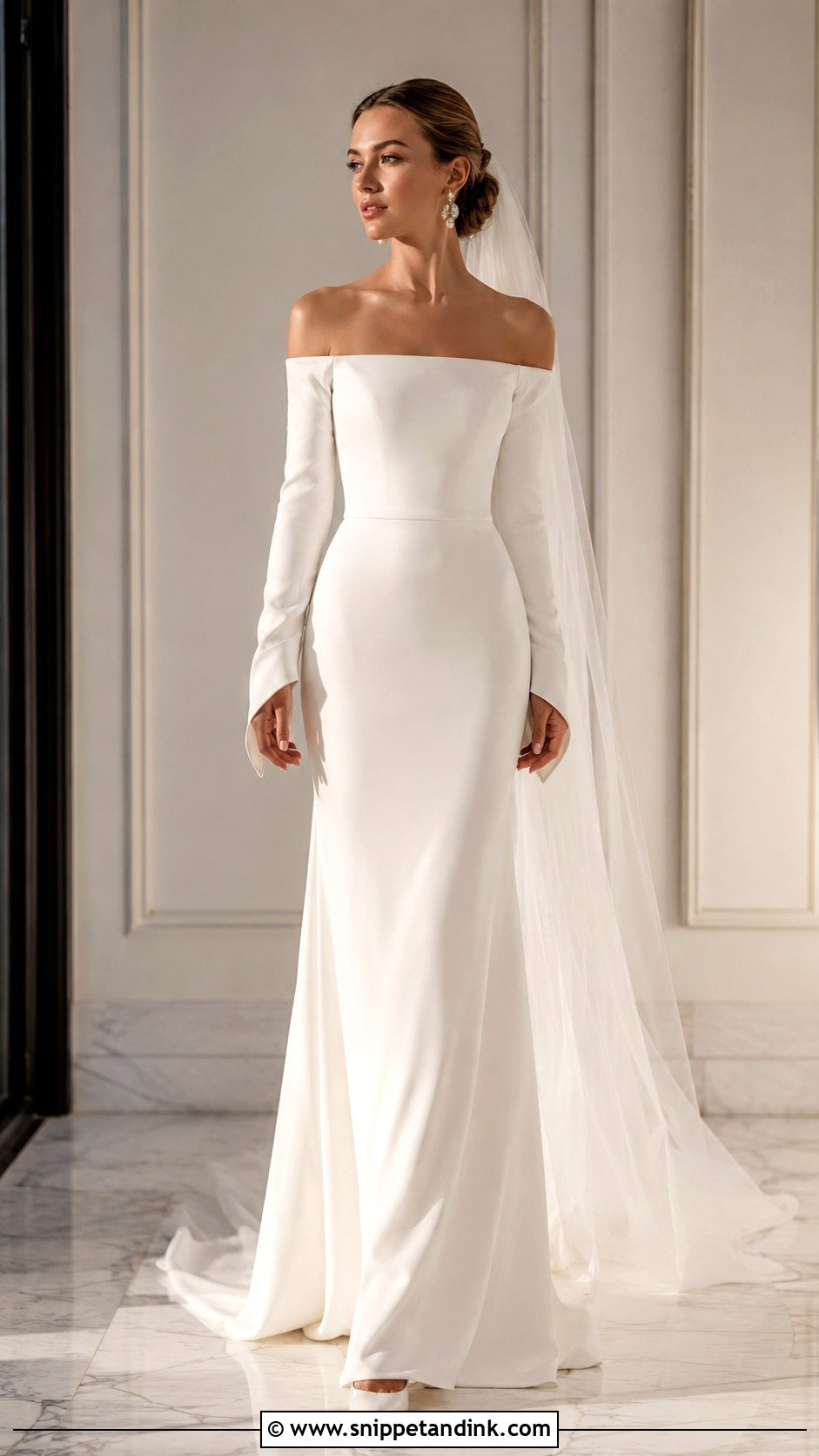
Off-the-shoulder gowns should be held up by the bodice, not the sleeves. Ask whether there’s an internal corset; without one the neckline relies on the sleeves and slides as you move. Crepe gives a minimal version, lace or satin a more traditional one. Wear your hair up or to one side. I’d practice the movements you’ll actually make: hugging relatives, reaching for a glass, dancing. Off-shoulder sleeves limit how high you can lift your arms, so it’s good to know the limit before the day.
8. Puff Sleeve Tulle Bridal Dress
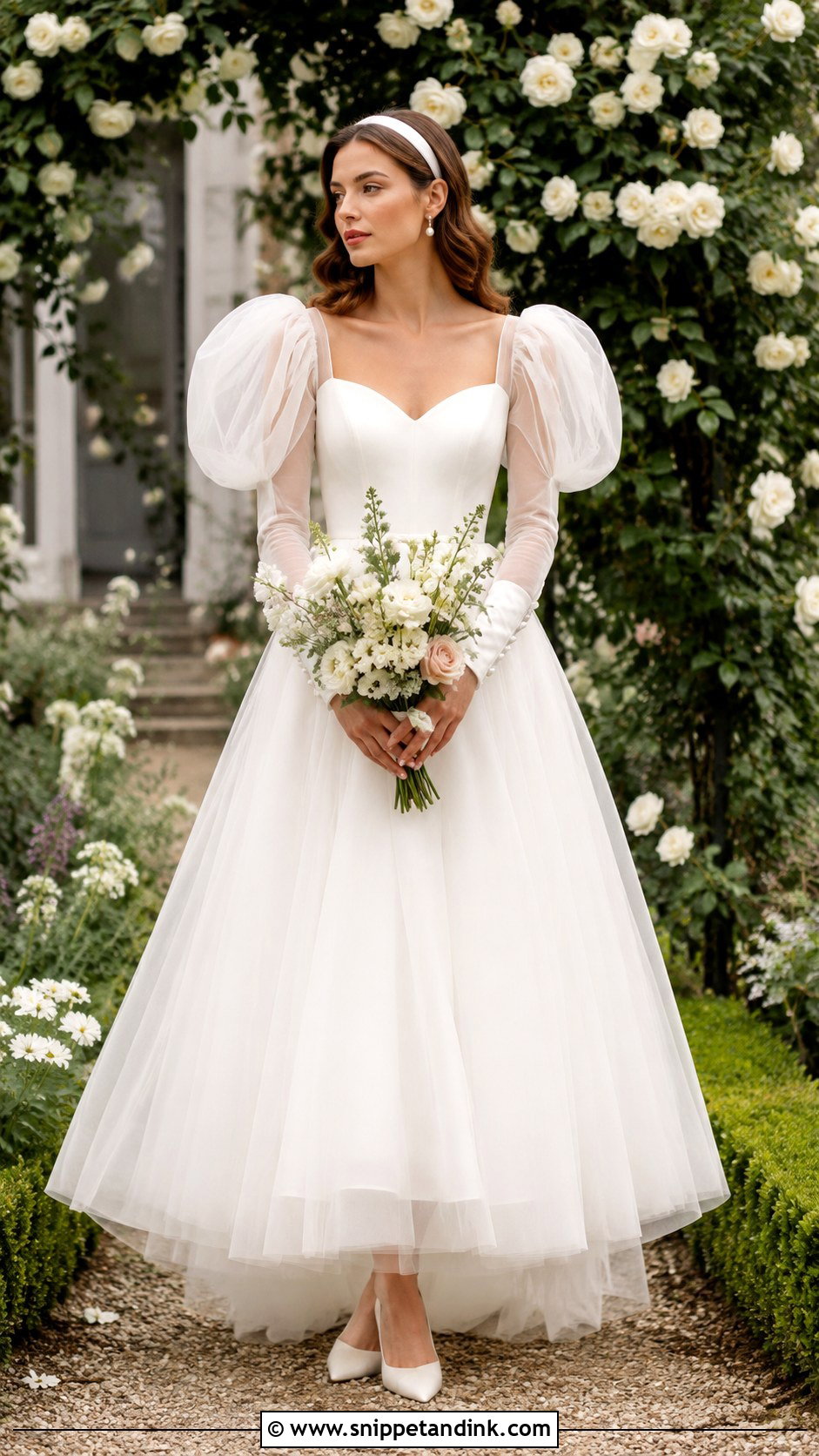
Puff sleeves on tulle look romantic when the volume sits at the shoulder and tapers into a fitted cuff. Too much puff all the way down starts to look like a costume. A lightly structured bodice, a flowing A-line, satin pumps and a ribbon headband or a simple veil. Sheer tulle may need lining in places, and some stiffened tulle scratches the inner arm, so wear the sleeve for a few minutes before deciding. Garden and spring weddings suit it best.
9. Bell Sleeve Boho Bridal Dress
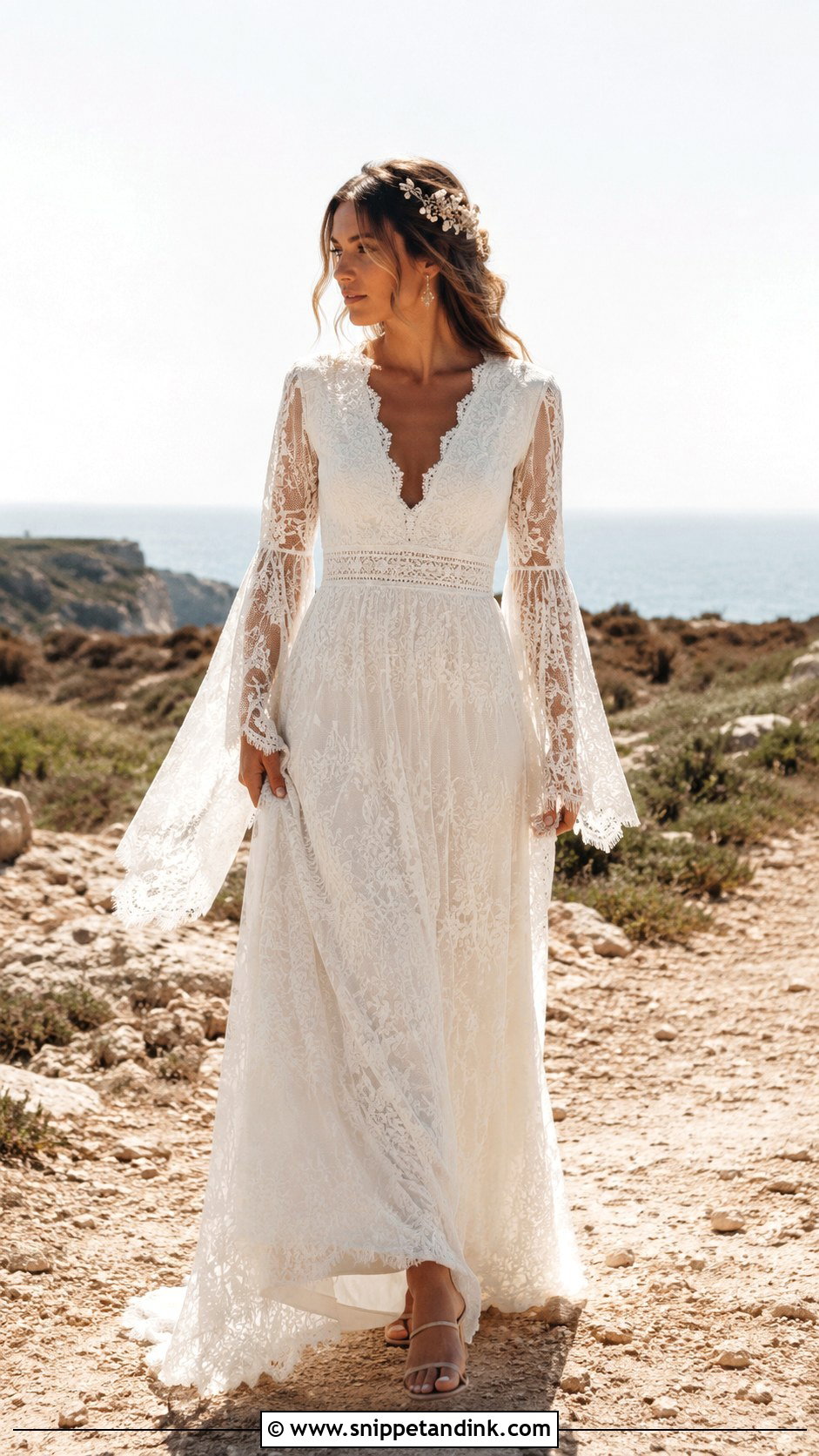
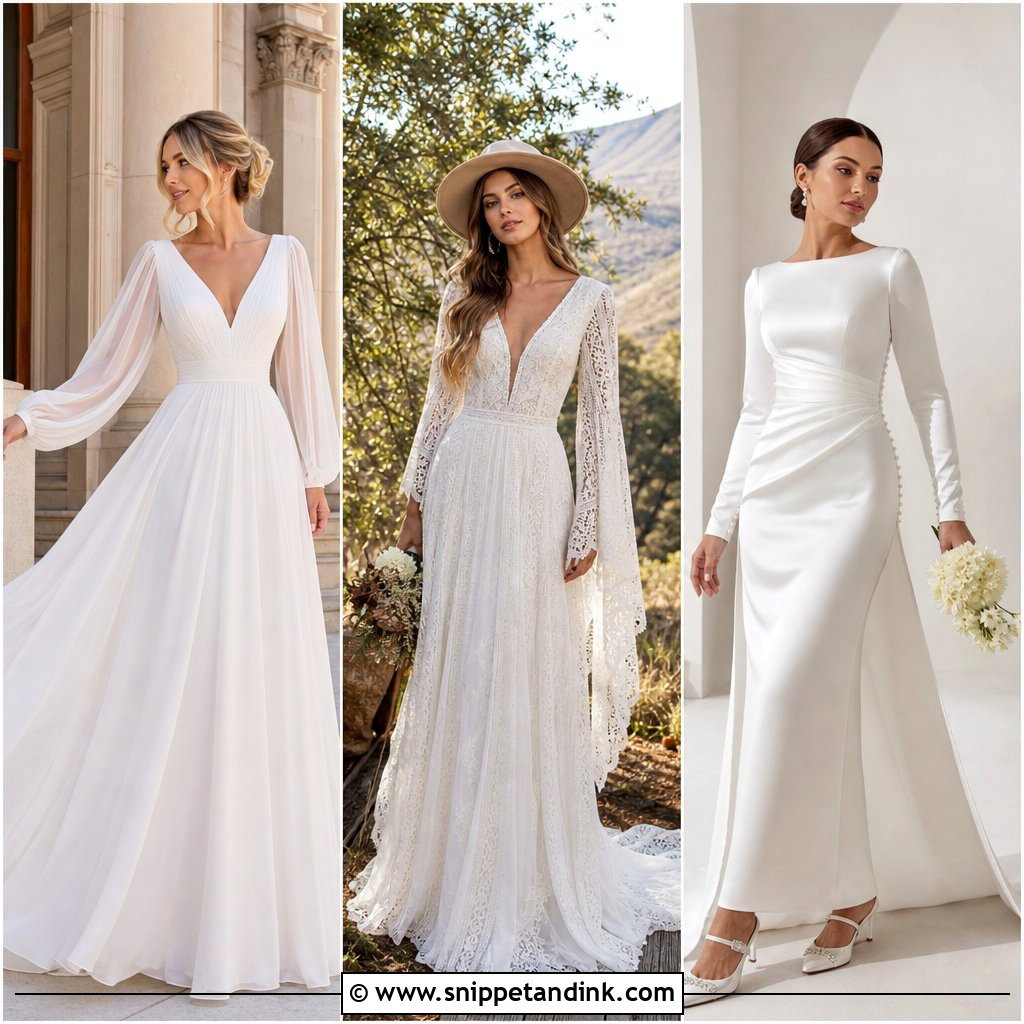
Wide bell sleeves are the most relaxed shape on this list. They need fabric that drapes, light lace or chiffon, rather than anything stiff that holds out from the arm. A fitted bodice and defined waist balance them. Leather sandals, a floral comb in loose waves, and an unstructured lace veil match the mood. I adjust the cuff width at fittings so the sleeve stops short of the hand; wide cuffs drag across cake tables and catch on chair backs.
10. Bishop Sleeve Chiffon Bridal Dress
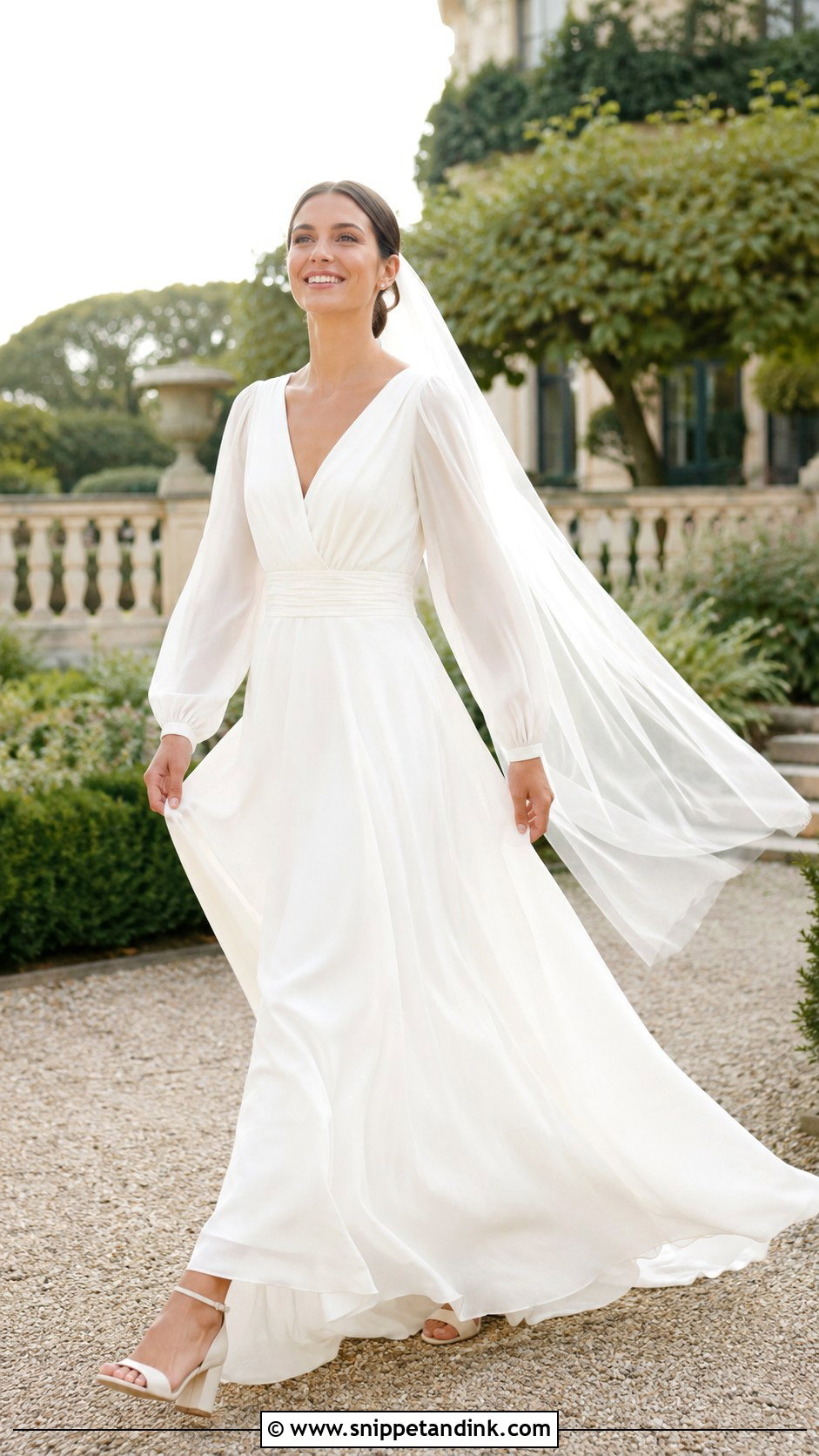
Bishop sleeves are full through the arm and gathered at the wrist, and in chiffon they’re the lightest way to get full coverage. A modest V bodice and a soft A-line skirt keep it fluid. Block heels, pearl studs, a fine comb, and a light chapel veil that moves with the chiffon. A low twisted bun keeps loose hair from tangling in all that sleeve. Check the cuff closure: tiny loops and buttons look lovely but are slow to fasten, and a gathered cuff that’s too tight leaves a red mark at the wrist.
11. Basque Waist Long Sleeve Bridal Dress
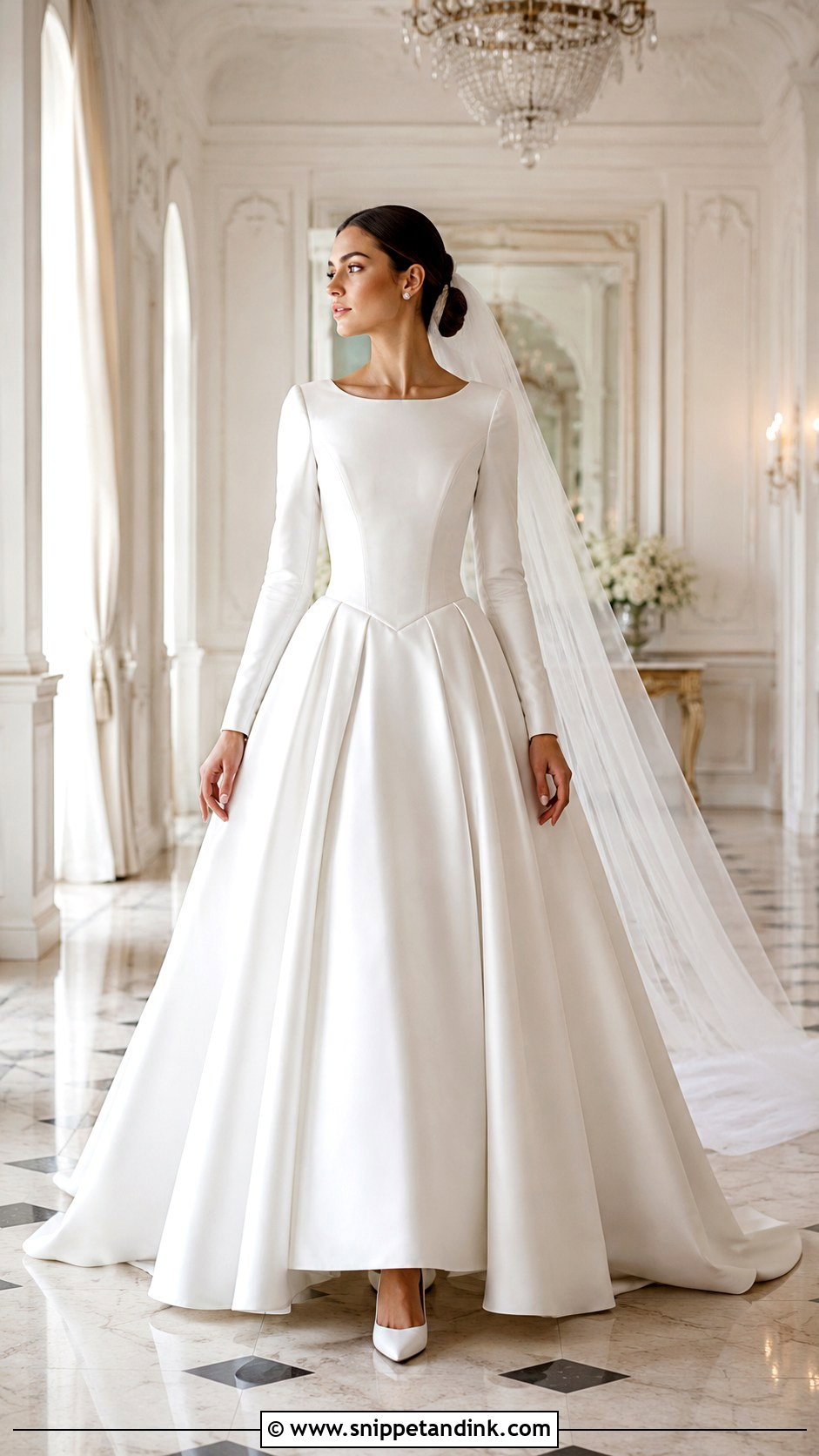
A basque waist dips into a V at the front, and on a long-sleeve satin or mikado gown with a full skirt it makes a strong, structured outline. Fitted sleeves keep the top sleek so the waistline stays clear. Pointed pumps, crystal studs, a long plain veil and a compact bouquet. Sit down at every fitting. The point should follow your proportions and never press into your lap; if it does, it needs to be made shallower.
12. Pearl Long Sleeve Bridal Dress
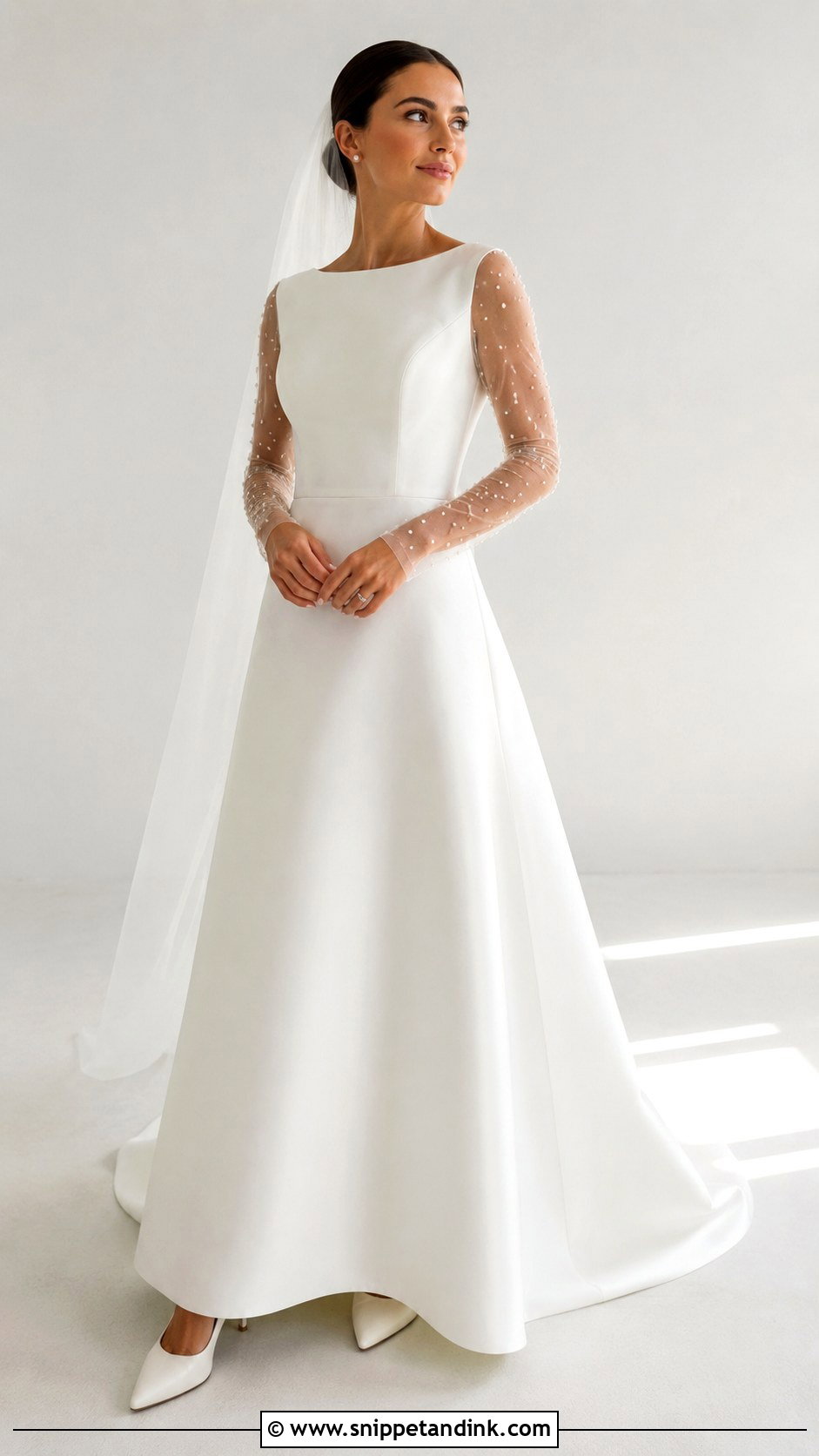
Pearls catch light gently, a glow rather than a flash. I prefer them scattered over illusion sleeves and the bodice, with a clean A-line or column skirt below. One or two pearl accents in your accessories is plenty; matching pearls on shoes, hair, veil and ears looks overdone. Pull gently on a few pearls at the fitting to check they’re stitched rather than glued, and feel the inside of the sleeve for rough thread.
13. Floral Appliqué Long Sleeve Bridal Dress
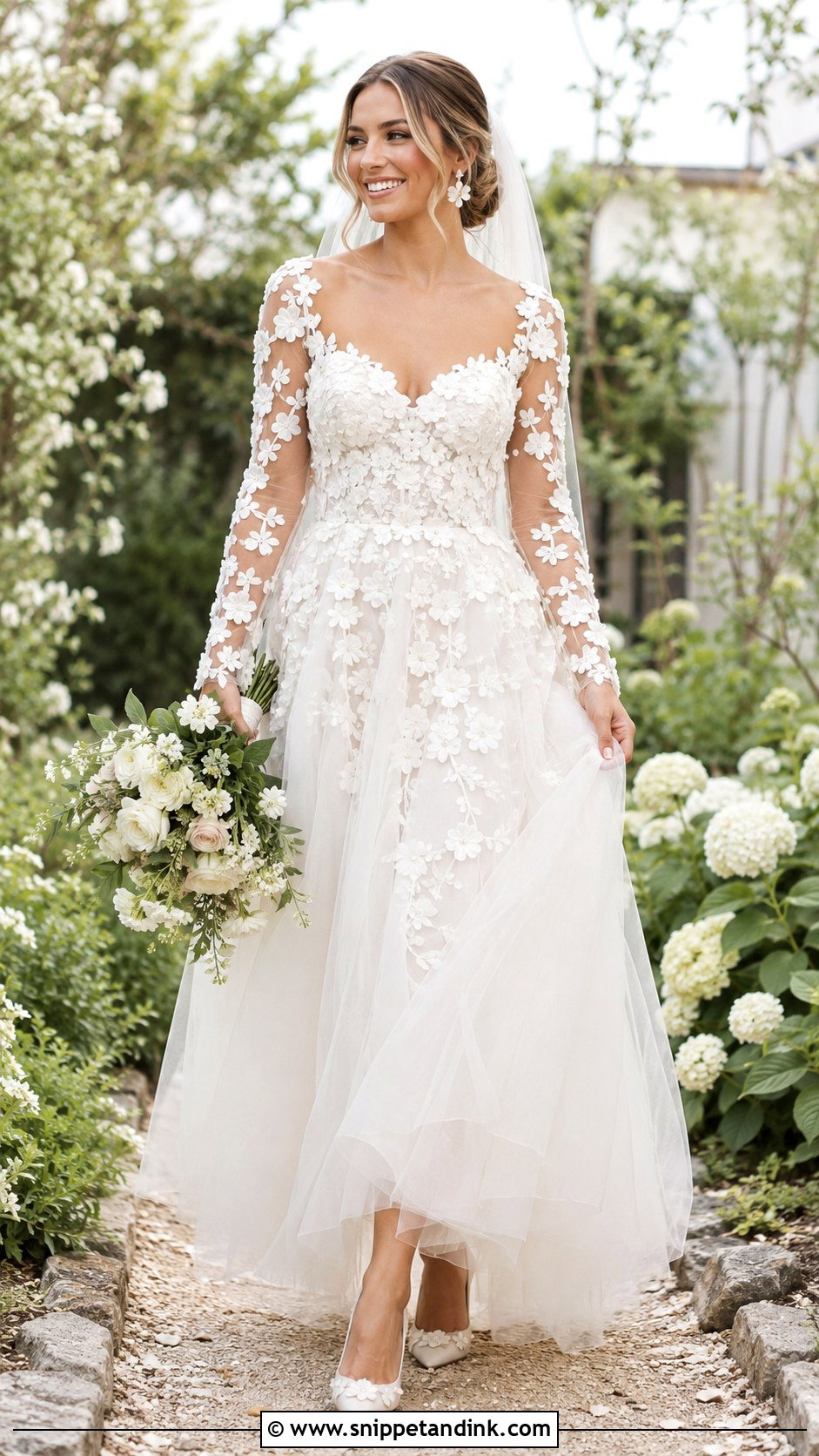
Raised floral appliqués look most natural when they travel from the bodice onto the sleeves and fade into the skirt. An illusion neckline and layered tulle keep it from feeling heavy. A plain veil, small floral earrings, and a single matching pin in a soft updo. Keep the bouquet from copying every flower on the dress. The places to check are the underarms and cuffs, where raised flowers rub when you move.
14. Beaded Long Sleeve Bridal Dress
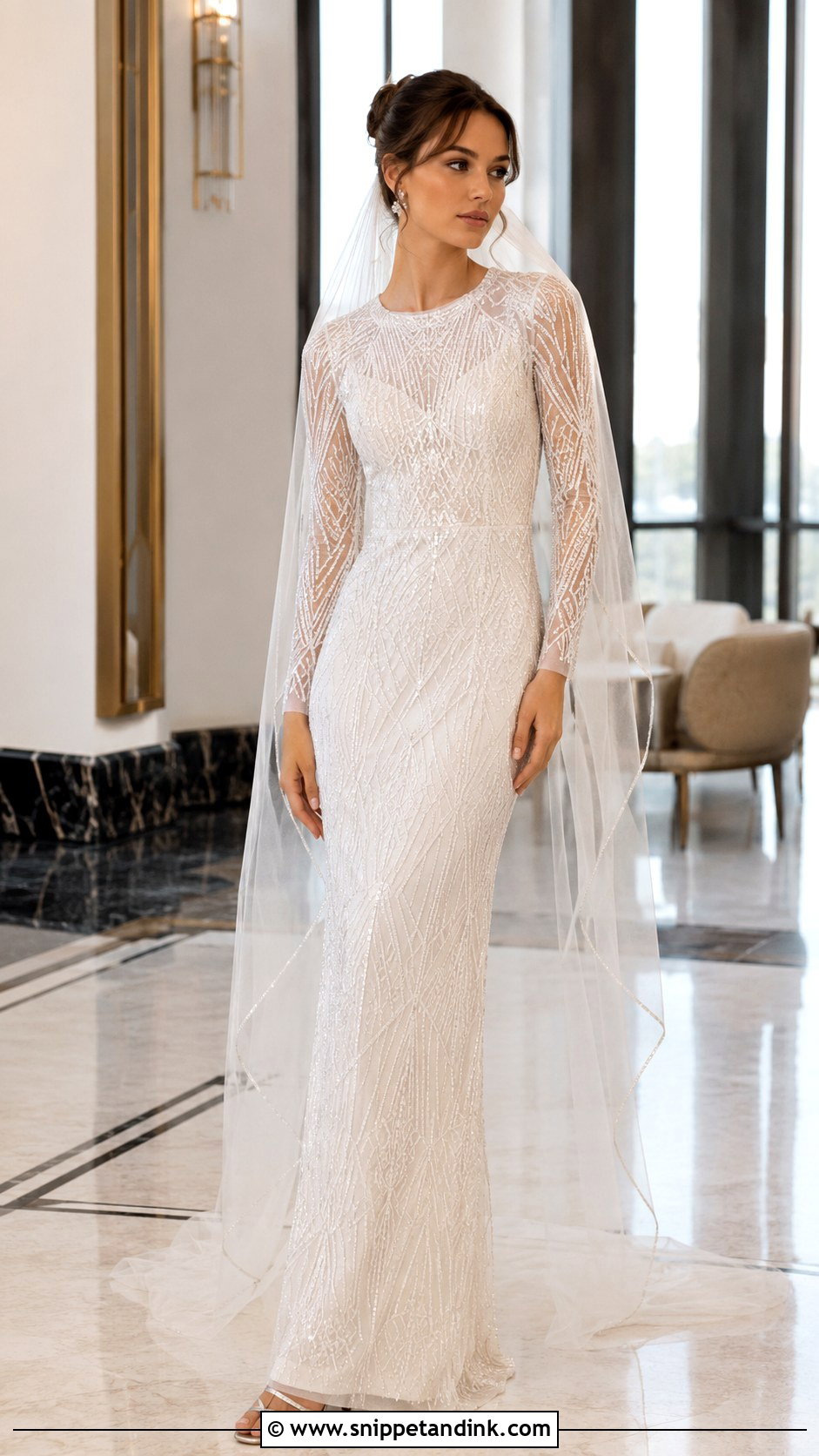
Beaded sleeves bring real evening sparkle, and the pattern matters. Vertical, geometric or gently curving lines support the shape, while dense scattered beading from neck to hem gets busy. A column or gentle fit-and-flare keeps the gown from feeling bulky. Metallic ivory heels, small studs, a sheer chapel veil. Beading is heavy, so wear it for a good while at the fitting, walking and sitting, and make sure the sleeve beads don’t snag the skirt as your arms swing.
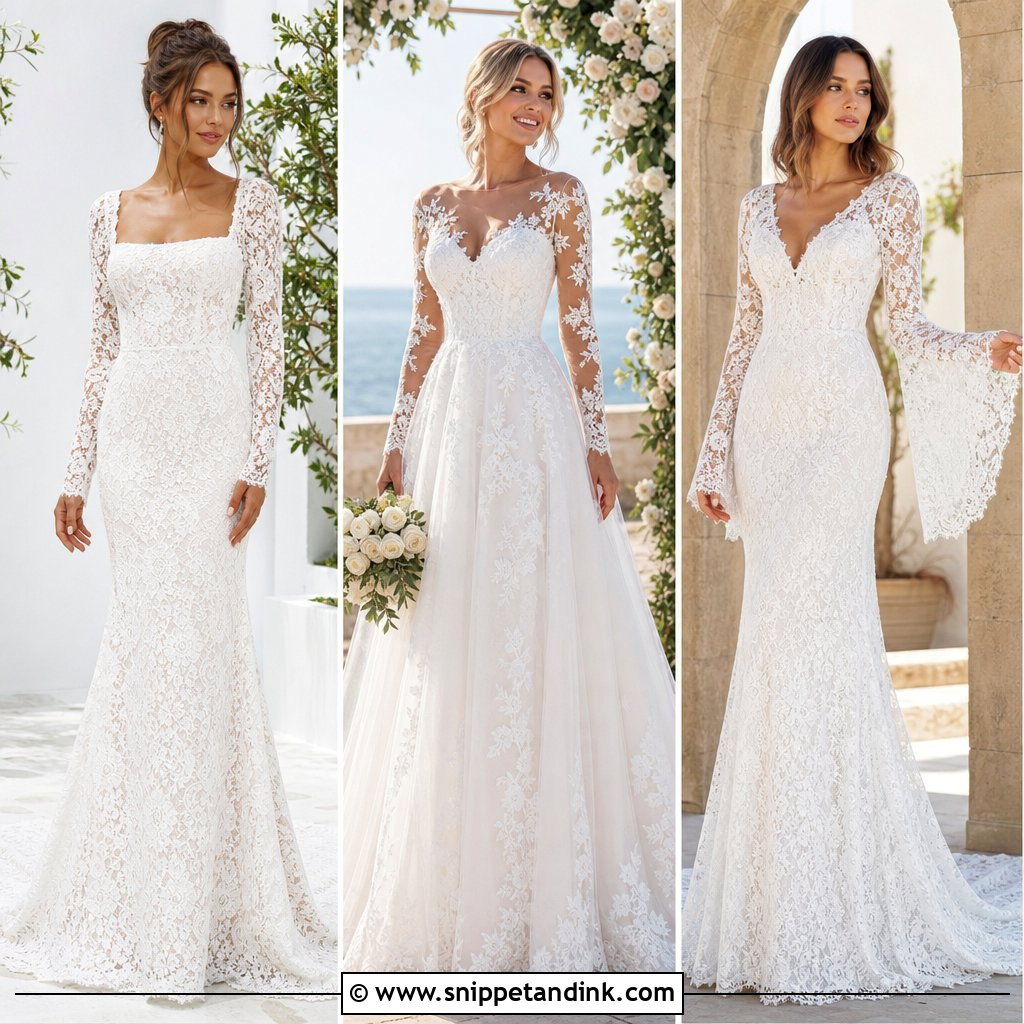
15. Long Sleeve Mikado Princess Bridal Dress
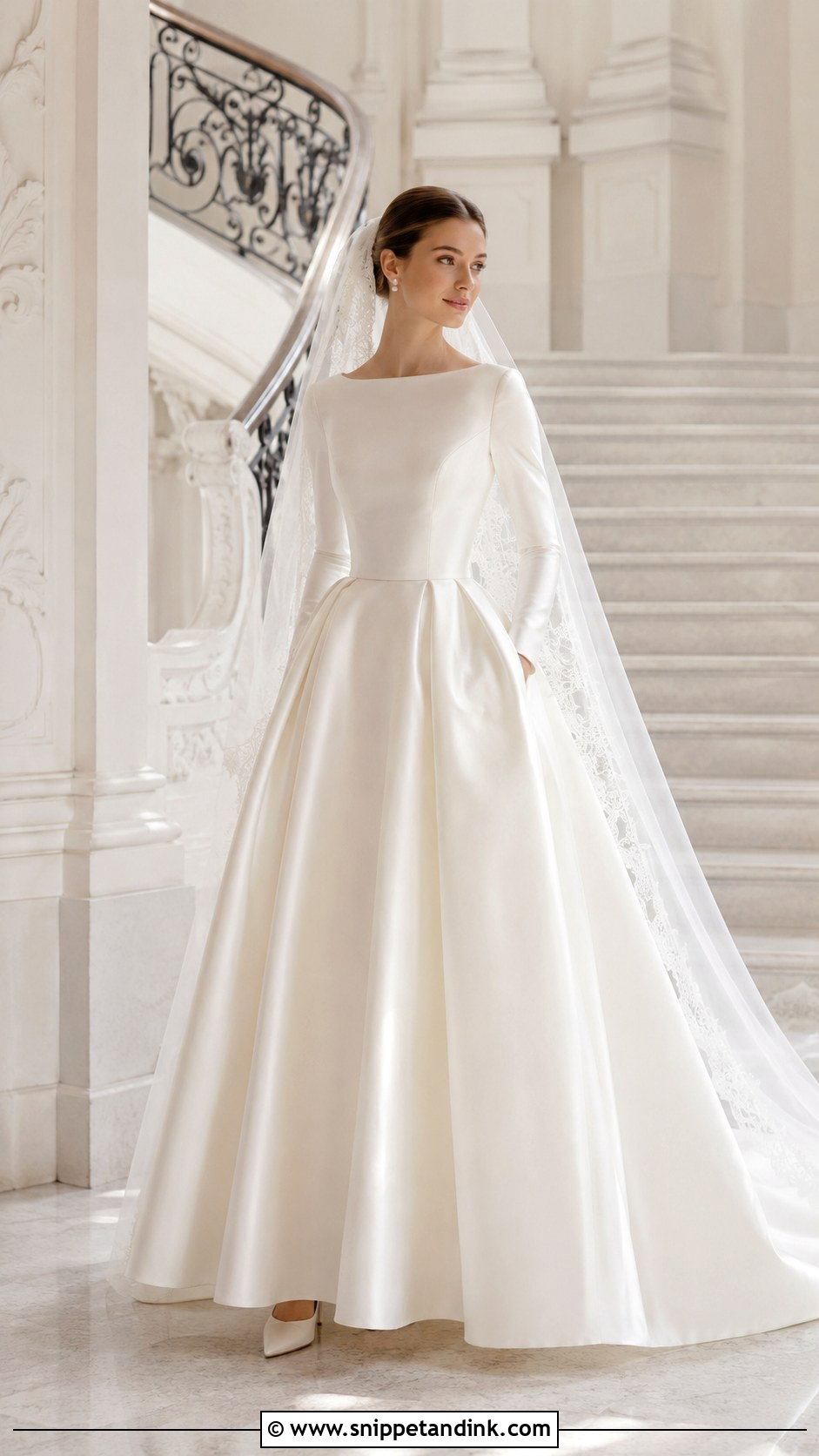
Crisp mikado fabric holds a princess skirt without layers underneath, and it has a soft sheen rather than a shine. A fitted long-sleeve bodice, a defined waist and a pleated skirt; a bateau or modest scoop balances the volume. Cathedral veil with a clean cut edge, a high or mid bun. Mikado can usually take discreet pockets in the side seams, which brides love. It’s a heavy fabric, so plan the bustle carefully and ask how much the finished gown weighs.
16. Mermaid Long Sleeve Lace Bridal Dress
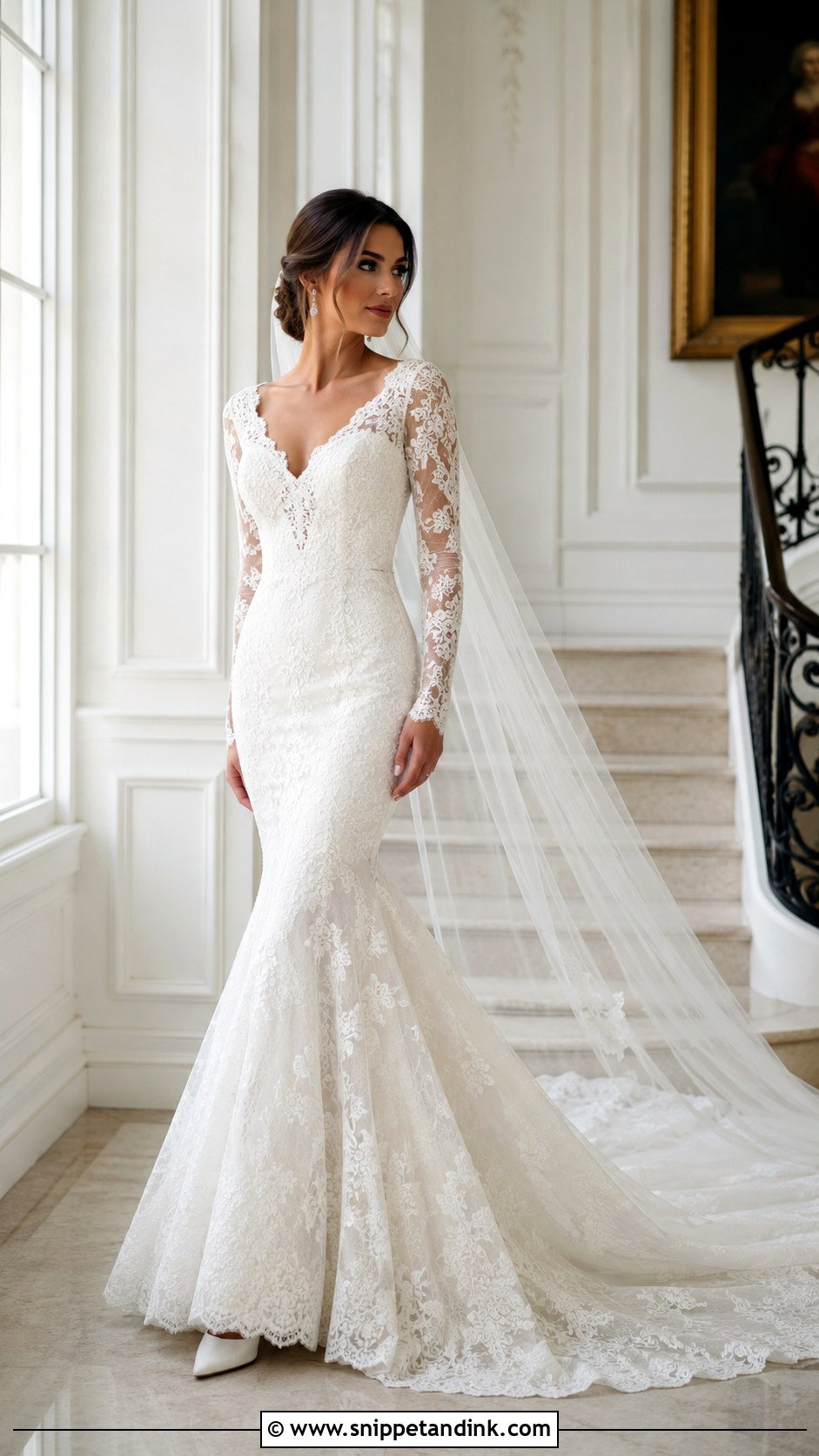
Mermaid gowns are fitted to the knee and then flare, so where that flare begins decides whether you can walk, sit and climb stairs. Stretch lace or well-made panels help a lot. A bateau, soft V or illusion scoop balances the fitted shape. Supportive heels, small drops and a narrow veil that falls past the train. Don’t size down for a tighter look. Good internal support does more for the silhouette, and a too-tight mermaid makes the evening miserable.
17. Modest Long Sleeve A-Line Bridal Dress
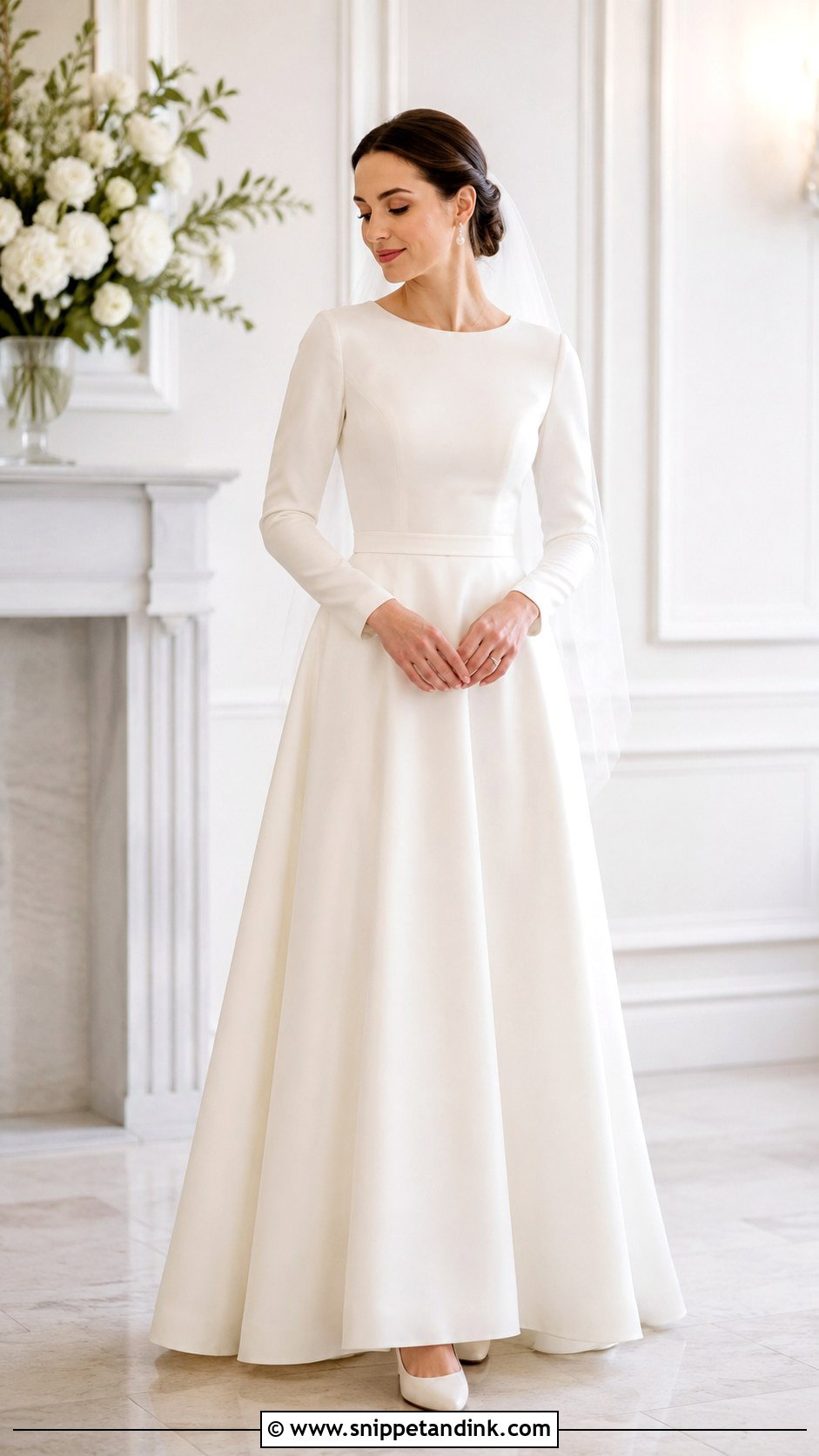
Modest gowns can look entirely current. An opaque bodice, full-length lined sleeves, a bateau, jewel or soft scoop neckline, and a smooth A-line with a defined waist. Covered buttons, narrow cuffs or a textured fabric add interest without sheer panels. Tell the boutique your requirements before you order: neckline depth, sleeve lining, back coverage. Adding fabric after a gown arrives is much harder than ordering it right.
18. Tea Length Long Sleeve Bridal Dress
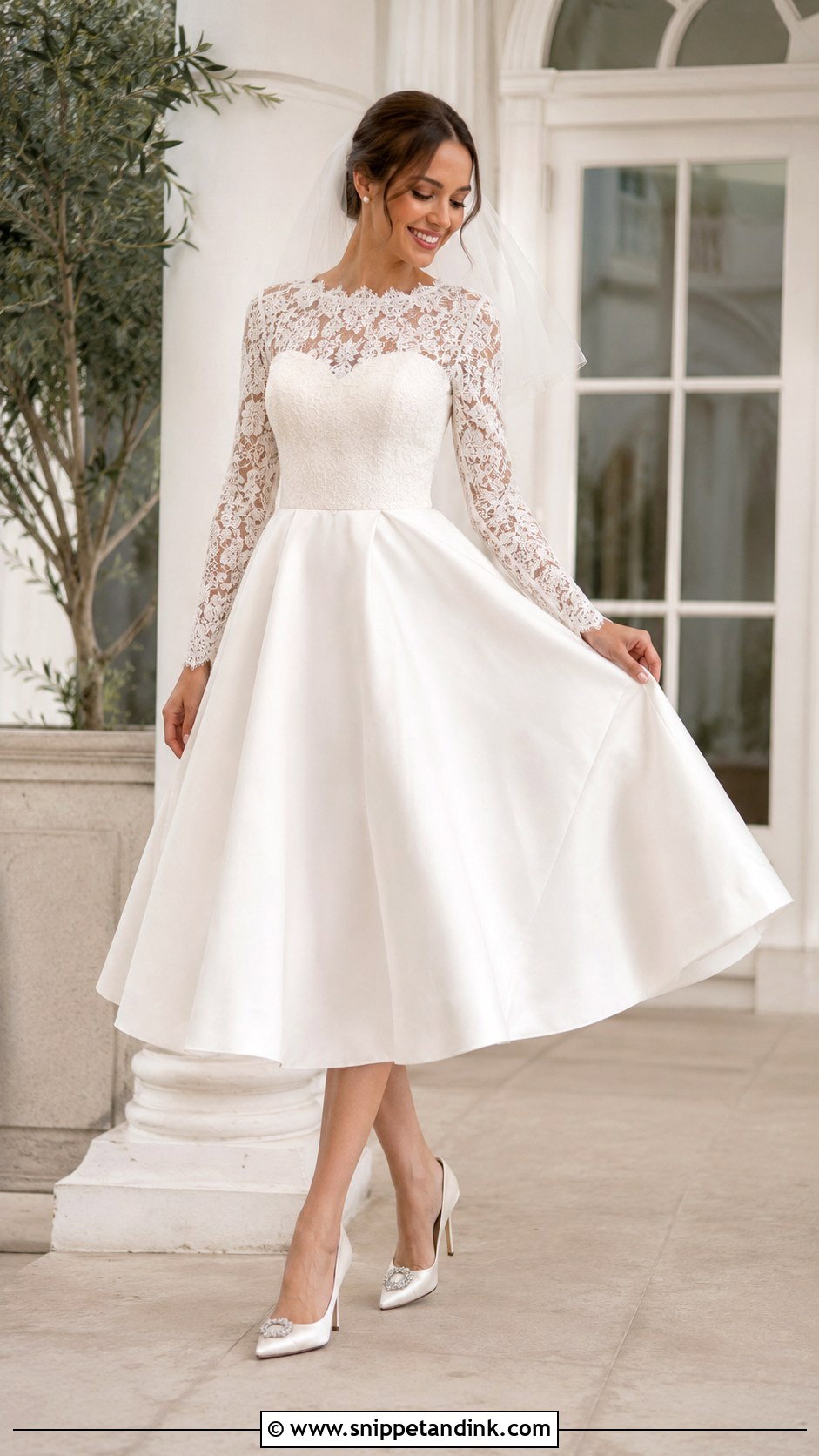
Tea length shows your shoes, so they become part of the outfit. A fitted lace or satin bodice, a skirt ending between knee and ankle, a soft flare. Embellished pumps, pearl studs, a short veil or a structured bow. A light petticoat adds bounce; a heavy one makes it hard to sit. Mark the hem in your exact wedding shoes. I’d suggest it for a courthouse or daytime wedding, or as a reception change after a long gown.
19. Detachable Long Sleeve Bridal Dress
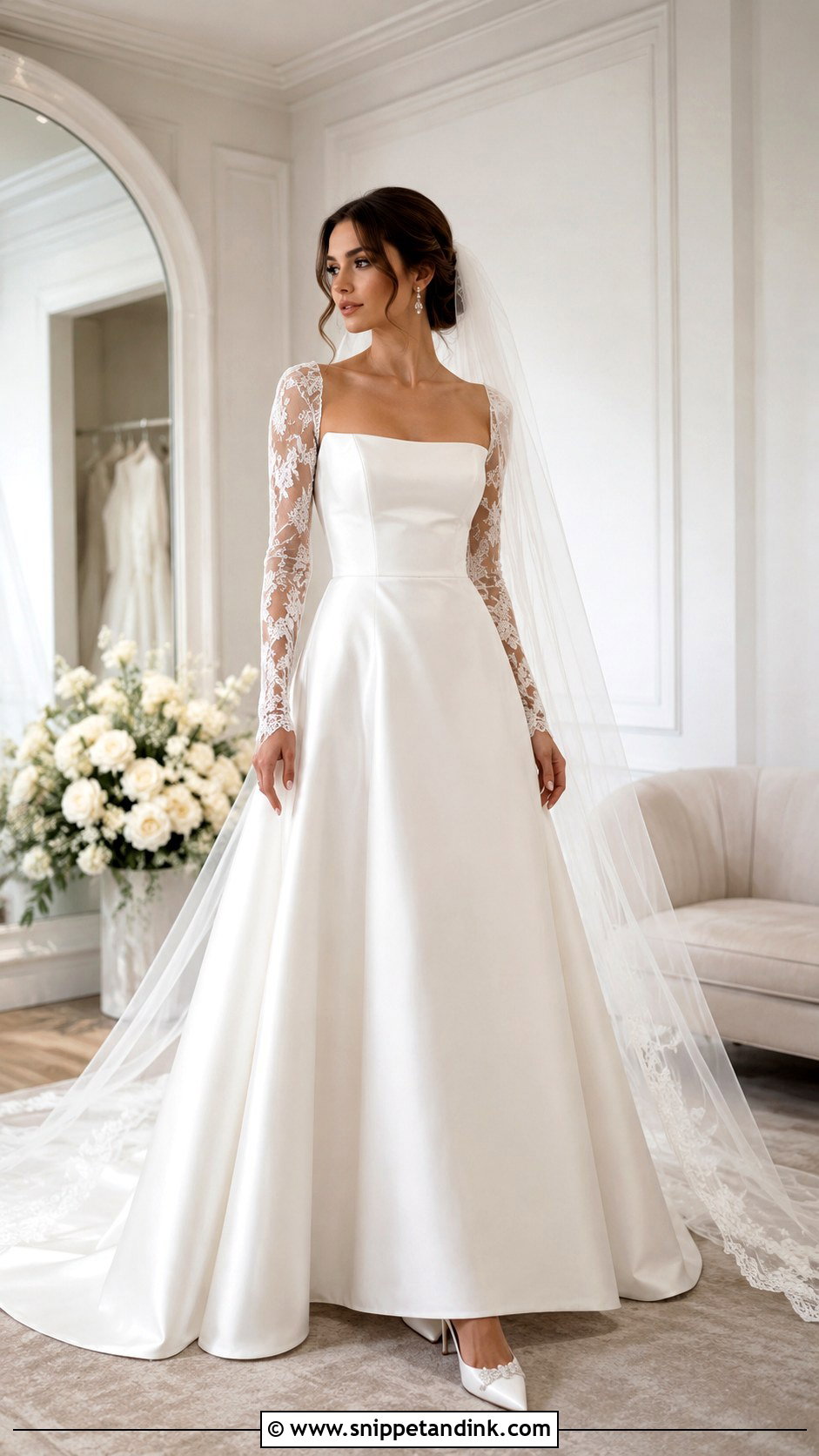
Detachable sleeves turn one satin gown into two looks. The base is strapless or sleeveless; lace, tulle or matching sleeves attach for the ceremony and come off for the reception, when a statement clip or shorter earrings refresh things. The attachment should look smooth and stay put as you move. Teach a bridesmaid how the fastenings work ahead of time. At alterations, check for slipping, bunching or loops showing at the join.
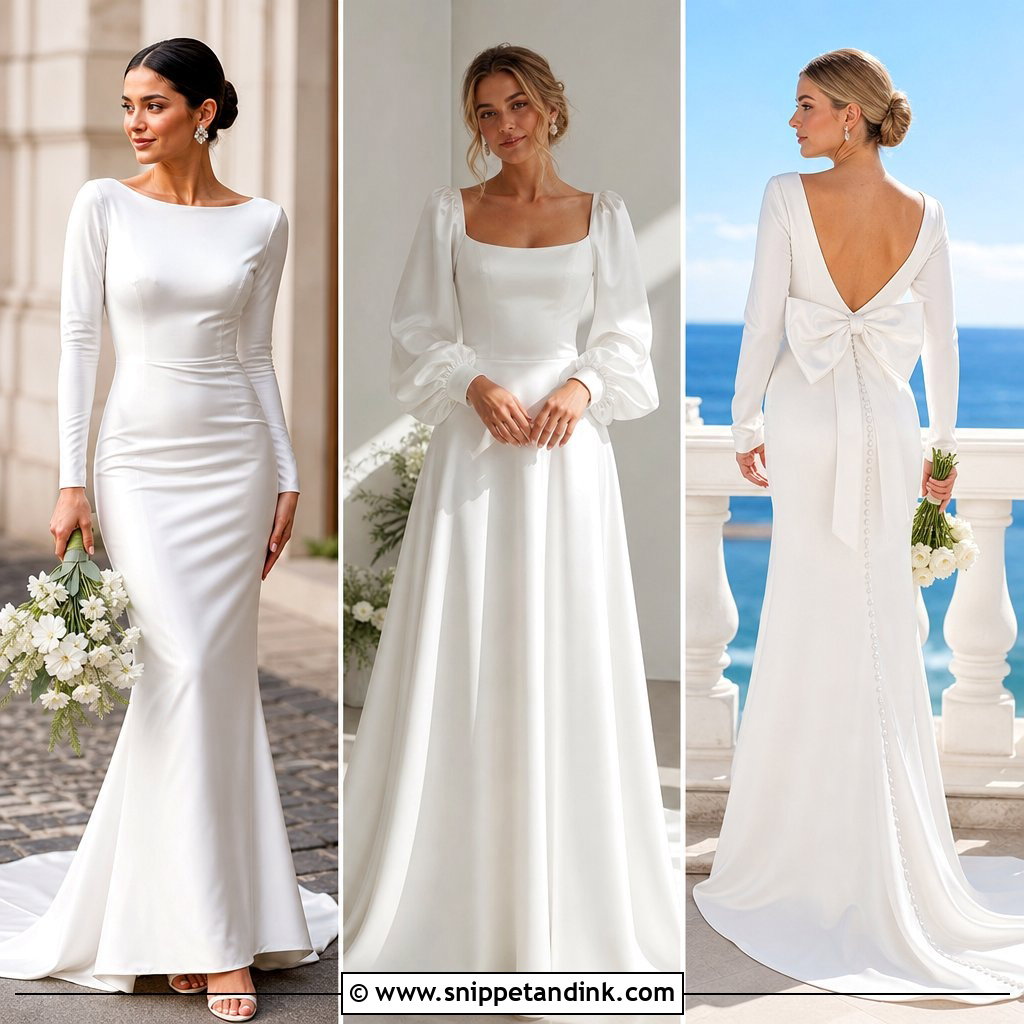


20. Plus Size Long Sleeve Bridal Dress
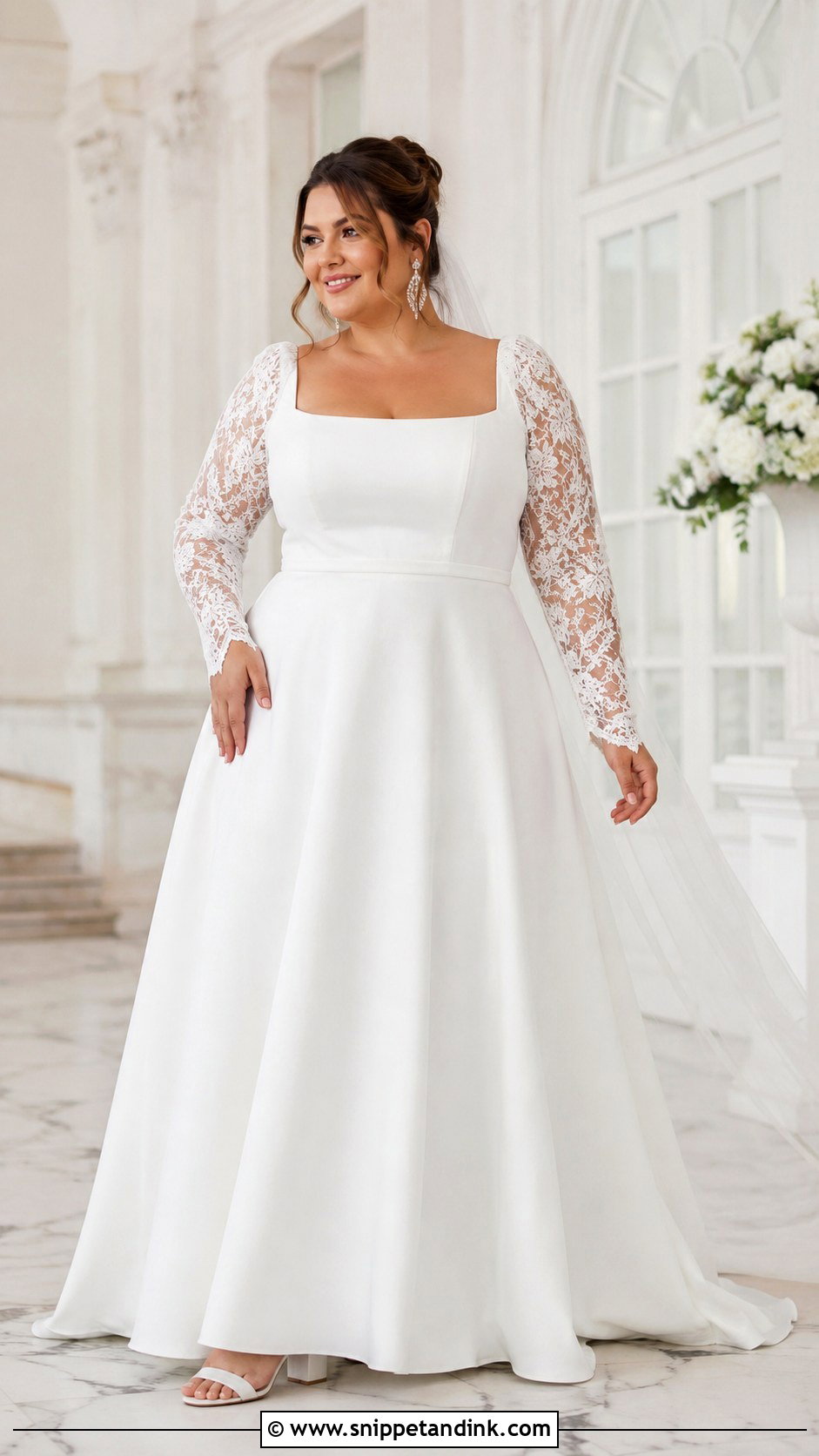
A good plus-size long-sleeve gown is built for support first. An A-line with a structured bodice, a defined waist, and sleeves in stretch lace or lined illusion mesh so the upper arm has room. V, square or bateau necklines all work; pick the one you like. Ask the boutique whether the sample you’re trying is close to your ordered size, and whether details like lace placement are scaled for it. Sleeves are the place I check most closely, since they’re where off-the-rack sizing most often pinches.
What Each Sleeve Shape Does to Your Shoulders and Arms
Sleeves shift proportion. The same bride can look broader, narrower, taller or softer depending on where the volume sits, so it helps to know what each shape does before you try a dozen gowns.
Fitted sleeves
Follow the arm closely and keep the outline clean. They suit almost everyone, but they need room at the upper arm and a slight bend at the elbow, or they restrict movement. Stretch lace helps.
Puff and structured shoulders
Add width at the top, which can balance fuller hips or a full skirt. On broad shoulders or a petite frame, I’d keep the puff small.
Bishop and bell sleeves
Move the volume down to the forearm and wrist. They soften the arm and suit flowing gowns, though they hide the line of a slim wrist and need watching at dinner.
Off-the-shoulder sleeves
Widen the neckline and show the collarbones, which flatters most frames. They limit how high you can lift your arms, so they suit a bride who isn’t planning an energetic first dance.
When you shop, try one gown in each sleeve family early on, even ones you think you won’t like. Seeing them side by side in the same mirror tells you more about your proportions than any rule I could give you.
A Sleeve Has to Work for Hugging, Eating and Dancing
Whatever the fabric, a long-sleeve gown has to work for hours of hugging, eating and dancing, not just a minute in a mirror. Try lace against crepe, satin against chiffon; the same sleeve looks very different in each. Wear the right underwear and a similar heel height to every appointment. Move your arms, sit, and notice how the sleeve feels against your skin. Then keep accessories in support of the gown, and let the tailoring do the rest.
You'll Like These Ideas:





Leave a Reply