
Winter is the one season where sleeves earn their place twice: they keep you warm between the car and the ceremony, and they give a dress something to say in flat, early-dark light. The twenty long sleeve gowns below run from lace A-lines and satin ball gowns to Mikado, crepe and a tea-length option, each styled with the shoes, veil, jewelry and outer layer I’d put with it. When I dress a winter bride, I ask about the coldest moment of her day before I look at a single silhouette, because a heated ballroom and a snowy field portrait need very different fabric weights. Keep that moment in mind as you read.
Lining, Fabric Weight and the Coldest Ten Minutes of Your Day
Sleeves feel like warmth, but a sleeve in unlined lace keeps out almost nothing. What keeps a winter bride comfortable is fabric weight and lining. When I pull dresses for a cold wedding, I sort them roughly like this:
- Mikado and heavy satin: the warmest outer fabrics here, dense enough to block wind through a short portrait session.
- Crepe: mid-weight, warm once lined, and it moves with you, so it suits brides who plan to dance for hours.
- Lace over a full lining: warm through the body, while the sleeves are only as warm as whatever sits under the lace.
- Illusion mesh and chiffon: decorative rather than warm. Plan a cape or coat for any time spent outside.
Then think about the temperature swing. Winter venues are often heated hard, and a heavy satin gown with sleeves can feel stifling by the second hour of dancing. If your reception runs warm, a lighter dress with a removable layer such as a cape, a stole or detachable sleeves is more comfortable than the heaviest gown in the shop.
What goes underneath
A fine knit slip or thin thermal layer sits under a full skirt without showing. Under fitted crepe or a mermaid shape it will show as lines, so try it at a fitting, not on the morning. Bring your shoes and any underlayers to every appointment so the hem is set with them on.
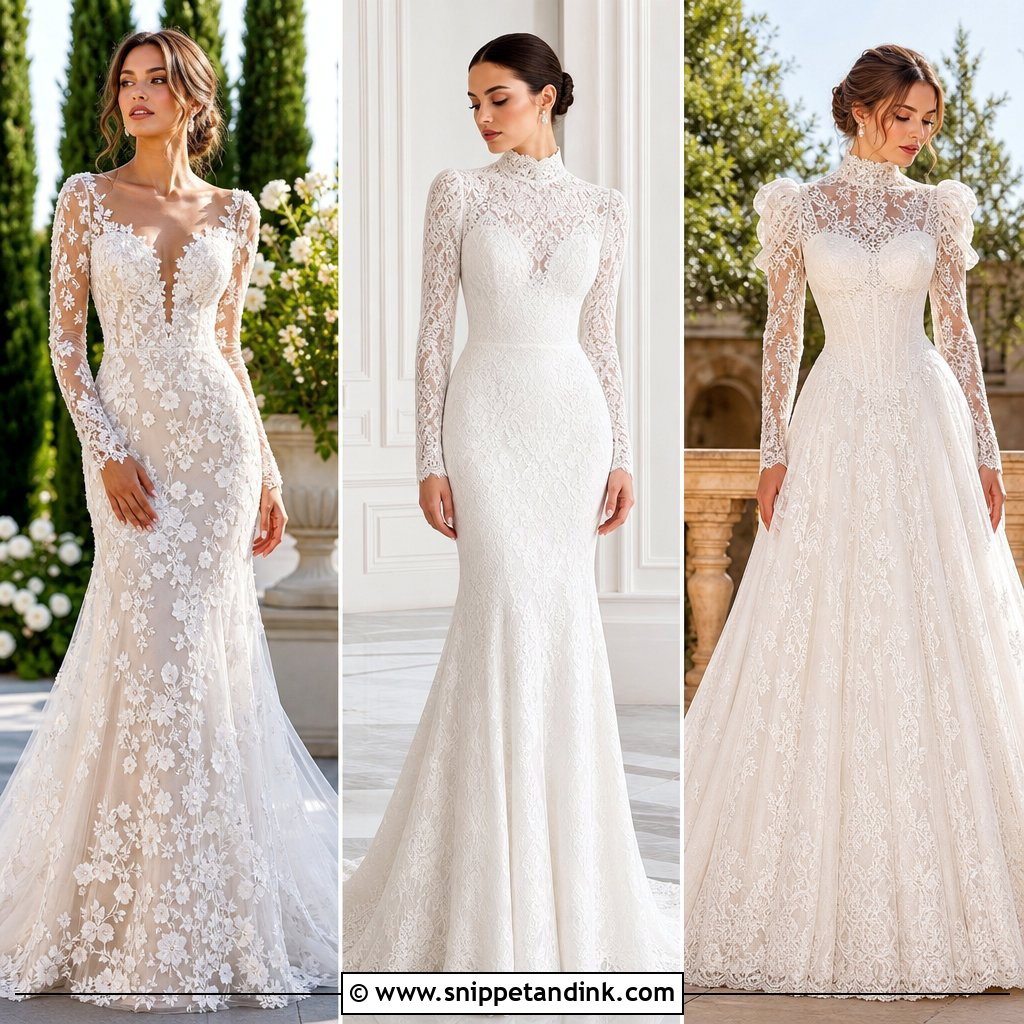
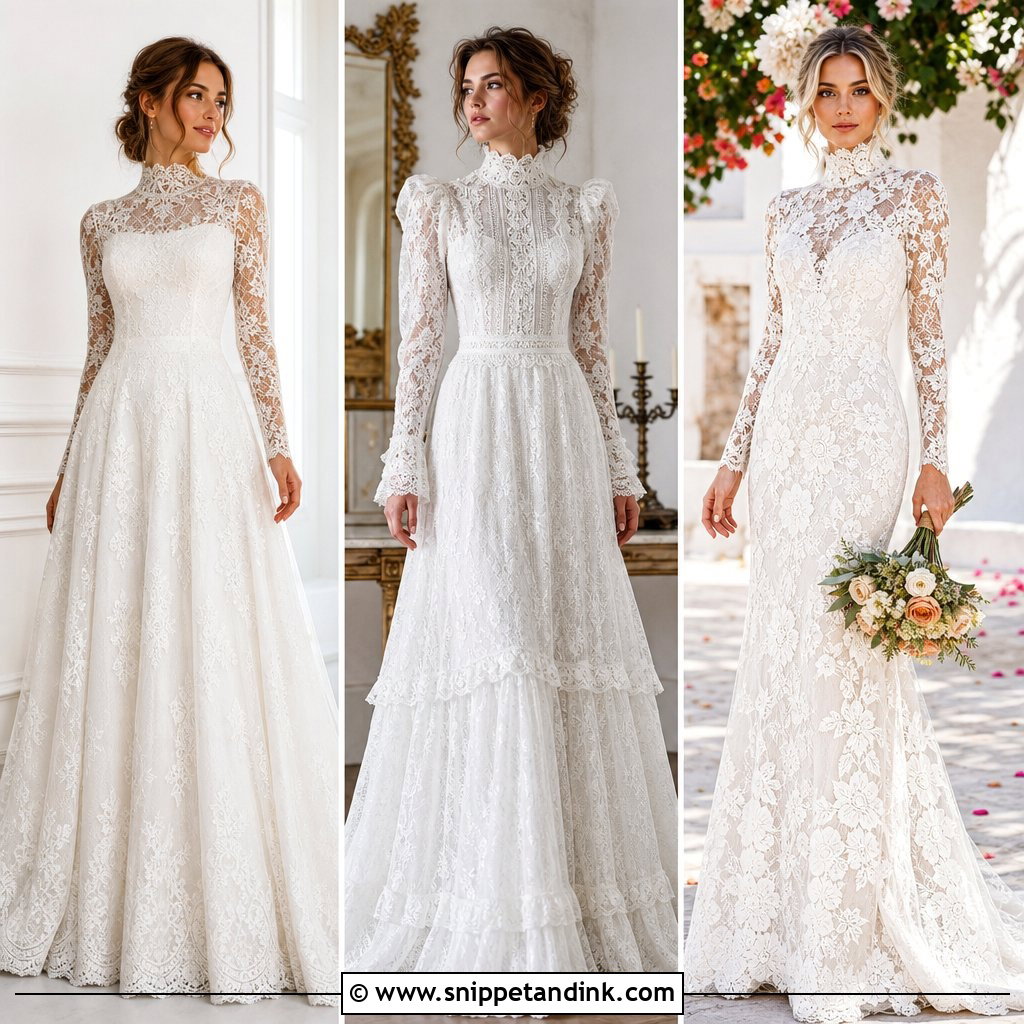
1. Long Sleeve Lace A-Line Winter Wedding Dress
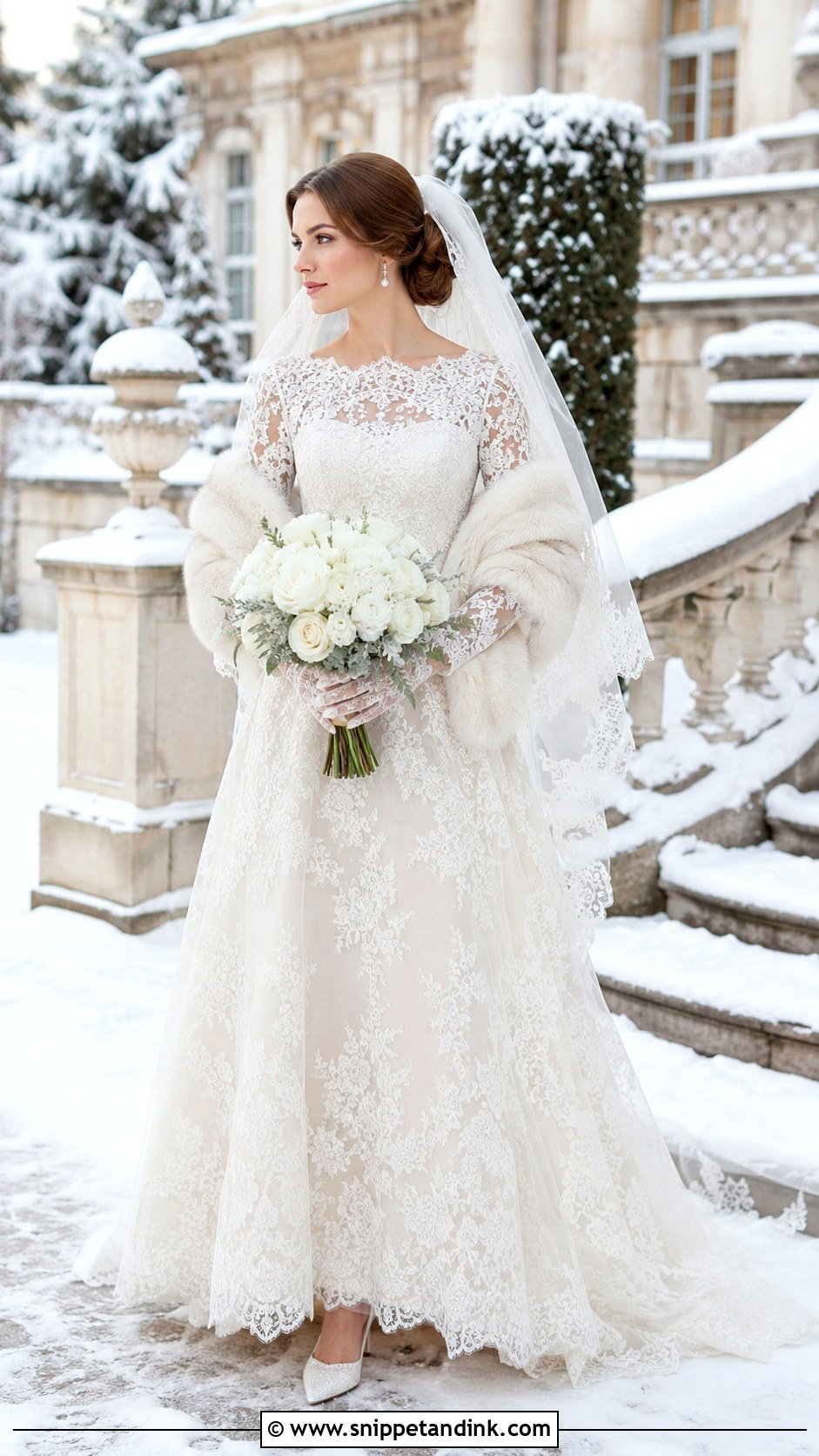
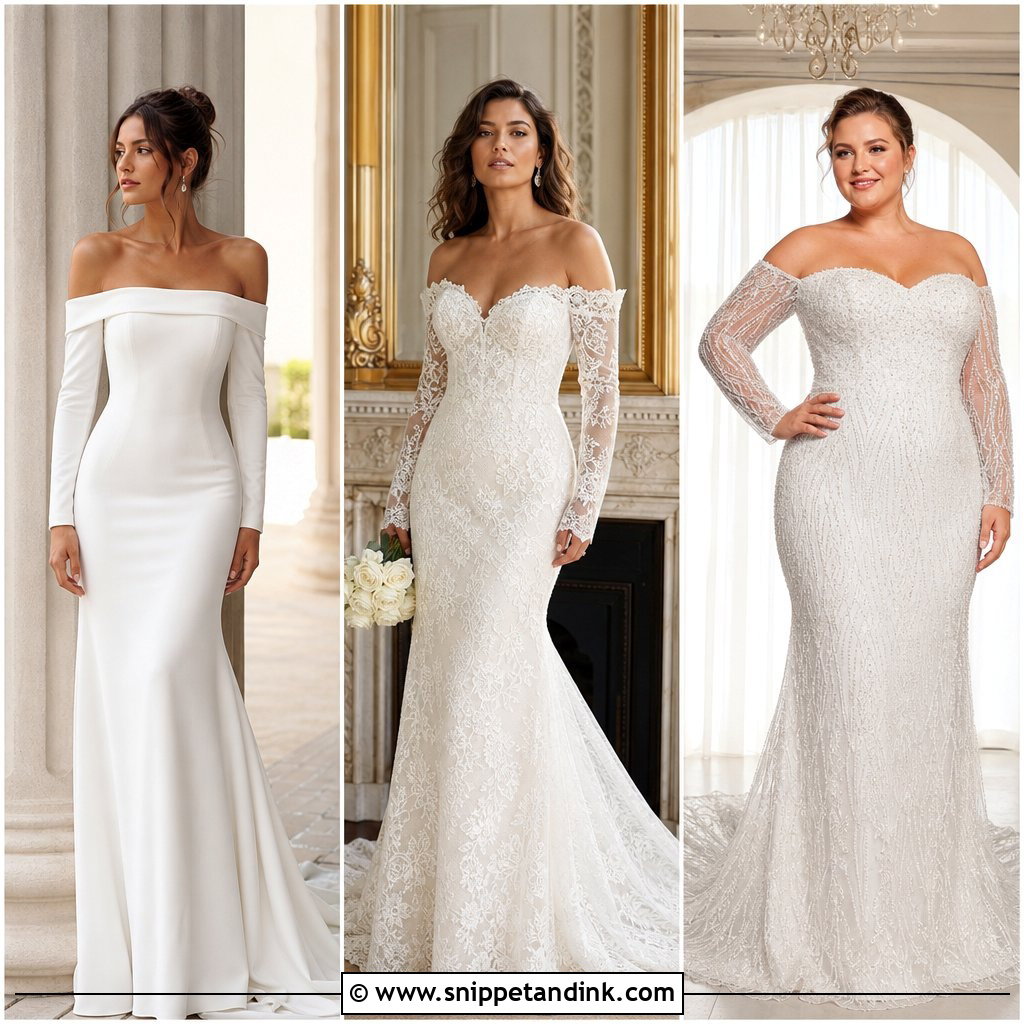
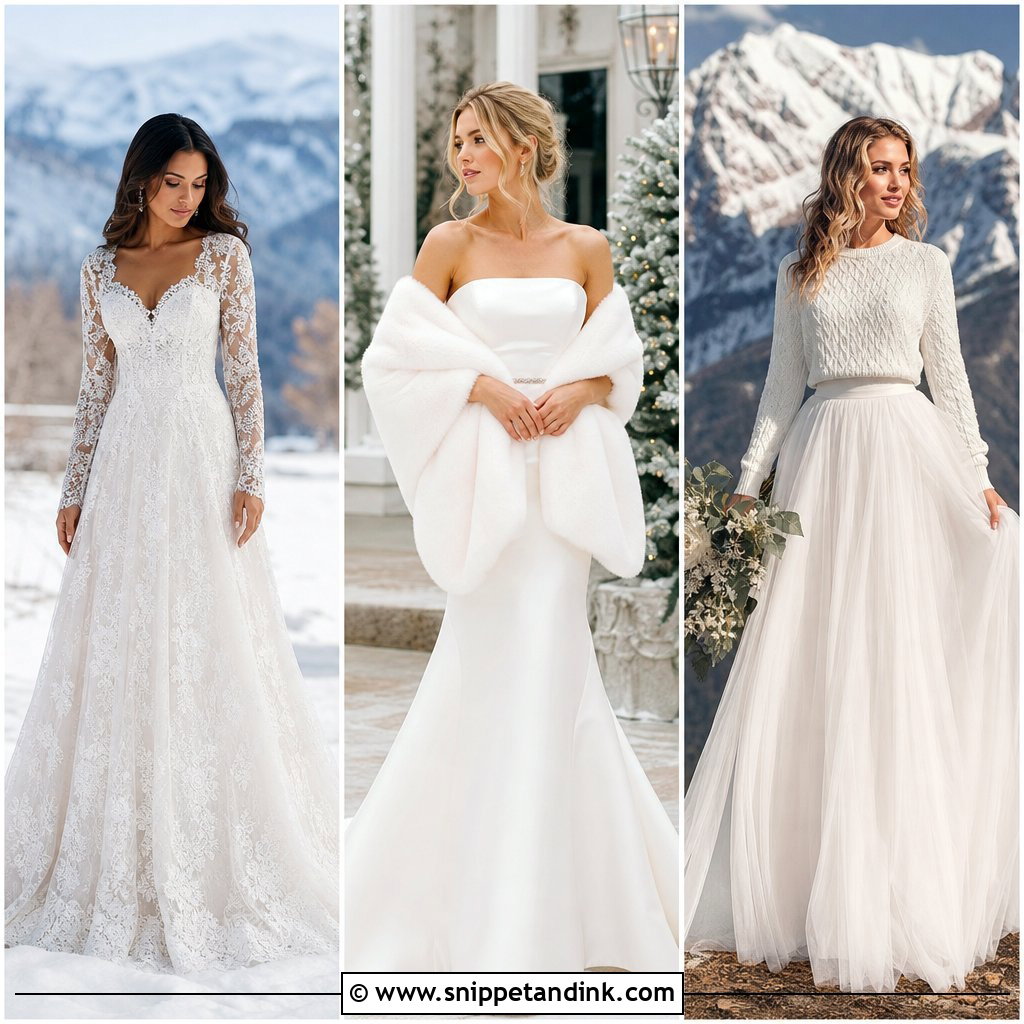
Lace sleeves on an A-line are the most forgiving combination I know for a first winter fitting. The skirt skims the hips, so the real fit work is the bodice and the sleeve. Ask for floral lace over an ivory lining rather than a nude one; in pale winter light the motif reads clearly instead of disappearing into skin tone. Pointed ivory pumps, pearl drops and a fingertip veil with a narrow lace edge finish it, and a low chignon keeps the shoulder seam in view. For outdoor portraits I’d add a smooth faux-fur stole in ivory or light cream, then a structured bouquet of white seasonal flowers so the lace isn’t fighting a busy arrangement. One caution: lace sleeves with no stretch pull at the elbow when you hold that bouquet, so bend your arms at every fitting.
2. Long Sleeve Satin Ball Gown Winter Wedding Dress
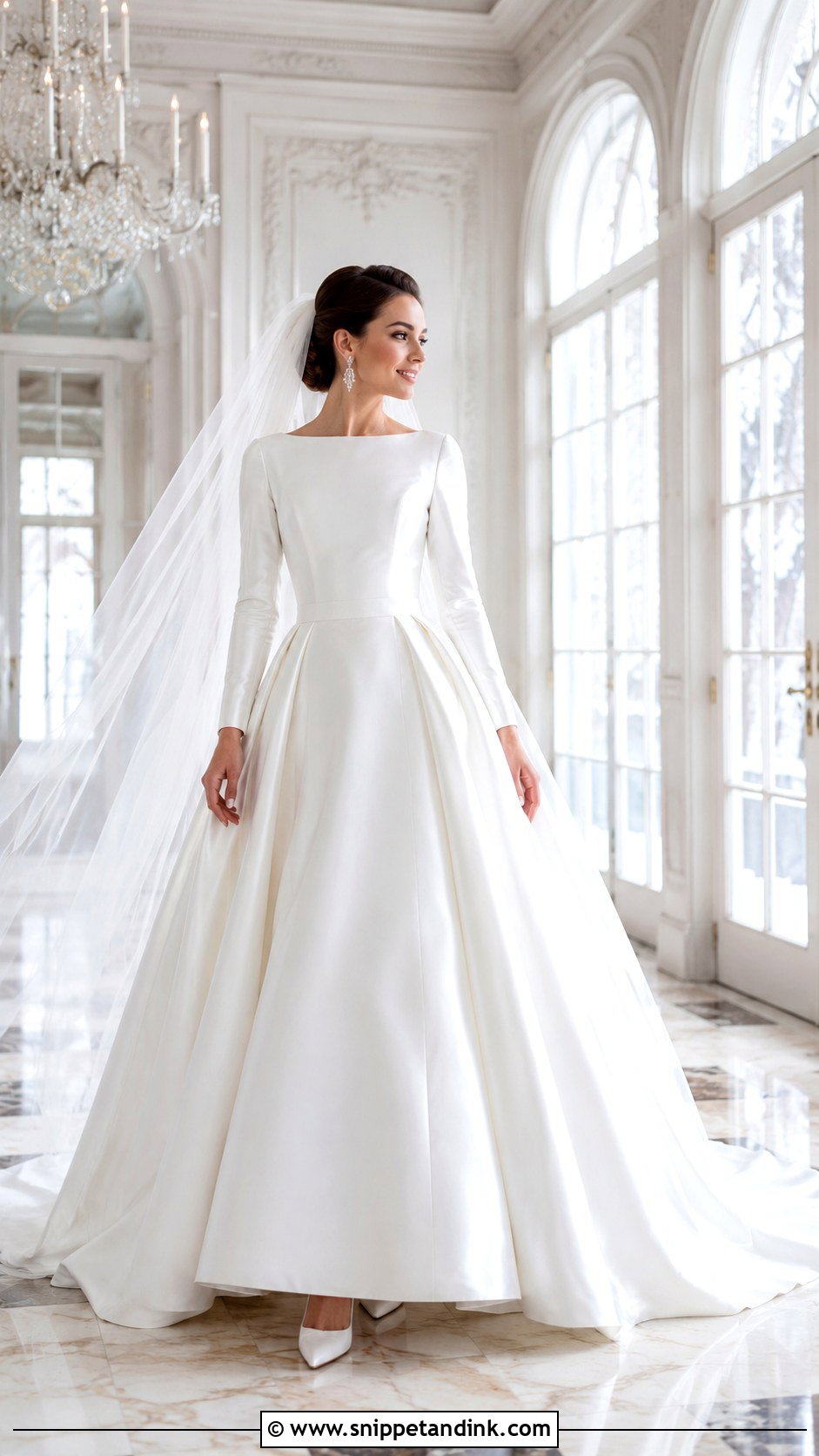
Heavy satin is where a winter gown can be truly formal, and it holds a full skirt without the stack of petticoats tulle needs. The trade-off is creasing. Satin marks wherever you sit, so I tell brides to lift the back of the skirt and sit on the lining in the car. A bateau or soft scoop neckline balances the volume; crystal studs, a sleek bun and a plain cathedral veil keep attention on the sheen. Closed-toe satin pumps finish the hem, and a structured ivory coat ending near the knee covers the trip between locations without crushing the skirt the way a full-length coat can.
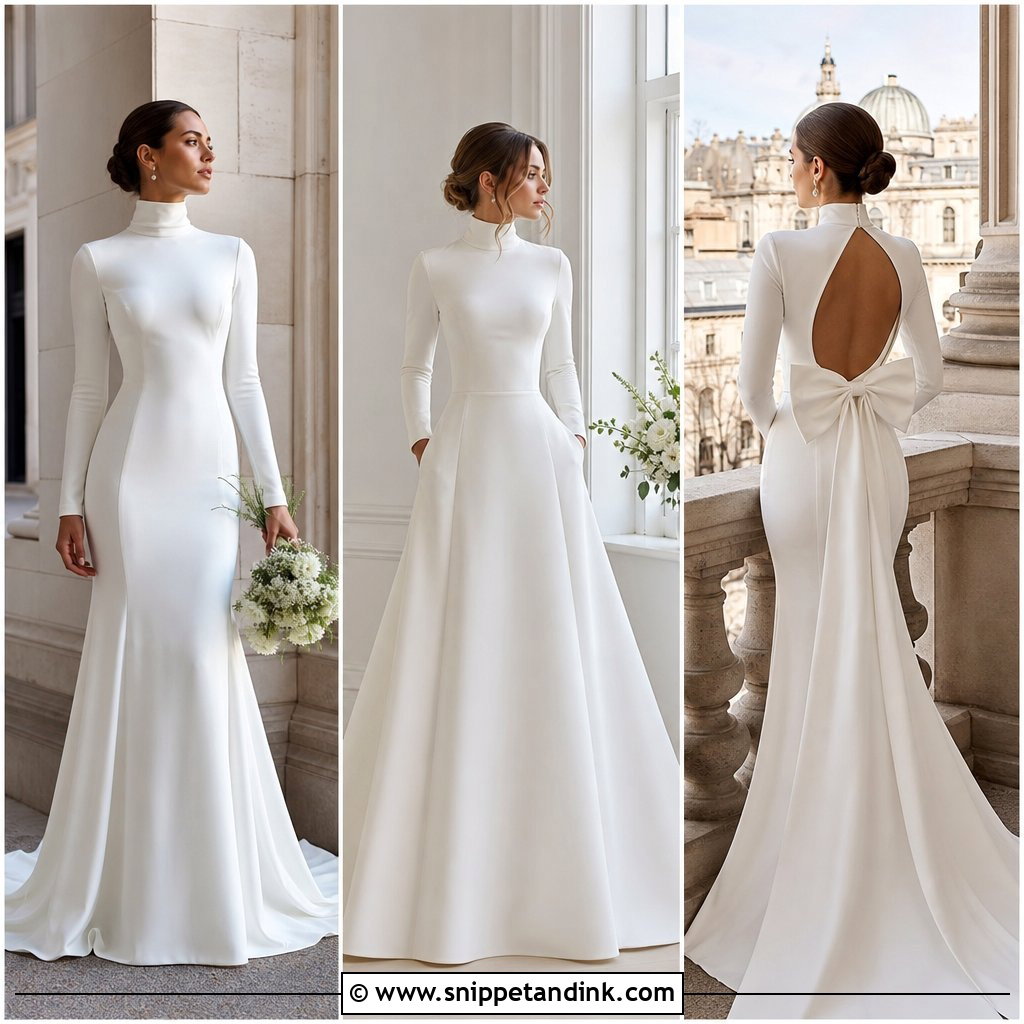
3. High Neck Long Sleeve Winter Wedding Dress
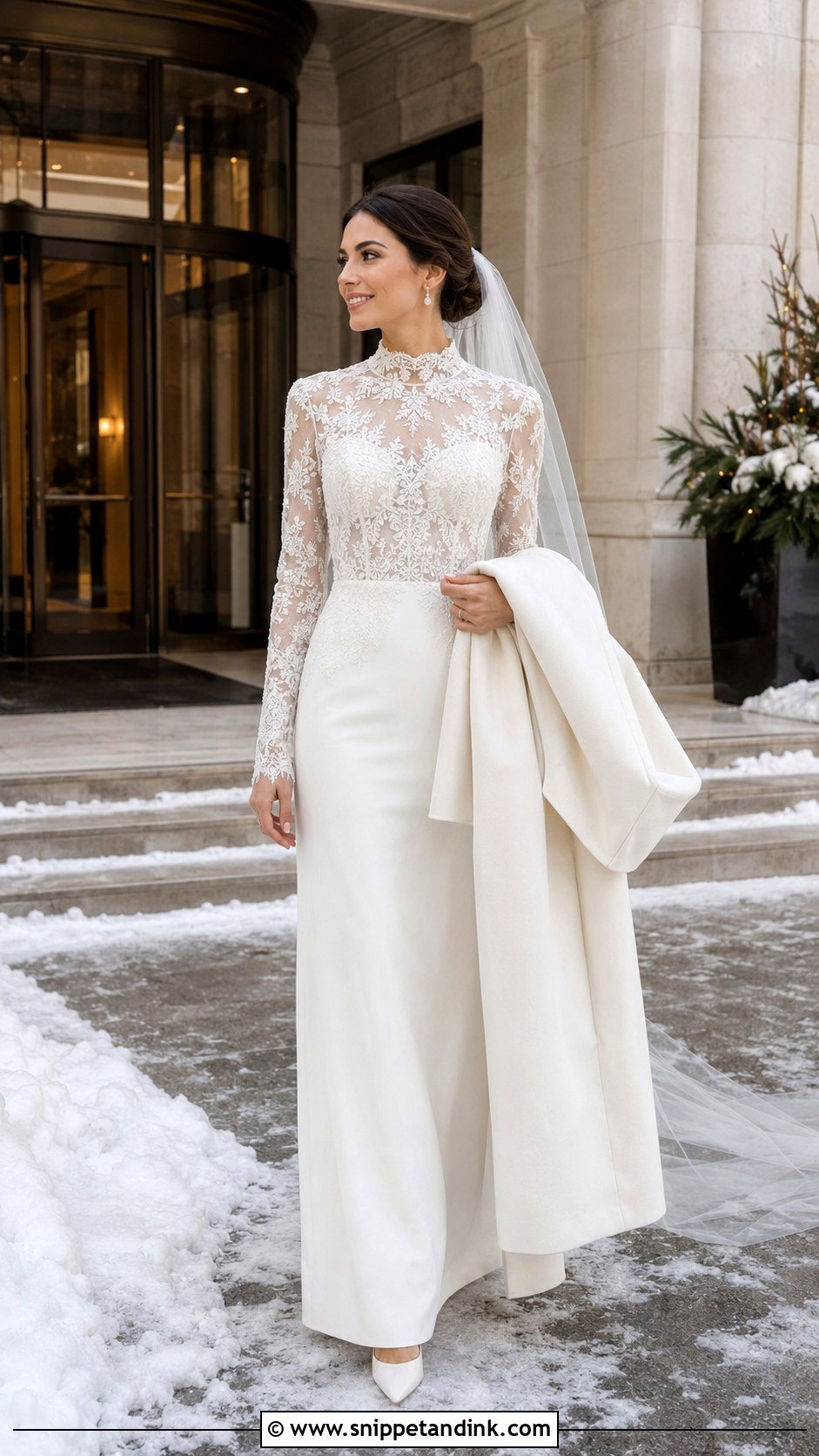
A high neck is the one neckline where I almost always tell brides to skip the necklace. The collar already frames the face, so delicate drop earrings do the job. Look for a fitted long sleeve bodice in lace, crepe or embroidered tulle over an A-line or column skirt, and check the lining at the throat, because an unlined high neck can look grey rather than ivory in photographs. Pointed closed-toe heels and a chapel-length veil tucked beneath a polished updo keep the line clean. The fit point people miss is the collar itself: you should be able to turn your head fully and swallow without it pressing. A long wool-blend coat handles arrivals, and a compact white bouquet keeps the proportions neat.
4. Square Neck Long Sleeve Winter Wedding Dress
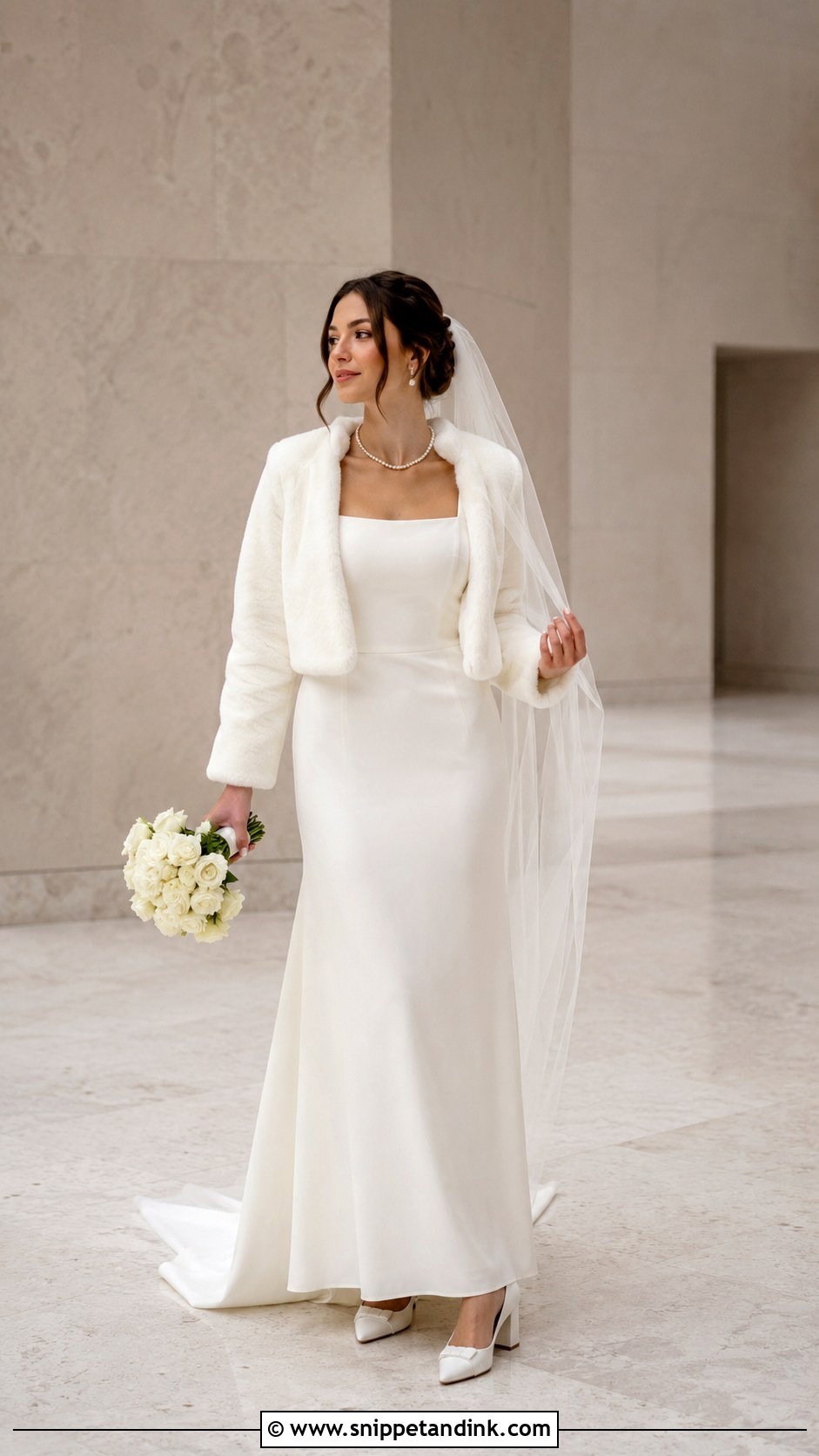
Square necklines sit in a useful middle ground for winter. You show the collarbone, yet you’re far more covered than in a plunge. The straight edge needs a firm fabric to stay flat, so I’d look at substantial crepe or satin rather than soft lace, which tends to bow at the corners. A short pearl necklace and matching earrings mirror that horizontal line, and a center-parted low bun suits it. Block-heel ivory pumps are kinder on stone or tiled venue floors. Keep the veil to fingertip length with a plain cut edge. Outdoors, a cropped faux-fur jacket frames the neckline and stops at the waist, so your shape doesn’t vanish under it.
5. Long Sleeve Crepe Fit And Flare Winter Wedding Dress
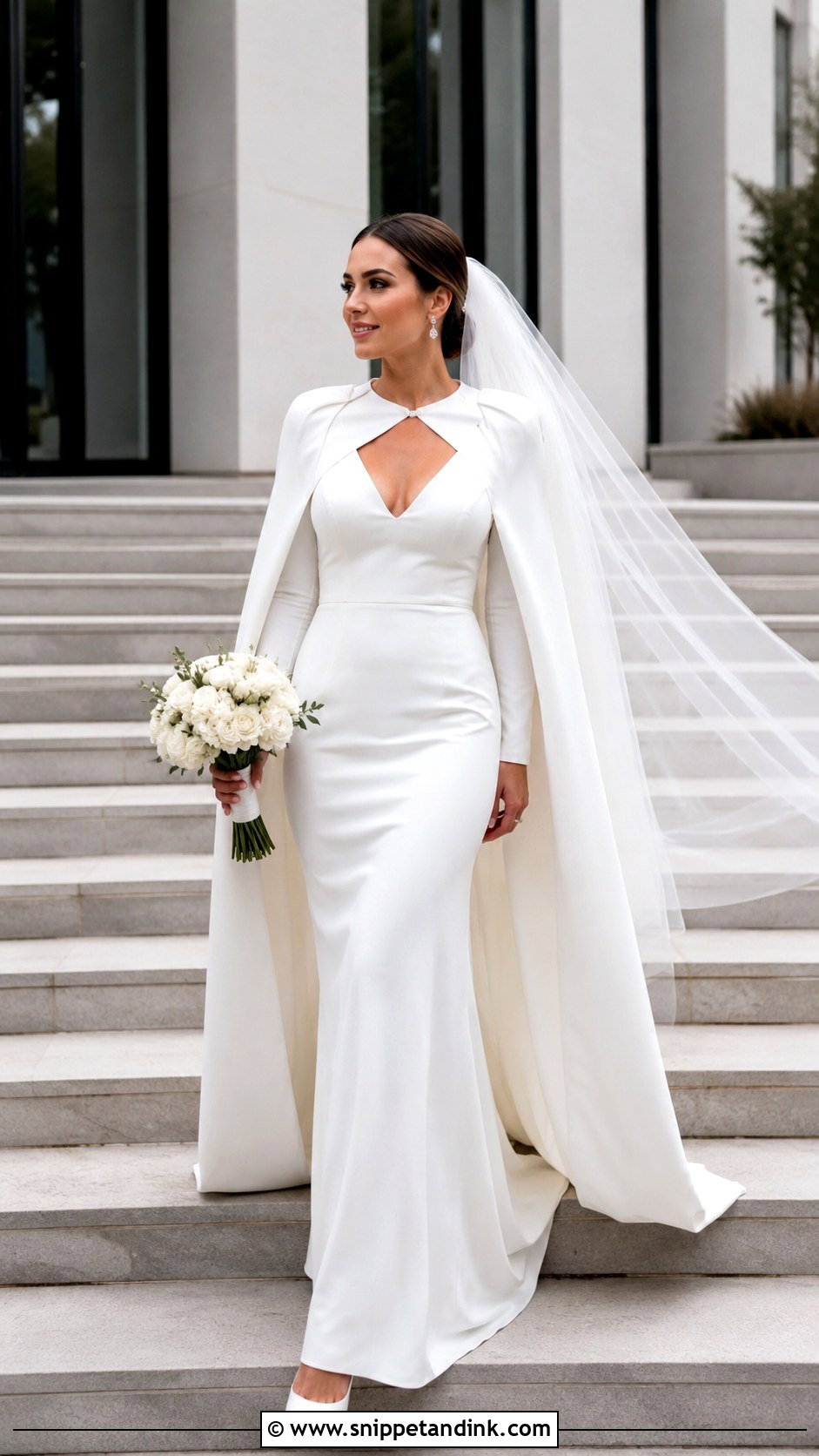
Crepe photographs almost matte, so a fit-and-flare in it relies entirely on the cut, and the fitting appointments matter more than with any embellished dress. Insist on lined crepe with some stretch. I always ask a bride to sit in a chair and climb a step in the shop, because this shape releases at the knee and can grab you on stairs. A V-neck or wide scoop opens up the covered top. Pointed pumps, crystal earrings and a single-layer long veil keep things spare, with soft waves or a textured low bun. Outside, a tailored cape with hidden fastenings goes over it.
6. Long Sleeve Mikado Winter Wedding Dress
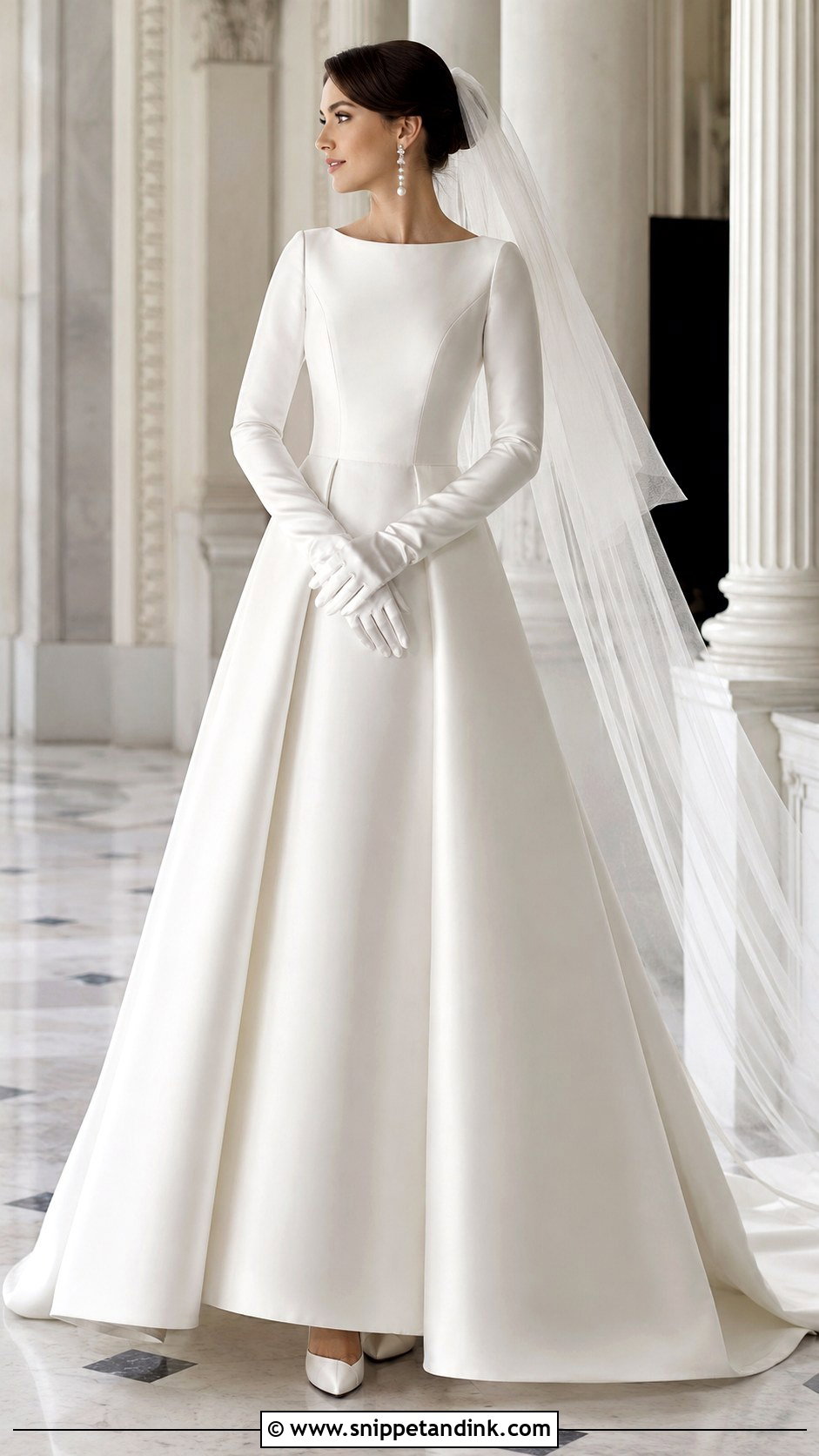
Mikado is the fabric I reach for when a winter bride wants structure without beading. It’s a heavy woven silk or blend with a slight sheen and a crisp hand, so box pleats stay sharp all day, and there’s room under the volume for a warm slip if the ceremony is outdoors. Pair it with closed-toe pumps, pearl-and-crystal earrings and a smooth cathedral veil; a classic bun or sleek ponytail matches the clean construction. Short satin gloves help in outdoor photographs and come off for the ring exchange. White roses or another firm-petalled flower suit the silhouette. Mikado also shows every bad press, so ask the salon to steam it close to the day rather than a week before.
7. Long Sleeve Beaded Winter Wedding Dress
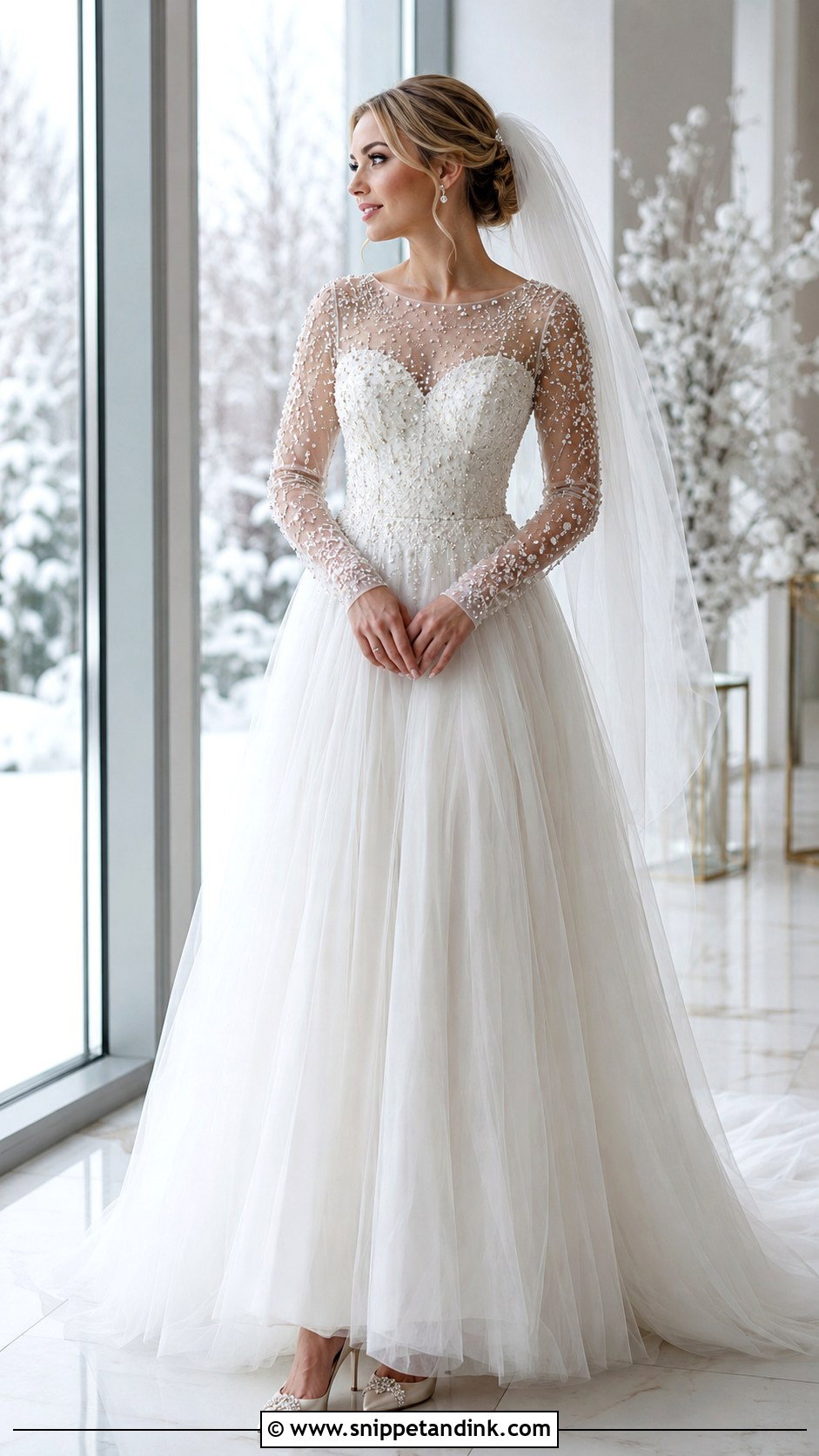
Beading is heavy, and on long sleeves that weight hangs from the shoulder seam all day. I’d look for embellishment concentrated on the bodice and upper sleeve with a lighter tulle or chiffon skirt below, and I’d ask the seamstress to check that the sleeves aren’t dragging the shoulder line forward. The sparkle catches candlelight and low winter sun, so keep everything else plain: crystal studs, metallic ivory pumps and a veil with no edging. A soft updo shows the beads at the neckline. Before you settle on a cape for an outdoor ceremony, feel its lining; a rough lining rubs against beadwork and loosens stones over a long day.
8. Long Sleeve Off The Shoulder Winter Wedding Dress
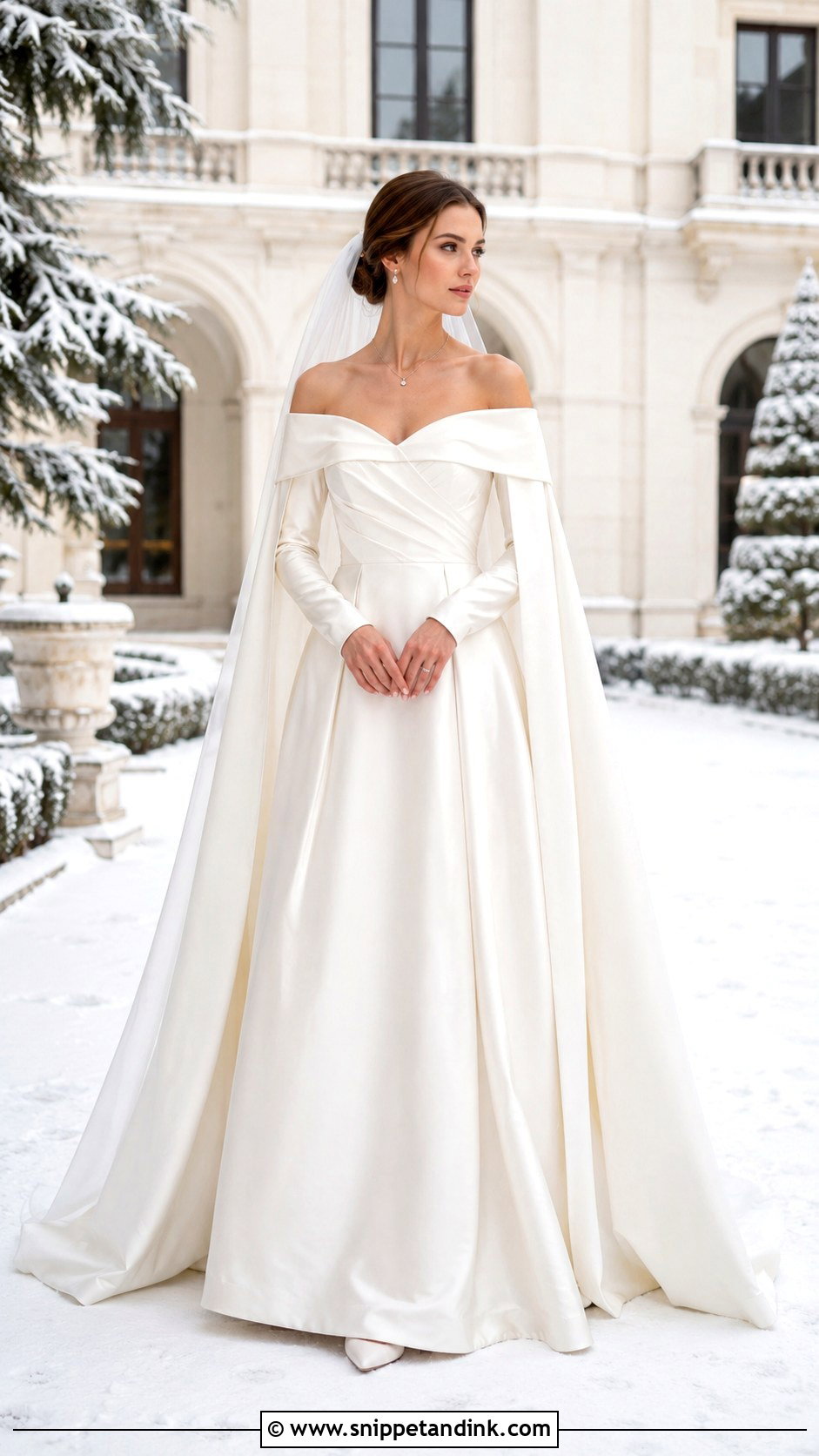
Off-the-shoulder sleeves are the riskiest style here for a long day, and I say that as someone who likes them. The sleeve sits below the shoulder joint, so every time you lift your arms it pulls against the bodice. A good one has a firm band and boning to anchor it. Choose satin or crepe with a draped bodice and A-line skirt, then a short necklace, delicate earrings and a low bun with a few face-framing pieces. Closed-toe pumps and a long plain veil complete it, and a full-length cape that fastens without pressing on the neckline handles the cold. Practice sitting, hugging and raising your arms before you commit. If the sleeves creep up by the third hug, move on.
9. Long Sleeve V-Neck Winter Wedding Dress
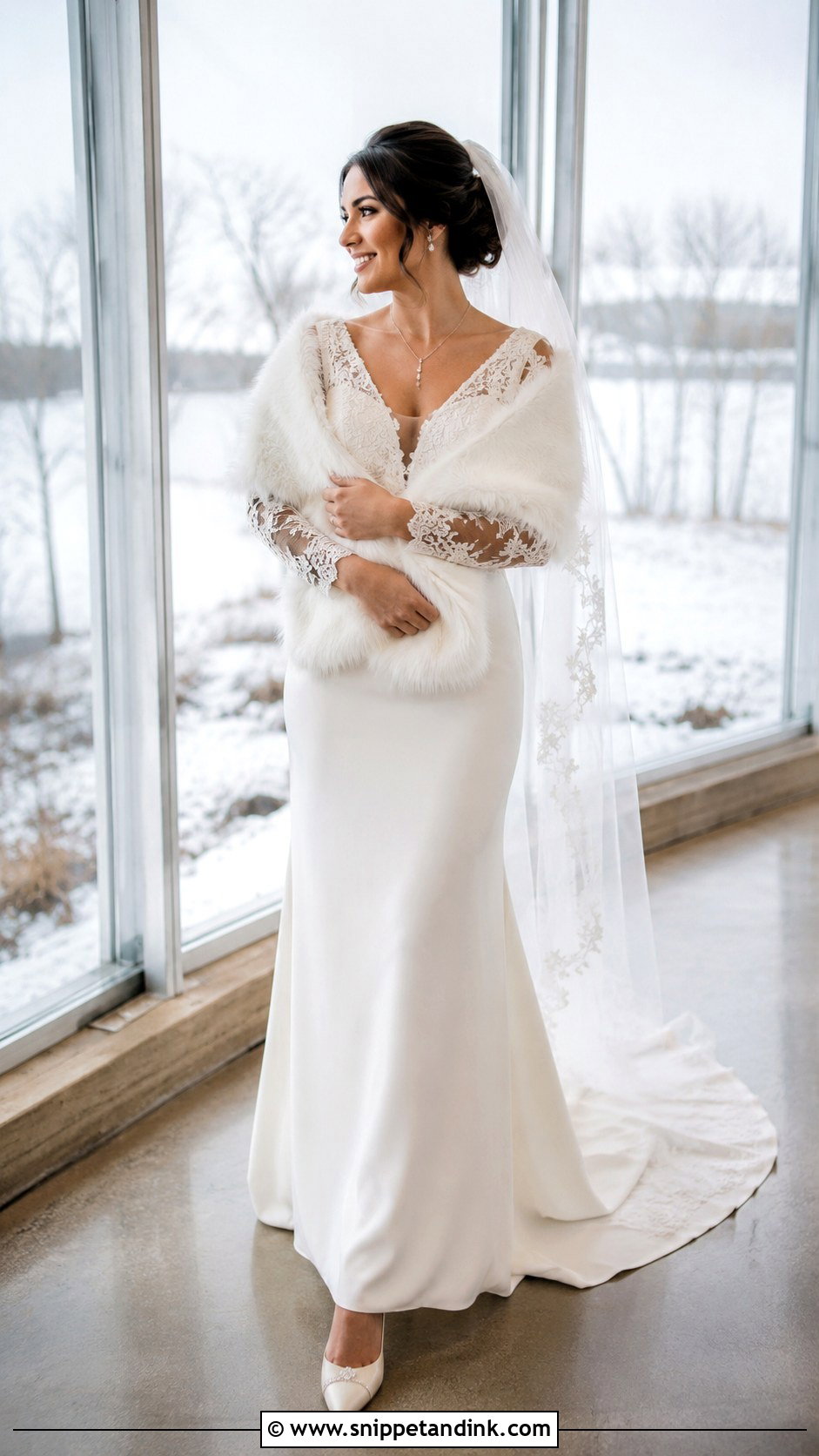
A V-neck stops long sleeves from looking buttoned-up and draws the eye down the torso. In winter I’d stay with a moderate V rather than an extremely deep plunge, partly for warmth and partly because a deep V tends to gape once the fabric relaxes in a heated room. Lace sleeves over a crepe or chiffon skirt give contrast. A pendant that lands well above the point of the V, small earrings, pointed ivory heels and a chapel veil work together, and a loose low bun keeps it from feeling stiff. Add a faux-fur wrap outdoors. For more cover, ask for an illusion panel matched to your skin tone; it keeps the shape of the V without the exposure.
10. Long Sleeve Illusion Lace Winter Wedding Dress
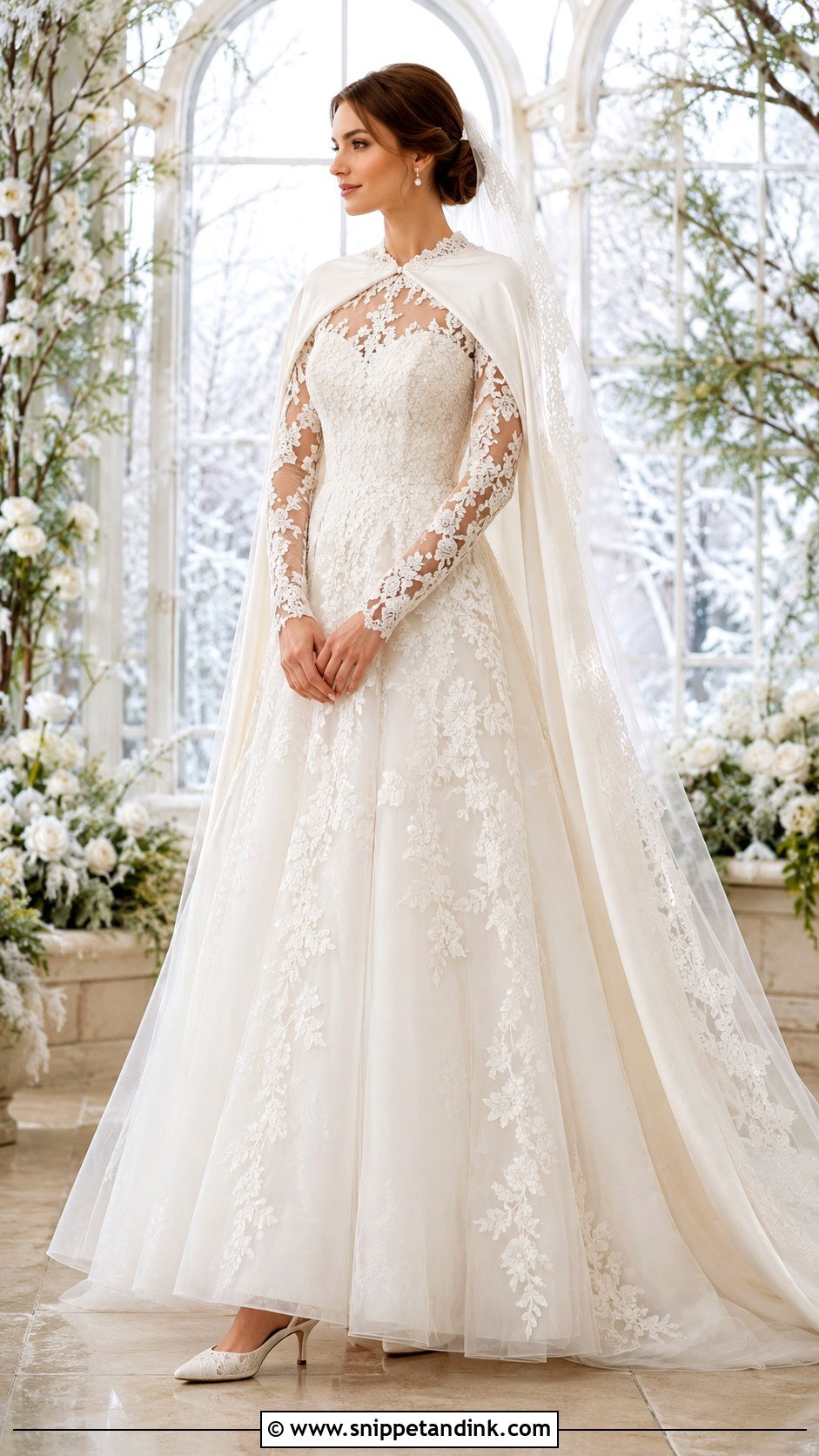
Illusion sleeves are sheer mesh with lace appliqués stitched on top, which is why the lace seems to float on the skin. Very open mesh lets you feel every draught, so for winter I’d look for denser appliqué or a partially lined sleeve. A fitted bodice and flowing A-line skirt keep the balance. Pearl earrings, closed-toe kitten heels and a lace-edged veil that echoes rather than copies the sleeve motif finish it, with a low chignon so the shoulder lace stays visible. A lined ivory cape goes on between locations. Have the seamstress check the wrist openings: mesh cuffs that are too tight leave red marks, and loose ones snag on bracelets and bouquet ribbon.
11. Long Sleeve Mermaid Winter Wedding Dress
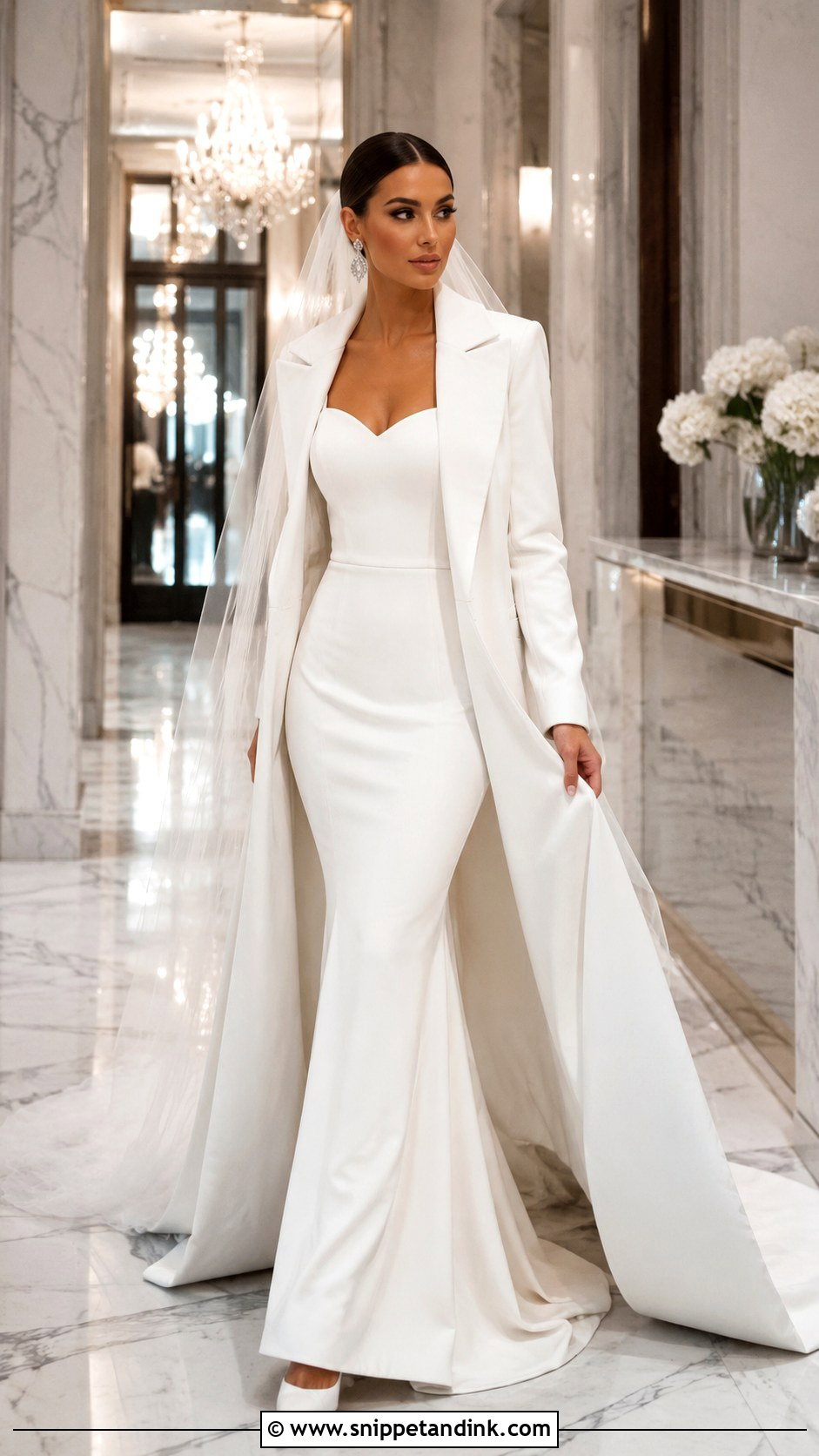
This is the most sculpted shape on the list and the hardest to move in, so I only recommend a long sleeve mermaid once a bride has walked a full room in one. Stretch crepe, satin or lined lace gives some give; the bodice should follow you through the waist and hips before the skirt releases near the knee. That knee placement is everything. Set it too low and you’ll shuffle all night. Sleek pointed pumps, statement earrings and a veil running longer than the train suit the line, with a polished low bun. Skip a bulky necklace if the sleeves are already lace or beaded. A fitted coat or smooth cape works outdoors. Test sitting and stairs during alterations, never for the first time on the morning.
12. Long Sleeve Boho Winter Wedding Dress
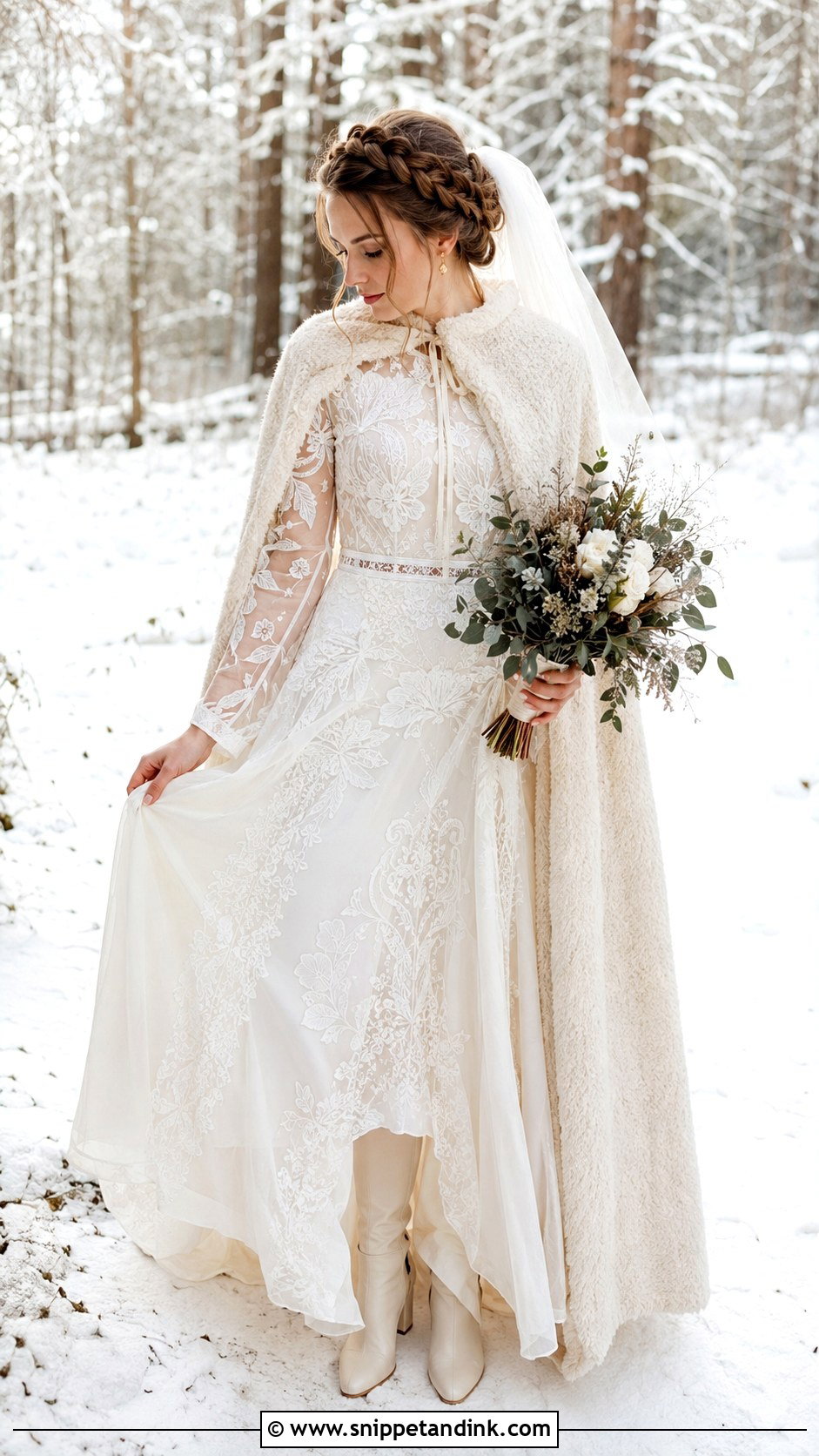
Boho and winter can coexist, but the airy dresses that suit a summer meadow need lining to work in December. Botanical lace with a softly fitted waist and a flowing skirt is the base. Bell cuffs add character as long as they end above the hands, because a cuff that dips over the wrist ends up tangled in the bouquet stems. Ivory ankle boots with a low heel are far safer than sandals on frozen ground. Add small gold earrings and a light veil pinned beneath a loose braided updo, then an ivory wrap or textured cape. A natural bouquet with muted greenery fits the lace, and a fully lined bodice and skirt keeps the coverage consistent in photographs.
13. Long Sleeve Vintage Winter Wedding Dress
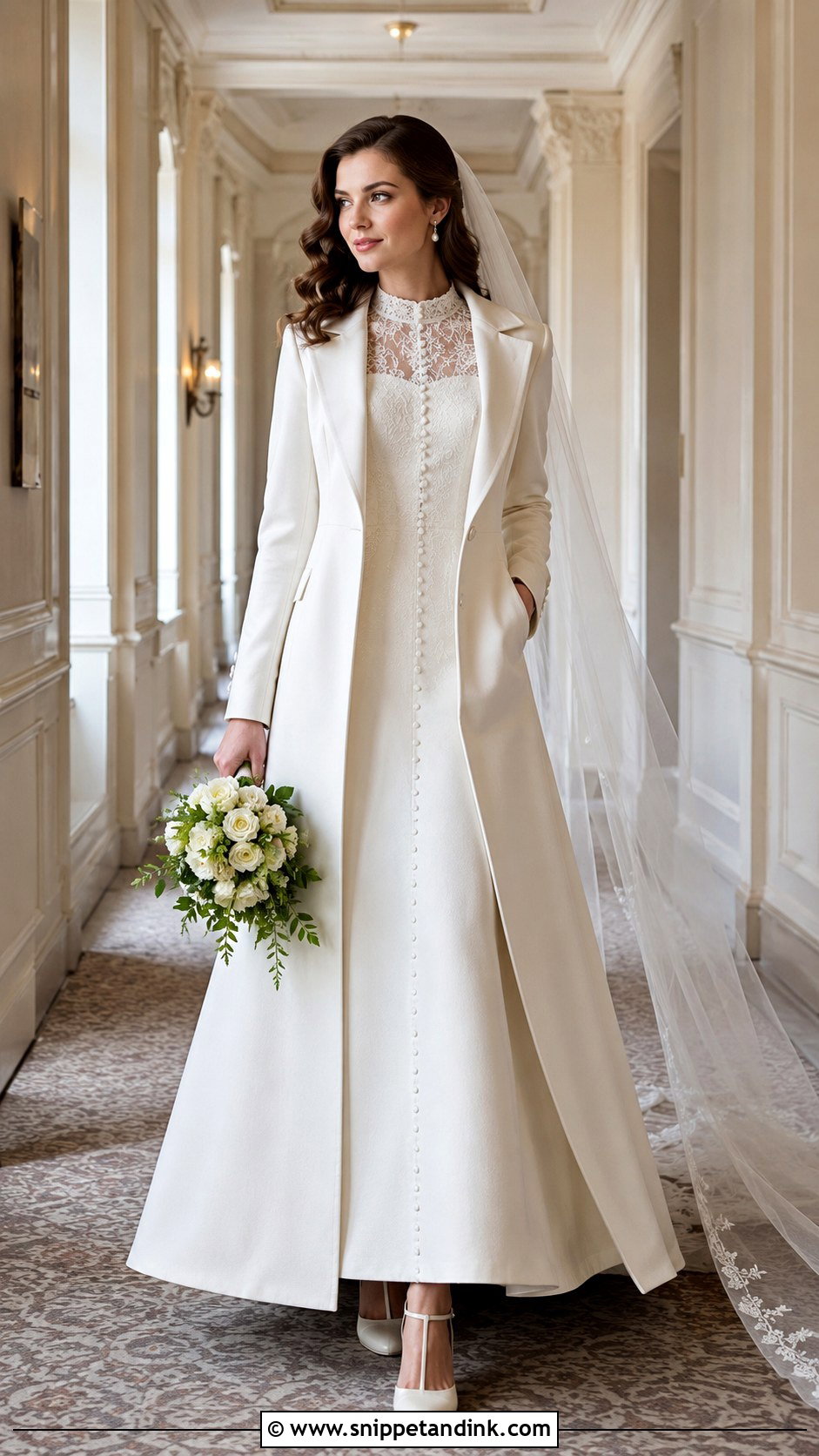
The trap with vintage styling is piling on every period detail until the dress looks like a costume. I usually pick one: lace sleeves, a high neck, or a column of covered buttons down the back. A long sleeve dress with a gently fitted bodice and a fluid A-line skirt carries that single detail well. Pearl button earrings, closed-toe T-strap heels and a softly draped fingertip veil fit the mood, with a neat chignon or brushed waves. The strap on those heels earns its keep in winter, since cold feet slip in a plain pump. A fitted ivory coat with understated buttons handles the weather, and modern tailoring keeps the whole thing fresh rather than borrowed.
14. Long Sleeve Minimalist Winter Wedding Dress
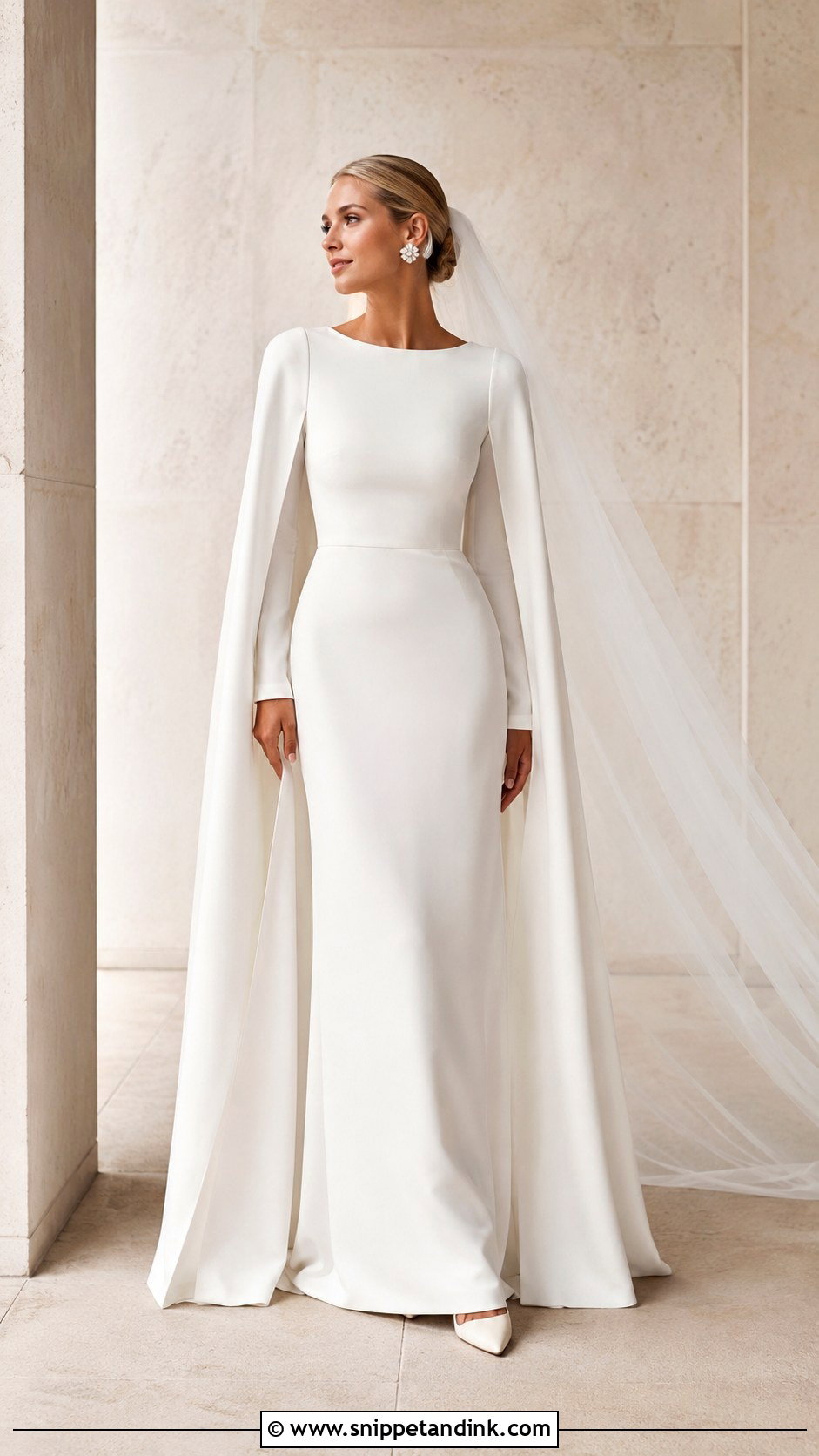
With a plain gown there’s nowhere for a poor alteration to hide, so this is the dress where I’d spend on the seamstress. Matte crepe or smooth satin, a simple neckline, a defined waist and an uninterrupted skirt; square, bateau and soft scoop necklines all suit the cut. Sculptural earrings, pointed ivory pumps and a plain cathedral veil keep it uncluttered, with a sleek bun or polished ponytail. A structured cape or long bridal coat adds warmth without adding lace, and a compact single-colour bouquet finishes it. Check the sleeve hem at the wrist bone and the skirt hem in your actual shoes. A centimetre either way is visible on a dress this clean.
15. Long Sleeve Plus Size Winter Wedding Dress
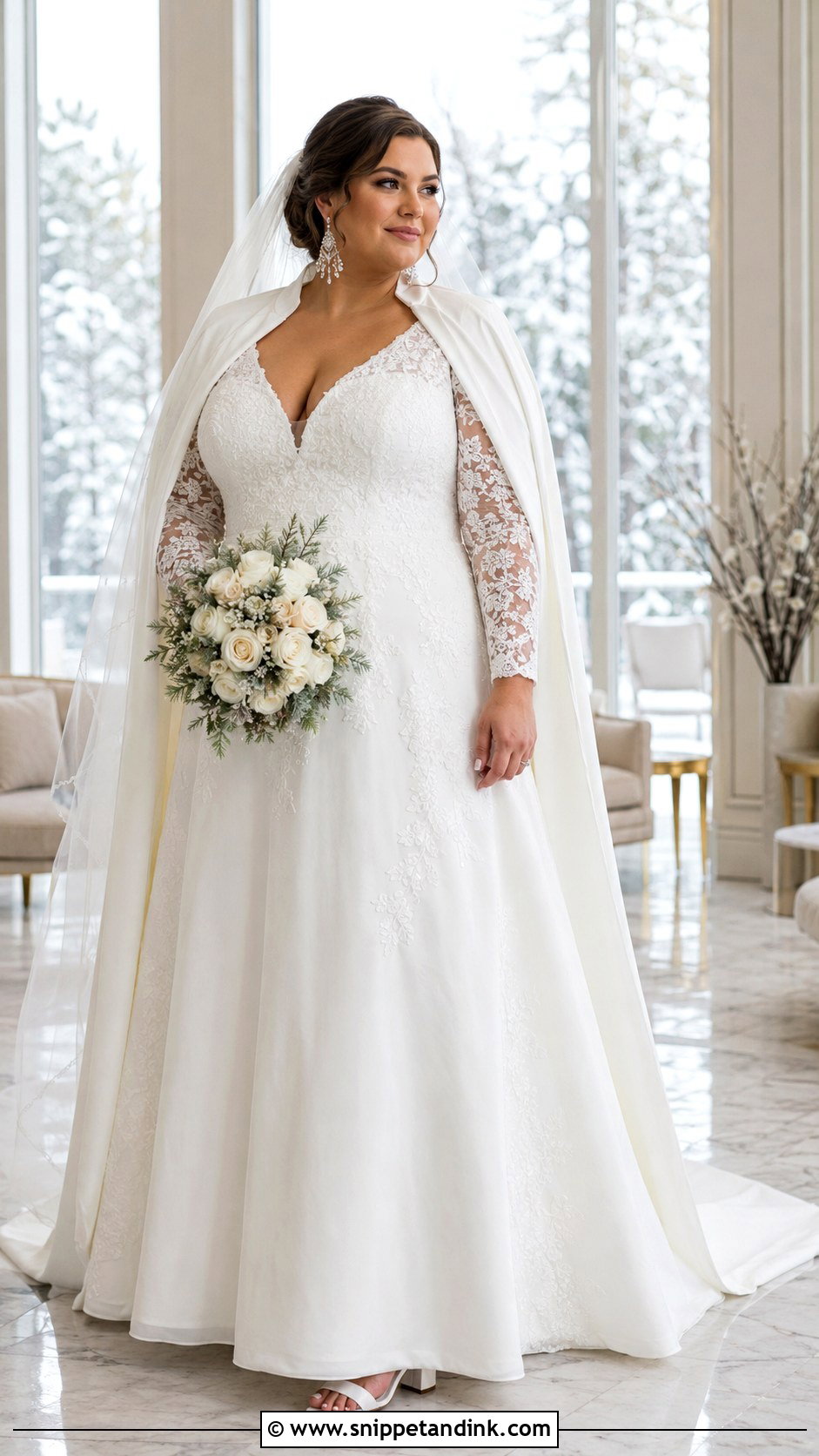
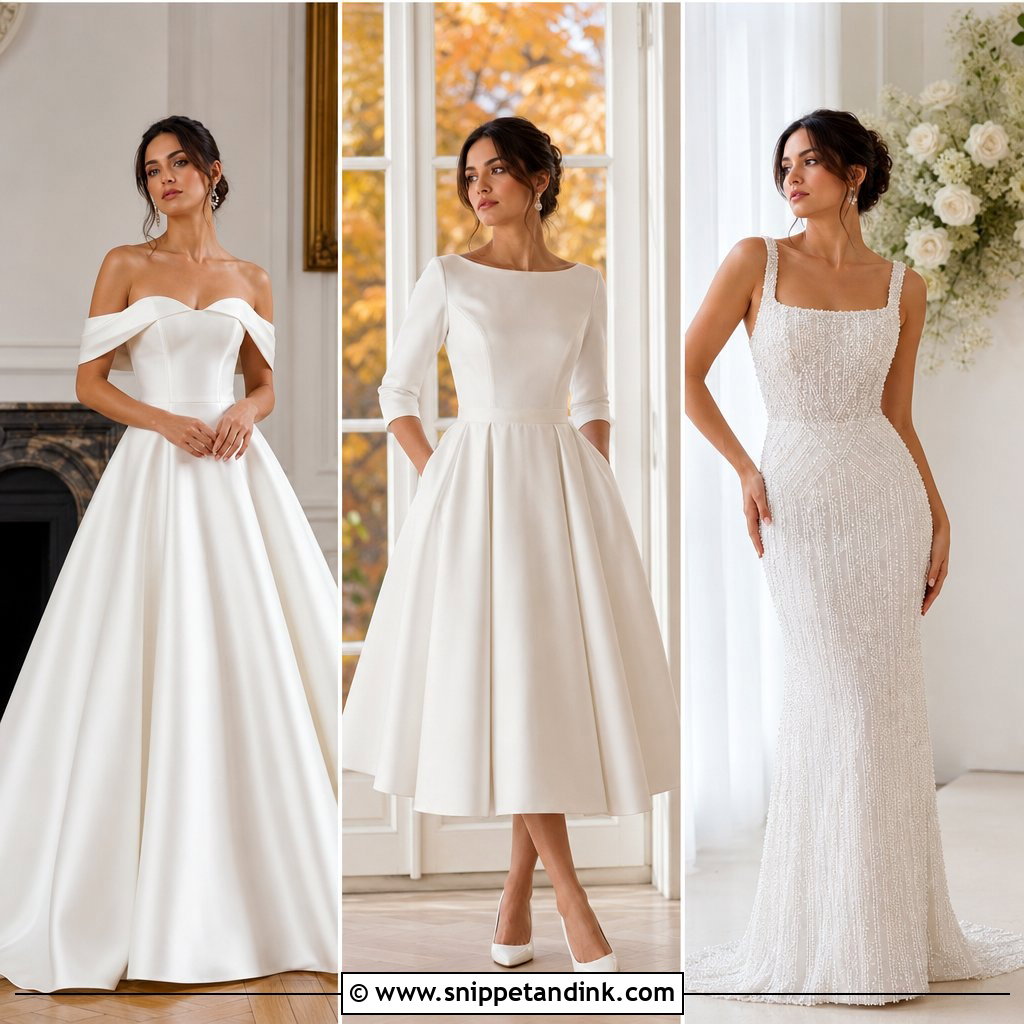
For curvier brides, the sleeve is often where a winter gown fails first. Many are cut narrow through the upper arm, and stretch lace or lined crepe sleeves fix that. An A-line or fit-and-flare with a structured bodice and defined waist gives support, while a square or V-neckline opens the upper body and leaves room for a fine necklace. Stable block heels, statement earrings and a lightweight veil that won’t drag your hairstyle backwards finish it. A tailored cape that closes at the neckline keeps you warm without adding bulk at the waist. I’d ask about built-in boning and cups at fittings rather than relying on shapewear alone, then sit, walk and lift your arms to prove it holds.
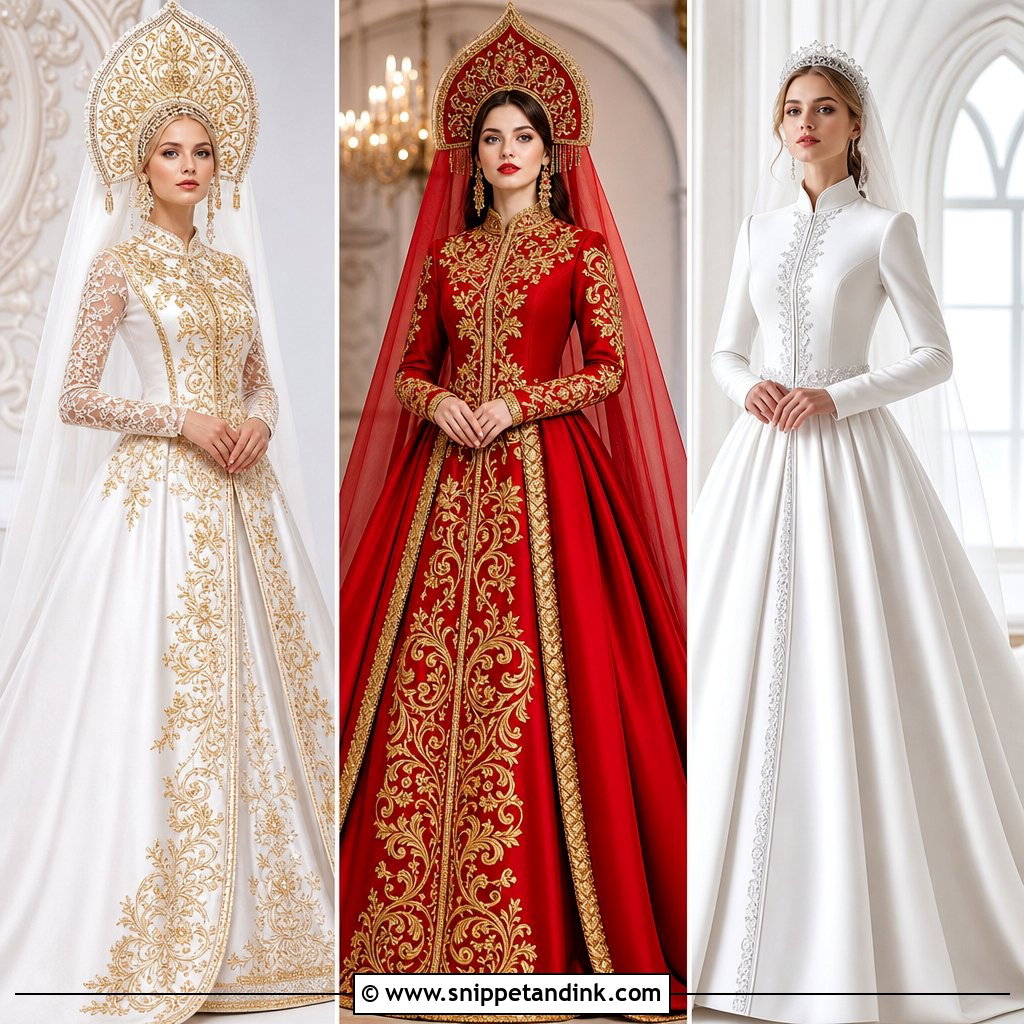
16. Long Sleeve Modest Winter Wedding Dress
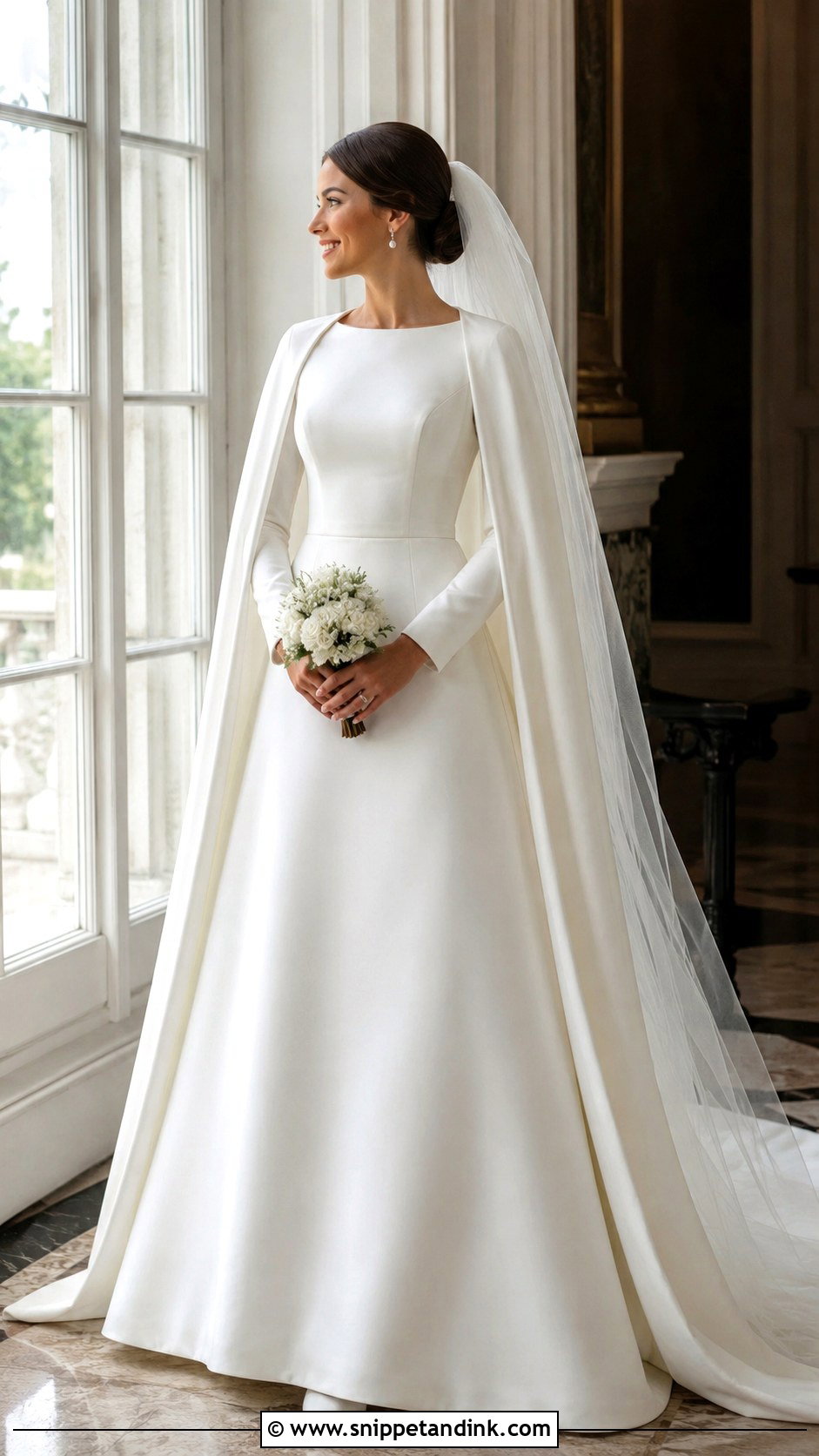
Full coverage in winter is easy; keeping it from feeling heavy is the real work. A high or bateau neckline, fully lined long sleeves and an A-line skirt in satin, crepe or lace give coverage, and covered buttons at the cuffs and back add detail without showing skin. Pearl drops and closed-toe heels suit it, with a long veil secured beneath a smooth bun and no necklace competing with the high neck. A full-length ivory cape handles travel and outdoor portraits, and a rounded bouquet suits the formal shape. The lining at the elbow is what I check most. If it has no stretch, you’ll feel it every time you lift a glass.
17. Long Sleeve Winter Wedding Dress With Cape
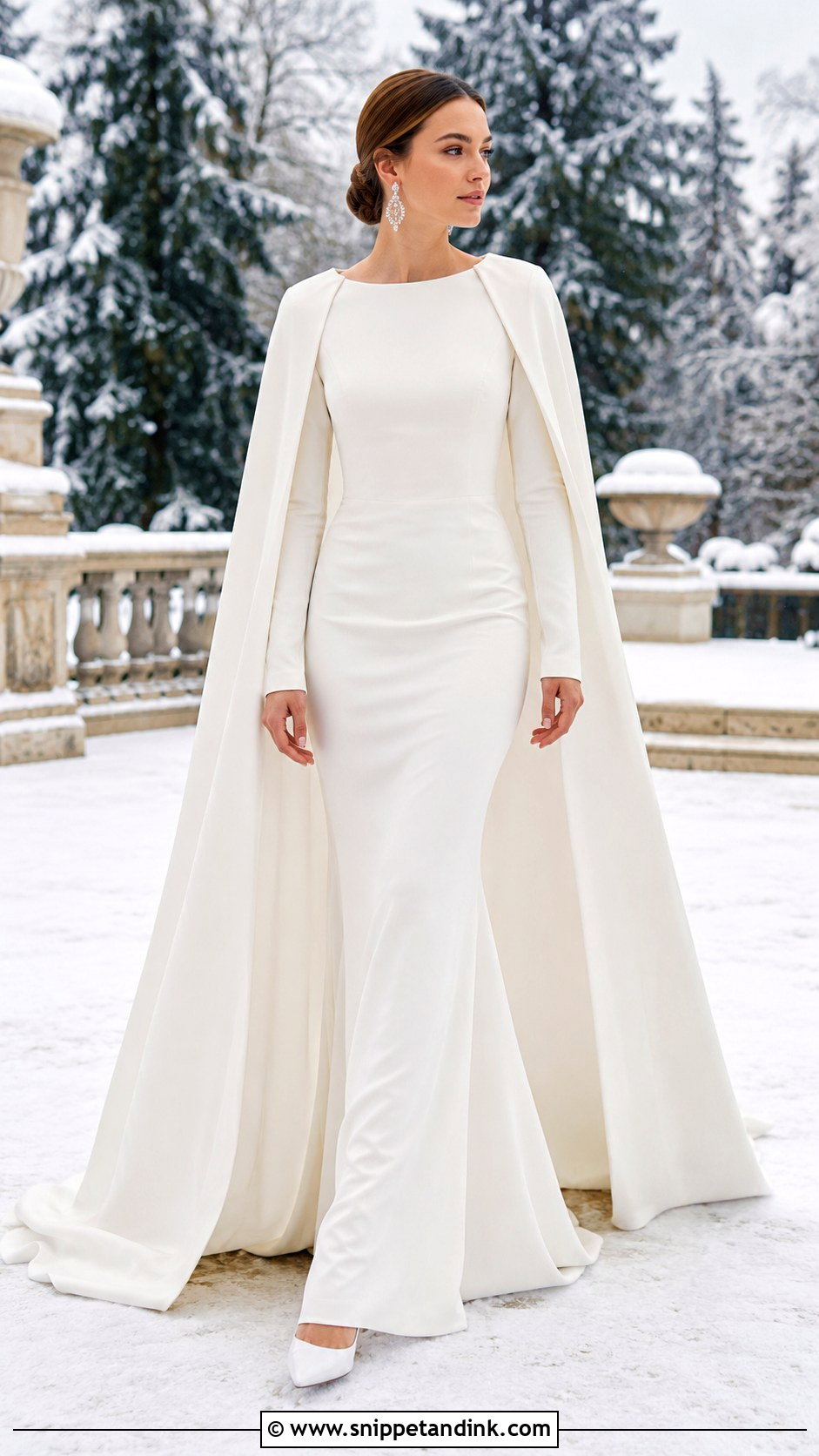
A cape lets a fairly simple gown carry the drama, and a floor-length one covers more of you than any sleeve. Start with plain crepe, satin or lightly embellished fabric so the cape is the statement. It needs a secure closure and enough width to clear the train as you walk. Pointed pumps, crystal earrings and a low bun keep it neat. If the cape is lace or embroidered, I’d skip the veil entirely; a plain cape can take a narrow veil worn underneath. Heavier capes drag the dress neckline down at the back, so check the closure sits on its own anchor. Take it off indoors and you have a second look for the reception.
18. Long Sleeve Winter Wedding Dress With Detachable Sleeves
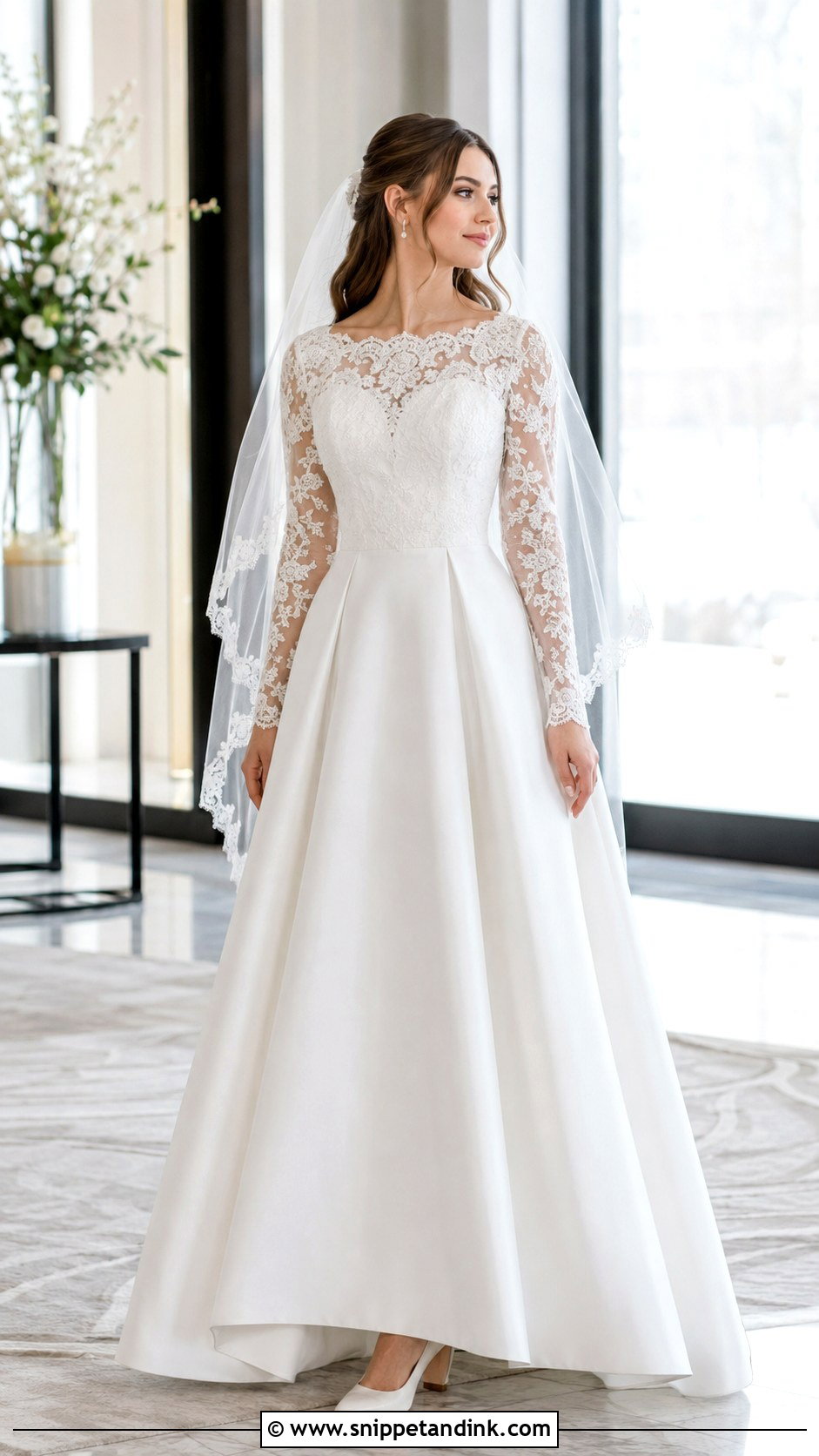
Detachable sleeves give you a covered ceremony and a cooler reception without changing dresses. They usually attach at the armhole or bodice with hooks, snaps or tiny buttons, and on a strapless gown they need a firm anchor or they slide. A satin A-line with lace sleeves gives contrast, while matching crepe hides the join. Closed-toe heels, delicate earrings, a fingertip veil and a half-up style suit both versions. Ask your seamstress to hide the fasteners, then move your arms through a full range in the fitting room. After the switch, store them flat in a labeled garment bag so the cuffs don’t crush, and put one bridesmaid in charge of that bag.
19. Long Sleeve Winter Wedding Dress With Overskirt
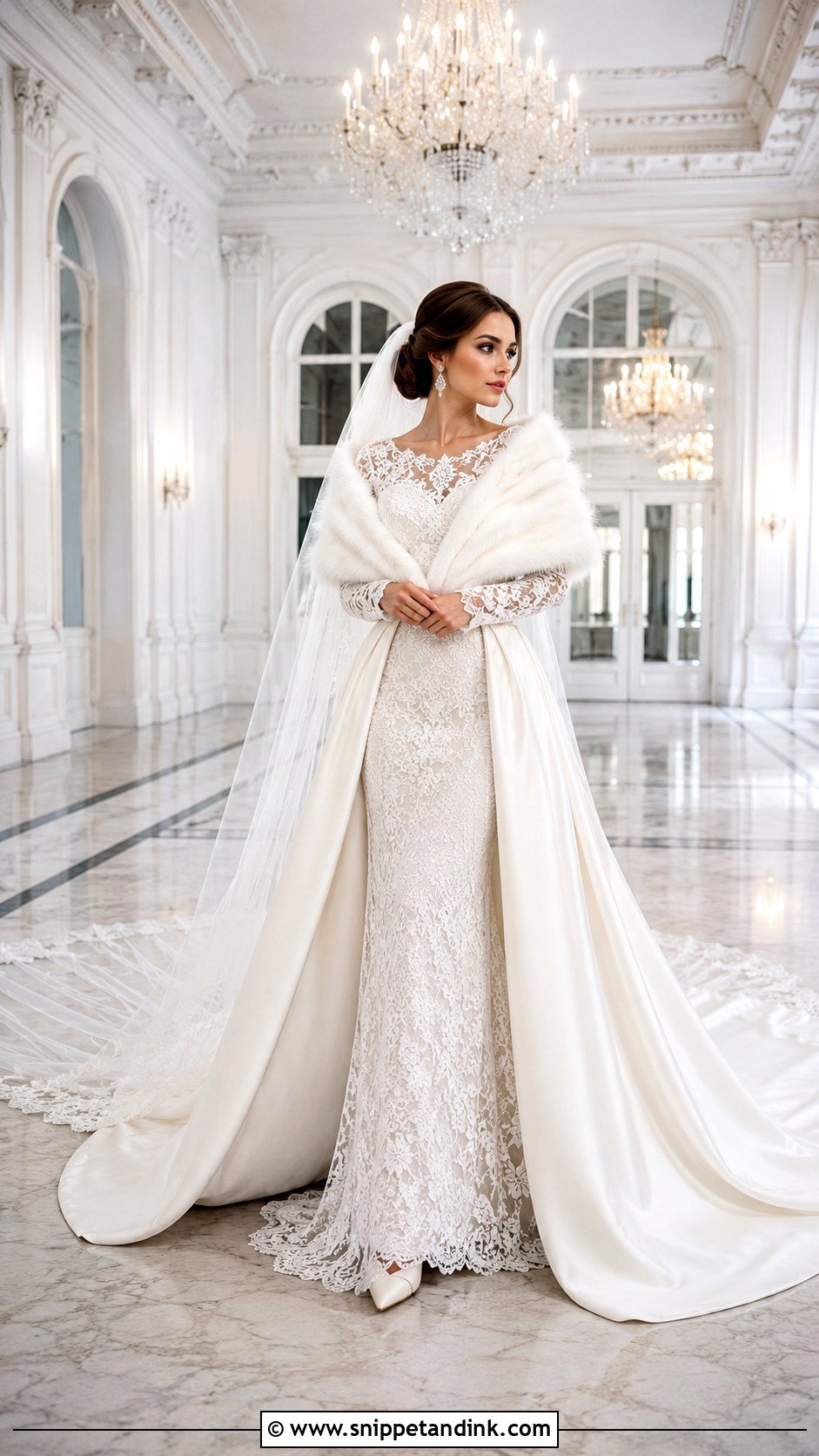
An overskirt turns a lace or crepe column into a ball gown for the ceremony and comes off for dancing. It wraps the waist and fastens with hooks or a hidden zip, and the waistband is where it usually fails: a bulky band shows as a ridge under the bodice. Ask for a flat, interfaced band and practise the removal, which goes faster with two people. Pointed pumps, drop earrings and a long veil that complements the train keep the ceremony look formal, with a smooth updo so there’s not too much moving near the shoulders. A fitted faux-fur stole works outside. Once the overskirt is off, adding a slim belt gives the column a finished waistline.
20. Long Sleeve Tea Length Winter Wedding Dress
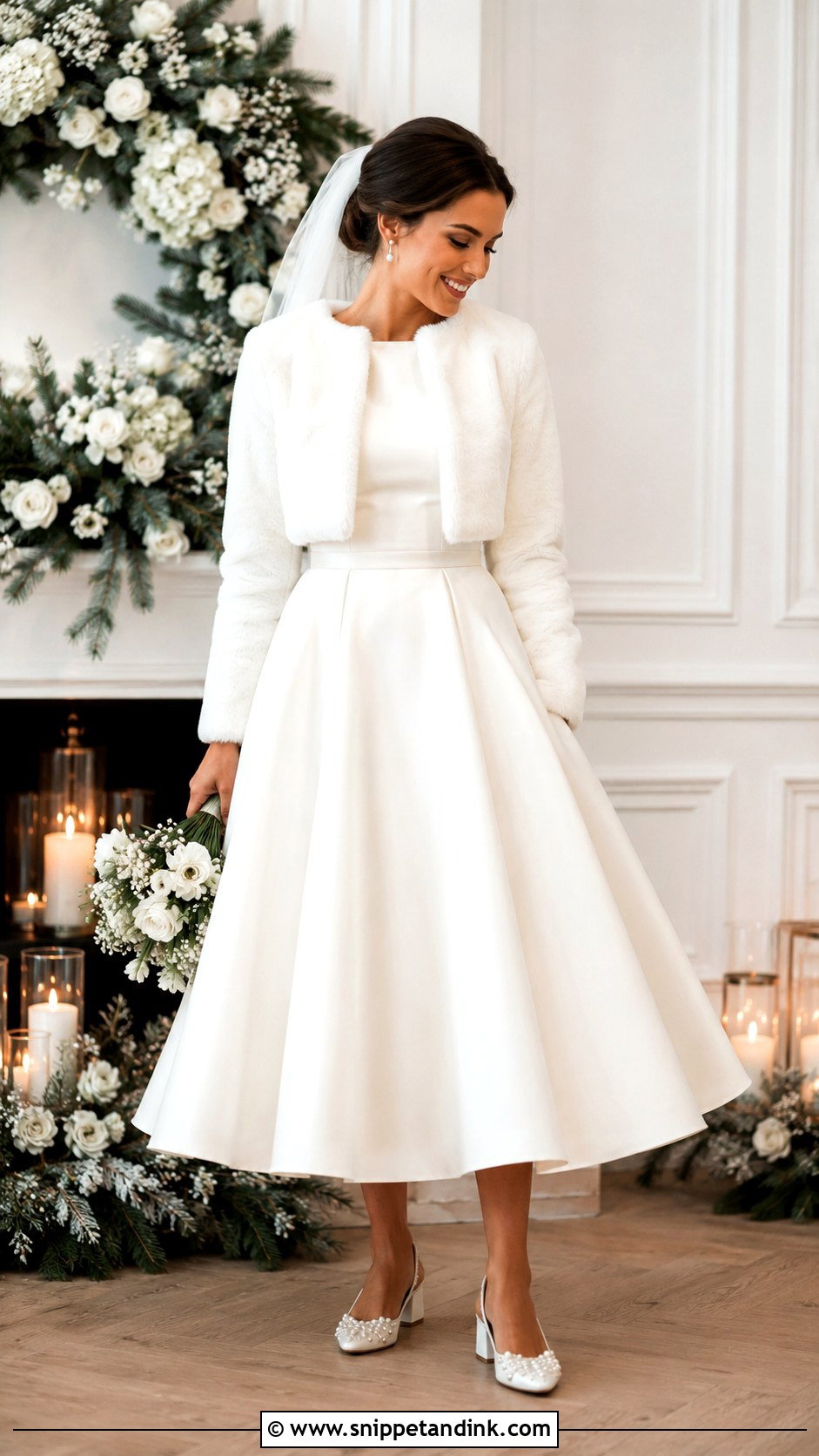
Tea length puts your shoes and ankles on view all day, so footwear decides this outfit. Choose structured satin, Mikado or layered lace with fitted sleeves and a hem between the knee and ankle; soft fabrics at this length can drift toward party dress. Ivory pumps, embellished block heels or polished ankle boots all work, with pearl earrings, a short veil and a smooth low bun. A cropped jacket or waist-length faux-fur wrap matches the shorter hem. For long outdoor stretches, opaque ivory tights make a real difference to how warm you feel. It suits smaller venues and relaxed celebrations, and a defined waist keeps it reading as bridal.
Three Things I Check on a Sleeve at Every Fitting
Long sleeves are the part of a winter gown that most often needs alteration, and the part brides look at least. A sleeve that seems right with your arms at your sides can be miserable once you’re holding a bouquet.
The armhole
A high, close armhole lets you lift your arms without the bodice rising with them. A low armhole looks roomy but drags the waist up every time you reach for someone. Raise both arms to shoulder height in the mirror; if the waist seam jumps, say so.
The length at the wrist
I set sleeves to finish at the wrist bone, or a touch past it, with the arm bent, since bending shortens a sleeve. Pointed sleeves that run over the back of the hand look graceful in portraits but catch the bouquet and find their way into dinner.
The inside of the elbow
Bend your elbow fully and hold it for a moment. Lace without stretch and stiff linings pinch there, and you’ll be feeling it by the speeches.
Salt, Slush and the Hem After a Winter Wedding
Winter stains a gown differently from summer. Road salt dries into white tide marks along the hem, and grey slush leaves a muddy band on the train. Don’t scrub either on the day; rubbing pushes grit into the weave and can tear lace. Let the hem dry, brush off loose dirt gently, and get the dress to a cleaner who handles bridal gowns within a few weeks. Point out every mark, including clear ones from champagne or white wine, because sugary spills turn yellow over time.
For storage, use a breathable cotton bag or an acid-free box rather than the plastic cover it came in, and keep it out of a hot loft. Stuff long sleeves lightly with acid-free tissue so the elbows don’t set into hard creases. Beaded or heavy sleeves should be supported, not left hanging, since their weight slowly stretches the shoulders.
Dress for the Coldest Hour, Then Plan the Reveal
Most winter gowns that disappoint go wrong for one reason: the silhouette was chosen first and the fabric was an afterthought. Lined lace, satin, Mikado and crepe each give different warmth and structure, so compare them as closely as you compare shapes. Plan the shoes, veil, jewelry, hair and outer layer together as one outfit. Then test the dress at every alteration by sitting, stepping up a stair and raising both arms. A gown that passes those three will carry you from a cold ceremony to the last song.
You'll Like These Ideas:


Leave a Reply