
Cold weather gives you permission to wear fabric with real weight, and that changes how a plain dress behaves. A satin that would feel heavy in July hangs cleanly in January, and a long sleeve stops being a modesty choice and becomes a comfort one. Each look below is styled from head to toe, with the shoes, jewelry and outer layer I’d actually put with it. If you are still deciding on cloth, the textured weaves like Mikado, duchess satin, velvet and a dense crepe are the ones I reach for first in winter, because they hold a shape without any beading to prop them up. Ballroom or small city room, the same rule holds: let the fabric do the decorating.
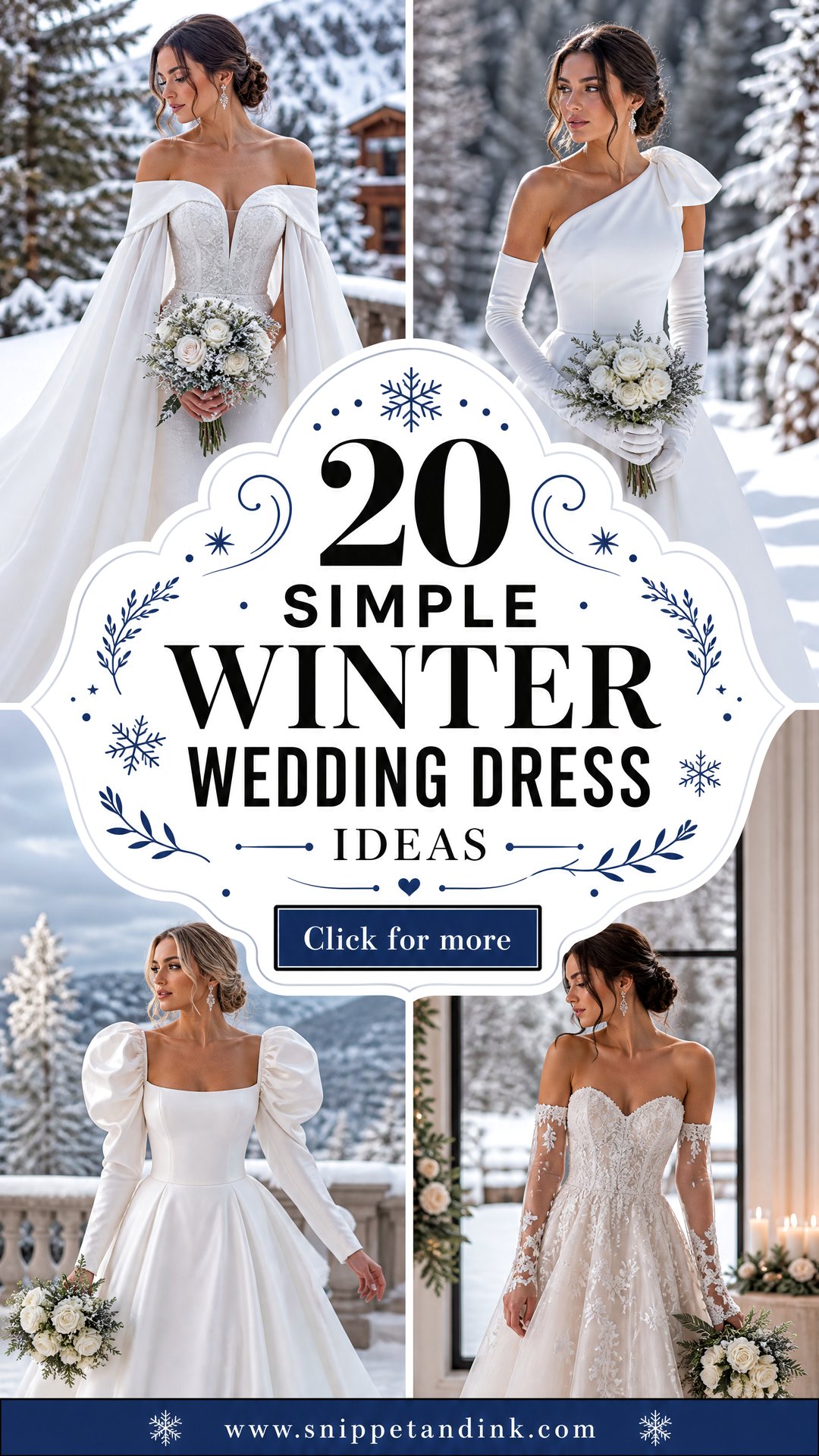
Judging a Winter Fabric by Hand Before You Fall for the Photo
Most winter regrets I hear about start with a dress chosen from a picture. Online, a lightweight polyester satin and a heavy duchess satin look almost the same. On a cold day they don’t. The thin one shows every goosebump, wrinkles at the hip after the car ride, and flaps in the wind. So at an appointment, I ask brides to hold the skirt fabric up to the window light and then crush a corner in their fist for a few seconds.
- If light passes straight through a single layer, the gown will need a substantial lining to feel warm and to stop showing underwear in flash photos.
- If the crushed corner stays creased after you let go, expect visible seat wrinkles by the time you reach the reception.
- Crepe should feel dense and slightly springy; a thin crepe clings and shows seams.
- Velvet should be brushed one way across the whole gown, or panels will look like two different shades.
I also have brides stand by a cold window or step outside in the sample for a minute. You learn more about a sleeve and a neckline in sixty seconds of real air than in an hour under boutique lights.
1. Long Sleeve Satin Winter Wedding Dress
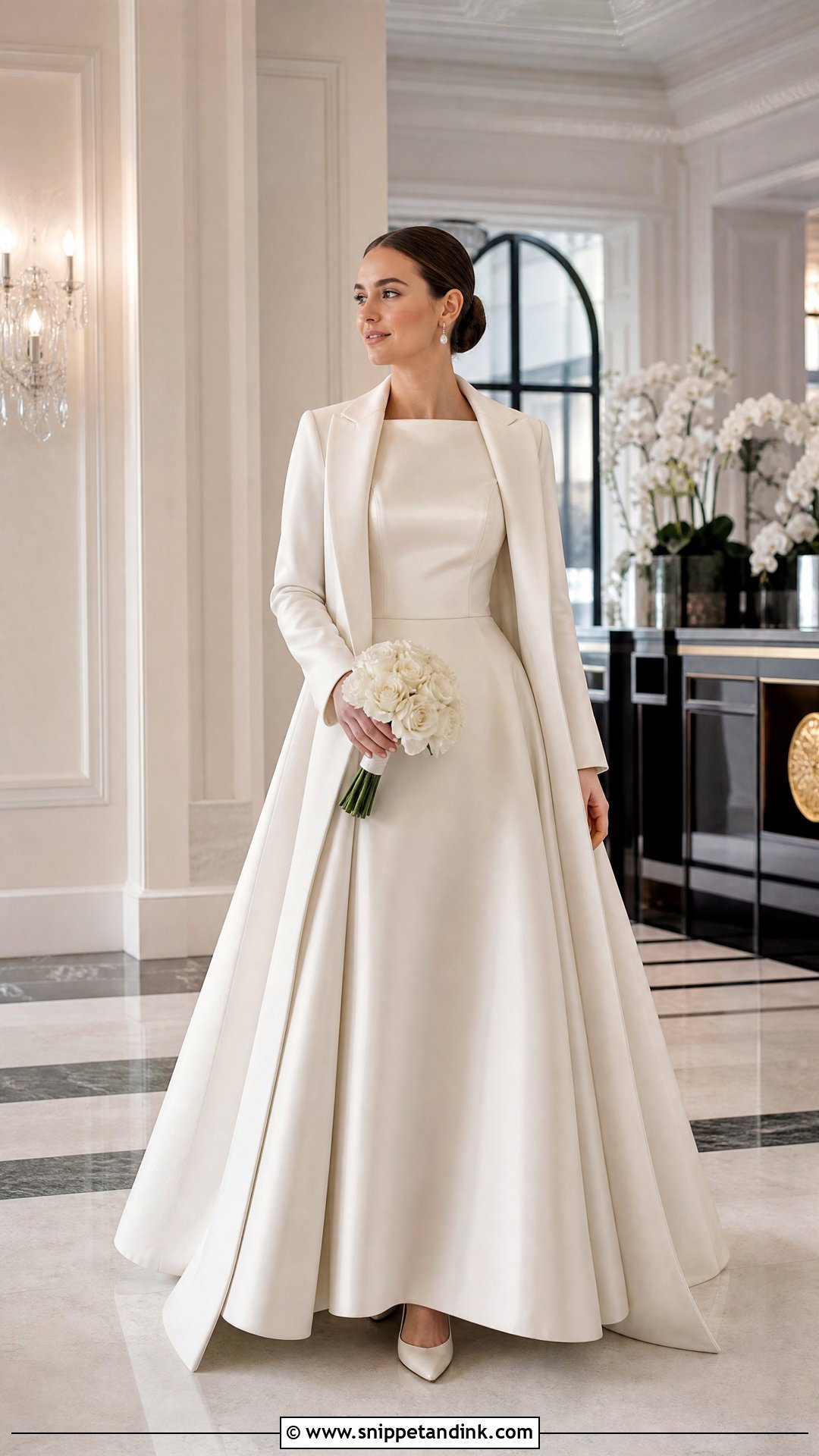
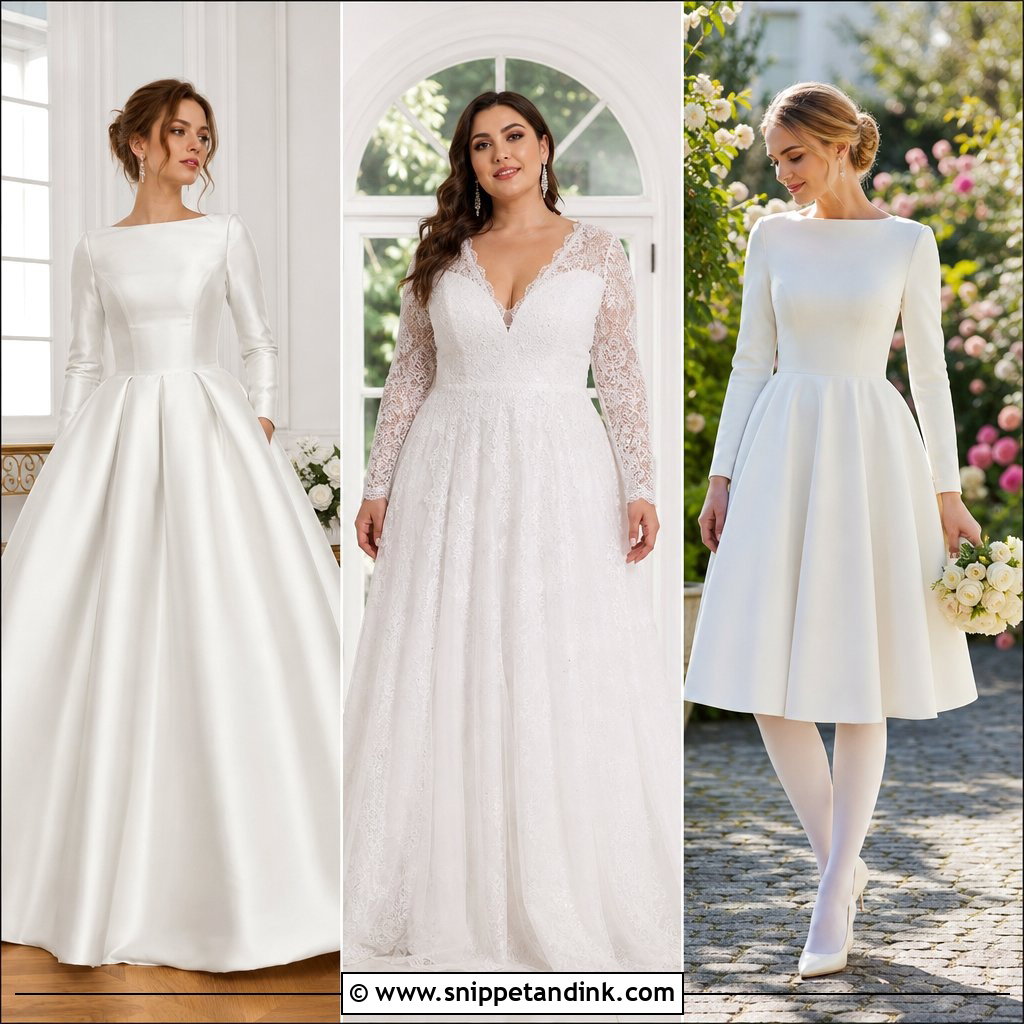
Satin is the fabric I trust most for a simple winter gown, because a heavier weave keeps the skirt from collapsing and catches low winter light without looking shiny. Go for a long-sleeve A-line with a fitted bodice, covered buttons and a skirt that sweeps rather than pools. A bateau or shallow V gives coverage without that buttoned-up tightness at the throat. I’d style it with pearl drops, a sleek low bun and ivory pointed pumps. For outdoor portraits, a floor-length wool coat and a small white bouquet with greenery are all you need. Leave the necklace in the box; the clean neckline is the jewelry here.
2. High Neck Crepe Winter Wedding Dress
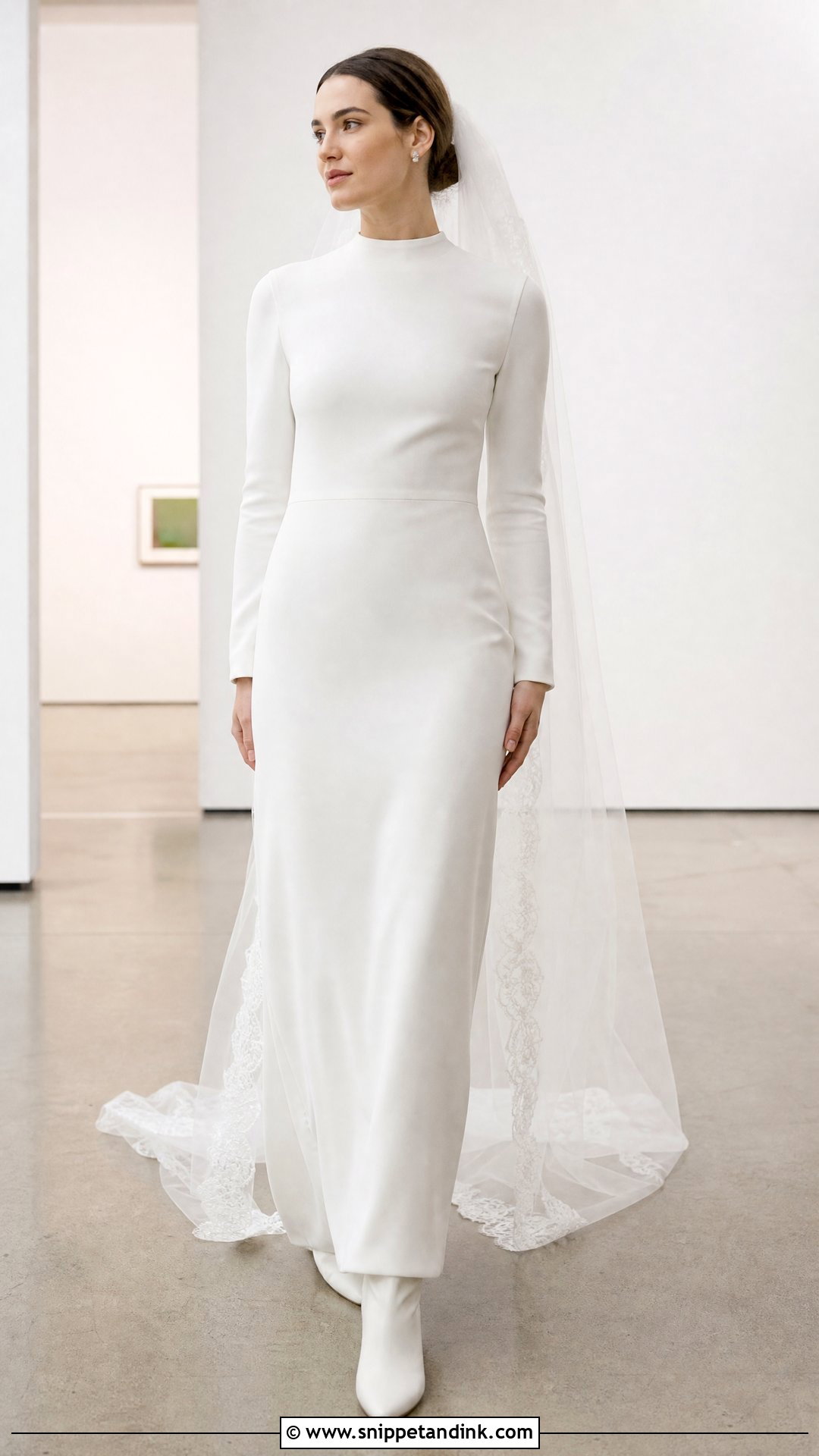
A high neck in crepe looks modern, and it is honestly warmer than you’d expect, because the collar blocks the draft at your throat. Look for full sleeves and a straight or lightly flared skirt that skims. Crepe shows every lump of a seam allowance, so I always check the back buttons lie flat when the bride sits. Pair it with a neat chignon, small studs and white leather ankle boots with a slim heel. A cathedral veil softens all that coverage. Keep an ivory coat that ends below the knee for any outdoor minutes; it suits hotel, gallery and city ceremonies where the room is spare.
3. Simple A-Line Mikado Winter Wedding Dress
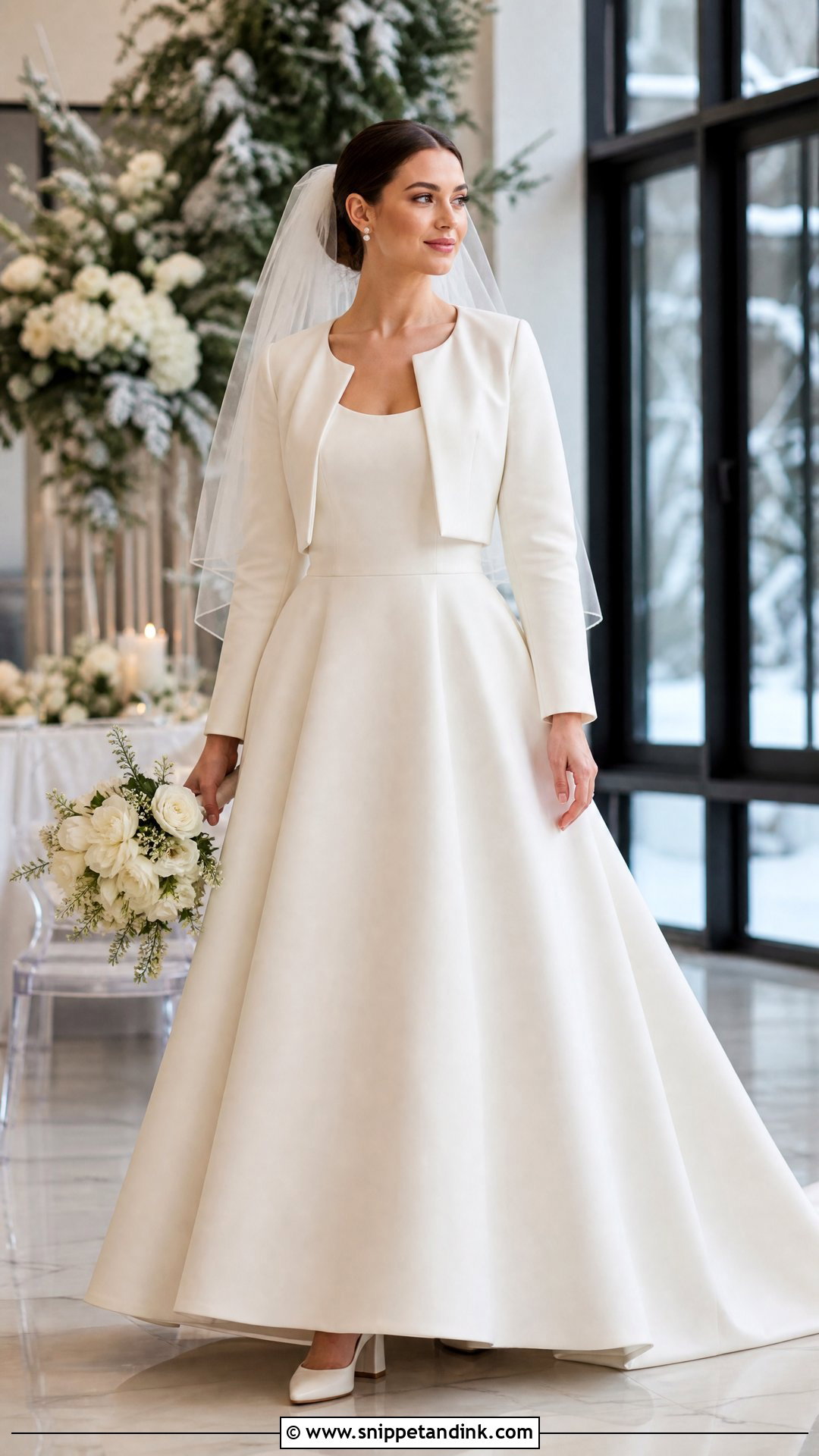
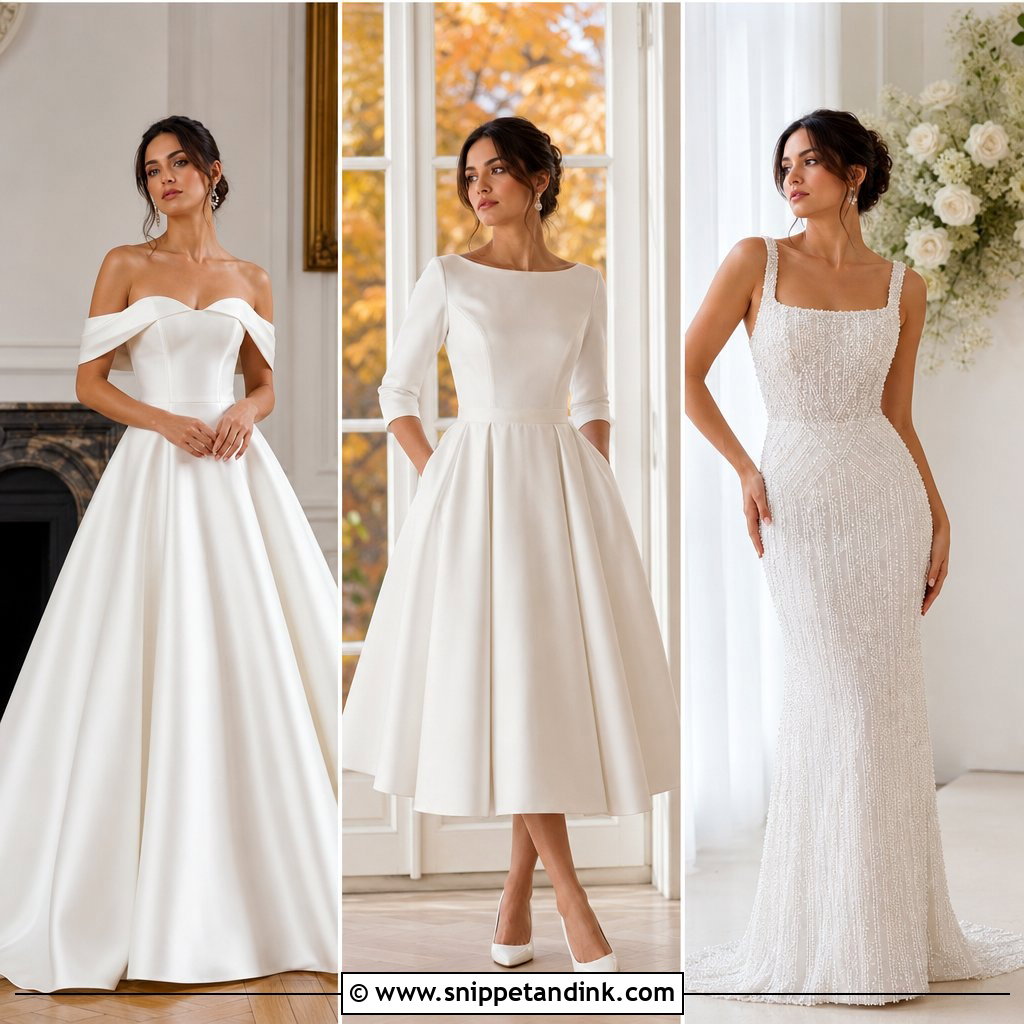
Mikado has a crisp, slightly papery hand, which is why a plain A-line in it looks finished without lace or beads. The scoop neck, wide straps, defined waist and full skirt with hidden pockets all rely on that stiffness. One thing I warn brides about: Mikado creases sharply where you sit, so steam it on the morning and avoid long car rides in the gown if you can. Add a fingertip veil, pearl studs and satin block heels. A cropped ivory jacket that stops at the waist keeps the skirt shape visible outdoors. Good for traditional proportions and real support through the bodice.
4. Minimalist Ball Gown Winter Wedding Dress
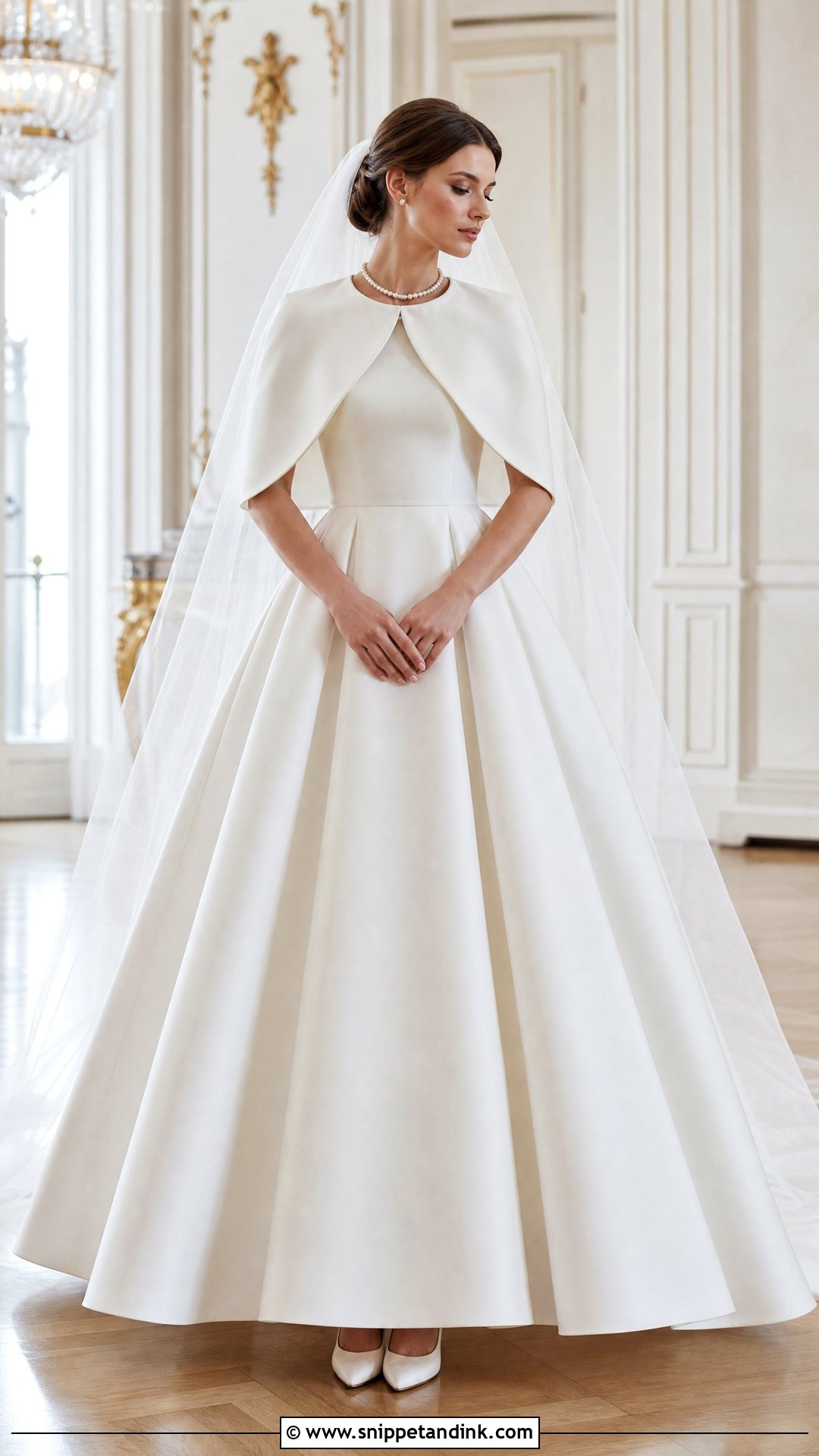
A ball gown stays simple when the construction carries it. I’d choose matte satin, strapless or long-sleeved, with a smooth bodice, natural waist and no embellishment on the skirt. Ask how the skirt is built: layers of crinoline and horsehair give volume without heavy gathering at the waist, which is what makes a full skirt look fussy. Wear a single strand of pearls, small earrings and closed satin heels, with a long plain veil. An ivory capelet that fastens at the neck and stops above the waist keeps the silhouette readable. Have your seamstress put in a strong bustle; a skirt this size gets stepped on otherwise.
5. Long Sleeve Lace Winter Wedding Dress
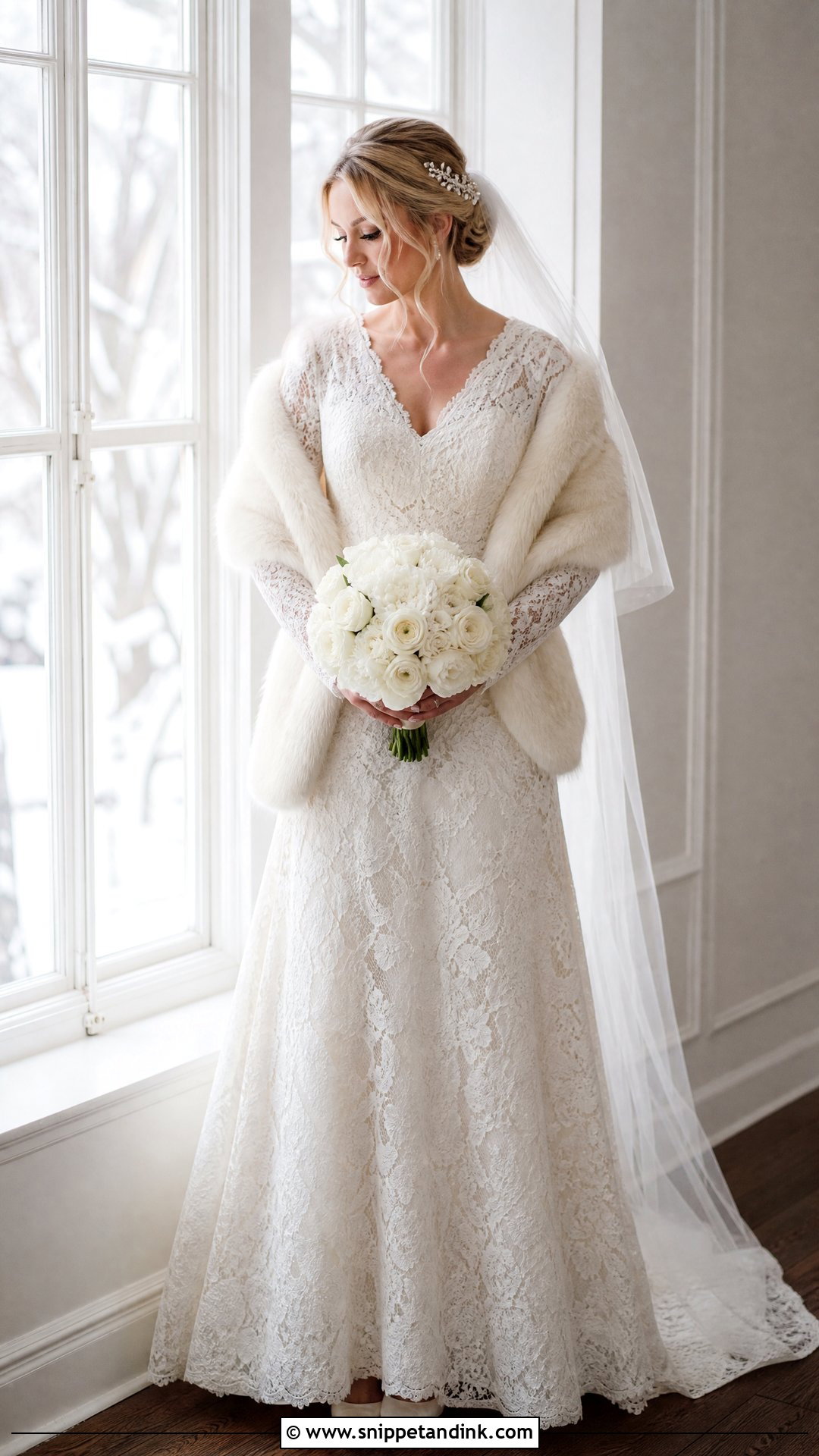
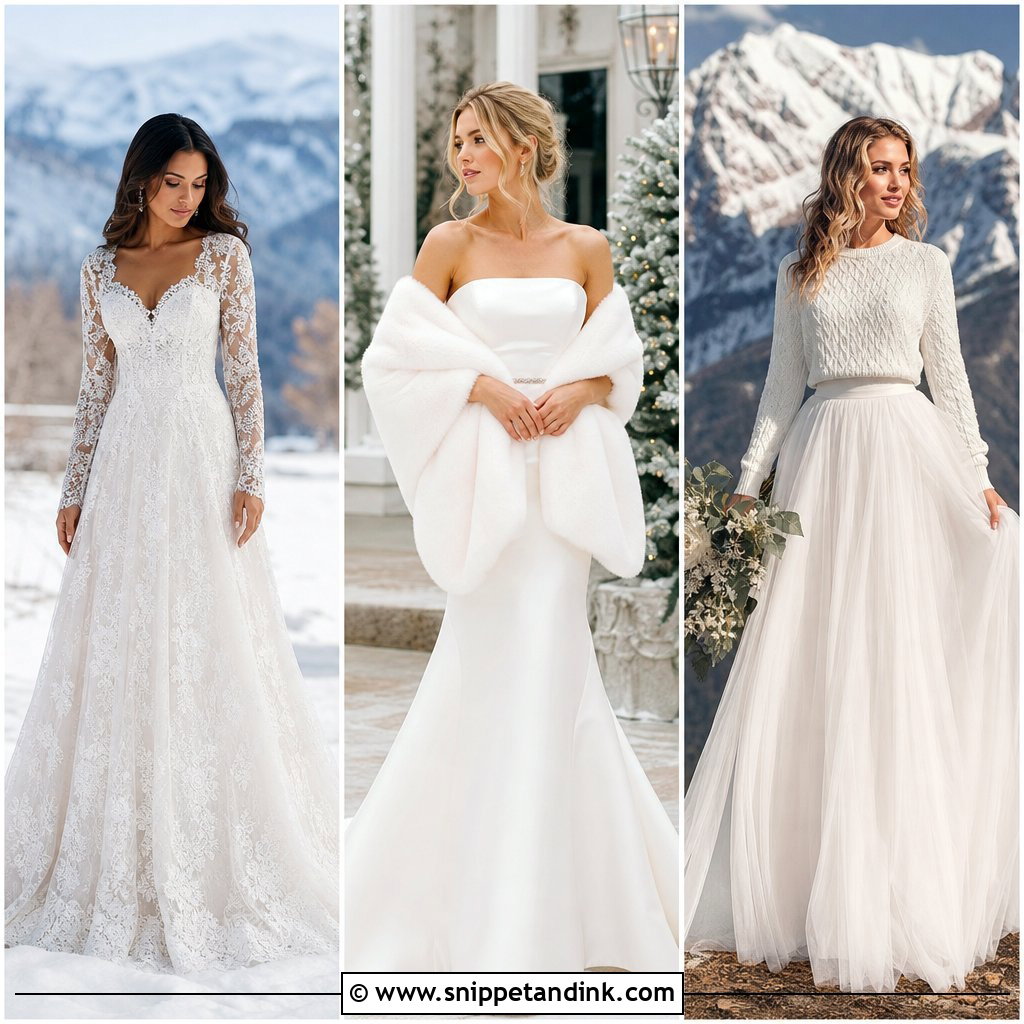
Lace reads as simple only when you stick to one pattern. Mix a corded lace bodice with a floral sleeve and an embroidered hem and it stops looking minimal fast. A long-sleeve A-line in a single lace over a smooth ivory lining, with a soft V and a gently fitted waist, is the version I’d steer you toward. Lined lace is warmer and less see-through in flash photos than an unlined sleeve. Finish with pearl pins, small drops and matching ivory pumps, plus a plain tulle veil with no lace edge. A faux-fur wrap for portraits gives a texture contrast; keep the bouquet small and one color.
6. Square Neck Satin Winter Wedding Dress
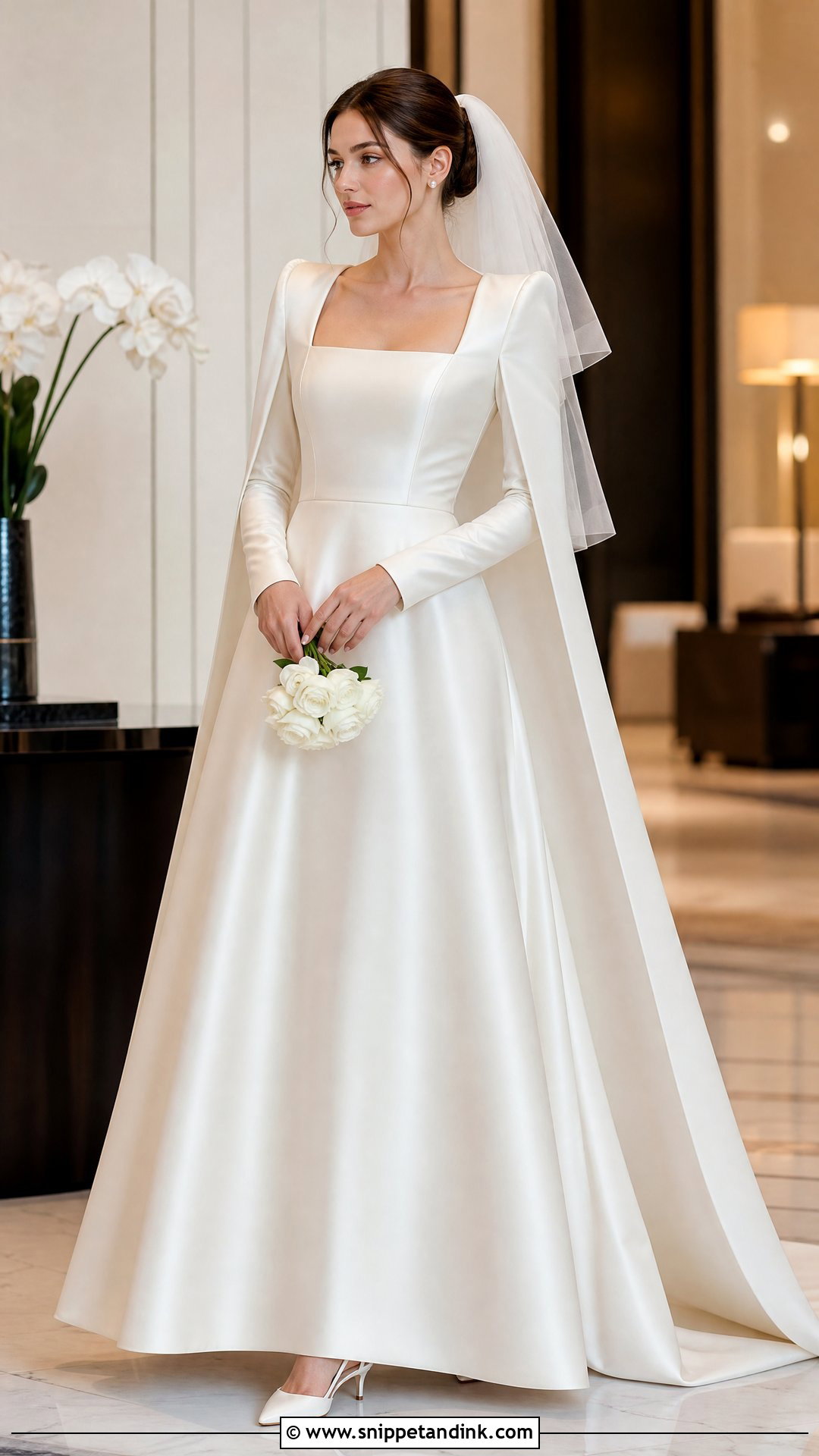
The square neckline is architectural, and it frames the collarbone better than most shapes on a covered bodice. Pair a fitted long-sleeve top with a flowing A-line skirt and a modest train. Covered cuffs and back buttons add detail quietly. On a square neck the corners need to sit flat against the chest; if they gape when you lift your arms, that’s an alteration, not a fit you live with. Style it with a center-parted bun, pearl studs and a short veil tucked under the hair. Slingbacks or low block heels keep you upright through long standing, and a tailored cape handles the cold. It works for both daytime and evening ceremonies.
7. Off Shoulder Winter Wedding Dress With Cape
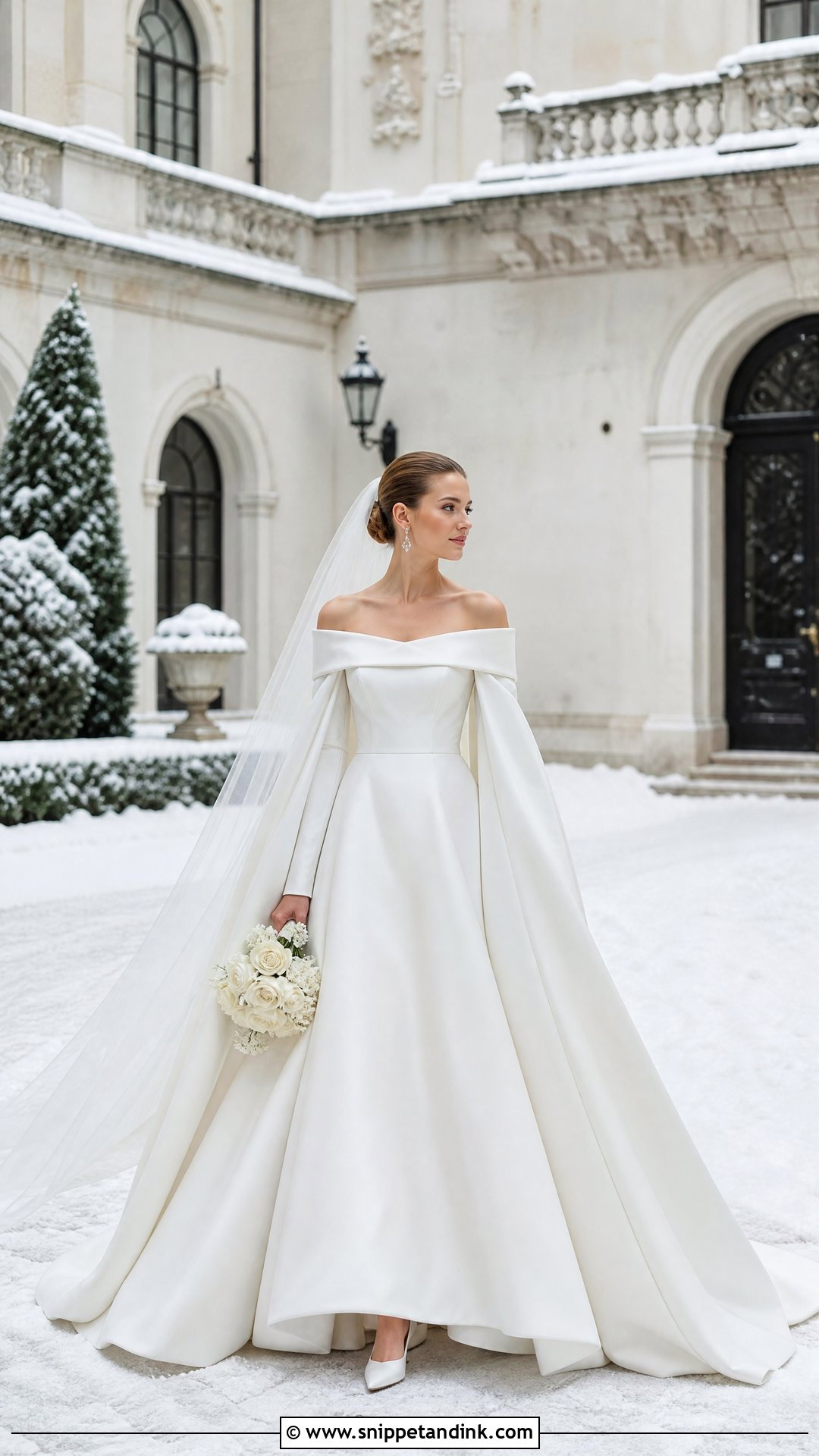
Off the shoulder in January sounds unwise until you add a detachable cape. A structured satin gown with a folded neckline, fitted waist and gentle flare, worn under a plain ivory cape that fastens above the bodice and falls to the floor, gives you coverage for arrivals and photos. Capes are a smart winter layer because nothing has to squeeze under the dress. At fittings I check that the cape’s fastening does not drag the folded neckline down, which is the usual problem. Add crystal studs, a sleek bun and closed pointed pumps. Take the cape off indoors for a second look. If you wear a cathedral veil, decide in advance whether it goes over or under the cape.
8. Slip Winter Wedding Dress With Faux Fur Wrap
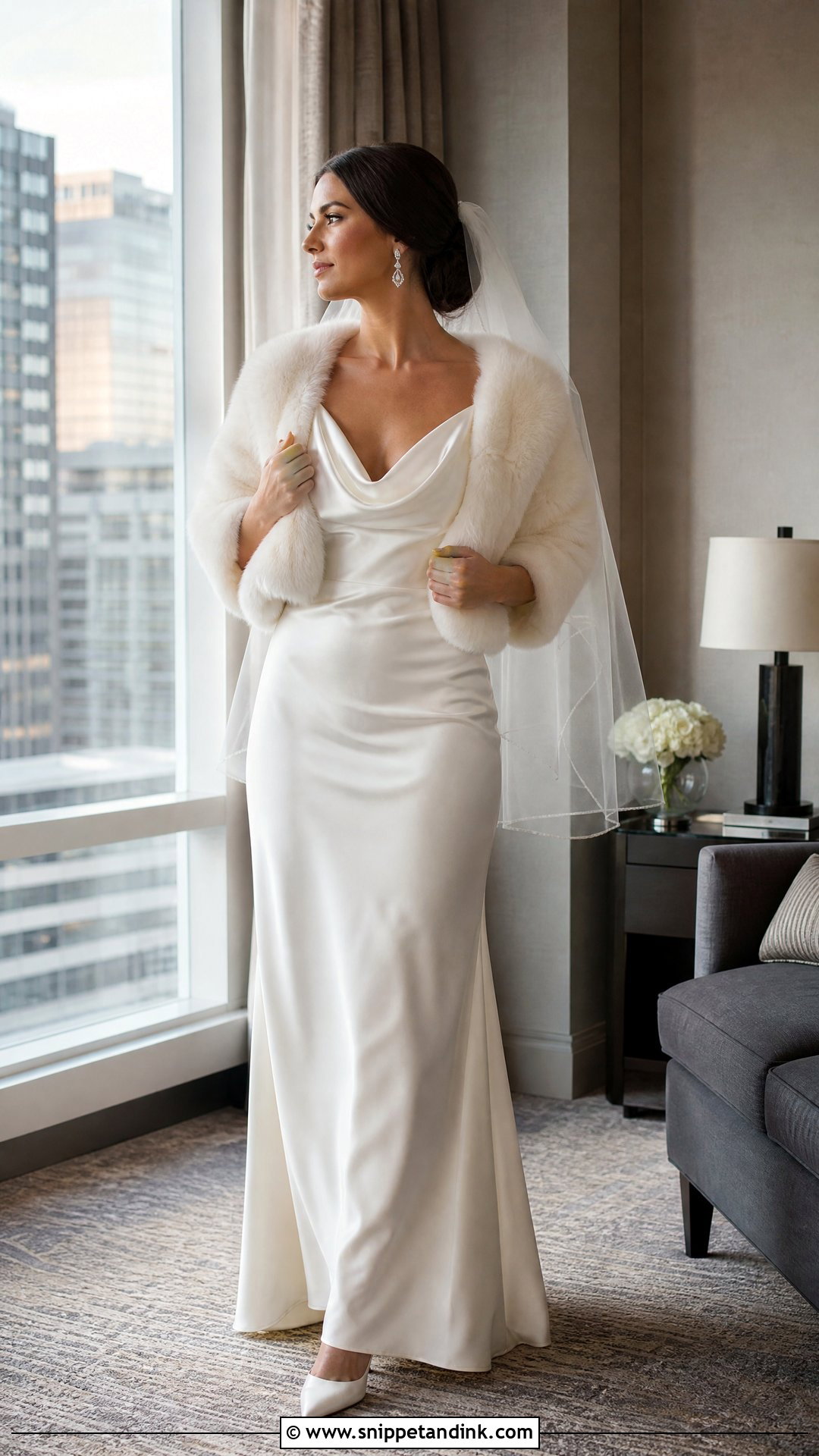
A slip gown is unfussy, but it is also the least forgiving dress on this list. Choose a heavier, fully lined satin with a soft drape at the neck, real support in the straps and a bias-cut skirt. Bias cut stretches and clings, so I always ask brides to bring their exact shoes and smooth, no-line underwear to every fitting, because a visible line will show in every photo. An ivory faux-fur wrap covers you between rooms. Crystal drops, a polished low bun, steady satin pumps and a fingertip veil finish it. It suits a restaurant or city hotel more than a drafty barn.
9. Column Winter Wedding Dress With Bridal Coat
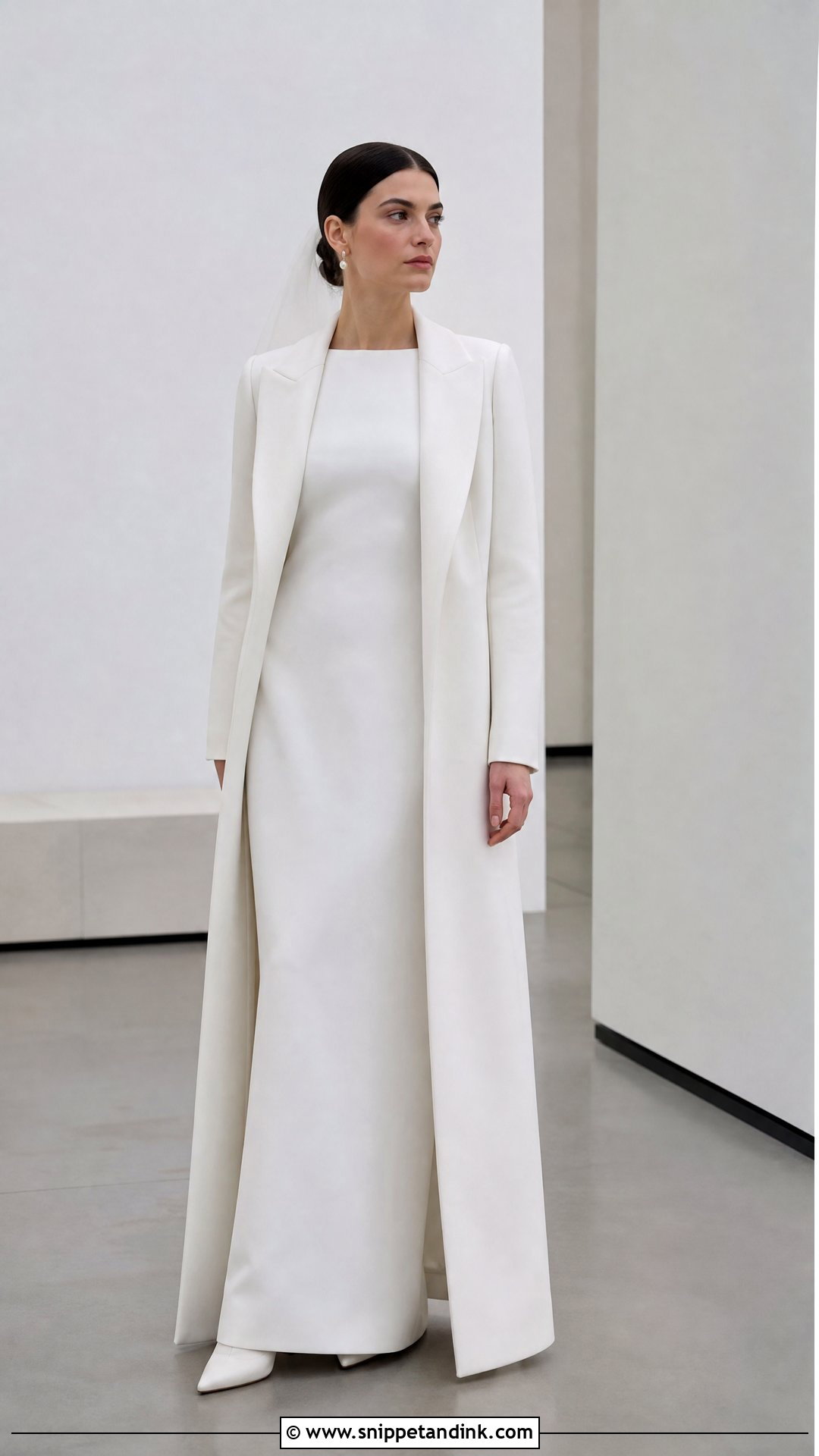
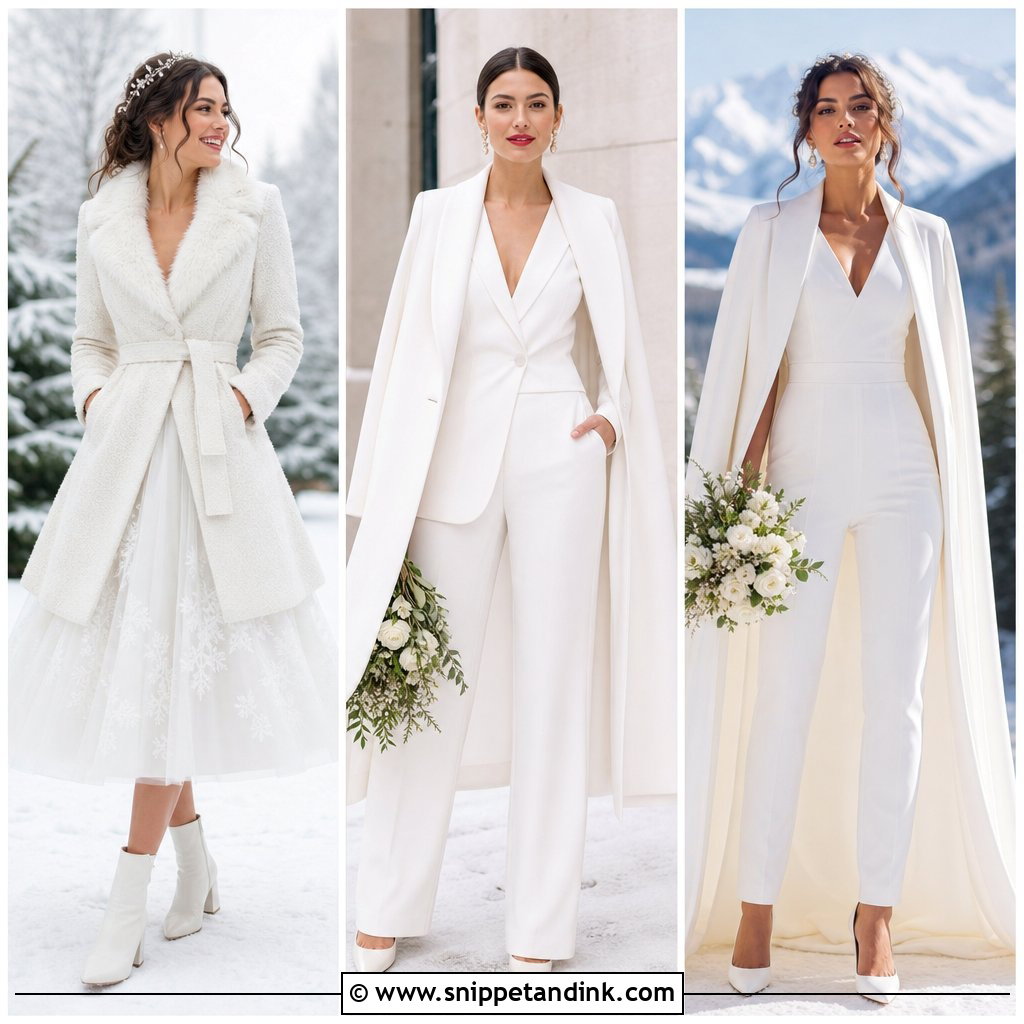
A column gown is the most restrained shape here, and the one that relies hardest on tailoring. Look for substantial crepe, long sleeves, a boat neckline and a straight skirt with a back slit so you can actually walk. I’d measure the slit with the bride on a stair, since it’s always the step that tells you it’s too short. Layer a floor-length ivory coat with a clean collar and hidden closures; taking it off becomes its own reveal. Pointed ankle boots, sculptural pearls and a low knot work well, with a blusher veil or a small bow. Courthouse, gallery or contemporary hotel ceremonies suit it best.
10. Tea Length Winter Wedding Dress With Boots
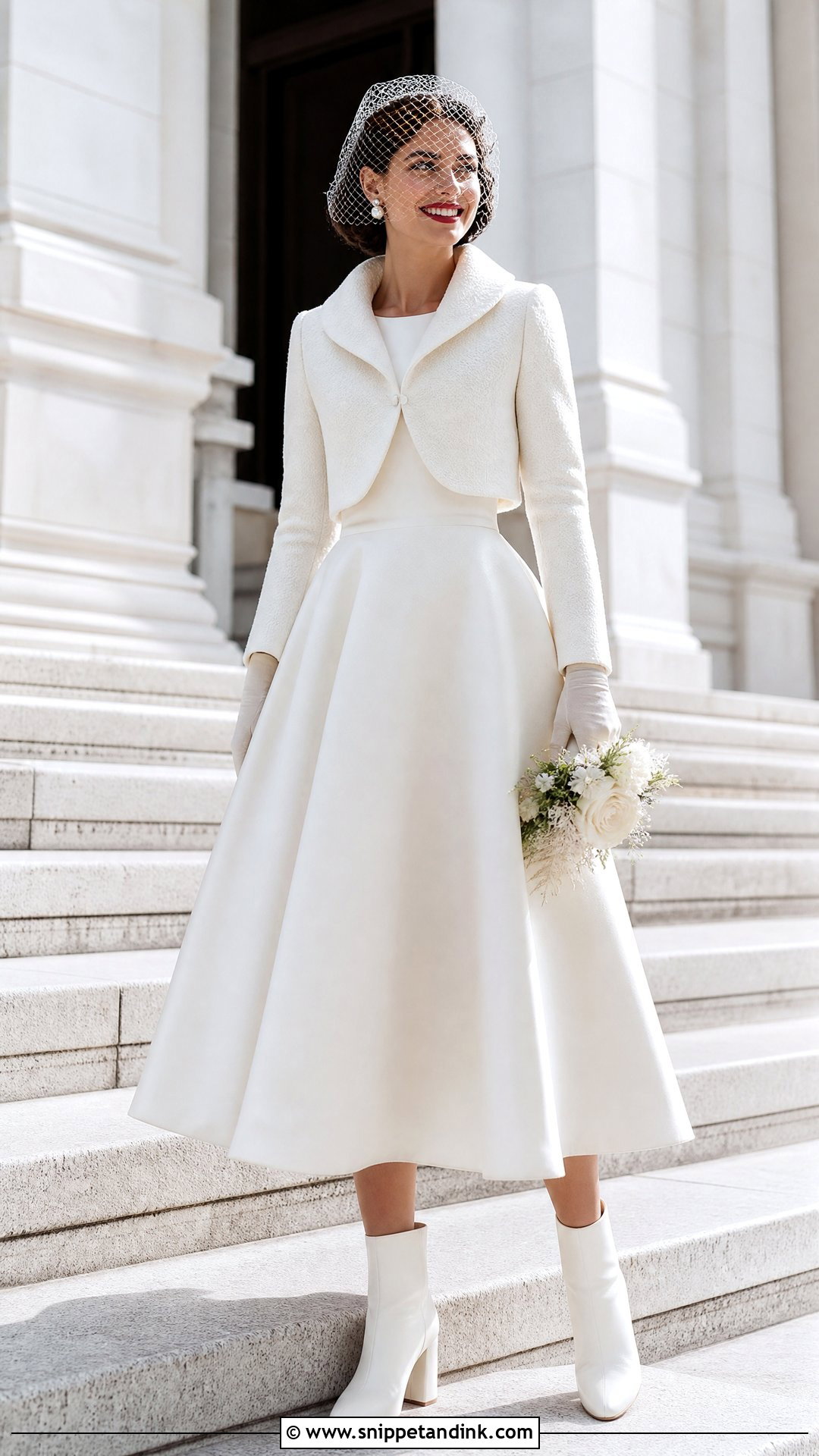
Tea length is practical in winter because the hem stays clear of slush, wet steps and salted sidewalks. Choose ivory satin or Mikado with long sleeves, a fitted waist and a skirt ending between calf and ankle. Since the shoes are on show, I’d keep them plain: white leather ankle boots with a narrow toe and a block heel, wiped down before photos. Pearl earrings, a birdcage veil and short gloves push it toward vintage. A cropped wool jacket keeps the waist visible. Small venues and civil ceremonies suit it, and it moves on stairs far better than a train does.
11. Simple Velvet Winter Wedding Dress
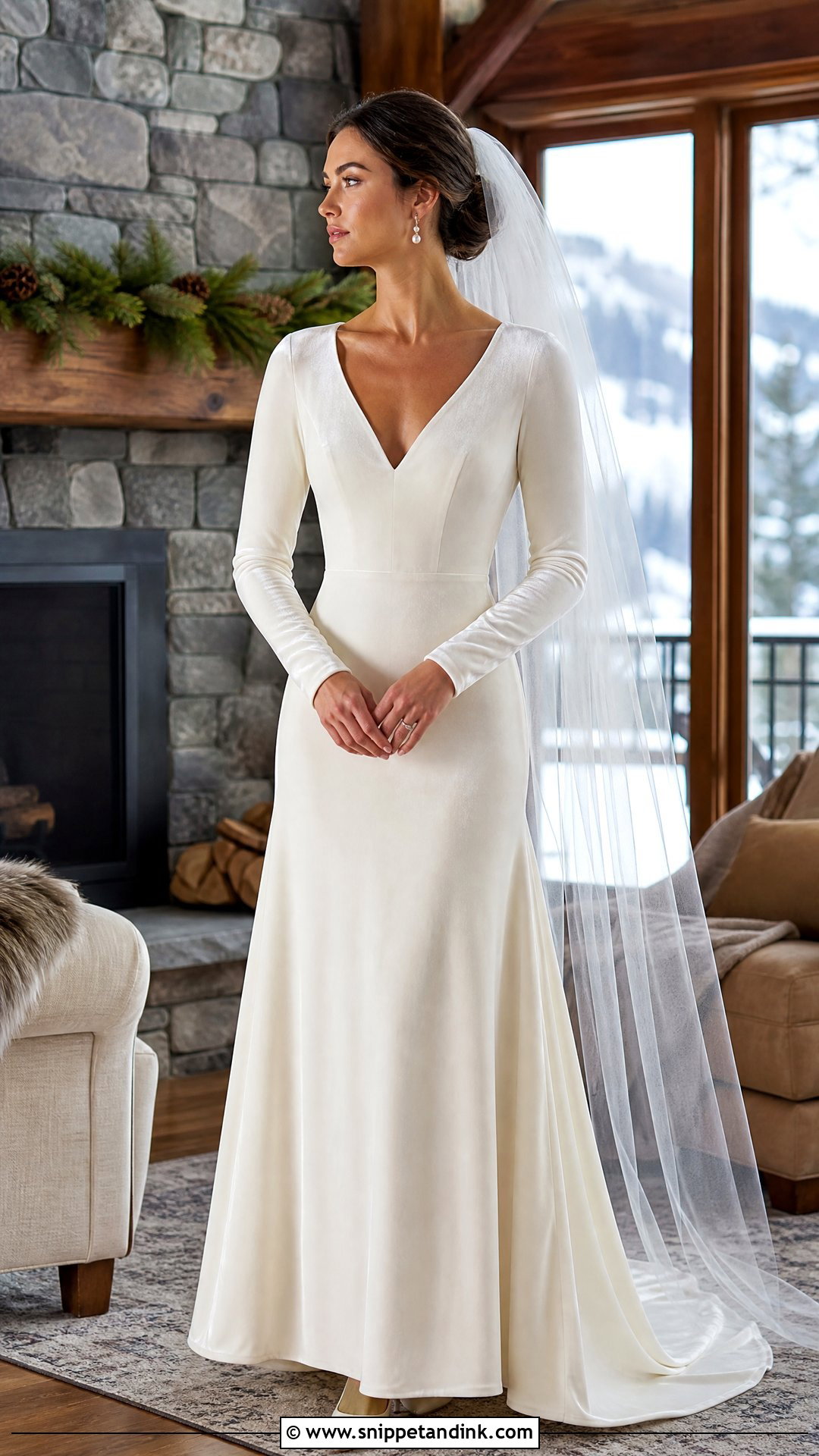
Velvet brings its own texture, so the dress needs nothing else on it. An ivory velvet gown with long fitted sleeves, a simple V and a gently flared skirt is plenty. Velvet has a nap, which means it looks a shade lighter or darker depending on which way the pile is brushed, so I always check the panels were cut in the same direction. It also crushes, so sit carefully and never steam it flat against a board. Small pearl drops, a low bun and suede or satin pumps keep it quiet, and a plain tulle veil lightens the dense fabric. Skip a velvet bag or cape; it turns heavy quickly. Stone or wood interiors like a lodge or historic hotel show it off.
12. One Shoulder Winter Wedding Dress With Gloves
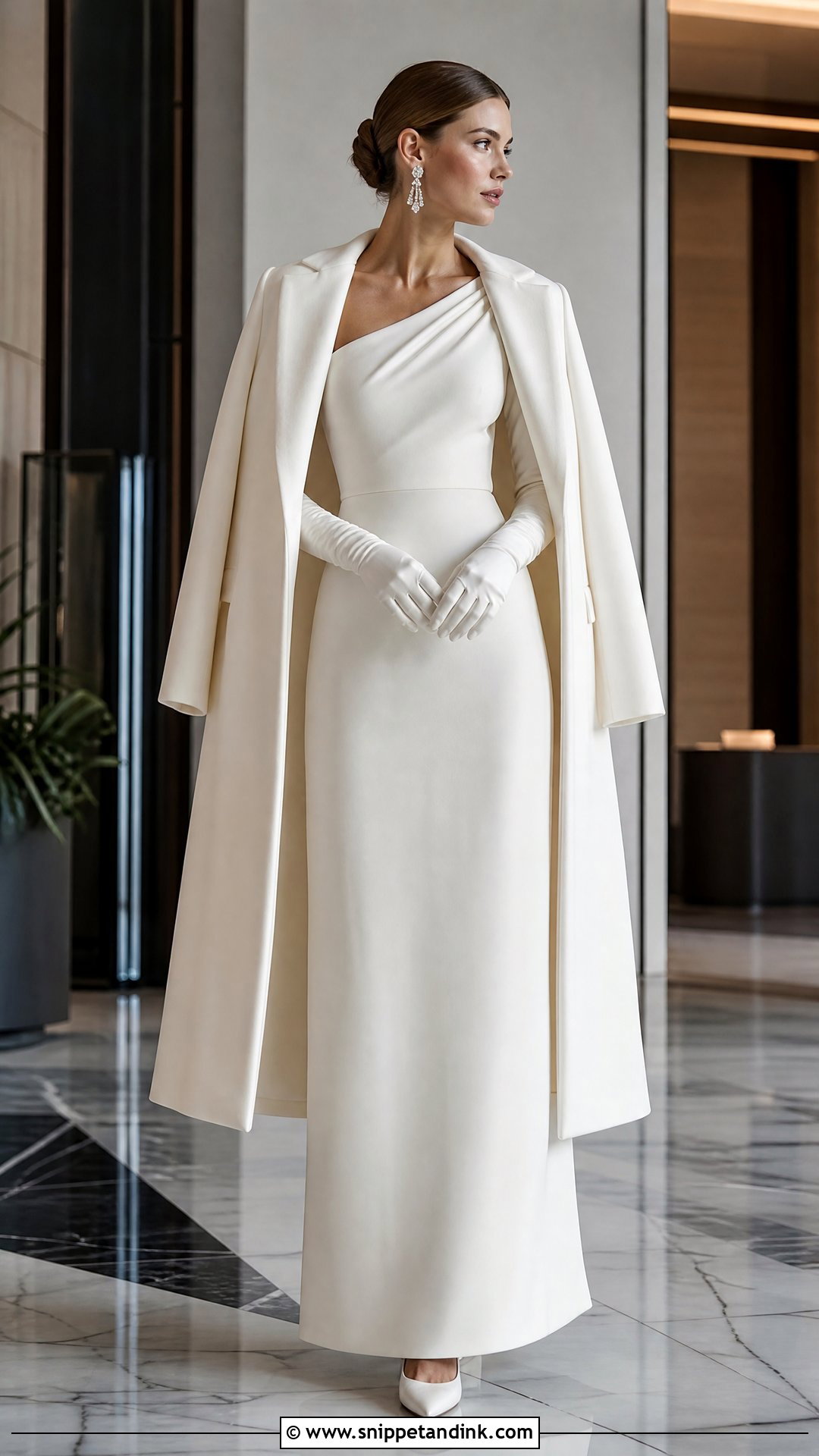
One sleeve, one bare shoulder: it’s modern without being fussy. Choose heavy crepe or satin with a softly fitted waist and a straight skirt. Elbow gloves are good for outdoor photos, and you can slip one off for the ring. The asymmetric strap carries the bodice’s weight on one side, so I always have the bride raise both arms at the fitting to see whether the opposite side slips. Crystal studs, a smooth updo and closed satin pumps finish it, with no necklace competing at the collarbone. Drape a wool coat over the shoulders for travel and carry a small, structured bouquet.
13. Cowl Neck Satin Winter Wedding Dress
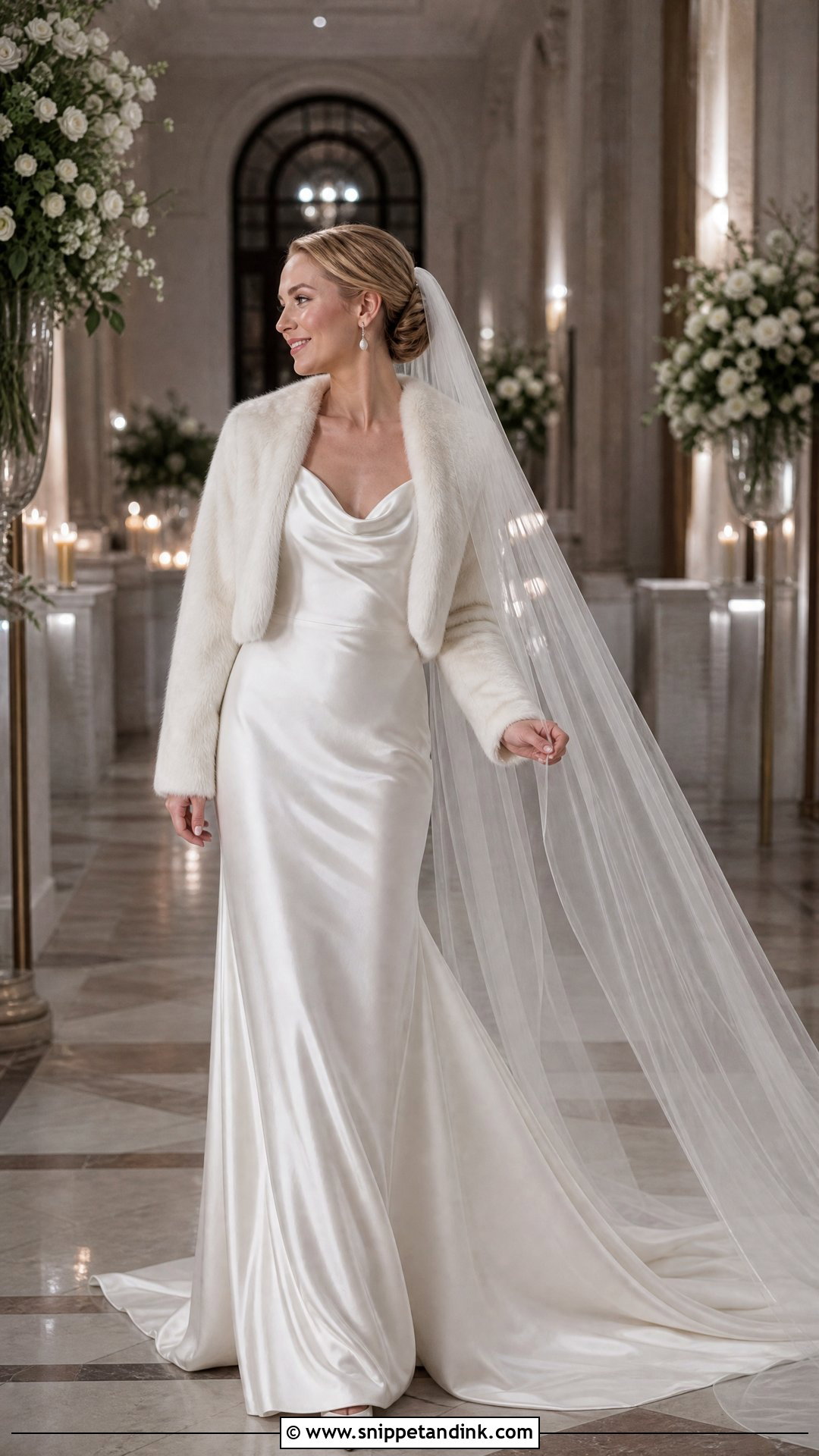
A cowl adds movement through folds of fabric alone. Look for a lined satin gown with long sleeves, a low cowl back or a modest front drape, and a fluid skirt. A cowl only drapes well if it’s cut on the bias, and it can shift open when you bend, so I test it with a deep lean during the fitting. Pair it with a narrow cathedral veil, pearl drops and low or medium ivory pumps. A fitted faux-fur bolero covers the shoulders between rooms. Wear the hair smooth; loose curls catch in the folds. Satin creases easily, so have it steamed and hang it somewhere open and dry the night before. It suits an evening reception.
14. Puff Sleeve Winter Wedding Dress
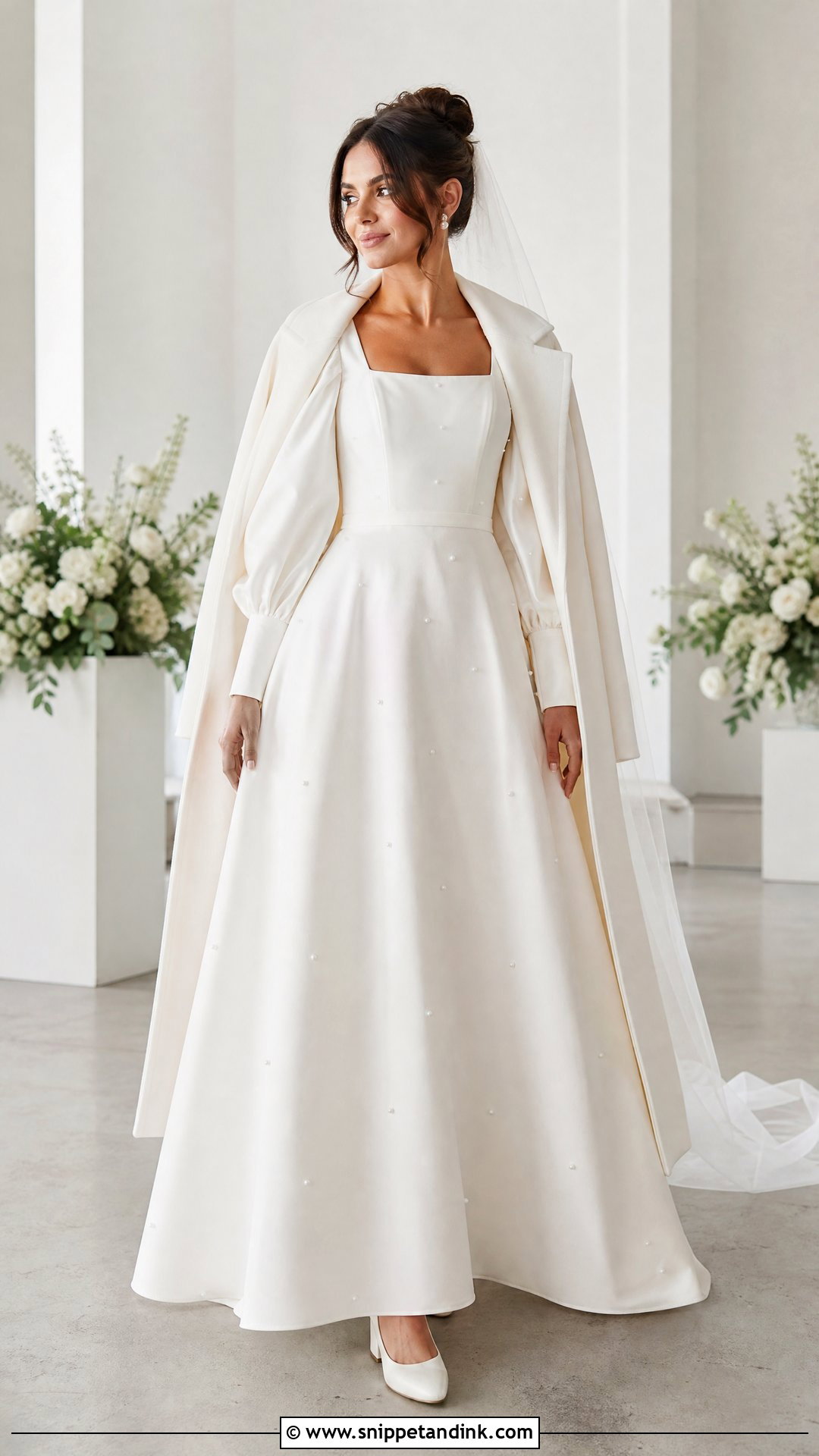
Puff sleeves add character and some arm warmth to a plain gown. A matte satin dress with a square neck, lightly gathered shoulders, fitted cuffs and an A-line skirt is the shape I’d look for. Keep the puff modest; an oversized sleeve will be squashed flat the second you put on a coat. That’s why I have brides try their actual coat over the dress at a fitting. Pearl studs, a low ponytail or bun and white block heels finish it, with a plain chapel veil to balance the shoulder volume. A collarless ivory coat sits most neatly over gathered sleeves. You get a romantic detail without any lace, sequins or heavy embroidery.

15. Long Sleeve Mermaid Winter Wedding Dress
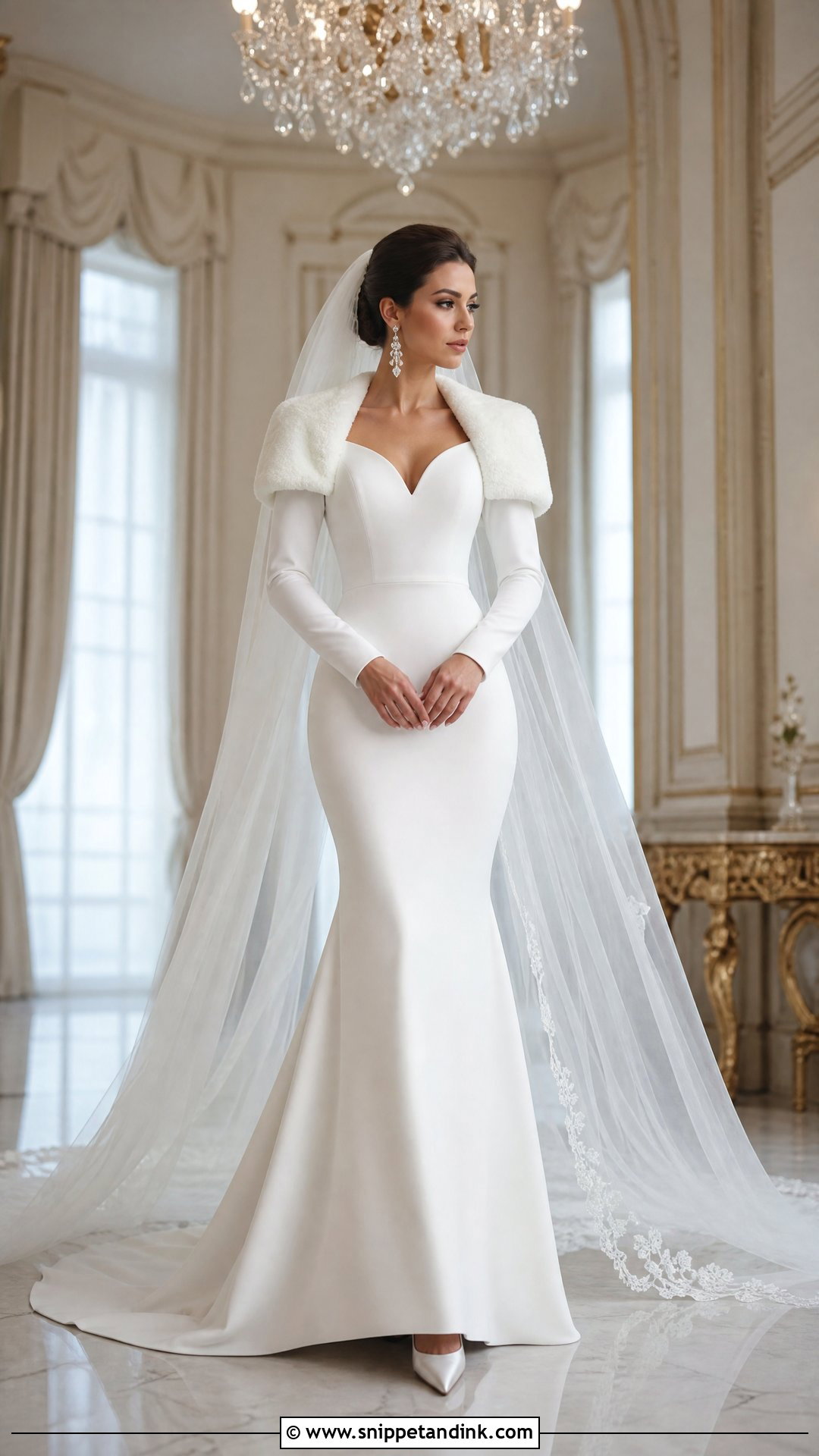
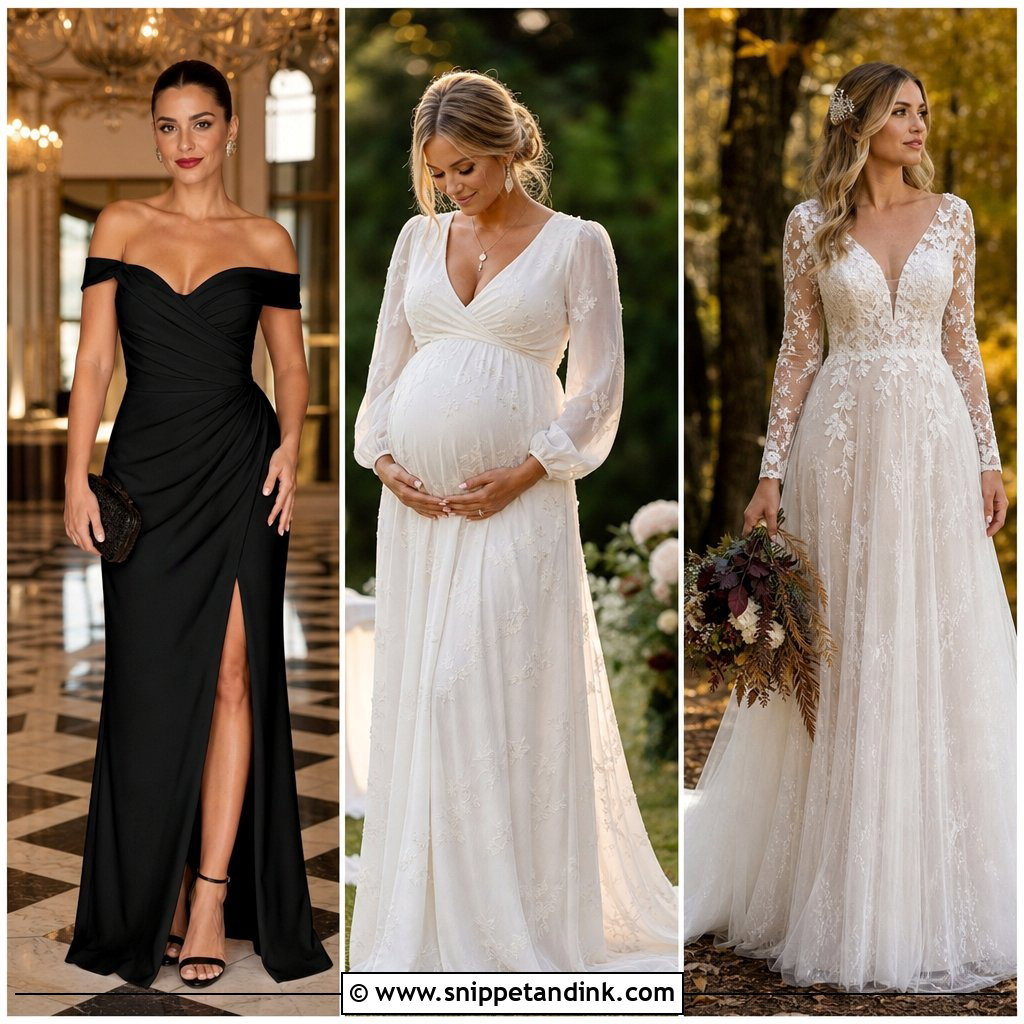
A long-sleeve mermaid gives you coverage and a strong, formal line. Stretch crepe or satin with a clean bodice, a modest V and a flare that starts around the knee is the build I like. The danger with a mermaid is a flare set too low; you can’t sit or take a stair. So I ask the bride to sit and climb a step in it before any hem is cut. Pointed satin pumps, crystal earrings and a sleek updo suit it, with a cathedral veil for the ceremony and a fitted wrap outside. Don’t wear a bulky coat, which crushes the flare. A secure bustle is a must for the reception.
16. Simple Empire Waist Winter Wedding Dress
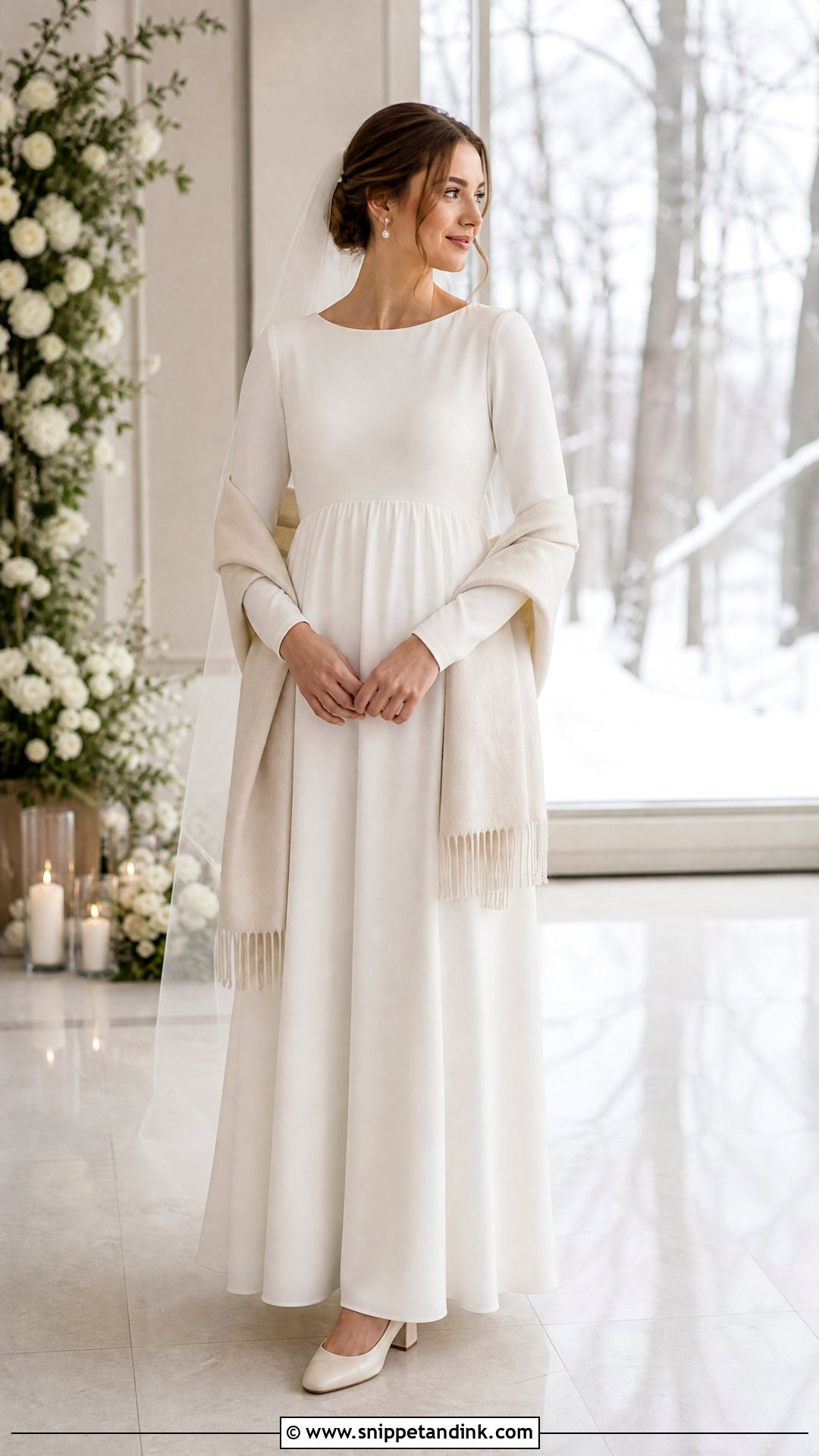
An empire waist doesn’t need a nipped natural waist, which makes it one of the most comfortable dresses here. Choose substantial crepe with long sleeves, a modest V and a raised seam under the bust, with the skirt falling straight. Add a thin satin belt only if you want a bit more definition. Pearl earrings, low block heels and softly pinned hair keep it light, with a chapel veil and a cashmere wrap. It’s a strong option for pregnant brides, and I’d schedule their final fitting as late as possible because the bust measurement keeps changing. Careful work at the shoulders and bust stops it looking loose.
17. Winter Wedding Dress With Detachable Sleeves
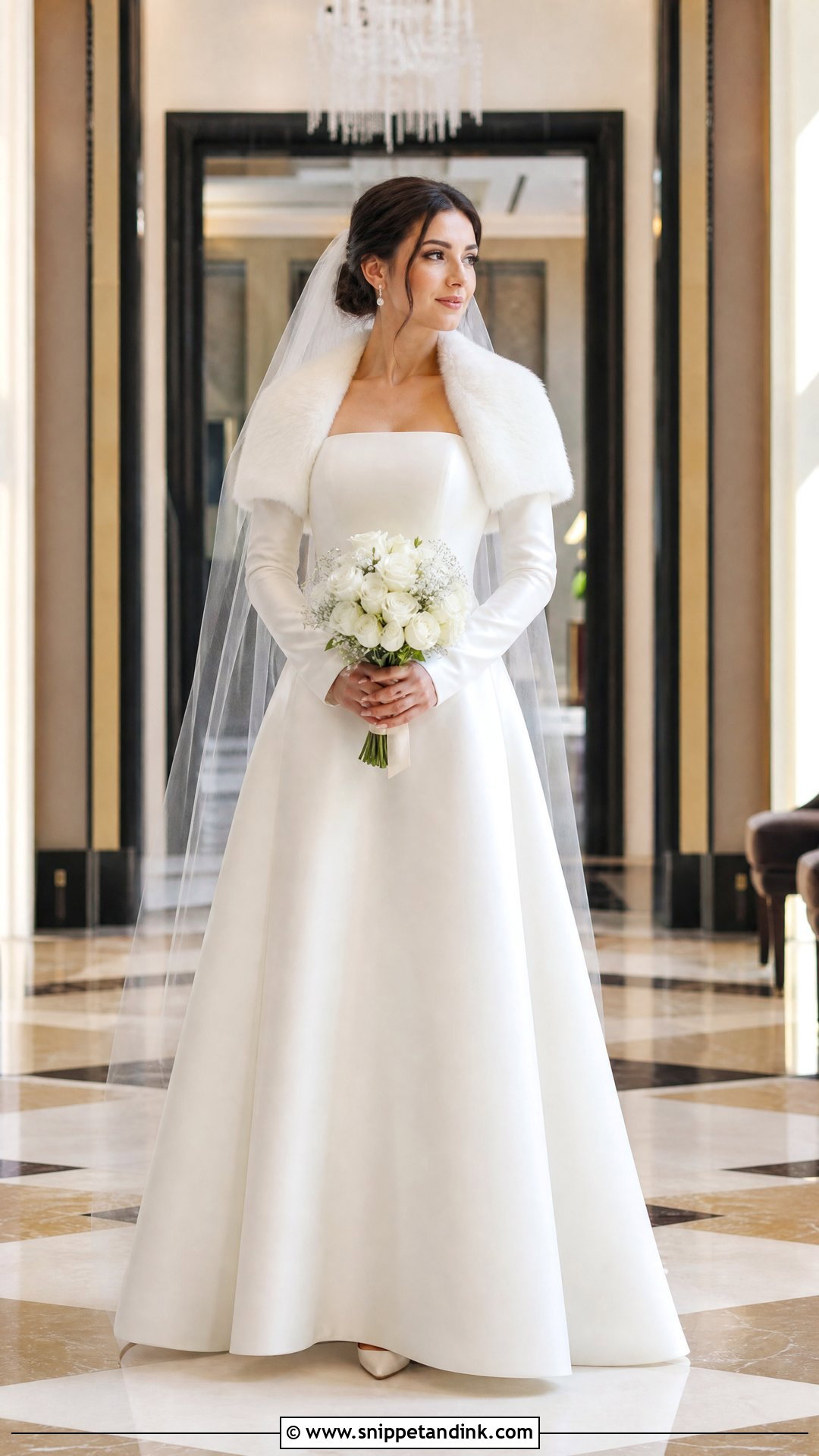
Detachable sleeves give you two dresses for the price of one gown. Start with a strapless satin A-line with a straight or gently curved neckline and a plain skirt. Add fitted crepe or illusion sleeves for the ceremony, matched carefully to the gown’s ivory, since sleeves cut from a different bolt rarely match exactly. They come off for the reception. A low bun, pearl drops, a fingertip veil and closed pumps finish it. Sleeves alone won’t keep you warm outdoors; add a short faux-fur wrap. I always do one full fitting with every removable piece on, to confirm the strapless bodice still holds you up once the sleeves are gone.
18. Winter Wedding Dress With Bridal Cape
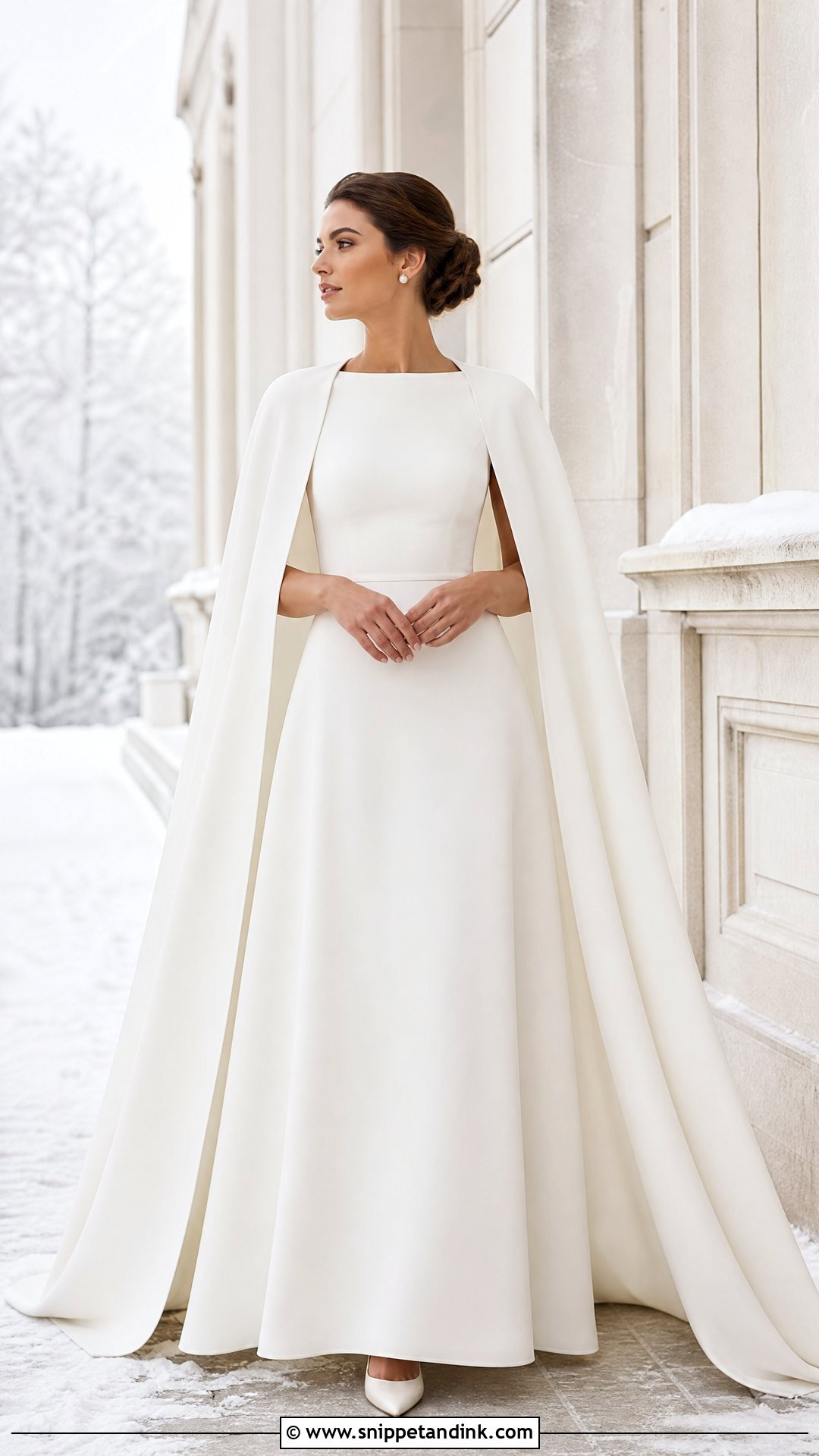
A cape turns a sleeveless gown into a winter outfit without changing the dress. Choose clean crepe with a high bateau neck, a fitted waist and a flowing skirt, then add a floor-length cape in satin, crepe or a light wool. The fastening should sit near the collarbone and leave room to lift your arms for the bouquet and the hug afterward. A cape suits an A-line, column or ball gown equally, and gives you drama plus coverage you can remove. Pearl studs, a polished bun and pointed pumps finish it. I’d skip a detailed veil here; wear a plain one, or let the cape be the ceremony layer.
19. Short Winter Wedding Dress With Tights
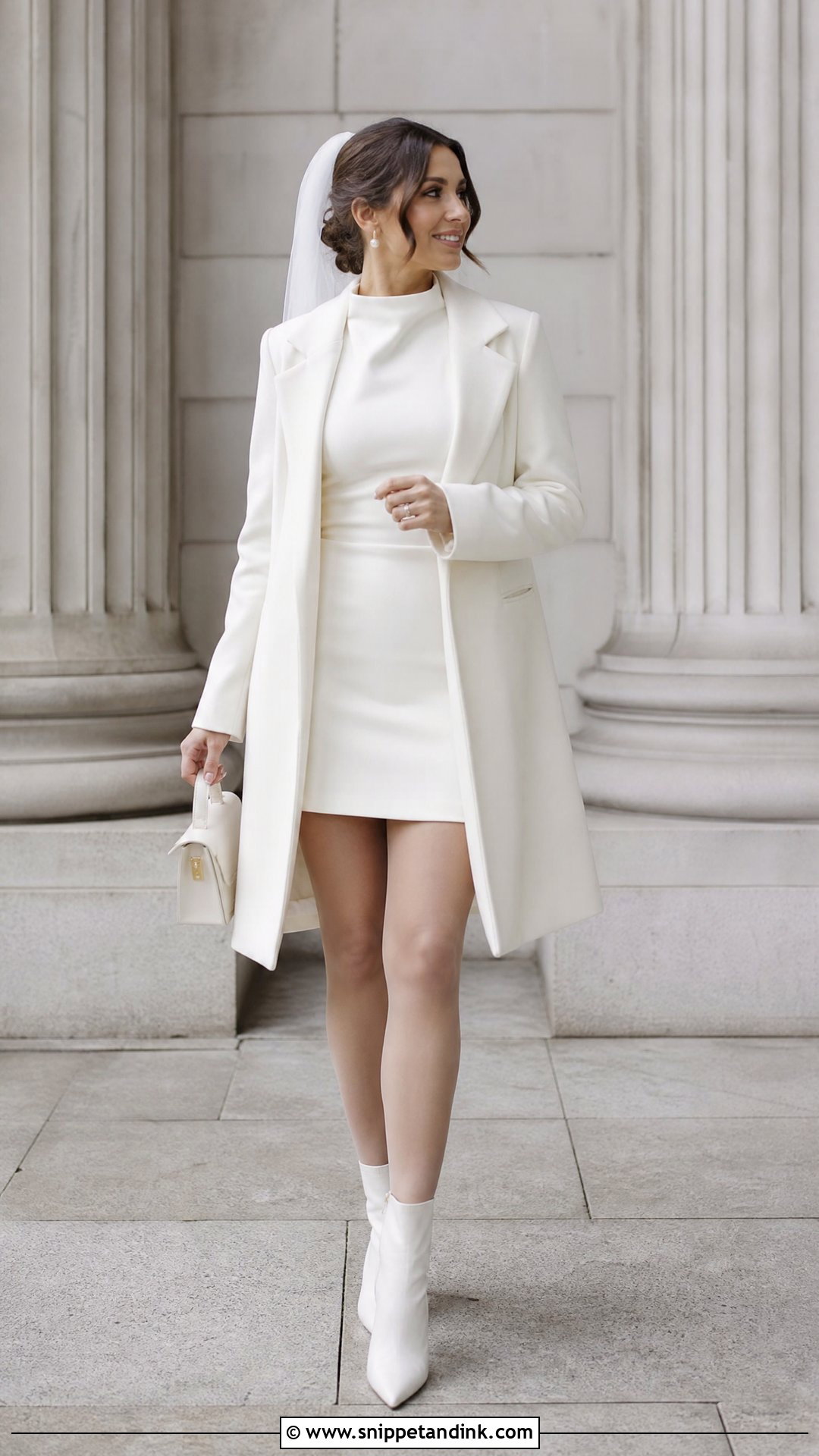
A short dress works in winter when every piece around it is chosen on purpose. A long-sleeve ivory mini in structured crepe or satin with a high neck and modest A-line skirt is the base. Sheer ivory tights give a tonal look and nude ones a natural one; I’d always pack a spare pair, since a ladder shows instantly in close-ups. Add closed white pumps or sleek ankle boots, pearl earrings, a short veil and a knee-length coat. Avoid a hem that’s too high if you’ll sit facing guests or climb stairs. Courthouse ceremonies and intimate indoor parties suit it, and it doubles as a reception change.

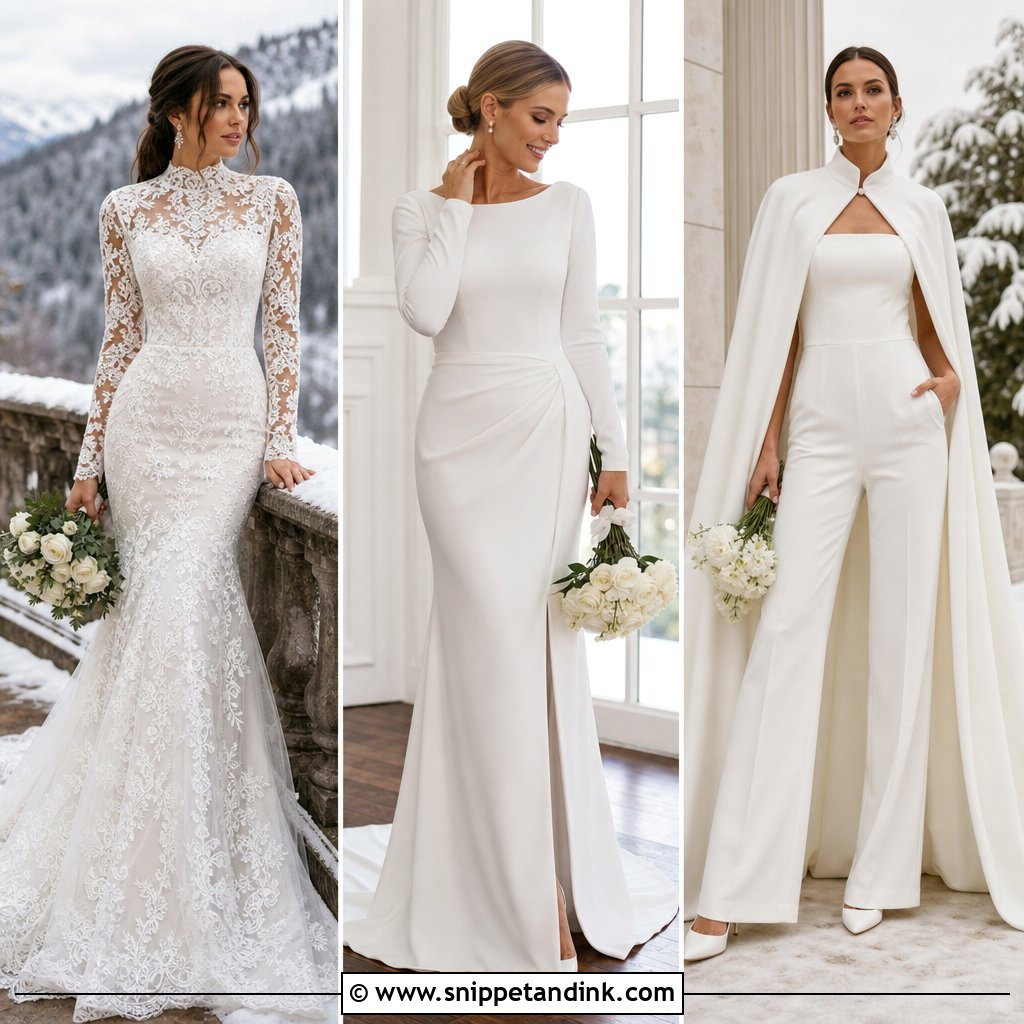
20. Simple Plus Size Winter Wedding Dress
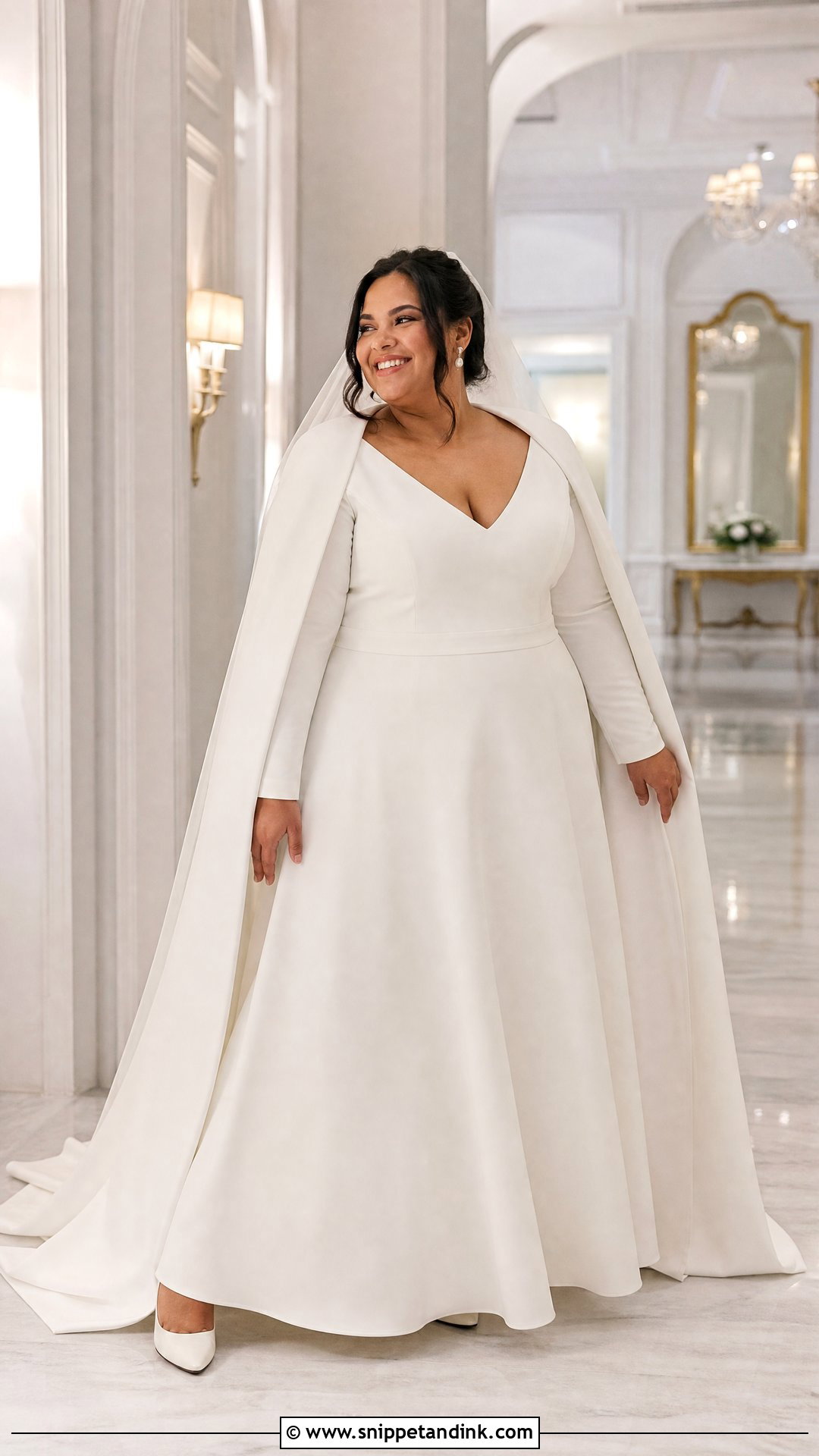
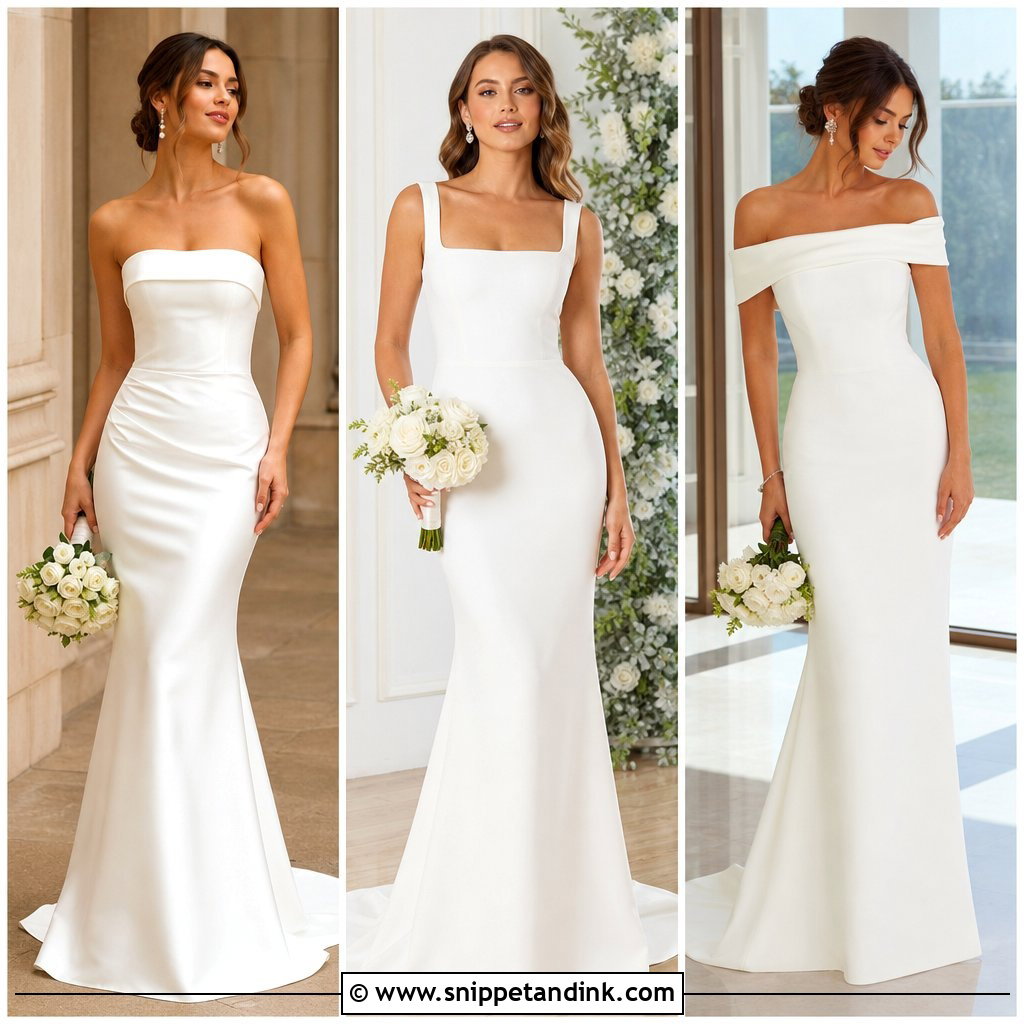
For a plus-size winter gown, the goal is support and the silhouette you love, not concealment. A long-sleeve crepe A-line with a structured bodice, a defined waist and a soft skirt is a reliable start. A V-neck frames the face, and a slightly wider sleeve sits comfortably on the upper arm. A long veil, pearl drops and stable block heels finish it. If you want a cape or wrap outdoors, have it made to measure so it doesn’t pull across the bust. The label size means little; the fit at the shoulders, waist, hem and cuffs means everything. When the bodice has proper boning and a waist stay, I find the shapewear becomes optional.
Wet Hems, Static Veils and Other Winter Problems on the Day
Winter adds a few hazards a summer bride never thinks about. None of them are dramatic, but each one shows up in photos if nobody plans for it.
Slush and salt at the hem
Road salt leaves a pale tide mark on satin once the water dries. Have someone carry the train between the car and the door, and keep a clean white microfiber cloth and a bottle of plain water in the emergency kit. Blot, never rub. If the hem does get salted, tell your cleaner afterward so they treat it before storage.
Static cling
Dry heated rooms make tulle veils stick to satin and slip skirts cling to tights. A light mist of anti-static spray on the inside of the lining, tested on a hidden seam the week before, fixes most of it. Natural-fiber tights help too.
Coat marks and crushed shoulders
A coat put on and taken off a dozen times will flatten a puff sleeve and drag a folded neckline. My rule is one outer layer per bride, worn only outdoors, held by one person who knows it’s their job. And bring a small handheld steamer for the bustle and skirt after dinner; winter venues are warm, and creases set quickly in that heat.
Fabric First, Then the Coat, Then Everything Else
A simple winter dress succeeds when the cloth and the layers are planned together. Long sleeves and weighty fabric handle most of the cold, while a cape, coat, gloves or a pair of boots fill the gaps outdoors. Plain doesn’t mean characterless; a square neck, a velvet nap, a puff sleeve or a well-cut train gives a clean gown its own personality. Plan for movement and support, book your alterations early, and pick outer layers that come off in seconds once you’re inside and warm.
You'll Like These Ideas:


Leave a Reply