
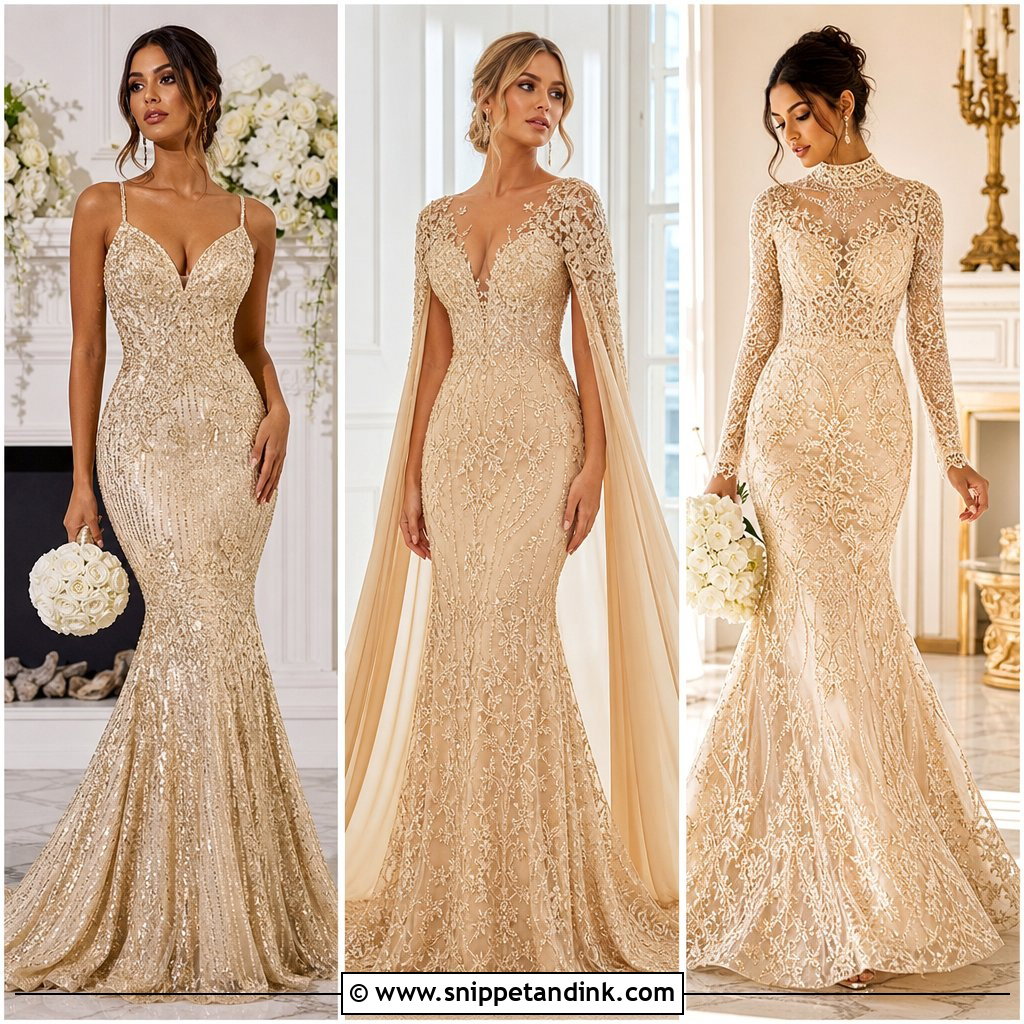
Gold on a wedding gown can lean regal, vintage, romantic or quietly modern, depending on how much of it there is and where it sits. Metallic embroidery, fine beading, gold-threaded lace, sequins and removable pieces like capes and overskirts all bring it in differently. The question I ask first isn’t how much gold, but which gold: yellow, antique and champagne metallics behave very differently against white, against ivory and against your skin. The twenty dresses below cover the whole range, from a single line of piping to a black and gold gown, and each comes with the shoes, jewelry and veil that keep it in balance.
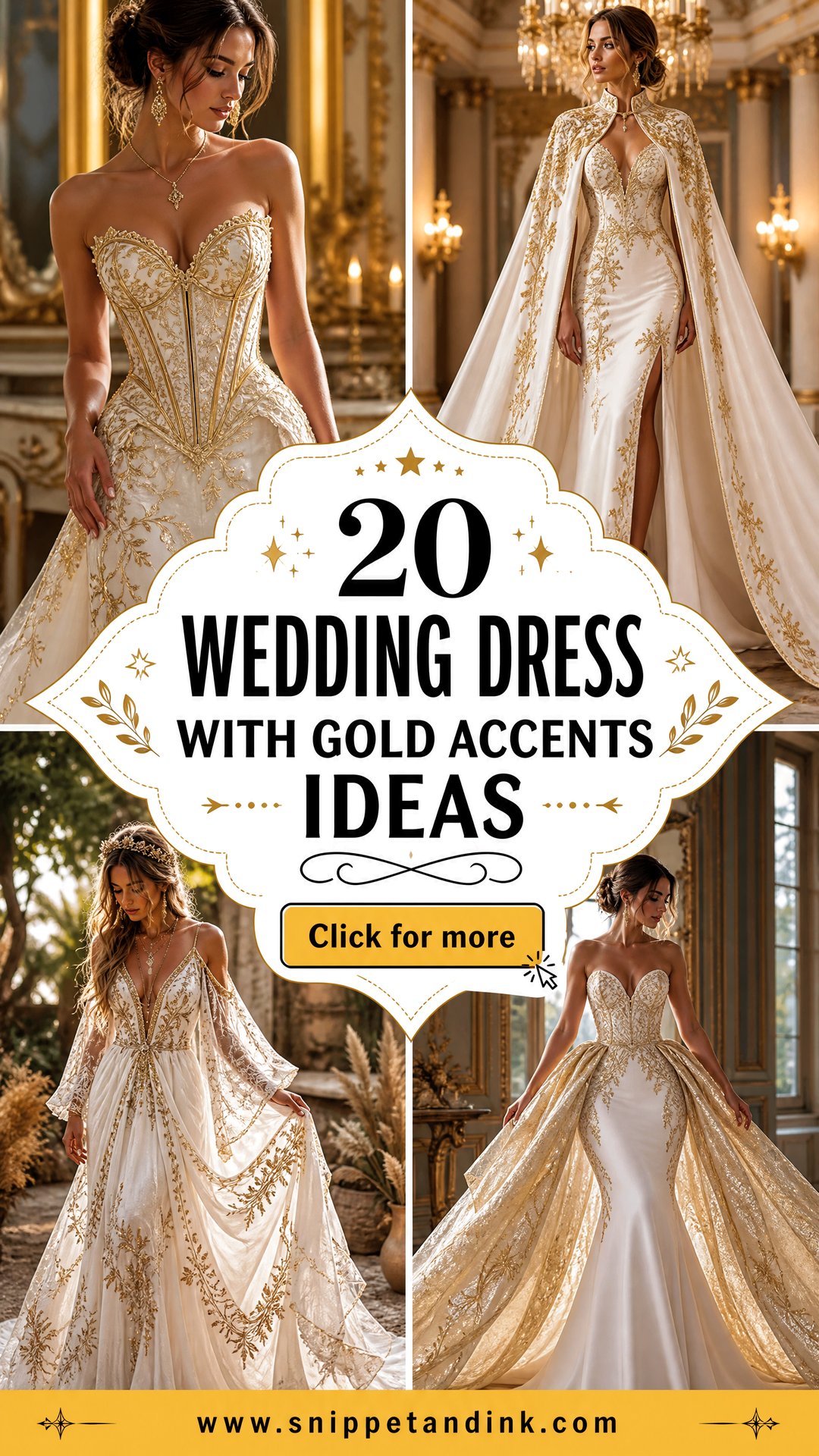
Yellow, Antique or Champagne Gold Against Your Skin
Bridal gold comes in more shades than most brides realize, and the wrong one can make an expensive dress look cheap. At an appointment I lay the embroidery or lace against the inside of the bride’s wrist and then near her face, in daylight if possible.
- Bright yellow gold is crisp against white and on deeper and olive skin, but it can look brassy on very fair, cool-toned skin.
- Antique or burnished gold has a brownish depth that suits ivory gowns and vintage styles, and it’s kinder to fair skin.
- Champagne gold is the softest. It almost disappears on ivory, which is lovely for a subtle look and disappointing if you wanted gold to show.
Once you know your gold, match the jewelry to it. Rose gold earrings beside yellow embroidery, or bright gold beside antique thread, makes both look slightly wrong. If you’re wearing a family piece in a different tone, keep it away from the embroidered areas, at the wrist or in the hair rather than at the neckline.
1. White Wedding Dress With Gold Embroidery
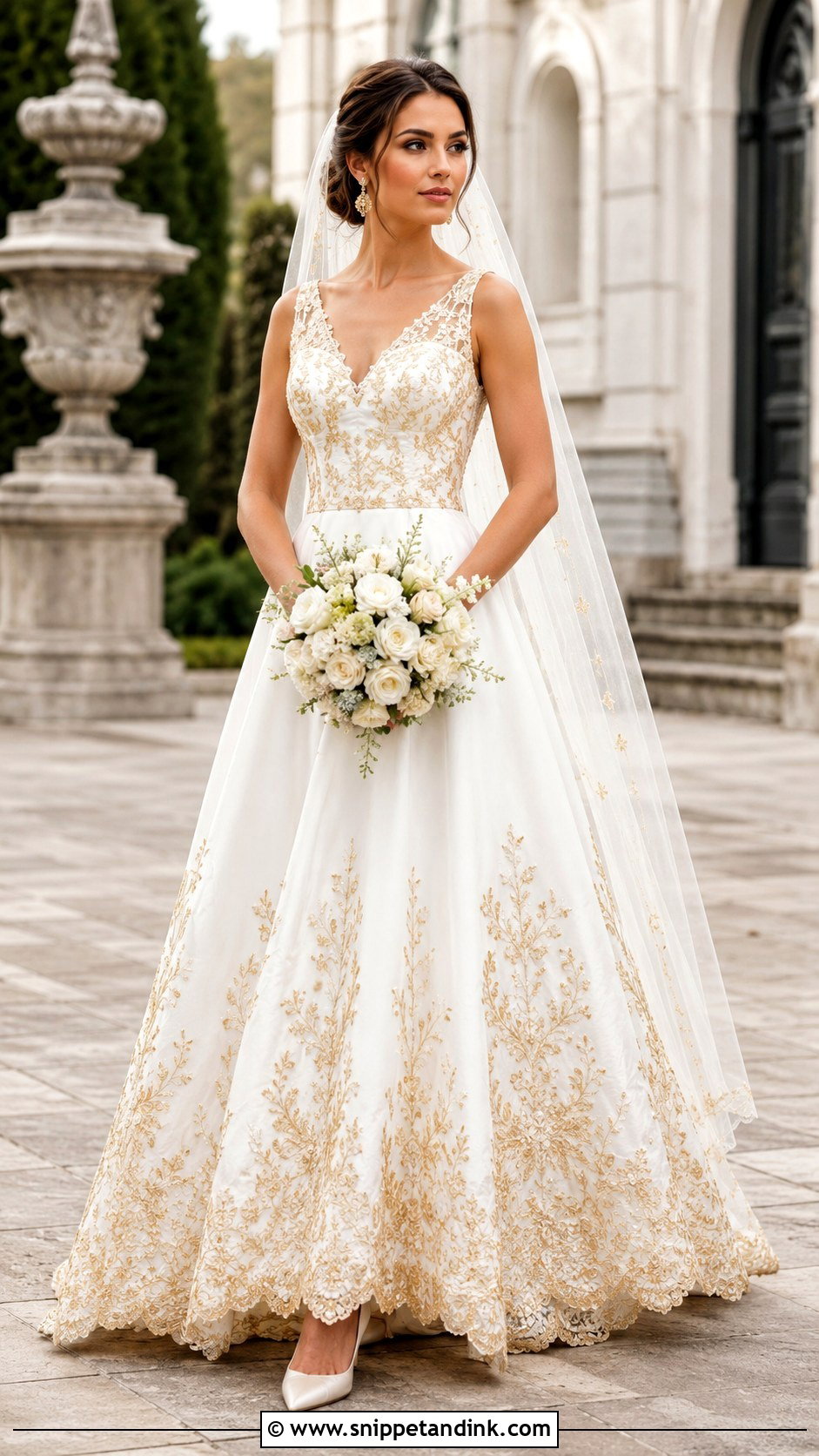
Gold embroidery on white is the sharpest contrast in this collection, and placement keeps it bridal. On an A-line, motifs gathered at the fitted bodice, the waist and the hem frame your shape and leave the middle of the skirt calm. Bright white can make yellow-gold thread look brassy, so I always compare the embroidery against an ivory version of the same gown before deciding. A sweetheart or softly curved neckline, ivory pointed pumps, small gold drops and a fingertip veil. A smooth low bun keeps the embroidered neckline visible. Ballrooms, formal gardens and historic estates suit it.
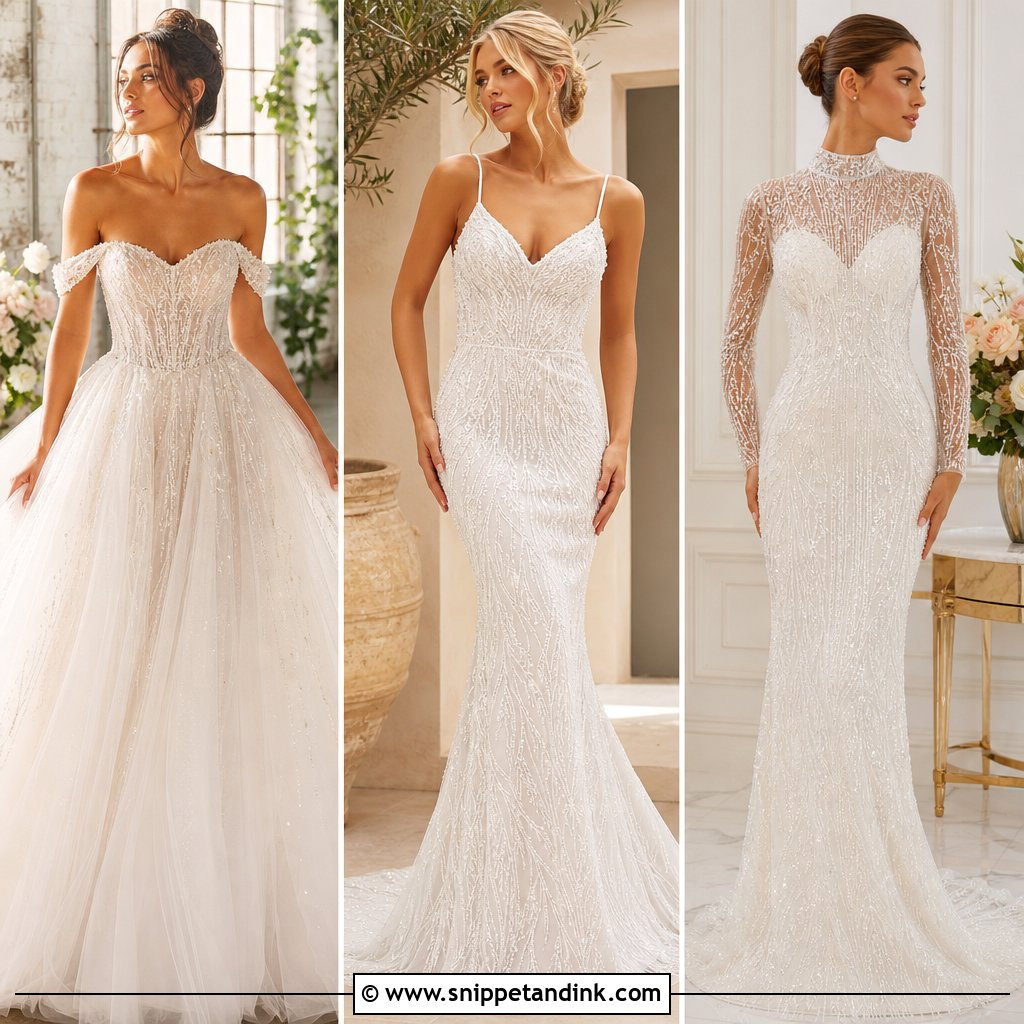
2. Ivory Wedding Dress With Gold Lace
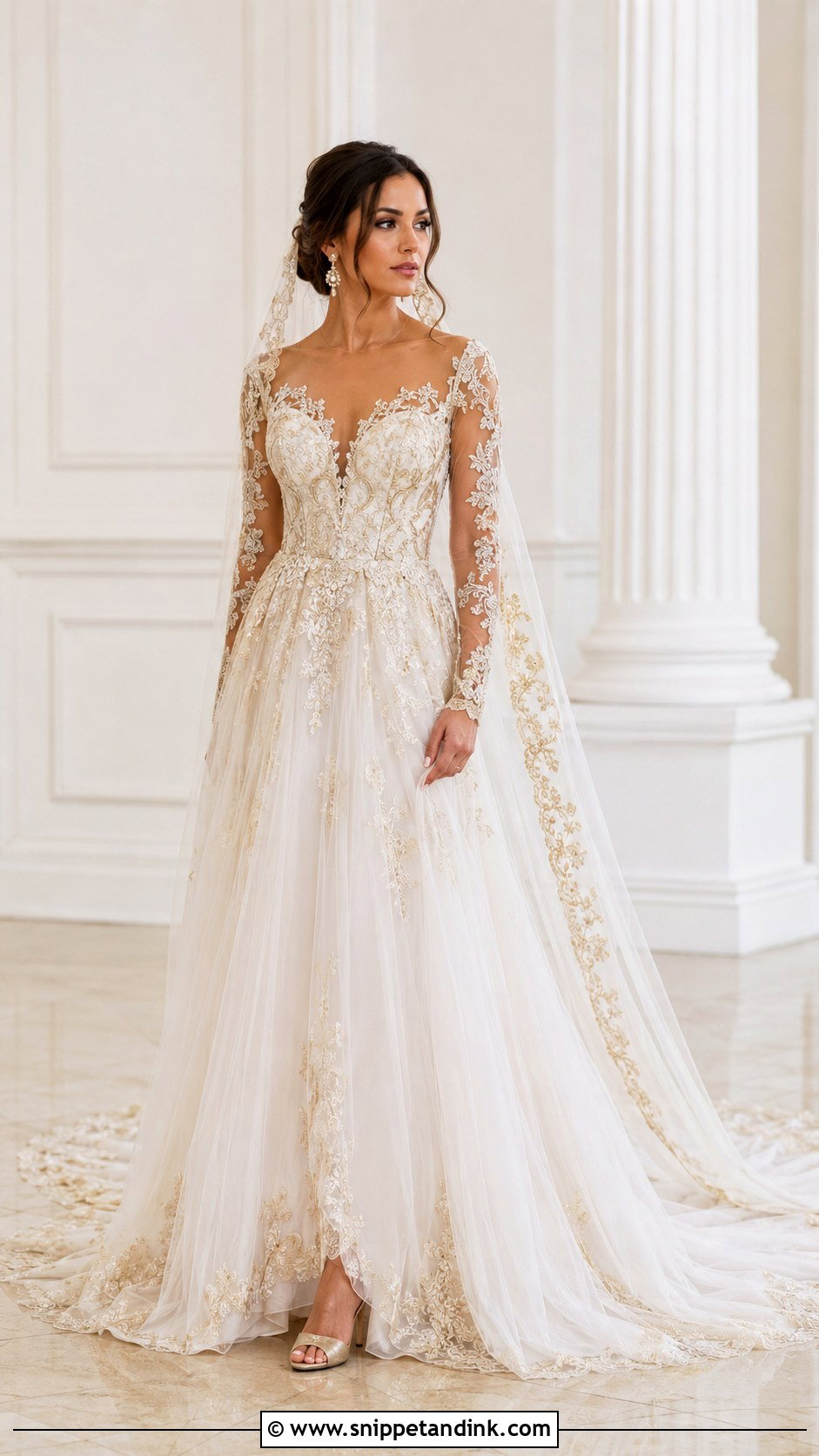
Ivory and gold lace sit close together in tone, so the lace reads warm and rich rather than stark. Look for gold-threaded appliqués dense on the bodice and thinning out along a tulle skirt. With an illusion neckline or sheer sleeves, the lace seems to float on the skin, but only if the illusion mesh matches your complexion; I hold the mesh against the inner wrist in daylight to check. Champagne heels, pearl-and-gold earrings, a thin gold bracelet, and a sheer cathedral veil with a narrow lace edge. A relaxed chignon and neutral manicure finish it for an indoor ceremony or a spring or autumn date.
3. Gold Beaded Mermaid Wedding Dress
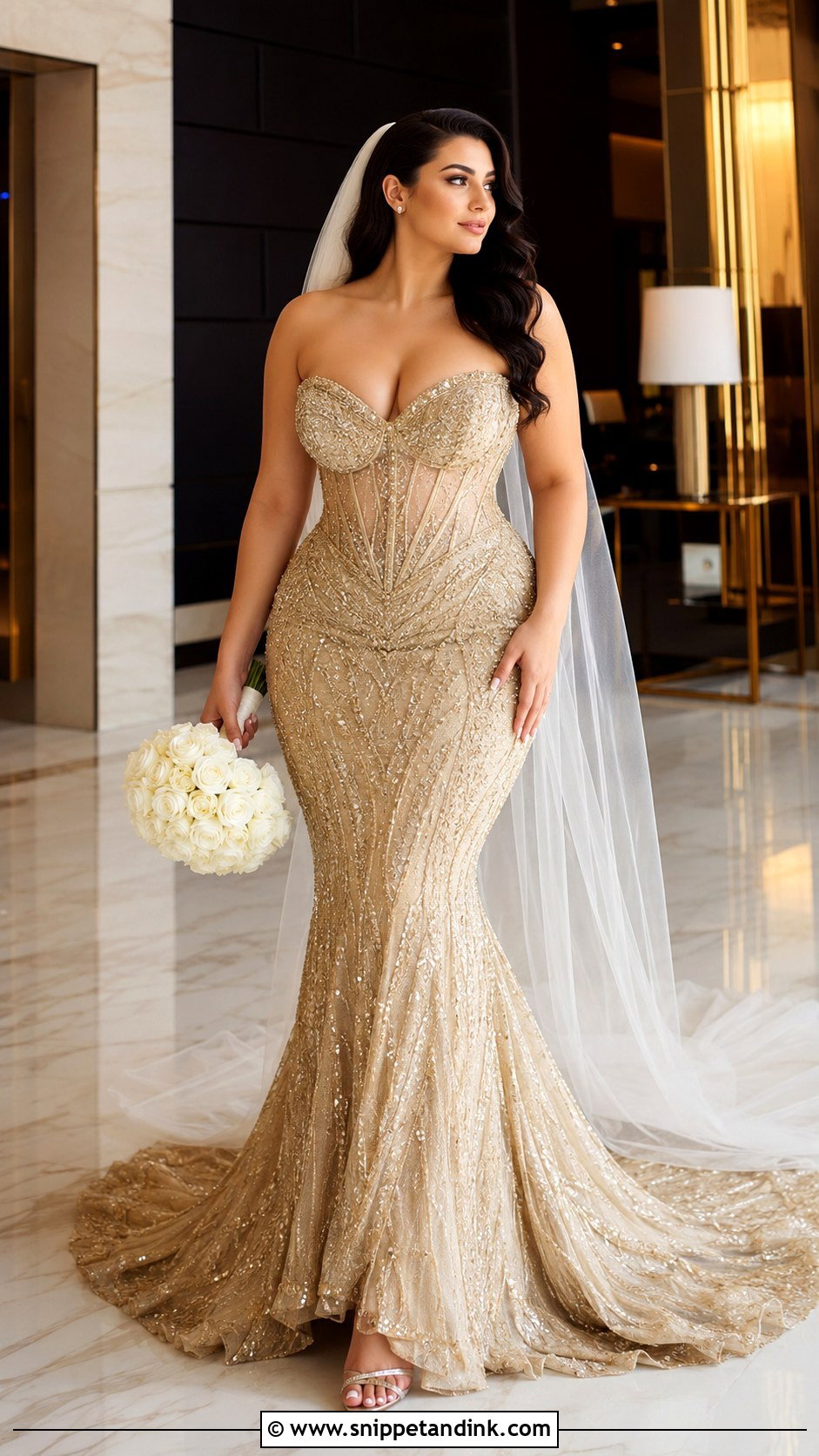
Beading on a mermaid gown has to follow the body exactly, because any wrinkle in the base fabric shows as a kink in the bead line. Curved gold beadwork over a white or nude lining emphasizes the waist before the skirt flares. A supportive corset and a stretch lining make it possible to walk and sit. I’d also ask how heavy the finished dress is; beaded mermaids weigh more than they look, and that weight pulls at the knee seam over a long evening. Simple metallic sandals, small studs, no necklace if the neckline is detailed, and a long plain veil. Polished waves or a sleek bun for an evening hotel reception.
4. Gold Floral Applique Wedding Dress
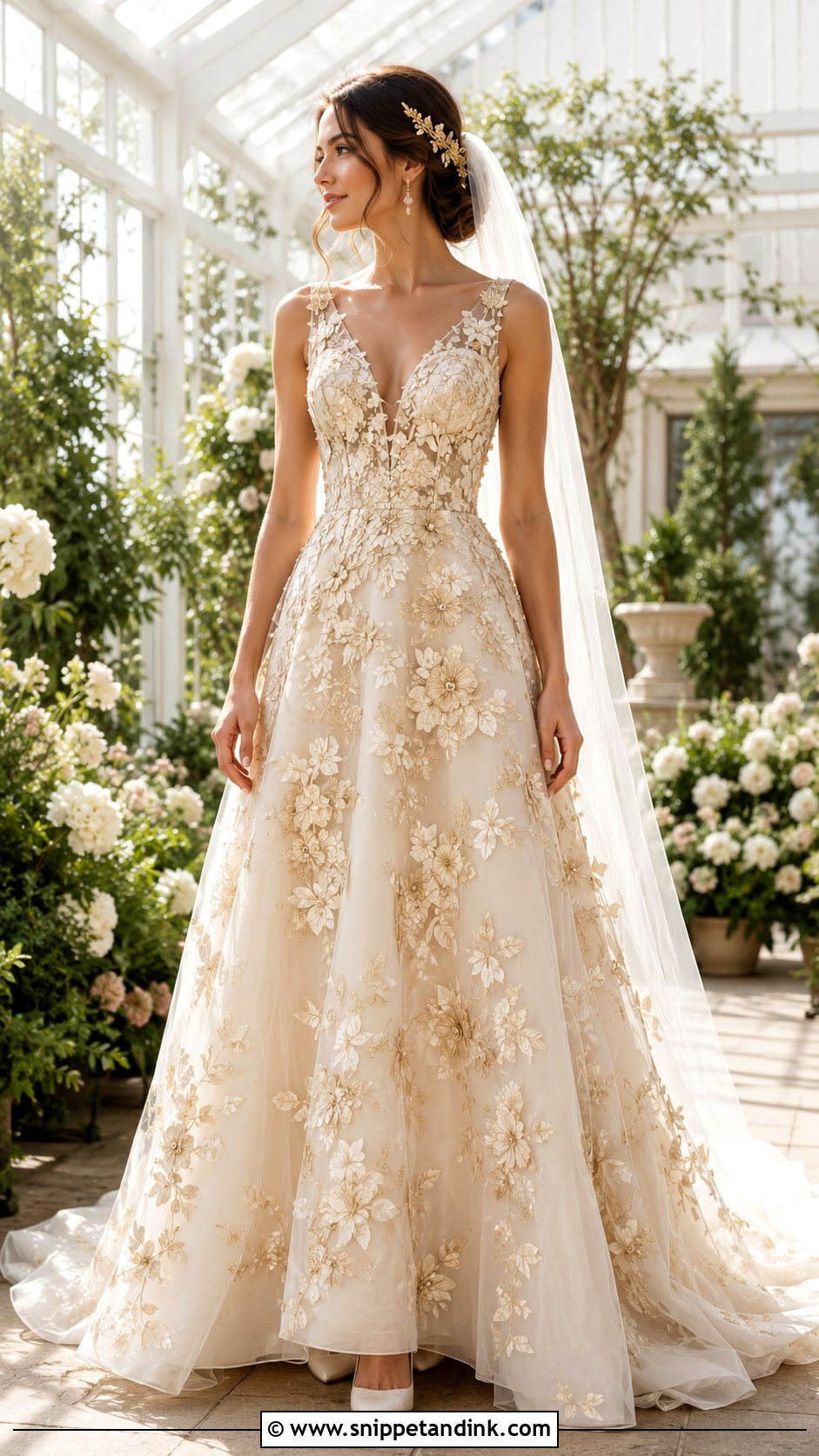
Raised gold appliqués catch light on their edges, so they show texture as much as color. Select a soft A-line with embroidered flowers across the bodice drifting lightly down the skirt, over a champagne or pale blush underlayer that makes the gold stand out. A plain veil is the right call: an embellished one snags on raised appliqués every time it moves. Closed-toe ivory heels, a gold floral hair comb and slim drop earrings, with white flowers and a touch of peach or cream. Gardens, conservatories and bright ceremony rooms show the texture best.
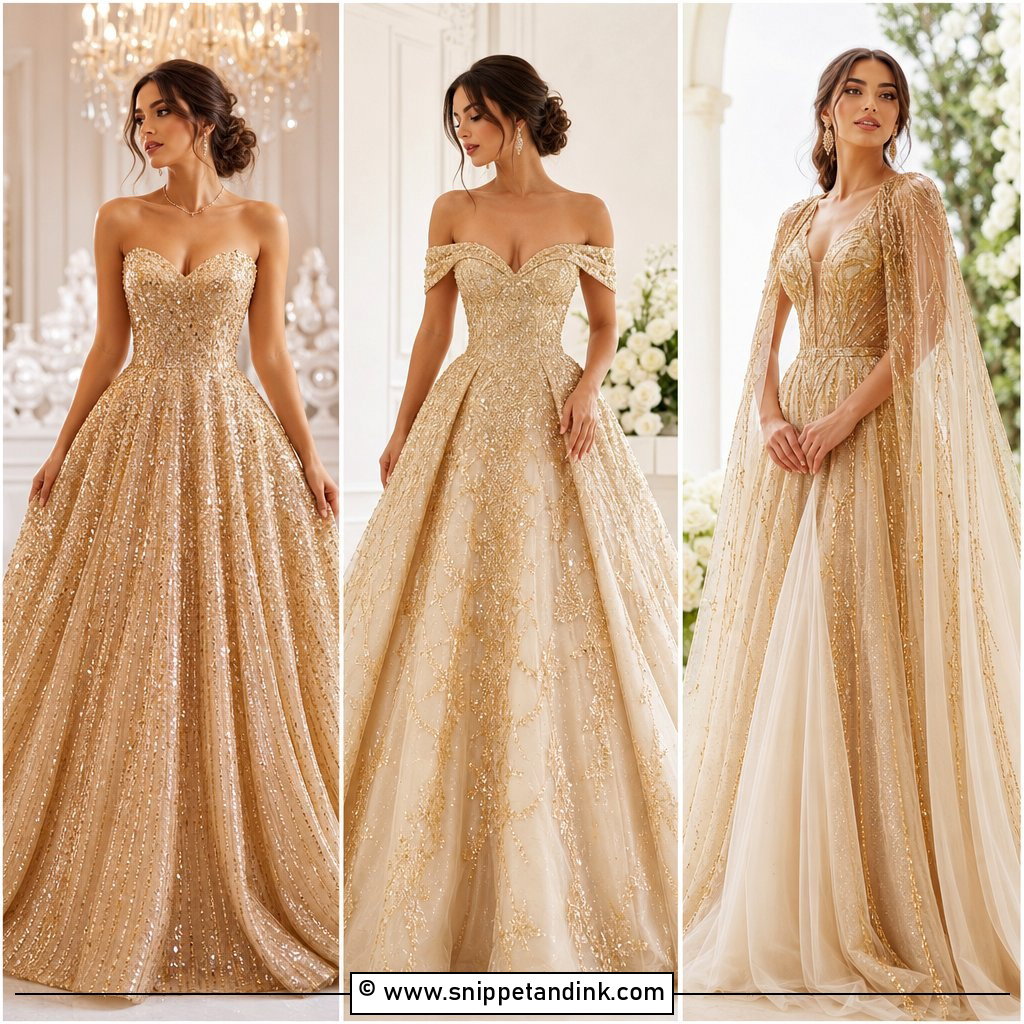
5. Gold Sequin Ball Gown Wedding Dress
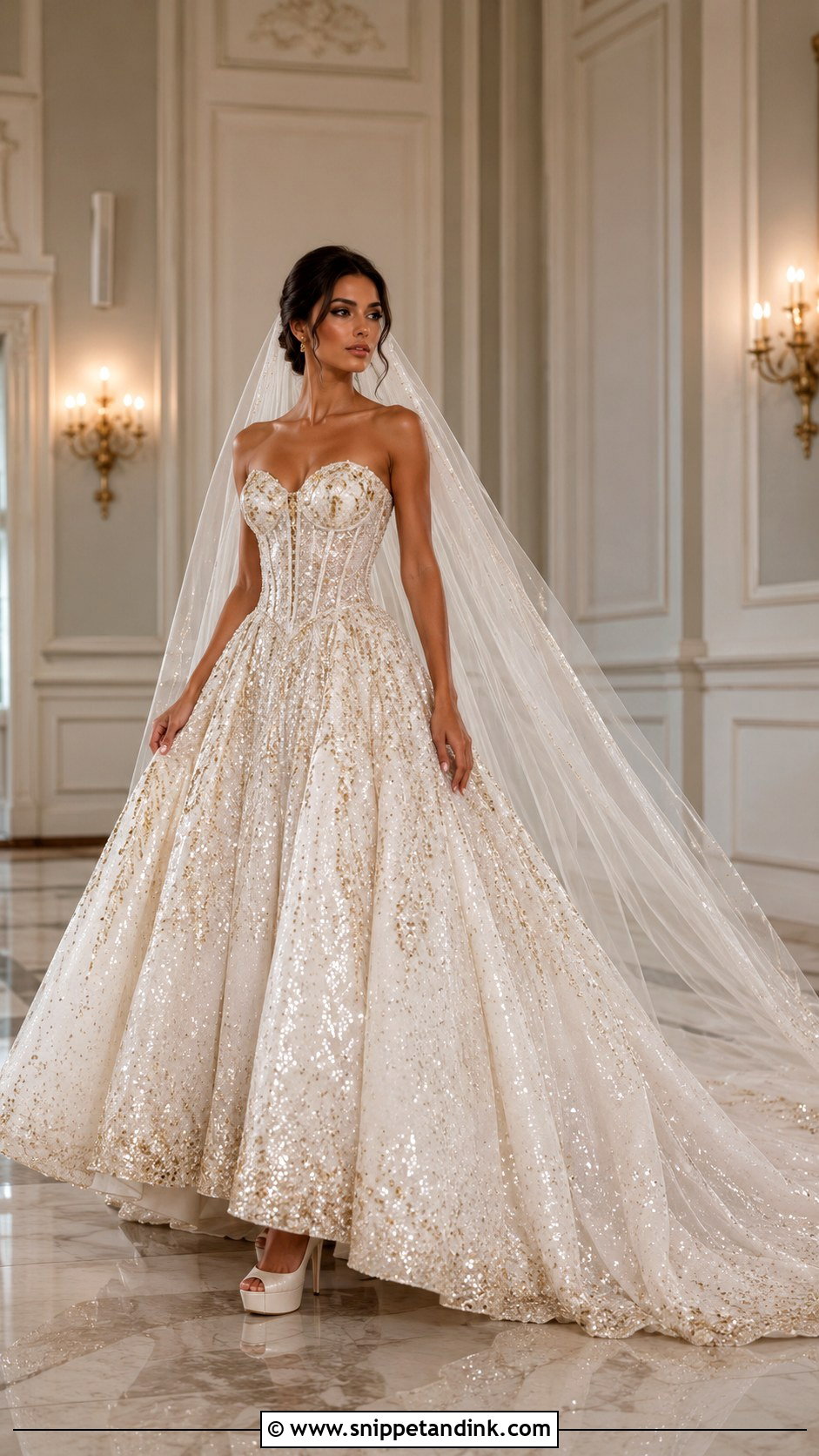
Sequins scattered lightly at the bodice and building toward the train keep a gold sequin ball gown refined up top and lively below. A structured white bodice and full skirt give the grand shape. Sequins have sharp edges, which matters for hair and arms: a smooth updo keeps strands from snagging, and if the sequins run up to the underarm, I check for rubbing on the inner arm. Small gold hoops, a delicate bracelet and satin platform heels hidden under the skirt. A sheer cathedral veil with no beading. This dress needs a ballroom, a museum or a big room where the skirt has space.
6. Champagne Wedding Dress With Gold Beading
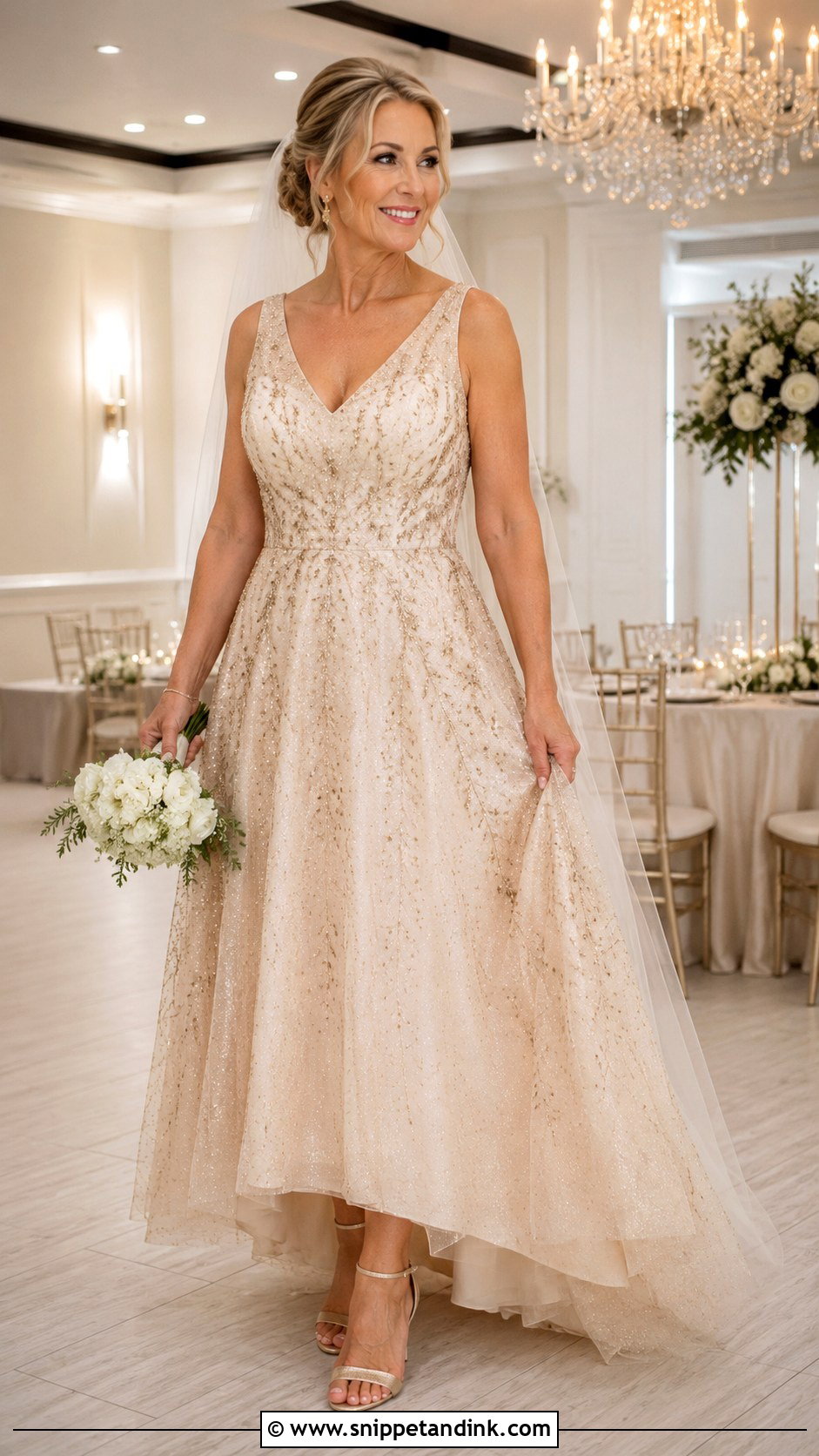
Champagne fabric with gold beading is a blended, low-contrast look, closer to candlelight than to sparkle. An A-line or column with fine beadwork over the bodice and shoulders stays light. The lining shade decides everything here: on some skin tones champagne looks luminous, on others it reads beige, so I try two or three lining shades against the bride’s face before ordering. Champagne ankle-strap heels, simple gold earrings and a structured ivory clutch. A soft tulle veil adds a lighter bridal note. A side-swept style or low bun with a small metallic pin, for an evening ceremony or a room with neutral or jewel-toned decor.
7. Gold Corset Wedding Dress
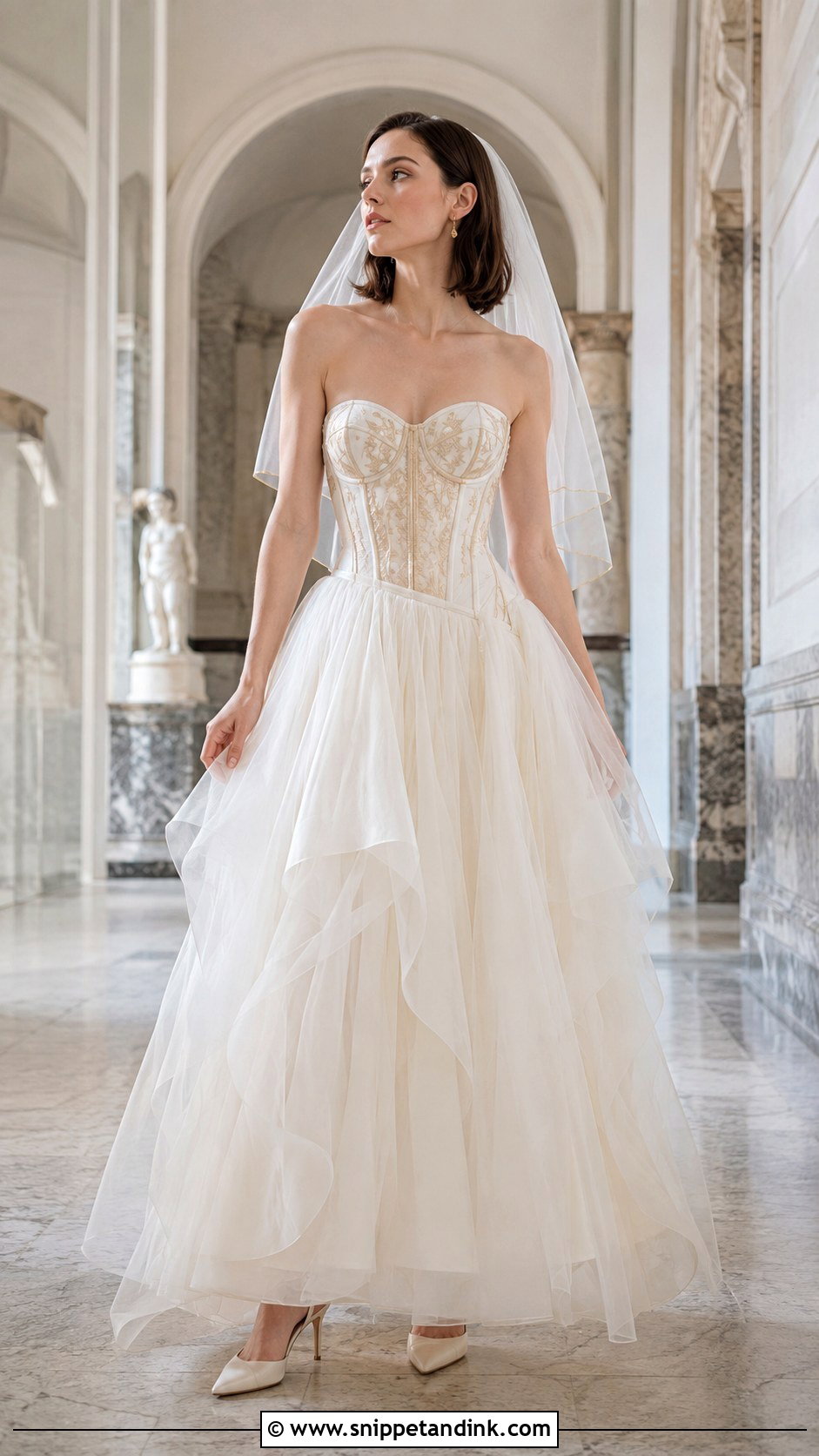
Corsetry and gold embroidery work together when the embroidery follows the boning seams, since that emphasizes the structure instead of fighting it. Choose an ivory gown with a defined waist and a full satin or layered tulle skirt. Boned bodices are only comfortable if they’re fitted with the undergarments you’ll wear, and I ask brides to sit for a full minute at the fitting to feel where the bones press. Ivory slingbacks, narrow gold earrings and a tennis bracelet; skip the heavy necklace. A shoulder-length veil keeps attention on the corset, while a longer plain one adds ceremony drama. Neat updo, soft makeup.
8. Gold Long Sleeve Wedding Dress
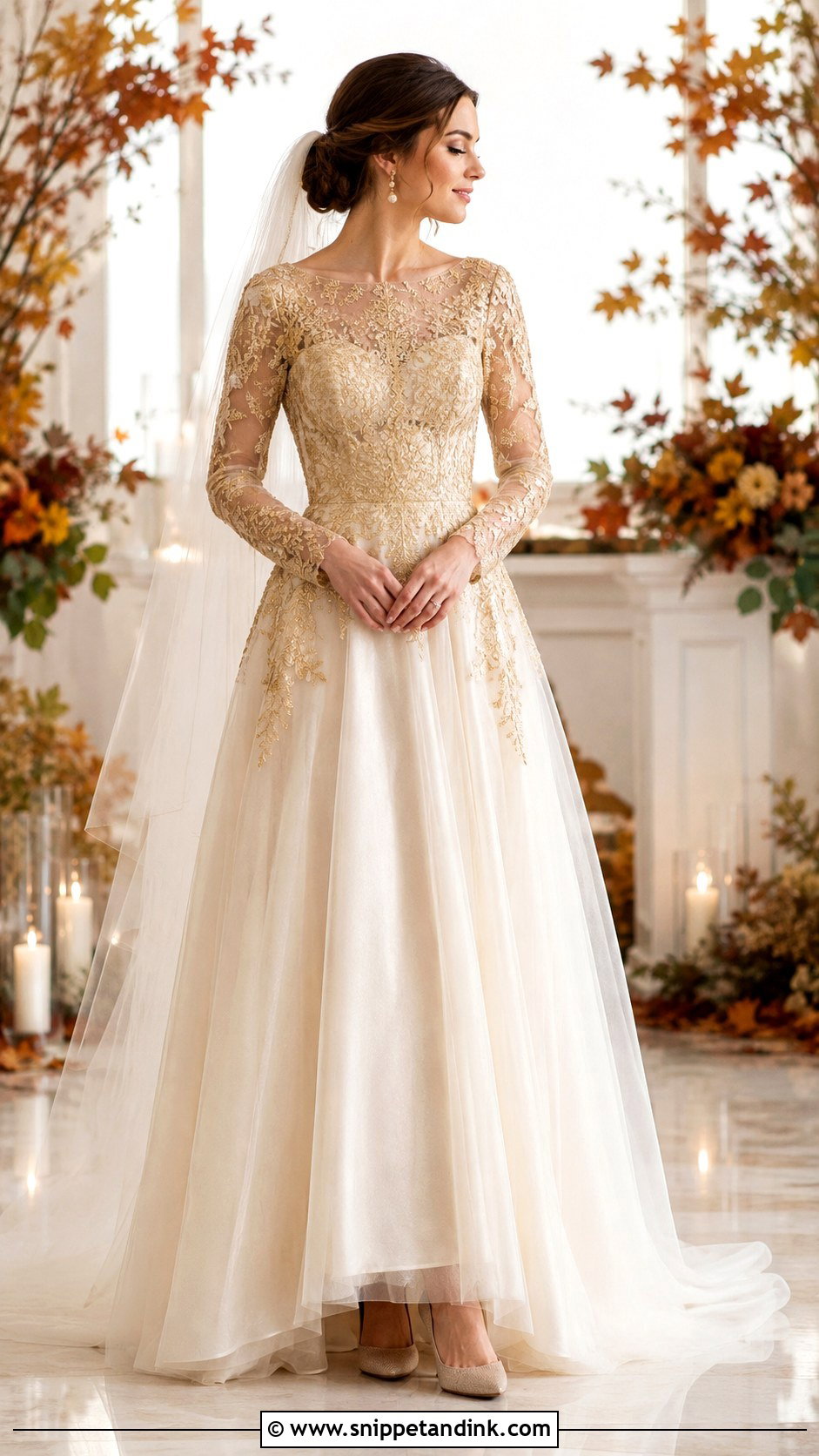
Gold vines running from shoulder to cuff turn sleeves into the main feature. Sheer tulle or fine lace is the best base, with the embroidery continuing lightly across the bodice and a flowing skirt so the dress doesn’t feel stiff. Metallic thread is less flexible than silk, so embroidered sleeves can feel scratchy at the elbow crease; I always have brides bend their arms repeatedly at the fitting. Closed-toe champagne pumps, gold-and-pearl earrings, a low textured bun, and no bracelet so the cuffs stay visible. A plain chapel veil falls behind the sleeves. Ideal for autumn and winter, or chilly air-conditioned venues.
9. Gold Off Shoulder Wedding Dress
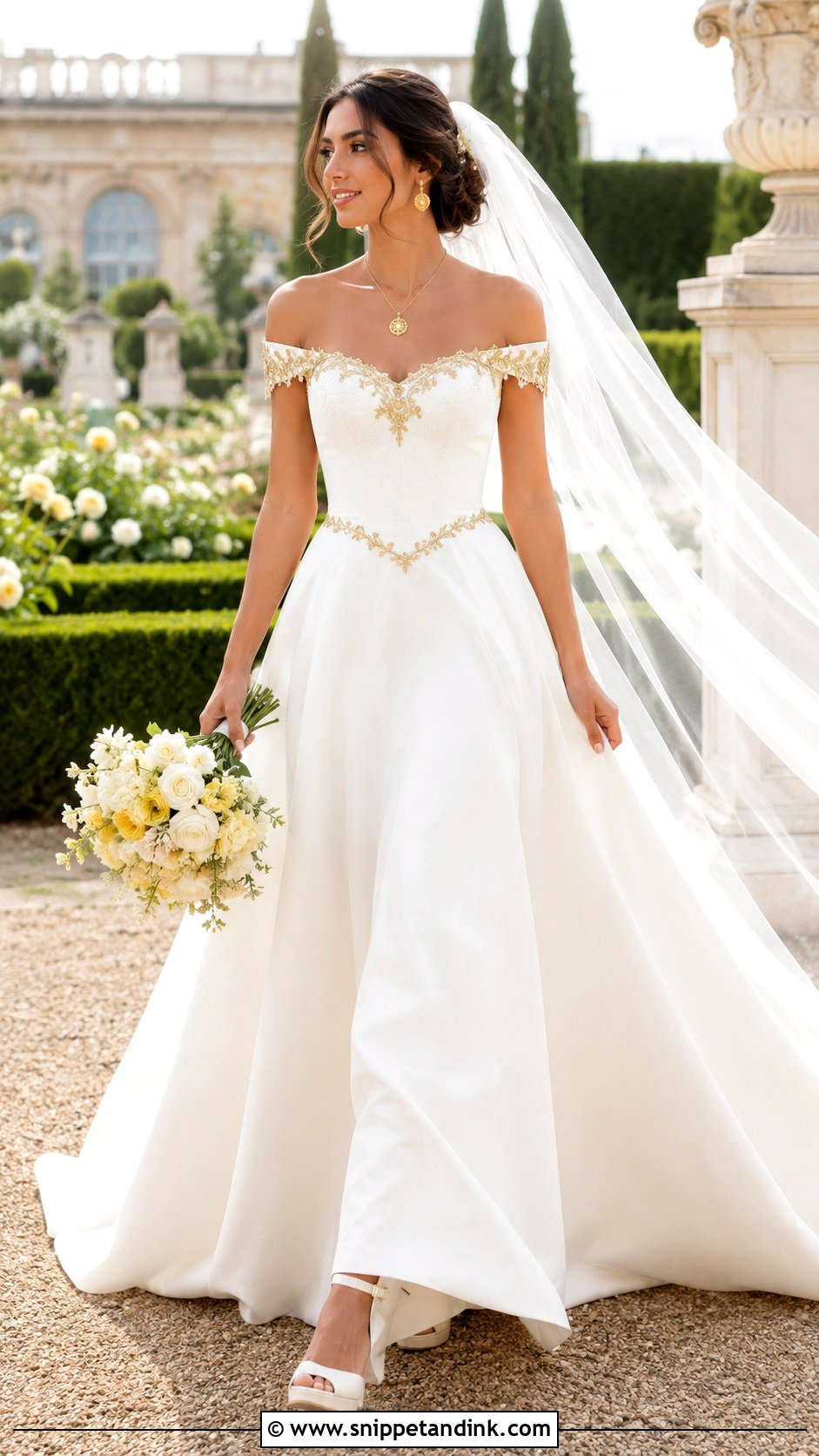
Embroidery tracing an off-the-shoulder neckline puts gold right beside your collarbones and face, so the shade should flatter your skin above all. A white ball gown or A-line with metallic embroidery spreading gently from the neckline balances a full skirt. Off-shoulder bodices need grip, and a silicone strip inside the top edge stops the neckline creeping down as you move. A simple gold pendant, small matching earrings and ivory block heels. A loose low bun or side-swept waves, and a sheer veil set beneath the hair so it falls behind the embroidery. White and pale yellow flowers echo the gold.
10. Gold Halter Wedding Dress
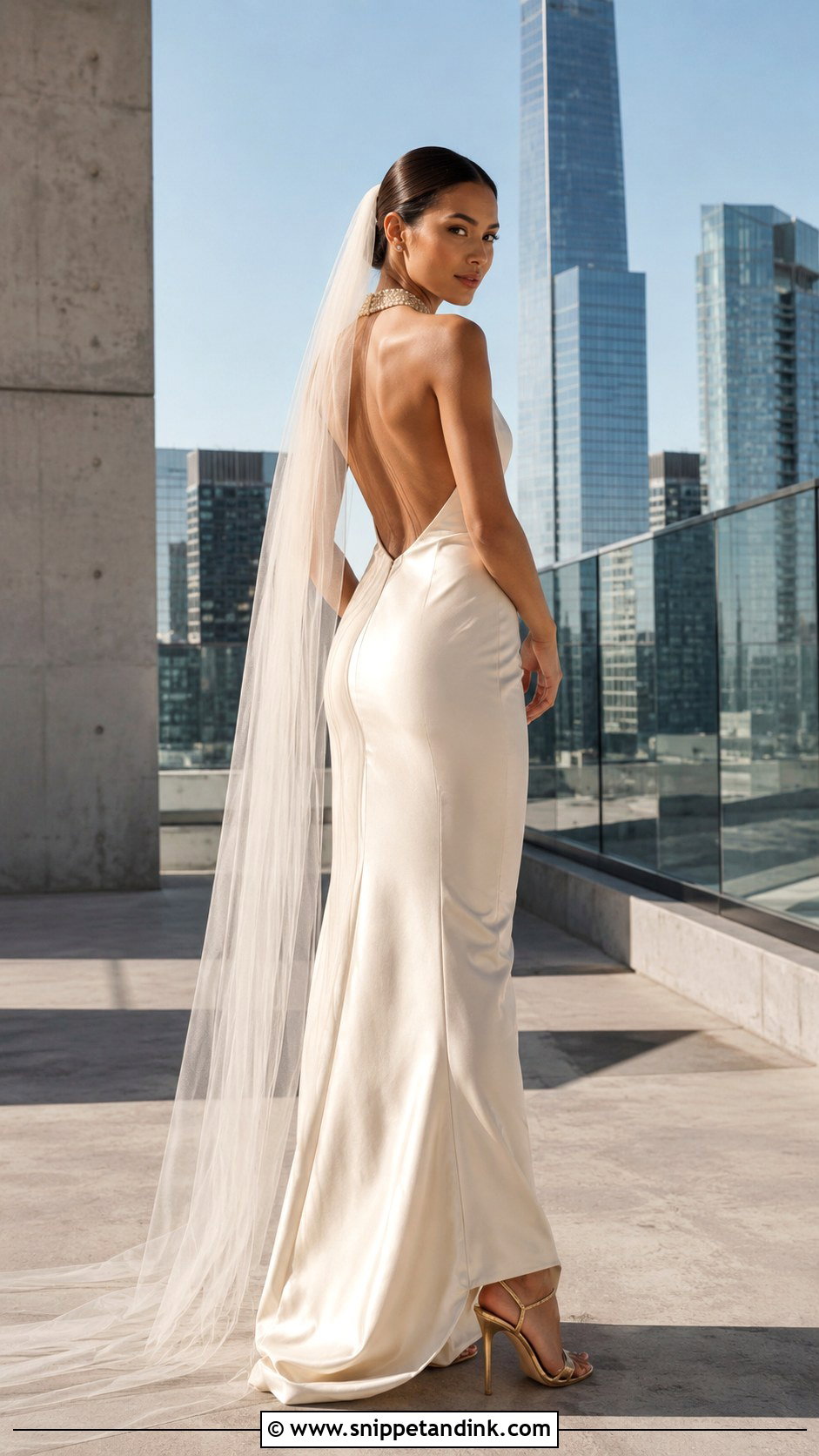
A halter wedding dress with fine gold beading at the neckline, waist and open back is the most streamlined option here. Smooth ivory crepe or satin on a column or gentle fit-and-flare lets the metallic trim do all the decorating. Halters put the weight of the bodice on the back of the neck, so a beaded collar should be fastened with a hook and a covered button rather than a tie, which loosens. High bun or sleek ponytail, small gold studs, a slim cuff and minimal strappy heels. A narrow chapel veil for the ceremony, removed for a sharper reception. Rooftops and contemporary spaces suit it.
11. Gold Lace Ball Gown Wedding Dress
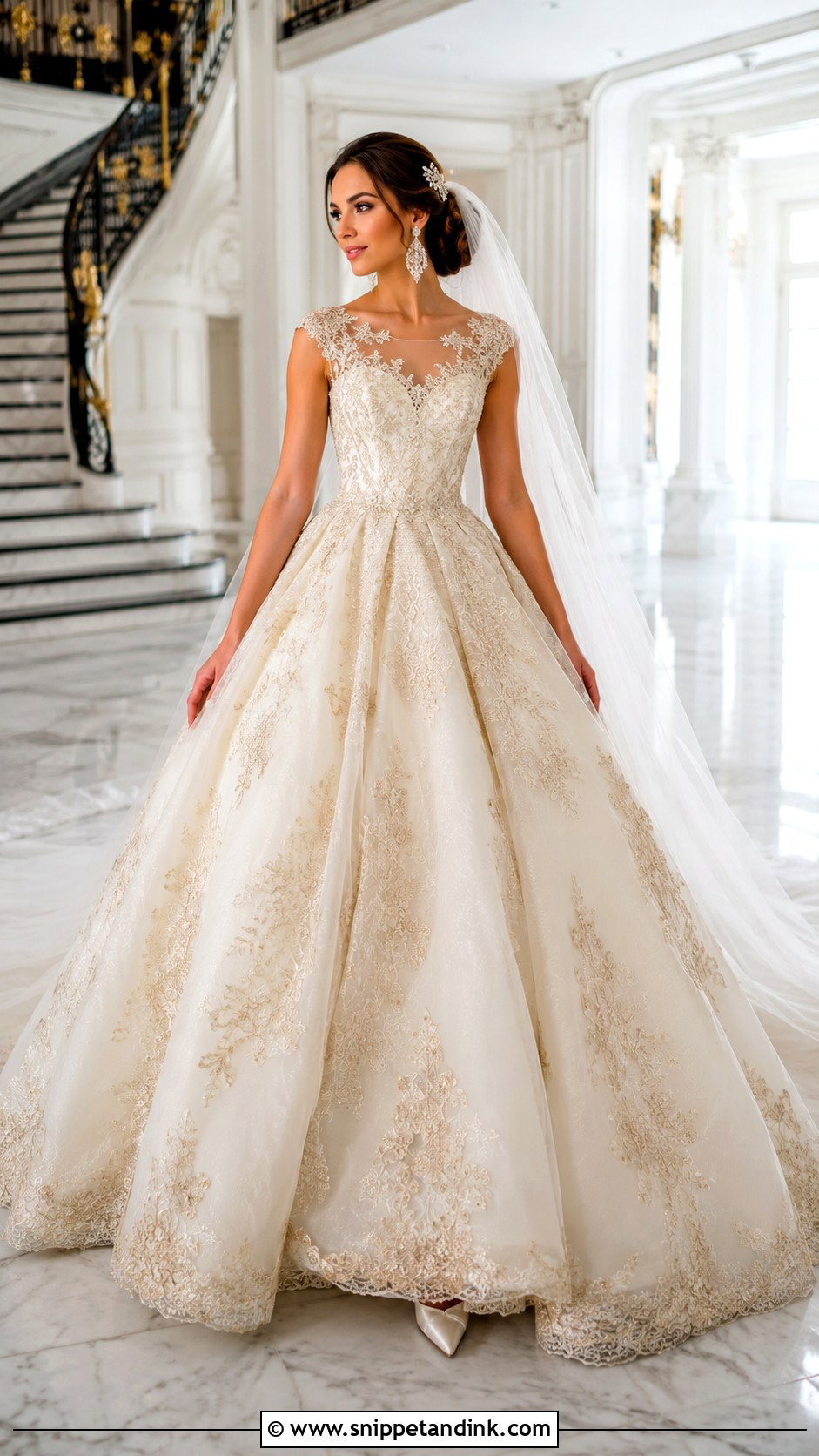
Gold lace over a full ball gown reads regal, but only with breathing room. Start with an ivory or pale champagne base, metallic lace on the fitted bodice, and spaced motifs on the skirt so bare fabric shows between them; covering everything turns the pattern into noise. Satin ivory pumps, small gold chandelier earrings, a delicate comb and a plain cathedral veil. A smooth chignon suits the formal shape, and a rounded bouquet of white flowers with greenery finishes it. Large venues and formal ceremonies give it the space it wants.
12. Gold Belt Wedding Dress
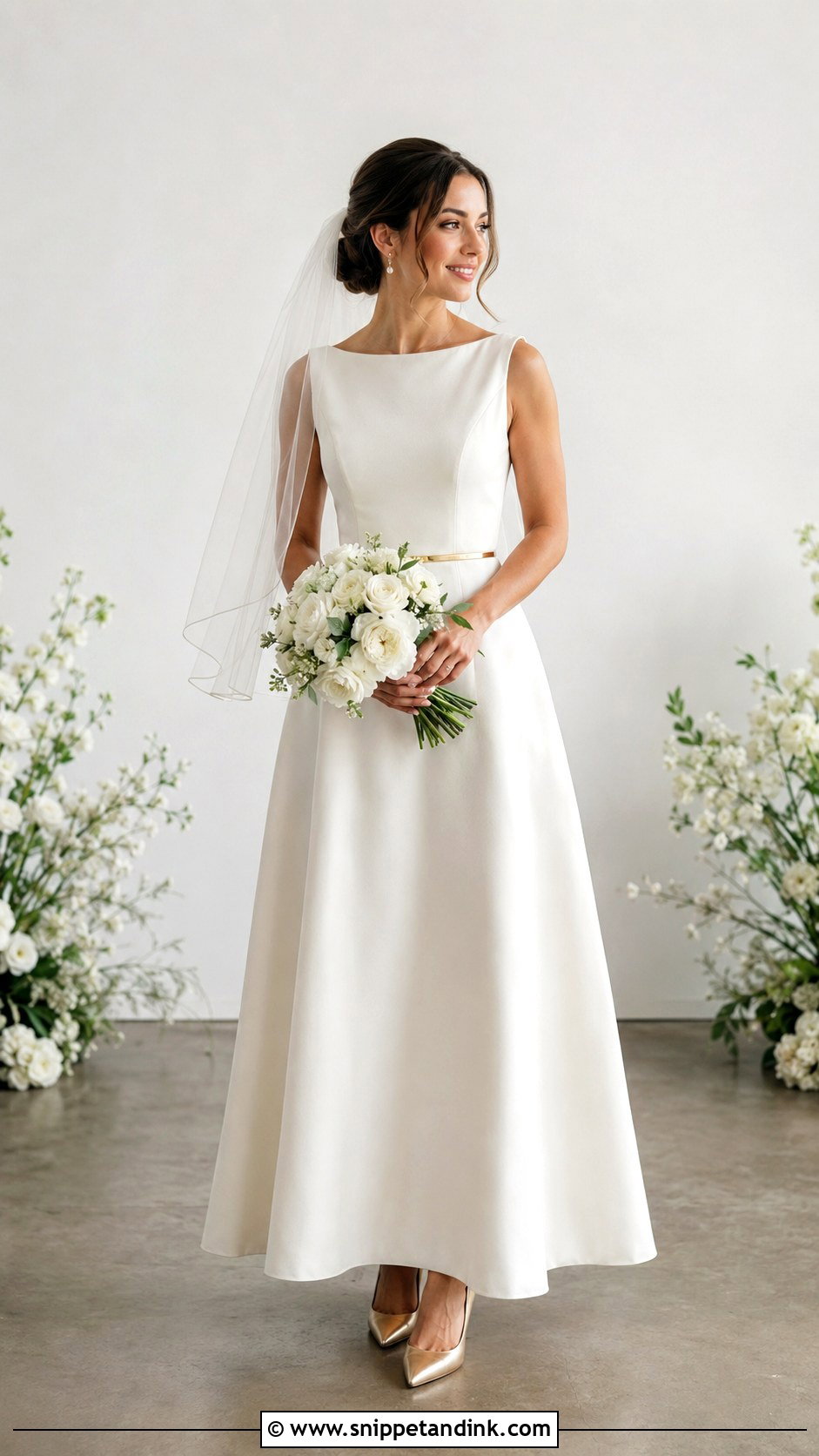
A belt is the least committed way to wear gold. Add a narrow metallic belt with subtle crystals or embroidery to a clean ivory A-line in satin, crepe or chiffon with minimal seams. On a petite bride, a narrow belt defines the waist without cutting the body in half, which a wide sash can do. Gold pointed shoes, small drop earrings and a plain-edged veil. A low ponytail or relaxed bun keeps it modern. Ask for a belt that fastens with hooks rather than a tie-back; ribbon ties slip down over hours of sitting and dancing, and you can take it off for the reception.
13. Gold Cape Wedding Dress
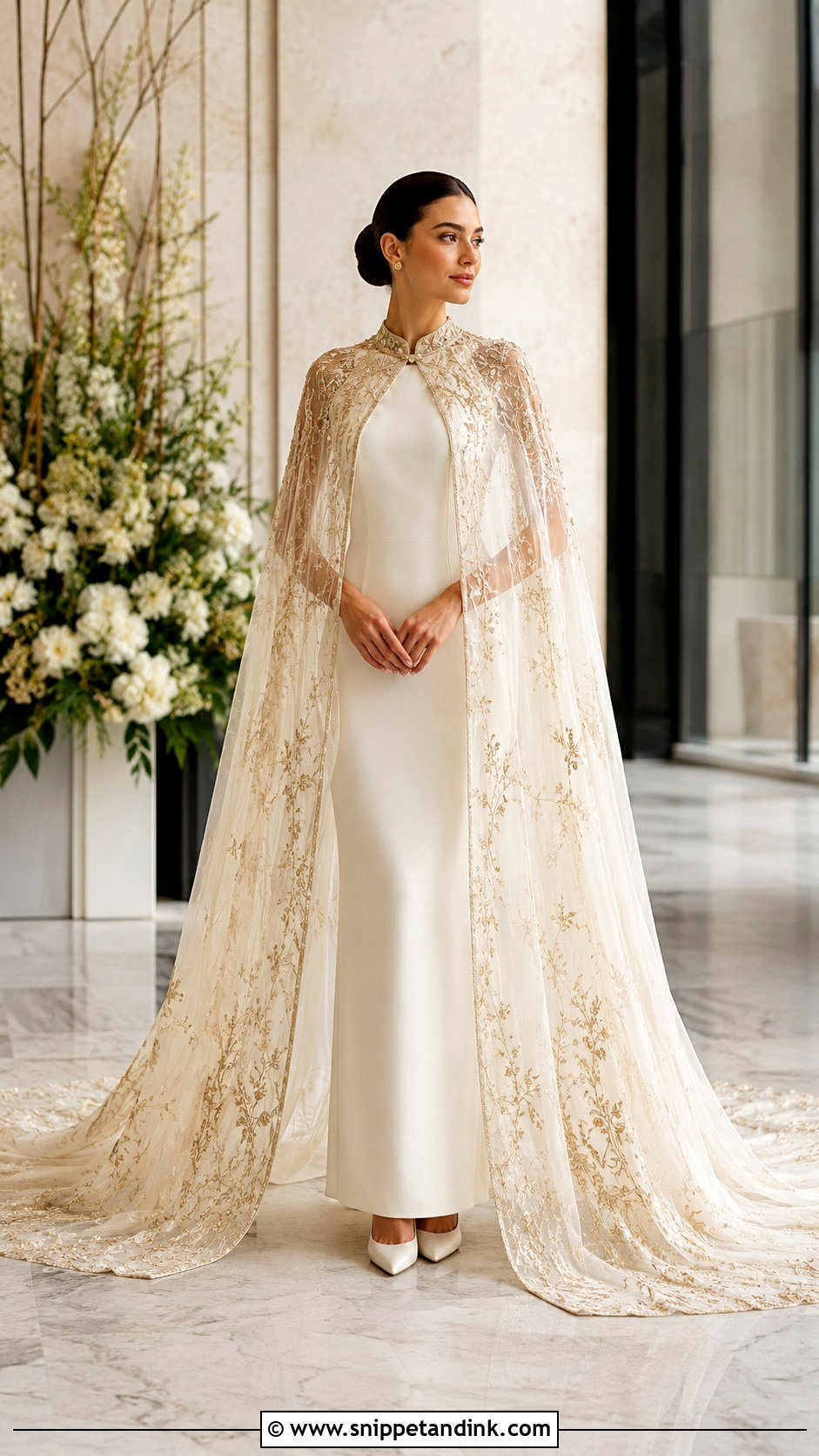
A sheer floor-length cape with gold embroidery along the shoulders, edges and train gives you a ceremony entrance, then comes off to reveal a sleek ivory column or fit-and-flare. Keep the dress underneath plain so the cape stays the focus. I’d skip the veil completely; a cape and veil together tangle at the shoulders. Gold-embroidered edges are stiffer than plain tulle, so the cape should fasten with hidden hooks on reinforced shoulder seams to stop it swinging off-center. Ivory pumps, small gold studs and a smooth updo. Afterward, add a slim gold bracelet and you have two distinctive looks from one dress.
14. Gold Train Wedding Dress
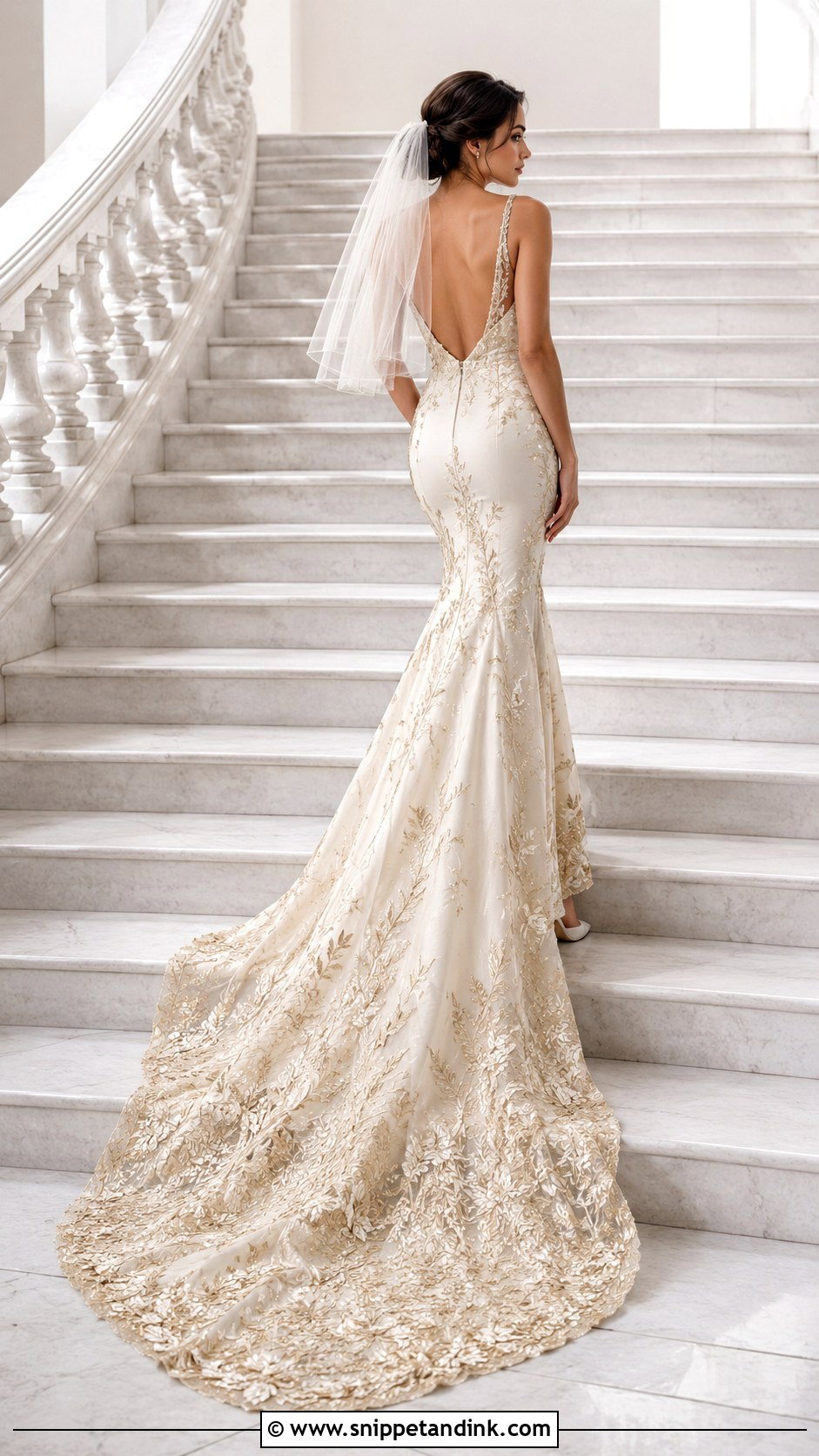
Most guests see your back during the ceremony, which is why gold concentrated on the train is such a smart placement. A fitted ivory gown with a fairly simple bodice, and embroidery or lace that grows more detailed toward an extended train. The bustle needs planning from the start, because heavy metallic embroidery on a train adds weight, and the bustle points must hold it without dragging the skirt sideways. Comfortable ivory heels, small gold earrings and a veil ending before the most decorative part of the train. A polished bun. Long aisles and staircase portraits show this one at its best.
15. Gold Vintage Wedding Dress
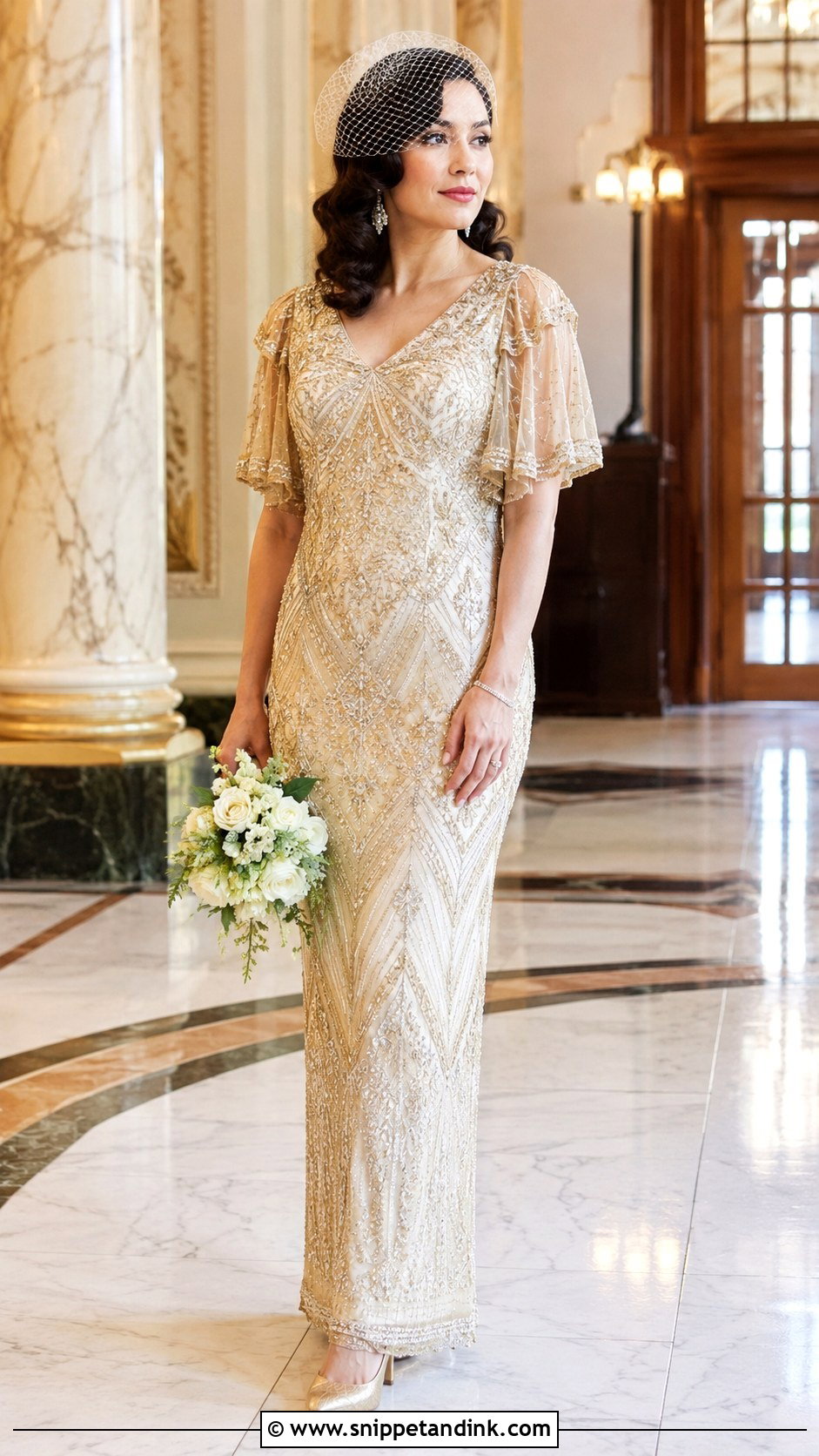
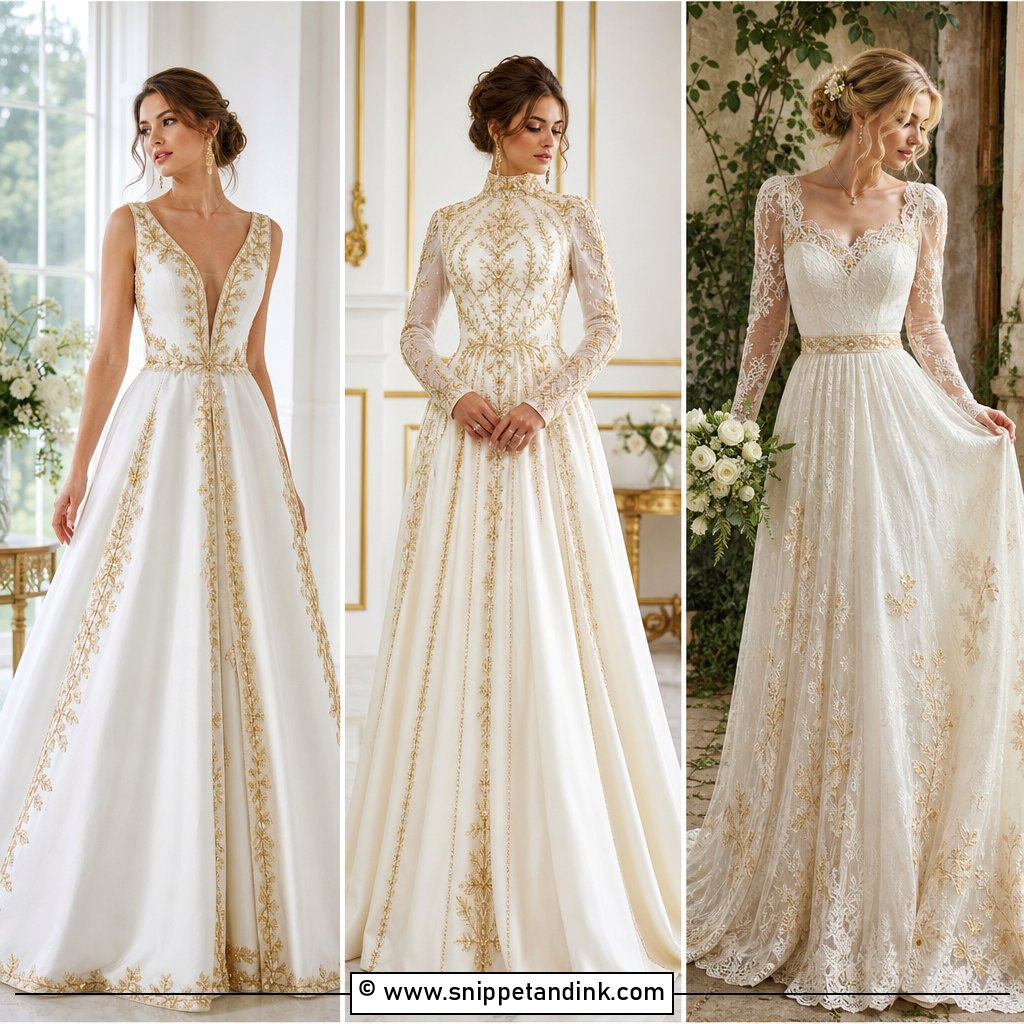
Geometric gold beading on a fluid sheath feels nineteen-twenties without tipping into costume. Gold lines, fan shapes or floral motifs across an ivory bodice and skirt set the mood. Flutter sleeves or a modest V-neck strengthen the period feel. Beaded bias-cut dresses stretch under their own weight on a hanger, so I store this kind of gown folded in tissue or hung from inner loops, never from its straps. Closed-toe metallic heels, crystal-and-gold earrings and a small decorative comb. A birdcage veil leans more vintage; a plain fingertip veil feels traditional. Soft waves and a neutral lip for a historic hotel or restored theater.
16. Gold Boho Wedding Dress
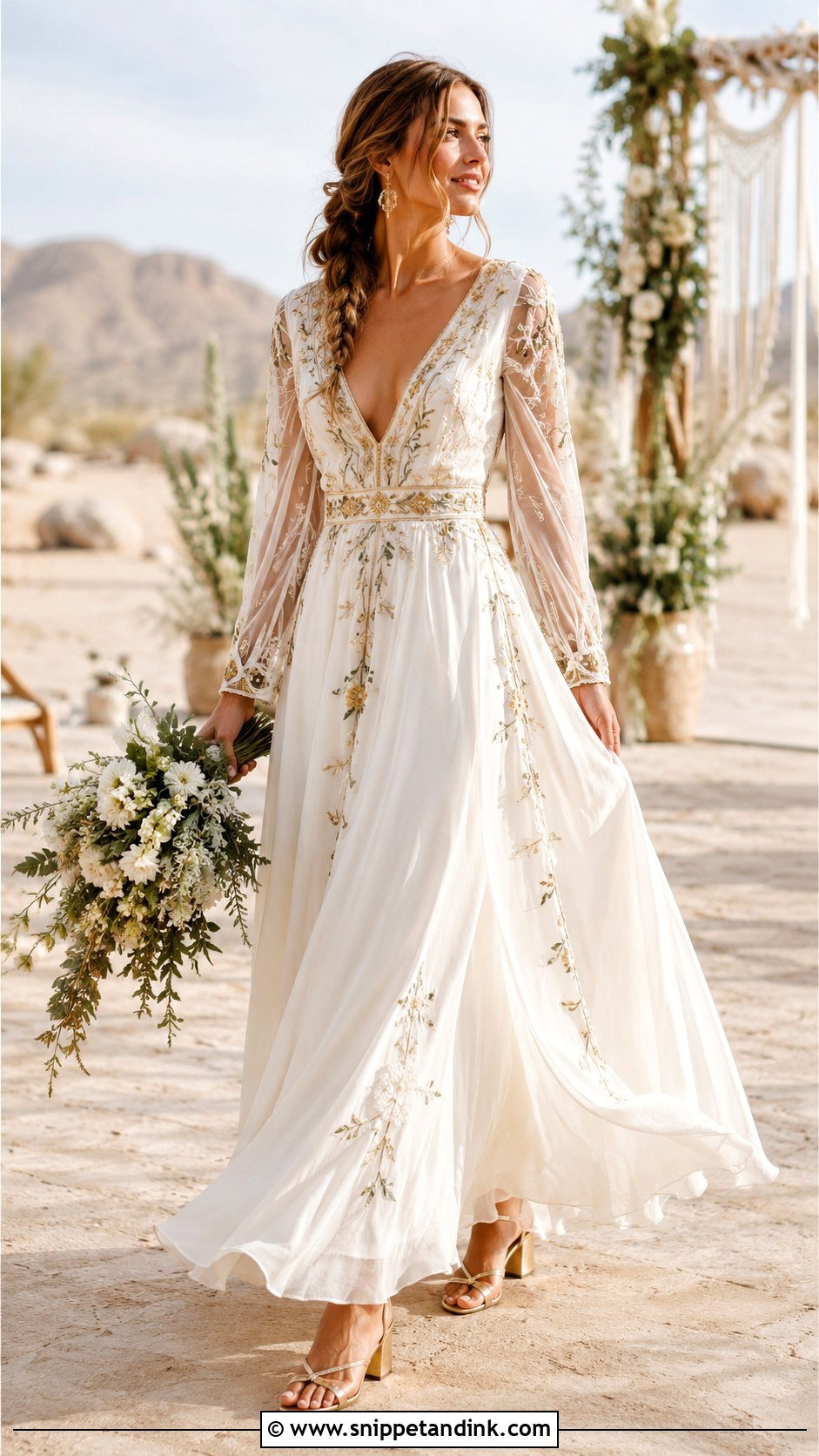
Boho and gold only mix if the dress stays soft. A light ivory A-line with gold-threaded botanical embroidery, sheer sleeves and a flowing chiffon or tulle skirt. Dense beading or stiff fabric fights the easy feel, and on uneven ground a heavy hem drags in the dirt. Low gold block heels or embellished flats, small hoops and a loose braid. A narrow embroidered veil or sheer capelet adds movement. An organic bouquet of white blooms, greenery and soft neutrals. Outdoor venues, desert settings, woodland ceremonies and relaxed destination weddings suit it.
17. Gold Minimalist Wedding Dress
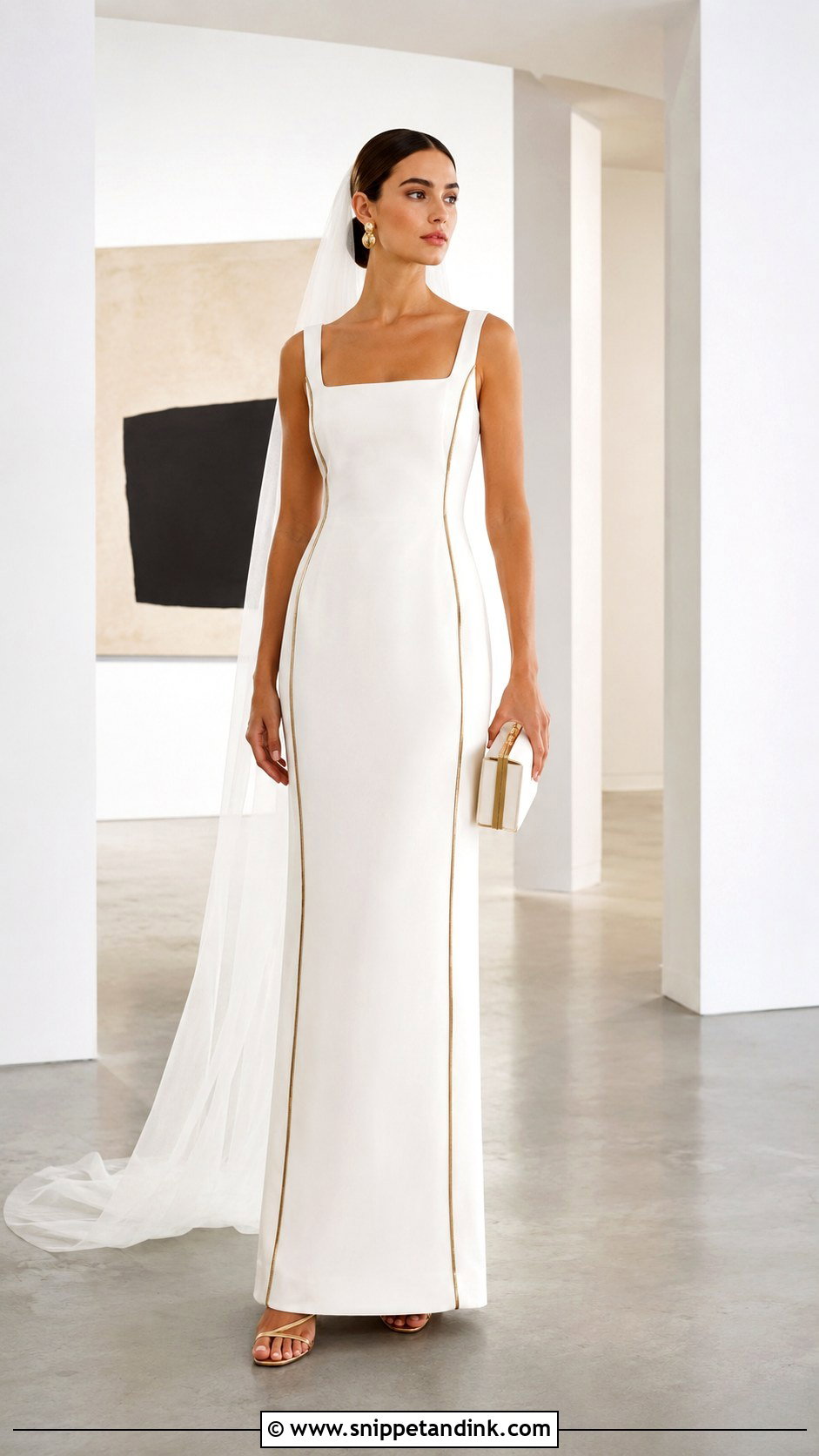
With a minimalist gown, one gold detail has to carry everything, so it needs to be perfect. Gold piping at a square neckline or a narrow embroidered waist panel on a smooth ivory slip or column is enough. I look closely at piping: it must lie completely flat, because any puckering on plain fabric is visible across the room. Simple gold sandals, small sculptural earrings, a sleek low bun and a plain chapel veil. For the reception, drop the veil and carry a small structured clutch. Galleries, modern hotels, courthouses and architectural spaces let the fabric and tailoring speak.
18. Gold Blush Wedding Dress
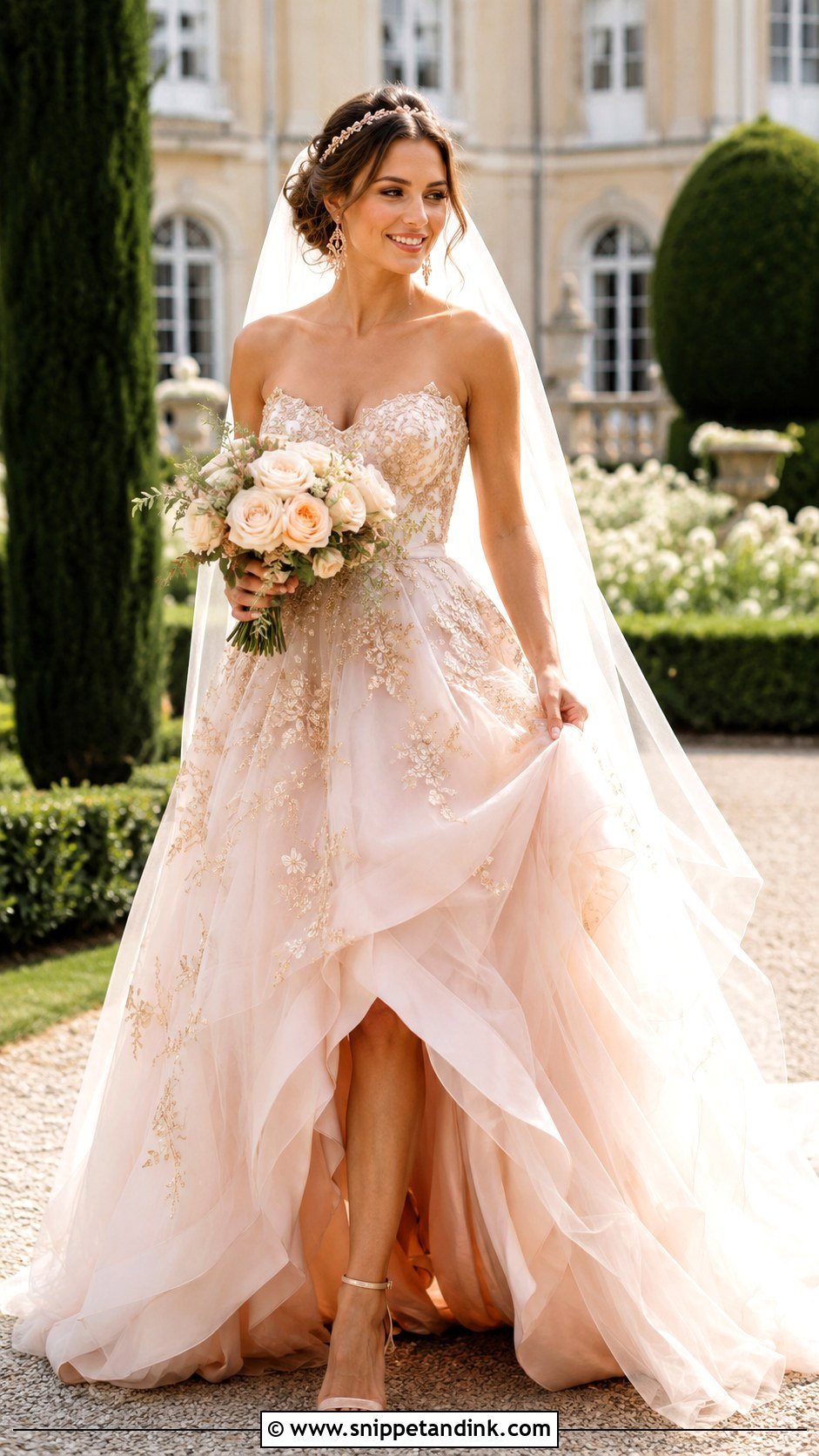
Blush under gold appliqués is warmer and gentler than white and gold. A layered tulle dress with a pale blush lining and floral appliqués across the bodice and waist, a flowing A-line skirt, and a sweetheart or illusion neckline. Gold and blush can both turn slightly orange in warm evening light, so if the reception is lit by tungsten bulbs, I’d lean toward a paler, pinker blush. Nude or champagne heels, rose-toned gold earrings and a delicate metallic headband. A blush-tinted or ivory veil, whichever matches the gown better beside it. Cream, peach and muted pink flowers for a garden, an estate or a softly decorated room.
19. Gold Detachable Overskirt Wedding Dress
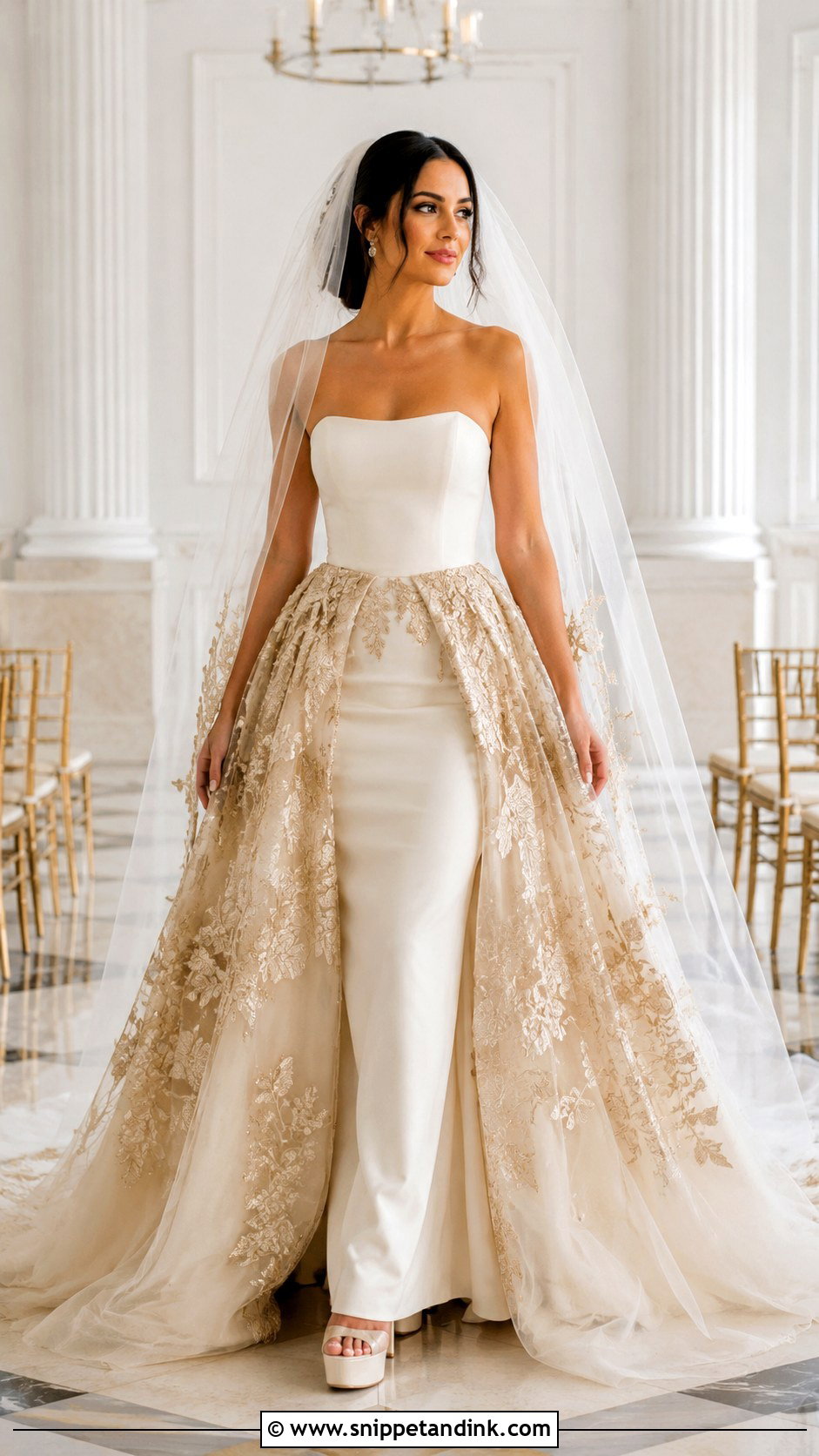
A detachable gold overskirt gives one dress two silhouettes. Start with a fitted ivory crepe or lace gown comfortable enough to dance in, then add a full tulle overskirt with scattered gold appliqués or a metallic embroidered border for the ceremony. Overskirts usually fasten at the waist with hooks or snaps hidden under a band, and the join should be checked from every side, since a gap at the back is easy to miss in the mirror. Ivory platform heels, simple gold earrings, a plain cathedral veil and a secure low bun. Remove the overskirt and veil before dancing and add a small gold hair piece.
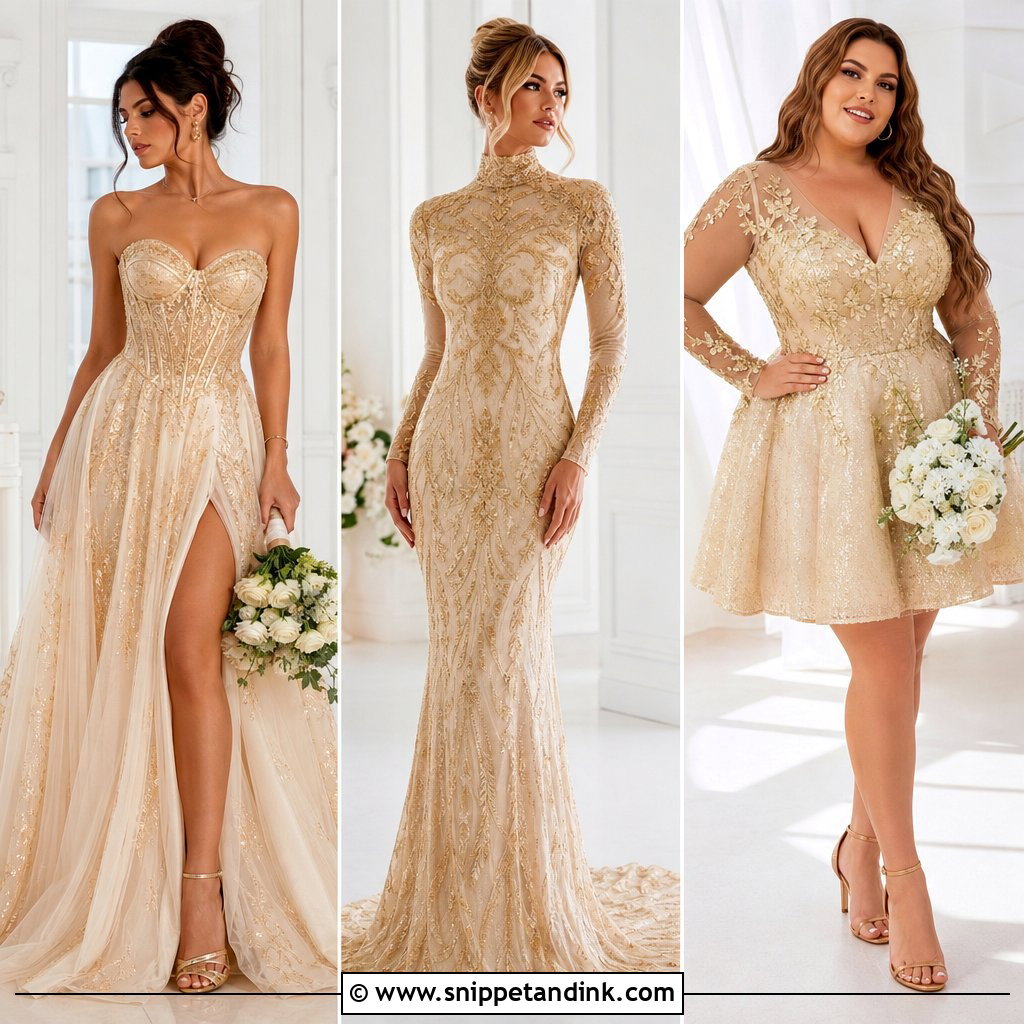

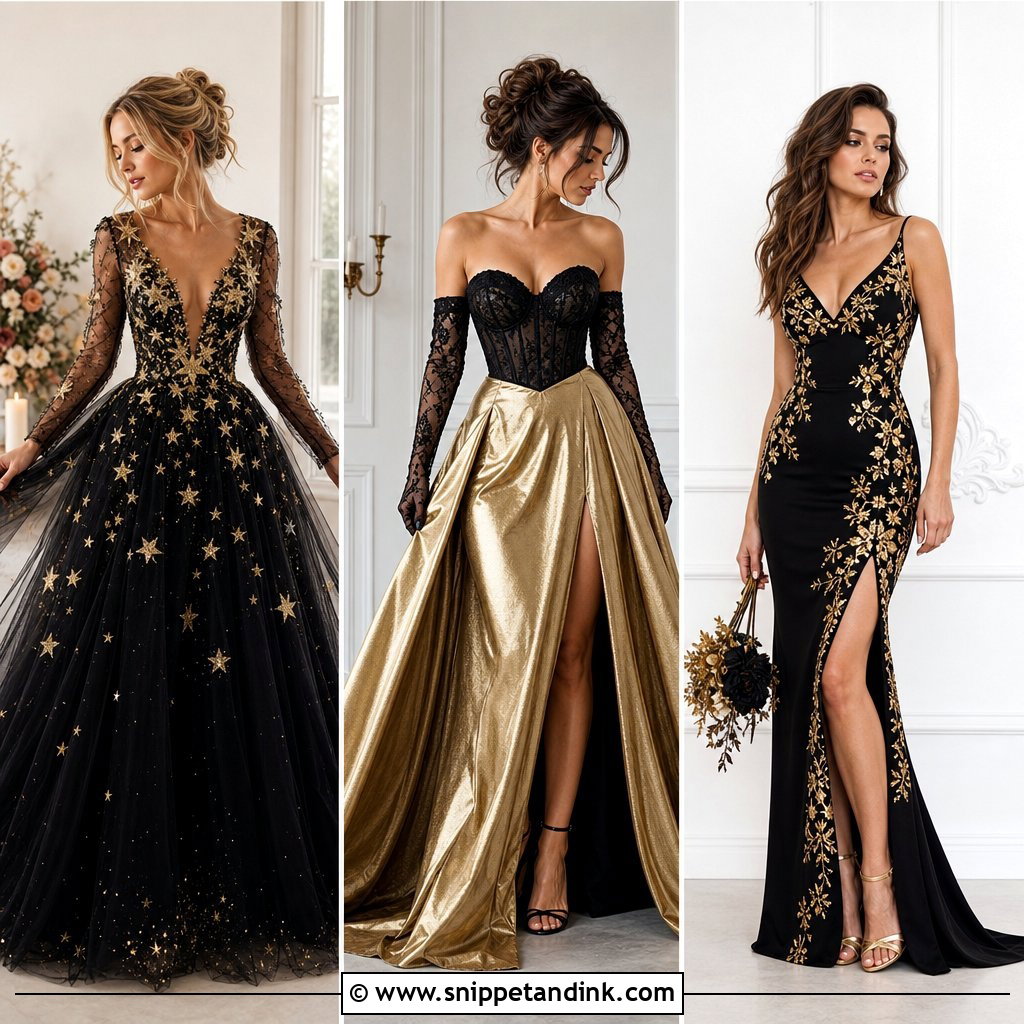
20. Black And Gold Wedding Dress
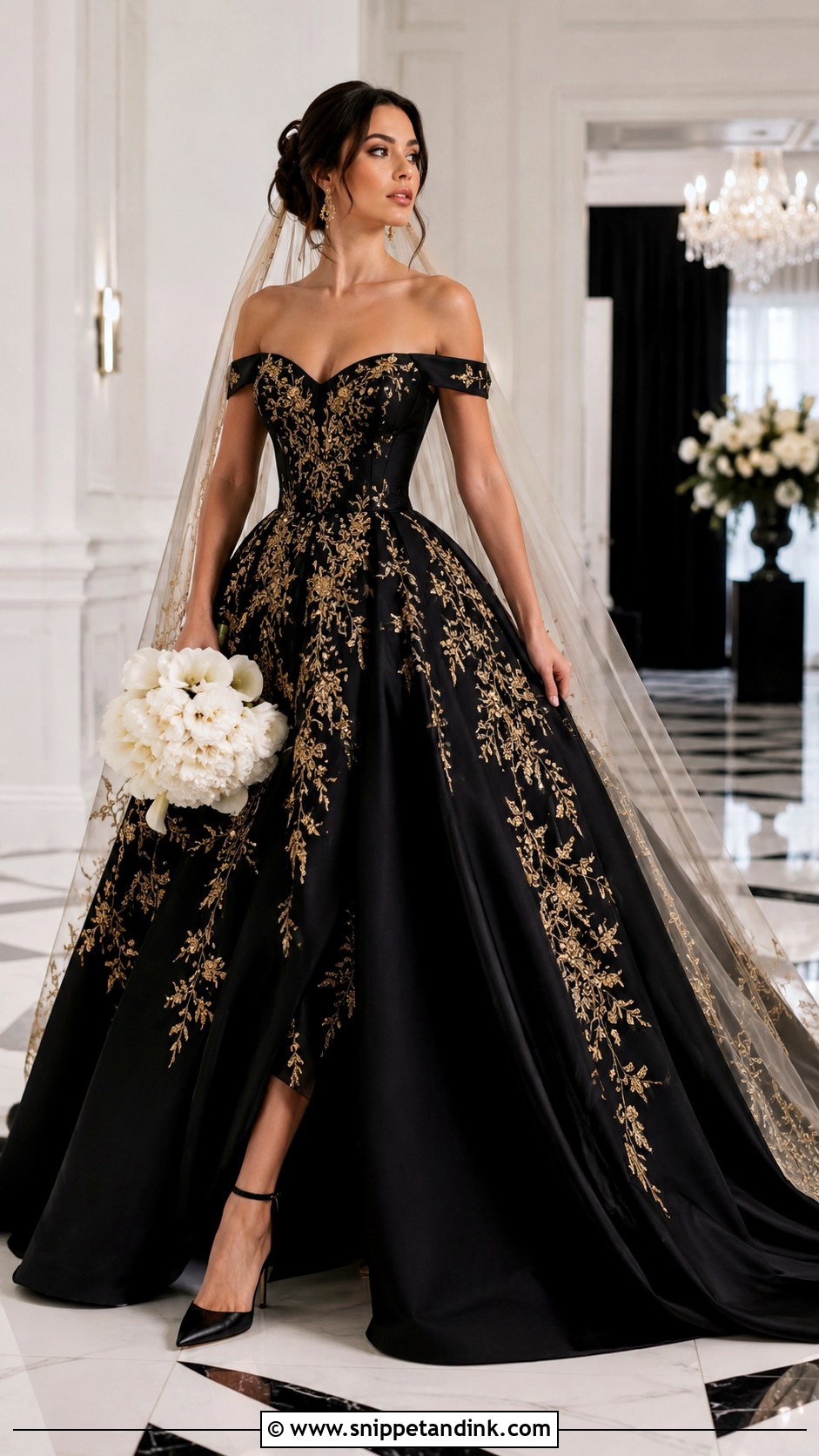
Black and gold is the boldest gown here, and it reads formal rather than costume only when the structure is strong: a defined neckline and waist on a black A-line or ball gown, with gold embroidery on the bodice and used selectively on the skirt. Black fabric hides beading in dim light, so ask to see the gown under low, warm lighting before deciding how much gold is enough. Black satin heels, refined gold earrings and a black or sheer neutral veil. A sleek bun or polished waves. White flowers give a clear bridal note. Evening venues and modern ballrooms suit it.
Why Gold Thread Dulls Between the Fitting and the Wedding
Metallic embroidery is made from thread wrapped or coated in a thin metal or metallic film, and it reacts to what touches it. Perfume, hairspray and deodorant are the usual culprits: they can dull or discolor the thread, especially around the neckline and under the arms. Get fully dressed, sprayed and scented before the gown goes on, and let deodorant dry completely.
Between fittings, store the gown in a breathable cotton bag rather than the plastic it came in, because trapped moisture speeds up tarnishing. Keep it away from rubber bands and PVC hangers too. Steam the fabric from a distance and never press an iron directly onto metallic thread, which can flatten it or melt the coating.
After the wedding, tell the cleaner where the gold is and what it’s made of if you know. Some cleaning solvents are harsh on metallic film, and a careful cleaner will test a hidden spot first. For long-term storage, acid-free tissue between the folds stops embroidered areas from pressing creases into plain fabric.
Gold That Still Looks Right Under Every Light
A gold-accented gown should feel like you and still let you move. Lace, beading, embroidery, belts, capes and overskirts all bring gold in without tying you to one style. View the dress in daylight and indoor light, because metallics change more than any other trim as the setting shifts. Think about how the gold sits with your veil, jewelry, shoes, hair and bouquet before you settle, and pick a silhouette you can walk, sit and dance in. Do that, and the gold looks considered in every photo, not just the posed ones.
You'll Like These Ideas:



Leave a Reply