
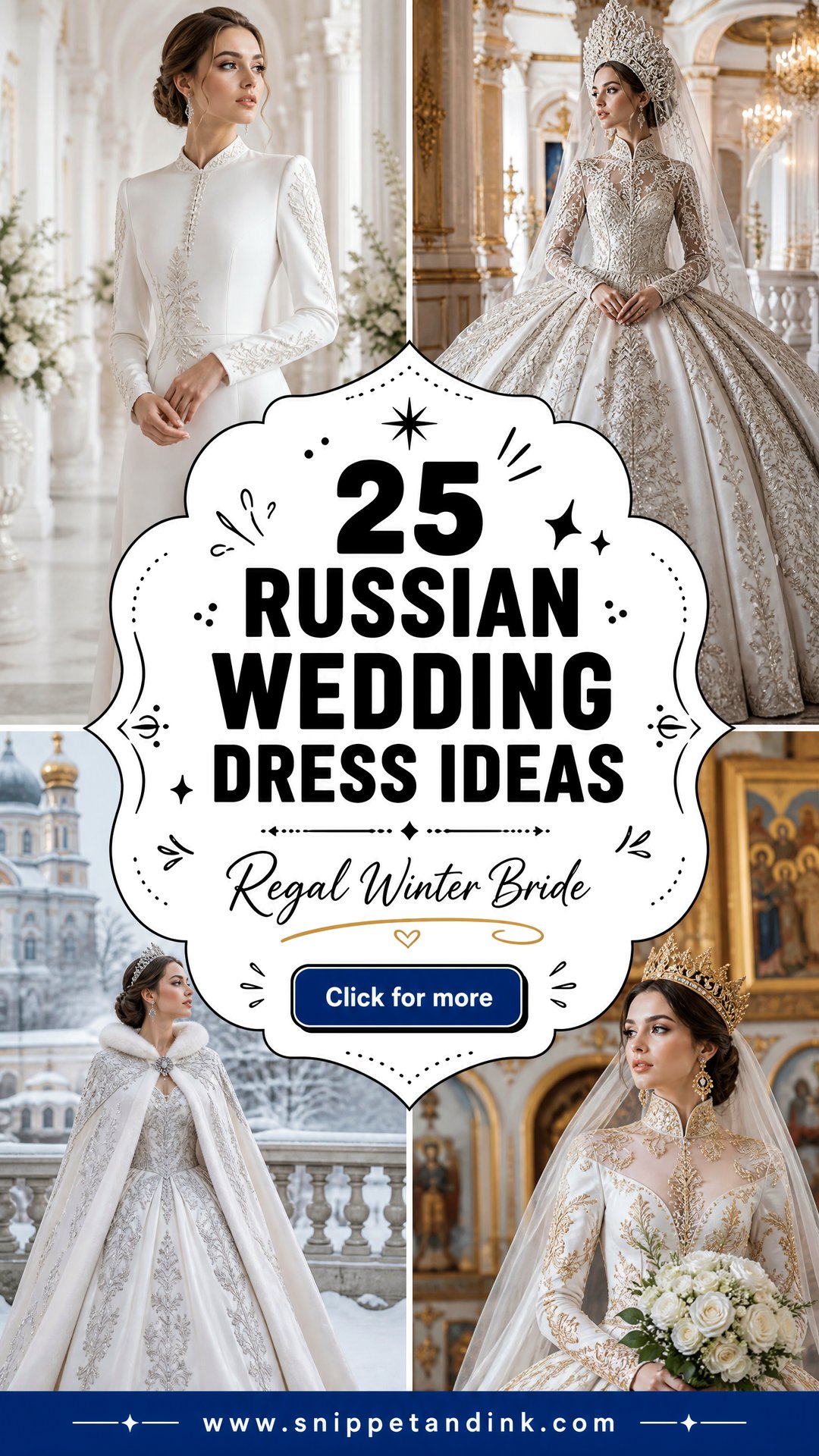
Most Russian brides today marry in a white gown and veil, and the heritage shows up in the details: a kokoshnik headpiece, red or gold embroidery, pearl trim, brocade, velvet, or a sarafan-shaped skirt. How far to take it is a personal call. Some brides want one embroidered cuff that a grandmother will recognise; others want red and gold from crown to hem. When I style a heritage look, I start with the ceremony and the season, because a church wedding in January asks very different things of a dress than a summer dacha garden. The twenty-five looks below run from barely there to fully ceremonial, each styled head to toe.
Dressing for an Orthodox Church Ceremony
If you are marrying in a Russian Orthodox church, the dress has to work for the ceremony itself, not only the photos. Customs vary by parish, so ask the priest early, but these are the points I plan around.
- Head covering: women traditionally cover their hair in church. A veil, a lace scarf or a kokoshnik with a veil behind it all meet this, and many brides choose the veil for exactly this reason.
- Shoulders and arms: a strapless or low-backed gown usually needs a bolero, cape or sheer cover-up for the service. Plan it with your seamstress so it looks part of the dress rather than an afterthought.
- Standing: the service is performed standing and often lasts around an hour, so I put comfortable shoes ahead of height.
- Crowns and candles: crowns are held above or placed on the couple’s heads, and you hold a lit candle. A very tall kokoshnik can get in the way of the crown, and wide lace sleeves near a flame are a real risk, so slimmer sleeves are safer.
A civil registry ceremony has none of these requirements, which is why some couples wear a fuller heritage look at the church and switch to a simpler gown for the reception.
1. Traditional Russian Wedding Dress With Kokoshnik
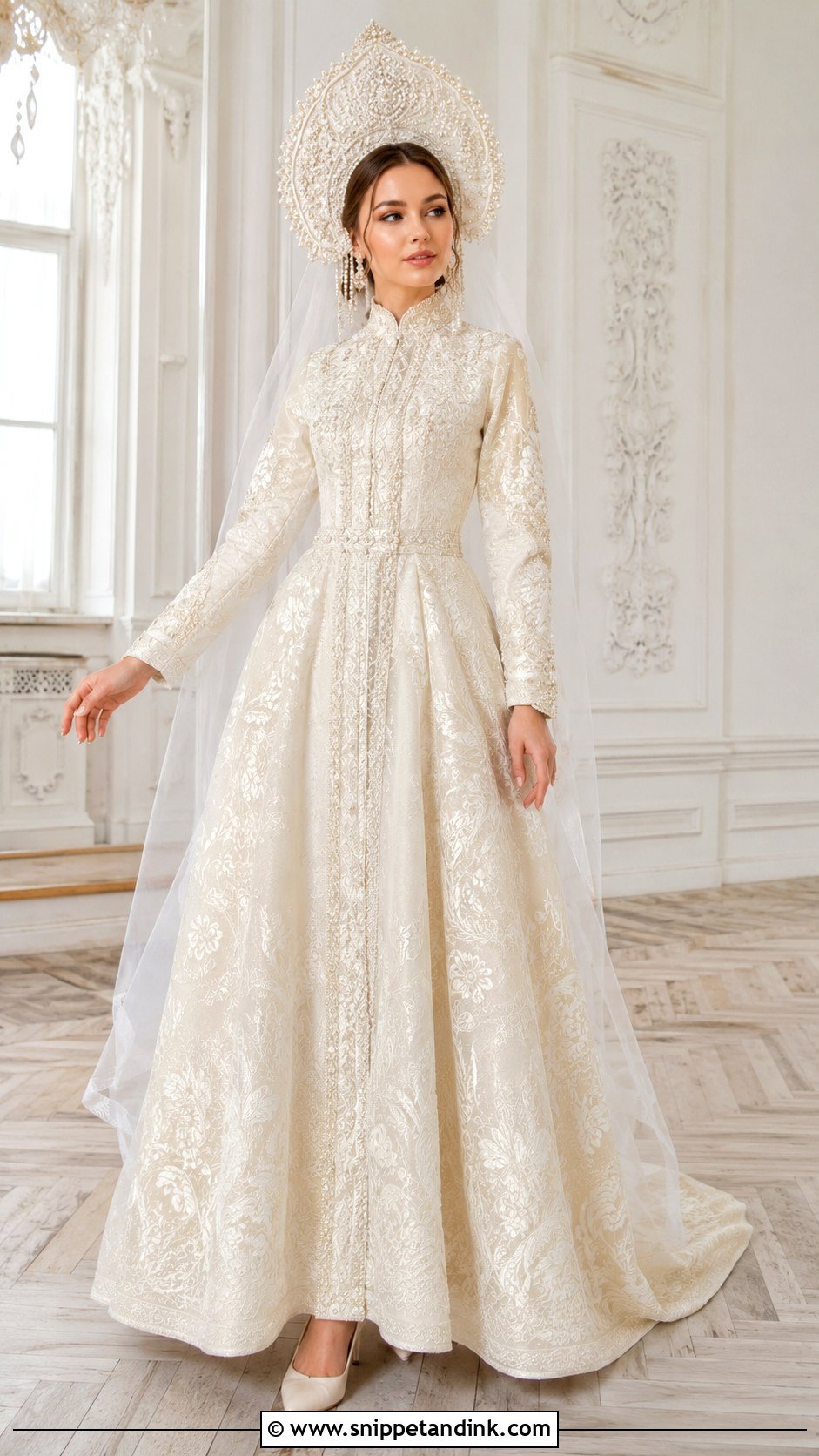
The kokoshnik with a long white or ivory gown is the look most people picture first. I build it from the head down: a structured kokoshnik in pearls, beads or metallic thread, then a gown with a modest neckline, a full skirt and embroidery placed at the bodice, cuffs or hem so it echoes the headpiece. A soft veil falling behind the crown gives a balance of heritage and bridal softness. Everything else should step back: ivory satin pumps or low block heels, pearl studs and a small bouquet. A tall kokoshnik also needs a hairstyle built to hold it, which I cover further down.
2. Red Russian Wedding Dress With Gold Embroidery
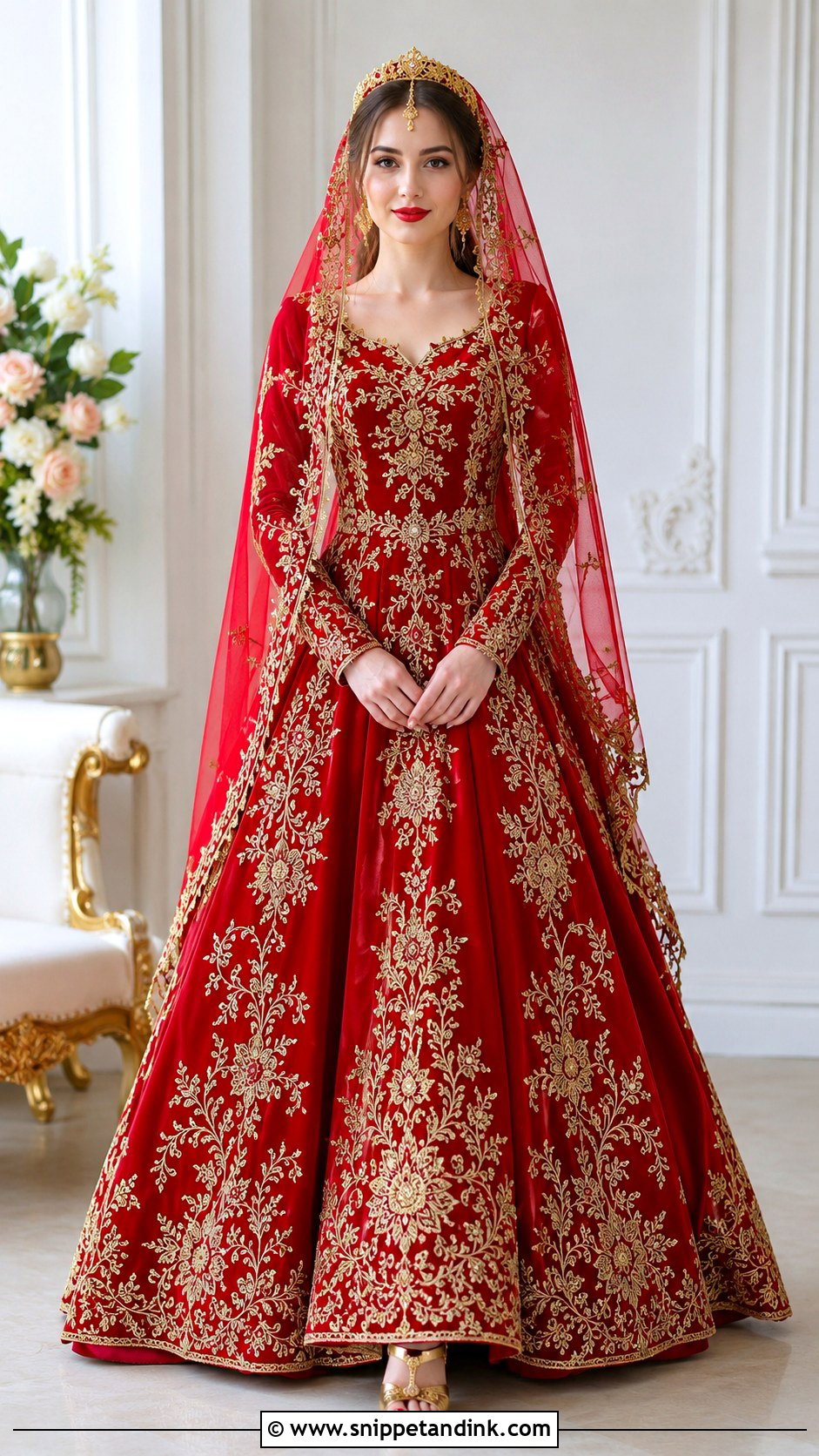
Red has deep roots in Russian bridal dress; the old word for red and the old word for beautiful share a root, which is part of why red sarafans were once the festive choice. A deep red gown with a fitted bodice, long sleeves and an A-line skirt carries the colour with dignity. Gold embroidery at the neckline, waist, cuffs and hem makes it ceremonial. I’d pair it with gold heels, an embroidered veil and a slim gold headband or kokoshnik, then keep the flowers white or blush. The one thing I test is the red against your skin in daylight, since blue-reds and orange-reds flatter very different complexions.
3. White Russian Wedding Dress With Red Embroidery
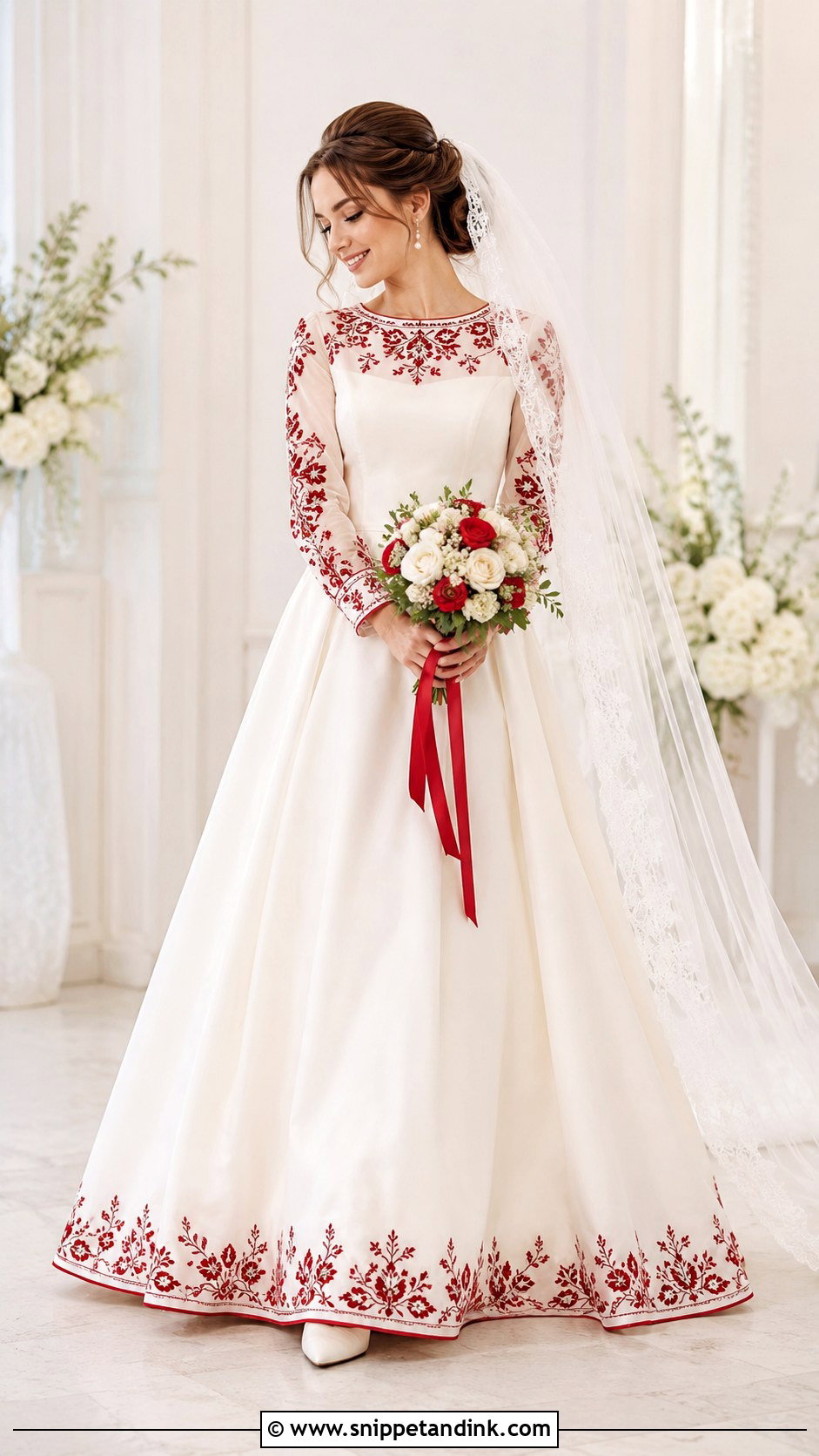
White with red threadwork is the gentler way to carry tradition. The embroidery adds warmth without turning the whole dress red. A-line and empire waists give the stitching room. I’d keep the motifs to the neckline, sleeves, waistline or hem rather than all four, so each one reads clearly. Red satin flats or ivory heels, a red ribbon wrapped round the bouquet stems and small pearl earrings tie it together. Keep the veil plain. Ask how the red thread was dyed, because poorly fixed red can bleed onto white if the dress meets rain or a spilled drink.
4. Russian Sarafan Wedding Dress Outfit
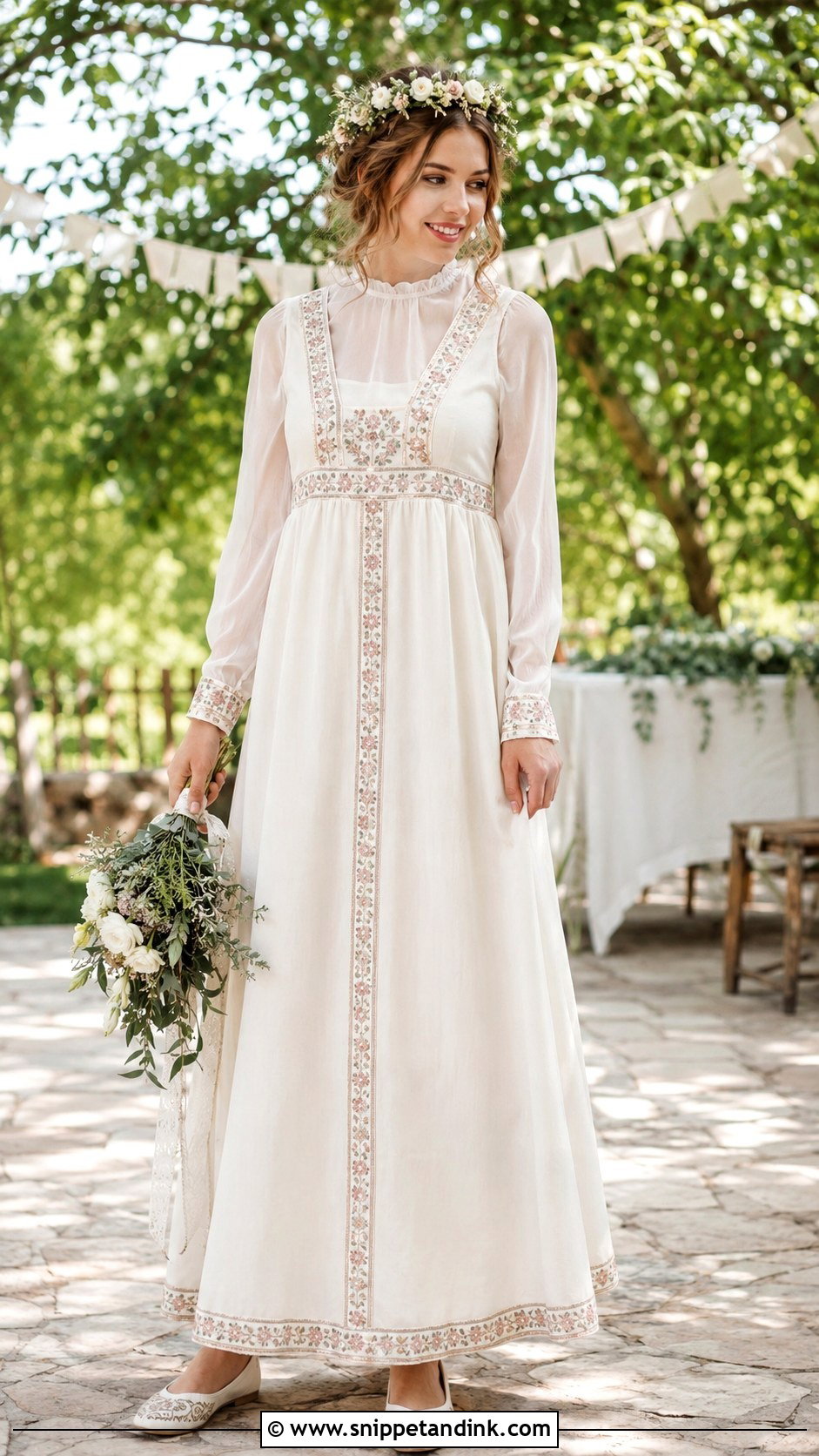
The sarafan is a long, straight or slightly flared pinafore dress traditionally worn over a blouse, and it adapts well to bridal wear. My version: an ivory or cream sarafan-style gown with embroidered straps and a square neckline, over a light blouse with sheer sleeves. It is one of the most comfortable looks here, since nothing is boned or tight. Embroidered flats, a floral crown or delicate kokoshnik and a loose bouquet finish it. Outdoor celebrations suit it, and so do brides who simply don’t want a ball gown.
5. Russian Ball Gown Wedding Dress With Pearl Kokoshnik
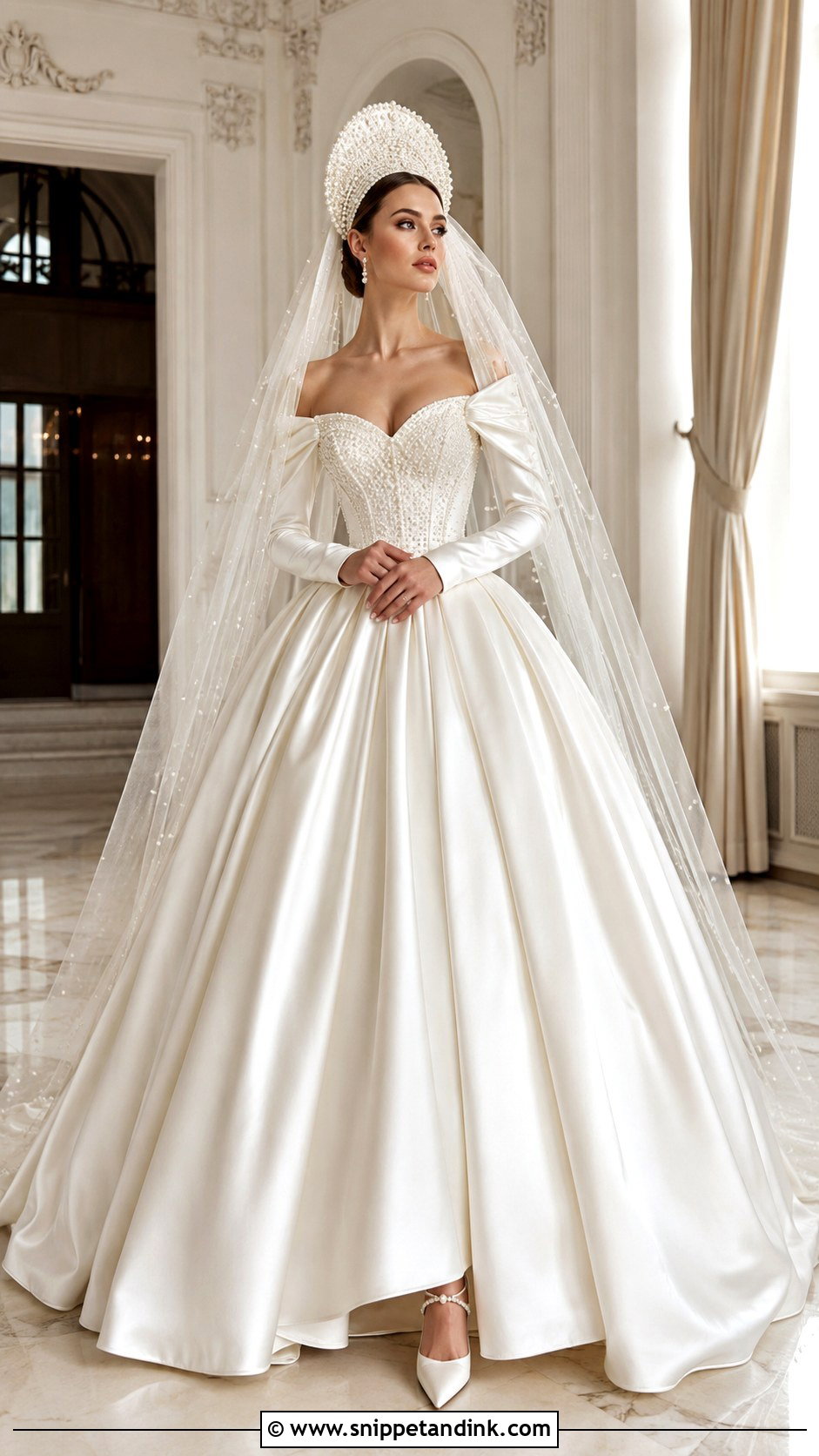
The ball gown with a pearl kokoshnik is the most regal look in this list. Choose a full skirt in satin, tulle or organza over a structured bodice, and repeat the pearls at the bodice or waist so the headpiece and dress clearly belong together. The kokoshnik adds height and frames the face, which balances a wide skirt. Pointed ivory heels, pearl drops and a soft cathedral veil complete it. I keep the makeup fresh and luminous; heavy glam under a pearl crown tips the whole look toward costume.
6. Russian Lace Wedding Dress With Long Sleeves
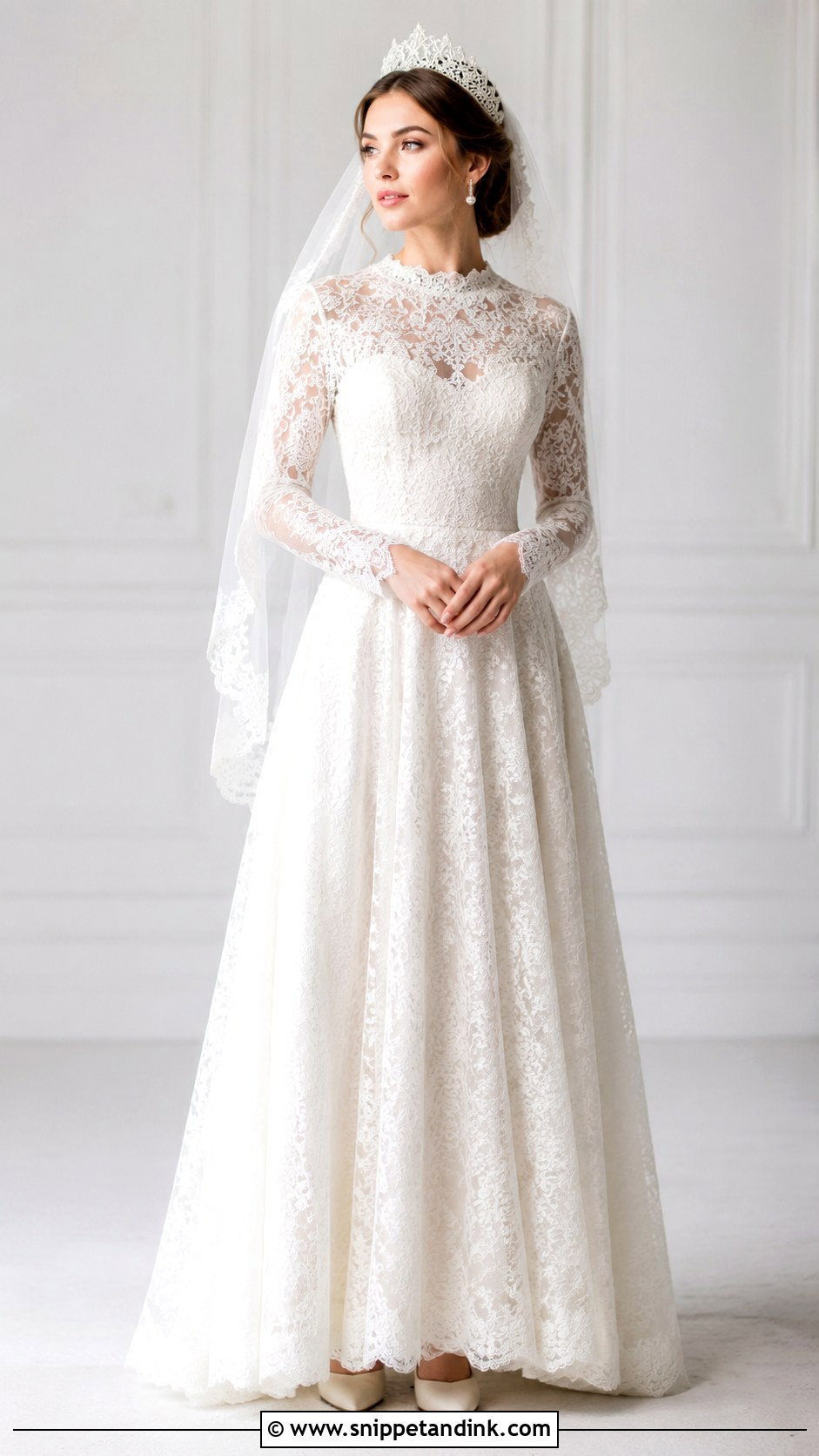
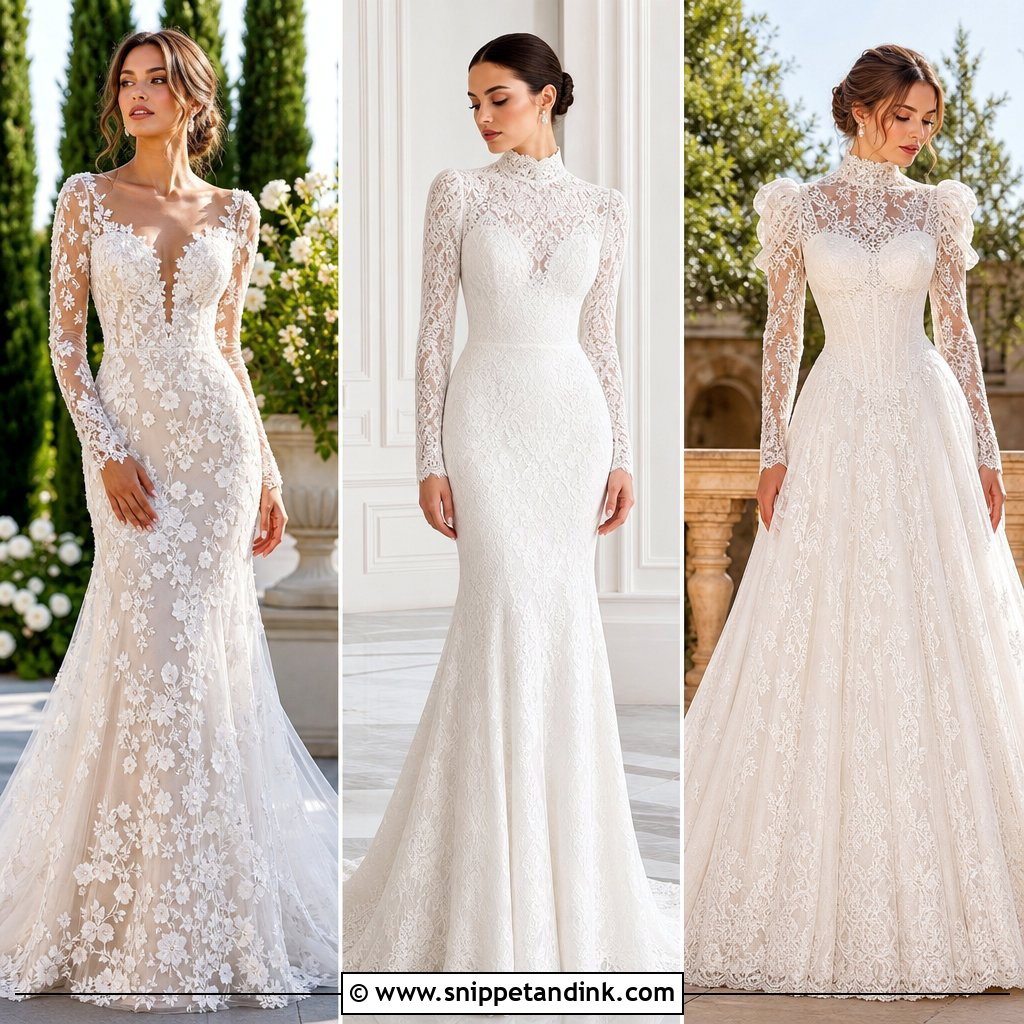
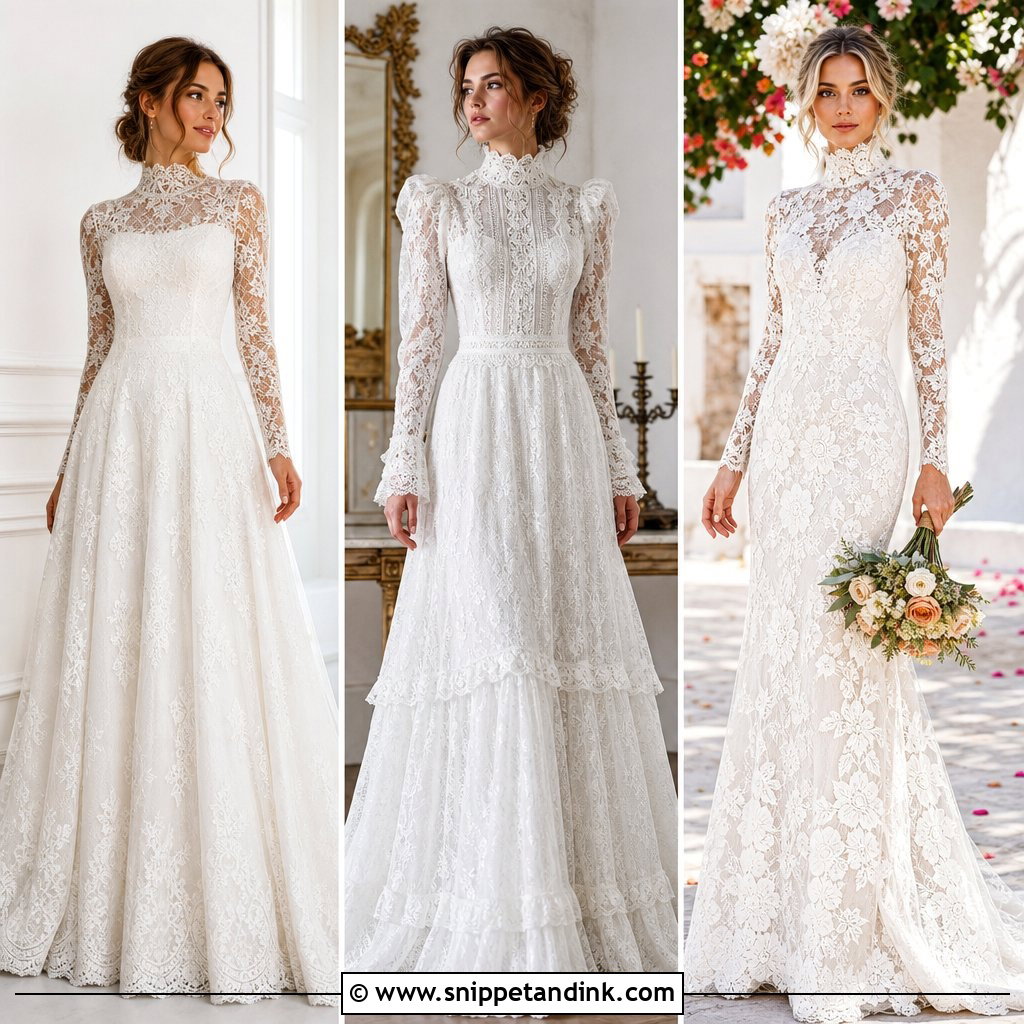
Long lace sleeves give coverage and texture in one move. Look for a fitted bodice and a soft A-line or sheath skirt, with floral, vine or scroll lace that recalls old-world needlework without weight. For a stronger Russian note, swap a standard headband for a slim kokoshnik-inspired tiara. Ivory heels, a fingertip veil and small pearl or crystal earrings finish it. I ask brides to bend their elbows at the fitting, since lace sleeves cut too close rip at the seam when you raise a glass.
7. Russian Winter Wedding Dress With Fur Trim
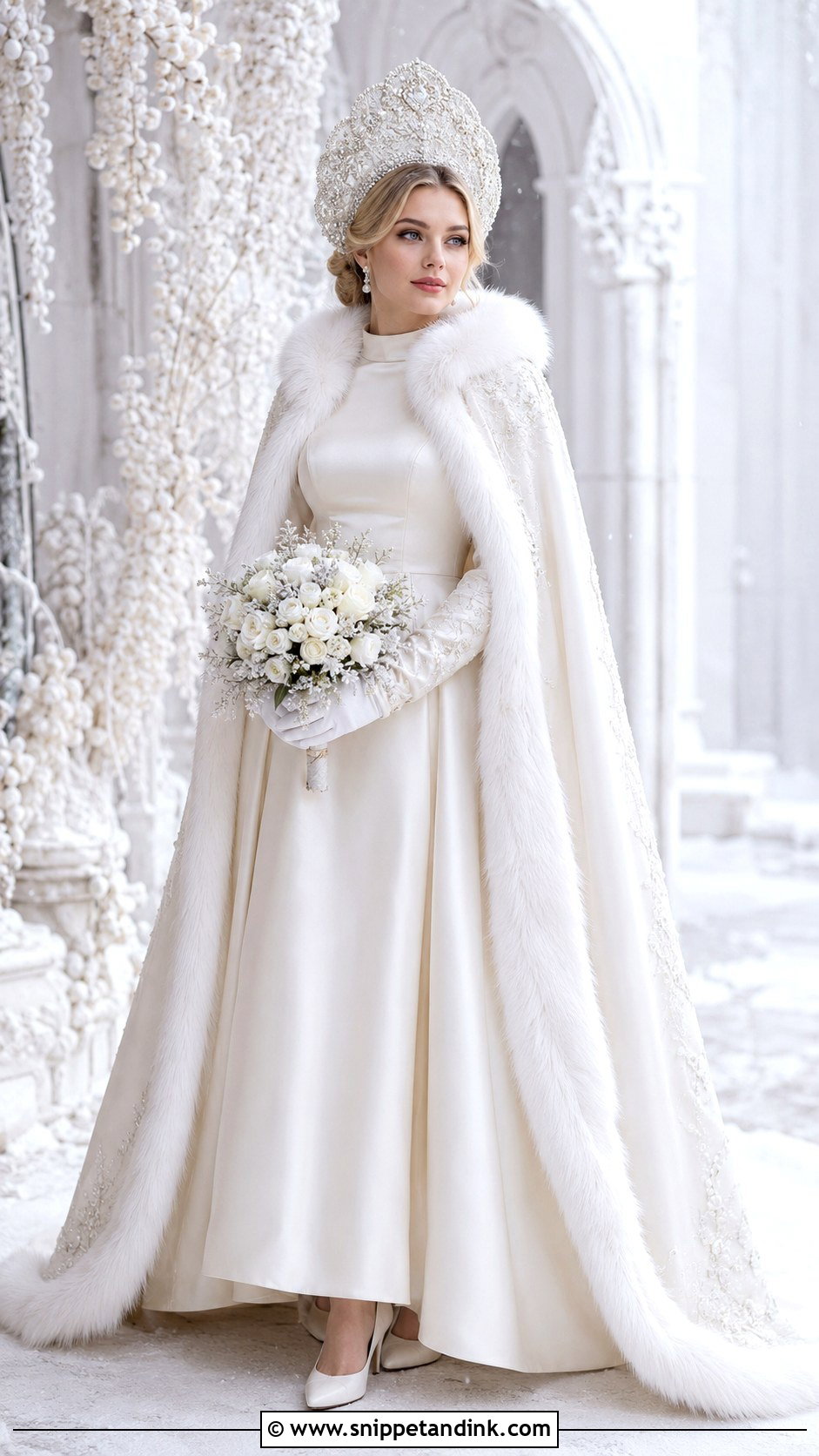
A Russian winter wedding dress with fur trim is practical before it is pretty. Snowy portraits take time outdoors, so I plan warmth from the start: a long-sleeved satin, brocade or crepe gown, then a faux fur cape, stole or collar that frames the face without covering the bodice. Closed-toe heels, pearl earrings and a bouquet of white blooms and evergreens suit the season, and a crystal or pearl kokoshnik adds frost. Keep the palette clean. Faux fur sheds on dark fabric, so brush it before the photographer starts.
8. Russian Brocade Wedding Dress Outfit
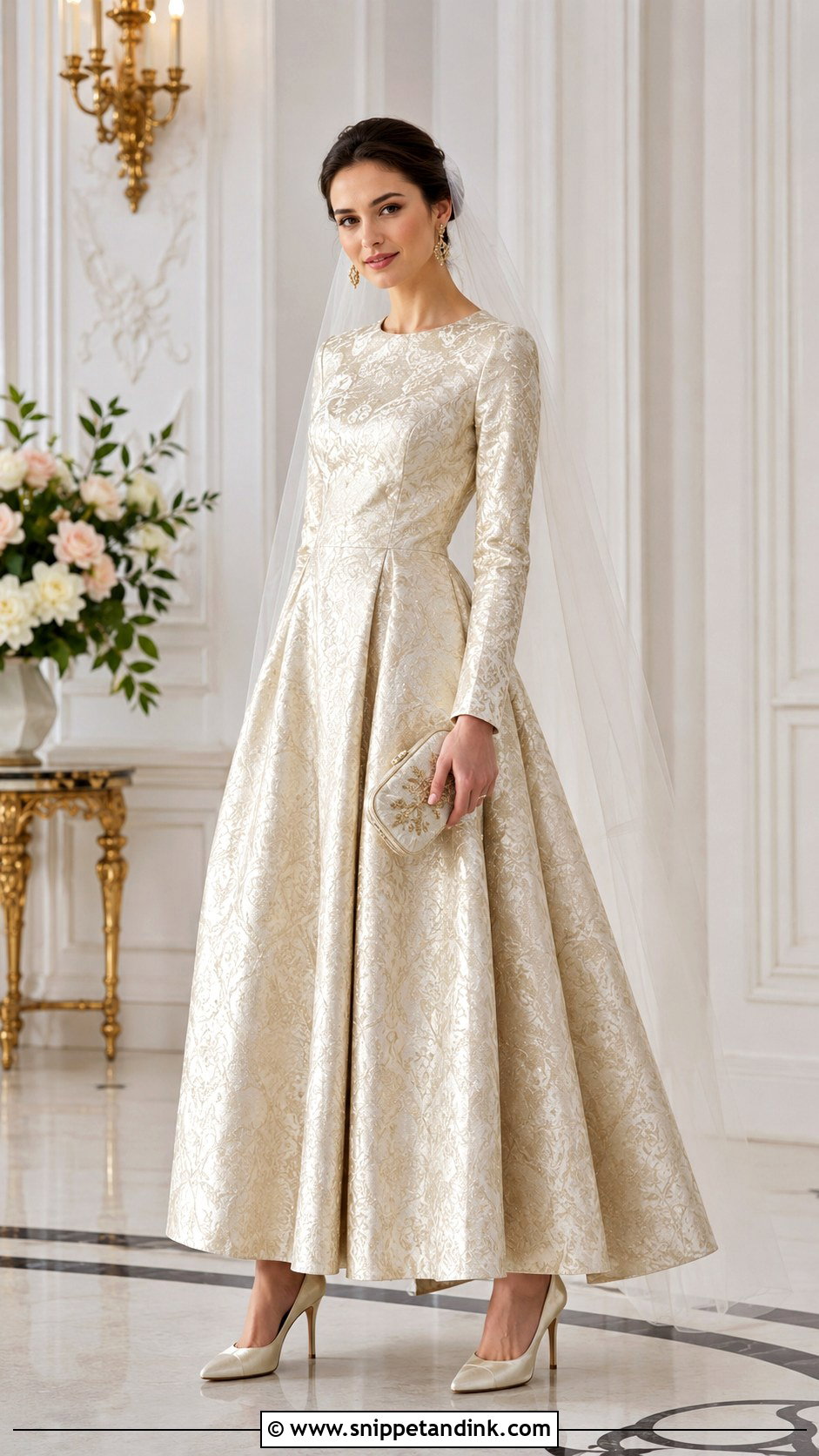
Brocade has a woven, raised pattern that echoes historic court dress. It is heavy and structured, so the silhouette should stay simple: a fitted waist and full skirt in ivory, champagne or soft gold. Don’t add more embellishment; brocade already has a lot to say. Satin heels, a simple veil, gold or pearl earrings and a small embroidered clutch are plenty. Bear in mind that brocade does not breathe well, so it suits a cool season or an air-conditioned venue far better than a summer garden.
9. Modern Russian Wedding Dress With Minimal Embroidery
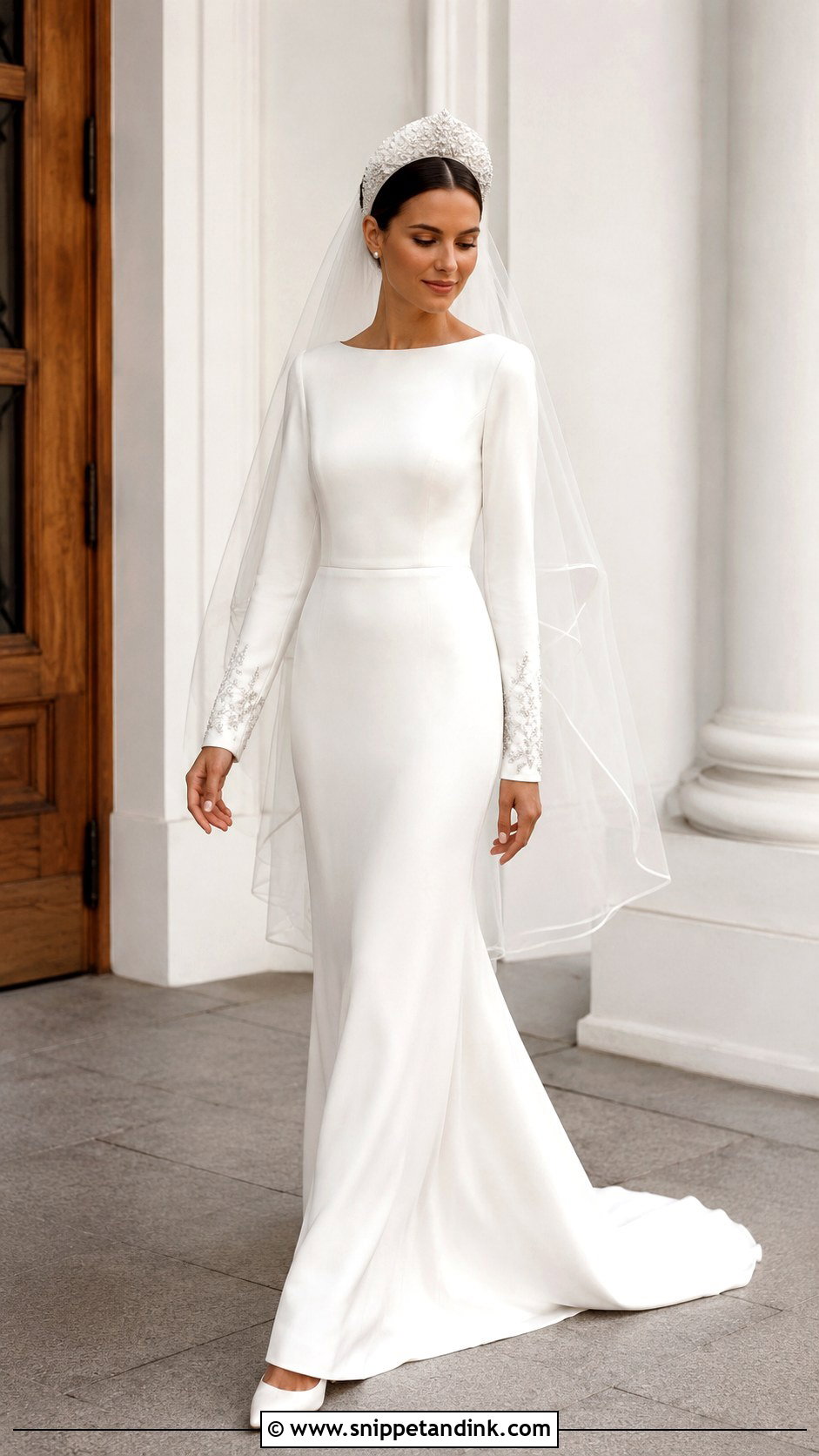
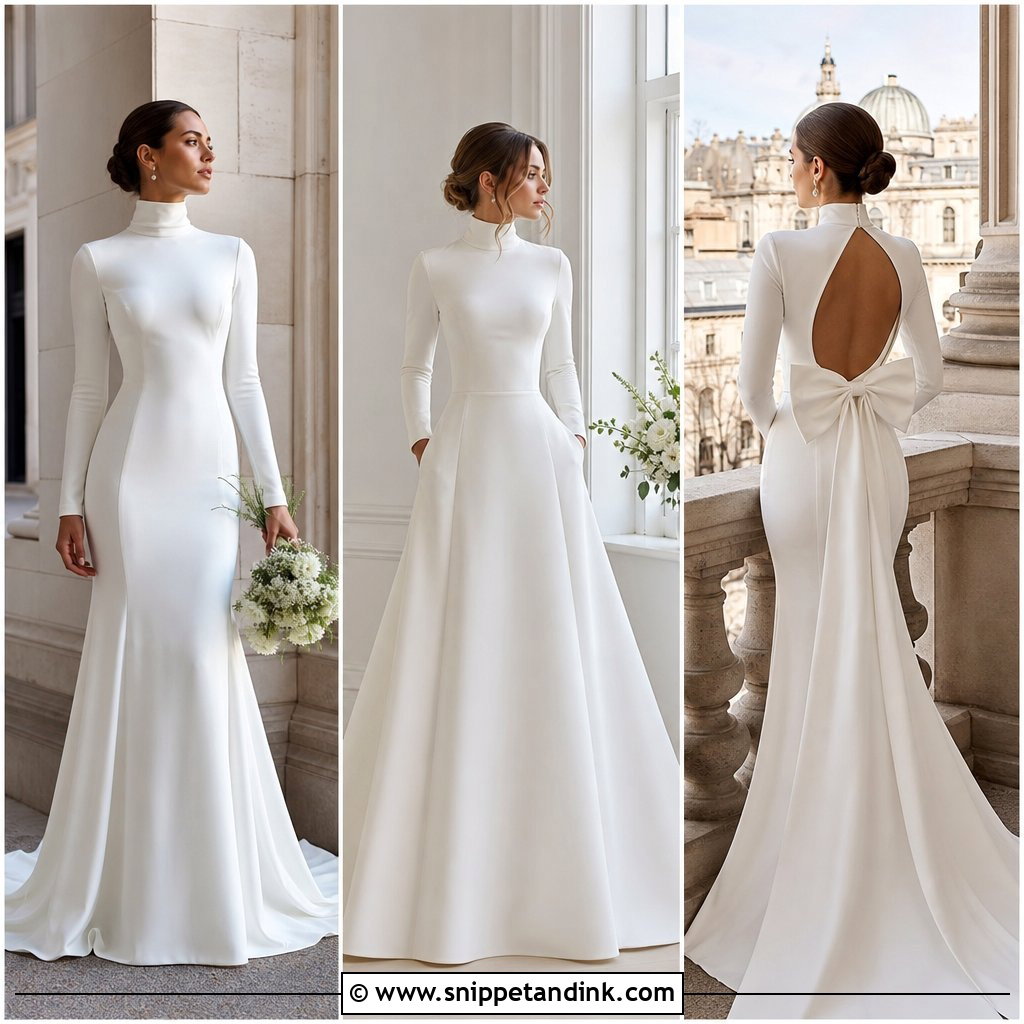
If you like clean lines, keep the embroidery minimal. A crepe, mikado or satin gown in an A-line, column or fit-and-flare cut, with a small band of stitching at the cuffs, back, neckline or hem, carries meaning without decoration taking over. I often place it at the back, because guests see the back during the whole ceremony. White pumps, a low bun, pearl studs and a sheer veil keep it modern. If you want a headpiece, choose a slim kokoshnik-style tiara rather than a full crown.
10. Russian Princess Wedding Dress With Full Skirt
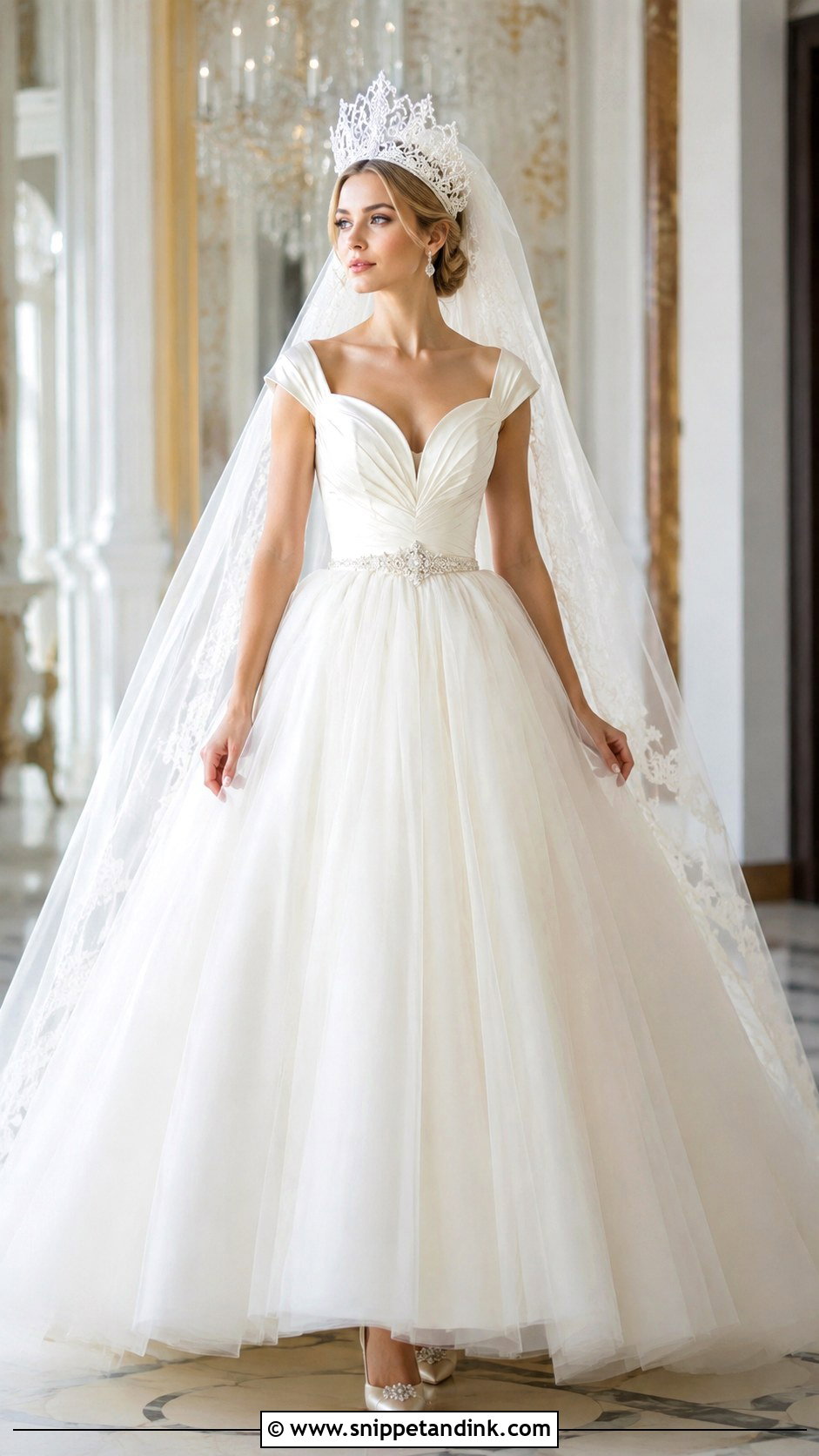
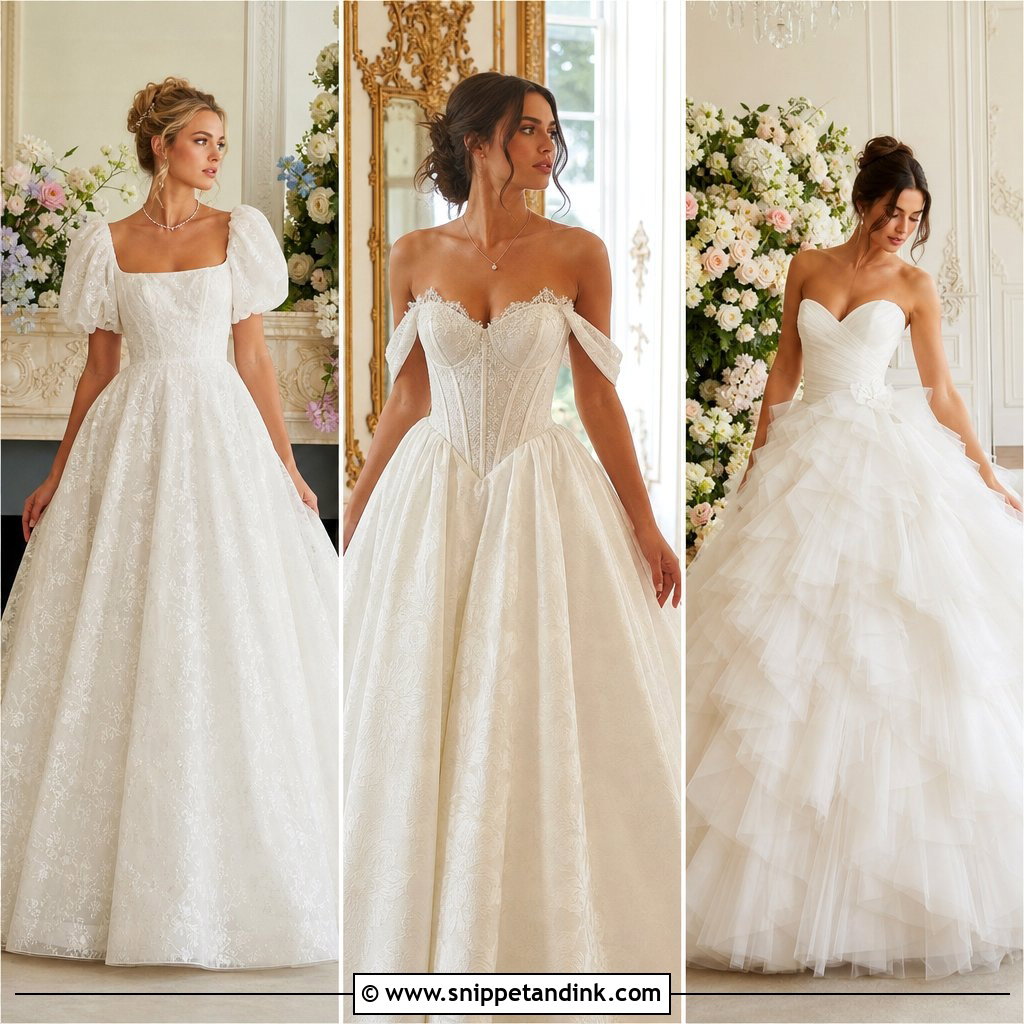
A Russian princess wedding dress with a wide skirt is all about the entrance. A structured bodice and full skirt in satin, tulle or organza, with embroidery, pearls or crystals at the neckline and waist, gives the royal effect. Add a kokoshnik-style tiara, a long veil and ivory heels, and keep jewelry to simple earrings and a bracelet. A wide skirt in a small church or a crowded registry is hard to manage, so check the aisle width before you fall for the volume.
11. Russian Inspired Wedding Dress With Floral Embroidery
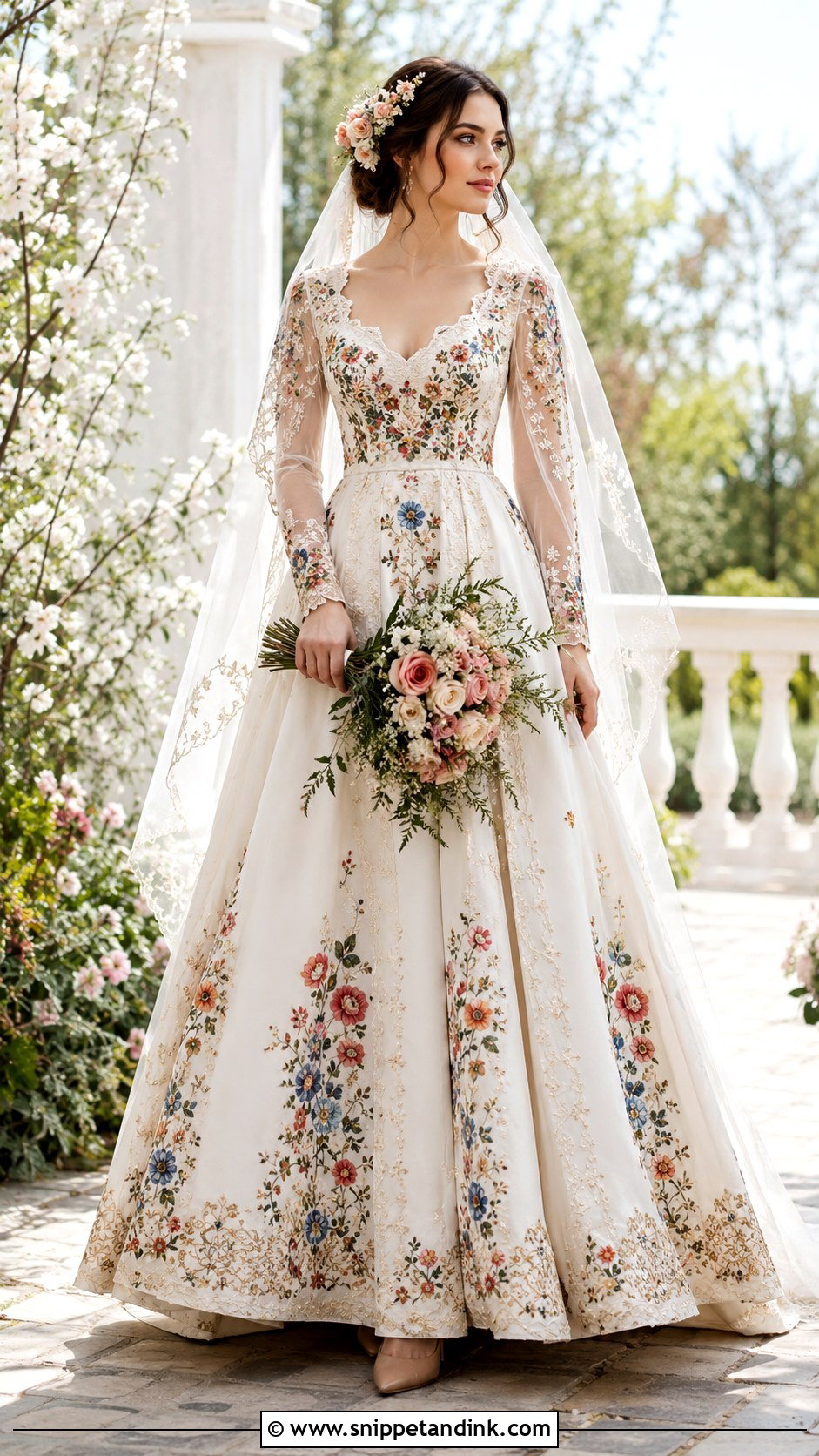
Floral embroidery softens the folk reference. Look for a white, ivory or blush gown with flowers worked across the bodice, sleeves or skirt in red, blue, gold or pastel thread, chosen to match your palette. A sheer veil lets the stitching show through. I like a bouquet that picks up the embroidered flower colours, since it links the dress and flowers in photos. Neutral heels and a floral hairpiece finish it. Spring and summer, garden-style celebrations suit it best.
12. Russian Wedding Dress With Blue Embroidery
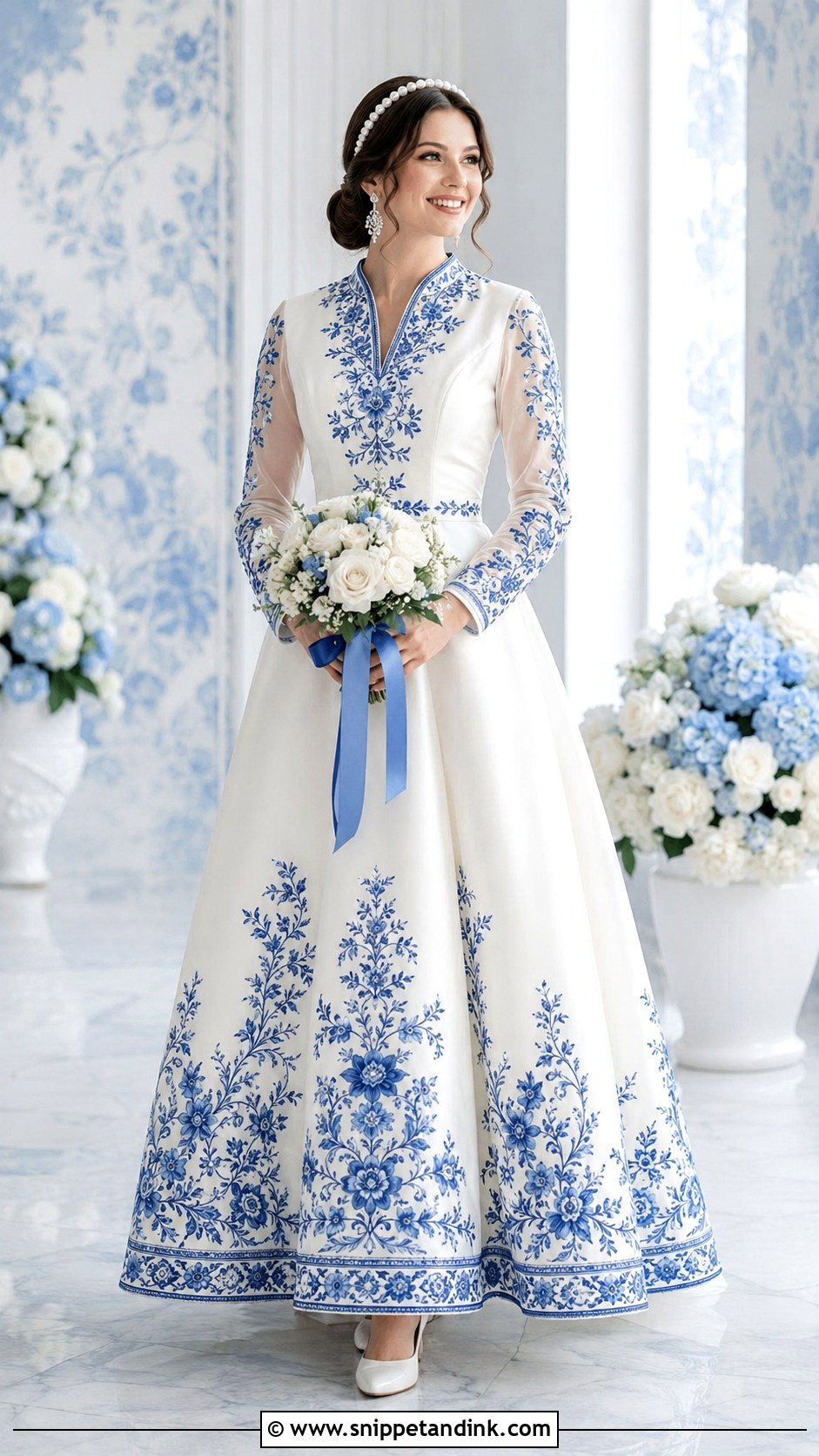
Blue embroidery is the quieter alternative to red. Blue threadwork on ivory, at the neckline, sleeves, waist or hem, feels calm and fresh. It looks especially good on linen-textured fabrics, soft tulle or smooth satin. Silver jewelry sits better with blue than gold does, in my experience. Ivory shoes, a bouquet of white flowers wrapped in blue ribbon and a pearl headband or small kokoshnik complete it. It adapts to any season, which red sometimes doesn’t.
13. Russian Wedding Dress With Cape
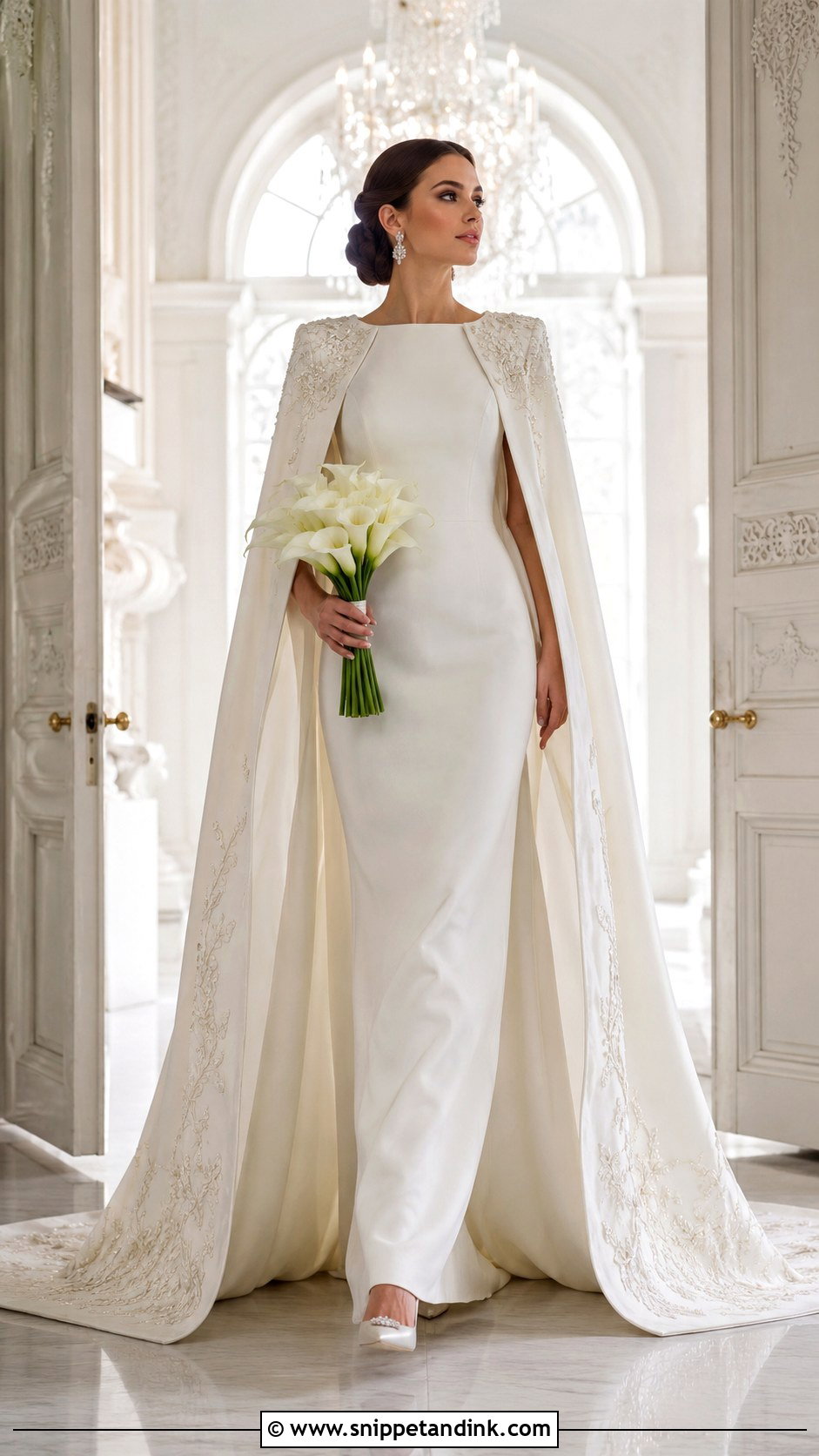
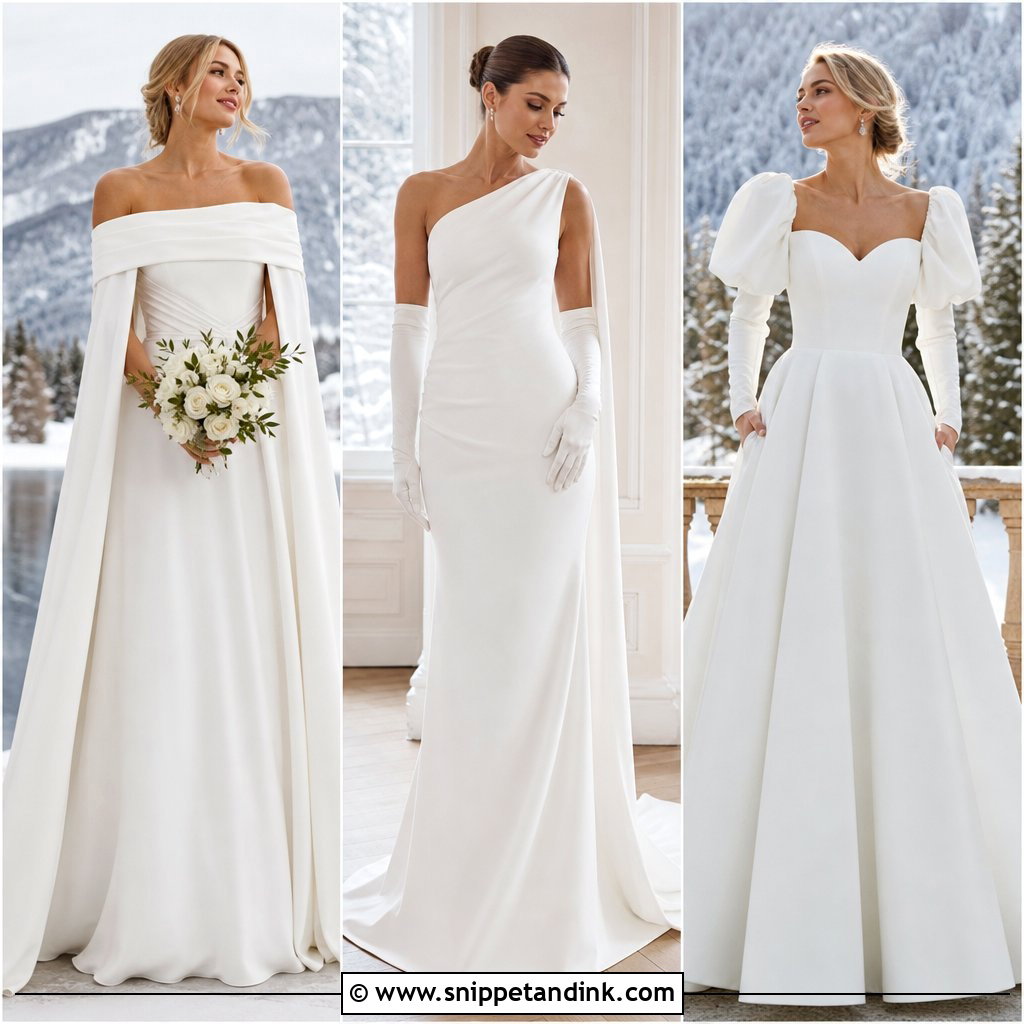
A cape changes the outline from behind without altering the dress. Start with a simple white gown and add an embroidered, lace or satin cape from the shoulders; it can stand in for a veil or sit under a small headpiece. Column, A-line and ball gown shapes all take a cape well. Pointed heels, crystal earrings and a sleek bouquet finish it. The fastening is what I check: a cape hooked at the neck pulls on the throat when you bend, so I prefer one attached at the shoulder seams.
14. Russian Wedding Dress With Veil And Kokoshnik
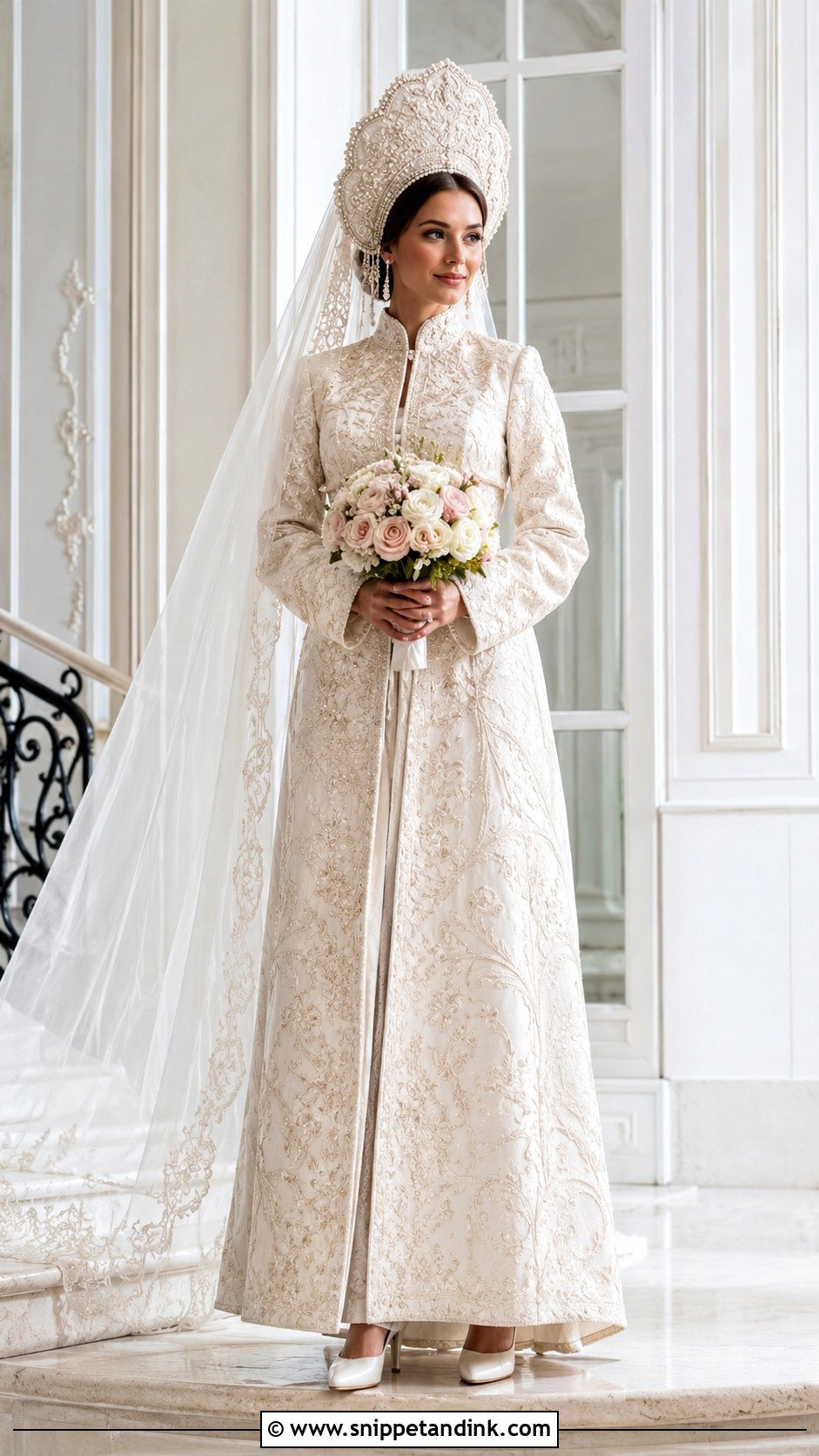
Veil and kokoshnik together frame the face completely. I place the kokoshnik at the crown and pin the sheer veil behind it, never over the face, so your expression stays open for photos. The gown can be embroidered, lace or plain satin. Proportion is everything: a large kokoshnik wants a simpler dress, an ornate dress wants a finer headpiece. Pearl earrings, soft heels and a bouquet in white, blush or red complete it. Test the combined weight at your trial.
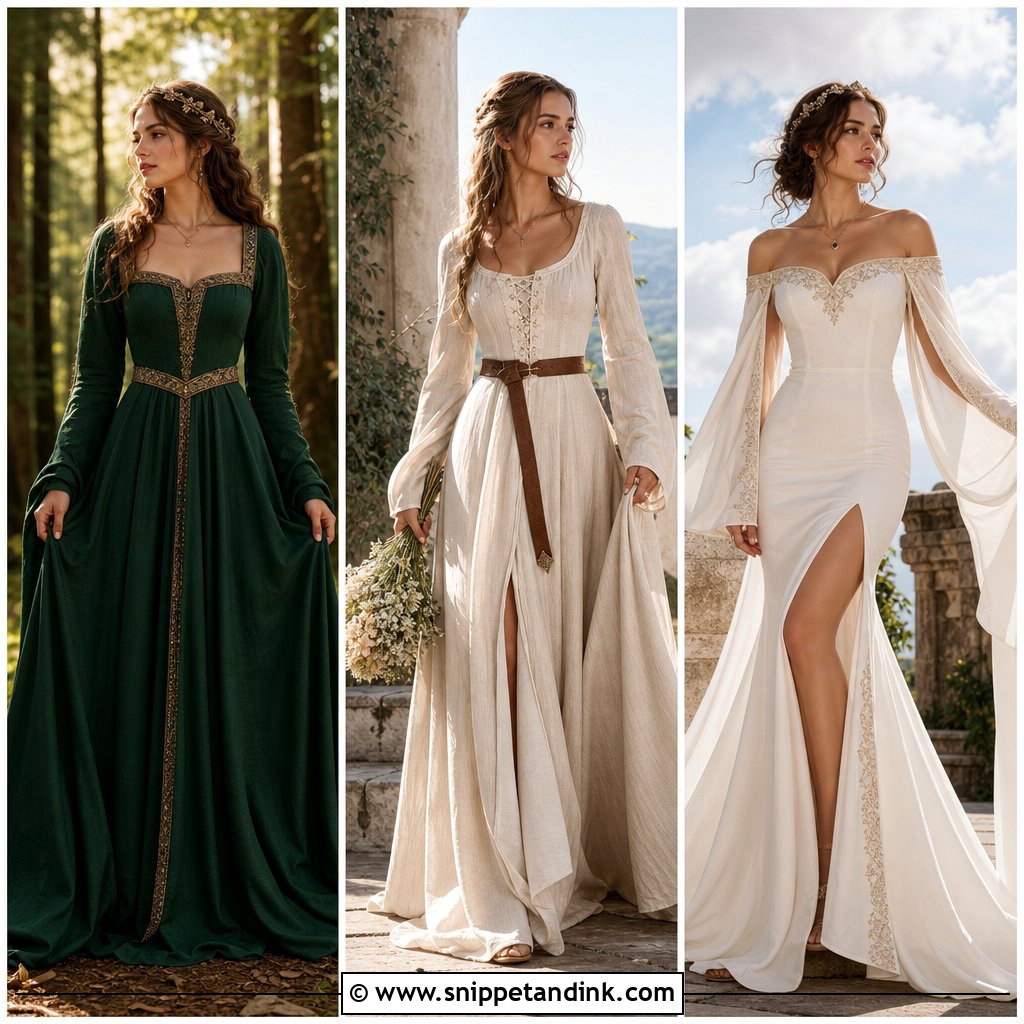
15. Russian Wedding Dress With High Neck
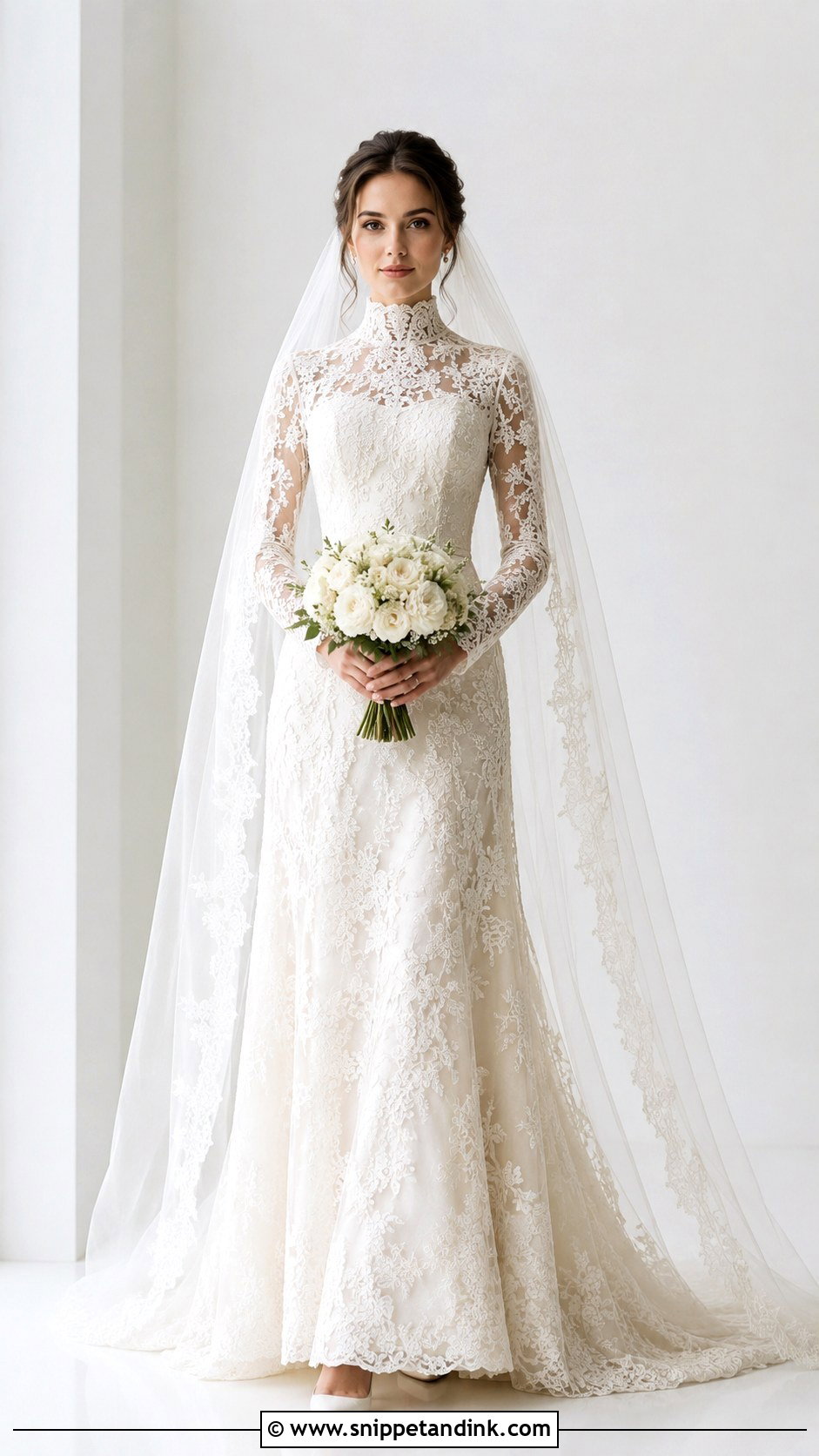
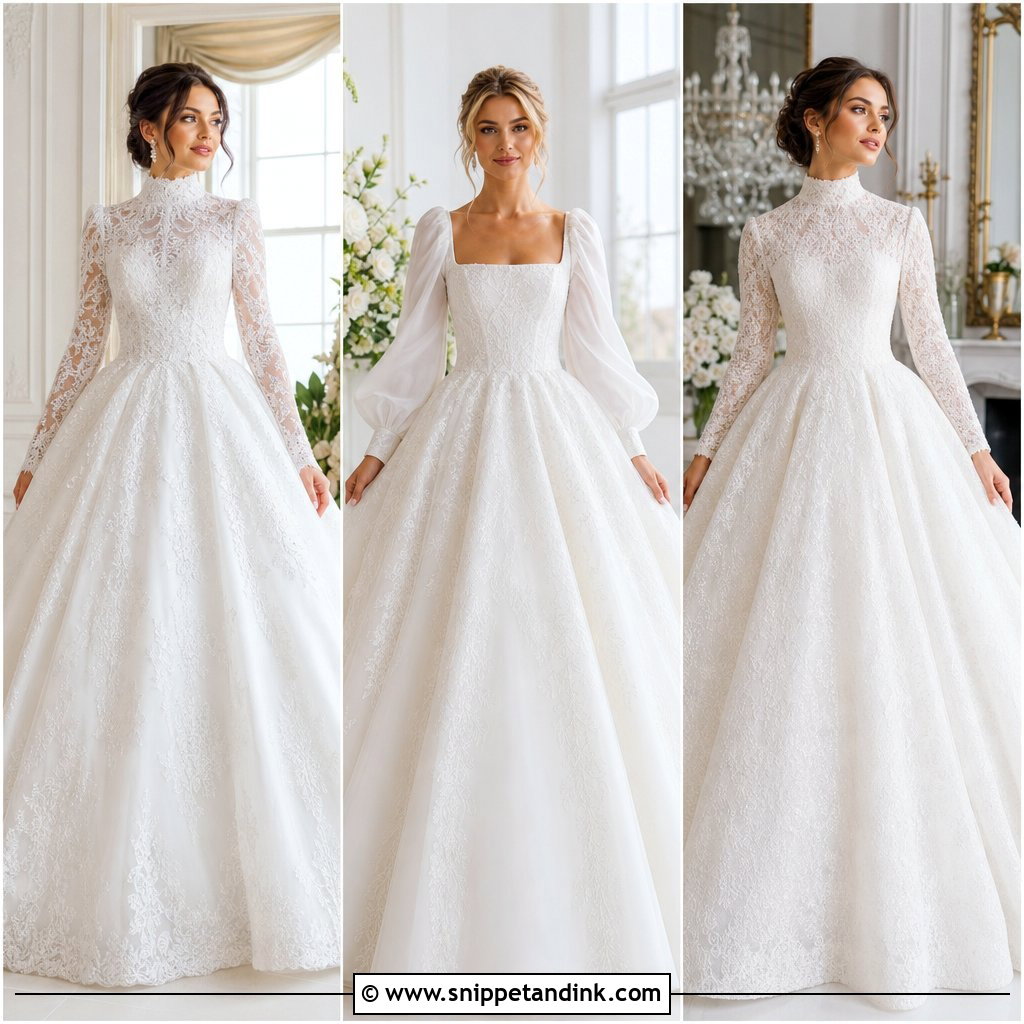
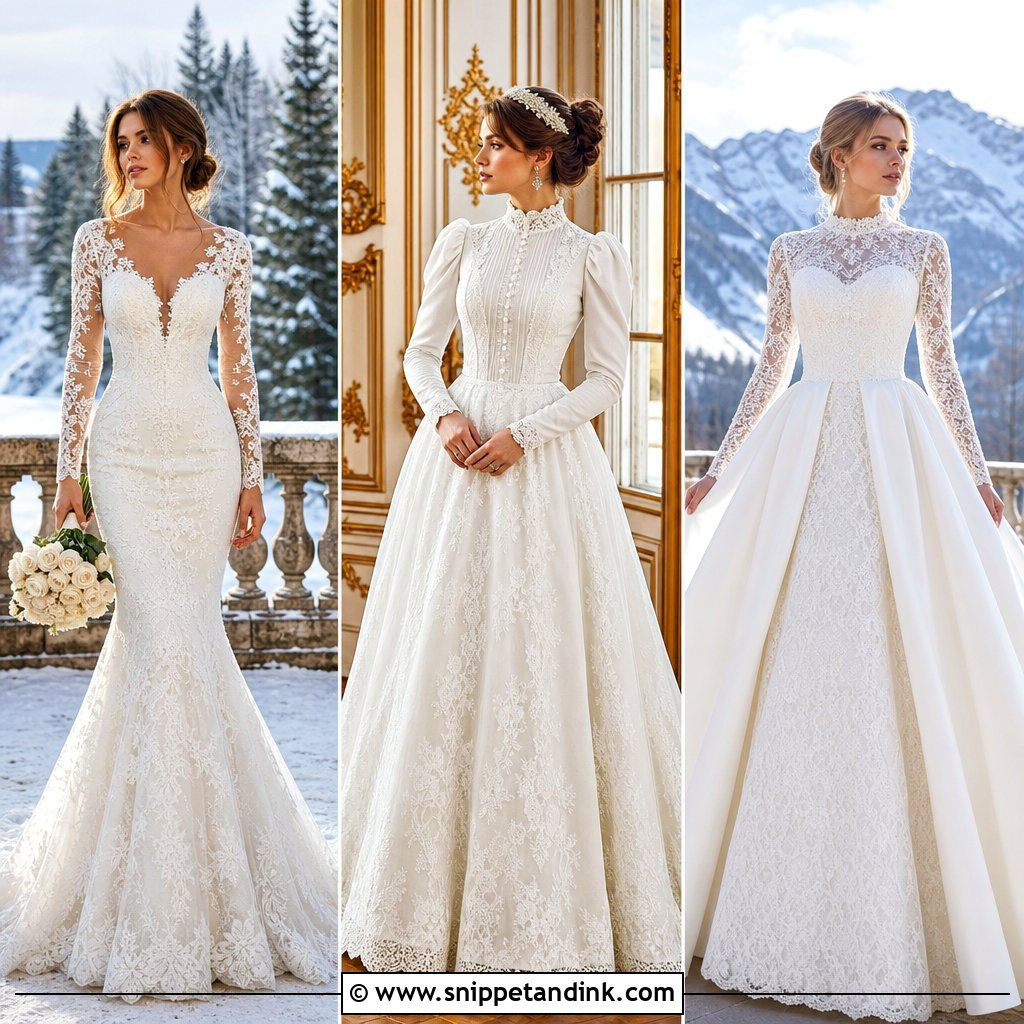
A high neck gives the embroidery a frame right at the collar and cuffs. Choose lace, satin or crepe with a fitted bodice and long sleeves for one smooth line. I keep hair off the neck in a low bun, with small earrings and a long veil attached behind the head, so the collar stays visible. Ivory heels or embroidered flats both work. A high neck can feel warm in a crowded hall, so if you run hot, choose lace or a sheer yoke rather than solid satin.
16. Russian Wedding Dress With Puff Sleeves
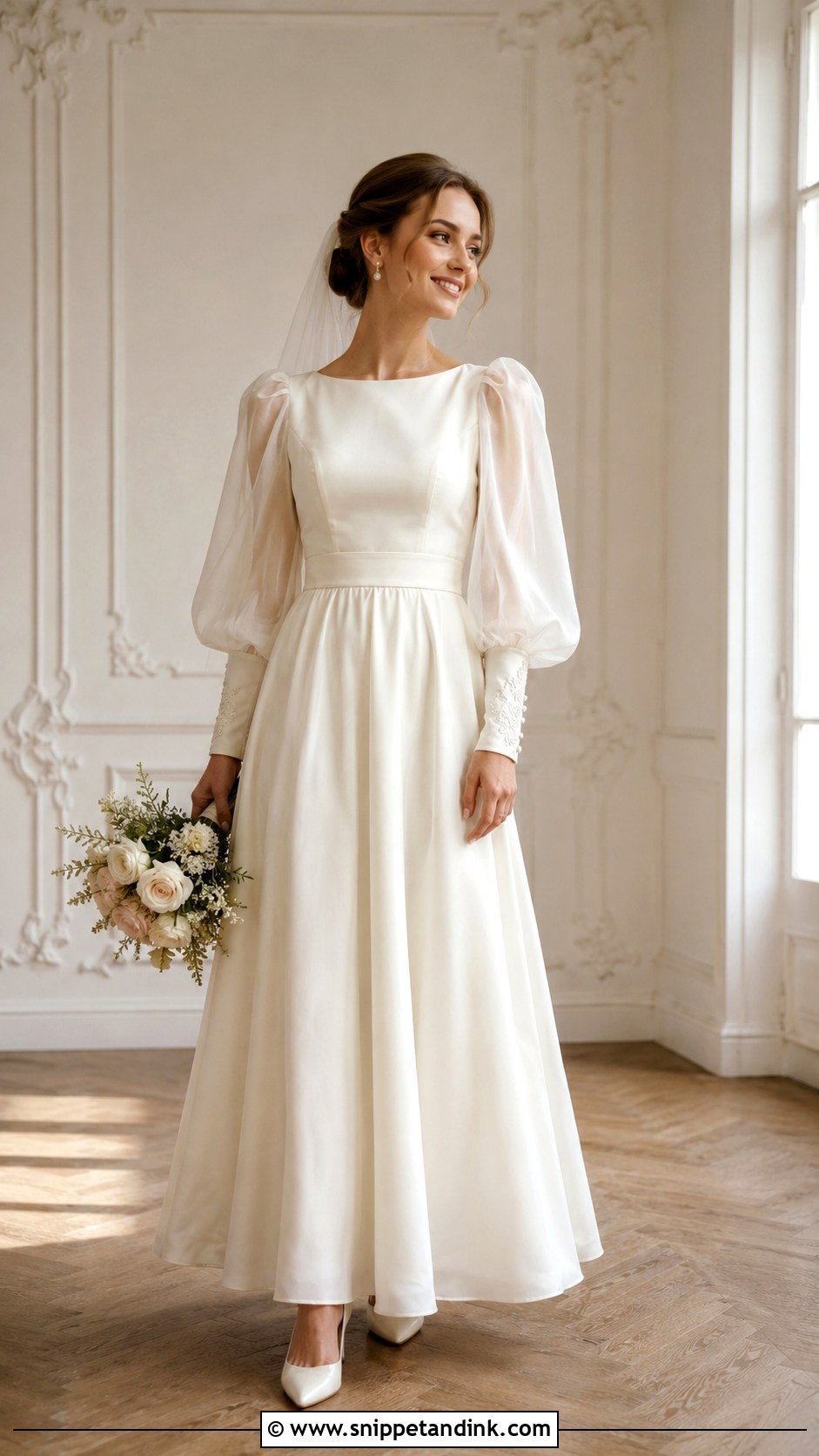
Puff sleeves bring a historic note into a current dress. Gentle volume at the shoulder, a fitted waist and a flowing skirt keep it balanced; sheer lace or organza sleeves feel lighter than satin. Embroidered cuffs add the Russian reference. Simple heels, pearl earrings and a small headpiece or veil complete it. Skip large jewelry, since the sleeves already add volume near the face. If you are petite, keep the puff modest or it can overwhelm your shoulders.
17. Russian Wedding Dress With Embroidered Sleeves
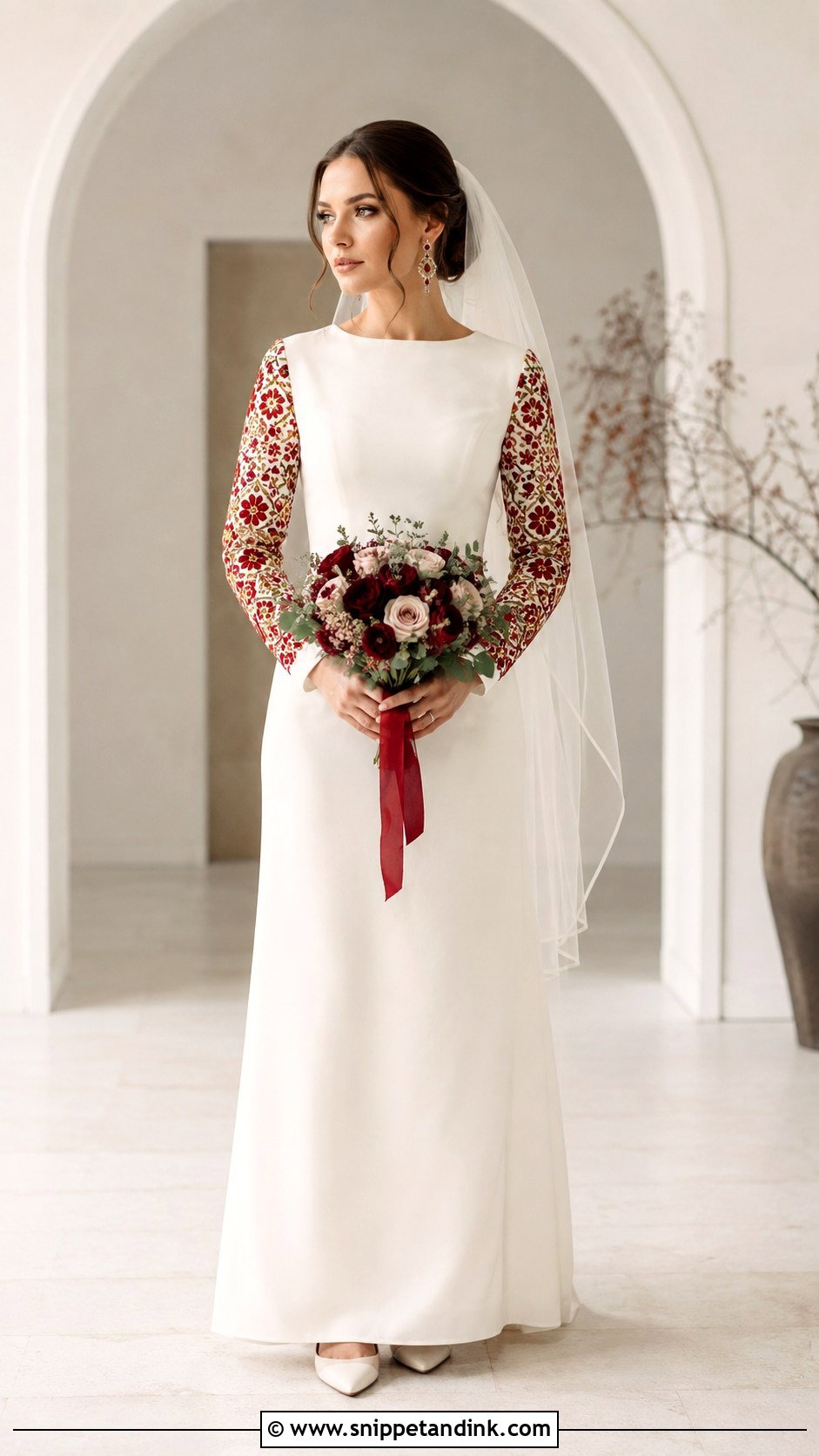
Embroidered sleeves put the detail where people look during the ring exchange and bouquet shots: your hands and arms. Choose a simple gown with sheer or opaque sleeves stitched in red, gold, blue or white, and let the work fade onto the bodice or stop cleanly at the wrists. Understated heels, a veil, small drop earrings and a bouquet ribbon matching the thread colour finish it. It suits minimal and traditional brides equally well.
18. Russian Wedding Dress With Velvet Cape
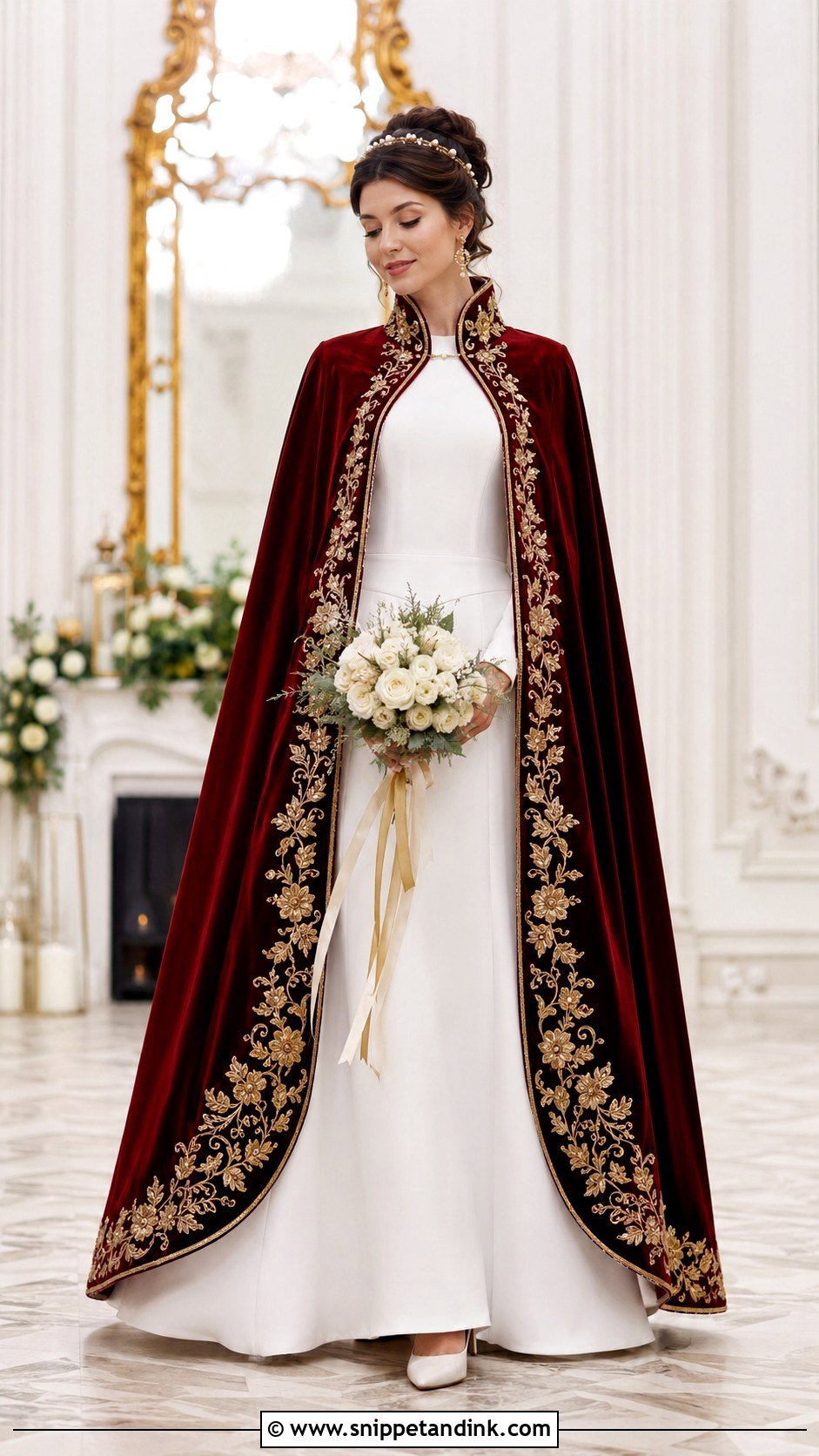
A velvet cape over a white gown is my favourite winter answer to cold photos. Deep red, emerald, navy or ivory velvet, edged with gold trim or embroidery, gives instant warmth and a clear Russian reference. Velvet is heavy, so keep the gown underneath simple. Closed-toe heels, gold earrings and a neat updo with a kokoshnik or pearl headband complete it. One caution: velvet marks where it is gripped, so ask your attendants to handle it by the lining.
19. Russian Wedding Dress With Gold Crown
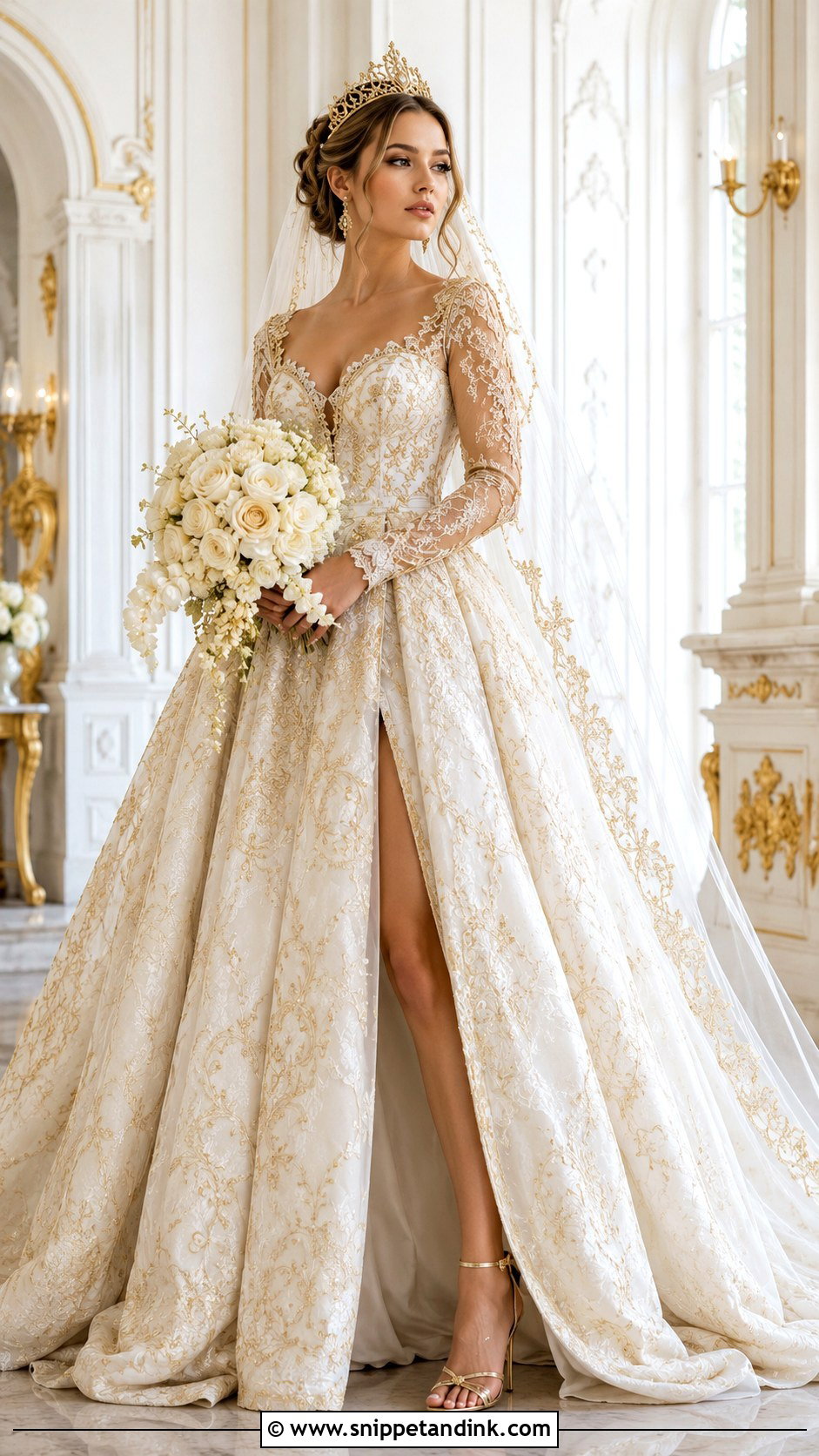
A gold crown is simpler to style than it looks, as long as gold appears somewhere on the dress too: embroidery, beading or trim. A full skirt reads grand, a fitted cut more modern. The crown might be kokoshnik-shaped, a tiara or a fine halo. Gold heels, soft earrings and a cream-and-greenery bouquet finish it, with a light, sheer veil if you wear one. I match the gold tone of crown and embroidery in daylight, since yellow gold and antique gold look mismatched up close.

20. Russian Wedding Dress With Red Sash
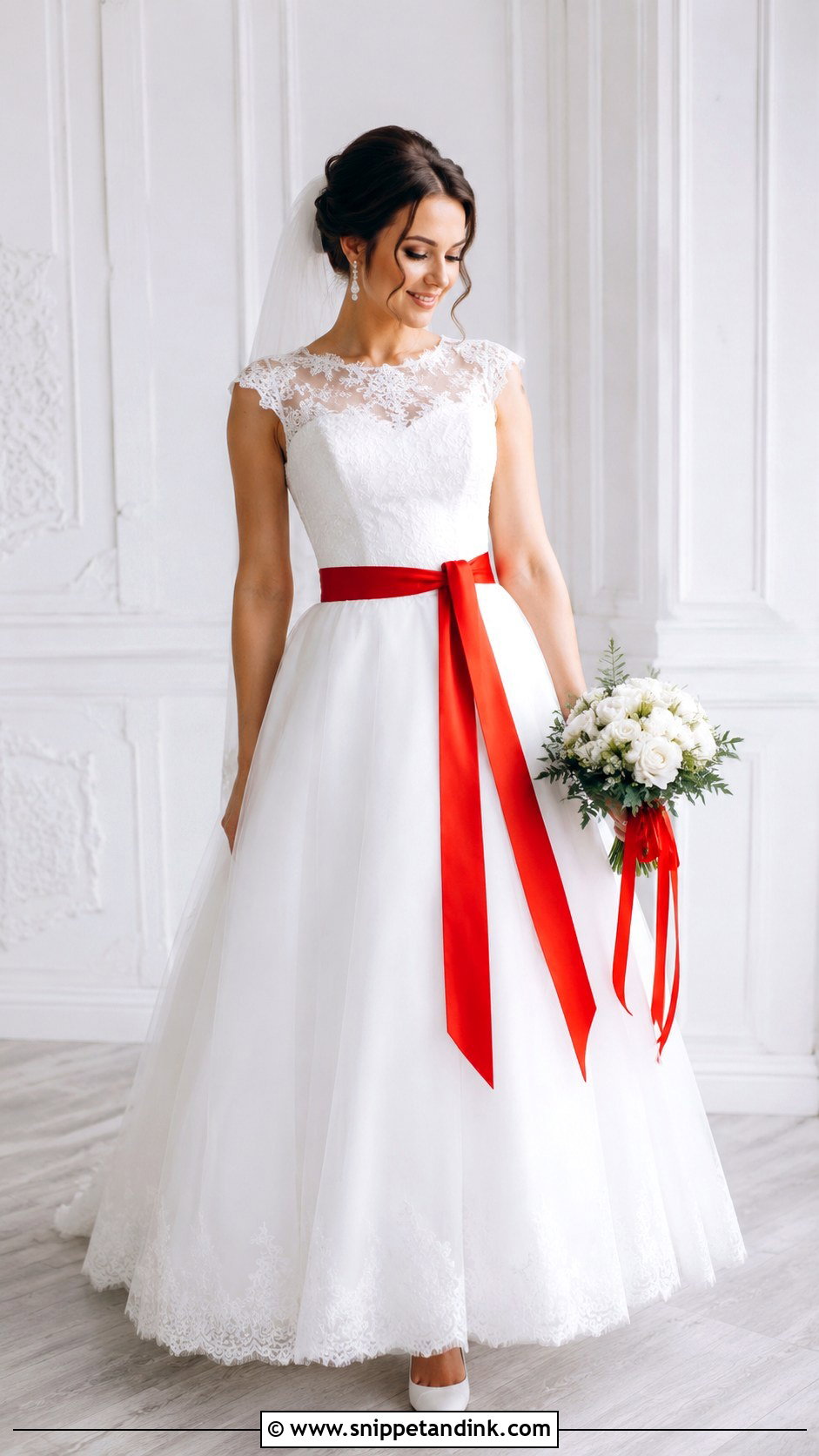
A red sash is the easiest way to add tradition to a gown you already own or love. Any white silhouette works, A-line, ball gown, sheath or fit-and-flare; tie red silk at the waist for colour and definition. Repeat the red in embroidery, shoes or a bouquet ribbon. A simple veil and pearl earrings keep it bridal. It needs no major alterations, which helps the budget. I’d choose a sash with some weight; thin satin creases into a rope by the end of the evening.
21. Russian Wedding Dress With Beaded Bodice
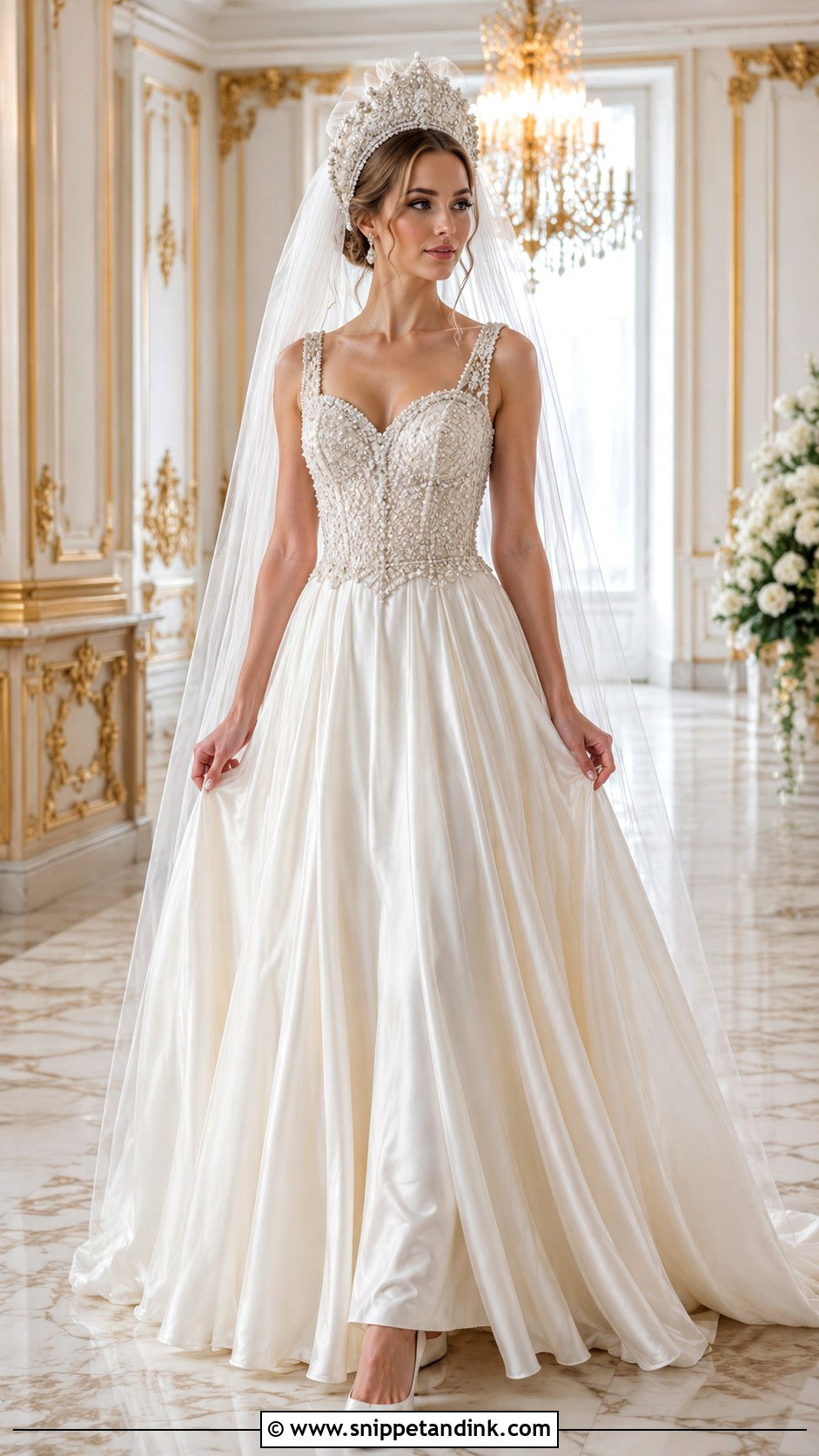
A beaded bodice above a softer skirt gives sparkle without weight below the waist. Pearl, crystal or gold beading all work; match the bead colour to your kokoshnik if you wear one. Satin heels, a sheer veil and delicate earrings are enough, with a simple bouquet so the bodice leads. Heavy beading at the underarm rubs over a long evening, so I check the inner arm at fittings. It suits evening receptions and formal venues.
22. Russian Wedding Dress With Embroidered Apron
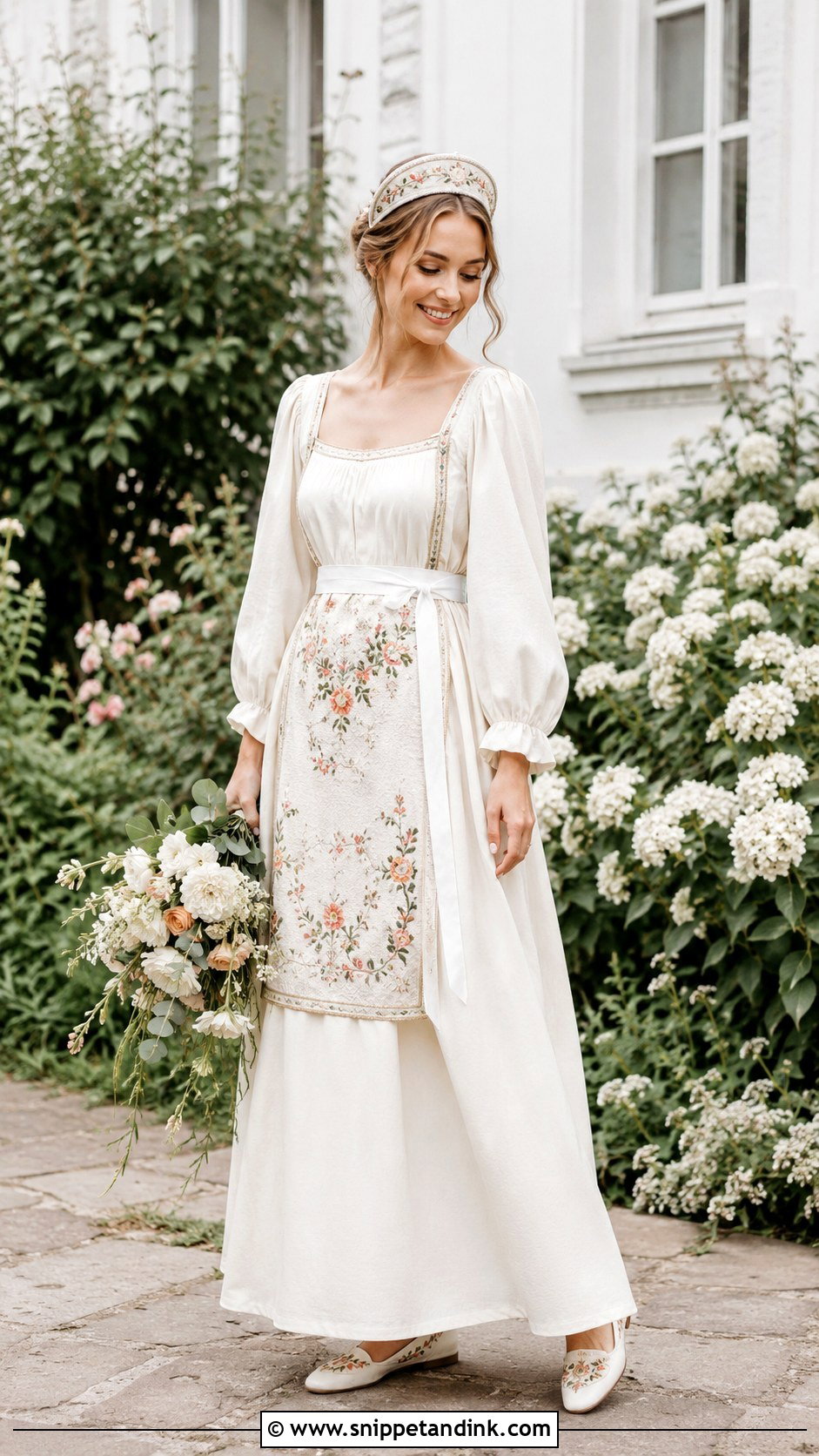
An embroidered apron over a simple white or ivory gown is a folk detail few brides think of. The apron can carry red, gold, blue or floral embroidery and tie at the waist with ribbon. It only works if it is well made and not bulky, so I’d have it lined and cut to sit flat over the skirt. Embroidered flats or low heels, a blouse-style sleeve and a kokoshnik or floral headpiece complete it. Take the apron off for the reception and you have a second look.
23. Russian Wedding Dress With Satin Skirt
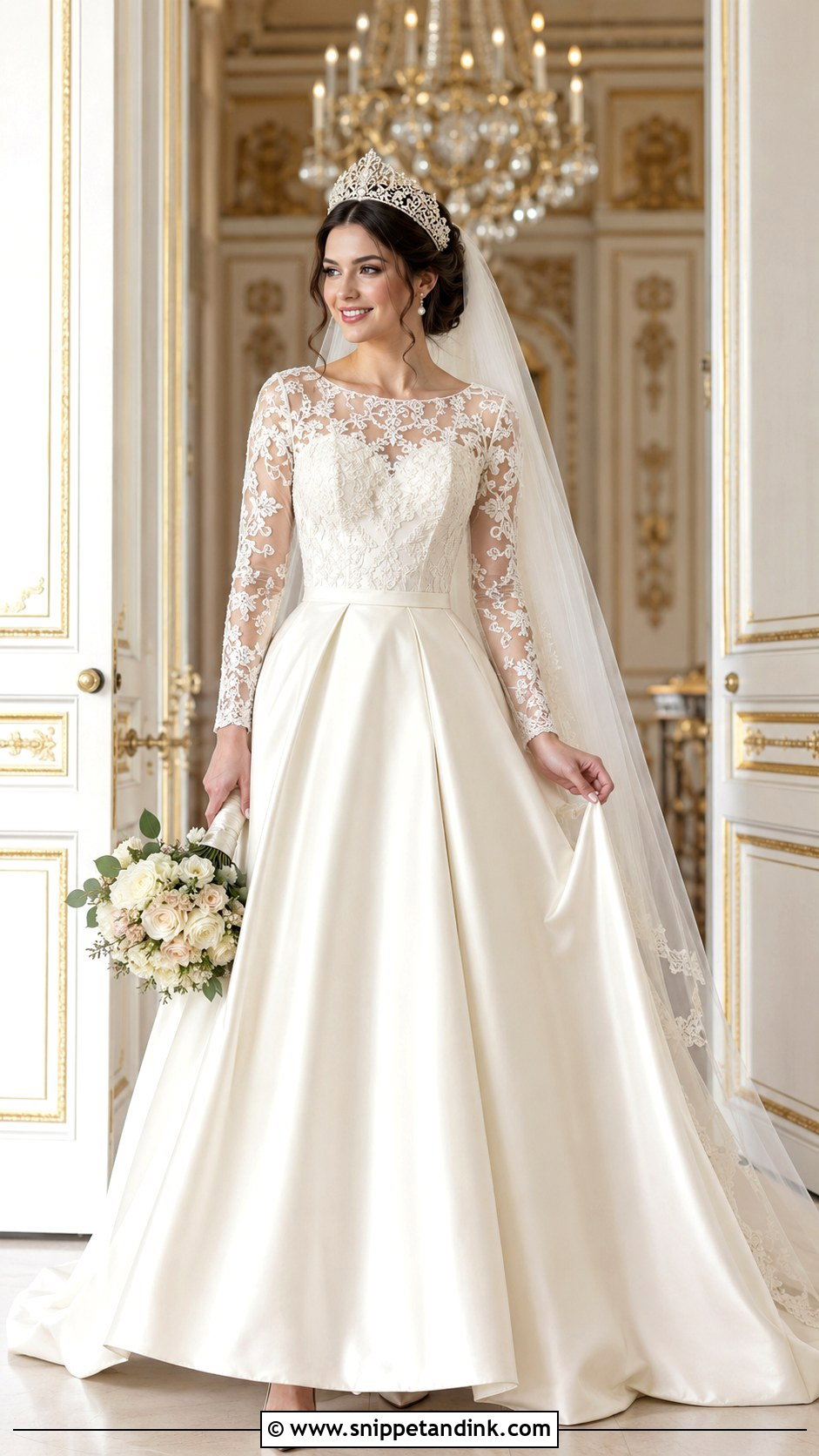
A full satin skirt below an embroidered or lace bodice is the dependable choice in this list. Satin reads formal yet clean, and it moves well as you walk. Add red or gold stitching at the waist for colour. Ivory heels, pearl earrings and a veil pinned below a small kokoshnik or tiara finish it. The skirt skims the lower body while the bodice gives structure, which suits most figures. Satin does crease when you sit at a long dinner, so a quick steam before the evening photos is worth planning.
24. Russian Wedding Dress With Sheer Overlay
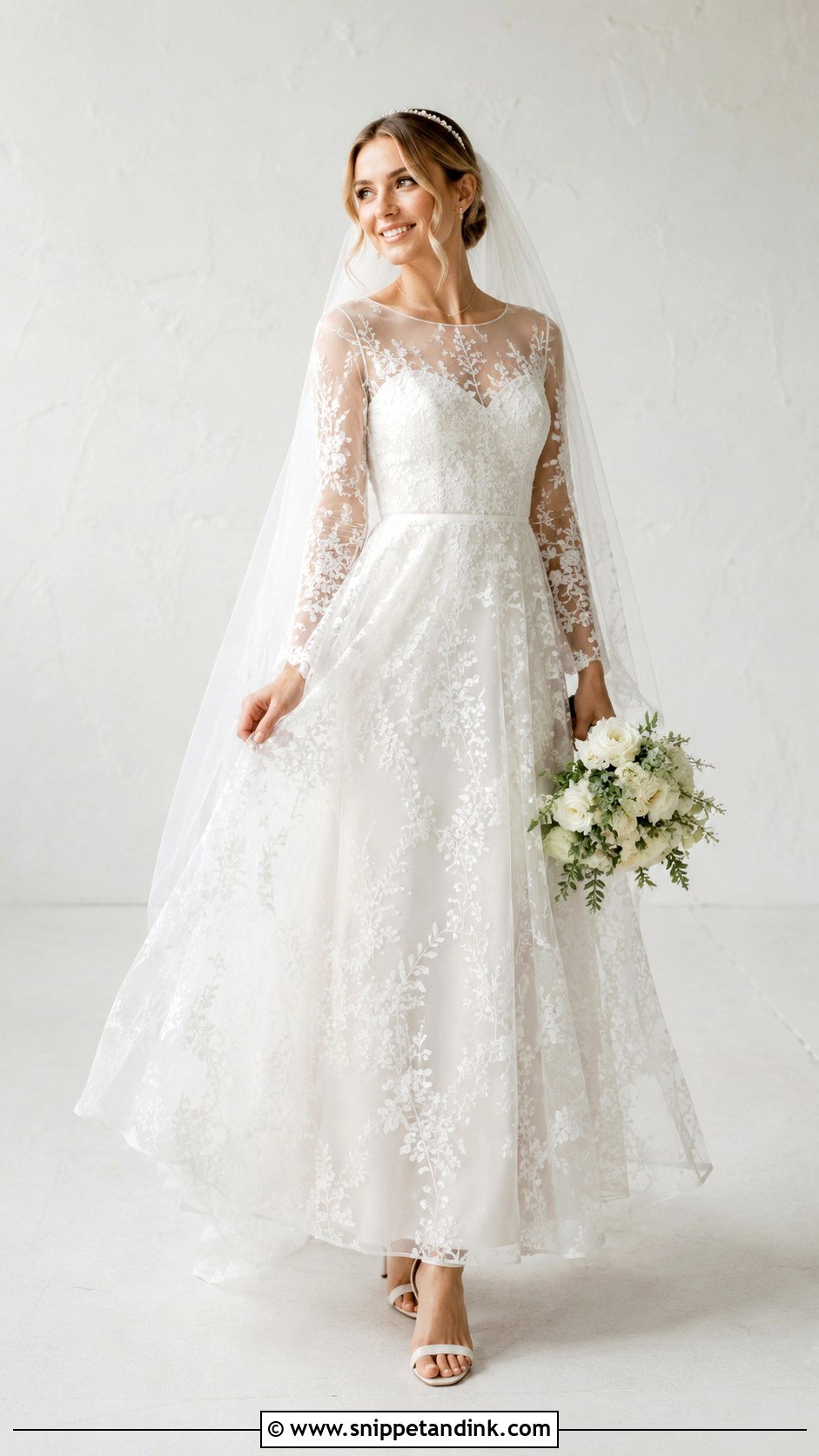
A sheer overlay adds depth without weight. A simple base dress under tulle or organza worked with embroidery, flowers or pearls feels airy, especially across the sleeves and skirt. Delicate heels, a soft veil and understated jewelry suit it, and a small kokoshnik-style headpiece adds the Russian note without formality. Overlays catch on rough surfaces, so I’d steer clear of this one for a rustic barn with exposed timber. It suits spring and summer weddings best.
25. Russian Wedding Dress With Two Piece Set
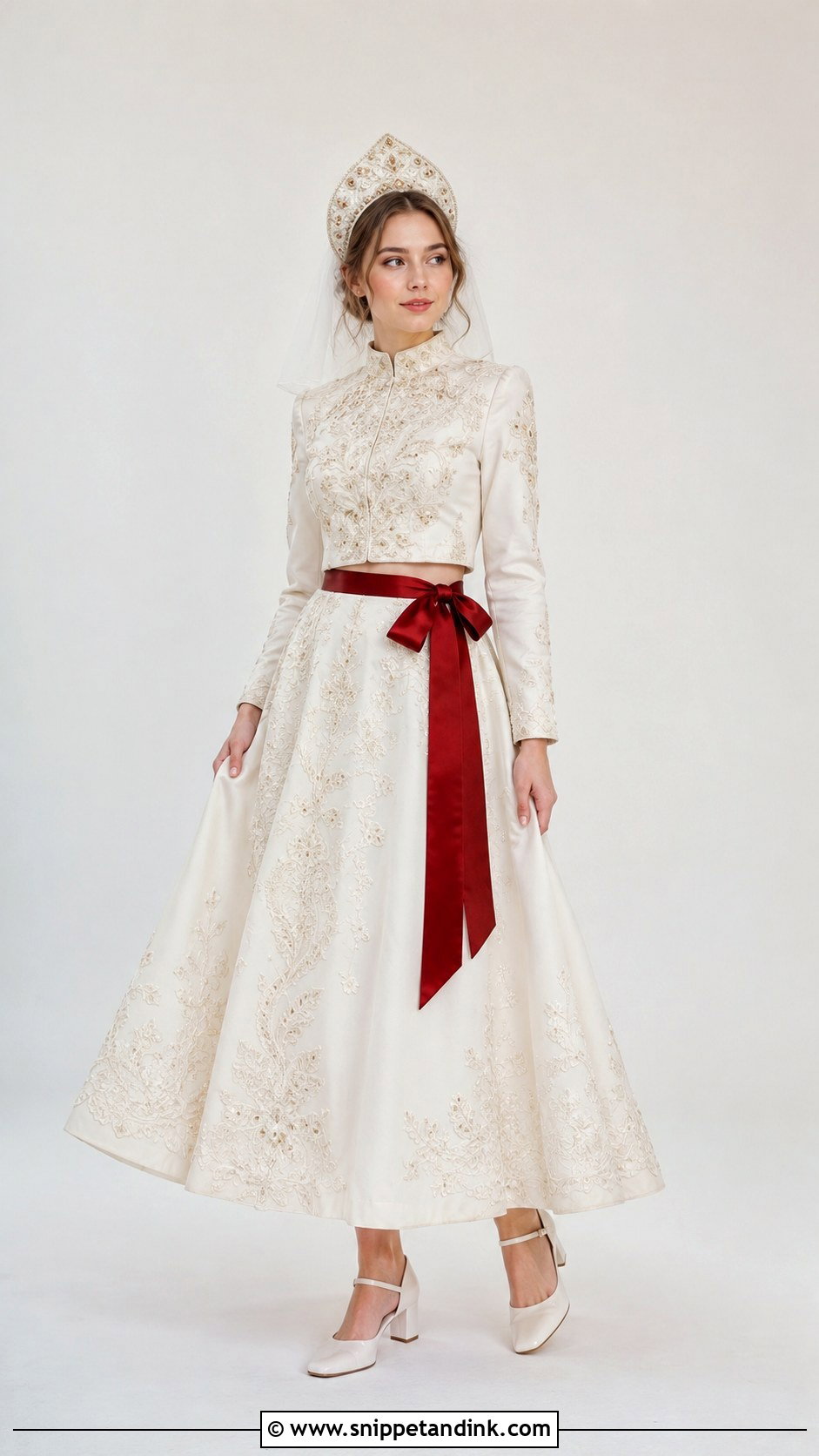
A two-piece set lets each part fit properly, which a single gown sometimes can’t. A structured embroidered top with a high or square neckline or long sleeves, over a full white or ivory skirt, gives a custom feel. A red sash, gold trim or pearl buttons ties the halves together. Block heels, a short veil and a small kokoshnik-style headband complete it. Check that the top stays tucked when you raise your arms; a skirt waistband with a gripper strip solves most of that.
Wearing a Kokoshnik From Morning Prep to the Last Dance
A kokoshnik sits higher and stands more upright than a tiara, so it behaves differently on the head. Most of the problems I see come from treating it like a headband.
Securing it
Ask whether yours has combs, loops or ribbon ties at the base. Combs need a base to grip, so I have the hairstylist build a firm, slightly backcombed section or a low bun to anchor into. Ribbon ties hidden under the hair at the nape take the load off the crown and stop it tipping forward when you look down.
Weight and comfort
A pearl-heavy piece can start to press after a few hours. Wear it at the trial for at least an hour, notice where it pinches, and have padding or a velvet lining added at that point. Plan a moment after dinner to take it off; a slim pearl headband in your bag keeps the look intact for dancing.
Travelling with it
Carry it in a rigid box, never folded into a garment bag. Beaded and embroidered surfaces snag on zips, and a crushed frame is hard to reshape the night before.
How Much Tradition Do You Want to Wear?
Heritage can live in one embroidered cuff or in a full red gown with a kokoshnik and veil, and both are honest choices. Brocade, satin, lace, velvet and tulle all suit a Russian-inspired look when the shoes and accessories are chosen with them. The rule I keep coming back to is proportion: if the headpiece is bold, let the dress be calm, and if the embroidery is rich, keep the crown simple. Start with your ceremony, your season and what your family will recognise, then build the look outward from there.
You'll Like These Ideas:




Leave a Reply