
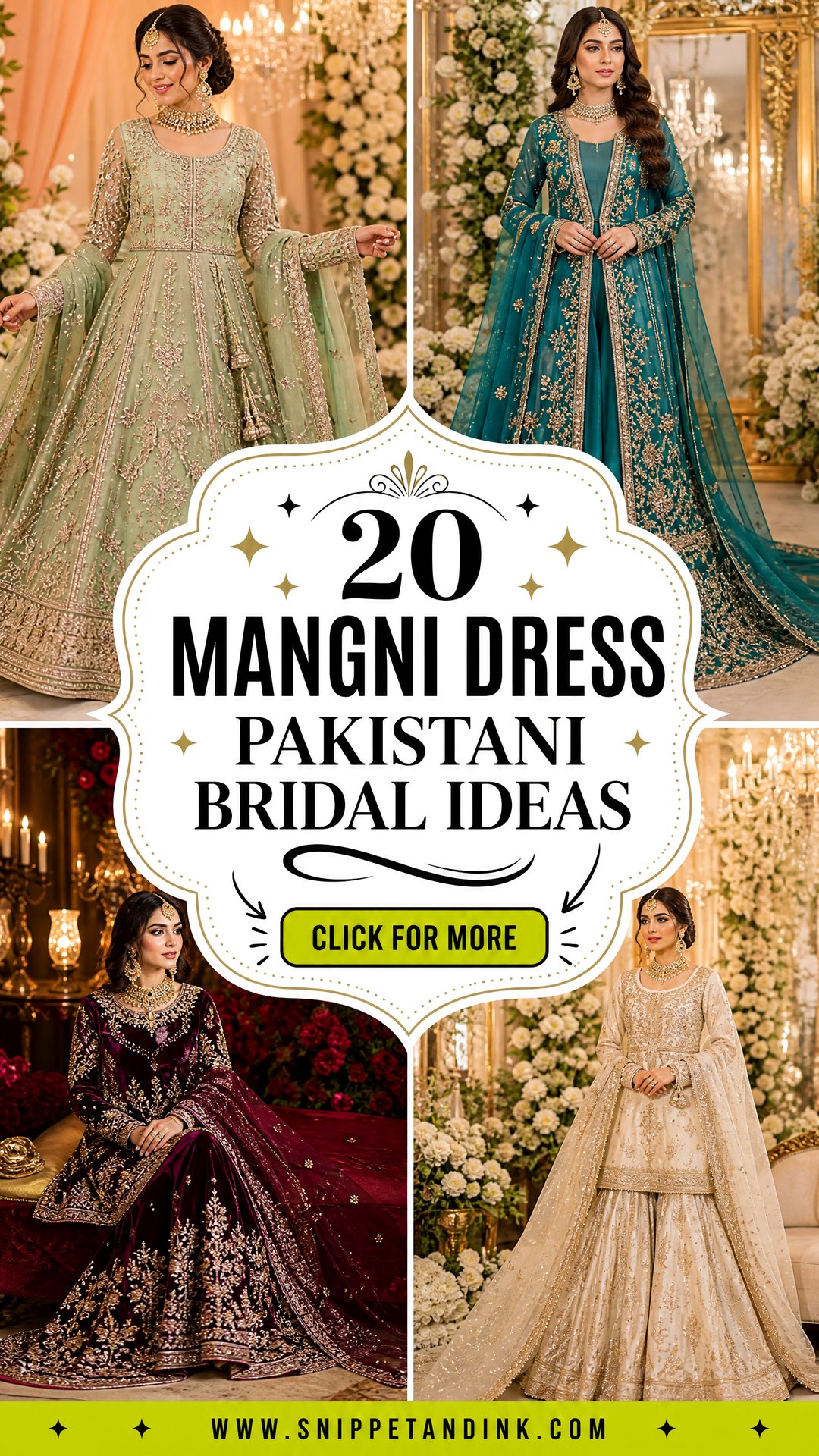
A mangni outfit has a narrower job than people think. It has to look bridal at an engagement ceremony without taking anything away from the nikah, baraat and walima clothes still to come. Ghararas, shararas, peshwas, lehengas, saris and modern formal sets all work, and pastels, softer jewel tones and a well-worked dupatta tend to suit the event best. Before suggesting a cut, I ask three things: how long will you sit on stage, how much coverage do you want, and what are you wearing to the baraat? The twenty looks below answer those questions in different ways.
When His Family Brings the Mangni Outfit
In many Pakistani families the groom’s side brings the engagement outfit, often with the ring and sometimes jewelry, as part of the rasm. It’s a gift, but it still has to fit, and a few quiet steps prevent a stressful morning.
- Send measurements taken from a kameez that already fits you well, including shoulder width and sleeve length. Body measurements alone leave too much to guesswork.
- Mention any colors that don’t suit you, gently and early, before fabric is cut.
- Ask for the outfit two or three weeks ahead so a tailor can take in a seam or adjust a hem. Heavily embroidered pieces usually have little seam allowance, so letting out is much harder than taking in.
- Keep your own dupatta pins, inner camisole and shoes ready, since these are rarely included.
If you’re choosing the outfit yourself, find out what the groom is wearing and which colors are planned for the baraat and walima. A deep red mangni can make the baraat feel repetitive in the album.
1. Blush Pink Lehenga Mangni Dress
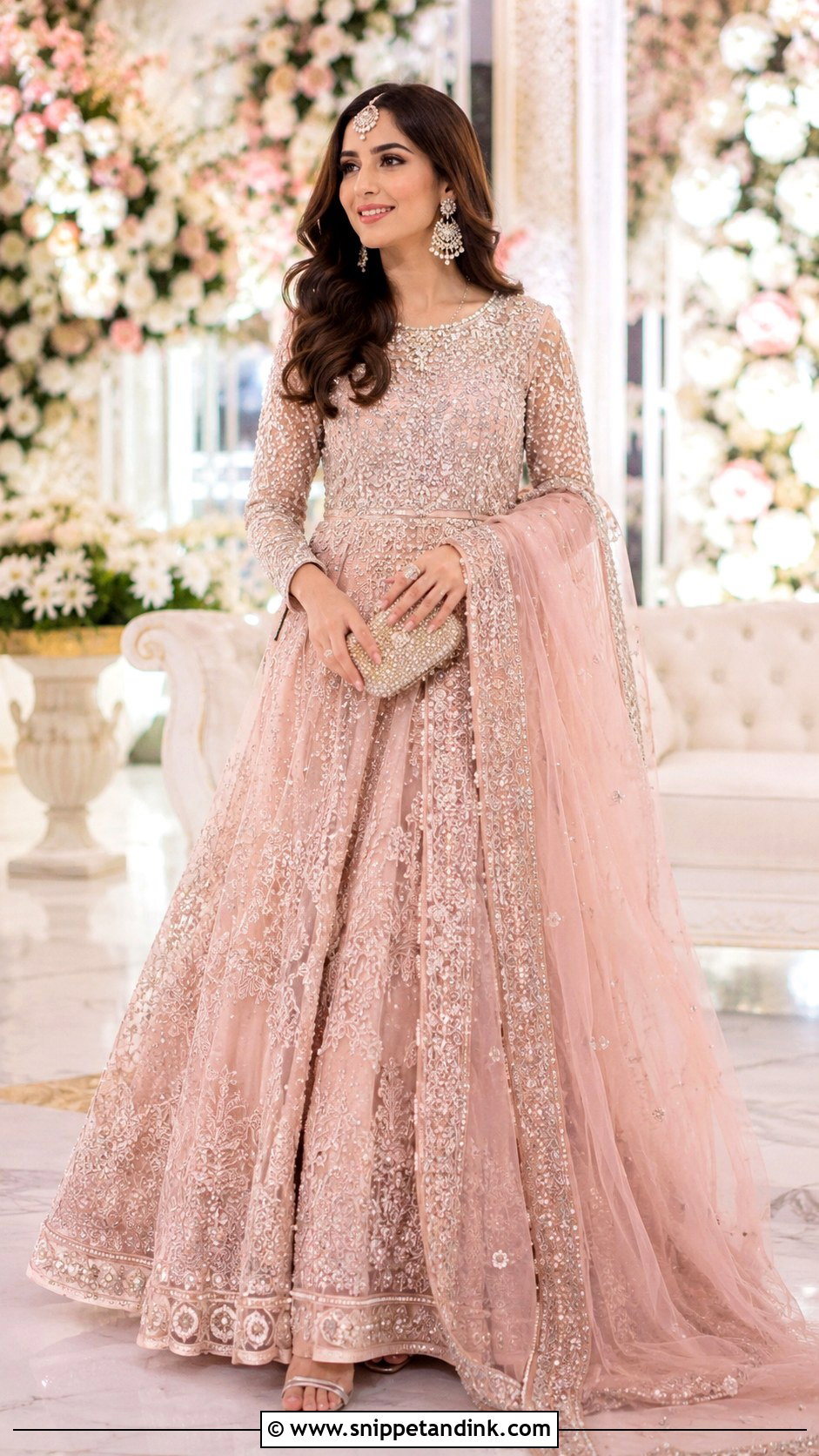
Blush is the color I reach for first when a bride wants to look soft without disappearing, and a blush pink lehenga carries it well. Keep the heaviest work near the hem, in silver zari, pearls or fine crystals, so the skirt has weight where it needs to swing. A longer fitted blouse gives coverage; a waist-length choli reads more current. Choose a sheer dupatta with a narrow border, because a heavy border on blush drags the whole outfit down. Silver heels, chandelier earrings and a slim maang tikka are enough for a daytime banquet or a garden ring ceremony.
2. Ivory Gharara Mangni Dress
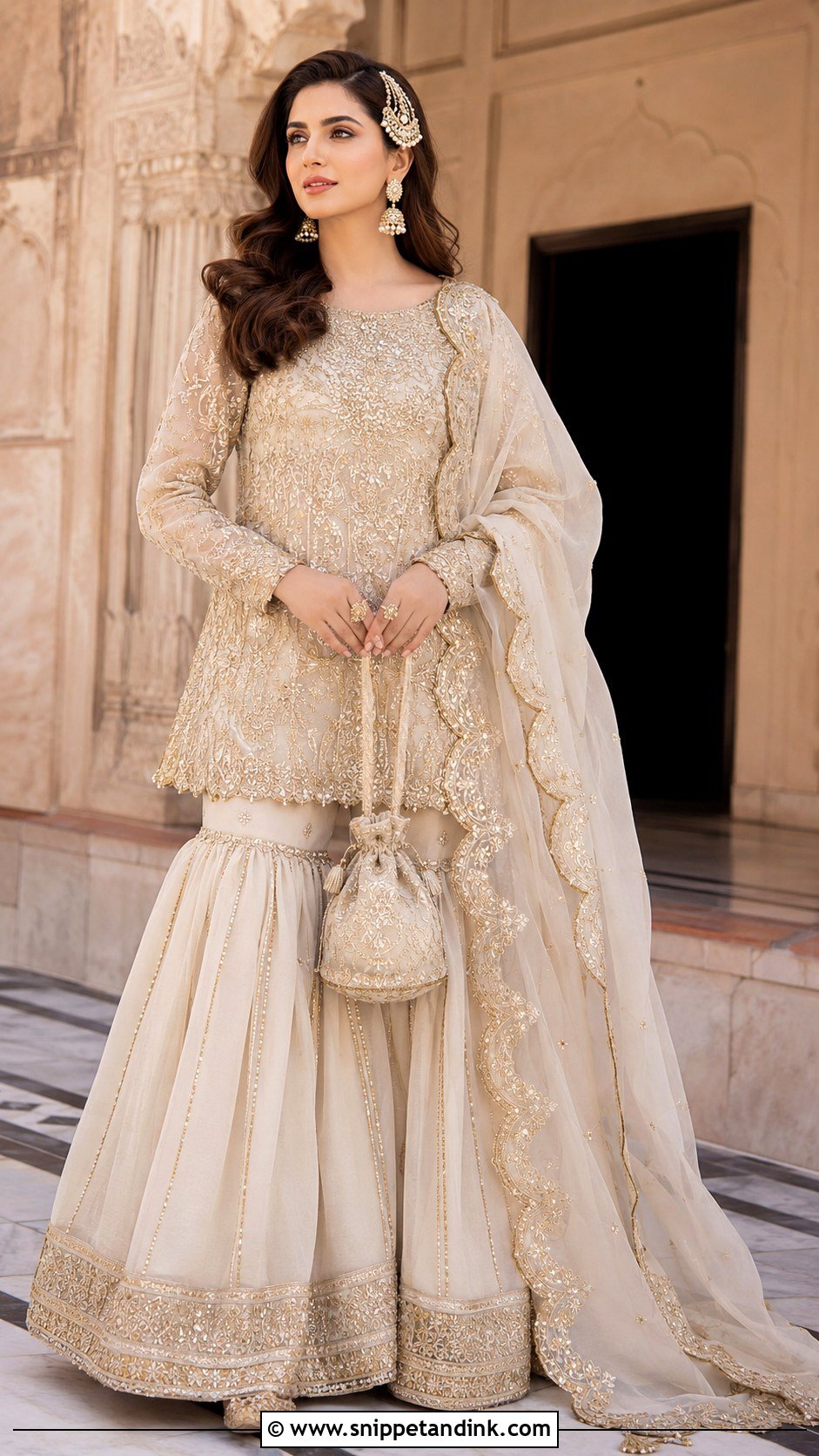
A gharara only looks right if the joint sits exactly at the knee, and that is where I spend most of the fitting. Fit it close through the thigh, then let the gathered flare open from the knee down. A short ivory kurti with gold dabka, pearls and a little resham keeps the proportions authentic, whereas a long shirt hides the joint and loses the shape. Drape a scalloped organza dupatta over one shoulder or lightly over the head, and add gold khussas, pearl jhumkas and a delicate passa. Ivory can wash out cool or olive skin in daylight, so warm the makeup slightly.
3. Sage Green Sharara Mangni Dress
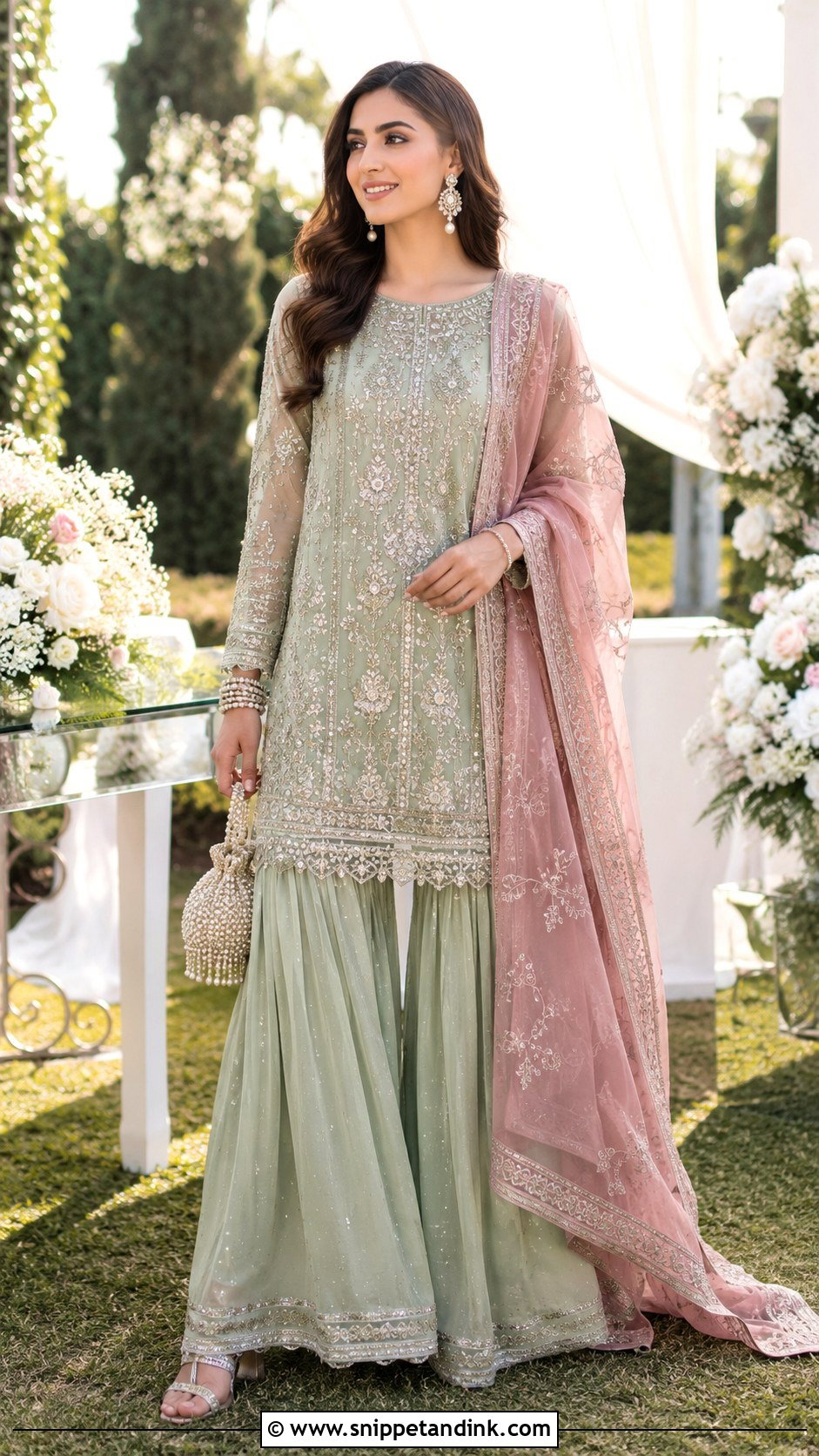
Sage is one of the few greens that works in both a summer garden and a winter hall. A gently flared sharara with tonal embroidery and small silver accents keeps it light, and a knee-length kameez with fitted sleeves gives the outfit length. I like a dusty rose or champagne dupatta here, because a matching sage one makes the look go flat on camera. Silver sandals, pearl drops and a slim bracelet stack are plenty. A sharara moves without a lehenga’s weight, so it stays comfortable through a long evening of greetings.
4. Dusty Blue Peshwas Mangni Dress
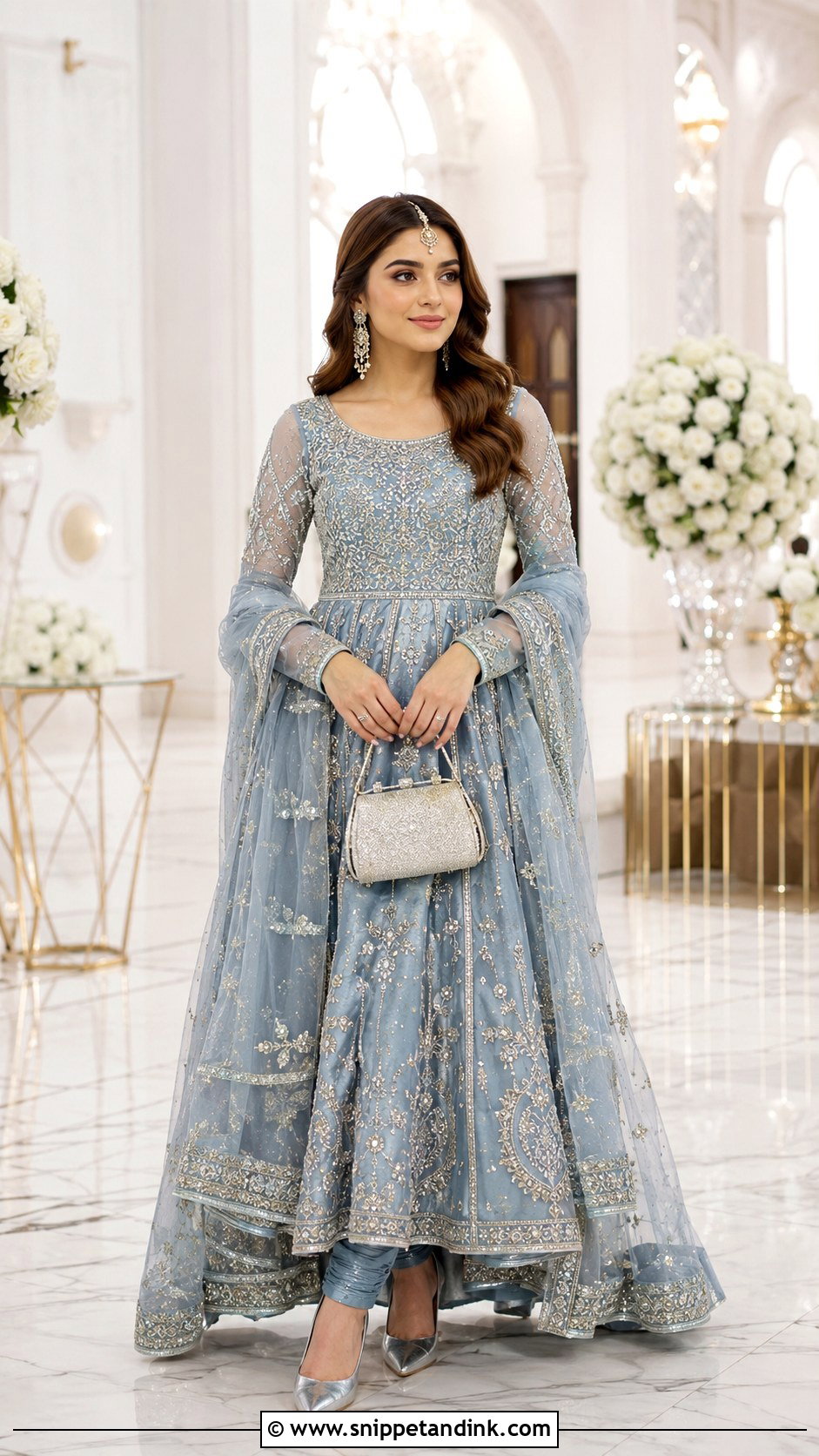
For a bride who’d rather not fuss with layers, peshwas is the most forgiving silhouette here: one long line from bodice to floor. A dusty blue version with silver threadwork needs a fitted bodice and a generous flare; skimp on the panel count and it hangs like a nightdress. Have it cut to your measurements rather than bought off the rack, since the waist seam must sit exactly at your natural waist. A matching churidar, a lightly sequinned dupatta, pointed silver heels and a small tikka finish it, and a braided bun shows off the neckline in a ballroom.
5. Emerald Green Velvet Mangni Dress
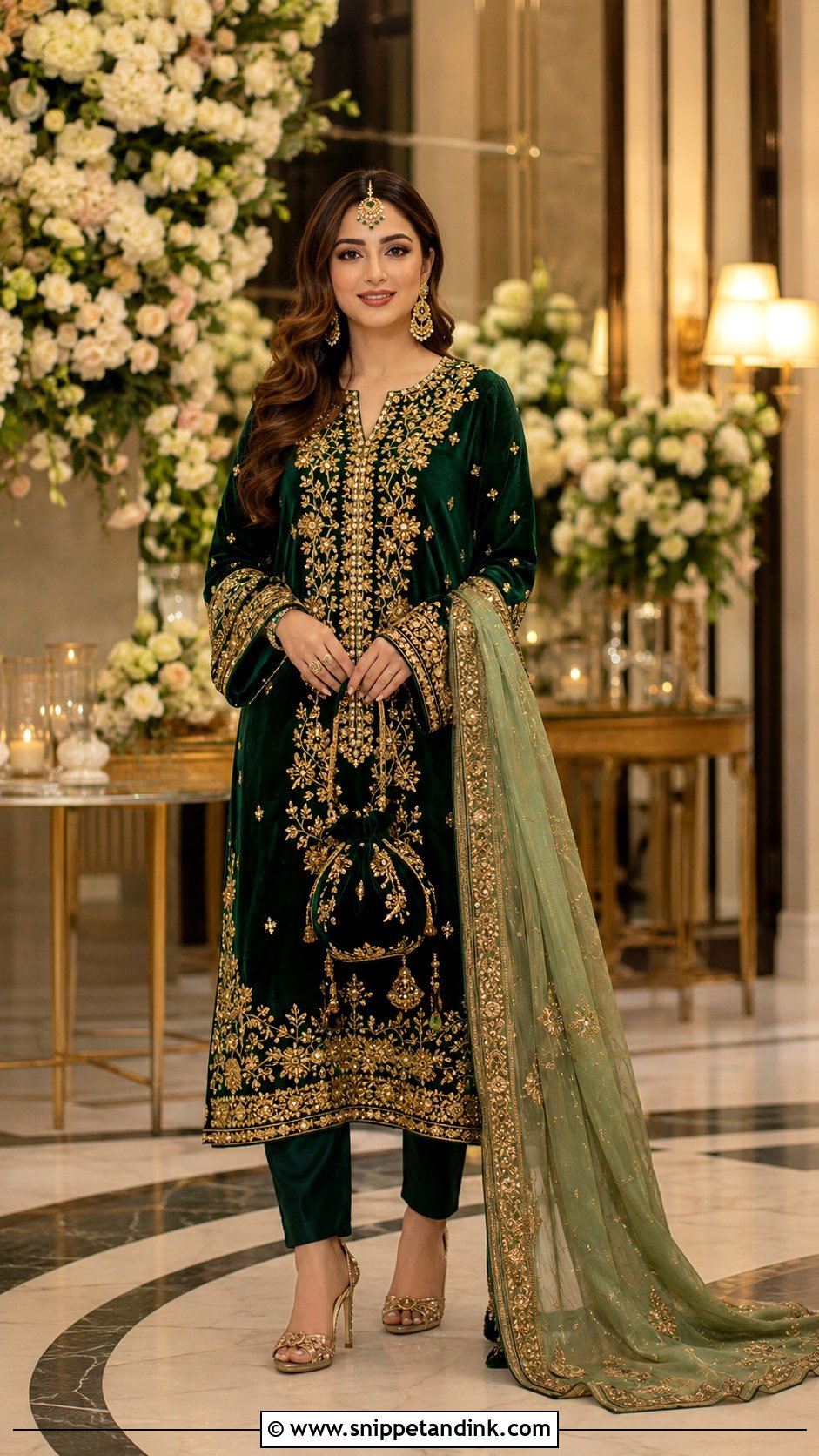
Velvet only makes sense for an evening mangni in cool weather. In a warm hall it becomes unbearable within an hour. An emerald long straight shirt with antique gold embroidery at the neckline, cuffs and hem is the classic version; pair it with slim raw silk trousers or a light sharara, never another heavy fabric, or the outfit turns bulky. A tissue or organza dupatta adds a lighter texture. Kundan earrings, a small jhoomar and a velvet potli suit it, with defined eyes and a muted rose lip. Keep the embroidery controlled so it still reads as engagement, not baraat.
6. Champagne Gold Maxi Mangni Dress
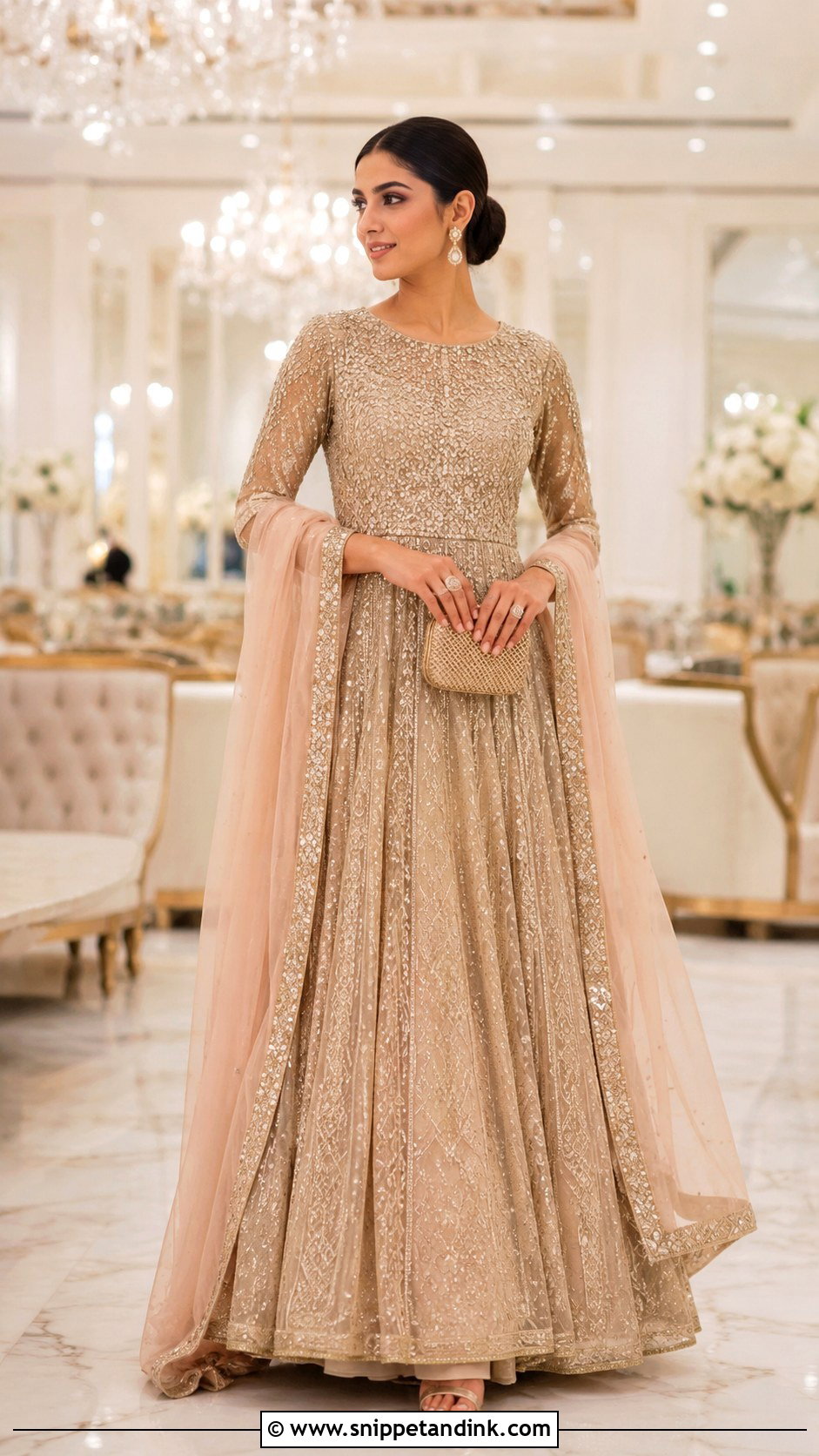
Champagne gold gives sparkle without the formality of red. The maxi should fit the upper body closely and skim, not cling, below the waist, with tonal sequins and pearls adding depth while the color stays pale. A champagne net or pale peach organza dupatta gives a little contrast. One styling point I insist on: wear any statement ring on the opposite hand from the engagement ring, so the ring photos stay clean. Nude metallic heels, pearl earrings and a sleek bun keep it modern, and under evening lights it shimmers without competing with a red baraat outfit.
7. Lavender Peplum Lehenga Mangni Dress
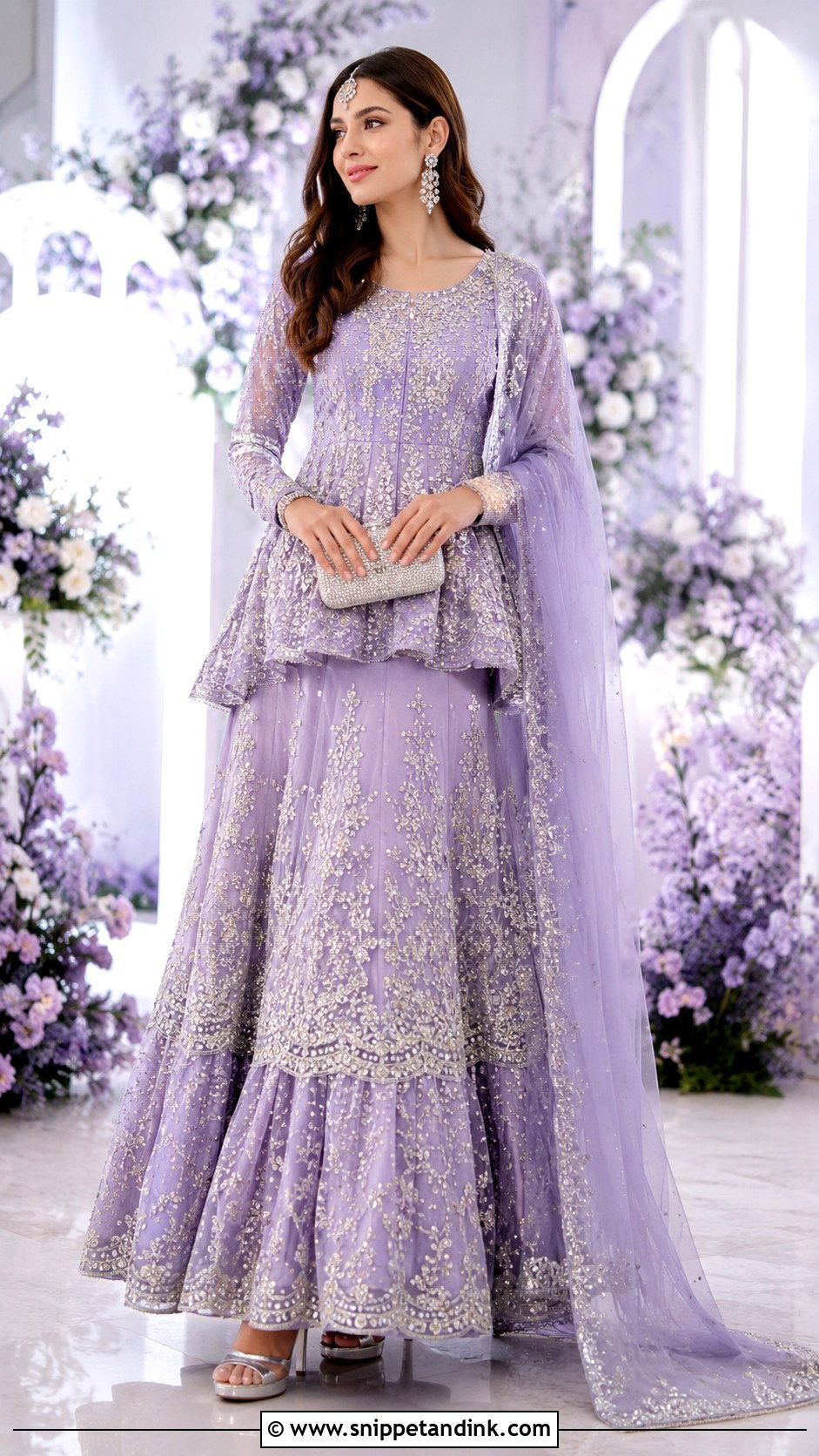
The peplum is all about the waist. It should end just below the natural waistline, and on a shorter torso I keep the flare small so the legs don’t look cut off. Put the silver embroidery, pearls or raised floral appliqué on the peplum and keep the lavender lehenga lighter so it’s comfortable to move in. Carry a narrow net dupatta over one arm so the peplum shape stays visible. Silver block heels, a delicate headpiece, lilac shadow and a rosy lip finish a modern take that still reads as Pakistani formalwear.
8. Maroon Short Shirt Gharara Mangni Dress
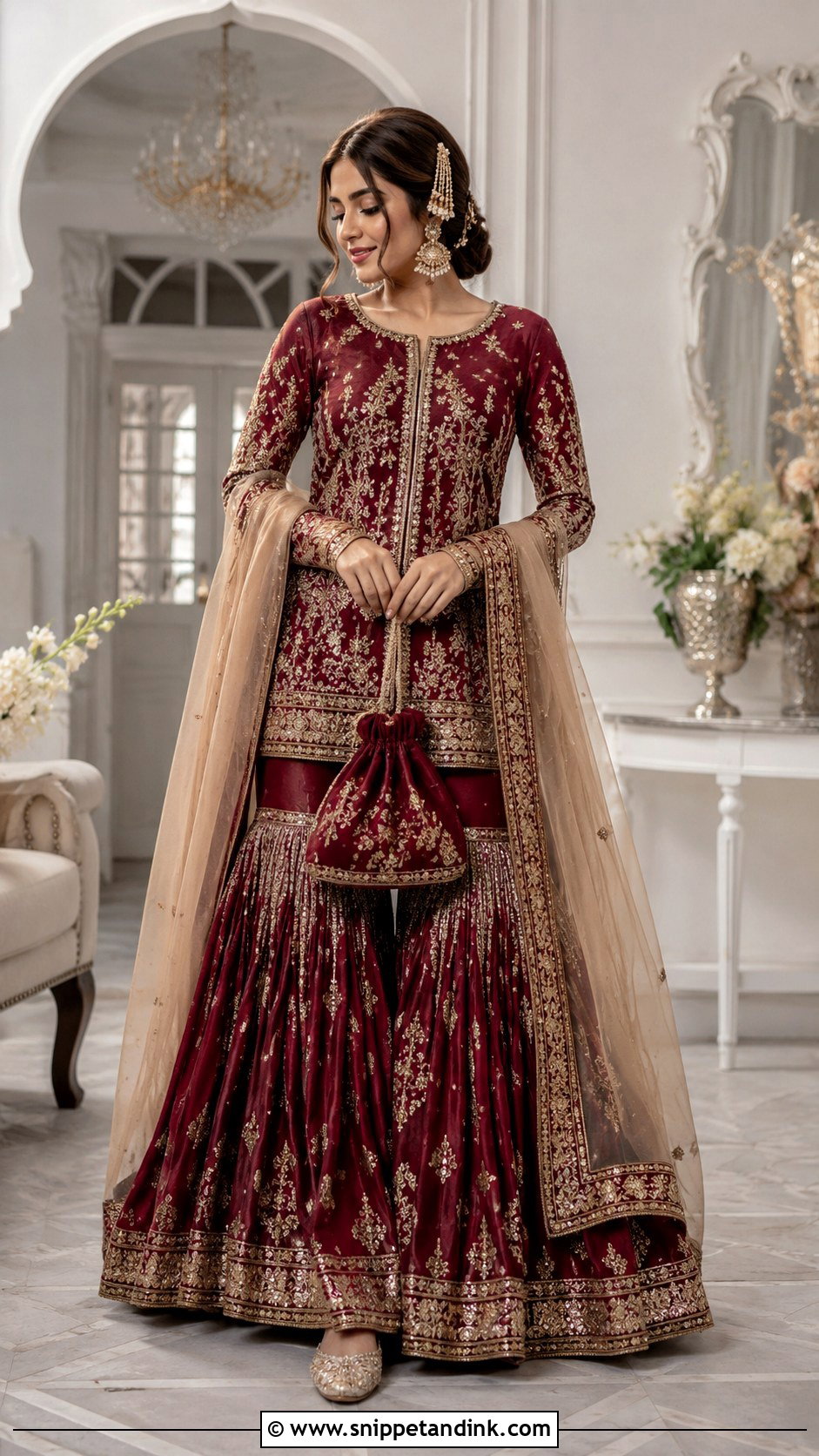
Maroon is bridal enough for a mangni if the silhouette stays compact. A short tailored shirt over a traditional gharara with gold gota, kora or dabka at the knee and hem is the way to do it. Keep the shirt embroidery to the neckline and borders so the maroon still shows. A beige, muted gold or soft pink dupatta lightens the palette and separates it from a darker baraat outfit. Gold khussas, jhumkas and a classic passa suit it, and a neat bun with face-framing strands finishes the look.
9. Peach Angrakha Mangni Dress
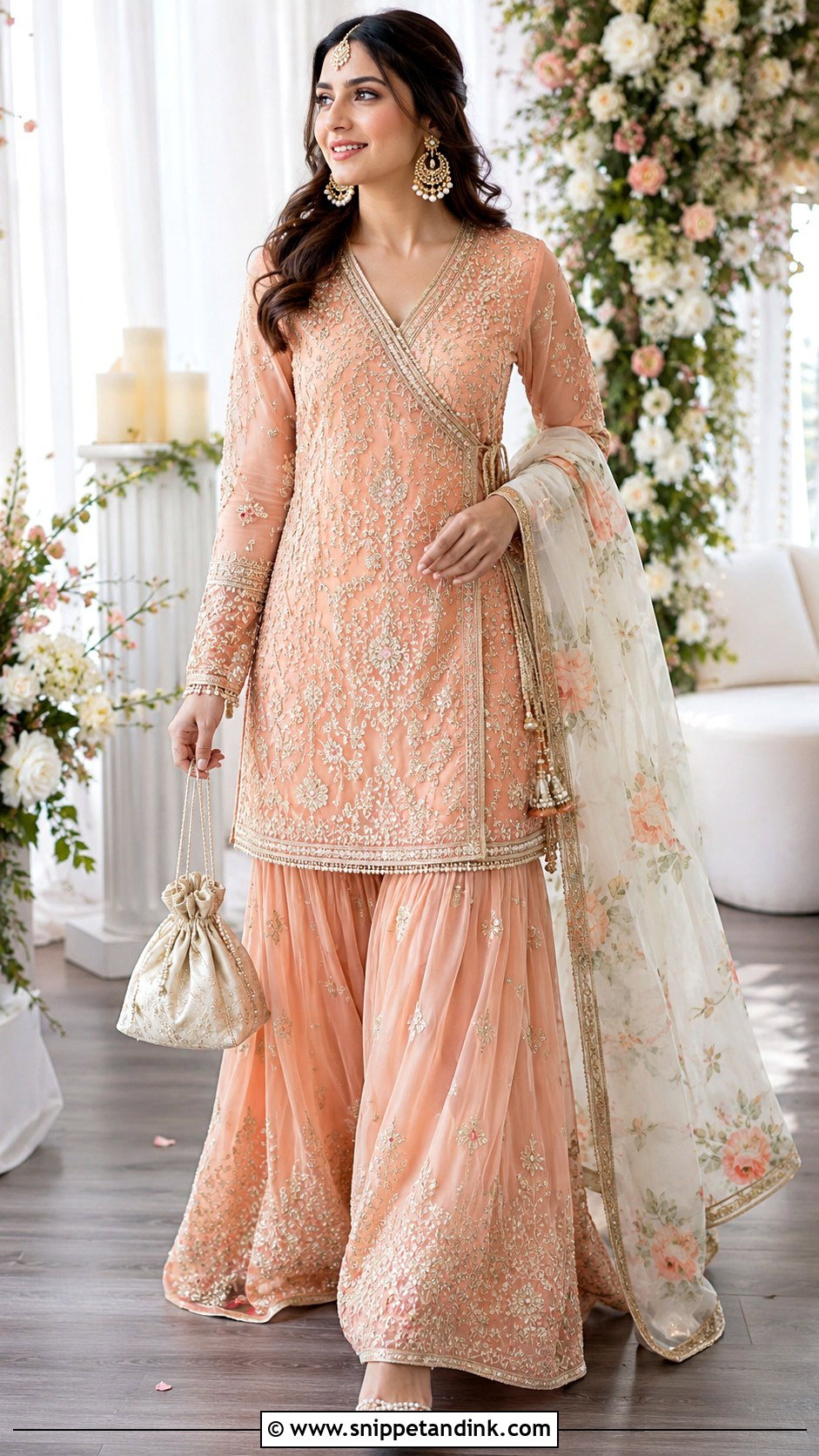
An angrakha’s wrap front is both its strength and its risk. It flatters most figures and lets you decide how deep the overlap sits, but on a fuller bust it can gape when you lean forward to receive the ring. I always ask for an inner modesty panel and a hidden hook at the crossover. In peach, pair a shorter angrakha with a sharara, or a long flared one with a slim churidar. An ivory organza dupatta with peach flowers, chaandbali earrings and a simple tikka keep it soft, and dewy makeup with a low textured bun suits its lines.
10. Powder Blue Cape Lehenga Mangni Dress
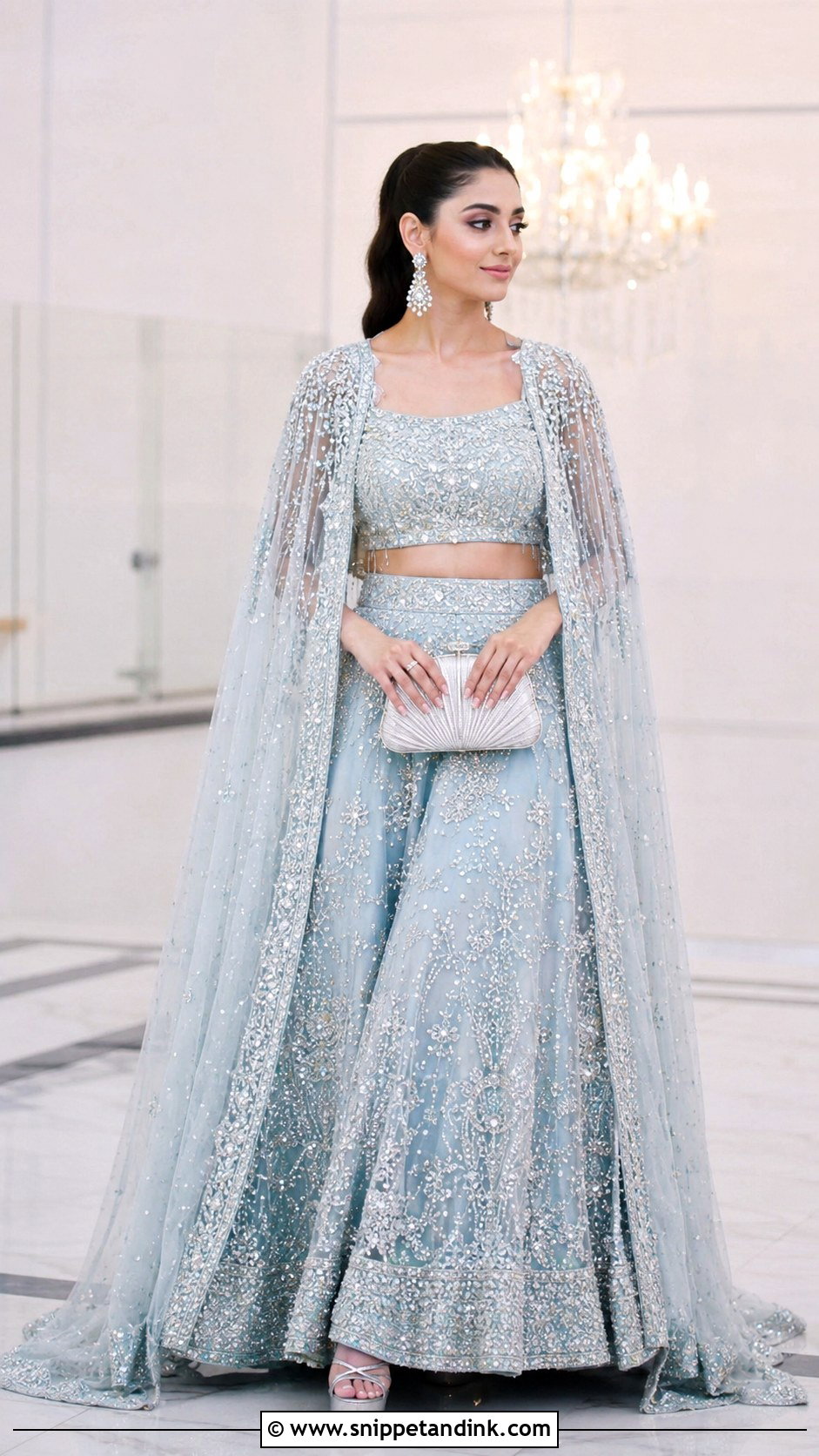
Capes solve the dupatta problem. A powder blue cape lehenga covers the shoulders and back while leaving both arms free, which helps during the ring exchange, when a dupatta tends to slide. Start with a clean A-line skirt and fitted blouse, then add a sheer embroidered cape falling to the waist or floor. Silver sequins or tonal threadwork keep it airy. If the cape neckline is decorated, skip the necklace. Silver heels, statement earrings and a sleek ponytail make it feel modern, which suits a city venue or a bride who dislikes draping.
11. Rose Pink Saree Mangni Dress
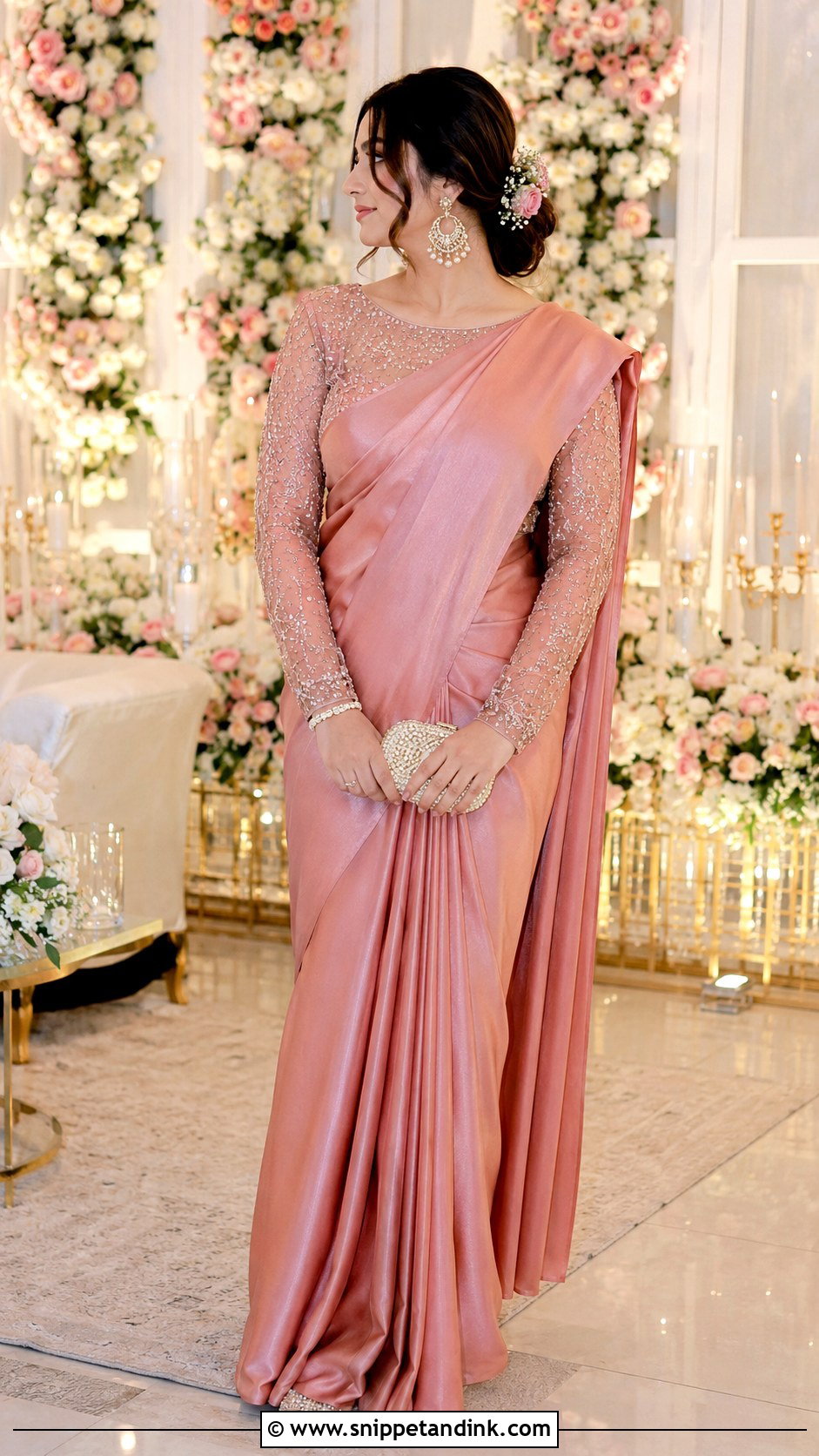
A sari is a quieter choice for a Pakistani mangni, and in rose pink it looks bridal without imitating a lehenga. Silk holds pleats crisply, chiffon flows and forgives, and organza stands away from the body, so choose by how much structure you want. The blouse needs a full lining and a secure neckline, and I’d have the pallu pinned at the shoulder so it doesn’t slip while you’re hugging relatives. Pearl-and-kundan earrings, a slim bracelet and a low bun with white flowers finish it. A matching sheer jacket adds coverage, and the bare forearm keeps the ring in plain view.
12. Mint Green Anarkali Mangni Dress
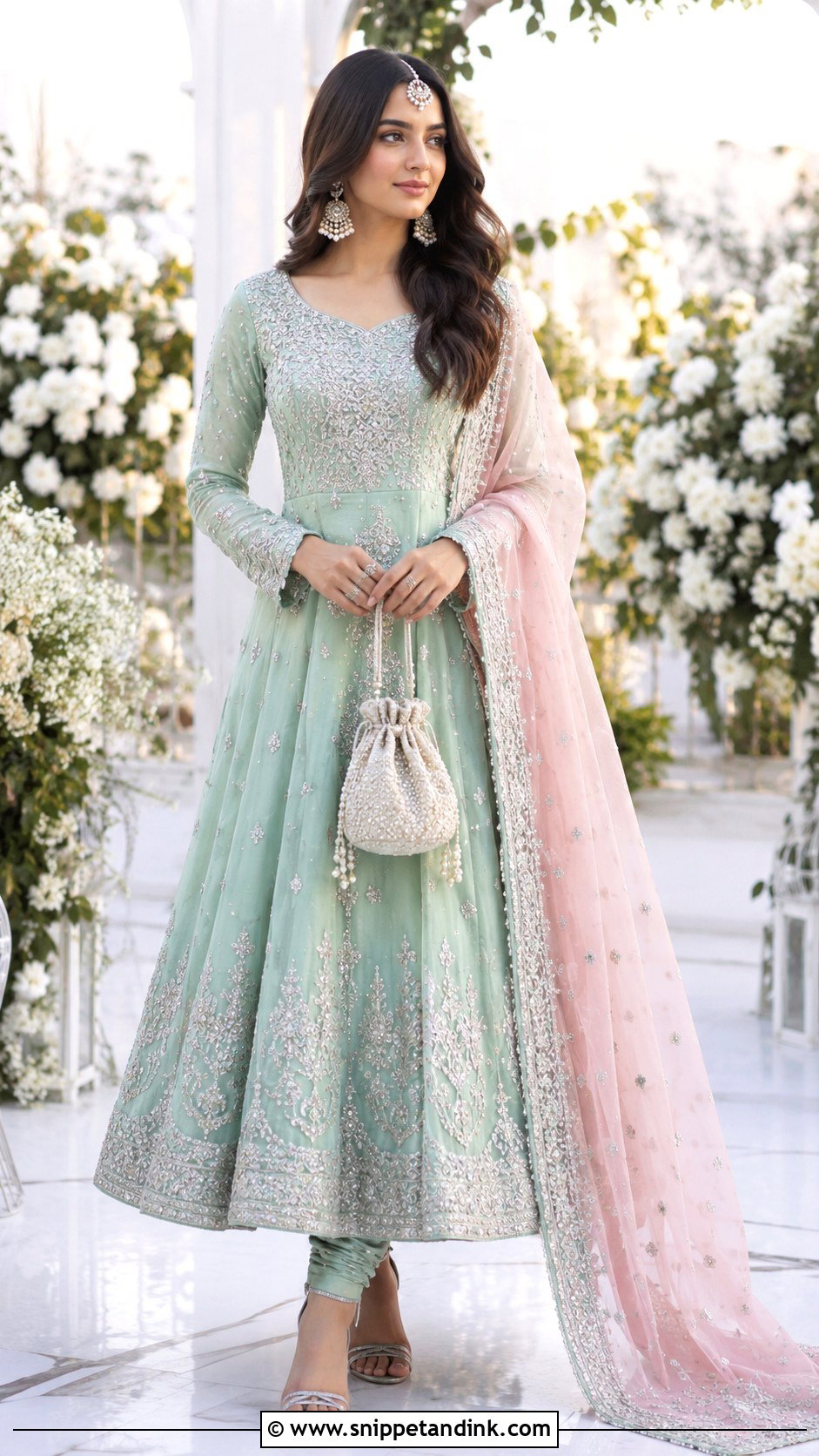
For a long daytime event, an anarkali is the easiest outfit here to live in. A mint version needs a fitted bodice, a comfortable waist seam and a wide ankle-length flare; the more panels in the skirt, the better it swings. Silver embroidery and small pale pink flowers add bridal detail without crowding it. Wear a matching churidar with a blush organza dupatta. The long vertical panels lengthen the body, so it works on petite and tall brides alike. Silver heels, a pearl potli and a soft side braid keep the mood approachable.
13. Navy Blue Long Shirt Lehenga Mangni Dress
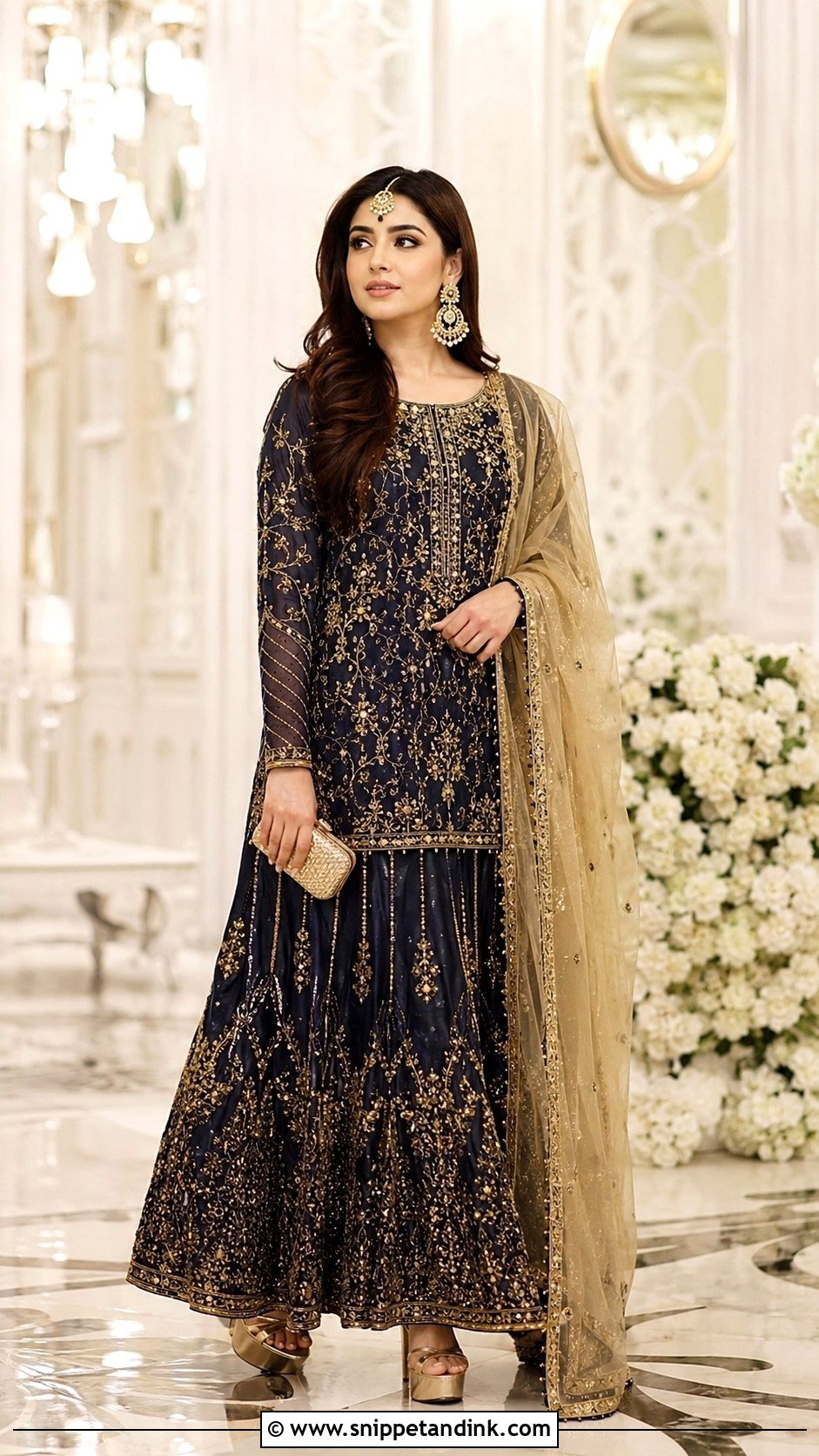
Navy is the dark color I suggest to brides who want to avoid red entirely. A long embroidered shirt over a moderately flared lehenga in raw silk, jamawar or light tissue looks best in one color, giving a long unbroken line, with antique gold borders for warmth. Jamawar is heavy, so if you choose it, keep the shirt lining thin. Use a muted gold dupatta with narrow navy edging rather than another heavily worked layer. Gold platform heels, statement earrings, bronze eyes and a nude lip finish it, and under ballroom lighting it looks properly formal.
14. Mauve Jacket Sharara Mangni Dress
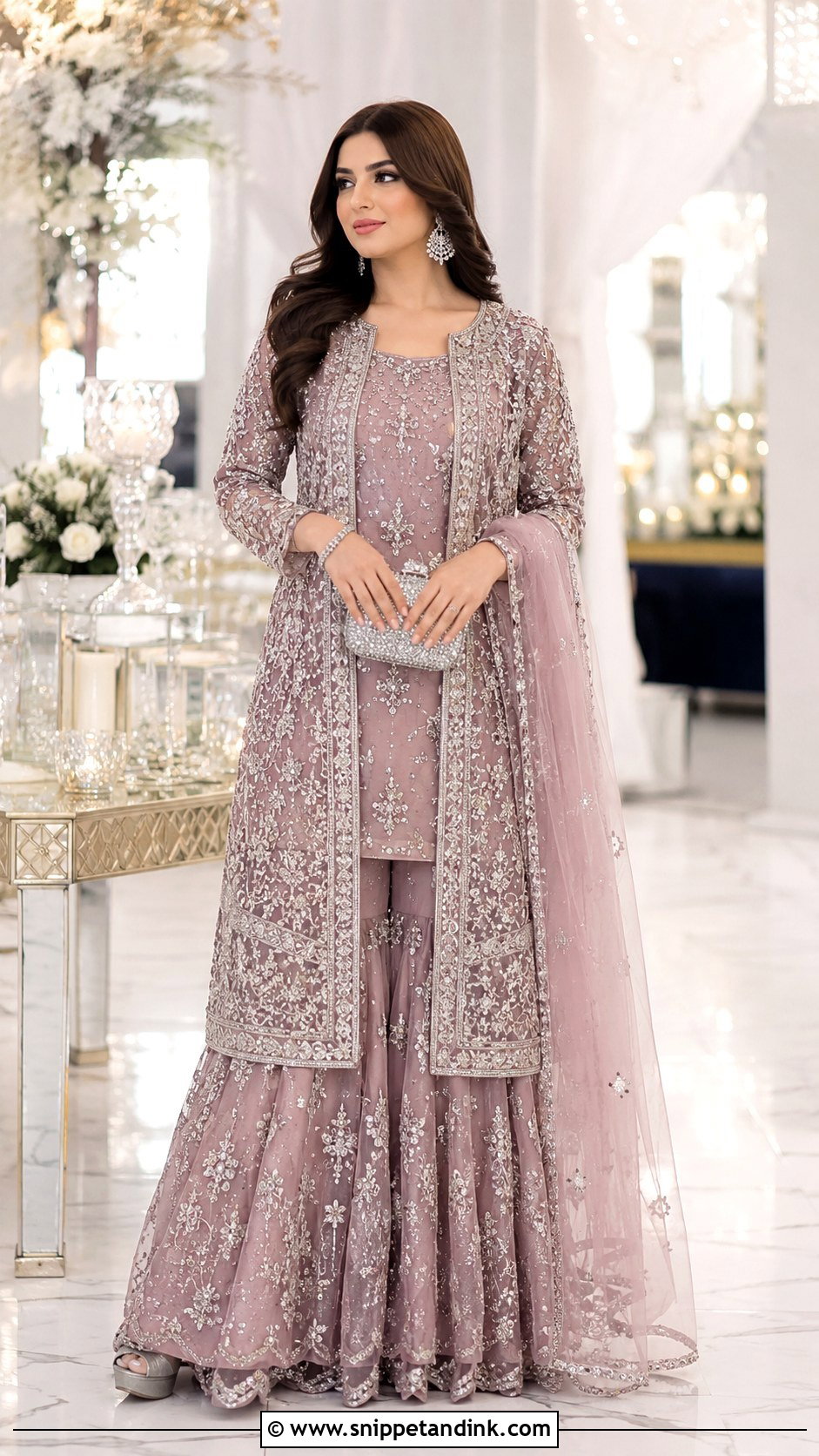
A long open jacket gives a mauve sharara outfit structure and coverage without a full peshwas. Keep the inner kameez and sharara in the same muted mauve, then let the jacket carry the silver vines, pearls or scattered sequins from shoulder to hem. Because the jacket is the focus, the dupatta should be plain or lightly edged and carried over one forearm. Keep the hair smooth and off the jacket neckline, since loose curls snag on beadwork. The open front lengthens the body while the sharara adds volume below.
15. Coral Pink Asymmetrical Lehenga Mangni Dress
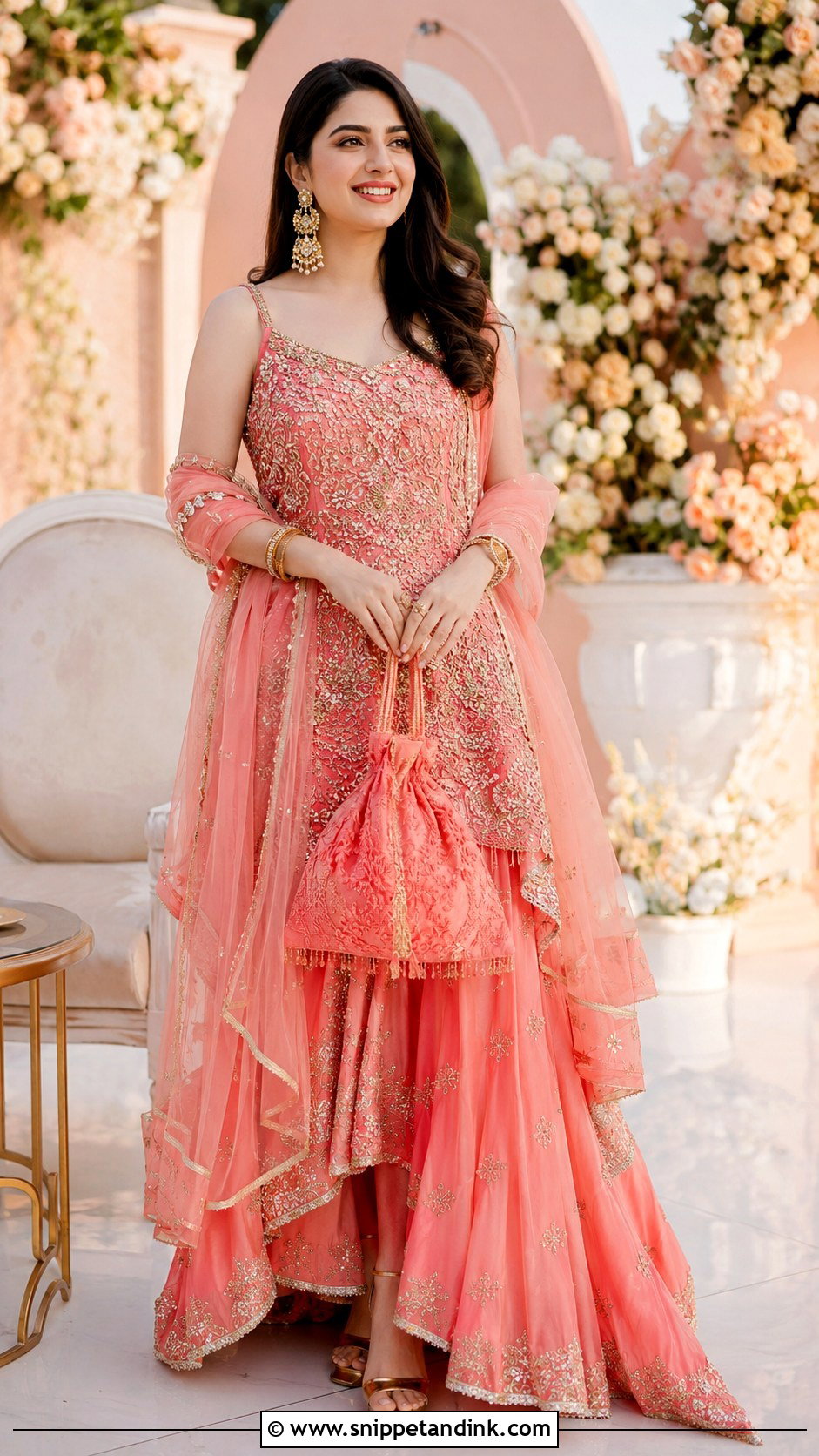
Asymmetric hems need a confident bride and a careful tailor. The coral top should fall lower at the back and open slightly at the front to show the embroidered lehenga; if the dip is too shallow it looks like a mistake rather than a design. Gold and peach threadwork with small mirror details keep the palette warm. Wear a light net dupatta across one shoulder so it doesn’t hide the hemline. Gold block heels, kundan earrings and a slim bangle stack complete it, with a side parting and fresh peach makeup.
16. Teal Front-Open Peshwas Mangni Dress
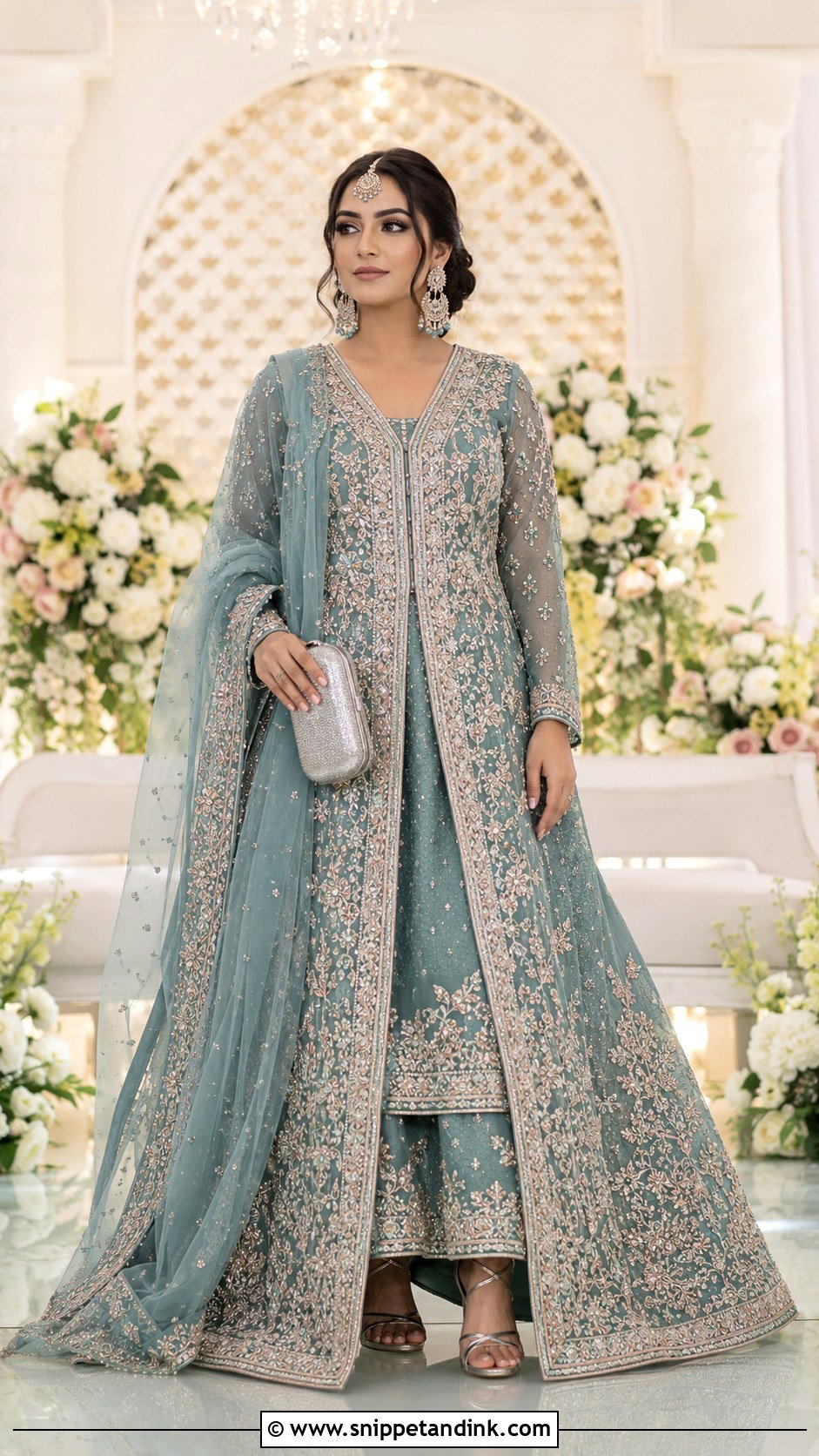
Teal photographs richly in both daylight and evening light. A front-open peshwas over a coordinated lehenga or sharara gives depth without needing a very heavy skirt. Put the antique silver or muted gold work along the bodice, the open panels and the hem. The practical advantage shows at fittings: inner and outer layers are cut separately, so a tailor can adjust coverage and flare independently. Drape a matching sheer dupatta over one shoulder to keep the opening visible. Chandbali earrings, a centered tikka and a neutral rose lip finish it.
17. Lilac Floral Lehenga Mangni Dress
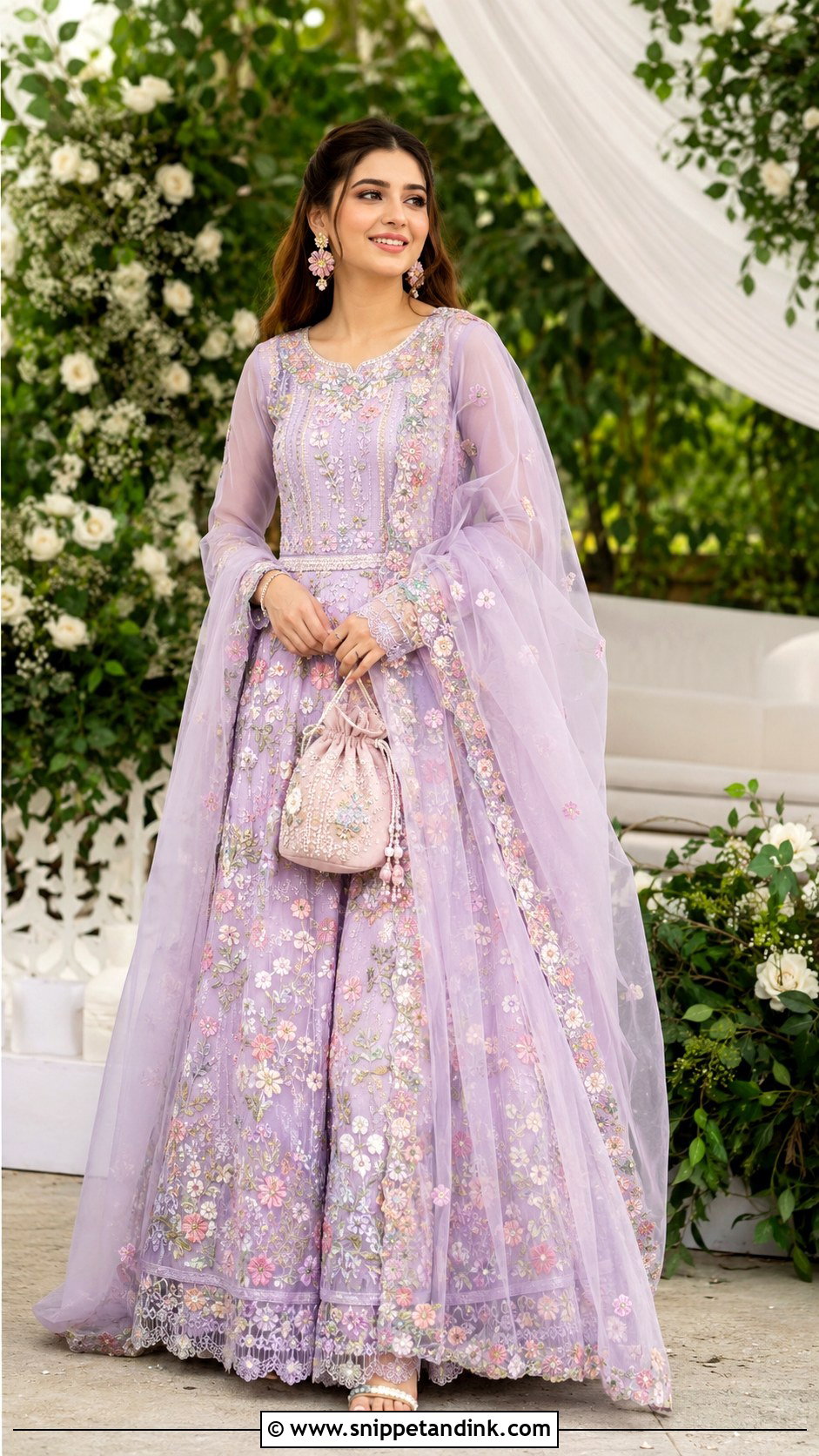
Floral embroidery on lilac is a spring look, and scale matters more than anything else. On a petite bride, large motifs swallow the frame, so keep the flowers small; a taller bride can carry a wider pattern. The outline is an A-line lehenga with flowers in ivory, pale pink, sage and blue, a modest fitted blouse and a sheer lilac dupatta with a narrow floral border. Pearl heels, floral earrings and a half-up style with soft curls keep it polished. It sits naturally against greenery and white floral decor.
18. Plum Velvet Sharara Mangni Dress
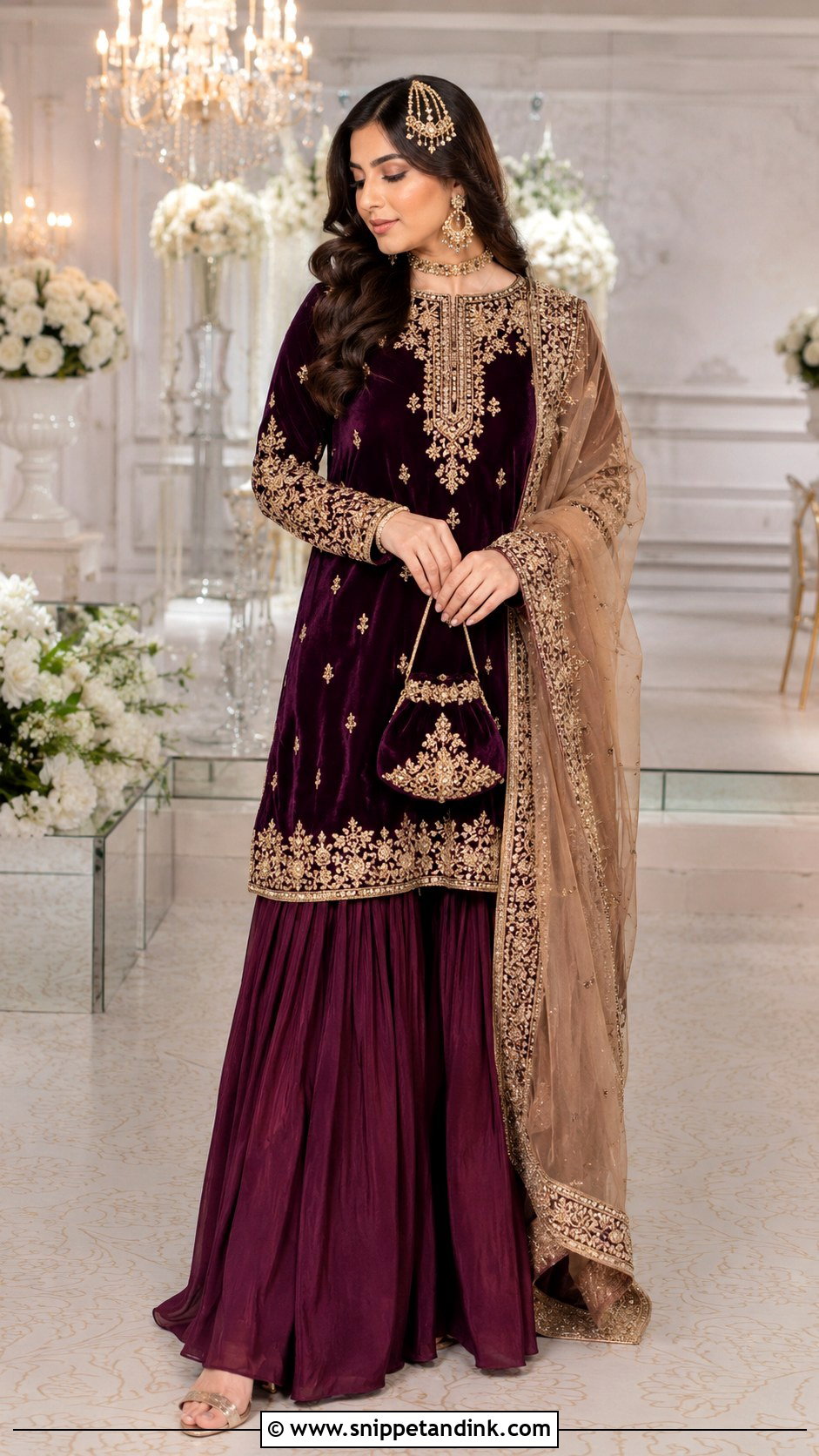
Plum velvet is the winter partner to the emerald look above, and the same rule applies: velvet on top, something lighter below. A hip-length velvet shirt with antique gold work at the neck and cuffs pairs with a raw silk or chiffon sharara. Velvet crushes and marks where you sit, so ask for side slits and lift the shirt slightly before sitting on stage. A beige-gold organza dupatta brightens the face. Polki earrings, a subtle jhoomar and a berry lip suit it, and a mid-thigh shirt gives more coverage.
19. Silver Gray Trail Gown Mangni Dress
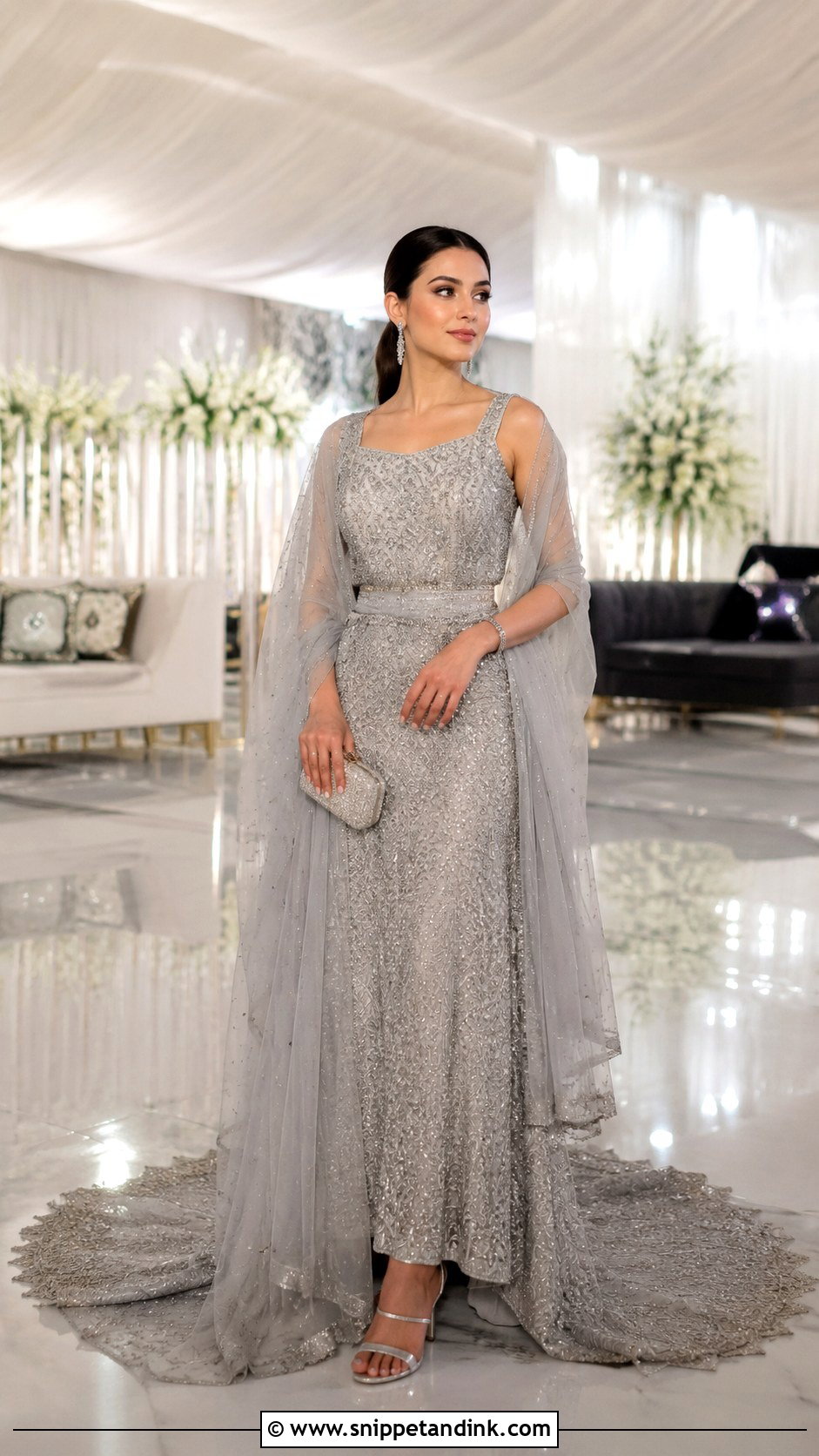
A silver gray trail gown suits a formal ballroom engagement, and it’s the one look here I’d insist on rehearsing. Keep the trail manageable, ask for a hidden bustle loop so it can be lifted after photos, and practice climbing stage steps and sitting in it. A fitted bodice with tonal crystals and vertical embroidery lengthens the body. For a Pakistani touch, add a sheer matching dupatta from one shoulder or attached discreetly at the back. A structured bun keeps hair off the beading, and silver heels with drop earrings finish it.
20. Off-White Gold Farshi Gharara Mangni Dress
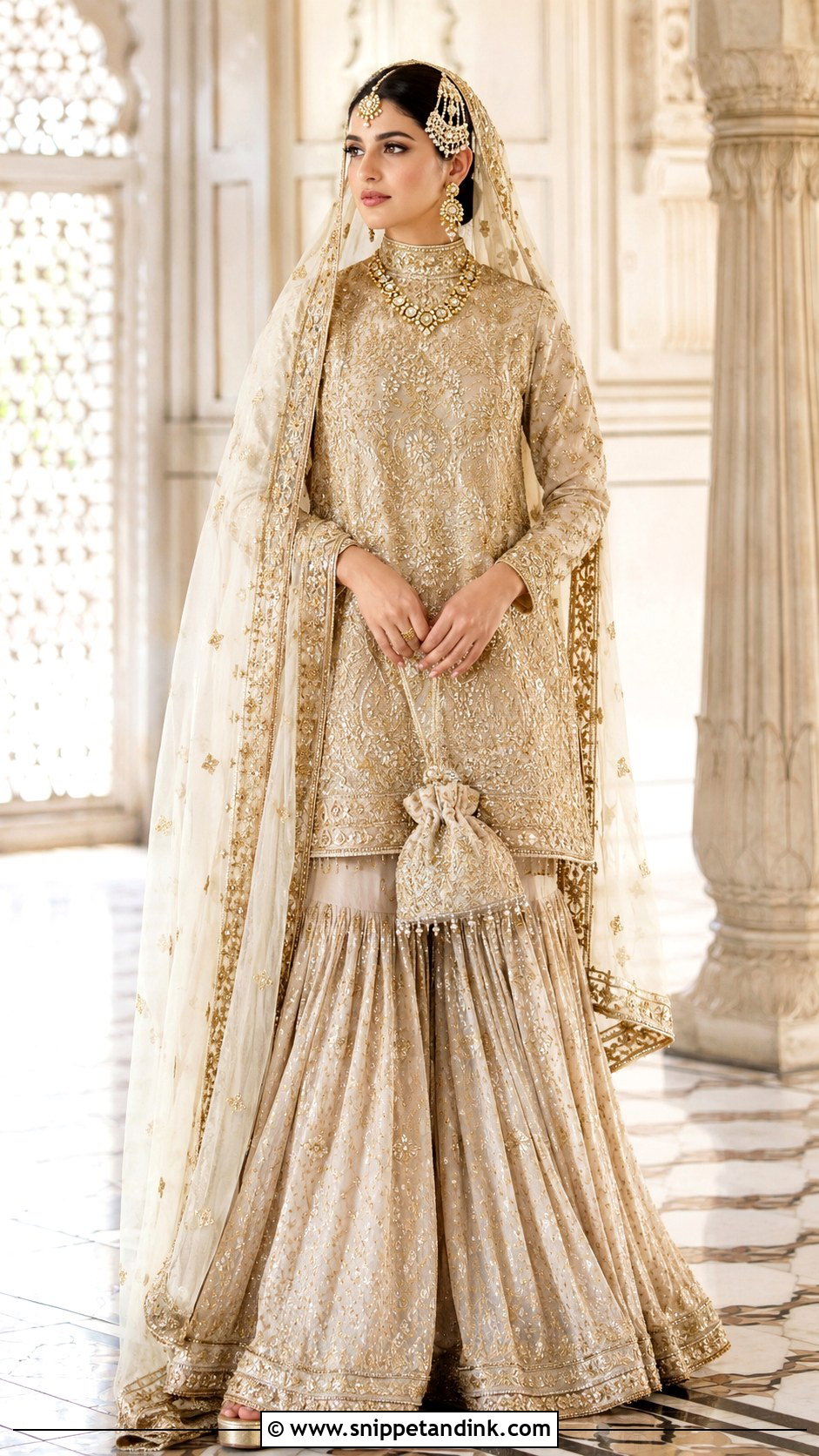
A farshi gharara sweeps the floor, which is both its beauty and its catch. Control the volume, keep the gold work concentrated near the lower flare, and pair it with a short kameez with a higher neckline and fitted sleeves. I’d hem it to just touch the floor in your actual platforms, because anything longer is a trip hazard on stage steps. A sheer gold-edged dupatta can go over the head for tradition or across both shoulders for easier movement. Kundan earrings, a passa and warm luminous makeup suit the off-white.
A Fitting Calendar for Hand-Embroidered Formals
Hand dabka, zardozi and gota work take weeks, and custom formals can take longer during the winter wedding season. Lead times vary a great deal between designers, so ask yours directly, but this is the order I plan in:
- Roughly ten to twelve weeks out: settle the design, fabric and color, and hand over measurements.
- Six to eight weeks out: first fitting on the plain or partly embroidered garment, while seams can still move.
- Three to four weeks out: final fitting with your real shoes, inner wear and something standing in for the jewelry.
- The week before: a full try-on, pinning the dupatta exactly the way you’ll wear it on the day.
The seated test
A mangni involves a lot of sitting on a stage sofa. At the final fitting, sit for ten minutes, then stand. Check whether the gharara bunches at the knee joint, whether the blouse rides up at the back, and whether the dupatta stays put when you turn your head. Then hold out your ring hand as if receiving the ring: sleeves should end above the wrist bone, and no bracelet should crowd that finger.
Fittings, Fabric and the Ring Hand
A mangni outfit works when you can walk to the stage, sit for an hour and hold out your hand for the ring without thinking about your clothes. Start with the silhouette, then a color that suits your skin and stays distinct from the baraat and walima outfits. Balance jewelry, shoes and dupatta against the embroidery rather than adding to it. Book fittings early and test everything sitting, walking and with your hand raised. Good tailoring does more for a simple outfit than extra embellishment ever will.
You'll Like These Ideas:


Leave a Reply